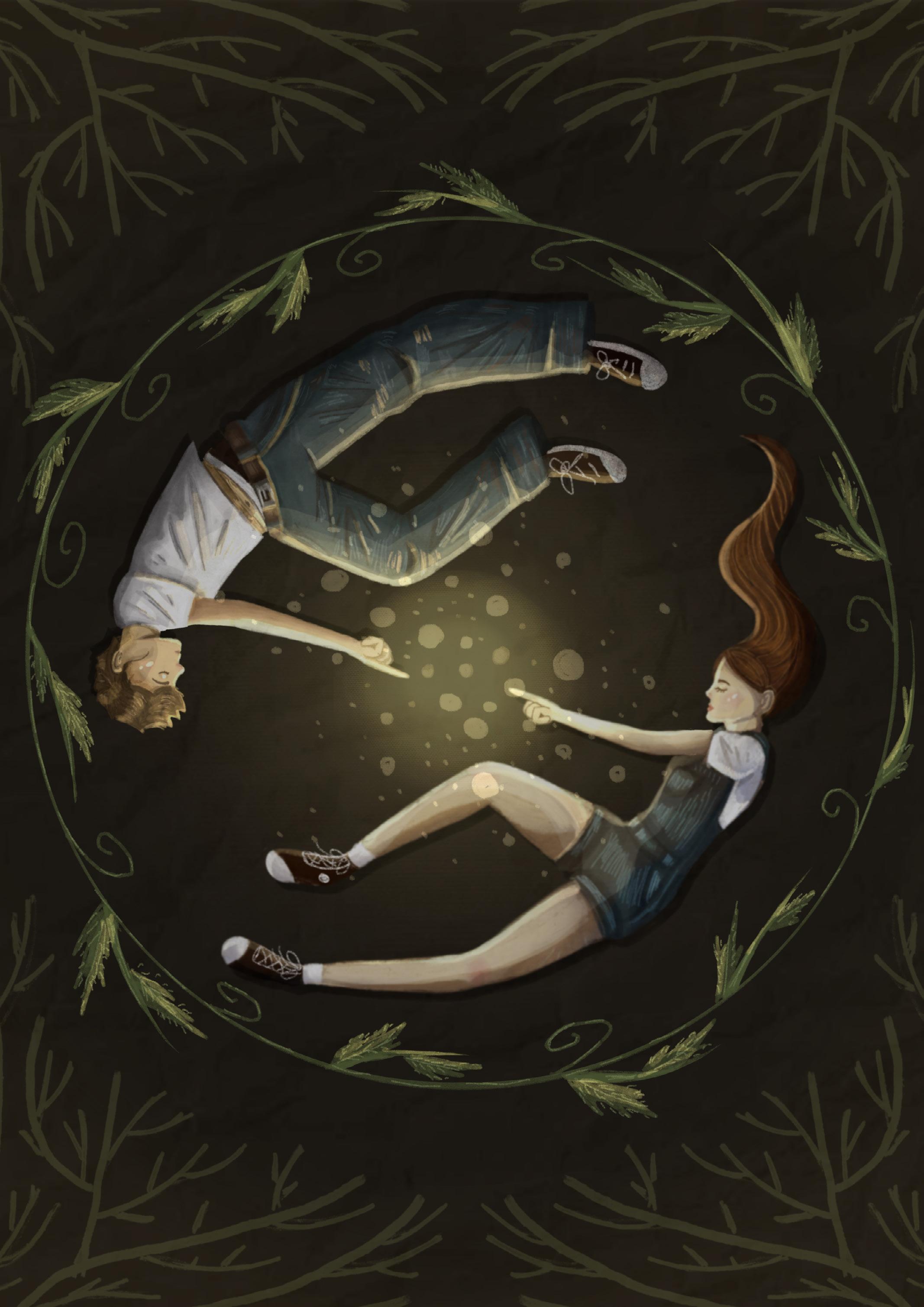
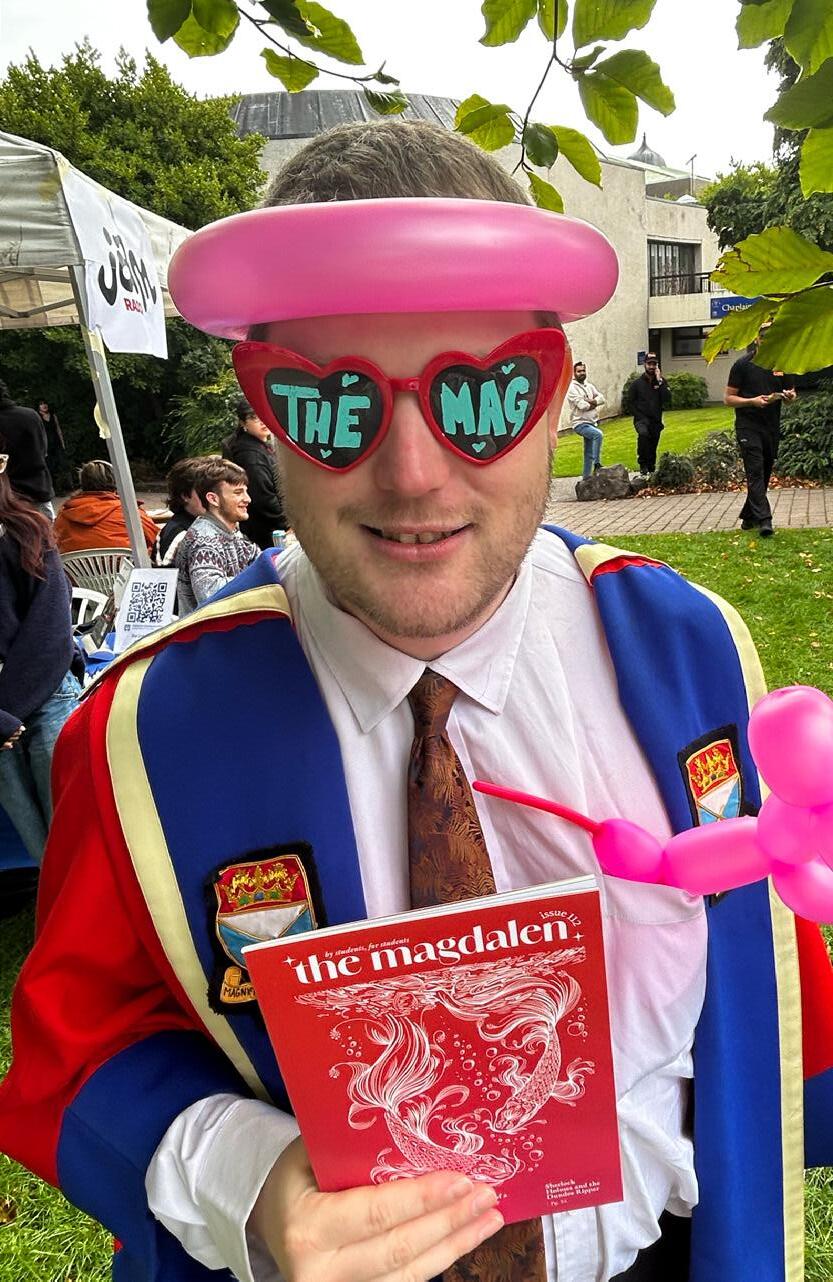
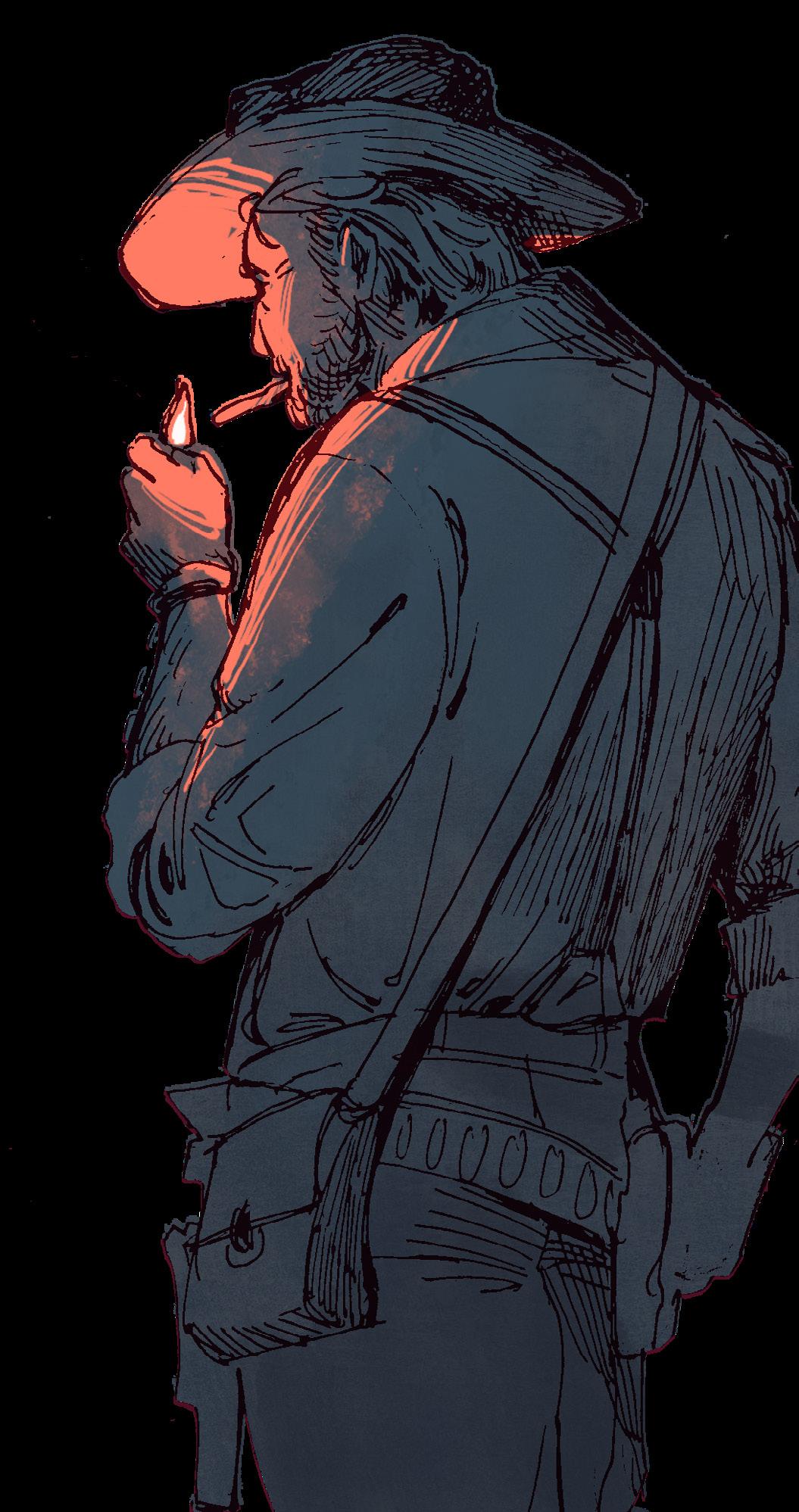
Whether you are here for the stunning artwork by our evertalented design team or the fantastic articles by our insightful writing team, we welcome you all! For this issue’s theme the senior team has chosen ‘Macabre’. Please enjoy our spooky work (and keep an eye out for trigger warnings)!
Hi everyone!
It's that time of year again- cold and dark by 4PM. We've been working on this issue, 'Macabre', during this change of seasons, and its a perfect selection of artwork, writing, and design to explore the transition between autumn and winter. Without further ado, wrap up well and enjoy this read!
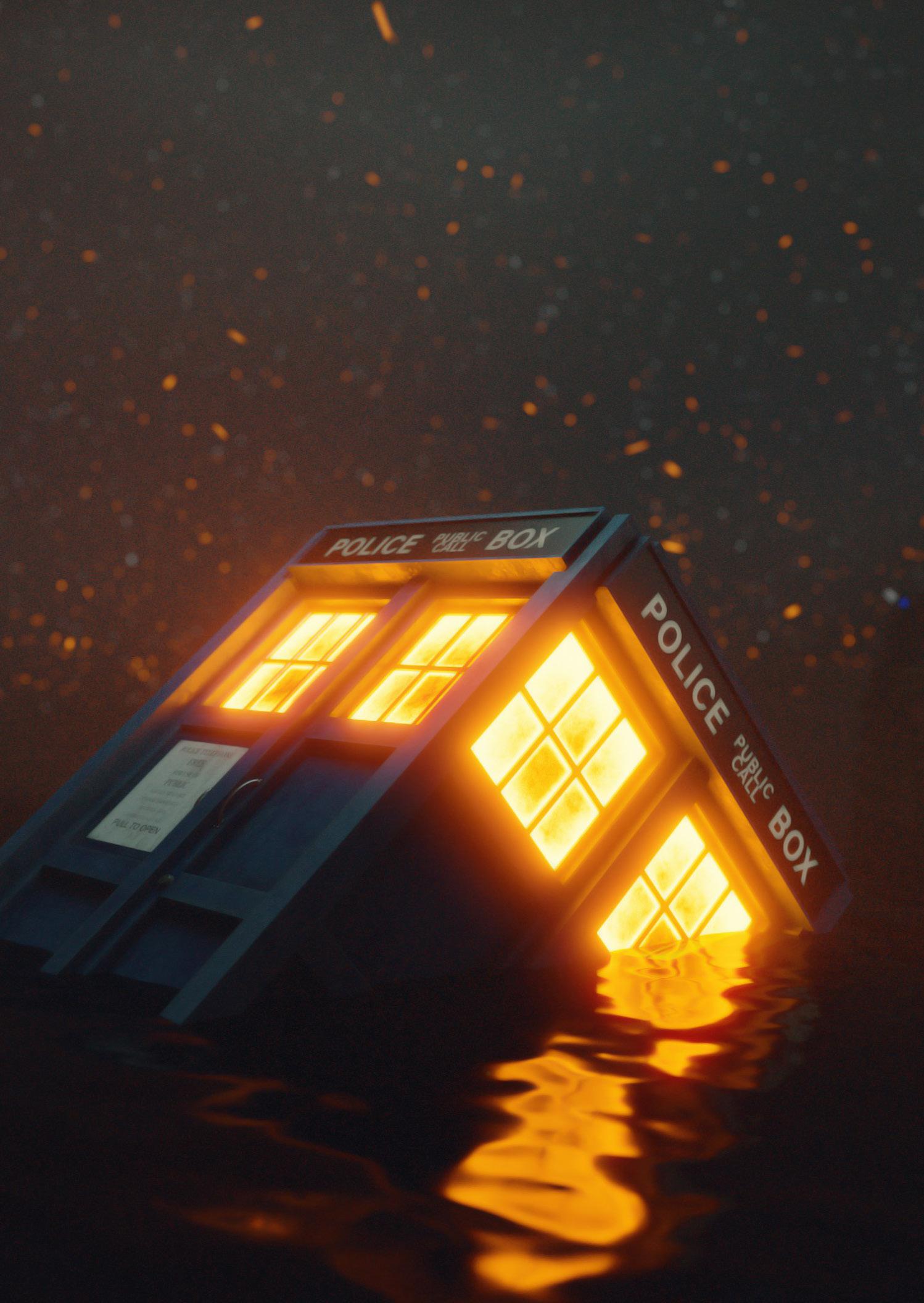
From Dundee to All of Time and Space –An Interview with Peter Anghelides
Peter Anghelides is an award-winning freelance writer, editor, and producer, best known for writing science fiction tie-in material for the Doctor Who universe. His journey into this world began in Dundee, where he wrote for Annasach magazine, the precursor to The Magdalen. I caught up with Peter to hear about his story and how you can go from writing for a Dundee student magazine to crafting adventures in time and space.
I started with one of the most basic questions, sure to appeal to Doctor Who fans: Have you had a favourite Doctor to write for?
“I really enjoyed writing for David Tennant because what I wrote was performed by him on audio. It was the first new story he’d done as the Doctor outside of the TV show. This was Pest Control for BBC Audio.”
Peter started writing for the book series in the 1990s, during the so-called Wilderness Years.
“The show had ended in 1989, then there was the TV movie in 1996. That was when the BBC started publishing the books themselves and I started writing for them. It was fun! A good excuse to write Doctor Who fiction and get paid for it. Some of my friends have been involved too. For a while, I worked at IBM in a row of four desks: me, my future wife, Craig Hinton, and Justin Richards—both later Doctor Who book writers. My wife had the desk in front of me, so I often found myself literally talking over her head about Doctor Who stuff. It’s a wonder she ever married me!”
“When choosing universities, I wanted a joint English and Mathematics degree. In the early 1980s, only Dundee and Aberystwyth offered such a combination. I was put off Aberystwyth because my English teacher said, somewhat unfairly,
‘It’s halfway between Cardiff and nowhere.’ Dundee was quite compact and easy to get around – same is true for Aberystwyth. One of my other teachers, said I should go to another university and do Maths and join the English society, or English and join the Maths Society. But anyway, my choice was to go to Dundee for that joint degree. I found that I enjoyed English more than Maths and ended up doing a straight English degree. Over the four years of my MA, I studied English, Maths, German, French, Computation and Statistics, Philosophy, and Psychology. At any point in doing those courses, I could’ve switched. I didn’t have to make a hard and fast decision the second I was at Dundee.”
At Dundee, Peter began writing for the student magazine, then called Annasach
“It sold for five pence, mostly in the student union and shop. Offices were near the English department on Perth Road, tenement buildings opposite the Tower. We’d troop there for editing, back before word processing. You’d write, get it laid out, then send it to a reproduction house. I believe it was printed at the university printing service. Simultaneously, I ran a Doctor Who fan magazine called Frontier Worlds. I’d pay the university printing service to produce copies, avoiding the exam periods, because students weren’t allowed in while they were busy printing exam papers.”
I explained how different The Magdalen is from Annasach
“It might be a hard sell now. Annasach had little to no advertising. Later, I did postgraduate research in Glasgow, where the Glasgow University Guardian was sold in local shops. Annasach was much smaller, sold only on campus.”
Words: Tom Christison
We discussed the current student magazine, The Magdalen, launched in 2005 after Annasach ended in 2001.
I asked about the name ‘Annasach’.
“It’s a Gaelic word meaning ‘unusual’ or ‘novelty.’
In the interim, Dundee had a publication known simply as the student newspaper.
“Dundee was originally a college of St Andrews and later incorporated the Duncan of Jordanstone College of Art and Design. When you visit universities, students often give you the unvarnished truth, while staff want to sell the idea of the place.”
I reflected on student open days, recalling the classic rule: don’t mention the pub.
“I used to live above a pub in Dundee, on the corner next to the Tower Building. It was called the ‘Town and Gown.’ My flat had sloping floors—soup would slop over if you weren’t careful! The pub was ‘spit and sawdust,’ where Evening Telegraph news vendors had a pint. That was their haunt. They were rather put out by people like me –a student, and English – coming to their pub.”
The Town and Gown lives on in its current incarnation – The Phoenix. Dundee has changed a lot over the years. I asked Peter if writing for a student magazine helped his career.
“I think it did a couple of things. It was a great way to write and get real feedback. Friends or family might say ‘nice,’ but the student magazine had editors and subeditors reviewing your work. It also taught collaborative work and was something I volunteered for, unlike course essays, which had obligations. Writing for Annasach was fun and interested me.”
I asked what kinds of articles he preferred to write.
“I can’t remember all the articles I wrote, but I enjoyed it. A lot involved shaping colleagues’ stories. There was a big fuss at the time about the adequacy, or otherwise, of the then Chancellor. As student’s, we didn’t feel like he had our best interests at heart. On a number of occasions when it came to organising who was going to be the Rector of the University, which the students are involved in, we were involved in identifying who that was, interviewing candidates, writing profiles about them, that kind of stuff. I was also interviewed by the visiting University Arts Committee Grants Sub-Committee – the university wanted us to be on best behaviour. As students, we researched committee members’ books in the library so we understood their interests and expertise. They were suitably impressed with our motivation and knowledge. That sticks with me about lots of what I did at Dundee—it wasn’t so much what I actually did as how it made me feel. I enjoyed writing, so I got involved with student journalism during my postgraduate work too.”
I asked how he transitioned into professional writing.
“When I looked for professional work, I had an interest in technology, and part of my degree was science-based. I ended up at IBM as a technical author, writing manuals, online documentation, and publishing books about IBM software. Later, I worked in communications, which is also writing. But breaking into Doctor Who professionally was another step.”
Peter explained how Virgin Books offered a slush pile approach for Doctor Who novels.
“But if you never do that then you might never find bright new talent, and I might not have otherwise had a route in.”
“Most publishers don’t do that; the reason is that there is a lot more to get through when you have a slush pile and most of it tends not to be very good, so it becomes disheartening. But if you never do that then you might never find bright new talent, and I might not have otherwise had a route in. Some of my friends were Doctor Who writers for Virgin, and by a happy coincidence I was in the same office as Justin Richards and Craig Hinton, and I got to read some of their writing and offer comments and suggestions. Later, when BBC Books took over, I pitched an idea to the range editor, Nuala Buffini, who liked it, and passed it to her successor, Steve Cole, who commissioned me to write Kursaal. Prior to that, I had written a short story for Decalog, edited by Richards and Andy Lane. It featured Sarah -Jane Smith and K9. That same collection had a story by Steven Moffat, later the show’s head writer.”
“That was my first professional connection. I used that short story as evidence I could write for BBC Books. I was then commissioned for Frontier Worlds, part of a connected book series. From there, opportunities arose, including writing for the Torchwood book series. They wanted reliable writers who could work discreetly before the show aired.”
Peter has continued working in Doctor Who through the 1990s into the 2020s, including audio adventures with Big Finish.
“I worked full-time at IBM from 1988 until a couple of years ago. Much of my
Doctor Who work was spare-time hobby work, but done professionally to meet publishers’ specifications. When Big Finish Productions started producing Doctor Who audio dramas, I was too busy to attend their first kick-off meeting. Years later, I discovered they had mapped out the first ten stories and allocated me to one. Later, I wrote an audio story for Elisabeth Sladen, who played Sarah-Jane Smith. This led to more opportunities, including the Susan’s War range, about the Doctor’s granddaughter, blending the original series and the Time War era. I also worked on Blake’s 7, writing audio scripts for original cast members.”
Peter later moved into script editing and producing for Big Finish.
“I suggest writers, help shape scripts, organise directors, and manage productions.”
From fan magazines and commandeering into the University printing service to professional IBM manuals and Doctor Who stories, Peter’s journey is inspiring. It shows how creativity and determination can turn humble beginnings into remarkable achievements. It’s a reminder that every generation of Dundee students finds its own way to make things happen on campus.
I’m deeply grateful to Peter for sharing his time and insights, and for leaving just enough hints about what’s next for Doctor Who on audio to keep me eagerly waiting.
You Have Your Fathers Eyes.
! CONTENT WARNING: VIOLENCE & CHILD ABUSE
“Keep all doors and windows locked. No matter what, don’t open the door for anyone you don’t know.”
The radio’s warning slithered into the bathroom as Jack stepped out from the shower. Using his elbow, he wiped condensation from the mirror before towelling off his hair. The radio announcer’s voice grew brittle, “Several men have been found dead in their homes. Authorities suspect a serial killer is on the loose…Police are keeping this quiet, but one source claims all the victims were blue-eyed and...”
The hostess’s voice faltered, trembling now, “all of which were removed.”
An upbeat window-cleaning jingle replaces her words, discordant after the grim details.
Jack scoffed at the callousness, but a chill crept through him. Rumours of the killings had already been circulating for days, but this was the first time he’d heard about the eyes, gouged out, stolen.
Feeling uneasy, he braced himself against the sink and leaned toward the mirror, his right thumb and index finger propping his eyelids open.
“Finally, my pathetic, dull brown eyes are good for something.”, Jack muttered, bitterly thankful.
All his life, Jack envied those who had any eye colour but brown. His father’s eyes
were an unnatural, piercing blue, so vivid they frightened young Jack. Still, despite the pain those cold blue eyes caused him, Jack couldn’t help but envy them.
As a child, he would study classmates and strangers alike, mesmerised by their eyes. Even in family photos, his father’s eyes always drew focus, leaving Jack’s to blend into the background. His mother used to tease him about their old family albums, telling him how she’d often find photographs where his father’s eyes had been scrawled over in thick, childish lines of black pen.
They just assumed it was innocent jealousy.
The memories of his father’s cruelty seeped in with every mention of the murders. What haunted Jack most was the way his father’s eyes would turn an intense blue with rage. Now, with the city obsessed by the killings, those memories clawed their way to the surface, impossible to ignore. With the news came the nightmares, the same he had endured as a child. Dreams filled with him running wild through the streets, his pockets bulging with blue eyes. The nightmares were a plague Jack would wake from each night with beads of sweat dripping down the nape of his neck.
One such night, Jack awoke from one of his dreams and scrambled for his phone. As he held the phone to his ear, listening to the long, hollow rings. His mother finally answered, her voice wary and tired. “Jack? Is everything all right?” He hesitated, trying to find the right words. “I’ve been having the dreams…About Dad. About the eyes.”
There was a pause, long enough for Jack to hear the unspoken dread between them. His mother’s voice softened, but it carried an edge of fear. “Jack, you know those were just dreams. Your father is gone. He can’t hurt you anymore.”
Jack swallowed, absently picking at the dirt beneath his fingernails, then ended the call. Needing air, Jack slipped on his jacket and stepped out into the night, hoping a walk might silence the turmoil in his mind.
A distant church bell tolls twelve times, each slow chime echoing through the night, marking the arrival of midnight. A tall figure lurches down the cobbled street, the small pattering of rain bouncing off his shoulders. He stops underneath a lamppost and looks up at the orange glow before looking down into his balled fist. With a practiced, almost mocking flick of his wrist, he tosses a blue eye into the air. It spins in a tight, glittering arc, rising to meet his gaze, sending a glimpse of brown drowning within the sea of blue. As the blue ball landed back within the safety of his palm, a reflection flickered upon its wet surface. His breathing hitched as his face moved towards his palm. Staring back at him was not just his own face, but his own eye, unmistakable and brown, looking back at him from within the lifeless blue. The reflection twisted, warped by the curvature of the eye, but there was no mistaking it. Cold blue dread seeped into his veins as he looked at himself.
Jack staggered before collapsing onto the slick, rain-soaked concrete, surrendering to the wail of sirens and the harsh, blue lights that came for him. The blue eye slipped from his hand, rolling onto the road just as the flashing blue car thundered to a stop, crushing it beneath its tyres.
He had spent his whole life running from those blue eyes, from the memory of a man who ruled with shouting and bruises. Jack’s eyes may be brown, but they might as well be blue, just as his fathers were.
!CONTENT WARNING: MENTIONS OF SEX AND GENDER DYSPHORIA
I must shed organic matter and become that which I always knew to be present.
Why do you carve a fine line between
Dictate the space between
Expel that between matter and mind?
Is this blurred boundary forbidden?
A genderless sanctity
That knows not of the line between
Agony and sexual fantasy?
Beads to sweat
Kiss to spit
Hair to tangle
Cunt to fuck.
What am I outside this vessel?
Would you even like to know?
I am contained in an infinite wrongness
And it is evidently, not only my choice
If I am to grow into or out of this weariness.
CONTENT WARNING: VIOLENCE
It is twilight when George slinks into the cabin, carrying over the threshold a body draped in white. Every step is measured as he makes his way to their room, careful not to jostle his precious cargo, all the while humming a tune the name of which escapes him. He lays the body down on top of sheets, and stands back to admire the latest addition to his family, wondering what to do first.
George has a lot of skeletons in his closet. Perfectly curated over years of collecting, they’re an intrinsic part of his life. But it’s nights like these when he thinks about it most, figuring out the puzzle of where the newbie will fit, in the extensive compendium he’s made for himself.
Tonight, she is called Alice. He pulls back the fabric covering her head and neck, tracing her clavicle with his finger, happy the bones all survived the long trudge
and lifts it to his mouth, the bone freezing against his lips. Placing it back down, he adjusts her just so, then nods, satisfactorily.
This room is theirs, the skeletons, more so than his, for they decorate every wall and make up all of the furniture that is practical when working with such delicate and rigid material. He may dissect and pull and repurpose, but he’d never dare break bones apart. Skull sconces light the room in dim warmth, ribs caging pictures that hang and stand next to lamps held up by feet. Anatomical drawings are plastered on the wooden walls. Not that he needs them these days, permanently etched in his brain as they are, but they still bring him joy to look at.
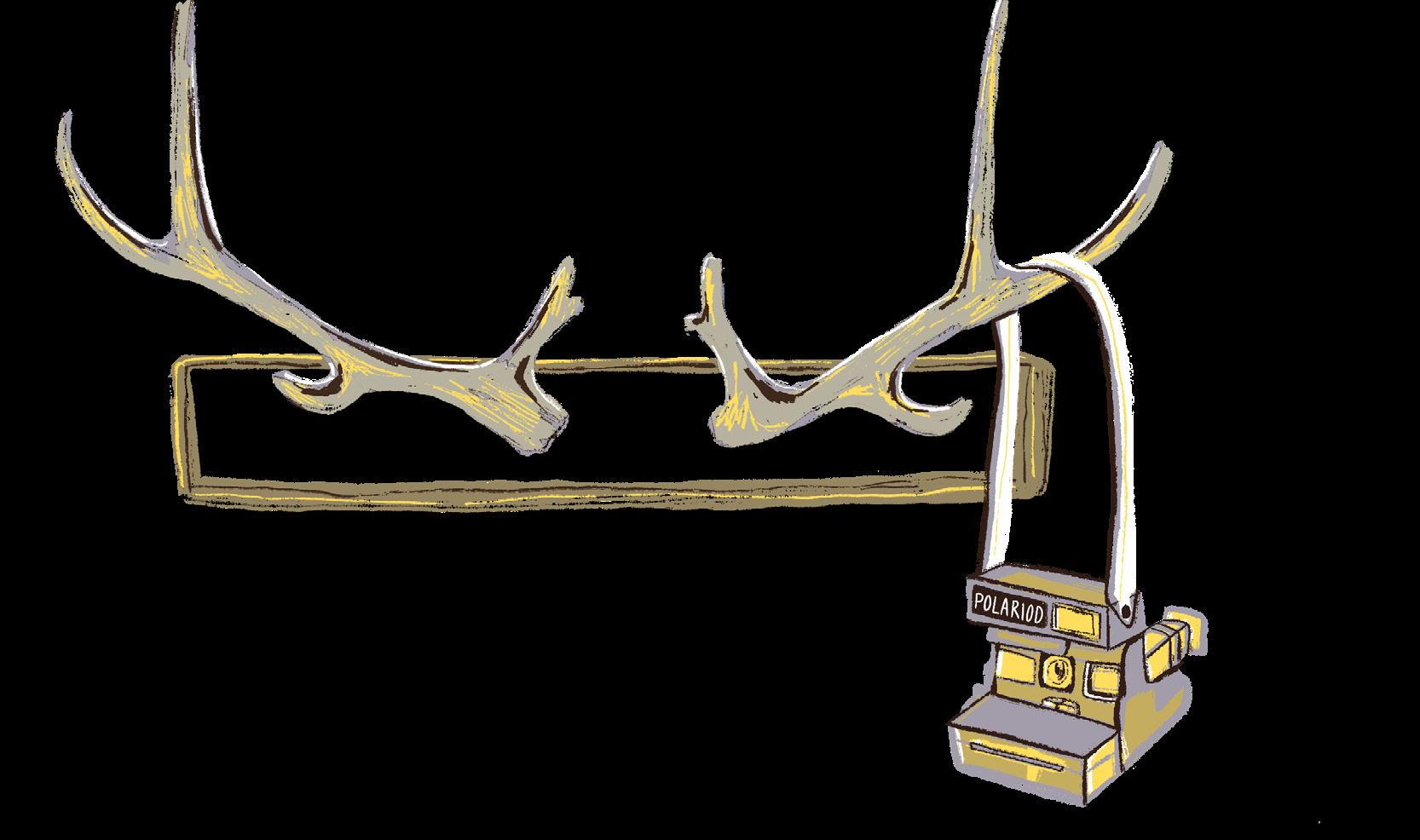
The piece that started his collection, way back when he was a child, is hung in pride of place on his wall—antlers, which now serve as a hook to hang his camera on. George lifts it from the tines to begin taking photos, documenting every detail so he knows who became what and when. Next, he pulls on a patella to open the drawer where his photo albums live, every skeleton labelled meticulously. George slips in the polaroids of Alice next to the ones of Harry, takes out his fountain pen and makes his notes in swirling cursive. He blows on the ink, waits for it to dry, then places it back in the drawer with the care of one handling a small child—or brittle bones.
LUCIDITY
CONTENT WARNING: VIOLENCE
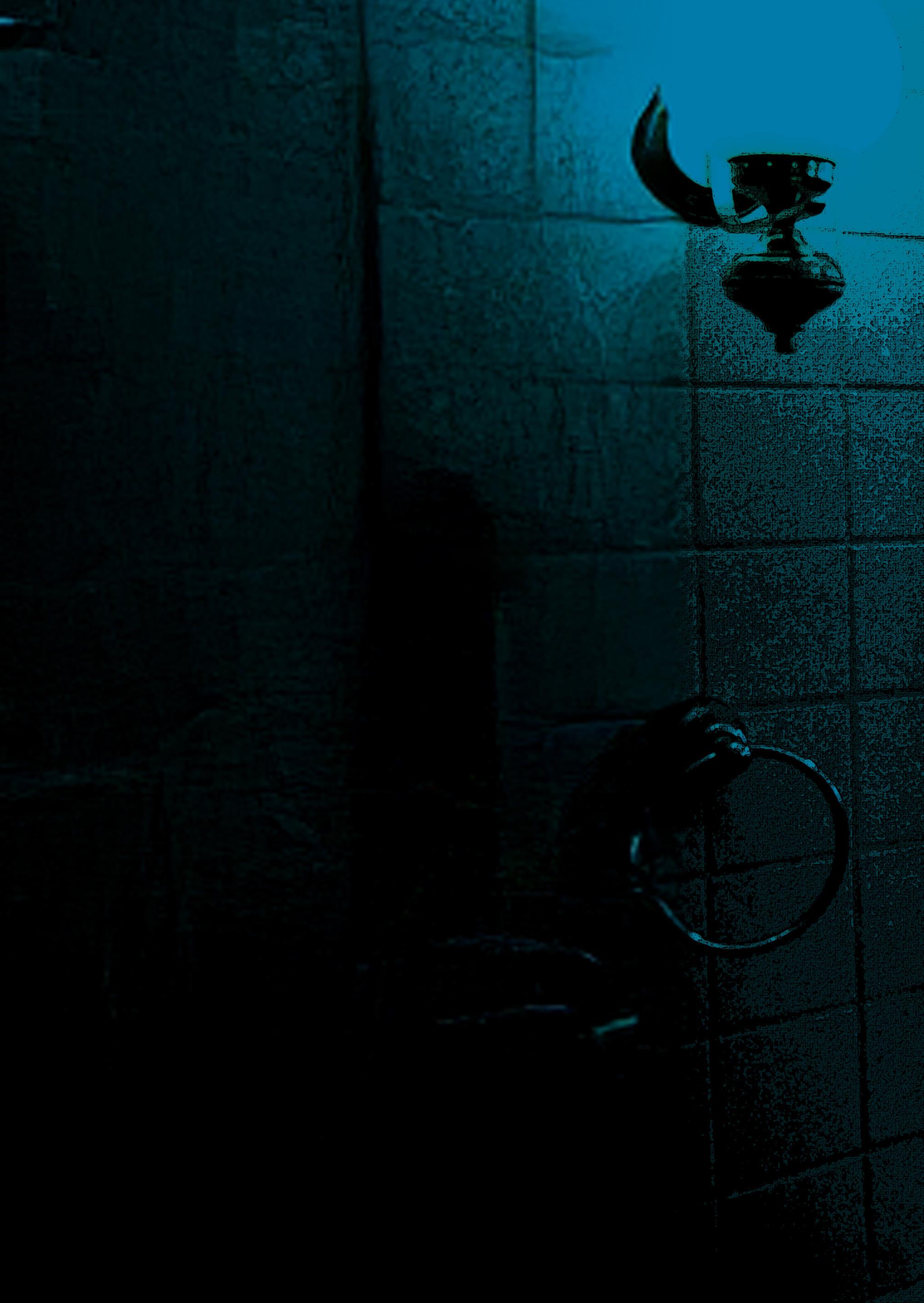
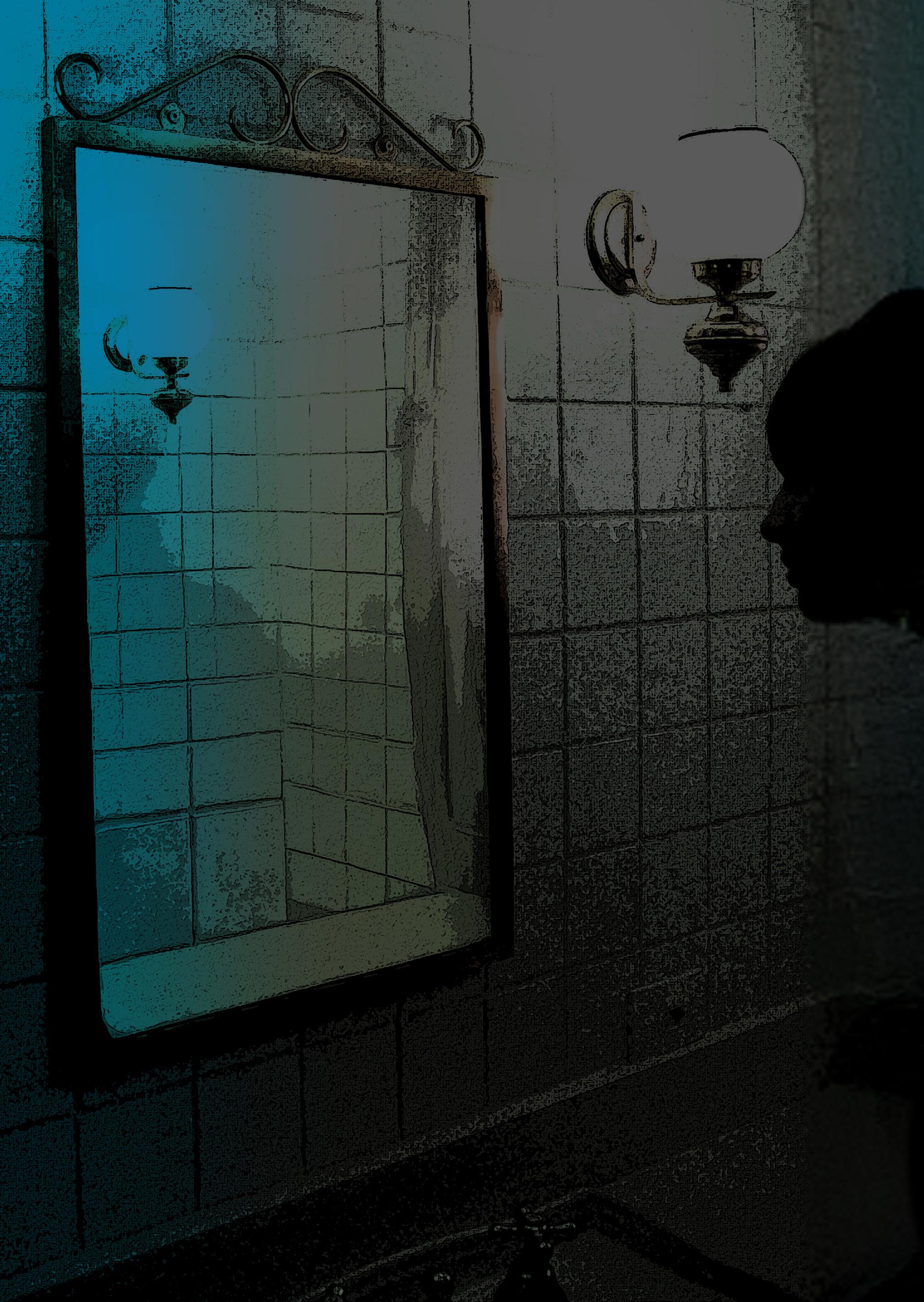
Were the bathroom tiles always blue? Did the light above the mirror always flicker in Morse code? Nancy could scarcely recognise her own home. She lay in a cold sweat in an empty bathtub, her clammy bare skin clinging to the old, greyed porcelain. She tried to look toward her, but her bulging stomach obscured her view. Oh, how she hated that stomach. Little parasite, she thought. It was fine, though: she was almost done; it was almost over.
Nancy jolted at the sound of the bathroom door flying open. She was the only one home. Gingerly, she peered over the top of the tub. No one. Or at least no one she could see. Nancy blinked, and the door was closed once again, locked from the inside, just as it had been before. Just a trick of the mind.
The grout lines between the tiles began to evolve into a new pattern. Nancy’s eyes darted around the walls in a frenzy as the regimented grid of squares descended into a complex labyrinth. Pink. Were the tiles always pink? The shapes of the tiles skewed and slanted, rapidly protruding and sinking from the walls. Nancy gasped and squirmed in the tub as the room distorted around her.
Splash.
A single drop of water from the leaky tap landed on Nancy’s foot. The room returned to normal. Nancy choked out a sob as she slumped back into the tub. Horrible baby, she thought. It was all because of this stupid, stupid baby. She never wanted it. Emile did. He must have convinced her. Tricked her? Persuaded her? Nancy couldn’t remember agreeing to it, though she told herself she must have. After all, here she was with a stomach the size of a basketball. She couldn’t even quite rememberthe conception; it was all too fuzzy. She wished she could have gotten rid of it, but her mother would never have forgiven her. She’d endured this torture for months, and Emile assured her it was all normal - hearing things, seeing things, feeling confused and angry. All normal, he would say. He’d know best; he always knew best.
Tears streamed down Nancy’s face. She couldn’t do it. The thought of birthing this baby was more than she could bear to think about. Just the thought made her as if it were already tearing through her body, mangling and mutilating everything in its path.
It was almost over, Nancy reminded herself. Almost over. The paring knife lay on the edge of the bath. Almost over.
With a quivering hand, she wrapped her fingers around the handle of the blade. Her
eyes bounced back and forth between the sharp tip and her ballooned belly. She felt a protesting kick from inside. It knew what was coming. She rested the tip of the knife on the underside of her stomach and took a deep, shaking breath. It was time to take this creature out. She pressed into her skin, gently at first, then harder, taking more force than she expected, until it finally ruptured the layers of her skin. Epidermis. Dermis. Hypodermis. Straight through. With her free hand, she clutched the edge of the tub, plunging the knife deeper into her flesh as she bit her lip. Blood began to squirt from around the knife, splattering her legs. She prepared for the womb next, just as she had read about. Rectus sheath and muscle. Thick spurts of blood painted her pale skin and decorated the tub. Peritoneum. Her teeth sank into her lip, filling her mouth with a metallic taste. She had reached her depth. She wiggled the blade outward with her trembling hand as she prepared to saw across her stomach. With the first downward saw, she screamed. Up. She howled. Down. Tears streamed down her face. Up. Down. Up. Down. The faster she went, the sooner it would be over. Up. Down. Up. Down. Up. Her tears swirled into the blood. Down. Up. Down. Up. Down. Up. Nancy’s hand fumbled. Down.
Her grasp weakened. Up. Down. Up. Down. She must be almost there. Up. Down. Up. Down. Out. She tossed the blade to her side with a great cry. She was satisfied with her incision. She released her grip on the side of the tub, her fingers painted shades of black and blue from tight squeezing. She eased both hands up to her stomach and teetered her fingers on the gushing incision. She winced as she slipped her fingers in, poking and swirling her fingers around her warm insides as she gently burrowed deeper, easing apart the layers of her body as she delved towards her womb.
White.
Nancy’s arms dropped to her side.
The tiles were white. Never blue. Never pink. They were white. They were always white. The light wasn’t flickering; it never did. Nancy froze.
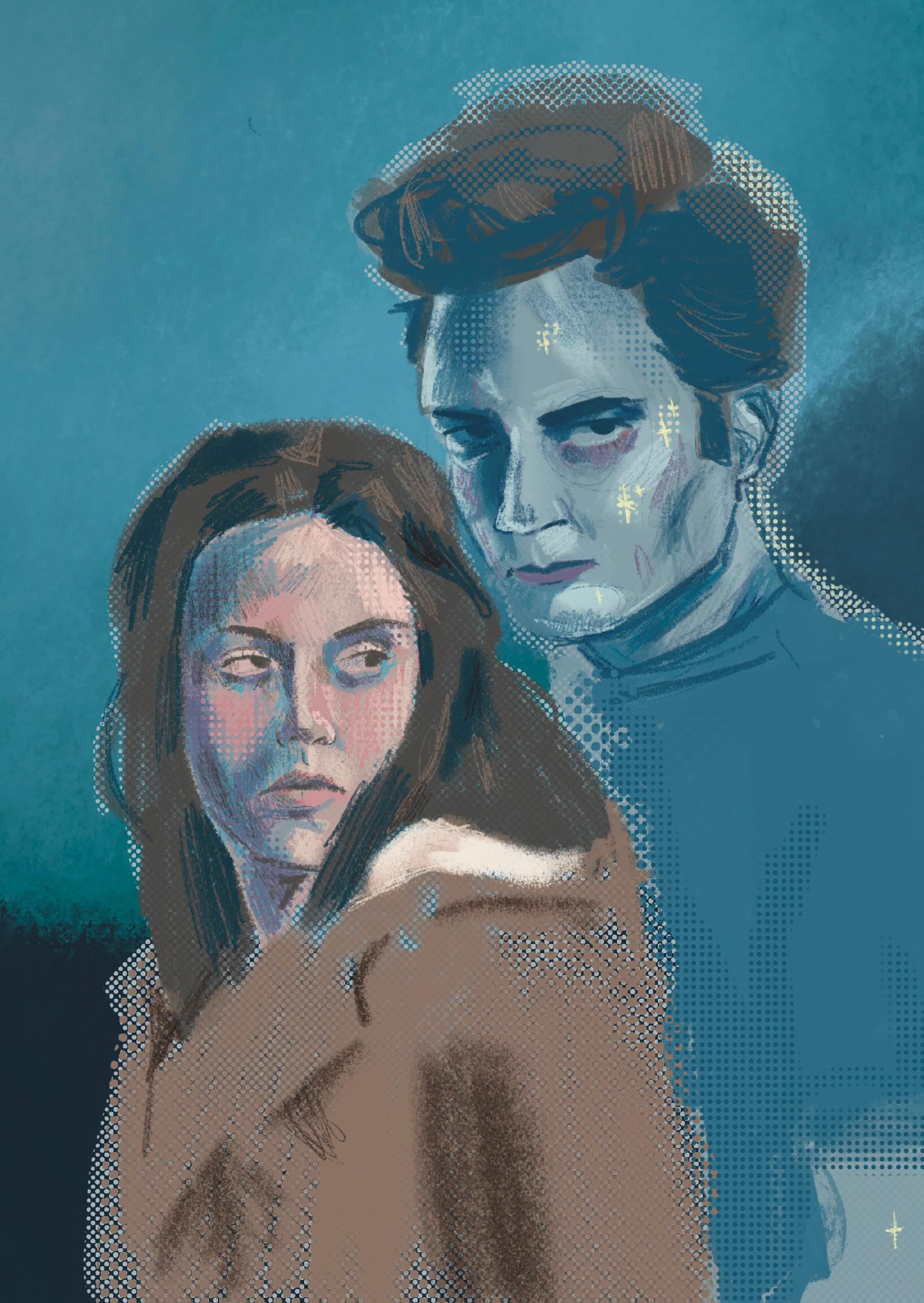
Twilight Is Back in Theatres, Why Should We Care?
For the first time since its initial release in 2008, every film from the ‘Twilight’ franchise is being shown in theatres around the US and UK over the course of 5 days, celebrating 20 years since the initial release of the book in 2005. But with a franchise that has garnered so much hate other the years, why should anyone care about this development?
In recent years with the renaissance of early 2000s media and the death of cringe culture, ‘Twilight’ has secured a spot as a franchise that we once loved to hate but have now grown fond of. The passage of time has caused many of our issues with the series to be glossed over by nostalgia, and the success of lead actors Kristen Stewart and Rob Pattinson has created a feeling of gratitude towards ‘Twilight’ for what it was, and how it developed culture at the time. Both actors can be grateful for what the films allowed them to accomplish in their careers and are now able to hold sentimental value towards them without denouncing it as they previously did during its initial success.
Robert Pattinson, once infamous for hating the franchise, said on ‘The Batman’ press tour only a few years ago that: ‘It’s not even cool to be a hater anymore, that’s so
2010’ Not quite on the same page as his fans, but agreeing that a counterculture surrounding Twilight has begun. It’s easy to say that nostalgia has clouded our judgement, but I would argue that much of the counterculture around ‘Twilight’ is due to a further examination of what purpose media serves and who it is for. Initially Twilight was seen as a project written and originally directed by a woman, made for women and, in particular, feral fantasy loving teenage girls. In the 2000s, misogyny and a culture of hating the unfamiliar was rampant, and ‘Twilight’ was an easy target to tear down, one capitalised by its unique and indulgent concept. However, where we are now as a society, a world in which self-expression is celebrated and women’s desires are championed more than ever before, what reason do we have to write this series off? Why conform to the past of condemning it?
Allow yourself to suspend disbelief even just for a few hours this winter and open your mind to a whole new world of possibilities. Whether you like it or not, ‘Twilight’ is embedded into our generation’s culture, so why not try to embrace this, or at least attempt to understand why it’s important to others?
Design: Ewan Rieley
If I asked you to think of a scary movie, you’d probably conjure up images of Michael Myers or Ghostface, right? And if I were to ask you to think of a scary animated movie, you might picture Coraline crawling away from the Other Mother or even Jack Skellington. However, Halloween and Scream are very different to something like The Nightmare Before Christmas. The former are classic horror and gore, brought out every year at the first signs of Autumn. Nothing you would show a child, unlike the first picks for animated movies. Even though I used the word scary in both examples, when the word animated was introduced, you may have thought of movies marketed towards children. Why is that?
The answer is simple; animated horror is sparse! In the West, animation is very much viewed as cartoons for children; Coraline is genuinely the scariest it gets in mainstream media. Whilst adult animation is on the rise, it’s mostly in the format of tv shows. Some big hits in recent years include Arcane, Love Death and Robots, and Castlevania. Delving into complex characters and storylines, reception to these shows has been fantastic, and exploring adult content really opens the industry to creating more horror animation. Castlevania is probably the most horroresque show listed above, based on the
Japanese video game of the same name. Whilst adult animation isn’t huge over here, Japan have been leading this field for YEARS. Japanese animation (anime) is marketed and loved across all ages and target audiences, so horror is much more common from the East. Not even just gory shows like Attack on Titan and Tokyo Ghoul; movies like Perfect Blue delve into far more disturbing psychological horror.
The outlier in all of this is stop motion animation. Most of the creepy animated movies people can list off the top of their heads are by Tim Burton or Laika, and they’re all stop motion! Besides these films and Aardman Claymation, stop motion has never really been in the mainstream even though it’s done wonders for the medium! If you ever want a truly unsettling, animated watch, stop motion is the way to go. Films like Mad God and The House will truly make your skin crawl. Looking for something niche and artistic? Check out the Quay Brothers. The inherent uncanny valley of stop motion reveals a whole new, underappreciated, side to visual entertainment.
It’s fascinating to see how different mediums of film are perceived around the world, and the demand for adult animation is growing! Hopefully there are plenty of new projects on the horizon.
Til Death Do Us Part
! CONTENT WARNING: MENTIONS OF INCEST
Do we have the power to change our fate?
The Greek tragedy of Oedipus suggests that this may be an impossible task. Our destinies appear to be predetermined by the stars, and we must accept what is to come rather than run from our stories.
The tragic tale of Oedipus begins with a prophecy that foretold that he would kill his father and marry his mother, as the Oracle claimed any son born to King Laius would be the cause of his demise. In a desperate attempt to prevent the prophecy from coming true, Laius and his wife attempted to rid themselves of baby Oedipus. However, this attempt was unsuccessful, as he was saved and raised by the King and Queen of Corinth. Oedipus grew up unaware that they were not his biological parents, until the day he learned of the Oracle’s predictions and, wanting to escape his fate, he left Corinth.
In doing so, he inadvertently drew closer to his real parents, as he encountered King Laius during his travels. This is where the first half of the prophecy comes true, as a quarrel breaks out between the men and ends with Oedipus running the ‘anonymous’ man over with his carriage. Fate, unknowingly, is falling into place.
As he continued his journey, Oedipus solved the riddle of the Sphinx, which had been plaguing Thebes. Creon, the brother
of Oedipus’s biological mother, declared that anyone who could rid the town of the Sphinx would be granted the hand of the widowed queen of Thebes. Oedipus’s victory led him to marry her, thereby completing the horrific prophecy. They had four children together, oblivious to their proper relationship until it was too late.
When the plague struck the city of Thebes, the Oracle revealed that the only way to end the suffering was to find the murderer of King Laius. Determined to seek answers, though he did not want to, Oedipus began to uncover his past. With the merging of Tiresias’ prophecies and the memories of the servants, the truth came to light. His mother, confronted by the horrifying reality of the situation and unable to cope, took her own life. In a state of overwhelming despair, Oedipus blinded himself and went into exile as the shame overtook him. This tale is a powerful reminder that we cannot always escape the future and that some events, such as the beginning and the end of our lives, are unavoidable. Everything that is born must eventually die. Once we grasp the significance and, at the same time, the meaninglessness of our existence, it is then that we truly feel alive.
Transformation of the Night: The Seduction of Vampires
! CONTENT WARNING: VIOLENCE
Pale skin, sharp teeth, and blood—these are the hallmarks of the vampire, yet they have become symbols of dark allure. What is it about vampires that makes them so sexually attractive, even as they embody monstrosity? When I picture a vampire, I first think of ‘Nosferatu’: a grotesque, rat-like figure with pallid skin and a bald head, far from the seductive beings often depicted in popular culture. Even the 2024 adaptation of the iconic 1922 silent film presents him not as an alluring figure, but as a haunting corpse, truly deserving the title “king of the dead.” Other supernatural creatures, like zombies, don’t inspire the same fascination or desire; though both maim and kill, only vampires are viewed through a lens of forbidden attraction. What, then, sets vampires apart and fuels their erotic mystique?
To explore this question, we can turn to one of the earliest and most influential works of vampire literature: ‘Carmilla’, published in 1872 by Irish author Joseph Sheridan Le Fanu. Unlike Bram Stoker’s iconic male Dracula, Carmilla is a hauntingly enigmatic female vampire Set against the repressive backdrop of Victorian society, the novel avoids explicit references to sexuality, yet an undercurrent of sensual tension permeates every page. Carmilla, the mesmerising predator, becomes fixated on the innocent Laura. In stark contrast to the grotesque Nosferatu, Carmilla is portrayed as strikingly beautiful:
“Her complexion was rich and brilliant; her features were small and beautifully formed; her eyes large, dark and lustrous.”
The juxtaposition of her captivating appearance and her predatory instincts creates a compelling contradiction: what makes her so irresistible, even as she embodies danger? Because Carmilla emerged during a time when open discussions of sexuality were frowned upon, so the novel had to be subtle in its approach. Many interpret the novel’s description of a vampire’s bite, as shocking as plunging into freezing water, as a subtle metaphor for hidden sexual gratification. The image of someone sinking their teeth into human skin, driven by desperate hunger and desire, pulses with unmistakable sensuality. This act of biting, particularly when combined with the exchanging of bodily fluids, serves as a potent sexual metaphor. This blurs the line between violence and pleasure, reinforcing the erotic undertones that permeate vampire stories.
The vampire’s “kiss” is much more than a mere bite; it is a ritual charged with blood, desire, and intricate symbolism. In this exchange, the fangs become a potent phallic symbol, turning the mingling of blood into an act bursting with eroticism. This sensual ritual is depicted as even more intoxicating than conventional sexual
intimacy, for both vampire and victim. The surge of euphoric paralysis that washes over the victim as fangs pierce flesh signals a profound surrender of bodily control, an abandonment to pleasure and peril alike. The neck, regarded as one of the body’s most vulnerable and intimate regions, becomes a site of ultimate trust and exposure in this context, heightening the erotic charge of the encounter. It is little wonder, then, that vampires are so often drawn to this tender spot to fulfil their desires. The notion of Odaxelagnia, arousal from biting or being bitten, further intensifies the sensuality of the vampire mythos. While not every bite in vampire fiction is overtly sexual, the association with Odaxelagnia enriches the act’s erotic undertones, deepening the enduring allure and complexity of vampire legends.
Contemporary vampire fiction abounds with examples, yet one of the most prominent in recent media is the TV series ‘The Vampire Diaries’. The narrative revolves around two vampire brothers, Stefan and Damon Salvatore, archetypes of physical attractiveness, charm, and supernatural allure. Throughout the series, Stefan frequently observes that vampirism amplifies every emotion, especially sexual desire, a theme that recurs in their complex relationships with humans. Damon, in particular, embodies a predatory sensuality, heightened by the vampires’ supernatural ability to compel humans To obey their every command. This power is often used for manipulation and seduction, casting a shadow on the otherwise magnetic appeal of
the Salvatore brothers. Their dynamic exposes the darker undercurrents of vampiric sexuality, occasionally veering into problematic territory. Early episodes depict male vampires compelling mortal women into sexual encounters, underlining the troubling power imbalance inherent to their nature. While viewers may recognize the supernatural context, these portrayals invite critical reflection on issues of consent and agency.
It is evident why vampires are regarded as sexually alluring creatures. By embodying the duality of seduction and danger, they captivate audiences across generations. Vampires are forbidden entities, and history shows that the allure of the unattainable is irresistible; human nature is drawn to what cannot easily be possessed.
Words: Sage Cormack
Willoughby Tucker, I’ll Always Love You: A Review
If you have read my previous review of the concept album ‘Preacher’s Daughter’, one would assume things could not get any more tragic for the character of Ethel Cain. However, 2025 brings us to its sister album, ‘Willoughby Tucker, I’ll Always Love You’, detailing the relationships in Ethel’s life, and the lover from the ‘House in Nebraska’, Willoughby Tucker.
Starting off the album is ‘Janie’, named after Ethel’s only friend, who has recently gotten a boyfriend. The immense feeling of exclusion and yearning that Ethel experiences due to the shift in their friendship is all too much, and she confesses that she will ‘...always need more...’ and cannot bear Janie leaving. Pleading that ‘I know you love her, but she was my sister first...’ emphasises the unconditional closeness of their bond and how, despite everything changing, she will wait for Janie.
Inspired by David Lynch’s ‘Twin Peaks’, the first instrumental track, ‘Willoughby’s Theme’ is a soft soundscape that nods to the infamous ‘Laura Palmer’s Theme’.
The sombre mood is redirected by ‘Fuck Me Eyes’, which returns to the more ‘synth-pop’ sound present in ‘American Teenager’. The title refers to the commonly used slang for an intense and seductive gaze, and its use of synth alludes to the influence of the 1981 single, ‘Bette Davis Eyes’. The track narrates Ethel’s
tumultuous emotions towards Holly Reddick, a well-adored fellow classmate who hangs around Willoughby Tucker constantly, to which Ethel assumes he must be in love with her.
She laments on how she will ‘...never be the kinda angel he would see...’ and that she could never blame Holly despite her own feelings of inadequacy in comparison.
Ironically, in the end, Ethel falls victim to Holly’s one fear of ‘...the passenger’s side of some old man’s truck in the dark parkin’ lot...’ in the second act of ‘Preacher’s Daughter’.
Following up with, ‘Nettles’, Ethel daydreams despairingly about Willoughby’s death, fearfully singing how she has ‘...never seen brown eyes look so blue...’ He reassures her ‘... all the time, not to worry...’ and encourages her to dream of growing old together. Ethel worries she will be a burdensome lover as time passes, comparing herself to the nettles and believing ‘...to love me is to suffer me...’ She then foreshadows the events following their separation where Willoughby will ‘...go fight a war, I’ll go missin’...’ and in the end ‘...it makes no difference who held back from who.’
‘Willoughby’s Interlude’ is the second instrumental track of the album, where Ethel and Willoughby’s relationship is in full bloom. Yet, as the song progresses, tension builds in the chords as well as their relationship.
This leads into ‘Dust Bowl’, the title referring to the severe environmental disaster and Willoughby’s fear of weather. Ethel reminisces on the early days and reflects on the mental decline of her lover, and his fear of ‘...the rain by God.’ As Willoughby falls further into paranoia, he hopes that ‘...the wind blows slowly...’, and attempts to soothe himself by ‘...smoking that shit your daddy smoked in Vietnam...’
Willoughby taunts Ethel, asking her if she ‘... swings by her neck with the hope someone cares?’, a direct callback to ‘Family Tree (Intro)’, mocking her open bids for sympathy or rescue from a lineage that caused her harm.
In ‘Knock at the Door’, Ethel continues to watch Willoughby deteriorate, overwhelmed by the trials and tribulations of the real world, and for the first time in their relationship, begins to question whether Willoughby is the solid pillar of strength she had always seen him as. Furthermore, it is implied that
By definition, a tempest is a violent storm, and given Willoughby’s fear of weather, he has become that which he detests. Furthermore, the song loosely references the tornado which hits their hometown, leading to Willoughby’s disappearance. It is unknown whether he lived through the carnage but left due to Ethel’s cowardice or if he died as a direct consequence of the tornado’s path.
It is theorised that the letters to the final and longest track, ‘Waco, Texas’ correspond with the initials of Willoughby Tucker, as it neatly illustrates the dynamic of Ethel and Willoughby’s relationship.
Willoughby attempts to take his own life, as Ethel pleads that she should never have to see him ‘...foam up and bite it on the floor.’
Throughout the final instrumental track, ‘Radio Towers’, and into the following track ‘Tempest’, beeping can be heard, supposedly from a heart monitor in a hospital, foreshadowing Willoughby’s departure from Ethel’s life.
‘Tempest’ is the only song told from Willoughby’s point of view and juxtaposes the way he and Ethel choose to manifest their traumas. He questions whether she truly understands him, that despite all her efforts, she could never truly help him as she fails to acknowledge what he needs.
Captivated by each other, they are blind to the rest of the world and are convinced love can keep them safe. But eventually, the real world comes knocking and despite them both facing this hardship together, there is some disparity on how they approach the possibility of a life together. Ethel naively believes in ‘...Nebraska dreaming...’ and spends time ‘...picking names for our children’ while Willoughby worries about the practicalities of a life they never ended up having.
SADs! The
It is official. The long haul of November to January is approaching, and its (more than) slightly depressing.
How can May to September go so fast but November to January feels as though I’ve lived 8 lives, submitted too many assignments, and am a shell of my former self.
I like to call it ‘the SADs’. If you are lucky enough to not know what SAD means, for us saddo’s it means we get extra morose when the clocks go back (seasonal affective disorder). For me it’s always that November to January stretch.
Don’t get me wrong, there are some good bits to these months- like Christmas and Halloween- but it doesn’t outweigh the fact that it gets dark at 3pm.
And being a student (a fourth year, very stressed one, may I add) sort of amplifies the whole thing. The winter grind is not for the weak. It is an assignment HEAVY time and a big
contrast to the somewhat freedom I felt in summer when I wasn’t working full time.
As soon as November hits, my planner becomes a warzone, and my highlighters turn on the waterworks. I become a Victorian Ghost in the library, mooching off the free heating.
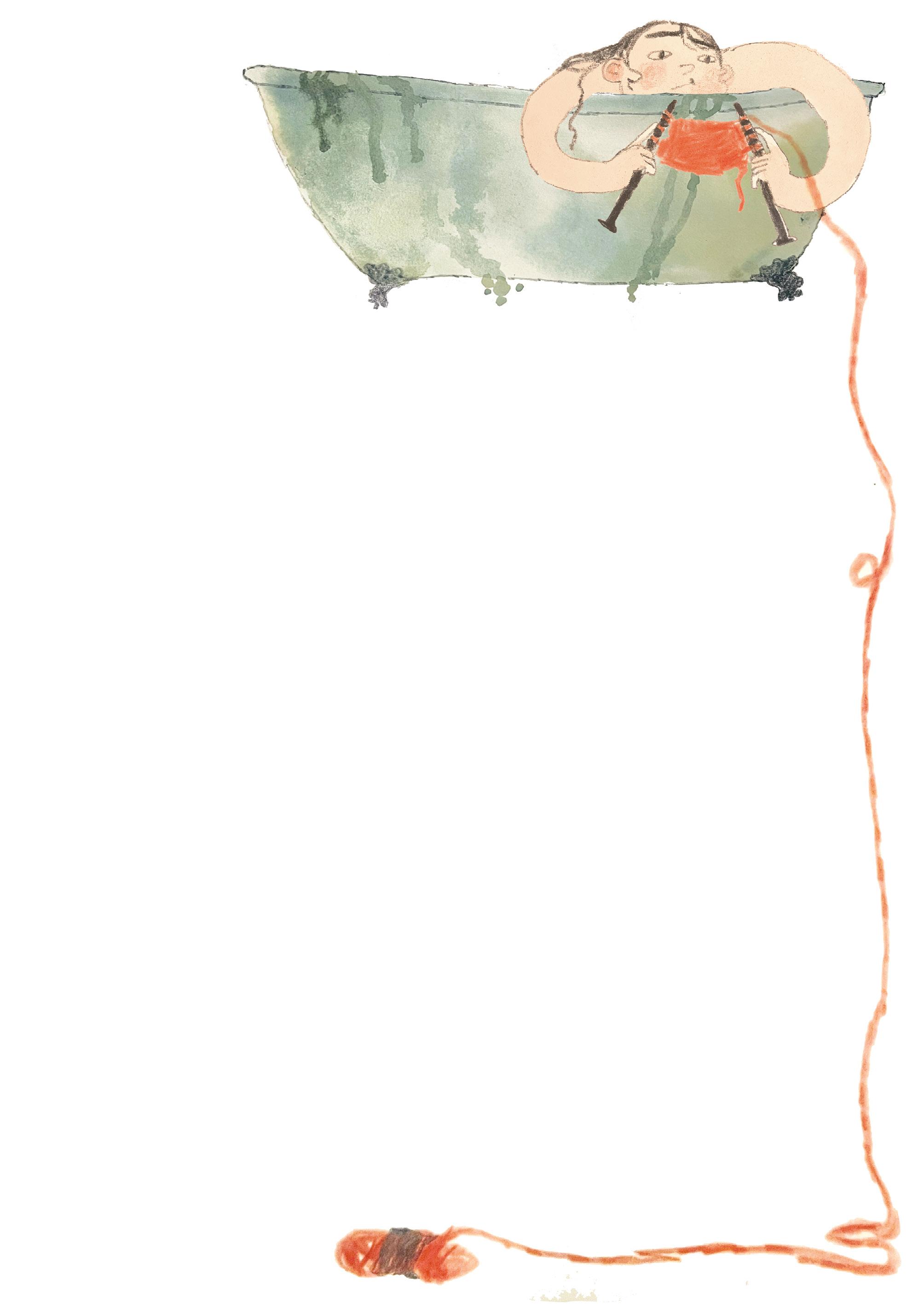
But I've learned that if I can't outrun them, I might as well knit through them.
I think most folk can relate to having the SAD’s and how it really is the trenches.
Maybe I’m just a pessimist but it’s very easy to romanticise this time of year, (I understand for some people it may be genuinely enjoyable) with autumnal and Christmas activities. But whenever I do these, I feel like I’m only doing it, so I don’t get depressed, not because I actually find
any joy in them. Over the years, I have learned how to cope with the inevitable SADs season. Well, ‘cope’ is one word for it, more like embrace it. Now I know that it’s coming every year, I have from September to November to sike myself up for the inevitable dread.
Something that helps is a winter fixation (other than uni work). My mum, auntie, and I all started knitting last year, and I am awful at it; however, it does give me something to do in the winter instead of doomscrolling. I have dabbled in crocheting, but I do prefer knitting.
So yes, the SADs are real, and they’re relentless. But I’ve learned that if I can’t outrun them, I might as well knit through them. Whether it’s bad crochet, ghosting around campus, or surviving on festive snacks and passive-aggressive playlists, there’s something oddly comforting in knowing we’re all trudging through the same seasonal sludge.
From the Trials to the Triumphs: A History of the Witches in Salem
When we think of witches in the typical sense, the thoughts that spring to mind are no doubt ones that involve a pointy hat, broomstick, and lucky black cat.
But how true is this stereotype?
Today, the city of Salem stands tall in Massachusetts with a population of around 44,000 residents. Over October, the city becomes increasingly busy, welcoming over 1 million visitors who are Halloween enthusiasts.
Ironically though, in the seventeenth century, Salem was an extremely religious city, which is what kick started the paranoia and fear over the threat of witches, and ultimately led to the bleak Witch Trials of 1692, where over 200 people were accused of witchcraft.
Modern day Salem tells a different story though, with every second shop in the city selling occult goods, offering tarot readings, and shirts with designs that read “I survived the Salem Witch trials!” When contrasting these gimmicky shops with the grim and gore of the executions, this behaviour towards the trials can be seen to be commercialising and profiting from the tragedy that haunted the city. After all, can it really be considered respectful to promote so much about witches when the victims of the trial were in fact innocent?
Nowadays, Salem is notoriously known for being a spooky, Halloweentown-esque city, which in recent years has become home
to the modern-day witch. Modern witches typically carry with them the classic pop culture stereotypes of Hocus Pocus, Sabrina the Teenage Witch, and even the nasty Wicked Witch of the West. The reality is quite different for most modern-day witches, including the unnaturally high volume of them who reside in Salem.
The view nowadays is to practice witchcraft for positive reasons instead of cursing enemies and praising Satan, due to the belief of karma. This peaceful practise would be completely alien to the chaos and heartbreak which ravaged the city in 1692.
One thing both groups have in common however, is that it is ultimately a lack of knowledge and fear of the unknown which creates the stigma around witches and the supernatural.
The witches of the city nowadays have shown the public the importance of remembering the real victims of the trials, and the need to remain respectful and aware of the tourist traps which continue to haunt the city.
In fact, due to the resurgence of witchcraft in recent times and the education that the witches spread surrounding the trials, it can be argued that this has in fact raised more awareness for the victims of the trials then any museum could.
A Newbie Witch’s Guide to Samhain
When I was younger, my mum told me my granny was a witch. She had an eclectic shop where she sold incense, and she had the chicest sense of style I’ve ever seen. It was only when I got older that I realised this was just because her birthday was October 31st- Halloween. I choose to believe my granny was a witch, and while I don’t claim to be a witch, I find there’s something nice about the little ‘witchy’ practices that help to keep me going, especially as the days get shorter and the weather, colder.
For those who don’t know, Samhain is Halloween. It’s a pagan festival that marks the end of the harvest season and beginning of the darker months. If you want to feel in touch with Halloweens routes, or want some whimsy in your life, here’s some simple practices to help you do just that!
1. Pumpkins
An obvious Halloween practice, but a lot of the pumpkin is often neglected. There are numerous recipes online with different ways to use all the pumpkin to try avoiding waste. If you’re not a fan of pumpkin seeds, consider cleaning them off and leaving them outside for the squirrels. By using all the pumpkin not only do you feel more environmentally friendly, but you also give back to nature! If you really want to be traditional, you can use a turnip instead too.
2. Tarot Cards
Another, this time clearly witchy practice, is tarot card readings! Something easy I like to do is shuffle my deck and pick one card that feels right. I’ll look up the card’s meaning and then journal about how it may relate to my life at present and reflect on what I should keep in mind during the next few days. It is a simple 30-minute activity that leaves you feeling mindful and optimistic for the days to come.
It’s
a pagan festival that marks the end of the harvest season and beginning of the darker months.
3. Forage
One of my absolute favourite pastimes is foraging. I think the best and easiest way to feel more ‘witchy’ is to bring some of nature home to you! I like to walk around Victoria Park or the Botanics and pick up whatever things strike me as interesting. I like to pick up conkers, acorns, twigs, and leaves; anything that grabs my attention. I’ll draw them or make decor with them by leaving them around the flat. Leaves can also be preserved in beeswax and made into garlands.
A brilliant book where you can learn more about the Celtic Wheel as well as little practices to be more connected to other Celtic seasons is Slow Seasons by Rosie Steer.
Memento... Hairy? - The Resurgence of Victorian Hairwork Jewellery
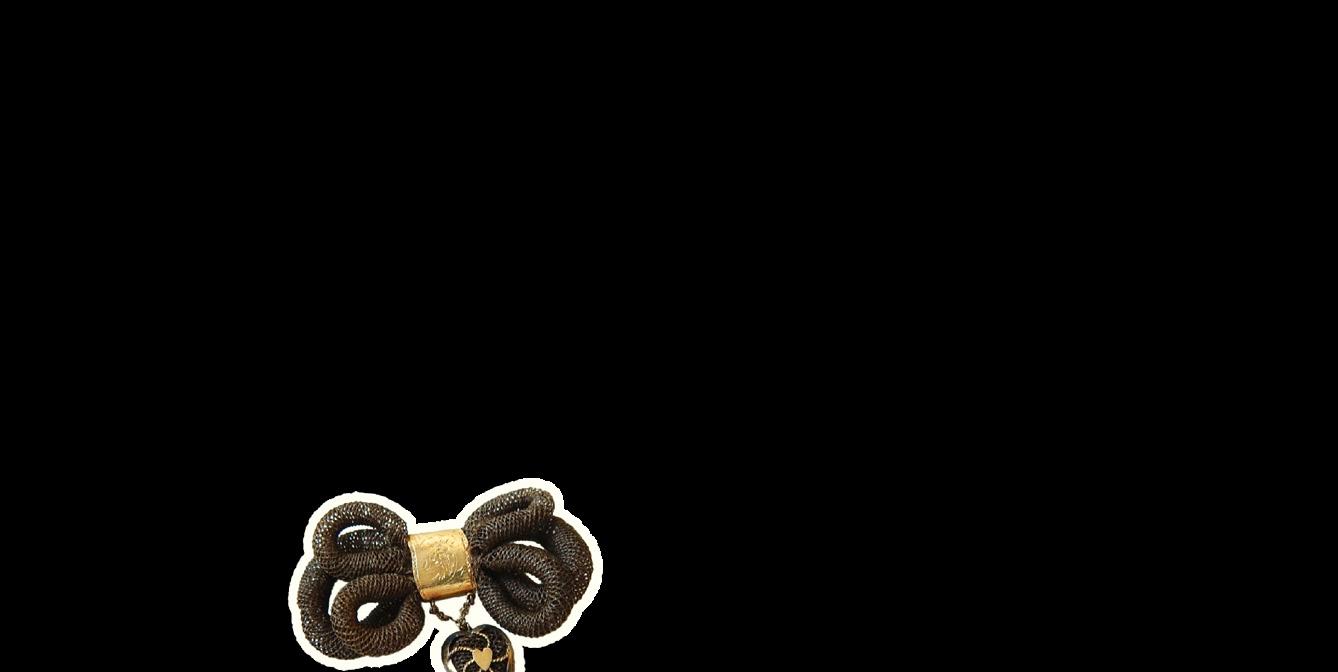
Due to the high rates of infant mortality and the low life expectancy of the general population Victorians were no strangers to death. As was often the case, recorded fashion trends, for what they were at the time, tended to be set by the ruling classes, especially the royal family. Queen Victoria famously wore mourning garments, for 40 years after her husband, Prince Albert’s death. Mourning practices, especially for the upper classes, became an excuse for ritual and pageantry, a fascinating feature of which was jewellery or other mementos made from the deceased’s hair. The hair was often woven into intricate designs and incorporated into brooches, earrings, cuffs necklaces and even elaborate wreaths. The artworks acted as a tangible memento of the deceased which could be kept close to the loved ones and displayed to others.
Many modern hair-workers adapt their designs from an American hair-working guide compiled by a Mark Campbells entitled the Self-Instructor in the Art of Hair Work, Dressing Hair, Making Curls, Switches, Braids, and Hair Jewellery of Every Description. (images below) The guide contains guides, diagrams and instructions on braiding patterns and styles of jewellery and accessories the braids could be made into.
Words:
The guide’s popularity was broad reaching and long lasting, as examples of the designs still survive in museums and private collections today.
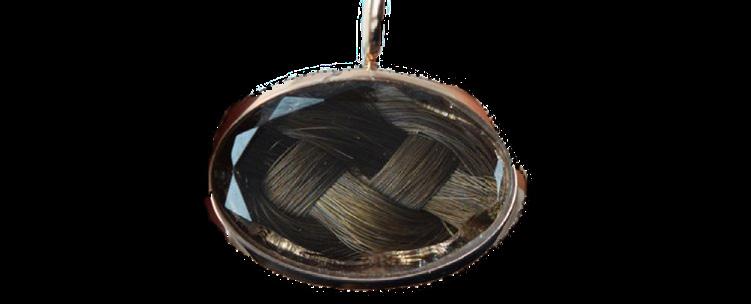
Margaret Cross is a hairwork artist from Brooklyn, New York who crafts memorial jewellery for her small business Love & Loss by Margaret Cross. The artist was inspired to begin making mourning Jewellery in order “to navigate life after profound loss, the sudden death of her best friend,” after which “she found a deep affinity to mourning jewelry and its connection to others coping with death and the grieving.” She creates mourning jewellery from loved ones hair, encasing it under handcut crystals to preserve the intricate braiding, allowing it to stand the test of time.
Margaret Cross’ Website: https://www. mourningjewelry.com/our-roots
Braided hairwork pendant courtesy of Margaret Cross
The resurgence in the craft’s popularity is for a number of reasons, one of which is the ever deepening fascination with the vintage and historical. The gothic and macabre stylings of the Victorian era. Due to the hyper industrialisation of our modern, western environments, the immediacy of access to manufactured goods has dulled the value which we place on items like jewellery and clothing. This very tangible form of sentimental accessory requires, forethought, time, and care to produce and leaves behind
Would you wear hairwork jewellery?
exe c check
President, Tánaiste:
My role is to encourage you – yes you, reading this! – to believe in your collective power. There is so much good work that students do, and I think we don’t give ourselves full credit for it, but we absolutely should.
I would like to give a particular shout out to SolidariTee which was formed just this semester. Raising awareness of and funds for refugees is important work at a time when far-right misinformation is rising. Most of my weekends now include a counterprotest in response to far-right harassment of Dundee’s own refugee community. There is so much good community that we are all creating and so much we can all do. No one is too small or unimportant to change the world. Here’s a secret: all the big changes in the world happened because lots of “small” and “unimportant” people were doing a lot of little things.
Much of my time is spent responding to the effects of the cuts across the university. Students should not pay for the financial mismanagement of the university. Though DUSA is doing everything we can to protect students, the real power lies with you. This is why we have surveyed you for your experiences of the cuts.
Your voice is important. Your coming together is crucial. I look forward to working with you. The University has still not committed to reversing the 34% cut to your student’s association. We are engaged in conversations with the Scottish Funding Council, the regulator for universities, around stripping universities of its right to under-
Tánaiste, DUSA President
resource students’ association and instead make it a legal requirement for student associations to be properly funded.
We are in close communication with the campus trade unions and understand that their struggle is largely our struggle as well. Unlike my predecessors, your President is taking a strong stand alongside staff who recognise correctly that collective action is the best method of defending our right to a properly funded education.
the execs:
VP for Academia, Ramya:
One of my proudest milestones was the Academic Skills Week (6–10 October). In partnership with the Library Team, Academic Skills Centre, and Education Development Team, we hosted workshops, drop-in sessions, and skills sessions designed to boost study techniques, research skills, and academic confidence. The event saw an incredible level of engagement, with students sharing how these sessions helped them navigate their coursework with greater ease and motivation.
We also launched Employability Week in collaboration with the Careers Team. Taking place in the second week of October, this initiative focused on career development, networking, and industry insights, equipping students with practical tools to build successful pathways beyond university.
Externally, I’ve collaborated with partners like online English tutor Usha Mani, the Sports Union, and Abertay Student Association.
VP of Student of Wellbeing, Ruby:
The past few months have been a busy and rewarding start to my time as Vice President of Student Wellbeing. July was all about settling in and meeting the many student support teams across campus, from the Enquiry Centre to Student Support and the Advice and Support Team, and beginning preparations for Freshers’ Fair, including the always-popular dog therapy sessions. We also launched work on improving accessibility through awareness of nonvisible disability lanyards.
In August, I organised GBV and Safeguarding training for the Executive Team and attended Wonkhe Student Union training to strengthen our leadership and advocacy skills. I continued volunteering with the Campus Pantry and began building partnerships with the Dundee Sexual Health Society (DUSH) and the Sports Union.
September brought Freshers’ Week a huge success thanks to the whole Exec Team. We launched the weekly Wellbeing Wednesday emails, collaborated with DUSH on Sexual Health Awareness Week, and worked with External Relations to support international students.
Looking ahead, November will feature a Movember Campaign with the Sports Union to raise awareness of men’s health, followed by December’s Exam Stress Relief events and new weekly Friday drop-ins in the Global Room.
VP for Representation, Kyle:
The SRC is up and running thanks to the work of the chair Callum and our Representation Manager Kellie.
VP of Student Activities, Tom:
The VPSA alongside our societies officer Dani has delivered well-attended training for societies. Sorting out the teething issues of the new digital system and responding to queries in between his many academic deadlines.
which bring me joy cheered me up and brought a spring back to my step.
Questions Perhaps No One Can Answer
I am a very literal person. By this, I mean I need definition, I need reason, I need justification. When I feel any sort of emotion, happy or sad, I cannot make sense of how I feel or reflect properly upon it until I have made a list in my head of what happened, what it means, and how I should feel. Only then am I able to begin understanding how I actually feel.
I think these things through when my mind gets a chance to stop; when I go for walks, when I am driving, before I go to sleep. The result this brings, is are lists. Lists of scenarios I’ve whittled down into categories of making me happy, angry, sad, jealous etc.
On one of these walks -during a very turbulent week, might I add- this aforedescribed stream of negativity became tiresome, and I decided the way forward was to focus only on the good. this sounds like an improvement, right? Unfortunately, this did make me feel better. Focusing on things which are going well in my life, and
You may wonder why I am describing this matter as unfortunate. I’ll tell you in just a minute. Firstly, I need to be honest, in clarifying with you that I had to look up the definition of what the theme of this issue is; macabre. The most consistent answer I could find was fear of death. I began thinking about what this means to me.
I don’t believe that I am scared of death. As a philosophically inclined person, I’m actually excited to see who was correct about the afterlife. Instead, I tend to concern myself more with the life I’m leading now, specifically with what I can do to make it the best it can be. So, I don’t believe that I am scared of death, but I do believe I am scared of getting to the point of death and having regret.
Obviously, regret is natural, a part of human existence. We can’t always make the correct decisions which will bring us the most happiness. There has to be wrong to know what right is. I suppose I just find it… an unpleasant thought.
This is my reasoning for disliking the idea of solely focusing on the positive aspects of life. Convincing myself I am happy in situations which I am not, does harm only to myself. Standing in an eternal queue for an artist I do not want to see, just because I managed to get the tickets, only wastes my own time.
Avoidance, ignorance, tunnel-vision. Whatever term you’d use. Won’t practicing these poor values make us more likely to
make the wrong decisions for ourselves? I would say they do.
How are we supposed to do it, then? Which way brings more happiness? Shall I focus on the things that make me happy whilst keeping the bad tucked away, or let myself be present and aware of the reality which surrounds me. I suppose the phrase ‘ignorance is bliss’ is a popular for a reason. Sure, it’s easier to pretend that everything is alright, but tell me who wouldn’t prefer an easy life?
This crisis is similar to the questions Aristotle spent his life trying to answer. You may have heard of the Greek term eudaimonia. For Aristotle, this term means ‘flourishing’.- Within yourself, and within your life. It means the highest human good;, achieved only by fulfilling your life with virtue, reason, and purpose.
But Aristotle also admitted that complete eudaimonia depends partly on external factors, like health, friends, fortune; Due to this, we can’t fully call someone happy until their life is complete. In other words, only at the moment of death can a life be judged as truly “good.” Ultimately, Aristotle has no choice but to leave the final verdict -whether a life was ultimately good- to time itself.
Well, if Aristotle couldn’t reach a definitive consensus, I don’t expect myself to. This is a question we may have to leave to subjectivity, opinion, or belief.
I am a very literal person. I dislike questions which we have to leave to subjectivity, opinion, or belief. Sometimes it’s something I cannot change, and somehow, I have to learn to be okay with that.
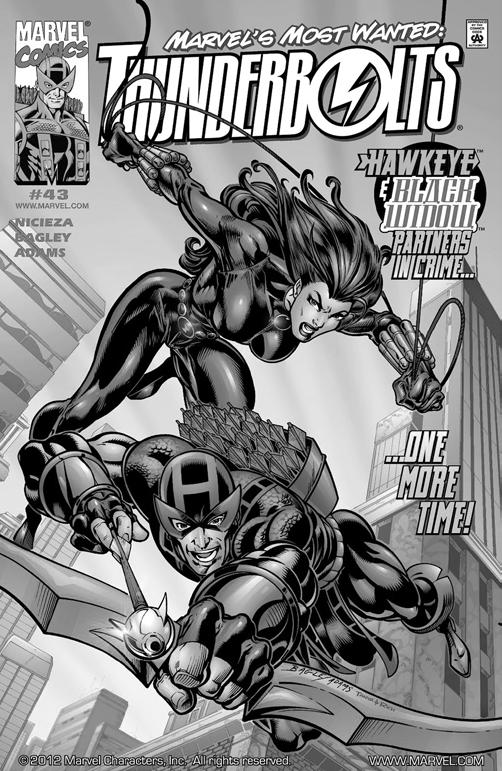
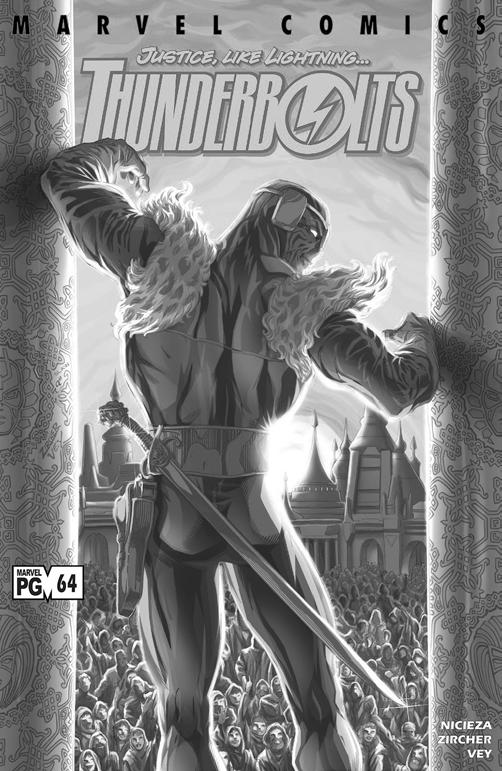
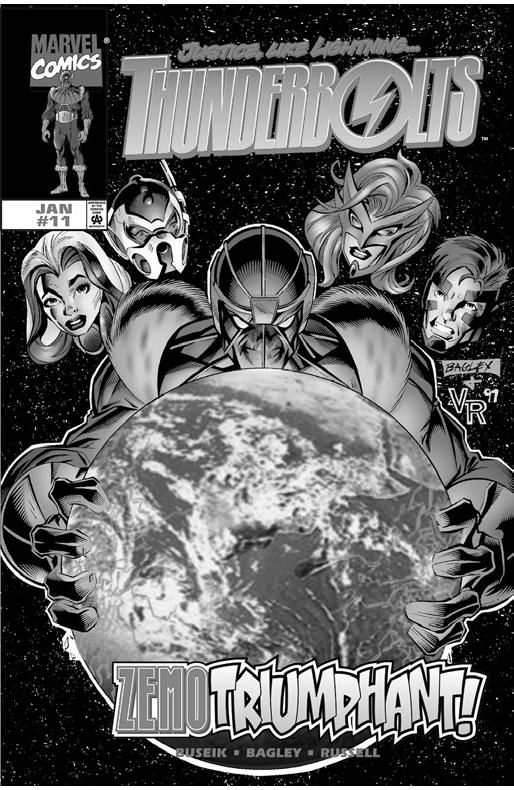
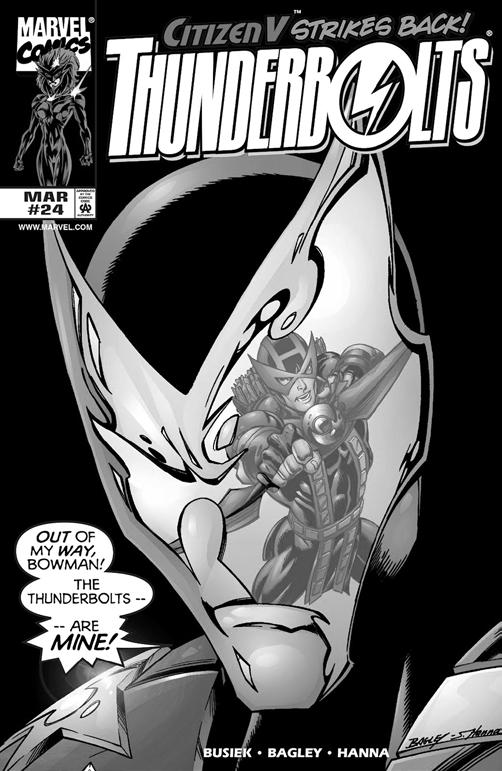
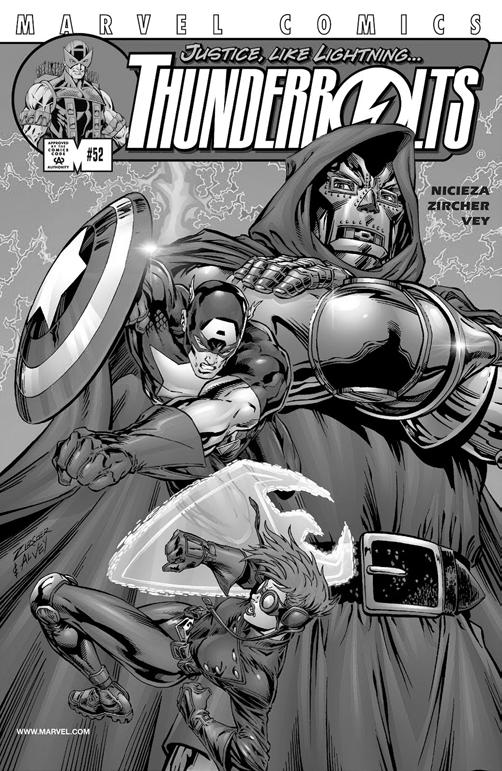
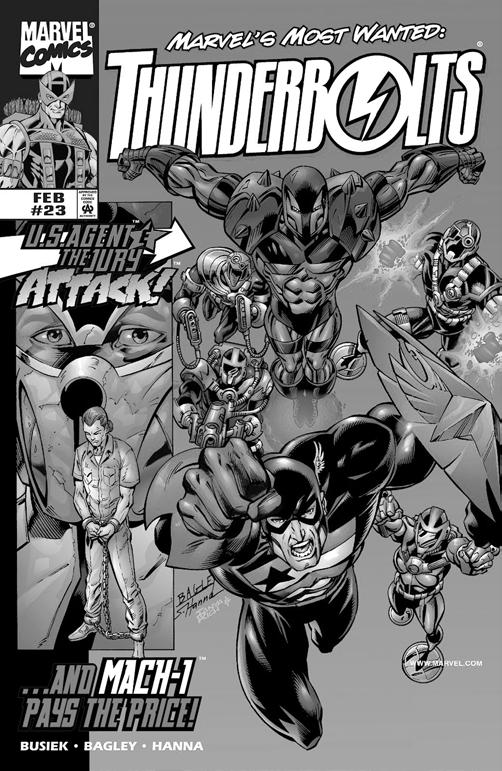
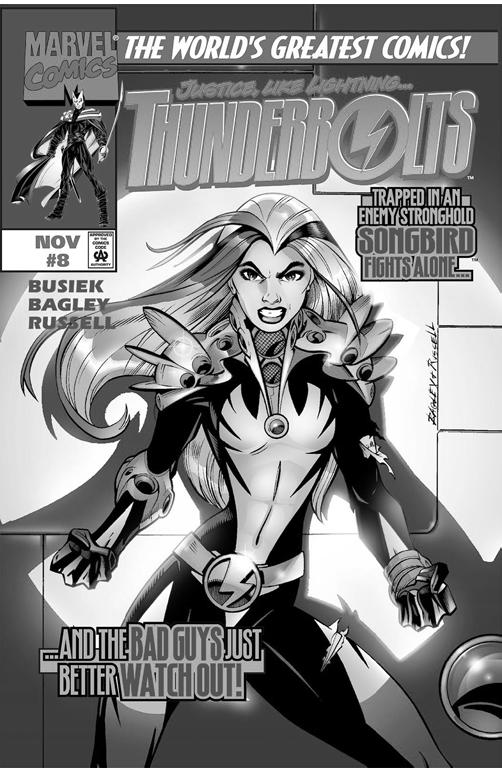
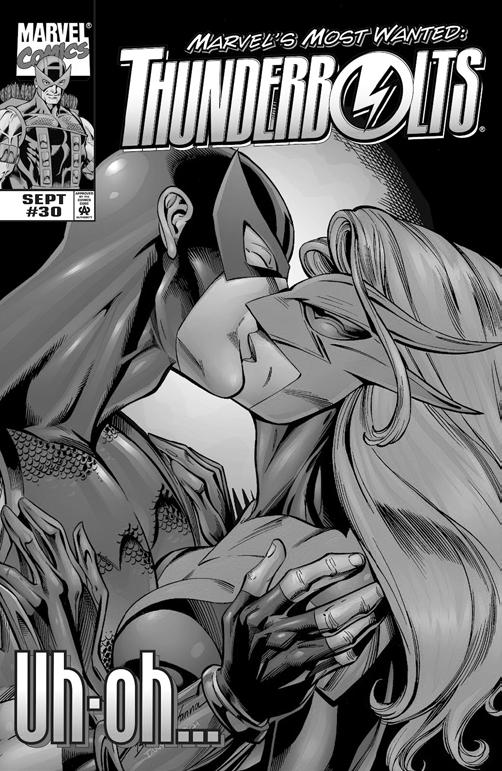
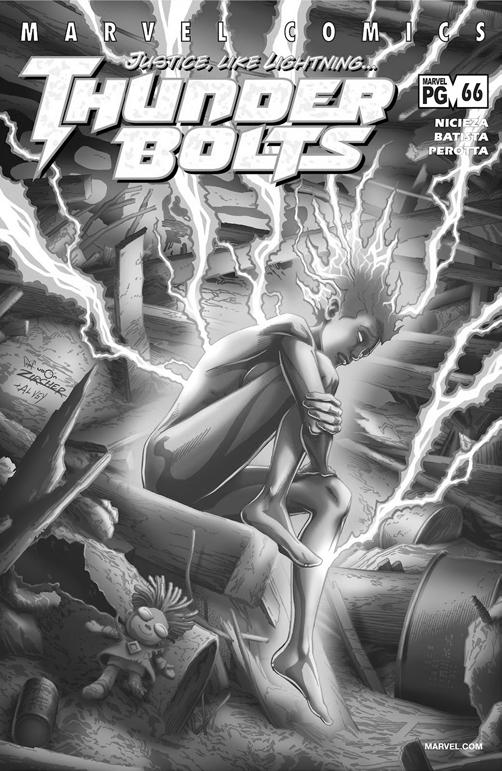
The Issue with Comic Book Movie Adaptations (And How Thunderbolts* Solved It)
Despite comic books in general being considered a medium, superhero comic books of the “Big Two” companies (aka Marvel and DC) can be classified as a genre in and of themselves. Things like characters having uninterrupted continuities that can date all the way back to 1940s, and having these stories historically being aimed to an audience of young children, gave comic books a deserved notoriety for including very bizarre, incomprehensive plotlines that need 40 years and 200+ issues of story context to understand.
This fact became a poignant problem ever since a chain reaction set off by multiple successful movie projects in the early 2000s made superhero movies a cultural phenomenon.
A question of how faithful these movie adaptations were to their source material was repeatedly brought up in comic book fan spaces whenever these movies were discussed. However, as a comic book fan myself, I have to say that there is no way to make these movie adaptations completely accurate. As I laid out before, the uniqueness of the genre is simply not a good fit for live action adaptations, where most audience’s suspension of disbelief will have much stricter limits in comparison to what comic books can get away with.
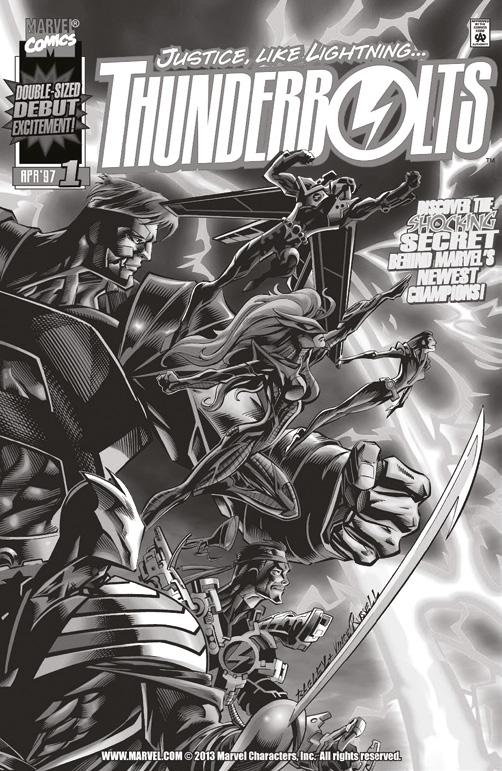
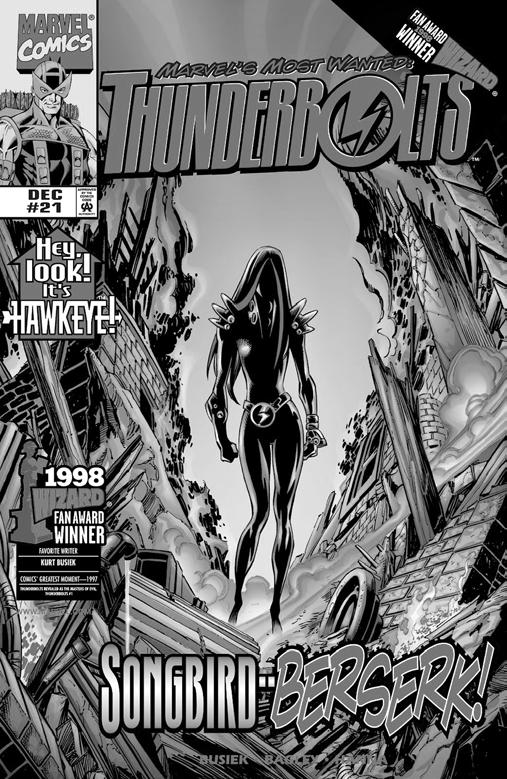
Which is why I believe that Marvel’s recent movie Thunderbolts* is a perfect blueprint to how comic book movies can be made. Rather than trying to be completely accurate to its source material, it chose to be accurate to the source material’s spirit and core themes. The original comic book run of Thunderbolts starred preexisting antagonists of well-known superheroes, who disguised themselves as heroes for their own personal gain, but ultimately resulting in some of these false heroes changing and reforming. Meanwhile some later Thunderbolts runs leaned into more of a plain anti-hero angle. Whilst not using the same characters as the comic, the movie made a fun twist on both of these premises. It took characters from Marvel’s previous cinematic projects, who were all either morally grey side-characters or antagonists, and showed us their emotional complexity and desire to do good, whilst keeping a bit of moral greyness in their ending by having them chose to go along with the villain’s final scheme of announcing them as her new superhero team instead of binging her to justice.
Whilst this is not the only way of making comic book adaptations work, Thunderbolts* makes a strong case for more theme-based adaptations over complete accuracy, which at the very least is something worth considering.
Noah Kahn, slow walkers, and that one nurse who works in my hometown GP surgery. These are just a few people who I irrationally dislike. Often, when a new set of people appears on my internal shit list, I often experience a deep irk that bubbles under the surface when I encounter them. My friends find it amusing that whenever a Noah Kahn song pops up on a playlist, I immediately roll my eyes and proclaim ‘God, not him AGAIN!’ It has become an instinct.
Why? For this loaded answer, I must turn to Irish country-pop heroine CMAT and her song ‘The Jamie Oliver Petrol Station’. If you have listened to this song-rant then you will be aware that the song does not actually describe her dislike for the English TV personality and cook, but her frustration of how she jumps to conclusions about people that serves no purpose in her life. One line in her song captures this feeling perfectly, “I’m saying, Ciara, don’t be a bitch.” This excerpt from her song encapsulates what runs through my head whenever someone states they love Taylor Swift or went to Disney Land as an adult without any children accompanying them.
These judgements often hinder my ability to engage with people on a level playing field and leave me feeling like an absolute dickhead (which, let’s be honest, I can be at times).
In my defence, my annoyance is usually justified by my robust sense of what is right and wrong (let us remember that morality is subjective). Taylor Swift, for example, is engaged to a boot-licking fascist.
‘Let any of you who is without sin be the first to throw a stone’ (my presbyterian upbringing is rearing its head now). I am sure that I have my numerous annoyances that irritate my fellow haters; I’m an insufferable know-it-all, incredibly impatient and have a deep-rooted love for trash media. I can hardly call myself a music purist when I regularly head bang to Midwest emo and Material Girl by Saucy Santana.
So, am I an absolute raging bitch or just merely a run-of-the-mill hater? I will leave that to you, dear reader.
Please submit all answers to editor.in.chief@dusamedia.com
Do these interests capture someone as a whole? Absolutely not but I cannot help but push down the instinctive eye roll and huff that follows a declaration that someone went to see Taylor Swift three times during her Eras Tour.
Words: Mollie Hall
The Weight of the West:
Exploring Death in Red Dead Redemption 2
This article contains major spoilers for the plot of Red Dead Redemption 2
“Face me to west so I can see the setting sun & remember all the good times we had”
moment for the player! The storytelling is incredibly done, you play the game as him and experience so much through his eyes. He’s a character that feels so human, he is a flawed man that seeks to better himself by the end.
Arthur Morgan dies from tuberculosis which he contracts near the start of the game. Most players don’t know right away that he has TB, yet during the game his illness becomes more and more obvious. His body starts to crumble; he coughs and becomes increasingly frail as the game goes on which lets the player know that his death is inevitable.
The majority of people who play video games can name a death from a game that really stuck with them. Maybe for personal reasons or maybe because of the way in which it was executed through the use of the atmosphere, the story and so much more. Video games can tug on the heartstrings of the player; the death of a beloved character does this more effectively than anything else. The loss of a character in a video game can stick with you. It can really make you put down the controller and reflect on what occurred. Video games are really the only form of media that can truly make the player feel this way.
I remember the first time I completed the main part of Red Dead Redemption 2 stumbled into my mum’s room with tears streaming down my face, it felt like they would never end! All because the main character from that game had died at the end. Anyone who has played RDR2 will know how impactful Arthur Morgan’s death truly is. The game sets up his death perfectly which creates such a powerful
Even though his death is unavoidable and we know it is happening, why does it hit so hard? Why do so many players find his death so upsetting? It is mostly due to the time that you spend with the character and the relationship you build up with the world due to spending so long playing as him. If a player only wants to really complete the main story of this game, it’ll take them around 45 to maybe 50 hours, but as the average player explores and does much more in the vast open world it’ll take closer to 80 hours. These 80 hours can even turn into over 190 hours if you want to 100% complete the game. I spent way more than 150 hours on my first play through,
and the majority of that time was spent interacting with the world in the game, doing side quests and exploring as Arthur. I was nowhere near to 100% completion during my first playthrough! The length of time that the player tends to spend in the game really helps to flesh our Arthur as the player connects with him, spending a lot of time exploring this fictional world.
Far later in the game, when we are aware that Arthur’s death is inevitable, we experience a tough conversation that he has with a character named Sister Calderón, in which Arthur allows all of his built-up pain to flow out of him. This is the famous conversation where he tells her about his life, the wrong he’s done and the most important part of all...
“I guess I... I’m afraid”
This line from Sister Calderón highlights the ending of the game when Arthur sacrifices himself for John Marston, a man he views as his brother. He finishes his life by doing a loving act, he dies watching the sunrise and the music kicks in, displaying his change in character and his desire to become a better man. There is something so human about all of this, his character is more raw and touching than any other I’ve encountered in fiction. Maybe that’s why his death impacts the player as much as it does.
This line is delivered with such fear and sadness. It connects with the player as we are all afraid of what is to come. Life is unpredictable yet we live and love, we carry on. The raw emotion that exists within the line delivery in this game really helps to emphasise the death of Arthur; the buildup, the regret and so much more that he experiences can be felt in his voice. Later in the game, when Arthur is arguing with his father-figure, Dutch Van Der Linde, right towards the end, he states, “I gave you all I had, I did”. A line that truly connects with the player who has seen Arthur give his life for Dutch and the outlaw gang they rode with, a touching line to end the game on.
“Take a gamble that love exists and do a loving act”
Meet the Team!
Senior Team
Editor-in-Chief
Molly Wilson
Creative Directors
Ayla Ahmed
Heidi Le
Section Editors
Arts & Culture
Sage Cormack
Lifestyle
Dep. Editor-in-Chief
Eva Milne
Creative
Subashini Thangadurai
Opinions
Holly Flynn Lucas McCall
Creative Team
Featured Artist
Keira Molloy
Illustrators
Agne Irbe
Ellen Kao
Iman Cinjarevic
Mia Duffy
Quintana Beattie
Wen Xi Kong
Cover Design
Featured Photographer
Eva Milne
Photographers
Jesslyn Lesmana
Nyle Walker
Mollie Hawkes
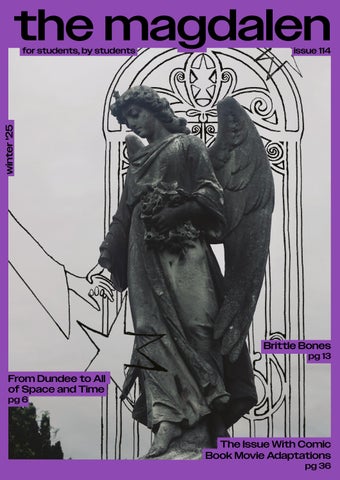
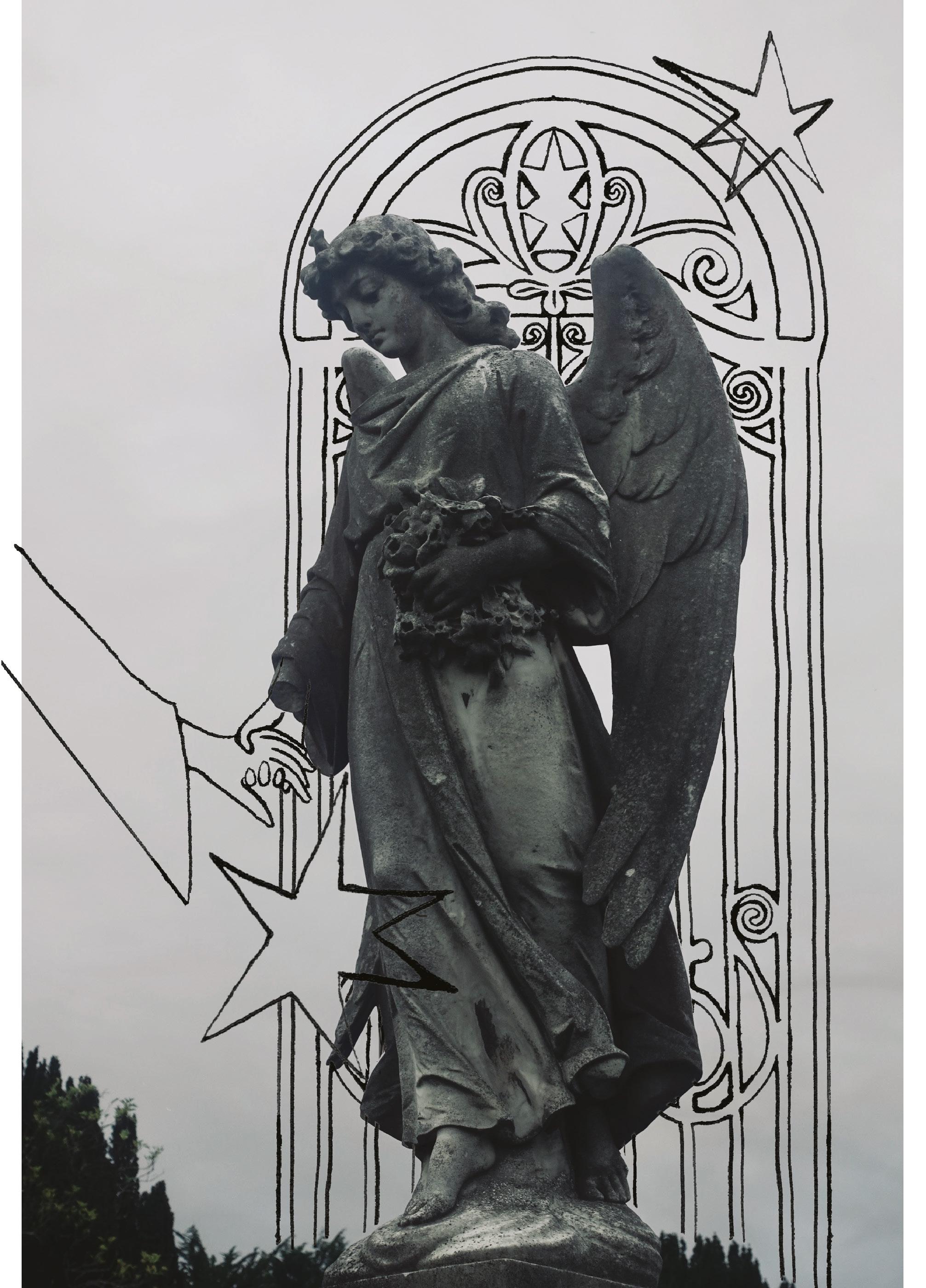
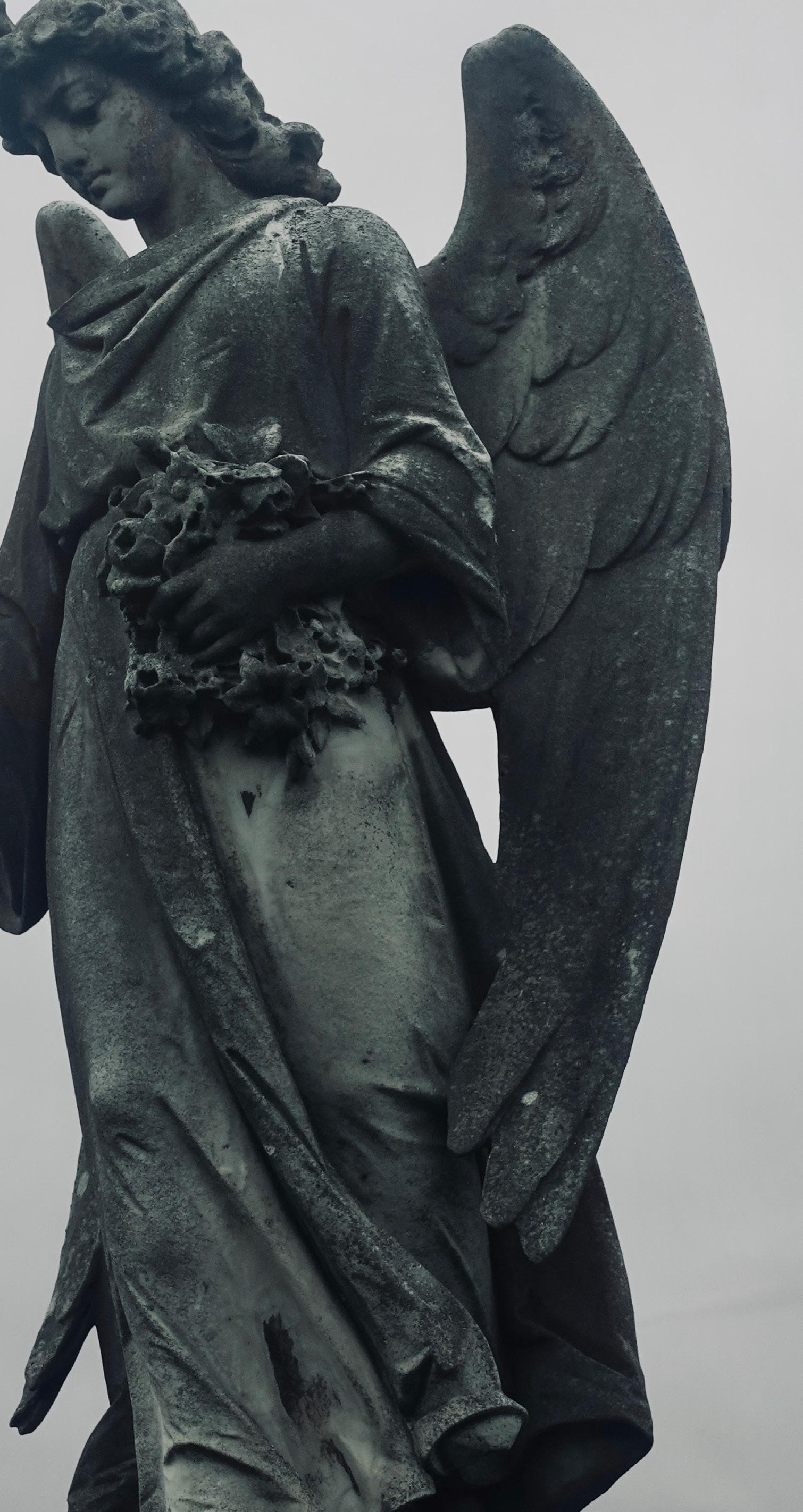
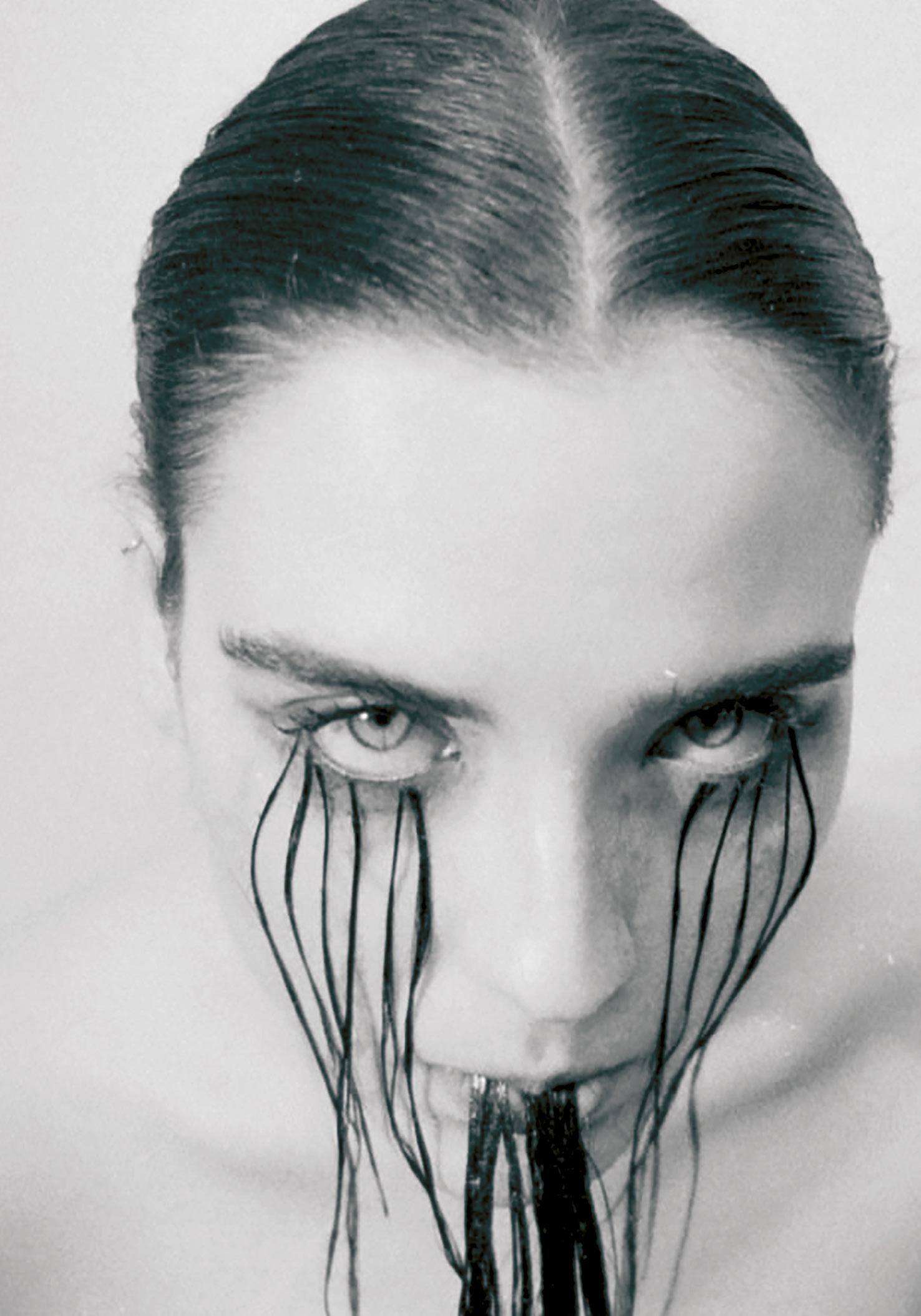
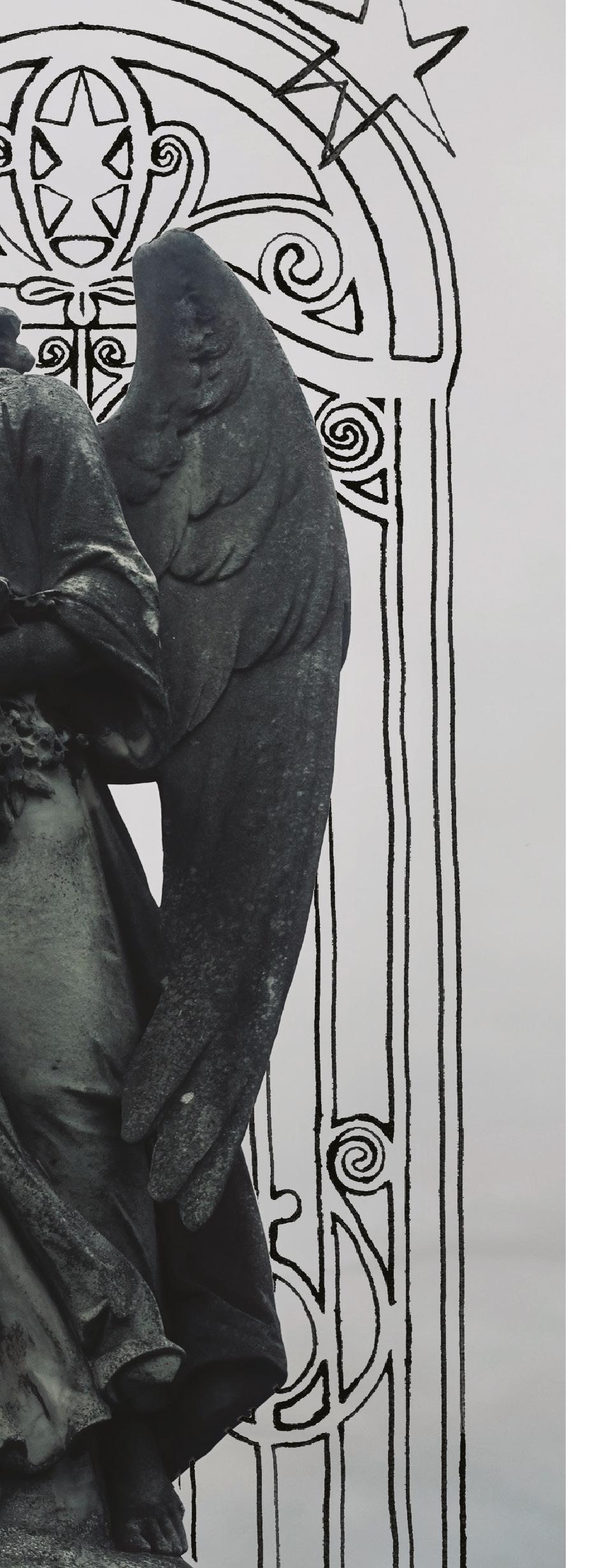
Issue 114's stunning cover was photographed by Mollie Hawkes and illustrated by Agnes Irbe!
Social Media
Layla El-Dah
Publishing
The Magdalen is published by Dundee University Student Association (DUSA).
for students, by students
Browse our entire collection of issues online! Free and always available. Just visit issuu.com/ themagdalen to stay in the loop!