


Lombok International Airport (abbreviated to LIA with the IATA code “LOP”) is the only operating airport on Lombok.
The official name of the airport is Zainuddin Abdul Madjid International Airport, and you will sometimes see “Mataram” or “Praya” on ticketing, but they all refer to Lombok’s airport.
The airport is close to Praya (Central Lombok); approximately 45 minutes south of Mataram City, around 1 hour drive from Senggigi and only 25 minutes from Kuta.
The airport’s terminal is divided into international and domestic sections, with shared arrival and departure areas, and separate boarding lounges. There is no duty-free shopping at the airport but shops and souvenirs, ATMs, and food outlets are readily available.
Airport departure tax is included in the price of all tickets.
Lombok International Airport has full Visa on Arrival (VOA) facilities, including 30-day Tourist Visa. Visit: evisa.imigrasi.go.id to apply online.
AirAsia operates direct international flights between Lombok and Kuala Lumpur, Malaysia every day, onboard A320 Airbus. Flight time is approx. 3 hours. Book cheap flights through the AirAsia website: airasia.com
Batik Air also offers direct Lombok - Kuala Lumpur flights 4 times per week. batikair.com.my
Direct flights between Lombok and Singapore are operated by Scoot Airlines (a low-cost subsidiary of Singapore Airlines) four times per week. Flights are onboard A320 Airbus and flight time is approx. 3 hours. flyscoot.com
In addition to Malaysia and Singapore, international flights to Bali and Jakarta connect Lombok to all major destinations around the world.
European connections are easy via Jakarta (the capital city of Indonesia), Bali and other capital cities such as Jogjakarta and
Surabaya. Direct flights to Lombok from Bali, Jakarta, Jogjakarta and Surabaya are available from multiple airlines every day and are usually timed to connect with European flights.
Batik Air flies direct between Lombok and Jakarta and Lombok and Surabaya every day. batikair.com.my
Citilink has direct flights between Lombok and Jakarta, and Lombok and Surabaya, three times a week. citilink.co.id
Garuda Indonesia has direct flights daily between Lombok and Jakarta garuda-indonesia.com
Lion Air / Wings Air has daily flights between Lombok and Bali, Jakarta, Jogjakarta, Surabaya, Sumbawa Besar and Bima (Sumbawa). lionair.co.id
Pelita Air flies direct between Lombok and Jakarta every day. pelita-air.com
Super Air Jet flies between Lombok and Jakarta, Jogjakarta, and Surabaya every day. superairjet.com
It’s easy to get to Lombok from Bali – flight time is only around 50 minutes. Buy tickets online, or direct from the airline counters at the domestic airports.
In Lombok, all flights depart and arrive at Lombok International Airport. In Bali, flights arrive and depart at the domestic terminal at Ngurah Rai (Denpasar) Airport.
TransNusa operates three flights daily between Bali and Lombok (morning, afternoon and evening) onboard comfortable ARJ-21 jet aircraft. Tickets are competitively priced and include free 20kg checked baggage and 7kg carry on allowance. TransNusa.co.id
Wings Air flies between Bali and Lombok up to four times daily. Wings Air is a subsidiary of Lion Air; purchase tickets through the Lion Air website for a Wings Air flight. Note: tickets include 7kg carry on but no luggage allowance; book pre-paid baggage through their website. Arrive early for check-in as Wings Air often operates limited check-in counters. lionair.co.id
There are numerous fast boat services operating between Bali, Lombok and the Gili islands every day. All fast boats must stop at Bangsal Harbour in North Lombok for port clearance, so it is possible to reach mainland Lombok using any of the fast boat services to the Gilis. See our Gili Guide for more.
Eka Jaya Fast Ferry offers the only fast ferry service between Bali and Lombok mainland. Ferries arrive and depart from Senggigi Jetty, right in the centre of Senggigi Beach, West Lombok.
Large and comfortable ferries operate from Serangan Harbour in South Bali direct to Senggigi and return, making it convenient for those staying in in Nusa Dua, Sanur, Kuta, Legian and Seminyak.
Eka Jaya Matra – a modern and comfortable ferry licensed for up to 260 passengers – also transfers passengers between Padang Bai Harbour and Senggigi every day. ekajayafastferry.com
Gili Getaway operates several comfortable fast boats connecting Bali and Lombok (including Gili Gede and the islands of southwest Lombok) from Serangan Harbour in the south of Bali. giligetaway.com
PUBLIC FERRY: Padang Bai Harbour (east Bali) provides the sea link between mainland Bali and Lombok. Lembar Harbour (Lombok) is on the southwest coast, approx. 1 hour from both Senggigi and Kuta.
Arrange transport and buy tickets online or direct from the ticket office at the harbours, or use a reputable tour company to provide a transfer service.
Public Ferries run 24 hours a day and depart every hour for the sea crossing between Bali and Lombok. The fare is Rp 62,200 per person and the trip takes approx. 4 to 5 hours, depending on sea conditions.
It’s a slow but scenic ferry trip and the cheapest way to travel between the islands. It’s also useful if you want to take a motorcycle (approx. Rp 160,000) or car (from approx. Rp 1,127,000).

Dear Readers
New Year has come and gone and we’ve already raced through the first month of 2026 but there’s no time to rest as we slide into an event-packed February!
February is the “month of love” and what better way to celebrate Valentine’s Day with the one you love than on a sublime tropical island like Lombok?
This month we also host one of Lombok’s most popular events – Bau Nyale! This unique festival is filled with fascinating Sasak culture and tradition, so if you plan to be on our island in February, read all about it in this issue.
We also celebrate Chinese New Year on 17 February with red envelopes and decorations, delicious Chinese food and exciting Dragon Dances!
At the end of the month, the holy fasting month of Ramadan commences for Muslims around the world. See how Ramadan is celebrated in Lombok and join in for a special and exotic experience.
Whether you are a first-time visitor to Lombok or a seasoned traveller returning for the tenth time, The Lombok Guide is committed to provide you with the information you need – attractions and activities, places to go and things to see – all brought together in one convenient Guide.
The island awaits… welcome to the magic of Lombok!
Page 2 Getting to Lombok
Page 4 Contents
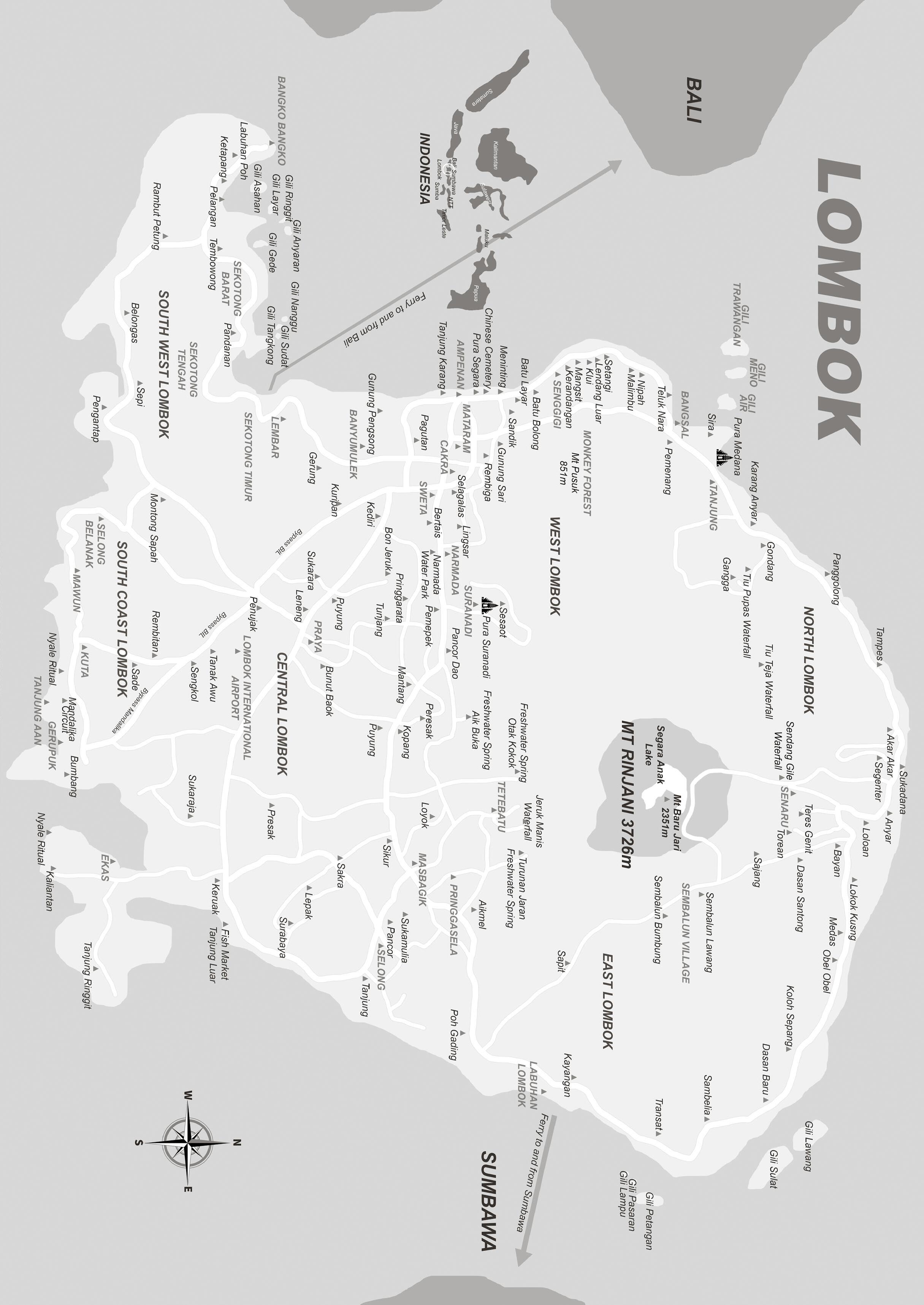
Page 6 Lombok Map
Page 8 & 10 Getting Around
Page 12 & 13 Best in Lombok
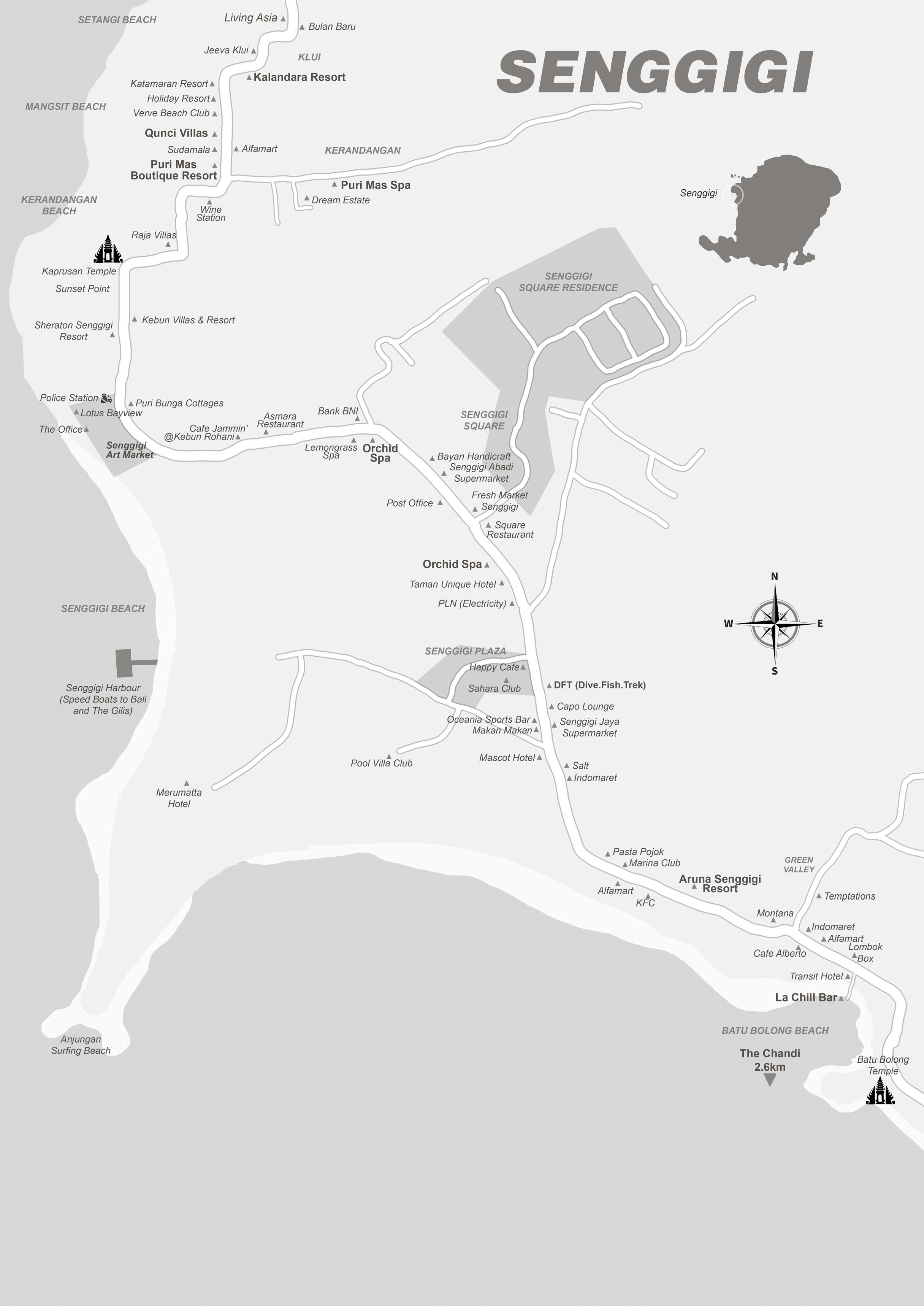
Page 14 Senggigi Map
Page 16,18 & 20 Senggigi & The West Coast
Page 22 - 24 Bau Nyale - Lombok’s Unique Festival!
Page 26 - 28 Ramadan… The Fasting Month
Page 30 - 31 Chinese New Year on Lombok
Page 32 Distribution
Page 35 The Cities Map

The Lombok Guide is committed to sustainability, printed on eco-friendly paper instead of glossy, laminated stock. While glossy magazines may look sleek, their plastic-coated pages are difficult to recycle and take decades to break down in the environment. Laminated finishes are made with petroleum-based plastics that slowly fragment into microplastics, which persist in soil and waterways, harming ecosystems and wildlife. By choosing recyclable, biodegradable materials, we reduce waste and keep harmful plastics out of the environment –because exploring Lombok shouldn’t come at the planet’s expense.
Page 38-40 The Cities
Page 41 Kuta Map
Page 42-47 Kuta & The South Coast
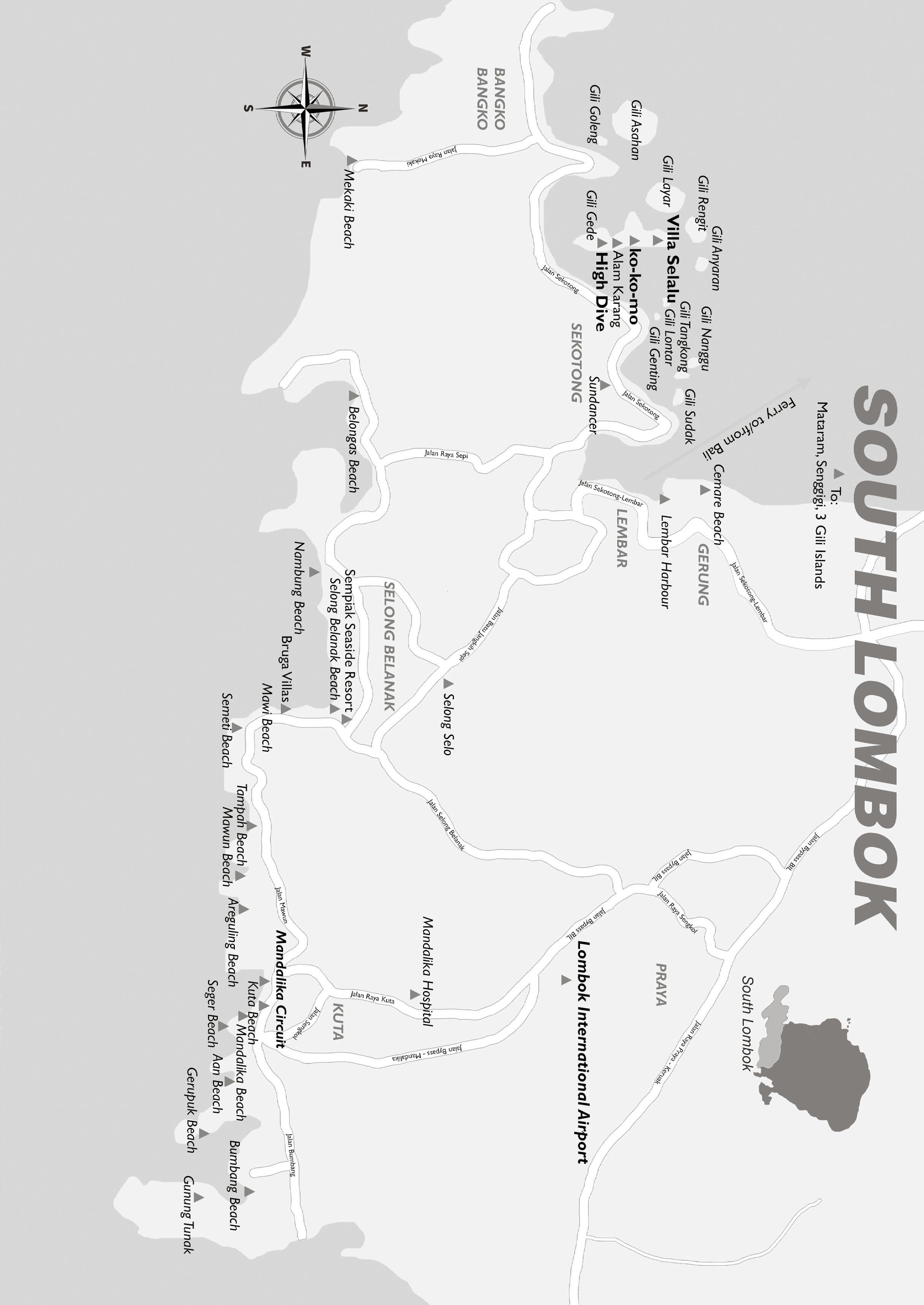
Page 48 South Lombok Map
Page 49-55 The Southwest
Page 2 & 4 Getting to the Gilis
Page 6 The Gilis Map
Page 8 - 18 The Gilis, Lombok's Three Iconic Islands
Page 19 Gili Islands Fast Facts
Page 20 & 21 Best in the Gilis

handles domestic flights between Bali, Jakarta and other Indonesian cities, and international flights to and from Singapore and Kuala Lumpur.
Getting to the Airport: Lombok Taxi (Blue Bird) is the most convenient taxi operator throughout Lombok and will drop passengers directly in front of the departure terminal.
Otherwise, book an airport transfer through your hotel, or a private car and driver service. There is ample parking at the airport and cars can be left overnight.
From the Airport: taxis and private cars are available to meet all arriving flights. After collecting your baggage, head out of the exit doors of the terminal and through to the arrival hall.
There are official taxi counters inside the arrival hall that will allocate you a fixed price taxi to most destinations.
Bluebird Taxi have a limited number of taxis licensed to operate from the airport. Book at the Bluebird counter or walk outside to the parking lot on the left and catch a metered taxi to your destination.
Golden Bird Taxi is the premium branch of Blue Bird and offers regular taxis, limousine and car rental. Look for their desk in the arrival hall or WA 0859 5462 7000.
There are also many private drivers waiting to offer rides to anywhere on the island. This is a good option if you are in a group or have a lot of luggage or sports equipment, such as surf boards. Negotiate a fixed price before you get in the vehicle.
Organising an airport transfer with your hotel is often the easiest option, with the hotel driver meeting you on arrival and transferring you to your hotel in airconditioned comfort. Check with your hotel – charges are usually only slightly more than a taxi.
Approximate taxi fares: Kuta Rp 150k; Selong Belanak Rp 250k; Sekotong Rp
Car rental kiosks are located at the arrival terminal and are open from 7am until 10pm daily.
For low-cost airport transfers, the public DAMRI bus is the cheapest way to travel between the airport and Senggigi and Mataram. The air-conditioned buses seat around 40 passengers and operate a regular schedule of departures from 7am to 5pm every day. Buses to Mataram leave every hour and cost Rp 25,000. Buses to Senggigi leave every 90 minutes and cost Rp 35,000.
The DAMRI counter is located inside the arrival hall and prices are clearly shown on sign board at the counter. The helpful drivers tend to stop at popular points along the route. If you need to stop at a certain point, let the driver know and he will usually accommodate your request.
Continued from Page 8
Around Lombok: Lombok is easy to get around. The roads are in good condition and there is little traffic, apart from in the cities.
The island itself is only slightly smaller than Bali at 115km (70 miles) long and 80km (50 miles) wide; however, it is not practical to drive around Lombok in one day.
Taxis are easily available in most areas on Lombok apart from Kuta, Lombok. Unlike in other areas of Asia, all taxis use their meters (argo) to calculate fares, so there is no need to haggle a price.
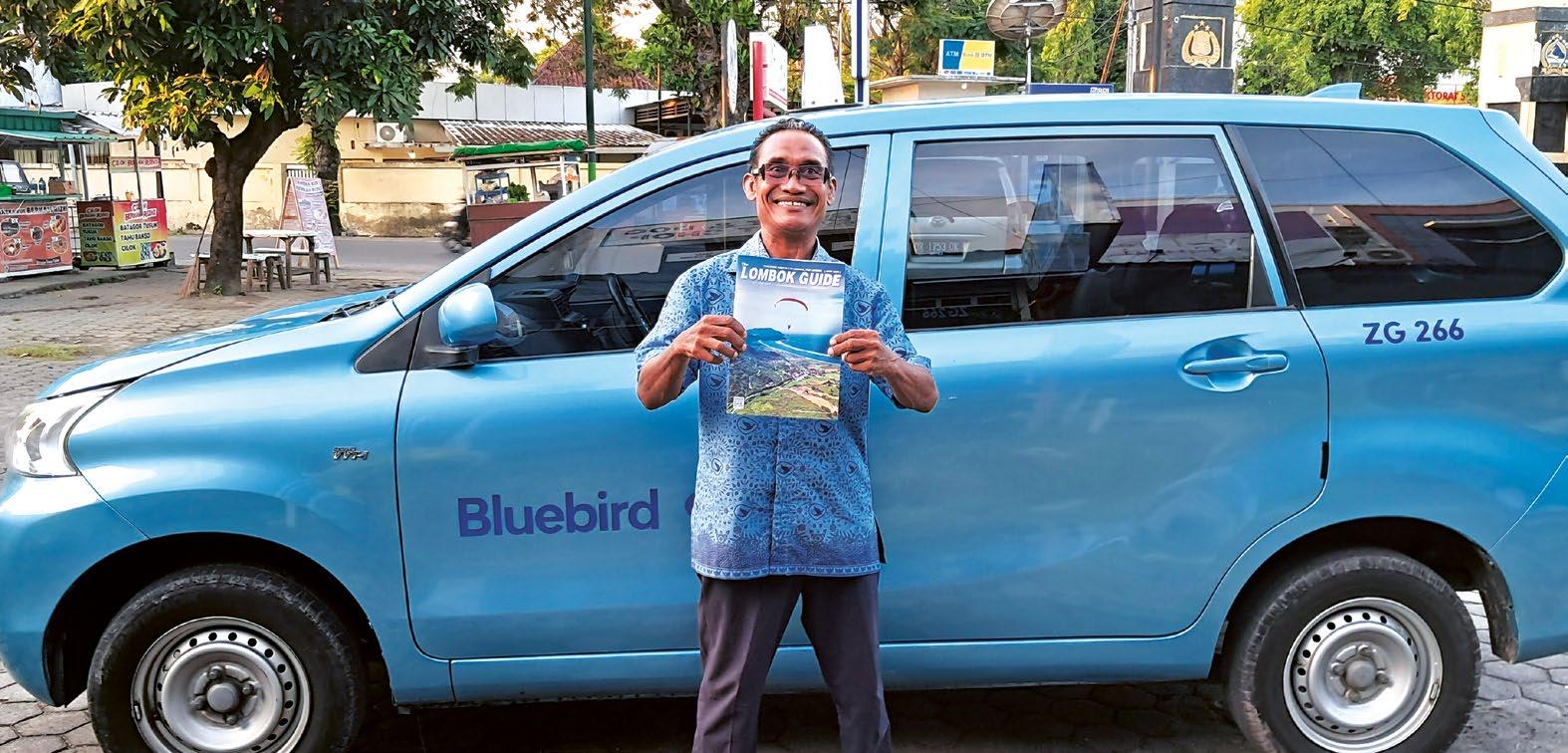
Lombok Taxi (operated by Blue Bird Taxi, light blue colour) is the largest company in Lombok and you will find them in the cities and around tourist areas such as Senggigi. Express Taksi (white cars) are also available, mainly in the cities.
Taxis can be used to make trips to Kuta or Lembar and Bangsal Harbours and, if you are shopping or making day trips by taxi, ask the driver to wait and leave the meter running. Fares are still very low compared to those in the west. Short trips around Senggigi will cost around Rp 25,000; a taxi from Senggigi to Mataram is around Rp 100,000.
Phone for a taxi or ask your hotel to phone, or flag one down from the side of the road. Make sure the driver starts the meter when you get in.
Download the “My Blue Bird” app to book taxis easily. The app is also handy for calculating distances and fares when planning trips and the fare will give you a general idea of the rate you should be negotiating with a private driver.
Lombok Taxi (Blue Bird), ph: 0370 627 000 (or download the ‘My Blue Bird’ App from Google Play, iTunes, or from the Blue Bird Group website). www.bluebirdgroup.com
Gojek and Grab also operate in most areas of Lombok (apart from Kuta on the south coast). Download the apps for easy transport options via car or motorbike.
Motorbikes are the most popular form of transport and are generally small, light 110 - 125cc motorbikes with automatic transmission. Modern and economical scooters, such as a Honda Vario, are easy to ride. Expect to pay between Rp 60 - 80,000 per day for motorbike rental, depending on age and type. Both require an international drivers’ licence.
Do wear a helmet and appropriate shoes when riding a motorbike and don’t decide that Lombok is the place to learn to ride! Apart from the dangers from other riders and a general disregard for road rules, there can be unexpected hazards such as dogs, chickens, cows and children running into the road.
Note that taxis can drop off guests in Kuta but cannot pick up from Kuta. If you are staying in Kuta, the best options are to ride a motorbike or hire a car and driver.
Cars and Motorbikes can be hired in Lombok and driving yourself is easy. Cars drive on the left-hand side of the road (as in the UK).
Car hire can be arranged at the airport and car rental companies in Mataram. However, self-drive car hire isn’t popular in Lombok and most will include a driver. Modern, air-conditioned cars that comfortably seat 4 - 5 people with a driver can be hired for between Rp 600 - 700,000 per day, including petrol and basic insurance.
A private car and driver can be arranged in all the tourism areas, either through your hotel or from talking to the drivers that hang around on the streets looking for customers.
Negotiate a price and what is included in the rate (petrol, duration of hire, waiting time, entrance fees if you are visiting attractions, etc). It’s easy to arrange transport this way, whether for a short trip to a restaurant or a full day of exploring.
Tours are readily available in all the tourist areas, and drivers and guides are licensed by the local Kotasi (tour organisation), who also regulate prices in the industry.
Most tour operators are reliable and will have a wealth of local knowledge, which can make touring a more rewarding experience. It is also the most comfortable way to explore the island, as you have time to sit back and observe, rather than negotiating traffic and unfamiliar roads.
Popular tours, such as day trips to waterfalls or traditional villages, are structured to take in a full day of sightseeing with stops at other points of interest along the way. Tours range between Rp 350 -700,000 a day for a driver and an air-conditioned vehicle for up to 4 passengers, depending on distances and the number of places visited.
* Prices are approximate. Expect to pay higher prices during peak seasons.
Useful Tip: WhatsApp is the most popular messaging service in Indonesia. Download the app to your phone for convenient messaging and phone calls to Lombok businesses wherever there is internet available.
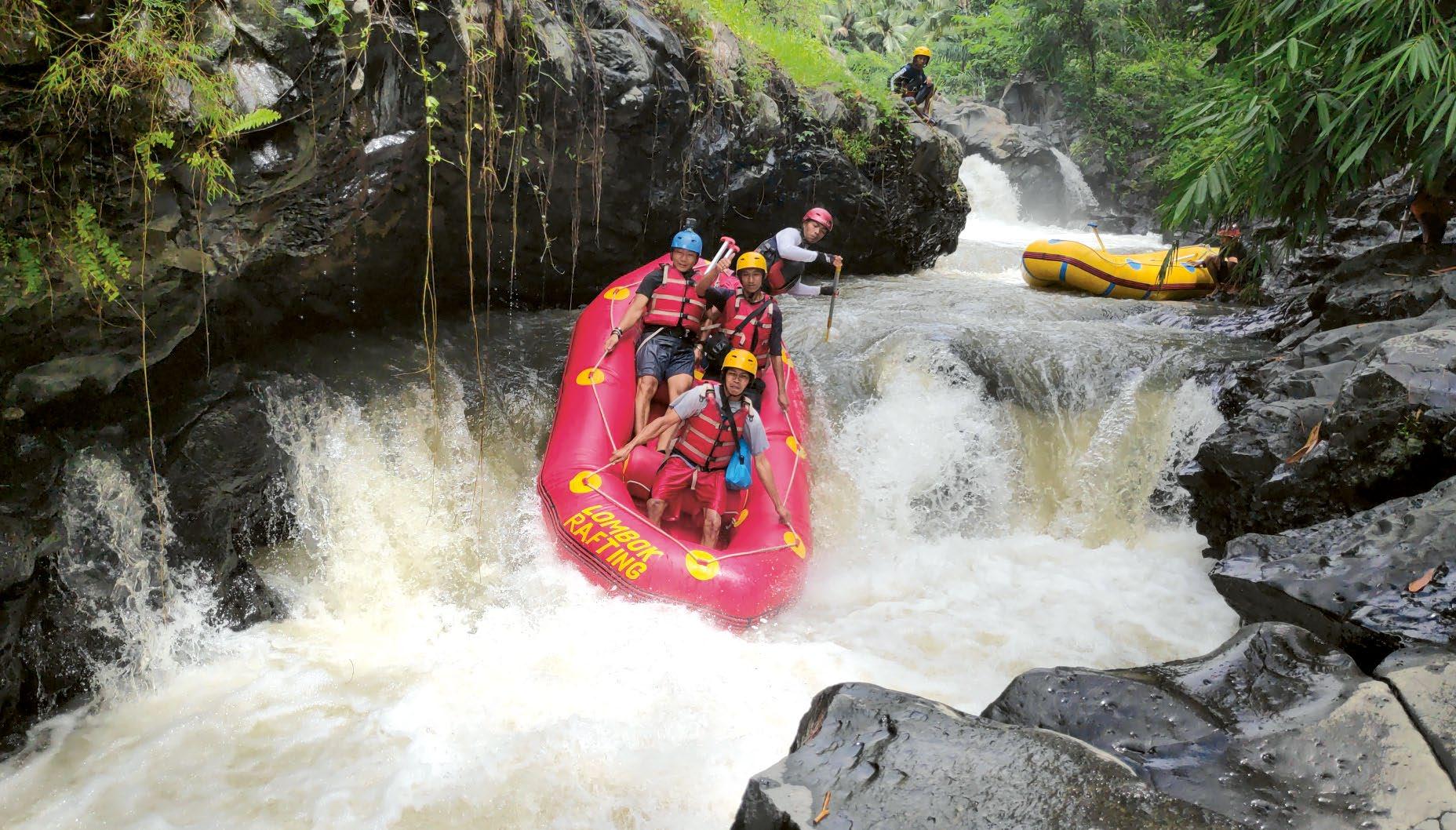
When the wet season arrives, head to the Lingsar area in West Lombok where you can enjoy white-water rafting on one of the beautiful large rivers in the area. A day of rafting promises to provide exactly the adrenaline boost you’re looking for!
A relatively new addition to the Lombok list of things to do, the rapids range from Grade II in the dry season to grade IV in the wet. The best time to try out rafting is during the rainy season, when the rivers are flowing faster and the surrounding landscapes are lush and green.
Rafting adventures are made up of stretches of relatively calm rafting where you can take in the jungle views and unique insights into village life along the river, with local families going about their day, washing clothes, bathing or farming by the river.
These stretches are broken up by exciting rapids and white water of varying intensity, guaranteed to get your heart racing!
While certainly not for the faint of heart during the wet season, each participant is kitted out with a helmet, life-vest and water safety training, and a guide remains with you at all times.
Rafting adventures are suitable for the whole family and are fun even in the rain – after all, you’re going to get wet anyway! Most companies also include a traditional Indonesian lunch too.
Hate crowds and want to kick back on peaceful beaches, exploring uninhabited islands and uncrowded reefs? If so, the southwest coast is for you!
Thirteen magical islands sit just offshore waiting to be discovered by those who love the water and the beauty of nature.
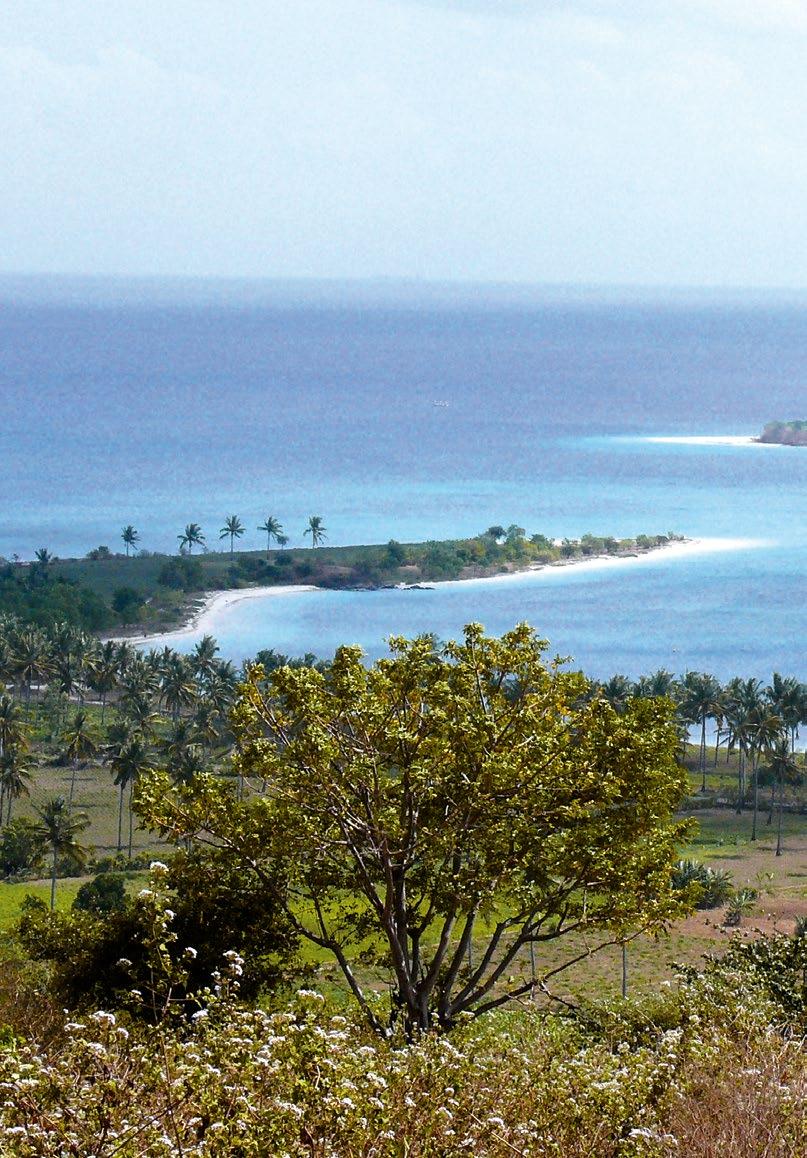
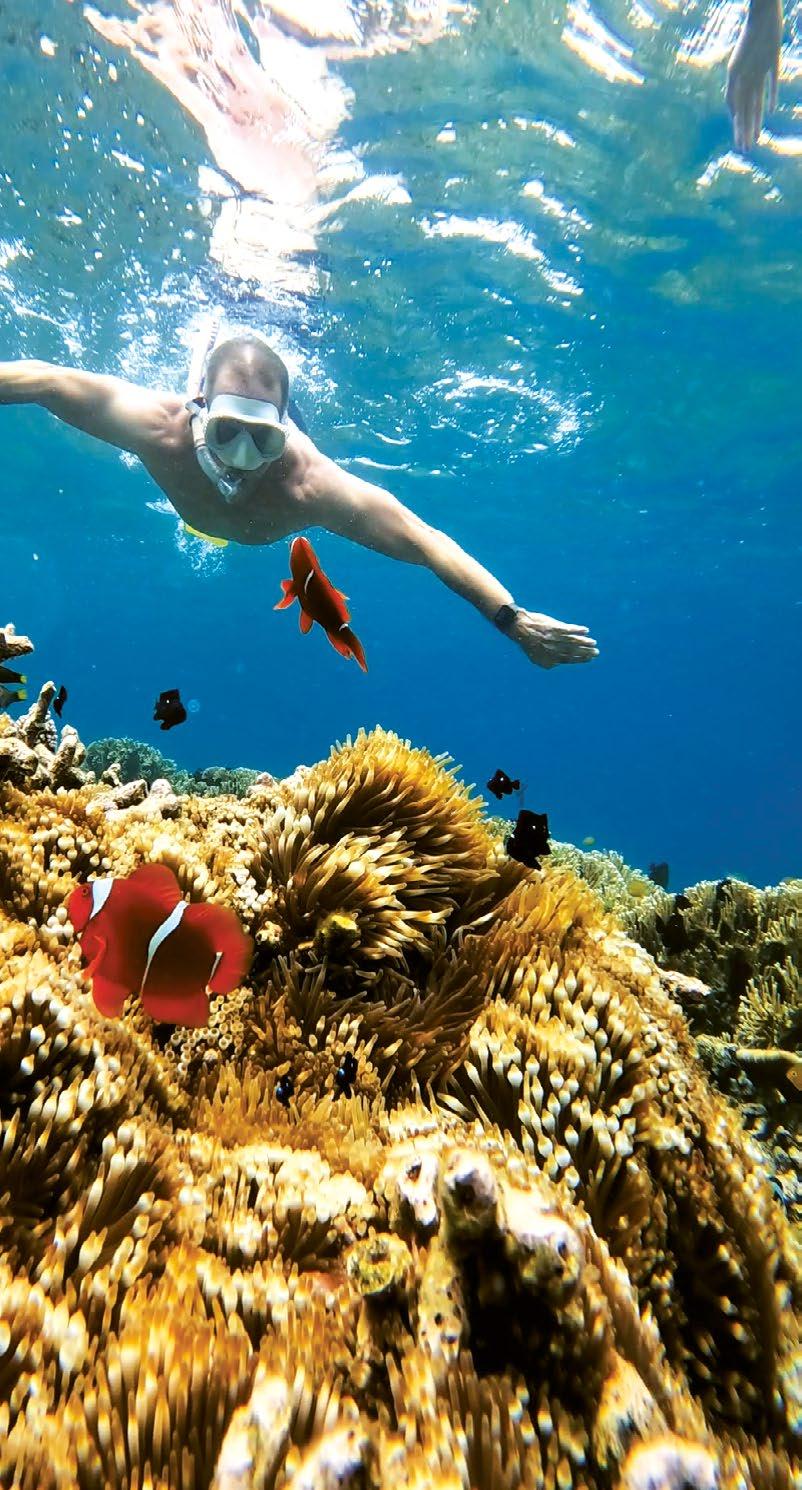
Most are uninhabited but you’ll find excellent accommodation options on Gili Gede and Gili Asahan.
Even in rainy season, you can spend time lazing in the sun, taking walks along the beaches, fishing, kayaking, island hopping and swimming.
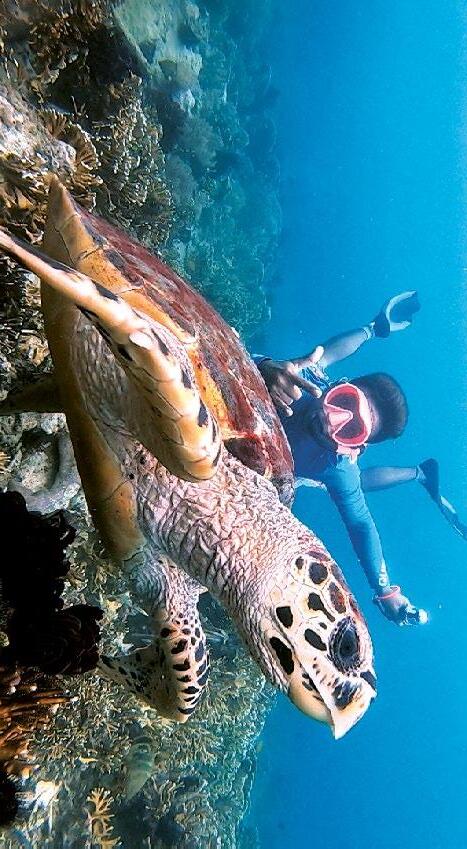
Diving and snorkelling enthusiasts will be in their element with 19 pristine reefs covered in vibrant and healthy coral and teeming with marine life to explore. Spot elusive lion fish, sea horses and majestic turtles, in addition to all the other tropical species that live on the reefs here.
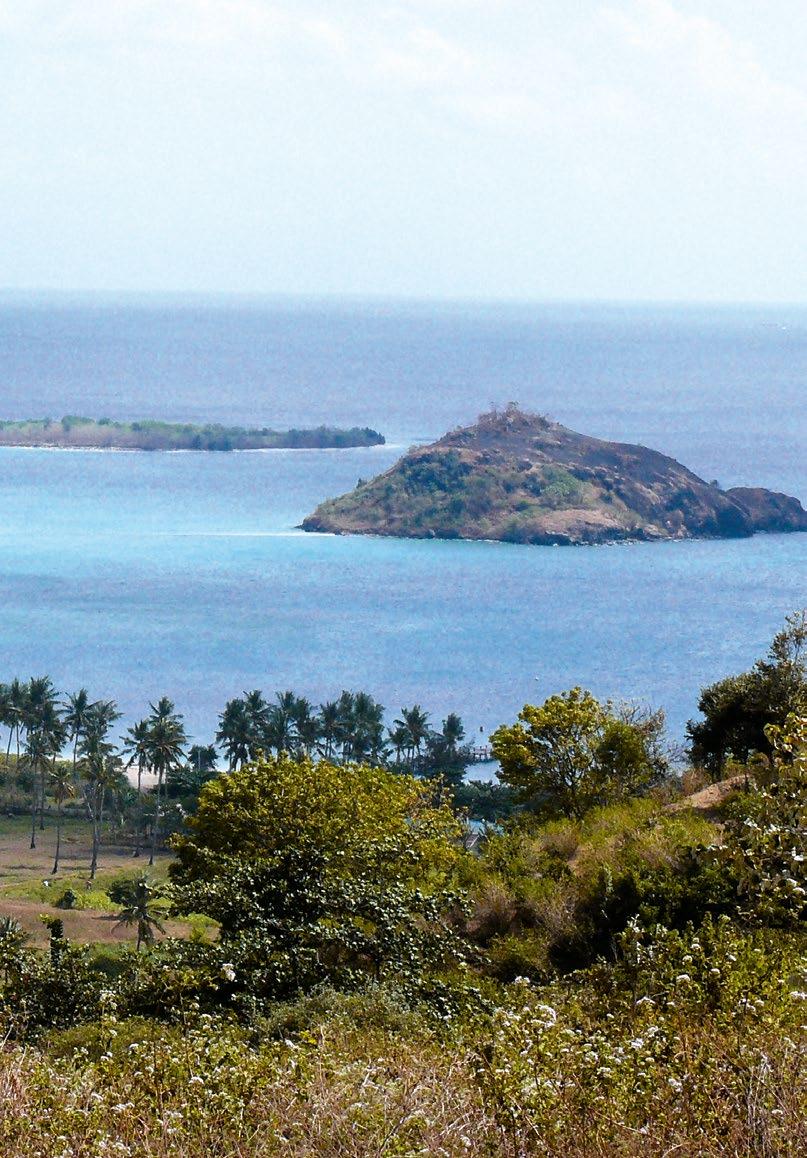
Base yourself on the big island of Gili Gede and spend your days exploring the nearby islands of Gili Layar, Gili Ringgit, Gili Asahan, tiny Gili Goleng and more. Undeveloped doesn’t have to mean basic (although you’ll find accommodation to suit all budgets on Gili Gede and Gili Asahan). Combine your Robinson Crusoe experience with luxury and style at Villa Selalu or ko-ko-mo Resort, Gili Gede, or barefoot chic and the best diving at The High Dive, Gili Gede.
Holidays are the best time to try your hand at learning to cook some of the new and delicious foods you’ve been eating!
A cooking class can introduce you to a whole new world of ingredients and flavours and be fun, hands-on experience – meeting people from all over the world and learning to cook exciting new dishes in a relaxed and friendly environment.
Anggrek Putih Cooking Class and Guest is consistently rated number one on TripAdvisor © and other online reviews.
The classes are held at Anggrek Putih, half way between Senggigi and Ampenan), on a large property surrounded by tropical gardens and are open to individuals and groups of all nationalities. It’s a great activity for the whole family.
Begin with a tour of the garden where a large variety of tropical vegetables, herbs and fruits are grown, much of which is used fresh in the classes. Everything in the garden is organically grown and the owner is happy to explain his techniques and how the produce is used.
From there, the classes progress for around 3 hours, with much chatter and laughter between the participants. Friendly instructors are on hand to help and the time flies as you immerse yourself in a world of herbs and spices, sauces and marinades, and mouthwatering smells.
Afterwards, everyone gathers together at the big table to enjoy the dishes they’ve prepared – and the new friendships they’ve made.
If you are thinking of doing something different while in Lombok, or you live in Lombok and want a fabulous and authentic day activity – don’t hesitate. Anggrek Putih Cooking Class is an experience that everyone will enjoy! See their advert on page 21.
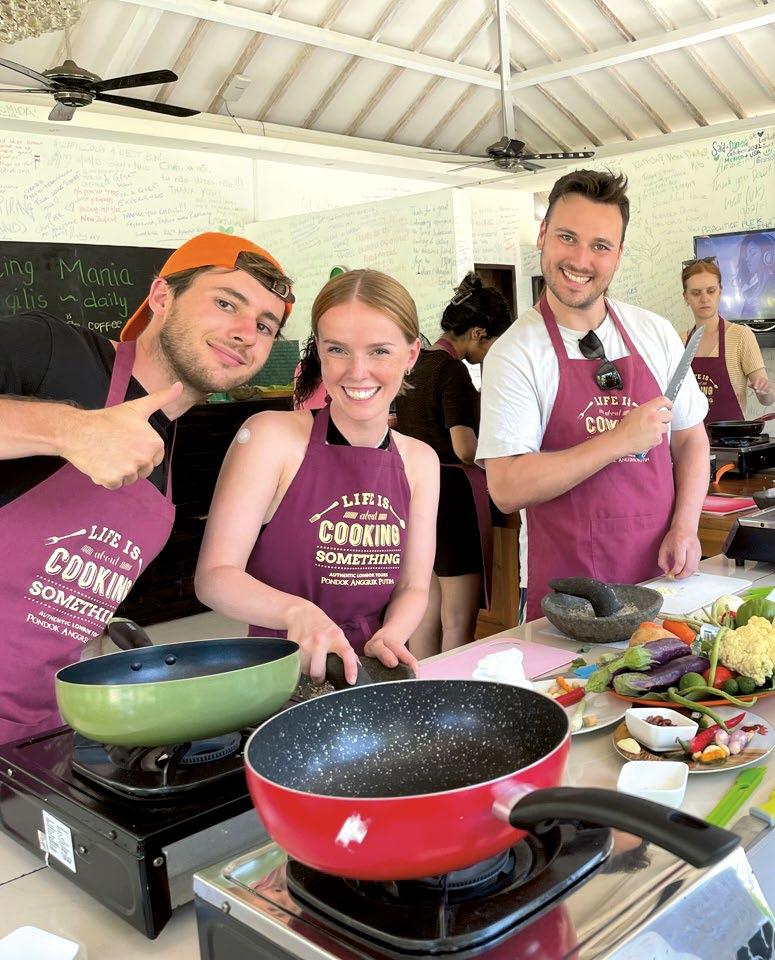
Guests are then led to the spacious and well-equipped kitchen to learn about the food to be cooked that day. There are usually around eight different dishes, such as chicken satay with homemade peanut sauce, ayam bakar (barbecued chicken coated with a delicious spicy sauce), pepes ikan (minced fish mixed with spices and wrapped in banana leaf), and a dessert, such as dadar gulung (rolled pandan pancakes stuffed with grated coconut and palm sugar).
*** Getting around Lombok is easy by car or motorbike and you can hire these in all the main tourism areas, with an International Driver’s License. The roads are generally in good condition and traffic is light. Alternatively, hire a car and driver for exploring.
Or take part in the tours and day trips by the many tour agencies on the island offering these tours; just do an internet search for the title (e.g. “Secret Islands Lombok”, “white water rafting Lombok”, etc.)
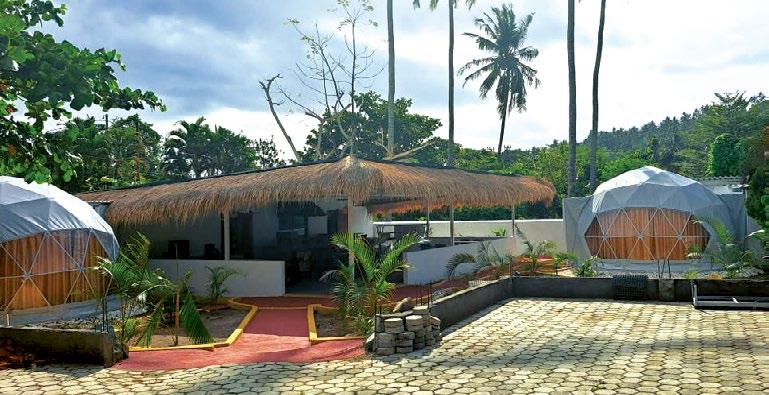
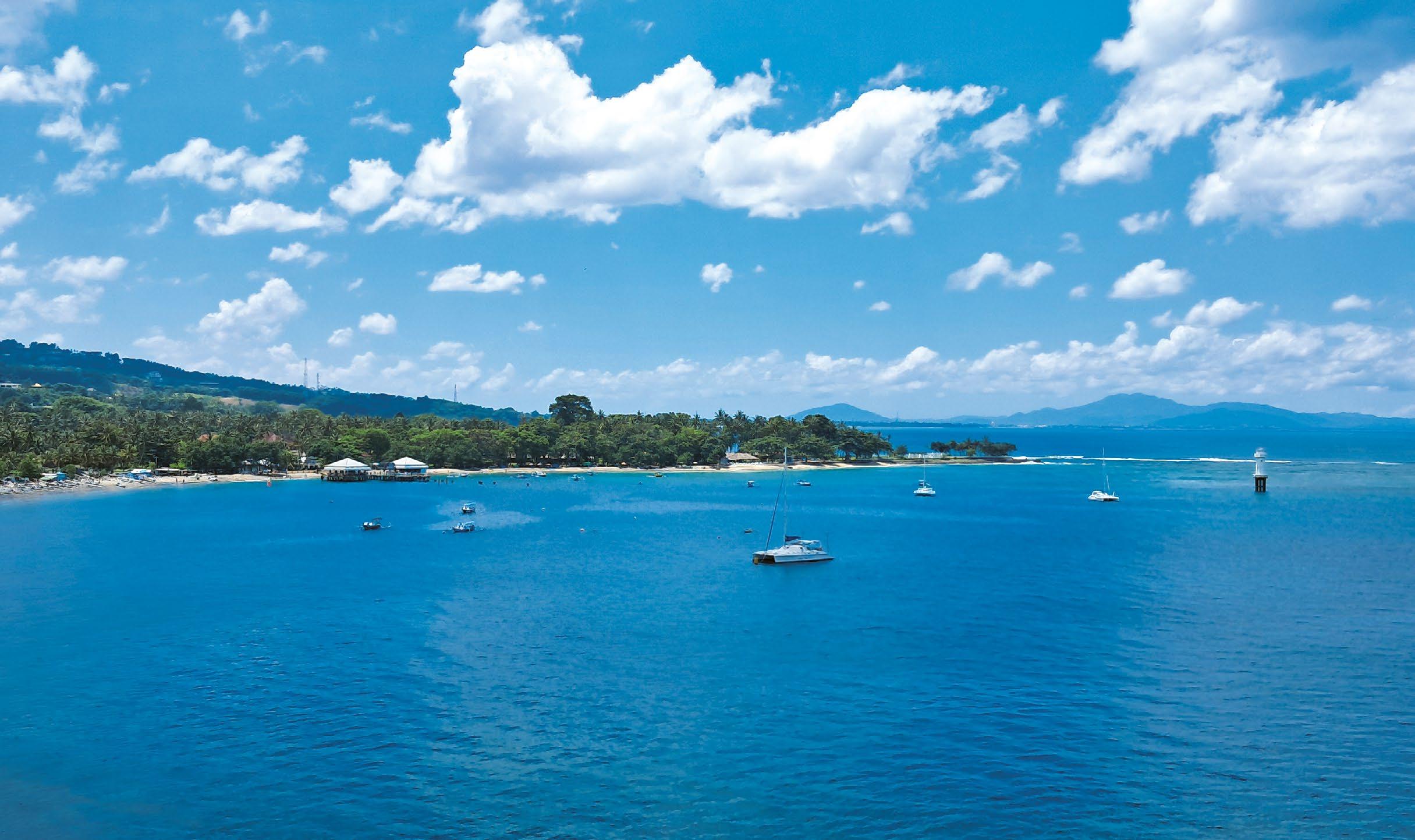
Beachfront dining and beach holidays are a feature of staying in Senggigi
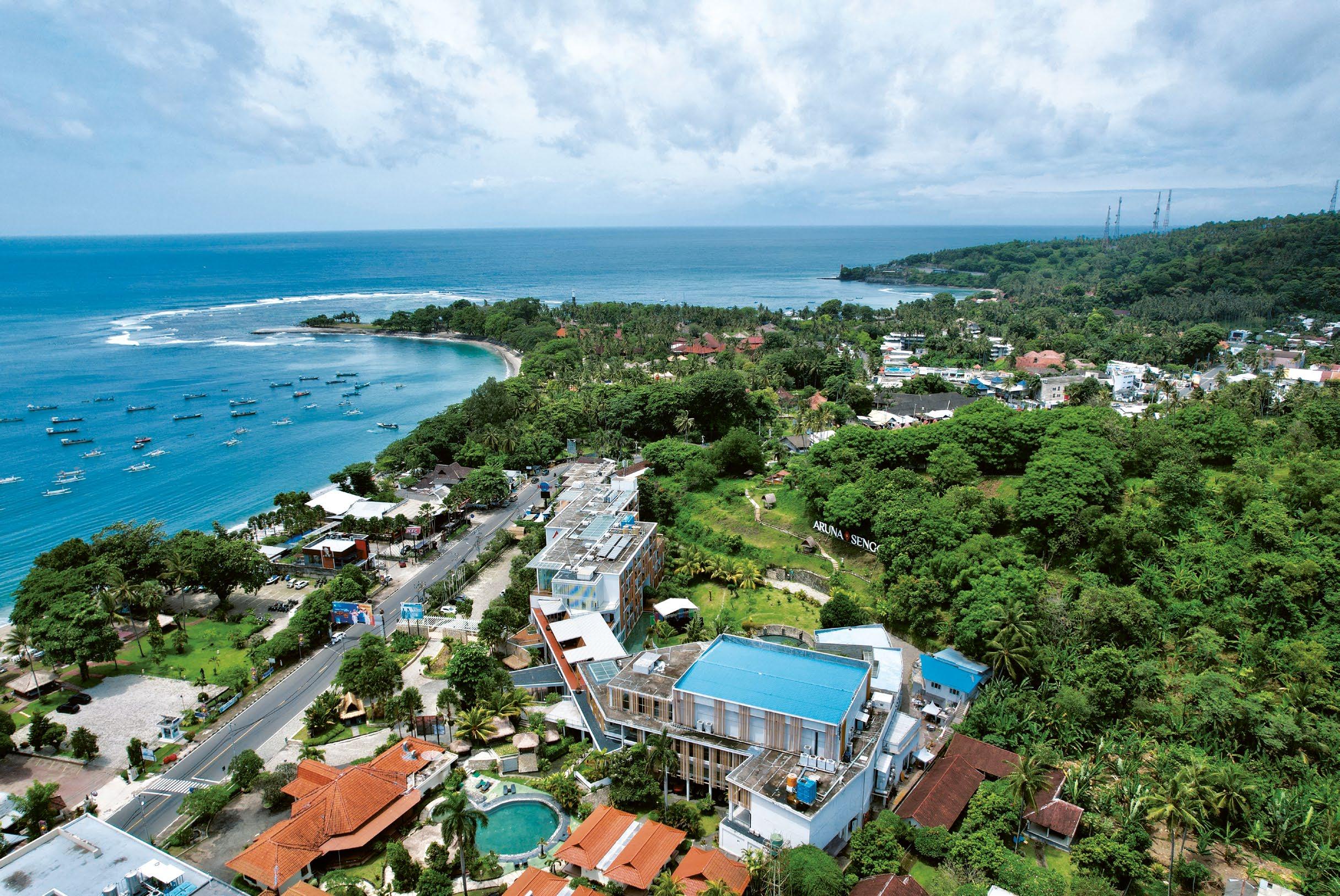
Senggigi, with its strategic location on the West Coast, is not only a wonderful holiday destination but an ideal base for exploring the many attractions that Lombok offers.
Senggigi is the oldest established tourism area on Lombok and many of the hotels and resorts are set on expansive grounds along the beautiful beaches of the west coast. Beachfront dining and beach holidays are a feature of staying in Senggigi.
Its central location, around a one-hour drive northwest of Lombok International Airport, puts Senggigi within easy reach of many of the main attractions on the island.
The waterfalls, golf courses, Lombok Wildlife Park and other attractions in the north are only an hour or so drive away and Bangsal Harbour (the main harbour for catching boats to the Gilis) can be reached in less than an hour.
The historic attractions of Lingsar and Narmada, and Benang Stokel and Kelambu Waterfalls to the east, are around an hour’s drive from Senggigi, while the cities and shopping are less than an hour away.
Bluebird Taxis are readily available in Senggigi and the west coast, so getting around is easy. Download the app or ask your hotel to call a taxi for you.
The Senggigi tourism strip stretches for about 10km, starting a few kilometres before central Senggigi and running north along the coastal road, with many hotels and restaurants positioned along the beautiful beaches and hills that line the west coast.
A few kilometres south of Senggigi, The Hill (locally called The Bukit), is a residential community perched on the hillside in Batu Layar. The homes and villas here feature architectural designs
and have magnificent views over the ocean. Many are available for holiday rental.
Closer to Senggigi, Batu Bolong forms a strip between the historic Batu Bolong Temple and the southern gateway to Senggigi. The beach is lined with small hotels, bars and restaurants and the centre of town is only minutes away.
Pura Batu Bolong (literally meaning “rock with a hole”), is an interesting Hindu temple on a cliff facing Bali across the Lombok Strait. Built on a large rocky outcrop with a hole at the base, from which the temple takes its name, it is said that virgins were once sacrificed to the sea from the seat-like rock at the outermost point.
Continued on Page 18
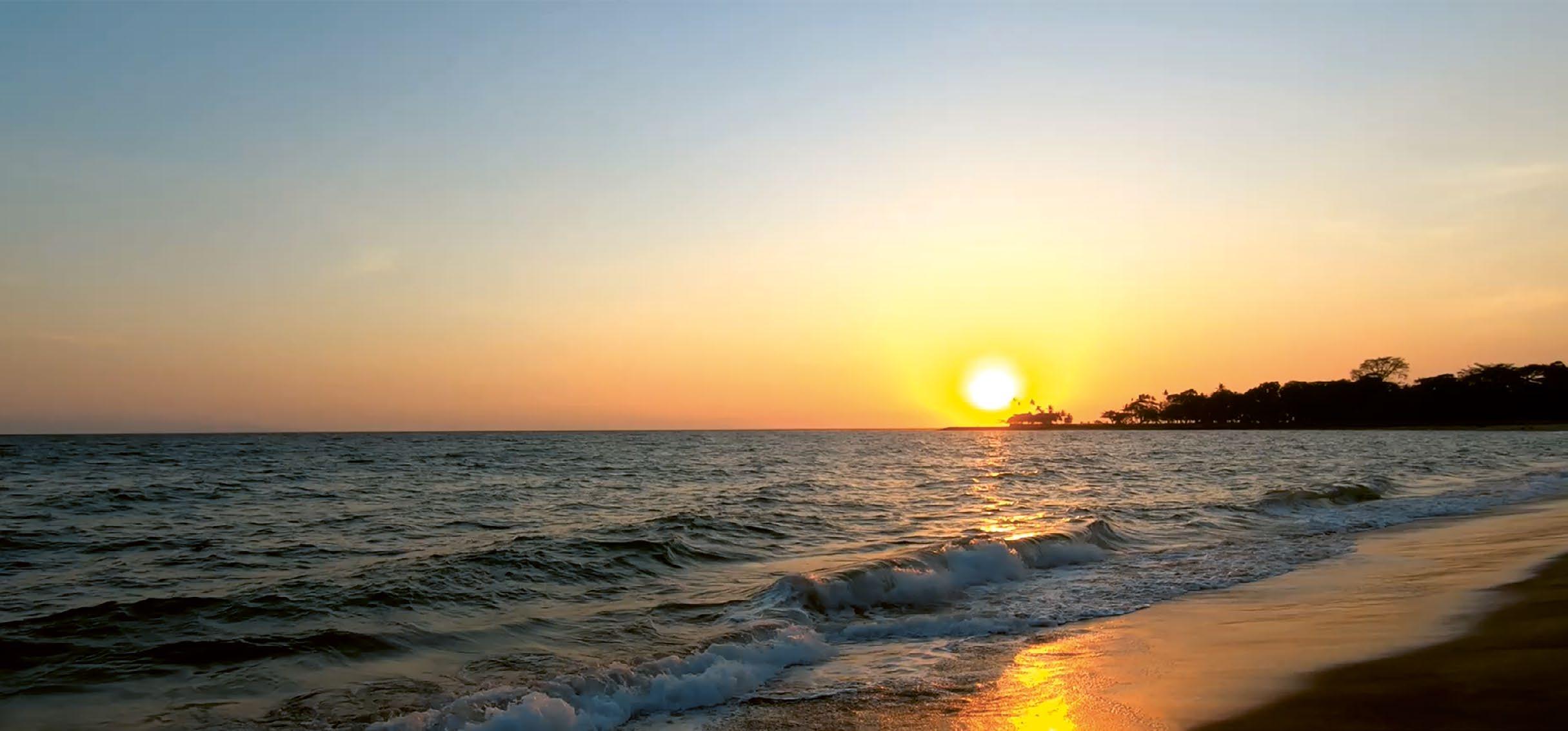
One of the most spectacular sights on the island is the sunset viewed from Senggigi and other points along the west coast, which faces Bali across the ocean. It is a magical sight watching the bright orange sun sinking into the sea and Bali’s Gunung Agung volcano silhouetted on the horizon like a giant pyramid floating in the ocean.

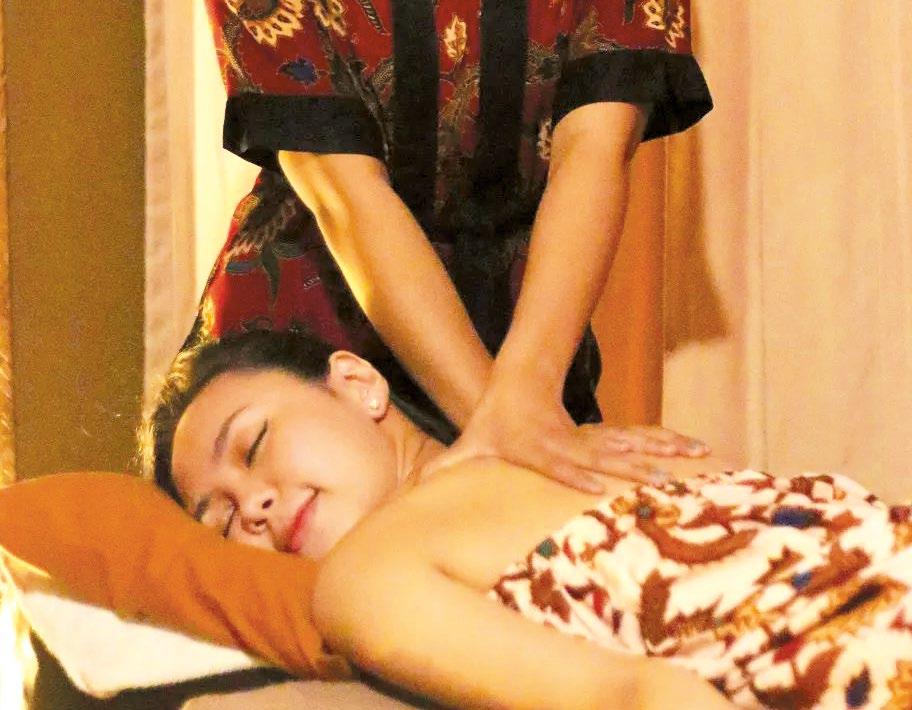
ONE HOUR MASSAGE ONLY Rp 140,000 NET
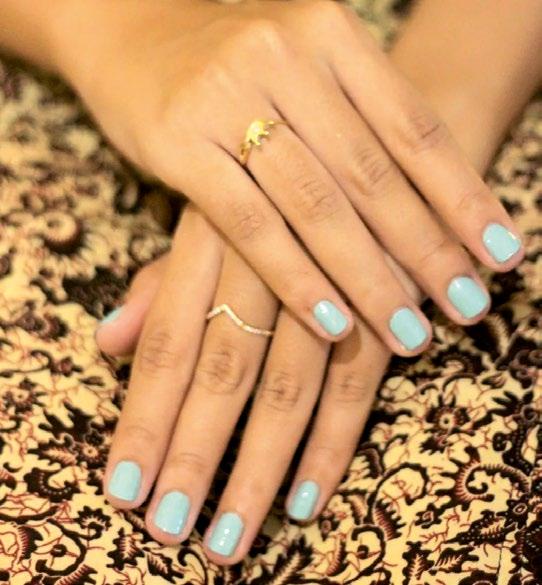
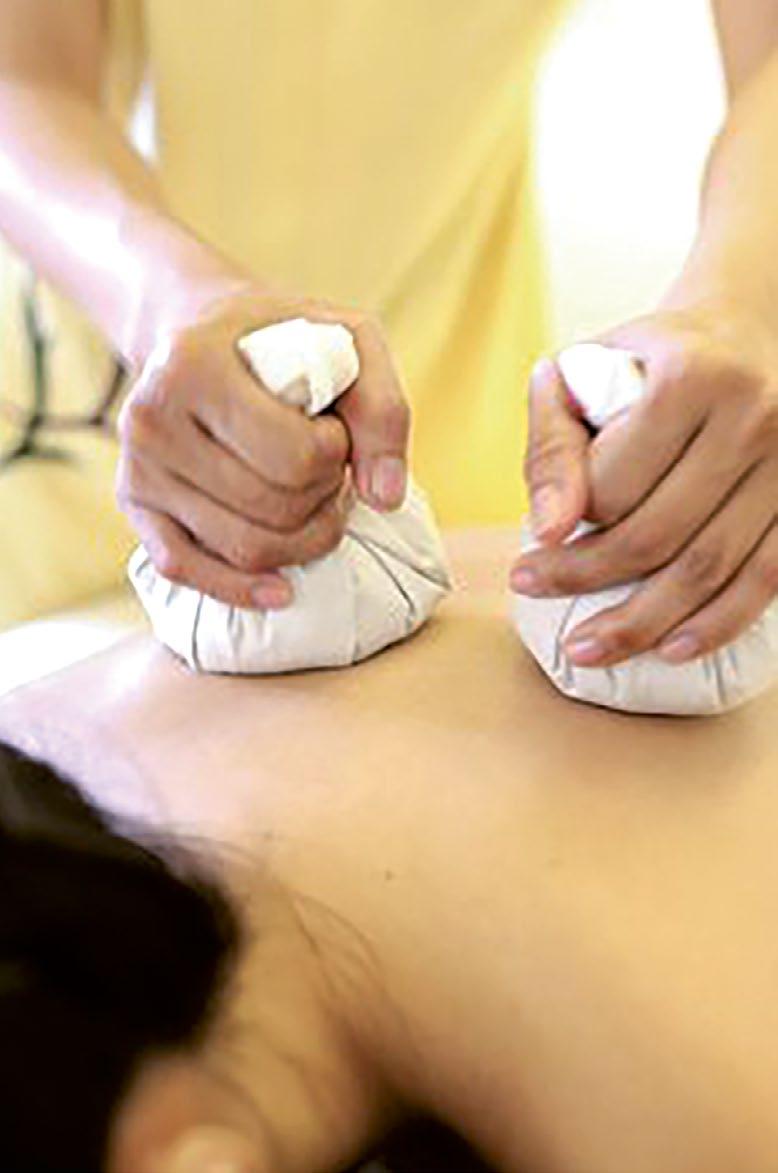
Massages, Reflexology, Facials, Hair Treatments, Manicures & Pedicures, Gel Nails and more
COMPLETE SPA SERVICES AT LOCAL PRICES!
ORCHID PACKAGE 1
Massage, Body Scrub, Body Mask, Face Therapy
Rp 350,000 net / 2 hours
ORCHID PACKAGE 2
Massage, Body Scrub, Body Mask, Face Therapy, Manicure, Pedicure
Rp 500,000 net / 3 hours
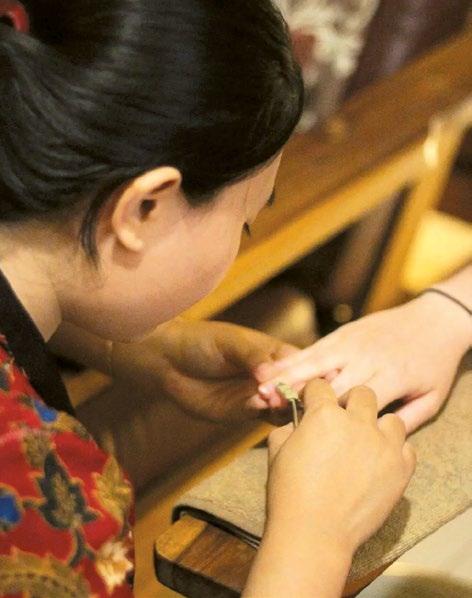
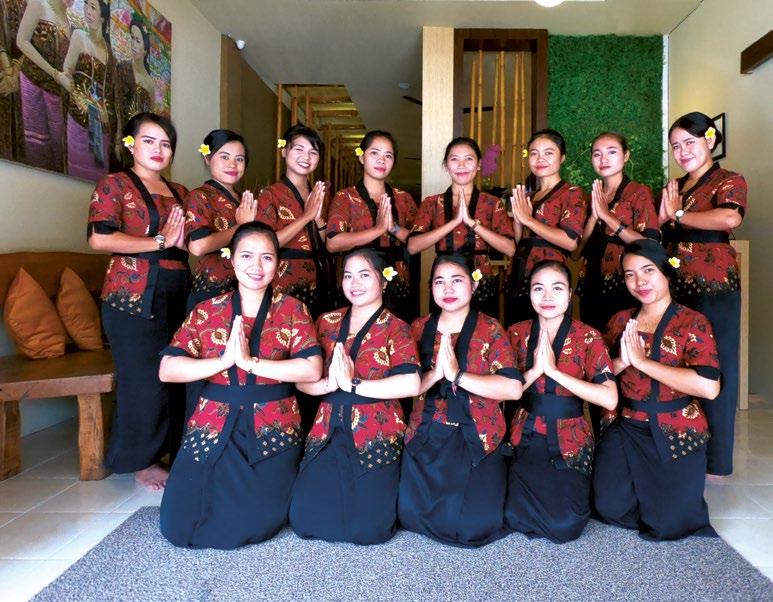
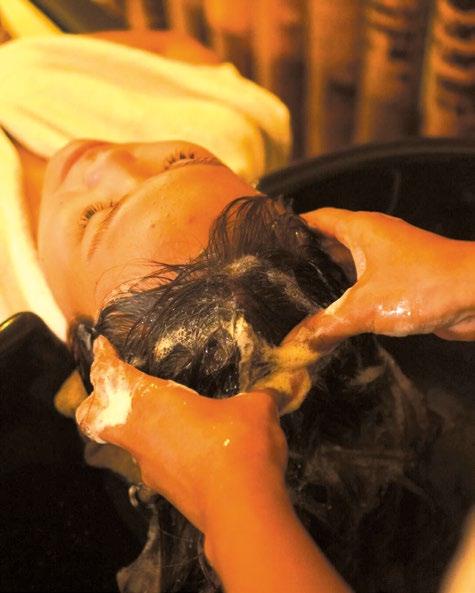
TWO CONVENIENT LOCATIONS IN SENGGIGI: OPPOSITE BANK MANDIRI [ 10am - midnight ] OPPOSITE BANK BNI [ 10am - 10pm ]



Colourful Hindu ceremonies are held here every month at the dark and full moons, and at Hindu festival times. Admission and rental of a compulsory sarong and temple sash is by donation. This is a great place to watch the sunset, with fantastic views across the ocean to Gunung Agung on Bali Just before the entrance to Senggigi. directly across the road from Café Alberto is the entrance to the Green Valley residential area, popular with expats, where you will find small hotels, Air BnB and cafés within walking distance to town. Senggigi Beach is the large bay that forms the centrepiece of Senggigi. The main road runs parallel to the beach and large resorts occupy the space between, with Merumatta Senggigi at the southern end and the Sheraton Senggigi Beach Resort at the northern end of the bay.
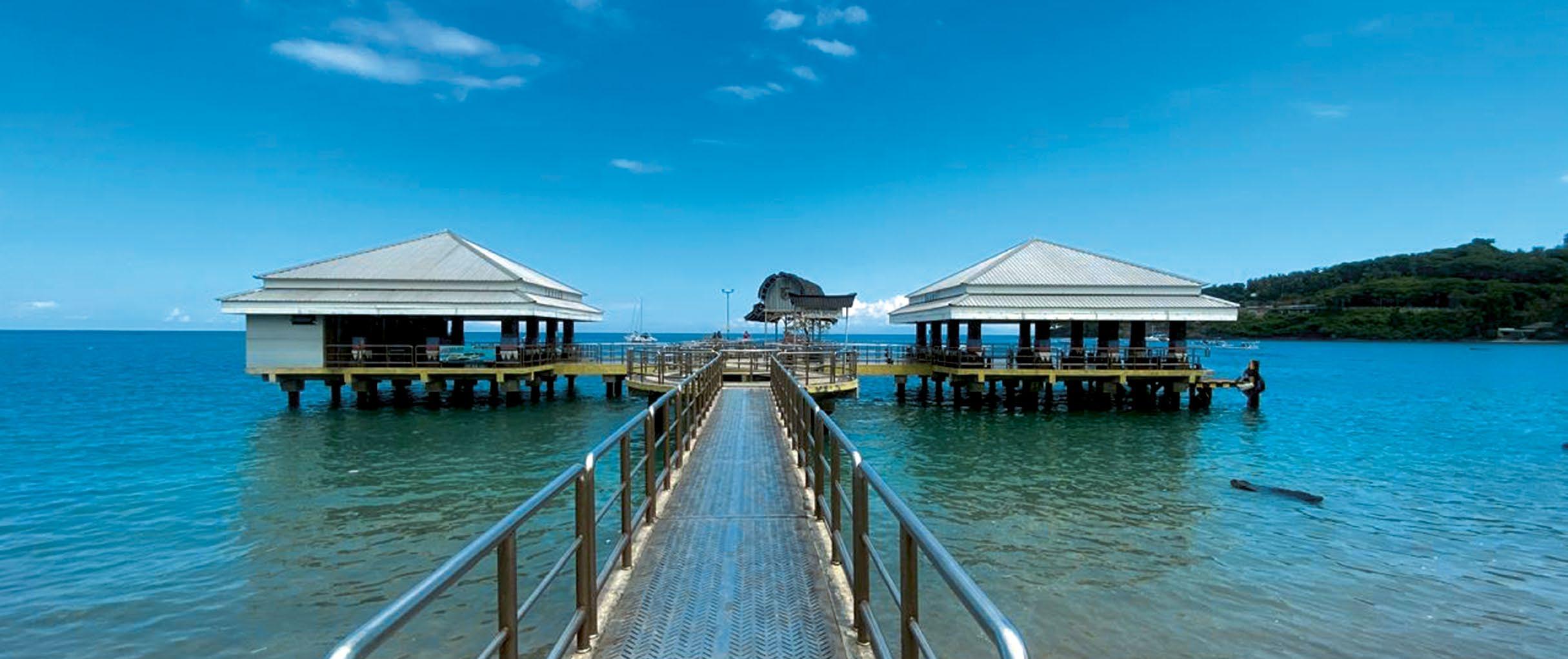
The beach is a wide protected bay with promontories at each end, and is lovely for swimming and relaxing (but can become crowded on Sundays and public holidays). Roughly in the centre of the bay is the Senggigi Jetty where the fast boat from Bali arrives and departs. Visiting yachts often anchor in the calm waters of the bay.
In the early mornings, enjoy a stroll along the beach looking out to the ocean dotted with the bright, colourful sails of fishing boats, as the local fishermen return with the day’s catch.
Senggigi Reef, off the southern point in front of Merrumatta, has good coral for snorkelling during high tide. You can wade in directly from the beach.
To the left of the reef, Anjungan is a popular surf spot and, in the right
conditions, has some decent surf breaks. When the tides are high, local surfers can be seen catching the waves here every day. Canoes can be hired from the beach on the weekends and during peak tourism times. Local outrigger boats (perahu) can be chartered from the beachfront for trips along the coast or out to the Gili Islands. In the centre of the bay is the Pasar Seni (Art Markets) with a small amphitheatre facing the ocean. A revamp of the markets was started in late 2024, with most of the restaurants and stalls demolished. A few shops remain and The Office Bar and Restaurant is still standing on the beachfront. The amphitheatre is a popular place to watch the sunset in the late afternoon.
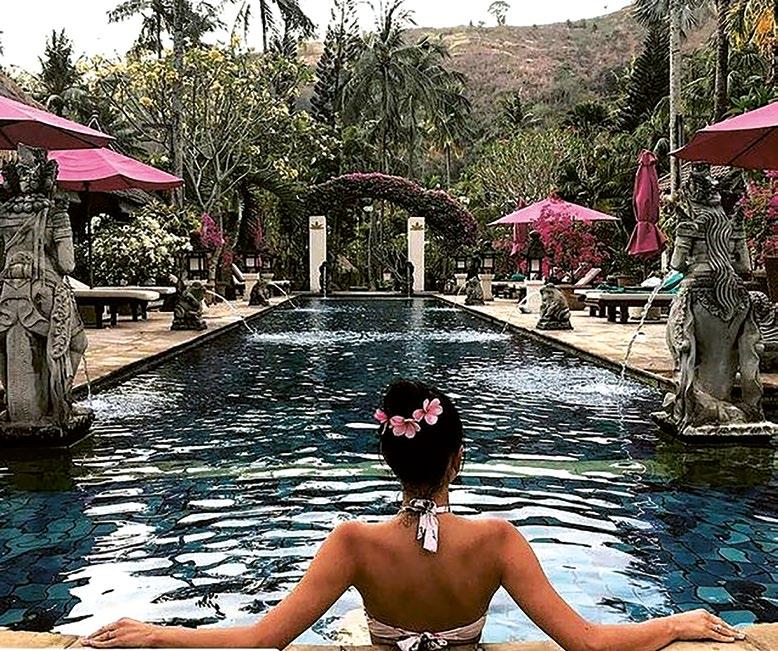
Whether you are seeking a tranquil interlude with luxury accommodation at a top resort with fine dining and spa facilities, or a budget holiday with days spent exploring – or all the choices in between – Senggigi caters for all tastes and budgets. Swim, snorkel, dive, hike, lie in the sun, have a massage, eat and drink at some of the great restaurants and bars in town; or just take a break and be enchanted by the unspoiled beauty of Lombok’s west coast.
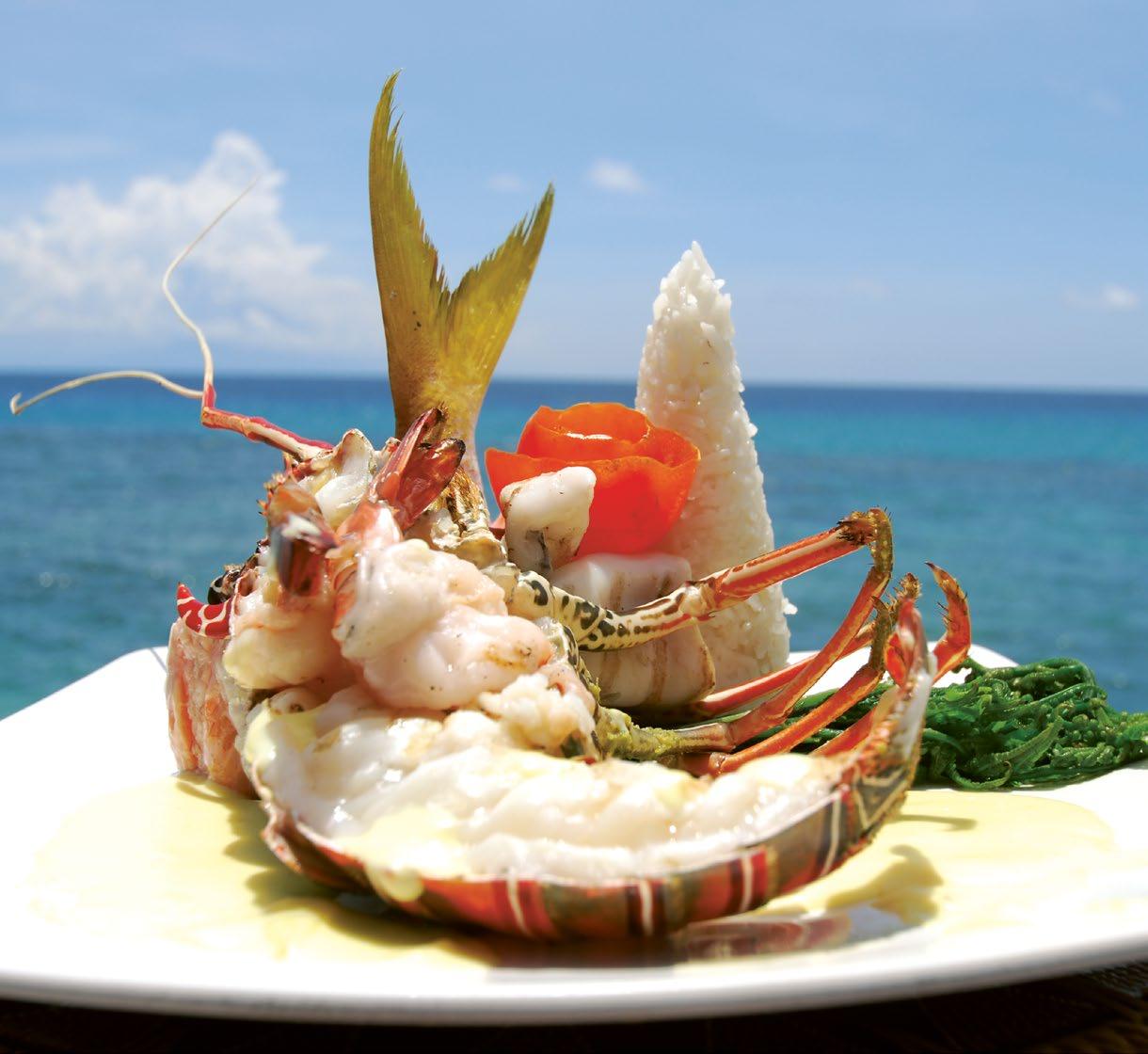

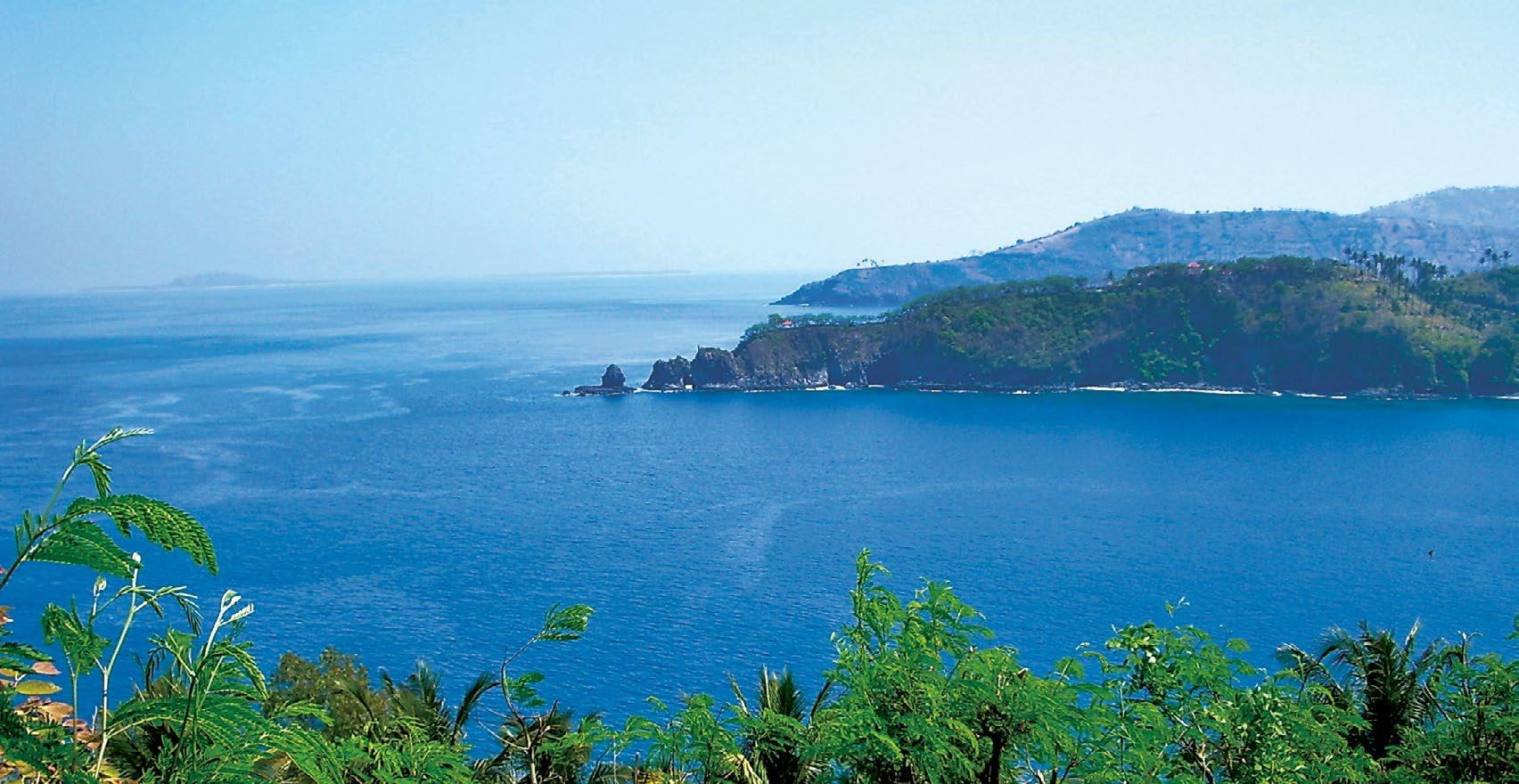
Away from the beach, the main road (Jalan Raya Senggigi) is lined with cafés and restaurants, shops, spas, tour agencies, bars and nightclubs; many of which have live music in the evenings.
There are convenience stores and supermarkets, numerous ATM’s, banks, money changers, a post office and other tourist facilities along the main street. About 2 km north of central Senggigi, Kerandangan has a popular beach nearby and a road leading into a residential area situated in a pretty valley.
At the end of the road through Kerandangan Valley is the Taman Wisata Alam – Kerandangan Nature Reserve –with hiking paths leading through the rain
forest along the river. There is a Ranger’s hut and basic visitors centre near the entrance. The park boasts a small waterfall, pretty river scenery, families of local monkeys, and a variety of tropical plants and birdlife.
Further north, Mangsit has developed as an accommodation alternative to Senggigi, with some of the best boutique hotels positioned along the breath-taking beaches of this section of coast.
There is good snorkelling in front of Puri Mas Beach Resort at high tide and, when the wind is right, surfers take to the waves in front of Qunci Villas.
Furthest north are Klui, Lendang Luar and Setangi, with a long stretch of pristine
beach at Lendang Luar and lovely resorts positioned on each of these beaches.
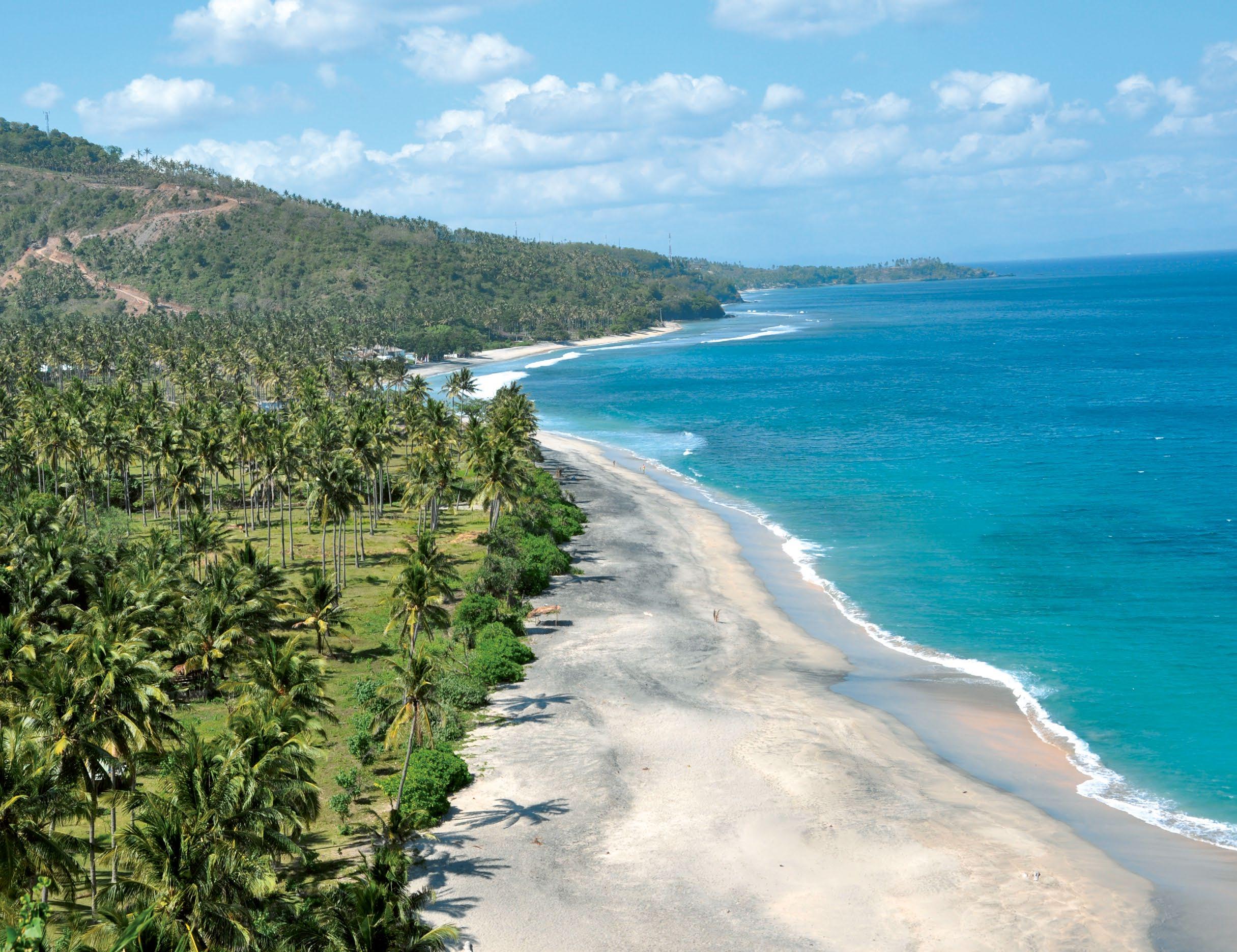
Mainly deserted white sand beaches, flanked by coconut groves, continue all the way north along the main coastal road. Malimbu and Nipah are two picturesque bays less than half an hour from Senggigi, which are good for snorkelling, swimming and getting away from it all.
***
Whether you are seeking a tranquil interlude with luxury accommodation at a top resort with fine dining and spa facilities, or a budget holiday with days spent exploring – or all the choices in between – Senggigi caters for all tastes and budgets.
Swim, snorkel, dive, hike, lie in the sun, have a massage, eat and drink at some of the great restaurants and bars in town; or just take a break and be enchanted by the unspoiled beauty of Lombok’s west coast.
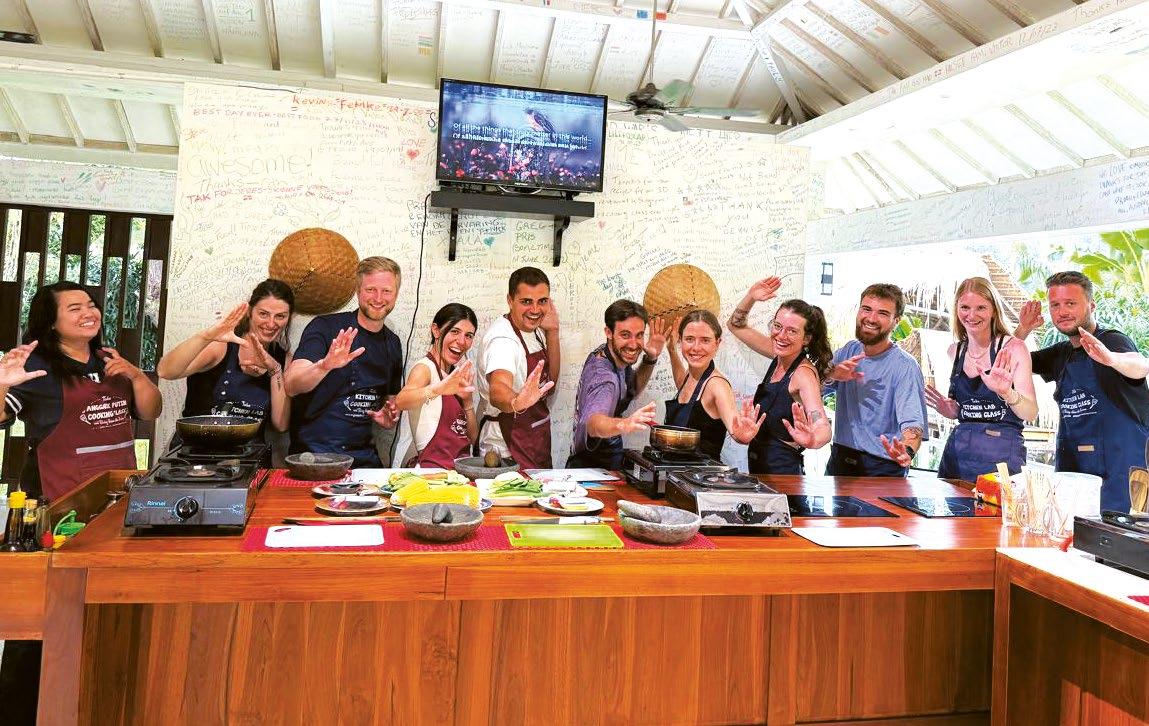
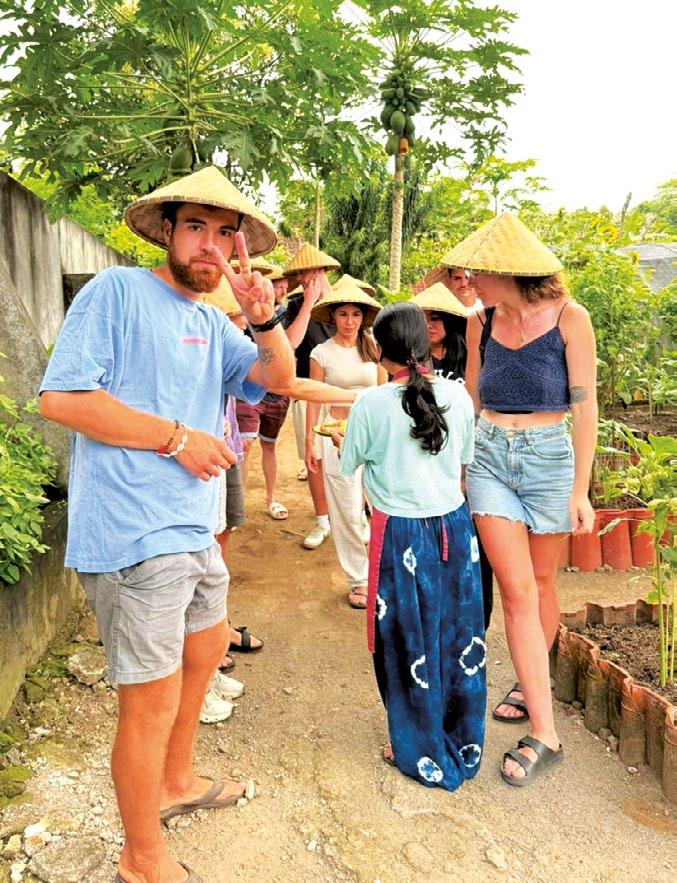

Ruth Stijns


Had a fantastic cooking workshop. The people working there were incredibly friendly and cheerful. We made all the vegetarian dishes and learned the tricks of the trade. The setting is beautiful, and everything comes straight from the garden. Highly recommended if you love both cooking and eating ;)
Google Review - January 2026



One of Lombok's most important and popular festivals takes place at the beginning of this month. Bau Nyale is a cultural tradition, deeply rooted in local legend and drama, and unique to the island of Lombok.
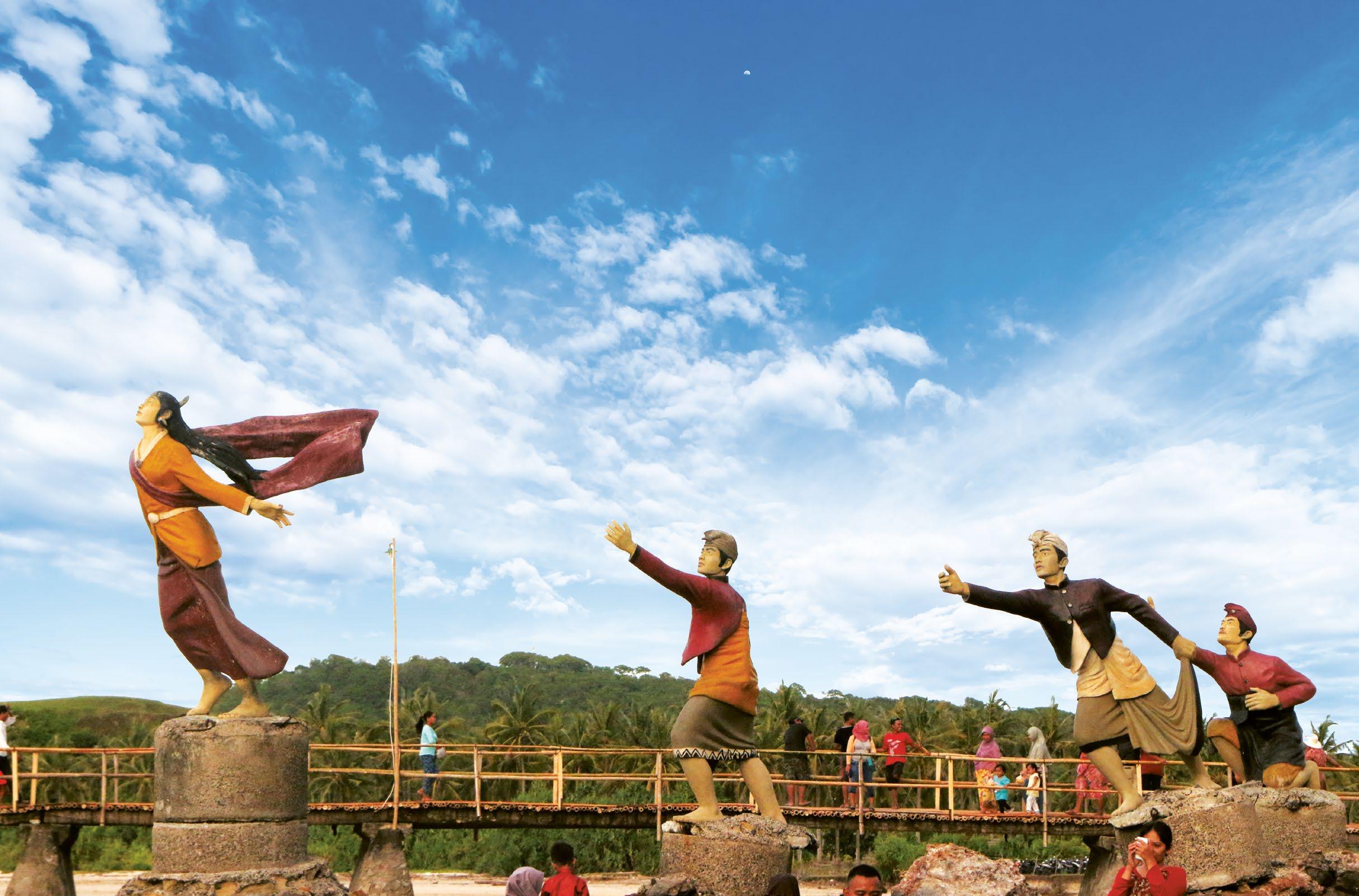
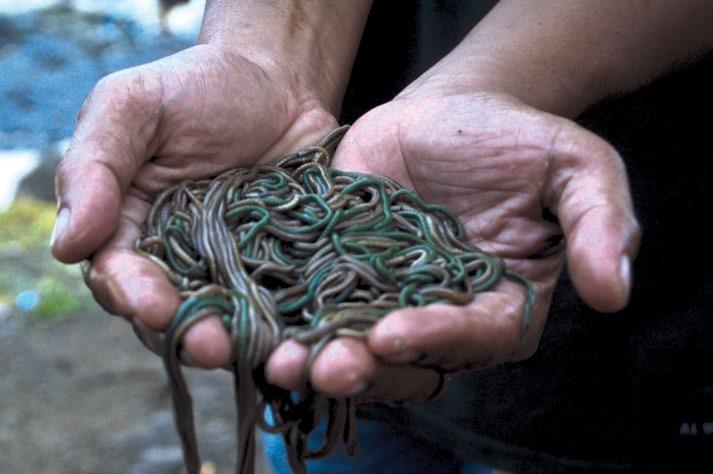
Bau Nyale means “to catch the sea worms” in the local Sasak language. The sea worms are a rare variety of Palolo worm (Eunice viridis) found in tropical waters in different parts of the world and particularly in Lombok, Sumba and Savu in Indonesia.
Once a year – when seasonal, marine and lunar conditions combine – the Nyale come to certain beaches around Lombok to spawn and, for a few days, the seas are filled with wriggling sea worms in a variety of colours, ranging from simple brown to red and green.
Bau Nyale, or the Nyale Festival, takes place every year in the tenth month of the Sasak calendar at a time close to the full moon, and is celebrated in either February or March each year.
The Nyale spawn along many of the beaches of the south coast, including Selong Belanak and Kaliantan Beach near Jerowaru, but the main site for the Bau Nyale event is at Seger Beach.
This year the Bau Nyale festival “core event” will take place on the night of 7 February, at beautiful Seger Beach near Kuta.
The lead-up to the festival starts several days before, with events usually held around Kuta Mandalika.
Peresean (traditional stick fighting competitions) will be held in the field near Nurul Bilad Mosque in Kuta every day from 1 – 5 February.
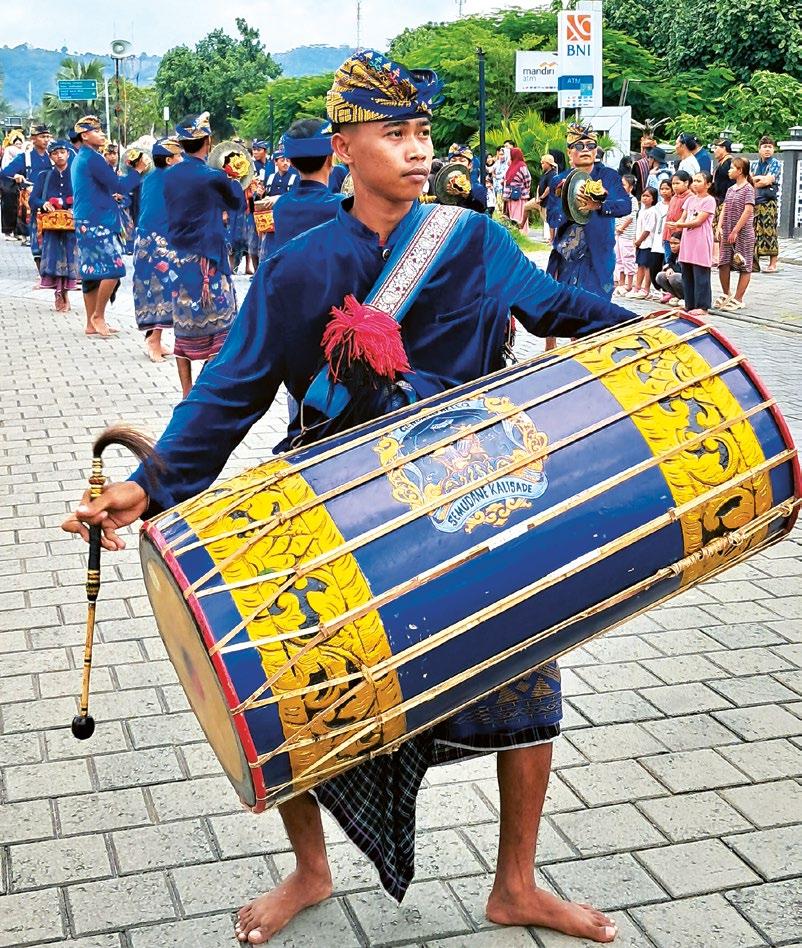
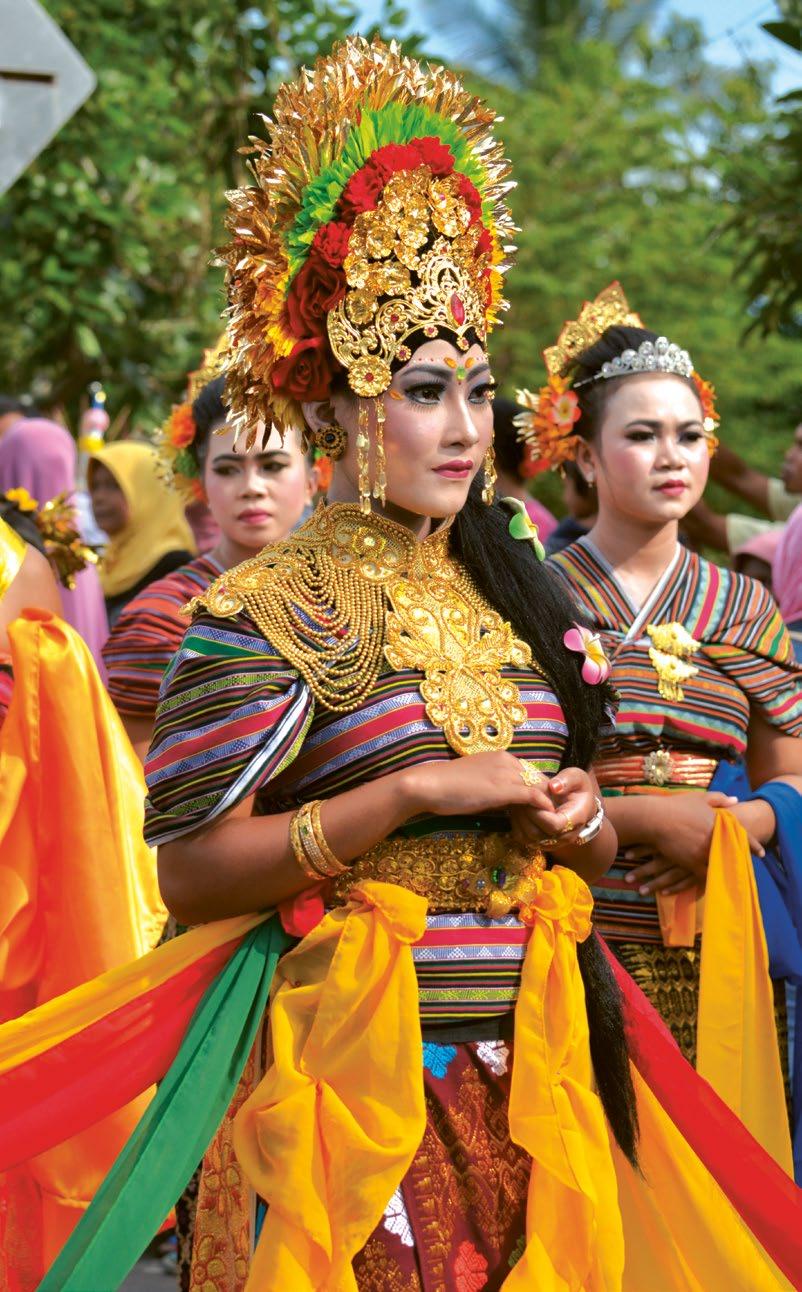
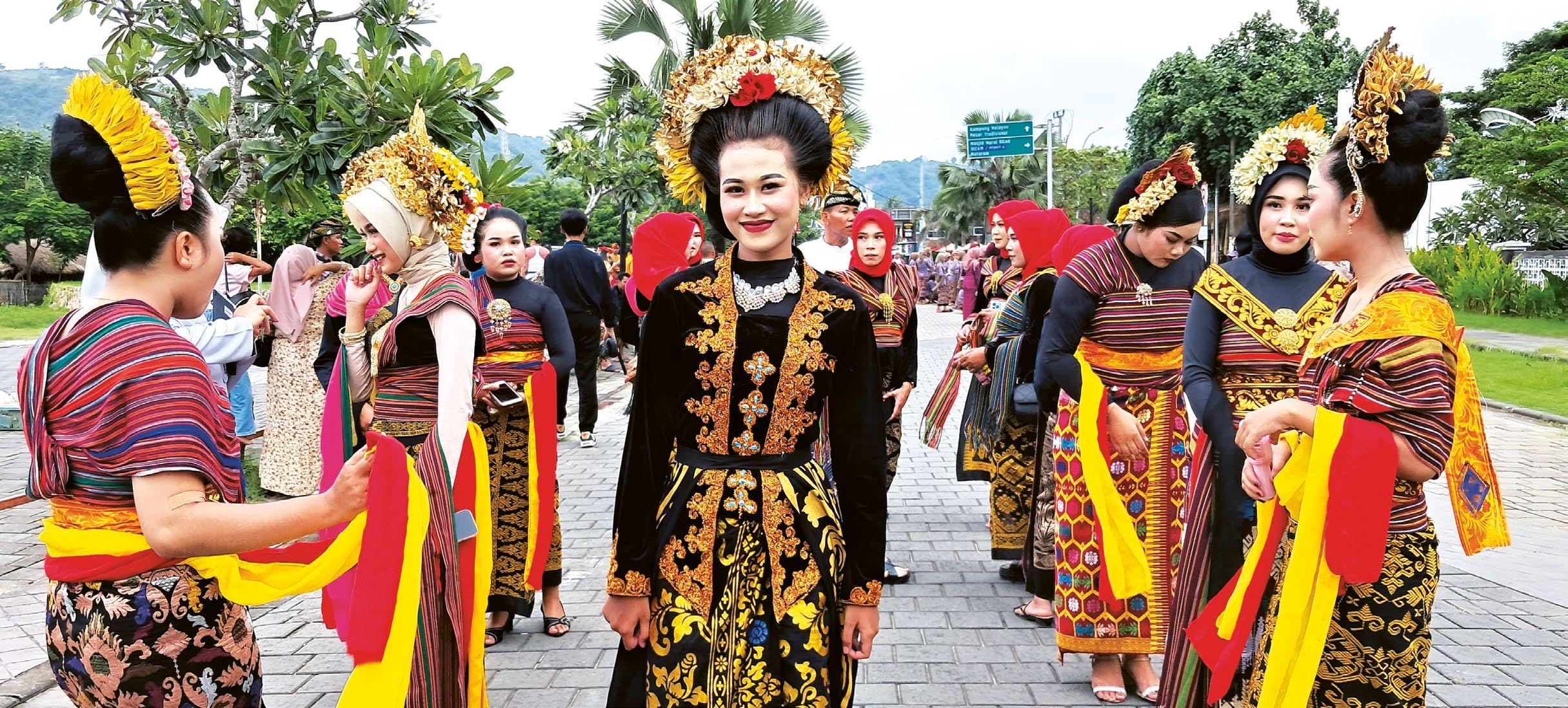
There is also a parade on 6 February featuring competitors for the title of Putri Mandalika, with “hundreds” of young Sasak ladies in fabulous costumes dressed as Princess Mandalika, vying for the crown and the opportunity to represent Lombok at various events throughout the year.
Other entertainment consists of markets, food, traditional music and dancing, and live bands, including national artists Geisha and BAPACKGURU playing on the beach at the main event.
The government only releases the festival programme shortly before the event, so we are unable to publish dates and times
for other activities but ask around locally in the week before Bau Nyale to get the latest information.
In the late afternoon of the main event, a long train of traffic makes its way to Seger Beach, around 5kms to the east of Kuta. Tens of thousands of people amass on the small road leading to the beach; typical waits for entrance can stretch to two hours. This doesn’t deter the crowds, however, and the overall festive atmosphere.
On the land surrounding the beach, stalls and warung selling drinks and foods are set up, and different performances are held on the beach. The main stage features the core performances that are an essential part of the Bau Nyale festival, in particular the theatrical drama which re-enacts the legend of Princess Mandalika.
If you want to witness Bau Nyale, stay in Kuta and arrange transport early – this popular festival attracts people from around the world.
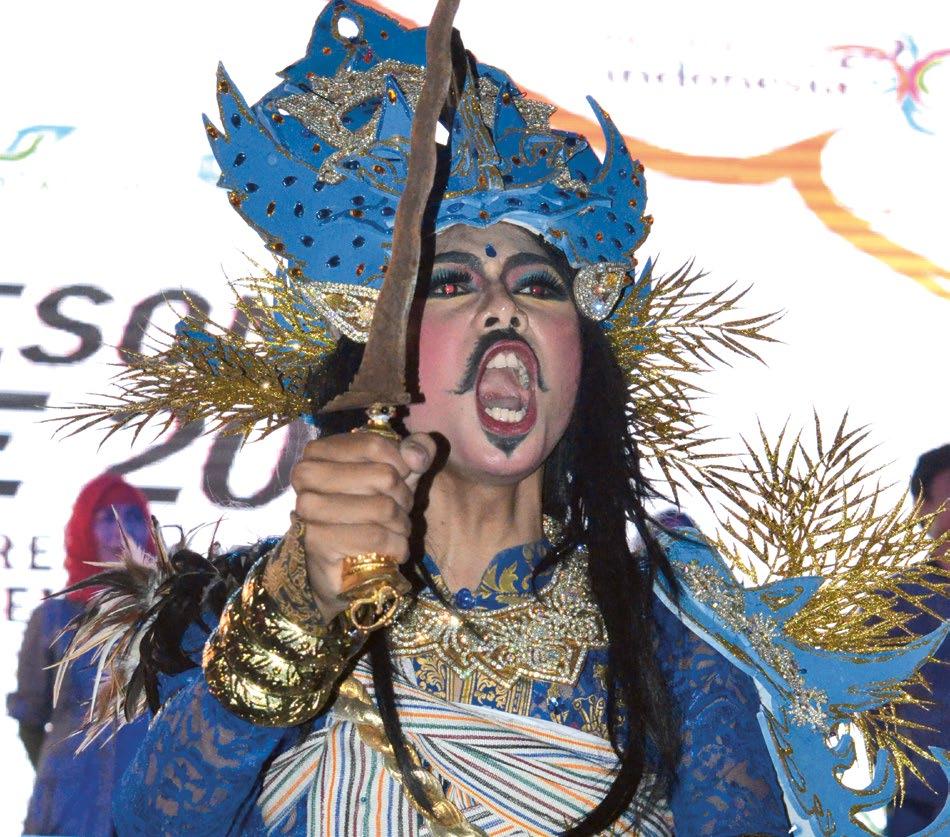
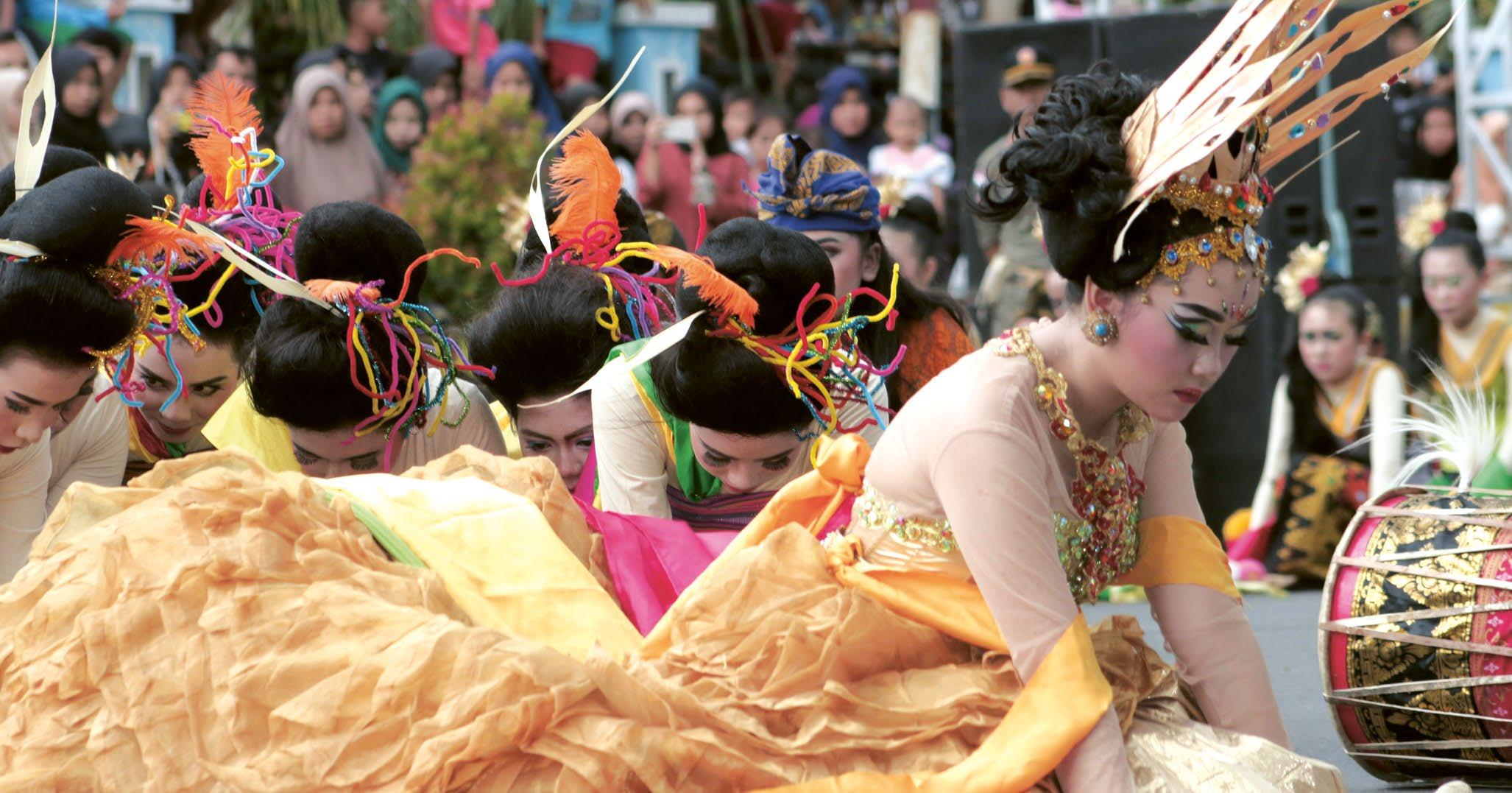
The highlight of the Bau Nyale festival is the theatrical dance and music drama which re-enacts the legend of Putri (Princess) Mandalika and is the basis for the magic surrounding the Bau Nyale festival.
The king and queen had a daughter named Putri Mandalika. The princess was very beautiful and was known throughout the land for her beauty, elegance and kindness.
When she was of suitable age to marry, princes and suitors travelled to the kingdom to ask for her hand. Among her suitors were the princes of the different Sasak kingdoms of Lombok – Johor, Lipur, Pane, Kuripan, Daha, and Beru kingdoms.
According to legend, in ancient times, the island of Lombok was divided into kingdoms. On the south coast of Lombok there was a kingdom called Tonjang Beru. Tonjang Beru was ruled by King Raden Panji Kusuma, who was known for his wisdom and good sense, often helping people to solve problems and conflicts.
Thanks to the leadership of the king and his queen, Dewi Seranting, the people of Tonjang Beru lived prosperously, safely and peacefully.
So many men wanted to marry her that it began to cause trouble between the people, leading to tensions and threats of war between the rival kingdoms. The princess became unable to choose between them, fearful that her decision would cause further strife.
Finally, the princess’s father gathered all the rivals together and instructed Princess Mandalika to choose her husband before sunrise the next morning.
Early on the morning of the 20th day of the 10th month (in the Sasak calendar), everyone gathered on the beach to hear who the princess would choose.
Continued on Page 24
Continued from Page 23
Just as the sky turned red on the eastern horizon, the beautiful and graceful princess arrived. Climbing onto a pile of stones, her back to the open sea, Princess Mandalika turned to address the entire audience.
Facing the people before her, Princess Mandalika declared that – even if she loved one of the suitors – she loved her parents and her kingdom too much to cause any more trouble. Saying that, rather than choose one, she would give herself to everyone, she threw herself into the sea –declaring that she would return each year as a sign that she would never leave her people.
Everyone immediately searched the sea for the princess, but instead they only found masses of colourful sea-worms, called Nyale.
According to a local priest, or Dukun, the princess’s body had been transformed into these sea worms, and thus they became a traditional symbol for the Sasak people.
Other legends say that the strands of the Nyale worms are the princess’s long hair, floating in the water where she drowned.
Whether or not the stories are true, the legend continues to be celebrated and has become a parable of sacrifice for the sake of the greater good; re-enacted each year at the Bau Nyale festival as a reminder to the community.
The Putri Mandalika drama is one of the most unique and enchanting cultural performances to be found in Lombok.
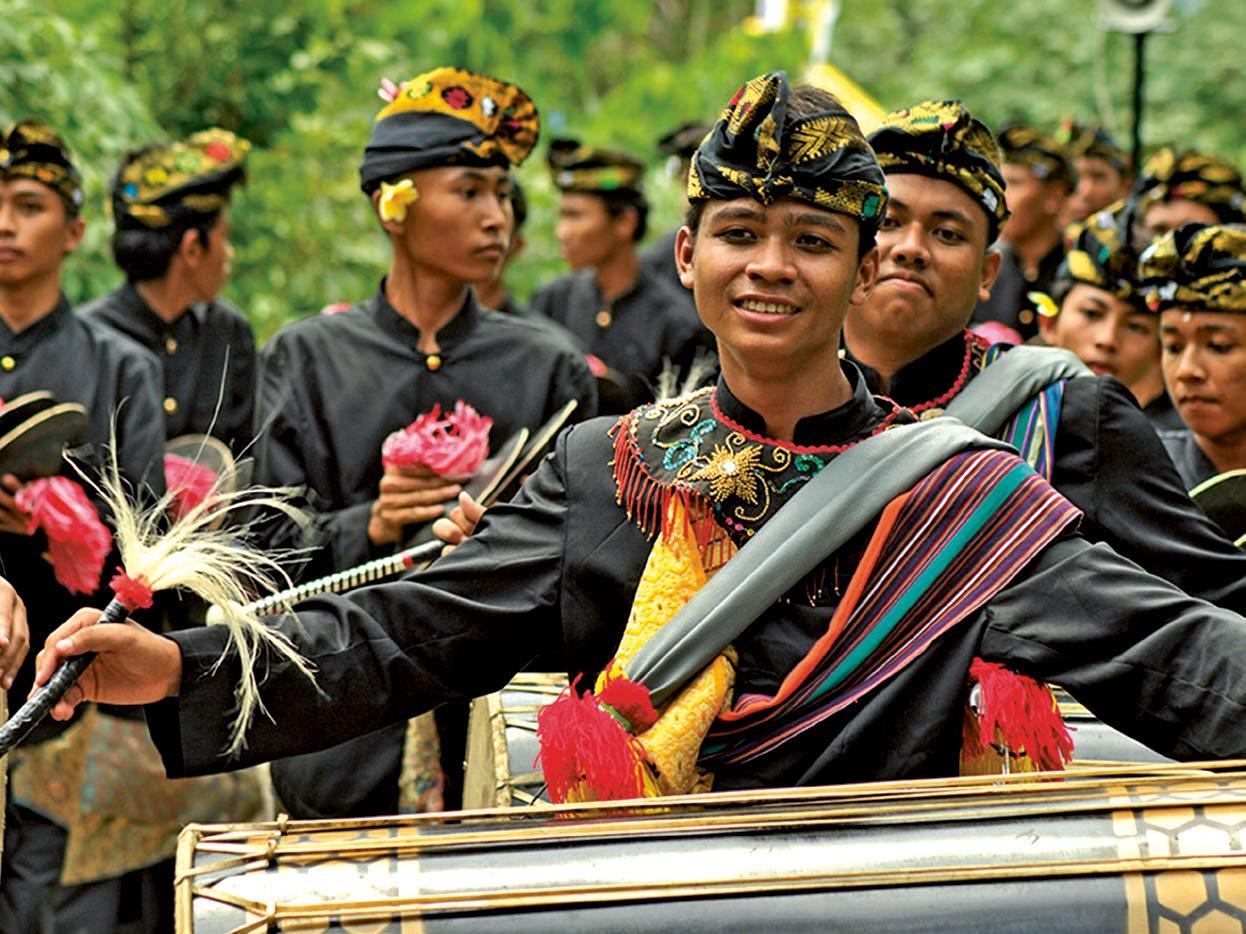
The spell-binding and well-acted spectacle features beautiful and authentic Sasak costumes, traditional music, drumming, peresean (stick fighting) and gamelan; and is a fascinating insight into the life and history of our island, during the times when Lombok was ruled by kingdoms and Sasak royalty.
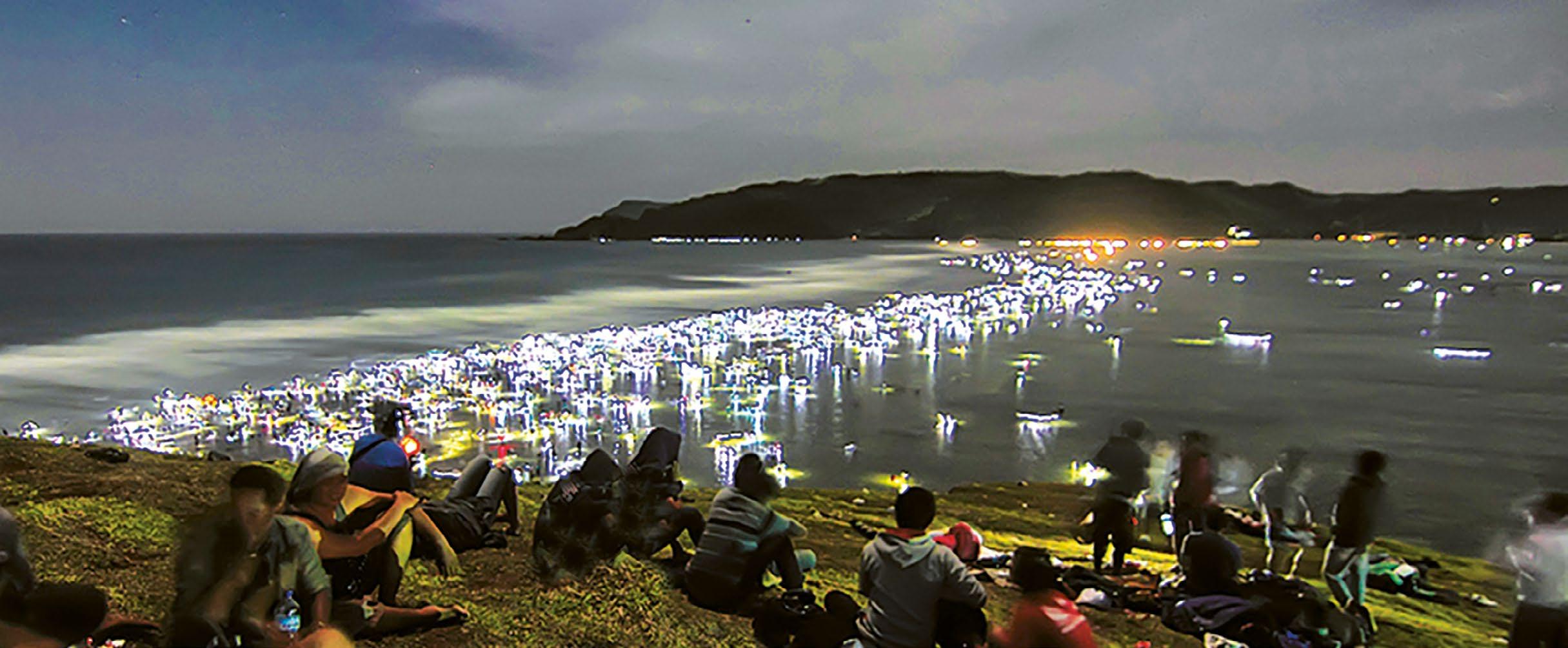
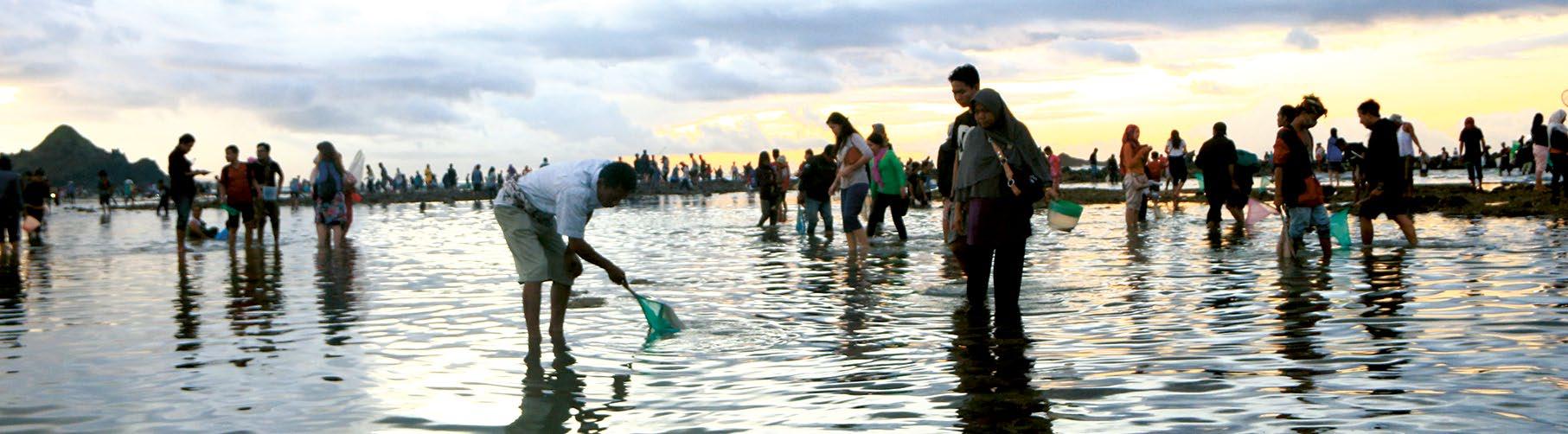
At the end of the drama thousands of people make their way down to the beachfront to see if the Nyale have started to appear. Excited crowds splash into the water carrying small nets, buckets and torches, hoping to be the first to catch a Nyale worm.
No one really knows for sure when the Nyale will appear, so anticipation is high prior to the first sighting. The first catches start around 2am and by sunrise the beachfront is an awesome sight, swarming
with thousands of wet, happy people scooping up the worms with nets, buckets, shirts and anything else they can use to catch them!
The highlight of the ceremony occurs when the Dukun (local priest) wades into the sea to observe the spawning Nyale and predict the future rice harvest, based on the number of sea worms.
A good catch is a sign that this year’s rice harvest will also be good. Nyale are traditionally associated with fertility and the sea worms are often ground up and placed in irrigation channels around fields to help ensure a good harvest.
Considered a rare delicacy, the people collect the worms and eat them as a special annual feast. Nyale are sometimes eaten raw when they are caught, but more often are steamed, fried, or made into Pepes Nyale. In this popular local specialty, the Nyale are mixed with coconut and spices, then wrapped in a banana leaf and roasted over the fire.
The sea worms are rich in protein and are also believed to have aphrodisiac properties, so the feasting takes place with much amusement and gusto!
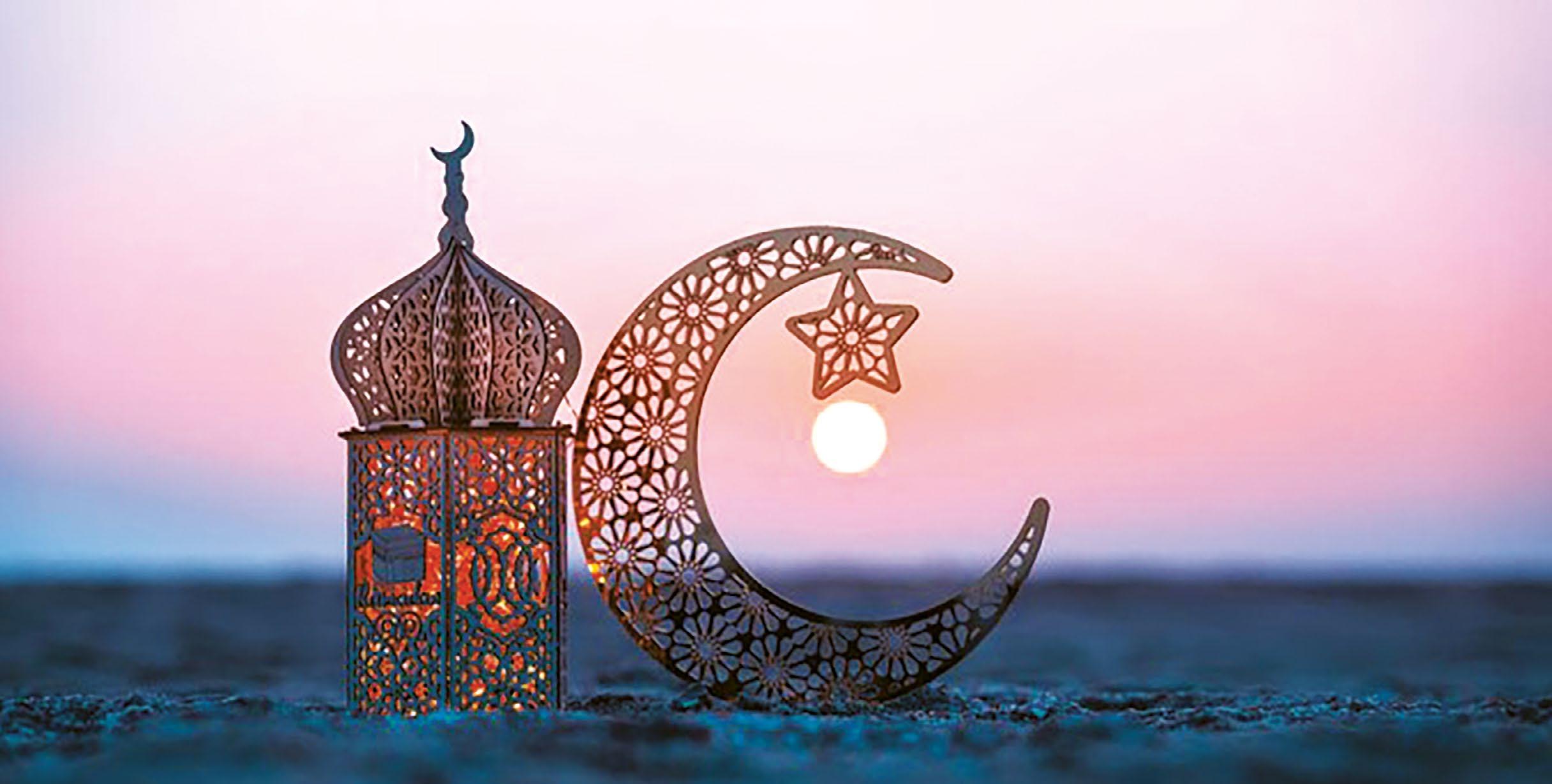
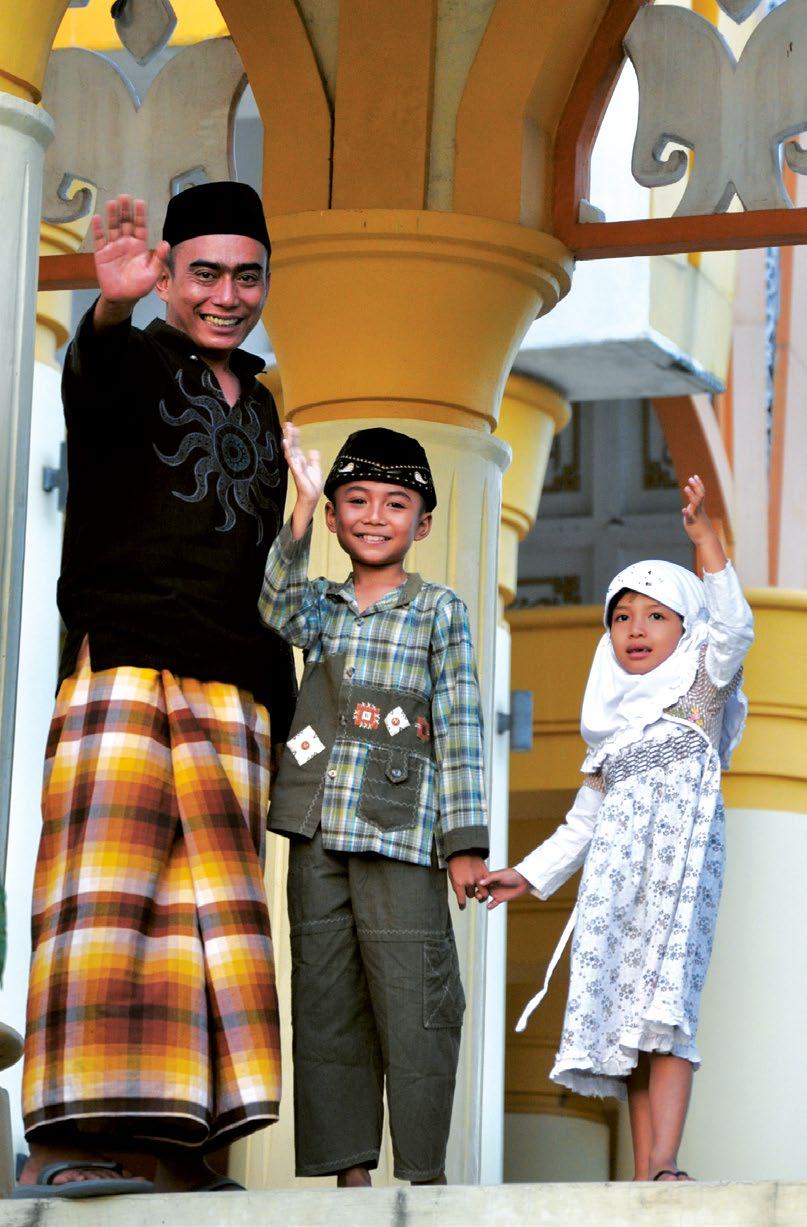
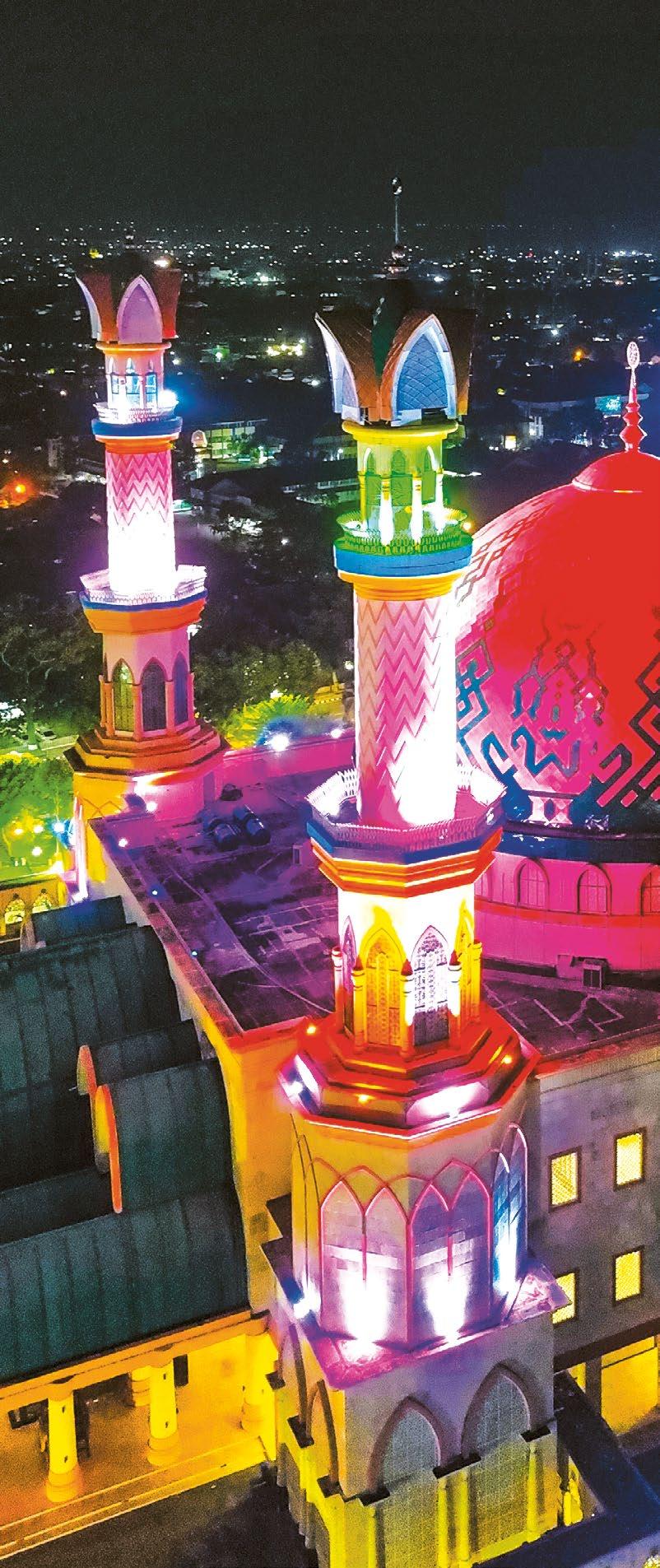
The month of Ramadan – locally known as ‘Bulan Puasa’ – is predicted to begin around 18 or 19 February this year and many people across Indonesia will be fasting for the following month.
Every year around this time, we receive emails from tourists who are wondering whether to visit Lombok during Ramadan... so now is a good time to dispel some rumours!
Some tour guides and online sources will tell visitors not to go to Lombok during Ramadan because all the restaurants are
closed, there’s nothing to eat, you can’t buy a beer, and none of the taxis are operating.
Whether these stories are a result of genuine ignorance about Ramadan, or a bid to keep the tourists in their own backyard, the fact is: Lombok welcomes visitors all year round!
It would be silly to suggest that, with a thriving tourism industry and a multicultural society made up of different religions, the whole island would just grind to a halt for a month every year!
During Ramadan, hotels and resorts are open for business, restaurants serve meals all day, bars are open and still serve alcohol – and planes, ferries, fast-boats and taxis are all operating as usual!
If you are staying at hotels and resorts in the main tourism areas – Senggigi and the west coast, Kuta and the south coast, and on the three Gili islands – it’s business as usual.
With millions of people fasting across the archipelago, of course Ramadan will have an influence but generally, we find this an exotic and interesting time to visit Lombok.
Small things you may notice are that the mosques are more noisy than usual and that service can get a little slow at times.
While bars are still open, loud music and late-night parties are curbed during Ramadan out of respect for local people who are waking up early to prepare for their fast.
However, most local people are used to working around religious events. With Lombok’s ethnic diversity of Muslims, Hindus, Christians, Buddhists and more, there is some type of religious holiday or event almost every month!
Ramadan starts with the first sighting of the new moon in the ninth month of the Islamic calendar (which is based on lunar phases; not the Gregorian calendar), so there is always some confusion about the actual start day.
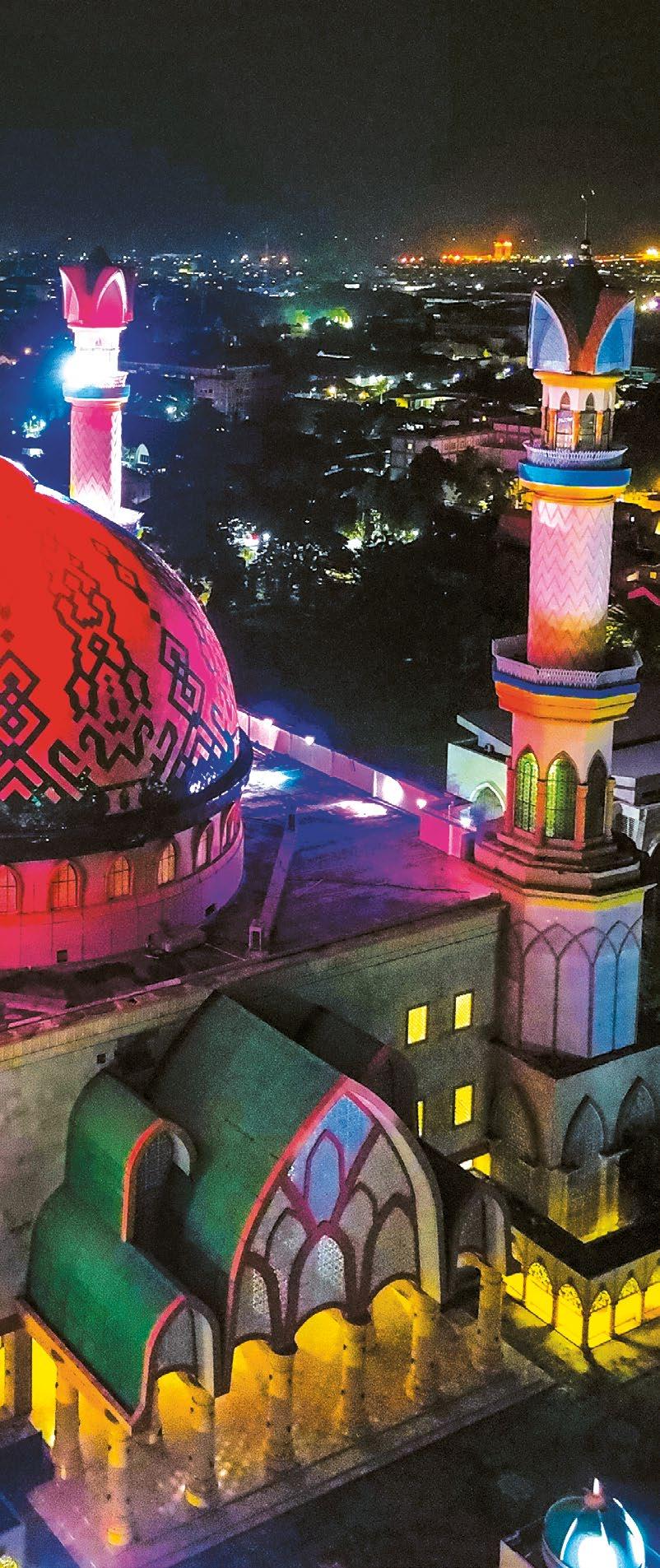
Although with astronomy we can predict the timing of the new moon, a special group will convene for the Isbat deliberation just before the start of Ramadan to physically witness the new moon on the horizon and announce the start of the fasting month, which is why the date is always estimated until the actual Isbat announcement is made.
Ramadan lasts for one lunar month (until the next new moon) and this year is predicted to finish around 18 or 19 March.
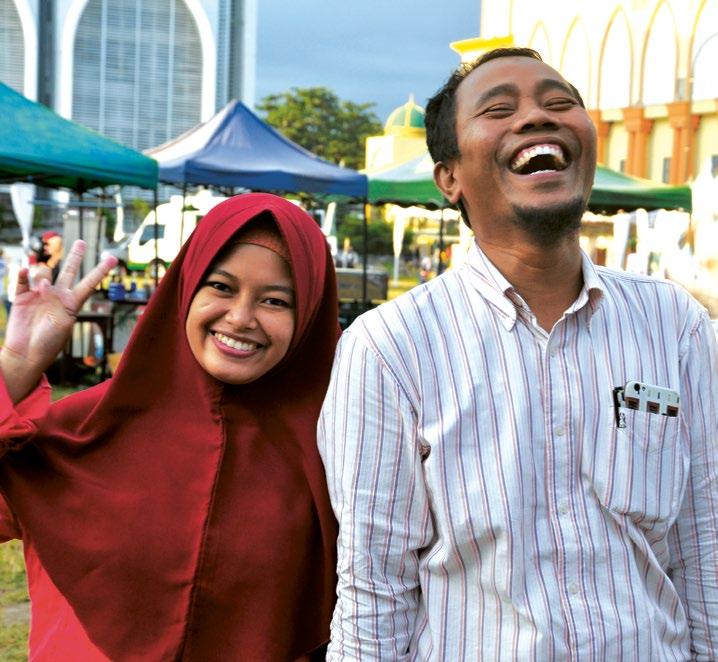
Fasting doesn’t just mean not eating during the daylight hours, but includes abstaining from drinking, smoking, and having sex between sunrise and sunset each day. Extreme emotions, such as anger, are also frowned upon during this time.
Ramadan is a month for strengthening self-control; testing willpower and resisting temptations. For many, it is a special time for meditation and reflection.
Muslims believe that fasting also helps them to empathise with the poor and those who never have enough food, and the month of Ramadan is marked by charity and giving to those less fortunate than themselves.
Those living in local communities will be asked to donate to a charitable drive usually around the third week of Ramadan, so that the poor and needy in the community will have enough food and essentials to celebrate the end of the fast at Idul Fitri.
It is also a government regulation that a one-month bonus is paid to all staff and salaried employees near the end of the fasting month. This is referred to as THR (Tunjangan Hari Raya) or the 13th month payment.
All adults (those who have reached the age of puberty) are expected to fast but children, women having their period, or who are pregnant or breastfeeding, travellers, people who are sick, and those with long-term illnesses or who are mentally ill are not required to fast.
The fast begins in the morning just before sunrise, at Imsak, and is broken at Maghrib, which falls at sunset.
While they are fasting, Muslims will wake early in the morning before the sun rises to prepare and eat their first meal for the day and to say morning prayers. You will often hear people calling “Sahur! Sahur!” to wake up their neighbours.
Continued on Page 28
After sunrise, no food, drinking or smoking is allowed for the rest of the day until sunset.
Most Muslims seem to agree that it’s only the first week or so that’s difficult; after that, their bodies adapt to the new routine. They also agree that it’s better to keep as busy as possible during the day, so they’re not thinking about food!
If you’re travelling in some of the outer areas and small villages which are not geared for tourism, it may be more difficult to find warung or cafés open during the day. It might be easier to buy drinks, snacks and meals to take with you to have in the car, or to eat in your hotel later.
As an aware traveller, you can show courtesy by not eating and drinking in front of fasting people, but generally people are aware that you are a guest and not fasting.
Some restaurants and cafés in the cities may cover their windows with curtains during the day to provide privacy, but are still serving food. In the evening, these places will become busy with people breaking their fast.
For people employed in the service and tourism industries, it’s normal for guests to be eating, drinking and enjoying their holidays.
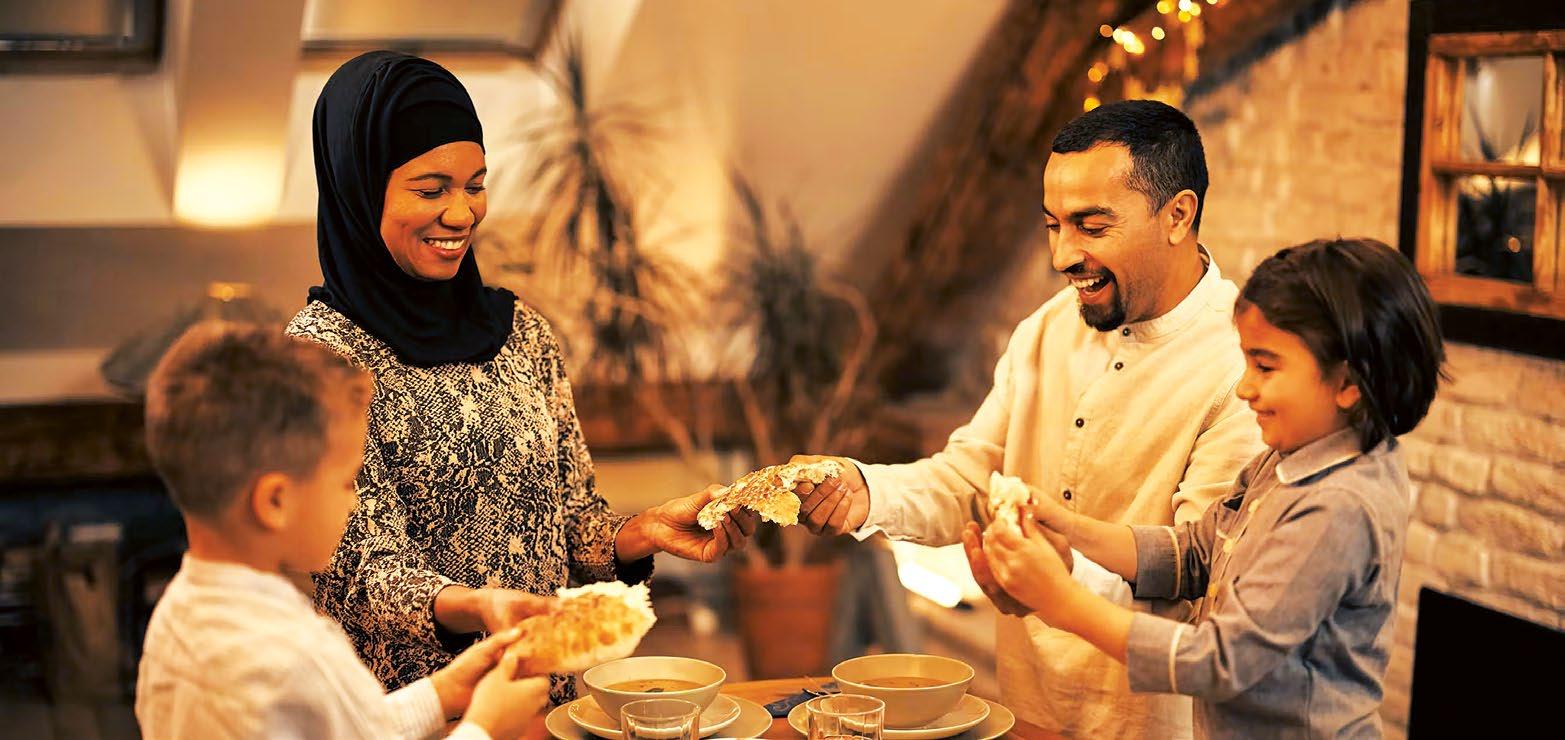
Buka Puasa (breaking the fast) at the end of the day is a happy occasion, with families gathering together to share their evening meal after a day of abstinence.
Many hotels and restaurants offer special buka puasa packages during this month and these are a great opportunity to sample some of the best traditional foods served at this time of the year.
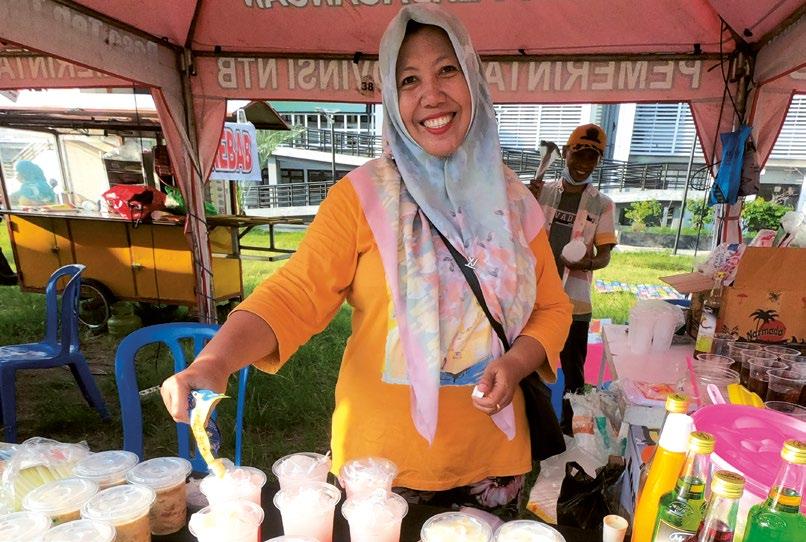
After a hot day of not drinking, the fast is usually broken with a cold drink and sweet snacks for energy. Some may welcome a simple
drink from a fresh young coconut, while iced drinks such as es buah and es campur are very popular.
Es Buah (iced fruit) is a drink made of sweetened coconut milk mixed with ice and fresh fruits, while Es Campur (mixed ice) combines sweetened coconut milk and ice with fruits, shaved coconut, tapioca balls, agar agar or seaweed jellies, and syrup. There are many variations on this theme including Es Cendol, Es Teler and more – they’re pretty delicious!
You’ll also notice a lot of interesting foods around this time, as Ramadan brings out the desire for delicious foods to break the fast!
Watch for the stalls on the streets selling Korma – juicy dates from Iraq, the Middle East and Saudi Arabia. These also make nice gifts during Ramadan.
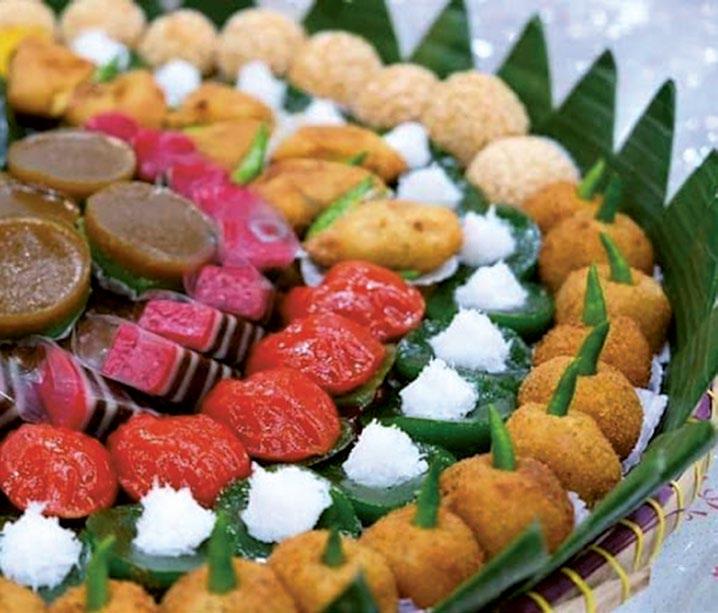
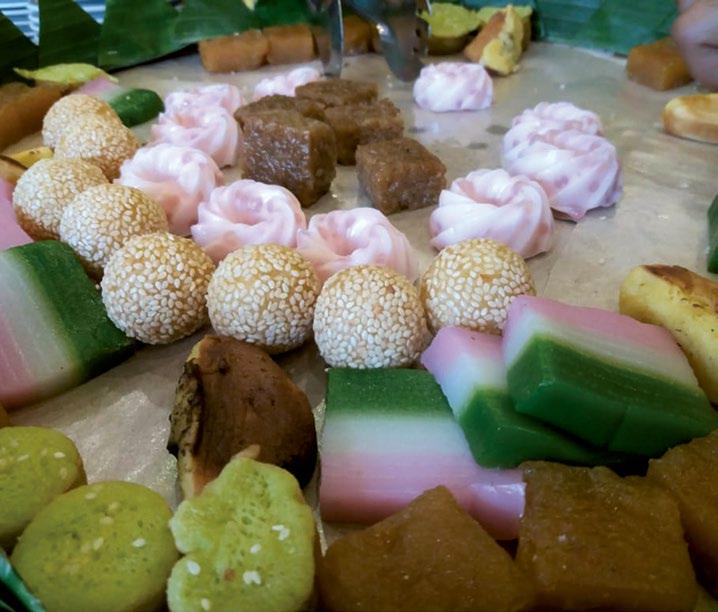
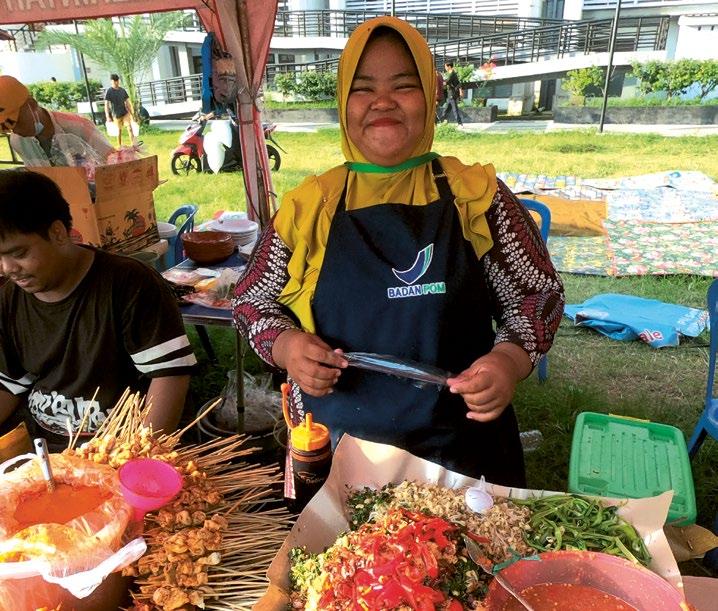
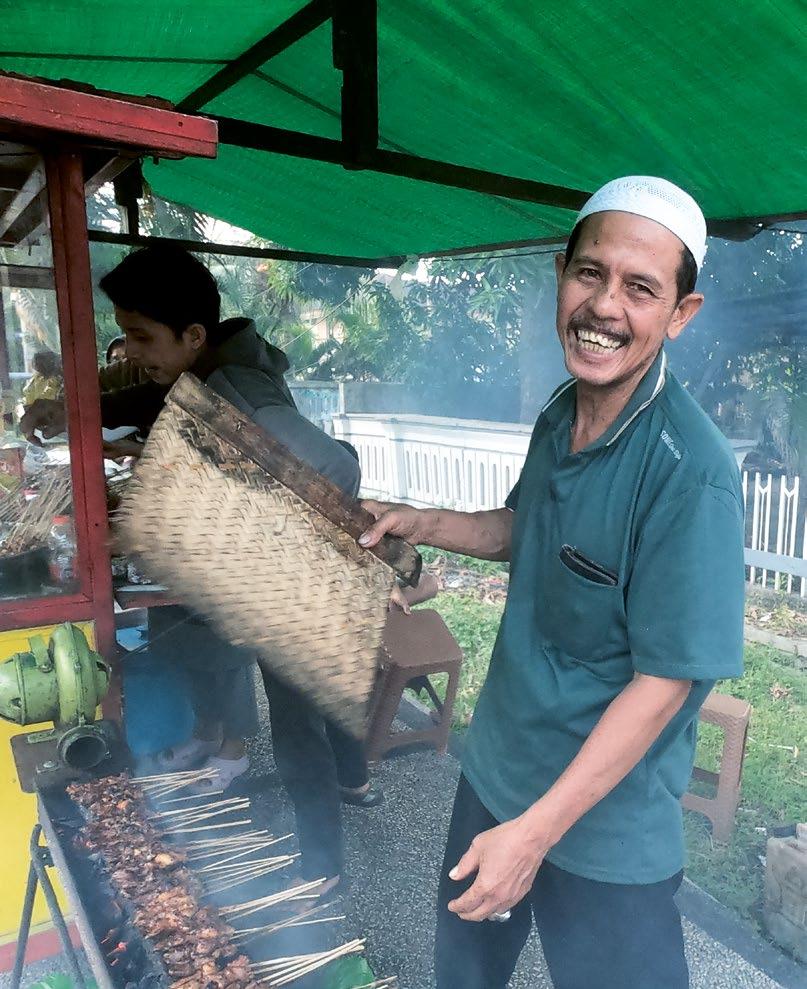
In the late afternoon, street vendors set up along the roadsides selling small sweet snacks called jajan, fresh coconuts and cold drinks of all kinds, and delicious foods for breaking the fast – many of these are only seen during Ramadan.
Street food markets are a great way to mingle with people in the evening and to sample the wide range of tasty foods on offer. Try the stalls outside of the Islamic Centre on Jl Udayana
in Mataram, or there is a big street market every evening along Jl Majapahit, near Siloam Hospital Mataram. Otherwise, you’ll find stalls along all the major streets in Ampenan and Cakra.
Popular meals include grilled fish (ikan) or chicken (ayam) cooked over hot coals and served with rice. Look for Ayam Taliwang – a famous local specialty of marinated grilled chicken coated in a spicy red sauce. Other favourites include deep fried snacks (gorengan) filled with meats, vegetables, or tofu and dipped into spicy sauces. Satays of all varieties – meat, chicken, fish and vegetarian – are marinated and grilled over smoky coconut husks and served with peanut sauce.
Vegetarians are well catered for with a huge range of creative dishes incorporating tofu and tempeh, as well as hot and cold vegetable dishes and salads that are a staple in Indonesian cooking. Rujak is a popular favourite with sliced crunchy and slightly under-ripe fruits (and sometimes vegetables such as cucumber), coated in a spicy palm sugar dressing. The sweet, sour and spicy taste is surprisingly refreshing.
This is just a small sampling of the many foods you’ll find at street stalls during Ramadan. Don’t miss this opportunity to try out the authentic tastes of Lombok and to mingle with the happy crowds… you’ll win hearts if you wish them “selamat berbuka puasa” as they break their fast for the day!
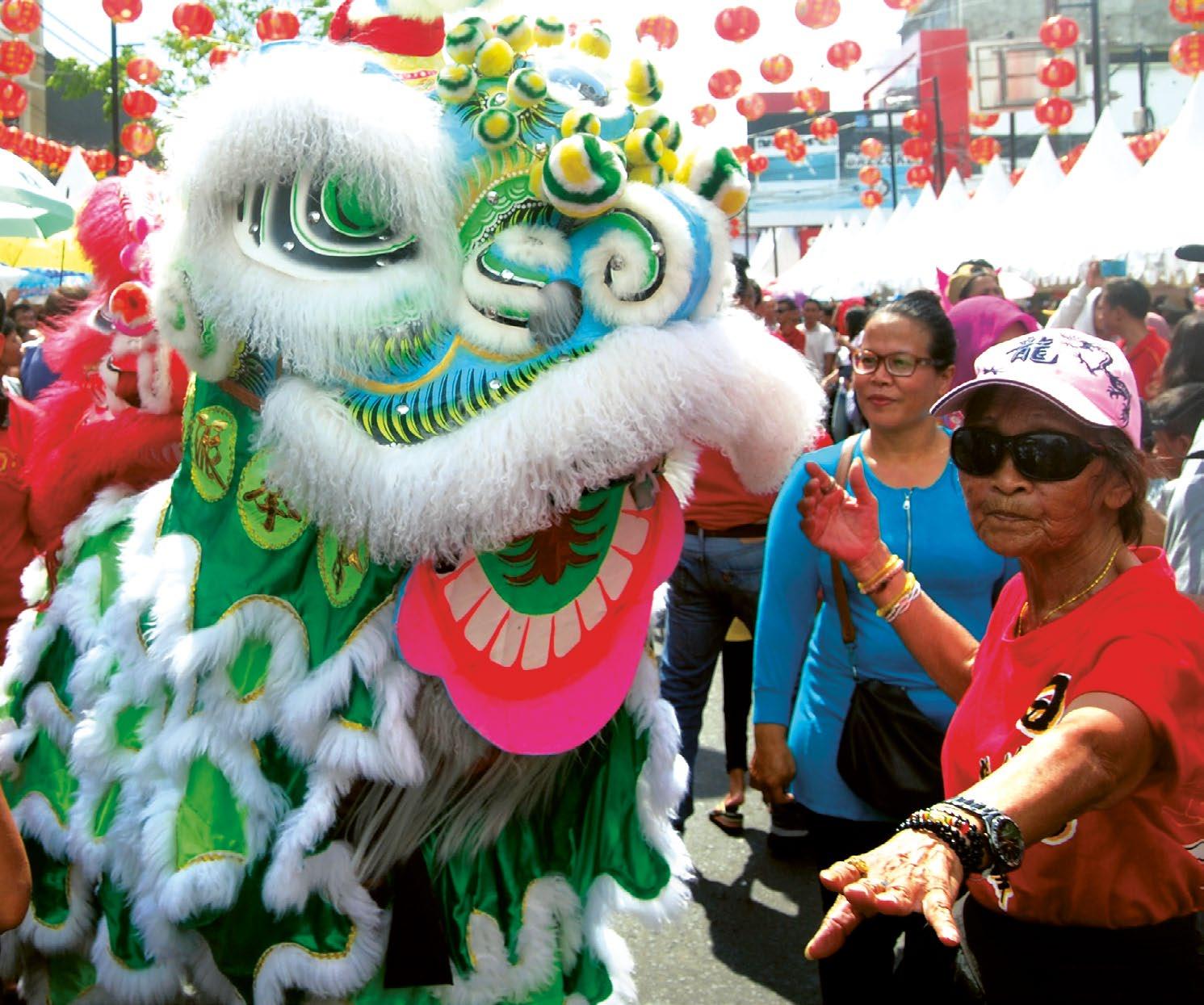
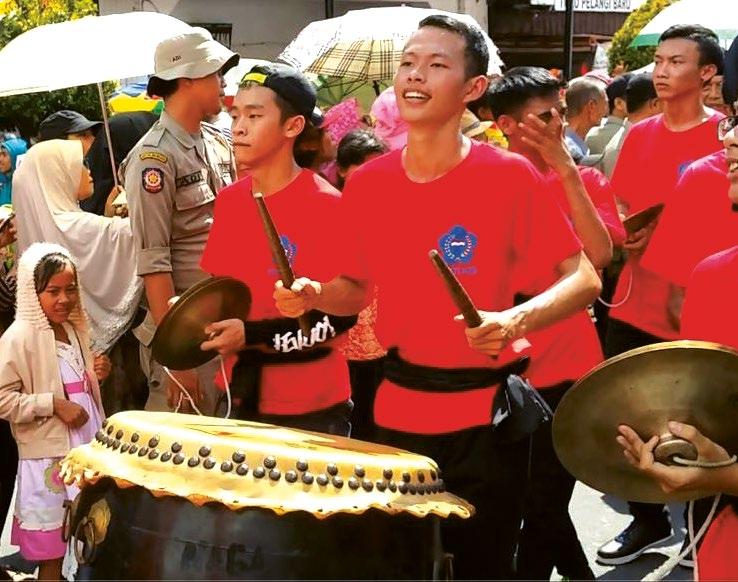
Chinese New Year is on Tuesday, 17 February this year, and the Chinese community in Lombok will be celebrating as we bid goodbye to the Year of the Snake and welcome the Year of the Horse!
Specifically, the year of the Fire Horse. According to Chinese culture, the horse, combined with the dynamic qualities of fire, signifies energy, passion and progress.
Chinese New Year is called “Imlek” in Bahasa Indonesia (and also called the Spring Festival or Lunar New Year) and is the most important of the traditional Chinese holidays. Celebrations incorporate customs and beliefs brought to Indonesia by Chinese immigrants, who still follow the practices handed down by their grandparents.
Lombok is a multicultural society and there are more than 10,000 people of Chinese descent living here, playing a vital role in commerce and trade on the island. They originate from many areas of China, with the majority being Hakka and Hokkien from Guangdong, and practice a number of religions including Buddhism, Taoism, Confucianism, as well as being Catholic and Protestant.
Being a lunar festival, Chinese New Year begins on the day of the first new moon of the year (17 February this year) and ends on the full moon, sixteen days later, with the Lantern Festival (on 3 March).
Many Indonesian people believe that Chinese New Year heralds the start of the rainy season (and an end to the ferocious trade winds that blow at this time of the year).
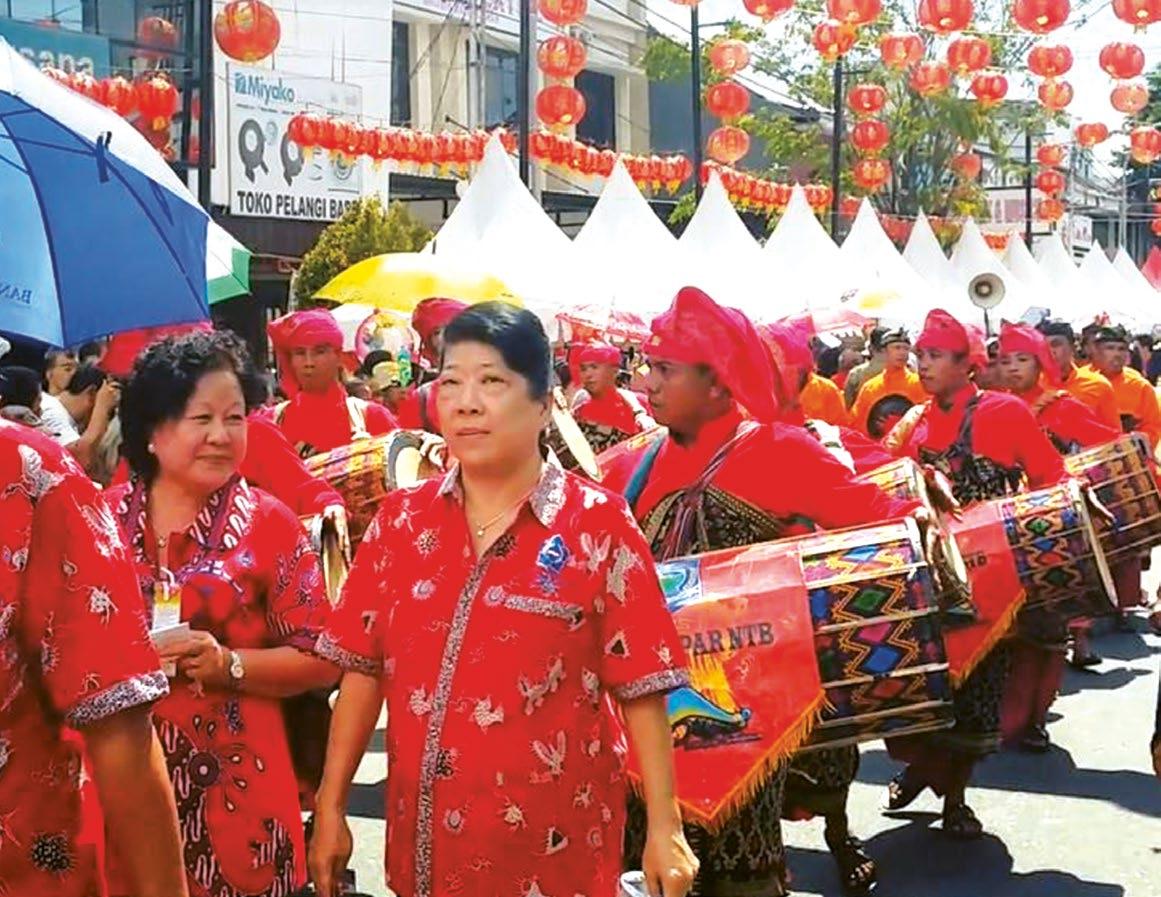
In Lombok, Chinese New Year celebrations include visits to family, relatives and friends and sharing a special feast together, similar to celebrations in the west.
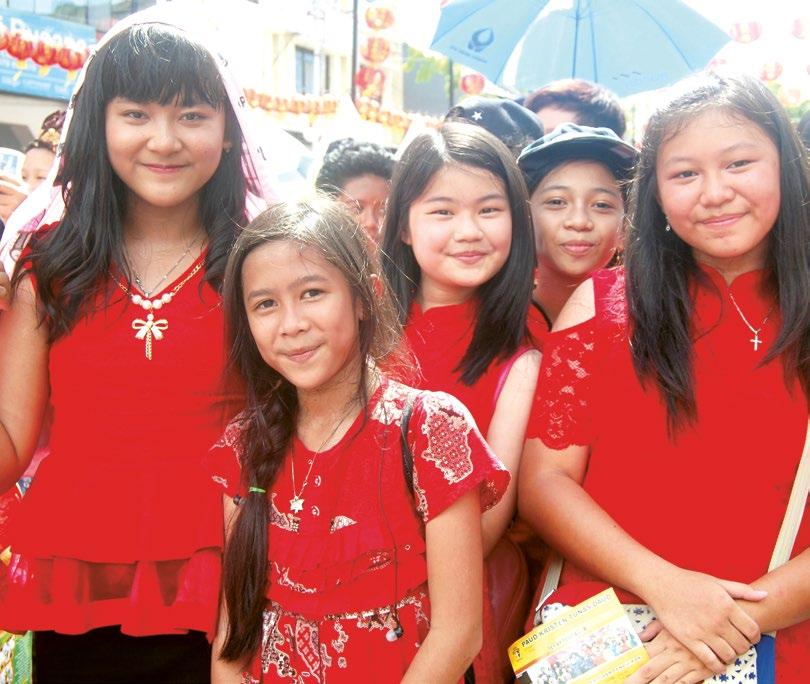
New clothing is usually worn to signify a new year and the colour red is liberally used in all decorations. In the cities, you will see red lanterns and banners hanging up in Chineseowned stores.
On the days before the New Year celebration, Chinese families give their home a thorough ‘spring clean’. It is believed that the cleaning sweeps away the bad luck of the preceding year and makes their homes ready for good luck to enter.
The most important event is the dinner every family will host on the night before Chinese New Year. A reunion dinner is held on New

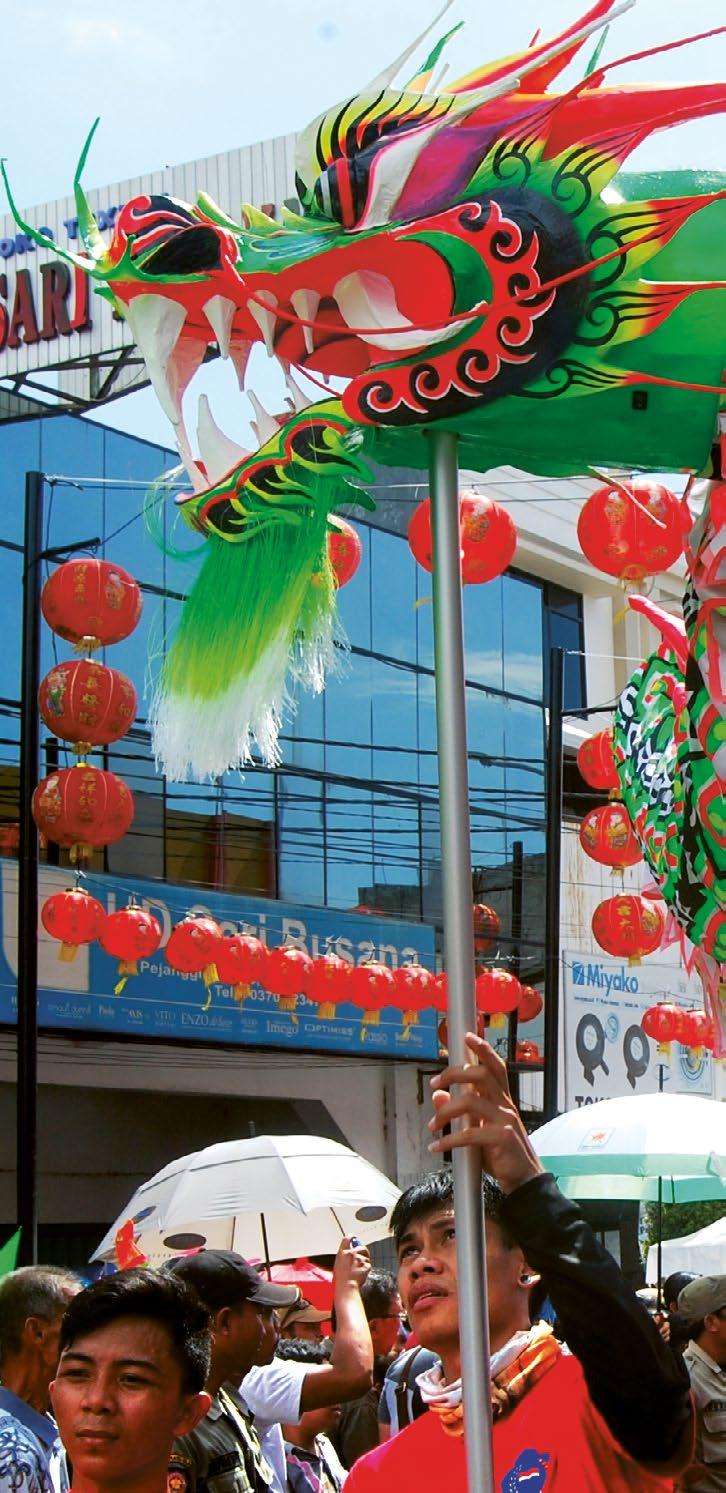
Year's Eve, where members of the family from near and far get together for the celebration.
Red packets, called Ang Pau, are traditionally distributed during Imlek, especially to children. These packets contain money in certain numbers that reflect good luck and honour. The number 4 is considered bad luck and the number 8 is considered lucky.
The people of China have a long held belief that they are descendants of the dragon; a tradition that is firmly embedded in their culture and one that is encountered across all aspects of Chinese society and in the minds of its people. The dragon is held in high esteem for its dignity and power for good.

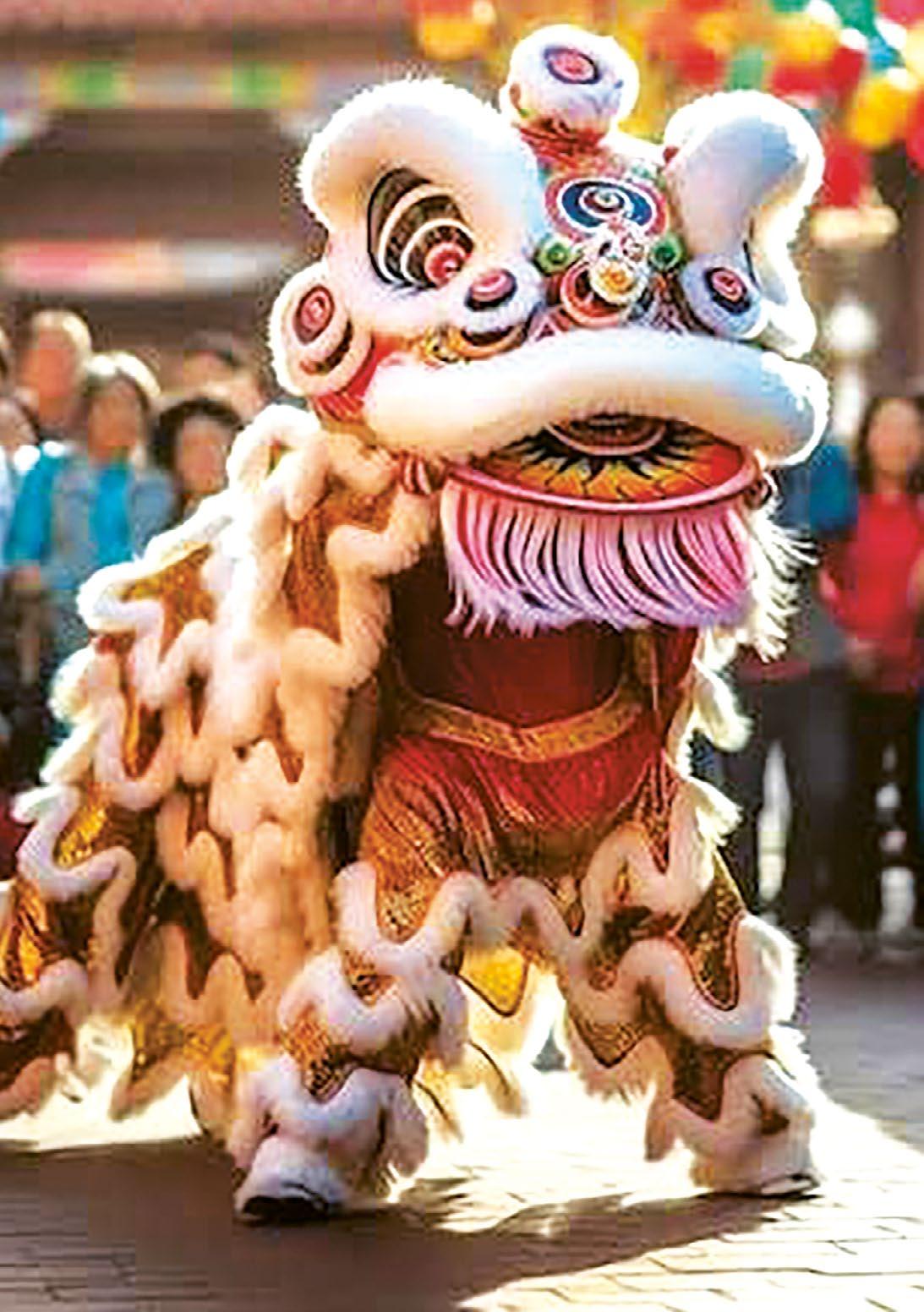
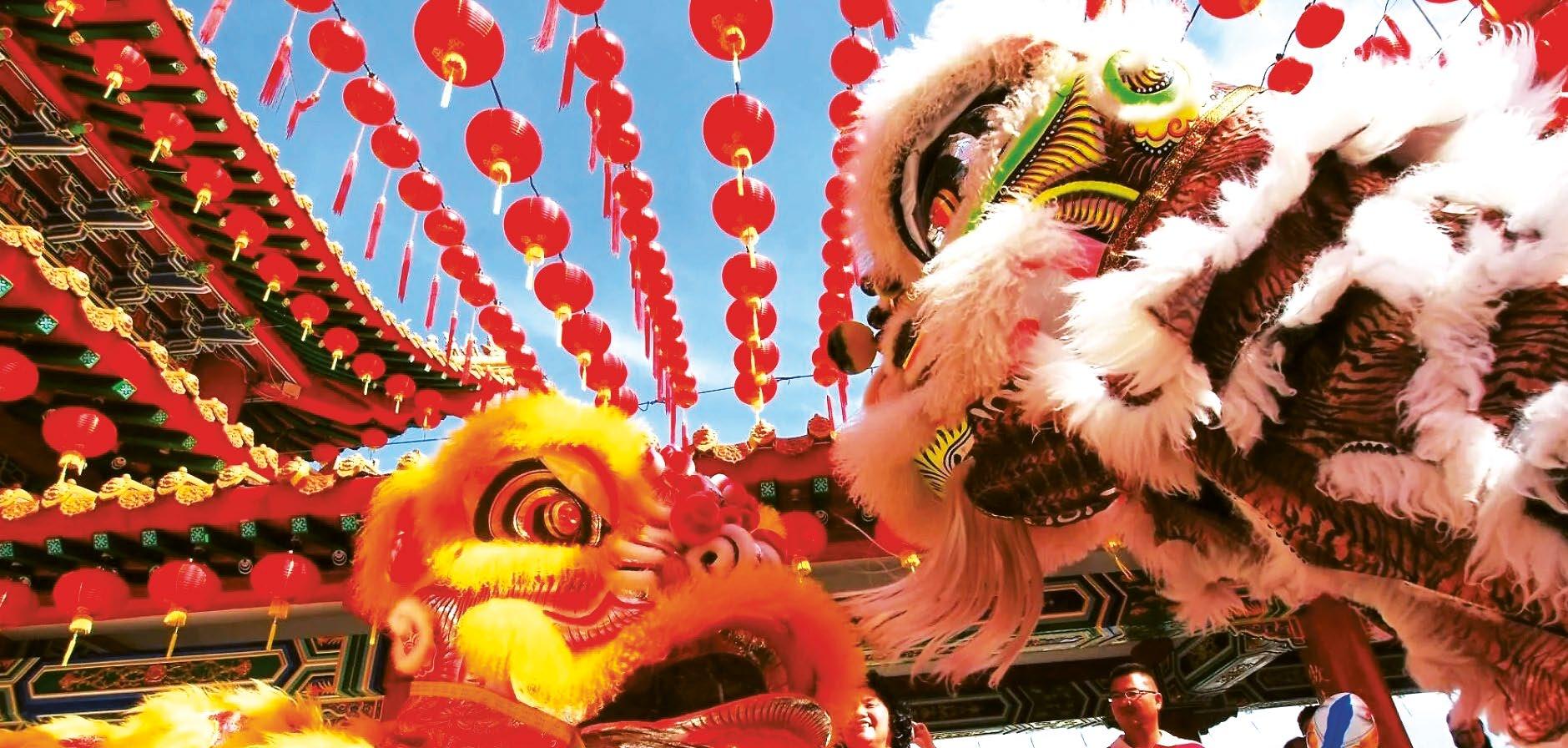
The most vibrant and spectacular way of expressing fondness for the dragon is the Dragon Dance or the Lion Dance (locally known as Barongsai).
This has evolved from what was once a ritual rain dance into a popular entertainment during Chinese New Year celebrations, performed to bring good luck and prosperity in the new year.
It is believed that the loud beats of the drum and the deafening sounds of the cymbals, together with the dragon dancing aggressively, can drive away bad or evil spirits.
It is considered lucky to give Ang Pau to the dancers, so you will often see people placing the red envelopes into the mouth of the lion or dragon during the parades.
On the night of the Chinese Lantern Festival, streets are decorated with colourful lanterns, often with riddles written on them. People eat sweet glutinous rice balls called tangyuan, watch dragon and lion dances, and set off fireworks to celebrate.
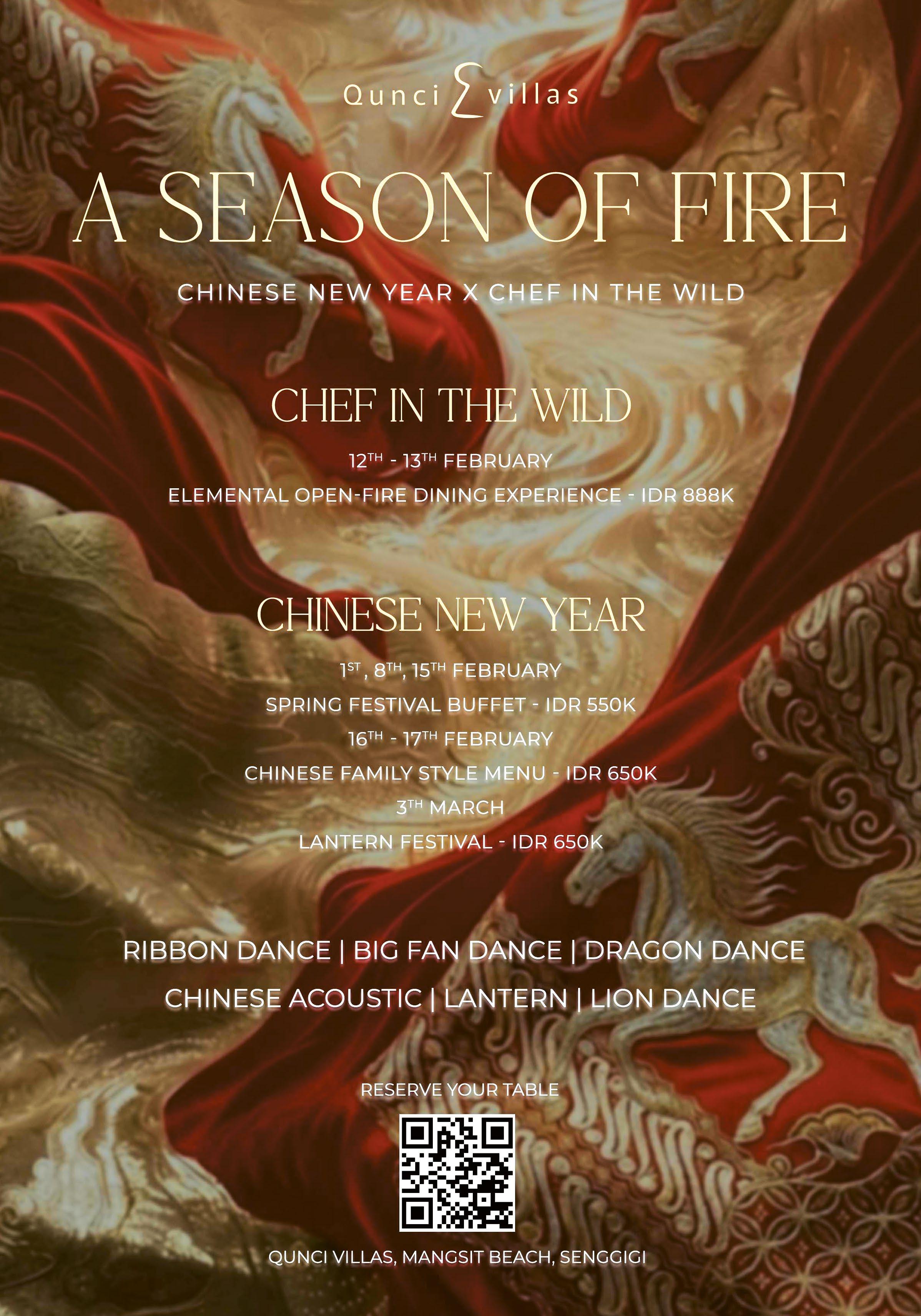
Chinese New Year Events: Many hotels and restaurants will also celebrate the Lunar New Year by hosting Chinese New
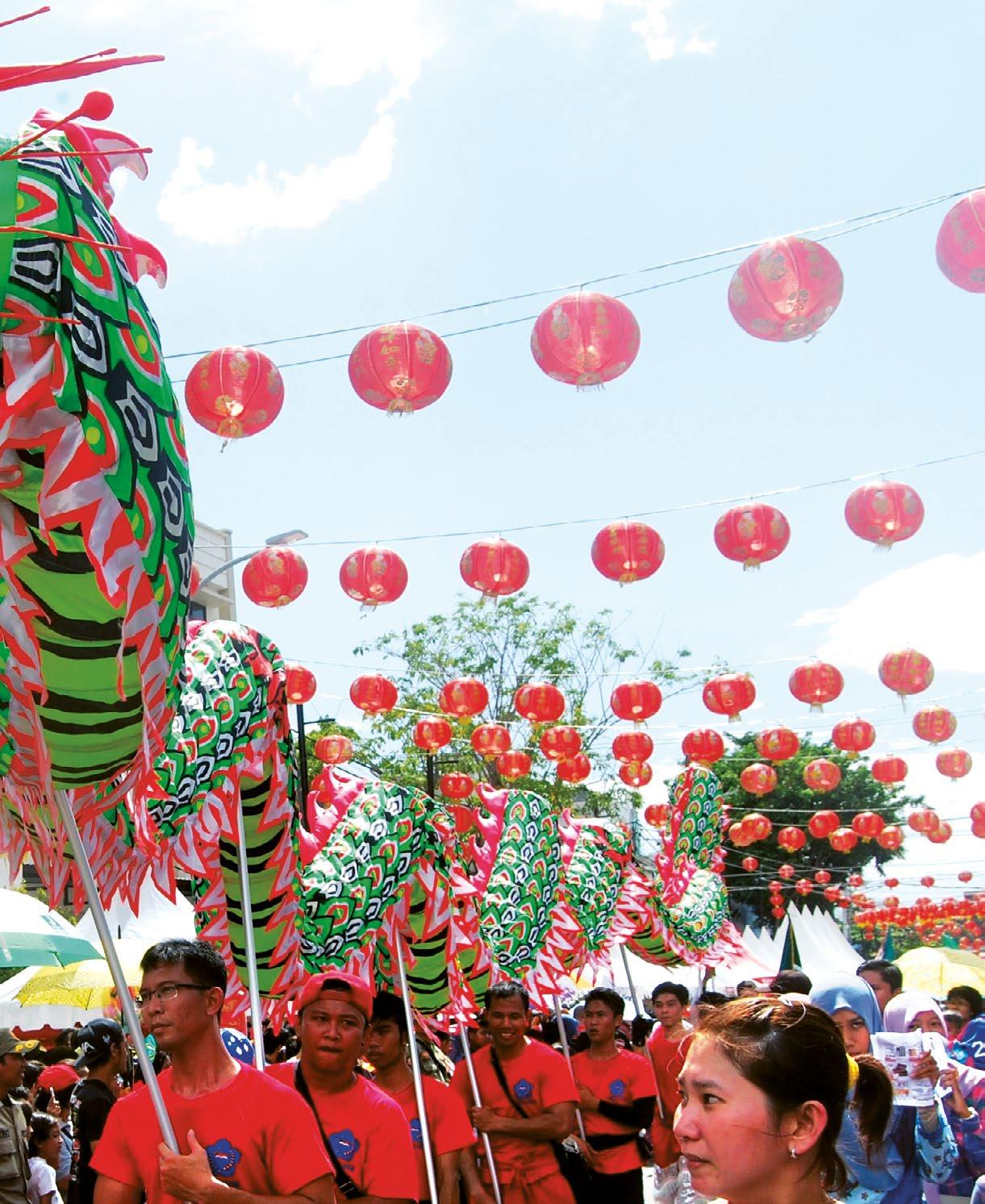
Year dinners and adding special Chinese dishes to their menus; some entertain guests with dragon dances and traditional entertainment.
Qunci Villas in Mangsit has Spring Festival events throughout February and a Lantern Festival dinner on 3 March, complete with fabulous Ribbon, Dragon and Lion dances and more. See page 9.
Check with local hotels and restaurants in the week before Chinese New Year to see if they have any special celebrations planned.
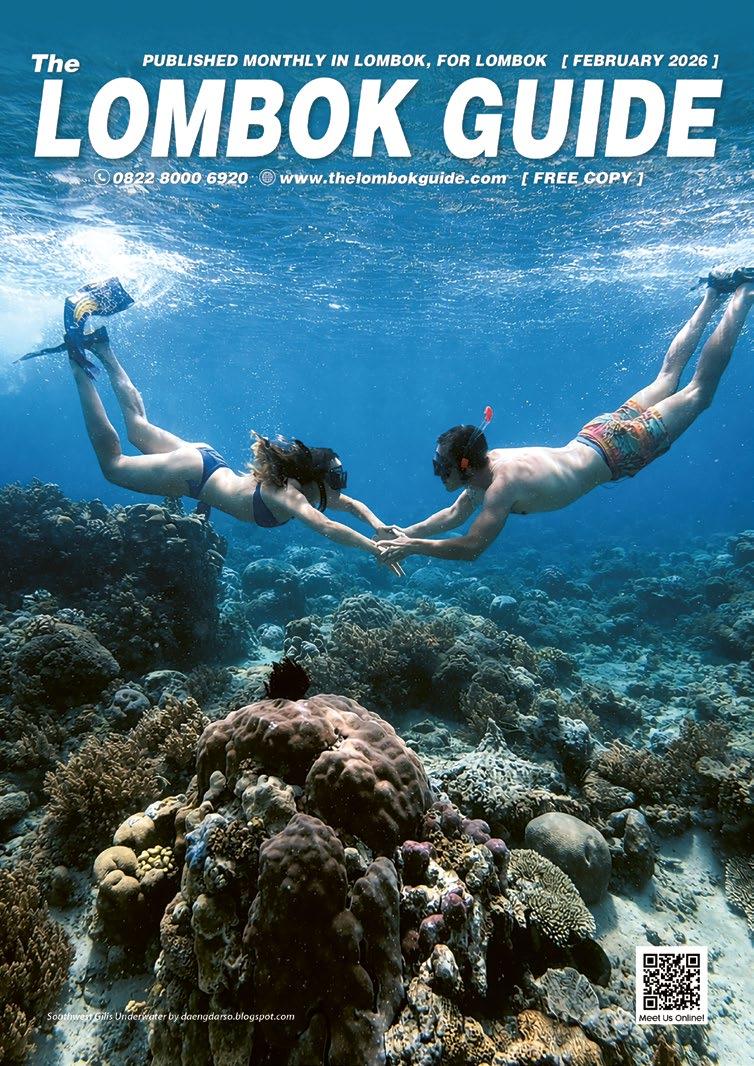
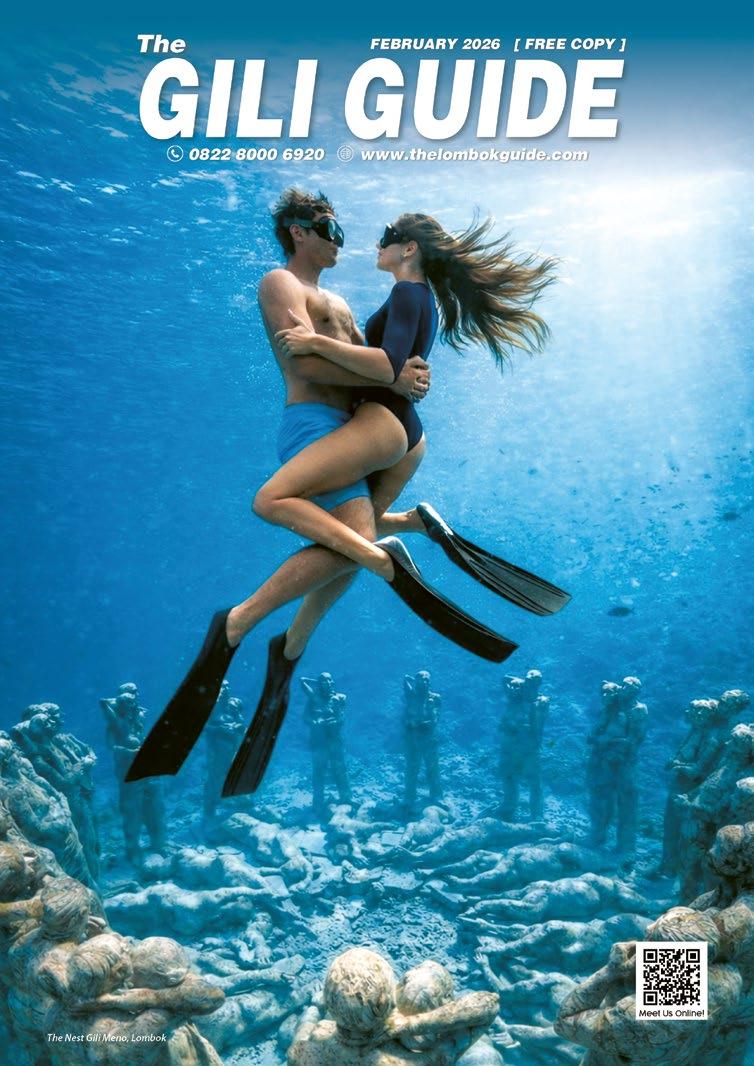
AIRPORT: In every tour & transport counter, cafes and Tourism Information Centre
BLUE BIRD TAXI:
Exclusively available in every Blue Bird Taxi in Lombok Hotels & Resorts, Restaurants, Bars, Cafes and Malls in Senggigi, Mataram, Kuta, Gili T, Gili Meno, Gili Air, Gili Asahan, Gili Gede, Selong Belanak
FASTBOATS: Blue Water Express, Eka Jaya Fast Boat, Orion Prince Fast Ferry, Gili Getaway, Gili Gili Fast Boat, Scoot Cruises, Golden Queen Fast Boat Restaurants, Cafes, Bars and Tour & Travel Agents in Sanur, Kuta, Legian, Kerobokan, Seminyak, Umalas, Batu Belig, Canggu, Ubud



DFT - your one-stop solution for land and sea adventures. Specialising in reliable, high-quality equipment for diving, fishing and trekking.
OPEN TUESDAY TO SUNDAY | 9am to 9pm
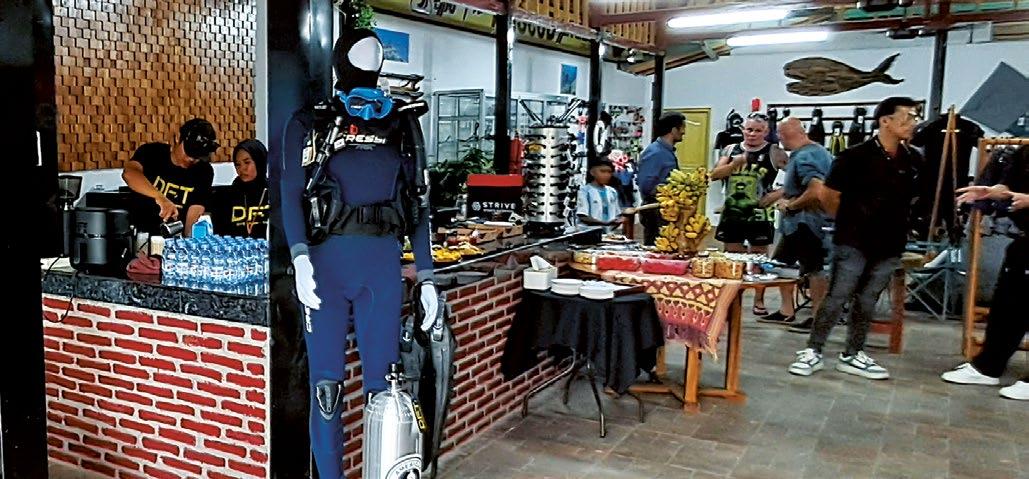
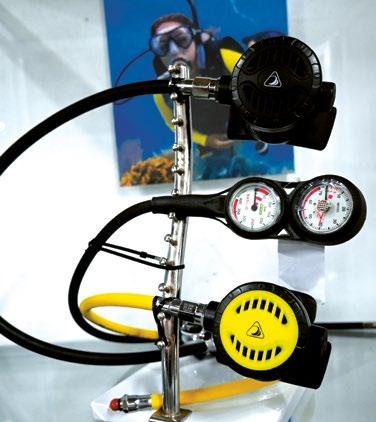
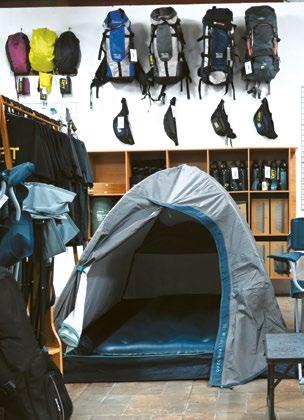

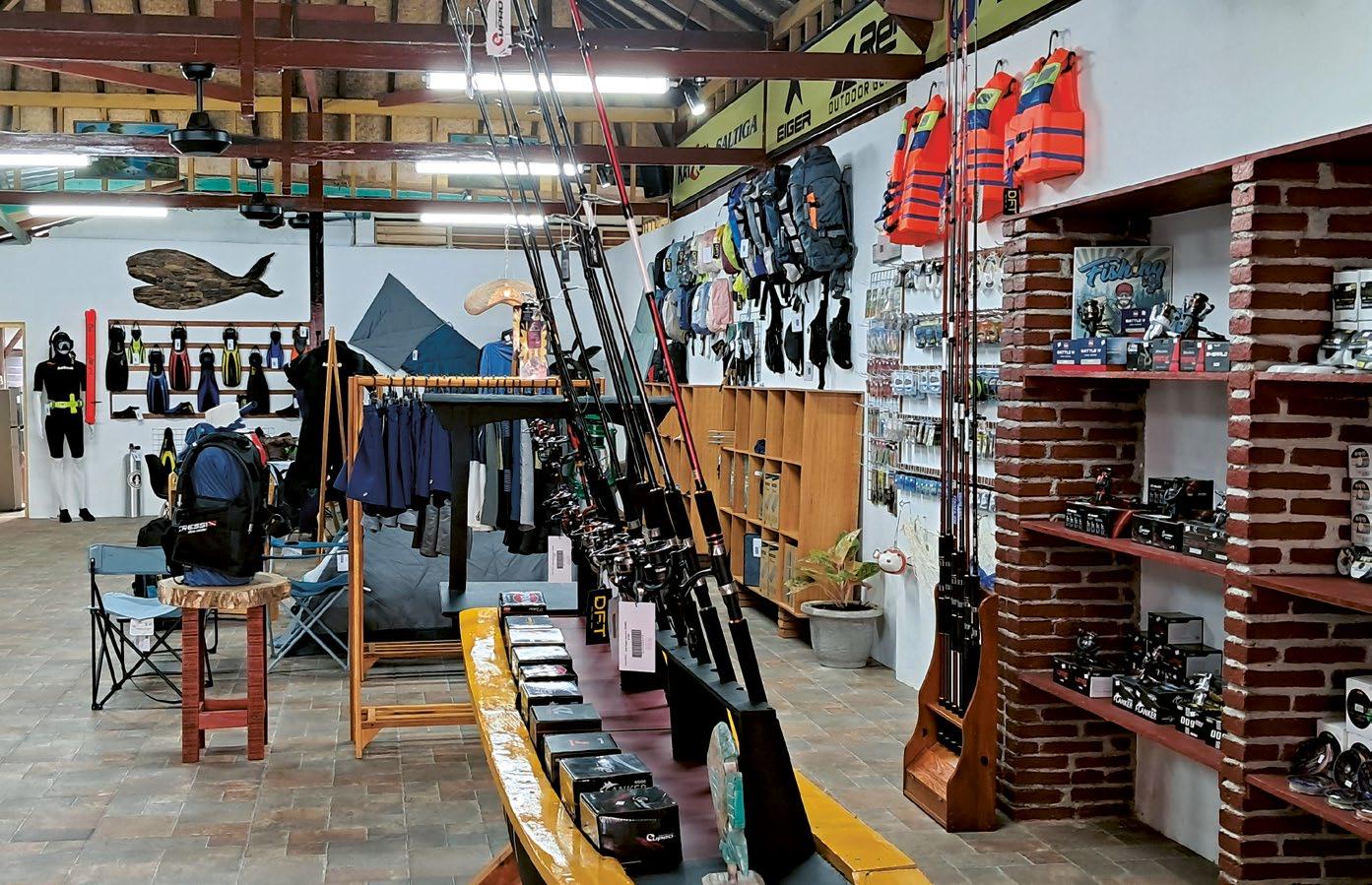
JOIN OUR TRIPS:
Diving and Trekking Trips delivering safe and professional adventures. Fishing Trips includes all fishing equipment and speedboat for 2–5 people. Lasts approx 3-4 hours from 6am to 12pm, and covers fishing areas from Nipah to Senggigi.
Jl Raya Senggigi (opposite Happy Cafe) | Phone: 0877 7300 0002






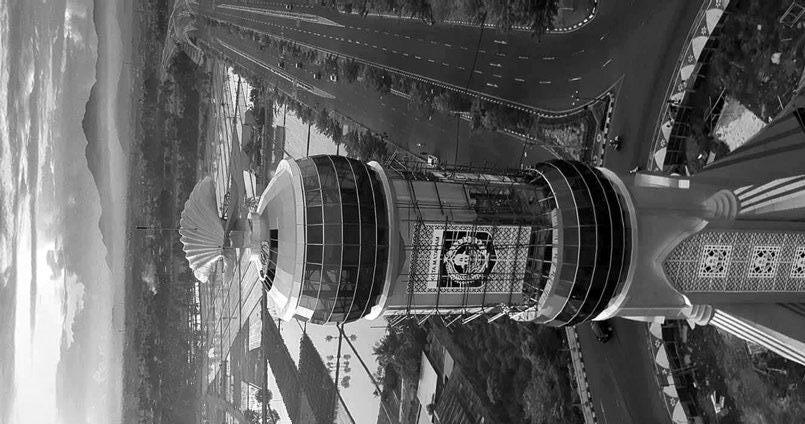
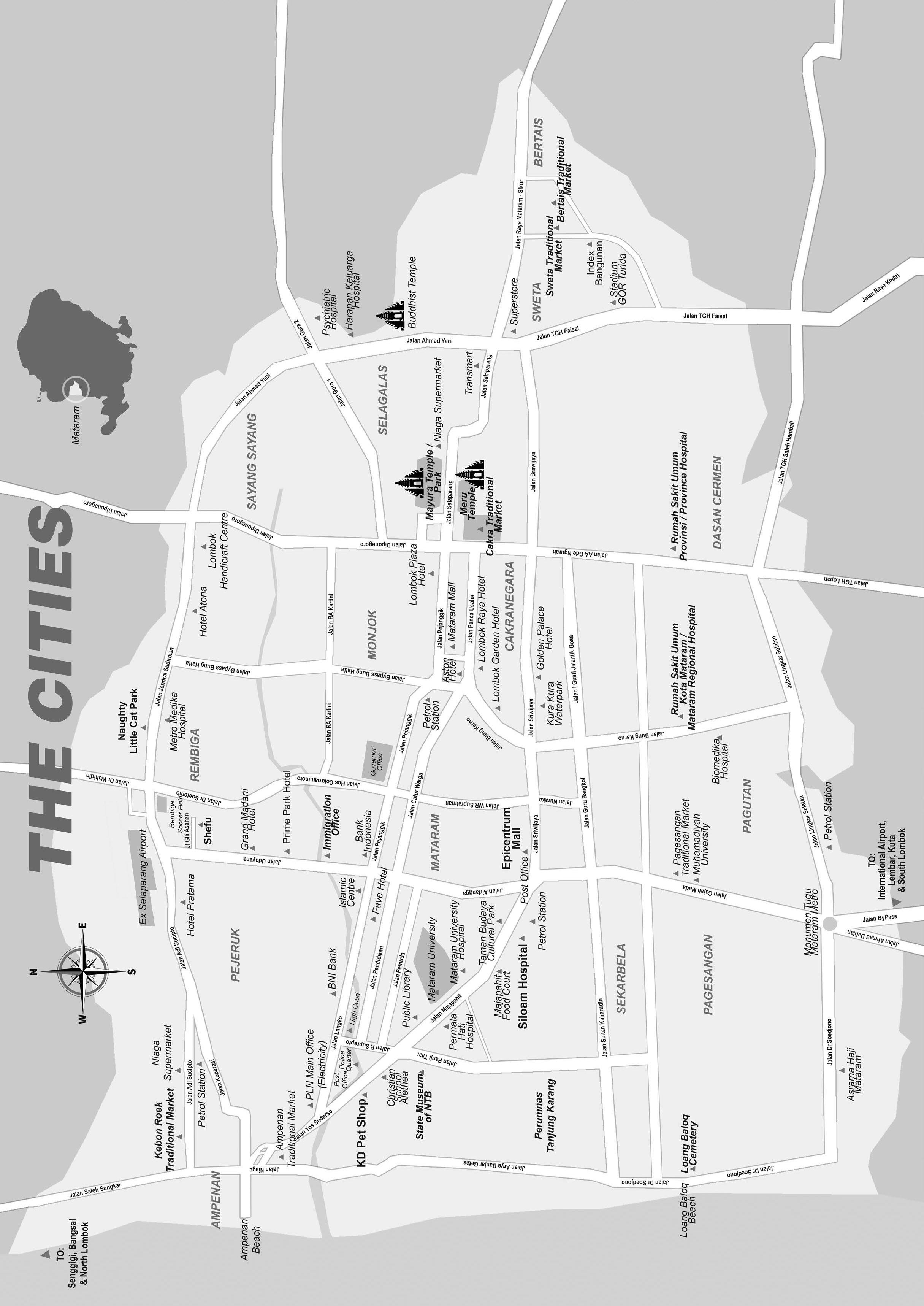
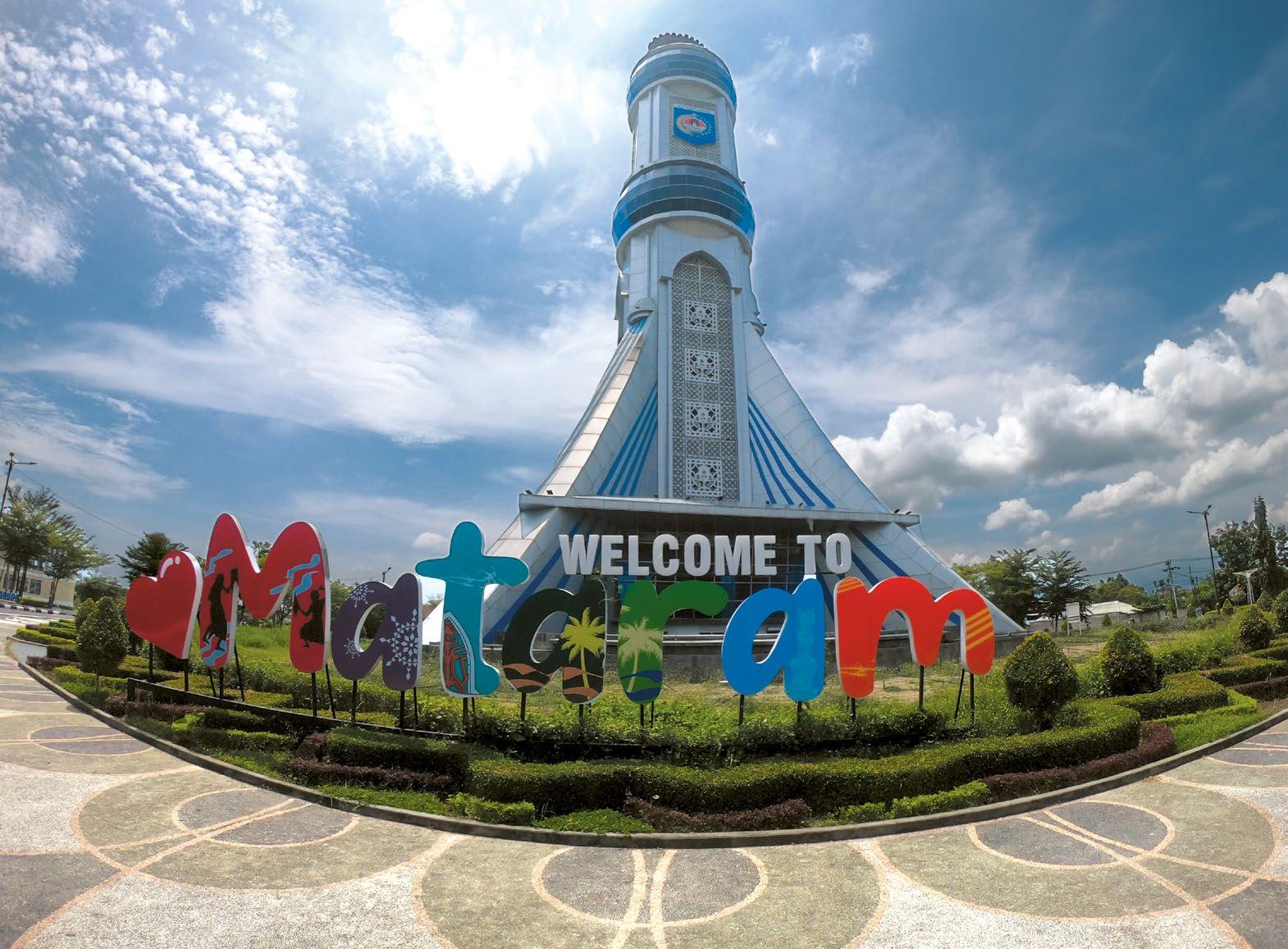
The three main cities in Lombok –Ampenan, Mataram and Cakranegara – have expanded over the years and now merge together to create what is, for Lombok, an urban sprawl of shops, administrative centres and residential areas.
A visit to the cities makes an interesting day trip, exploring the numerous shops selling everything imaginable from everyday items to gold and pearls, and to the Lombok Epicentrum Mall – Lombok’s main shopping mall.
There are many pearl shops in Ampenan and the nearby village of Sekarbela that sell unset pearls and pearl jewellery at attractive prices. These are genuine pearls – some cheap quality from China and more expensive ones farmed in Lombok and Sumbawa. If you bargain the price, you can usually get a good deal.
There are gold shops in both Ampenan and Cakra. The gold sold in Lombok, as with most Asian cities, is 24 karat gold and is sold by the gram at current market price. For cheap and interesting food choices, explore the many restaurants, warung (local cafés) and food stalls in the cities. Especially in the late afternoon, stalls set up along the main streets selling fresh fish and seafood grilled over hot coals and coated with spicy sauce, satay skewers with spicy peanut sauce, and many other kinds of local street food.
Or just wander around the streets to soak up the atmosphere and discover fascinating insights into Lombok life!
Ampenan was the original port in Lombok during Dutch colonial times and some of the old architecture is still visible around the town, particularly toward the beach to the west, where the remnants of the port are slipping into the sea.
The streets become a market at night, filled with warung and kaki lima (food carts) for cheap, tasty food and local flavour.
Pasar Kebun Roek, just near the traffic lights in Ampenan (near the intersection to Senggigi), is the site of the local markets. Every day traders set up stalls selling fresh produce from around the island, local snacks and products, live chickens and fresh fish in the afternoon when the fishing boats come in. A stroll through the markets is a pungent and enlightening experience!

labyrinth of stalls selling everything from woven baskets to fresh flowers and local food.
Mataram, about 3 km to the east of Ampenan, is the administrative centre for Lombok and Sumbawa (NTB Province), with government offices, banks, mosques, schools and colleges, bookstores, the main post office, and Mataram University downtown.
In Mataram, the Nusa Tenggara Barat (NTB) Museum houses historical and cultural artefacts from Lombok and Sumbawa. It’s an interesting place to visit and occasionally hosts special exhibits. Displays include exhibits on geology, history and culture. Address: Jl Panji Tilar, Taman Sari. The Museum
is open from 8am to 3pm and there is a small admission fee.
Cakranegara (usually abbreviated to “Cakra”) is Lombok’s main shopping area. It is also home to many Chinese and Balinese, who make up over 50 percent of the city’s population. The streets of the city make an interesting walk with gold shops, sporting goods, clothing and fabric stores selling imported silks, laces and cottons, to name a few.
There is a local market at the main intersection in Cakra; turn right at the traffic lights and look for the entrance to the market on the left. Inside is a
The next large town east of Cakra is Sweta. The Bertais Bus Terminal is located here for connections to the east of the island and beyond. Near the bus terminal there is a huge local market every day with all kinds of goods on sale, from foodstuffs to clothing, exotic birds, handicrafts and more.
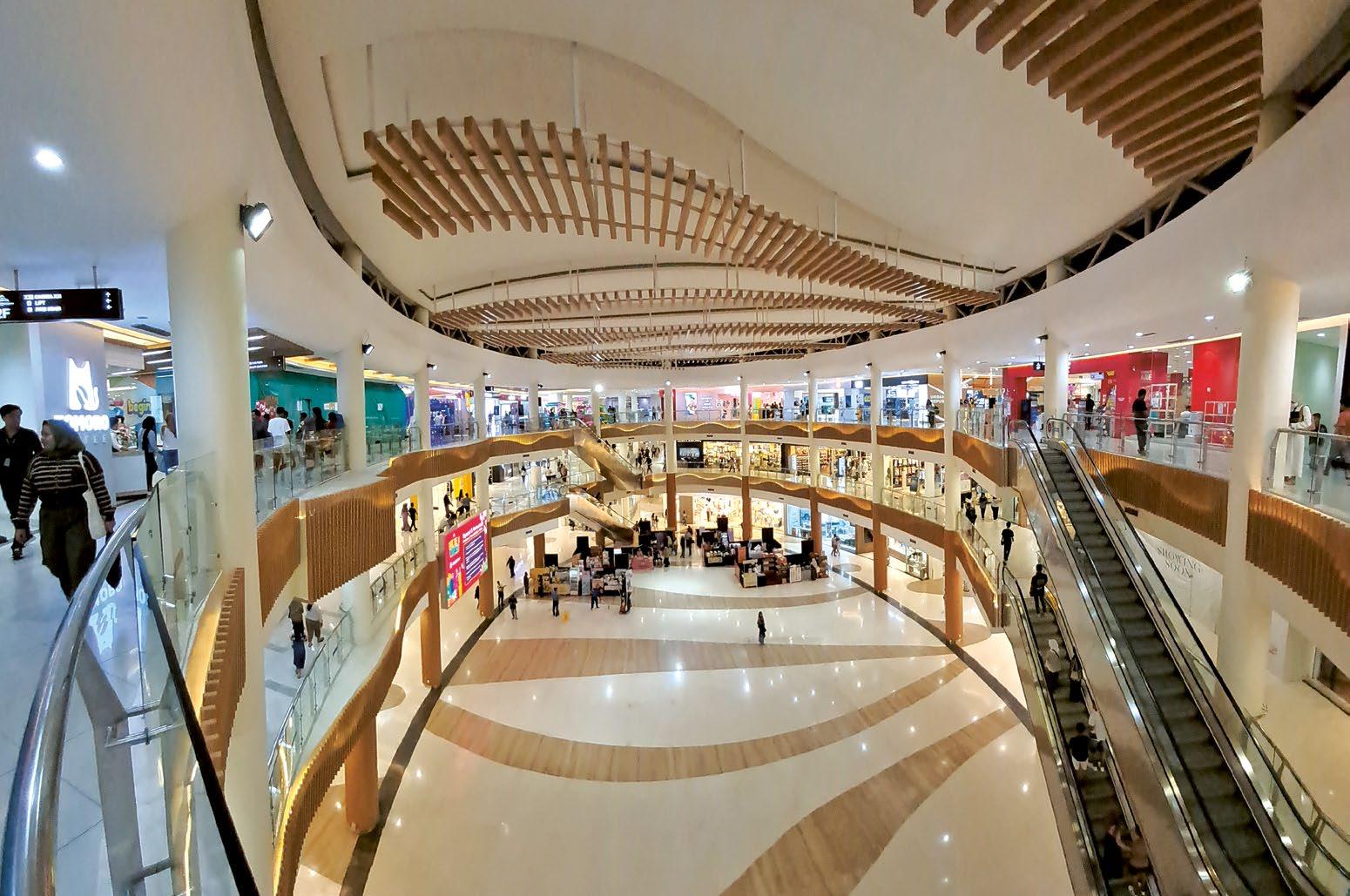
Lombok Epicentrum Mall on Jl Sriwijaya (see cities map) is Lombok’s most modern shopping centre with four floors of retail outlets. The large, clean and air-conditioned complex houses a Hypermart Supermarket and a Matahari Department Store, as well as a Cinema XXI Movie Theatre.
On the second floor, you’ll find a wonderland for young people and families, with Funtopia and Time Zone entertainment arcades, Play and Learn, Toys City toy shop, and children’s shops. International brands include UNIQLO, KKV, Adidas, Birkenstock, Puma, Billabong, and more.
There is a well-stocked AZ.KO store (formerly ACE Hardware), an Informa furniture store, a Mr DIY discount store, a Sociolla cosmetics outlet and several pharmacies. Other retailers sell a wide variety of fashion including brand name stores, shoes, electronics, sporting goods, and much more.

Food outlets include Burger King, KFC, J. Co, Starbucks, Kimukatsu, Pepper Lunch, Wendy’s and Pizza Hut, as well as many local eateries.
“Epicentrum” as it is known, makes a fun day out if you want some retail therapy and to pick up a bargain. It is also great for families, with entertainment and kids’ activities and a good movie theatre, as well as the fast-food options that they might be missing on holiday.
It’s possible to combine a trip to the cities with a visit to some of the historic sites in the area.
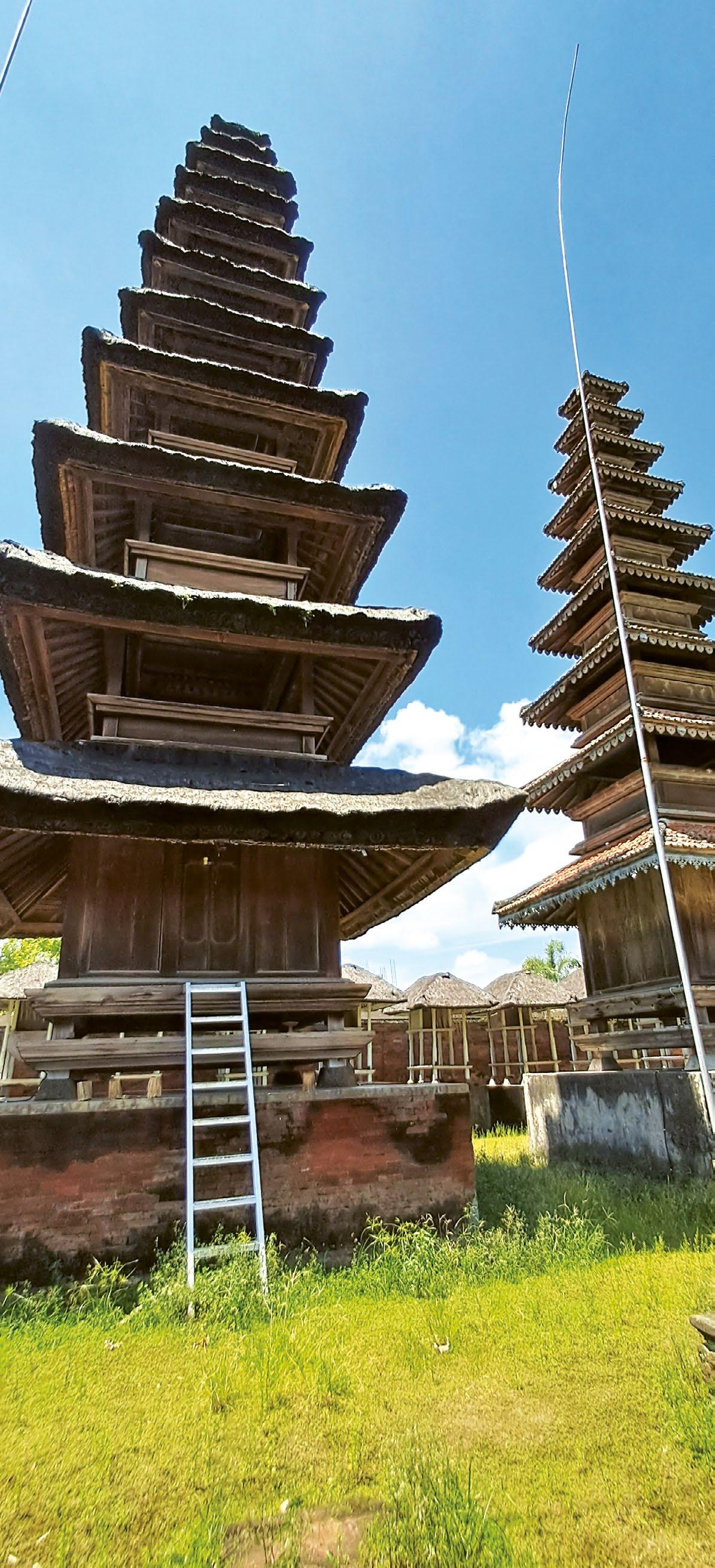
Pura Meru on Jl Selaparang, Cakranegara, was built in 1720 by Balinese Prince Anak Agung Made Karang and is the largest temple on Lombok. Its three meru are for the Hindu trinity – Shiva, Vishnu and Brahma.
This is an important temple for the Balinese here and its annual Pujawali festival, held over five days during the full moon in September or October, is the biggest Balinese Hindu event on Lombok.
The outer courtyard hall has large drums used to announce ceremonies and festivals. In the central courtyard are two buildings with raised offering platforms. The interior enclosure has 33 shrines as well as the three multi-tiered meru.
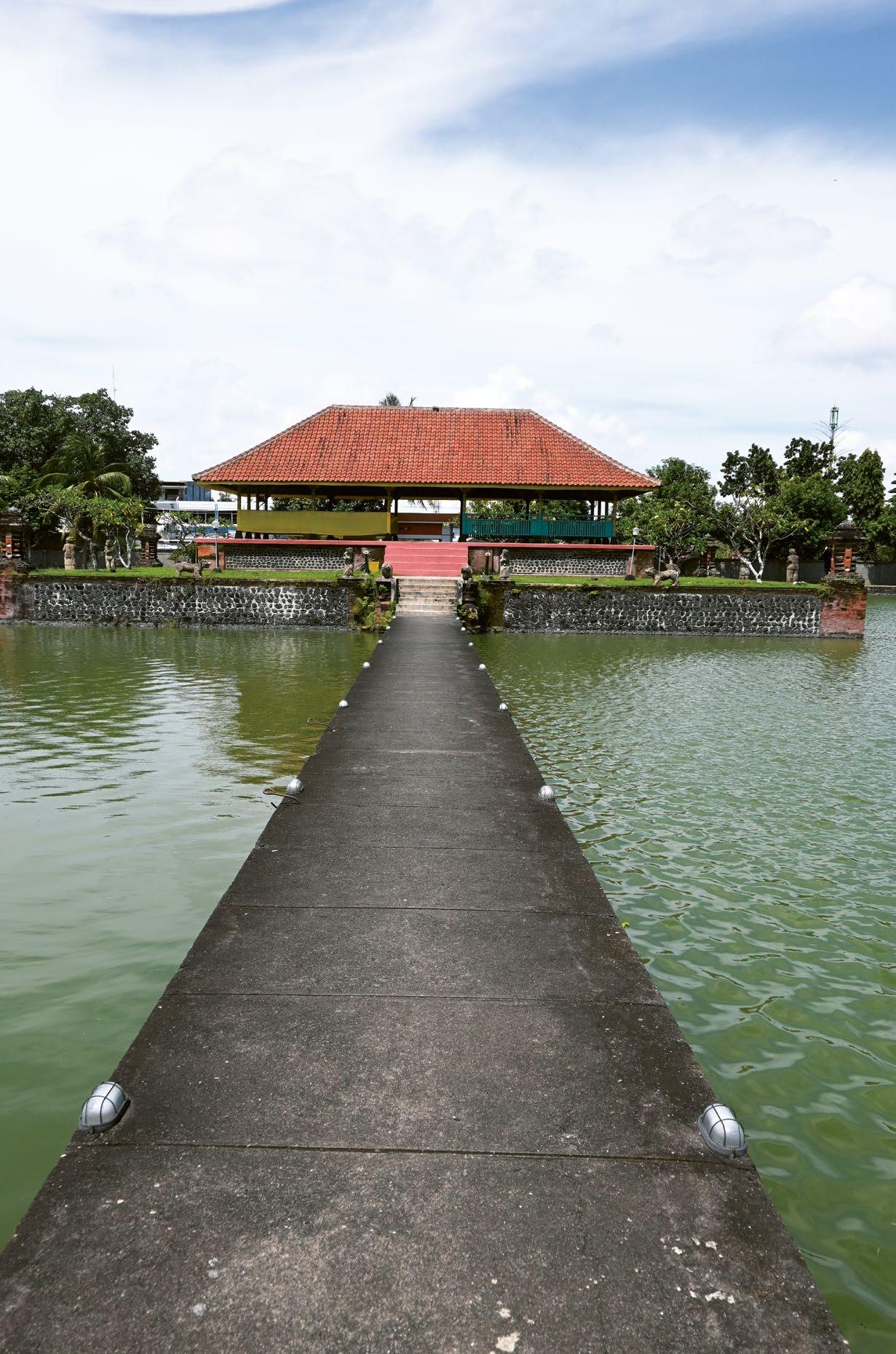
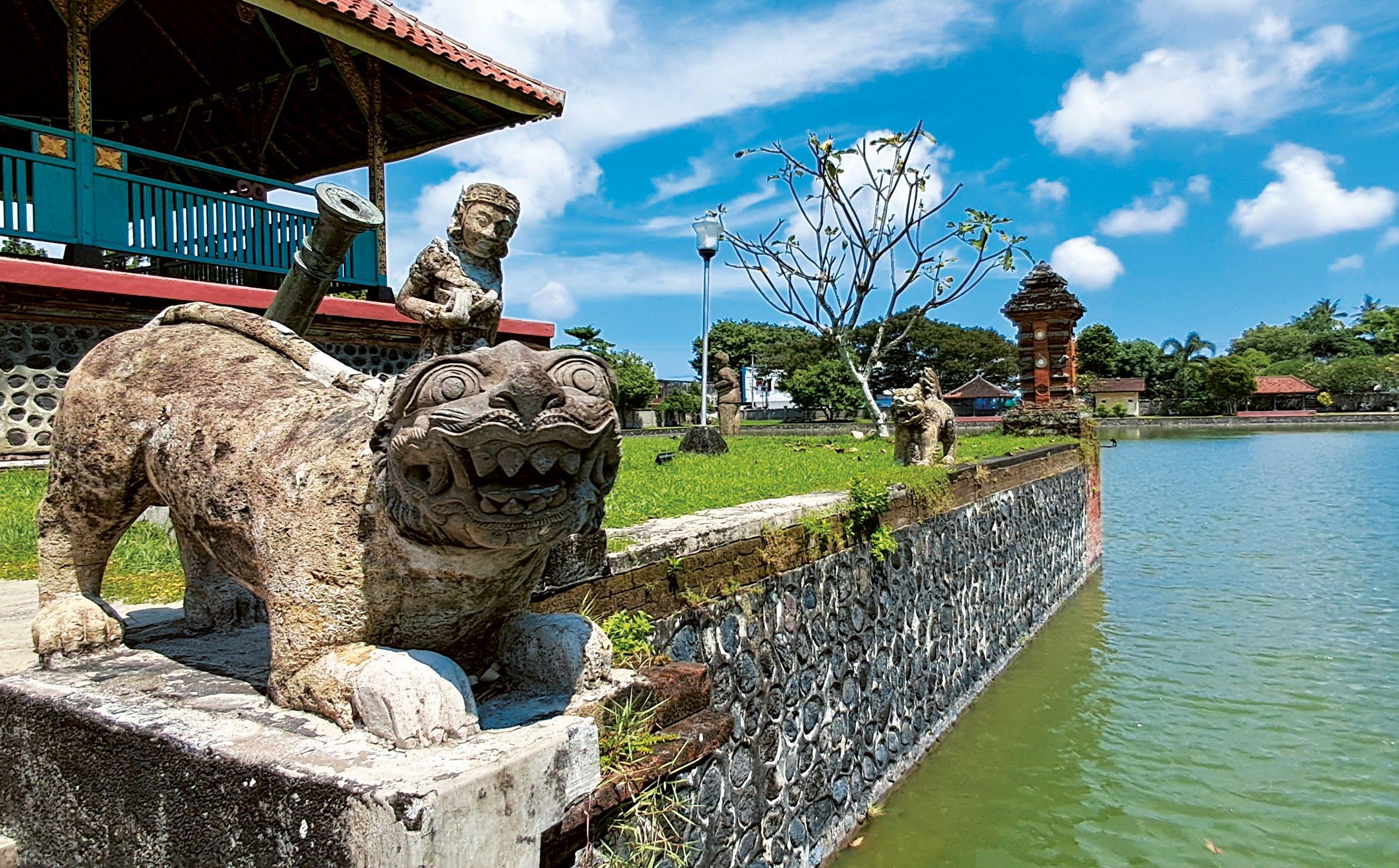
Taman Mayura is open every day, from 8am to 8pm; entry is Rp 20,000 per person. The gardens are popular on weekends so the best time to visit is during the weekdays. Continued from Page 38
Entry is Rp 20,000 per person, which includes the loan of a temple sash.
Pura Mayura, just across the street from Pura Meru, was built in 1744 as the court temple of the last Balinese kings in Lombok. An open hall or bale kambang (floating pavilion) stands in the middle of a large artificial lake here and an interesting temple is sheltered under huge old trees at the rear of the lake.
The gardens and the adjoining Pura Jagatnatha temple complex are a peaceful place to escape the bustle of the city and well worth exploring. Do use a guide to get the most out of your visit and understand the interesting history of the park.
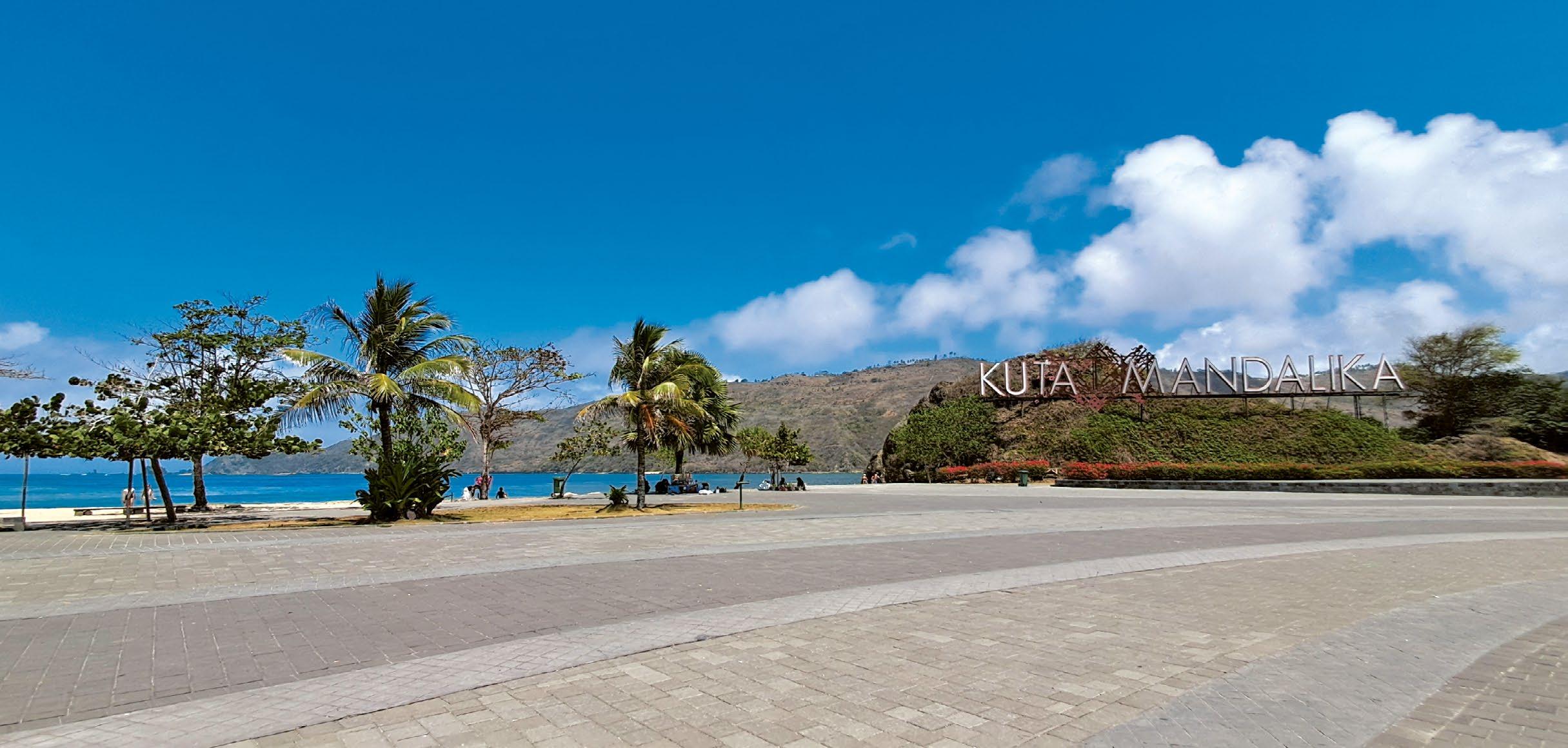
Visitors are drawn to the south for the raw beauty of the southern coastline, stunning beaches and scenery, almost year-round sunshine… as well as some of the best surf breaks in Indonesia!
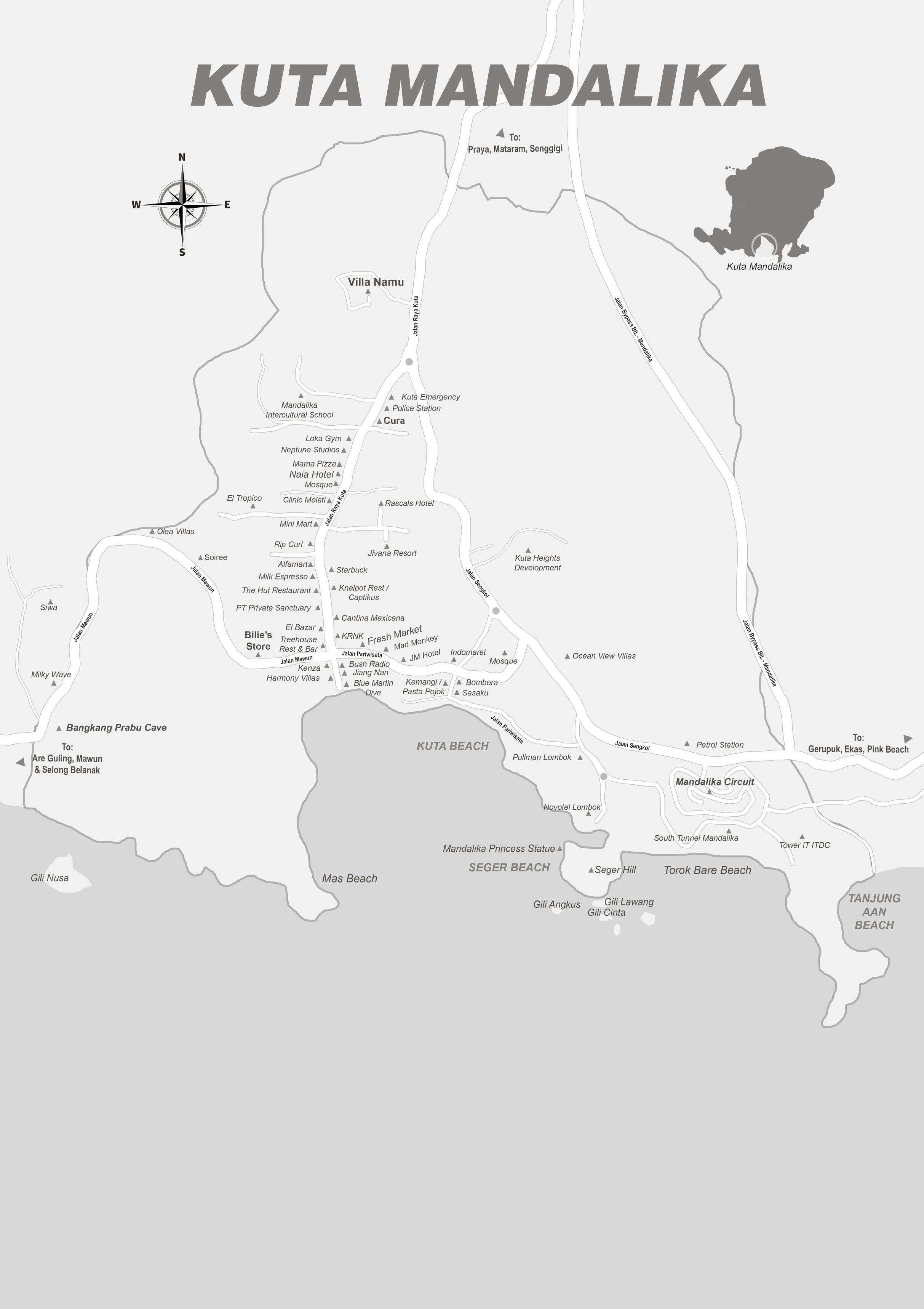
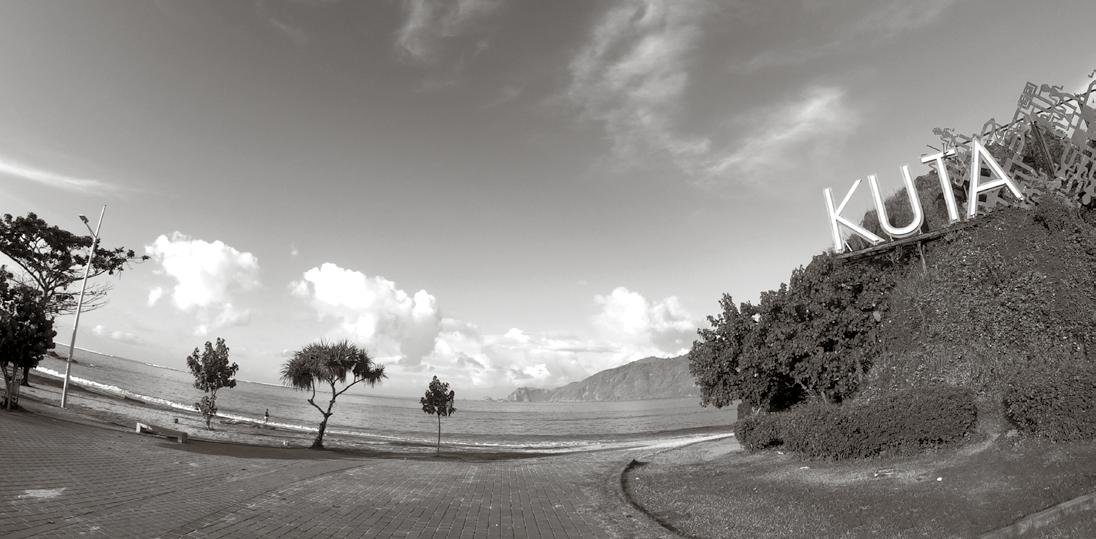
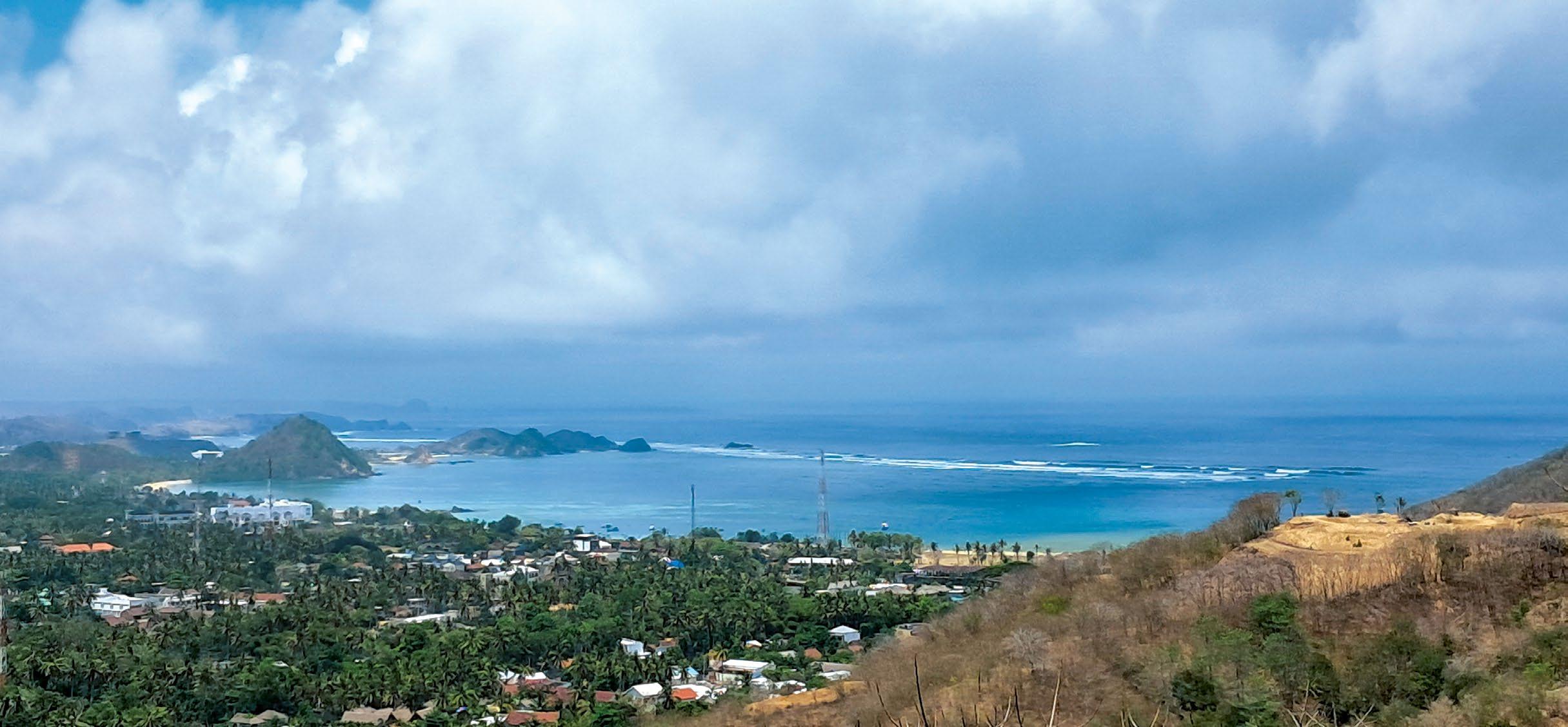
Located around 60 km south of Mataram, Kuta (sometimes spelt Kute) is the main town and tourism centre on the south coast of Lombok, and is the gateway for exploring the fantastic south coast and the many places of interest in the region.
The Lombok International Airport (LIA) is the only commercial airport on Lombok and is located just 25 minutes’ drive north of Kuta, making access to the south very easy.
The proximity to the airport and the construction of the Mandalika Circuit has sparked an investment boom in the area over the past couple of years and Kuta has transformed into a vibrant town, with many new hotels, restaurants and cafés catering to increasing numbers of visitors.
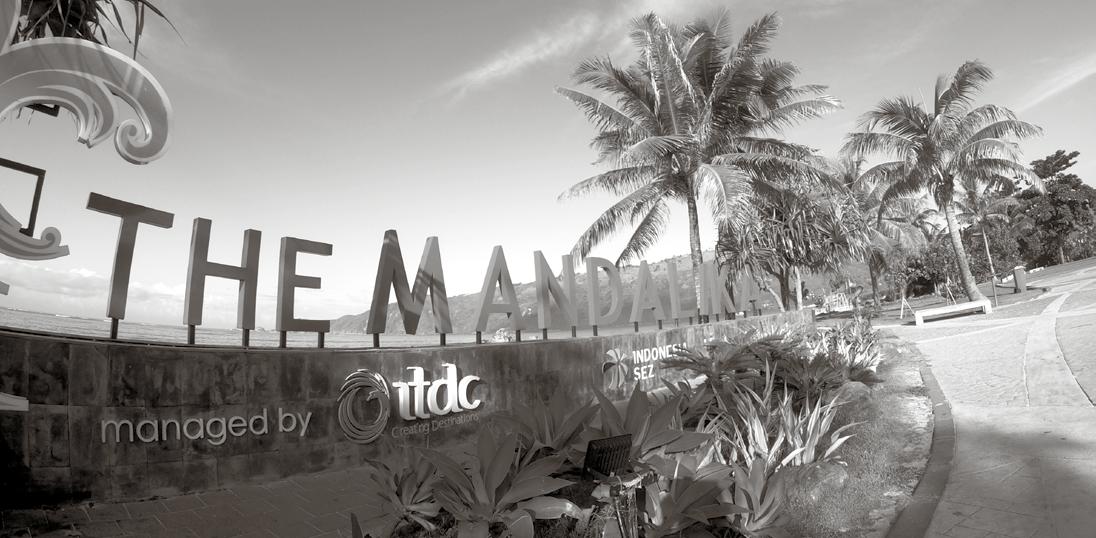
The Mandalika Circuit – officially called Pertamina Mandalika International
Street Circuit – was completed in 2021 and currently hosts World Superbike and MotoGP racing events, drawing thousands to the island during race times.
The Mandalika Resort development, with its plans for luxury hotels, villas and supporting facilities spread over 1000 hectares of prime land, will further transform the south coast in coming years.
Kuta is an area that is rapidly developing – residential areas are spreading, international schools have opened to serve the growing expatriate community, and shopping, services and supporting infrastructure continues to grow.
In the past, Kuta offered mainly low budget hotels catering to the thousands of surfers from around the world who were drawn to the area every year.
These days, there is a variety of accommodation to suit all budgets and tastes – from simple hostels and medium range hotels to wonderful boutique resorts and luxurious villas tucked away on the side streets.
At present, Kuta boasts two large resorts: the Novotel Lombok and Pullman Mandalika Lombok Resort. Both are located on the beach just outside of town and offer a range of accommodation from comfortable hotel rooms to spacious suites and villas, some with private swimming pools.
As with accommodation options, new restaurants and eateries have sprung up in the area and are arguably among the best in Lombok. These offer a range of choices – Mediterranean, Seafood, Japanese, Mexican, Chinese, vegan and gluten free, home-made cakes and breads – foodies are truly spoilt for choice!
Continued on Page 44
Continued from Page 42
Kuta offers a full range of tourist facilities from motorbike hire, car rental and tours, surf lessons, surfboard hire and repair. There is a Fresh Market supermarket and various mini-markets, boutiques and shopping, as well as spas, a hair dressing salon, ATM facilities, and more.
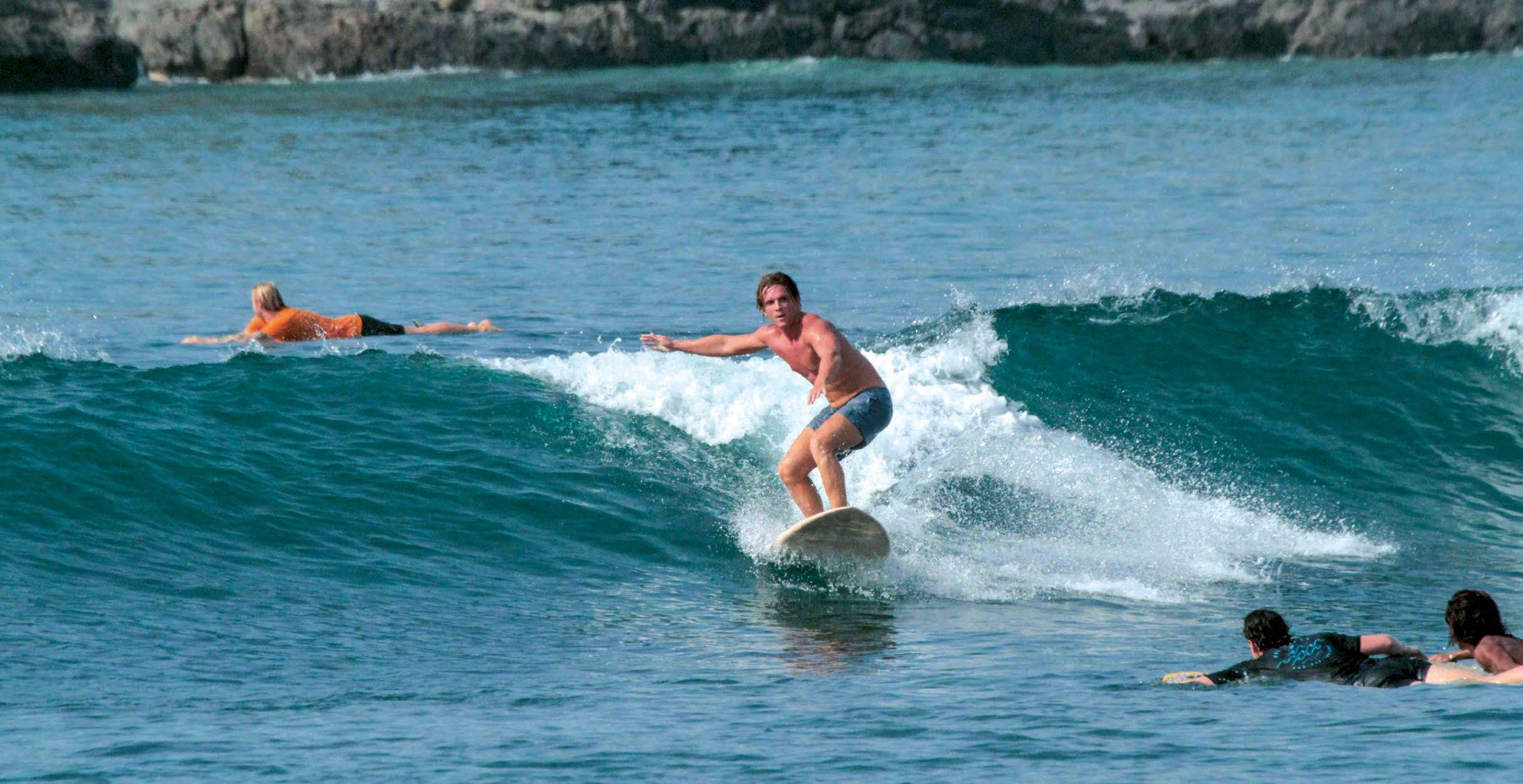
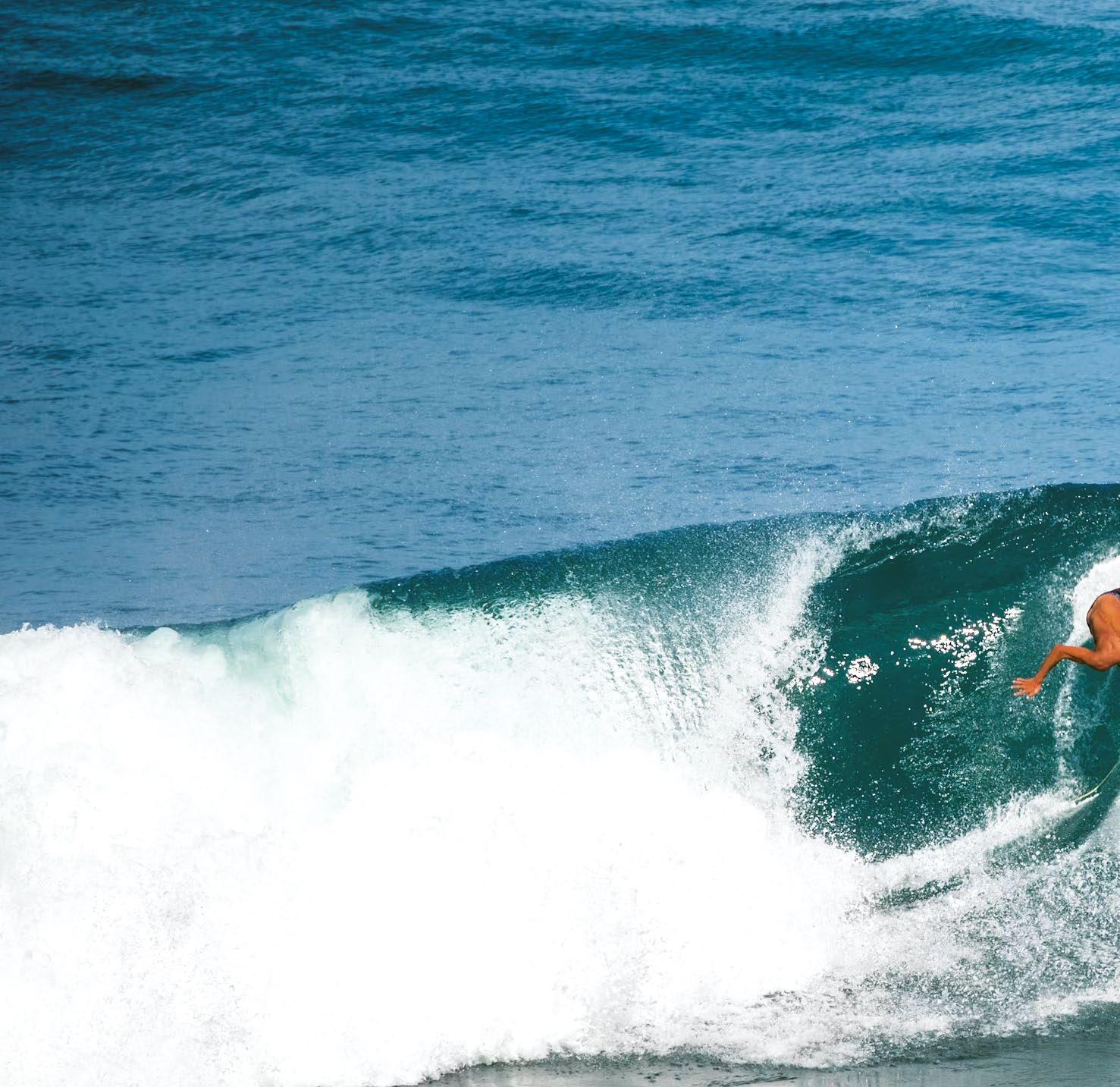
Surfing is one of the main reasons to visit Kuta and the town attracts thousands of visitors every year for the great surf locations at Gerupuk, Ekas, Tanjung Aan, Are Guling and more. It’s easy to hire a board and a surf guide from here to learn surfing or, for experienced surfers, to access the more challenging surf breaks in the area. There are surf coaches for hire, as well as surf schools and camps throughout the year.
Apart from surfing and days spent hanging out at fabulous beaches, there are many other attractions to explore. The drive between Kuta and the airport reveals
interesting rural villages and farming communities where fields of tobacco, corn and peanuts line the roadsides and farmers till the fields using antiquated ploughs pulled by large water buffalo.
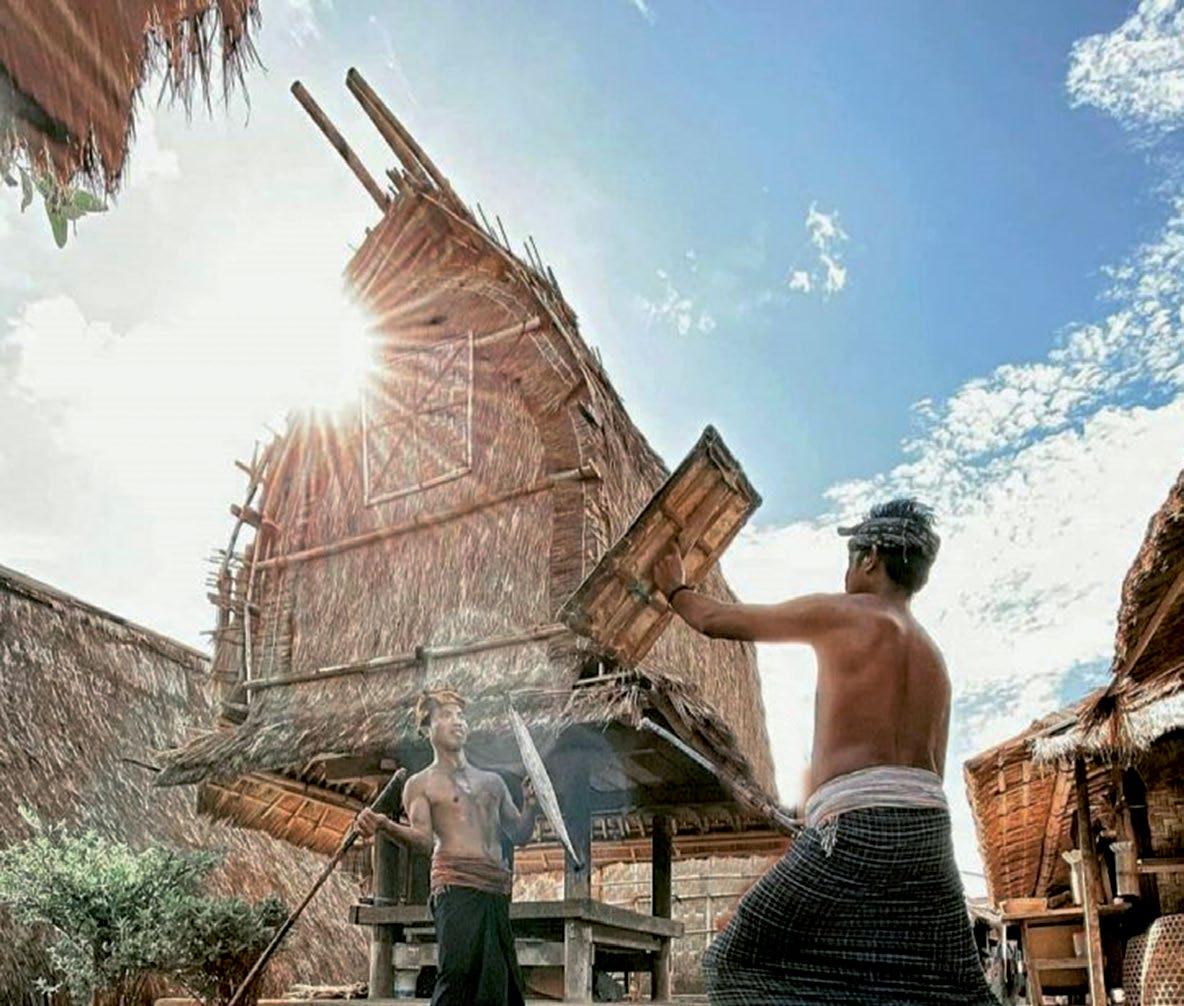
Nearby are two traditional Sasak villages – Sade and Rambitan – with authentic clusters of thatched Lumbung, or rice barns, and traditional homes made of thatch and bamboo, with hardened cow and buffalo dung floors.
Both villages have been updated and cater to the tourist market, but there are still interesting examples of traditional Sasak architecture and
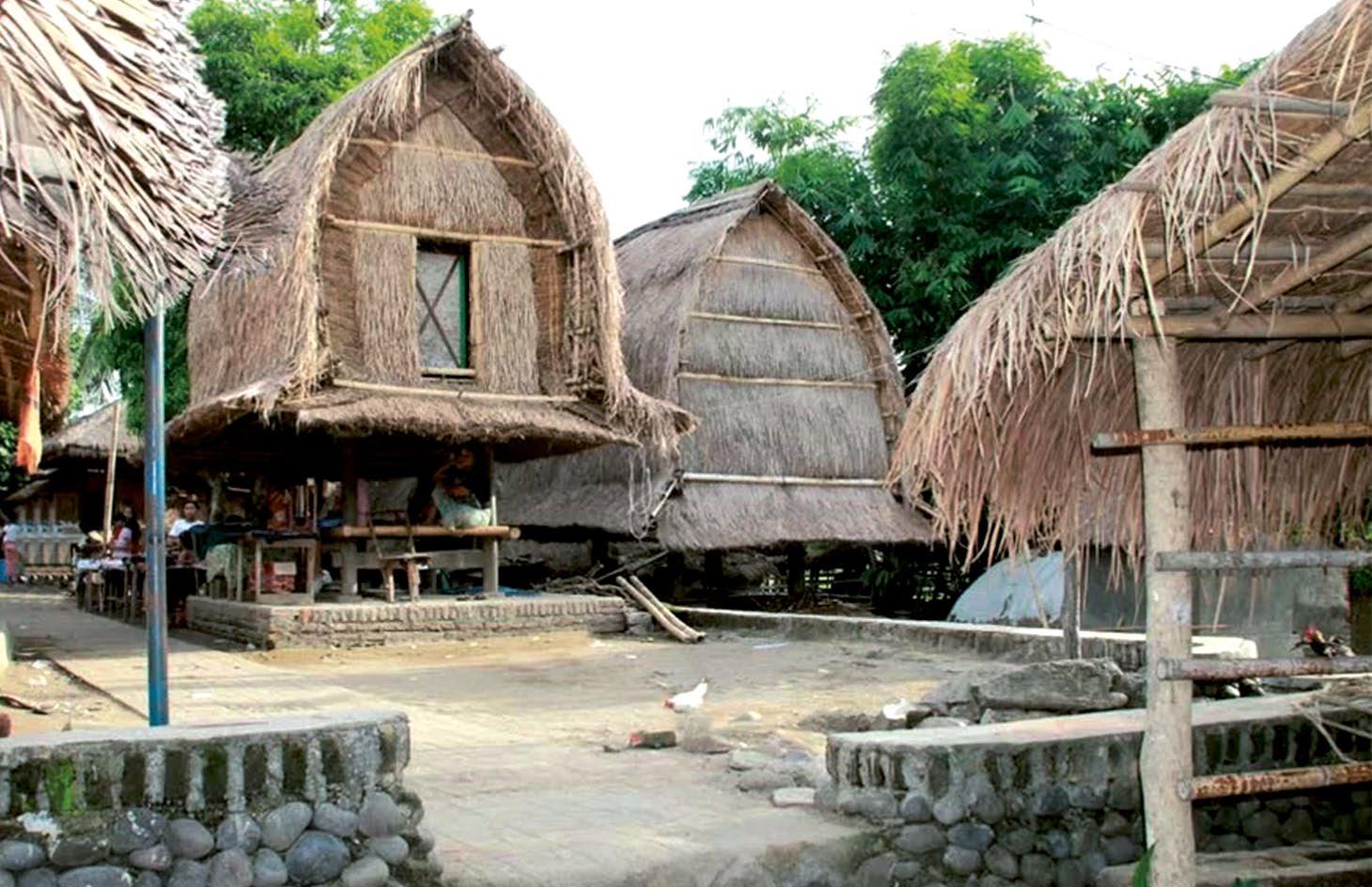
communal living within the compounds, where life continues as it has for centuries.
Residents, who act as guides for a small fee, encourage walks through either of these villages and are happy to share a glimpse of their lifestyles with visitors.
Also nearby are pottery villages with nice examples of earthenware pots and home décor, and villages that weave traditional
fabrics (tenun ikat) using old backstrap looms and techniques passed down through generations.
Otherwise, hire a car or motorbike and you can spend days visiting stunningly beautiful beaches, both to the east and west of Kuta.
Just east of Kuta is Seger Beach (sometimes called Mandalika Beach, after the legendary Princess Mandalika – a beloved character in Sasak folklore who is believed to have sacrificed herself from the rocks overlooking the beach for the good of her people).
It is here that thousands of people gather every year to celebrate the colourful ritual of Bau Nyale, when masses of sea worms spawn in the waters offshore.
There are great views from the beach and even better views if you climb the surrounding hills. There are small stalls selling drinks and snacks to enjoy after taking a swim or a stroll to enjoy the views.
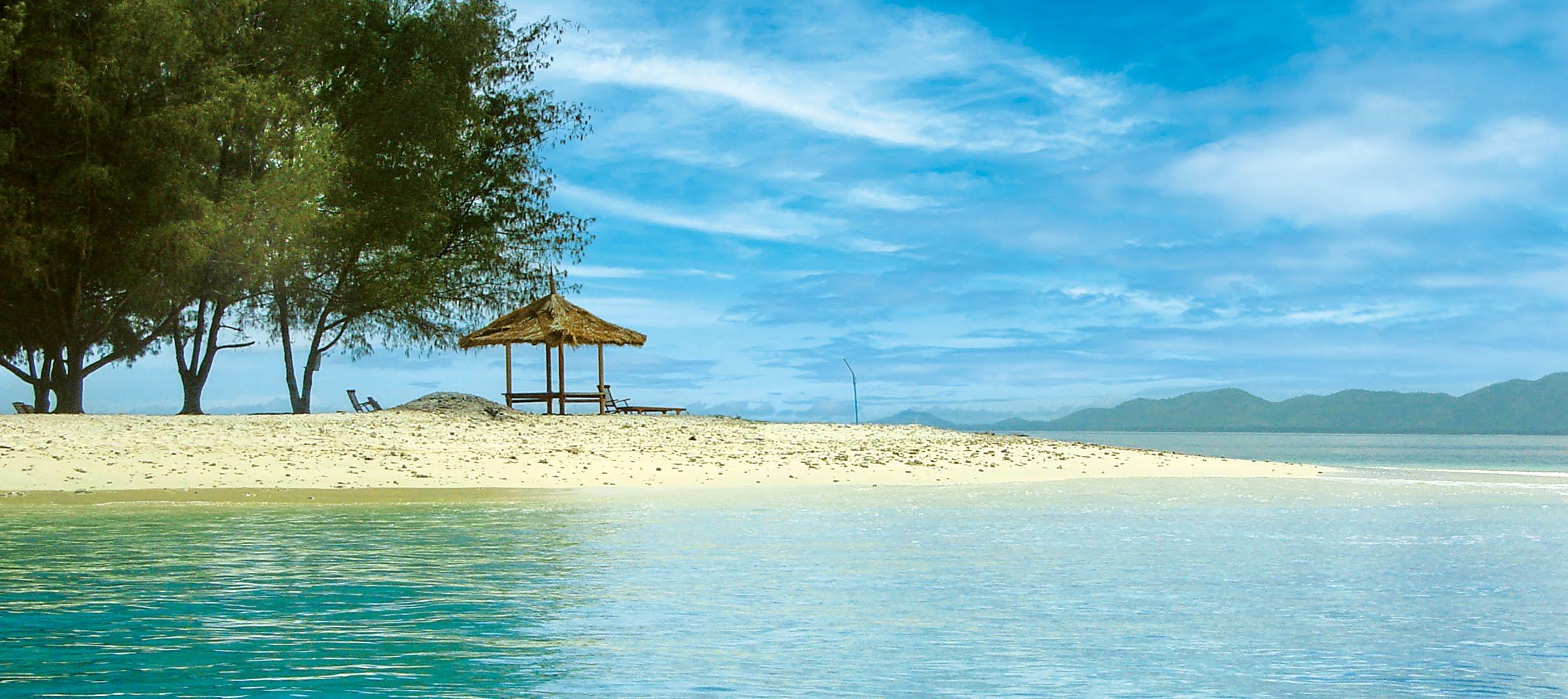
Tanjung Aan, around 5km east of Kuta, is a long picturesque beach with a wide arc of white sand, perfect aquamarine water and shady trees on the shore.
There are a number of warung or beach cafés along the beach selling cold drinks and beer, as well as snacks and simple meals. Many have sun lounges on the beach and guests are welcome to spend the day swimming in the calm waters and relaxing with a drink or meal.
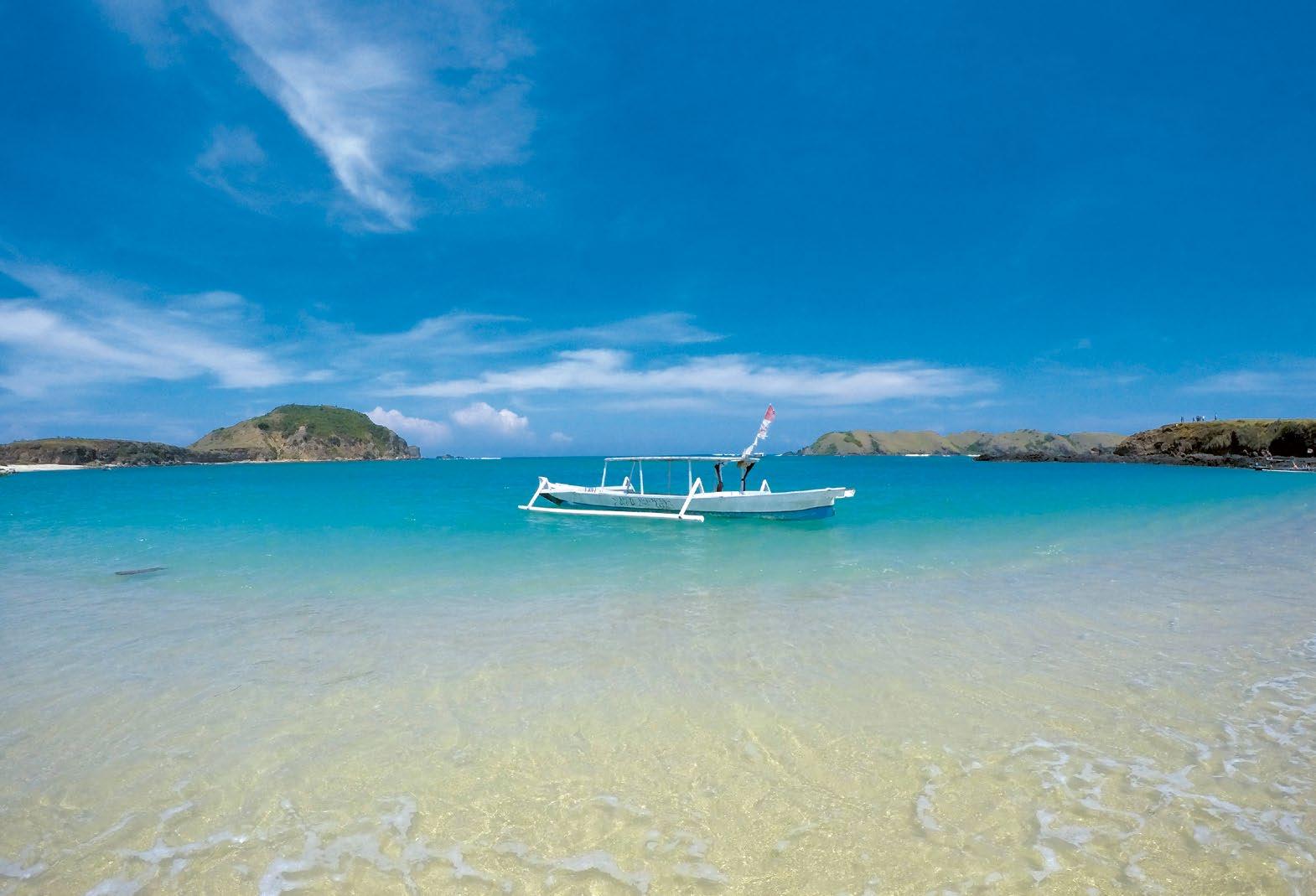
The water at Tanjung Aan is calm and clear, with a white sandy bottom making it fantastic for swimming. There are also perahu (local outrigger boats) available for hire, offering trips around the bay and to the nearby surf breaks.
There is a small hill (Bukit Antara) towards the east end with steps cut into the side. It’s an easy climb to the top for lovely views and you can watch the surfers catching the waves offshore.
On the far western end of the beach is Bukit Merese – a larger hill and a slightly tougher climb – but worth the effort for the fantastic views from the top. It is popular in the late afternoon, when everyone climbs up to see the spectacular sunsets.
Further east of Tanjung Aan is Gerupuk – well known as a top surf location and situated on a peninsula of land that juts out into the ocean.
Continued on Page 46
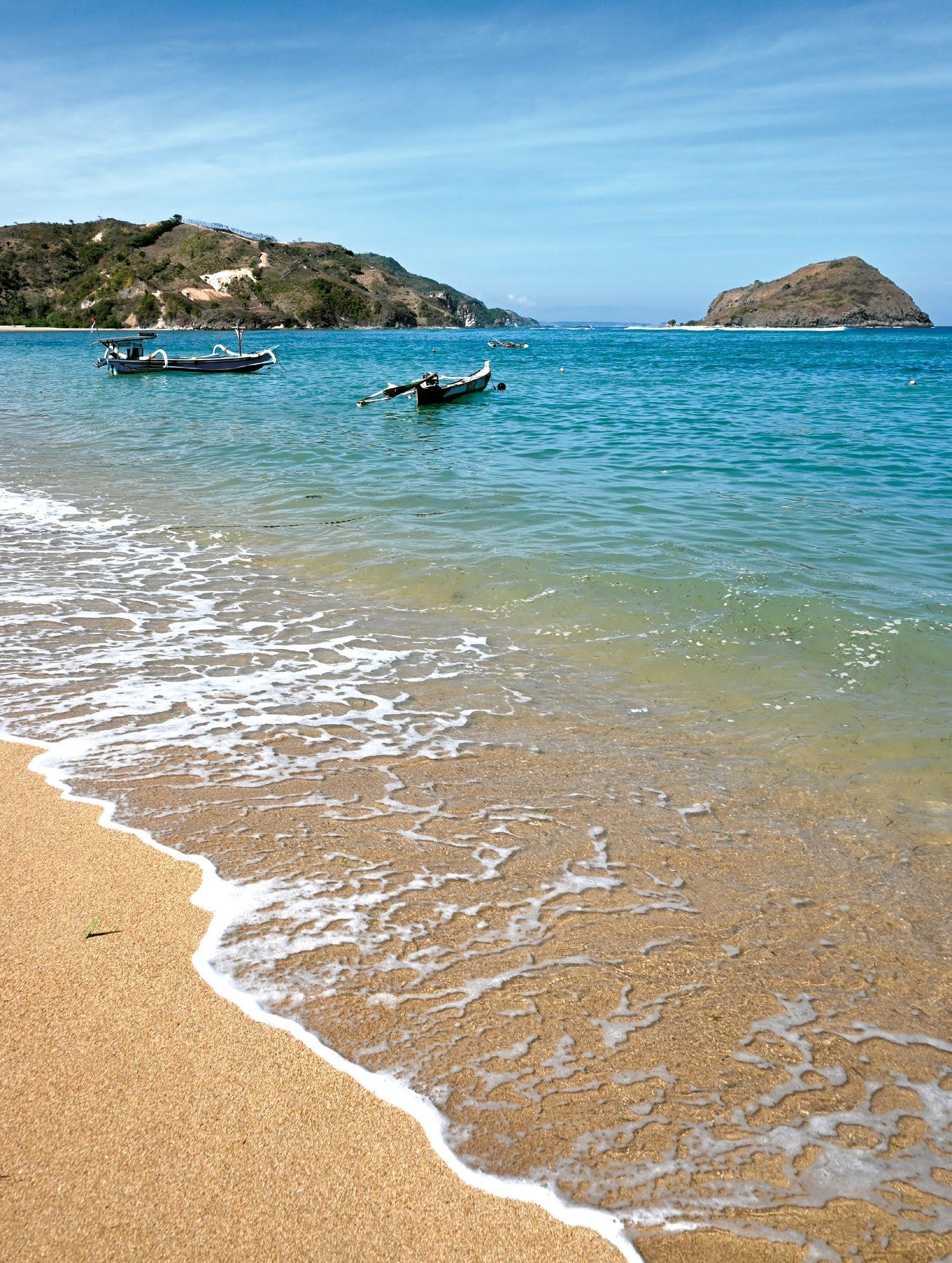
Continued from Page 45
The bay is used for fishing and lobster farming and is filled with local boats, which ferry avid surfers to no fewer than five surf breaks nearby.
Gerupuk is also evolving and offers a range of accommodation and cafés to cater to the growing tourist trade.
The beaches and wonderful scenery continues all the way to the east coast, with fantastic places such as Bumbang, Awang Bay, Ekas and Pantai Surga (Heaven Beach)… the name says it all!
In the opposite direction, heading west from Kuta, are another series of beautiful beaches and bays hidden behind headlands and rolling hills, providing peaceful and secluded spots for picnics and swimming. All are within easy day trips of Kuta.
Are Guling is popular with surfers, with left- and right-hand reef breaks as well as a beach break for beginners. There are great views over the bay and to the small island of Gili Nusa off-shore.
Are Guling has accommodation, mainly catering to surfers, and a number of local cafés, including a couple of places on the beach.
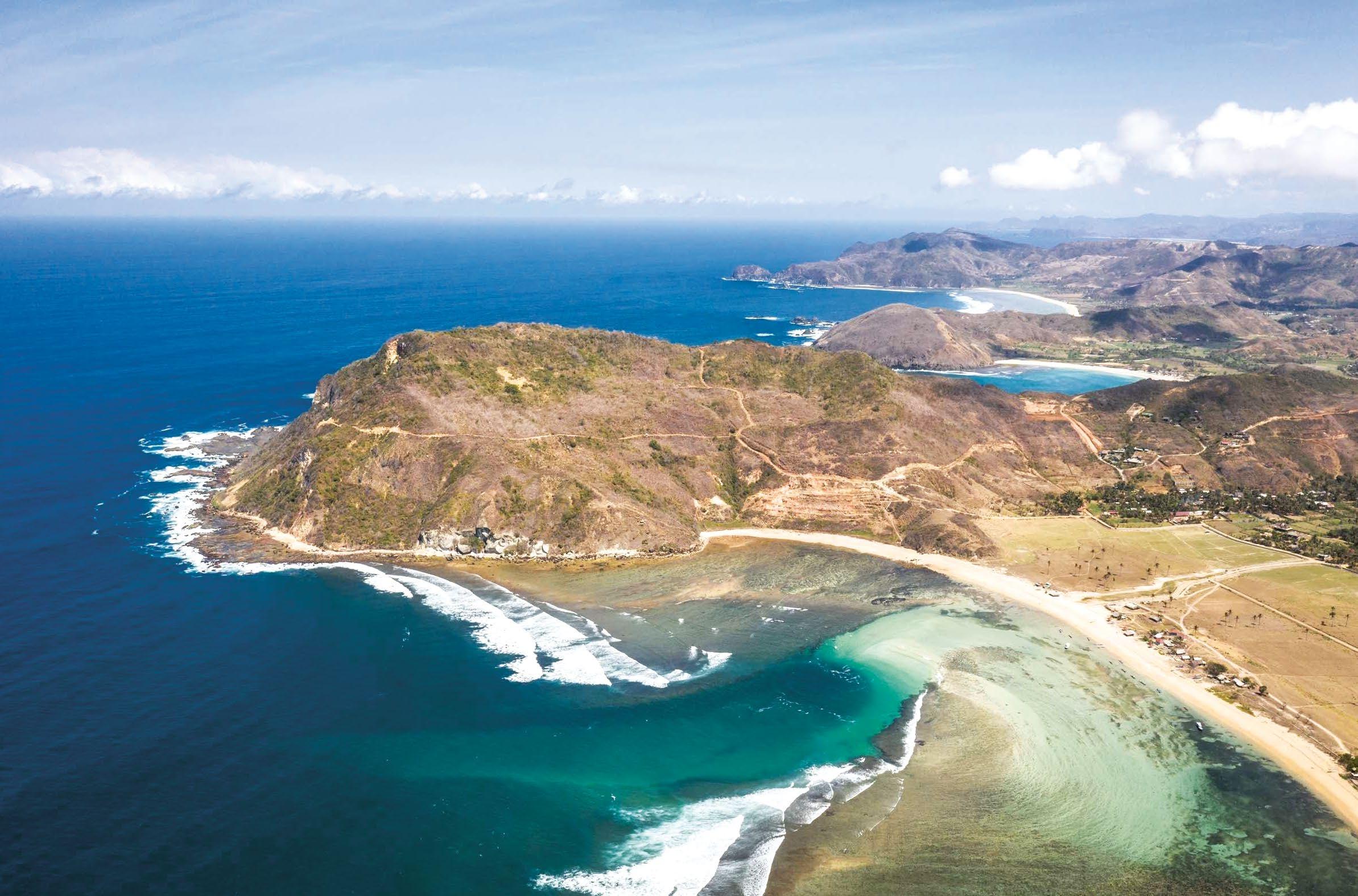
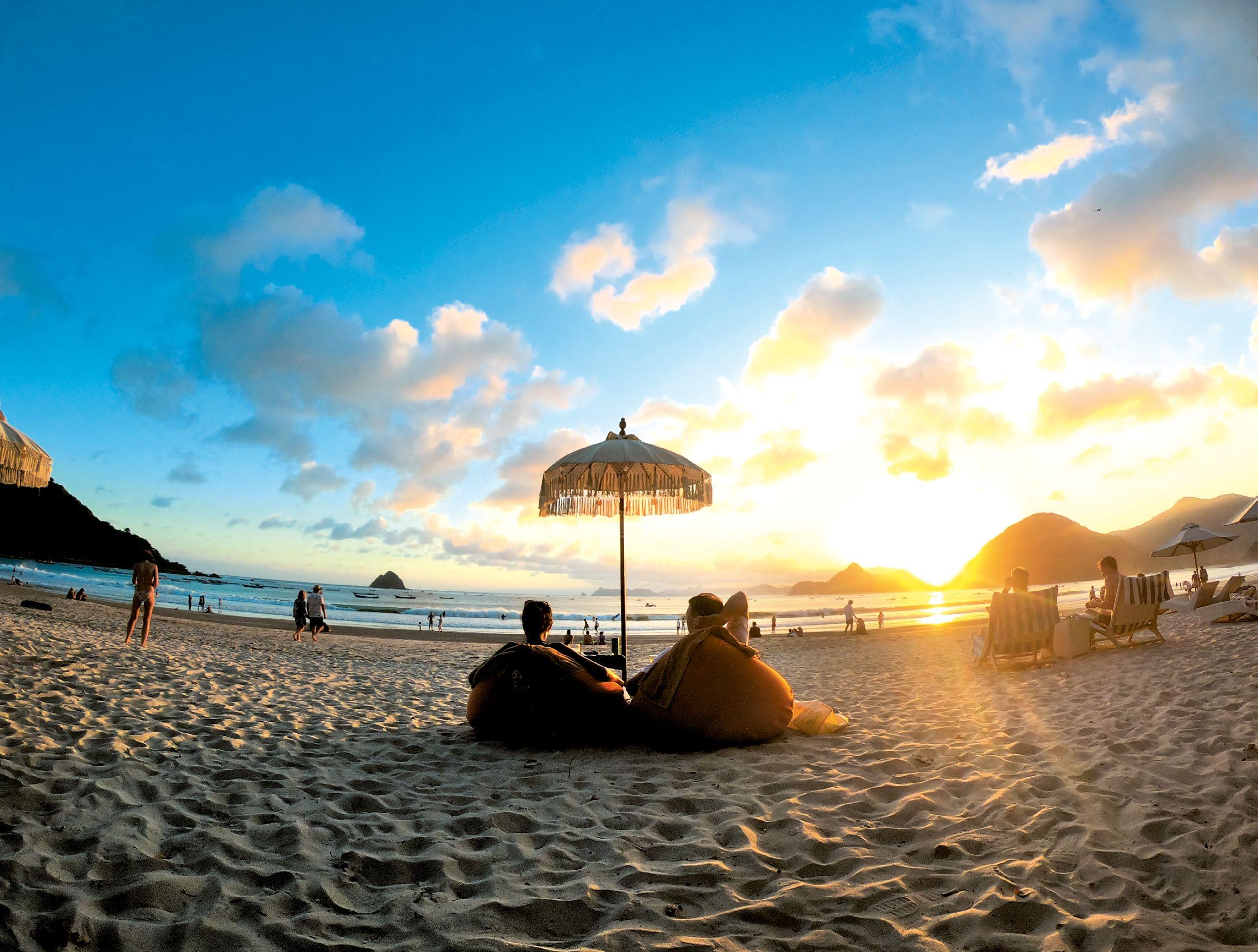
Mawun Beach is around 30 minutes’ drive to the west and is an almost circular bay with small green headlands rolling into the ocean from either side.
It is a spectacular beach with calm blue waters, perfect for swimming and spending a day lazing on the white sand. There are stalls on the beach selling drinks, snacks and simple meals.
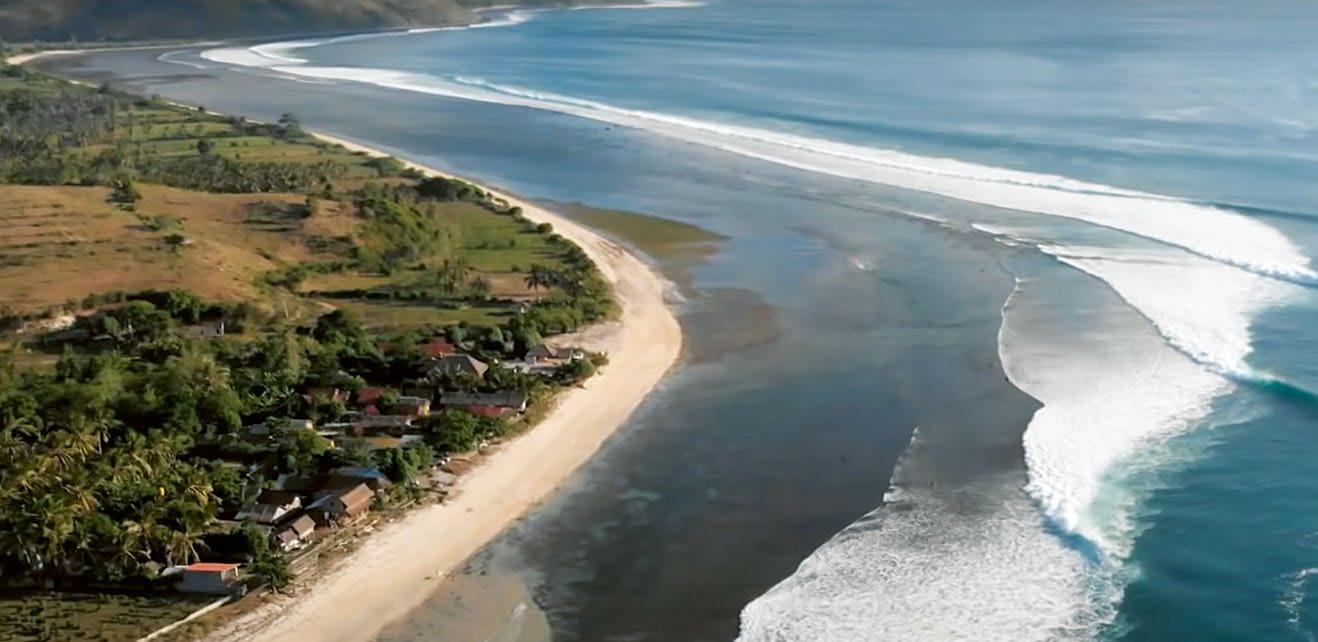
Mawi, around another 7km to the west, is for experienced surfers and has good right- and left-hand barrels for surfing when the swell is large enough.
For non-surfers, if you can brave the treacherous road, it is a lovely beach surrounded by small hills, with impressive views; look for the three pinnacles of rock jutting out of the ocean.
Selong Belanak is a long sweeping bay framed on each end by headlands and surrounded by rolling hills. The beach is lovely for swimming and has good waves for body surfing, as well as being popular for beginners surfing lessons.
There are many small stalls selling drinks and snacks, as well as offering surf lessons and surf board hire on the beachfront.
Sempiak Seaside Resort has plush villas, some with private pools, perched on the hillside overlooking the bay with breathtaking panoramic views.
Laut Biru Restaurant and Bar at the resort is right on the beachfront with lovely views. It is a popular place for a stop –and justifies a day trip in itself – serving delicious snacks and meals under shady trees on the beach.
Selong Belanak is another area undergoing a lot of growth, mainly due to the popularity of the beach and the wonderful landscapes of the area. Here you will find many small hotels and private villas, as well as interesting cafés and shops to explore.
Bruga Villas Restaurant & Spa, on the main road leading to the beach, is a small boutique hotel offering exceptionally good value accommodation with eight large, comfortable and modern rooms surrounding a central swimming pool.
There is a roadside coffee shop serving delicious cakes and barista coffees and, upstairs at Surf Kitchen, enjoy fresh sea breezes and tasty western and Asian meals, full bar service and cold beers.
There is also the Bruga Wine and Spirits bottle shop on site, with a good selection of takeaway wine, beer and spirits, as well as a range of snacks and general supplies. Free delivery is available if you are staying at one of the villas in the area.
If you are staying elsewhere, Selong Belanak and the surrounding beaches make a great day trip, with lunch and a swim here as the highlights of your day.
Further west are more beaches to explore – Serangan, Torok, Nambung, Pengantap and more – many of them undergoing some type of development as investors recognize the potential of this gorgeous area.
Further west stils are the picturesque bays of Sepi and Belongas, and many more scenic beaches along the way; all are mostly deserted.
Steeped in history and legend, surrounded by beaches of almost surreal beauty, the south coast is a fascinating area to visit, whether your interests are historical and cultural, in search of the perfect wave, or just the opportunity to see and explore some of the most beautiful and pristine coastal scenery in Indonesia.


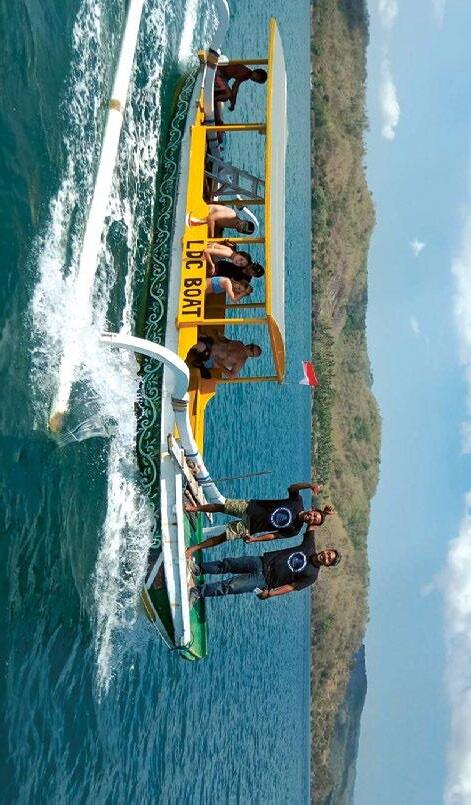

A long meandering coastline of pristine white sand beaches, rolling hills, quaint villages, and sparkling ocean as far as the eye can see… that’s Southwest Lombok!
Off the coast, thirteen small islands - the Southwest Gilis - float in the turquoise waters just waiting to be discovered.
Unlike the famous ‘Gili Islands’ in northwest Lombok, the Southwest Gilis are largely uninhabited and have yet to be discovered by most travellers... that’s why we call them
‘The Secret Gilis’!
The picturesque Southwest region begins from Sekotong, just south of Lembar Harbour, and features stunning beaches and bays set against a backdrop of rolling green hills.
The drive down the southwest coast is an enjoyable trip, meandering through small villages where life is largely untouched by tourism and where the people are involved in their day-to-day activities of farming, fishing, and other traditional pastimes.
Situated on a wide, placid bay in Sekotong is the peaceful village of
Tawun. The sea is sparkling turquoise and the dazzling white sand stretches in a wide sweep around the bay.
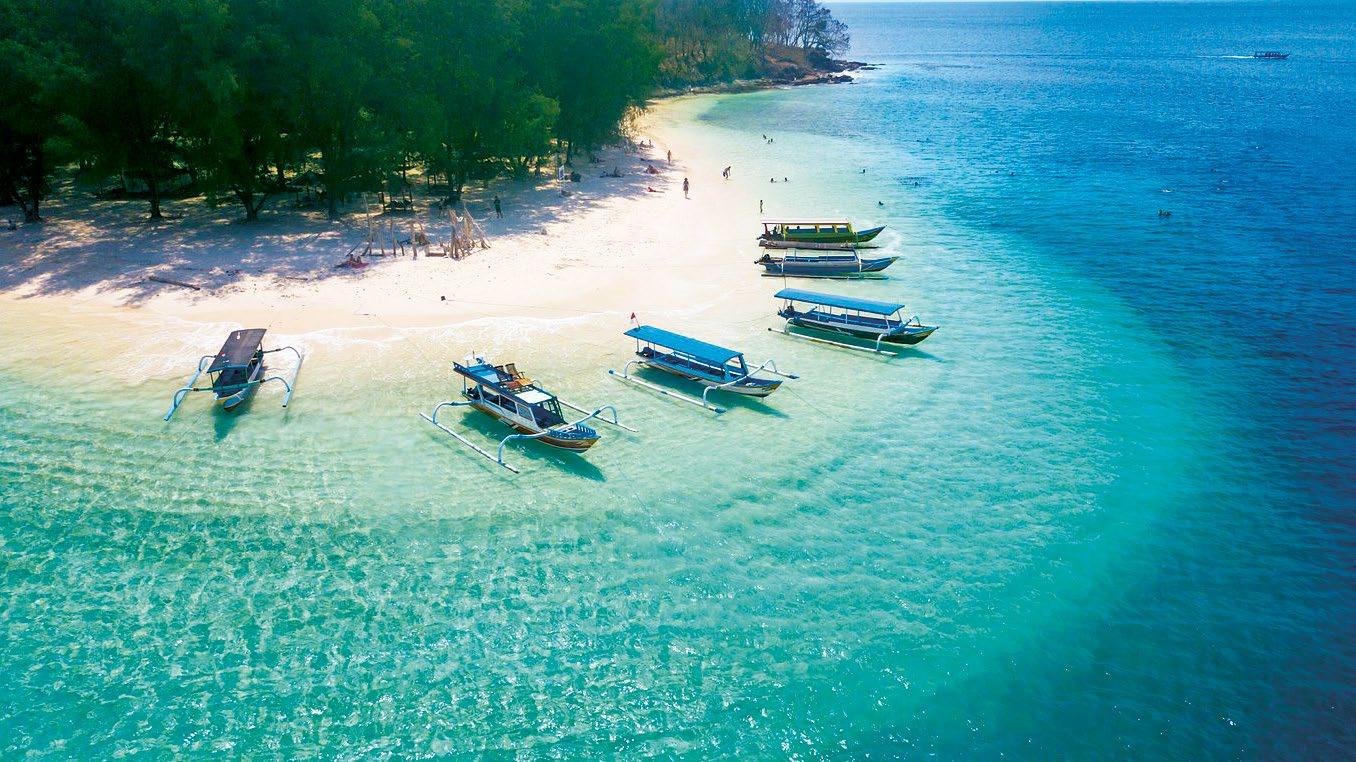
Just out in the bay are the three lovely islands of Gili Nanggu, Gili Tangkong and Gili Sudak (and the tiny island of Gili Kedis) – all easily accessible by local outrigger boats.
In the centre of town is the main harbour with a long jetty stretching out into the sea, where you can arrange boat trips out to Gili Nanggu and the other islands. There are also smaller private boat hire places dotted all along the coast for private island-hopping excursions.
Continued from Page 49
Accommodation at Tawun has grown over the past few years and there are now small hotels, villas and home stays overlooking the bay. It’s easy to base yourself on the mainland and take boat trips to explore all the southwest islands from here.
Gili Nanggu has accommodation for visitors, with simple cottages on the beach
and a restaurant. The island is small and the beach has soft white sand and a good reef just offshore for snorkelling.
Island-hopping tours usually stop at Gili Nanggu, Sudak and Kedis, which all have good snorkelling from the shore.
Spend some time exploring the islands, swimming and snorkelling, eating fresh seafood and taking in the fabulous views.
Back on the main road and travelling a little further south, before the marine culture complex (Balai Budaya Laut), there is a small dirt road leading out onto a white peninsular of sand that juts into beautiful clear waters. Drive to the end for
superb views and a close up look at Gili Genting.
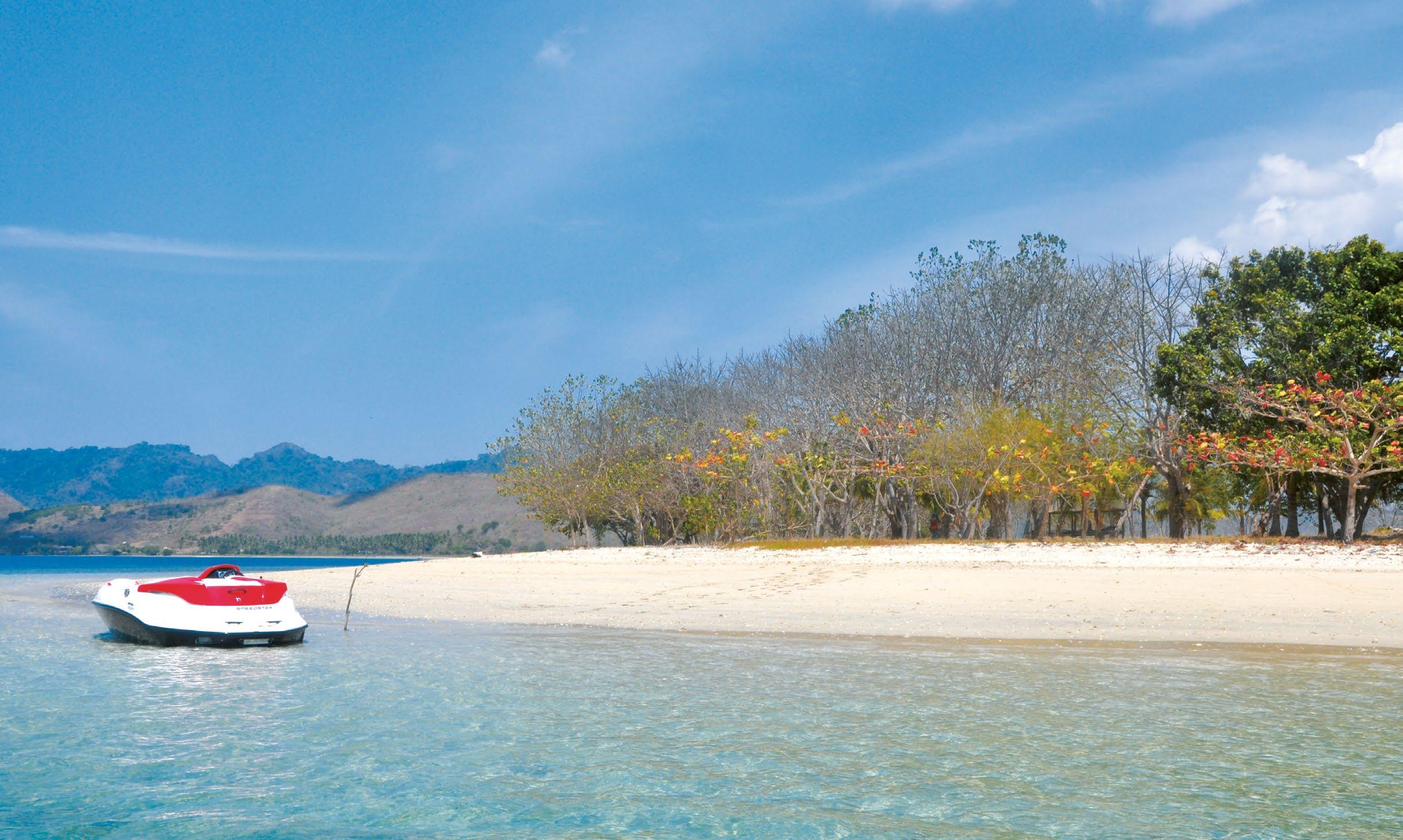
Gili Genting sits just off the tip of the peninsular and at low tide you can walk across the sandbar and explore this uninhabited island. Old volcanic rocks and stone carved from centuries of tidal flow create small caves and alcoves, providing shelter for picnics and interesting nooks and crannies to explore.
Continued on Page 52
Gili Gede: The largest of the islands in the area is Gili Gede, appropriately meaning ‘Big Island’ in the local language. The island lays just offshore and is so large visitors often mistake it for part of the mainland.
Gili Gede is developing as the gateway for the Southwest Gilis, as it is one of the few islands in the area that has a choice of accommodation, making it an ideal base for exploring the other nearby islands.
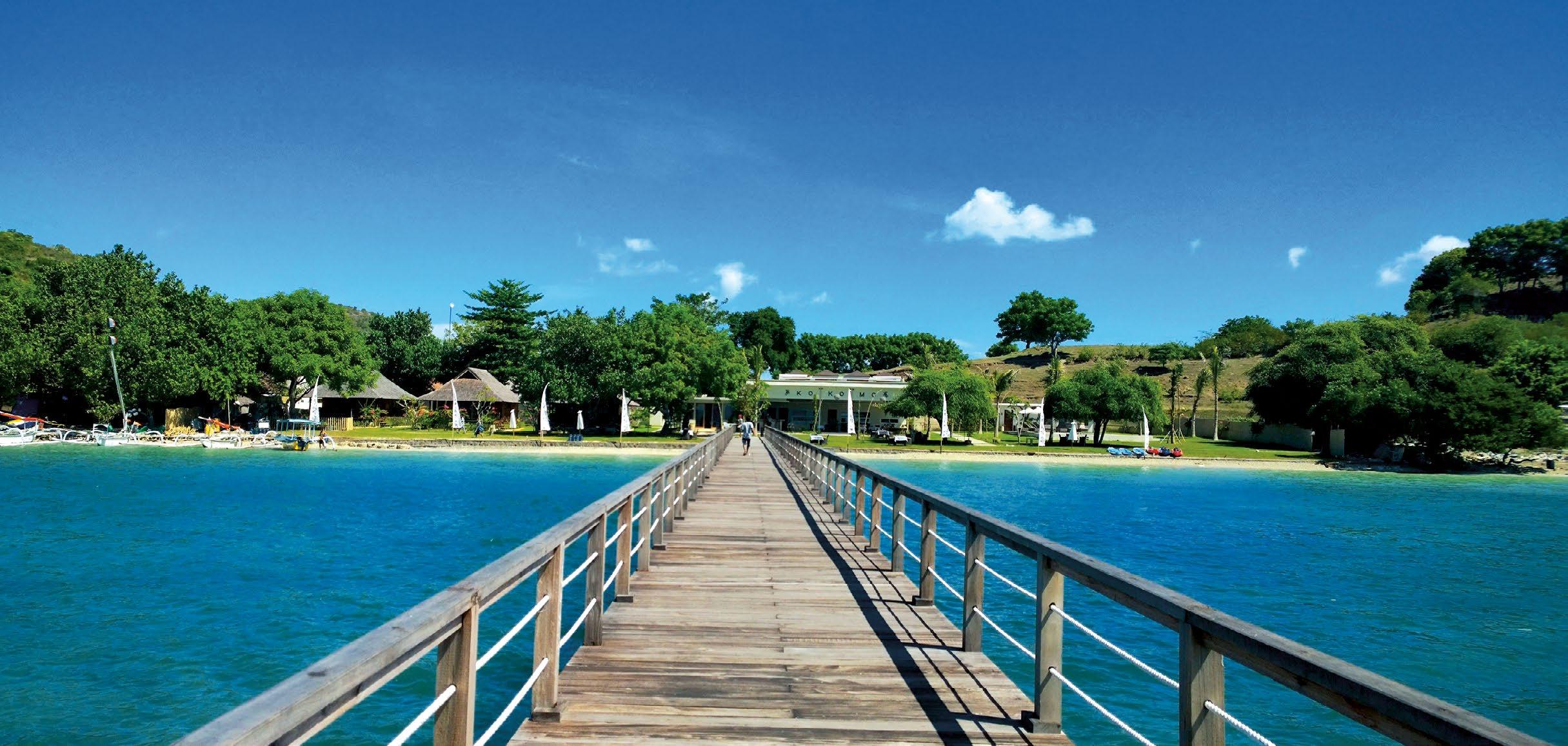
Ko - ko - mo Gili Gede Resort is the sister resort to the renowned ko - ko - mo Resort on Gili Trawangan. The luxurious property, comprising 1- and 2-bedroom villas with private swimming pools, and one bedroom Villa Kecil (small villas), is spread out over spacious grounds on a pristine beachfront.
All modern comforts such as air conditioning and ceiling fans, flat screen televisions with satellite channels and DVD, Wi-Fi, fresh (not salt) hot water, plentiful power points for charging devices, and more are provided in each villa.
Facilities at the resort include a tennis court, a small gym, a resort swimming pool and purpose-built Spa facility, and a beachfront restaurant.
Guests at the restaurant can enjoy upmarket dining with a menu prepared from fresh locally-sourced seafood, imported Australian meats and in-house breads and bakery items. There is also an outstanding wine and drinks list.
Ko - ko - mo has a purpose-built jetty at the front of the resort and operate their own fast boat service – ‘Gili Getaway’ –making Gili Gede easily accessible from Bali.
Perched on the hilltop just to the north of ko - ko - mo is Villa Selalu, a private luxury retreat that enjoys outstanding 360º views of the stunning surroundings.
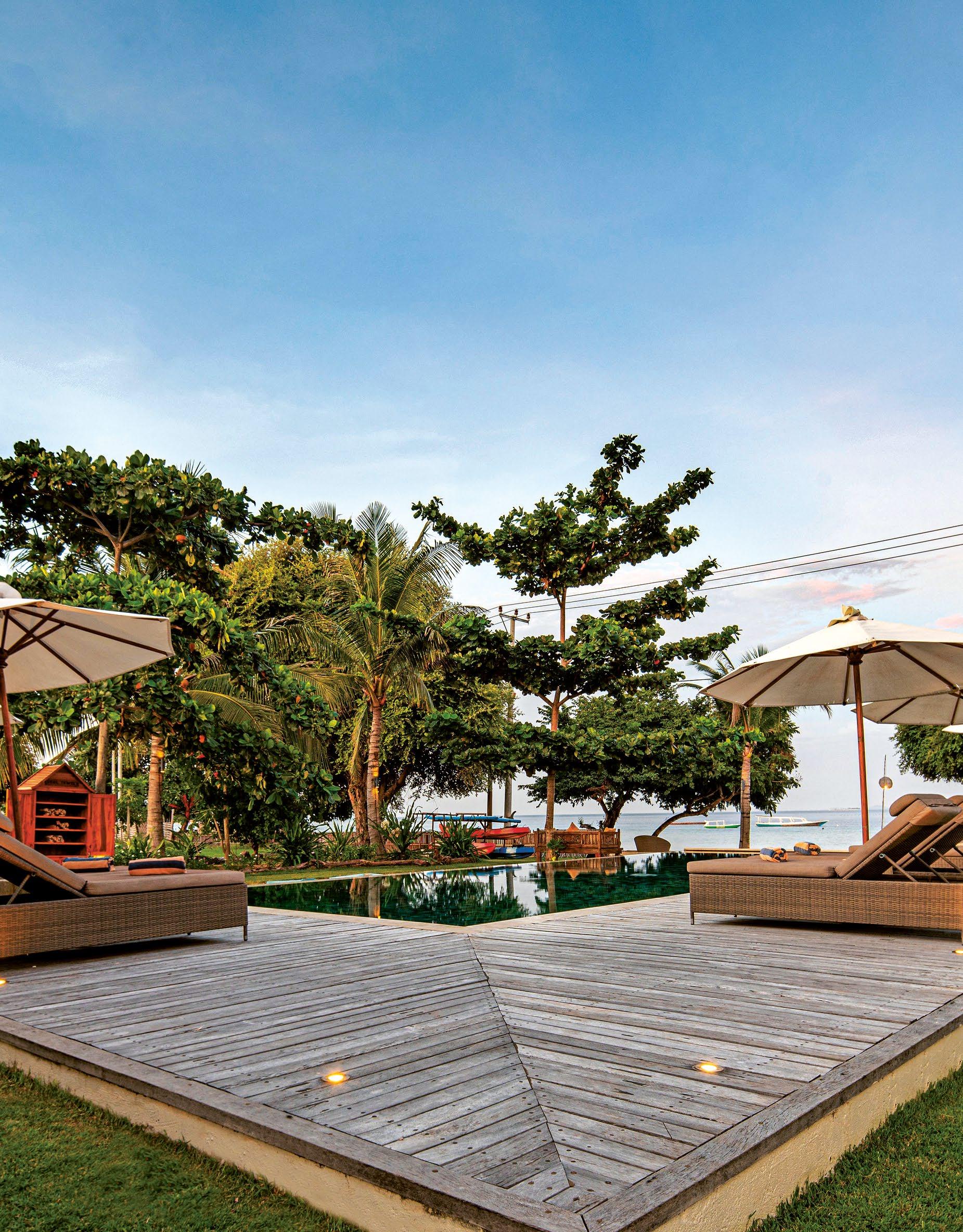
The fully serviced 4-bedroom villa boasts unparalleled luxury with all mod cons and ultra-chic furnishings. Guests can enjoy a number of indoor and outdoor living areas, as well as an 18m infinity pool overlooking the ocean surrounded by a spacious deck, BBQ area and lounging pavilion.
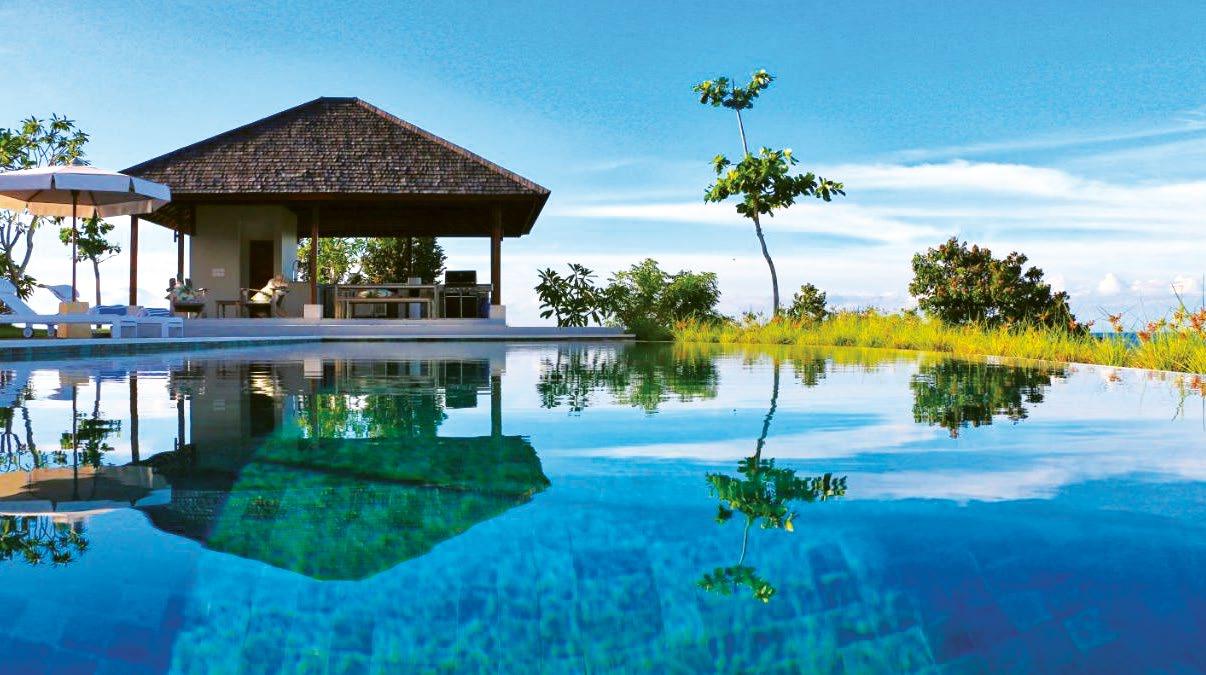
Villa Selalu has a private beachfront and jetty, as well as a boathouse equipped with snorkelling gear, sea kayaks, paddle boards and bikes to make the most of your holiday. Individual rooms are available or rent the villa in entirety for the ultimate island escape!
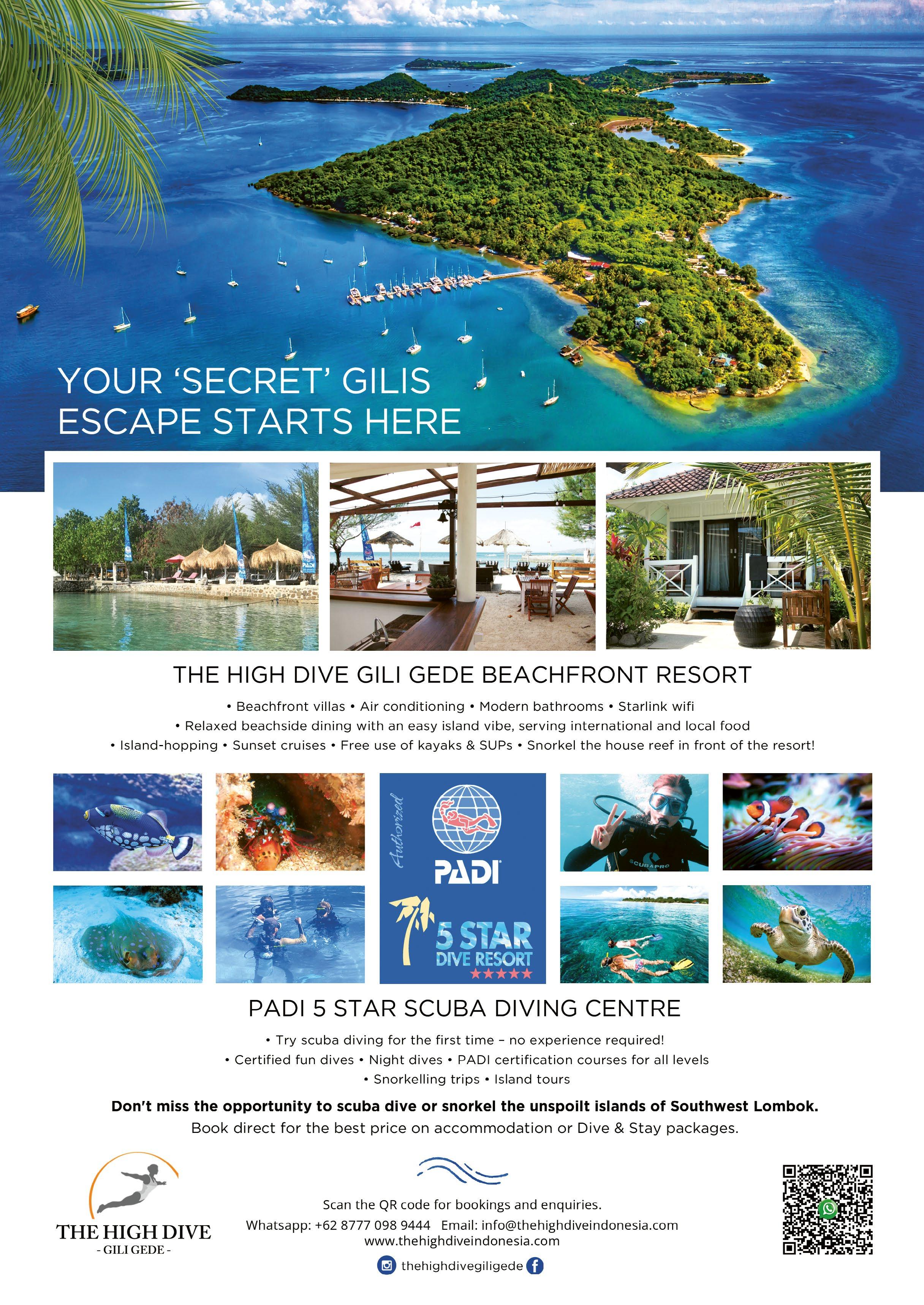
The High Dive Resort, Gili Gede is the only PADI 5-star certified dive resort in Southwest Lombok and is the perfect choice for those wishing to learn to dive in a small, personalised setting with highly experienced dive masters and instructors. Whether you are learning to dive, upgrading skills, or just wish to explore an area with pristine reefs, a vast variety of underwater life, and uncrowded diving locations – the High Dive Resort is for you.
The luxurious beachfront bungalows at the resort all feature ocean views and boast king-sized beds, air conditioning, modern bathrooms and a spacious private deck overlooking the beach.
There is also a comfortable two-bedroom apartment for families and larger groups.
The restaurant and bar are located on the beach, serving delicious local and international cuisine, with refined vegetarian options and full bar service available. Dining here is a true castaway experience with bare feet in the sand and enchanting views across the water to the nearby islands.
Just a little further down the beach is Alam Karang – a collection of five bungalows or lumbung, featuring traditional Sasak architecture. Each stand-alone bungalow features comfortable furnishings, air conditioning, ensuite bathrooms and spacious terraces overlooking the sea.
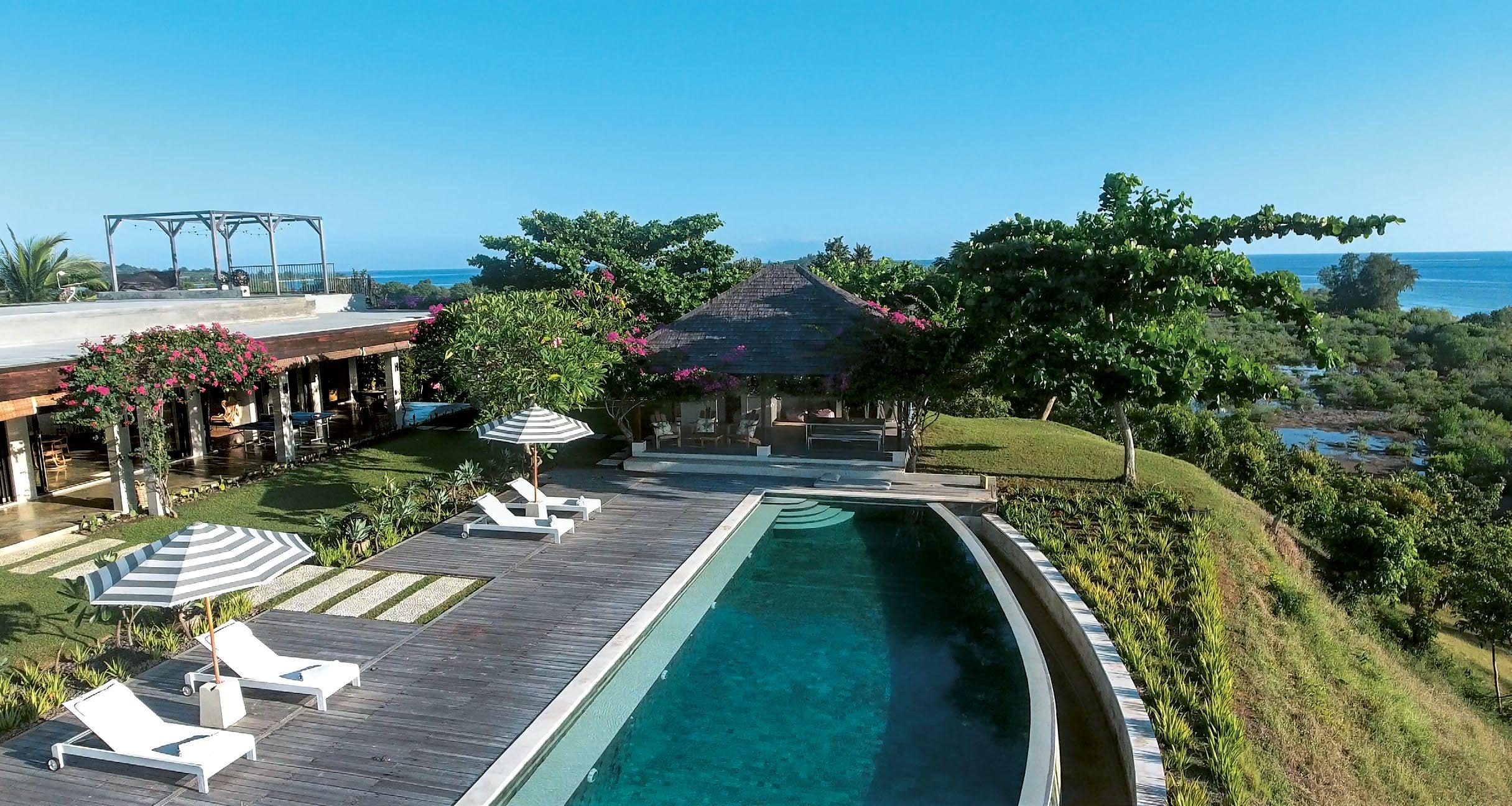
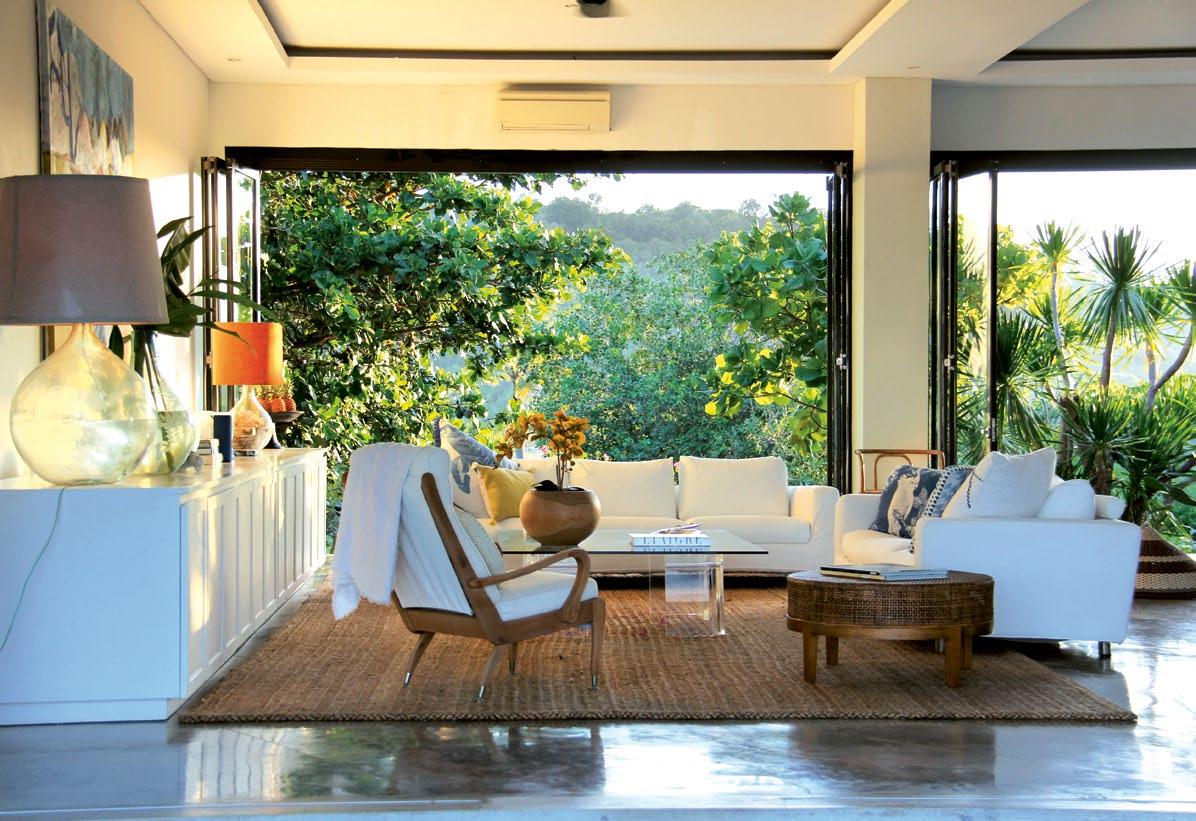
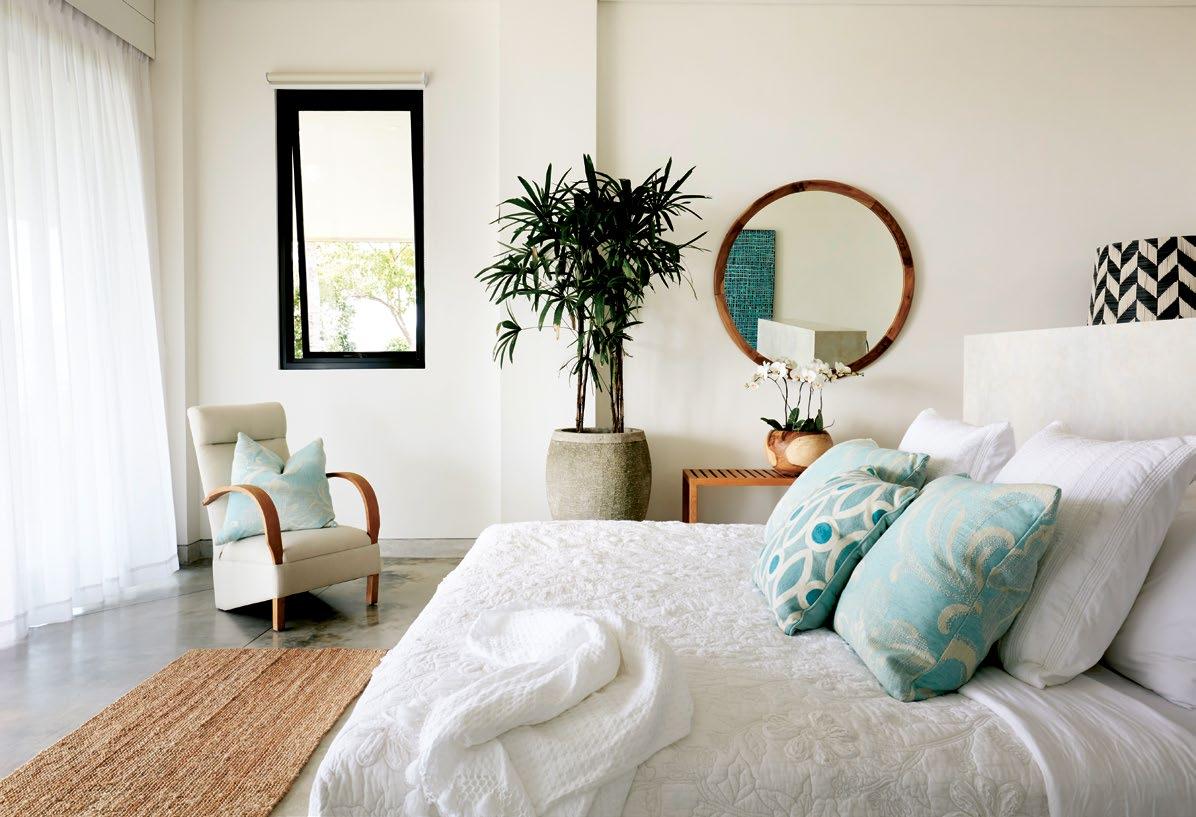
Villa Selalu is a private luxury hilltop retreat on beautiful Gili Gede that enjoys 360-degree, uninterrupted views of a truly unique and untouched part of the world. The villa offers four king-size bedrooms each with marble ensuites and can comfortably accommodate up to 12 guests.
Whether booking one bedroom as a couple, or two or more bedrooms as a group, enjoy the villa exclusively for your stay.
. private jetty .18m infinity pool . private white sand beach . hilltop bbq pavilion . entertainment room . WIFI . commercial kitchen . spacious open plan living . fully air conditioned . tv’s in bedrooms . ceiling fans throughout . hilltop breakfast pavilion . fully catered . dedicated manager and staff. bespoke furnishings & amenities . beach lounges . beach café & bar . bikes . snorkelling gear . kayaks and stand-up paddleboards
ENQUIRIES: bookings@villaselalugiligede.com | www.villaselalugiligede.com | +61 411 031 607
The beachside restaurant features organic Mediterranean cuisine, specializing in tapas, and local dishes, while the bar serves up cold beer, soft drinks, cocktails and wines by the bottle or glass.
With friendly and helpful staff to arrange tours and activities, and snorkelling directly from the beach in front, Alam Karang offers a relaxing “beach bungalow getaway” at very reasonable rates… it’s the kind of place you come to for a couple of days and end up staying a week!
The marina offers customs, immigration, and port control facilities as well as fuel supplies, moorings, provisioning, and Continued from Page 52
Other accommodation options on the island include some lovely mid-range resorts as well as cottages and home stays with simple accommodation for budget travellers.
Marina Del Ray, on the south of the island, is an Australian-operated yacht marina with a long jetty extending into deep, protected waters offering safe anchorage year-round for visiting boats.
repairs. There is also a Yacht Club, with restaurant and accommodation available.
Gili Gede is large enough to provide a range of activities such as hiking to the hills in the centre for fantastic views across the other islands, exploring deserted beaches and hidden coves, and meeting the people living on the island, who are very friendly and, as yet, unspoilt by tourism.
To the south of Gili Gede, the islands of Gili Ringgit, Layar and Asahan are lined up like secret treasures in the calm sea.
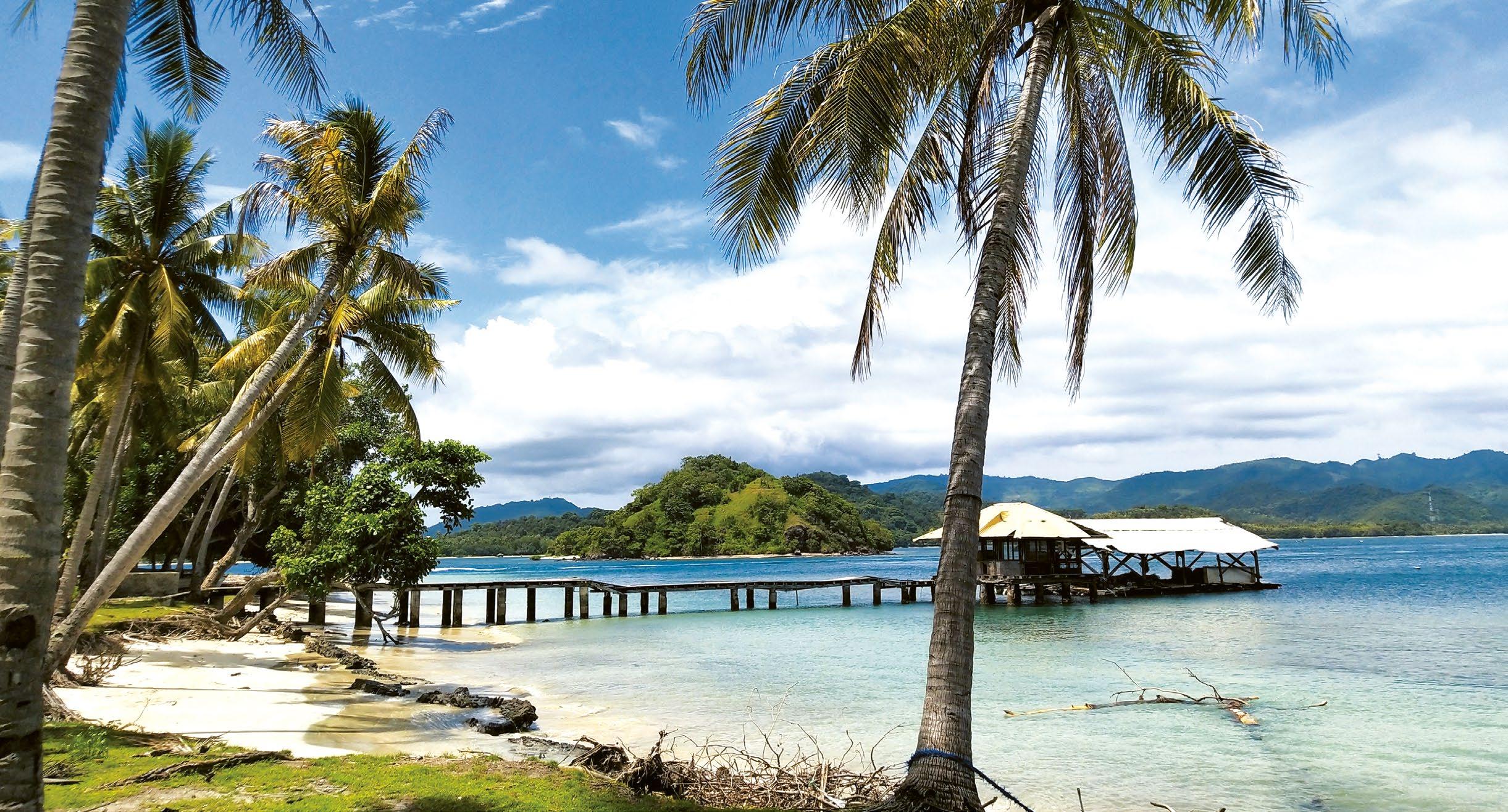
Bounty Cruises, a Bali-based company, own a large parcel of land on Gili Ringgit and constructed a pier on the island some years ago. There is good snorkelling on the west side of Gili Ringgit, accessed by boat.
Large gardens of hard and soft corals lay just beneath the surface and the reef extends along most of the island’s coast. On the other side of the island is where the pier is located, is a fantastic white sand beach.
It’s easy to snorkel offshore, just north of the pier and, although the reef isn’t as large as on the other side of the island, there is still plenty to see.
Visitors are astounded by the pristine conditions and huge schools of turtles seen near Gili Layar – the island between Gili Ringgit and Gili Asahan.
Bright blue starfish drape themselves across patches of coral, and bright yellow and black Moorish Idols dart through the water.
Schools of hundreds of small iridescent fish swim past and weirdly-shaped squid drift by in the deeper areas.
Slightly further south, beautiful Gili Asahan attracts visitors with its white sand beaches, clear calm waters and swaying palm trees. There is very good snorkelling just off-shore.
There are now a number of accommodation options on the island, ranging from modern and luxurious to simple and rustic – with choices to suit all budgets.
Leaving Gili Asahan and back on the mainland, continue south on the coastal road until you come to a main intersection.
A signpost to the left leads to the spectacular large bay at Mekaki, while the road to the right leads to Labuhan Poh and Pelangan.
There are small home-stays and private accommodations spaced out along the road to Bangko-Bangko – known as Desert Point and a world-famous surfing Mecca for those in the know – located on the far southwest tip of Lombok.
The wide white sand bay is lined with fisherman’s huts and draws hundreds of surfers every year from as far away as Hawaii and Brazil to challenge the huge waves of Desert Point, just offshore.
Although the road deteriorates after Labuhan Poh, it is still passable for most vehicles in the dry season. During the surfing season, from mid-May to September and again in December, the beach is buzzing with surfers, but otherwise it is a remote and peaceful area. Bali is clearly visible, with the island
of Nusa Penida only about an hour’s sail away.
The drive to the point is dotted with bucolic scenery and tiny villages, making it a worthwhile trip even for non-surfers. There is basic surfer accommodation in the area and plans for development in the future.
The dive sites of the Southwest reflect a good cross-section of what Indonesian diving has to offer. Dive in and be fascinated by turtles, white tip reef sharks, cuttlefish, moray eels and many other varieties of marine life.
The reefs are full of colourful corals, which harbour an amazing variety of marine life, including ghost pipe fish, lion fish, pygmy seahorses and much more.
For non-divers, the islands are a delight for snorkelling – abundant coral reefs lay just below the surface waiting to be explored, filled with thousands of brightly coloured tropical fish, huge sprawling blue starfish and magical turtles gently gliding through the water.
With its undeniable beauty and tourism potential, it’s easy to imagine hotels and resorts on all these beaches and islands in the future but, for now, the Southwest is unspoilt and the Gilis remain the secret islands… stunningly beautiful, pristine and idyllic, and visited only by the lucky few.
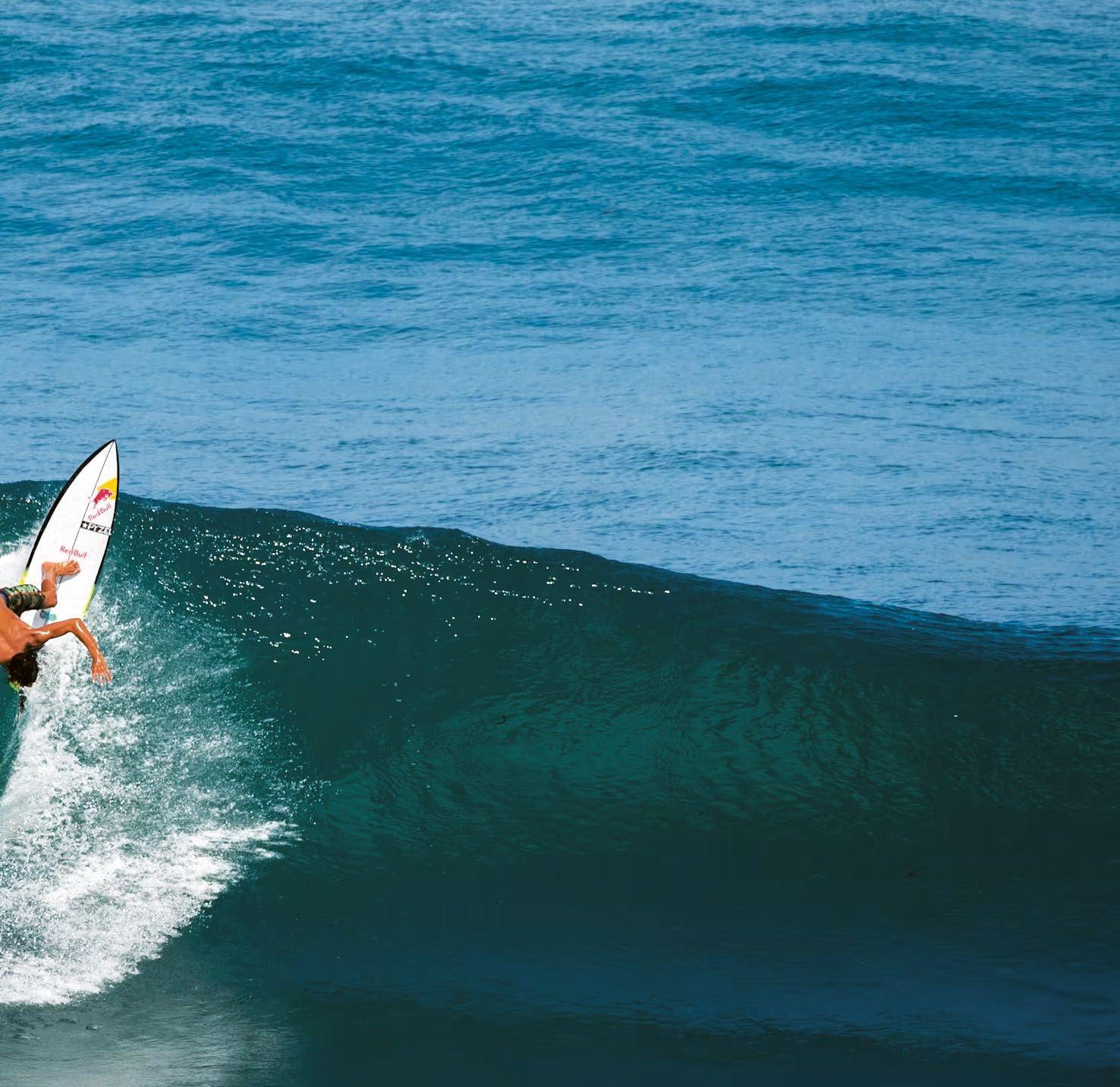
Gili Getaway Fast Boat Service: operates convenient, fast and comfortable boat transfers between Bali and Gili Gede three times a week.
Gili Getaway arrives and departs at the purpose built jetty at Ko – ko – mo Resort, for easy and quick access to Gili Gede and the Southwest Gilis. www.giligetaway.com