On his deathbed, W C Fields read the bible, “looking for loopholes”
Our new ‘pub memories’ thread has, ahem, been viewed 20,000 times
“I am here to help and serve all constituents in Edinburgh Northern and Leith. If you need assistance, or if you would like to discuss any issues or ideas, please contact me or come and see me at one of my monthly Drop-in Help & Advice Surgeries.“
Editor at Large
Billy Gould editor@leithermagazine.com
The Art of Eating Well
By happenstance, down a rabbit hole on google, I unearthed the whole glorious TV series that was Italy Unpacked, circa 2013
Having climbed back to the surface after two days of torrential rain battering the skylights, My faith, assuming I had any in the first place, was restored both by the sun blessed cookery of Giorgio Locatelli and the verve and sheer joy of the art that Andrew Graham-Dixon unlocks for us.
After binge watching them again: From the Stones to the Stars, The Art of the Feast and In the Footsteps of the Poets. The art of Piedmond, Lombardy, Bologna, Calabria, Rome and the Cinque Terre is laid before us anew. “Why does the eye see a thing more clearly in dreams than the imagination when awake?” Asks Leonardo da Vinci.
What struck me was the combination of Locatelli with his sense of wonder and perfectly calibrated familial, political and moral compass (I know, it’s hard to believe I am talking about a chef) combined with Graham-Dixon’s lightly worn erudition, is utterly beguiling. Before the end of each programme I find myself frantically surfing google (again) to find out how to get to where they are whilst taking notes on what they see and do.
Locatelli is at his most fervent when describing the cookbook he carries closest to his heart
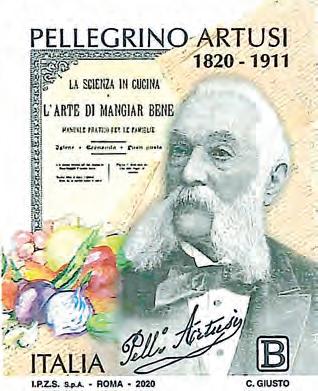
Pellegrino Artusi’s The Art of Eating Well. In fact so well does he articulate his love for the book that I found myself shelling out £30 for a copy online.
Worth two stamps, eh?
disdain to take it seriously? The day will come when words which nourish the mind and body will be widely sought.” (It eventually surfaced in 1891.)
On apple strudel… “It may look like a giant leech, but you’ll like the way it tastes.” And meatballs… “A dish everyone knows how to make, beginning with the jackass.” Anyone enthralled by culinary tales, legends and dreams, cannot fail to be seduced.
The trouble with eating Italian food is that five or six days later you’re hungry again
It is indeed a thing of wonder – written in a gossipy, slightly hectoring tone (like a conversation with a favourite uncle). Here’s Artusi on his long struggle to get it published…
“Because my book smells of stew, do you
Published by: Leither Publishing
Editor: William Gould
07891 560 338
editor@theleithermagazine.com
Advertising: Sue Laing 07772 059 516
sue@theleithermagazine.com
Design: design@theleithermagazine.com
Sub Editor: Dot Mathie
Artusi is credited with popularising pasta in the North of Italy. No small thing – as Guiseppe Garibaldi put it: “It will be spaghetti, I swear to you, that unifies Italy.” He is right on the money regarding diets, describing the best as “not eating or drinking when you are not hungry or thirsty.” Effortlessly cutting through the bullshit which attends that debate today.
And, in our age of ‘multiple food allergies’, there is even a section “for those people of weak stomach.”
As I write, the horsemeat fiasco labours on. To me it seems simple, label things correctly ‘our lasagne may contain horsemeat’ and let people make an informed choice. As Pellegrino Artusi pointed out in 1891, you get what you paid for.
If I were on Desert Island Discs and needed to choose a book to be marooned with it would be this endlessly giving, sprawling, encyclopaedic masterpiece would be my choice.A curious choice as I’m only half way through reading it for the first time!
On the other hand
I’ve also been boning up on Molecular Gastronomy as you do when the rain is still pouring down in sheets:
So Molecular Gastronomy as retro food? Hard to swallow I know but, as far back as the Battle of Mahon, chefs were making stable emulsions out of eggs, oil & lemon juice –Mah(y)onaisse. The cognomens ‘fine dining’ and ‘gastro pub’ spurious titles at best, are now firmly retro… The Good Food Guide banned the words gastro pub from its’ publications years ago.
The declension (or deconstruction) of a single ingredient – say a tomato -into a granita, essence, jelly, foam and simple seeds, a classic El Bulli trope, will be rendered as Proustian ‘taste memory’ after the closure of the greatest restaurant of the times.
All the foams, spumes, cold cooking with nitro-gas, hot jellies, spherification techniques, will become retro overnight, which is to say, a parody of their former concept.
If you would like information on advertising or sponsorship with the Leither email sue@theleithermagazine.com
Reproduction in whole or part is forbidden without the written permission of the Publishers. The Leither does not accept responsibility for unsolicited material.
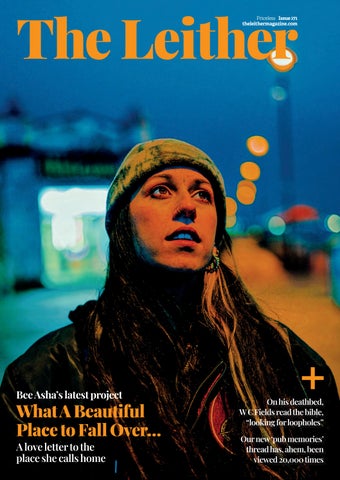
Cover 171: Bee Asha’s very own conversation of light by Rachel Black Dunlop
Through a Glass Darkly
Graham Ross
A party let’s have a party!
In previous years, this column has always tended to take a look back at the months gone by
And come up with a wish list of things we might like to see happen in the year to come. So, in that spirit, with a glass of something cheerful to hand, and Noddy Holder screaming in my ear, I thought I’d write about death.
In Scotland, a lot of us have what you could probably call a morbid fascination with the subject. With every day that goes by, and with the inevitable deaths of those closest to us, we accept the fact that our own demise is creeping ever closer and that we are moving up towards the front of the bus.
But rather than cower in fear and close our minds to the big sleep, we make jokes about it. We sit in the pub and compare what songs we’d like played at our funerals, almost always with the slightly lubricated and deluded mindset that
Elaborate images of what imagines that we’ll be able to hear them. We laugh about those of us who imbibe far more alcohol than is good for us and how long it will take for the flames to die down once we’ve been sent down the chute behind the final curtain. our funerals will look like are also conjured up.
For example, a Viking funeral where the body is laid out on pallets and sent out from the blue bridge at the Shore into the Firth of Forth while the mourners fire flaming arrows at it from the deck of the Fingal hotel. What could possibly go wrong?
We wonder what our famous last words will be and dig up memories of some of the best
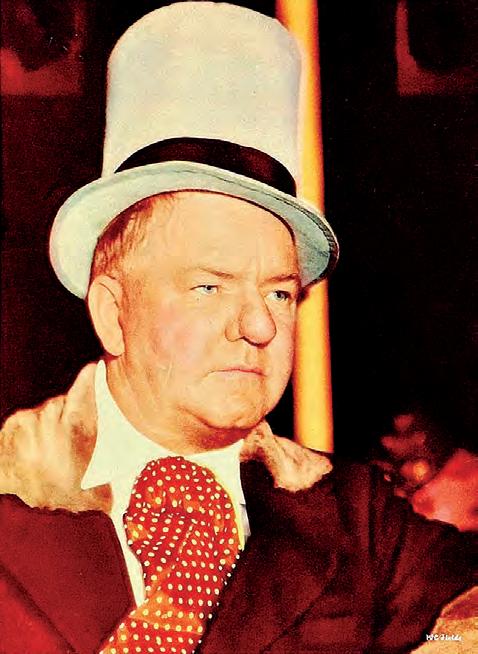
ones. These include the comedian W C Fields, a lifelong atheist who was on his deathbed when a friend came to visit and found him reading a bible. When he asked him what he was doing, Field’s apparently said “looking for loopholes.”
The drummer Buddy Rich was being looked after by a new nurse who was preparing his medicines when she asked him if there was anything he couldn’t take; “Yeah, country music.” The ones that resonate most with me were uttered by the birth control advocate, Margaret Sanger who, just before she closed her eyes and drifted off shouted “A party! Let’s have a party!”
But here’s the thing. We don’t need to die so that a party can be held without us. Every single one of us is already at the party, right here and right now. Obviously, if you have an unshakeable faith that our life on earth is not the end of us and our souls are transported to a teetotal celestial shindig, then you will have a very different outlook. And I am genuinely glad for you if that’s your view.
that things will turn around and even the tiniest ray of light should give us that hope. In the midst of Donald Trump’s poisonous right-wing administration, a self-proclaimed democratic socialist was just elected as Mayor of New York City. One of the things that Zohran Mamdani said was that the policies he will put forward are an “existential threat to a broken status quo that buries the voices of working people beneath corporations.”
A nurse preparing Buddy Rich’s medicine asked what he couldn’t take.
“Yeah, country music”
But for the rest of us, this is it. And we should take pleasure in the smallest of things and in the most majestic things that surround us. And we should do it now. Yes, I know that parts of the world are on fire at the moment and the daily lives of millions of people are as far away from a party as they could possibly be, but we have to have hope
That’s hopeful, no? Surgeons from Scotland and Dundee have recently used robot technology to carry out a world-first procedure which removes blood clots from stroke victims and can be utilised remotely, even transatlantically. If approved, it will be a gamechanger in terms of the recovery chances for victims. All happening at our party.
So, as I write, there are only forty five days until Christmas. By my reckoning, and only if I’m spared of course, that means another forty four parties before the big day. So don’t wait; get dancing now. Because when the music stops, it really stops and the party goes on without you.
And death? It’s not scary, it’s just a jumped up party-pooper.
On his deathbed, W C Fields read the bible, “looking for loopholes”
Enjoy a stress-free Christmas with
To arrange a complimentary lettings property valuation and see how our unique Guaranteed Rent can help you, scan the QR code to get started!
Writer without Portfolio
Tracy Griffen
All Hail the Mighty Tattie
A potato a day, that’s the winter’s way, to keep the sniffles away
Tatties really are good for you, and contain Vitamin C, B6, potassium and fibre. Did you know that potatoes have more potassium than a banana? Cheap and nutritious, spuds are ideal winter fitness fuel.
Science & Advice for Scottish Agriculture (SASA) is the research body that ensures Scottish seed potatoes are blight-resistant and disease free. Every year Edinburgh allotment plot holders get to trial heritage seed potatoes and report back to SASA.
This year we grew ‘blue gloss’ that weren’t blue but small, perfectly round and delicious. A faff to wash, I can see why they’re not grown commercially. According to the European Cultivated Potato database (yes, it is a thing) the pedigree of ‘blue gloss’ is from 1946.
The humble spud has long been a valuable source of energy to humans. Originally farmed in the Andes mountains around 10,000 years ago and then brought to Europe in the 1500’s by the Spanish (¡patatas bravas!), Solanum tuberosum, to give it it’s botanical name, grows well in Scotland. Potatoes are the underground storage organ of a plant in the nightshade family (that includes tomatoes). Tubers store nutrients and carbohydrates for the plant, to help it survive. You plant one ‘seed’ potato in spring, then dig up a whole bunch from summer onward. We grow first earlies, early and maincrop tatties.
According to the NHS, potatoes are “enjoyed as the starchy part of a meal” and that we eat a lot of them… they don’t count towards your five a day. That doesn’t make sense to me either. It’s clearly an anti-tuber policy. Grrr.
It’s good to get quality spuds, Leithwise and Scotmid stock a good variety of cultivars (often East Lothian). Easter Greens at the top of Easter Road sell the biggest baking tatties, find them outside the door.
Mr & Mrs Potato Head (Bakers?)
with butter and / fresh herbs / sea salt. Day 2 Special Potatoes: Named after the side dish from Best Kebab, Leith Walk. They serve the best fried chunks of potato with their kebabs. Lightly boil or microwave tatties (or use yesterday’s boiled spuds), then shallow fry in a generous amount of rapeseed oil until golden and crispy. Sometimes I add smoked paprika near the end.
Solanum tuberosum, to give it it’s botanical name, grows well in Scotland
Scrub them well and cook skin on for extra Vitamin C, fibre and texture.
Day 1 Simply boiled: A good test of your potatoes’ qualities: floury, waxy, firm, crumbly? Scrub, then pop whole tiny tatties in a pan of cold water. They’ll cook as you bring water to the boil. Best served slightly firm. They’ll keep cooking, so drain and toss
Day 3 Spanish Omelette: Sauté onion and garlic, then stir in leftover Special potatoes from day two, or use leftover roast potatoes chopped small. To the frypan, pour over 4 free-range / organic eggs beaten with a small bit of milk, cream cheese, yoghurt or similar. Cook until the egg is nearly set, then slather with cheese and grill to finish. Leftovers are good cold for lunch the next day ‘elevated’ with freshly chopped herbs.
Day 4 Baked Potatoes: As a vegetarian living on North Bridge in the late nineties, ‘The Baked Potato Shop’ on Cockburn Street was my weekend pantry (opened in 1983 by restauranteur David Bann, it sadly closed in 2023). At home, find the hugest of your harvest and bake in a reasonably high oven for as long as it takes. Scabby tatties
make crunchy skins. It’s true and yum. Top with grated cheese, garlic mushrooms, and seasonal salad. Or veg haggis.
Day 5: Potato and leek soup served with toasted crusty sourdough makes a good meal. Sauté leek in plenty butter, add unpeeled chunks of tatties and stir to get potato buttery. Then pour over a good veg stock and cook until spud collapses under a potato masher. Mash by hand for a superior texture. Thyme is nice at the end.
Day 6: Pommes Anna are so so so good…I only make it every now and again honest. It’s superfinely sliced potato with lots and lots of butter in a baking dish in the oven. Crispy and soft all at once. Heaven. One for the weekend.
Day 7: Roasties: Heaven on earth is perfectly roasted potatoes. Scottish rapeseed oil is a cheaper and healthier alternative to goose fat (better for the goose too).
Bottom of the list is lumpy mash: As a child the mash sculpting scene in Close Encounters of the Third Kind put me off eating the stuff. But I have learned to eat mash (if there’s no other option and definitely no lumps) as it’s OK with gravy.
Now chips and gravy, there’s another thing…
Bluesky: @tracygriffen
Info: The Healthy Living Yearbook, £9.99
Deborah Gauchi, Grays Gallery
People & Places
What A Beautiful Place to Fall Over
Leith-raised artist and musician Bee Asha presents a heartfelt, multi-artform project celebrating the people and places that make Leith what it is
Leith has always been a place with grit under its nails and poetry in its bones. It’s where neighbours still nod to each other on the street, where stories live in the cracks of the pavements and where community spirit refuses to be priced out. This unmistakable mix of beauty and hardship inspired Bee Asha’s latest project, What A Beautiful Place to Fall Over - a love letter to the place she calls home.
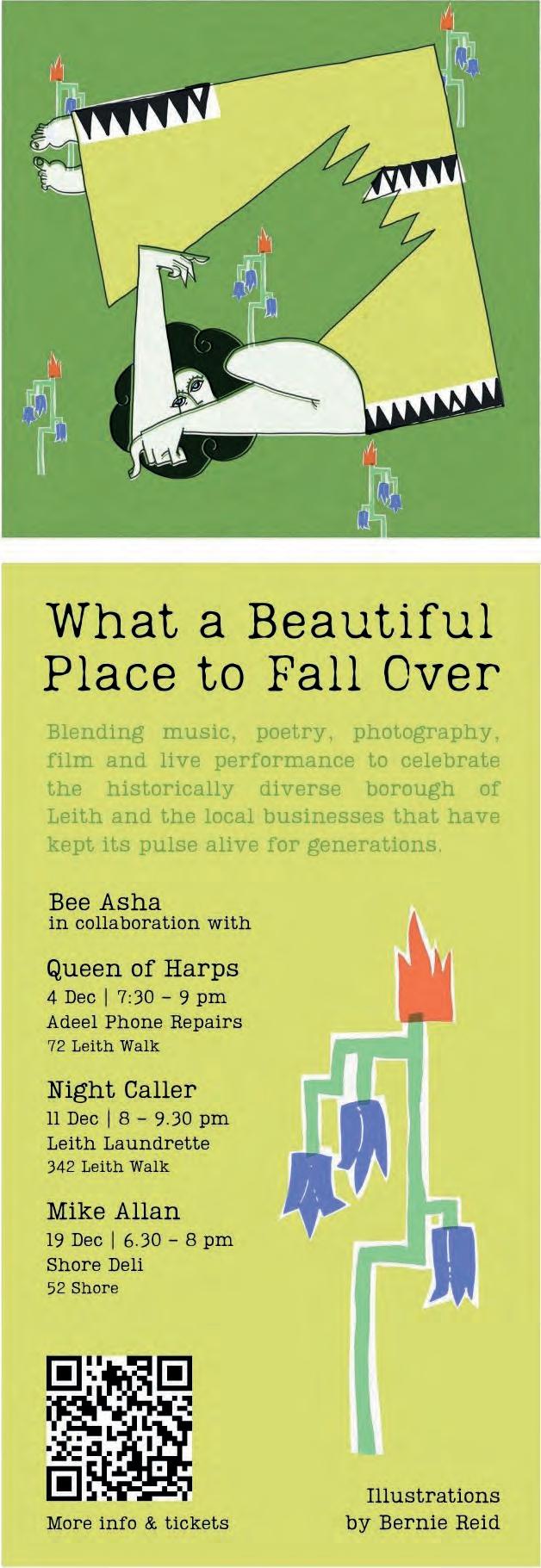
The project blends music, poetry, photography, filmmaking and live performance to celebrate the historically diverse borough of Leith and the local businesses that have kept its pulse alive for generations. At its core is a live album co-produced by Bee Asha and a selection of Leith creatives including Queen of Harps, Night Caller, Mike Allan, Lou McLean and Subie Coleman. Each collaborator has been invited to co-write a track for the album and perform it in one of Leith’s iconic businesses, with gigs taking place throughout December 2025 and February 2026.
The idea came to Bee whilst cycling through Pilrig Park one morning. “When I was young, so often I would see drug users resting
beneath the trees, with foil and bottles of methadone surrounding them. This time, I only saw the imprints left behind pressed into the patches of bluebells, and the forgotten debris hidden under droplets of deep violet and blue. I thought ‘What A Beautiful Place to Fall Over’.”
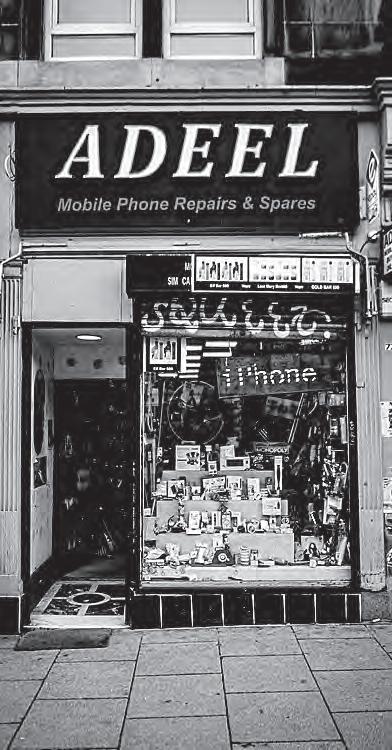
Leith is home to a wide array of businesses run by Edinburgh’s immigrant community, which has made it a welcoming space for the diaspora. “As I cycled, I admired old Leithers sitting out in the sun on the Kirkgate, queuing at Storries Pies, and waiting for their washing in the Laundrette. I went into Adeels and he said he’d fix my phone at a discount because he kens my Da and I thought of how much I loved Leith.”
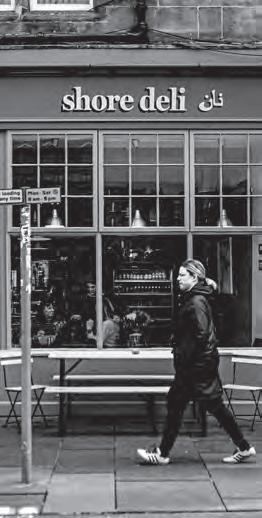
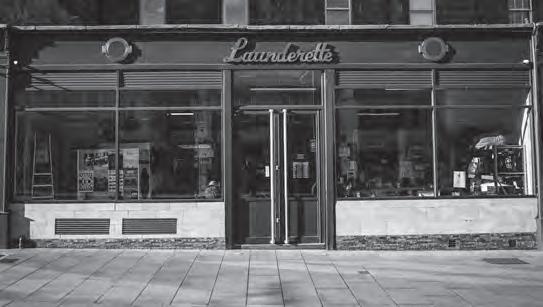
Venues including the Laundrette, Adeel Phone Repairs, Settlement Projects and Shore Deli have signed up to take part with more locations to be announced. Each performance will be recorded live and released online, with a short documentary exploring the histories behind the businesses. The project will feature a printed lyric book with illustrations by Bernie Reid and photography by Cameron Rennie.
What A Beautiful Place to Fall Over is more than an album - it’s
a portrait of Leith’s living history. “I couldn’t ignore the rapid changes transforming the Leith I knew from my childhood. I realised then that I wanted to document its story before it was too late.” The changing scenery is a reminder of the loss, survival and resilience that runs through Bee’s work.
Shortlisted for BBC Introducing’s Scottish Act of the Year, Bee Asha has continued to receive acclaim for her work. Her genre-mixing approach combining spoken word,
December Gigs
Queen of Harps x ILYSSIT, Adeel Phone Repairs, 4 December, 7.30-9pm With BBC Introducing Scotland giving their single ‘These Daisies’ its debut spin on airwaves in November 2025, this female rap duo are known for their dynamic chemistry and genre-bending sound. Fusing sharp lyricism, live vocals, and eclectic instrumentals, together they blend their oriental roots and classical finesse.
Night Caller, Leith Laundrette, 11 December, 8-9.30pm Leith’s good-time guys have been a force for freaky fun since they got together in 2023. “Everyone in the band has a really close connection
rap, and singing has become her hallmark. Through the lens of Leith, What A Beautiful Place to Fall Over explores both the light and dark experiences of being from a working-class background in Scotland — with songs that capture joy and community as well as loss and the passing of time.
to Leith. The opportunity to give back even more to the area that holds our collective heart so close was a no-brainer”. Don’t miss their high-octane, low-brow sound and promise of a bit of raucousness.
Mike Allan, Shore Deli, 19 December, 6.30-8pm Described as “Stevie Nicks doing Ryan Adams”, Mike brings his distinctive alt-country voice to the front along with tales of his connection to Leith “Leith will forever feel like home. My mum grew up there, she was a great swimmer, trained at Leith Victoria and swam for Scotland in the 1966 Commonwealth Games”.
Leith has always been a place with grit under its nails and poetry in its bones. It’s where stories live in the cracks of the pavements and where community spirit refuses to be priced out
Queuing for Storries Pies, waiting for washing in the Laundrette, going to Adeels to get my phone fixed at a discount, because he kens my Da… my thoughts turn to how much I loved Leith
Photographs: Cameron Rennie
The 1960s
Revolt into Style!
‘Rummaging’ is simultaneously one of the finest coinages in the English language finds Mike Cowley
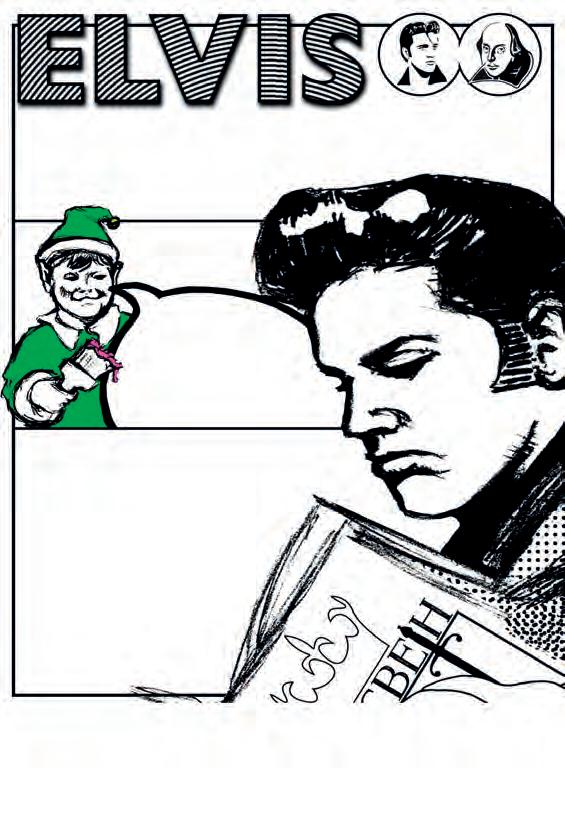
And a pursuit devotees invest unwholesome amounts of time to. One of, if not the finest, secondhand emporiums for those of the rummaging affliction is of course Leith’s very own Elvis Shakespeare. It is impossible to pass by without peering through its twin portals into vintage tastes of all kinds.
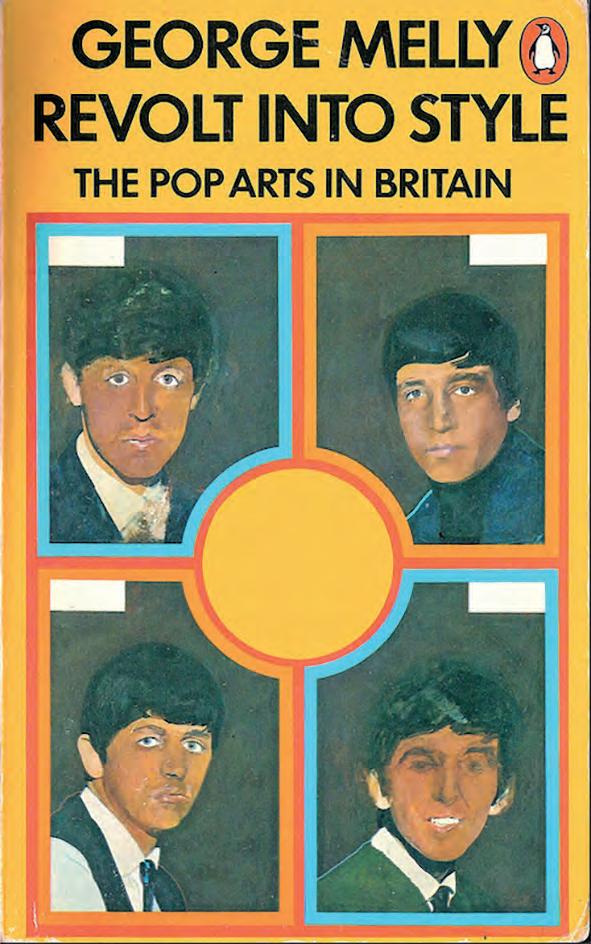
There’s usually a fresh surprise awaiting the expectant browser. To my great pleasure, I recently came across an original copy of George Melly’s Revolt into Style, replete with a Beatles front cover designed by pop artist Peter Blake. Writing as the 1960s drew to a close, jazz musician and journalist Melly was one of the first publications to retrospectively both damn and praise a decade that had promised much, but perhaps failed to deliver on its most passionate evangelists’ dreams.
The Paris ‘68 students and workers had urged us to Be Realistic, Demand the Impossible! In the UK, liberal legislation around gender, race and sexuality was enacted in the face of fierce resistance, but reflected a growing progressive majority. Modernists were the vanguard of a kaleidoscopic fusion of style and imagination, where working-class artists, musicians and street dandies disrupted the hegemony of stuffy postwar Britain.
In Mary Quant’s angular designs, the Who’s auto-destructive pop art, French New Wave cinema, modern jazz or Italian cut suits, a new way of being was conjured into life and unruly passions aroused. The more scandalised the hidebound establishment’s response, the more an emboldened (and financially
independent) youth culture doubled down on its newly discovered cultural (if not economic or political) powers. Melly’s vantage point is one of an amused outsider brandishing an Access all Areas lanyard. At times, his haughty appraisals of the clubs, music, art and literature of the period read like a bewildered but supportive teacher willing his pupils onto greater things. Most often, his curative insights are those of a generous observer handed a ticket to ride on a magic bus he’s not quite sure he wants to board, but in the interests of reportage, Melly will take the hit on our behalf.
Revolt into Style traces the emergence of popular music, from a raucous derivative of black American culture to its sanitising at the hands of often grubby impresarios fronting up a recording industry doubtful as to the long-term profitability of the ‘pop-star.’
In the mid to late 50s, the most prized artists were those who could appeal simultaneously to the newly minted ‘teenager’ as well as older audiences who wanted their rock n roll served in easily digestible, untroubling versions.
Melly takes us on a tour of the music, visual pop, film, TV and literature beginning to converge onto an overarching Pop Art canvas. Even at this early phase of development, Melly’s intuition is sound. Pop is already an ‘ersatz culture feeding off its own publicity.’ The loose coalition of artists, musicians and writers are selfreferential commentators fixated on
their image in shop windows, parked cars and mass teenage culture. Pop is already eating itself.
Andy Warhol’s paintings of everyday consumer objects, a reifying of consumption, seems to capture a narrow self-regard which always threatened to overtake pop art’s more ambitious futurists. Pop’s irreverent appetite for self-satire is devolving into a culture feeding off its own memories. But the best of visual pop is a ‘celebration of innocence and hope.’ In Modernism in particular, it presented ‘an exact image of our rapidly changing society,’ a moving document of evolving tastes.
Rock is a ‘meaningless simplification of the blues the poetry removed’. Melly defers to the pioneers, early Elvis and, later, the Beatles are given qualified passes into his good graces.
The tribes of Britain
Mods are, surprisingly, mentioned infrequently, often in comparison to Rockers and Teddy Boys. The Noonday Underground was perhaps more secluded than Melly realised. Mods ‘are not afraid to look pretty,’ though even by the late 60s, Melly observes a variation of subcultures and a pop fashion ‘in splinters’ with no centre. Mods affiliated with the shock of the new, rejecting the paternalism of the BBC for Radio Caroline’s embrace of new sounds and younger DJs.
Mary Quant’s Chelsea Set is described as a hybrid of aloof London cool and working-class innovation. A socially mobile decade allowed access to people previously denied by the gatekeepers of respectable high-street fashion. The concept of gender was becoming more fluid, encouraged by Quant and an East End Jewish tradition of good tailoring, a step change from the rigid articulation of male working-class dress embodied by post-war youth. The pop world was chivvied into at least a visual representation of gender and sexual equality.
Melly observes a variation of subcultures and a pop fashion ‘in splinters’ with no centre
Throughout the decade, pop culture would remain the jurisdiction of the 14 to 20-odd year old. The borders of the generation gap remained firmly policed. It is a mark of time passing that those boundaries have become not just porous, but blurred then extinguished altogether.
Melly finishes on a note of eulogy. It could be that pop’s great distinction is constant resurrection and reinvention. It must be true to itself and die.
As Roger McGough wrote: Let me die a young man’s death
Not a free-from-sin, tiptoe-in Candle-wax-and-waning death Not a curtains-drawn, by angels-borne death
What a nice way to go death.
Life Classes
A bit of a lifesaver…
In the depths of a malaise, a trip to life drawing classes reignites a flame in Colin Montgomery’s dark, cold heart
Iam a sick man. I am a spiteful man. I am an unattractive man. Not my words, but the words of Fyodor Dostoevsky. (Could it get any more Partridge? I’ll give it a go.) Lynn, idea for programme: ‘Coco Goes Loco’; professional miserabilist – and allround heel – Colin Montgomery goes on a journey of self-discovery, only to recoil in horror at what he finds and heads for the hills. Or head for the pills, even. God, I’m not making this easy for you…
You get the gist. I’ve been far from a ray of sunshine of late. Partly the season; partly just, I can be a selfabsorbed tit at times. So, let me start again, without more clouds of grey than any Russian play could guarantee (apologies to Chet Baker). On which note, I won’t be blowing my own trumpet at all in the next bunch of words, syllables and excessively styled prose. No, no, no… instead I’ll toot my flute for the miracle cure of life drawing.
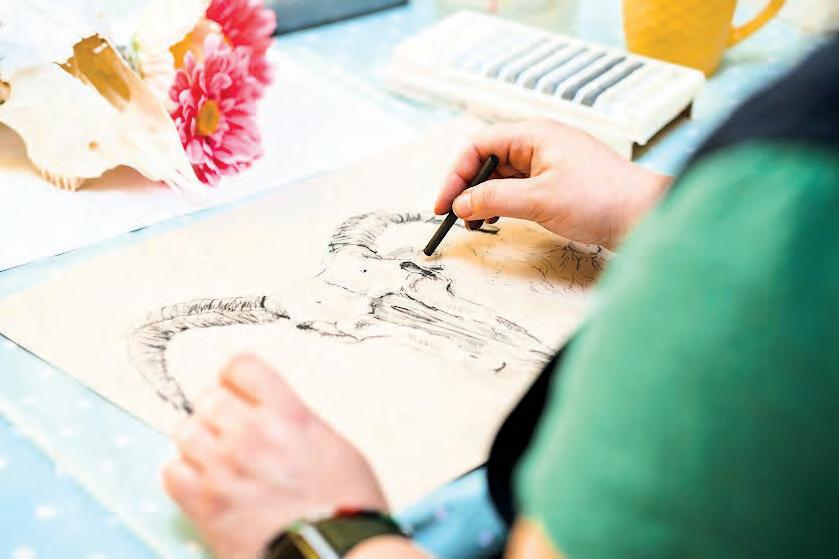
More specifically, the wonderful weekly life drawing class hosted by artist Paul Muzni, up Meadowbank way. It’s called the Life Room. And it’s £20 a pop (drawing materials and paper included). He holds painting classes too. But I’m a bit of a tube with the contents of a tube. I much prefer the joys of a Conté crayon. Or a stout rectangle of chalk. Or a reedy stick of charcoal. Oh, and not forgetting the good old putty rubber.
These drawing tools are sort of like old friends to me. Or rather, they felt as such when my partner and I decided to take the plunge and see if all those years of art school had left some kind of mark on us. And hey, it’s all about the mark-making dahling! Well, it is for me. I’m a very fussy kind of drawer… all flicks, scuffs, lines and twiddly bits. Settle down at the back! It’s not what you think. No prurience here. We’re all well-versed.
By which I mean, it’s a muscle memory in more ways than one. You need to feel as comfortable as the
A steady hand required here, Colin
model is, standing there with their kit off. It can seem odd at first if you’re not used to nudity in that context – I recall my first life drawing class at Edinburgh College of Art. Walking into a room to see a guy completely starkers but for his socks and a hockey stick. But these are proper life models. And the vibe is always respectful.
that paper. A kind of mindfulness I suppose. So much so, the result doesn’t matter.
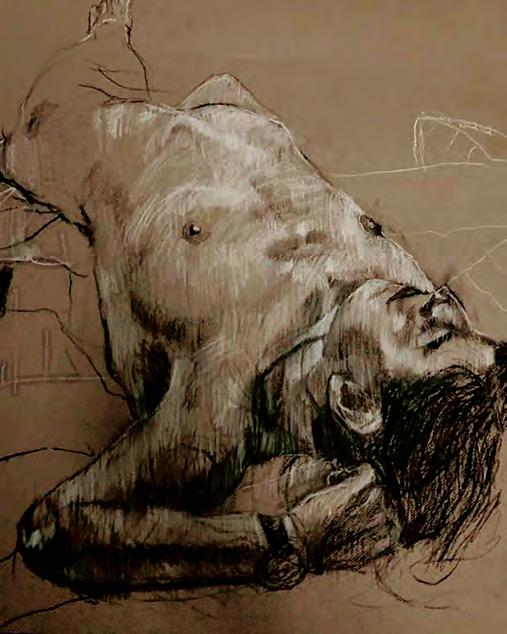
A beautiful nonchalant hand, a kiss of light on a thigh, the shadow cast by a ribcage
Once your eyes and brain adjust, there’s the matter of drawing the figure to contend with it. And that sheet of drawing paper in front of you. Mute, impenetrable, and a bit fucking terrifying to be honest! Before typing a word, Hemingway called his blank page, ‘The Great White Bull’ (he would, wouldn’t he?). And it does feel like facing down a beast I suppose. But you can’t show fear. You need to start. To commit. To begin the journey. Yes, journey. Because the act of drawing does take you places. Away from all the toxic stew inside your head: the intrusive thoughts; the nagging doubts; the twisted anxieties that clamber over and through your mind, like the tendrils of some poisonous plant. For just shy of two hours – give or take, with a half-time break – it’s just you, the model, and
Except, as is the way with the creative ego, the result does kind of matter. Especially if you pull off something good – even just a glorious section here or there. A beautiful nonchalant hand, a kiss of light on a thigh, the shadow cast by a ribcage.
It’s almost restorative; a tonic for a weary soul. The act, the process, the result in unison – a course of medicine for the blues. I felt it working its magic from the off.
Not every week sees me return with a corker of a drawing. Sometimes you just feel the groove; sometimes you don’t. But that’s OK. And besides, the great thing about Paul’s class is that it’s completely non-judgemental; all talents, all levels, and all expressions on the page are valid. Sure, you’ll get some advice from a professional – but it’s not about ‘right’ or ‘wrong’. Or striving for perfection even. Because there’s no such thing.
That’s life. That’s life drawing. And you know what? It’s all the better for it.
theliferoom.co.uk
ART CLASSES FOR ALL AGES
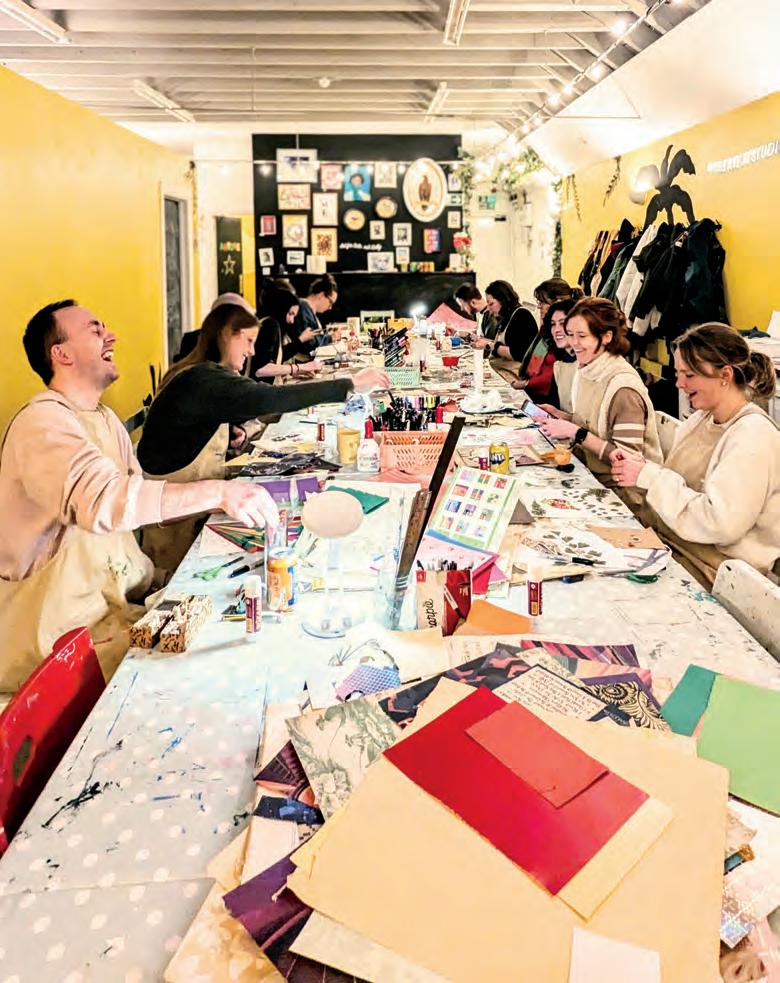
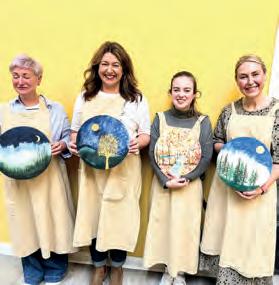
Join us for engaging art classes in our cosy Leith studio, or let us bring the creativity to you! We offer a variety of courses and workshops for all ages, available all week!
are also perfect for any occasionbirthdays, hen parties, corporate events and more!
@studio48art
Merry Music
An alternative Christmas playlist
It
might seem as
if they’ve never been away, but they’re coming for us again, ahem, sings Tom Wheeler
From 00:00 hours on December 1st, they’ll find you wherever you go. You might not even see them, but by God you’ll hear them - and not just the once either. Suited, booted and Santahatted, here they all are: Mariah and Macca, Shakey and Slade, Wizzard and Wham!, with Chris Rea tootling along behind in his G-reg Nissan Micra.
The Christmas song is a unique phenomenon in pop music: rarely if ever heard for 93.85% of the year, but utterly ubiquitous throughout the other 6.15%. If you work in a supermarket, chain restaurant or shopping centre, you’ll hear certain songs hundreds of times apiece over the festive period. Even the half-decent ones will haunt your dreams until midJanuary. If they were used as weapons of war, the perpetrators would be in clear breach of the Geneva Convention.
For most of my adult life, my chosen antidote to this audio hellscape was based around denial. Throughout December, from the moment my front door clicked shut until I was obliged to face the world again, Christmas didn’t exist. No tree, no garish jumpers, definitely no Love Actually, and no Christmas music. I didn’t see it as festive misanthropy, just necessary balance.
But a few years back, I had an epiphany – it’s the time of year for it, after all – thanks in part to the legendary Edinburgh festive knees-up that was Kid Canaveral’s Christmas Baubles, and in part to the peerless BBC 6 Music DJ Gideon Coe and his annual All Christmas Pre-Christmas Christmas Programme.
It dawned on me that many – if not most – of my favourite musicians had turned their hand to Christmas music at some point. While I’d need to go well out of my way to avoid hearing Stay Another Day, I’d have to go just as far to hear a double A-side by Scottish micro-indie artists based on the plot of Die Hard. And if I was willing – more than willing – to take the trouble in the former case, it seemed a shame not to
Carla J. Easton wrote a Christmas song for her cat
If they were used as weapons of war, these songs would be in clear breach of the Geneva Convention
do the same in the latter. So, my character duly reformed, allow me to present a short playlist of underappreciated Christmas songs to cleanse your palate from whichever one you’ve just heard for the 5,000th time in your life.
J Slow Club – Christmas TV: Before Rebecca Lucy Taylor deservedly crossed over into the mainstream as Self Esteem, she was one half of the less celebrated – but in certain circles, equally beloved – indie duo Slow Club, whose Christmas EP includes this lovely, wistful acoustic number. It also features a joyous romp through the greatest Christmas song ever – Darlene Love’s Christmas (Baby Please Come Home) – but we’ll come back to cover versions in a bit…
J Du Blonde – It’s Christmas and I’m Crying: As we’re talking underappreciated artists here, I’ll never understand why Du Blonde, aka Beth Jeans Houghton, isn’t an international megastar. With a glorious back catalogue of songs almost entirely unlike this one, this came as a splendid surprise: a melodic, hilarious and strangely moving tale of a family Christmas distinctly lacking in kindred spirits.
J Jonnie Common and eagleowl
– Yippee-Kay-Yule: The previously mentioned Die Hard double A-side, perhaps the most esoteric release on the Song, by Toad label (which is saying something) and recorded right here in Leith. The eagleowl song is written from the perspective of Nakatomi Plaza, the skyscraper in which the
action of Die Hard takes place, because why wouldn’t it be?
J Rotary Connection – Peace at Least: A 1960s psychedelic soul classic that poses the question of how Santa manages to perform so many unlikely tasks during the course of a single night, before coming to the obvious conclusion: he’s just really, really stoned.
J Carla J Easton – Spending Every Christmas With My Boy: Another ludicrously talented performer (and, these days, filmmaker) with a unique voice and infectious glam-infused sound. Massive bonus points for writing a Christmas song about her cat. J Cocteau Twins – Frosty the Snowman: Who doesn’t love an incongruous cover version at Christmas? Honourable mention to the Captain himself, William Shatner, whose 2018 album Shatner Claus (yes, really) includes a frankly alarming duet with Iggy Pop on Silent Night. But better still is when a band with a trademark sound takes the least probable source material imaginable and makes it sound as if it was their song all along. This is the only version of Frosty the Snowman you ever need to hear.
J Low – Just Like Christmas: Let’s be honest: if you’re familiar with even a few of the songs mentioned here it’s likely that Low’s revered Christmas song appeals to a particular subset (mine) of a particular generation (also mine). I’ll never tire of listening to the closing refrain on a loop until next Christmas before I’d tire of it.
Leith Writings
The Silence in Between
Charlie Ellis on Finding Connection in the Flow of Experience
Why do we write?
One of the best explanations
came from cultural theorist Richard Hoggart (1918 - 2014) in his 1971 Reith Lectures (Only Connect):
‘we write first for ourselves, for a more secure sense of ourselves, so as to hold steady a bit more of experience, so as to feel less swayed all ways by the flow of experience… we hope that this effort, this sort of exploring, will help us reach more convincing ways of speaking to each other…we best speak to others when we forget them and concentrate on trying to be straight towards our experience’.
Hoggart’s profound words immediately sprang to mind while exploring the fifth anthology of Leith Writings, The Silence in Between. The volume powerfully exemplifies Hoggart’s core belief in connecting literacy to personal, community, and cultural lives.
Authenticity and Exchangeability
Richard Hoggart’s observation that ‘honestly seen experience becomes exchangeable’ provides the perfect framing for The Silence in Between. This anthology brings together 32 pieces of deeply reflective prose and poetry by a varied group, including talented local school pupils. Much like the anthology, Hoggart’s own distinguished writing was engrossed in everyday life and characterised by a powerful sense
of place, exemplified by his classic exploration of working-class life, The Uses of Literacy
The value of Hoggart’s deeply observant approach was highlighted at the collection’s launch event by Bethany Robb, English teacher at Trinity Academy. She emphasised that ‘gathering material for this exercise involves being observant, curious and imaginative in your surroundings, all good literacy skills for young people to develop early in life’.
Leith’s Rebirth
These aspects of Hoggart’s work - place, change, and community - are powerfully present in The Silence in Between. In his introduction, local historian Stephen Dickson suggests the contents ‘perhaps represents an evolution in the thoughts of the area,’ especially regarding the many ‘New Leithers’. Dickson feels the area has been ‘reborn’ since the 1980s and concludes the volume shows Leith has a ‘character that is unequalled in any other town or area’. The volume emphatically dismisses the notion that the area has been altered beyond recognition. The authors see no contradiction between embracing long-surviving elements (like the waterways, which rightly feature prominently) and welcoming newcomers. The writing encapsulates a strong sense that Leith’s future is as rich and promising as its past.
The Liminal Tone and Young Voices
The project’s driving force, Tim Bell (the Trainspotting scholar), was impressed by the ‘parade of talent’ provided by the school pupils involved. A key feature is that youthful work sits proudly alongside established authors,
A Message from the Makar
Edinburgh is now 900-years-old, still a stunner of a city, as much earthy ancient as new-wave wish-giver. It takes a class act to harness their community’s stories in order to light both a beacon for the future and a flare for the past – to galvanise its denizens through sentiment and lore. And how truly vital to do so, in spite of it all. None do it with such savvy, such gallusness and joy, as Leith and its Leithers. This parcel of words, this gooey word crumble, stands testament to that; steely, soppy, and salient as the dreamers who dreamt it.
Michael Pedersen, Edinburgh Makar
Visit www.leithwriting.co.uk for
• edition 101 The Darting Salamander
• edition 102 The Seagull at the Shore
• edition 103 Small Talk on the Walk
• edition 104 Sea Change
• edition 105 The Silence in Between
• in January 2026 for the theme for edition 106 and an invitation to send your work
breaking down creative barriers. Bell hopes this plants a seed, showing pupils they can produce something substantial for a wider audience. To those who didn’t get included, ‘you shouldn’t be too disappointed’. Most importantly, ‘Don’t stop writing’.
Bell highlighted Sophie Arthur’s powerful poem, The Quiet in Between, calling it, rightly, “a hell of a poem for a teenager”. Key lines encapsulate the mood: ‘a junction after all, is never a choice; it is the stillness before turning, the ache of remaining and the quiet in between’
This liminal character typifies the collection’s tone, inspired by the theme of Great Junction. Nile
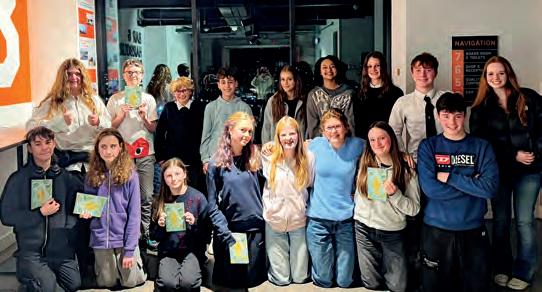
The writers take a well-deserved bow
Richard Hoggart’s observation that ‘honestly seen experience becomes exchangeable’ provides the perfect framing for The Silence in Between
Anthology of Leith Writing
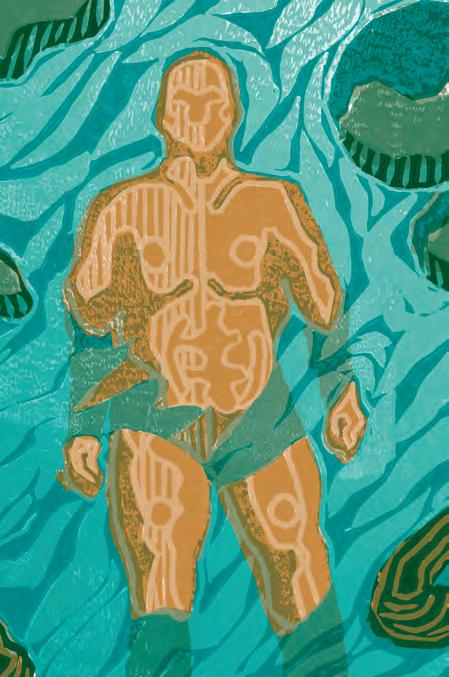
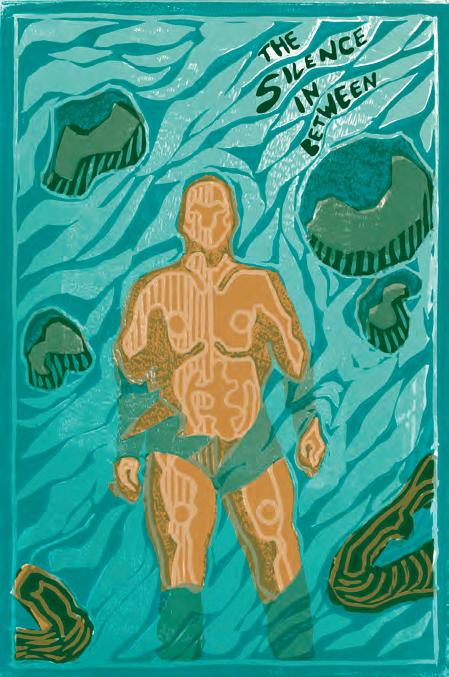
Collins Fraser’s poem Junctions speaks of how ‘the actions we take are the fork in the path’. This reflects a more general sense that we are currently in an era of flux, a period of liminality with little clear sense of where we are headed. Our society is at a junction. This feeling is powerfully captured in Norman Oyoo’s cover art, which depicts one of Antony Gormley’s figures falling back into the Water of Leith, struggling to keep its head above water - a striking reflection of the daily struggles we all face to stay afloat. As in Hoggart’s sociological writings, the zeitgeist is captured and reflected here. Sophie Arthur’s piece also inspired the title for the entire collection, with ‘silence’ deriving from the reflective character of a number of the submissions. We are all, perhaps, in need of more silence and reflection. Spending an hour or so absorbing the contents of The Silence in Between would be a good place to start.
The Defence of the Everyday
Bell admitted one tension: whether it’s right for teenagers’
work to sit alongside those with adult themes. I’d argue that while some language is ‘direct,’ it shows unpleasant realities, not shock value. Hoggart famously defended Lady Chatterley’s Lover in 1963, asserting its high literary and moral seriousness. The ‘plain speaking’ style in The Silence in Between can be defended on similar literary grounds, as is clear in Pat McGarvey’s ‘The Creature under the Bridge’, which is rich with authentic Leith vernacular. The themes are very current, of friends caught up in online conspiracism. Powerfully, the narrator reflects ‘this wasn’t what they’d gone on strike for all those years ago’. This echoes Hoggart’s 1982 warning about entering the ‘information age’ with ‘wholly inadequate social and cultural compass and rudder’.
Hoggart treated the everyday as deserving of literary scrutiny. This is prominent here, nowhere more so than in Mav McKinstrie’s The Junction, which builds drama from buses surging by, ‘pungent aromas’ from drains, and suspicious supermarket pastries. This piece and others in the collection elevate the significance of people and subjects often ignored or marginalized.
Culture and Refuge
Hoggart strongly supported a wellfunded cultural sector, viewing public libraries as a crucial, noncommercial space and the ‘special refuge of the misfits and left-overs’. Such figures are well represented here, including Matthew ClaterLoeb’s piece contrasting the ‘street of culture’ below with a man’s life falling apart, heading to a ‘grim destination’.
Hoggart saw good literature’s accessibility contrasting sharply with the commercialised ‘mass culture’ he criticised. This community-produced volumeprinted by Leith’s own Out of the Blueprint - fits the mode of ‘selfcreated’ culture, which he saw as having fundamental integrity. The Silence in Between offers a reflective pause in today’s rush, echoing Hoggart’s plea to stay ‘straight towards experience’.
Pick up a copy of The Silence in Between at Argonaut Books, Leith Library, McDonald Road Library, or Out of the Blue on Dalmeny Street. To donate to the project and (in due course) find details on the next edition visit: leithwriting.com
The Cheyne Gang
Community singing group for people with Chronic Obstructive Pulmonary Disease (COPD) and other long term lung conditions.
Singing has positive physical, mental and social health benefits
Co me and join one of our sessions and feel the benefit of our natural breathing exercises, singing, and great company!
Duncan Place Community and Enterprise Hub, 4 Duncan Place, Edinburgh EH6 8HW M ondayfortnightly11.45-1.45pm
Contact us for more information: Annie Brogan MacKenzie 07825815581 Find us on Facebook, twitter and Instagram www.thecheynegang.com
Art & Film Books
Liberation days
Kennedy Wilson looks at recent books in which people kick against the system
The 1960s is the gift that keeps giving. The Last Great Dream by Dennis McNally (Da Capo, £28) is an artful and engaging history of what used to be called the counterculture. In the US ground zero was San Francisco especially the Haight-Ashbury district. The City by the Bay had long been accepting of difference – from foreign sailors to communist agitators.
Bohemians begat beatniks begat hippies begat New Agers and the alternative lifestyle was born. Consciousness-raising, sexual liberation, environmentalism, living communally and expanding your mind soon spread across the world. Every young person had thoughts of going to San Francisco and wearing a flower in their hair. All, of course, a far cry from today’s young, whose credo is not ‘tune in, turn on, drop out’ but rather ‘without my smart phone I am nothing!’
A host of things that we now take for granted – from organic food to complementary medicine – had their origins in the counterculture. Even the development of the personal computer can be laid at the feet of the alternative scene. Computers promised to open up the world and connect like-minded souls. It goes without saying that not all hippie dreams come true.
The 1960s produced hundreds of young heroes, artists, musicians, actors and people just famous for being famous. One such was Jane Birkin whose story is told in It Girl by Marisa Meltzer (Atria Books, £20). By the time she was in her early teens Birkin was model-girl pretty and fast becoming a fixture in Swinging London. In 1965 at the age of 18 she married the film music composer John Barry more than 10 years her senior. The marriage was brief and volatile.
Birkin famously made a fleeting and topless appearance in the pivotal 1966 movie Blow-Up. A move to Paris followed. Her fame was further secured by 1969’s controversial pop hit ‘Je t’aime’. Banned by the BBC and
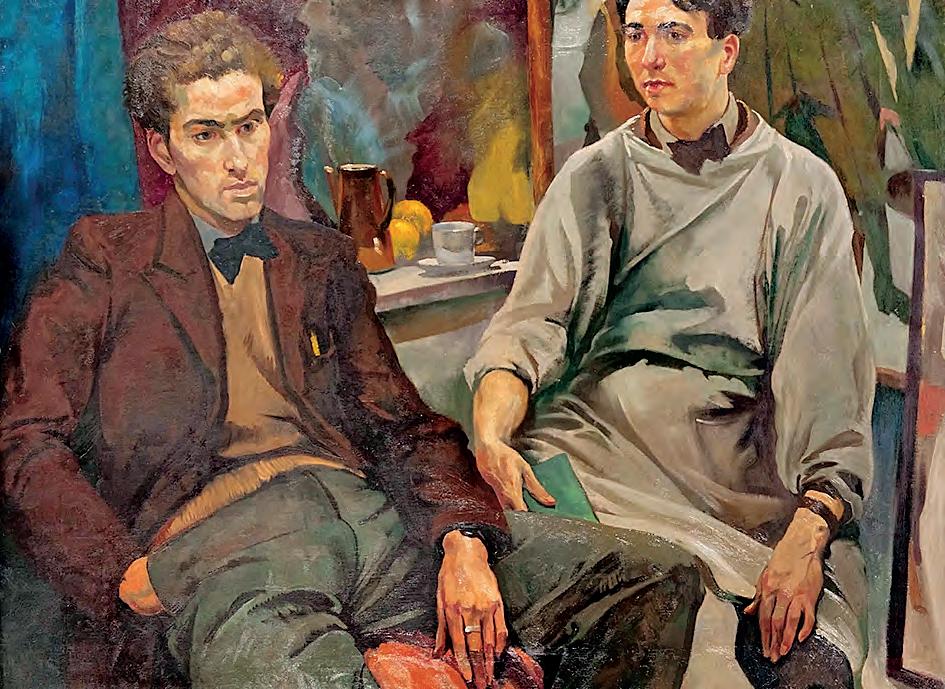
The Painters, Colquhoun & MacBryde (the Two Roberts), 1937–38, oil on canvas, Ian Fleming
Jane Birkin was the muse of many powerful men, “Men often saw me as their B-side”
the Vatican, her duet with French singer Serge Gainsbourg featured her suggestive moaning and deep breathing. With further albums and a slew of movie roles Birkin became a French celebrity. In 1983 Hermes produced the Birkin, a roomy leather handbag which she helped design. And although Jane Birkin was the muse of many powerful men she once said with a touch of irony: “Men often saw me as their B-side.”
The 60s sexual liberation came late for gay men. Homosexuality was decriminalised in England in 1967 (in Scotland in 1981). The 1970s was the time for gay liberation. The cinema has long been a refuge for the LGBT community, a place to hide away from a hostile world.
Film writer and critic Ryan Gilbey’s It Used to Be Witches (Faber, £20) is an expansive, idiosyncratic and very personal exploration of the changes in queer cinema and looks at how gay filmmakers found their voices. With criticism, reminiscence and interviews Gilbey explores historic gay films and more recent examples like Call Me By Your Name (2017).
Two gay Scotsmen are the subject of Damian Barr’s new novel The Two Roberts (Canongate, £18.99). It is based on the true story of Robert Colquhoun and Robert MacBryde who studied together at the Glasgow School of Art in the 1930s before moving to London
with huge hopes. Young and gifted, they were the toast of the town – at least for a time – featured in Picture Post and Vogue. In 1959 Ken Russell did a short film about them for the BBC arts show Monitor. The Roberts collaborated and lived together, drinking in grubby Soho pubs where they rubbed shoulders with the likes of Francis Bacon, Lucien Freud and Dylan Thomas.
It was a louche lifestyle exemplified by Bacon’s famous barroom cry “champagne for my real friends, real pain for my sham friends!” Wedded to their art, the Roberts’ cubist/expressionist style, however, was eclipsed with the new abstract expressionism coming in from the US. Their output – McBryde’s still life’s and Colquhoun’s Picassoinspired figurative work – began to look particularly fusty and old-fashioned. Their drinking did not stop.
The hard living particularly affected Colquhoun especially when in 1962 he had the chance of a solo show, intended to revive the couple’s fortunes, and worked through the night to produce new paintings. Exhausted he was to die in his studio in MacBryde’s arms. He was only 47. MacBryde never really recovered from the loss.
He gave up painting and moved to Dublin where he died tragically aged only 57.
Bluesky: @kenwilson84.bsky.social
Memory Lane
The ghosts in the hotel were…
discreet and not at all demonic, perhaps lacking in phantasmagorical credentials or any sense of spectral diligence
For I didn’t once see a coffee pot move across the table of its own accord or the lid on a jar of gherkins unscrew itself.
Rentaghost they were not. And so I had to rely on stories from the chambermaids, one of whom I was smitten with, or the hooligans in the kitchen to find out which rooms were haunted and the characteristics of the spooks.
I worked in the place as a bartender, porter and tattie peeler in the summer of 1986 and because I was yet to watch The Shining it reminded me more of Fawlty Towers than the Overlook Hotel. Had I seen Kubrick’s depiction of the Stephen King novel then I doubt I would have been as keen to climb the steps down to the wine cellar each morning for the purposes of bottling up, or walk alone along the echoey corridors of the east and west wing. But this wasn’t a hotel with 237 rooms and I never had to encounter the Grady twins.
However, on my first day I was kitted out with a white waiter’s jacket about three sizes too big, handed a dustpan and brush, and told to go and sweep up the wasps from the freshly fumigated gents’ toilets. These buzzing beasties – or jaspers as we called them in the bit of Oxfordshire where I grew up –weren’t quite dead but nor were they
completely stunned. It was a curious sight: an entire army vanquished by the work of the pest control people, exterminating angels who’d since left the battlefield, the fallen soldiers splayed over the entirely of the garnethued carpet, some still issuing a high pitched if pathetic hum, others left silently twitching in the sinks and urinals, drowned into the bargain. Some job this.
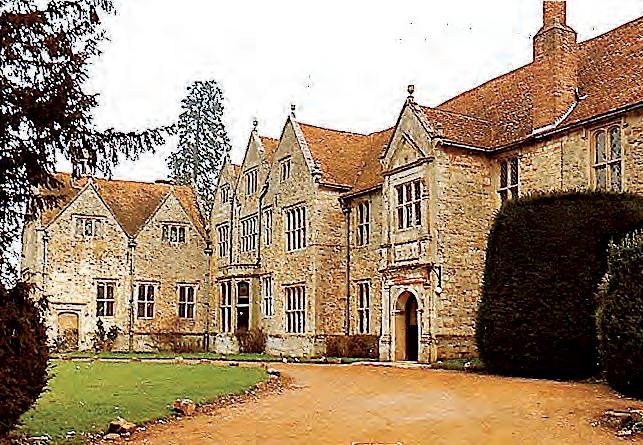
The history of the building was such that it could be dated back to the 12th Century and had in various incarnations been: a Benedictine nunnery; a manor house; a strategic location during the English civil war, one held by the Cavaliers before being taken by the Roundheads before being taken back by the Cavaliers; an MP’s country escape; a BBC hostel for evacuated staff during the early 1940s and subsequently an RAF sanitorium; a country club for aristos and artists; and now, by the 1980s, a posh hotel, corporate venue and local tennis club. Those of note who spent time here included: Crusaders; a Yorkist; a
number of non-conformists; Charles the 1st – prior to getting that haircut he didn’t ask for; Lord Bertie – as the Earl of Abingdon was locally known (how very Wodehousian); John Buchan – Perth-born Spectator columnist and author of The ThirtyNine Steps; CS Lewis – when he wasn’t visiting Narnia through the back of his wardrobe; Hugh Curran – who played for Third Lanark, Wolves and Scotland, as well as the Mighty Oxford Utd; Julia Smith – original producer of Eastenders; Michael Grade – cigar chomping former BBC1 controller; and Mark Gardener – future singer of 90s shoegazers Ride and who took over my three-sizes too big white waiter’s jacket at the end of that summer.
Studely Priory Hotel, Hortoncum-Studely, 1984; The Bar, formerly the Dining Room, Rodger’s future domain
Among the maybe-not-so-noted yet just-as-memorable other colleagues who worked in this moderately haunted house were: J the owner –who appeared to have no more than a passing acquaintance with everyday life and would unquestionably have been happier fishing or clay pigeon shooting than trying to run a top-end establishment; N the manager – a dandy whose put downs put you down but only after he’d left the room; D the head waiter – a wolf in wolf’s clothing who could run up a mountain with a cup and saucer on a silver platter and not spill a drop; A the housekeeper –who smoked like Didcot Power Station and would somehow make the words “yes dear” sound kindly even when they were soaked with contempt; G the Weegie washer-upper – who had seen Simple Minds in their early funny (for which read good) period; S the assistant manager – who fussed over everything as if she were a character in an Oscar Wilde play and once insisted that I go back and re-dust all the chair legs in the main lounge; and M the aforementioned chambermaid – who apparently quite by accident taped Falco’s Rock Me Amadeus over Love Will Tear Us Apart on the compilation cassette I made her. What a crew. Were we a band I wager we’d have broken up before the first rehearsal.
The future singer of 90s shoegazers Ride took over my three-sizes too big jacket at the end of that summer
Guests? They were a combination of new money (an older Dundonian businessman, for example, with a trophy wife), foreign money (tourists from the US and Japan) and old money (the father of the owner regularly showing up to liberate a bottle of Glenmorangie from the spirits cupboard to which there were two keys – the one I had responsibility for and the one that remained in his pocket). Some of the above apparitions, I confess, continue to wander the canyons of my mind. But no matter. These ghosts are ever so discreet.
Rodger Evans
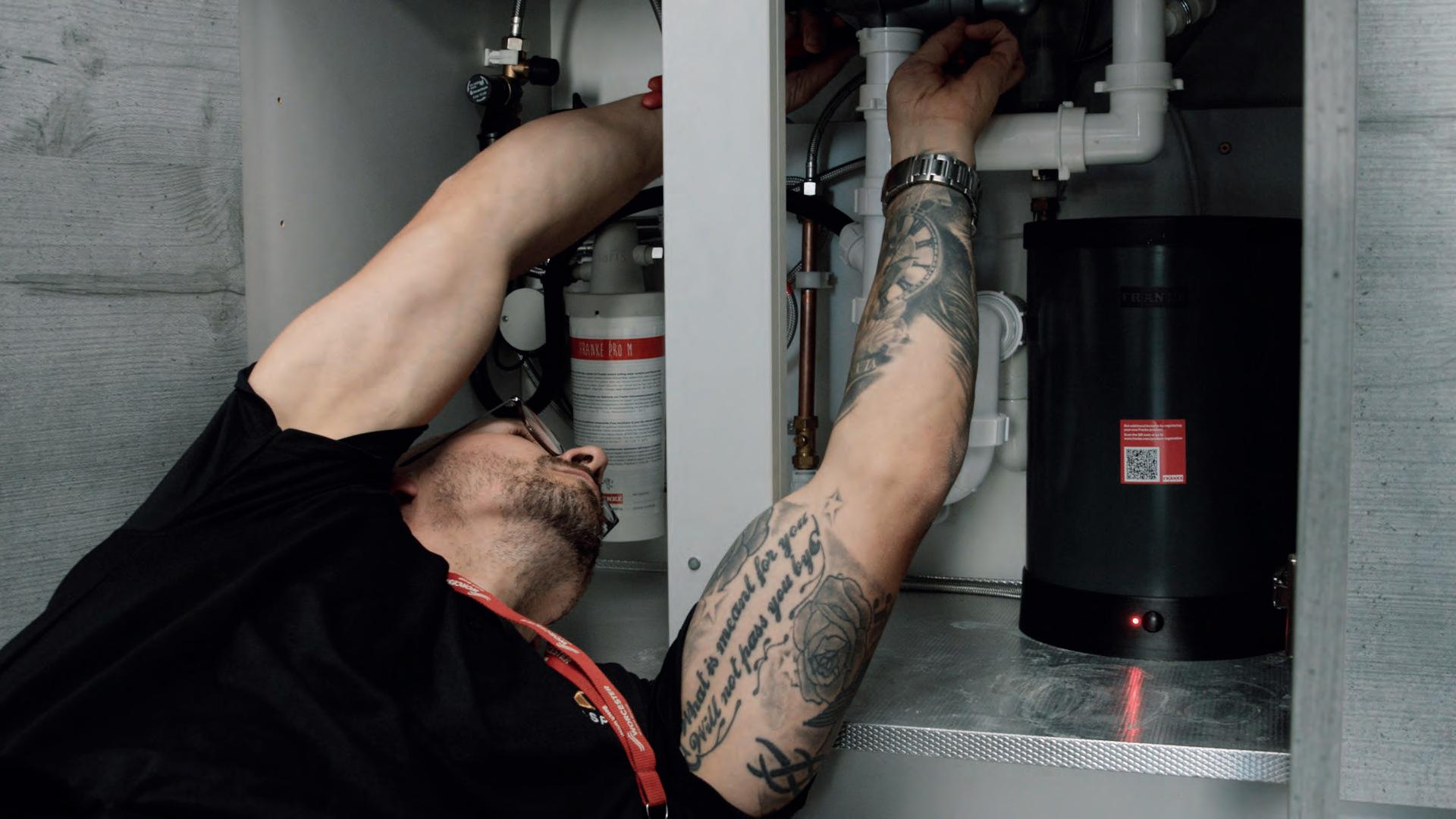
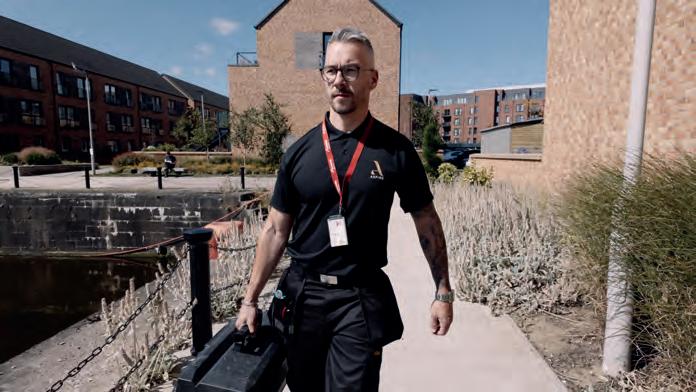
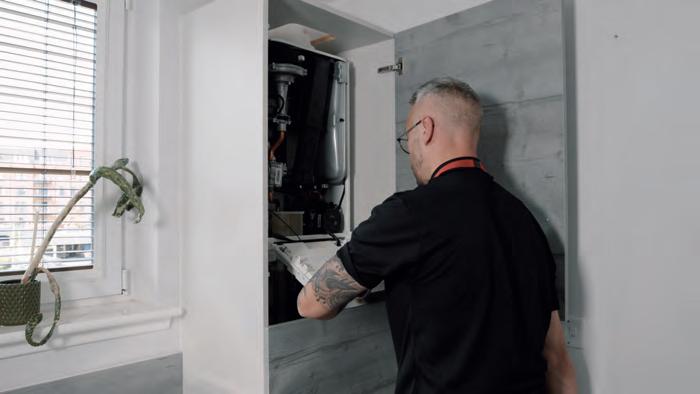
Your local specialists for boiler servicing, repairs and replacement HARBOUR MULTI-TRADES, 219 Granton Road, EDINBURGH, EH5 1AB To get a free estimate, call 0131 552 6103 or head to www.tbmes.co.uk
The Wee Museum
Old Memories & New Technology
10 years ago, the Living Memory Association’s online presence consisted of a website and a fledgling Facebook page writes Barry Davidson
Fast forward to 2025 and we host 8 podcasts as well as channels on You Tube, TikTok, X and Instagram, packed with fabulous moments and tales from the past as told to us by visitors to The Wee Museum in Ocean Terminal, volunteers and members of staff. Many of the people who have shared their memories have now left us, making their storytelling voices even more precious
When I arrived at The Wee Museum of Memory our archives were held mainly on cassette tape, boxes and boxes of interviews, memories and reminiscence group footage tucked away on c90 tapes. Our challenge at this point was to start gathering new stories on more high tech hand held recorders (rather than the classic ‘record and play’ tape recorder better suited to the top 40!) whilst also transferring this vast treasure trove of snippets from the past into an online format that people could access.
Our first foray into this world was a themed show informally called The THELMA Tapes, initially gathering together snippets of life in old Leith then moving on to episodes centred around such topics as childhood memories, WW2, music, ‘make do and mend’ and much loved and lost family pets. This continues to this day, with our most recent show a celebration of 125 years of Glenogle Baths, which can be found easily by searching for The Living Memory Association podcast on Spotify, Apple Podcasts or You Tube. Since then we have expanded our podcast portfolio, digitising much of our cassette archive whilst gathering new memories of the past, all of which can be found on the ‘podcasts’ tab of our website at www.livingmemory.co.uk
The next big change in our memory
Our biggest hit video so far from volunteer Stuart McIvor has just hit 120,000 views
gathering came in February 2021. Until this point our focus had been on audio. Understandably people in general are a lot more willing to leave their reminiscences with us in audio format rather than agreeing to be filmed. What we did find though was that every now and then we would have a volunteer, a member of staff or a visitor to our Museum or our reminiscence groups who was more than happy to be filmed, and excited to embrace low level local celebrity fame on TikTok!
In its early days TikTok had been a
platform full of teenagers lip syncing to their favourite songs, but as it grew, niche groups such as BookTok popped up, catering for users with specific interests. Given that our stars were a little bit older than your average TikTok video maker, we found our own heritage niche, telling and preserving stories from a distant past that a lot of the Tiktok audience knew nothing about.
Our biggest hit video so far from volunteer Stuart McIvor has just hit 120,000 views and an honourable mention must to the recently departed Newhaven legend Sophia Abrahamsen who regularly had thousands of people tuning in to her amazing stories. In time, an older audience have appeared on the platform and have shared their memories in the comments under our videos, bringing an additional layer to it all.
Having created these videos within TikTok, we were able to download them and share them to our Living Memory Association Facebook page, which now has nearly 7,000 followers, and to hugely popular Facebook reminiscence pages such as Lost Edinburgh, Spirit of Leithers, Edinburgh Nostalgia and Edinburgh Past and Present. With this large audience, our videos (particularly our new ‘pub memories’ thread) have been viewed over 20,000 times and brought back a multitude of stories from Facebook users across the world on a variety of topics.
We continue to gather audio memories for our podcasts in our studio at the new ‘Resourcing Reminiscence’ Wee Museum exhibition space at Ocean Terminal and we welcome new visitors and new (old) memories to the main Wee Museum of Memory on the 1st floor and our ‘Away for the Messages’ unit on the ground floor. So please pop in to see us soon at Ocean Terminal, we are happy to record full life stories on audio and shorter stories on our video channels if you would like to become our next social media superstar!
TikTok: @livingmemoryassociation)
YouTube: Living Memory Association
Facebook: Living Memory Association
Edinburgh X: @ThelmaScotland
Instagram: @thelmascotland
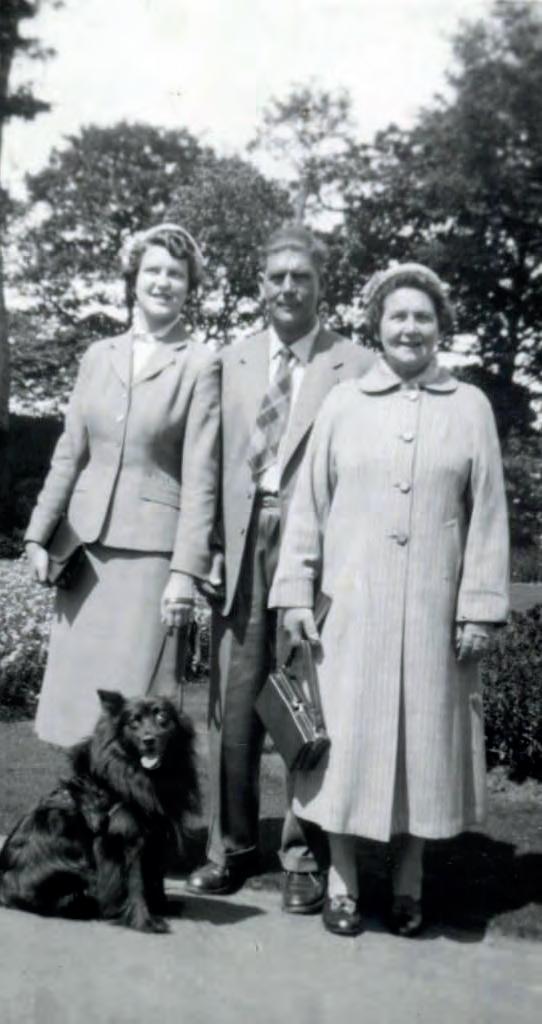
Starbank Park 1958: Sophia Abrahamson with her parents David and Charlotte (Chattie) and Roy the dog
Grieving the loss of a parent can be a lonely time. Heriot’s foundation enables bereaved children to receive a nurturing education with specialist support at Scotland’s leading independent school.
If you know of a child who has lost a parent and would benefit from a supported foundation place or to donate to the life changing work of the Heriot’s foundation, please contact the Admissions team for information at admissions@george-heriots.com
Tracy Gilbert MP
Member of Parliament for Edinburgh North and
Leith
As your local Member of Parliament, I am here to support you with any issues or concerns you may have. My role is to represent your interests both locally and in Parliament, and I am committed to making sure your voice is heard.
You are always welcome to contact me using the details below.
Sign up to my newsletter
for 10% discount on pickup orders.
Cuts, blow drys, full head colour, foils Semi permanent, perms
Ladies, gents & children all welcome
Christmas gift vouchers now available. A gift voucher is not only for Christmas. It can be for a birthday or even a simple thank you.
*Opening times 11am to 12.30am 15 Broughton Street, Edinburgh, 0131 556 3132
T R I C H O C I D E !
June Adams, Specialist Electrolysist
RN. BSc Professional Practice (University of Stirling 2012) Dermatology for professionals (Stirling 2012)
Electrolysis remains the only form of hair removal permitted to be described as "permanent" –because it is! (UK ASA & US FDA) 89 Giles Street, Edinburgh,EH6 6BZ use code
Comfortable, Affordable, Effective
Tracygilbertmp
Email: Mobile: 07983 191316
Tracy Gilbert MP tracygilbert72
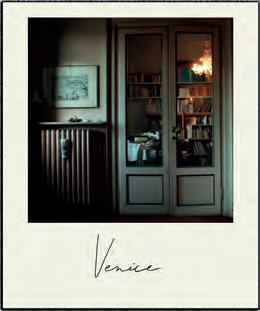
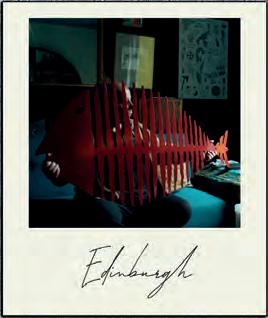
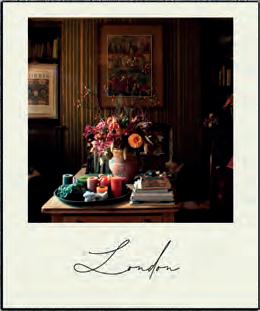
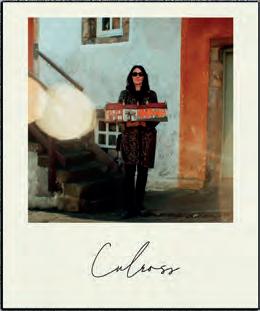
NOSTALGIA: Slowliving film project rooted in Leith
Real homes, real people, and the stories that shape them
Edinburgh is full of characterful spaces.
Tenements layered with history, artist studios above shopfronts, family houses overlooking the sea, and compact creative flats where every object feels intentional. These are homes with depth and life in them, but they’re rarely shown with the care they deserve.
NOSTALGIA, a Leith-based filmmaking project, set out to give these spaces a different kind of attention. Run by filmmaker Ilya Ilyukhin and producer Elena Khokhlova (a creative couple based in Leith), the YouTube channel shares short documentaries about the connection between people and the places they call home.
“We’re not looking for perfectly staged interiors,” Ilya says. “We’re looking for soul — the atmosphere of a room, the way someone arranges their belongings, the traces of everyday life that make a space feel truly lived in.”
Each film is shot with natural daylight, vintage lenses, and a delicate, observational style. Nothing is staged or polished; homes appear exactly as they are, with all their personality intact. The result is a series of space portraits that sit somewhere between documentary and visual poem — slow, thoughtful, and rooted in genuine human stories. Since launching in October 2024, NOSTALGIA’s films have reached almost a million views on YouTube and taken the project across Scotland, England and Italy: from a blacksmith’s quirky flat in Abbeyhill and a Victorian family home in Portobello, to a West End flat in Glasgow that’s
kept a couple young for twenty years, a 300-year-old London cottage that feels like a stage set inside, and a childhood home on the Grand Canal: found thanks to a Netflix documentary. Every location brings its own rhythm and emotion.
Lena says, people often tell us their home is ‘nothing special’. “But there’s always a detail - a favourite chair, a colour on the wall, a window view only you notice at a certain hour - that becomes the emotional centre of the whole story.”
NOSTALGIA has resonated with viewers looking for something gentler online. Instead of glossy
home tours or renovation talk, the films focus on:
J real homes and real people
J lived-in character, not perfection
J honest personal stories
J atmosphere, light, and texture
J the beauty of everyday spaces
As the channel grows, Lena and Ilya continue to look for homes with personality - quiet or bold, minimal or eclectic - as long as they feel soulful.
If your space has a story (and every home does), NOSTALGIA would love to hear from you.
NOSTALGIA is a YouTube channel about soulful homes. We make short films about real, lived-in places shaped by character, not trends: from book-filled flats to tiny spaces or houses that tell a story. If you think your home might be a fit, we’d love to make a film about it — in Edinburgh or anywhere in Scotland. Email us at studio@getnostalgia.com
1 People primarily scratching, at the Yankee’s game? (8)
5 Sun line seen on cloudless night (6)
10 Catch reel critic strangely in the frozen North (3, 6, 6)
11 Picked didn’t start but still chosen (7)
12 Bewildered goddess in cot (7)
13 Cure fart perhaps with break (8)
15 God’s abode sheds drug for safety (5)
18 Pulsate by stirring broth (5)
20 Envelop crazy dun horse (8)
23 Crushed paper containing lithium by painter say (7)
25 Characteristic quality that hit Pete badly (7)
26 Main killer of Greg Norman? (5,5,5)
26 Used to be a harbour for goods abroad (6)
1 Preserved drugs, Ed! (6)
2 Period of French Revolution also caused by 26! (3,6)
3 Against orthodox religion, in this place, louse (7)
4 Score without, Ed? (5)
6 Rump, hit out and win (7)
7 Stones topless dresses (5)
8 Dingy lie perhaps with give in the ground (8)
9 Drinks found in 10 maybe (3,5)
14 Finds sun heart that explodes (8)
16 Have focus out giving in a gracious manner (9)
28 Stag, part animal Ed? Eerie (4,4) Answers crossword 145
17 Learner included in weird kill (8)
19 Bristle badly because of skin swelling (7)
21 Born again? (7)
22 Dracula’s fireman (6)
24 Before work with knife maybe (3-2)
25 Run into sex trap (5)
Alan “Tosh” Mackintosh, Pitlochry
Viewings by appointment
What’s on Offer?
• Tram links only two minutes away
• Based in heart of Edinburgh city centre
• St James Quarter only 10 minute walk away
• Bustling and vibrant restaurants and bars on your doorstep
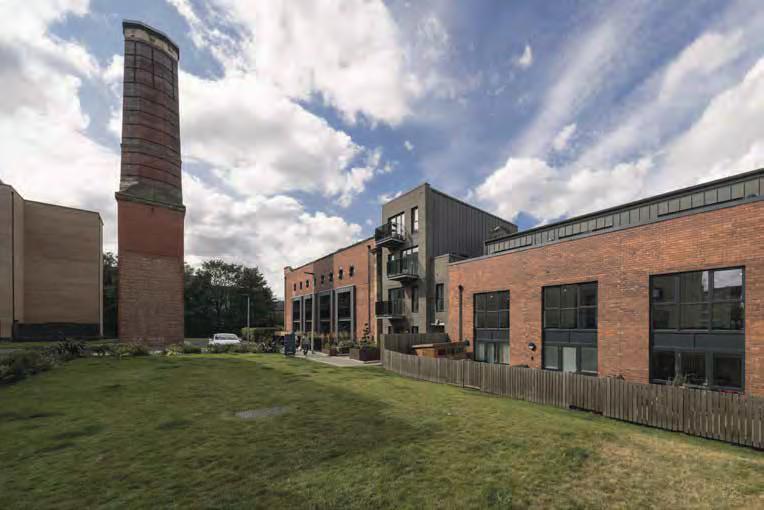
• Award-winning renovation: Scotland’s Renovation of the Year 2024
• Striking industrial-style features with a modern twist
• Balconies, roof terraces and private gardens
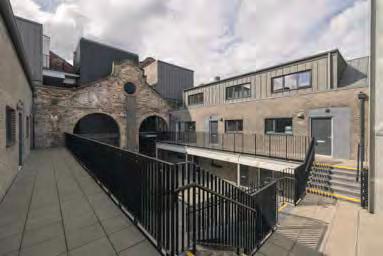
• Secure private courtyard at the heart of the community
Looking to buy in one of Edinburgh’s most vibrant neighbourhood? Let Jacquie Sandison, your trusted local property expert, guide you home.
The award-winning Tram Sheds is the final phase of the iconic historic tram depot, thoughtfully transformed into architecturally distinctive, industrial-style apartments.
With just a limited number of 2 bedroom apartments and duplexes remaining, now is the time to secure your place in this unique Leith landmark.
Whether it’s your first step onto the property ladder or your next move in the city, Jacquie pairs unrivalled local knowledge with a warm, personal touch, making your move simple and stress-free.