







As I write this editorial, I’m hopeful that work levels will begin to pick up. Recent global events appear to have had a noticeable impact on our industry, and many of us have felt the effects. Nevertheless, our trade has always shown resilience, and I remain optimistic that activity will improve as the months progress.
Telephone: 020 7394 5553
E-mail for membership enquiries: thelcdc@gmail.com Web: www.lcdc.cab
Editor: Grant Davis
The Badge is distributed free to the Licensed London Cab Trade.
For advertising enquiries please contact the office on 020 7394 5553 or E-mail: thelcdc@gmail.com
All advertising in The Badge is accepted under our terms and conditions. These are available at the LCDC office. Before entering into any commitment, financial or otherwise, always remember to seek professional advice.
The views expressed in this publication are not necessarily those of the Editor or of the Management Committee of the London Cab Driver’s Club.
Contributions for publication are welcomed and should be sent to the Editor at the above address.
Printed by Iliffe Print. T: 01223 656500
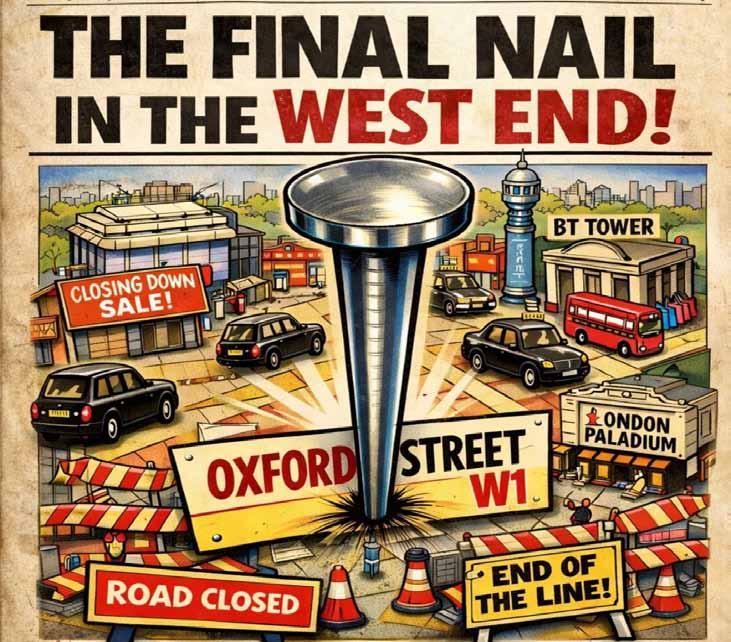
You will notice that the proposed closure of Oxford Street features prominently on our front page. It is a development that could have significant implications for the West End and wider trade. While the intention may be to transform the area, many within our industry are understandably concerned about how the project will affect accessibility and business during the construction period. With a projected cost of £150m and a twoyear timeline, there are also questions about whether the project will remain within its budget and schedule - something that's proven challenging for other major infrastructure works.
On a more positive note, the MaxiCab open day was a great success. It was very well attended, and feedback from drivers was overwhelmingly positive. Many were particularly interested in when the vehicle might receive licensing approval from TfL, which shows the level of enthusiasm and curiosity surrounding new options within our fleet.
Despite what some critics on social media might suggest, I personally like the TXe and drive one myself. However, I also believe that choice within our trade is important. Different drivers have different needs and preferences, and having a range of options available can only strengthen the industry as a whole. If a particular vehicle isn’t for you, that’s perfectly fine - having alternatives is part of what keeps our trade adaptable and forward-looking. Looking ahead, it’s clear that our industry continues to evolve. By staying open to innovation while also voicing our concerns where necessary, we can help ensure that the future of the trade remains strong and sustainable for everyone involved.
Grant Davis

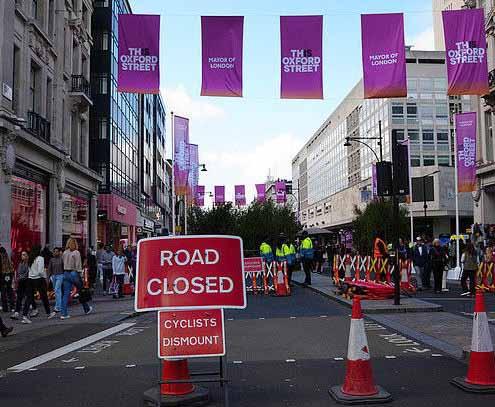
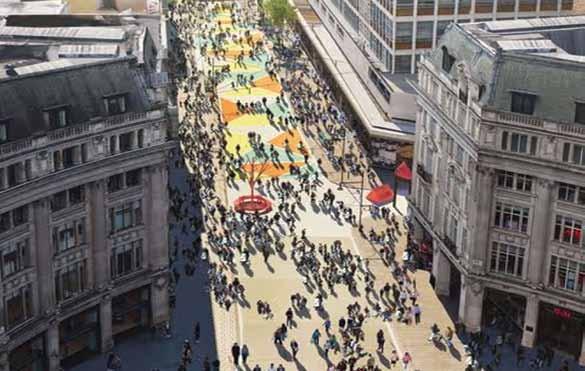
Just when many thought the pressure on London’s road network could not increase further, the Mayor has unveiled another bold –and highly controversial – proposal: the full pedestrianisation of Oxford Street from Marble Arch to Great Portland Street.
In the August edition of The Badge, the LCDC reported that a member reminded Transport for London (TfL) through a court claim that traditional taxi laws are still in force.
On paper, it may sound like a vision of a cleaner, more walkable city. But for many Londoners who work and travel in the West End every day, the plan raises a far more immediate question: what happens to everything — and everyone — that still needs to move through it?
In response to this claim, TfL’s legal department clarified a key issue raised by our member: whether a taxi driver may start the meter upon accepting an immediate app-based booking. TfL replied:
The project carries an estimated price tag of £150 million and a timeline of two years. Yet Londoners have heard figures like this before. Major infrastructure schemes in the capital rarely stay within their original budgets or schedules, and many are already questioning whether these projections are realistic or simply optimistic placeholders.
“TfL has already confirmed to you in correspondence dated 21 May 2024, that a hackney carriage driver may not switch on the taximeter prior to the point at which the passenger is picked up, when it is being pre-booked as a hackney carriage. Again, we consider that this point is clear and does not require a declaration from the High Court before that is the case.”
For taxi drivers and others who rely on the road network, the practical consequences are obvious. Closing such a central route does not make traffic disappear — it simply pushes it somewhere else. Journeys that were
This statement from TfL appears to contradict a 2017 statement made during a trade meeting with

booking is accepted, not where the passenger is picked up.”
once straightforward will become longer, slower and more expensive.
commercial interests of app
to move easily between its shops, restaurants, theatres and hotels.
Extended disruption could place serious pressure on businesses already navigating a challenging economic climate.
public spaces. But there is growing frustration that decisions affecting the city’s roads often feel disconnected from the realities of how people actually move around London.
hire operators and contribute substantial revenue through licensing fees, could this be a conflict of interest?
heart of one of the world’s most famous shopping districts risks creating a prolonged period of chaos.
legal framework for London’s regulated taxi service.
By treating taxis and private hire vehicles similarly and allowing app companies to do the same, TfL may be acting unlawfully?
The West End has survived and thrived for generations because it has been accessible, dynamic and connected. The concern now is whether policies intended to improve the area may instead make it harder to reach — and ultimately less vibrant.
This 2017 statement was related to a case involving yellow badge taxi drivers working for Computer Cab, addressing whether they were plying for hire in the green badge sector. Given that TfL understands that hiring occurs at the booking location, it should also recognize that Section 39 of the London Cab Order 1934 permits the meter to start from the acceptance point. Section 39 of the Cab Order 1934 specifies: “The driver of a motor cab shall start the taximeter no sooner than when the cab is hired or at such later time as the driver thinks fit.”
Imagine trying to take a passenger from Devonshire Street to the Connaught once Oxford Street is closed to vehicles. Traffic will be forced onto surrounding roads that are already stretched to capacity. Areas such as Bond Street, Berkeley Square and Park Lane could face even greater congestion as vehicles are diverted away from Oxford Street.
The fear is that this will not ease congestion in the West End — it will simply shift the problem and intensify it.
This inconsistency raises questions about TfL’s taxi and private hire department? Drivers are asking if they are
Then there is the disruption during construction. Two years of major works in the
TfL has stated that it does not regulate taxi apps, an assertion that seems intended to deflect responsibility for protecting both the public and taxi drivers.
Accessibility is another major concern. Taxis are not simply a convenience in London — they are a vital part of the city’s transport network, particularly for elderly and disabled passengers who rely on direct, door-to-door travel. Removing vehicle access without clear alternatives risks making one of London’s key shopping destinations harder to reach for the very people who depend on it most.
The West End has long thrived on its accessibility — the ability for visitors, workers and residents
classifies taxis as public transport, unlike private hire vehicles, which are categorized as private transport. As a result, Section 149 of the Equality Act 2010 requires TfL to fulfil its Public Sector Equality Duty (PSED) when third parties, such as app companies, dispatch taxis. Therefore, TfL’s claim that it does not regulate apps appears misleading; it has a statutory duty to ensure that these apps operate within the
Since taxis perform a public service, the app companies that dispatch them also perform a public function, thereby falling under the PSED, which TfL is tasked with enforcing.
Many Londoners support efforts to improve air quality and create better
The PSED mandates that
London is one of the world’s great cities. The hope is that decisions shaping its future are made with the full picture in mind — not just how the streets might look, but how the city continues to function.
Moreover, TfL's PSED duty includes maintaining regulated fare limits. Added fees, such as technology charges, high-demand fees, and surge pricing may make a taxi unaffordable for vulnerable passengers, including wheelchair users and disabled individuals who may already be financially disadvantaged.
In conclusion, TfL’s claim of seems disingenuous given its public welfare in taxis, a form
There is a pressing need for biases that continue to affect comment.
may lead to app booking cancellations if drivers are not compensated from the moment of booking acceptance, as case law and the London Cab Order allow.
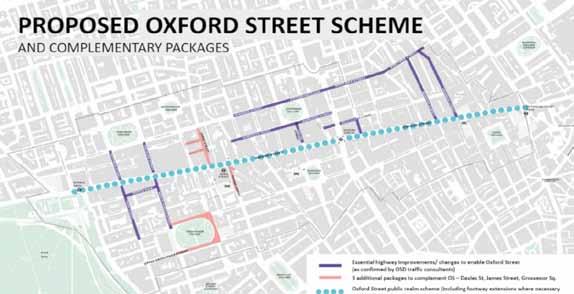
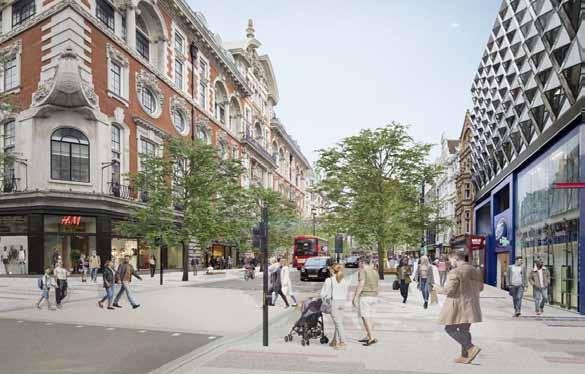
Proposed new traffic routes and public transport changes to accommodate the pedestrianisation of Oxford Street have been released as part of a consultation by the mayor of London and Transport for London (TfL).
The consultation is separate from a previous one, external that ended in June, which showed 63% of Londoners were in favour of the regeneration, and which prompted the plans to get the go-ahead.
Some local residents have told the BBC they do not want the changes, citing concerns over displacement of traffic and buses, as well as disability access.
Mayor of London Sir Sadiq Khan said: "We need urgent action to give the nation's high street a new lease of life."
"I'm pleased that we're now moving ahead with our exciting plans to regenerate this iconic area, backed by the vast majority of
Londoners and businesses," he added.
The mayor explained that the new proposals, released on Friday, external, "map out the potential next steps" of the plan.
Sir Sadiq said he "encourages everyone to have their say on the proposals".
The proposals for the section of Oxford Street between Orchard Street and Great Portland Street:
Closure to private motorised vehicles, buses, taxis and private-hire vehicles, cycles, scooters and pedicabs
Service and delivery vehicles allowed to access the traffic-free area from
midnight to 07:00
General traffic to continue using alternative routes (general traffic is already banned between 07:00 and 19:00 Monday to Saturday)
Installation of new and wider pedestrian crossings
Buses that currently serve Oxford Street to be rerouted
along Wigmore Street and Henrietta Place, with new bus stops and shelters to be installed. Increased journey times calculated to be "less than a minute"
Provision of other new bus stops, taxi ranks and drop-off locations as close to the pedestrianised area as possible
Possibility of increased blue-badge parking bays
Creation of new cycle routes, as cycling would not be permitted in new stretch
The pedestrianisation plans pivot around Sir Sadiq establishing a new mayoral development corporation (MDC), which would give a mayoral body control of the area in terms of planning and development. So far the plan has been given government and London Assembly backing, and now the mayor is working with the government to make the necessary legislation for the MDC to be established by 1 January.
Courtesy of the BBC
Sadiq Khan is so determined to pedestrianise Oxford Street he’s even said residents shouldn’t ‘dictate’ what happens to it, writes Leila Cunningham
A mayor who talks like that doesn’t respect the people he’s meant to serve.”
He’s forgotten something basic: a mayor serves Londoners. Londoners don’t serve him.”
This is a mayor who dismisses the people who actually live in the area and a is behaving less like a public servant and more like an emperor.
Many residents and businesses have raised serious concerns about traffic being pushed into surrounding neighbourhoods, congestion on already crowded streets, and a lack of transparency about how the scheme
will actually work.Instead of listening, Khan has centralised power through a Mayoral Development Corporation to force the project through.
That isn’t leadership; it’s arrogance, the arrogance of a mayor who has forgotten that power in London flows from its people, not from City Hall. City Hall exists to serve Londoners, not to ride roughshod over them when they dare to disagree

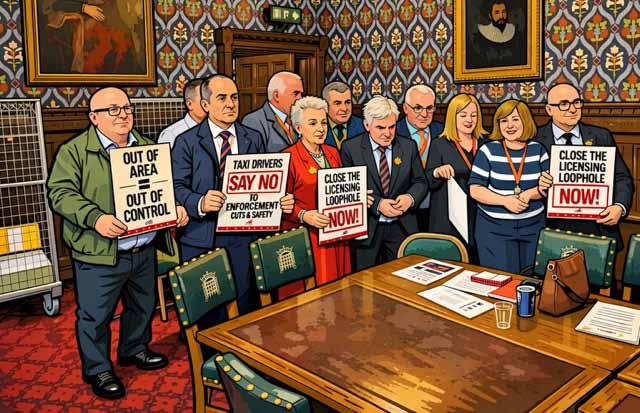
Residents’ associations have slammed the Mayor of London’s plans to pedestrianise Oxford Street during a walkabout with Assembly Members.
Representatives from the Marylebone Association, the Fitzrovia West Neighbourhood Forum and the Soho Society have warned London Assembly members against approving Sadiq Khan’s plans as they currently stand.
Tim Lord, chair of the Soho Society, said the Mayor should focus on lowering commercial rents. He told the Local Democracy Reporting Service: “If you want to understand business on Oxford Street, you need to understand what impact the level of commercial rent is having on trade. I would suggest to the Mayor if he wants to bring in a diverse offering then he needs to focus on lowering rents.
“Any business you talk to in the West End says the key thing they start with is rent. It’s what they structure their business around. If rent rates are high, it’s a barrier of entry for businesses.”
Yoram Blumann from the Fitzrovia West Neighbourhood Forum warned pedestrianising Oxford Street could lead to more congestion on surrounding roads. He and other residents’ bodies toured the high street with members of the Assembly’s Planning and Regeneration Committee to gauge the impact the Mayor’s plans would have on residents.
Blumann showed members a narrow strip of congested carriageway along Wigmore Street originally tipped to become a bus stop under plans previously proposed by Westminster City Council. He said: “We think the
negative impacts of the shift would outweigh the positive impacts. I think everyone including the GLA (Greater London Authority) were surprised by the Mayor’s announcement, even Westminster City Council. He just announced it.
“The Mayor doesn’t really care about the economy of Oxford Street or about
said the lack of details in the Mayor’s plans had created panic among residents. She said: “It’s fears more than facts at the moment.
“This is supposed to be London’s biggest high street but it’s full of clone shops and traffic but it could be so much nicer to visit. The Mayor could be supporting small businesses,
Assembly Member, Boff said the MDC was a “power grab”. He said: “Obviously there is something wrong with Westminster City’s plans, which is quite extraordinary because the Labour Party has control of Westminster City Council and the Mayor doesn’t seem to trust his party colleagues to come up with good plans for residents.
the residents. If you want to seek growth, create high earning jobs in the area.”
Michael Bolt, from the Marylebone Association, feared the Mayoral Development Corporation, an entity being proposed to run the project, had little to no accountability to residents.
He said: “You must remember residents have been dealing with this for the last eight years. The displacement of it all will cause harm to residents and cause traffic problems. It will turn Oxford Street into a piazza-like square. What’s the advantage to shoppers by removing transport links?”
Caroline Russell AM, Leader of the London Assembly Green Group,
independent shops and cultural activity making Oxford Street a place that more people want to visit. At the moment there is little to no information on what the Mayor plans to do.”
Committee Chair Andrew Boff said he plans to vote against the establishment of an MDC. He said the Mayor needs to clarify his plans for Oxford Street before establishing the authority. He said: “I think the committee would want to ensure residents are not locked out of future discussions.
“If you don’t live in London then pedestrianisation seems so easy and simple but it’s not. People live here. You need to consider deliveries and safety.”
In his capacity as an
“If Labour voted for the MDC, they are basically saying their own councillors are incompetent.”
Labour Assembly Member James Small-Edwards, who is also a member of Westminster Council, was approached but declined to comment.
The public has until 2 May to have their say on the Mayor’s plans. City Hall said the plans were a chance to breathe new life into the UK’s most lucrative high street. Revisions to the plan include reducing the size of the MDC and a commitment from the Mayor to provide upfront cash for an upgrade to a specific stretch of the famous street.
Oxford Street is seen as an area of critical importance for the country’s
economy and is estimated to have brought in £25bn to London’s economy in 2022. The Mayor’s proposal also includes creating an MDC, which would give the body its own planning powers and be able to overrule Westminster City Council, which currently manages Oxford Street.
The body would consist of at least one elected representative and businesses from each of the local authorities that fall within its boundaries.
A spokesperson for the Mayor of London said: “The Mayor has always been clear that Oxford Street is an area of critical national economic importance, contributing billions to London’s economy.
“But there is no doubt that it has suffered in recent years due to a combination of the pandemic, the growth of online shopping and other factors, and urgent action is needed to give Oxford Street a new lease of life. That’s why a revitalised Oxford Street would increase visitor numbers, create new jobs, and boost retail and growth for London and the rest of the UK.
“The Mayor is working closely with local businesses, residents, and local councils whilst he consults on proposals to pedestrianise Oxford Street and create a Mayoral Development Corporation (MDC), which would super-charge regeneration and unlock the potential of Oxford Street as we continue to build a better London for everyone. Sadiq encourages everyone to respond to the public consultation he launched in February by 2 May.”
Courtesy of BBC Local Democracy Service / Fitzrovia News






































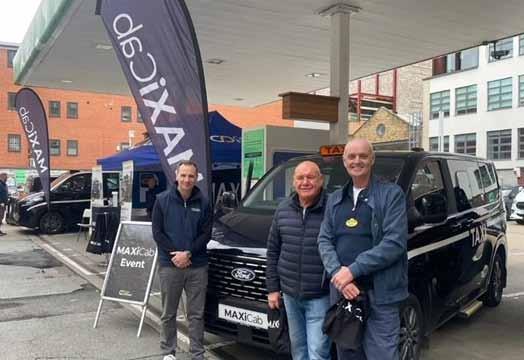
It was great to see some trade faces turn up at the MaxiCab open day event at Great Suffolk Street.
The two Peters could be seen chatting and as well as Tom Scullion popping in, BlackCab.Com also was there talking to drivers about their new app and handing out goodie bags to drivers.
Peter DeCosta, who was directly responsible for the Mercedes Vito being brought into London, was very interested in looking at the vehicle and discussing trade issues with Peter Facenna.
Overall, it was a very well attended event and drivers were genuinely interested in going for a test drive and speaking to the Cab Direct staff regarding servicing, costs, warranty
Tony 7 Up
“I must admit I wasn't too sure about this until I drove it.
"I think having a brand new cab on the streets will be only a good thing. "I must say it drove very smooth and I know the public would love it with the massive glass roof, the vision is first class.”
etc.
Many were deeply concerned over not only the monopoly situation we have in London, but rumours in the trade about the end of TXe production in Ansty.
Whatever way you look at it, a monopoly is no good for anyone and as Peter Facenna said to a driver, "f you did not like it… then don't buy it... it's that simple.”
With the Euro 5 taxis coming off the road in the next few years the trade is at a very concerning situation and one that requires positive proactive action, and not the usual cab trade sit back and hope for the best.
More open day events are planned and if you couldn't get down to Great

Noel:
“Do I have to give it back? This is the future in my opinion, modern, smooth, spacious, everything we need to do our job in the 21st Century. I sometimes work the airport and this would be just the ticket, loads of room for passengers and luggage, fantastic.
When is it going to be passed? I drove round Southwark St and was hailed by members of the public who wanted to get in. I for one think it would be a major asset for the trade.”

Naeen:
“Fantastic cab, I really like the look of this cab and the drive was even better.
I really liked the space for the driver and there is adequate space for the passengers in the back. I would prefer the Hybrid version as I can't charge at home and there is way insufficient charging spots in London. "Yes, I want one today"
Azizz:
I really enjoyed taking this for a spin, fast, smooth and a joy to drive. I was even flagged down on Waterloo Road! I know some drivers will say it does not look like a “Cab” but we have about 5 different taxis on the streets now, and the public would love it. I'd like to buy one when they come to London.”
Tony:
I am 6ft 3” so the MaxiCab space for me in the front is better than my Vito and I was impressed with the space in the boot as well as the passenger area.
I found it smooth, quiet and I would definitely buy one if they were available in London.


Tony:
“I work the flyers and this would be ideal, love the space and the look has grown on me."
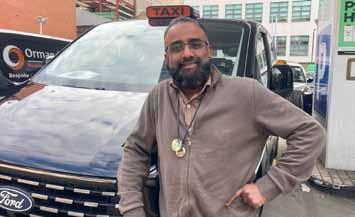
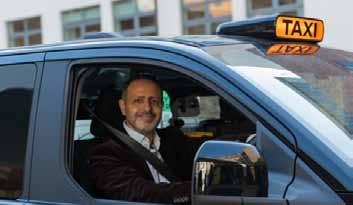
Johnny; “I loved it, absolutely loved it, I want to know when TFL will pass this?
I think many drivers once they get behind the wheel will be of the same opinion. I love the driving position, the big windows and mirrors, the view for the driver is very good.The space for 6 passengers in the back is a massive plus for the trade in my opinion.”
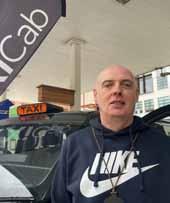

By Christopher Johnston
The Safety, Equality and Regulatory Understanding (SERU) test is now a standard requirement for London taxi drivers.
The objective behind the assessment is clear enough. Drivers are expected to understand safeguarding, equality duties and the regulatory framework that governs the trade.
However, the way the assessment is currently being delivered raises a number of practical questions about accessibility, proportionality and the overall design of the system.
An LCDC member recently attended the SERU assessment on 4 March 2026 at 14 Pier Walk, North Greenwich. While the staff present were courteous and professional throughout, the experience highlighted several issues that may affect many drivers attending the assessment.
The appointment letter lists the venue as 14 Pier Walk, SE10, stating that it is approximately a three-minute walk from North Greenwich station. In practice, locating the entrance is not quite that straightforward.
The entrance to the assessment centre is accessed via Mitre Passage — something that is not stated on the front page of the appointment letter, where the address appears. The map provided by TfL is also blurred and contains no visible road names.
Drivers unfamiliar with the pedestrianised area can easily find themselves wandering around the retail area searching for the entrance.
The area around the assessment centre is also largely pedestrianised, meaning there is no straightforward vehicle access close to the building.
For a mandatory assessment that many drivers will attend in their
taxi, this raises obvious questions about whether the location was chosen with the practical realities of the trade in mind.
The appointment letter states that no parking is available on site and strongly advises candidates to use public transport.
That advice may appear reasonable in theory. In practice, it does not reflect how taxi drivers actually work. Most drivers will attend the assessment in their taxi and expect to complete the test and return straight to work. Drivers are given up to one hour to complete the assessment.
The regulatory process should therefore be as streamlined as possible — drivers should be able to attend, park nearby at no cost, complete the assessment and continue their shift.
The assessment itself is conducted on rows of desktop computers, with drivers completing an online multiple-choice test.
This naturally prompts another question. If the assessment is entirely digital, why must it take place at a single location in North Greenwich? There appears to be no obvious technological reason why it could not be delivered using laptops or tablets at multiple venues across London — perhaps periodically at locations such as Heathrow or other TfL facilities. Providing additional venues would significantly reduce travel time and disruption for drivers across the capital.
Another issue concerns the photograph that TfL states
identification does not?
will be taken during the registration process.
Taxi drivers already hold a TfL-issued Hackney Carriage licence containing their photograph, and enforcement officers routinely verify drivers’ identities by scanning the barcode on that licence.
Drivers attending the assessment must also present official photographic identification, such as a passport or photocard driving licence.
Drivers attending the assessment are already required to present a passport or photocard driving licence. Their TfL taxi driver licence, which contains both a photograph and barcode verification, could also be used if TfL required additional identification. If identity verification is the objective, those safeguards already exist.
What makes the policy particularly difficult to understand is that Transport for London does not require drivers to submit a new photograph when renewing their taxi licence every three years. Yet drivers attending the SERU assessment are told that a further photograph will be taken on the day.
If updated photographs are considered necessary for identity assurance, it

Despite this, TfL correspondence states that an additional photograph will be taken during registration.
Prior to attending the assessment, our member questioned this requirement under Articles 5 and 6 of the UK General Data Protection Regulation, which require that personal data processing must be lawful, necessary and proportionate.
The question is straightforward: What does an additional photograph provide that existing
If Transport for London wishes to introduce stronger technological safeguards to ensure that licence holders are who they say they are, that is a discussion worth having. But such systems must be introduced transparently and with appropriate safeguards.
Civil liberties organisation Liberty has raised concerns about the expanding use of facial recognition technology by the Metropolitan Police Service, highlighting the risks of misidentification and the importance of strong safeguards.
Those concerns illustrate why questions of necessity, proportionality and oversight matter whenever photographic or biometric data is collected. The same principles apply here.
One reason issues such as this receive scrutiny is the work carried out by the London Cab Drivers Club.
The Club has long played an important role in examining regulatory decisions and asking difficult questions where necessary. Without that scrutiny, many drivers believe that regulatory decisions affecting the trade would receive far less challenge.
For many drivers, the issue comes down to a simple principle of consistency.
would be more consistent to require them at the point of licence renewal.
Following our member’s GDPR challenge to TfL, when he attended the assessment centre, he was informed that the photograph was optional, and no photograph was taken. If the photograph is optional, the appointment letter should say so. TfL was contacted for comment, but had not responded at the time of publication.
There is also a broader point about identity verification technology.
If one taxi driver raises legitimate questions about the proportionality of being required to provide a photograph at an assessment — particularly where identity has already been verified through official documentation and a TfLissued licence — those questions are relevant to every driver in the trade.
Regulatory requirements should apply consistently and transparently. If a policy is justified, it should apply equally to all licence holders. If it is not justified, it should be reconsidered. Taxi drivers are entitled to ask reasonable questions about the rules that govern their profession.
On 5 March 2026, an important discussion took place in the House of Lords which every London taxi driver should be aware of. During committee stage of the English Devolution and Community Empowerment Bill, Baroness Caroline Pidgeon raised the issue of private-hire licensing and the growing problem of crossborder operations in England’s taxi and PHV industry.
Although the debate took place in the Lords rather than the Commons, it is highly significant. What was said reflects a growing recognition within Parliament that the current taxi and private-hire licensing system — much of which dates back decades — is struggling to cope with the realities of a modern, app-driven transport market. For many drivers working the streets of London, the issues discussed will sound very familiar.
A system built for another era
Baroness Pidgeon’s intervention centred on the way in which technology has transformed the private-hire market. When much of the existing legislation was written, bookings were typically made through local operators using telephone dispatch systems. Vehicles generally worked within the same area in which they were licensed, and enforcement was relatively straightforward because regulators had oversight of the drivers operating in their districts.
That model has now changed dramatically. Digital platforms allocate jobs across wide areas in real time, allowing drivers to work far from the local authority that issued their licence. A driver licensed in one town can now operate hundreds of miles away from the authority responsible for regulating them.
According to Baroness Pidgeon, this shift has created a serious regulatory gap. Local authorities often find themselves responsible for policing activity within their area while having limited authority over drivers who are actually licensed elsewhere. The authority that issued the licence, meanwhile, may have little practical oversight of the driver’s day-today activity because the vehicle is
rarely working locally. In effect, the traditional principle of local licensing accountability has been eroded by technology.
One of the most striking elements of the speech was the reference to the scale of licences issued by City of Wolverhampton Council. The council has granted tens of thousands of private-hire licences, far more than
widely known within the industry as cross-border licensing, where drivers and operators choose to obtain licences from authorities perceived to offer the most favourable regulatory environment. Once licensed, drivers can then work almost entirely outside the area that issued their badge.
For regulators, this creates a complex enforcement landscape. Officers attempting to police activity within their area may find that drivers operating locally are regulated by
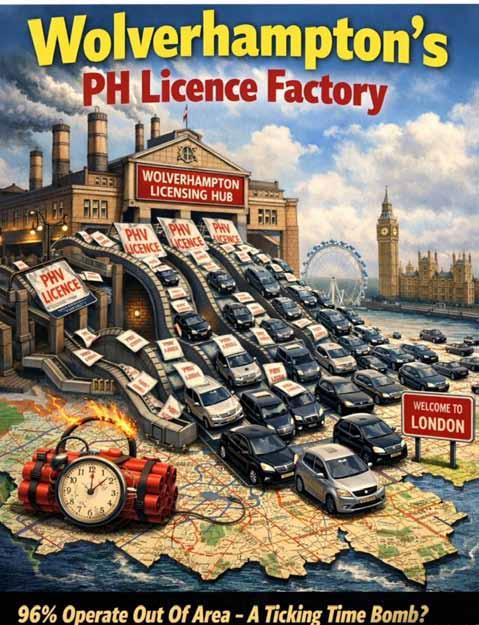
would ever be required to serve its own local transport market.
The implication is clear: many of those drivers are working elsewhere, often in major cities where demand is much higher.
This phenomenon has become
a completely different authority, sometimes located many miles away.
Another important aspect of Baroness Pidgeon’s contribution was the emphasis on policing and public safety. Concerns have been
raised by enforcement bodies that cross-border hiring can complicate investigations and regulatory oversight.
When drivers operate outside the authority that licensed them, it can be more difficult for enforcement officers to monitor compliance, investigate complaints, or take regulatory action when problems arise. Information sharing between authorities becomes more complicated and, in some cases, enforcement responsibilities may become unclear. By highlighting these issues in Parliament, the debate moved the discussion beyond questions of market competition and placed the focus firmly on regulation and passenger safety.
Questions about who should regulate the industry
Baroness Pidgeon also raised the broader question of whether the current system of local authority licensing remains appropriate in a market that increasingly operates on a regional or national scale.
Many local councils regulate relatively small taxi and PHV markets. However, modern ridehailing platforms operate across entire metropolitan areas and often across multiple regions simultaneously. This mismatch between local regulation and national operations has led some policymakers to question whether licensing responsibilities should be aligned with larger transport authorities.
In London, for example, regulation already sits with Transport for London, which oversees taxi and private-hire licensing across the whole capital. Some have suggested that similar models could be considered elsewhere to better reflect how the industry now operates.
The debate also touched on the long-standing issue of outdated taxi legislation. Much of the legal framework governing taxis and private-hire vehicles predates the emergence of modern ride-hailing platforms. As a result, rules designed
for a largely localised industry are now being applied to a national digital marketplace.
Previous attempts to modernise the legislation, including recommendations made by the Law Commission of England and Wales, have not yet resulted in comprehensive reform. However, the rapid growth of app-based transport services has brought renewed attention to the issue.
Baroness Pidgeon’s remarks reflected a broader recognition that the current framework is increasingly fragmented and difficult to enforce.
For London’s black cab drivers, the issues raised in the House of Lords will resonate strongly. The capital already operates under a unified regulatory framework through TfL, yet drivers regularly encounter vehicles licensed by authorities located far outside London.
The debate suggests that awareness of this problem is now growing at national level. By placing the issue on the parliamentary record, Baroness Pidgeon has highlighted concerns that have been raised within the trade for many years.
The discussion in the House of Lords is unlikely to be the last word on the subject. Across Parliament there is growing interest in modernising taxi and private-hire regulation, particularly in light of technological changes that have reshaped the industry over the past decade. Possible reforms being discussed nationally include the introduction of national licensing standards, stronger enforcement powers, and changes to the way cross-border operations are regulated.
CaroliNe PidGeoN:
“ My Lords, there are a number of issues in this group on taxis and private hire, but I will explain my Amendments 235BA, 235CB and 235CC. I thank the noble Lords, Lord Hampton and Lord Bradley, and the right reverend Prelate the Bishop of Manchester for adding their names to them.
Out-of-area working, also called cross-border hiring, allows drivers and vehicles licensed in one area to operate entirely in another. The scale of this is highly significant
and is a major feature of the private hire sector nationally. It is estimated that more than 11% of all private hire vehicles nationally are licensed by just one licensing authority: the City of Wolverhampton Council. Let us put this into some context. Back in 2023, TfL was aware of at least 300 private hire vehicle drivers licensed by Wolverhampton but with a London residential address. Data from Greater Manchester shows that 49% of private hires operating in Greater Manchester are licensed by authorities outside of their current 10 local licensing authorities.
Why does this matter? It undermines the ability of local licensing authorities to regulate effectively and creates serious
the loophole that enables crossborder hiring. In December, they introduced amendments to this Bill that have focused only on national minimum standards. Although those national minimum standards may work to ensure a strong foundation and ensure that more consistent standards apply across different licensing authorities—I welcome this as one step in dealing with this complex issue—this alone does not go far enough. These standards will be subject to consultation, with no clear deadlines for implementation, and they do not close the existing loophole. They are only part of the solution to addressing the recommendation of the noble Baroness, Lady Casey.
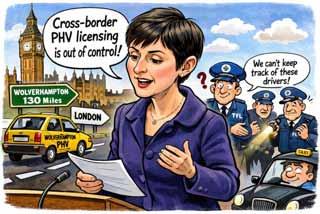
risks for public safety. Last year, the Casey audit into group-based child sexual exploitation exposed harrowing failures in protecting vulnerable children and identified that cross-border hiring was being exploited by individuals and groups sexually exploiting children. The noble Baroness, Lady Casey, recommended that the Government should introduce more rigorous safety standards and put a stop to cross-border hiring. The recommendation was:
“The Department for Transport should take immediate action to put a stop to ‘out of area taxis’ and bring in more rigorous statutory standards for local authority licensing and regulation of taxi drivers”.
The Government accepted all the recommendations made in the report, in order, they said, “to get justice for victims and survivors, and to get perpetrators behind bars”.
However, the Government have not yet set out when and how they will take action that fully closes
of where a driver or vehicle is licensed, supported by data-sharing provisions. In Greater Manchester, the mayor and leaders of all 10 local authorities have been advocating for an end to out-of-area licensing, most recently through their “Local. Licenced. Trusted” campaign which they launched last April. In addition, an independent review undertaken in Greater Manchester, with input from over 5,200 licensees, trade bodies and local authority officers, highlighted that legislating on outof-area was necessary, even in a regional system with licensing powers at a city-region level.
If the Government are serious in their commitment to improve standards and safety for this industry, this Committee urgently needs assurances from the Government on how and when they will fully close the loophole of cross-border hiring and that they will continue to improve enforcement powers as part of their review of the industry. My Amendments 235CB and 235CC look to tackle the out-of-area licensing issue and have the support of Transport for London, Transport for Greater Manchester, other metro-mayor areas and the Local Government Association, which I have contact with. It said:
“The LGA supports this amendment as the most effective way, combined with minimum standards, to meet Baroness Casey’s objective”.
Additionally, the Government have not set out how national minimum standards will be enforced. Enforcement is already a challenge for many licensing authorities, and the ability of drivers effectively to licence shop means that authorities who rely on local licensing fees to fund their enforcement will continue to be undermined. I also understand that there is anecdotal evidence that existing enforcement mechanisms are not being used correctly by all licensing authorities, including in cases of driver behaviour representing public safety concerns.
In January, the Government launched a consultation into simplifying the taxi licensing system. However, this is about significantly reducing the number of taxi licensing areas, and it does not set out any actions to address the issue of out-of-area working, meaning that passenger safety will remain at risk. In London, Transport for London has long called for national enforcement powers, which would enable enforcement officers to uphold national standards regardless
However, I have also tabled my Amendment 235BA, which would grant powers to all licensing authorities to take enforcement action on any private hire or taxi vehicle on their streets, wherever they are licensed. In my view, this could be the way forward that would plug the gap that the noble Baroness, Lady Casey, flagged, but would also allow the Government time to review and research the other issues, such as cross-border hiring, standards and so on, so that, in tackling one issue, the legislation does not restrict access to taxi services in another area. I hope that the Minister will consider that carefully.
The accessibility issues that have been raised by the noble Lord, Lord Borwick, and other noble Lords today are really important as we look at private hire and taxi services across the country. I thank the Ministers for meeting me and other noble Lords to discuss the complexity of issues in this area and I look forward to hearing the Minister’s response.“
Mark White

Elsewhere in this issue, you will have seen the tariff changes that will come in from Saturday 25th April. In it you will see that drivers are able to recover the £6 fee for setting down passengers on the extras.
THEN AND NOW
If we compare today with 1977, our figures don’t look too bad.
In 1977, we had a fleet of 12,452 cabs. Today, we currently have 14,803, an increase of nearly 20%.
Equally, in 1973 we had 16,474 drivers, against the current number of 17,356, making an increase of nearly 10%.
According to the LCY notice, taxis are exempt until 31st March. So, as things stand, taxis may be charged from 1st April, even though drivers cannot recover it from passengers until the 25th April. It may be that LCY assumed that passengers could be charged from 1st April and may extend the exemption but we have been unable to establish this at time of writing.
I reported previously that
Looking at these figures, its not unreasonable to ask why some in the trade, including myself, are worried for its future. But this doesn’t tell anything like the whole story. Its when you look at the KOL (Knowledge of London) figures, that the problems become clearer. In 1973, there were three times as many KOL students as there are today. Then, it took less than half the time it does today to pass out. That means that there were effectively six times as many KOL students over a 4yr period.
LCY approached TfL last summer with regard to taxis being charged the dropoff fee and being able to recover it. A meeting was held by a TFL, a trade rep and LCY CEO, where it was made clear to LCY that drivers would not be able to recover the charge and taxis should be exempt.
This didn’t satisfy LCY and they sought other avenues within TfL and the drop off charges were shoe-horned into the tariff consultation document. This was incredible in that the consultation document had been constructed months earlier and was at the point of sign-off and the process was delayed to accommodate this.
There may have been some skullduggery afoot. The notice that LCY put out stated that taxis would be exempt until the fares
cab numbers fell off a cliff.
consultation was completed on 31st March but the decision to allow the set down to be charged to passengers did not take
other possibility is darker. Is it possible LCY knew the outcome of the consultation before the decision was made?
place until after the LCY notice had been issued.
So, the question has to be asked if LCY intended to remove the exemption whether the charge could be recovered or not. The
TaXi aNd driVer NUMBerS
I know I bang on about this but in 2014 the GLA transport committee produced a report and warned The Mayor and
TfL that if action were not taken along the lines of 19 proposals they made, the London taxi trade would wither.
Three years later, TfL were asked why they hadn’t done anything? They responded by saying they were acting on one proposal and looking at the other 18. They wouldn’t have been lying if they were looking at them but they certainly haven’t done anything about it in the 12 years since the report was presented.
What has been the outcome? Were the GLA right? For every ten cab and drivers then, there are only six now. 25,546 drivers then, 16,049 now. 22,597 taxis then, 13,784 now. Judge for yourself. TfL “every journey matters”... unless it concerns taxis. They don’t matter at all.
wheelchair accessible but only 0.5% of PHV were accessible. Their recommendation was that the number of accessible PHVs should be increased over time to 25%. Its still only 0.5% and TfL doesn’t give a toss about the disabled or the equality Act. The situation is actually worse now. While PHVs were pre-booked, there was a case for them being only 25% accessible. Now though, with immediate street hiring of PHVs, a disable person, that is supposed to have an equal opportunity of booking a PHV, has only a 1 in 200 chance to book one, against the chances of an ablebodied rider. If they are going to allows electronic hailing by PH, all PHVs should be accessible. If Uber and its ilk were a cinema, theatre, shopping centre, etc, it would immediately be closed down.
Although we have had a resurgence since the bottom dropped out with Covid and a ridiculously expensive vehicle became compulsory, driver numbers are still down by 5,562 and cabs down by 4,331 on those 2019 figures.
– meter co.s, fleets, vehicle manufacturers, repair garages, etc – be able to continue serving our trade? Then what?
BATH
This old geezer passed out in December 1979 and it took me 19 months, doing it part-time. Today it takes more than 4 years, on average. There is an argument that the KOL is harder today, than it was then, but I would dispute that.
Ride hailing app Uber is set to swerve Rachel Reeves’s ‘taxi tax’ by rewriting its contracts with drivers.
The taxi app has rolled out revised terms for drivers outside of London in what appears to be a bid to dodge its VAT liability.
Announced by Chancellor Rachel Reeves in the Autumn Budget, the new 'taxi tax' aims to close a loophole that forces minicab firms to pay the 20 per cent tax on cab fares in their entirety.
It can be argued that places like The Docklands and E20 weren’t part of the KOL in my day. Against that though, denied road access means that most runs will be simpler today. For example, the rat run from Oxford Circus to St Giles Circus required calling 11 points Similarly, it is no longer possible to use the rat run between Guildhall and Southwark Bridge Rd. There were plenty more like this that have gone today.
Viewed over the last 10 years, the problems become clearer and it is no coincidence that it’s the same period of time during which Uber first gained a serious foothold in London.
From 2014 to September 19, just prior to Covid, the
The change in terms comes as the new VAT tax is set to come into effect on Friday.
At present, tax is only paid on the commission paid to companies like Uber by their drivers – a figure that equates to a fraction of the total passenger bill.
On current numbers, we’ll be lucky to see more than 200 new drivers annually. Back in 2014, the GLA FP (Future Proof Report) warned about this situation, while the Mayor and TfL sat, and continue to sit, on their hands instead of doing something useful and positive. They pointed out then that more than 40% of drivers were aged 55 or over.
acts as a type of booking agent.
The KOL needs sorting out badly. It doesn’t need watering down as it is what makes our trade what it is and what it has always been. Come on, though. If I could do the KOL in 19 months in 1979, does it really need to take 4 years today? Really? Are today’s K students really that much thicker than me?
The premise will see drivers effectively drawing up contracts directly with passengers, rather than through Uber, making them liable for the VAT.
Now, Uber is redefining the legal relationship with its drivers by shifting the VAT liability.
Described as an “agency” model, Uber's new terms effectively see the app
At this rate, even if we don’t take leavers from the trade into account, at current pass out rates, it will take until 2051 before we get the number of drivers back up to 2019 numbers. In reality, there are currently far more drivers leaving the trade than there are joining it and so our number is more likely to fall.
We only have a fleet of 14,408 cabs now. How long before that figure drops to 10,000? Scare-mongering? I think not. Andi if it does? At
Uber has previously rolled out an 'agency' model - but later abandoned it in 2021 after a judge ruled it was not allowed in London.
However, it was later overruled by the Supreme Court, with the cab firm permitted to operate the
got your suburbs. On these you would be asked about 6 straightforward runs and you either got through immediately or were asked to come back later in the day to review any that you did wrong or maybe asked back a second time and then you got your badge and bill.
'agency' model outside of the capital.
“When did you get out?” “1990”. “How long did it take you?” “36 months”. “36 months, well you must be really thick because it only took me 19 months.” I’d probably get a punch in the mouth if I had that conversation in a café. So, why does it take more than twice the time it took 45 years ago? It isn’t because the streets are more numerous and complicated. It isn’t because today’s students are much thicker. It can only be one thing and that’s the administration.
The current system was supposed to streamline the K when what is has done in reality is double the time required to pass and for no good reason.
The new contract is not set to apply in London, where the agency model is not allowed under Transport for London rules.
The new tax is set to raise around £700m a year to fill the 'black hole' in the public finances.
The new contract also reveal that the company has the right to take a commission of up to a whopping 49 per cent on fares.
When I di the K, you started with 2 x 56 days (which were 90 days in reality. You then went on to 28s. After about 12 appearances on 28s, you went on to 21s. Your drive
At the same time, TfL have been unable or unwilling to prevent PH becoming a pseudo-taxi service. With the advent of Apps, the customer no longer prebooks a ride, as per the law, but just opens a phone, looks at the screen for cars in the area and electronically hails a PHV that is cruising the streets or parking in busy areas. What kind of idiot will spend 48 months doing the K today when he/she can spend just 4 weeks in order to drive a pseudo-taxi?
PROOF
Uber told The Telegraph in a statement that it was making the changes in a bid to keep its fares affordable.
A Treasury spokesman said: “Ending this use of a niche tax scheme by online minicab firms will both benefit everyday cabbies with a fairer tax system and raise money to help deliver the country’s priorities – cutting the cost of living, cutting waiting lists and cutting debt and borrowing.”
Courtesy of LBC
Back in 2014, FP pointed out that 14% of taxi users and a greater number – 19%
- of PH customers were
One of our members, Andrew, sent in his licence renewal early in the new year. When he hadn’t heard back after two months, he eventually managed to contact TFL. They’d lost his forms and by then, he needed to redo his CRB check again. He duly did this and then nothing happened again. He then got The Club involved and frankly, we did not do any better at first. Andrew’s licence eventually ran out and he could no longer work. The Chair, Grant, involved the two top bods that deal with taxis at TFL. At first, all he got was promises, excuses and blame. By the time it finally got sorted out, Andrew had not only lost eight weeks’ work through TFLs ineptitude, he also paid his cab rent throughout the period out of fear of losing the cab if he handed it back. At time of writing Andrew still doesn’t have his bill but he has an email granting permission to drive the cab. You would think TFL would be shame-faced and at least offer an apology. Nah, the day before the email arrived, they were still trying to blame Andrew himself, for the delay.
Response to Steve Wright’s article “Why Wolverhampton?”
(Professional Driver, 3 February 2026)
Steve Wright’s defence of Wolverhampton’s private hire licensing model attempts to present cross-border licensing as a pragmatic solution to modern transport demand. Yet the evidence increasingly suggests the opposite. Rather than demonstrating how regulation should work, the Wolverhampton model exposes how badly the current licensing framework has drifted away from the reality of the market it is supposed to regulate.
The core problem is simple. The law still assumes taxi and private hire services operate locally, while the modern app-based market operates nationally.
The result is a regulatory system that struggles to enforce standards, struggles to maintain transparency, and struggles to provide clear accountability to the travelling public.
Around 96% of the private hire drivers licensed by Wolverhampton City Council operate outside the city itself. In practical terms, this means the overwhelming majority of drivers regulated by Wolverhampton rarely, if ever, work within the authority responsible for licensing them.
This is not a minor administrative curiosity. It goes to the heart of whether the licensing system still functions as intended.
Taxi and private hire licensing in England was built around the principle of local accountability. Local authorities were responsible for licensing
vehicles operating in their area because they understood local roads, local demand patterns and local enforcement needs.
But when drivers licensed in Wolverhampton are primarily working in London, Portsmouth, Manchester or elsewhere, that link between licensing authority and operating environment effectively disappears.
The authority issuing the licence is no longer supervising the place where the service actually operates
What practical purpose does a Wolverhampton knowledge test serve for a driver working daily in London or Portsmouth? The answer is that it serves almost none.
It illustrates the deeper truth that the current licensing system is no longer aligned with how the industry actually operates. The regulatory structure still assumes a local service while the business model has become national.
The problems do not stop at licensing. Cross-border licensing also creates a significant enforcement gap.
Local compliance officers in cities such as London can stop vehicles and carry out roadside inspections. But they generally cannot suspend or revoke licences issued by another authority. Any disciplinary action must ultimately be taken by the authority that issued the licence.
When that authority is located hundreds of miles away from where the driver actually works, enforcement becomes fragmented.
For serious criminal matters the responsibility falls primarily to the police. Yet police forces are already under significant pressure and taxi licensing has never been their core regulatory function.
In effect, the current system expects overstretched police forces to compensate for structural weaknesses in the licensing framework. That is not regulation. It is regulatory drift.
Recent reporting highlights why this structural weakness matters.
A report by BBC News highlighted 17 allegations of sexual assault involving Wolverhampton-licensed private hire drivers within a three-month period. The story was based on Freedom of Information material provided to the BBC, after which the broadcaster obtained additional information relating to incidents in Portsmouth. The incidents themselves occurred outside Wolverhampton.
This does not prove systemic wrongdoing by Wolverhampton or its licensed drivers. But it does illustrate the difficulty of maintaining clear regulatory accountability when drivers licensed in one city operate predominantly elsewhere.
When licensing authority, operating location and investigating authority are separated geographically, the regulatory chain becomes harder to follow.
The cross-border licensing
problem also intersects with a second issue that regulators have struggled to confront: how the appbased booking model actually operates.
As outlined in the accompanying article “Kick Out Wolverhampton PHVs from London”, the London Cab Drivers Club first raised concerns about the structure of Uber’s booking system as far back as 2015.
Private hire law is based on a simple principle: a licensed operator must accept the booking before it is dispatched to a driver.
But the technology used by ride-hailing platforms appears to reverse that sequence. When a passenger requests a ride through the app, the request is broadcast to drivers and accepted by one of them. Only after the driver accepts the job is the booking populated to an operator. If that sequence is correct, the driver effectively accepts the booking before the operator does. That is not a minor technicality. It goes to the legal structure on which private hire regulation is built.
For years the taxi trade has been told that the technology cannot be questioned. But the law has not changed. Private hire law still requires operators to accept bookings at first instance. Consumer law still requires transparency before contracts are formed. Licensing law still assumes accountability between the authority issuing a licence and the place where that licence is used.
London’s passengers deserve clarity. London’s drivers deserve fair regulation. And the country deserves a licensing system that actually works.






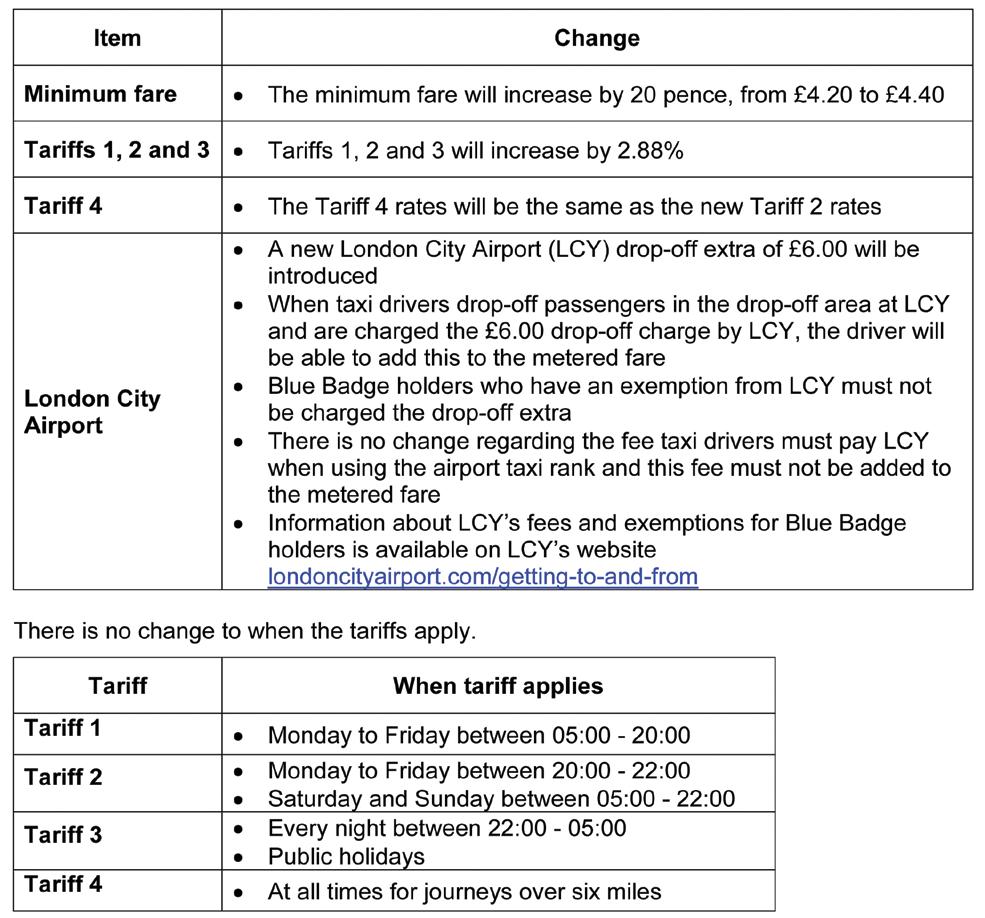
This notice sets out changes to london taxi fares and tariffs that come into effect on Saturday 25 april 2026.

Over the past twenty years London’s taxi and private hire market has undergone a profound transformation. Licensing data from Transport for London reveals a transport system that has grown in size but changed dramatically in structure.
Four key trends stand out clearly.
First, the number of licensed taxi drivers and vehicles has declined significantly. Second, the private hire sector has expanded rapidly. Third, the taxi fleet has transitioned quickly to electric vehicles. Finally, and perhaps most importantly, the proportion of wheelchairaccessible vehicles in London’s passenger fleet has fallen. Taken together, these trends suggest that London’s transport system is becoming larger but less accessible, cleaner but more structurally imbalanced.
For much of the early 2000s the taxi trade was stable. London had roughly 25,000–28,000 taxi drivers and around 22,000–23,000 licensed taxis. Over the past decade this stability has disappeared.
Today London has approximately 16,000 taxi drivers and around 14,500 taxis. In effect, the taxi workforce has shrunk by roughly 40 percent, while the fleet itself has fallen by around one third. This is not a sudden collapse but a steady structural decline.
While taxi numbers have fallen, the private hire sector has expanded dramatically. In 2000 London had around 40,000 private hire drivers. Today there are more than 100,000. The balance between the two

sectors has therefore shifted dramatically. Twenty years ago there were roughly 1.6 private hire drivers for every taxi driver. Today the ratio is closer to six private hire drivers for every taxi driver.
The growth of app-based ride-hailing platforms during the 2010s accelerated this shift and fundamentally altered the structure of London’s passenger transport market.
One area where London has seen clear success is the electrification of the taxi fleet. In 2018 Transport for London introduced the Zero Emission Capable taxi requirement, meaning all new taxis must meet strict emissions standards. Since then the number of electric taxis has risen rapidly. Today there are around 9,000 electric taxis operating in London, making the
capital home to one of the largest electric taxi fleets in the world. However, this transition has required substantial investment from drivers. Electric taxis typically cost £65,000–£75,000, and the cost of entry to the trade has increased significantly.
Perhaps the most important issue highlighted by the data concerns accessibility.London taxis are designed to be fully wheelchair accessible. Most private hire vehicles are not. As taxi numbers have declined and private hire vehicles have expanded, the share of accessible vehicles in London’s passenger fleet has fallen sharply.In 2000 accessible taxis represented roughly 36 percent of the passenger vehicle fleet. By 2025 this share has fallen to around 12 percent. In other words, although London now has more passenger vehicles overall, the proportion capable of transporting wheelchair users has declined substantially.
The evidence raises a fundamental policy question: what role should the taxi trade play in London’s future transport system? The city has successfully electrified a large part of its taxi fleet, but the sector itself continues to shrink. At the same time the rapid expansion of private hire vehicles has reshaped the balance of the market.
If current trends continue, London may find itself with fewer taxis, fewer accessible vehicles and a passenger transport market increasingly dominated by private hire services. For policymakers concerned with accessibility, congestion and transport resilience, these trends deserve close attention.
By Danny Scarfe


By Alan McGrady
Last month the taxi trade lost one of its own with the sad passing of Gary Snewing, a valued member of the TPH Ranks team and a man respected by many across the trade.
Gary was a huge asset to the team when he joined from the bus side of the industry. From the moment he arrived, it was clear how much he cared about making things work better for taxi drivers.
His knowledge of bus movements and routes proved invaluable, often helping the ranks team understand where buses would be operating and

allowing us to anticipate potential issues when planning or reviewing taxi ranks in busy locations.
Gary always approached his work with the trade in mind. He listened, engaged and genuinely wanted to help improve things for drivers out on the road.
His contributions to discussions around ranks and taxi operations were always thoughtful and constructive, and he quickly earned the respect of those who worked alongside him.
He was also a regular and committed attendee
at the monthly ranks meetings. Even during his difficult battle with illness, Gary still made every effort to attend whenever he could.
That alone says a great deal about the kind of man he was — dedicated, supportive and determined to continue contributing to the work he cared about.
Gary will be greatly missed by everyone who had the privilege of working with him. His contribution to the ranks team and to the wider taxi trade will not be forgotten.
Rest in peace, Gary.
We are writing with the latest update on the St. Paul’s Gyratory Transformation Project.
Repaving on the west side of St. Martin’s Le Grand outside 81 Newgate Street is nearing completion and work on the north side of Newgate Street is progressing. We successfully proved our tree pits on St. Martin’s Le Grand and six Liquid Amber trees were planted at the end of February.
Work continues by modifying the eastern end of Angel Street to facilitate the new road layout and new granite setts are being laid at the entrance to Paternoster Row.
The project team hosted a delegation from C40 Breathe Cities - an
initiative supporting cities around the world to cut their air pollution and climate emissions. The
its improvements that aim to encourage more people to choose sustainable forms of travel such as
demonstration of the electric excavator, dumper truck and the onsite “Charge Fairy”.
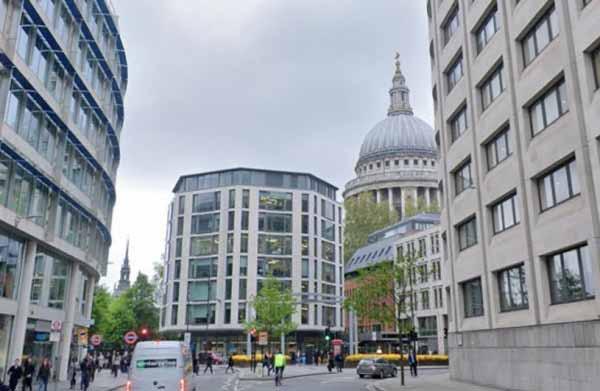
delegates were given a presentation on the transformation project and
walking and cycling.
They also received a
We continue to work with our highway contractor FM Conway
and Transport for London to try and keep disruption to a minimum but understand that the suspension of bus stops and changes to crossing facilities can be inconvenient.
If you encounter any issues, please do not hesitate to contact the project team atstpaulsgyratory@ cityoflondon.gov.uk so that we can look into it.
We are currently aiming to introduce the new twoway highway layout in Summer 2026, after which we can close the southern section of King Edward Street and commence construction of the new Greyfriars Squarescheduled for completion in April 2027.
Spend any time in the Heathrow Taxi Feeder Park and you will hear the same story from drivers.
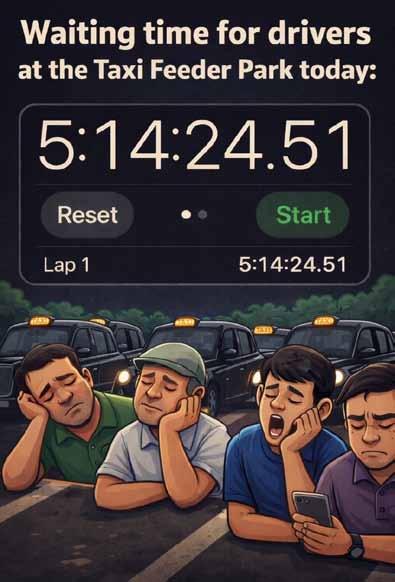
Work is down. Queues are longer. Waiting three or four hours for a job is now common. But while drivers sit in the feeder park watching the clock, Heathrow Airport Limited is quietly preparing a consultation that could fundamentally change the future of taxis at the airport.
Those proposals involve moving the taxi operation away from the current non-profit Taxi Feeder Park framework and towards a commercial agreement with Heathrow. That may sound technical. It isn’t.
Under the current nonprofit system Heathrow can only recover the direct operational costs of running the Taxi Feeder Park. The airport cannot treat taxis as a commercial concession or profit centre. A commercial agreement would change that completely. Under a concession model Heathrow would gain far greater control over the taxi operation. Charges, access arrangements and operating conditions could all become part of a negotiated contract rather than a simple costrecovery system. In simple terms, the relationship between Heathrow and taxi drivers would change. Once a commercial framework exists, it becomes extremely difficult to reverse.
This is not the first time Heathrow has explored this idea. A few years
By Mark White
ago, similar proposals were raised that would have moved taxis into a commercial framework. At that time the LCDC strongly opposed the change and sent a detailed report to HAL and the CAA - Heathrow
stepped back.
Sam Houston had previously sent a weak reply that he wouldn’t share with the other trade org representatives, saying the LTDA would be
• EV charging infrastructure
• feeder park maintenance
• hygiene standards
• stronger action against illegal touting.
‘disappointed’. However, the concept never disappeared and it’s now back on HAL’s agenda again.
Airports all around the world operate taxi systems through commercial concessions. Heathrow is one of the few major airports where the taxi operation still sits within a non-profit framework. Although the new Sensor Dynamics system has been delayed Drivers should understand that this position is not guaranteed forever and it’s a subtle change by the Airport to how they work and operate the Taxi Feeder Park.
While these strategic issues develop, the Heathrow taxi trade continues to be distracted by something far more familiar - Internal disputes. Earlier this week an email was circulated to Heathrow Airport Limited, APCOA and the various trade organisations setting out a number of practical issues raised by drivers working the feeder park.
The list was straightforward:
• improvements to driver welfare facilities
The purpose of the email was simple: to ask the organisations whether they supported these issues so that a clear agenda could be agreed ahead of the next Heathrow meeting. However, Instead of engaging constructively with those issues, the response from one representative quickly turned into a hostile and unprofessional exchange copied to Heathrow Airport Limited and APCOA. That response had nothing to do with the issues raised by drivers. It had everything to do with internal disputes. And once again the focus shifted away from the problems drivers face every day.
The Meeting That Proved the Point
The meeting of senior representatives in the summer of 2024 illustrated the problem perfectly. The meeting should have focused on the wider challenges facing Heathrow taxis. Instead it became dominated by an argument about the Taxi Feeder Park Warden scheme run by the LTDA’s Suzanne Sullivan and her friends. The discussion consumed the entire meeting. Ironically, the issue itself should have taken ten minutes to agree a basic Service Level Agreement (SLA) that could be reviewed periodically (every couple of months).
But Reps found out that the expanded scheme had been justified using flawed data, and drivers were now reporting three to four hour waiting times in the feeder park, not the average two that the Warden Manager had claimed. Rather than improving throughput, the system had slowed the park down. Yet while representatives argued about wardens and service level agreements, the far more serious strategic issues affecting
the Heathrow taxi trade received little attention at all.
The uncomfortable truth is that the Heathrow taxi trade remains deeply fragmented. Some representatives appear more focused on protecting their own schemes or interests than addressing the wider challenges facing drivers. Issues affecting hundreds of drivers — waiting times, declining work, infrastructure and the future structure of the Heathrow taxi operation — are too often pushed aside while narrower concerns dominate meetings and discussions. That is not what proper representation should look like. Drivers waiting hours for work deserve far better.
Personally, I have reached the point where I have had enough. If constructive proposals cannot even be circulated without them being derailed by hostility, personal agendas or unnecessary disputes, then the trade has a much bigger problem than potholes in the feeder park or broken barriers because while representatives argue among themselves, Heathrow continues to shape the future of airport transport and one of the questions now emerging is whether the Heathrow taxi operation should move towards a commercial agreement with the airport. That is the discussion drivers should really be paying attention to as you are now giving all your personal details to HAL.
If Heathrow proceeds with consultation on a commercial taxi agreement, it will be one of the most important issues the Heathrow taxi trade has faced in decades. Once a commercial framework is introduced it becomes extremely difficult to reverse. Drivers therefore need serious representation that focuses on protecting the future of the Heathrow taxi operation, because Heathrow will not wait for the taxi trade to organise itself and when Heathrow finally asks the taxi trade to sign a commercial agreement, drivers may discover that the real mistake wasn’t the contract it was allowing the trade to become too divided to stop it and that you’ve already signed it.

For years, drivers working the Heathrow taxi feeder park have relied on a small set of basic facilities: the canteen, toilets, and a place to grab a quick break between fares. Recently, however, growing concern among cabbies has centred on the new “multi-faith prayer room” installed behind the cabbies’ canteen — and, more importantly, the impact it is having on hygiene around the site.
What began as a small, makeshift prayer area has now been upgraded to a larger portable cabin and formally labelled a multi-faith prayer room. In principle, providing a quiet space for reflection or prayer is something most drivers would have no objection to. Heathrow is one of the most diverse working environments in the country, and black cab drivers come from many different backgrounds and faiths.
The issue, however, is not the existence of a prayer space. The problem is that the surrounding facilities were never upgraded to support the level of use the new cabin now attracts.
In practice, the room is being used predominantly for Islamic prayer, which involves ritual washing — known as ablution — before prayers. This requires access to appropriate washing facilities. Unfortunately, the existing toilets at the feeder park were designed simply for normal restroom use by drivers, not for the repeated washing routines now taking place throughout the day.
As a result, many drivers say the toilet area has become increasingly unsanitary. Water from washing routines regularly spills onto the floors, creating wet and slippery conditions. More concerningly, drivers report that water from toilet
cubicles is frequently carried out on footwear into the surrounding areas, including the canteen.
The result is a mess that many drivers describe as unpleasant at best and unhygienic at worst. Floors are frequently soaked, paper towels and waste are often left behind, and the smell and cleanliness of the facilities have noticeably deteriorated. Several cabbies say they now avoid using the toilets altogether if possible, while others worry about hygiene in the canteen where drivers eat and drink.
It is important to stress that this is not about singling out any religion or group of drivers. The core issue is one of planning and facilities management. If a prayer room — particularly one used regularly for ablution — is to be installed, then the proper washing and drainage facilities should be provided alongside it.
Across airports, universities, and workplaces in the UK, purposebuilt ablution areas are commonly installed near prayer spaces specifically to prevent these kinds of hygiene problems. Without them, the burden inevitably falls on standard toilet facilities that were never designed for such use.
For the Heathrow feeder park, the solution should be straightforward. Either proper ablution facilities need to be installed next to the prayer cabin, or clear management and maintenance measures need to be introduced to ensure the existing toilets remain clean and usable for everyone.
Ultimately, responsibility for maintaining proper standards lies with Heathrow Airport Limited (HAL). As the operator of the airport and the feeder park facilities, HAL has a duty to ensure that drivers using
the site have access to clean, sanitary, and properly maintained toilets. The current situation falls short of that basic expectation.
Black cab drivers spend long hours waiting at Heathrow. The feeder park is effectively a workplace shared by hundreds of drivers every day. Clean, safe, and hygienic facilities are not a luxury — they are a basic requirement.
Drivers are not asking for the prayer room to be removed. What they are asking for is simple fairness and proper infrastructure so that the facilities at the feeder park remain usable and hygienic for everyone.
Until that happens, the current situation will continue to cause frustration, resentment, and concern among the drivers who rely on these facilities every day.
Be lucky Jamie Hawes
The article explaining the BULit21 case in TAXI 601, published on 3 February 2026, correctly outlines the purpose of the forthcoming limitation hearing.
However, one point was already out of date by the time the piece appeared in print.
The article states that the court had yet to identify the twenty representative drivers - (ten selected by each side) - whose circumstances will be examined at the preliminary hearing.
In fact, those drivers had already been selected by the time the article was published.
Among those chosen were two drivers who were members of the LTDA Council of Management.

In addition, several drivers connected with the LCDC were included within the group selected by Uber.
As part of the process, those involved have been required to provide access to historic material, including personal notes, devices and archived copies of the LCDC publication The Badge.
At least one driver has now been asked to provide evidence, while others are still awaiting confirmation as to whether they will be required to do so.
This detail matters because the evidence from these representative drivers will help determine whether the wider claim can proceed.
The outcome of the limitation hearing will therefore affect not only those directly involved, but potentially thousands of taxi drivers connected to the claim.


The Taxi Charity for Military Veterans hosted a special event at the RAF Club on 10 March to celebrate International Women’s Day, bringing together serving personnel, veterans Including Robbie Hall, Dorothea Barron, Marie Scott, and Ruth Barnwell who served in WWII, supporters, volunteers and friends of the charity.

The afternoon highlighted the contributions of women in service, remembrance and charitable work, reflecting the values at the heart of the Taxi Charity’s mission to support military veterans.
Guests included two distinguished visitors from the Netherlands: Els Schiltmans from the Dutch Army Recovery and Identification Unit and Dr Linda Hiddink, who served with the Royal Netherlands Army Medical Corps. They took part in a special conversation hosted by broadcaster and journalist Hannah O'Sullivan from Host Media, sharing insights into their experiences and the important work they undertake.
Opening the event, the charity’s Chairman Colin Mills welcomed guests and reflected on the significance of the day. “It’s a pleasure to see you all here today as we come together to mark International Women’s Day,” he said. “Today gives us the opportunity to celebrate the achievements and contributions of women while also reflecting on the values of service, remembrance and community that are at the heart of the Taxi Charity.”
Referring to this year’s International Women’s Day theme, “Give to Gain,” he highlighted the importance of collective effort in advancing gender equality. “When we invest in women’s safety, rights and leadership, we strengthen societies as a whole.”
The afternoon then turned to a conversation led by Hannah O’Sullivan with the charity’s Dutch
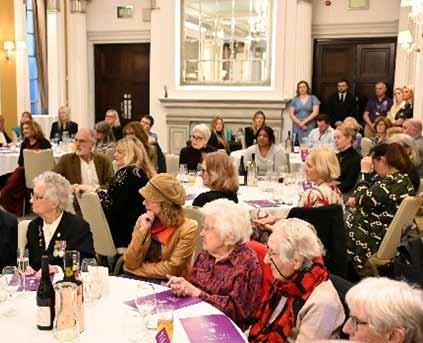
guests, exploring their roles in military service and remembrance, as well as the ongoing importance of international cooperation in honouring those who served.
Events such as this form an important part of the Taxi Charity’s wider programme of activities, which brings veterans, supporters and volunteers together while continuing to highlight the enduring importance of remembrance and service.

Charity International Women’s
Els Schiltmans, Hannah O’Sullivan and Dr Linda Hiddinck
About the Taxi Charity for
The Taxi Charity is run by volunteer London black taxi drivers and has been supporting thousands of veterans since 1948. It is the only Forces charity that focuses on providing fun and entertainment and arranges free trips (for veterans from all conflicts) to the Netherlands and France for acts of commemoration and days out to museums, concerts, or social events across the UK.
The charity received the Queen’s Award for Voluntary Service in 2021 and celebrated its 75th anniversary in 2023, a remarkable milestone for a small, niche charity peopled by enthusiastic volunteers.
To fund and facilitate their work, the charity is wholly reliant on donations, grants and sponsorship.
www.taxicharity.org
Dear Mr Robinson,
I am writing to you in your capacity as General Manager of Transport for London’s Taxi and Private Hire Directorate to raise serious and ongoing concerns regarding the lawfulness of the Bolt appbased private hire booking model currently operating in London under a TfL licence, and the associated consumer protection and public safety implications.
Private hire passengers as consumers and licensed operators as traders
Private hire passengers are consumers for the purposes of the Consumer Rights Act 2015 (“CRA 2015”)1 and the Consumer Contracts (Information, Cancellation and Additional Charges) Regulations 2013 (“CCRs”)2. Private hire operators licensed by TfL under the Private Hire Vehicles (London) Act 19983 are traders within the meaning of those regimes.
A private hire booking is a consumer contract for services concluded at a distance via an app. The trader is the licensed operator that accepts the booking. The private hire driver is not the trader.
The legal foundation of a private hire booking
Every lawful private hire journey begins with a contract between the consumer and a licensed operator acting as the trader. That operator is a specific corporate entity holding an operator licence issued by a particular licensing authority. The operator licence is the legal authority that permits that corporate entity to accept bookings and arrange journeys. Without a valid operator licence governing the booking in question, the transaction is unlawful.
In my view, the identity of the licensed operator — meaning both the corporate entity and the operator licence under which it is acting — is therefore not ancillary or background information. It is foundational to the contract itself. It determines which licensing authority regulates the transaction, what safety and compliance standards apply, where enforcement responsibility lies, and where consumer complaints and remedies must be directed.
Where a corporate entity (such as Bolt in this instance) holds multiple operator licences issued by different licensing authorities, the legal identity of the trader is incomplete unless the specific operator licence relied upon for the booking is disclosed at the pre-contract stage. A booking fulfilled under a Wolverhampton licence is, in regulatory substance, materially different from one fulfilled under a TfL (London) licence, even where the same brand is used.
Consumer Rights Act 2015: sections 50 and 68
Section 68 of the CRA 2015 requires that material information be provided to the consumer before they are bound by a contract, and that such information be transparent and prominent.
Section 50 provides that information which a trader is required to give under consumer law is to be treated as a term of the contract.
In my view, for private hire services, the identity of the licensed operator — including the licensing authority that issued the operator licence — is plainly material. It goes to the nature of the service
being offered and the regulatory and safety framework that governs it.
Pre-contract disclosure at the point of offer
A complete and lawful disclosure must therefore be made at the point of the private hire booking offer and before the consumer accepts the booking contract on the app.
This is a pre-contractual obligation. Disclosure after acceptance, after driver allocation, or solely within terms and conditions does not, in my view, satisfy the transparency requirements of section 68.
A compliant disclosure would clearly and prominently state, before the consumer accepts the booking, for example:
“This booking is being offered by [Corporate Entity Name] operating under private hire operator licence [number] issued by [Licensing Authority].”
Disclosure after acceptance is, in my view, legally ineffective, as the consumer has already been bound without the opportunity to make an informed decision as to whether to contract at all.
Put simply, a consumer seeking to order private hire services through the Bolt app while in London would ordinarily and reasonably presume that they are being offered a service provided by a vehicle and operator licensed by Transport for London. If instead the booking is fulfilled by a vehicle operating under a Wolverhampton operator licence without the consumer’s knowledge or prior disclosure, the consumer has been deprived of the information necessary to make an informed choice. In my view, that
lack of transparency undermines informed consent and engages the consumer’s rights under consumer protection legislation.
contracts)
App-based private hire bookings are distance contracts within the
In the context of private hire services, the trader is the licensed operator authorised to accept the booking. In my view, the trader’s identity cannot be fully disclosed without identifying the specific operator licence, the issuing licensing authority, and the geographical address at which the trader is established, particularly
meaning of the CCRs.
Regulation 10, read with Schedule 2, requires specified pre-contract information — including the identity of the trader and the geographical address at which the trader is established — to be provided in a clear and comprehensible manner before the consumer is bound by the contract.
where different licences entail materially different regulatory oversight.
Concerns regarding current app-based models
Operators such as Bolt appear to offer private hire services in London using both TfL-licensed drivers and drivers licensed by other authorities, such as
Wolverhampton, without disclosing to consumers, at the point of booking offer, which operator licence and licensing authority will govern the booking.
It appears that this information is not disclosed because the platform does not know which operator licence will apply until after a driver has accepted the booking.
section 2 of the Private Hire Vehicles (London) Act 1998, which requires bookings to be accepted by the licensed operator.
TfL has previously expressed concerns about similar models, including Uber. In 2018 TfL indicated that booking systems in which the driver accepts the booking before the operator do not comply
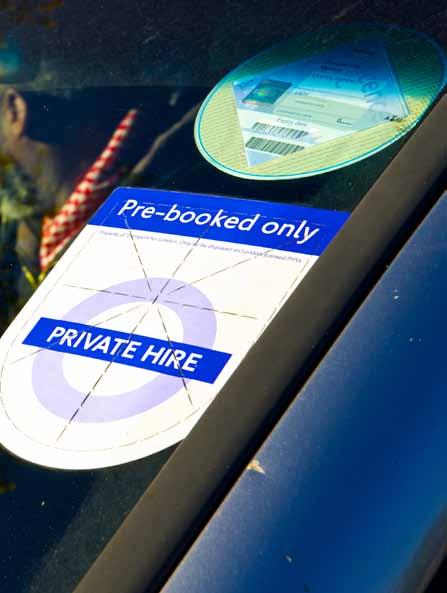
In common-sense terms, and as a matter of regulatory concern, it appears that the private hire driver accepts the booking before the operator.
If that is the case, this raises serious concerns regarding compliance with
accepted by the driver and only then relayed back to the customer.
Cited for convenience:
320. On 22 September 2017, TfL wrote to ULL about its operating model [EX1/B/63]. As TfL explained, it was minded to conclude that ULL's business model does not comply with section 2 of the 1998 Act. TfL was not satisfied that ULL was accepting bookings at its licensed operating premises in London because:
(a) ULL does not accept bookings before assigning them to a driver - the booking is accepted by the driver and the operating system then relays the acceptance back to the customer
(b) In common sense terms, it is the driver, not ULL, which accepts the booking;
For the avoidance of doubt, this correspondence is specifically concerned with the operation of the private hire operator Bolt (Bolt Services UK Limited, operator licence number 10088) in London under a licence issued by Transport for London.
For context, I am concerned that the same or a substantially similar booking model may be being operated nationally by other app-based private hire platforms, including Uber, raising analogous issues of compliance with private hire legislation and consumer protection law nationally.
The consequence of permitting such models (if unlawful) is, in my view, the facilitation of large-scale cross-border private hire activity, with private hire drivers operating in London without effective local enforcement oversight. This deprives consumers of informed choice, complicates enforcement, and raises legitimate public safety concerns.
and ministers have a responsibility to ensure that the law is applied consistently and equally, rather than selectively enforced against some, while large corporate operators are permitted to operate outside its requirements. In my view, this reflects a broader and concerning failure of effective regulation.
fThis is materially the same issue identified by Helen Chapman in 2018 when Transport for London refused to license Uber, and it raises substantively identical concerns under section 2 of the Private Hire Vehicles (London) Act 1998.
with section 2. In my view, the continued operation of such models warrants urgent regulatory scrutiny.
This position is set out at paragraph 320 of Helen Chapman’s first witness statement4, where TfL stated that it was minded to conclude that Uber’s business model did not comply with section 2 because the booking was
It does not, at this stage, constitute a complaint regarding Bolt’s operation under operator licences issued by Wolverhampton City Council. Wolverhampton City Council’s licensing authority and the Department for Transport have been sighted into this correspondence for awareness and record, given the wider regulatory context and the potential cross-border implications of the booking model described.
If Transport for London is not prepared to address these concerns regarding compliance with section 2 of the Private Hire Vehicles (London) Act 1998 and the associated consumer law obligations in regards to this complaint against Bolt, then many of those sighted into this correspondence are in discussion to consider legal action against Transport for London, Wolverhampton City Council, and potentially the Department for Transport, in relation to what is, in my view, systemic, foreseeable, and preventable unlawful activity arising from the continued operation and tolerance of this booking model.
It should not fall to ordinary taxi and private hire drivers to initiate legal proceedings against licensing authorities or government departments in order to secure compliance with the law. Government departments
I would therefore be grateful if Transport for London could confirm whether it considers Bolt’s current booking model in London to be compliant with section 2 of the Private Hire Vehicles (London) Act 1998 and with its consumer law obligations under the Consumer Rights Act 2015 and the Consumer Contracts (Information, Cancellation and Additional Charges) Regulations 2013.
Yours sincerely,
Christopher Johnson
London Cab Drivers Club
References
1. https://www.legislation. gov.uk/ukpga/2015/15/ contents
2. https://www.legislation. gov.uk/uksi/2013/3134/ contents
3. https://www.legislation. gov.uk/ukpga/1998/34/ contents
4. https://content.tfl.gov.uk/ helen-chapman-first-witnessstatement-march.pdf
Eddie Hearn has claimed that Conor Benn offered him money to avoid speaking negatively about their split after the British boxer signed a blockbuster deal with Zuffa Boxing.
Benn's decision to leave Hearn's Matchroom stable after a decade together came as a surprise within the industry, with the 29-year-old agreeing terms on what has been widely reported as a $15million one-fight deal with the new promotional venture headed up by Dana White.
Hearn, who guided Benn from his professional debut at 19 and oversaw his rise to world-level contention, admitted he was 'devastated' by the departure. He also revealed he was given just three days to match the

offer - which he felt was 'completely unreasonable commercially'.
Despite Benn publicly insisting he would still like a relationship with his former promoter and even suggesting there could be a place for him within his team, Hearn says part of
the exit discussions left him stunned and disappointed in his former star.
Speaking to iFL TV about the way in which Benn handled the situation, Hearn said: 'There was something else which was, "We'll give you a few quid if you don't say anything
bad", kind of thing. And I was like, What? "We still want to work with you and here's a few quid".
'And we're all then straight on like, "Have you seen that? Are they f***ing having a laugh?" Everyone was just completely shocked.'
Hearn also expressed frustration at how the communication was handled, revealing he first learned of developments formally through Benn's legal team rather than directly from the fighter.
While reiterating that he respects any fighter's right to maximise their earning potential, Hearn insisted his issue was not financial.
'To be honest, I think people get it a little bit mixed up between a fighter shouldn't be denied an
opportunity to make a load of money for their family and all this kind of stuff,' he said.
'I couldn't agree more. This is not about that. This is just the way that you act to someone that has done so much for you and has basically saved your career.
'And if you listen to the Conor Benn story, I don't want to say saved his life, but the people who were there for him like that – which you can count on one hand – played a massive part in that. So to forget them or to treat them with disloyalty for me is unforgivable.'
Benn's next bout is scheduled for April 11 in a 150lb catchweight clash against former 140lb world champion Regis Prograis.
Courtesy of DailyMail
There has to be a bit of genuine nastiness in any successful British boxing rivalry. Boxers have shared 45 championship rounds and not really disliked each other, and met in trilogies that lacked a lasting moment of hate, writes Steve Bunce...
Josh Warrington and Leigh Wood fight on Saturday in Nottingham, in a longoverdue rematch and a fight that other domestic rivalries should be measured against. Warrington and Wood is nasty; it is also a fight for survival at boxing’s elite level.
Their first meeting was in 2023 in Sheffield, which was fairly neutral, and Wood was the defending WBA featherweight champion. They could have met a
few years earlier; they had both had spells as world champions at the same weight and time. They had a natural and rare rivalry as world champions, and they were mentioned as opponents for each other.
Going into their first fight, there was a lot of hostility and abuse. Wood was champion, Warrington had lost his title in his previous fight, 10 months earlier. They both made claims about the other not wanting the fight. It turned personal and stayed personal on the night.
It was a truly savage affair with a furious start: late shots, low punches, point deductions, warnings, cuts, anger and – going into the seventh round – it looked like Warrington was going to pull away. After
six completed rounds, Warrington was up on all three scorecards (58-56 and 59-55 twice) and Wood was struggling.
round when he beat the count and staggered, stunned and confused, to a corner.

The fight switched in a second with one short hook, and then, as Warrington slumped, a fast combination dropped him heavily to the canvas. There were just seconds left in the seventh
It was correctly stopped; he was in no condition to continue. Warrington was angry with the stoppage, still is. A rematch was immediately talked about, but just never happened.
Still, their rivalry intensified.
There has been a lot of talk and uncertainty since that first fight. There was even a rumour that they would meet in a bare-knuckle match. Since their dramatic first clash, they have both had spells of inactivity. Wood has fought just the once, and he was stopped; Warrington has won and lost since that October night in Sheffield. They have aged and slowed, but their rivalry remains as vicious as ever.
They both have tremendous belief in totally different endings. It might not always be pretty, but it will be captivating until the bloody, hard and inevitable stoppage. Both can win, both can so easily lose – it is the dream domestic rematch.
One of my first abiding memories of travelling around London in the very early 1980s was seeing the mosaic tiles at the Tottenham Court Road tube station. Brightly coloured, and instantly catching the eye, I always looked out for them when travelling up to that end of Oxford Street, before emerging up West to look for records, clothes and books on any given Saturday.
I mentioned them to someone I worked with back then one day and they told me they were designed by the artist Eduardo Paolozzi, who I presumed to be an Italian gentleman.
It was only when I started to attend art exhibitions on a regular basis a year or so later and particularly ones featuring Pop Art, and noticing the occasional piece by Paolozzi in the shows, did I then become


aware that he was actually from Scotland.
Born in Leith in 1924, the son of Italian immigrants, he was interned at the outbreak of the Second World War. Sadly his father, grandfather and uncle died along with over 450 other Italians when their boat ‘The Andorra Star’ which was carrying them to Canada, was sunk by a German U Boat
After studying in Edinburgh and London in the mid to late 40s, he then worked in Paris, meeting all the main art movers and shakers of that period, all of whom influenced his later work.
Back in London he became a founder member of the Independent Group and his work, among that of his contemporaries within that group finds itself acknowledged as the first influences of the later ‘Pop Art’ movement. Indeed his ‘I Was A Rich Man’s Plaything’ from 1947 is often referred to as the first artwork to use
Berkeley, Berlin, Munich, as well as at The Royal College of Art.
Apart from work by sculptor Henry Moore, I think I have found more ‘street art’ on the streets of London by Paolozzi than by anybody else.
Until a few years ago, I always noticed the work ‘The Artist as Hephaestus’ on High Holborn as I went past on a bus. That suddenly disappeared due to redevelopment work, but others worth checking out, include the ‘Piscator’ at Euston Station and ‘Newton after Blake’ which I see on my frequent trips to the British Library on the Euston Road.
Back to the 1984 mosaic at Tottenham Court Road. Due to extension work at the station by Crossrail in the last few years, sections of the tiles have had to have been moved or removed altogether.
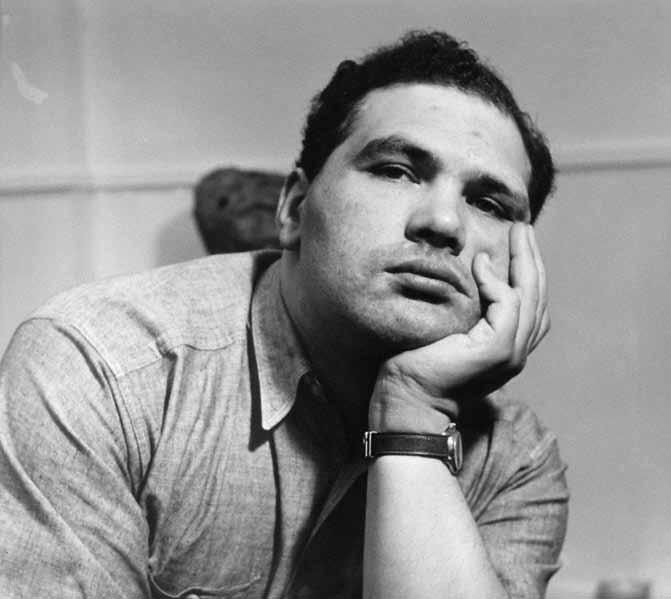
the word ‘pop’ within its collage.
The title of his 1964 series of screen prints ‘As Is When’, based on the life of philosopher Ludwig Wittgenstein, would be a later be acknowledged as an influence on the 2005 Paul Weller album ‘As Is Now’
Paolozzi taught all over the world in the 1960s and 1970s, taking in the
Actually, when it came to restoring the original work that remained at the station, it was noticed that quite a few pieces were missing from the artworks. Art loving commuters had simply taken a few here and there as souvenirs
Awarded a CBE in 1968, he would be come Sir Eduardo Paolozzi in 1989. He died aged 81 in 2005





All under one roof
• Exclusive Insurance schemes
• Breakdown cover only £99
• Roadside assistance and recovery
• Recovery to any UK Location