
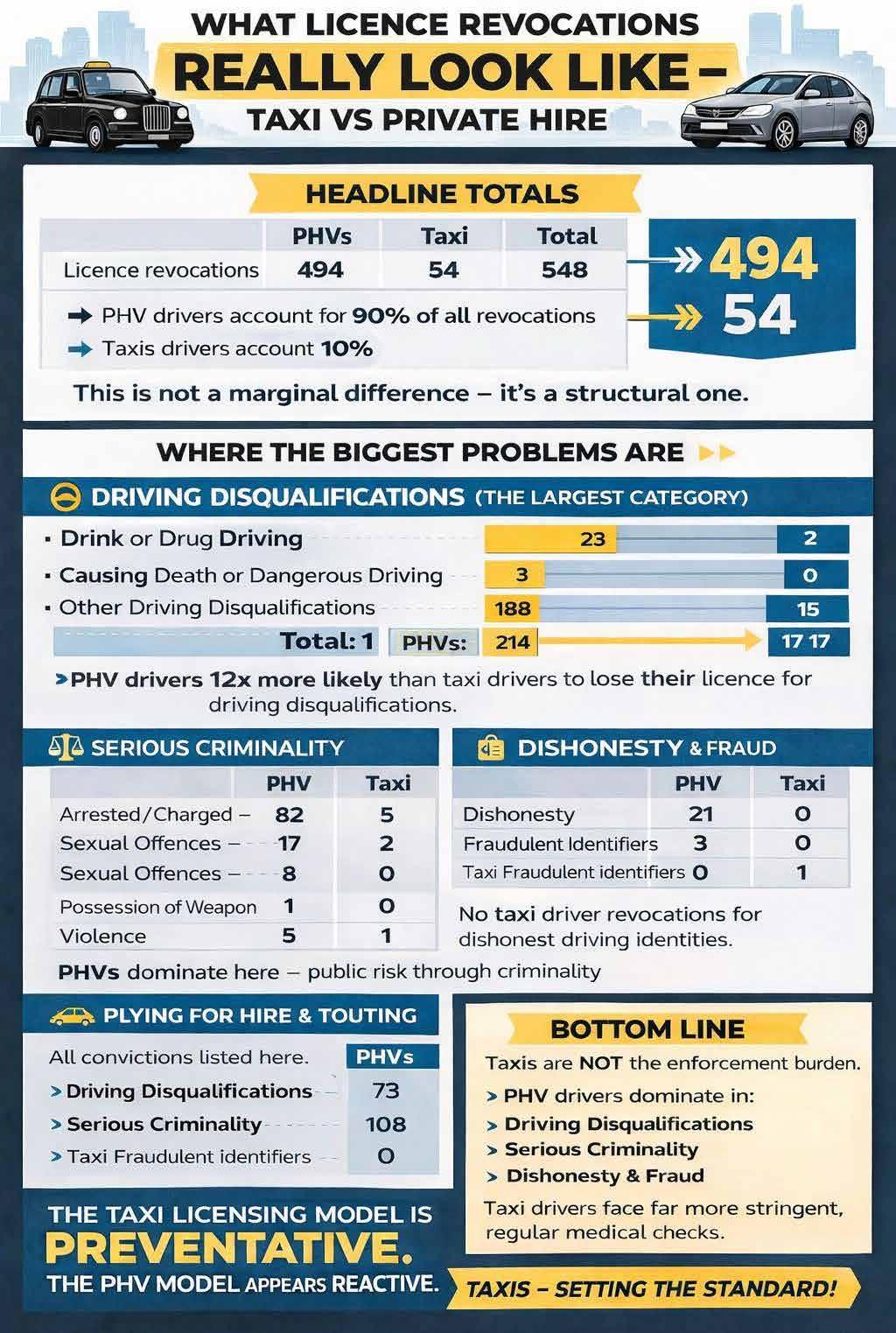
494 MINI CAB LICENCES REVOKED






TONY WILL BE SO MISSED
As I write this editorial, my heart is heavy. Today I attended the funeral of LCDC member and dear friend, Tony McGrady. Tony was one of those rare characters who truly embodied the taxi trade. Like a stick of rock, you only had to look beneath the surface to see that the trade ran right through him. His loss will be deeply felt by the many drivers who knew him, worked alongside him, and called him a friend.
Telephone: 020 7394 5553
E-mail for membership enquiries: thelcdc@gmail.com Web: www.lcdc.cab
Editor: Grant Davis
The Badge is distributed free to the Licensed London Cab Trade.
For advertising enquiries please contact the office on 020 7394 5553 or E-mail: thelcdc@gmail.com
All advertising in The Badge is accepted under our terms and conditions. These are available at the LCDC office. Before entering into any commitment, financial or otherwise, always remember to seek professional advice.
The views expressed in this publication are not necessarily those of the Editor or of the Management Committee of the London Cab Driver’s Club.
Contributions for publication are welcomed and should be sent to the Editor at the above address.
Printed by Iliffe Print. T: 01223
656500
Against this backdrop, it is impossible not to reflect on the challenges our trade continues to face. As highlighted on our front page, 500 private hire drivers have had their licences revoked in just one year. This situation cannot be ignored, and much of the responsibility lies firmly with Transport for London. Long-promised measures such as the installation of CCTV cameras continue to be delayed, and we are still waiting for the introduction of the advanced driving test for both private hire and taxi drivers - steps that would benefit safety, standards, and public confidence across the board.
Following the departure of Helen Chapman at Christmas, I remain hopeful that TfL will appoint a clear and committed “go-to” manager for our trade. However, I am also concerned that as our numbers continue to fall, we may struggle to have our voices heard within TfL, particularly as cycling, buses, and other transport modes increasingly take priority in London’s transport strategy. We are repeatedly told by the Mayor that congestion is worsening and journey times are slowing - yet, at the same time, permission is given for the introduction of Waymo driverless ‘taxis’ on our already overcrowded roads. For many in the trade, this feels completely at odds with the reality we face every day.
On a more positive note, I recently held a long and productive meeting with Reform UK Mayoral candidate, Laila Cunningham,. It was an encouraging discussion, and I believe it marks the beginning of a constructive dialogue about the future of our trade.


Published by
The London Cab Drivers’ Club Ltd.
China Walks, Suite 111, Black Prince Road, London, SE1 7SJ
Tony McGrady - a Club stalwart
The news that Tony McGrady had passed so suddenly and at such a young age has upset everyone at the LCDC.
Himself and his brother Alan' who is still the Club's Vice Chairman, have been stalwarts at the Club and their hard work has made the Club what it is today.
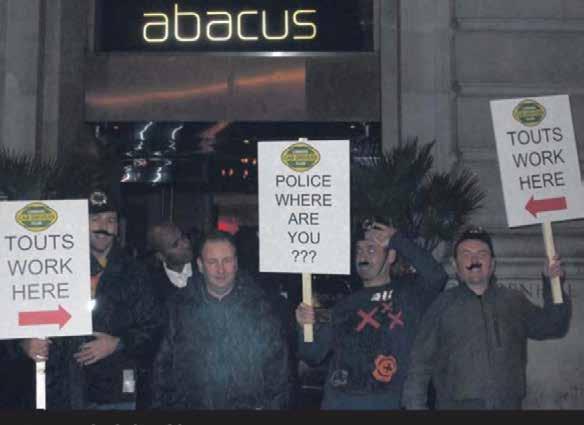
Tony loved driving a cab as much as he loved Millwall FC and when all the trade had to worry about was PH touts at venues around the Capital, he was always on the front line. He persuaded me to buy hidden surveillance cameras that he wore in and outside prolific night clubs and waited for the immortal line
“You wanna cab” from a fella with a clapped out
Mercedes 190.
He initiated the Introduction of the green and yellow Identifiers and was always the one at committee meetings to come up with great plans.
As you can see from the two pictures below, after making up placards and buying fancy dress police helmets and truncheons, we would hit the Clubs in the West End and City of London trying to encourage police activity. He always wore a smile and was always interested in the trade, if only we had 10k Tony McGradys, the Trade would be in a better place, thats for sure.
Rest In Peace Tony Grant
A FIGHTER FOR THE TRADE
It is with a very heavy heart that I have to announce that my brother Tony McGrady sadly passed away on 20th January, leaving a huge void not only in our family, but throughout the LCDC and the wider licensed taxi trade. As his brother, and someone who worked alongside him on the road, I know just how much the club and the taxi trade meant to him.
Born in Bermondsey in 1971, Tony qualified as a licensed London taxi driver in 2004, and from day one he threw himself into cab life. Driving a black cab wasn’t just a living for Tony — it was a badge of honour and something he was immensely proud of.
Tony became a committed member of the London Cab Drivers’ Club and later served as a committee member. He was passionate
about protecting the trade and was particularly active in tackling illegal touting. He worked tirelessly supporting enforcement and was known for going above and beyond, including gathering video evidence to help bring offenders to justice. Tony believed strongly in protecting passengers and standing up for licensed drivers who played by the rules.
Within the trade, Tony will also be remembered for his work around the development of the Green and Yellow sector (IDS). The original concept came from Tony, who spent countless hours producing mock-ups which were later presented to Transport for London. With the backing of the LCDC, he helped push the proposal forward despite facing strong resistance from sections of the trade at the time. Tony firmly believed the IDS would
benefit passengers and help modernise the trade for the future.
home again. He was a loyal supporter of the Taxi Charity for Military Veterans, a cause

Tony was also hugely proud to support the Armed Forces community. Every year, he made himself available on Remembrance Sunday, working with Poppy Cabs to ferry Gurkha veterans from Woolwich into central London and safely
that meant a great deal to him.
Away from ranks and meetings, Tony was a familiar face to many drivers and friends, often found in Saporis in the evenings holding court, putting the
world to rights and sharing plenty of laughs along the way. He was respected, outspoken, loyal and always willing to stand up for what he believed in.
For me, Tony was not just my brother but my partner in the trade and one of my best mates. We shared countless hours on the road and off it. He cared deeply about the trade, about the club, and about the people around him.
Tony leaves behind a legacy of dedication, strength and loyalty that will never be forgotten within the LCDC or the wider trade.
Donations in Tony’s memory can be made to the Taxi Charity for Military Veterans via: https://tonymcgrady. muchloved.com/
RIP Bruv, gonna miss you loads.
Light Off x Alan McGrady
NEARLY 500 PRIVATE HIRE LICENCES REVOKED: A WAKE-UP CALL FOR THE TRADE
Transport for London’s latest figures, obtained by the Club on private hire licence revocations in 2025 should make uncomfortable reading. According to the data, 494 private hire drivers had their licences revoked, and many of the reasons are serious enough to raise real concerns about passenger safety and standards in our industry.
These are not minor admin issues or forgotten paperwork. A significant number relate to criminal arrests, sexual offences, and dangerous driving.
Arrests and Charges
– Not Just a Few Bad Apples
The figures show that 82 drivers were arrested or charged with serious offences before losing their private hire licence. That alone should stop people in their tracks. Being arrested or charged for a serious offence is not something that should sit comfortably alongside carrying the public for a living.
What’s worrying is that revocation only happens after the fact. That means these drivers were already licensed and operating when the problems came to light. For an industry that relies on trust, that should be of concern.
Sexual Offences
Even more troubling are the numbers linked to sexual offences;
17 revocations for serious sexual offences
8 for other sexual offences
Driving
Standards
Basic Rules Being Ignored?
Driving is the job, yet the figures show widespread issues:
23 drivers revoked for drink or drug driving
3 for dangerous driving or causing death
about how these drivers were licensed in the first place, and whether checks and monitoring are strong enough once a licence is issued.
A Call for Higher Standards.
The Club have been longtime advocates of higher standards, with Government and DfT looking to implement
What makes these figures even more astonishing is that TfL has the power to implement significant safety measures now.
Previously, TfL consulted on advanced driving assessments, but no action was taken. Similarly, as part of DfT statutory standards, they were required to consult on CCTV, yet again,
188 for other driving disqualifications
12 for drug related offences
Drink-driving and drugdriving are not mistakes, they are choices. When professional drivers make those choices, they put lives at risk.
What This Means for the Industry
TfL may say that revoking licences proves enforcement is working. But from our view, it also raises hard questions
national minimum standards, we urge the highest possible.
This isn’t about attacking drivers, the vast majority are law abiding It’s about protecting the public.
The figures don’t lie. Nearly 500 licences revoked should be a wake-up call. The travelling public need higher standards and less tolerance for behaviour that puts them at risk.
TfL Kicking the Can Down the Road
nothing happened. No implementation, no new requirements.
Instead, in their latest Taxi and Private Hire Action Plan, published in 2025, TfL states they might consult in 2026/27 to give further consideration to mandatory requirements. A blatant case of kicking the can down the road.
As mentioned earlier, the Government and DfT will introduce national minimum standards in the future. When and what those standards will look
like is anyone’s guess. What shouldn’t happen is TfL using this as yet another reason to delay meaningful action.
The bottom line, TfL could introduce mandatory requirements now to improve passenger safety, but they continually fail to do so.
In-Vehicle CCTV A Proven Safety Measure Ignored
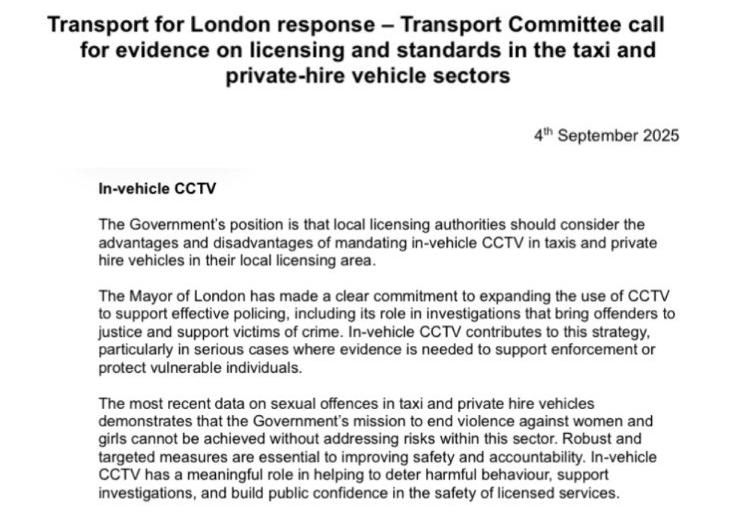
TfL themselves have highlighted the huge benefits of in-vehicle CCTV in their submission to the Transport Committee on licensing and standards (September 2025). They stated that CCTV supports effective policing, helps bring offenders to justice, protects victims of crime, and is particularly valuable in serious cases where evidence is needed to enforce the law and safeguard vulnerable passengers.
They also noted that the Government’s mission to end violence against women and girls cannot be achieved without addressing risks in this sector and that robust and targeted measures, including in-vehicle CCTV, are essential to improving safety, accountability, and public confidence in licensed services.
Yet despite this recognition, TfL has failed to make CCTV mandatory, even though they have the authority to do so now. Once again, the opportunity to introduce a proven safety measure has been delayed, leaving both drivers and passengers exposed to avoidable risks.

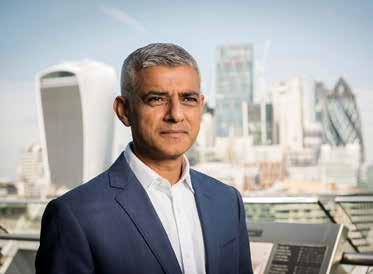
Mayor Khan accused of misleading Londoners over affordable homes
Sir Sadiq Khan has been accused of exaggerating his affordable homes push by falsely claiming to have started thousands of new developments.
New figures from data group Molior suggests the Mayor of London has been counting early-stage developments – such as buildings slated for demolition as well as blueprints for new homes – towards his total of affordable homes under construction.
Instead of 45,000 affordable homes claimed by the Greater London Authority (GLA) as being in progress, Molior said only 22,468 are actually being built in the capital.
Tim Craine, Molior’s founder, claimed the Mayor was misleading the public by inflating the numbers.
One project, Douglas Bader Park in Colindale, was counted by the GLA as under construction but Molior’s researchers found just 38 of the 392 affordable
homes promised had been built.
“What the GLA did was count the whole estate and call a 12-year build programme as being ‘under construction’. There are dozens of examples like this across London,” said Mr Craine. “Its definition of a start is signing a contract.”
Susan Hall, the Conservative leader in the London Assembly, called Molior’s claims “very concerning”.
She said: “If the Mayor or his deputies have included buildings that aren’t being worked on in the list of houses they’ve provided, it’s a disgrace.”
Ms Hall added that “cherrypicked” data would “further [erode] trust in authorities amid an acute housing crisis in the capital”.
Sir Sadiq has previously been embroiled in a row over his housing tracking record.
A statistics watchdog last
year ruled that the Mayor’s claim he had “delivered” 25,000 affordable homes in one year could be misinterpreted because many of the houses had only been started but not completed.
The Mayor of London’s
Steve Reed, the Housing Secretary, cut the proportion of affordable homes that a developer must deliver as part of a project to boost housebuilding rates in the capital.
A target for London’s Affordable Homes
target to build 88,000 homes a year in London plays a crucial role in the Government’s overarching ambition to deliver 1.5 million by the end of this parliament.
Sir Sadiq was given a reprieve last year when
Programme – a taxpayer funded scheme which forms part of Sir Sadiq’s home push – was also slashed by more than a fifth to between 17,800 and 19,000 to be built by March this year.
However, only 6,370 have begun under the
programme, according to the GLA – meaning the Mayor needs to start work on at least 11,430 more homes before March to meet the total.
Tom Copley, the deputy mayor of London for housing, has previously attacked Mr Craine’s claims that civil servants “embellished” the figures. Mr Copley said the allegation was “outrageous” and “completely unsubstantiated” at a GLA committee meeting in January.
A spokesman for the Mayor of London said: “GLA statistics on the starts and completions of homes by any tenure are transparent and accurate.
“The definition of starts on site for City Hallfunded affordable housing programmes is clearly set out in our funding contracts and are similar to those used by Homes England for equivalent projects.”
Courtesy
of The Telegraph
Lime cyclists skip red light 84 times in hour
London Lime cyclists have been recorded skipping a red light at a pedestrian crossing 84 times in one hour.
One image has even shown a man holding his phone with one hand, as he grips the bike’s handlebars with another as he cycled straight through the red lights, taken by a photographer for The Times.
After a horrific video of a Lime biker cycling straight into a child in Elephant and Castle in South London, there has been serious concern surrounding the
safety of Lime’s users across the capital.
Lime bikes are able to be rented through an app through much of Central London and, after use, can be left anywhere as long as users upload a photo of their location.
In October, dashcam provider Nextbase commissioned research into individuals’ behaviour at red lights after a reported increase in law-breaking.
Researchers at 80 London junctions recorded people’s road behaviour - of 12,500
separate individuals. The findings have highlighted that 41 per cent of e-scooter users swoop through redlights, and 28 per cent of pedal cyclists had the same disregard for the law. However, 11 per cent of motorists also drove straight through red lights - with 4 per cent on their phones at the same time.
The research found that the borough of Elephant and Castle - where the Lime biker user hit a child - was the worst for poorly behaved road users, as a mere 6.5 per cent of cyclists or e-scooters paused at
the red traffic light between Streatham High Road and Greyhound Lane.
Head of road safety at Nextbase Bryn Brooker said: “Junctions can be very dangerous places and must be treated with respect. It doesn’t matter if you’re a driver, a cyclist, or on an e-scooter, running the red light is illegal and puts you and others in danger. Hitting a pedestrian will be life-changing for both you and the victim, and you could easily be hit by traffic coming from another direction. It’s just not worth it, ever.”
A Lime spokesman said: “Cyclists running red lights not only endanger themselves and others, but also undermine public confidence in cycling as a safe, sustainable mode of transport. Through regular rider communications, training programmes and penalties for dangerous behaviour, we work to educate riders and encourage safer cycling on our roads. We take our role in London’s cycling community seriously and we’re committed to promoting responsible and safe riding practices in-app and inperson.”
Courtesy of GB News

State of the Taxi & Private Hire Industry, End of 2025
Taxi Trade: Decline in Numbers and Pressure on Drivers
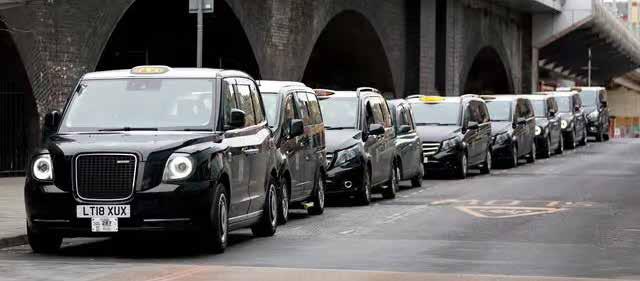
By the end of 2025, the London taxi trade continued to show long-term contraction. According to TfL’s own licensing figures for the week ending Sunday 28 December 2025:
• 16,157 licensed taxi drivers were authorised to operate across the capital.
o Of these, 14,573 held an All London licence and 1,580 held Suburban licences.
o Only four new taxi licences were issued that week.
• 13,962 taxi vehicles were licensed — with 9,345 of those zero-emission capable (ZEC).
o This reflects continued transition toward electrified vehicles, but the overall fleet is much smaller than in earlier decades.
Trend over time:
• At its peak in 2013-14, there were 25,538 licensed taxi drivers in London; by 2024-25 this had fallen to 16,676 — a dramatic reduction of over one-third in a decade.
For black cab drivers, this long-running decline means fewer peers, potentially less collective bargaining strength and greater pressure to sustain income in a more competitive market.
Private Hire Explosion: Numbers and Competition
In stark contrast to taxis, the private hire sector has continued to grow:
• 106,468 private hire drivers were licensed in London in 2024-25, with 94,526 private hire vehicles.
This urban minicab expansion has reshaped the market:
• The number of private hire drivers now outstrips taxi drivers by a vast margin, intensifying competition for fares and affecting earnings, especially for professional taxi drivers who rely on street hire and rank work.
recommended that TfL should be given statutory powers to cap the number of private hire vehicles in the capital, to address road congestion, environmental concerns, and the destabilising effect on regulated taxi services.
2. Government response
• Despite these proposals, the UK Government rejected calls to grant TfL powers to cap private hire vehicle numbers.
used by app-based ridehailing services such as Uber and Bolt. Under the government’s new interpretation, ride-hail fares in London are now subject to full 20 % VAT, aligning them with traditional taxi fares and eliminating a competitive cost advantage.
This underscores the regulator’s commitment to safety and compliance, but also adds administrative and operational complexity for drivers.
Challenges:
• Long-term decline in taxi driver numbers continues.
• Intense competition from a vastly larger private hire sector.
Despite this growth, licensing backlogs have created significant operational difficulty, with figures showing several thousand private hire driver applications either pending or awaiting additional information — a logistical challenge for TfL and drivers alike.
Regulatory and Political Context
The regulatory environment at the close of 2025 was marked by policy debates and pressure for reform:
1. Calls for caps on Private Hire Vehicles
• The London Assembly Transport Committee
3. Licensing system pressures
• The backlog in private hire driver licences prompted formal correspondence from the London Assembly to TfL, urging weekly public reporting on progress.
These regulatory frictions reflect broader tensions between market liberalisation, public safety oversight, and the preservation of a regulated taxi sector.
Tax and Economic Pressures
A major policy shift that materialised in late 2025 was the closure of a VAT loophole previously
• While hailed as a step toward a fairer competitive environment for black cab drivers, ride-hail platforms warned this would push up end-user prices and reduce demand for drivers on their networks.
For taxi drivers, equalising VAT treatment may help rebalance earnings competition, but it comes amid broader cost headwinds — rising vehicle costs, regulatory compliance expenses and tight margins.
Safety, Compliance and Enforcement
TfL continued high levels of compliance monitoring throughout 2025:
• Over 36,000 roadside checks on taxis and private hire vehicles were carried out — part of ongoing efforts to enforce safety and operational standards.
• Regulatory and political debates unresolved around caps, powers and fiscal support.
• Persistent administrative pressures in licensing.
Positives:
• A growing proportion of the taxi fleet is zero-emission capable.
• VAT alignment on ridehailing services may help level the competitive field.
• Continued enforcement emphasises safety and upholds trade standards.
Trade Outlook
By the end of 2025, the London taxi trade had entered a phase of strategic resilience without clear reversal of decline. Market pressures from private hire, licensing bottlenecks and regulatory uncertainty continue to shape the working environment for black cab drivers.
Rebalancing policies, support mechanisms and regulatory reforms remain focal points for advocacy and industry discussion going into 2026.
Overall Picture for Black Cab Drivers at End of 2025

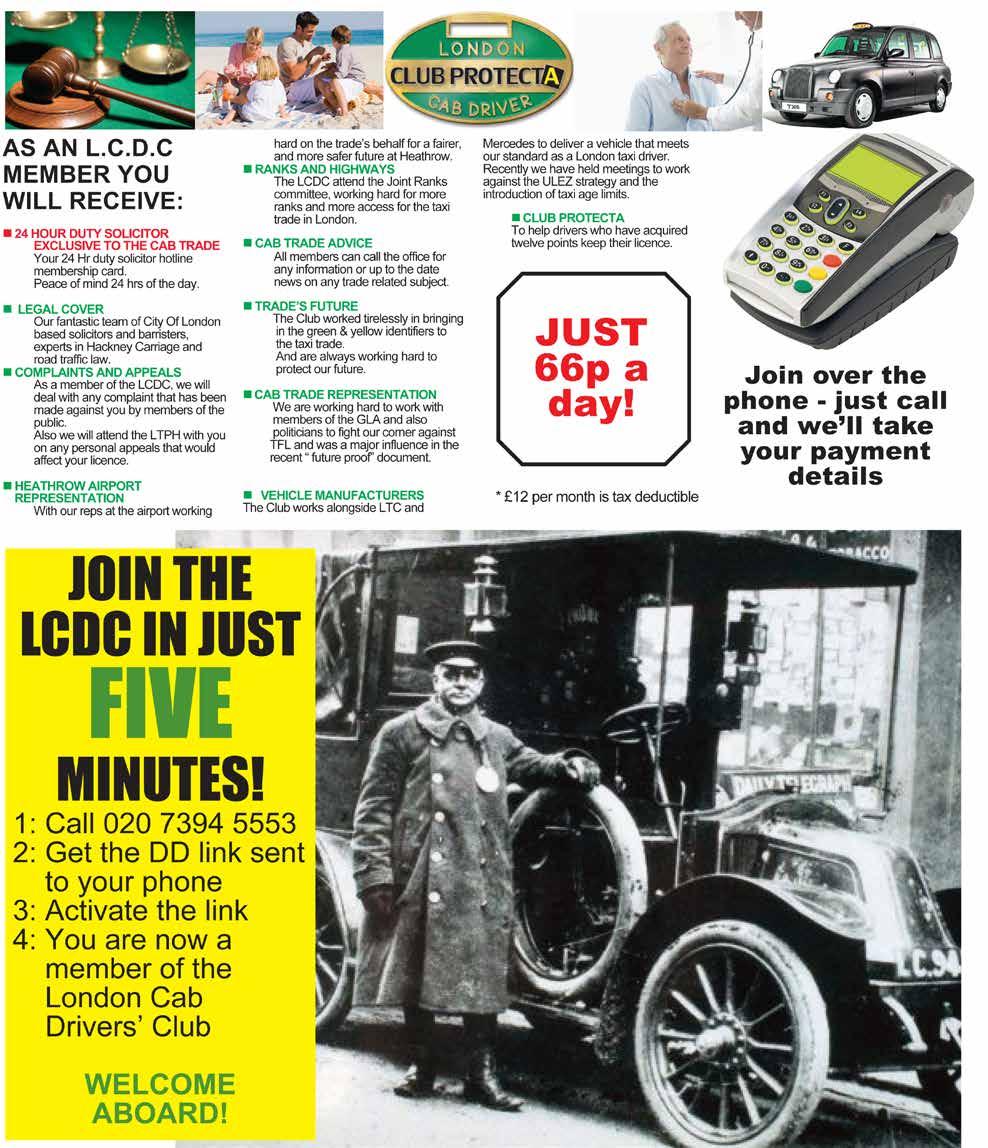
What drivers say about

One Question London Drivers Keep Asking: ‘When’s it our turn?’

“I was a bit apprehensive about switching to the new electric MAXiCab, but I’m glad I did. If I need a quick boost during my shift, an hour’s charge only costs about £2.50. I’ve now done around 6,000 miles, and I’m saving a significant amount. It’s honestly the best taxi I’ve had.”
John, BEV
“I have owned several different models of cab, and the MAXiCab is, without doubt, the most comfortable to drive. It offers both the passenger and the driver a modern, comfortable travel experience”
Dougie, Chairman, Glasgow Taxis, BEV
“I have had the fully electric MAXiCab since April last year, and I absolutely love it. I was a bit dubious about electric taxis at the start, but after running around in it, I cannot say enough good things about it. The fuel savings are going to be absolutely phenomenal. We’re saving about £100 a week. Customers love it, and I love it.”
Lynda, BEV
“It’s great not having to go to the petrol station anymore, the savings have been massive. MAXiCab doesn’t even feel like driving a taxi; it’s packed with all the up‑to‑date features. My passengers always comment on how smooth the journey is, and they’re especially impressed by the panoramic roof.”
David, BEV

LONDONER PASSENGERS DESERVE TO KNOW WHO IS REGULATING THEIR RIDE
Most people in London assume a simple thing.
If you book a private hire car in London, you expect it to be licensed and regulated by Transport for London (TfL). You expect London standards. You expect London checks.
And if something goes wrong, you expect London authorities to be able to step in. But that is not always the case.
What Is Actually Happening
Many private hire cars working in London are not licensed by TfL at all.
They are licensed by Wolverhampton City Council, but operate in London using apps such as Bolt.
Passengers are not clearly told this before they book.

By the time a driver accepts the job, the passenger has already committed to the journey — often without knowing which licensing authority is responsible for regulating it.
The Problem: No Clear
Warning Before You Book
When you open some private hire apps in London, you are not told up front:
• who the licensed operator is;
• which council regulates the journey;
• whether London standards apply.
That information only becomes clear later — if at all.
This means passengers cannot make a fully informed choice at the point when it matters most.
This Is a Failure of Prevention
Licensing authorities are meant to prevent problems before they happen, not wait until something goes wrong.
This is called preventative responsibility.
In simple terms, it means:
• before licences are granted;
• making sure booking apps can be clear and honest with passengers;
• setting licence conditions that protect people before journeys take place.
These questions should have been asked before thousands of journeys were allowed to operate every day.
The Bottom Line
London passengers are consumers.
They have the right to clear, honest information before they book.
If people are not told who regulates their journey, they cannot make a proper choice.
That is not transparency. And it is not good enough.
Preventing harm starts before the journey begins — not after something goes wrong.
Londoners deserve better.
Complaint lodged over TfL data handling
Dear Data Protection Officer; TfL,
I am making a formal complaint regarding Transport for London’s handling of payment card data in the taxi driver licensing process.
TfL has provided me with a paper application form for taxi driver licensing which requires applicants to write, in full, the following payment card details and submit them by post:
• card number
• expiry date
• CVC/CVV security code
• cardholder name
• authorised signature
Applicants are instructed to return this form by ordinary post.
This method of payment processing is not secure and is wholly inappropriate for a public authority in 2026. It exposes applicants to a clear risk of card-not-present fraud and unauthorised access to sensitive financial data.
In particular, I am concerned that:
• Full card credentials, including the CVC/CVV, are
being collected in written form
• The data is transmitted via postal mail, which is inherently insecure
• Paper handling necessarily involves storage, scanning, and internal circulation
• This appears incompatible with PCI DSS requirements, particularly the prohibition on storing CVC/CVV data
• This does not meet the “appropriate technical and organisational measures” required by Article 32 UK GDPR
The fact that TfL’s online licensing portal is dysfunctional does not justify reverting to insecure legacy payment methods that place the data-security risk entirely on licence applicants.
As a data subject, I am requesting:
1. An explanation of how TfL believes this payment method complies with UK GDPR Article 32
2. Confirmation of TfL’s PCI DSS compliance arrangements for paper card payments
3. Details of how long card data (including CVC)
is retained and how it is destroyed
4. Immediate suspension of this payment method pending review
5. A secure alternative payment mechanism
I consider this to be a serious governance and data-protection failure and I reserve the right to escalate this matter to the Information Commissioner’s Office and the London Assembly. Please treat this correspondence as a formal data-protection complaint.
Yours faithfully, J . Booth




The New Year is here, we are in 2026
Christmas has come and gone and we now find ourselves in 2026 and I think you will all agree that the first part of this year has definitely been a bit of a Kipper Season, ranks have been full and drivers have been spending an unusual amount of time either stewing in line or cruising the streets empty looking for a job.
Hopefully things will start to pick up as the year progresses, I think one of the problems at the moment is the unusual mild weather that we have been having. This time of year customers will jump in a Taxi as they are cold, but with the temperatures being above 10 degrees it appears that people have been walking around the city.
Also the streets seem to be quiet even for this time of year, the bars and restaurants seem to have plenty of empty seats and tables and the traffic seems to be lighter than normal, all of this adds up to make the perfect storm for a Kipper Season.
The Cab Chat Show Is Back for 2026 — With New Episodes and a Weekly Ride Through London’s Taxi World
I promised that the Cab Chat Show would be coming back and where we are. After years as one of the UK’s most beloved taxitrade podcasts, The Cab Chat Show is officially back
the latest issues facing London drivers — from The Knowledge challenges to roadworks, licencing delays and community support initiatives.
• “SERU Tests | The 2 Lords | License Renewals | AI Jingles” – A lively January conversation about the SERU testing process, how licensing renewals are evolving, and even a humorous detour into how AI affects taxi apps and jingles.
• “Navigating the Changing Landscape of Taxi Apps”
in 2026, with a refreshed format, more regular episodes and deeper dives into the community and culture of London’s iconic Black Cab scene — and beyond.
Originally launched in 2014, The Cab Chat Show has built a devoted audience with its mix of humour, heartfelt conversation and insider perspectives on the trials and triumphs of life behind the wheel. In late 2025, host Jamie the Cabby confirmed that the show would be returning in 2026 with a commitment to regular releases and a move to make all new episodes available exclusively via the Cab Chat feed (no longer on London Taxi Radio).
A New Rhythm: Weekly Episodes in 2026
In contrast to earlier years where episodes appeared irregularly, the 2026 edition has settled into a weekly rhythm, with new shows dropping each Wednesday. So far, several episodes have already been published in the first weeks of the year, and more are expected throughout 2026:
Confirmed Episodes (Early 2026)
Here are some of the episodes released or announced so far:
• “The Challenges of The Knowledge | Navigating the London Taxi Community”
– In this February episode, Jamie and co-host Tom the Taxi Driver unpack
promises:
• Industry deep dives — episodes exploring licencing, regulations, app economics and more.
• Community stories — insights from drivers, meetups and taxi culture events across the UK.
• Guest interviews —
(including YouTube and direct podcast feeds).
Whether you’re a cab driver, fan of London culture, or just someone who loves stories from the road, the 2026 season looks set to be one of the most active and engaging in Cab Chat’s long history.
Listener & Viewer
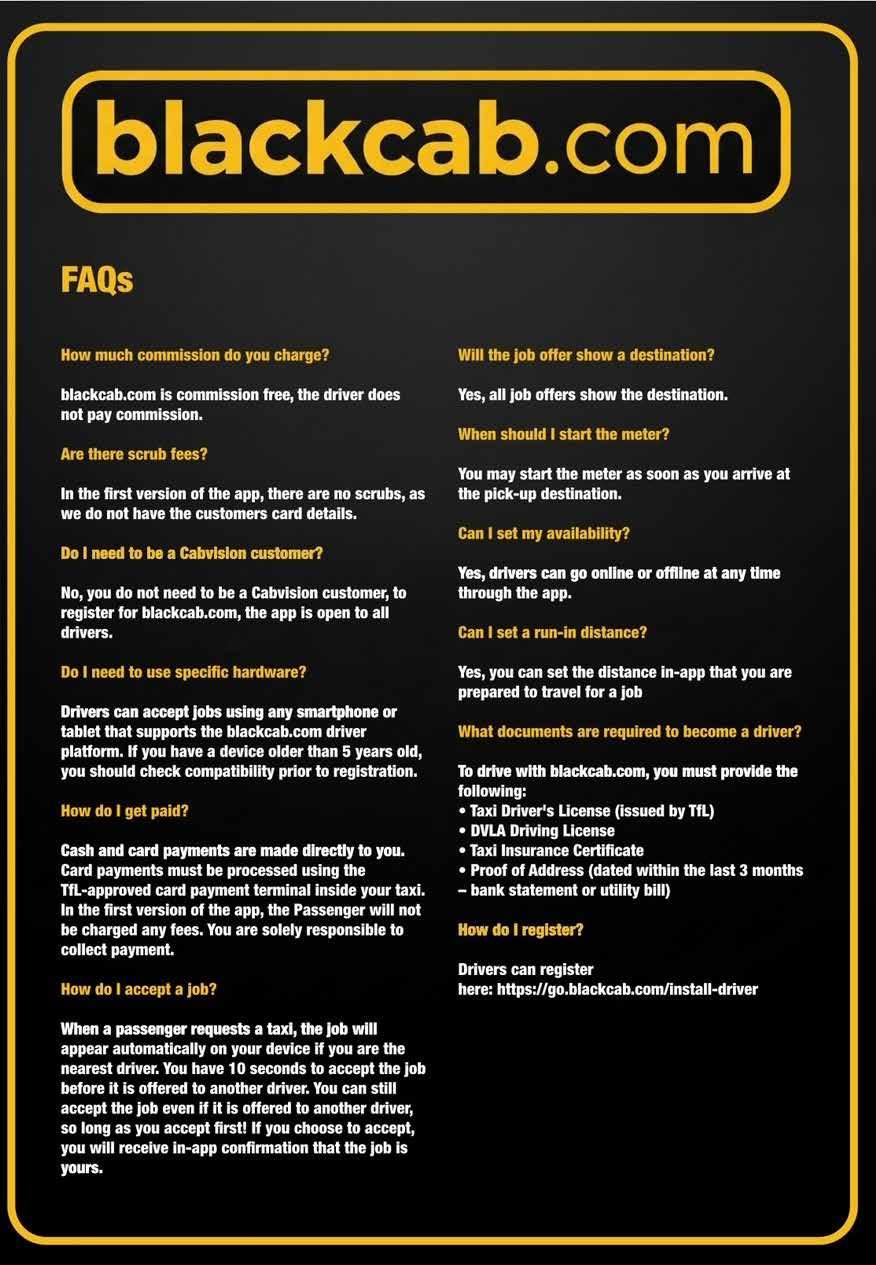
– Another early-January entry focused on the shifting tech landscape for taxi drivers — from the demise of some apps to the rise of new contenders such as Blackcab (the rebranded Unify app).
These episodes mix informative coverage of pressing industry topics with the warm, conversational style that made Cab Chat a go-to listen for drivers and cab-culture fans alike.
What to Expect This Season
While there’s no official public tally yet of how many episodes the 2026 run will include, the move to a regular weekly schedule suggests dozens more shows are planned through the year. That’s a big step up from past years: as of late 2025, the show had tallied over 250 episodes since its launch in 2014.
Thematically, this season

conversations with figures from within and adjacent to the taxi trade (drivers, app founders, trade experts).
• On-the-road recordings — many shows are now recorded inside taxis, putting listeners right where the action happens.
A Legacy Podcast With Fresh Energy
The Cab Chat Show has been a staple of UK taxitrade media for nearly a decade — surviving well past its 10th anniversary and adapting with its audience. The 2026 return leans into that legacy while embracing newer formats and distribution channels

Participation
We want your input into the Cab Chat Show, we want to hear your funny Taxi related stories, your favourite eateries, funny street names, also your cabby slang names for places.
We have also restarted the Cab Chat Pie & Mash Club with the first successful meet at Manzes in Tower Bridge Road in January, the next meet is at Maureens or Eastenders in Crisp Street on 31st January at 12:00 midday.
New for 2026 is the Cab Chat Fish & Chip Club with the first meet on Monday 23rd February 7:00pm at Kennedys, all are welcome.
If you have any topic or issue that you would like us to explore and discuss then please let us know., you can contact us via our website either by leaving a voicemail or message, all of our social media links can also be found on our site https://cabchatshow.uk
I trust that you are all bearing up during these quiet times that we once again find ourselves in and lets hope that as the year progresses the work levels increase. Until next month, stay safe, earn well, be kind and be lucky.
LCDC WRITES TO ELLY BAKER
Hi Elly,
Happy New Year…
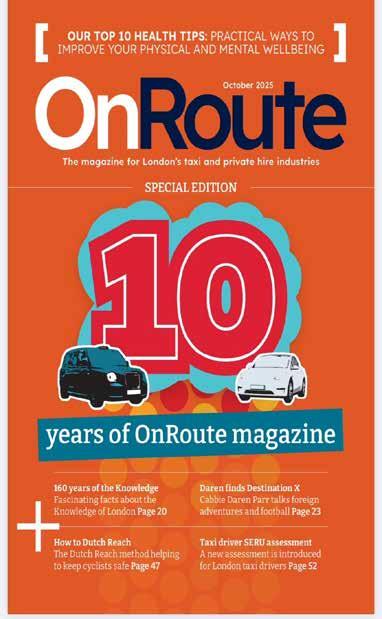
I’ve just received my copy of TfL’s ‘OnRoute’ magazine…have you read it?
OnRoute is professionally produced and polished, but it functions far more as institutional reassurance and reputation management than as a document that grapples with the structural failures in London’s taxi and private-hire market.
Below is a clear, evidencebased critique grounded in what the magazine itself says – and crucially, what it avoids saying.
1. PR without outcomes
OnRoute presents itself as “the magazine for London’s taxi and private hire industries”, yet its dominant tone is celebratory, managerial and defensive. There is little sense of urgency, accountability, or measurable outcomes.
Pages are filled with:
• campaigns,
• initiatives,
• partnerships,
• “highlights”,
• and human-interest features,
but very little assessment of whether TfL’s regulatory model is actually working.
This is classic process PR: lots of activity, little evaluation.
2. The oversupply problem is hiding in plain sight
One of the most damning admissions in the entire magazine appears almost casually on page 11 under “TPH licensing in numbers”:
• 16,124 taxi driver licences
• 104,859 private hire driver licences
• What does this do to mental health?
Yet OnRoute does not
• 94,506 PH vehicles
• 1,804 PH operators
That is a PH-to-taxi driver ratio of roughly 6.5:1.
No serious regulator could publish those figures without immediately asking:
• Is this market sustainable?
• What does this do to earnings?
• What does this do to compliance?
• What does this do to safety?
ask a single one of those questions.
The numbers are presented as neutral “facts”, stripped of consequences.
3. Mental health: symptoms acknowledged, causes ignored
The magazine devotes pages to wellbeing, stress, gut health, sleep hygiene, helplines and resilience (pp.29–34) . That support is not unwelcome — but it is misdirected.
The underlying causes of poor mental health among drivers are barely acknowledged:
• collapsing earnings,
• excessive unpaid hours,
• market saturation,
• algorithmic control,
• debt-fuelled vehicle costs,
• and regulatory unfairness.
Instead, the framing is individualised:
drink more water, sleep better, take the stairs.
That subtly implies the problem lies with drivers’ coping strategies, not with TfL’s licensing and enforcement failures.
You cannot mindfulness your way out of an unsustainable labour market.
4. Compliance: the contradiction at the heart of the narrative
TfL proudly reports that between January and September 2025 it carried out:
• 36,382 vehicle inspections
• 33,383 driver inspections
with around 4–5% noncompliance (pp.36–37)
On the surface, this sounds reassuring.
But set those figures against over 100,000 PH drivers and the reality becomes clear:
• many drivers are rarely checked at all,
• enforcement is statistically thin, not robust,
• and compliance rates tell you nothing about the hidden pressures driving corner-cutting.
In an oversupplied market:
• insurance becomes optional,
• maintenance gets deferred,
• tyres, lights and bodywork deteriorate,
• and drivers gamble because they are financially cornered.
That is not a driver morality issue.
It is a regulatory design failure.
5. Safety theatre vs real safety
The magazine is saturated with safety messaging:
• posters,
• campaigns,
• slogans,
• leaflets,
• behavioural nudges.
But safety is not just about messaging – it is about economic viability.
A driver who cannot earn a living:
• works longer,
• rests less,
• delays repairs,
• accepts higher risk jobs,
• and stays on the road when exhausted.
No amount of glossy safety content can compensate for a market flooded far beyond demand.
6. The silence on standards and testing is telling
One of the most striking omissions in OnRoute is what it does not discuss:
• Taxi driving tests were cancelled.
• Promised private-hire driving tests have never
OVER TFL 'ONROUTE' PR MAG
been introduced, despite commitments going back to 2017.
• There is no serious discussion of skill, competence, or professional parity.
This silence is not accidental. Testing reduces supply.
And reducing supply would require TfL to admit it licensed too many drivers in the first place.
7. What OnRoute really is
At heart, OnRoute is:
• a reassurance document for City Hall,
• a shield against criticism,
• and a way of projecting activity instead of confronting outcomes.
It is not useless – but it is not honest enough about the scale of the problem.
Until TfL is willing to address:
• licensing volume,
• earnings sustainability,
• enforcement realism,
• and unequal regulatory burdens,
no amount of campaigns, wellbeing pages or compliance statistics will fix what drivers experience daily on the road.
The bottom line
This is not a bad magazine.
It is a bad substitute for regulatory accountability.
If TfL genuinely wants safer roads, healthier drivers, and a professional industry, it must stop treating oversupply as an untouchable fact of life — and start treating it as the central policy failure it is.
Can you please put these questions to the Mayor of London on Taxi Plan Progress?
1. Progress Against Targets
• Since the Taxi Plan was published, what concrete progress has been made against each of its stated targets?
(Please provide measurable indicators where available — e.g. earnings levels, driver numbers, service standards, passenger satisfaction, enforcement outcomes.)
• What steps have been taken to monitor and improve driver earnings since the Taxi Plan’s publication?
How does the Office evaluate whether current earnings are sufficient for drivers to maintain legal compliance (insurance, maintenance, testing).
4. Enforcement and Compliance
• What changes have been made to enforcement capacity (inspections, compliance checks, sanctions) in the taxi and PH market since the Taxi Plan?
and PH tests still have not begun, why has this element of the Plan not been delivered?
6. Earnings Data Transparency
• What up-to-date data does the Mayor hold on driver earnings across different vehicle types and work patterns?
Will this data be published regularly and in a disaggregated form (e.g. by licence type, hours worked, borough)?
7. Mental Health and Wellbeing
What performance metrics are being tracked and published on these indicators?
9. Collaboration with Drivers’ Representatives
• How frequently has the Mayor’s Office met with representative bodies (e.g. trade associations, unions, driver groups) to review progress on the Plan?
• Can the outcomes of those engagements be summarised?
10. Forward Strategy and Accountability

2.
Market Oversupply
• What assessment has the Mayor’s Office made of the sustainability of current taxi and privatehire driver/licence volumes?
Has any modelling been undertaken on how driver oversupply affects earnings, compliance, safety and mental health? If so, please share results.
3. Driver Earnings and Viability
How many additional enforcement officers have been deployed, and what impact has this had on safety and compliance rates?
5. Driving Standards and Assessments
• The Plan anticipated driving assessments for taxi and private-hire drivers — what progress has been made in implementing these?
Given that taxi tests were previously cancelled
• The Plan references driver wellbeing initiatives — what evaluation has been done on their effectiveness?
Have any interventions led to measurable improvements in driver mental health outcomes?
8. Passenger Experience
• How has the Taxi Plan improved passenger experience in terms of reliability, affordability and accessibility?
• Given the ongoing challenges in the taxi and PH market, does the Mayor intend to update or revise the Taxi Plan?
• If so, what is the timeline and will there be a formal consultation with stakeholders?
Regards, Mark
Mark White (LCDC)
Heathrow ORC Meeting: The New TFP Charge, £1.4m Over-Recovery — and Why AntiTouting Is Still Being Delayed
The LCDC attended a Taxi Feeder Park Governance (TFPG) meeting via Zoom this week with Heathrow’s Other Regulated Charges (ORC) team to discuss the proposed 2026/27 Taxi Feeder Park (TFP) entry fee — and the assumptions Heathrow are using to set the tariff.
This meeting formed part of Heathrow’s statutory ORC consultation, which runs until 2 February 2026, with a new entry fee scheduled to come into effect from 1 April 2026.
Below is a clear summary of what Heathrow presented, what the trade challenged, and what remains unresolved — particularly the growing crisis of touting at Heathrow and why drivers are still being asked to tolerate it.
The Proposed Charge (April 2026 – March 2027)
Heathrow confirmed the proposed TFP entry fee for 2026/27 will be:
• £2.08 excluding VAT
• £2.50 including VAT
This is based on forecast movements of just over 800,000 — a decline Heathrow accepts has continued year-on-year.
Heathrow explained the tariff is based on:
• fixed operating costs
• business rates
• management costs
• IT costs, including the new Sensor Dynamics system
The £1.4 Million OverRecovery — And the “Improvement Fund That Improved Nothing”
Airport Matters
By LCDC Airport Team
One of the most important admissions in the meeting was that Heathrow is currently holding around £1.4 million in over-recovered funds, which includes the muchdiscussed “Improvement Fund”.
Heathrow confirmed in plain terms that:
• the fund was created to support improvements that the group would agree on
• no universal agreement was reached
• therefore no improvements were delivered
• and the money is now simply being returned to drivers via the tariff
So drivers have effectively been paying extra into a pot intended for improvements, only to find out no tangible improvements were ever made, and the fund is now being quietly offset against future charging.
IT Costs: £270k — But Drivers Still Can’t Rely on the Barriers
A major concern raised by the LCDC was Heathrow’s IT line, quoted at around £270,000, linked to the new Sensor Dynamics system.
Trade reps asked Heathrow to provide a proper breakdown of what this figure includes, and Heathrow agreed to do so.
This matters because the current system at the Taxi Feeder Park is visibly beyond end-of-life:
• barriers failing repeatedly
• systems crashing
• parts reportedly being swapped and “cannibalised”
• queues disrupted
• drivers being delayed or even threatened with enforcement penalties for failures that are not their fault
Drivers continue to ask the obvious question:
Why are we being charged for a service that repeatedly doesn’t function?
Heathrow’s answer was that operational issues sit with Apcoa and the OPS team — not ORC.
That separation is becoming a central frustration: drivers pay in one place, but cannot get accountability in another.
Drop-Off Charges: Drivers Still Losing Money Per Trip
The meeting discussed the option of funding a dedicated anti-touting squad — involving the right parties (HAL, TfL Cab Enforcement, and the Met Police) — potentially by a small uplift on the entry fee.
Heathrow suggested that a rise (for example to £3) could generate “a couple of hundred thousand pounds” to fund action.
However, Heathrow then stated that any such move would require universal agreement from the taxi trade — preferably in writing.
And this is where the meeting exposed the real problem.
The meeting also touched on the Terminal Drop-Off Charge, now increased to £7.
Drivers can currently only recover £6 on the meter due to delays in consultation with TfL. Heathrow acknowledged this point and confirmed it sits with the Surface Access team.
This means taxi drivers are absorbing the cost on every trip where the £7 applies — again raising the question of fairness and basic transparency.
Anti-Touting: Heathrow Knows the Problem — But “Universal Agreement” Is Now Being Used as the Blocker
The most urgent issue for drivers is not a spreadsheet figure — it is touting, now operating in every terminal with impunity.
Trade representatives made clear:
• touting is growing
• it is harming passengers and the airport environment
• it is directly draining work from licensed taxis
• and it is increasingly organised and systematic
Universal agreement is being held up — primarily by Sam Houston (LTDA)
Sam Houston stated that a driver-funded initiative would be a very hard sell for drivers, and that it would be difficult to persuade them to contribute.
That position does not reflect the reality of what most drivers at Heathrow are saying.
Most Heathrow taxi drivers:
• strongly support a dedicated tout squad
• recognise that touting is a major cause of work collapse
• and understand the simple economics
If every driver paid 60–70p per movement, it could realistically save an hour or two of dead time, which can mean £60–£70 extra earnings in a shift.
Drivers aren’t blind to this:
• Heathrow queues are regularly 4–5 hours
• the rank is being stripped of genuine demand
• passengers are being intercepted before they ever see licensed taxis
• and drivers are paying charges while being forced to sit and wait
A small contribution in exchange for meaningful enforcement is, for many, not just acceptable — it is common sense.
In short, a minority view about what’s “sellable” is now being used to delay an initiative that most drivers want.
Demand Down, Waiting Times Up
Heathrow presented figures showing:
• 68,000 movements in November
• down 5% vs 2024
• down 13% vs 2023
• and broadly comparable to 2019 levels
But the lived reality for drivers is clear:
• demand is weaker at the terminal
• waiting times are worsening
• and touting / PHV capture is a major factor
The Core Problem: Fragmentation and Evasion of Accountability
A recurring feature of
these meetings is that Heathrow operates in silos:
• ORC talks charges
• Apcoa talks operations
• Surface Access talks drop-off
• enforcement is “someone else”
So drivers face one continuous experience — yet Heathrow divides it into departments, meaning answers are perpetually deferred.
The LCDC therefore pressed for a round-
table meeting where all Heathrow departments attend together and questions can be answered directly. Heathrow agreed to accelerate this, subject to a fixed agenda being provided.
What Drivers Should Know Now
• Consultation closes 2 February 2026
• Heathrow’s final notice expected late February
• New tariff takes effect 1 April 2026
The LCDC have submitted a formal written consultation response — and will continue pressing Heathrow on:
• the failure of barrier reliability
• the £1.4m over-recovery and lack of delivered improvements
• the unfair drop-off recovery gap
• and most critically: anti-touting enforcement, which is now essential to restoring work and driver earnings
Driverless taxis set to launch in UK as soon as September says Waymo
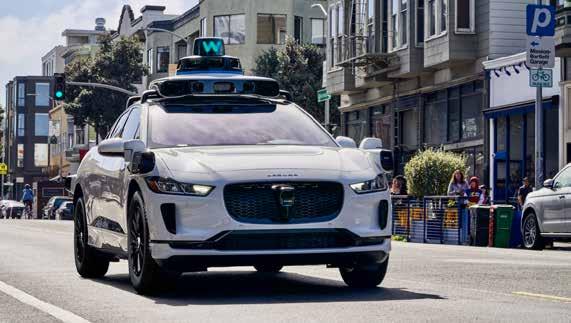
Waymo, the US driverless car firm, said it hopes to be operating a robotaxi service in London as soon as September this year.
The UK government has said it plans to change regulations in the second half of 2026 to enable driverless taxis to operate in the city but has not given a specific date.
Waymo said a pilot service will launch in April and Local Transport Minister Lilian Greenwood said: "We're supporting Waymo and other operators through our passenger pilots, and proinnovation regulations to make self-driving cars a reality on British roads."
The firm, which is owned by Google-parent Alphabet, showed off a fleet of cars it brought to the UK at London's Transport Museum on Wednesday.
Waymo's vehicles are currently being operated by a safety driver, mapping the streets.
But when the service launches to paying
passengers, there will be no human at the wheel.
Greenwood, who attended the Waymo event, said she expected driverless vehicles to make
standards, "including protection from hacking and cyber threats" before they would be allowed on UK roads.
Waymo cars are already
Passengers will be able to hail Waymo robotaxis via an app once the rules permit.
They will not initially include airport drop-offs.
city roads safer.
"We know that unlike human drivers, automated vehicles don't get tired, don't get distracted and don't drive under the influence," she said.
But she added that autonomous vehicles also had to meet strict safety
on London's roads, with safety drivers, carrying out mapping. They are not yet available to hire.
The government has estimated that the autonomous vehicle industry could add £42bn to the UK economy by 2035 and create nearly 40,000 new jobs.
The Waymo vehicle uses four sensor systems to gather data from the world around it: lidar, vision, radar and microphone.
It claims these sensors enable its vehicles to be aware of its surroundings 360 degrees, as far as three football fields ahead and during bad weather.
A powerful computer in the boot processes that data and determines the car's actions and reactions in real time.
A Waymo spokesperson said pricing would be "competitive" but "premium" and would rise during periods of high demand.
Rival companies Uber and Lyft are also ready to launch robotaxi services in the UK when the rules change.
Waymo's cars are Jaguars while Lyft and Uber have both chosen to partner with the Chinese firm Baidu.
Waymo says a total of 173 million miles have been driven by its cars fully autonomously, mainly in the US. Waymo has a fleet of 1,000 robotaxis in San Francisco and 700 in LA.
Some stories have emerged about cars malfunctioning, occasionally leaving passengers trapped inside.
Courtesy of the BBC
A great idea, or just another cash cow?
It’s recently been advertised on social media, and in the main stream press that Sadiq Khan has come up with a brilliant idea to get London moving again.
No, it’s not the removal of all LTNs, or the return to 30 mph speed limits, or the removal of under used cycle lanes.
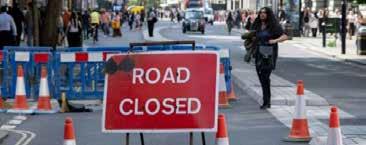
Khan has made the statement that he will be charging utility companies £2,500 a day (according to My London) for closing off roads or installing single lane traffic lights.
While this looks like a sensible plan, just think of the implications involved in this new scheme! The utility companies will just put up their prices to the local councils who will then seek to get reimbursed by increasing residents council tax.
He also announced that

Improvements will be made to the FUSION traffic control system to generate more data and computing power, allowing traffic signals to react "faster and smarter", enabling more fines being issued.
transport, together they introduced a number of completely unnecessary cycle lanes, that had an immediate effect on the flow of traffic, causing major hold ups. But as Ken Livingston
Sadiq Khan was elected as Mayor of London on the 9th of May 2016, almost 10 years ago. In that time he has introduce a number of measures, which have had a profound effect on the flow of the capitals traffic.
With a deputy Mayor for transport that admitted she knew nothing about
once said, to charge for congestion, first you have to cause it.
Along with TfL, Khan has had a devastating effect on the Taxi trade…refusing to license any vehicle other than Geely's TXE and by reducing the age limit of a vehicle's expected a 15 year life, many older and part
time drivers have now left the trade which has seen a dramatic drop in driver numbers over the last 10 years…with Private hire licenses doubled.
Unfortunately what TFL have done over the last decade, is to divide the trade, in order to conquer. We now have three representative groups and two unions which act individually, instead of coming together and acting for the trade as a strong, single body.
When in the past we had demonstrations, we have seen almost no unity, also with our largest org actually apologising in an email to TfL, referring to protesters as 'Loonies'.
We've recently had a victory at the Bank Junction
where limited access has been restored for a trial period. Most believe this will eventually lead to full access all over the City.
But a West London residents group based in Chiswick, fronted by the massive Cycle Lobby, have launched a formal complaint calling on all cyclists and the supposed 90,000 pedestrians who use the junction daily, for an end to the Taxi access trial at the Bank.
Unless the trade representation finally comes together to form a consolidated Taxi Board, we have no chance of winning this. Again as in the past, most drivers will just sit back and watch the trade slip into further decline, hoping someone else will do the fighting for them.
As Mark White recently wrote in facebook's New Taxi Leaks…" The cost of doing nothing is defeat…Unity is not a slogan, it’s an infrastructure".




WHO NEEDS ENEMIES?
THE TRADE’S RECOVERING, BUT SLOWLY
Walker on the March... Walker on the march...
starting wage will be £60,000 a year.
THEN AND NOW
I’ve got an axe to grind. I sit on the joint trade tariff group. We meet most months with TfL reps to try to ensure that the Cost Index fairly reflects the costs of running a cab and that earnings keep pace with inflation. We have an input into what TfL put in the tariff consultation and get the right result. The results of the consultation go forward to the Finance Committee, who have the final say on what increase, if any, that we get.
If we compare today with 1977, our figures don’t look too bad.
In 1977, we had a fleet of 12,452 cabs. Today, we currently have 14,803, an increase of nearly 20%.
Equally, in 1973 we had 16,474 drivers, against the current number of 17,356, making an increase of nearly 10%.
Looking at these figures, its not unreasonable to ask why some in the trade, including myself, are worried for its future. But this doesn’t tell anything like the whole story. Its when you look at the KOL (Knowledge of London) figures, that the problems become clearer. In 1973, there were three times as many KOL students as there are today. Then, it took less than half the time it does today to pass out. That means that there were effectively six times as many KOL students over a 4yr period.
You may have seen the stuff going around from the guv’nor of HP Taxis. He has made statements in the media in an attempt to encourage new faces to do the KOL (Knowledge of London). Now at best, he is trying to boost our numbers and that is a good thing as we need new blood if we are not to become just a tourist attraction in the future, like Venetian Gondolas and Viennese horses and carriages. At worst, this is a case of him trying to ensure he will have people to rent his cabs, no matter what damage he might do to the trade in general.
This old geezer passed out in December 1979 and it took me 19 months, doing it part-time. Today it takes more than 4 years, on average. There is an argument that the KOL is harder today, than it was then, but I would dispute that.
I would give him the benefit of the doubt if he had not been so lax about the truth and perceived truth of what he says. On social media he has encouraged people to do the KOL through the prospect of earning £500 per shift. You and I know you cannot earn £500 in a day more than once in a blue moon. Maybe take it but not earn it. Even more dangerous, he has placed an ad that tells potential KOL candidates that it will take them an average 2 years (the average is 4yrs) to complete the knowledge and their
Rubbish. We’re selfemployed and we make profit not wages. In order to make £60,000 profit, we have to add maybe £500 a week to hire a taxi from HP taxis, so that’s another £26,000. Then there are expenses such as App fees, credit card payment fees, fuel etc. Let’s call that another £10,000 as Paul doesn’t too much about accuracy.
That is £96,000 you have to take to make £60 profit. Oh, and don’t start dividing that by 52 weeks. You have to work on the same statutory paid holidays as employees, knocking you down to working 46.4 weeks a year. Then allow for sickness; call that 2.6 weeks a year and that means you have to take £96,000 over 44 weeks or 220 shifts if we’re comparing to wages.
Now that means week in, week out, through the kipper as well as the good times, you are taking £435 per shift. If you are doing that, congratulations but even HP Taxis know you aren’t doing that.
It can be argued that places like The Docklands and E20 weren’t part of the KOL in my day. Against that though, denied road access means that most runs will be simpler today. For example, the rat run from Oxford Circus to St Giles Circus required calling 11 points Similarly, it is no longer possible to use the rat run between Guildhall and Southwark Bridge Rd. There were plenty more like this that have gone today.
THE LAST DECADE
Viewed over the last 10 years, the problems become clearer and it is no coincidence that it’s the same period of time during which Uber first gained a serious foothold in London.
From 2014 to September 19, just prior to Covid, the
time also when TfL draw up their recommendations to the Finance Committee. Every year, the tariff group have to appeal to this committee not to stop or restrict an increase because of the effects on vulnerable customers, etc. It doesn’t help when HP Taxis supply fictitious “facts” about you having takings of nearly £450 per shift. If we don’t get the
cab numbers fell off a cliff. Although we have had a resurgence since the bottom dropped out with Covid and a ridiculously expensive vehicle became compulsory, driver numbers are still down by 5,562 and cabs down by 4,331 on those 2019 figures.
KOL
Now I mentioned HP taxis charging £500 per week to rent a cab. I am sure the owner would be miffed if drivers read that and believed it because he would never find another new driver. Well, that is what he has done to us.
On current numbers, we’ll be lucky to see more than 200 new drivers annually. Back in 2014, the GLA FP (Future Proof Report) warned about this situation, while the Mayor and TfL sat, and continue to sit, on their hands instead of doing something useful and positive. They pointed out then that more than 40% of drivers were aged 55 or over.
What is worse is his timing. He made these scurrilous pronouncements right in the middle of the fare consultation, where members of the public are asked what they think of taxi fares and should they be frozen or increased by a range of amounts It’s the
a PH driver that picked a guy with a zip up bag from outside a bank. He was asked to wait at a stop during the journey and after the passenger got out, the driver legged it with the bag. In it was £241,590. That is £880,000 in today’s money.
There were some clues as the driver had a glass
4.03% we have asked for in April, perhaps get in touch with HP Taxis and thank them.
THE GOOD OLD DAYS (1983)
I’m moving house for the first time in 40+ years. You can imagine the treasure trove that is my loft. I came across some old cab newspapers (we used to have lots of them back in the day).
At this rate, even if we don’t take leavers from the trade into account, at current pass out rates, it will take until 2051 before we get the number of drivers back up to 2019 numbers. In reality, there are currently far more drivers leaving the trade than there are joining it and so our number is more likely to fall.
We only have a fleet of 14,408 cabs now. How long before that figure drops to 10,000? Scare-mongering? I think not. Andi if it does? At
badly. It doesn’t need watering down as it is what makes our trade what it is and what it has always been. Come on, though. If I could do the KOL in 19 months in 1979, does it really need to take 4 years today? Really? Are today’s K students really that much thicker than me?
eye and an elaborate tattoo on his forearm (not as usual to be seen as today) but he was never found.
scheme as associate members. They had a private hospital in Hampstead, and another oop north. It cost £21 per person for a cab driver and spouse. I joined up my wife and myself and it was brilliant. Unfortunately, the effects of Margaret Thatcher (for good or bad) decimated the TGWU (now Unite the Union) member numbers and they had to eventually close the scheme around the end of the 90s. Members were transferred to a private scheme if they wished to do so. We did and we have been passed from scheme to scheme over the years. What we paid £42 per month for in 1983 would be £152 in today’s money. Our actual payments are £550 per month but what with the state of the NHS currently, we’re afraid to stop paying it. Even so increases almost 4 times average inflation is scandalous.
wheelchair accessible but only 0.5% of PHV were accessible. Their recommendation was that the number of accessible PHVs should be increased over time to 25%. Its still only 0.5% and TfL doesn’t give a toss about the disabled or the equality Act. The situation is actually worse now. While PHVs were pre-booked, there was a case for them being only 25% accessible. Now though, with immediate street hiring of PHVs, a disable person, that is supposed to have an equal opportunity of booking a PHV, has only a 1 in 200 chance to book one, against the chances of an ablebodied rider. If they are going to allows electronic hailing by PH, all PHVs should be accessible. If Uber and its ilk were a cinema, theatre, shopping centre, etc, it would immediately be closed down.
I came across a mag from early 1983. Among the items were a driver that was bilked for 70p. Yeah, you read that right. 70p. 70p was enough to make him write a letter to a newspaper.
There was a story about
“When did you get out?” “1990”. “How long did it take you?” “36 months”. “36 months, well you must be really thick because it only took me 19 months.” I’d probably get a punch in the mouth if I had that conversation in a café. So, why does it take more than twice the time it took 45 years ago? It isn’t because the streets are more numerous and complicated. It isn’t because today’s students are much thicker. It can only be one thing and that’s the administration. When I di the K, you started with 2 x 56 days (which were 90 days in reality. You then went on to 28s. After about 12 appearances on 28s, you went on to 21s. Your drive
In the cab trade, we were all waiting to enter a brave new world with the introduction of Carbodies TX4R. We were all so excited until we started driving this dog. It couldn’t get up Highgate Hill with four passengers and the brakes failed without warning regularly. What fun we had driving that.
1983 was also the year that the law came in that made wearing seatbelts compulsory.
Taxi drivers were offered to join the TGWU (unite the union) medical
got your suburbs. On these you would be asked about 6 straightforward runs and you immediately or were asked to come back later in the day to review any that you did wrong or maybe asked back a second time and then you got your badge and bill. The current system was supposed to streamline the K when what is has done in reality is double the time required to pass and for no good reason. At the same time, TfL have been unable or unwilling to prevent PH becoming a pseudo-taxi service. With the advent of Apps, the customer no longer prebooks a ride, as per the law, but just opens a phone, looks at the screen for cars in the area and electronically hails a PHV that is cruising the streets or parking in busy areas. What kind of idiot will spend 48 months doing the K today when he/she can spend just 4 weeks in order to drive a pseudo-taxi?
TALKING OF FUTURE PROOF
TFL: COULDN’T RUN A BATH
I was on Comcab back then, when we still had voice dispatch. One night The Hulk (Barry Levene) offered a genuine job that drivers had to enter a draw if they wanted to be considered for it. The pay was not stated but well above average takings, with a 6p per mile fuel allowance and all expenses paid to Holland for five days with a last night dinner and booze up.
Nothing changes at the flyers! The late, great Monty Schiman was going off on one about cab drivers playing the system. It involved 2 drivers running 3 cabs to secure extra rides.
This was at the time when we had just one, large feeder park and the only return tickets were for journeys to local hotels with a 30 minute return.
Back in 2014, FP pointed out that 14% of taxi users and a greater number – 19% - of PH customers were
One of our members, Andrew, sent in his licence renewal early in the new year. When he hadn’t heard back after two months, he eventually managed to contact TFL. They’d lost his forms and by then, he needed to redo his CRB check again. He duly did this and then nothing happened again. He then got The Club involved and frankly, we did not do any better at first. Andrew’s licence eventually ran out and he could no longer work. The Chair, Grant, involved the two top bods that deal with taxis at TFL. At first, all he got was promises, excuses and blame. By the time it finally got sorted out, Andrew had not only lost eight weeks’ work through TFLs ineptitude, he also paid his cab rent throughout the period out of fear of losing the cab if he handed it back. At time of writing Andrew still doesn’t have his bill but he has an email granting permission to drive the cab. You would think TFL would be shame-faced and at least offer an apology. Nah, the day before the email arrived, they were still trying to blame Andrew himself, for the delay.
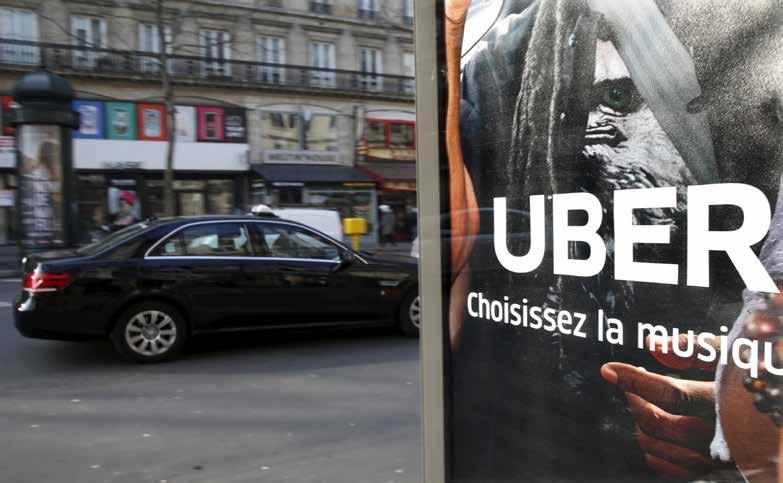
France demands 1.7bn euros
Uber has been told by French authorities that it owes 1.7 billion euros ($2 billion) in unpaid payroll taxes, according to a media report Monday.
TFL ‘BIASES’ NEED SCRUTINY
French authorities say Uber misrepresented its relationship with its drivers
In the August edition of The Badge, the LCDC reported that a member reminded Transport for London (TfL) through a court claim that traditional taxi laws are still in force.
Uber avoided paying the taxes by misrepresenting its contracts with its French drivers, according to online publication Revue21, in the US company's latest dispute in Europe over the status of its drivers.
In response to this claim, TfL’s legal department clarified a key issue raised by our member: whether a taxi driver may start the meter upon accepting an immediate app-based booking. TfL replied:
In a 142-page document seen by Revue21, the unit collecting social charges in the Paris region concluded that Uber "knowingly disguised an employment relationship as a business contract to evade its obligations as an employer" to some 71,000 drivers between 2019 and 2022.
“TfL has already confirmed to you in correspondence dated 21 May 2024, that a hackney carriage driver may not switch on the taximeter prior to the point at which the passenger is picked up, when it is being pre-booked as a hackney carriage. Again, we consider that this point is clear and does not require a declaration from the High Court before that is the case.”
Uber France had declared in its 2024 financial statements that in December 2024 the French social security agency Urssaf had "filed a lawsuit against the company, proposing a revision of the calculation of social security contributions".
organisations like the LCDC, LTDA, Unite, RMT, and UCG, where TfL stated: “…case law has determined that a hiring for a London taxi takes place where the booking is accepted, not where the passenger is picked up.”
potentially favouring the commercial interests of app companies?
These companies, also licensed by TfL as private hire operators and contribute substantial revenue through licensing fees, could this be a conflict of interest?
legal framework for London’s regulated taxi service.
By treating taxis and private hire vehicles similarly and allowing app companies to do the same, TfL may be acting unlawfully?
cancellations if drivers are not compensated from the moment of booking acceptance, as case law and the London Cab Order allow.
Urssaf is an independent body that collects social
This statement from TfL appears to contradict a 2017 statement made during a trade meeting with
charges from both companies and employees to fund France's staterun retirement accounts, unemployment insurance and medical coverage.
This 2017 statement was related to a case involving yellow badge taxi drivers working for Computer Cab, addressing whether they were plying for hire in the green badge sector. Given that TfL understands that hiring occurs at the booking location, it should also recognize that Section 39 of the London Cab Order 1934 permits the meter to start from the acceptance point. Section 39 of the Cab Order 1934 specifies: “The driver of a motor cab shall start the taximeter no sooner than when the cab is hired or at such later time as the driver thinks fit.”
Uber "firmly" contested the basis of this lawsuit in a response to Urssaf, which itself "responded by maintaining its position", according to Uber's 2024 financial statements.
TfL has stated that it does not regulate taxi apps, an assertion that seems intended to deflect responsibility for protecting both the public and taxi drivers.
of Urssaf's demand and was therefore not setting aside provisions.
Since taxis perform a public service, the app companies that dispatch them also perform a public function, thereby falling under the PSED, which TfL is tasked with enforcing.
declined to comment when contacted by AFP.
Moreover, TfL's PSED duty includes maintaining regulated fare limits. Added fees, such as technology charges, high-demand fees, and surge pricing may make a taxi unaffordable for vulnerable passengers, including wheelchair users and disabled individuals who may already be financially disadvantaged.
This inconsistency raises questions about TfL’s taxi and private hire department? Drivers are asking if they are
It said it was unable to estimate the potential cost
In the document cited in Monday's report by Revue21, Urssaf said that "under the guise of a simple booking platform, Uber is in reality bound to drivers by a legal relationship of subordination", noting its triple power of management, control and sanction over drivers.
However, case law classifies taxis as public transport, unlike private hire vehicles, which are categorized as private transport. As a result, Section 149 of the Equality Act 2010 requires TfL to fulfil its Public Sector Equality Duty (PSED) when third parties, such as app companies, dispatch taxis. Therefore, TfL’s claim that it does not regulate apps appears misleading; it has a statutory duty to ensure that these apps operate within the
The PSED mandates that TfL eliminate discrimination, harassment, victimization, and practices that endanger the public. Therefore, TfL cannot permit app companies or drivers to cancel bookings, which could leave passengers, particularly those relying on contracted services in a vulnerable situation if drivers cancel the app job in Favor of a street hail.
reclassify drivers as Uber employees.
In conclusion, TfL’s claim of non-regulation over apps seems disingenuous given its statutory duty to safeguard public welfare in taxis, a form of public transport distinct from private hire vehicles.
"We are currently in discussions with Urssaf and are fostering a collaborative, open, and transparent approach," the Uber spokesperson added.
TfL’s policy requiring drivers to start the meter only when the passenger is picked up may lead to app booking
"Regarding the status of drivers, recent rulings by the Court of Cassation have confirmed their independent contractor status and thus clarified the framework within which we operate," an Uber spokesperson told AFP, referring to two rulings issued in July 2025 by an appeals court, which refused to
There is a pressing need for government intervention to address TfL’s apparent shortcomings and potential biases that continue to affect the London taxi industry.
According to Revue21, Urssaf estimates that Uber avoided 1.2 billion euros in payroll taxes, to which it added 512 million euros in "recovery surcharges".
TfL has been contacted for comment.
Courtesy of France24
L.C.D.C LEADERS NOT FOLLOWERS
Stop talking about it and JOIN!
Urssaf
Dubois back with old coach
Daniel Dubois is set to reunite with his old coach Don Charles, in the latest twist in the heavyweight’s career.
Charles was instrumental in the most-successful period of Dubois’s career, a run that included a knockout of Anthony Joshua in 2024, but the pair parted ways last August, just weeks after Dubois was beaten by Oleksandr Usyk.
The stoppage loss to Usyk played out at Wembley Stadium, where Dubois had defeated Joshua, and it was the young Briton’s second loss to the Ukrainian great. In the wake of that result, Dubois, 28, split from Charles and began training with Tony Sims.
However, as Dubois eyes an in-ring return, he will resume working with Charles in an unexpected move.
On Monday, Dubois’s business manager Riz Khan shared a statement on the boxer’s Instagram page, and it read: “On behalf of Team Dubois, I wish to confirm to the media and all relevant parties that Daniel has decided to resume his professional relationship with Don Charles and his

coaching team.
“Don Charles and his team guided Daniel to World Champion status and oversaw the most successful period of his career. Following the defeat to Oleksandr Usyk, Daniel took time to reflect on his journey and the emotions surrounding the decision to part ways with Don.
“After careful consideration and discussion with the wider team, Daniel has chosen to reverse that decision. Daniel will now
return to working with Don Charles, under whose corner he achieved his greatest accomplishments to date.”
The statement ended with a note: “Further fight news to be announced in due course.”
Dubois began working with Charles in 2023, after splitting from coach Shane McGuigan, and the pair’s first fight together was a title shot against Usyk. The Ukrainian stopped Dubois in the ninth round
after climbing off the canvas himself, following a controversial low blow from Dubois.
Dubois and Charles then went 3-0 between December 2023 and September 2024, with stoppage wins over Jarrell Miller, Filip Hrgovic and Joshua.
Dubois dropped Joshua several times and secured a fifth-round knockout to pick up the IBF heavyweight title, which had been vacated by Usyk
earlier in the year.
The victory over Joshua set up a rematch with Usyk, who still held the other major titles at heavyweight, but Usyk bettered his first performance against Dubois by sealing a fifthround finish. That result crowned Usyk a two-time undisputed heavyweight champion. Neither man has fought since.
Courtesy of The Independent

I, Peter Blake
Here’s a cliché for you. ‘I know nothing about art, but I know what I like.’
Well, for me as a young man trying to make sense of the art I had begun to see around me, the work of Peter Blake meant just that. His art made sense to me, I just ‘got it’.
In truth, I would still struggle to say why exactly, but that isn’t really the point when you first discover a love for something is it? It’s just there.
If you are of a curious mind, and then endeavor to find out more about the artist, then in some ways their work is done, you are in.
I started to attend his art exhibitions which in turn opened up another world to me, and I then began to piece together more of his background.
Blake was born in Dartford in1932, to a working class family, dad an electrician and mum a nurse. Evacuated during the Second World War, he only returned to the area at the end of the conflict. Failing to get a place at the local grammar school, he went on to pass a drawing exam, which led him to attend the Gravesend Technical College.
He does his national service in the RAF from 1951 -53, before taking up the place at the Royal College of Art that was waiting for him upon discharge and attains a first class honours degree there in 1956.
With recent prize winning money in his pocket, he travels all over Europe in 1956 to 1957 before going on to win the prestigious John Moore’s junior prize in 1961, beating friend of John Lennon, and one time Beatles bass player, Stuart Sutcliffe that year.
The Mumper of SE5

John wasn’t happy about that and told Peter so many years later when their paths crossed.
His winning painting called ‘Self Portrait with Badges’ is seen as an early example of what then is becoming known as ‘Pop Art’. In it, Blake is seen wearing a double denim combination of jeans and jacket, which is covered in various pin badges.
An enormous fan of music from an early age,
Peter Blakefrom working class Dartford to knight of the realm

represented by the agent Robert ‘Groovy Bob’ Fraser. He snares them the commission for the work on the cover for the forthcoming album ‘Sgt. Pepper’s Lonely Hearts Club Band’ by The Beatles. The crowd scene montage of many famous and in some cases infamous faces is undoubtedly his most famous work.
Personally though, my favourite of his, is the screen-print on pressed tin called ‘Babe Rainbow.’ He made 10,000 copies of this in 1967 and they sold at the time, for one pound each. Art for the masses indeed. If you can find an original today, expect to pay a little more than that.
Blake reflected this in his paintings over the years, with work on Chuck Berry, LaVern Baker, Bo Diddley, The Beach Boys and The Beatles among many others.
That 1961 win catapults him to the attention of the UK media and in that year, he appears in an article in the first ever Sunday Times supplement and is then chosen to be one of the artists featured on the BBC film ‘Pop Goes The Easel’ made by maverick film director Ken Russell.
His con-current career as an art teacher finds him at the Walthamstow School of Art where one of his students is none other than future Blockhead, Ian Dury. It is the beginning of a beautiful and lifelong friendship
He married American artist Jann Howarth in 1963, with both
The Sgt. Pepper work in particular, later brings him to the attention of the likes of singer Paul Weller who asks Peter to design the sleeve to his 1995 Album ‘Stanley Road.’ A few years from that, that other Beatles fan and now friend of Weller, Noel Gallagher, asks Mr. Blake to do the same for the ‘Best Of’ Oasis album ‘Stop the Clocks‘ in 2006.
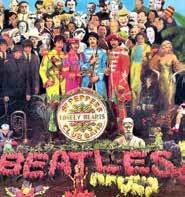
Both of these works bring the name and work of Peter Blake to whole new generations and subsequently 2017 sees him as popular, and in demand as ever in this, his 85th year.
Sir Peter Blake was knighted for his services to art in 2002 and I have to say that is one official honours list award I have to agree with.
Not bad for a kid Straight outta Dartford










All under one roof
• Exclusive Insurance schemes
• Breakdown cover only £99
• Roadside assistance and recovery
• Recovery to any UK Location