THE LANTERN Wellness Edition
It’s not just sports: Students face new risks as gambling platforms expand beyond athletics
Grayson Newbourn Managing Arts & Life Editor
Noelle Meister, a fourth-year in social work, began betting on baseball just under a year ago after receiving a referral for FanDuel from her friend.
At the time, she had little to no knowledge of the sport.
“It was just starting to be baseball season and that’s when a lot of the promotions were happening, so like, 30 percent profit boost if you bet on this MLB game,” Meister said. “So I just started to track stats [and] everything, and I just grew my knowledge from there.”
Meister is one of the millions of Ohio residents using betting apps.
“I feel like I’m probably an outlier in having positive experiences with it,” Meister said.
Meister bets in moderation, only partaking during baseball season, and said she hasn’t seen any negative mental or financial consequences. In
fact, she said she’s seen the opposite. But others are placing bets year-round — and not just on sports.
Gambling has crept its way into many more unsuspecting cracks in modern-day society, including entertainment. It might not be obvious, but James Brill, communications manager for Problem Gambling Network of Ohio, said it’s everywhere.
For example, a nine-year-old asks for a blind box from their favorite show for their birthday, not knowing what figurine their parents are paying for and throwing a fit when it isn’t the one they wanted; a college student spends $10 on Call of Duty points to open a mystery box, fingers crossed that they get the weapon they desire and buying more when they don’t. These are gambling behaviors, Brill said, but may not be perceived as such.
“Younger and younger people are
calling helplines and they’re calling sooner, realizing that they may be struggling, and a lot of it is really based on [the fact that] there’s so much gambling and gamification within video games,” Brill said.
He said mobile games also play a large role in the spread of these behaviors.
“Even if it’s a mobile game that they’re playing on their mom or dad’s phone, there are a lot of gambling elements in those that are unfortunately training a lot of younger kids to spend real money on things like that,” Brill said. “Their parents may not even think of it as gambling.”
Even apps that seem harmless can promote these behaviors, through companies advertising quick cash for solitaire or free bets after signing up — advertisements that can only be avoided by paying extra to remove them.

Mobile apps offer live betting and instant cash outs, eliminating the need to hit the slots or cash in at the bank, prompting concerns about regulation and an increase in gambling addictions, according to the Addiction Center.
“I can definitely see how it would negatively affect someone’s mental health,” Meister said. “I do see how they’re very predatory in the way that, first they get you in because you just have to bet $5 and then they’ll give you like, $300 in bonus bets. That’s how people are getting addicted.”
Gambling addictions are significantly less talked about than other addictions, despite the detrimental impact these
behaviors can have on someone’s life — habits that Brill said are often more difficult to kick.
“The thing that is kind of dangerous about gambling is, because there is not a substance involved, it’s very difficult to retrain your brain once you start to develop disordered gambling,” Brill said. “It’s not like you can immediately, you know, stop taking a drug or stop drinking or stop hitting a cigarette. Your brain takes a long time to get to a place where it wasn’t feeling that dopamine hit.”
Brill also said the rate of suicide is higher in gambling addicts than other tracked addictions, with one in five addicts attempting.
“You think of someone who may be in charge of their family’s finances,” Brill said. “If they are the person struggling with gambling, that can be not just detrimental to them, but to their spouse, their children, people who rely on them, right?”
Along with the rise in sports betting comes prediction market platforms, which offer betting opportunities on simple things that require no prior knowledge, just a strong intuition.
Polymarket, one of the most notable apps, was broadcast onscreen during the 2026 Golden Globes Awards, tracking who was most likely to win in each category and incentivizing viewers to join in. The awards show had more than 8 million viewers.
Players of free mobile games are likely familiar with the ads for Kalshi, which often appear multiple times throughout gameplay and depict users winning hundreds of dollars for accurately predicting the previous day’s weather.
GAMBLING continues on page 7.
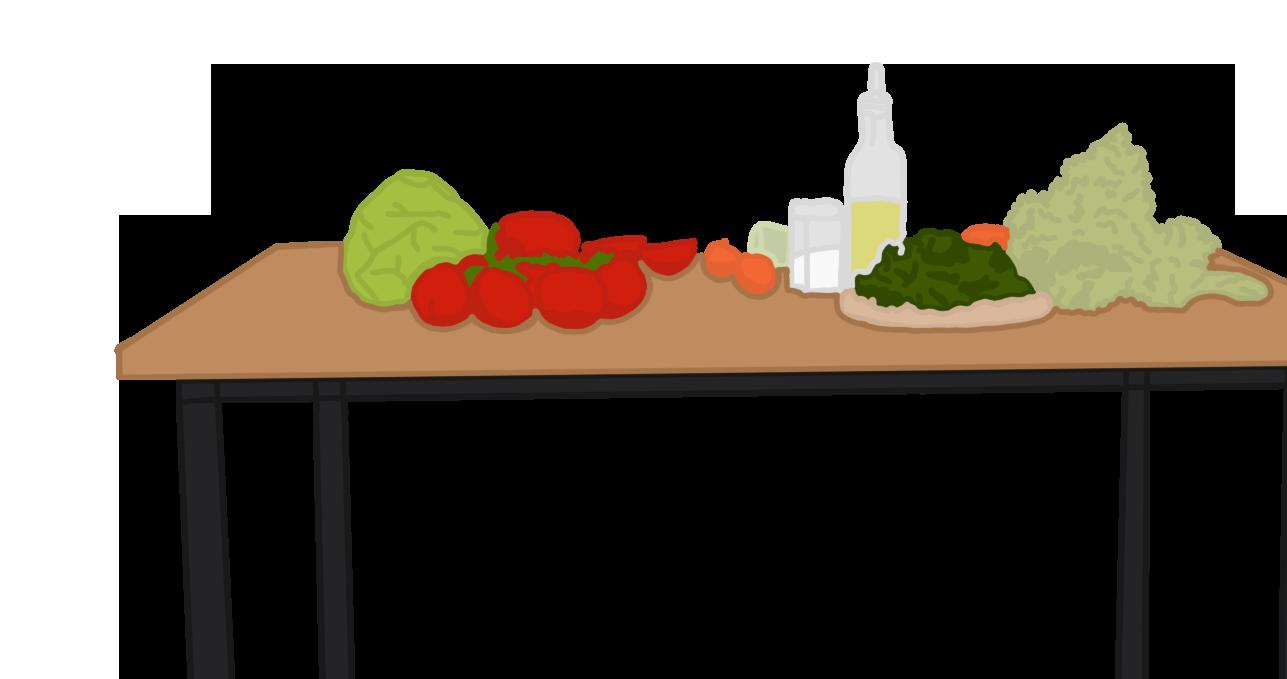
Polymarket, like Kalshi and FanDuel, allows users to bet on a prediction market.
FAITH SCHNEIDER | ARTS & LIFE PHOTO EDITOR
Ohio State community reflects on mental health resource accessibility and campus outreach efforts
Helena Hennessy Arts & Life Senior Writer
Whenstudents reach out to Ohio
State’s Counseling and Consultation Services for mental health resources, they expect to be met with quick response times and unconditional support — sometimes, these expectations are not met.
Kylie Stuart, a second-year in strategic communication, contacted CCS in fall 2025, expecting her request for an appointment to be met in a timely manner.
Before the start of winter break, Stuart said she had her first appointment — it was a positive experience. Her next appointment was scheduled for a month in advance, and the morning of it, she said her counselor canceled on her.
“They couldn’t reschedule me for another month,” Stuart said. “They literally had nothing available.”
While Stuart said CCS offered to book a virtual counseling appointment for her over spring break, she would not be in Ohio, which goes against CCS policy.
“That’s the thing with a lot of therapists,” Stuart said. “They’re only licensed in the state that they’re in.”
Harry Warner, associate director and director of outreach for CCS, said while he is unable to pinpoint the exact number of students that contact CCS, they have a multitude of resources available that students pursue.
“We are a brief therapy model at CCS,” Warner said. “The bulk of concerns that students come to us with, they can get counseling right here at the office.”
Warner said in urgent cases, CCS is able to get students connected to mental health resources at the Wexner Medical Center, where they can access more immediate care.
“College can be exciting, but it also can come with a lot of stress,” Warner said. “Students will reach out to us when, for example, they’re juggling too much, having trouble staying
motivated, dealing with relationship issues or just trying to make sense of everything that’s going on in their lives.”
Warner said this time of the school year, particularly, can be stressful for students as they navigate exams and strive to make it through to the end of the semester.
“It’s really in the middle of the semesters — fall and spring — when we’re the busiest,” Warner said.
Stuart said despite her complaints with appointment scheduling and availability, she enjoyed the first appointment she had with her assigned counselor.
“The person that I talked to was great,” Stuart said. “I felt like I got a lot out of it, which I really appreciated. The problem is they’re just so backed up that it’s so hard to get another appointment.”
Warner said CCS is a beneficial first stop for students seeking mental health resources.
“We’re going to get you connected in the best way possible,” Warner said.
If a student’s appointment is canceled, Warner said CCS has counselors on staff who could speak with them the same day.
“When we reach out to you to let you know your counselor is out of office, we’ll give you the phone number to our office and that email,” Warner said. “You can call and be like, ‘No, I have got to talk to somebody today.’”
Warner said the dynamic between CCS and Ohio State students is a partnership.
“We’re always telling students that we’re available,” Warner said. “We would work together. On our end, we’re letting you know, ‘Hey, please reach out,’ and then you can reach out.”
Warner said as an Ohio State alumnus and a former client of CCS, he
believes in their services.
“We’re available, 24/7, to students,” Warner said. “For example, let’s say it’s three o’clock in the morning, and you’re in a residence hall, and something awful happens. You could call CCS right then and get connected to a counselor, 100 percent.”
Stuart said she did not feel CCS made their availability clear to her, as she was frequently redirected to outside resources.
“They kept saying, ‘If you have a more immediate crisis,’ or whatever, they had more immediate, one-time counseling,” Stuart said. “They were sending me all these links to places when I was waiting a while.”
However, Stuart said the reasoning for which she was reaching out to CCS did not require urgent attention, so she did not reach out to other recommended resources.
When Stuart’s CCS counseling appointment was canceled, she received an email redirecting her and encouraging her to reach out to either Ohio State Uwill, a free teletherapy service, the Behavioral Health Urgent Care
Clinic or the Student Wellness Center. Prior to being able to schedule an appointment with a counselor, Stuart said she had to go through two separate virtual mental health screenings.
“They made me do a second one, which was kind of annoying,” Stuart said. “They asked me all the exact same questions they asked me the first time.”
Warner said following these phone screenings, which serve to assess a student’s needs and match them with a counselor, they’re added to a therapist assignment list and are then able to schedule an appointment, typically within one to three weeks from their initial contact date.
“You can still talk to someone in the meantime,” Warner said. “Worst case — your appointment is two, three weeks out — you could use our Let’s Talk service in the meantime, or you can call and talk to someone urgently … You never have to wait to talk to someone.”
CCS continues on page 7.
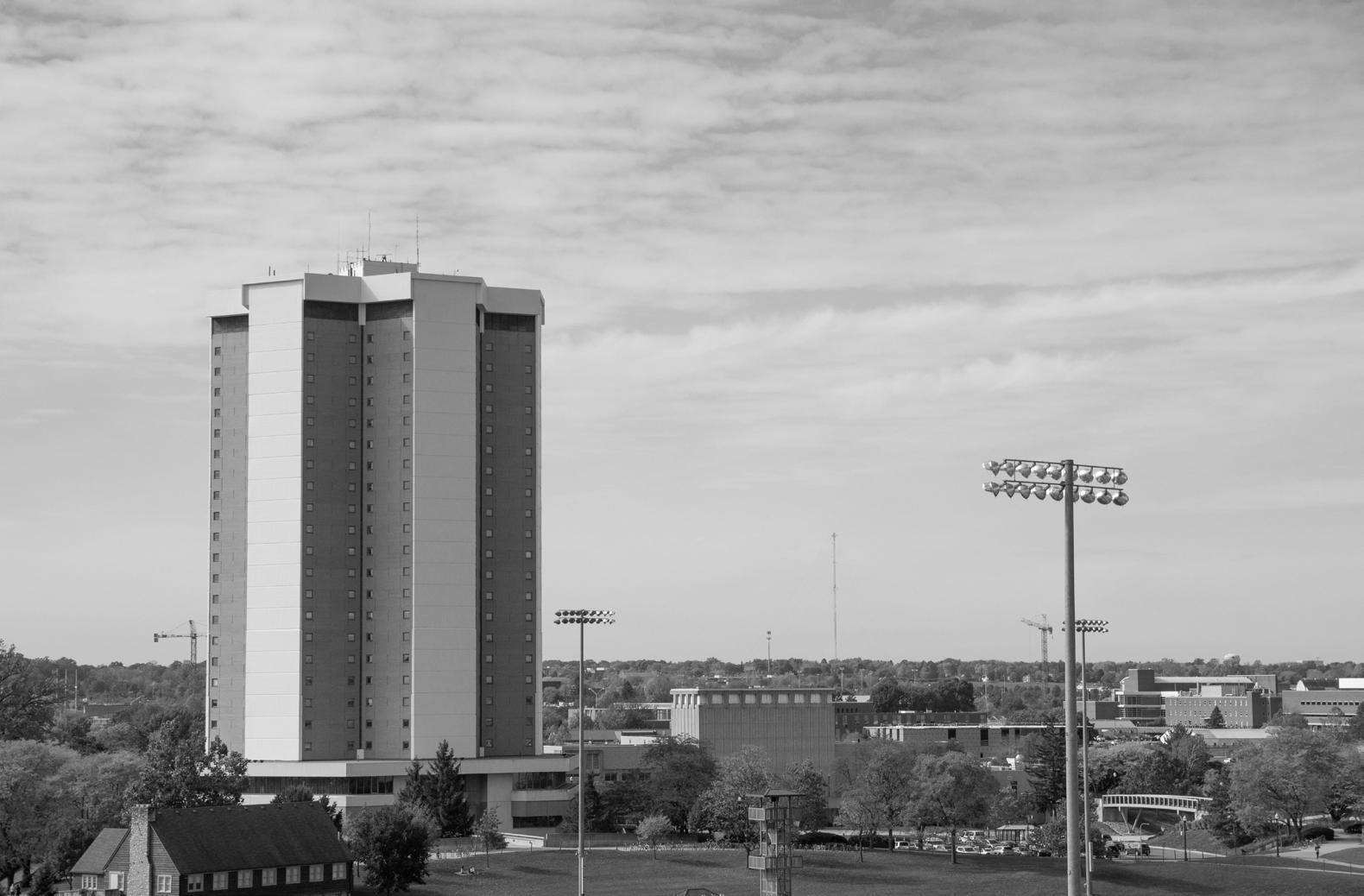
Counseling and Consultation Services have offices located in 1030 Lincoln Tower on west campus.
MADELEINE COOK | LANTERN FILE PHOTO
The protein boom: How the trend is shaping diets at Ohio State
Natalie Zurakowski Lantern Reporter
The nutrient once reserved for “gym bros” has become social media’s favorite food group.
The latest protein obsession has taken over grocery store aisles and influenced snack brands to create high-protein alternatives to its most popular products. At Ohio State, students are fueling up on everything from protein pancakes to cottage cheese bowls, but the trend has raised questions about the legitimacy of the benefits of these products.
Doritos, Eggo and Pringles are some of the many snack companies that have released high-protein variations of their best-sellers. A March 3, 2025, article by CHOMPS states that protein snacks represent $24 billion in sales in the $126 billion snacking market, growing at a rate three times faster than the overall industry.
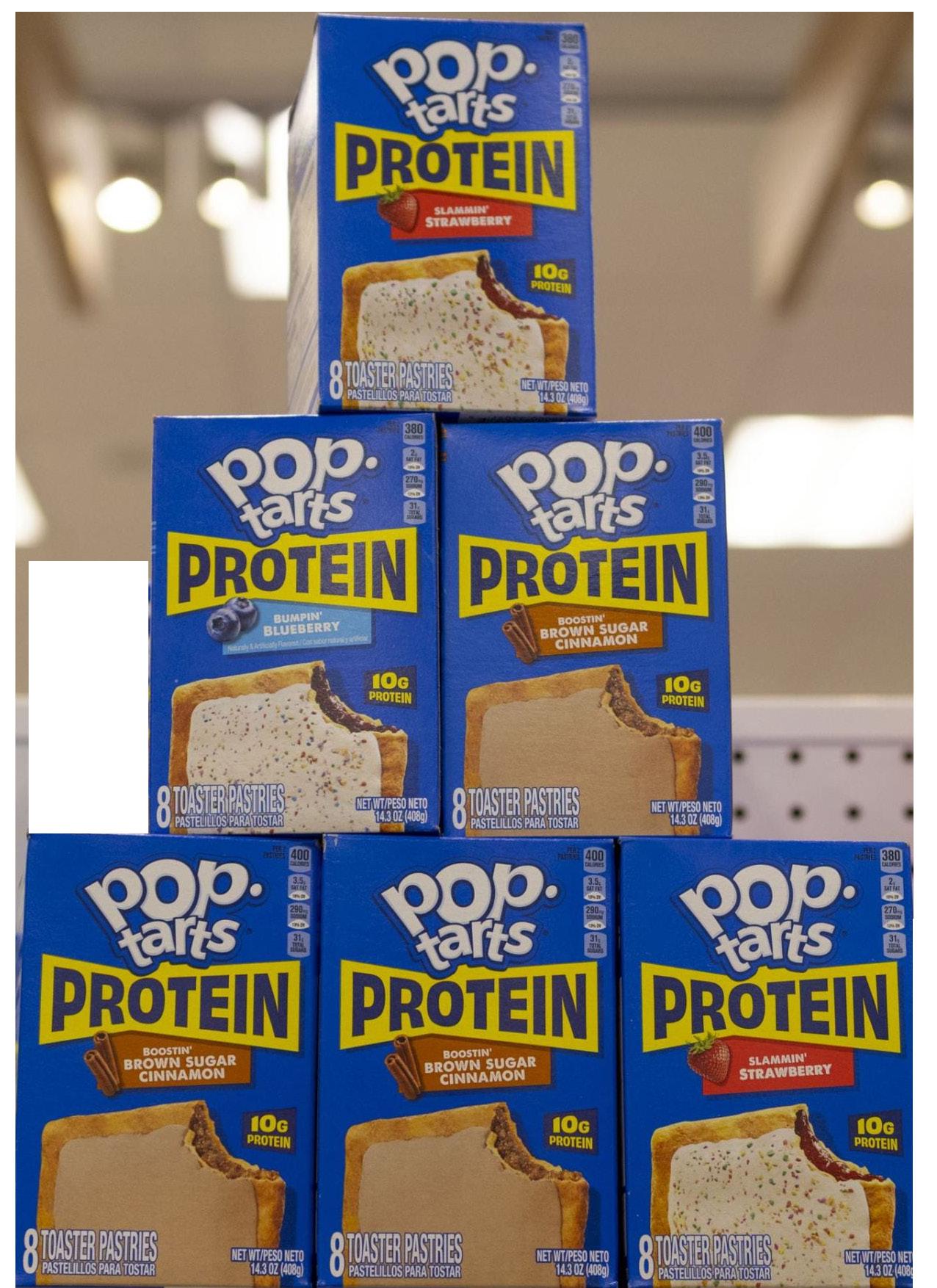
One example is Pop-Tarts, which released a high-protein version of its classic pastry in November 2025. The product includes 10 grams of protein, which is double the amount in the original.
Although this sounds beneficial, Ari Bond, a lab operations analyst and human nutrition lecturer in the College of Education and Human Ecology, said the protein’s benefits are often outweighed by other ingredients.
“When we focus on that one single nutrient, we tend to overlook all of these other things that might be concerning, like additives, artificial colors, artificial flavors, dyes, emulsifiers,” Bond said. “All of these other compounds that are used to make something ultraprocessed.”
Bond said these ultraprocessed foods contain compounds that can increase inflammation.
“When your body experiences inflammation, it can lead to lethargy, and in the long term, it can actually increase the risk for depression,” Bond said. “People don’t realize that if they’re constantly going to these ultraprocessed snacks that they think
are healthy, they’re actually harming themselves in the long run. By switching to whole foods, not only are they eliminating those harmful compounds, but they’re also increasing the consumption of beneficial compounds that fight inflammation.”
While protein is an essential nutrient, Bond said the average adult does not need to worry about their intake. She said those who are growing should be the primary demographic for high-protein diets.
“People who are growing need more protein — that’s pregnant women, since we’re literally growing a human inside of us, that would be children and teenagers, especially because they grow so quickly,” Bond said. “For adults trying to build muscle, you will also need a higher pro tein intake since you are growing your tissue. But if you’re satisfied with the amount of muscle that you have on your body and
you’re in a maintenance phase, you don’t need to consume more protein.”
Avery Dinsdale, a fourth-year in marketing who shares her fitness journey on social media, said social media influencers’ recommendations led her to believe protein was the most important nutrient.
“I was always hungry when I was only [eating] high-protein,” Dinsdale said. “There was so much pressure from the influencers and social media only talking about high protein. I would eat high-protein,
carbs, it’s everything in one. You need balanced meals.”
While these snacks are cheap and quick, Bond said she recommends students reach their protein goals through whole food dining options, such as the dining halls.
“I would prioritize going to restaurants and halls where they have more nutrient-dense whole food options,” Bond said. “If you have a coffee shop that sells pastry items and sugary coffee beverages, versus [the Traditions at] Scott dining hall that has a salad bar, a whole grain bar, a meat bar, a soup bar … I would go to Scott Hall over some of those other options.”
Bond said choosing whole grains is an easy way to meet protein goals.
media often ignores the
fiber, it’s the
“If you go to those dining halls with more nutrient-dense options, you should choose whole grains, which have 25 percent more protein than refined counterparts,” Bond said. “That would be like, brown rice and quinoa. Automatically, you’re getting so much more protein. Emphasize whole foods versus ultraprocessed foods, and if you do those things, I can guarantee that you will meet your protein recommendations.”
A busy schedule can make it difficult for students to head to popular dining halls like Traditions at Scott. Dinsdale said for her, switching from ultraprocessed to nutrient-dense snacks has completely changed how her body feels.
“I was eating more of those protein bars and protein snacks with all those chemicals and ingredients that are so bad for your gut,” Dinsdale said. “I was getting so puffy and inflamed. I think it caused a lot more gut issues than I was already dealing with for other reasons. Now, when I stick to just whole food sources, I feel so much better. My energy levels and my gut health feel so much better.”
Body Alive Fitness attracts Ohio State students through community, intentionality and upbeat tunes
Antonia Campbell Arts & Life Editor
Tucked tightly under an apartment complex on Lane Avenue, just 10 minutes west of campus, lies a new pilates studio that has recently garnered some Buckeye buzz.
Located at 1600 W. Lane Ave., Body Alive Upper Arlington only opened in late December of 2025 but has already become a hit among some campus crowds. The studio offers different variations of pilates, including mat, power and challenge, according to its website.
Elley Sanfillipo, owner of all of Columbus’ Body Alive locations, said she was inspired to bring Body Alive from its original home in Cincinnati to Columbus when she moved back to Ohio from California in 2024.
“While I was out west, I actually dealt with some back issues that led to a big surgery right before I turned 30,” Sanfillipo said. “In my recovery, I started doing pilates and when I moved home — I was actually in Cincinnati first — I just fell in love with Body Alive. Not just the workouts, but the community as well, and that is why when I moved to Columbus, I was super passionate about bringing Body Alive.”
I took a shot in the dark, because I’d never been before. I started going that summer and fell in love with it. Then, they opened a location in Columbus, which I was super excited about. So, I just loved going and I loved being there.”
Cones said the idea to become an instructor was sparked when she wanted more control over the music played during the classes she took. She said music is an integral part of Body Alive classes.
“Every instructor has different music they play,” Cones said. “I was telling my mom I really want this type of music during my classes. My mom was like, ‘You should just become an instructor, and then you can make those classes.’ At Body Alive, we do a body part movement for each song, so one song will be squats, and the next song will transition to, maybe an upper body and then back to a core song. I would say the music [at the] Columbus [locations] is a lot more younger crowd focused.”
After moving to Columbus in late 2024, Sanfillipo opened her own Body Alive at Polaris in June 2025, an Upper Arlington location in December 2025 and a new location in Powell is set to open Sunday.
Sanfillipo said she thinks Body Alive has drawn in a student crowd because of the quality of their workouts, music and family-like dynamic.
“Our workouts are super effective,” Sanfillipo said. “We’ve got you for 45 minutes. You are going to work for the majority of that time in a way that’s really intentional and hits the entire body. The music is so important …
Moving to the beat of the music kind of allows you to check out of your mind and into your body, which I think helps us stand out. Most importantly, the community that you get when you walk into Body Alive is unlike any other studio I’ve ever been to, and in college, a lot of people are looking for that, just that space to connect with similar interests that maybe you wouldn’t run into on a day to day basis otherwise.”
Monica Cones, a third-year in neuroscience and instructor at Body Alive, said she feels the ease of scheduling classes there compared to Ohio State’s group fitness classes, as well as Body Alive’s promotions and overall age range, is what draws Ohio State students in, specifically.
“Because of how big the student body is, it is really difficult to get into OSU classes, like you have to be on it exactly the week before signing up right away,” Cones said. “So, it is nice being able to get into classes pretty consistently. It’s also close to campus. We offer promotions for first-timers. Our most popular one is six weeks unlimited for $36. Also, the teachers are basically all college-aged students, so that kind of brought in the crowd of other college-aged students.”
Cones said her journey with Body Alive began as a member at a Cincinnati location.
“I’m from Cincinnati, which is where Body Alive started,” Cones said. “Going into the 2024 summer, there was a really good deal for college students.
Cones said what makes Body Alive stand out is the sense of community the instructors bring into every class.
“With Body Alive, there’s a big emphasis on community,” Cones said. “Getting to know your students, knowing their names, getting to know the people that come into your classes and making it fun for them to come back. I mean, from experience, I love to go to a specific instructor’s classes in Cincinnati because he learned my name, and I was like, ‘OK, I feel seen.’”
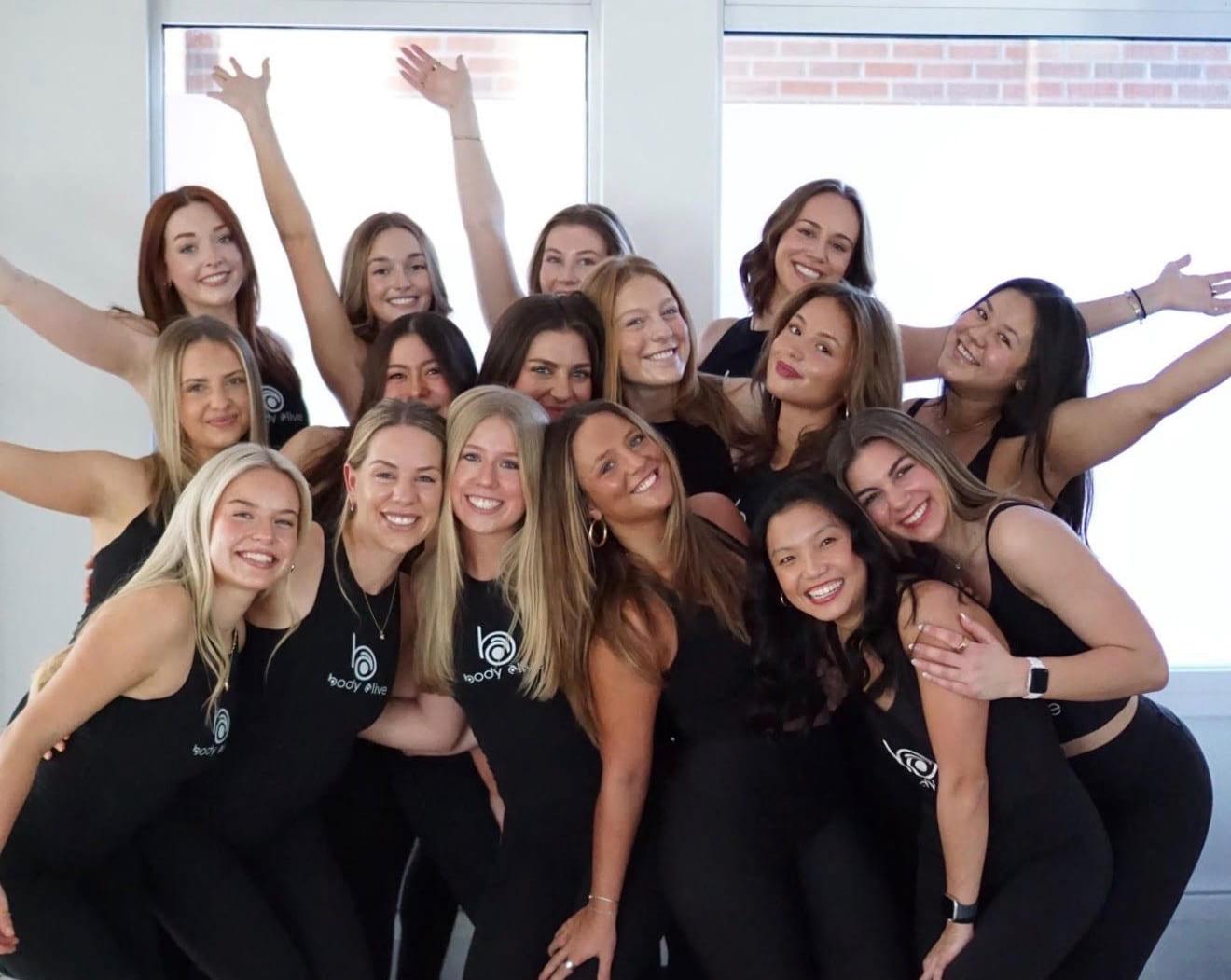
Body Alive owner Elley Sanfillipo (front row, second from left) and her instructors at Body Alive Upper Arlington.
PHOTO COURTESY OF ELLEY SANFILLIPO
New, popular and unique fitness classes available at RPAC for Autumn 2026 semester
Madeline Knisely-Haag Lantern Reporter
In the basement of the RPAC, next to the golf driving bays, a group of about 30 students pair off to exercise, many wielding weighted, wooden swords.
Aaron Gall, the RPAC’s lead martial arts instructor, walks among the students, offering advice on stances, grips and footwork.
Gall created “The Way of the Saber” course, intertwining physical fitness with parts of martial arts, including Kendo, Chinese sword, Eskrima and European long sword. He said the class focuses on hand-to-hand combat skills influenced by movies such as the “Star Wars” series.
“That allows them to have their creativity at play, too,” Gall said. “I wanted them to have their own expression with it … giving them a space of, not so much of being put behind perimeters and barriers, but like, ‘How would you do this?’”
Gall said all of the spots in the class were filled almost immediately after students’ scheduling portals opened up.
There are more than 50 fitness courses offered during the school year through Ohio State’s Sport, Fitness and Health Program. Some of the other more popular courses available next semester include Yoga 1, Social Dance 1 and Social Dance 2. There’s also a new course, called Sit Better, Move More.
“Students are the whole reason we are here,” said Jae Westfall, the program director at SFHP. “They are our most valuable asset to the university, and we do what we can do to make the student experience as positive as possible.”
Westfall said she has dedicated almost 30 years to fitness and wellness at Ohio State.
“I have tangible evidence that our courses make a difference for students, extending far beyond just the activity that they learn,” Westfall said.
For students looking to get lost in the culture and art of performance, regardless of experience, the program has courses to fulfill that desire.
The health program’s website describes Social Dance 1 and 2 as the “perfect opportunity for students to learn rhythm and timing, body control and the cultural paradigms of each dance.”
“You will learn, step by step, how to Tango, Cha Cha, Waltz and so much more,” the program description states.
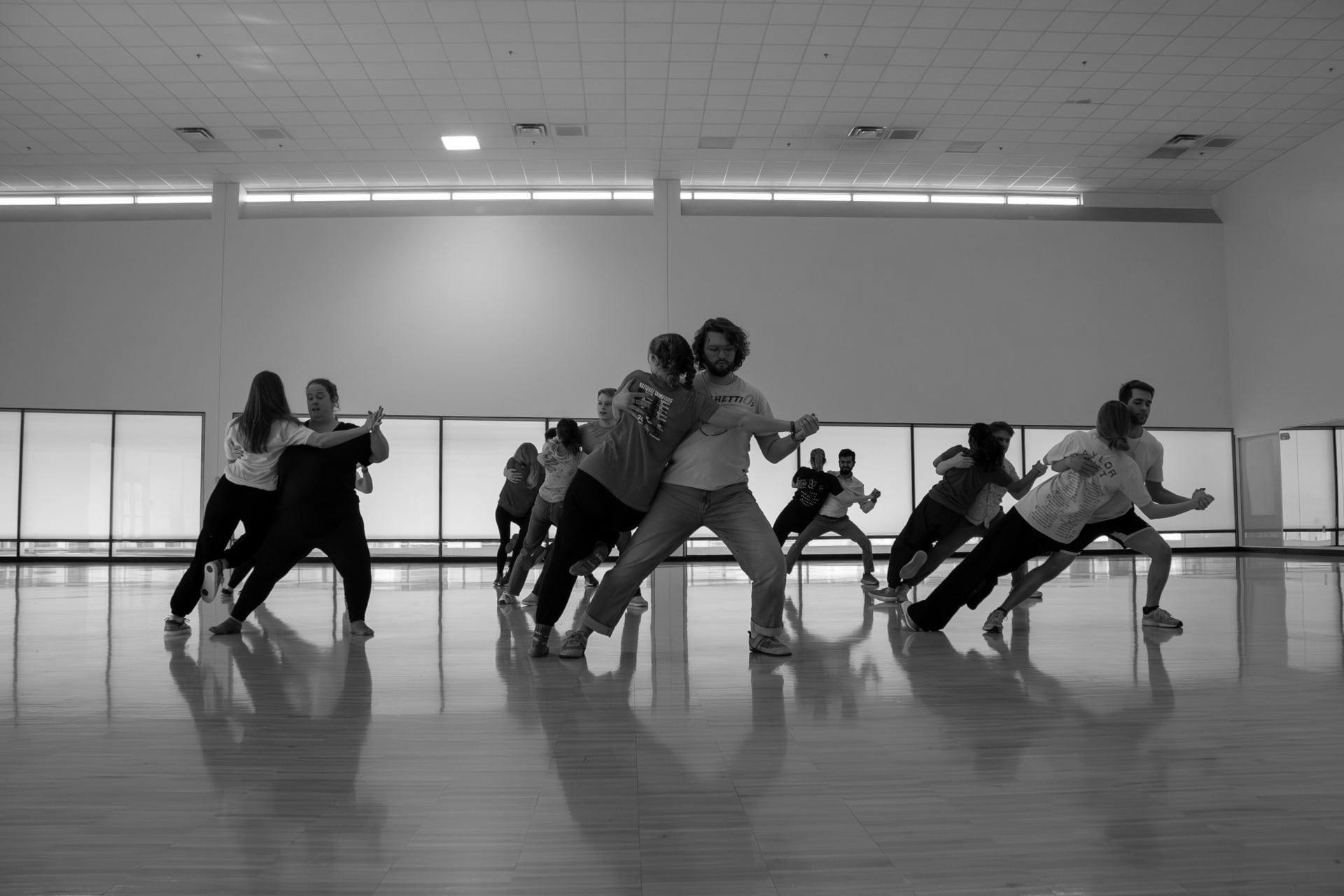
Tamara Rankin, a senior lecturer in the fitness program, said social dance means more than just exercise for some of her students.
“Seeing students meet here and building connections is what keeps me here,” Rankin said. “I’ve seen students meet here, stay together and get married … being paired with each other creates a space for them to bond with one another, creating life-time connections through new experiences, as many of the students who come into social dance have no experience with it and end up loving it.”
Sit Better, Move Better is an up-andcoming course that will be offered in autumn 2026, instructed by Beaker Prince, a lecturer who has been with the program since 2002.
“[The program is focused on] improving and being able to do what we do with more freedom and ease,
following this framework to find better ways to sit with more enjoyment and awareness with posture [and] to organize your space so it’s working with you, not against you,” Prince said.
Prince said the course is intended to showcase how important movement is and the dangers of a sedentary life. Its coursework focuses on helping students learn the guidelines for enjoyment in movement and inspiring them to find more of it in activities.
Prince also teaches Yoga 1, which he said has been offered for decades.
The program educates students on “uniting body, mind, and breath through postures, meditation, and breathing techniques,” and offers “experience improving flexibility, strength, mental well-being, and stress reduction.”
“We really focus on understanding your body and understanding the principles behind the poses … whether that’s compassion and extending
that to yourself, pausing [and] not letting life overtake you [or] focusing on being more alive in the present moment,” Prince said.
In The Way of the Saber, the students show a clear display of a tightknit community. Gall said that’s another goal of the class.
“They are there to share knowledge with each other, be respectful, make sure they are being respected and build community, those three tenants have to be the core of everything I’m doing,” Gall said.
Not only are the relationships between the students strong, but so are their relationships with the instructor.
“I love the relationships I get to build with students; that’s my favorite thing,” Gall said. “I wouldn’t be here if it wasn’t for my students.”
Registration for the Autumn semester is now continuously open for Ohio State students. Check Buckeye Link for more information on enrollment.
The RPAC offers several fun and unique fitness classes throughout the year, like social dance.
CASSANDRA D’ANGELO | LANTERN PHOTOGRAPHER
Students vs. gambling

Continued from page 2.
“The National Council on Problem Gambling, NCPG, views participation in prediction markets as functionally gambling, which deserve the same protections to be put in place as sports betting,” Jenna Hotaling, training manager at the NCPG, said in an email. “When gambling and gambling-like activities are framed as fun, social or even skill-based, people may underestimate the financial, social, and emotional risks. There is a cultural shift happening where betting becomes routine, frictionless, and socially reinforced.”
Hotaling said college students have become increasingly vulnerable to these behaviors.
“Students are especially at a heightened risk for developing gambling problems, due to brain development, peer influence, and an increase in risk-taking behaviors,” Hotaling said. “For those seeking ways to establish boundaries, setting time and money limits (check out Responsibleplay.org) is a great place to start. The important takeaway is to emphasize that gambling is a form of entertainment; not a way to create income.”
For students, especially recent or upcoming graduates, Hotaling said stress from navigating the job market and current economy can contribute to their risk of developing an addiction.
“Economic pressure can increase
gambling and change the motivation behind it,” Hotaling said. “For many graduates, it stops being entertainment and becomes a coping mechanism or a perceived financial strategy, which significantly raises the risk of addiction and longterm harm.”
On March 9, an Ohio federal judge ruled that Kalshi must be legally held to the same standards as sports betting platforms, signaling a change in the way these apps are regulated and used.
With Ohio being one of the largest gambling states and one in five Ohioans at risk for developing an addiction, Brill said the state has help readily available for those who need it.
“You know, our organization [PGNO] helps track where all of the people who are clinicians are,” Brill said. “We have a state problem gambling helpline, where you can call in and that can actually get you help. We also operate a telehealth network where if you can’t get to a clinician physically, we can make sure you can get help through the telehealth network. So no matter where you are, you can still access the care that you need.”
The National Problem Gambling Helpline™ can be reached by phone at 1-800-MY-RESET, by text at 800GAM or through chat on NPCG’s website. For the Ohio Problem Gambling Helpline, call 1-800-589-9966, text 4HOPE to 741-741 or chat on gamblinghelpohio.org.
Ohio State counseling
Continued from page 3.
Warner said while someone may not be able to contact a CCS counselor on the spot, they often take same-day calls. However, the circumstances that cause them to redirect students to outside resources can vary on a caseby-case basis.
“The most important factor is safety, because if a person is unsafe, we’re helping them right away,” Warner said. “There’s a ton of variables that go into who and when and why someone is meeting with a professional.”
Stuart said looking back, she feels CCS should make a more prom inent effort to schedule students’ counseling appointments on a regular basis — suggesting an
Stuart said it can also be difficult to build a trusting relationship with a therapist, especially with appointments scheduled far in advance.
“I felt like I needed to be in there a lot more often,” Stuart said. “By the time the month rolled around, I kind of forgot everything we had really talked about in the first one, so it’s hard to make any real progress.”
In reflecting on her experience, Stuart said she would recommend CCS services to students without an urgent need for mental health attention.
increase in clinical staff members.
“There’s a lot of students that need or want to use these counseling services, which is great,” Stuart said. “I think they definitely need more staff in order to actually accommodate all of the students that they’re trying to help.”
Compared to Stuart’s past experiences with therapy, she said the ability to build a consistent schedule with a therapist is lacking in CCS.
“Other therapists I’ve seen in the past, you have a consistent time every time you go in,” Stuart said. “If you had to miss one, you would have the next one waiting for you, because that time slot is kind of reserved for you. But with this, they kind of would squeeze you in wherever they could.”
“Don’t be afraid to do it,” Stuart said. “It’s really great to have a free resource to use. I think a lot of people are ashamed to go to therapy, and I really don’t think that’s something you need to be ashamed of. However, be prepared to have some weird times, and if you are in more of an urgent need, it might not be worth it to take the time to wait.”
Warner said he encourages students to reach out to CCS, no matter their circumstance.
“It can be a little bit scary, and if you don’t understand what’s going to happen, then you might hesitate to reach out,” Warner said. “We have so many ways that we can support you — just reach out.”
If you or someone you know is in immediate danger, visit your nearest Emergency Room or call 911. The Suicide and Crisis Lifeline can be reached at 988. The National 24/7 Suicide Hotline is 800-784-2433. For the 24/7 free and confidential Crisis Text Line, text “4HOPE” to 741-741.
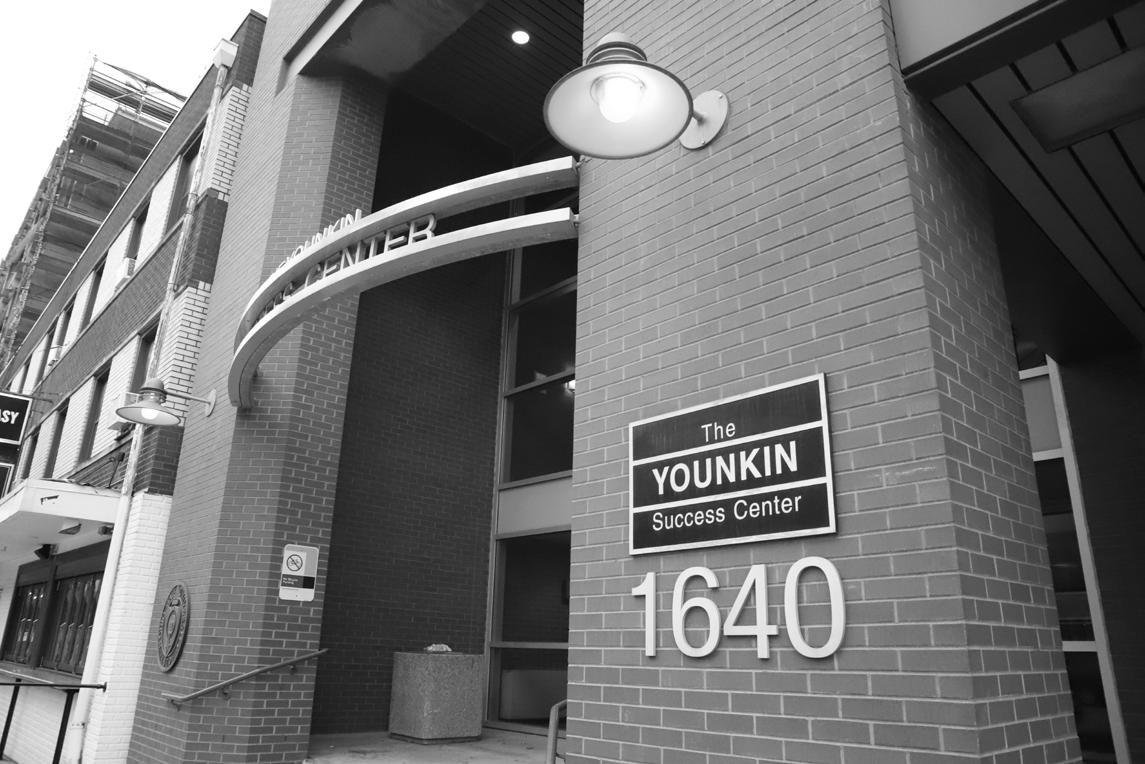
Counseling and Consultation Services’ main office is located on the fourth floor of the Younkin Success Center.
AMAL SAEED | LANTERN FILE PHOTO
VIPs get a first look after a ribbon cutting ceremony for Boyd’s Cadence Casino Wednesday, March 25, 2026 in Henderson, Nevada.
BENJAMIN HAGER | LAS VEGAS REVIEW-JOURNAL VIA TNS
Sunday resets: The viral routine helping Ohio State students reduce stress and stay on track
Natalie Zurakowski Lantern Reporter
After unpacking her groceries, Reese McGuire sits down at her freshly-wiped desk that still smells of bleach.
Nearby, her color-coordinated planner sits open as she edits and posts her latest TikTok, captioned “Sunday reset.”
For McGuire, a fourth-year in marketing, the Sunday reset is more than a trend — it’s a lifestyle.
For many, Sundays bring overwhelming feelings of anxiety and dread — known as the “Sunday scaries” — when thinking about the week ahead. To tackle these feelings, social media users have implemented a weekly habit to adequately prepare themselves for the following days.
Whether it’s doing laundry or going grocery shopping, Sunday resets consist of the annoying chores that take up free time during a busy week.
Though there isn’t an official checklist for the routine, since it varies by individual, McGuire said sticking to the same tasks helps set her up for success.
“I’m always washing my sheets. That’s the biggest thing that I prioritize getting done every week, because it’s always been one of those things that I love to do,” McGuire said. “Then I do my general laundry, my dishes, sweeping, cleaning all my surfaces. When I start my week, the next day I wake up and it’s just a fresh area for me to do my work and whatever else I need to get done.”
McGuire, who started filming and posting her own Sunday resets on TikTok after being inspired by her favorite TikTok influencer, Emilie Kiser, said the weekly ritual is the primary way for her to relax.
“It’s very therapeutic to me to clean. Most of the time, I’ll just put my headphones on and get in a zone,” McGuire said. “It’s just so easy for me to walk around my apartment, or when I was doing the videos more consistently in
my dorm, and it was just such a good feeling to have it done.”
McGuire isn’t the only one who finds relaxation through routine. Kentaro Fujita, an Ohio State professor of social and decision psychology, said habits can reduce stress levels by removing the weight of choice.
“If you have to make decisions and plan throughout the week, there’s always this uncertainty that you don’t know if you’re actually going to get it done,” Fujita said. “But if you have a routine, you know that when that time comes, you’ll get it done. That can be very relieving. There’s a sense of ‘I know what’s going to happen next’ that gives it a sense of predictability, which you may or may not have in the rest of your week.”
While Sunday is traditionally a day
of rest, Fujita said it also acts as a natural break point in the calendar that allows students to mentally reset.
“There are times or dates that people generally think of as the end or beginning of something,” Fujita said. “These natural break points serve as good opportunities to erase what happened previously and start with a fresh slate … allowing us to forget all of our previous failures and also be able to leverage optimism for what’s about to come.”
Fujita said this surge in productivity is also fueled by what psychologists call the “stuck in the middle effect.”
He said people tend to have the highest motivation at the beginning and end of the week, but their motivation drops in the middle.
Because Sunday acts as the start or
finish line, students often feel more motivated to tackle tasks than they would in the middle of the week.
McGuire said for her, the Sunday reset trend quickly turned into a passion.
“It started as more of a hobby of mine, and then after I started making the TikToks, I realized I loved it,” McGuire said. “It’s that sense of accomplishment that I love, and that sets me up for a good week.”
For those looking to start the habit without feeling overwhelmed, McGuire said she suggests starting small.
“Start with baby steps,” McGuire said. “You don’t have to wash your sheets and do the whole nine [yards], but just setting a goal of whatever will make you feel good and accomplished is the biggest thing.”
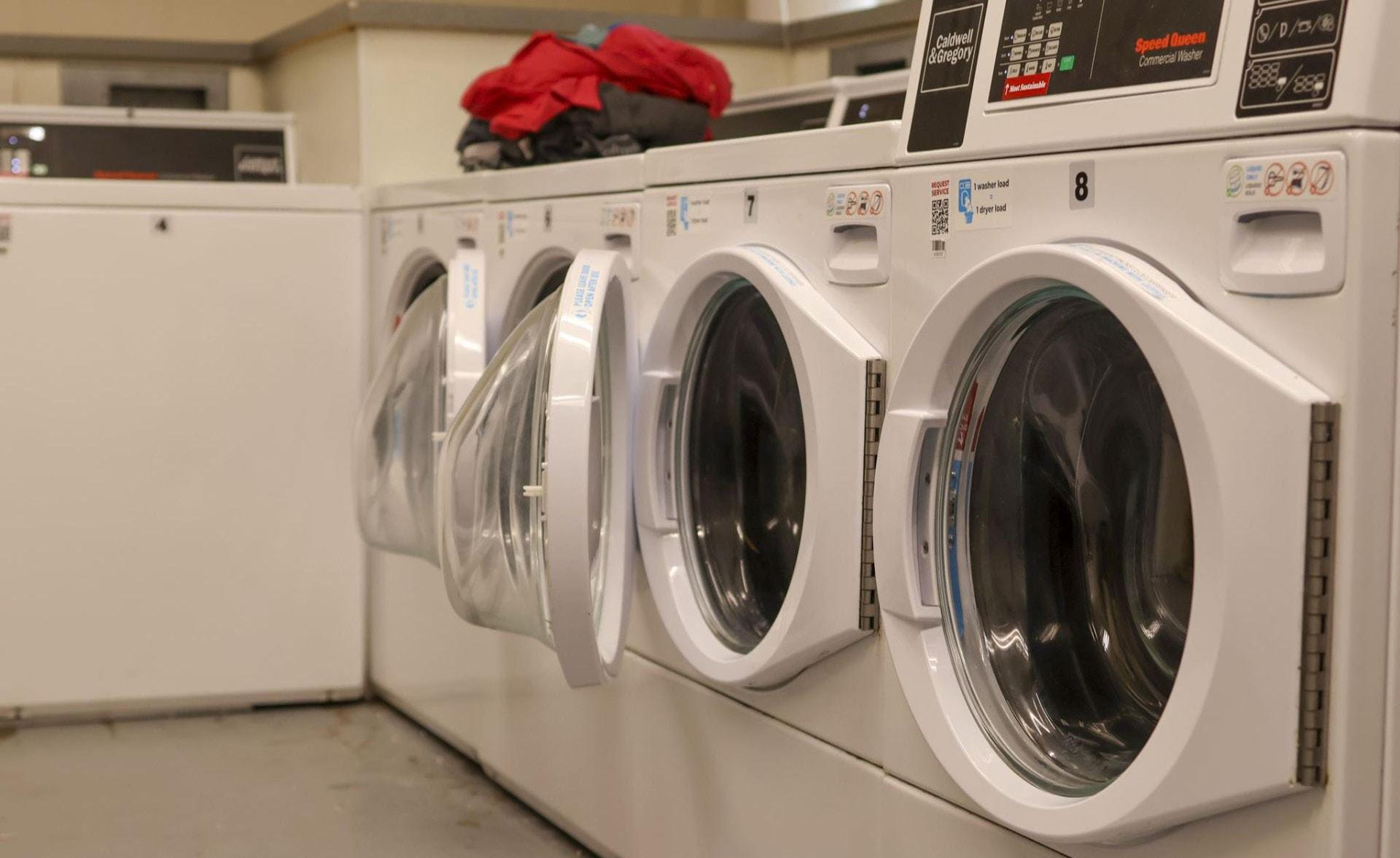
Sunday Reset finds the relaxation in routine through tasks, such as doing laundry or cleaning.
FAITH SCHNEIDER | ARTS & LIFE PHOTO EDITOR