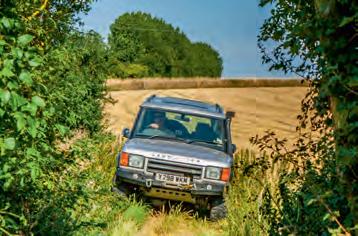
ROADBOOK Exploring the woodlands of East Kent, one green lane at a time




ROADBOOK Exploring the woodlands of East Kent, one green lane at a time
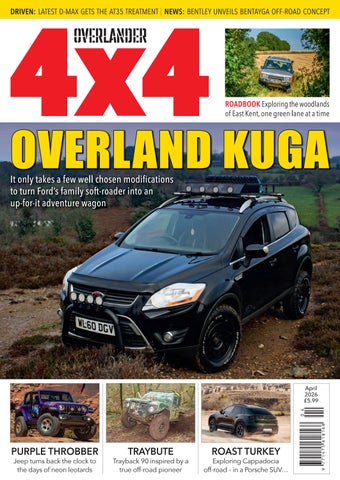
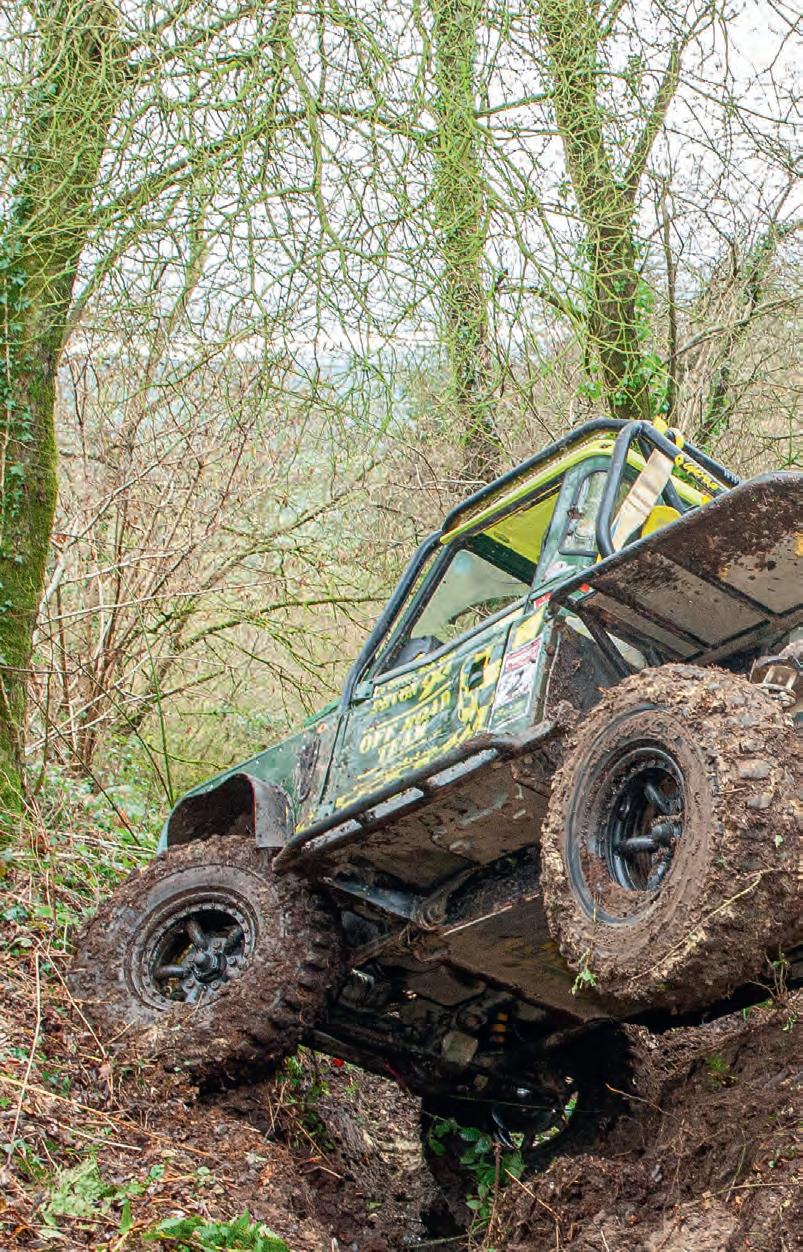
It only takes a few well chosen modifi cations to turn Ford’s family soft-roader into an up-for-it adventure wagon
















































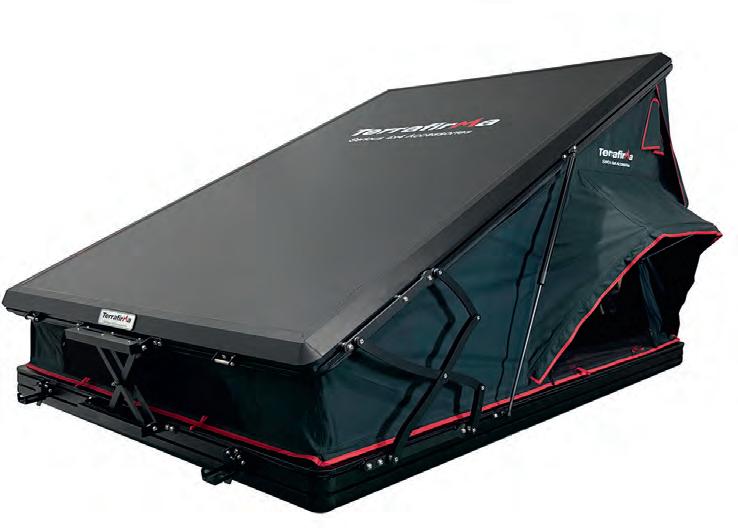
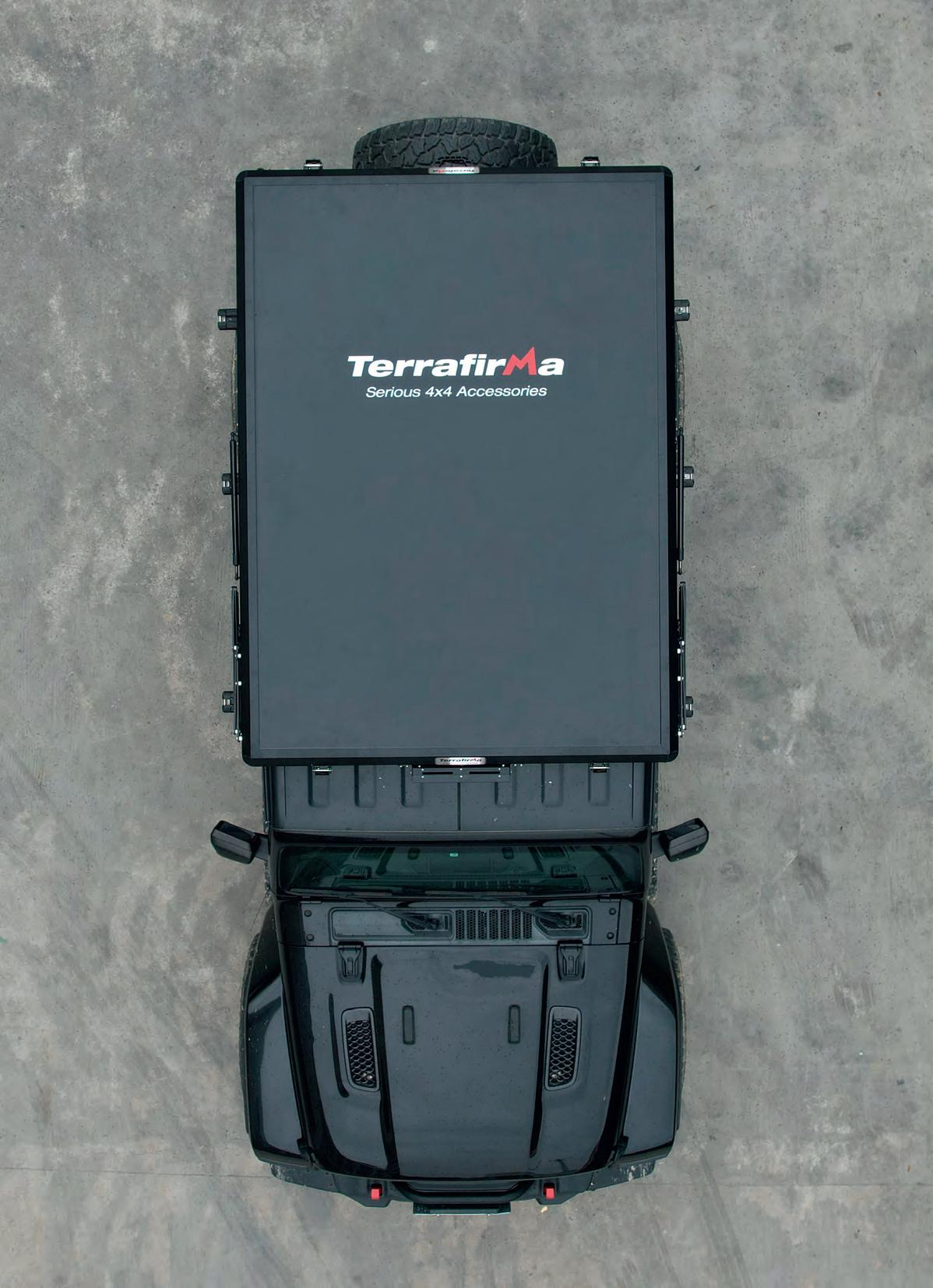
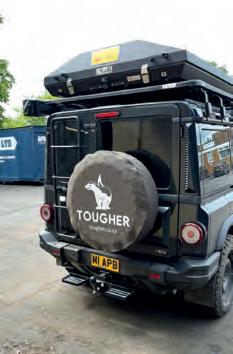
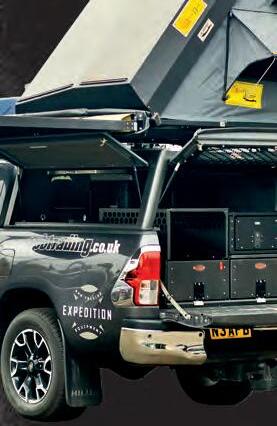
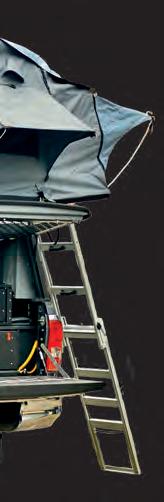
The Terrafirma X-Hinge Roof Tent is a strong, lightweight, and practical roof tent designed for 4x4 and overland vehicles. It combines fast setup, a spacious sleeping area, and a slim, low-profile design that is ideal for everyday driving and long-distance travel.
Perfect for touring, camping, and off-road adventures, this roof tent provides a safe and comfortable place to sleep wherever your journey takes you.
The innovative X-hinge opening system allows the roof tent to open smoothly and evenly, creating excellent internal space while keeping the structure stable and secure.
The hinge position is carefully designed to prevent the tent fabric from becoming trapped when opening or closing, making setup quick and hassle-free even after a long day on the road.
When closed, the roof tent measures just 200mm in height, helping to reduce wind resistance, road noise, and fuel consumption.
The low profile also keeps overall vehicle height to a minimum, making it suitable for daily use as well as long overland journeys.
A large entrance makes getting in and out of the tent easy, while the soft, fabric-covered mattress ensures a comfortable night’s sleep. The generous internal space allows pillows and blankets to remain inside the tent when folded, saving valuable storage space in your vehicle.
A built-in dual-colour LED light and integrated charging station provide added convenience when camping, whether you are reading, relaxing, or charging devices.
Perfect for touring, camping, and off-road adventures, this roof tent provides

Scan the QR to find out more
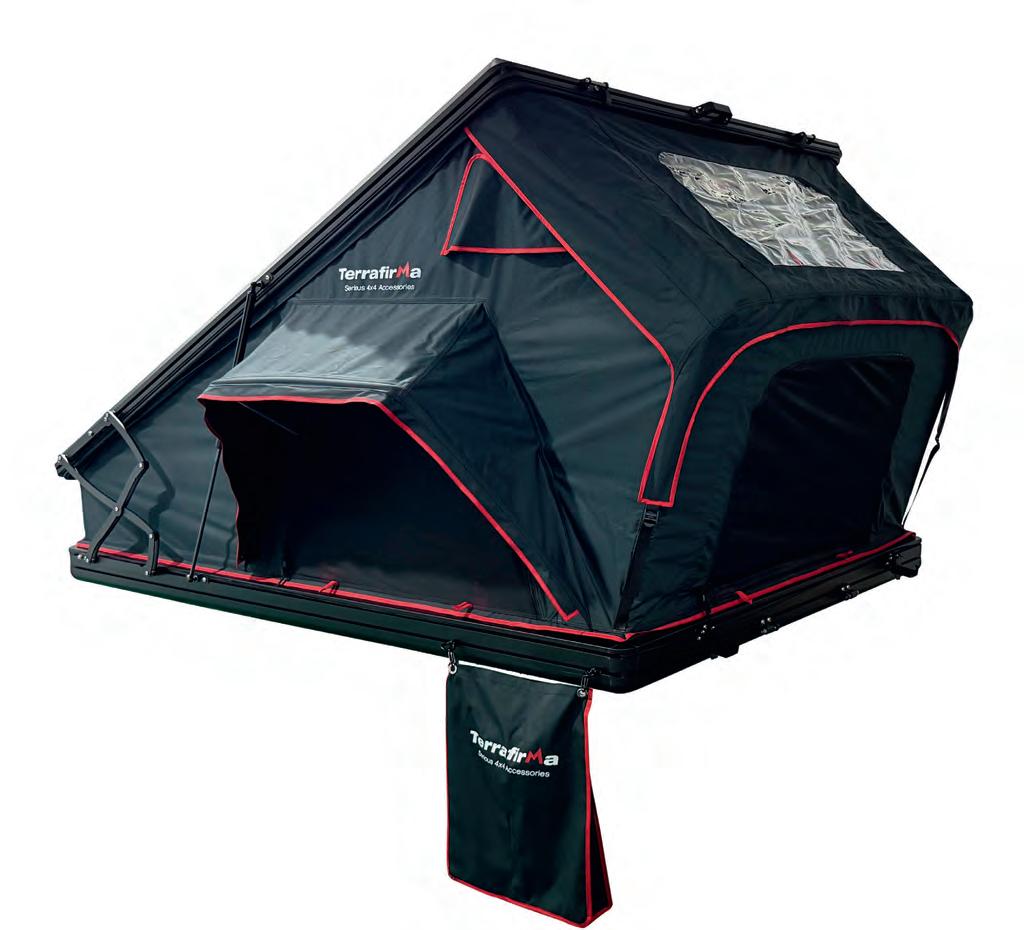
Innovative X-Hinge Opening System
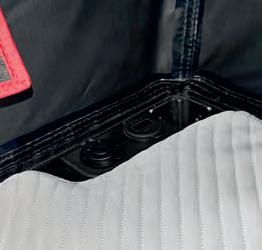
Built-in charging point
>Third rear X-hinge for added stability
>Two large side windows and a skylight
>600D ripstop canvas (280gsm)
>Waterproof rating: PU3000
>Sleeps two adults
>Built-in 70mm “cool feel” mattress with fabric cover
>Built-in dual-colour LED light
>Integrated charging station
Built-in 70mm mattress
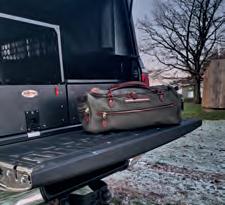
Exterior clip-on boot bag T-Slot system channels
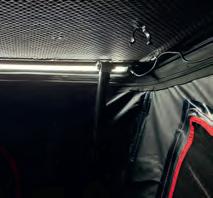
Built-in dual colour LED Light
>Exterior clip-on boot bag and interior storage pockets
>Pillows and blankets can be left inside when folded, saving vehicle space
>CNC airflow design in the bottom shell to help reduce condensation
>T-slot system channels allow brackets (TF5547) to attach accessories such as awnings
>Compatible with Terrafirma TF5546 roof bars
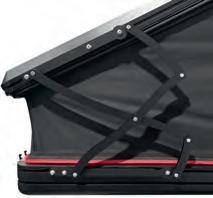
Unique, sturdy X-Hinge system
provides a safe and comfortable place to sleep wherever your journey takes you.
www.terrafirma4x4.com

Tel: 01283 742969
Email: admin@pistonpublications.co.uk
Web: www.totaloffroad.co.uk www.4x4i.com
Online Shop: www.toronline.co.uk
Facebook: www.facebook.com/totaloffroad www.facebook.com/4x4Mag
Editor Alan Kidd
Design Ian Denby-Jones
Contributors
Mike Trott, Gary Martin, Olly Sack, Dan Fenn, Gary Noskill, Paul Looe, Mark Fraser, Kenny Tucker, Tom Alderney, Dani Heyne, James Webber
Photographers
Richard Hair, Vic Peel, Harry Hamm, Philipp Rupprecht
Advertising Sales
Colin Ashworth
Tel: 01283 742969 colin.ashworth@assignment-media.co.uk
Subscriptions Agency
WW Magazines, 151 Station Street, Burton on Trent, DE14 1BG Tel: 01283 742970
Publisher Alan Kidd
Email: editorial@pistonpublications.co.uk
To subscribe to 4x4, or renew a subscription, call 01283 742970. Prices for 12 issues: UK £42 (24 issues £76); Europe Airmail/ROW Surface £54; ROW Airmail £78
Distributed by Marketforce; www.marketforce.co.uk
Every effort is made to ensure the contents of 4x4 are accurate, but Piston Publications accepts no responsibility for errors or omissions nor the consequences of actions made as a result of these. When responding to any advert in 4x4, you should make appropriate enquiries before sending money or entering into a contract. The publishers take reasonable care to ensure advertisers’ probity, but will not be liable for loss or damage incurred from responding to adverts
Where a photo credit includes the note ‘CC BY 2.0’ or similar, the image is made available under that Creative Commons licence: details at www.creativecommons.org
Overlander 4x4 is published by Piston Publications Ltd, PO Box 8830, Burton on Trent DE14 9QW
© Piston Publications Ltd, 2026
overlander4x4.co.uk








Pay quarterly by direct debit and you can get Britain’s only all-marques 4x4 magazine delivered to your door – for less than half the price on the front cover!
4 News
Bentley ups its off-road game with the Bentayga X concept and Heritage Customs turns the Defender 90 into a soft-top, while Jeep adds new models to the Compass line-up and readies its next electric SUV with the Wagoneer S
12 Rights of Way
The latest example of a local authority blowing your money on a lane-closing crusade that doesn’t wash with the law
Brake disc conversions for early Land Rover 90s, old-school steels for even older trucks and how to turn your awning into a thing that’ll keep the weather out
Last month we told you about how Dacia won the Dakar. Now here’s how Land Rover… won the Dakar
20 Subscribe
Get Overlander 4x4 delivered for a fraction of the cover price
64 Next Month
Just when you thought you’d seen all the coolest Wranglers, they get even cooler
22 Isuzu D-Max AT35
The updated version of our former Pick-Up of the Year gets the taller and wider treatment. Enough to make it even better off-road?
26 Trayback Tribute
There’s no shortage of traybacked Land Rovers in the world. But not all of them can claim to have been inspired by the original
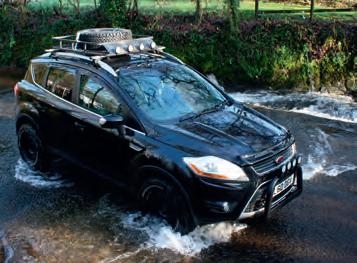
36 Overland Kuga
Not your everyday adventure wagon, but a few mods help a Ford Kuga get serious
40 Purple Haze
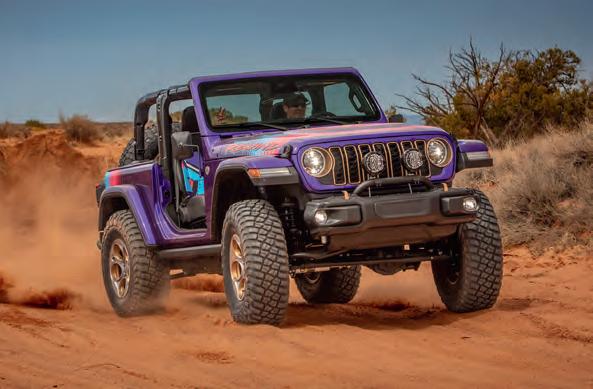
Jeep’s Wrangler-based Rewind project harks back to the days when eyeball-searing colours were in
44 Turkish Delightful
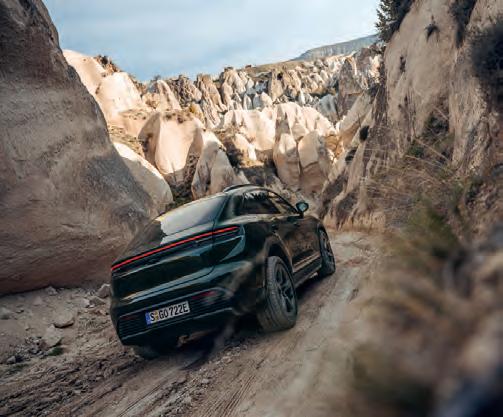
Hot air balloons and a landscape like no other, explored off-road aboard a Porsche Macan 4S
54 ROADBOOK The Lake District
A hugely varied and at times brutally scratchy day on the lanes in the woodlands of East Kent
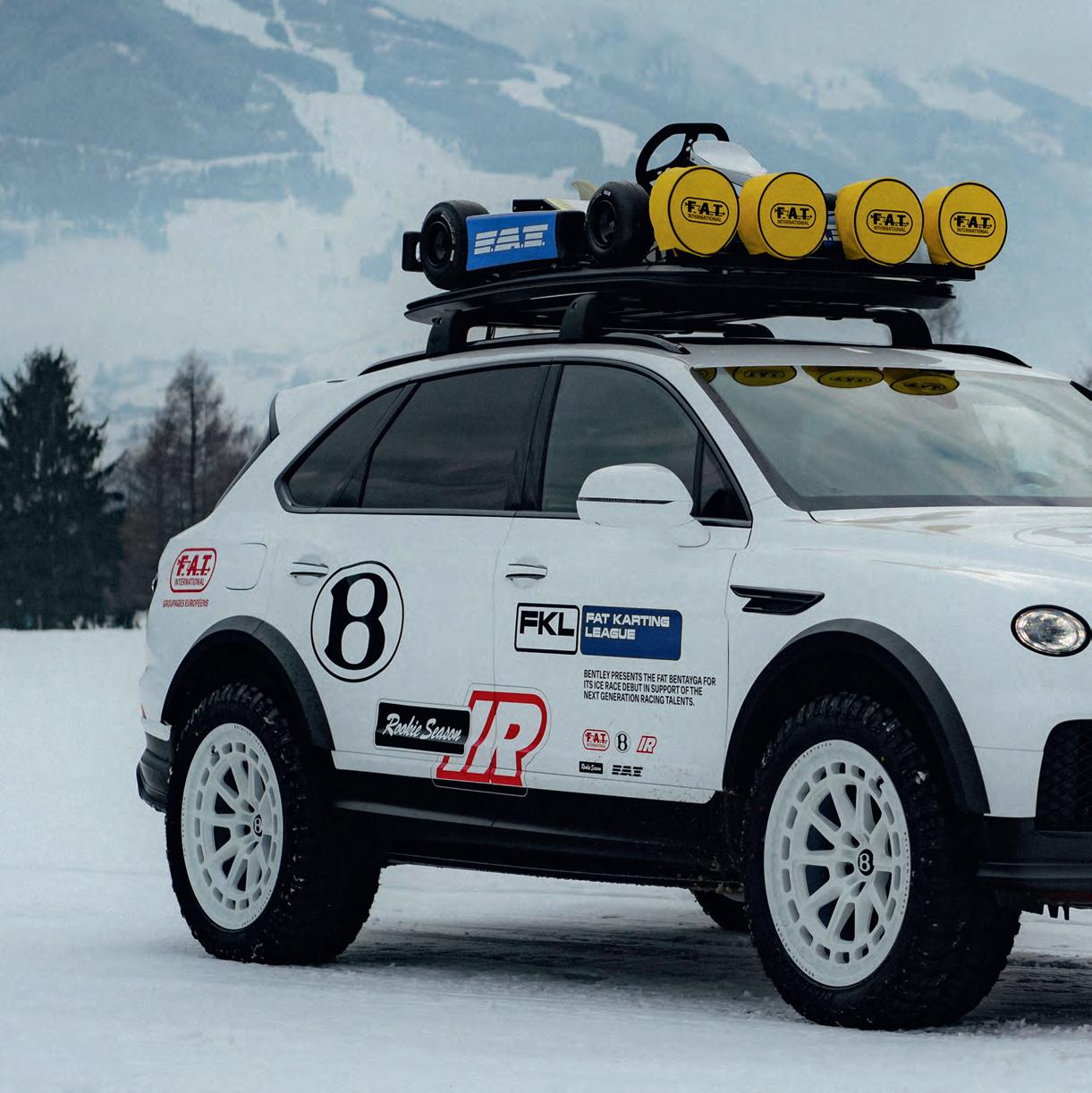
There was a time when it would have been unthinkable that Bentley would built a 4x4. But they did, and then it was unthinkable that it would be any good off-road. But it was, and then it was unthinkable that they’d modify it to make it even better off-road. But they have.
The result is the Bentayga X concept. Based on the Bentayga Speed, and therefore packing 650bhp from a 4.0-litre
twin-turbo V8, it sits on 285/50R22 Radar
Renegade R/T+ all-terrains beneath a 55mm suspension lift engineered for both ground clearance and suspension travel. Said ground clearance is now as much as 310mm, so we’re talking about a vehicle with the ability to get over pretty big obstacles. Aiding this is a 120mm increase in track width; the bigger tyres, which stand just over 33” tall, are kept legal by 40mm extensions to the wheelarches. The
vehicle’s standard Bentley Dynamic Ride air suspension is retained, equipping it with a 48V electric active anti-roll control system; wading depth is quoted at a hefty 550mm. Up top, the Bentayga X carries a roof rack with a tent… sorry, make that an electric Bambino-size Go Kart. These are used in the FAT Karting League, which Bentley sponsors and whose Ice Race in the classic Austrian winter sports resort of Zell Am See provided the ideal backdrop
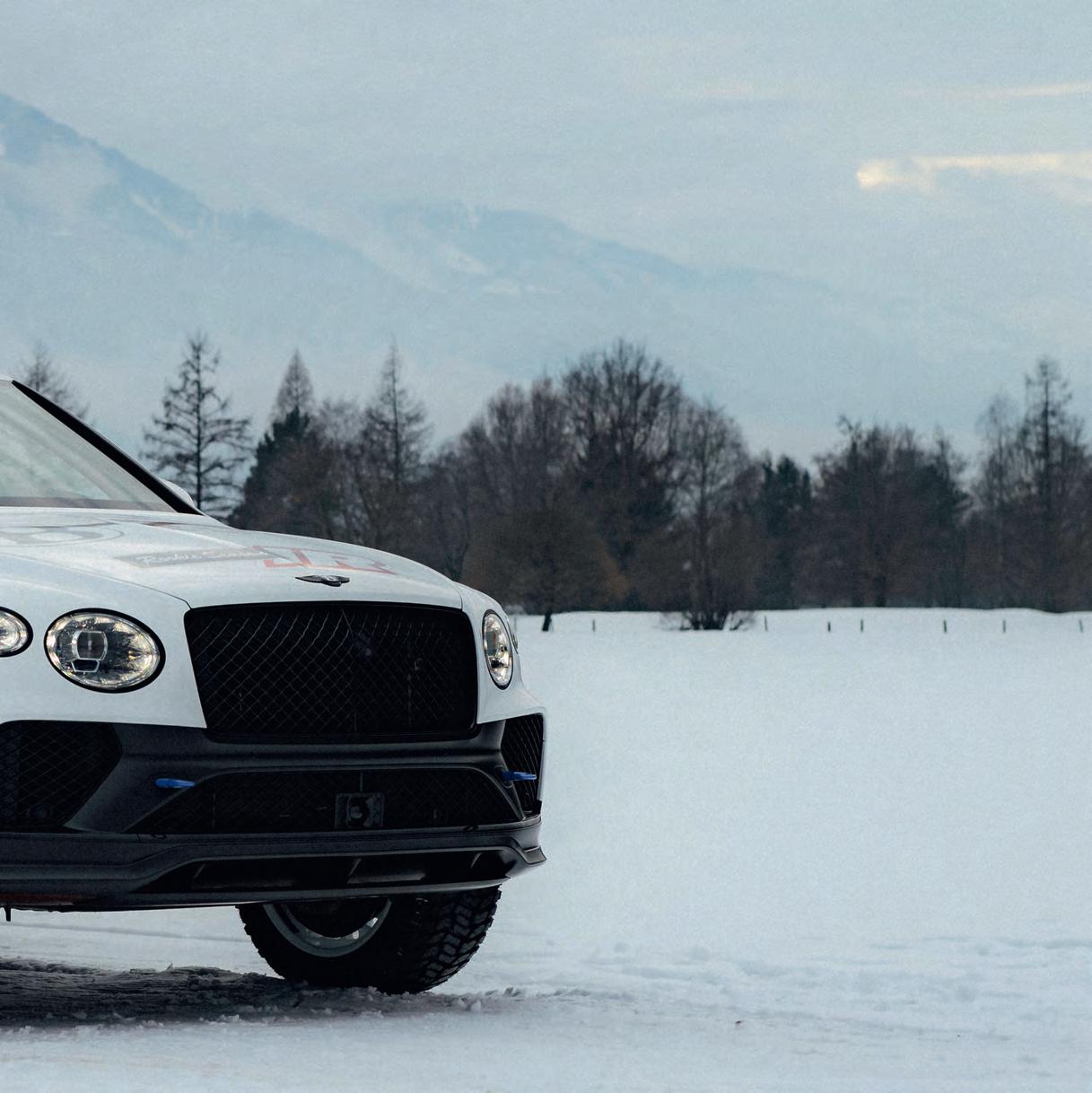



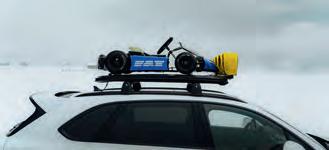
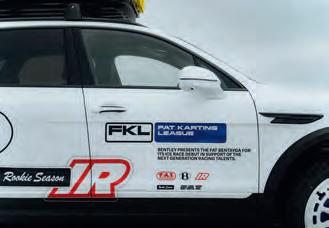
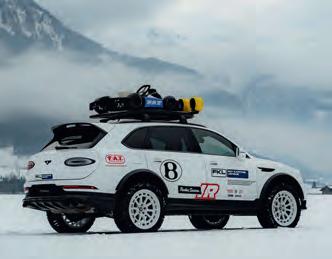
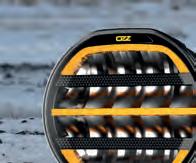
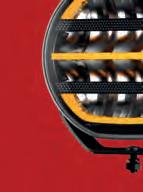
for the vehicle’s launch. This and the suspension lift bring the concept’s overall height to just under 2.5 metres, and it definitely looks jaunty on the single-piece forged 22” Brixton wheel rims that add a definite rally-raid touch to its image. Exposed front towing points and an Akrapovic titanium sports exhaust do the same, albeit with a little more subtlety, and then there’s a bank of four old-school spotlights up top whose bright yellow
covers are about as far removed from subtlety as you can get.
‘The core Bentayga is already known for its breadth of abilities,’ comments Bentley, ‘offering incredible performance, luxurious comfort and refinement and off-road capability. From there, the Bentayga Speed focuses on maximum dynamic ability and outright speed, while the Bentayga Extended Wheelbase concentrates of rear-seat luxury and
wellbeing. The Bentayga X Concept now focuses on the third area of Bentayga capability, and has the potential to provide an even greater off-road experience.’
Could this mean an actual showroom model based on the qualities the concept highlights? Perhaps more likely that these will be adopted into the company’s bespoke build offerings, but a more obvious challenge to a certain other luxury SUV would be hard to imagine…
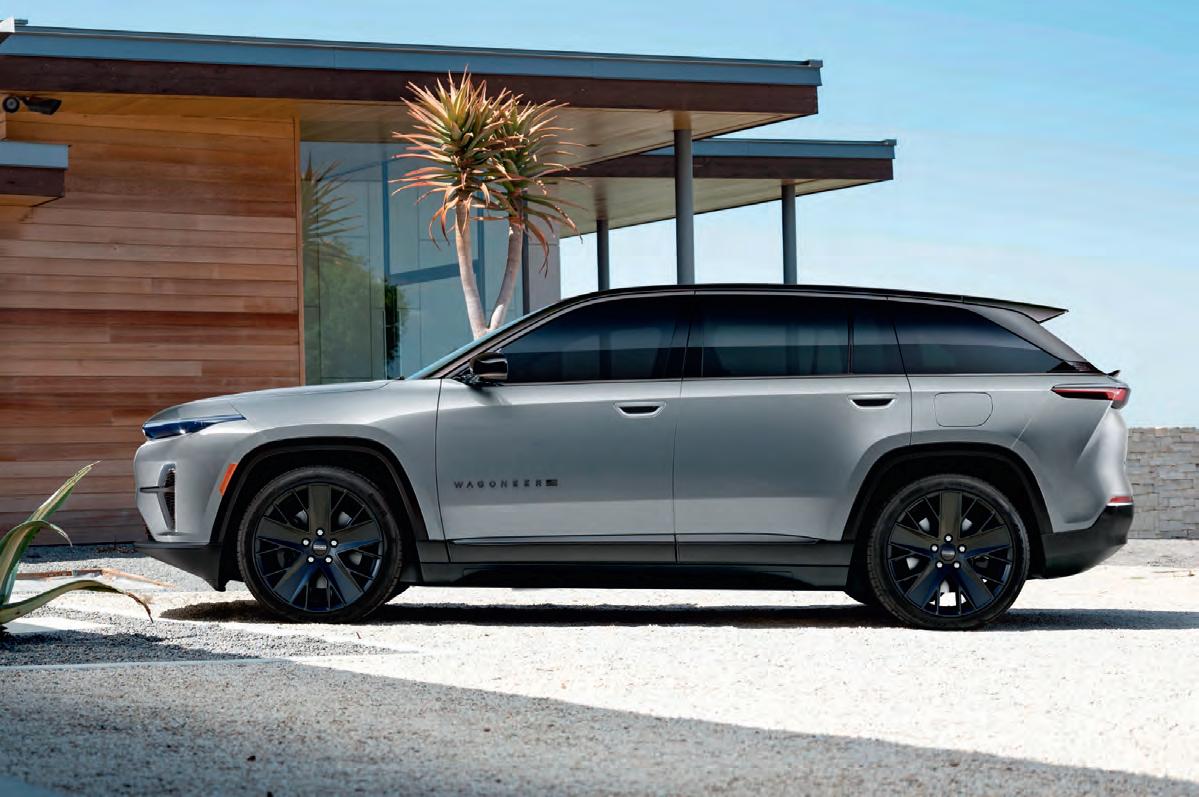


There’s a new Jeep on the way –and it’s going to be a bit mega. The Wagoneer S, a racy looking large SUV, is the company’s ‘full electric flagship’, its styling hinting at an output of 600bhp and 3.5-sec 0-62 time. This comes from a pair of 250kW ‘electric drive modules’ (it’s okay to say ‘motor’, really), one at each end, which give the vehicle all-wheel drive. Jeep’s Selec-Terrain traction management system equips it with Auto, Sport, Eco, Snow and Sand drive modes, while a 400volt, 100.5kWh battery pack allows fast charging from 20% to 80% in 23 minutes. There’s a lot more to come in the way of info – not to mention prices. But Jeep promises ‘more than 45 inches of highdefinition sculpted screen space’ linked to its latest Uconnect 5 media system, plus a 19-speaker audio system with a 1160-watt amp and 12-inch sub which ‘makes it feel as though passengers are
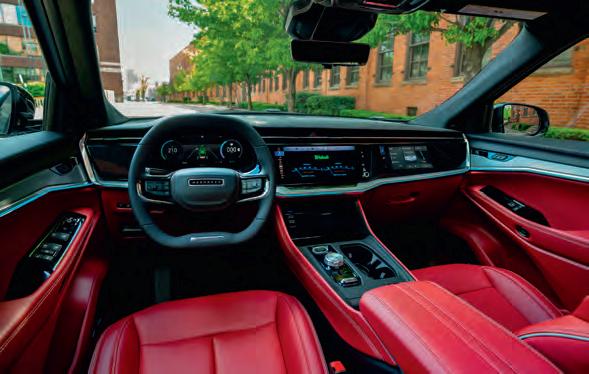
in a recording studio with their favourite artists.’ Let’s hope you don’t ever give a lift to any closet Lostprophets fans.
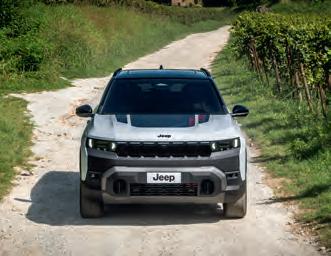
JEEP HAS ALSO UNVEILED the new Compass line-up, with new e-Hybrid Plug-in and 4xe models adding yet more options to the range. The former combines 225bhp performance with a range of 56 miles on electric power alone and 600-plus miles overall, as well as featuring an integrated Selec-Terrain which adapts the vehicle’s driving dynamics to differing conditions including snow, sand and mud.
At the top of the range, the Compass 4xe features 10mm lifted suspension and heavierduty bumpers with improved approach, departure and breakover angles. It’s also equipped with taller tyres whose higher sidewalls improve tractability on loose and soft terrain. Reduction gearing of 14:1 means serious crawling ability, and the cabin is trimmed in tough, durable materials to resist the knocks and scrapes of use in the great outdoors.
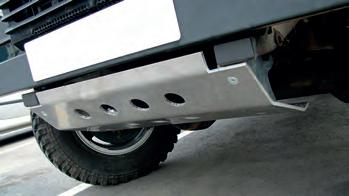
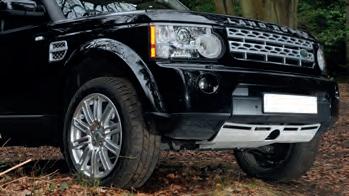
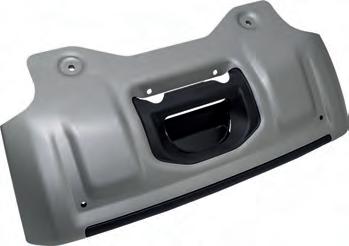
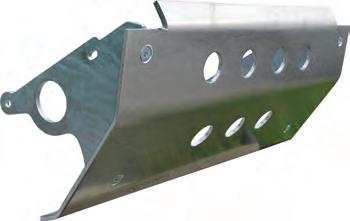
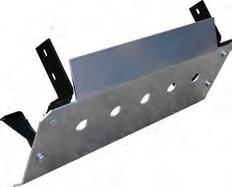
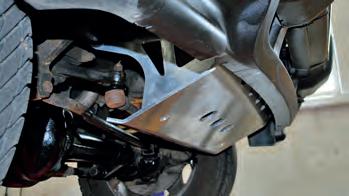
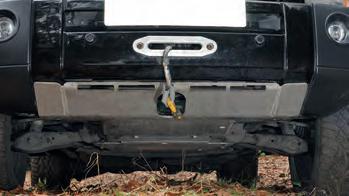
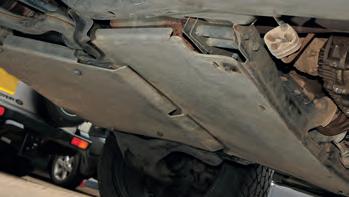
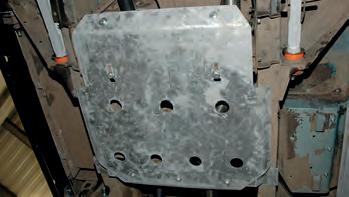
Sump Guards
These guards from Britpart are manufactured from high-quality, hard-wearing and corrosion resistant materials to counteract any unforeseen obstacles your Land Rover may encounter whilst off-roading. All fixings are supplied and the guards fit into the vehicle’s pre-existing holes. Each guard has holes at the front to allow for water drainage and also to help with ventilation for the cooling system.
DA5507 Defender - 1985 -2006 & 2007 onwards Aluminium RHD
Main plate - 8mm thick; brackets - 8mm thick
DA5507LHD Defender - 1985 -2006 & 2007 onwards Aluminium LHD
Main plate - 8mm thick; brackets - 8mm thick
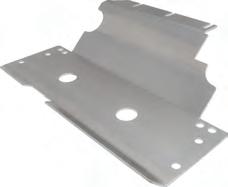
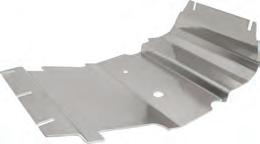
VPLEP0436LR New Defender 90 & 110 Aluminium
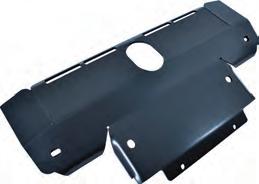
Robust, 5mm anodised aluminium. Protects lower bumper area and radiator when driving off-road. The undershield is also reinforced by the mounting assembly which enhances the protection. Allows easy access to the recovery loop which facilitates recovery of the vehicle if grounded.
DA5507KIT
Spare fitting kit for DA5507 & DA5507LHD. Nuts, bolts & washers.
DA5508 Discovery 1/Range Rover Classic Aluminium RHD & LHD
Main plate - 8mm thick; brackets - 8mm thick
DA2249 Discovery 2
Powered coated steel RHD & LHD
Main plate - 5mm thick; brackets - 5mm thick. Note - For use with Discovery 2 winch bumper DA5645
An essential purchase for any off road use as they prevent damage to the underside of the engine and the intercooler at the front of the vehicle. Manufactured from 8mm 5083 aluminium with a smart silver or black finish and supplied completely machined and drilled ready to bolt directly to the 4 pre-drilled holes in the chassis with supplied galvanised fixings. The guard requires no additional drilling just unscrewing and unclipping of the plastic OEM parts. Fitting should take 5 minutes.
DA7530 Discovery 3 Silver finish
DA7530B Discovery 3 Black finish
DA7535 Discovery 4
DA7535B Discovery 4
Sump Plate
DA7536 Discovery 3
This sump plate protects the underside of the engine and allows the car to slide over objects, forward and backwards due to the rear lip. With a natural finish the plate is made from 6mm 5083 grade aluminium and has been water jet cut to a precise finish. Plate bolts directly into existing holes and bulkheads already in the chassis, using the standard Land Rover fixings.
Transmission Guards
DA5625 Defender - Td5
Reduce damage to your Defender 90. Made from galvanised steel, this transmission guard protects your 90’s gear box and cross members from snagging and reduces damage to your vehicle. Bolts on and is easy to fit and importantly it is also easy to remove when your vehicle needs servicing. Note - Only fits with centre exhaust removed and pipe fitted.
DA7532 Discovery 3
This transmission plate protects the underside of the transmission and allows the car to slide over objects. With a natural finish the plate is made from 6mm 5083 grade aluminium and water jet cut to a precise finish. Plate bolts directly into existing holes and bulkheads already in the chassis, using the standard Land Rover fixings and two additional fixings.
Note - Can only be fitted when sump plate (DA7536) is also fitted.
Fuel Tank Guards
Protect your Defender’s fuel tank. Manufactured from 6mm aluminium.
DA6538 Defender 90 - Td5 & 2007 onwards
DA6539 Defender 110 - Td5 & 2007 onwards








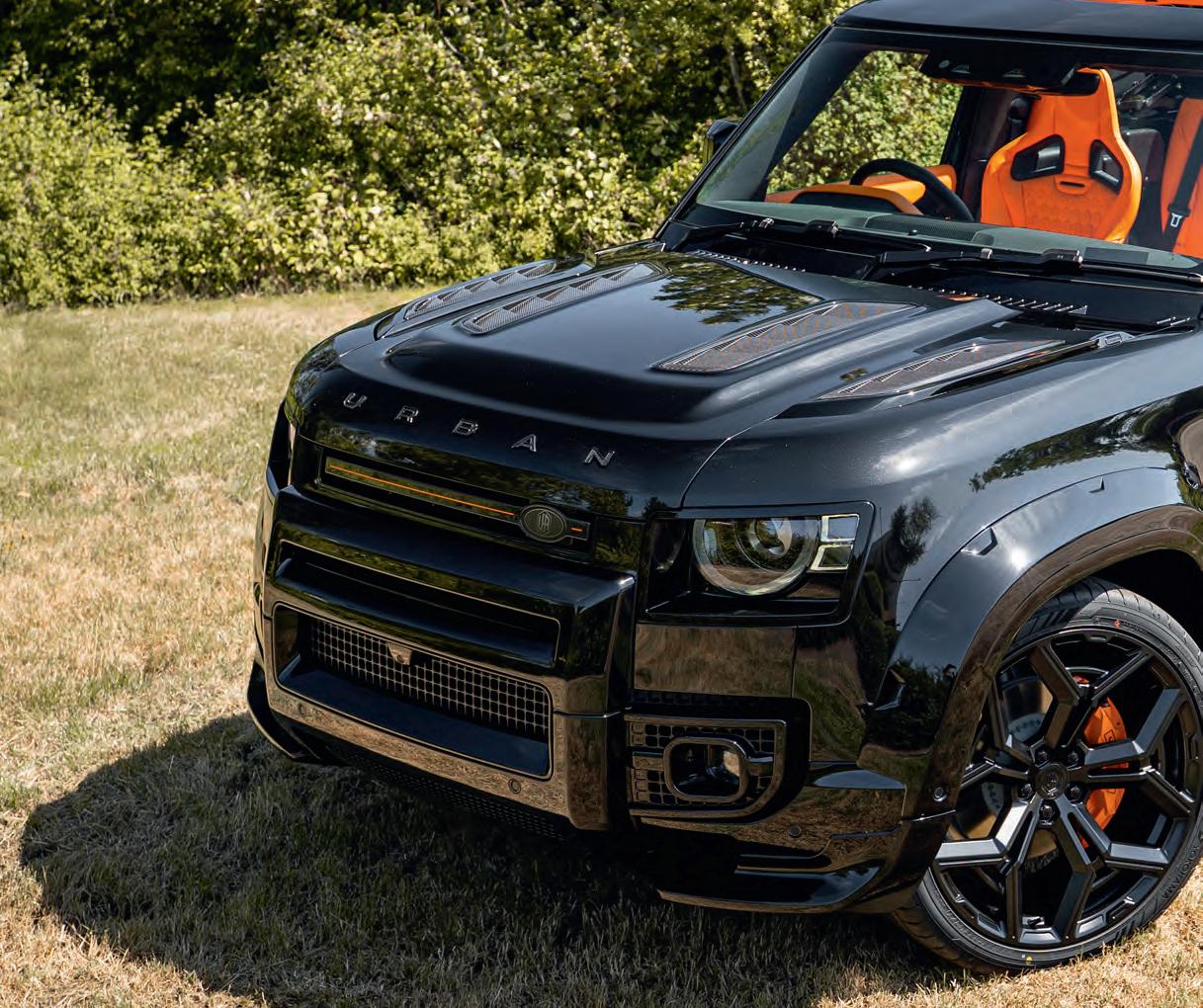
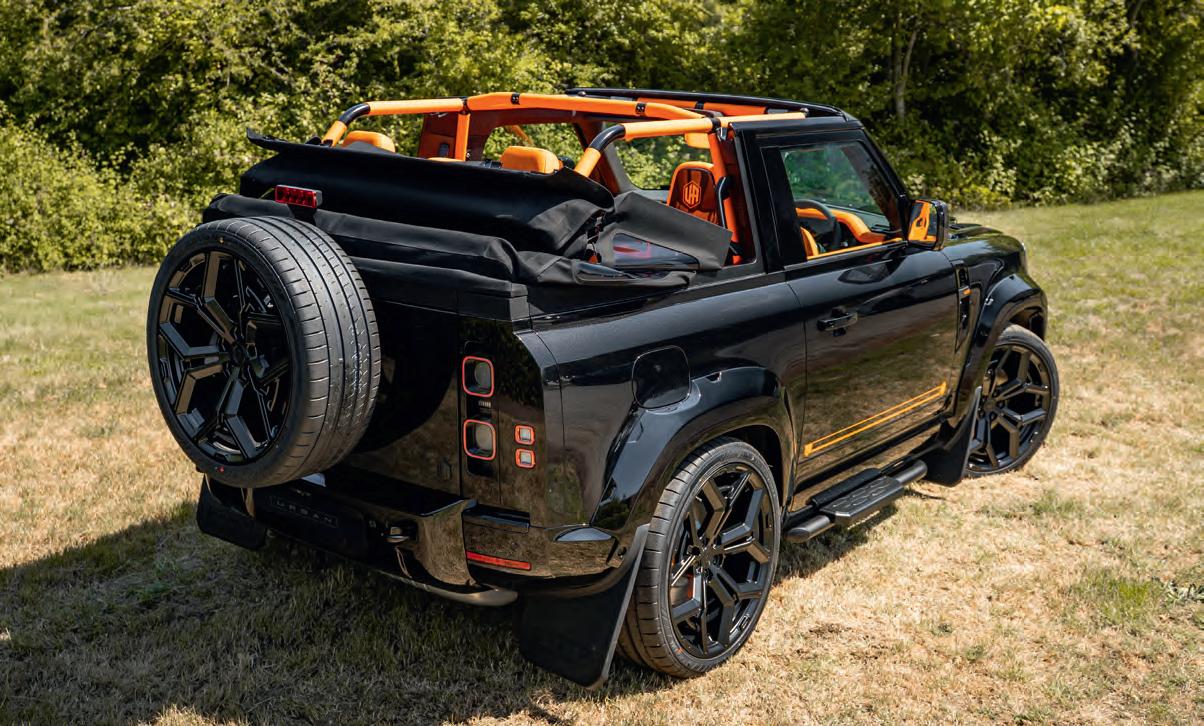
Afew months ago in Overlander 4x4, we brought you news of the new Defender Pick-Up created by Heritage Customs and Urban Automotive. All good, so long as you want a double-cab for style rather than practicality, but in all the excitement we never told you about the other new
Defender-based vehicle to have emerged from the companies’ partnership recently. This is the Urban Widetrack Heritage Series Soft-Top Land Rover Defender. ‘Ready for the beach and city streets,’ says Urban proudly, though after just saying its name in full what you’re probably ready for is a lie-down.
The soft-top conversion is done by Heritage Customs, a Dutch coachbuilder which was recently acquired by Urban. It replaces the Defender 90’s roof and upper side panels with what they describe as a ‘semi-electric’ folding fabric hood, creating something that might put you in mind of the old Evoque Convertible. A bespoke

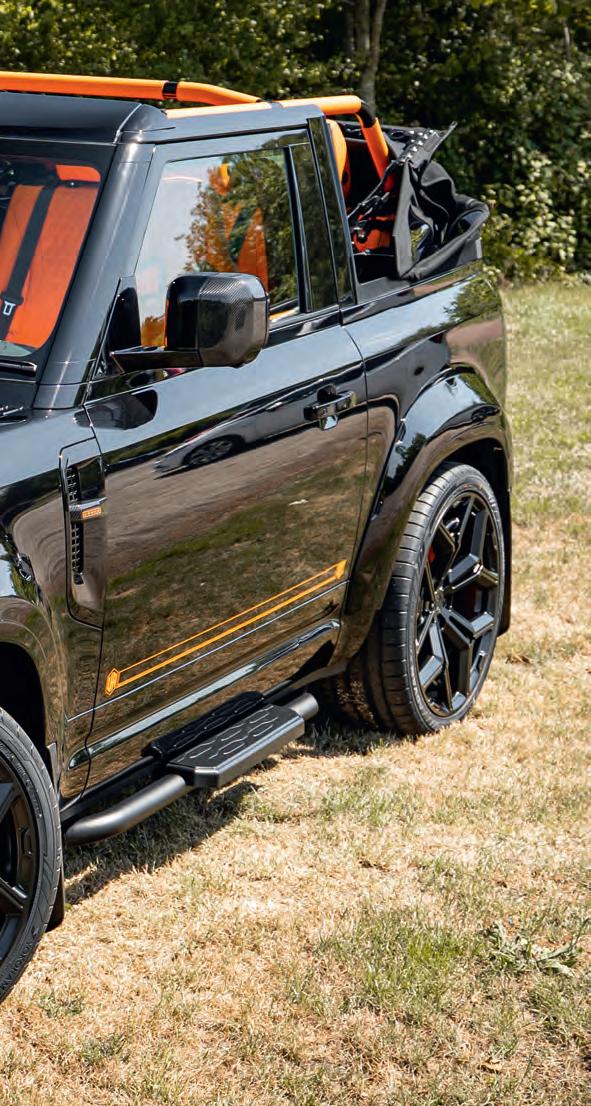

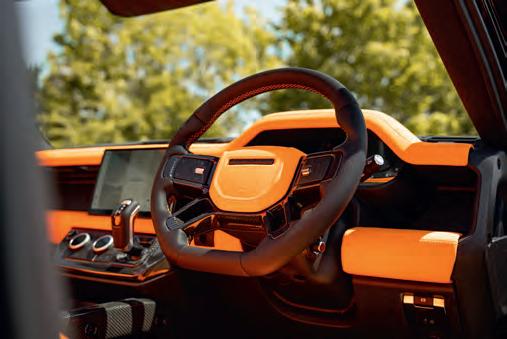
cage compensates for the loss of the factory-standard steel roof.
The vehicle’s image is enhanced by Urban’s Widetrack package, which adds fatter arches with 285/35ZR23 Yokohama Advan Sport tyres stuffed beneath them on Urban’s WX-2 R cast black alloy wheels. Ideal for when you want to make the most of ‘Land Rover’s legendary off-road capabilities,’ which Urban says the vehicle retains. A deeper front bumper, square
DRLs and an Extreme Road Series bonnet with exposed-weave carbon fibre vents take things further still – if you already hated it, safe to say they’ll make you hate it more, but safer still to say that you’re probably not Urban’s target audience.
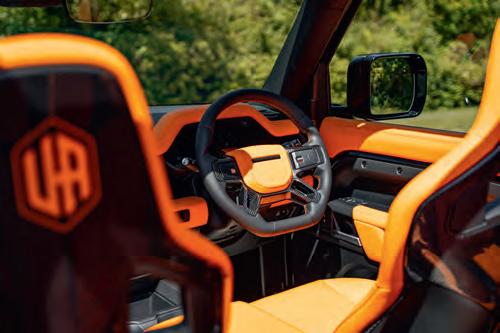
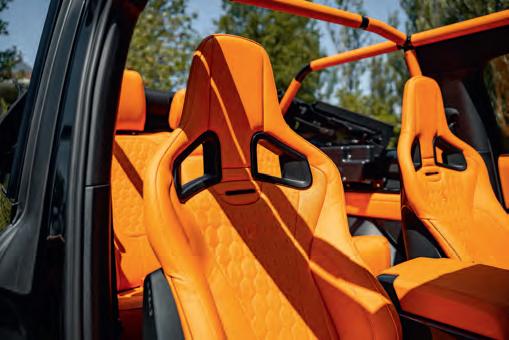
The same can almost certainly be said of the interior, which features Recaro front seats and has been retrimmed in Hermes Orange leather. Pausing only to remark that Hermes is what Evri used to be called, we’ll
add that the cabin also boasts a custom Heritage Series dashboard overlay. How much is all this going to cost you? Well the vehicle in the pictures, or one that looks just like it, is currently on Urban’s website with a screen price of £169,995. So you can have one of these, plus one of the old-shapers introduced by Land Rover Classic last April, and still have change out of half a million quid for a nice ragtop Wolf for when you want to look really cool.


















































THE GREEN LANE ASSOCIATION HAS WON A LEGAL CHALLENGE IN THE HIGH COURT, quashing an Experimental Traffic Regulation Order imposed by Central Bedfordshire Council on Sandy Lane, a Byway Open to All Traffic near Milton Keynes. The order, which cited concerns about unsuitable vehicle use, anti-social behaviour and fly-tipping, would have deprived law-abiding 4x4 drivers of their right to use the lane – however the High Court found that there were significant flaws in the council’s decisionmaking process.
The two-day hearing, which took place in December, was the third in two years relating to Sandy Lane. The council has been unsuccessful on each occasion.
Green Lane Association Chairman Chris Mitchell said that prior to taking legal action against the TRO, the organisation
had made several attempts to work cooperatively with the local authority on its management – but that these were ignored. ‘We are pleased with the outcome of the court hearing, which means more people will continue to be able to use this public right of way. However, we regret that the local authority chose not to take up our repeated offers to work collaboratively to keep the route open without the need for legal action. As a result, taxpayers’ money has been spent on legal costs rather than on essential services for the residents of Central Bedfordshire – an outcome which was entirely avoidable.’
In March last year, Central Bedfordshire Council’s audit committee revealed that a Section 114 notice had been served on its risk register – meaning it was in danger of running out of money. In addition, over the last few years the authority has cut
jobs and increased council tax, and it is reported to have come close to exhausting its cash reserves.
GLASS says that it will continue its efforts to work proactively with the council.
‘The Green Lane Association now plans to maintain close contact with the authority to help identify constructive ways to maintain and protect this route, and others in the area, for all user groups.’
In Staffordshire, GLASS has called for voluntary restraint on Swan Rake and Limers Rake in Hollinsclough – two other lanes which have been saved from closure by the Association’s efforts. These were only repaired to bridleway standard by the local authority despite a lengthy closure, and are very susceptible to damage in wet conditions. Limers Rake is to be driven uphill (N-S) and Swan Lake downhill (W-E).
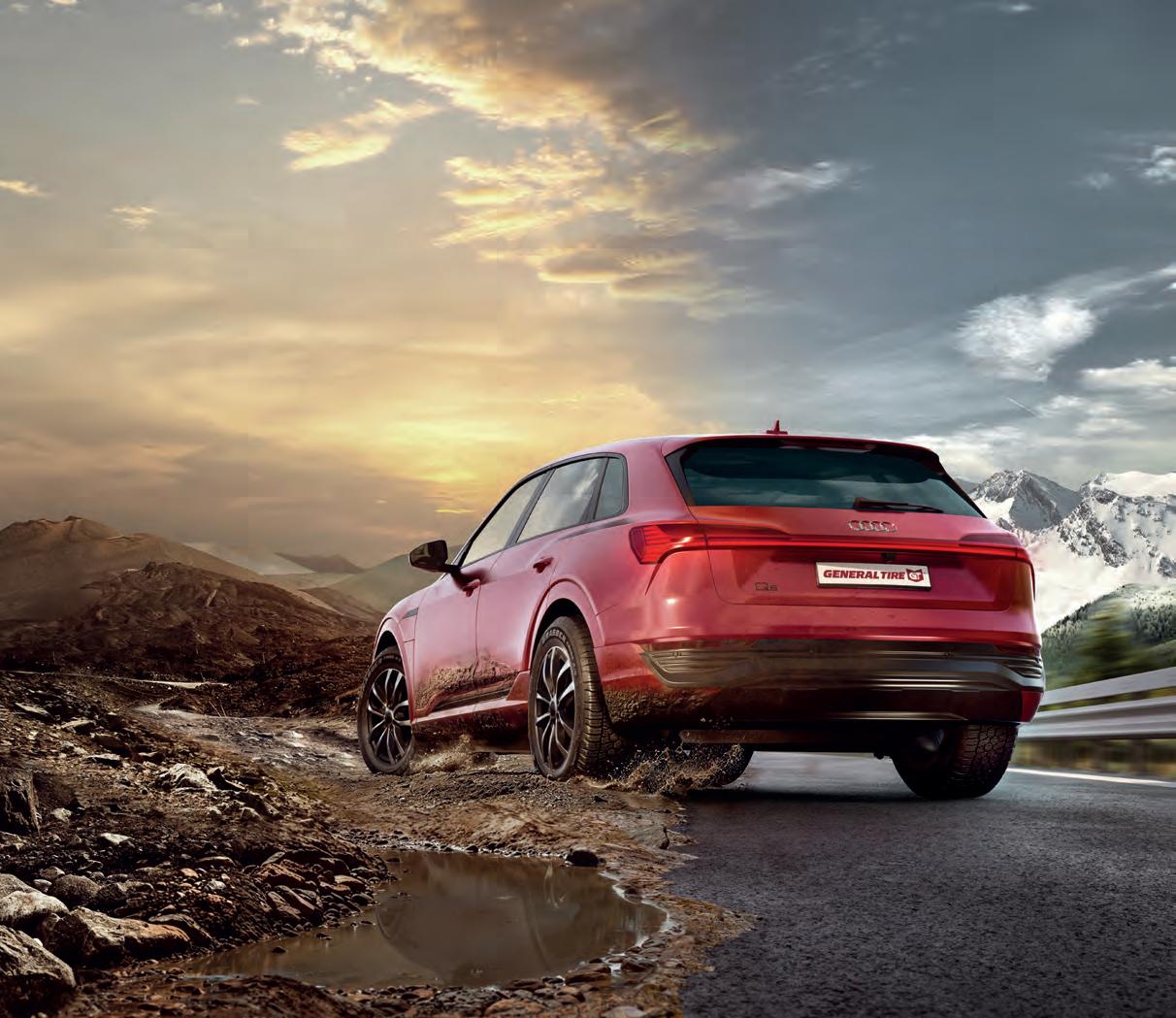




DISCOVER NEW HORIZONS AND BE READY FOR WHATEVER COMES YOUR WAY!
The GRABBER CROSS A/S is a mild all-terrain tyre designed to offer a balanced blend of on-road comfort and light off-road capability, making it ideal for SUV and Crossover drivers who need versatility without sacrificing everyday drivability in all seasons! Experience a new level of confidence and control as you embrace every journey, no matter if you are driving on smooth highways or conquering tough trails.
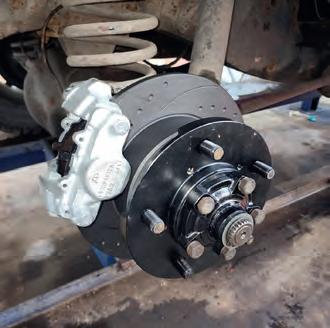
THE TRADITIONAL METHOD OF GETTING REAR DISC BRAKES ON LAND ROVER 90S, and early Defenders from before the factory did away with drums, is to replace the whole axle with one from a Discovery. But brake and clutch specialist LOF has come up with a much better alternative in the shape of its new Defender 90 Rear Disc Brake conversion.
This comes in two formats, Bare and Complete. The former comprises two each of LOF’s own billet steel caliper carrier brackets and 24-spline drive flanges, as well as 12 each UNF stub axle bolts and Nyloc nuts –while the latter adds everything else you’ll need to do the job.
What would that be? ‘Essentially,’ says LOF, ‘you will need to source or purchase Land Rover Defender 90 outer driveline compo-
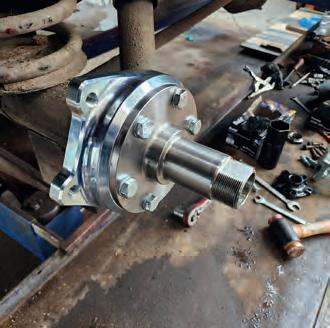
nents to fasten to your axle along with our caliper carrier bracket.’ The full list is on the company’s website, which is helpful and a sign of a good, honest trader as they include all the parts numbers so you can shop around rather than just buying from them, but it includes four LOF caliper bolts as well as all the stub axles, hubs, wheel bearings, calipers and hardware it takes to put it all together. Oh yes, and the actual brake pads and discs, too. The price difference is £600 and for all that stuff, you might well take the view that getting it all from one place is no bad idea.
The good news is that all of it is done using standard Land Rover parts, so you’ll never struggle for availability. And no modifications or machining are needed, so if you know one end of a spanner from another the job should
WE SAW A POST ON FACEBOOK RECENTLY in which a chap with a nice old 90 was asking the opinions of one of those Land Rover Series Defender All Welcome No Fascist Admins kind of groups you get. It was completely standard apart from a set of rims off a Range Rover Classic, which he said he hated because they looked too blingy. His question? Should I put it on steels or get a nice shiny set of new alloys?
You always wonder with questions like that whether they’ve been posted by page owners trying to grub up traffic. But fair play to the group, they mainly came back with sensible answers. So in case matey is reading this, here’s the most sensible answer he’ll have had yet.
Recently added to the ever-growing range of good stuff available through the Britpart network, what you’re looking at here is a steel wheel with a design that’s synonymous with the great days of hard-working Land Rovers. It’s a welded, tubeless version of the original 130 rim and it comes in the classic Limestone finish. Measuring 16 x 6.5”, the wheel has a 5 x 165 PCD, 115mm centre bore and +20 offset, so nothing lairy going on there, and is rated to 1200kg. They’ll cost around £120 plus VAT each – you can find a dealer by visiting www.britpart.com.
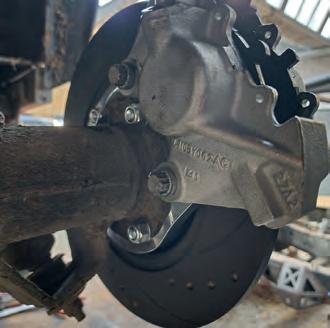
be within the scope of a competent DIY mechanic. The vehicle’s original track width is retained, so it won’t look like some sort of stance horror afterwards, and you won’t need to mess about with its steering or spend a load more money on new wheels.
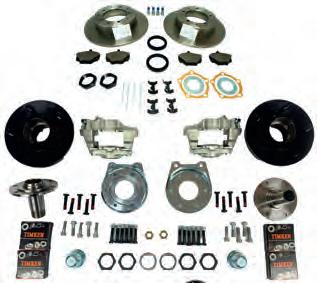
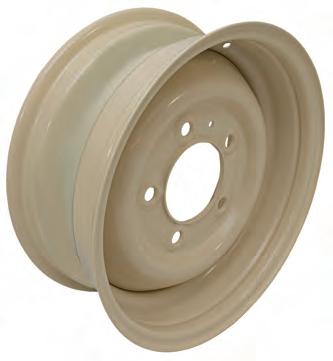
£675 inc VAT | www.expedition-equipment.com
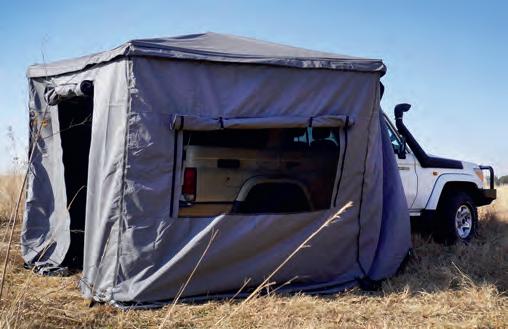
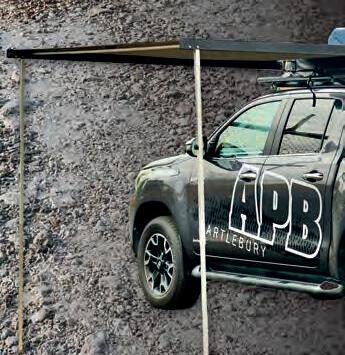
SPRING IS ALMOST HERE BUT EVEN AT THE HEIGHT OF SUMMER, camping in Britain means playing chicken with the weather. That’s why, if you’ve got an awning on your truck, adding a set of side panels to go with it is a game-changer.
Of course, creating an enclosed space beneath your awning can protect you against more than just the wind and rain. It creates extra living or working room, provides privacy and allows you to hide from animals. Not the kind that want to eat you, of course – they’ll still sniff you out – but wildlife photographers will certainly get closer to their subjects with a sheet of canvas to poke their lens through.
Hence the Big Country 4x4 Ostrich Wing Awning Side Wall Kit from APB, which unsurprisingly is a side wall kit for the Ostrich Wing awning from Big Country. It’s designed specifically for this fitment, meaning a tight, weather-resistant fit, and its strong, waterproof fabric promises excellent shelter from heavy rain, winds and harsh sunlight. Each wall is secured using high-quality zips to seal the whole structure together cleanly, or you can choose to leave one or more off for a combination of protection and privacy with fresh air and visibility.
Either way, APB promises quick and easy installation, with walls which attach directly to the awning’s perimeter and peg down in minutes. Large windows and doors are available as options, with transparent panels and entry points creating a bright and usable internal space that protects you without feeling enclosed. Heavy-duty materials and manufacture promise a long working life, and the whole lot folds down to pack neatly into the supplied storage bag, taking up minimal room in your vehicle.




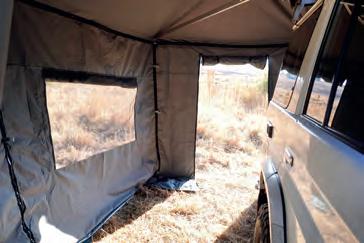
‘Whether you’re touring Scotland’s west coast, camping through unpredictable British weather or setting up a long-term basecamp overseas,’ says APB, ‘the side wall kit provides dependable shelter that dramatically enhances comfort and usability around your vehicle. Perfect for cooking, relaxing or working in comfort, even when the conditions turn.’

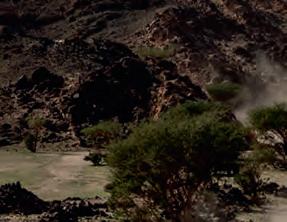

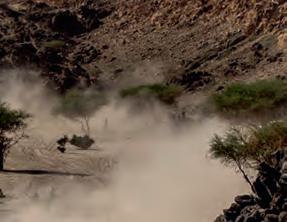


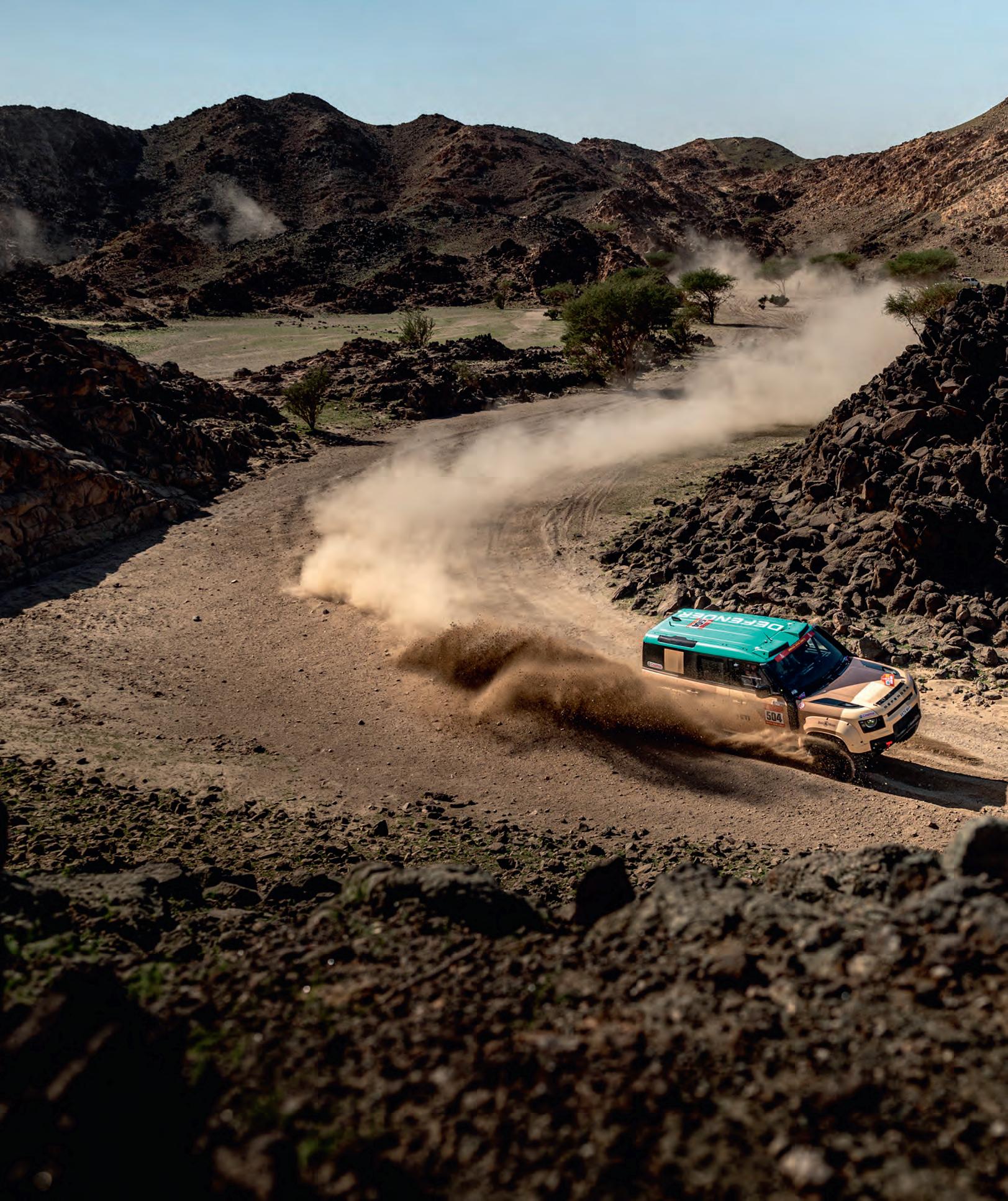











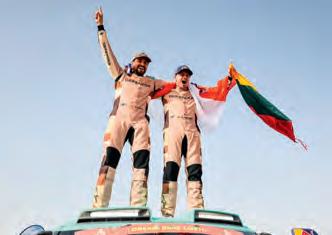
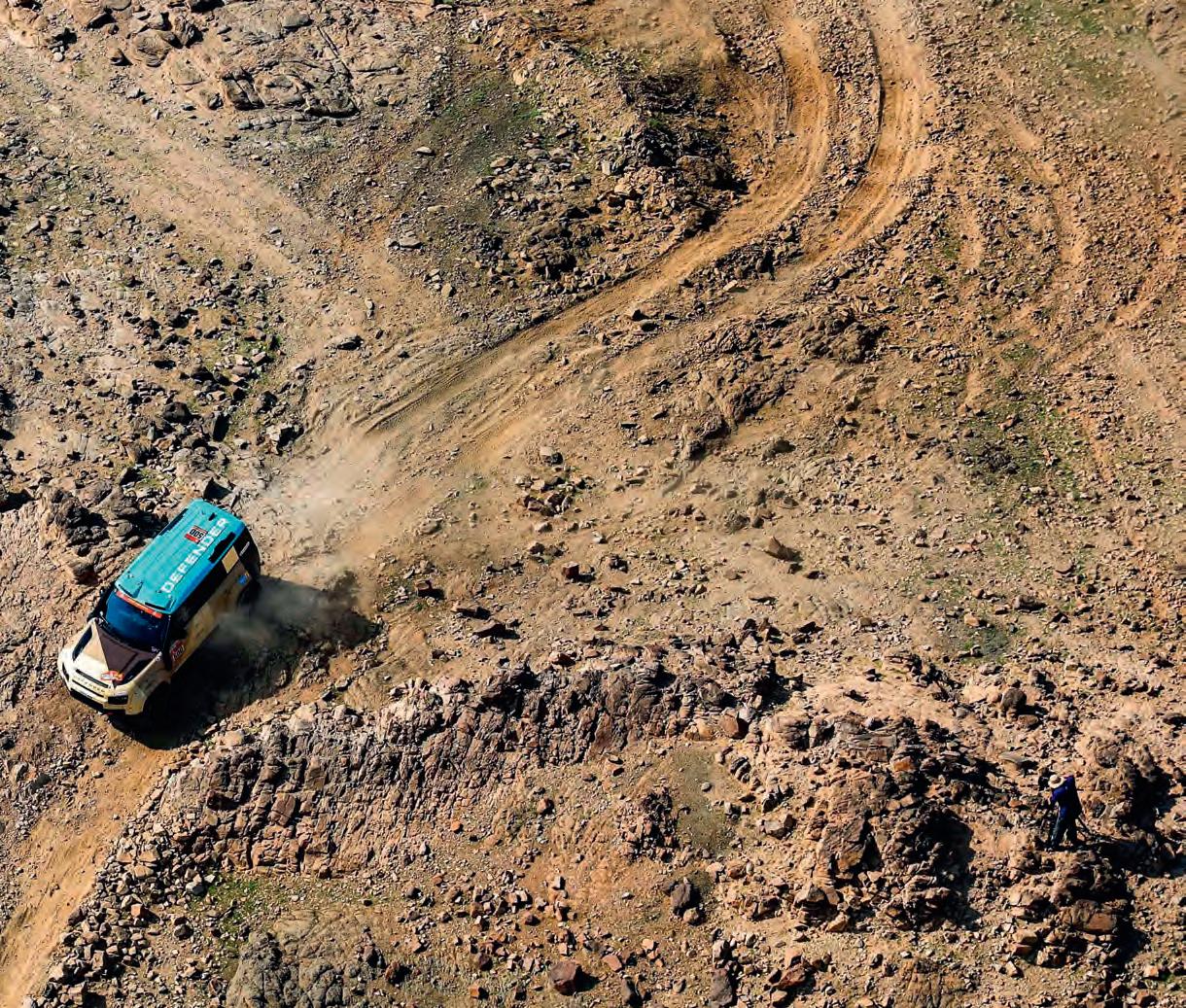
Rokas Baciuška was the big winner as Land Rover’s debut in the Dakar Rally culminated in first, second and fourth-placed class finishes for the Defender D7X-R. The Lithuanian driver brought his 110 home after two weeks in the desert in a time of 58h 09’ 45”, placing him 51st overall in the cars category and securing first place in Stock class by 3h 58’ over team-mate Sara Price.
Success in the Dakar is not about raw speed as much as consistency, and Baciuška had that in spades as he finished every special stage on the podium. Even the short final run, a 105-kilometre out-and-back loop from the rally’s main base in Yanbu, west of Medina on Saudi Arabia’s Red Sea coast, saw the 26 year old on the attack – despite starting with a lead which all but guaranteed victory. The margin of his victory is put into context by the fact that second-placed Price, a former Baja and Extreme E competitor, took three stage victories of her own during the rally.
The third member of Land Rover’s driving team was the biggest name in the Dakar’s history, Stéphane Peterhansel. The Frenchman has won the rally a record 14 times on two wheels and four and he too won three stages, however on this occasion he was to be frustrated. A power steering failure on Stage 1 meant he would always be playing catch-up, then a snapped alternator belt at the start of the second week did for any hopes of a full recovery. To get as close as he did to the podium under these circumstances was a measure of the skill and experience ‘Mr Dakar’ has gathered in his many years of competing.
The Stock class in the Dakar is for modified production vehicles – which
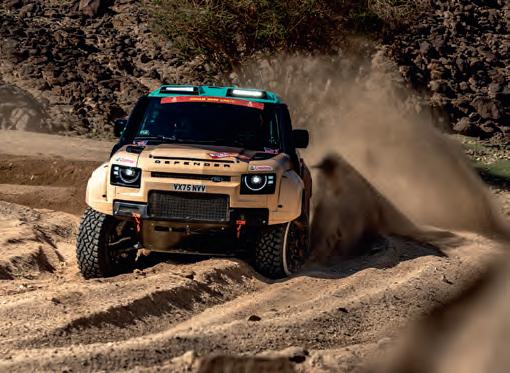
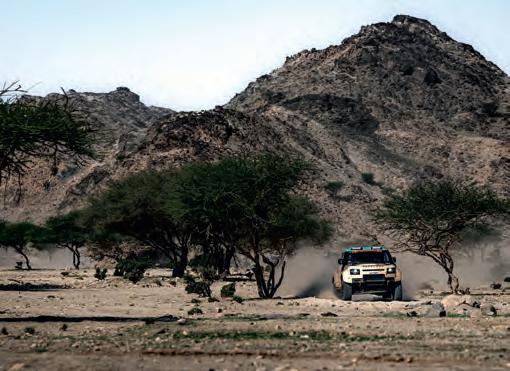
All eyes were on Dakar legend Stéphane Peterhansel before the event, however it was 26 year old Lithuanian Rokas Baciuška (left) who led the Defender charge by finishing every stage in the top three. Navigated by Spain’s Oriol Vidal, Baciuška finished the event with a margin of victory of almost four hours over second-placed Sara Price (right), also driving a works Defender Pic (above right): Mateusz Skrzek • Main pic (below): Florent Gooden / DPPI
must retain their original architecture, powertrain and driveline. Whereas the spaceframe specials which routinely dominate the overall standings are all about pace, the aim here is to go quickly while conserving your vehicle. In this sense, the driving has more in common with everyday off-roading – indeed, prior to the event Peterhansel spoke of the need to take it easy at times.’
I’ve had the opportunity to drive the best prototype cars and ride the best motorbikes,’ explained Peterhansel. ‘Now it’s a return to the spirit of racing, where the challenge is to finish. In Stock, you have to manage the equipment and get the car to the end of each stage.
‘We spent time together with my teammates and in terms of driving, they don’t have much to learn – they are very fast.
With my experience, I’m telling them they’ll need to be able to slow down at times and accept they’ll need to drive more slowly if the terrain is rough or the conditions are bad. The goal will be to achieve the best possible result and get all three Defenders to the finish.’
When his Defender was on song, Peterhansel maintained a level of pace which would have kept him right in the hunt for victory. Such was their dominance, indeed, the trio of works vehicles from Defender Rally achieved 1-2-3 class podium lockouts on ten of the Dakar’s 13 stages.
‘It was my dream to win Dakar,’ said Baciuška after the three Defenders had crossed the finishing line together in Yanbu. ‘For the first year for Defender, it’s amazing. Our mechanics did a great job
– what they do is unbelievable, working every day until early in the morning to prepare the cars for the next stage. I give my thanks to them, the engineers, the entire team because without them, we would not be here.’
Based on the range-topping 110 Octa model, the Defender D7X-R boasts a twin-turbocharged 4.4-litre petrol engine. Running a wider track and raised ride height on its specialised Bilstein suspension, it’s modified from factory spec but only in permitted areas. The vehicles themselves came off the same production line as customers’ cars before being delivered to the Defender Rally workshop – where they will now be maintained ahead of further competitive forays in the FIA 2026 World Rally-Raid Championship.

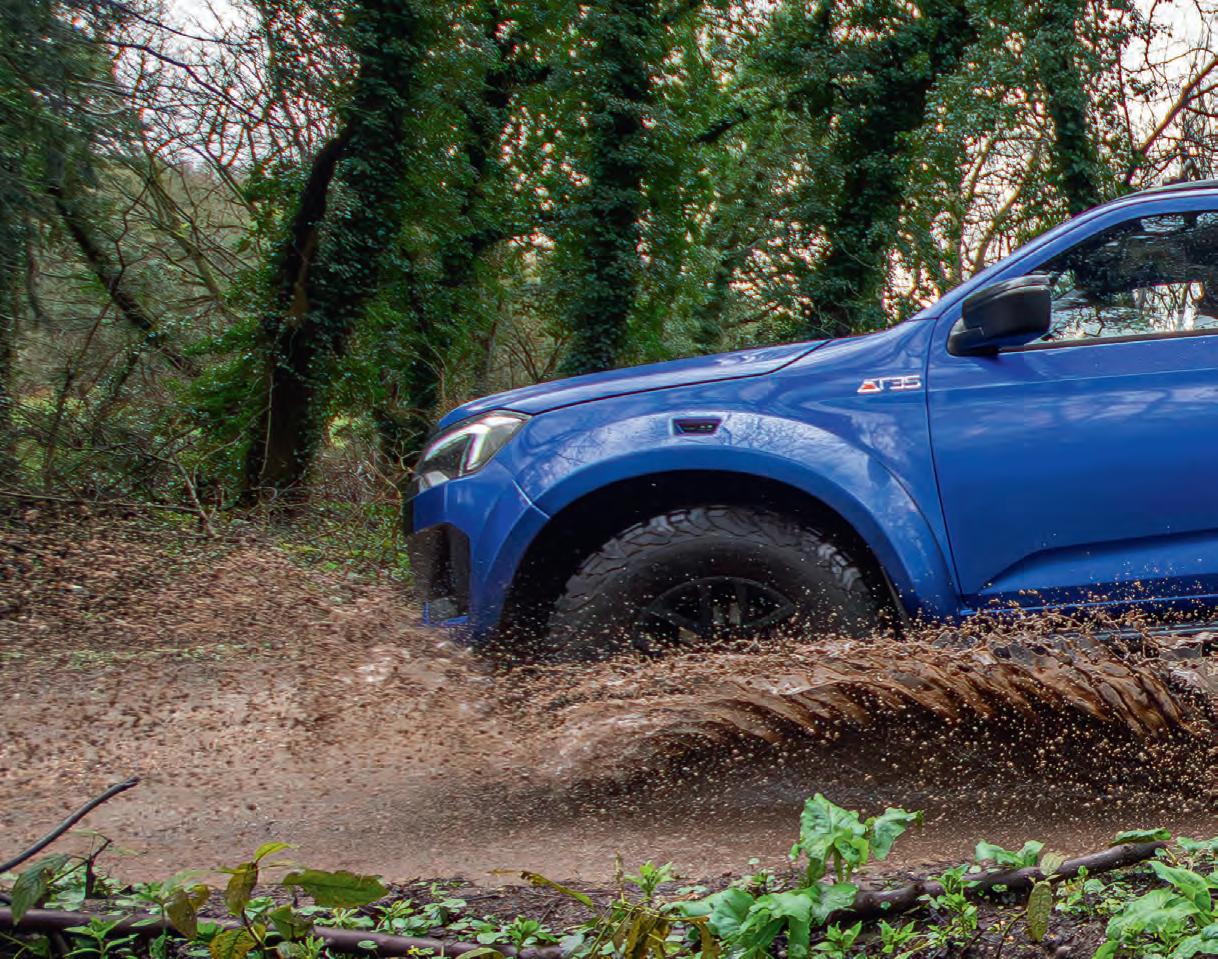
It’s about a year since Isuzu gave the D-Max a major mid-life facelift. As has become the way of things, when there’s a new D-Max you just need to wait a few months and there’ll be a new D-Max AT35 along too, and sure Arctic Trucks’ take on the vehicle went on sale at the start of July.
This is based on the range-topping V-Cross model, meaning it comes with everything Isuzu can throw at it. As a quick reminder, there are four main trim levels in the D-Max range, with even the base-spec Utility giving you front fogs, auto headlights and wipers, air-con, cruise control, a multimedia system with Bluetooth, DAB and wireless phone pairing, USB charging sockets and a reversing camera.
Move up to the DL20 and you add alloys, rear parking sensors, heated seats, more speakers and carpets instead of rubber flooring. Then comes leather, electric seats, dual-zone climate and bi-LED headlamps on the DL40, with the V-Cross adding gunmetal
styling on the outside and an uprated 9” media system in the cab, along with yet more speakers. All models also get a locking rear diff and a load of safety kit.
When we first drove the new model last year, we remarked that lower end of the range could be considered to be 90% of the way there in terms of desirability. In fact, if you want a down-to-earth off-road truck it could be argued that the Utility and DL20 are actually preferable to the fancier models. But if you want to do your off-roading Arctic Trucks style, you’re doing it in a V-Cross or not at all.
This is of course a clumsily disingenuous way of saying that AT35 buyers aren’t going to be going off-roading in them. In the UK at least, people buy these trucks because they look cool. As someone very senior in Arctic Trucks said to us when they were launching their version of the Defender 110 a couple of years back, they make 4x4s taller and wider. They might have started doing it
because taller, wider 4x4s on colossal tyres are great for crossing snow fields and glaciers back home in Iceland, but the trucks they built as a result look awesome and people want that. Just as the point of owning a Porsche 911 isn’t to take it to the ‘Ring, it’s that you could if you wanted, the point of owning an AT35 is that you could drive it across the interior of Greenland. You know, if you wanted.
And it should be better than that at ever, too. Something else the D-Max gained as part of last year’s facelift was a Rough Terrain Mode which modulates the brakes and throttle to mimic the effect of true fourwheel drive.
How does that work in a vehicle with a locking rear diff? ‘Very extreme conditions’ is the answer, according to Isuzu. And of course the same could be said.. for the AT35, with all the modifications Arctic
Trucks makes to turn a capable off-roader into an all-terrain hero.
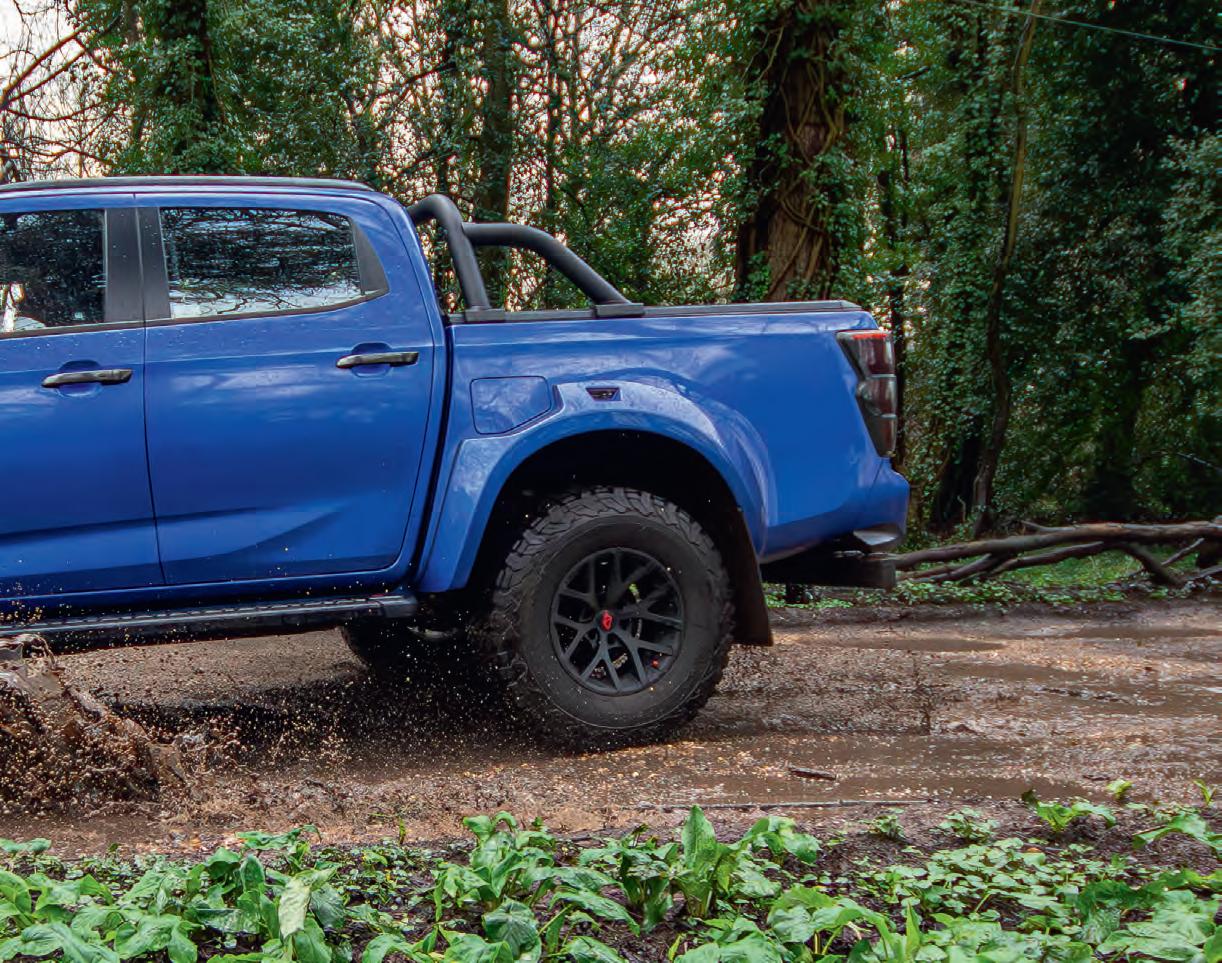
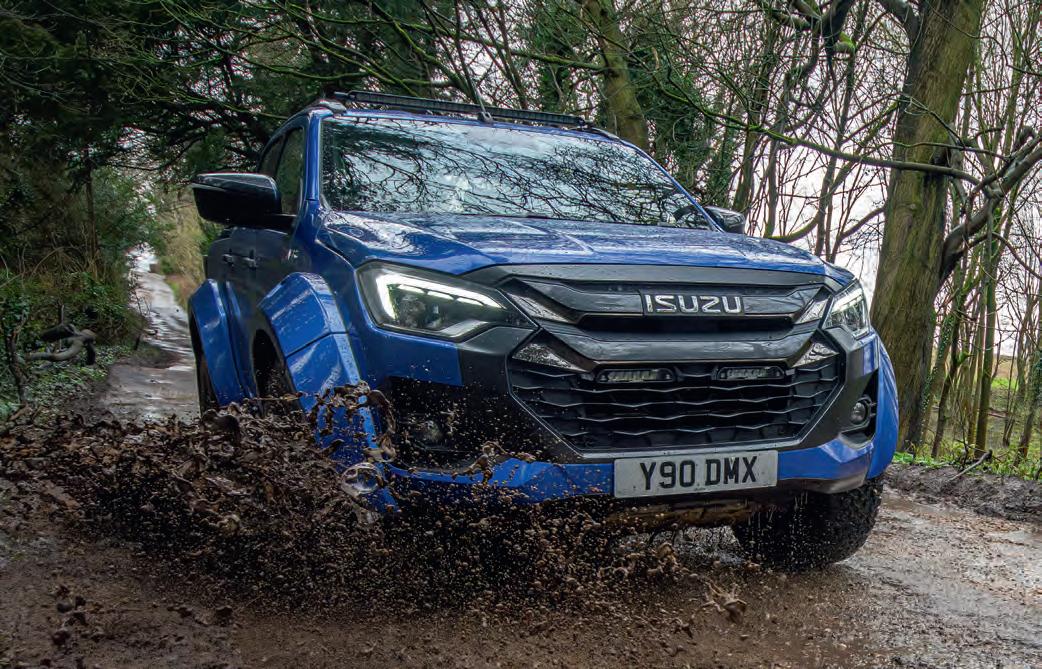
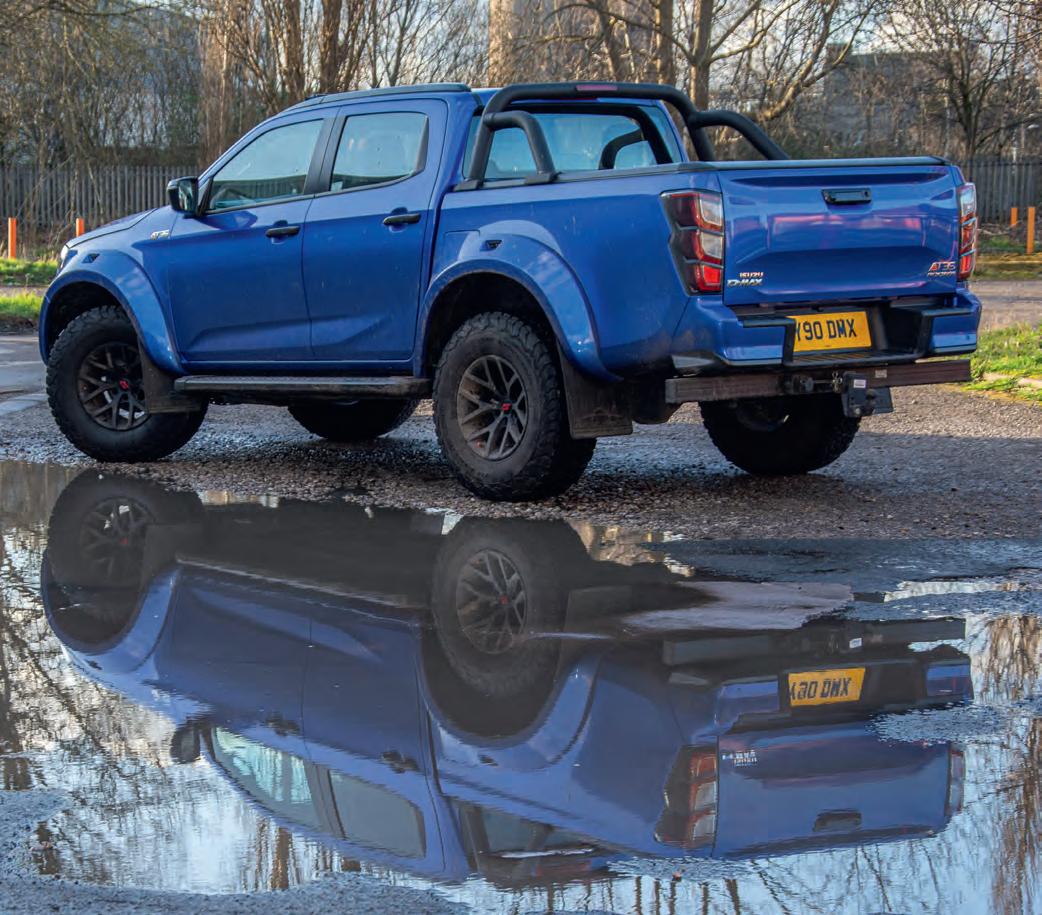
And what are these modifications? The AT35 rides on a custom Bilstein suspension set-up featuring lifted front springs and longer-travel shocks all round, as well as taller body mounts. The overall effect is to raise it up by 40mm, which along with a set of extended wheelarches makes room for the 35” tyres that give it its name.
These are BFGoodrich KO2 All-Terrains, measuring 315/70R17 in size – on the fat side for British-style off-road use, you might say, though Arctic trucks would respond that they were chosen after a great deal of testing in hardcore conditions for the way they’ll perform at low pressure.
Anyway, we all know the vehicle’s buyers will be choosing it because it looks cool on its big tyres, so don’t let’s get distracted. As well as its height, width and rubber, the AT35 comes with extended side steps and heavy-duty mudflaps to go with those flared
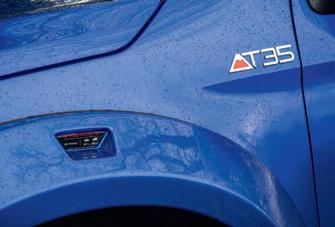
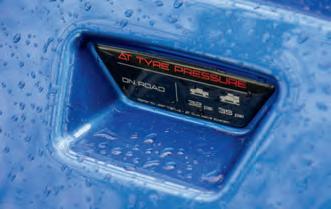
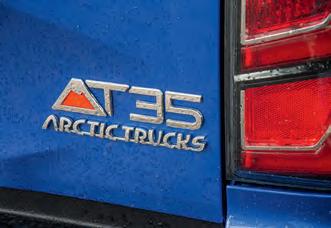
arches. All these things are branded with Arctic Trucks badging, as are the tailgate, kickplates, headrests and floor mats. The receiver cover gets one too (a 2” rear hitch comes as standard, which is genuinely useful) and the 17x10” wheels are an exclusive design to Arctic Trucks too. We don’t know how many badges there are in total but if your kids are getting under your feet, challenge them to find them all and that should keep them occupied for the rest of the afternoon.
Driving it, the latest D-Max is very familiar in this form. That’s to say it’s just like previous models, with the firm but well controlled suspension that lets you know exactly what’s going on beneath you. It’s always there on the road, but it’s not a menace – you get used to it pretty much straight away and after that it’s just part of the truck’s character.
Otherwise, the gearing effect of the taller tyres is negligible – the 1.9-litre diesel engine that’s served the D-Max so well for around a decade now pulls as well as ever through the standard-fit (on this model) auto box. As always, it’s not the quietest of engines when it’s cold, but it does settle down quickly enough. Thereafter, your soundtrack is a nice, purposeful rumble from down on the road; it’s not intrusive but
it’s definitely there, not in a way that makes the vehicle feel unrefined so much as just big and butch.
For off-roading, the D-Max has always been a strong performer and the latest model builds on that thanks to the aforementioned Rough Terrain Mode. The effects are subtle; it’s the kind of system that operates without you knowing you needed it, so it’s hard to judge whether
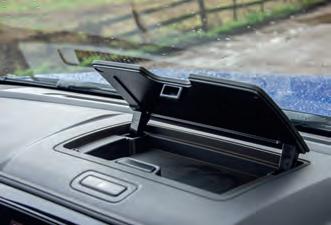
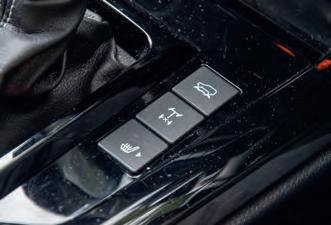
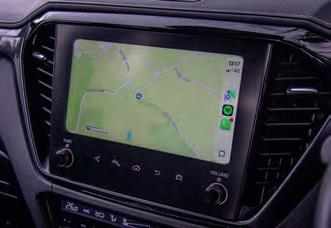
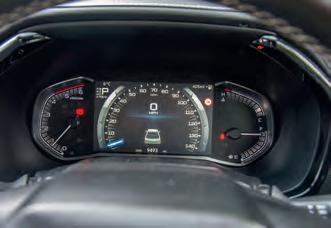
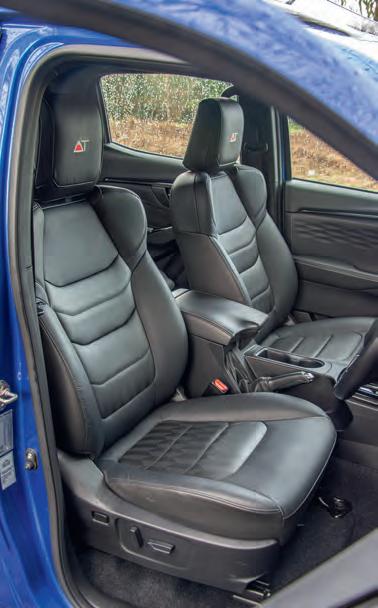
A locking rear diff is standard across the D-Max range these days. The latest model also has Rough Terrain mode to aid traction still further. You’ll use the heated seats more than either, though. A worthwhile point to make is that unlike on the previous model, the dashtop tray doesn’t have to be removed to make way for the media system on high-speccers. Said media system runs a 9” screen on the AT35; along from it, the digital dash is very crisp and clear. Seats are leather and electric on this model, neither of which turn us on much
it’s actually doing anything, but what we certainly can say is that on some remarkably serious off-road terrain, we’ve taken the standard model places we wouldn’t have thought possible. And yes, we know that’s a cliché, but it’s also an accurate description of the stuff we did.
This was on steep, wet terrain in an old quarry, and we’re not convinced these are the sort of conditions the AT35 was built for.
Nonetheless, those BFG All-Terrains are very fine tyres indeed and even if they’re a size or two wider than we’d choose, aired down to 20psi or so we’d expect them to grip very well.
As it is, we used the AT35 on a variety of surfaces ranging from rough, loose gravel to pot holes that verged on utter destruction. The latter was a reminder that with a lot of air in its tyres and a lot of suspension on top of its axles, an unladen truck is capable of being a very bouncy thing; you definitely need to take it easy if you don’t want the ride to get wild.
There was certainly no doubting its traction, though. Even where the tracks’ surface had deteriorated to the point where we were driving on deep mud, there was no sign of it struggling for grip. We didn’t
engage Rough Terrain Mode, nor did we lock the rear diff, and it clawed its way ever onwards without a fuss.
We’ve said in the past that to us, a drawback of the AT35 is that it’s too wide for using on green lanes. Yes, there’s more to life than that, we know, though exploring them is pretty much the only form of actual off-road adventure you can have in the UK. The problem is that those arches are wide enough to be very marginal indeed in some of the more aggressively sized gates you get on the lanes, not to mention the parapets of a few bridges we’ve squeezed through down the years. The north end of Tilberthwaite, which would otherwise be perfect for such a vehicle, comes immediately to mind. Driving in ruts created by narrower vehicles than yours is never much fun, either.
Still, if you’ve got the money to add one of these to your collection (they cost
£57,005 plus VAT, and Isuzu says the typical owner will have one as their second or even third car), you’ve also got the money to kit is up with all the expedition gear and ship it to Iceland for some proper fun. Which, we’ve got to admit, does sound even more appealing than Tilberthwaite – and for that kind of gig, what we have here is little short of perfect.
And, of course, it looks cool. Which is where we came in.
People who buy one of these love the idea of projecting an image that says they’ll be going off on expedition this summer, and in that way it’s like every SUV on the school run but more so. A lot more so, obviously, and who knows? Some of those owners might like the image so much that they end up actually going off and doing it. And wouldn’t that be rather a wonderful example of life imitating art?
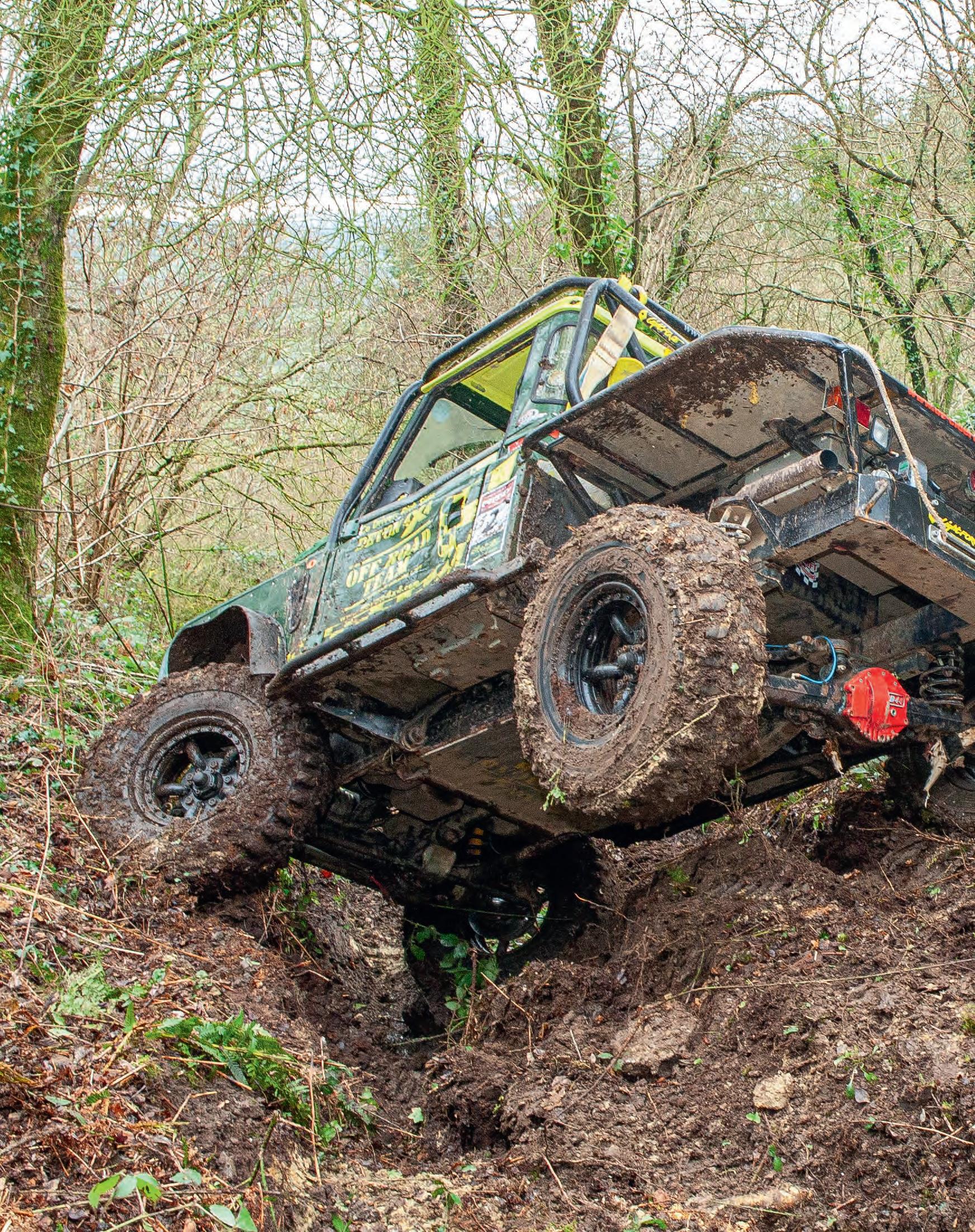
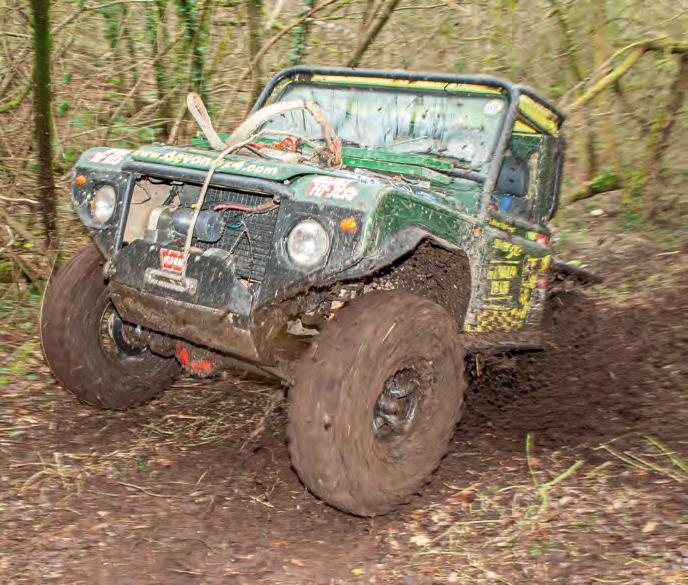
British off-roading experienced a watershed moment around 25 years ago, when the legendary Martin Lewis brought out his 100” hybrid. It was the country’s first trayback, and it inspired a whole generation of imitators – one of the most successful being this Land Rover 90 built by Jason Farr
Words Kenny Tucker Pictures Steve Taylor


Something like a quarter of a century ago, a vehicle appeared that was to change the face of the off-road game in the UK. Built by the legendary Martin Lewis, and inspired by some of the vehicles he’d seen in Australia and on the Malaysian Rainforest Challenge, it was a 100” hybrid Land Rover
By no means was that a new idea. The golden age of hybrid building was already at an end by then, and people had long since discovered that keeping the



wheelbase of the Range Rover they were cutting up actually made for a perfect compromise between the agility of a 90 and the practicality of a 110.
This, however, was not a 100” hybrid like any that had gone before it. It wasn’t a truck-cab, or a hard-top, or one of those quack station wagons whose builders’ children had no idea that their seats might as well be held down with chewing gum. No, this was new. In place of the usual Defender-style rear body, this one had a flat tray built into its roll structure.
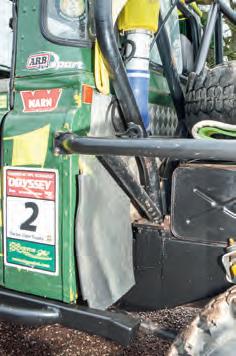
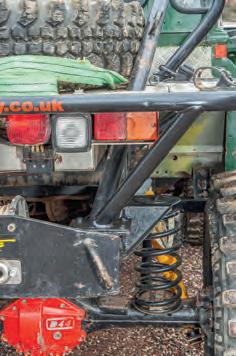
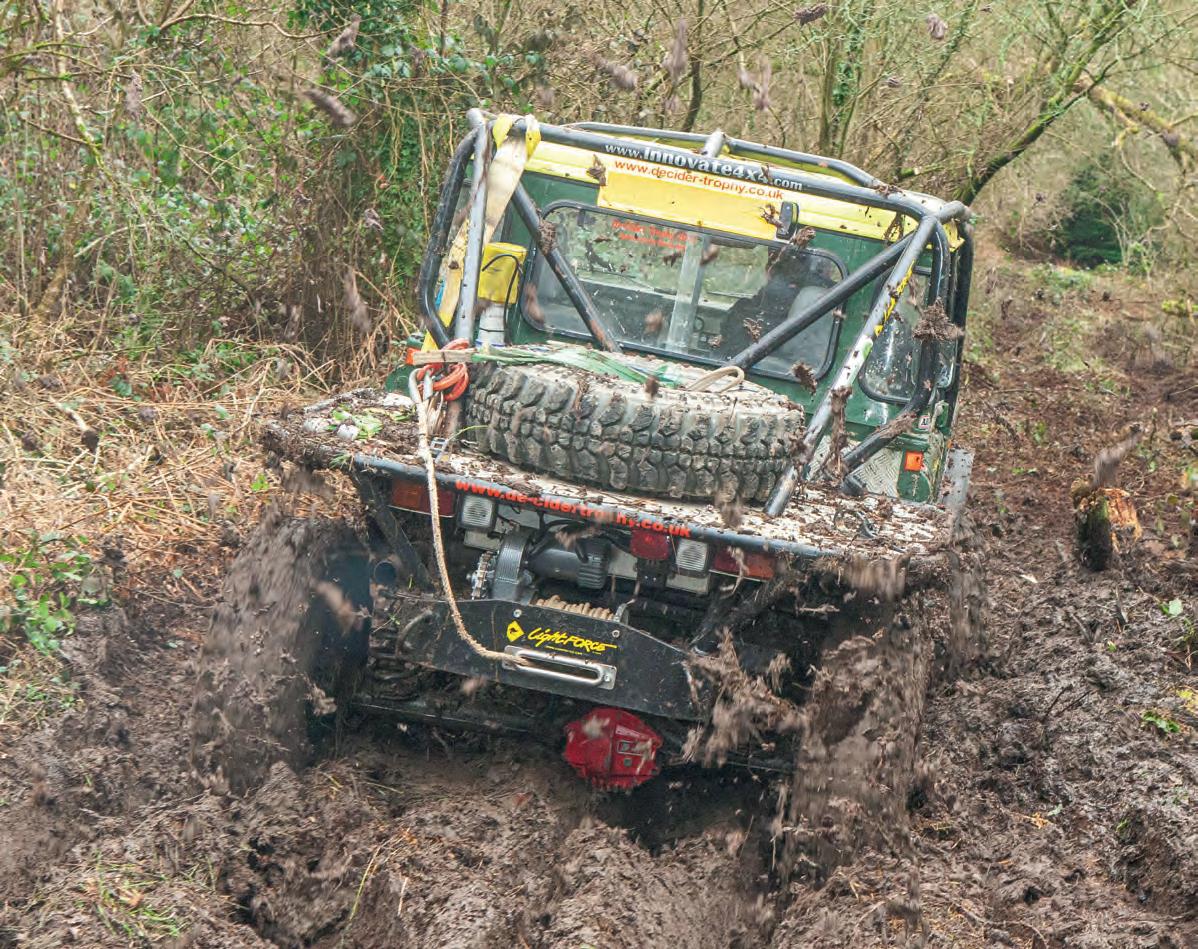
Above: The trayback body was built along similar lines to Martin Lewis’ original 100” hybrid; note the way in which the frame of the tray ties into the cage. Some trayback designs we’ve seen since this one was built have used triangulation through the points where the upper and lower members meet at the tray itself. Here, it rides on dedicated runs of tube, which meet the chassis at the same point as the single-run rear stays
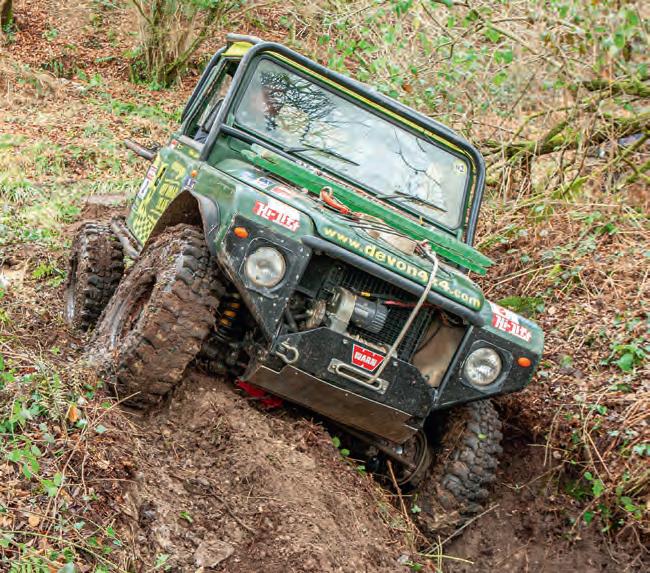
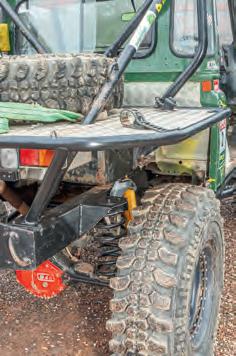
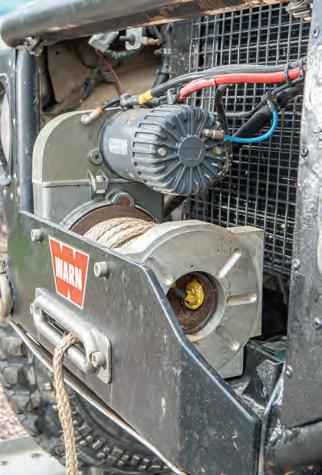
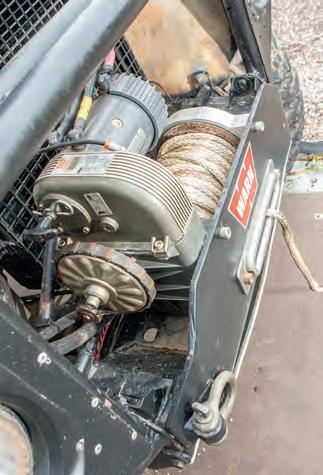
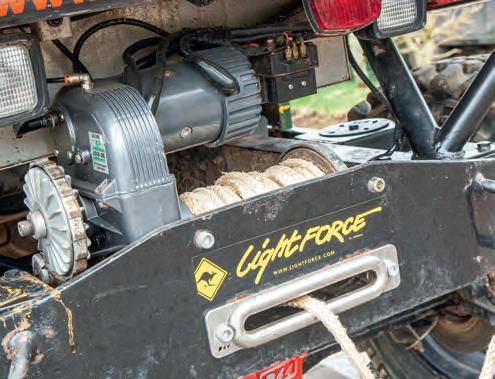
Left: The front of the chassis was remade using a winch tray as a crossmember. Tucked as well back as possible for a winning approach angle, this is home to a Warn 8274 with uprated Gigglepin gears, brakes and mainshaft. It only runs a single motor, though this is a Warn XP unit, and Allbright solenoids mean Jason has less need to fear water
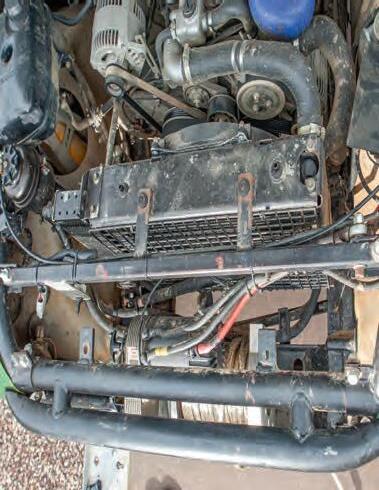
Below, left: The tubing around the winch is tied in to a pair of challenge wings which have been modified to fit. The radiator remains front-mounted but now lives 8” further back than standard; it’s cooled by a 16” Pacet electric fan operated by an X-Eng switch with manual override
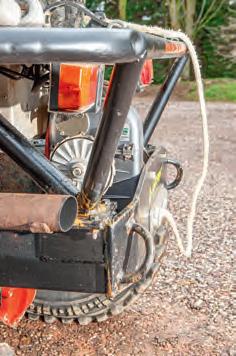
Below right: Like the front, the rear chassis section was fabricated to incorporate a structural winch mount. It maxes out the truck’s departure angle, too. Once again, the winch it contains is an 8274 with Gigglepin upgrades, XP motors and Allbright solenoids. Both front and rear winches are wound with 110 feet of 11mm Plasma, which feeds out through a pair of D44 stainless fairleads
Hard as it is to believe now, there were those back then who scoffed at the trayback design. Most, however, instantly recognised how effective it could be in extreme off-road conditions – and it wasn’t long before the trayback revolution was in full swing. Of course, it didn’t have to be a hybrid. As we said, those were already going out of fashion even then, rendered unnecessary by falling Defender prices and strangled
by the arrival of killjoy legislation in the shape of the dreaded SVA test. The vast bulk of traybacks were instead 90s; there have been 110s, even a few Range Rovers and Discoverys (last month we featured a traybacked P38, of all things), but most builders had competition use in mind and therefore wanted a short wheelbase. And of course the Defender’s modular design, with a separate chassis and the option of having
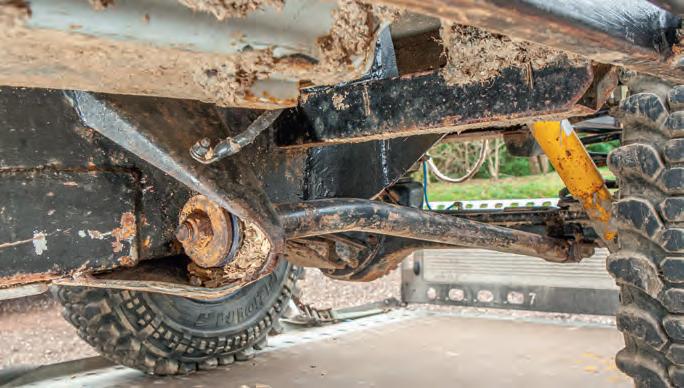
The first thing you’ll notice about the trailing links on the rear axle is that they’re cranked for greater articulation. But the big news here is their length – which, in tandem with an extended A-frame, shifts the axle back by a touch over 7”. That’s where the 100” wheelbase comes from – note in the picture below how much further back the rear wheels are compared to a standard 90, giving the vehicle as good as a 90-degree departure angle
a separate cab and back body, made it a natural for traybacking.
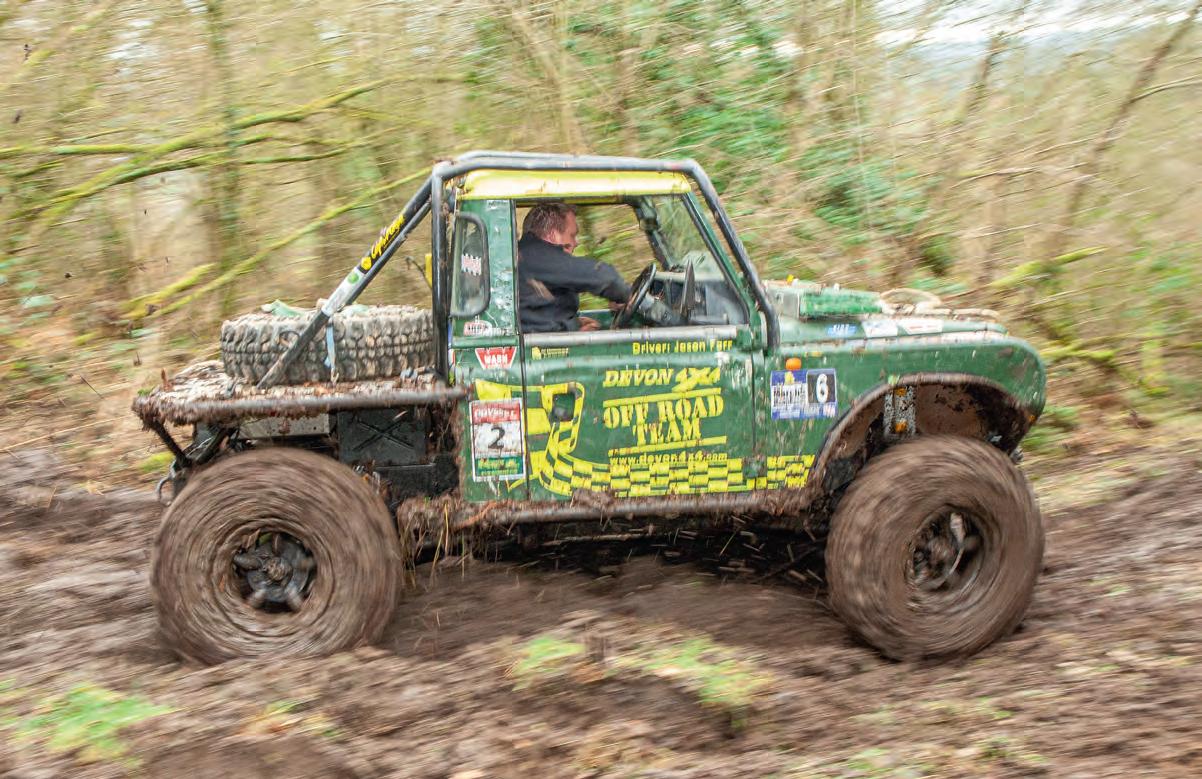
The Land Rover 90 on these pages was already doing its stuff some years before Martin built his ground-breaking hybrid. Back then, however, it was just a simple old 2.5 TD truck-cab that owner Jason Farr used as his green lane wagon. By
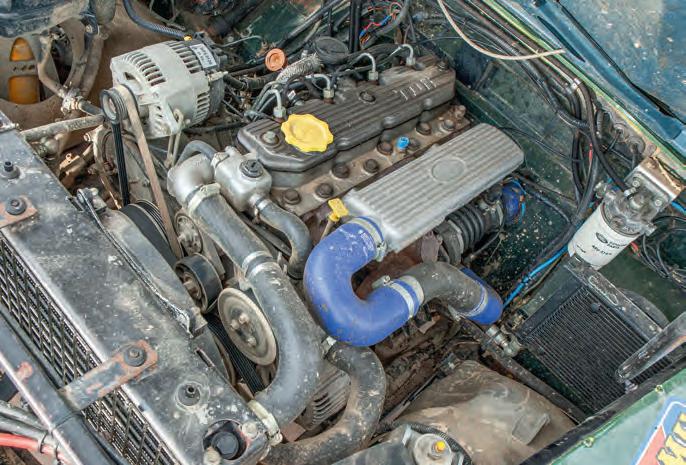
Above: The 300Tdi engine lives in the 200Tdi position, 8” further back towards the bulkhead. Despite the appearance of a promising looking silicon hose, the engine is completely standard – save for the removal of its intercooler
Above right, right: The engine’s air supply is routed in through the cab from a home-made snorkel within the main hoop of the roll cage. This isn’t the highest you’ll ever see, but its position means it’s well out of harm’s way – so long as the vehicle is moving, it stands a chance of being in the eddy behind the cab
January 2006, however, with traybacks taking over the world, it had its first competitive event, Challenge South West’s Mission Impossible. Yes, that was 20 years ago. Feeling old?
Everyone’s first challenge event is a big learning curve. You sink or swim, in some cases almost literally; Jason got the idea fast. By Easter of that year, he’d bought a new set of wheels and tyres, some suspension and a couple of winches. And
with the help of then co-driver Paul Milsom, he set about fitting it all.
But there was more. Paul and Jason didn’t just bolt on a load of pricey toys. They started by cutting off the 90’s rear body and, doing all their own fabricating, turning it into a trayback along the same lines as Martin’s. It was time to get serious.
And that’s just what they did. The following March, teamed up with Adrian Everitt and Shaun Harris, Jason and
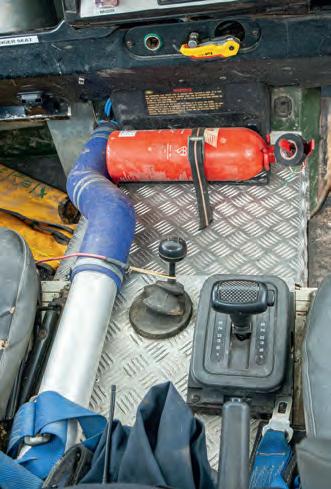
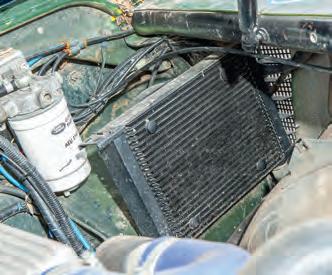
Something else you’ll notice in the picture above is that the 90 now has an automative gearbox. Jason rates the change from its old manual to the 4-speed ZF HP22 selfshifter as one of the best mods he’s made. The new box is cooled by a 25-row Setrab air-to-oil cooler and 6” Spal fan (below)
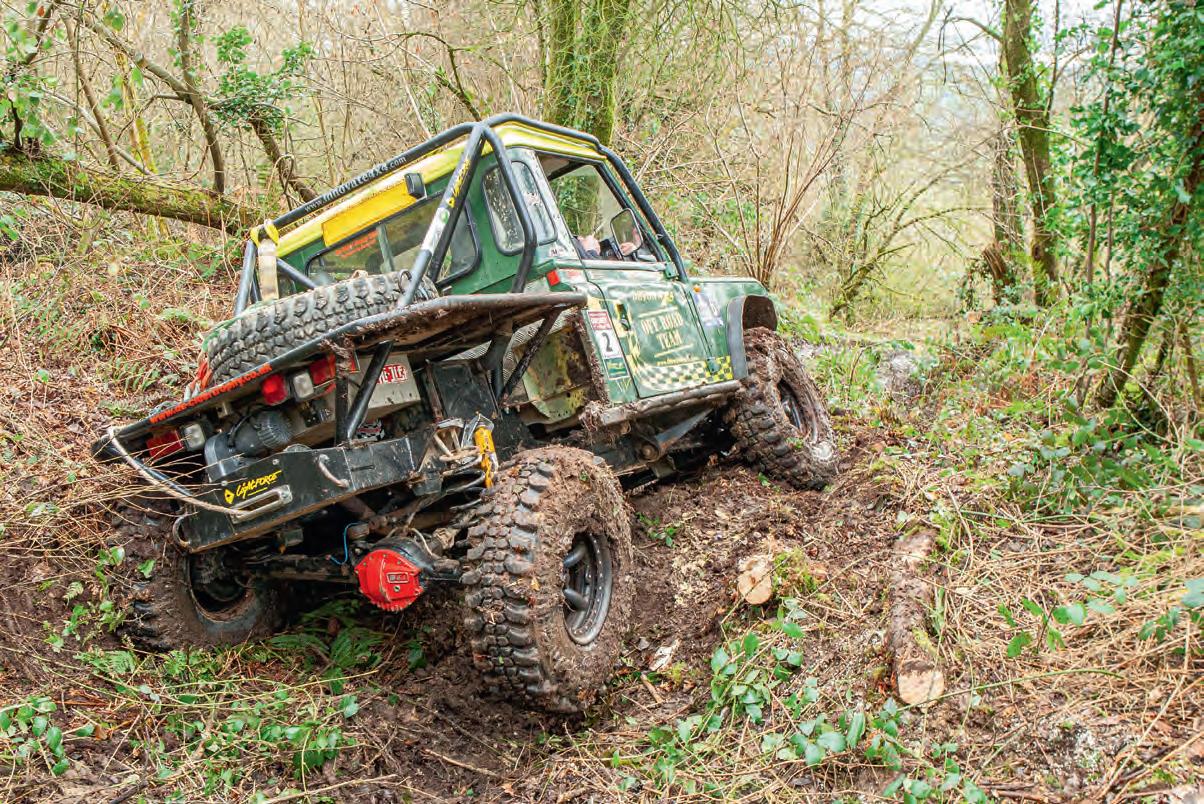
Paul won the fearsome Muddy Truckers Trophy. A year later, after seven rounds of the inaugural 4x4 Adventures series, they finished joint first with Steve Gittins and Mark Morgan. Some serious A-list names from the great days of winching there. Then came the first De-Cider Trophy, where they came second – after recovering from a decuple rollover on one of the night stages.
Decuple, as in ten times. Just stop and think about that.
This illustrates not just the standard of the events they were taking part in, but the level at which they were competitive. It still wasn’t all that long since Jason’s 90 was still a mildly modded green lane truck,
but here it was beating the best in major national-level winch comps. Things had got serious all right.
Serious like the damage it had sustained along the way, in fact. You don’t put a truck over ten times without it looking like it’s been in a washing machine with a load of bolts, however good its cage might be, so 2009 was all about the workshop.
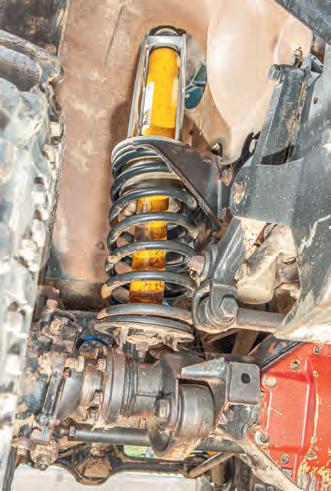
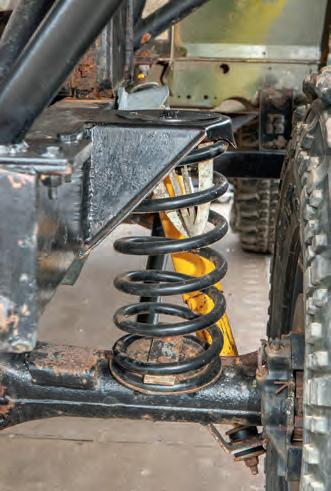
As part of a sponsorship package for the vehicle, Devon 4x4 bespoked an Old Man Emu suspension system for it. This uses 240lb coils all round, along with pin/pin shocks. These locate in +40mm turrets up front and pin/pin mounts at the back, all from D44
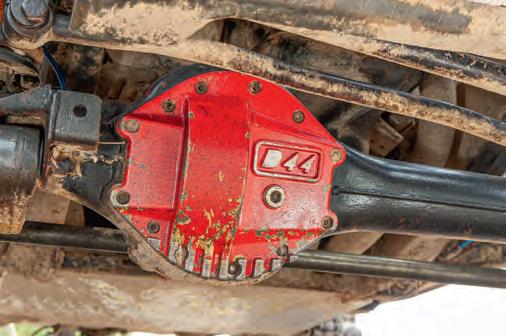
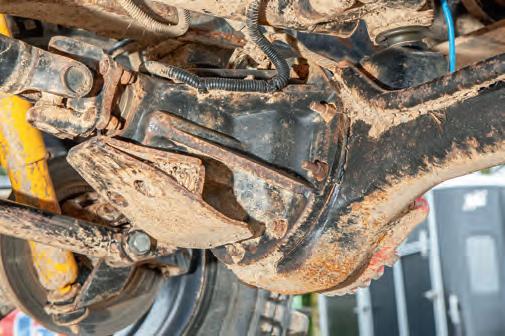
Above left: Rover 24-spline axle casings are strengthened to the nth degree by D44 diff covers. It won’t surprise you to learn that the stuff inside is every bit as sexy: ARB AirLockers run 4.11:1 ring and pinions from Ashcroft, which also supplied its heavy-duty halfshafts and CV joints
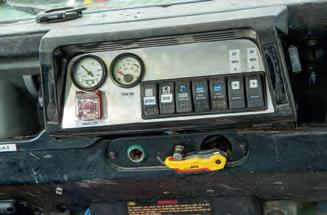
Above right: All the flexibility in the world makes no great odds if your propshaft angles can’t open up to match as your axles drop. Not a problem with wide-yoke D44 units running from your transfer case to your diffs
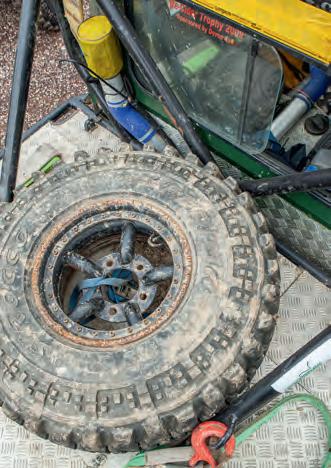
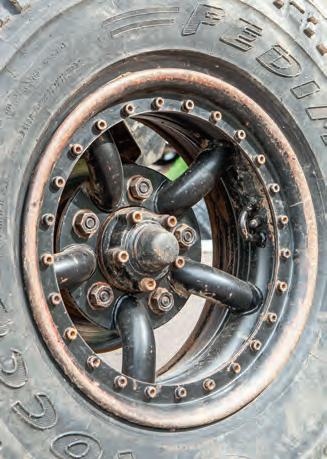
Right: Jason built the Land Rover at a time when Simex was still a thing but alternatives had started to come along. Said alternatives included these 35x10.50x16 Fedima Siroccos, which he mounted using 8x16” Mach 5 beadlocks to keep them in place at low pressures
And how. For starters, the truck came to resemble Martin’s original even more when its wheelbase changed from the standard 92.9” to 100”. Unlike the original, however, which was built on a Range Rover chassis, Jason achieved this by fitting custom trailing links and an extended A-frame. So the body didn’t get longer but the rear wheels went right to the back of it, creating a departure angle of barely a squeak under 90 degrees.
the longer wheelbase, it made a world of difference to the truck. It climbed, lowered and gripped a whole lot better.’
He was so impressed, in fact, that he told us he could only remember two events from the rest of that year. One was the 4x4 Adventures Interclub, which was also memorable because their newly fitted Disco 2 steering box kept blowing its hoses off (prompting them to change back to a
“The new suspension totally changed the truck. We found we were driving through areas where before we would have had to engage the lockers or even winch”
Beyond the wheelbase, both ends were redesigned, too. But Jason reckoned the biggest change was the least visible, in the shape of a 4-speed ZF auto box. ‘Along with
Defender unit soon afterwards), while the second was a more successful outing which saw them take third in the De-Cider.
Results like that don’t go unnoticed, and 2010 saw another quantum leap forward as the team signed a sponsorship deal with winching legends Devon 4x4 (whose main man Simon Back had won the Rainforest Challenge back in 2002). On went a bunch of the products the company’s famous for, including a bespoke suspension set-up
designed specifically for the vehicle, and Jason was ready to tackle that year’s 4x4 Adventures series.
Ten minutes was all it took. ‘The new suspension totally changed the truck,’ he says. ‘It was more supple and responsive, and we found we were driving through areas where before we would have had to engage the lockers or even winch. The truck performed brilliantly throughout the whole series, and we ended up coming first overall.’
More successes came in that year’s Interclub, where the team took gold in the individual night sections, and once again they rounded off the year with a third in the De-Cider. This event didn’t go so well in 2011, thanks to drivetrain problems that left them doing it in three-wheel drive – but by then they had put in another strong night-time performance, missing first place by a mere seven seconds at March Madness.
Performances like these don’t come from trucks alone, but even the best crews in the world will struggle if their machinery doesn’t measure up. And this is a Land Rover that’s
been improving almost non-stop since the day, back in 2006, when Jason decided to cut it up.
You’d point to the Devon 4x4 tie-up as a watershed moment, of course, and what Land Rover wouldn’t be improved by a liberal sprinkling of that company’s kit? But as we’ve already said, this has never been a vehicle that’s defined by the stuff bolted to it. Its character runs a lot deeper than that.
There are, after all, a good many traybacks in the UK off-road scene. Most, obviously, were inspired by other traybacks. But not many were built in homage to an original. As watershed moments go, the day Jason first clapped his eyes on Martin Lewis’ 100” Rainforest Challenge motor would take some beating.

People once said that traybacks wouldn’t catch on, but Martin Lewis knew better. He’d been off-roading in Australia – where they hadn’t so much caught on as taken over.
The Land Rover he built was based on a Range Rover chassis and used an extra-cab layout with a shorter tray than has become the norm since the day, just over a decade ago, that the vehicle featured in TOR. It ran a 300Tdi engine and LT77 box, with Explorer springs and Pro-Comp ES9000s keeping 35” Simexes on the ground.
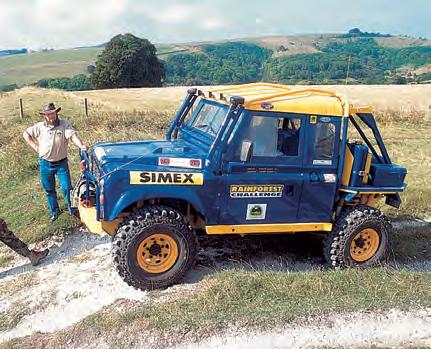

Behind a body made from the tub, sides and roof from a 109” Series II/III, the allimportant rear tray was fabricated with a box-section steel frame and skinned out in aluminium chequer plate. The whole lot hung off the rear stays of a six-point external cage. Martin described the trayback design as ‘an inspiration’ for how easy it suddenly became to get at everything you need in the heat of challenge competition. No wonder it caught on…


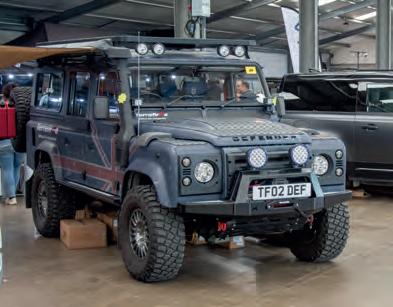

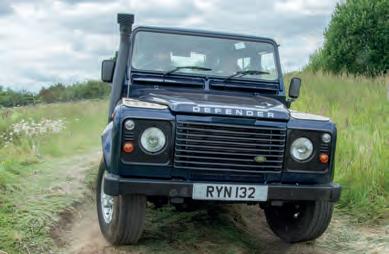
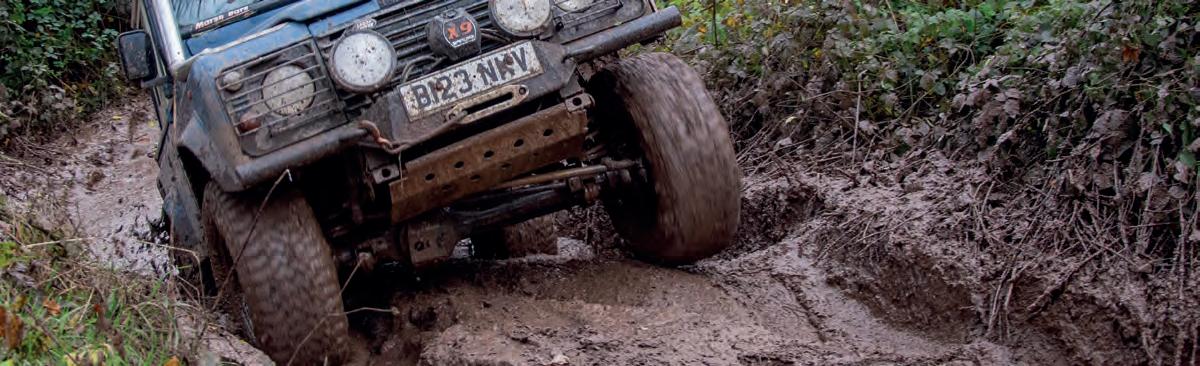








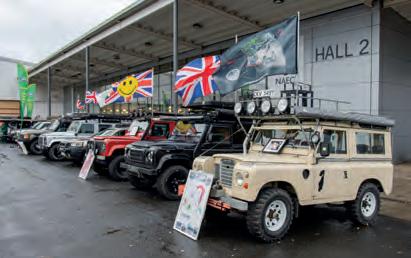
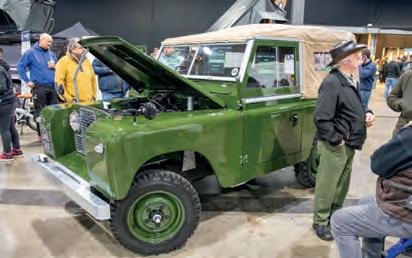
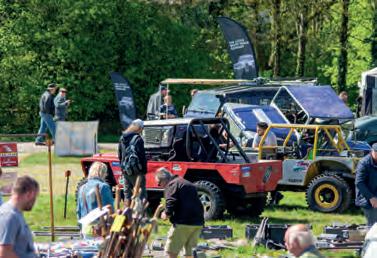
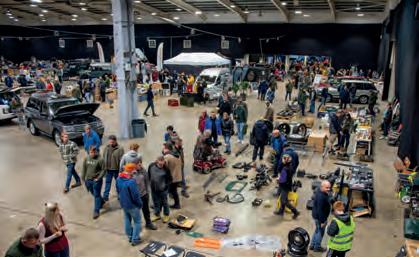
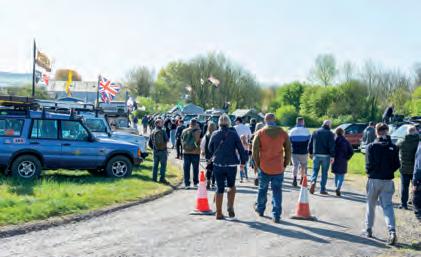
Land Rovers are returning to Bath & West this April for a weekend filled with Land Rovers!
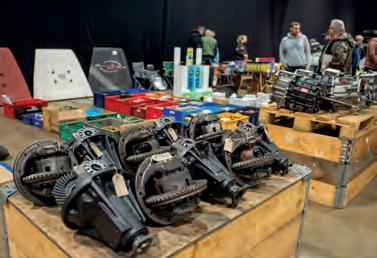
Exhibitors old and new will join us, selling everything from parts & accessories to tyres, clothing and toys Talk to overland adventure specialists about your next trip, discuss modification options with companies with the know-how and other experienced Land Rover owners.
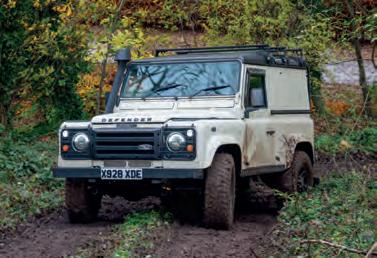









The rule book says you can’t base an overland build on a Ford Kuga, especially when it’s your daily driver. You’ll find the rule book in Martin Stephens’ bin





Words and Pictures James Webber


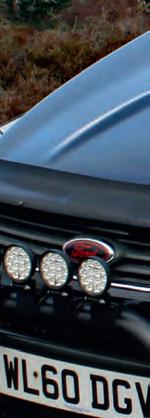


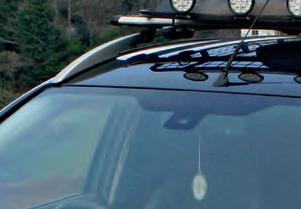
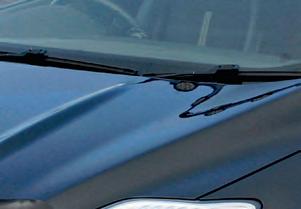
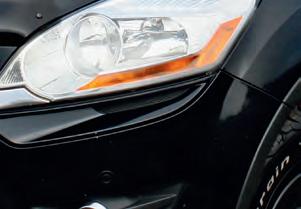







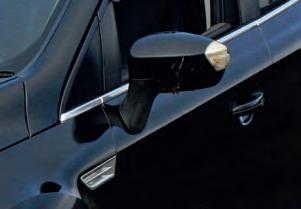
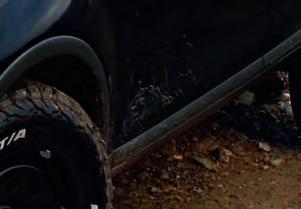
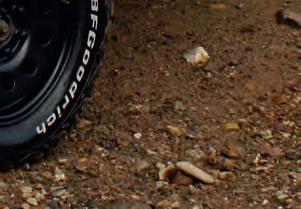
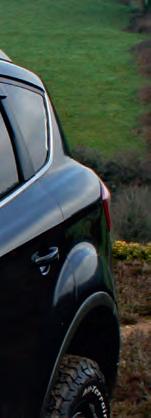



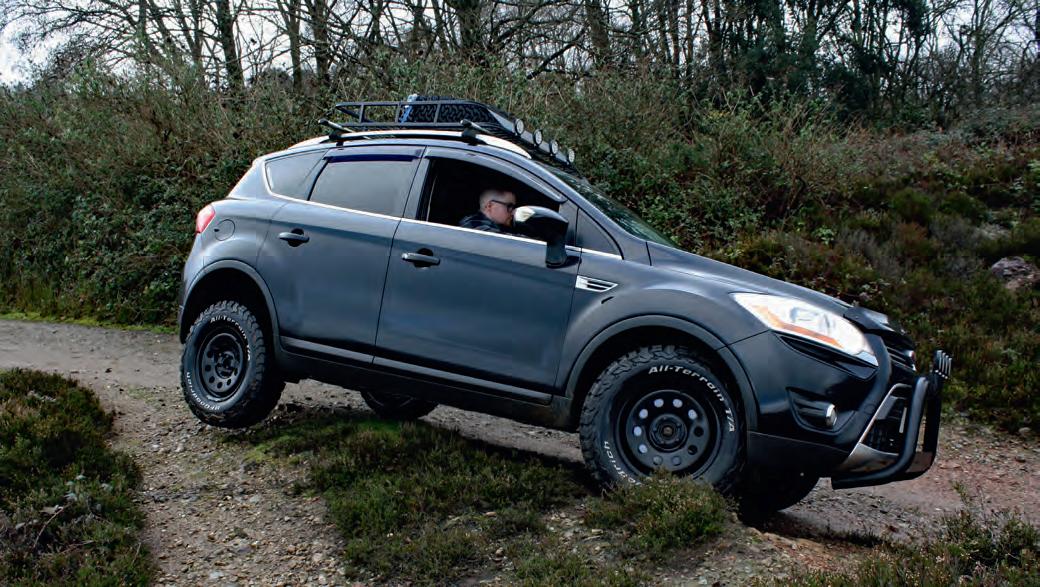
When it was first launched in 2008, the Ford Kuga was marketed as a compact crossover SUV. It came with front-wheel and all-wheel drive options –although the latter was the modern breed of ‘intelligent’ systems which only deliver power to the rear wheels once the fronts have started to lose traction.
This kind of all-wheel drive, which is typical on what people often call ‘soft roaders’, is well suited to conditions such as wet, snowy or muddy roads and will also cope very well with loose tracks. However it’s not normally seen as the most ideal setup for hardcore off-roading and green laning and therefore isn’t a traditional first choice for those wanting to be waist-deep in mud and water.
One person who chose to look at this from a different perspective is Martin Stephens. Martin works in the mining industry, in a laboratory role. Previously, he has owned a selection of fast Fords, but a few years ago he came into ownership of a 2010 Mk1 Kuga.
It’s unusual with used cars to know who owned them and where they have been,
but you’ve already looked at the pictures and figured out that this isn’t a story about things that are usual.
‘My dad bought it new from a main Ford dealership, Tregonings of Cornwall – I was actually with him on the day. He bought this 2010 Kuga Titanium which had features such as automatic headlights and wipers, part-leather seats, cruise control and keyless start. It has a 2.0-litre TDCI engine producing around 161bhp and, most importantly, the AWD system.
‘When I got it I wanted to make it a bit different. I often enjoy spending my time camping and fishing, and I usually find myself going off the beaten track where a vehicle that is rugged is more suited to these types of environments. So I fancied taking it down the all-terrain path and making the Kuga into a proper overlander.
‘After doing some research, it soon became clear this was not going to be an easy build. As far as I am aware, no-one has ever done this on a Mk1 Kuga; a couple have been attempted on the Mk2 Kuga (branded the Escape) over in the States, but that’s all.
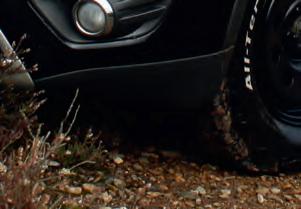
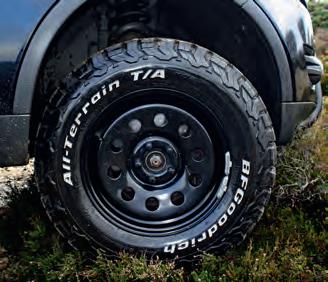
It’s the same with every good overland build, whatever kind of vehicle it’s based on: start with the wheels and tyres, build the suspension to suit and everything else will follow on naturally. In this case, 235/70R16 BFGoodrich All-Terrains on steel modulars stand 29” tall, with a spring and strut spacer kit lifting the Kuga by 40mm to accommodate them. The difference, Martin says, is transformational
Due to the lack of people modifying them in this way, the parts were hard to come by. But I found some companies that offered modifications to make it more off-road and adventure ready, so the transformation began.’
Martin started by purchasing a cargo roof rack to give the vehicle a more adventurous look. This was an easy modification, as he managed to source a universal fitting cargo rack. Next up was the lift kit – and here, the options are pretty scarce. He did however find a company out in Lithuania which makes a lift kit for the Mk1 Kuga.
The kit comprises of polyurethane strut spacers front and rear, along with rear spring spaces, which between them lift the vehicle by 40mm. ‘I went for this as I wanted to run larger all-terrain tyres without them rubbing,’ says Martin. ‘However, as is such in life, it wasn’t going to be that simple.’
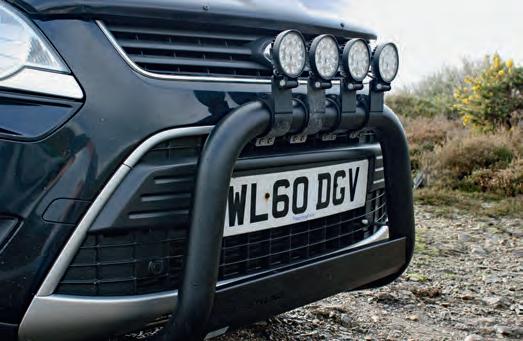
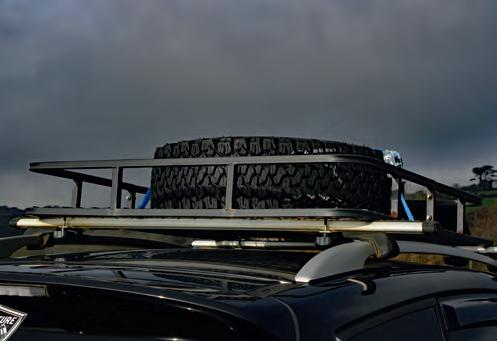
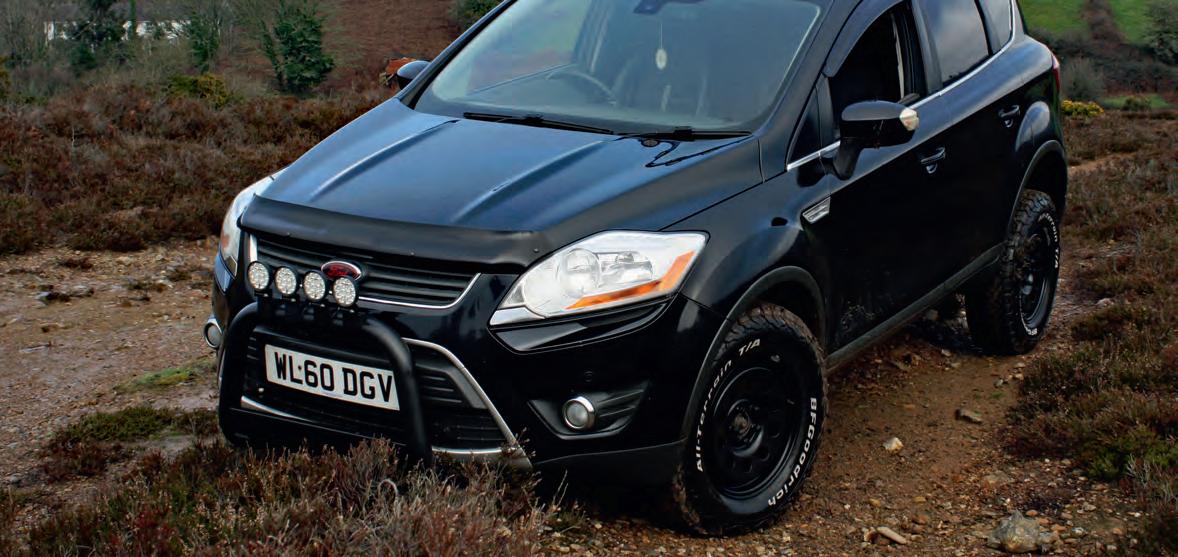
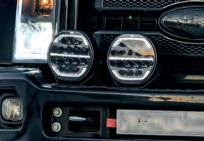
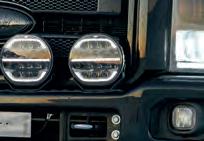
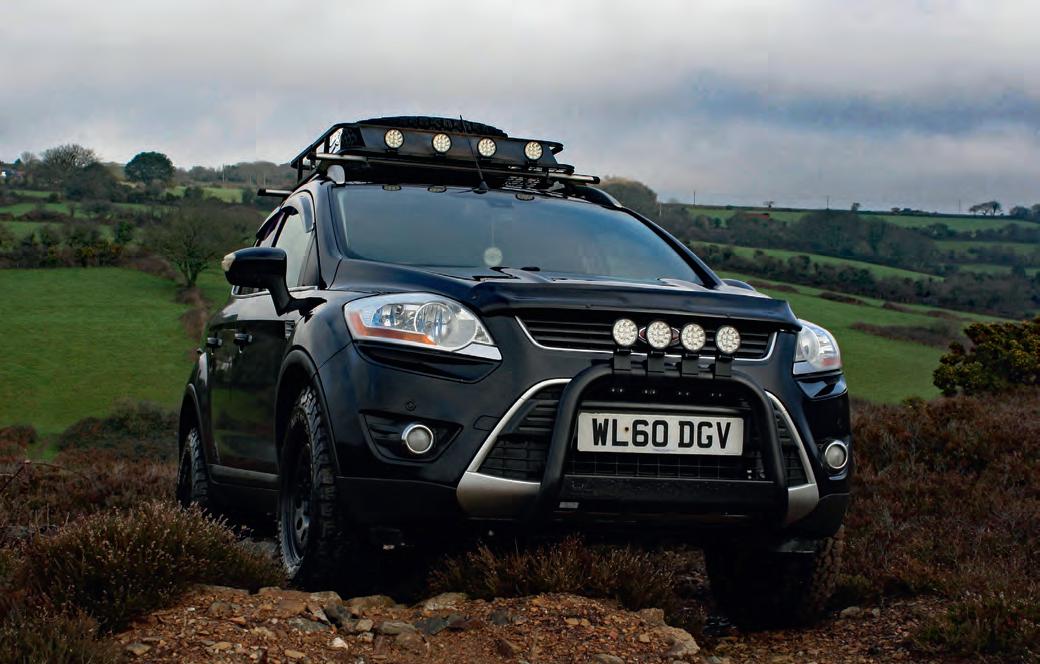
Left: The custom A-bar came from Italy. No, it doesn’t have a winch tucked away behind it, but it does have a bank of four LED spots and that’s going to be getting used much more of the time
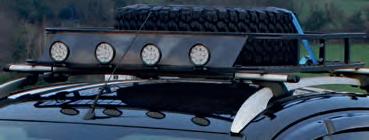
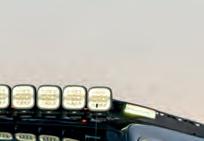
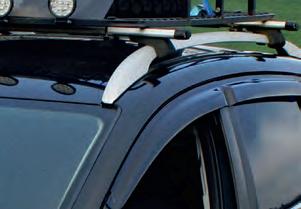
Right: There’s another quartet of LEDs on the roof rack, even if you can’t see them here (you can in the picture at the bottom of this page, though, so no harm done). Mainly, the rack is wide enough to hold a full-sized spare wheel, which is clearly a useful thing to carry in a 4x4 and, with it on display up there, adds still further to the overland vibe Martin was after creating
Martin took the kit to his local garage, Medlin’s Motor Services, who installed it with ease. Frustratingly, though, he found that while he was driving, the rear springs would shift in their cups. On one occasion, one of the springs actually popped right out of place.
The solution? One that became popular on extreme-articulation Land Rovers about 25 years ago but has surely never before
been seen on a Kuga (or indeed any other soft-roader). ‘I ended up with the guys at the garage making custom dislocation cones to keep the springs in place. Touch wood, they’ve held up so far, even in more demanding conditions off-road.’
Next on Martin’s list were those all-terrain wheels and tyres. He opted for a set of 16” Tuff Torque modular steel rims, wrapped in 235/70R16 BFGoodrich KO2 A/Ts
purchased from 4x4 tyres.co.uk and fitted by DanCB Tyres near Truro. That’s a 29” tyre on a Kuga, and you certainly don’t see that every day.
‘Once they were on,’ says Martin, ‘I took a step back and she was really beginning to look like a proper, capable off-roader. Plus with the lift kit and the increased rolling
tyre radius, it gives the Kuga an overall lift of around 60mm. After that, I fitted 25mm spacers at the rear to widen the rear track for a more aggressive stance.
‘It was all coming along nicely but I still needed a couple more modifications to help complete the overlander look I was after. First was a custom made bull bar from Italy. I then ordered a couple of sets of spotlights and added these to the bull bar, and also on to the cargo rack. Then to complete the look, I got a full-size spare wheel to fit in the cargo rack.’
Martin is pretty much there with the build now, and he’s got the Kuga looking how he imagined before starting the project. It’s not going to scare a Land Cruiser on 35” muds but with all the modifications he has added, he has turned your average SUV into
a vehicle that is pretty capable off-road. Its spec list might not include locking diffs, low range and all that, nor even a menu of terrain settings, but simply lifting the vehicle and fitting it with larger wheels and allterrain tyres has really improved its off-road capabilities. The proof? ‘The only thing I’d like to change in the future is the front seats,’ Martin tells us. ‘I’d replace them with some adjustable bucket seats.’
So this is a vehicle that hasn’t actually had that much done to it, and no small amount of that has been cosmetic – yet the improvement has been extremely significant. What does Martin like most about the Kuga now?
‘I’m most pleased with the wheel and tyre package. Combined with the lift kit, it really creates that overland look.
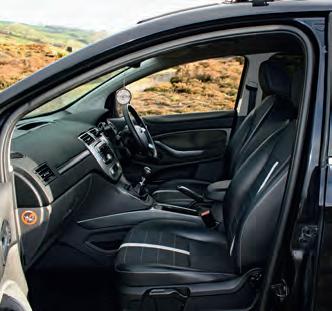
Right: Part-leather seats mark this out as a high-spec Titanium model. Martin’s only future plan for the vehicle is to change them for adjustable buckets
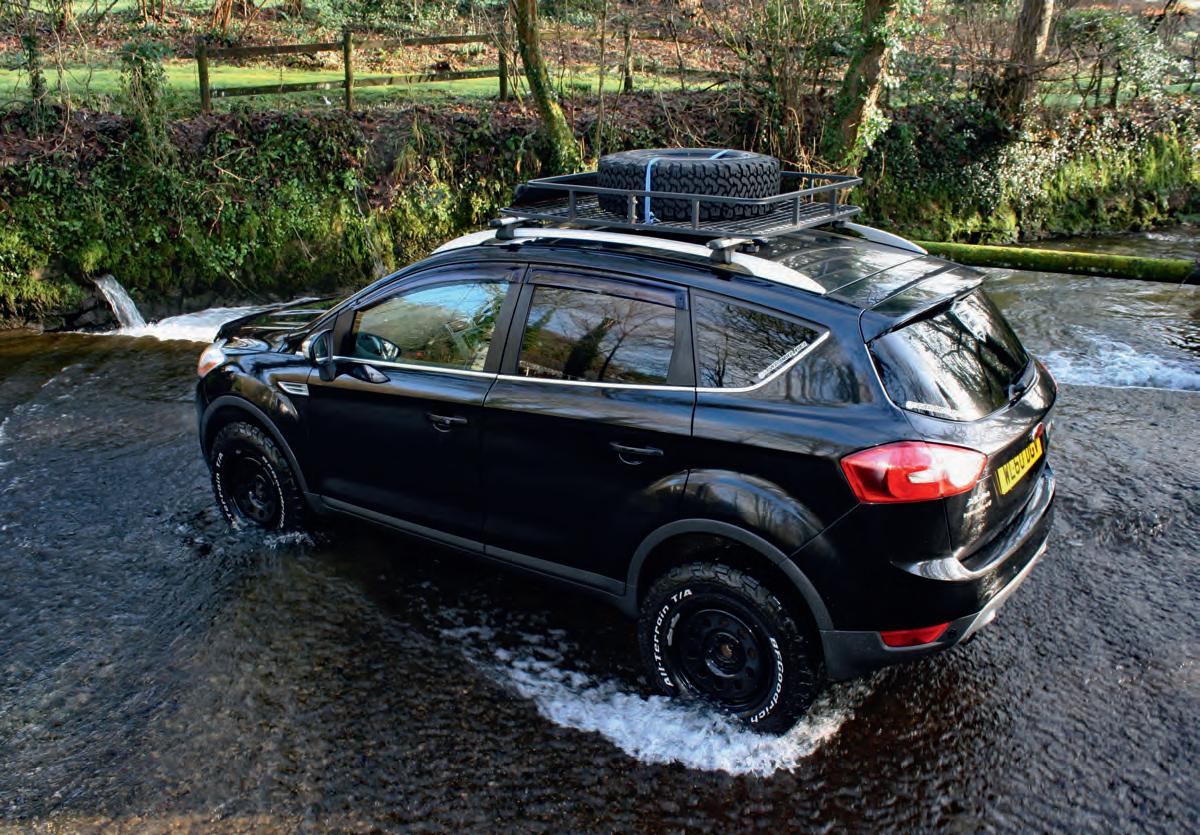
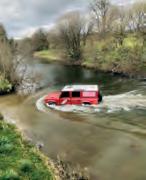
Below: Ford in a ford, innit? Even if it does appear to be going backwards, the cargo rack and 29” tyres definitely give it a whole new image
‘I had a vision and set out to achieve it, and that’s what I’ve done. She gets lots of looks wherever she goes, she’s capable offroad but most importantly she still functions as my daily.
‘I’d like to thank Medlin’s Motor Services for the suspension work, 4x4 Tyres for the wheels and DanCB Tyres, as well as Duchy Ford Club and Fordculture Southwest for welcoming me in and making me feel very welcome.’ You can follow Martins adventures with the Kuga on instagram @ overlander_kuga.











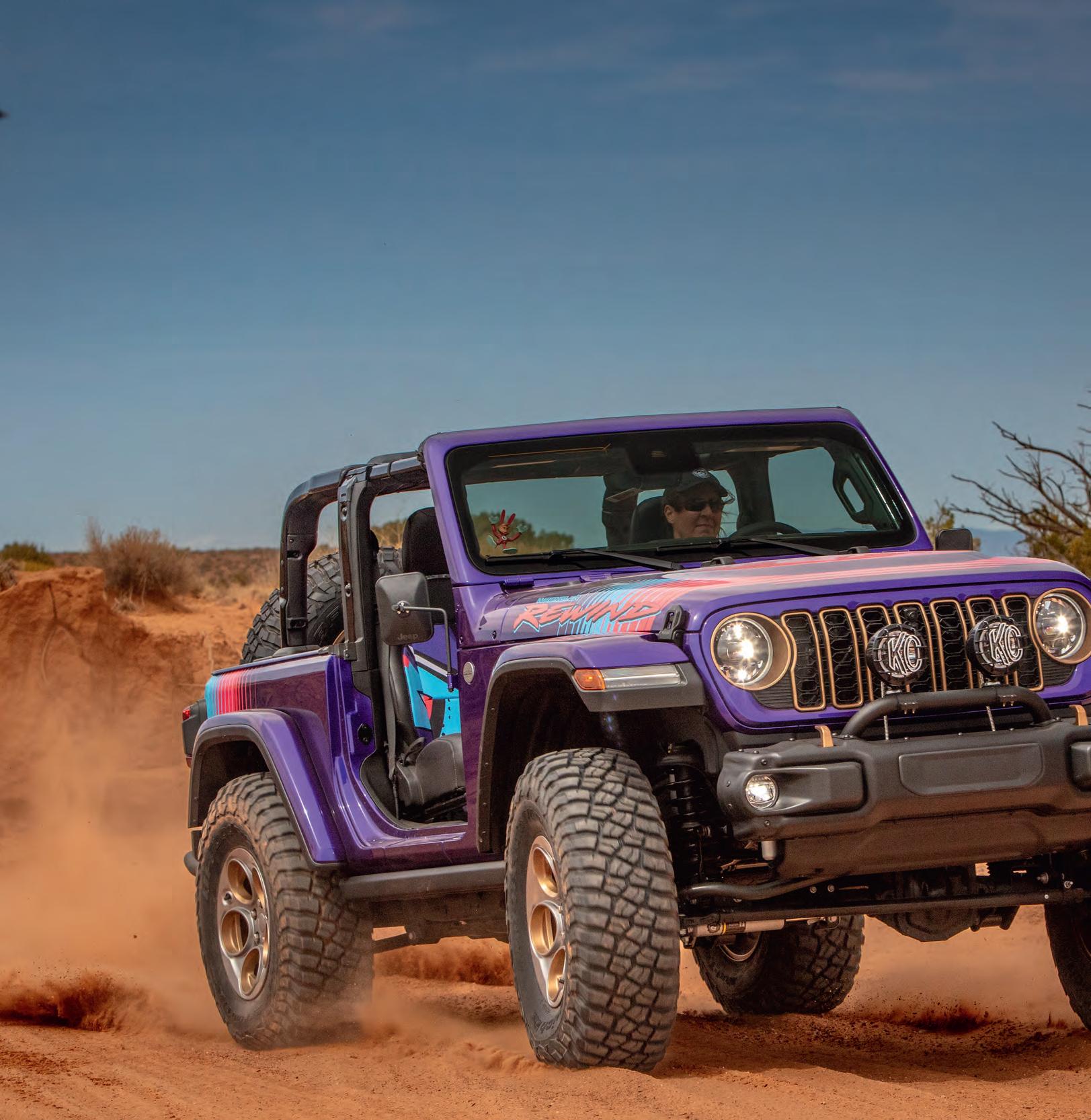
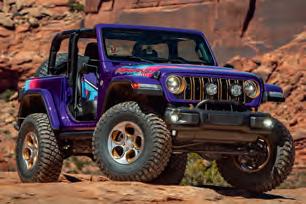
Jeep’s Rewind concept goes back to the early days of the first Wrangler, when everyone was watching MTV and neon coloured leotards were all the rage
Words Tom Alderney Pictures Jeep










What were you doing in 1986?
Being unemployed, quite possibly, if you were old enough, or worrying about nuclear war if you weren’t. But most likely, you were watching MTV round the clock and dressing in clothes so bright they made your eyes burn.
That’s what Jeep reckons, anyway. The Rewind concept evokes memories of those bright, colourful, carefree days and ‘takes you back to an era when music television blared in every household and neon colours were all the rage.’
I mentioned 1986 because that was the year when the original Wrangler, the squareheadlights YJ model, went into production. But Jeep says the Rewind is ‘dipped in all things ‘80s/‘90s kitsch’ so choose whatever year you fancy from those two decades. Bananarama? Men Behaving Badly? All the
boys having haircuts like George Michael from Wham? All the girls having haircuts like Rachel from Friends? It was indeed a kitschy old time back then, for sure, though maybe it wasn’t all so bad.
I can’t remember anything specifically purple from that era. One of the leotards from that Call on Me video, possibly, though having looked it up on YouTube (and watched several times just to check), I see that the song was actually from 2004 and that was harking back to the ‘80s, too. There’s obviously something about the ‘80s. Like leotards, for example.
The Rewind could perhaps be described as the four-wheeled equivalent of a leotard (I’m warming to the subject now). It leaves a lot uncovered and you want to look at it. Or what’s in it? Well, you would if it was that women from the Call on Me video. A hefty redneck in rigger boots, maybe not so much,
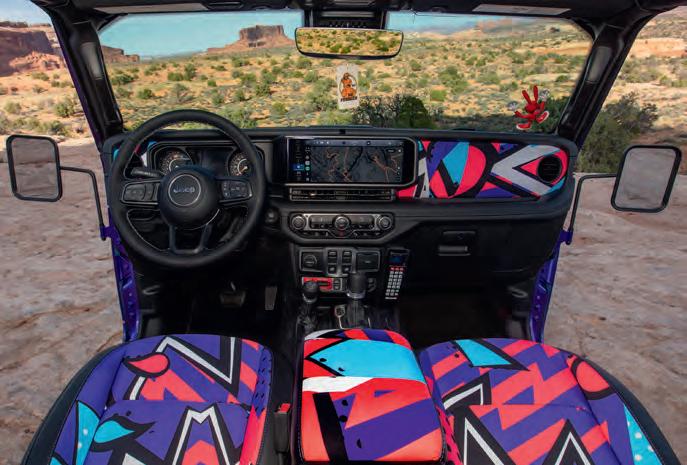
but this is a Jeep that looks far more like you’d see a temptingly moist cowgirl behind the wheel.
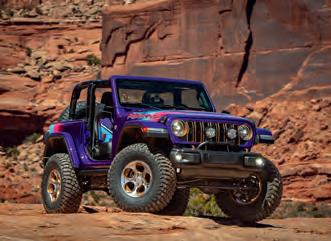
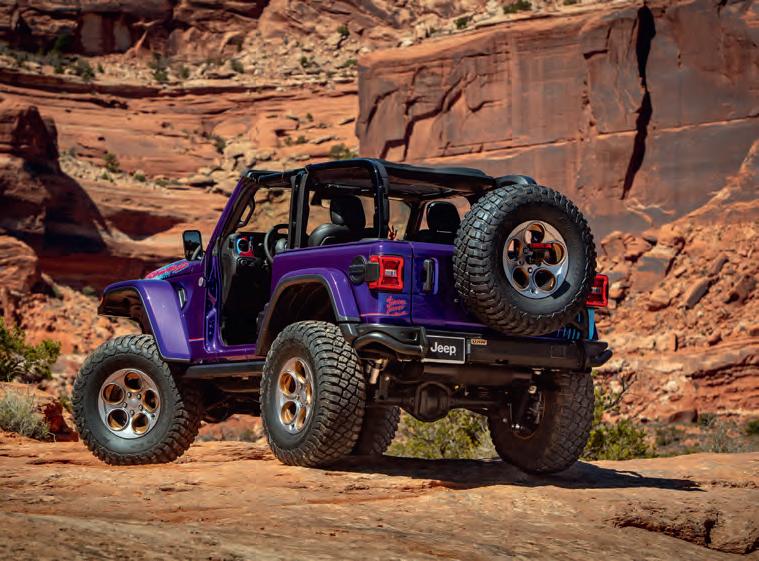
She’d be rocking a set of locking diffs, because the vehicle is based on a 2025 twodoor Rubicon. This one has Jeep’s 2.0-litre turbocharged petrol engine, just like we get in Britain, rather than the bigger and frankly sexier units that are still available on the far side of… well, it’s just the Far Side, these days, isn’t it?
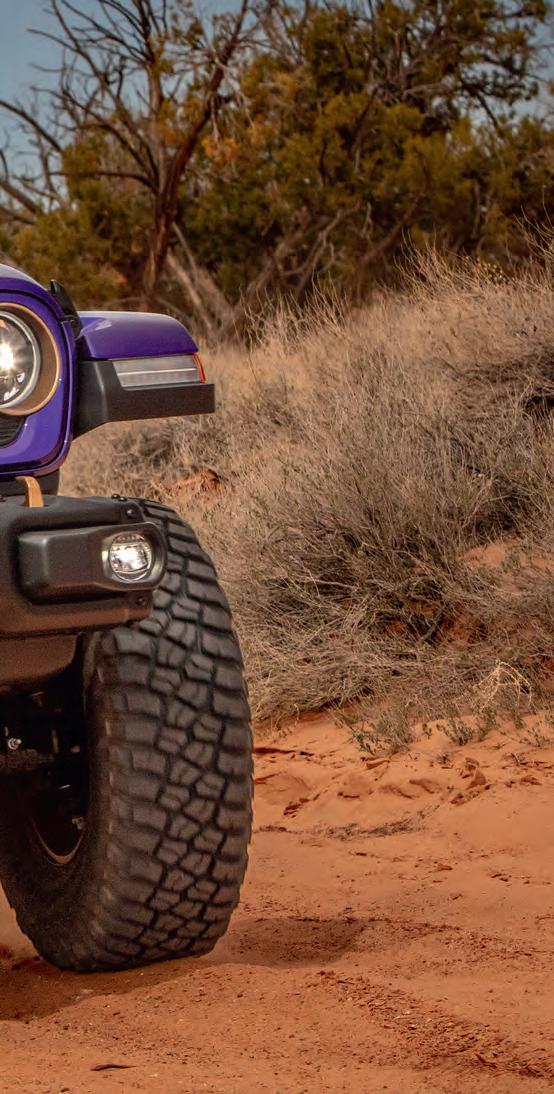
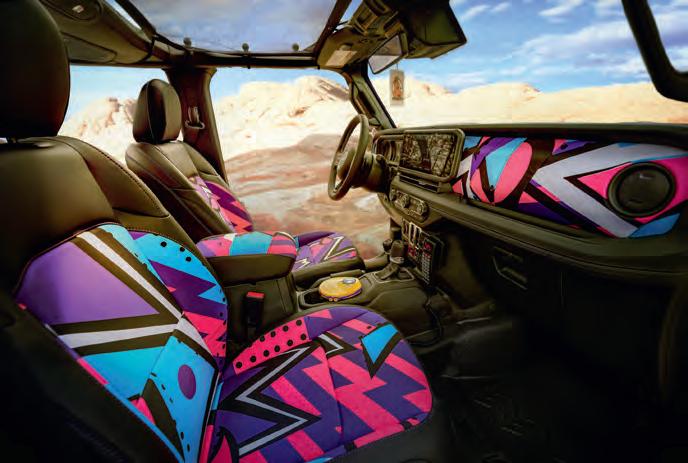
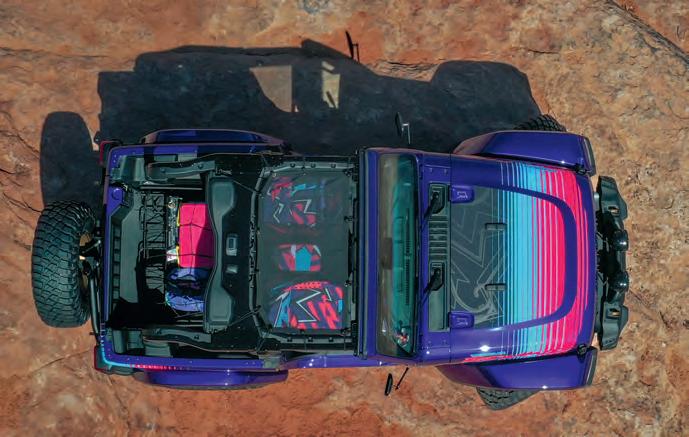
Being a Rubicon means it’s also equipped with deeper gearing, so it’s not going to struggle to turn the 37” BFGoodrich KM3 Mud-Terrains wrapped around its 17” AEV wheels. Wheels which, you may have noticed, have been painted gold. Because gold and purple, what could be more ‘80s than that? Jeep calls it ‘special-edition, hightravel Grimace purple exterior paint,’ and I don’t know what that means either apart from that Grimace is the name of the furry purple thing that hangs around with Ronald McDonald. As an aside, he was introduced in the early ‘70s as an evil milkshake thief but was then reinvented in the ‘80s (that decade again) as a good guy. Still wouldn’t want to see him in a leotard, though. Where were we? Ah yes, the Rewind. It has a gloss black custom anti-roll bar and its doors and roof have been stripped away, with a custom mesh sun bonnet added in lieu of the latter. Inside, the rear seats have been removed to make space for a custom stowage compartment which holds essentials (like a boom box, it sez ‘ere) and the seats, passenger’s airbag cover and
cubby box lid are decorated with graffitistyle red and purple graphics. You’ll love it or hate it.
The vintage car phone mounted on the facia, on the other hand… well, how could you not love that? Just so long as you don’t actually try to use it, obviously, but we’re pretty sure it’s just there for show – as is the ‘ton of retro customisation sprinkled throughout.’ Moulded rubber floor mats seem distinctly sensible among all this fun, but shag-pile would be an ‘80s reference too far in anything designed to go off-road, wouldn’t it?
‘Jeep brand designers (who are millennials themselves) reimagined a
simplified Jeep Wrangler from the familiar high school or college days of old that expresses the feeling of freedom when getting the keys to your first car,’ it also sez ‘ere. Those of us who remember scraping together £250 to buy a clapped out old Cortina we knew deep down was one day going to try and kill us might associate our first cars with feelings of trepidation and dread rather than freedom, but we guess they’re talking about those American high schools where all the kids can somehow afford to go about in classic Beetles and brand new pick-up trucks.
Or maybe that’s just a fantasy on TV, which takes me neatly back to Bananarama and Rachel from Friends. And of course the Call on Me video.
Ahhh, leotards, they really are the best thing ever. Apart from Jeeps, obviously. And a Jeep that’s like a leotard? Sex on wheels. Now if you’ll excuse me, I’m just going to pop back over to YouTube and check out that Call on Me video one more time. Just to remind me of what I was doing in 1986…


Cynghordy Llandovery Carmarthenshire, SA20 0NB Tel: 01550 750274

e-mail: info@cambrianway.com www.cambrianway.com
Family run guest house and self catering cottages with spectacular views, en-suite bedrooms, comfortable lounge bar and excellent home cooked food. Pressure washer, drying room, map room with local lanes marked, on-site 4x4 course, guides and GPS hire available.
A very popular venue for both individuals and groups of 4x4 enthusiasts



















Words: Dani Heyne Pictures: Philipp Rupprecht

It’s just after five o’clock in the morning. While no-one knows exactly what’s going to happen in an hour, many people have already gathered on the roads of the Turkish town of Göreme. Bundled up, they sip on their tea, check the battery level of their phones and wait for the sign.
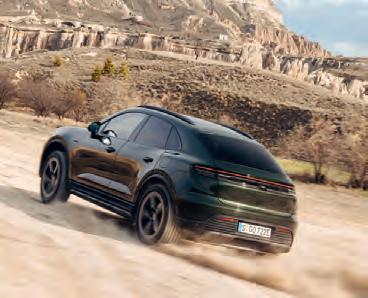
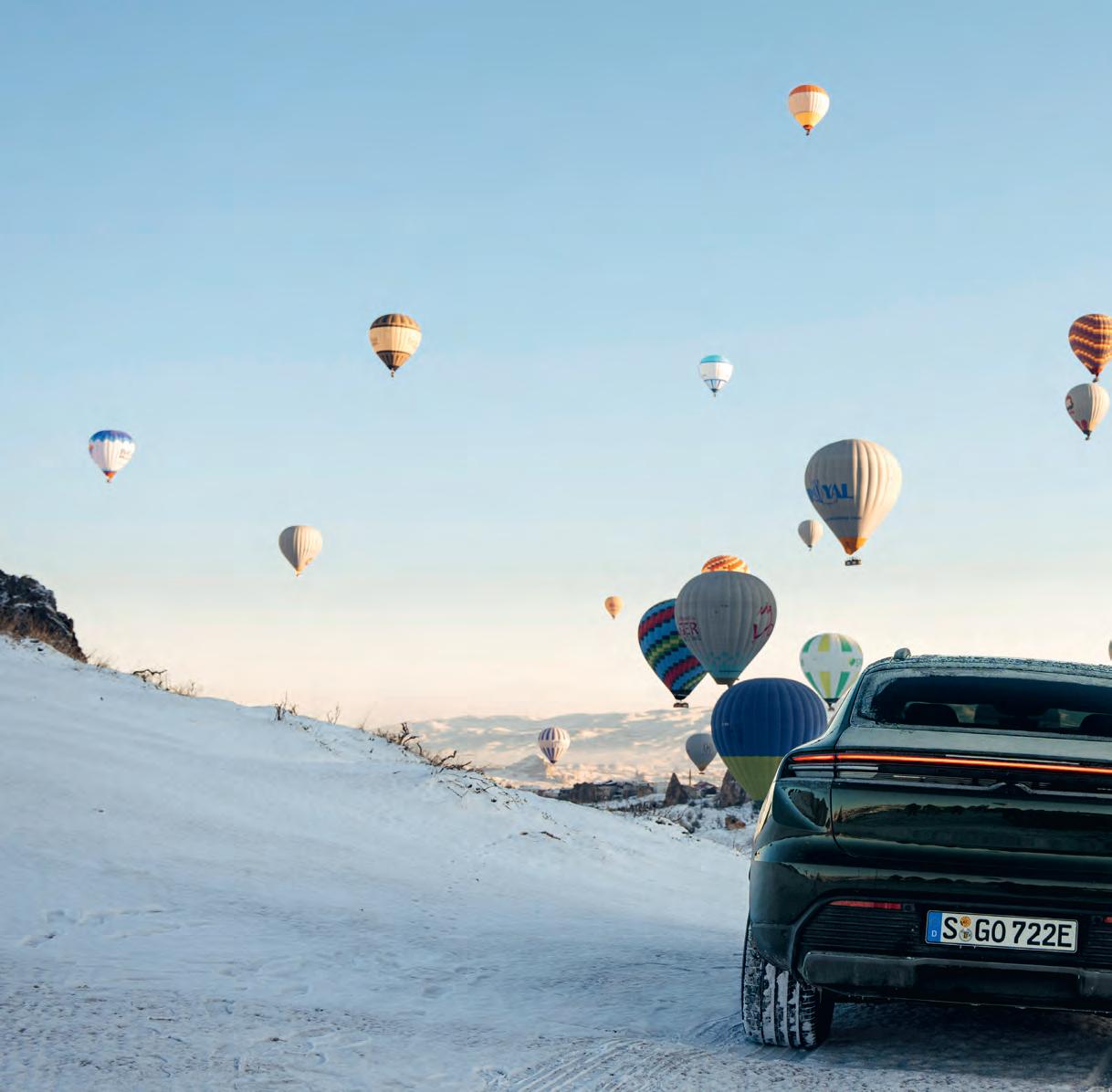
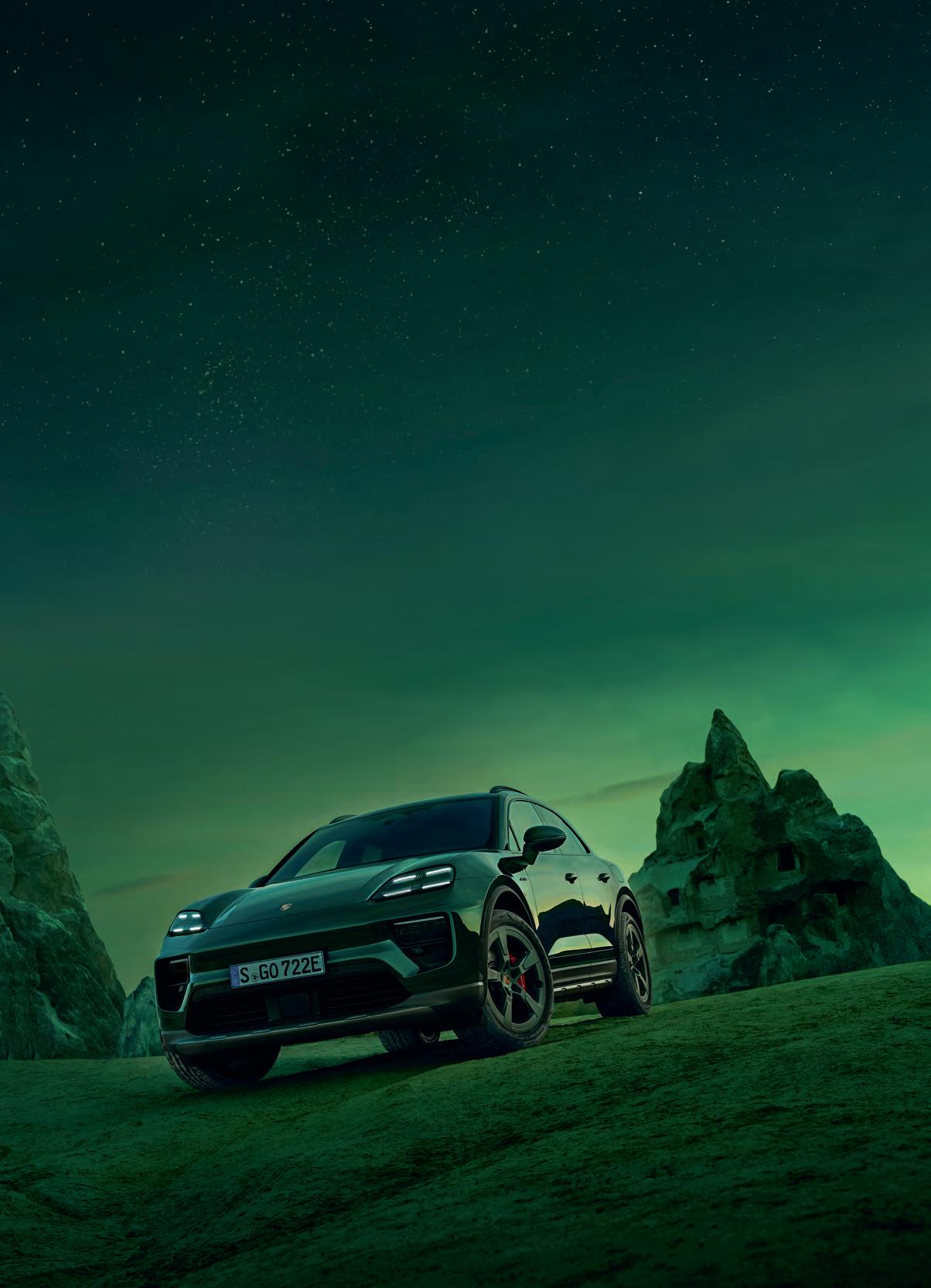
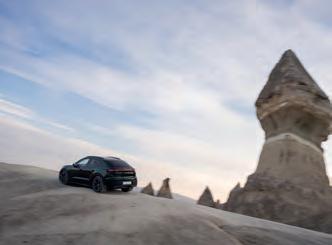
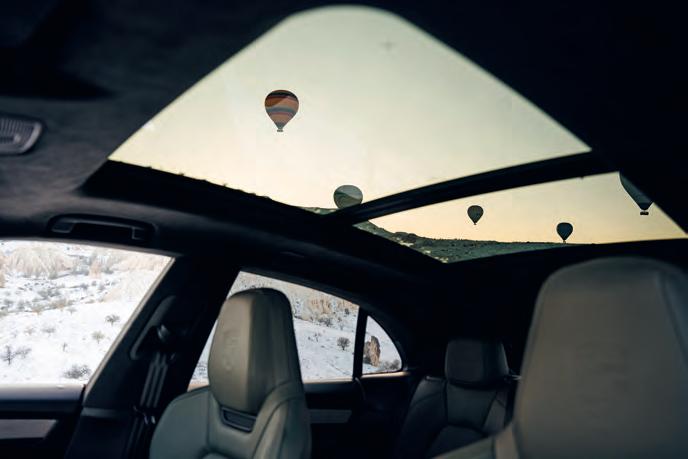
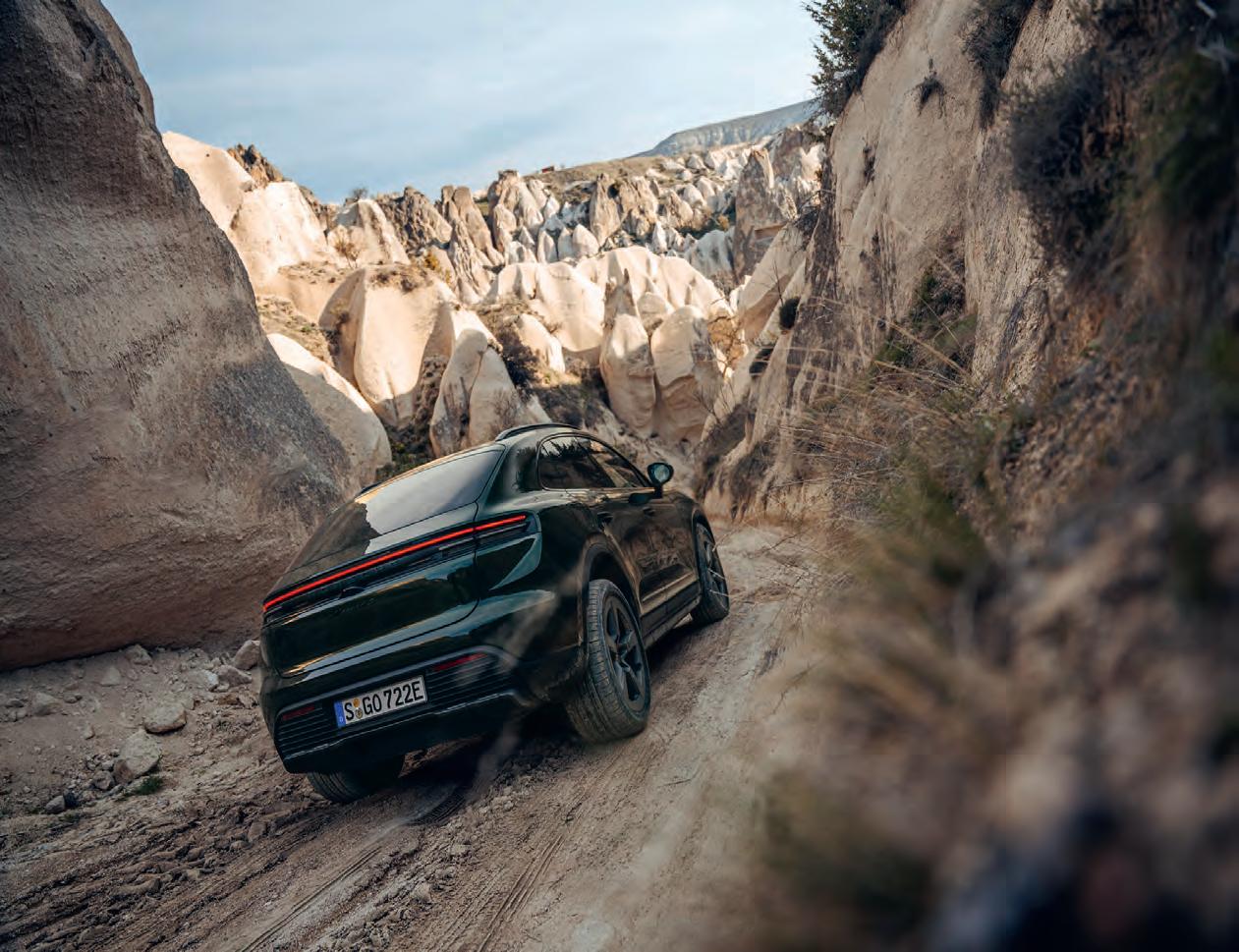
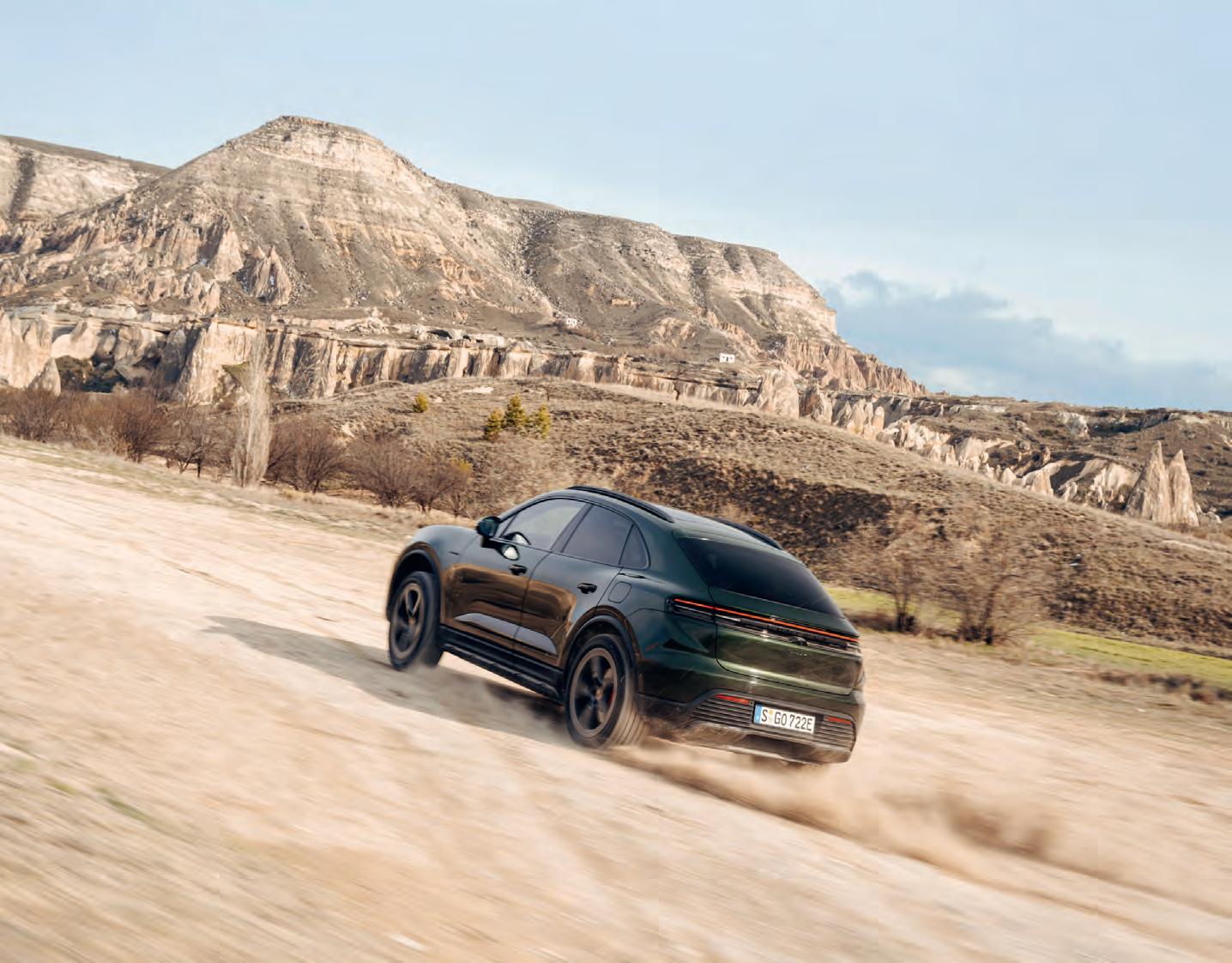
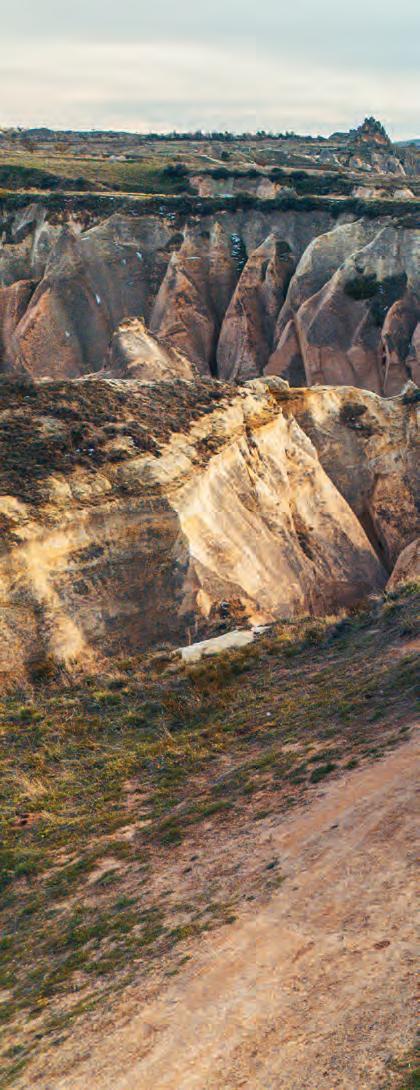
With bizarre rock formations, colourful hot-air balloons, ancient caves and culinary delicacies, Cappadocia is truly extraordinary. And best of all is its network of challenging off-road trails – which make it perfect for exploring aboard the new Porsche Macan 4S

There’s snow on the ground in Cappadocia, which makes the plans all the more complicated. The thermometer reads minus nine degrees Celsius as light begins to fill the sky above the Central Anatolia region little by little. The volcanic landscape, with its mysterious rock formations, begins to take shape in a haze
along the horizon, offering a preview of an area which, according to an old legend, once served as a playground of the gods. The light dusting of snow – like a sprinkle of icing sugar – makes the landscape even more magical. Cappadocia is supposedly home to hundreds of thousands of the unusual tuff formations, which magically








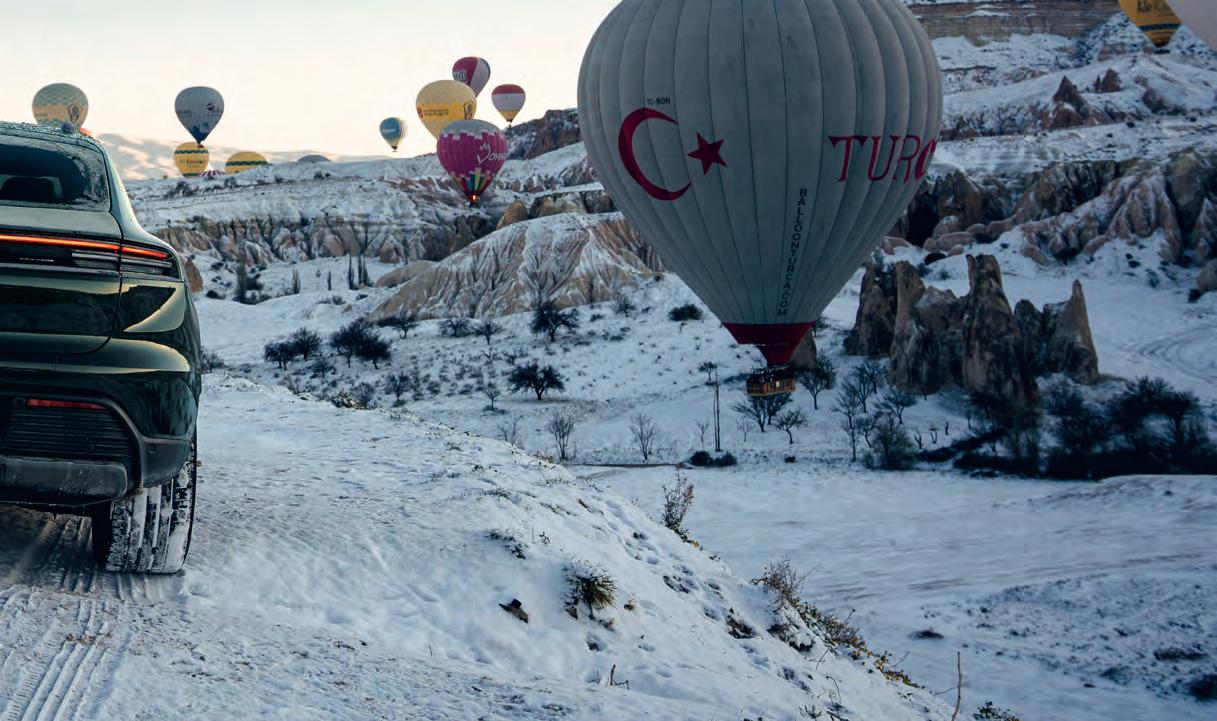
sprout out of the ground like asparagus spears and are reminiscent of pointed hats and giant mushrooms.
Researchers agree that it took nature thousands of years to create this work of art. In addition to admiring the rocks, Cappadocians have also carved their homes and even churches into them.
The rock formations were added to the UNESCO World Heritage list in 1985.
We’re in Cappadocia aboard the new, all-electric Porsche Macan 4S, and we’re going to put its off-road capabilities to the test. It’s well equipped as standard, with each axle are driven by an efficient, powerful electric motor. When Launch
Control is activated, the system output is 516bhp and 605lbf.ft of torque. To minimise slip to the highest degree possible, the electronics control the interplay of both electric motors almost in real time. In other words, Porsche Traction Management (ePTM) distributes the immense power within ten milliseconds,
“When the Macan’s Matrix Design LED headlights illuminate the first rock formations in Göreme, sunrise is no longer far off”
which is around five times quicker than conventional all-wheel drive systems.
And when the Macan 4S’s Matrix Design LED headlights illuminate the first rock formations in Göreme, sunrise is no longer far off.
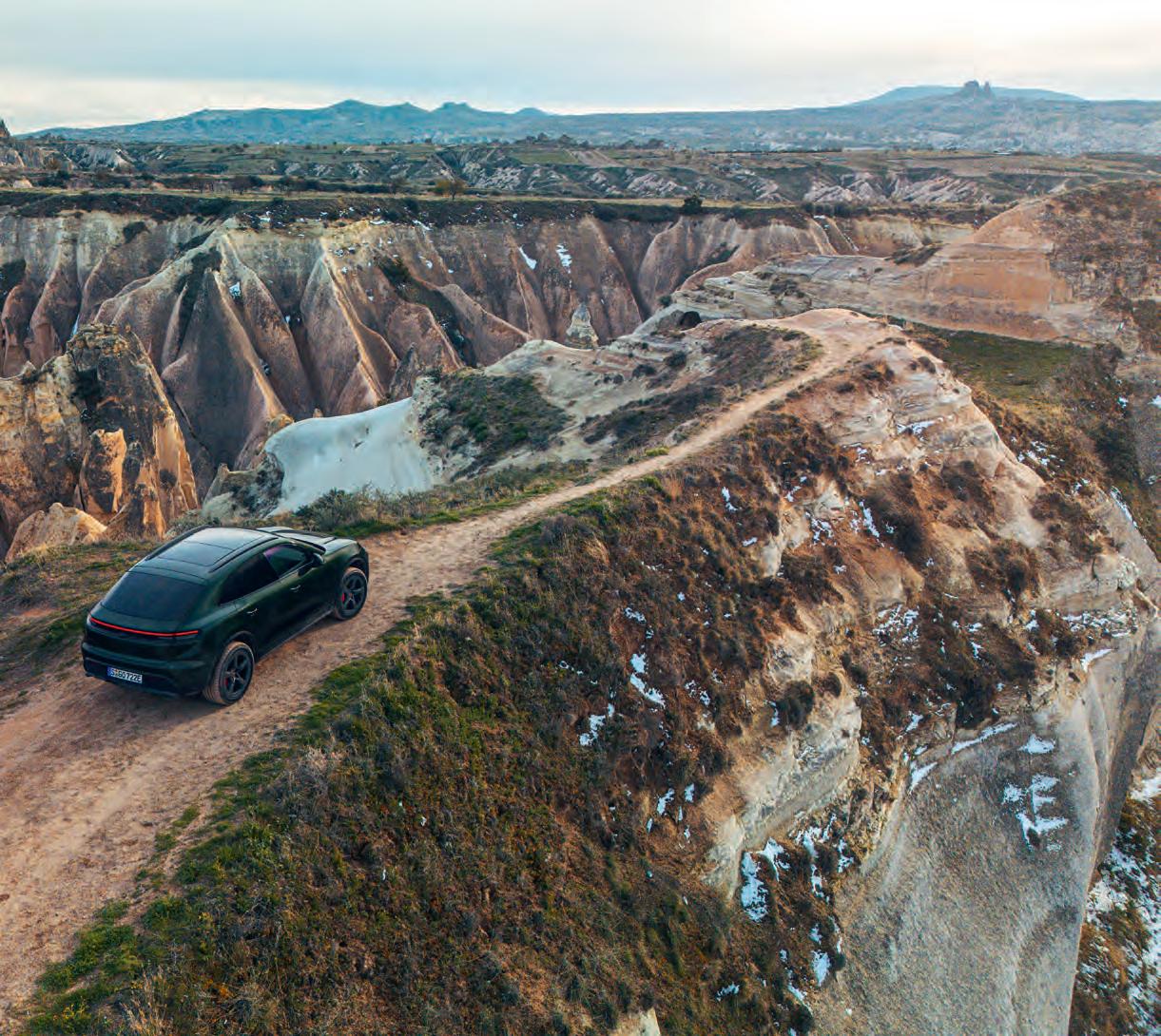
Atıl Ulaş Cüce is taking us down narrow tracks that have never seen asphalt. The Cappadocia expert has been guiding tourists through the fascinating landscape in the heart of Turkey for nearly 30 years – but none of them, he says, have gone as deep into the landscape as we will today.
The closer the Macan 4S gets to the mountains, the more demanding the route becomes, gradually deteriorating into severe ruts and bumps. Atıl’s face betrays his growing concern.
Two taps on the central display and his smile is back. The activated off-road driving mode controls the all-wheel drive on challenging tracks. A virtual centre differential lock limits the differential speed between the front and rear axles, which maximises traction. The chassis also lifts to off-road height, with an additional 20 millimetres in the first setting.
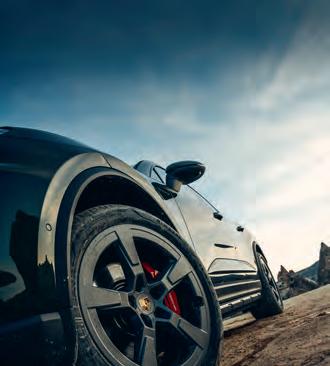
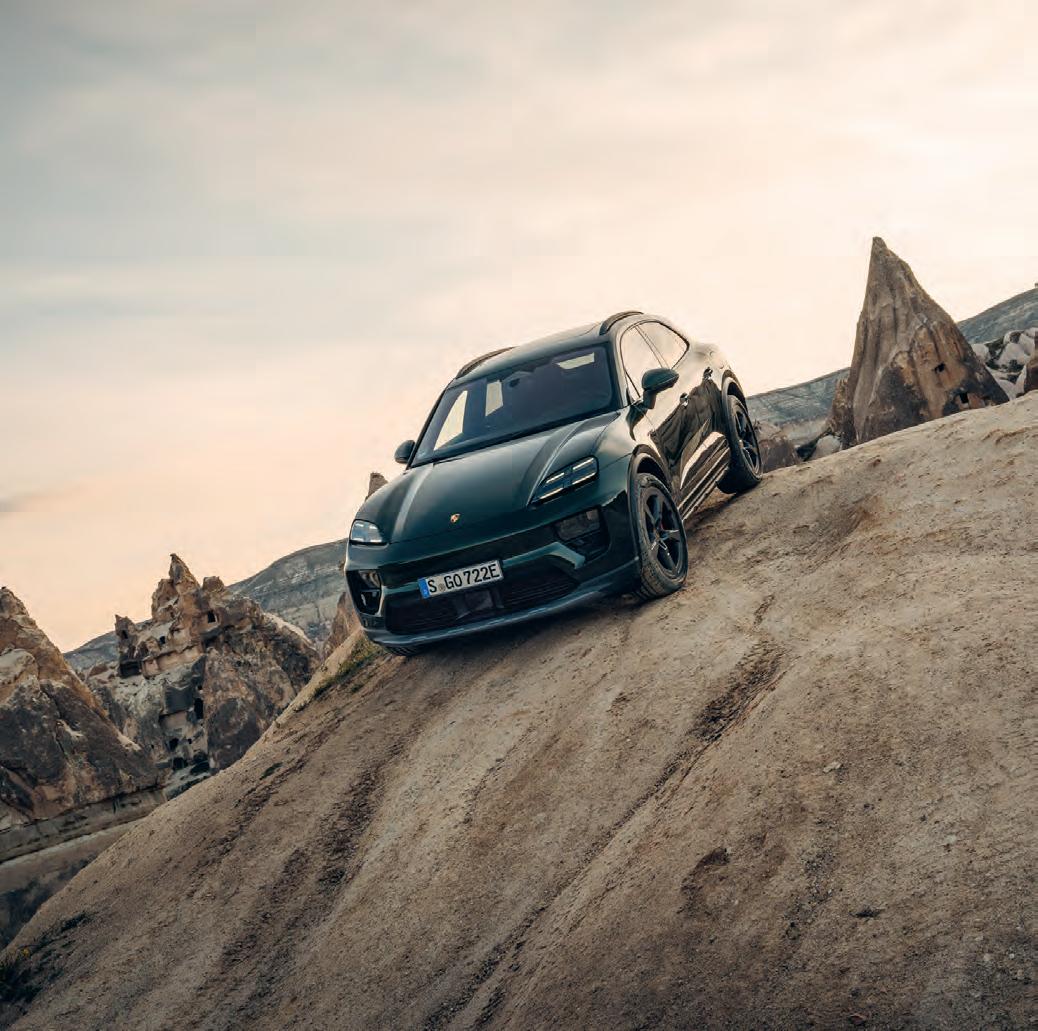
If you opt for special terrain, the Macan 4S offers an increase in ground clearance of 40 millimetres. The optional off-road design package offers an approach angle of up to 17.4 degrees at the front of our vehicle. It’s unanimous: these 4x4 options are a game changer. The Macan can now navigate the terrain with confidence and ease. From the front seats, we can see how wild the tracks become but don’t feel any strain in the chassis or the drive.
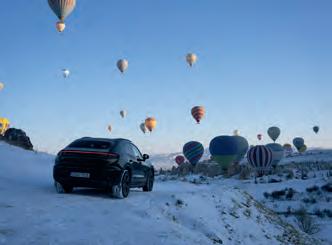
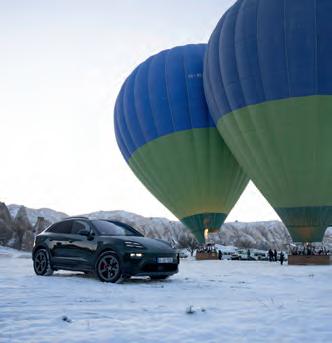
Atıl’s phone rings, which is the sign we’ve been waiting for: the hot-air balloons will fly at sunrise. The atmosphere changes instantly in the playground of the gods. We park the Macan 4S on a hill and watch as the valley fills with buses big and small.
Among them, there are old off-road vehicles towing balloon baskets on long trailers. And then pink American convertibles from the 1970s manoeuvre into position. Their drivers have brought changing rooms made of tent material.
Balloon trips are now the top tourist attraction in Cappadocia. When they start, it’s about so much more than just extraordinary views. It’s also about creating the perfect picture.
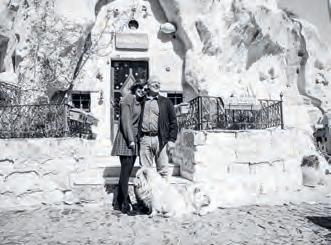
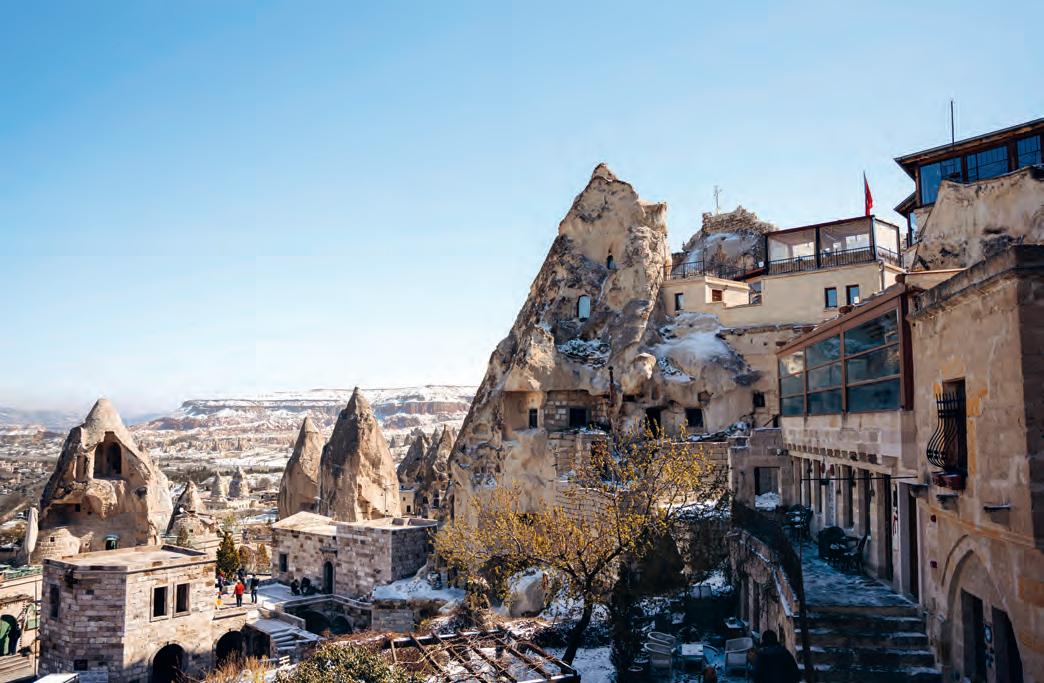
Zehra Dasdeler took over Amber Cave Suites from her father, Hasan (left). An extraordinary hotel with rooms built inside fairy chimneys, as the Cappadocian rock caves are referred to. The view from the hotel’s breakfast table (below) is magical
of bizarre rock formations as the sun rises. What sounds kitschy is actually kind of magical. And in the centre of it all, the Macan 4S stands proud in Oak Green Metallic – like an object from the future.
“It’s like nothing else, isn’t it?” asks Atıl, his eyes sparkling. Even after his many years in Cappadocia, he’s never grown tired of this sight. And we can understand why.
for nectar all at once.
We follow one of the colourful balloons to its landing location. The route takes us through the rocky landscape – the tall, narrow rocks standing there like silent observers, the guardians of Cappadocia.
“Before the balloons began flying, I would take tourists hiking here,” says Atıl, showing the way. “There are some people who still
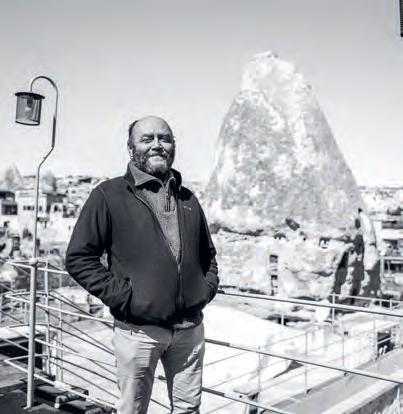
Atıl Ulas Cüce came to Cappadocia around 30 years ago, fell in love with the region, and has never left. Atıl is now one of the most experienced guides in this extraordinary landscape, which is steeped
hike, and others who only come for the balloons. The times are changing, and balloons are now the main attraction.”
Çağlar Aksoylu lands the basket of his balloon directly on its trailer, to the cheering and applause of its 18 passengers. Çağlar, sporting a pair of reflective sunglasses, responds with a wide grin. The 35-yearold former basketball player has been a professional balloon pilot for four years.
“I even help develop the balloons, baskets and burners. We produce them here in the area,” he explains proudly. What does he like most about his job? “I can float on a cloud every day.”

Çaglar Aksoylu pilots one of the 170 hot-air balloons permitted to lift off over Cappadocia. For Çaglar, it feels like floating on a cloud every morning. In addition to flying, he also helps develop balloons, burners, and baskets






• Escape Gear
• ...and many more!

• Aluminium canopies
• Roof tents and roof racks



• Off-road fridges and 12v gear
• Drawer systems and slides











• Bumpers, side steps and vehicle protection
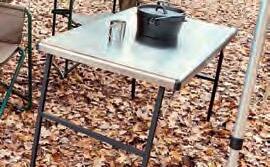
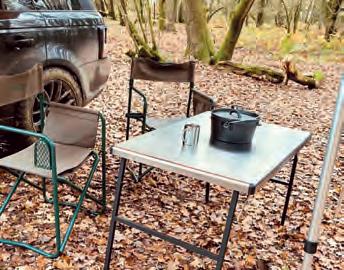
• Campsite essentials, tables and chairs





















thus switch from performance to comfort in the blink of an eye. Or the other way around. Available in the Macan for the first time, rear-axle steering offers a steering angle of up to five degrees – yet another comfort highlight.
With 15% more direct steering ratio at the front axle, the increase in agility is most noticeable in dynamic performance. But rear steering can also help in city traffic and manoeuvring, with the rear wheels turning in the opposite direction of the front wheels at speeds of up to around 50mph.
Güler Gürbüz is beaming from ear to ear as we enter her Green Garden restaurant, where she cooks traditional cuisine. Her most important tool is a special outdoor oven clad in terracotta, with which she
Güler Gürbüz has been cooking traditional Cappadocian fare for her guests for many years. Her charming restaurant called Green Garden features a rare, enchanting outdoor oven made from terracotta

prepares extremely tender meat dishes. Atıl tells us there are only two ovens like it remaining in the region.
After the meal, Atıl takes us out to see a stunning gorge. A steep track wide enough just for us leads downward. There’s a phone number written on the striking rock walls. “That’s the towing service, in case anyone in a rental car gets stuck. It happens often enough,” explains the guide. The Macan 4S handles the track with ease – on the way down and then back up again.
We take a leisurely drive back to Göreme at the day’s end. The excitement of the morning has dissipated and the tourists are all seated in the town’s many restaurants.
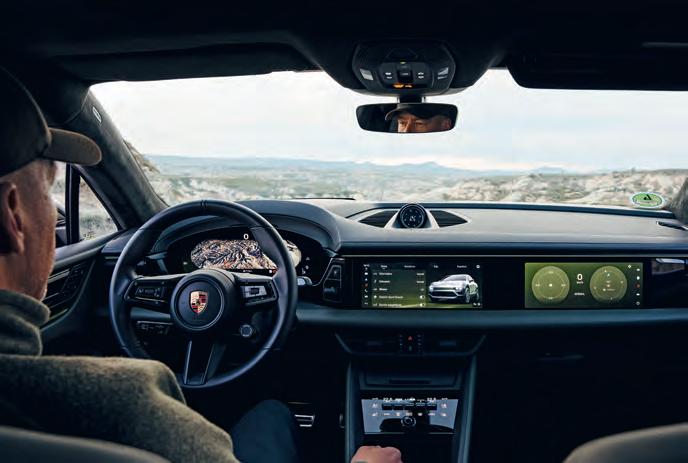
The Macan 4S shows that off-road engineering has come a long way since the days of cart springs and capstan winches. Off-road driving mode controls the all-wheel drive in challenging conditions, bringing in a virtual centre diff lock and lifting the suspension by an additional 20 millimetres over its standard height. In special terrain, the increase in ground clearance doubles to 40 millimetres, while an optional off-road design package allows an approach angle of up to 17.4 degrees at the front of the vehicle
The Macan pulls up to one of the few charging stations here. Its high-voltage battery, with 100kWh of gross energy content, is at around 45%. Thanks to the 800-volt system, its battery could theoretically charge from 10 to 80% in just 21 minutes if a CCS fast charging station were available. Here in Göreme, though, it’s only 10.9kW. But that’s not an issue, as we’re not going anywhere else today and can simply charge overnight.
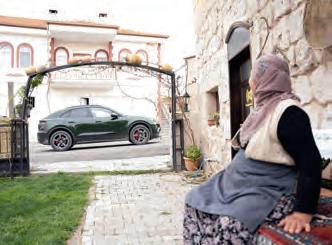
Our last appointment for the day is a three-minute walk up the mountain to the hotel that Zehra Daşdeler took over
from her father. Nestled in a picturesque landscape, Amber Cave Suites is not just any hotel, as its rooms are built inside fairy chimneys – the tall, narrow rock formations the Cappadocians once carved their homes into. Guests have the opportunity to sleep in a cozy cave, without having to give up any of the amenities of a good hotel. Zehra operates the hotel with lots of love, creating an ambience that’s as tasteful as it is extraordinary.
When she was growing up here, life and tourism were not quite so fast-paced. “Back then, people came for one or two weeks,”
she tells us. “Now they stay for a night or two. Some are only interested in taking a few photos for Instagram. But that, too, will change again.”
Her words echo as we embark on our journey of discovery at the next sunrise. With the Macan 4S’s battery full and the off-road program activated, we set off at a leisurely pace and let the day unfold.
Atıl takes us to a climbing trail for cars, where the sun appears to jump back and forth between the rocks as it rises. And that’s the magic of Cappadocia – a playground of the gods.
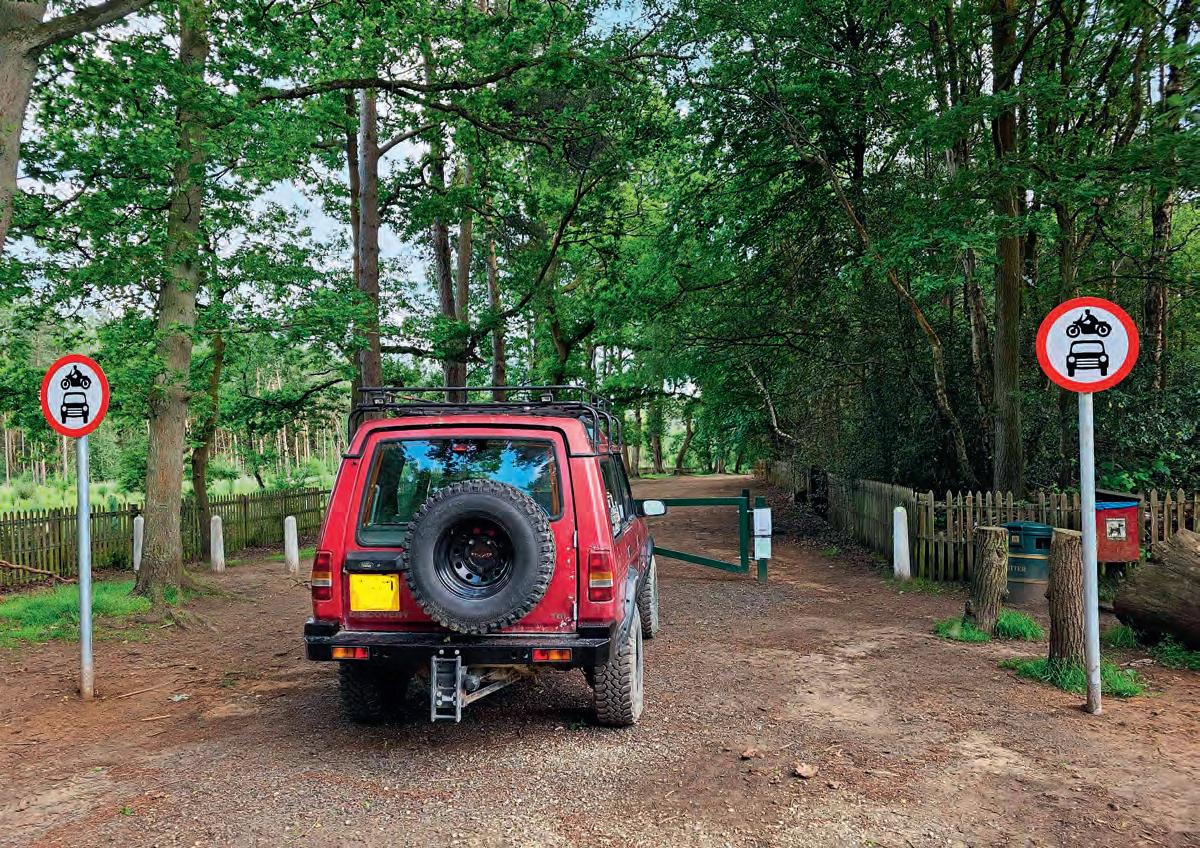
A region of quiet woodland byways rarely visited by green lane users
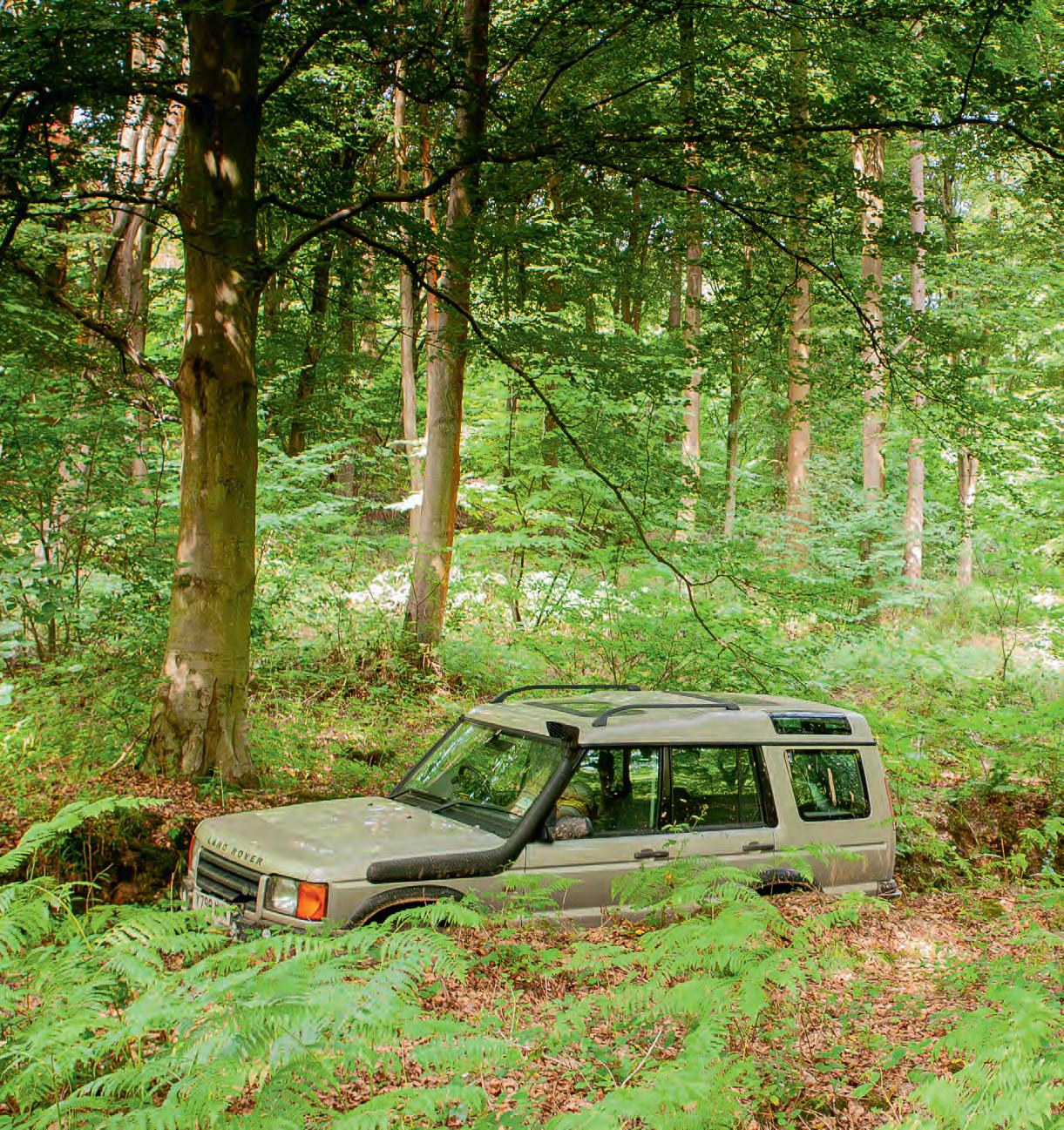
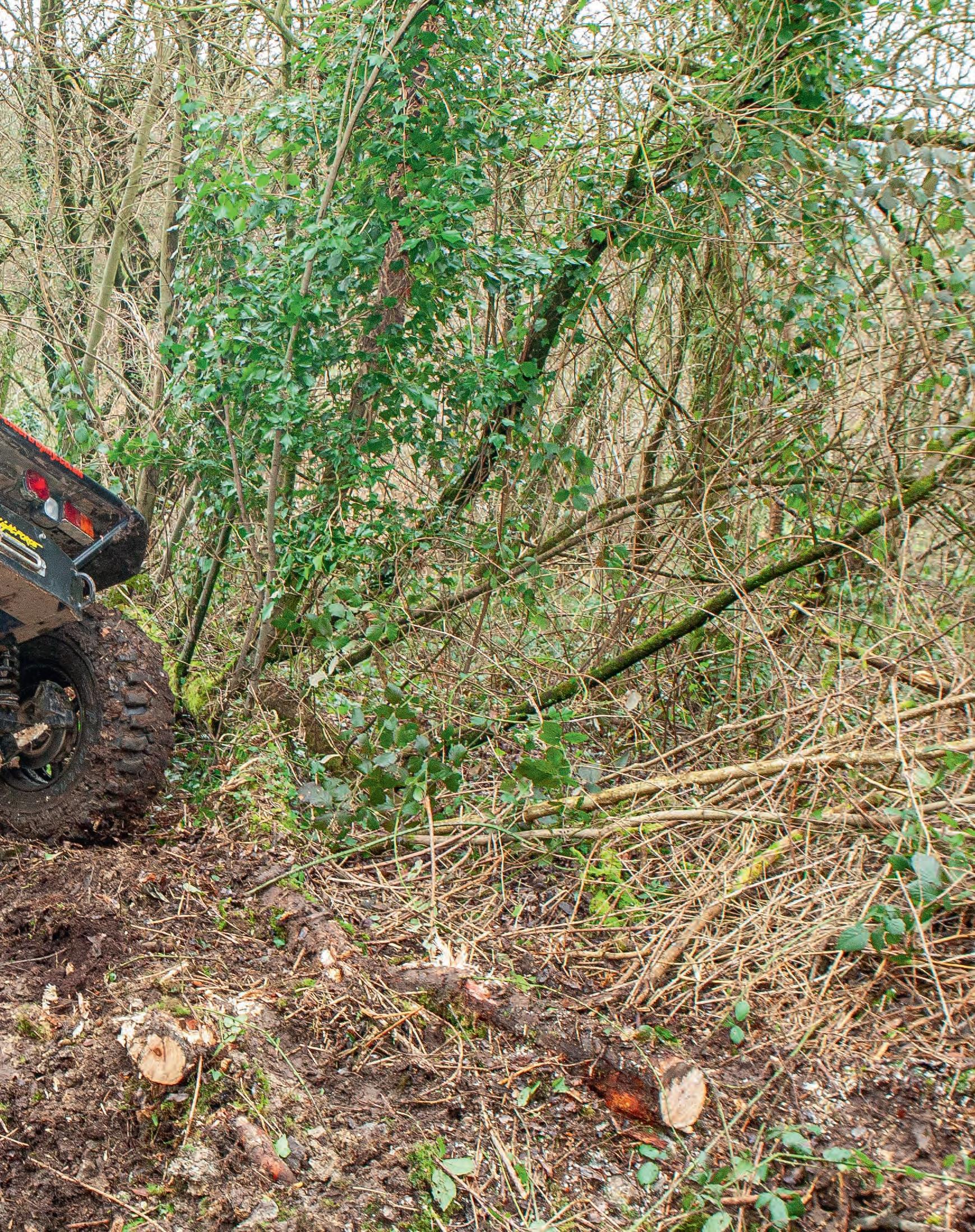
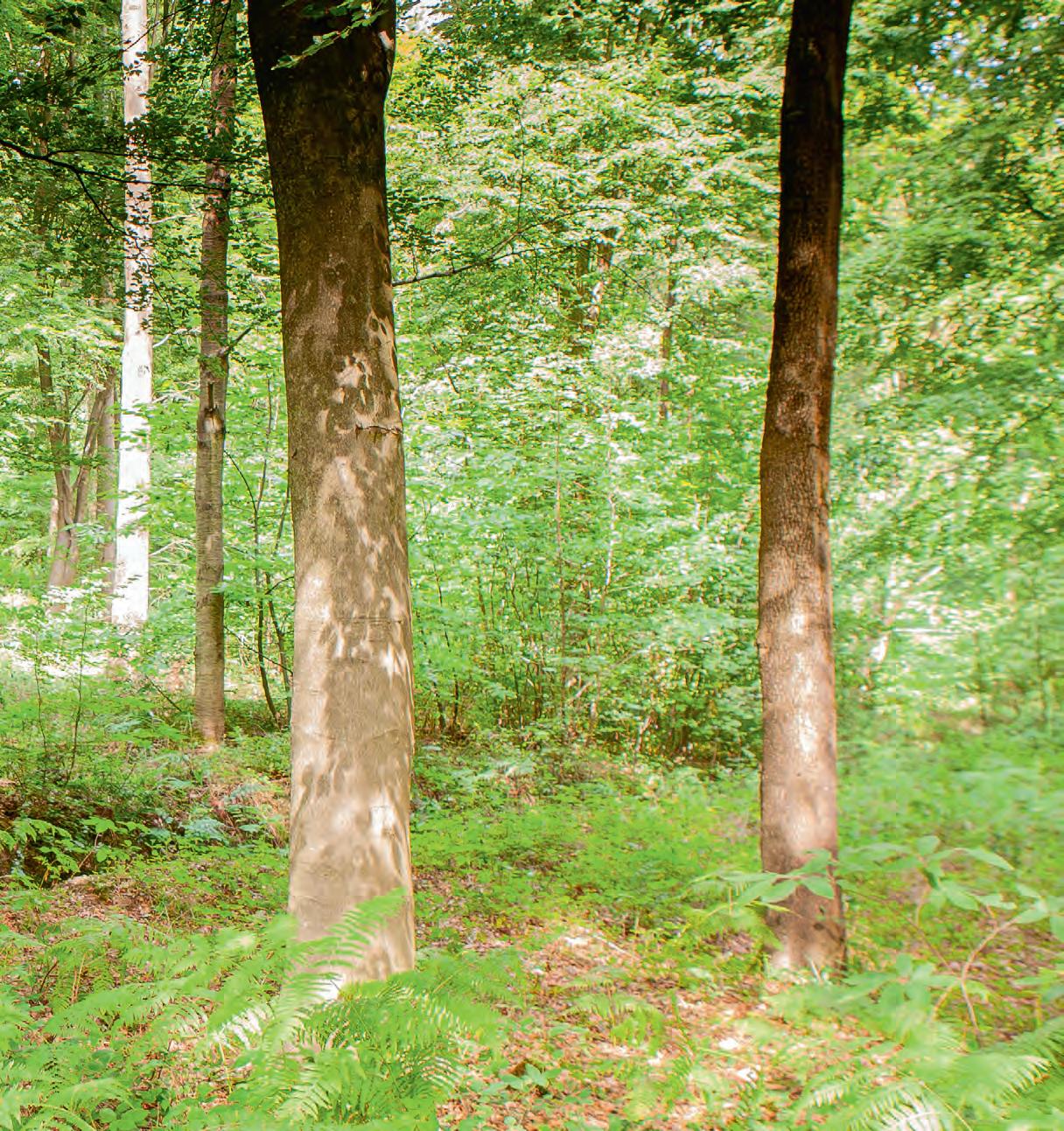
The first thing to say about this roadbook is that it’s NOT for shinies. Some of the lanes you’ll drive here are among the scratchiest we’ve ever experienced in 30-plus years of doing this, with panel damage a possibility. Your have been warned –but if you brave it, your reward will be a varied day out in a sweepingly elegant landscape of quiet woodlands and quaint old villages, shaped by a blend of agriculture and a long-gone mining industry and now just waiting to be explored
Our roadbooks guide you through the countryside on a mixture of surfaced and unsurfaced roads. The tracks we use are public rights of way, either Byways Open to All Traffic or Unclassified County Roads, all commonly referred to as green lanes.

We’ve deliberately made it as easy as possible to follow the route, using a mixture of instructions, tulip diagrams and grid references. We normally only include junctions at which you have to make a turning or don’t have right of way, so stay on the main road or continue straight ahead unless we tell you otherwise.
Elsewhere, let common sense and courtesy prevail. Keep your speed down, be ready to pull over for others and show the world that we are decent people just like them.
Anti-4x4 bigotry does exist, but it’s less common than you’d think. By and large, it’s limited to organisations which just want to get the countryside all to themselves.

You’ll find a guide to using grid references on the legend of any OS map. Our aim is for you to be able to do the route without maps, whether paper or online, but you should certainly take a set with you.

The notes on thee pages advise you of how suitable the route is for your vehicle. These are just guidelines, however. We’ll warn you of any hazards or difficult sections, but the nature of any green lane can change quickly. Wet weather can make a huge difference to the conditions underfoot, and what’s wide open in winter can be tightly enclosed and scratchy in summer. The responsibility is yours!




These organisations are beyond being reasoned with, but it’s rare to encounter real hostility even from their rank-and-file members. If you’re friendly towards the people with whom you share the countryside, the vast majority will respond in kind. There are always bad apples, but no more so than anywhere else.
Likewise, most local residents will accept your presence if you’re driving sensibly. What suspicion you do encounter is likely to be from farmers worried that you’re there to steal from them, so be ready to offer a word of reassurance. Once satisfied that you’re not after their quad bikes, their mood will lighten.

Our roadbooks are designed to be safe to drive in a solo vehicle. We do recommend travelling in tandem wherever possible, however. The risk of getting stuck can be greater than it appears – and even the most capable of vehicles can break down miles from anywhere.

• Keep your speed right down
• Pull over to let walkers, bikers and horse riders pass
• Leave gates as you found them
• Scrupulously obey all closure and voluntary restraint notices
• Ensure you have a right to be there. We research the routes on our roadbooks very carefully, but the status of any route can change without notice

Irresponsible driving is a big and serious issue on green lanes. In particular, you must always stay on the right of way. Never drive off it to ‘play’ on the verges or surrounding land, even if you can see that someone else has; doing so is illegal and can be tremendously damaging.

• Be prepared to turn back if the route is blocked, even illegally
• If you find an illegal obstruction, notify the local authority
• Stick scrupulously to the right of way
• Always remember that you are an ambassador for all 4x4 drivers


This kind of illegal off-roading is a key reason why green lanes get closed. If you see others doing this, they are NOT your friends. They’re criminals, and you are their victim. If it’s safe to do so, film them in the act and pass it to the police.
• Go in large convoys: instead, split into smaller groups
• Drop litter. Why not carry a bin bag pick up other people’s instead?

• Go back to drive the fun bits, such as mud or fords, again
• Cause a noise nuisance, particularly after dark
• Get riled up if someone challenges you. Be firm but polite, stay calm and don’t let them turn it into a fight




START Goodnestone (TR 254 545)
FINISH Barham (TR 207 501)
HOW LONG? 34.75 miles / 4-5 hours
TERRAIN Wooded hillsides and farmland
HAZARDS Scratching and possible panel damage; slippery ground when wet; occasional ruts

OS MAPS Landranger 179 (Canterbury and East Kent)


TYRES
All-terrains recommended. Road tyres will struggle in the wet WEATHER
Do not drive when very wet LOW BOX Ideal, but do-able without it
SOFT-ROADERS
Mainly suitable, if recovery at hand SCRATCHING
Savage. As bad as it gets DRIVING
DAMAGE

Care required on tight tracks and in built-up areas alike

Danger of panel damage from contact with trees

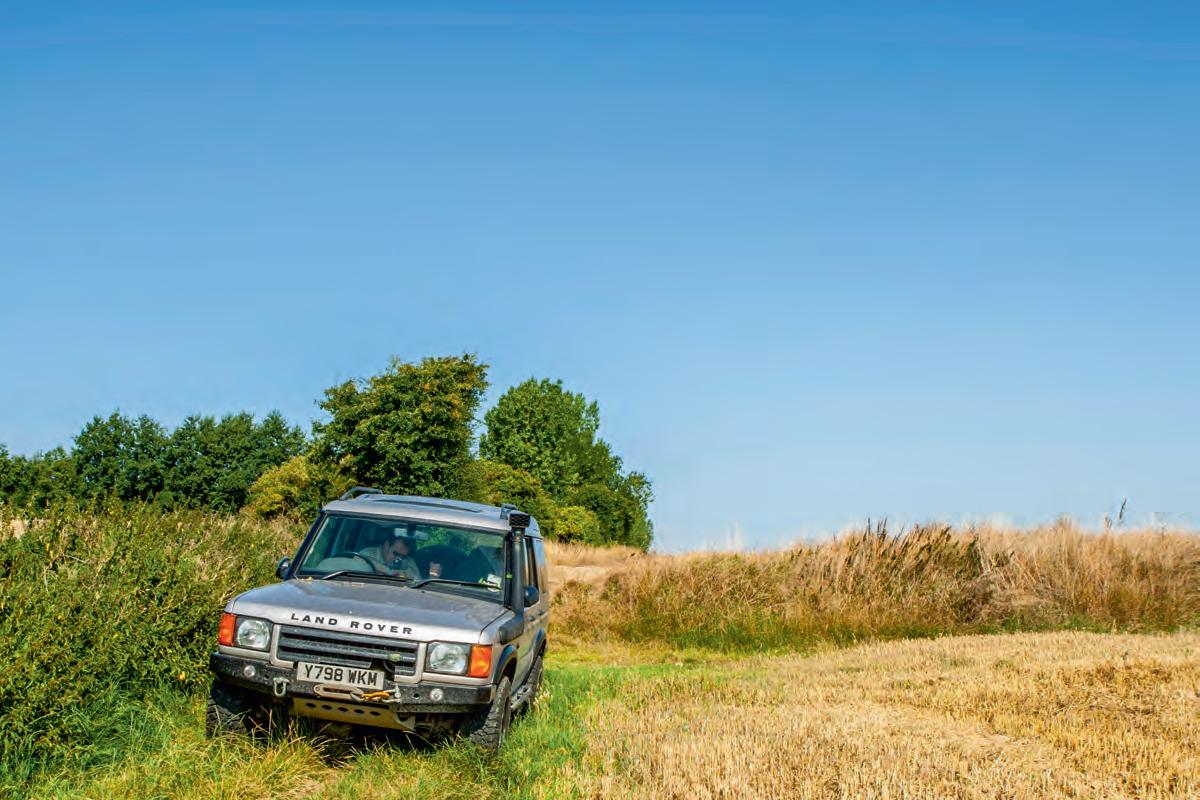

TR 254 545


Chillenden Eythorne Aylesham 214 Adisham 234

Start outside the Fitzwalter Arms, on The Street in Goodnestone, which would make a good pla. Zero your trip with the pub to your left and set off heading north-east Step 1 0.0 Step 2 0.15 Step 3 0.5 Step 4 1.0
Eythorne

5 1.2

6 1.6

7 1.9

8 2.1

TR 285 552
Immediately after the building on the right, take the grass track along the field edge. Be warned – it’s going to get scratchy up ahead

Where the track splits, the right of way appears to run between the trees. There’s evidence of 4x4s using the field edge instead, which looks wrong to us and has become pretty wet and rutted

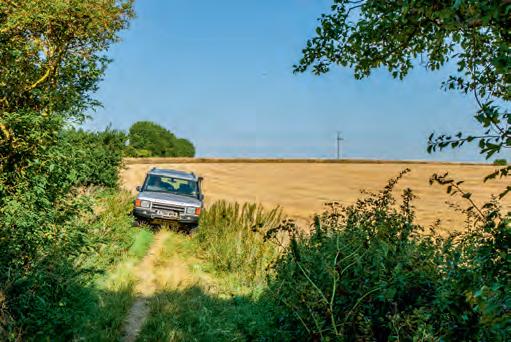
After the tracks rejoin, the way ahead looks very narrow. It’s okay, but you do need to scrape the left of your vehicle along the undergrowth to stay out of the field


4.2

Beyond this, as the track runs between hedges marking a field border, your paintwork will take a proper battering. There’s real potential for panel damage here, too

Caution – watch out for kids playing as you climb a short hill to emerge between houses and into a residential street. It’ll all feel a bit strange after what you’ve been through to get here
Chillenden 212 Nonington 4 Aylesham 434

THORNTON LANE
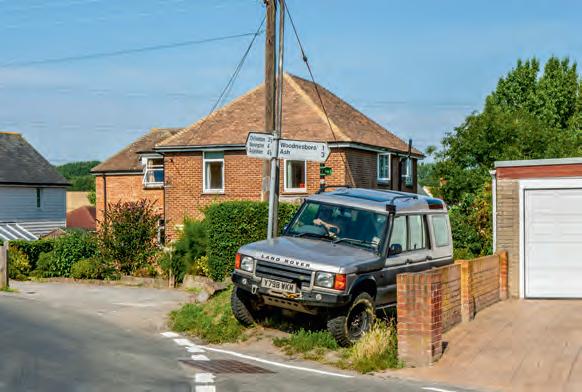


TR 275 505
Leave the road by the byway sign and keep the sectioned-off area of grass to your left. It gets scratchy up ahead; not as badly as on the previous lane but still enough to give your paintwork a dig

Step 13 (left): Dead slow as you emerge between the houses –keep your eyes open for kids at play
Step 18: A series of posts keeps you on the byway and off the grass to your left

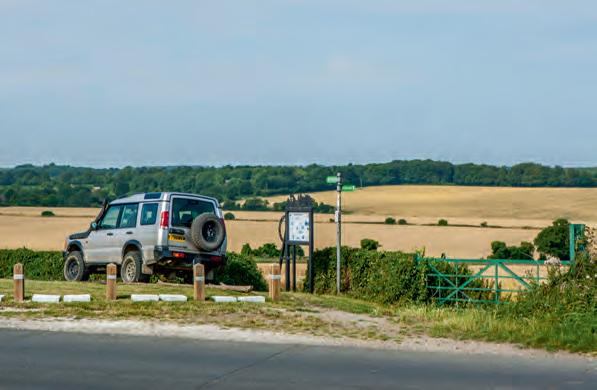

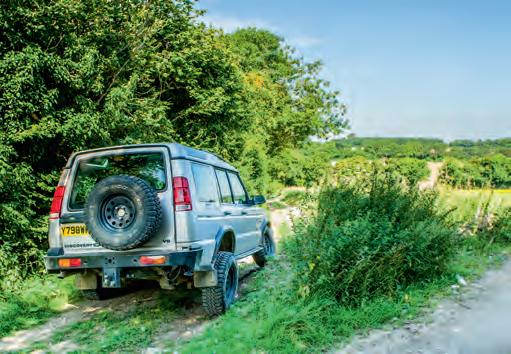


This one is brutal. It gets very narrow, to the extent that you’ll barely be able to see where you’re going – and it’s not just soft stuff, either, but proper branches clattering against your bodywork/ Snorkels, roof racks, light bars and door mirrors will all be prone to getting hooked up


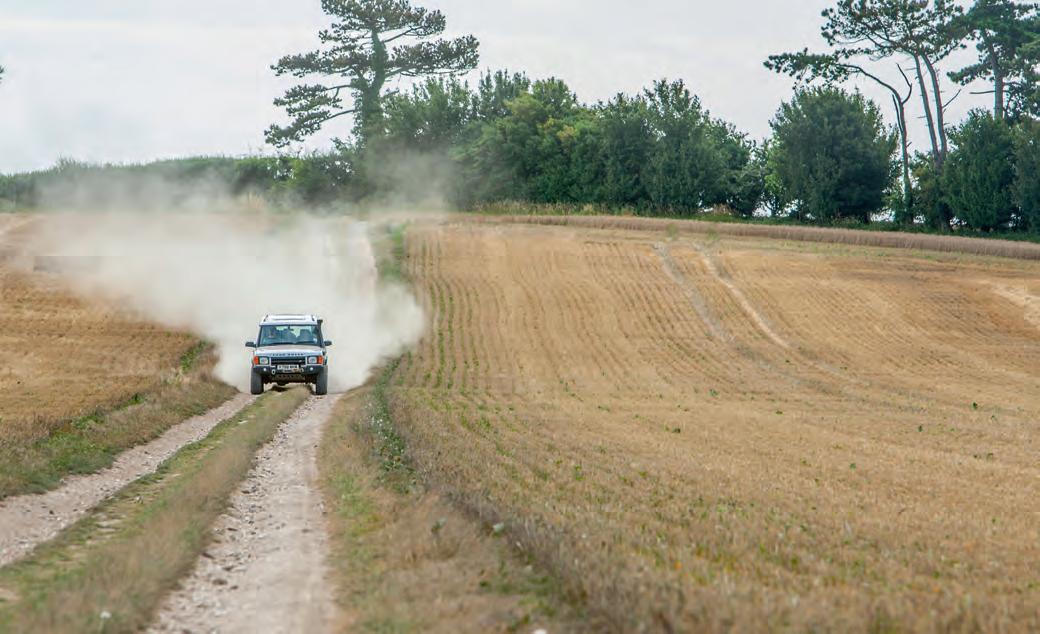
Step 35: This picture makes it look as if we were in full rally mode on the way down the track, but actually we were only doing about 10mph. That’s how dusty it gets when it’s dry, so make sure to keep your speed down too


Step 33 3.5 Step 36 4.2

34 3.6
Step

35 3.7
TR 225 513
Caution – you’re crossing two T-junctions in one, and they’re both pretty busy roads
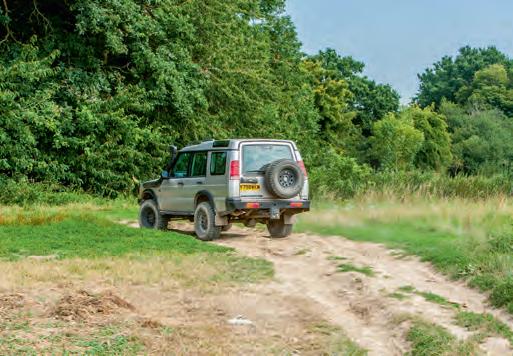

Step

37 4.5
Step

38 4.7
Follow the track as it hooks round to the left and hugs the field edge. Water gathers here and it’s very prone to flooding, so you’ll encounter ruts

Step 38: The corner at the bottom of the field has a habit of staying wet, even when the rest of the world is bone-dry



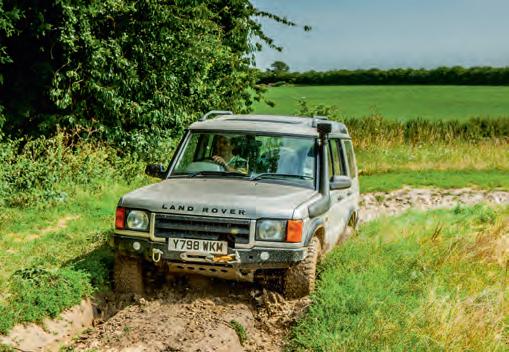
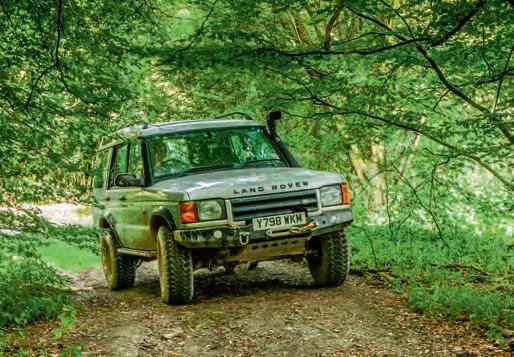

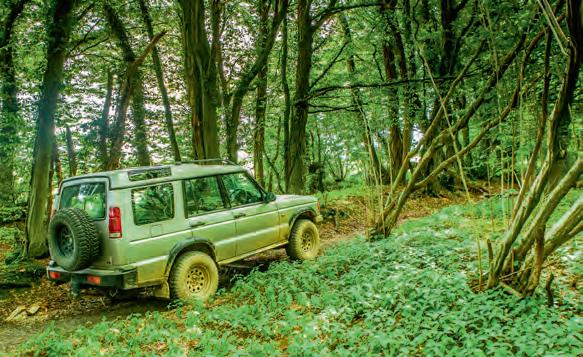


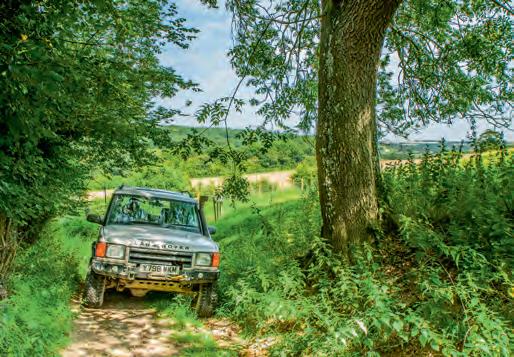


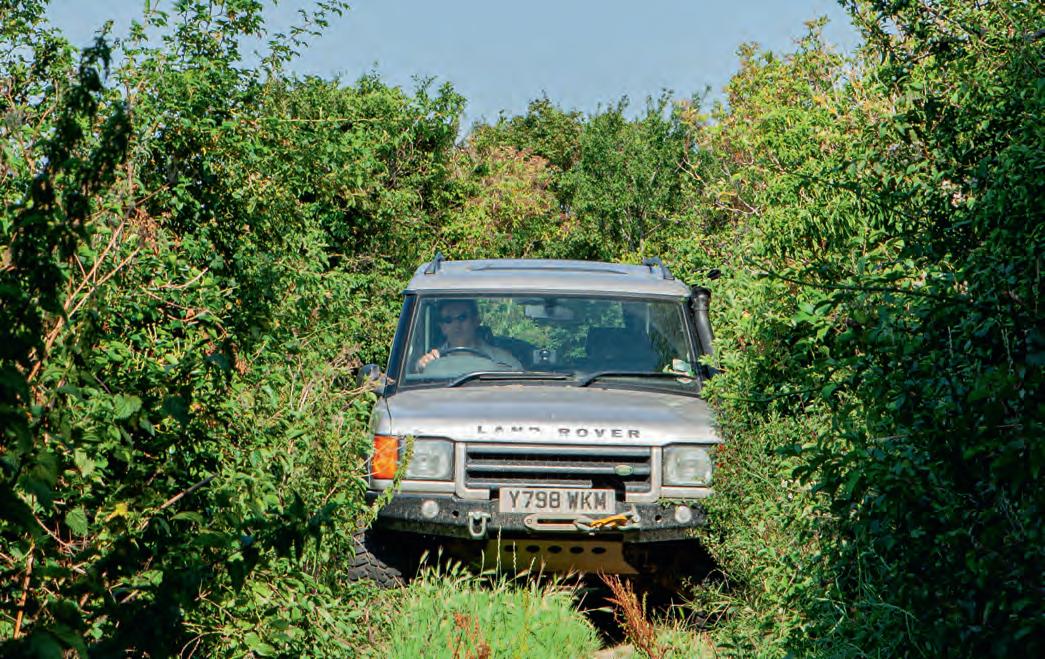
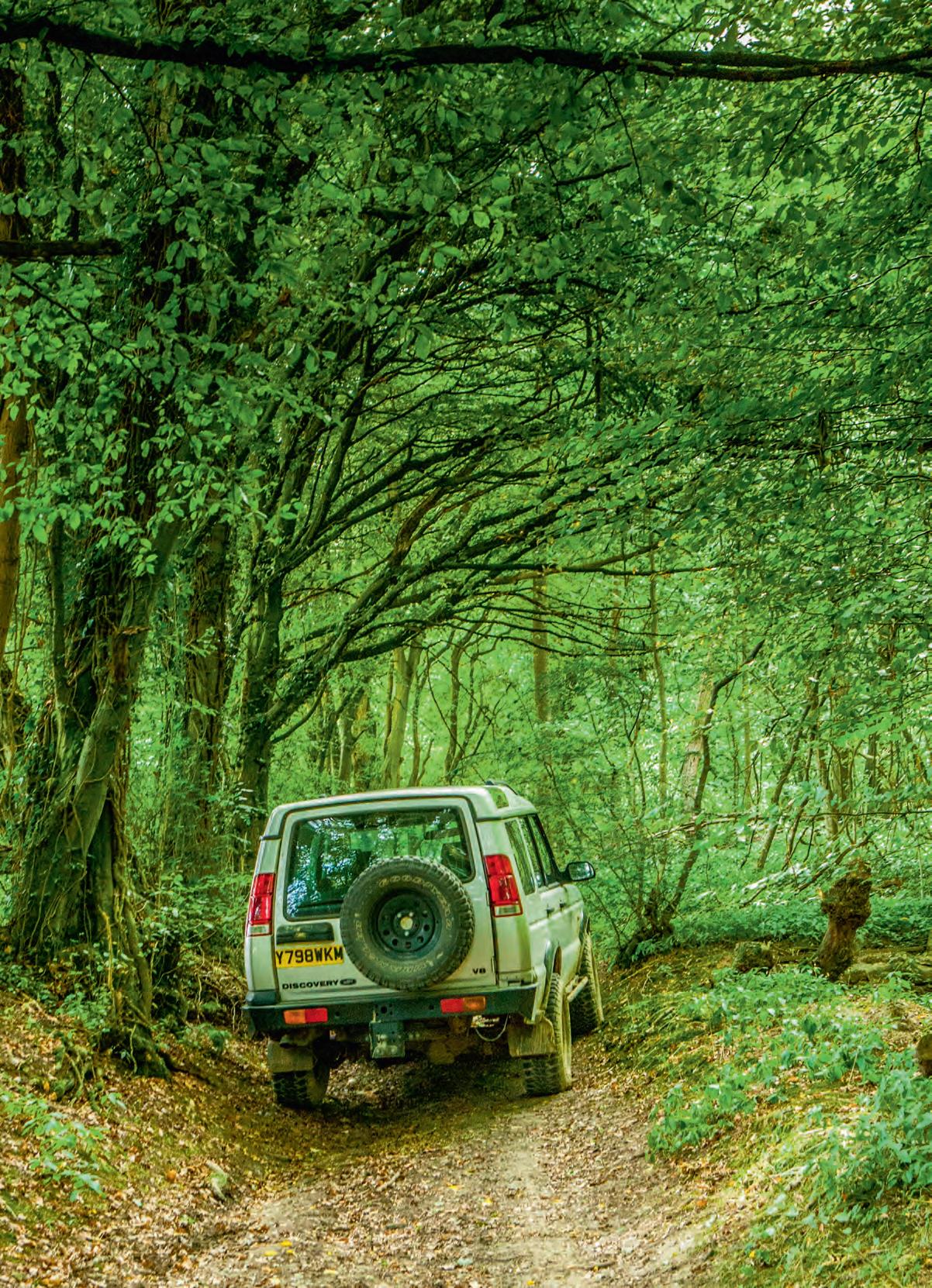


Big tyres, lots of kit, no doors, no worries – the Wrangler Blueprint is the embodiment of the classic Jeep image
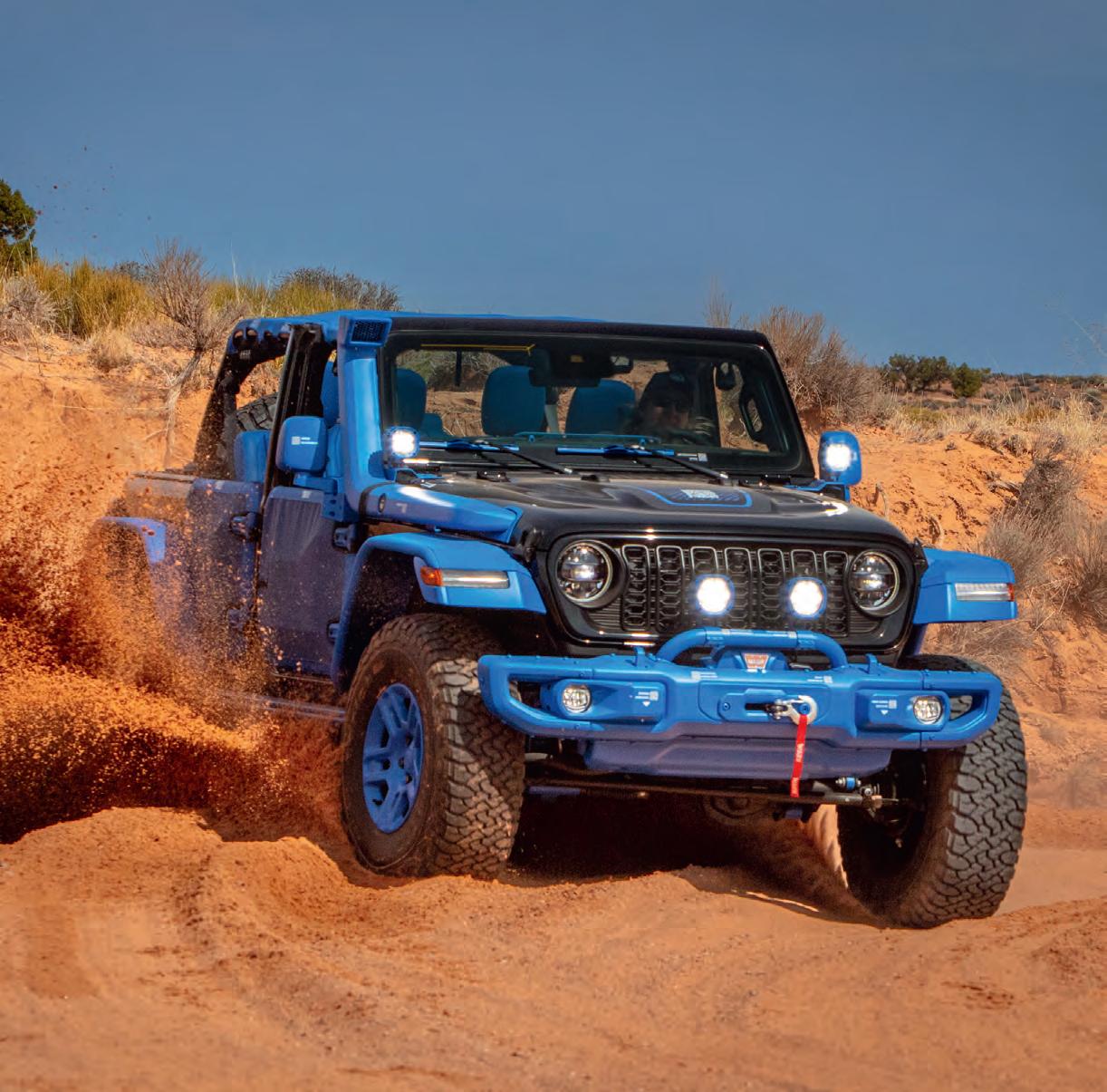
First drive: green laning in the Porsche Cayenne
Making an off-roader of a Jago Geep kit car
Bobtail Range Rover –done by a real engineer
MAY 2026 ISSUE: ON SALE 9 APRIL