We may not have our own reality TV show, but we do share a strong passion and hustle with each of our real estate businesses and in helping our clients with achieving their real estate goals and homeownership dreams.
#sellinglakeland #lakelandrealtors
Photo by Jordan Randall
CARING FOR YOU HOW WE’D CARE FOR OURSELVES.
You’re never a number here. You’re someone with a story. And that’s where we begin.
FEATURES
20 METRO
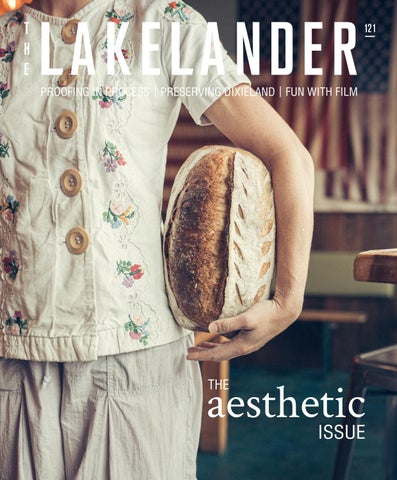
The diamond is calling, a local institution appoints an experienced native to lead the way, capable hands and minds for when an emergency strikes, and the impressive story of one of Central Florida’s most distinguished architect firms.
38 PROOFING IN PROCESS
Nothing is half-baked at an establishment that has become a national icon, and it’s not easy to comprehend the love and labor it takes to consistently execute pastry gold. We explore the making and sustaining of a local treasure.
58 HISTORIC HOMES OF DIXIELAND
The preservation of an iconic neighborhood is a sight to behold—so we show it off and explain a little bit about what you’re looking at.
70 ALL IN ON FILM
Develop an appreciation and understanding for a throwback business that is capturing fresh looks in a nostalgic way downtown.
84 GLOW, NATURALLY
Everyone deserves to feel confident and refreshed, so we sought out some of the most popular non-invasive treatments that deliver real results without downtime or drastic measures.
Although it’s most likely that the prophet Isaiah penned the words symbolizing that humans are clay and God is the potter more than 2,800 years ago, it’s increasingly relevant today.
We look at ourselves and try to chart out progress that we feel good about, but rarely is it without detours. We relate to others in a way that quickly surmises how they are doing, why they are doing what they are doing, and sometimes privately and often publicly we opine about what they should be doing.
I think that’s somewhat instinctual to the human experience, but I’m not sure it’s the most helpful because reality is usually dreams minus the layers ripped off by time and testing.
Sincerely, pause for a moment, and think about what has shaped you most.
Maybe it’s an unexpected break that catapulted you into unforeseen success; maybe it’s a jarring loss that forced you to let go of something or someone you loved and reconsider much of what you knew.
Hard work done consistently over the long haul produces meaningful results, but most of us don’t get up every morning ready to push as hard as we actually end up pushing. And for me, and likely for you, the trials and disappointments of life produce endurance and character, and even hope— hope of something greater, of something learned, of something pruned for a purpose.
Recently, I’ve noticed that a lot of the people I get the privilege to sit down and interview, especially ones we revere for their
success or their influence, are carrying a lot of weight. During our conversations they will take deep breaths at points, their voice might crack, and it’s normal for them to tear up.
So many of the stories and experiences that have made them who they are and inform what they do have been forged through fire, missteps and misfortunes. We put them on a pedestal or wish we were them, but if they knew your story they might be just as inspired as you are by theirs—or at the very least, they might look at your struggle and nod their head and offer their thoughts on the best way through it.
The fact is the beauty that we see or taste and experience, whether here in Lakeland or other favorite destinations around the globe, is usually the result of trial and error, tough love and rough patches turned into redemption stories.
God is the master of turning marred vessels into new creations, and likewise, we would all do well to see the strength that comes from surrendering our weakness and looking up instead of staying down.
RJ Walters EDITOR
AS SCENE HERE
screenskinz Jan 24
From watching @sharktankabc to pitching the Sharks and securing a deal with @kevinolearytv and @alexisohanian. We are just ETCHING the surface of what this category can become and look forward to protecting all device screens with a twist of personalization with our newest Shark partners !
flowerpotandco Jan 27
New decor. New plants, blooming. New arrangements.
Our goal is for you to discover something new with each visit. #plantshop #plantdecor #lakelandsmallbusiness
floridasouthern Feb 02
Lakeland saw unusually cool temperatures over the weekend, but don’t worry! The sun is still shining at FSC and it will be 70 degrees again before we know it. We hope you’re staying warm, Mocs!
CONTRIBUTORS
VICTORIA BARDEGA
Victoria Bardega is a content creator based out of Central Florida who is passionate about building community. She earned her bachelor’s degree in journalism/public relations at Southeastern University, and has worked in marketing at a large non-profit and was a leader at a regional digital media company. She is gifted in photography, writing, social media and marketing.
When she’s not photographing a love story or writing lifestyle pieces, she’s making memories with her husband, Alan, and their sweet daughters, Valley and Lucia. She loves team work, the Oxford comma, laughter, and endless cups of tea lattes!
LAUREN LAWSON
Lauren is a recent graduate of the University of Central Florida with a passion for storytelling and community.
When she’s not editing or exploring Lakeland’s local gems, she’s curled up with a good book, baking something sweet, or savoring a perfectly whisked matcha.
MADDY LAROCK
Maddy was born and raised in Lee, Mass., but has since moved to Lakeland three years ago and is attending Florida Southern College. She is currently pursuing degrees in both graphic design and marketing. Maddy hopes to find a job in the future that allows her to use her digital artistry and creativity.
Outside of graphic design both for the Lakelander and in school, you can find her at the downtown farmers market or enjoying a coffee at Black and Brew.
Feel.
At the Medical Spa at Watson Clinic, you can experience advanced, physician-guided aesthetic treatments in a relaxed and trusted setting. Every service is backed by a wealth of medical experience and expertise, the latest proven technologies, and the strictest adherence to safety protocols — so you can feel confident in your care.
• A full line of injectables including BOTOX®, Dysport® and fillers
• Advanced Laser and Light Treatments
• Laser Hair Removal
• Skin Rejuvenation Facials
• Microneedling with RF & MicroPen Treatment Plans
• Personalized Treatment Plans
• Hydrafacial Treatment
• Permanent Make-up
• Massage (Relaxation, Therapeutic, Cupping, Hot Stone, Prenatal & Lymphatic)
• Chemical Peels
• Spa Waxing
• Medical Grade Skincare
Polk Native to Lead The AGB into the Future
PROVIDED BY FLORIDA SOUTHERN COLLEGE
Florida Southern College has selected Dr. Daryl Ward as executive director of the Ashley Gibson Barnett Museum of Art (The AGB). Ward has served as interim executive director since June 26, 2025, providing steady leadership and building on the Museum’s strong momentum during a period of transition.
Following Ward’s interim appointment, Florida Southern conducted a national search to identify the Museum’s next permanent leader. After considering a strong pool of candidates from across the country, the College selected Ward to continue guiding The AGB’s vision, programming and community impact.
“As we were interviewing candidates, I found that I was in effect asking, ‘Will you continue the great work that Dr. Ward has been doing?’” said Dr. Jeremy Martin, president of Florida Southern College. “When I passed that compliment on to Dr. Ward, we discussed how deeply invested he had become in the Museum in recent months. From there, it became clear that we had the right leader in place—someone who understands The AGB, values its mission, and is committed to advancing the arts at Florida Southern and throughout our community.”
A respected leader in the regional arts community, Ward brings decades of experience in education, nonprofit leadership and arts advocacy to the role. He is widely known for his passion for the arts and his ability to build partnerships that expand access, elevate local artists, and strengthen the cultural vitality of Polk County.
“I’m honored by the trust Florida Southern College has placed in me and grateful for the opportunity to continue serving The AGB,” Ward said. “This museum is a place of shared community, and I’m thankful to work alongside a talented team and dedicated supporters to create meaningful, engaging experiences through art, learning and connection.”
Ward’s leadership comes at a time of strong momentum for The AGB, following the opening of its building expansion last year and the debut of the current exhibition,
The Medici Dynasty: Renaissance in Florence. As the Museum marks its 60th anniversary, it continues to build on its role as both an academic and cultural resource for Florida Southern College and the region.
Through its close partnership with the College, and as the only Smithsonian Affiliate art museum in Central Florida, The AGB integrates exhibitions and programming into the academic life of the campus, supporting interdisciplinary teaching, faculty engagement, and student scholarship, while also serving the broader community through exhibitions and public programs that promote lifelong learning through art.
“It is incredibly meaningful to recognize that we have exceptional talent right here in Lakeland. Dr. Ward has the experience, relationships, and vision to build on The AGB’s success and broaden its reach,” said Dr. Tracey Tedder, vice president for academic affairs at Florida Southern College and chair of the search committee.
Ward holds a bachelor’s degree in creative
writing from Florida State University alongside a master’s degree from the University of Southern Mississippi and a Ph.D. from the University of South Florida.
A Polk County native, he spent 32 years with Polk County Public Schools, including seven years as principal of Harrison School for the Arts. After retiring in 2020, he briefly held a post at Southeastern University before becoming executive director of the Polk Arts and Cultural Alliance, a role he has held for four years. Ward also serves as an adjunct professor at Florida Southern College and is an accomplished photographer.
“The AGB is a cherished cultural asset in our community, and we are excited about Dr. Daryl Ward’s selection as its next executive director. He has made an exceptional impact leading the Polk Arts and Cultural Alliance and will do the same for The AGB. We look forward to continued collaborations between both organizations,” said Michell Githens, president of the PACA Board of Directors.
Ward will officially step into his role as executive director on March 2.
Dr. Daryl Ward has been selected as the next executive director of The AGB after serving as the interim executive director since last year.
How CMHM Architects Has Built an Enduring Legacy
The Human Touch Behind Timeless Designs If
you visit John Curtis in his office at CMHM Architects that the firm has occupied along South Florida Ave. since 1975 don’t waste your time looking for his computer.
The 81-year-old architectural ace and co-founder and principal still hand sketches his ideas on paper before they are then scanned and integrated into the firm’s digital workflow.
“It’s a system that still allows me the luxury of being able to do what I was trained to-50 plus years ago…but the firm itself has advanced significantly in technology,” he says with a smile, recalling how in 1984 the company was the first in Polk County to invest in ComputerAided Design (CAD) software and just last year CMHM implemented an AI-based receptionist named “Kelly” to direct phone calls.
In an increasingly competitive region that people and businesses continue to relocate to, CMHM’s success is rooted in a blend of uncompromising principles and quiet evolution.
You can’t drive far in Polk County without seeing a building that CMHM either constructed from the ground up or renovated.
Their project list includes some of area’s most recognizable and vital structures: Lakeland Christian School, Central Florida Aerospace Academy, Victory Church, Flowers Baking Co., Allen & Co., Bartow Ford, and numerous fire station renovations, just to name a few. They also have played a role in downtown Lakeland’s heritage, contributing to the renovations of the Lakeland Police Department headquarters and the Magnolia Building.
Current projects are just as diverse in nature and include a number of school gymnasiums, a SWAT training tower and large build out for a nationally known heavy equipment dealer.
A FOUNDATION BUILT ON INTEGRITY
Curtis’s journey to becoming a pillar of the Lakeland business community began after he served four years in the Air Force during the Vietnam era.
PHOTOS BY JORDAN RANDALL WRITTEN BY RJ WALTERS DEVELOPED IN PARTNERSHIP WITH CMHM ARCHITECTS
Having earned his Bachelor of Architecture from the University of Florida in 1967, his move back to Florida, this time to Lakeland, was serendipitous—it was the only job offer he received after sending many letters to architectural firms from his station in California.
After three years as a project architect, he co-founded Swilley Curtis and Bertossi Architects (the predecessor to CMHM) in 1975. The firm’s enduring success is intrinsically tied to the foundational ethical principles established from day one.
“We basically wanted to be just good, straightforward, on top of the table architects,” Curtis recounts.
He said in the 1970s he witnessed plenty of underthe-table deals between the private and public sector, a practice he and his partners refused to engage in.
This commitment to honesty and transparency became the guiding principle, and that culture extended deeply into leadership’s relationships with employees, which is why many staff members have worked for the firm for decades.
Maria Guzman and Oanh Le are two up-and-coming architects CMHM hired in 2025—a pair of graduates from the University of South Florida who Curtis believes have the potential to be long-term successors.
Guzman compliments the way Curtis and the senior staff serve as true “mentors” who want them to learn how to resolve challenges and think for themselves, but who also care about their personal lives and encourage them to get involved in giving back and serving their community.
“If you take good care of your people, they take good care of you,” Curtis said, noting he always strives to pass on the company’s financial success to the employees. He is most proud of the young architects he has mentored, finding it “a lot more fun and more rewarding building people than building buildings.”
Curtis doesn’t broadcast it, but he and his late wife, Diane, who passed away in 2024, have also made it their mission to build and strengthen the community.
As one example, the couple have made significant contributions to the community through giving to and serving at First United Methodist Church, a facility that CMHM designed the three-story expansion that was completed in 2014 that included the preschool, adult ministry area, cafe and bookstore.
THE CMHM DISTINCTION
CMHM’s commitment to excellence shows in its expansive portfolio of work. To establish themselves at that level, they have not taken shortcuts, and as a result, clients are willing to pay for the premium results they provide.
As Curtis admits, “We have never been the lowest priced architect in Polk County.”
He acknowledges they must increasingly compete on price, and they are willing to explore client’s ideas when it comes to cutting cost, but CMHM’s primary focus remains on delivering quality and exceptional results.
Their reputation for high-quality, trustworthy work is the firm’s main engine of new business. “Quite frankly, good work is the easiest way to promote yourself,” Curtis explains.
The Lakeland Arts Association is happy to announce a joint venture to create a new arts complex in Lakeland. The Depot Arts District will be a dynamic, community-driven arts hub rooted in Lakeland’s historic railroad legacy.
Housed in a revitalized space, The Depot offers 35 affordable artist studios, three expansive galleries showcasing local talent, and multiple workshop rooms for art classes. Designed to support creative growth and sustainability, the campus also features a garden space for outdoor events, a retail area for artist-made goods, a re-use art supply store (coming soon), and dedicated programs for art education.
In addition, The Depot provides professional development resources to help artists thrive creatively and financially. By fostering collaboration, education, and opportunity, the Depot Arts District is a vital cornerstone of Lakeland’s cultural and economic landscape.
Contact Jodi for rental Information at 863-661-7313
Photo by Sherry Ross
CMHM Architects was contracted by Victory Church to build its sanctuary in the 1990s and recently the firm was hired to do extensive renovations and upgrades to the space. Senior Pastor Wayne Blackburn loving refers to John Curtis as “my Methodist architect.”
The firm’s first major breakthrough was the contract for Boswell Elementary School in 1979, an initial success that cemented a long relationship with the school board and ushered in years of educational and municipal projects. The late 1970s also saw them designing much of the Imperial Lakes project. Over the years they have branched out and will take on everything from industrial to educational builds and many categories in between.
THE JOY OF COMPLEXITY
When asked what excites him after more than five decades in the field, Curtis points to the endless learning opportunities inherent in his job. He thrives on projects that bring “something new” to the table.
His personal favorite projects are houses of worship, citing the “intimate” involvement of the client—and he jokes that longtime Victory Church senior pastor Wayne Blackburn has occasionally referred to him as “my Methodist architect.” But he speaks just as passionately about industrial work. Designing facilities for Flowers Foods or Carpenter Company requires CMHM to become instant experts in the client’s operational process to “wrap a building around it.” This need to constantly master a client’s business, whether it’s the logistics of baking Dave’s Killer Bread or the specific needs of a church sanctuary, is what keeps the job stimulating. The firm’s expertise in the baking industry, for example, has even led them beyond Florida to design a bakery in Jamaica for the National Baking Company—a testament to the reach of quality-driven referrals.
EVOLVING WITH EXPERIENCE
While John Curtis may not be a digital native, the firm is far from stagnant in its approach to technology. CMHM is actively working on how to integrate new tools, including its digital receptionist that has been surprisingly well received by clients. Yet, Curtis and his leadership team are clear about the limits of technology. He notes that AI “doesn’t do nuance very well,” and “nuance comes from experience.” For the complex, client-facing work of architecture, human experience and communication—the ability to get a client to “reveal to you what their real needs are”—remain indispensable.
Whether talking about technology or future leadership, CMHM Architects is actively positioning itself for long-term relevance. In addition to long-time partners Ben Mundy, Jr. (who joined in 1981) and C. Keith Hunnicutt (who joined in 1988), the third generation of firm leadership is already in place with Neil Melby, who became a managing partner in 2020. The firm has also continued to bring in new talent, including Guzman and Le.
Guzman sees one challenge to tackle as geographical, suggesting the firm may need to expand further into other Florida communities, perhaps via satellite offices. Curtis adds that they can also leverage their deep expertise in areas like religious facilities and the industrial baking sector to offer specialized, packaged architectural plans to clients in a wider area.
If you ask Curtis, a proud father to two daughters and one son, about a retirement date he might tell you that this remarkable era could tentatively end for him around 2030, but his legacy is cemented.
The principles he established—excellence in design, transparency in business, and a focus on people—have been programmed into the firm’s DNA.
CMHM Architects has proven that a traditional approach to quality can still be a sure path to long-term success, ensuring the firm remains a strong, ethical, and aesthetically-minded builder of Lakeland—and many other geographic regions—for generations to come.
Learn
SELLING LAKELAND
We may not have our own reality TV show, but we do share a strong passion and hustle with each of our real estate businesses and in helping our clients with achieving their real estate goals and homeownership dreams.
#sellinglakeland #lakelandrealtors
Realtors included in photo from left to right, bottom to top.
JARED WEGGELAND
Keller Williams Realty Smart (863) 640-2246 | jared@focusrealty.co
JIM HAMPTON
S&D Real Estate Services (863) 266-5666 | hambone4homes@gmail.com
DANIEL COOK
Keller Williams Realty Smart (863)430-8338 | Danielcook@kw.com
SOLOMON GALLANT
S&D Real Estate Services (863) 608-8882 | solomongallant@gmail.com
The Market Realty Co. (863) 990-5846 | brockjennings1989@gmail.com
Empathy and Innovation
Meet the Experts in Emergency Care at LRH
WRITTEN BY RJ WALTERS | PHOTOS PROVIDED BY LAKELAND REGIONAL HEALTH
DEVELOPED IN PARTNERSHIP WITH LAKELAND REGIONAL HEALTH
The high tension, blaring sounds and frenetic pace of emergency departments make highly extolled dramatic cinema on television that includes the Emmy Awardwinning “The Pitt,” but in real life, at Lakeland Regional Health, visitors encounter a team of medical experts with a simple promise: to calm nerves, work quickly and help people in their very worst moments.
It’s common knowledge that LRH is home to one of the nation’s busiest emergency departments, where staff see more than 200,000 patients annually, but it’s not as common for locals to realize the hospital houses four distinct specialized emergency departments.
Whether a patient arrives at the main hospital’s ER and Trauma Center, the dedicated Pediatric ED, the Freestanding ED or the specialized Obstetrics ED, they are met by doctors with years, and usually decades, of experience ready to use a personalized approach and advanced technology to quell fears and provide care.
To many people, the Emergency Department is the “front door” to the hospital, and no one knows this better than the team at the main ER. Dr. James Melton, Chairman of the Department of Emergency Medicine and an LRH veteran since 1988, helped shape its culture. Reflecting on his decision to enter the specialty, he says, “I liked being able to do lots of different types of work, to see pediatrics patients as well as others. The variety interested me.”
That commitment to service led to him spearheading efforts to drastically reduce patient wait times using queuing theory, a mathematical formula that can help optimize efficiency.
The Lakeland native started when the entire emergency team consisted of fewer than 10 staff, and he has been part of an
evolution that has paid dividends for the community.
“I remember when records were on paper and X-rays were on film. And when you had some weird symptoms, you had to look them up in a book,” he recalls. “It’s much easier with records and information being stored electronically, because several people can look at something at once. It helps us move much more quickly.”
For Dr. Fred Blind, Emergency Department Medical Director, the allure of emergency medicine was the challenge.
“The emergency physician is the first diagnostician in the hospital. Someone comes into the Emergency Department, and you start with a blank slate to try to figure out what’s wrong,” he says.
He takes deep pride in forming personal connections with patients that remind them they are not alone.
“If they’re in the ER, it’s probably not the best day of their life, and I go in hoping that I can make a difference.”
LRH opened a freestanding ED in South Lakeland in March 2025 to provide another access point for emergency care in a densely populated part of the community.
Dr. Ori Gat, who works at both the main campus and freestanding ED, was drawn to the field in part because of a profound personal experience.
“I witnessed my grandfather having a cardiac event, and it was misdiagnosed,” he somberly recalls. “He eventually died of cardiac arrest. I vowed to do whatever I could to prevent that from happening to one of my patients.”
Working in the Freestanding ED, he finds the care to be “streamlined, quick and efficient,” offering patients the same care and the same equipment as the main campus.
Dr. Corey Dye worked for an emergency physician group and treated patients in 40 different EDs before coming on board at LRH two years ago. Of all the locations he has worked in, he says the Freestanding ED is his favorite.
From top to bottom, left to right:
Dr. Jesse Glueck, Dr. Donna Bhisitkul, Dr. Charles Eldridge, Dr. Fred Blind, Dr. James Melton, Dr. Rosa Flores, Dr. Ori Gat, Dr. Corey Dye
Discover why our CO2 Laser Resurfacing is the “fountain of youth” for aging skin.
Just when you thought you had to settle for wrinkled, sun-damaged skin, along comes a revolutionary new treatment that turns back the hands of time by at least ten years. It’s CO2 Laser Resurfacing at Monarch MedSpa, the advanced way to deal with wrinkles and sun damage.
Visit us at www.TheMonarchMedspa.com to learn more about CO 2 Laser Resurfacing and all the age-defying procedures we offer, and call (863) 225-3468 to schedule a consultation appointment to begin your skin rejuvenation. The fees charged at Monarch MedSpa are all-inclusive…no gratuities accepted.
Se habla español
Follow us on Instagram
He offers a simple message to those who have to visit the ED.
“We know it’s stressful being in the ER. Every single physician and nurse and staff member gets that, and we want to find out what’s wrong and fix it.”
CARING FOR THE YOUNGEST AND MOST VULNERABLE
In the George W. Jenkins Children’s Emergency Department, the focus shifts to the area’s youngest patients. Dr. Donna Bhisitkul, a physician at LRH for 30 years, knew early on she wanted to specialize in the field, and she has played an integral role in the department’s development.
“I’ve been able to see the transformation of care in pediatric medicine at LRH. The availability of subspecialty care available has grown tremendously, especially since we teamed up with Nemours,” she says. “Even for an appendectomy, we used to have to transport families an hour away for pediatric patients.”
The department’s goal is to ease a child’s experience, with numbing gels, toys, and movies to reduce pain and anxiety—even while a laceration is being sutured.
Dr. Charles Eldridge, Pediatric Emergency Medicine Director, is double board certified in pediatrics and pediatric emergency medicine. He says being part of a unit like an ED is like being part of a family.
“Every day, I’m proud of putting in my best effort to try to care for patients just as I would take care of my own child, or another family member or friend.”
As early as fourth grade, Dr. Jesse Glueck was interested in a career path that involved working in an emergency room. His sister, who is now a pediatric rheumatologist, was interested in medicine, and the siblings were captivated by the TV show “Trauma: Life in the ER.”
As a father of four, Glueck says the parental anxiety he sees each day resonates with him. He often sees parents apologizing for bringing in a child for something minor.
“I say, ‘Don’t apologize, that’s why we’re here,” he assures them.“You can have an amazing impact in the ER when someone comes in really sick and you save their life. But there is something really special about taking care of kids, not just making them well but also calming their fears.”
A unique and vital service LRH offers is the Obstetrics Emergency Department (OBED), exclusively for pregnant and postpartum patients. Physicians in the OBED are all OB-GYNs.
“Pregnancy-related issues are unique, and most are timecritical,” says Dr. Rosa Flores, OB-GYN Hospitalist and OBED Chief. “When babies are born, that’s often one of the most important parts of someone’s life. But when things aren’t as easy as they are supposed to be, being able to help them and share knowledge with those moms is so rewarding.”
THE FUTURE OF EMERGENCY CARE
Innovation plays a key role in advancing compassionate care. The physicians spearheading the care in LRH’s emergency departments agree the impact of technology is considerable. The adoption of electronic medical records and digital radiology has already positively changed healthcare in general and the ER, in particular.
“Although much of our job is, and will continue to be, talking to patients and evaluating patients, I think technology will help us speed us some processes,” says Dr. Eldridge.
Ultimately, the goal of these advancements is more face time— more human connection—during a time of profound need. One piece of advice the doctors hammer home for those visiting an emergency department: always bring your medications with you or a list of them, and if possible, bring a family member.
The emergency room is a stressful place, but the team at Lakeland Regional Health is working tirelessly, through both technology and empathy, to make a positive impact on what is likely the worst day of a patient’s life.
proofing in process
WRITTEN BY RJ WALTERS | PHOTOS BY JORDAN RANDALL
teamhubbert.com
hen you bite into a flaky, crispy, yet fluffy golden croissant at Born & Bread Bakehouse it’s the product of a meticulous process that is highly detailed and demands superb consistency that requires a rare breed of individuals to be able to replicate time and again.
As Born & Bread owner Jenn Smurr says with a smile and a bit sarcastically, “I think it’s somewhat challenging for a guest to understand that it’s not just put the croissant in and pull it out.”
Instead, to develop from a business that literally began with a folding table and plastic crates of baked goods at the Lakeland Downtown Farmers Curb Market in 2015 to a nationally recognizable brand has taken precision and dedication that few people can ascribe to, but Jenn has found a team willing to, even through the highs and lows of an unpredictable odyssey.
“First we have to get the scaling right, then the mixing. We have to get the temperatures right, the proofing has to happen, you have to lock water correctly and create the layers correctly…” she says. “And you have to store it correctly, cut it correctly, roll it correctly, let it rest correctly, proof it correctly, egg wash it correctly and bake it correctly.”
That pattern of “correctness” is part of what creates the consistency that the bakery is well-known for, even with leveling up over the years by diversifying its menu to include breakfast and lunch sandwiches, pot pies and holiday pies in addition to its signature breads and pastries.
Born & Bread has evolved from a foodie haven where people sometimes stood in line for hours on Saturdays to taste their first cruffin or devour a finger-lickin’ good cinnamon roll to a business that is open four days a week and helped define and reimagine the Dixieland area of Downtown Lakeland. But what is appetizing and comforting for the guests is the result of rigorous work that is simply not for everybody.
One recent week was the epitome of what it’s like for the 38-year-old Smurr to oversee the high-stakes, high-reward operation she has built alongside her staff.
In the midst of finding just the right pastries and bread for our behind-thecounter photoshoot, Jenn pulled a loaf of bread off the rack and started ripping off pieces of sourdough, enjoying a little sustenance while explaining some of the intricacies of succeeding as bakery, often going stream of consciousness from one idea to another.
One moment Jenn was fulfilling an online order, the next she was offering advice in the bustling kitchen before pivoting to do an interview to try and fill
vacancies left by key staff that moved on due to life changes, some predictable and some unexpected.
Late one afternoon, after closing, you could find her husband, Michael McArthur helping get the outdoor patio ready for the next day. He smiles genuinely when talking about the journey he and his wife have been on, acknowledging each season is teaching them something different.
Jen readily admits she loves pushing limits—which explains why she is currently training for her third marathon, sometimes while pushing her twin daughters, Evergreen and Magnolia, in a stroller—but when her apron and trademark beanie come off at the end of another long shift,
she is just as quick to acknowledge she has had to come to grips with her limits, especially recently.
“I was going to sleep praying and I wake up praying these days, ‘What kind of trial am I in right now, God? What is happening?’” she says, primarily focusing on trying to replace invaluable staff members who have played significant roles in the Born & Bread story. “The thing is you have to wake up…and you’ve got to put some big girls pants on over and over and over again.”
As she worked tirelessly to model the consistency that is so important to her, regardless of the circumstances, she received some unexpected news.
Balanced Health & Wellness is a modern wellness + aesthetics studio in Lakeland’s Lake Morton Historic District, created for people who want results with a personalized approach. We offer personalized hormone and thyroid optimization, medical weight loss support, IV drips and wellness injections, and advanced laser and skin treatments. Every plan is tailored to your goals and lifestyle, so you can feel energized, confident, and truly balanced.
One afternoon in January her phone had been blowing up, but she had kept that disturbance at bay because she was visiting St. Petersburg with some friends. Finally, when she realized a former apprentice of hers had been texting her relentlessly, she decided to see what was going on.
She was greeted on her screen with a flood of congratulatory texts because as she had been focused on what was right in front of her, many of her friends and family had seen the news that Born & Bread Bakehouse had been named a semifinalist for the James Beard Award for Most Outstanding Bakery, an honor that is the culinary world’s equivalent of an Academy Award.
“I just kind of paused,” Jenn says. “You know, there has not been an easy year of Born & Bread ever, not one that didn’t have me questioning what I’m doing and if I’m in His will, if I’m doing what I’m supposed to be doing.”
In the recent process of refinement, Jenn says she has leaned on God, her family and wise mentors to help her unlock something new inside her. She calls this season “humbling,” but helpful because it has created clarity that this bakery she built from the ground up—without any guarantees or without a big investor—is a place she is called to provide team members opportunities and purpose as they grow to new heights together.
i can remember feeling like, oh my god, thank you for it being outstanding bakery… for it not being outstanding baker… and thank you for knowing your timing.
She has found wisdom from a select group of mentors. She mentions Zak the Baker, her former apprenticeship mentor in Miami, who is also a three-time nominee for the James Beard Award for Most Outstanding Bakery; Bill Mutz, the former Lakeland mayor, and fan and encourager who became a key business mentor; and most recently, Jeremy Brumley who owns LoveBird Almost Famous Chicken and Grievous Angel, among other restaurant endeavors.
She says, “Jeremy just gets me, he gets my crazy.” He provides the critical external perspective, advising her: “You are going to keep driving yourself crazy if you don’t let ‘that’ go.”
The flip in her perspective has come in waves—including through sage advice—but none has been more life-changing than finding out she was pregnant, and ultimately giving birth to her twin daughters.
She says she was convinced she was going to have one boy, but first through the ultrasound and then when she delivered her children she realized that being a girl mom was part of her destiny.
Motherhood became the great teacher.
“As soon as I had them and they were my own, I had this new found patience... and I realized all of these human beings (her staff) were trained differently in life things.” She understood in a new way that her directness, while comfortable for her, might be “perceived as something else” by someone who was punished for speaking their mind growing up or had different life experiences. This realization allowed her to develop a “newfound respect for the team that I don’t think I always had.”
Firstwehavetogetthescalingright,thenthe mixing.Wehavetogetthetemperaturesright, the proofing has to happen, you have to lock water correctly and create the layers correctly…
Now, her goal isn’t just to produce the best pastries; it’s to foster an ecosystem where high standards meet compassion.
Smurr said the timing was serendipitous of the announcement that Born & Bread was a semifinalist for an award that will be given out this June at The Lyric Opera in Chicago.
“I can remember feeling like, oh my God, thank you for it being outstanding bakery… for it not being outstanding baker…and thank you for knowing your timing,” she says, noting several times that her younger self may not have processed the honor quite as humbly or purposefully.
Not every moment of the bakery’s whirlwind journey has been so serious. There has been plenty of fun along the way.
Jenn’s creations are not from a Google search or a Food Network inspiration, but from personal experiences and the relationships she’s built. For example, her savory goat cheese and pepper jelly biscuit was an adaptation of a simple dish she enjoyed at a long-ago brunch.
The global influences you will find on display on the front counter of Born & Bread is a direct reflection of her network, particularly her baker friends. She recounts a trip to Puerto Rico to visit her friend, Lucia, a baker who had sought refuge in Lakeland after Hurricane Maria devastated her home country. Lucia’s enthusiasm for a local quesito (a Puerto Rican cheese pastry) led Jenn to sample it, sparking the creative impulse: “I know what she did. I know I can create something that good.”
She also shares the story of a friend who lived in Guam and was raised on Filipino food, specifically Chicken Adobo.
“I love being able to experience different cultures... when [someone] shares a story about a place that they traveled to, it’s just, I don’t know, it’s enlightening.”
Her menu is thus a living, breathing autobiography, a celebration of community, travel, and shared stories. Considering she began as someone wholly and fully devoted to baking bread, hence the name of her bakery, she has allowed life to shape her ambitions as she learns how to shape those around her.
While continuing to craft stunningly gorgeous and delectable products she will continue to be a work-in-progress who has certain distinctive character traits that indeed prove her to be a rare breed.
It’s the reason she does paid, formal working interviews for potential candidates. She wants them to spend a day in the shoes of high-level bakers instead of just admiring the business that counts on people with those skills.
“[It] kind of debunks some of the young females who are like, ‘I want to be like you,’ when they come in and realize you
want them to pick up a 50 pound bag of flour three or four times that day or you need them to take out the trash,” she says. “Well, who else is going to take out the trash? I used to do that all by myself…I swept the floors, I mopped, I did the dishes—somebody had to do it. I didn’t get to wake up, [go into the kitchen], just bake and be like, ‘See ya!’”
While she may be in a stage of ownership and leadership where she is learning to parse words a different way or connect with people on a deeper level, her insatiable drive continues to set her apart.
Behind every loaf of bread and every appetizing treat, there is a team devoted to brightening customer’s days and sustaining excellence.
WRITTEN BY RJ WALTERS
PHOTOS BY JORDAN RANDALL
ILLUSTRATIONS BY ALLIE BRINTON
hen someone mentions Dixieland many locals first think of Concord Coffee, Dixieland Elementary, Born & Bread or quaint boutiques, but one road over from S. Florida Avenue begins one of the city’s most storied traditional neighborhoods.
Dixieland’s origin dates back to the early 1900s when the neighborhood was established as a blue-collar working class neighborhood conceived by developers John Patterson, Edward Finney and John F. Cox. Building was slow at first, until the 1920s, when the population of Lakeland and the demand for residences increased.
Fast forward a century and the restoration and preservation of many homes in the historic district are in full effect.
“The high quality of residential investment in both restoration of existing historic houses and design and construction of new houses has been an improving trend over the last decade,” says Emily Foster, senior planner - historic preservation for the City of Lakeland. “The Bungalow architectural style, in all its vernacular and revival forms, continues to be a popular aesthetic – 100 years later.”
The City has a comprehensive, continuously updated document titled “Design Guidelines for Historic Properties” that delves deep into the rich history of the distinct types of homes in historic neighborhoods like Dixieland, and also prescribes guidance for maintaining character and integrity when changes are made to buildings and homes.
A walk or drive through Dixieland reveals aesthetic charm, timeless details that tell stories of generations past and a sense of place that continues to develop for visitors, new home buyers and families who have been in the area for decades.
special thanks to emily foster and the city of lakeland
neoclassical, 1905
The Neoclassical style emerged in the mid-18th century as a reaction to the decorative Baroque and Rococo styles. Neoclassical architecture has an uncluttered and balanced aesthetic, characterized by grandeur of scale, simplicity of geometric forms, Greek or Roman detail, dramatic use of columns, and a preference for blank walls.
If you visit Russia, you would find an unparalleled collection of Neoclassical buildings, as commissioned by Catherine II. It makes sense then, that many architects viewed this style as a way to bring a little bit of imperial Rome to residential (as well as governmental) settings.
Although Queen Anne style homes were only built from roughly 1880 to 1910, the Victorian style builds became the “grand dame” of neighborhood development because of its prestige and visual prominence.
The prominence of the Queen Anne builds was largely associated with the expansion of the railroad – which made pre-cut building materials available through the use of pattern books and mail order house kits. This house style was chosen for its “fanciful” architectural character and was often situated on corners or other prominent sites.
Queen Anne buildings are highly decorative, often combining a variety of colors and textures. The emphasis on decorative details, vertical orientation, and asymmetrical layouts encouraged individualistic and free-flowing designs.
This style of architecture, popularized in the 1920s and 30s in Florida, contains elements rooted in Spanish and Middle Eastern culture.
It was used to construct a variety of different kinds of buildings, ranging from grandiose tourist hotels to two-room residential homes.
Mediterranean Revival houses combine a number of different architectural features to make a visual statement along the street. Their simple geometric shape is the perfect palette for ornamentation of the roof parapet, entryway, doors and windows - all meant to enhance the visual character of the main façade.
The many features from traditional Spanish architecture that define this style have contributed countless architectural interpretations in both size and configuration.
The Foursquare was the first Prairie house style that emerged in the mid-west during the late nineteenth century. It takes its name from its simple cubic shape and floor plan which is divided into quarters on each floor.
This house style was developed as a plain, more affordable alternative to the more ornate houses built during this era and better suited for narrow lots. The Foursquare was popular in communities where the railroads had a presence because they could be delivered to a community as mail-order kit houses.
Today, these house styles exist in various forms in all of the City’s residential historic districts.
The Bungalow, or Craftsman style, was the most common housing form in the United States in the early 20th century. It was economical to build, thus it became widely used in the early development of suburban residential areas across the country. The Bungalow is known for its height, one or one-and-a-half stories that was nestled into the earth. The houses are usually rectangular, supported by masonry piers and beloved for their wide and spacious porches that often wrap around to the sides.
The Bungalow is the most prevalent historic house style in the city’s six residential historic districts. You will find a wide variety of colors and decorative features that make each home distinctive despite how similarly many of them are constructed.
how a gift became a gathering place
PHOTOS BY JORDAN RANDALL WRITTEN BY LAUREN LAWSON
Three BayCare ERs nearby. One connected network of care. s
In an emergency, minutes matter.
Knowing which BayCare ER is closest before an emergency can make a difference. When the unexpected happens, choose BayCare’s Bartow Regional Medical Center, South Florida Baptist Hospital in Plant City or Winter Haven Hospital — staffed by expert doctors and nurses, ready 24/7 to deliver exceptional, compassionate care, all backed by one connected network. That’s the BayCare effect. If it’s a medical emergency, call 911.
Get to know your BayCare ER. Go to BayCare.org/ER or scan this code:
South Florida Baptist Hospital
Winter Haven Hospital
Bartow Regional Medical Center
ONthe morning Lakeland Film Lab opened its doors, Nick Buttrey was preparing himself for the worst kind of quiet. The night before had been a slow-motion panic inside the shop located at 126 W. Main St. in downtown Lakeland: their scanner crashed, machines needed filled, parts needed replaced. At 2 a.m. Nick and his wife, Beth, were still inside the lab, sleeves rolled up, coaxing technology back to life and trying not to think about everything they had poured into the space. Their savings, their time and their family’s collective energy were all tied up in a place that until that moment had existed mostly on faith.
When the doors finally opened, that fear evaporated almost instantly. There was a line out the door, wrapping around the corner. For Nick, the long-held breath could finally leave his body. “At that point,” he said, “I was like, alright—this will work.”
Lakeland Film Lab did not begin as a sleek business plan or a carefully staged pitch. It began as a gift. Nearly a year before the lab officially opened, Beth bought Nick an LLC for Father’s Day. At the time, Nick was developing and scanning film at home, casually talking about the idea of opening a lab someday in the way people talk about dreams they love but don’t yet believe are practical. The initial plan was modest and almost tentative—something run out of their house, a side income that might allow Nick to slowly lean away from his day job. But that vision shifted after a conversation with a friend who owned a successful salon. His advice was blunt: “He was like, you guys have a great business proposition,” Beth said. “But the one thing that’s gonna kill you is no brick and mortar.” So Beth and Nick took the leap.
Everything inside Lakeland Film Lab—every machine, every wall, every design choice—was paid for with personal savings. There were no loans, no investors, no safety net beyond their belief that the idea mattered.
NICK’S FILM BEGINNINGS
Nick’s connection to film stretches back to high school, to long hours in darkrooms and early encouragement from his sister. Over the years he moved between film and digital photography, but film always pulled him back in. He loves the process—the slowness, the experimentation, the hands-on intimacy of it.
“I just always came back to shooting film,” Nick said. “ I think it’s a great way of self-expression and getting to do little things with film and experimenting. I just love the process.”
When he began developing film for others, that love sharpened into something more urgent. He kept seeing the same pattern: rising costs were quietly pushing people out of the medium. One roll of film could cost $20 before it was even developed, and another $20 for development and scanning. For beginners especially, that barrier was often the end of the road. A roll might come back blank or improperly exposed, and suddenly $40
was gone with nothing to show for it. Most people wouldn’t try again. For Nick, that reality felt like a breaking point. He didn’t want film photography to be inaccessible or intimidating.
“I don’t want people to stop shooting film,” he said. “I want to ensure that we can keep film alive.”
Just as intentional as the medium itself was the place it would live. Lakeland was not a compromise between larger cities—it was the point. Sitting between Tampa and Orlando, Lakeland is often overshadowed by its neighbors, but Nick and Beth saw that as part of the opportunity. They wanted to help make Lakeland feel like a place where creative spaces belonged. That philosophy
shaped everything, including the lab’s name. Rather than centering it on Nick himself, they chose Lakeland Film Lab to emphasize that it was meant to be genuine, rooted and communal. From the beginning, the goal wasn’t just to process film—it was to create a space that felt open, welcoming and unmistakably local.
THE ROAD TO SUSTAINABILITY
The challenges came quickly. Neither Nick nor Beth had ever run a business before, and the work didn’t stop when the doors closed. What kept them moving forward wasn’t growth charts or projections, but people. The clearest proof came during events, when the lab transformed into a gathering place.
Nick Buttrey is truly living his dream every day he comes to work at Lakeland Film Lab at 126 W. Main St.
Customers started to stop by the store to meet the owners in person after following their journey online, conversations stretched longer than planned and the lab began to feel less like a storefront and more like a community hub. For Beth, those moments were the confirmation that the risk had been worth it.
Lakeland Film Lab stays active in the community through ongoing events and programming, including pop-up markets, hosted photoshoots with Nick and their popular Night at the Lab gatherings, where the space opens after hours for creative hangouts. They also host giveaways and regularly engage with students, with Nick speaking at colleges such as Polk State College to share industry insight and encourage the next generation of creatives.
Nick’s connection to Lakeland runs deeper than entrepreneurship. Originally from Chicago, the couple moved to Lakeland in 2019, where Nick spent six years serving as an officer with the Lakeland Police Department. That experience gave him an intimate understanding of the city’s hardest edges. Opening the lab allowed him to see Lakeland from an entirely different angle—one rooted in creativity and connection rather than crisis. The shift made the space feel deeply personal, like a continuation of his investment in the city rather than a departure from it.
WHERE IT STARTED AND WHERE IT’S GOING
Behind the scenes, Beth became the steady force that made the leap possible. Coming from a sales background with no experience in film or photography, she handled the uncertainty with quiet resolve. When Nick left law enforcement for a work-from-home role that was abruptly rescinded—after they had just purchased a house—their plans unraveled overnight. That same evening, Beth told Nick to launch the website immediately, unfinished and imperfect. That small, rough digital footprint became the first public version of Lakeland Film Lab, a reflection of the contagious energy that still defines the space today. Bright colors, unexpected details and a sense that the lab doesn’t fully explain itself at first, but somehow makes sense once you’re inside.
Lakeland Film Lab offers a variety of analog film products and development services to support photographers at every level. Their shop includes classic 35 mm and 120 film stocks from favorite brands, along with merch like branded tees. For processing, standard color develop + scan starts at about $11.99 per roll and black & white develop + scan at about $14.99, with options to upgrade to premium scans, receive TIFF files, or have negatives cut and sleeved for archiving. They also provide rush turnaround options, including 3-day, 1-day and even 1-hour services for an additional fee, while the regular turnaround for standard processing is approximately 5–7 business days before you receive your digital scans.
Looking ahead, Nick and Beth imagine expanding upward. The second floor could hold a darkroom, workshops, studio space and more opportunities to teach and share the craft. There is no fixed timeline, and that feels intentional. What matters more than growth is consistency. “What I hope people say five to ten years from now,” Nick said, “is that Lakeland Film Lab has always been a place where we really focus on the community.”
At the front of Lakeland Film Lab, sunlight spills across the floor as customers drift in and out—dropping off film, swapping stories, lingering longer than they intended. What began as a Father’s Day gift has become something rare: a creative space that belongs to its city. Lakeland Film Lab was created through careful timing, conviction and full personal investment—making Lakeland better for it.
There’s something special about film. All photos on this two-page spread were shot on old school point and shoot film camera and developed by the team at Lakeland Film Lab. Check out Lakeland Film Lab’s affordable processing options and brand new photo booth at 126 W. Main St. or learn more at lakelandfilmlab.com
FRANK LLOYD
WRIGHT
IN YOUR BACKYARD
YOUR FRONT ROW SEAT TO ARCHITECTURAL GREATNESS
BOOK A TOUR! (863) 680-4597
Step into the world of architectural genius with a guided tour of Frank Lloyd Wright’s masterpiece at Florida Southern College.
Experience the picturesque beauty of Wright’s largest single-site collection of buildings, where every curve and detail reflects his visionary design philosophy. From the majestic Annie Pfeiffer and Danforth Chapels to the serene Water Dome, witness how Wright’s genius seamlessly merges with nature.
RANKED MOST BEAUTIFUL CAMPUS IN THE NATION - The Princeton Review
GLOW,
In Lakeland, self-care is no longer just a luxury. It’s part of how we invest in feeling confident, refreshed and well. As the med spa and advanced skincare scene continues to grow, more people are seeking non-invasive treatments that deliver real results without downtime or drastic measures.
From downtown studios to med spas in North and South Lakeland, local providers are helping clients address everything from dryness and dullness to early signs of aging, all while keeping treatments approachable and personalized. While many spots offer a wide range of aesthetic services, here are some treatments that stand out as some of the most commonly requested and widely accessible noninvasive skincare options in our community.
Each service offers unique benefits, and understanding who they’re best for can help clients choose the right starting point on their skincare journey.
PHOTOS BY JORDAN RANDALL WRITTEN BY VICTORIA BARDEGA
DESIGNED BY MADDY LAROCK
Clinical Facials
Using a special instrument to shave away the uppermost layers of your skin, dermaplaning can help reduce the appearance of acne scars or other skin imperfections by revealing newer, undamaged skin. Some people also get dermaplaning for hair removal, although it is only a temporary fix.
Why it’s beneficial:
These treatments combine science-backed ingredients with plant-based formulations to improve clarity, hydration and texture. Options like IS Clinical’s Fire & Ice-style treatments deliver visible results quickly, making them appealing to clients who want improvement without peeling or prolonged redness.
Best for:
Clients seeking results-driven facials with minimal downtime often gravitate toward these services. They’re well-suited for individuals addressing early fine lines, dehydration or uneven texture who prefer gentler alternatives to stronger chemical peels.
Microdermabrasion
and Microcurrent
Microdermabrasion gently resurfaces the skin using fine exfoliation to remove dead skin cells, while microcurrent therapy uses low-level electrical currents to stimulate facial muscles.
Why it’s beneficial:
Microdermabrasion helps soften fine lines, improve tone and brighten complexion. Microcurrent treatments focus more on lifting and firming, offering subtle contouring and improved muscle tone over time. Both are non-invasive and typically require no downtime.
Best for:
These services are well-suited for clients looking for a refreshed appearance before a special event or those interested in early anti-aging solutions without injectables. They also appeal to individuals who want noticeable improvements paired with a relaxing experience.
MESSIEH ORTHOPEDIC CLINIC
Barrier Repair and
Corrective Facials
Corrective facials are designed to strengthen the skin barrier, address inflammation and support long-term skin health. Treatments often incorporate gentle exfoliation, enzyme therapy, calming masks and resultsdriven professional products tailored to each client’s skin condition.
Why it’s beneficial:
Barrier-focused facials prioritize skin function over quick cosmetic changes. By improving hydration, reducing sensitivity and restoring balance, these treatments can help calm acne-prone, reactive or compromised skin while supporting more consistent results over time. This approach is especially important in our Floridian climate, where the never ending sun exposure and humidity can challenge skin health year-round.
Best for:
These services are well suited for clients dealing with sensitivity, breakouts, redness or over-exfoliated skin, as well as those who have tried aggressive treatments without success. It’s also an ideal option for clients seeking education, realistic expectations and a longterm skincare plan rather than a single, quick fix.
Dermaplaning
Using a special instrument to shave away the uppermost layers of your skin, dermaplaning can help reduce the appearance of acne scars or other skin imperfections by revealing newer, undamaged skin. Some people also get dermaplaning for hair removal, although it is only a temporary fix.
Why it’s beneficial:
Dermaplaning enhances smoothness and product absorption while delivering immediate results. With multiple options available, clients can select treatments aligned with both skincare goals and budget.
Best for:
This option is ideal for those seeking a more personalized, spa-forward experience. It’s especially appealing to clients with sensitive skin, those prioritizing hydration or anyone exploring non-invasive services before transitioning into medical aesthetic treatments.
Discoveringwhat
worksforyourskin
What we can love about the non-invasive approaches is they are accessible, effective, and rooted in consistency. Aestheticians help you achieve your skin goals with real, long-term results over fleeting trends. With Lakeland’s abounding growth, you’ve got great options to incorporate into your wellness.
As Lakeland’s med spa scene continues to evolve in growth, one thing is clear: great skincare isn’t about chasing perfection. It’s about self-education, personalization and trust. From first-time facial clients to seasoned skincare regulars, each of our skincare spas are raising the standard by offering treatments that meet people where they are and best suit their needs..
When skincare is done thoughtfully, it’s less about what you see in the mirror and more about how you feel in your own skin.
Phillips Photographers was a portrait and commercial photography studio located on South Florida Avenue in Lakeland, Florida. That building is now home to Lakelander Media.
Courtesy of the Lakeland Public Library
Phillips Photographers, Lakeland, Florida
1964
Since 1948, Peterson & Myers has provided experienced legal advice to help our clients’ innovative ideas become a
We believe each client deserves attorneys who create learned, practical, individualized solutions in a constantly changing and complex environment. Please call us or visit our website today for more information about our time-tested legal experience.