I MA R LYM A N
Echo /Location: Exploring the Extra-S ensor y


David and Carmen Kreeger were devoted patrons of the arts and the Washington, DC arts community. They supported countless Washingtonarea artists including Sam Gilliam, Simmie Knox, Thomas Downing, Gene Davis, Morris Louis, Ed McGowin, and Albert Stadler, purchasing their work at the Corcoran Gallery of Art biennials, area galleries, and directly from artists in the 1960s and early 1970s. The Collaborative is a guest artist exhibition program developed to support Washington-area artists.
“We are thrilled to be in partnership with artists and arts organizations across the city to present work of contemporary Washington-area artists. The Collaborative furthers our mission by supporting and spotlighting the immense talent of visual and performing artists in our city. We are honored to champion the work of these artists and provide many of them the opportunity to present their work in a museum for the first time.”
Helen Chason Director, The Kreeger Museum
Founded in 1981 by artist and teacher Helen C. Frederick to provide a setting for artistic collaboration and dialogue, Pyramid Atlantic is a nonprofit located in the arts district of Hyattsville, Maryland.
Pyramid’s mission is to sustain and elevate a welcoming arts hub in Hyattsville that champions contemporary printmaking, papermaking, and book arts. It equips, educates, and exhibits while prioritizing artistic integrity, creative growth, and inclusivity. Its vision is to anchor an arts community that recognizes and uplifts the importance of artists, the intrinsic values of working with your hands, and the economy of artist-made work.
Pyramid equips artists with shared studio space and tools that many area artists use as their primary studio, and even more, use as an extension of their other studio practices. Its open-space community studios feature a papermaking studio, printmaking shop, letterpress studio, bindery, and a screenprinting studio with darkroom. These spaces also host artist residencies and teach roughly 200 classes a year with offerings for early creatives as well as seasoned artists.
With 16 private artist studios and an expansive gallery, Pyramid presents between six or seven shows per year in a curated exhibition season that focuses on its core artforms. The organization is open to the public year-round and welcomes approximately 20,000 people annually.
By Rhea L. Combs, PhD
Echolocation is a biological form of sonic radar that allows certain animals, such as whales, dolphins, and bats, to navigate obscurity. By sending sound outward, they can interpret what comes back. Through this exchange, the animal senses contour, obstruction, depth, and direction. In other words, they proceed not by mastering darkness, but by learning how to move within it. The echo is never identical to its source; instead, it comes back altered by the chamber through which it travels. This idea serves as a throughline and compelling way to experience the art of Imar Lyman [Hutchins] (b. 1970) and his debut exhibition,
Echo/Location:
This exhibition marks Pyramid Atlantic Art Center’s first partnership with The Kreeger Museum under The Collaborative.
While “echo” suggests the persistence of what has already been set into motion, “location” evokes position and orientation—the labor of finding one’s bearings. Together, they describe Lyman’s latest body of work: a practice concerned not simply with the visual and aesthetic, but with history as a point of entry and a form of navigation. Imar Lyman’s art proceeds by tracing what lingers—what sounds again, what presses upon the present, and what can be felt before it may be fully comprehended. This feels apt for someone
whose work is organized around the logic of accumulation—where collage serves as aesthetic assembly, printmaking becomes historical transfer, and the surface allows for multiple temporalities to converge.
Imar Lyman is a Washington, DC-based self-taught artist, most recognized for portraits of historical figures that employ collage and symbolism. Here, however, representational figuration gives way to a nonfigurative presence. This new body of abstract work uses mixed-media collage, painting, sculpture, printmaking, and glasswork—marking a significant expansion within the Artist’s practice. Where representation retreats, color, form, and material are foregrounded. What remains constant is Imar Lyman’s enduring interest in how memory gathers, how history informs, and how meaning is layered.
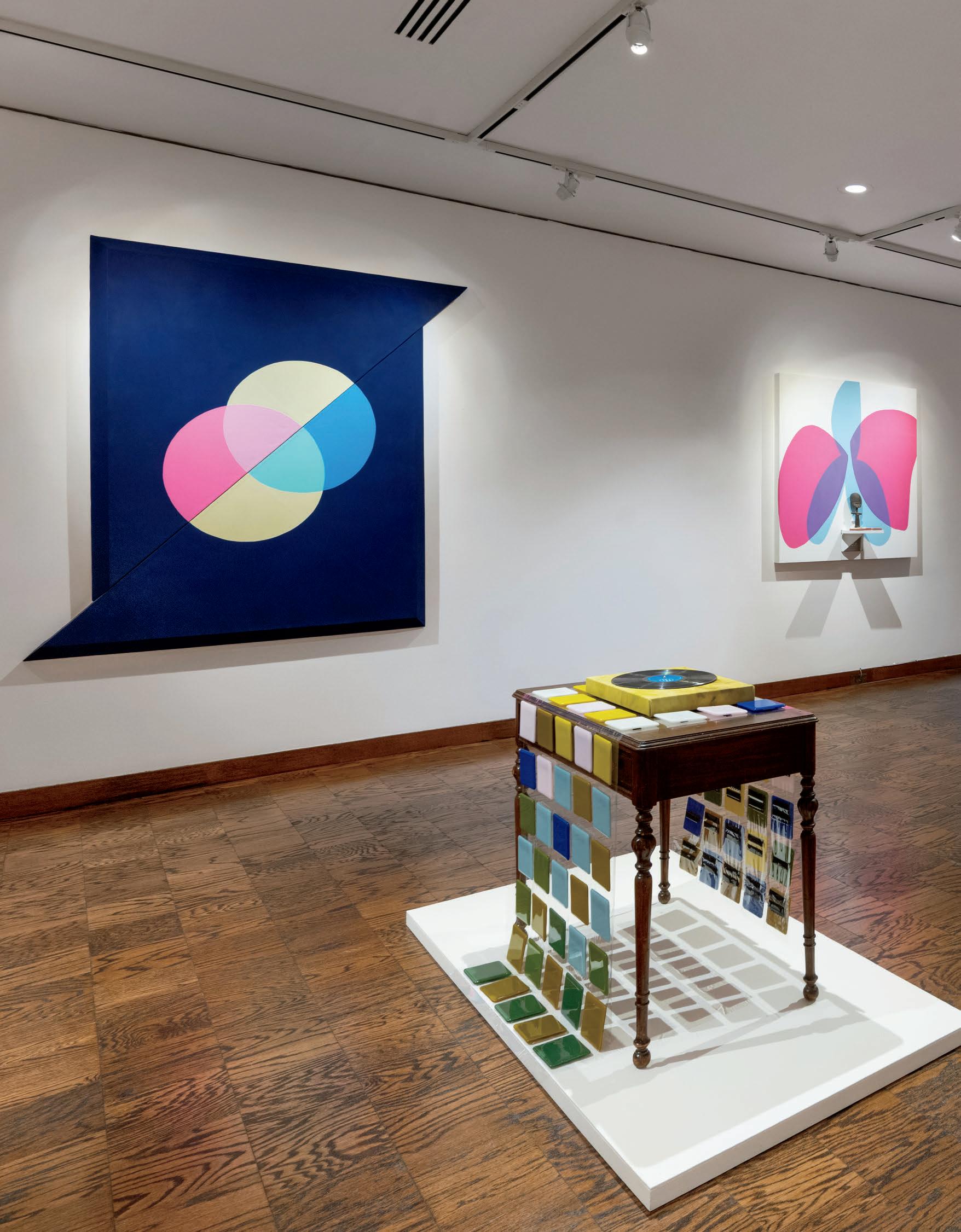
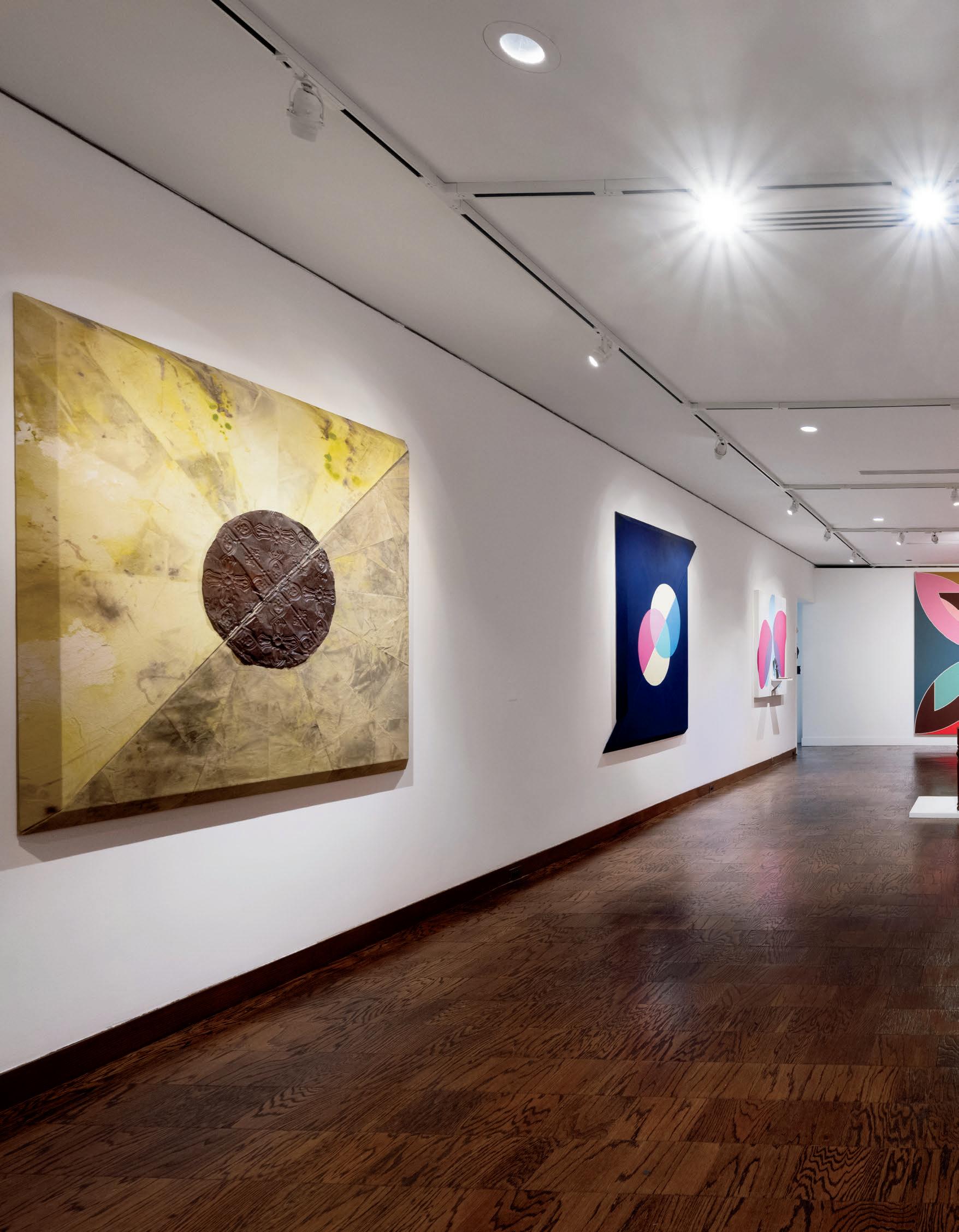
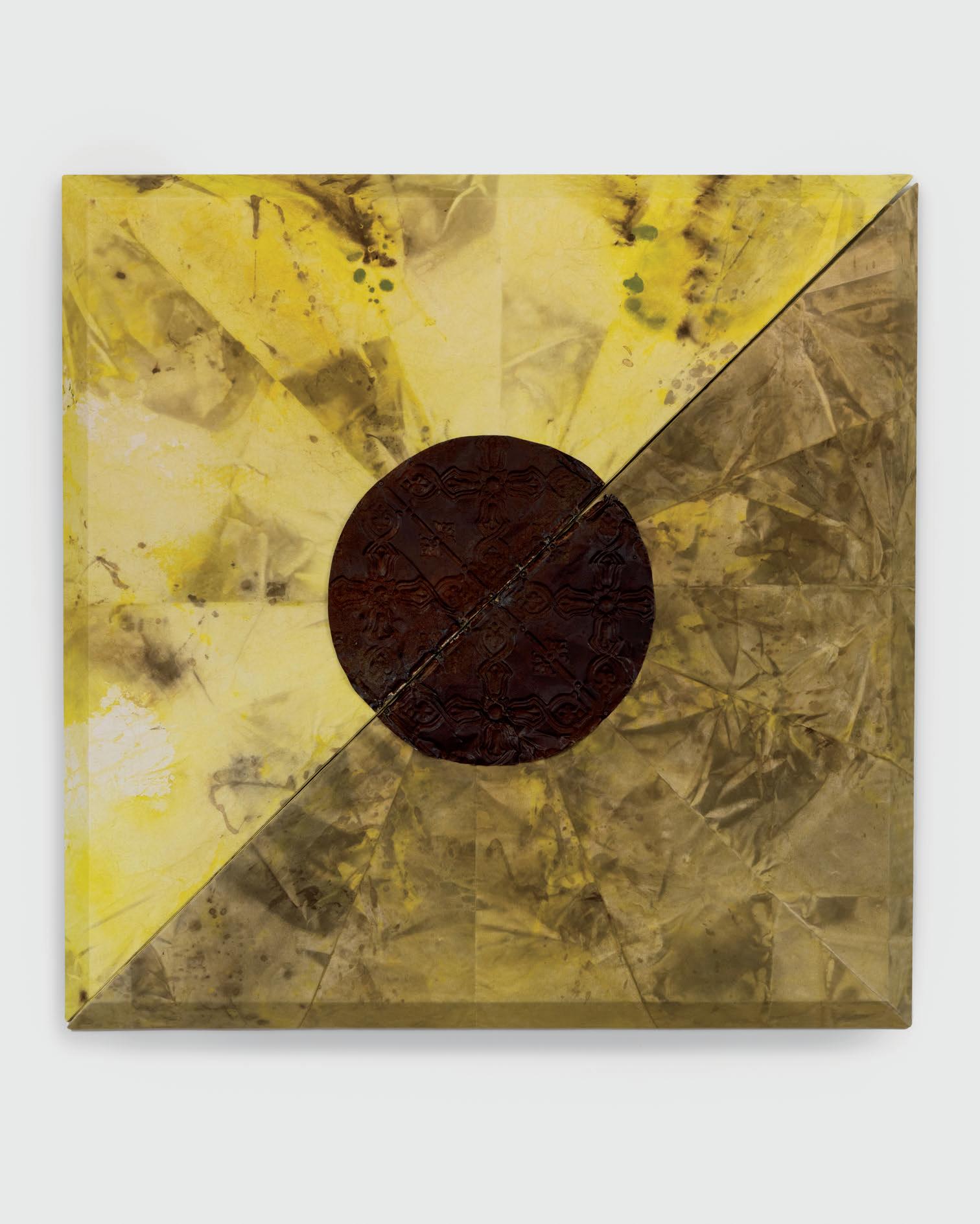
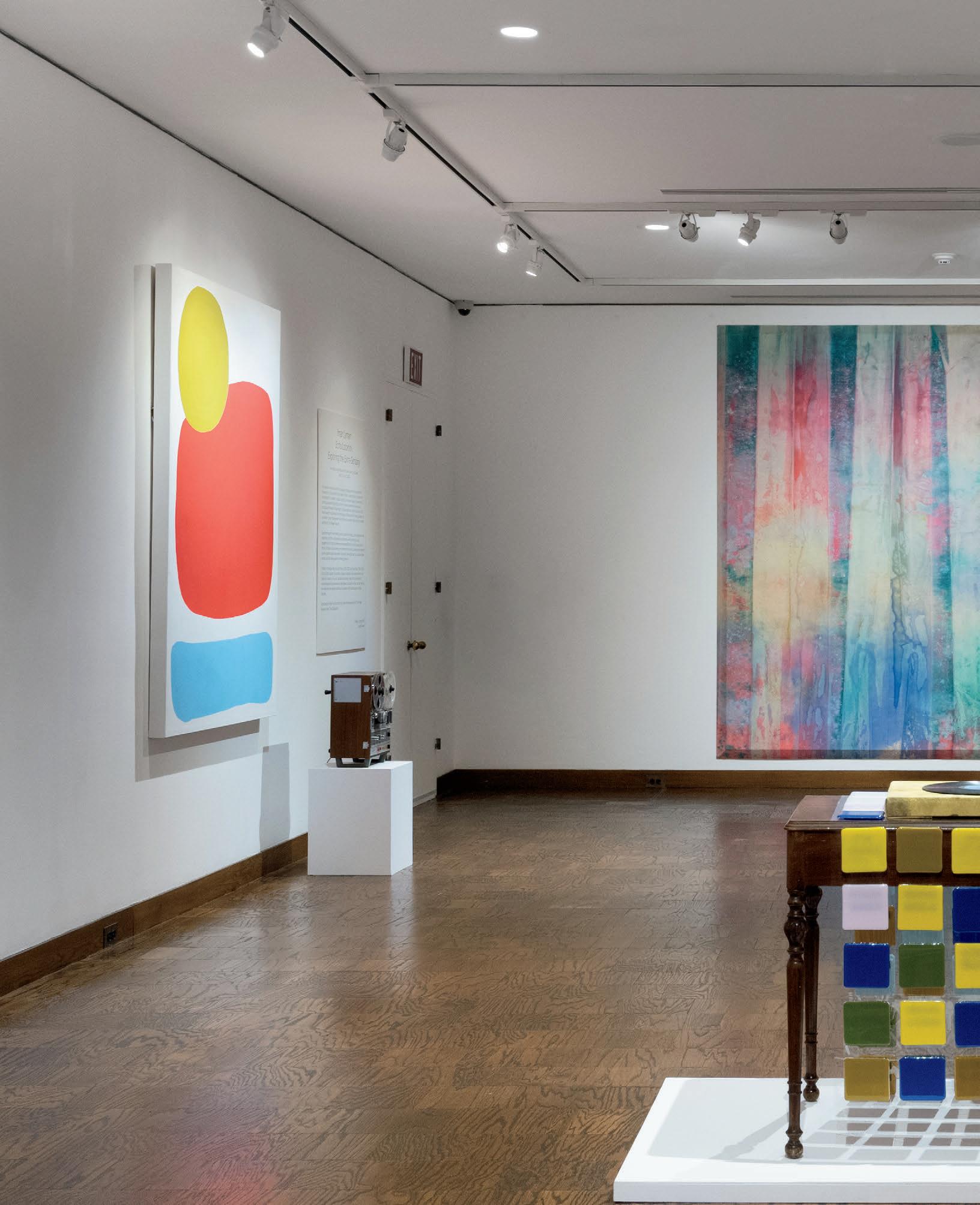
These ideas gain resonance at The Kreeger Museum when placed in conversation with masterworks by Sam Gilliam (1933–2022) and Frank Stella (1936–2024)—pieces that have anchored the Contemporary Gallery since the museum opened to the public in 1994. The juxtaposition is not merely art historical; it grounds the exhibition. Gilliam and Stella offer two distinct but formative propositions about abstraction. Gilliam, whose work is deeply tied to Washington, DC, is most known for transforming painting by loosening it from the stretcher and opening it to gravity, improvisation, and atmosphere. The work shown here, Cape (1969), part of Gilliam’s Slice series, marked the start of great innovation for Gilliam. Through pouring and applying paint on the surface, he made creases and exposed colors and other textures that give the impression of floating when mounted on a beveled stretcher. Lyman echoes this approach in Yin and Yang (2026). He not only pours paint onto the canvas but utilizes a beveled stretcher like Gilliam—an approach Lyman uses in three works in Echo/Location. The brown, yellow,
and green earth tones symbolize stability, growth, and intelligence, or as Imar Lyman explains “play together energetically and geometrically.”
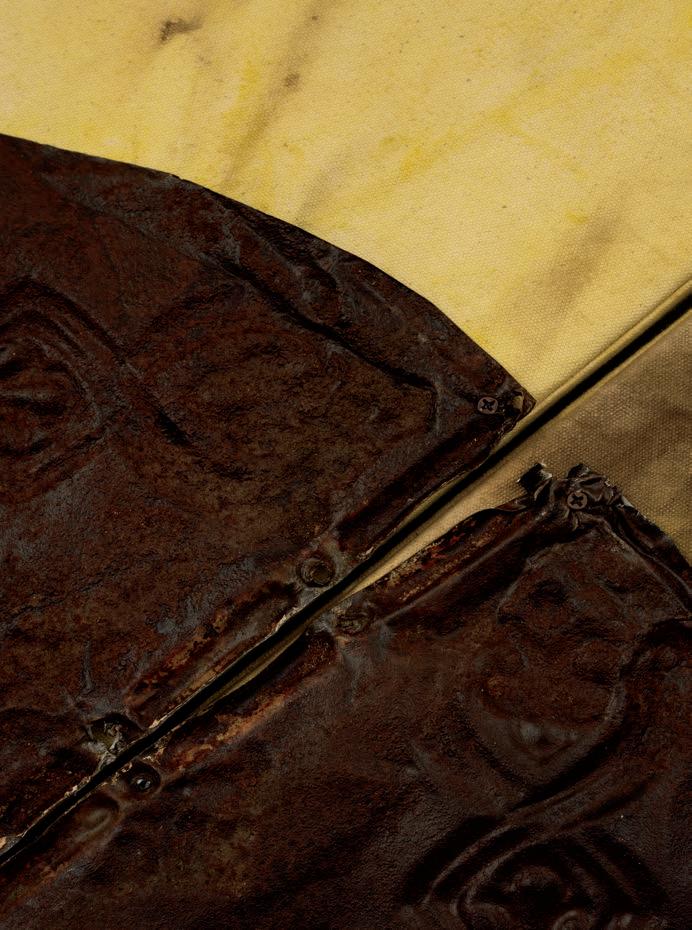
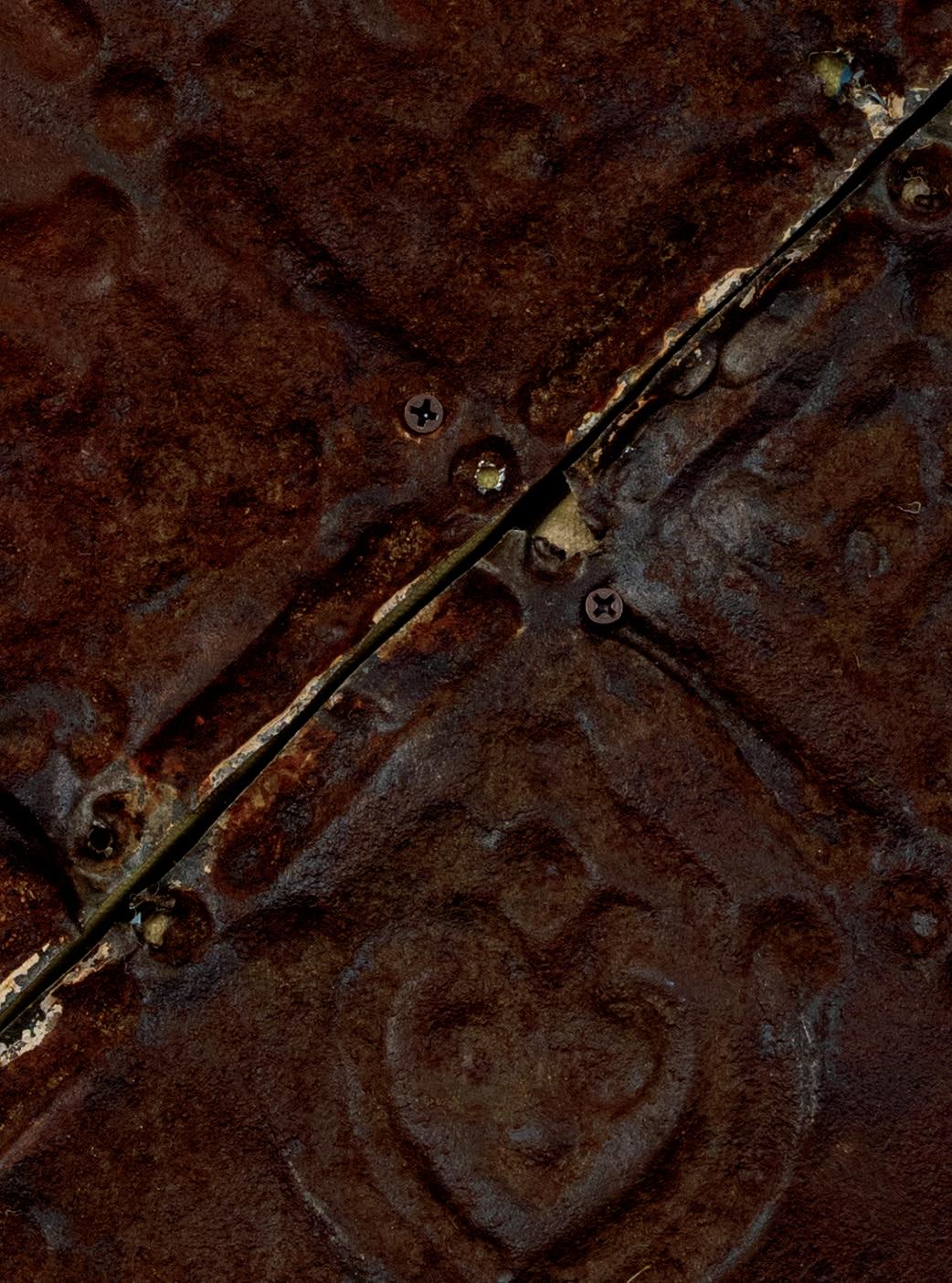
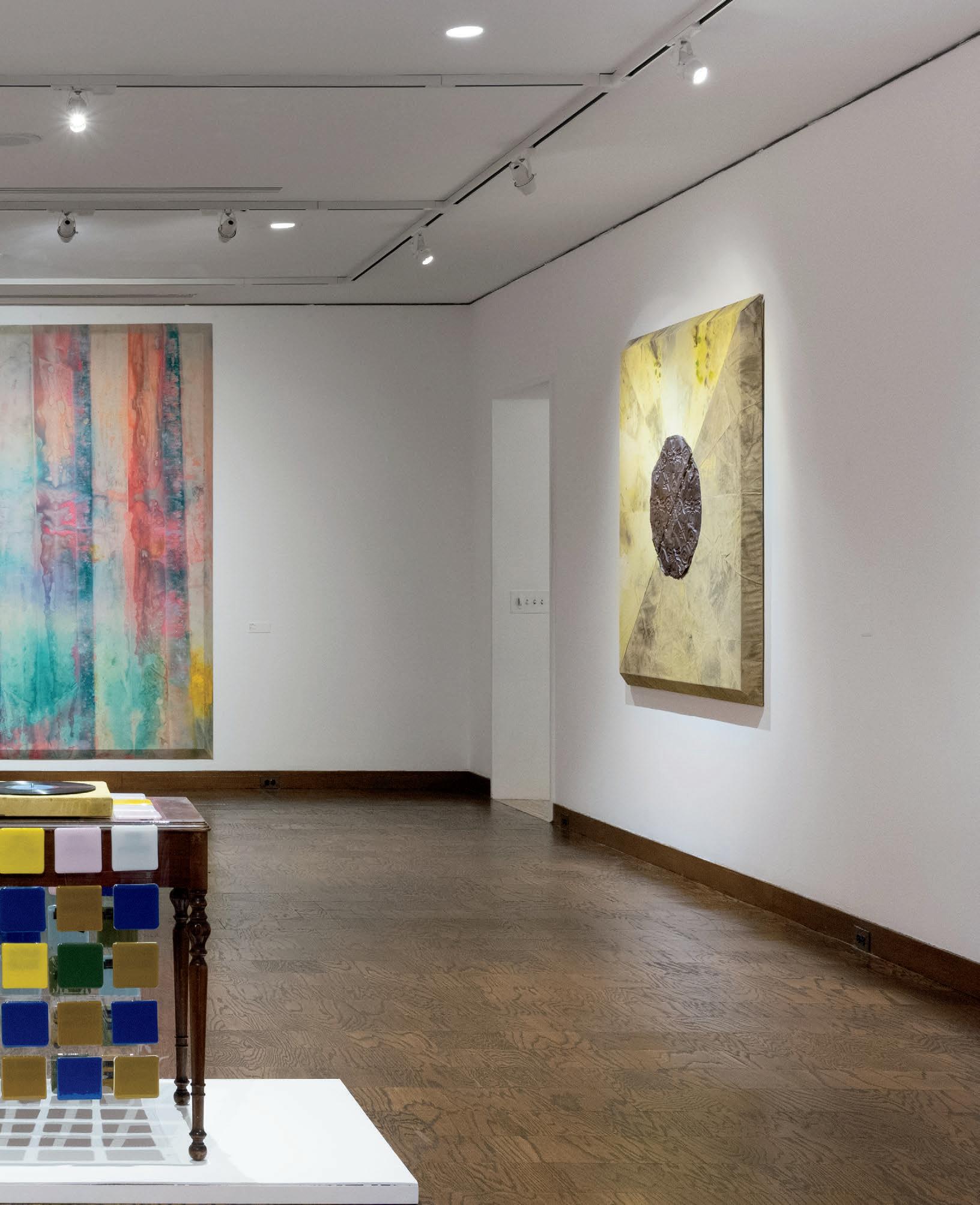
Yin and Yang is a multivalent work. It blurs boundaries with its stylistic approach and nod to Gilliam, while two pieces of antique hammered-tin— shown on their reverse—not only results in another representation of the dot motif apparent in several works in the exhibition but it includes imagery known as “Adinkra symbols,” a word derived from the Akan people of Ghana. One symbol shows two joined hearts with intricate symmetrical spirals. It represents “Sankofa,” a term defined as a need to return to the past to inform the present and the future—a philosophical throughline for Imar Lyman and his art. The two metal pieces that form the circle are nods to an artwork designed by Lyman’s father and used on the cover of his late 1960s publication, The Black Buyer’s Guide. These intergenerational connections persist. Like Gilliam, Lyman has ties to Louisville, Kentucky, and carpentry, which originally inspired Gilliam’s use of the beveled frame.1 (Gilliam was raised in Louisville, Kentucky, and his father was a carpenter, as was Imar Lyman’s great-grandfather). Ultimately, this work becomes emblematic of Lyman’s perspective on the coexistence of the opposing forces that occur in life—joy and pain; love and sorrow; light and darkness.
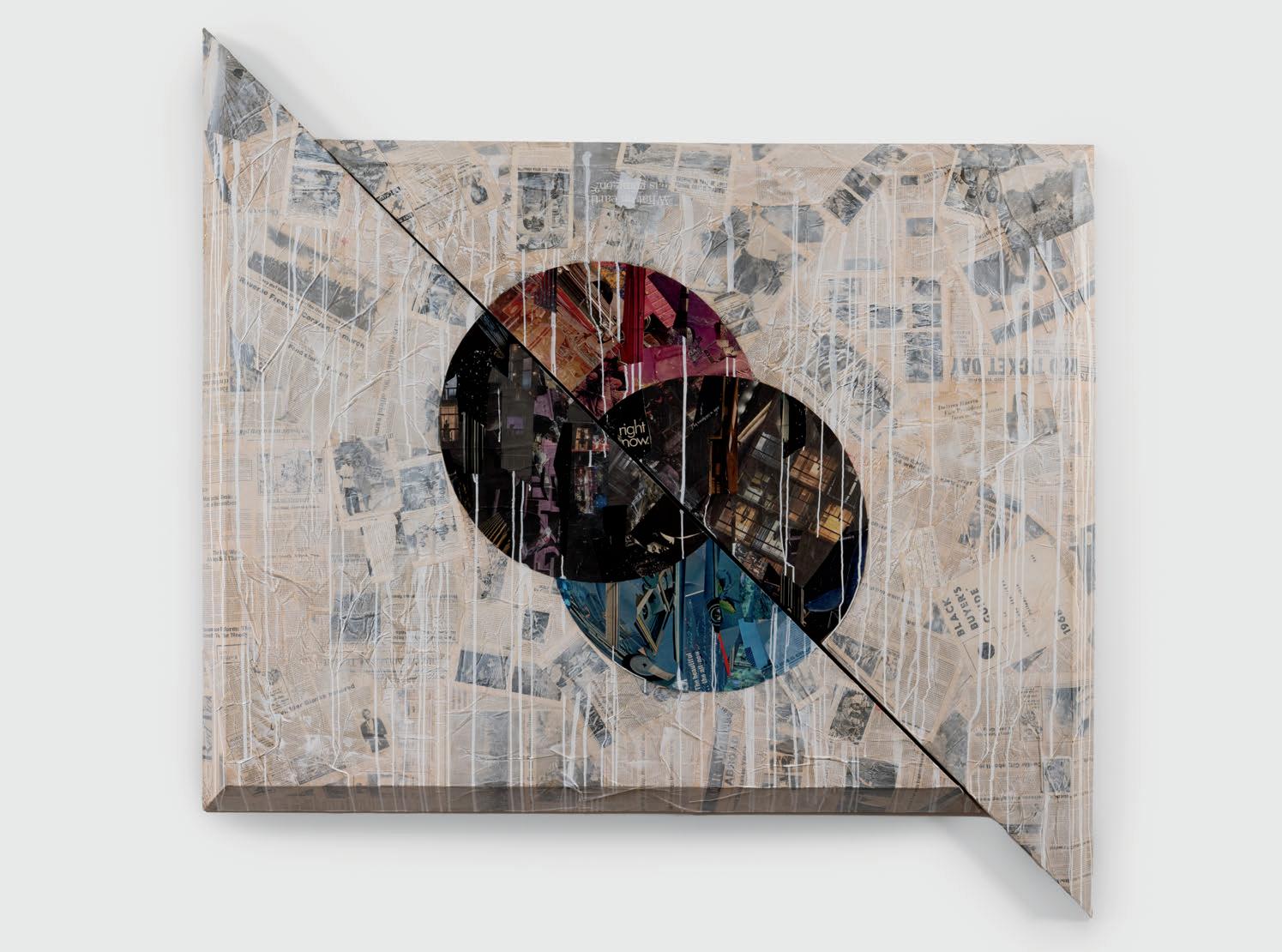
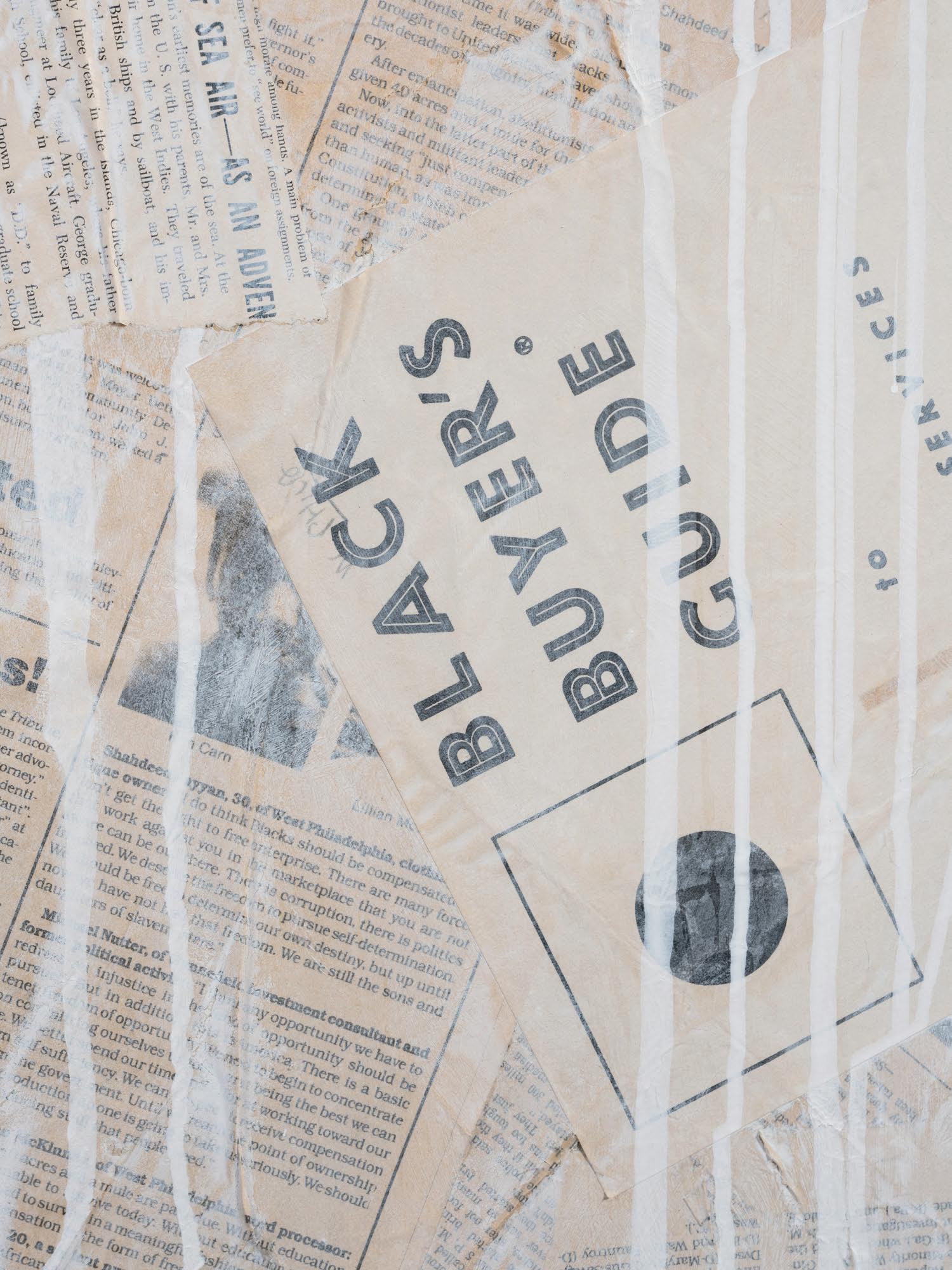
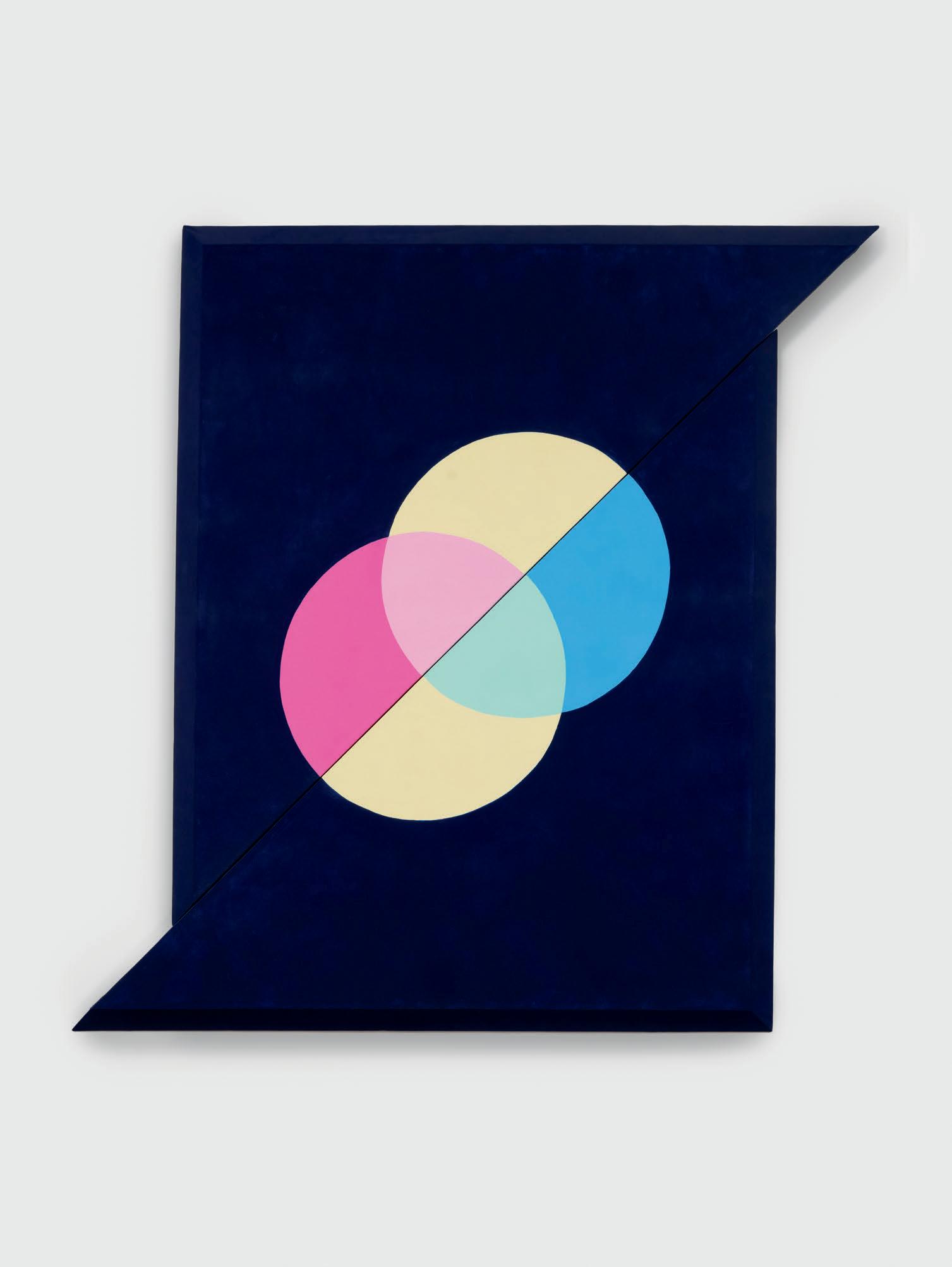
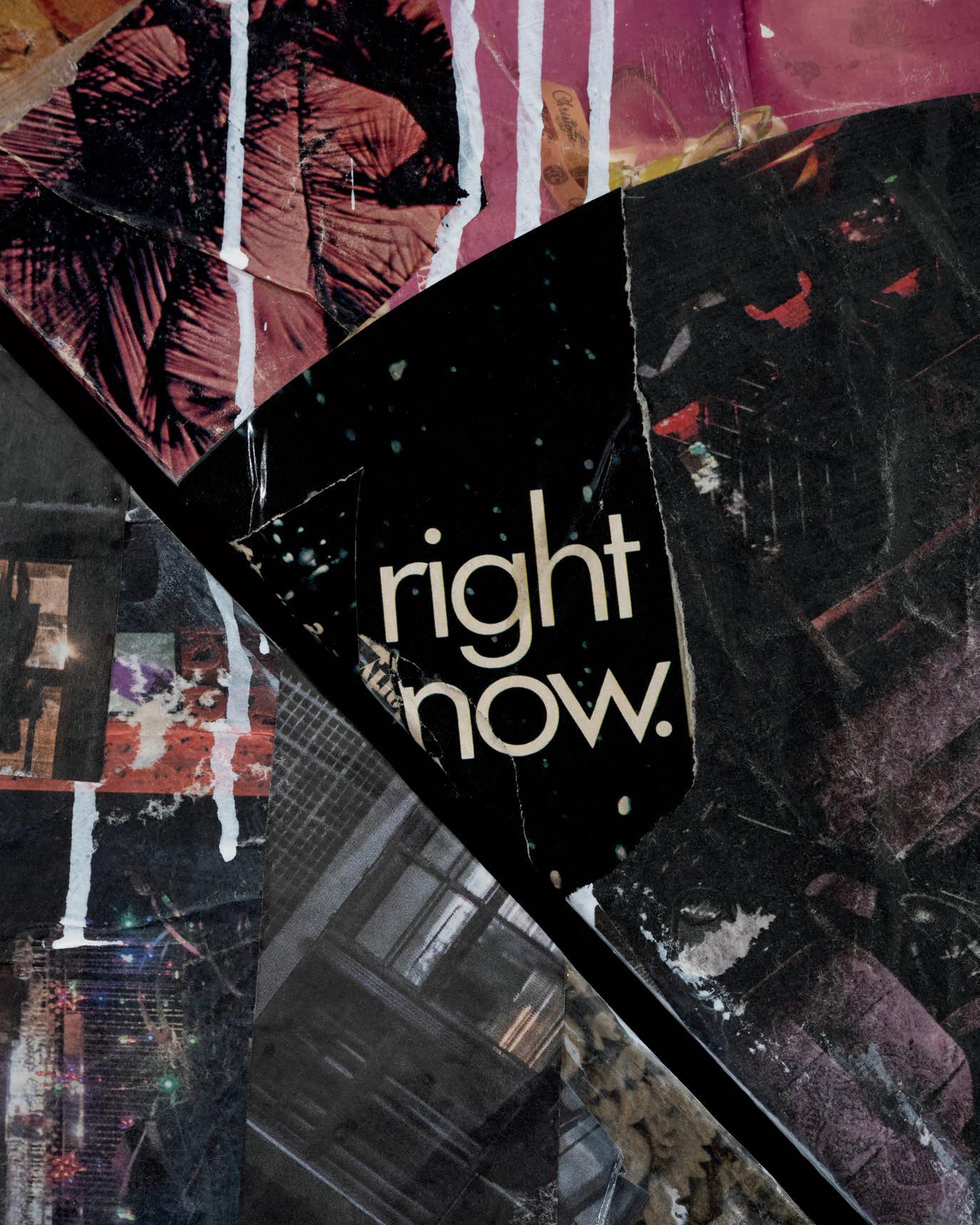
Misregistered? (2026), with its beveled edge, poured pigments, and creased collage, is Lyman’s first attempt at this approach in his practice. In the piece, it is as if history is enveloping the center, even dripping off the pages. This is particularly resonant considering it is an homage to two father figures for the artist: his biological father, Walter Hutchins, and one of his creative inspirations, Sam Gilliam. Driven by his passion for printmaking, Lyman incor-
porates the essential colors in printing—cyan, magenta, yellow, and black— in this work. For Lyman, the off-kilter presentation becomes symbolic of the feeling many Black people experience living in the United States.
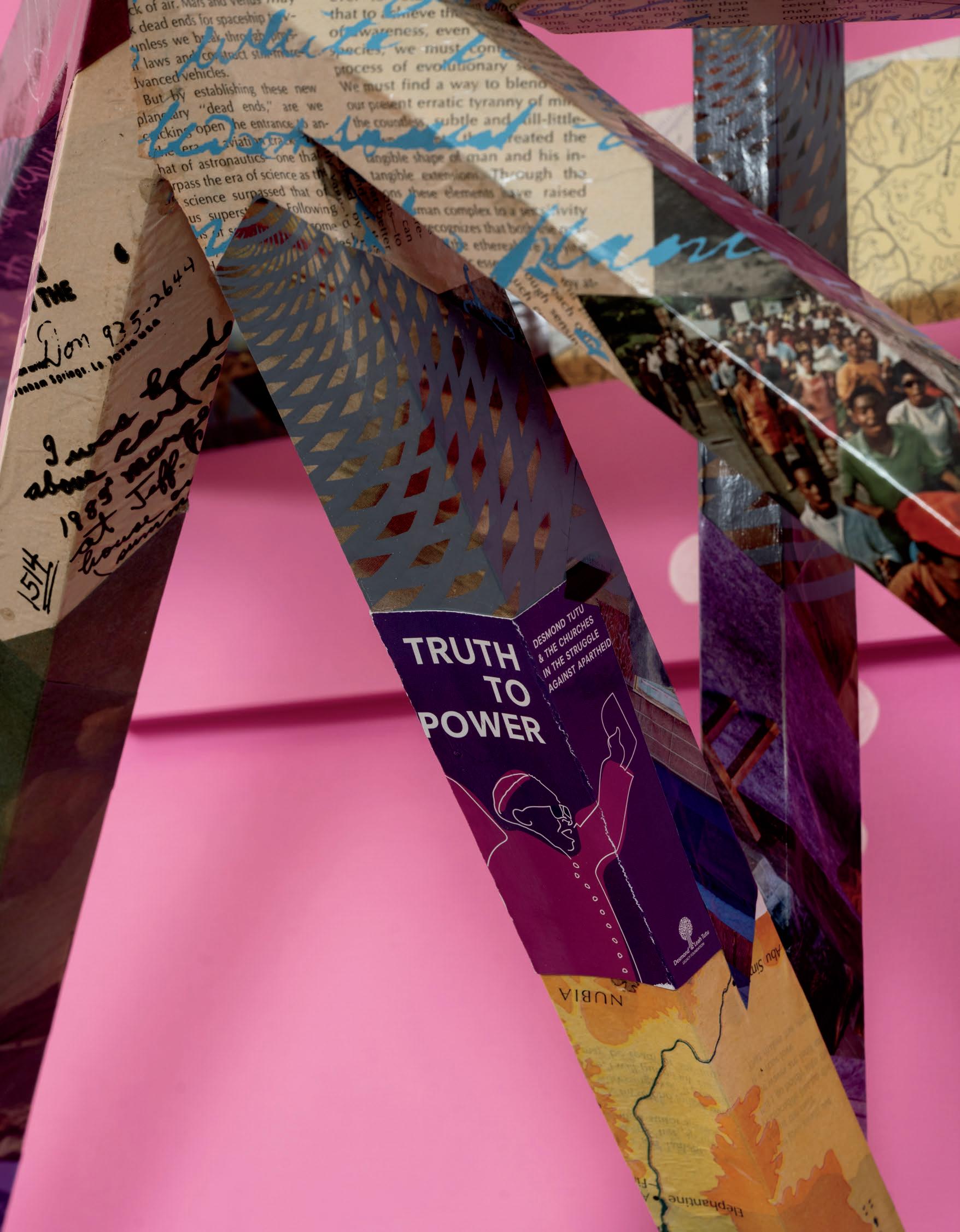
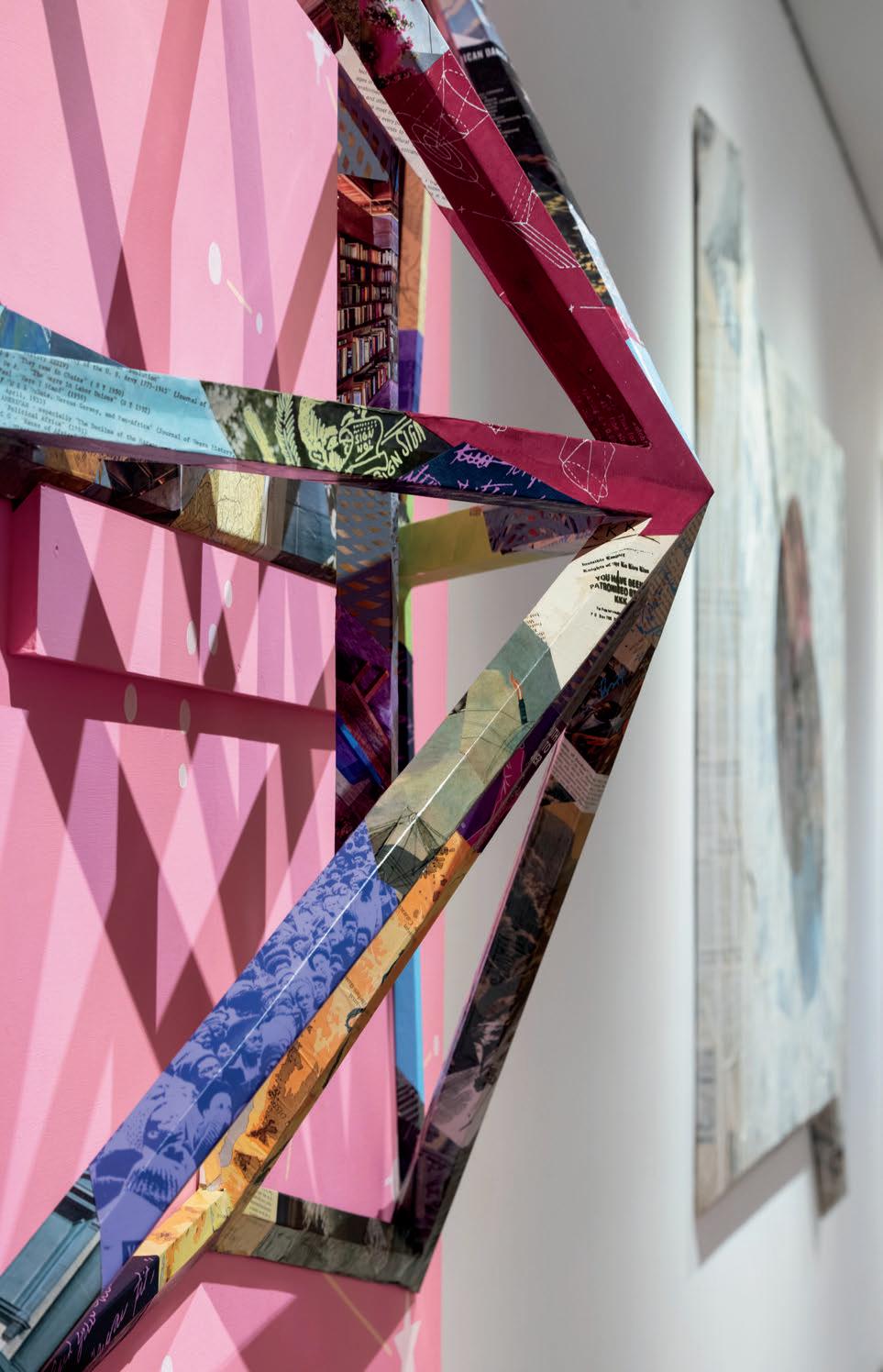
Frank Stella, by contrast, moved painting toward geometry, objecthood, and edge, which can be seen in The North Star (2026), Nina’s Orchid (2026), and Blue Infinity (2026). If Gilliam made color spatial, expansive, and inventive, Stella made structure emphatic. Lyman, therefore, enters the conversation between the pair not as a follower but as an interlocutor. The North Star (2026), a multi-dimensional piece, acts as a site of assembly and accumulation where dignity, memory, rupture, and imagination coexist but also can stand on their own. Described by Lyman as a “collage sculpture,” the title evokes this work as a guide, like echoes felt by animals finding their way through darkness, or Black Americans during chattel slavery who used the stars and astronomy as navigational tools when escaping bondage.
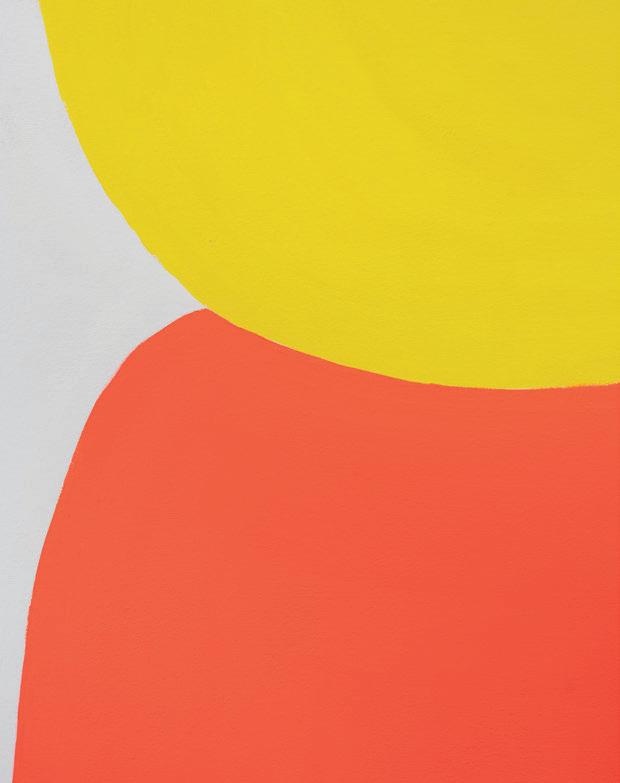
Lyman’s art practice relies on archival documents, family histories, vintage Black magazines, and other fragments of the historical record. Objects are genealogical altars, metaphorically and, at times, literally. In this sense, abstraction is not an escape from history into pure formalism, but another way of registering the past when it cannot be fully pictured. Pattern becomes pulse. Color becomes atmospheric and temporal, traversing various realms and time periods, as is reflected in Brother Ah and the Collectors’ Arkestra (2025). This piece is dedicated to Robert Northern, the late jazz legend who played with Dizzy Gillespie, John Coltrane, and for nearly two decades, the avant garde jazz group, The Sun Ra Arkestra. The bright colors in the painting reflect the attention-grabbing DC-based Go-Go music posters and urban
neon streetwear of the late 20th century. In this work, the Artist imagines a concert in an alternative dimension where Northern, known professionally as Brother Ah, is bandleader.
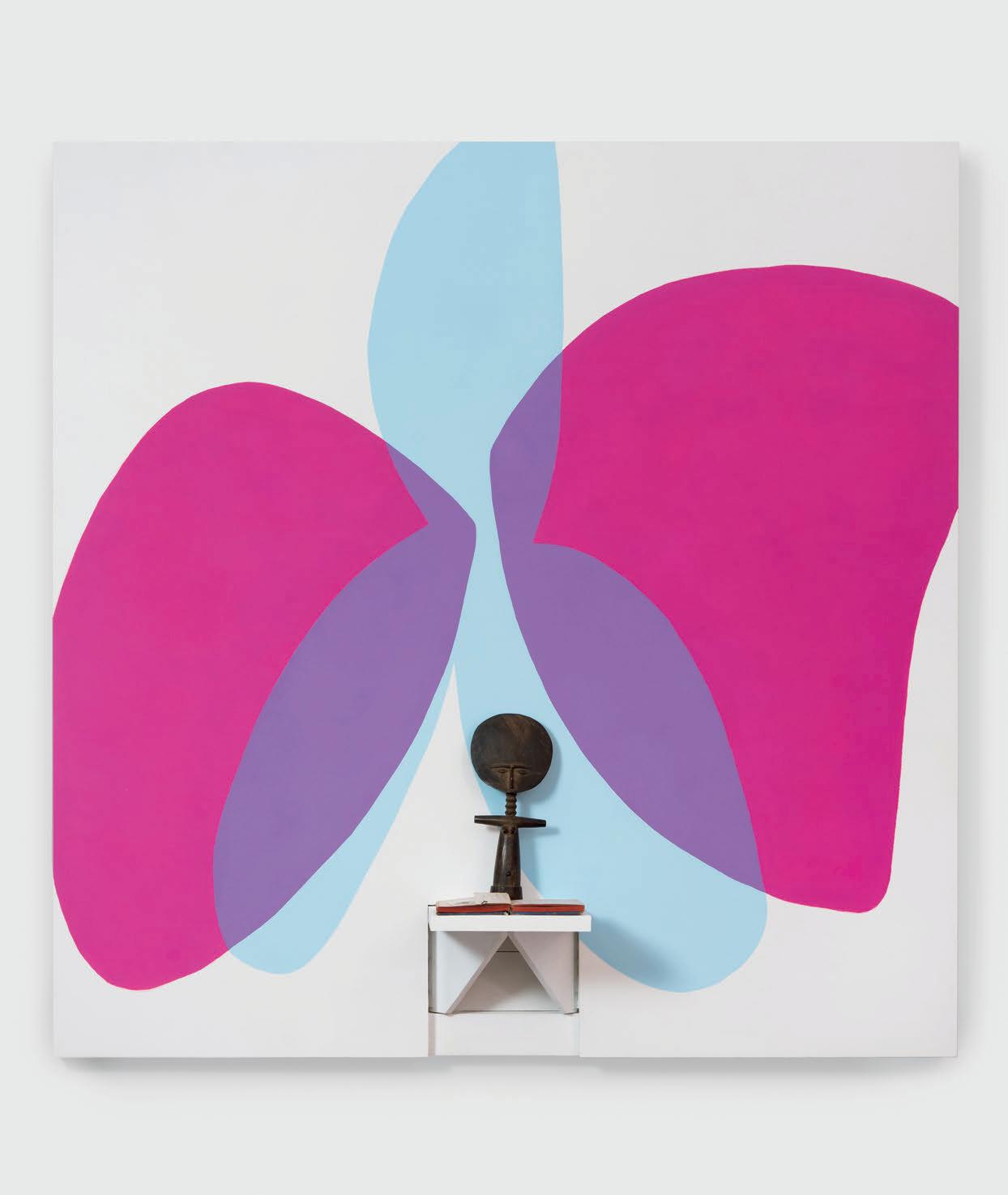
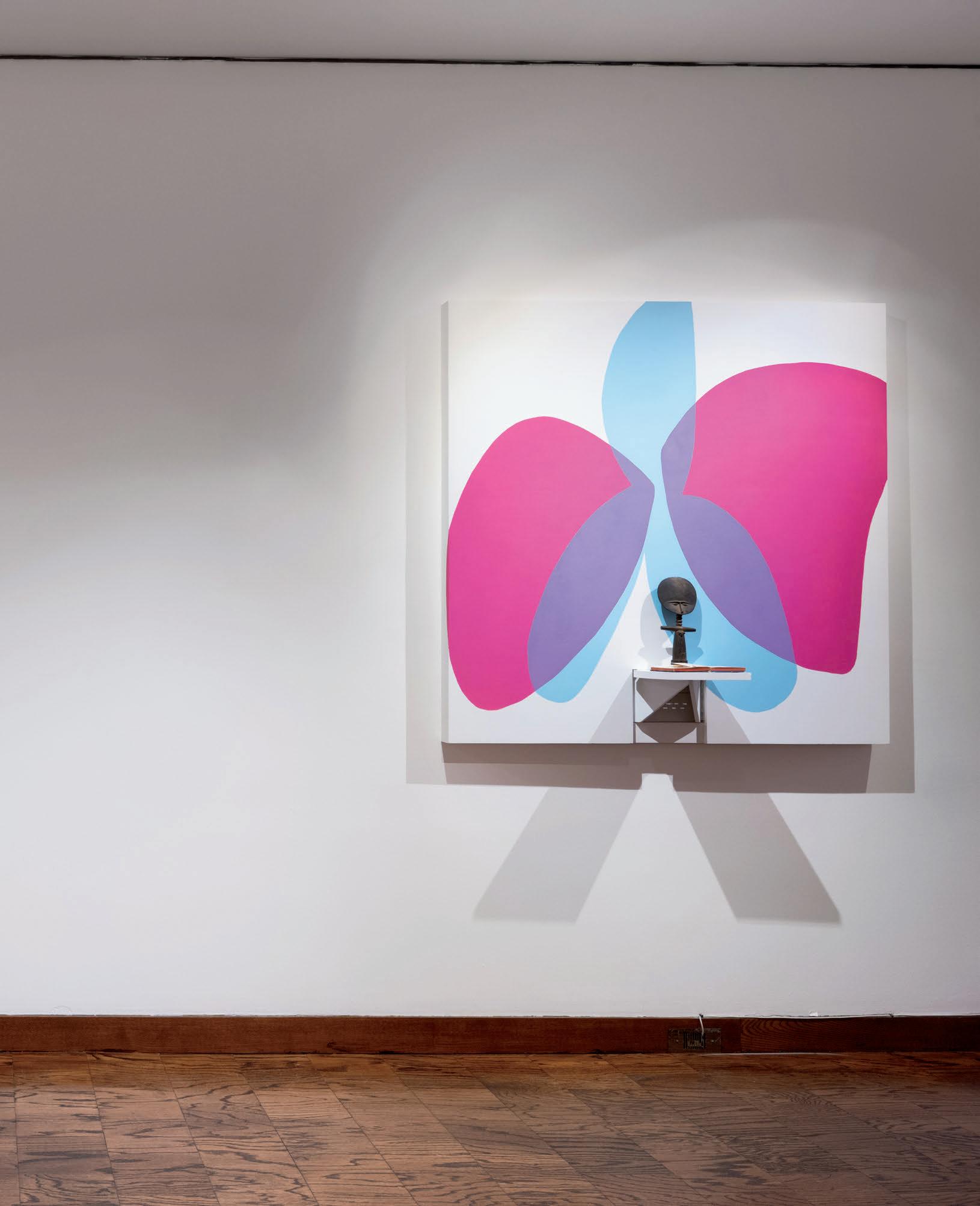
Nina’s Orchid (2026), which the Artist has described as “an homage to ancestors,” is in part inspired by the Pamunkey, one of the oldest Indigenous nations recognized in the United States, of which Lyman’s maternal grandmother was a member. Featured here is a Ghanian fertility doll alongside a handwritten journal. The wooden figure was owned by Lyman’s late mother who acquired it during her first visit to Africa with Lyman’s father in the 1960s. Also presented is a personal journal of the Artist’s paternal grandmother, Minnie Hutchins. Featuring an entry from January 29, 1969, the opened page shows off an accompanying butterfly motif. Incorporating all these elements into this one artwork allows this piece to exceed the frame of the canvas and represent multigenerational femininity, ancestral legacy, and the beauty of possibilities. Structurally, the painting also serves as an altar. In this regard, geometric shapes, structure, and color carry historical weight, ancestral memory, and familial reverence.
Lyman’s art practice is also concerned with what transcends immediate legibility—the energetic forces that hum beyond what is visible to reveal what remains after the first glance has passed. A few of the pieces ask viewers to consider how the artwork is presented, and how its form and function might be explored in different ways and configurations. This is most notable in The North Star, which can be presented as either a stand-alone sculpture or adhered to its wood base. In this exhibition, it is shown together. By considering various approaches and presentations of the work, Lyman’s art shifts the terms of spectatorship from observation to relational. The viewer is asked
not only to look closely, but to pause, compare, and reconsider various points of view. In other words, its meaning unfolds through encounter. One becomes aware of edges, objects, and presentation choices, which allows the work to continue to reveal itself.
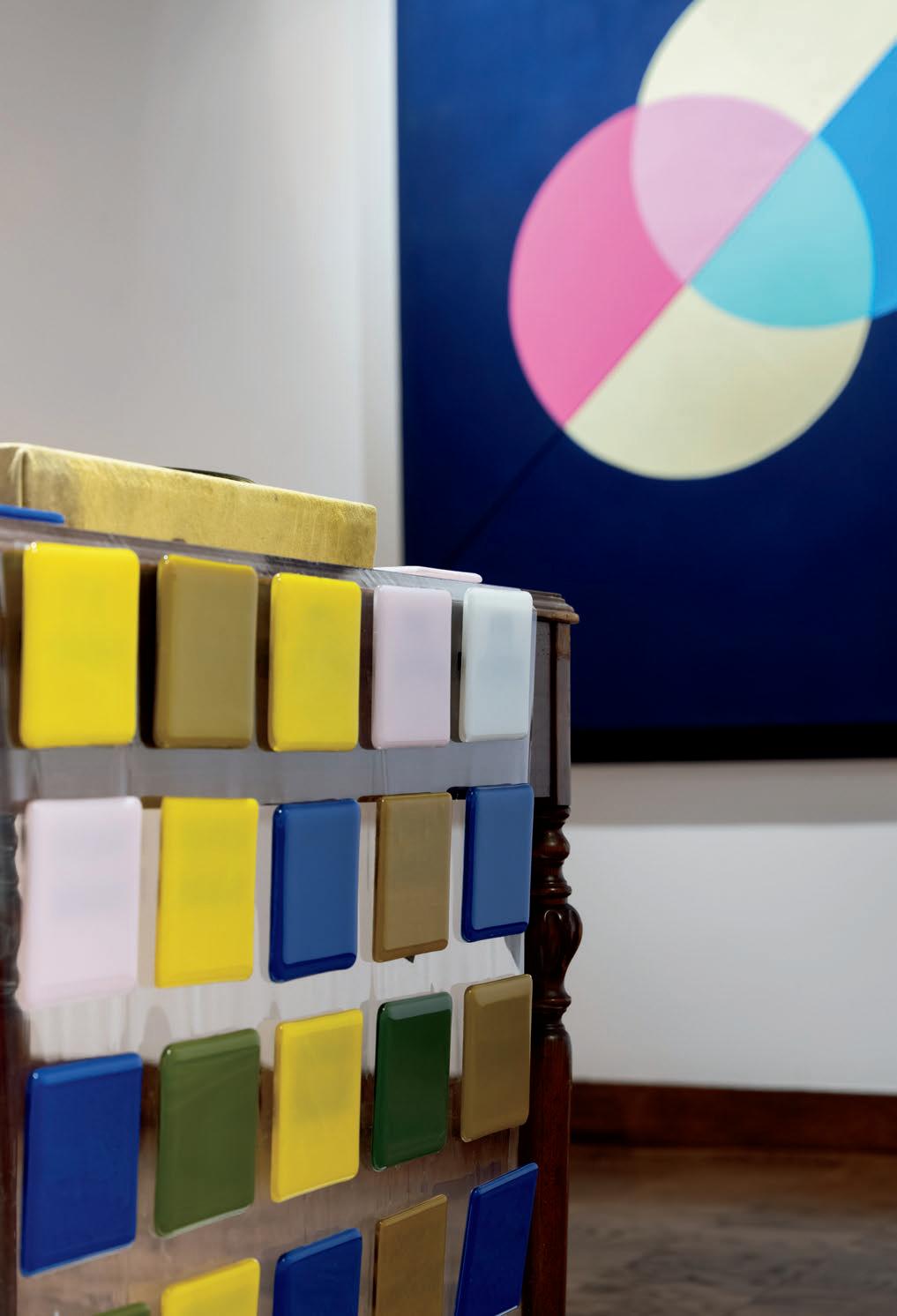
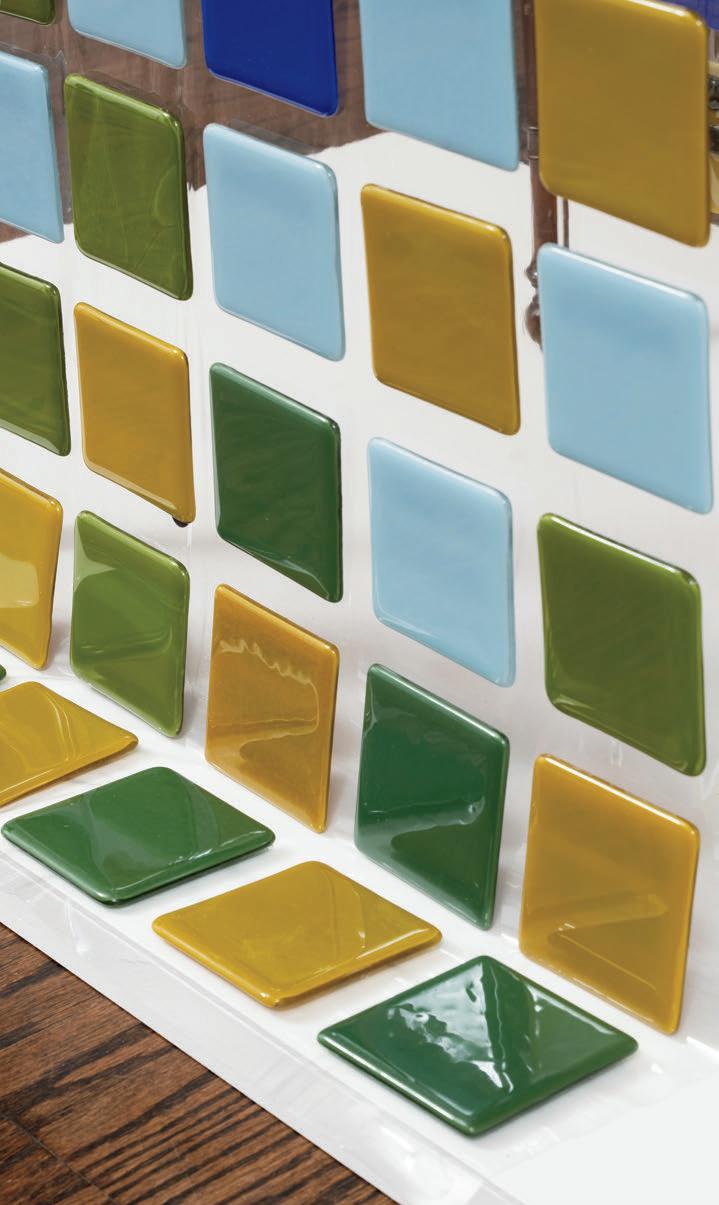
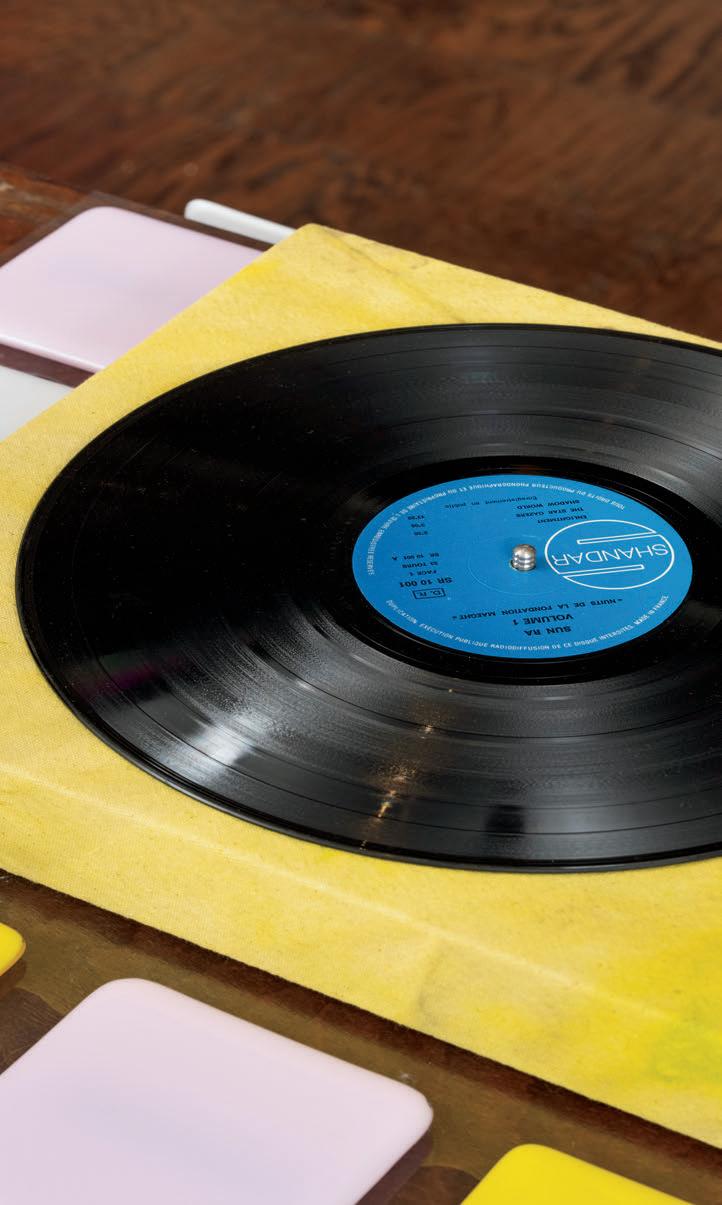
This is also evidenced in Altar/Native Sounds (2026), a constellation of archival materials including an antique desk and a hand-made, stretched-canvas “turntable” featuring an album by the Afro futurist Sun Ra, and blanketed by rows of delicate glass tiles. The effect situates the viewer simultaneously among the past, present, and future. It honors the many artists, creatives, and visionaries who have influenced Imar Lyman’s life and showcases how removing the representational imagery does not remove its political impact. In this regard, Echo/Location does not simply depict an extra-sensory premise; it enacts one.
An echo is not certainty; it is guidance, a way of moving through complexity. In this instance, the result is a vibrant body of work by Imar Lyman that feels both abstract and sure. It asks the viewer to slow down, to follow aftersound, to remain open to the gradual disclosure of meaning. In doing so, the viewer is reminded that abstraction, at its most powerful, does not withhold. It deepens. It allows us to feel the presence of what cannot be fully named but can nevertheless be unmistakably sensed.
1
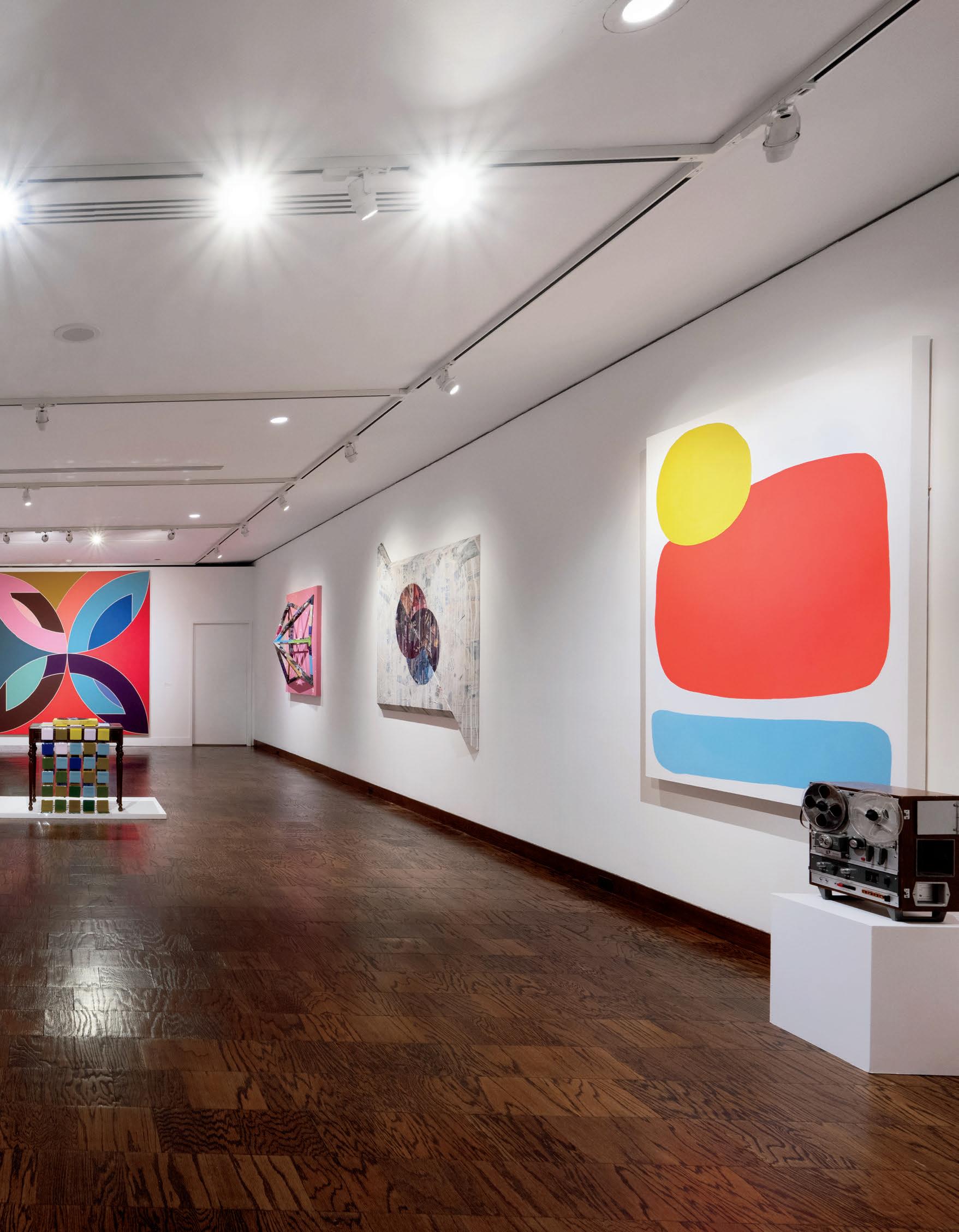
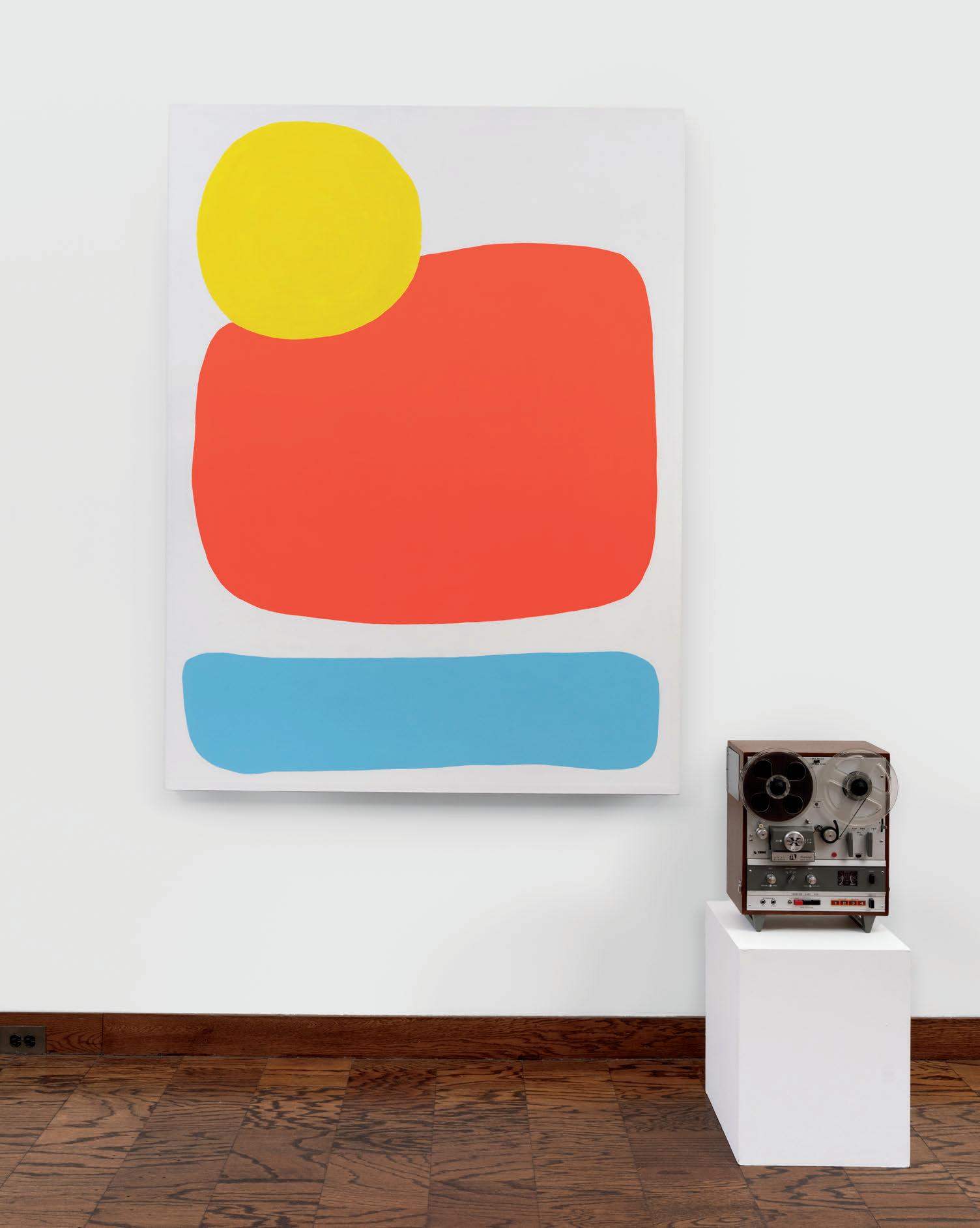
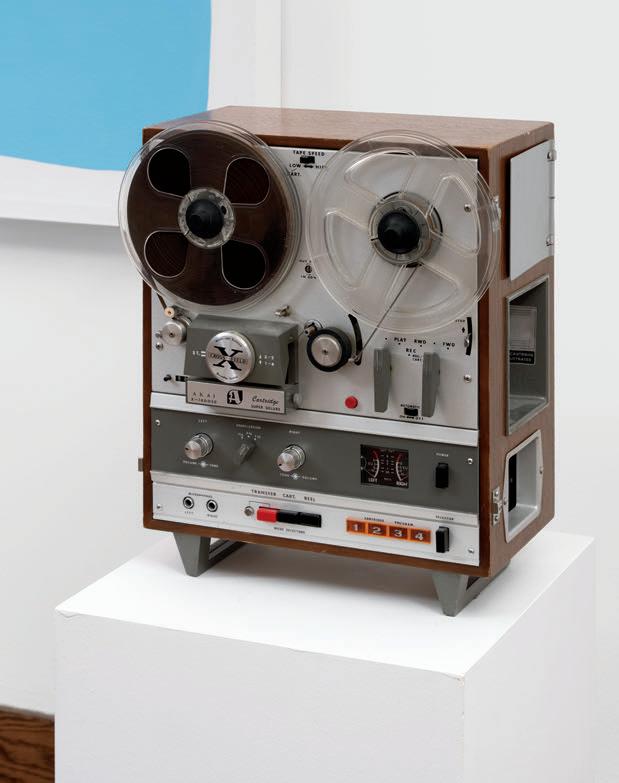
This painting, Brother Ah and the Collectors’ Arkestra (2025), and tape recorder are a requiem for Robert Northern (1934-2020), jazz legend and French horn player professionally known as Brother Ah. Northern performed with many musicians, including John Coltrane, Dizzy Gillespie, Thelonious Monk, and for nearly two decades, played with the avant-garde jazz group The Sun Ra Arkestra. The neon colors used here also honor the late 20th century DC-based Go-Go music flyers. In this imaginary poster, Brother Ah serves as bandleader for an interstellar concert.
The vintage 1960s reel-to-reel accompanying the painting was originally owned by Robert Northern, a mentor and friend of the Artist. Brother Ah was a fixture on Washington, DC, community-supported radio station WPFW, where he produced a program called “The Jazz Collectors.” For over twenty years, he played jazz tunes and interviewed many wellknown musicians, often recorded on this device.
Inspired by a resource book published and designed by the Artist’s father entitled Black Buyer’s Guide, and the beveled edge paintings by Sam Gilliam, this collage, Misregistered?, uses the colors from printmaking — cyan, magenta, yellow, and black — to question how Black people in the United States have negotiated their place in history. While progress has been made, it often comes with feelings of misalignment or asymmetry.
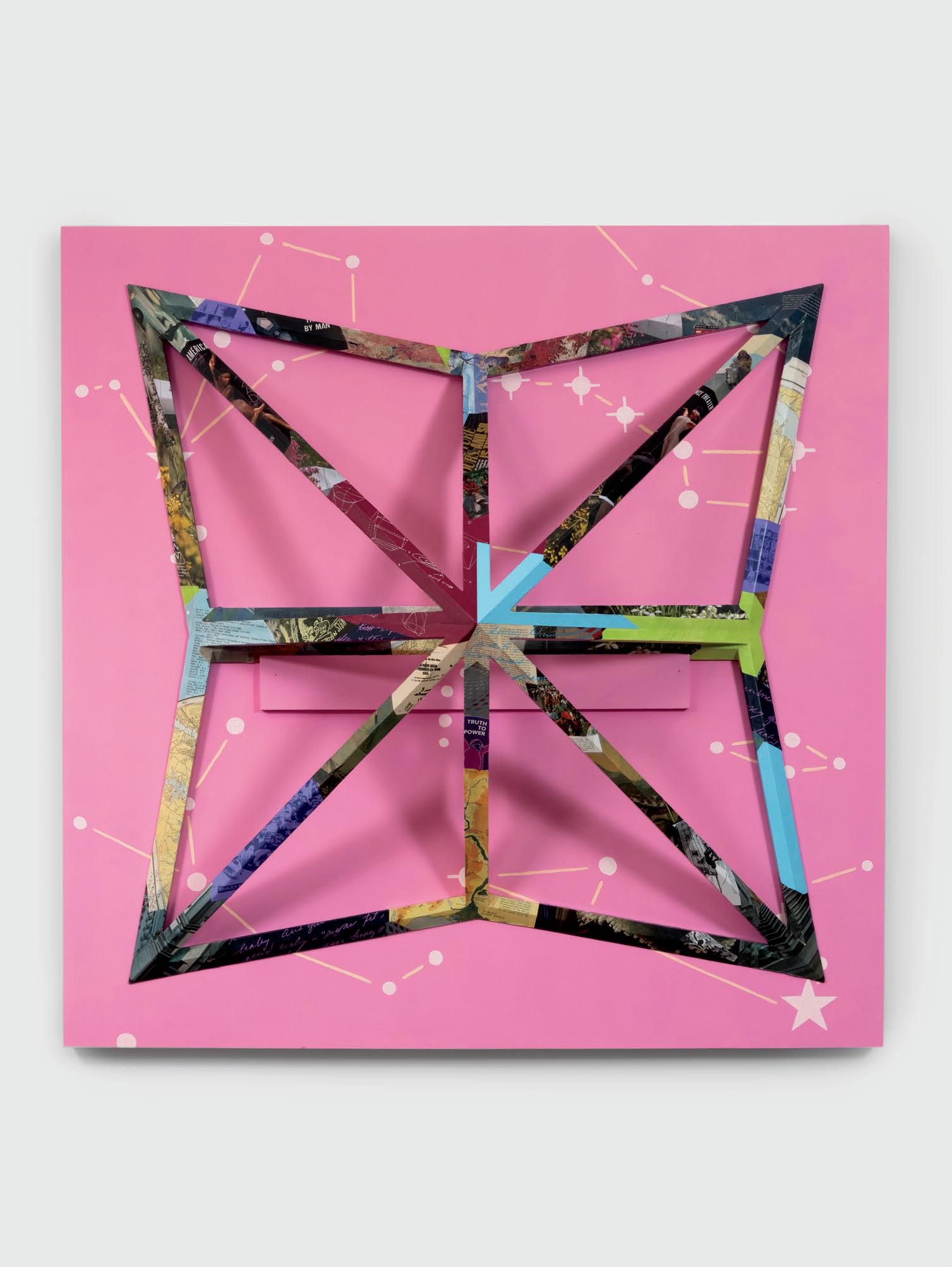
Described by the Artist as a “collage sculpture,” The North Star (2026) incorporates Lyman’s interests in history and metaphysics. The shape is based on Egyptian pyramids. The collaged material utilizes stories and imagery representative of various moments throughout his familial past, while the base features a constellation map of various stars in the galaxy. The “North Star” sculpture can be presented separately from its base.
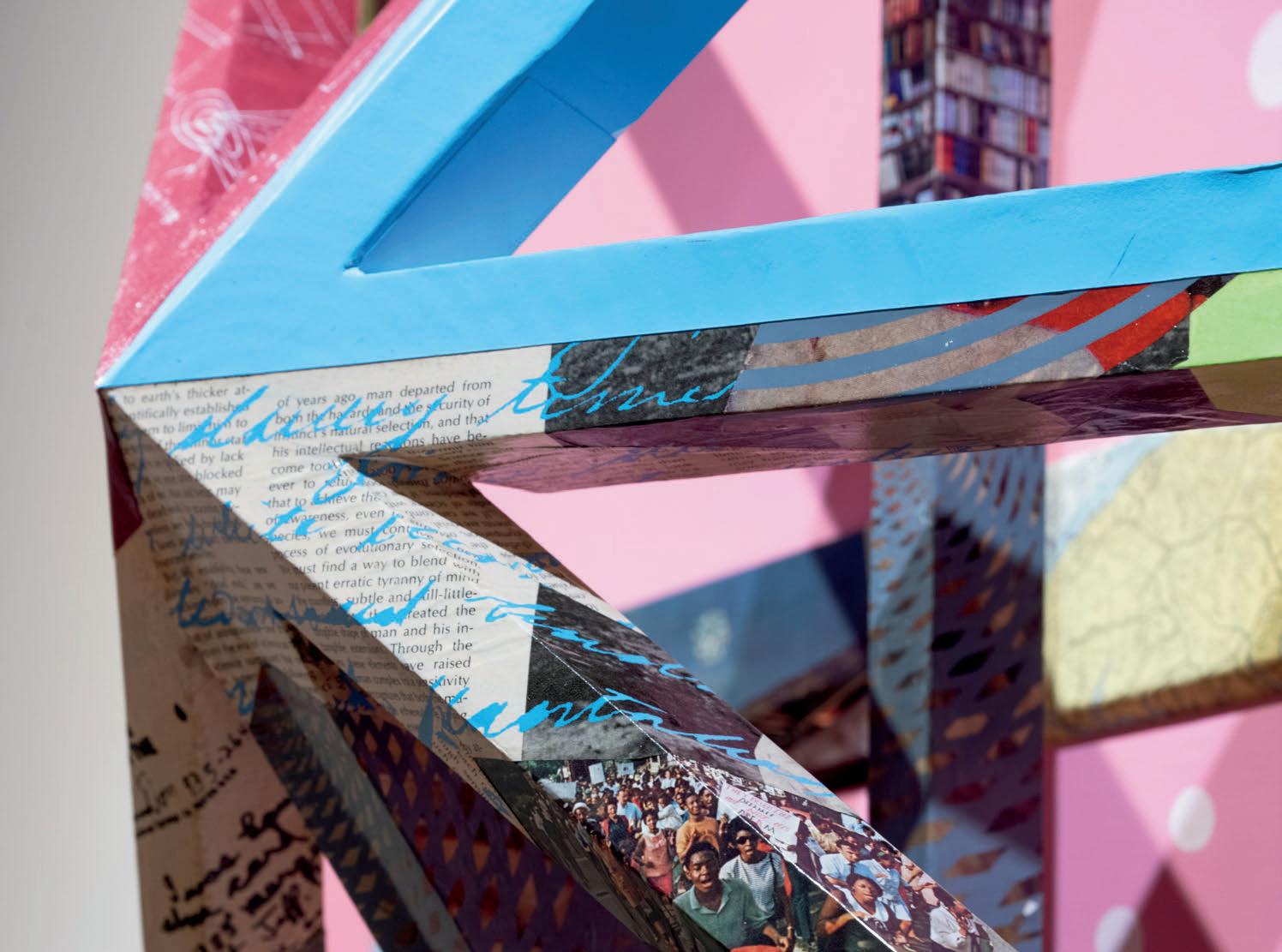
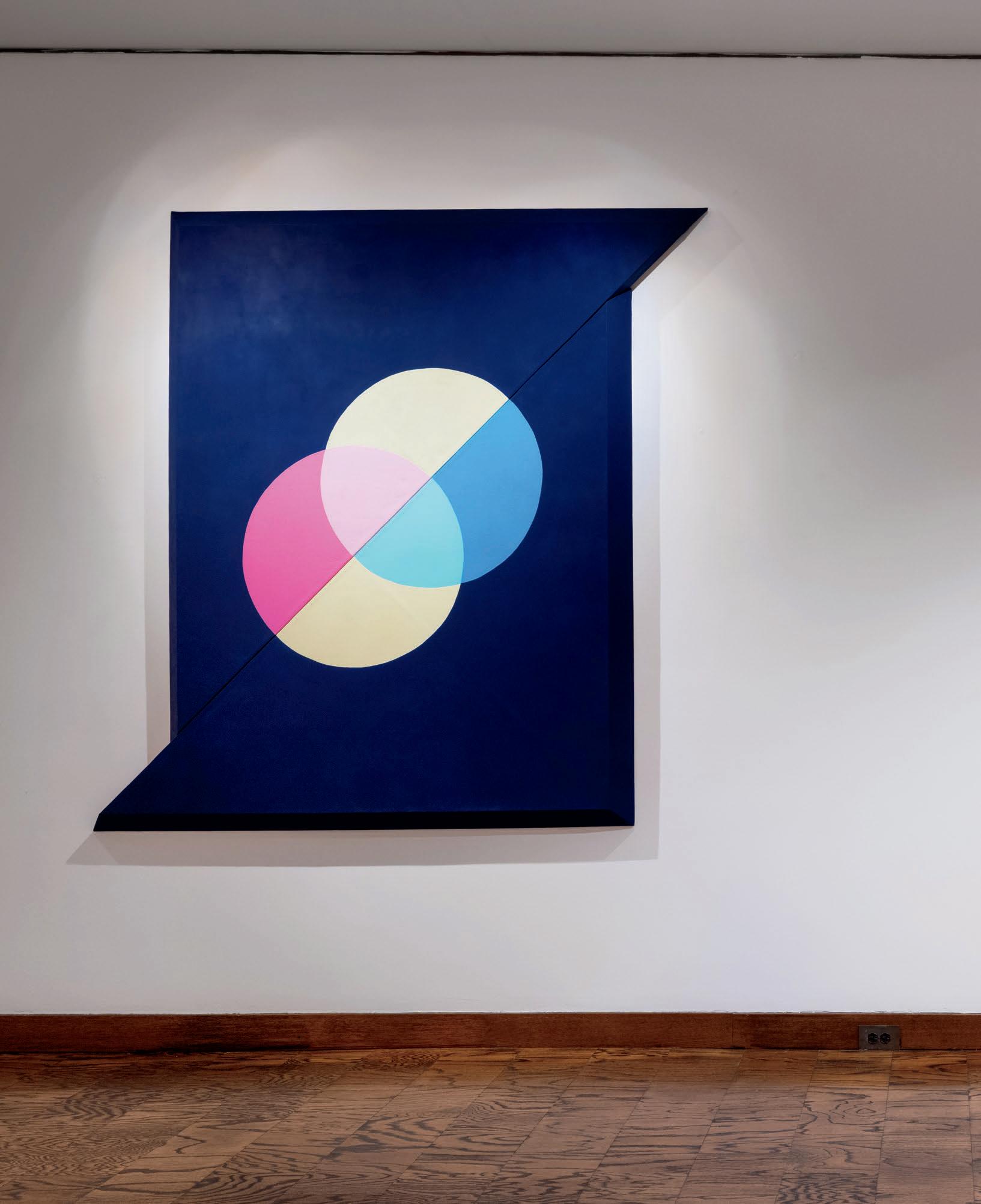
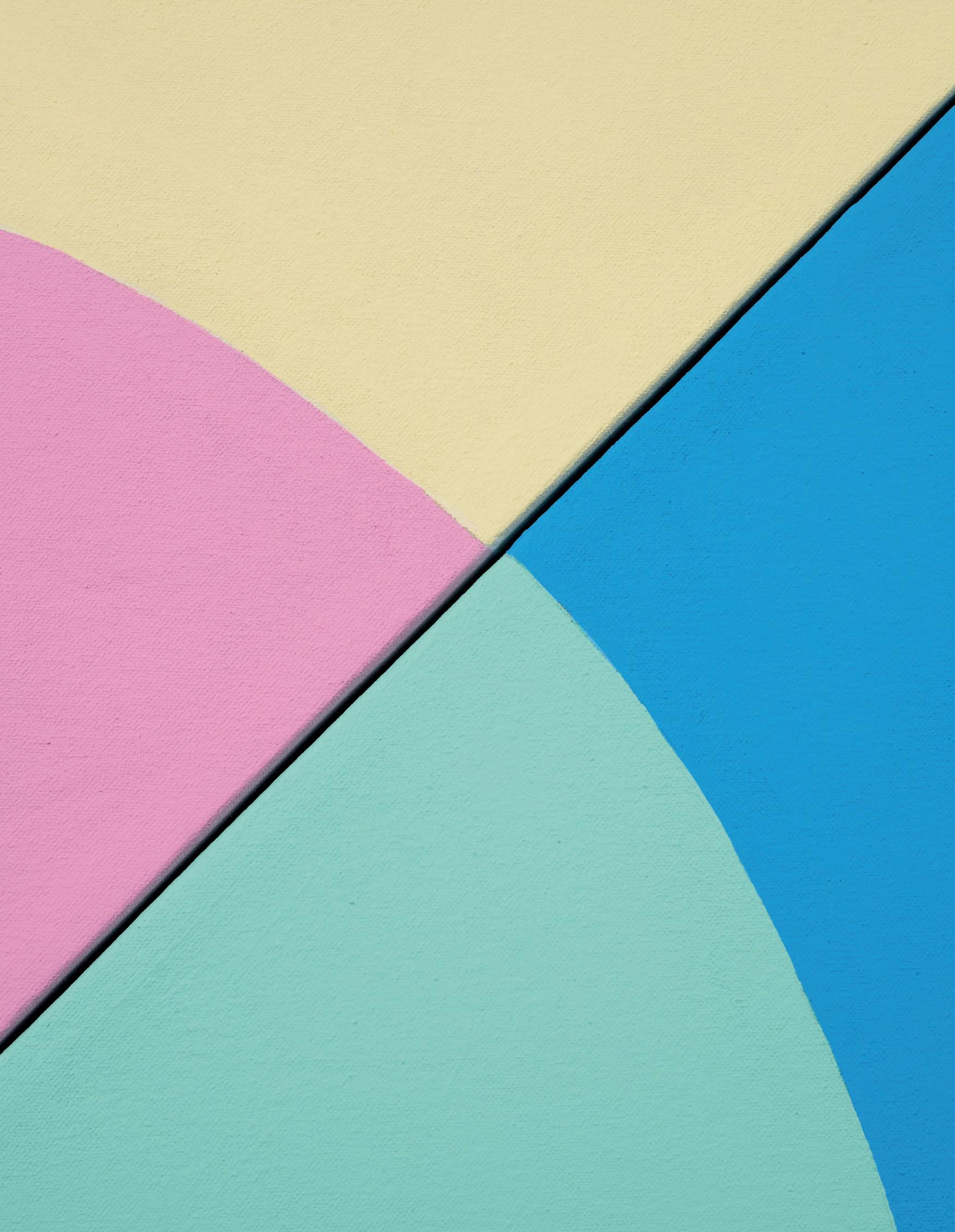
Deliberately presented at an offset, Blue Infinity invites the viewer to consider it either aligned or misaligned. Like Misregistered?, also included in the exhibition, this work honors the Artist’s reverence for printmaking and how all colors can be created and descend from cyan, magenta, yellow, and black. Here, the black has been replaced by a deeply saturated indigo to honor African cultural traditions and symbolically serve as a bridge between the physical and spiritual realm.
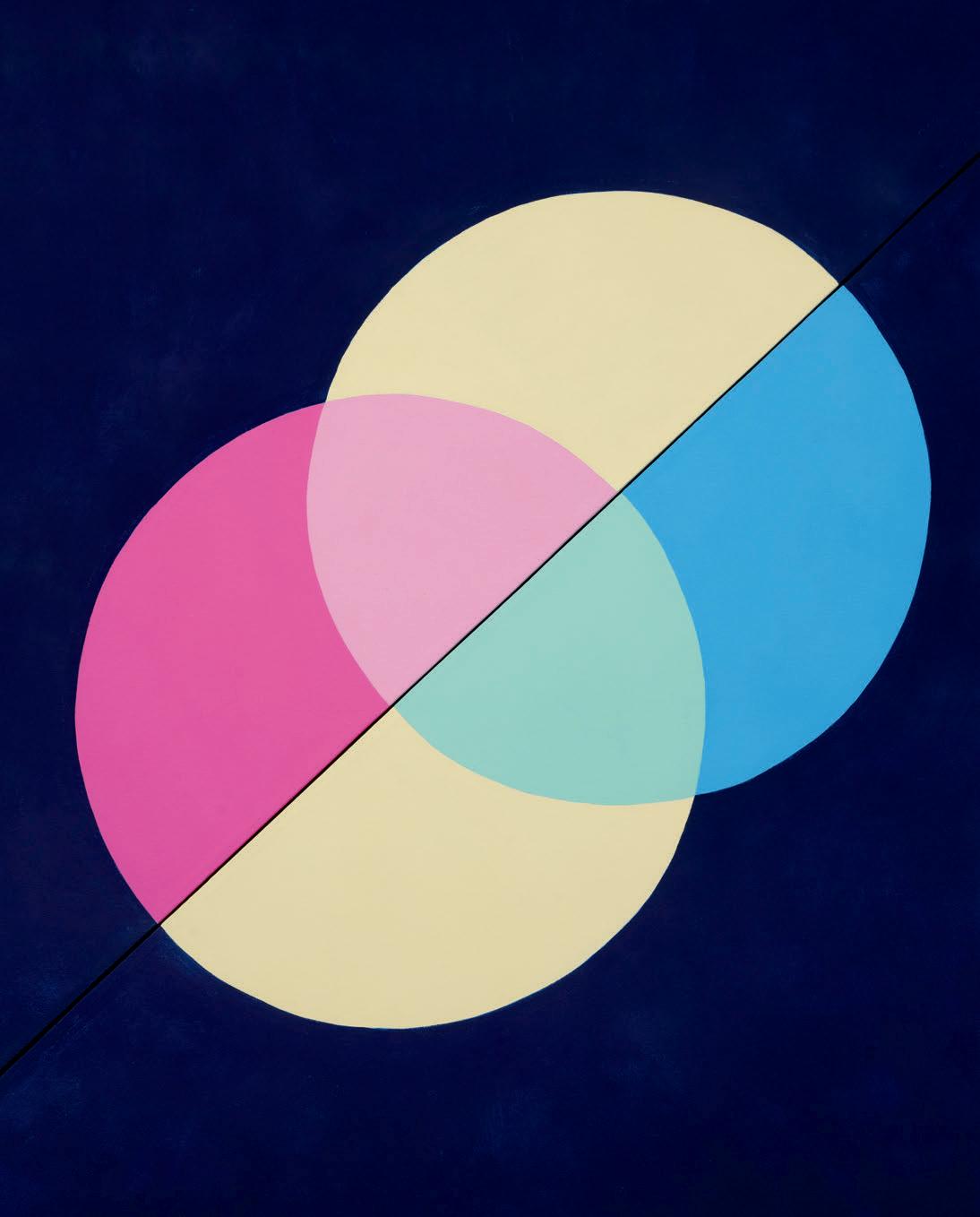
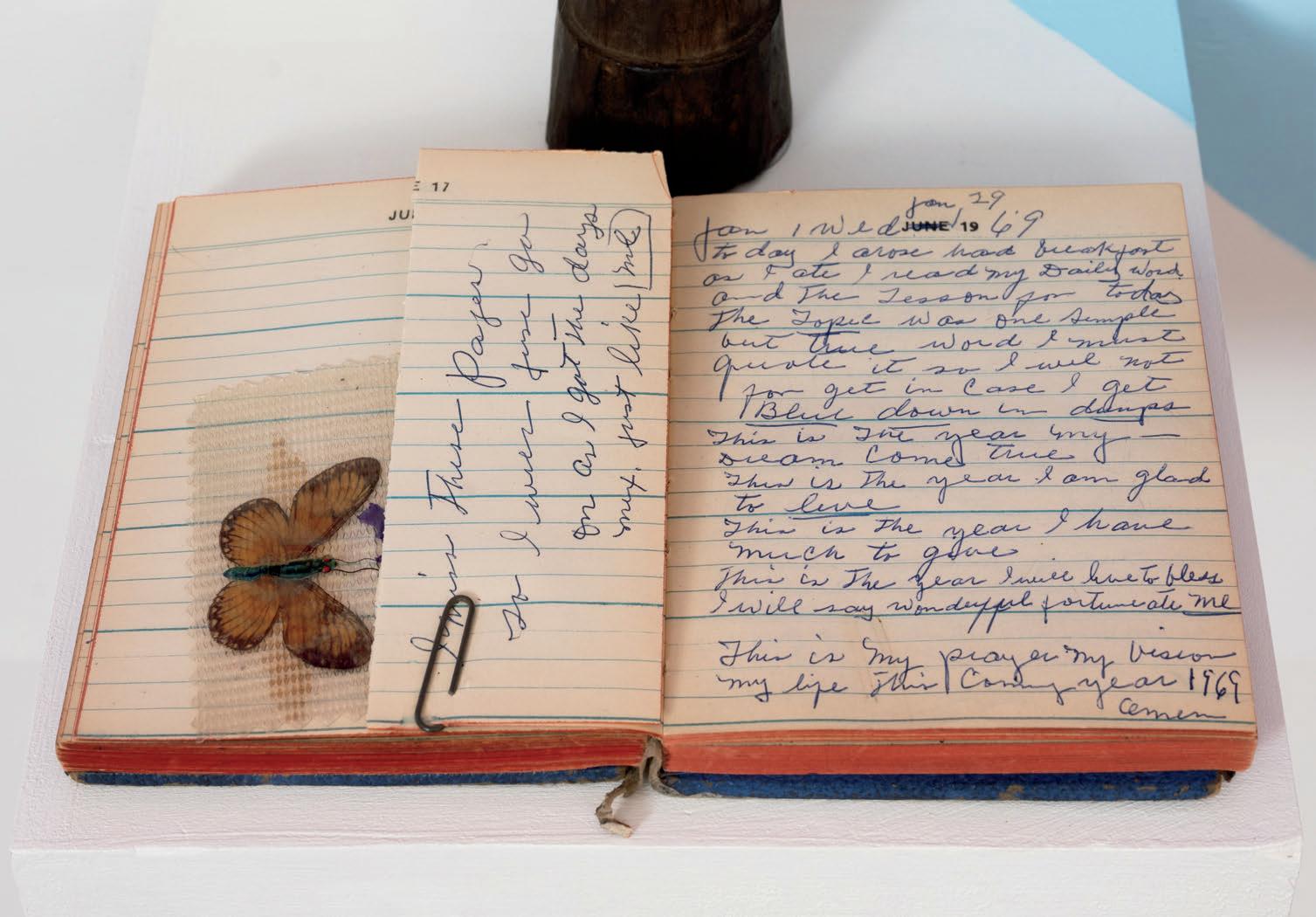
Details, Imar Lyman, Nina’s Orchid, 2026, acrylic on wood and handwritten journal.
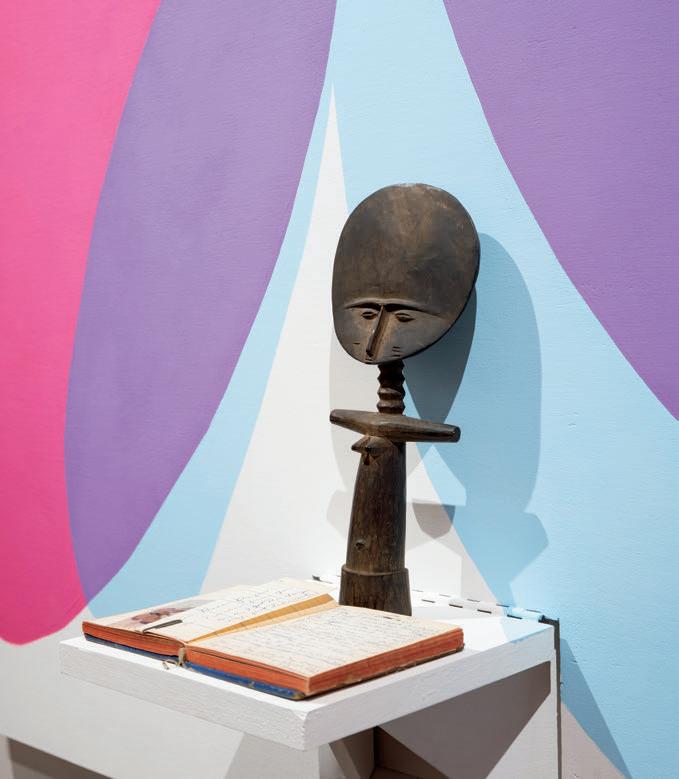
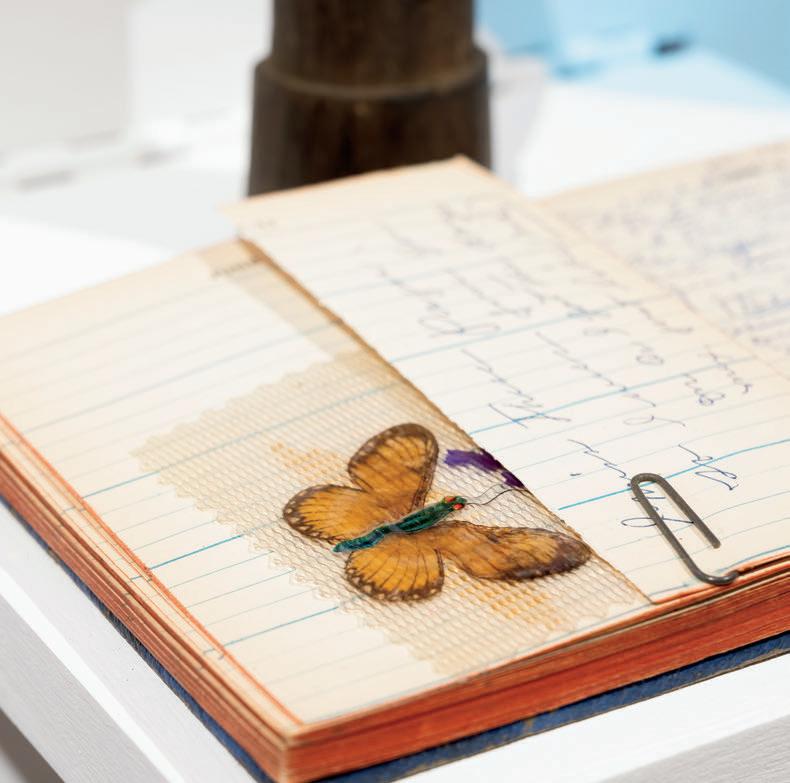
Described as “an homage to ancestors,” Nina’s Orchid (2026) is in part inspired by the Pamunkey, one of the oldest Indigenous nations recognized in the United States, of which Lyman’s maternal grandmother was a member. The work also serves as an altar where geometric shapes, structure, and color carry historical weight, ancestral memory, and familial reverence. On the altar is the personal journal of the Artist’s grandmother.
Yin and Yang (2026), a poured paint piece, honors artist Sam Gilliam—his aesthetic most directly, namely his signature approach to mark making, as well as his beveled canvas. In the center is a reference of the Artist’s fathers ‘black dot’ design. The found metal material was particularly important to the Artist for its presence of West African Andrinka symbols and reverence to the physical and spiritual realms.
With this work, Lyman considers the co-existence of opposing forces in life—joy and pain, light and dark, love and sorrow. The duality is represented by the colors brown and gold, and hints of green, which Lyman notes “play together energetically and geometrically.” Meanwhile, the crinkling effect seen in the tin replicates the collage approach used in Misregistered?.
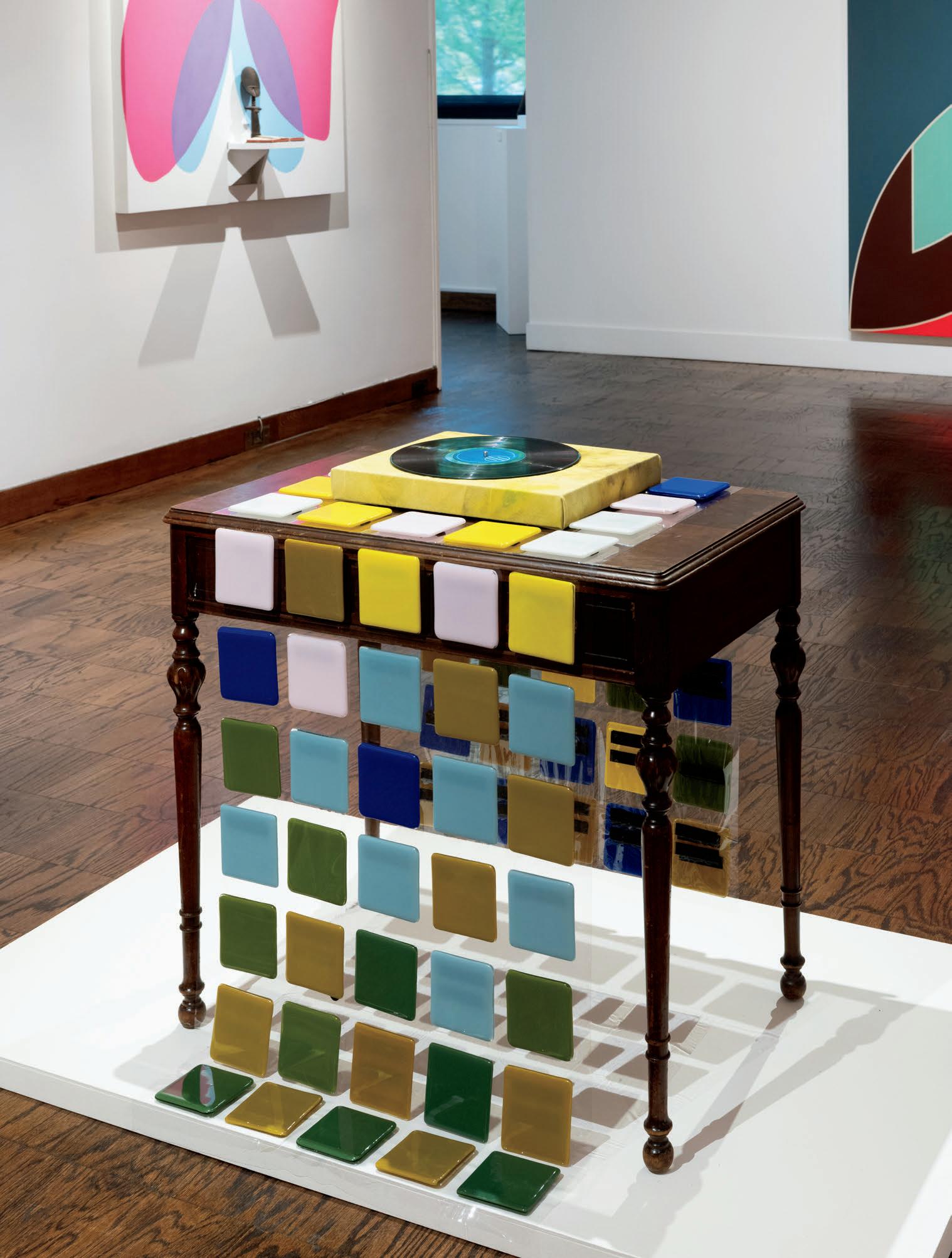
Embodying the notion of echolocation, Altar/Native Sounds (2026) blurs time and space by incorporating historical artifacts and archival objects, along with new materials. The Artist wants the viewer to slow down, listen, and learn from their past “in order to find the answers needed to propel us forward.”
Echo/Location is the work of many hands and I am grateful to everyone who played a role in making it a reality.
Thank you first to Dr. Rhea Combs for serving as not simply a curator, but as a guide and a shepherd of my work. Rhea describes her practice as that of a “cultural doula,” which I think is apt because she constantly pushed me in the “birthing” process and the result is a purposeful, cohesive new body of work.
Helen Chason, Director of The Kreeger Museum, and I have been incubating this idea for years and it’s a joy to finally see it come to fruition. I am thankful to Helen and the staff at The Kreeger for their hard work, particularly Joanna Baker, Registrar and Collection Manager, Katie Capristo, Head of Communications and Membership, and Ringo Lisko, Head of Facilities.
It’s a pleasure to see two institutions close to me come together to collaborate and I’m thankful to Kate Taylor Davis, Executive Director of Pyramid Atlantic Art Center, for leading this partnership with The Kreeger. I’m always happy that my studio is at Pyramid and I’m appreciative to the Pyramid family for their support. I’m especially grateful to Jeana Foley and Korey Richardson for their expert work installing the challenging pieces that comprise this show.
Thanks to Brendan Murphy for his masterful assistance with the carpentry required for this show. Thanks to Patricia de Poel Wilberg, my collaborator in glass work, for her assistance with the fused-glass work in the show. Thanks also to Megan Haidet for her assistance with the sewing work and to Russell Santos for his ongoing work of documenting my practice by video.
I’m appreciative to my collectors, some of whom traveled from far and wide for the opening. My collectors are the base of my support. Many of you have believed in me and supported my artwork since the beginning and you are what allows me to continue to work as an independent artist.
I’m thankful most of all to my wife Tasha, and my kids Haile and Imar Dyer, who support my journey as an artist every day and every step of the way. I love you and I truly could not do it without you.
- Imar Lyman [Hutchins]
Imar Lyman
Echo/Location:
ExploringtheExtra-Sensory The Kreeger Museum
Washington, DC April 17 - July 11, 2026
This catalogue was produced in conjunction with Imar Lyman and Pyramid Atlantic Art Center and organized by The Kreeger Museum.
Published in the United States by The Kreeger Museum 2401 Foxhall Road NW Washington, DC 20007 www.kreegermuseum.org
Helen Chason, Director, The Kreeger Museum
Katherine Capristo, Designer Rhea L. Combs, PhD, Guest Curator
Pyramid Atlantic Art Center 4318 Gallatin Street Hyattsville, MD, 20781 www.pyramidatlanticartcenter.org
Kate Taylor-Davis, Executive Director
Screenprinted Cover & Book Production: Imar Lyman
Image Credits: All images are credited to Vivian Marie Doering.
Copyright © 2026 The Kreeger Museum.
All rights reser ved. This publication may not be reproduced without written
Museum.