I find that the first semester always seems to drag on, with long periods of dullness in September and October belying a rush that comes hand-in-hand with Halloweekend. With exams ahead of us now, that means that the light at the end of the tunnel is closer than perhaps any of us realize.
We’re coming to an ending of sorts here, but next semester, there’s going to be a chance for a kind of a rebirth in the future. Innis students in particular will have a chance to meaningfully impact the future of the Herald on the ballot, by helping us to secure a standardized level of funding to keep putting out the paper at a level of high quality for years to come. That’s why during next semester’s voting season, we humbly request more than your readership; we’re looking for your support in the referendum, to keep the Herald doing what it’s done for years, and to grow well beyond that.
We don’t want the Herald to be the paper of just your generation of students, but of the generations of students to come; and I’ll tell you, that’s a hell of a lot easier when we know that we can pay our printers on time.
This issue has us doing a lot of reflecting on the good, the bad, and the… well, we’re all pretty far from ugly, so let’s just say the good and the bad. There’s retrospectives on the crushing loss of the Blue Jays, the childhoods of our contributors, good food, and our other sister publications at Innis. (Spectatorial and Caméra Stylo, we love you guys!) Now really is the time to look back on what’s important, and E3 is all about what our contributors cared for in 2025. And I’ll tell you one thing… we really care a whole lot about YOU writing for us next semester. So, come January, keep an eye out for the pitch list, because if nobody’s got you, the Innis Herald’s got you, baby. It’s cold out there, so warm up with some other hot people and enjoy this latest issue of the Herald. Yours,
Julian Apolinario Editor-In-Chief
Witnessed on the way to lecture: a car drives by blasting “Golden” from KPop Demon Hunters. Who was on aux?
i’m in love with somebody who will never love me back, and i’m okay with that.
in the 70s, the
Innis Mosaic
was a way for the Herald community to share their thoughts and stories across the college and campus from confessions to updates, if not bar recommendations.
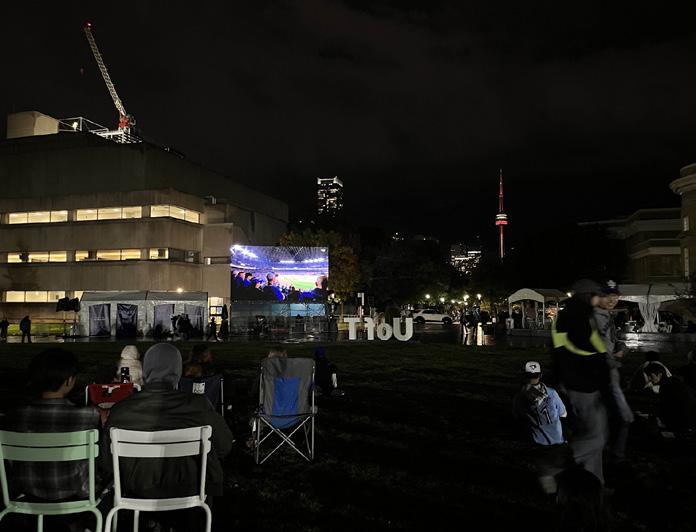
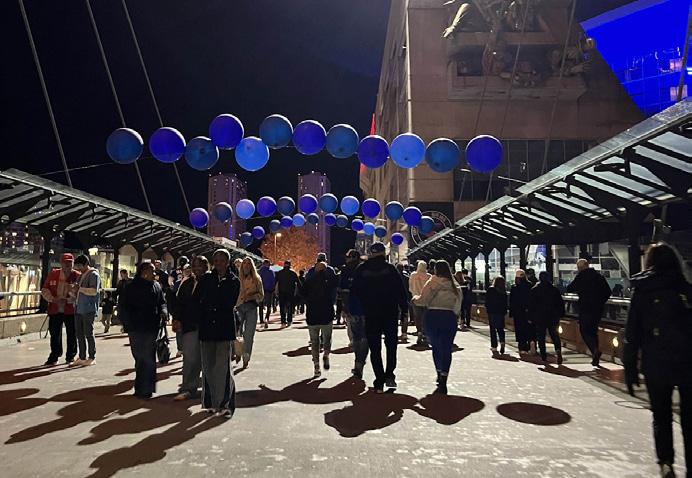
In this special edition of the Mosaic, students told us their stories and poured out their sorrows over the end of the Blue Jay’s season...
No. But I can’t imagine I feel worse than Jeff Hoffman right now. Elbows up.
What do you mean I commuted to campus 4 hours a day and walked 10-20 minutes everyday to go to class ? It’s EXHAUSTING! —(u of t alum who now works here and is regretting it.)
Went to a Turkish party where we were drinking to the Irish song Rattling Bog... these are the types of cultural connections I love to see in Canada
The Blue Jaiac
The jays were the better team and wanted it more. So proud of them for an amazing season!
It hurts as a massive fan. This group was special. Feeling bad for the players, they fought so hard.
Game 7 was the first baseball game I’ve ever watched. Why do I feel so terrible?
I thought that Bo Bichette was about to become Joe Carter :(
Def didn’t marinate in misery until 4AM in post-game interviews… but they’ll be back next year!!!
Still and Will Still Heart ��������
This might’ve been my fault, I’m sorry for watching so many Shohei edits
immediately began the five stages of grief. the denial hit (that was really the last game, we were so close). then i became angry (i’m certain the dodgers bought the win). i then quickly hit the depression stage (they worked so hard and came back sm). especially being a fan with my dad since i was little, it was awesome to see them go so far, only to be stopped right at the end. i had to block my social media on sunday to avoid the depressing post-game clips lol. just a bunch of real good guys. it was amazing to see toronto and the rest of canada come together though, which i am trying to remember as comfort ��
Highlights from 60 Years Ago
The Innis Herald Podcast
With Marilyn Becker
Marilyn: So, I walked into Robin Harris’ (the then-principal’s) office—second day I was in—I said, “Hi! This is who I am, and I want to start a newspaper!” He said “Yeah, sure okay,” thinking nothing would come of it. I got a bunch of people together and we decided to do this newspaper. Unfortunately, we didn’t have anything to do it with. Except this typewriter and this room. So what we did was type out stories. It was almost like a journal, but it was news stories about what was happening at Innis and around—what you saw. We typed them up on these long sheets of paper. And then in the attic of what was then the Varsity building, there was this big machine called a Gestetner machine, which operated on blue ink that was very Jurassic technology—and pretty creepy—we would, after classes, late into the night, run off these sheets, staple them together, and then leave them lying around and hang it in the attic. And it was really an amazing experience. People really liked it; they got a lot of entertainment from it. And I owe it a great deal because from that I started also writing for The Varsity and writing for the Toike Oike engineering newspaper, any kind of writing that I could
With Robert Patrick (I)
Zachary: How do you feel like the experience in Innis College—just being in there, being in that environment—how do you feel like that changed you? Or what did you learn?
Robert: Oh, I can nail that easily. Going into my second year, I wasn’t clear on what I should be pursuing. So I made an appointment to talk to Geoffrey Payzant, who was the Registrar. Friday afternoon, four o’clock. And I respected this guy because he was brilliant. And I thought all I need to do is: make an appointment, show up, and ask the question. So, I asked the question. I said, “What should I do?” And in eight words, he changed my life.
Z: Really?
R: Yeah—and I was known as Bud at that time rather than Robert—he said, “Bud, I can’t help you with your indecisions.” Eight words. And that was the end of the interview. So then I walked out. I was angry, frustrated. I thought, “Gee, I came to this guy who’s brilliant. He’s supposed to tell me what to do with my life!” So, I sulk over Saturday, Sunday—by Monday I start to recall his words. “I cannot help you with your indecisions.” And from that point on, I really started to take control of my life. I had to make my decisions, accept the consequences, good or bad. But that was the impact that Innis College had on my life.
Z: That sounds really incredible.
do. From that I ended up getting a summer internship at the Toronto Star, I did that for two years before I graduated. From then on, I got a job at The Globe and Mail, and then The Montreal Gazette. And it just went on from there. It really started my career in media. And so, for me, this proved that if you really wanted to do something, you can start small, you can start unusually, it doesn’t have to be traditional. And you can really do something remarkable. All you have to do is have the willpower, the confidence, and the sheer brashness of going ahead and doing it. And I’m so thrilled to see what The Innis Herald has now become, and how people are benefiting from contributing to that.
Simba: That’s an amazing story. How The Herald sort of shaped your future because of your involvement with it, it’s amazing to hear.
M: And I think people need to understand, you know, people always say, “Well, when I graduate, I’ll work at blah, blah, blah.” No. I have clear proof of that. If you want to do something, you want to start in college because ultimately, the way I got my first job at The Star was, they read 12 reviews that I did—I was an entertain-
With Robert Patrick (II)
R: I was able to graduate from high school. And I entered Innis college with a 62% average.
Z: Okaaay.
(both laugh hysterically)
R: We were considered late bloomers. And every year, my marks got a little stronger. With the help of the Writing Lab, I was able to write more succinctly and graduated. I thought, “Okay, I’m done. I don’t have to do any more.” But I went back and picked up another degree. And eventually, I wound up with four university degrees. And if it hadn’t been for Innis College, it wouldn’t have happened. So I’m a late bloomer. And here I am talking to Zach sixty-some-odd years later in Hart House and reflecting on some of the things that have influenced me, and the major one is Innis College.
Z: I think it’s important for all our students to really reflect on Innis College, reflect on its history, on how it’s changed, and how it can be a part of our identity throughout our university career.
ment reporter—when I did movie reviews. So, what I tell everybody—and I ended up being a screenwriter in Los Angeles and also a professor of screenwriting in Los Angeles at Loyola Marymount—and what I ended up telling my students: start, even as a freshman, do not be afraid. Ultimately, start doing your stuff right away. Do not wait. Nobody’s getting any younger, you know what I’m saying? And “older” is coming up. I had my first journalism job when I was just eighteen years old. And I don’t see why you have to wait ‘till you graduate. The more you get involved in student opportunities— that you are really interested in—and the more that you can excel and perfect your craft in that arena, the better off you will be. It will stand you in good stead when you do graduate. Try to get noticed—not in an obnoxious way, but in a good way—keep honing your craft. And the way to do that is to volunteer, to get involved in student papers, student media, student podcasts, create things of your own. For example, if you want to create your own poetry journal, create your e-zine, just do things, because too many people think, “I’ll just wait.” And I say, do not wait. Do it.
S: Yeah, I can relate, because I’m now in my third year, and I’m starting to feel that I’m running out of time. And so, I’m scrambling to do as much as I can. (chuckles in “I’m in danger”)
M: See, that’s important, because, frankly, once you graduate, you’re in the land of the many, you know.
R: Well, I think it’s important to look to the future but also take a look at where we’ve come from. As I mentioned earlier in this little chat; stand in front of the old observatory. Take a look at the second-floor glass windows. That’s where The Innis Herald first started. And then just glance to the right. And you’ll see just a grassy area. And that was the location of the Innis College Biscuit Box, the beginning in 1964. Those are our roots.
Z: Those are our roots.
R: Those are your roots as well.
Z: Everyone’s roots here.
R: Everybody’s roots. You’ve got to respect them and appreciate them. We’ve come a long way.
Z: We have. We really have. From a little fishbowl, to getting a new building and then renovations on the new building. It’s really been a long 60 years, huh?
R: Almost seems like yesterday.
(both laugh hysterically once more)
Z: Let’s say you were in charge of talking to the new Innis students or recruiting new Innis students. What do you think would be things you wanted to mention to them?
R: Believe in yourself. And believe in the people around you. And I have a saying, “Go as far as you can see. And when you get there, you’ll always be able to see further.”
Exploring the Definers in Five Minutes Between Lion and Man
Nina Chen
FEATURE
Warning: Please note that this article contains spoilers for those who have not watched Five Minutes Between Lion and Man.
Unfortunately, my dreams of becoming a star on the stage were shattered early in middle school when I realized that my acting skills were so devastatingly bad that I could not even trick my mother into letting me skip school by saying I was “dying from a stomachache.”
My passion for theatre did not remain an unrequited love, though. While I did not have the slimmest chance of becoming an actor, I’ve always been fascinated by others’ talents, and luckily for me, I’ve had wonderful opportunities to review countless theatre productions. Five Minutes Between Lion and Man, presented by Hart House Theatre, was one of them.
When I was first informed about the opportunity to write for this show, I was thrilled, especially after learning that this play was a Greek tragedy. Greek mythology is complex, as it involves grappling with emotionally intense themes. Yet they remain relevant to modern emotions, and sometimes even help us face the inevitable things that our eyes can see.
Five Minutes Between Lion and Man, written and directed by Avi Mangus, captured this essence marvelously, and I am confident it would strike a familiar emotion within many people as well.
After a chaotic night of wine-drinking at an exclusive rave, Agave stumbles out of the party, drunk and happy like
she’s never been before. Playing Agave, Grace Elizabeth Huestis is a bubbly blast. Giggling uncontrollably with flailing arms as the drunken euphoria washes over her, she recounts the delightful night with blissful ignorance. Agave creates a violent fantasy in a frenzied state, convinced that she killed a lion that invaded and threatened the party. With crazed eyes, she smiles proudly, as if she had done a heroic deed.
Yet, Dionysus, played by Dalila Bejar-Ali, insists that she is obscuring the truth. Frustrated by Agave’s avoidance, she furrows her arched brows. Almost begging, Dionysus urges her to remember what she had done. Twisting and turning her long staff masterfully, she embodies a prominent Oracle who guides her to the truth.
But what does the truth matter when it isn’t the one you want? Confused, Agave begins to retrace the night from the beginning, attempting to detangle her memories. As she slowly pieces together what truly happened at the party, a piercingly painful clarity gushes to her – the “lion” that she ripped into pieces was actually her own long-neglected child, Pentheus. That night, Pentheus had been joyfully expressing their queer identity at the party, wearing their mother’s favorite dress.
Despite having seen tons of shows this past couple of years, I had never watched a two-hander performance before, and this one fascin ated me. Each actor fiercely pushed and elevated the other in this emotion ally intense story with
Ava: The Secret Conversations
Farrah Liu ARTS & CULTURE
Imagine my surprise when I stumbled upon a line of theatre-goers queued up for the stage adaptation of one of my favourite Hollywood autobiographies. Elizabeth McGovern, of Downton Abbey fame, has crafted a star vehicle for herself with Ava: The Secret Conversations, now making its Canadian debut at Mirvish’s CAA Theatre.
The play revisits the late 1980s meetings between Ava Gardner (McGovern) and journalist Peter Evans (Aaron Costa Ganis), enlisted to ghostwrite her memoir. Their collaboration imploded after she learned Frank Sinatra had once sued him for libel; decades later, the estate finally allowed him to publish their conversations, which would emerge as Ava Gardner: The Secret Conversations
To me, the book reads as a delicate pas de deux between Gardner and Evans. Evans slips into the role of a confessor-therapist, listening and psychoanalyz -
such force. Every eye was on those two, and those two only; the dynamic of the entire performance hinged on the energy they generated together and built on each other. Undoubtedly, Huestis and Bejar-Ali established a tremendous level of trust for each other from mid-September when they began rehearsing, through to opening day. Below is part of an interview I conducted with the two actors in which they discussed the process of shaping their characters. This section is edited for clarity and conciseness.
Chen: How did the chemistry and dynamic with the only other actor help you shape your performance as an actor?
Huestis: During the callback audition process, the biggest thing that I was looking for was somebody who was going to fight Agave back. Like I needed someone who was going to call me out on Agave’s bullshit, essentially, you know? And Delila (Bejar-Ali) was the only person to physically move toward me and challenge me during the audition. And as soon as that happened, immediately, I knew that Dionysus had to be her – nobody else. Having someone like her, who constantly matches my energy and gives it their all, really helped me establish my own
As Huestis discussed, both actors held a firm stance, refusing to retreat from what their characters
In the final scene, Dionysus chokes
ing a once-mythic Hollywood lioness now erratically pacing through the ruins of her own legend. In their cat-and-mouse interviews, what begins as professional inquiry trembles into something more vulnerable, as Evans becomes quietly enamoured by the very subject he’s meant to dissect. Evans records Gardner’s advances and retreats, corroborations and contradictions, and slowly a fuller silhouette emerges. What’s left is an autobiography that refuses rigidity—not pedantic, not dishonest, but deeply alive.
But McGovern’s backseat steering never quite lands on the book’s delicate nuance. The luminescent Ava Gardner is rendered as a kind of chalk outline—all gesture, hollowed at the centre. The script attempts to impose structure by inserting three flashbacks, with Ganis slipping between Evans and Gardner’s three husbands, but the effect flattens the book’s wandering, lyrical pulse. The slow, intricate unfurling of Gardner and Evans’s friendship is pared down to primal desire. By the end, it becomes clear that the play isn’t truly about Gardner at all—it’s about the Gardner who flickered into being in Evans’s presence, and, perhaps even more so, the constellation of men who once orbited her. Her cinematic legacy receives only a cursory nod, glimpsed in a few projected images of Ava at press screenings with her ex-lover de jour.
through her words, yet she firmly asserts that the ending is what we choose to believe in, and that Penthesus is not dead if we believe so. Pentheus ran away, Pentheus is taking hormones, Pentheus has a new life, and Pentheus is thriving! As she delivered her final message, she stood boldly with her hands open wide, as if forcing the truth out of herself, in contrast to Agave, who stubbornly shielded her eyes from the truth.
To the same question, Bejar-Ali responded:
Bejar-Ali: I was very, very fortunate to have Grace (Huestis). We talked a lot about what our characters meant to us, what that meant to this show, and the dynamics that arose from it. She really helped me naturally transfer what we wanted to do on stage.
What Bejar-Ali said is significantly relevant to people today. As these actors exchanged ideas about what their character meant to them, their words echoed a larger truth about identity.
In the novel Beloved, Toni Morrison wrote, “definitions belong to the definers, not the defined,” but this performance gives us the hope to believe that the definers will be nobody else but ourselves – we can be our own person, and have a happy ending with the story we choose. While the world may not be perfect, we can begin by identifying and openly discussing what we want and what we see in ourselves so that we can work on making it come true. Old habits die hard, but we can continue to believe in a better future and pick up the decayed dreams of those who were confined from doing so.
McGovern’s performance hardly rises above the limitations of the script. The gestures, the shifting accents, the expressions meant to chart Gardner from ingénue to post-stroke fragility were pushed and inflated past their natural scale. The intuitive, magnetic Gardner of the page becomes, in her hands, oddly erratic: a figure bordering on the loonish. The tragedy is not in Gardner’s decline, but in how diminished and distorted she becomes on this stage.
Ganis also falters with the accents now and then, but the script gifts him far richer terrain to play in. Evans longing to write a respected novel instead of a trashy celebrity biography; Sinatra ducking the spotlight rather than basking in Gardner’s radiance. Each man carries his own set of stakes and private bruises, yet there’s a subtle resonance among them—a quiet kinship that Ganis teases out with ease. Watching that thread connect his characters becomes one of the production’s rare, genuine pleasures.
The play ultimately amounts to a series of shallow plunges into the buzziest headlines of Gardner’s life and career. I left the theatre disappointed; the projected images of Ava’s startling beauty and raw vitality only made me long to return to the book—and to her films. The production itself, however, leaves almost nothing else that lingers.
Fashion: Whose Vision Is It Anyway?
Chloe H. T. Law
ARTS & CULTURE
“This isn’t my Balenciaga, where’s Demna?” someone commented on the livestream as the lights went down on the first Balenciaga Collection by Pierpaolo Piccioli.
But two comments down, another viewer was practically buzzing. “Finally. A return to Cristóbal’s discipline—clean lines, real structure. Balenciaga is back.”
The applause that followed was neither hesitant nor unanimous; a fractured chorus mirroring the split opinion across social media. Within minutes, competing claims flooded the feeds—some mourning the absence of Demna’s subversive dystopian humor, others praising a so-called “restoration” of the house’s couture roots. The comments weren’t merely about taste: they pointed to a deeper uncertainty running through fashion right now: when a new creative director takes the helm, whose vision are we actually seeing—the brand’s, or the designer’s?
This question has become especially urgent in today’s era of musical-chairs leadership. Appointing a creative director is no longer simply handing someone the keys to a legacy; it’s a high-stakes corporate gamble, a decision that must promise continuity and deliver reinvention. Increasingly, audiences seem unsure which side of that equation they’re supposed to cheer for.
The Weight of a Name—and the Shadow of Another
Recent reshufflings have made this tension more visible than ever. When Jonathan Anderson was rumored to be in conversations with Dior, commentary split before anything was confirmed. Anderson has become one of the most influential designers of his generation, sculpting a hyper-craft, intellectually playful identity at Loewe and elevating it into cultural obsession. Dior, meanwhile, carries one of the most codified archives in fashion—the “New Look,” immaculate tailoring, floral silhouettes, and a carefully curated femininity.
What happens when a designer known for sculptural knits and leather origami is asked to interpret a legacy rooted so firmly in 1950s silhouette logic?
The speculation wasn’t just about aesthetics. It was about control. Would Dior demand that Anderson bend towards house codes, or would his arrival act as a reset, letting his sensibility dominate the brand? In fashion today, either outcome is possible— and both are politically charged.
Similar questions greeted Matthieu Blazy as he stepped into Chanel, a role that carries expectations bordering on myth. Karl Lagerfeld’s decades-long authorship made him almost inseparable from the double-C monogram. Now, with consumers hungry for novelty, the house must walk a tightrope: how much of Chanel must remain Coco, how much Karl, and how much space is left for someone new to leave a mark?
Big Names vs Big Houses
Part of the tension stems from how designers ascend today. Many newly appointed directors build their reputations not through slow, methodical authorship but through standout flashes—viral pieces, cult handbags, or breakout capsules at smaller labels. The industry now rewards immediacy: the bag that jumps to waitlist status, the show that dominates social media within hours. Designers are expected to be personal brands before they become stewards of house brands.
This has created a strange inversion. Where houses once absorbed designers into their identity—think Nicolas Ghesquière adapting his futurism to Balenciaga’s architectural vocabulary—today, designers arrive with highly recognizable signatures. When they take over a major house, the question becomes whether they are shaping the brand or simply parachuting their own aesthetic into a preexisting shell.
Critics have been quick to pounce when it feels like the latter. Some argue that new directors appear to be “finding themselves” more than finding the brand they’re hired to interpret. A first or second collection often resembles their previous work: similar silhouettes, similar palettes, a vibe unmistakably “them.” Thrilling to some; disorienting to others who feel the brand’s DNA slipping.
Heritage as Anchor—or Burden Fashion houses love to invoke “heritage,” but heritage can be both an anchor and a trap. It provides a narrative to draw from—iconic silhouettes, signature spirit—but also locks expectations firmly in place. When audiences say, “This isn’t my Balenciaga,” they’re often defending a relationship with a brand that shaped their self-expression. Loyalty to a house is emotional, not rational.
Yet heritage can also fossilize a brand, trapping it in perpetual reenactment. A house too beholden to its archive risks predictability and irrelevance. The challenge for any new director is to strike a balance between tribute and disruption—to make something that feels both true to the past and undeniable new.
Some succeed by treating heritage as material to remix. Others tear it down, bet-
ting on shock as innovation. Both approaches have their believers and their critics.
A First Season Is Not a Verdict
Historically, the first show was not destiny. Phoebe Philo’s early Celine collections hinted at her eventual revolution but didn’t define it outright. Hedi Slimane’s controversial debut at Celine eventually grew into a commercial powerhouse. Even Demna— now synonymous with Balenciaga’s entire cultural moment—began with a quieter collection that only later evolved into the force we recognize.
But today, debuts are treated like referendums: instant reactions, instant verdicts. The audience wants immediate proof that the designers “gets” the brand —or condemnation if they don’t.
Yet creative vision takes time. A brand is a living organism, not a fixed image. Judging a new director solely by their first steps is like reviewing a novel after the first chapter.
Whose Vision Wins?
So whose vision is it, anyway? The house’s? The designer’s? The investors’? The consumers screaming in the comments?
The answer—productively, frustratingly—remains undecided.
What is clear is that the balance is shifting. Big-name designers carry unprecedented personal influence, while heritage houses cling tightly to continuity. The tension between these forces doesn’t weaken fashion; it animates it. It keeps the industry moving, arguing, evolving.
And that first post-Demna Balenciaga show? Only time will tell whether Piccioli’s collection makes a rupture, a restoration, or the start of something neither side fully anticipates. Fashion rarely reveals its future immedi ately.
Visions take sea sons—sometimes years—to become legible.
From now, the question remains open. And perhaps that uncertainty is exactly what keeps fashion, in all its volatile brilliance, alive.
Sam Gellaitry Stuns With Auditory Magic On ANYWHERE HERE IS PERFECT
Layering past with present to produce the future: who knew time-travel could be this catchy?
Matthew Barquet REVIEW
Are you a 20-something-year-old? Active social media user? Maybe an edm enthusiast? Hell, do you at least watch memes? If you answered yes to any of these questions, then you’ve probably come across Sam Gellaitry in the last few years. You may not know what the Scottish-born, up-and-coming edm producer/ singer-songwriter looks like, but you do know what he sounds like. In 2023, Gellaitry’s dance-pop track, “Assumptions” (2021), became a viral TikTok sensation. An ear-catching electronic melody prominently featured alongside dance and nostalgia-based meme content, “Assumptions” gradually rose to become one of the most recognizable electronic/house hits of the last few years. But who exactly is Gellaitry, and musically, what does he have to offer outside a series of slowed-down and sped-up “Assumptions” renditions?
Having garnered initial momentum on the popular online music platform, Soundcloud, in the same vein as his many influences (Kaytranada, Toro y Moi, Flying Lotus, and more), Gellaitry began captivating critics with the release of his 2019 Mixtape, Viewfinder Vol 1: Phosphene. A sonic excursion that blends electronica with jazz-fusion, trap, and prog, amongst other genres, Viewfinder preceded his fourth EP, IV, in 2021, where Assumptions marked his first taste of mainstream commercial appeal. Characterized by a unique blend of 80s-inspired pop synths, love-crazed lyrics, and modern House/EDM fusion rhythms, “Assumptions,” in its ever-growing popularity, sparked a crossroads for the avant-garde, prodigal-like producer. With a new set of eyes and ears all over, ready to launch him higher into broader musical horizons, what exactly should a debut album sound like? Flash forward four years, another mixtape, and a collaboration with PinkPantheress later, and we finally have the long-awaited official introduction to Sam Gellaitry: ANYWHERE HERE IS PERFECT (2025).
True to his roots as an electronic taste-maker, groove-master and sound-bender, ANYWHERE HERE IS PERFECT opens on a cinematic note with track 1: “LIGHTNING.” Commencing with an ominous drum-repetition that leaves the listener initially unsure of the journey ahead, Gellaitry triumphantly ignites the record’s journey with the incorporation of bright synth harmonies alongside love-struck lyrics that boldly proclaim what this record will capture: excitement, infatuation, heartbreak and all the other symptoms of love with dance rhythms, innovations and homages. After “LIGHTNING” strikes, track 2: “START UP A RUMOUR” carries the synths into an electro-pop number where Sam recalls warnings given to him, rejecting the dangerous rumours of his romantic obsession. The track is as danceable in melody as it is apprehensive in lyric. The pattern continues on track 3: “NERVOUS,” where Gellaitry describes the alluring, yet dangerous mystique of another that simultaneously attracts and frightens him. Accompanying these sentiments is a chorus just as intoxicating, mixing
abrupt guitar riffs with aggressive drum stems. The track culminates in a transcendent, psychedelic-esque synth-solo that cements “NERVOUS” as one of the hardest-hitting tracks of the year—essentially the older sibling of “Assumptions,” but a little more jaded from the quarrels of love that the latter so blindly accepts.
The sinister soundscape of “NERVOUS” grooves into a more upbeat melody on track 4: “CURIOUS”, where Gellaitry and Toro y Moi mix chopped vocal stems and synths with lyrics detailing Sam’s growing obsession with another despite his prominent social and personal differences to them. Irony becomes the lesson, as his curiosity quickly turns into denial, unable to see the affections for the miscalculation they are. This theme develops on track 5: “DANGER!”—a strong title for a song that functions as a warning from Sam to his attraction, who is now cognizant of his unhealthy infatuation, yet unable to stop himself from his pursuit. The echoing, siren-like loop that forms the main melody, alongside the deep synth-bass backing, further cements its hazardous nature. Track 6: “ON&ON,” then carries the danger as a personal introspection, where Sam discusses his own struggles with trust and reliance. The production inverts that of “NERVOUS,” utilizing an upbeat drum pattern and synth solo to contrast its hesitant lyrics. “ON&ON,” in reflection, becomes the stylistic twin of “Assumptions,” sonically similar yet more nuanced in its subject matter.
The second half of the album marks a distinct change from the first, with a brief, interlude-designed track 7: “LOVE ON ME.” Here, pitched whistle-style synths harmonize alongside kick drums to produce a dreamy aquatic atmosphere akin to compositions one would hear in an underwater video game level. The lyrics as well shift into the positive, as Gellaitry pleads with the lover not to miss out on a rare opportunity for genuine romantic intimacy. With “LOVE ON ME,” the album transitions from straight dance anthems into slower-tempo, somber moments equal in introspection, ambience and desire. Track 8: “CLOUDS” embodies this change through a digital wave of harmonizing synthesizers that accompany a faint call for help, as Gellaitry’s solitary, dissociative tendencies manifest into a cry for companionship. Alongside these cries are a procession of embellishing vocal layers and chops that produce the ascendant-like, ambient-influenced meditation on love. The listener is no longer dancing here, but floating, as “CLOUDS” suggests. Things take a more melodic turn on track 9: “RESTORE MY FAITH,” an R&B-inspired deepcut that becomes the late-night slow song of the dancefloor. Classy, seductive keyboard progressions and laid-back drums insinuate the comforting lyrics of hope for the couple’s future.
The final side of the record starts with the emotional climax and most ambitious piece of ANYWHERE HERE IS PERFECT, track 10: “SCAR / A NEW VOID.” A 6-minute sonic opus split into two parts, “SCAR” utilizes fast-tempo drum kicks and blaring electronic horns to emphasize the permanence of Sam’s sudden heartbreak—a “SCAR” both expected, yet painful nonetheless. Despite the agony, Gellaitry opts for forgiveness as “SCAR” becomes “A NEW VOID”: a drumless, 8-bit infused decrescendo where Sam insists that despite all the cautionary tales, rumours and suffering, he does not regret his decision
to try. Track 11: “DON’T TRY” functions as the ‘dayafter’ moment of this romantic disaster. Gellaitry, now conscious of his flaws and inability to be a proper lover, inverts the warnings given to him and pleads for his partner to abandon him and his cursed affections. This moment marks a breakthrough, as for the first time, Gellaitry sets aside his own desires for what is best for his partner. In a sense, this selflessness marks the first ‘true-love’ sentiment of the album. Musically, this development could not be more French House, as the drum breaks, synth basslines, looped piano chords, and vocoder-infused plugin vocals produce a melody reminiscent of 2000s-era Daft Punk mixes. A tribute laced with irony, as the heartbreak and maturity of the lyrics memorably contrast with the upbeat popdance grooves of the production, creating a style that simultaneously reminisces on its predecessors while venturing into the future.
As the melody fades, the percussion remains as day transitions to night on the final track: “YOU MIGHT FIND THE ONE,” where Gellaitry’s talk-box vocals and adlibs complement the proclamations to move on, grow, and be right for his future soulmate. The first minute serves as a build, gradually layering drum patterns and vocal harmonies until the final release (1:10) and breakdown (2:27) which triumphantly collapses under heavy distortion (3:36) as a last goodbye. A pause. The electronic soundscape then fades as a trace of acoustic life materializes in its final moment. Angelic, feminine backing vocals and soaring orchestral strings descend from the skies to close the track and bring the entire album back home. After experiencing all the ups and downs synonymous with love, the computer has finally become human.
And in just 45 minutes, we finally have ANYWHERE HERE IS PERFECT. A grandiose, earcatching start that cements Sam Gellaitry’s distinct style as an electronic tour de force. Fusing the abstract approaches of his mixtapes with the virality of his Assumptions-era dance-pop anthems, Gellaitry has undeniably paved a new lane for electronic artists brave enough to blend any genre, past or present, that they so please. Just how far this road goes remains to be seen. Within this sonic kaleidoscope of disco, funk, synthwave, and electronica throwbacks alike lies a timeless quality that renders Gellaitry’s debut album both an homage-inspired reflection of the past and an experimental-infused gateway into the future. A fitting title; had this been released a decade ago, or two, hell, even three from now, anywhere, really, this would have been perfect.
Floating in an overflowing sink in the Innis College men’s bathroom was a sealed bottle with some rolled-up paper inside. Once the faucet was turned off and the water cleaned up, the contents of the bottle were found and reported to the editors of the Innis Herald. The document inside has been reprinted here in its entirety. What follows are…
The Movember Diaries
Day 1: The Dodgers beat the Blue Jays. I feel like Old Yeller at the end of the movie. Stubble doesn’t keep me any warmer as I walk back home in the November chill.
– Facial Hair Level: Barely there.
Day 2: Ate toast for all three meals. Still reeling from Blue Jays losing.
– Facial Hair Level: Reflective of depressive state.
Day 3: The Innis Herald came out. First spark of joy I’ve felt in the past 30 hours. First time I’ve ever grown a moustache before, and so far, this shit fucking sucks.
– Facial Hair Level: 5 o’clock shadow all day.
Day 4: Had my last post-exam midterm… I am going to get an Etsy Witch to place a curse upon my professor for giving us 50 minutes for 2 essays. I wish my moustache was longer so I could twirl it thoughtfully.
– Facial Hair Level: Wispy.
Day 5: I miss what we had together. Every day, I think about the way I used to rub it into my face until it was covered in white foam. Can’t wait until I can use my favourite shaving cream again.
– Facial Hair Level: Short, longing for it to be gone.
Day 6: Thirsty Thursday at the Madison Avenue Pub. My buddies say that women
love a man with a moustache, but here I am, just itchy and alone. Facial hair at 1.7/10.
– Facial Hair Level: Awkward.
Day 7: Went to Free Film Friday and saw the cutest girl in the front row. She was with her friends, and before I could work up the nerve to talk to her at the end of the movie, they left together. Probably a good thing. I look patchy as shit… – Facial Hair Level: Not all there.
Day 8: The Leafs just got whipped by the Bruins, and I have a paper due tomorrow. I don’t know if I can go on like this anymore. Facial hair at 2.5/10. – Facial Hair Level: Noticeable.
Day 9: The moustache is starting to look pretty, well… We might be getting somewhere. – Facial Hair Level: Encouraging.
Day 10: My roommate got back from his parents’ place and came back with a carton of his dad’s Chinese cigarettes. Did I mention how much I love my life?
– Facial Hair Level: Too happy to notice.
Day 11: Smoked too many Chinese cigarettes and woke up feeling so sick, I didn’t go to my 9 a.m.
By Augustine Jones
Threw up a little, and it got in my moustache. Gross. – Facial Hair Level: Long enough to get sticky :(
Day 12: My razor is making eyes at me. “You just want to shave it off, don’t you? Get all clean and smooth.” I had to take a cold shower. Nearly halfway there. – Facial Hair Level: Persistent.
Day 13: Just found the girl from FFF on Instagram. We already follow each other, and she just posted about going to the next one… I guess I have my Friday night plans. Hope she likes a moustachioed man. – Facial Hair Level: Hopeful.
Day 14: Left the movie… amazing. Even more amazing is that I’m getting coffee with Tanya tomorrow. She said she’d been following me on Instagram for a while, and that I looked even cuter clean-shaven… I know what I have to do, but I don’t know if I have the strength to do it.
– Facial Hair Level: The real deal…
Day 15: Brothers, I have betrayed you. I leave this as my last will and testament to the days of Movember. Know that I have cherished our moments together, and that I will always keep our goals of furthering men’s health globally. Sorry guys, but I gotta see about a girl.
– Facial Hair Level: Gone too soon.
What to read when you don’t want to read
An English Major’s guide to reading when you are
Nghi Nguyen
FEATURE
(1) You do not have to be good Lately I’ve found myself lacking any desire to read for pleasure, which is ironic because I love reading, I do. So much. I try to make reading a habit, but as with all good habits, something gets in the way. I get tired, my head hurts, I wake up late, I am busy. I have so much to do. I run out of time. So I lie down. I doomscroll. And another day ends.
What if: I do not have to be good.
(2) Tomorrow, partly cloudy with a chance I discovered recently that I do not have to finish a book to read. Nor do I need to start a book. Just open one right in the middle. Poetry collections offer themselves to me, patiently. Mary Oliver, Carson, Vuong, and Whitman, my idols, my elders. I read one verse, one stanza. I do this as often as the sun shines in a Torontonian winter.
This morning the sun is shy. I don’t get mad at it. I’ve been struggling with bravery too.
(3) And I would say I love you I used to read a lot of books on transit. It was the best way I knew how to pass a long commute, but nowadays, I wake up still half-asleep. I prefer to rest my head against the streetcar window and play music. I listen to the same albums over and over, albums I’ve
tired and times are trying
loved since high school, and I never tire of them. My familiar music comforts me. It is a blanket I get to take out of bed and into the world.
This is reading too. Truthfully, it is the method of reading I should be adopting for course texts: with many returns. Return, reread, and the same words rest themselves differently in the bed of my brain.
I open my phone to change the playlist, and I see the picture of my partner I love so much. I should be better at calling her “baby.” But, for some reason that I can’t gather, my voice would catch in my throat.
(4) Fear or love?
I go into an English seminar and I speak. I speak possibly too much, without perfect knowledge of theory or history. I speak through the exhaustion that magnetises my head to the soft crook of my arm. My points are unsalient. A peer counters and I respond shakily. But I speak for as long as there is still air in my lungs. I have to. I have fought too hard for my seat in the room.
I changed my major to English after my first year. I came into university for Biology and I found that I could not breathe. I choked underneath the pressure. I cried to my mother on the phone. I told her I could not spend my life this way.
References, and reading* recommendations:
1. “Wild Geese” — Mary Oliver, from Dreamwork
3. “Futile Devices” — Sufjan Stevens, from Age of Adz
5. We Are the Ants, Shaun David Hutchinson
(5) Because we are the ants
The summer I broke my mother’s heart was the worst summer of my life. I was in a state of crisis, and the safest thing for me to do was nothing at all. I slept in. I left my bed unmade. I took long walks.
When I was ready, I reread my favourite YA novel. I love young-adult literature because I have been a teenager for much longer than I’ve been 20. Young adults have so much responsibility but so little power. So much to say but little credibility. Whenever I feel overlooked, I read YA to feel seen. And, when seen, I see better too.
(6) [E]very thing in the dim light is beautiful I get out of my evening class at 8 p.m., starved and lethargic. The cold slices into my cheeks. I stand on the steps of Robarts and look below. I read the land. The first snow of the season is melting. The wet concrete sidewalk glimmers under the street lamp, and I am overwhelmed with feeling.
I want to call my girlfriend. I want to tell her what I’m feeling, which is simply so much. Even the sadness and the cold are beautiful. How wonderful it is that, right here and now, I get to feel and see every thing. My partner picks up the phone. My heart races. Her lovely laughter and voice, I read that too.
2. “Beautiful Short Loser” — Ocean Vuong, from Time is a Mother
4. “Louder Than Words” — Jonathan Larson, from tick, tick… BOOM!
6. “Song of Myself” — Walt Whitman, from Leaves of Grass
*Note: In literary studies, “literature” is scarcely limited to the written text; it is the encapsulation of a human feeling. “Reading” is thus a broad word used to describe the act of consuming, understanding, interpreting, analyzing, and feeling in response.
Filmmaking as a Student: Sophie Zhang on her Debut Short and U of T’s Creative Networks
Chloe Gong--Miniere INTERVIEW
Sophie Zhang is a second-year Cinema Studies and Philosophy student. Her first film, Song of the Slaughterhouse, premiered at the 2025 Buffalo International Film Festival. Zhang reflects on the production process behind her debut, the campus organizations that helped bring it to life, and how studying cinema shapes the way she approaches filmmaking.
This interview has been edited for clarity and conciseness.
Chloe Gong--Miniere : How would you describe this film?
Sophie Zhang : CINSSU, Hart House Camera Club, and Hart House Film Board collabed to select two scripts they’d give funding to, to help the directors realize their scripts. The deadline was really close when I saw the message, and I realized I couldn’t write an original script, so I chose one of my short stories from high school. Song of the Slaughterhouse is mainly about a worker, Jimmy, about his experience working in the slaughterhouse and how this experience changes and distorts his lens. So it’s more of a metaphor to me, of alienation and a kind of dissolution. And it’s just so angry because I was, like, so angry during high school. So it had that emotion in the script.
CGM: Had you made a film before?
SZ: Back when I was 11 years old—and that was not a film! *laughs* We were graduating from elementary school, so my teacher said we could make a memorial/short film. I wrote and shot it all. But yeah, SOTS is my first film.
CGM: Wow, I imagine you were learning a lot during this experience!
SZ : Definitely. CINSSU and the Film Board were involved, and they have a lot of prior experience—Joy from CINSSU gave me a lot of ideas of how a professional production should go.
CGM: What made you decide to apply?
SZ: I’m a Cinema Studies student, so making a film is sort of practicing what I learned. Also, I draw, and film is another way of realizing my vision, through moving images. It makes you realize your story can come true—seeing that is a great temptation for me!
CGM: Are you interested in being a filmmaker?
SZ: Yes, definitely. I’m also in Philosophy, so I’m considering either grad school or being a filmmaker. It’s hard, even in Toronto, where the industry is big, to only do film stuff. Given the chance, though, I’d really want to.
CGM: I’m wondering—what was the process like, getting other people involved in your project?
SZ: We opened an application form for cast and crew positions. CINSSU re-shared my post, which definitely helped. There were 40 actor applications total, which was surprising because I know a lot of my friends who make student films struggle finding actors. During pre-production, I made a pitch deck, which told my crew what kind of mood and style I’m going for. The most stressful part was the location, which we needed to book in advance. But thanks to Hart House stepping in, we could book inside—that was a big convenience for us.
Because it’s about a slaughterhouse, we had a lot of props [including a pig head, guts, and a baby pig]. Those were also hard to make!
I had a few meetings with my actors to give them some directions of what I was looking for. With my director of photography, we made a list of all the shots we were doing throughout the film. Then, the producer and I made the shooting schedule by grouping similar shots together.
It was a two-day shooting, and production was pretty simple. During the post-production period, I made another call for crew, for editing, score, and colouring. Those I reached out to ended up declining, so my producer and I edited and coloured ourselves, and the music was by a friend of Grace [our mutual friend].
CGM: After you made the film, how did you go about submitting it to festivals? And how did it feel, being selected by the Buffalo Film Festival?
SZ: Submitting to film festivals isn’t too hard. You go to a website called Film Freeway and you fill out all of your film’s information, including crew and cast, stills, a trailer, your film, the poster… Then, you submit to different categories, and you pay. Like, a lot.
*laughter*
I was looking for festivals that I could actually attend, mainly in Canada and also some in America. Buffalo is near, and they have a category for local students, which includes Toronto—it’s part of their radius. And it was very cheap. So, I submitted to the festival. The notification came at the end of August. It was SUPER exciting!
CGM: What would you say was your favourite part of the whole process?
SZ: Oh, definitely the shooting. I was so exhausted during pre-production, partly because many of my tasks are normally for producers and the assistant director. But being a student set, we were a small crew, so I had to handle all the pressure and decision-making. Which was great! But also stressful.
Shooting is just fun—seeing everyone playing their own part, coordinating together and everything was really, really exciting. I would definitely go through all the stressful process again just to get to the shooting! I
also worked on other student sets, and the one thing I enjoy most during shooting is that there are sudden crises, which means you learn to problem-solve. It’s exciting and motivating, because it makes you realize, okay, I can do all of this.
CGM: Are you currently working on any projects?
SZ : I want to do another film next summer. It’d be longer [than SOTS], which had a page limit. But the main problem will be looking for crew and cast. Without the support of CINSSU, it’s hard for student sets, especially ‘cause they’re unpaid.
CGM: You mentioned the importance of the organizations and people that supported this film. Would you say that, as a Cinema Studies student at UofT, what you learn in the classroom influences your work?
SZ: Hmm… I can’t say, for example, that any choices I made were because of CIN105. But I do think that the films we watch have a certain influence on my style and what I’m drawn to. Also, having the right way to talk about your film, knowing all the terms, is important, and it’s something we learn in film class. But all the critical stuff, they don’t really apply, you know?
There are definitely a lot of films I wouldn’t know without my classes. And I think having an awareness of all the parts in films—I didn’t know about editing styles before!—is also important.
CGM: Yes, and I’m guessing being in such an environment, around other people who care about film, is also helpful.
SZ: Yeah, for sure.
CGM: Are you submitting to other festivals?
SZ: I’m still waiting for some responses, but getting into one was already huge for me, especially as a first-time filmmaker!
CGM: Yes, I imagine it was like a confirmation of your craft!
SZ: I’ve also heard that CINSSU is holding a film festival next semester. I have hopes that [SOTS] will be screened there… So, wait to check it out!
And in the meantime, take a look at the thrilling trailer:
Why “Arnold’s Christmas” Remains an Untouched Childhood Gem Films of 2025
Herald, you know we love a good democracy. That’s why we’ve turned to for your favourite films of 2025. And now… the results are in:
Ario Shakarami REVIEW
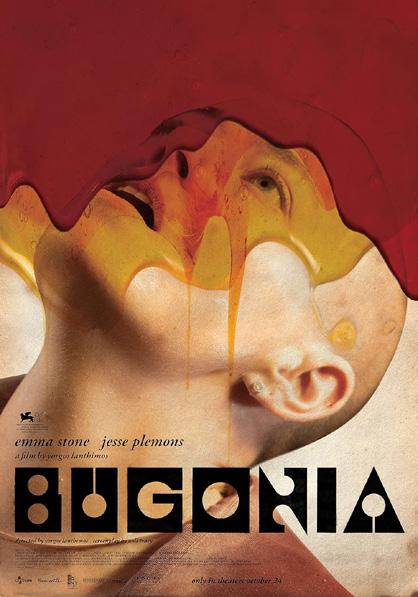
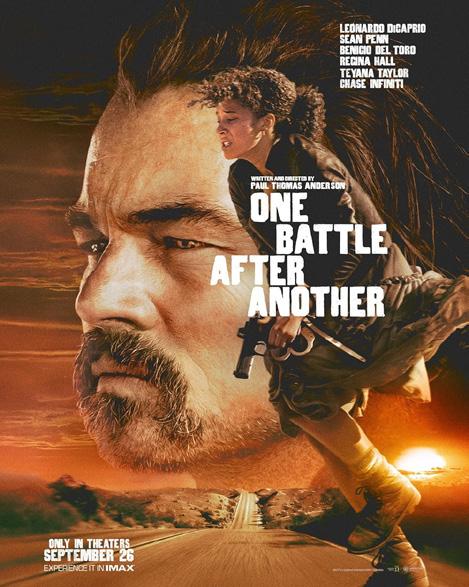
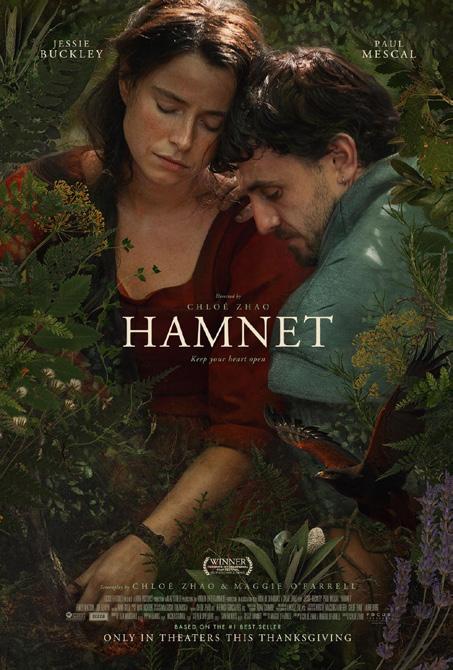
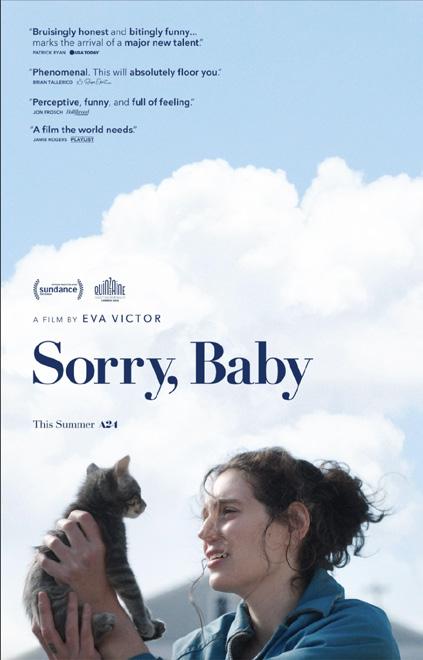
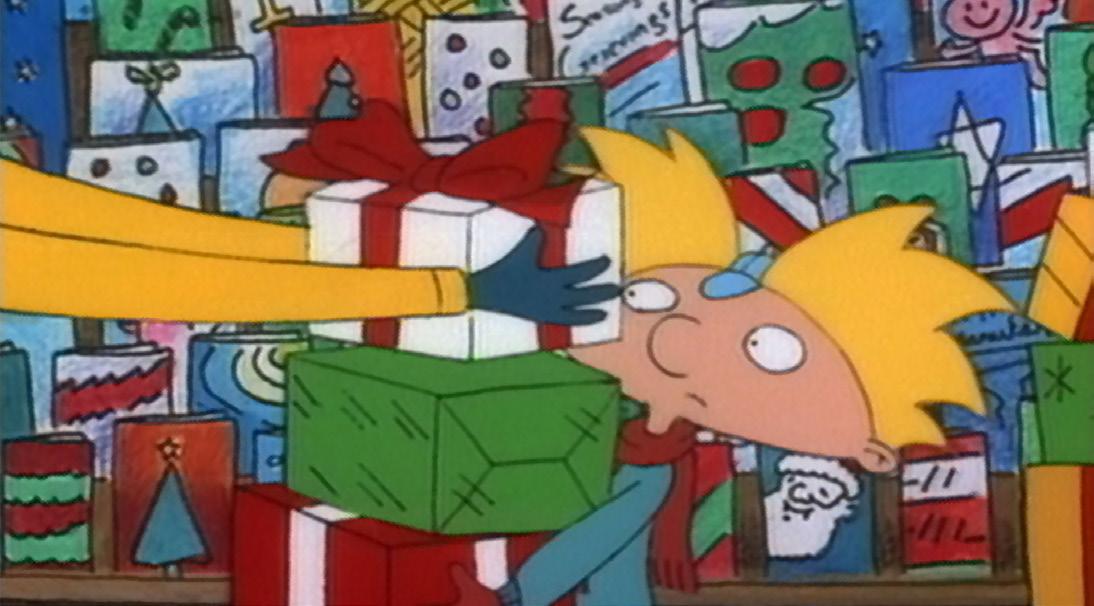
“Arnold’s Christmas” may not only be the saddest episode of Hey Arnold!, but also the best episode, period. It is a nostalgic, dream-like experience that perfectly encapsulates the spirit of Christmas while telling a beautiful story at the same time. The story follows Helga, the female foil to our protagonist, trying to find him a nice Christmas present. Meanwhile, Arnold tries to find a perfect gift for Secret Santa, when he is assigned Mr. Hyunh, the shy and reserved Vietnamese man who lives with Arnold at his boarding house. Unfortunately, Mr. Hyunh’s gift requires a bit more effort than Arnold was expecting, as he was separated from his daughter, Mai, during the fall of Saigon during the Vietnam War. The tale follows Arnold and Gerald, who try their hardest to get him the best Christmas gift ever, by finding his daughter, Mai, through a workaholic Federal Office of Information employee named Mr. Bailey. He initially dismisses their requests and grumpily tells them to buzz off, until they offer to do his Christmas shopping and save him the trouble. That is, only if he manages to help them find Mr. Hyunh’s estranged daughter. And so, Arnold and Gerald go from store to store, buying Mr. Bailey every Christmas gift for his family, until they meet the immovable object. The last thing on their shopping list is “Nancy Spumoni snow boots,” which I hear were all the buzz in 1996! Every last pair of these fancy boots is completely sold out in the entire city. Cut back to Helga, as it is revealed that she, too, really wanted those boots for herself. Sidenote, there is a montage of store employees obnoxiously laughing in Arnold and Gerald’s faces every time they naively ask for these boots, and it is the funniest thing I have ever seen; it’s literally incredible. After an unsuccessful Christmas shopping binge, Bailey refuses to help the wholesome duo find the girl, leaving with all the items they bought him, except those Nancy Spumoni boots. Arnold, having utterly given up, goes to the Christmas celebration feeling totally defeated and uncharitable. Helga overhears their pre-
dicament and undergoes significant character development, giving up her own snow boots, which her parents somehow managed to get her, so that Bailey can stay up overnight and find Mr. Hyunh’s daughter once again. And I have to say, this ending scene of Mr. Hyunh seeing his daughter again for the first time, and Helga standing outside in her socks like Arnold’s guardian angel, just yields such massive goosebumps. It’s a bittersweet ending because Helga never gets any legitimate credit for her sacrifice, but that’s really the lesson to take away from it. Helga is usually a “tsundere” character trope, the girl who appears rude and angry to her crush, but is actually deeply in love with him. The writers of this episode were so on top of this impeccable writing, as they understood this, and didn’t bother to show the inevitable scene where Helga still berates Arnold after doing him a service. Rather, Arnold sits in his warm boarding house, around the fireplace, watching the magical moment when Mr. Hyunh reunites with his daughter, whom he gave away to American soldiers at the lowest point of his life. Their wholesome embrace signifies a lifetime of loneliness and depression on the side of Mr. Hyunh, who miraculously ended up living in America, in a boarding house full of other zany characters. On the other hand, Helga stands outside, alone, and in the cold, with bare feet, simply admiring Arnold and silently devoting her own material pleasure to the selfless pursuit of her crush. Mr. Bailey’s character development is truly remarkable, and his scene with Helga is absolutely amazing. He literally goes from an angry jerk who dismisses Arnold almost immediately, to a caring guy who does a favor for a 9-year-old girl just because it’s the right thing to do. After going through the trouble of trying to find the agency, doing the shopping, and trying to convince Bailey no matter what, Arnold fails and becomes totally disillusioned and heartbroken. But in the end, his efforts pay off, as Helga makes the ultimate sacrifice. We get a whole new look into Mr. Hyunh’s backstory and exposition, not only with the beautiful ending reunion, but also the beginning scenes, where he explains where he comes from and how he had to give up his own loving daughter to the soldiers so she could have a better life. His voice actor’s performance and animated facial expressions are absolutely flawless and just exude emotion! And of course, Helga experiences some of the most character development she gets in the series, as she literally goes from black to white, from wanting to only get, get, get to sacrificing the coolest boots, just so Arnold could get his dream and Mr. Hyunh could finally celebrate Christmas with his daughter. That’s all pretty deep stuff, and the way it all piles together in this episode is honestly a masterclass on how to write a Christmas episode that remains with the audience three decades later!
Frankenstein’s Re-assembly: A Physical Resurrection of Life Through Spirit
Astrid Yap ARTS & CULTURE
If any noun could define humanity, perhaps insanity is the most accurate. Love, hate, happiness, pain, and loss—life is incomplete without one or the other, and death is just the way to free individuals from eternal suffering. To live is to have courage, to face what hope brings and takes away from you, as one day, we will achieve serenity and finally see the universe for what it is: entirely meaningless yet perfectly sublime.
Mary Shelley’s Frankenstein; or, The Modern Prometheus tells the story of a scientist, Victor Frankenstein, determined to recreate life through death by unconventional scientific experiment (the re-attachment of separate human limbs). However, disappointed by the outcome of his creation—“Frankenstein’s monster,” Victor and the rest of society reject and abandon the creature, leading the monster down a path of terror and revenge.
We all know how the story goes. Over the past century, it has been adapted in numerous forms of media, the most well-known being the long history of film adaptations. As each version tells its own tale of Frankenstein and they are all incomparable (as the saying goes), what fascinates me in Guillermo Del Toro’s latest adaptation is the exploration of existentialism, loneliness, and the art of forgiveness.
Existentialism is a philosophy that sees the existence of life prior to its meaning; we, as individuals, have no set paths or predetermined purpose to follow. It emphasises the uniqueness and isolation of one’s life experience. Absurdity is to search for an answer in an answerless world, with the focus on three essential themes: freedom of choice, individual responsibility, and authenticity. Because the universe does not bear any meaning, it is up to the individual to determine
their own values and beliefs. Yet our actions and existence in the world are ultimately meaningless due to the overabundance of freedom.
Is this long introduction to existentialism just my nature to yap? Probably! (Sorry boss) But this is also the basis for understanding Jacob Elordi’s Creature, who has embarked on the journey to discover his sense of self and identity. Rejection and abandonment are feelings we all face at some point; the perpetuated feeling of hopelessness in Oscar Isaac’s Victor, contrasted with Mia Goth’s Elizabeth’s empathy, unveils to him the indefiniteness of life, for it is also this balance between pain and love that often motivates us in reality. “I will bleed. Ache. Suffer. You see, it will never end.”
Driven by this contrasting force, the Creature begins to see life in a new light. As he learns more about humanity, we can see an aura emerge from his curiosity and excitement for life, despite his past suffering. His journey is not an easy one after all, for it is a constant battle between loving and losing. He then embarks on a path to find Victor, initially in the hope of companionship, and later, revenge. Although this search does not yet provide him with a definite purpose, it does portray him as an existentialist. He is beginning to understand the nothingness nature of our universe—it is then up to him to decide his destiny.
“What hope I had, what rage, it is all nothing”—it is the lack of definite purpose for Elordi’s character towards the end of the film that makes it truly existentialist, because often it is the process and experiences that give meaning to one’s life. For the Creature, his path leads him to find the ability to forgive and hope, which I argue should be the defining characteristic of humanity. This also makes Del Toro’s adaptation different from the rest. While the novel ends with Victor trapped in the cycle of ambition and egotism, the film offers him a chance at redemption through a heartfelt conversation with the Creature. Victor admits to his mistakes and humbly asks for the Creature’s forgiveness, and this is not only crucial for his development but also necessary for the Creature’s growth, as it is the final key to freeing him from the mental prison of eternal wrath.
What made it crucial is not merely hearing Victor’s apologies as a cry, but an invitation for the Creature to let go of
what has deeply hurt him. While injustice is undeniable, we are often left to pick ourselves up and forgive, to free ourselves from this anger, as it only leads us on the path of self-destruction. Forgiveness was never a gift to others but only to ourselves. By allowing the Creature to finally forgive at the end of the film, he gains a new life, an authenticity that enables him to make his own decisions, away from the cycle of pain and trauma. Perhaps it is not the explicit dialogue saying Victor is the “monss-tah” that frustrates the audience, but that no one ever told the Creature he is a human, more human than most of us. While initially free from this sinister world, it was a man’s greed and selfishness that chained him together before ripping him apart once again. Although lacking biological authenticity, he gains a spiritual one through the process of appreciating the delicate balance of life.
The conventional horror trope might refer to him as a living-dead; I suggest that we should interpret the mention of death here through the lens of tarology, which symbolises transformation and the end of a cycle, often encouraging one to let go of the past for a life of new beginnings and personal growth rather than literal death. As the film ends on an ambiguous yet optimistic note, the Creature is left to appreciate his new life and take it head-on with courage. While this hope could bring him joy and misery at any time, it is the most humanistic and genuine experience one could have.
In the age of chaos and distress, may we all be free from imprisonment. To embrace an ultimate nothingness that the universe is defined by. To find ourselves and our purpose despite this nothingness. To be able to let go.
“And thus the heart will break, yet brokenly live on”
—Lord Byron
The Thirst: an I nnis Water Fountain Critique
A personal beef with the infamous ground floor water fountain that might concern you too Burak Batu Tunçel
SATIRE / STUDENT LIFE
Our human bodies are always in need of something, such as warmth or safety, but the primary thing we
need to keep the wheels rollin’ is the ultimate substance itself: water.
Even though we perhaps live our lives subconsciously under the threat of dehydration, U of T students are rather lucky because they have access to a variety of water fountains around their classrooms… except the times they don’t!
Perhaps the quantity and accessibility of these dispensers is somewhat satisfactory, but the quality between different water fountains is ridiculous. While reusable bottle owners have a rather consistent experience in filling up their supplies from the downpouring stream located in the centre, those of us who need to kneel to take a sip from the curved stream of
liquid by the side live our days not knowing how many drops we will get today.
As a Cinema Studies student who spends so much of his time within Innis College, I want to call out the water fountain located on the ground floor. The water pressure is so bad that the water can’t even form its half-circle shape—it just pours down from the hole, making it impossible to drink. Within the first couple milliseconds after pressing the button, one may be tricked into thinking the flow will be enough to make the water drinkable today—but nope, the pressure immediately drops down, just like our expectations.
On Air, On Campus, Balancing Student Life and Creative Pursuit
Matt Lee
STUDENT LIFE
For many students at U of T, university life is defined by schedules, deadlines, and an almost constant awareness of how much there is to do. Between lectures, essays, and readings, it’s so easy to feel like you’re just moving from one obligation to the next, ticking each box as the days pass. Amid all that, it’s important to find a place that doesn’t feel like work—a space where you can learn by doing and push yourself without worrying about grades.
For me, that place was CIUT.FM, the campus radio station located on the third floor of Hart House. I first heard about it from a flyer at the club’s fair, and since I was planning to major in English and hoped to work in media, I saw it as a chance to try something practical and different from my usual academic work.
At the time, I remember feeling uncertain about how and what I could contribute, but my mentor Ariel was patient and intentional in showing me the ropes. He taught me how to write scripts for live segments, how to approach local artists for interviews, and even how to promote CIUT at live music events in Toronto.
One afternoon, I attended a small indie show in the city with Ariel to promote the station. I spend most of the evening introducing myself to performers and guests, handing out flyers, and answering questions about the station. Some conversations went smoothly, others felt awkward, but each gave me insight into connecting an audience with media content.
As I became more involved, I met Henry Lewis, a recent U of T music alumnus. Henry studied Jazz Piano, Music and Technology, and Psychology, and he got involved at CIUT after seeing his older sibling run a show at their University. Even though he was already performing in jazz clubs around Toronto, Henry said the station introduced him to artists, genres, and communities he never would have discovered otherwise. “Every week I find new records to check out and artists to analyze,” he told me. “A lot of being a musician is also being a music fan, and there’s no better place for music fans than CIUT.” Hearing him speak made me realize
(continued from previous page)
A fellow student, Kadin (21), has developed a technique where he rhythmically taps the button in a start-stop fashion to momentarily squirt the water while he sips on the few drops he gets. It is a Sisyphean effort which I guess is better than succumbing to nihilism.
Worse still, it is the only fountain in the entire building. Even though the dispenser for bottles works in theory, it takes up such a long time to actually fill up that seeing several people line up before this monolith for minutes has become a common sight. And I know that the freaks who sip the water straight from the taps in the washrooms can no longer do it—as the basement floor is now closed down!
how student-run spaces can link campus life with the larger city arts scene, providing opportunities to discover and engage with Toronto’s creative community.
Balancing CIUT with coursework wasn’t always easy. Some weeks, I spent ten or more hours at the station on top of a full course load, trying to make sure essays were done while preparing for interviews or editing audio clips. Henry’s schedule was even more demanding as he had to work twenty hours a week, performing live music shows around Toronto, and directing a dance company. When I asked whether it affected his studies, he said the experience he gained at CIUT, connecting with artists and producing shows, gave him knowledge and skills he couldn’t have learned in class. This made me think about the ways student life extends beyond just lectures and essays, into spaces where you can actively practice skills and explore interests.
I learned to notice the small things that make the media work. Writing scripts for advertisements required thinking about which words would resonate on air and how to structure each segment so it flowed naturally. Scheduling an interview meant understanding a musician’s priorities and building trust, not just sending emails.
The hours I spent at the station gradually became a part of my routine, but they felt different from classwork. I was invested in something tangible, something I could see and hear taking shape beyond a grade.
That investment grew to the point where I was asked to run tutorial sessions for new volunteers learning Adobe Audition, an audio editing software we used. Teaching those sessions changed my place in the station. Instead of just showing up to complete my own edits, I became someone other volunteers came to for help.
Over time, these interactions helped me see the station not just as a workplace, but as a place shaped by many perspectives. The awareness made me more confident in my own judgments and more deliberate in how I collaborate with others.
For students who feel lost in the size of U of T, CIUT is a hidden corner where efforts are actually shown. If you like music, writing, media, or even event
planning, it’s a place where curiosity drives what you do. You have all the space to experiment and meet others who share your interests.
As Henry stated: “Getting involved with the many creative projects on campus is one of the most fulfilling things you can do while in University. If for nothing else, you will find likeminded and passionate people who might just be your next friends and collaborators”
Being involved at the station gave me the chance to learn valuable skills, but it also meant meeting people who shared my interests. Working alongside them, troubleshooting together, and discussing creative ideas created a sense of understanding that made the environment feel welcoming.
As many of you are seeking your own place on campus, I think about how strange it can feel surrounded by thousands of people, but still unsure of where you fit. The station made the campus feel smaller for me. It became a place where people actually looked out for each other, where you could walk in after a long day of class and immediately fall into conversations about a new album or a show someone was producing that weekend.
I want to be someone who can give even a small bit of direction to people who feel stuck and unsure, especially those who care about pursuing a career in media. I think what keeps me coming back to all of this is the feeling that learning doesn’t have to be something you do alone. U of T is known for its diverse opportunities, and even though the station is located where most students don’t walk past, I want to use this moment to make you aware of it. Not, in the way a brochure lists clubs, but in the way a friend might nudge you towards something that helped them.
Many of us walk around campus feeling like we are missing a map that everyone else seems to have. I felt that way for most of my first year. If anything in my experience can make your path feel less confusing or less isolating, then sharing this is worth it. Even if you never choose radio or media, I hope you find a place on campus that gives you the same sense of momentum I found, one that truly connects with your interests and makes you feel comfortable exploring them.
Sometimes I find myself going to the water fountain by the Starbucks on Robarts’ second floor (the GOAT) to drink some water. While the water pressure is perhaps too high that it ends up absolutely soaking me during the process, there is a pleasure that can be derived from having access to so much of this wonderful liquid.
I hope this piece will encourage some amendments about the water fountain.
Innis Highlights caméra stylo
Providence
LUCY KIM
There is a word in Korean called «in-yeon» (인연). It means fate and divine intervention, and it is specific to the relationships between people. My mom used to tell me that a red string of fate connected people together and that you should never take any interaction in your life for granted, because even the brushing of sweater sleeves against a stranger in the streets is considered in-yeon. Destiny, she called it. Destiny accumulated over 8000 years, over 8000 lifetimes.
I had forgotten her words until now. Leaving the pub for a smoke with my colleagues, we stopped in an alley. The whitewashed brick seemed to blend in with the snow sparsely coating the concrete. Taking a drag, I put my head down and crossed my arms against my chest, attempting to shield myself from the wind. I turned to blow the smoke away from our huddle when I saw something that made me start. A boy.
His legs were crossed and folded all the way up to his chest, and his eyes were glaring at us in obvious mistrust. We stayed there looking at each other for some time before Eli nudged me and nodded back to the pub. I followed them quickly back. Somehow, I didn’t want them to see the boy; I didn’t want them to acknowledge his state of despair. I just wanted them gone.
Lying in bed in the hours following the incident at the pub, I couldn’t stop thinking about it. His wings were torn in places and so transparent it was clear he was close to the end. His hair was a brighter white than the snow that fanned around him. It was hard to believe that he was real.
In my mind’s eye, I saw the wide, unforgiving streets of my city, and on one side of it, in a snowy corner, a small dying fairy—on the other side, me, a lone man in an apartment, lying supine on his bed, with a red string of fate connecting us.
I went back to the pub.
To my relief, he was still there, now sleeping. I scooped him into my chest and carried him to my flat. No one noticed him bundled in my arms.
I imagined him saying all the things I thought I might say in his position. I imagined him glaring at me with those cold black eyes and demanding, “Why do you get to decide what’s normal and what’s not? Why do you get to decide what’s real and what’s not?”
“You’re right,” I would say. “But so am I. No one can even see you anymore.”
The indifference that inspires forgetfulness is painful; it is fatal.
Wheels on the Time Bus
Attempt 374.
There’s a car inside my living room. I stand staring, slack-jawed, at the gaping hole in the brick facade. Shreds of wallpaper and splintered wood crumble inward, burying the windshield of the bright red automobile beneath a layer of destruction. I can’t see in, but I already know no one is trying to see out.
I heave a tired sigh, then I walk around the crumpled hood and drag my sister’s body out from under the car. This isn’t the most broken she’s been, but it is a new low for the red car’s driver. May he rest in peace or whatever. My sister certainly won’t.
I push the blood-matted hair out of her face before closing her eyes and arranging her limbs more comfortably. I suppose it’s unnecessary, but I always do this. Time has its routines. I have mine. As a nicety, I remove the rope from her wrists and ankles; I’d thought it would help, but I hated having to do it. “Are you insane?!” she’d screamed. “I’m just going for a walk!”
I gave up trying to explain about three hundred attempts ago. She never believes me.
I reach for my sister’s limp hand and lace our fingers together. With my other hand, I turn the tiny dials of her watch until the hands on the clockface are spinning like… well, like the wheels of a red car as it crashes into my house, maybe. Back thirty minutes. Forty. An hour. The air begins to shimmer around us. I close my eyes. Attempt 375.
When I open them, I’m standing on the side of the road. My sister stands beside me. This is new, but I don’t say anything. I just watch as she stares off into the distance, where the road crests over a hill and disappears from view. She looks as if she’s waiting. The watch glints on her wrist.
Then, yards away, I hear it: the faint rumble of an engine. She tenses, glances at the clockface. I stopped needing to check two hundred attempts ago. I know when it’s almost time. But since when does she?
A flash of red appears on the hill. It’s still a ways away; we still have time. She steps into the street. I open my mouth to argue, to plead, and as if sensing it, she finally turns to face me. I see the wheels of fate in her grief-stricken eyes. “You can’t stop it, you know,” she says. “You’re going to try. But you can’t.”
“I can’t just stop trying, either.” I feel the hot sting of tears. It’s been one hundred attempts since I cried. “Will you please just get out of the road?”
“I put on the watch. It’s my burden to bear.”
“It doesn’t have to be, if you’d just let me—”
“Time has a price,” she says. A car horn blares. My world fills with red.
The wheel spins.
NORAH RUCH
About the Spectatorial
The Spectatorial is University of Toronto’s only genre-focused journal. Established in 2013, our masthead and writers work with mythical creatures, the gothic, deep space, and all things in between. This year, we’ve also started running zines to platform flash fiction throughout both semesters. You can find our recent horror zine online and coming soon to the Innis Library. The Spectatorial also has a blog where we post non-fiction: analyses, essays, and op-eds on speculative fiction media, all year-round! Have a pitch? Shoot us an email at thespectatorial@gmail.com, or check out https:// thespectatorial.ca/ for blog post inspiration. Our call for pitches and drafts will open for the genre and theme: SOLARPUNK: excess in the new year! Solarpunk is a futuristic movement associated
with hope and sustainability, rejecting “climate doomerism” and the more grimdark interpretations of science fiction. We would love to see environmental and ecological speculation, predictions for technological advancements, “soft apocalypse” genre work, and anything else you connect to solarpunk. Next semester, send us your ideas or drafts via the Google form in our Instagram (@thespectatorial) bio or shoot us an email! We welcome pitches, half-baked prose, completed drafts, poetry, maps, character profiles, Pokémon cards, comics, and anything else speculative you can think of!
Subversive Monsters in the Horror Genre: The Living Dead and Human Monstrosity
Night of the Living Dead (1968) is an independent zombie-horror film directed by George Romero. This film holds a significant place in film history as it groundbreakingly employs explicitly gory visuals and boldly rewrites the character tropes of horror. Furthermore, it offers provocative social and political commentary, hence establishing it as a classic for horror lovers and cinephiles.
This paper will argue that Night of the Living Dead subverts spectatorship on characters’ victimization that is typical of Golden Age Hollywood horror, and blurs the lines between the victim and monster to emphasise their shared qualities. By juxtaposing visually conventional and subversive forms of monstrosity, which will be outlined through a psychoanalysis of the characters, the film redefines the possibility and inclusion of monstrosity on a cinematic, cultural, and social scale.
The film begins with two siblings, Barbara and Johnny, visiting their father’s grave at a Pennsylvania cemetery. This setting is essential to establish a linkage between spatiality and monstrosity. The opening sequence contains multiple shots of the road to the cemetery; all in long shot, they showcase an empty and endless field, far from urban life. The mise-en-scène is gloomy, accompanied by the suspenseful and eerie non-diegetic music; here, the film subtly establishes the tone of isolation and trepidation.
The setting reaffirms the typical modern horror convention, and its implication of the linkage between life and death is essential in foreshadowing the concept of the living-dead. As emphasized by McFarland, it is the act of mourning, or the reflection of it, that makes the graveyard geographically and socially important; the vulnerability it evokes gives the geographical features an overwhelmingly emotional toll, transforming the space from a land of grief to terror.
Visually, this sense of terror is depicted through the lack of expectation and the inevitability of death being overturned by the zombies’ appearance and cannibalistic nature. This destabilizes spectatorship and breaks the emotional comforts once embedded within the cemetery setting. Moreover, as the zombie needs to consume human flesh for survival yet never consumes their own species, it communicates a sense of intelligence among those of the living-dead and an attack on humanhood despite once being human themselves.
ILYA VASILEIADI
Cemetery Man’s Identity Crisis Under the Shadow of Dylan Dog Innis Highlights
Cemetery Man (1994), directed by Michele Soavi and written by Tiziano Sclavi, is an Italian horror-comedy that semi-episodically follows the life and romances of one Francesco Dellamorte, a cemetery keeper who must once again return the inhabitants to their graves, after they resurrect as zombies. As the film progresses, the line between living and dead dissipates for Francesco Dellamorte played by Rupert Everett. Questioning the purpose of existence altogether, he is pushed to commit several murders, yet his friend from town Franco, played by Anton Alexander, takes on the murders as his own, creating an illusion that they are one and the same.
For a film obsessed with doppelgängers, it interestingly exists in a twin-like state with another Tiziano Sclavi-penned work: the horror comic series, Dylan Dog (1986–present), which follows the titular “nightmare investigator” who is hired to solve paranormal cases. Sclavi also published Dellamorte Dellamore (1991), the novel Cemetery Man is based on. The marketing surrounding the film suggested that it could be an alternative version of Dylan, especially considering the popularity of the comics. Conceived in a time when horror was living its last glory days in Italian cinema, and simultaneously the most popular years of Dylan, Cemetery Man is openly influenced by the comics in both its development and domestic marketing process.
Wartime Ideology in Since You Went Away and The Best Years of Our Lives
In the early 1940s, American cinema became an essential component of the nation’s ideological arsenal during World War II. Hollywood studios, driven by a combination of patriotic passion and economic calculation, produced films that reflected, reinforced, and often subtly shaped public sentiment about the war. While many of these productions explicitly dealt with battlefront heroics, others focused on the American household and postwar reintegration to provide emotional frameworks through which civilians could process the war’s demands and sacrifices. Two notable examples are John Cromwell’s Since You Went Away (1944) and William Wyler’s The Best Years of Our Lives (1946). Though produced two years apart and from different points in the war timeline, these films form a compelling dialogue about American identity, civic duty, and personal sacrifice. They are important examples of Hollywood’s ability to merge artistic storytelling with propagandistic intention.
Within this context, the line between propaganda and entertainment became invisible. While overt propaganda films such as Frank Capra’s Why We Fight (1942-5) series for the U.S. War Department were a clear governmental function, most mainstream studio
films integrated wartime messaging into conventional genres like melodrama, romance, comedy, and noir. This hybrid form, often called “soft propaganda,” was more persuasive precisely because it felt emotionally authentic and aesthetically familiar. Rather than issuing didactic statements, these films dramatized American ideals in action: courage, duty, sacrifice, and above all unity across gender, class, and race.
Crucially, both films operate within the classical Hollywood style, using continuity editing, clear narrative resolution, and emotionally resonant performances to make their political messages feel natural, even invisible. The effectiveness of wartime Hollywood propaganda lies in its ability to embed political and ideological messages into conventional genres and human-interest stories, rather than relying on overt instruction or heavy-handed rhetoric. The studio system’s ability to embed national ideology within genre conventions and star personas meant that films could serve as both tools of persuasion and expressions of cultural identity.
ARJEN KARAOGLAN
Caméra Stylo is a student-led undergraduate academic journal founded in 2000 by the Cinema Studies Student Union. Our goal is to curate a selection of exemplary undergraduate student work under the umbrella of Cinema Studies and encourage a variety of academic submissions in the form of either visual or text-based argument. The journal aims to promote works and perspectives on the areas of cinema and visual media, philosophy, politics, psychoanalysis, history, gender studies, and current media trends. This year, we have had the privilege of curating a special edition that was released online during December. Featuring more student works for your enjoyment, this edition focuses on investigating Hollywood throughout the eras; each essay provides a new insight into cinematic history and film itself. Here, we present excerpts from our four selections of this special edition.
co
associate editors
faculty
This paper will prove how Cemetery Man itself becomes an analogy for both text and paratext. As the film releases under the shadow of Dylan Dog within the Italian consciousness, achieving this through Francesco’s own identity crisis and emphasis on the doppelganger, the film’s differing perceptions abroad hint at an inverse. Abroad, pre-conceived knowledge and cultural contexts reshape the dynamic between text and paratext, wherein Cemetery Man casts its own shadow over Dylan Dog
“Single Ladies”: Dancing in the Void MATTHEW MACQUARRIE-COTTLE
The wildly popular hit single “Single Ladies” from Beyoncé Knowles-Carter’s third studio album, I Am… Sasha Fierce, is known for its equally acclaimed music video. In the music video, Beyoncé embodies her performance alter ego, ‘Sasha Fierce,’ from which the album gets its name.
Though this persona would later be discarded in favour of incorporating more personal elements of Beyoncé’s life into her star image, Sasha Fierce served as an outlet for her more suggestive and sexually explicit works. The music video of “Single Ladies” features Sasha and her two accompanying backup dancers continuously entering and exiting an all-white performance space, or, as it will be referred to in this essay, ‘The Void.’
“Voideos” expand this realm to take over the majority of the video. Artists are often without limit while occupying these seemingly infinite spaces. Black-and-white footage removes even more discernible information about the music video space and its dimensions, leaving the star to be our sole anchor. In these videos, any sense of temporality is predominantly provided by the audio and lyrics. With no space to navigate, this temporality is the only axis on which we can navigate the star’s world. Popular examples of such videos include “Drop It Like It’s Hot” by Snoop Dogg, “American Boy” by Estelle, and “Diet Coke” by Pusha T.
Alex Docherty Astrid Yap
Paniz Saraie
Ethan Spires
Joy Xu
Martina Hipolito
Matthew Barquet
Shuhruh Akhand
Lauren McLeod Cramer
Nicholas Sammond
After this point of inflection, we are left with two distinct worlds, each home to its own spaces and temporalities. One such world, the ‘real’ realm, houses either Beyoncé or possibly all women who have been mistreated by their lovers, and is characterized by its vaguely defined dimensions and continuity. The other world, ruled by Sasha Fierce, is inaccessible to all who are not permitted by her stardom. The ‘performance’ realm, or The Void, is her domain to control, comprehend, and navigate without concern for the audience’s understanding, immersion, or agency.
By subverting our expectations, the absence of a defined space is given meaning. The Void is not here solely to aid in our consumption of the star’s image, but rather to demand our recognition of a hierarchy of power in which Knowles-Carter is in control of our access to her world.
I
Don’t Care That My Parents Divorced And
Charles H. Nichols
PERSONAL ESSAY
The trope of divorced parents has become almost banal, to the point that I think the sensation of it has lost its edge. Growing up in a more or less traditional American family, the increasing commonality of spousal separation was the kind of thing my grandma would mention with pursed lips and a disappointed shake of the head. A sign of social decline. Maybe that’s why I never really expected to join that demographic, until the reality of it was staring me right in the face.
One thing that gave my experience some redeeming flair of originality was that the separation happened abnormally late in my life—right at the crest into adulthood. It helped, of course, being able to better understand what was happening. But it also meant that I was supposed to have developed views on the matter. I was, at some level, a participant in the business, and not merely the unfortunate collateral damage of circumstances.
Katelyn Wong SPORTS / PERSONAL
The last time the Blue Jays went all the way was in 1993, thirty-two years ago. The last time the Blue Jays went to the World Series was an entire generation ago – my dad was in his first year in university, just like me. The last time the Blue Jays went to the World Series, they won.
My first memory of the Blue Jays was in 2015. They’d made it far enough into the playoffs that the whole city was tittering with excitement. It was my very first time at Harvey’s, and I remember rushing to the nearby plaza, excited because we had to make it home for 7 p.m. to watch the game—and also because I could choose between onion rings and fries. Gathered around the dinner table with Blue Jays vs Royals and takeout burgers & fries, since then, I’ve associated baseball with casual foods, relaxed fun, and a very, very long game.
The next time I watched a baseball game was a decade later, at Innis Orientation. More notable was the time after, just a few weeks ago.
I Sort of Wish
The summer before the news broke, we were all together with my dad’s family in Louisiana—Nichols family vacations were a staple of my whole childhood. We were at Mazen’s, the restaurant that very reasonably passes for fine dining in the tiny town of Lake Charles. My seat was between my mom and brother. Dad must have been sitting apart from us, with his brothers, maybe. Over our grilled quails, my mom addressed me in her confidential whisper, and began to relate the dissatisfaction she’d been feeling at home recently. She asked how I would feel if she separated from my dad. I said, without so much as flinching, that I would fully support her if she made that decision.
I don’t know if I subconsciously papered over the significance of that conversation, but somehow, it didn’t seem to register for me at all what my mom was really saying. My response had been honest, and I wasn’t oblivious: I recognized and sympathized greatly with her grievances regarding my dad. But that notion—divorce—felt like something out of a dream. Maybe this was in part because it happened on vacation; I think that sometimes you
I Did
leave a part of yourself behind in those faraway places. But, for whatever reason, it wasn’t until about a month later, when she told me in more certain terms that she was considering divorce, that it really hit me.
I don’t quite know why I wasn’t more upset—or significantly affected— that my parents were divorcing. The decision was officially announced to me and my brother that winter, and not long after, we left with our dad on another family trip, while our mom stayed behind to begin moving out. Nobody said anything about her absence for most of the trip, but I could just feel the adults’ eyes on me. On the last day, as we were saying our goodbyes, my eldest uncle, who was always the big jokester of the family, took a moment to be serious and try to share some words of comfort. He still wouldn’t actually acknowledge it out loud. Maybe it’s wrong, but I resented all of them a little, their pity. They acted like she was leaving me, when she wasn’t—it was just Dad.
My concern is, if I don’t care about my parents divorcing—them splitting our family in two, them not loving each other the way two parents are supposed
The 121st World Series
It was the first night of the World Series, the Friday before Reading Week, and the entire country was buzzing as watch parties blossomed across the country, including at King’s Circle. I, along with seven friends, joined the small community of U of T students, chatting and cheering as the players were introduced.
Just then, two men came over with a microphone and a camera: “Can we interview you guys?” they asked. And moments later, a white-yellow light lit up, and the cameraman counted down, three, two, one…
“Hello everyone, we’re from Rogers. How is everyone feeling today?”
We cheered.
“Well, you’re going to feel even better now because you’ve just won Blue Jays tickets for Game Two!”
What?
It was like the movies, or a news headline you know will never happen to you—except it did. We couldn’t believe it, and throughout the next half hour, every few minutes, one of us would scream in excitement and disbelief. We were going to the World Series!
My father and I took the subway down to St. Andrew’s Station the next day, dressed in all blue and face paint.
We joined the tens of thousands of fans up the concrete ramp to the nosebleeds. From our seats, we could barely see the players. Still, it didn’t matter—even in this high-stakes game, the experience was so much more than just the game—the entire atmosphere was filled with a collective hopefulness from the entire country, as well as a desire to simply enjoy the game. We bought food at the many stalls
to—it feels a little as though I don’t care much about them . My indifference is suspicious; I sometimes believe that I must be subconsciously lying to myself, suppressing my real feelings.
On the other hand, in the years since they’ve split, I’ve gotten to understand and feel better about my relationship with both of my parents. We talk, now, and face each other more than we used to. I am often alarmed to find that I struggle to remember any interaction I had with them in those last few years. That time was COVID lockdown, Grandpa’s death, love troubles, finals. It was a void of time and memory. But still, were we really so distant in our daily lives? I don’t even remember having dinner together, even though I know that we did.
So maybe it’s not that I don’t care. Maybe the threads of our family had deteriorated such that at that point I couldn’t care, serving as all the more confirmation that their separation was what needed to happen. I care now, and things are better.
around the stadium, bar-hopped to the various balconies for different views, and watched the Jumbotron for fun signs.
In that game, the Jays scored just one run in the third inning, followed by a dry spell for the rest of the game. Even still, the spectators all around were electrified. It reminded me, somehow, of the first Harvey’s dinner. Yes, the game was the focal point, but ultimately, everyone was there for a good time and good fun. There was scarcely a second when there wasn’t a sporadic chant, a bout of cheering, or fun flashing lights.
In the end, I feel insurmountably honoured to have lived out such a historic—if disappointing—moment. As we wait in anticipation for the season to start again, I will certainly be visiting Rogers Stadium again. Go Jays!
Monoprints and Other Inheritances prairies
Rowan Parkinson PERSONAL ESSAY
My grandmother is full of stories. She can speak endlessly about raising my dad and his brothers, the books she has read, bird sightings, recent news, memories of my grandfather. Every visit brings (mostly) new anecdotes to fill the dull moments. She is the one who finally convinced me to start reading. When I refused to pick up a book as a stubborn kid, she made her own with handwritten short stories and drawings for me. Though I cannot remember a single detail of those little tales, I can still reach out and touch her beautiful coloured pencil sketches of hummingbirds and dragonflies.
I used to visit my grandparents in Arizona every March. Each day, my grandmother, sister, and I meandered through the dry heat to the community art studio. All the artists welcomed us with open arms, year after year. We were “Linda’s grandaughters”, after all. She taught us to make monoprints by rolling paint on glass. My sister, older and more thoughtful, selected colours that matched, while my grandmother tried coaxing me to do the same. She was often unsuccessful. Eventually, we graduated to watercolours textured with salt and plastic wrap, acrylic pouring, paintings of birch trees and saguaros. Dressed in a smock made from my grandfather’s old shirt, I had no fear of making a mistake. I danced around the studio instead of cleaning up, admiring all the works-in-progress. I begged my grandmother to drive me to Hobby Lobby to pick out cardstock and more canvases, which she always did. When it was time to say goodbye, I made her promise me that we would do the same next year. Months later, I would see my grandmother in July on Eagle Lake. Like a bird, she moved with the seasons. On drifting summer days, she taught me to knit and weave. She sat patiently beside me on the
porch as I dropped stitches, lost count of my rows, and accidentally knotted my yarn. That first summer, I made nothing but squares. When I became too frustrated, I resigned myself to my rainbow loom and magnet-making. On occasion, she asked my dad to set up a table in the middle of the living room so we could craft together.
This is the primary way I spent time with my grandmother for much of my childhood: watching her make art, learning how to make my own. In a family of accountants, engineers, and actuaries, she was the one who held true to her creativity. She gifted me handmade socks, sweaters, and scarves. She mailed me watercolour birthday cards, embroidery, and magazine clippings of crafts she thought I might like to try.
I dreamed of being like her. Of mimicking her careful brush strokes, of hanging my art on the walls, of being patient and generous. I admired the way she extended her creativity beyond herself, the way she lived within her art.
Summer slowly became the only time I saw her. In our separation, I drifted away from visual art towards other mediums. I focused on dance, photography, crochet, woodworking, guitar, drums. With each new hobby came photos and videos to share with my grandmother come summertime. She happily watched my jazz performances and dance recitals, applauding my progress. I wondered if she saw echoes of my dad in me. I wondered if she saw traces of herself, too.
A few years ago, I found my old monoprints tucked in a shoe box under my bed. Some loose, some glued to cards reading, “Rowan Parkinson Monoprint 1/1”. Some marked with my scraggly handwriting, some with my grandmother’s. In the process of moving houses, I scanned every piece of art I made with her. I labelled my favourites. I put some up in my new room. I found a new appreciation for her relentless encouragement. Whether she saw some skill in me or not, she kept helping me make art. She was the first to show me I could never shake the desire for creation.
This December, I will see my grandmother in Windsor. I will show her the blanket I am knitting and thank her for teaching me. I will show her how her art decorates my walls: a new painting up in my childhood room, a sketch above my bed, watercolours on my dresser. I will ask if she remembers making those books to help me read. I will think about her hands, strong and worn from years of art, and my own, clawing for a chance to create. I will laugh and smile and listen to her stories. And I will say goodbye, once again, until July.
fiddling hair, like reeds bent to a hum. pine groves split open into Monday; sunlight combs the needles clean.
the day still opening, blue after blue. air’s choreography, worn in your mouth lip bitten, cherry red— a milky peek through, as if speech were ripening
my feet keep time with the ordinary birds. a woodpecker makes the measure, and we are briefly a choir–as resin yellows the hour.
what are you running from? it’s sitting on your shoulders— in the shade we set it down and count it as a stone.
— PETRA AMON
poor fool
poor fool suffering a toronto toothache from too much sugar; it helps to chew on the passing street-signs; blinking light-bulbs break between my teeth like rock-candy.
and my jaw-bone shivers to match with a passing street-car— chik-chik-chik-chik—well, mostly silent, but i like to imagine the sounds. what good is a silent train?
twelve years my junior waking up all shaken by the backyard train tracks— chick-chik-chik-chik—while sun-beams stuck in floating dust above lean down to kiss his skin; calm for once, drinking in a moment’s rest.
a rusted bundle of boxes headed west while he takes up space, jittering on the porch. there’s something wrong with that kid; whatever it is, lets push it back a bit.
he’s never seen a hare before. but something in that leg-long critter speaks to him in passing; there it goes, back into the bush. never seen again.
carpet-smell is something else; family-smell, memory-smell, as if the nose were an eye for the soul. that sounds meaningful—let’s pretend he felt that then.
i dont think he feels anything. look at him—the way he stares across the yard. what is he looking at?
poor fool suffering a toronto toothache from too much sugar; it helps to chew on the passing memories; there they go, back into the void. never seen again.
ACROSS
Total dork
Use lotion
Important
Now You ___, film franchise
What tech bros want ChatGPT to become Before
Relating to dancing (/ˌtɝp.sɪ.kəˈɹiː.ən/ turpsuh-ker-EE-uhn)
Half of a spider’s description
Lil dog
Famous plumber
«Do ___»
Relating to charity (/ˌɛl.ɪˈmɑː.sə.nɛɹ.i/ eh-lihMAH-suh-neh-ree)
A flash of light. (/ˌsɪn.təˈleɪ.ʃən/ SIN-til-ayshun).
Kardashian or Jong Un
Sch. in Waterloo
Type of bear
Toronto museum
Bullfighting cry
Wear away
Teeny
Profit or auction suffix
Bad guys in Star Wars
Close friend
Risqué
Cry of
Best Bites of 2025
Bianca Mehrotra
Bukhara (Delhi) – Dal Bukhara
Velvety, smoky, creamy, impossible to replicate anywhere
Bukhara (Delhi) – Lamb Raan
A slow-cooked masterpiece, textbook definition of “falls off the bone”
Yum Yum Cha (Delhi) – Chicken & Chili Oil
Dimsum
A little kick in the mouth never hurts anyone, it's addictive, I swear
Café Renée (Toronto) – Ravioles Du Dauphiné
Delicate, melts in your mouth, life-changing
Grazie (Vaughan) – Basta Pasta
Considering the pasta is green, you honestly can’t go wrong here
Spelling Bee
By Rick Lu
Supply with weapons
Word variant
What comes before three
Vaporize, or 50A
Bowling obstacle
What this is Jamaican music
Smoker implement
Not well
player Bobby
Ten dishes that genuinely had me speechless, an extremely rare feat—considering how dramatic I am about my food. From the GTA to Delhi to Lisbon to Rome (and, obviously, my own kitchen too), these are the bites that exceeded all expectations this year.
PAI (Toronto) – Chef Nuit’s Pad Thai Best decision I made on a random weeknight
Papa Giuseppies (Mississauga) – Spicy Vodka Rigatoni
So comforting, not overrated whatsoever
Pastéis de Belém (Lisbon) – Pastel de Nata Flaky, warm, custard perfection, I get the hype
Unknown Name (Rome) – Cheesy Gnocchi Walked in at lunch, walked out with my life changed
My own kitchen (Home) – Caramelized Onion Penne
Because if I don’t hype myself up, who will? My proudest bite of the year
Wedding words ≡ 1 (mod 2) Jan. 1 precursor
The Innis Herald acknowledges this land on which both the University of Toronto and Innis College operate. For thousands of years it has been the traditional land of the Huron-Wendat, the Seneca, and the Mississaugas of the Credit. Today, it is still the home to many Indigenous people from across Turtle Island and we are grateful to have the opportunity to work in and on Tkaronto.