

Volume 63, Issue 3




Volume 63, Issue 3
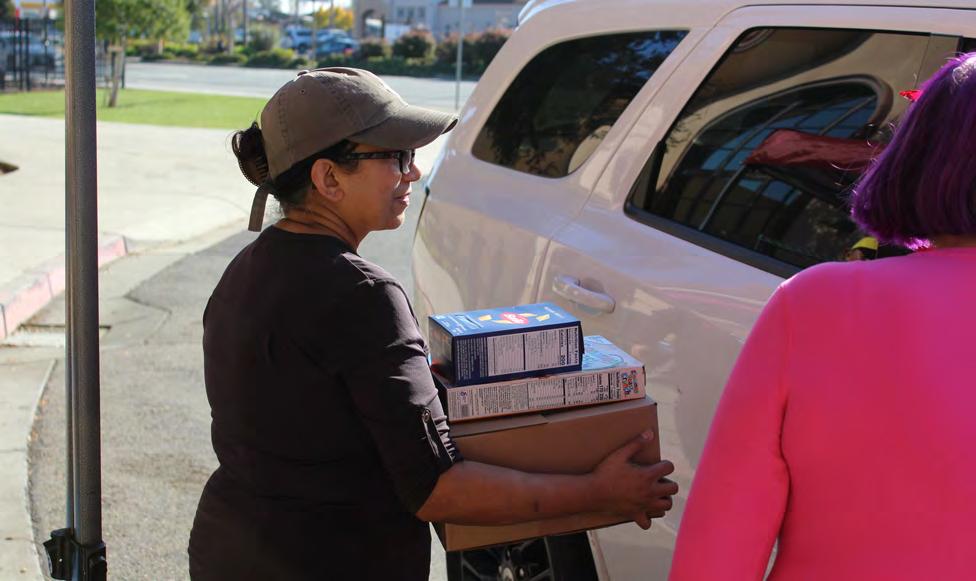
Adapting to uncertainty surrounding state resumption of Supplemental Nutrition Assistance Program benefits, FUHSD hosted its first Thanksgiving food drive on Nov. 26 at FHS to support district families, district nutrition services manager Divya Puri said. During the event, 300 boxes containing fresh produce and dry packaged foods were offered on a first-come, first-served basis, Puri said.
With over 10% of district students being categorized as socioeconomically disadvantaged, the food drive compensated for the absence of free school meals during break, superintendent Graham Clark said.
“When you’re at school, you get two meals a day that could be free,” Clark said. “When you’re at home on Wednesday, Thursday and Friday [over break], then you don’t have the free meals anymore, so there’s actually a greater demand.”
While the initiative was primarily district-funded, several vendors and community partners stepped in to offset the cost by providing a large portion of the food items, Puri said.
“We have a lot of vendors we work with,” Puri said. “Because of SNAP being in the news so much, when we reached out, they automatically wanted to help and donate. People understand people are hurting, so it has not taken a lot of outreach to get donations.”
With an influx of food, items that would stock the distribution boxes occupied cafeteria space usually reserved for student meals, Puri said.
“We had to completely switch what we were doing for our school to have this meal drive because we wanted to make sure [products] could
go in the boxes without the boxes becoming mushy,” Puri said. “We don’t really pack anything in our cafeterias, so we never had to even think of those aspects.”
At the distribution, around 150 of 300 prepared boxes were distributed due to small turnout, Puri said. Leftover boxes were given to Peninsula Food Runners, an organization that transfers leftovers to regional food banks, Puri said.
Despite the low turnout at the food drive, Puri said she estimates the needs of struggling families exceed the support that the district can offer them, Puri said.
“I know times are tough. We’re trying our best, but the need is just humongous out there,” Puri said. “It’s difficult for a smaller district to do all of that, so if the community, parents and students can rally up and do more food drives, December holidays would be easier for lots of families struggling with food insecurity.”









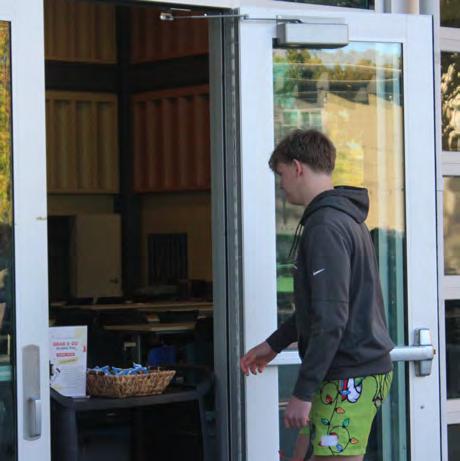
All FUHSD schools began offering free grab-and-go breakfast bars starting before school starting Dec. 1, FUHSD announced in a districtwide email. Breakfast does not require an ID, so students can quickly get some nourishment before class from 8:20–8:30 a.m., nutrition services manager Divya Puri said.
“[We’re] making sure our kids are not hungry and they are able to focus academically. That’s really the goal here,” Puri said. “We want to get them in and out fast because we know students are not on campus way before school starts.”
The initiative gained traction after trustee Pat Carpio-Aguilar asked at the Nov. 4 board meeting if the district could offer additional meals in the mornings.
“It was very inspiring to see [that] when you start talking about issues, people start listening, and we now have some breakfast items,” Carpio-Aguilar said. “I brought that up because I feel very deeply about how we are serving students. They should not have to go without food until 11:30.”
Because the state only offers free brunch and lunch, the program was implemented by nutrition services and is district-funded, superintendent Graham Clark said. The initiative first began after administrators heard students were arriving to school hungry after not eating at home, Clark said.
Since brunch is served late in the bell schedule, having an option to eat before then will greatly benefit the students who need it, principal Denae Nurnberg said.
“I applaud the efforts of our district, and I’m really pleased with this move,” Nurnberg said. “I’m not sure how long it’ll last, but I appreciate what they’re doing right now.”
Free app provides news, IDs and opportunities to connect Henry Hu and Ethan Xue
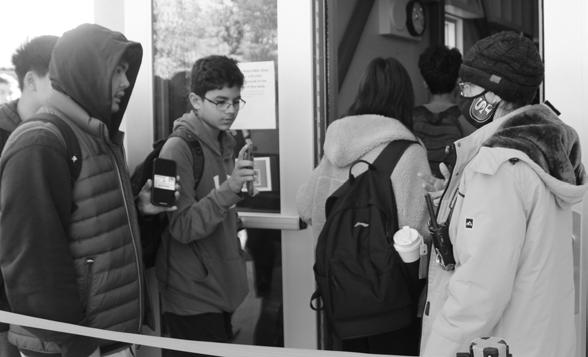
Following weeks of testing, access to the free Minga mobile app was announced Dec. 2, allowing for the establishment of digital IDs, hall passes, school news and more, assistant principal Nico Flores said. Instituted at FHS and MVHS in previous years, Flores said the app brings possibilities of greater connection, promotion and efficiency across campus.
With the main feature, Minga houses complete digital IDs that contain information like ASB membership, off periods and press passes, Flores said. With this centralization, students can scan into meal lines and school events from their phones, eliminating risks of losing physical ID cards while boosting daily convenience, Flores said.
“It allows us to put stickers on there so kids can automatically have their off-campus privileges inserted in to the Minga app,” Flores said. “As another example, if you purchase your ASB card, you get a sticker attached. When you enter events, it’s ready and convenient [because] it’s your full ID, rather than just your barcode.”
Additionally, the app includes smaller features such as attendance tracking, grades and aspects of Infinite Campus, Flores
said. Currently, administration is focusing on establishing community promotion for a broad initial impact, Flores said.
“Minga allows us to create platforms for clubs that will house agendas and posts in one location,” Flores said. “Instead of having different Instagram accounts all over the place, Minga would be the hub. We can also share information with parents to ensure they know what’s going on at school.”
As a former MVHS administrator, Flores said he spearheaded Minga’s introduction at HHS after observing similar inefficiencies in event check-in and ID loss that it solved. In coming weeks, the goal is to foster student usage to fuel app success, Flores said.
“We’ll work on getting stuff publicized through ReachMyTeach and Schoology. Kids can scan the app, download it and sign in us-
ing their FUHSD accounts, and their IDs will pop up automatically,” Flores said. “It’s going to be a work in progress, but I think it will be in good shape, especially with Winter Formal coming up after break.”
Prior to Minga’s full rollout, several leadership students volunteered to record feedback and glitches, ASB class of 2028 representative, sophomore Sanvi Bharadwaj said.
“Minga has everything you need if you lose your ID, and I did lose my ID,” Bharadwaj said. “A little drawback is you have to open the app and wait for it to load sometimes.”
With similar concerns over software access, student conduct liaison Louise Garces said students should still keep photo IDs ready to avoid stalling lines.
“As long as WiFi stays up, they have access to their phones,”
Event collects valuable resources for Sunnyvale Community Services to distribute
After a five-year hiatus, ASB has reinstituted the food, clothing and toy drive tradition, where fourth period classes compete from Dec. 3-12 to donate the most resources, leadership teacher Hector Almendarez said. In wake of the government shutdown, the event will alleviate stress and support families during the holidays, Almendarez said.
“Our hope is that this reintroduces a tradition,” Almendarez said. “This was a really important thing our community used to do, and I’m glad we get to be a part of making it happen again.”
Every fourth period, students will donate resources to meet specific needs, Almendarez said.
“This drive isn’t only just for canned food, it’s a variety of donations that we’re looking for,” Almendarez said. “On Monday, it’ll be a clothing drive. [On] Wednesday, it’ll be a toy drive.”
Afterward, items will be sent to the Sunnyvale Community Services, which leadership has partnered with to distribute resources to the local community, Almendarez said.
Over the course of the drive, ASB members will count points for items donated each day, and the top three classes by the end of the drive will receive pizza parties, Almendarez said.
This competitive aspect provides motivation for participating classes, ASB co-president, senior Evangeline Park said.
“I know a lot of teachers get really enthusiastic about the point system and winning a pizza party, so that definitely helps and adds to donations,” Park said. “Competitiveness is always a good element for these kinds of donation drives.”

Garces said. “If not, I would recommend using a backup system, like having a photo of [your ID] on your phone.”
Based on her experience, Bharadwaj said Minga will likely become a key facet of how HHS runs in the future. With growing popularity, more app features will get added, and students will more easily navigate school life, Bharadwaj said.
“A lot of people lose their IDs, so it’ll just be more convenient,” Bharadwaj said. “I feel like there will be less problems people run into, especially when they’re going to games and events. Personally, I
don’t have my ID card all the time, and this app makes things a lot easier.”
While Minga resources can be expanded to include other features, administrators are focusing on its flagship digital ID feature, AP secretary Melissa Jauregui Chavez said.
“We’re hoping by next semester, students will be able to use IDs to scan in for lunch and brunch lines,” Chavez said. “Students who don’t have a phone can still go to the ASB office and get one printed, but it will be on paper. The long run goal is to be able to phase out physical IDs.”
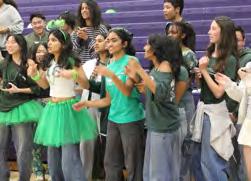
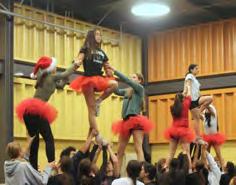
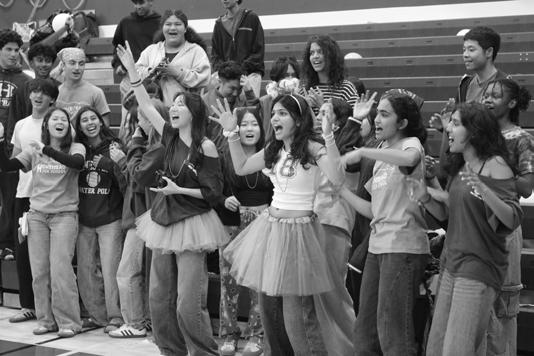
The annual Intradistrict Council rally was held at MVHS on Nov. 14, where FHS won a trophy following a series of games and activities. The rally promoted school spirit from all FUHSD schools, leadership teacher Hector Almendarez said.
English teacher Megan Rupe, whose class was among the top three as of Dec. 4, said she is very passionate about the drive and has encouraged her students to bring donations.
“It is a wonderful thing to extend our abundance to those who have greater need,” Rupe said.
Still, Rupe said student involvement could improve, as this year’s contributions fall short of previous iterations.
“I think HHS needs to step it up,” Rupe said. “I shouldn’t be in third place right now. I should be in 10th place. People need to bring stuff.”
Part of improving participation and enthusiasm for the event is bringing back the culture of the canned food drive, Rupe said.
“People would [bring] in pallets of canned food, and it used to be big when they announced the winner at the Black Light rally,” Rupe said.
As of Dec. 4, ASB has collected 317 cans of food, which exceeded initial expectations, considering the event has just returned, Park said.
“Especially when you’re bringing back a tradition that hasn’t been a thing for the last few years, it’s hard to expect people to jump on the bandwagon and donate,” Park said. “I was pleasantly surprised that a lot of people immediately donated.”
While the tradition continues, ASB is gauging success and possible improvements to expand its community impact, Almendarez said.
“This holiday season is a struggle,” Almendarez said. “The hope is that the community shows up, and this will become even bigger.”
“It’s rare that we have events in which every school can be involved, so this allows folks from across the district to come together,” Almendarez said. “It’s an opportunity to connect and gather, and it promotes school spirit.”
The IDC rally consisted of one to two performances from each school, along with competitive games and activities where schools could compete for a trophy, IDC commissioner, junior Kat Heller said.
In preparation for the rally, IDC commissioner, sophomore Grace Kim said commissioners had trouble deciding on a theme. They eventually landed on “The Fantastic Five” to represent the five schools in the district, Kim said.
“We figured that ‘The Fantastic Five’ had the clearest sub-themes,” Kim said. “[It had] colors that corresponded to each school, so it was easy for the students to dress up.”
This year, ASB implemented a districtwide spirit week leading up to the rally, hoping to make it a new tradition, Kim said.
“We decided that all five schools should have the same spirit week, so we’re all more hype,” Kim said. “It tells students that there’s a rally on Friday, so it works [in] a promotional way, as well.”
However, the IDC planning team faced a tight timeframe and communication issues with administration, Heller said. As a result, they struggled to decide spirit days, and some schools were unable to execute a spirit week, Heller added.
“It wasn’t working out great because we had three different schools that were doing different spirit weeks,” Heller said. “It’s hard, especially when each school has different levels of strictness over what you’re allowed to do.”
Although rally participation was lacking, ASB received positive responses from those who attended, Kim said.
“We did more promotion than last year, which was good, but less people showed up,” Kim said. “[With] the few people who went, I got responses that they thought the rally ran smoothly.”
Although the joint spirit week did not go as planned, Heller said the games and performances at the rally still pushed students to participate and interact with other students in the district.
“Sometimes, we forget that we’re all in the same district, because it feels like there’s various degrees of separation between the five schools,” Heller said. “IDC is a great way to remember that we’re all part of the same district, to create bonds across districts and also promote individual school pride.”
Ethan Xue
Local: Teen charged with attempted murder over Valley Fair shooting
Santa Clara district attorney Jeff Rosen announced Dec. 3 the charges the 17-year-old suspect in the Valley Fair mall shooting will face in court. They have been charged with attempted murder, firearm use and assault causing major bodily injury after allegedly shooting three shoppers, according to CBS.
The incident marks the second case of juvenile gang-related violence in San Jose this year. Citing the severity of the crime, Rosen is pushing for the case to be transferred to adult court, which typically places longer sentences, according to ABC.
National: U.S.-Venezuela military tensions escalate
Since early September, a series of U.S. airstrikes on suspected Venezuelan drug boats has sparked heightened tensions between the two countries. Additional regional military buildup suggests a more major military intervention in the future, according to the New York Times.
With the U.S. considering Venezuela as a major source of drug trafficking and other crimes, president Trump has issued a series of online statements to further pressure the government, which have verbally closed Venezuelan airspace and hint at land attacks.
In response, Venezuelan president Nicolas Maduro has called on the Organization of Petroleum Exporting Countries for support. He claims the motive behind these American actions is the seizure of Venezuela’s oil reserves, which are the largest in the world, according to CNN.
International: Tropical storms ravage Southeast Asia
In recent weeks, storms hitting parts of Southeast Asia have caused widespread damage. Resulting in a death toll of over 1,200, hundreds more have been displaced, and millions are affected, according to CNN.
A rare tropical cyclone hit Malaysia, Indonesia and Thailand three weeks ago, alongside a similarly destructive storm in Sri Lanka. Facing torrential rains and heavy winds, rescuers have been hindered by ensuing floods and landslides, according to Reuters.
With the unprecedented extent of these storms, governments deployed military resources and personnel to assist, and are urged to declare national emergencies, according to CBS.

Luna Pitl and Elena Shim
Managed by the University of Southern California, the newly formed Student Leadership Equity Academy offers an inclusive environment for students from all FUHSD schools to collaborate and address equity issues across the district throughout six annual meetings, assistant principal Nico Flores said.
To implement its program of advancing racial equity in California schools, USC introduces experts to help students develop skills in identifying and solving inequity, director of district leadership development Josh Maisel said.
“[SLEA] provides students with an opportunity to voice their experiences in school from all five FUHSD schools by interacting with administrators, counselors and teachers,” Flores said. “It’s giving [students] the opportunity to come up with concrete
strategies to talk about things that are challenging.”
Because addressing these issues is a long-term effort, after a year on SLEA gaining experience, students will transition to a different student group and spend their following high school years applying this knowledge to implementing a definitive action plan, Maisel said.
“SLEA is mostly about the skills to use when students hear something that doesn’t feel right to them and how they can address it in a way that is not going to make things worse,” Maisel said.
To effectively tackle racial inequity, SLEA trains students to analyze real case studies to determine discriminatory patterns in school bodies, Flores said.
“We teach them to identify the situation and discuss how students were impacted and provide them the strategies to confront it in the moment,” Flores said.
Progressing through the school year, associate superintendent of teaching and learning Trudy Gross said SLEA will promote equity through facets like gender and social class to ensure balanced
resources across the community.
“I see [SLEA] really building a foundation of knowledge and encouraging advocacy,” Gross
said. “Students can think about how we can serve all and listen to all, making decisions that support staff and, particularly, students.”


SLEA was designed with six objectives to foster an inclusive environment for all students
1 Discuss racism with confidence and comfort
2. Recognize implicit biases about students of color
3. Develop personal responsibility to examine internalized racism

4. Embed racial equity in student leadership
5. Adopt culturally inclusive language that fosters racial equity in district standards
6. Influence student leaders to make differences in the lives of students in minority groups
Students, staff learn from sudden closure of the Meadow
Kanmani Raguraman and Julia Song
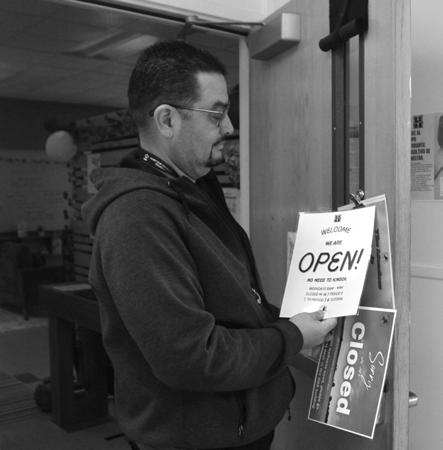
Following a brief closure from Nov. 10 to Dec. 3 due to wellness space support specialist Julio Llerenas’s short leave of absence, The Meadow, a mental relaxation space in L108, has reopened, assistant principal Mayra Valdivia said.
In future instances of staff absence, Valdivia said administration is developing contingencies for substitute supervisors.
“There’s always this unknown factor. We definitely can learn over preparing, being that the space is brand new,” Valdivia said. “We’re finding out the different scenarios we could potentially face. There probably are more
things to think about and consider, but it does help us prepare for a scenario like this in the future.”
In preparation for Llerenas’s return, The Meadow’s staff worked to reopen quickly and promptly sent a schoolwide email notifying students of the space’s availability, Valdivia said.
As the Meadow reopens, Llerenas said he hopes to pick up where he left off, fostering community involvement by collaborating with ASB and clubs.
“We were working toward different activities that we’re going to do,” Llerenas said. “Next semester, we’re going to be doing all the things we already had a vision [for].”
Working closely with The Meadow’s staff, school-based therapist Sarah Loyd said she is excited that students can take advantage of the resource again.
“It’s a really cool place to take a break and recenter,” Loyd said.
“Utilizing those coping skills and resiliency skills just allows you to have that moment to yourself.”
Similarly, Valdivia said she hopes more students will visit The Meadow to take care of their mental health.
“I hope that as the year goes by, students use it more, [and] there will be less of a stigma of who goes in there and why they go in there,” Valdivia said.
“When you walk in, it’s almost like a different
part of campus. I hope students can give themselves a chance to utilize the space for what it’s intended for.”
Club sees increased tryouts, diversified portfolio
From Nov. 6-14, 182 students tried out for FBLA’s objective testing events, executive vice presi-
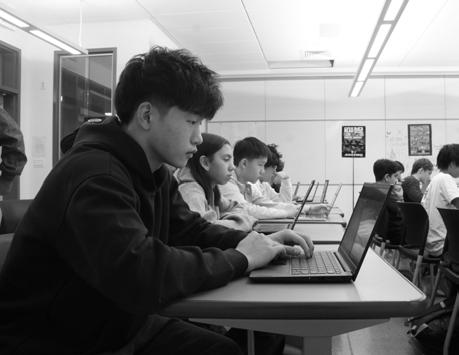
dent of competitions, senior Smyan Shanbhag said. The National FBLA organization introduced many new competitions this year, resulting in a 36% increase in tryout participation, Shanbhag said. “[Historically], people did written competitions often as their second or third choice, behind a speaking competition, and they didn’t take that competition seriously,” Shanbhag said. “But, over the last two years, I’ve seen people who do written competitions put everything they have into it.”
Despite more members trying out for written competitions, standards for passing a written tryout and being accepted to a team remain consistent with previous years, vice president of written competitions, junior Leah Pien said.
Trying out for the Data Science and AI competition, one of the newly added competitions, allowed senior Armaan Malkani to use his particular interest in Data Science and AI in FBLA, he said.
“It is a great new competition, especially with a bunch of tech in the real world directed to the fields,” Malkani said. “When I’m applying to college, I’m selecting majors like Data Science or AI because I think they are really interesting and exciting. [Participating in this competition] helps me in my career and future endeavors.”
In upcoming conferences, the influx of competitors in objective testing events will allow FBLA to maintain dominance over other
school chapters, Shanbhag said.
“Written competitors will lead to an increase in points because we’ve seen school chapters that have come from virtually not being a presence on the national stage to getting second place or third place through solely written competitions,” Shanbhag said.
With the club focusing on business-related speaking competitions in past years, Shanbhag said the increased number of written competitors will bolster the club’s presence in objective testing competitions and improve their chances of overall success, Shanbhag said.
“A problem in the past has been that judges have been extremely subjective [in speaking competitions] based on their grading, and HHS has been on the receiving end,” Shanbhag said. “Moving to more objective competitions will hopefully help us continue to do well in the written competitions and diversify our competitor base.”
Volume
Editors-in-Chief
Parth Dhaulakhandi
Alicia Liste
Web Editor-in-Chief
Amanda Boles
Print Managing Editor Maya Dutt
News Editors
Danielle Feldsher Ethan Xue
Opinion Editors
Sachin Chandran Adam Orrin
Lifestyles Editors
Annika Abraham
Aviv Matas
Alan Zhang
Arts & Culture Editors
Jason Lai
Malar Raguraman
Sports Editors
Olivia Levesque Ouellette Selina Wang
Copy Editors
Ethan Xue
Alan Zhang
Photo-Illustration Editor Isabela Guilardi
Design Editors Maya Dutt Aviv Matas
Multimedia Editors
Isabela Guilardi
Aashka Nagarkar
Social Media Editor Elena Shim
Reporters
Natasha Bandil
Alexander Cao Emma Chang
Krist Ferreria
Ivy Guo
Henry Hu Sanjeet Jayaseelan
James Jiang
Elina Li
Saachi Nangare
Luna Pitl
Kanmani Raguraman
Advay Ranade
Julia Song
Ethan Tan
Chloe Wang
Catherine Yang
Yichen Yao Kaylin Yi
Adviser
Natalie Owsley
Mission Statement
The Epitaph is a non-profit publication at Homestead High School, 21370 Homestead Rd., Cupertino, CA 95014.
The Epitaph is a designated forum for student expression and not subject to prior review, in accordance to Education Code 48907. The staff is comprised of HHS Journalism students. Views expressed do not necessarily represent views of the school, its staff or the district. Editorials are opinions of the editorial board.
The Epitaph welcomes letters to the editor but reserves the right to edit submissions. Letters should be limited to 300 words. Include contact information. Unsigned letters cannot be published, but names will be withheld upon request. Send via homestead.epitaph@gmail.com, or drop letters in the newsroom or the office mailbox.
If The Epitaph has made an error, please send corrections to homestead.epitaph@gmail.com.
The corrections will be published in the corrections box for the next issue.
To reach the Epitaph in C102, call (408) 522-2572.
Advertising
One email and you can reach over 2,400 students, teachers, administrators and community members from Northern Sunnyvale to Southern Los Altos. If your target market is between ages 14 to 18, contact The Epitaph at epitaph. ads@gmail.com, and we can make it happen.
Thank You to Our Donors & Supporters
FUHS Foundation
Homestead PTSA
Eating unorthodox meats should not be condemned
Selina Wang
As a second-generation Chinese immigrant, one of the stereotypes I face is that I would eat my peers’ pets, rabbits, ducks or any other creature in a heartbeat. Of course, I would never eat their rabbit. However, that does not mean I would never give rabbit a try.
This visceral reaction to eating unconventional meats demonstrates how culture defines which animals people think are socially acceptable to eat. People should be less judgmental toward uncommon foods, and the school should incorporate a diverse variety of meats in the cafeteria.
In China’s centuries of history, its people have learned to be resourceful with their food and sustainable with eating meat, according to the National Museum of China.
To me, it is not shameful. It was survival, and now, it is culture. But in thinking so, I often face criticism and am even perceived as sadistic.
In the eyes of Amer icans, a cow is food and should be raised specifically for slaughter. That is just as inhu mane when it comes to dogs, which are seen as friends and, to many, family.
This line be tween friends and food often shifts be tween cultures, so it cannot be drawn without bias. In fact, it should not exist at all because no one has the right to determine what can or cannot
be eaten by someone else.
Not only are limited diets restraining our ability to accept other cultures, but they also restrict many health benefits for Americans. Traditional cultural foods are often based on minimally processed, locally sourced and nutritious ingredients, according to the National Library of Medicine.
Rather than judging others for their meals, it is time to reflect on ourselves and truly think about why we eat what we do. Additionally, we must practice empathy by making efforts to understand the origins of our peers’ culinary choices.
To promote inclusivity and acceptance of this divide between food preferences, the cafeteria should consider serving a wider variety of meats.
Poultry can be served in cafeterias, according to the Department of Agriculture. Since duck and rabbit are classified as poultry by the USDA, they are safe to be served to students as an introduction to less traditional meats.
Ultimately, food is about more than just making yourture and history. We must break down the walls that divide us
Grades should reflect effort, knowledge
Yichen
Yao
Sitting in class, I watch as students excitedly shoot their hands up to explain a problem. Beside them, others take detailed notes, listening to and reflecting on what is being discussed to absorb the material.
Although both groups of students are learning, however, participation grades only reward the talkative students, allowing the strengths of others to go unnoticed.
Participation grades are designed to encourage class interactions, yet they create false appearances of engagement instead of accurate pictures of student effort. To accommodate diverse learning styles, schools should move away from this ineffective grading system and adopt alternatives.
mean they are detached from the content.
Instead of encouraging growth, participation grades place immense pressures on quiet students, especially when compared to more outspoken peers. They are often misunderstood as apathetic, unfocused or unwilling to contribute, when they simply prefer quieter methods of learning.
There are students who learn better visually or like to analyze information on their own. Shifting away from participation grades allows students to demonstrate their engagement without needing to compete with others or force inclass dialogue.
Using exit tickets or reflection forms could address this need while also helping teachers evaluate students’ understanding of class materials more effectively. Students can also review their own performance to determine areas for growth through self-assessments or goal-setting exercises.

Discussions are more productive when students are sincerely invested in subjects and contribute when they have genuine points to share. However, when participation becomes required, conversations turn awkward, forced and strained.
ers’ food choices, especially by making them common in school
Since participation grades tend to value quantity over quality of input, students put little critical thinking and consideration into what they share, solely working to earn points. An influx of repetitive, surface-level points wastes valuable class time and prevents students from thinking deeply about ideas.
Furthermore, participation grades unfairly penalize students who are naturally introverted or have public speaking anxiety. Some students may feel less comfortable when it comes to speaking in class, but it does not
Chloe Wang
‘Sports’ is a word with more meaning than most realize. It could convey a fun, competitive atmosphere or manifest a dreadful memory of being the last to be chosen for a dodgeball team.
Regardless, it is necessary to consider the various opportunities and benefits sports offer. Every student should play a sport, and fortunately, fulfilling this expectation does not demand much personal initiative from students.
Playing a sport opens doors to a myriad of new opportunities for building a greater sense of community for students, which leads to more close, healthy relationships in and out of school.
transferred from an out-of-district school and therefore did not know anyone in my grade. However, all of my worries dissolved once I attended my first volleyball open gym.
Due to the weekly summer open gyms, I saw the same people frequently and inevitably grew closer to them through the shared ex-
perience of our sport. The three months of playing with people I wouldn’t have otherwise met earned me reliable friends when freshman year began.
Pursuing sports outside of school is an alternative if a beginner athlete feels intimidated by internal competition on a school team. Non-school sport clubs expand athletes’ social circles, providing connections to even

The summer of freshman year was scary for me, as I
Discontinuing participation grades and shifting to more inclusive methods would better establish classrooms as safe and flexible spaces to learn. As a result, students would perform better and stop being pressured into making arbitrary contributions that fail to genuinely help them.

more groups. These additional friendships can give them greater insight into different perspectives while further refining their social skills.
Sports did not just give me a healthy method of exercise, it provided me with a circle of people who shared my passion and related to my experiences. Opting out of high school sports means sacrificing priceless opportunities for personal and social growth.
There was an error in Issue 2 on the Homecoming infographic on page 11. A member of the homecoming court was misidentified. His name is Santiago Cardenas Solano, not Santiago Marcos Gutierrez.
The Epitaph sincerely apologizes for this error.
Students must confront prejudice around them
Parth Dhaulakhandi
“It’s just a joke” has justified some of the most unhinged statements in both politics and my personal life. Whether or not they come from people who genuinely hold prejudices, they inevitably advance harmful philosophies within our community.
Merely condemning bigotry in your internal ethical code or in a political context is not enough. Supporting your moral compass means understanding the broader consequences of your actions, and activism starts by expanding this understanding to people around you.
Most obviously, the largest repercussions are brought by the subjects of these jokes.
However, even when people are not actively targeting individuals, joking about discrimination allows actually discriminatory
views to be propagated.
This is an issue I have observed even among people with good intentions. Even when the person making the joke intends it to be unserious, the same un derstanding cannot be guaran teed for people around them, making their actions unjustifi able.
Although it may be easy to assert the inevitability of your intentions being misconstrued, the responsible thing to do is to reconsider how your words change the expectations of those around you.
Incessantly “joking” about serious topics attaches you to prejudice. Regardless of your beliefs, such reckless public be havior makes you a supporter of things you may find indefen sible in any other context.
At the same time, passive ness is nothing less than sup port. It is easy to label joking or private comments as insignifi cant, especially when the subjects of these conversations are
District guideline removes discriminatory wording
Maya Dutt
A girl walks in with a crop top that exposes her belly. Immediately, a teacher snaps at her and sends her to the office to dress in something “more appropriate.” Meanwhile, the guy sitting behind her has his underwear showing above saggy pants.
To address this form of discrimination within the 20-yearold district dress code, the board of trustees reviewed it during a bimonthly meeting on Oct. 27. They made changes to remove redundant and discriminatory wording, a significant step to include more of the student population.
This new code is a big stride in the right direction, as it takes active steps to protect marginalized communities and holds administrators accountable to a higher standard of equality.
However, more action must be taken to combat internal biases that could affect how staff address dress code violations from students of historically targeted communities.
The biggest change in the dress code involves removing all mentions of “gang apparel.” Though the wording was meant to combat the rampant gang violence present in the district at the time, the problem is not significant today.
Instead, it leaves room for staff to disproportionately target Hispanic/Latino students, a trend across schools in the United States with a significant Hispanic/Latino population, according to
not in the immediate vicinity.
Whether intentional or not, these words, and a lack of criticism against them, are a man-
community that values the ideals of social justice must take a firm stance against prejudiced rhetoric, no matter how it disguises
New energy proposal must be shut down

cares about maintaining a
tools that propel damaging ideologies.
the U.S. Government Accountability Office.
In a school where a fifth of the student body is Hispanic/Latino, the removal of “gang apparel” is a significant step toward making them feel more included in the dress code instead of being alienated by it.
The new code also protects marginalized groups, specifically with gender, religious expression and hair texture.
The previous lack of these protections left students at the mercy of administrators who could harbor ingrained biases. In turn, they could unfairly target those who dressed in non-conforming ways, while citing district guidelines.
The addition of this specification is a gesture of support toward these communities.
Additionally, the code directs staff to correct violations in private when possible, allowing students to maintain their dignity instead of being humiliated for their clothing. This helps students be more receptive to staff feedback.

While the new dress code has new measures to protect historically targeted communities, it lacks a system to hold administrators accountable for their bias. To remedy this, there should be a clear place to file complaints against administrators, a fair system to determine the validity of the complaints and concrete consequences if validity is established.
Students should also document any evidence of such behavior so they can defend themselves against discriminatory staff. Though its guardrails against violations are not fully developed, the new dress code is critical to fulfilling the district’s commitment to equality and empathy for all
Lack of e-bike restrictions threatens student safety
Kaylin Yi
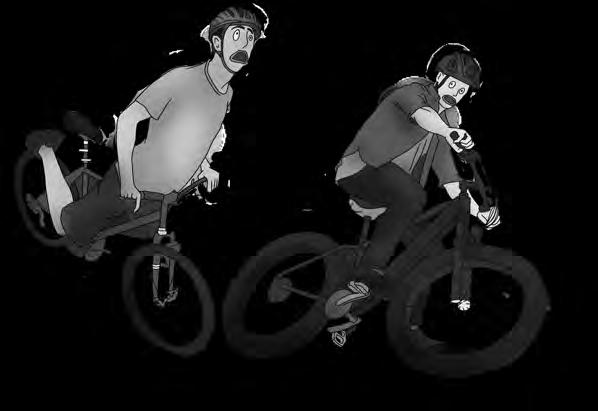
While commuting to and from school every day, it has become too common to see students arrive on campus in speeding, two-wheeled metal death machines. E-bikes often pass for regular bicycles despite their surprising speeds and lack of proper restrictions, and they are accidents waiting to happen.
In order to ensure the safety of e-bike riders, pedestrians and other vehicle users, California and FUHSD must set stricter restrictions and guidelines.
E-bikes are sorted into three classes depending on the settings of each type of bike. In California, the three main classes of e-bikes are able to go up to 28 mph and do not require registration to operate, according to CalBike. In contrast, regular bicycles have an average speed of 14.1 mph, according to Bicycling.
Allowing riders to handle fast-paced machines on the road without proof of training and responsibility is extremely neglectful and dangerous.
Although e-bikes have similar structures to motorcycles, the latter requires the rider to have a valid license and registration for their vehicle, as well as parental consent and proper driver education. E-bikes have no such restrictions, despite having similar dangers regard ing irresponsibil California needs stricter guidelines to en sure the safety of riders and pedes trians.
Sachin Chandran

COLUMN—Dark, opaque sludge tints the waters of the Pacific a murky brown hue, choking wildlife and wreaking havoc through ecosystems. This is the reality of oceanic oil drilling, which the federal government seeks to encourage along the Gulf of Mexico and California’s coast, according to the Guardian.
Although cited to be a push for energy independence, the proposal only serves to endanger marine life and damage California’s economy. Consequently, it must be rebuked by California’s legislatures and fought against on the congressional floor by our representatives.
ity and lack of knowledge. This miscalculation puts many lives at risk, but it is avoidable.
As a whole, the state of California must set stricter e-bike restrictions and guidelines that focus on educating riders. Additionally, they must require proper licenses and registration from all riders. This way, they will be more inclined to abstain from dangerous behavior and follow laws that protect their safety.
To combat this current lack of management, FUHSD must set more specific policies regarding the usage of e-bikes.
Currently, the district lacks its own policies and follows state guidelines, such as requiring the rider to wear a helmet and not wear earbuds while riding, according to Walk Bike Cupertino. This is insufficient to protect students and road users from the dangers of e-bikes.
Steps are already being taken to educate parents on safety measures for e-bikes, like the safety seminar that took place on Dec. 2. However, this is not enough. Students should also learn about the repercussions of unsafe riding and how to avoid dangerous situations.
Irresponsibility surrounding e-bike guidelines creates threatening situations on roads and sidewalks, and putting unlicensed students behind the handlebars only increases the risk. The current negligent guidelines must be replaced with stricter regulations and more effort put toward
The announcement of renewed oil drilling across the Pacific Coast for the first time in 41 years occurred in retaliation to California governor Gavin Newsom’s unwillingness to comply with the Trump administration’s policies. The move comes in wake of Newsom attending the 30th United Nations Climate Change Conference in place of the president, according to Politico.
Should this proposal go through, it would greatly increase the chances of oil spills, which are exceedingly difficult to clean up and cause long-term damage. Moreover, the process of oil drilling exacerbates climate change, according to the National Oceanic and Atmospheric Administration.
Not only is the federal government overstepping their bounds, but they are doing it at the cost of millions of California residents. Further tainting our ecosystem will lead to suffering for marine life and citizens alike, superseding the economic gain this move could bring.
Even past the conservation concerns, desecrated waters or an oil spill could disrupt the tourist market and impede our economic growth, according to Visit California.
Considering that the federal government’s proposal is not economically feasible, it is imperative they cease using wildlife and ocean ecosystems in retaliation to Newsom taking a stand on climate change.
Similarly, the plan must be blocked in California courts. This will ensure that humans and marine creatures do not suffer due to political battles.
To make certain this occurs, it is up to our community to call on local leaders, like congressman Ro Khanna or assembly member Patrick Ahrens, and petition them to oppose the federal government’s plan. If not, it will set a precedent that our environment can be used as a political chess piece, rather than something sacred that must be protected.
Recruitment campaign exploits young minds
Alan Zhang
Students spend four years in high school preparing for their future after graduation. A path fewer students pursue is military service, so recruiting officers often go to school campuses to inform students of enlistment opportunities, according to the U.S. Department of Education.
For instance, Navy representatives visited HHS on Nov. 3, setting up in the quad to speak with students about enlistment opportunities to serve the country.
While providing students with information about potential career paths is essential, actively recruiting high school students for military service unfairly preys upon students’ undeveloped judgments.
The most glaring issue with recruiting young students is that they are still developing the ability
to make reasonable choices that benefit them in the long term, according to the National Institute of Mental Health.
Pairing that with inviting military recruitment officers onto campus can lead students to make impulsive career decisions. This creates the potential for serious consequences to their future mental and physical health, as military service carries inherent physical and psychological risks.
To make things worse, a study on the U.S. military found that the youngest cohorts were the ones most susceptible to mental disorders, according to the National Library of Medicine. Not only would this put young recruits at a greater risk of struggling with their own mental well-being, but it would also leave the military with members who are less able to perform at their full capacity.
Beyond increased health risks, enlisting is also nearly irrevers-
ible and involves a binding contract that commits people to joining the military for years, according to the
Furthermore, administrators, teachers and parents must provide guidance that lets teens explore

While informing students of various career paths is important, joining the military is a dangerous choice students may impulsively choose.
Teachers should diversify finals formats
Ethan Xue
With finals coming up, students are beginning to scavenge for ancient notes, binge review videos and rack their brains to unload months worth of information onto one final test for every taken class.
Even if students follow proactive study schedules, however, the hundreds of consecutive exam questions that can make or break grades inevitably create a period of dread and anxiety.
On account of the stress they induce, finals week must not constitute an overwhelming slew of exams.
Non-exam formats can often

provide more enjoyable and effective ways of evaluating student knowledge, and teachers must give their implementation much more consideration
Currently, final formats are left to the discretion of teachers within each academic department. As long as teachers provide an educational class period during finals week, district policy is to grant them full liberty over planning finals, principal Denae Nurnberg said.
With this freedom, teachers are capable of introducing more diverse forms of finals. Capitalizing on a semester’s worth of time, teachers should discuss among their departments to collaborate on creating engaging cumulative assignments that acknowledge student preferences while retaining their function as assessments.
Last year, in AP Physics 1, my first final was a project where we constructed mechanical catapults that launched foam balls. Leading up to finals week, we ran trials of them to measure how far those projectiles traveled.
On the day of the final, we used those catapults to hit targets and prove our calculations correct, displaying our understanding of course material without spending
the block period frantically searching for formulas to scribble on a test sheet.
Because I didn’t need to study for this final, it saved me hours of time during finals week and took a huge weight off of my mind. It allowed me to distribute my effort more evenly across a wider schedule, while still demonstrating my knowledge and applying the academic concepts I had learned throughout the year.
Beyond my experience alone, non-exam preference is shared by students across campus. In a survey by The Epitaph of 148 students, 73.6% stated they get more stressed about exam finals than non-exam finals. Students also reported stress for finals on a scale of 1 to 10, with values for exams getting a 7.4 while non-exams got a 5.4 on average.
The lower stress, anxiety levels and preference for non-exam finals suggest they lead to a much lighter burden on all students.
To address both the wants and needs of their students, teachers must broaden their finals to other formats, alleviating academic pressures and promoting more healthy learning experiences. Specifically, many departments could
Education must end prejudice toward neurodiversity
Elena Shim
I have never used the phrase “you’re autistic” in my life. Each time it is used by my peers as a casual punchline, I question why neurodiversity is not discussed more at school.
As a senior who wants to pursue neuroscience in college, it bothers me that in a school committed to prioritizing and embracing diversity, there is still discrimination and a lack of empathy towards neurodivergent students.
Neurodiversity is a biological trait that refers to the varying neural differences and minds in humans.
Unfortunately, in our education system, there exists a hole. Not a single closed tutorial has men-
tioned the prejudice that neurodivergent people face. Too often, I witness ignorant comments made by my peers, teasing others based on stereotypes and false understandings of autism and neurodivergents.
Neurodiversity could easily be taught through biology or health classes. Classes must incorporate information about the challeng es and differences of the neurodi vergent commu nity to foster an inclusive school environment. This curriculum could be further implement ed into closed tutorials to show that neurodiversity is just another human trait.
Similarly, when a history class covers the women or civil rights movement, it must also expose how people with autism fought for their rights and neurodiversity movements. For better education, classes must begin bringing up the immense contributions that neurodivergent individuals made to science and history.
Through my research with Stanford professors and neurodivergent peers, I’ve seen that such individuals have exceptional ways of thinking, a trait that distinguishes them from neurotypical people.
Despite this strength, my neurodivergent peers from the research program shared a common experience, claiming
schools, students will have the guidance to choose their futures safely.
consider implementing video-based finals, which are free, simple and engaging to create and watch.
For example, history students could produce documentaries or reenactments to demonstrate a complex understanding of themes and figures. Language takers could perform advanced skits or parodies of cultural films to exercise higher-level vocabulary, and science classes could do two-minute concept explanations.
In the future, teachers must consider non-exam formats to diversify and improve end-of-semester content evaluation.
They should implement final formats that encourage application over rote memorization, to foster a less mentally taxing finals week each semester.
On the other hand, students must collectively take action to push for non-exam finals. By proactively communicating with teachers and staff to adopt different formats and drafting and petitioning specific options their classmates support, students can work hand-in-hand with teachers to avoid a stress-filled week filled with despair.
that they often felt socially isolated and mentally exhausted due to their continuous fight against the stereotype that they inherently lack intellectual capability.
HHS must raise awareness about neurodivergent individuals, just as this is done for other minority groups. By allowing them and their stories to be talked about in class, the division between neurodivergent and neurotypical students will dismantle.

This will ensure that no student is ignorant of their neurodivergent peers’ nuances and struggles, allowing the school community to become much more empathetic.
Schools, when its education fails to show that neurodiversity exists, foster an environment where neurodivergent students are pushed to a corner. Whether they are neurodivergent or neurotypical, all students must be valued and included.
Los Padres acts as welcoming, informative space
Elina Li
After students have gone home for the night, the Latino parent club Los Padres convenes in the library over plates of food and resource handouts. The club, made up largely of parents of EL students and aided by Latino Student Union volunteers, holds monthly Spanish-language sessions that help parents better understand how to support their children, Spanish and EL teacher Adrian Buenrostro said.
“This program is the bridge between the classroom, the school and the house,” Buenrostro said. “Our goal is for us to be able to bring material content, be able to bring resources and be able to make those connections with the parents because all the material is presented in Spanish.”
Los Padres acts as an informative tool for parents who may feel detached from the campus community or lack insight into their children’s academic lives, volunteer senior Gianella Arteaga said.
“Their parents can know what is happening with their [child’s academics], and they can help guide [their children] to be more aware of their attendance, classes and grades,” Arteaga said. “This is the perfect time where they can be more involved with what is happening with their children and with the community.”
Since the education system in Latin America differs significantly from that of the United States, immigrant parents may encounter confusion in keeping track of their children’s journeys through high school, Buenrostro said.
A recent meeting on Nov. 12 included a lesson on how to use Schoology, EL program assistant Rocio Stavoli said. Stavoli said parents were unfamiliar with the platform, and the session allowed them to learn important information about grading policies.
“If a student is not doing well, it’s a very good tool to have parents understand how the system works, when the grades are due, how to navigate Schoology, so that they can monitor their kids and
make sure that they’re doing well,” Stavoli said. “It has happened in the past that the students tell their parents, ‘Oh no, I’m fine. I’m doing great. I’m passing all my classes,’ and then the student doesn’t graduate.”
Due to the club’s large member base, parents also have the opportunity to learn from each other’s experiences, parent Cleofas Cornejo said. Through Los Padres, Cornejo said she became aware of assistance other students use that could benefit her daughter’s learning as well.
Beyond providing academic support, Los Padres strives to make parents feel welcome in the community, with each meeting including a complementary dinner and bonding activities, Buenrostro said.
“We call it the Latino parent club, because in clubs, you not only get information, but also build relationships,” Buenrostro said. “We want parents to build relationships and to take those relationships outside of school.”
To promote a sense of unity, Stavoli said the club plans to celebrate Latin American traditions together, such as Posadas, a celebration in December that involves bringing food and enjoying it with others. Hosting such events allows parents to connect with teachers, Stavoli said.
“We want them to celebrate their customs with us, so that they feel that they have things in common with us, with the community,” Stavoli said. “We also want to make sure that they meet families that have things in common with them. They have the same language, they come from the same place and then they can just build the [community].”
When parents form bonds with each other, it can encourage their respective students to help one another, as well, Stavoli said. If students have friends they can study or socialize with, they may become more motivated to attend class, Stavoli said.
As meetings continue, the club’s mission of educating parents will ensure students have support from all sides, giving them the best chance to thrive, Buenrostro said.
“You want to have the support of the parents,” Buenrostro said.
“We only have [students] here from 8 a.m. to 4 p.m.. We need [a] shift in the morning and then shift to [when] parents are at home, so there are two shifts of education. Having all of us be connected, we’re able to support parents and students more adequately.”

Members exchange postcards with local elementary school students
Ethan Xue and Alan Zhang
Forming a new monthly tradition, French National Honor Society members began creating postcards written in French to send to elementary school pen pals at the French American School of Silicon Valley on Nov. 19, cultural and community outreach director, senior Julia Bouron said.
As an alumna of the French American School of Silicon Valley, Bouron said she devised
the pen pal activity after realizing FNHS lacked opportunities to form connections with the broader French community.
“My grade always goes back to volunteer there and talk with our former teachers and staff, and I see the kids I babysit go there, so it’s very [communal]. It’s the closest thing to a French family I have here,” Bouron said. “I noticed our club had a lack of involvement [with] the community, apart from one or two events throughout the year, so it was a way to increase that involvement.”
Among the project’s several benefits are the opportunities it offers to explore new aspects of the French language, junior Sean Tessone said.
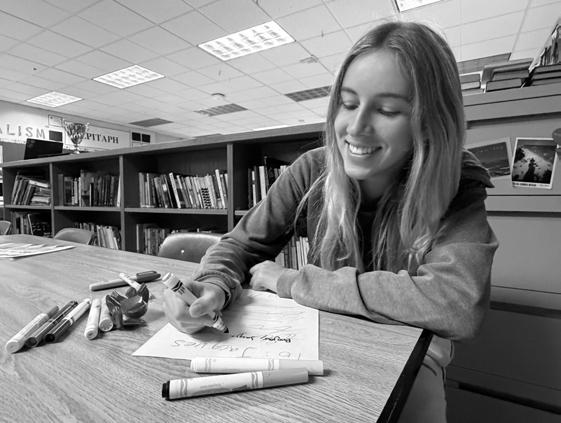
“It’s a way for members to improve their grammar, but it also teaches us modern social skills like slang,” Tessone said. “We’re going to be learning about how [French-speakers] use their grammar conventions differently than how we learn [it] in an academic setting, so it introduces you to a social world rather than just an academic world.”
Due to the activity’s unique nature, public relations director, junior Ada Buricea said she hopes FNHS will be able to advertise the postcards as a major selling point to attract new members to the club.
“I hope that [pen pals] becomes a staple of FNHS because it’s something I would look forward to as a new member, and it would be something that differentiates [FNHS] from other clubs,” Buricea said. “I don’t know of any other clubs that have a pen pal program, so if it becomes a regular asset of FNHS, that is something that will attract people to the club in the future.”
Beyond expanding their language skills, students can form strong personal bonds with their pen pals, Buricea said.
“You’re able to move out to other communities, communicate with real French students [and] have actual conversations with other people, which are fun,” Buricea said. “I think the use of language and actually having an impact on your own community is super powerful.”
Competitors reflect on recent conference, future plans
Henry Hu and Advay Ranade
Following weeks of latenight prep, mock rounds and committee practice sessions, speech and debate competitors participated in the annual John Lewis Silicon Valley Urban Debate League Invitational from Nov. 21–23, president, junior Poorva Khambekar said.
In the season’s first official tournament, competitors put their skills to the test and gained competitive experience, Khambekar said.
“For many of our new competitors, [this tournament] might be their first time competing ever,” Khambekar said. “It’s a great place to get exposed to competing because there’s a huge difference between practicing within committees and actually getting experience.”
The John Lewis Invitational, held online with some in-person events at Notre Dame San Jose, offers events at both novice and more advanced open levels, giving students an opportunity to compete against similarly skilled competitors, Khambekar said.
“John Lewis is a great place for new members to start. In [tournaments] like Berkeley Invitational, the level is a lot higher,” Khambekar said.
Months before the tourna-
ment, members were split into different committees based on their preferred speaking or debate event, debate committee leader, sophomore Claire McGraw said. Committee leaders focused on providing students with resources to help them succeed, such as feedback for written speeches and practice rounds, McGraw added.
“We had [competitors] read off their arguments, and we [had] a group discussion about their contentions so that they were able to get feedback and practice reading them out loud,” McGraw said. “It’ll be smoother when they speak at the tournament.”
After three days of competition, two Public Forum competitors, freshmen Kayla Sonn and Daanya Ali, broke into elimination rounds, McGraw said.
“As expected, most of the HHS teams didn’t break because they had never competed before, but one PF team made the break and got through one or two elimination rounds,” McGraw said.
“They had barely debated before, so we were really proud.”
For competitors who failed to advance, the tournament still marked a valuable introduction to competitive debates by
adaptability, freshman Arjun Surendra said. After his partner was unable to make the tournament, Surendra, a PF competitor, was forced to suddenly change his strategy.
“I was a lot more nervous and on edge because I needed to listen more and write my speeches a lot quicker,” Surendra said. “This just gives me hope that it’s only going to get better from here because I won’t have to do a two-on-one [debate later on].”
The tournament was a productive introduction to speech and debate, leaving competitors feeling confident in their future with the club, Surendra said.
“This was my first tournament. I had done a few speeches before for class projects, but that was all of my speech and debate experience,” Surendra said. “It was a lot of fun compared to other smaller events I attended before.”
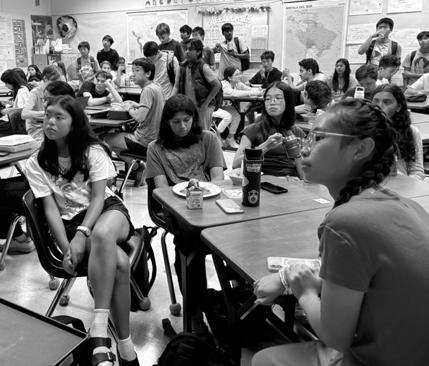
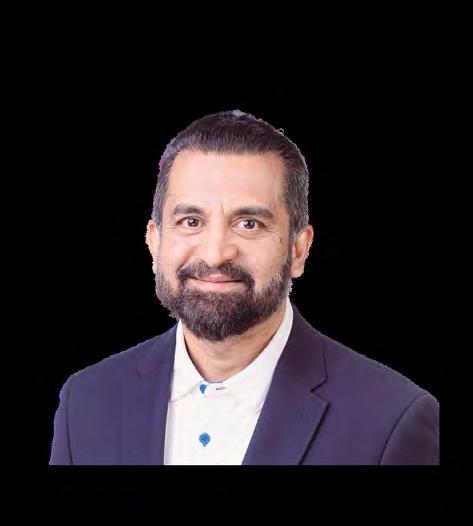
Senior Financial consultant Viren Kanyal from Charles Schwab answers questions regarding student investments and budgeting income from jobs.
Question: How does investing differ between students and adults?
Answer: “The most important thing is to have a basic understanding and create curiosity about how important savings are. It differs a lot from adults, because, in general, kids do not make much money, so their [income] sources are limited. What is important is starting early. The amount and the sophistication of investment is different, but step one is saving money. Start with something really basic, like buying a stock, mutual fund or exchange-traded fund.”
Question: How do you recommend students with jobs budget their money?
Answer: “Budgeting is [considering], ‘How much are you getting money from your parents and what are your goals?’ First, come up with two or three goals. Something like a short-term, mid-term and somewhat long-term goal. In terms of budgeting, whatever money they’re [receiving], think in terms of, ‘Okay, how do I grow this money, and how much money do I need?’ They need to segregate [their financial goals].”
curricula
Sachin Chandran, Isabela Guilardi and Sanjeet Jayaseelan
Often overlooked amidst the standard business department curriculum, a vital topic covered in classes ranging from Virtual Enterprise to Law is basic personal finance skills, Law teacher Ben Pham said.
“In business courses, we generally cover something in personal finance or financial literacy because we understand that to understand business, you have to understand how to manage your own finances,” Pham said.
Learning how to manage income and save at a young age is the important first step toward building a strong financial foundation, business teacher Graeme Logie said.
In Principles of Business, students explore money management by learning about a variety of financial accounts, Logie said. The unit also teaches them to grow a stock portfolio and protect their assets with insurance, Logie added.
“Even if all you are getting is maybe an allowance from your parents, being able to set up a budget and setting aside money for either savings or for something big-
of living in the Bay Area through Principles of Business, junior Sravika Nemani said she realized the value of strategic money management early on.
“I learned a lot about how to navigate life and understand what decisions I’ll have to make when I get older, and I feel better prepared,” Nemani said. “Personally, I would like to come back and live here when I’m older, and it helped me realize that I need to start thinking about that now.”
Similarly, through a hands-on project, Law students create realistic budget simulations, including everyday expenses from apartment rent to transportation and entertainment, Pham said.
The simulations aim to teach students how to organize their expenses and navigate the divide between wants and needs, Pham added.
“Tracking your own expenses is the most important [lesson] given how today, we spend more virtually, using cards or your phone to pay, rather than actually keeping track,” Pham said. “Understanding how to survive on your own or having a budget and understanding how that works can help set you up for success, rather than leading yourself into debt because that’s one of the biggest concerns.”
eracy is the ability to understand contracts, such as housing leases, Pham said. By teaching students how to understand the complexities of contracts in the classroom, Pham said students can better prepare for the responsibilities of adulthood.
As an unexpected benefit, Nemani said she was surprised by the expansive practical applications of financial literacy in other facets of her education.
“In FBLA, I was mentoring a competition that had to do a financial report, and because of my past experience, I was able to help them. It also helps in things not directly related to business,” Nemani said. “[In history class], I’m able to understand the class a lot more because we’re talking about things like interest rates and eco-
To ensure teenagers learn thoughtful money habits early on, Pham said financial literacy is a crucial skill to master.
“It doesn’t matter what grade level you are, understanding the basic concepts of it [is import ant] because the last thing anyone wants to be in is debt for the rest of their life,” Pham said. “You want to at least set yourself up for success, [so] you don’t have to worry about money. When money is a strain, it’s really hard to make good decisions.”
Photo by Sachin Chandran
Financial literacy is an essential skill that should be taught to students for future success, Pham said
From credit card bills to loan management, effectively managing one’s finances is an essential aspect of everyday life. Students, staff and an expert reveal the importance of financial literacy, both on campus and at home.



Students jobs budgetexplain and income



Students share their financial habits and beliefs


ID-entifying spending
Students with part time explain how they and spend their
The




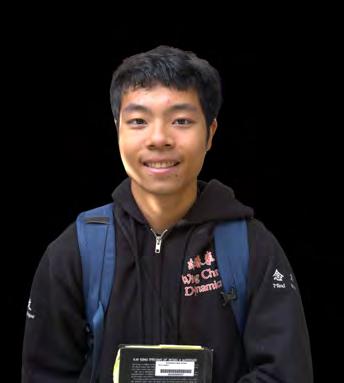
Ochoa
“Imainlyspend[myincome]onlittle thingsformyself,suchasclothingorfood thatIdon’tneed,likeStarbucks.The reasonIactuallygotajobwasbecause Iintendtosaveforacar.Luckily,Icould havehelpfrommyparents,butIwould obviouslyneedtomakeabigcutintothe paymentforthecar.”—Isabella






“I spend around one-fourth of my paycheck on food, and sometimes, $20-30 a month on video games, and the rest goes straight to the stock market. For our age, I think you don’t have to force yourself to save money. It’s already pretty good that you have a part time job [and are] not spending your parents money.” — Jeffrey

“My mom has a savings account for me, so I put all that money into the savings account. Through that, savings accumulate over time, so I have [money] for college. It’s all about thinking about what you could do in the short term that results in long-term gains. Just that alone is able to help someone rethink their decisions and second-guess if you’re spending right in the moment.”
Exchange student shares view of the United States
Luna Pitl
Most German teenagers dream of experiencing the stereotypical American high school lifestyle at least once before becoming adults. As one of the few lucky German adolescents that have close family and friends in the United States, I seized the opportunity to quench my thirst for American life and caught a flight halfway across the globe.
I am spending this semester as an exchange student, rooming with my cousin’s family. While my brother and parents stay at home, I get to experience first-hand the many strange yet interesting facets to life in Cupertino, California.
Upon arrival, the first thing I noticed was the significant number of cars on the roads. Having lived in a big city like Stuttgart in Germany meant I was accustomed to using public transport to move anywhere and everywhere.
The shift to using cars as the main form of transportation came as a shock. Prior to my arrival, I had sat in our car a total of three times, whereas I am now being driven around multiple times a day.
Being unable to go places on my own puts a damper on my social life. Hanging out with friends depends on the finicky availability of a driver, while a quick text to my parents to notify them that I will not be home until late is more than enough in Germany.
I am used to spending most of my weekend nights going out with my friends. Here, quick trips downtown are rare, and I feel as though I am lacking things to do and places to go.
Socially, I was surprised by how much everyday interactions differ from their portrayal in American movies. Students of different genders rarely interact, a clear difference in social behavior compared to Germany. In Germany, students in a class are tight-knit and close friendships between boys and girls are very common.
Moreover, when talking with my peers, I have noticed they often seem uncomfortable. Some individuals constantly avoid eye contact or have trouble keeping conversations going. A few times, people have simply left mid-conversation or stared blankly at me as if they had not heard me asking a question. These behaviors leave me appalled, as I am used to teenagers being taught how to communicate well with others.
Education is different here, too. In the United States most students attend the same school according to their grade level, while in Germany, however, students are separated into schools of varying difficulty based on their performance in elementary school.
This separation results in more academically similar student bodies and limits contact with kids who might vary from the school’s norm. Here, I have met so many more students who vary in everything from their social class and political perspectives to educational background, which has been a refreshingly diverse experience.
Teachers reveal their hidden hobbies, unique passions
Adam Orrin and Malar Raguraman
For months, they’re just a teacher—until one day, they spontaneously burst into song, share an anecdote about being a Muay Thai champion or reveal they are a real life Ironman. Three teachers share the significance and stories behind their cherished hobbies.
Science teacher, Kathleen Shreve:
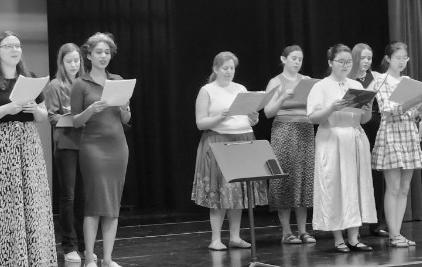
As a continuation of childhood participation in various competitive choirs, Shreve said she became a member of an adult choir through the Santa Clara Recreation Center. Despite previously losing touch with many of her hobbies as an adult, Shreve said she rekindled her passion for singing with encouragement from her daughter.
“For me, it’s really fun to see how far I can push my voice,” Shreve said. “I am a soprano, which means I’m hitting the high notes, and I forgot I could do that.”
The communal atmosphere of the choir also provides a welcoming space to connect with others, Shreve said.
“It’s hard to make friends as an adult,” Shreve said. “[So] having a space where you can do something together with somebody
who also enjoys that thing is really a wonderful feeling.”
Beyond serving as a creative outlet and opportunity for socializing, exploring the hidden science behind singing furthers her passion for choir, Shreve said.
“There’s the physics behind it, which is fascinating,” Shreve said. “I’ve done some studies on that when I was in college, actually looking at how the voice works and how the frequencies build up. It just makes it more beautiful.”
Math teacher, Gary Auten:
Stemming from a small triathlon bet with his brother, Auten said he eventually came to compete in Ironman Triathlons, races which consist of a 2.4-mile swim, 112-mile bike ride and 26.22-mile marathon run. While he stopped competing 10 years ago, Auten said he participated in more than 15 of these extreme races.
“I’ve always been athletic,” Auten said. “In high school, I played basketball and football, and when I graduated, I wanted something fun and competitive to do. I just kept on upping the ante and being more competitive at triathlons, which spawned my interest in the Ironman events.”
Auten said he also qualified into exclusive races, such as the Ironman World Championship, conducted in Kona, Hawaii. Staying dedicated to training can be a difficult, though ultimately rewarding, challenge, Auten said.
“I remember swimming in the pool at FHS doing some interval
Unlike back home, schools here support students in pursuing specialized interests through extracurriculars, elective courses and school-sponsored sports. For example, I can try my hand at reporting in our journalism class.
Despite taking a total of 16 classes back home, it would have been impossible to take such a career-based course in Germany, where we are unfortunately limited to only the core academic fields.
As a cheerleader, I am enthused by the deep love of sports present on campus. I will never forget my very first high school football game.
Watching one of our players miraculously sprint into the endzone to the sound of thundering cheers, my life seemed as if it
sets at six o’clock in the morning, wondering why I was doing what I was doing. So, yes, there were times when I wanted to stop, but I didn’t,” Auten said. “Suffering in a small amount is healthy, and recognizing that suffering is okay and staying focused while you’re suffering is part of the mental benefit when you’re competing.”
English teacher, Shawnee Rivera:
Stuck at an unfulfilling job as a technical recruiter, Rivera said she found an outlet in Mauy Thai kickboxing in 2000, a hobby she carried with her after moving to the Bay Area and switching careers to teaching. Shattering stereotypes of female fighters and going on an undefeated streak at the Golden Gloves championship in 2004, Rivera said that she had found her place in the ring.
“I was going to classes double days, Monday through Friday. I just loved it,” Rivera said.
After making it to the World Championships in 2008, Rivera said she made the decision to abstain from competing due to potential medical consequences.
“One of our guys, Brian Johnson, had a stroke in the ring, and it changed his whole life. And he [said, ‘if you had a stroke] you wouldn’t be able to be a teacher anymore. You have to learn how to walk again,’” Rivera said.
With her Mauy Thai run safely in the past, Rivera said, despite the heartbreak of missing out on the competition, she would do it over again if she could.
“I don’t know if I would have the stamina or the ability to deal with the current educational system as it is, if I wasn’t a fighter,” Rivera said. “I need to fight for my students all the time. I need to fight to get them to learn. I need to fight to keep them engaged. Some people think of the word ‘fight’ and they’re like, ‘Oh, it’s just grueling, and all-consuming’ and sometimes it is, but I see it more as a positive. I fight for good things. I fight for the underdog. I fight for people who don’t have a voice.”
were straight out of a movie. My time in the United States has helped me find out who I am without a familiar community guiding me through tough times. Adjusting to life in a completely new country, with a very different culture, has not been without its challenges. However, I have made friends for life, and I am forever grateful I did not pass up this opportunity to experience life on the other side of the world.
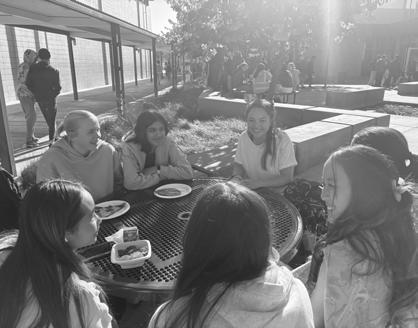
Adjusting to the new life here has been difficult, but I have learned to love the little things, such as exploring my electives.
Danielle Feldsher and Kanmani Raguraman
With a surge in enrollment and supportive teachers, science and society is changing the typical expectations of a science class through a hands-on and inclusive approach, science and society teacher Joanne Quan said.
A unique aspect of the course, Quan said students benefit from a strong support system that helps enhances their performance.
“They know that we’re in their corner, and we want to see them succeed as a student,” Quan said. “That may take a little extra work, but they know we’re here to support them.”
From projects exploring genetics to developing accessibility methods for individuals with disabilities, students learn through relatable, real-world scenarios, fostering a genuine interest in science, science and society teacher Shawn Haratani said.
“Every single unit is a different project, and they have to use different modalities to express what they’ve learned,” Haratani said. “It allows the kids to come together.”
Highlighting the unconventional approach of the course, Quan said one of her favorite projects was when students made graphic novels to express their learning.
“We have a lot of artists and a lot of students that can display their other strengths that they traditionally can’t do in a science course,” Quan said.
The class’s frequent experiments and labs help keep the classroom dynamic engaging, senior Charlie Garcia said.
Para-educator Prithi Rangarajan, who supports the teachers during class time, said that the hands-on environment is a key reason for the popularity of the class.
“The students do the projects, and they feel like they’ve accomplished something,” Rangarajan said. “They feel really successful doing [the projects], and they talk about it.”
As a result of the class’s unique structure and curriculum, it has earned the praise of many students and staff, including principal Denae Nurnberg.
“They have worked towards getting students’ [research process] in front of the class and building their confidence in their speaking skills to present their research,” Nurnberg said. “They have done a phenomenal job of elevating science research and academic language production in their class.”
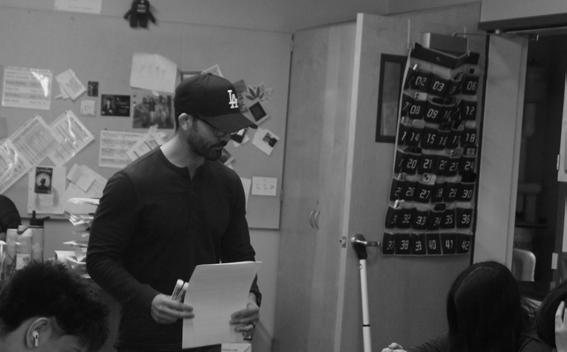
Eden Rademacher hopes to bring whimsy back to film
From participating in her second grade class’s play to putting on her own productions with the drama club, senior Eden Rademacher said her theatrical journey has been filled with self-expression, imagination and a deep love for storytelling.
Beginning her journey as an actress, Rademacher said she first developed interest in becoming a director in fourth grade when a friend introduced her to the idea of authoring her own works.
Most recently, Rademacher said she wrote and directed the play “Stomp the Clock” which premiered at HHS in January. The
performance, which follows a singer trying to stop time in fear of her career’s end, stemmed from Rademacher’s own anxieties.
“Everything I write is usually correlated to some feeling I have that I don’t like,” Rademacher said. “I try to express that through writing and let it out. I was really afraid of the passage of time, so I tried to write about that.”
Rademacher said her mother has been her biggest supporter and often reads her drafts to provide constructive feedback.
“The biggest thing [my mom] helps me with is making sure my ideas are clear, because even if it’s written well, it still might not have the message or the impact that I want it to have,” Rademacher said.
Beyond technical skill, theater arts teacher Alana Caires said she believes Rademacher’s character helps make her works captivating
and wishes for Rademacher to be able to maintain her passion for drama.
“She has this energy about her apparent in everything she does,” Caires said. “She exists with so much passion, and that just carries her through everything. It creates this motivation and drive for her to get things done and see them through to the end in the way she initially imagined.”
Though HHS may not be well known for its drama program, Rademacher’s former honors American literature teacher James Aguirre said her desire to pursue the arts is admirable, and he has high hopes for her future success.
Rademacher, who dreams of becoming a professional director, said she hopes to restore an element of playful charm to film and the performing arts.
“I feel like Disney has been los-
ing its whimsy, and a lot of the big corporations are losing what made them so unique and so magical, ” Rademacher said. “I want to
be able to go into that industry of storytelling, create for a screen or for a stage and be able to add some life to it in some character.”

Student nonprofits teach unique skills
While education for most students comes to a halt once class is dismissed, student nonprofits Emergent Minds and Bloom Institute have employed unique strategies to ensure learning becomes a sustained lifestyle for younger pupils, Emergent Minds executive director, senior Meredith Tan said.
Emergent Minds
Emergent Minds teaches business skills almost exclusively through real-world experience, Tan said. Students of the organization learn the basics of entrepreneurship by designing their own products, buying the materials and labor to make them and selling them to customers and other businesses at local markets, Tan added.
Aiming to differ from paid programs that teach hypotheticals without implementation, Tan said Emergent Minds’ goal is to put students’ ideas to work through real-world application in trade shows, sales pitches and case studies.
“I want to help students see themselves as entrepreneurs because it’s [an essential] life skill,” Tan said. “Most of our students were really shy at first, but through pitching practice, they were able to start booths at public markets and sell products. I feel that they’ve experienced a lot of growth.”
Emergent Minds’ hands-on approach to learning sets it apart from other educational organizations, better equipping it to serve students of all abilities and backgrounds, Tan said. Specifically, Emergent Minds serves as an opportunity for students from diverse backgrounds to explore entrepreneurship and business, with the group having hosted
three cohorts specializing in business, personal finance and entrepreneurship, Tan said.
“I’ve grown a lot in being an initiator, coming up with wild ideas and making them possible,” Tan said. “Now I can think about a goal, come up with the baby steps that lead up to it and fulfill them.”
Since its founding in 2022, the Bloom Institute has focused on teaching business and STEM-related skills, executive director, senior Jane Ser said.
Bloom offers a variety of classes to students, from Spanish to programming, Ser said.
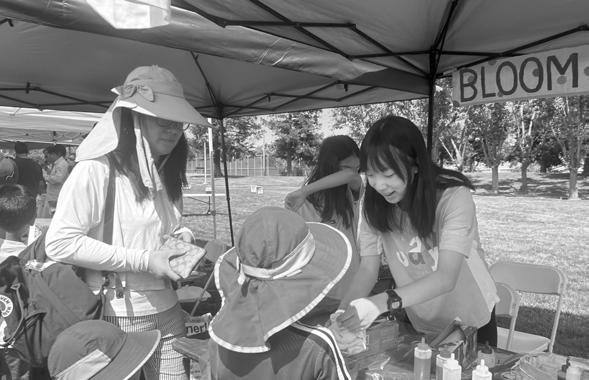
“Our organization’s main focus is to expand access to more niche subjects, like the arts,” Ser said. “If anyone wants to teach a course and they’re really willing to connect with their students, the field of subject isn’t a big issue, as long as we are not overlapping.”
Another unique feature of Bloom is its pedagogy that allows instructor to adapt to both group and private tutoring, vice president of public relations, junior Leah Pien said.
“The group aspect is different,” Pien said. “A lot of people focus on one-on-one teaching, but we have curricula that are open to teaching larger groups of students.”
Ultimately, Ser said she hopes Bloom inspires students to become future leaders and thinkers.
“Our courses introduce [students] to fields that they might not have considered in the past,” Ser said. “I hope they become people who are willing to collaborate with others and think of their impact on this world.”
Students draft guidelines for climate literacy
Abraham
Amid a steady rise in climate-related challenges, conversations about sustainability and education have taken on a new importance, California Youth Climate Policy intern, junior Chloe Dahl said.
Combining her experiences in the Climate Collective with new knowledge gained as a part of the CYCP program, Dahl said she has drafted a policy encouraging the addition of climate literacy to district curricula.
“When I joined CYCP, they really expanded my horizon to the pure gravity of the situation,” Dahl said. “I hope that if I introduce environmental education, students will also be able to see the gravity of the climate crisis that we’re
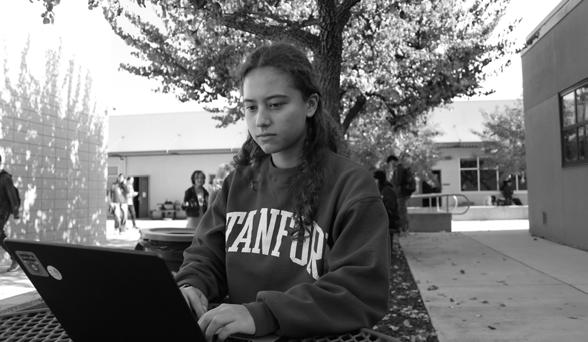
facing and realize that we’re going to be the sacrifice generation, so we have to start doing things about it.”
Specifically, Dahl said her policy aims to acknowledge the importance of environmental education by providing teachers with the resources to implement climate-centered learning in the classroom.
By encouraging teachers to go beyond Next Generation Science Standards, Dahl said her policy would help teach crucial skills students need to understand, address and respond to the climate crisis.
“It’ll differ from teacher to teacher because it wouldn’t be strict on specific subjects needing to do this specific lesson,” Dahl said. “For example, in literature, it could look like putting climate literacy resources into that media literacy unit, because that’s such a crucial skill to have when you’re looking at the climate crisis.”
However, the path toward actualizing significant change is multifaceted, Dahl said. Before becoming approved as official dis-
trict policy, the resolution must first be approved by the FUHSD board.
“My policy would provide guidelines for the administrative regulation, but I’ll likely be doing both [policy and implementation],” Dahl said. “How that works is we’re going to talk with the superintendent and his secretaries to try to work out the logistics of bringing environmental education to all five FUHSD schools and then get that agendized as an item at the school district level for them to discuss at their meetings.”
Though the CYCP internship, junior Suhani Nirwal said she initially began a separate policy initiative to expand mental health resources related to climate anxiety, and eventually merged policies with Dahl to add environmental literacy resources.
“It’s a disparity,” Nirwal said. “We talk about how students should be educated individuals, but we’ve never presented this information in a way that helps alleviate their worries.”
Advocating for this policy goes beyond minor change, AP Envi-
ronmental Science teacher Jessica Wakefield said, as it will educate and uplift the generations being left with this climate crisis.
“The importance of that is that we’re not going to see mass change on an individual level,” Wakefield said. “Getting that education now and building that awareness now is going to prepare students to be more informed, to be able to vote properly as they get older and push for a positive change that’s going to benefit and preserve the environment.”
Nirwal said the significance of passing their policy lies in the effect climate education has on mental health, and its ability to revitalize faith in climate sustainability.
“Everyone thinks that it’s just one person making that choice [to live sustainably],” Nirwal said. “But I really believe in strength in numbers, and if we come together and if climate sustainability becomes part of the norm, if it becomes culture, if it’s reflected in society, that [results in] the improvement of generations that are going to come after us, as well.”
Photo by Selina Wang
New genre–bending album blooms with creativity and originality
An artist’s magnum opus is often defined by the depth of its emotional impact and unwavering creativity. For the Spanish singer Rosalía, that dream has finally become reality. Released on Nov. 7, “LUX” intersects languages and creativity to touch the hearts of many listeners.
Contrary to Rosalía’s previous albums, “LUX” focuses primarily on classical–centered melodies instead of the mainstream pop she usually explores. Rosalía implements a variety of string and percussion instruments to deepen the sound, blending violin, piano and timpani to create a heavenly atmosphere.
One of the songs that most heavily features timpani is “Porcelena,” a ballad that communicates self-transformation and internal struggles. The powerful beats of the timpani in the track emphasize the song’s spiritual aspect, drawing me into a sense of wonder and adrenaline. The anticipation of the drum beats make me feel as though I am watching an intense war unfold, offering me a glimpse into the chaos of Rosalía’s creative mind.
Aside from the incorporation of many different instruments, “LUX” has incredibly
poetic songs that lure me into her stories. In “La Perla,” Rosalía describes her experience dating a man who posed as a hero to the world but was actually abusive.
Through lines such as “A mirage, Olympic gold medal for the biggest jerk,” Rosalía’s clever, lyrical talent shines through. The lyricism is refreshing compared to other modern artists who value visuals over their music, which is normally painfully plain. Unlike those artists, Rosalía isn’t afraid to have deeper meanings that require critical analysis.
Along with exceptional lyrics, “LUX” offers a variety of beats that switch throughout the album. Songs like “Sauvignon Blanc” convey a slower, sorrowful melody as Rosalía wallows in an intoxicating romance that ends in a broken heart. This

“LUX” combines diverse musical elements and multiple languages to make the album a one of a kind listening experience.
Poetry without intention lacks meaning, depth
Short sentences sliced to generate stanzas, references to vague traumas and easily digestible metaphors are all hallmarks of many internet poets. Crowding websites such as Tumblr and Instagram, these poets write as if they are making breakthroughs in modern poetry.
Instead, they are just using overused metaphors and themes that normalize anti-intellectualism in poetry, taking away opportunities from qualified poets.
One of the main appeals of this extremely concise and short internet poetry is that it is easily digestible for most people, according to The Guardian. Woefully, any criticism of this style is accused of being a way to gatekeep the medium of poetry. Fans argue that those who do not enjoy reading Tumblr poetry aim to make poetry less accessible to the general population.
Letting a poem be above criticism solely because everyone can read it prevents meaningful discussion surrounding the serious art. While this style might be easier to read, many times it fails to provide the unique emotional response poetry is known for.

Stanford
Cost:
depressing tempo allows me to relate to her pain. By further highlighting Rosalía’s harmonious voice, the melody also adds a layer of emotional pain to the song.
Other tracks, such as “Berghain,” incorporate more fascinating or chestral-inspired tempos with sharp violins and drums. The instruments create an addictive beat layered with multiple sounds, so memorable that I am able to recall it even after my initial listening experience. By creating versatility, Rosalía makes the album a unique and surprising experience for listeners.
Another interesting aspect about “LUX” is that Rosalía sings in thirteen different languages throughout the album. She only uses Spanish in tracks such as “Reliquia,” but includes lyrics in other languages for songs with complexities she can not just express in her mother tongue.
The track “Porcelana” features Spanish, English, Japanese and Latin to enrich the storyline

Cantor Arts
Center Location: Stanford
University
Cost: Free admission for all
of a young girl who appears to be perfect but is fragile behind her facade. I am met with a pleasant surprise while listening to these multilingual songs. The different tongues create an atmosphere that is masterfully complicated.


De Anza flea market
Location: De Anza
Community College
Time: First Saturday of every month
Cost: Free admission for all
I was introduced to poetry with “The Road Not Taken” by Robert Frost. Despite not knowing many poetry conventions and having a limited vocabulary, I still understood the emotion being conveyed by the complex poem. Being young never prevented me from feeling the universal pain of being forced to choose one path over another, an idea present in the poem.
Ultimately, this lazy style of poetry not only lacks meaning and depth, but also poses a threat to established poets. It takes resources and awareness from existing poets, giving them to people who do not treat the craft seriously.
To prevent boring internet poetry from taking over the entirety of the genre, readers must prioritize poetry that evokes emotion and empathy rather

It is clear that “LUX” separates itself from the mediocrity of many modern albums through its diversity and talented storytelling. It exceeds any expectations I had, as it is filled with beautiful instruments, meaningful lyrics and diverse languages highlighted by Rosalía’s mesmerizing and hyponotic voice.
For anybody tired of listening to the identical pop hits on the radio, “LUX” is certainly an album to explore and get lost in. It is a gateway to Rosalía’s universe.
Album: “LUX.”
Grade: A.
Artist: Rosalía
The Alchemist’s new album fails to capture previous creativity
Sanjeet Jayaseelan
In sixth grade, my friend introduced me to an up-andcoming artist and producer, The Alchemist. Upon listening to his newest release at the time, “Alfredo 1,” I was deeply moved, subsequently curating my taste for R&B.
Each beat in his songs felt meticulously crafted, blending elements of traditional old school hip-hop and modern-day slang. It was refreshing to see a talented rapper and producer combine artistry from previous generations with modern ones.
Continuing his trajectory as an artist, The Alchemist unveiled “Mercy,” his newest project in collaboration with Armand Hammer, Billy Woods and ELUCID on Nov. 7.
The album, while showcasing familiar strengths to his prior singles, suffered from a drought of creativity. I carried the expectation that this new project would outshine “Alfredo 1,” and its sequel “Alfredo 2,” but the result was ultimately underwhelming.
Compared to his previous albums with peaceful beats and vibrant verses, “Mercy,” aacarries no outstanding meaning, leaving a total mess of bashing
sounds that feature no cohesiveness.
Tracks like “Glue Traps” and “Scandinavia” do little to enhance the album’s themes of human resilience. The songs’ more upbeat tones and carefree delivery diminish their emotional depth, leaving me confused about The Alchemist’s intent.
Only two songs, “Super Nintendo” and “Laraji,” were notable for their subject matter of social reform. The attribution of layered instrumental and memorable verses referencing previous activists, such as Malcolm X, recreated the exact nostalgia I feel when listening to “Alfredo 1.”
Nevertheless, the album is dragged down by dull verses and rushed deliveries in tracks such as “Nil by Mouth” and “Dogeared.” Each artist’s individual contribution clashes with the others, making the songs feel jumbled and out of place.
Furthermore, tracks such as “u know my body” and “Crisis Phone” lack distinctiveness because the misalignment between lyrics and beats makes the
songs an outright flop. Other weak tracks, such as “No Grabba,” suffer from slow-flowing verse deliveries and sleepy melodic beats that contradict the rest of the album. Compared to The Alchemist’s previous bangers, the repetitiveness and the lack of lyrical meaning of the tracks in “Mercy” brought the album to its downfall. Lacking the iconic old-school production The Alchemist utilizes, it loses the core element I once admired in him for. Fans would be better off listening to “Alfredo 1,” again.
Album: “Mercy.”
Grade: D.
Artist: The Alchemist
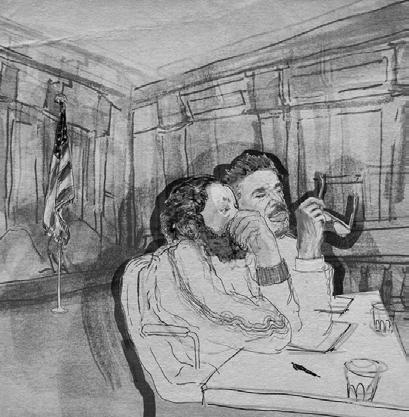
Making tragedy a trend negatively impacts viewers, victims
Annika Abraham
When news of the most recent heist at the Louvre hit social media, I was surprised that the reaction to the event was wildly different from the typical feelings surrounding organized robbery. Where shock might have been exhibited, there were thousands of videos posted that lusted over the robbers, disregarding the crime.
From videos predicting what the robbers looked like to users
spreading their made-up personas for the roles within the heist, social media’s reaction focused on finding a story or comedic angle. Because of this, the loss of priceless historical pieces has devolved into fictional fantasies and discussions over attractiveness.
The central theme between content surrounding the heist was the irrational need for the robbers to be “hot.” Unfortunately, what could be perceived as frivolous infatuation illustrates the larger problem of temporary, comedic hyperfixations that characterize modern social media.
Turning current events into jokes has led to serious news as-
Film powerfully delivers original action romance
After a mundane day at school, I rushed to theaters to watch the animated film I spent half a year waiting for. Rather than experiencing the expected adrenaline rush, I left the theater in cathartic shock and deep reflection, eyes brimming with tears.
Released on Oct. 29 with a meager budget of $4 million, “Chainsaw Man - The Movie: Reze Arc” delivers a masterpiece of emotion, animation and music through an original action-packed teenage love story.
Adapted from the titular manga and picking up from the series finale, the movie follows Denji, a 16-year-old devil hunter, and his journey navigating a love triangle between his boss Makima and a barista named Reze. Denji’s dumb, curious personality pairs well with Reze’s sweet and energetic vibes, enhancing each of their scenes as the movie hones in on their relationship.
As the film progresses, it sets a ticking time bomb pace that parallels its plot. The first half is a slow burn that uses warm color schemes, flowing animation style and poignant piano music to set a dreamy atmosphere. Then, like a chainsaw starting up, the strong romantic buildup suddenly climaxes into Denji and Reze’s nearly nonstop fight sequence until the end.
This clever pacing shines through in the festival scene, when the lower frame speed and blurred animation style illustrate Reze’s hypnotic charm. Immediately after, their love explodes into the action sequence, expressing their turbulent dynamic through an awe-inspiring flood of sensory details.
The dramatic music and shifting camera angles then complement the gripping fight choreography.
While the majority of the movie is filled with explosions and mayhem, other details
offer intermittent relief, like the return of previous characters from the show.
In particular, Aki saving Angel from a tornado temporarily shifts the focus to a positive friendship, providing a break from the love-fueled destruction of Reze and Denji’s battle.
Throughout the movie, the delicate scores by Kensuke Ushio and heavier, dramatic songs by Kenshi Yonezu perfectly accentuate the contrasting moods of each section. Using diverse instruments and vocals, the soundtrack is crucial to establishing the film’s consistent emotional potency.
However, the film is not without flaws. Questionable scenes of Denji’s sexualized fantasies are uncomfortable to watch and have fueled online memes. Additionally, much of the action sequence was hard to track, and many characters were reduced to cannon fodder whose brief screen time amounted to split-second offscreen deaths.
However, these drawbacks don’t detract from the overall experience. Sexualized scenes are often portrayed in innocent ways befitting Denji’s romantic inexperience, and the frenzied action and side character killing spree achieve their purpose of cementing the movie’s chaotically violent nature.
While the movie may seem specifically marketed toward fans of the manga or show, it is a must-watch for all eligible audiences. “Chainsaw Man - The Movie: Reze Arc” masterfully evokes an explosive roller coaster of feeling within a deep, evocative romance that makes a truly great watch.
Movie: “Chainsaw ManThe Movie: Reze Arc.” Grade: A+. Rated R. Watch in theaters.

suming shallow significance in the minds of consumers. As people are exposed to an algorithm that ridicules the severity of these situations and obsesses over attractiveness, it lessens their significance and alters the way they think about the events transpiring around them.
Crushing on tragedy cheapens the value society places on injustices, resulting in weaker reactions to what should induce public outrage. The desensitization to wrongdoings poses a threat to human empathy because violence, suffering and theft become normalized in our minds.
Another example of this is
Luigi Mangione, who was accused of murdering the United Healthcare CEO Brian Thompson and captured attention from social media due to his actions and looks. If society had deemed him ugly, he likely would not have re ceived the same coverage, atten tion and support. Due to society’s short obses sions with figures, he now has little support because everyone has moved on to the next big trend.
Crushing on thieves is all quick content and funny videos until constant desensitization to tragedy turns shocking events
into new memes. Romanticizing crimes damages everyone, from victims to people who mindlessly press the like button.

Short film production dumbs down content
Julia Song
From “The Wife I Despised Is My First Love?!” to “Captured and Bound By My CEO,” hundreds of micro movies litter the internet.
These so-called movies come with many glaring problems. The acting is overdone, the settings look unnatural and the dialogue is cringy. The plots are predictable and their messages are reduced to cheesy clichés.
Micro movies are a collection of short videos that tell an overarching story, usually viewed on apps like ReelShort and DramaBox. Each short is around a minute long and are produced to be as addictive as possible.
During the pandemic, micro movies began to take over China’s movie industry. They were low-budget, easy to produce and high-reward. Filmmakers jumped at the valuable opportunity.
Noticing China’s success, Hol-
lywood has started producing micro movies and posting them to apps like ReelShort. Resultingly, as of Dec. 4, ReelShort is seventh on the App Store in the top grossing entertainment category.
But while these micro movies are quick and easy to consume, they harm the movie industry by hindering viewers’ ability to appreciate long, thought-out plots. In an industry that prioritizes producing content as quickly and cheaply as possible, each short is rushed and poorly produced.
Compared to a two-hourlong movie with years of effort and passion poured into it, micro movies pale in terms of genuine quality. They lose the charm and emotion of movies, leaving no scenes up for interpretation. They narrate exactly what happens, babying the viewer and telling a dumbed down story to be mindlessly consumed. Instead of expanding to new perspectives and giving viewers something to gain from them, micro movies are soulless, made to satisfy the need to be on your phone.
Companies leverage people’s love of phones and short videos to spread micro movies through the film industry. Filmmakers should encourage audiences to put down their phones and watch real movies, despite the greater success of shorter videos.
The movie industry must not let carefully crafted forms of creativity decompose into slop spoonfed to viewers through a phone screen. As consumers, we must refuse to fall into their cheap traps through supporting and watching only long form movies.
Users must not let social media dictate relationship standards
Whether it is the expectation that your partner will drop everything to peel an orange for you or show interest in the random bird you saw earlier today, social media has an arsenal of arbitrary trials to test your relationship.
These are only two examples of the type of random, nonsensical tests that define today’s relationships, derived from popular social media trends.
Promoting obsessive behavior monitoring and score-keeping in all sorts of relationships, these trends create strict standards that relationships are expected to adhere to. While watching these judgemental reels provides cheap entertainment, social media promotes “testing” partners and relationships by instilling unrealistic expectations of what exactly to do in response to each test.
One such trend is the “orange peel theory,” which judges someone’s character based on their reaction to being asked to peel an orange for their partner.
Judging someone based on one small detail of their performance and disregarding everything else
is unfair and unreasonable because whether or not someone will drop everything immediately to peel an orange for you is not the most important quality to look for in a partner.
No one is perfect, and depending on the situation, the dropeverything-to-help reaction is unreasonable to expect. However, the third-party presence of social media in a relationship can make this kind of understanding go out the window.
This trend also encourages complete strangers to judge people and behavior based on arbitrary and unrealistic standards.
Ranging from reels of people running around waving literal flags to relationship “experts” reacting to clips and making several judgements, red and green flag content either fixates on a partner’s flaws or drastically exaggerates their positives.
Being part of a healthy relationship isn’t about obsessing over, hunting for and ex posing each other’s flaws. Creating and consum ing this type of content is harmful for both parties and only serves to rack up view counts.
As someone who has wast ed time scrolling through these reels and absorbing social media’s relationship
rules, I find that they plague the way I view all my relationships in real life.
With every “wrong” reaction and instance of unmatched energy, the media leads me to believe that my relationships are unhealthy or that I am doing something wrong. This toxic mentality causes me to overanalyze the interactions I have with every person I meet, which is tiring and leads to resentment.
While many believe these trends are useful in helping people realize the toxicity of their existing unhealthy relationships, this culture of assessing personal connections has become too normalized to the point where it carries little significance anymore.
These trends should not be given enough power to dictate mindsets, as the guidelines they set are arbitrary and

Cheerleaders reflect on competitive, sideline cheer
Danielle Feldsher and Jason Lai
With shiny poms and energetic chants, sideline cheer is a positive outlet for student-athletes to make friendships and contribute to school spirit. Still, many cheerleaders balance their commitment to sideline cheer with competitive cheer outside of school, finding differences between both forms, captain, senior Libby Dover said.
In competitive cheer, cheerleaders typically hone in on one routine for an entire season and travel to multiple competitions, while school cheer performances revolve around rallies and sports games, senior Makena Persyn said.
“[Competitive cheer] is really fun because you get to know a bunch of people from different schools, and you’re coming together with people from different backgrounds,” Persyn said.
Having participated in both sideline and competitive cheer during her sophomore year, Persyn said competitive cheer, with its driven environment and diverse coaches, offers more opportunities for athletes to perfect their performance.
By participating in compet-
itive cheer, sophomore Abigail Cantwell Wood said she has adopted useful skills that transfer to her team in sideline cheer.
“I feel more comfortable having leadership in my team and giving corrections to other athletes, since I have more experience than others on the team,” Cantwell Wood said.
The two types of cheer can fulfill distinctive purposes, depending on athletes’ desired athletic atmosphere, Cantwell Wood said.
“I feel a lot more challenged

as an athlete doing competitive cheer since we do more difficult skills and more intense training,” Cantwell Wood said. “High school cheer is better if you want the experience of being on a sideline with friends.”
With the high stakes of competitive cheer and perseverance required for sideline cheer, Persyn said she had to adapt to the difficulties of both forms.
“I learned how to deal with people in high pressure situations because with competitive cheer,
you’re competing in front of a lot of people, so you want to look good in front of a bunch of other [teams],” Persyn said. “With sideline cheer, you’re there at games for hours, you’re tired and you want to go home, so you have to deal with people in that sense.”
Regardless of each form’s unique challenges, Persyn said she has made numerous amazing, unforgettable memories in both sideline and competitive cheer.
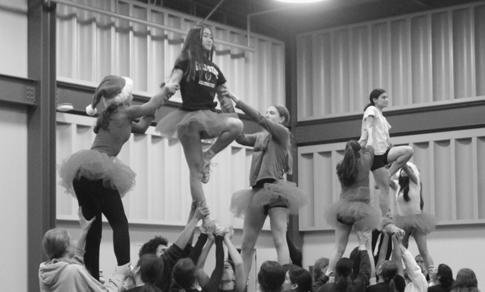
Athletes discuss journey to D1 offers
Ivy Guo and Saachi Nangare
For many student-athletes, receiving an offer to pursue their sport at a Division 1 university is a long sought after dream. Successfully attaining this goal, varsity girls soccer players junior Saara Lahtela and senior Myley Markley have announced their commitment to D1 schools this year, coach Raquel DeJesus said.
Saara Lahtela
Committing to Santa Clara University on Aug. 17, Lahtela said she was first inspired to play soccer because of her brother.
Lahtela, a standout player, was awarded MVP award on the team both freshman and sophomore year, DeJesus said.
“Lahtela was a girl that I brought to varsity freshman year,” DeJesus said. “I believe last year
we scored about 34 goals, and she scored 18 of those goals. She was the most valuable player within our league from all of the schools last year.”
First spotted at a showcase in San Diego by SCU’s head coach in June, Lahtela said the recruiting process was not without its many challenges, although it was ulti-
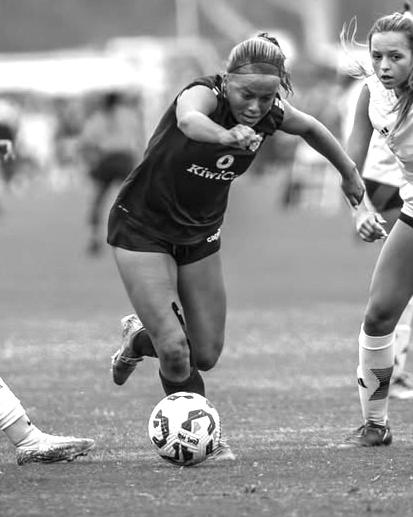
mately highly rewarding for her.
“It felt good to have schools that wanted me on their team, but it was also kind of stressful having to make such a big decision at a young age,” Lahtela said.
Ultimately, Lahtela said she is confident that SCU is fitting place to continue her athletic career.
“All [my teammates] have such
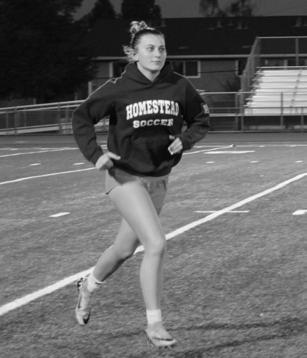
a similar goal, and we’re all playing for each other,” Lahtela said. “Obviously, it makes me very proud to see hard work pay off, and then also it makes my close friends and family very proud too.”
Myley Markley
Committing to Loyola Marymount University on July 27, Markley said she began the scouting process during her sophomore year, and initially doubted the possibility of being recruited.
“Since I was a goalkeeper, I felt like I didn’t get seen by [the coaches] because the other team wouldn’t shoot on me that much,” Markley said. “Sometimes I would go to tournaments and not even get shot on the whole entire weekend, which felt like a waste, because I emailed a bunch of coaches and they couldn’t even come and see me get shot on.”
However, after meeting a coach from LMU, Markley said the tide turned.
“In competition events, it’s really fun when you preform a solid routine, or win a competition, it’s just so rewarding,” Persyn said.
“[Yet] that aspect of having school friends cheering on the sidelines with people that you know playing football, knowing the athletic trainers and just seeing your friends cheer in the stands, is such a fun vibe.”
“I felt a connection with the coach.” Markley said, “He was super positive and had kind of a joke-y personality, which I enjoyed. He seemed like he’s very supportive of his players, and I just loved the environment that it made.”
Markley serves as an inspiring and lighthearted leader in her role as a captain on the team, DeJesus said.
“Markley is very communicative,” DeJesus said. “She knows how to make light of a situation and lift people up.”
Having played soccer since she was four, Markley said she is extremely proud and relieved in her decision to commit to LMU.
“I had a lot more confidence in playing because I knew that there was nothing I had to really worry about anymore, because I already had succeeded in my biggest goal,” Markley said. “All the support from my teammates and coaches and parents and family just all ended up working out in the end.”
Coach Shawn Hook recognized by the 49ers foundation
Due to his inspiring coaching on the field, the 49ers Foundation awarded football coach Shawn Hook with the Charlie Wedemeyer Memorial Coach of the Week award on Nov. 17, athletic director Chris Grossman said.
As a token of their recognition, winners of the award also receive a $1,000 dollar grant at a pregame ceremony before a 49ers game, according to the 49ers Foundation official website.
The grant will be used to provide the football team with new shirts, Hook, who also teaches PE, said.
Having played a vital role in the growth and development of
the football team, as well as the broader athletic community, Hook’s award is well-deserved, Grossman said.
“Hook is an amazing presence on campus. We are really fortunate to have him lead our football program,” Grossman said. “We have seen a tremendous increase in attendance at games, kids wanting to play football, and the whole community of our campus surrounding football has really changed over the past two years with Hook at the helm, so it’s been a lot of fun to watch.”
Additionally, varsity football player, senior Ryan Moyer said he has been personally impacted by Hook’s unconditional support as both a coach and mentor.
“A specific example for me was [when] I had a conversation with him about [wanting] to play running back. He obviously supported any decision I wanted to make, and he backed it up,” Moyer said.
“During the first game that I had officially moved to running back, I scored two touchdowns. That is really just a result of Hook believing in me and giving me the opportunity to play different positions.”
Hook said he was initially notified of his win during the bell game against FHS on Nov. 8 by Grossman, who offered his congratulations midgame.
“Afterwards, when we were celebrating the bell [game win], a bunch of people said congratulations.” Hook said. “It was really humbling. It’s an individual award, but it shouldn’t be. Our coaches are great and our kids are great. They all deserve it just as much as anybody does.”
Culminating a long and eventful season, Hook said he is very appreciative of the recognition, while also deeply
grateful for the team who made the success possible.
“The season was outstanding [and] It was by far the best season I’ve ever been a part of,” Hook
said. “The kids were great. It was memorable. I miss it, it was the best part of my day, being around those guys, and [I’m] just thankful for everybody.”

Balancing academics and sports can be a challenge. These Mustangs share their strategies for staying ahead of the game.
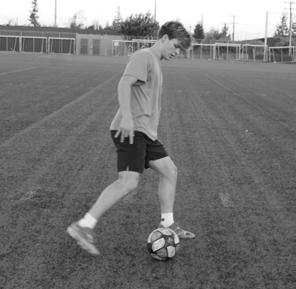
“For me, I set a routine for myself, and I make sure I set aside [time] each day for each of my activities. So I set an hour aside for soccer, and then a couple hours of study, and I just lock into a rhythm. ”
Robin Decasper (12)
UPCOMING GAMES:
• 1/3 @ Wilcox High School at 6:00 P.M.
• 1/6 vs Santa Clara High School at 3:30 P.M.
• 1/8 @ Los Altos High School at 6:00 P.M.
UPCOMING GAMES:
• 1/3 vs Milpitas High School at 5:45 P.M.
• 1/6 @ Los Gatos High School at 7:00 P.M.
• 1/9 vs Palo Alto High School at 7:45 P.M.
“Time management is everything. When you procrastinate, it feels really good, but then a week later, when you have assignments that are overdue and missing, it really starts to add up.”
Aidar Baoerjiin (9)
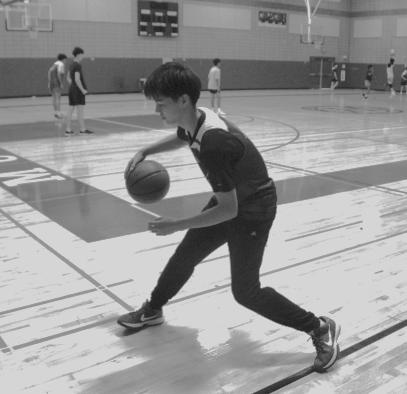
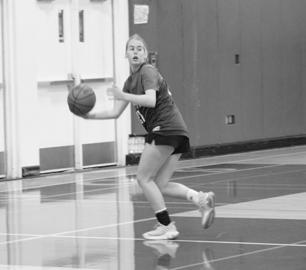
“I try to do as much work as I can in class and I try to finish the homework on the day it’s assigned so then I don’t have to worry about it. I [also] go during tutorial and I do a lot of my homework there.”
Emma Bjornsson (9)
UPCOMING GAMES:
• 12/19 vs FHS at 7:00 P.M.
• 12/23 @ Leigh High School at 7:00 P.M.
• 12/30 vs Hillsdale High School at 5:30 P.M.
THURSDAY
UPCOMING GAMES:
• 1/8 vs Monta Vista High School at 5:30 P.M.
• 1/15 @ The Kings Academy at 7:00 P.M.
• 1/20 vs Los Altos High School at 5:30 P.M.
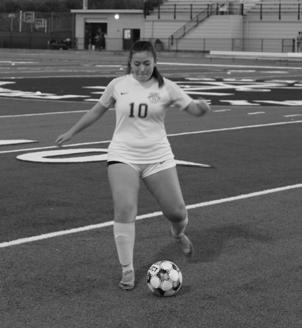
“I usually do my homework and schoolwork during school, but if I don’t finish, I have to go home and stay up and finish all my work.”
Crystal Lin
(10)
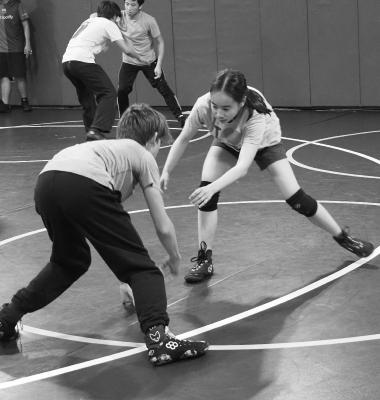
“Once I get home, I try and get most of my homework done. If I don’t, I finish it when I get back to my practice, but I prefer to get it done before practice. That way I can have the right mindset.”
Selene
Bruyere (12)
UPCOMING GAMES:
• 1/3 vs FHS at 7:00 P.M.
• 1/6 @ Santa Clara High School at 7:45 P.M.
• 1/8 vs Los Altos High School at 3:30 P.M.
Senior’s leadership, positive attitude defines her last season
After nine years on the court and three seasons on varsity, girls basketball guard, senior Ved Medampalli stands out as a reliable cornerstone of the team, coach Megan Fong said.
“Socially and culturally for us as a team, she brings a lot of consistency,” Fong said. “Sometimes when things are tough, she makes a lot of jokes that always keeps us grounded. We call it [being] a glue player. They bond everyone together, so she's always been that player.”
Initially, Medampalli said she began playing basketball in fourth grade to fit in with neighborhood kids, but ended up falling in love with the sport. Throughout her
athletic career, Medampalli's biggest turning point came after returning to the court following a two-year hiatus from play due to COVID-19.
“I was really sad about how much time I'd lost, [and] there was a tournament where things clicked back,” Medampalli said. “It was a really sudden improvement and growth. It kept me motivated to keep playing the sport.”
In addition, Fong said she witnessed Medampalli’s attitude toward the sport transform throughout her years with the team.
“When she was a freshman, one mistake used to get her really down,” Fong said. “Now she has the confidence and willpower to keep going through those mistakes and end up with positive outcomes.”
As a captain, Medampalli said stepping into the leadership role
has encouraged her to set a higher standard for the team.
“Last year I could slack off and nobody could say anything,” Medampalli said. “This year, I [would be] setting a bad example for a lot of people on the team. I want the freshmen to have a captain they can look up to.”
Similarly, shooting guard, senior Sejal Singh said Medampalli is an observant mentor, often providing valuable encouragement to players in need and consistently setting a clear, inspiring tone on the court.
“She notices if someone is being left out and always tries to make a connection with everybody,” Singh said. “If I'm having a bad practice, she always keeps me straight. She reminds everyone to keep on pushing and keep on working hard. ” At the core of her dedication to basketball, Medampalli said
the relationships she has fostered with her teammates have given the sport an additional layer of emotional significance.
“It's the team that keeps me going a lot of the time,” Medampal-
li said. “The sport can be very mentally draining, but you have to show up for your team and trust each other. That bond that you build while playing the sport keeps me going.”
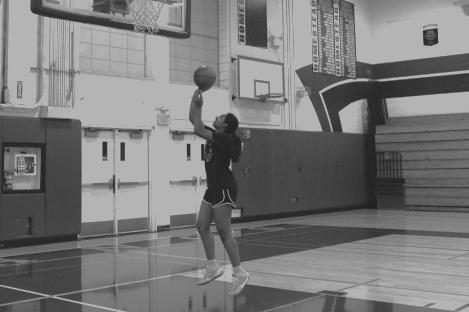



Sophomore
experiences

HHS has students from a large variety of backgrounds. Students and staff share experiences with disabilities, and how they support and contribute to the disabled community.

















Resource Support program implentation has changed over time at HHS.
The Academic Community Transitions 1 program was implemented at the beginning the 2021-22 school year. The program builds individual skills with real world applications of concepts.
The ACT 2 program was introduced at the beginning of the 2023-24 school year. ACT 2 is the second class of the program that focuses more on future skills.

PTSA Special Education Inclusion Committee started in 2025-26 school year. This group seeks to raise awareness about disabilities while offering students more inclusive experiences and creating a greater sense of belonging.