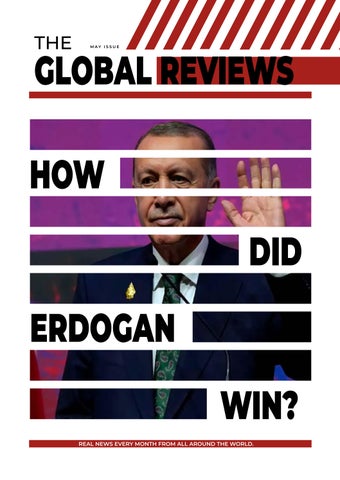
GLOBAL REVIEWS HOW
WIN? ERDOGAN
REAL NEWS EVERY MONTH FROM ALL AROUND THE WORLD. THE MAY ISSUE
DID
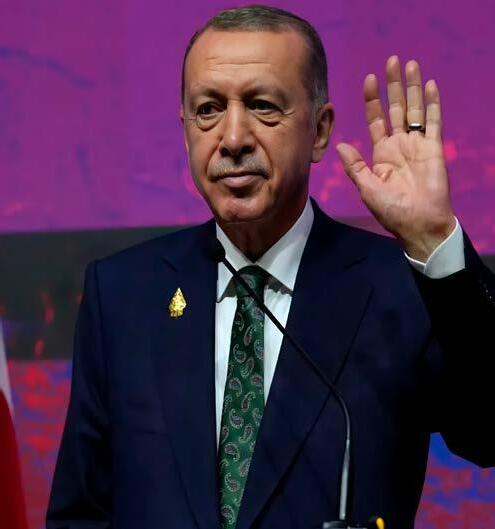
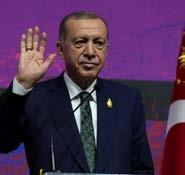
On Sunday night, Turkish President Recep Tayyip Erdogan appeared on the terrace of the headquarters of his ruling Justice and Development Party, or AKP, in Ankara to give his customary “balcony speech.” Just like in every Turkish election in the past two decades, his supporters were exuberant, while dissidents were anxious. Sure, the presidential election was not over yet. There will be a second round on May 28. But it is likely that Erdogan, more than four points ahead of his main rival, Kemal Kilicdaroglu, will win. His ruling coalition already secured a parliamentary majority.
In other words, after 20 years in power, Erdogan might get five more years to rule, if not more — surpassing, by far, any other Turkish leader since the late 19th-century Ottoman Sultan Abdul Hamid II.
Should he win, the next five years don’t look promising. After all, Erdogan has already turned Turkey into a quasi-single-party state, and worse might be in store. He may eradicate whatever is left of the independent judiciary, free press and critical academia. He has also promised a whole new constitution, which could realize many of the dreams of the religious right. Suggestions by pro-Erdogan partisans include abolishing the constitutional court, putting even more religion into public education, curbing women’s rights and banning “heretical” (liberal) interpretations of Islam.
But how does Erdogan keep winning, especially at a time many thought his support would collapse in the face of rampant inflation and an inept response to the recent earthquake?
The answer is not that he “steals” the vote. Turkey, despite its dramatic decline in free speech and rule of law, has a transparent electoral system, in which Erdogan really wins the ballots. The real answer is that Erdogan has formed an unbreakable bond with Turkey’s largest sociopolitical bloc: religious conservatives. He also enchants them with a grand narrative: despite nefarious enemies and heinous conspiracies, he is making Turkey great and Muslim again.
The storyline, pumped by a huge propaganda machine that constitutes much of the media, goes like this: Once, as rulers of the Ottoman Empire, Turks were the masters of the world. But due to European plots and “traitors” within, they were brought to their knees. Worse, oppressive secularists dominated Turkey from the 1920s to 2000s, humiliating the pious by closing their mosques or banning their headscarves.
It is only Erdogan who ended this long age of disgrace.
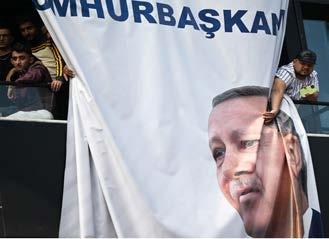
That is all why, the story goes, “they” are constantly attacking Erdogan. This “they” is a rich mix, containing opposition parties, liberal critics, Western media, capitalist cabals, George Soros, “the American deep state,” European courts, Kurdish terrorists, LGBTQ activists or defectors
within the religious camp. These “enemies of Turkey” are trying to force the glorious nation, and its leader, to fall. Against them, the pro-Erdogan folks cry, “yedirtmeyiz!” — a slogan that roughly means, “we will not allow you get him!”
The euphoria is kept alive with constant fanfare. Few people in the West noticed, but Erdogan’s campaign for this election featured the announcement of two new war machines: Turkey’s first-ever drone aircraft carrier, the TCG Anadolu, and its new “national combat aircraft,” the Kaan. Both were launched at public ceremonies with huge crowds, and genuine enthusiasm with newfound greatness. Around that time, Erdogan updated his Twitter profile to feature a photo of him in resolute pose wearing a jet pilot uniform. Two weeks later, he crowned his campaign with evening prayers in the majestic Hagia Sophia, which he had converted back to a mosque three summers ago.
Meanwhile, from the kitchen of his modest Ankara apartment, opposition candidate Kilicdaroglu was criticizing the rising prices of onions in Turkish markets. The pro-Erdogan propaganda machine lashed back: “This is about independence, not onions!”
In 1992, Bill Clinton won his election on the back of the scathing slogan “It’s the economy, stupid.” This time around in Turkey, it was all about culture war and religious nationalism.
In the months ahead, the economy is likely to keep bleeding, especially if Erdogan continues to impose his eccentric theories about interest rates on the country’s Central Bank, despite the dramatic decline of the Turkish lira. It’s not a foregone conclusion, as Erdogan has shown a pragmatic streak in the past. But who knows. All policy, after all, depends on how he feels in any season, on any day.
Today, Turkey is not the only country where democracy is being transformed into a tyranny of aggrieved majorities mobilized by strongmen. Another one is India, where Prime Minister Narendra Modi’s militant Hindu nationalism — with similar narratives of historical grievance — is threatening minorities, especially Muslims and Christians.
The remedy to this 21st-century challenge, I believe, is still good-old political liberalism: limited government, checks and balances, freedom and justice for all. But liberalism needs a new defense, a new grand narrative, to compete with the captivating narratives of the zealous populists.
We need to show, once again, that liberalism is the best system for not just affordable onions, but also for human dignity. Authoritarians promise that dignity to their followers, while trampling underfoot the dignity of others.
By Mustafa Akyol May 17, 2023the back foot. Kılıçdaroğlu scored 44.9 per cent of the vote last Sunday, according to provisional data from Turkey’s top election body, nearly 5 percentage points behind Erdoğan. Sinan Oğan, a third-party nationalist candidate, also performed better than expected, scooping up about 5 per cent of the vote — setting up a tussle between the two remaining candidates Kılıçdaroğlu and Erdoğan for his votes.
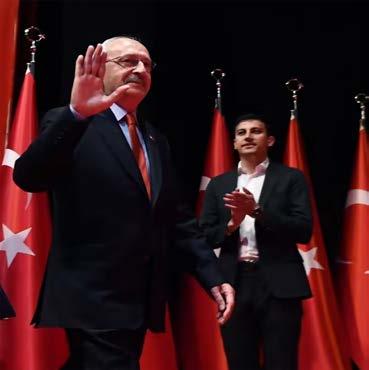
“Our nation has given us a very effective message. Some of our citizens did not go to the polls, some voted reactively, and some of them reluctantly went to Erdoğan,” Kılıçdaroğlu said on Thursday. “We have received your messages. We will make all our efforts in 10 days.”
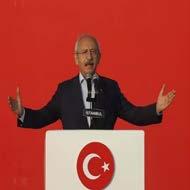
He also sought to repel claims by Erdoğan that he and his “table of six” coalition were aligned with the Kurdistan Workers’ party, or PKK, which has sought autonomy in Turkey through violent attacks and is on US and European terrorist lists.
Turkish opposition leader Kemal Kılıçdaroğlu has vowed to force millions of immigrants from the country as he adopts a new hard-hitting campaign strategy ahead of the run-off election against President Recep Tayyip Erdoğan. Adopting Erdoğan’s tub-thumping style, the 74-year-old said he would “send all refugees home” as soon as he came to power. “Erdoğan, you did not protect the borders,” Kılıçdaroğlu said, speaking at his campaign headquarters in Ankara on Thursday. “I will send all the refugees home, full stop.”
Employing markedly darker rhetoric than he used ahead of the election’s first round last Sunday, the opposition candidate sought to galvanise anger among some voters over the 3mn Syrian refugees, as well as immigrants from other parts of the region, who have taken refuge in Turkey.
The switch in tactics came after Kılıçdaroğlu’s
original campaign, promising hope and reform in Turkey after two deca des with Erdoğan at the helm, failed to win the support that officials in the country’s six-party opposition coalition had anticipated.
Analysts believe Erdoğan’s populist nationalism appealed to voters in Turkey’s conservative Anatolian heartland. This helped an alliance between the president’s Justice and Development party and the ultranationalist Nationalist Movement party retain a majority of seats in parliament after Sunday’s election.
Kılıçdaroğlu will face Erdoğan in the second round of the presidential contest on May 28 on
“Here I declare openly and again, I have never sat down with terrorist organisations, and I never will,” Kılıçdaroğlu said. “Aren’t you Erdoğan, sitting at the table with terrorist organisations?” he asked, pointing to the president’s former ties to the cleric Fethullah Gülen, who the government now blames for orchestrating a failed 2016 coup attempt from his compound in Pennsylvania.
Kılıçdaroğlu also warned that the Turkish lira would tumble to TL30 against the US dollar, from record lows slightly less than TL20, saying that under a continuation of Erdoğan’s unconventional economic policies, “looting will begin”.
By Adam Samson May 18, 2023WhenSaudi Arabia hosts an Arab League summit on Friday, a chair will be set aside for Bashar al-Assad, a despot who has tortured, imprisoned, bombed, gassed and besieged the people he is supposed to serve. If, as expected, the Syrian president attends it would be the first time he has been welcomed at the annual meeting of regional leaders since Syria was suspended from the league 12 years ago. It would be a sad day for Arab diplomacy and send a chilling message to victims of the regime’s atrocities: that Assad can continue with impunity.
In 2011, Arab League members rightly decided Assad should be punished for his violent crackdown on a largely peaceful popular uprising and his failure to abide by an Arab peace initiative. As the regime’s brutal attempt to crush protests triggered civil war, wealthy Gulf states supported the opposition battling to oust Assad. Yet a dozen years on, with at least 300,000 killed and 12mn forced from their homes, most Arab states have chosen to welcome Assad back into the fold.
The Arab League is a largely toothless body. But the decision to readmit Syria, taken by foreign ministers this month, hands an unnecessary and unwarranted diplomatic victory to a war criminal and his partners in crime — Iran and Russia.
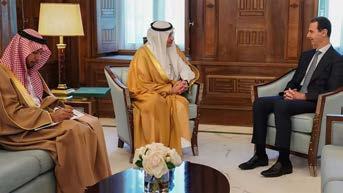
The re-engagement with Assad picked up pace after a flurry of Saudi-led diplomacy. That came after China brokered a deal that led to the kingdom agreeing to restore diplomatic relations with its arch rival Iran. Those pushing for re-engagement argue it is a realpolitik approach that recognises Assad is going nowhere after regaining control of most of the country with Moscow’s and Tehran’s military backing — and that Arab states need to address problems that ripple across borders.
This includes the plight of refugees and the illicit trade in Captagon, an addictive amphetamine that is an economic lifeline for Damascus
and a growing headache for countries such as Jordan and Saudi Arabia. But by readmitting Syria to the Arab League, Assad has been rewarded without first making concessions to ease the agony of Syrians.
This makes a mockery of what Arab states had previously suggested would be a step-by-step, carrot-and-stick approach to the Assad regime. The United Arab Emirates, which reopened its embassy in Damascus in 2018 and has lobbied for normalisation, has gone even further, inviting Assad to this year’s COP28 climate change summit in Dubai. Yet there are no signs that Assad is about to change his thuggish behaviour. He has shown no contrition for his crimes.
Hopes of a political settlement with the weak opposition were dashed years ago. While the US and Europe pay limited attention to Syria, Russia, Iran and Turkey have for years been the main foreign actors in the country. The idea that the 6mn Syrian refugees abroad would rush home if Gulf states or others poured money in to rebuild cities devastated by Assad’s forces is fanciful. Many would fear for their lives. Tens of thousands of Syrians remain arbitrarily detained or “disappeared”.
The regime weaponizes humanitarian aid and
any financial support would simply subsidise Assad’s efforts to cement his hold over the nation. Much of it would find its way to his henchmen.
The US and Europe must remain united in enforcing sanctions on the regime, while using their leverage with Arab partners to curb the drift towards full normalisation. Millions of Syrians are suffering horribly in the war-devastated country, its economy in collapse. There are no simple solutions to easing their plight as long as Assad is in power. But freely rewarding the regime that is responsible for the catastrophe is not the answer.
 By Abbie Cheeseman MAY 16. 2023,
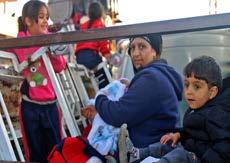
It has been more than a month since Mohammed knew of his brother’s whereabouts. The last time they saw each other they had been running for their lives across the Lebanese-Syrian border, trying to escape the Lebanese soldiers deporting them.
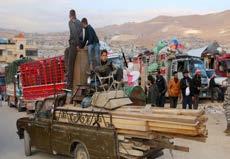
Lebanon has summarily, and illegally, deported hundreds of Syrian refugees since the beginning of last month amid rising anger against migrants, fuelled by politicians. The brothers were registered with the UN’s refugee agency, but this mawwde no difference.
Despite President Assad’s rehabilitation into regional politics, Syrian experts warn that it is not safe for refugees to return. Human rights groups continue to document the arrest, torture, disappearance and sexual assault of those who go back.
In Lebanon and Turkey — the main host countries for Syrian refugees — as well as some European countries, there is a substantial political appetite to send the millions of refugees home after 12 years. While the fighting in Syria has mostly frozen, the regime has not changed. According to March statistics compiled by the UN Office for Co-ordination of Humanitarian Affairs, there are 1.2 million Syrian refugees living in Lebanon.
At about 4am on April 10, the Lebanese army raided Mohammed’s building. There was no search of the apartments, no questioning nor any suggestion of wrongdoing. The men were rounded up and taken to a military barracks. Seve-
ral hours later they were taken to the Syrian border and told to cross. They had no idea that they were the first in what would become a huge campaign of deportation from across all areas of Lebanon. While Mohammed managed to escape, fleeing across the mountains on foot to try to get a phone signal, his brother was caught. Not a word has been heard from him since.
The family, who are working with a human rights lawyer, have no idea if he is in Lebanon or Syria; imprisoned or dead.
As with others interviewed by The Times, the fact that Mohammed and his brother were officially registered with the UN’s refugee agency made no difference to their deportation. There was no opportunity to speak to a lawyer or have their case heard.
Syrian refugees have long been used as scapegoats by the Lebanese authorities for the country’s economic woes, but say the present campaign against them is one of the worst since the war broke out in 2011, causing more than a million people to flee across the border into its tiny next-door neighbour. Some refugees have already “disappeared” into Assad’s prison complex, local human rights monitors said.
Mohammed had to return to the
same building that was raided and lives in a state of panic that it will happen again. It would be almost
impossible, he said, to find a landlord who would lease an apartment to a Syrian right now.
The deal has been ratified following five amendments that were made to the original agreement signed earlier this year.
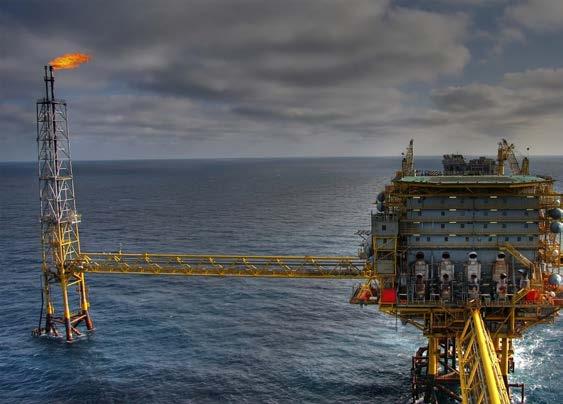
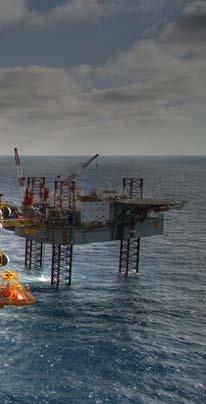
The Government of Somalia has approved seven oil production sharing agreements (PSAs) with USbased Coastline Exploration.
The agreement has been ratified by the government after five amendments were made to the original agreement, which was signed in February this year.
As per the PSAs, Coastline has made a payment of $7m to the Somali Central Bank as a signature bonus.
With the PSAs now approved, Coastline can now move ahead with the exploration programme for the offshore deep-water blocks.
The firm will undertake oil and gas exploration on several prospects and leads identified offshore Somalia.

In a statement, Coastline said: “Authorisation was granted following the conclusion of an in-depth review conducted by the FGS into the process followed by Coastline and by the relevant Somali Ministries and related advisory groups, with respect to the signing of the seven PSAs in February of this year.”
The US-based firm estimates each of the discovered fields to produce approximately 100,000 barrels of oil a day and anticipates the discovery of multiple offshore oil fields.
Somalia President Hassan Sheikh Mohamud said: “This agreement highlights that Somalia is open for business and international investment after the conflict that has blighted the
country for so many years.
“The federal government will do all it can to support this project and we want the first exploration well to start as soon as possible. Today marks a major step forward for Somalia as we look to develop our energy industry, which should deliver material benefits for all Somalis. Energy independence, new tax revenues, and further foreign investment in Somalia now beckons.”
The Minister and his delegation delivered presentations regarding Somalia's oil reserves and the extensive measures undertaken at various stages of the legislation governing the oil industry as part of their report on the progress in the oil exploration and regulatory framework.
Ms. Marzouki is a research fellow at Sciences Po in Paris. Her father, Moncef Marzouki, was the first president of democratic Tunisia.
I remember exactly when I knew that Tunisia was free. It was February 2011, just weeks after a popular uprising had forced Zine el-Abidine Ben Ali, Tunisia’s longtime dictator, to flee the country. I was coming home for the first time in 10 years: My father was a prominent opponent of the regime, and it hadn’t been safe to stay. When I lived in Tunisia, I was used to being scrutinized and interrogated at the airport. But in 2011 a border officer welcomed me with an affable grin. In that moment, it was suddenly clear
what the revolution had achieved.
In December of that year, my father, Moncef Marzouki, was elected president by the Constitutional Assembly. I felt immense pride and some disbelief. I remembered, with a smile, how my sister and I had to push his old Peugeot every morning to get it to start (and to get us to school on time). My father had dedicated his life — as a doctor, human rights activist and politician — to democracy, at great personal cost. And here he was, the first president of a democratic
Tunisia.
That feels very long ago. Now we have a president ruling by decree, dismantling the judiciary, fueling hate against Black migrants and attacking opponents, all supported by a supine Parliament. The country’s prisons are filled with journalists, activists and political prisoners — detained unjustly and held in inhumane conditions — and many others have fled the country to avoid the same fate. In little more than a decade, Tunisia has gone from democracy to
dictatorship, from hope to terror.
The current president, Kais Saied, came to power democratically. After a populist campaign in 2019 in which he presented himself as an outsider who stood for the people against the elite, he was elected with 72 percent of the vote. Systematically, Mr. Saied set about dismantling the country’s democracy. He dissolved Parliament, pushed through a new constitution that gave him enormous powers and repressed those who opposed him.
Many of my friends and family were among the nearly three million people who voted for Mr. Saied. Better him than his opponent, they said, a candidate supported by a mixture of the previous regime and corrupt business networks. Yet from the outset, I found Mr. Saied’s project terrifying. As a scholar of religion, I paid particular attention to a lecture he gave in September 2018, when he was still a law professor, on the relationship between Islam and the state. His political vision wasn’t just antidemocratic. It was an anti-modern form of nativism, with everything subservient to the ruler.
Given his obsession with purity, the president’s crackdown on migrants is hardly surprising. In February, he invoked the great replacement conspiracy theory to accuse the country’s small sub-Saharan migrant population of plotting to remake Tunisia’s identity. His remarks set off a brutal wave of violence against Black people in the country, in which scores were injured, arrested and expelled from their homes.
Mr. Saied’s goal is to purify society from corrupt influence: Social

hygiene, not social justice, is the point. The project is purely moralistic, rather than procedural and political, and its terms are defined by Mr. Saied himself. He has methodically targeted the independence of the judiciary, for example, issuing decrees that give him the authority to dismiss judges. In another decree, he ordered the prosecution of dissenting voices that would harm “public security or national defense.” Civil liberties, political opposition and free speech are to be dispensed with, recast as menaces to society.
To me, this all feels so sadly familiar, recalling the dark days of Mr. Ben Ali’s dictatorship. In April the children of numerous political prisoners, speaking from Geneva, called on the European Union to impose sanctions on Mr. Saied’s regime. Their testimonies struck a chord with me. I remembered the depressing Sunday evenings in the spring of 1994, when my mom and I prepared the one basket of food we were permitted to take to my dad while he was in prison. I remember how it felt to talk to him separated by bars and armed police officers.
And yet this time around, it feels even worse. The goal is not simply to crush dissent but also to dehumanize political prisoners and their families. In Geneva, Kaouther Ferjani delivered a chilling account about how her father, a former member of Parliament who has been detained, is being treated. Made to share an overcrowded cell with 120 inmates, he has fallen ill and been repeatedly taken to a hospital. The fate of Rachid al-Ghannouchi, a former speaker of Parliament and head of the Ennahda party who was arrested in April, is unlikely to be much better.
friend of mine whose father was arrested and whose house was raided told me the lowest point occurred when, after all the upheavals of that awful night, she went to the bathroom and turned on the tap to wash her face. She had forgotten that there was no water: Water access is currently restricted every evening, thanks to severe drought. “Is this what we gave up democracy for?” she asked.
So here we are, with no freedom, no water and not enough food. The economy is close to collapse, and unemployment is endemic. Rather than confront the crises afflicting the country, Mr. Saied prefers to rant about loyalty and conspiracy. For Tunisia, it is nothing less than a tragedy.
Lebanon is preparing to elect an ally of Bashar al-Assad to its presidency – a man whose grandfather had legitimized the Syrian occupation of part of the country in 1976.
They are both called Suleiman Frangieh, according to an Arab custom of naming grandsons after their grandfather, but also as an illustration of an intransigent spirit of feudalism. Similarly, Bashar al-Assad named his eldest son Hafez, in homage to Hafez alAssad, the founder of the Assad dictatorial dynasty, and absolute master, from 1970 to 2000, of a Syria that he had "bequeathed" to his son, who is preparing a new Hafez alAssad for his own succession.
In northern Lebanon, neighbouring Syria, the elder Suleiman Frangieh had taken over the family fiefdom of Zghorta in 1960, where he became a member of Parliament and was re-elected twice, before becoming president in 1970. It was in this capacity that, in 1976, he officially called on Hafez al-Assad's troops to intervene in Lebanon, in order to counter the offensive of the Lebanese left, allied with the Palestinian fedayeen. Once this danger was averted, the Syrian army would continue to occupy a large part of Lebanon for almost thirty years. Today, a new Suleiman Frangieh, as close to Bashar al-Assad as his grandfather was to Hafez, is running for the presidency. His election would mark Lebanon's return to Assad rule.
Samir Kassir, a respected member of the Lebanese press, already in 2004 postulated the link, in his opinion indissoluble, between Lebanon's independence and democracy in Syria. In his opinion, it was inconceivable to hope to guarantee the sovereignty of the land of cedars as long as a despot held Damascus in an iron grip. It was to crush the
progressive alternative in Lebanon that, in 1976, President Hafez al-Assad intervened at the request of President Suleiman Frangieh.
The Syrian occupation was accompanied by a systematic plundering of Lebanon, with the establishment of powerful crossborder criminal networks, with activities including drug trafficking. But the despot in Damascus had above all consolidated sectarian management of Lebanese politics, stifling all attempts at the emergence of genuine citizenship. The pro-Iranian Shiite Hezbollah militia, founded in 1982 with the approval of Hafez al-Assad, had become his main instrument for controlling Lebanon in the name of a community of "resistance" against Israel.
After he took the family throne in 2000, Bashar al-Assad did nothing to alter this dialectic between Syrian absolutism and Lebanese submission. He even had former Lebanese Prime Minister Rafik Hariri assassinated in February 2005, when, after years of complacency, Hariri had finally decided to stand up to Damascus. Suleiman Frangieh, nicknamed "Slimy" to differentiate him from his grandfather, was then minister of the interior. He brought his Christian support to Syria's Shiite proxies, Hezbollah and Nabih Berri, president of the Parliament since 1992.
The attack on Hariri sparked a wave of demonstrations, which, under the name of the "Cedar Revolution," succeeded in obtaining the withdrawal of Syrian troops from Lebanon. The celebration of the "liberation" of the country was, however,
Since the fall of 2022, the presidency has been vacant, because Nabih Berri has made sure that the necessary quorum of MPs was never reached. Assad is indeed waiting for this persistent deadlock to allow him to impose his protégé Frangieh at the head of Lebanon. The latter does not even hide it, openly claiming to possess what "many do not have: the trust of Hezbollah and Bashar al-Assad".
The recent reconciliation between Saudi Arabia and Iran, followed by the normalization of relations between Riyadh and Damascus, seems to pave the way for Frangieh's election as president of Lebanon. If this prospect is confirmed, it will also confirm the message that Samir Kassir lost his life for proclaiming: Lebanon will never be fully independent until Syria is a democracy.
short-lived. In June 2005, Samir Kassir was killed in a car bombing, a murder that was soon followed by a series of assassinations of journalists, members of Parliament and activists, all of whom had in common their opposition to Syrian rule.
The Hezbollah candidate Bashar al-Assad, furious after having been expelled from Lebanon, was determined to take bloody revenge for this humiliation. Lebanese patriots, subjected to a new, less direct, but equally deadly form of control by Damascus, regained hope in 2011, when an initially pacifist revolutionary uprising began in Syria. But Hezbollah was just as aware of the cross-border stakes of the Syrian protest, which is why it showed unwavering support to the Assad regime. The Shiite militia's contribution was decisive, not only in the ferocious repression carried out by the Syrian dictatorship, but also in the sectarian polarization that resulted from it. Such polarization has widened the gap between Sunnis and Shiites in Lebanon itself, while Christians there are divided over the attitude to adopt towards Damascus. The unconditional support that "Slimy" Frangieh gives Assad is all the more significant. This alignment persists despite repeated political shocks: the popular protest against the sectarian system, in October 2019, then the explosion that ravaged the port of Beirut, in August 2020. The country's financial bankruptcy, devastating for the middle class, was coupled with the repression of its institutions, which can only serve to reinforce sectarian clientelism.
Without making any prediction about the upcoming elections, the Turkish writer Orhan Pamuk talks about the successes and failures of the outgoing president during his 20 years in power.
Turkish writer Orhan Pamuk, winner of the 2006 Nobel Prize in Literature, is in France to give a series of lectures at the prestigious research institution Collège de France. The theme is the "paradox of the novelist," which leads him to also probe some of his country's paradoxes, in the run-up to the May 14 elections, a vote which might not be won outright by President Erdogan for the first time
"granted by God," as Erdogan said, to the ruling party. He abused this opportunity by restricting freedom of speech, putting thousands of people in jail and turning himself into a sole, all-powerful ruler.
The second turning point was the revision of the Constitution [in 2017], designed to concentrate all powers in his hands. This was unfortunately supported first by the Turkish people, because people trusted him. By becoming an allpowerful ruler, he marginalized those who were pro-West, reasonable, educated and wise. He did not listen to them [especially on the economic front], which is why, over the past five years, Turks have become poorer. In Central Anatolia, conservatives still support him, but how can they still like him if they eat fewer onions and tomatoes because of inflation? He is aware of this.
Did Erdogan's party, the AKP, have a project to transform the economy and society?
Erdogan?
in two decades.
The economic growth has been huge, but the change that has taken place during this period has not been homogeneous. Turks were able to consume more, even enjoying, in the first decade of Erdogan's power, not only this economic boom, but also freedoms. Their speech was not restricted but respected. However, in the last 10 years, all this has been reversed. In the end, the change amounts to zero. Some socio-economic experts say that, compared to other nations, Turkey has declined.
When did this reversal take place?
I think there were two turning points: one was the attempted military coup [on July 15, 2016] which Turks bravely resisted when they took to the streets. This event made the ruling party [AKP, Justice and Development Party] and Erdogan very aggressive. The military coup was unacceptable, and the Turkish people did not accept it. It was also a great opportunity
I don't think it was the AKP's project that was decisive in Erdogan's success. At first, he established himself on the fact that secularists were too tied to the army and found themselves at odds with the Turkish people and conservative circles. The [Islamic] headscarf is obviously central to this story. Before Erdogan came to power, the CHP party [Republican People's Party, Kemalist] was flirting with the army by supporting the repression of veiled women. A large proportion of women wear headscarves, not for political reasons, but because their mothers used to wear them. The more this part of the population was repressed, the more Erdogan's popularity increased. In his early days, he promised not only an economic boom (which he achieved) but also that he would defend the headscarf for women. He also said that he would establish a rapprochement with Europe, and Turks saw this as an economic opportunity.
Do you think he was sincere, especially on this last point?
I don't care about his personal integrity. Sometimes sincere politicians have crushed their nation. I do not explain politics by personal analysis. Some thinkers study Kemal Atatürk [founder of modern Turkey in 1923] or Erdogan through the childhood of these figures. For my part, I believe above all in the inevitable course of history. If there had not been Erdogan, there would have been another Erdogan, because, unfortunately, the camp of the secularists, to which I belong culturally (and my novel Snow [published in France as Neige by Gallimard, 2005] talks about this issue), made so many mistakes in the past that power was given to a somewhat radical conservative. His real political trick was "I'll make you wear your headscarf and I'll make you shake hands with Europe," while the CHP, 20 years ago, was not very friendly with Europe.
Are these elections difficult for President
Erdogan stood for economic prosperity and a bit of freedom of speech. It was a good combination, which worked for almost 15 years, but he has ruined everything in the last four or five years. First of all, the economic situation is working against him. Secondly, he has lost the support of the Kurds, even though at first he promised them freedom, and at the same time he initiated a peace process. And finally, he also lost the women. So he had to broaden his political base. He needed allies, but it was impossible to connect with secular politicians, with whom he had too many disagreements on fundamental values. So he approached the MHP [Nationalist Action Party, far right], which was a great defender of secularism and was on the side of secularists on the headscarf issue. The MHP has put aside its ideas to ally itself with Erdogan who, for his part, has not kept his commitments on freedom. I don't think Erdogan is more opportunistic than any other politician in Turkey. Lastly, the other reason why Erdogan might lose [the election] is his mishandling of the earthquake [on February 6, which killed more than 50,000 people]. So it doesn't sound like he has a lot of cards left to play?
Part of what keeps Erdogan in power is Europe. On the one hand, Erdogan is criticized by European leaders for hindering freedom of speech, imprisoning writers, etc. On the other hand, major Western countries like Germany and France are secretly happy with him because he keeps migrants at bay. Kemal Kiliçdaroglu [Erdogan's rival in the presidential election] said he would deport Syrian refugees [more than three million people].
Modern Turkey is about to celebrate its 100th anniversary. Where is it now?
The anniversary of the foundation of the Turkish Republic [by Kemal Atatürk] will take place in October, which will be quite exciting. It will also be a time for taking stock. What are the successes of modern secular Turkey and what are its failures? The greatest success of Turkish secularism is that it runs in the veins of the country. Erdogan, ultimately, has not been able to stifle it. Secondly, when we think of Erdogan as a powerful person, it is not because of Islam, but because of the authoritarianism he has put in place. We should not criticize him because of his Islamism (which is moderate) but because of his authoritarian drift. He abused his popularity to change the Constitution. Now he is faced with a fundamental law that he has created for himself, but discovers, perplexed, that this all-powerful position he created may be won by a completely secular person, an Alevi and a Kurd to boot. This is the paradox of Erdogan! Therefore, I do not want to say that this election is a foregone conclusion. I don't want to look like a fool if I am wrong, so no predictions!
By Marie Jégo and Jean-Philippe Rémy MAY 13. 2023,Turkey elections: Erdogan 'has ruined everything in the last four or five years' in Turkey
Global outcry over Museveni’s assent to draconian new anti-gay law, condemned as a ‘permission slip for hate and dehumanisation’
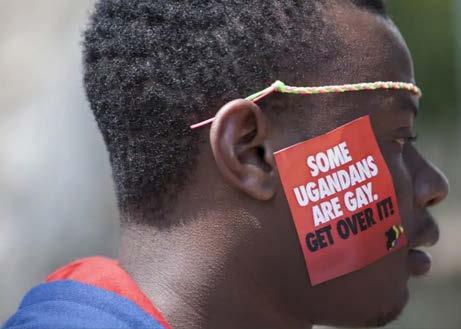
Uganda’s president, Yoweri Museveni, has signed into law the world’s harshest anti-LGBTQ+ bill, which allows the death penalty for homosexual acts.
The move immediately drew condemnation from many Ugandans as well as widespread international outrage. The UK government said it was appalled by the “deeply discriminatory” bill, which it said will “damage Uganda’s international reputation”.
US President Joe Biden decried the act as “shameful” and “tragic violation of universal human rights”. He said Washington was considering “sanctions and restriction of entry into the United States against anyone involved in serious human rights abuses” – a suggestion that Ugandan officials may face repercussions.
Early on Monday, the speaker of the Ugandan parliament, Anita Annet Among, released a statement on social
media confirming Museveni had assented to the law first passed by MPs in March. It imposes the death penalty or life imprisonment for certain same-sex acts, up to 20 years in prison for “recruitment, promotion and funding” of same-sex “activities”, and anyone convicted of “attempted aggravated homosexuality” faces a 14year sentence.
Described by the UN high commissioner for human rights, Volker Türk, as “shocking and discriminatory”, the bill was passed by all but two of 389 MPs on 21 March. Museveni had 30 days to either sign the legislation into law, return it to parliament for revisions or veto it. He sent it back to MPs in April, with a request for reconsideration. The bill would have still become law without the president’s assent if he returned it a second time.
Among tweeted on Monday morning: “The president … has assented
to the Anti-Homosexuality Act. As the parliament of Uganda, we have answered the cries of our people. We have legislated to protect the sanctity of [the] family.
“We have stood strong to defend our culture and [the] aspirations of our people,” she said, thanking Museveni for his “steadfast action in the interest of Uganda”.
The speaker said MPs had withstood pressure from “bullies and doomsday conspiracy theorists” and called for courts to begin enforcing the new laws.
Martin Ssempa, one of the main backers of the bill, presented it as a victory against the US and Europe and suggested Uganda needed to push back against groups working to tackle HIV. He said: “The president has shown great courage to defy bullying of the Americans and Europeans. That bullying we shall not give you money. They intimidate and threaten you.”
In a joint statement, the heads of the Global Fund to Fight Aids, Tuberculosis and Malaria, UNAids and the US President’s Emergency Plan for Aids Relief (Pepfar) reacted with “deep concern” and said progress on tackling Aids and HIV was “now in grave jeopardy”.
“The stigma and discrimination associated with the passage of the act has already led to reduced access to prevention as well as treatment services. Trust, confidentiality and stigma-free engagement are essential for anyone seeking health care,” said the statement.
“LGBTQI+ people in Uganda increasingly fear for their safety and security, and people are being discouraged from seeking vital health services for fear of attack, punishment and further marginalisation,” added the statement, signed by Peter Sands, Winnie Byanyima and John Nkengasong.
There has been strong condemnation of Museveni. A statement from the UN read: “We are appalled that the draconian and discriminatory anti-gay bill is now law. It is a recipe for systematic violations of the rights of LGBT people and the wider population. It conflicts with the constitution and international treaties and requires urgent judicial review.”
Ashwanee Budoo-Scholtz, Africa deputy director for Human Rights Watch, said: “Museveni’s signing of the antihomosexuality bill is a serious blow to the right to freedom of expression and association in Uganda, where instead of being restricted they ought to be
strengthened.
“The law is discriminatory and is a step in the wrong direction for the protection of human rights for all people in the region.”
A 2014 anti-gay bill also prompted widespread international criticism and was later nullified by Uganda’s constitutional court on procedural grounds.
“President Museveni’s decision to sign the anti-homosexuality act 2023 into law is deeply concerning,” said Steven Kabuye, a human rights activist in Kampala. “This act violates basic human rights and sets a dangerous precedent for discrimination and persecution against the LGBTQ+ community in Uganda.
“As we have seen in the past, such laws can lead to increased violence, harassment and marginalisation of already vulnerable groups. It is important that we stand together in solidarity with the LGBTQ+ community in Uganda and around the world and fight against bigotry and hate.”
In February alone, 110 LGBTQ+ people in Uganda reported incidents including arrests, sexual violence, evictions and being forcibly stripped in public to the advocacy group Sexual Minorities Uganda (Smug). Transgender people were disproportionately affected, said the group.
“It is wishful thinking to assume a piece of bogus legislation will erase the existence
of LGBTQI+ persons in Uganda!” tweeted Sarah Kasande, a Kampala-based lawyer and human rights activist.
Uganda's president, Yoweri Museveni. Ugandan president calls on Africa to ‘save the world from homosexuality’ Read more
“Queers are Ugandans, they belong to Uganda. No stupid law will ever change that!”
Edna Ninsiima, an editor and social critic, said: “We should all be concerned that our collective homophobia as a country has, once again, culminated in the state signing a permission slip for hate and dehumanisation.”
On 17 April, a court in the eastern town of Jinja denied bail to six people working for healthcare organisations who had been charged with “forming part of a criminal sexual network”. Ugandan police confirmed that it conducted forced anal examinations on the six and tested them for HIV.
Museveni claimed in March that his government was attempting to resist western efforts to “normalise” what he called “deviations”.
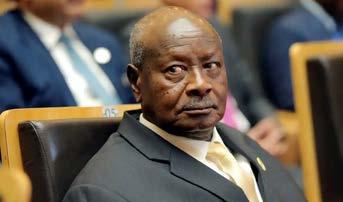
“The western countries should stop wasting the time of humanity by trying to impose their practices on other people,” he said.
Activists plan to petition the court to nullify the discriminatory legislation, “Of course, we are going to march to court and contest this draconian law in every way possible,” said Kabuye
By Samuel Okiror MAY 29. 2023, UGANDA’S PRESIDENT, YOWERI MUSEVENI, HAS CLAIMED WESTERN COUNTRIES WERE ‘TRYING TO IMPOSE THEIR PRACTICES ON OTHER PEOPLE’, BUT THE UGANDAN RIGHTS ACTIVIST SARAH KASANDE SAID: ‘QUEERS ARE UGANDANS! NO STUPID LAW WILL EVER CHANGE THAT!’ PHOTOGRAPH: TIKSA NEGERI/REUTERS“This act violates basic human rights and sets a dangerous precedent for discrimination and persecution against the LGBTQ+ community in Uganda.”
Historians say the involvement in Africa of the former US secretary of state, who is 100 this week, drew the US into Angola’s war and aided apartheid after the Soweto uprising.
The men who sat down for dinner at the Hotel Bodenmais in West Germany on 23 June 1976 were exclusively white, although the issue to be discussed was the path to majority black rule in Rhodesia. At the table was John Vorster, prime minister of apartheid South Africa. With him were ambassadors, diplomats and security officials. Pride of place, however, was reserved for the US secretary of state, Henry Kissinger, who opened the proceedings with a racially tinged joke.
It was a dinner that took place in the midst of a frantic two-year period when the world’s most high-profile diplomat – who had dismissively ignored Africa for much of his time in office in the Nixon and Ford administrations –was taken with a sudden interest in the continent.
Then, armed with a dangerous cold war logic, he applied himself to successive crises in Ethiopia, Angola and Rhodesia in the search of a quick fix to burnish a reputation that was beginning to be eclipsed.
As Kissinger turns 100 on 27 May, his interventions in Africa have once again come under the spotlight, not only for the multiple failures that emerged from an approach befogged by deception, secrecy and browbeating, but for the long-lasting and dangerous consequences of his efforts in southern Africa in particular.
In the space of a handful of years Kissinger would be involved in a murky intervention in Angola that would complicate the emerging conflict there that followed Portugal’s withdrawal after a coup in Lisbon.
He became the first US secretary of state
to visit South Africa in three decades, delivering prestige to the apartheid regime in the aftermath of the Soweto massacre in 1976, when scores of demonstrating schoolchildren and others were gunned down by police.
And while he would strong-arm Rhodesia’s pariah prime minister, Ian Smith, into making a declaration that
Kissinger would become engaged by events in Angola where, after a leftwing military coup in 1974 against Lisbon’s Estado Novo dictatorship, the new regime immediately stopped all military action in the African colony, leading to independence in 1975.
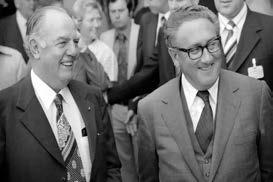
Concerned that the Marxist-Leninist People’s Movement for the Liberation of Angola (MPLA) – one of the combatants in the civil war that followed the coup – would sweep to power, opening the way for Soviet influence, Kissinger moved to engage with Africa.
In his memoir, Easum summarised Kissinger’s ambition: “He was determined to seize in Angola what he considered a timely opportunity to display America’s (and Henry Kissinger’s) strength.
he would accept majority black rule, it would be a failed initiative undertaken in questionable faith and underpinned by his own sympathies for the whiteminority communities who were ruling Rhodesia and South Africa with racist policies.
The consequences, as historians point out, were a hugely prolonged war in Angola and an added lease of life for apartheid.
In a scathing memoir, written for American Diplomacy in 2010, the former US ambassador to Nigeria, Donald Easum, who served as the assistant secretary of state for African affairs, delivered a withering assessment of Kissinger, describing African ambassadors and representatives at the UN as “routinely rebuffed and neglected” by the secretary of state’s office, and his “disdain” for black Africa.
“He believed that defeating the MPLA, which he considered pro-Soviet, could expunge the image of a flabby United States in retreat after Vietnam. Moreover, he thought he could do it on the cheap with clandestine CIA collaboration. He was soon to be proved dead wrong.”
" He didn’t study Africa. He went in with a very typical racism of the time, a contempt for all developing countries Nancy Mitchell, historian"
If Angola was important – not least after the Cuban intervention to support the MPLA after South Africa invaded and its forces drove almost to the capital, Luanda – it was because Kissinger believed that should Angola fall, neighbouring states could follow, including Rhodesia, ultimately threatening South Africa.
Kissinger
“He had a reputation for being a strategic genius,” says Nancy Mitchell, a historian and author of Jimmy Carter in Africa: Race and the Cold War.
“But if you study what Kissinger did in Angola and Rhodesia, it really sheds a light on the weakness of his entire policy in Africa but also in the Middle East and Vietnam. He misread the situation in Angola from the start. He never expected the Cubans to intervene.” Echoing Easum, Mitchell sees the period of Kissinger’s diplomacy in Africa as “very sordid” and damaging, not least his whirlwind tour of African leaders in 1976 – which saw him fleetingly meet Tanzania’s Julius Nyerere and Zambia’s Kenneth Kaunda among others –leaving behind a legacy of distrust.
“He really dismissed the whole continent of Africa until he thought he could get a reputational gain by intervening in Angola and saving it for American influence.
“He didn’t study Africa. He went in with a very typical racism of the time, a contempt for all developing countries, and thought he could get an easy victory, which he needed after the collapse of South Vietnam,” said Mitchell.
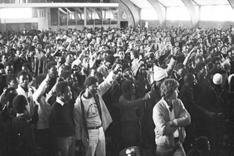
“He even said it about himself when he quipped to a British Foreign Office official that it was a mixture of extreme arrogance and naivety.”
As Mitchell points out, while Kissinger spent hours in talks with Rhodesia’s and South Africa’s white leaders, on his whistlestop tour of black leaders he either failed to meet key players, such as Samora Machel in Mozambique, was unaware of the importance of others –including Robert Mugabe, whose ZanuPF forces were threatening the white regime in Rhodesia – or spent a mere seven minutes with Joshua Nkomo, Mugabe’s chief rival.
The consequence was that the leaders of the “frontline states”, who Kissinger needed to persuade to buy into his plan for majority rule in Rhodesia, were either unimpressed or deeply distrustful, undermining his efforts from the start.
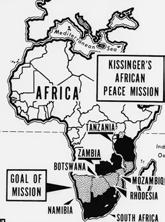
" He saw Africa in terms of Europe and as a subtext of European diplomacy
Peter Vale, historian"
There was another issue: Kissinger’s innate sympathies with white minority rule seen through his Eurocentric prism. As Peter Vale, a historian at the
University of Pretoria, wrote in a recent essay for the Conversation, where he described Kissinger’s record in Africa as “dismal” and said he “neither ended colonialism nor minority rule in the region”.
He wrote: “Kissinger’s interest in southern Africa in the mid1970s was predicated on the idea that balance would return if the interests of the strong were restored. He failed to understand that the struggle for justice was changing the world – and diplomacy itself.”
Speaking to the Guardian, Vale described the meeting at the Hotel Bodenmais and what it portended. “The conference was a bunch of white men sitting in Germany. He saw Africa in terms of Europe and as a subtext of European diplomacy.”
That was perhaps nowhere more obvious than in his visit to South Africa, where he persuaded a tearful Ian Smith – in town for a rugby match – to agree to majority rule. As Vale points out, he met only one black South African figure who was critical of apartheid. His visit, he says, was the “high point of apartheid’s diplomacy”.
“What were the harms?” Vale asks. He suggests the visit to South Africa “probably extended the life of the apartheid regime” while contributing to a significant military mobilisation around Angola, which South African
forces would invade again in 1987, leading to the battle and siege of Cuito Cuanavale.
Nancy Mitchell agrees. “I think it is very plausible [that Kissinger’s diplomacy in Africa] gave apartheid more years,” she says.
“Since it was felt that Mozambique was also going, the idea was to have a white buffer. It was felt important for white South Africa to stay stable because of trade and minerals. Much of it was a deliberate attempt to buttress South Africa.”
Perhaps the last word should be left for the late Donald Easum, whose memorandums – and those of many other seasoned colleagues in the state department Africa bureau – Kissinger ignored.
“It is impossible to know what might have resulted had Kissinger accepted the policy stances toward Angola of the first two Africa bureau assistant secretaries he hired.
“It is in any case difficult to imagine that their recommendations would have resulted in the kind of nightmare – for Angolans, for US prestige, and for himself – that his bludgeoning of the bureaucracy provoked.”
As Easum notes sadly, it would take “until 2002 for peace to come to that war-racked, landmine-strewn nation”.
By Peter Beaumont MAY 25. 2023, Photographs by: Gallo Images/Getty And APRecep Tayyip Erdogan claimed victory in a tightly contested presidential election that left him poised for an unprecedented third presidential term.
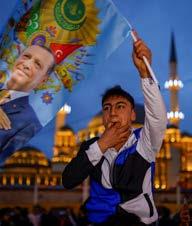
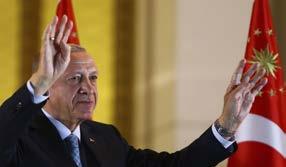
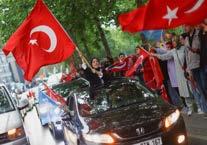
Mr Erdogan, who has ruled Turkey as prime minister and president since 2002, told cheering supporters in Istanbul he would stay with them “through thick and thin” after initial vote counts put him on course for a narrow victory over Kemal Kilicdaroglu.
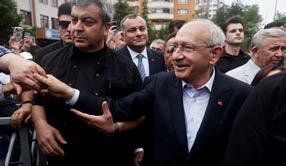
Turkey’s chief electoral official later confirmed Mr Erdogan won 52 per cent of the vote to Mr Kilicdaroglu’s 48 per cent in the country’s first-ever run-off.
Speaking outside his house on the Asian side of Istanbul, an ecstatic Mr Erdogan hailed the elections as a “feast of democracy” but failed to mention that he lost in the country’s three largest cities including Istanbul.
“I thank each and every citizen of our nation who once again entrusted us with the responsibility of governing the country for the
next five years,” he said as jubilant supporters burnt flares outside his party’s office in Istanbul and raised hands in a Muslim salute.
“We will be together through thick
continuation of an assertive foreign policy as he said “no one can wag their finger at Turkey”.
Mr Kilicdaroglu, the leader of the Republican People's Party, in a concession speech hailed about 25 million people who voted not only for him but for the promise to stem Turkey’s further decline into an autocracy.
“The main reason for my sadness is the much bigger problems that are in store for this country. Our march will continue. We’re not going away,” he said. Both camps have portrayed the elections as a pivotal moment in the country’s history that could either cement Mr Erdogan’s conservative and authoritarian tilt or give Turkey a chance towards rebuilding a democratic society.
and thin. We said this love will not end here, right?”
The 69 year-old also hinted at the
For Ali Gorgulu, a retired man from Istanbul’s historic Sultan Ahmet district, Mr Erdogan has delivered an impressive economic growth in recent years and should be given another chance even though the country posted record-high infla-
The incumbent president wins a third term in office after the country's first ever presidential run off
tion last year amid a cost-of-living crisis.
“If Erdogan has been in power for 20 years that means he can do it and that people support him,”
Mr Gorgulu told The Telegraph outside a primary school tucked away in a side street five minutes away from the Blue Mosque, one of Istanbul’s top landmarks.
For the first time since Mr Erdogan was elected, the opposition has been able to unite around one candidate, Mr Kilicdaroglu, the soft-spoken bureaucrat who was nominated by six major opposition parties.
Mr Erdogan's supporters flocked to polling stations, delivering an
impressive overall turnout of 84 per cent even though many of them had been upset by Mr Kilicdaroglu’s underwhelming performance two weeks earlier.
“I’ve seen people lose their hope.” Mikail, a 32-year-old hotel owner, said, adding that some of his opposition-minded friends were too depressed they stayed at home or even went away on holiday “so that they wouldn’t be here to see all this”.
“It’s not a good feeling that you can’t do anything about it but what else can I do?” he said.
The result was welcomed by Vladimir Putin of Russia, wrote in a letter to his "dear friend" Mr Erdogan that the outcome of the
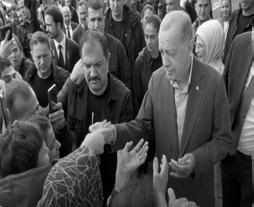
Turkish president Erdoğan has been spotted handing out cash to voters outside polling stations as he cast his vote in the election’s runoff.
He shook hands with supporters and appeared to give out notes worth 200 liras (approximately £8) each in a bid to win them over.
Just two weeks ago, the long-standing president was seen doing the same with children.
However, Turkish law bans candidates from campaigning on election day, but officials are yet to speak out.
election was the "natural result of your selfless work as head of the Republic of Turkey".
Early statements of congratulations also came in from Ibrahim Raisi, the president of Iran, and Tamim bin Hamad al-Thani, the Emir of Qatar.
Viktor Orban, the prime minister of Hungary, was the first European leader to congratulate Mr Erdogan on what he called "an unquestionable" election victory.
By Nataliya Vasilyeva, and Özlem Temena IN ISTANBUL May 28. 20203 Phothograps CREDIT: Chris McGrath/Getty Images AP Photo/Ali UnalOn Sunday, Recep Tayyip Erdoğan was declared the winner of Turkey’s presidential runoff elections. According to numbers reported by the state-owned Anadolu news agency, more than 27 million voters cast their ballots in favour of Erdoğan, who has been at the country’s helm for more than two decades. He entered the second round in the lead in the polls, and was expected by most to emerge victorious. Although Erdoğan captured slightly more than half of the vote, more than 25 million people also mobilised to vote against him. The elections were being held under deeply unfair conditions, with an opposition set up to fail. Istanbul’s mayor, Ekrem İmamoğlu, was recently sentenced to more than two years in prison and banned from holding public office for insulting members of the supreme election council. This left the opposition unable to nominate its maybe most promising candidate. This was all amid biased media coverage, relentless smear campaigns against the eventual opposition candidate, Kemal Kılıçdaroğlu, threats, manipulation and a crackdown on civil society, such as the arrest of 126 Kurdish lawyers, activists and politicians at the end of April in Diyarbakır.
Everything was at stake in a country where the judiciary now does little more than rubber-stamp policy dictated by the president. It would be an understatement to say that for rights defenders, five more years under Erdoğan is a daunting prospect. Women’s and LGBTQ+ rights groups especially will find themselves in the immediate line of fire. During his first victory speech in Istanbul last night, Erdoğan targeted LGBTQ+ groups again. “Could those LGBT elements ever find their way into the AK party?” he asked to a resounding “no” from the crowd. “Family is holy to us,” he continued.
Ahead of the runoff elections, the women’s rights group Left Feminist Movement warned that the choice between Erdoğan and Kılıçdaroğlu was one between “darkness” and “light”. A statement signed by several dozen well-known female musicians, actors, writers and rights defenders said: “We either succeed in tearing apart the darkness and glimpse the light of dawn, or we will suffocate.”
Many have argued that Turkey has never had a more ultra-conservative and misogynistic parliament than it does now. Two radical Islamist fringe parties have joined the national
assembly on Erdoğan’s side. His AKP has not only brought the New Welfare party (YRP) into its alliance, but also nominated four senior members of the Kurdish Free Cause party (Hüda-Par) under its parliamentary candidate list. All four were elected to parliament on 14 May. The Free Cause party is closely affiliated with Kurdish Hezbollah, a Sunni militant group that originated in the Turkish south-east and gained notoriety in the 1990s when its members tortured and killed hundreds of Kurdistan Workers’ party (PKK) members and supporters, as well as others who opposed its ideology, though it has since officially renounced violence. Free Cause calls for gender segregation in schools and has argued that state services for women, such as healthcare or education, should only be rendered by female employees.
TQ+ people both inside and outside state politics.
The dangers facing women and LGBTQ+ people in Turkey have already increased in recent years. Femicide and gender-based violence are on the rise. Erdoğan compared abortions to murder in 2012, and although he failed to introduce a law that would have banned abortions after six weeks of pregnancy, women across Turkey still struggle to access safe terminations. Women’s rights groups speak of a “de facto abortion ban”. Women’s Day marches have increasingly been met with police violence and the Istanbul Pride parade has been banned since 2015. Feminist and women’s rights groups have been increasingly sidelined. Many civil society organisations fighting against discrimination and gender-based violence have been shut down since the 2016 military coup attempt.
In 2021, Erdoğan unilaterally withdrew Turkey from the Istanbul convention, an international treaty to fight gender-based discrimination and violence. Women’s rights groups reported that police officers had refused to assist victims of domestic violence, citing the withdrawal from the convention.
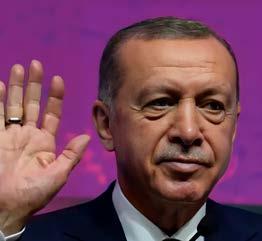
Last year, bogus charges of “acting against morality” were brought against We Will Stop Femicide, a feminist platform that fights gender-based violence and keeps a monthly count of murdered women. If found guilty, the group will be shut down. The next hearing will take place on 13 September.
Meanwhile, in the New Welfare party’s manifesto, it demands that “morals, chastity, mercy, devotion and productivity” should be strengthened among women through female “role models”. Both parties have aggressively lobbied against LGBTQ+ rights, targeting them as “perversion”, as well as for the criminalisation of adultery. They have also vowed to scrap law 6284, introduced by the AKP government in 2012, which aims to prevent violence against women. Women’s rights activists have accused them of aiming for “Taliban-style” rule.
Despite almost unfettered presidential powers, Erdoğan may need the support of these parties to push through legislative changes in parliament. Their presence further normalises discriminatory attitudes, already rampant among the governing bloc, towards women and LGB-
On Sunday night, rights activists took to social media to declare that the election results should not deter people from fighting. “Our hopes should not be broken, but we need to be aware of the consequences,” tweeted Fidan Ataselim, general secretary of the We Will Stop Femicide platform. “We have no other choice than to keep organising, to give voice to reason and to stick together.”
At the same time, political leaders around the world rushed to congratulate Erdoğan on his election win. EU politicians are perhaps a little too relieved that the Turkish president, who has been a willing partner in their project to keep refugees out of EU states, will remain in power. . For them, Kati Piri, a Dutch MP and former Turkey EU rapporteur, had one question: “What’s your message to the 25 million people who voted for restoration of democracy and rule of law?”
Erdoğan and his hardline allies have won Turkey – women and LGBTQ+ people will pay the price Constanze Letsch
The Turkish leader, who won reelection Sunday, was expected to attend the meeting, which is meant as a show of solidarity against Russia.
CHISINAU — A massive gathering of European leaders on Thursday has suffered its first highprofile casualty, with Turkish President Recep Tayyip Erdoğan pulling out at the last minute.
The Turkish leader, who won five more years at the helm of his country in second-round elections on Sunday, will not travel to Moldova for the one-day summit, according to three officials involved in the preparations.
The so-called European Political Community (EPC) — a new collective launched in the wake of Russia’s war in Ukraine — is meant to draw together European leaders beyond the EU. More than 40 European leaders will be present Thursday, including those from all 27 EU countries plus non-EU countries like Britain and Turkey, as well as the Western Balkan nations.
The gathering, set to take place outside Chișinău, Moldova’s capital, is the second summit held under the EPC banner, following an inaugural meeting in Prague last October.
Erdoğan attended that summit in the Czech capital but clashed with his Greek counterpart Kyriakos Mitsotakis during an end-of-summit dinner.
Erdoğan, who has dominated Turkey’s politics for two decades, won the country’s election on Sunday, despite a strong showing by a coalition of opposition parties.
The 69-year-old leader is expected to announce his new Cabinet on Friday with an inauguration scheduled for the following day.
European leaders started arriving in the Moldovan capital of Chișinău Wednesday ahead of the summit, which is taking place in a castle and winery 35 kilometers outside the city.
Lebanese novelist Dominique Eddé condemns with biting irony Assad's return to the Arab League and the geopolitical cynicism of Mohammed bin Salman.
Bashar al-Assad is back in the big league. It's not a big deal. His presence at the Arab League summit in Jeddah, Saudi Arabia, is no problem for the dead – who know nothing about it anyway. More than 350,000 of them are none the worse for it. This is not insignificant. The tortured, who survived much worse, are equally unmoved. As for the living, opinions are split between those who don't care and those who tell themselves that maybe it's not him, maybe it's a double. And then there are those who don't care one way or the other, because at some point they'll be dead, and everything will be fine – everything will be forgotten.
There was one small anomaly at the summit, the appearance of Volodymyr Zelensky. Some wondered if this was a move by Vladimir Putin, a way of saying, "Take him, he's yours." You can share an article by clicking on the share icons at the top right of it. Others found it strange that the Saudi monarch, Mohammed bin Salman, champion of the war in Yemen through the proxy of Sudanese mercenaries, should have come so close to the Ukrainian champion of resistance who, in a well-crafted film script, could have been his worst enemy. They wondered if the two were perhaps in therapy with the same shrink, who would have told MBS to make peace as he had made war, by getting everyone involved besides himself. And he would have told the Ukrainian leader to be true to himself and say what he thought without getting angry.
The law of the fastest, strongest, richest "Unfortunately," said Zelensky," there are some in the world and here, among you, who turn a blind eye to those cages and illegal annexations." He was, of course, talking about Russia. The shrink probably told him that Arab prisons were not worth the detour. Zelensky even called on the recalcitrant Arab leaders to "take an honest look" at the war. Assad had no problem with this wording, calling for "solidarity among us, for peace in our region (...) instead of war and destruction." They seemed sincere, almost moving, these men in charge of Arab countries. There is no reason to trust them more than their citizens, who, let's be honest since that's what we're being asked to do, have pushed the envelope with their desire for freedom.
What is freedom, ultimately, when you've learned the art of self-oppression? If keeping quiet is what it takes to be happy, what's the point of opening your mouth? A pity we didn't think of this earlier. Jamal Khashoggi [Washington Post columnist], Lokman Slim [Lebanese intellectual and political activist assassinated in 2021] and Mahsa Amini [22-year-old Iranian woman who died in police custody after being arrested for not wearing a head scarf] would still be alive. Why long for spring, when you can save time by going straight from winter to summer? The Palestinians should think about this too, and stop bothering the whole world with their country's history. If they want to live, it's time for them to give up real existence. You can't have it all if you have neither advocates nor oil.
Artificial intelligence isn't in the mood to joke with unhappy people, for the simple reason that it has no moods. But right now it's setting the pace. Look how human intelligence has started to imitate its artificial counterpart. Conscience, humor, hesitation, fear, pain, scruples, inhibition – all gone. It's time for statistics and the law of the fastest, the strongest, the richest. Let those who have learned to think without calculating learn to calculate without thinking, and let's not waste any more words on it.
I wrote to a friend earlier, "With the return of Syria to Lebanon, we will lose our only remaining right – the right to speak." She replied, "Let's not complain. They were kind, they waited until we had nothing more to say." If you knew her, you'd say what a pity! Because to listen to her speak is to see a window opening in the middle of each sentence.
In Beirut, one of the Syrian refugees I'm working with on embroidering a crushed rose whispered, while pushing the needle in at the edge of a petal, "To Assad, we are flies." "Not only to him," softly answered another, a woman who lost her son without being able to bury him. "Our whole species has been bled of its humanity."
Assad returns to the Arab League: 'What is freedom when you've learned the art of self-oppression?'
Eight years ago, an influx of refugees from the Syrian war paralysed Europe. Millions trekked westwards, traumatised by atrocities at home and encouraged by Angela Merkel, then the German chancellor, to believe they would find safe havens in a continent free of savagery. The European Union’s migration system collapsed under the strain.
Now the dictator Bashar al-Assad has had his pariah status lifted by his colleagues in the Arab League and a new Syrian migrant wave is about to grip the western world again. No one is ready for it; not in terms of policy, border controls, accommodation or deportation procedures. Assad’s rehabilitation last week was a collective act of amnesia by the Arab world. There was no talk any more about the 500,000-plus killed on Assad’s watch, the thousands tortured and the millions displaced. They want Assad back in the fold so they can send home the Syrian refugees who have become such a burden to the neighbourhood.
By dint of his improbable survival, Assad is deemed by his peers to have won the Syrian civil war. True, Assad’s country is both fractured and broke, the prisons are full and his family can rule only with the help of Russian intelligence, Russian control of the country’s air space and Iranian ghost ships bringing it oil. It is a hollowed-out dictatorship. But his dependence on Iran is no longer seen as anathema by his Sunni allies, not since the Saudis made tentative peace overtures to the regime in Tehran. Nor is Russia’s sway over Damascus seen as offensive. Better Moscow’s lurking presence than American lecturing; that’s the consensus. What matters to them today is that Assad takes back his dispersed people, the many millions who still live in encampments around the region. There are 1.5 million in Lebanon, the highest number of Syrian refugees per capita at a time when the economy is spiralling downwards. Jordan struggles with 1.3 million, Iraq has 260,000 and Egypt 140,000. The story is much the same in all these host countries. Global inflation eats into the aid on offer. Syrians can no longer afford the rent. Living in crowded family tents, they are unwelcome on the local job market. They build
up debts just to survive in impoverished limbo, scavenging for food. Children who arrived from Homs at the age of seven in 2011 are now 19 and have received little education. They grew up doing odd jobs.
Turks, though more prosperous than Syria’s Arab neighbours, consider their refugee population to have reached a breaking point. They have sheltered some 3.6 million Syrians and hundreds of thousands of Afghans fleeing
By Roger Boyes MAY 23. 2023,
Erdogan is getting ready to work more closely with Assad, a man he once hated.
What if the Syrians don’t want to go back? Many have had their homes wrecked, their lives broken by Assad’s secret police. Young men will be met at the border by soldiers who will proceed to conscript them for national service. Syria has a big drug problem with the party amphetamine known as captagon, and refugee parents will be reluctant to see their children return. The torturers remain in place or have been promoted. The obstructive and corrupt bureaucracy still inflicts its petty cruelties. Even if Assad offers safety guarantees to returnees there is no knowing whether he will keep his promises. His form is not good.
the Taliban. With the Turkish economy tanking, the search is on for scapegoats and the Syrians are natural fall-guys, the supposed spongers.
The final round of the Turkish presidential election this weekend will thus have an impact not only on the stability of the region but also on the future of European migration. The incumbent, Recep Tayyip Erdogan, has won the backing of the ultranationalist antiimmigration candidate who won a crucial 5 per cent in the first round of voting.
Erdogan’s rival, Kemal Kilicdaroglu, once a liberal critic of the president, now pledges: “I will send all the refugees home.” Erdogan says he will build housing complexes in Syria to accommodate a million refugees from Turkey. That sounds like a relatively moderate (if difficult to realise) project but it suggests
Given a choice between impoverished tent life in the region and the hidden menace of Assad, the Syrians would prefer to up sticks and head for Germany, where hundreds of thousands of former refugees have been allowed to settle. Many are thriving there today but Merkel’s decision to let in such huge numbers still feeds the rhetoric of the far right. Merkel’s plan B, meanwhile — for the EU to pay Turkey to maintain a network of camps — will probably be renegotiated by whoever wins the Turkish election. After peaking at around one million, Germany today has some 800,000. Will it take more? More likely, the new wave of Syrians will head for all of Europe’s chokepoints. And yes, that will include the Channel.
For sure, European states can’t simply chant that the best place for a refugee from war or repression is in a neighbouring country. When refugees arrive en masse from a particular crisis zone they bring with them expectations not only of respite (which Britons often happily offer) but of a permanent alternative. If the cause of flight is a devastating war, as it was in Syria and remains in Ukraine, then they know that going back home could be a reckless decision. If they are fleeing an entrenched dictatorship, as Hongkongers and Afghans do, they know it could take a generation or more for those leaders to be replaced. The next Syrian wave will test us all; not only our compassion but the inner resilience of society.
Rishi Sunak warns on Wednesday that “uncontrolled” legal migration risks leading to unmanageable pressures on housing, schools and hospitals.
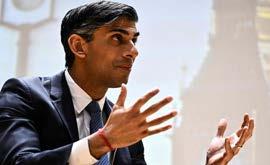
In an exclusive article for The Telegraph, the Prime Minister said he was committed to bringing down legal migration because when it was “too high and too fast” it was difficult for new arrivals to integrate into communities.
The Government on Tuesday announced all foreign students except those doing postgraduate research would be barred from bringing family members to the UK from January 2024, a move that could reduce net migration by as much as 150,000.
Figures to be published on Thursday by the Office for National Statistics are expected to show net migration – the number entering minus those leaving – hit a record high of between 700,000 and one million for 2022. That is up from 504,000 in the year to June 2022 and nearly treble the pre-Brexit rate.
In his article, Mr Sunak said cracking down on migration was not anti-immigrant. He said it was a charge that could not be levelled at the UK given its “proud history” of taking refugees such as 174,000 Ukrainians. But he said Britain could not have “uncontrolled legal migration. That’s unfair. It leads to unmanageable pressures on housing, schools and hospitals in many of our communities. And when it is too high and too fast, it can make it difficult for communities to integrate new arrivals,” he said.
Mr Sunak said Britain remained committed to
its target of 600,000 students but this could not come at the expense of the Government’s manifesto pledge to lower net migration.
Ministers admitted on Tuesday that net migration would only fall back to 2019 levels in the “medium term”, which the Home Office sets as between 18 months and five years.
It means the Government is likely to go into the next election – expected in 2024 – having failed to meet its 2019 manifesto pledge to
By Charles Hymas, Ben Riley-Smit and Dan Martin MAY 23. 2023,immigration route rather than for education.
He accused some institutions of “selling immigration rather than education” as he foreshadowed plans for postgraduate students at the top-performing universities to be allowed to bring in family members while those at lower-ranked institutions were not permitted to do so.
“We will also look to explore…a system which differentiates between the quality of institutions – so that in time we could still allow our very best and brightest students to bring some dependents when studying at our universities while preventing institutions from selling immigration rather than education,” he said.
bring the figure down from 245,000 in that pre-pandemic year.
Mr Sunak has pledged to close loopholes that had fuelled a “staggering” eight-fold rise in the number of dependents brought into the UK by foreign students, up from from 16,000 to 135,788 since 2019.
From January 2024, only students doing PhDs or research-related masters degrees will be allowed to bring dependents to the UK. This will exclude nearly nine in 10 (88 per cent) of all foreign postgraduates from the right to bring in family members.
The Prime Minister promised a crackdown on “unscrupulous international student agents” blamed for fuelling the boom by promoting “inappropriate” applications as an
As part of the crackdown, students will be barred from switching to work visas before they have completed their studies in an attempt to stop them using university courses as a back-door route to UK employment.
There will also be a review which could increase the income levels required for foreign students for them and their dependents. Ministers are planning tougher enforcement and better communication of the immigration rules for students and skilled workers.
In a written statement, Suella Braverman, the Home Secretary, said: “This package strikes the right balance between acting decisively on tackling net migration and protecting the economic benefits that students can bring to the UK. Now is the time for us to make these changes to ensure an impact on net migration as soon as possible.”
The Prime Minister says he remains committed to Britain’s target of 600,000 students but will honour pledge to lower net migration
OnApril 15, clashes between the Sudanese Armed Forces (SAF) and the Rapid Support Forces (RSF) broke out in the capital city of Khartoum and in the Darfur region of Sudan. Almost a month later, an estimated 500 people have been killed and thousands of civilians wounded. The war between these two rival military groups comes after months of disputes; the two sides worked together to oust the civilian prime minister in October 2012, but as negotiations over the division of power stalled, it led to increased tensions which escalated into the armed conflict we are seeing today. This fighting has the potential to spill over and spark further chaos abroad. Particularly worth paying attention to is neighboring Egypt to the north.
In the past month, it is estimated that over 90,000 Sudanese refugees have journeyed into Egypt; the real numbers are likely much higher, as thousands are waiting at the border—without shelter, safe drinking water, and reliable food—to cross over. Yet Egypt itself is not the ideal safe haven: it is currently grappling with an economic crisis, severe food shortages, and a devaluation of its currency, the Egyptian pound. Over the past year, Cairo has been borrowing large sums of money from the International Monetary Fund and the World Bank, further increasing its debt. If
Egypt cannot rectify its worsening economic situation, the resulting instability may lead to widespread civil unrest, protests, and an exacerbated humanitarian crisis that could ripple throughout the North African region.
The Conflict in Sudan…
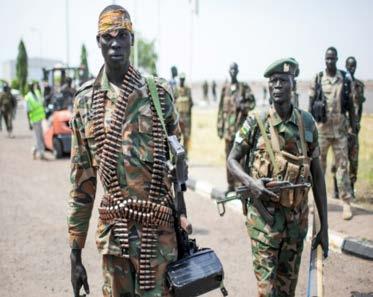
International efforts to halt the conflict in Sudan are well underway, with Saudi Arabia hosting conversations between the two rival factions in partnership with the United States. Talks are set to continue throughout the month of May. Meanwhile, though both the SAF and RSF have called for a ceasefire, the fighting continues. Both groups have likewise proposed several truces since the fighting began in April, but none of them have held. Each blames the other for not adhering to the terms of a truce, suggesting that the likelihood of any success at the negotiating table will be negligible.
As such, the conflict in Sudan continues to rage, displacing over 900,000 people internally, along with an estimated 120,000 crossing borders into neighboring countries such as the Central African Republic, Libya, Ethiopia, Chad, and Egypt. This number is expected to grow significantly in the coming weeks, with United Nations Human Rights
Council estimating that as many as 800,000 people could cross various borders in the next six months. Given that Sudan was already home to a diverse population of refugees, and housed as many as 1 million displaced people from other various regional conflicts that have taken place over the past decade, the current crisis easily has the potential to ripple across the region.
Asrefugees scramble to get out of Khartoum and neighboring Sudanese regions, the majority are fleeing to Egypt in particular, as policies toward refugees in other North African countries, such as Libya and Tunisia, are less than desirable. Although Chad is now accepting small numbers of refugees, it had originally closed its borders due to internal stressors, leaving only the Egyptian-Sudanese southwest border into Argeen and Qustul-Ashkit as the only viable option for refugees fleeing the violence.
Thisis quite the turnaround, as up until the conflict broke out Sudan was a major Egyptian economic partner, with trade revenues coming close to $1 billion annually. Egypt had also set forth strategic plans for agricultural investment in Sudan, which have
This armed conflict has the potential to spill over and spark other regional conflicts, specifically in impacting Egypt.
since been put on hold due to the conflict, further hindering any plans for its economic recovery.
As the gateway to North Africa for Western countries, Egypt is a key trading and political partner with many states in the region. The United States’ total bilateral trade with Egypt totaled $9.1 billion in 2021, while EU trade exceeded €37 billion in 2022. In addition to Egypt’s economic value to the West, it also serves a strategic role in the Arab League, assisting in providing regional peace and stability. The country is also known for its vast natural resources, including petroleum, natural gas, phosphates, and iron ore; interest in these resources has only heightened since the war in Ukraine called energy supplies into question.
YetEgypt itself is in a precarious economic situation, facing record-high inflation. In a conversation with a Japanese newspaper, Egyptian president Abdel Fatah al-Sisi expressed concern that the influx of refugees from Sudan would place an increased economic burden on Egypt. Moreover, there are also security concerns: as thousands gather at the southwest border between the two countries, the chances for terrorism, human and drug trafficking, and smuggling activity are at an all-time high.
The border region between the two countries has a history of violence, with extremist groups such as ISIS and Al Qaeda often using the area to carry out illicit activities
in the region. Since the border has also been a hub for human trafficking, the substantial increase in refugees increases the odds for extremist group members to cross over into Egypt. In response to this threat, Cairo has dispatched anti-terrorism troops to the border to protect refugees and improve security.
Nonetheless, the fighting in Sudan has put the nation at risk of collapse, with Egypt at risk of following suit due to its already fragile economic situation. The potential for increased destabilization and conflict throughout the region must be taken seriously. The international community must assist Egypt in processing and providing for these refugees.
Yetwith both sides of the Sudanese conflict having tens of thousands of fighters, foreign backers, and resources, it is difficult to say when this war will end and how many people will continue to be displaced as a result. If peace talks in Saudi Arabia do not go well, this conflict has the potential to mirror other conflicts that have devastated entire regions, such as Lebanon and Syria. Aiding Egypt in its mitigation of the refugee crisis is one step that the West can take to prevent this from happening. The United Nations has pledged $445 million to ease the crisis, which will be sent to countries that are receiving refugees throughout the region. The United States, in partnership with the European
Union, should provide direct assistance to Egypt to ensure that both Egyptians and the refugees crossing the border have access to secure food sources. Additional foreign aid should be provided to assist in stabilizing the Egyptian economy, incurring the security of U.S. and EU trading interests through the Suez Canal. These measures could include infrastructure packages and efforts to help stabilize the Egyptian pound.
Asthe conflict continues, it is imperative that the West take action. Egypt’s economy continues to deteriorate, and external stressors—including and especially the conflict in Sudan—could have monumental destabilizing impacts on the rest of the region, with consequences that could eventually affect both the United States and Europe directly.
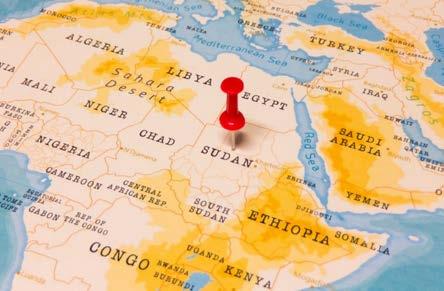
AsWashington engages both the SAF and the RSF in Saudi Arabia in the coming weeks, it should encourage reconciliation and a more permanent and successful solution. Otherwise, everyone involved will have to confront the consequences of failure: an increasing refugee crisis, additional stress on the Egyptian economy that could push it over the edge, and regional destabilization.
Riley Moeder is a Senior Analyst at New Lines Institute for Strategy and Policy, focusing her research on drivers of fragility in North Africa.
By Riley Moeder MAY 20. 2023, Images: Shutterstock.UK premier’s comments are latest sign west is prepared to support Kyiv through conflict with Russia
Western support for Kyiv will continue “for years”, the UK prime minister has said, in the latest sign that Ukraine’s western allies are prepared to support the country through a long conflict against Russia.
Rishi Sunak’s comments on Tuesday followed the G7 summit in Japan at the weekend where, he said, Ukraine’s president Volodymyr Zelenskyy was pictured standing “shoulder to shoulder” with G7 leaders in an image that “sent a very strong message”.
Speaking at a defence conference in London, Sunak said Russia’s strategy of “waiting it out . . . for people [in the west] to get tired, bored . . . is not going to work”.
“We are now leading a conversation with allies about what longer-term multilateral and bilateral security agreements we can put in place with Ukraine.”
Nato members are expected to hash out the shape of those agreements at a summit in Vilnius in July, where Baltic and eastern European countries
such as Poland are expected to press for Ukraine to be admitted to the alliance. Such a move is not backed by a majority in Nato, which requires unanimity to approve membership bids. But western support for Kyiv has hardened, with increasing talk of providing western defence guarantees to Ukraine.
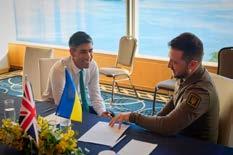
Recent military support has included US approval for F-16 fighter jets to be sent to Ukraine — something Kyiv has long requested — and a €2.7bn package of military aid from Germany.
The UK, the first country to provide Kyiv with modern battle tanks, also sent longrange cruise missiles to Ukraine ahead of its long-expected counteroffensive.
Meanwhile, western political support for Ukraine has included unexpectedly hawkish comments by France’s president Emmanuel Macron, who is widely viewed as one of the more dovish of Kyiv’s western backers.
“We need to remove any ambiguity,” Macron said on Saturday on the sidelines of the G7 meeting in Japan. “If making peace means turning the war in Ukraine into a frozen conflict it would a mistake by us all.
Frozen conflict is tomorrow’s war.”
Sunak said western pledges of long-term support were designed both to give Ukraine confidence in its ability to defend itself and to deter Russia from continuing the war.
“The right and only course of action for [Russia] to do is to withdraw and stop the conflict,” Sunak said.
Ukraine’s counteroffensive had “every chance of success”, he added, saying it was “worth bearing in mind that what Ukraine has been doing over the past year is a [successful] counteroffensive”.
Turning to China and Beijing’s “epochdefining challenge” to the west, Sunak said a “robust approach” was needed to protect certain “sensitive” technologies, such as semiconductors, dual-use equipment and quantum computing.
However, in remarks that are likely to raise eyebrows among China hawks in his Conservative party, who are pushing for a tougher line, Sunak warned against “a blanket descent into protectionism” by G7 countries against Beijing.
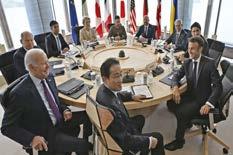 By John Paul Rathbone and Lucy Fisher MAY 23 2023
Thehead of the Wagner mercenary force has said that 20,000 of its fighters have been killed in the battle for the Ukrainian city of Bakhmut, and warned that Russia could face another revolution if its leadership does not improve its handling of the war.
Yevgeny Prigozhin said 20% of the 50,000 convicts Wagner had recruited, and a similar number of its regular troops, had been killed over several months in the fight for Bakhmut.
Prigozhin pointed to the social disparity underlined by the war, with the sons of the poor being sent back from the front in zinc coffins while the children of the elite “shook their arses” in the sun.
“This divide can end as in 1917 with a revolution,” he said in an interview posted on his channel on the Telegram messaging app. “First the soldiers will stand up, and after that – their loved ones will rise up. There are already tens of thousands of them – relatives of those killed. And there will probably be hundreds of thousands – we cannot avoid that.”
Prigozhin is known as “Putin’s chef” because he once provided catering services to the Russian leader, but he said that “Putin’s butcher” would be a more fitting nickname. He claimed his men now controlled all of Bakhmut – a claim disputed by the Kyiv government, which insists its forces still have a foothold in the ruined Donbas city – but he warned that Wagner would pull out at the beginning of next month.
Prigozhin was speaking after two Russian rebel militias, the Russian Volunteer Corps and the Freedom of Russia Legion, had made a dramatic incursion into the Belgorod region along Ukraine’s northern border, crossing into Russia with apparent ease, although the Wagner boss did not refer directly to the raid.
The Russian defence ministry claimed to have routed the raiding force, killing 70, but the militia leaders said they had only suffered two deaths. After withdrawing from Belgorod, Denis Kapustin, a commander of the Russian Volunteer Corps, told reporters on the Ukrainian side of the border that the raid had demonstrated the fragility of Russia’s defences.
“We can see that the military command as well as the political establishments of the Russian Federation are not ready for this situation,” Kapustin said. “They have invested
billions in strengthening their line but when it comes to action, everything falls apart and nothing is working.”
Kapustin said the rebel fighters had finally withdrawn after two days once Russia was able to deploy tanks, but they would strike again across the border.
“I think you will see us again on that side,” said Kapustin, who introduced himself by his call-sign White Rex and is known for his far-right views. “I cannot reveal those upcoming things, I cannot even reveal the direction. The … border is pretty long. Yet again there will be a spot where things will get hot.”
Oleksiy Danilov, the secretary of Ukraine’s national security and defence council, denied Kyiv’s involvement in the incursion, but said it showed that Moscow was not ready for the internal challenges it was about to face.
“We as an official state have nothing to do with these events,” Danilov said. “These are Russian citizens that are doing this as a means to express their attitude towards what is going on in Russia.”
Military observers have said, however, it is highly unlikely that the Russian militias, which include far-right elements, could move men and machines across Ukraine and over the border without the acquiescence of Ukrainian military intelligence.
Danilov spelled out the lessons Kyiv had learned about the Russian authorities from the incursion.
“This demonstrates to us that they are not ready for the challenges that are to come, not just in the Belgorod oblast but in any territorial unit of Russia,” he said, suggesting the potential for further uprisings by Russian rebel groups.
“The capacity and strengths of the Russian chain of command will not be enough. The system has stopped working,” Danilov said. “The FSB [Federal Security Service] is supposed to be controlling the border. The question arises: where is the FSB?”
He also said that despite the unprecedented incursion on Russian territory, “Putin has yet to say a single word about it”. There were reports that the rebel militias had
used US military vehicles to cross into Belgorod, which the Kremlin pointed to as evidence of heavy western involvement. Danilov denied the Ukrainian government had supplied any equipment.
Kapustin suggested it was equipment that had been captured by Russian forces and then bought by the rebels on the black market.
“I know exactly where I got my weapons from. Unfortunately, not from the western partners,” he said.
Members of the Russian Volunteer Corps and Freedom of Russia Legion hold a meeting with the media near the Russian border in the Kharkiv region of Ukraine.
‘We are Russians just like you’: anti-Putin militias enter the spotlight
Read more
In Washington, John Kirby, the spokesperson for the National Security Council, said the US was looking into the reports of US equipment, adding that the US had made it clear to Kyiv it did not support the use of US-made equipment for attacks inside Russia.
Ilya Ponomarev, a Russian dissident based in Ukraine who claims to lead the political wing of the Freedom of Russia Legion, said the incursion had three aims: to declare a corner of the country as “free Russia”, to send a signal across Russia that the rebel movement was real and effective, and to divert Russian troops from the frontline to guard the border.
“There are 800-something kilometres of border between Ukraine and Russia that are currently totally uncovered by the Russian military and the reason for this is because the west says all the time that Ukraine should not attack Russia,” Ponomarev said.
He said that Prigozhin was a smart analyst of what was really happening in Russia and was “spot on” in his prediction about a brewing revolution. Asked about the absence of evidence so far of popular resistance in Russia, he said that in January 1917, Vladimir Lenin had said he doubted his generation would live to see the fall of the Tsarist regime, “and that was less than one month before the revolution started”.
The United Arab Emirates has pressed the U.S. to make more muscular moves to deter Iran after the Islamic Republic’s military seized two oil tankers in the Gulf of Oman in recent weeks, U.S. and Gulf officials said.
The Emirati complaints, expressed to U.S. officials in Abu Dhabi and Washington in recent weeks, mark another moment of disappointment among America’s Middle East partners with security in the Persian Gulf, where more than a third of the world’s seaborne crude-oil transits. Gulf officials say the U.S. has failed to do enough to deter attacks in recent years from Iranian proxies, undermining their faith in Washington’s commitment to the region.
This time, U.S. officials said the Emiratis were frustrated by the lack of an American response to Iran’s seizure of tankers on April 27 and May 3. One tanker was carrying a shipment of Kuwaiti crude oil to Houston for Chevron, while the second was transiting from the Emirati port cities of Dubai to Fujairah.
The U.A.E. was particularly incensed by the seizure of the second vessel leaving Dubai because it could have given the impression its waters were unsafe to navigate, the officials said.
One U.S. official compared the response by the U.A.E. to its angry reaction in January 2022 when the U.S. was slow to come to the Gulf nation’s aid after Iran-backed Houthi militants in Yemen launched a deadly drone attack at the U.A.E. capital that killed three people. Emirati officials, who compared the 2022 attack to the Sept. 11, 2001, al Qaeda attack on the U.S, were irate that it took Washington two weeks to send a U.S. warship and more jet fighters to the region to support the Gulf nation. U.S. officials have acknowledged that they underestimated the threat that the Emiratis perceived but pointed to the use of American air-defense systems to shoot down Houthi missiles fired at Abu Dhabi as proof of their security commitments.
The U.A.E.’s Sheikh Mohammed bin Zayed al Nahyan, now the nation’s president, was so upset that he later declined a U.S. request to speak to Biden after the attack as Washington tried to assuage Emirati concerns.
U.S. officials said they understand Emirati concerns and have been working with Gulf partners to deter Iran from targeting commercial ships in the region. The U.S. Navy has created a special task force that uses sailing surveillance drones to expand its ability to respond to threats.
“The United States has strong naval ties across the Middle East that enable us to respond to recent Iranian aggression in a collaborative
The tensions over the U.S. response to Iran come as the U.S. makes a fresh push on key allies to comply with sanctions on Russia.
In late May, officials from the State Department visited the Gulf state to warn banks and local financial authorities over the risks of handling Russian transactions that could violate sanctions enforced following Moscow’s invasion of Ukraine, the U.S. officials said. The banks responded that most transactions involving Russia were difficult to track because they rely on cash or cryptocurrencies, they said. The U.A.E.’s foreign ministry didn’t return a request for comment.
U.S. officials have also warned the U.A.E. repeatedly against helping Moscow evade sanctions as Russians flock to Dubai to trade oil, buy property and sometimes buy civilian drones that are used in the conflict. The U.S. and European Union have sanctioned Emirati companies that facilitate Russian oil trades and supply Moscow’s industrial base with dual-use military equipment.
Meanwhile, the U.S. has also been increasingly worried by the U.A.E.’s blossoming ties with China.
way,” said Commander Tim Hawkins, a spokesman for the U.S. Navy’s Fifth Fleet, based in Bahrain.
After the U.S. said it was stepping up patrols, Rear Adm. Alireza Tangsiri, commander of Iran’s Islamic Revolutionary Guards Corps navy, said Saturday that the U.S. should have no military presence in the Persian Gulf region and the task of securing it belonged exclusively to Iran.
The tanker seizures came nearly two months after Iran and Saudi Arabia reached a deal to restore relations in a move viewed as potentially deescalating tensions between Iran and its Arab neighbors, including the U.A.E., which had made its own overtures to Iran in recent years. But Arab and U.S. officials have said they remain on guard for Iranian threats.
Works to build a Chinese naval base in Abu Dhabi initially started in 2021 have recently restarted despite Washington’s objections, according to recent U.S. leaks. Growing ties to China have clouded the sale of advanced F-35 jet fighters to the U.A.E., and the U.S. protested the country hiring China’s Huawei Technologies to build out its 5G network.
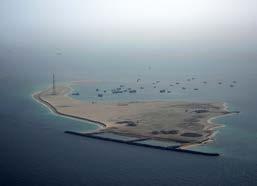 By
By
Oneof the greater achievements Benjamin Netanyahu can chalk up to his credit is the final removal of a two-state solution from the table. Moreover, in his years as prime minister he has managed to remove the entire Palestinian issue from the public agenda.
In Israel and abroad, no one is interested in it anymore, other than paying lip service, at least for now. In the eyes of the right, this is a tremendous achievement. In the eyes of anyone else, this should be considered a disastrous development, with only the indifference toward it being even more disastrous.
Netanyahu is leaving us with only two longterm solutions, and no more: a second Nakba, or a democratic state between the Jordan River and the Mediterranean Sea. Any other solution is unsustainable – no more than a delusion, like all its other predecessors, one intended to gain more time for the entrenchment of the occupation. Not that there’s much more to entrench: the occupation is deep, consolidated, strong and irreversible. But if you can consolidate it even further, why not? Removing the issue from the agenda will enable an official declaration of the death of the two-state solution, decades after it died de facto.
Netanyahu wished to suppress any talk of two states, and easily succeeded in doing so. It’s no wonder that both sides know full well that no serious, comprehensive solution has been proposed ever since the first settlers occupied the Park Hotel in Hebron in 1968. In any case, there is no room between the Jordan and the Mediterranean for two true nation-states, with all the trappings of independent states, including a military. At most, there is room, on a really good day, for a Jewish regional superpower and a puppet Palestinian state. One must respect people still fighting for two states in their forecasts, blueprints, tables and maps – but no database can change the glaring fact that no real Palestinian state will be established here. Without it, there is no two-state solution.
In killing this solution, Netanyahu has left us with only two possible solutions. The vast majority of Israelis, including Netanyahu himself, are relying on the perpetuation of apartheid for all eternity. Ostensibly, this now appears to be the most reasonable scenario.
But the growing strength of the Israeli right, and the spirit of resistance among Palestinians, which has not completely dissipated, will not allow this to continue forever. Apartheid is a stopgap solution, possibly a long-term one –it has already been in place for over 50 years and it may persist for another 50 – but its end will come. How will it play out? There are only two possible scenarios. One is preferred by the extreme right, and horrifically, perhaps by almost all Israelis – a second Nakba. If things come to a head and Israel is faced with a choice of one democratic state for two peoples, or a mass expulsion of Palestinians in order to maintain the existence of a Jewish state, the choice will be clear for almost every Israeli Jew. The moment a two-state solution was taken off the table, they were left with no other choice.
It’s good that the two-state solution has been removed from the agenda, since the ongoing sterile involvement with it only caused damage. Here was a shelf-ready solution, so we’ll adopt it when the time is right. This provided consolation for the world and for the left and center camps in Israel, while ignoring the hundreds of thousands of violent settlers wielding significant political power, having delivered the coup de grace to this solution a long time ago. In a West Bank devoid of Jews, this solution had some flimsy chances, but not in a region in which settlers rule. The problem is that the five million Palestinians living between the Jordan and the Mediterranean are not going anywhere in the meantime.
The day will come, even if only in the distant future, that a gun will be held to our heads: a second Nakba, including the expulsion of Israeli Arabs, or one democratic state, with a Palestinian prime minister or defense minister, a common military, two flags, two anthems and two languages. There is no solution but these. Which will you choose?
By Gideon Levy MAY 28, 2023.Lebanonhas succeeded in presenting a new example in the science of politics, as the country is living a civil war without war, a regional war without cannons, and stability in ruin without total ruin.

Something puzzling, how do individuals not explode but rather accept a slow death?
How does politics continue in its game without politics? And how nothing remains of Beirut except its name hanging on its open grave.
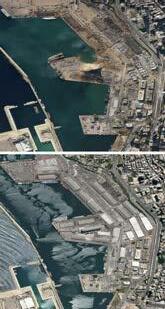 Rudwan Musa
A national holiday, free concerts, air shows, bagpipers, world leaders, a shuttered capital – the wedding of Jordan’s Crown Prince Hussein on Thursday was not your typical royal wedding.
More than nuptials with a who’s who of VIP guests, these public celebrations, according to Jordan’s royal palace, were “the big event.” They’re the introduction to Jordan’s next king.
“Today we are rejoicing for our future,” says Mohammed Sawaya, one of thousands of citizens on Amman’s streets waiting for the royal procession to pass after today’s wedding ceremony. Nearby, his car sports a giant decal of the crown prince and his bride.
“Prince Hussein is our age, he understands youth issues, he can navigate the world, and he is going to lead us into the future,” Mr. Sawaya says. More than half of Jordanians are under the age of 30.
The wedding of the crown prince to Rajwa Alseif, a Saudi architect and cousin of the Saudi ruling family, was a break from tradition in Jordan where, unlike the United Kingdom, royal weddings have long been low-key affairs.
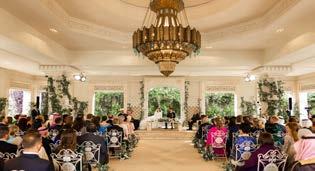
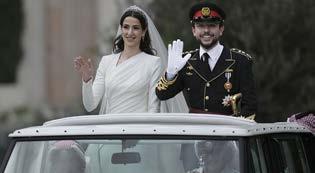
They were the largest celebrations the country has seen in two decades. The weeklong festivities kicked off on Monday with free concerts and dabkeh line dances at companies and university campuses, and in village squares. Scarlet banners and electronic billboards dotted across the capital bear the words “celebrating Hussein,” “the royal wedding,” and, simply, “we rejoice.” Even McDonald’s put up a three-story banner with the crown prince’s image, announcing that the burger chain was “rejoicing in Hussein.”
On Thursday, schools and businesses shuttered, and one-third of the capital’s streets closed to mark the occasion. In a country whose stability has long been tied to its royal family, the point was clear: “The main message of these celebrations is the presentation of the future king of Jordan,” says Amer Al Sabaileh, a Jordanian geopolitical analyst.
Although King Abdullah II has declared no intention of stepping aside, his 28-year-old son, Crown Prince Hussein, has been increasingly assuming official royal duties. He’s deputized for his father abroad by
addressing the U.N. General Assembly, attending Arab League summits, and being received along with the king by President Joe Biden at the White House in April. Yet, until this week, the heir-inwaiting had not yet stepped into the limelight at home.
In Jordan, the crown prince, a Georgetown graduate, is best known for his Crown Prince Foundation, a nonprofit that runs youth empowerment and employability skills initiatives. Along with the national holiday, this week Crown Prince Hussein was given his own royal flag and emblem, a sign Mr. Sabaileh says means he could soon become a “crown prince with a wider portfolio and involvement in day-to-day affairs,” and perhaps “a de facto king of Jordan.”
Thursday was a rare moment of joy for the traditionally stable and steadfast monarchy, a stalwart U.S. ally that has faced geopolitical and internal tumult over the past five years.
King Abdullah resisted pressure by Saudi Crown Prince Mohammed bin Salman and the Trump administration to support a controversial peace plan that would have failed to guarantee Palestinian statehood and would have stripped away Palestinian refugees’ right of return. And Jordan’s monarch is two years removed from an alleged coup attempt by his half-brother, former
Crown Prince Hamzah, in a “sedition” case that officials claim was orchestrated by foreign powers to replace King Abdullah.
International dignitaries, royalty, and regional leaders were in attendance today for the soft launch of a future monarch, including first lady Jill Biden; Prince William and his wife, Kate; Kuwaiti Crown Prince Mishal Al Sabah; and Iraqi President Abdul Latif Rashid. The nationwide celebrations were a message to Jordanians as well as neighbors, allies, and foes: The future is secure, and that future is Crown Prince Hussein.
“Having the international community present was a way to close the chapter of the recent disputes and put very clear that this crown prince is the coming king,” says Mr. Sabaileh, the analyst.
In a press release, Jordan’s Hashemite Royal Court described the wedding as a “touchstone in the country’s century-long story” providing “the Jordanian people with an opportunity to come together around a joyous occasion ... and look to the future of their country with pride.”
The wedding “lays the foundation for the next generation of the Royal Family and the perpetuation of the Jordanian Hashemite line,” which traces its roots back to the Prophet Muhammad, the statement added.
It also sealed a match of political expediency.
Hezbollah movement has carried out military exercises near the country’s southern border with Israel in a show of its military power.
About 200 Hezbollah fighters used live ammunition and an attack drone to take part in the exercises on Sunday in Aaramta, 20km (12 miles) north of the Israeli border.
The drills took place ahead of the anniversary of Israel’s withdrawal from southern Lebanon on May 25, 2000. It was the largest demonstration of Hezbollah’s military might in years.
Hezbollah fighters carried out simulated raids involving sniper and drone attacks against Israeli targets as part of the exercise. In another case they engaged in attacks across a mock border. The group displayed heavy and light arms, including anti-aircraft weapons, rocket launchers and rocket-propelled grenades.
“If some people in the Zionist entity [Israel] dream of doing something foolish, … we will rain down our precision missiles and all the weapons at our disposal,” senior Hezbollah official Hashem Safieddine, was quoted as saying by the Agence France-Presse news agency.
The Israeli military, which occasionally conducts exercises simulating a war with Hezbollah, did not comment on the event. Elias Farhat, a retired Lebanese army general who is a military affairs researcher, told The Associated Press that Hezbollah’s “symbolic show of strength” appeared to be in response to the recent escalation in Gaza, in which Israel killed 30 Palestinians and
injured more than 90 in air attacks.
He said it could also be a response to the Israeli nationalist “flag march” on Thursday in occupied East Jerusalem.
Hezbollah-Israel relations
Hezbollah was founded in 1982 to fight the Israeli occupation of southern Lebanon. It is the only Lebanese faction to keep its weapons after the end of the country’s 1975-1990 civil war.
The Shia armed group justifies keeping its arsenal by saying it needs them to resist Israel.
Since a devastating 34-day war between Israel and Hezbollah in 2006, the United Nations Interim Force in Lebanon has acted as a buffer between Beirut and Tel Aviv.
The peacekeeping mission was set up in 1978 near the southern Lebanese border and monitored the withdrawal of Israeli forces in 2000. Although Lebanon and Israel have maintained a cautious calm since then, the border still sees sporadic skirmishes.
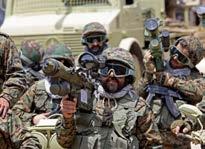
In the latest flare-up, Israel launched rare strikes on southern Lebanon last month after rebels fired rockets into Israel, wounding two people.
Israel also regularly targets Hezbollah and Iranian position in Syria, a key ally of both the Shia group and Tehran.
About 200 Hezbollah fighters take part in military exercises ahead of anniversary of Israel’s 2000 withdrawal from southern Lebanon.