GLOBAL REVIEWS
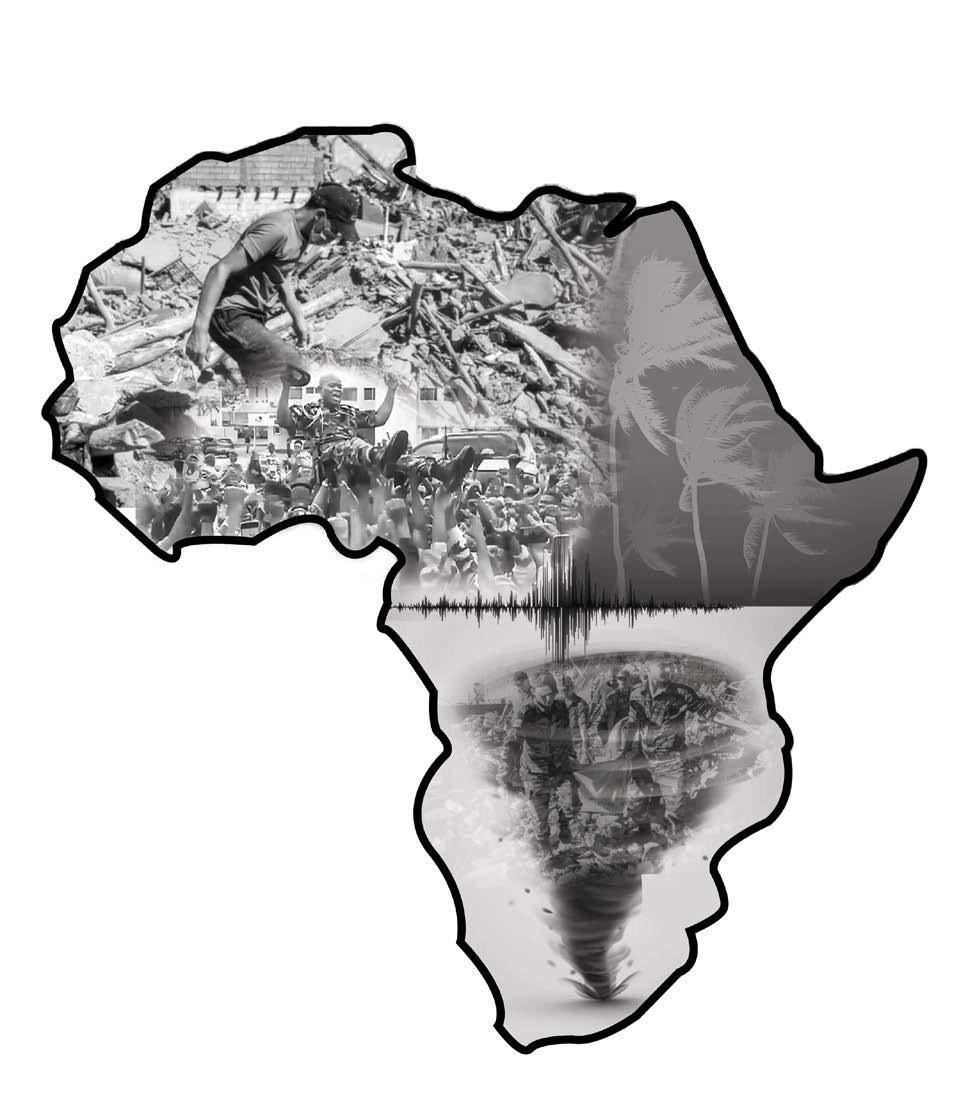
The African continent, a political and geographical earthquake
REAL NEWS EVERY MONTH FROM ALL AROUND THE WORLD. THE AUGUST ISSUE
The African continent, a political and geographical earthquake

India has launched a rocket to study the sun, a little over a week after its successful unmanned landing on the moon. The Aditya-L1 rocket, carrying scientific instruments to observe the sun’s outermost layers, blasted off at 11:50am (06:20 GMT) on Saturday for its four-month journey. The rocket left a trail of smoke and fire as scientists clapped, a live broadcast on the Indian Space Research Organisation’s (ISRO) website showed. The broadcast was watched by nearly 500,000 viewers, while thousands gathered at a viewing gallery near the launch site to see the liftoff of the probe, which will aim to study solar winds, which can cause disturbance on earth commonly seen as auroras. According to ISRO, the spacecraft is carrying “seven scientific payloads for systematic study of the sun”, all of which were indigenously developed in collaborations between India’s space agency and scientific institutes. The United States and the European Space Agency (ESA) have sent numerous probes to the centre of the solar system, beginning with NASA’s Pioneer programme in the 1960s. But if the latest mission by the ISRO is successful, it will be the first probe by any Asian nation to be placed in solar orbit. Named after the Hindi word for the sun, the Aditya-L1 launch follows India beating Russia late last month to become the first country to land on the south pole of the moon. While Russia had a more powerful rocket, India’s Chandrayaan-3 out-endured the Luna-25 to execute a textbook landing. The Aditya-L1 is travelling on the ISRO-designed, 320-tonne PSLV XL rocket that has been a mainstay of the Indian space programme, powering earlier launches to the moon and Mars. The spacecraft is designed to travel about 1.5 million km (930,000 miles) over four months to a kind of parking lot in space where objects tend to stay put because of balancing gravitational forces, reducing fuel consumption for the spacecraft. Those positions are called Lagrange Points, named after ItalianFrench mathematician Joseph-Louis Lagrange. The mission has the capacity to make a “big bang in terms of science,” said Somak Raychaudhury, who was involved in the development of some components of the observatory, adding that energy particles emitted by the sun can hit satellites that control communications on earth.
“There have been episodes when major communications have gone down because a satellite has been hit by a big corona emission. Satellites in low earth orbit are the main focus of global private players, which makes the Aditya L1 mission a very important project,” he said.
India has been steadily matching the achievements of established spacefaring powers at a fraction of their cost. India’s successful landing on the surface of the moon – a feat previously achieved only by Russia, the US and China – was achieved at a cost of less than $75m.
India became the first Asian nation to put a craft into orbit around Mars in 2014 and is slated to launch a three-day crewed mission into the Earth’s orbit by next year.
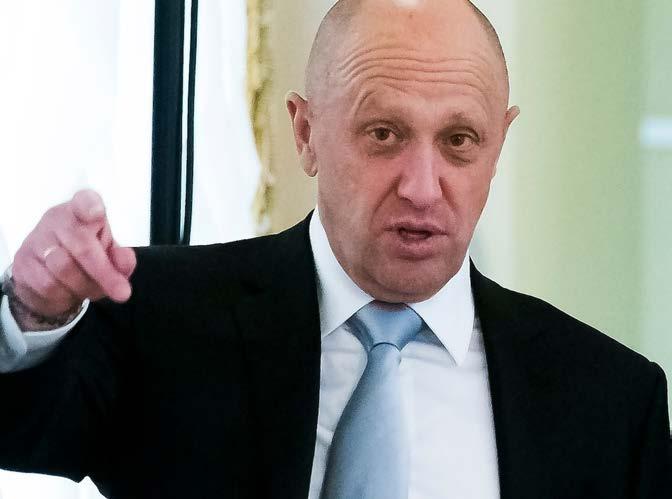
Two months to the day since he launched an audacious challenge to Russian President Vladmir Putin’s rule, Wagner mercenary chief Yevgeniy Prigozhin was on the passenger list of a plane that crashed northwest of Moscow, killing all 10 people aboard, according to Russian aviation authorities.
It was not immediately clear whether Prigozhin, who led the short-lived mutiny in June, was on the Embraer business jet when it went down in the Tver region, but Rosaviatsiya, the country’s air transport agency, said his name was on the flight manifest.
“An investigation has been launched into the crash of the Embraer aircraft,” the agency said in a statement.
“According to the list of passengers, among them is the name and surname of Yevgeniy Prigozhin.”
There was no confirmation of his death Wednesday from Russian or U.S. officials, or from Prigozhin’s press service, which has not posted online since June. One Telegram channel associated with the Wagner Group urged against publishing “unverified data and messages” about Prigozhin’s fate.
But later Wednesday, Grey Zone, another Wagner-linked Telegram channel, posted an obituary: “The head of the Wagner Group, Hero of Russia, a true patriot of his Motherland - Yevgeniy Viktorovich Prigozhin died as a result of the actions of traitors to Russia,” the post read. “But even in Hell he will be the best! Glory to Russia!”
If confirmed, Prigozhin’s death would cap a meteoric rise and fall for a convict turned restaurateur turned warlord. He used his mercenary army to expand Russian influence in Africa and the Middle East and came to Putin’s rescue during his stalled invasion of Ukraine, only to rebel against the country’s military leadership and be branded an enemy of the state.
On June 23, Prigozhin launched what he called “the march of justice” — pulling his mercenary fighters from the front lines
in Ukraine and sending them toward the Russian capital. The rebellion sent shock waves through Russia’s elite and posed an unprecedented challenge to Putin’s authority.
President Biden speculated in July that Prigozhin could be a target of assassination, like a number of Russian dissidents and journalists in the past, including opposition leader Alexei Navalny, who survived a poisoning in 2020.
“I’d be careful what I ate. I’d keep my eye on my menu,” Biden said last month. His
There were seven passengers and three crew members on board, aviation officials said, including Dmitry Utkin, Prigozhin’s second-in-command. The plane was flying from Moscow’s Sheremetyevo airport to St. Petersburg, which is Prigozhin’s hometown and the site of Wagner’s former headquarters.
At least two Wagner-affiliated planes were in the air near Moscow on Wednesday evening, according to Grey Zone, adding to the confusion over who was killed.
A foul-mouthed, larger-than-life figure known for his ghoulish sense of humor and online media empire, Prigozhin was popular among rank-and-file soldiers and hard-line pro-war figures.
comments were echoed by CIA Director William J. Burns at the Aspen Security Forum: “Putin is someone who generally thinks that revenge is a dish best served cold. So he’s going to try to settle the situation to the extent he can,” Burns said. “In my experience, Putin is the ultimate apostle of payback.”
On Wednesday, as reports of Prigozhin’s death circulated, Biden told journalists: “I don’t know for a fact what happened, but I’m not surprised.”
Asked if Putin could be behind the crash, Biden said, “There’s not much that happens in Russia that Putin’s not behind. But I don’t know enough to know the answer.”
Eyewitnesses on Wednesday reported hearing two explosions before the plane tumbled from the sky and burst into flames in a field, Russian media reported.
He recruited thousands of prisoners for the war in Ukraine — inviting murderers and thieves to fight in exchange for pardons — throwing them into battle in a tactic known as the “meat grinder.” Wave upon wave of ex-convicts were unleashed in near-suicidal attacks on the front lines of Bakhmut and other Ukrainian cities; anyone who fled would be shot by Wagner commanders, Prigozhin warned. Before his downfall, he earned a reputation as a truth-teller, cutting through the triumphal tone of state media to detail the ugly reality of Russia’s military failures. In May, in his most brazen public stunt, Prigozhin posed in a field piled high with dead mercenaries and shouted obscenities at Defense Minister Sergei Shoigu and Valery Gerasimov, chief of the general staff of Russia’s military, blaming them for “starving” Wagner forces of ammunition.
“We are 70 percent short of ammunition, Shoigu, Gerasimov, where the f--- is the ammunition?” he screamed.
By Mary IlyushinaLondon - “Al-Quds Al-Arabi”: The New York Times published a report prepared by Constant Maheu in which he said that a novelist who wrote about the French colonization of Algeria had turned into a famous star, especially his last novel, which indicates the change in times. “It is my duty to ask questions, questions that people do not want to ask,” Matteo Bellizzi said.
The interest in Bellizi's novels is considered a shift, as he has been writing for years about Algeria and even acknowledged the violence committed by France there, but he was a lone voice singing outside the crowd. The French novelist Gerard-Marshall-Brensau continued to publish under the pseudonym Matteo Bellizzi, and spent 15 years writing about the first years of French colonialism in complete anonymity.
His novels have received the attention of only a few thousand readers, due to what Bellizzi believes is a “discomfort” with the past that challenges France’s image as a beacon of human rights.
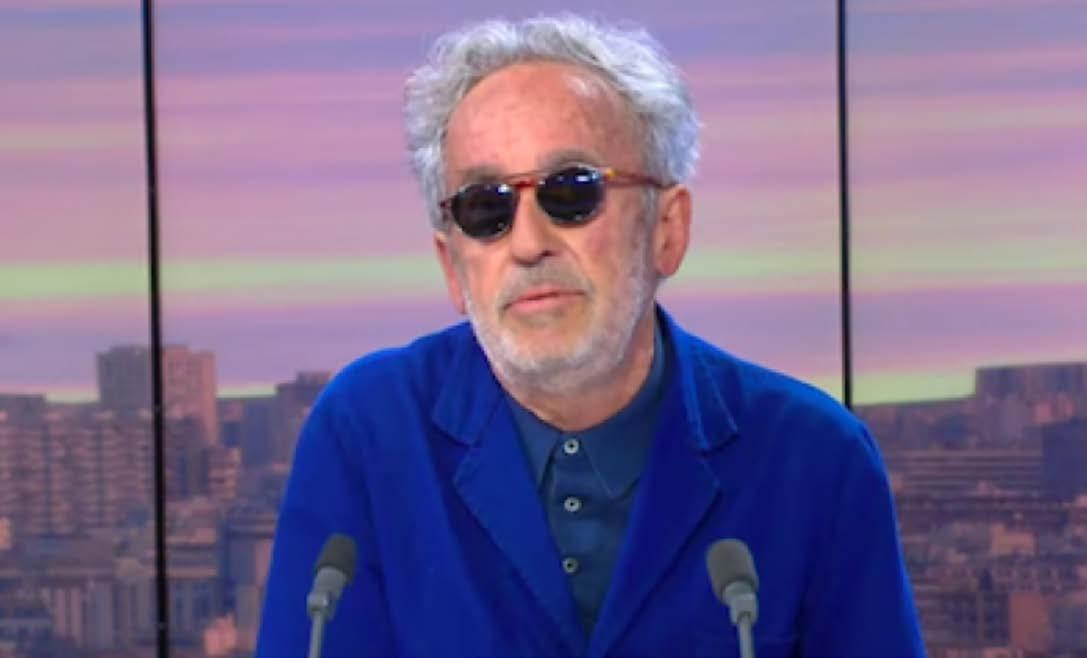
But past history forced him to do so. His luck changed with his fourth novel, “Attack on the Earth and the Sun,” which retells the story of the brutal French colonization of Algeria in the nineteenth century and was published last year. Her fame became a surprise in a country that continued to avoid or preferred to forget the history of the colonial period in Algeria, and the book won a prestigious award and sold about 90,000 copies.
The French forgetfulness of the past is clear in the case of Algeria, which was colonized by France for 132 years before it emerged from it in the bloody war of independence, which left deep scars.
In a country where the most popular literary works are the Rorschach Test (based on analyzing perceptions and psychological perceptions of inkblots and studying them based on psychological concepts and complex algorithms), the popularity of his latest novel is a picture of the changing times.
In recent years, France has tried to acknowledge its history in Algeria, as the country's research into its colonial legacy has prompted the emergence of a wave of books and films. In an interview with the New York Times, Bellizzi said, “History has long been a taboo,” and the 69-year-old writer, who speaks in a calm voice, commented: “It was my duty to ask questions, especially questions that people do not want to ask, and literature helps in this as well.” Perhaps Belizzi's experience stems from his direct relationship with the history of France in Algeria, as he is the son of a factory worker and served in the French army in Algeria before the War of Independence, and he refused at all times to talk about that experience. Bellizzi said that France’s colonization of Algeria continued to puzzle him. “We went to prepare what he called the barbarians, but we were the barbarians,” and “we stole the land and demolished their mosques.”
Perhaps Belizzi's experience stems from his direct relationship with the history of France in
French novelist: The Algerians were not barbarians, but rather we...we stole the land and demolished the mosques
Algeria. He is the son of a factory worker and served in the French army in Algeria before the War of Independence, and he refused all the time to talk about that experience.
At the beginning of the first decade of the current century, he began studying history, and discovered, as he says, a “literary area” of violence that had not yet been explored and provided important material for the novelist.
In a scene from Belizzi's novel, he describes the French soldiers rushing towards an Algerian village in the mountainous areas as darkness fell. They were armed with bayonets and killed the residents who dared to resist, “and they flattened their stomachs and lifted them off the ground at arm's length like roasted chickens.” Then they plundered and raped the women and left them. Survivors die of cold in the open. The captain tells his soldiers, “You are not angels,” and they respond, “That’s right, Captain, we are not angels.”
France's invasion of Algeria began in 1830 as a punitive military expedition against the city of Algiers, which was part of the Ottoman Empire, and after a diplomatic dispute. But the campaign turned into a comprehensive colonization process that lasted a century and led to the deaths of about 800,000 Algerians.
“The first days of colonialism were terrifying,” says historian Colette Zitnicki from the University of Toulouse, pointing to the mass killings committed by French soldiers against the Algerians, which included suffocating them with smoke in the caves in which they took refuge, as well as the killing of many French settlers from hunger and disease. Bellizzi highlights this violence in his first three novels, which he published between 2008 and 2015. He based their material on letters from settlers and soldiers that he found in the public archives. He highlighted the racism that supported colonialism and the greed that led to the confiscation of lands, as well as the doubts that gnawed at the bones of the settlers who fled to France from hunger. .
“In the 1880s France was like the American Wild West,” Bellizzi said, but unlike popular accounts of Americans on the front lines, his novels did not attract the attention beyond enthusiastic literary critics. His first novels are difficult to obtain, as he wrote a number of them and touched on many themes.
Over the years, Bellizzi continued to make a living from what he said were “various and strange jobs.” He sold tombstones, grew tobacco on farms, and taught history in schools. Bellizzi was never invited to a television interview, not even to the well-known literary
meetings in the country, and even after the great success of his latest novel, “people are afraid of what I might say.”
After he completed writing his fourth novel about Algeria, “Attacking the Earth and the Sun,” which he presented through the voice of a settler and a soldier, he said that he sent it to five publishers, all of whom responded politely but refused. “I thought it was over and that I would now continue writing for myself, never publishing,” he said, imagining how his novels would be rediscovered after his death in bookstalls on the banks of the Seine. Until he received a call from Le Tribaud founder Frédéric Martin, who said, “I was hooked from the first words,” and Bellizzi had sent the manuscript to the small publishing house as an act of desperation. He told Bellizzi that he would not only publish this novel, but also reprint his previous novels. Martin said he was attracted to Bellizzi's “unique writing style,” which avoids long historical pauses, and to his poetry and the history that his narrators powerfully reveal.
Critics strongly agree with this opinion. Pierre Saulin, the arbitrator of the Goncourt Prize, the highest rank in French literature, says, “French literature has rarely shown interest in the beginning of colonialism,” and “the time has come.” Frederic Bigbeder, the famous French novelist, told an influential radio station that the novel taught him much more “than anyone taught him about the French colonization of Algeria and in this way.” This novelist alludes to Algeria and the suffering that the book ignored for the sake of a rosy, albeit distorted, picture of colonialism and the focus on conquest and the economic miracle that the novelists promoted.
Since the beginning of 2005, a French law has required teachers to teach classes on the “positive role” of colonialism. The decision was lifted a year later as a result of the outcry, but discomfort with teaching the past persists.
In the field of Algeria, most of the novels I talked about forgot this history and focused on the phase of getting rid of the effects of colonialism and the Algerian war of liberation, a tense phase whose understanding experts say is linked to knowledge of the initial violence of colonialism. “It is time to replace a number of stereotypes with a harsher reality,” said Jacques Fremaux, a historian at the Sorbonne University in Paris. Perhaps the success of “attacking the Earth and the Sun” is what the historian refers to. After the novel received an award from Le Monde and France Inter, the largest newspaper and radio station, the novel rose to the list of best-selling novels. Work is underway to translate it into eight languages, and a translation into English is on the way. A
school version with historical backgrounds will be published next year.
Historian Zitnicki said that the success of the novel is linked to the renewed interest in the history of French colonialism, as the country discusses colonialism and the slave trade, and there are books and podcasts, and even an exhibition about Emir Abdelkader, who led the Algerian resistance against French colonialism in the third and fourth decades of the nineteenth century, attracted public attention. General.
President Emmanuel Macron formed a committee to study the archive and study the period, in recognition of the need to address the painful past.
Bellizzi hopes to be remembered as “the man who got down to business” and illuminated history. He refers to what Macron said last year when he described French-Algerian relations as “a love story with a tragic side,” but for the novelist, “I have to keep working.”
Perhaps Belizzi's experience stems from his direct relationship with the history of France in Algeria. He is the son of a factory worker and served in the French army in Algeria before the War of Independence, and he refused all the time to talk about that experience.
Libya’s government has been thrown into crisis after Israel unexpectedly announced that it had held “historic” talks with the country’s foreign minister, prompting protests in Tripoli and the suspension of the minister.
Abdul Hamid Dbeibeh, the Tripoli-based prime minister of one of Libya’s rival governments, said foreign minister Najla Mangoush was under “administrative investigation” for meeting her counterpart from Israel.
The unrest was sparked by Israel’s foreign ministry on Sunday releasing an official statement on the “historic” meeting between the foreign ministers, calling it the “first step in relations” between Israel and Libya.
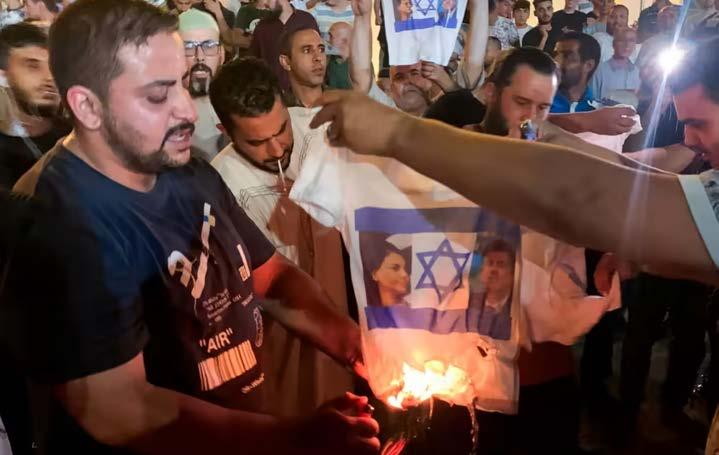
Demonstrations broke out on Sunday across western parts of Libya ruled by the internationally recognised Government of National Unity, with protesters burning tyres and blockading streets.
The meeting, which took place in Rome last week, is reportedly the first ever between Libyan and Israeli diplomats. Libya has traditionally been strongly pro-Palestinian and does not recognise the state of Israel, and the two countries have no formal ties.
Libya’s foreign ministry said Mangoush had rejected a meeting with Israeli officials and that what took place was “an unprepared, casual encounter during a meeting at Italy’s foreign affairs ministry”. It said the meeting did not involve any negotiations or agreements.
According to Sunday’s Israeli foreign ministry statement, Eli Cohen, the foreign minister, and Mangoush discussed the “possibility of co-operation” between the two countries, Israeli humanitarian and agricultural aid, and Libyan Jewish heritage sites.
On Monday, former diplomats and opposition leaders in Israel heavily criticised Cohen for making the meeting public, alleging he was seeking short-term political gain while jeopardising the country’s diplomatic relations, especially with Muslim nations that have yet to normalise ties with the Jewish state.
Opposition leader and former foreign minister Yair Lapid said: “The countries of the world are looking at the irresponsible leak . . . and asking themselves: is this a country with which we can conduct foreign relations? Is this a country you can trust?”
Riccardo Fabiani, north Africa director at the International Crisis Group, said the meeting between Mangoush and Cohen was unlikely to have happened without the “blessing” of the Libyan prime minister.
“My guess is he has been trying to boost his credibility with the US, but obviously the move backfired and there was a backlash so he is protecting himself by sacrificing Mangoush,” he said. “His political survival is tied to what the international community will
do if and when Libya’s rival parliaments come up with a proposal for a new government.”
Libya is split between rival governments in the west and east of the country. The country has been plunged into chaos since the 2011 uprising that overthrew Muammer Gaddafi, the dictator who ruled for 41 years. Analysts say politics and the administration have fallen increasingly under the control of armed militias who hold sway across the fragmented country.
Since 2020, Israel has normalised relations with Morocco, Bahrain, Sudan and the United Arab Emirates. Analysts say Libya’s fractious politicians are well aware that improving relations with the Jewish state would help win them support in Washington.
“The countries of the world are looking at the irresponsible leak . . . and asking themselves: is this a country with which we can conduct foreign relations? Is this a country you can trust?”
TheFrench newspaper Le Monde stopped at the BRICS summit (Brazil, Russia, India, China, South Africa),which begins today, Tuesday, in Johannesburg, and continues until Thursday.
Overthrowing the dollar king, the symbol of Western hegemony, although difficult, will be one of the goals that will be discussed at the BRICS summit. Those present will discuss: South African President Cyril Ramaphosa, his Chinese counterpart Xi Jinping, Brazilian Lula da Silva, Indian Prime Minister Narendra Modi, and Russian Foreign Minister Sergei Lavrov will discuss expanding their bloc to include other countries, especially in Africa .
Overthrowing the dollar king, a symbol of Western hegemony, will be one of the goals that will be discussed at the BRICS summit
Le Monde added that in recent months, Western sanctions imposed on Russia - freezing dollar reserves, excluding Russian banks from the SWIFT system, and banning Russian oil imports - have revived the interest of many emerging countries in “de-dollarization.”
The newspaper quoted Zhongyuan Zoe Liu, author of a study on this topic for the Council on Foreign Relations, an independent American research center, as saying: “Some seek first to reduce the use of the dollar in their economy to protect themselves from international financial turmoil.” Others want to escape US extraterritoriality law, which uses the dollar to impose sanctions and fines abroad.
“Le Monde” referred to the statement of Kenyan President William Ruto, last June 14, before the Parliament of Djibouti, where he said: “How does the dollar interfere in trade between Kenya and Djibouti? Why does Brazil need the dollar to trade with China and Argentina?
“We can do this with our own currencies.” On August 3, the Brazilian President called for the establishment of a common currency among the BRICS countries.
Le Monde added that since the beginning of the war in Ukraine, initiatives aimed at limiting the use of the American currency have doubled. Russia now sells the hydrocarbons it produces to Beijing in renminbi. In January, it linked its interbank messaging system to Iran's, allowing banks in both countries to exchange money without going through SWIFT. In the spring, China, which is also developing a competitor
to the international payment system, bought liquefied natural gas from the UAE in yuan.
The French newspaper explained that, at the present time, these measures have a limited effect. It is true that the weight of the dollar in central bank reserves is declining: it now represents 59%, compared to 65% in 2016, according to the International Monetary Fund, but it (the dollar) still accounts for 89% of transactions in the foreign exchange market, 60% of commercial invoices, and 48.5% of international bond issuances, which is ten points higher than in 2003.
“Despite the slight decline observed in the dollar in monetary institutions’ reserves, its dominance remains unchallenged in other areas,” says Chris Turner, an economist.
Despite the slight decline observed in the dollar in the reserves of monetary institutions, its dominance remains unchallenged in other areas
However, China has spared no effort since 2005 to intensify the use of the yuan internationally, doubling its currency swap agreements with other central banks, such as those in Malaysia, Argentina, Nigeria and the eurozone. Beijing is also developing a digital currency platform with Hong Kong, Thailand and the UAE, which could make it possible to settle cross-border payments without an intermediary, and without going through SWIFT, by the end of the year.
“But the yuan is still far from being a reliable alternative to the dollar, if only because China’s capital controls remain strong, and its financial markets are underdeveloped,” stresses Chris Turner. The yuan currently weighs only 2.6% of global foreign exchange reserves, less than the yen (4.8%), the pound sterling (5.5%) and the euro (20%).
Jim O'Neill, former chief economist at Goldman Sachs, who coined the abbreviation "BRIC" in 2001 (South Africa joined the group in 2011), spoke in the Financial Times about the idea of a common currency between these countries, stressing that "the BRIC countries... “They haven't built anything since they came together,” even if they together account for almost a quarter of the world's wealth.
For his part, Robin Nizard, an economist at Coface, explains that creating a unified
currency, such as the euro, requires strong economic rapprochement between the five BRICS member states. “However, these countries are a very heterogeneous group, and bilateral trade between them remains very low,” he explains, adding: “India and South Africa show persistent trade deficits with other BRICS countries: reserves of any new common currency will be exhausted quickly.” , as analyzed by Mark Williams and Shilan Shah, from Capital Economics.
Le Monde went on to explain that another option is to create the equivalent of Special Drawing Rights at the International Monetary Fund, an asset that allows central banks to diversify their reserves. Just here: “If the composition of this new asset reflects the economic weight of countries, China will be very dominant there,” explains Adam Slater, of Oxford Economics. This goes to the core of the difficulties inherent in any joint monetary initiative, as it risks perpetuating Chinese hegemony. In fact, many BRICS countries, especially India, and countries that aspire to join the group do not receive much attention in reality.
The end of the royal dollar will be hastened by a domestic event, such as bad economic policies, that undermines the world's confidence in the US currency
Another line of thought relates to the New Development Bank, which was created in 2015 to counterbalance the International Monetary Fund, in particular by granting loans in local currency. But it itself depends largely on dollar financing, provided by American investors. But since the beginning of the war in Ukraine, they have been reluctant to grant new loans, because Russia has a 19% stake in the capital of this bank.
Adam Slater adds: “If the dollar is not about to be overthrown soon, its long-term decline seems likely,” citing the example of the pound sterling, which dominated the global financial system until the two world wars and the fall of the British Empire.
Zhongyuan Zoe Liu believes that “the end of the royal dollar will be hastened by an internal event, such as bad economic policies, which undermines the world’s confidence in the American currency.”
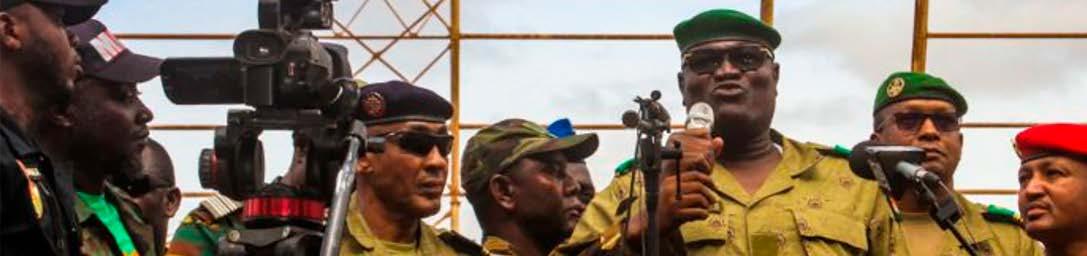
On July 26, Nigerien President Mohamed Bazoum was detained at his home by his own presidential security force. Within 48 hours, the chief of Bazoum’s guard, General Abdourahmane Tchiani, had secured support from the military and named himself the head of a transitional government. As of late August, Bazoum is apparently still stuck in his presidential palace while France and a bloc of West African states are preparing for a military intervention. Tchiani has dug in, warning that any foreign attempt to reverse his takeover will be no “walk in the park.”
Coups in Niger are a relatively routine affair, a largely bloodless reshuffling of elites in the capital. Over the last six decades, the country has experienced five coups. But this one is different. It comes a mere two years after the first democratic transition of power in a country now widely seen as the West’s last bulwark against terrorism in the African Sahel. Visiting Niger in March, U.S. Secretary of State Antony Blinken declared the country a “model of democracy.” But the West deluded itself into thinking that Niger was on a more stable course than it really was.
This crisis should not have come as a surprise. Over the past decade, efforts aimed at stabilizing the Sahel—led by France and backed by the United States—have steadily weakened the region’s civil institutions and failed to deliver security. They swept military rulers into power in four of the five Sahel states; after the West withdrew support for those new regimes, the juntas in Mali and Burkina Faso turned to Russia for security assistance. The West’s appreciation of Bazoum was detached from reality on the ground in Niger, where he faced rising discontent since he took office in 2021.
Domestic tensions were the immediate trigger for the coup. But the crisis was also the culmination of a decade of ill-conceived foreign-led stabilization policies in the Sahel. In 2013, when jihadi groups seemed poised to seize Bamako, France sent several thousand troops to Mali. While the French did eliminate some top jihadi leaders, its pursuit of them caused the jihadis to fan out across central Mali and into the tri-border region alongside Niger and Burkina Faso.
What started as a contained intervention suffered from mission creep. Ignoring Sahelian calls for political dialogue, France ended up playing an outsize role in multiple Sahel countries’ security and politics. In the late 2010s, facing increasingly widespread rural insurgencies, France established counterterrorism partnerships with ethnic militias aligned with the Malian government. As communal tensions mounted, fighters
massacred civilians and communities that had recently lived in relative peace had to arm themselves for the sake of self-defense.
The relentless spread of violence turned many ordinary Sahelians against the regimes that partnered with France. Soldiers resisted being sent to their slaughter; civilians increasingly perceived their own leaders to be proxies of Paris. The spiraling violence and the sharp rise in anti-French sentiment led to coups in Mali in 2020 and Burkina Faso in 2022. In August of that year, as its relations with Bamako unraveled, France completely withdrew its forces from Mali.
Paris did not send its soldiers home, however. It shipped many to Niger. This illuminates why so many external observers were eager to tout the two-round election that Niger held in late 2020 and early 2021 as a kind of miracle— one that, overnight, created the Sahel’s “last bastion of democracy,” as the news outlet France24 put it. Niger had to carry Western hopes for stabilizing the Sahel alone.
WESTERN
But Westerners overlooked just how many Nigeriens perceived the vote as theater. Bazoum, a former cabinet minister, emerged from the inner circle of his predecessor, Mahamadou Issoufou. Issoufou handpicked him as his successor, and to smooth his path to power, Issoufou had Bazoum’s main opposition candidate arrested on false charges of child trafficking. In February 2021, when state media outlets announced Bazoum’s narrow victory, hundreds of opposition supporters took to the streets to declare the results fraudulent. Issoufou’s police promptly arrested nearly 500 people and shut off the Internet for weeks.
Most Nigeriens expected little change under Bazoum. He tolerated corruption and kept in place repressive Issoufou-era policies such as a 2019 cybercrime law used to prosecute journalists, bloggers, and civil society activists who protested government repression and security-force abuses. But it was Bazoum’s choice to allow France to make Niger its new base for its Sahel military operations that hurt him the most.
To shore up its position in the Sahel, in the second half of 2022, France deployed 1,000 soldiers to Niger; from France, Bazoum received 70 million additional euros in new grants and loans for badly needed food and infrastructure. This was a risky deal for Bazoum, but he made a bet that he could keep the French presence discreet, humbled as France was by its retreat from Mali. This bet cemented his status as a darling of the West. The United States, too, needs a stable and friendly Niger; it has also developed substantial security interests there.
Washington uses a CIA drone base in Dirkou to conduct secret surveillance missions over southern Libya. Recently, it invested over $100 million in an air base in the northern regional capital, Agadez, to expand U.S. intelligence capabilities in the region. The United States keeps roughly 1,000 of its soldiers at bases there and in the capital, Niamey.
But Bazoum’s courtship of the West put him dangerously out of step with his own population. Even before France’s recent West African military adventures, Nigeriens had a marked distaste for the country. For decades, France has used corrupt and sometimes even illegal practices to secure cheap access to Nigerien uranium for its nuclear power industry, leaving Niger unable to profit from its exports.
A November 2021 killing of three protesters by a French convoy entering Niger reopened decades-old wounds, and throughout 2022, a civil society coalition, the M62 movement, held demonstrations in the capital to demand the departure of French forces. In January, Bazoum detained the group’s leader, Abdoulaye Seydou, on charges of undermining public order.
This popular dissatisfaction emboldened disgruntled military actors. Bazoum had always struggled to rein in his military. After thwarting an attempted coup days before his inauguration, he purged dozens of senior officers. This past April, he fired the Nigerien army’s chief of staff, and just before the coup, he was reportedly on the verge of sacking Tchiani. Both would end up leaders of the junta. Bazoum’s pro-Western stance and his crackdown on the generals forged an unlikely alliance between his civil society and military opponents: after the coup, the junta agreed to release Seydou in exchange for M62’s support.
Bazoum’s mistakes, however, must not obscure his successes. The approach taken by France, Burkina Faso, and Mali toward battling insurgents—partnering with ethnic militias—sent violence skyrocketing. Bazoum, by contrast, looked for ways to address root causes and prevent escalation. He engineered a uniquely wise security policy he called an “open hand” approach, facilitating political dialogue between insurgents and the government, brokering cease-fires, and offering amnesty to defectors.
At the same time, he beefed up formal bordersecurity operations by his military and secured French and U.S. air support. The approach paid dividends: Niger’s roughly 200-square-mile border zone with Mali saw an 80 percent drop in violence against civilians between 2021 and 2022.
Historically, northern Nigeriens have been excluded from government, making the area particularly restive. The tight-knit relationships Bazoum carefully cultivated with northern elites also quietly shored up stability there. It is regrettable that Bazoum, a former philosophy professor, did not get the chance to make good on his promise to rebuild the Nigerien education system, a profoundly urgent need in a country with a high fertility rate (6.8 births per woman), a low literacy rate (37 percent), and persistent food insecurity.
It is critical to ensure that the progress under Bazoum is not lost. But some very powerful players are now acting as if the region can be saved only by saving Bazoum. Leading this coalition are France and the Economic Community of West African States, a regional political and economic union. Fearing coups could go viral in the region, ECOWAS has been particularly bellicose: along with its preparations to deploy troops to Niger, it has imposed harsh sanctions that have already cut off 70 percent of the country’s power supply. France, fearing the loss of its last ally in the Sahel, has stated that it intends to lend military support to the ECOWAS efforts.
The United States, however, has broken from France to advocate for a more pacifist response. Washington’s stance has come as a surprise. The United States has generally been content to follow France’s lead in the Sahel in exchange for support for U.S. endeavors in the Middle East. But the United States has stopped short of calling the situation a “coup”—a declaration that, by U.S. law, would require it to sever military assistance to Niger. A full three weeks after the junta took power, the Pentagon was still describing the crisis as an “attempted coup.”
Blinken has stated clearly that the Niger crisis has “no acceptable military solution.” He and other U.S. leaders are repeatedly calling for a peaceful resolution and the release of the president, not his reinstatement. This distinction acknowledges that the junta has ousted Bazoum from power.
Two poles are emerging: those who believe that using force to reverse the Nigerien coup will solidify long-term security and those who believe a military intervention must be avoided. On August 9, in Washington, Blinken
hosted Algerian Foreign Minister Ahmed Attaf; Algeria is the Sahel’s most powerful mediator state. In an interview, Attaf declared that his country’s goal was a peaceful solution to the crisis. The African Union, too, has distanced itself from the outright saber-rattling of ECOWAS.
According to a top African diplomat, who spoke anonymously because he is not authorized to comment formally on the matter, the memory of Libya’s collapse weighed heavily on the AU ruling. “Now, you have a bad government” in Niger, he said. “But if you bomb them, you get no government. Just jihadis and factions.” He pointed out that 12 years after NATO’s intervention into the Libyan uprising, there is still no formal government in Tripoli.
THE ROAD LESS TRAVELED
Advocates of a military intervention are appealing to great-power rivalries to drum up support. A French foreign ministry spokesperson cited the prospect of Russian intervention to justify restoring Bazoum. Writing from detention, Bazoum himself warned in The Washington Post that if the coup succeeds, the “entire central Sahel region could fall to Russian influence.”
But Washington’s current course is correct, and U.S. policymakers must resist calls to back an intervention. It is by no means inevitable that a proxy war between Russia and the West will break out in the Sahel. In fact, a military intervention would only increase the likelihood of more extensive meddling in the region by Russia. The junta appears interested in partnering with Moscow, but to date, Moscow has remained equivocal. In the event of a challenge to the junta by foreign militaries, however, Russia could be obliged to make good on promises to protect its African partners.
The bigger obstacle to staying the course is that any serious push to resolve the crisis peacefully would likely require the United States to recognize the junta. In the immediate term, recognition conflicts with President Joe Biden’s values-driven foreign policy. But it would also be meaningful to Nigeriens to see a Western power finally acknowledge their deep wish to see a diplomacy-driven approach, not yet more foreign troops rampaging through their villages. For a peaceful solution to yield
any long-term good, however, the United States must urgently turn its attention to two specific challenges. First, Bazoum’s smart security approach in the tri-border region is crumbling. With soldiers’ attention turned toward the capital, insurgents are taking advantage of the breach. Niger’s new military leaders may perceive a dialogue-driven strategy as too soft, following the lead of their counterparts in Burkina Faso and Mali and enlisting volunteers for militias. Because the United States runs training programs for Nigerien military officers, it already has close ties to some junta leaders. By impressing on them the gains of Bazoum’s approach, U.S. partners should encourage continuity on the security policies that were paying off. Second, the United States must attend to the risk of rebellions in the north. Northern economic, political, and military elites enjoyed close links to Bazoum and his predecessor. Fundamentally, however, Niamey never delivered on most of its pledges in its 1995 peace agreement to end a four-year war with northern rebels, particularly its vow to help northern Nigeriens profit more from their uranium resources. Already, two Bazoum loyalists have opened new rebel fronts, seeking arms, recruits, and foreign backing to resist the junta.
A potential new generation of northern rebels has easy access to weapons as well as funds from mining and drug trafficking. The U.S. should leverage an offer of recognition or continuing military cooperation to urge junta leaders to include northern leaders in the new government. This inclusion would do much to reassure northern communities that they will not face persecution at an extremely precarious moment.
Washington’s moves carry a lot of weight. Unlike France, the United States still enjoys a favorable reputation and goodwill across the Sahel. Locals and officials have tended to perceive the discreet way it deploys its military in the region as an opportunity for partnerships rather than as a violent disruption. It must not disrupt that goodwill by repeating France’s mistakes. As undesirable as a coup may be, the risks of attempting to use force are far worse.
By Hannah Rae Armstrong 29. Aug 2023TheKing has paid tribute to Elizabeth II, recalling “all that she meant to so many of us” in a message to mark the first anniversary of her death.
The monarch, 74, also expressed gratitude for the public support shown to both him and the Queen, 76, during the first year of his reign.
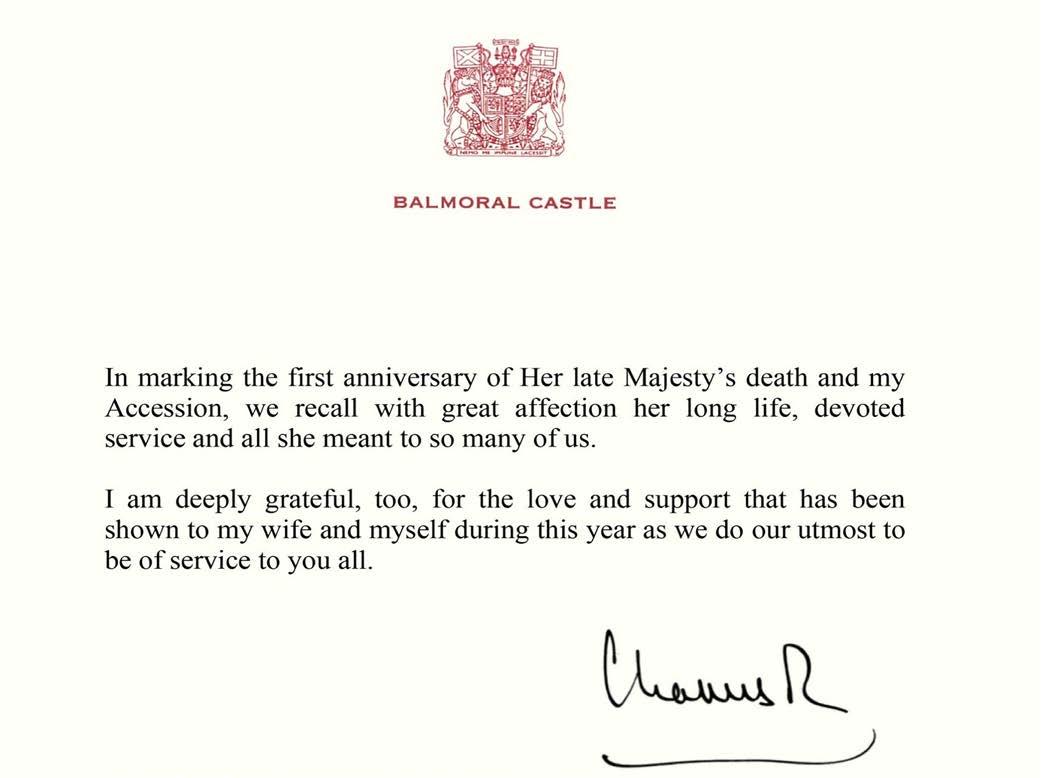
His Majesty said: “In marking the first anniversary of Her Late Majesty’s death and my accession, we recall with great affection her long life, devoted service and all she meant to so many of us.
“I am deeply grateful, too, for the love and support that has been shown to my wife and myself during this year as we do our utmost to be of service to you all.”
The message was signed “Charles R.”
To mark the anniversary, the King chose to release an image of the late monarch in the earlier years of her reign, when she was 42.
The portrait was taken by Sir Cecil Beaton during an official sitting at Buckingham Palace on October 16, 1968.
First shown at the National Portrait Gallery from November 1968 until March 1969, it depicts the young Queen in her Garter robes, wearing the Star of the Order of the Garter and the Grand Duchess Vladimir’s Tiara, made of 15 interlaced diamond circles. Turning to face the camera, a hint of a smile plays on her lips.
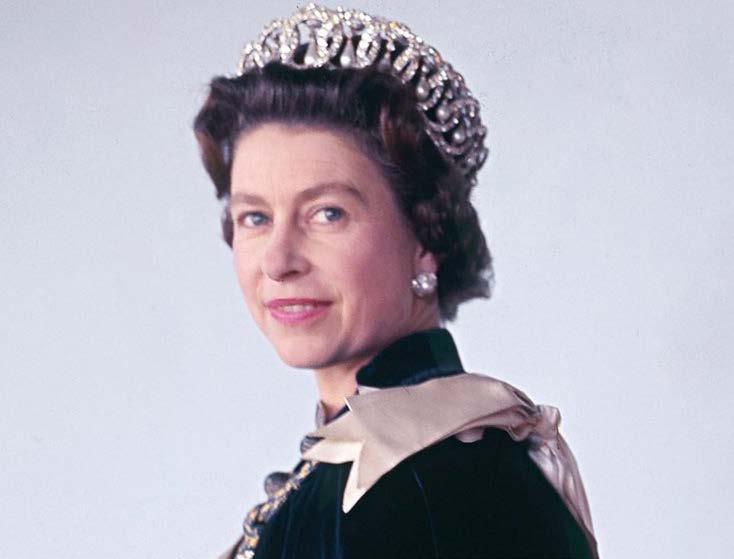
Sources said the image was chosen in part because it reflected her sense of fun and the “twinkle in her eye.”
Beaton first photographed Her Late Majesty in 1942 and did so many times afterwards. However, this image was taken on their last sitting together.
The King will spend Friday privately in quiet reflection at Balmoral, where his mother spent her final weeks before her death on September 8, 2022 aged 96.
His siblings, the Princess Royal, the Duke of Edinburgh and the Duke of York, will also spend the day privately with their own families.
In marking his accession at the place where his mother died, Charles follows in her own footsteps.
The late Queen almost always spent her accession day, Feb 6, at Sandringham, where her father, George VI, died in his sleep in 1952 after suffering from lung cancer.
The Duke of Sussex, who arrived in London on Thursday to attend the Wellchild Awards for sick children, was not expected to see his father or his brother before flying to Dusseldorf, Germany, for the Invictus Games, which begins on Saturday.
The Prince and Princess of Wales will attend a private service at St Davids Cathedral in Haverfordwest, a church that long held a particular resonance for Elizabeth II.
The couple, who were given their new titles the day after the Queen’s death, have vowed to spend more time in Wales, building trust and respect with local communities.
St Davids is the only cathedral in the UK where, since the reformation, the sovereign has had a special stall in the quire among members of the chapter. The late Queen sat there on four occasions during her reign.
Meanwhile, Rishi Sunak, the Prime Minister, has hailed the late monarch’s wisdom, grace and “sharp wit”.
He said gratitude for her service and “extraordinary life of duty and dedication” continued to grow and that the nation would reflect on “the example she set for us all.”
Mr Sunak said that “on the solemn anniversary” of Elizabeth II’s death “our thoughts are with His Majesty King Charles III
and the whole royal family”.
He added: “With the perspective of a year, the scale of Her Late Majesty’s service only seems greater.
“Her devotion to the nations of the United Kingdom and the Commonwealth only seems deeper.
“And our gratitude for such an extraordinary life of duty and dedication only continues to grow.”
PM’s tribute
Mr Sunak said he treasured his memories of the occasions he met the late Queen, particularly the private audience he had with her at Buckingham Palace before presenting his first Budget as chancellor.
“I was struck by her wisdom, by her incredible warmth and grace, but also her sharp wit,” he said.
“People across the UK – whether they had the good fortune to meet Her Late Majesty or not – will be reflecting today on what she meant to them and the example she set for us all. We will cherish those memories.”
Mr Sunak said the “sacred” bond between the
country and the monarch endured under the King.
“So, while we continue to mourn Her Late Majesty’s passing, we should be proud that this remarkable legacy of service – and this remarkable bond – continues to grow today under the reign of His Majesty The King,” he said.
Humza Yousaf, Scotland’s First Minister, spoke of the late monarch’s “deep fondness” for Scotland.
“It is here that Queen Elizabeth chose to spend her most private family moments each summer and it is within the halls and gardens of the Palace of Holyroodhouse that Her Majesty welcomed thousands of community leaders, volunteers, artists, activists, faith
leaders and essential key workers in recognition of their service to Scotland,” he said.
Scottish Tory leader Douglas Ross said the late Queen had brought the country together in her life and in death, recalling how thousands of Scots gathered to watch her cortege make its final, poignant, journey from Balmoral to Holyrood Palace, as she had wished.
“Flowers marked the route in Ballater, bagpipes played in Aboyne, farmers lined their tractors on the roadside and thousands stood on the Royal Mile to pay their last respects,” he said.
By Victoria Ward 8. September 2023“And our gratitude for such an extraordinary life of duty and dedication only continues to grow.”
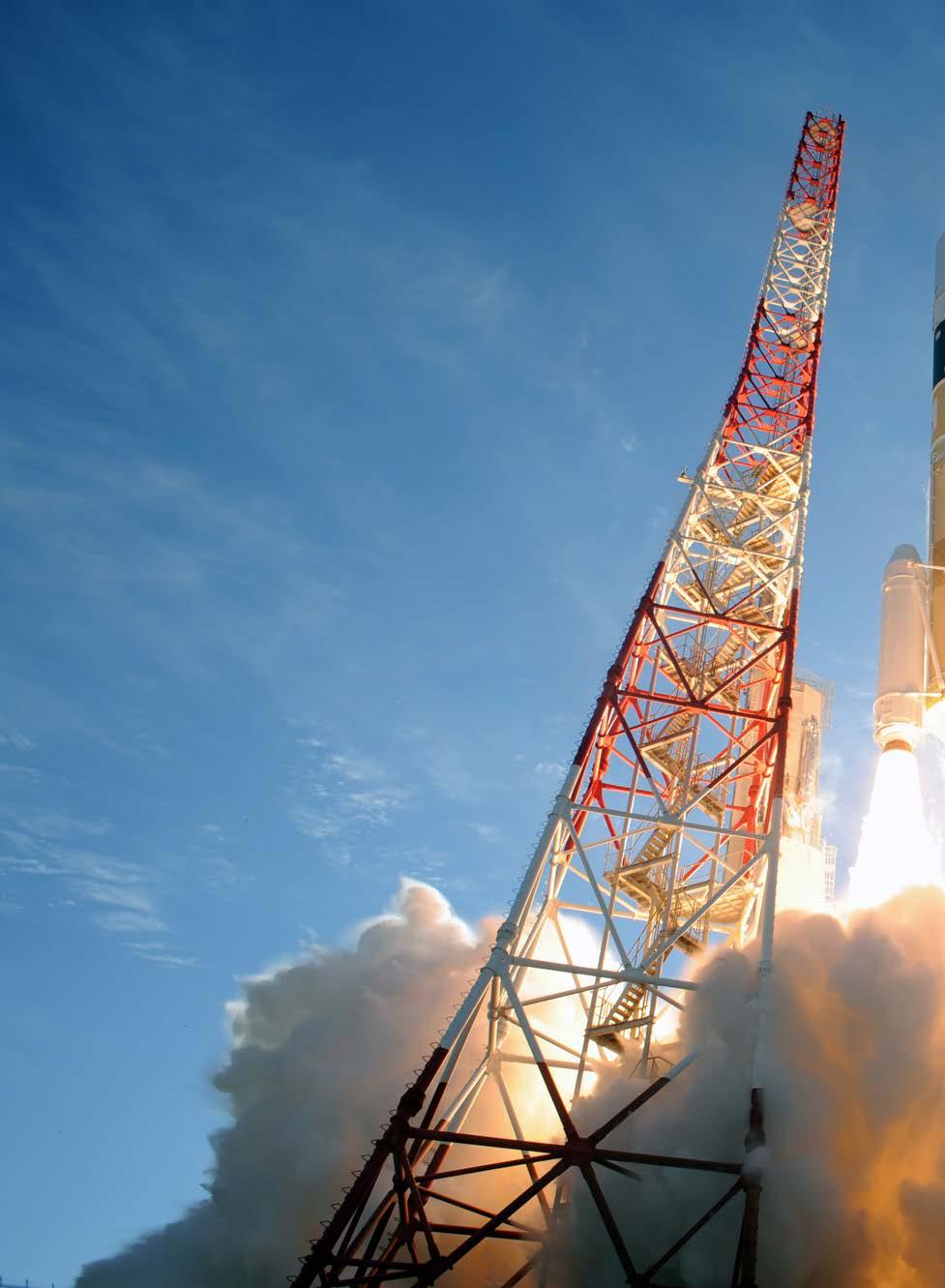
The lander, dubbed the "moon sniper", is expected to attempt a Moon landing in February if all goes well.
Japan has twice failed to reach the lunar surface in the past year, amid setbacks for its space programme.
It is bidding to become only the fifth country to land on the Moon, after the US, Russia, China and India.
Two weeks ago, India made history when it successfully landed a spacecraft near the south pole of the Moon.
The Japanese spacecraft is projected to land within 100m (328ft) of a location near the Shioli crater, on the near side of the Moon.
It is expected to enter the Moon's orbit within four months. It will then spend a month circling the Moon before attempting a landing in February.
The $100m (£59m) mission is meant to demonstrate Tokyo's ability to land a
Japan on Thursday successfully launched a rocket with a lunar lander at its fourth try this year, after previous attempts were foiled by bad weather.
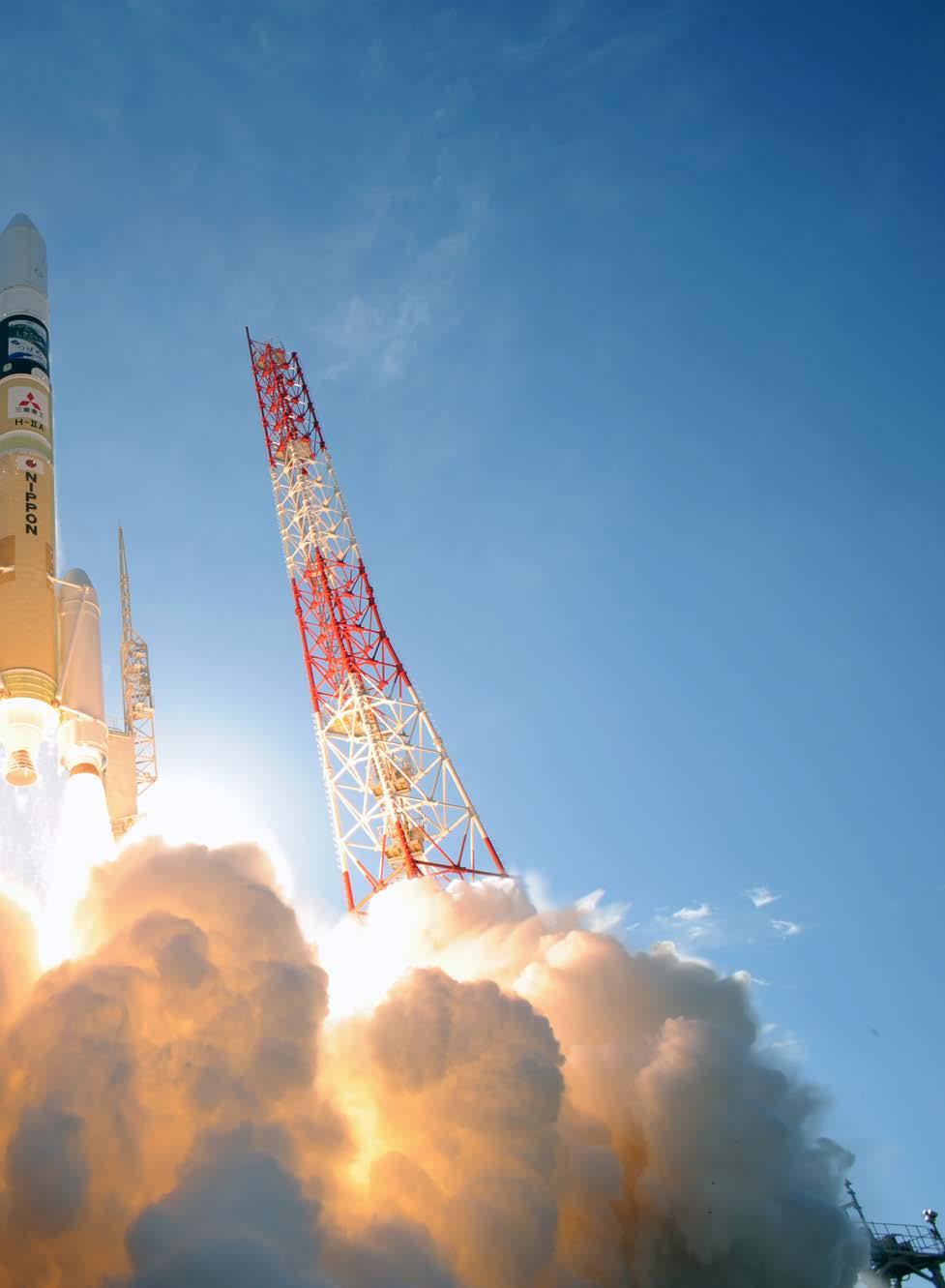
lightweight, low-cost spacecraft on the Moon.
The rocket was also carrying the X-Ray Imaging and Spectroscopy Mission (XRISM) satellite, a joint project between the Japanese, American and European space agencies.
The satellite, containing a telescope the size of a bus, has parted ways with the lunar lander to orbit around the Earth. It will now begin studying space phenomena such as black holes.
The successful launch follows a series of failures over the past year.
Last November, JAXA lost contact with its OMOTENASHI spacecraft and aborted the Moon landing mission.
More recently in April, a private Japanese startup, iSpace, failed to land its Hakuto-R lander after it too lost contact with the spacecraft.
Two test rocket launches have alsofailed this year, the latest in July when engine failure caused an explosion.
By Derek Cai 7. September 2023 IMAGE CREDIT: MITSUBISHI HEAVY INDUSTRIES, LTD./JAXALocal volunteers, soldiers, doctors and aid workers are racing to reach affected areas high in the Atlas Mountains.
The magnitude 6.8 earthquake that struck Morocco late on Friday has killed more than 2,100 people, a death toll that is expected to increase as rescuers reach hardhit remote mountain areas.
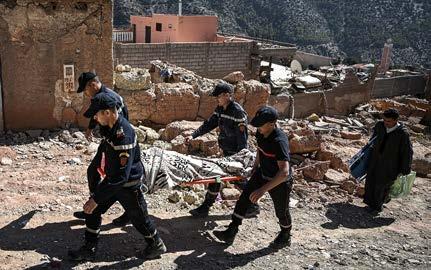
Here is what you need to know about the earthquake and the ongoing rescue operations:
When and where did the earthquake occur?
The earthquake hit after 11pm (22:00 GMT) on Friday evening, according to the United States Geological Survey (USGS).
It struck 72km (45 miles) southwest of Marrakesh, Morocco’s fourth largest city.
The epicentre was Ighil, a mountainous rural commune in Al-Haouz province near the Oukaimeden ski resort in the Atlas Mountains.
The quake was felt throughout the country, including in the provinces of Ouarzazate, Marrakesh, Azilal, Chichaoua and Taroudant. Tremors were felt as far away as Huelva and Jaen in southern Spain.
What have residents of the worst-hit areas told Al Jazeera?
Al Jazeera spoke to residents of the mountain village of Tafeghaghte, which was almost entirely destroyed.
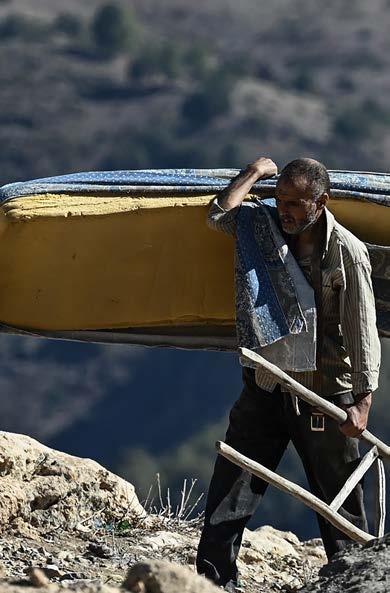
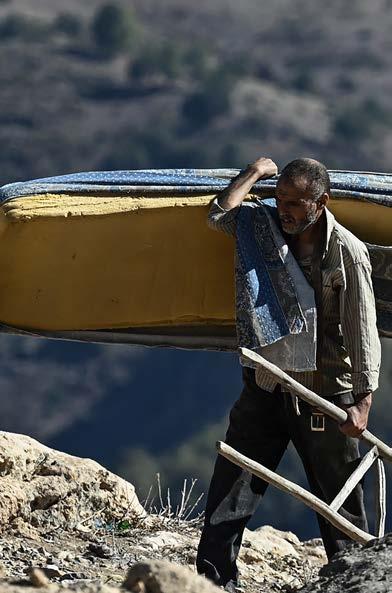
“Everyone is gone! My heart is broken. I am inconsolable,” cried Zahra Benbrik, 62, who said she had lost 18 relatives. Only the body of her brother remained trapped in the rubble.
“I want them to get him out so I can mourn in peace,” she said.
In Taalat N’Yaacoub, about 90km (56 miles) south of Marrakesh, efforts to find survivors trapped in the rubble continued. Mohamed Ait Ighral waited anxiously. Having already lost nine family members, he told Al Jazeera he hoped his remaining grandchild might be saved.
“It breaks my heart,” he said. “I lost my daughter. Her children are gone. [I’m] waiting for one. Let’s hope he is alive.”
By the time the boy was pulled from the rubble,
he was dead. He will be buried near his parents in the village cemetery.
The earthquake has killed 2,122 people and injured 2,421, many seriously, according to official figures, but numbers are expected to rise.
The United Nations estimated the disaster has affected 300,000 people.
Of the 2,122 deaths reported as of Sunday evening, 1,351 were in Al-Haouz, a region with a population of more than 570,00, according to Morocco’s 2014 census.
“More than 18,000 families have been affected” by the quake in Al-Haouz, Moroccan public television reported. The largely agrarian province had been suffering record drought that had dried up rivers and lakes when the earthquake hit.
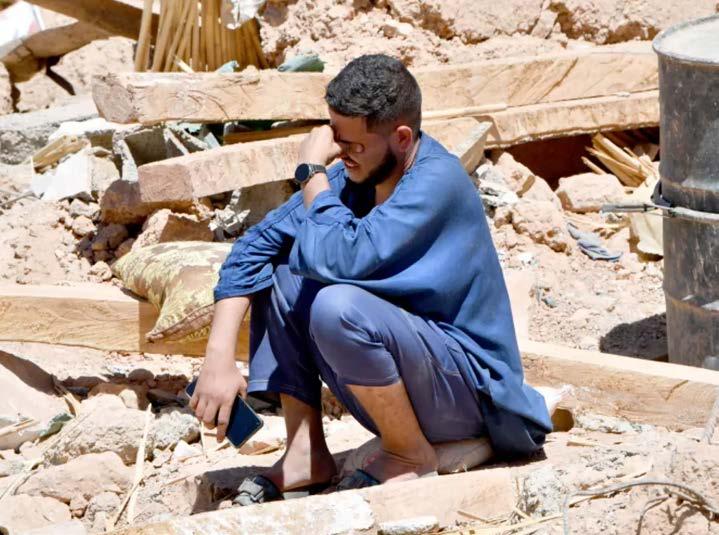
What we know three days after Morocco’s devastating earthquake?
Villages of clay and mud brick buildings built into mountainsides have been destroyed.
In Marrakesh’s Old City, ancient buildings crumbled in the quake, blocking its narrow streets with debris.
Residents of many affected areas who lost their homes have been sleeping in the open, fearing aftershocks and further destruction.
How does this earthquake compare to previous ones in Morocco?
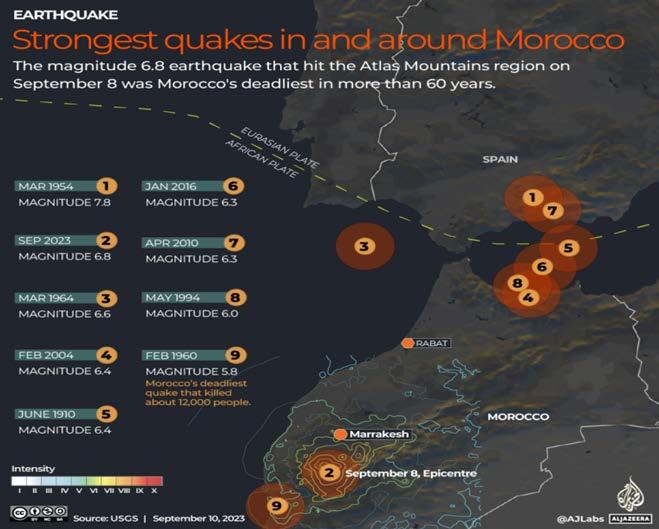
Earthquakes of this size in the region are
uncommon but not unexpected, according to the USGS.
Since 1900, there have been nine magnitude 5 and stronger earthquakes within 500km (311 miles) of this event, none of which was more than magnitude 6. A magnitude 6.8 quake is classified as “strong”.
Magnitudes are based on a logarithmic scale, meaning for each whole number increase on the scale, the strength increases 10-fold. So Friday’s earthquake was 10 times more powerful than the magnitude 5.8 quake of 1960.
What rescue operations are under way?
Morocco has deployed helicopters, ambulances, rescue crews and soldiers to the region to help assist with the emergency response.
The earthquake triggered rock slides that have blocked roads and made it hard for rescue teams to reach many affected mountainous areas.
Najia Amrani, the director of the National Centre for Blood Donation and Investigation, announced that 6,000 bags of blood were collected in a single day, thanks to large-scale campaigns initiated by regional blood donation centres and civil society associations.
Reporting from Marrakesh, Al Jazeera’s Nicolas Haque said people high in the Atlas Mountains have called on the people of Marrakesh to come and help them.
“All hands are on deck – not just the defence forces, the Moroccan forces, but also volunteers from Marrakesh going out there. … We heard of people walking 20 miles [32km] with water and
food to reach those villages desperate for help,” he said.
What help is on its way from other countries?
In an interview with Al Jazeera, Farhan Haq, spokesperson for the UN secretary-general, said UN teams have arrived in Morocco and are assessing its needs.
The Red Cross Society of China will give the Moroccan Red Crescent $200,000 for emergency humanitarian assistance, Chinese state media reported.
A Qatari rescue group has arrived in Morocco with vehicles and equipment for search and rescue missions and humanitarian aid.
The Ministry of Interior accepted search and rescue-focused international aid from Spain, the United Arab Emirates and the United Kingdom.
French Foreign Minister Catherine Colonna announced 5 million euros ($5.4m) in aid for non-governmental organisations participating in relief operations.
Algeria, which broke off ties with Morocco in 2021 after escalating tensions focused on the disputed Western Sahara region, said it would open its airspace for humanitarian and medical flights.
Morocco’s mud brick housing makes hunt for earthquake survivors harder
Rescuers digging through the rubble after Morocco’s deadly earthquake have warned that the traditional mud brick, stone and rough wood housing ubiquitous in the High Atlas Mountains reduced the chances of finding survivors.
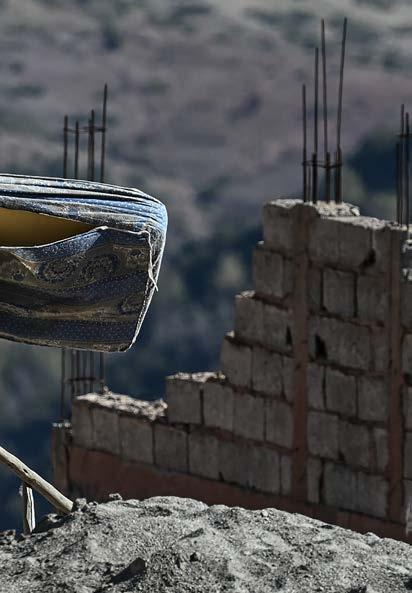
“It’s difficult to pull people out alive because most of the walls and ceilings turned to earthen rubble when they fell, burying whoever was inside without leaving air spaces,” a military rescue worker, asking not to be named because of army rules against speaking to media, said at an army centre south of the historic city of Marrakesh not far from the quake epicentre.
The traditional homes, sometimes hundreds of years old, sometimes built more recently, have long been a popular sight for tourists travelling to the mountain from Marrakesh.
They are often built by the families themselves to a traditional pattern, without any architect’s help and with extensions added when they can.
SOURCE: AL JAZEERA AND NEWS AGENCIES 11 Aug 2023India is a country of 1.4 billion people. But the only face you see everywhere in the capital these days, after two days of hosting world leaders for the Group of 20 (G20) summit, is that of Prime Minister Narendra Modi.
You see him not only at the airport and at the grand venue that was recently constructed to host the summit, but on practically every road, every few feet. Sometimes, two car lengths, at most. It’s a one-man show.
Having spent many of my growing and working years in New Delhi, the changes in the city for this mega event stand out. Schools and offices were shut for the summit, roads blocked for so-called VIP movement. Sometimes you had to wait 15 minutes to cross a street as police cars barricaded them.
Vendors, otherwise ubiquitous on Indian streets and selling everything from fruits and vegetables to clothes, shoes and household items, were missing the past few days. They need a daily income from their sales to survive – but clearly don’t figure in the Modi government’s agenda to push India as the voice of the long-suffering Global South.
On some streets, there aren’t even the stray dogs that are a staple of all neighbourhoods.
They, too, were rounded up.
But if Modi was the hero of the diplomatic extravaganza, monkeys were the designated menace. Life-sized cut-outs of langurs have been put up to scare the monkeys
that can run rampage in Central Delhi, which hosts most major embassies and hotels, and is close to the summit venue.
The relatively heavy rain cooled temperatures in the capital but the partly flooded roads also showed that you may spruce up the city but until you really fix the infrastructure, things are not really going to change.
It’s at the venue, however, that the deep stamp of Modi’s Bharatiya Janata Party (BJP) – which will stand for national elections next year – was most visible.
The old exhibition halls at Pragati Maidan –which means “field of progress” in Hindi and previously hosted anything and everything from international trade fairs to book fairs and auto shows – have been replaced with a grand new convention centre called the Bharat Mandapam. It’s a Sanskrit name, where Bharat refers to India, while a mandapam is the front porch of a Hindu temple.
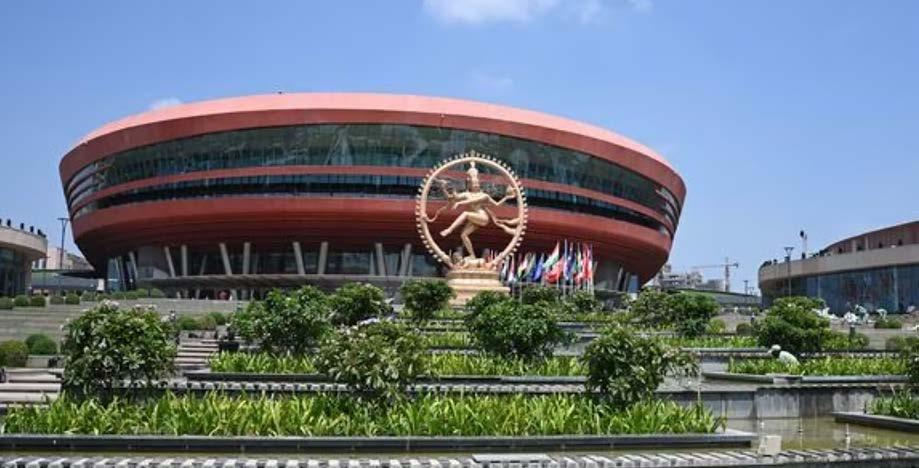
Just with that name, the exhibition ground moves away from its secular, humdrum past.
The grounds are supposed to be the biggest exhibition space in the country. And as the official information tells you, there are more seats than the Sydney Opera House. But it’s next to one of the busiest roads in the city and near the Supreme Court of India, so it’s not really easy to get that many people to visit in one go anyway.
Unless the government pulls out all the stops to do just that.
The cavernous, warehouse-like halls have barren grey walls, currently hidden behind large G20 billboards and video clips of the different cultural trips the delegates and their spouses have undertaken in the past year.
The billboards are covered with images of the lotus flower. That is India’s national flower but it is also the BJP’s election symbol. And it is everywhere. Even in the official logo of the G20.
The video clips playing on the walls tell a story too. They show glimpses of Hampi –a UNESCO World Heritage site which was also the capital of a 14th-century Hindu
and what it hid
Modi’s face and India’s diplomatic nous were on display. But from monuments to food, India’s diversity was denied a stage.
empire – of Khajuraho temples and of the Nathdwara temple dedicated to the Hindu god Krishna’s avatar.
What you don’t see in the videos is also telling. You don’t see the Jama Masjid, one of the most iconic sites in the capital. I didn’t spot any churches. The Taj Mahal, India’s most famous landmark and heritage site, built by the Mughal dynasty that is reviled by the rulers of today, gets only a photo on one of the walls. The Golden Temple, the holiest shrine of Sikhs in India, gets a tiny video clip.
The WiFi, good at the start, dropped during the first day as more users logged on and set up hotspots. The support staff was super prompt in trying to fix the wavering network, although not always successfully.
Then there was the language. In the media briefing ahead of the summit, and in Modi’s speeches, India was repeatedly described as the world’s largest democracy, the voice of the Global South. The theme of the summit was one earth, one family, one future.
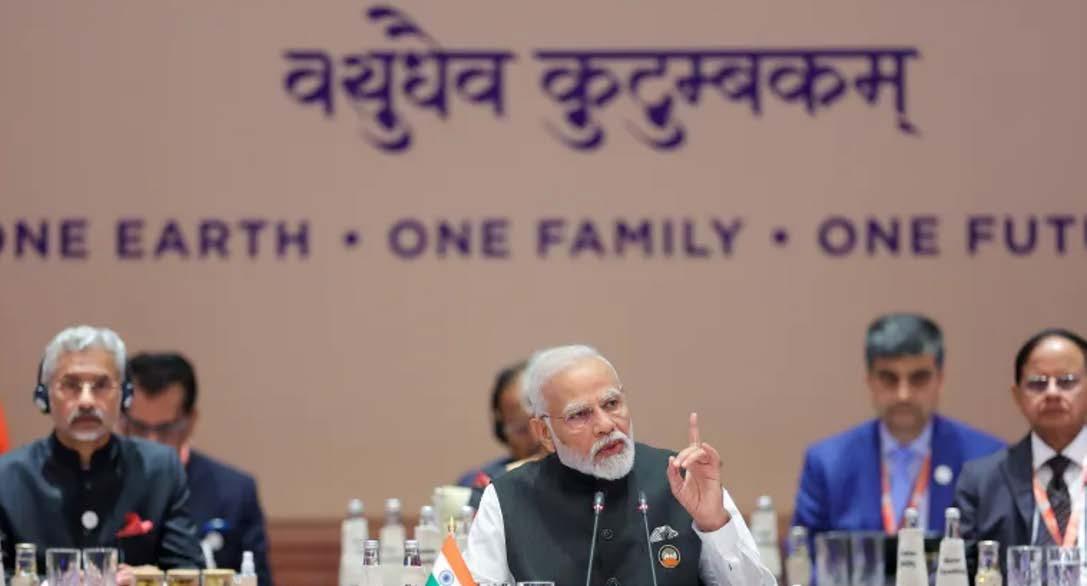
But that jars with the reality we know on the ground where think tanks, academics and media groups are all being muzzled. Not to mention the numerous attacks on minority communities, including an attack on a mosque in Gurgaon, on the outskirts of the Indian capital, where an imam was
killed last month.
It also belies the tough behind-the-scenes diplomacy where there were efforts to divide the room into the Global South and the rest of the world, people familiar with the matter told me. Not all developing nations fell in line with that line, though, even as the G7 members were berated on various accounts. Speaking of divisions, China and Russia, unsurprisingly, opposed the United States’s move to host the G20 in 2026.
Brazil, as next year’s host of the G20, will have its work cut out to iron out those creases.
I had a lot of time on hand to look at and think about the visuals on display. That’s because the Indian government, unlike past summits including the recent G7 in Japan, has not allowed anyone but the state media into the conference rooms where leaders speak.
The US White House press corps was furious about not being allowed into either the bilateral meetings – as is the norm for them – or summit talks. (Some members were also upset when they were not allowed to take their water bottles inside.)
All we got on the first morning of the summit was a few minutes of Modi’s opening speech. It was in such chaste Hindi (and the English translation didn’t come until an hour later) that no one really understood
that the African Union had been admitted into the G20. A big moment, nevertheless.
As one member of my tribe said in absolute frustration: “Can anyone tell me why I’m here?”
Maybe for the food. The food was plentiful – vegetarian offerings from across the country although I’d have wanted some of the millets the country has been pushing instead of the deep-fried, and delicious, cocktail samosas and kachoris.
A first for me was the cans of water, which felt a bit odd seeing the whole idea at the summit of creating an environmentally sustainable life. And while the yam kebab was yummy, a mutton galouti kebab is a mutton galouti kebab – and it is unparalleled.
I cannot leave out the shopping. The crafts bazaar has stalls from different states selling wares as wide-ranging as coffee from Nagaland and beaded earrings from Arunachal Pradesh to temple saris from Tamil Nadu and stunning, and huge, Buddha statues.
There was something for every price point and with the shops shut for parts of the city because of the summit, I made sure I got my fix there.
By Megha Bahree 11. September 2023,Everysummer, thousands of tourists descend on the Colombian town of Bahia Solano to experience the thrill of watching humpback whales as they migrate from the frigid southern Pacific to Colombia’s warmer waters.
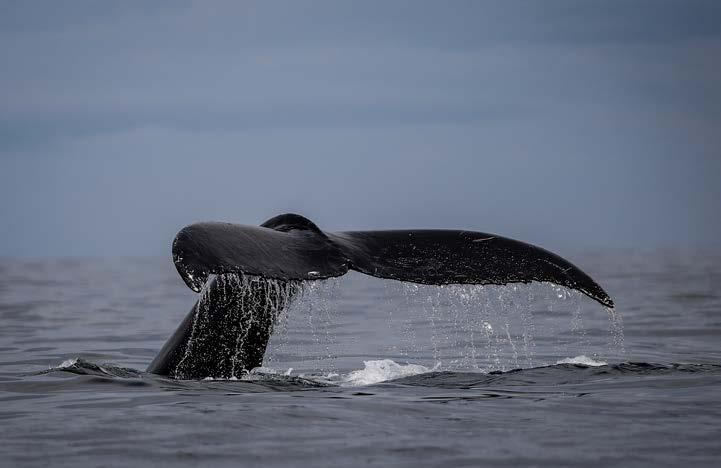
The town lies on a remote stretch of coast covered by dense rainforests that are home to monkeys, toucans and colorful poison dart frogs. But the main attraction are the humpback whales that migrate to the area from July to October of each year.
Bahia Solano, which is built along a U-shaped bay, has become one of the most famous spots in Colombia to sight humpback whales. Every summer, the town of 10,000 residents is visited by thousands of people who board small fishing boats that get close to the gentle giants.
Whale-watching helps boost the income of boat captains, hotels, tourism agencies and restaurants. The animals are also important for the local ecosystem, because they fertilise algae that smaller fish depend on.
The marine mammals weigh between 2040,000kg (20 to 40 tonnes), and have a length
of around 16 metres (52 feet), says marine biologist Esteban Duque Mesa.
“For me seeing whales is like being in a sacred place,” said Duque Mesa, who has studied the animals for years. “When we are with them we perceive their immensity and also our smallness, it is a moment of
absolute spiritual connection.”
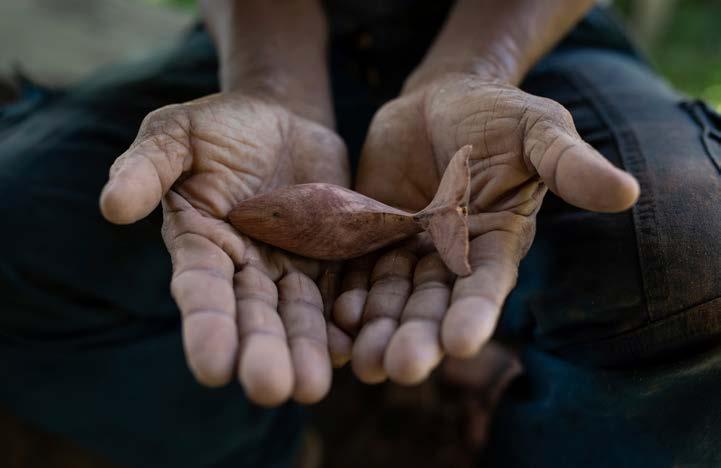
The whales are also a source of inspiration for Medardo Machuca, an artisan from the Embera tribe, who has been making wood carvings of whales for the past two decades, and sells them to tourists.
“The whales have a mystery about them, and they are beautiful,” said Machuca. He acknowledged that competition from other artisans has increased recently, but added that during the whale watching season he manages to sell five or six carvings a day.
Boat captain Luis Hernando Hurtado said that whale watching has provided him with an opportunity to meet people from around the world and experience memorable moments.
“Recently we had a group of whales, about eight of them, that swam beneath our boat for more than an hour,” he said.
“They made some beautiful approaches. We tried to keep our distance from them, which is supposed to be 100 metres [328 feet], but they kept approaching us and were practically next to the boat.”
‘A sacred place’: Humpback whales draw visitors to Colombia’s coast
Thousands of tourists descend on a small port on Colombia’s Pacific coast annually to sight massive marine mammals.
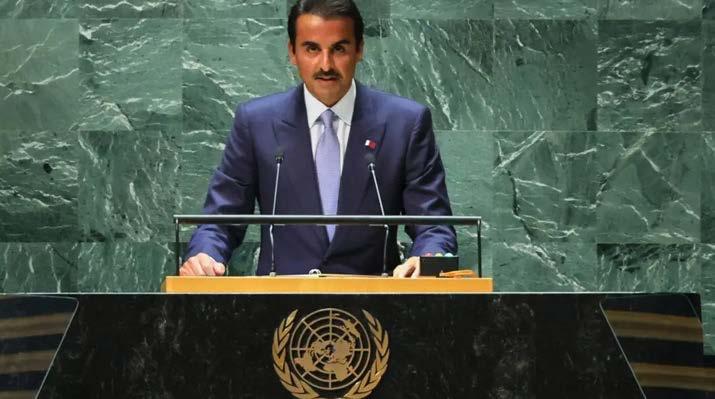
Similarly, the Qatari leader called for the crisis in Yemen to be resolved based on “the resolutions of the National Dialogue, the Gulf Initiative, and the relevant Security Council resolutions.”
He also noted the need to “combat racism and incitement campaigns against entire peoples, religions and civilisations.” He referred specifically to the burning of copies of the Holy Qur’an in a number of Western countries, and the statements of European politicians against Muslims. The emir suggested that it is “implausible” for Muslims to get distracted by an “idiot or a biased person” who tries to provoke the Muslim world with such acts.
The Emir of Qatar has said that it is “unacceptable for the Palestinian people to remain prisoners of the arbitrariness of the Israeli settler occupation, and the rejection of any just political solution in accordance with the principles of international legitimacy by successive Israeli governments.” Sheikh Tamim Bin Hamad Al-Thani made his comment as he addressed regional issues during his speech at the 78th UN General Assembly in New York yesterday.
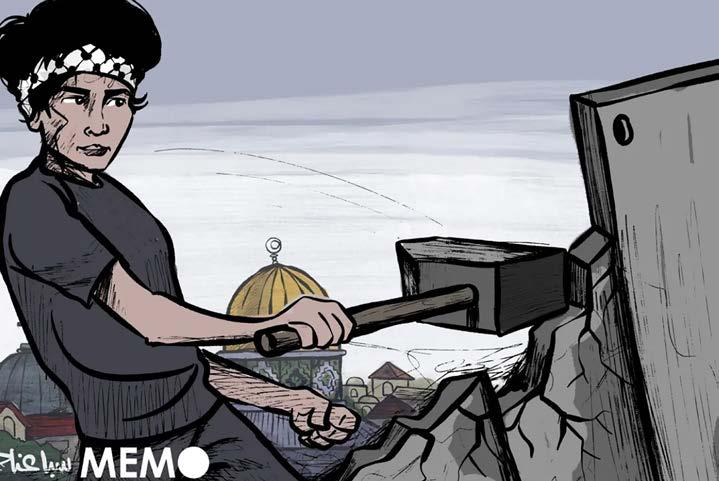
“You have to bear in mind that the failure of the international organisation to take actions against the occupation provided and continues to provide the opportunity for Israel to undermine the foundations of the two-state solution by means of settlement expansion until the occupation has brazenly taken the form of an apartheid regime in broad daylight in the twenty-first century,” said Sheikh Tamim. The Qatari head of state added that his country provides political, humanitarian and development support to the Palestinian people, and contributes to the reconstruction of the Gaza Strip suffering under siege. Moreover, Qatar continues to donate to UNRWA, and maintains a principled position on the justice of this issue.
Turning to the situation in Lebanon, the emir stressed the need for a sustainable solution to the political vacuum. “A government must be formed that is capable of addressing the aspirations of the Lebanese people and getting them out of their economic and developmental crises.”
Sheikh Tamim then looked at the “gross injustice” that has befallen the people of Syria. “This cannot be condoned. The crisis
is still awaiting a comprehensive settlement through a political process leading to a political transition, in accordance with the Geneva Declaration-1 and the Security Council Resolution 2254, in a way that meets the Syrian people’s aspirations while maintaining Syria’s integrity, sovereignty and independence.”
Furthermore, added the emir, Qatar gives “unwavering support” for the efforts of the Special Representative of the UN SecretaryGeneral, the Head of the UN Support Mission in Libya, and his efforts to achieve “tangible results” to resolve the Libyan crisis. Libya has been in turmoil ever since the revolution and NATO intervention brought about the fall and death of former leader Muammar Gaddafi in 2011.
The path to resolve conflicts through peaceful means is long and strenuous, but it is less costly than wars
Welcoming the “constructive dialogue” and re-establishment of ties between the Kingdom of Saudi Arabia and the Islamic Republic of Iran, as well as between Egypt and Turkiye, Sheikh Tamim emphasised the importance of resolving conflicts peacefully. “The path to resolve conflicts through peaceful means is long and strenuous, but it is less costly than wars, and our commitment to continue our efforts in facilitating and making peace is a firm commitment deeply rooted in the core of [Qatar’s] foreign policy.”
Sabaaneh/Middle East Monitor 20. September 2023
Fighting continues in Sudan a day after ceasefire extended
Intense clashes have been continuing in Sudan’s capital a day after military factions agreed to extend a ceasefire aimed at allowing aid to reach civilians.
The army and the paramilitary Rapid Support Forces (RSF) agreed to extend a week-long ceasefire deal by five days just before it was due to expire late on Monday.
Hours before the extension was signed, residents reported intensive fighting in all three of the adjoining cities that make up Sudan’s greater capital around the confluence of the Nile – Khartoum, Omdurman and Khartoum North. Clashes resumed late on Tuesday on the outskirts of the capital.
Army leader General Abdel Fattah al-Burhan was seen greeting troops in a rare video appearance. He said that the army had agreed to the ceasefire extension to ease citizens’ access to services.
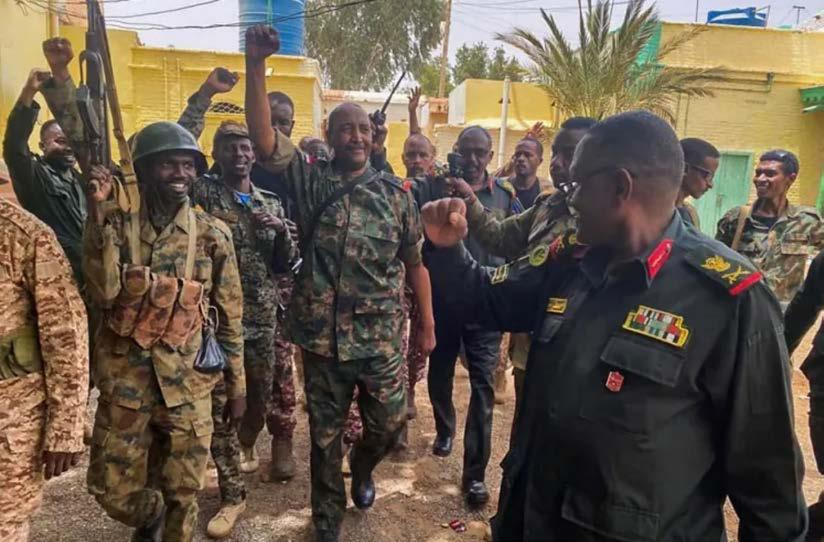
“The army hasn’t used its full deadly power, but it will be forced to do so if the enemy does not obey or listen to the voice of reason,” he said in a statement.
Al Jazeera’s Hiba Morgan, reporting from Omdurman, said residents did not have much hope in the initial ceasefire that took effect on May 22.
“They say that there has never been a day where there’s been no air strikes or heavy artillery fire being reported,” Morgan said.
“Aid organisations say that while some aid was brought into the capital Khartoum, its distribution due to the ongoing violence has been challenging and many people have not been reached.” A curfew was declared on Tuesday in Sudan’s second biggest city, Port Sudan, from 11pm to 5am local time (21:00 GMT to 03:00 GMT), according to a statement by the governor of the Red Sea State, where the city that houses Sudan’s main port is located.
The state’s security committee
said it had caught several “rebellious” sleeper cells that it said had sneaked in from outside and warned that they were planning activities.
“We thank the citizens of Red Sea state for their total cooperation and for immediately reporting the presence of these rebellious elements and their agents within their neighbourhoods,” it said, without specifying their identity.
The war has caused nearly 1.4 million people to flee their homes, including more than 350,000 that have crossed into neighbouring countries.
Some still hopeful Hind Saber, a 53-year-old resident, told Reuters he still believed that the truce could give residents in the Sudanese capital some respite. “We hope this truce succeeds even if only to stop the war a little and that we can return to our normal lives,” he said. The truce was brokered and is being remotely monitored by Saudi Arabia and the United States, which said it has been violated by both
sides but has still allowed for the delivery of aid to an estimated two million people.
The mediators admitted the truce had been “imperfectly observed” but said the extension “will permit further humanitarian efforts”.
Since battles began on April 15, both generals have committed to a series of truces, though the US and Saudi Arabia said this seven-page deal is different because the warring parties signed it, and there is a monitoring mechanism.
Those still in Khartoum have been hiding from street combat and roaming looters in the capital city of more than five million, nearly 700,000 of whom have fled.
More than six weeks into the conflict, the UN estimated more than half the population –25 million people – to be in need of aid and protection.
Clashes have resumed on the outskirts of Sudan’s greater capital, despite the truce having been extended on Monday for an additional five days.
“The army hasn’t used its full deadly power, but it will be forced to do so if the enemy does not obey or listen to the voice of reason,”SOURCE: AL JAZEERA AND NEWS AGENCIES
Egypt has voiced anger after Ethiopia announced it had filled the reservoir at a highly controversial hydroelectric dam on the Blue Nile river.
Ethiopia has been in dispute with Egypt and Sudan over the megaproject since its launch in 2011. Egypt relies on the Nile for nearly all its water needs.
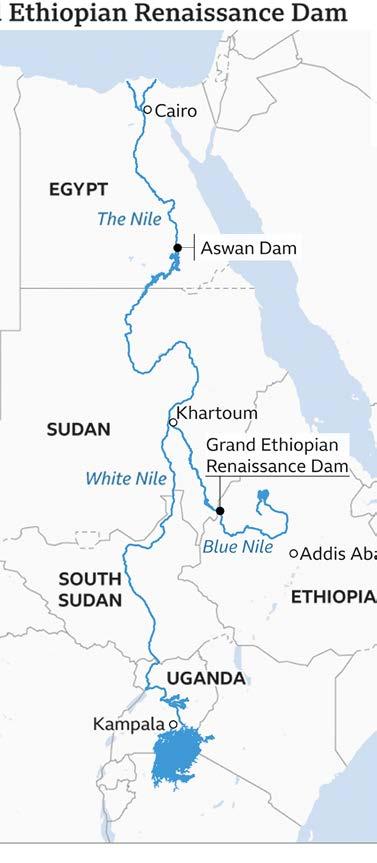
Egypt's foreign ministry said Ethiopia was disregarding the interests of the downstream countries.
Ethiopia says the $4.2bn (£3.4bn) dam will not cut their share of Nile water.
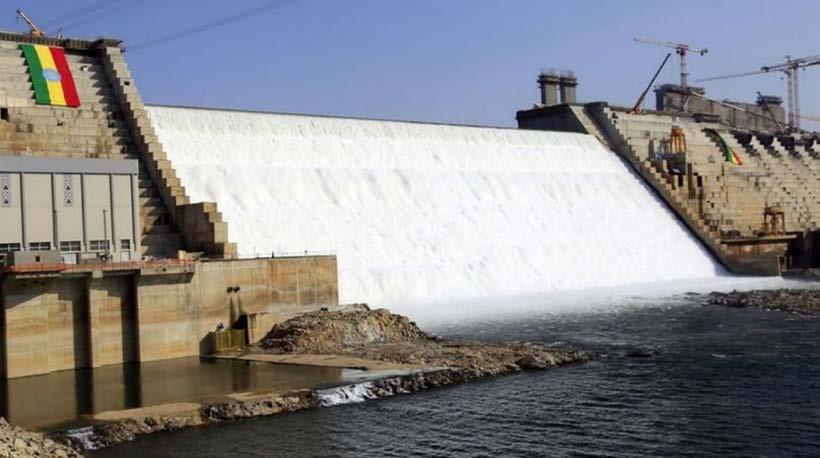
"It is with great pleasure that I announce the successful completion of the fourth and final filling of the Renaissance Dam," Ethiopian Prime Minister Abiy Ahmed said on X, formerly Twitter.
He admitted the project had faced "internal and external obstacles" but "we endured all that". The dam began generating electricity in February 2022.
Ethiopia believes the Grand Ethiopian Renaissance Dam (Gerd) will double the country's electricity output, providing a vital development boost, as currently half the 127-million population lacks electricity.
The plan is to generate more than 6,000 MW at the dam, which is about 30km (19 miles) from Ethiopia's border with Sudan.
Egypt and Sudan argue that common rules for the operation of Gerd must be agreed, fearing
that energy-hungry Ethiopia may exacerbate their existing water shortages.
Negotiations over the project resumed last month, having been suspended in 2021.
Sudan - currently mired in fighting between rival armies - did not immediately react to Prime Minister Abiy Ahmed's announcement on Sunday.
In a statement on Facebook the Egyptian foreign ministry said Ethiopia's "unilateral" filling of the reservoir violated a declaration of principles signed by the three countries in 2015, and branded Ethiopia's action "illegal".
"The declaration of principles stipulates the necessity of the three countries reaching an agreement on the rules for filling and operating the Gerd before commencing the filling process," the statement said.
"Ethiopia's unilateral measures are considered a disregard for the interests and rights of the downstream countries and their water security, as guaranteed by principles of international law."
By Laurence Peter 11 September 2023Thousands of Syrian refugees have crossed into Lebanon in recent months through porous border points.
Lebanon’s caretaker Prime Minister Najib Mikati has disparaged the influx of Syrian refugees coming into the country, saying it could upset the nation’s demography.
At the start of a cabinet meeting, Mikati said on Thursday the fleeing Syrians “could create harsh imbalances”.
What was most worrying is that most of the refugees are young men and women, he said.
“That threatens our entity’s independence and could create harsh imbalances that could affect Lebanon’s demographic balance,” Mikati said.
Thousands of Syrian refugees have crossed into Lebanon in recent months through illegal crossing points, as the Mediterranean nation faces its own crippling economic crisis.
minister of the displaced, told a local radio station that 20,000 refugees have crossed since the beginning of the year.
According to the United Nations, Lebanon hosts the largest number of refugees per capita in the world.
Just this week, the Lebanese army prevented 1,200 Syrians from crossing into Lebanon. Another 1,100 Syrians were prevented from entering last week.
“The Syrian-Lebanese border is porous and the number of soldiers mobilised is not enough,” an unnamed security official told AFP news agency. “Most Syrians come to Lebanon in the hope of finding work, given the unprecedented deterioration in living conditions in their country.”
Mikati said another cabinet session will be held
next week with the commander of the army and heads of security agencies to discuss the issues of refugees.
Syrians continue to flee the conflict that has engulfed the country since 2011, which has since killed half a million people and displaced half the country’s pre-war population of 23 million.
In the early years of the conflict, Lebanon received hundreds of thousands of refugees, but after its economic crisis broke out in October 2019, that changed.
Renewed protests are taking place in Syria as anger grows over deteriorating living conditions, particularly in the southern province of Sweida. Protesters have also been demanding the removal of President Bashar al-Assad.
Violence at Lebanon’s largest Palestinian refugee camp intensifies as ceasefire between Fatah and armed groups crumbles.
At least six people have been killed and more than a dozen wounded in clashes in Lebanon’s largest Palestinian camp, the Palestinian Red Crescent’s Lebanon branch said on Wednesday, taking the death toll to 15 since fighting broke out on September 7.
Clashes intensified on Wednesday as a ceasefire fell apart in Ein el-Hilweh refugee camp on the outskirts of the southern port city of Sidon. Scores of civilians have been forced to flee to safer areas as multiple ceasefire agreements have failed to hold.
The refugee camp has been rocked by violence since last week with members of the Fatah movement, which controls the camp, fighting armed fighters, excluding Hamas.
Fatah and other allied factions had intended to crack down on suspects accused of killing a senior Fatah military official in the camp in late July. The first round of fighting then left more
than a dozen people dead.
A top official with the Palestinian group Hamas, Moussa Mohammed Abu Marzouk, arrived in Beirut on Tuesday to push for an end to clashes with no success.
He met Palestinian officials, including Fatah’s Azzam al-Ahmad, late on Tuesday at the Palestinian embassy in Beirut, a joint statement said.
They had expressed their “full commitment to consolidating the ceasefire” and agreed to “work to facilitate the return of those forced from their homes”.
But the ceasefire collapsed on Wednesday, causing a mass exodus of residents fleeing bullets and shells.
Many have taken shelter in nearby mosques, schools, and the Sidon municipality building.
UNRWA has relocated some 1,200 people to schools in the area from a mosque near the camp’s entrance.
Ein el-Hilweh – one of 12 refugee camps scattered around Lebanon – is home to some 55,000 registered refugees, according to the United Nations.
By long-standing convention, the Lebanese army stays out of the Palestinian camps and leaves the factions to handle security.
The renewed violence has prompted fresh concerns that the clashes could spill over into the adjacent city of Sidon.
Residents fear a similar scenario to the northern Palestinian camp of Nahr al-Bared, where Lebanon’s army waged a deadly 15-week onslaught to dislodge armed groups in 2007.

Dutchart detective Arthur Brand said he had been handed the 139-year-old painting in a pillow and an Ikea bag by a man who came to his front door.
"I did this in complete co-ordination with Dutch police and we knew this guy wasn't involved in the theft," he said.
In 2021, a career criminal was jailed for eight years over the incident.
But by then the painting, worth several million euros, had already changed hands.
The Parsonage Garden at Nuenen in Spring was initially stolen from the Dutch town of Laren, to the south-east of Amsterdam. The thief smashed through two glass doors at the Singer museum with a sledgehammer, at the start of the coronavirus lockdown.
It had been on loan from a museum in the north-eastern city of Groningen which has hailed the work's recovery as "wonderful news".
The French-born thief, 59-year-old Nils M, who lived a short distance away from Laren, was convicted of stealing the work as well as a Frans Hals painting a few months later from
a museum in Leerdam, near Utrecht. His DNA was found at both crime scenes.
According to communications intercepted by police, the Van Gogh painting from 1884, also known as Spring Garden, had been acquired by a crime group intending to use it in exchange for shorter jail terms.
Mr Brand, who has collaborated with Dutch police on the hunt for the work, told the BBC that they knew it would pass from one group to another in the criminal underworld, as nobody would want to touch it.
He was sent "proof of life" pictures of the Van Gogh as early as June 2020.
Eventually, he was approached by a man in Amsterdam who offered to return it in exchange for complete confidentiality, partly because it had become a headache to keep holding on to the painting.
"I was at a birthday party and he was waiting under a tree and he explained to me why he wanted to do this," Mr Brand told the BBC.
The painting was then handed over to him at his home on Monday afternoon, while the
director of the Groninger museum was waiting on the street corner in a bar to authenticate the work.
It was protected by a pillow which was covered with blood, he added, as the man had cut a finger while retrieving it.
A spokesman for the Dutch police arts crime unit has confirmed that the recovered painting is authentic and Andreas Blühm, the head of the Groninger museum, has spoken of his delight at its safe return.
"There are scratches... but it's painted on paper and glued on panel so it's stable. We can restore it and it should be fine," he told the BBC's Newshour programme.
The Spring Garden is currently in the hands of the Van Gogh museum whose experts will help restore it, and it could take weeks or months before it goes back on display.
The director said he would not lend it out any more as he was too traumatised.
By Paul Kirby 12. September 2023,A Van Gogh painting stolen from a Dutch museum in March 2020 is back in safe hands after a three-and-a-half-year quest to recover it.
Reimagining peace in Palestine-Israel beyond the zombie process that refuses to die.
The Israeli-Palestinian peace agreement, reached in Oslo and signed in Washington, DC in 1993, aimed to achieve peace within five years. However, after failing and resurging several times, the process ultimately led to a more violent occupation and culminated in a more entrenched system of apartheid. This prompts three critical questions: Why did it fail? Why has it been resurrected, repeatedly? And, what is the alternative 30 years later?
Five primary factors were behind the failure of the Oslo process.
First and foremost, Oslo failed because it yielded a “hegemonic peace” that privileged the Israeli occupiers, discriminated against the occupied Palestinians, and paved the way for more instability and violence. It allowed Israeli leaders to dictate the peace timetables, deadlines and overall implementation of its interim agreements to the detriment of Palestinian security and independence. From the outset, the Palestine Liberation Organization (PLO) was forced to recognise Israel as a fullyfledged state occupying 78 percent of historic Palestine. Israel, however, refused to recognise the Palestinian state on the remaining 22 percent of the land and merely acknowledged the PLO as the sole representative of the Palestinian people. While Israel said it accepted Washington’s “vision” of a two-state solution, on the eve of the 2003 United States war on Iraq, it did
so with numerous debilitating reservations and only to help keep up the appearance of pax Americana.
Second, the process failed because the US was not a fair or credible sponsor for it. Washington has been for decades Israel’s foremost patron, and remains so today. At times it did play the role of “good cop” against Israel’s “bad cop” in negotiations, but its goal has always been to ensure a compromise was reached between the US and Israel, not necessarily between Israelis and Palestinians. The latter had to accept any outcome graciously or get reprimanded.
Third, it failed because Israel’s illegal settlements continued to expand unabated after 1993. On occasion, the US registered its displeasure, but Israel merely rolled its eyes and continued building. By 2003, the number of settlers had doubled, and by 2023 it had more than quadrupled. Today, more than 700,000 settlers, many armed, live in 279 illegal settlements across the occupied West Bank and East Jerusalem. This has “necessitated” greater Israeli military presence in the occupied territories, and led to greater incitement, friction and violence.
Fourth, under the guise of Oslo, Israel connected its many illegal settlements through bypass roads, development projects and security networks, rendering its occupation irreversible and a two-state
solution practically unworkable. In the process, it created two legal systems in the occupied territories: a superior one for the Jewish settlers and an inferior one for the indigenous Palestinians. Within 10 years of the signing of the first Oslo Accord, Israel had already divided the Palestinian territories into 202 separate cantons, diminishing the Palestinians’ access to employment, health and education.
Fifth, Israel refused to engage in any meaningful discussion about the five important “permanent status” issues: settlements that have kept on expanding; refugees who remained stranded away from their homes; borders that were de facto erased; security that Israel refused to relinquish; and the future of Jerusalem, which Israel annexed.
Long story short, after seven long years of inconsequential interim agreements, unhindered settlement expansion and violent repression followed by the failure of a hastily convened summit at Camp David, the Oslo process came to a dead end and led to a second Palestinian Intifada in 2000.
But there seems to be no letting go of the Oslo addiction. Despite all its follies, fantasies and failures, Israeli, Palestinian, American, Arab and all the other leaders with a stake in the game are holding on to Oslo’s phantom. Why?
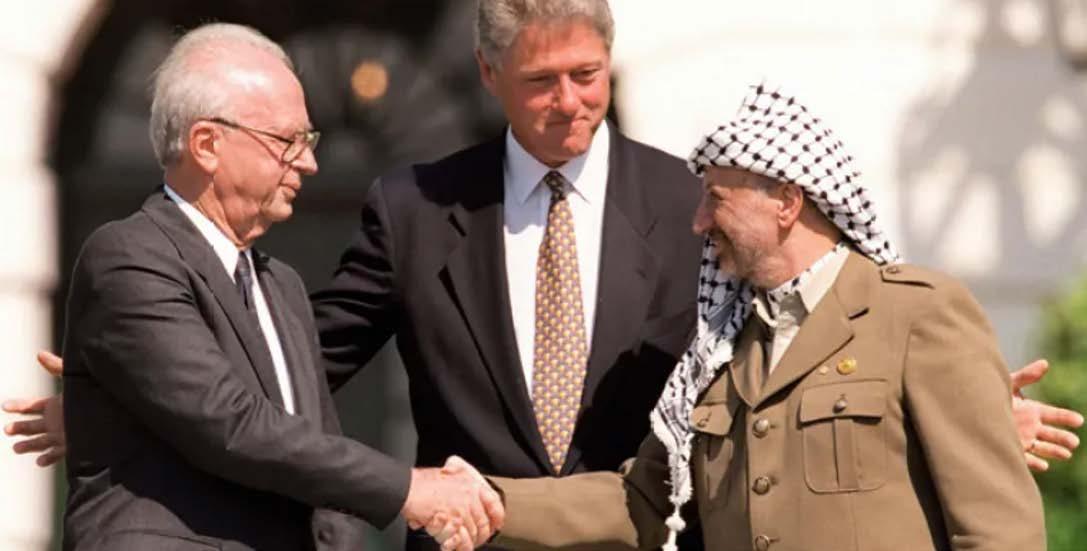
Well, the Israelis have every reason to not let go of a process that has served only to strengthen the Jewish state and legitimise its illegal colonial activities while weakening and dividing the Palestinians. For example, from 1995 to 1999, Israel’s gross domestic product (GDP) rose by almost 50 percent, while its population rose by only 10 percent. Today, even Prime Minister Benjamin Netanyahu, who’s leading the most extreme and racist government in Israel’s history, reckons Israel needs the Oslo-produced Palestinian Authority, which has been tasked with keeping the Palestinians silent and the Israelis safe.
Palestinian President Mahmoud Abbas and his cohorts in the Palestinian Authority are also reluctant to give Oslo up because the disastrous peace process is their very raison d’être. Unelected, unpopular, and illegitimate, they’ve used the Oslo process to gain international support and hold onto power.
As for the US, continuing to sponsor the peace process is a way of ensuring lasting influence over the region and maintaining the charade of pax Americana.
For Arab autocrats, the charade of the peace process absolves them from doing anything for Palestine, which remains the most important regional cause on the Arab
street. It also provides them with a pretext to normalise relations with Israel in return for greater American support.
The same may be said of the Europeans and other world powers, who’ve been using the peace process as a pretext to do nothing that upsets the Americans. Although they have invested billions in the peace process only to see Israel destroy it, the Europeans continue to shy away from confronting the “Jewish State”.
But 30 years on, it is doubtful the charade of Oslo can continue much longer; certainly not after apocalyptical fanatics have taken power in Israel and are doubling down on Judaising every corner of historic Palestine. But apartheid cannot be the alternative to the two-state solution; certainly not in the long run.
That’s why Israelis and Palestinians seeking peace must realise, as I wrote 20 years ago on Oslo’s 10th anniversary:
“One state answers the requirements of true peace that were hardly addressed, let alone resolved, in the Oslo peace process. The differences over the Palestinian refugees, Jerusalem, the Palestinian minority in Israel, the settlers in Palestine, Israeli security, borders and water could all be resolved in the framework of one shared state based on
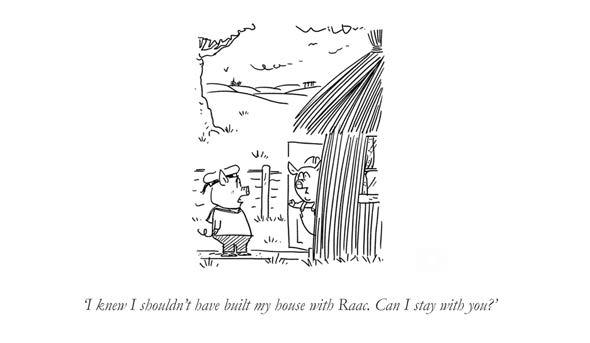
citizenship and the constitutional protection of the religious and national identity of its inhabitants.
“This could be achieved in the framework of federalism, as in Belgium, Switzerland or Canada, or it could be done in the framework of a one-man one-vote system, as in South Africa. Historically, Israelis have preferred the first while Palestinians have advocated the second.
“Either way, a one-state solution would mean the Palestinians accept Jewish settlers as legitimate neighbors and Israelis view the Palestinians as fellow citizens. The state would provide equal rights and privileges for both populations. Both would have the right to immigrate; “audah” for the Palestinians, “aliyah” for the Jews. For both, Jerusalem would be one open capital.
“Automatically, the new state would have friendly and peaceful relations with its neighbors, and it would serve as an example of reconciliation and coexistence.”
It is high time for a fresh start, after 30 years of failure and a century of conflict. Most Palestinians and Israelis have come of age after Oslo. It is up to them to chart a new way forward, free from the illusions of their parents.
By Marwan Bishara 12. September 2023,MPs have been reacting furiously to the news that a parliamentary researcher was arrested on suspicion of espionage back in March. They’re annoyed about the possibility – denied by the man in question – that they may have had an agent of the Chinese state snooping on them. But they’re even more annoyed that no one thought to tell them when this happened. Tim Loughton has complained that he has found out more about the man from his son, who attended the same university, than from the Commons’ authorities. Others have expressed concerns about the vetting on offer to MPs whose work means they handle sensitive subjects. In the Commons this afternoon, MPs pressed Deputy Prime Minister Oliver Dowden and then Rishi Sunak himself on whether the allegations had changed the government’s stance on China at all. Both had to answer questions on whether they could really keep refusing to call China a ‘threat’. One of the questioners was Liz Truss, who pressed Dowden on why the government wouldn’t say China was the ‘largest threat, both to the world and to the United Kingdom’. Another was Julian Lewis, who wanted Sunak to start meeting MPs on the Intelligence and Security Committee to brief them privately on cases like this.
When Sunak gave his Commons’ statement, which was on the G20 summit in India, he said he had raised the matter with Chinese Prime Minister Li Qiang, and also that Foreign Secretary James Cleverly had discussed it when he made his trip to Beijing recently. But it’s worth reflecting that while ministers privately knew about the arrest back in March, it hasn’t changed the way they engage with China. Nor is that likely to change just because MPs have now found out too.
By Isabel Hardman 11 September 2023Targeting the city of Idlib constitutes a difference in the development of the situation in northwestern Syria, which began since the beginning of June, and 145 targets were targeted, including civilian centers, schools, and the vicinity of the camps. The bombing of Idlib is an attempt to put pressure on the Turks by the Russians in order to implement the understandings. Russia seeks for Assad to be the victor, and with it Iran and Israel, and it does not matter which leader he is, what he controls, or what his true competence is.
Idlib Governorate, where about three million people live today, is the last stronghold of the resistance in Syria, and when it falls or is occupied, Assad, with his hands stained with the blood of the slaughtered citizens, will appear on television in Damascus and talk about
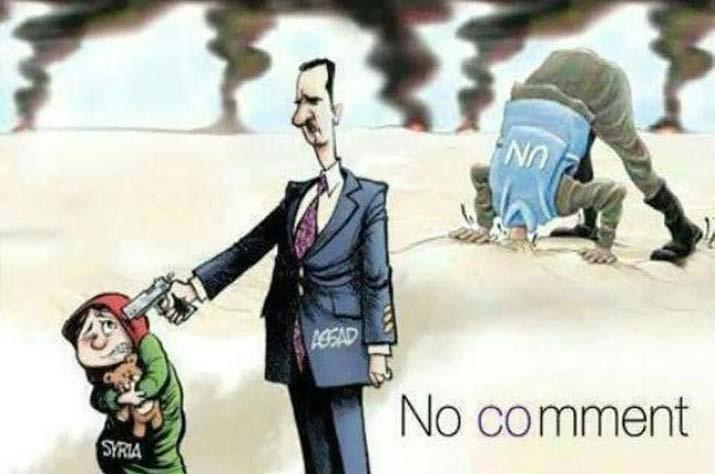
"achievements for Syria" and about destroying the nests of terrorism, and he will present plans from Here until further notice to improve the quality of life in the country. This is not a disaster, but this is a cruel and shocking calamity and preventing it from the free world is still possible.
 By Rudwan Musa
Asudden statement on national television in the early hours of Wednesday, to declare Mr Bongo the winner of last Sunday's election, was followed within minutes by a second surprise broadcast, as a clutch of soldiers announced the seizure of power in the former French colony.
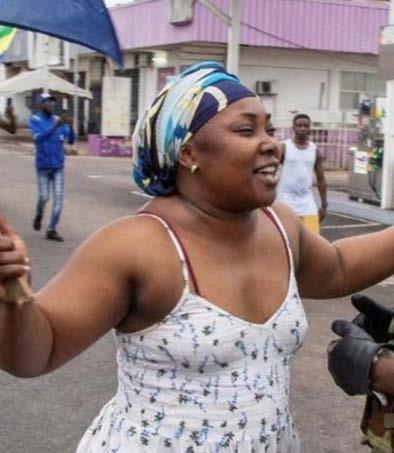
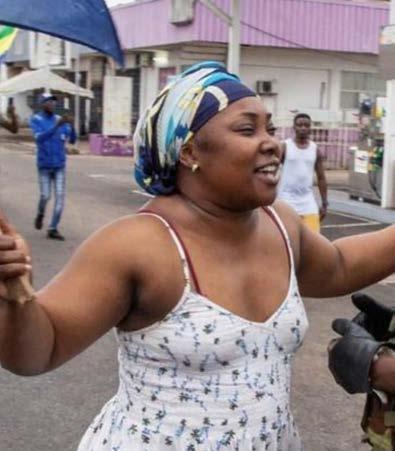
Later in the day, as footage of celebrating crowds emerged - after the new junta had lifted the internet shutdown imposed by Mr Bongo's regime on the eve of the polls and maintained the shutdown throughout an opaque vote "count" - the deposed head of state appeared in an online video sent from his place of confinement.
Looking bewildered, he appealed - in Englishfor friends outside to "make noise", in apparent hope that external pressure might reverse the shock turn of events, a prospect that seems remote.
But even if Mr Bongo himself was caught unprepared by the coup, perhaps Africa and the world should not have been.

The 26 July overthrow of Mr Bazoum in Niger gave ample warning that West and Central
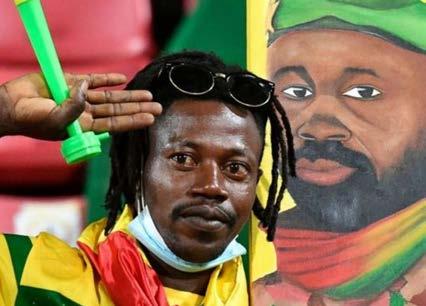
Yet another coup in Africa - just five weeks after Niger's President Mohamed Bazoum was taken hostage by the troops of his own presidential guard, Gabon's Ali Bongo also finds himself detained in his own residence.
Africa's "coup-epidemic" had not run its course.
In January last year, it had been the turn of Burkina Faso's President Roch Marc Christian Kaboré to be deposed by soldiers - whose leader was then himself dethroned by lower ranking counterparts on 30 September, just eight months later.
And before that, 2021 had brought two coups in West Africa. In May, Col Assimi Goïta, already author of a previous military takeover in Mali, had staged a second putsch to reassert his own power.
Then in September Guinea's special forces fought their way into the Sékhoutouréyah palace in Conakry to take President Alpha Condé into custody.
And we should not forget Chad where, following the April 2021 death in battle of longtime strongman Idriss Déby Itno, a military council stepped in to ensure the succession of his son and, thus, the continuation of the regime.
What on earth is happening in West and Central Africa - and in former French colonies in particular?
Six years ago the departure into exile of the electorally-defeated Gambian ruler Yahya Jammeh left every country in West Africa under multi-party constitutional rule.
In the centre of the continent some authoritarian regimes survived, but the era of military takeovers seemed long past.
Yet the past three years have seen seven coups in five countries - plus the strong-armed military
assumption of power in Chad.
There are common factors that have, at the very least, created conditions in which soldiers have felt they can step in with relative impunity, and often with the support of a large slice of the urban population, especially frustrated young people.
Across much of West and Central Africa, younger citizens have become widely disenchanted with the traditional political class, even with those who have been legitimately elected to office.
Such disillusionment is fuelled by a raft of issues - a shortage of jobs and even informal economic opportunities for both graduates and those less educated, perceived high levels of corruption and privilege among the elite, as well as resentment at the persistent influence of France in the many countries where it is the former colonial power.
But there is also deep resentment at the way many civilian rulers manipulate electoral processes or constitutional rule to prolong their hold on power. The scrapping of presidential term limits - after controversial amendments to constitutions - is a source of especially sore feelings.
And such abuses also undermine the moral authority of bodies such as the African Union - or the Economic Community of West African States (Ecowas), often labelled an "incumbent presidents' club" - in seeking to force coup leaders to restore elected civilian rule.
The Central African regional bloc to which Gabon belongs does not even have serious pretentions to establish or sustain governance standards across member states.
But while all these factors create a climate in which soldiers have felt increasingly emboldened about seizing power, claiming to offer a "fresh start", each coup has also been driven by specific national or narrow local motivations - and the takeover in Gabon is no exception.
Many Gabonese were sceptical about Mr Bongo's decision to stand for a third term. He first came to power in elections 14 years ago following the death of his father, Omar Bongo, who had monopolised the presidency for more than 40 years.
There were also serious doubts about his capacity to provide effective leadership, as he had suffered from a stroke in October 2018.
The deposed president's rule did see serious efforts to modernise the government machine, diversify the economy and tackle social inequality; and he earned international plaudits for proactive and innovative efforts to protect Gabon's rainforests and rich biodiversity. There were some concessions to the political opposition.
But the reform momentum faded gradually, while the regime proved ultimately unwilling to expose itself to serious electoral challenge.
Indeed, from the outset Mr Bongo's legitimacy and political standing was undermined by the opaque conduct of the election that brought him to power in 2009. Many people thought that André Mba Obame, his main electoral rival, had probably been the real winner.
And when he stood for re-election in 2016, in a tight race against former foreign minister Jean Ping, he only clinched a narrow victory when official results from Haut Ogooué region, the Bongo family's political fiefdom, came in, recording an unbelievably huge number of votes for him. Yet the polling station records of these supposed votes were destroyed before they could be checked.
In the latest election, Mr Bongo was declared the winner with 64% of the vote. He did not allow any international observers to monitor the poll, and the opposition rejected the result as fraudulent.
The military finally stepped in, saying the election "did not meet the conditions for a transparent, credible and inclusive ballot so much hoped for by the people of Gabon"
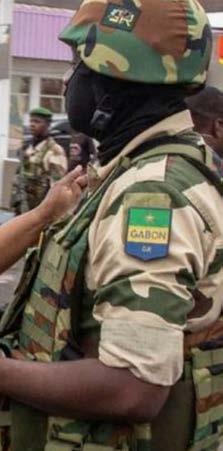
Many Gabonese have welcomed the coup, but it does raise fears about the future of democracy in many countries in West and Central Africa.
By Paul Melly 31. Aug 2023 Paul Melly is a consulting fellow with the Africa Programme at Chatham House in London.Neighbourhoods washed away in port city of Derna, where two dams burst, with many bodies swept out to sea
The situation in Derna, the Libyan port city where two dams burst over the weekend, has been described as “disastrous beyond comprehension”, as the Red Cross and local officials said at least 10,000 people were missing after the devastating floods.
The confirmed death toll has exceeded 5,300, Mohammed Abu-Lamousha, a spokesperson for the administration that controls the east of Libya told a state-run news agency late on Tuesday. Tariq al-Kharraz, another representative of the eastern government, said that entire neighbourhoods had been washed away, with many bodies swept out to sea.
Hundreds of bodies were piled up in cemeteries with few survivors able to identify them, according to Kharraz, who said he expected the death toll to rise above 10,000 people – a figure also quoted by the International Federation of Red Cross and Red Crescent Societies.
Rami Elshaheibi, the Libyan national communications officer for the World Health Organization, said the situation in Derna was “disastrous beyond comprehension”.
Hichem Chkiouat, the minister of civil aviation, said many of the dead remained where the water left them: “Bodies are lying everywhere – in the sea, in the valleys, under the buildings,” Chkiouat told Reuters by phone after a visit to the city. “I am not exaggerating when I say that 25% of the city has disappeared. Many, many buildings have collapsed.”
Video footage circulating on social media showed people pleading for help and screaming as muddy water engulfed their homes. Other video captured torrents sweeping away cars on streets, which had turned into rivers.
Sondos Shuwaib, a local blogger, said she was in her home when suddenly she found herself torn away by the flood waters. In a harrowing account of the disaster posted online, she described seeing children and babies caught in the current. “There were corpses next to me, and corpses above me, and corpses beneath me,” she wrote.
Shuwaib eventually washed up in shallow waters and was taken to hospital. “I am not able to comprehend what happened,” she wrote. “Sometimes I thank God for my survival – but when I remember that my family is missing … I wish I had died with them.”
The Norwegian Refugee Council said tens of thousands of people had been displaced with no prospect of going back home.
“Our team in Libya is reporting a disastrous situation for some of the most impoverished communities along the north coast. Entire villages have been overwhelmed by the floods and the death toll continues to rise,” it said.
Desperate citizens were appealing on social media for information about missing relatives. Many were angry at the slow pace of the relief effort, and of local authorities’ failure to warn that the dams were at risk of bursting. Engineers had previously issued generalised warnings about the risk of the dams bursting and the urgent need to strengthen their defences.
Anas El-Gomati, the founder of the Libya-based Sadeq thinktank, said a political inquest would be necessary. “North Africa is not immune to climate change, but this is also about corruption and incompetence. In Morocco perhaps you had seconds or minutes when the tectonic plates moved, but here in Libya there was plenty of warning about this hurricane … yet there was no evacuation of Derna – and now a quarter of the city’s population are under water.”
A 2022 report in an academic journal had warned that if a flood equivalent to one in 1959 was repeated, it would be “likely to cause one of the two dams to collapse, making the residents of the valley and the city of Derna vulnerable due to a high risk of flooding”.
Oil-rich Libya has been riven by political infighting, corruption and external interference since a 2011 uprising that toppled and later led to the death of the longtime ruler Muammar Gaddafi. Attempts stretching back a decade to form a unified functioning government have failed, and instead two rival governments backed by their own militias are based in Tripoli in the west and Tobruk in the east.
Investment in roads and public services has dwindled and there has been minimal regulation of private building.
Derna was for several years controlled by Islamist militant groups until it was captured in 2019 by Gen Khalifa Haftar, the warlord in charge of an army in the east.
Since then, the eastern government has been suspicious of the city and sidelined its residents, said Jalel Harchaoui, an associate fellow at the Royal United Services Institute for defence and security studies.
An emergency medical supply plane carrying 14 tonnes of supplies, medication, equipment, body bags and 87 medical and paramedic personnel was heading to Benghazi to support the areas affected by the flood, the head of the Tripoli-based Government of National Unity, Abdul Hamid Dbeibeh, said on Tuesday. Video footage circulating on social media showed people pleading for help and screaming as muddy water engulfed their homes. Other video captured torrents sweeping away cars on streets, which had turned into rivers.
The flooding caused by Storm Daniel led to a complete break in communications and cut off internet access in Derna. Entire neighbourhoods by the bank of a swollen river had been ravaged and washed away.
One resident, Hudhayfah al-Hasadi, told AlHurra: “The depths of some of the valleys in which water collects reach about 400 metres. Therefore, when the dam collapsed, the water was released like an atomic bomb, and eight bridges and residential buildings collapsed completely.”
A spokesperson for the Libyan Emergency Authority, Osama Ali, said: “All the water headed to an area near Derna, which is a mountainous coastal area … Houses in the valleys that were on the flood line were swept away by strong currents of muddy water that carried vehicles and debris.”
He added: “Weather conditions were not studied well, sea water levels, rainfall and wind speed, and there was no evacuation of families who could be in the path of the storm and in the valleys.”
There were conflicting reports as to whether requests had been made to evacuate the city at the weekend, and if so why the plan was rejected.
By Patrick WintourKonstantin Dobrovolski, who has spent decades finding and reburying those killed in WW2, says Ukraine invasion was ‘madness’
Konstantin Dobrovolski was out in the woods like he was most days in early autumn before the inevitable advance of arctic winter.
Armed with little more than a map, a shovel and an old metal detector, Dobrovolski has scoured the hostile landscape of Russia’s far north for the last 33 years in search of the longforgotten remains of Soviet second world war soldiers.
“Just today we found the remains of five soldiers, some bones and old medals,” he said, speaking to the Guardian during a research trip outside the Arctic town of Murmansk. “We have to hurry before the ground freezes again.”
Ad
Together with a small team of committed volunteers, Dobrovolski, 70, has dedicated his life to finding, identifying and reburying the remains of more than 100,000 Soviet troops who are believed to have died on the very northern part of the Soviet defence line.
“When we started our work in the early 80s, there were more bodies than mushrooms. We have found the remains of 20,000 soldiers,” Dobrovolski said.
But these days, death is on his mind more than ever.
“Every day I am confronted with the grim consequences of war. But it seems like our nation didn’t learn the right lesson from history,” he said as the conversation quickly turned to the war in Ukraine.
The Soviet victory over Nazi Germany has gradually become the centrepiece of President Putin’s concept of Russian identity over his two decades in charge. Almost every family had some connection to the war, in which the Soviet sacrifice was unimaginably huge.
When Russia invaded Ukraine, Putin tapped into the memory, language and imagery of the past war to justify the attack, telling his nation that men were “fighting for the same thing as their fathers and grandfathers” and framing Ukraine as a successor to Nazi Germany.
“Absolute nonsense,” said Dobrovolski when asked about the parallel between the two conflicts. “These two wars are completely different. Our fathers and grandfathers were
heroically defending our country, not invading another one.”
“Our borders were drawn in 1991. What the hell are we doing in Ukraine? It’s madness and it needs to stop.”
Soon after the invasion began last year, a hashtag slogan popped up on the streets of Moscow to boost support for the war in Ukraine: “We don’t leave ours behind.”
Ad
“I look around and see all these bodies and then see these pseudo-patriots screaming that no one is left behind. They should spend a day with me here in the field and look at these forgotten soldiers,” Dobrovolski said. “How can they talk about patriotism when we haven’t even buried our defenders properly?”
Dobrovolski said he was shocked but not entirely surprised by the apparent support that the invasion had enjoyed among his countrymen. “We were being fed for a while that war and death is a noble, beautiful thing. There is a lot of hate in society,” he said.
For years, he grudgingly watched how the Kremlin transformed the Victory Day celebrations on 9 May into a bombastic show of modern military might. Pointing to the sinister slogan “we can do it again,” which has gained popularity on Victory Day in recent years, he said his country “appeared to have forgotten that war is a tragedy, its pain and suffering”.
For Dobrovolski, the war in Ukraine was also personal. After having recovered the remains of thousands of Soviet soldiers, last spring he had to bury his own son who died fighting near Bakhmut as part of the notorious Wagner group.
Sergei had signed up with Wagner from prison, where he was promised freedom in return for
a six-month stint in Ukraine with the group. “I tried to do everything to stop him from going, I told him ‘what are you doing son, it’s a one-way ticket’. But I failed.”
He did not have a chance to say goodbye to Sergei but said that he recognised his son in drone footage posted by the Ukrainian army on social media days before his reported death.
“I don’t know if he killed Ukrainians or not. As a father, it was my duty to bury him, but I judge his decision,” he said, audibly emotional. “When the fighting is over, I will travel to Bakhmut myself, go on my knees and apologise to the Ukrainian people.”
In a country where even the slightest dissent is criminalised, Dobrovolski is a rare voice that pushes against the state narrative tying the two wars together.
He is not shy of his views, having previously told his story in a haunting documentary produced by the Novaya Gazeta paper.
“I am not scared, no,” he said defiantly. “My conscience is clean and that is the most important thing to me.”
For now, he plans to continue his work. In October, his team of volunteers will bury the remains of soldiers that they unearthed this year at the Valley Glory, a military cemetery close to Murmansk, also known among soldiers as “Death Valley”.
“We won’t be able to bury everyone, too much time has passed and some remains are destroyed forever,” he said. “Unfortunately there will be a lot of more burying to do for generations to come.”
ByMustafa al-Trabelsi attended a meeting about state of the dams days before Storm Daniel hit city
InDerna, and indeed across Libya, everyone is sharing a poem called The Rain, written by a poet from the city, Mustafa al-Trabelsi, who died in the floods. On 6 September, days before writing the poem, he had attended a meeting at the Derna house of culture to discuss the risk of a flood in the city and the state of the dams.
The poem is short but pertinent. It reads:
The rain
Exposes the drenched streets, the cheating contractor, and the failed state. It washes everything,
bird wings and cats’ fur.
Reminds the poor of their fragile roofs and ragged clothes.
It awakens the valleys, shakes off their yawning dust and dry crusts.
The rain a sign of goodness, a promise of help, an alarm bell.
It was an alarm bell that the appointed officials of Derna chose not to hear. So now, residents say, the city resounds to a different
sound – one of anguish as mothers talk about the loss of their children.
In the streets there are shouts of excitement when signs of life are discovered, but more often the painful search through the ruins ends only with discovery of corpses in the mud, or nothing, and silence.
By the sea, where many victims were dispatched by the raging river, Turkish rescue workers wearing scuba suits pick through the floating detritus of a destroyed town in search of bodies.
Officials said 300 survivors, including 13
‘An alarm bell’: Libyan poet warned of flood risk in Derna before dying in storms
children, had been rescued. The news brought some joy, but a doctor broke down in tears as he was pressed by a TV crew to say whether more than 10,000 were dead –a question to which he could not know the answer.
In an attempt to give a sense that the response was being well managed, it was briefed that Brig Gen Saddam Haftar, head of the Libyan National Army operations room and son of the ageing Gen Khalifa Hafter, was overseeing rescue and recovery efforts.
Haftar was said to be working closely with specialised teams who were searching the shoreline for people swept out to sea by the floods. He was said to be “assessing the needs of rescue crews and ensuring they have the necessary capabilities and resources to conduct operations safely and efficiently”.
But with entire neighbourhoods flattened after apartment buildings and homes collapsed, in many cases sweeping away sleeping residents inside, the sense of safety and efficiency was far away.
In the Shiha district of Derna, witnesses described bodies being lined up in corridors waiting for identification as the morgue was full.
About 230 Sudanese were killed as the
flood swept through the area where they lived. The secretary general of the Sudanese community in the city of Tobruk, Bashir alDhai, told the Sudan Tribune: “The initial toll of Sudanese victims from the flood has so far reached 231 dead.”
Gilles Carbonnier, the vice-president of the International Committee of the Red Cross, told Al Jazeera that three members of the Libyan Red Crescent were killed while helping the afflicted.
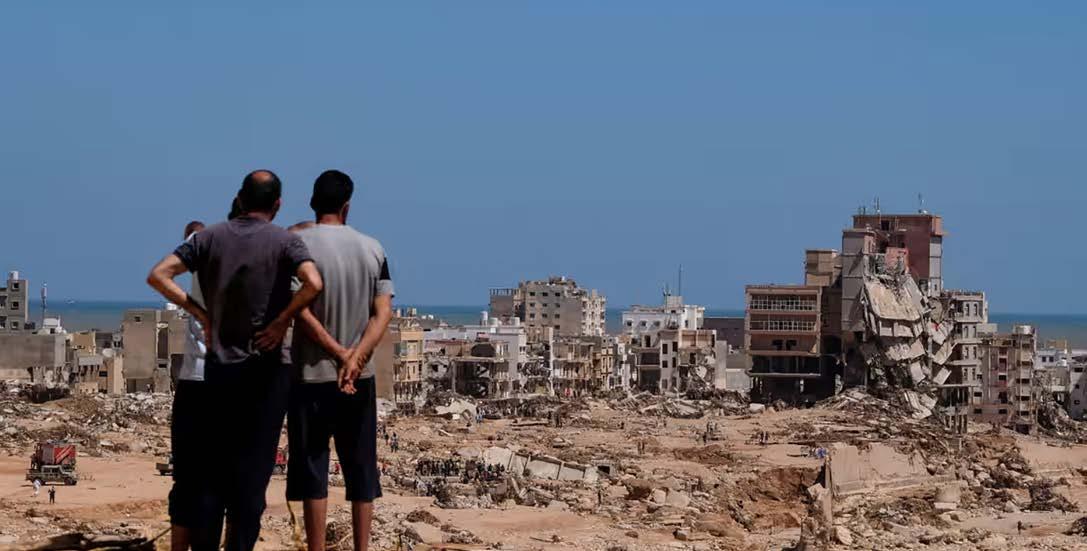
Footage on social media showed the terror of late Sunday night as children and women scrambled in the darkness with phone torchlights to climb stairs to higher floors away from the raging water.
One man described how the foundations of buildings seven floors high were uprooted within seconds as if a tornado had hit them, sending them into the sea.
The city can now be reached by just two of the seven routes that used to exist.
Khaled Mattawa, a Libyan writer who translated Mustafa’s poem, said the response and the generosity across Libya had been “heartbreaking”: people in Misrata offering apartments, a mechanic in Sebha offering free tyres and repairs for those heading to help in Derna, a woman offering to adopt babies, recent mothers offering
to breastfeed foundlings and orphans. All incredible acts of generosity, but, he said, ultimately all futile.
“I want to cry out: ‘This is why we need civil society and freedom of the press,’ and I tell myself don’t politicise this. But wasn’t it politics that led to this, the marginalisation, the neglect layer upon layer, and the corruption like gangrene spread over the body politic?” he said.
On the night of the storm, at 7.44pm, Mustafa wrote on his Facebook page: “The scenes are scary, and things may escalate to a disaster, and we are under the rule of a corrupt tyrant who has nothing but data, claiming to be prepared and, in fact, does not have any equipment, and rescue teams are only few.
“May God protect the Scouts, the Red Crescent and volunteers who prove that in every crisis our country goes through, they are true voluntary organisations, and the absence of a failed state. May God help the families all over our beloved country.”
At 9.37pm, he wrote: “We have only one [an] other in this difficult situation. Let’s stand together until we drown.”
Wintour By Patrick 14. September, 2023.“Hegemon” is a loaded word, even if the Greek root simply means leader. In world politics the term refers to a superpower that dominates the international system as a whole, for good or ill. In our lifetime, the United States has been such a hegemon, and controversially so. Now, though, America’s relative global clout seems to be slipping as other powers rise. And that’ll have far-reaching consequences for global politics and matters of war and peace.
As it happens, I recently relocated to what a colleague has aptly called Hegemon HQ — that is, Washington, DC. It’s the ideal perch to investigate this big question about American leadership, which I intend to do in several of my future columns. Is US power actually waning, or does it just seem that way? Does the US, going into a presidential election next year, even want to remain hegemon? Or are Americans fed up with defending that battered regime so awkwardly named the “rules-based international order”? Not least, should the world root for American decline or continued US preeminence?
That last one depends largely on where in the world you happen to find yourself. If you’re in Beijing, US hegemony can’t end fast enough, because you think China should reclaim its rightful place as a sort of Middle Kingdom in world affairs. If you’re in Tallinn, Estonia, you want the US to stay strong and engaged, because you realize that an American presence in Europe is probably the only thing standing between you and renewed subjugation by the Kremlin at some point.
But hegemony goes far beyond who can defend whom against what aggressor. It’s ultimately about who determines and enforces the rules of the system as such — governing everything from money flows to trade and shipping on the high seas. Wonks call these multilateral norms “public goods” because in theory they benefit all countries, especially the smaller ones.
Starting in the 1970s with the work of Charles Kindleberger, an American economic historian, a popular theory in international relations has argued that you need a hegemon to maintain such rules to have any order and stability at all. When you don’t, the international system reverts to its default state, which is anarchy — since the world, unlike a nation, can’t have a single government
with a monopoly on legitimate violence. By this logic, the world was relatively stable during the Pax Britannica of the 19th century, when the UK ran monetary institutions such as the gold standard, kept trade routes open with its navy and so forth. Obviously, that doesn’t mean the era was necessarily pleasant, even or especially for people whom the British colonized. Just more orderly than it would have been otherwise.
That imperfect order then gave way to chaos after World War I, when Britain was no longer able and America not yet willing to be hegemon. After World War II, though, the US stepped up and reestablished stability, at least within the capitalist world. With institutions such as the International Monetary Fund and the World Bank and alliances such as NATO, that US-led (and not always pacific) regime was immodestly labeled the Pax Americana, harking back to the ancient Pax Romana.
Almost as soon as “hegemonic stability theory” became mainstream, however, other policymakers and scholars, especially here at Hegemon HQ, became anxious that America’s moment as world leader was already passing. Maybe that was due to “imperial overstretch,” or to America’s shrinking share of the world economy, or something else. But reports of the hegemon’s death have been greatly exaggerated so often that we should be cautious about writing off the US too soon.
As a narrative about international relations, hegemony also has competition. Traditional realists looking at the long sweep of history insist that it usually wasn’t one power’s leadership but rather a balance of powers that preserved order. Liberal internationalists continue to believe that countries can cooperate even in the absence of a hegemon. And far out in left field, Marxists have their own niche theory of hegemony.
My view is that hegemony as it’s been exercised by the US since 1945 best explains the relative stability of the “free world” in that era — defined as increasing prosperity and liberty for many, if sadly not all, and the absence, so far, of another world war.

That said, I’m fully aware of the anger in much of the world, and especially the Global South, directed at the US. Like Britain in the 19th century, the US often puts its national interest
ahead of the system’s, which is a no-no for hegemons. It’s also hypocritical, posing as a global defender of democracy but sporadically supporting coups by repressive dictators — this week happens to be the 50th anniversary of Chile’s, in which the US Central Intelligence Agency had more than a gentle hand. Sometimes, Washington stands up for other countries’ national sovereignty, as in Ukraine. Other times it rides roughshod over it, as in Iraq in 2003. As hegemon, America is supposed to act as lender of last resort to prevent global bank runs; instead, it sometimes exports financial turmoil to the world, as in 2008.
But ask yourself two questions. The first is whether the world would be better off substituting in a different hegemon. Given the prerequisites in economic, technological, military and nuclear power, that could only be China in the foreseeable future. I doubt many people beyond its borders would choose the Chinese Communist Party as ward of the international system and its rules.
The second question is whether the world would really improve if it had no hegemon at all — that’s the alternative implied by the catchphrase of multipolarity. If you accept, as I do, that the international system’s default state is anarchy, the answer is No. And even if you believe in the balance of power as the secret sauce, keep in mind that in that realist tradition war is a feature rather than a bug in the system — it’s what recalibrates the scales every so often. The immediate question for me here at Hegemon HQ is whether the US even wants to keep its role of hegemon. The answer may become clear in next year’s election. Even if it’ll be fought over America’s domestic culture wars, it’ll also pit two opposing international visions against each other. One, embodied by Donald Trump or a politician of his ilk, is transactional, nationalist and isolationist. The other, represented by President Joe Biden or a similar candidate, is internationalist and combines idealism with realism and engagement. The question of America’s global leadership may eventually be decided in part by resources, by the trajectories of rival powers, by attitudes toward US power across the world and other factors. But even before those come into play, Americans themselves will get to vote on it.
By Andreas Kluth 13. September, 2023.The Pax Americana was never perfect, just preferable to no pax at all. Here’s hoping that it stays with us a bit longer.
Vasily Popov, 38, was believed to have died alongside three other officers in the latest set of Russian deaths. Ukrainian forces have been conducting limited and successful counterattacks around Kyiv to try and disrupt the Russian militaries plans to take over the city and relieve some pressure on the capital.
It’s so far been successful with the city being increasingly less likely to get taken over by Russia.
Popov led the elite 247th Airborne Assault Regiment for just a few weeks as he just recently took over.
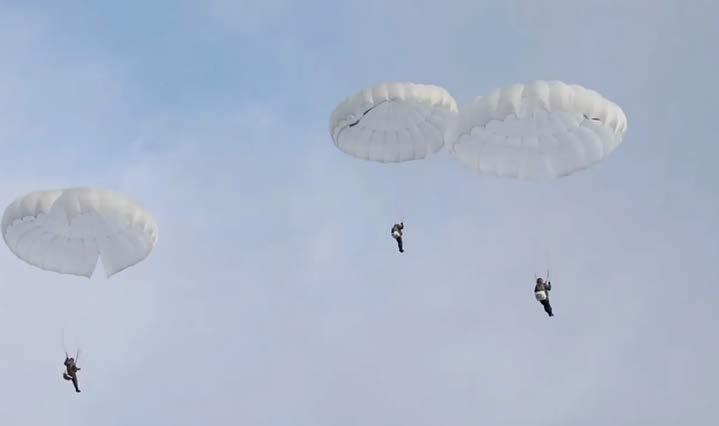
The exact circumstances of his death have not been disclosed but it’s likely he died on the Donetsk-Zaporizhzhia regional border, according to the Institute for the Study of War (ISW).
The regiment is known to have earlier suffered heavy losses in the Ukrainian War, with there being a scandal over his predecessor’s failure to send back the bodies of the fallen troops.
An earlier commander of the regiment Konstantin Zizevsky was killed in the first few days of the war, and has since been given the title of Hero of Russia.
The so called "suicide squad" regiment have suffered heavy losses in Vladimir Putin's failed rapid invasion of Ukraine at the start of the war.
ISW suggested that the Russian strategy of sending more elite troops for counterattacks on Ukraine will lead to a decimation of Russian forces.
Popov’s death provoked an emotional response among pro-war commentators.
Yegor Guzenko, author of Telegram network Z-channel Thirteenth said:
“The new commander of the 247th regiment died.
“He only recently took up his command.
“A good man, damn, really, damn, a hero,
damn, just a hero.
“I have no other words, and I feel sorry for him.
“Three other men died with him, and I feel sorry for them.”
Russia has suffered several high profile deaths in the brutal war so far with Vitaly Gerasimov getting assassinated in March last year just days after Major General Andrei Sukhovetsky was killed by a Ukrainian sniper during the fighting for Hostomel Airfield about 30 miles outside the capital Kyiv.
Major General Andrei Simonov also died while fighting last year after his troop was targeted
by brutal rocket strikes.
Footage went round social media showing the rocket exploding as presidential advisor Oleksiy Arestovych confirmed the general’s death alongside 100 other Russians in the vicious attack.
Most recently Vladimir Putin took a big blow when a Russian patrol boat was blown up by a Ukrainian kamikaze drone coming just days after Ukraine launched a string of bold attacks on the tyrant's prized £3billion bridge to Crimea.
It’s understood a number of people were killed and injured in the strike.
By Will Stewart 15. September, 2023.One of Putin’s top paratroopers killed in Ukraine just weeks into command after ‘suicide squad’ regiment was decimated
ONE of Russia’s top paratrooper commanders has been killed trying to hold back Ukraine's counteroffensive, reports say.
Of all the ‘practice’ wars that preceded the main events of the second world war, including the Spanish civil war and the winter war between Finland and the Soviet Union, the least well known is the four-month war on the MongoliaManchurian border between the Soviet Union and Japan that ended in September 1939.
This is not surprising, perhaps, because British attention was (and still is) more focused on Hitler’s invasion of Poland that took place two weeks earlier. Even the participants downplay the importance of a war that took place in a remote corner of Mongolia. Japan refers to it as the Nomonhan Incident while Russia calls it the Battle of Khalkin Gol after the river that runs through the region.
Britain is not famed for its geopolitical interest in Mongolia. But the fate of this country as well as Siberia did briefly occupy the minds of our diplomats, politicians and soldiers from the end of the first world war. Strangely this short war, fought across a river some 6,000 miles from Great Britain would have a significant impact on Britain in the second world war.
But first some background. After Genghis Khan had established a Mongol Empire in 1206, Mongolia briefly ruled the world’s most powerful country, China. His grandson Kublai Khan conquered China in 1271 and the Yuan dynasty (the first non-Han dynasty) ruled an empire that consisted of Mongolia, Korea and southern Siberia. Just shy of 100 years later, in 1368, the Yuan dynasty was overthrown by peasant born Zhu Yanzhang who founded the Ming dynasty. Thereafter Mongolia slunk into somnolent decline. In the 19th century Mongolia was absorbed into the Chinese Empire of the Manchurian Qing dynasty which ruled it as a vassal state.
However, at the beginning of the 20th century Mongolia was sucked into the vortex of global geopolitical instability that featured the overthrow of the Qing dynasty by Sun Yat Sen’s revolution in 1911, the fall of the Russian Imperial family, the Romanovs, in 1917, the abdication of Kaiser Wilhelm II in 1918, and the collapse of the Ottoman sultanate in 1922. In the chaos, Mongolia launched its bid for freedom. In 1911 a Buddhist theocratic state was established under Bogd Khan, the eighth Jebtsundamba Khutuktu (Holy Precious Master), who ruled a country where one in three men were monks – Mongolia
had been proselytised by the Gelug school of Tibetan Buddhism in the 16th century. For the next decade Mongolia slipped in an out of independence during the Zhili-Fengtian wars of the northern warlords and their international backers, which included not only Russia but also Japan, Britain, and America. The White Russian-Bolshevik wars featured a dubious cast of military chancers, including Nikolai Robert Maximillian Freiherr von UngernSternberg otherwise known as the ‘Mad Baron’. Born from a family of German aristocrats, he claimed descent from Gengis Khan and dreamt of rebuilding the Mongol empire. To further his ambitions, he entered a dynastic marriage with a Manchurian princess. The Mad Baron, a ferocious bully, antisemite, sadist, mystic and drunkard, was nevertheless a brilliant horseman and cavalry officer. Above all he was known as a fanatical anti-communist who believed, not without reason, that, ‘we are not fighting a political party but a sect of murderers of all contemporary spiritual culture.’
The Mad Baron led a White Russian force determined to restore the Romanovs. First in 1921 he led a White Russian-Mongolian force that restored Bogd Khan to the leadership of an independent Mongolia. For his efforts, Baron Ungern-Sternberg is still commemorated in Mongolia as well as by conservatives in his native Estonia.
However, the Mad Baron’s success was short lived. In August 1921, he was defeated while supporting anti-Soviet forces in Siberia. Captured by the Bolsheviks, he was tried and put in front of a firing squad. Thereafter Bogd Khan ruled under Bolshevik ‘protection’. When this last Jebtsundamba Khutuktu died of cancer – or more likely poisoning – in 1924, he was not replaced. The Soviets consolidated their grip over Mongolia with the establishment of a Communist Mongolian People’s Republic. Siberia, were helped by the withdrawal of the pro-White Russian Siberian expeditionary army that comprised Japanese, American, British, Italian, French, Belgium, Polish, Serb, Rumanian, and Chinese forces, which had landed in Vladivostok in August 1918 to engage the Bolsheviks. Their objectives were hopelessly divided by their nations’ conflicting operational parameters. The western forces had been primarily interested in ‘rescuing’ the Czech legion that was fighting its way out of Russia, and in preventing war material getting into the hands of the yet to be defeated
German army. In addition, some, like Churchill, supported an ani-communist crusade.
Meanwhile Japan’s main interest in Mongolia and Siberia, emphasised by its provision of a 72,000 strong force, was to prevent the resurrection of Russian/Soviet power in the region after the collapse of Romanov rule. In this they failed. White Russian resistance to the Bolsheviks crumbled and in 1922 Japan was the last foreign power to withdraw its army.
That did not end Japan’s interest in Mongolia and Siberia. As in the Russo-Japanese war in 1905, Japan feared growing Soviet power in the east. Its renewed energy under the Bolsheviks was a prospect of grave geopolitical concern. It should be remembered that fear of western expansionism, particularly that of the United States, was the driving force behind the Japanese revolution that inspired the overthrow of the Shogunate in 1869, the so-called Meiji Restoration. Japan’s new government was determined not become a colony or a vassal to a foreign power; in 1939 the Soviet Union seemed a greater threat than the United States.
The geopolitical significance of the Soviet Union’s annexation of Mongolia was most keenly felt by Japan’s Kwantung Army in Korea which had won the right to control the South Manchurian Railway zone after the Russo-Japanese War in 1905. Later it was fear of the Soviet Union that was the key reason for Japan’s annexation of the whole of Manchuria in 1931 and their subsequent invasion of northern China. With some degree of logic, Japan’s leaders began to fear that unless it took control of a weak Chinese state, the Soviet Union would fill the power vacuum. By 1939 therefore, it was not Chinese and Mongolians troops, but mainly Japanese and Soviet forces, that glared at each other across the borders of Siberia, Mongolia and Manchuria.
Relations had been testy for a while. In 1932 Japan had rejected a Soviet offer of a nonaggression pact. Over the next four years there were over 400 border incidents between the countries. More serious clashes took place in 1937 and in 1938 the Soviets lost 96 tanks and 792 troops at the Battle of Changkufeng (or Lake Khasan). It was a clear Japanese victory. Japanese foreign minister, Sadao Araki went as far as to suggest that, ‘if the Soviets do not cease to annoy us, I shall have to purge Siberia as one cleans a room of flies.’
How an American racing driver and war in Mongolia helped to defeat Hitler
The following year, in May 1939, following a seemingly innocuous incursion by Mongol horsemen across the Khalkin Gol river, full scale war broke out on the MongolianManchurian border. The Nomonhan Incident/ Battle of Khalkin Gol war was a classic border demarcation dispute fought over a worthless piece of land. This time the tables were turned on Japan. In June the arrival of the brilliant tank commander General Georgy Zhukov (of Battle of Stalingrad fame) led to a 500-tank attack which swept back Japanese troops that had crossed the river. As Zhukov noted, ‘Our trump cards were the armoured divisions.’ In aggregate the war cost some 50,000 casualties.
Japanese tanks proved to be no match for Zhukov’s fast-moving BT-7 tanks. Curiously the core technology for the BT-7 and its immediate successor the T-34 was provided by American racing driver, John Walter Christie. Born at River Edge, New Jersey in 1865, George Christie trained as an engineer but first found fame as a racing driver with a revolutionary front wheel driven car that he had designed. In 1905 he became the first American to drive in the French Grand Prix.
After a brief flirtation building fire engines, American engagement in the first world war encouraged Christie to design military vehicles. From 1916 to 1942 Christie designed tanks but never succeeded in selling more than a handful of sample models to the US Army. It was a failure for which the US Ordnance Department would later be much criticised. Christie’s key technological breakthrough came with the development of the M1928 tank, which its inventor believed to be a decade ahead of its time. Its unique suspension system enabled it to travel at 28 mph compared to the 9.9 mph of America’s existing first world war tanks.
Despite the strong backing of General George Patton, who would become America’s most famed tank commander, the US Army failed to capitalise on Christie’s developments. As a US congressman told Patton: ‘This is a wonderful tank, George, no doubt the best I’ve ever seen. But we aren’t about to buy it, you know that. I doubt we would even if it drove up the steps of Capitol Hill full of votes. We just can’t spend money on it.’
Indeed on the eve of the second world war, the American army, with fewer than 100,000 combat troops was smaller than those of Spain, Portugal, Switzerland, Holland and Belgium. As Henry Stimson, US Secretary of Defence noted
‘We did not have enough [gun] powder in the whole United States to last the men we now have fighting overseas for anything like a day’s fighting, and what is worse we did
not have…the plants or facilities to make it; they had all been destroyed after the last war.’
Foreign governments were not so lackadaisical about rearmament in the 1930s. Christie’s designs were snapped by Britain for the Cruiser tank which was widely used in the early years of the war in North Africa. More importantly a visiting Soviet delegation spotted the brilliance of Christie’s innovations and purchased two sample tanks, spare parts and technical rights and patents for US $164,000. They were smuggled out of America as a consignment of tractor parts.
On taking Christie’s designs back to the Soviet Union, manufacture of its T-18 tanks was shut down and production of the BT-7, using Christie’s innovations, was done in volumeat the Soviet’s biggest track factory in Kharkov (Ukraine). The experience of this the SovietJapanese border war in 1939, with lessons learned from the design flaws that became apparent in the BT-7, led to the development of the famed T-34 of which 84,000 would be built. The T-34 would eventually be used by 39 countries in 23 wars, invasions, and coups.
Most significantly on the eastern front in 1941, it was the T-34 which blunted Operation Barbarossa, the German invasion of Russia. Hitler, who had previously declared, ‘We have only to kick in the door and the whole rotten structure will come crashing down’. He would later admit, ‘If I had known about the T-34, I would have delayed invading Russia’. Along with ‘General Winter’, the Christie inspired T-34 was arguably the most important weapon in Russia’s defeat of Germany in the second world war. If the development of the T-34 was an important consequence of the Mongolian-Siberian border war in 1939, the geopolitical results were even more consequential. Defeat in Mongolia quashed Japan’s appetite for ‘striking north’ –a priority for powerful sections of the Japanese Army in the 1930s. Led to a large extent by officers trained in Manchuria, the Japanese Army saw the Soviets as its prime enemy.
By contrast the Navy saw Japan’s future battleground as the Pacific Ocean with their prime enemy being the United States. It is one of the ‘what-ifs’ of history how things might have turned out if Japan had won their 1939 border war in Mongolia. If Japan had decided to focus on the conquest of Mongolia and Siberia rather than China, would the US have ever entered the second world war? After all American participation in the second world war was precipitated not in Europe but in Asia. It was Japan’s failure to accede to US demands to withdraw from China that led the US to cut Japan off from international financial as well as the oil production of Standard Oil of California,
at that time the world’s biggest producer.
A very real consequence of the Russo-Japanese War in Mongolia and Manchuria in 1939 was that it led in due course to their April 1941 Neutrality Pact that would enable Stalin to concentrate his forces against Germany. This was no mean advantage. Allies benefitted enormously from Russia not having to split its forces between an eastern and western front.
But there were disadvantages that ensued from Japan’s defeat to Russia in the Mongolian border war. The Japanese defeat heightened the complacency of British forces in Singapore and Malaya. If Bolshevik Russia could knock over Japan, surely it would be a breeze for British troops to defeat Emperor Hirohito’s forces? When Japanese forces invaded Malaya (some 40 minutes before the attack on Pearl Harbor) the British expectation was that they would be quickly rolled back.: Churchill had been sure that Japan would not dare to attack the British Empire. Asked by a young British officer as he was sailing back from America after meeting Roosevelt, whether Japan would attack,
Churchill replied, ‘No I don’t think so. If they do, they’ll find they’ve bitten off more than they can chew.’ When news arrived in Singapore that the Japanese troop transports had arrived off Kota Baru, Governor Sir Thomas Shenton replied to LieutenantGeneral Arthur Percival (who would later surrender Singapore to Japan’s Imperial Army commanded by General Tomoyuki Yamashita), ‘Well, I suppose you’ll shove the little men off.’
A British resident at the time, Maisie Prout, summed up the zeitgeist of Britain’s Asian colonies thus:
‘We were so sure that the British forces would mop up the Japanese in no time…According to British propaganda, the Japanese were all bow-legged and squinty eyed and they all had very bad teeth… They would be annihilated before they reached Kuala Lumpur.’
It was a complacency regarding Japan’s military capabilities that similarly afflicted the United States forces in Hawaii and the Philippines. Thus, the little-known MongolianManchurian war of 1939 was broadly consequential in both the nature and outcome of the second world war both on the eastern front and in Asia and the Pacific. Furthermore, this obscure border war is another reminder, if one were needed, that the second world war was as much an Asian war as a European war.
By Francis Pike 16. September, 2023.It comes as the chief prosecutor of Libya's eastern government has said he will prosecute those responsible for the neglect of two dams in Derna.
A huge package of medical supplies - including body bags - has arrived in flood-hit Libya as aid workers urge authorities to stop burying victims in mass graves.
The World Health Organisation (WHO) said 29 metric tonnes of health supplies - enough to reach almost 250,000 people - had landed in Benghazi.
The supplies, which will go to hospitals and health centres, include essential medicines, trauma and emergency surgery supplies, and medical equipment, as well as body bags for the safe and dignified movement and burial of the dead.
The WHO and other aid agencies have urged Libyan authorities to stop burying victims of last Sunday's flooding in mass graves. It said such burials could bring long-term mental distress to families, or cause health risks if located near the water.
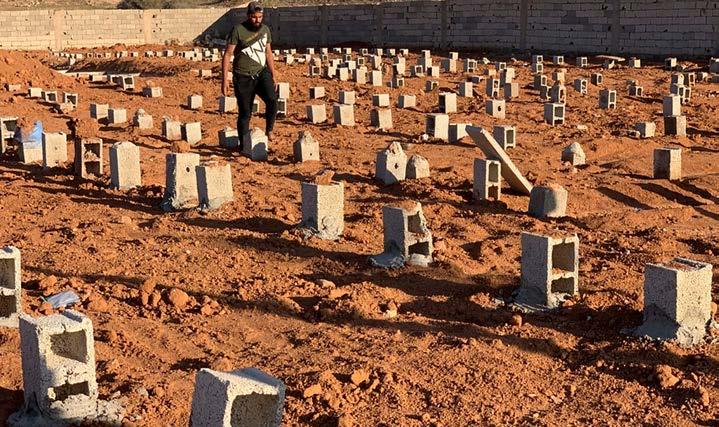
"This is a disaster of epic proportions," said Dr Ahmed Zouiten, WHO's representative in Libya. It comes as the chief prosecutor of Libya's eastern government said he would prosecute those responsible for the neglect of two dams in Derna.
The city is struggling to cope with thousands of corpses washing up or decaying under rubble following the disaster.
Meanwhile, the UK's Foreign, Commonwealth and Development Office (FCDO) said it had increased its aid package to Libya and Morocco - where thousands have died in an earthquake - to £10m.
The money will be used to provide vital provisions including emergency shelter items, portable solar lanterns and water filters. A specialist emergency medical team led by health and sanitation experts will also be sent over to Libya to provide rapid medical assessments in disaster-affected areas.
According to a UN report, more than 1,000 people have been buried in mass graves since Libya, a nation divided by a decade of conflict and political chaos, was hit by torrential rain that caused two dams to burst.
According to the Libyan Red Crescent, there were 11,300 flooding deaths in Derna as of Thursday.
Another 10,100 people were reported missing, though there was little hope many of them would be found alive, the aid group said.
Bodies "are littering the streets, washing back up on shore and buried under collapsed buildings and debris," said Bilal Sablouh, regional forensics manager for Africa at the International Committee of the Red Cross.
"In just two hours, one of my colleagues counted over 200 bodies on the beach near Derna," he said.
Divers are also searching the waters off the Mediterranean coastal city.
'A fifth of population killed or missing'
Sky News Africa correspondent, Yousra Elbagir, said in an update from Derna on Saturday: "At least 20% of the city's population have been killed or are missing.
"This is an incredibly tight-knit community. People have lived here for generations.
"Diggers are looking for them [those who are missing], but there just aren't enough diggers.
"We've only seen three or four in this valley. But this is a massive, massive disaster."
Libya chief prosecutor Al Siddiq Al Sou said on Friday evening that his office had summoned the dam's administration and the authority responsible for water resources.
He said the investigations are focusing on the funds allocated for the maintenance of the dams, stressing that the office had reports that cracks could be seen in them before the flooding.
"I reassure the citizens that whoever made a mistake, neglected, the prosecution will certainly take firm measures, file a criminal case against him, and put him on trial," he said. The number of deaths may increase further, officials warned, due to the spread of waterborne diseases and moving explosives that were swept up when the two dams collapsed and sent a wall of water gushing through the city.
Ibrahim al Arabi, health minister in Libya's Tripoli-based western government, said he was certain groundwater was polluted with water mixed up with corpses, dead animals, refuse and chemical substances.
"We urge people not to approach the wells in Derna," he said.
Spreaker
This content is provided by Spreaker, which may be using cookies and other The disaster has brought some rare unity to oilrich Libya after years of civil war between rival governments in the country's east and west that are backed by various militia forces and international patrons.
But the opposing governments have struggled to respond, and recovery efforts have been hampered by confusion, difficulty getting aid to the hardest-hit areas, and the destruction of Derna's infrastructure, including several bridges.
By
TheUkrainian armed forces inherited more than 2,500 BMP-1 infantry fighting vehicles from the Soviet army as the Soviet Union collapsed in 1991.
The 13-ton, 11-person BMP-1 still is Ukraine’s second-most-numerous IFV after the betterarmed BMP-2. But the BMP-1 has flaws. Big ones.
Not only is the BMP-1 lightly-protected with steel armor that’s just a quarter-inch thick, its lowpressure 73-millimeter gun lacks hitting power.
To improve the firepower of some of its BMP-1s— and to make surplus vehicles more valuable on the export market—the Scientific and Technical Center for Artillery and Small Arms in Kyiv swapped out the BMP’s old turret for a new one with a much more powerful 30-millimeter autocannon. The new, bigger turret displaces two of the BMP-1’s eight passenger seats.
The Kyiv firm called this upgraded, nineperson IFV the “BMP-1U.” Following an unlikely chain of events that began in the Republic of Georgia in 2008, BMP-1Us now are fighting for the Russians—and against the Ukrainians. A Russian-operated BMP-1U recently appeared in a Russian propaganda video.
Georgia bought 15 BMP-1Us from Ukraine and accepted them into service in 2007. A year later, Russia invaded Georgia—and Russian troops apparently captured every single Georgian BMP-1U. Tbilisi later re-upped on BMP-1Us with a fresh order in 2011.
Russian engineers reportedly spent some time inspecting the upgraded BMPs. And 15 years later, the Kremlin assigned some or all of the ex-Georgian IFVs to a front-line unit. The
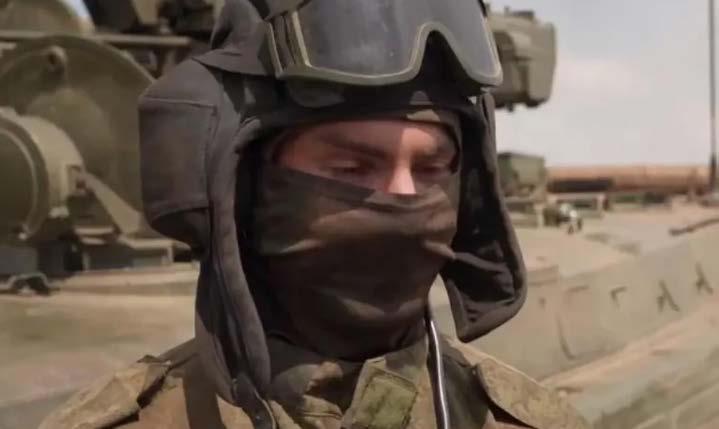
Russians also have captured a couple of BMP1Us from the Ukrainians.
Why a Russian BMP crew would want a Ukrainian-made BMP-1U is obvious. The U-model is a better IFV than an unmodified BMP-1 is.
But it’s indisputable that a BMP-1U would complicate a motor rifle regiment’s logistics. The U-model’s Shkval turret is made from Ukrainian parts. To keep some of the 15 or so BMP-1Us in working order, a BMP company might have to cannibalize the rest of the BMP1Us.
That the Russians were willing to accept the logistical complications speaks to their desperate need for IFVs. The Russian army widened its war in Ukraine in February 2022 with 400 active BMP-3s, 2,800 BMP-2s and 600 BMP-1s. Since then the Russians have
lost around 2,000 BMPs of all models, including 500 BMP-1s.
Russian industry can’t produce new BMP-3s fast enough to make good those losses, so the Kremlin has been pulling old BMP-1s and BMP-2s out of storage, replacing their seals and batteries and shipping them to the front as replacements.
Pre-war, the Kremlin was sitting on huge stocks of surplus BMP-1s and BMP-2s—7,200 and 1,400, respectively—but not all of these old IFVs are recoverable. And losses continue unabated. Every Soviet-standard BMP the Russians have lost has made the Ukrainian-standard BMP-1Us more valuable, despite their unique logistics.
Beggars can’t be choosers. And when it comes to BMPs, the Russians have been begging for a while now.
By David Axe 16. September, 2023.Israeli officials are quietly working with the Biden administration on a polarizing proposal to set up a U.S.-run uranium-enrichment operation in Saudi Arabia as part of a complex three-way deal to establish official diplomatic relations between the two Middle Eastern countries, according to U.S. and Israeli officials.
Israeli Prime Minister Benjamin Netanyahu directed top Israeli nuclear and security specialists to cooperate with U.S. negotiators as they try to reach a compromise that could allow Saudi Arabia to become the second country in the Middle East, after Iran, to openly enrich uranium, the officials said.
The U.S. and Saudi Arabia have been negotiating the contours of a deal for Saudi Arabia to recognize Israel in exchange for helping the kingdom develop a civilian nuclear program with uranium enrichment on Saudi soil, among other concessions. Other aspects of the evolving deal are expected to include concessions for the Palestinians and U.S. security guarantees.
If Saudi Arabia agrees to establish diplomatic relations with Israel, it would pave the way for other Arab and Muslim nations to follow suit, effectively ending decades of ostracism for the Jewish state founded in 1948.
While neither the U.S. nor Israel has so far agreed on a plan that would allow uranium enrichment in Saudi Arabia, doing so would represent a turnabout in decades of policy in both countries, where leaders across the political spectrum have worked to prevent Middle Eastern countries from developing the capability.
“Israeli support for Saudi enrichment would represent a radical policy shift for a country that has opposed nuclear proliferation in the Middle East since inception, and for a prime minister who has devoted his career to opposing Iranian enrichment,” said Mark Dubowitz, chief executive of the Foundation for Defense of Democracies, a think tank in Washington that opposes the idea.
Although Israel won’t publicly admit it, it is the only country in the region with nuclear weapons—and it doesn’t want to see hostile
nations join the small club. It is believed to use plutonium for its nuclear-weapons program, but Israeli nuclear technician Mordechai Vanunu spent 18 years in prison after revealing details in the 1980s about the country’s secret weapons program, including information on a secret uranium-enrichment facility. Saudi Arabia’s push to enrich uranium has emerged as one of the thorniest issues facing U.S. and Israeli leaders as they try to forge an agreement that could reshape the Middle East.
Saudi Crown Prince Mohammed bin Salman described negotiations over normalization with Israel as serious and getting closer to a deal every day, while stipulating that his country would seek a nuclear weapon if Iran obtained one.
“If they get one, we have to get one,” he said in an interview aired Wednesday on Fox News. “For security reason and for balancing power in Middle East. But we don’t want to see that.”
Netanyahu’s instruction for Israeli officials to begin negotiations is the clearest sign yet that the Israeli prime minister is willing to allow Saudi Arabia to advance its nuclear ambitions, even though critics say such a move could accelerate an arms race in the region.
While the Biden administration is crafting plans for a U.S.-run, uranium-enrichment
system in Saudi Arabia as an option to address the kingdom’s push to establish its own nuclear program, U.S. officials cautioned they are considering other alternatives. President Biden has yet to sign off on the idea of allowing uranium enrichment in Saudi Arabia, according to the people familiar with the matter.
Biden discussed the diplomatic gambit on Wednesday when he met Netanyahu in New York on the sidelines of the United Nations General Assembly—the first time the two men have met since the Israeli prime minister returned to the job in December.
“On the nuclear issue, we’ve seen completely eye to eye right from the start. On what we cannot do and what it is we might be able to do,” said a senior Israeli official of the U.S. and Israeli view on negotiations with the Saudis. The Israeli official said they would want to put “a lot” of safeguards on any Saudi enrichment program.
After the meeting, a senior Biden administration official said any support for Saudi Arabia’s nuclear ambitions would meet high standards.
“Whatever is done regarding civil nuclear cooperation with Saudi Arabia or anybody else, will meet stringent U.S. nonproliferation standards,” the U.S. official said.
Experts say there might be safeguards that
could be put in place to remotely shut down an enrichment facility—from a formal remote shutdown mechanism to systems that speed up the centrifuges to the point where they break. However, there is no foolproof system for shutting down a facility remotely that can’t be tampered with and potentially blocked by those who physically control the location, say nuclear experts.
Saudi Arabia has been pushing for years to pursue its own uranium enrichment. But, in talks with the U.S., Saudi officials said they would accept a deal where the U.S. runs the facility. Saudi leaders compare the idea to the model used to develop Aramco, its state-owned oil company. Aramco was established in the 1930s with New York’s Standard Oil and initially known as the Arabian American Oil Company. Saudi Arabia threatened to nationalize the company in the 1950s and eventually took full control in 1980.
Democratic and Republican presidents have long resisted efforts by Middle Eastern countries to enrich uranium. In 2009, the U.S. signed a nuclear-development deal with the United Arab Emirates that precludes the Gulf nation from enriching uranium on its own soil. That deal has become known as the gold standard for U.S. nuclear cooperation with other nations, and offering Saudi Arabia more than that would set a new bar.
Some Israeli leaders worry that U.S. support for a civilian nuclear program in Saudi Arabia could pave the way for Riyadh to develop nuclear weapons, which the Saudi crown prince has said he would do if Iran does so first. And it could open the door for the U.A.E. to seek similar approval.
“Israel can’t agree to uranium enrichment in Saudi Arabia, because it endangers its national security,” Yair Lapid, the Israeli opposition leader, told Israel’s Channel 12 last month. “It would harm our campaign against Iran. It would lead to a regional nuclear-arms race.”
The idea is also drawing opposition in Washington, where groups such as the Foundation for Defense of Democracies are mounting campaigns to derail any deal that allows Saudi Arabia to enrich uranium.
Dubowitz said the U.S. has to consider the prospect that Saudi Arabia could one day be ruled by hostile leaders who could seize control of U.S.-run, uranium-enrichment facilities in the kingdom that could be used to make a nuclear weapon.
“We’re one bullet away from a disaster in Saudi Arabia,” he said. “What happens if, God forbid, a radical Islamist leader takes control?”
Iran’s nuclear program has been a target of U.S. and Israeli sabotage campaigns meant to hamper Tehran’s ability to produce a nuclear weapon.
Brian Katulis, vice president of policy at the Middle East Institute think tank in Washington, said the idea is worth exploring.
“The concerns of a nuclear-arms race in the Middle East are very serious and real, indeed,” he said. “The question is whether the U.S. sitting on the sidelines, crossing its arms and scolding countries in the region for pursuing civilian nuclear energy is a more effective strategy than starting a discussion that aims to build trust and confidence among key actors in the region like Israel and Saudi Arabia.”
Katulis said, “The risk of some hostile leader getting these capacities is one we’ve seen and managed in a number of places around the world, including Pakistan.”
“It’s not an ideal situation in those instances,” he said, “but the risks can be managed.”
Yoel Guzansky, a former Israeli national-security official who now serves as a senior fellow at the Institute for National Security Studies in Tel Aviv, said a deal that allows uranium enrichment in Saudi Arabia would represent a stunning victory for Mohammed, who Biden vowed to treat as a pariah when he came into office because of the country’s record on human rights, including the 2018 killing of journalist Jamal Khashoggi in Istanbul by a Saudi hit team.
“From a pariah state two years ago to a nuclearcapable state?” he said. “This is remarkable.”
Guzansky said any concession that could pave the way for Saudi Arabia to develop nuclear weapons might not be worth the cost.
“Perhaps the price of peace here is too high,” he said. “Certainly for Israel.”
By Dion Nissenbaum and Dov Lieber 21. September 2023Azerbaijan's president has declared that his country's sovereignty has been restored over Nagorno-Karabakh after a 24-hour military offensive against ethnic-Armenian forces.
Ilham Aliyev praised the heroism of Azerbaijan's army hours after Karabakh forces agreed to surrender.
Some 120,000 ethnic Armenians live in the South Caucasus enclave, recognised internationally as part of Azerbaijan.
Azerbaijan now intends to bring the breakaway region under full control.
Its military launched an "anti-terror" operation on Tuesday, demanding that Karabakh's forces raise a white flag and dissolve their "illegal regime". With no means of support from neighbouring Armenia, and after an effective nine-month blockade, the ethnic Armenians soon gave in.
Armenian officials reported that at least 32
people were killed, including seven civilians, and another 200 wounded. However according to a separatist Armenian human rights official, at least 200 people were killed and more than 400 wounded. The BBC has not been able to verify any of the figures.
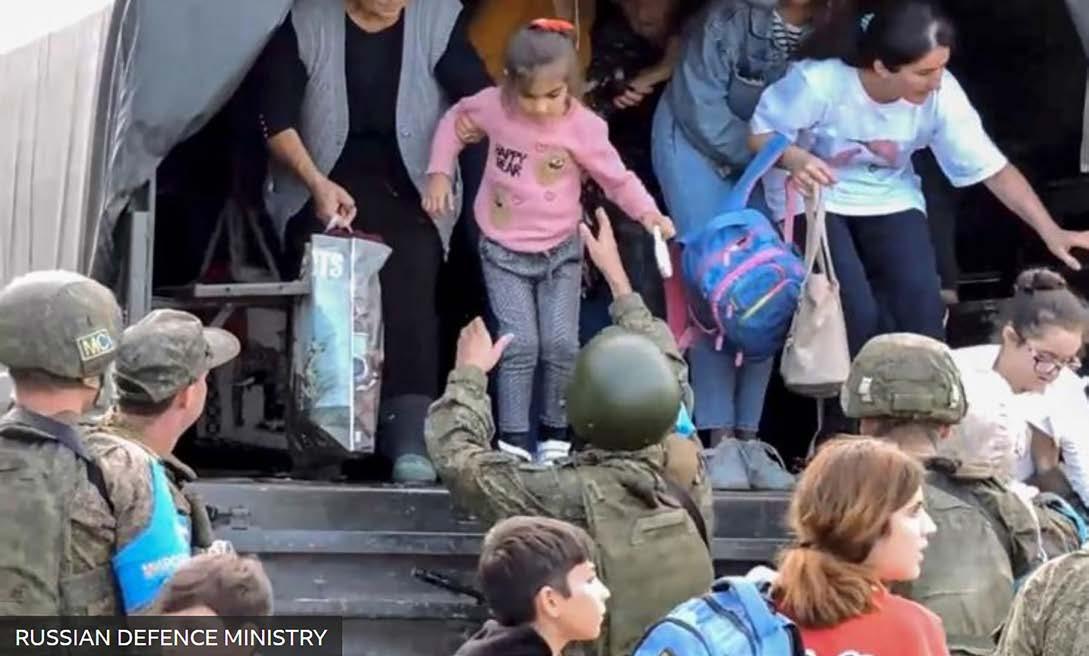
On Wednesday evening, Armenian officials accused Azerbaijan of opening fire on troops near the town of Sotk on the border between the two countries after the ceasefire had been agreed, but Azerbaijan immediately denied the claims.
Earlier in the day, thousands of protesters took to the streets of Yerevan, the Armenian capital, to demand the resignation of Prime Minister Nikol Pashinyan for his handling of the crisis.
Azerbaijan's army said it had captured more than 90 positions from the ethnic Armenians before both sides announced that a complete cessation of hostilities had been agreed through Russian peacekeepers, starting at 13:00 local time (09:00 GMT) on Wednesday.
Under the terms of the truce, outlined by Azerbaijan and Russia, which has peacekeepers on the ground, local Karabakh forces must commit to being completely disbanded as well as disarmed.
There is also a commitment to Armenian forces pulling out, even though its government denies having any military presence there.
Talks between officials from Baku and Karabakh's Armenian representatives on "issues of re-integration" got under way in the town of Yevlakh on Thursday morning.
President Aliyev said Azerbaijanis had nothing against the population, only their "criminal junta".
Yevlakh is some 100km (60 miles) north of Karabakh's regional capital, Khankendi, known as Stepanakert by Armenians.
Civilians flee to airport Marut Vanyan, a journalist in Karabakh, said
many families had spent Tuesday night in basements: "I didn't sleep and I didn't eat. It's calm now but it's a strange feeling. Right now, what we need to do is stop this bloodshed and understand what to do next."
Russia said its peacekeepers had evacuated 5,000 people from dangerous areas since the offensive had begun, the country's Interfax news agency reported.
As the ceasefire was announced, Karabakh officials appealed to residents to remain in shelters and not to leave for the local airport, adjacent to a Russian peacekeeping base. However, a crowd of civilians had soon gathered close to the airport and as darkness fell hours later it was unclear what support they would have.
Caucasus specialist Thomas de Waal of Carnegie Europe said the terms of the ceasefire and the coming talks were very much on Azerbaijan's terms and left ethnic Armenians looking unprotected.
"This looks like the end of a 35-year-old project, some would say a century-old project, of the Armenians of Karabakh to secede from Azerbaijan," he told the BBC.
"We're probably, unfortunately, seeing a project whereby the Azerbaijanis offer so little to the Karabakh Armenians that most if not all of them will leave."
Armenian Prime Minister Nikol Pashinyan made clear his government was not involved in the ceasefire text and demanded that Russian peacekeepers take full responsibility for the safety of the local population. On Tuesday he accused Azerbaijan of "ethnic cleansing" in Karabakh.
Azerbaijan's presidential envoy Elchin Amirbekov told the BBC that Russian peacekeepers had helped facilitate the ceasefire: "I think they have to be counted on for the implementation part."
Since the collapse of the Soviet Union, Armenia and its neighbour have fought two wars over Nagorno-Karabakh, a mountainous, landlocked region in the south-west of Azerbaijan.
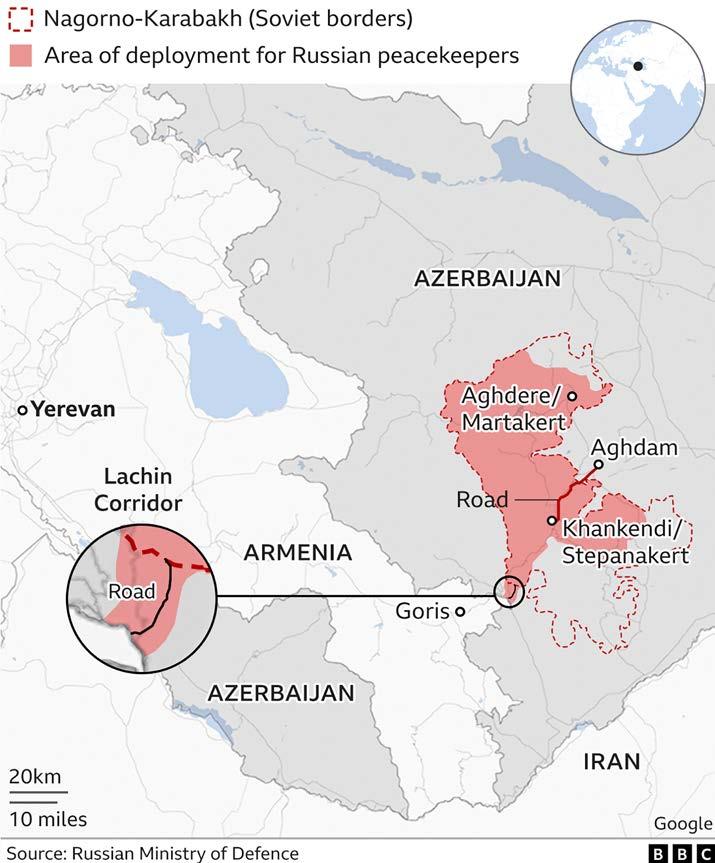
The six-week war in 2020 led to several thousand deaths but enabled Azerbaijan, backed by Turkey, to recapture territory surrounding and inside the enclave, leaving the ethnic Armenians isolated.
For the past nine months, Azerbaijan has
conducted an effective blockade of the only road into Karabakh from Armenia, known as the Lachin Corridor. Ethnic Armenians in the enclave complained of shortages of food, medicines and toiletries and Armenia was unable to help.
Although some aid was allowed through in recent days, the Karabakh Armenians were very much weakened by the shortages by the time of the Azerbaijani offensive, with little hope of external support.
Some 2,000 Russian peacekeepers were supposed to monitor the 2020 ceasefire but Moscow's interest in Armenia has waned during its war in Ukraine, even though Armenia is part of Russia's CSTO military alliance.
Last May, the Armenian prime minister was quoted as saying his country would be ready to recognise Karabakh as part of Azerbaijan in return for the security of the ethnic Armenian population.
"The 86,600 sq km of Azerbaijan's territory includes Nagorno-Karabakh," Mr
Pashinyanwas quoted as saying, referring to Azerbaijan as a whole.
Russia has also been annoyed by Mr Pashinyan's apparent pivot to the West.
Earlier this month his wife Anna Hakobyan shook hands with Ukraine's president at a conference in Kyiv, and this week, dozens of Armenian and US soldiers took part in military exercises together.
The Kremlin has denied Armenian allegations that it did not do enough to help its ally.
President Vladimir Putin said only last week that Russia had no problems with Armenia's prime minister, but added: "If Armenia itself recognised that Karabakh is part of Azerbaijan, what should we do?"
Hundreds of protesters in Yerevan called for the prime minister to resign on Tuesday because of his handling of the crisis and he warned of unidentified forces calling for a coup.
By Paul Kirby 20. September 2023