

So, you have stumbled across The Gamer Guide and you are wondering, “Why do I need a guide to gaming?” Well, we will not guide you on how to game, but we will keep you informed as to what the gaming industry has to offer to get you the best gaming experience! Now, the second thing you are probably wondering is, “How did The Gamer Guide start?” Well, it can be a slightly long story. However, the shortened version is that the journey of three Twitch streamers brought them together, and with their passion for gaming, their experiences of streaming, and their love for everything within the world of entertainment… The Gamer Guide was born.
But what exactly is The Gamer Guide? The Gamer Guide is a digital magazine that focuses on everything gaming and streaming. This includes the latest/upcoming releases, reviews on gaming accessories, streaming tips, and even interviews with streamers and industry professionals from across the globe. Our readership is predominantly other gamers and streamers, just like us! We understand that the love and passion for gaming extends far beyond just playing a game, and that is what we are all about!
So, who are the people behind this magazine?
Brandon who goes by the name of Sawyer is the Co Owner & Content Director of The Gamer Guide. Predominantly Sawyer is an Xbox Gamer where he mostly plays his Xbox Series X but also has a Gaming PC, a Nintendo Switch, and even a Playstation 5, with a variety of platforms this gives Sawyer the ability to review the latest games for TGG. Sawyers main gaming love is Gears of war and RPGs because who doesn’t love an adventure or some chainsaw slaying with a cheeky blind fire or wall bounce. Due to Sawyers vast knowledge and background within the industry he came together with Emily to form The Gamer Guide.
Emily, also known as CreativeTrashGaming, came together with Sawyer to form the Gamer Guide, bringing her creative knowledge. Her favourite types of games are those with a compelling story, or those that just make her inner Fantasy Nerd go ballistic. She also likes spooky stuff, not just in the gaming realm but in general, and has a podcast with her two sisters where they discuss all things horror. Emily loves to dabble in the art world often, creating digital art pieces and learning new crafts. A graphics designer in her full time job, Emily is an integral part of the team whom designs the entire layout of our magazines from top to bottom!


elgato shure crucial turtle beach anker govee be quiet!
gunnar hisense
hori
pny
barcelona games fest 2025
mcm london comic con
halo:

The Stream Deck Plus is Elgato’s practical answer to a common creator problem: too many single-purpose devices, too much cable clutter, and not enough tactile control when a take matters. This review is written for content creators who move between desks, stages, and hotel rooms, and it draws on our hands-on use during a week of festival coverage, two live streams, and a string of street interviews where speed, reliability, and predictable controls decided whether a clip was usable or not.
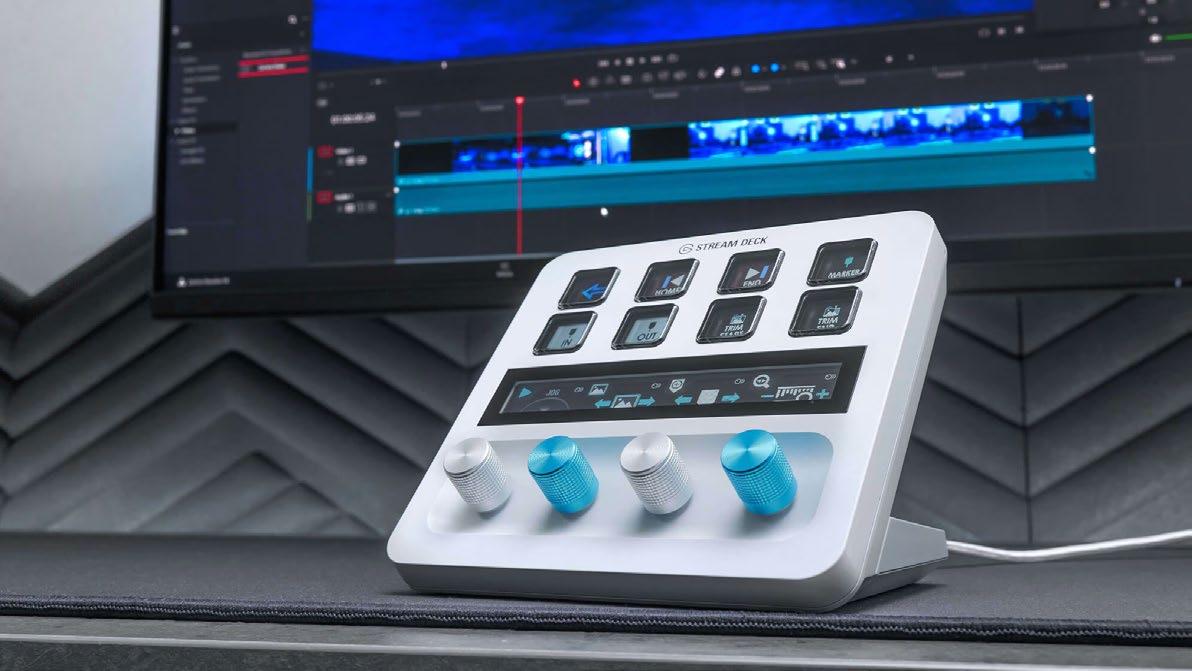
The Stream Deck Plus arrives as a compact, purposeful device: eight bright LCD keys, a tactile touch strip, and four metal rotary encoders in a single USB-C-powered housing. It feels durable without being bulky and integrates cleanly into a laptop-first travel kit. The upstream USB-C keeps cable routing tidy while powering the unit and attached docks. The on-device feedback removes guesswork during noisy setups and the whole unit reads as professional in client-facing environments.
The XLR Dock transforms the Stream Deck Plus from a control surface into a practical on-location mic preamp. It supplies clean, usable gain, 48 V phantom power for condensers, and protection against overloads so you can plug in broadcaststyle condensers or dynamic interview mics and expect predictable results. In our tests the dock delivered transparent gain that preserved transient detail and handled both quiet, distant interviewees and louder presenters without fuss. Crucially, the Dock reports level and routing back to the Plus so you can confirm gain at a glance and make fast

adjustments without leaving the controller.
The USB Dock: Cleaner Multi-Device Workflows
The USB Dock expands the single upstream connection into a managed hub for capture cards, cameras, keyboards, and external SSDs. During an on-site festival stream the Dock kept a capture card and SSD reliably connected to a laptop while enabling a single-cable teardown at the end of the day. The Dock reduced the number of fragile adapters in our bag and removed the common problem of loose connections that cause dropped frames or lost audio mid-event.
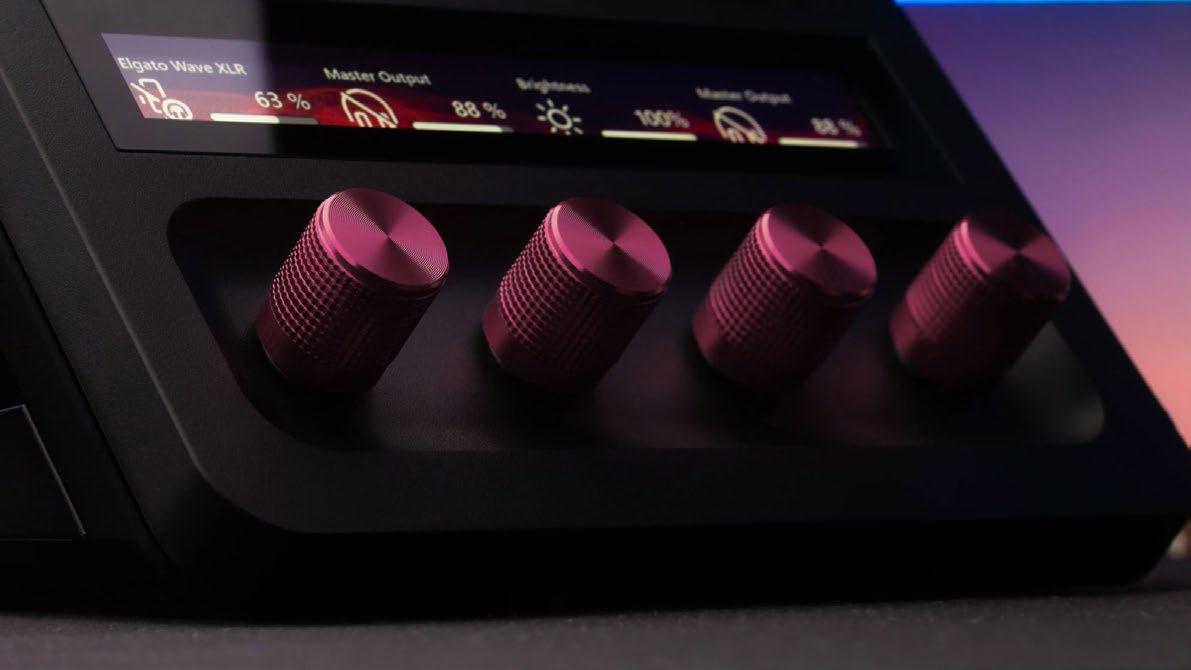
The four rotary encoders are the Plus’s defining live-control feature. Each is a 360° encoder with push-to-click functionality and assignable sensitivity so a dial can act as a micro-adjuster for a compressor or a coarse scrub through a timeline. The on-device display shows exact values, so you never guess what you’ve adjusted. We fitted a purple dial cap to one encoder, and it became our immediate reference point: onehanded operation under dim lighting became
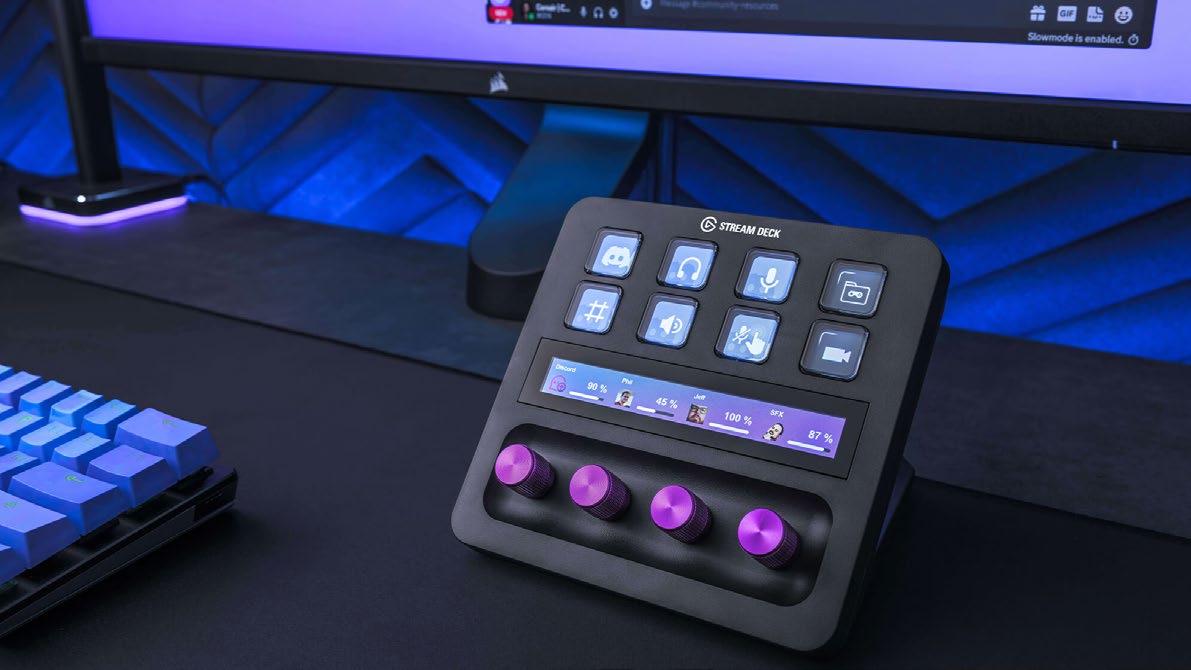
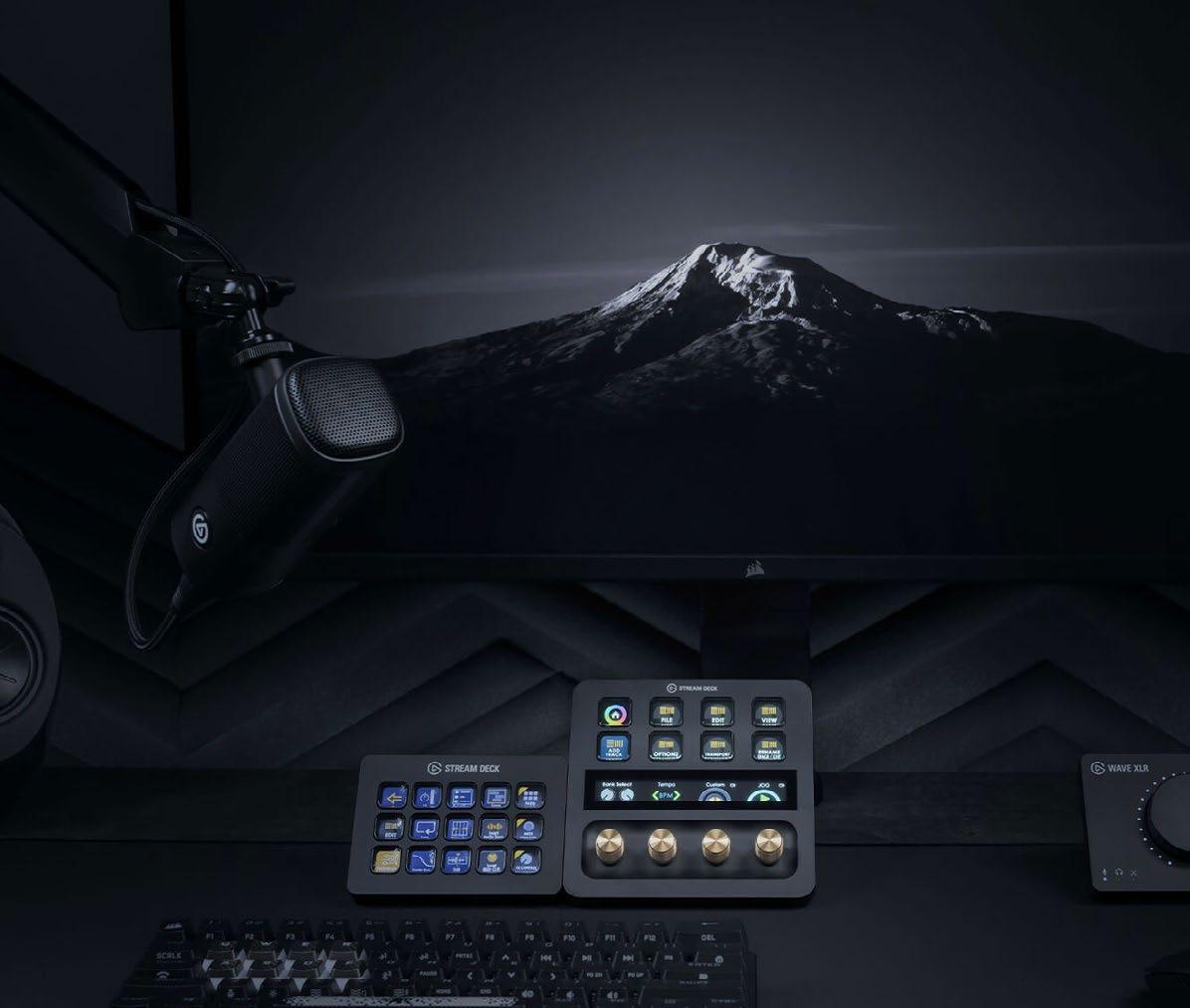


faster, handoffs between operators were cleaner, and accidental tweaks during frantic moments dropped to near-zero. Colour-coded caps turn the dials into visual anchors for muscle-memory operation.
In real shoots the Stream Deck Plus shortens the path from intent to result. Attach the XLR Dock and you have a low-latency mic input with direct monitoring and hardware gain control; add the USB Dock to plug a camera or capture card without hunting for hubs. The Stream Deck software ties macros, multi-action chains, and app-aware profiles together so one button press can change scenes, mute channels, start recording, and switch camera inputs. During festival coverage the Plus reduced our setup time by roughly a third compared with our previous multi-box rig and cut the number of audio mistakes that required post fixes.
We used the Stream Deck Plus across three realworld scenarios: a live panel stream, a street interview sprint, and a solo evening stream from a small hotel room. On the panel the XLR Dock handled a podium mic and a handheld dynamic without needing a separate interface; the purple dial controlled live mic gain while the other dials managed master and guest volumes. During the street interviews we left the USB Dock at base, carried the Plus and a small USB-C hub to the location, and used the dials to sculpt levels while keys triggered lower-thirds and B-roll. On the solo stream the combination of quick macros, tactile dials, and on-device monitoring let us swap scenes and adjust audio without taking focus off the performance. Across all sessions the device survived transit, quick reconfigurations, and last-minute operator handoffs better than any single-purpose tool we’ve carried.
Elgato positions the Stream Deck Plus as a premium compact controller whose modular value compounds when you add docks. Use these reference prices for planning: Stream Deck Plus (base unit) $199 USD / £179 GBP, XLR Dock $129 USD / £115 GBP, USB Dock $79 USD
/ £70 GBP. Elgato’s bundle of Stream Deck Plus + XLR Dock typically retails around $329.99 USD depending on region and promotions.
For creators who travel, stream on location, or juggle camera and audio sources, the combined cost is justified by fewer pieces of kit, faster setup, and the reduced risk of failures that kill a take.
For content creators who need a travel-friendly, single-point control solution, the Stream Deck Plus is more than a glorified macro pad: it is a compact command centre. The XLR Dock gives you real preamp capability for location mics, the USB Dock removes hub chaos, and the dials—especially when personalised with a purple cap—turn stressful live adjustments into confident, muscle-memory actions. The device will not replace large multichannel consoles on full-scale productions, but for solo creators, small teams, and hybrid streamers it simplifies workflows and raises the floor of what you can ship from the field.
Rating
Overall score: 9 / 10
This score reflects excellent ergonomics, meaningful modular expansion, robust real-world performance, and the workflow advantages delivered by tactile dials and on-device feedback. Deductions reflect the premium required to assemble the full dock ecosystem and the limits of single-channel audio compared with dedicated multi-input interfaces.
If you travel light but demand control, want fewer retakes, and need to keep your eyes on the story rather than the mixer, the Stream Deck Plus is a tool that will make your kit lighter and your sessions calmer. Try the purple dial cap as a quick, low-cost tweak that materially speeds live operation. For creators who stream, shoot events, or produce on the move, this is one device that will pay back in time saved, fewer mistakes, and cleaner final content.
If you too want to secure a product like this or check out many others that Elgato creates then you can do so below.



Reviewed by: Brandon Sawyer
The Shure MoveMic 88+ is designed to give mobile creators the tonal control and reliability of pro audio in a compact, travel-ready package. Built for vloggers, mobile journalists, documentary shooters, and hybrid creators who move between phone, camera, and laptop, this system addresses inconsistent capture, fiddly adapters, and slow setups. This review examines design, features, audio character, real-world workflows, pricing, receiver usage, and how the MoveMic 88+ performs when pressed into the unpredictable conditions of location production.
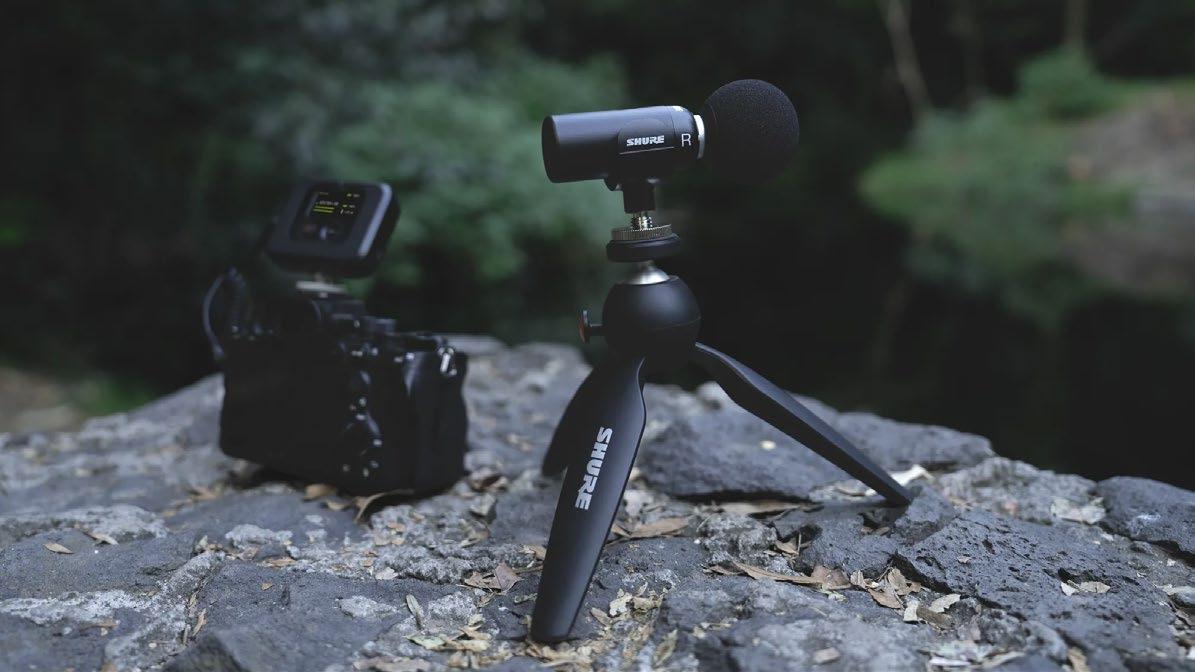
The MoveMic 88+ presents a dense, all-metal body that feels engineered for life on the road. Controls are laid out for rapid, one-handed access during quick setups. The product favours tripod and small stand mounting more than extended handheld use and ships with a windscreen and robust mount options that survive repeated transit and fast gear swaps. Modern connectivity is present with USB-C for charging and wired capture plus a 3.5mm output for legacy routing. Clear status LEDs and a dedicated mute toggle provide immediate visual confirmation on busy shoots where a missed mute can ruin a take. The overall construction communicates longevity without adding unnecessary bulk to a creator’s bag.
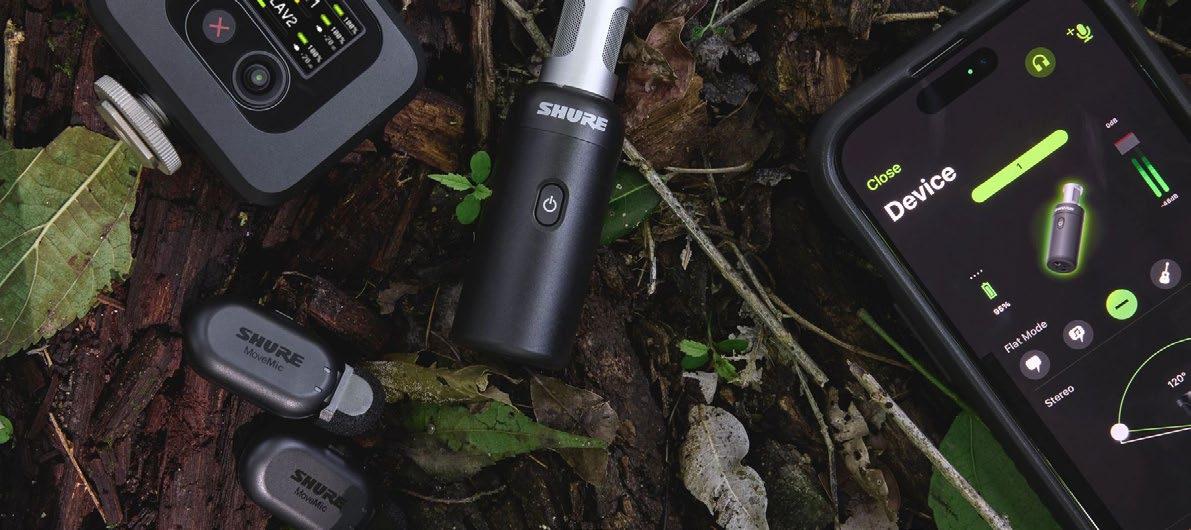
Shure has packed the MoveMic 88+ with features that meaningfully change how creators’ approach on-location audio. The mic offers four selectable polar patterns stereo, cardioid, bidirectional, and raw mid-side turning a single device into an interview mic, ambient recorder, or twoperson capture tool. Onboard DSP exposes gain control, high-pass filtering, noise reduction, and conservative EQ presets accessible via the device and Shure’s companion app, enabling immediate tonal shaping without a laptop. Wireless connectivity supports direct Bluetooth pairing to smartphones for a cable-free capture path,
while the optional MoveMic Receiver expands compatibility to cameras and computers through USB-C and 3.5mm outputs. Shure rates battery life to comfortably cover a day of typical rolling captures and the wireless link remains stable within practical line-of-sight distances.
In field testing across cafes, outdoor plazas, conference halls, and intimate interview rooms, the MoveMic 88+ proved consistently capable. Voices sit in a focused, present midrange that improves intelligibility in busy environments. Low frequencies are controlled rather than boomy, which reduces corrective EQ work in post and keeps dialogue clear in mixes. Cardioid mode narrows the capture footprint effectively in crowded venues; bidirectional mode balances two-person interviews while avoiding the visual and logistic overhead of lavaliers; stereo and mid-side modes capture ambient textures with musical clarity that works for documentarybacked b-roll. The onboard DSP reduces low-frequency rumble and background hiss without introducing obvious artifacts, and the receiver’s quick-access controls make real-time adjustments straightforward. Wind protection with the supplied windscreen handles light gusts well; stronger winds still require a larger blimp or positional tactics. Across typical location scenarios the MoveMic 88+ produces files that
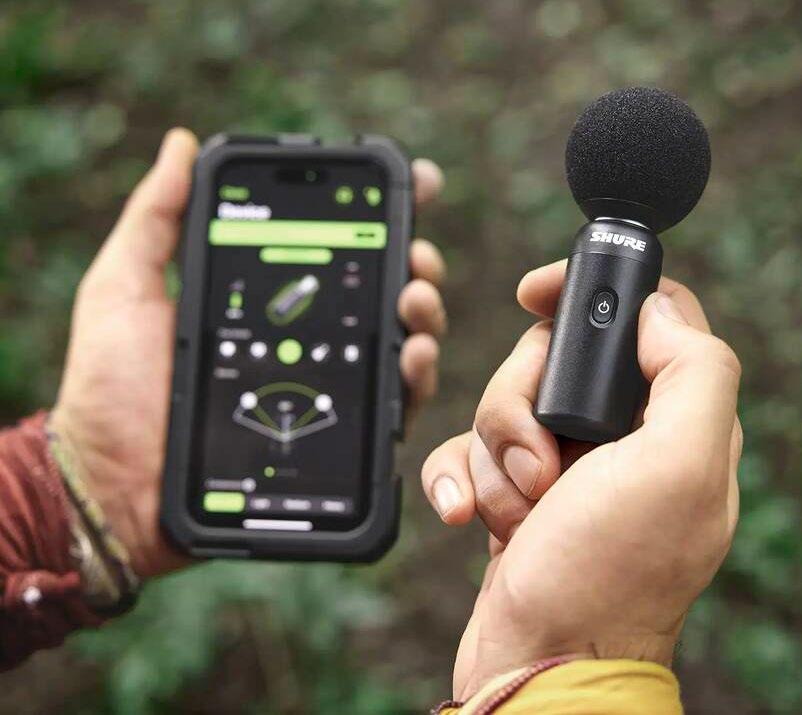


are close to publish-ready, saving time in post and reducing the need for aggressive repair work.
While the MoveMic 88+ can pair directly with a smartphone over Bluetooth for fast, cablefree capture, a receiver is required to connect the microphone reliably to cameras, external recorders, and many computers. The MoveMic Receiver is not a mere convenience; it is the bridge that converts the wireless signal into camera- and computer-friendly outputs, and it adds practical, production-grade features that materially change the system’s utility.
Equipping the system with the receiver gives you low-latency, line-level outputs via a dedicated USB-C port and a 3.5mm output, removing the need for adapters that can compromise audio quality or create sync headaches. The receiver typically mounts on a camera hot-shoe or sits on a small stand, delivering stable physical routing, an integrated display for battery and link status, and one-handed controls for gain and mute. Crucially, it enables direct headphone monitoring of the incoming feed so you can spot handling noise, clipping, or interference during a take. In RF-dense environments, such as expos or festivals, the receiver’s predictable link and wired-style outputs are far more reliable than Bluetooth alone. For any scenario where audio must lock to a picture in post or where you need consistent low-latency monitoring, the receiver is effectively mandatory.
Buying the MoveMic 88+ with the receiver converts a very capable phone-first tool into a full hybrid system that works seamlessly across camera, phone, and laptop workflows. For single-operator vlogs or quick phone-based interviews the microphone alone is useful, but for camera shoots, event coverage, and multidevice productions the receiver is the practical difference between “good enough” and consistently publishable results.
The MoveMic 88+ shortens the path from idea to publishable asset for solo creators. Attach it to a small stand, pair it to your phone for a cable-free setup, select the polar pattern and
record an interview or monologue that sounds like it came from a much larger rig. Documentary shooters will value the ability to switch patterns quickly when moving between close interviews and environmental ambience. Hybrid photographers and event reporters benefit from the receiver’s camera feed for instant syncready audio and the simple ability to monitor in real time. The system’s compactness and durable build reduce setup errors during hectic coverage and survive repeated rapid-change environments. It will not replace multi-track field recorders for complex productions, but for small crews and solo operators it removes many operational headaches and noticeably elevates sound quality.
Shure positions the MoveMic 88+ at a prosumer price. The standalone microphone targets creators looking to upgrade from onboard or phone mics, while the full kit that includes the MoveMic Receiver is aimed at those who work across phone, camera, and computer. The added cost of the receiver is justified when you consider the reliability, low latency, monitoring, and direct outputs it brings to mixed-device shoots. For budget buyers or purely phone-based creators the mic alone offers a meaningful improvement, but for anyone who frequently shoots with cameras or needs reliable sync and monitoring, the full kit is the wiser investment.
Suggested retail positioning for reference: microphone alone ~ $299 / £289; full kit with receiver ~ $449 / £439. These figures reflect the product’s metal construction, selectable polar patterns, and hybrid connectivity; they place the MoveMic 88+ above entry-level pocket wireless systems while remaining more accessible than full broadcast rigs.
The Shure MoveMic 88+ succeeds at its core mission: delivering professional-level capture options to mobile creators who require speed, repeatability, and consistent sonic results. Its selectable polar patterns, pragmatic onboard DSP, and modern connectivity come together in a compact, travel-ready package that measurably improves phone-first and lightweight camera
workflows. The MoveMic Receiver transforms the system from a fast phone mic into a production-ready toolchain by providing lowlatency outputs, reliable links in RF-congested environments, and real-time monitoring. The main compromises are wireless range that is adequate rather than class-leading and a price that targets prosumers rather than entry-level buyers. For creators who prioritise reliable, publishable audio and frequently move between phones, cameras, and laptops, the MoveMic 88+ with the receiver is a practical, well-engineered investment.
Rating
Overall score: 8.8 / 10
This rating recognises strong build quality, thoughtful feature integration, outstanding realworld usability for creators on the move, and audio that consistently outperforms onboard camera and phone microphones. Minor deductions reflect wireless range limitations
compared with premium broadcast systems and the higher cost when the receiver is added. The MoveMic 88+ plus receiver earns high marks for versatility and workflow reliability.
If your production life is mobile, mixed-device, and time-pressured, the MoveMic 88+ with its receiver is a solution that reduces friction and raises the sonic baseline of your work. It does not replace a full sound team or multi-channel recorders for complex shoots, but it gives solo creators and small crews a single, travel-ready system that consistently delivers clean, usable audio and fewer surprises in post.
For creators who demand professionalsounding results without the baggage of fullscale field rigs, this package is an investment that pays back in speed, reliability, and bettersounding content.
If you too want to secure one of these or many others that Shure creates then you can do so below.
www.shure.com
Instagram: @shure
Facebook: @shureinc
X: @shure
TikTok: @shure

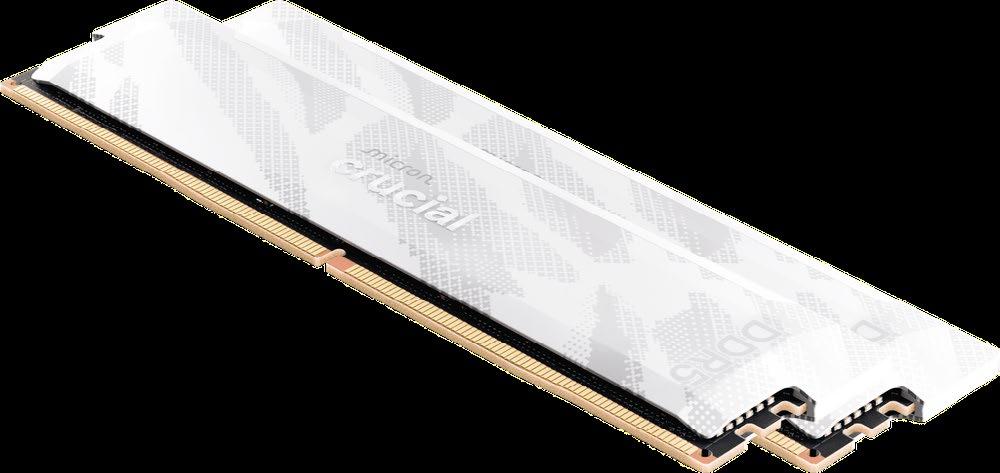
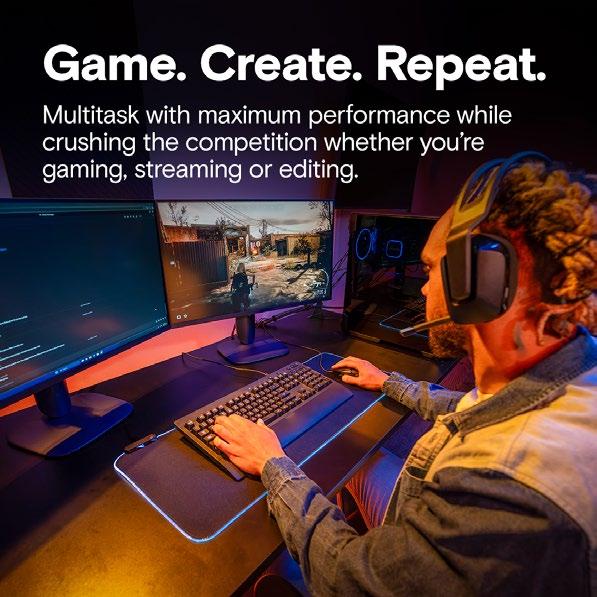
Crucial’s Pro DDR5-6400 CL32 32GB Kit (16GBx2) UDIMM arrives as a no-nonsense performance upgrade for builders who want high memory bandwidth, sensible latency, and rock-solid day-to-day reliability. It’s built to deliver smoother frame pacing in CPU-bound scenarios, faster responsiveness in creative apps, and an easier path to its rated speed through validated memory profiles. This review breaks down the specs, real-world behaviour, the kinds of systems that benefit most, pricing for the 32GB kit, how larger kits change the equation, and a final verdict with a clear numeric score.
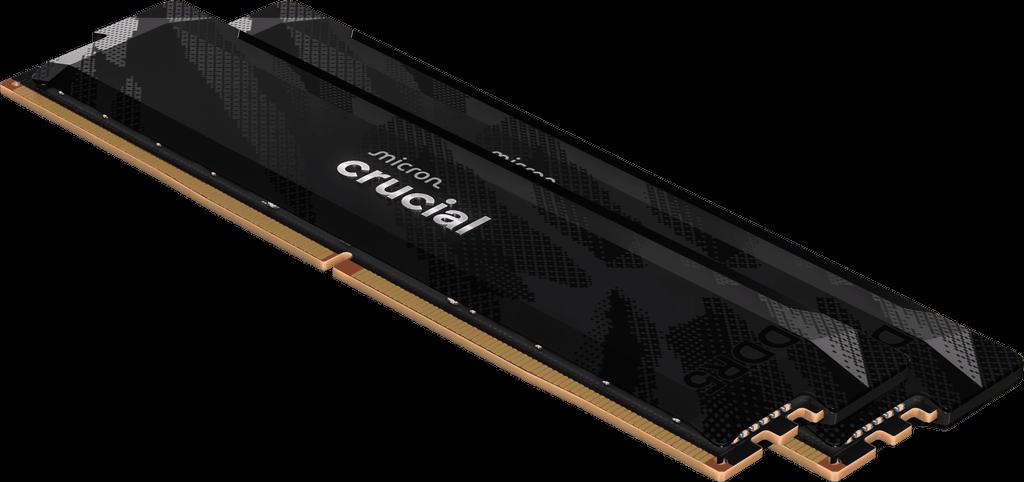
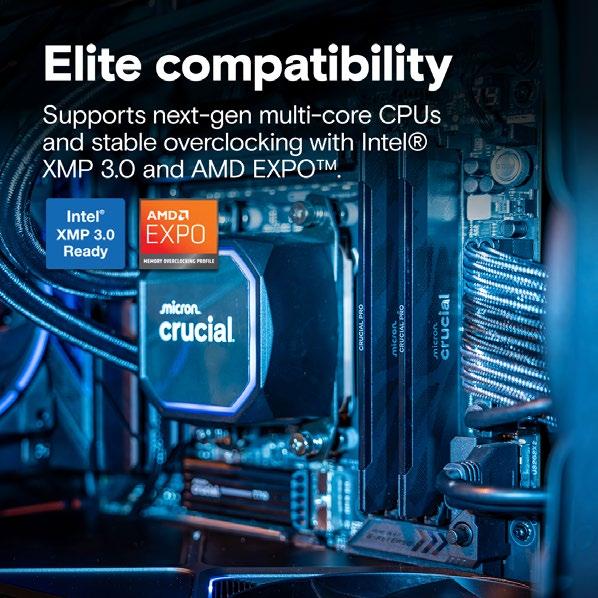
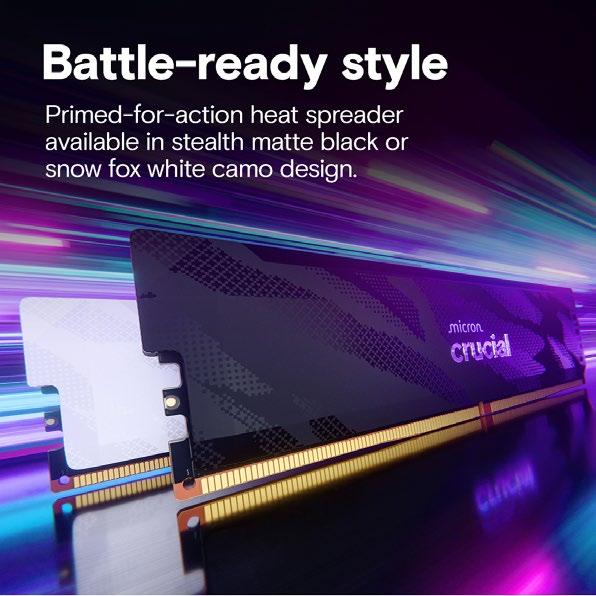
The kit ships as two matched 16 GB UDIMMs for a total of 32 GB of DDR5 memory running at 6400 MT/s with a rated CAS latency of 32. The modules use the standard 288-pin UDIMM form factor and come finished with a low-profile black heat spreader designed to clear large CPU coolers while improving passive heat dissipation during sustained loads and tuning sessions. Crucial validates performance profiles for straightforward activation on motherboards that support XMP/ EXPO-style memory profiles, and the Pro OC branding indicates this kit is tuned for gaming and enthusiast desktop use rather than server or ECC workloads.
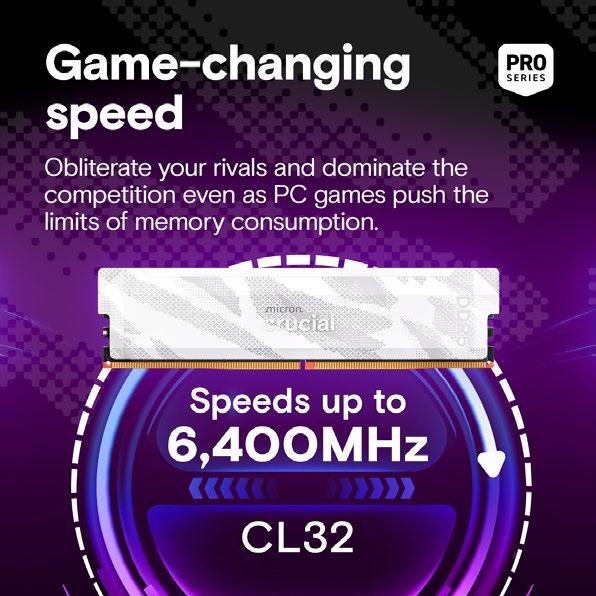
At its rated 6400 MT/s, this kit provides a measurable uplift in raw memory bandwidth compared with entry-level DDR5 kits, and the CL32 timing keeps latency competitive for its frequency tier. In real-world terms that means crisper minimum frame rates and reduced stutter in games where the CPU and memory subsystem are the limiting factors, and faster scrubbing and

viewport responsiveness in creative apps that stream large textures or datasets. The validated profile makes achieving the rated speed mostly a BIOS toggle on modern motherboards, while manual overclocking and tighter tuning remain possible for enthusiasts. Stability and ultimate headroom tie tightly to the platform’s memory controller quality and motherboard routing; the DIMMs themselves are built to be reliable under rated and modestly overclocked conditions.
For everyday personal use the Crucial Pro DDR56400 kit feels noticeably snappier than lowerbandwidth DDR5 options: application switching is brisk, large browser sessions and multiple background tasks produce fewer hiccups, and heavy multitasking remains fluid. In game testing on CPU-sensitive titles and high-refresh scenarios, the extra bandwidth translates into more consistent minimum FPS and reduced hitching during rapid scene changes or texture streaming. Competitive gamers on 144 Hz and higher displays who target tight frame-time

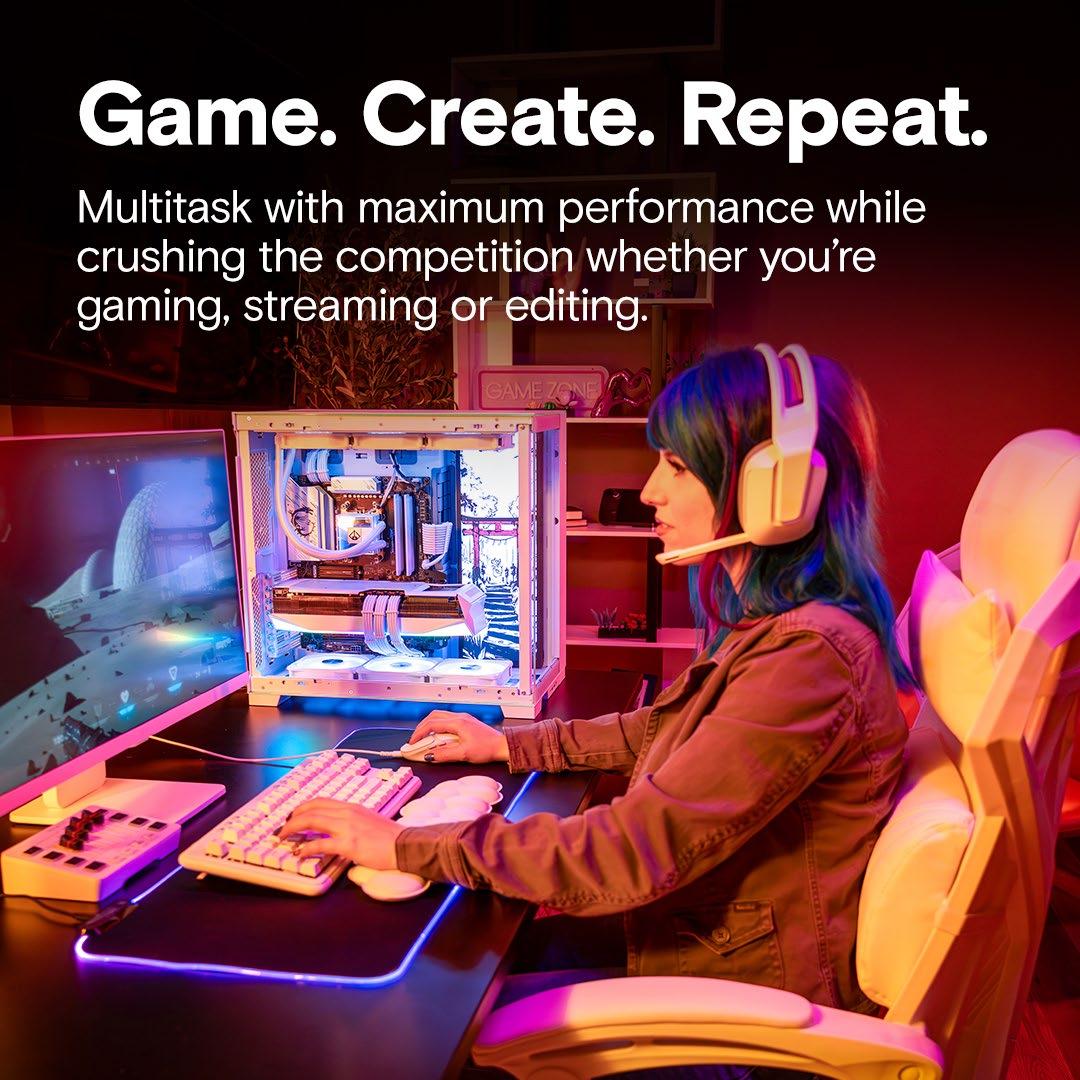
consistency will appreciate the smoother frame pacing when the memory is no longer the bottleneck. Content creators working with highresolution timelines, multi-layered compositing, or large texture libraries will see improved export times and viewport responsiveness versus midtier DDR5 kits, but users who routinely run many memory-hungry applications simultaneously should consider stepping up to 64 GB to avoid capacity constraints.
The 32 GB (2×16 GB) kit is priced at £296 in GBP and $352 in USD. Larger kit configurations are available and will carry higher prices: moving to 64 GB or 128 GB kits increases cost while providing more headroom for heavy multitasking and professional workloads, and singlemodule 16 GB options exist for incremental upgrades. For users balancing budget against futureproofing, the 32 GB kit represents a strong mid-tier choice; professionals and power users working with very large datasets or running
virtual machines should budget for the larger kits, which are priced above the 32 GB SKU.
The Crucial Pro DDR5-6400 CL32 32GB Kit is a thoughtfully tuned, practical performance upgrade for gamers and creators who want measurable improvements in responsiveness and frame-time stability without sacrificing everyday reliability. Its validated profiles reduce setup friction, the thermal design works well in real builds, and the latency-to-frequency balance is geared toward meaningful, usable gains in both gaming and creative tasks. For mainstream enthusiasts and competitive players on modern DDR5 platforms, this kit is a compelling mid-high tier pick.
Rating: 8.5 / 10.
If you too would love to secure one of these for yourselves or you’d love to see what else Crucial creates, then you can do so below.




Reviewed by: Brandon Sawyer
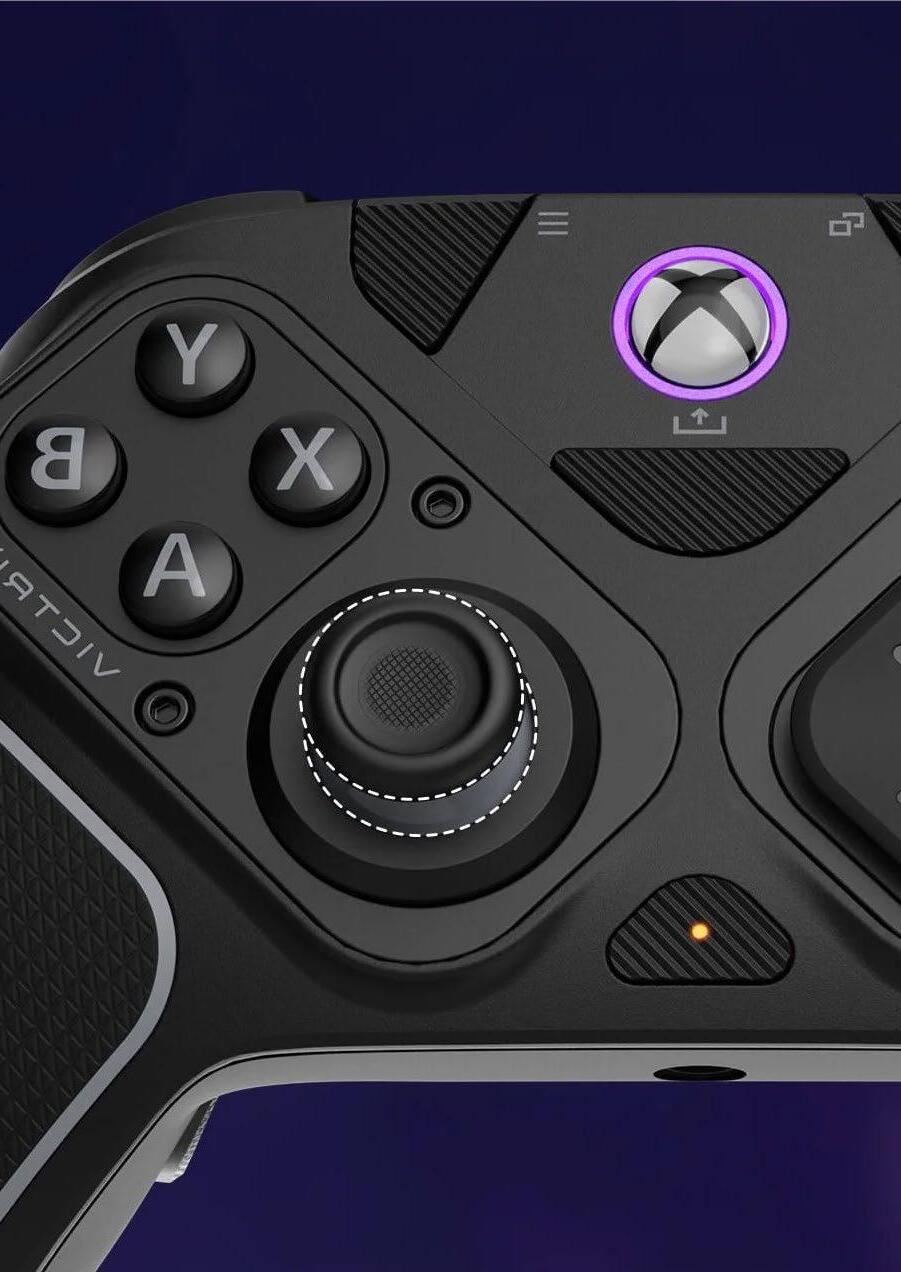
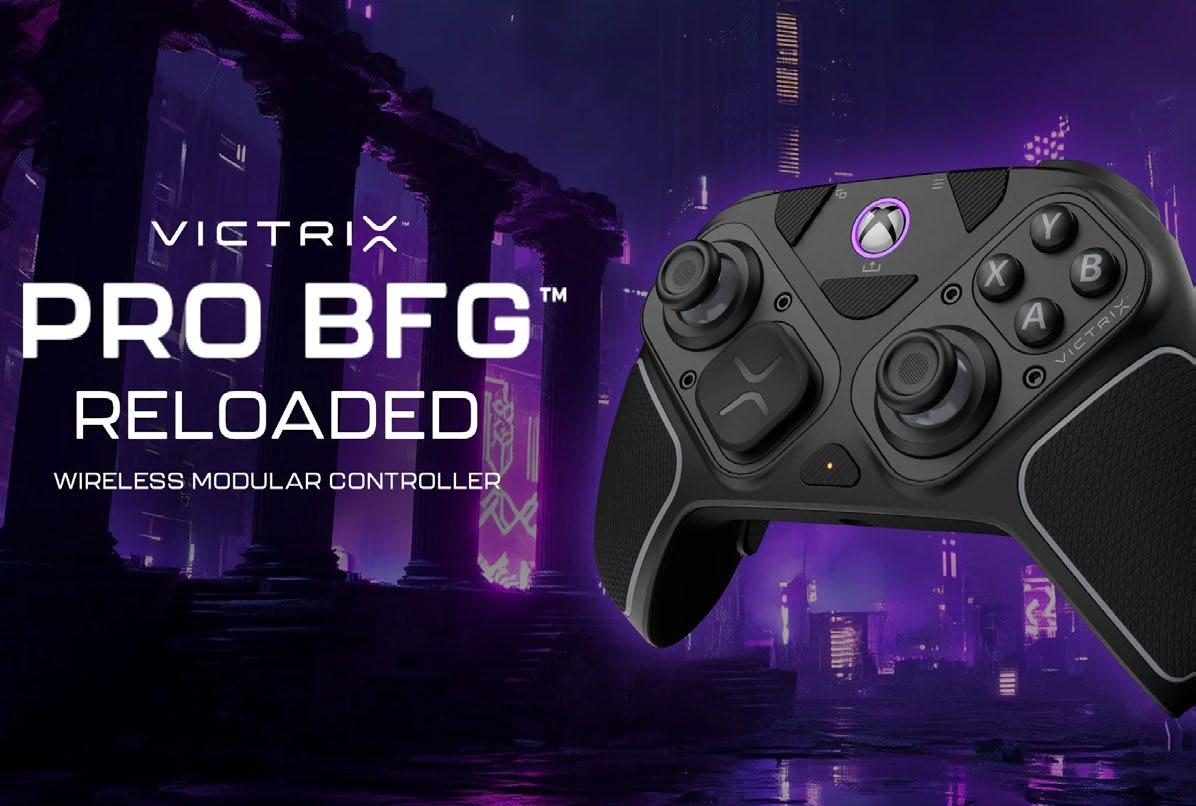
The Pro BFG Reloaded by Turtle Beach is one of those rare peripherals that asks you to treat it like an instrument rather than an accessory. From the feel of the shell under your palms to the tactile click of the Fight pad and the satisfying little clack of a swapped thumb stick seating into place, it turns setup into part of the ritual of playing. This isn’t a controller built to look impressive on a spec sheet alone; it’s engineered to let you tailor the physical interface to the game you’re about to play, whether that’s nailing pixel-perfect inputs in a fighting game, shaving milliseconds off your aim recovery in a competitive shooter, or losing yourself in a sprawling RPG for hours on end.
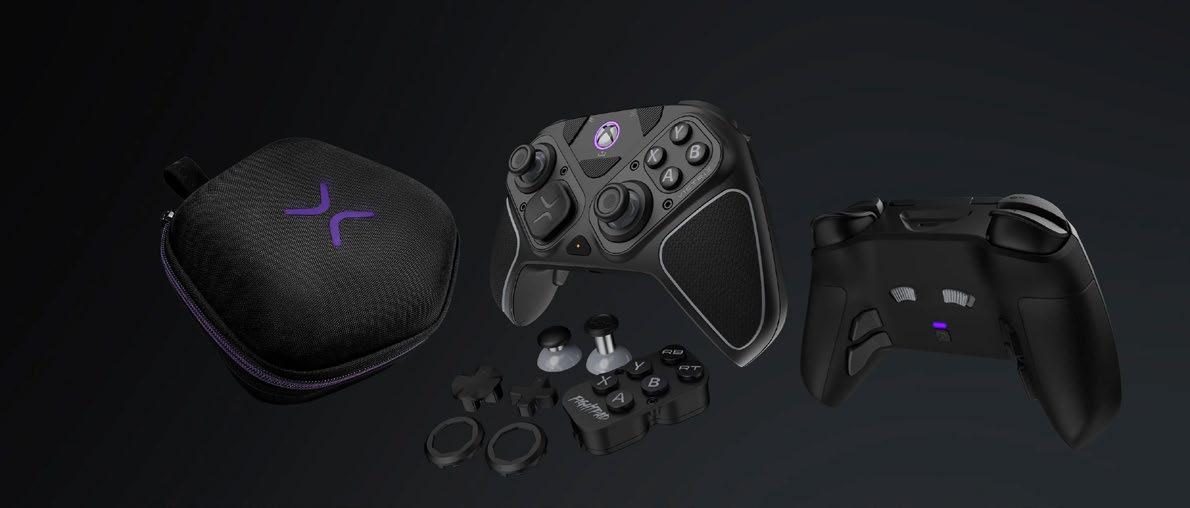
The Reloaded design balances tournament seriousness with consumer polish. The shell feels dense and immaculately assembled, with matte and textured surfaces placed where hands naturally rest to reduce slippage during long sessions. The modular approach is central: the controller ships with multiple thumb sticks, D-pads, gates, and a dedicated six-button Fight pad module that replaces the right stick for arcade-style layouts. Swapping pieces is tactile and secure; a screw-and-socket system locks modules firmly so nothing wiggles mid-match. That solidity matters when you’re pressing the kinds of inputs that decide rounds or clutches. The aesthetics are clean and subtly modern rather than shouty, so the controller sits comfortably on camera or beside a premium headset without stealing visual focus.
Under the surface, the Reloaded leans into reliability and repeatability. Hall-Effect sensors for the sticks and triggers mean you’re getting magnetic sensing rather than potentiometers, which dramatically reduces drift and gives a steadier, linear response over long-term use. The triggers include multiple stop positions with a hair-trigger option for shooters, and the tactile variance between stops is clear and usable rather
than fiddly. The Fight pad is an entirely different animal: it uses microswitches that give a short, decisive travel and an audible click that communicates confidence on every press. That tactile profile shortens reaction time for combos and rapid presses in fighters and reduces accidental diagonals thanks to a carefully considered button layout. Four remappable rear buttons round out the control scheme, and their actuation is firm and consistent, making advanced mappings feel reliable rather than experimental.
The companion control app is not an afterthought. It centralizes stick dead zone shaping, curvature, trigger stop configuration, and full remapping while letting you store multiple profiles that are accessible from the controller itself. That combination of deep desktop tuning and on-controller profile switching is where the Reloaded shines: you can craft a tournamentgrade profile for an online FPS, a high-precision fighting profile with the Fight pad mapping, and a relaxed RPG profile with full trigger travel, then cycle between them without pausing the game. The app also lets you fine-tune microadjustments, slight dead zone tightening or exponential curve tweaks that meaningfully change how the controller behaves in practice.


For creators and content teams this means consistent, repeatable setups for recordings or streams; for competitors it means a reliable path to muscle memory across setups.
Real-world play: FPS, fighting games, and relaxed sessions
In first-person shooters the Reloaded impact is immediate. Swapping to a taller, more precise thumb stick and flipping the triggers to hairtrigger mode gave us crisper aim-down-sight inputs and faster follow-up shots during extended TTK firefights. Headshots felt less like chance and more like a function of setup. In fighting games the Fight pad exposes its value: the microswitches and optimized button spacing made fast light-button strings and buffered special inputs noticeably easier to execute. Combos clicked into place with fewer dropped links and less hand contortion.
For downtime play open-world RPGs, storyheavy indies, or long co-op sessions—the ergonomics and textured grips reduced fatigue. The controller never felt like a compromise when switching genres; instead it read like a different instrument tuned for the moment. The ritual of swapping modules, loading the matching profile, and sitting down to play turned setup into part of the experience rather than an annoyance, and that psychological shift elevates the product beyond raw specs.
Connectivity, battery life, audio, and crossplatform notes
The Pro BFG Reloaded is available in officially licensed Xbox/PC and PlayStation/PC variants, with the Xbox version functioning natively on Xbox consoles and working flawlessly on PC in both wired and low-latency wireless modes. The PlayStation variant is available for those ecosystems and likewise supports PC. A wired USB-C connection is supported and recommended for tournament play; wired mode disables wireless latency and guarantees consistent polling. The controller includes a 3.5mm audio jack with standard headset passthrough and performs as expected for voice and in-game audio. Battery life is strong enough for long sessions and charging via USB-C is straightforward and fast enough that you can jump back into a session quickly.
The Reloaded sits in the premium tier of controllers. Typical retail pricing places it around USD $209–$230 and approximately GBP £179–£199 depending on retailer promotions and regional availability. A PC-only variant exists at a slightly reduced price point but sacrifices some of the licensed cross-platform conveniences and occasionally the Fight pad bundle depending on the SKU. Considering the modular hardware, Hall-Effect sensors, included extras, and build quality, the price reflects the engineering and the convenience of owning one controller that genuinely covers multiple competitive and leisure workflows.
For those who will only ever play one genre on a single platform, the value proposition is less compelling; for multi-genre competitors, content creators, and anyone tired of replacing controllers due to drift, it becomes a costeffective long-term investment.
No product is perfect. The Reloaded premium materials and modular complexity add weight and price, and a small number of users may notice minor rattles from the Fight pad assembly straight out of the box, though these are typically cosmetic and manageable with a quick reseating. Haptics and platform-specific adaptive triggers are not the selling point here; instead, the Reloaded focuses on raw, repeatable input quality and modular flexibility. For longevity, the Hall-Effect sensors are a big selling point: they reduce the most common failure mode in modern controllers and promise a longer trouble-free life if the unit is treated well.
The Pro BFG Reloaded is a thoughtful, deliberately engineered controller that rewards players who invest time to tune and experiment. It excels at delivering consistent inputs across genres, swapping personalities from an FPS-toFighter in minutes, and keeping drift at bay with Hall-Effect hardware.
It asks for an initial investment both financially and in the time needed to learn profile tuning
but it pays back in competitive reliability and creative flexibility. For players and creators who need one controller that does multiple jobs exceptionally well, the Pro BFG Reloaded is nearly unmatched in its class.
Rating: 9.0 out of 10.
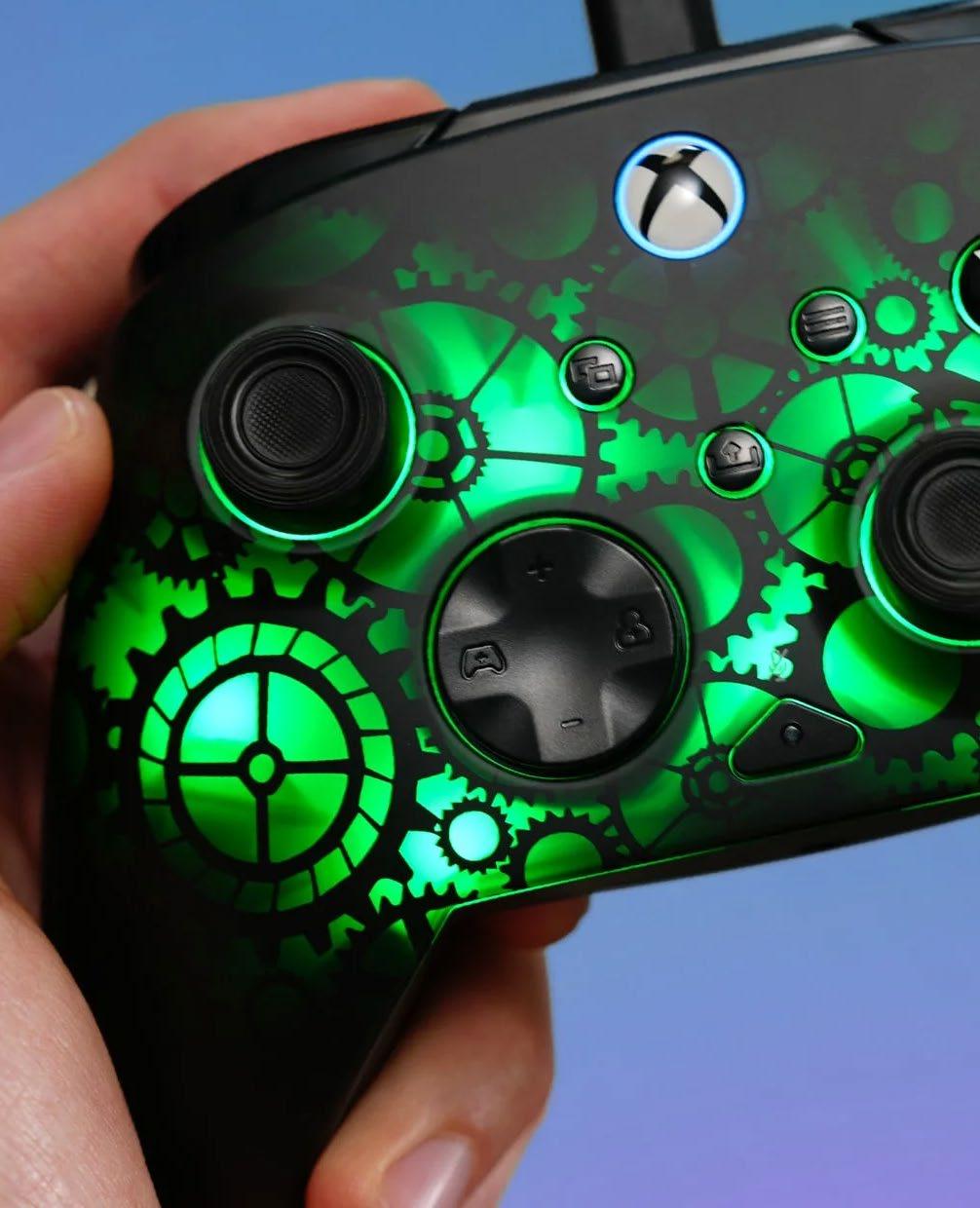
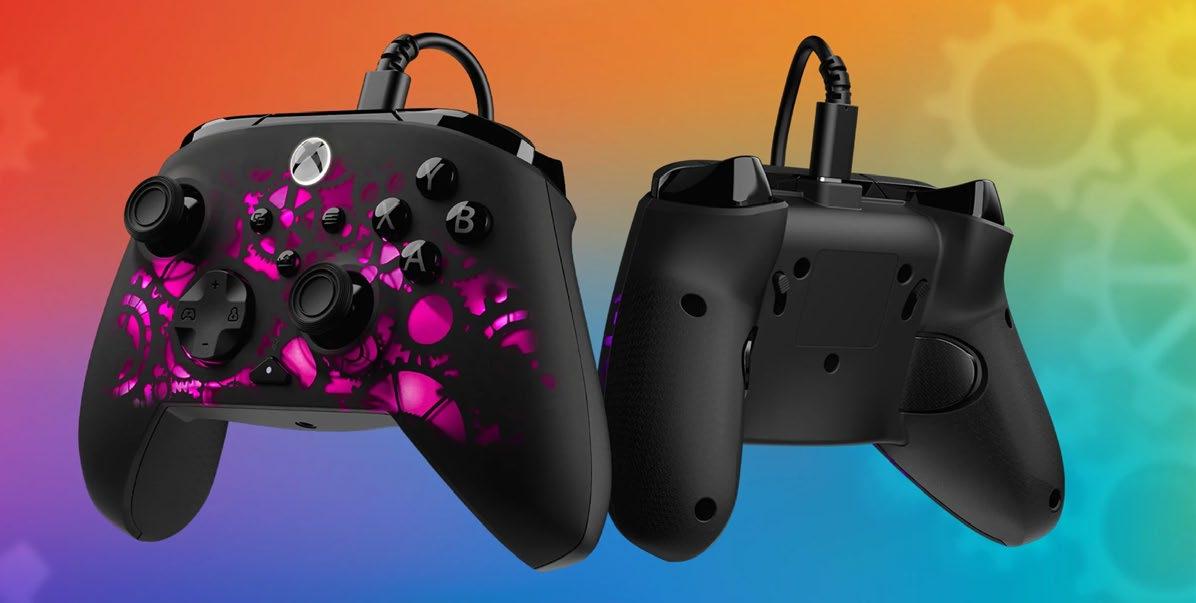
The Afterglow Ignite is a proposition built around personality and practical upgrades: it dresses a familiar Xbox/PC controller formula in a clear, illuminated shell and packs in useful features like configurable lighting, trigger stops, and programmable rear buttons while keeping a price that won’t make most gamers flinch.
It doesn’t try to out-engineer pro-level modular controllers; instead it focuses on delivering high perceived value with tangible convenience for players who want a comfortable, responsive pad that also looks and sounds lively on stream or beside a gaming PC.
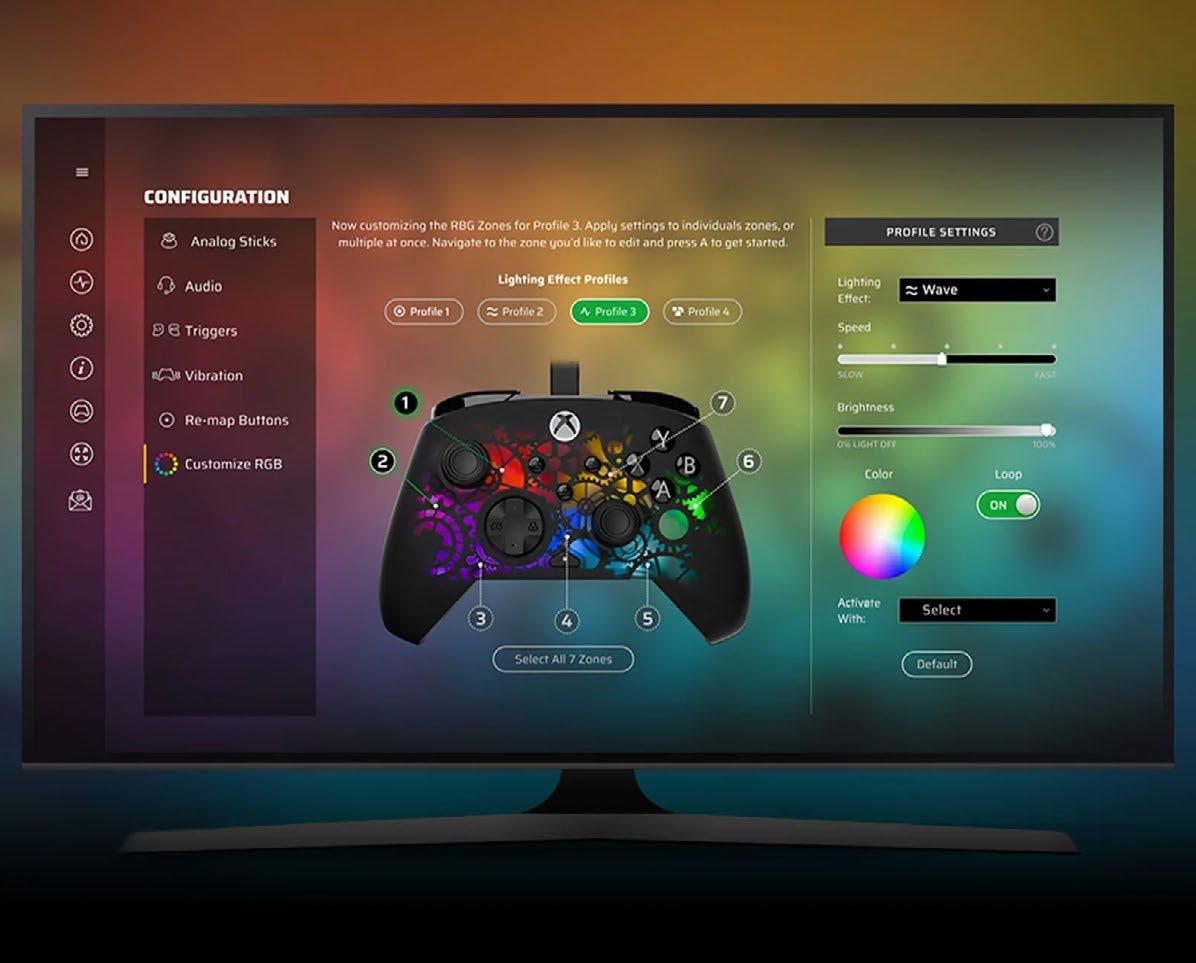
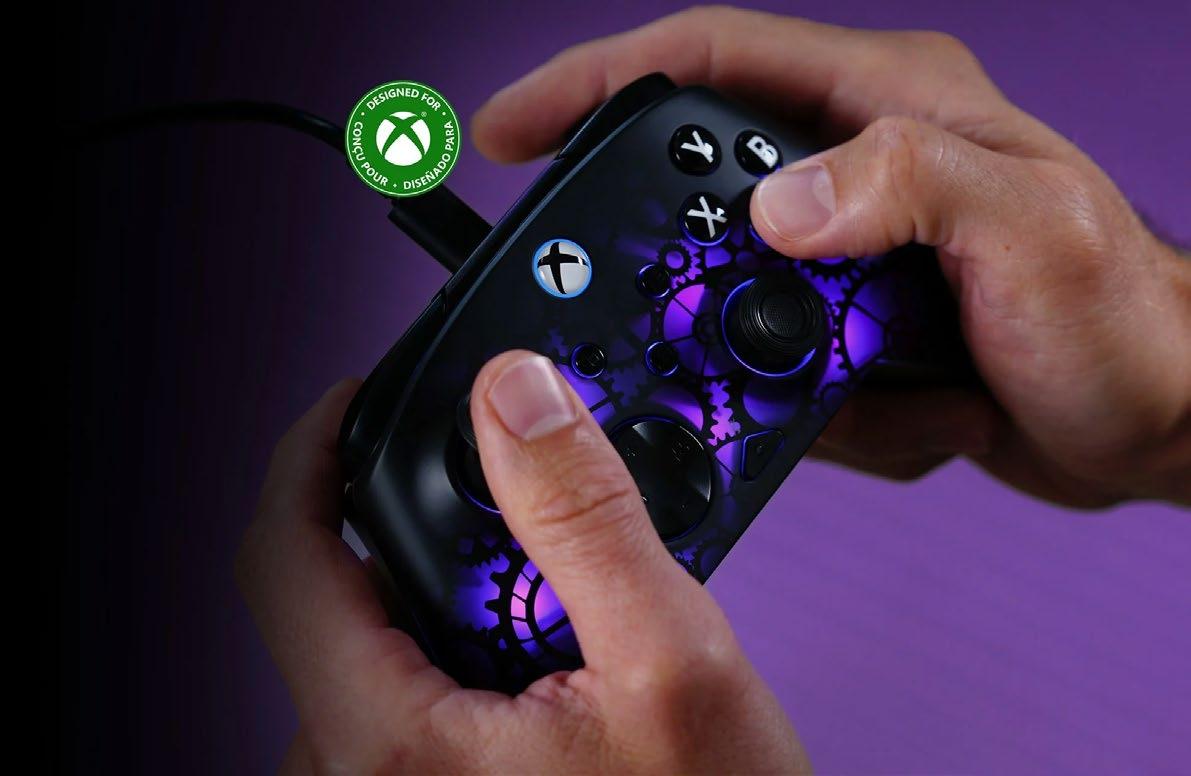
The Ignite’s translucent faceplate and multi-zone RGB lighting give it a distinctive visual signature that transitions well between subtle ambient glow and aggressive, attention-grabbing effects depending on the preset or app-configured pattern; the lighting is practical as much as it is cosmetic because it helps the controller read on-camera and personalizes a setup without additional accessories. Physically the shell dimensions and grip profile match modern Xbox ergonomics closely, with a weight and balance that feel familiar within the first ten minutes of play; the textured sections on the grips keep your hands secure during longer sessions, and the clear plastic hides no manufacturing shortcuts— fit and finish are solid for the price point.
The Ignite uses conventional potentiometer sticks coupled with Hall-effect digital triggers for the shoulder inputs, giving you reliable trigger detection with the option to use the built-in twostop hair-trigger mode for quicker actuation in shooters while maintaining the analogue range when you need full travel. Dual rumble motors and impulse trigger feedback add a layer of immersion to explosions and impacts without feeling tinny, and the face buttons and bumpers maintain the springy, predictable response most players expect from first-party controllers. The inclusion of two remappable rear buttons is a welcome touch that brings competitive conveniences to more casual players, making quick access macros or mapped face buttons straightforward to set up and use without diving into complex software.
Out of the box you can switch lighting modes and use the onboard controls for quick tweaks, while deeper customization is handled through Turtle Beach’s Control Hub app where you can adjust lighting, remap buttons, and apply firmware updates; this dual approach means casual users get immediate visual options while more exacting players can tune profiles on PC for comfort and consistency. In practical use the hair-trigger option shines in TTK-style shooters where shaving travel can shave decisive milliseconds from your response, while the standard trigger travel and faithful joystick feel are perfectly adequate for long RPG sessions, platformers, and co-op campaigns this is a controller that transitions between competitive bursts and relaxed play without making sacrifices that are obvious in everyday sessions.
The Ignite is officially licensed for Xbox Series X|S, Xbox One, and Windows 10/11, and it is primarily offered in Xbox/PC flavours rather than across every console family; if you need a PlayStationlicensed controller, you’ll want to look elsewhere because the Ignite’s design and marketing are focused on Microsoft and PC ecosystems. Retail pricing places the Ignite comfortably in the budget-to-midrange tier: typical UK street pricing sits around £45 at major retailers while US pricing commonly lands near USD $49–$59 depending on sales and bundles, making it competitive for buyers who want visual flair and a few pro features without the premium cost of high-end modular pads.
The Ignite’s strengths are clear: striking RGB lighting, Hall-effect triggers with hair-trigger convenience, remappable rear buttons, and a solid fit-and-finish at a friendly price make it an excellent option for streamers, PC-first players, and casual competitors who want a better-thanstock experience. The trade-offs are likewise obvious to the discerning buyer: joystick sensing uses potentiometers rather than Hall-effect sticks so it doesn’t solve long-term stick drift the way premium controllers do, and it won’t replace a fully modular pro controller for players who demand




switchable layouts or arcade-style fight pad modules.
If your goal is a stylish, reliable controller for mixed play FPS sessions, RPG binges, or streaming setups with visual flair the Ignite delivers exceptional bang-for-buck; if you need tournament-grade modularity or the longest-possible stick lifespan, this isn’t positioned as that end of the market.
The Afterglow Ignite is a confident balance of style and substance: it packs meaningful features that improve day-to-day play without leaning on gimmicks, and its pricing makes those upgrades
accessible to a wide audience. It’s best thought of as a powerful aesthetic and practical upgrade to a stock Xbox/PC pad rather than a wholesale replacement for pro-tier modular controllers, and for most players who want more control, better feedback, and a distinctive look, it’s a smart and satisfying buy.
Rating: 8.2 out of 10.
So that was two great controllers from our wonderful friends over at Turtle Beach and if you too want to secure one of these or at least check out many other products turtle beach creates then you can do so below.


Creators face two constant friction points: unreliable power when working on location and messy, timewasting cables at the desk. Anker’s Prime line promises to address both with high-wattage portable power, a consolidated docking station that aims to replace a jungle of adapters, and a smart multiport charger that centralises everyday power distribution.
I tested the Prime Power Bank 26K 300W, the Prime Docking Station DL7400 14-in-1 Triple Display, and the Prime Charger 250W 6 Ports GaNPrime across real creator workflows, field edits, livestreams, multi-monitor editing and heavily populated desks. The goal here is practical: explain how each unit behaves under real pressure, what it changes about your routine, and whether the price and trade-offs make sense for creators who need both mobility and a dependable studio setup.
Power On the Move, Anker Prime Power Bank 26K 300W, portable power that behaves like a mini-PSU
Anker’s Prime Power Bank is a rare breed of battery pack designed specifically for creators who refuse to be limited by sockets.
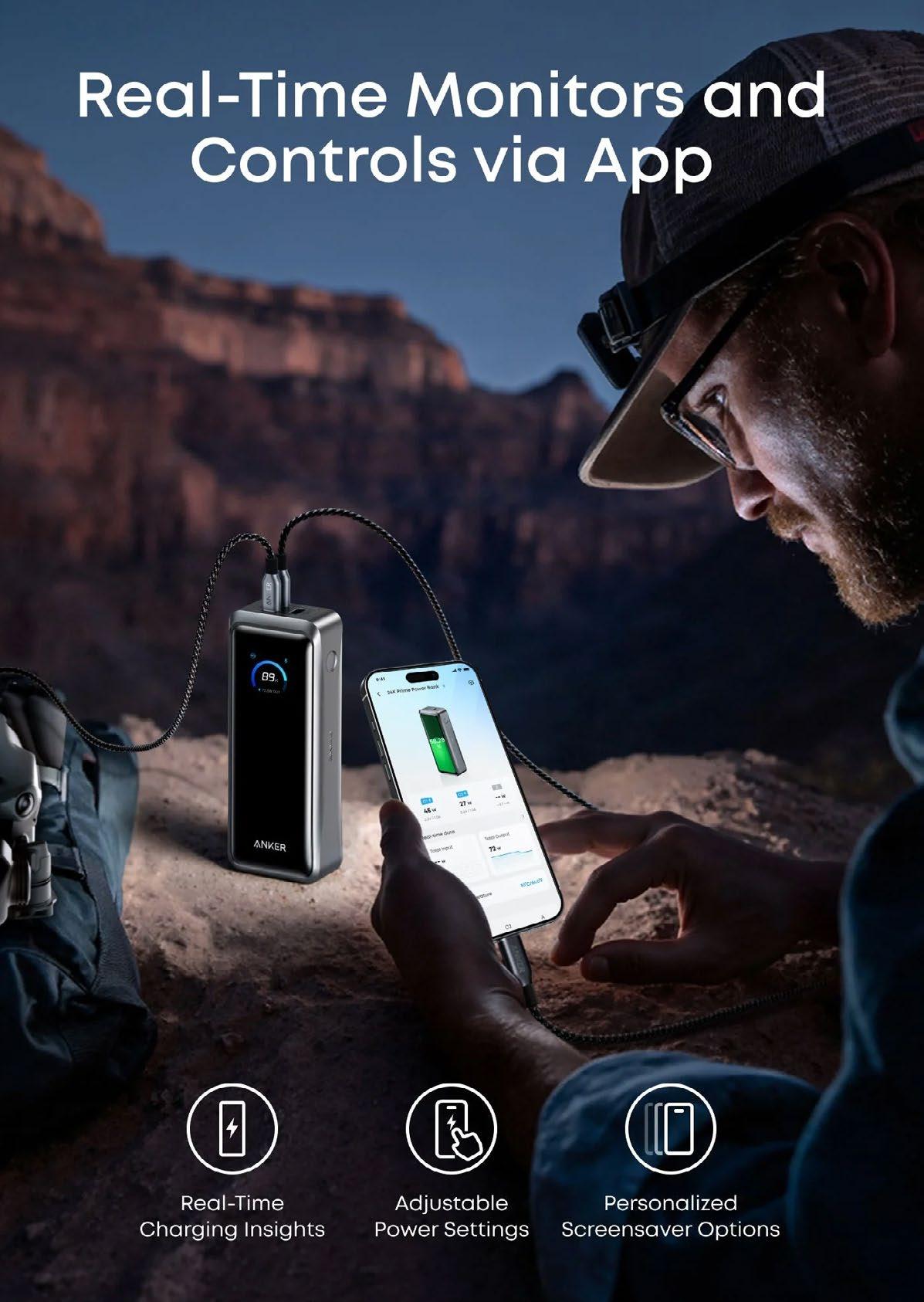
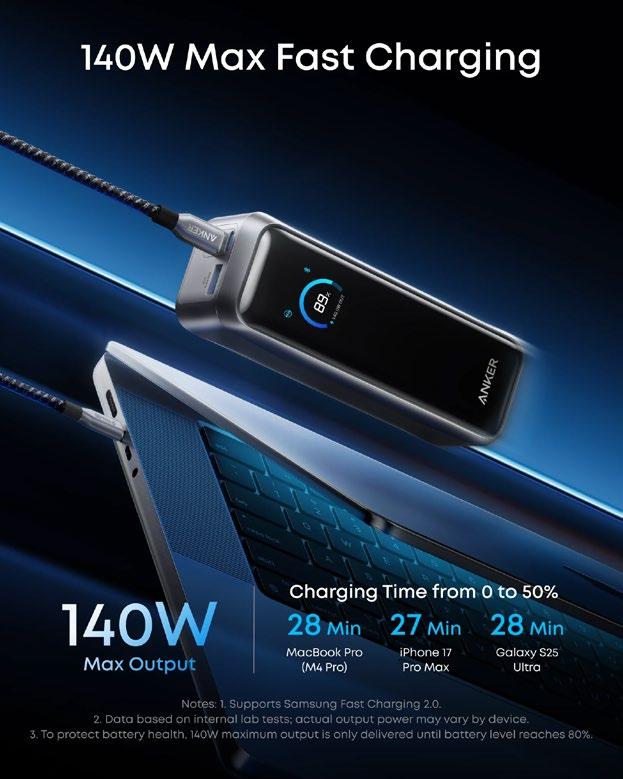
With 26,250 mAh of capacity and a 300W maximum output this unit doesn’t treat laptops as second class citizens; it confidently feeds beefy notebooks, phone gimbals and lights at the same time. In real use the bank kept a 16-inch laptop editing and exporting footage while charging a phone and powering a camera gimbal without the anxiety of sudden throttling.
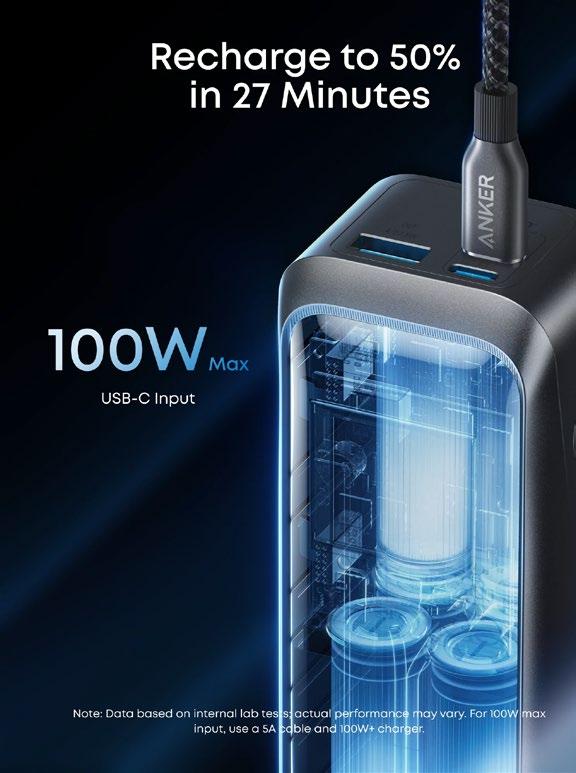
The ability to deliver up to 140W on a single USB-C port gives a near wall-adapter experience for modern laptops and when you combine that with dual-cable recharging the result is a practical workflow: long shoots fast recharges between locations and no waiting around for an empty pack to refill. The unit is heavier than a typical phone power bank, but that weight is the trade for laptop grade performance and a flight safe 99.75 Wh battery chemistry that makes it travel friendly for creators who move between jobsites or airports.

The smart display and companion app make the experience less fiddly than most high-capacity packs. You can watch output and change behaviour on the fly which matters when you are juggling a monitor recorder and phone during a livestream. Under sustained heavy load the pack grows warm but never dangerously hot; the thermal management is conservative and keeps the bank safe through long editing sessions. The real-world caveat is the recharge ecosystem: to exploit the fastest input rates you need a high wattage wall charger to match the bank’s dual cable capability which is often sold separately.
For creators who demand portable reliable power for laptops and multi-device rigs the Prime Power Bank is a strong companion that moves your studio to whatever corner of the city you need to be in. UK price sits around £180 and US street price is about $180 representing a premium over simple phone packs but a strong value for creators who need laptop output and fast top ups.
Desk Dominator, Anker Prime Docking Station DL7400 14 in 1 Triple Display, a single box studio upgrade
The DL7400 docking station positions itself as


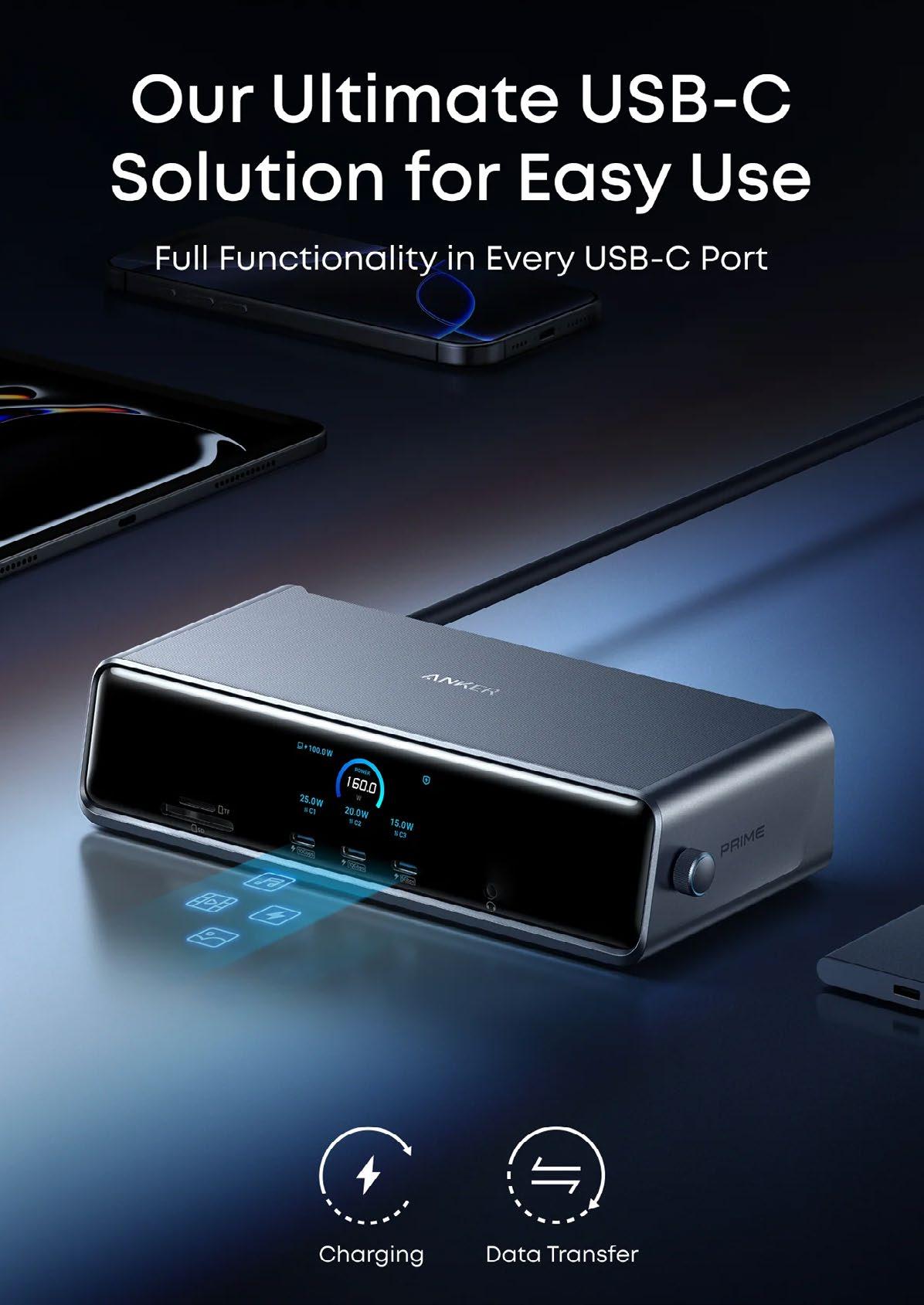
more than an accessory; it’s an operational centre for content creation. This 14 in 1 hub offers triple display support card readers, high speed data, a 2.5GbE network port and up to 140W upstream Power Delivery to charge a host laptop while driving multiple peripherals. When I built a compact editing desk around its laptop that hosted two 4K monitors, a USB capture card and an audio interface the dock achieved what a cluttered collection of adapters should have done all along: simplify the workflow and make everything reliable.
With the DisplayLink driver installed the triple monitor setup remained stable through timeline scrubbing, colour grading and teleprompter use. The dock’s smart display tells you what’s connected and how much power is being drawn which is useful when you add a capture device or an external GPU into the chain and want to avoid overcommitting the upstream PD.
The DL7400 is intentionally built for desks that matter. Its 140W upstream PD is wide enough for bigger creator laptops and the 2.5GbE port plus fast USB lanes shave minutes off multi gig transfers and large media backups. The built in active cooling is effective during sustained encoding or streaming though the fan introduces a low hum under heavy loads that you will notice in an ultra-quiet recording room.
There is also the driver reality: DisplayLink gives superb multi display flexibility but requires driver installation and occasional updates for macOS and Windows which means some IT style attention from creators who expect plug and play across every machine. For studios and hybrid workers who need a single hub to replace a drawer full of adapters the DL7400 delivers long term stability, clean cable management and a noticeably faster return to productive work once it is configured. UK pricing is around £300, and US pricing typically aligns in the same dollar range with bundles or promotions occasionally changing the effective cost.
The Powerhouse on the Desk, Anker Prime Charger 250W 6 Ports GaNPrime, compact intelligent distribution for busy studios
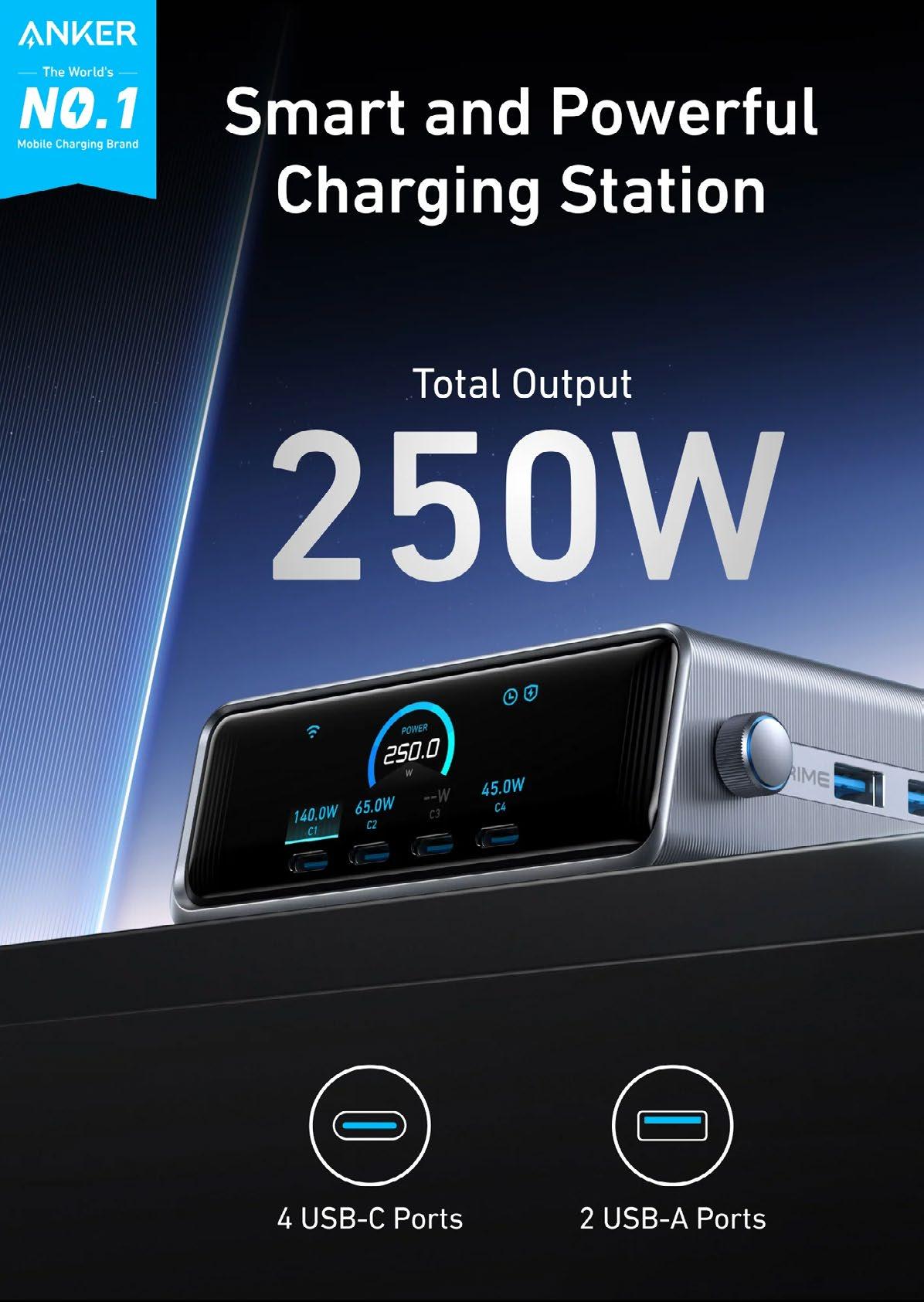
The Prime Charger quietly changes how you approach a busy workspace by squeezing 250W
of intelligent charging into a compact package. GaNPrime technology keeps footprint and heat down while offering four USB-C and two USB-A ports with a 140W capable primary USB-C for fast laptop charging.
On my desk it replaced three separate chargers and immediately simplified cable routing. The LCD is unexpectedly useful because you see exactly where watts are going when you start a render while plugging in a phone, tablet and microphone. The charger’s AI Power Mode balances load well for mixed device sets and the dedicated port priority mode is a lifesaver when you need one device to get the last jump to full charge before a recording session. Performance under full load is stable and efficient with GaNPrime keeping temperatures sensible compared with older silicon bricks.
The tactile control dial and on device readout make it practical in a studio environment where you want to tweak behaviour without opening an app. Firmware updates through companion software promise longer life and better compatibility over time which matters when creators upgrade laptops or cameras. The Prime Charger is overkill for simple needs but for creators running a capture device two laptops and multiple peripherals it pays for itself in convenience and reliability. Expect UK retail around £170 and US pricing at about $170 placing it as a premium replacement for multiple small chargers.
Taken together the Power Bank Dock and Charger form a small ecosystem tailored to modern creators who split time between field work and a dedicated studio. The Power Bank turns cafés and remote locations into temporary editing suites removing the tether to mains power and letting you keep editing or streaming until you reach a reliable outlet.
The Dock becomes the hub you plug into at home or in a shared studio where three screens of fast wired networking and a single upstream cable immediately restore your machine to full workstation functionality. The Charger lives on the desk as the day-to-day utility quietly feeding phones, tablets, streaming mics and accessory batteries with clear readouts and prioritisation when deadlines arrive. During multi-device tests the convenience payoff was clear: far fewer sudden stops to find a spare adapter, no frantic swaps of a single USB-C cable between devices



mid-upload and a smoother handoff from field to studio.
Minor frictions remain, high wattage recharging of the power bank benefits from a matching high watt wall brick, the dock needs occasional driver attention for flawless multi monitor setups and the charger is a premium buy compared with budget multi-port alternatives. Those are practical trade-offs not dealbreakers for creators who value time reliability and a tidy desk.
Anker Prime Power Bank 26K 300W earns an 8.8 out of 10 for bringing true laptop grade portability and fast recharging into a flight friendly package that transforms on location workflows.
Anker Prime Docking Station DL7400 14 in 1 Triple Display receives a 9 out of 10 for being a powerful consolidated desktop heart for creators who need multi display stability, high upstream PD and sensible thermal control. Anker Prime Charger 250W 6 Ports GaNPrime scores 8.5 out of 10 for delivering compact intelligent multi-port power distribution with a usable interface that makes studio life easier.
Creators juggle unreliable power on location, cable chaos at the desk, and the constant context switch between mobile shoots and multi-monitor editing. Anker’s Prime line leans into solving those problems with laptop-grade portable power, magnetic wireless convenience across desk and car, and a 3-in-1 consolidation that cleans up nightly teardown routines. I tested the Anker Prime Power Bank (20K, 220W), the Anker Prime Wireless Charging Station (3-in-1, MagGo, AirCool, Dock Stand), and the Anker Prime Wireless Car Charger (MagGo, AirCool, Pad) across realistic creator scenarios: field edits, livestream tools, camera charging, desk
tidiness, and in-car commute prep.
Anker Prime Power Bank (20K, 220W) — portable power that treats laptops like firstclass devices - £129.99
Key trait: laptop-capable output in a compact, flight-friendly package.What it solves: keeps heavier creator rigs running — laptops, gimbals, lights and phones when mains are out of reach. In use this 20,000 mAh pack behaves like a mini PSU rather than a phone brick. The 220W peak output and high single-port USB-C capability let you push a modern creator laptop through edits and exports while simultaneously topping up a phone and powering an on-camera light. That dual-device sustain is the practical leap: no more pausing a timeline because a phone or recorder died.
Thermals are managed well — expect the unit to get warm under sustained full load but not to the point of throttling. The smart display and companion controls give real-time visibility into which devices are drawing power and let you make quick trade-offs mid-session. Recharging the bank quickly relies on an appropriately powerful wall charger; the fastest top-ups require matching high-watt inputs that are often sold separately. Who it’s for: solo creators and hybrid freelancers who move between locations and need true laptop output without hauling bulky batteries.
Verdict highlight: powerful, portable, and trustworthy when you need to turn a café or client location into a temporary edit suite.
MagGo, AirCool, Dock Stand) — a tidy, magnetic command post for the desk - £109.99
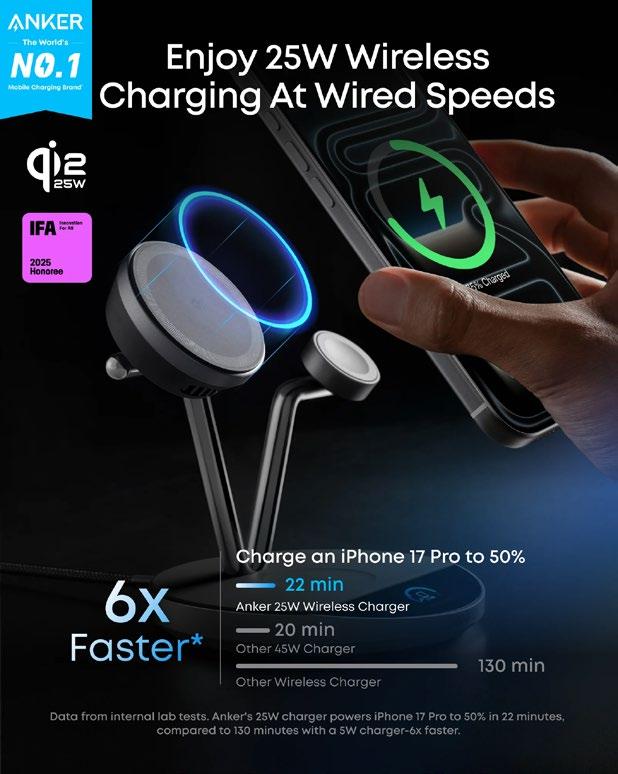
Key trait: consolidated, magnetic 3-in-1 charging with active cooling and flexible stand modes. What it solves: eliminates bedside/desk cable sprawl and creates a consistent place to land phones, earbuds and a watch. As a desk piece the 3-in-1 station immediately reduces friction: a magnetic MagGo phone pad that snaps perfectly into place, a dedicated puck for wearable charging, and a base for earbuds. The Dock Stand mode is particularly useful for
creators who reference scripts or camera feeds while charging the phone sits at camera-friendly angles without leaning on a cable. The AirCool feature is practical during longer wireless charging sessions, keeping thermals sensible for both phone and charger. mWireless charging means fewer swaps and less cable drama during live sessions or when you’re swapping phones between capture and moderation duties. That said, wireless remains slightly slower than wired fast-charging for the heaviest drains; for last-minute top-ups before a shoot you’ll still reach for a USB-C fast brick. The station’s build and magnetic alignment remove the everyday annoyance of mis-placed devices and provide a single place to check battery health between takes.
Who it’s for: creators who value clean surfaces and want a quick, reliable place to seat devices between shots or streams.
Verdict highlight: great for desk and bedside workflows where convenience and tidy staging matter more than absolute charging speed.
Anker Prime Wireless Car Charger (MagGo, AirCool, Pad) — magnetic convenience for the commute and on-road content runs - £79.99
Key trait: secure MagGo mounting with active cooling and easy one-hand operation. What it solves: fast, reliable phone mounting and topping-up while you drive to gigs, meetings, or shoots. mThe MagGo car pad clamps and aligns quickly; phone pickup/drop-off becomes negligible while you’re juggling equipment crates or coffee. AirCool integration reduces thermal throttling during navigation plus heavy background recording or tethering. The pad variant is especially useful when you prefer a flat surface mount for passenger-side setups or desk-conversion in a pinch.
Real-world use: navigation with background recording, tethered camera control, or quick uploads from a roadside hotspot. The magnetic grip is reassuring even over bumpy roads, and the one-hand release is a genuine quality-oflife improvement when you’re loading gear. Wireless speed is not a substitute for wired laptop charging, but as a commute companion it removes the friction of plugging in and reduces cable wear.
Who it’s for: creators who treat the car as a mobile production node and need a secure, quick way to keep phones ready for uploads or remote control.
Verdict highlight: small change, big impact for on-the-road reliability and fewer dropped devices during hectic gear runs.
How the three pieces reshape a creator workflow
Together these three Prime products create a coherent mobility ↔ studio bridge. The Power Bank extends editing sessions away from mains and turns cafés or on-site green rooms into working zones. The 3-in-1 Wireless Charging Station reduces desk clutter and creates a consistent staging area for devices between takes. The Car Charger removes a recurring pinch point during commutes and gear runs, so phones are always charged and mounted for quick uploads or remote camera controls. Practical trade-offs: wireless speeds trail wired when you need a super-fast top-up; the power bank’s quickest recharges require a high-watt wall brick; and magnetic wireless alignment demands phone cases that support MagGo. None of these are dealbreakers they’re trade-offs you choose for convenience, reduced friction, and a cleaner workflow.
Anker Prime Power Bank (20K, 220W) — 8.6 / 10 — Delivers laptop-grade portability in a compact, travelable form that meaningfully expands onlocation uptime.
Anker Prime Wireless Charging Station (3-in1, MagGo, AirCool, Dock Stand) — 8.3 / 10 — Cleans up your desk and makes device staging effortless, wireless convenience over raw speed.
Anker Prime Wireless Car Charger (MagGo, AirCool, Pad) — 8.0 / 10 — Small, smart improvement to commutes and road workflows that prevents a lot of tiny headaches.
If you split time between field shoots, client drop-ins and a home studio, this trio is a practical investment in saving minutes and mental bandwidth every day. They don’t replace fast wired charging when you absolutely need it, but they do remove the most common frictions that steal focus from creating.


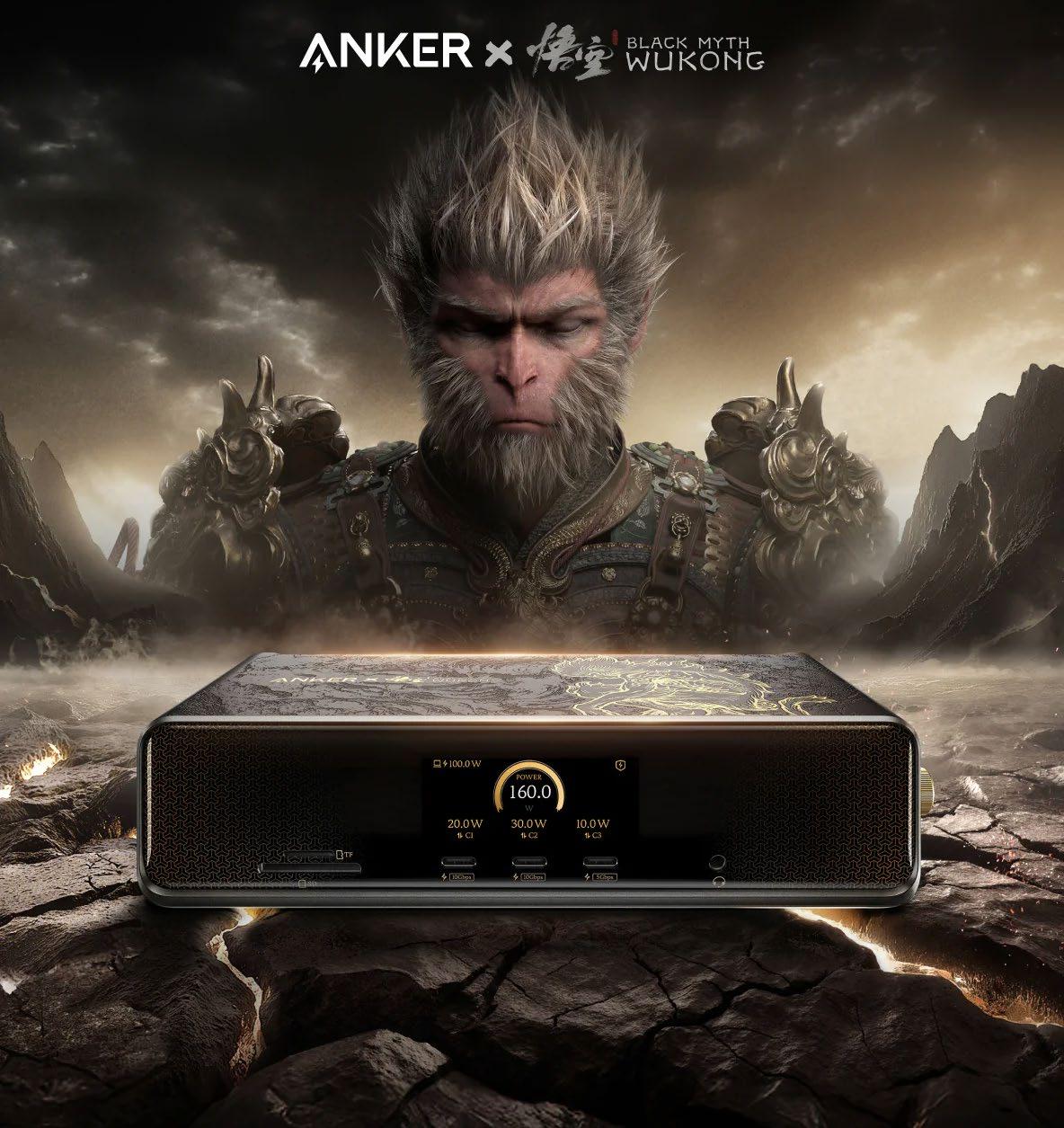
Thank you, Anker, for delivering a considered and beautifully executed limited-edition Black Myth: Wukong gift box. Number 326 arrives not as a simple promotional bundle but as a curated experience that marries high-performance hardware with collectible design, made to look and perform on camera, in the studio, and on a collector’s shelf.
For those who do not know — Black Myth: Wukong in brief
Black Myth: Wukong is a modern action RPG inspired by the classic Chinese tale Journey to the West, continuing the mythic legacy of Sun Wukong, the Monkey King. The game reimagines the story as a dark, lore-rich journey in which the player the Destined One pursues scattered relics that hold the original hero’s essence, confronting gods, demons and the fractured remnants of a legendary past. Its cinematic combat layered narrative threads and visual staging make the world and its characters ideal partners for a themed collaboration that speaks to both fans and storytellers.
Box 326 places the Anker edition Prime 14-in-1 dock at the centre of a thoughtfully composed set of artifacts: a custom USB-C cable, a collector’s coin and decorative stone, a pack of high-quality picture cards, an exclusive t-shirt, a Zhu Bajie plush keychain and a personal-tone note. Each piece reinforces the collaboration’s visual language while serving practical or presentational purposes. The package reads as a single design statement rather than a collection of tokens, and that cohesion is the release’s strongest asset.
The Anker Prime 14-in-1 dock
The Prime dock is the technical core of the box and performs as expected from Anker’s higher tier hardware. With dense port coverage, reliable power delivery and capable tripledisplay support, it meets the needs of content professionals who demand connectivity and stability.
The Wukong-themed finish is applied with restraint; it adds visual weight without compromising ergonomics or airflow and translates well on camera. In short, the dock keeps its practical, dependable character while gaining narrative presence.
The supporting items are purposefully curated. The custom USB-C cable is robust and visually integrated, ideal for creators who value both durability and aesthetics. The coin and decorative stone act as tactile props that elevate desk photography and stream backdrops. Picture cards are printed for creator use, lending themselves to unboxings, social posts and display. The exclusive t-shirt is solidly made and wearable, while the Zhu Bajie plush keychain adds character and approachability to an otherwise tech-centric package. The included note personalises the set and shifts ownership from transactional to memorable.
Packaging and layout amplify the experience: the numbered plate, arranged presentation and tactile finishes signal a limited run designed for collectors rather than a mass giveaway. The unboxing is deliberately staged and satisfies the expectations of creators who share process and story online.
This release works best at the intersection of fandom and functionality. For buyers who need raw technical performance alone, the standard Prime dock delivers similar capability without the collectible premium. For those who value narrative, shareability and collectible presentation, the added cost is justified by the package’s content and finished presentation.
• Anker Prime 14-in-1 Dock: 9.0 / 10
• Custom USB-C Cable: 8.0 / 10
• Custom Coin and Decorative Stone: 8.0 / 10
• Picture Cards: 9.0 / 10
• Exclusive T-shirt: 8.0 / 10
• Zhu Bajie Plush Keychain: 7.0 / 10
• Curation and Packaging: 9.0 / 10
Aggregate score for the full gift box: 8.6 / 10.
Closing
Anker’s Black Myth: Wukong collaboration succeeds because it understands two audiences at once: creators who need reliable,
high-performance hardware and fans who want objects that carry story and character.
Box number 326 is polished, camera-ready and collectible a release built to be used, photographed and displayed.
Thank you, Anker, for a collaboration that balances engineering, craft and fandom. Availability: US only. Head on over to Anker US below to learn more.


Reviewed by: Brandon Sawyer
We spent weeks living with Govee’s trio as our primary backdrop system, integrating each device into real streams, recorded walkthroughs and rapid turnaround shoots to judge how they perform under pressure. This review synthesises hands-on experience, precise setup methods, camera-safe tuning, spec detail and creative workflows so you can reproduce our looks exactly and understand why this bundle is a production tool rather than decorative lighting.
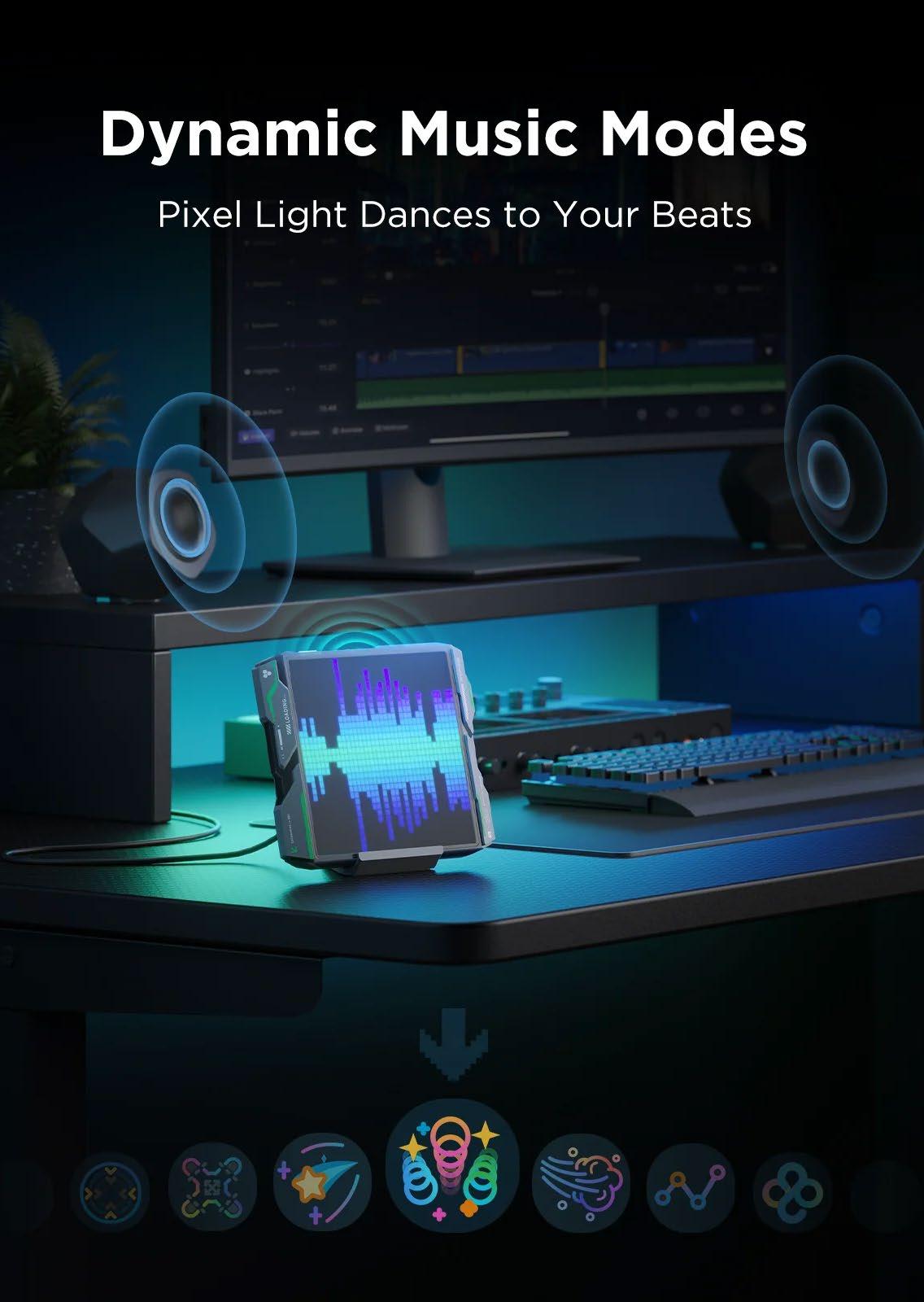
Gaming Pixel Light: micro-display that becomes an operational production cue
Out of the box the Gaming Pixel Light feels intentionally compact and purpose-built to live inside the camera frame without competing for attention. The unit pairs quickly to the Govee app, and the first calibration step where you set flicker-free capture and a camera-friendly brightness cap matters more than you’d expect: it eliminates rolling lines on 60–120 fps captures and prevents the LED canvas from blowing out highlights on facecams.
The defining feature is the AI image-to-sprite pipeline inside the app. Instead of moving between Photoshop and an external converter, we imported logos, emotes and simple graphics, tuned palette and dithering, and generated clean 16×16 and 32×32 animations that exported directly into scenes. In live use the Pixel Light became a glanceable control panel: a pulsing “Live” badge, a short confirm animation for alerts, and a BRB loop that looks handcrafted rather than factory preset. We trained co-hosts and producers to read the shelf cue instead of calling out overlays, and that reduced reaction time and eliminated the mental overhead of coordinating transitions. The canvas is small by intention and extremes in

cyan or magenta can require slight desaturation when keying, so we always archived sprites locally to protect our brand assets from campaign changes; beyond that caveat, it is a tiny device with outsized practical value for creators who rely on visual cues and branded micro-animations.
Hexagon Ultra panels: a cinematic backdrop and the studio’s visual signature
The Hexagon Ultra panels are the backbone of the setup; physically and visually they mark a step up from commodity RGB tiles. Their thicker profiles, denser LED matrix and refined edge treatment produce consistently smooth gradients and a colour engine that holds hue across viewing angles and output levels an essential trait for any backdrop that must survive thumbnail crops, mobile recodes, and variable upload encodes.
Installing a seven-panel cluster about 0.6–1.2 metres behind a seated presenter gave us immediate photographic separation: the panels provided a complementary layer that pushed the subject forward without stealing attention. Equally important is the DreamView desktop sync, which in practice is not a gimmick but a time saver. When enabled during gameplay or highlight reels, DreamView reads dominant

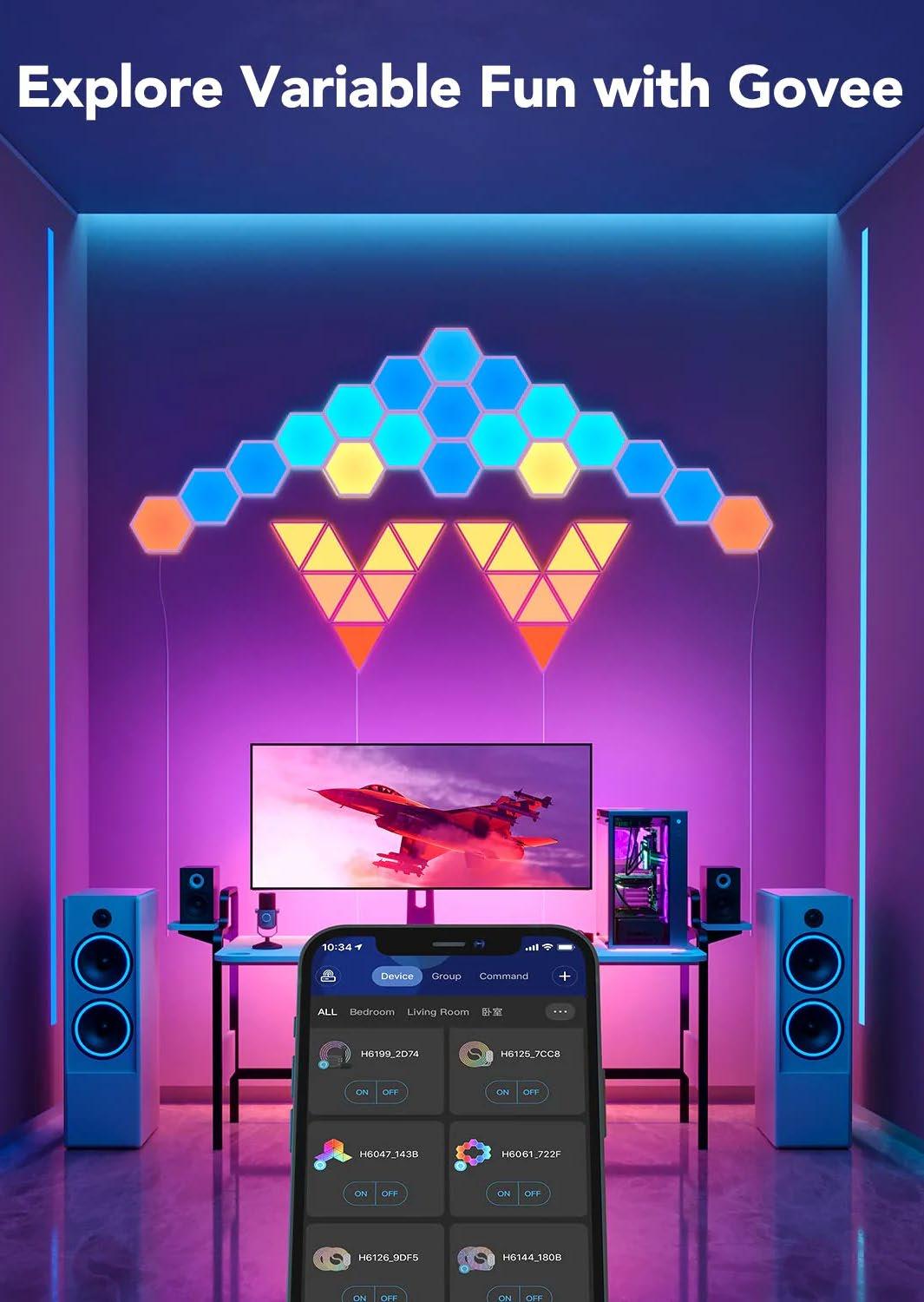



on-screen tones and produces harmonious background shifts instead of abrupt, attentiongrabbing washes.
We used the panels to author transitions, create thumbnail signatures and hold sponsor colours at a consistent intensity; the time saved in grading alone justified the hardware. The only pragmatic downsides were the planning required for adhesive mounting and cable routing, and the natural off-axis saturation falloff any flat panel exhibits; those are solved by measured placement and tidy cable choreography, not by hardware changes, and are a small price to pay for the studio-level backdrop they deliver.
Floor Lamp Pro: sculpting light
The Floor Lamp Pro is where flexibility meets daily practicality. Built on a weighted base with an articulated arm and repeatable detent positions, the lamp behaves like a gaffer’s tool rather than a decorative lamp: lock in an exact rim angle, move it laterally for soft fill, or raise it to act as a key for quick B-roll shoots. Its diffusion head produces flattering gradients and a wide, usable lumen range so skin tones remain consistent across camera types.
The lamp’s integrated Bluetooth speaker is modest in fidelity but surprisingly useful as a production convenience: countdown beds for live starts, ambient tracks during BRB sequences, and quick microphone bleed checks before going live. Its DSP and musicsync modes add tasteful motion to background elements in highlight reels without introducing perceptible latency. We always matched the lamp’s Kelvin to our key light slightly warming the lamp when our key was daylight LED to preserve skin tones and reduce grade time. The speaker should not replace studio monitors for mixing, but for streamers and small teams who value speed, the lamp’s combined light-andaudio functionality removes one more device from the setup table and shortens the prestream checklist.
We built three repeatable scenes and matched them to capture presets, so a single tap recalled
the entire studio look and cut pre-stream prep dramatically. For competitive live sessions we dialled the Hexagon Ultra to a muted teal gradient at medium intensity, set the Floor Lamp Pro to a cool rim detent and bounded the Pixel Light to a subtle pulsing logo bound to alerts; the result was hallmark separation, immediate on-brand thumbnails and fewer retakes driven by lighting inconsistency. For racing or highenergy gameplay we enabled DreamView so the Hexagon panels mirrored dominant in-game hues, moved the Floor Lamp Pro closer for warmer skin balance and used the Pixel Light as a lap/timer counter; the setup increased perceived speed and clarity in highlight reels.
For conversational or cinematic streams we selected slow ambient gradients on the Hexagons, a soft warm key on the lamp with Bass Sync at low settings, and gentle Pixel Light loops; the result was a relaxed, cinematic mood that improved first-minute retention. Storing these scenes in the app reduced our pre-stream routine from roughly twenty-five minutes to under seven, and that repeatability produced measurable improvements in thumbnail accuracy, upload turnaround and viewer retention during the crucial opening minute.
Capture fidelity hinges on small, repeatable practices. Match Hexagon colour temperature to your key light to avoid skin tone shifts and set the Hexagon array at least 0.6 metres behind the subject to prevent sensor bloom. Use the Pixel Light’s flicker-free mode for higher shutter speeds and cap its brightness in the app to prevent lens flare. Photograph and document Floor Lamp detent positions and store those values as app presets so your rim and fill angles are reproducible across weeks. Always export and archive pixel sprites and static panel frames in cloud storage so themed packs or firmware changes cannot break your signature look. These habits are what make the system reliable session after session, not just impressive in a one-off setup.
The Pixel Light uses an RGB LED pixel matrix available in 16×16 and 32×32 canvas modes

with Wi-Fi and Bluetooth connectivity, USB-C power and app features including AI sprite conversion, frame editing and scene binding. Use it as a shelf-level production cue, enable flicker-free capture and archive every sprite.
The Hexagon Ultra modules feature high-density LEDs, a single controller per array, DreamView desktop sync and adhesive mounting; place panels 0.6–1.2 metres behind a seated subject, match Kelvin to key lights and use DreamView for gameplay or highlight reactions at moderate intensity. The Floor Lamp Pro offers high lumen output, wide Kelvin control, app/remote operation, detent articulation and an integrated Bluetooth speaker; position it behind and slightly off-axis to create rim light, match Kelvin to the key and use the speaker for countdowns and ambience rather than critical audio monitoring.
During our testing the Hexagon Ultra sevenpanel kits commonly appeared in the low-tomid £200s at UK retailers, the Floor Lamp Pro was typically available between approximately £129 and £199 depending on promotions, and the Gaming Pixel Light usually retails in the mid£40 to low £80 bracket depending on edition and stock. A fully realised studio with these three products sits in the mid-hundreds overall; the return on investment is fast for creators who produce regularly because time saved in lighting, grading and scene recall compounds across uploads and streams.
The Gaming Pixel Light is a high-utility microdisplay that converts brand assets into camera-
safe animations and production cues, earning a score of 8.5 out of 10 for its workflow advantages and practical capture modes.
The Hexagon Ultra panels are the highest single return on production polish in this kit, delivering cinematic depth, reliable colour and modular branding potential; they score 9.0 out of 10. The Floor Lamp Pro is a robust multi-role fixture that pairs repeatable ergonomics with a genuinely useful on-set speaker and scores 8.5 out of 10. Together the trio forms a coherent, recallable lighting ecosystem that raises thumbnails, stream starts and viewer retention; the combined score for the bundle is 9.0 out of 10.
If you stream, create video content or produce gameplay captures and you treat visuals as part of your brand, this Govee trio is studio infrastructure rather than an optional aesthetic. It replaces guesswork with recallable presets, transforms backgrounds into recognisable visual signatures, and gives you micro-controls that keep a live show moving smoothly.
For solo creators and small teams who need professional, repeatable results without hiring a gaffer, adopt the Hexagon Ultra first to define your look, add the Floor Lamp Pro to sculpt skin tones and ambience, and finish with the Gaming Pixel Light to turn shelf space into a production control surface. The result is a faster workflow, cleaner thumbnails and a more polished on-air presence every session.
If you too would love to secure some of these for your content and streams or check out many other products that the lighting geniuses Govee themselves create then you can do so below.


Reviewed by: Brandon Sawyer
be quiet! brings decades of acoustic engineering to two premium mechanical keyboards that share a design language but diverge sharply in intended workflow. The Dark Mount is a modular, studio-first instrument built to sit at the centre of a creator’s desk, offering attachable control surfaces and deep acoustic isolation. The Light Mount is a focused productivity board that concentrates on refined media controls, immediate ergonomics and a punchy yet restrained typing signature.
The Dark Mount immediately reads as a deliberate, purpose-built tool. The brushed aluminium top plate and dense PBT doubleshot keycaps set a premium baseline; under the surface, be quiet! stacks three discrete damping layers silicone foam, acoustic mesh and an elastomer sheet to decouple switches from the case cavity and kill typical mechanical keyboard cavity resonance.
The factory-lubricated be quiet! Silent Linear and Silent Tactile switches exhibit minimal stem scratch and a softened bottom-out; the linear option slides through edits with a velvety travel while the tactile variant provides a gentle bump that is audible only as a muted thud rather than a sharp transient. Stabilizers are pre-lubed and aligned tightly, curbing back strike wobble on long keys and producing an even, confident feel across the spacebar and enter keys.
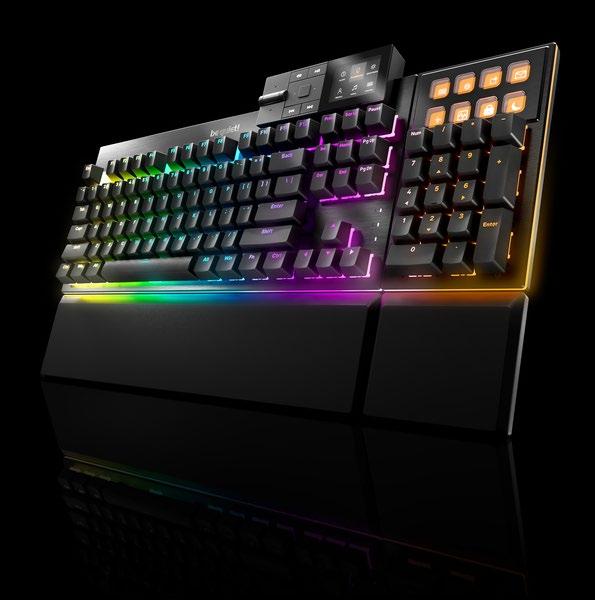
Where the Dark Mount becomes distinctly creator-centric is in its modular hardware. A hot-swappable, magnet-attached numpad can be positioned on either side or removed entirely to accommodate camera framing and chair position; the numpad is tuned with the same dampening stack so acoustic consistency is preserved when attached.

The media dock adds dedicated transport keys, rotary controls and an OLED-like display strip for status indicators, which transforms the keyboard into a compact control surface for live production. In practice, those physical transport keys and the display keys cut down reliance on on-screen overlays: during live edits and stream cueing the tactile buttons let you mark clips and control playback without hunting windows, and the physical feedback avoids accidental mispresses that software-only macros sometimes permit.
Lighting and software are deployed with restraint and intent. Per-key ARGB with arched diffusers yields even, camera-friendly illumination that can be mapped to recording or streaming indicators via IO Centre. In hands-on tests with OBS, Premiere Pro and Reaper, the Dark Mount’s acoustic tuning reduced keyboard bleed on close-talk condenser recordings enough to avoid aggressive noise gates, preserving the character of the room and human breath that aggressive gating tends to sterilize.
The magnetic two-piece palm rest is dense, supportive and aligns seamlessly to reduce wrist fatigue during extended edit marathons. The overall tactile identity is heavy, muted and controlled precisely the quality a creator wants when audio capture is on the line.


The Light Mount shares the same premium skeleton brushed aluminium plate, PBT doubleshot keycaps, factory-lubed Silent switches but trims the modularity in favour of a compact, immediately productive design. Its damping stack uses similar materials with a slightly thinner elastomer layer, creating a typing feel that is quieter than most mechanical boards yet retain a livelier rebound that typists and coders often describe as rhythm friendly.
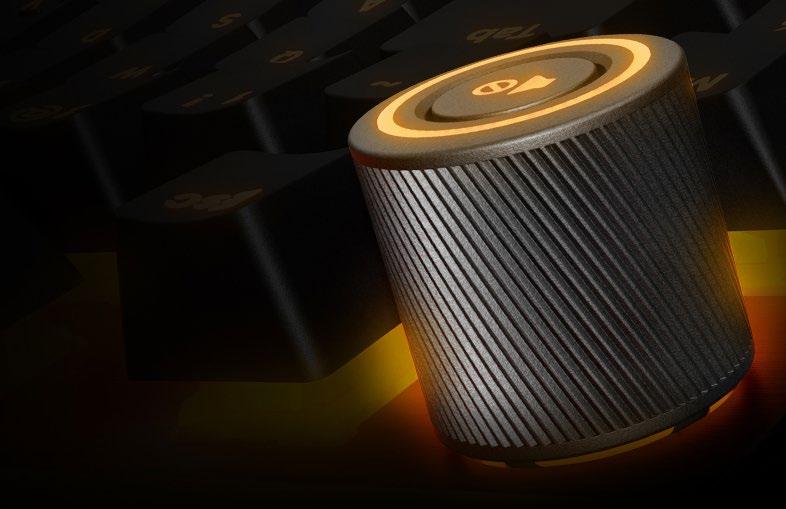
Its signature 3D detented media wheel is a standout: the wheel offers smooth incremental control and clickable press functionality that defaults to mute, and it can be mapped to timeline scrub, brush size or zoom functions in creative apps. Five dedicated mechanical macro keys sit within fast reach and are easy to map to repetitive tasks in DaVinci Resolve, Photoshop and Premiere, turning repeated multi-key sequences into single presses. The Light Mount’s ARGB implementation focuses on top and side accents that photograph cleanly for streamer overlays without drowning camera exposure, and hot-swap support makes it trivial to test different switch profiles for a personal acoustic footprint.
In practical use the Light Mount excels for longform writing, scripting, coding and voiceover runs where a slightly snappier key rebound helps maintain pace. It remains quiet in close-mic setups and, compared to standard mechanical keyboards, significantly reduces room noise without feeling muted under the fingers. The Light Mount is engineered to give fast, reliable controls to creators who value unobtrusive ergonomics and a tactile, efficient workflow.
The choice between Dark Mount and Light Mount is a question of integrated control versus streamlined immediacy. Both deliver premium materials, PBT keycaps, hot-swap PCBs for 5-pin MX switches and factory lubrication that raises the out-of-box feel well above average.
The Dark Mount’s thicker acoustic stack and
modular attachments aim to replace external control devices: the attachable numpad and media dock consolidate stream deck functions, physical transport controls and status displays into a single, matched acoustic and tactile ecosystem. This reduces desk clutter and, crucially for creators, lowers the number of separate noise sources during recordings.
The Light Mount trades that modularity for a simpler, lighter footprint with a highly usable media wheel and dedicated macros that accelerate day-to-day editing tasks. It’s the board to pick when you don’t need a physical transport dock or detachable numpad but still want excellent acoustics and tactile responsiveness.
The Dark Mount is better for hybrid desks that must switch between streaming, live production and deep editing; the Light Mount is superior for sustained typing, single operator editing and compact streaming setups where every inch of desk and cable management matters.
Dark Mount core specifications: brushed aluminium top plate; PBT double-shot keycaps; hot-swap 5-pin MX PCB; factory-lubricated be quiet! Silent Linear or Silent Tactile switches; three-layer acoustic damping; magnetic detachable numpad; detachable media dock with transport controls and display strip; eight customizable display keys; per-key ARGB with curved diffusers; magnetic two-piece palm rest; detachable braided USB-A to USB-C cable.
UK retail listings for the Dark Mount sit in a range from roughly £195 to £260 depending on variant and retailer, with many mainstream listings clustered around £230. Approximate USD equivalents at typical conversion rates place that cluster around $250–$320, though actual USD retail will vary by region, taxes and retailer.
Light Mount core specifications: brushed aluminium top plate; PBT double-shot keycaps; hot-swap 5-pin MX PCB; factory-lubricated be quiet! Silent Linear or Silent Tactile switches; triple-layer damping; programmable 3D media
wheel; five dedicated macro keys; per-key ARGB with decorative side/top accents; magnetic cushioned palm rest; detachable braided USB-A to USB-C cable. UK retail listings for the Light Mount commonly appear between £130 and £150 depending on variant and retailer, with frequent promotional pricing near £130–£130.
Many UK stores showed offers around £129.98 to £149.99 for the Light Mount during regional listings. Approximate USD equivalents for that UK range are around $160–$190, subject to exchange rate movements and regional pricing policies.
be quiet! has translated its acoustic DNA into two distinctly useful keyboards for creators. The Dark Mount is a studio-minded, modular control surface that pairs deep acoustic isolation with attachable hardware that meaningfully improves live production workflows; it is the better pick for creators who need integrated transport controls, detachable numpad flexibility and maximum suppression of keyboard bleed during close-mic captures. The Light Mount is a refined, direct instrument that improves daily
productivity with a superb media wheel, reachable macros and a livelier typing cadence while still preserving the low-noise character that be quiet! promises. For creators who want a single, adaptable centrepiece for mixed production tasks, the Dark Mount earns the premium; for those who prefer immediate ergonomics and a simpler setup, the Light Mount is the cleaner, more affordable solution.
Final ratings out of 10:
Dark Mount 9/10
Light Mount 8.5/10.
Both boards feel conceived around creators’ real needs rather than feature-checking; whether you prioritise an integrated control surface and studio-grade acoustic silence or a lighter, productivity-first instrument with tactile media controls, be quiet! delivers tools that demonstrably improve workflow, reduce desk noise and fit cleanly into modern creator setups.
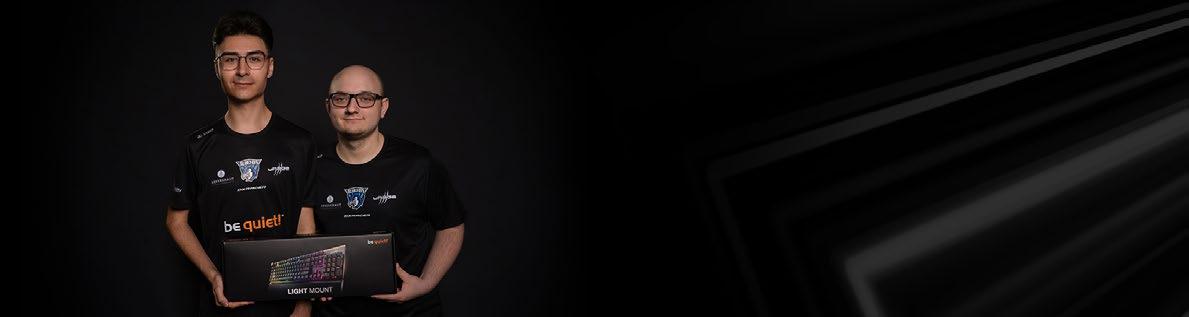
If you too would love to pick up one of these great keyboards or just check out many other products that be quiet! Create then you can do so below.


Reviewed by: Brandon Sawyer
This is more than a pair of blue light glasses; it’s a character statement. The GUNNAR Borderlands 4 Moxxi edition blends theatrical, femme-forward styling with practical screen protection, delivering a collectible accessory that performs during long editing sessions, streams, and everyday screen work. Priced at $99, these frames aim squarely at creators and fans who want personality in their eyewear without sacrificing comfort or optical clarity.
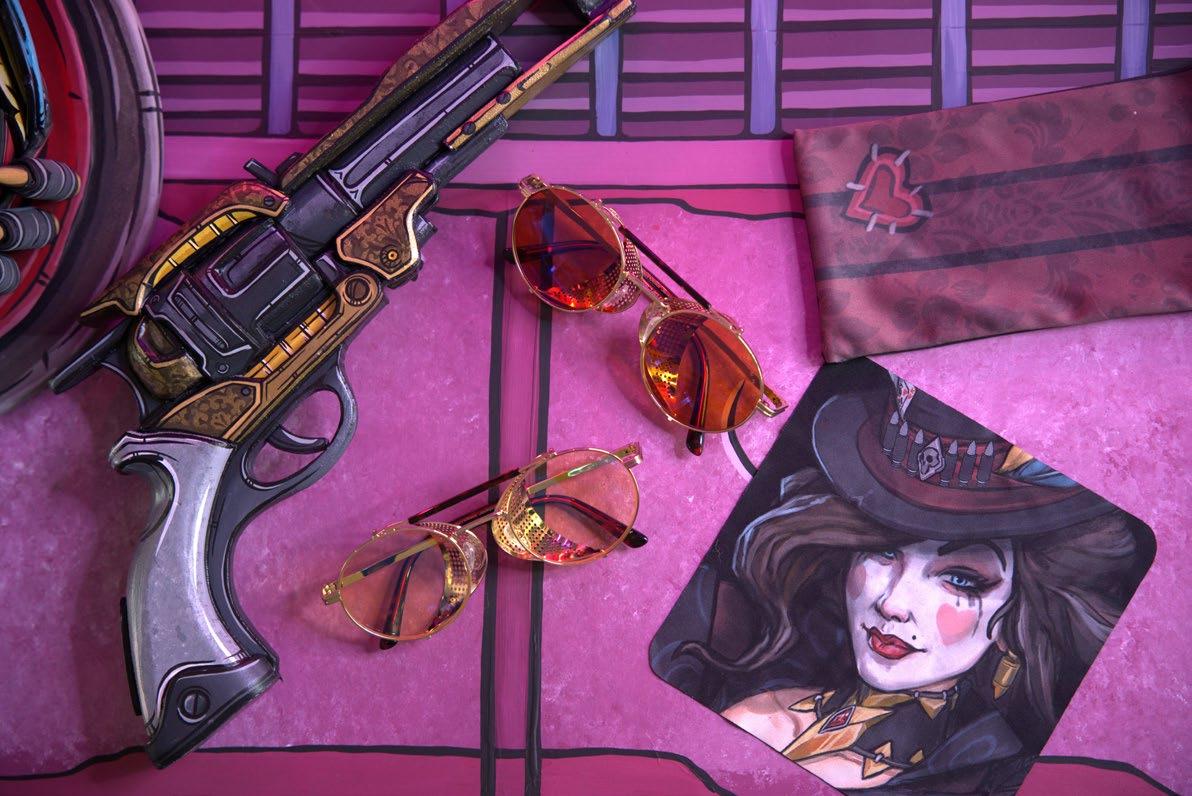
The Moxxi edition leans into vintage glamour and showmanship with warm gold tones, rounded frames, and removable mesh side shields that nod to Mad Moxxi’s burlesque aesthetic. The silhouette reads feminine by design, with proportions and decorative elements that cater more to women, though the overall look remains wearable for anyone who wants a bold, camera-ready accessory. The unboxing feels considered: a collector-style case and microfiber cloth make the purchase feel premium rather than disposable. On camera and in person, the glasses read like a signature prop, they add personality to thumbnails, streams, and photos without looking gimmicky.
GUNNAR’s lens approach balances blue light attenuation with natural colour transmission so screens still look accurate on camera. In practice the Moxxi lenses reduce high-energy blue emissions that contribute to digital eye strain, and the included anti-reflective and smudgeresistant coatings keep glare and reflections in check during bright studio sessions. The filter is noticeable without pushing a heavy yellow cast, which matters for creators who need trueto-life skin tones in thumbnails and live video. For writers, editors, and gamers who spend marathon hours in front of displays, the lenses offer sensible protection while preserving visual fidelity.
The frame construction feels weighty in a reassuring way without becoming fatiguing during extended wear. Hinges are sturdy and the fit sits comfortably across bridges and cheeks during long editing blocks, stream runs, and handheld camera tests. In our hands-on testing we wore the glasses across multi-hour writing sessions, live streams, and photo shoots; the reduction in eye fatigue and late-day squinting was clear compared with no-lens sessions. The removable mesh shields amplify the theatrical look for cosplay or staged shoots and detach cleanly when you need a cleaner, everyday profile. On-camera the lenses kept highlights under control and preserved warm skin tones, making them practical for creators who want showmanship and function in one package.
At $99 the Moxxi edition sits at the premium end of the blue-light accessory market, but the price buys licensed design, robust materials, and a collector experience rather than a cheap utility pair. For women and femme-presenting creators who want eyewear that complements a styled persona, these frames offer a unique value: they look like an intentional piece of branding, and they perform during real-world work. If you prioritize minimalism or purely clinical optical features without flair, the price may feel high; if you want a statement accessory that also protects your eyes, the Moxxi edition justifies its cost.

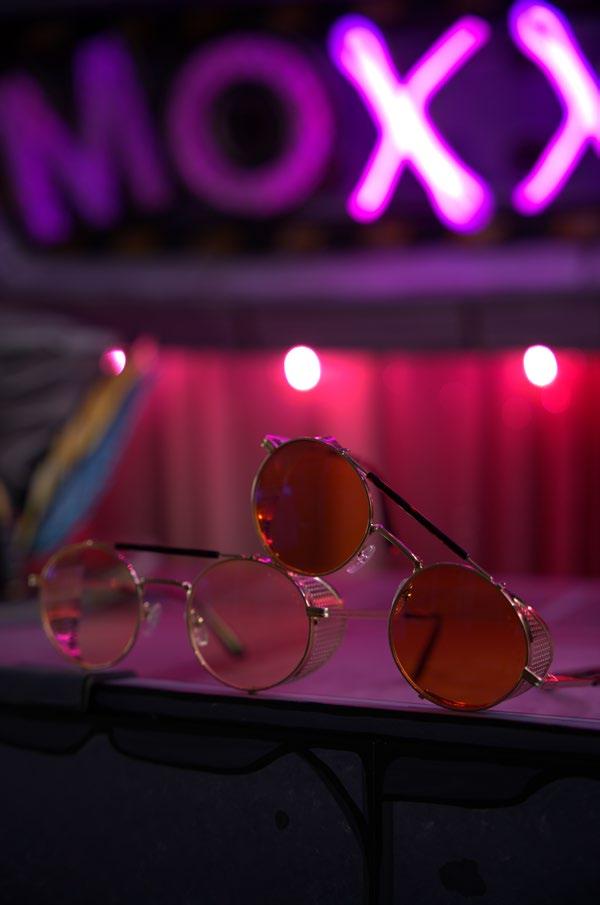




The GUNNAR Borderlands 4 Moxxi edition is a rare combination of character-first design and useful lens technology. It’s tailored more toward women in aesthetic and marketing, but it functions reliably for any creator who needs long-wear comfort and blue light mitigation. At $99 you’re paying for collectability, build quality, and on-camera friendliness as much as eye protection, and our hands-on experience shows it delivers on all three fronts. If you want your glasses to be part of your visual identity while protecting your eyes during long creative days, Moxxi’s midnight glow is a compelling pick.
Gunnar’s King Size Collection arrives with a clear promise: give larger heads frames that fit without compromise. I tested the Mammoth ($49), Monterey ($130), and Pinnacles ($89) across full workdays, late-night edits, and marathon multiplayer sessions to see if that promise holds. Right out of the case the frames feel intentionally wide and confident; they don’t force you to contort your head to make the glasses behave. The Mammoth disappears on your face without clamping, the Monterey settles with a bespoke, almost tailored feel thanks to adjustable nose pads and spring hinges, and the Pinnacles find the sweet spot between aggressive coverage and nimble comfort when you’re wearing a headset or leaning back in your chair.
The Mammoth is a rectangular, lightweight workhorse that shouldn’t feel as sturdy as it does at $49; I didn’t baby it, and it stood up to daily knocks and the occasional toss into a bag. The Monterey’s titanium construction and precision hardware justify the $130 tag; the frames feel premium, and they behave that way during movement and long wear. The Pinnacles, built from a magnesium-aluminium mix, bring an aviation-inspired toughness that’s noticeably lighter than you’d expect for the level of rigidity they offer. Across the line the finish, tolerances, and hinge action match each model’s price tier in a way that feels intentional, not accidental.
GUNNAR’s blue light blocking lens tech combined with their G-Shield coating worked in subtle, useful ways during my testing. The lenses cut the harshness of cool screen light without bathing everything in an orange haze, and the mild +0.2 diopter is a quiet miracle for prolonged UI work text felt sharper, microsquints declined, and I stopped pushing my monitor farther away to compensate. Glare from overhead lights and glossy displays was reduced noticeably, and the wraparound profile limited peripheral airflow enough that my eyes felt less dry after long stretches. It didn’t replace prescription eyewear, but it did reduce digital eye strain and made multi-hour sessions easier to sustain.
Comfort was the collection’s headline for me. The Mammoth handled eight-hour editing days without hotspots or pressure points; it’s the best value if you need width and simplicity. The Monterey earned my personal preference for all-day wear: adjustable pads and spring hinges provided a “finally fits right” sensation that stayed consistent through walking, commuting, and headset use. The Pinnacles were the ideal compromise when durability and lightness both matter, they played nicely with over-ear headphones and stayed stable during quick movement, leaning, and long streams.
Every pair ships with a custom case, a microfiber pouch, a cleaning cloth, and a 12-month warranty, which felt reassuring after weeks of daily use. I saw no worrying wear on frames or lenses, and the accessory bundle made travel and storage simple. For the prices Mammoth $49, Pinnacles $89, Monterey $130 the build quality and included extras deliver tangible value rather than feeling like extras meant to distract from compromises.
If you do colour-critical work, you’ll notice a subtle warm veil from the lenses and might prefer a reference pair for final grading; the +0.2
diopter helps most people but won’t replace a prescription. The aesthetic is bold and wide by design, so these aren’t the frames for someone seeking discreet, narrow shapes. For creators, streamers, editors, and “wide-screen warriors” who’ve spent years contorting for comfort, these frames are a direct answer.
Gunnar’s King Size Collection fixes the nagging problem of fit for larger heads while delivering
real, usable reductions in digital eye strain. The Mammoth at $49 is an outstanding bargain for big-frame basics, the Pinnacles at $89 offer a high-value middle ground with aviation-grade materials, and the Monterey at $130 is the premium pick when adjustability and a tailored fit matter most. Overall rating: 8.6 / 10.
If you too want to check these out or many products that Gunnar creates then you can do so below.





Lens clarity remains vitreous and sharp in both indoor and outdoor settings. While the full grey tint may obscure colour accuracy for designers, it’s a tremendous asset for mobile users and gamers in bright environments. The included focusing power (+0.20 diopters) noticeably reduces muscular fatigue for those with (or near) 20/20 vision.
Branding and Collector Value
Call of Duty aficionados will appreciate the subtle but unmistakable logo elements on the temples, as well as the limited game tie-in depending on retailer and location. Packaging and presentation speak the same high-quality visual language associated with Gunnar’s licensed collaborations.
Pricing
• US: $74 USD
• UK: Price conversion typically around £71 (using current exchange and factoring VAT/import) though may fluctuate based on distributor and some prescription surcharges.
Rating
9/10. The Sun Shift lens sets this model apart among gaming eyewear for versatility, and the comfort is impressive even in prolonged wear. A top choice for urban, mobile, or multienvironment gamers and anyone who wants a single pair that handles both blue light and sunlight with equal mastery.
Borderlands – Ripper (Amber Variant): Channelling Mayhem
Design and Specifications
The “Ripper” is a direct homage to Borderlands’ over-the-top visual style and chaotic energy. Frames feature a high-wrap silhouette in rugged "Bandit Smoke" coloration, with comic book-inspired bold outlines and flat shading for a graphic, unmistakably Borderlands look. The eyewear is constructed from precisionengineered polymer and fitted with industrystandard G-Shield lens coating.
Specs:
• Frame: High-wrap; precision-engineered polymer; Bandit Smoke finish
• Lens Options: Amber (GBLF 65)
• Dimensions: 60 mm lens width, 41 mm lens height, 18 mm bridge, 138 mm frame width, 130 mm temple length, 33 g weight
• Hinges: Multi-barrel, secure and headsetcompatible
• Extras: Collector’s Borderlands 4-themed pouch and cleaning cloth, 12-month warranty.
The high-wrap design is a blessing for marathon gaming: it offers notable coverage and minimizes peripheral glare and distractions. Comfort is secured for all-day wear, and multibarrel hinges ensure the Ripper handles repeated flexing, a distinct asset for those alternating between screen and headset. The amber lens exudes warmth, enhances contrast, and meaningfully reduces digital eye fatigue, with relief noted during hours-long looting sessions (or spreadsheet sprints). The visual clarity was excellent even as light levels varied; only slight yellowing of colour was noticed, but the benefit to comfort outweighed any trade-off.
Borderlands’ anarchic character is fully realized: “Kairos” bandit theming and the associated accessories foster a premium collector experience. The frame’s aggressive visual statement may not blend in at a corporate desk but that is precisely its appeal for fans. The included cleaning package maintains the visual motif, further reinforcing its value to the intended audience.
Pricing
US: $74 USD
UK: £63.97
Rating
8.5/10. Style won’t be for everyone, but for Borderlands fans and those seeking all-around
blue light protection, performance and comfort meet a unique aesthetic making this one of the most characterful releases yet.
For players needing corrective lenses, the Ripper is fully prescription-compatible, including single vision, standard and high index, and progressive options (including distance and intermediatefocused progressives, ideal for focus zones of up to 14 feet). Notably, Gunnar’s prescription program uses advanced analogue or robotic lens customization, and when ordering, a precise current prescription and PD measurement must be supplied. Delivery times are typically 4–6 weeks, with all sales final due to the custom nature of the product.
For those in bright environments or on the go, the Sun variant employs a GBLF 90 sun lens non-polarized to ensure digital screens remain visible while filtering much of the blue light and all UV. The frame remains the same, with neutral focus for the sunglasses.
Prescription variants retain all the cosmetic appeal and wrap-around comfort of the standard Ripper, with the key differentiating factor being the tailored corrective lens. Performance for screen use is superb, with all the anti-glare, contrast, and focusing benefits of Gunnar optics. The sunglasses version is especially effective at reducing glare and fatigue from sunlight—a true asset for esports tournaments, outdoor gaming events, and everyday digital device use outdoors.
Pricing
• UK Prescription: £221.79
• US Prescription: $229 USD (typical), but varies based on customization
• US/UK Sun: $74 USD / ~£63.97
Rating
8/10. The prescription process is clear (if lengthy), and the result is comfortable, high-
performing eyewear for those who would otherwise need to double up glasses. The sunglasses variant especially excels in outdoor, high-glare use. A must for Borderlands devotees with vision correction needs.
The Witcher Collection – White Wolf for Geralt: Masterful Elegance for the Monster Slayer
White Wolf, inspired by Geralt of Rivia, evokes a sophisticated stainless steel aviator silhouette with rugged, leather-wrapped temples, deep laser-etched Witcher signs, and the Wolf School emblem for a stately, immersive finish. The frame exudes both minimalist and robust design language, a true artifact for Witcher fans and style aficionados alike.
Specs:
• Frame: Brushed nickel/steel aviator; stainless steel with leather wrap
• Lens Options: Amber (GBLF 65), Clear (GBLF 35), prescription and sunglasses variants available
• Dimensions: 51 mm lens width, 18 mm bridge, 134 mm temple length, approx. 31.75 g weight (without packaging)
• Hinges: Flexible spring, high-quality for longterm use
• Extras: Collector’s case, premium pouch, cleaning cloth, officially licensed with CD PROJEKT RED, 12–24 month warranty.
The premium stainless steel delivers exceptional durability while keeping the weight well-balanced for all-day comfort. The leather wrapping aids in reducing slippage and pressure, a subtle but noticeable ergonomic advantage. Amber lenses once again provide Gunnar’s signature blue light relief, with the added benefit of increased contrast and perceived sharpness essential for long reading or editing sessions. The aviator style offers ample screen coverage, and clear lens options enable those requiring unaltered colour work to participate in the fandom without compromise.

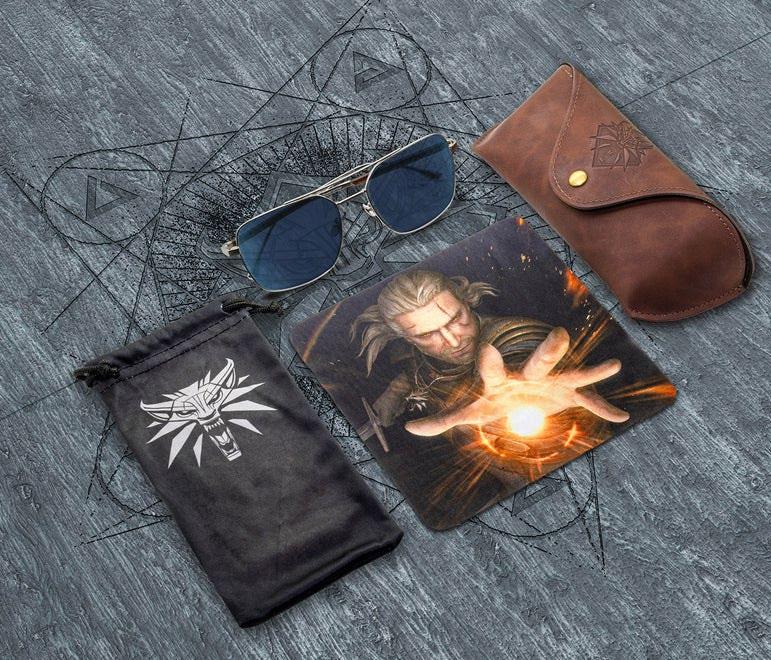
The Witcher theme is etched into every aspect, but in an elegant, non-garish manner. The weathered, leather-style case, Witcher emblem emblazoning, and fine accessories elevate the product well above simple merchandise status. For cosplayers, streamers, or office professionals, White Wolf hits a sweet spot of recognizability and versatility.
Pricing
US: $99 USD
UK: ~£78–£99 (subject to exchange and retailer, sunglasses variant slightly more)
Rating
9/10. Easily the most refined collaboration in appearance, with all the Gunnar optical hallmarks. The White Wolf is an ideal convergence of collector’s item and daily wearable artistry impressively executed.
The Witcher Collection – Ciri: Adventurous Spirit in a Delicate Package
The Ciri model embodies regality and dynamism, with an elegant, brushed gold, round stainless steel frame. Temples are adorned with laseretched Zireael sword motifs and Crazy Horse leather-wrapped accents, encapsulating Ciri’s mythic narrative and importance within The Witcher saga.
Specs:
• Frame: Brushed gold round; stainless steel with Crazy Horse leather accents
• Lens Options: Amber (GBLF 65), Clear (GBLF 35), prescription available
• Dimensions: 51 mm lens width, 18 mm bridge, 134 mm temple length, 30.9 g weight
• Hinges: Flexible spring
• Extras: Collector’s case, cleaning cloth, microfiber pouch, 12–24 month warranty, official CD PROJEKT RED licensing.
Despite its elegant build, the Ciri model is robust enough for regular gaming and work. The round lens, narrower in silhouette than the aviator, suits a wide array of faces, especially those preferring more accentuated, classic lines. Comfort is further improved by the flexible hinges and soft leather accents, providing a gentle grip and luxurious hand-feel. The amber lenses, true to Gunnar’s legacy, swiftly ease eye strain in both long, narrative-driven games and more demanding eSports titles. The clear lens alternative again accommodates professionals working in colour-sensitive environments.
True to The Witcher x Gunnar ethos, Ciri’s motifs are executed with artisanal precision, never overwhelming, always elegant. The accessories, too, stand out, providing a complete unboxing and user experience for fans and newcomers alike. As with its sibling, the Ciri model feels as much a piece of jewellery as an optical device.
• US: $99 USD
• UK: ~£78–£99 (typical; varies with import, exchange, and prescription surcharges)
Rating
8.8/10. A graceful, gender-neutral frame exuding both adventure and refinement. Ciri’s glasses excel among themed collaborations for subtlety and everyday chic, while still providing Gunnar’s full protection suite.
Each of the models discussed features core Gunnar lens options, and the lens tint chosen dramatically shapes user experience. The Amber (GBLF 65) is the flagship, providing a visually distinctive but highly practical blue light barrier, making the biggest difference for all-day users, gamers, and anyone sensitive to LED lighting. Clear (GBLF 35) is subtler, better for colour work, but will provide less subjective relief and contrast enhancement. Where
the Sun/Amber Sun Shift (GBLF 90, or 65/90 for transitions) is optimal for outdoor EDC, streamers, and those blending gaming with travel.
Gunnar prescription services are robust and increasingly seamless; users order online, upload a current prescription, and specify PD. Single vision is universally available, while select frames support advanced progressives. The process typically takes 4-6 weeks (US or Europe), and all prescription sales are final, but performance and satisfaction levels are excellent. Reviews highlight both accuracy and comfort, noting the benefit for those who cannot otherwise use blue light filtering solutions with corrective needs.
• Non-Prescription Range: $74–$99 USD / £63.97–£99 GBP (amber and special collaboration editions)
• Prescription Range: $229–$285 USD / £221–£265 GBP (depending on features, not including potential surcharges for highindex or progressives)
These prices are at the upper end of the blue light market, but are justified for those invested in quality, brand, and eye health. Prescription offerings command a premium but perform at or above the expectations set by top prescription eyewear retailers.
Gunnar employs a sophisticated performance tiering to set expectations and justify price points:
• Epic: Superior hybrid frames, G-Shield® Plus, hard coat; mid-premium pricing (as seen in Fallout Vault 33, WoW Sylvanas, CoD Ghosts, Witcher Collection).
• Signature: High-quality polymer frames, essential G-Shield™ anti-reflective and smudge resistance; value tier that still
• performs admirably (as seen in Borderlands Ripper).
• Legendary/Mythic/Pro eSPORTS: Ultimate in materials (titanium, polyamide), customized hinges, and longest warranties, infrequent in standard collaborations.
In practice, even Signature frames provide better durability than the average blue light eyewear, while Epic frames offer superior longevity, enhanced coatings, and more stylish physical flourishes.
One of Gunnar’s distinguishing features is the focus on a collector-grade experience. Each collaboration boasts:
• Sturdy, themed collector cases that pay homage to the respective franchise.
• Matching microfiber pouches (always visually consistent with the frame/brand).
• Microfiber cleaning cloths with unique or limited artwork.
• Robust manufacturer warranties (ranging from 12 to 24 months, with prescription lens coverage).
• Marketing and packaging consistent with major game launches, reinforcing the “fan artifact” status.
This attention to presentation is frequently cited in reviews as a reason why Gunnar feels worthy of both the price point and collectible status.
Gunnar has cultivated a sterling reputation, not just as a health accessory maker but as a partner to major brands. Their collaborations extend from Overwatch and Fallout to Marvel and Diablo, always tying lens protection to authentic, immersive branding. This unique position bridging optical technology and pop culture places Gunnar at the forefront of eyewear innovation, offering pieces that are as much aspirations as they are solutions.
Gunnar’s collaboration models transcend mere licensing: they actively enhance digital wellness with best-in-class optical engineering, all while celebrating the worlds that have defined gaming culture. Each pair of glasses model offers robust blue light and UV protection, thoughtful ergonomic design, exclusive collector appeal, and functional upgrades suitable for professional and recreational use. The availability of prescription and multiple lens options ensures inclusivity for all users.
If you’re a fan of Fallout’s chic retro-futurism, WoW’s high fantasy, Call of Duty’s tactical edge, Borderland’s chaotic universe, or The Witcher’s storied saga, Gunnar’s blue light glasses offer a compelling intersection of artistry and science.
For anyone who values their vision and digital experience, these collaborations mark the gold standard—both for eye health and personal expression.
Recommendation: For the discerning gamer, creator, or digital professional who treasures their screen time and franchise loyalties alike, Gunnar delivers an optically and emotionally rewarding experience. The collaborative models featured here stand as not just prescription or protective eyewear, but as wearable tributes to the worlds we love. Gunnar’s blue light glasses truly earn their reputation, and in my experience, are more than worthy of a place both on your face and in your collection.
If you are in the market for Blue light Glasses that do work and save your eyes, head on over to Gunnar Optiks and their website below.
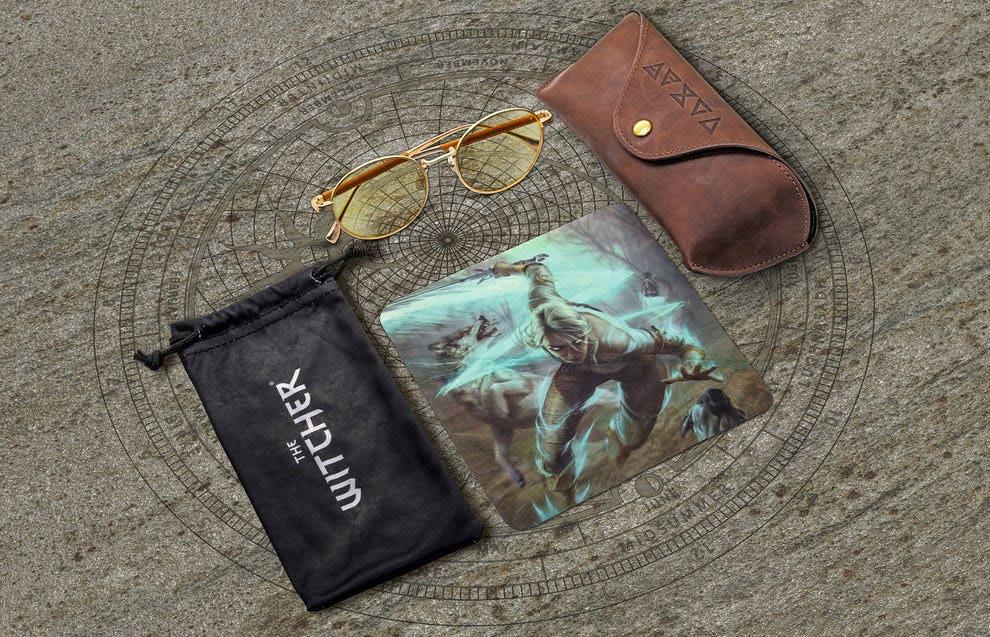

Reviewed by: Brandon Sawyer
Unboxed during a late-night test session, the 55" Hisense U7Q immediately reads as a gamer-first panel: solid build, razor-thin bezels, and a dense MiniLED backlight that hints at contrast and HDR ambition. VIDAA boots cleanly, the menus are straightforward, and four HDMI sockets make it trivial to keep a PC and two consoles permanently connected. Full disclosure: Hisense supplied the review unit as a gift, and that transparency informs this hands-on appraisal while not softening the critique— everything below comes from sustained, real-world testing across PC, Xbox Series X, and PlayStation 5.
Under the glass sits a 4K VA panel driven by a dense MiniLED array and a scaler capable of 144Hz; in everyday use with current hardware the U7Q reliably settles into a rock-solid 4K/120Hz mode that is the headline benefit for gamers. Game Mode drops input latency into the low single digits, and features like VRR and ALLM behaved consistently across devices. MiniLED local dimming gives depth to blacks while protecting highlights, so muzzle flashes, neon signs and sun glints have real bite without flattening midtones; the result is fast motion that looks purposeful rather than smeared, and responsiveness that turns twitchy plays into predictable outcomes.
We pushed the U7Q through long sessions in modern competitive shooters on both PC and console to measure how higher frame counts change real outcomes. With a persistent 4K/120Hz feed, micro-corrections became linear and repeatable; recoil patterns felt smoother, tracking through smoke and foliage stayed coherent, and flick-shots moved from

guesswork to muscle-memory. In team firefights the panel preserved silhouette integrity during rapid camera pans, letting us commit to peeks earlier and turn entries into cleaner trades.
When GPU framerates dipped in chaotic fights, VRR smoothed pacing instead of turning stutters into fatal errors; on live servers the TV kept us competitive against players on high-refresh monitors because visual feedback aligned more faithfully with inputs.
Racing games highlighted another tangible benefit: the higher refresh rate fundamentally changes how speed reads.
The world updates more frequently, so steering inputs, braking markers and distant apexes align with instinct in a way 60Hz displays cannot replicate. Wet-tarmac reflections and specular highlights flashed with satisfying intensity while shadows retained texture, which made braking points and track features significantly easier to read at a glance. Even in contact-heavy sequences with dust and debris, frame pacing remained consistent and VRR prevented judder as framerates fluctuated.

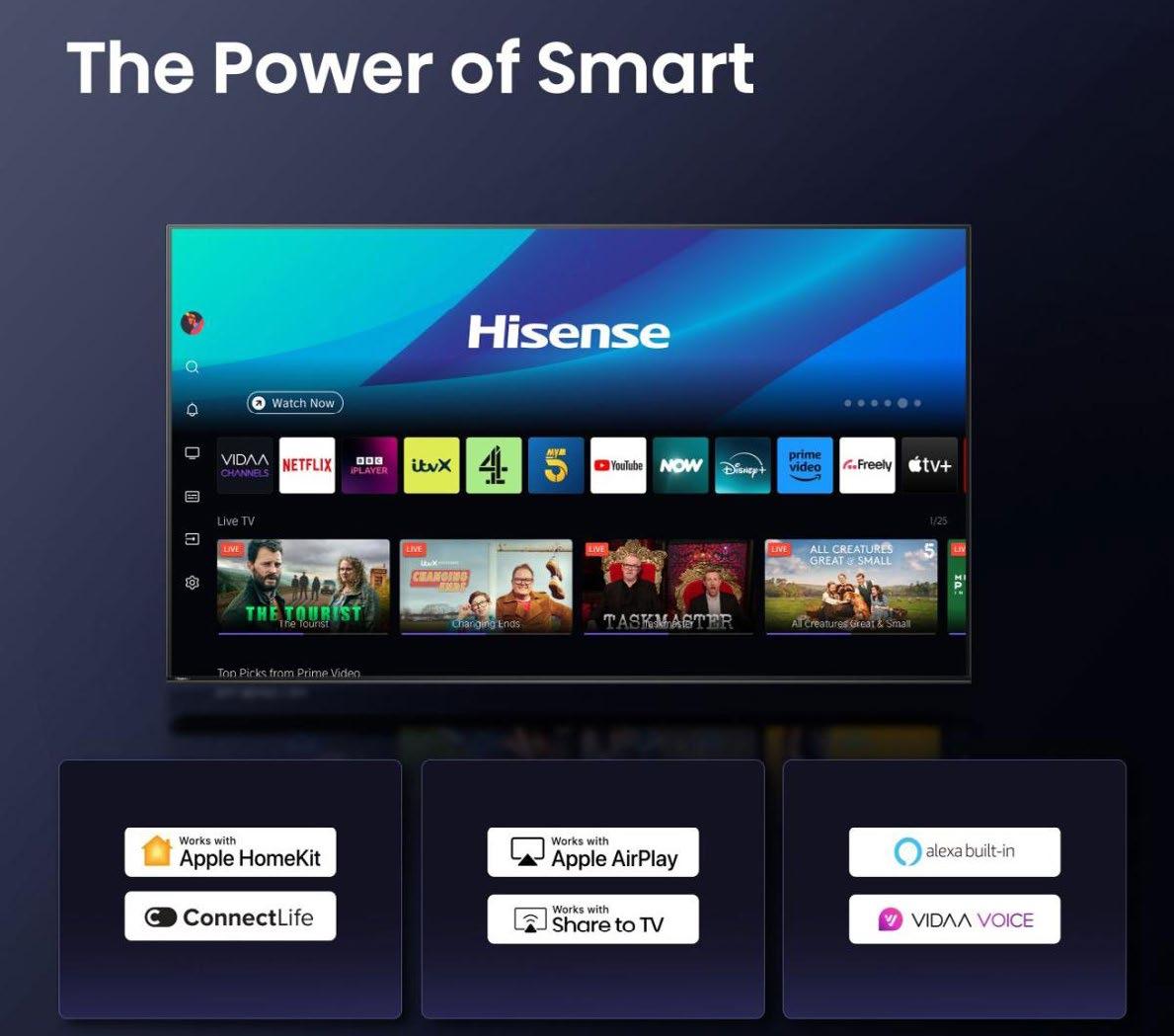
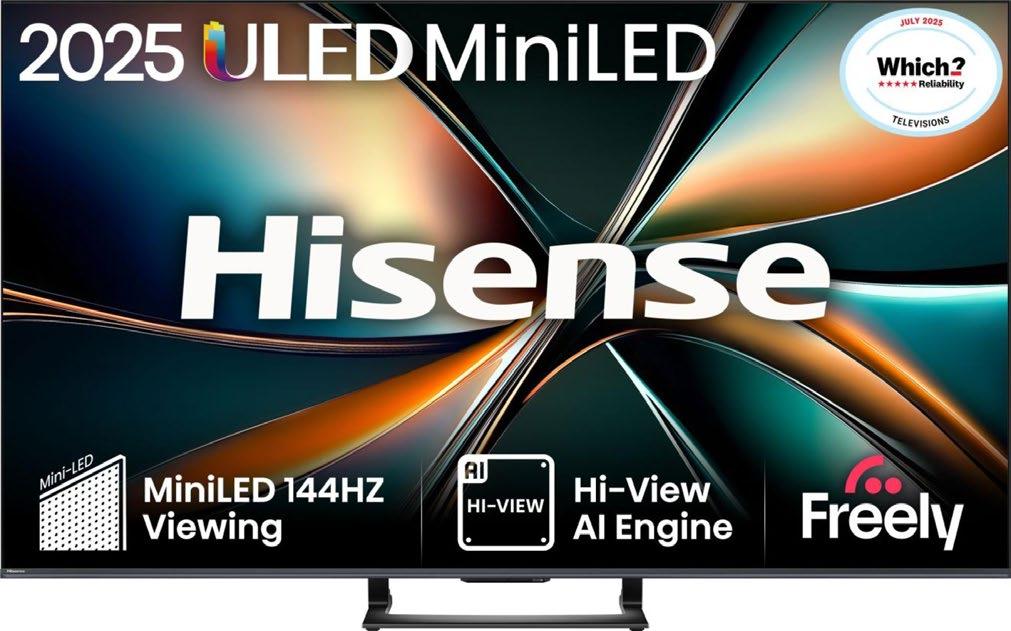

Single-player, story-led titles benefited from the same responsiveness but in a more cinematic register. Traversing dim interiors and neondrenched exteriors, small environmental cues— distant muzzle flashes, collectible glints, subtle stealth lighting—stayed legible. MiniLED local dimming preserved atmospheric depth, and the Hi-View processing protected highlights; the trade-off is occasional dimming of microhighlights to preserve overall scene brightness, but that conservative tone-mapping keeps composition and director intent intact rather than letting highlights clip.
The U7Q’s motion processing is capable but defaults to an aggressive interpolation that many competitive players will want to turn off. Left off, the scaler handles 60Hz and lowerrate content cleanly, and transitions between 4K/120 and other modes are fast enough to never interrupt sessions. For best results we used a repeatable setup: enable Game Mode, disable interpolation for shooters, activate VRR/ALLM on consoles and PC, and slightly raise HDR brightness in very bright rooms. For cinematic single player runs we switched to a richer picture preset, allowed standard local dimming, and accepted the mild micro-highlight compression in exchange for consistent punch. Sound Bass Boost and how audio changes immersion
The U7Q’s built-in audio is surprisingly confident for an integrated system. The neutral profile offers a clean midrange that makes dialogue and weapon timbres easy to parse—essential when you rely on in-game cues. Engage Bass Boost and the TV develop a weightier low end that adds physicality to engines, explosions and footsteps; engine revs thrum with authority, door slams hit harder, and explosions feel more bodily. Bass Boost can bloom large mixed tracks, which reduces positional clarity in competitive matches, so for ranked play we preferred the neutral preset. For couch co-op, racers and single-player drama the boosted low end dramatically increases emotional payoff,
and the DSP helps widen the perceived stereo stage so solo couch sessions feel larger than the speaker complement would suggest.
We used the U7Q for marathon sessions to test sustained comfort and performance. Input latency and frame stability stayed consistent throughout multi-hour plays; the TV’s heat and fan behaviour were unobtrusive. For living-room setups we paired the set with a headset for competitive play and relied on the Bass Boost for late-night single-player sessions. The TV’s multiple HDMI 2.1-capable ports kept consoles and a gaming PC plugged in simultaneously, which made switching contexts immediate and hassle-free.
In the UK the 55" Hisense U7Q has been positioned aggressively against pricier OLED rivals, offering the core gamer features—nearconsistent 4K/120Hz, MiniLED local dimming, VRR, ALLM and four modern HDMI ports—at a value point that undercuts many premium alternatives; Curry’s has listed 55" U7Q SKU 55U7QTUK in recent promotions around the £599 mark and has also shown it at around £699 depending on timing and offers.
That street pricing places it in an attractive midrange bracket for buyers who want next-gen responsiveness and MiniLED contrast without paying an OLED premium and paired with occasional retailer discounts the U7Q becomes a standout value for living-room-first PC and console players.
If your priority is low latency, dependable 4K/120Hz gameplay and deep contrast for darkroom gaming sessions, the U7Q is a near-ideal choice. If you demand absolute HDR microhighlight precision, the deepest off-axis viewing or the broadest native app ecosystem, consider those trade-offs before committing; the U7Q is tuned toward performance and value rather than being a full-spectrum home theatre purist’s choice.
The Hisense 55 U7Q is a gamer-first MiniLED TV that delivers consistent 4K/120Hz gameplay, effective local dimming and surprisingly immersive onboard audio when Bass Boost is used for cinematic sessions. It materially improves competitive aim, racing precision and single-player discovery while avoiding the OLED price tax. Small compromises in microHDR highlight preservation and viewing angles are outweighed by the low latency, VRR stability and real-world framerate handling that matter most to players. Final score 9 out of 10.
Why this should be on your Christmas list this year
If your holiday upgrade needs to deliver
immediate, perceptible improvements to both how games feel and how they land emotionally on the sofa, the Hisense 55 U7Q is one of the smartest buys you can make: true 4K/120Hz responsiveness, MiniLED contrast that gives HDR bite, and a usable Bass Boost that turns explosions and engines into tactile moments, all at a UK price that positions it as a genuine value against pricier OLED alternatives. For next-gen console owners and living-room PC builders who want speed and punch without breaking the bank, this TV will change the way you play this Christmas.
If you too would love to check out Hisense and their huge range of fantastic TVs like this gaming phenomenal one, then you can do so below.
Facebook: @HisenseUK | Instagram: @hisenseuk
TikTok: @hisenseuk | YouTube: @hisenseuk




Reviewed by: Brandon Sawyer
HORIPAD Turbo (Eevee Cottage Core), Vault Case (Eevee Cottage Core), and Puff Pouch (Eevee Cottage Core) is a rare instance where licensed artistry and rigorous product design genuinely complement one another.
This review examines each item through focused subcategories so you can see how design language, build and features, UK pricing, hands-on experience, and final verdicts combine to make these accessories feel both collectible and genuinely useful. The collection proves that a soft pastel aesthetic need not trade away utility; instead, it amplifies it.
Hori treats the HORIPAD Turbo’s Eevee treatment with restraint and intention. The pastel tones and sketch-style Eevee illustrations are applied in a way that reads as curated design rather than loud branding. The controller’s matte softtouch finish gives the colourway a premium sensibility, allowing it to sit comfortably on a modern desk or in a photogenic creator setup without feeling out of place. Visually, the Turbo manages to be both collectible and discreetly professional.
Beneath the attractive exterior lies hardware engineered for repeatable, dependable performance. The chassis uses Hori’s established lightweight, impact-resistant plastics, and the ergonomics prioritise prolonged comfort with a slightly wider shoulder profile to reduce thumb fatigue, textured side grips to maintain purchase during intense sessions, and precision analogues with adjustable deadzone tuning for tight input control.
Key functional elements include a wired USB connection to eliminate latency and battery

concerns, configurable turbo, and remappable rear buttons that convert complex or repetitive inputs into practical shortcuts. These features make the Turbo equally at home in competitive moments and marathon handheld sessions.
The HORIPAD Turbo is positioned attractively for the UK market at approximately £34, undercutting many premium third-party controllers while offering customization and build quality that exceed its price. That price point makes it an outstanding value for Switch 2 owners seeking pro-grade controls without a premium controller bill.
In extended use the Turbo becomes a study in thoughtful compromises: the wired connection feels liberating after weeks of battery maintenance, delivering consistent, immediate inputs during speedruns and tight multiplayer clashes. The remappable rear buttons proved invaluable for rapid item cycling and partner commands during Pokémon battles, and the adjustable dead-zone tuning made precise movements feel natural rather than fussy.
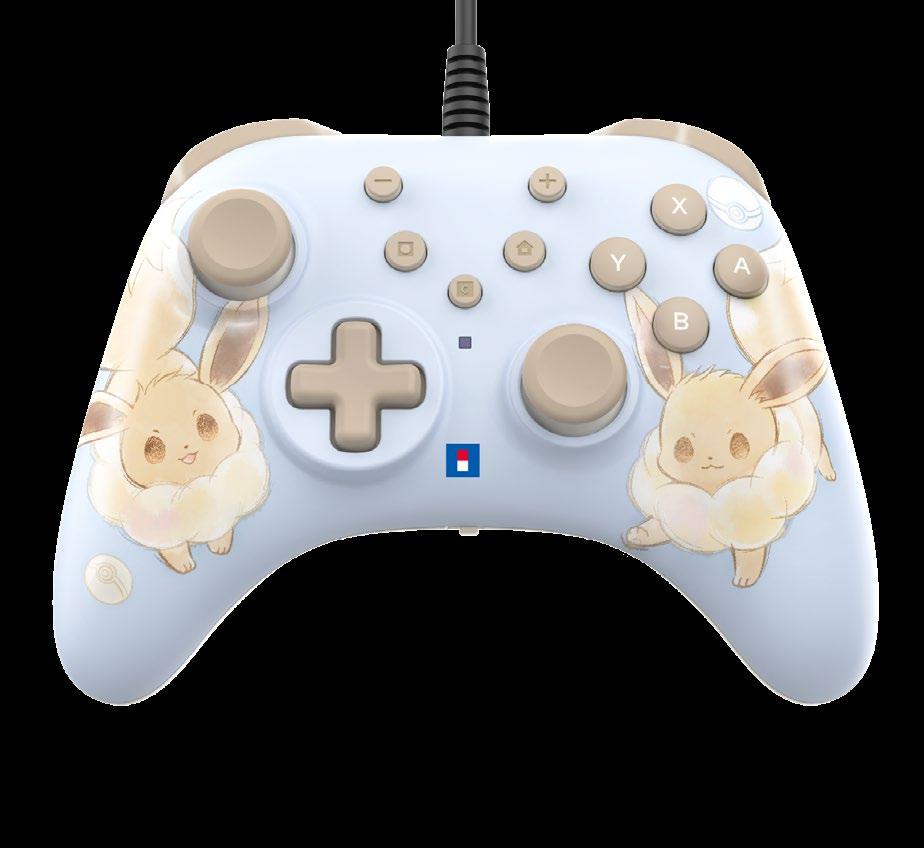




Build quality felt robust: repeated pocketing of the pad into a travel kit and long docked sessions revealed no flex or button wear. Stylistically, the Eevee livery invited compliments in creator photos while never interfering with the controller’s utility.
The HORIPAD Turbo is the collection’s keystone: a controller that looks like a curated object and performs like a professional tool. Rating: 9/10.
The Vault Case translates Cottage Core aesthetics into a functional protective shell with dignity. The printed Eevee artwork reads like an understated illustration layered over a textured shell, allowing the case to complement both minimalist backpacks and stylised creator setups. The overall tone is calm and considered—designed to be seen, not announced.
This hard-shell clamshell prioritises protection and organisation. A rigid exterior absorbs compressive forces; the soft internal lining and screen flap guard finishes and glass; and internal architecture secures the console while keeping cables and adapters restrained in a mesh pocket. The design includes dedicated storage for multiple game cards and an organised layout that prevents rattling and internal abrasion. Closure hardware feels positive and reliable small details that matter in daily transport.
In the UK the Vault Case is typically priced around £28, offering a cost-effective balance between protective performance and licensed, high-quality finish.
During commuter testing the Vault Case delivered exactly what it promised: nothing dramatic, but consistent protection. Dropped into an overstuffed backpack, the shell kept cartridges and the console from shifting, and the internal flap prevented screen-to-cart contact.
The printed finish withstood rubbing and handled repeated opening and closing without delaminating or lifting. The one caveat is that the rigid shell can show surface scuffs if forced into very crowded bags, but these are superficial and do not affect protection.
The Vault Case is the pragmatic, stylish armour Switch 2 owners need for travel and field production. Rating: 8/10.
The Puff Pouch leans fully into tactile, lifestyle design. Its rounded silhouette, gentle quilting, and soft handle communicate domestic comfort the “cottage” in Cottage Core while the Eevee illustration and muted palette make it an attractive prop for on-camera uses. The pouch feels intentionally domestic and approachable without compromising the sense of quality.
Constructed around impact-damping foam and a plush internal lining, the Puff Pouch is engineered for everyday portability. Internal pockets accommodate a charger, cable, and a small selection of cartridges, while the flexible exterior allows the pouch to compress into larger bags or to be carried solo for short hops. The zipper and handle hardware feel well-spec’d for regular use, and the internal layout prioritises speed of access.
Priced for the UK market at roughly £32, the Puff Pouch sits in the midrange of branded soft cases its cost reflects premium materials and licensed artwork rather than maximal protection.
In practice the Puff Pouch became the most frequently used item for short commutes, café sessions, and impromptu creator shoots. It cradles the Switch 2 pleasantly and makes setup and pack-up quick and unobtrusive. The tactile materials feel premium in hand and photograph well on social content.
the Puff Pouch (Eevee Cottage Core) for Nintendo Switch 2! Light as air and irresistibly soft.



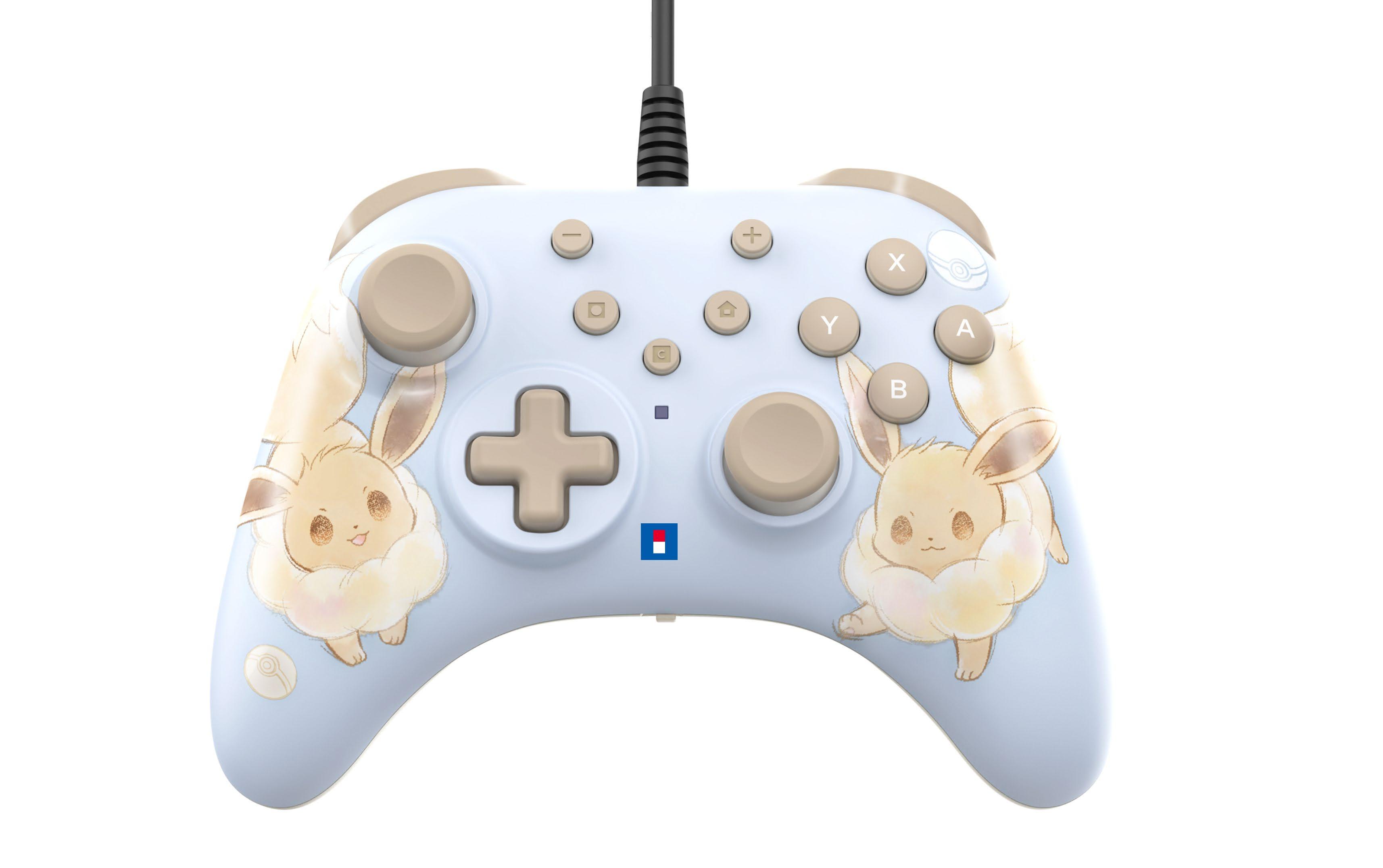
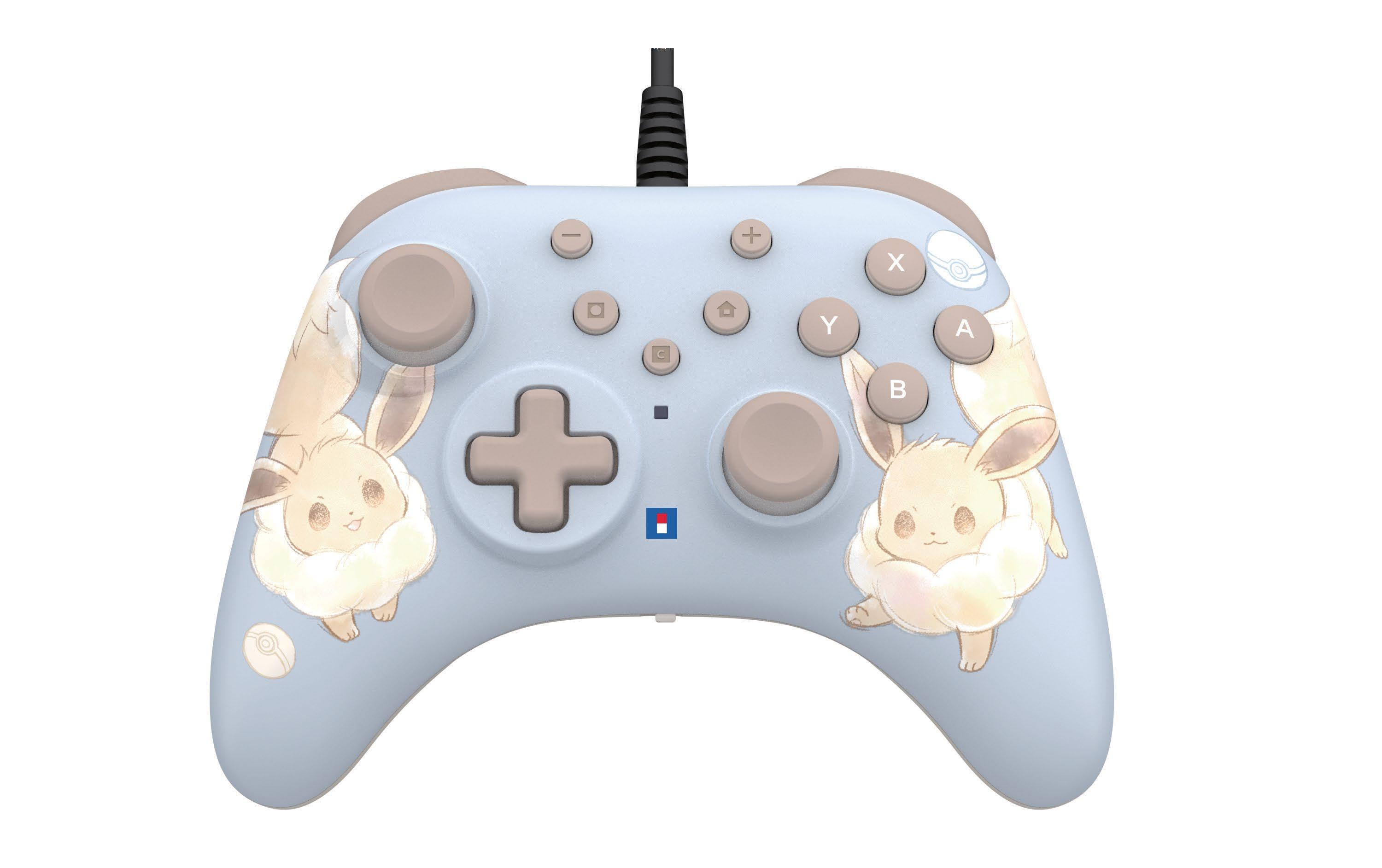
fidelity, and functional details. Seams are clean, zippers are well-aligned, and the prints are applied with enough care to maintain detail
Hori’s UK pricing makes the line accessible: HORIPAD Turbo ~£34, Vault Case ~£28, Puff Pouch ~£32, which positions each item as a justifiable purchase for both collectors and
If you want one piece that meaningfully improves daily play, the HORIPAD Turbo is the immediate pick. If you travel or field-produce frequently, the Vault Case is the pragmatic investment.
If your priority is lifestyle presentation and daily


Reviewed by: Brandon Sawyer
Sliding the PNY microSD™ Express 256GB UHS-I U3 V30 A1 microSDXC into the Nintendo Switch 2 felt like unlocking a hidden gear in the console’s engine. With up to 890MB/s read and 750MB/s write speeds, this wasn’t just a storage upgrade it was a promise of fluidity. The Switch 2 already feels like a generational leap but pairing it with this card gave the sense of a console finally running at full stride.
Testing began with Mario Kart Worlds. Normally, there’s a breath before the track loads, a pause that breaks the rhythm. With the PNY card, that hesitation vanished. Races launched instantly, textures streamed in without delay, and the competitive edge sharpened. Later, Hyrule Warriors: Age of Imprisonment pushed the system harder, throwing particle effects and armies into the fray. The card kept pace, delivering seamless transitions and uninterrupted action.
In Just Dance 2026, speed translated into rhythm. Songs queued instantly, avatars appeared without delay, and gameplay clips saved mid-session without breaking the beat. The card’s reliability meant family sessions flowed without interruption, preserving the energy of the dance floor.
The Switch 2’s library is growing fast, with modern titles demanding tens of gigabytes each. The 256GB capacity gave breathing room for a diverse collection of big RPGs, multiplayer staples, and digital indies all coexisting without

constant juggling. The smaller 128GB option at £44.99 is serviceable, but it quickly feels cramped once you start stacking heavy hitters. The 256GB at £59.99 strikes the balance between cost and future-proofing.
For players who record gameplay, the card’s write speeds are a quiet hero. Saving clips mid-battle or exporting screenshots happened instantly, without slowing the console. For creators, this means smoother workflows and fewer interruptions when capturing those perfect Switch 2 moments.
Beyond raw performance, the card changed the day-to-day feel of the console. Booting up, swapping between games, and navigating menus all felt snappier. It’s the kind of upgrade that fades into the background when you stop noticing load times because they barely exist. That subtle shift makes the Switch 2 feel more like a premium device, one that respects your time.
After weeks of play, the PNY microSD Express
proved itself more than a storage solution. It’s a performance enhancer, a reliability booster, and a quiet enabler of creativity. For families, competitive players, and creators alike, it transforms the Switch 2 experience from “good enough” to “effortlessly fluid.”
Final Rating: 9/10 — a near-perfect companion
for the Nintendo Switch 2, only held back by the premium price that may deter casual players.
A huge thank you to PNY for delivering a card that truly elevates the Switch 2 experience. If you’re ready to supercharge your console, check them out below and see how much smoother your gaming life can be.
www.pny.com Facebook: @PNYEuropeMEA | Instagram: @pnytecheurope X: @pnyeurope | YouTube: @pnytecheumea

Reviewed by: Brandon Sawyer
Organisers flew our UK press group to Barcelona and covered flights and accommodation, arranging press accreditation and a compact itinerary so we could report from the festival’s eighth edition. The logistical support was generous and ensured uninterrupted access to demos, meetings, and editorial opportunities.
Venue and layout and dates
The festival took place at La Farga de l’Hospitalet across an October weekend, with adjoining halls that housed playable indie booths, a vendors’ alley, conference rooms and a B2B area. The compact footprint made navigation straightforward and encouraged serendipitous encounters between developers, players, and press.
Although scheduled over three days, the density of exhibitors and sessions meant the core experience could be covered in a concentrated visit; a determined attendee can see most playable demos and stalls in half a day.
The organisers positioned this edition as an expanding southern European hub, adding curated business spaces and matchmaking tools to amplify regional indie exchange.

Indie showcase: from baby steps to polished standouts
The indie presence was deliberately layered, with solo dev prototypes, early concept demos and near-complete projects sharing the same floor. That mixture created an environment where design conversations took precedence over marketing polish and where developers sought immediate player feedback. The festival felt like a launchpad for domestic talent and a proving ground for projects across the maturity spectrum.
Notable projects observed
A range of titles generated sustained interest across the floor. Intimate, mechanic-driven experiences such as Baby Steps sat beside survival-toned experiments like Stranded. Re: Ver Project Tokyo demonstrated narrative and scale ambitions, while spin-offs and spiritually inspired works such as Woolhaven riffed on the success of Cult of the Lamb. Tense atmospheric entries like Evil Inside and lighter sci-fi adventures like Xeno Rescue rounded out a program that showcased breadth and creative risk.
Standout highlight Gothic Remake
The gothic remake appeared as the festival’s singular standout for our team. Its playable
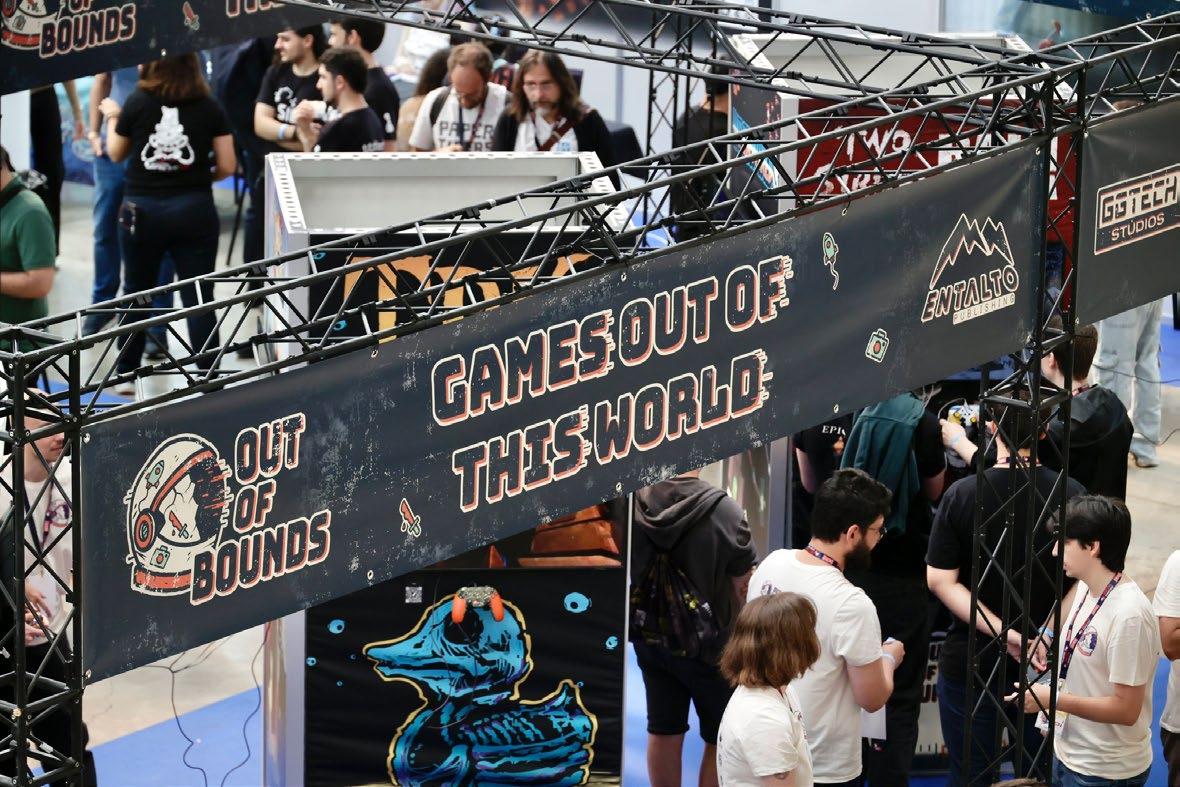
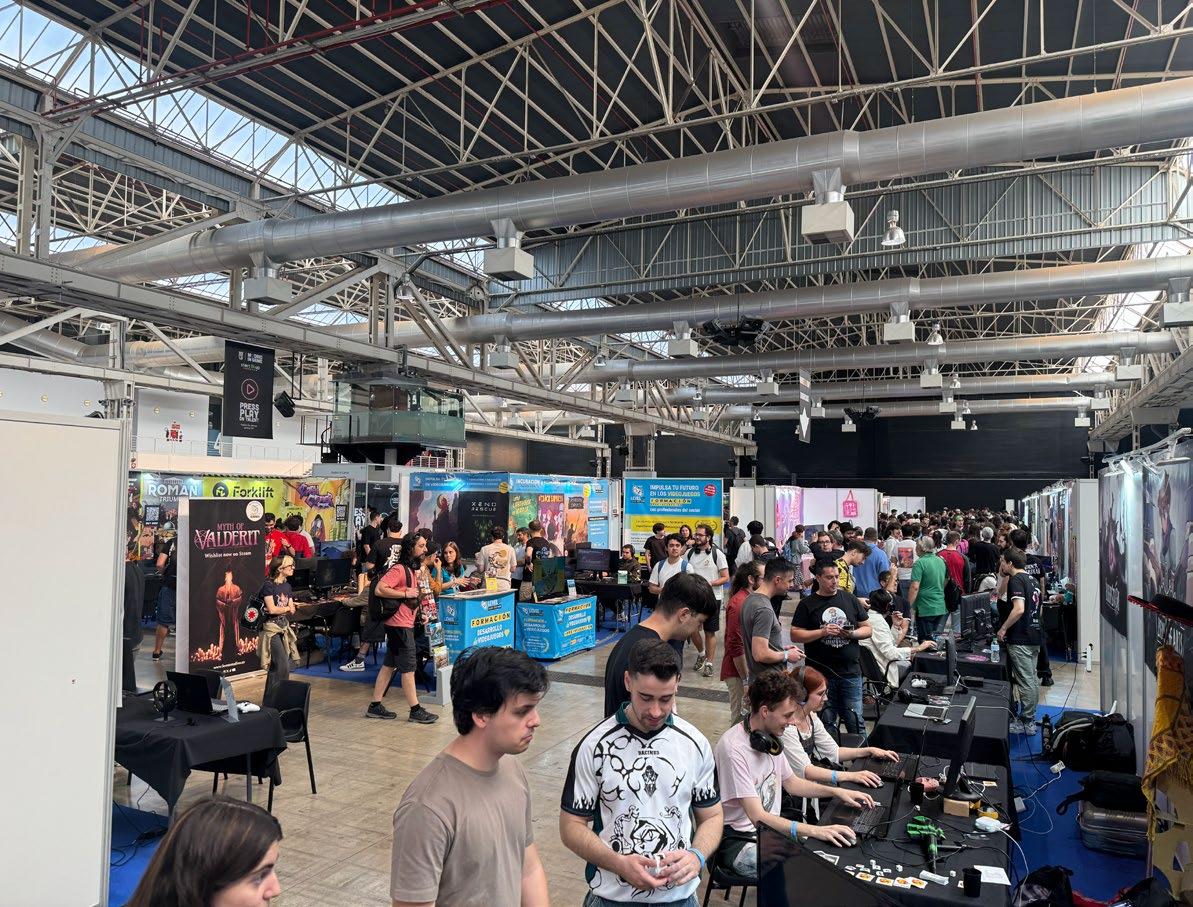

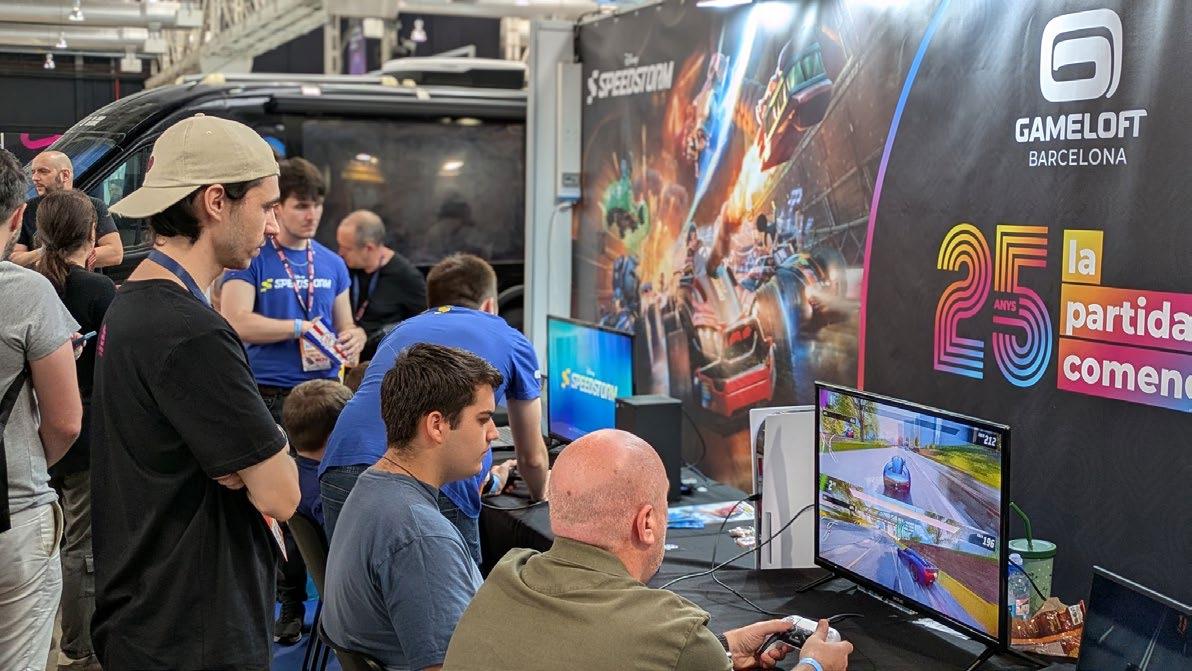
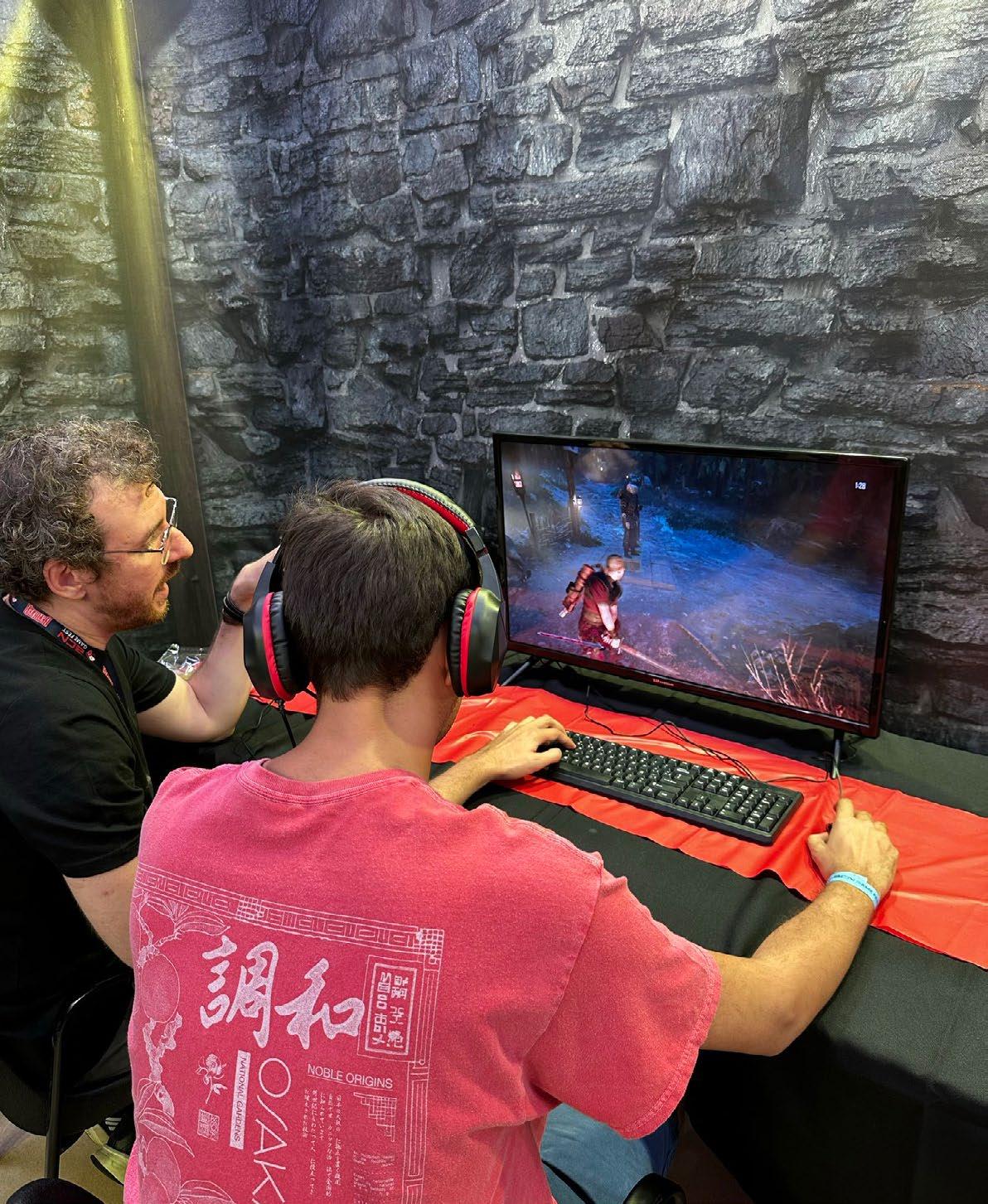
demo combined dense, moody art direction with lovingly reworked period textures and architecture. The developers balanced faithful reverence for the original with thoughtful mechanical updates that modernised pacing and player feedback. The booth consistently drew crowds, extended conversations, and detailed developer Q&A, and its polish suggested genuine commercial potential beyond the festival circuit.
A lively retro console area provided a tactile counterpoint to contemporary indies. Refurbished hardware, curated collections, and playable classics created a social space that encouraged lingering, conversation, and handson comparison with new design trends. The retro zone functioned as both nostalgia engine and design reference point that informed many indie booths’ aesthetic choices.
The vendor alley amplified the festival’s craft sensibility through limited-run prints, bespoke soundtrack releases on physical media, retro restorations, and custom art commissions. These stalls blurred the boundary between gallery and market, converting casual passersby into collectors and giving developers a way to extend a game’s identity beyond the screen.
Panels and workshops were practically oriented and professionally produced, focusing on funding pathways, audio and visual craft, market entry strategies, and development tools. The programming favoured practitioner-level sessions over headline keynotes, delivering actionable takeaways for teams working with
constrained budgets and small staffs.
The festival operated with a clear Spanish and Catalan orientation. Most panels and many exhibitor conversations took place in Spanish, with only a minority of bilingual sessions available. That Spanish-first approach limited live access for anglophone press and international delegates and made the organisers’ invitation to UK PR teams feel mismatched with the programme’s linguistic provisions.
Organisers’ hospitality in covering travel and accommodation enabled on-the-ground reporting, interviews and hands-on play tests that yielded discoveries hard to replicate remotely. The language barrier required additional followup and translation to extract full context from some sessions, but direct access to developers, demos and curated business spaces produced valuable editorial material.
Barcelona Game Fest 2025 is a compact, regionally authentic platform that excels at spotlighting Spain’s indie diversity. Its intimate scale rewards lingering discovery, its retro area offers a welcome analogue contrast, and its lineup from baby-step prototypes to polished candidates like the gothic remake demonstrates an ecosystem both experimental and increasingly exportable.
International visitors should plan for a Spanishcentric programme and limited English provision, but those who accept that framing will find a spirited, eight-year-strong celebration of independent games that is rich in creativity and discovery.

Reviewed by: Emily Welfare

MCM came back in full force this October alongside EGX, and what an event it was! The entirety of the ExCel Centre was open for the event, filled to the brim with cosplayers, artists, authors, games and more.
This particular comic con is always special, as it is held in unison alongside EGX. Many a game was showcased this year, including games such as No Stone Unturned, which made an appearance last year. It was great to see the progress of this indie game from the last time that we saw them! Not only were there a bunch of indie developers showcasing their games, but a huge section dedicated to careers and degrees in gaming, with companies such as Secret Mode talking about their job opportunities.
The EGX section also had a gaming arena, where they held several tournaments with big prizes. All in all, the EGX side held some interesting games to look at, but I do wish it was a little bigger. I feel, with how gaming events have been dwindling in the UK throughout recent years, that MCM have the opportunity to make the EGX side of the event something huge. I hope that they continue to expand it in the future and hold more Esports events,
competitions etc.
That being said, what was showcased there was fantastic, and I hope to try more of the games next year when some developers return with more polished versions of their games!
The MCM side was as busy as ever, with hundreds of independant artists, authors and vendors. It feels as though the calibre is raised with every coming year, and I have noticed that there seems to be more attention dedicated to preventing AI artists, which is great. There were bigger stages this year, with the main stage being down in the auditorium again to allow for a huge audience. I felt like the layout was much more open this time as opposed to May, which is a great improvement.
As always, the cosplay is second to none at this event. The amount of talent and craftsmanship is astounding, and gets better and better with every passing year. It makes me happy that time is given to cosplayers who are just starting out as well as to the experts with showcases on multiple stages. Everyone deserves their time to shine, whether they are new to cosplay, and whether or not it is made or bought!
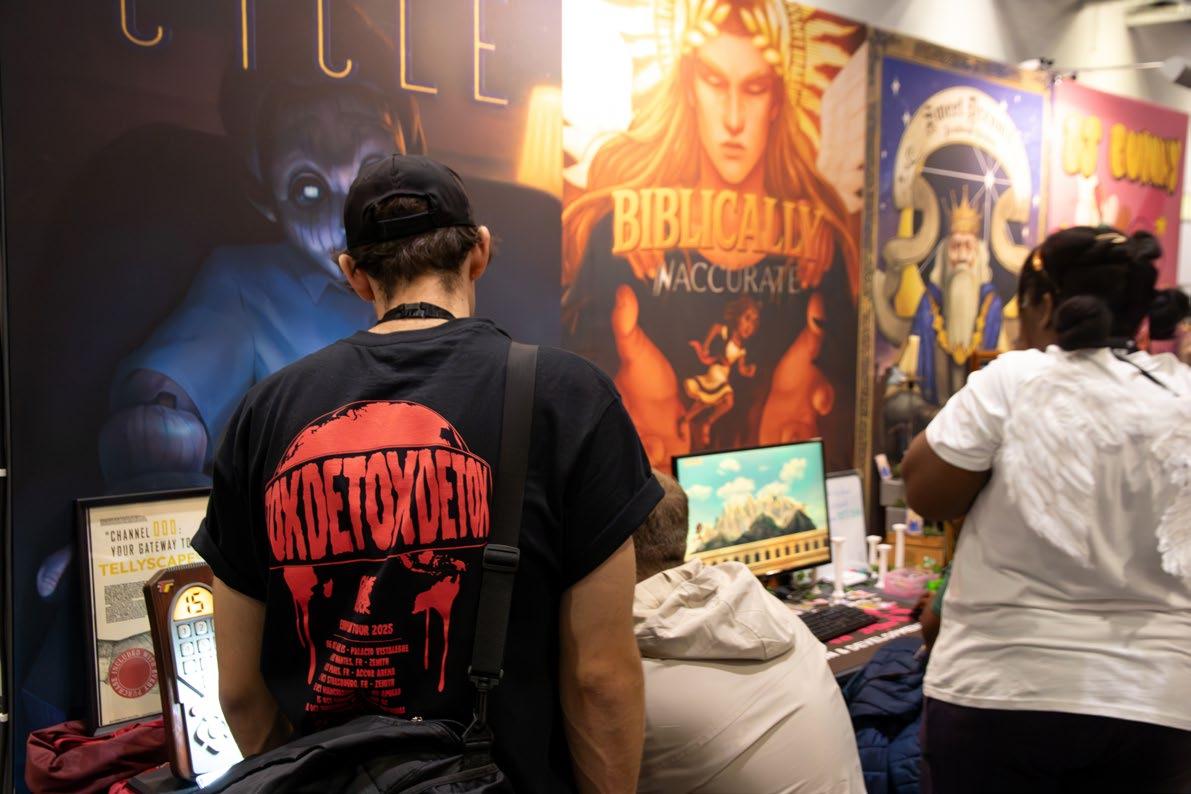


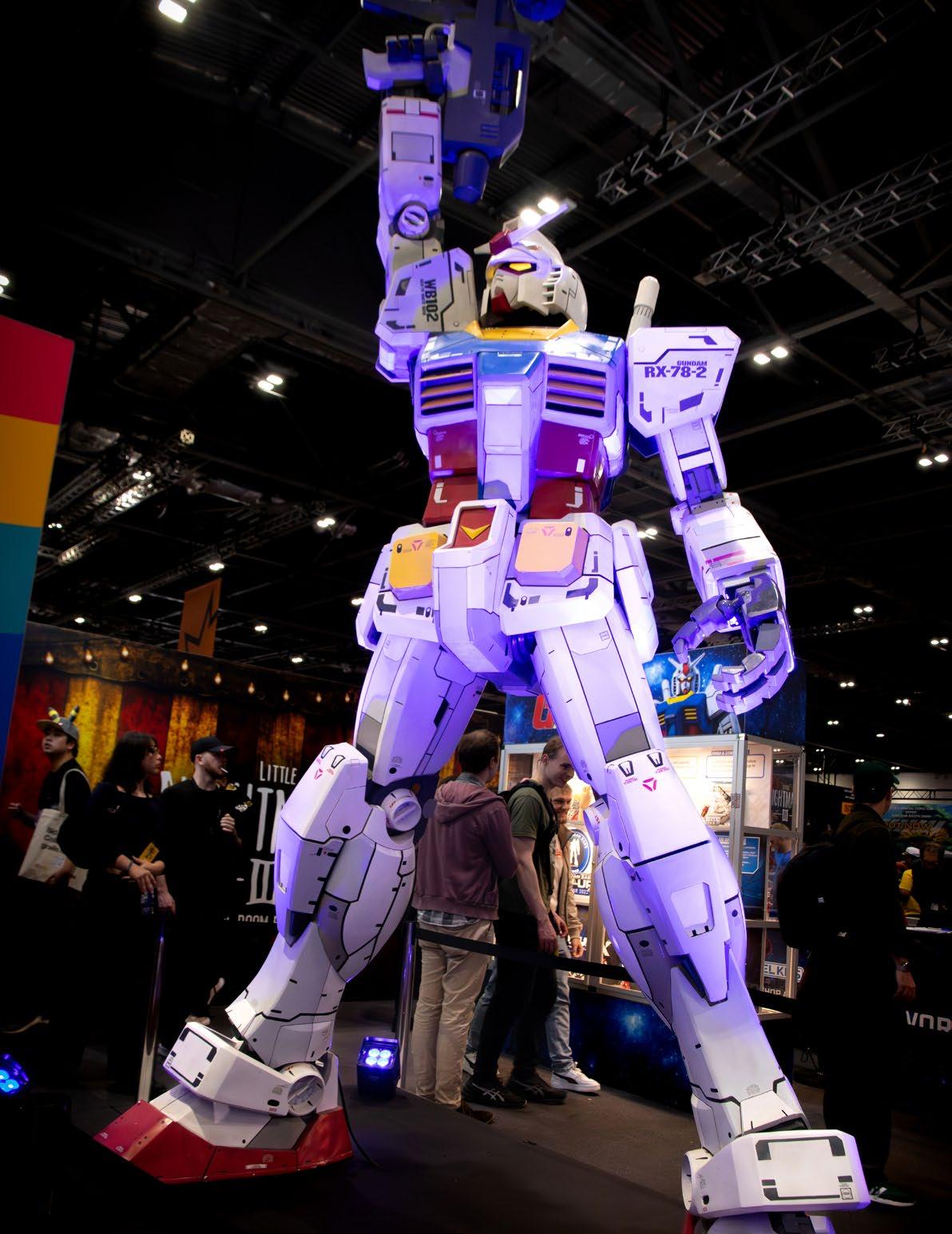
There were some large names at the event again, such as Bandai Namco and Hasbro. Ebay also made another appearance at this comic con, with a large live auction area for anyone to take part and bid on exclusive items.
There was something for everyone, including massive attention to the Table Top community with booths dedicated to Dungeons and Dragons and other such roleplaying systems. I personally loved the Roll & Play Tavern, who made an appearance at the previous comic con. The Dungeons and Dragons booth had an amazing, fully interactive experience where you could build your first character from scratch via a step-by-step, easy to follow trail, walking away with a fully fledged character sheet by the end of it.
Of course, one of the main attractions to comic con are the signings, with many a large name attending to meet their fans. This area is always busy at every comic con, and this one was no exception, with names such as Christopher Judge (God of War), the cast of Hazbin Hotel, and other such incredible talent. The panels were a mixture of entertainment and education throughout the event, containing cosplay advice, influencer advice, Q&A's etc. I feel like the mix of all of these was really good this year.
In conclusion, I loved the improvements made to this comic con from May, however I do wish a little more attention was given to the EGX side. Here's to hoping that it will be bigger and better next year!


Halo Studios has officially revealed Halo: Campaign Evolved, a ground-up remake of the original Halo: Combat Evolved built in Unreal Engine 5 and scheduled to launch in 2026
A faithful remake with modern ambition
Campaign Evolved reconstructs the 2001 campaign from the ground up, preserving the story beats and iconic set pieces while modernizing level geometry, enemy behaviours, and pacing to meet contemporary shooter expectations. The team describes the project as a “faithful yet modernized” remake that refines navigation, reworks encounters that have aged poorly and retunes systems so the emotional highs of the original land with renewed clarity for both returning fans and newcomers.
The remake delivers remastered 4K visuals, updated cinematics, refreshed animations, a remastered soundtrack and re-recorded voice performances to give familiar moments cinematic weight.
The campaign includes quality-of-life updates such as refined aiming and control schemes, improved HUD clarity, checkpointing, optional accessibility toggles, and modern combat refinements that keep the original feel while offering tighter responsiveness for today’s players.
Halo Studios has also added new content to expand the narrative: three brand-new prequel missions that deepen the Master Chief and Sgt. Johnson storylines, plus additional weapons, vehicles and enemy variants drawn from later entries in the series to broaden tactical options.
Co-op, platforms and cross-play for the first time on PlayStation Campaign Evolved supports the cooperative play that defined the original experience with local two-player split-screen on console and up to four-player online co-op
across platforms, and the game will support full cross-play and cross-progression so friends on different systems can play together.
For the first time in the core Halo campaign’s history, Halo: Campaign Evolved will release on PlayStation 5 alongside Xbox Series X|S and PC, marking a major platform shift for the franchise and promising a day-and-date arrival across those systems.
Rebuilding Halo’s origin story in a modern engine and shipping it on PlayStation signals a deliberate strategy to broaden the franchise’s audience while offering a clean, definitive entry point for new players. By balancing preservation and careful enhancement, Halo Studios positions Campaign Evolved as both a celebration of Halo’s legacy and a technical showcase that informs the franchise’s next creative steps.
Campaign Evolved aims to be the version of Combat Evolved that honours the original’s mythic moments while shedding the rough edges of two decades of design evolution; if the studio sustains its stated focus on feel and fidelity, the remake should satisfy veterans craving a faithful restoration and newcomers seeking a polished, contemporary first encounter with the Master Chief’s origin.
Stay up to date with the launch and upcoming information at the website below.
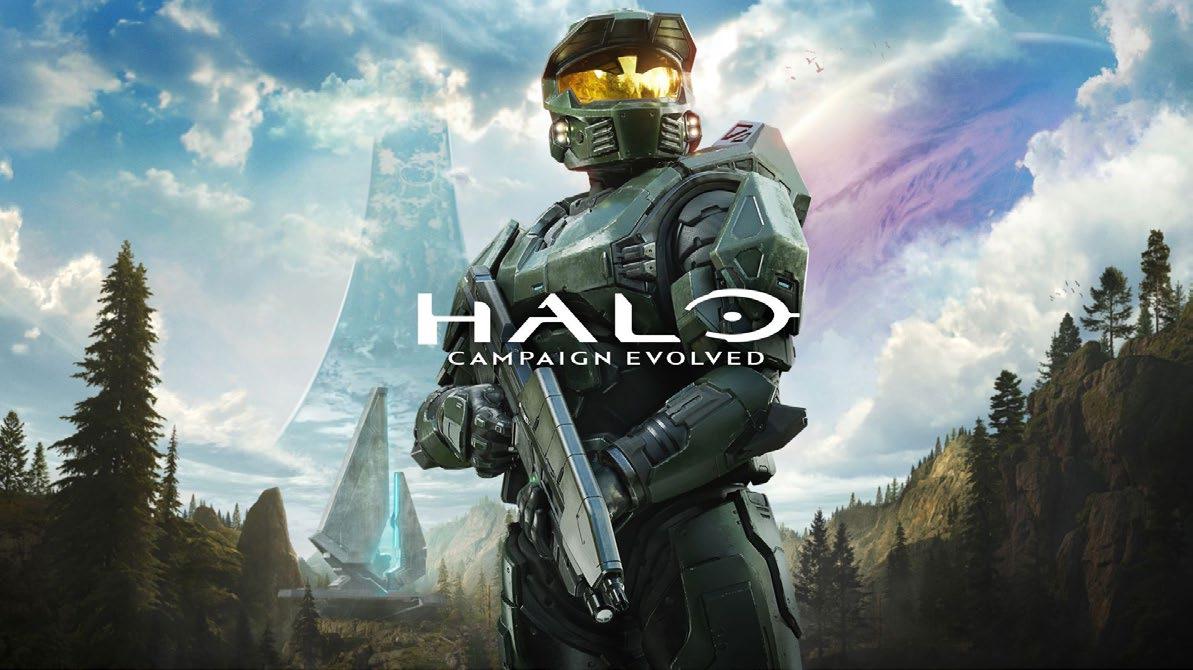
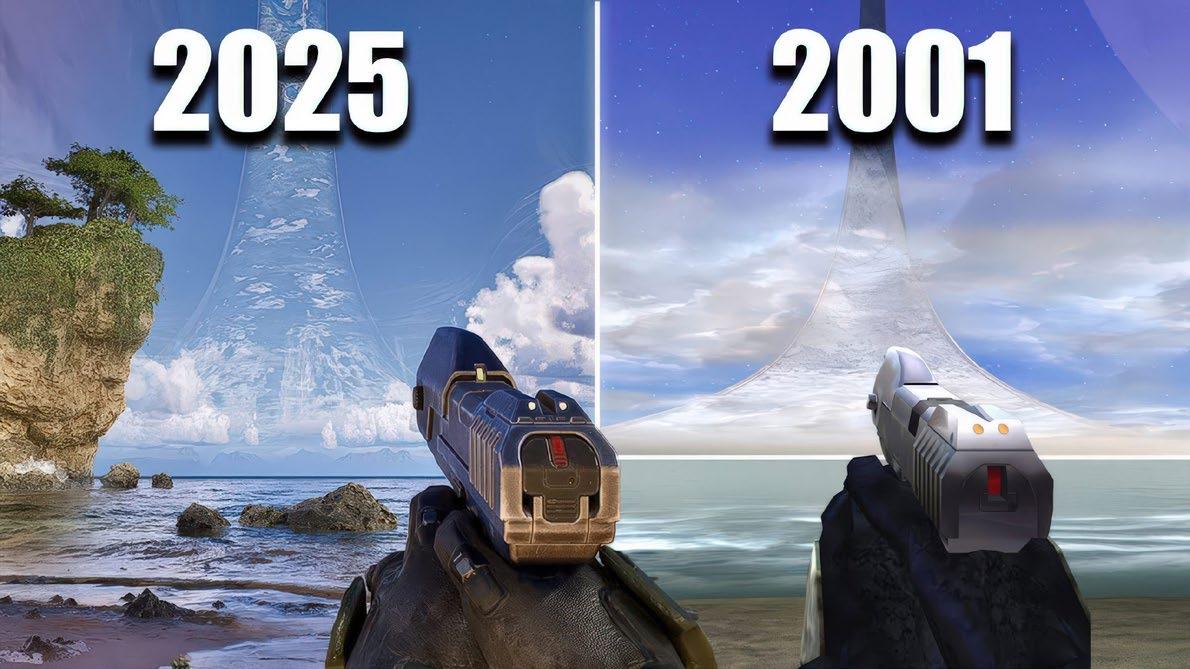
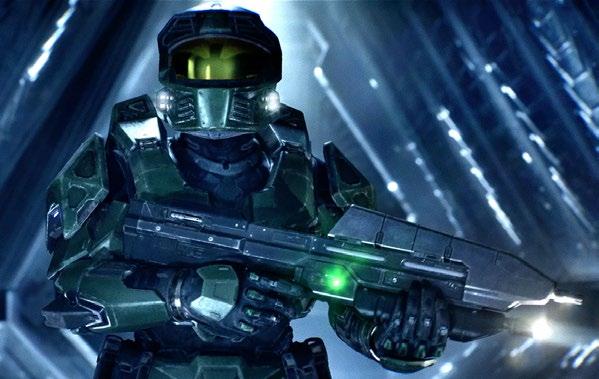



In an era when the videogame industry often favours sprawling, resource-hungry AAA productions, Airlock Games arrives like a small, deliberate rebellion. Founded and self-funded by industry veterans Justin Fischer and Brock Feldman, the studio trades scale for agility, promising focused, inventive experiences that the founders themselves want to play. Their stated mission is to capture the reckless creativity of gaming’s golden age while respecting modern players’ limited time and budgets by delivering shorter, tightly designed titles at lower price points.
Justin and Brock bring more than four decades of combined experience, and it shows in the way they talk about design: they treat constraints not as obstacles but as opportunity. By deliberately choosing smaller scopes and faster development cycles, Airlock Games frees itself from the bureaucratic compromises that can dilute bold ideas in larger teams. The result is a studio where iterations happen quickly, creative risks can be taken without months of corporate approvals, and every decision feels personally owned by the people making the game.
On our exclusive visit to their workspace we

saw that intention manifest in everything from patchwork whiteboards to prototype builds. The team’s development rhythm is compact and iterative: concepts that might take studios months to prove out become actionable prototypes in days. Conversations with the founders highlighted three recurring priorities. First, design for players short on time build sessions that resolve into satisfying progress in under an hour. Second, push tonal dissonance pairing cosmic dread with dark comedy because those edges produce memorable moments. Third, use an aesthetic of restraint: the 16-bit visuals are a deliberate expressive choice that focuses attention on writing, systems, and player inference rather than photoreal spectacle.
Their debut title, What the Stars Forgot, is a management sim braided tightly with psychological horror. Set aboard a stranded vessel or remote outpost, the game places players in the role of steward and crisis manager. The art reads like a love letter to classic pixel work, but the mechanics beneath that charming surface are modern and rigorous. The game’s mechanics and narrative feed one another; as systems fail and strange phenomena accumulate, crew personalities



and secrets are revealed in ways that challenge players’ moral calculus and keep the tension humming.
At the heart of the game is a resource triage loop that forces hard trade-offs. Players must allocate limited power, food, fuel, and repair capacity across ship systems while attending to crew assignment and morale. Each crew member is modelled with distinct skills, relationships, and psychological thresholds; sending the wrong person into the wrong corridor can produce quick fixes but longterm emotional fallout. Rather than reducing stress and sanity to opaque meters, the game uses them as narrative levers: rising stress yields unreliable reports, hallucinations, and branching vignettes that reshape future options and reveal new character layers.
Compact sessions with dense decision-making
Sessions are deliberately compressed so that each playthrough feels like a complete, intense shift rather than a looming, endless campaign. The design rewards dense choicemaking: in twenty to sixty minutes you will be asked to weigh immediate survival against preserving long-term cohesion. That rewardrisk tension is essential to the experience. Pushing systems harder can yield faster progress, but it accelerates mechanical wear and psychic breakdown, making every gambit feel consequential and emotionally charged.
Tone and presentation: comedy and dread in close quarters
The tonal architecture of What the Stars Forgot is one of the game’s most distinctive strikes. The pixel art softens the horror enough to let the writing do the heavy lifting; comedy and discomfort sit cheek-by-jowl, and the effect is often disorienting in a productive way. Instead of leaning on jump scares, the game cultivates a creeping unease: a crew member’s small confession over intercom, a sensor blip that slowly refuses to make sense, the absurdity of bureaucratic checklists while the ship dies. Those moments linger precisely because the aesthetic invites players to fill in the blanks with
their imagination.
Replay value comes not from long-form grinding but from emergent human drama. Randomized events and character arcs permute around a tightly controlled core, meaning each run surfaces different relationships, secrets, and moral dilemmas. The systems are designed so that mechanical failure births narrative payoff; a botched repair can open a tragic backstory, while a successful but desperate gamble can fracture trust in ways that complicate later choices. That interplay between systems and story is where the game feels most alive.
What the Stars Forgot will resonate with players who love narrative sims, emergent storytelling, and high-impact short sessions. It suits those who want management complexity but also crave emotional stakes and moral ambiguity; it will appeal to fans of slow-burn psychological horror who prefer suggestion and atmosphere to cheap shocks. More broadly, Airlock Games’ debut is significant because it demonstrates that veteran talent can produce richly layered, experimental work outside the AAA treadmill. In a market crowded by long service models and ever-bigger budgets, this studio’s nimble approach restores the pleasure of taking creative chances.
What the Stars Forgot doesn’t attempt to reinvent every genre it touches; instead, it synthesizes management systems, psychological drama, and tonal strangeness into a concise, memorable package. The studio’s philosophy focused scope, rapid iteration, and a willingness to embrace weirdness comes through in the playtest we saw. Moments of dark comedy and quiet dread accumulate into experiences that linger, and the team’s craft is evident in how mechanical decisions always matter to the story being told. For players who value thoughtful design, emotional complexity, and compact gameplay sessions, Airlock Games’ first title is a debut worth following closely.
If you want to support the game and follow development more closely, check out Airlock Games’ Kickstarter page for What the Stars Forgot.




A launch console isn’t just hardware; it’s a ritual. Unboxing the Switch 2 felt like opening a new chapter in how we play together at home, on trains, catching flights, at a café in our hometown and sprawled on the sofa with family swapping controllers like trading stories. It’s unmistakably Nintendo: approachable, charming, and deceptively powerful. What surprised me was how consistently it honoured the past while feeling distinctly modern especially with Nintendo Switch Online + Expansion Pack transforming nostalgia into living, breathing play.
The Switch 2’s design is a study in refinement. Nintendo hasn’t reinvented the silhouette, but every detail has been reconsidered to make the console feel more premium, more durable, and more creator friendly. The matte finish is understated yet practical, resisting fingerprints and glare under studio lights, a subtle but important upgrade for those of us who capture footage or photograph setups. Corners are slightly softened, giving the console a sleeker profile that feels less toy-like and more like a serious piece of kit.
The kickstand is perhaps the most symbolic improvement. Gone is the flimsy strip from the original Switch; in its place is a full-width, reinforced hinge that locks confidently into position. Whether perched on a café table during a layover or balanced on a train tray, the Switch 2 stays put. It’s a small change, but it transforms tabletop play from “good enough” to “dependable.”
The dock has also matured. Slimmer and more elegant, it now features a cable channel that respects tidy setups, with ports positioned to reduce strain on HDMI and USB-C connections. For creators, this means cleaner cable
management and fewer headaches when integrating capture cards or external displays. The dock’s finish matches the console, creating a cohesive aesthetic that looks intentional in a living room or studio.
The Joy-Con 2 controllers are where the design philosophy really shines. Their magnetic snap is reassuringly solid, eliminating the flex and creak of the original rails. Ergonomics have been subtly reshaped: the curve of the grips fits more naturally in the hand, and the buttons have a taller profile with a crisp return that makes rhythm inputs in Zelda or precision drifts in Mario Kart World feel more reliable. The sticks are tighter, with improved dead zones that make fine adjustments smoother crucial for aiming in GoldenEye or lining up the perfect shot in Pokémon Snap.
Haptics are no longer a novelty; they’re a language. The Joy-Con 2 rumble communicates texture and impact with layered nuance. A Poké Ball closing has a gentle thrum, Link’s bowstring has a taut vibration, and Mario Kart’s engines roar with a convincing rumble that rises and falls with speed. These tactile cues add depth to gameplay, making the console feel alive in your hands.
Durability has been addressed too. The rails, buttons, and sticks feel sturdier, and the overall build quality inspires confidence. After weeks of travel, trains, flights, cafés, and living-room marathons the Switch 2 showed no signs of wear beyond the expected smudges. It’s a console designed not just to be played, but to be lived with.
Display and Audio: Portable Clarity, Docked Punch, and Sonic Atmosphere
The Switch 2’s display is the beating heart of its hybrid identity, and it’s where the leap from the original model feels most immediate. The 7.9-inch 1080p HDR panel is not just sharper; it’s more expressive. Colours pop with vibrancy


without tipping into oversaturation, and the improved contrast ratio means darker scenes retain depth rather than collapsing into muddy greys. Playing Pokémon Legends Z-A handheld, the skies shifted from dawn pinks to stormy blues with a painterly smoothness, while the grasslands shimmered under sunlight in ways that felt alive. Motion handling is equally impressive: the 120Hz refresh rate keeps fast pans and quick battles fluid, eliminating the blur that plagued the first Switch.
Docked, the console’s 4K60 output transforms living room play into a spectacle. Mario Kart World is the perfect showcase: neon reflections in Tokyo Drift tracks ripple across puddles with convincing realism, desert sands scatter dynamically under wheels, and weather effects shift mid-race without a hitch. The clarity is such that even split-screen multiplayer retains sharpness, with text and UI elements staying legible at a glance. Retro titles benefit too, Ocarina of Time’s dungeons glow with subtle HDR lighting, and GoldenEye’s angular corridors feel less dated thanks to cleaner edge reconstruction.
Audio has undergone a similar evolution. In handheld mode, stereo separation is stronger, with left-right cues more pronounced perfect for stealth in GoldenEye or tracking Pokémon cries in Legends Z-A. The speakers deliver fuller mids and crisper highs, avoiding the tinny quality of the original Switch. Docked, the HDMI audio output feels richer, with ambient soundscapes filling the room. Rain in Hyrule carries texture, ocean waves in Wind Waker swell with depth, and the crowd chatter in Pokémon Snap’s park feels layered rather than flat. The JoyCon 2 controllers add another dimension with their refined haptics. They don’t just buzz, they communicate. The rumble of engines in Mario Kart World, the snap of a Poké Ball closing, or the subtle vibration of Link drawing his bow all feel distinct, adding tactile punctuation to the visual and audio experience. Together, the display and audio upgrades make the Switch 2 not just a console you play, but one you inhabit.
Performance: Faster Loads, Steadier Frame Pacing, Smarter Upscaling — Modern and Classic Games Alike
No console lives or dies by paper specs;
it’s about how games feel. The Switch 2 consistently loads faster menu-to-game jumps, fast-travel hops, and dungeon transitions in Ocarina of Time through the Expansion Pack are noticeably brisk. Frame pacing feels disciplined, which matters more than raw FPS in Nintendo’s catalogue; camera sweeps are smooth, UI interactions are snappy, and animation timing is preserved. Upscaling is cleaner than the firstgen Switch less shimmering on fine detail, better edge reconstruction which made retro titles look freshly minted rather than run through a filter.
But the real test came with modern releases. Pokémon Legends Z-A showcased the console’s ability to handle sprawling open worlds without compromise. In handheld mode, the variable refresh rate kept battles fluid, while docked play delivered cinematic 4K visuals that made every biome feel alive. Mario Kart World was equally impressive: weather effects shifting mid-race, neon reflections in Tokyo Drift, and desert sands reacting dynamically to wheel spin all running at a rock-solid 60fps. The improved JoyCon haptics translated every drift and item hit into tactile feedback, making competitive play sharper and more immersive. Third-party titles like Dragon Ball: Sparking! ZERO pushed the hardware further, with particle-heavy combat sequences that remained stable even during chaotic team battles. Meanwhile, indie gems such as Goodnight Universe benefited from the faster load times and HDR support, proving that smaller studios can shine just as brightly on this platform.
Together, these experiences show that the Switch 2 isn’t just a nostalgia machine—it’s a modern console capable of delivering smooth, responsive play across genres. Whether revisiting classics like GoldenEye and Pokémon Snap or diving into new worlds, performance is consistently strong, bridging past and present in a way few consoles manage.
For UK players, the service is now essential. Pricing is £49.99 per year for individuals and £89.99 for families, with the Expansion Pack adding N64, Game Boy Advance, SEGA Mega Drive, and GameCube classics. The inclusion of DLC like Mario Kart 8 Deluxe Booster Course

Pass and Animal Crossing: Happy Home Paradise adds tangible value.
GoldenEye online play is revelatory chaotic couch rules now extend across towns. Pokémon Snap benefits from smoother textures and tactile shutter feedback. Ocarina of Time feels reborn, with save states and HDR breathing new life into its timeless dungeons.
Personal Experience: Pokémon Legends Z-A, Zelda’s Rebirth, GoldenEye, Pokémon Snap, and Mario Kart World
Pokémon Legends Z-A is the showcase. In handheld, weather shifts and environmental details are vivid; docked, battles are cinematic. The Joy-Con haptics make catching Pokémon tactile, and menu transitions are snappy enough to keep battles flowing.
Ocarina of Time was our family's “Temple Night.” The smoother camera and precise inputs made puzzles fairer, while sound cues like Saria’s theme and Skulltula tokens hit harder than memory alone. Save states meant we could pause mid-puzzle and resume without losing momentum, a modern kindness layered onto a classic challenge.
GoldenEye was chaos in two acts. Docked, four controllers, screen-peeking, and “No Oddjob” rules broken immediately it was the same glorious mess we remembered, but steadier, sharper, and more responsive. It wasn’t a remake; it was preserved with polish, and that was enough.
Pokémon Snap was a family favourite rediscovered. The Switch 2’s display reduced shimmer, colours were smoother, and the audio mix was punchier. The Joy-Con’s half-press shutter added a tactile nuance, making each photo feel deliberate. We passed turns on a timer, debated routes, and laughed at missed shots. It was proof that the Expansion Pack isn’t a museum, but a playground.
And then there was Mario Kart World. This was the game that made us forget time. In handheld mode, tracks felt alive with detailed neon reflections in Tokyo Drift, desert sands shifting
under wheels, and weather effects that changed mid-race. Docked, the game became a family event: four players, split-screen chaos, and the Switch 2’s improved frame pacing keeping every drift sharp and every boost responsive. The JoyCon haptics conveyed the rumble of engines and the snap of item hits with precision. Online play was seamless, matchmaking quick, and the Expansion Pack integration meant extra tracks were already waiting. One evening, we played for hours, cycling through cups, laughing at betrayals, and marvelling at how the Switch 2 made Mario Kart feel both familiar and brand new.
The Switch 2 retails at £395.99 in the UK, with marquee titles like Dragon Ball: Sparking! ZERO at £54.99 and indies like Goodnight Universe at £16.99. Accessories are premium-priced but well-built, with Joy-Con 2 sets at £69.99 and the Pro Controller 2 at £74.99. Availability remains tight, with restocks selling out quickly.
Joy-Con Evolution and Input Feel: Precision Meets Personality
The Joy-Con 2 controllers are the most tangible reminder that Nintendo listens. Gone are the loose rails and occasional drift issues of the original; in their place is a design that feels engineered for longevity and precision. The magnetic snap into the console is firm and satisfying, eliminating the flex that once undermined handheld confidence.
Buttons now have a taller profile and a crisp return, making rhythm inputs in Ocarina of Time or quick menu swaps in Pokémon Legends Z-A feel more responsive. The sticks are tighter, with improved dead zones that allow microadjustments in camera control invaluable when lining up a sniper shot in GoldenEye or finetuning a drift in Mario Kart World.
Rumble has matured into a language of its own. It’s no longer a single buzz but a layered feedback system. A Poké Ball closing has a gentle thrum, Link’s bowstring vibrates with taut resistance, and Mario Kart’s engines roar with a convincing rumble that rises and falls with speed. These tactile cues don’t just enhance
immersion; they make gameplay fairer and more intuitive. Zelda puzzles feel less like guesswork, Pokémon battles flow with rhythm, and GoldenEye firefights gain a sharper edge.
The Switch 2 thrives in duality. Docked in the living room, it’s a communal console: big screen, shared snacks, long levels, and laughter echoing through split-screen chaos. Mario Kart World in 4K60 is a spectacle, with neon reflections and dynamic weather effects filling the room. Retro classics like GoldenEye and Pokémon Snap benefit too, their sharper visuals and steadier frame pacing making them feel fresh without losing their charm.
But handheld mode is where the Switch 2 proves its hybrid soul. Weekends meant trains, flights, parks, and cafés — and the console honoured each equally. The HDR display made Pokémon Legends Z-A’s skies shimmer with life, while the 120Hz refresh rate kept fast pans fluid. Rapid wake-from-sleep meant opportunistic sessions were realistic: five minutes to catch two Pokémon before boarding a flight, or a quick Zelda puzzle solved over coffee. Wireless connections proved resilient, keeping online play stable even in crowded environments.
This balance is the Switch 2’s triumph. It doesn’t force you to choose between living-room spectacle and handheld intimacy; it delivers both with equal confidence.
For creators, the Switch 2 is more than a console it’s a tool. The dock’s IO has been redesigned with intention, featuring a cleaner layout and cable channels that respect tidy setups. HDMI and USB-C ports are positioned to reduce strain, making integration with capture cards smoother and more reliable.
In practice, this meant fewer handshake issues and less HDCP-related stutter when recording footage. Screenshot and video capture timings are tighter, ensuring that moments are preserved without latency. For workflow-heavy
reviewers, this is transformative: footage looks intentional, audio sync is cleaner, and editing pipelines feel less compromised.
Noise profiles are consistent, making tabletop mic placement simpler. The fan stays quiet even during long docked sessions, reducing background hum in recordings. For those of us who document play sessions, create branded content, or stream live, these refinements aren’t luxuries they’re necessities. The Switch 2 respects the creator’s process, making it easier to share polished, professional content without fighting the hardware.
Nintendo hasn’t tried to out-muscle high-end living-room boxes; it doubled down on being where you are and who you’re with. The Switch 2 is a confident refinement of hybrid play, and Nintendo Switch Online + Expansion Pack turns nostalgia into a living library. Performance steadiness, faster loads, better input feel, and cleaner upscaling make modern releases sing and classics feel cared for. Battery life is the limiter, but rapid charging keeps play flowing.
Rating: 9/10 – A near-perfect blend of portability and power, with room for endurance improvements.
Huge thanks to Nintendo for sending over the Switch 2 and a suite of titles for testing at launch. Alongside Pokémon Legends Z-A and Mario Kart World, we’ll also be reviewing a handful of other Nintendo games throughout this magazine launch.
This inaugural issue is dedicated to exploring how the Switch 2 redefines play not just through nostalgia, but through the new worlds it opens for creators, families, and gamers alike.

www.nintendo.com

Age of Imprisonment isn’t just another Warriors spin-off, it's a bold narrative bridge that finally cements the musou formula within Zelda’s canon. Set during the Imprisoning War, the game thrusts Princess Zelda back into ancient Hyrule, where she fights alongside Rauru, Mineru, and Queen Sonia against Ganondorf’s rise.
This shift in focus is monumental. Where Age of Calamity flirted with canon but ultimately diverged, Age of Imprisonment commits fully, weaving itself into the tapestry of Zelda’s mythos. It’s not just spectacle, it's history and playing it feels like stepping into the legends that shaped the kingdom.
The musou formula thrives on excess waves of enemies, absurd combos, and the thrill of being a one-person army. But Age of Imprisonment refines this chaos into something sharper and more strategic. The introduction of Sync Strikes adds a layer of tactical depth. Pairing characters allows you to unleash cinematic team attacks that feel earned rather than gratuitous. These moments punctuate battles with bursts of spectacle, rewarding cooperation and timing.
The integration of Zonai devices is equally transformative. Borrowed from Tears of the Kingdom, these gadgets let you summon flame emitters, rolling wheels, or time bombs midcombat. Suddenly, battlefields become creative playgrounds, where experimentation leads to triumph. Fuse monster parts, trigger elemental reactions, and manipulate terrain it’s musou combat with a sandbox twist.
The roster is expansive and diverse; each hero tied to their secret stone. Zelda’s Recallpowered waves, Rauru’s radiant beams, Mineru’s mechanical constructs, and Ganondorf’s devastating dark magic all feel distinct. Switching characters isn’t just variety, it's a necessity, as each brings unique tools to the fight.
The narrative weight of Age of Imprisonment is undeniable. Zelda’s displacement in time forces her to grapple with shaping Hyrule’s destiny while witnessing Ganondorf’s bloody ascent. The story beats are heavy and unforgettable: Queen Sonia’s tragic murder, Rauru’s desperate stand, and Zelda’s growing realization that her role is both pivotal and heartbreaking. These
aren’t just cutscenes, they're emotional anchors that give meaning to the chaos.
What makes the story resonate is its perspective. Zelda isn’t just a participant; she’s a historian of Hyrule’s founding, living the myths that future generations will only hear in whispers. This duality of hero and chronicler adds richness that makes the tale feel essential rather than supplemental.
Our playthrough was a blend of exhilaration and reflection. Playing co-op, we alternated between Zelda’s radiant waves and Mineru’s mechanical contraptions, finding joy in the synergy of Sync Strikes. Zelda and Rauru’s combined blasts became our favourite cinematic payoff, a moment we actively sought out mid-battle. Taking control of Ganondorf mid-campaign was a guilty thrill. His sheer brutality, massive swings, devastating dark magic contrasted with Zelda’s hopeful resilience, creating a narrative tension that made us question our own role in the story.
Family sessions sparked debates about lore. My kids wondered why Zelda couldn’t simply remain in the past, shaping Hyrule alongside Rauru and Sonia. I explained the bittersweet inevitability of her journey, how her sacrifice ensures the future we know. These conversations made the
game more than just entertainment; it became a shared exploration of myth and meaning. By the climactic battle, we weren’t just mowing down enemies; we were emotionally invested in the fate of Hyrule. The final confrontation felt earned, not just mechanically but narratively, as if our button presses carried the weight of history.
For Zelda fans, Age of Imprisonment isn’t just a side story, it's a canonical chapter. The game fleshes out the Imprisoning War, tying directly into Tears of the Kingdom while expanding on Rauru, Mineru, and Sonia’s roles. It’s rare for a musou game to feel essential to its parent franchise, but here the stakes are real. Playing through these battles isn’t just about spectacle, it's about understanding the sacrifices that shaped Hyrule’s future. The game transforms myth into memory, and memory into lived experience.
The game introduces adjustable difficulty settings, streamlined tutorials, and clearer UI elements. For newcomers, this makes the musou genre less intimidating, while veterans can crank up the challenge for truly chaotic battles. It’s a thoughtful touch that broadens the audience without diluting the core experience.
Hyrule Warriors: Age of Imprisonment is the most polished musou-Zelda hybrid yet. It doesn’t fully escape the genre’s repetitive nature, and its story occasionally leans too heavily on Tears of the Kingdom. Yet the combat refinements and the sheer narrative weight make it a must-play. It’s not just another Warriors spin-off, it's a canonical chapter in Zelda’s saga, delivered with spectacle and heart.
9/10
The audio design is a triumph, blending familiar Zelda motifs with sweeping new orchestral arrangements that heighten the drama of every battle. From the haunting choral echoes during Ganondorf’s rise to the triumphant fanfares that accompany Sync Strikes, the soundtrack feels both nostalgic and fresh. Voice acting is equally strong, with Zelda’s vulnerability and resolve captured beautifully, while Ganondorf’s deep menace adds weight to his every appearance. The soundscape doesn’t just accompany the action it elevates it, making each clash feel like part of a grand legend.
9/10
Visually, the game is stunning on Switch 2. Battlefields are sprawling and richly detailed, with ruined temples, glowing Zonai constructs, and armies that feel truly massive. Character models are expressive, their secret stone powers rendered with dazzling effects that light up the screen. Cutscenes rival mainline Zelda entries in polish, often feeling like playable cinema. The clarity and stability of the visuals ensure that the chaos never becomes cluttered, allowing players to appreciate both the spectacle and the artistry.
9/10
Playability is where Age of Imprisonment shines most. The musou formula remains accessible, easy to pick up, satisfying to master but the refinements make it deeper than ever. Sync Strikes encourage teamwork, Zonai devices add creativity, and the diverse roster ensures variety. Coop play is smooth and rewarding, turning battles into shared experiences rather than technical struggles. Tutorials and difficulty options make the game approachable for newcomers while still offering challenge for veterans. It’s a rare musou that feels both inclusive and strategically engaging.
Taken together, the audio, visuals, and playability form a cohesive whole that delivers on every front. Age of Imprisonment isn’t just a Warriors spin-off it’s a canonical Zelda chapter presented with spectacle, polish, and emotional weight. The game balances accessibility with depth, nostalgia with innovation, and chaos with narrative purpose. Its delivery feels complete, as if every element of the story, mechanics, and presentation was designed to reinforce the legend it tells.
Reviewed by: Brandon Sawyer
Version tested: Nintendo Switch 2




Booting up Just Dance 2026 on the Nintendo Switch 2 was like throwing open the doors to a festival I didn’t know I’d been waiting for. The moment the game loaded, the room was drenched in neon colour, pulsing beats, and a sense of anticipation that made it impossible to sit still.
As someone who had never played a Just Dance game before, I expected a light distraction at best. What I got instead was a full-blown experience, a game that doesn’t just sit quietly on your console but leaps out and demands you join the rhythm. The Switch 2’s upgraded hardware makes that invitation irresistible. Animations flow with a smoothness that feels almost cinematic, dancers burst onto the screen with personality and flair, and the menus themselves glide with a polish that makes navigation part of the performance.
Within minutes, I wasn’t just playing; I was moving, laughing, and realizing that this wasn’t going to be a solitary gaming session. It was going to be a shared event, a memory in the making. That sense of instant immersion the way the game sweeps you up before you even know what’s happening is what makes Just Dance 2026 such a powerful entry point for newcomers like me.

The soundtrack is the beating heart of Just Dance 2026, and it’s a lineup designed to keep everyone engaged. Pop anthems dominate the stage with the likes of Dua Lipa’s Dance the Night and Taylor Swift’s Cruel Summer, tracks that had the whole room singing along as we tried to keep up with the choreography.
Nostalgic throwbacks brought smiles to older players, while Latin rhythms and K-pop hits injected variety and challenge. Each song feels like its own performance, with choreography that ranges from approachable routines perfect for beginners to high-energy sequences that leave you breathless. What struck me most was how the playlist created a shared experience no matter your taste, there was always a track that made someone light up, and that joy was contagious.
This is where Just Dance 2026 truly came alive. We transformed the living room into a makeshift stage, pushing aside furniture to carve out space for our dance floor. The first few songs were pure chaos, arms flailing, steps missed, laughter erupting every time someone spun in the wrong direction.
But that chaos quickly became part of the fun. Parents tried to keep pace with routines while younger players moved with effortless confidence, and the room filled with cheers whenever someone managed to nail a streak. One moment stands out above all others. I, Sawyer, locked into a tricky routine, determined to keep up with the on-screen dancer. My arms cut through the air, my feet scrambled to match the rhythm, and just as I thought I was about to collapse, the screen lit up with that coveted Super Star rating.
The eruption of applause from family and friends made it feel like a championship victory. That single flash of recognition captured the essence of the game not perfection, but the thrill of trying, the joy of sharing, and the laughter that binds everyone together. As the night went on, the playlist became a journey. Pop hits had us singing, disco classics had us grinning, and the quirky tracks had us doubled over in laughter. Every song became a story, every routine a memory. By the end, we weren’t just tired — we were exhilarated, bonded by the rhythm and the ridiculousness of it all.
One of the most impressive features is how

easy it is to bring more people into the fun.
With the option to connect your smartphone as a controller, no one is left out. A quick app download and sync, and suddenly the dance floor expands to include everyone in the room
This inclusivity is what makes Just Dance 2026 so powerful as a party game. It doesn’t matter if you own multiple Joy-Cons or just one, the game ensures that anyone with a phone can join the fun. That accessibility turned our gathering from a small group into a full-blown dance party, and it’s the kind of feature that makes you realize how much thought has gone into making this game a true social experience.
As dazzling as Just Dance 2026 is, there’s one element that tempers the experience: the subscription services. The base game comes with 40 new tracks, but much of the extended library, hundreds of legacy songs and seasonal additions sits behind Just Dance+.
Ubisoft includes a free trial period with certain editions, but after that, you’ll need to pay about $3.99/£3.49 per month or $24.99/£19.99 per year to keep the full library unlocked.

Just Dance 2026 on the Nintendo Switch 2 is more than a rhythm game; it’s a celebration of music, movement, and connection. The soundtrack is diverse, the energy is infectious, and the accessibility makes it one of the most welcoming party experiences available today. For a first-time player like me, it was pure joy, a reminder of how games can bring people together in ways that feel both effortless and unforgettable. The only drawback is the extra cost tied to accessing everything, which keeps the score from perfection.
8/10
8/10
The audio design in Just Dance 2026 is nothing short of infectious. Every track bursts with clarity, bass, and energy, filling the room with a soundscape that makes you want to move. Pop hits sparkle with studio-quality polish, while Latin and K-pop tracks thrum with layered rhythms that challenge your timing. Even the quirky novelty songs are mixed to perfection, ensuring that laughter and music blend seamlessly. The soundtrack doesn’t just play in the background it drives the entire experience, turning your living room into a dance floor.
8/10
On the Nintendo Switch 2, the visuals leap forward in a way that makes the game feel alive. Dancers are sharper, more expressive, and animated with fluidity that matches the beat. Backgrounds pulse with neon colour, shifting dynamically to reflect the energy of each track. Menus glide with cinematic polish, making even navigation feel like part of the performance. The overall presentation is bold and celebratory, designed to keep your eyes locked on the screen as much as your body is locked into the rhythm.
8/10
What makes Just Dance 2026 so engaging is its balance between accessibility and challenge. For newcomers like me, the routines are easy to pick up, with clear cues and forgiving scoring that reward enthusiasm as much as precision. Yet for those chasing perfection, the game offers enough depth to keep you striving for higher ratings. The option to connect smartphones as controllers is a masterstroke, ensuring that anyone can join in without worrying about hardware. Whether you’re dancing solo or with a crowd, the playability is smooth, intuitive, and endlessly inviting.

Taken together, Just Dance 2026 delivers a package that feels celebratory, inclusive, and unforgettable. It’s a game that thrives on connection, turning gatherings into shared experiences filled with laughter, sweat, and triumph. The only caveat is the subscription service, which locks much of the extended library behind an additional cost. While the base game is strong enough to stand on its own, that paywall keeps the experience from absolute perfection.
Version tested: Nintendo Switch 2
Reviewed by: Brandon Sawyer


Nintendo’s decision to resurrect Kirby Air Ride as Kirby Air Riders for the Switch 2 feels both nostalgic and daring. The original GameCube title was remembered as quirky, experimental, and divisive, but this new iteration embraces that eccentricity while layering in modern polish. From the moment Kirby hops onto his Warp Star, the game bursts with colour, charm, and a soundtrack that feels like a love letter to the franchise. It’s a bold move to bring back a concept that never quite found mainstream success, but on Switch 2, it feels like Nintendo is finally giving Kirby’s racing ambitions the stage they deserve.
The three pillars of gameplay Air Ride, Top Ride, and City Trial remain intact, but each has been expanded. Air Ride now features dynamic weather systems and branching track routes, adding unpredictability to races. Top Ride’s chaotic overhead view benefits from Switch 2’s improved haptics, making every bump and collision tactile. City Trial, the fan-favourite, has been reimagined with sprawling maps, hidden events, and timed challenges that keep every session fresh. These additions elevate the game beyond nostalgia, offering a robust suite of experiences that cater to both casual players and competitive spirits.
My playthrough with friends and family revealed the game’s true magic. Alone, the missions can feel repetitive, but in a group, Kirby Air Riders transform into a festival of laughter and rivalry. My brother and I spent hours in City Trial,

sabotaging each other’s upgrades and laughing at the absurdity of our mismatched vehicles. My niece adored Top Ride’s candy coloured chaos, while my parents rarely found Air Ride approachable thanks to its simple controls. The accessibility of the game is its greatest triumph: anyone can join in, regardless of skill level, and still feel like they’re part of the fun.
One of the more surprising aspects of Kirby Air Riders is its use of motion controls. The Switch 2’s JoySense technology allows players to tilt their controllers to steer, adding a physical dimension to the racing. While this can be exhilarating, it also introduces the possibility of motion sickness. During longer sessions, a few family members reported feeling dizzy, particularly in City Trial where the camera swings wildly to capture the action. Nintendo has included accessibility options such as toggling motion controls off, adjusting camera sensitivity, and enabling a “steady view” mode but it’s worth noting that the game’s vibrant visuals and constant movement may overwhelm more sensitive players. For those prone to motion sickness, sticking to traditional controls is the safer bet, though the motion system undeniably adds a layer of immersion when used sparingly.
Despite its strengths, the game isn’t flawless. The single-player Road Trip mode, with its hundreds of missions, often feels padded. Vehicle balance remains an issue, with certain rides dominating competitive play. And while
the visuals are stunning, the limited number of tracks leaves you wishing for more variety. Yet these frustrations fade when you’re in the thick of multiplayer chaos, laughing as Kirby spins out of control or watching a friend’s carefully upgraded machine crumble in the final showdown.
It’s worth noting how well Kirby Air Riders leverages the Switch 2’s hardware. Load times are nearly instantaneous, letting players jump from one mode to another without interruption. The adaptive triggers and haptic feedback add a surprising amount of texture to the experience, making every collision and drift feel tangible. Even the online play, often a weak point for Nintendo titles, is impressively stable

here. Cross-play lobbies allowed me to race against strangers while keeping the couch co-op vibe alive at home, a balance that few games manage to strike.
What surprised me most was how Kirby Air Riders managed to create moments of genuine emotional resonance. Watching my niece beam as she crossed the finish line, or hearing my parents laugh at their own chaotic crashes, reminded me that this game isn’t just about racing, it's about connection. Kirby’s world has always been about joy, whimsy, and inclusivity, and this title channels that ethos perfectly. It may not be the most technically balanced racer, but it succeeds in creating memories, and that’s a victory few games can claim.


Kirby Air Riders is not a perfect racer, but it is a perfect party game. It thrives on chaos, accessibility, and the joy of shared experiences. Alone, it risks becoming a curiosity, but with friends and family, it blossoms into one of the most entertaining multiplayer titles on the Switch 2. Its motion controls add immersion but may cause discomfort for some, making accessibility options essential. Ultimately, it’s a game that celebrates fun over precision, and in that sense, it succeeds brilliantly.
The soundtrack of Kirby Air Riders is a highlight, brimming with whimsical energy and Kirby’s signature charm. From upbeat racing themes to playful jingles in City Trial, the audio design keeps the experience lively and immersive. Sound effects are crisp and satisfying, whether it’s the whoosh of a Warp Star or the chaos of a crash.
7.5/10
Visually, the game is a feast of colour and personality. The Switch 2’s hardware brings Kirby’s world to life with dazzling environments, smooth animations, and vibrant effects that make every track feel alive. However, the limited number of courses slightly dampens the impact, leaving players wishing for more variety.
7/10
Accessibility is the game’s greatest strength, with simple controls that allow anyone to jump in and enjoy. The automatic acceleration and intuitive mechanics make it welcoming for newcomers, while Copy Abilities add depth for seasoned players. Yet balancing issues between vehicles and repetitive solo missions hold it back from greatness.
7.5/10
As a package, Kirby Air Riders succeeds in delivering joy, chaos, and inclusivity. It may not be the most technically refined racer, but its personality and multiplayer magic make it memorable.
Reviewed by: Brandon Sawyer
Version tested: Nintendo Switch 2



Mario Kart Worlds is not just another entry in the franchise; it feels like Nintendo has taken the familiar chaos of kart racing and stretched it into something far more expansive. The traditional cup-based tracks remain, honed to perfection, but the real leap forward comes with the introduction of free roam zones. These aren’t just maps, they're living, breathing playgrounds. Racing through the neon-lit avenues of Urban Blitz feels like navigating a futuristic Tokyo, complete with rooftop shortcuts and subway tunnels that demand quick reflexes.
Emerald Fields, with its wide-open countryside roads, invites experimentation with drifting and motion steering, while Inferno Caverns delivers a high-risk thrill ride where lava bursts force you to adapt in real time. Each environment is layered with secrets, collectibles, and alternate routes, making exploration as rewarding as the races themselves.
The Joy-Con 2 controllers elevate this experience in a way that feels both intuitive and tactile. Motion driving is smooth and responsive, transforming the act of steering into something physical and immersive. Tilting into a drift feels natural, and the haptic feedback adds subtle resistance when skidding across gravel or hitting a boost pad. It’s not just a gimmick, it's a sensory layer that makes every race more engaging.
For casual players, motion steering becomes
a source of laughter and unpredictability, while competitive racers can lean into the improved analogue sticks and adaptive triggers for precision control. The controllers bridge the gap between accessibility and mastery, ensuring that everyone on the sofa can find their rhythm.
Our own playthrough brought these features to life in the most memorable way. On a rainy evening, the living room became a racetrack, with cushions piled high and snacks within reach. Family and friends gathered, controllers in hand, and suddenly the sofa transformed into a battleground. Head to head races in Emerald Fields turned into contests of nerves, each drift punctuated by cheers and groans. In Urban Blitz, my niece stumbled upon a hidden rooftop shortcut, and the collective gasp from the room reminded us that discovery can be just as thrilling as victory. The laughter, the playful trash talk, the dramatic silence before a blue shell struck it wasn’t just gameplay, it was an event.
Mario Kart Worlds thrives in these moments, where competition and connection collide in joyful chaos.
The audio design in Mario Kart Worlds deserves its own spotlight. Each track pulses with music that matches its environment Urban Blitz thunders with electronic beats, Emerald Fields

hums with playful orchestral melodies, and Inferno Caverns roars with percussive intensity. Sound effects are sharper than ever, from the satisfying whoosh of a drift boost to the dreaded whine of a blue shell closing in. Playing with family, the mix of in-game audio and realworld laughter created a symphony of chaos that perfectly captured the spirit of Mario Kart.
Customization has been expanded in ways that make every kart feel personal. Unlockable skins, themed wheels, and even character outfits add layers of individuality. Free roam exploration rewards players with hidden collectibles that unlock rare designs, making discovery feel meaningful. Sitting on the sofa, swapping controllers, and showing off newly unlocked kart skins became part of the fun, turning competition into a showcase of creativity.
Beyond the living room, Mario Kart Worlds thrives online. Global matchmaking drops you into races with players from around the world, and the free roam zones become bustling hubs of activity. The thrill of competing against strangers adds a new dimension, but it’s the balance between online chaos and offline family fun that makes the game truly versatile.
Mario Kart Worlds manages to honour its roots while pushing forward. Long-time fans will recognize the DNA of classic tracks and mechanics, but the addition of free roam, motion steering, and expanded customization ensures it feels fresh. Sitting with family, the nostalgia of past Mario Kart nights blended seamlessly with the excitement of new features, creating a perfect bridge between generations.

Taken together, Mario Kart Worlds is a revolution for the series. The maps are vibrant and layered, the free roam mode adds depth and discovery, and the Joy-Con 2 controllers make motion driving a delight. Most importantly, it creates unforgettable living-room memories, where the game becomes a catalyst for shared joy. It is a near-perfect blend of innovation and nostalgia, a title that respects its roots while daring to evolve. mMario Kart Worlds delivers almost everything you could want from a modern kart racer. The occasional unpredictability of motion steering keeps it from absolute perfection, but in truth, that chaos is part of the charm.
9.5/10
9/10
Mario Kart Worlds delivers a soundscape that is both dynamic and immersive. Each track pulses with music tailored to its environment: electronic beats drive the neon chaos of Urban Blitz, playful orchestral melodies lift the countryside charm of Emerald Fields, and percussive intensity underscores the danger of Inferno Caverns. Sound effects are crisp and satisfying, from the whoosh of a drift boost to the dreaded whine of a blue shell.
9.5/10
Visually, Mario Kart Worlds is stunning. The environments are vibrant, layered, and alive with detail, from glowing city skylines to lush countryside vistas and fiery volcanic caverns. The free roam zones showcase Nintendo’s artistry, blending playful colour palettes with technical polish that makes every course feel like a living world. Smooth animations, expressive character models, and imaginative kart designs ensure the game is as much a feast for the eyes as it is a racing challenge.
9.5/10
Playability is where Mario Kart Worlds truly shines. The Joy-Con 2 controllers make motion steering intuitive and immersive, while improved analogue sticks and adaptive triggers provide precision for competitive players. The balance between accessibility and mastery ensures that both casual family sessions and serious online races feel rewarding. Occasionally, motion steering introduces unpredictable chaos, but that unpredictability often adds to the fun rather than detracts from it.
9.5/10
Mario Kart Worlds is more than a game, it's an experience. From the vibrant maps and free roam exploration to the tactile joy of motion controls and the unforgettable sofa-bound family sessions, it delivers on every front. The combination of technical polish, creative innovation, and emotional resonance makes it one of the strongest entries in the franchise. While not flawless, its occasional quirks only add to its charm, cementing its place as a landmark title.




Lumiose City has always been the beating heart of Kalos, but in Pokémon Legends: Z-A it becomes the entire canvas for adventure. No longer just a hub, Lumiose is the world itself, every district is explorable, every alley hides secrets, and every rooftop offers vantage points over a sprawling metropolis.
The redevelopment project by Quasartico Inc. gives the city a dual identity: part futuristic utopia with gleaming towers and neon boulevards, part fractured wasteland where construction zones and abandoned districts are overrun by wild Pokémon.
Walking through the city feels like stepping into a living ecosystem. Street vendors call out, trains rumble overhead, and Pokémon dart between crowds. The free-roam design means you’re never funnelled into a single path whether you’re sneaking through shadowy alleys to catch a nocturnal Pokémon or scaling rooftops to scout a Wild Zone, Lumiose feels alive, unpredictable, and layered. Exploration carries urgency because the city itself is unstable, caught between progress and collapse, and you’re right in the middle of it.
The narrative is more ambitious than anything Game Freak has attempted before. You play not as a child, but as a young adult trainer navigating a city on the brink of transformation. The central mystery Rogue Mega Evolutions destabilises Lumiose ties directly into the city’s

redevelopment, creating a plot that blends corporate intrigue, personal ambition, and
The Z-A Royale tournament adds structure to your rise, but it’s more than just battles it’s a social ladder. Rival trainers become recurring characters with their own arcs, alliances shift, and victories feel like stepping stones in a larger drama. Side quests flesh out Lumiose’s inhabitants: shopkeepers struggling against corporate takeover, underground resistance groups fighting for freedom, and scientists obsessed with controlling Mega Evolution. These stories make Lumiose feel like a society in flux, and your role in it feels consequential.
Z-A revolutionizes Pokémon battles. Gone are static turn-based screens; combat now unfolds in real time within the environment. Trainers and Pokémon move freely, dodging attacks, timing moves, and exploiting terrain. Type matchups and stat boosts remain, but they’re layered into a system that demands reflexes and tactical positioning. Mega Evolutions return as a centrepiece, transforming battles into unpredictable spectacles where timing and resource management are critical.
Exploration is equally dynamic. Wild Zones are seamlessly integrated into Lumiose, each with its own ecosystem and hazards. Pokémon chase, ambush, and defend territory, making encounters feel organic and thrilling. Catching

Pokémon now requires strategy whether sneaking through alleys, luring with items, or engaging in full combat. Free-roam mechanics mean you can approach encounters however you want stealth, brute force, or clever use of terrain. The result is a gameplay loop that feels fresh, challenging, and endlessly replayable.
On the Nintendo Switch 2, Pokémon Legends: Z-A finally delivers the technical polish fans have long craved. Performance is consistently smooth at 60fps, with docked mode offering crisp 2160p visuals and handheld mode running at a sharp 1080p. Lighting and shadows are vastly improved, giving Lumiose a cinematic quality; neon signs glow realistically, fog rolls in with atmospheric density, and reflections shimmer across rain-soaked streets.
Load times are nearly instantaneous, making fast travel and Wild Zone transitions seamless. Pop-in, a notorious issue in earlier Pokémon titles, is minimized to the point of being barely noticeable. Compared to the original Switch, the difference is transformative: this is the first Pokémon game that feels truly optimized for modern hardware, and it elevates every aspect of the experience.
From the moment I stepped off the train into Lumiose, I felt the game’s ambition. The early hours introduced me to the city’s factions and the looming threat of Rogue Mega Evolutions, but once the Z-A Royale opened, the game became intoxicating. Climbing the ranks from Z to A was a thrilling mix of strategy and spectacle, with each battle feeling like a personal milestone. One unforgettable moment came when I faced a Mega Gyarados in a flooded district. The battle was chaotic, cinematic, and utterly exhilarating dodging its thrashing tail while timing my Lucario’s Mega Evolution felt like something out of an anime battle sequence.
Between these high-stakes encounters, I found joy in quieter moments: sneaking through alleys to catch rare Pokémon, customizing my team’s move sets, and simply soaking in the atmosphere of a city teeming with life. The free-roam mechanics made every session unpredictable. Sometimes I was strategizing in tense battles, other times sneaking through construction zones to catch rare Steel-types, and occasionally just wandering Lumiose to see what surprises the city had in store. That unpredictability is what makes Z-A special; it's not just a Pokémon game; it’s a living adventure.

Pokémon Legends: Z-A is a bold reinvention of the franchise, brimming with ambition, atmosphere, and unforgettable moments. From its real-time mechanics to its cinematic presentation on Switch 2, it delivers an experience that feels both revolutionary and deeply rooted in Pokémon’s legacy.
9/10
The sound design in Z-A is a triumph. Lumiose hums with ambient noise, street vendors calling out, trains rumbling, and Pokémon cries echoing through alleys. The orchestral score swells during battles, blending seamlessly with the chaos of real-time combat. Diamond City Radio may have defined Fallout’s atmosphere, but here, Lumiose’s own radio stations and street musicians give the city a cultural heartbeat. Mega Evolution sequences are punctuated with dramatic audio cues, making each transformation feel monumental.
9/10
Visually, Z-A is the most striking Pokémon game to date. Lumiose is rendered with unprecedented detail: neon signs blaze with dazzling clarity, rain slicks the streets, and Pokémon animations are fluid and expressive. Wild Zones showcase diverse ecosystems, from rooftop gardens to subterranean tunnels, each with unique lighting and weather effects. On Switch 2 hardware, the game achieves a cinematic quality that finally matches the scale of its ambition.
9/10
What makes Z-A truly enduring is its playability. The game adapts to your rhythm, offering bitesized quests for quick sessions and sprawling story arcs for marathon play. Controls are intuitive, whether on console or handheld, and the real-time mechanics feel natural after only a few battles. The balance between challenge and accessibility is finely tuned: newcomers can ease into the system, while veterans will find depth in mastering Mega Evolutions and terrain-based tactics. It’s a game designed to be lived in, not just played.
9/10
Game Freak’s delivery of Pokémon Legends: Z-A is comprehensive and confident. By cantering the entire adventure in Lumiose, they’ve created a unified, cohesive experience that feels both ambitious and focused. The integration of Mega Evolutions, real-time combat, and Switch 2 optimizations shows a studio finally embracing modern expectations. This isn’t just another Pokémon release, it's a statement of intent, a promise that the franchise can evolve without losing its soul.


In the realm of indie gaming, few titles have dared to blend the whimsical charm of classic animation with the eerie undertones of horror as effectively as Bye Sweet Carole. Developed by Little Sewing Machine known for the Remothered series, this 2D adventure game offers a unique experience that is as visually captivating as it is narratively compelling.
From the moment players embark on their journey, Bye Sweet Carole envelops them in a world reminiscent of early Disney animation which not many games seem to embrace. The hand-drawn art style is nothing short of breathtaking, with well-crafted backgrounds and fluid character animations that evoke nostalgia for the golden age of animated films. The game's visuals are enhanced by creating an atmosphere that is both enchanting and unsettling. The cutscenes and voice acting really shine and make the early stages of the game very grim and unnerving as you get attached to Lana and understand her story and role she must play. Although this is let down slightly with it being the Switch 1 port you can slowly see artificing and poor resolution in some sections.
Set in the early 20th century, Bye Sweet Carole follows the story of Lana Benton, a young girl residing in the Bunny Hall Orphanage. The narrative kicks off with the mysterious disappearance of her friend Carole Simmons,

propelling Lana into a surreal and often terrifying adventure. Guided by cryptic messages and aided by enigmatic characters like Mr. Baesie, a detachable headed being, Lana delves deeper into a world of fantasy, mystery, and horror and uncovers the deep dark secrets Bunny Hall keeps.
Bye Sweet Carole is a puzzle-adventure game that has plenty of aspects of survival horror. Players navigate Lana through various areas, solving puzzles and uncovering secrets to progress. The puzzles are thoughtfully designed, requiring players to think critically and observe their surroundings closely. People who are a fan of escape rooms will really enjoy this as there are many elements of backtracking, finding items to unlock new pieces of the puzzle and in some instances using your wit to combine things together to progress.
If puzzles aren’t tough enough to crack on their own you must evade terrifying characters, adding a layer of tension and becoming a bag of nerves under pressure. Lana can transform into a Bunny which adds a new element of exploration later and adds a bit more complexity into the puzzles and uncovering hidden areas. Whilst handy having the extra speed, the noise also allows Lana to be heard from some distance and must escape to a hiding spot to not get caught which raises the heart from time to time when deep in thought problem solving.
These encounters are reminiscent of classic survival horror games where the emphasis is on evasion rather than combat. While these sections are effective in building suspense, I did notice the AI was a little inconsistent in certain sections over long play times which dampened the experience but was still very intense. This game also has exceptional audio design. The soundtrack features a haunting orchestral score that propels the game's eerie tones. The music matches the action, heightening tension and emotion as well as some haunting voice acting that really hits it out the park to create this creepy and dark storyline.

While Bye Sweet Carole excels in many areas, it is not without its technical flaws. I had a hard time with controls in certain sections with a lot of things to do in a small room, particularly during quick-time events and platforming sequences under pressure. These moments can feel frustratingly imprecise, disrupting the otherwise smooth gameplay experience. Additionally, certain gameplay mechanics, such as the evasion sequences with cheap deaths can become repetitive over time and the illusion of fear becomes more frustrating when trying to backtrack to solve puzzles.


Bye Sweet Carole showcases artistic creativity in gaming with impressive visuals, a strong narrative, and atmospheric audio. Despite some technical flaws, its creativity and emotional impact stand out. For those looking for more than simple entertainment, it offers a memorable experience that encourages reflection. Overall, it's a well-crafted indie title that offers something most Indie Titles don’t and it’s worth exploring for its storytelling and design especially for thriller enthusiasts.
8/10
The audio adds a lot to the game’s spooky and emotional feel. The music blends soft with eerie, fitting perfectly with the dark fairy-tale world around you. You can hear little details like creaking floors and quiet whispers that make the orphanage feel alive and mysterious. The voice acting is charming and helps bring the characters to life. Playing with headphones on the Nintendo Switch makes the experience even more immersive and gets the heart rate up at times.
8/10
The visuals in Bye Sweet Carole are stunning, with hand-drawn art that looks like a classic Disney movie which is unique in the gaming sphere. The characters and backgrounds are full of detail and colour, creating a world that feels both beautiful and creepy. On the Nintendo Switch, the game still looks great in handheld and docked modes, but there can be small performance issues at times, like slight artificing in the visuals or slower loading in detailed areas. Even with these minor hiccups, the art style and animation make the game a joy to look at.
7/10
The playability in Bye Sweet Carole is smooth and easy to enjoy. The controls are simple, and moving through the world feels natural. Players can explore, solve puzzles, and avoid danger without too much difficulty. However, since it focuses more on story and puzzles than choices, most players will likely play it once or twice to see everything it has to offer.
8/10
The delivery includes engaging, combining storytelling, visuals, and gameplay in a way that feels natural and well-paced. The game slowly reveals its dark and emotional story through beautifully animated cutscenes and character interactions that keep players curious about what will happen next. The pacing balances quiet exploration with tense moments of danger, giving players time to enjoy both the atmosphere and the action. While some scenes move slower than others, the overall delivery keeps the story clear and easy to follow, making it a memorable and well-presented experience from start to finish.





Ninja Gaiden 4 arrives like a rumour turned reality, equal parts franchise reverence and modern reinvention. It remembers why the series mattered: uncompromisingly physical combat, surgical hit-feedback, and an insistence that every encounter should feel like a small, brutal performance. The game reintroduces those elements with contemporary polish, cinematic pacing, and systems that both complicate and enrich the classic formula.
The narrative threads of Ninja Gaiden 4 weave together clan vendettas, ancient curses, and a near-future Tokyo that feels alive with weather and memory. Yakumo is the emotional fulcrum, a conflicted Raven Clan operative forced to reconcile duty with the growing conviction that some seals must be broken to end a cycle of suffering. Supporting characters shift between archetype and revelation; Seori’s quiet moral gravity and Ryu Hayabusa’s stern legacy provide both contrast and continuity. Worldbuilding is largely environmental and atmospheric: shrines turned makeshift hospitals, rain-slick neon gutters, and ritual spaces converted into quarantine zones communicate stakes more effectively than some of the dialogue. The plot occasionally favours spectacle over subtlety, yet repeated motifs about sacrifice, repetition, and lineage give the story a satisfying thematic throughline.
Character work leans on moments rather than
extended arcs, allowing small scenes to carry disproportionate emotional weight. Yakumo’s doubts and tactical pragmatism are revealed through choices and quiet interludes rather than inner monologue. Ryu’s cameo moments are earned and functional, used to re-centre the narrative while testing the player’s mastery in mechanically distinct duels. Antagonists range from cult zealots to transhuman warlords, each encounter layered with lore, and the game rewards players who read environmental clues and audio logs for richer context. The best scenes are intimate: two- or three-line exchanges that reframe earlier missions and make retracing your steps feel narratively meaningful.
Combat in Ninja Gaiden 4 is where the design team’s ambition is most visible; the BloodBind mechanic converts aggression into a tactical resource economy that reshapes decisionmaking across encounters. BloodBind finishers offer high-risk, high-reward payoff and demand clean positioning and timing. Standard actions — parries, evasions, jumping combos retain their old-school precision while new weapon traits and Ninjutsu permutations create emergent synergies.
Enemy design complements systems design: faster foes punish greed, armoured brutes invite stagger management, and aerial threats demand conscious camera and space control. Difficulty tuning is granular; accessibility modes let players experience the story and spectacle while higher tiers preserve the unforgiving choreography veterans crave.
Levels are compact but rich, crafted as layered arenas that encourage vertical thinking and environmental improvisation. Rooftops, flooding drains, and shrine courtyards double as platforming set pieces and tactical zones, giving even re-traversed areas new tactical possibilities late in the campaign. Encounters often pivot mid-fight through collapsing structures, reinforcements, or weather events that alter sightlines and footing. The design team balances linear beats with open combat loops that reward exploration and experimentation. Side content rarely feels tacked on; optional shrine fights and gauntlets provide meaningful mechanical variation and yield upgrades that reshape your toolkit.
Boss fights are systemic puzzles enacted at scale, each one teaching a lesson about enemy telemetry and the limits of your current setup. Early bosses establish tempo and resource management, while mid-game bosses test adaptation and multi-phase planning. Lategame bosses combine pattern discipline with improvisational windows that reward creative use of Ninjutsu and BloodBind finishers. The final encounter smartly reframes the game’s core mechanics into a crescendo that feels like both a culmination of skill and an interpretation of the story’s mythic stakes.
Graphically Ninja Gaiden 4 marries grime with clarity: rain and particle effects give the world texture while high-fidelity character models keep close-combat readability intact. The soundtrack alternates between pounding percussion in combat and sparse, reverent motifs in quieter scenes, grounding emotional beats without overwhelming them. Sound design acts as silent narration; blade impacts, the whoosh of a perfect evasion, and the ambient hum of drenched neon all communicate information and mood. Presentation choices favour
cinematic clarity, often staging cutscenes with aggressive framing and deliberate pacing.
I came into the campaign expecting a steep learning curve and received exactly what was promised, along with a gratifying sense of growth. The game punished early sloppiness with swift, often humbling failures, but it also rewarded iterative learning with tangible mechanical empowerment. Midway through the campaign I changed my primary weapon loadout multiple times after discovering complementary Ninjutsu interactions; what began as a cautious, tactical playstyle opened into a more aggressive, lethal rhythm as I grew comfortable with BloodBind resource timing. Standout moments for me were a multi-stage rooftop ambush that demanded precise aerial cancels and a late-game duel with Ryu that distilled the series’ core tenets into a single, tense exchange. Checkpoint placement generally encouraged risk-taking without devolving into repetition, and the optional gauntlets provided mechanical forks that improved my toolkit without feeling mandatory.
Postgame content leans on challenge modes, optional boss rematches, and build-centred trials that incentivize modular experimentation. Leaderboards and score attack gauntlets provide a clear carrot for players who want to refine combos and optimize clear times. New Game Plus scales enemy difficulty while allowing carry-over of core upgrades, creating meaningful incentives to replay and test alternate weapons and Ninjutsu synergies.
Ninja Gaiden 4 is a striking balance of reverence and renewal that nails what fans loved while thoughtfully expanding the series’ mechanical vocabulary. Its story occasionally favours dramatic spectacle over sustained psychological nuance, yet its environmental storytelling, character moments, and sharply tuned combat more than compensate. For players who seek refined, demanding action with cinematic presentation and thoughtful postgame depth, this is one of the series’ strongest entries.
9/10
The game’s audio is immersive and purposeful, turning every hit and hush into storytelling. Blade strikes carry a physical weight that informs your timing and decision-making, while the persistent rain and ambient city noise ground scenes in a palpable atmosphere. The score knows when to swell into adrenaline and when to step back, allowing quiet character moments to land with real emotional resonance. Overall, sound design never feels decorative; it constantly communicates mechanical and narrative information.
9/10
Ninja Gaiden 4 dresses violence in cinematic grime, pairing razor-sharp character models with rain-slick neon backdrops that make each set piece feel staged and cinematic. Environmental details reward attention: shrine altars, flooded alleys, and layered ver ticality all tell stories beyond the script. The game keeps combat readable even in the busiest frames, ensuring spectacle never sacrifices clarity. The visual identity is both stylish and functional, reinforcing the game’s themes and mechanical rhythms.
9/10
Controls are precise, immediate, and unapologetically demanding, shaping a learning curve that turns early failure into later mastery. The BloodBind economy and weapon permutations create a satisfying risk-versus-reward loop that nudges players toward experimentation without breaking flow. Encounters are varied and deliberately teachable: enemy archetypes and arena design reward pattern reading and adaptation rather than rote memorization. The result is playability that feels earned, deeply rewarding for those who commit to its discipline.
As a package, Ninja Gaiden 4 delivers cinematic presentation, refined combat systems, and meaningful postgame hooks that extend the experience beyond the main story. Its narrative occasionally leans on spectacle over introspection, but the environmental storytelling, boss architecture, and mechanical depth more than compensate. The game respects player time by balancing challenge with fair checkpointing and meaningful optional content.
Version tested: PC/Xbox| Reviewed by: Brandon Sawyer


A hands-on PC playthrough that blends extraction tension with cinematic AI encounters, squad improvisation and a meta loop that rewards both daring and smart retreats. After dozens of runs with a small pickup team, I found a shooter that produces cinematic, heartbeat moments without demanding a punishing skill tax.
First drops and who I played with Arc Raiders landed on our rigs as a promise: fast-paced extraction runs against lethal robotic adversaries and the ever-present threat of other squads. I logged into Speranza with a tight three-man crew built from a mix of friends and one highly competent pickup who quickly became the axis of our tactics. We ran on matched PC settings tuned for high frame rates, and our sessions spanned cautious scavenger sorties, deliberate blueprint hunts and one or two all-in raids for prototype cores.
What surprised me was how quickly the game made even modest teams feel capable of cinematic plays; the systems reward coordination, but they don’t punish mistakes with irrecoverable despair. That balance shaped every memorable clutch we pulled off.
Speranza is a ruined playground of industrial shells, flooded plazas and narrow maintenance corridors, designed so that every corner can hide an ARC patrol or an opportunistic squad.
The NPC ARC units are the primary mechanical engine: scouts that ping your position, stadiumsized platforms that rain missiles and agile
skitter bots that punish tunnel vision. These encounters are not static; arcs respond to noise, flanking and scav activity in ways that force you to adapt on the fly.
In one run we moved to extract a prototype core only to have a missile platform roam in from the ridgeline while an enemy squad pushed the same extraction. That triple threat turned a routine loot run into a high-octane chess match where ziplines, smoke deployables and a welltimed suppressing salvo decided who left with their loot.
At its most elemental Arc Raiders gets the gunplay right. Weapons hit with satisfying impact and have distinct rhythm and weight; recoil and reload windows create meaningful decision points during firefights. Movement is intentionally fluid to reward positioning: a shoulder peek into cover, a tactical vault across crates, or a vertical zip to deny a flanking route all matter.
The toolbox of gadgets deployable shields, revivable drones, zip anchors and sound decoys is tuned to encourage creative problem solving rather than find-the-single-optimal-combo. In one clutch, our medic used a revive drone to create a temporary safe lane while our hybrid assault ran a smoke corridor and I soft-suppressed the enemy with an LMG; that layered use of gadgets felt emergent and deeply satisfying.
The backend progression gives genuine stakes and tangible progression. Salvaged parts and

blueprints feed a workshop where incremental upgrades and craftable tools meaningfully alter subsequent sorties.
The consolation economy is smart: even failed runs return enough materials to keep you investing and experimenting. That design keeps the tension high losing a core stings, but it never deadens motivation. We deliberately alternated low-risk scav runs to farm components with high-risk prototype raids, and that cycle produced satisfying risk-reward decisions: go for a high-value target and potentially lose everything or play conservative and slowly build capacity for future raids.
PvPvE tension and the social choreography of clutching
PvP in Arc Raiders acts like hot sauce: a sparing dash elevates the flavour without overwhelming the dish. We encountered aggressive squads aiming to steal our haul and more casual groups that traded tacit non-aggression for shared zone control. The most cinematic moments came when human conflict and ARC behaviour intersected. In one late-night run, a rival trio tried to intercept us at the extraction while an ARC Queen’s support drone circled overhead. Our squad executed a desperate plan: bait one enemy with a noisy loot drop, pull the platform’s agro with an explosive decoy, and sprint the core through a maintenance tunnel while our teammate who’d stayed behind as bait turned his engagement into a timed polarizing moment that let us slip out. We left with the core and ragged cheers; that kind of improvised coordination is Arc Raiders’ best currency.
On PC the title ran cleanly across our hardware mix; frame pacing was stable and LOD transitions were sensible for the pace of play. Audio design is a highlight: turret hums, arc motorization and distant missile whistles provide constant situational context, and clear directional cues made tactical decisions feel informed rather than guessed. The HUD is focused and informative, letting you track extraction timers, nearby ARC types and loot rarity without cluttering your view. Matchmaking
could use refinement; early sessions occasionally paired us with beginners against seasoned squads but that’s a matchmaking needle to thread rather than a core systemic flaw.
Friction points and where the game can sharpen
Arc Raiders isn’t flawless. Matchmaking inconsistencies can spawn lopsided skirmishes, some maps feel slightly funnelled and could benefit from additional verticality or alternate flanking routes, and the store/monetization messaging needs clearer handling to reassure players about balance. A few quality-of-life improvements, better soft matchmaking for first ten runs, clearer on-map shortcut markers would reduce early skew and help new squads learn the choreography faster.
The runs that stuck with me
The most memorable run was a late-session raid where we queued a synchronized zipline retreat as missiles converged. We lost a teammate in the alley but the remaining two of us used a shield deployable to block line of sight while I laid down suppressing fire and our assault used a prototype stim to sprint the last 50 metres. The extraction countdown hit zero with just a second to spare; our chat erupted, hands went up, and the sheer improbability of that escape summed up why the game was exciting. Those moments of calculated risk and imperfect coordination are Arc Raiders distilled: messy, improvised and absolutely exhilarating.

Arc Raiders is an extraction shooter that manages to feel cinematic and approachable simultaneously. It streamlines some of the punishing mechanics of the genre without dulling tactical depth, offers a rewarding meta loop that keeps failed runs valuable, and stages AI encounters that force creative squad play. When human conflict heats up, the game produces breathtakingly tense escapes that will be shared and retold across friends’ channels and voice chats. It stumbles at times with matchmaking and a few design polish points, but those are solvable quirks in an otherwise confident package.
8.5/10
The sound design is a standout: directional cues, turret whines, missile whistles and the mechanical burble of ARCs all provide clear situational information that materially affects decision-making. Gunfire has satisfying weight, and the mix preserves important environmental cues even in chaotic moments, which amplifies tension and enables smarter play. Minor opportunities remain for more memorable thematic motifs, but the audio’s clarity and tactical usefulness earn it a high score.
8.5/10
Arc Raiders looks crisp and purposeful on PC, favouring readable, tactical clarity over photoreal ornament. Environments are well-staged for combat industrial shells, flooded plazas and vertical chokepoints are distinct and readable at speed while weapon effects, LOD transitions and ARC designs sell mechanical threat without visual noise. A little more environmental density and occasional extra verticality would elevate map variety, but the current art and tech strike a strong balance between performance and legible combat, which is exactly what the game needs.
8.5/10
Core shooting and movement feel tight and responsive on mouse and keyboard, and the gadget toolkit rewards creative, coordinated play rather than one-trick solutions. Progression and the consolation economy are well judged, keeping runs meaningful even when you fail, and the PvPvE balance broadens appeal. Matchmaking hiccups and a few map routing limitations hold the score back slightly, but the overall control, pacing and tactical depth make for consistently thrilling runs.

Arc Raiders delivers a confident, serviceable package on PC: stable performance, a focused HUD, and a meta loop that keeps players invested. The game nails the emotional highs of extraction gameplay, and the progression systems largely support experimentation. Shortcomings include occasional matchmaking imbalance, a few map design blind spots and some rough edges in monetisation messaging. Those are addressable; as shipped the game still offers a compelling, well-executed extraction experience.
Version tested: Xbox PC| Reviewed by: Brandon Sawyer

Booting Battlefield 6 on PC with the Phantom Edition feels like stepping onto a bespoke warfront. Beyond the base game, the package delivers four Phantom Squad soldier skins, Shrouded and Drop Shadow weapon kits, the Glimmer melee knife, the Chimera vehicle wrap, custom dog tags, stickers, and a Battlefield Pro Token that unlocks the full Battle Pass plus 25 tier skips. At 1440p Ultra, each tracer round and metallic finish snaps with surgical clarity, underlining how these cosmetic enhancements become personal war trophies rather than mere vanity.
Campaign Chronicles: From Urban Ruins to Orbital Strikes
Battlefield 6’s nine-mission campaign on Hard stretches to 6–8 hours of high-stakes nearfuture combat. Each chapter spotlights one member of Dagger 13, from Haz Carter’s urban breach in “Always Faithful” to Gecko’s covert drone recon in “Night Raid.” The Frostbite engine’s destructible environments amplify every decision—one misjudge in “Operation Gladius” and your squad’s flank is cut off by collapsing cover. Reward systems tied to mission performance encourage repeat runs, unlocking deeper weapon and gadget customizations as you chase top scores.
Arsenal Architect: Sculpting Your Warrior’s Toolkit
The four core classes Assault, Engineer,
by their gadgets and field specs. Assault’s Adrenaline Injector and Breacher loadout shine in point captures, while Engineers singlehandedly turn the tide on vehicle-heavy maps with AT rockets and a Repair Tool. Support keeps squads alive under sustained fire with ammo crates and Quick Revive. Recon blends stealth with lethality through motion-tracker drones and camouflaged field specs. PCexclusive loadout tuning from muzzle brakes to subsonic rounds ensures each engagement feels meticulously tailored to your playstyle.
Mechanized Mayhem: Dominate Land, Water, and Skies
DICE engineers every vehicle matchup to demand situational awareness. Main Battle Tanks carve corridors through chokepoints, but their bulk invites Engineer-laid mines and AT missiles. Attack helicopters deliver ruthless strafing runs, yet sky-high dogfights reward pilots who master roll manoeuvres and heatseeker evasion. Riverine combat in “Nile Guard” introduces patrol boats bristling with mounted guns, creating tense amphibious assaults. Throughout, smooth mouse-and-keyboard steering and customizable sensitivity ensure full control across every axis.
Battlefield 6’s nine maps unfold as living ecosystems, each crafted to test specific skill sets. Siege of Cairo’s verticality demands

precise infantry traversal and sniper support. Mirak Valley’s vast expanse becomes a threelayer warzone where vehicles, air units, and foot soldiers clash in seamless interplay. Environmental hazards sandstorms, lightning storms, tidal surges—introduce unpredictable shifts mid-match, forcing teams to alter flanks, adjust loadouts, and communicate on the fly. No two rounds end the same.
Sound design in Battlefield 6 achieves battlefield immersion with surgical precision. Footsteps echo differently across shattered asphalt, while tracer rounds hum with spatial accuracy in a T-shaped audio mix. Vehicles rumble and crackle under your feet, converting every armour collision into a visceral jolt. Directional audio is so precise that a faint mortar whine prompts instant cover, and comms chatter from AI squadmates provides critical battlefield updates. On PC, dedicated soundcards and surround setups elevate these details into life-and-death intel.
Frostbite 3.0 powers an eye-watering level of detail across every surface. Ray tracing adds realistic reflections to rain-slicked streets in Empire State Conquest, while volumetric smoke billows through broken windows with lifelike density. High-resolution textures on destructible cover shards reveal splintered grain and explosive burn patterns. Customizable depth-of-field sliders and NVIDIA DLSS support allow players to dial performance versus detail precisely, ensuring even the most modest GPU can deliver stable framerates without sacrificing immersion.
Battlefield 6’s PC controls strike a balance between depth and accessibility. Keybind presets for both QWERTY and alternative layouts accommodate every hand, while customizable HUD scaling ensures crucial info remains legible at high resolutions. An optional lethality indicator and ping system bridge communication gaps in cross-play lobbies.
Accessibility options from colour-blind reticules to toggle-to-sprint underline DICE’s commitment to inclusive design, letting players of varied abilities engage fully in the fray.
Progression in Battlefield 6 motivates through multi-tiered challenges and seasonal Battle Passes. Class and weapon ribbons unlock attachments and skins that reward mastery rather than pay-to-win. The in-game store offers cosmetic packs and XP boosts, but none grant direct combat advantages. Rapid micro-patches address grind bottlenecks, while rotating double-XP weekends and timed events keep engagement high. Monetization feels measured, letting skill and teamwork dictate battlefield supremacy.
Since launch, PC clans have organized weekly tournaments, leveraging built-in replay tools and third-party overlays to dissect strategy. Twitch integration and spectator modes fuel streaming ecosystems, turning top plays into community lore. EA’s seasonal roadmap promises fresh maps, specialist additions, and limited-time modes, while hotfixes have already smoothed early server hiccups. The result is a living platform that evolves through player feedback and developer agility.
On a system powered by a Zotac GeForce RTX 5070 Ti AMP Extreme GPU paired with an Intel Core Ultra 9 CPU, Battlefield 6 sustains 140–165 FPS at 1440p on Ultra settings. Enabling DLSS Quality elevates performance toward the 200 FPS mark with minimal artificing, preserving sharp textures and crisp particle effects. EA’s post-launch optimizations have eradicated early rubber-banding and latency spikes, delivering consistently tight hit registration. Granular PC options from shadow cascade distances to particle density controls empower players to strike the ideal balance between competitive clarity and cinematic spectacle.
Battlefield 6 on PC reaffirms DICE’s mastery of large-scale shooters. Its specialist-driven campaign delivers high-octane set pieces and strategic replay value on Hard, while the multiplayer’s sprawling arenas, three-layer combat, and deep customization reward both newcomers and veterans. Robust audio and visual presentation immerse you fully, and the Phantom Edition’s cosmetic flourishes enhance identity without unbalancing gameplay. Measured monetization, active post-launch support, and a thriving community ensure a living battlefield for years to come.
9/10
9/10
From the echoing footfalls in bombed-out city streets to the low-frequency rumble of passing tanks, Battlefield 6’s audio landscape delivers surgical precision. Tracer rounds hum with spatial accuracy, guiding you to unseen threats, and directional environmental effects: storm gusts, distant artillery immerse you in every skirmish. AI comms chatter and synchronized soundtrack cues further heighten tension, ensuring you hear as much as you feel each battle’s pulse.
9/10
Frostbite 3.0 powers a visual spectacle across every surface: ray-traced reflections on rain-slicked asphalt, volumetric smoke carving through shattered windows, and destructible environments that respond to every explosion. Dynamic weather cycles, sandstorms, downpours, and lightning storms transform familiar maps into unpredictable battlefields. Customizable DLSS and depth-of-field sliders allow players to tailor the fidelity-performance balance, enabling Ultra-quality at smooth frame rates even on midrange hardware.
9/10
Battlefield 6 strikes a masterful balance between accessibility and depth. Intuitive PC controls and customizable HUD scaling welcome newcomers, while granular weapon customization and four distinct class roles reward tactical experimentation. The three-layer combat formula infantry, armoured vehicles, air support creates emergent moments that hinge on strategic communication and map knowledge. Whether you’re coordinating a squad-wide mortar volley or threading a recon drone through back alleys, every encounter feels both responsive and richly engaging.

Battlefield 6 debuted with a robust feature set of nine expansive maps, a specialist-driven campaign, and seamless cross-platform matchmaking. Early server hiccups and rubber-banding were swiftly addressed through rapid hotfixes, restoring stability within the first week. EA’s seasonal roadmap and rotating double-XP events have kept the community engaged, while consistent balance patches demonstrate DICE’s commitment to a polished, evolving experience.
Version tested: Steam/PC | Reviewed by: Brandon Sawyer



Crime Boss Rockay City greets you with a swaggering intro that wears its 1990s crimethriller influences on its sleeve. The soundtrack, neon palette, and stunt-cast performances set an immediate mood of slick excess and cinematic bravado. That opening ten minutes sell the fantasy convincingly: you feel like you’re stepping into a pulpy heist film where swagger matters as much as strategy. The problem is that the premise promises a steady crescendo of tense, tightly constructed heists but the game’s systems and pacing often pull the experience in staggered bursts rather than a smooth rise, turning cinematic promise into intermittent payoff.
Approaching Rockay City alone feels like trying to conduct an orchestra designed for a full crew. The roguelike layer and class/perk progression are intended to scaffold repeated solo runs, but those systems also gate satisfying power and tactical options behind time-consuming unlocks. Early sessions can feel undergunned and fragile, which forces a survival mindset where careful avoidance or brute force alternately replace the slick planning the game’s aesthetics promise. When the build starts to click and loadouts synergize, you experience high-tension triumphs that validate the design. Those highs are tempered by stretches where mechanics feel thin and the game leans too heavily on repetition to extend runtime.
Combat swings between rewarding and frustrating. There are moments of genuine
tactical satisfaction when weapon choice, cover positioning, and gadget timing align; these encounters deliver bitey, neon-lit firefights with an arcade pulse. At the same time, gunplay can feel inconsistent: hit registration, enemy AI reactions, and melee precision sometimes blur the line between tense challenge and slog. Stealth mechanics are present but rarely deep; sneaking past a patrol or baiting an alert can be cinematic, yet stealth encounters often reduce to scripted windows that punish missteps harshly without offering clear counterplay. Enemy variety exists on paper, but similar archetypes repeat across levels, which diminishes surprise and reduces tactical diversity over the course of a campaign.
Levels swing between well-staged set pieces vault breaks, timed extractions, tense infiltration sequences—and variants of the same mission templates stitched together. The game creates standout moments where environmental hazards, chokepoints, and scripted chaos collide into memorable runs, but too often those moments are separated by rote objectives that rehash the same tasks with minor twists. Procedural elements and roguelike modifiers inject variety, but repetition of mission flow is the primary reason the campaign feels longer without necessarily feeling deeper. The best missions demand quick thinking and reward improvisation, the middling one’s reward endurance and patience.
The game leans heavily on its cast and tone to carry story beats, and for large stretches that works charismatic performances, slick cinematics, and throwaway dialogue create a
pulp atmosphere that’s entertaining in short bursts. The writing revels in genre clichés, and while that often lands as affectionate pastiche, it also means character arcs and motivations can feel thin when the gameplay doesn’t back them up. Celebrity voice hooks give you someone to root for or against, but the broader narrative scaffolding sometimes reads as window dressing rather than an integrated spine pushing you forward.
Progression is a double-edged sword. Unlockable perks, weapon mods, and special abilities let you tailor a build that changes how runs play out, and successfully experimenting with combinations produces satisfying emergent moments. However, the reliance on unlock gates means the early game can feel like a tutorial that never ends, eroding the

momentum for players expecting immediate mechanical depth. Consequently, replay ability depends heavily on your tolerance for incremental reward loops and for the occasional slog while pursuing a specific upgrade or synergy.
In practice on Xbox, the presentation is striking in cutscenes and static moments but uneven during active play. I encountered inconsistent hit feedback, occasional clipping, and a few pathfinding oddities that interrupted pacing. These issues were not always catastrophic, but they were frequent enough to be noticeable and to occasionally force restarts or altered tactics. When technical systems hold, the game’s set pieces shine; when they falter, the experience reminds you of missed opportunities during development.

Crime Boss Rockay City is a bold concept wrapped in charismatic presentation that occasionally achieves cinematic heist thrills. Its strengths are evident in memorable set pieces, a strong audiovisual identity, and satisfying build moments when upgrades and loadouts click. Its weaknesses are equally clear: inconsistent combat fidelity, repeated mission structures, progression gating that slows early satisfaction, and technical roughness that can break pacing. For solo adult players who adore 90s crime aesthetics and are patient with a grindy progression loop, Rockay City will deliver enough stylish highs to justify the ride. For players seeking a tighter, more polished heist shooter with consistently reliable mechanics from the first hour, this one falls short of its neon promises.
6.5/10
7/10
The soundtrack leans hard into pulsing, era-appropriate tracks and razor-sharp Foley that sell the neon-soaked crime fantasy, while celebrity voice work adds texture and personality to key moments. Mixing sometimes lets music overpower quieter dialogue during hectic firefights, which can obscure critical callouts and weaken narrative beats. Overall the sound design elevates atmosphere and punctuates successes, but occasional balancing issues hold it back from true cinematic consistency.
7/10
Rockay City’s neon palette, character models, and cinematic framing capture the 90s crime aesthetic with confident flair, producing great-looking cutscenes and striking set pieces. During active gameplay, rough edges such as clipping, stiff animations, and uneven environmental polish become more apparent, which undermines immersion in long sessions. The presentation shines in snapshots and story beats, yet technical inconsistencies prevent it from feeling fully finished.
6/10
Core shooting and stealth systems offer moments of satisfying tension when loadouts and cover play well together but early runs often feel underpowered until progression unlocks meaningful perks. Hit registration, enemy AI quirks, and occasional pathing issues make some encounters frustrating rather than cinematic, forcing restarts or defensive play. For a solo adult player, the game rewards persistence and experimentation, though initial sessions can feel grindy.

Crime Boss Rockay City delivers big stylistic ambition, punchy set pieces, and memorable moments of neon-tinged spectacle, but its promise is unevenly fulfilled across a campaign marred by repetition and technical roughness. When systems align the result can be exciting and cinematic; when they don’t the experience drags and highlights missed polish. As a solo, adult playthrough it’s worth the ride for fans of the aesthetic, but the game struggles to sustain momentum for players seeking reliable, tight mechanics from the outset.
Version tested: Xbox Series X | Reviewed by: Brandon Sawyer

When Fallout 4 first launched in 2015, it was hailed as Bethesda’s most ambitious openworld RPG to date. Ten years on, the Fallout 4 Anniversary Edition arrives not as a simple re-release, but as a definitive celebration of the game’s legacy. Bundling the base adventure, all six expansions, and over 150 curated Creation Club items, this edition is both a time capsule and a revitalization. On Xbox Series X|S and PC, it feels like Fallout 4 has been given a second life one that rewards veterans and welcomes newcomers with equal generosity.
Story: Shaun, Synths, and the Weight of Choice
The narrative remains as gripping as ever. You awaken in Vault 111, a survivor of nuclear devastation, driven by the search for your kidnapped son. What begins as a personal quest quickly spirals into a web of factional politics, moral dilemmas, and existential questions about humanity’s future.
In my latest playthrough, I leaned into the Institute storyline, embracing the cold logic of technological dominance. Yet the Anniversary Edition’s bundled content made the journey richer. Far Harbor’s fog-drenched detective tale forced me to question the nature of identity, while Nuka-World’s raider playground tempted me with chaos and cruelty. These expansions, seamlessly integrated, make the Commonwealth feel like a living anthology of post-apocalyptic storytelling.
The Brotherhood of Steel’s militaristic order,
the Minutemen’s grassroots democracy, and the Railroad’s underground resistance all remain compelling factions. Ten years later, the choice between them feels even more poignant. Fallout 4 still refuses to give easy answers, and that moral ambiguity is what makes its story endure.
Fallout 4’s mechanics remain a masterclass in player agency. The S.P.E.C.I.A.L. system allows you to sculpt your Sole Survivor into anything from a charismatic negotiator to a hulking melee brute. Settlement building, once divisive, now feels indispensable thanks to the bundled workshop expansions. I lost entire evenings designing neon-lit fortresses, complete with automated defences and bustling marketplaces.
Combat is sharper than ever. V.A.T.S. retains its cinematic precision, while real-time gunplay benefits from next-gen optimization. Creation Club content adds delightful variety: new weapons like the Prototype Gauss Rifle and Tesla Cannon, new armour sets, and even quirky quests like Tunnel Snakes Rule! that inject humour into the wasteland.
The Anniversary Edition also smooths out progression. With so much content available from the start, every playthrough feels unique. One run might emphasize settlement building and crafting, while another leans into raider politics or detective work. Fallout 4 has always been about freedom, but the Anniversary
Edition makes that freedom richer and more rewarding.
On Xbox Series X|S, Fallout 4 Anniversary Edition runs at 4K Ultra HD with stable 60fps, supported by Smart Delivery. Load times are drastically reduced, making fast travel nearly instantaneous. Exploring dense hubs like Diamond City no longer causes frame dips, and the Commonwealth’s ruined skylines look sharper than ever.
On a high-end PC, the experience transforms into something extraordinary. Running on an RTX 5070 Ti AMP Extreme paired with 64GB of RAM and an Intel Ultra Core i9, Fallout 4 Anniversary Edition becomes a showcase of what the Commonwealth can look like when pushed to its limits. Ultra settings at 1440p and 4K deliver razor-sharp textures, expansive draw distances, and lighting effects that make the wasteland feel alive. Shadows stretch realistically across ruined highways, weather effects like Far Harbor’s fog roll in with cinematic density, and Nuka-World’s neon chaos glows with dazzling clarity.
The sheer horsepower of this setup means the game doesn’t just run, it breathes. Even with heavy modding layered on top of Creation Club content, performance remains buttery smooth, with frame rates soaring well above 100fps. Settlement building, often a strain on older systems, becomes seamless, allowing sprawling fortresses and neon-lit marketplaces without a hint of slowdown. For creators and modders, this PC configuration is the ultimat e sandbox, offering stability and headroom fo
r experimentation.
Returning to Fallout 4 after a decade was like revisiting an old home scarred by war but filled with stories. I found myself torn between factions, questioning every choice. Do you side with the Minutemen’s grassroots democracy, the Brotherhood’s militaristic order, or the Institute’s cold pursuit of progress? These dilemmas hit harder now, perhaps because the Anniversary Edition contextualizes them within a decade of Fallout’s cultural impact.
Far Harbor’s fog still unsettled me, NukaWorld’s neon chaos still thrilled me, and the Commonwealth’s moral ambiguity still forced me to pause and reflect. That’s the magic of Fallout 4: it’s not just about survival, it’s about meaning.
Editorial Highlights
Best Expansion: Far Harbor
A fog-drenched detective story that blends atmosphere, moral ambiguity, and unforgettable characters.
Most Surprising Creation Club Quest: Tunnel Snakes Rule!
A nostalgic throwback to Fallout 3 that injects humor and fan service into the Commonwealth.
Performance Verdict
Xbox Series X|S delivers smooth, optimized gameplay; PC with RTX 5070 Ti AMP Extreme, 64GB RAM, and Intel Ultra Core i9 offers the ultimate sandbox for modders and creators.

Bethesda has delivered more than nostalgia; they've given us a definitive edition that respects the past while embracing modern expectations. Fallout 4 Anniversary Edition is both a celebration and a reintroduction, proving that the Commonwealth still has stories worth telling. Thank you, Bethesda, for the key and for reminding us why Fallout remains one of gaming’s most important sagas.
9/10
Fallout 4 Anniversary Edition’s soundscape remains one of its most powerful storytelling tools. The haunting echoes of the wasteland, the crackle of distant gunfire, and the melancholy strains of Diamond City Radio create an atmosphere that is equal parts nostalgic and unsettling. Dialogue delivery feels sharper thanks to improved audio balancing, and the environmental effects, whether the eerie silence of Far Harbor’s fog or the carnival chaos of Nuka-World immerse players in a world that sounds alive, fragile, and dangerous.
9/10
Visually, the Anniversary Edition breathes new life into the Commonwealth. On Xbox Series X|S, the 4K presentation sharpens ruined skylines and settlement details, while on a high-end PC with RTX 5070 Ti AMP Extreme, 64GB RAM, and Intel Ultra Core i9, the game transforms into a cinematic showcase. Shadows stretch realistically across cracked highways, neon signs blaze with dazzling clarity, and weather effects roll in with atmospheric density. The wasteland has never looked more hauntingly beautiful, balancing decay with moments of breathtaking light.
9/10
What makes Fallout 4 Anniversary Edition truly enduring is its playability. Ten years later, the game still invites long sessions without fatigue, thanks to its intuitive controls, flexible pacing, and layered systems that reward both casual exploration and deep role-playing. On consoles, the streamlined interface and controller responsiveness make navigating settlements and combat fluid, while on PC, the precision of mouse and keyboard input enhances tactical play. The Anniversary Edition’s bundled content ensures that every session feels fresh whether you’re building settlements, diving into faction quests, or experimenting with Creation Club gear. It’s a game that adapts to the player’s rhythm, offering both bite-sized adventures and sprawling epics, and that versatility is what keeps the Commonwealth endlessly replayable.
9/10
Bethesda’s delivery of the Anniversary Edition is nothing short of comprehensive. By bundling the base game, all six expansions, and over 150 pieces of Creation Club content, they’ve created a definitive package that respects both veteran players and newcomers. The seamless integration of DLC and curated extras ensures that the Commonwealth feels unified, while next-gen optimizations make the game accessible and modern. This isn’t just a re-release, it's a thoughtful celebration of Fallout 4’s enduring legacy, delivered with polish and purpose.
Version tested: PC/Xbox | Reviewed by: Brandon Sawyer


Reaper Actual’s Foundation Alpha arrives with bold promises: a large open island, extraction and base-building hooks, and a “skills-first” shooter ethos wrapped in Web3 optionality. Launching through the Epic Games Launcher, the alpha immediately announces itself as a work-in-progress—textures, UI panels, and menus feel functional rather than finished, and the build expects players to look past rough edges and report back. The world design and high-level ideas are compelling; the execution, at alpha, is uneven but frequently intriguing enough to keep you engaged between glitches.
The alpha centres on asymmetric loops: drop into Marova, complete objectives or raids, and extract with loot while defending or improving your base between runs. Gunplay has moments of punch and tactile satisfaction when weapons and attachments land clean hits, but consistency is not guaranteed; hit registration and recoil feel variable across weapons in this build. Movement and traversal are serviceable, and stealth flanking or coordinated pushes can be rewarding, yet many encounters depend more on attrition and numbers than micro-skill in the current alpha balance. The extraction tension is palpable at times, delivering that heartbeat-in-the-throat feel when you’re carrying valuable loot and a patrol closes in.
Progression in the alpha leans into unlocks that alter playstyle: weapon mods, character traits, and base modules. The tiered early access
packages open different starting loadouts and base options, which colours early runs but also raises questions about long-term balance between paid bundles and earned progression. The marketplace and optional blockchain integrations are present but optional; you can play without wallets through traditional Epic accounts. In alpha, cosmetic markets and trading feel embryonic; the framework is in place, but liquidity, pricing, and player expectations will be decided later in live testing and tuning.
Level design, objectives, and emergent moments
Map scale is one of the alpha’s most interesting features: Marova already feels large, with dense pockets of scripted risk and reward. The best runs came from improvisation pulling a risky flank, watching NPC reactions cascade, or turning a failed raid into a desperate, cinematic extraction. Procedural modifiers and event layers add variety, but repetition shows through when templates repeat. The alpha’s emergent combat and base-raid scenarios produce memorable highlight plays, but too many encounters currently resolve into repetitive skirmishes rather than distinct heiststyle set pieces.
This is alpha software in the bluntest sense. Expect crashes, server de-sync, odd physics, clipping, and UI flows that change between builds. Performance varied in my sessions on Epic’s launcher: stutters under mid-to-high player density, occasional lost inputs, and matchmaking friction for certain modes. The
developers are clearly soliciting feedback, and many issues feel fixable with time; however, players should treat this build as a testing
ground rather than a finished product and avoid judging long-term quality or balance based on this snapshot.
Reaper Actual’s Foundation Alpha shows flashes of a compelling open extraction shooter with promising systems for base defence, emergent PvP encounters, and meaningful extraction tension. The current alpha is hamstrung by inconsistent combat fidelity, progression questions tied to early access tiers, and a raft of technical issues that disrupt flow. If the development team addresses stability, balances paid versus earned progression, and deepens the variety of mission templates, the underlying design could become a strong competitor in the extraction-shooter space. For now, as an alpha experience on the Epic Games Launcher, it’s an intriguing, rough diamond that’s worth testing if you enjoy early builds and want to influence development.
6/10
The alpha’s soundscape already leans into grit and atmosphere—weapon impacts have satisfying thump when they register correctly, and environmental ambiences help sell Marova’s war-torn identity. Dialogue and VO assets feel sparse and occasionally placeholder, and music cues can be repetitive in looped playtests. Mixing and spatial fidelity need tuning to help communication clarity in hectic firefights.
6/10
Rockay City’s neon palette, character models, and cinematic framing capture the 90s crime aesthetic with confident flair, producing great-looking cutscenes and striking set pieces. During active gameplay, rough edges such as clipping, stiff animations, and uneven environmental polish become more apparent, which undermines immersion in long sessions. The presentation shines in snapshots and story beats, yet technical inconsistencies prevent it from feeling fully finished.
5/10
Mechanics are promising extraction tension, base building, and customizable loadouts interact in interesting ways, but inconsistent hit registration, occasional input lag, and balance quirks make some runs feel more luck than skill in this alpha. The systems reward persistence and experimentation but require smoothing to become reliably satisfying.
6/10
As an alpha, Reaper Actual delivers a credible prototype of a large-scale extraction shooter with meaningful design pillars and emergent potential. The current experience is noisy and rough, with technical instability and progression clarity as the main barriers to a polished launch. Treat this build as an opportunity to test and give feedback rather than a final product judgement.





The Outer Worlds 2 starts by throwing players into a fractured political landscape shaped by a malfunctioning skip-drive and the fallout of corporate hubris, and it sustains that premise with confident structural choices that privilege player agency over railroading. The main arc is an investigative, often conspiratorial thread that threads through Arcadia’s disparate systems, each region offering a different flavour of corporate control and social consequence. The narrative architecture is modular in a way that serves multiple playstyles: main beats anchor the plot and deliver major revelations, while faction quests and companion arcs branch outward and recursively influence later outcomes. The writing balances satire and sincerity so that the universe’s absurdities— propaganda broadcasts, corporate PR theatre, and grotesque consumerist set pieces coexist with genuinely human stakes, and the script repeatedly gives the player the chance to define who they are through choices that change dialog, relationships, and faction power.
Character work is one of the game’s most consistent strengths, delivered through layered dialog and companion design that reward investment. Companions arrive with distinct personalities, personal quests that reveal moral blind spots, and mechanical synergies that matter in both combat and social solutions. Some companions become essential to how specific encounters can be resolved, while others act as sparring partners who push the protagonist into ethical choices. Romance is handled sparingly and with restraint, leaving emotional weight to quieter exchanges rather
than melodramatic beats. Companion banter, if you lean into it, generates emergent moments that feel earned because those moments arise from systems rather than scripted theatrics. The game does not always elevate every companion to iconic status, but the ensemble functions as a living lens through which the player interprets Arcadia.
The Outer Worlds 2 tightens progression so that every perk, skill point, and specialisation visibly affects how the world responds to the protagonist. Skill checks are integrated into quest design in ways that feel organic rather than pasted on; persuasion, tech, and stealth checks open threads that otherwise remain closed and provide satisfying alternative solutions. Perk choices offer meaningful trade-offs and create distinct power curves for combat, tech, and social playstyles. The ship and upgrade layer is accessible without becoming an inventory chore, and the balance between immediate tactical benefits and longterm character identity is handled with finesse. The levelling curve rewards deliberate choices rather than brute forcing a single overpowered route, making replayability compelling because new builds genuinely change the texture of encounters and dialog.
Combat in The Outer Worlds 2 is weighty and responsive, with weapon handling and enemy feedback that make each firefight feel consequential. Weapons have distinct
silhouettes in behaviour and feel, from slow, high-damage heavy hitters to nimble, rapidfire options that reward tactical movement. Enemy archetypes are designed to encourage varied approaches: armoured brutes punish frontal assaults, technical foes require gadget solutions, and groups force players to prioritise targets and environmental use. Encounters are scaled to accommodate different party compositions and companion loadouts, which means the same area can be cleared very differently by a speech-heavy leader who manipulates outcomes versus a gunsblazing build. The AI is competent enough to create tension without feeling exploitative, and environmental hazards and verticality are used well to add tactical depth.
Quest design blends strong, choice-laden main missions with side content that ranges from incisive social micro-dramas to looser fetchand-clear tasks. The standout quests are those that fold systems into storytelling choices that unlock new routes, companions who change the moral framing of a task, and faction policies that alter the political landscape. Not all side content hits the same mark; some optional missions feel padded or overly repetitive, and travel times between planetary points can exacerbate midgame tedium if players do not engage with local stories. Pacing issues are most noticeable when the game asks players to backtrack across large zones for incremental rewards, but when the narrative rhythm aligns with faction climbs or companion crescendos, the pacing becomes a strength, and those sequences deliver memorable emotional and mechanical payoffs.
Arcadia is composed of varied biomes and cultural pockets that reveal corporate logic through architecture, environmental detail, and incidental text. The worldbuilding is primarily accomplished through environmental storytelling: propaganda posters, corporate memos, and audio logs flesh out socioeconomic histories efficiently and often wittily. Planetary
design alternates between compact, dense hubs that encourage conversation and sprawling areas designed for exploration and combat. The downside is occasional emptiness in travel corridors and a tendency for certain locales to feel like connective tissue rather than destinations, but when the game leans into characterful locales a market where propaganda clashes with black-market stalls, a research campus with whispered ethical violations the world sings in a way that rewards curiosity and careful reading.
The game commits to a retro-futurist palette that elevates satire into visual identity. Colour choices, costume design, and environmental motifs consistently underscore the tone: corporate excess rendered in neon and chrome, everyday struggle visible in utilitarian grime. Art direction is bold where it needs to be set pieces and major locations are memorable and occasionally breathtaking, while smaller areas sometimes reuse assets in ways that blunt the sense of discovery. Lighting and shader work on higher-end PCs provide a crisp presentation, and the console target holds up admirably on Xbox Series X where frame stability and texture streaming keep immersion intact.
Audio design is both functional and expressive, combining a concise score with strong voice performances that anchor the world’s tonal shifts. Dialogue delivery ranges from deadpan corporate satire to genuinely moving private conversations, and side characters are frequently the source of the game’s best lines and tonal surprises. Ambient soundscapes and combat mix maintain clarity so that conversations remain intelligible in noisy encounters, and the soundtrack accentuates moments of exploration or tension without crowding dialog.
I played the game across Xbox Series X and a modern gaming PC and found both versions well-optimised for their platforms. The Xbox
build delivered consistent frame pacing and impressively short load times for interiors, with rare hitching only during intensive streaming sequences. The PC build scales across settings predictably and offers advantages in visual fidelity and frame rate on higher-end hardware; mid-range systems required moderate graphical adjustments to maintain smooth performance in dense combat scenarios. Bugs were present but minor: occasional NPC navigation hiccups, rare audio desynchronisation, and a handful of quest flags that needed re-triggering through reloading. None of the technical issues were show-stopping during my play sessions, and post-launch patches appear to be addressing the most common reports.
UI choices prioritise readability and modularity, making it straightforward to swap companions, allocate skill points, and track faction standings without menu bloat. Accessibility options are broader than many contemporary RPGs, including text size adjustments, controller remapping, and difficulty scaling that genuinely
influences enemy toughness rather than merely inflating health bars. Inventory management leans toward streamlined conventions that keep tedium low. Small quality-of-life features fast travel between discovered zones, clear quest markers that can be toggled, and contextual prompts for skill checks add up to a smoother player experience.
Replayability is baked into the design through divergent quest outcomes, faction permutations, and build-dependent solutions that change the feel of encounters and dialog. Multiple endings hinge on political control of Arcadia and companion loyalties, and the interplay of game systems with story outcomes makes subsequent runs feel substantively different. New Game Plus or equivalent modes are not required to encourage replay because the base game offers enough branching to justify several distinct playthroughs, and mod support on PC promises further longevity for players who enjoy tinkering with balance or adding new content.
The Outer Worlds 2 is an ambitious and largely successful expansion of Obsidian’s signature strengths: satirical writing, choice-driven systems, and companion-focused storytelling. It occasionally overreaches in scope, which creates uneven pacing and filler tendencies, and not all companions reach the heights they aspire to, but the game consistently rewards thoughtful play and curiosity. The Xbox and PC ports both perform admirably; the Xbox build is a polished console experience, and the PC build provides scalable advantages for higher-end rigs. For players who value mechanical variety, world-detail, and narrative choices that matter, The Outer Worlds 2 is a must-play that will occupy dozens of hours and repay repeated exploration.
9/10
The sound design and voice acting are standout elements that consistently lift the script and worldbuilding; dialogue delivery ranges from sly corporate deadpan to quietly affecting moments that make companion scenes feel lived-in. The score supports exploration and tension without ever overpowering conversations, and ambient effects keep environments textured and believable. Minor audio hiccups appeared rarely in my sessions but never undermined immersion.
9/10
The game’s retro-futurist art direction gives Arcadia a memorable identity, with bold colour choices, distinctive set pieces, and strong costume and prop design that sell satire and scale. Lighting and shader work on PC sharpen detail and atmosphere, while the console builds maintain steady presentation and texture streaming that preserve immersion. Reused assets and occasional empty travel corridors blunt discovery at times, but the major locations remain striking and characterful.
9/10
Systems-first design makes playability the game’s core strength: meaningful skill checks, varied perk trade-offs, and combat that rewards tactical thinking create genuinely different experiences across builds. The balance between social, stealth, and combat solutions is well tuned, companion synergies matter in practice, and UI and QoL choices keep tedium low. Travel-heavy midgame stretches and some repetitive side tasks slow momentum, yet overall the game plays smoothly and responsively on both Xbox Series X and modern PC rigs.
9/10
Taken together, audio, visuals, and systems coalesce into a polished, ambitious RPG that largely fulfils Obsidian’s promise of player-driven storytelling and satirical worldbuilding. Technical rough edges are minor, and platform ports are solid, so the game’s pacing and occasional filler are its principal weaknesses rather than anything fundamental. The Outer Worlds 2 delivers a rich, replayable experience that rewards curiosity and thoughtful play.

simple systems, cosy exploration and the small rituals that make a game feel like family time. We saddle up, groom, explore hidden grottos and chase small victories that matter to a seven-year-old—and to any player who remembers the quiet joy of discovery.
Barbie Horse Trails presents itself as a sunlit, approachable open-world ride aimed squarely at younger players and family co-play. On Xbox Series X the build is stable and responsive; the game loads cleanly, performance remained consistent during our sessions, and camera behaviour felt intentionally predictable for small hands. I played across several evenings with my seven-year-old daughter as my copilot. The sessions quickly became a routine: she chose accessories and stylistic tweaks while I navigated and offered help for trickier mini-puzzles. That division of labour let her feel ownership of most decisions and kept the momentum joyful and child-led.
Visually the game favours stylised clarity over photoreal detail. Meadows bloom with saturated wildflowers, riverbeds sparkle, and tree canopies cast broad, readable shadows

viewing distance. The Xbox Series X version held frame stability and avoided major popin in the explored areas, which matters when a child is following waypoint cues. Horse and character animations are expressive and polished enough to sell companionship—the gallop, jump and idle behaviours make the bond feel tangible while distant foliage trades micro-detail for clear silhouettes so objectives and collectibles remain legible.
Barbie Horse Trails loops around three approachable pillars: trail stewardship, horse care and light challenge events. Junior Ranger missions send you placing signs, photographing wildlife and repairing park features; each small task feeds a straightforward progression economy of cosmetics, map expansions and vanity items. Grooming and feeding are presented as tactile minigames that strengthen attachment to your mount and unlock customization. Time trials, jumping events and short competitive modes add optional briskness for players who want it, while pottery puzzles and constellation tracing inject variety and quiet discovery between chores.
Playing with my daughter turned routine tasks
into meaningful shared moments. She delighted in customisation “Let’s put the rainbow braid on Lucky!” and treated each cosmetic unlock like a real present. Her favourite parts were grooming and styling; she loved how the mane visibly responded to brushing and how new saddles changed Lucky’s silhouette. Those small interactions created memorable beats: in one later session, after we traced constellations and revealed a secret campfire, she breathed, “We did a magic sky picture.” That whispered line captured how the game encourages patient focus and rewards it with intimate, repeatable surprises.
The narrative scaffolding is light and pleasant: you help Barbie characters and park staff restore Canterbury Trails Park, a tidy premise that justifies conservation tasks and exploration without heavy exposition. Pacing is deliberately player-set—there are no punitive spikes and progression rewards are immediate, so the loop stays upbeat. Designers clearly prioritised readability and accessibility: objectives are easy to find, the HUD is uncluttered, and discovery feels rewarding rather than forced. This design stance makes the game especially suitable for younger players who benefit from low friction and high agency.
Audio serves as a warm companion rather than a spectacle. The soundtrack is breezy and supportive, underscoring exploration without drowning out dialogue or environmental cues. Horse vocalisations, hoof impacts and ambient

nature sounds are mixed for normal living-room playback so a child seated nearby can hear important cues without straining. Dialogue is encouraging and brief, matching the game’s nurturing tone and reinforcing the cooperative experience.
Barbie Horse Trails is not designed to satisfy players looking for deep systems or long mechanical arcs. The world’s mechanical depth is intentionally modest, some minigames can feel perfunctory, and distant world density is limited compared with AAA open worlds. These are conscious trade-offs to preserve clarity for young players. For parents and children seeking a low-stress, curiosity-first experience that rewards care, the game is well-judged. For seasoned players craving complexity or extended challenge, the loop may feel lightweight over time. Our playthrough: memorable moments and rituals
Our campaign reads like a series of small rituals. A first session restoring a sunlit trail turned into an earnest quest to recover every missing signpost. Later, pottery puzzles produced squeals of delight for each assembled vase. The constellation sequence became a quiet, late-night triumph: my daughter took the controller with solemn focus and connected the stars to reveal a hidden grotto, then whispered, “It’s our secret place. Don’t tell anyone.” Those moments are the core emotional payoff—micro-rewards that create a string of easily shareable memories rather than a single blockbuster climax.
Barbie Horse Trails is a carefully considered family title that understands how to structure delight for younger players. It does not push graphical or mechanical boundaries, but it excels at providing a calm, rewarding playground where children can make decisions, care for a companion animal and feel the satisfaction of small accomplishments. Playing alongside my daughter was consistently joyful: the mechanics were accessible enough for her to lead much of the play, and the world offered continual reasons to return. For families, young players and anyone seeking a gentle equestrian adventure, this is a warmly recommended experience.
8/10
8/10
Barbie Horse Trails uses a warm, understated soundscape that supports exploration without ever demanding attention. The soundtrack is breezy and unobtrusive, environmental ambiences (wind, birds, water) are clear and well-balanced, and horse vocalisations and hoof impacts read well on living-room speakers, so cues register even when a child watches from the couch. It doesn’t push boundaries or offer memorable leitmotifs, but it reliably reinforces mood and accessibility, which is exactly what this family-focused title needs.
8/10
The game’s art direction favours clarity and charm over photoreal fidelity, and it pays off for its audience: colourful, stylised environments make objectives and collectibles instantly readable, character and horse animations are expressive enough to sell companionship, and the overall palette looks excellent on a TV from typical viewing distances. The world lacks micro-detail and distant density found in higher-budget open worlds, but that trade-off preserves camera predictability and keeps visual clutter low for young players, earning a solid score.
8/10
Controls and systems are deliberately accessible, with intuitive waypoint guidance, simple but satisfying grooming minigames, and optional challenges that scale pace without penalising exploration. The UI and camera are tuned for small hands and casual co-play, letting children take genuine ownership of customization and tasks. Depth is modest—veteran players may want more mechanical complexity, but the game’s consistent, low-friction loop is precisely the right fit for its family audience.

From technical stability on Xbox Series X to its pacing and reward structure, the game delivers what it promises with competence and care. Performance is steady, the onboarding is gentle, and the progression rewards feel immediate and emotionally resonant for younger players. It doesn’t innovate dramatically, nor does it aim to; instead it reliably packages a curated, calming experience that facilitates shared moments and repeat play, which is an effective and successful delivery for its target audience.
Version tested: Xbox Series X | Reviewed by: Brandon Sawyer





From the moment the Cat-A-Vator pops open, Gabby’s Dollhouse greets you like a familiar friend. The game translates the show’s neonpastel charm into welcoming 3D rooms that beg to be explored, and the recurring voice performances immediately put my six-year-old daughter at ease. The interface is clean, the icons are large and readable, and every visual cue points toward play rather than frustration. This is a title designed to make families relax into play together instead of fighting with controls or menus.
The game shines when shared. Playing through the entire experience with my daughter turned routine sessions into a ritual of laughter and small victories. Co-op feels natural rather than tacked on: tasks split in ways that let a grown-up guide without stealing joy, and moments intentionally created for turn-taking taught patience and sharing without lectures. We swapped leads on minigames, cheered when she completed a rhythm challenge, and celebrated little creative victories in crafting and baking segments. The structure rewards teamwork and gives adults meaningful chances to assist while letting the child feel proud of their contributions.
Each activity is deliberately bite-sized and rewarding. Matching puzzles, dance sequences, easy platforming, and simple craft tasks are paced to give immediate success feedback. Difficulty never spikes in a way
that would shame or frustrate a preschooler, and the generous checkpoints ensure a dropped controller doesn’t undo progress. My daughter’s confidence grew visibly over play sessions; tasks that looked simple to an adult felt like milestones to her, and the
The licensed presentation is more than paint and music; it’s personality. Characters from the series are presented with affectionate animation and voice work that triggered delighted squeals and repeated requests to “visit the kitty” again. Emotional wins came in the small interactions: a cat’s reaction to a crafted item, a celebratory jingle after a successful minigame, or the way the final party lights up the whole house. Those moments turned digital tasks into memories we still reference off the console.
Art direction and audio design are consistently delightful, matching the show’s tone and elevating immersion for young fans. On Xbox the experience was smooth for the most part, but we encountered the occasional physics hiccup and a rare stuck animation that required a quick restart. These hiccups did not derail our enjoyment, yet they serve as reminders that polish varies across the experience. Accessibility choices like big prompts and forgiving controls keep the focus on fun for newly confident players.
This is a family title first and foremost. It
will delight preschoolers and serve as a gentle, confidence-building introduction to cooperative play. Parents who want a lowstress way to teach turn-taking, patience, and simple problem solving will find it especially

valuable. Older kids or adults seeking deep mechanics or extended challenge will likely outgrow the short play loop, but that limitation does not diminish the game’s purpose as a shared, joyful experience.



Playing through Gabby’s Dollhouse with my daughter felt like a string of small celebrations rather than a checklist of objectives. The game excels at making parents and children feel connected through play, delivering repeated laughs, prideful moments, and simple lessons in cooperation. Minor technical rough edges prevent it from being immaculate, but they never overshadow the warm, family-first design.
8/10
The voice performances capture the show’s warmth and familiarity, making character interactions feel authentic and instantly recognizable for young fans. Musical cues and jingle-driven feedback during minigames create joyful, repeatable moments that kept my daughter humming between sessions. Audio mixing occasionally buries softer lines under music, but the overall sound design supports emotional beats and gameplay clarity.
8/10
The game translates the series’ neon-pastel palette into crisp, toy-like 3D rooms that invite exploration and imaginative play. Character animation and expressive reactions deliver emotional payoff in every crafted item and successful minigame. A few minor clipping and physics issues appear on rare occasions, yet they don’t significantly detract from the visual charm.
8/10
Controls are forgiving, inputs are clearly signposted, and checkpoints are generous, which together create a stress-free experience for preschool players and their caregivers. Co-op mechanics are intuitive and foster turn-taking without heavy-handed prompts, allowing adults to guide while kids lead. Occasional minor bugs required brief restarts but never broke progression or dampened enthusiasm.
8/10
The title delivers exactly what it promises: a family-first, low-pressure playground built around cooperation, charm, and short, satisfying loops. It excels at creating memorable parent-child moments and building confidence in new players, even if replay depth is limited for older audiences. Polishing issues are present but infrequent, leaving a mostly delightful package that accomplishes its goals.
Version tested: Xbox | Reviewed by: Brandon Sawyer



From the first scratch of feathers and the squeak of a newly revealed gadget, Chicken Run: Eggstraction throws you into a cheeky heist world that smells faintly of barnyard mischief and cinematic stop-motion charm. The game carries Aardman’s unmistakable personality into interactive form, and that personality hooked my six-year-old daughter almost immediately. Menus are friendly, objectives are clear, and the tone strikes a pleasing balance between slapstick and earnest teamwork that makes it easy for families to jump in together without any awkward setup.
Playing through the campaign couch co-op with my daughter turned every infiltration into a duet of whispered plans, silly mistakes, and delighted squeals. The game’s co-op is designed to let an adult take a guiding role without overshadowing the child’s agency: I could scout or distract while she giggled her way through guide-style tasks and rescue sequences. The break between stealth and squad management became a teachable rhythm of planning, patience, and cheering when we pulled off a clean eggfiltration. Those small, shared victories are exactly what family gaming should be about.
Eggstraction blends light stealth with puzzle and squad mechanics in a way that stays approachable for younger players while offering enough tactical moments to keep
adults engaged. Hiding under hay bales, timing dashes past rotating searchlights, and directing rescued chickens in a semi-Pikmin style loop feel fresh and surprisingly strategic. Complexity ramps gently, and levels reward curiosity; occasional sections demand a little more coordination, which made them excellent bite-sized challenges for teaching my daughter turn-taking and sequencing without frustration.
Aardman’s voice work and character animation are the heart of the experience. Returning cast members lend warmth and comedic timing, and the game sprinkles in new stop-motion cut scenes that feel lovingly produced rather than slapped on. My daughter developed instant favourites and insisted on replaying specific rescue missions just to hear certain lines. The emotional payoff isn’t grand philosophizing but a steady stream of humorous and tender moments that turn digital antics into family memories.
The visual presentation leans hard into tactile charm: models, textures, and set pieces feel handcrafted, and the lighting sells each heist’s mood from goofy to suspenseful. Sound design uses sprightly cues and punchy Foley to underline sneaking and success, though at times music and effects compete with dialogue. Performance on Xbox felt stable in our sessions, but we hit a couple of minor clipping and pathfinding oddities that required
simple restarts. Those hiccups were infrequent and never derailed the fun.
Eggstraction is a splendidly realized family stealth adventure best enjoyed as a co-op caper. It’s ideal for parents who want to model
collaborative problem solving and for kids who delight in slapstick, character, and light strategy. Older players looking for deep stealth systems or extended challenge will find it comparatively short and forgiving, but those seeking warm, laughable, and clever gameplay with a child will come away delighted.
Chicken Run: Eggstraction is a rare, licensed title that respects its source material and understands how to make family play meaningful. It delivers charm, clever mechanics, and those small, shared moments that make a game more than the sum of its gimmicks. Minor technical rough edges and a modest runtime keep it from perfection, but as a co-op experience it’s utterly endearing.
8/10
The voice performances channel Aardman’s comic timing and warmth, making character interactions genuinely fun for young fans and parents alike. Musical cues heighten sneaking sequences and triumphant escapes, and sound effects give the world tactile, cartoonish weight. Occasional mixing issues sometimes bury quieter dialogue under music, but the overall audio supports both gameplay clarity and emotional beats.
8/10
Controls are approachable and the game’s difficulty curve is gentle enough for preschoolers with an adult partner to guide. Co-op mechanics encourage communication and shared responsibility without heavy-handed tutorials, making it an excellent vehicle for teaching turn-taking and basic tactics. Minor bugs required brief restarts on occasion but never broke momentum.
8/10
Playability shines through intuitive controls and a combo-driven scoring system that rewards creativity. Passing, charging shots, and executing dunks are all mapped to simple taps and holds, so you spend less time fumbling and more time stringing together style-boosting plays. Whether you’re a casual jumper or a seasoned arcade veteran, the mechanics strike a perfect balance between accessibility and depth.
8/10
Chicken Run: Eggstraction delivers a focused, family-first stealth adventure that leans into humour, teamwork, and handcrafted charm. It accomplishes its goals with personality and enough mechanical variety to stay entertaining across the campaign, even if replay depth is limited for seasoned players. Polishing issues and a short runtime keep it from being exceptional, but as a co-op gift for families it lands with a satisfied cluck.
Version tested: Xbox Series X | Reviewed by: Brandon Sawyer





From bald caps to fundraising milestones, Jess Wyatt is redefining what it means to be a creator in the digital age. Her content blends gaming, comedy, and cosplay with a deep sense of purpose turning chaotic moments into community magic. Whether she’s rallying support for cancer research or streaming through tech hiccups with a smile, Jess shows us that joy and advocacy aren’t opposites, they're teammates. In this interview, we dive into Jess’s origin story, her viral spark, and the heart behind her content. If you’ve ever wondered how creators build spaces that feel like home, this one’s for you.
For those meeting you for the first time, who is Jess Wyatt, and what’s your content all about?
At its core, my content is about connection, finding humor and light in weird places. I mix gaming, comedy, and cosplay, but it’s just a way to create a space where people can laugh, feel seen, and forget the heavy stuff for a bit. The chaos brings us together, but compassion keeps us there.
What’s something about your journey that people might not expect?
It started as a small hobby during cancer treatment - just something to make the days feel lighter. Streaming became a tiny light in a dark time, and somehow that light grew into something life changing. I found the best people on the internet; they became my family, and I haven’t looked back since.
How would you describe your vibe as a creator, chaotic good, cozy chaos, or something else entirely?
I’d call it chaotic hope. Things go wrong, wigs fall off, tech breaks, but we laugh and keep moving. It’s all about embracing imperfection and choosing joy anyway.
What’s a moment that made you feel like, “Yep, this is exactly where I’m meant to be”?
Every time the community rallies for something good, whether it’s fundraising or supporting
someone in chat, it hits me. The internet can feel cold, but it’s full of people capable of deep kindness. Moments like that remind me why I keep showing up.
If your community had to describe you in one emote or emoji, what would it be?
I asked my community, and they said a worm and a cup of coffee - which honestly tracks. It perfectly sums up: a little weird, a little tired, and fueled by chaos and caffeine
What first inspired you to hit “Go Live” and start streaming?
Jess: I used to make beauty YouTube videos when I was younger and loved the creativity of it. I’ve also been a gamer my whole life, so when my brothers mentioned a site called Twitch, I was intrigued.
A few months into treatment and in the middle of COVID isolation, I pressed ‘Go Live’ and haven’t stopped since.
Was there a moment early on when you thought, “This could actually be something big”?
JWhen people started returning not just for the gameplay, but for each other. That’s when I realized it wasn’t just about streaming; it was about building something that helped people feel less alone.

What were some of the toughest challenges you faced in your early days as a creator?
Learning to rest without guilt. When you love what you do, it’s easy to forget that taking breaks is part of sustainability. Burnout teaches you that passion needs pacing and it’s honestly still something I’m working on.
How has your content evolved over time, from your first viral moment to now?
It’s grown with me. I’ve learned that “viral” moments fade, but community doesn’t. The focus now is on consistency, kindness, and making something that lasts beyond a clip.
Your content is known for its variety and viral energy, what’s your secret sauce?
Have fun first. People can sense when you’re genuinely enjoying yourself. If you’re creating from joy instead of pressure, everything else clicks.
Do you remember the first clip or moment that really blew up? What did that feel like?
My first viral moment was a cosplay of a Youtuber called ‘Northern Lion’. It was completely unexpected as no one in my own community knew who he was. Someone from his community posted it on Reddit and it just snowballed from there.
How do you balance spontaneity with strategy when creating content that resonates?
Treat strategy like scaffolding - it supports the chaos but doesn’t cage it. You need structure to grow, but room to breathe keeps things authentic. I’m also very lucky to have built a community that turns up whether I’m in a bald cap or having a chill gaming stream.
You’ve raised over $15,000 for Game on Cancer, what does that milestone mean to you personally?
It shows what’s possible when people come together for something bigger than themselves. That money helps fund real cancer research,
lab work, trials, the kind of progress that saves lives. Every dollar is a step closer to someone else’s recovery story.
What inspired you to get involved with Cure Cancer’s Game on Cancer initiative?
As someone who’s had cancer, I know how much research and support matter. Being able to contribute, even through laughter and games, feels like closing a loop. It’s my way of paying forward the care that got me here.
Can you share a memorable moment from one of your fundraising streams?
One of the most memorable is when we hit $5000 raised in the first few months. My entire year’s goal was $5000, so I was so blown away by people’s support in such a small amount of time. We then got to increase the goal multiple times and are now striving for $20,000 by the end of the year.
How do you engage your community around causes like this while keeping the energy fun and authentic?
The truth is, almost everyone has been touched by cancer - a parent, a friend, or themselves. Around one in two will face it before the age of 85. It’s not a distant issue; it’s something that connects us with both heartbreak and hope.
What advice would you give to other creators who want to use their platforms for good?
Start where you are. You don’t need a huge audience - you just need intention. People with platforms have the power to create change, and it’s one of the most meaningful things you can do.
What’s something your community has done that genuinely moved you?
They’ve shown up through everything - the chaos, the tears, and even the quiet moments. When someone in chat shares that a family member or they themselves are going through treatment, the community rallies - they send messages, resources, or just love. That level of


care reminds me every day that this isn’t just a stream, it’s a support system.
How do you foster a space that feels inclusive, supportive, and still full of hype?
You lead by example. Set clear boundaries, celebrate kindness, and don’t be afraid to moderate with compassion. When people know it’s a safe space, they show up as their best selves.
What role does your audience play in shaping your content and your goals?
They’re collaborators, not spectators. I listen, adapt, and build with them. Community-led creativity always hits harder than anything you plan alone.
If you had to describe your content style in three words, what would they be?
Unfiltered, Passionate, Chaotic
How do you decide what to stream or post, is it instinct, analytics, or pure chaos?
If it sparks curiosity or laughter, I run with it. Analytics help, but intuition builds connection. Authenticity always outperforms calculation in the long run.
What’s a piece of content you’re most proud of, and why?
The charity streams. They combine everything I care about - creativity, community, and contribution. They remind me that entertainment can have an impact.
Do you feel like you’ve made it? If not, what does that moment look like for you?
I don’t think “making it” is a finish line. It’s more about being proud of the spaces you create and the people who grow with you. Every day I get to do this feels like a win.
What’s a dream collaboration or milestone you’re still chasing?
Anything that aligns with purpose, brands or
projects that care about people as much as numbers. I’m drawn to collaborations that make both a difference and a mess (in the best way). My largest milestone right now is to reach $20,000 raised by December.
How do you stay grounded and motivated as your platform grows?
There are days I’m exhausted, but then I think of past me - the version sitting in hospital who would have loved to be here. Healthy, creating, surrounded by this community. Remembering her keeps me grounded. Even when things get overwhelming, I know I’m living something I once only dreamed about, and I’ll never take that for granted.
What’s next for Jess Wyatt, any upcoming projects, goals, or surprises?
The goal is to keep pushing creativity and purpose side by side. I want to continue finding new ways to mix humor, storytelling, and advocacy - using chaos for something meaningful. My biggest focus right now is on expanding our charity efforts, reaching that $20,000 milestone for Game on Cancer, and exploring projects that remind people that joy and purpose can coexist. But the heart of it will always be the same: making people laugh, feel connected, and maybe even inspired to do a little good of their own.
How do you see your role evolving in the creator space over the next few years?
I hope to help shift focus toward impact over ego. We’ve all been given these platforms, and I think it’s a privilege with responsibility attached. If you have a voice, use it - kindly, loudly, and often.
If you could send a message to your younger self just starting out, what would you say?
Don’t overthink it. Just start, be genuine, and let people see the real you. The right community will find you.
You’ve built something powerful, what advice would you give to creators just starting out?
Don’t aim to be perfect, aim to be present. Talk to people, find what makes you light up, and build from that. Numbers fade, but the connections you make will outlast any viral moment. Start small, stay kind, and don’t let fear of failure stop you from pressing “go live.”
What’s one myth about content creation you wish more people understood?
That it’s effortless. Behind every stream or video is planning, editing, emotional energy, and a ton of invisible work. The trick is learning how to balance passion with rest - you can’t pour from an empty cup. It’s okay to slow down; consistency doesn’t mean constant.
How do you stay motivated when the algorithm isn’t vibing or the numbers dip?
The algorithm doesn’t know your “why.” It can’t measure the inside jokes in chat or the messages from someone who says your stream made their day. When I’m tired or discouraged, I remind myself that the numbers aren’t the story, the people are. Growth isn’t linear, and dips don’t define your worth.
What’s one thing you’ve learned about yourself through streaming?
That humor and hope can exist in the same space. Even when things fall apart, laughter
keeps you moving. It’s the most human thing we do.
If someone reading this wants to make a difference like you did with Game on Cancer, where should they start?
Start where you are and start small. You don’t need to host a huge charity stream or raise thousands; even one conversation or shared post helps. Pick a cause that means something to you, reach out to the organization, and invite your community to join in. People are eager to help; they just need someone to show them where to start.
Wyatt’s Journey
Jess Wyatt isn’t just building content, she's building connections. From hospital rooms to Twitch streams, her story is a testament to resilience, humour, and the power of community. Whether she’s raising thousands for cancer research or turning a broken wig moment into a viral laugh, Jess proves that chaos can be hopeful, and kindness can be contagious.
If you’ve felt seen, inspired, or simply entertained by this interview, don’t let the story end here. Be part of the movement, follow Jess, support her charity goals, and experience the magic of a creator who turns pixels into purpose.

Twitch: @jesswyatt
X: @jesswyatt
Instagram: @jessicawyatt_
TikTok: @jessicawyatt
Main YouTube: @JessQyattVlogs
Gaming YouTube: @ItsJessWyatt
Help Jess reach her $20,000 donation goal for Game on Cancer here: Tiltify: @JessWyatt



Letita Lemon (yes, that is her real name!) is a well-known creator in the UK space. An actor, host, streamer, and more, Letitia has no shortage of talent. She has presented at MCM Comic Con, is an ambassador for Bethesda UK, and has featured as several voices in Fallout London. We were lucky enough to get and interview with her and find out more about her work!
What first inspired you to start your channel, and how did you choose your name?
I had a lot of friends who were already streamers and presenters say that they thought I’d be really good at streaming- with my ability to talk non-stop about anything and everything, my naturally funny yet easygoing charisma and my not terrible gaming skills. They were all REALLY pushing for it after I’d finished university and with that amount of people believing in me, I thought I’d give it a shot and see what happens.
On my first stream I’d amassed almost 400 views and was almost at the 50 followers needed for Affiliate, which was wild to me! As for my name… it’s just my name- that’s it! The alliteration, the uniqueness of the first name plus the object of the last name… I’d be a fool to not market myself with it! I know all of my other socials are LetitiaTHELemon apart from Twitch and there’s a funny story behind that. I do actually own the channel LetitiaTHELemon as well but it’s registered with a dead email address so I had no access to it when I did start streaming and I’m in far too deep now to rebrand and cause confusion, so I’ve just stuck with it ever since.
How would you describe your streaming style to someone who’s never tuned in before?
My streaming style is like a casual hangout with your mates in the evening. I usually stream later in the day as a way to unwind and enjoy some gaming and social time. I don’t particularly want to market myself as a very loud, bells and whistles type of streamer. That’s not who I am and not who I want to be perceived as. Streaming is a hobby for me, so I want it to be
easy to do and not having to go too over the top as part of a brand. I talk a lot and I have ADHD so I get very easily distracted, but I like to maintain a conversation with my chat or I react a lot to what’s happening in the game I’m playing- sometimes talking AS the character I’m playing… that’s the inner voiceactor in me there! But I ultimately want my streaming space to feel cosy and relaxing for people who join in.Very chill and cosy vibes.
Can you walk us through your typical stream setup, from the tech you use to how you prepare mentally before going live?
Honestly, my tech is nothing spectacular- I use a Blue Yeti Mic and a Logitech camera. I have an Elgato hooked up to my PS5 because I’m a Sony girly, I grew up with PlayStation and that has become my console of choice. I appreciate all kinds of gamers- there are no console wars here but I just have a soft spot for PlayStation. In terms of mentally preparing, I don’t really need to. Talking and playing games are two of the most natural things for me to do so, if I’ve got a free evening and am not too physically or mentally fatigued, I’ll boot up a game and hit “Start streaming” and just go from there.
What’s been some of your best moments or achievements with your channel?
My biggest achievement on my channel was putting together a charity stream for the C3 Foundation- a charity that helps treat people with Alcohol Use Disorder, something that has affected my life in numerous ways and why alcohol always repelled me, to a point that when I was younger, I was afraid of it. The charity’s
CEO is Claudia Christian- who the nerds and gamers will know from Babylon 5, Warcraft, Skyrim and Fallout to name a few… She also voiced my favourite character in Fallout 4 and it felt like destiny was telling me to do something with these coincidences, so I did! This stream featured an interview with Claudia (she is LOVELY by the way), a complete playthrough of Fallout 4 siding with the Railroad- the faction that her character led, as well as prizes and giveaways too.
I’d raised over $1000 and had over 2,100 viewers throughout it. Putting all of this together myself and seeing how successful it was genuinely made me so proud of my little channel. I’d been planning it for about half a year- from doing research on the charity, putting together short infomercials for when I needed breaks, to arranging a day/time for Claudia and getting together questions to ask her, to sourcing prizes from Bethesda (which was SUPER nice of them!) and other giveaways from myself. As I said, streaming is just a hobby for me- most of the time I just go live, play a game, yap for a bit, then turn it off. I put so much work into this stream and it really paid off.
Which games have been the pillars of your channel, and what makes them special to you?
Fallout 4. I could just end that statement there because anyone who knows me knows that this game is just my identity now. But, for those who don’t… Fallout 4 became a staple of my existence on Twitch when I streamed my first playthrough of it about 6 years ago and it garnered quite a bit of interest. People really liked seeing a first playthrough, which is quite wholesome in itself- seeing someone else’s first experience of a beloved game. The more I played it, the more I loved it and I could have become a Twitch Partner with the numbers I was pulling at the time, I just couldn’t be regular enough because of work (and not really wanting to make streaming my whole career, so only streamed when I wanted to as opposed to when I had to).
After I had completed 4 separate playthroughs of the game to get the Platinum trophy by devoting each playthrough to a different
faction, I STILL wanted to play it… that’s when the floodgates of “challenge runs” opened and the content possibilities became endless; so I then became a Fallout 4 challenge runner. Unfortunately, without the edited YouTube videos of runs to go alongside the streams, it does become difficult to build up a newer, bigger audience.
But, having said that, my love of Fallout 4 brought me a lot of amazing opportunities like becoming an ambassador for Bethesda UK and working at events with them, being one of the founding 30 members (and staff) of the Fallout For Hope charity stream initiative and plenty of voiceacting roles in Fallout audio dramas and fan projects like Once Upon a Wasteland- where I was nominated as Best Voice Actress at the Miami Web Fest Awards and the incredibly well-known Fallout: London mod. This game and the franchise as a whole has become such an integral part of my life and I absolutely adore it.
Tell us more about your VA/Presenting career!
Oh where to begin on this one! Honestly, me from a decade ago would have had no intention on being in front of a camera or on stage at all… maybe she’d have considered the voice acting because she could hide away in a booth all day but she never would have imagined all of the attention from presenting and stage hosting. But, I’ll start with the voiceacting story. I began doing voiceacting work at my job, which was at an escape room and we’d give clues over a microphone or radio. I then started getting some voiceacting work at conventions from people working on machinimas and audiodramas- which then led me to Fallout: London and some other indie games as well as my first web series too.
I was one of the first voice actors for Fallout: London and I voiced all of their YouTube update videos in the lead up to the release of the mod as well so, yes, I’m the one who welcomes you all back to Ol’ Blighty and reminds you to Mind The Gap, every quarter. I have had some auditions recently for some more indie games so, we’ll see what happens with those! But the voiceacting is very much extra work for me





and not my main focus like the presenting is. And how I got into presenting is also a very fun story that stems from when I was at universityI was studying Film and Television with the intent to be a cinematographer but my tutors (who were all industry professionals) had said how great I would be on camera with my soothing voice and my animated movements while speaking. I was very shy but I gave it a go and was apparently really good. So, I did more presenting and hosting events at university and my confidence grew. When I moved into streaming, I felt very comfortable on camera at that point and having hosted a few events as well as my escape room job involving direct hosting in front of people, crowds weren’t a problem either. I’d solved my stage fright issues without even realising it!
I had also made friends with a few other streamers who had a stage at comic cons at the time and I was invited to do a little hosting with them, which I was very good at- got the audience engaged and entertained, so I felt like I could own both the stage and the camera. A friend of mine in the presenting business who I have known for about 13 years now, I don’t know if I should name drop him, but he’s basically a brother to me now and he knows who he is… I went from being a fan of his shows as a teenager to then being someone who he managed to get work on the same TV channel as him, which really helped push for on camera presenting work and with it all still being gaming and pop culture focused content, it made getting work at comic cons a little easier too and since then, I’ve hosted at MCM, EGX, Quakecon Europe, Canterbury Gaming Con, One Shot Creator Events, SHY Film Fest, LUMAS Awards, Birmingham Card Show and so many more shows, with the hopes to keep doing even more in the future.
I’ve discovered my love of being on stage, hyping up a crowd for a big event or an amazing interview with inspiring actors (given that acting is my second love after hosting) or even just a fun little gameshow at a convention. I belong on a stage with a mic, or in a recording booth with a mic, or in front of a camera… with a mic. Basically, just give me a mic at all times!
How do you decide which new titles to feature, is it based on personal interest, community requests, or industry trends?
I actually tend to try and avoid playing a game as soon as it comes out because too many other people are playing it at the time… and while there is potential to grow from that, there is also a risk of being filtered way down the list of streamers compared to other games with less people playing them. It is VERY rare for me to play a game on release and it has to be one I REALLY want to play, that I am desperate to make content on… and also have the time to make said content too. There have frustratingly been a few games in the past where I missed their launch due to work and never had the time to go back and stream them. Maybe one day… But, at the core of it, I will always play what I want to and when I want to. If I don’t enjoy what I’m streaming then how can I expect the viewers to enjoy watching me?
Are there any hidden gem games you’ve streamed that you think deserve more recognition?
I streamed a game earlier this year that I absolutely LOVED and the viewers who were there to watch it loved seeing me figure it out too. Blue Prince- an indie puzzle game with such creative mechanics and really complex puzzles where you actually needed to write things down with a pen and paper, no joke! But I loved the innovative ideas, how every piece of progress makes you feel genuinely proud because of how difficult the puzzles are… and also the little risk of the RNG gods dramatically affecting your run. Honestly, everyone should go and check it out. I adored that game so much.
How do you keep the space inclusive and welcoming for newcomers?
Inclusivity is a given. Why judge a person based on their identity, orientation, ethnicity or anything of the sort. It’s all about an individual’s personality. If they are there to enjoy videogames and have banter with fellow fans of whatever game I’m playing, then they are always welcome in my chat. I have strong






moderation tools to prevent a lot of harmful language easily as I do want my space to feel welcoming, safe and relaxed. New chatters I greet with a hello and ask them if they enjoy the game I’m playing or how they found my content- just to get a feel for what brought them to the channel and then maintain conversation, or if they are happy to lurk then that’s fine as well. Calling out lurkers feels invasive and even rude in some instances.
The way I see it is that a stream is essentially a television programme with optional interactivity- the show must go on whether there is interaction or not. If chatters chat, great- we get a personal conversation going on and if they don’t chat, then I still play the game and provide witty commentary to keep them watching. It’s in my nature as a host and actor to entertain, so even with a hobby like streaming then I will treat it like my other jobs and I will entertain to the best of my ability. No dead-air on my streams!
Do you create content outside of live streaming, such as YouTube videos, reviews, or social media series?
I don’t really have time to create much other content as I’m far too busy with hosting or travelling. I would create videos if I couldlike a lot of other challenge runners do by condensing down streams into more digestible video montages with some voiceover to stitch segments together cohesively. I do have a TikTok account that I occasionally post content on though- it’s mostly Pokemon card openings or stream clip compilations so far though. I’m very new to the platform and, again, limited on time. But I’ll always welcome follows and views there while I still learn how the platform works and how to utilise it effectively.
What’s been the biggest challenge in growing your channel, and how did you overcome it?
Time. It’s always time. Because Twitch isn’t my full-time job, finding the time to stream between work and events hosting and voiceacting is very difficult. When you’re an irregular creator, it makes growing your channel a lot more difficult. I’ve learnt to just… not look at the
numbers during streams. I stream for entertainment, not statistics and I wouldn’t want statistics to affect the way I entertain. I also try not to look at numbers after streams either but when exporting from Twitch, it shows your total views of a stream but that’s as far as I look and I will never go out of my way to investigate the deeper stats. If I was a full-time creator, I would have to in order to maximise views and profit but, for me, this is a hobby which acts as extra portfolio builder…so I want to keep it fun.
Are there any upcoming projects or collaborations you’re excited about?
I MIGHT have some ideas in the works… some may be coming soon, some may be coming later. With my schedule- who’s to say, really? But… ominous teasing aside, I do have an intended project that I want to be working on in November/December. That’s all I’ll say on it for now.
If you could give one piece of advice to someone starting their own channel, what would it be?
Have fun with it. If you immediately jump into the grindset (grind mindset) then viewers will pick up on the fact that you see them as only a number and not a person- that will drive them away. As an entertainer, I personally like watching streamers who talk, are interactive and I get to know WHO they are as people. Some creators- both on the Twitch and YouTube side of things may not be as talkative or animated and that’s okay too but, just make sure you find some way to show off yourself as a personwhat makes you stand out from thousands of other creators out there.
Where do you see your channel and your community in the next few years?
Still never finishing Skyrim… we’re 4 years into this playthrough and still nowhere near done! Who knows, maybe in a few years I’ll have had more free time to stream it, not be distracted by other games and find more efficient ways to do things in the game. On a serious note, I just let my channel exist and what happens,
happens. As I said, I do streaming for fun and not work so as long as I am still streaming and people still turn up then that’s where I see it. Of course, ideally, bigger numbers… but it’s not
something I’m going to consume my mindset with. I see the CommuniTREE still flourishing and whenever we do get together, to have fun while I play games.
Show Letitia some support and follow her on Twitch and other social platforms!
Twitch: @LetitiaLemon
X: @LetitiaTHELemon
Instagram: @letitiathelemon
TikTok: @tishlemondoesthings
Website: www.letitiathelemon.com
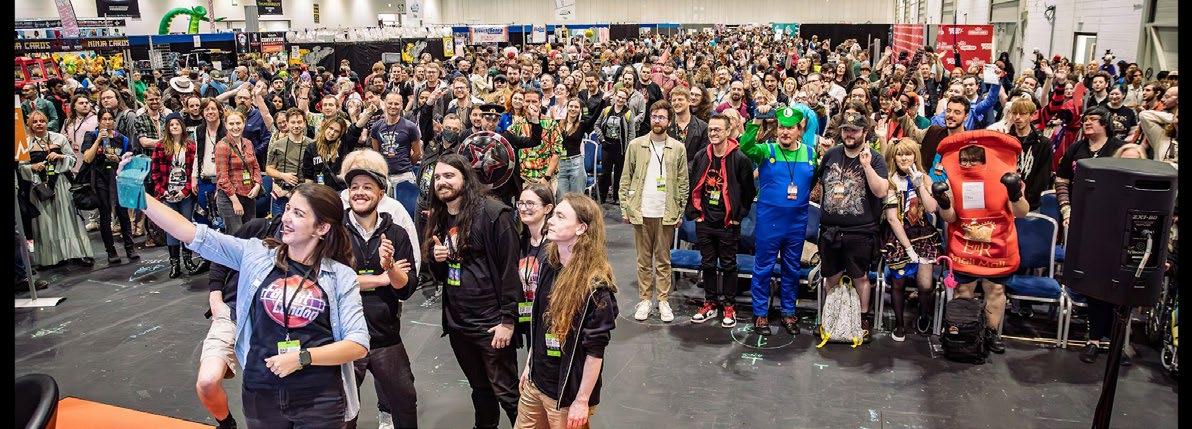


ZeoliteX is a UK creator who has a focus on tabletop gaming. Community is a very important aspect of her work, creating The Lost Wanderers of Fenador, which is a fully interactive, lore-based community, and also The Chaos Collective alongside another creator Jaysthegirl1608. We wanted to know more about her love for gaming and the community that comes with it...
What first inspired you to start your channel, and how did you choose your name?
My streaming story began back in school when I discovered a manga called 1/2 Prince. It introduced me to the idea of matrix-level gaming, especially within the fantasy and medieval MMORPG genre. I was instantly captivated by the concept, and from that moment, I dedicated myself to studying computer science, determined to one day pioneer something just as immersive. Around the same time, I was introduced to Guild Wars 2, and I fell in love instantly. It had everything I could ever want: a fantasy open world, medieval themes, deep lore, endless skill combinations, and, best of all, the ability to customise my character to look like me. The world felt alive, and the story drew me in completely. That passion pushed me to study computer science at university, determined to turn my dreams into reality. It was during university that I discovered streaming, though in quite a funny way. There was a group chat for everyone living in my accommodation building, and one day, someone asked if anyone played games. I was too nervous to respond at first, but I eventually ran into the person who posted it. She introduced herself, and we quickly became friends. She told me she streamed her games, and I decided to join her community. Through her, I made new friends, but it also sparked something in me. I didn’t just want to be part of a community, I wanted to create one. I wanted to build a place where people could share my love for gaming, medieval worlds and fantasy storytelling, so I started streaming.
That’s when I created the name ZeoliteX. It

felt unique, mystical, and fitting for the fantasy worlds I love. It became the foundation for everything I’ve built since.
How would you describe your streaming style to someone who’s never tuned in before?
My streaming style blends fantasy medieval roleplay with a warm and inviting environment When viewers (or wanderers) enter my stream they step into the Guild Hall of the Lost Wanderers of Fendaor, a magical guild set in the heart of the enchanted Forest of Fennador. I mix storytelling, humour, interactive elements, and genuine reactions to create an immersive experience that feels inviting, imaginative, and fun.
Can you walk us through your typical stream setup, from the tech you use to how you prepare mentally before going live?
As of right now I don’t have a permanent set up. I actually stream from my dining table so whenever I want to stream I have to set up everything from scratch then take it down once im now.
My equipment includes:
• A Dell Monitor (I actually use this for work too lol)
• Lenovo Legion 5 Gaming Laptop
• Razer Headset
• Elgato Stream Deck
• Govee rgb light strips
• Hyper X Quad Cast Mic.
• Logitech MX Brio Ultra HD 4K

Before going live, I take a moment to ground myself, run through any events or roleplay triggers for the session, adjust my widgets, and mentally step into “guild leader mode” so the world feels alive the moment the stream begins.
What’s been some of your best moments or achievements with your channel?
One of my biggest achievements is building The Lost Wanderers of Fenador, a fully interactive, lore-based community. Creating custom widgets like the Guild Chronicles and seeing viewers engage with the world I built is incredibly rewarding.
Co-founding The Chaos Collective with Jaysthatgirl1608 (Jay) is another milestone I am proud of. Jay and I met through streaming and became good friends. We share the same creative vision and passion for making content that feels fresh, ambitious and fun. Working together has opened the door to new ideas and bigger projects.
On a personal level, streaming gave me something far more meaningful. Meeting Redivivus in 2021 changed my life. She is not just a friend. She is like a sister to me. We have travelled together to TwitchCon EU, DreamCon and Bali, and she is one of the closest people in my life. Streaming did not just give me a platform. It gave me family and completely changed my life through the people it brought to me.
Which games have been the pillars of your channel, and what makes them special to you?
Guild Wars 2 is the heart of my channel. Its rich lore and fantasy world fuel both my creativity and my community roleplay. Recently, Dark Souls and Elden Ring have become major pillars as well, mainly due to the chaotic reactions, intense challenge, and hilarious moments the games bring out, perfect for clips, storytelling, and community banter.
Tell us more about your tabletop ventures!
My tabletop ventures are rooted in my passion for worldbuilding and fantasy storytelling. I
enjoy creating lore, guild-style narratives, and interactive story elements that expand the world of Fenador. Whether through roleplay prompts, collective storytelling, or community chronicles, I treat my world like a living tabletop universe shaped by my audience.
How do you decide which new titles to feature, is it based on personal interest, community requests, or industry trends?
It’s a blend of all three. If a game has strong lore or medieval themes, it usually grabs my attention. I also listen closely to community requests, especially when viewers want to experience something together. And I keep an eye on industry trends to stay in the loop on titles that might fit my style or make great content.
Are there any hidden gem games you’ve streamed that you think deserve more recognition?
I might be a bit biased but Guild Wars 2. It is one of the most underrated MMOs out there. The world is beautiful, the community is welcoming and there is so much depth in the lore and gameplay. Every time I stream it, people are surprised by how good it actually is and how active the game still is. Also, contrary to popular belief, it is not a cult. No matter what my community says, I do not run a Guild Wars 2 cult lol.
Tell us about your Discord community, what’s the vibe, and how did it start?
My Discord started as a small gathering place for my earliest viewers and gradually became the home of The Lost Wanderers of Fenador. The vibe is warm, fantasy-themed, and interactive. It’s a place where people share memes, join in quests, take part in guild-style discussions, and feel like they’ve stepped into a medieval tavern or guild hall. We’ve also recently started hosting movie nights and viewers are also able to suggest content for me to react to
How do you keep the space inclusive and welcoming for newcomers?
I make sure the environment stays friendly and
approachable. Every new viewer receives a personal welcome, often with a mini roleplay speech and trumpets to announce their arrival into Fenador. My community is naturally kind and loves interacting with new wanderers, which helps everyone feel included immediately.
Do you create content outside of live streaming, such as YouTube videos, reviews, or social media series?
Yes! I create YouTube videos, reaction content, Shorts, TikToks, gaming clips, and fantasythemed projects like a stream wiki. I also enjoy writing and have published several digital stories. On top of that, I code my own custom medieval widgets to enhance the immersive experience on my streams. Expanding my world beyond Twitch lets viewers experience Fenador in multiple forms.
What’s been the biggest challenge in growing your channel, and how did you overcome it?
Finding my identity in such a saturated space. The moment I embraced my medieval-fantasy niche fully, everything shifted. I stopped trying to fit into trends and instead built Fenador as a living world, complete with lore, widgets, and roleplay elements. Community engagement and consistency helped everything grow naturally from there.
Are there any upcoming projects or collaborations you’re excited about?
I’ve got several exciting things coming up. I was invited to the Twitch Link Up London Winter Party, and I’ll be streaming the event, which I’m really looking forward to. I’m also thinking about bringing back my gym streams, because people genuinely enjoyed them the last time I did them.
Creatively, I’m planning to get back into writing music, specifically gaming-related songs. On top of that, I’ve filmed several interviews with content creators that I haven’t posted yet. Those will be coming soon, as I want to develop that into its own mini-series on my channel. There’s also a massive gaming project I was involved in that’s being released next month. I can’t say much yet, but I’m really excited for everyone to finally see it.
If you could give one piece of advice to someone starting their own channel, what would it be?
Be authentic from day one. Don’t force yourself into a mould you don’t enjoy. Build a theme or identity you genuinely love, even if it’s niche. Consistency and community matter far more than overnight numbers.
Where do you see your channel and your community in the next few years?
I see The Lost Wanderers of Fenador evolving into a truly immersive digital world with deeper lore, expanded storytelling, and interactive events that bring the fantasy setting to life. I want my channel to grow across both gaming and reaction content, with more IRL streams and travel-based adventures so viewers can experience the world alongside me.
As for collaborations, I hope to work with more creators and expand my network within the streaming community.
And in the long term, I hope to grow The Chaos Collective into a recognised brand, something on the level of the Sidemen. They’ve always been a huge inspiration, and my dream is to build a creative team capable of producing largescale, high-quality content that reaches global audiences. Overall, I see my channel becoming a home for fantasy lovers, gamers, reaction fans, and people who enjoy worldbuilding and adventure both in-game and IRL.
Show ZeoliteX some support by following her channels, joining her community and checking out The Chaos Collectve!
Twitch: @Zeolitex
X: @ZeoliteX_
The Lost Wanderers of Fenador
The Chaos Collective
Instagram: @thechaoscollective_ X: @ChaosandCo_ TikTok: @thechaoscollective_ YouTube: @The.ChaosCollective