STRONGER TOGETHER: EXPANDING OUR IMPACT ACROSS THE TRIANGLE AND EASTERN NC
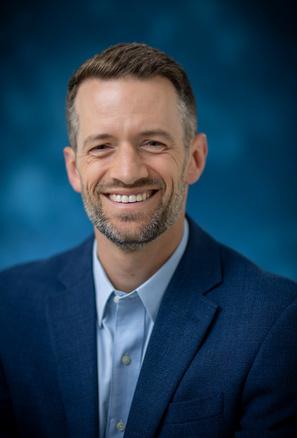
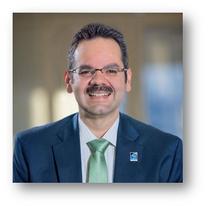
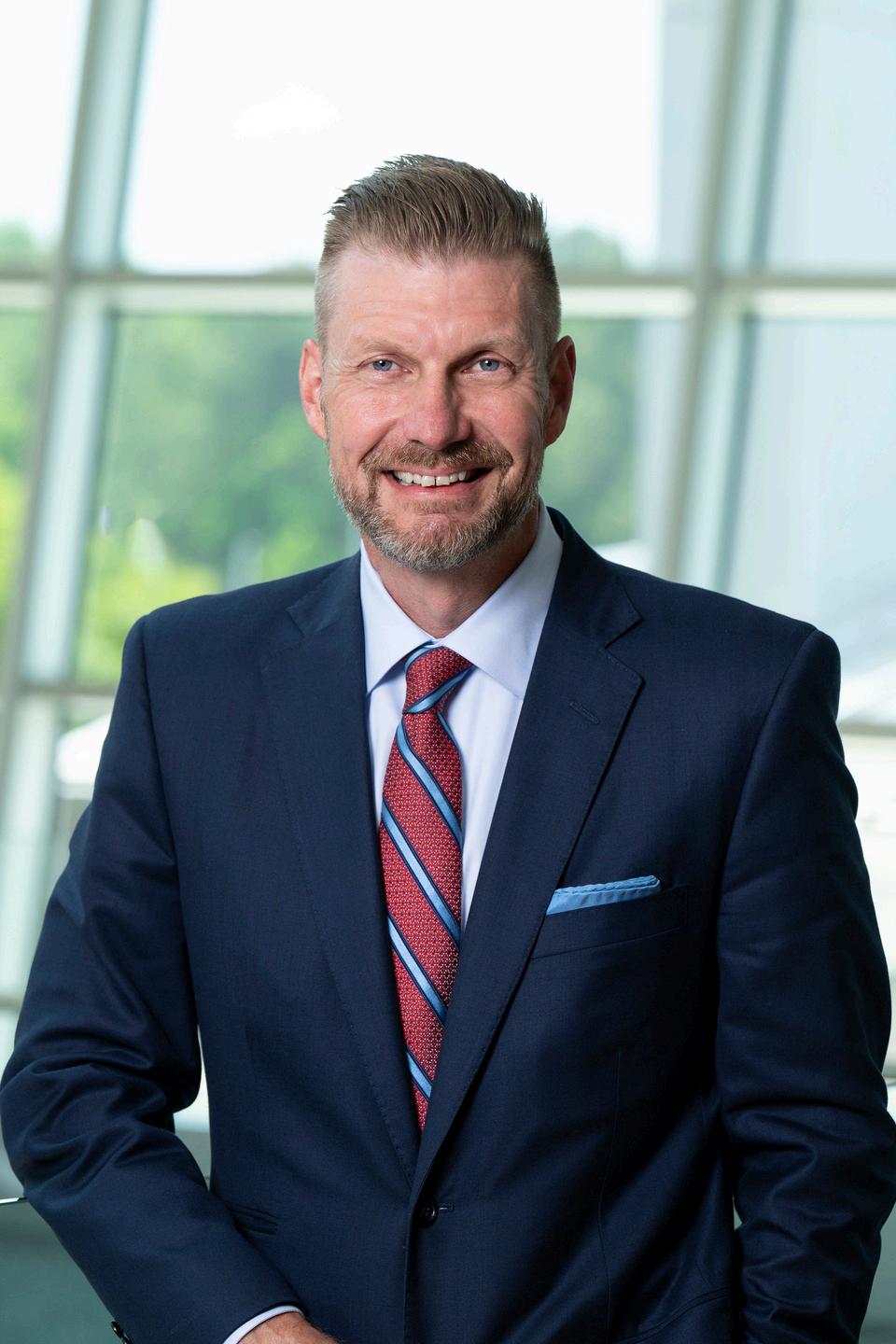
MATT GITZINGER, MHA, FACHE, PRESIDENT ACHE-TENC
FEATURED MEMBER
L. LEE ISLEY
About Us
ACHE of the Triangle & Eastern North Carolina (ACHE-TENC) is a nonprofit membership association and an independent chapter of the American College of Healthcare Executives (ACHE), a professional society representing over 48,000 members worldwide ACHE-TENC serves
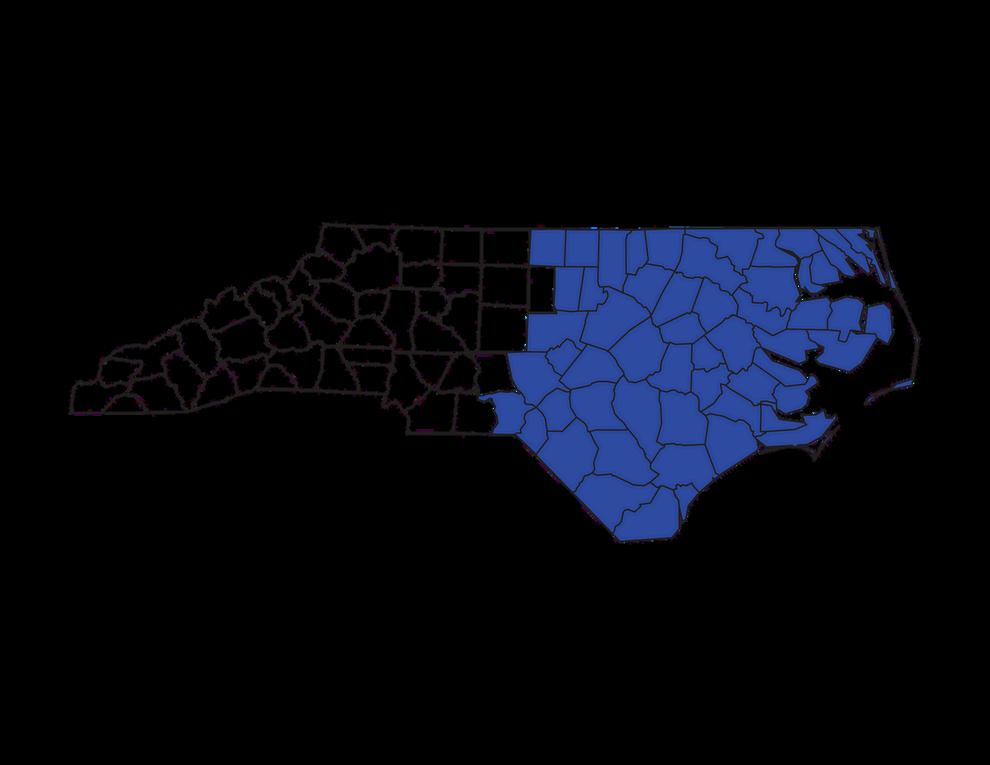
Nearly 1,000 ACHE members who live and work in the 54 North Carolina counties from the RaleighDurham area north to the Virginia border, east to the Outer Banks, and south to the South Carolina border.
Our Vision
ACHE of the Triangle & Eastern North Carolina (ACHE-TENC) aims to be recognized as the leading professional membership association dedicated to supporting and advancing healthcare leaders throughout the region
Our Mission
Our mission is to support the professional development of healthcare leaders in the region, preparing them to shape healthcare management at the local, regional, and national levels
Goals
Deliver programs that bring local value to ACHE members assigned to our Chapter service region
Increase communication among healthcare management professionals
Advance members toward Fellow, ACHE certification
Foster the development and implementation of best practices in healthcare management
Practice good financial stewardship
C O N T E N T S
om the President
om the Regent
rformance Metrics
o New TENC Members
Mentorship Program nquet
ummit: yet!
tlight on Leadership a Padilla & Andrea Dabal ponsor!
cted!
te is Live!
Stronger Together: Expanding Our Impact Across the Triangle and Eastern NC
Dear Colleagues,
It’s fall, y’all, and what a season of change it’s been for our chapter!
We are excited to announce the official launch of ACHE of the Triangle and Eastern North Carolina (ACHE-TENC), formed by merging the Triangle Healthcare Executives’ Forum (THEF) and Sandhills Healthcare Executives’ Forum (SHEF) Our new chapter now represents 54 counties and nearly 1,000 members, highlighting the strength and shared mission of our community.
A huge thank-you to our Communications Committee CoChairs, Paul Marini and Ashley Mahan, and their amazing team for bringing our new identity to life, from a fresh logo and updated website to beautifully redesigned materials You’ve helped us look as strong as we feel For instance, the exceptional fellow spotlights showcase leaders like Dr L Lee Isley, FACHE, CEO of UNC Health Nash Dr Isley has been a consistent, reliable, and generous mentor to members, as well as a willing and experienced contributor to past educational events
This fall has brought major milestones for our chapter.
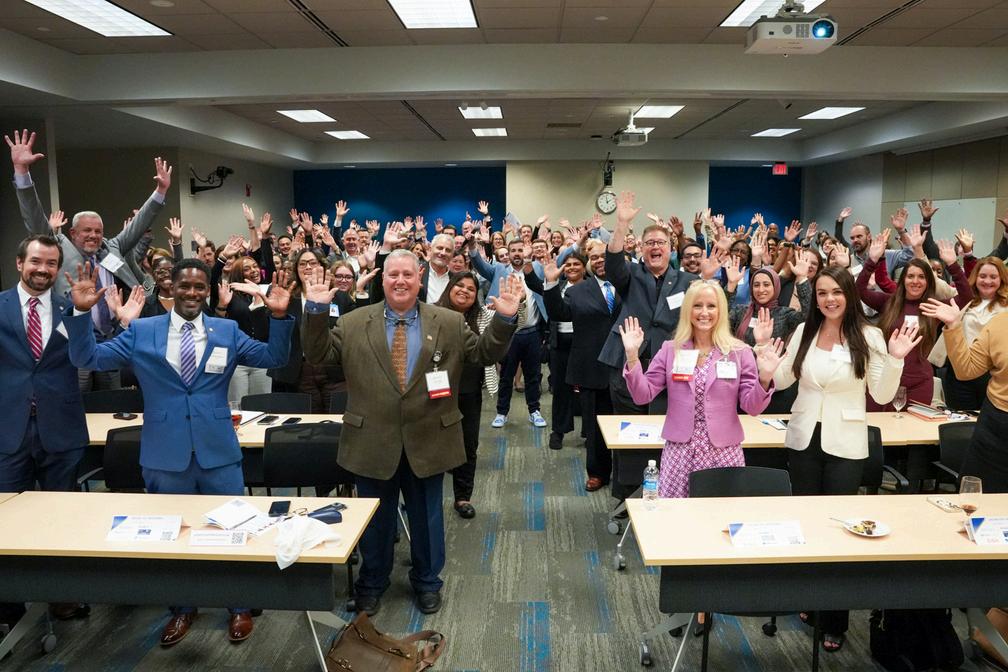
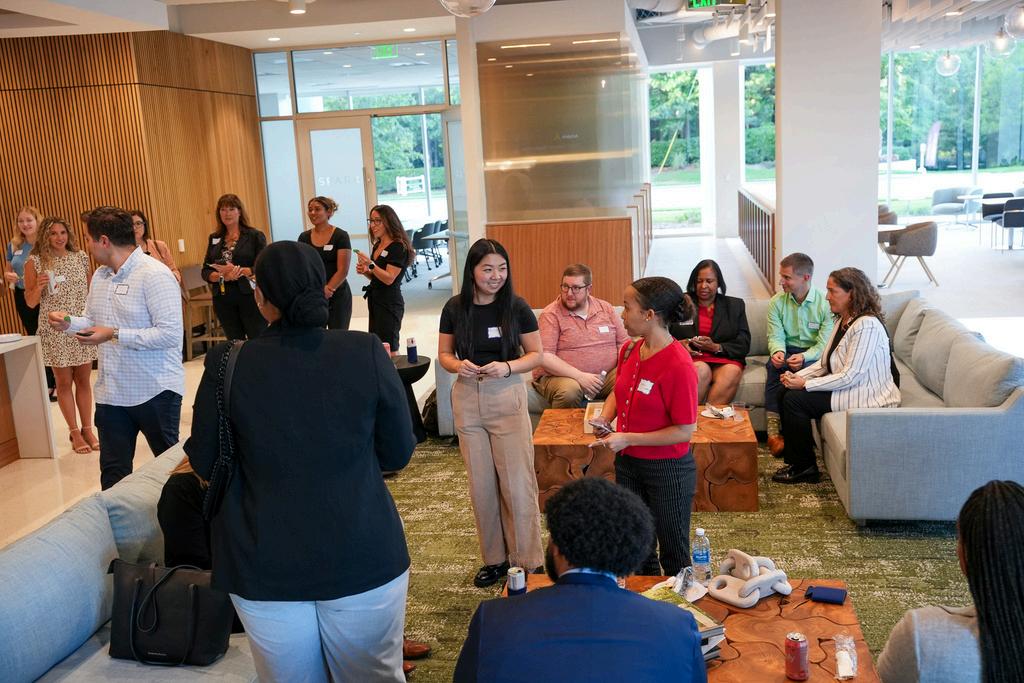
We just wrapped up our most successful Fall Summit yet, with nearly 175 participants diving deep into one of healthcare’s biggest challenges: navigating federal disruption. The key takeaway? Keep patients at the center. Pair their stories with data, advocate with heart, and strengthen local partnerships to improve what we can control and sustain what matters most. We also want to thank our current sponsors and welcome new sponsors, GSK, Diasorin, and Labcorp, as their partnerships make events like Summit affordable for members
September also marked the close of our 2025 Mentoring Program, celebrated with a banquet featuring Lisa Rosenberg, Chief Operating Officer of UNC Health Medical Group, as keynote speaker Shortly after, we partnered with NALHE to host “Improving the Health Status of Your Community,” where leaders shared practical strategies for population health and chronic disease management.
And just recently, we held another impactful C-Suite Roundtable at CarolinaEast. My sincere thanks to David Long, Chair of ENCHEG, for organizing, and Harvey Case, COO of CarolinaEast, for hosting
Get involved. Committee nominations for 2026 may have closed, but opportunities to contribute are always open. Join us at https://thefnc.org/Committees
Earn your board certification.
Elevate your career and stand out as a recognized healthcare leader : https://thefnc.org/Advance to Fellow
Attend ACHE Congress 2026. Join 7,000+ members in Houston for inspiration, learning, and connection: congress ache org
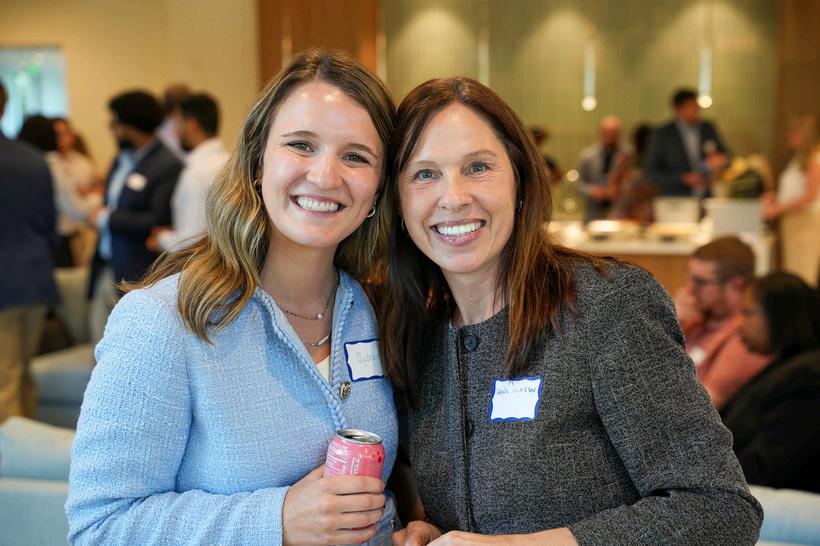
Next up: our Student Scholarship Networking Event, where we’ll announce the 2025 Student Scholarship recipient, one of the many ways we invest in the next generation of healthcare changemakers
Speaking of investing in yourself, it’s not too late to sit for the Board of Governors (BOG) Exam this year. Wrap it up before December and make the most of your earned credit hours—you’ve done the work; now seal the deal!
While uncertainty persists in healthcare, through the government shutdown and funding model changes, and amid the accelerating rise of AI, our mission remains constant We are called to lead with steadiness, compassion, and purpose In times of rapid change, the clarity and integrity of our leadership will define the direction of tomorrow
Warm regards, Matt
Gitzinger, FACHE
President, ACHE of the Triangle and Eastern North Carolina (ACHE-TENC)
Message from your ACHE Regent
Registration for Congress is now open, and I hope to see many of you there. It is a dynamic conference! The website is full of resources you can access to help you on your personal growth journey. Your local chapter has many opportunities for networking, education, and volunteering, so please take advantage of that
FACHE of the Triad demonstrated the power of partnership with our HENs. They held an event at Winston-Salem State University that was well attended by students, faculty, and executives alike! This was such a beautiful way for us to learn from each other I came away better for it
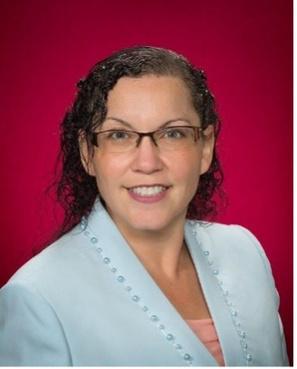
VI-ANNE ANTRUM, DNP, RN, FACHE REGENT FOR NORTH CAROLINA
Dear wonderful colleagues,
Fall brings beautiful transformations with weather cooling, leaves changing, and people starting to prepare for the holiday season. You are all leading transformation in healthcare at your organizations as well. We could not have a better partner to prepare us for this than ACHE. I’m thankful for the connections and opportunity to learn from each other It allows me to bring best practices back to my organization
ACHE Chair-Elect, Noel Cárdenas, FACHE, visited ACHE of Greater Charlotte to share his personal journey, the power of mentoring, and the numerous benefits that come with ACHE membership It was powerful! This chapter also won the District 2 Regent-at-Large award for their inclusion efforts. ACHE of the Triangle and Eastern Carolina, formerly known as THEF and Sandhills, combined and rebranded themselves which is a massive undertaking Congratulations to those two chapters on coming together and offering a full day summit immediately afterwards!
ACHE has created a strategic plan for 2026–2028 I encourage you to review this insightful document Our Board of Governors and the ACHE team have thought deeply about what is needed for the future of healthcare leadership I hope you will take advantage of all that ACHE offers you as a member. Give yourself the gift of pursuing your Fellow credential this year. Consider giving someone else the gift of volunteering your time, bringing a colleague to a chapter event so they’re not alone, serving as a mentor, or connecting with someone you have in your network You’ll both be better for creating community!
In service to you, Vi
TENC Chapter 2025 Performance Metrics
ACHE measures chapter performance annually based on four key performance criteria: net membership growth, education and networking performance, advancement of eligible members, and member satisfaction. We are working towards achieving the 2025 standard performance metrics.
Education & Networking Performance
2025 Standard: 15.1
indexed attendee hours
Current Status: 12.4
indexed attendee hours
Member Satisfaction
Advancement of Eligible Members
2025 Standard: 4.1
2025 Standard: 16
Net Membership Growth
2025 Standard: 7.2
Current Status: 4.4
Current Status: 5
Current Status: 27.5
Here's how you can contribute to meeting our chapter performance goals while investing in your own professional development:
Participate in chapter programming Complete the Chapter Member Needs Survey in May
Earn your FACHE credential Join ACHE or reinstate your membership
W E L C O M E N E W M E M B E R S !
The following individuals joined ACHE or transitioned into our chapter this quarter We are happy to have you, and look forward to connecting at an upcoming chapter event!
Adriana Torres
Akhil Tippireddy, BS
Ali Hamdani, MD
Allen Stephens
Allison Stevens
Amber M Williams
Amy E. Pike
Amy Johnson
Amy Yancy Mangum
Anagha Mundrathi
Andrew Core
Andrew Featherston
Andrew Steffey
Anjali Pathak
Anna Henthorn, BS, MHA
Anthony Tyre
Arthur F Roussillon
Ashlee Steeley, MPH
Ashlyn Fortney
Ayat R. Soufan, LCSW
Bill Readdy, MD
Bimbola F Akintade, PhD
Brandi Ross
Braxton E McKoy
Braxton E McKoy
Brenda W. Greenberg
Brett Moran, FACHE
Brian Sloan
Brittany Robinson
Brooke McLaughlin, MHA, BSN, RN
Bryan Lester
Caleb C Smith
Cannae Mathews
Carmel Hannah
Carolyn Menendez, MD
Chaithanya Duryea
Chanda P Joyner
Cheri DiStefano, MBA, BSN, RN
Christina M Bowen
Christinna Haire, APRN, NP
Christopher Frank
Chukwudi S Ubah, DrPH, MPH, FACMPE
Dana Clifton
Daniel Blandon-Hendrix
Darby K. Walser
Darcy Suarez
Diane Sauro
Elizabeth Chaparro, RN, BSN
Erin Edwards, JD
Erin Huprich
Evan B Phillips
Gabby Garza
Genie Lopez
Gina M Catalano
Grant Voss
Heather Marstiller
Heather Winecoff, MHA, BSN, RN
HM1 Andrew Urbanyi, MPH
HM1 Balofoma Wembakpete
HM1 Christopher N Miller
HM3 Enoch G. Osei
HMC Michael B. Lavender, MHA
Ieschecia N Graham Allen, BS
Isaac Hallam
Jacob Holcomb
Jade J Joy
Jaydon Carter
Jeevan Swaminathan
Jeffrey Nguyen, FACHE
Jenny B Roberts
Jessica James
Jessica Teague
Jody Clarke
Joel Graham
John Berglund, MHA
John W Gray, II
Jonathan P Young
Kacie A Spencer
Karen Roque, MPH
Karen T. Holden
Katelyn Thomas
Kathleen A Ferrell
Kelly Washington, RDN
Keri Noeske, DNP, RN, NE-BC, FACHE
Keron McCalla
Kevin Haynes
Latrisha Smith
Laura Yudo
Lauren Gregory
LaVonne Senanou
LCDR Kate Svenson
Leigh P Goller
Leslie Evenson, BSc
Lori Srivastava
Lt Col Luis R. Rodriguez
LT Rachel M Peoples
LTJG Britney E Bessarab, MBA-HM
LTJG Patrick J Fontaine
2LT Channing Byrd
Lyndsey L. Harrold
Madison Warren
Malia N Guillory
Margaret K Clark, MHA
Mariana Rolinsky, MPH, MPA
Marion R Faya
Mark D Gwynne, DO
Mark Fulton, MBA
Mary M. Gilbert
Meghan Smith
Melissa A. Fitzpatrick, MSN, RN
Melissa Fike, DNP, APRN, FNP-BC
Michael Steger, PA-C
Michelle L Carroll, MBA
Nadeem Modan, MD
Natasha Wiltshire
Nathan Odell
Neal Seigler
Nicole Burnett
Nicole Panosh
Oluwole E Omolafe
Oluyemi Moses
Patricia Baise, DNP, RN, NEA-BC, FACHE
Paul Bruning, DHA
Paul Burge
Rafael Benitez Samano, RN
Rebecca Schulkowski, PharmD, MBA, FACHE
Rhonda D Reeder
Richard Jared
Richard T. Benson , II, MD
Roshen J. Koshy
Rowell Daniels, PharmD, MS
Ruben Sloan, MD, PhD
Ryan Moore, MD
Sadie G Hutsenpiller
Saul A. Williams
Sergio Luckett
Shaista Sayeed
Shari A Collie-Leachman
Sharon D Perryman, MHA, BSN, RN
Sheila M Kelty, DHA, FACHE
Simrun K Walia
Stefanie Resillez, MHA
Stephanie Henry
Stephanie Naylor-Lillard, MSW, LCSWA
Sudha Rathie
Susan Solomich
Sydney Billimack
Tamika Kelley
Tammy W. Collie
Terence McCabe
Tiffany B Wilson
Tiffany Mose
Tiraus T Epps, MHA, PMP
Trinity Stewart
Victoria Banks
Victoria Mitchell
Vonte M Hedgebeth
Wade Bemmels
Waqiah M Ellis, PhD, MSN, RN
Wenhuan Jiang, PhD
Yingchao Wang, MBA
Yogin Patel, MD, MBA
Yuri A. Fesko, MD
Zachary Addis
November 2025 Quarter 3 | Page 7
JOIN US TODAY... JOIN US TODAY...
JOIN REINSTATE
Join now to become eligible for members-only programs and discounted pricing at both the local and national levels. Click here to join.
Perhaps your membership has lapsed, and you've been meaning to reinstate it Don't miss out on another year! Click here to access your pre-populated reinstatement application.
RENEW
ACHE membership renewal is open. Timely renewal ensures your ACHE membership and ACHETENC chapter affiliation remain intact with no lapse in membership. Click here to login to your ACHE profile and renew.
LEGACY IN DISTINGUISHED LEADERSHIP
We asked our new fellows to share what ACHE Fellowship recognition means to them:
Dr José G Cabañas, MD, MPH, FACHE
New Bern, NC
Pursuing the FACHE credential has offered me the opportunity to reflect and learn alongside an esteemed group of colleagues dedicated to pursuing excellence in healthcare management, as it represents a standard of best practices that enhances service delivery for those we serve
José G Cabañas, MD, MPH, FACHE, serves as the Chief Medical Officer for Wake County Government. He provides executive physician oversight to the Wake County EMS System and programs and services that support the community’s health and public safety.
LT Marie Noel Piekam, MSC, USN, FACHE, PMP
Chapel Hill, NC
The achievement of the Fellow of the American College of Healthcare Executives (FACHE) accreditation demonstrates my dedication to lifelong learning and offers a valuable opportunity to contribute to the advancement of healthcare by sharing my knowledge and expertise Being affiliated with a distinguished community of healthcare leaders who actively influence their communities through advocacy, policy development, and innovative care is both an honor and a lifelong commitment to impactful service.
LT Marie Noel Piekam, MSC, USN, FACHE, PMP , serves as a Plans, Operations, and Military Intelligence (POMI) Fellow at the Office of the Chief of Naval Operations (OPNAV)
New October Fellow!
Recertified Fellows
Joann Anderson, LFACHE
Dawn Peele, FACHE
How to become an ACHE Fellow
Meet the eligibility requirements
John A. Kohler, Sr., MBA, FACHE
Amy H. Montgomery, FACHE
Submit your advancement application. Upon approval, you will have two (2) years in which you must take and pass the Board of Governors Exam
When you become board-certified in healthcare management as an ACHE Fellow, you'll stand out from the crowd as a professional
Contact the TENC Fellowship Advancement Committee at advancement@thefnc.org for support.
TENC Member Spotlight
L. Lee Isley, Ph D FACHE President and Chief Executive
What inspired your career in the healthcare industry, and what is your current role?
Growing up in rural North Carolina, I gained an appreciation for serving one’s community. Through the Boy Scouts, I attended an EMT class for one of my badges and found healthcare fascinating I became an EMT and then sought out a four-year degree in Emergency Medical Services Western Carolina was one of only two colleges in the country with such a program at the time Once a paramedic, I led the transition of a local EMS program to integrate with the hospital, where I learned a great deal about hospital operations. Upon completion of that project, the hospital CEO asked me to join hospital operations. That began my journey of gaining experience in a variety of hospital operations, which prepared me to be a hospital CEO.
Why did you decide to join ACHE-TENC?
I strongly believe we must continue to advance our individual professional development and support the profession in which we’ve dedicated our careers ACHE and TENC are the institutions that allow us to do just that
What advice would you give to younger members who are earlier in their careers?
Say yes to projects and opportunities to learn and grow.
Aim to truly understand operations at the ground level, and don’t shy away from learning the clinical aspects if you don’t have that background; all the more reason to ask questions and understand it.
Aim to work for someone who allows you to fail forward and apply your learnings to the next challenge
What accomplishment from work are you most proud of?
Having led community hospitals throughout my career, I am most proud of the work we have done to rebuild and expand medical staff services, regain the community’s trust, and recapture market share as a result. That all comes from building a team and culture that believes in themselves and remains focused on their mission
Do you have any content recommendations for our members?
Regardless of your role, gain a deep understanding of healthcare finance Leverage the ACHE & TENC content on healthcare finance, then ask questions of your CEO and CFO to better understand how it works in your organization. Look for content on the quality metrics used to evaluate hospitals Learn what operational and clinical workflows are involved in driving those outcomes
CHAPTER EVENT SYNOPSES
2025 Mentorship Program Closing Banquet
Celebrating Six Months of Growth, Connection, and Shared Learning
By Euniqua Bullock, MSN, CEN, RN-BC, CNML, NEA-BC
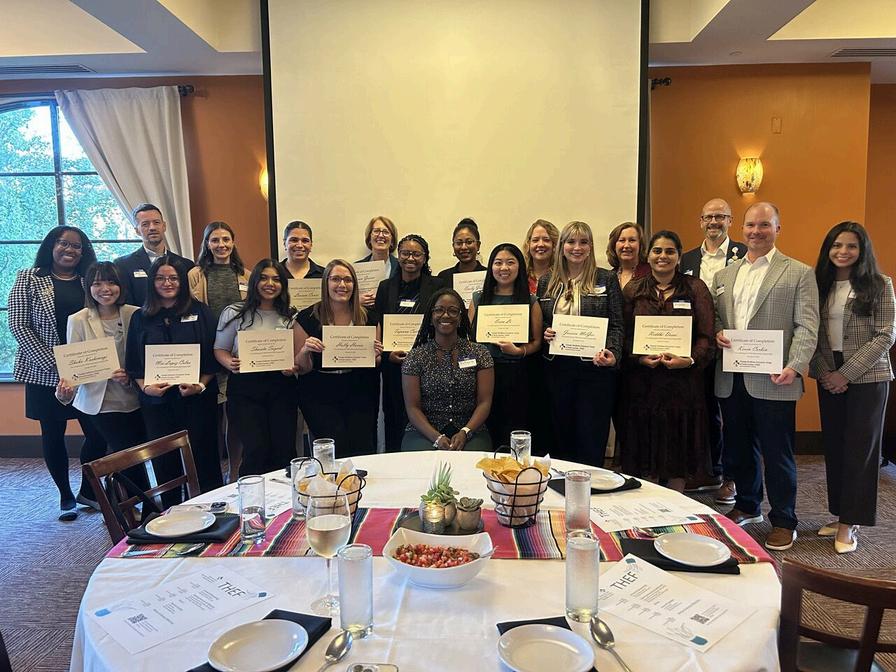
The 2025 ACHE - TENC Mentorship Program concluded with a memorable closing banquet on October 9th This special event brought together mentors and mentees to celebrate the highlights and achievements from the six-month program, marking the culmination of a journey focused on professional development and building lasting relationships within the healthcare field.
The program's journey began with a call for applicants in March, inviting individuals to participate as mentors or mentees. After a careful application and interview process, 27 mentoring pairs were matched to ensure alignment of interests and goals. To set the stage for the months ahead, a virtual orientation led by the program committee was held in May, welcoming participants and establishing expectations
As the program progressed, participants took part in the inaugural Clifton Strengths session, hosted exclusively for them by Kimberly Eastman This session provided valuable tools for personal and professional growth, helping mentors and mentees identify and leverage their unique strengths in their mentoring relationships.
The closing banquet featured Lisa Rosenberg, Chief Operating Officer of UNC Medical Group, as the guest speaker Lisa delivered an inspiring keynote emphasizing the transformative power of mentorship She discussed how mentorship not only fosters growth but also creates meaningful connections that can last a lifetime Lisa shared practical tools and examples of successful mentor-mentee pairs, encouraging participants to continue their journey of shared learning and support.
Throughout the evening, mentors and mentees had the opportunity to share personal stories and memorable moments from their time in the program. These reflections underscored the value of mentorship in developing leadership skills, broadening perspectives, and building a supportive professional network
The Mentorship Program set a new standard for engagement and impact, thanks to the dedication of the committee, the enthusiasm of participants, and the guidance of guest speakers and facilitators As the program wraps up, participants are encouraged to continue nurturing the relationships and skills developed over the past six months, ensuring that the spirit of mentorship lives on.
2025 FALL SUMMIT
From Capitol to Community: Navigating Federal Disruption in Local Healthcare
by Isabelle Murphy
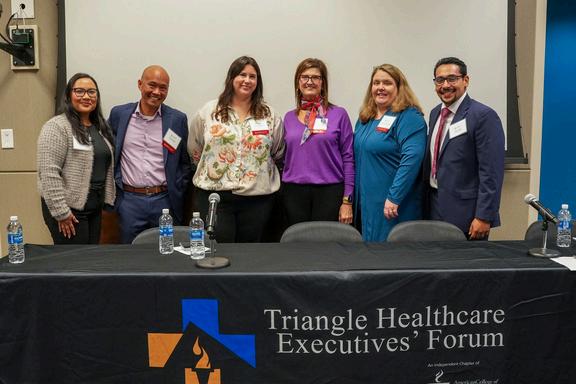
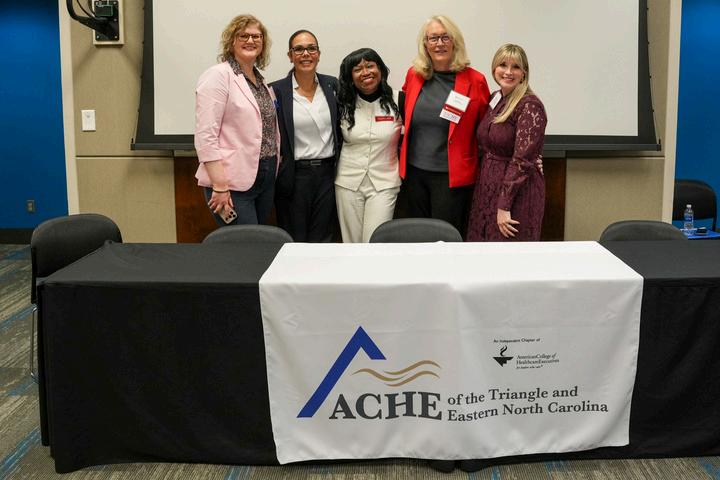
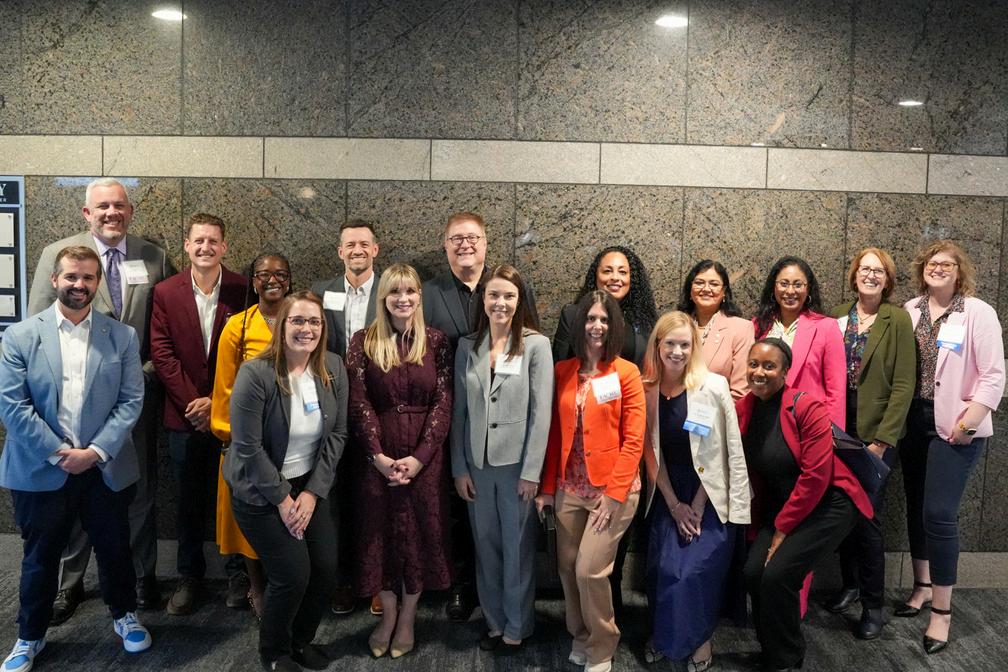
The 2025 Summit brought together over 170 healthcare professionals, students, and executives from across North Carolina to explore how leadership, collaboration, and innovation can shape the future of healthcare The event’s energy reflected a shared commitment to navigating the rapidly changing landscape with compassion and courage, as members and panelists connected through shared experiences and forward-looking discussions.
Each panel offered a unique perspective on transformation while consistently reinforcing the unifying message: North Carolina’s healthcare leaders are motivated by a shared sense of purpose and optimism about the future
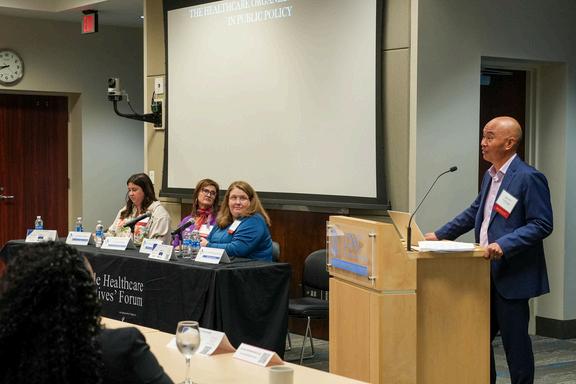
Panel 1: The Healthcare Organization s Role in Public Policy
Summit began with a dynamic conversation led by Dr. Chi-Cheng Huang, Chief Medical Officer at Inbound Health, that emphasized how healthcare organizations have both the opportunity and the responsibility to shape public policy to improve patient outcomes in North Carolina
Panelists Dr. Tracey Simmons-Kornegay, Health Director for Duplin County; Dr. Leigh Gurley, Pharmacy Manager at ECU Health Duplin Hospital; and Leah Burns Pfister, Vice President of System Affiliations and Integration at UNC Health, shared firsthand experiences. They spoke from the front lines of care delivery and advocacy.
Dr. Simmons-Kornegay painted a vivid picture of healthcare in rural Duplin County, where more than half of residents are uninsured and access to care often depends on persistence, creativity, and trust She described partnerships with churches, schools, and farmworker organizations that bring health services directly to people where they live and work Dr Gurley emphasized that building relationships, not just programs, is key to overcoming barriers and creating lasting change She showed how collaboration between public health and hospital systems helps bridge the gap for patients who rely on emergency departments as primary care. Leah Burns Pfister gave the statewide perspective. She highlighted the grassroots movement that made North Carolina’s Medicaid expansion possible. She reminded attendees that collective advocacy drives progress, even when policy feels out of reach
The discussion ended on a hopeful note, reminding everyone that real change comes not only from policy, but from dedicated action Attendees were called upon to actively advocate, form new partnerships, speak up to policymakers, and continue the hard work that makes healthcare more just for all North Carolinians The panel encouraged all present to leave inspired and committed to using their voices, expertise, and connections to advance a stronger, more equitable healthcare community in North Carolina.
Panel 2: The Future of Healthcare Financing
This panel was moderated by Sue Martin, Senior Vice President of Commerce Healthcare. Tanya Brown, serving as CFO of UNC Health’s Chapel Hill Medical Center, and Dr Daniela Jaime Escalera, CEO of Piedmont Health Services, joined as panelists The discussion offered a candid, urgent look at how hospitals, clinics, and community health centers are navigating today’s financial pressures Both leaders spoke openly about the difficult balance between sustainability and access
Tanya described the financial landscape as “scary ” She said the post-pandemic years have been tougher than the pandemic itself. Hospitals now face rising costs, new Medicaid reimbursement cuts, and shrinking margins that threaten essential services. She warned that behavioral health and labor and delivery units, especially in rural areas, are most vulnerable. Daniela added that community health centers also feel the strain Federal grants make up only a small part of their budgets, leaving them heavily dependent on Medicaid and Medicare reimbursements to keep clinics open for the 52% of patients they serve who are uninsured
Despite these challenges, the panel's tone remained hopeful Both emphasized that innovation and collaboration, not cutbacks, will define the next chapter of healthcare financing. Daniela described how Piedmont is investing in mobile care units and a long-overdue electronic health record upgrade to improve access and efficiency, while Tanya spoke of rethinking delivery models and strengthening partnerships across systems rather than competing for the same patients Both agreed that the future depends on creativity, shared responsibility with payers, and a renewed focus on people, the patients, and the teams serving them The session closed with optimism that even amid financial uncertainty, North Carolina’s healthcare leaders are proving that mission and sustainability can move forward together
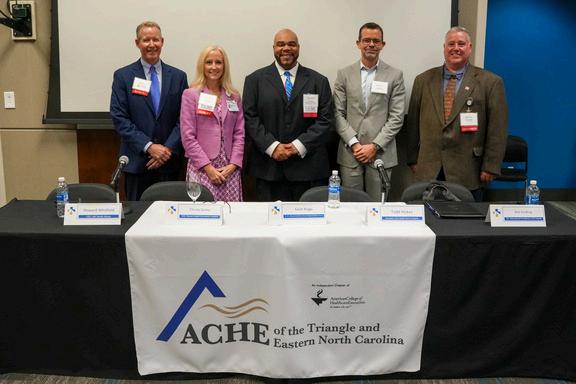
They discussed how sustainable change starts with understanding who it impacts, how to communicate it, and how to carry people through it without losing trust Howard emphasized the importance of clarity and alignment, noting that when an executive team makes a decision, everyone must “leave the boardroom singing the same song ” Christy shared how she introduced Lean principles in her growing medical center to strengthen reliability and culture of safety, focusing on the “three Ts” of change: target, timing, and tools. Kevin underscored the power of relationships, describing how Novant’s Barbershop Initiative partnered with trusted community leaders to bridge long-standing gaps in care, while Todd reminded the room that leaders must “remove barriers” for their teams and celebrate progress one step at a time.
Panel 3: Successfully Leading Change in Healthcare Organizations
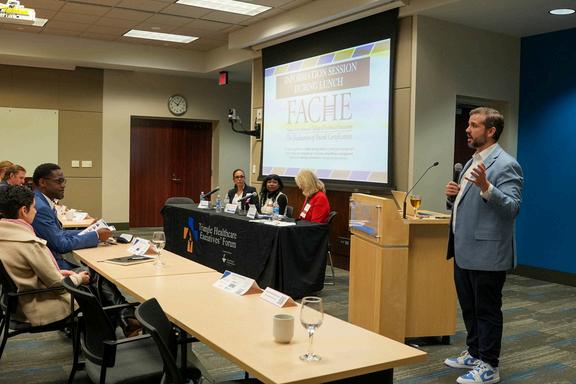
The third panel of the day opened with a burst of energy as moderator Rob Findley of ECU Health invited the audience to literally stand up and move, a reminder that change is never comfortable, but always necessary The session brought together a group of leaders who live this reality daily: Christy, Chief Nursing Officer at Novant Health Brunswick Medical Center; Howard Woodfield, Chief Operating Officer of UNC Health Wayne; Kevin Briggs, Senior Director of Laboratory and Respiratory Care Services at Novant Health New Hanover Regional Medical Center; and Todd Hickey, incoming President of ECU Health North Hospital.
From the start, the panelists spoke with refreshing honesty about the discomfort and urgency of leading transformation in a field that never slows down.
What unified the discussion was a deep sense of humility Every panelist acknowledged moments when change failed, not because of poor ideas, but because of rushed timing or missed communication They spoke candidly about lessons learned: the need for transparency, vulnerability, and grace, both for staff and for themselves “Change is like a grieving process,” Rob reminded the audience as the conversation closed “Everyone moves through it at a different pace.” The lingering message was one of optimism. Real leadership, the panelists agreed, isn’t about controlling every outcome, it’s about showing up, listening, and creating stability in the middle of motion so people can keep moving forward together.
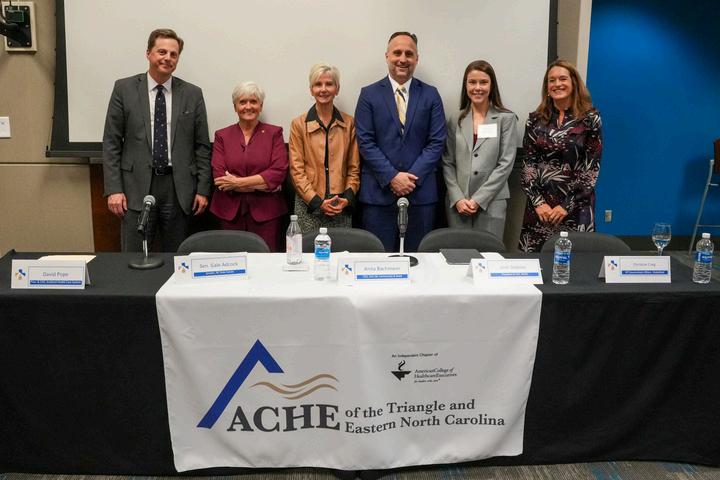
Panel 4: Best Practices in Adapting to Local Regulations, Markets, and Trends
The final panel of the day brought together four leaders whose perspectives spanned the full ecosystem of North Carolina healthcare , from government to hospital systems and insurance
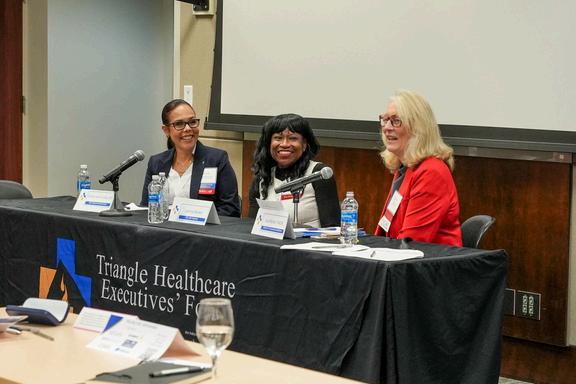
Moderated by Christine Craig, Vice President of Government Affairs at WakeMed, the discussion featured Josh Dobson, former North Carolina Commissioner of Labor and now representing the North Carolina Healthcare Association; Anita Bachmann, CEO of UnitedHealthcare of North Carolina; Senator Gale Adcock, the only nurse currently serving in the North Carolina Senate; and David Pope, CEO of Scotland Health Care System. As the last session of the Summit, the panel was both candid and urgent, addressing the economic and policy realities reshaping access, funding, and equity across the state.
David Pope opened with a powerful reflection on the “two North Carolinas”, one urban and thriving, and the other rural and struggling He reminded attendees that the state’s deepest health challenges remain concentrated in the same counties that have faced structural inequities for generations, making health equity work inseparable from rural investment Josh Dobson followed by noting that while the state is growing rapidly, workforce shortages and policy instability threaten that progress He highlighted the critical need to expand the healthcare pipeline and strengthen community colleges to fill thousands of nursing and allied health roles. Anita Bachmann and Senator Adcock then offered a sobering look at the financial strain caused by federal and state-level Medicaid cuts.
Despite the heavy subject matter, the panel closed with a sense of shared purpose. Each speaker returned to the same theme: the future of healthcare in North Carolina depends on unity between providers, payers, policymakers, and communities, not as separate interests, but as partners working toward a system that serves every resident with dignity and stability
The 2025 Fall Summit closed on a note of gratitude and momentum Throughout the day, every conversation, from policy and finance to leadership and community health, showed what is possible when North Carolina’s healthcare professionals come together with honesty, creativity, and purpose The energy in the room was undeniable, filled with ideas that challenged, inspired, and united everyone around a shared goal: building a stronger, more equitable healthcare system for all who call this state home.
Spotlight on Leadership
Voices from NALHE North Carolina
We’re proud to spotlight two inspiring leaders from the North Carolina Chapter of the National Association of Latino Healthcare Executives (NALHE) Meet Bianca and Andrea, who share how mentorship, representation, and community have shaped their journeys in healthcare.
Tell us about yourself?
Bianca: I currently serve as a clinic manager for Front End Operations at UNC Health in Chapel Hill, supporting multiple outpatient clinics across the area My professional background includes progressive experience in healthcare administration
Andrea: I serve as the director of Strategic Partnerships at Baxter I have more than 20 years experience in the healthcare industry in the med tech device space
What inspired you to join NALHE?
Bianca: I joined NALHE to support the Latino community, advance career growth, and help increase Latino representation in healthcare through mentorship and community.
Andrea: I joined NALHE because representation matters As a Latina in healthcare leadership, I often stood alone in the room. NALHE offers a space where our voices are heard, our stories are valued, and Latino professionals are empowered to lead with authenticity
How has NALHE impacted your professional growth or leadership journey?
Bianca: Serving as Co-Chair of the Programming and Education Committee has allowed me to develop and apply skills beyond my day-to-day responsibilities.
I’ve had the opportunity to collaborate with organizations like TENC/ACHE, to coordinate several successful and upcoming events These experiences have deepened my interest in project management and enhanced my ability to lead cross-functional initiatives.
Andrea: NALHE has expanded my professional and personal growth It has connected me with an incredible network of executives, mentors, peers, and new friends who have reinforced my prospective on the importance of diversity in leadership and in life Through NALHE, I’ve learned the power of advocacy, collaboration, and personal purpose It has strengthened my voice as a leader and deepened my commitment to continue to advocate and advance our mission across the healthcare ecosystem
What initiatives or programs are you most excited about within NALHE?
Bianca: I’m particularly excited about the continued growth of our North Carolina chapter and the upcoming collaborations we have planned These initiatives will further strengthen our community and expand our impact across the region.
Andrea: I’m particularly excited about our rich educational content that is being shared via virtual and in-person panel sessions with outstanding representation and bold leaders. Our national leadership development and mentorship programs (La Mesa) that connects emerging professionals with senior executives is also outstanding
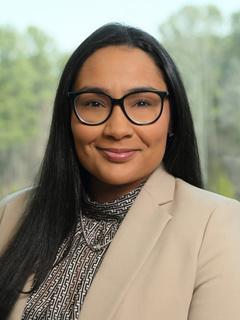
Bianca Padilla
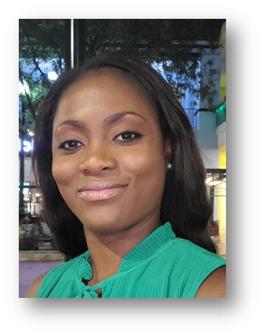
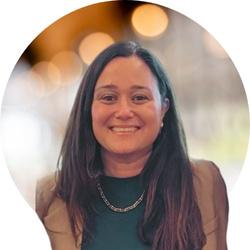
Andrea Dabal
These initiatives truly embody the spirit of NALHE creating pathways for healthcare acumen growth and representation at every level I’m also inspired by our partnerships with organizations like ACHE/ACHETENC that amplify opportunities for Latino leaders to meet and network with folks at various levels of influence and decision-making which can only make us unite around a single purpose and drive real change.
How does your chapter engage with the local community?
Bianca: Our chapter has hosted both virtual and inperson events that have connected professionals from across North Carolina, including both members and non-members These events provide valuable networking opportunities and foster a sense of community within the local healthcare landscape.
Andrea: Our North Carolina chapter is deeply rooted in community engagement and collaboration We partner with local healthcare systems, universities, and professional associations to host educational events, leadership forums, and networking opportunities that highlight Latino excellence and inclusion in healthcare We also plan to participate in local health fairs and diversity initiatives that address disparities and build stronger, healthier communities through awareness and advocacy
What advice would you give to early careerists looking to get involved?
Bianca: I encourage early careerists to actively participate in committees and attend events to learn from senior leaders and expand their networks Take advantage of every opportunity to gain experience and grow. Even skills or lessons you gained years ago can become valuable assets later in your career Remain open, curious, and willing to step outside of your comfort zone
Andrea: My advice is simple say yes and get involved Don’t wait until you feel completely ready Volunteer, attend events, and build connections Every opportunity to contribute or learn is a chance to grow your leadership presence. Within NALHE, your voice and perspective matter, and there will always be a network of professionals willing to guide and support you along the way
What does “familia” mean to you in the context of NALHE’s values?
Bianca: To me, “familia” represents a trusted support system, individuals you can rely on through both personal and professional challenges It embodies the sense of community, encouragement, and shared purpose that NALHE fosters among its members.
Andrea: Familia is at the heart of NALHE It means connection, belonging, and unwavering support It’s about showing up for one another celebrating milestones, offering mentorship, and creating a legacy built on unity and pride. Within NALHE, familia is more than a word; it’s a shared value that drives our mission to uplift and empower each other, both personally and professionally
Would you be open to sharing a short testimonial or quote?
Bianca: Be open to every opportunity, no matter how small, it may hold a lesson that shapes your future. I began my career as a call center representative, moved into front desk operations, and gradually advanced through roles as an administrative assistant, supervisor, and now manager Embracing new responsibilities with confidence, even when I was the only person in the room who looked like me, has been key to my growth.
Andrea: One of the most important things to do in life, in my opinion, is to help someone else's dream become a reality. I believe it is a privilege and an obligation to support others in achieving their desired success. When someone is new to the field and just starting out, it can be daunting There is usually so much to learn and understand that having someone to support and encourage us on our way is essential. So pay it forward, in other words when you get to the top floor, send the elevator back down for someone else
Carolina Brewery 460 W Franklin St Chapel Hill, NC 27516
C-SUITE ROUNDTABLE UNC HEALTH WAYNE
January 21, 2026
8:00 - 9:30 AM EDT
UNC Health Wayne Hospital 2700 Wayne Memorial Drive, Goldsboro, NC
NATIONAL NEWS
The Decentralization of Public Health Recommendations
On September 3rd, three states, California, Oregon, and Washington, announced they would form a coalition called the West Coast Health Alliance The next day, Hawaii joined as the fourth member In a joint statement, the inaugural members stated, “The West Coast Health Alliance stands united in protecting public health and always putting safety before politics.”
This announcement comes during flu season, with immunizations as the focus of their first joint recommendation The guidance, addressing COVID-19, Influenza, and RSV, and sets a more rigorous standard than the Advisory Committee on Immunization Practices In the statement, the WCHA reiterates, “Immunization is safe, effective, and the best protection available against respiratory viruses.” The scope of the WCHA continues to grow, with work groups focusing on vaccines, labs, emergency preparedness, and surveillance
The West Coast is no longer alone in this pursuit, following the announcement by the Northeast Public Health Collaborative on September 18th. This coalition includes Connecticut, Maine, Massachusetts, New Jersey, New York State, New York City, Pennsylvania,, and Rhode
References
Island.While states are taking on a larger role, federal advisory bodies seem to be taking a step back, with the Advisory Committee on Immunization Practices indefinitely postponing its planned October 22nd meeting to October 23rd 3
The Responsible Use of AI in Healthcare
On September 17th, the Joint Commission and the Coalition for Health AI (CHAI) released guidance on the Responsible Use of AI in Healthcare The guidance is intended to promote shared understanding and responsible deployment of AI tools Guidance was based on frameworks from groups such as CHAI, the National Academy of Medicine, and the Bipartisan House Task Force Report on Artificial Intelligence 4
The Joint Commission specifically identifies that the guidance is not intended to direct the development or validation of AI tools The guidance, however, identifies 7 Elements of Responsible Use of AI in Healthcare (RUAIH). These include Policy and Governance Structures, Patient Privacy and Transparency, Data Security and Protection, Quality monitoring, Reporting of SafetyRelated Events, Risk and Bias Assessment, as well as Education and Training 4
The guidance outlines indicates that Joint Commission intends to use this document as the foundation for community and resource-informed “Responsible Use AI Playbooks ” 4
Federal Shutdowns History and Their Impact
On October 1, the federal government shut down. This is the 5th major government shutdown since 1981. In peer countries, we do not see this occur In the short term, budget continuations allow the process to play out, and in the longer term, a vote of no confidence triggers elections 5
Utilization of government shutdowns as a political tool is not uncommon. The last instance of a shutdown was used to force a change to health care legislation in 2013 The key issue at the time was the Affordable Care Act, which led to a 16-day shutdown and no changes to the law In 2018, we saw a 35-day shutdown over the construction of a wall on the southern US border This again was unsuccessful.
The minority state the outcome may be different this time. The reasoning supporting this position is rooted in preserving benefits rather than additional spending or stripping away benefits 6
1.Following Trump’s politicization of CDC, West Coast states issue unified vaccine recommendations California breaks from future federal guidance with new law
2.Amid Confusion Over US Vaccine Recommendations, States Try To ‘Restore Trust’
3.Several Northeastern States and America’s Largest City Announce the Northeast Public Health Collaborative
4 AI, Data Analytics & Research
5 A Brief History of U S Government Shutdowns
6 Shutdowns, Obamacare and the Risks of Bargaining for Policy Wins in a Crisis
Susan Gueiss, FACHE, Duke Health Integrated Practice
Savannah Stallings, Duke Health
Kishan Shah, Duke Health
Euniqua Bullock, Duke Hospital
Timothy Stapleton, HonorBridge
Jennifer Woody, UNC Health
Brian Cocks, Baxter International Inc.
David Long, FACHE, ECU Health
ENGAGE WITH TENC ON SOCIAL MEDIA
Follow
Be sure to visit us frequently on our website for event details and program updates!
We're proud to debut our revamped website, designed to be your dynamic hub for leadership, networking, and growth Whether you're advancing your career or driving impact in your community, this digital space brings ACHETENC mission to life!
With over 1,000 members across central and eastern NC, ACHE - TENC is a force for change, and now it's easier than ever to connect and engage
Explore the new experience at www thefnc org
Thank you to our ACHE - TENC Board of Directors and the Communications Committee for their contributions to this transition!