2023 IFFR PRO WINNERS
Day 7 February 1, 2023
International Film Festival Rotterdam


VERDICT: An outlandish, radical trip inside Portuguese poet Fernando Pessoa's mind, gorgeously realised as a mysterious office of alter-egos and clacking typewriters.
Carmen Gray, January 31, 2023
To adapt any beloved author’s novel for the screen is notoriously difficult. But to be so bold as to base a film on the fragmentary and esoteric outpourings of Fernando Pessoa, famed for The Book of Disquiet and other works that made him a giant of twentieth-century literature, might just be approaching madness. Luckily, madness is a terrain that Portugal’s Edgar Pera, an idiosyncratic director known
for his wild experimentation, feels at home in. Não Sou Nada The Nothingness Club, screening in the Big Screen Competition at Rotterdam, and termed by Pera a “cinenigma”, is a radical, outlandish and gorgeously realised noir-style mystery and trip into the mind of the Lisbon-born poet and philosopher, who wrote under a number of different personae (which he called “heteronyms”). Perhaps too bizarre and
conceptual for wide release, this film will nevertheless have no trouble finding its audience, especially among fans of Pessoa charmed to see his strangeness done justice. Though there is never a boring minute, to audiences with no prior knowledge of Pessoa’s alter-egos, aphorisms and singular philosophies, the whole bonkers set-up will doubly confound. The metallic clack of old-fashioned typewriters and dramatic piano chords soundtrack this world, an office of varnished wood and mirrors, where a fleet of men are all dressed alike in suits and fedora hats, with the poet’s signature glasses and moustache. We see by his nametag that the heteronym Ricardo Reis (Vitor Correia) is among them. This urbane army of workers sweat under tyrannical pressure from Pessoa (Miguel Borges) to finish the books they have been assigned to write.
Pessoa himself sits behind a desk under a neon sign that reads “The Nothingness Club” and bathes the room in an alarming red glow. Super-impositions, reflections, (Continues page 4)


VERDICT: Matti Harju’s debut feature is a hypnotic slowburning anti-thriller that is more interested in exploring disillusionment and social imbalance than narrative twists or action spectacle.
Ben Nicholson, January 31, 2023
It is evident from very early on that Nature is going to unfold in a measured, un-showy way. Written, directed, shot and edited by first-timer Matti Harju, it may have a premise that screams home invasion thriller, but if this can even be cajoled into the ‘crime’ genre, it’s far more about the underlying causes and unexpected consequences of that crime than the excitement or jeopardy of the deed itself. Understated in almost every department, it’s full of decisions that confound expectations, where it turns the camera away at the moment others would zoom in. An oddly serene and cerebral take on a familiar set-up, it’s the kind of film that will yield much if audiences are patient enough to see it.
That aforementioned set-up involves two men, Kentsu (Jarmo Kämäräinen) and Markus (Asko Lintunen) who found each other online amidst their personal crises of stagnation and futility.
“Nobody is coming to save you,” intones Markus on one of their video calls. As a result, that have decided to travel to the home of a crypto millionaire (Juha Lilja) to hold him hostage and steal his wealth. They’re quite different men. Markus comes across as more of an ideologue, the man with the plan who otherwise spends his days picking up litter in the local park, reminiscing about a bad experience with processed foods, and contemplating his – presumably unfair – place in the world. Kentsu is introduced on a phone call in which he interrogates his girlfriend about a neighbour who offered to mow her lawn and later he reminisces about having sex in a house they drive past –moments afterwards he sighs,
perhaps lamenting former glories, before declaring that he doesn’t “understand anything anymore.”
Most of this information has to be gleaned from fragments of conversations or intuited from physical performance as Natura is not a film that lays out its narrative with exposition. In fact, to a large extent, Harju eschews both the ‘tell’ and ‘show’ of the famous filmmaking adage. Even when the plot kicks into gear and they break into the man’s home with a pellet gun and a drill, the editing leaves crucial events to be pieced together. Particularly towards the end – and in something resembling a coda that takes place in the days and weeks after the main action – gaps are left for the viewer to construct
(Continues next page)

and focus that blurs and sharpens intermittently emphasise split perspectives and self-containment. This is a beautifully rendered (and boldly campy) workplace, that seems to have no outside to it. The attached bar where these working minds go to smoke and drink, elegant as it is, offers no relief from the pains of getting the job done. These heteronyms share not only an originator, but anguished torment, dramatised as an old-school insane asylum of screams and straitjackets, where patients in striped pyjamas are subjected to shock therapy to quell their mental rebellion. We were warned by the poet to follow him with caution and find that it’s a dangerous place where deaths are not infrequent. As one man is stabbed in the eye with a pencil, and another is burnt alive, the body count rises.
Inspired thought is equated with electric charge, and sensations deemed the only reality, in this deliciously over-the-top and maximalist universe of dream, riddle and terrorisation. Full Review
their own timeline. If what the Kentsu and Markus set out to do can be described as a ‘job’ in the sense of a criminal enterprise, then the presentation of its execution is more like the mundanity and clumsiness of Jeremy Saulnier’s Blue Ruin than the expertise of a polished heist film.
Despite the understatement of the narrative, the performances of the actors are also regularly at something of a remove. Harju is often happy to let the camera dwell on an incidental detail, to listen in on snippets of conversations from an oblique angle, or to observe the men quietly ruminating, the footage intimate but its subjects inscrutable. Machinations and motivations are never made explicit, but these splinters have a cumulative effect all of their own. There is a sense of stasis, of a beautiful world happening all around them, that acts as a respite but equally as a constant reminder of their own inertia. This remains the case even when they seem to be exercising their agency to its fullest extent. Full Review

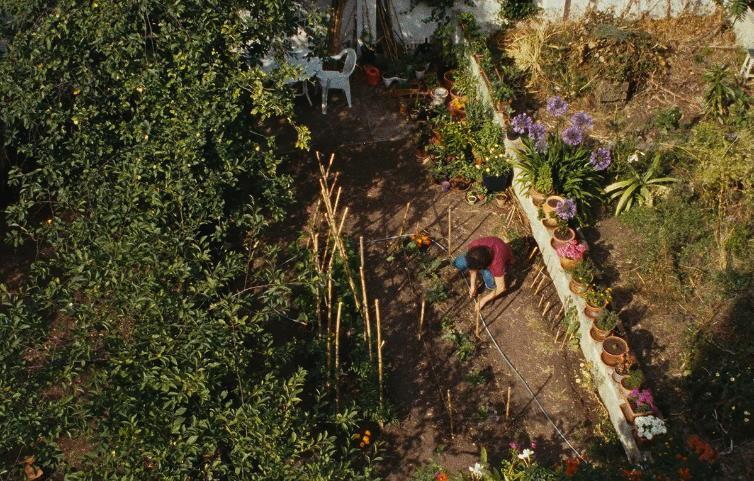
Monica Lima’s beautifully observed new drama, Human Nature, a young couple are divided on how best to move forward after the failure of their latest attempt to conceive. They are torn between an innate urge to have a child and a creeping anxiety about bringing one into the world as it currently is. Surrounded by a flourishing garden they’ve cultivated; questions of procreation and propagation surround them in this delicate golden-hour snapshot of a couple at a crossroads.
VERDICT: A couple reflect on a failed pregnancy in the midst of the pandemic in Monica Lima’s tactile and delicate drama about the desire to nurture and propagate.

January 31, 2023
For people all around the world, life came to something approaching a standstill during the curtailed movement and social opportunities of the world’s various lockdowns caused by Covid-19. In
“Maybe it’s enough,” says Xavier (Joao Vicente) when he consoles his wife, Alba (Crista Alfaiat) about their latest unsuccessful attempt to get pregnant. She insists that she wants to keep trying but it becomes clear that Xavier has his reservations. As a peacock roams the city streets and Xavier’s wider environmental concerns are brought up at dinner, the fragile equilibrium of their household – and the planet more broadly – seems to come into stark relief. Far from melodrama, though, Lima’s screenplay, written with Goncalo Branco, is patient and subtle; the tension remains authentically understated. Full Review

Hasan Minhaj to Host the 2023 Film Independent Spirit Awards on March 4.
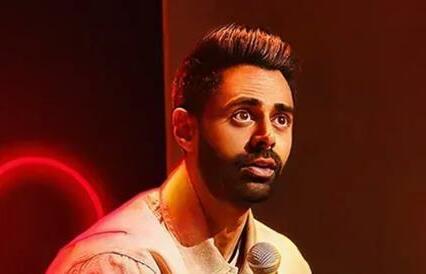
This year’s ceremony will take place in-person on March 4 on the beach in Santa Monica and will be streamed live on IMDb and across other social platforms, including Film Independent’s YouTube channel, at 2 p.m. PST.
The Maimi Festival will open with the film Somewhere in Queens, directed by Ray Romano, and will close with The Lost King, directed by Stephen Frears The Festival will Feature 12 World Premieres, 3 North American Premieres, 7 US Premieres, and 14 East Coast Premieres.
They will offer more than 140 feature narratives, documentaries and short films of all genres, from over 30 countries worldwide.
Scrapper
Award recipients make up 15 countries, including the United States, India, Ukraine, Chile, Sweden, Estonia, the United Kingdom, Nigeria, Lithuania, France, Australia, Belgium, Germany, China, and Canada. Their work exemplifies the creative excellence across the program, and they represent best of independent film.
Scrapper
Cannes Film Festival congratulates the films in the Official Selection that have been nominated for the 2023 César Awards.
17 films featured in 21 categories and cumulating 58 nominations, the Festival de Cannes wishes them the success and recognition they deserve during the 48th ceremony of the César Awards which will take place on Feb. 24. For more information, click here

This years’ Cannes film Festival will take place May 16 -27
“This is an incredible line-up of films to celebrate our historic 40year anniversary,” said MDC Vice President for External Affairs and Chief of Staff Dr. Maryam Laguna Borrego. “We look forward to commemorating our fourth decade of programming by highlighting a collection of both new and established outstanding creative cinematic talents”
The 40th festival will introduce a new award, the Goya Quick Bites short film award the filmmaker who best showcased the intersection of food and community will be awarded $2,500.
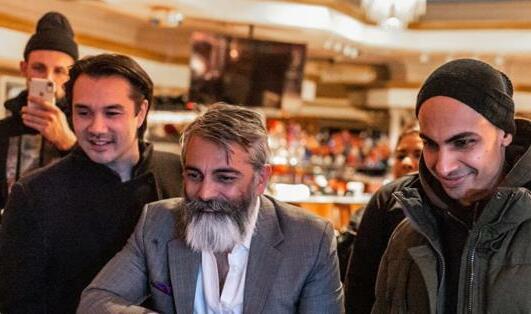
For full line up, click here
This year’s Miami Film Festival will take place March 3 - 12

Directed by Charlotte Regan World Cinema Grand Jury Prize: Dramatic
The Eternal Memory
Directed by Maite Alberdi World Cinema Grand Jury Prize: Documentary
A Thousand and One
Directed by A.V. Rockwell, US Grand Jury Prize, Dramatic
Going to Mars: The Nikki Giovanni Project

Directed by Joe Brewster, Michèle Stephenson
U.S. Grand Jury Prize: Documentary
For full list, click here

Redoubt
Directed by John Skoog, Filmmore Post-production Award
Consider Vera
Directed by Marina Stepanska ArteKino International Award
Eldorado
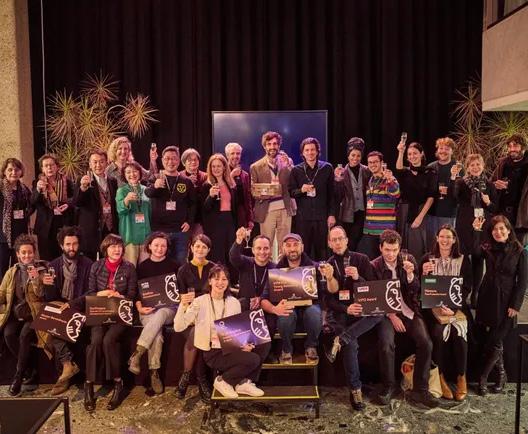
Eight IFFR Pro Awards were handed out to outstanding projects presented at the 40th edition of CineMart.
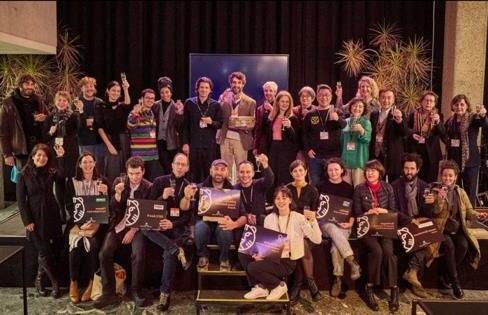
Head of IFFR Pro Inke Van Loocke commented , “The IFFR Pro Awards ceremony represents a moment to celebrate not just these prize winners, but each of the unique, daring projects who came from across the world to present their visions together with us here in Rotterdam. Following two online editions, gathering industry attendees, decision makers, producers and filmmakers for CineMart’s 40th edition proves the continued value in exchange of ideas and collaboration towards realising these irresistible projects. Absurd, satirical, brave and magical – congratulations to all our award-winners!”
Testa o croce?
Directed by Alessio Rigo de Righi, Matteo Zoppis
Eurimages Co-production Development Award
Consider Vera
Directed by Marina Stepanska
Eurimages Special Co-production Development Award
Directed by Alaa Eddine Aljem Wouter Barendrecht Award

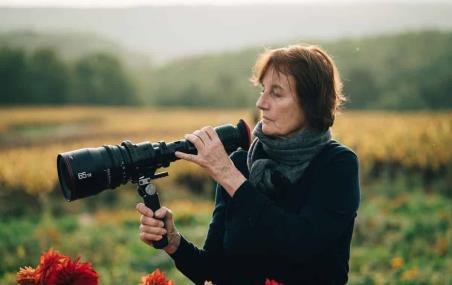
Cinematographer Caroline Champetier will be honoured with the Berlinale Camera at the 73 Berlinale
Directed by Mina Djukic VIPO Award
Anti-Muse
Directed by Baloji 4DR Studios Award
The Surrogate Ali Jaberansari IFFR Pro Young Selectors Award
Since 1986, the Berlinale Camera has honored personalities and institutions who have made a special contribution to filmmaking and with whom the festival feels closely connected. It is in this manner that the Berlinale expresses its appreciation towards those who have become friends and supporters of the festival. The Executive Director Mariëtte Rissenbeek and the Artistic Director Carlo Chatrian refected on awarding Caroline Champetier, “With her extraordinary body of work, Caroline Champetier has shaped the vision of many unique filmmakers, creating a bridge between the Nouvelle Vague and the younger generation. More recently her collaboration with Leos Carax has shown new digital potential. Among the many films we could name, the ones she did with Jean-Luc Godard and JeanMarie Straub and Danièle Huillet are very dear to us these days.”
This year’s Berlin festival will take place Feb 16 – 26

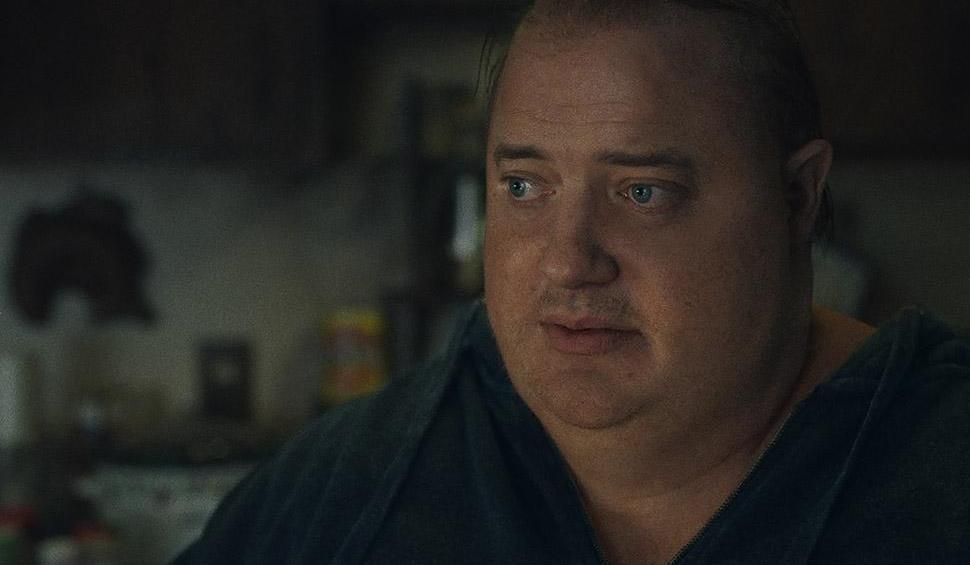
VERDICT: In a career-best performance, Brendan Fraser turns Darren Aronofsky’s apartment-bound drama about an unhappy English teacher crippled by obesity and his daughter’s distance into a classic piece of filmmaking whose emotions are truly immense.
VERDICT: The life and loves of 18th century Czech opera composer Josef Myslivecek, and his dazzling Italian career and fall into obscurity, are lovingly and authentically reconstructed in Petr Vaclav’s sumptuous period production.
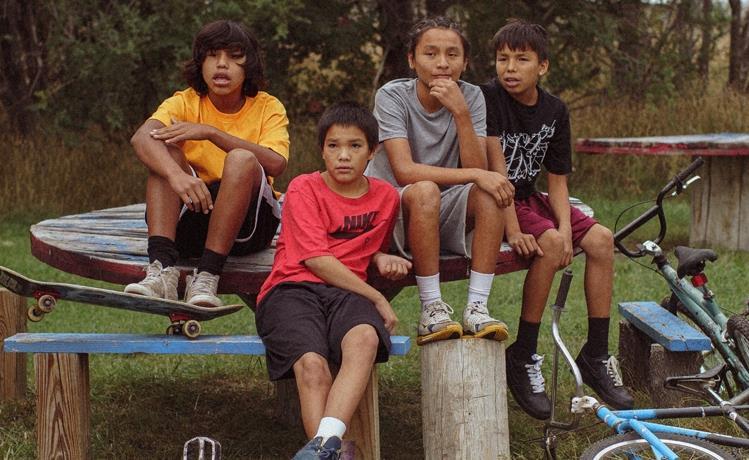
VERDICT: ‘War Pony’, from first-time directing duo Riley Keough and Gina Gammell, deeply immerses the viewer in the roughshod coming-of-age drama of two teenage boys who live on the fringes of the law on a Native American reservation in South Dakota.
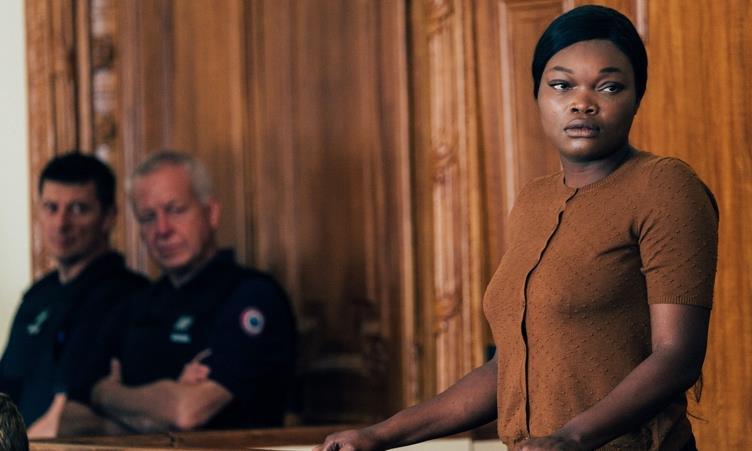
VERDICT: Alice Diop’s superb fiction debut is a marvel of control and depth, using the trial of a Senegalese woman guilty of killing her infant to honestly explore the complexities of motherhood while foregrounding it all within France’s racist currents.