IFFR REVIEW DAILY

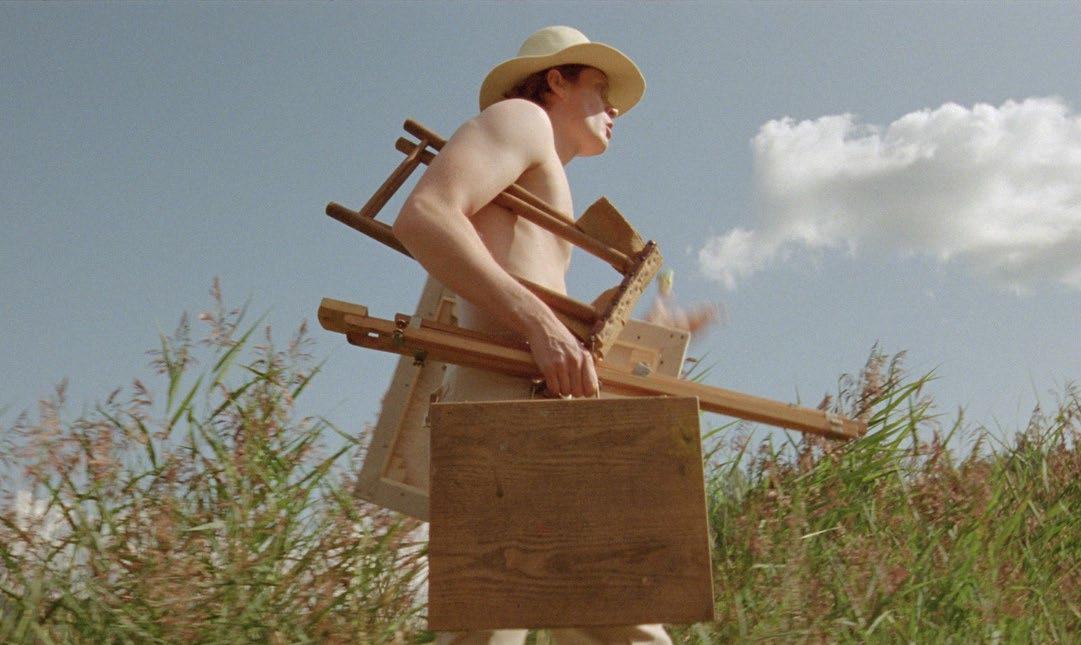

VERDICT: Unexpected formal flourishes can only spice up conventional ideas on tormented genius in this take on the life of Norway’s Expressionist painter Edvard Munch.
Carmen Gray, January 25, 2023
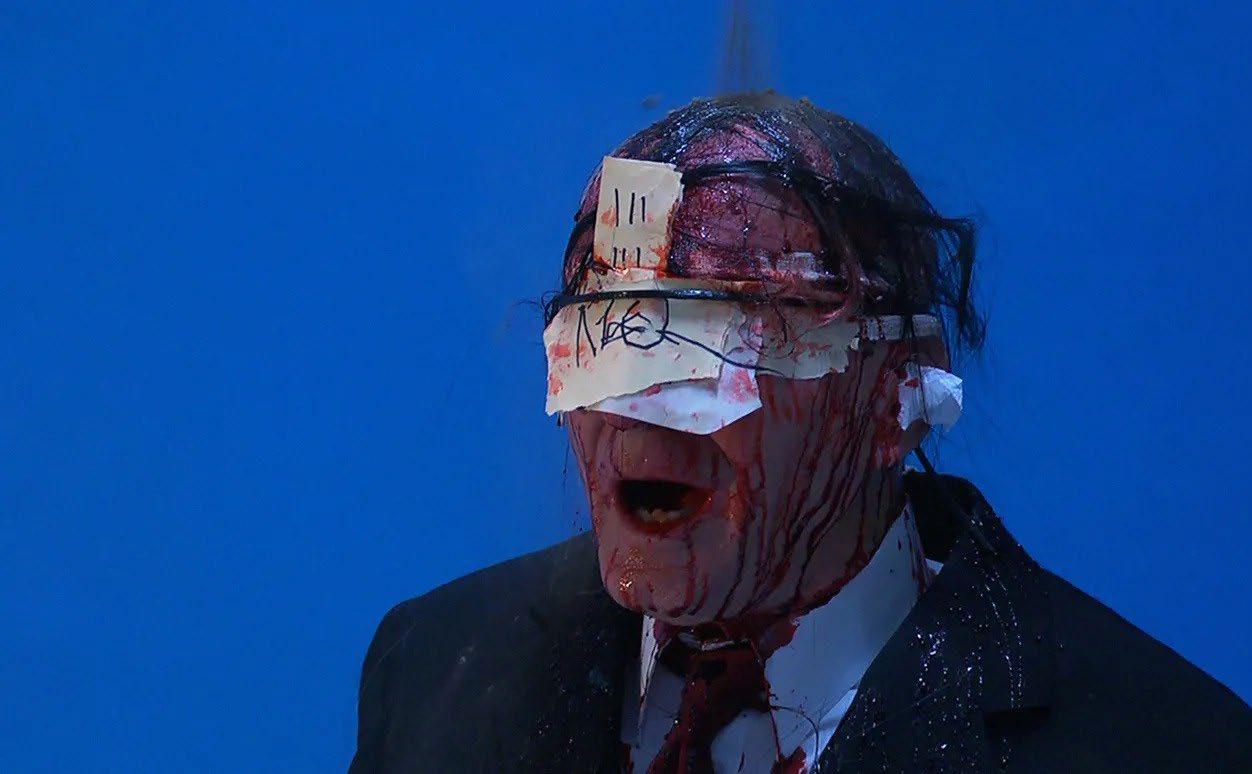
Henrik Martin Dahlsbakken’s Munch, which opened the International Film Festival Rotterdam, is the first feature film to dramatise the life of the eponymous Expressionist painter. But it would be wrong to consider this new screen territory. Radical docudrama pioneer Peter Watkins chose the Norwegian artist as the subject of his formally inventive 1974 miniseries Edvard Munch, which has a
cult following and a deserved reputation among cinephiles as a masterpiece, despite not having screened widely. It’s no wonder, then, that it’s taken so long for another director to dare the challenge, despite the obvious dramatic potential of a painter who was as famed for his wild and troubled bohemian life as for creating, in violently swirling colour, one of the most iconic images in the history of art, The
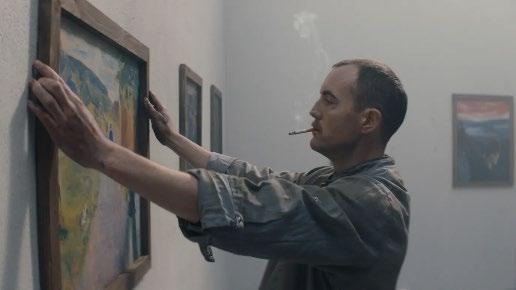
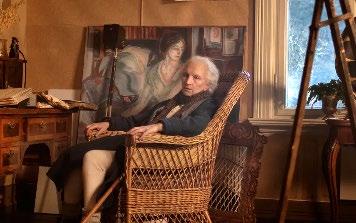
Scream. Dahlsbakken endeavours to break free from straight-up biopic terrain by enlisting four different actors (women included) to portray the artist in various phases of his adult life (a method that served Todd Haynes better in I’m Not There, his take on Bob Dylan.) Despite these flourishes, Munch remains an altogether conventional conception of the notion (increasingly outdated) that genius and torment are inextricably linked, which feels, especially given such an intense character, a tad vague and bloodless.
We shift back and forth between locations — Vestfold, Berlin, Copenhagen and Oslo — and phases of Munch’s life, clearly demarcated by different styles. First, we’re in wartime Oslo, where the elderly artist (Anne Knigsvoll) has grown reclusive. He is trying to safeguard his legacy by preventing his paintings, banned by the Nazis as degenerate, from falling into the hands of the German occupiers, with the help of financier and collector Rolf Stenersen (Anders Baasmo).
Full Review

26 JANUARY 2023 Page 2 day 1
MUNCH
Dahlsbakken Connects with Munch

The Film Verdict: You’re opening Rotterdam, and you’re also in the Nordic Competition at the Gothenburg International Film Festival. How does it feel to do two major events back-to-back after the chaos of recent years?
Henrik Martin Dahlsbakken: It’s wonderful, it’s a dream come true. I’m so pleased to be opening Rotterdam, I think it’s the right film for that.
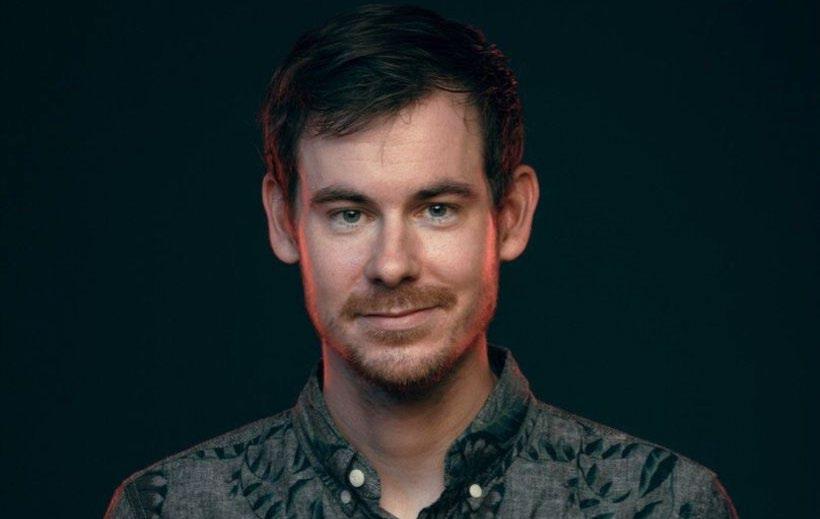
TFV: Why did you choose what people are calling the “I’m Not There approach” [as in Todd Haynes' multi-actor biopic about Bob Dylan] to tell the story of Edvard Munch?
tinkering with it in the edit?
HMD: We definitely found the film in the edit. We must have put together 75 different versions, and we could have done another 75 easily. I knew going in that was going to be the hardest part, but being aware of it made it enjoyable, in a way.
HMD: I have to say, the comparison is a bit reductive. I’m Not There is more poetical. For my part, I realized early on a single period of Munch’s life wouldn’t do him justice, so I chose four time periods that were particularly significant.
TFV: The scenes play in a specific order. Was it the same as in the script, or did you find yourself
TFV: The last few minutes are completely silent, except for the score. Was that a deliberate counterpoint to Munch’s most famous work being the scream motif?
HMD: Yes. The script had some voiceover, but we got rid of it while editing because it didn’t fit.
TFV: What was the biggest challenge during filming, other than working during a pandemic?
HMD: The entire Berlin section, which we shot without any permits. In fact, the police showed up while we were filming at Tempelhof, the long take with the Steadicam. My first AD started acting dumb and doing a “lost in translation”, and we shot our third take of that scene while the police were facing in the opposite direction.
TFV: And what is your fondest memory of the shoot?
IFFR REVIEW DAILY 26 JANUARY 2022 Page 3
Full Interview
Photo by Erik Evjen
IFFR Director Vanja Kaludjercic Talks to TFV
The Film Verdict: This is your first fully physical edition as artistic director. How does it feel to be back to normal?
Vanja Kaludjercic: It’s a huge relief. Our online editions were still interesting, because we offered something regular streamers don’t have, but part of the joy of the festival is the communal experience. We had our opening screening, the world premiere of Munch, with a full house of 1600 people. The overall feeling was of relief and gratitude, that we can all be together again.
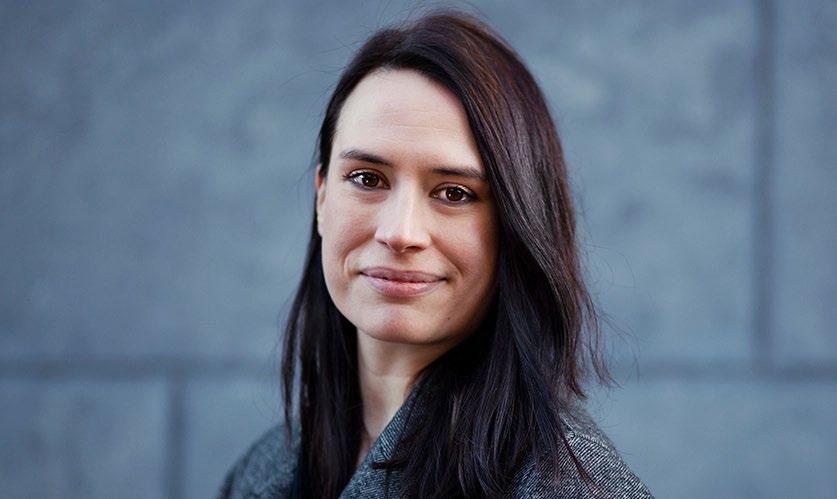
TFV: I agree about the communal experience. Having said that, I was unable to cover the festival prior to the pandemic.
VK: Yes, if there was one silver lining, for lack of a better word, it was the fact we were able to bring the films to international professionals and press in a way that benefited the competitions especially. The Tiger Competition and the Big Screen Competition
received more coverage than ever before. And while that kind of accessibility is important, it still doesn’t change the fact that the best festival experiences are the ones on the big screen. A beamer in your home can’t compare.
TFV: Rotterdam has been going on for 53 years, and it’s the first major European festival of the year. Does that add any pressure during the selection process?
VK: Not really. We are quite close to Berlin, so there’s the question of a few films – not that many –having to make a choice between the two. But overall, we are quite different from them, and out of 430 films in the program, about half of them are world premieres, which shows that both festivals have earned the trust of filmmakers to nurture their works.
TFV: What sets Rotterdam apart nowadays? And how do you maintain its tradition while also putting your stamp on it?
VK: Well, I started working as artistic director only a few weeks before the lockdown in early 2020, so the first thing we did was to reduce the program for the online version. We had about 20% fewer films than we do now with the physical edition. Other than that, our main goal with the programming team has been to expand our horizons and really spotlight all facets of contemporary world cinema, and find the right balance between the sections. I’m very proud of our Japanese selection, most of which is international or European premieres, because Japanese films tend to have a reduced presence at the other major festivals. It’s the same with India: they produce more films yearly than any other country, but you only see a handful of them around the world. We’ve also expanded our animation programming for the same reason.
TFV: Any other nations in the spotlight?
VK: Rotterdam has always had a good relationship with Indonesia, and this year’s selection really highlights the diversity of contemporary Indonesian cinema. We have a superhero film, for example, and it’s the kind of mainstream entertainment and spectacle that can easily stand alongside the Marvel movies.
 – By Max Borg
IFFR REVIEW DAILY 26 JANUARY 2022 Page 4
Courtesy Of Vera Cornell/IFFR
IFFR REVIEW DAILY 26 JANUARY 2022 Page 5
The (Physical) Return of Rotterdam
VERDICT: The 52nd IFFR kicks off its first full-scale, physical edition since the pandemic, amid heightened industry scrutiny after a controversial restructure.

Carmen Gray, January 25, 2023
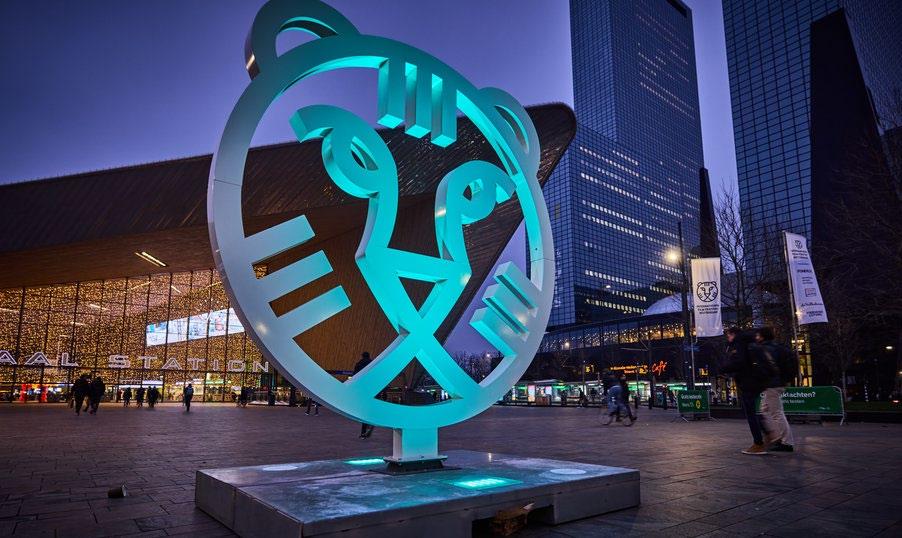
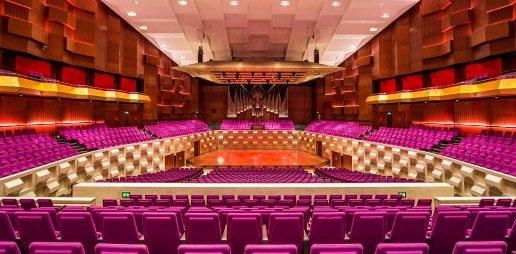
The International Film Festival Rotterdam (IFFR) is set to kick off for its first full-scale, physical edition since Covid changed the world, after lockdowns forced it online for two years running. Guests will be welcomed back to De Doelen festival hub and other venues across the city, hoping for a return to an approximation of pre-pandemic normality.
De Doelen Theatre
The festival will open on January 25 with the world premiere of Norwegian production Munch. Henrik Martin Dahlsbakken’s portrait of the nineteenth-century Expressionist painter Edvard Munch spans four phases of his adult life in the bohemian enclaves of Europe, as he sought a way to capture modern anguish on canvas that resulted in his most famous work The Scream.
Rotterdam’s 52nd edition will be the first in-person event for festival director Vanja Kaludjercic, who navigated the daunting logistical challenge of last-minute online turnaround in both of her first two years at the helm. Along with managing director Marjan van der Haar and their team, she faces heightened scrutiny over how the programme will land, following last year’s controversial restructure. Some permanent positions were cut and longstanding freelancers were not asked back, in a slimming down of operations that the festival attributed to financial considerations.
The announcement of a full programme that seems broadly in keeping with the daring and diverse spirit of prior editions has, for the time being, quelled concerns in some industry corners over how pressures to focus on profit may impact the identity of IFFR, which has an established reputation for radical, adventurous programming and the nurturing of new voices.
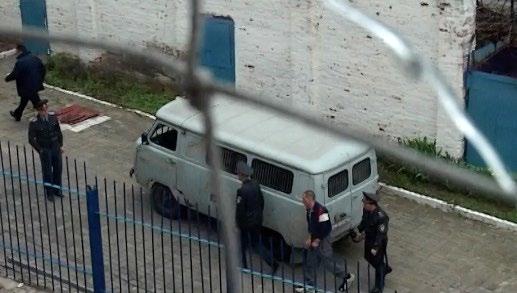
The festival’s flagship Tiger Competition, showcasing emerging talent, will present sixteen features. A jury made up of Lav Diaz, Sabrina Baracetti, Alonso Díaz de la Vega, Anisia Uzeyman and Christine Vachon will select a winner for the Tiger Award, worth €40,000, and two Special Jury Awards, with €10,000 of prize money each. Highly anticipated titles in the line-up include the Ukrainian production La Palisiada by Philip Sotnychenko, about a murder investigated in the ‘90s just before the abolition of the death penalty, and Georden West’s Playland, in which the history of a legendary, now-demolished Boston gay bar is revived by returned ghosts. The Big Screen Competition, which has an audience award of €30,000 attached, and a guaranteed theatrical release in the Netherlands for the winner, includes Martin Skovbjerg’s Danish thriller Copenhagen Does Not Exist, with Zlatko Buric (Best Actor at last year’s European Film Awards) in the cast, and the Portuguese production Nao Sou Nada — The Nothingness Club, Edgar Pera’s surrealistic take on the world of writer Fernando Pessoa.
Copenhagen Does Not Exist
The festival’s well-respected Ammodo Tiger Shorts competition this year includes films by Morgan Alaric Quaintance and Cho Seoungho in its 24-film-strong line-up. (Continues page 8)
IFFR REVIEW DAILY 26 JANUARY 2022 Page 6
IFFR REVIEW DAILY 26 JANUARY 2022 Page 7
THE RETURN OF ROTTERDAM (Continued)
Varun Grover’s All India Rank will close the festival, capping an edition with a strong Indian presence. A focus programme entitled ‘The Shape of Things to Come?’ will draw attention to the rise of far-right Hindu nationalism in India, as it has emerged in the political landscape of the last three decades, going back to the political satire of Sanjiv Shah’s 1992 musical Love in the Time of Malaria.
British artist and filmmaker Steve McQueen will finally be able to present his much-anticipated Sunshine State, a two-channel video installation commissioned by IFFR in collaboration with venue Depot Boijmans Van Beuningen; the project had to be postponed due to the pandemic. It shows in the Art Directions programme, where six installations will be on view. Among them are multidisciplinary Chinese artist Shuang Li’s Æther (Poor Objects) at Rotterdam’s Central Station, and a series of audio-visual performances at the music/new media space WORM. A symposium on the future of film festivals will take place on 29 January. Closed and invite-only, the event will create a space for industry professionals, in the form of a steering group including Toronto senior programmer

Giovanna Fulvi and UK producer Mike Goodridge, to discuss how to strategically work together for a sustainable future in a pressured post-pandemic climate. Their conclusions will be presented the next day in a session open to press and industry.
With this edition, IFFR appears eager to reposition itself in the public narrative as part of the solution, rather than another symptom of a disrupted, economically squeezed festival landscape. It runs from 25 January to 5 February.
IFFR REVIEW DAILY 26 JANUARY 2022 Page 8
Sunshine State
La Palasiada
VERDICT: Director Ami-Ro Sköld blends live action with stop-motion animation in this impressive social drama, which takes place in a Swedish supermarket.

Stephen Dalton, January 25, 2023
A cut-price supermarket becomes an emblematic battleground for 21st century class struggle in The Store, a lightly experimental blend of social-realist drama and eerie stop-motion animation from Swedish writer-director Ami-Ro Sköld. The action take place in a nameless Swedish town, but it could
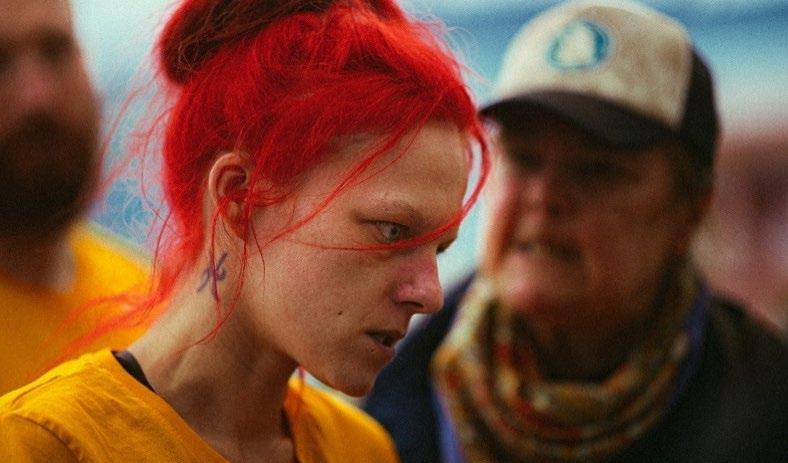
be anywhere in the western world where poorly paid service jobs are filled by a multi-racial underclass of unskilled workers and immigrants.
Sprawling past the two-hour mark, The Store takes too long to make some fairly blunt and obvious points about the evils of consumer capitalism. Even so, this is a commendably thoughtful, quietly angry feature elevated by a strong ensemble cast and clever use of animation as a kind of counterpoint commentary on the live-action scenes. Building on its low-key festival launch late last year, Sköld’s impressive hybrid drama is screening at IFFR in Rotterdam this week. More festivals are likely to take an interest, with domestic release scheduled for April.
The anti-heroine at the centre of The Store is punky single mother Eleni (Eliza Sica), an ambitious young manager being groomed for promotion by her callous corporate boss Karsten (Fredrick Evers). The Faustian price of this “opportunity” means Eleni is under increasing pressure to neglect her newborn baby, slash worktime rotas, Full Review
IFFR REVIEW DAILY 26 JANUARY 2022 Page 9
THE STORE
ALiEN0089
VERDICT: Valeria Hofmann’s uncanny and unsettling film explores the collisions between a video game and the real world, when a young woman attempts to call out online harassment.
Ben Nicholson, January 25, 2023
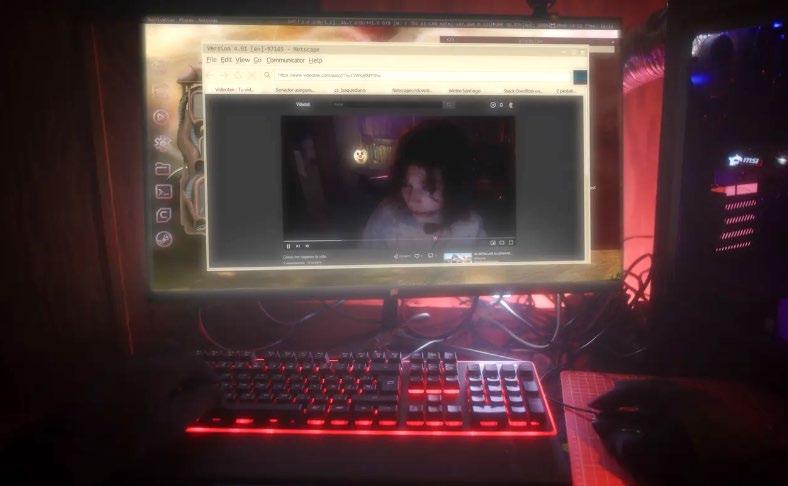
Valeria Hofmann’s new short film ALiEN0089, which premiered at Sundance earlier this month and screens now in Rotterdam, began with a true story. A school friend of the director recounted her harassment at the hands of online gamers and this
NOIR 360


NOIR 360 is a podcast about the global Black film industry Each episode delves into a different aspect of the industry, from the experiences of Black filmmakers , to the representation of Black characters on screen, to the impact of Black-led films on popular culture
Rashid Bahati , the host of the podcast, is a film curator and a cultural engineer who brings his passion and expertise in the topic to every episode He begins the first episode by giving an overview of the state of the global Black film industry, highlighting both the challenges and the successes
scenario forms the basis of a troubling, paranoid thriller that permeates the boundaries between real and virtual worlds. A young woman, Sabina (Mariana Di Girolamo), seeks to draw attention to her harassment by aggressive faceless players of an online war game, little realising that there is an intruder watching her inside her own home. The distinction between what is game and what is reality – between what is happening online and what is happening ‘away from keyboard’ – is intentionally complicated right from the beginning of ALiEN0089. Films often begin with diegetic sound or voiceover against a black screen, but in this instance, it is a loading screen. What the audience then sees is all from the first-person perspective of somebody breaking into Sabina’s house. The entire experience is modelled on video game aesthetics, mimicking the visual language of the exact game Sabina plays. As the intruder moves around the house and spies on its occupant, they also collect conspicuous objects exactly as a game protagonist would: a beetle in a petri dish, a gleaming golden flick knife.
Full Review
rashid@thefilmverdict.com podcasts @thefilmverdict com
IFFR REVIEW DAILY 26 JANUARY 2022
TFV ‘ UNEDITED ’ Uninterrupted. Unfiltered. Uncensored. Launching Feb 27
IFFR REVIEW DAILY 26 JANUARY 2022 Page 11

IFFR REVIEW DAILY 26 JANUARY 2022 Page 12
IFFR PRO IMMERSIVE
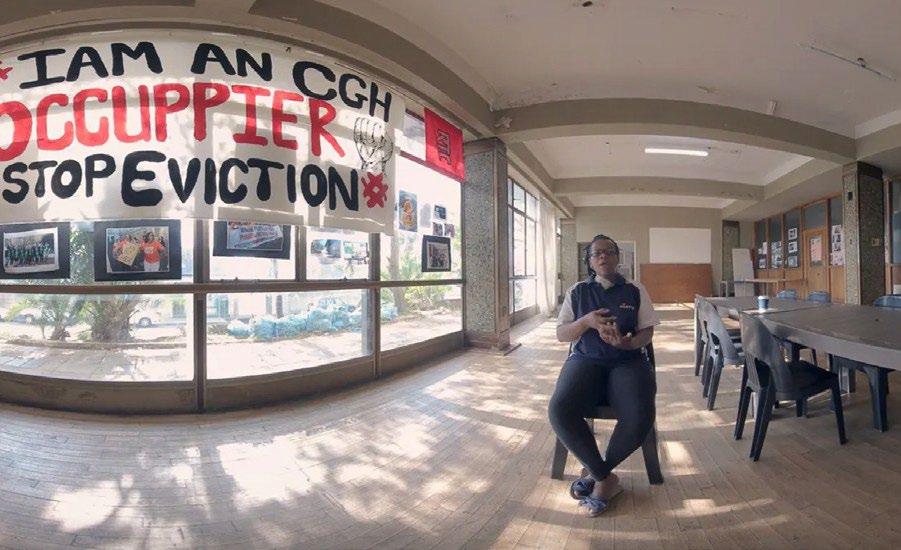
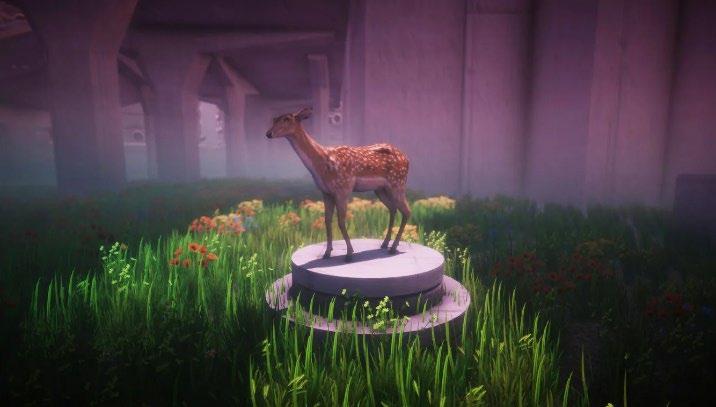
IFFR Pro handpicks the most exciting narrative Immersive and XR (extended reality) projects in development for its Immersive selection, which this year is curated with the IMPULSE programme hosted at VRDays Europe.
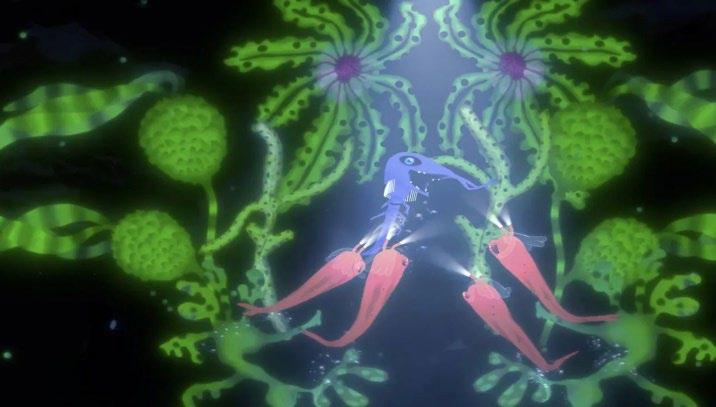
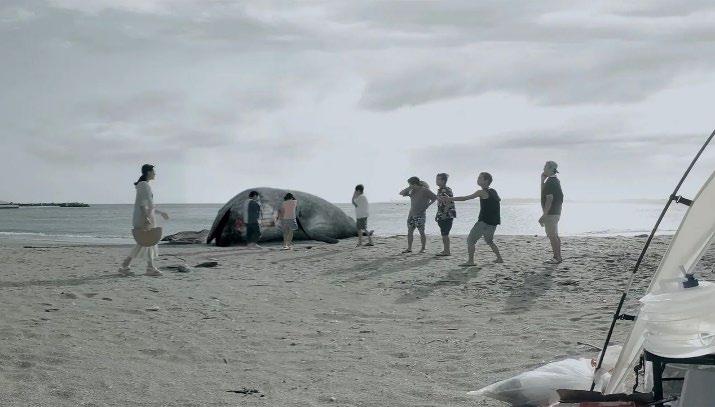
Click on Film Titles for more information and Ticket Sales
By Inoue Hiroki Kabaret By Gina Thorstensen
By the Shore
Night Creatures
By Isobel Knowles and Van Sowerwine
All Unsaved Progress Will Be Lost
By Melanie Courtinat
Immersive Projects in Development
IFFR Pro Immersive focuses on the development of fictional narrative projects, or nonfiction projects with a highly creative approach, ranging from 360 film to immersive gaming experiences, and exciting innovations within the medium.
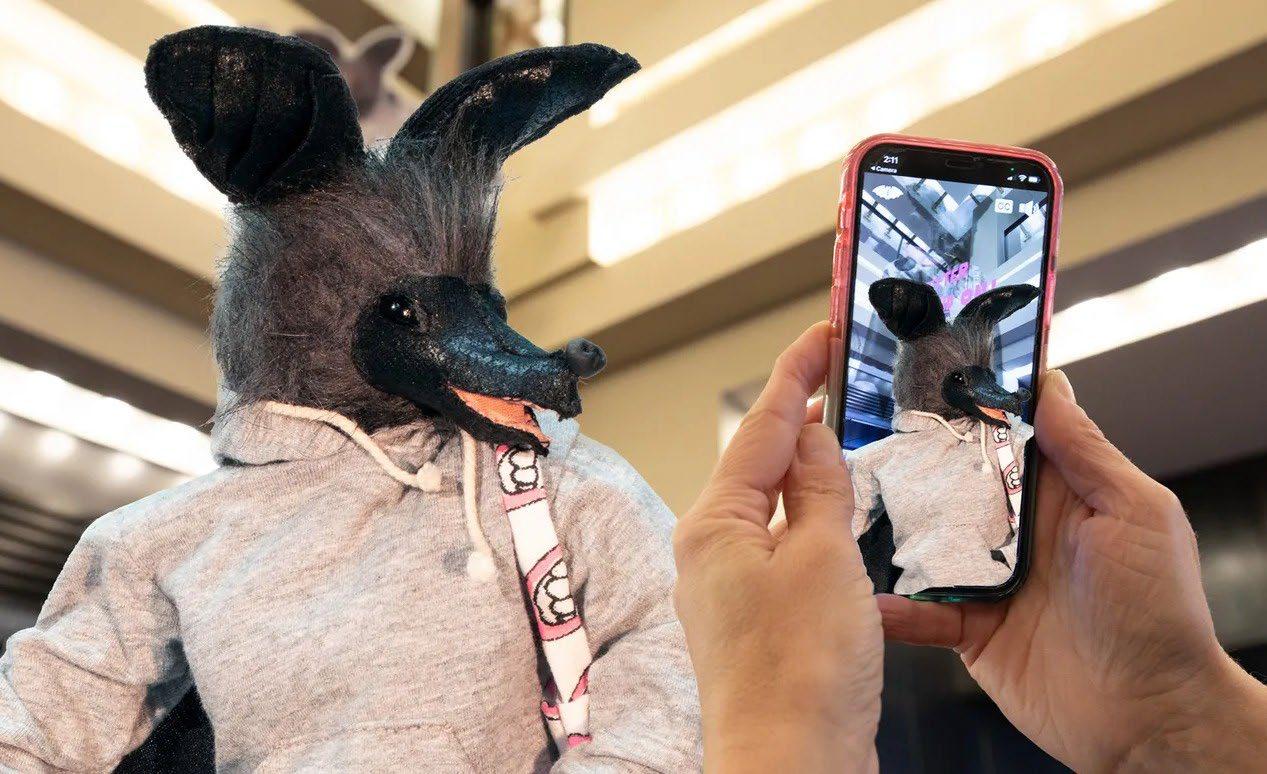 By Dylan Vallery & Annie Nisenson
Presenting select projects at CineMart, IFFR’s co-production market, allows these projects to find the right exposure and connections to take them one step closer to reality.
IFFR REVIEW DAILY 26 JANUARY 2022 Page 13
No Place But Here
IFFR Focus Programme 2023
IFFR celebrates the careers of radical filmmakers and visual artists. For the 52nd edition, they have carefully curated Focus programmes of inspiring creatives – Hungarian filmmaker Judit Elek, Japanese animator Yuasa Masaaki, American interdisciplinary artist Stanya Kahn, and the long-running Bay Area expanded cinema project arc, who will all be placed in the spotlight with Focus programmes at IFFR 2023.
“Our Focus programmes are a chance for us to celebrate the work of filmmakers whose remarkable careers haven’t always been given the attention they deserve. As always, we’re committed to looking into unlikely spheres, be it rural documentaries from 1970s People’s Hungary, performance-based expanded cinema or wild free-form Japanese anime. The unexpected always shines brightly at IFFR.”
- Festival director, Vanja Kaludjercic
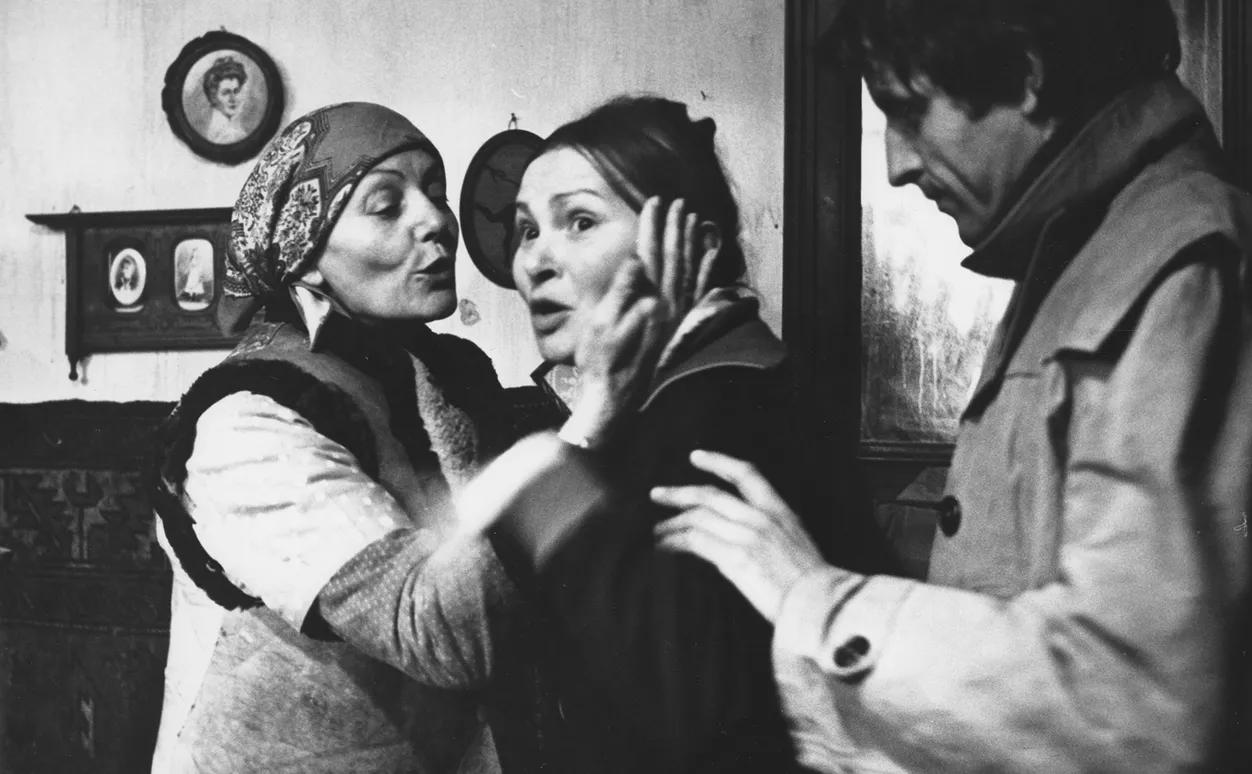
IFFR is honoured to present a vast retrospective of Hungarian filmmaker and writer Judit Elek, whose career deserves to be in the spotlight. Elek’s work often touches on issues of political oppression and Jewishness, varying between compassion, tenderness and fury. The programme includes the harsh and unsparing look at a dying relationship Maybe Tomorrow (1979), the sarcastic historical allegory The Trial of Martinovics and the Hungarian Jacobins (1981), and the Holocaust anchored documentary portrait To Speak the Unspeakable – The Message of Elie Wiesel (1996). Elek will be present to launch and sign copies of a publication on her life and career, specially commissioned by IFFR.
A Focus programme is dedicated to the widelyexhibited American interdisciplinary artist and 2012 Guggenheim Fellow Stanya Kahn, featuring the international premiere of So Low You Can’t Get Over It (2022) in which animated paintings manifest uncertainty. She often collaborates with performers, visual artists and choreographers – such as with the artist Llyn Foulkes on Happy Song for You (2011). Kahn will discuss her work at an IFFR Talk.
IFFR REVIEW DAILY 26 JANUARY 2022 Page 14
Judit Elek
Stanya Kahn
Maybe Tomorrow
Happy Song For You
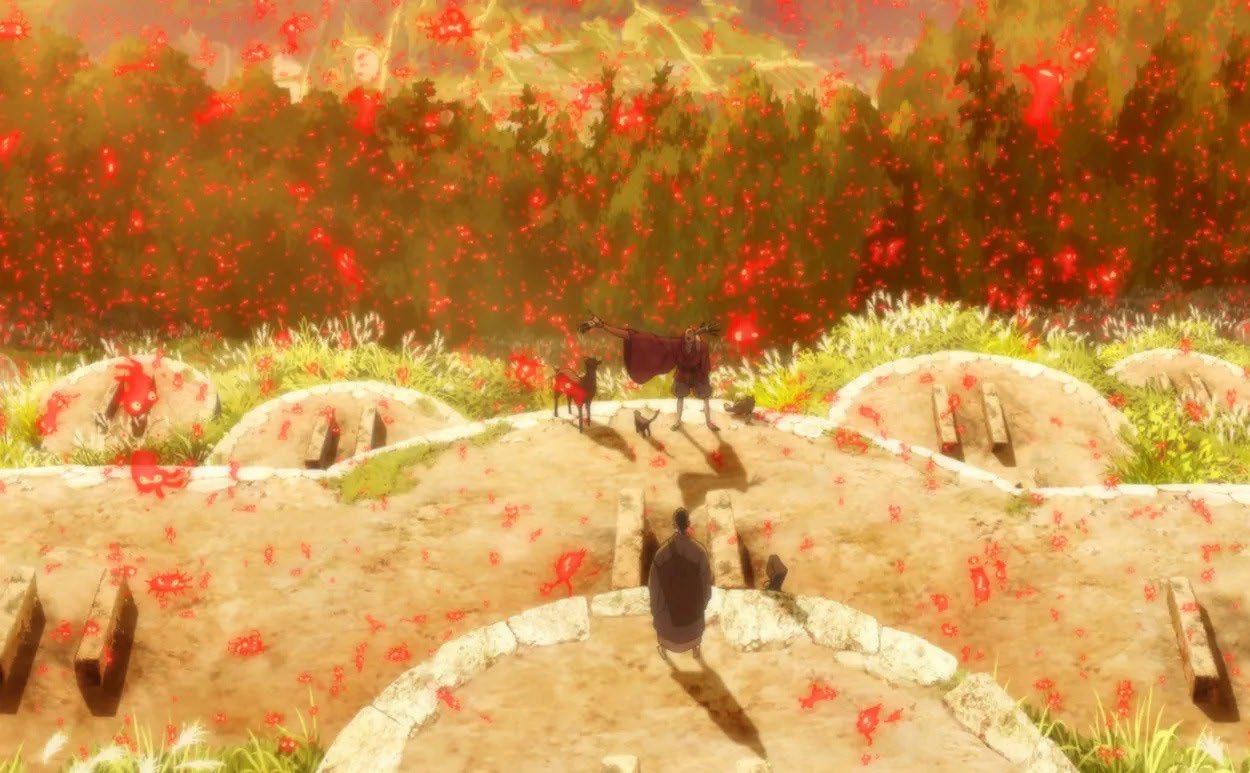
A selection of films and episodic series make up a Focus programme on the critically acclaimed Japanese animator and filmmaker Yuasa Masaaki. Alongside a selection of his characteristic wild free-form works, IFFR 2023 will show Yuasa’s charming fairy tale Ride Your Wave and his latest work INU-OH – an anime rock opera about friendship and the power of sincere art, that premiered in Venice in 2021.
arc
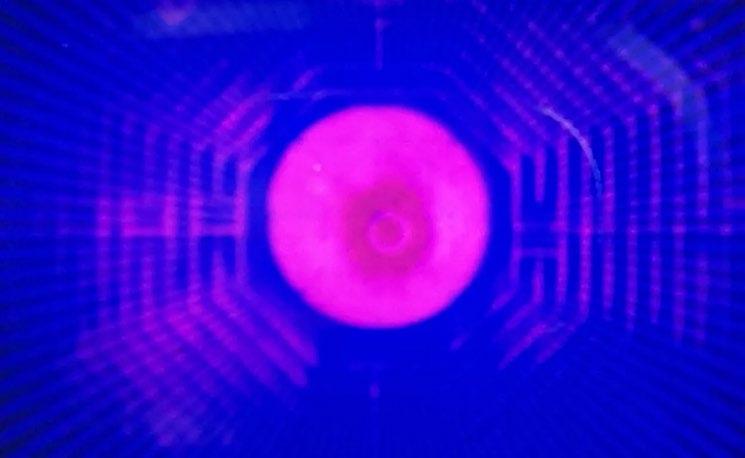
IFFR presents a rare profile of the single channel and performance-based expanded cinema project arc, with many works including multiple projectors and live accompanying scores. arc is the creation of the San Francisco experimental art scene mainstay tooth, who also runs the Black Hole Cinematheque and the celluloid-only film festival Light Field. They will also be present for an IFFR Talk.
For more information & program schedule, Click Here
IFFR REVIEW DAILY 26 JANUARY 2022 Page 15
INU-OH
Yuasa Masaaki

IFFR REVIEW DAILY 26 JANUARY 2022 Page 16
IFFR Pro Dialogues
The Pro Hub brings the whole film community at the festival together. The team presents a program of IFFR Pro Dialogues, where specially invited guests from diverse backgrounds across the film community discuss pressing issues.
Topics will cater towards the interests of emerging filmmakers, curators, programmers and experienced professionals. A special focus will be on distribution and exhibition strategies for films without a sales agent.
Short Films, Big Issues
Sat, Jan 28 | 1:00
Filmmakers, programmers and distributors discuss how short films can tackle existential issues and why it is vitally important that they are made.
Film Festival Redux What Film Festivals Can Do For Filmmakers
Sat, Jan 28 | 5:00
How can filmmakers make the most of the disruption the last few years has caused the film festival sector?
Distribution Potential Exploring Your Possibilities
Sun, Jan 29 | 5:00
Sales agents, strategists and filmmakers share alternative ways for non-mainstream films to find the recognition they deserve.
IFFR Pro Central Dialogue: Creative Power,
Creative Partners
Balancing Co-Production Dynamics
Mon, Jan 30 | 6:00
Highlights from the Reality Check symposium, followed by a conversation on the complexities and challenges of working with multiple partners on a co-production and its impact on the creative process.
Reframing Desire, Reclaiming The Story
Queer Cinema’s Playful & Radical Imagination
Tues, Jan 31 | 1:00
Filmmakers, festival programmers and sales agents discuss the themes and formal sensibilities in the work they make, curate and represent.
Green Filmmaking And Co-Production A Contradiction Or An Opportunity
Tues, Jan 31 | 4:30
The tools for change towards a future-proof sustainable industry are presented through an exchange of experiences and practices.
Minds On Marketing – Innovate Your Approach
Tues, Jan 31 | 5:00
The panel will share experiences, tips and tricks to maximize the appeal of your film internationally.
Preserving The Preserved Film Archives In Perilous
Times
Wed, Feb 1 | 1:00
An examination of the challenges faced by archivists and artists/filmmakers engaged in the practice of preservation, access and appropriation.
For more information on Pro Hub Click Here
IFFR REVIEW DAILY 26 JANUARY 2022 Page 17
MORE FILMS AT IFFR
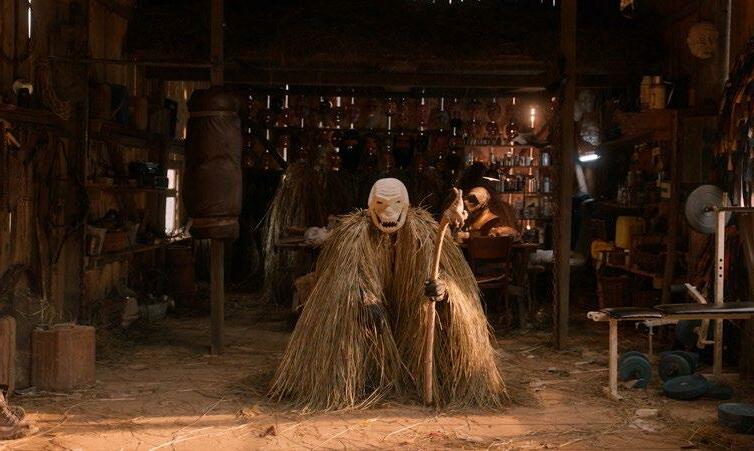
When The Waves Are Gone
VERDICT: Dmytro SukholytkyySobchuk’s debut is a propulsive drama employing folkloric elements and mythic overtones in its portrayal of a man trying to navigate a provincial criminal underworld.
Another Spring
Još jedno prolece
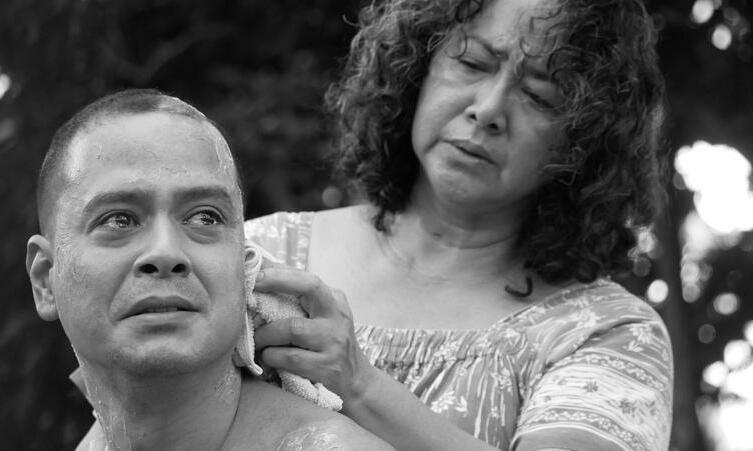
VERDICT: Philippine auteur Lav Diaz offers a damning and doomed critique of the violent state of his country through the on-screen physical and psychological disintegration of a policeman weighed down by the guilt of his murderous past.
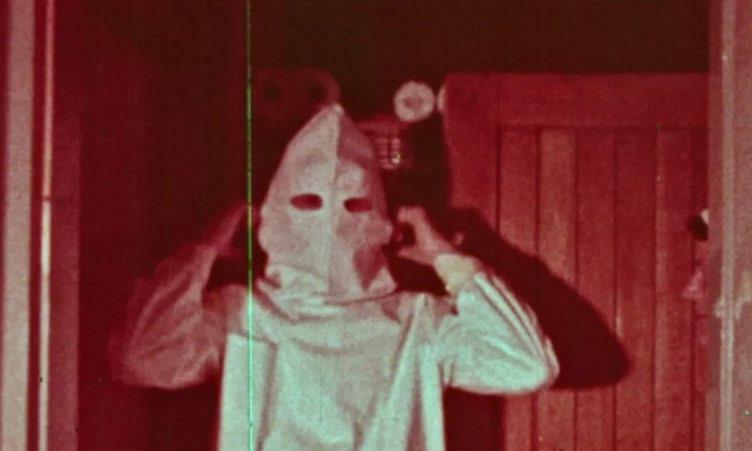
Something You Said Last Night
Something You Said Last Night
VERDICT: Serbian director Mladen
Kovacevic finds echoes of the current Covid pandemic in Europe's last smallpox outbreak in this artful, atmospheric found-footage documentary.
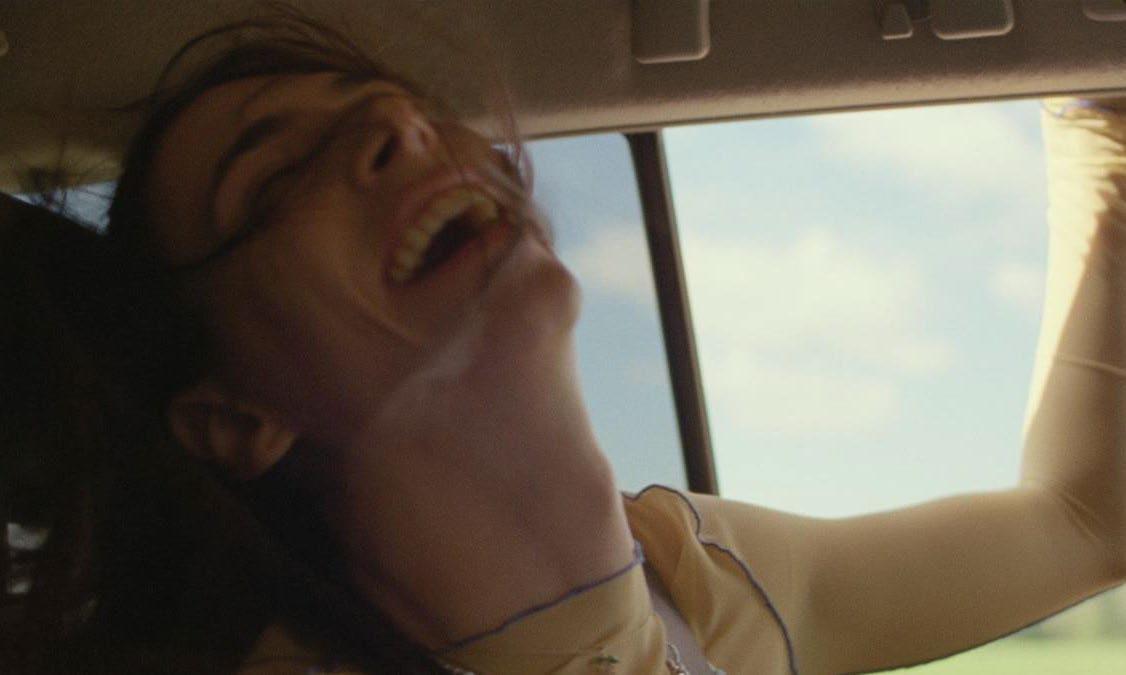
VERDICT: Luis De Filippis’ laid-back tale about an embattled but loving family on vacation pops with a riveting Carmen Madonia as the trans sister.
SAN SEBASTIAN SPOTLIGHT 22 SEPTEMBER 2022 Page 18
Pamfir Pamfir
Film Servis Festival Karlovy Vary
Kapag Wala Nang Mga Alon
(c) sine olivia pilipinas
Filmska produkcija Horopter
Cairo Film Festival Filmska produkcija Horopter
IFFR REVIEW DAILY 26 JANUARY 2022 Page 19