Berlinale & EFM Review Daily



Day 7, February 22, 2023
Fans in front of Kino of #Manhole, photo courtesy of Berlinale



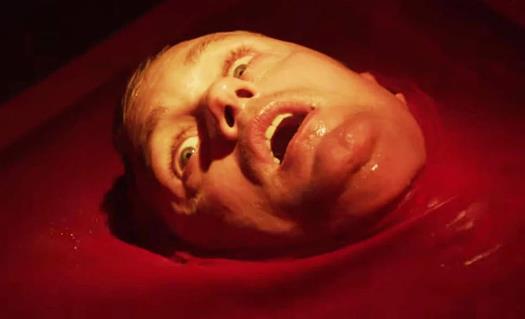
VERDICT: Brandon Cronenberg's darkly satirical sci-fi horror thriller about sun-seeking tourists on a clone-killing crime spree is a deliriously debauched joyride into Hell.
Stephen Dalton, February 21, 2023

VERDICT: A bold and chilling political thriller of shifting perspectives in which the weight of state-sanctioned terror begins to crush a security agent in eastern Turkey, where trauma and paranoia rip apart the social fabric.

Jay Weissberg, February 21, 2023
The brutal legacy of Turkey’s secret service casts a dark pall over a community in GermanKurdish writer-director Ayse Polat’s most accomplished feature to date, In the Blind Spot. A chilling tripart thriller that shifts perspectives as it plays with the inescapable pull of the past and its insidious legacy, the film dexterously links the story of a
low-level security agent finding himself on the other side of the surveillance cameras to a deeper plot whose grip appears to reach from beyond the grave. With its bold take on state-sanctioned hit squads, In the Blind Spot is likely to create a firestorm at home but should find welcoming arms at international festivals.
Full Review
The latest sci-fi horror fable from Canadian writer-director Brandon Cronenberg is his most deliciously dark, richly allegorical nightmare vision to date. A bleakly satirical, sexually graphic, hallucinatory thriller about wealthy tourists resorting to debauched savagery in a fictional foreign country, Infinity Pool proved divisive at its Sundance premiere last month, earning rave reviews for its stylish excess but also criticism for its loathsome characters, lurid plot and fetishistic violence.
Full Review
VERDICT: Japanese director Yui Kiyohara’s second feature combines delicate human drama, mesmerising imagery and a reflection on personal and social history.
Clarence Tsui, February 21, 2023
“A slow-moving account of the way three ordinary women spend a summer’s day in a non-descript commuter town in Japan, Remembering Every Night might at first seem an odd fit for the Berlin Film Festival’s leftfield Forum section. Scratch the film’s seemingly whimsical surface, however, and one finds an affecting and opaquely reflective study of remembrance and forgetting of people and places, and the relationships between the two.
Returning to the Forum nearly five years after becoming one of the youngest directors to screen a feature in Berlin, 30-year-old Japanese filmmaker Yui Kiyohara has delivered something very very Full Review

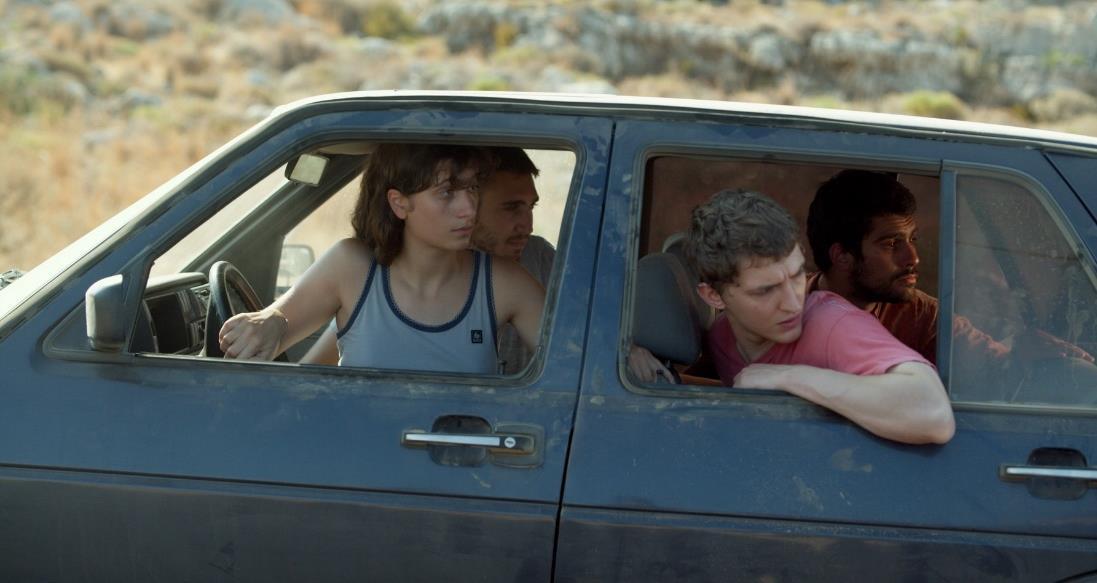
VERDICT: Angela Schanelec returns to Berlin with another weird, challenging film destined to thrive only in ultra-art houses and academic spaces based on its austere approach to narrative enjoyment.
Oris Aigbokhaevbolo, February 21, 2023
The new film from Angela Schanelec is in the mold of old films from the German director: useful for a super-specific audience; massively useless for all other audiences. A certain kind of European festival would welcome its inscrutability and disregard for narrative; ditto film departments with a peculiar bent. In other words, Schanelec is back to irritate film lovers without highlevel academic degrees and/or high tolerance for tedium of the wayward sort.
The film is entitled Music and does feature a fair amount of singing. But as you can guess, the songs do not pour forth with a lot of focus on melody and there isn’t
a lot of charisma emanating from the performers, who are filmed with the same lingering seriousness of the film’s other scenes where the camera, as directed by Ivan Markovic, stays on characters, scenes, objects moments longer than normal. But then again, this isn’t really a “normal” film. Supposedly an interpretation of Sophocles’ Oedipus, it departs sufficiently from that character’s story to be its own form.
A baby is discovered abandoned in the bushes and taken home. Years later, he kills a man accidentally. The scene is filmed somewhat exasperatingly.
Full Review

VERDICT: French director Philippe Garrel is faithful to his intimist style, working with his three children in a classic tale.
Lucy Virgen, February 21, 2023
Philippe Garrel is back to the Berlinale as one of the very few star names in the competition. At 74, Garrel is not just a recognizable name, but a recognizable style: naturalistic, sparse, intimist, with a limited number of close-ups. He approaches, but he is not intrusive, in his new film, The Plough
Le Grand Chariot, the film’s original title, is both the name of an itinerant theater of puppeteers belonging to the same family, as well as the name of the truck that transports them. The father, maybe prescient or simply tired, hires a young man to take his place. A very short time after, the father dies and the siblings, along with the newcomer, must take care of the family business and run their lives.
The script is co-written by Garrel and his longtime collaborator
Jean-Claude Carrière along with Arlette Langmann and Caroline Deruas Peano. The film is not about death as much as it is about how some trades are about to
become extinct, a loss common to all of us. It is also about life, love, and how things can be rearranged in unfathomable ways.
According to Garrel himself, he made this film so he could work with his three children, all of them actors. The star Louis (who made his directing debut last year), the well-known Esther, and Lena appearing here in her second film work seamlessly with Aurélien Recoing (daughter of Louis
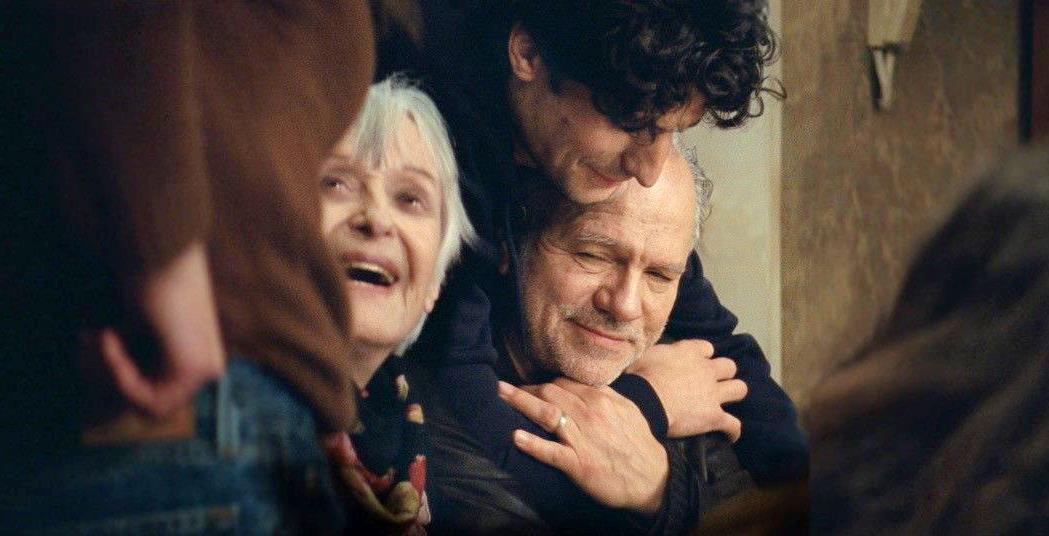
Recoing, the legendary puppet master) as the maternal grandmother, to form a family in the film.
The first surprise in The Plough is that Garrel is back to filming in color! For the first time in 12 years and four films his last color film was Un été brûlant in 2011.
Renato Berta’s color
cinematography is soft and natural, serving well to capture the atmosphere of the family and the puppet theater. The puppet shows are almost always photographed from the stage, giving us time to see and enjoy the performers. Full Review


VERDICT: Kazuyoshi Kumakiri's silly single location thriller is too straight-faced to be any fun.
Kevin Jagernauth, February 20, 2023
Ryan Reynolds woke up in a coffin in Buried, James Franco found himself between a rock and a hard place in 127 Hours, Colin Farrell held the line in Phone Booth, and now Yuto Nakajima joins their ranks as one of the improbably stuck in #Manhole The latest film by Japanese helmer Kazuyoshi
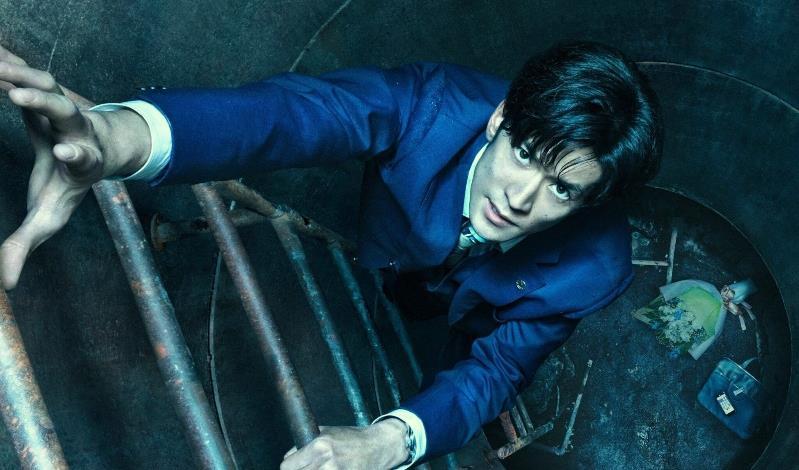
Kumakiri most closely resembles The Simpsons episode where Bart falls down the well, but updated for the social media age, and delivered with few more twists up its sleeve. Yet despite its reach toward contemporary relevance, #Manhole is a thriller that’s more swampy than satisfying, but oddly appealing in the moment.
The single location thriller tends to stand or suffer on the mechanics of its premise, and screenwriter Michitaka Okada certainly sets a much more interesting stage than the film’s title would suggest. The night before his wedding, Shusake’s office colleagues throw him a surprise party to celebrate the impending nuptials. Agreeably sozzled after many well-meaning toasts, he heads home…only to wake up in the wee hours at the wrong end of a manhole. With a bloody gash in his right thigh, getting up the ladder will be a challenge, even if it wasn’t already rusted and broken. The only tools at his disposal in the dark and cold hole are a smartphone and lighter. And if things weren’t already uncomfortable, leaky gas pipes and a mysterious white substance slowly draining into the space add to the mood — and then it starts to rain. With his GPS glitching out, the police making the bureaucracy of Ikiru look efficient, and Shusake’s ex-girlfriend Mai (Nao) the only one returning his calls, Full Review

VERDICT: Lois Patiño's latest contains a fascinating cinematic experiment though the work as a whole will likely receive more mixed reactions.

Boyd van Hoeij
Spanish director Lois Patiño’s 2020 film, Red Moon Tide, was a visually entrancing visit to the Galician coast and a movie, like some of Patiño’s earlier work, in which you are meant to not just feel a little unmoored but you really need to allow yourself to get lost to get the most out of it. The Galician director takes the paradox of creating a participatory cinematic experience that requires you to let go and get a little lost to new heights in his latest work, Samsara, in which the audience is asked to close their eyes for some 15 or so minutes in between two separate halves. With only the soundscape, light flashes and aural colours barely visible through closed eyes for company, the film is clearly at the more experimental end of the spectrum, so it’s no wonder it had its world premiere in the Encounters section in Berlin. A certain conversation starter at any festival where this will play, Samsara will find almost as many defenders as it will find detractors. But there’s no denying that Patiño likes to challenge his audience and wants to do so in very cinematic ways.
The festival bills Samsara as a documentary but it is clearly a more hybrid work than what that label might suggest, and not only because what the 15 minutes in the dark are supposed to “document,” namely nothing less than the transition from one bodily vessel, now dead, to a new, living one as the process of reincarnation takes hold.
Samsara’s first half takes place in Laos, at a buddhist temple, where most of the monks are still boys and young men. Full Review

are those of a colossal junkyard. Gahigiri toys with the way that the grandeur of African landscapes is so familiar to audiences but replaces its very structures with the heaped detritus of the technology industry indifferent to the damage it causes. The vista is populated by scavengers who in some moments chant, whisper, and sing the names of precious minerals that they search for in the wreckage, while at other points they stand in stylishly composed arrangements alongside the marabou storks that have famously colonised such vast African dumps.
VERDICT: Set amidst a landscape of mountainous detritus, Kantarama Gahigiri’s short is an abstract but strikingly powerful rejoinder against the exploitation of Africa.
Ben Nicholson, February 21, 2023
The hulking form of a great landfill dominates the screen for much of Kantarama Gahigiri’s new film Terra Mater – Mother Land, which received its world premiere as part of the Berlinale Shorts competition. It’s a ten-minute marvel that combines sobering documentary, hypnotic beats, Afrofuturist aesthetics, ornamental tableaux, and a pointed message to a world that has ignored the ecological bearing
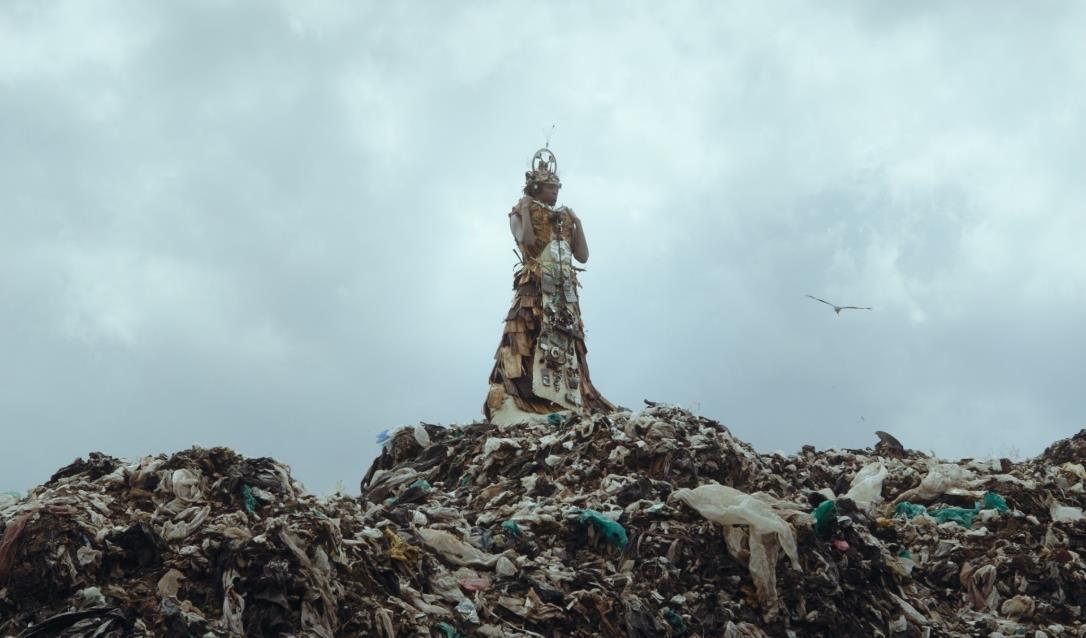
on the African continent scoured for its resources. Gahigiri’s film may not hang its message on a recognisable linear narrative, but, if anything, its experimental edge lends the story it is telling greater sophistication and undeniable power.
In its earliest moments, Terra Mater appears to take the form of a landscape film – static shots capture the undulating shapes of hills, valleys, and paths, but they
While the people working on the landfill begin to angrily rail against the lack of respect that they and their land are shown – “Leave! Leave!” – others, decked out in clothing augmented by technological waste look to a young woman, named in the credits as Earth Spirit (Cheryl Isheja), who seems to represent both a powerful deity and the chief mourner. In the film’s closing moments, the action shifts to an unknown jungle environment that may or may not represent a leap back through time to a juncture before the onset of hyper globalisation and the neocolonialist ravaging of the African continent in the clamour for ever smarter devices. We are warned that we “fail to understand that you cannot just harm someplace and think it is separate from you… it is not.” Gahigiri and her film are unequivocal about the need for swollen capitalist economies to take responsibility for their impact, and the message is forcefully delivered by a goddess standing proudly atop a landscape of ruin. Full Review
SHOWCASTS’ Matt Micucci deep dives into Italian film standing in the world and asks the Directorate General of Cinema and AudiovisualMinistry of Culture at Cinecittà, Roberto Stabile, “Has it lost its shine to not win an Oscar(s) any more?”


Roberto Stabile is the man behind ANICA’s renewed drive to revive and expand Italy’s international film markets.


A Berlin regular, French documentarian Claire Simon is back in the Forum section with her film 'Our Body', chronicling the everyday routines in a gynecological hospital.
The Film Verdict: You mention in the opening scene that the idea originated with your producer, Kristina Larsen. How did that happen?
Claire Simon: Yes, she approached me because she had seen and liked my film God’s Offices, which was about Planned Parenthood. She thought it was important to tell the story of this hospital that treats all gynecological issues, including gender transition.

TFV: I must say, at the press screening I attended, there were a few walkouts during the operation scenes…
CS: Why is it people have no problem watching people get brutally murdered on screen, but this is too much for them? Those scenes are important to me because I wanted to give a visual identity to concepts that we’ve heard mentioned, like endometriosis, but don’t really know what they entail. It was also fascinating for me to see something like artificial insemination, which basically takes the sex act and divides it into segments. Broadly speaking, I wanted to show all aspects of the female body.
TFV: How were the reactions at the premiere?
CS: Very good. Only one person walked out, and I was told that when the movie ended, two men
commented to each other “Well, that was tough to get through.”
TFV: Could they have been referring to the running time?
CS: I really don’t think so. I mean, the new Avatar is over three hours long, my film is 163 minutes. It’s shorter than most superhero movies.
TFV: How long was the shoot?
CS: Not that long, actually. I was there for six or seven weeks.
TFV: How did you decide which stories ended up in the finished film?
CS: The overall flow of the film sort of dictated that. Also, there was one doctor I had been shadowing, and those scenes just didn’t look as good as the rest of the material.
TFV: Was your own story always going to be part of it?
CS: Yes, it was, because I wanted to show the moment the doctor announces the diagnosis. They’re usually reluctant to have those moments filmed, because it’s bad news and there’s a voyeuristic aspect to it. Full Interview
– Max Borg