Berlinale & EFM Review Daily


Day 4, February 19, 2023
Photo Courtesy of Berlinale


ALL THE COLOURS OF THE WORLD ARE BETWEEN BLACK AND WHITE
VERDICT: Babatunde Apalowo's masterful international debut examines a real Nigerian life engaged in a denial of love and its pleasures.
VERDICT: Jesse Eisenberg and Adrien Brody co-star in Andrew Trengove's timely thriller about toxic masculinity and incel culture.
Stephen Dalton, February 18, 2023

Films about the darker extremes of toxic masculinity are nothing new, but this timely topic has gained wider traction in the era of Donald Trump, Andrew Tate, Jordan Peterson, and the growing global army of conservative culture warriors terrified by the modest gains of feminism and LGBT rights. South African director John Trengove’s second feature Manodrome explores these issues elliptically through the mental
unravelling of one man, Ralphie, played by Jesse Eisenberg, who is drawn into an underground incel cult at a time when he is feeling especially fragile both emotionally and financially.
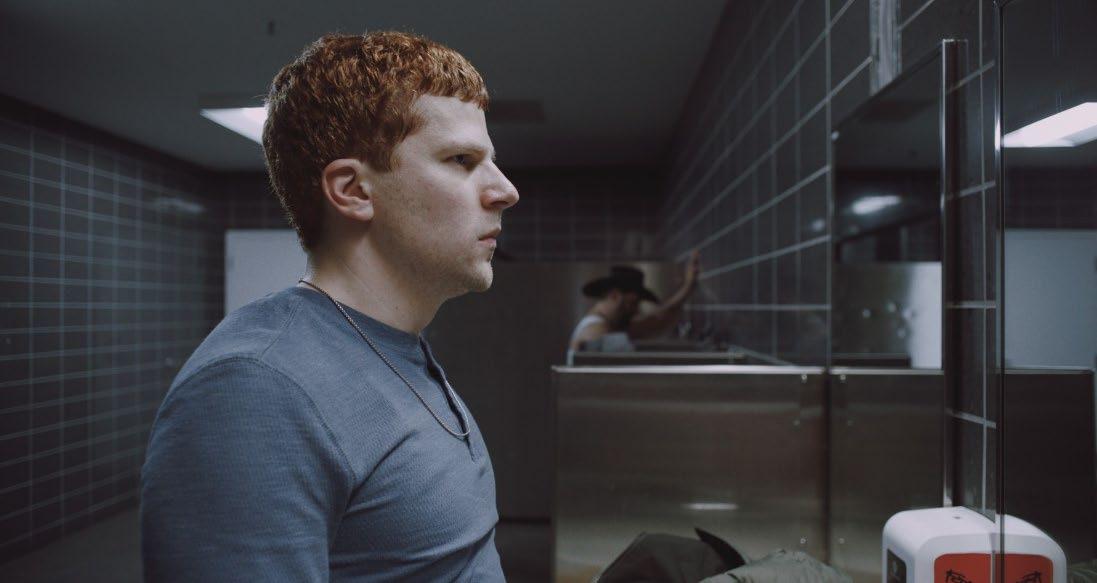
Premiering in the main competition section in Berlin, Manodrome feels in places like a contemporary take on classic studies of radicalised male loners like Fight Club (1999) or Taxi Driver (1976). Full Review
Oris Aigbokhaevbolo, February 18, 2023
Although only one type of rela�onship in Babatunde
Apalowo’s All the Colours of the World Are Between Black and White will get all of the aten�on, there are actually two romances in the film. The invariably spurned heterosexual one and the tenderly conveyed gay one. The man in the middle of both, Bambino (a strikingly competent Tope Tedela) isn’t exactly confused; rather he is caught up in the kind of affec�on he doesn’t want to feel.
Full Review
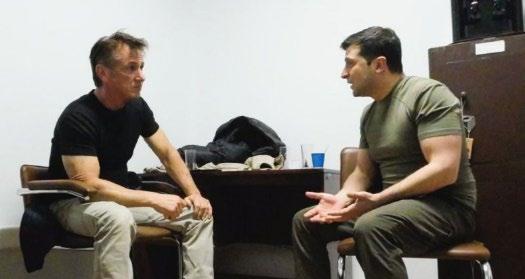
VERDICT: Actor and activist Sean Penn and Aaron Kaufman codirect a diary-like travelogue through war-torn Ukraine, highlighted by three brief interviews with Pres. Volodymyr Zelensky.
Deborah Young, February 18, 2023
The Russian invasion of Ukraine and the subsequent world-shaking war s�ll in progress is about to mark its first anniversary on February 24, right in the middle of the Berlin Film Fes�val. It comes as no surprise that the Berlinale, with its long history of cultural poli�cs rooted in Eastern Europe and the Cold War, should make Ukrainian cinema a focal point this year, and in this context the documentary Superpower, codirected by Sean Penn and Aaron Kaufman and screened as a Berlinale Special Gala, adds an outsider’s point of view on the country’s batle for freedom and independence But apart from audience members… Full Review
VERDICT: 'The Cemetery of Cinema' conveys an important point about Guinea's deplorable relationship with film archives, despite its director's theatricality.

Oris Aigbokhaevbolo, February 18, 2023
In one of the early scenes of The Cemetery of Cinema, Guinean director Thierno Souleymane Diallo, who is also the film’s main subject, spells out his goal, as he seeks maternal benediction. He wants to find a film made in 1953, during the French colonisation. The film’s title is Mouramani and its director is Mamadou Touré, about whom not much is known. Scholars of African film history may have heard about these 23 minutes, which has pioneer claims, but as with many pioneer tales, the film comes with several stories of its provenance.
Appropriately, the first speaker Diallo meets on the subject says
he doesn’t know the film. That ends quickly and our hero moves on. His quest takes him to Cinema Vox, where we see abandoned film equipment, ostensibly once functional in service of stories no one now knows. This is a quest on which young people can be of hardly any help, and so yet another old man explains what we are looking at.
There was indeed a cinema that had a fair bit of popularity for the populace but it was closed in 1995. Apparently, there was a stampede and a few deaths were recorded. Diallo unspools reels and attempts to guess what they at one point showed. Full Review
canning factory. The short film won a prize at the Sundance Festival and was nominated for a Goya Award; but its director wanted to tell the full story.
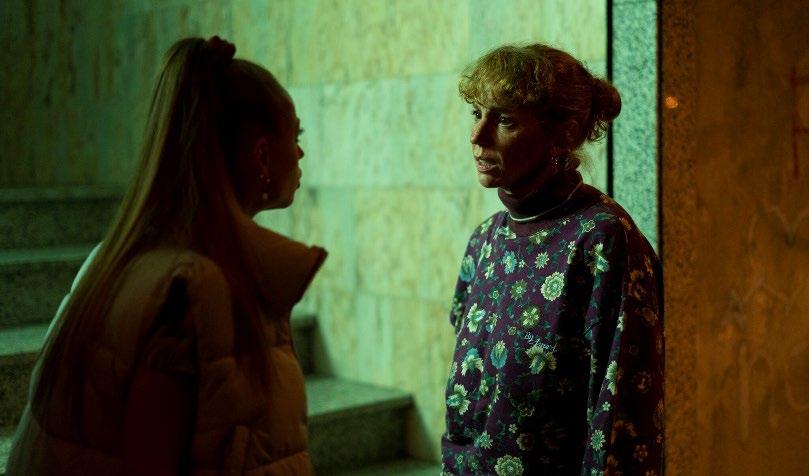
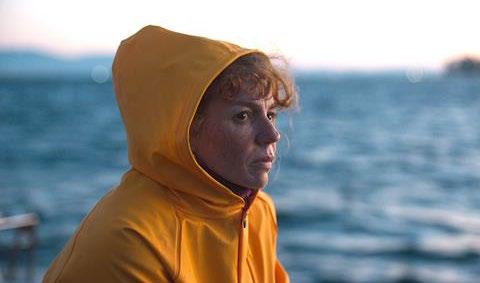
All over Spain it is said that Galicia is a matriarchy. The very idea is ridiculous if we contrast it to the story of Matria: the film’s protagonist, Ramona, has no power over her own life. In all of her relationships, whether with a partner, her daughter or her friends, the others are always at an advantage. Ramona takes care of all the housekeeping in her own home. She also has two very physically demanding jobs: doing the cleaning and looking after an elderly man, and working on a cannery (and later on a fishing boat). Who is dominating whom?
VERDICT: Álvaro Gago´s first feature is the moving and humorous portrait of a hardworking yet almost powerless woman, in which the myth of matriarchy in Galicia is debunked.
Jordan Mintzer, February 18, 2023
Before Matria was a fiction feature film, it was a short documentary by the same name that followed Francisca, the woman who looked after of director Álvaro Gago’s grandfather and who also worked in a
‘Matria’ is not some new feminist term; it has been used in ancient Greece, where they used to say, “Earth is the mother and matria is the emotional country.” For director Álvaro Gago, the naming of the film seems to be a criticism. The main character works very hard but has no time for feeling and expressing her emotions. There is also a political commentary in filming the story in Galician, a language banned during the Franco regime. Full Review
premiado en el Festival Sundance y nominado al Premio Goya; pero su director quería contar la historia completa.
En toda España se dice que en Galicia es un matriarcado. La sola idea es ridícula si la contrastamos con la historia de Matria: la protagonista Ramona no tiene poder alguno ni siquiera sobre su propia vida. En todas sus relaciones -pareja, hija, amigos- los otros son los que tienen ventajas. Ramona trabaja en las labores domésticas y además tiene dos trabajos con mucha exigencia física: limpiar y cuidar a un anciano además de trabajar en un barco pesquero ¿Quién domina a quién?
CINEVERDICT: Álvaro Gago hace con su ópera prima el retrato de una mujer conmovedor y lleno de humor que es contrario a la idea del matriarcado en Galicia.
Lucy Virgen, February 18, 2023
Antes que Matria fuera un largometraje de ficción fue un corto documental que seguía a Francisca, la mujer que cuidó al abuelo del director Álvaro Gago y además trabajaba en una fábrica de conservas. Fue
Matria, no es un término feminista y ha sido usado desde la antigua Grecia cuando decían “la tierra es la madre y la matria es el país emocional”. Para el director Álvaro Gago parece ser una crítica llamar así a su película que trata de una mujer que trabaja duro y no tiene tiempo para sus emociones. El comentario político se complementa al filmar la película en gallego, un idioma prohibido durante el Franquismo. La narrativa de Matria es circular. Full Review

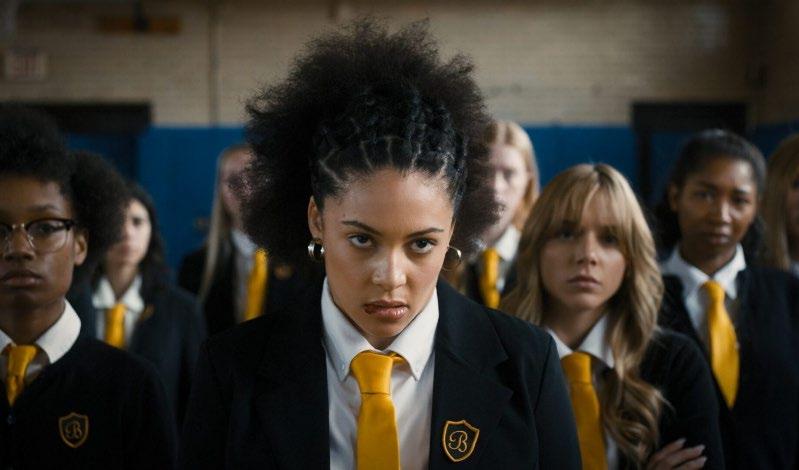
VERDICT: Cult director Jennifer Reeder's hallucinatory high-school horror thriller puts a queer feminist spin on teen slasher conventions.
Stephen Dalton, February 18, 2023
There are vast amounts of blood in Jennifer Reeder’s Perpetrator, a high-school horror yarn that both celebrates and deconstructs pulpy genre tropes. Apart from dealing with blood-filled birthday cakes, gushing menstrual fountains and constant nosebleeds, the heroine also keeps plunging through gloopy red puddles into a vast underground bloodbath. What does it all mean? Hard to say, but this refreshingly bizarre queering of slasher conventions adds up to an ambitious, darkly comic, visually arresting curio. Following its world premiere in Berlin this week, Reeder’s mind-bending journey through the looking glass is heading to AMC’s horror streaming service Shudder, her second feature for the platform after Night’s End (2022).
Reeder has called Perpetrator her most straightahead genre project to date after previous “genreadjacent” work like Knives and Skin (2019), which also premiered at the Berlinale to positive reviews. The Chicago-based director, screenwriter and visual artist certainly plays with the grammar of horror –masked stalkers, vulnerable young female victims, hints of vampiric bloodlust and supernatural powers. But anyone expecting jump scares, final girls and gory excess may leave befuddled. Reeder mostly subverts and interrogates these familiar plot mechanics, upturning gendered cliches by centering kick-ass female characters with their own agency, often queer women of colour fighting back against the male gaze and ritualised predator/prey roles.
Full Review
VERDICT: Ilker Çatak's latest features a great performance from German actress Leonie Benesch (The Crown) in a solid drama about trying to stand upright in a world of changing mores. Boyd van Hoeij, February 18, 2023
In the third feature from Berlin-born director Ilker Çatak, The Teachers’ Lounge (Das Lehrerzimmer), a young female teacher tries to navigate the tricky waters of a school with prepubescent kids who live in a society that’s woke or at least woker and where they cannot be forced to do certain things, be told certain things or be treated in a certain ways that were still normal when the teacher herself was a pupil just over a decade ago. What makes Carla, the protagonist played by the excellent Leonie Benesch (Babylon Berlin, The Crown), so fascinating, is that she’s trying to do the right thing at each and every turn, but her desire to be just and good isn’t necessarily rewarded with the outcomes she would like. It’s a sobering watch for people who have or work with children, though most will be able to relate to Carla’s struggle to stay upright in a society that doesn’t seem to reward good behaviour. The Teachers’ Lounge premiered in Berlin in the Panorama strand.
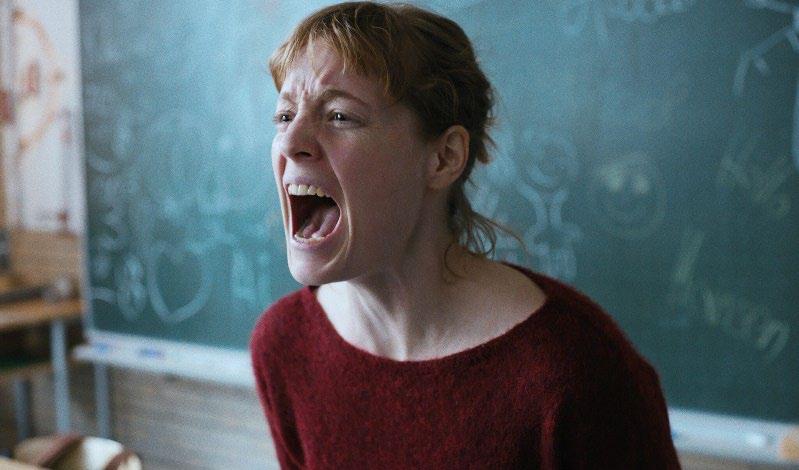
Carla (Benesch) has only just started at a new school, where she works as a physical education and mathematics teacher. She seems to be doing alright in the early going, though it’s never easy trying to keep a class of 12-year-olds quiet, let alone actually teach them something. But relatively soon, regular routines are upended by a series of thefts on the school premises, which leads to a series of accusations, not all of which are accurate, and…
Full Review

For the first time, the Berlin’s TV series is hosting a competition.
Havingpreviously showcased select episodes of television shows (House of Cards) or entire series (the first season of Top of the Lake) in the Berlinale Special section, beginning in 2015 the festival decided to give TV programming a proper home. The result was the Berlinale Series sidebar. A suitably grand affair, it boasted the first two episodes of AMC and Netflix’s Better Call Saul to kick off proceedings, as well as other important titles like Sky Italy’s 1992, the first installment in a three-season arc recounting the events that led up to Silvio Berlusconi’s political ascendancy.
In 2023, the ever-expanding sidebar is embracing another change as the section goes competitive. For the first time, a jury – consisting of Danish showrunner Mette Heeno, Israeli producer Danna Stern and American actor André Holland – will evaluate the seven series vying for the brand-new Berlinale Series Award, presented in partnership with Deadline. The winner will be announced on February 22. An eighth show will be presented out of competition to inaugurate the program on February 19: The Swarm, a co-production between Germany and Belgium, based on Frank Schätzing’s 2004 bestseller about nature taking its revenge on humankind.
The competition line-up boasts an eclectic mix of titles conceived for linear TV (like Agent, broadcast by Den- mark’s TV2) and streaming (The Good Mothers, an Italy/ UK production for Disney+ and Spy/Master, a Romanian HBO Max release). In addition to the aforementioned countries, the program draws from the latest creative trends in Australia (Bad Behaviour),
India (Roar), China (Why Try to Change Me Now) and Norway (The Architect), which begs the question: why introduce a competition for the TV strand?

Section head Julia Fidel replies: “The Berlinale was the first Category A festival to establish a series selection, and now, nine years later, it is the first one to establish an award dedicated to serial storytelling. Firstly, it is all about appreciation of this artform and giving an extra spotlight to this with an award. Of course, with a competition you also raise the stakes and give more attention to a program.” Indeed, Berlin is unique among the major European festivals in that it has a whole section dedicated to television, whereas Cannes and Venice will typically only showcase small-screen work by established filmmakers (Paolo Sorrentino, David Lynch, Jane Campion, etc.)
But does it make sense for a film festival (the clue is in the name) to have a sidebar for TV projects, some might wonder? Fidel has no doubts about it: “After nine years of Berlinale Series, Series Market and CoPro Series, that is not really a question we would ask ourselves. The Series programs fit organically within the overall festival structure and complement each other constantly. When you look at the festival titles of the past years, you see how directors, producers, screenwriters, actors - all creatives - move between feature and serial storytelling as it befits each individual project. With more variety in storytelling, we should have more variety of celebrating its excellence at the Berlinale, don’t you think?”
– Max Borg
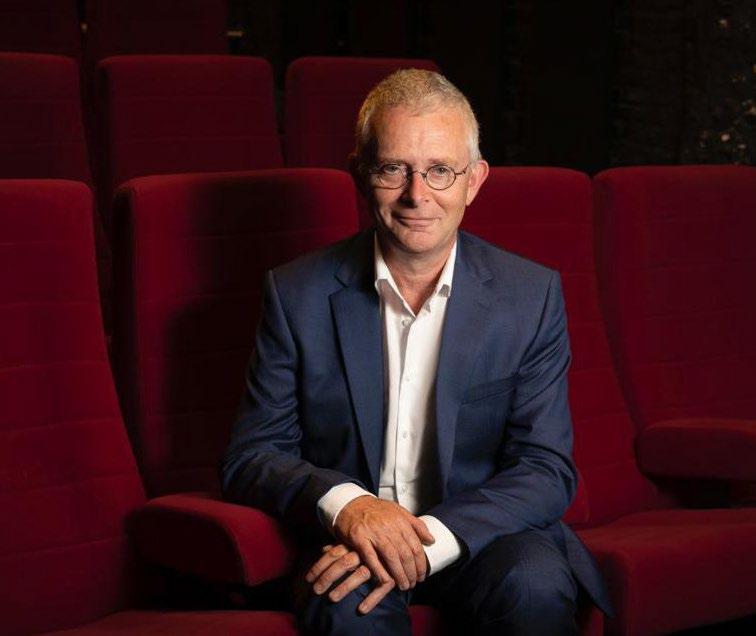
Koen Van Bockstal (1961) is a historian of Ghent University by training. After a short period as a history and aesthetics teacher in secondary education and freelance journalist at De Morgen, he worked for over 18 years in the music industry as CEO (including at MCA Music Entertainment, Sony Music Entertainment and SONY BMG). After a short visit as business manager at the Ghent Film Festival, he started working as managing director at Oxfam Wereldwinkels and Oxfam Fairtrade. He recently led Literatuur Vlaanderen, the sister fund of the VAF, which focuses on supporting the literary world, for 8 ½ years. After a short period as director of UNICEF Belgium, he started working as directorintendent at the Flemish Audiovisual Fund in January 2021.
TFV: The Flanders Audiovisual Fund (VAF) is proof that you don’t have to be a very large coun-try or organization to support successful films. Most notably the recent film Close has gained worldwide attention. What is your secret to drawing so much attention to the films and filmmakers in the region?
KOEN: Obviously everything starts with the talent of the creative community. And Flanders, despite its modest size and population, has an amazing pool of talented script writers, directors and independent producers. At VAF we have always believed that you need to promote that talent and their films from the early stages in the creative process until they go public and onto worldwide screens. Through Flanders Image we have a very strong presence and build a big network we cherish, to become and remain ambassadors of our films and filmmakers.
TFV: How do you work with the filmmakers in the overall process to bring award winning awareness to your films?
KOEN: VAF is much more than just an agency of the Flemish Government where you can get the initial financing for your project. We accompany filmmakers through all the different stages of the process. We offer a wide program of talent development trainings, we give a lot of attention and individual coaching to script writers, and the same applies for the development of projects and the production phase. We invest in pitching sessions to teach our creatives how to present themselves internationally, and through Flanders Image we also help to introduce them to potential co-producers, broadcasters and streamers, festival curators, sales agents and distributors. Last but not least, we also actively promote them through trade press and our presence at festival markets worldwide. As much as we can manage with our small team we go for a personalized and tailormade
approach, fit for each genre and individual project. It takes a lot of work and detailed attention, but that’s what makes the difference for a small region that doesn’t have the same financial resources as bigger countries. And our annual CONNEXT event, whereby we invite professionals from across the globe for 2 days to Flanders to get a real introduction on everything new or work in progress, is very valuable.
TFV: Many people don’t fully understand the true value of a national film fund. What do you say when people ask you what you do? And what would you say is the greatest value?
KOEN: The true value of a national film fund lies in the fact that making or earning money is not our initial goal. We are ambassadors of an art form and want to reach the biggest possible audience, both in our own country and internationally (taking into account the real potential of each project and genre). We see ourselves as a facilitator and catalyst to make sure that our original, unique and authentic stories coming from independent production companies get attention worldwide. That doesn’t mean we stay away from the economical agenda. On the contrary, we play an important role to sustain the independent production companies in an ever increasing global world by helping to create a healthy eco-culture for them locally. We defend Flemish and European cinema in order to maintain our voice and history, and we embrace cultural differences. Last but not least, film funds have a responsibility towards society: they need to show the way in terms of sustainability. We need to address and stimulate best practices in terms of “green and sustainable” filming; we need to actively advocate and embrace inclusion and gender
equality; we have to deal with unacceptable behavior on film sets and work with other partners on a fair play and fair pay system in the film community. Obviously, there is a lot of responsibility for the producers to reach all these goals, but we as a not-for-profit agency see it as our task to be at the stimulating forefront of all these important challenges.
TFV: The film industry continues to grow and globalize in its reach. It not only drives revenue for film makers, but for cities, regions and countries. How do you measure that impact?
KOEN: It is becoming an increasingly important factor why investing in the film industry and creating a healthy and welcoming environment is a smart thing to do. VAF has also been asked by our government to manage the day to day operations of Screen Flanders, an economical fund targeting international co-production in our region. We see that
this definitely delivers a nice and increasing leverage effect for investments in Flemish cities and film industry supply companies. And it stimulates those companies to continue investing in excellent facilities and offering topnotch post production services.

TFV: This year the film Close joins the other seven Belgian films that have been nominated for Oscars. Naturally, I am sure you support your own film at the Academy, but as there are so many international films participating this year, what and why do you think more and more international films are reaching the Academy Awards in various categories than ever before?
KOEN: Because of the pandemic and the ever increasing presence of streamers, also the USA and the film producing community have become more and more aware of the whole creative world outside of the USA. And international audiences (including USA) have discovered and developed a healthy interest
and curiosity in films and tv- series not coming from their own territory. Obviously, successes like Nordic Noir, La Casa de Papel, Squid Game and also some of our own Flemish high end tv-shows like The Twelve,Tabula Rasa,Two Summers or films like Girl, Broken Circle Breakdown or Bullhead have generated this interest for another type of movie and series than US blockbusters or series.
TFV: Can you explain how your budget is determined and how the fund’s success is measured by the government who controls and submits your budget to the film Commission annually? And is that on par with other European Film Commissions?
KOEN: We negotiate a service level agreement with the Flemish Government (Ministry of Culture and Media).That SLA determines our vision and mission, stipulates our main objectives and KPI’s we need to accomplish and gives us a financial outline how and where to spend the money. We are governed by a board of 11 directors, 7 of them are appointed by the political parties and 4 of them are independent, with a proven track record in the industry. Also, within the 7 politically nominated directors, political parties look for representatives with knowledge on the audiovisual industry. We have 2 government commissioners present at all board meetings, without voting rights, but controlling whether we respect the general outlines of our SLA. And we have an annual hearing in Flemish Parliament at the Commission of Culture and Media where we present the results of the previous year.
Although this looks like a heavy involvement from politics, in reality this should definitely not be exaggerated. We have an excellent understanding and constant dialogue with our ministries, there is a high level of trust in our knowhow and expertise. Full Interview


Acquisition begins with a TFV Review
Midwives
Il Boemo
VERDICT: Snow Hnin Ei Hlaing’s first featurelength documentary offers a mellow and intimate portrait of two midwives – one a Buddhist, the other Muslim – who defy the deadly inter-communal conflict around them to become friends and health care providers for their poverty-stricken communities.

5:10 Virtual Cinema 3
Pyramide International
Mother Valley (France TV Distribution)
15:00 CinemaxX 2
Mutt
(Best Friends Forever)
15:00 dffb Cinema

Luise (Pyramide International)
16:10 CinemaxX 11
Polarized (APL Film)
16:45 Virtual Cinema 9
VERDICT: The life and loves of 18th century Czech opera composer Josef Myslivecek, and his dazzling Italian career and fall into obscurity, are lovingly and authentically re-constructed in Petr Vaclav’s sumptuous peri-od production.

09:30 Virtual Cinema 14 Loco Films
Princess
VERDICT: rare fictionalized look at a Nigerian sex worker in Italy that celebrates its subject, flaws and all, with a spirited central performance and a laudable sensitivity des -tined to find welcoming arms worldwide.
14:15 Arsenal Cinema 2
Acquisition begins with a TFV Review
VERDICT: Philippine auteur Lav Diaz offers a damning and doomed critique of the violent state of his country through the on-screen physical and psychological disintegration of a policeman weighed down by the guilt of his officially-sanctioned murderous past.
16:30 Virtual Cinema 16 Films Boutique

What a Life! (Fandango)
09:00 CinemaxX 8
Amanda (Charades)
09:15 Virtual Cinema 12
(New Europe Film Sales) 10:00
CinemaxX 10
Lost Angeles (TVCO)
VERDICT: Award-winning documentary director Nikolaus Geyrhalter’s latest exquisitely composed opus looks at the global garbage crisis, from Maldive palm groves strewn with plastic to festering landfills, encompassing community rubbish collections and recycling plants in a cinema-essay style whose noninterventionist approach caters to audiences already committed to the cause.
10:50 CinemaxX 16
Autlook Filmsales

Cowboy Poets
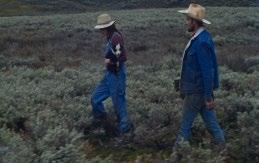
VERDICT: Mike Day’s gently ambling documentary offers a fragmentary look at the unique tradition of cowboy poetry.
9:05 dffb Cinema
Cinephil For Complete Screening Guide, click here
15:00 CinemaxX 13