Berlinale & EFM Review Daily


Day 10, February 25, 2023
Credit:
Daan, MILC Community Member

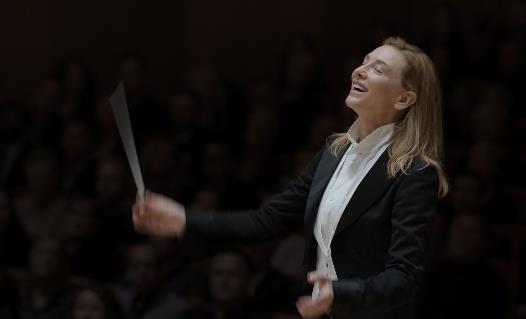
VERDICT: Todd Field's 'Tár' supplement provides compelling extra notes to his masterfully composed film.
Kevin Jagernauth, February 24, 2023
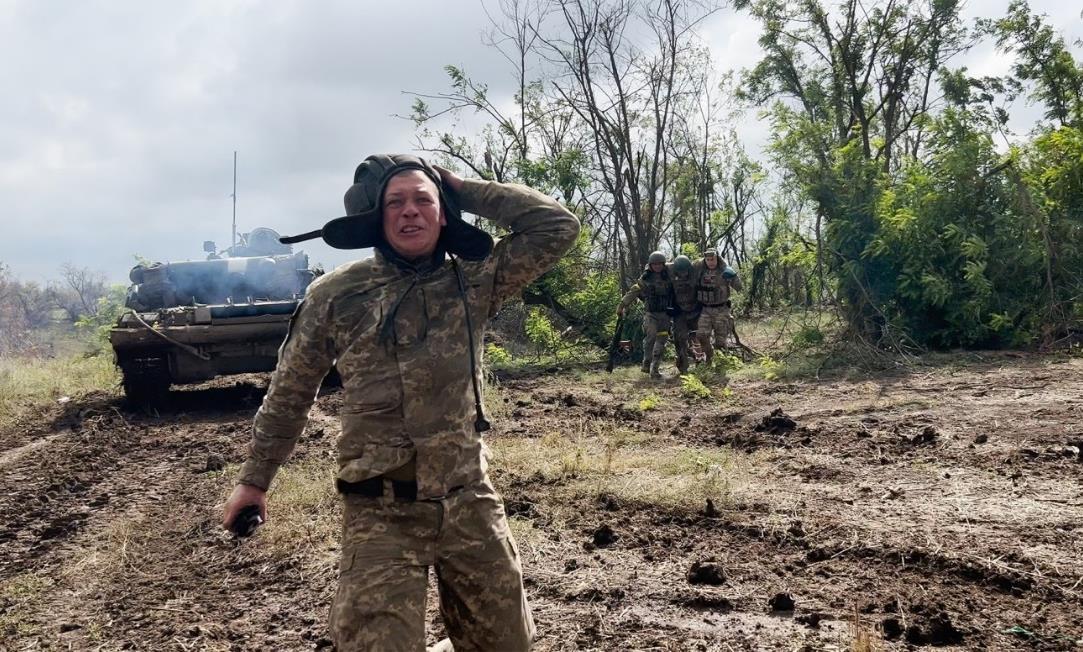
VERDICT: Mostly filmed in the Ukraine war zone by brave battlefield paramedics, this raw and immersive reportage documentary feels like an urgent first draft of history.
Stephen Dalton, February 24, 2023

The war in Ukraine has been a spotlight theme at the Berlinale over the last 10 days, featuring in various films, none more remarkable than this rough-edged reportage documentary. A closeup bulletin from the heart of the conflict which feels at times like a real-time video diary, Eastern Front has been purposely scheduled to world premiere on the anniversary of Putin’s barbaric
invasion. It marks a fruitful collaboration between two Ukrainian directors, prize-winning festival veteran Vitaly Mansky and Yevhen Titarenko, a young frontline film-maker and member of the “Hospitallers” volunteer medical battalion, who is now on full-time active duty in the war. As a work of cinema, this impressionistic patchwork inevitably feels a little bumpy.
Full Review
The Tár-niverse expands with the short The Fundraiser, presented as a surprise at Berlinale Talents and which, at the moment, director Todd Field insists will never be seen again. And while this new dip into the mind of Lydia Tár isn’t essential, it’s nonetheless utterly fascinating.
Framed by Field as something designed to further explore the character of Lydia Tár during the creative process, but never intended for the finished film, the sequence was shot only because there was space in the production schedule. Full Review
VERDICT: From early days in Boston to the height of her stardom and sudden crash, this affectionate documentary made with major family involvement doesn’t probe deep enough or contextualize her career, but it reminds us that Donna Summer was a terrific performer whose talents were minimized by the moniker “Queen of Disco.”


Jay Weissberg, February 24, 2023
The best thing about watching Love to Love You, Donna Summer, is how it reminds us of just what a terrific performer she was. Summer didn’t simply sing, she was a storyteller, not only with her songs but with her whole stage sets, also creating concept albums long before they were a common part of the recording industry. HBO’s documentary, directed by Roger Ross Williams (Music by Prudence) and Summer’s daughter Brooklyn Sudano, Full Review
VERDICT: Love is only slightly warmer than death in Christoph Hochhäusler's uneven, genre-blending, gender-bending crime thriller. Stephen Dalton, Jay Weissberg, February 24, 2023
A noir-tinged crime thriller disguised as a tempestuous queer love story, or maybe the other way around, Till the End of the Night closes the competition section of Berlin film festival with its world premiere today, one of three home-grown productions in the running for a Golden Bear. Once bracketed with the so-called “Berlin school” of younger filmmakers who first injected edgy contemporary swagger into German cinema in the Nineties, director Christoph Hochhäusler fashions a stylish, sensitively handled yarn from material that could have been sensational in other hands. All the same, his sixth feature feels less engaging than it should be, devoting too much of its baggy two-hour
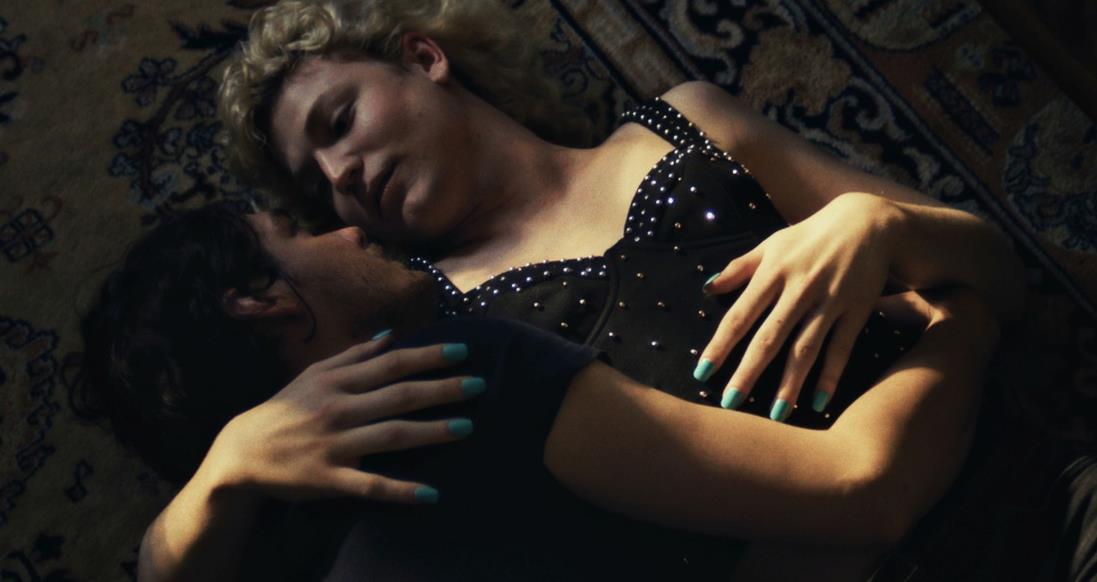
runtime to generic thriller mechanics and too little to the combustible emotional chemistry between his two damaged protagonists. A modish transthemed storyline should boost its visibility beyond festival bookings and domestic release plans, but this is a fairly frictionless and oddly passionless exercise in middlebrow melodrama.
Till the End of the Night opens with a homecoming celebration. A gay detective with a boozy, druggy, bohemian lifestyle, Robert Demant (Timocin Ziegler) is throwing a welcome party at his Frankfurt apartment for his trans lover Leni Malinowski (Thea Ehre), who has just been released early from a jail sentence for drug offences. Full Review
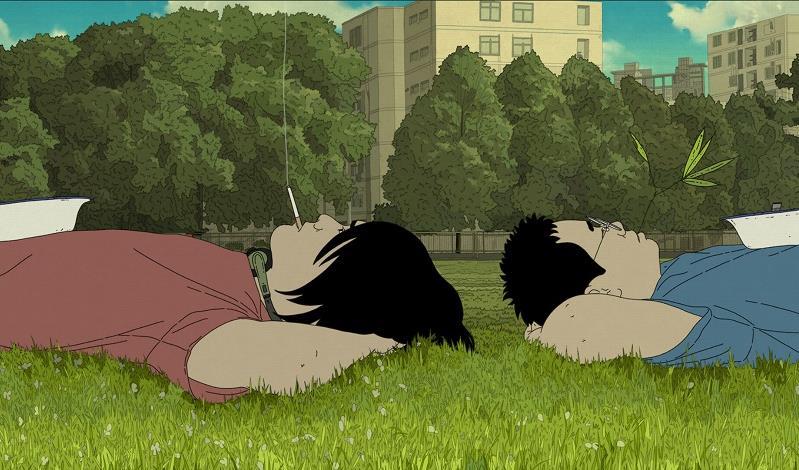
VERDICT: Painter-filmmaker Liu Jian’s third animated feature (his second in Berlin competition) lacks the bite to capture the painful realities faced by Chinese art school students as their country opened up to the West and capitalist ideals.
Clarence Tsui, February 24, 2023
When painter-turned-director Liu Jian’s Have A Nice Day bowed in competition at the Berlinale in 2017, it was seen as the dawn of a new era for Chinese animation movies, which up until then had been dominated by family-friendly entertainment. The film’s jet-black humour, fatalist narrative and vividly realist images have led to much anticipation about what beckons onwards for Liu and his peers. With his latest film, however, that distant moment of hope seemed to have sadly passed.
A snapshot of how a group of young painters and musicians contend with the uncertainty posed by their country’s lurch towards the West and the freemarket dogma it entailed, Art College 1994 veers away from the bigger picture and instead zeroes in on the trifling emotional convulsions of a very small coterie of stock characters. Offering middlebrow melodrama that lacks the irreverent bite of yore, Liu’s third feature resembles a more animated version of the youthful rite-of-passage dramas which have been four-a-penny in mainstream mainland Chinese cinema.
Beyond the odd exchange about art and its value in such turbulent times, the film pivots quickly towards the apolitical loves and lives of its young characters. Not that these sentiments don’t exist – and many an aspiring artist has no doubt experienced such confusion in their youth – but the critical historical juncture on which the film was set is simply too important to be ignored. Full Review
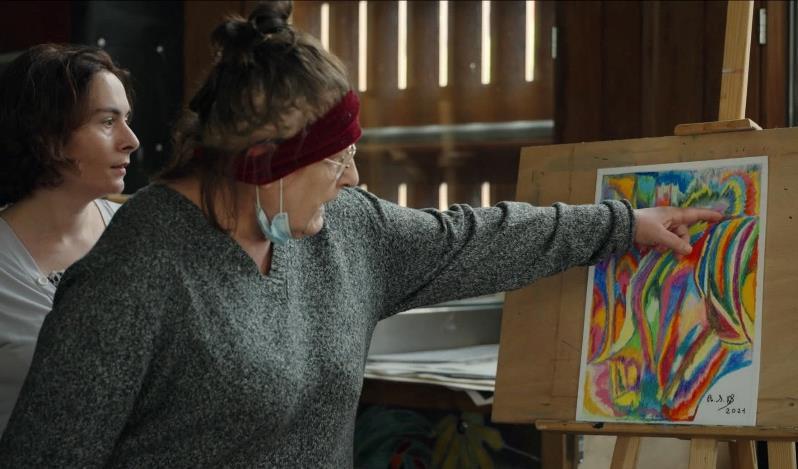
VERDICT: French documentarian Nicolas Philibert’s latest feature, competing in Berlin, gives voice to the patients in a psychiatric day care centre floating on the Seine.
Clarence Tsui, February 24, 2023
Moored on the right bank of the Seine, The Adamant is a day centre catering to the needs of people with mental disorders from the four central arrondissements of Paris. Resembling a hip riverside restaurant more than a psychiatric hospital, the floating wooden edifice was completed in 2019 after consultations between its designers and its therapeutic staff and, most importantly, its patients –a gesture that mirrors its approach in removing the usual border wall between caregivers and the caredfor.
This unorthodox, democratic vibe is central to On the Adamant, in which French documentarian Nicolas Philibert delivers incisive observations and intense interviews aplenty about this outlier of a psychiatric centre. Bowing in competition at the Berlin Film Festival, it is similar in its premise (and its subject) to Every Little Thing, Philibert’s 1996 documentary about a similarly unconventional psychiatric centre in provincial France.

The circumstances of these two films are, of course, very different. The La Borde clinic in the film from 25 years ago is more like a laid-back rural hermitage compared to the bustling vibe on board The Adamant. But what remains the same is Philibert’s knack for establishing a rapport with his subjects (a term he’d probably disagree with), and his ability to conjure powerful and insightful observations about a convention-defying, emancipatory institution.
Just like in Every Little Thing, On the Adamant sets out its stall by Full Review
months under lockdown and the ever-closer presence of the Angel of Death. It’s barely addressed now, and yet how many of us, in moments of openness, admit to depression, difficulties in concentration, pessimism?
Cinema strangely has been largely complicit in this silence: it’s not woke or fashionable at a time when self-identity triumphs over shared community. Stefano
VERDICT: An outstanding, deeply moving documentary that finally addresses the pandemic not simply as a record of a tragedy but a collective trauma needing to be processed as a community. Jay Weissberg, February 24, 2023
How is it possible we’re already pretending to have moved on from the effects of the pandemic? Not exterior elements like mask
wearing, hand sanitizing and the like, although they’re scarcer than snow in the Alps these days, but the psychological impact of
Savona’s outstanding The Walls of Bergamo is a welcome exception, not simply by addressing the pandemic’s devastating toll in Italy’s hardest-hit province, but because it movingly records the human cost with such profound empathy.
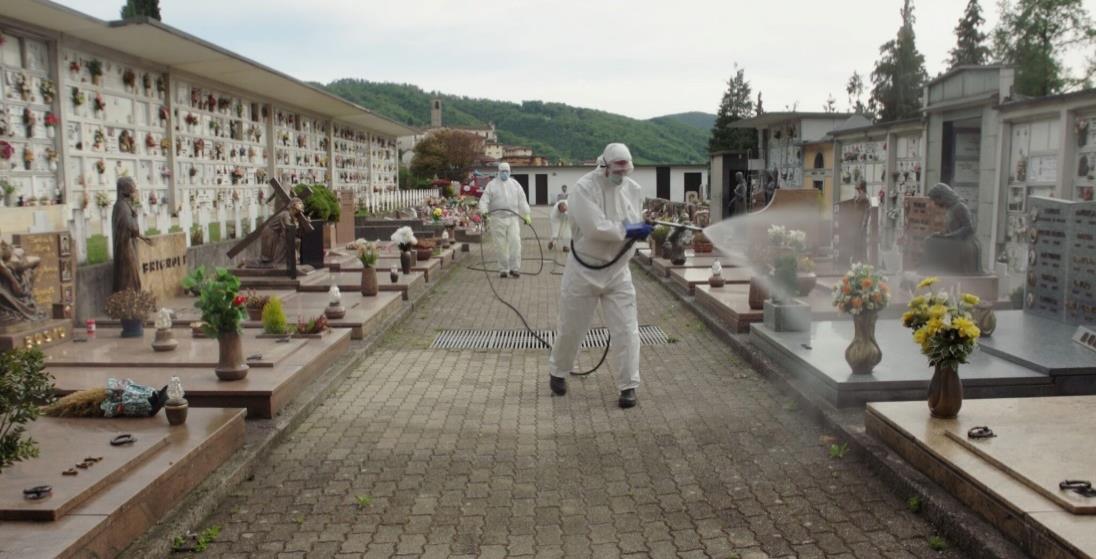
All of Italy looked on with uncomprehending horror during the early days of COVID at the situation in Bergamo, a beautiful Renaissance city of… Full Review

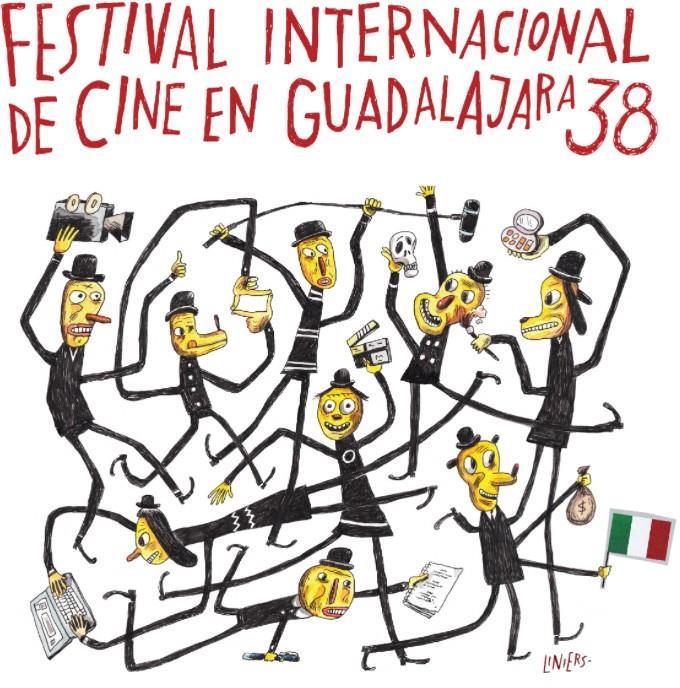
LAUNCHES WORLD TOUR 2023 IN GUADALAJARA
fter years of what can be perceived as an Italian crisis of its films performing internationally, it appears that the crisis is ending and Italian films are on the uptick again, along with coproductions that have been rising after a dip caused by the pandemic.
According to ANICA, the Italian association of film industries, 118 Italian films were distributed in the international markets in 2021, up from 98 in each of the previous two
years, and 72 in 2018. Similarly, the volume of coproductions has soared from 14 million euros in 2019 to 60 million euros in 2021. Italy is de- termined to recreate the golden era of coproductions and the era when Italian films dominated the market, second only to Hollywood. And they are determined to do even better this time around.
“Every day we had international meetings with other countries [at
Berlin],” Roberto Stabile, the man in charge of the Special Projects Office of the Directorate General of Cinema at Cinecittà told The Film Verdict’s own Matt Micucci in an interview on TFV’s Showcast. Stabile took on the title of Head of ANICA’s international relations last year, but he had already been working relentlessly toward a new golden era – something that has con- tributed greatly to the current positive trends. In its first year of activity, the Special Projects Office organized a series of multi-faceted events around the world with the main objective of boosting the distribution of Italian movies abroad in established markets, and opening new markets in places like India and China where Italian films aren’t historically as well-known as they are in Europe or North America. To attract foreign distributors, the Italian government is luring them with a 30% coverage of the cost of promotion and advertisement (P&A) when they buy an Italian product.
The office has also been very busy promoting new international coproductions with both old and new partners, and equally as import- ant, promoting the Italian territory as a cost-effective and
attractive attractive set for foreign productions – a set that doesn’t just come with unmatched expertise, historic lure, and good food and wine, but also with some very handsome government funds and tax credits.
The Italian Pavilion at the European Film Market is just one of the many such pavilions that Stabile’s office has been organizing across the globe with many inperson events for those attending the market, and an on- line version (www.italianpavilion. it) for those who are not. Similar events were organized last year at the Marché du Film in Cannes; at theVenice Film Festival; at the Sunny Side of the Doc documen- tary marketplace in La Rochelle, France; and at the Bogotá Audiovisual Market, to name a few.
Then there are the Focus On events, where the focus can be on coproductions, distribution, or both. Focus On France was clearly important in 2022 as the two countries have a long history of legendary coproductions that were very successful in their respective countries as well as

international markets (mostly western), but which in recent years have decreased somewhat. The meetings in Paris last September produced five negotiations that are ongoing.
The Italians and the French also discussed common strategies in support of distribution and theatricals – something for which the industry workers in both countries feel there is a strong need in face of the unexpectedly fast advent of the digital as one of the consequences of the pandemic and the lockdowns. Regarding the digital, Stabile organized a meeting two years ago in Matera which he hopes to turn into some sort of Davos of the digital world, where top thinkers gather to discuss and understand the trends and draw up solutions so as not to get caught unprepared by a fast- evolving sector that caught everyone by surprise with its exponential growth during the pandemic. He is working to hold a second edition with experts from the United States, France, and Italy, and perhaps others too.
Full interview, click here
– Caren Davidkhianan
actually sisters, this is a beautifully depicted portrait of deep sisterly love.
VERDICT: Two young women travel to a remote cottage so one of them can administer a chemical abortion in this languorous vignette of rebirth and sororal care.
Ben Nicholson, February 24, 2023
The nature of the relationship between the two women in Rafaela Camelo and Emanuel Lavor’s The Beads is initially unclear. Although a snatch of a phone conversation towards the film’s end suggests that they might be sisters, it remains somewhat ambiguous and – to some extent – superfluous. What matters is the deep and abiding intimacy and affection between the nameless duo (played by Tícia Ferraz and Pâmela Germano) as one supports and comforts the other as she goes through a selfadministered abortion in an isolated house somewhere in rural Brazil. Whether or not they are
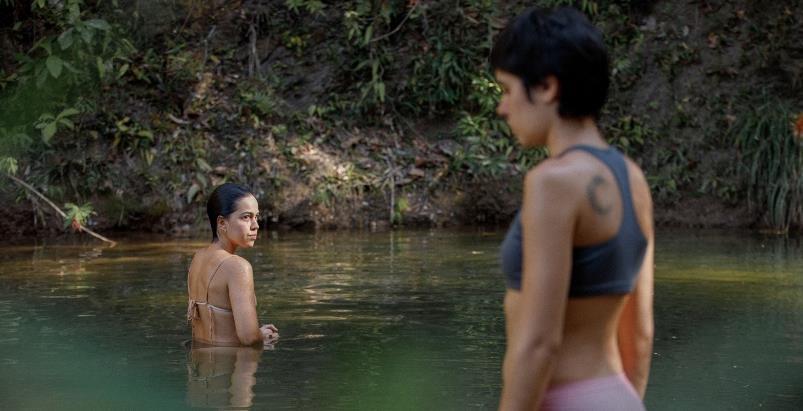
While its atmosphere is largely a languid one – even the most distressing moments are handled with a quiet, subtle elegance and economy of storytelling –the whole of The Beads is shot through with an underlying discordance that repeatedly places the viewer on edge. When the protagonists arrive at the property they will be staying in, there is a shocking audio transition of a piercing scream that transpires to be from a subsequent water fight. When they partake in some wild bathing in a shady pool, one of the women is unnerved by a cleft in the overhanging rock, as if something is watching them from the dark. In the house itself, a large snake seems to have made itself at home, often slithering past unseen, edging ever closer, perhaps indicating some kind of invasion.
Exactly what the snake is supposed to represent is left disarmingly ambiguous. It feels predatory in certain moments, and there is a widespread folk belief in Brazil that snakes do not like pregnant women. Ultimately, though, the snake may be symbolic of healing or of renewal and regeneration. While its subject matter may be challenging, somewhat like Eliza Hittman’s Never Rarely
Sometimes Always, The Beads foregrounds a female relationship within that premise. As much as being a low-key drama about abortion, it is about the supportive and uplifting power and potential of sororal care.
Full Review