A monthly update covering people, events, research, and key developments
Editor’s Note:
Regardless of what Punxsutawny Phil tells us, summer is on the horizon. That may be hard to believe for those of us who have lived through freak snow storms and bitter cold weather in the last 45 days, but what it really means is that it is time to think about what summer program you want to attend this year. You'll find an overview of all the programs we were able to locate listed in this month's issue. If you have a program that was not included in this list, please email us at info@epimonitor.net and we will try to profile it in the next issue.
In addition to that we have a piece on fluoride, one on communications and its impact on vaccine decisions, and one on finding the right public health practicum for your specific situation. A last minute addition is a piece about open dialogue and how two respected professionals handled a discussion last summer and walked away having learned from each other and understanding how much of what they were experiencing was similar regardless of how different their views were on the issue in question.
FREE BOOKS
A few years ago, our founder was downsizing and didn't want to throw away a library that represented decades of accumulation. To avoid that, we listed them in the hopes that there were others who could use them. The response was overwhelming. This month we have another multidecade collection listed - all the donor has requested is that the recipient pay a minimal shipping and handling fee for each book. Do you have an over stuffed bookshelf? Let us know and we'll try to help you place those tomes with someone who could use them.
We are starting to hear from many of you with articles that you'd like us to consider publishing. We are always interested in your offerings and are finding your peers are really enjoying them. Please also consider nominating people for our profile series, writing a review of a book, or letting us know about individuals whose accomplishment should be added to our monthly Notes on People feature.
As always, we continue to provide you with our popular monthly word game feature, Notes on People, an overview of what we are reading from the public media, and a listing of near term upcoming events. Ask us about the sponsorship opportunities for these standard monthly featuresit offers you great exposure for your event, institution, book or other item of interest to our readers!
Until next month - stay safe and busy!
What if Fluoride Was Never Safe?
The Bitter Truth About Fluoridation
Author: Bruce Lanphear, MD, MPH
NOTE: This article was originally published on October 28, 2025 by Plagues, Pollution & Poverty on Substack.
Behind the tidy narrative lies a more complicated story—one that involves corporate influence, incomplete data, and an assumption of safety that may have blinded us to risk.
The Birth of a Chemical Cure
A Public Health Triumph—or a Cautionary Tale?
For decades, the story of fluoridation has been told as a triumph of modern science—a simple, inexpensive way to prevent tooth decay. In 1999, the U.S. Centers for Disease Control and Prevention listed community water fluoridation among the “Ten Great Public Health Achievements of the 20th Century.”
But every triumph deserves re-examination.
The practice began with H. Trendley Dean, a dentist with the U.S. Public Health Service. In the 1930s and 40s, Dean examined more than 7,000 children in 21 towns across the American West, where natural fluoride levels in drinking water varied widely. He discovered that levels up to one part per million of fluoride reduced tooth decay, while higher levels produced mottled or stained enamel a condition he called dental fluorosis. It looked like a manageable trade-off: fewer cavities in exchange for a few white spots. And in mid-century America, when tooth decay was rampant, that sounded like progress.
Dean’s findings were published in 1942, and soon fluoride was hailed as a modern miracle. Yet even at the time, there were doubts. In 1944, the editor of the Journal of the American Dental Association, Dr. Pierce Anthony, called fluoridation “speculatively attractive” but warned that the addition of a highly toxic substance to drinking water” carried potential dangers that had not been studied.
The following year, in 1945, the U.S. Public Health Service launched the first community trials in Grand Rapids, Michigan (with Muskegon as a control), and in Newburgh, New York (with Kingston as its control). Dr. David Ast, the chief of the New York State Health Department Dental Bureau, assured the public that “special attention will be given to mental development and emotional stability” of exposed children. No such data were ever published; perhaps they were never collected. But they indicate that concerns about the potential impact of fluoride on brain development were recognized.
How a Public Experiment Became Policy
By the early 1950s, fluoridation was spreading rapidly. Following on the heels of DuPont’s massive marketing campaign, the postwar era was infatuated with chemistry as progress— “better living through chemistry”. The American Dental Association and the U.S. Public Health Service became its most enthusiastic promoters.
Tooth decay was a visible public problem; fluoridation offered an elegant, invisible solution. By 1960, over 50 million Americans were drinking fluoridated water.
But the toxicity of fluoride was defined narrowly as dental fluorosis, not systemic harm. Few questioned whether a substance
that could alter enamel formation might also affect other tissues. And no one despite the assurance of Dr. David Ast had tested for subtle developmental neurotoxicity.
By 1971, the National Institute for Dental Research launched a national caries-prevention program with fluoridation as its centerpiece. Decay rates did fall—but they also fell in unfluoridated countries such as Sweden, Denmark, and the Netherlands, where improvements in diet, hygiene, and dental care occurred at the same time. That should have prompted a deeper look. It didn’t.
Regulatory Inertia
Under the 1974 Safe Drinking Water Act, the U.S. Environmental Protection Agency was required to set standards for contaminants that may pose health risks. In 1986, the EPA set a maximum contaminant level of 4 mg/L for fluoride—a threshold intended to prevent severe dental fluorosis and skeletal fluorosis.
Two decades later, in 2006, the National Research Council reviewed the evidence and concluded that this standard was too high and failed to protect against bone fractures and other adverse effects. The committee also found “several lines of evidence” suggesting that fluoride may affect the brain, thyroid, and endocrine system. They recommended the EPA to lower its standard for the levels of fluoride in drinking water.
Nearly twenty years later, the agency has not acted.
- Fluoride cont'd on page 5
Rising Fluorosis, Hidden Concerns
By 2010, rates of dental fluorosis in U.S. children had climbed dramatically. One CDC survey found that over 60 percent of adolescents had some degree of fluorosis visible evidence of overexposure.
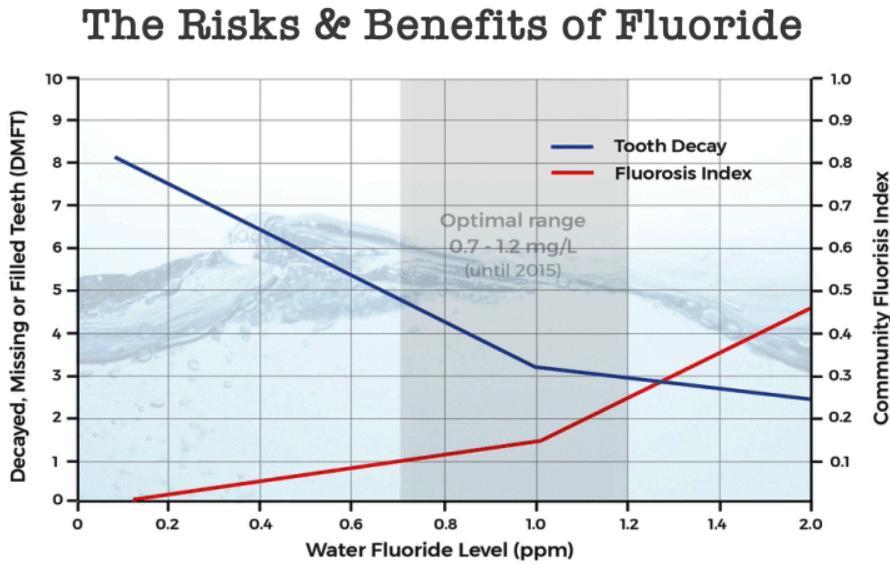
In 2015, the U.S. Public Health Service lowered its recommended level for community water systems from 0.7–1.2 ppm to a single value of 0.7 ppm. The official reason was aesthetic: to reduce mottled teeth.
Revisiting the Science We Thought We Knew
For decades, no one studied fluoride’s effects on the developing brain. That silence began to break in the 1990s with a pioneering if controversial study by Phyllis Mullenix at the Forsyth Dental Center in Boston. Using laboratory rats, Mullenix found that high concentrations of fluoride accumulated in brain tissue and altered behavior in ways consistent with neurotoxicity. Her study, published in Neurotoxicology and Teratology in 1995, suggested that early-life exposure could impair learning and memory.
The dental establishment dismissed her work, and Mullenix soon lost her position. But in retrospect, her findings foreshadowed what would emerge from human studies decades later.
In the 1980ss, researchers began studying children living in areas of China, India, and Iran with naturally elevated fluoride levels in water. These were simple, cross-sectional studies, often with limited controls and small sample sizes. Still, they pointed in a consistent direction: children exposed to higher fluoride concentrations scored lower on tests of intelligence.
Then, in 2012, Dr. Anna Choi and colleagues at Harvard published a meta-analysis of 27 such studies. Their conclusion was sobering: children in high-fluoride areas had, on average, seven points lower IQ than those in low-fluoride areas. Most of the studies were imperfect many lacked individual exposure data but the consistency of results was striking. It should have been a red flag that fluoride, long assumed to be safe, might affect the developing brain.
Their conclusion was sobering: children in high-flouride areas had, on average, seven points lower IQ than those in low-flouride areas.
Recognizing these hints, a new generation of scientists began applying the same rigorous, prospective methods that Herbert Needleman and others had used to uncovered the dangers of lead.
In 2017, Dr. Morteza Bashash and colleagues found that higher prenatal fluoride exposure, measured in maternal urine, was associated with lower IQ in their children affecting both boys and girls. Importantly, the urinary fluoride concentrations in Mexican mothers were later shown to be comparable to those of women living in fluoridated communities in North America.
- Fluoride cont'd on page 6
Two years later, in 2019, our team published data from the Maternal-Infant Research on Environmental Chemicals (MIREC) study in Canada. Importantly, our studied was conducted in communities with and without optimally-fluoridated drinking water. We found that each 1 mg/L increase in maternal urinary fluoride a measure of exposure during pregnancy was associated with a 4.5-point decrease in IQ in boys. The pattern held when we looked at municipal water data: children whose mothers drank water with higher fluoride concentrations scored significantly lower on IQ tests than those whose mothers consumed less-fluoridated water.
In 2025, Taranbir Singh and his team in Bangladesh reported similar findings in a large, well-controlled study: children exposed to prenatal fluoride levels often lower than those found in many fluoridated communities showed measurable reductions in IQ.
By now, the evidence had become impossible to ignore. More than 75 human studies have examined the relationship between early-life fluoride exposure and IQ scores. Most though not all found an inverse association.
The Evidence That Changed the Equation
To clarify the growing debate, Dr. Kyla Taylor and colleagues at the National Toxicology Program conducted a systematic review of 74 studies from ten countries. After a series of rigorous external reviews, the draft report reached a clear conclusion: fluoride exposure is consistently associated with lower IQ scores in children. In the highest-quality studies, each 1 mg/L increase in urinary fluoride corresponded to an average 1.1-point decrease in IQ.
A one-point loss might sound trivial. It isn’t. As with lead, small shifts in the population mean
have large social consequences: fewer gifted children, more needing special education, and a measurable reduction in lifetime earnings and national productivity. The EPA Science Advisory Board has acknowledged that a 1–2 point shift in average IQ can have profound public-health implications.
Then, in September 2024, federal judge Edward M. Chen reviewed the accumulated evidence in Food & Water Watch et al. v. U.S. Environmental Protection Agency, a case brought under the Toxic Substances Control Act. After hearing expert testimony and reviewing the NTP’s findings, he ruled that fluoridation of public water at 0.7 mg/L the level considered “optimal” in the United States “poses an unreasonable risk of reduced IQ in children.”
It was a historic decision the first U.S. court ruling to recognize developmental neurotoxicity from community water fluoridation and a turning point in a debate that had been frozen in certainty for seventy years.
The Hidden Inequity of Fluoridation
Fluoridation was promoted as an egalitarian measure—a way to protect poor children’s teeth. Yet it now appears that its burdens fall most heavily on the same families it was meant to help.
Formula-fed infants in fluoridated communities can receive up to 70 times more fluoride than breastfed infants, because breast milk naturally contains almost none. Wealthier families can avoid exposure by using filters or bottled water. Low-income families cannot.
A policy intended to narrow health disparities may instead be widening them.
-
The Science Caught in Time
The scientific foundation of fluoridation has not kept pace with modern knowledge. The 1954 National Academy of Sciences report assumed that water was the only major source of fluoride exposure. It did not account for fluoride in toothpaste, processed foods, tea, or pesticide residues all of which now contribute to total intake. Nor did it consider effects on the brain.
We also know much more about fluoride’s mechanism. Its cavity-fighting benefit is mainly topical from contact with tooth enamel not from ingestion.
Numerous randomized controlled trials show that brushing with fluoride toothpaste reduces decay. But a RCT of systemic fluoride supplements given to pregnant women found no benefit for their children’s teeth. Swallowing fluoride does not appear to prevent cavities.
In 2024, a Cochrane Collaboration review of post-1975 studies after widespread use of fluoride toothpaste—found that community water fluoridation was associated with only a 3–4 percent reduction in dental caries, a difference that was not statistically significant.
The Principle of Consent
British epidemiologist Geoffrey Rose once drew an important distinction:
“The situation is different where individuals have no choice to reject a preventive measure. They can buy toothpaste with or without added fluoride, but if fluoride is added to drinking water, they can hardly avoid imbibing it. We should expect a higher level of scientific evidence and popular acceptability for measures such as water fluoridation which are imposed and not chosen by the recipients.”
Exactly. When a measure is imposed on everyone, the burden of proof must be higher not lower.
The Lesson We Keep Ignoring
The focus on fluoridation has diverted attention from other important determinants of dental health. Lead exposure, poor nutrition, and deficiencies in vitamin D also influence enamel formation. Promising alternatives—such as hydroxyapatite, the mineral that makes up tooth enamel has been shown to reduce caries.
But for decades, fluoride was treated as the only tool we needed. Other paths were neglected.
Public health has a history of holding on too long. We minimized the risks of lead poisoning. Now we are doing the same with fluoride.
The evidence has shifted. The benefits of drinking fluoridated water are smaller than we once believed. The risks especially to the developing brain are now impossible to ignore.
Anyone who insists otherwise either hasn’t read the new research or chooses not to.
It’s time for a re-evaluation.
Coming Next
In the next part of this series, I’ll dive into the debate over the cohort studies and the National Toxicology Program’s review of fluoride and IQ and explore why policy has lagged behind what the science now shows. ■
To read more content like this please subscribe to Plagues, Pollution & Poverty on Substack.
Shared Decision-Making, Informed Consent, and the Rhetoric of False Empowerment
What these terms mean and how they're fueling confusion about vaccines
Author: Kristen Panthagani, MD, PhD
Editor's Note: This article was originally printed in Your Local Epidemiologist on January 28, 2026. To read more content from this source subscribe to Your Local Epidemiologist (YLE): https://tinyurl.com/32pd2a8r
these changes have centered on medical phrases such as “shared clinical decisionmaking” or “informed consent.” While these phrases may sound like empowerment on the surface, they’re creating confusion and obscuring what’s actually happening.
Recently, RFK Jr. made sweeping changes to routine childhood immunization recommendations in the U.S., with more changes likely to come next month. Many of
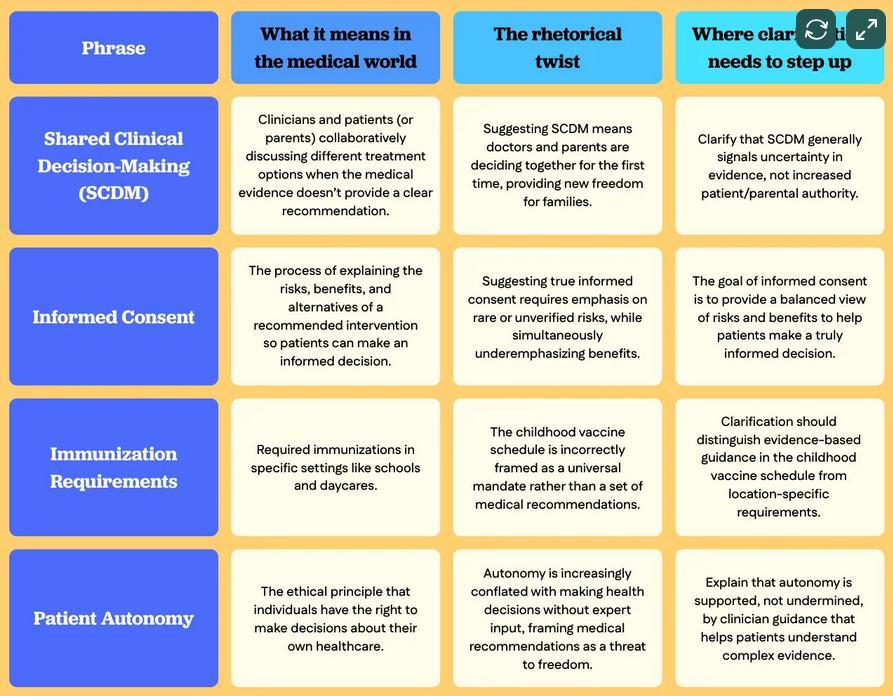
So here’s a breakdown for you: What do these phrases actually mean in the medical world? Where’s the rhetorical twist leading to confusion and distrust? And importantly, whether you're a clinician, community leader, health department, or parent talking to other parents, what's the best way to talk about this?
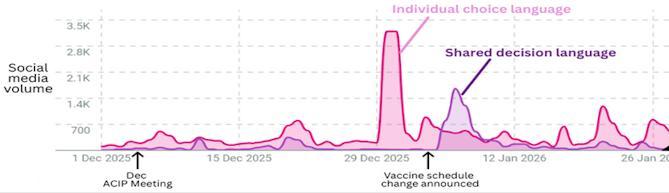
Volume of social media results for ‘individual choice’ and ‘shared decision-making’ language with reference to vaccines in the United States over time. Figure by Your Local Epidemiologist
Shared clinical decision-making (SCDM)
What it means in the medical world: On the surface, this phrase sounds like it means “involving patients (and parents) in decisionmaking.” But, perhaps counterintuitively, this face-value definition is not how the phrase is typically used in the medical world. SCDM doesn’t refer to parental authority to make decisions about their child’s health parents
are the decision-makers for all their child’s health care decisions, including vaccination, regardless of the SCDM label.
Instead, when a doctor says “shared clinical decision-making,” they’re usually referring to something very specific: a situation where the medical evidence does not give one clear recommendation, and there are multiple
treatment options to choose from. When that happens, “shared clinical decision-making” is how physicians approach walking the patient through the different treatment options to come to a decision.
This phrase, in medical terms, isn’t just about involving parents in decisions—it implies that no clear medical recommendation exists. It refers to this very specific situation, and typically isn’t used to describe patient involvement in decisions generally.
The rhetorical twist: Many of the vaccines on the childhood immunization schedule were changed from “recommended” to “shared clinical decision-making.” On the surface, this sounds like it’s empowering parents by encouraging them to be involved in decisionmaking, but again, that’s not what this phrase typically means. Instead, in medical terms, this shift in language implies that there isn’t a clear recommendation for these vaccines, contrary to the data. It gives the appearance of supporting parent autonomy while undermining vaccine recommendations. It also has behind-thescenes implications for physicians and clinics, such as time spent charting in your medical record, ordering vaccines so they are readily available to you, automatic reminders, and more.
The communication solution: Pushing back against SCDM for childhood vaccines can easily be misinterpreted as pushing back on involving parents in decision-making. So, when talking about this topic:
Explain that parents have always been the decision-makers regarding their children’s health care, including immunizations, and changing the label from “recommended” to “shared clinical decision-making” doesn’t change that.
This means the SCDM label doesn’t actually give parents more options, but it does make it more confusing which vaccines are beneficial for their kids.
Recognize that this label is confusing to people, and has a lot of implications on the backend for clinicians and hospitals.
Informed consent
What it means in the medical world: Informed consent is the process by which patients (or parents) are informed about the risks, benefits, and alternatives of a recommended treatment or procedure. It involves the clinician explaining why the treatment is recommended, the risks and benefits, assessing the patient’s understanding, and answering questions. For certain riskier procedures (like surgery), consent is formally documented by signing a form, and for other lower risk procedures, verbal consent is obtained.
The point of informed consent is not to simply throw a bunch of information at a patient, but to ensure that the patient understands the procedure or treatment so they can make an informed decision. The goal is education and empowerment, so they are able to make reasoned decisions about their health.
The rhetorical twist: This phrase has been distorted in discussions about vaccine risks, with a push towards overemphasizing rare or unverified risks of vaccines and underemphasizing benefits. But true informed consent helps the patient understand not only what the risks are, but the likelihood of those risks and how to weigh them against the benefits of immunization. Overemphasizing rare or unverified risks distorts patient
understanding of the decision, therefore undermining the process of informed consent. It is crucial that patients understand the risks in a balanced way that helps them make an overall informed decision, not a decision driven by fear.
The communication solution:
Explain that the goal of informed consent is to help patients have an accurate and balanced view of the risks and benefits of immunizations.
Distorting this balance by overemphasizing risks undermines patients’ ability to make an informed decision for their family.
Immunization requirements
What it means in the medical world: There is no universally required vaccine in the U.S. There are, however, certain locations where specific age-appropriate childhood immunizations are required for entry, mostly in places where children come together and share germs, like in schools, daycares, and some pediatrician’s offices. Recognizing that high rates of immunization is what disrupts the spread of serious childhood diseases (especially to others who are immunocompromised or too young to be vaccinated), school and daycare immunization requirements have been established by individual states to reduce the spread of disease in these higher risk areas.
The rhetorical twist: Because many of the school immunization requirements use the CDC childhood vaccine schedule as guidance, the childhood vaccine schedule has been inaccurately framed as a vaccine mandate in itself. This misrepresents the purpose of the childhood vaccine schedule, which is to provide evidence-based recommendations regarding
which vaccines are beneficial for children, and when is the best time to get them based on children’s development and risk of exposure. Inaccurately reframing the childhood vaccine schedule as a mandate falsely suggests that even vaccine recommendations not requirements—impinge on personal freedom, a distortion that hinders the CDC’s ability to make clear recommendations for children in the U.S.
The communication solution:
Explain that the childhood vaccine schedule is not a mandate.
Immunization requirements are focused on specific locations like schools and daycares due to the high risk of sharing germs in these locations.
Patient autonomy
What it means in the medical world:
Respecting patient autonomy is central to the practice of medicine. Patients have a right to make decisions about their health, or as it was stated in a court decision in 1914: “Every human being of adult years and sound mind has a right to determine what shall be done with his own body.” This is one of the central principles of medical ethics, is taught in every medical school, and is paramount to the practice of medicine. Dark stains on the history of medicine such as the Untreated Syphilis Study at Tuskegee show us what happens when this principle is ignored.
The rhetorical twist: The principle of patient autonomy has more and more become blurred with a totally separate value: the idea that patients should not just be making health decisions, but that they should be doing so by themselves, without the help of physicians or
experts. This rhetorical trick falsely implies that expert involvement in health care decisions— such as vaccine recommendations from physicians interferes with a patient or parent’s autonomy merely by recommending them. This distorts what the ethical principle of autonomy is: the goal is to empower patients to understand their health (with the assistance of experts as needed) and make their own decisions, not to tell them they have to figure everything out on their own.
The communication solution:
Explain that the goal of patient autonomy is to protect patients’ right to make decisions, not to suggest patients should make health decisions without external help.
Recommendations and input from clinicians are not there to limit choice, but are meant to help patients make their own decisions by empowering them with health information and synthesizing complex evidence.
Summary
Figure by YLE
Bottom line
Patient autonomy, shared decision-making, and informed consent are foundational to medical care in the U.S. But these concepts have been twisted into rhetoric that claims to empower patients while subtly igniting confusion and driving a wedge of distrust between patients and the physicians who want to help them. This creates isolation masquerading as empowerment, and now you have some tools to spot it when it happens. ■
Kristen Panthagani, MD, PhD is an emergency medicine physician completing a combined residency and research fellowship focusing on health literacy and communication. She is the creator of the newsletter You Can Know Things and a regular YLE contributor. Views expressed belong to KP, not her employer.
For more content like this please find YLE on Substack: https://tinyurl.com/vhmbuyka
YLE can be found here: https://yourlocalepidemiologist.substack.com/
Your Local Epidemiologist (YLE) is founded and operated by Dr. Katelyn Jetelina, MPH PhD—an epidemiologist, wife, and mom of two little girls. YLE reaches more than 425,000 people in over 132 countries with one goal: “Translate” the ever-evolving public health science so that people will be well-equipped to make evidence-based decisions. This newsletter is free to everyone, thanks to the generous support of fellow YLE community members.
To support the effort, subscribe or upgrade your existing subscription: https://yourlocalepidemiologist.substack.com/
The Job Hunt Paths to Public Health Practicums
Everything you need to know about finding (and surviving) your public health practicum
Author: Public Health Hiring Help
Public health students both undergrad and grad alike dread the practicum. Beyond being a rite of passage, it can feel like a defining experience. What am I going to do? Where will it lead me after graduation?
The truth is, while it’s often required, the practicum is what you make of it. It’s an opportunity to explore and a chance to flex the public health muscles you’ve built in the classroom. Sometimes, it provides clarity—a path to a full-time job or a connection within a specialized area. Sometimes, it doesn’t. And sometimes, you don’t even want it to.
Every option has tradeoffs. A smaller organization might give you the chance to wear many hats and learn new skills, but lack name recognition. A large agency or company may offer prestige, but limit your scope. Either way, you’re still gaining valuable experience.
So why put so much pressure on it? It’s easy to fall into comparison wanting your practicum to lead to publications, job offers, or future funding. But regardless of where you land, you’ll walk away with new skills, professional connections, and the same degree as your peers.
So, without further ado, let’s unpack the public health practicum (or APE…or ELA…or whatever else your school calls it).
Typical Constraints
Most public health programs have specific parameters for what counts as a practicum. Nearly all require at least one deliverable—a tangible contribution to your host organization, such as a manuscript, presentation, dataset, or SOP.
Programs may differ on timing some allow practicums during the academic year, while others reserve them for the summer. Check your school’s rules early so you can plan accordingly.
Your practicum must also align with your program’s concentration (e.g., health policy, global health, epidemiology). “Alignment” is usually defined by your department’s core competencies, which are intentionally broad. As long as you can justify how your work connects to these skills, you’re likely in the clear. If an opportunity doesn’t meet all your academic requirements say, if you’re also completing a certificate many schools will let you combine multiple experiences to fulfill your practicum.
Finally, most schools require your practicum to serve a community partner, meaning your work must have stakeholders outside your university.
Typical Challenges
Of course, the requirements aren’t the only factors at play. Like any internship, not all community partners can pay students or offer
convenient locations.
Only you can decide what’s feasible. Are you open to relocating for the summer for a paid opportunity? Would you prefer to stay local, even if unpaid? Some pubic health programs offer funding for practicums abroad, and many organizations are now open to hybrid or remote arrangements.
Don’t be afraid to ask questions about funding, flexibility, or deliverables. The worst someone can say is no.
Finding a Practicum
Students find practicum opportunities in all kinds of ways. Here are a few strategies that worked for my peers:
1. Leverage Existing Work-Study Opportunities
If your current work-study job involves projects that meet your practicum requirements, talk to your supervisor about carving out deliverables. Many supervisors are happy to formalize extra work from students they already trust. I know firsthand that this strategy works I did this for my own MPH practicum in the spring of my first year!
Even if you don’t currently have a work-study role, consider asking around your cohort— sometimes community partners are looking for help after another student leaves or in a busy season. For example, I referred a girl in my program to my position when I was away for the summer. Similarly, a friend of mine helped her roommate get her practicum by connecting her with her work study supervisor then they were coworkers for the summer! A simple referral from a classmate could lead to a practicum of your own.
2. Formal Internships
You’re already ahead of the game if you’re reading this many internships featured in the Public Health Hiring Help can double as practicums. These paid opportunities often align with core public health areas and offer meaningful, real-world experience. Just be aware not all opportunities are designated for Summer 2026, some are listed for spring or winter.
This approach worked well for a friend of mine in health policy and management—he worked for a pharmaceutical company for a summer! Another did infectious disease epidemiology work at Columbia for the summer through Kennedy Krieger RISE program.
3. Institution-Affiliated Projects
Don’t overlook opportunities within your school. Many research centers and initiatives are community-facing and need student assistance. If the work benefits an external stakeholder, it likely qualifies. Ask your professors, advisors, and departmental staff many are connected to ongoing projects that could use your help.
This strategy worked well for a friend of mine studying environmental health—she reached out to a professor, who connected her with an on-campus research center focused on PFAS exposures! A friend in epidemiology also did this. He reached out to a professor who studied HIV patient populations abroad, and she took him under his wing. Both are likely to be published!
4. Use Your Network and Resources
Leave no stone unturned until you have an opportunity to accept.
Talk to older students in your program what did they do last year? Can they connect you? For example, a friend of mine continued a project in Brazil someone in his student organization had helped initiate the summer before.
Talk to alumni! Maybe some are still able to connect you to their old supervisor, or maybe they have new connections they can link you to! Connections are everything my friend from the example at the pharmaceutical company was hired by an alum of our school and his specific department!
Similarly, talk to your school’s career center they may have guidance on where to start and who to talk to, especially if they coordinate career fairs or networking opportunities.
And, of course, don’t be afraid to reach out directly to community partners you’re interested in and chat about opportunities to work with them. Don’t fear the cold email!
As I told By Ben in our collaboration that’s how I’ve gotten my foot in the door. My global health undergraduate practicum came from cold emailing someone at an NGO I admired, and I was able to become my division’s first-ever intern.
Conclusion
The practicum may feel like a mountain to climb, but it’s really a bridge a way to connect your classroom learning to the world of practice. Whether your experience leads directly to a job, sparks a new interest, or simply helps you grow as a professional, it’s all progress.
Approach it with curiosity, flexibility, and openness. Don’t chase the “perfect” practicum; chase the one that fits you right now. No matter where you land, you’ll come away with the same thing every great public health professional has experience, perspective, and the confidence to keep going. ■
Your Ad Should Be Here
Do you have a job, course, conference, book or other resource of interest to the epidemiology community? Advertise with The Epidemiology Monitor and reach 35,000 epidemiologists, biostatisticians, and public health professionals monthly. Advertising opportunities exist in this digital publication, on our website and Facebook page, and in our Epi-Gram emails. For more information please contact:
Opinion
The Test of Open Dialogue
In the Face of Jay
Bhattacharya
as the New CDC Director
Author: Matt Willis, MD
Editor's Note: This article was originally printed in Your Local Epidemiologist on February 25, 2026. To read more content from this source subscribe to Your Local Epidemiologist (YLE): https://tinyurl.com/32pd2a8r
so herd immunity could develop through infection. In their view, lockdowns, mask mandates, and other measures were causing more harm than good.
The federal government has appointed an interim director of the CDC, and it turns out to be the same person who leads the NIH: Dr. Jay Bhattacharya. For now, one man sits atop the two most important scientific agencies responsible for our nation’s health.
It also happens to be the person I debated after the pandemic, about the pandemic. That experience shapes how I see this moment and why I believe the real test of his leadership has already begun.
Jay’s ride from professor to NIH and CDC Director
A Stanford physician and economist, Jay became nationally known for co-authoring the Great Barrington Declaration (GBD). That declaration and the response to it have defined his public identity and, in some ways, shaped the American pandemic experience.
The document was brief but explosive. In October 2020, its authors argued that the U.S. was mishandling Covid-19. Instead of broad restrictions, they proposed “focused protection”: isolate those at highest risk, especially older adults, while allowing widespread transmission among everyone else
But public health leaders’ tolerance for undermining pandemic control measures was low. I admit, it was low for me. The proposal was ethically, epidemiologically, and logistically challenging. At that time, the U.S. was losing more than 1,000 people a day, hospitals were strained, there was no vaccine, data were incomplete, and we were making decisions under extraordinary uncertainty.
But what followed became just as consequential as the declaration itself.
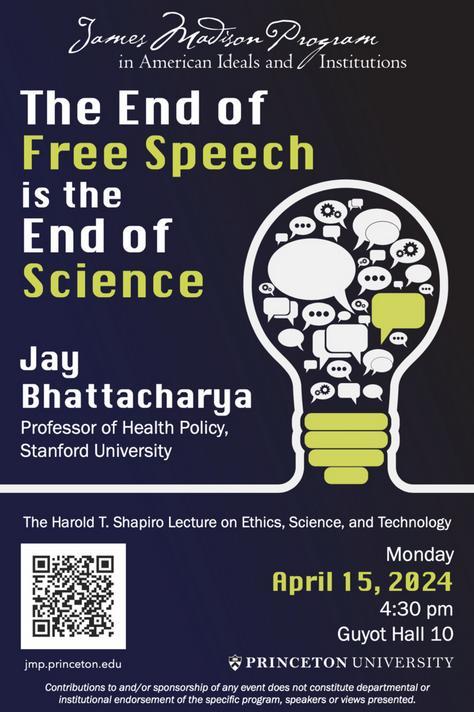
Jay was invited to the White House, and his idea and prominence spread. Over the months and years, Jay became a symbol of resistance to the public health establishment. He spoke frequently about the need for open scientific debate and the dangers of censorship. (Communications later revealed that former NIH Director Francis Collins wrote to Anthony Fauci that the declaration needed “swift and devastating published take down of its premises.”) Jay became a celebrity scientist for the political right, running on a platform of scientific free speech. He was invited to give many talks, as shown in the flyer below [on the following page].
- Dialogue cont'd on page 17
Then I received a call in 2024: will you engage with Jay in a public conversation about public health authority?
It was Braver Angels, a nonprofit dedicated to bridging divides between red and blue America. I accepted. I later learned I was the sixth person asked to represent a public health perspective;
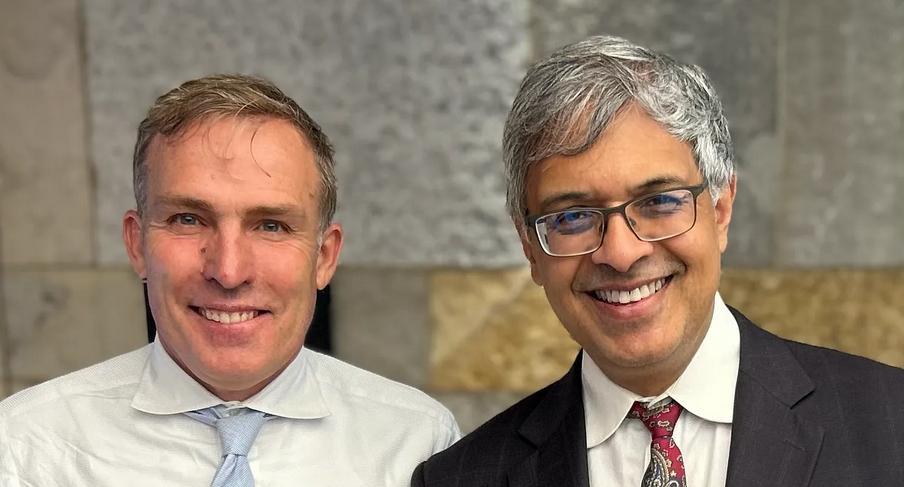
The author & Jay Bhattacharya, still smiling, following their debate at the Braver Angels Conference, June 2024.
When I met Jay in Kenosha, we had mutual connections and some basis for respectful conversation. During the pandemic, as a public health officer, I created a monthly meeting with a group of researchers close to Jay who questioned Covid-19 restrictions and vaccine mandates. While we didn’t always agree, I gained a perspective I wasn’t getting elsewhere. Ultimately, this helped me and this community balance the complex trade-offs between the physical, mental, and social harms wrapped up in pandemic response.
Coming out of the pandemic, I knew it was
critical for me to learn from mistakes and listen to contrary views, so we could all do better next time. The goal of Braver Angels is to seek to understand, and not retreat into our echo chambers.
From Jay, I learned that he believed pandemic policies were harming communities and that those harms were being minimized. He felt his ideas were dismissed labeled unscientific, treated as illegitimate, blacklisted. In his words, I heard the feelings of so many Americans who felt talked down to or excluded from decisions affecting their lives.
the first five declined. This, in itself, says something. As much as we lament the divides, we also resist the conversations that might bridge them. The event was held in Kenosha, Wisconsin, symbolically between Chicago and Milwaukee, where the two parties were holding their national conventions. -
From me, I hope he heard that public health officials weren’t acting from a desire for control, but from the responsibility placed in us, while death rates climbed daily. I described the weight of pandemic policymaking, when at best it’s a choice between competing harms. Close schools or risk viral spread you choose. Jay acknowledged that those were hard calls to make and that, as an academic at the time, he was glad he didn’t have to make them.
We disagreed a lot. But there’s nothing like sitting down with someone when the goal is to understand one another’s viewpoint to create connections you wouldn’t have imagined were possible.
One of the unexpected points of connection was personal. Both Jay and I had received personal attacks—not just critiques of our ideas, but threats. We had both seen our names dragged through social media, headlines, and commentaries. We talked about the toll that takes on our wives and children, on the quiet spaces of private life. And we agreed that was no way to conduct civic dialogue.
In that exchange, something shifted. We didn’t change each other’s conclusions, but we did see one another as people rather than positions. If Americans are going to move beyond our divides in science whether over vaccines, climate change, or anything else it won’t be because one side defeats the other. It will be because we learn to disagree and debate without dehumanizing each other.
That shared belief is why this moment matters
A lot has changed since then. Jay now leads those federal institutions. He’s part of an administration that’s narrowing debate and
transparency rather than expanding it:
Public comment at Health and Human Services has been largely removed.
Advisory boards like ACIP have been reconstituted wholesale without the standard engagement with scientists within the agency.
The top ultra-processed foods scientist was fired from NIH for refusing to bend his results to fit an agenda.
Long-standing medical evidence, like the routine childhood immunization schedule, has been replaced without explanation, new evidence, or open discussion.
Materials on issues such as climate change and health equity have been removed from federal websites.
Advisory processes have shifted in ways that limit independent review. Senior officials have departed or been dismissed amid concerns that scientific integrity was being subordinated to political alignment.
The irony is difficult to ignore: a scientist who rose to prominence by arguing that dissent was suppressed now oversees agencies that suppress dissent of a different kind.
This is Jay’s defining leadership test.
In Kenosha, Jay argued that open scientific dialogue is essential to democracy. He warned against reflexively labeling alternative views as misinformation. He insisted that debate strengthens institutions rather than weakens them.
- Dialogue cont'd on page 20
Jay Bhattacharya now holds extraordinary authority. He has long argued for expanding the space for scientific disagreement and, in turn, increasing trust. The country will now see whether he expands that space for others, including those who disagree with him.
It is one thing to call for open dialogue when
you feel excluded. It is another thing to protect it when you are in charge.
The standard Jay once demanded of public health now rests with him.
And the country will be watching. ■
Dr. Matt Willis is the author of Your Local Epidemiologist in California. A California native, he’s served as a primary care physician, CDC epidemiologist, and public health officer for Marin County, where he guided the pandemic response. He lives in Marin with his wife, children, and their dogs Teddy and Ramona. Subscribe to his newsletter YLE California here.
YLE can be found here: https://yourlocalepidemiologist.substack.com/
Your Local Epidemiologist (YLE) is founded and operated by Dr. Katelyn Jetelina, MPH PhD an epidemiologist, wife, and mom of two little girls. YLE reaches more than 425,000 people in over 132 countries with one goal: “Translate” the ever-evolving public health science so that people will be well-equipped to make evidence-based decisions. This newsletter is free to everyone, thanks to the generous support of fellow YLE community members.
To support the effort, subscribe or upgrade your existing subscription: https://yourlocalepidemiologist.substack.com/
2026 Summer Programs in Epidemiology & Biostatistics
Compiled by The EpiMonitor with direct input from the programs listed or gleaned from the program websites. https://www.epimonitor.net
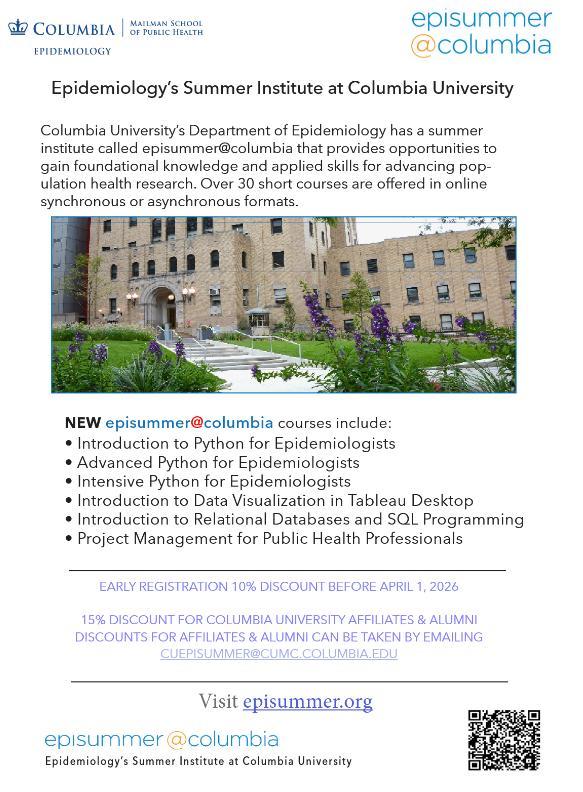
episummer@columbia Columbia University – New York City
Name episummer@columbia
Sponsors Department of Epidemiology, Columbia University Mailman School of Public Health
Location Online synchronous and asynchronous
Program year 15th (over 500 participants each year)
Types and dates of Courses All in June
Full course list: https://tinyurl.com/bdcnptj8
Dates June 1-30, 2026
Number of Courses 37
Language English
Number of faculty 30
Target audience The typical participant is a Master's level public health practitioner. The courses are also suitable for doctoral students, NIH K-awardees, fellows, faculty, and clinician researchers.
Cost 15% discount for Columbia University affiliates & alumni. Please email cuepisummer@cumc.colunbia.edu for information.
Deadline for registration 10% Discount if registered prior to April 1, 2026 May 1, 2026 is the regular registration deadline
Limit on participants A few courses have enrollment caps
Course directors Thelma Mielenz / Asst Professor / Dept of Epidemiology
Contact information Gerald Govia gg2431@cumc.columbia.edu
General email: cuepisummer@cumc.columbia.edu
Program website: episummer.org
Comments In 2011, the Department of Epidemiology launched a successful summer institute, episummer@columbia [formerly known as Epidemiology and Population Health Summer Institute at Columbia (EPIC)], that provides opportunities to gain foundational knowledge and applied skills for advancing population health research. Our synchronous courses vary in length from 4 hours to 20 hours delivered in an online live format. These courses are offered only on a specific date and time allowing registrants the ability to interact live with their episummer@columbia course instructor and other registrants. Our asynchronous courses vary in length from 5 hours to 40 hours and contain lectures and course material presented online with materials released by the instructor accordingly. The flexible format will include video recordings of lecture material, file sharing and topical discussion fora, selfassessment exercises, real-time office hours via Zoom, and access to instructors for feedback during the course.
New courses this year:
► Introduction to Python for Epidemiologists
► Advanced Python for Epidemiologists
► Intensive Python for Epidemiologists
► Introduction to Data Vizualization in Tableau Desktop
► Introduction to Relational Databases and SQL Programming
► Project Management for Public Health Professionals
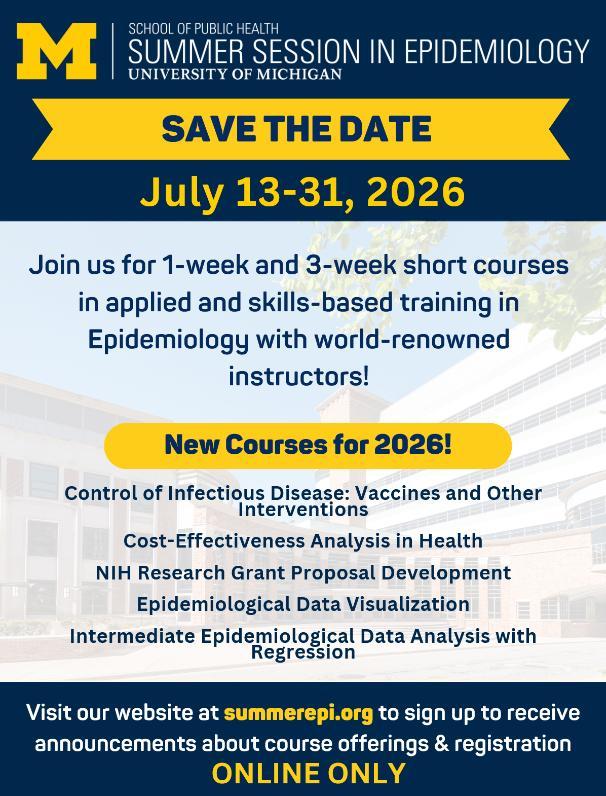
University of Michigan Summer Session in Epidemiology
Ann Arbor, MI
Name The University of Michigan Summer Session in Epidemiology
Sponsors UM School of Public Health
Location Online
Program year 61 years
Types and dates of Courses 5 new courses: Control of Infectious Diseases; NIH Research Grant Proposal Development; Cost-Effectiveness Analysis in Health; Epidemiologic Data Visualization; Intermediate Epidemiological Data Analysis with Regression
2 CaSToR-sponsored courses: Simulation Modeling of Tobacco Use, Health Effects and Policy Impacts; Complex Systems Modeling for Public Health Research
Number of Courses 29
Language English
Number of faculty
30, including 5 new faculty for 2026: Dr. Ella August, Dr. David Hutton, Dr. Arnold Monto, Dr. Nancy Santesso, Dr. Jessie Tong, and Dr. Erik Westlund
Target audience Graduate students & working professionals in public health and health sciences
Deadline for registration June 1, 2026
Limit on participants No limits
Course directors Eduardo Villamor, MD, MPH, DrPH
Contact information Mackenzie Smith, Program Coordinator, macksmi@umich.edu Program website: https://summerepi.org
Comments
Join the SSE for 1-week and 3-week courses led by world-renowned instructors perfect for professionals and students seeking advanced epidemiologic training. As the longest-running summer epidemiology program, SSE provides unparalleled opportunities to enhance your expertise in applied and advanced epidemiologic methods.
McGill Summer Institute In Global Health
Montreal, Quebec, Canada
Name McGill Summer Institutes in Global Health
Sponsors McGill University
Location Montreal, Canada and Virtual
Program year 11th
Types and dates of Courses May 25 – June 19, 2026
Number of Courses The 2026 McGill Summer Institutes in Global Health is offering 19 courses.
Language English
Target audience Varies by course, but generally health care professionals, researchers, and students.
Cost Discounted pricing for students, and participants from low- and middleincome countries. More info: https://tinyurl.com/7x9zwuye
Deadline for registration
When a course is full or 7 days prior to the start of the individual course.
Limit on participants Varies by course see website
Program director Dr. Madhukar Pai, Inaugural Chair, Department of Global and Public Health
Contact Information https://www.mcgill.ca/summerinstitute-globalhealth/ summerinstitute.med@mcgill.ca (514) 398-4118
Comments: 6 new courses are offered for 2026. Two courses are offered on-site in Montreal. Please check visa requirements for entry to Canada if attending the on-site courses.
Johns Hopkins 43rd Graduate Summer Institute of Epidemiology and Biostatistics
Name Johns Hopkins 44th Graduate Summer Institute of Epidemiology and Biostatistics
Sponsors Johns Hopkins Bloomberg School of Public Health
Location Baltimore & Online
Program year 43
Types and dates of Courses June 8-26, 2026
Number of Courses 41
Language English
Number of faculty 44
Target audience Institute participants include students, clinicians, public health practitioners, physicians in training and those considering a career in public health.
Cost For Summer Institute courses in Summer 2026, the proposed tuition rate is $1,458/credit (to be confirmed by April 2026) / $729 per credit for non-credit students.
Deadline for registration May 22, 2026
Limit on participants None
Course directors Moyses Szklo, MD, MPH, DrPH
Contact information Program website: https://tinyurl.com/mr22dpjz
Comments We offer courses on modern epidemiological and biostatistical methods, including those related to special applications, such as case-control studies, clinical trials, and health situation analysis. We also offer courses in substantive areas, such as infectious diseases and cancer, in the use of epidemiologic methods in evidence-based decision making, in risk sciences and public policy and in the management of epidemiologic studies.
2025 Public Health Institute
University of Minnesota
Name 2025 Public Health Institute
Sponsors University of Minnesota
Location West campus - Twin Cities / Minneapolis, MN for 2 classes others are virtual courses
Types and dates of Courses May 18 - May 29, 2026
Number of Courses 10
Language English
Number of faculty 13
Target audience Graduate students in public health, medicine, veterinary medicine, nursing, dentistry, public affairs, law, social work, pharmacy, public policy, global health, agricultural, food, and environmental sciences
Practicing professionals in public health and other health and human service organizations; city, county, state, and federal government agencies; private-sector businesses and industry
Cost
Course directors
$1,231 per credit for students wanting credit
$ 549 for those not seeking credit
Meghan Taylor / tayl0427@umn.edu / 612-626-8434
Contact information phi@umn.edu https://www.sph.umn.edu/academics/public-health-institute/
Comments The Summer Public Health Institute offers courses for students and practicing professionals in public health and related fields. Participants can build or expand their professional expertise, learn best practices, broaden career options, network with other professionals, or explore a new area of interest.
The Public Health Institute features in-person courses that will be taking place on the University of Minnesota Twin Cities West Bank campus. Select courses will be available online. Students taking online courses are expected to participate during the scheduled dates and times as online courses are synchronous.
BioStatEpi Treviso, Italy
Name Summer School on Modern Methods in Biostatistics & Epidemiology
Target audience Researchers, physicians, clinicians and public health professionals from public and private institutions who are looking for systematic training in the principles of epidemiology and biostatistics, or epidemiology applied to health care planning and evaluation.
Cost Varies based on the number of weeks of attendance
Registration Final deadline - end of May 2026
Course directors Marco Bonetti & Nicola Orsini
Contact information Administrator - Frederico Perlino: info@bioepiedu.org https://www.bioepiedu.org/
Comments Immerse yourself in an enriching and memorable learning experience at the stunning Brandolini Colomban castle, where our comprehensive courses in biostatistics and epidemiology will enrich your knowledge of data science and elevate your research skills to new levels.
Florida's Summer Institute in Biostatistics and Data Science Program
Name Florida's Summer Institute in Biostatistics & Data Science Program (SIBDS)
Sponsors Florida Atlantic University
Location Boca Raton, FL
Types and dates of Courses May 18 - June 26, 2026
Deadline Application deadline - March 13, 2026
Language English
Target audience Undergraduate students or those recent graduates not currently in graduate programs.
Course directors Dr. Katherine Freeman and Dr. Andre Williams
Contact information kfreemancostin@health.fau.edu or andrewilliams@health.fau.edu https://tinyurl.com/nwdmmwra
Comments
Calling all undergraduate students or those recent graduates not currently in graduate programs, it’s time to discover how working with data can change your life through Florida’s Summer Institute in Biostatistics and Data Science Program (SIBDS), funded by the National Institutes of Health.
This opportunity is the key to understanding how data, driven by participants’ responses, can help draw conclusions on everything from why COVID-19 impacts certain populations more than others, to why clinical trials are important and a whole lot more.
Aarhus University
Pharmacoepidemiology Summer School
Name Pharmacoepidemiology Summer School 2026
Sponsors Aarhus University / Dept of Clinical Epidemilogy
Location Grenaa, Denmark
Program year 11th
Types and dates of Courses June 15-19, 2026
- Pharmacoepidemiology and Comparative Effectiveness Research
- Meta-analysis
- Pharmacoepidemiology Using the US FDA Sentinel System Framework Number of Courses There are 3 courses but they are offered as 1 unit
Language English
Number of faculty 5 faculty members - most are international faculty
Target audience Aimed at PhD students, postdocs, clinicians, and other professionals seeking to advance their skills and knowledge
Cost The course fee includes full tuition, five-night hotel stay, breakfast and lunch, fruit + coffee/tea, a complimentary course dinner, and a social program.
Deadline for registration TBA
Limit on participants 30
Course directors Professor Vera Ehrenstein, Dept of Clinical Epidemiology, Aarhus Univ
Contact information Helle Vester, Communications Officer
Email: summerschool@clin.au.dk
Website: https://tinyurl.com/mvjst3ch
Comments This year's summer school will cover the fundamental principles and methods of pharmacoepidemiology, provide guidance on synthesis of the evidence, and offer an introduction to some sources of real-world data in the United States.
Format: Lectures, group work, and exercises. Prerequisites: Basic training in epidemiology and biostatistics is assumed. Equipment: Laptop. All participants will get a short-course STATA license, which needs to be installed on the laptop.
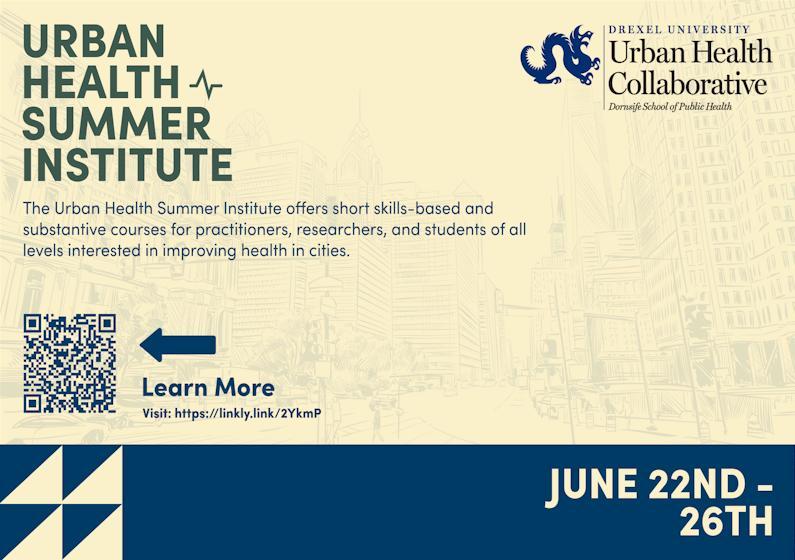
Drexel University
Urban Health Summer Institute
Name Urban Health Summer Institute 2026
Sponsors Drexel University / Dornslife School of Public Health / Urban Health Collaborative
Location Philadelphia, PA and some courses are online
Types and dates of Courses June 22-26, 2026
Number of Courses 14
Language English
Number of faculty 15
Target audience The Urban Health Summer Institute offers short skills and substantive courses for practitioners, researchers, and students of all levels interested in improving health in cities.
Registration Earlybird registration (25% off with code: EARLYBIRD26) ends May 1, 2026 Drexel students are eligible for 50% off with code "DREXELHALF". Additional discounts are available for organizations who register 3+ students
Contact information
Comments
Registration link: https://go.iu.edu/8x3u Program contact: UHCTrainingCore@drexel.edu Program website: https://tinyurl.com/ywkcjwhc
Urban health expertise is a key part of the Dornsife School of Public Health's mission and reputation, and the Summer Institute courses are taught by distinguished faculty members with broad urban and global health research portfolios. The Drexel Urban Health Collaborative (UHC) at Drexel University's Dornsife School of Public Health hosts our Urban Health Summer Institute annually.
11th Annual Summer Institute in Statistics for Clinical & Epidemiological Research (SISCER)
Name Annual Summer Institute in Statistics for Clinical & Epidemiological Research (SISCER)
Sponsors University of Washington, Dept of Biostatistics
Location Virtual
Program year 13th
Types and dates of Courses July 7 – July 30
Number of Courses 14 available - fees are structured based on the number of courses a student chooses to take.
Language English
Number of faculty 16 instructors representing faculty from UW as well as other universities and research centers (national and international)
Target audience The mission of SISCER is to strengthen the statistical proficiency and career development of researchers from all backgrounds. Attendees include graduate students as well as junior and senior researchers.
Deadline for registration
Seven days prior to the start of a course. Registration is tentatively scheduled to open around March 1, 2026.
Course directors Kathleen Kerr, UW Professor of Biostatistics
Contact Information Deb Nelson, Event Manager - uwbiost@uw.edu Website: https://tinyurl.com/5xwkmwdy
Comments The Summer Institute in Statistics for Clinical & Epidemiological Research (SISCER) offers introductory and advanced short courses in methods for clinical research and epidemiology. Participants will find learning opportunities for clinical trials, causal inference, two-phase studies, complex surveys, and analyzing longitudinal and time-to-event data. New course this year: Multi-state models for time-to-event data, with applications to clinical research
17th Summer Institute in Statistics & Modeling in Infectious Disease (SISMID) 2025
Name Annual Summer Institute in Statistics & Modeling in Infectious Disease 2026
Sponsors Rollins School of Public Health at Emory University
Location Atlanta, GA and online
Program year 17th
Types and dates of Courses
Online: Jun 22-26, 2026 In person: July 13-24, 2026
Modern methods of statistical analysis and mathematical modeling
Number of Courses 22 total (between in-person and online)
Language English
Target audience SISMID has trained thousands of researchers from academia, government, and industry.
Cost $395-$895 per module based on format (online or in-person), classification of attendee (student, industry, etc), and date of registration. Limited scholarships are available. Online courses are not available outside the USA due to tax constraints.
Registration Early bird pricing end April 30, 2025
Registration closes June 30, 2025
Course directors Dr. Natalie Dean
Contact Information Website: https://tinyurl.com/3vp8fysh sismid@emory.edu
Comments The Summer Institute in Statistics and Modeling in Infectious Diseases (SISMID) has moved to Atlanta.
Dr. Betz Halloran co-founded SISMID in 2009 and was the previous director of the Summer Institute in Statistics and Modeling in Infectious Diseases (SISMID). SISMID introduces infectious disease researchers to modern methods of statistical analysis and mathematical modeling and introduces statisticians and mathematical modelers to the statistical and dynamic problems posed by modern infectious disease data.
Summer Session for Public Health Studies 2025
Harvard University
Name Summer Session for Public Health Studies 2025
Sponsors Harvard T.H Chan School of Public Health
Location Boston, MA
Types and dates of Courses
Summer Session I: July 7 - July 24, 2026
Summer Session II: July 27 - August 14, 2026
A sample course listing is available on the website.
Language English
Target audience The Summer Session is intended for health professionals in training or those who are considering a mid-career change into public health and feel the need to strengthen their skills. Applicants must have a bachelor’s degree to be eligible to apply. Applicants are public health professionals, primary care practitioners, physicians engaged in the evaluation of health care delivery and management and physicians in training.
Cost Varies but no financial assistance is available for the 2026 summer program
Course directors Stephanie Lemoine
Contact Information Website: https://tinyurl.com/2s4xbh4d slemoine@shph.harvard.edu / (617) 432-0090
Comments A sample course listing and financial information are available on the website in the "additional information" section.
ESCMID Summer School
Dublin, Ireland
Name ESCMID Summer School
Sponsors ESCMID
Location Budapest, Hungary
Program year 24th
Types and dates of Courses June 28 – July 4, 2025
Number of Courses Preliminary program: https://tinyurl.com/yerp47jj
Language English
Target audience Summer School is open for ESMID members and non-members currently enrolled in or holding a postgraduate degree in fields such as Infectious Diseases, Clinical Microbiology, or related disciplines.
Cost 1,300 € - 1,600 €
Registration The deadline to register is June 5, 2026
Course directors Maeve Doyle & Cathal O’Broin
Contact information
Email: courses@escmid.org
Website: https://tinyurl.com/3jn7x3w8
Comments Featuring an experienced faculty board with a range of Clinical Microbiology (CM) and Infectious Diseases (ID) lectures, attendees will benefit from a workshop style setting and have the opportunity to apply their knowledge in practical exercises. A special section in the agenda is dedicated to student presentations, offering the opportunity to share personal experiences and enhance presentation skills through feedback from recognised experts. Do not miss this memorable and enriching experience with ESCMID.
Budapest, Hungary's vibrant capital, known for its stunning architecture, rich history, and unique blend of cultures, features landmarks like Buda castle and Gellért thermal baths. Its bustling streets showcase a unique mix of heritage and modernity.
Advanced Epidemiology & Preventive Medicine
Tel Aviv University
Name Advanced Epidemiology & Preventive Medicine 2026
Sponsors Tel Aviv University
Location Tel Aviv, Israel - a Zoom format is available for international students
Types and dates of Courses
July 12-22, 2026
2026 Courses:
Reproductive Epidemiology – Sociodemographic, Environmental and Clinical Determinants
One Health – Advanced Themes in Infectious Diseases Epidemiology
Nutrition and Public Health
Language English
Target audience The program is open to graduate and qualified undergraduate students, clinicians, healthcare professionals, researchers, policymakers, and others with a professional interest in the field, from Israel and abroad.
Cost $900 for each 2hr credit course
Partial scholarships are available Registration Registration for 2025 will open soon
Course directors Gabi Bar, International Program Coordinator
Contact information
Email: gabibar@tauex.tau.ac.il
Phone: +972 (0)3 640-8021
Website: https://tinyurl.com/4ekfra2m
Comments The Summer Institute of Advanced Epidemiology and Preventive Medicine offers intensive one–two week courses taught in English by faculty from Tel Aviv University’s School of Public Health, in collaboration with leading international experts from academic, research, and public health institutions worldwide.
12th Summer Institute in Statistics for Big Data (SISBID) 2026
Name Annual Summer Institute in Statistics for Big Data 2026
Sponsors University of Washington / Dept of Biostatistics
Location Online
Program year 12
Types and dates of Courses July 15-31
Number of Courses 5
Language English
Target audience Attendees include graduate students as well as junior and senior researchers.
Cost
$475-$675 per module
Registration Registration ends 7 days prior to the start of a course
Course directors Ali Shojaie Professor and Interim Chair, UW Biostatistics
Contact Information Website: https://tinyurl.com/mueh5e3p Deb Nelson, Event Mgr: sisbid@uw.edu
Comments The Summer Institute for Statistics in Big Data (SISBID) is designed to introduce biologists, quantitative scientists, and statisticians to modern statistical techniques for the analysis of biological big data. This year's courses include:
Data Wrangling with R — July 15-17 (tentative)
Data Visualization July 20-22
Supervised learning July 22-24
Unsupervised learning — July 27-29
NEW for 2026: Deep Learning and Artificial Intelligence July 29-31
Summer Course in Epidemiology
European Educational Programme in Epidemiology
Name Summer Course in Epidemiology
Sponsors European Educational Programme in Epidemiology (EEPE)
Location Florence, Italy
Program year 38th
Types and dates of
Courses June 15 – July 3, 2025
Additional specialized week beginning July 7th
Number of Courses The course offers in the first two weeks five general modules on epidemiological study design and statistical analysis of epidemiological data. In the third week several special modules cover topics of current relevance for health and advanced methodological issues.
Language English
Number of faculty The courses are taught in English by lecturers mostly from European universities and research institutes and are held in residential form in the “Studium” centre on the hills close to Florence.
Target audience The course is intended for epidemiologists, public health practitioners, statisticians and clinicians with an interest in epidemiology.
Cost 3,965 € inclusive for the 3 week main course
Deadline for registration Places are allocated on a first come, first serve basis
Limit on participants See above
Course directors Lorenzo Richiardi and Neil Pearce
Contact information Mrs. Maria del Mar Ferrer
https://www.eepe.org/
Comments Participants have appreciated the opportunity of combining an intensive learning experience with the unique attraction for cultural and artistic enjoyment offered by Florence and Tuscany. We are proud to report a comment written by a participant in the evaluation form at the end of the course “Nowhere else such a high quality presentation of the key topics in modern epidemiology in such a short time”.
Summer Institute in Biostatistics & Data Science (SIBS)
Boston
University
Name Summer Institute in Biostatistics & Data Science (SIBS)
Sponsors Boston University
Location Boston, MA
Types and dates of Courses
Number of Courses
Monday, June 8th through Friday, July 10th, 2026 participants will be inresidence at Boston University. Monday, July 13th through mid-August 2026, participants will continue working remotely on their research project.
Topics covered in the SIBS Program:
Biostatistics Analysis
Data Science
Epidemiology
Design and Conduct of Clinical Trials
Statistical Genetics
Infectious Disease Modeling
Programming in SAS and R
Language English
Number of faculty 9 plus industry speakers and former program graduates
Target audience Current undergraduate students with an interest in mathematics, statistics, biology, or health sciences who would like to learn how to apply methods to investigate important health issues.
Cost
Deadline for registration
There is no tuition, travel, room or board cost associated with the program. A stipend may be provided.
Places are allocated on a rolling basis with priority given to those who apply prior to March 13, 2026
Contact information sibs@bu.edu
https://tinyurl.com/yc2hcfwv
Comments Students will gain hands-on experience working with actual data collected in internationally recognized studies that have been funded by the National Heart, Lung and Blood Institute including:
► The Framingham Heart Study
► The Jackson Heart Study
Advanced Statistics Summer Workshop
Indiana University
Name Advanced Statistics Summer Workshop
Sponsors Indiana University
Location Program is delivered via Zoom
Program year 3rd
Types and dates of Courses June 1-12, 2026 (weekdays only)
Advanced Study Design, Advanced Statistical Models, High-Dimensional Analysis
Number of Courses 3
Language English
Number of faculty 15
Target audience The workshop is tailored for physicians, scientists and researchers actively engaged in biomedical research.
Limit on Students Must have internet access. Starting with course 1 and proceeding in order is highly recommended.
Registration The deadline for registration is May 31, 2026
Program Director Sujuan Gao, PhD, Indiana University
Contact information https://medicine.iu.edu/biostatistics/news-events/advanced-statistics, registration link at the top of the page. Registration link: https://go.iu.edu/8x3u
Comments
Course 1 – 6/1-12 9am-12n
Course 2 – 6/1-12 1pm-4pm
Course 3 – 6/1-12 9am-12n
Courses can be attended Asynchronously.
Non-IU Registrant – one course $400, two courses $300 each.
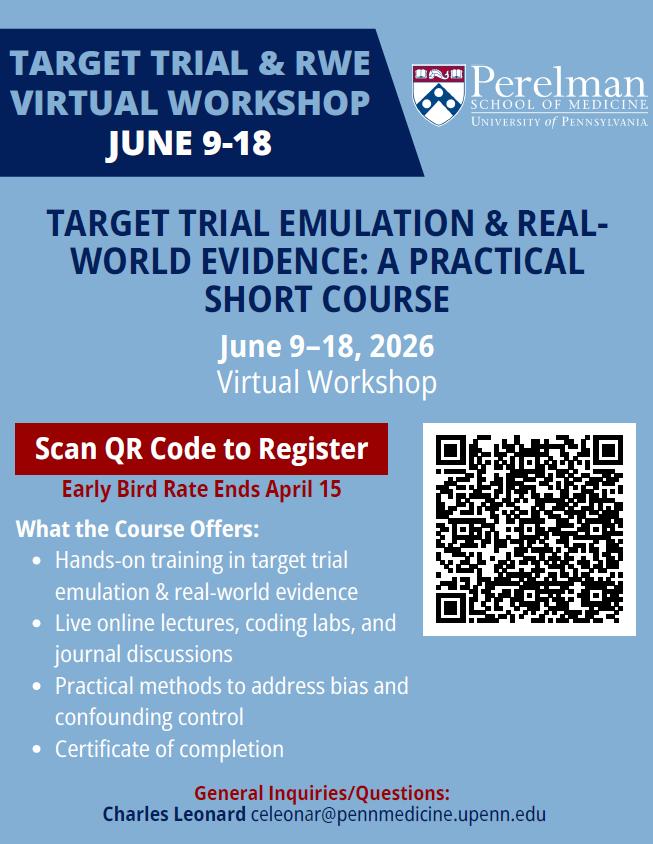
Target Trial & RWE Virtual Workshop
University of Pennsylvania
Name Target Trial Emulation & Real-World Evidence
Sponsors Univ of Pennsylvania - Perelman School of Medicine / Center for Real-World Effectiveness & Safety of Theraputics
Location Virtual via Zoom
Types and dates of Courses June 9–12 and June 15–18, 2026 (8 consecutive business days for 3 hours/day plus a 15-minute break)
Number of Courses 1 - An interactive, hands-on online workshop to learn and apply target trial emulation and real-world evidence methods
Language English
Number of faculty 5 faculty instructors (instructor profiles available here)
Target audience Individuals interested in target trial emulation and real-world evidence (RWE), including students, researchers, clinicians, regulators, and industry professionals seeking to strengthen their understanding of topical epidemiologic methods.
Deadline for registration Early Bird Registration Rate ends April 15, 2026; Final Registration Deadline is June 8, 2026
Program Directors Sean Hennessy and Charles Leonard
Contact information Charles Leonard celeonar@pennmedicine.upenn.edu
Comments Synchronous, practical online short course focused on trial emulation and real-world evidence (RWE). The program integrates lectures, hands-on computer labs, and discussion-based journal clubs, enabling participants to learn and apply core concepts such as target trial emulation, bias and confounding control, and the use of external comparator groups, with the opportunity to earn a certificate of completion from a globally recognized academic center.
Bruce Weir Summer Institute in Statistical Genetics (SISG)
Name Bruce Weir Summer Institute in Statistical Genetics (SISG)
Sponsors GA Tech, National Science Foundation, Regeneron Genetics Center
Location Atlanta, GA
Types and dates of Courses June 1-12, 2026
Number of Courses 17
Language English
Number of faculty 32
Target audience Scholars from all backgrounds, including those from groups historically underrepresented in STEM such as racial and ethnic minority groups, low income, first generation college students, and individuals with disabilities.
Deadline for registration
Applications opens: January 12, 2026
Scholarship application closes: March 6th, 2026
Registration opens: March 1st, 2026
Close of all Applications: May 20th, 2026
Registration closes: May 25th, 2026
Program Director Greg Gibson, Regents Professor and Tom and Marie Patton Chair in the School of Biological Sciences at the Georgia Institute of Technology
Comments The Bruce Weir Summer Institute in Statistical Genetics (SISG) introduces geneticists to modern methods of statistical analysis and statisticians to the challenges posed by modern genetic data. The goal of SISG is to strengthen the statistical and genetic proficiency and career preparation of scholars from all backgrounds, especially those from groups historically underrepresented in STEM including low-income, firstgeneration college students, veterans, individuals with disabilities.
Epi On The Island 2026
Name Introduction to Systematic Review and Meta-Analysis
Sponsors University of Prince Edward Island
Location Online via Zoom
Types and dates of Courses July 13-17, 2026
Number of Courses 1
Language English
Number of faculty 4
Deadline for registration Early registration ends June 21, 2026
Program Director Dr. Jan Sargeant, Professor Emerita, Ontario Veterinary College, University of Guelph
Contact information Website: https://tinyurl.com/3rn2dcyw
Comments
This intensive course will provide participants with an understanding of the principles and practical application of research synthesis and translation methodologies, namely systematic review and meta-analysis. Our aim is to provide participants with the knowledge and skills required to develop protocols for systematic reviews and work through the steps of a successful systematic review and meta-analysis, in accordance with published guidelines. The focus in meta-analysis will be on the standard methods for PICO/PECO frameworks, including fixed and random effects models, evaluations of publication bias and assessing sources of heterogeneity. In addition, participants will be introduced to advanced topics in meta-analysis such as network meta-analysis and diagnostic accuracy.
The course content will primarily use the statistical software package Stata, however R scripts will be provided and supported by the instructors. The course schedule will allocate time to practical work on participants’ own research questions and/or data. An optional online follow-up session for discussion of the progress made by the participants on work initiated during the course will be scheduled 1-2 months after the course.
Resources
FREE Books
Editor's Note:
This month's book list comes to us from Greta Bunin who is clearing some shelf space in her library. The books themselves are free but she is asking for $5 per title to cover shipping & handling. If you are interested in obtaining any of these titles please contact Greta directly at: greta.bunin@gmail.com
We are also interested in publishing book reviews. If you have a new book that you have read or written that you believes deserves to be seen by a wider audience please send us the information you have on it. If you're interested in reviewing books for the EpiMonitor, just drop us a line and we'll start a discussion to see what we can work out.
1. Modern Epidemiology, Rothman and Greenland, 2nd Edition, 1998
5. Statistical Methods in Cancer Research: Vol1: The Analysis of Case-Control Studies, Breslow and Day, 1980
6. Principles of Biostatistics, Pagano and Gauvreau, 2nd Edition, 2000 Textbook, Student Solutions Manual and Instructor's Manual
7. Biostatistics: The Bare Essentials, Norman and Streiner, 3rd Edition, 2008
8. Statistics: A Tool for Social Research, Healey, 9th Edition, 2012 Instructor's Edition Disease Atlases
9. Atlas of Cancer Mortality for US Counties 1950-69
10. Atlas of Cancer Mortality in the United States 1950-94, Devesa et al, NCI, 1999
11. Atlas of Cancer Mortality among US Nonwhites: 1950-69, Mason et al., NCI
12. An Atlas of Mortality from Selected Disease, Mason et al, 1981 (Everything from syphilis to cystic fibrosis to ALS)
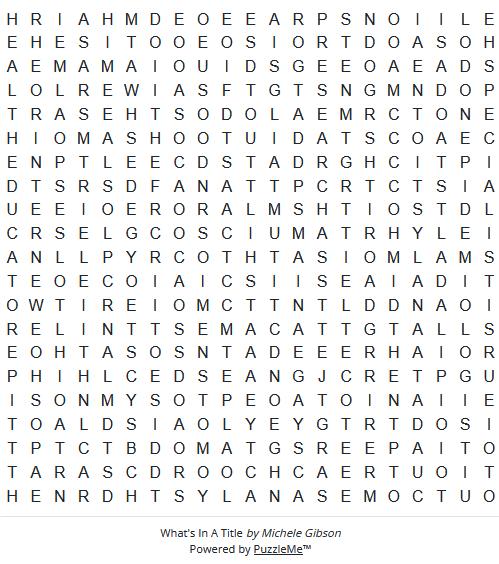
What's In A Title
This month's puzzle spotlights job titles for openings listed in this issue. So work the puzzle and then go find your job opening. Good luck - don't let the puzzle frustrate you!
For an interactive online version go to: https://tinyurl.com/4cu97hc6
Words
1. Biostatistician
2. Data Analyst
3. Data Scientist
4. EH Specialist I
5. Epidemiologist I
6. Health Educator
7. HEOR Intern
8. Outcomes Analyst
9. Outreach Coord
10. Policy Consult
11. Postdoc Fellow
12. Program Manager
13. Project Coord
14. Research Asst
15. Research Intern
What We're Reading This Month
Editor's Note: All of us are confronted with more material than we can possibly hope to digest each month. However, that doesn't mean that we should miss some of the articles that appear in the public media on topics of interest to the epi community. The EpiMonitor curates a monthly list of some of the best articles we've encountered in the past month. See something you think others would like to read? Please send us a link at info@epimonitor.net and we'll include it in the next month
Washington DC Chaos
♦ A Plan to Restore Trust in Science From a ‘Fringe Epidemiologist’ (NYT)
https://tinyurl.com/mv93zprm
♦ HHS Public Health Policy Actions Under the Trump Administration 2025-2026 (KFF)
https://tinyurl.com/4n9ab28f
♦ Some Public Health Service officers deployed in detention centers suffer 'moral distress' (NPR & Miami Herald - Audio)
♦ U.S. rejection of new mRNA flu vaccine 'sends chills,' epidemiologist says (PBS - Video)
https://tinyurl.com/jj5fk6r8
♦ Trump tried to troll Greenland’s free public health care system with U.S. Navy hospital ships still in dock. ‘It’s a no thank you from here,’ PM says (Fortune)
https://tinyurl.com/yp48xeby
What We're Reading This Month
[Type a quote from the document or the summary of an interesting point. You can position the text box anywhere in the document. Use the Text Box Tools tab to change the formatting of the pull quote text box.]
- con't from page 45
Public Health Topics
♦ Proximity to nuclear power plants associated with increased cancer mortality (Harvard SPH)
https://tinyurl.com/2p9z68eh
♦ The biostatisticians who drive medical research (Texas Public Radio - Audio)
https://tinyurl.com/aaj6tjdk
♦ UC Irvine-led team creates first cell type-specific gene regulatory maps for Alzheimer's disease (UC Irvine News)
https://tinyurl.com/yc6j62b2
♦ U.S. Nears 1,000 Measles Cases in 2026 Largest Outbreak in a Generation (Newswise) https://tinyurl.com/5n6uespu
♦ 2 cases of tuberculosis detected at El Paso ICE facility (Texas Tribune via AppleNews) https://tinyurl.com/3nx757fk
♦ 4 Months Trapped in a Hospital for an Obsolete Way of Treating Their Disease (NYT)
https://tinyurl.com/2zbuxcsa
♦ Is autism preventable in certain cases after all? Some scientists say yes. (WAPO via AppleNews)
https://tinyurl.com/3c7vh267
♦ Flu reaches highest level in the US in 25 years (CNN) https://tinyurl.com/y5mcn3dx
♦ Scientists say these two viruses may become the next public health threats (Univ FL) https://tinyurl.com/3e5aynxa
Notes on People
Do you have news about yourself, a colleague, or a student?
Please help The Epidemiology Monitor keep the community informed by sending relevant news to us at this address for inclusion in our next issue. people@epimonitor.net
Honored: Dr. Michael Osterholm, Regents Professor, McKnight Presidential Endowed Chair in Public Health and director of the Center for Infectious Disease Research and Policy (CIDRAP) at the University of Minnesota, has been named by Time Magazine to the 2026 TIME100 Health List of the World’s Most Influential Leaders in Health.
Honored: Harvard faculty member, Tianxi Cai has been named the 2026 Mosteller Statistician of the Year. This award recognizes outstanding contributions to the field of statistics. Dr. Cai’s research develops practical statistical methods that strengthen medical research and improve patient care, bridging rigorous methodology with real-world applications.
Honored: SDSU Imperial Valley researcher Linda Lara-Jacobo, who studies environmental risks along the U.S.-Mexico border with the aim of reducing severe health inequities, has received the 2026 American Association for the Advancement of Science (AAAS) Early Career Award for Public Engagement with Science. Lara-Jacobo, an assistant professor in the School of Public Health at SDSU Imperial Valley, brings together researchers, local governments and community organizations in her work to address public and environmental health challenges and STEM education.
Honored: Michigan State University College of Human Medicine is proud to announce that Dr. Mona Hanna, associate dean for public health, has been named to the 2026 TIME100 Health list of the World’s Most Influential Leaders in Health for her visionary leadership in founding Rx Kids, the nation’s first community-wide maternal and infant cash prescription program.
Notes on People,
Do you have news about yourself, a colleague, or a student?
Please help The Epidemiology Monitor keep the community informed by sending relevant news to us at this address for inclusion in our next issue. people@epimonitor.net
Elected: Jason D. Coleman, PhD, MSPH, associate dean in UNO’s College of Education, Health, and Human Sciences, has been elected president of the Council on Education for Public Health (CEPH), the national accreditor for public health schools and programs. He will serve in 2026. Coleman is the first CEPH president to represent a standalone undergraduate public health program, marking a milestone for both UNO and the broader field of public health education. His election highlights the growing national importance of undergraduate training in preparing the next generation of public health professionals.
Appointed: Dorothy Cilenti, DrPH, clinical professor in the Department of Maternal and Child Health (MCH) at the UNC Gillings School of Global Public Health, has been named associate dean for practice effective Jan. 1, 2026. Cilenti is a three-time UNC-Chapel Hill graduate: She earned a Master of Public Health degree in MCH, a Master of Social Work degree and a DrPH degree in health policy and management. She currently directs the National Maternal and Child Health Workforce Development Center, a cooperative agreement with the Health Resources Services Administration.
Appointed: Katherine Keyes, PhD, a leader in psychiatric epidemiology and population mental health research, was appointed as the inaugural director of the Susan Lasker Brody Center for Population Mental Health and the Susan Lasker Brody Professor of Population Mental Health. She serves as Vice Chair for Research in the Department of Epidemiology and is the director of the Psychiatric Epidemiology Training Program, supported by the National Institute of Mental Health.
Appointed: Pope Leo XIV has ppointed, Tyler J. VanderWeele, a Harvard University epidemiology professor and director of the Human Flourishing Program to the Pontifical Academy of Social Sciences. He holds degrees in mathematics, philosophy, theology, finance, and biostatistics from Harvard, the University of Oxford, and the University of Pennsylvania and is also co-director of the Initiative on Health, Spirituality, and Religion at Harvard University and a contributor to the Institute for Family Studies.
Do you have news about yourself, a colleague, or a student?
Please help The Epidemiology Monitor keep the community informed by sending relevant news to us at this address for inclusion in our next issue. people@epimonitor.net
Appointed: Rita Hamad, professor at Harvard T.H. Chan School of Public Health and leading social epidemiology scholar, has been named the next faculty director of the Harvard Center for Population and Development Studies. Hamad is a social epidemiologist whose research investigates how social factors, like poverty and educational opportunity, shape inequities in health. In addition to her role as professor of social epidemiology and public policy, Hamad serves as director of Harvard Chan School’s Social Policies for Health Equity Research (SPHERE) Center.
Passed: Donald James Goodwin DrPH age 81 passed away February 11, 2026. He was an Epidemiologist and educator. He was the Chief Scientist for the United States Air Force Research Laboratory at Wright Patterson Air Force Base for nine years where he planned, developed funding for, and implemented epidemiologic research; served as Principal Investigator for clinical trials to develop and enhance Tuberculosis diagnosis using interferon gamma release assays (IGRA Tests). He had 25 Publications involving tuberculosis and 7 involving hepatitis. Technical Officer and Epidemiology Consultant at Myanmar National AIDS Program (SE Asia Regional Office) for the World Health Organization, World Health Organization Epidemiology Consultant Global AIDS Professor in Geneva, Switzerland for four years, Director of the Bureau of Epidemiology and South Carolina State Chronic Disease and Epidemiologist for South Carolina State Department of Health and Environmental Control for over five years, Adjunct Associate Professor Department of Epidemiology and Biostatistics, University of South Carolina School of Public Health, Columbia, SC, for five years, Associate Professor Department of Epidemiology and Biostatistics University of Alabama at Birmingham School of Public Health for over two years and developed the school’s first HIV/AIDS course. https://tinyurl.com/bdfkbe79
Passed: Jack Leonard Follis, a resident of Houston, Texas passed away on January 8, 2026. Jack earned a PhD in Biostatistics from the University of Texas Health Science Center in Houston, Texas. He served as Associate Professor and Chair of the Department of Mathematics, Statistics and Computer Science and Director of the MS in Applied Data Science program. He loved the challenge of a good proof, the elegance of theory, and the real-world impact of applied mathematics. Whether teaching statistics and data analytics, advising students, or talking through ideas with colleagues, Jack brought patience, clarity, and enthusiasm to everything he did. https://tinyurl.com/bts7ph5j
Notes on People,
Do you have news about yourself, a colleague, or a student?
Please help The Epidemiology Monitor keep the community informed by sending relevant news to us at this address for inclusion in our next issue. people@epimonitor.net
Passed: Alan Robert Zinsmeister, beloved husband, father, grandfather, brother and respected scientist, passed away on January 6, 2026 in Rochester, MN. Al devoted his professional career to biomedical research as an accomplished biostatistician at The Mayo Clinic, where he served for 35 years. His work made meaningful contributions across multiple fields, including gastroenterology, medical resource utilization, diabetes, and laboratory experimentation! He earned his Ph.D. from Florida State University, and his bachelor's degree from Luther College. https://tinyurl.com/3663ubu6
Passed: After 88 years of an extraordinary life, Dr. Alan R. Hinman has shuffled off this mortal coil, run down the curtain, and joined the choir invisible, passing away on Monday, January 26, 2026. Alan earned his undergraduate degree from Cornell University, his medical degree from Western Reserve University, and a Master of Public Health from Harvard University. Beginning in 1965 with his training in the Epidemic Intelligence Service, he devoted his life to public health at the state, national, and international levels, including the Centers for Disease Control and Prevention (CDC), where he served as Director of the Immunization Division (1977-1988) and later Director of the National Center for Prevention Services (1988-1995). He also worked with the state health departments of New York and Tennessee, rose to the rank of Assistant Surgeon General, and after retiring from governmental public health service joined The Task Force for Global Health in 1996. Alan authored or co authored more than 400 publications, served on the board of Gavi, the Vaccine Alliance, and chaired a WHO advisory committee. In his later years, he continued teaching and mentoring as an adjunct professor of Global Health and Epidemiology at the Rollins School of Public Health at Emory University.
Alan played a major role in advancing the first Presidential Initiative on Immunization during the Carter Administration, encouraging states to enact and enforce school immunization mandates to prevent outbreaks of vaccine preventable disease. Alan also served the American Public Health Association with deep devotion, including many years on the Executive Board and 11 years as Speaker of the Governing Council (1996-2007). During his tenure, the Governing Council experienced meaningful growth and modernization, including standing rules that continue to guide the Association and the further formalization of the policy statement process. https://tinyurl.com/yn5b8c9j
Notes on People,
Do you have news about yourself, a colleague, or a student?
Please help The Epidemiology Monitor keep the community informed by sending relevant news to us at this address for inclusion in our next issue. people@epimonitor.net
Passed: Kenneth Bart, devoted public health leader who helped prevent infectious diseases and advance public health at home and abroad, passed away peacefully on January 18, 2026 at home. Professionally, Ken dedicated his life to helping others through a distinguished career in public health. Trained as a physician, pediatrician, and epidemiologist, he served with the U.S. Public Health Service, the Centers for Disease Control and Prevention (CDC). During his tenure at CDC, he played a major role in efforts to eliminate measles from the United States as well as improving our overall vaccination program to minimize the burden of vaccine preventable diseases. His work took him across the globe, where he contributed to major international efforts to control infectious diseases and expand immunization programs. These efforts benefited other countries, but also US domestic health security by decreasing the chances that vaccine preventable pathogens could be transported into the United States.
His impact continued after leaving CDC when he served with the National Vaccine Program Office and worked for the United States Agency for International Development.
His enduring legacy lies in his lifelong commitment to reducing the global burden of infectious diseases and advancing public health for years to come. https://tinyurl.com/27f66wcb
Passed: Alice Whittemore, PhD, a professor emerita of epidemiology and population health who used mathematics to answer real-world questions about cancer, died at her home in Palm Desert, California, on Dec. 2, 2025. She was 89. Whittemore started as a senior research scientist in statistics. In 1979 she joined the Stanford School of Medicine as a professor of family, community and preventive medicine. In 1987 she became a professor of epidemiology and biostatistics in the Department of Health Research and Policy, and from 1997 to 2001 she was the chief of its epidemiology division. From 2003 to 2005 she served as co-chair, then chair of the department. She retired in 2018 at 81. https://tinyurl.com/4desf22m
Near Term Epidemiology Event Calendar
Every December The Epidemiology Monitor dedicates that issue to a calendar of events for the upcoming year. However that often means we don't have full information for events later in the upcoming year. Thus an online copy exists on our website that is updated regularly. To view the full year please go to: http://www.epimonitor.net/Events The events that we are aware of for the next month follow below.
March 2-4
Type: Conference
March 2026
Title: Microbiome Interactions in Health & Disease
Web: https://tinyurl.com/32jem77y
Sponsor: Wellcome Connecting Science Location: Hinxton, England & Virtual
March 2-6
Type: Short Course Web: http://tinyurl.com/wkhee8uy
Title: Implementation Science
Sponsor: Erasmus MC Location: Rotterdam, The Netherlands
March 2-17
Type: Short Course
Title: Intensive Course in Applied Epidemiology
Sponsor: University of Aberdeen Location: Virtual
Web: http://bit.ly/33XqJSJ
March 2-6
Type: Short Course
Web: https://bit.ly/3v2gRXS
Title: An Introduction to the Analysis of the Next-generation Sequencing Data
Sponsor: Erasmus MC Location: Rotterdam, The Netherlands
March 2-11
Type: Short Course Web: http://tinyurl.com/yh8ce5ha
Title: Public Health Across the Life Course
Sponsor: Erasmus MC Location: Rotterdam, The Netherlands
March 3-13
Type: Short Course Web: https://tinyurl.com/mryhh3w7
Title: Item Response Theory
Sponsor: EpidM Location: Virtual
March 9-13
Type: Short Course Web: https://bit.ly/320OvlT
Title: Advanced Clinical Trials
Sponsor: Erasmus MC Location: Rotterdam, The Netherlands
Near Term Epidemiology Event Calendar
March 2026
March 11-13 Type: Conference Web: https://bit.ly/3WuSZrQ
Title: Public Health 2026
Sponsor: Canadian Public Health Association Location: Montreal, Canada
March 17-20 Type: Conference
Title: Epi Lifestyle Scientific Sessions - 2026
Web: https://tinyurl.com/2p9fmtep
Sponsor: American Heart Association Location: Boston, MA
March 12-13
Type: Conference
Web: https://tinyurl.com/57z9dr6j
Title: 99th Annual Meeting - American Epidemiological Society
Sponsor: AES Location: Atlanta, GA
Mar 16 – Apr 1 Type: Short Course
Title: Repeated Measurements
Web: http://tinyurl.com/4kzuxcys
Sponsor: Erasmus MC Location: Rotterdam, The Netherlands & Virtual
March 18-20 Type: Conference
Web: https://tinyurl.com/mseuj593
Title: 2026 ASPPH Annual Meeting for Academic Public Health
Sponsor: Association of Schools & Programs of Public Health Location: Arlington, VA
March 23-24
Type: Conference
Web: https://tinyurl.com/342wpz83
Title: The Future of Preventive Medicine and Public Health
Sponsor: Oregon Health Authority Location: Sunriver, OR
Apr 28 - May 15
Type: Short Course
Title: Missing Values in Clinical Research
Web: https://bit.ly/3YwW6kG
Sponsor: Erasmus MC Location: Rotterdam, The Netherlands
Open Public Health Positions
What it means and why it matters
The list below has been compiled by Public Health Hiring Help the new Substack column that has been created to help individuals in the public health community find positions in the midst of the chaos that is now impacting governmental agencies and grant recipients. This list represents the most current positions PHHH has been able to identify. We thank PHHH for their permission to reprint these listings.
Medical College of WI, Clinical Research Coordinator II (Milwaukee, WI)
Not listed + benefits, Bachelor’s min
Mamatoto Village, Maternal and Child Health Program Coordinator (DC)
$70–75k + benefits, Bachelor’s min
MedPAC, Policy Analyst (DC)
Not listed + benefits, Master’s min
Women’s College Hospital, Research Manager (Toronto, CAN)
$66–81k + benefits, Master’s min
National Assoc. of Chronic Disease Directors, Program Manager (Atlanta, GA)
$88–95k + benefits, Bachelor’s min
TX Dept of Health, Medical Screening Epidemiologist (Austin, TX)
Center for Rural and Primary Healthcare, Non-clinical Fellow
Public Health Alignment: GH, HPM, BSHES
UT Health Houston, Research Support Assistant (PT)
Public Health Alignment: BSHES
Tri County Community Action Agency, Outreach Coordinator (PT)
Public Health Alignment: BSHES
Philippine Institute for Development Studies, Policy and Research Fellow
Public Health Alignment: GH, HPM
MN Dept of Health, Maternal Child Health Data Scientist (PT)
Public Health Alignment: EPI, BIOS
NY Univ Langone Health, Research Data Associate (PT)
Public Health Alignment: BSHES, HPM
TruePani Inc, Environmental Associate (PT)
Public Health Alignment: EH
The Commit Partnership, Development Fellow
Public Health Alignment: BSHES, GH, HPM
St Louis Co, Behavioral Health Intern
Public Health Alignment: BSHES
Hearst Health, Project Operations Intern
Public Health Alignment: HPM
Chicago Coalition for Mental Health Centers, Mental Health Advocacy Intern
Public Health Alignment: BSHES, HPM
For Full Information on jobs: http://www.epimonitor.net/JobBank
The EpiMonitor offers a variety of plans for you to advertise your job opening, event or other item of interest to our readers. The basic advertising options are:
Web Only
This provides you with a full page on our website along with banner ads in appropriate places for what you are advertising (e.g. our Job Bank or Events pages). In addition, these ads are also featured in our monthly email blast. Web ads normally appear on our site within 2-3 hours of your order.
Web + Digital Print
This option provides either a full or half page digital print ad in this publication monthly along with all of the services included in the "Web Only" option.
Social Media
We also have social media add-on options for our web and print advertising programs.
Your Ad Should Be Here
Do you have a job, course, conference, book or other resource of interest to the epidemiology community? Advertise with The Epidemiology Monitor and reach 35,000 epidemiologists, biostatisticians, and public health professionals monthly.
Advertising opportunities exist in this digital publication, on our website and social media pages, and in our Epi-Gram emails.
For more information please contact: Michele Gibson / 770.309.7937 / michele@epimonitor.net
MULTIDISCIPLINARY TRAINING PROGRAM - (T32) IN CARDIOVASCULAR EPIDEMIOLOGY
The Boston University Section of Preventive Medicine and Epidemiology is seeking postdoctoral candidates for its T32 Training Program in Cardiovascular Epidemiology awarded by the National Heart, Lung, and Blood Institute. Scholars will focus their training on the epidemiology of cardiovascular disease such as coronary heart disease, stroke, heart failure, and other forms of vascular disease, following one of the training pathways: statistical genetics and genomics, computational biology and bioinformatics, or clinical epidemiology. Please visit https://www.bumc.bu.edu/preventive-med/education/t32-multidisciplinarytraining-program-in-cardiovascular-epidemiology/ for additional program information.
The successful candidate will participate in training activities including pathway-specific coursework and workshops, as well as individual professional development workshops, one-on-one professional counseling and career planning, grant writing workshops, research seminars, journal internships, and working on research projects with a Boston University senior investigator on longitudinal epidemiological studies such as the Framingham Heart Study, Long Life Family Study, Risk Underlying Rural Longitudinal study, and other cohort studies. All trainees will be supervised by their assigned faculty mentor as well as by the program’s co-directors for progress evaluation.
Earliest Training Program Start Date: April 1, 2026 (Rolling Admission)
Required Qualifications:
1. US Citizen or green card holder
2. Ph.D. degree in Biostatistics, Epidemiology, Computational Biology, Bioinformatics, Genetics/Genomics or related field or M.D. degree
3. Programming skills (SAS and/or R) preferred
This position is a postdoctoral training opportunity which provides a bi-monthly stipend. The successful individual will be engaged in a 2-year period of mentored advanced training and professional development following completion of a doctoral degree program. Boston University provides benefits for employee postdocs (Postdoctoral Associate NRSA). Please visit Office of the Provost Graduate Affairs: Postdoctoral Affairs for details.
Interested candidates may:
Initiate New Submission: T32 Multidisciplinary Training Program in Cardiovascular Epidemiology – 2026.
Once the request is approved, candidates will be invited to submit the application materials listed below.
Cover letter indicating reason for applying to this training program
Curriculum vitae
2 recommendation letters
Please contact Dr. Vanessa Xanthakis, Principal Investigator for additional information.
Vanessa Xanthakis, PhD FAHA
Associate Professor of Medicine and Biostatistics
Director of Research Training, Section of Preventive Medicine and Epidemiology
e-mail: vanessax@bu.edu
Boston University is an equal opportunity employer. Under-represented groups are strongly encouraged to apply. For more information, please contact Donna Gibson ( dgibson@bu.edu ).
CARDIOVASCULAR DISEASE EPIDEMIOLOGY AND PREVENTION POSTDOCTORAL FELLOWSHIP
The Division of Epidemiology & Community Health of the University of Minnesota has a current opening and is seeking candidates for a postdoctoral training fellowship in cardiovascular disease epidemiology and prevention.
Fellowship Experience Training emphasizes research methods in the epidemiology and prevention of cardiovascular disease. Training can include formal coursework in epidemiology, biostatistics, clinical research, nutrition, physiology, data science, and behavioral science.
Graduates gain competency in designing, administering, and analyzing cardiovascular population studies or preventive programs. The Division provides a rich and collaborative environment for the investigation of cardiovascular disease and related areas, in one of the largest Academic Health Centers in the U.S. Current Division research in cardiovascular epidemiology includes a robust blend of observational studies (e.g., ARIC, MESA, CARDIA, DISCOVERY), pharmacoepidemiology and interventional investigations (e.g., mGlide hypertension control RCT, Stand & Move at Work group randomized trial) aimed at improving public health and engaging a multidisciplinary integration of epidemiology, biology and behavioral science.
Benefits The program provides a stipend, tuition and fees for an MS or MPH degree, if desired, during the fellowship. This paid 2-3 year fellowship is sponsored by the National Institutes of Health.
Eligibility Candidates must have either an MD or a PhD degree and must be either a U.S. citizen or have permanent residency status.
Apply Interested applicants will complete an online application https://tinyurl.com/4e7yzp4c
Questions, please contact: Jim Pankow, PhD, MPH panko001@umn.edu or Pamela Lutsey, PhD, MPH lutsey@umn.edu Co-Directors of CVD Epi Training Program
Tenure Track Assistant Professor - Epidemiology
The Division of Epidemiology and Community Health, University of Minnesota School of Public Health, seeks a tenure-track Assistant Professor who has expertise in a broad range of epidemiologic methods.
About the Job
The Division of Epidemiology & Community Health, School of Public Health, University of Minnesota, invites applications at the rank of Assistant Professor (tenure-track). As a faculty member, the individual will actively contribute to the Division’s mission through research, teaching, advising, and professional service activities.
Key responsibilities include:
Maintain and expand expertise in the application of foundational and cutting-edge epidemiologic methods. Candidates are expected to have a deep understanding of causal inference, bias mitigation, and statistical modelling. Expertise across diverse epidemiologic methods and content areas is welcomed.
Develop a research program that incorporates rigorous epidemiologic methods, and collaborate with other faculty as a co-investigator on new grant initiatives. Example areas of possible methodologic applications include, but are not limited to, causal analysis, bias analysis, infectious disease modelling, mutational signatures in cancer, -omics data applications, spatial and temporal analyses, pharmacoepidemiology, quasi-experimental methods, implementation science, generative artificial intelligence and/or machine learning, digital health, wearables, etc.
Contribute to Epidemiology curriculum development, teach epidemiologic methods as part of the Epidemiology PhD methods sequence and other classes as needed, and participate in development of the PhD qualifying examinations. Advising PhD, post-doctoral, and master's students is also expected.
Actively engage in service, including at a national level through professional organizations focused on epidemiologic methods.
Serve as a resource for translating up-to-date epidemiologic methods to applications in Division research projects.
Qualifications
Required: (1) PhD or equivalent in Epidemiology; (2) Research experience in epidemiology with a strong and promising publication record in relevant peer-reviewed journals; (3) Demonstration of the ability and enthusiasm to teach graduatelevel courses on epidemiologic methods, or evidence of potential for teaching success.
Preferred: 1) Evidence of effective collaboration; 2) History of or potential for obtaining research funding; 3) Active engagement with the epidemiologic methods community.
About the Division
The University of Minnesota School of Public Health is consistently ranked in the top 15 Schools of Public Health nationally. The Division of Epidemiology and Community Health is the largest unit within the School and is strongly committed to diversity, equity, and inclusion. The Division has over 40 primary faculty members, more than 400 graduate students, and approximately $25 million in annual sponsored research grants. Our faculty conduct cutting-edge research advancing community and public health locally, nationally, and internationally. Faculty in the Division have diverse interests, spanning most disease areas, and conduct both interventional and observational investigations. The UMN has a strong academic health system which includes 6 Health Science Schools, a Clinical and Translational Science Institute, the Minnesota Population Center, and a strong collaborative relationship with the Minnesota Department of Health. Educational programs connected to the Division include an Epidemiology PhD, and MPH majors in Epidemiology, Community Health Promotion, Maternal & Child Health, and Public Health Nutrition.
How To Apply
Applications must be submitted online. To be considered for this position, please go to the Interfolio job site https://apply.interfolio.com/179313 and follow the application instructions.
This position is available immediately. Applications received prior to April 15, 2026 will be given full consideration; interested applicants should contact Dr. Pamela Lutsey (Professor, Division of Epidemiology & Community Health, email: lutsey@umn.edu) after that date. For questions about applying contact: Stacey Ripka (Senior Human Resources Consultant, email: sams0030@umn.edu). Applicants interested in more information about this position can contact Dr. Lutsey.
YLE can be found here: https://yourlocalepidemiologist.substack.com/
Your Local Epidemiologist (YLE) is founded and operated by Dr. Katelyn Jetelina, MPH PhD—an epidemiologist, wife, and mom of two little girls. YLE reaches more than 305,000 people in over 132 countries with one goal: “Translate” the ever-evolving public health science so that people will be well-equipped to make evidence-based decisions. This newsletter is free to everyone, thanks to the generous support of fellow YLE community members.
To support the effort, subscribe or upgrade your existing subscription: https://yourlocalepidemiologist.substack.com/
The Epidemiology Monitor ISSN (2833-1710) is published monthly by Monitor Publishing & Communications, Inc.
All material in this publication is subject to copyright. For possible reprint permission please contact us at michele@epimonitor.net
Advertising options include but are not limited to:
Website only ads or website ads combined with digital print ads in this publication. Sponsorship for features in this newsletter or for the newsletter issue itself
Ads are accepted for open positions, events, programs, books, merchandise and other items of interest to our readers.
Subscriptions to this publication are free. Go to http://epimonitor.net/Subscribe.htm