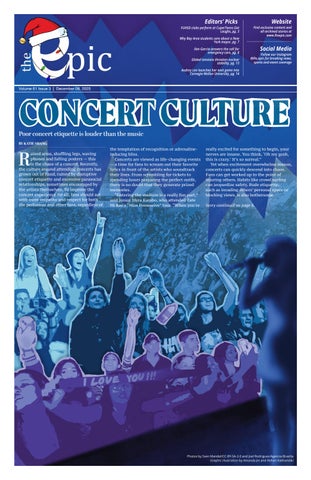
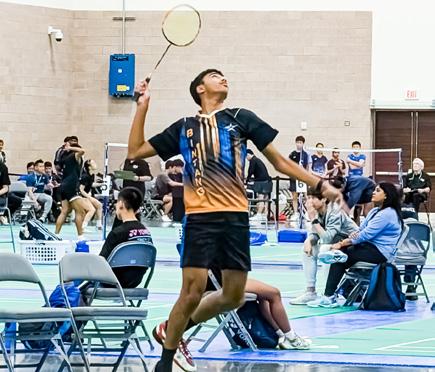
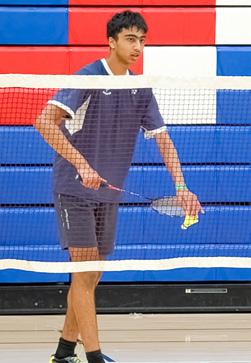
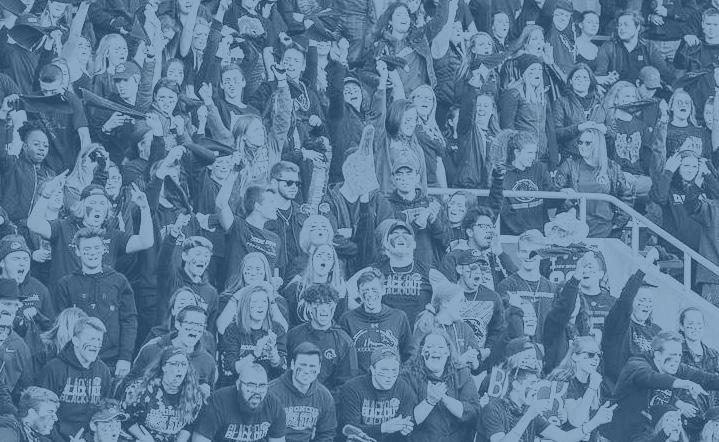
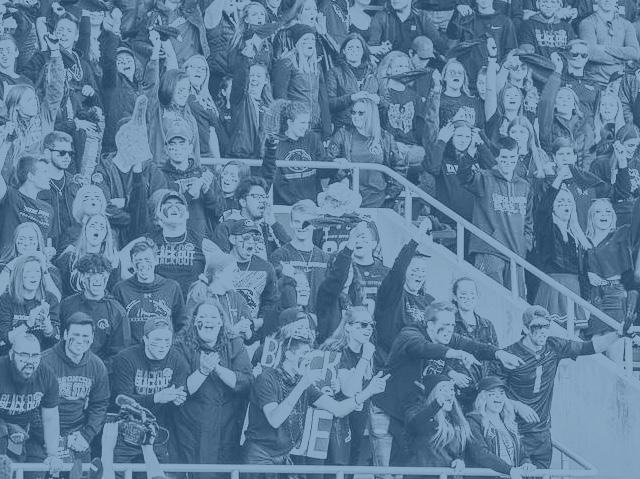
Raised arms, shuffing legs, waving phones and falling posters — this is the chaos of a concert. Recently, the culture around attending concerts has grown out of hand, ruined by disruptive concert etiquette and excessive parasocial relationships, sometimes encouraged by the artists themselves. To improve the concert experience for all, fans should act with more empathy and respect for both the performer and other fans, regardless of
the temptation of recognition or adrenalineinducing bliss.
Concerts are viewed as life-changing events — a time for fans to scream out their favorite lyrics in front of the artists who soundtrack their lives. From scrambling for tickets to spending hours preparing the perfect outft, there is no doubt that they generate prized memories.
“Entering the stadium is a really fun part,” said junior Myra Kambo, who attended Tate McRae’s “Miss Possessive” tour. “When you’re
really excited for something to begin, your nerves are insane. You think, ‘Oh my gosh, this is crazy.’ It’s so surreal.”
Yet when excitement overwhelms reason, concerts can quickly descend into chaos. Fans can get worked up to the point of injuring others. Habits like crowd surfng can jeopardize safety. Rude etiquette, such as invading others’ personal space or blocking views, is also bothersome.
Story continued on page 6.
Photos by Sven Mandel/CC-BY-SA-3.0 and Joel Rodrigues/Agencia Brasilia Graphic illustration by Amanda Jin and Rohan Kakhandiki
Le er from the Editors Hey Vikings!
‘Tis the season to be jolly!
Welcome to our third issue of the year.
In News, dive into the local CuperTeens Got Laughs show; in Opinion, delve into why a New York City mayoral race stirred ripples in the Bay Area; in Features, follow senior Ilan Garcia’s pursuit of EMT studies; in In-Depth, discover the thorny implications of nuclear testing and in Sports, step into senior Audrey Lee’s new home base at Carnegie Mellon University.
Finally, head to our website, lhsepic.com, for an enchanting review of “Wicked 2: For Good.”
French Honor Society hosted its frst-ever weeklong scavenger hunt, “The Mystery at the Louvre,” from Nov. 10-14. Inspired by the Oct. 19 robbery at the Louvre Museum in Paris, the event involved “jewels” — chocolate bonbons — for students to fnd, which they could keep for themselves. The items were hidden around campus in places like the art wing, the history wing and the gym. Clues on Instagram and QR codes around campus directed students to detailed storylines centered around French historical fgures to uncover the made-up thief: Jacques Cartier. The fnal prize was a gold chest flled with chocolate gold coins.
School Community National International
The last penny was minted in Philadelphia on Nov. 12, ending its 232-year lifespan. The United States Treasury frst announced in May that the coin would be discontinued. Its end was largely attributed to rising production costs, with each penny costing 3.69 cents to produce. Many also believed the rise of transactions through cards and smartphones eliminated the need for small change, and that coins take up space and are less practical. While pennies are still counted as legal tender and remain in circulation, cash transactions will now be rounded to the nearest fve cents.
On Nov. 28, an isolated shooting took place at Westfeld Valley Fair at around 5:40 p.m. Shots were fred following a verbal altercation between the male suspect and an adult male victim. The mall was then placed in lockdown, with Black Friday shoppers stampeding to fnd shelter in nearby stores. The San José Police Department confrmed that three people were shot with non-lifethreatening injuries: an adult male, an uninvolved adult woman and an uninvolved 16-year-old girl. Valley Fair reopened on Nov. 29 with increased police patrols as investigations continue.
On Nov. 26 at around 2:51 p.m. in Tai Po, Hong Kong, a fre broke out at the Wang Fuk Court apartment complex and resulted in at least 159 known deaths at publication date. The fre spread from the lower levels of the Wang Cheong Court to seven of the eight buildings, burning for over a day. Many of the apartments, home to around 4,600 residents, had malfunctioning fre alarms. This incident raised anger and concerns about the quality of construction and internal corruption, with police arresting three construction workers on suspicion of manslaughter, gross negligence and suspected corruption.
Recycling through ASB Community Link’s thri store
BY ROHAN KAKHANDIKI
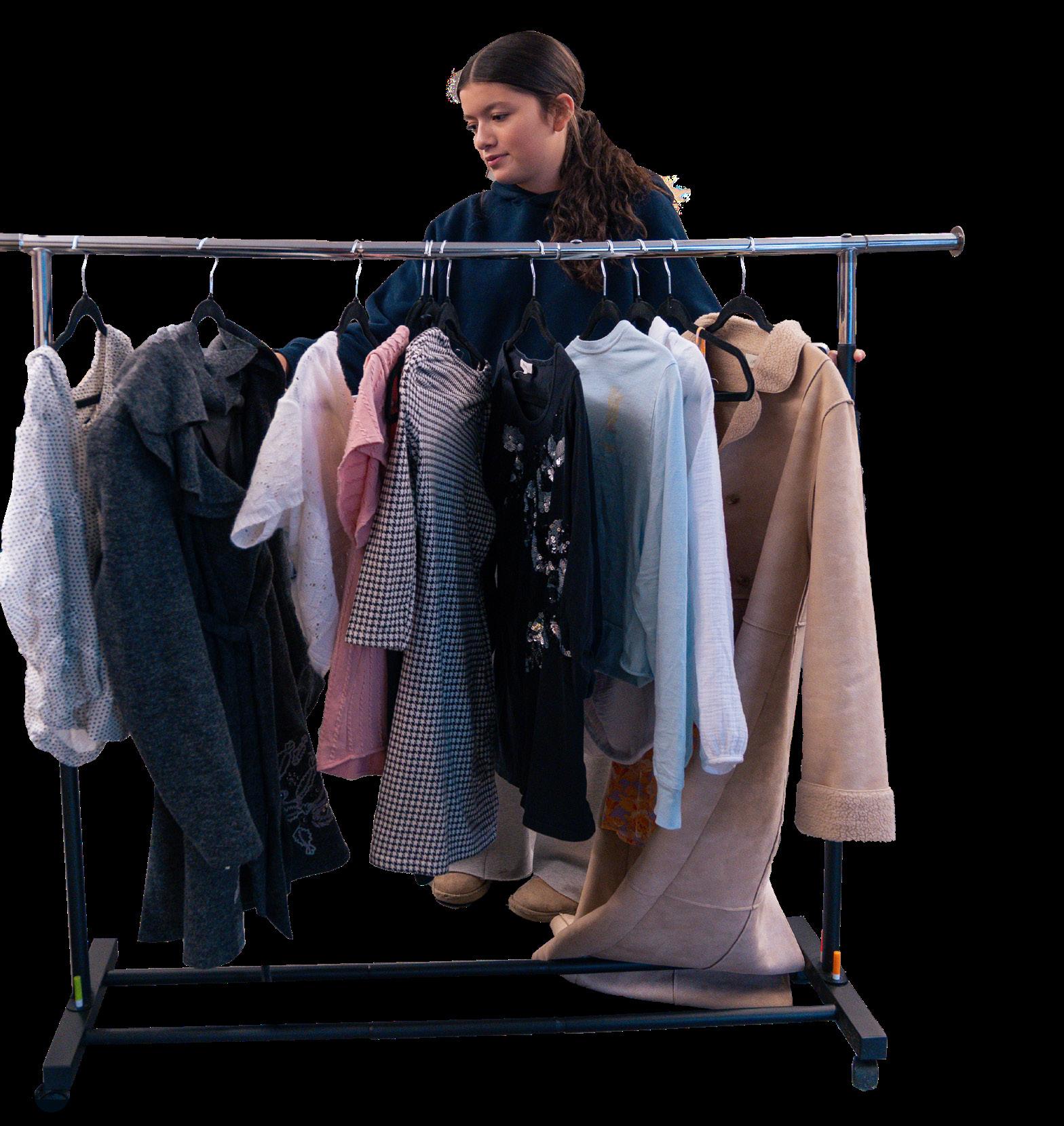
Combing through racks of fabric, students search through a menagerie of spirit wear and vintage clothes to fnd their next perfect outft. After a year-long hiatus, ASB Community Link brought the thrift store back to campus this school year. The store opened for the frst time this year on Nov. 12 during lunch, lasting until Nov. 14 with added popup
events we do,” senior and CLink commissioner Ashwath Anoop said. “Most of our events focus on school spirit through sports or art, and we wanted to bring something back that stood out and wasn’t like what we normally do.”
CLink’s idea to open a thrift store initially came in the 2023-
tote bags to the frst 20 donors.
“There weren’t many people on the frst day,” junior and ASB Spirit commissioner Rohin Saharoy said. “So we thought it’d be a good idea to buy a small women’s top, which I wore around campus to advertise that the store was open.”
failed due to a lack of donations.
ASB Bootcamp
We introduced the prize drawing. We moved some donation bins into the offce and Mrs. Lawrence’s offce, instead of keeping them in the ASB den. We also worked with clubs for the frst time. I feel like each of these small changes made this year’s event better.
Ojas Kothari CLink commissioner
plans. The project was led by juniors and CLink commissioners Niharika Ramanatham and Maddy Chang.
“We wanted to refect on what worked and what didn’t work from the last thrift store,” Ramanatham said. “We wanted to make an incentive for people to donate, to draw more people to the store.”
To ensure a successful launch, organizers promoted the event extensively. They used creative ways to gather donations and marketed the thrift store’s release, such as having student models walk around the quad with donated clothes and giving free
The thrift store included racks of used Homecoming costumes donated from the Conservation Action Association, and other lightly-used clothing donated by students. Those who donated could also enter in a raffe, which gave them an opportunity to win prizes. The drawing took place at the fnal popup on Nov. 14. The two winners took home LEGO sets.
“We introduced the prize drawing,” junior and CLink commissioner Ojas Kothari said. “We moved some donation bins to the offce and Mrs. Lawrence’s offce, instead of keeping them in the ASB den. We also worked with clubs for the frst time. I feel like each of these small changes made this year’s event better.”
Through CLink’s efforts to support the store, over 117 donations were tallied. The majority of the store’s proceeds will be given to the WE Charity, an organization that provides access to clean water, healthcare, food and educational opportunities to youth across the world. All of the unpurchased clothing items will be donated to local secondhand stores, such as Goodwill and Hope. CLink members found the experience deeply rewarding and enjoyable.
“I really liked appealing to people’s interests,” Ramanatham said. “I know a lot of people here at Lynbrook are interested in shopping and thrifting, so I loved how the event could cater to Lynbrook’s interests.”
Photo from Wikimedia Commons
Photo from Wikimedia Commons
Photo from Wikimedia Commons Photo from Wikimedia Commons
Photo by Joanna Chen
FUHSD clubs perform at CuperTeens Got Laughs
BY DAVID DAI
Students from clubs across FUHSD performed at the frst-ever CuperTeens Got Laughs on Nov. 23. Entirely organized by volunteers and students, the event was held at the Cupertino Community Hall and gave performers a platform to present comedy skits, put on magic shows and showcase music skills to a full audience. The event was themed “No pressure, just laughs!”
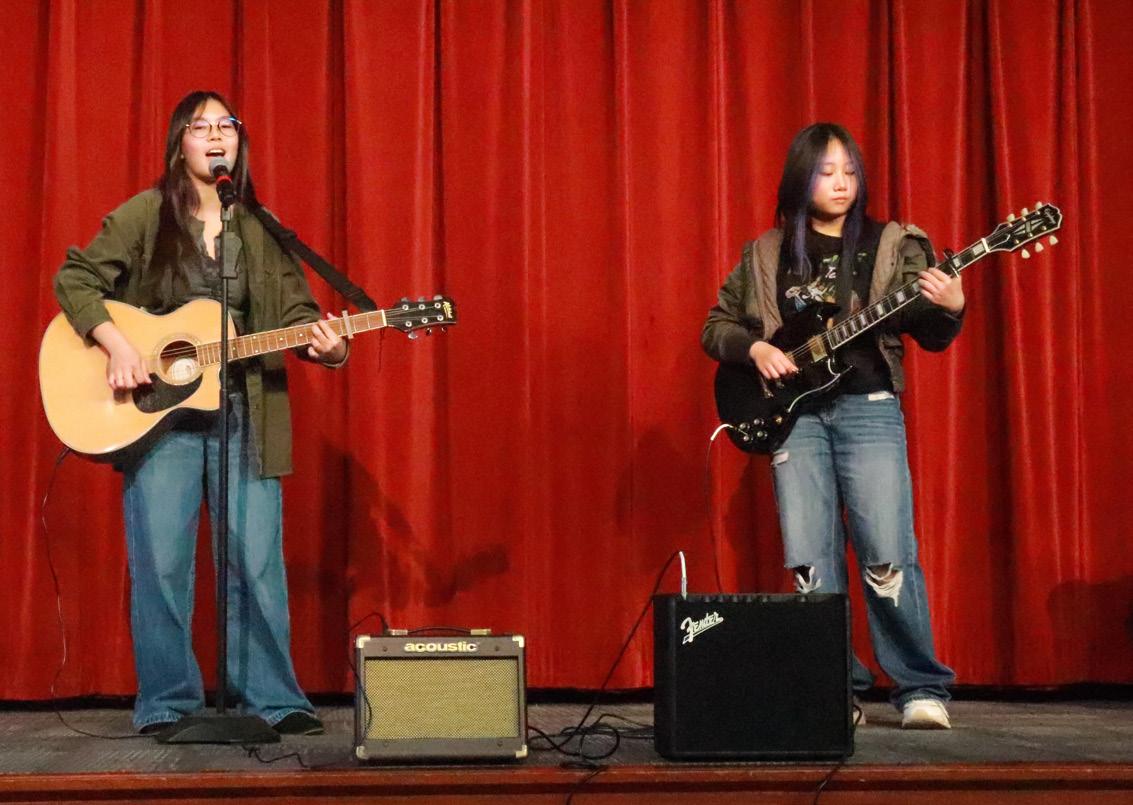
As part of Cupertino Mayor Liang Chao’s 2025 initiatives, the event was sponsored by the City of Cupertino, which provided the facility for the show and made the event free for both performers and attendees. Performers from Lynbrook included Magic Club and Guitar Club. Homestead’s Ballet Club and Drama Club also performed.
The event was initiated by freshman Bingchen Hu in an effort to bring people together and give teens a place to have
fun. The theme emphasizes that both performers and the audience should approach the show lightheartedly.
“We created this theme because performances are usually high-pressure,” Hu said. “Many people want to be the best. But we want to emphasize that this isn’t a competition. This is just a fun performance where everyone can laugh.”
Hu met Chao at Bobateeno, a social for youth clubs and organizations, in August, where he performed stand-up comedy.
Chao encouraged Hu to host an event inspired by his comedy. Over the next few weeks, Hu worked with Chao to fnd a site and date for the event. He then contacted over 100 clubs from schools around the community and asked them to perform. Finally, he designed a website and flmed a promotional video with Chao to bring further attention to the event.
“One issue we had was getting people
B.
to believe that this was a real event because this is a new idea,” Hu said. “Many clubs had a diffcult time believing that it was a real event. So we created a website with Cupertino City’s approval and included their badges.”
Each performer spent the weeks after signing up perfecting their performances. Clubs at Lynbrook used their meetings and additional time outside of school fnetuning their performance.
“My hope is that my performance was able to lift people out of whatever they’re worried about,” junior and Magic Club president Sarayu Bhavaraju said.
The event was largely successful and had an even higher turnout than Hu had expected. Students and parents from all around the community flled the community hall.
Hu hopes to make this event the frst of many by establishing CuperTeens Got Laughs as a recurring event.
“It was wonderful to see so many talented teens bring laughter to the audience,” Chao said. “I hope CuperTeens Got Laughs will become an annual tradition that everyone in our community can look forward to.”
Upcoming Viking Events
Winter Concert, Dec. 10-11
Come to Lynbrook Music Department’s annual Winter Concert at the auditorium from 7 to 9 p.m for renditions of holiday picks.
Winter Wellness Week, Dec. 8-12
Wellness goods will be available outside the ASB den, and relaxing activities will be hosted in the quad through the week.
Finals Week, Dec. 16-19
Semester Break, Dec. 22-Jan. 2
Martin Luther King Day, Jan. 19
Lynbrook Idol, Jan. 12-Jan. 14
Listen to talented singers in the quad and vote for a winner to perform the alma mater at Winter Rally.
Winter Rally, Jan. 23
Photo by Stuti Jain and Eunice Leung. Reporting by Stuti Jain.
Climate Collective promotes sustainability with Miller Middle School
BY ALYSSA LIN
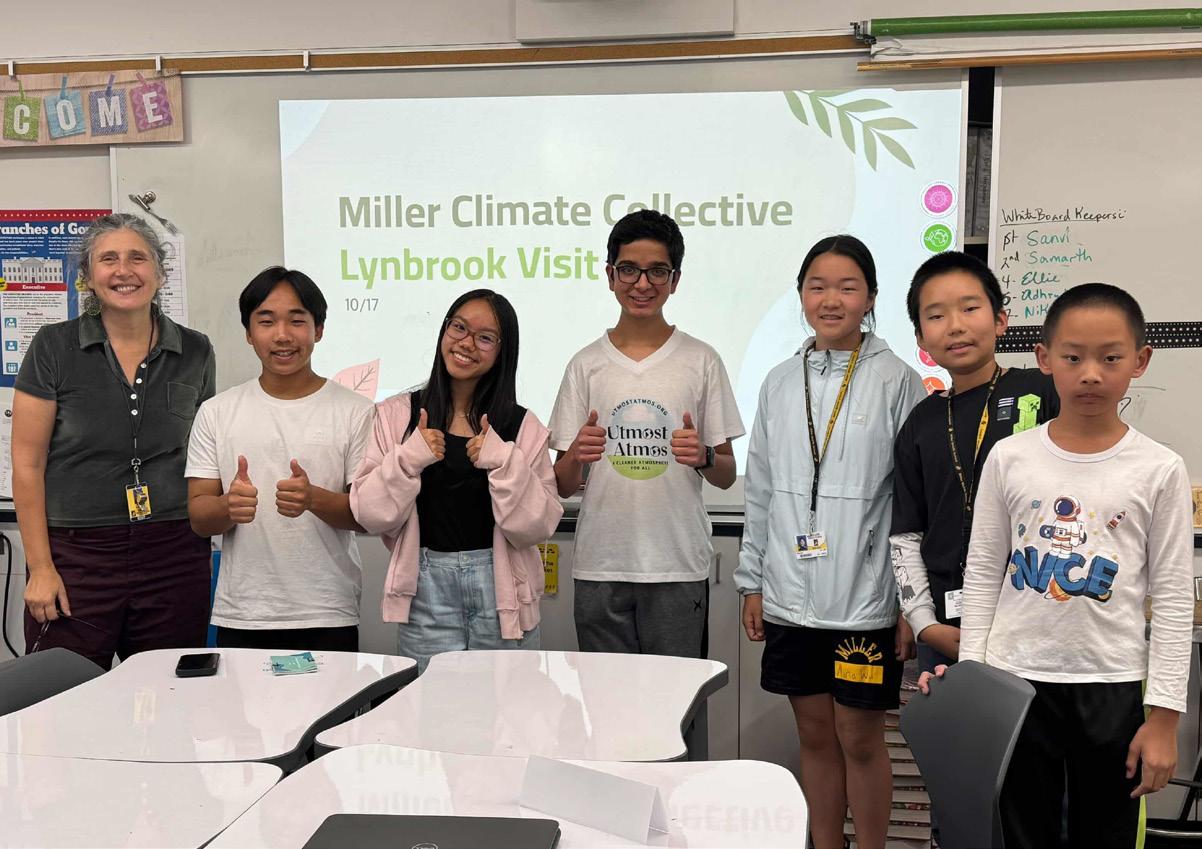
FUHSD Climate Collective hosted their frst workshop in partnership with Miller Middle School on Oct. 17, bringing together high school and middle school students to explore sustainability practices and environmental impacts. This collaboration is part of a new initiative from the collective, which aims to expand climate literacy and promote student leadership. The collective has also infuenced Miller’s sustainability efforts with initiatives such as a schoolwide Expo marker recycling program.
“When students learn from older students, they get a real feel for things, instead of an adult telling them to do something,” said Anshul Agarwal, science teacher and Climate Collective adviser. “This gives them ideas, collaboration opportunities and communication skills to do something about their environment.”
The partnership came to life after Miller social studies teacher Nicole Gasparik attended the collective’s Earth Day event in April. Inspired by student-led projects, Gasparik wanted to create a similar space at Miller to support passionate students.
“I thought it would be wonderful to have a pipeline between the sustainability work that’s happening in FUHSD and the Cupertino Union School District,” Gasparik said. “I would like our district to be inspired by the model that exists for Fremont Union.”
Beyond Gasparik’s initiative, Miller was chosen as the frst pilot school for the partnership between FUHSD and CUSD due to the school’s long-standing connection with Lynbrook. This school year, Gasparik started organizing weekly meetings during Tuesday lunch, allowing students to explore
environmental topics and work on projects. The Lynbrook Climate Collective is also hosting hour-long monthly workshops to support Miller students; in October, they explored sustainable fshkeeping practices and discussed waste sorting.
The collective intends to have the Miller students present their projects at the 2026 Earth Day, where students from the district will share environmental work and hear from guest speakers. This proposal takes inspiration from Gasparik’s efforts to extend opportunities to the Miller students, offering them the same platform that initially motivated her to partner.
“The long-term goal would be to get Miller students involved in climate action and environmental literacy,” sophomore and Lynbrook Climate Collective lead Michael Tang said. “Climate Collective provides FUHSD students the opportunity to take part and make a difference. We
want to bring Miller students the same opportunities.”
This initiative is one of many that the Lynbrook Climate Collective is working on this year, such as reviving a campus recycling initiative and installing a garden to promote more green spaces on campus. The district hopes to eventually expand this partnership to other middle schools, creating more chances for younger students to engage in sustainability initiatives.
“The Miller students bring incredible energy, and it’s a privilege to be able to nurture that energy and work with these students who are going to be the future of Lynbrook Climate Collective and our world,” Tang said.
A. Lynbrook Climate Collective members pose with Gasparik and Miller students after their October meeting.
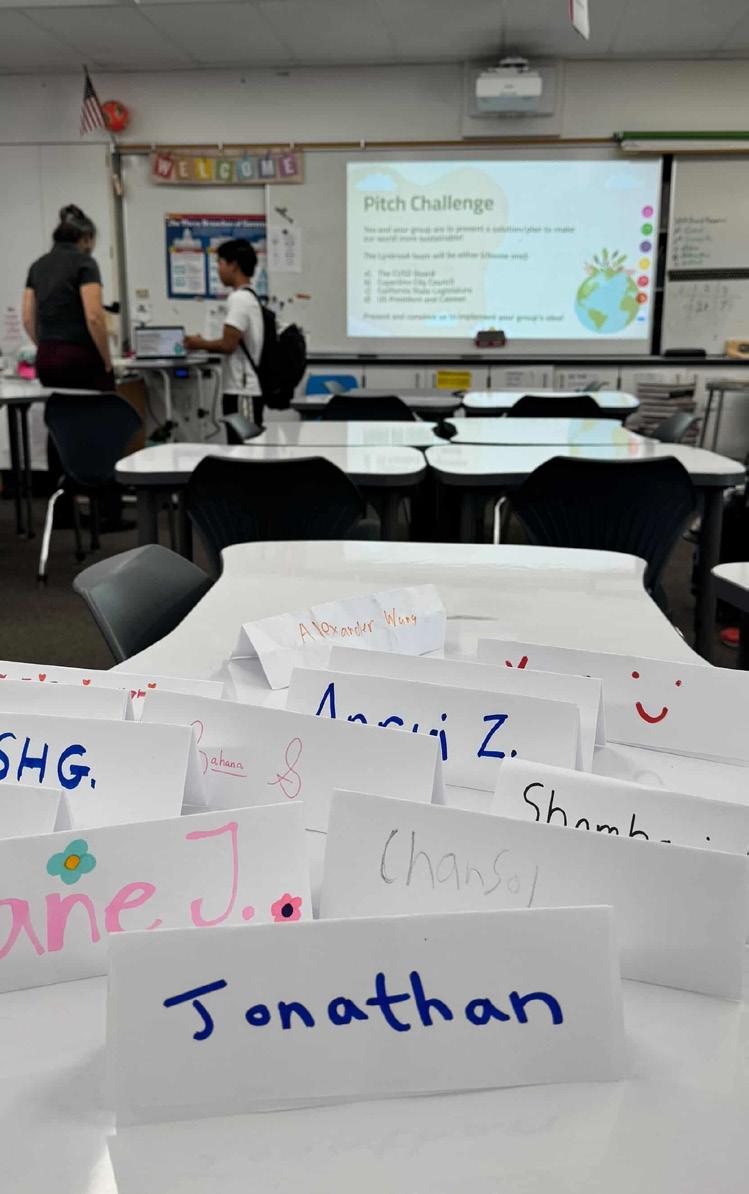
B. Name tags of Miller students fll a table as they prepare to do a activity.
Photos from Lynbrook Climate Collective.
A. Bhavaraju casts a spell for their next trick: pulling a lengthy scarf out of a tiny tube.
On top of playing the chords, Guitar Club members sing the lyrics to “Beaches” by beabadoobee.
Photos by David Zhu.
A.
B.
A.
B.
Graphic illustrations by David Dai
Local efforts ease impact of SNAP suspension
BY OLIVIA TU
Following the Oct. 1 government shutdown, Supplemental Nutrition Assistance Program, a federal program providing food benefts to lowincome households, had its funding frozen from Nov. 1 to Nov. 12. This delayed access to monthly food funds for more than 41 million Americans, including approximately 5.5 million Californians. In response, FUHSD and local food banks, pantries and restaurants have stepped in to assist affected families.
“I’ve seen frsthand how quickly community organizations have mobilized — pulling together volunteers, coordinating with schools and preparing hundreds of meals within hours,” Santa Clara County Board of Education Trustee
Tara Sreekrishnan said. “Our responsibility is to ensure no child goes without food, and I’m grateful for the teamwork from organizations, educators and local leaders.”
‘‘
Administered by the United States Department of Agriculture, SNAP — called CalFresh in California — supplies monthly funds into a card that can be used to buy food at grocery stores, farmers markets, online retailers and participating restaurants. The recent 43-day government shutdown caused the November pause in SNAP benefts. Additionally, the One Big Beautiful Bill Act passed on July 4 reduced SNAP funding by 20% and imposed stricter work requirements to qualify for SNAP benefts. Together, these factors have signifcantly disrupted food assistance for families.
Additionally, a free breakfast program began on Dec. 1, providing grab-and-go breakfast bars before school.
“Since only 11% of our families qualify for free or reduced eligibility, we had about 50 families show up,” Puri said. “We’re going to continue to do our part in initiating district-wide outreach and making sure students are well nourished.”
Local organizations and food banks have also stepped in to help. Second Harvest of Silicon Valley, which serves one in six people in Santa Clara County and San Mateo County, has been leading efforts to ensure everyone has access to nutritious food.
I’ve seen frsthand how quickly community organizations have mobilized — pulling together volunteers, coordinating with schools and preparing hundreds of meals within hours. Our responsibility is to ensure no child goes without food, and I’m grateful for the teamwork from organizations, educators and local leaders.
Tara Sreekrishnan Santa Clara County Board
of Education Trustee
‘‘
“The huge amount of money cut from food and other safety net programs, due to House Resolution 1, forced people to make do with less,” FUHSD Board of Trustees member Danny Choi said. “When students don’t have access to food, that directly impacts learning, as studies have shown that students who are malnourished or underfed are unable to perform as well.”
On Oct. 28, California and 22 other states sued President Donald Trump’s administration, alleging that its refusal to sustain SNAP was unlawful. After a federal judge ordered Trump to fully restore funding on Nov. 6, some Californian families saw their benefts return, but it wasn’t until Nov. 12 that a funding bill ended the shutdown. Although state offcials worked quickly to restore full SNAP benefts, the impacts of delayed payments were felt throughout the county.
“Although we only have around 400 families on SNAP, the changes are still very impactful,” district nutrition services manager Divya Puri said. “Presently, our nutrition program remains insulated from immediate federal SNAP disruptions due to its primary reliance on state funding. However, the anticipated federal policy changes and cost shifts within SNAP, scheduled to take effect next year, may have an impact on our budget.”
FUHSD initiated meal package pick-ups at Fremont High School for families on the morning of Nov. 26. to help cover meals while school was closed for break.
than usual even with all the extra help.”
5.3 million
low income residents rely on CalFresh. Most participants receive benefts in the frst 10 days of the month, which are on average, $190 a month. This totals up to $1 billion of California’s spending.
Additionally, Bay Area restaurants and farmers markets have supported SNAP recipients, offering free or discounted meals. In San José, Tony & Alba’s Pizza and Pasta sparked the initiative by offering free meals to children and discounts for parents. Local farmers markets vendors such as Straus Family Creamery provided a 50% discount on all orders for SNAP customers.
According to Public Policy Institute of California
“My supervisor said that they’re a lot more strained for resources ever since SNAP benefts ended, because more people come and they have less to give,” senior and Second Harvest volunteer Naman Maheshwari said. “Volunteering has made me more appreciative of everything I have. At Lynbrook, it’s easy to forget our privilege and lose sight of what other families are going through.”
Other food pantries, such as Community Seva, West Valley Community Services and Tzu Chi have pitched in by distributing fresh meals. Amid the struggle,
“My wife and I knew no child should go without meals, so we began offering free meals for kids a week and a half before SNAP would be cut,” Tony & Alba’s Pizza and Pasta co-owner Albert Vallorz said. “Everybody needs help and there’s many good people out there. It’s our turn to help others and we’re here to support families.”
Beyond the immediate disruption to SNAP, food insecurity in the U.S. is a growing crisis, with rates rising from 12.8% in 2022 to 13.5% in 2023. Building community resilience can help combat the problem.
“Whether it’s students donating, being involved with local volunteer clubs, or voting at elections to effectively drive long-term change from policies, these little steps add up to a bigger change,” Choi said. “People can also attend public FUHSD board meetings if they would like to voice their concerns or highlight a cause.”
SNAP disruptions have also motivated students to examine their own circumstances and practice gratitude. From working with food drives to service clubs, students are fnding ways to create tangible impact across the community.
“As someone who has food security, volunteering has made me more compassionate and empathetic of those without,” Lye said. “I feel proud being able to talk to
Graphic illustration by David Dai and Eunice Leung
OPINION the Epic |
Extend Thanksgiving break to a full week
After students and staff spend months immersed in rigorous schedules, Thanksgiving break bliss comes at last. But hold on, only three school days off? In the nearby Cupertino Union School District and other local high school districts, students enjoy a full week without school. But in FUHSD, the Monday and Tuesday of that week proceed as stand-alone block days, and are often unproductive.
The Fremont Education Association, the district’s teacher union, is currently gathering feedback regarding the possibility of extending break to a full week, and implementing this change would beneft students, parents and school staff.
Thanksgiving break is an important time for students and teachers to recharge, catch up on work and grading or start studying for fnals. The full week off gives more breathing room for all to juggle their responsibilities.
Staf Editorial // The voice of the Epic
just need our rest.”
However, removing the instructional days from Thanksgiving week means they will need to be added somewhere else. California mandates schools to be in session for a minimum of 180 days each school year. The current FUHSD schedule meets this minimum exactly.
To maintain this, the days could be moved to October, March or the start of the school year, which would remove the three-day weekends in those months.
Moving instructional days to October would take away the only day off in that month, further adding to stress. Therefore, the days ft best at the beginning of the year.
I think that if we had those two days removed, it’d be much, much easier to attend vacations and relax.
Max Hwa Sophomore
‘‘ ‘‘
“I’d be able to catch up on other work I have to do for classes or start studying for fnals earlier,” junior Sandhya Kumar said. “I also play soccer, so we can get more rest time with a longer break.”
Furthermore, the two school days in Thanksgiving week are confusing for both teachers and students. With break around the corner, the purpose of these days teeters between two fates: additional rigor or pure relaxation.
While some teachers put on movies or plan fun activities, others try to incentivize attendance with tests. The days either rush or delay curriculum, creating imbalances and adding stress.
“I think that if we had those two days removed, it’d be much, much easier to attend vacations and relax,” sophomore Max Hwa said. “I also think that having those two days off just contributes to mental health in general, because we
“There is a long spell between Labor Day in early September and Thanksgiving without much in the way of a break,” FEA school representative and science teacher Thanh Nguyen said. “Students and teachers alike get burned out during this time period right at the beginning of the year, and some teachers even coined a term for this time period: ‘DEVOLSON: The Dark, Evil Vortex of Late September, October, and November.’”
A full week of break would provide other benefts, such as more time for staff to supervise their children, since many have the full week off, or an opportunity for families to go on a full vacation.
“It will open up a different level of travel because of the difference between what you can do with a whole week off as opposed to four or fve days,” Fulk said. “We had one year where my
family went to China because we took that week off. We could have never done that had I not taken those two days off.”
The solution to move the current instructional days from Thanksgiving week to the beginning of the school year — starting school on Thursday instead of Monday in August — helps better distribute breaks across the frst semester for both students and teachers.
“Lynbrook is a competitive school. I think we deserve a longer break in the middle of the school year before fnals. It will be better rest for kids who’ve been working hard toward all their tests.”
Additionally, it could help align athletic schedules with the school calendar, as fall sports currently start the week before the frst day of school.
“School should start earlier because then break time can be distributed more evenly throughout the year,” Kumar said. “I would rather have a longer break in the middle of the year than have a longer break and start the year earlier, because I already had two months before summer.”
“Three-day weekends are good for relaxation, especially during a busy month like October. The days should be moved to the beginning of the year. “
Although moving Thanksgiving break may pose minor inconveniences, they are outweighed by widespread benefts for both students and staff.
Change can be infuenced by student voices as well. The most direct way to bring up opinions is during the monthly district board meetings. While
students can always offer their perspective to teachers, board members are the ones with fnal say on all district-level decisions.
“The decisions that are made are not because we’re thinking of what’s best for us — we’re making them because we’re thinking of what’s best for the students,” Fulk said. “And that comes from feedback from them.”
editors-in-chief — olivia yuan, crystal zhu
managing editor
— claire guo
copy editors — alex cotterel, david zhu
design editors
— amanda jin, rohan kakhandiki
adviser
— josh miller
news editor — brian lee
opinion editors — maddy chang, saavan saraf
sports editor
web editors in-depth editor
business/pr manager features editor — isabella chiu
— alexandra wu
— anna cen
— akash anand, cecilia wu
— jenny suh
social media manager — ethan wong
stafers
samanvi bandugula
audrey cabaltica
rebecca cai
emily cheah
joanna chen
anushka deshmukh
nicolas cheng
david dai
ashley hein
stuti jain
eunice leung
alyssa lin tristan lo rachel martin
prisha pulastya katie shang
olivia tu
the Epic staff voted 32-0 in favor of this stance with 5 abstaining.
sunnie wu
catherine yang
vanessa yap amy yuan
Photos by Brian Lee Graphic illustrations by Emily Cheah
Sandhya Kumar Junior
Saumya Damaraju Freshman
Photo by Jenny Suh
Freeways to freedom
BY EUNICE LEUNG // IN MY OPINION
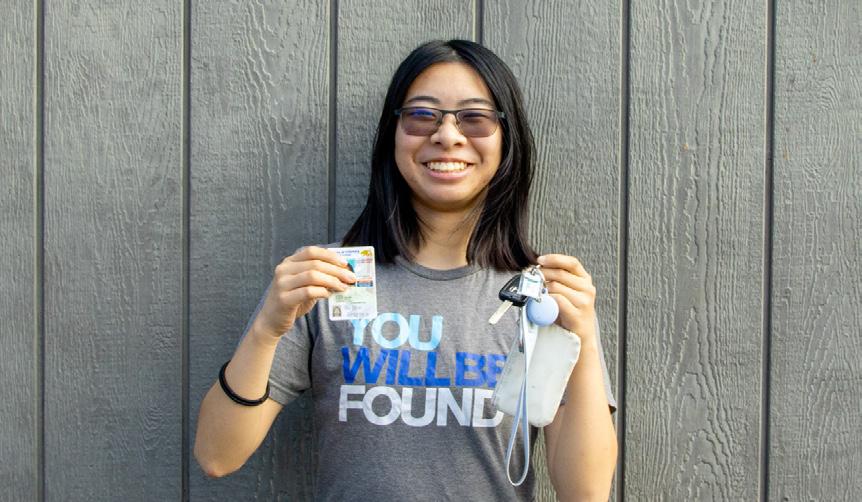
Will I run out of road? The question tailgated me along my road to a driver’s license. I feared a tremble on the brake or a darker turn of thoughts would collapse the cement beneath my tires. Yet I had to keep driving; the only way to freedom was forward. You will be tested on a variety of road maneuvers. Stop sign: wait.
Only practicing in the De Anza College parking lot
over the summer, I improved slowly. Right turn on red: yield to all directions.
As the new school year picked up, so did my desire to drive. More diffcult routes accelerated my confdence and love for cruising. Yet around the corner, roadblocks defated my enthusiasm: limited support, trouble getting my six instructor hours and a renewed battle with mental health. I thought a professional instructor would be more patient than my father, yet I waited in a parking lot as my new coach ran errands during a paid session.
“Stop spending so much time driving,” my mother told me. “You need to focus on school.”
I shut the driver’s door in response: I couldn’t give up the one activity keeping me in motion. But soon, aches in my joints revved and my thoughts sank into depths I couldn’t steer out of. I became bedridden for weeks, feeling the road crumbling under me.
Yellow light: brake or accelerate? Meanwhile, a Tesla Model 3 hummed in the driveway, promising comfort: a frm wheel I could control. Though I wasn’t yet strong enough to rebuild my road, I knew I wouldn’t make it through if I stalled getting up for another day, if my mental stoplight turned red. So, my foot found its way back to the gas pedal, solidifying my choice to continue
on. Unprotected left turn: tires forward until congestion clears.
As I accumulated hours behind the wheel, I set hourly reminders to check the DMV appointments page. The day I could drive alone — windows down, music blasting — kept the road growing, even if it wasn’t smooth.
“You need more practice,” my father said from the passenger seat the week before my test. “I hope you fail.” The wheel jerked under my grip; his lack of faith unsteadied my steering. Every street sign seemed to read: FAIL. Still, I was on the ramp to freedom. I had to stay in my lane. Freeway merging: the scariest part.
Shuffing documents with sweaty fngers at the DMV. Shaky hands missing the seatbelt buckle thrice. Pulling out from the lot, roads blurring by, pulling back in, setting Park. Wiping palms on pants.
“Congratulations,” the evaluator said, handing me my scoresheet. 2 minor errors. A checkmark beside “Pass.” Freeways: full speed ahead.
The frst time I drove alone, I fnally felt 16 and free, cruising down a road wide with possibility.
You have completed your test. The road is yours.
Poor concert etique e is louder than the music
BY KATIE SHANG
Story continued from front page.
Concerts are places prone to overstimulation: disruptive cheering, aggressive movements and intense fervor. Although they are also places to gather with thousands of strangers who share a musical passion, attendees may face disrespectful behaviors: cutting lines, screaming too loud or getting shoved against seats.
“At the Lorde concert, my friends and I had pretty good seats, right in front of the pit,” junior Aditi Satish said.
“But then some people tried coming down right where we were before the concert, blocking other people before us who had been there since 4 p.m. We kind of argued, but they were just making it awkward.”
‘‘
neighborhood artist to gain more listeners, giving fans an illusion of intimacy. As a result, fans often seek the attention of musicians they idolize, pursuing one-sided, obsessive relationships and believing that certain actions are justifed for recognition.
“The artist’s marketing and their public relation teams try to make them seem more human so that people can relate to them,” said freshman Ria Malhotra, who has attended concerts by Laufey, the Weeknd and Conan Gray. “People think they can just abuse it and overstep boundaries.”
The artist’s marketing and their public relation teams try to make them seem more human so that people can relate to them. People think they can just abuse it and overstep boundaries.
These attitudes can grow into issues that also affect the artist. There have been numerous recent instances of fans throwing phones or bottles onto the stage, sometimes striking the artist. At artist P!NK’s concert in London, a fan hurled a ziploc bag onstage, which allegedly contained their mother’s ashes. Users online commented on how disrespectful the incident was. Parasocial relationships heavily infuence these relationships — singers sell the image
‘
‘
Music genres may also infuence fan behavior, infuencing concert-goers to throw themselves into something dangerous or foolish. A singer’s unique style of music may appeal to certain crowds, with uptempo and more intense melodies attracting rowdier crowds. For example, punk rock concerts include fans who practice gobbing, or spitting on each other and the artist. Pop and rap music are also known to have some of the loudest, most enthusiastic fans, with Taylor Swift’s shows causing actual earthquakes. In one instance, pop singer Bebe Rexha was performing in New York City when she was struck by a phone and collapsed onstage, requiring stitches around her eye. Rapper Playboi Carti also has the reputation of performing extremely loud and passionate shows.
“In the Carti fan base, people go crazy,” Class of 2025 alum Snehil Kakani said. “I’ve seen people online do all kinds of weird stuff to worship Carti,
promotes his music, with a certain aura of mystery around everything that gets people more hooked on.”
Oftentimes, how an artist shapes their media personality can infuence fan behavior. Mainstream singers frequently interact with fans online, which concertgoers can misinterpret as permission to disregard boundaries. Pop artist Billie Eillish makes calmer music compared to intense rap or rock, but she’s been struck by objects at concerts numerous times.
“Singers seem really friendly to fans, accessible and nice because that’s the way their marketing describes them,” De Anza psychology Professor Mark Healy said. “Artists who are also more in the mainstream attract more harmful people in contrast to more niche music scenes. It’s when you get popular and you get popular with the normies where it will be less safe.”
Singers are often given the responsibility to establish boundaires with fans. However, fans should also understand that artists are not just voices that they hear on the radio or posters on their bedroom walls. Fans need to hold themselves accountable at concerts, which are still public spaces that demand respect. The safety of others should be prioritized, not jeopardized by selfsh desires for attention or personal gratifcation. Moreover, music is a big aspect of many lives, weaving together decades of life and capable of passing memories on to the next generation.
“I’m sharing a very special part of my life with my kids: the songs I fell in love with, the songs I used to dance with girls to, the songs I’d listen to while driving my car to high school,” Spanish teacher Michael Esquivel said. “Those songs from
Ria Malhotra Freshman and concert attendee
Why Bay Area students care about a New York mayor
BY MADDY CHANG AND SAAVAN SARAF
It’s Nov. 4, 2025 and the New York Times just announced Democratic Socialist Zohran Mamdani’s victory in the New York City mayoral race.
Three thousand miles away in San José, California, Lynbrook students food to social media to repost that same headline, raising the question: why does an election that far away matter so much to them?
The most obvious reason is Mamdani’s far-reaching social media campaign. He amassed 10 million followers on Instagram in less than a year, surprising other Democrats and engaging millions of young people across the country in his campaign. His success wasn’t due to trend-hopping, but authenticity. Mamdani stuck to his beliefs even when others dismissed his plans to make city buses free and freeze rent as outlandish, labeling him an extremist. His resolution is a personality trait young voters were craving in an era of disillusionment with the Democratic establishment.
“In recent decades, the Democratic party has seemed detached,” senior Rohan Chaudhary said. “Zohran Mamdani came in with a very clear message about reducing the rent and the cost of living. He didn’t do as much grand posturing as Andrew Cuomo.”
Mamdani rose in a time of declining trust in institutions and mainstream political parties, and he thus campaigned on bold ideas like climate action and affordable healthcare. In addition, the high cost of living nationwide has pushed voters to abandon more moderate politicians and propel people like Mamdani into the mainstream.
This call to young voters is missing in other political messaging. Campaign analysts noted a few key differences between Mamdani and politicians like former Vice President Kamala Harris. Both achieved online virality, but while Harris drew from popular memes like Charlie XCX’s “Brat” album, Mamdani’s videos included authentic policy explanations, life stories and candid interactions. On Instagram, he posted personable moments like old rap videos, a wrestling match with fans and a clip of him eating Indian food with his hands.
Lynbrook has a lot of immigrants, it’s a nice tipping point to see someone of maybe their own culture being elected.
Wesley Chen Senior
‘‘ ‘‘
designed to be relatable and grounded,” sophomore Adam Salme said. “It’s more or less a conversation with the local community. His content sounds more like a conversation you would have with a friend, rather than polished speech, and that really resonates with people.”
through.
Mamdani’s success has inspired imitators across the U.S. Congressional candidate Saikat Chakrabarti is using social media to fuel his campaign for California’s 11th congressional district. Mussab Ali used a similar strategy in his run for Jersey City mayor, referring to himself as “Black Zohran.”
“The very personalized ads he did resonated with the everyday New Yorker,” Chaudhary said. “Oftentimes, he flmed his ads in local Halal stands and local bodegas, talking to actual owners and getting their testimony. If you compare that to someone whose campaign is a bit more grandiose, it was really just a home run from the start.”
It’s more or less a conversation with the local community. His content sounds more like a conversation you would have with a friend, rather than polished speech, and that really resonates with people.
Adam Salme Sophomore
‘‘ ‘‘
This strategy succeeded because it exploits a shift in how younger voters consume information and assess credibility.
Gen Z grew up saturated with advertising and curated content, so they’ve developed sharp instincts when it comes to detecting inauthenticity.
Mamdani’s authenticity extends to how he engages with contentious issues. Where other politicians might tiptoe around controversy, Mamdani takes clear stances. His vocal support for Palestinian statehood, willingness to call himself a Democratic socialist and criticism of corporate power are all his actual convictions, not an attempt to appeal to the broadest possible audience. Instead of softening his stances in response to criticism, he leaned into them.
“People would try to attack him for certain things like his nationality, calling him a communist, and it was really counterproductive because they weren’t actually attacking his policies,” senior Wesley Chen said. “I’m really happy to see that people saw beyond that and actually voted for what policies matter to them.”
While Mamdani has proven there’s a place for social media in politics, others show how it can be a double-edged sword. It’s the easiest way to spread misinformation, radicalize young people or divide voters.
Lynbrook students care because Mamdani’s victory suggests a possible path forward. With Mamdani’s campaign, they’re watching to see if rent freezes, free buses and universal childcare can move from TikTok into real policy.
“Lybrook has a lot of immigrants, it’s realsomeone of maybe their own culture being elected,” Chen said.
You’re not boring, you just don’t write!
YBY REBECCA CAI
“Within the standards of the United States, socialism is a radical position to take,” San José State University political science professor Andrew Alexander said. “But more importantly, he talked to people, not just in campaign slogans, but in particular issues that affected them.”
Rather than credentials or endorsements, Mamdani’s unfltered approach demonstrates trustworthiness through vulnerability. It contrasted with Cuomo’s public image, which was stained by sexual harassment accusations and alleged collusion with President Donald Trump over strategies to defeat Mamdani.
“Most of Zohran’s content is
Critics have argued that Mamdani’s use of social media trivializes important issues, and that his expertise online can’t be translated into actual governance. Opposing candidates have pointed this out, like NYC city comptroller and mayoral candidate Brad Lander, who declared, “I’m not great on TikTok, but I’m great on accountability.” However, these same politicians tried hard to recreate Mamdani’s online popularity for themselves. And in 2025, it’s impossible to ignore the number one source of political news and information for young people in any campaign.
Social media’s fast-paced nature makes posturing and performativity easy to see
ou don’t have to live in a whimsical house by the ocean, or endure years of famine while leading an underground revolution to be worthy of creative writing. In fact, most writers put pen to paper for simpler reasons, undergoing this endeavor to better understand themselves. Here’s three reasons why everyone should pick up creative writing as a hobby.
Photos from Openverse Graphic illustration by Maddy Chang
Ilan Garcia answers the call for emergency care
BY JENNY SUH
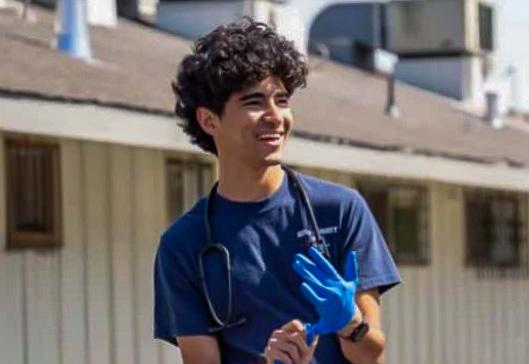
As sirens cut through the night, senior Ilan Garcia steadies himself in the back of an ambulance, eyes on the patient before him. He positions the stretcher and prepares for the emergency response. Whether he is helping crews manage patients or supporting Lynbrook athletes as an athletic training intern, Garcia assists people during moments of medical uncertainty.
‘‘Garcia began shadowing athletic trainer Scott Leveau, who later worked with him to build the athletic training internship. Under Leveau’s guidance, he learned to support injured athletes, from taping ankles to managing rehabilitation plans.
When the accident happened, everything felt chaotic and I was pretty scared, but the medics and frefghters weren’t.
Ilan Garcia Senior
Garcia’s interest in emergency care began the summer after his freshman year. Biking home from a friend’s house, a truck struck him as he crossed the intersection. He suffered deep cuts, abrasions and two sprained ankles.
“When the accident happened, everything felt chaotic and I was really scared, but the medics and frefghters weren’t,” Garcia said.
“That was the frst time I understood what it meant to be a real frst responder and how helpful they were in calming me down.”
At the end of his sophomore year,
“Ilan treats every medical situation with the same level of professionalism that you'd expect to see in someone who's been in their role for years,” Leveau said. “I've learned so much from him and I've become a better Athletic Trainer because of it. He is the epitome of what a medical professional should be.”
‘‘
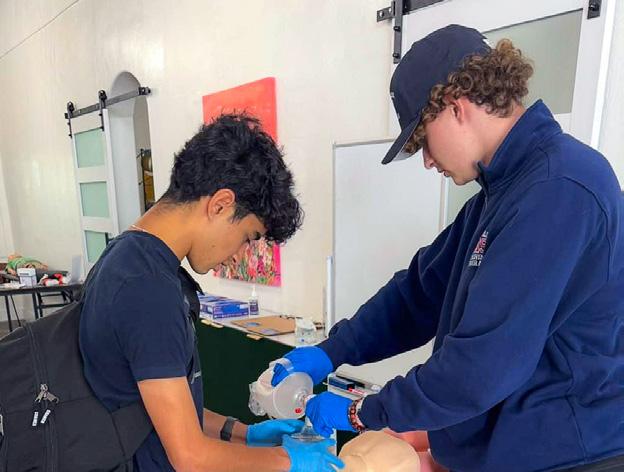
By the end of junior year, Garcia wanted to pursue formal frst responder training at the South County EMS Training Center in his senior year. Four days a week after school, Garcia commuted to Gilroy for lectures, scenario practice and lab sessions. He practiced patient assessments while instructors created realistic simulations of 911 calls.
“It felt like a college class, but with real pressure behind it,” Garcia said. “You’d study something one night, and the next day you were practicing it in labs.”
Garcia’s practical training took him to several emergency care agencies. At Royal Ambulance in San José, he gained direct experience in a non-emergency setting. Training offcers critiqued his work, which
included checking equipment before shifts and performing patient assessments. At the busiest point in his schedule, he worked up to three 12-hour shifts a week.
Eventually, Garcia moved on to assist real 911-level emergency response through the San José Fire Station and Santa Clara County Ambulance. These situations involved extreme patient conditions like heart attacks and car accidents. Shadowing paramedics, Garcia prepared equipment, took blood pressure and relayed clinical information.
Garcia hopes to study medicine in college, eventually care or sports medicine.
“I don’t know exactly where medicine will take me, whether that be medical school or a professional career as an EMT,”
Garcia said.
“I do know that helping people is where I’m meant to be.”
Ma hew Yuan shares wonder through every card shu
BY CECILIA WU
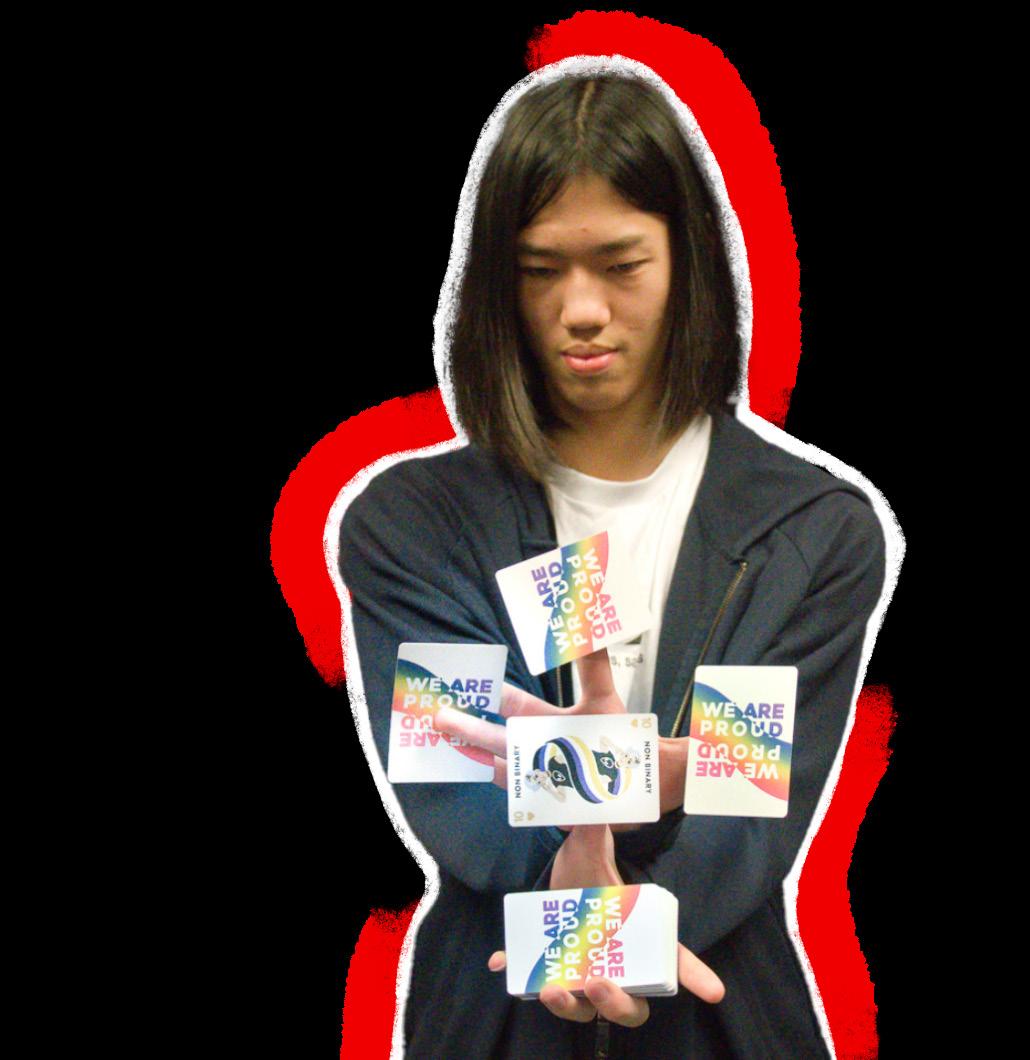
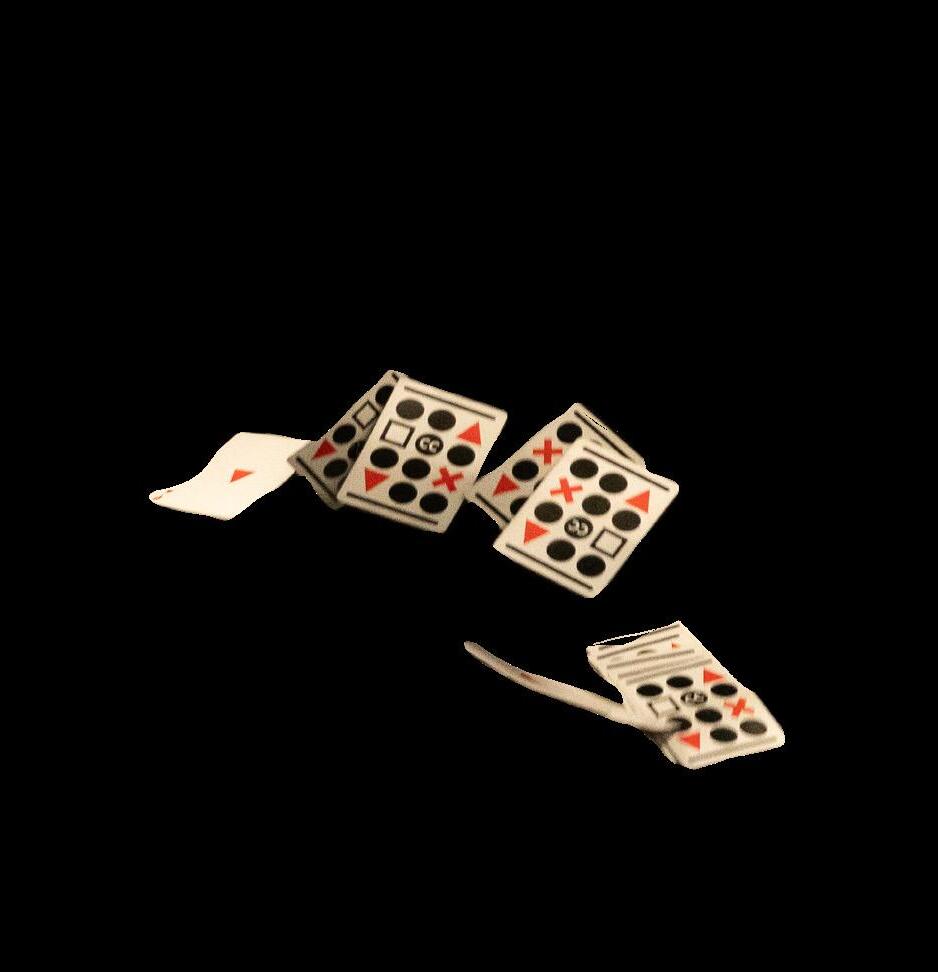
With a fick of his wrist, a cascade of cards fans smoothly through the air before snapping back into a perfect deck. Senior Matthew Yuan’s movements are fuid yet deliberate, each precise motion the result of countless hours of practice. Beyond tricks and fourishes, cardistry has become his way of bringing wonder to others — from his friends to the residents he performs for at local family shelters.
willingness to try.
“You have infnite possibilities with this really simple thing,” Yuan said. “There's magic in that.”
As Yuan continued exploring the craft, he began to realize how unique cardistry was compared to other forms of magic. In contrast to the hidden tricks in magic, cardistry uses constantly fashy visuals. Spins, cuts, fans and fourishes transform an ordinary deck of cards into a vibrant artistic expression. Yuan learned most of his cardistry tricks through YouTube tutorials from channels such as Lotus in Hand and School of Cardistry, often spending hours a day fdgeting with cards and experimenting with new techniques.
he’s really handy with his cards.”
“He would do cool magic tricks with cards in class,” senior and classmate Aravindkrishna Arivudainambi said. “Most teachers thought his tricks were really cool, and
Early on, Yuan struggled with the frustration of not being able to master moves quickly, especially with advanced fourishes such as the Pandora, a shuffe that requires splitting the deck into multiple sections and rotating them in sync.
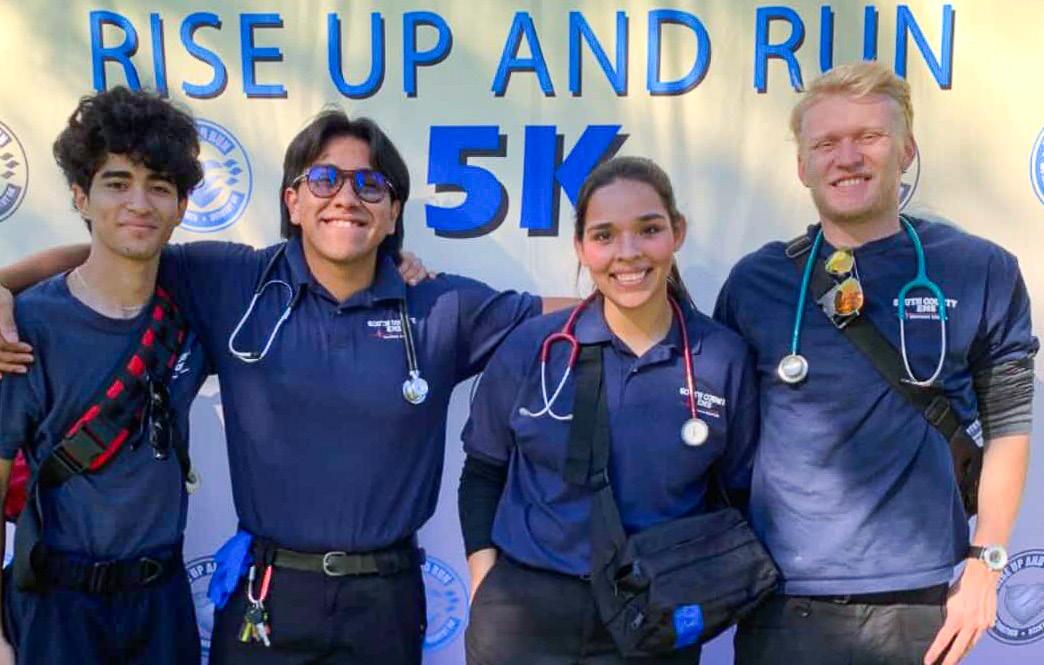
A. Ilan Garcia performs an EMT training procedure.
B. Garcia puts on gloves in preperation for his training.
C. Garcia poses with his fellow EMT trainees.
Matthew Yuan performs the card move spatium with a pride-themed deck of cards.
Photos from Ilan Garcia Graphic illustration by Amy Yuan
Middle College students navigate De Anza life
SBY EMILY CHEAH AND JOANNA CHEN
enior Preston Kwan has spent his time in Middle College discovering the freedom and fexibility of a college environment, affording him time to invest in his personal hobbies.
“I get to skateboard now for two hours before school, which I wouldn’t be able to do if I was still at Lynbrook,” Kwan said. As an offcer of De Anza TableTop Club, Kwan connects with like-minded peers who share a genuine passion for games and conversation.
“You don’t really notice it when you’re at Lynbrook, but a lot of people are doing things for the resume,” Kwan said. “These people are doing it for the love of the game.”
Although Kwan regularly attends Lynbrook events to see his old friends, the program has provided reassurance that he can still make new friends on De Anza’s campus.
“As a new Middle College student, I was scared I wouldn’t have any friends,” senior Jason Chu said. “On the frst day, Preston introduced me to his friends and I’m thankful for the time I’ve spent with them.”
Kwan has gained valuable experience from his time in Middle College, including learning how to use Canvas and adapting to the ways professors teach, skills which will help him transition to college life.
GRADE: JUNIOR
IJUNIOR
unior Minnie Menon applied to Middle College not just for a change of pace, but to grow as an independent learner. De Anza’s wide course selection and close-knit community allows her to have an active role
“It’s such a safe space,” Menon said. “You can really speak your mind and people aren’t going to judge you for it.”
The fast-paced college environment pushed her to fnd balance in her busy schedule by prioritizing tasks and taking it one assignment at a time.
As the youngest and only girl in her Introduction to Engineering class, Menon also learned to speak up for herself in the classroom.
“It was discouraging at frst,” Menon said. “But it’s helped me build confdence and prepare for college.”
Menon often felt overwhelmed at Lynbrook, where her focus on schoolwork left her little room to explore passions and socialize. Through lunch breaks and “Fun Friday” activities like costume contests and Mafa games, Menon formed new friendships and strengthened her sense of community at Middle College.
“I wouldn't give this up for anything,” Menon said. “It has been such a healing process.”
nspired by his cousin’s positive experience at Middle College, junior Sreyes Chetput applied to the program. Chetput was certain about the career he would pursue — computer science — and Middle College’s extensive variety of courses ft well with his goal. However, his passion for Lynbrook DECA initially made him hesitate.
“DECA was my make or break,” Chetput said. “Once I found out DECA was also at De Anza, I decided to do Middle College.”
Chetput joined De Anza’s chapter of DECA and became the fnancial offcer. With a smaller student body, Middle College fosters student unity.
“Everyone is much more disconnected in a high school setting,” Chetput said. “But everyone in Middle College is really close, which is surprising because that's not what I expected.”
Chetput and the DECA offcer team collaborated with the De Anza’s Women In Business club to organize the annual two-day De Anza Business Conference. By networking during the conference, Chetput gained a new perception of the community college students around him.
“People tend to look down on community college by thinking that those who attend aren’t smart,” Chetput said. “But there is a surprising amount of people who are genuinely passionate, interested and incredibly smart in their respective majors.”
Atypical day for Gonzales begins at 8:30 a.m., as her schedule is flled with morning classes. Gonzales’s schedule is similar to Lynbrook students’, yet she came to Middle College for a change of pace.
“The Lynbrook environment wasn't bad, but it just wasn't for me,” Gonzales said. “I also wanted to take different classes which Middle College gave me the opportunity to do.”
Although Middle College’s scheduling is fexible, Gonzales faced challenges with her schedule due to her athletics extracurricular activities, but she eventually improved her time management.
“I'm wrestling and working out a good amount right now, so I can't take evening classes,” Gonzales said. “This can get frustrating when you have very specifc courses you want to take.”
Her frst Middle College class on Friday begins at 12:30 p.m. Her friends also start class at that time, so they often bond together before class. Despite the difference in schedules, Gonzales sees her friends more than she initially thought.
“I thought we would only see each other in class,” Gonzales said. “But after my frst class of the day, we all hang out in the cafeteria, and it's nice catching up with everybody. It's a lot more socializing than I thought it was going to be.”
Graphic illustration by Amy Yuan
Photos by Emily Cheah and Joanna Chen
Isabel Hosein overcomes hardships by ‘loving a li le harder’
BY SAMANVI BANDUGULA
Ayoung girl belts out “When I Was Your Man” by Bruno Mars while her brother plays the piano. Ten years later, that girl released her debut song “love a little harder.” When senior Isabel Hosein’s music journey began, she never imagined that she would reach listeners from 46 countries.
Hosein has always been enveloped in music. Her father was a DJ in college and her brother, Ty Hosein, a college senior, has released music since high school, including the single “Take!”.
“My brother has been my role model ever since he introduced me to music,” Hosein said. “I sit on the chair next to his piano, and we sing and play for hours.”
Over the last four years, Hosein went through many drafts before fnalizing “love a little harder.” She was inspired by her mother, who passed away from cancer when she was fve years old. Her lyrics embody moments of her mother:
seeing her in the hospital, scattering her ashes. The repetition of the lyric “half of me” references her drive to live up to her mother’s strength and kindness.
“The lyrics didn’t feel meaningful until I drew from my own story,” Hosein said. “This song is about how no matter the hardships I face and how much love I have lost, I will continue to love just a little harder each day.”
Beginning with a basic melody in January, Hosein experimented with adding lyrics and instruments to fnd a harmonic balance. Finally, she sent the recordings to her brother, who lined them up.
“I wanted to put the song out before my early college applications, so I didn’t have time to record everything,” Hosein said. “We also had issues with the fle being corrupted, but I ended up fnding a feature that restored the previous draft.”
While creating “love a little
harder,” Hosein’s nerves about releasing it grew. Despite wanting to produce music since freshman year, her fear of judgement prevented her from taking the next step.
“There’s a lot of pressure when it comes to releasing a song,” senior and friend Caleb Chang said. “Publicizing something big brings both supporters and haters, and that’s one of the challenges she had to overcome.”
Over the summer, Hosein attended Camp Kaleidoscope at Stanford University, a program for students whose
parents had or have cancer. There, she sang to an audience for the frst time during the program’s talent show, building the confdence she needed to release her song.
One week after “love a little harder” came out, it reached over 3,000 streams. Hosein’s peers reposted the song release on Instagram.
“Every Fourth of July, I see Izzy playing her piano and singing,” senior and friend Samay Sikri said. “I’m glad that she’s been able to hone that talent and become confdent in her voice.”
As “love a little harder” gains popularity, Hosein hopes to release at least two new songs by the end of the school year and be involved in a college band.
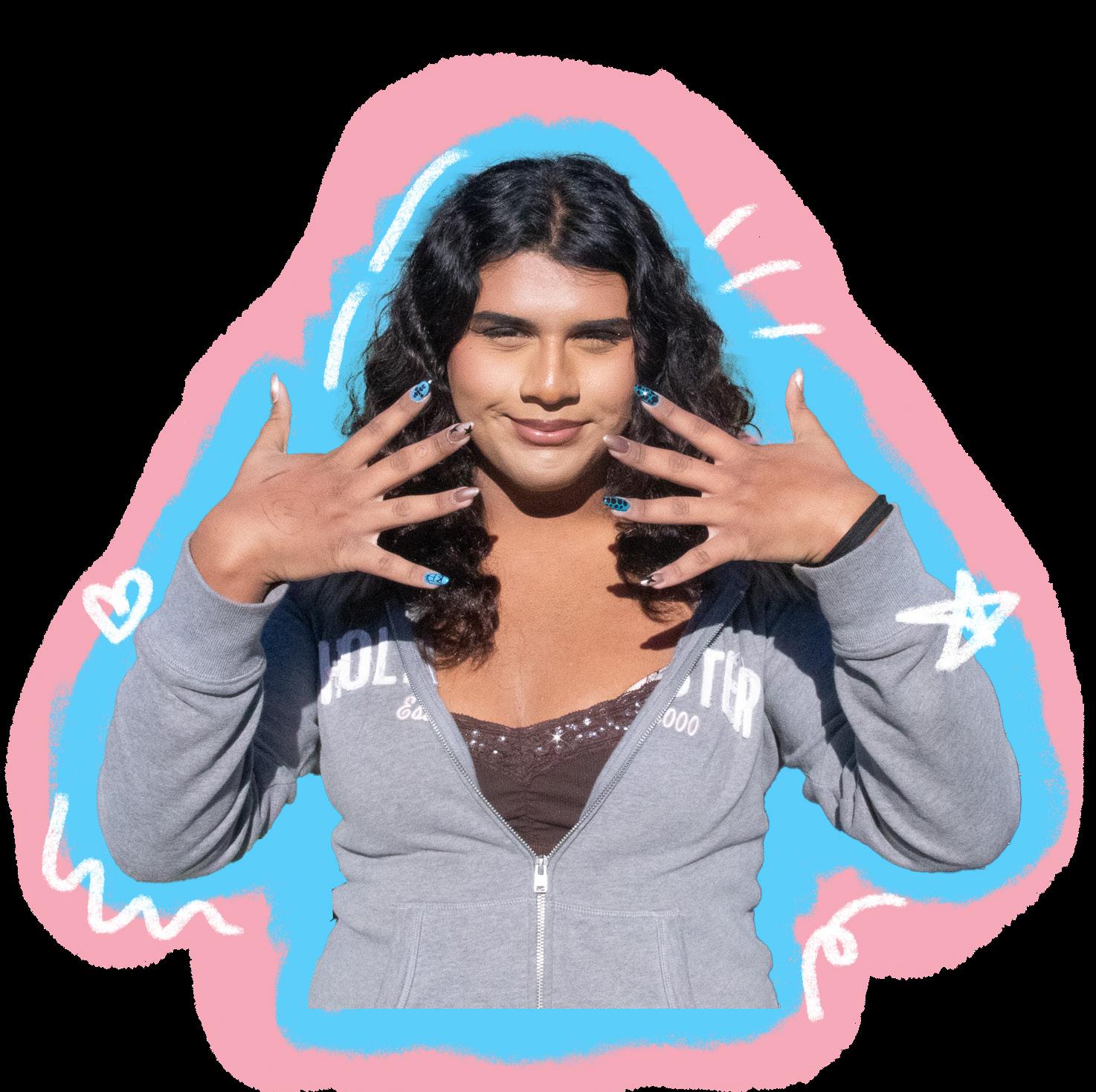
Kayden Alvarez creates nail designs and a sense of belonging
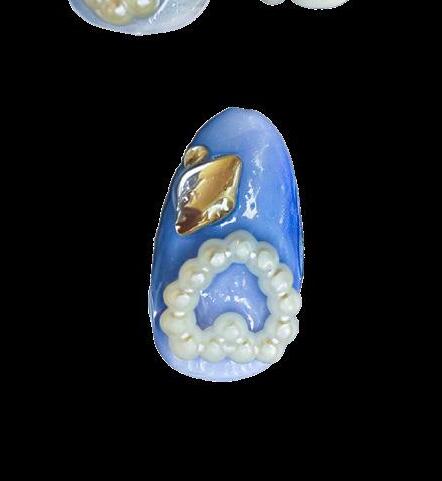
n the warm glow of her desk lamp, sophomore Kayden Alvarez lines up bottles of nail polish in rows of pink, white and gold — colors that make her feel most like herself.
As a transgender girl, Alvarez’s nail art is her way of exploring femininity, confdence and the beauty she once felt afraid to show.
Alvarez has always felt more feminine, but it took time for her to embrace that as she lost friends after coming out. At frst, she felt hurt: she believed those relationships were genuine, but eventually moved past their judgment. The support from her family helped her throughout this process, as her Catholic parents embraced her transition.
“My parents are very open-minded, and they let me express myself truly as my genuine self,” Alvarez said.
“Without their support, I would have never experienced life now, and I feel like my life now is way better than if I had just stayed a boy.”
Though Alvarez continued fnding comfort in her identity, she received negative reactions. When Alvarez transferred to Lynbrook, she saw a chance to start fresh.
“I have occasionally had some issues with people, I’m not going to sugarcoat it,” Alvarez said. “I used to let that negativity consume me, until I switched schools. I’ve learned to ignore those people and just focus on myself. It’s really none of their business and doesn’t affect them in any way.”
Being in a new environment helped her realize that others’ opinions
‘‘
“Everybody deserves to have some pretty nails and not pay a fortune,” Alvarez said.
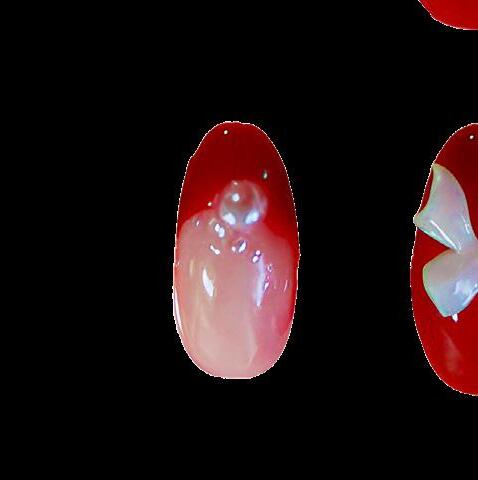
Nail art adds that touch of glam that boosts her self-confdence. The colors and designs she uses are a way to present the version of herself she wants to be.
I believe hate comes from people who just aren’t happy with themselves. It’s okay not to support who I am, but just because that person has different beliefs doesn’t mean they need to try and bring someone else down.
Kayden Alvarez Sophomore
just aren’t happy with themselves,” Alvarez said. “It’s okay not to support who I am, but just because that person has different beliefs doesn’t mean they need to try and bring others down.”
‘‘
Since she lacked prior experience running a business, her frst interactions with clients were awkward. However, she gradually grew more comfortable talking to people over time with each customer gained.
“She’s determined to make sure every set is perfect and she genuinely cares about what her clients want,” sophomore and customer Monica Pistritto said. “You can tell she’s confdent in her work now, and it’s really inspiring to see how far she’s come.”
Balancing school and her small business is not always easy. Alvarez generally prioritizes her schoolwork, though she focuses on her business when sales get busy and she has up to fve or six orders at a time.
Nail art design entered her life in the summer of 2024. Her early attempts were a mix of trial and error, improving through diligent practice and inspiration from Pinterest, Instagram and TikTok. By October 2024, she felt confdent in her skills, turning her hobby into an online business: Clawed by Kay.
“It can get a little crazy sometimes, but it all works out in the end,” Alvarez said.
Despite the challenges, she is rewarded by a sense of accomplishment and self-earned money, which goes into new nail equipment. Looking ahead, Alvarez hopes to continue improving her art, experimenting with new designs and growing her business. She hopes her story can inspire other LGBTQ+ teens to be their authentic selves freely.
“Just be yourself,” Alvarez said. “If people are gonna hate, they’re gonna hate. You only live once, so just express yourself.”
Photo by Samanvi Bandugula Graphic illustration by Rachel Martin
Photos from Kayden Alvarez and Sunnie Wu Graphic illustration by Audrey Cabaltica and Amy Yuan
BY SUNNIE WU
Voting age debates challenge America’s definition of politics
BY MADDY CHANG AND AMY YUAN
In classrooms across the country, it’s a classic ffth-grade essay prompt:
“Should 16-year-olds be allowed to vote?” For 10-year-olds, this question feels hypothetical but becomes real as those same students inch closer to 16. What starts as a classroom debate has, in some cases, led to real policy discussions on lowering the voting age, highlighting shifts in how young people view their role in politics.
A multitude of teenagers have been motivated to speak up and contribute to political processes, driven by the numerous issues that affect their lives, such as funding for education or climate change. Many of these teenagers already drive, work or pay taxes, as well as engage with politics through social media, volunteering or attending rallies. These are all activities that ballot results may affect.
“They’re at the age where they’re very aware of everything that’s going on and get involved,” said Rebecca Sayed, Santa Clara County Democratic Party national team lead. “They want to make an impact.”
While youth activism may have once been dismissed as naive or idealistic, youth-led initiatives, like school climate strikes and congressional testimonies by student school shooting survivors to advocate for gun restrictions, have gained national attention. This shift refects how students experience issues on the ballot frsthand and are affected by consequences of its decisions, broadening participation in democracy to include everyone infuenced by policy decisions.
‘‘
In November 2024, Albany became the frst California city to pass a ballot measure lowering the voting age to 16 for all city elections, with 64% of voters in favor. Sunnyvale, Cupertino and San José are all charter cities that could potentially make this change.
“The fact that high school students don’t vote doesn’t mean that they don’t feel the impact,” FUHSD Board Member Pat Carpio-Aguilar said. “FUHSD offers an array of AP level classes, and that requires a lot of thought, research and synthesizing. If you can do something as demanding as AP United States History, AP Literature and all these other courses, you are way ahead of the game.”
Moreover, groups like the California High School Democrats of America work directly with California assemblymembers to host civic engagement speaker series and develop legislation to better serve students.
With voting comes responsibility, and if you’re not at the age where you’re expected to be responsible for your own food and shelter, then can you be legally allowed to vote? There’s a lot of things we do that we don’t let people do until they’re 21 years old in this country, and this seems like they’re striking too far the other way.
Rebecca Sayed Santa Clara County Democratic Party national team lead
‘‘Takoma Park, Maryland made history in 2013 as the frst American city to allow 16-year-olds to vote in local elections, with neighboring city Hyattsville following in 2015. Although this may have started as isolated change, it has since blossomed into a national movement.
Vote16USA, offcially launched in December 2015, supports youthled campaigns to extend voting rights to 16- and 17-year-olds in local, state and federal elections.
The Albany campaign used grassroots organizing to engage with voters. Students at Albany High School became prominent representatives of the campaign, presenting directly to the City Council, speaking at community meetings and canvassing door-to-door. Recently, Vote16USA hosted a national convention at the University of California, Los Angeles, bringing together hundreds of youth organizers to strategize and coordinate for a 2026 effort.
The last 10 years of political life in the United States have shown that a really wide range of outcomes is possible. These suffrage movements are long journeys. Each little win helps build the power and capacity you need to get to the next level.
Sam Novey Chief strategist
“Our community, the immediate area in Maryland, became the epicenter of this movement,” said Sam Novey, chief strategist at the University of Maryland Center for Democracy and Civic Engagement. “We look at Vote16 as a modern American suffrage movement. There have been folks in American history who have mobilized and fought to be included, and we often think inclusion is the direction of this work, even though that is often not the case.”
at the University of Maryland Center for Democracy and Civic Engagement
“Young people are the heartbeat of the movement,” Vote16USA executive director LaJuan Allen said. “I’ve seen 16- and 17-year-olds testify before city councils, before state legislatures, and I’ve seen elected offcials who are in decisionmaking halls shift their opinion on this issue based on testimony given by young people.”
The movement has expanded throughout the South Bay. In August 2025, the Santa Clara County Democratic Party voted to support Vote16 Palo Alto, an affliate of Vote16USA and a youth-led effort to lower the voting age to 16 in Palo Alto for municipal elections.
‘‘
“People tend to discredit youth when it comes to being able to think about current events critically and why they’re happening,” sophomore and CAHSD political director Anika Khanna said.
“But I think that a lot of youth tend to be able to analyze things and connect it back to their history classes, English classes and things they learn in school.”
Arguments against lowering the voting age often center around concerns about maturity, parental infuence and life experience. Critics note that most 16-year-olds lack fnancial independence, such as paying income taxes or managing major expenses. Similar arguments were raised when the national voting age was lowered from 21 to 18 in 1971 through the 26th Amendment, which passed with bipartisan support.
“Your political opinion is essentially a mix of infuence with the people you surround yourself with,” Chen said. “That’s the reason why we voice our political opinion. To say that one can or cannot be swayed is a complete myth, because everyone’s political opinion is impacted by the people around us.”
these trends can help defne how the next generation of voters might be involved in shaping democracy.
“The last 10 years of political life in the United States have shown that a really wide range of outcomes is possible,” Novey said. “These suffrage movements are long
“My interest in Vote16 comes from my passion for education, for civic engagement and for young people who I believe have been long disregarded from political and democratic processes. They bring a valuable voice to the political environment in their communities. I think young people have really innovative solutions to some of the most critical issues that communities face and are disproportionately impacted by the decisions that we make today.”
— La Juan Allen
Vote16USA serves as a national hub, providing campaign strategy and communications support to local youthled efforts. The movement’s strategy recognizes an important legal construct in the process: California charter cities, or municipalities that operate under their own local constitutions, have authority to make certain decisions that act independently of the state legislature, which includes setting the voting age for school board and municipal elections.
“I think the most rewarding thing is seeing our classmates supporting it and we think that it’s amazing because that means that people are interested in it,” said Rayla Chen, Gunn High School senior and Vote16 Palo Alto codirector. “But we’re also really happy to see that adults also care for us. A lot of adults actually trust us more than other adults, which is very surprising, but I think that just goes to show how much emotional maturity we all have.”
The South Bay has long been a center for youth civic engagement. Local elected offcials frequently promote youth participation through means like youth advisory councils and civic engagement events with youth advocacy organizations.
These concerns often support a more targeted approach by limiting youth voting to school board elections where students have more direct stakes. Almost all 16-year-olds have frsthand experience with school resource allocation and curriculum. Yet citywide decisions about public transportation or park funding also shape their daily lives.
“With voting comes responsibility, and if you’re not at the age where you’re expected to be responsible for your own food and shelter, then can you be legally allowed to vote?” Sayed said. “There’s a lot of things we do that we don’t let people do until they’re 21 years old in this country, and this seems like they’re striking too far the other way.”
Khanna
“School boards tohavethepower ban books or decrease mental health access. It makes sense that students would want to be able to vote for representativestheir in terms of school boards.” — Anika
Public support for lowering the voting age remains limited, but in places like Scotland, it rose to 50% after 16-year-olds voted for the frst time. However, studies also showed that young voters in Scotland were more infuenced by emotions than older voters.
As new proposals emerge in city and state legislatures, discussions around Vote16 continue to develop. Understanding
Graphic illustrations by Samanvi Bandugula, Rebecca Cai and Tristan Lo
GMOs drop micropipe es into American mealtime
BY ISABELLA CHIU AND ASHLEY HEIN
Chipotle announced its commitment to go “GMO-free” in March 2013. Some consumers praised Chipotle’s decision, but many nutrition experts argued that genetically modifed organisms are safe for consumption. Today, around 70% of processed foods on shelves and over 90% of staple crops, like soybeans and corn, have been genetically altered. Each product refects a complex scientifc history and an ongoing ethical debate. According to the World Health Organization, GMOs are “organisms whose genetic material has been altered in a way that does not occur naturally.”
A Pew Research Center study found that 37% of
the forefront of pro-GMO arguments. Emerging in the late 20th century, the technology was celebrated as a possible fx to world hunger, boosting produce output by strengthening pest resistance in plants. Genetic resistance could also potentially lower environmental pollution caused by pesticides: GMO cultivation has reduced pesticide application worldwide by 776 million kilograms per year.
In the U.S., commercial GMOs began with the 1994 Flavr Savr tomato. Its manufacturer submitted
‘‘
public good with advanced agricultural innovations, like improved nutrition, higher yields and soil conservation.”
Some consumers and medical physicians associate GMOs with potential risks to trigger bodily reactions like allergies. Modulating a gene in a sequence causes the need to reassemble genetic material downstream in a process called chromothripsis, Perro said. This process is not precise and may cause
We apply gene editing to medicine and genetic disorders as well as food crops. But it’s all kind of very similar. If people better understood the process, then they might be more accepting of the outcome. We aim to educate students in classrooms in FUHSD so they at least have a better understanding.
Lee
Science teacher
‘‘
‘‘
I know right now, people are getting more aware of the ingredients labels on food items. But there’s also a lot of misinformation out there. It’s important for people to understand what GMO is, so they know what they’re buying.
Andrew Wu Senior and Culinary Arts Club president
One common method of protecting plants from viruses is to insert a gene from the virus into the plant, conferring resistance. When the papaya ringspot virus devastated crop yields in Hawaii in 1992, scientists isolated a gene for a viral coat protein, inserted it into a plasmid, and used Agrobacterium tumefaciens — a bacterium adept at transferring DNA to plant cells — to insert the gene into papaya cells.
‘‘
In 1995, inserting a pesticideresistant gene from the bacteria Bacillus thuringiensis created a category of GMO foods called Bt-crops that include potatoes, corn and sweet corn. They produce two proteins, Cry and Cyt, that damage the gut lining of insects following consumption. Structural differences in digestive anatomy allow humans to safely eat these foods without any negative side effects.
Roundup Ready crops, frst developed by biotechnology company Monsanto in 1996, are genetically engineered to resist glyphosate, a widely-used herbicide. These crops carry a gene from Agrobacterium sp. strain CP4. The encoded protein makes the crops resistant to glyphosate. Common Roundup Ready crops include soybeans, corn and sugar beets.
Jason
Graphic illustrations by Rebecca Cai and Alexandra Wu
In a tweet on Oct. 29, President Donald Trump commanded the Department of War to start testing nuclear weapons, effective immediately, renewing uncertainty around the future of nuclear testing. During an interview in October, he claimed that China and Russia were conducting secret nuclear tests and suggested that the United States shouldn’t be “the only country that doesn’t test.” Such assertions, if accurate, could indicate potential violations of the 1996 Comprehensive Nuclear-Test-Ban Treaty, although both Russia and China have denied conducting prohibited tests.
Though only a recent invention, nuclear technology has the potential to turn threats of war into promises of destruction. When the Manhattan Project was unveiled in the Smyth Report just days after the bombings of Hiroshima and Nagasaki in Japan, all notions of international diplomacy were altered. World powers raced to catch up, and by 1964, both Russia and China had developed nuclear weapons.
contaminated soil, air and water with radiation, damaging ecosystems.
“We cannot ignore the environmental impact in these areas and places where the weapons are being tested, whether it's above or below the surface,” De Anza College professor of U.S. history Lindsay Bell said.
After discovering the consequences of open-air testing on human health, the U.S., the Soviet Union and Great Britain signed the Limited Test Ban Treaty in 1963, banning nuclear detonations in the atmosphere, underwater and in outer space. Since the treaty did not explicitly restrict underground testing, the U.S. conducted 760 nuclear tests in large underground tunnels between 1962 and 1992. However, underground testing did not prevent toxic radioactive materials from polluting soil and groundwater.
‘‘ ‘‘
We cannot ignore the environmental impact in these areas and places where the weapons are being tested, whether it's above or below the surface.
By testing increasingly powerful devices, these nations built substantial atomic stockpiles. In the U.S., programs invoked federal laws of eminent domain to test the technology on remote sites. However, in doing so, the government displaced Native American tribes and entire communities, often with limited compensation.
One of these sites, Los Alamos, became the location for the frst nuclear test in history. Its explosion from the 1945 Trinity test was visible from over 200 miles away. Radioactive fallout reached nearby communities, including Native American populations and project workers, causing radioactive illnesses that lingered for generations. An estimated 600,000 people were exposed to dangerous levels of radiation, many of whom later developed serious health issues like cancer. Nuclear tests also
Such testing raised tensions between the U.S. and the Soviet Union as both nations competed to build a larger stockpile of nuclear weapons. Amid continued concerns about environmental and health effects, the two countries signed the Threshold Test Ban Treaty in 1974, limiting underground tests to atomic bombs that had an energy yield of 150 kilotons — roughly 10 times the size of the Hiroshima bomb.
With such limitations presented,
explosions, regardless of location or yield. While the U.S. signed the treaty along with 186 other countries, it has not been formally ratifed, leaving open the possibility of resuming tests.
In recent times, analysts have noted that several nucleararmed states appear to be expanding or modernizing their arsenals.
Since 1998, only North Korea has conducted an announced nuclear test.
‘‘
political polarization, because it is a controversial issue and there are people who care a lot about it.”
I think if you see one great power moving backwards on what is an arms limitation, other countries go, 'Well, they're doing it, so we can do it too'. It's not deterrence. It's allowance.
Russia and China are allegedly developing new delivery systems, while the United Kingdom and France have reportedly undertaken modernization programs of their own.
The current atmosphere is an ominous sign for future nuclear testing that could be more dangerous, creating fear within U.S. defense and policy circles.
“I think if you see one great power moving backwards on what is essentially an arms limitation treaty, other countries go, ‘Well, they’re doing it, so we can do it too,’” social studies teacher Steven Roy said. “It’s not deterrence. It’s allowance.”
After global powers paused testing, the threat of nuclear destruction seemed neutralized for good. Yet after 33 years without U.S. tests, Trump’s tweet unleashed the possibility of another age of nuclear testing after decades of restraint, sparking
If the U.S. restarts testing, other nuclear-armed states might respond by resuming or accelerating their own programs. As Trump has not offered clarifcation for his statement, it is unclear whether his comments refer to largescale tests like those of 1945, or smaller experiments, such as computer simulations or forensic monitoring to check the condition of current nuclear weapons.
‘‘
Supporters have cited several motivations to restart nuclear testing. One major rationale is maintaining a credible nuclear deterrent against other nations. By continuously adding to its weapons arsenal, the U.S. aims to reassure allies of its attention to security. In addition, advances in technology may allow some testing to occur without massive detonations, potentially limiting environmental and safety risks.
“The conclusion is that at some point, we’ve learned all we need to know about atmospheric and subterranean testing,” Roy said. “It is hard to envision the basic nuclear weapon design getting that much better.”
With ambiguous signals from government offcials, whether the U.S. will enter a new era of nuclear testing or if major powers will maintain the current stalemate remains to be seen. However, it is evident that the possibility of resuming nuclear testing has the potential to reshape the world’s political landscape yet again.
“Nuclear weapons were believed to be a deterrent because of the prospect of nuclear armageddon,” Bell said. “But as we see in the world today, wars continue, and the more that nuclear weapons are present, the greater the international security risks for the entire world that one nation alone is unable to resolve.”
BY ANUSHKA DESHMUKH AND VANESSA YAP
Lindsay Bell De Anza College Professor
Steven Roy Social studies teacher
Graphic illustrations by Rebecca Cai, Alexandra Wu and Vanessa Yap
BY RACHEL MARTIN
Astudent athlete sits patiently on the bench, waiting for their name to be called. They are the benchwarmer. Yet instead of being discouraged, they settle in and observe the game. Cheering and yelling, they spot missed opportunities and areas for their team’s improvement. By the time the buzzer sounds at the end of the fourth quarter, they’re eagerly bubbling with new ideas to share with their team — proving that being a benchwarmer is more useful and rewarding than it seems at frst glance.
Benchwarmers tend to get a bad rap, but behind the scenes they play a vital role. This position is often less desirable, but the negative connotations connected to benchwarmers fail to refect the
The hidden benefits of being a benchwarmer
importance of the role. From providing moral support to serving as backup in case of injury, players sitting on the sidelines have crucial responsibilities, as well as a promising road ahead of them. Almost all athletes start on the sidelines, and in the context of an athlete’s journey, there’s no shame in sitting on the bench.
“Being a benchwarmer helps you push harder to improve, so you get in the games and you’re not watching so much,” PE teacher Ray Wright said.
The most common duty of a benchwarmer is to fll support roles on the feld, such as stepping in for an injured teammate. Meanwhile, they also build team spirit by cheering for their teammates who are in the game. Spirit plays an important role in team performance: many players feel more motivated when their friends cheer them on. This motivation unites the team and makes the sport a more enjoyable experience.
“Cheering is really important because it keeps the team’s morale up,” sophomore and feld hockey player Aashvi Gireesh said. “Even if they’re not doing that
good, cheering helps them not feel discouraged.”
While on the sidelines, benchwarmers also watch games from a perspective that many players don’t typically consider. Through being on the bench, they gain new insights like openings and potential strategies that their teammates on the feld are unaware of. Seeing the bigger picture is invaluable for learning and allowing the whole team to develop their strategy.
“To be able to sit and watch and see the competition and the way other players play against each other is very benefcial,” PE teacher Lauren Blazek said.
It may be discouraging
to constantly watch teammates from the sidelines, but benchwarming is a foundational part of the learning curve to success. Often, new players start on the bench before working their way up to the feld. The bench allows players to bloom into refned athletes with a range of physical and observation skills.
In order to diminish the bad rap of a benchwarmer, sports teams should exemplify a positive attitude toward all student athletes.
Kindness and patience is key to a thriving team with players who will eventually become great athletes.
“Benchwarmers are the future of the team,” sophomore and JV football player Shrey Datta said.
Audrey Lee launches her game into Carnegie Mellon
BY ALEXANDRA WU
Under the hum of feld lights, senior and varsity softball player Audrey Lee drags her cleats across the dirt, tracing the edge of the infeld. Fields like these are where she’s spent much of her high school years — engrossed in late-night practices, learning to steady her nerves and fnding comfort in the teammates who would become her closest friends. Now, after almost a decade of dedication, Lee takes the next swing by committing to Carnegie Mellon University.
Lee’s softball career started long before high school. Forced into the sport at 8 years old by her
parents, she attended grueling practices to hone her skills. However, what started as a reluctant childhood obligation soon pulled her into a sport defned by community, routine and hard work.
“I was literally crying before my frst game,” Lee said. “But once I started talking to people on the team and becoming friends with them, softball stopped feeling like a burden and started feeling like I was just hanging out with my friends.”
As Lee continued playing and dedicating more time, struggles with negative thoughts hindered her performance, but repeated reassurance from coaches gradually taught her how to remain optimistic.
Lee soon began to understand her strengths, acknowledge her
weaknesses and shape a mindset and skill set that would carry her through her games.
“When she’s locked in, she’s always really focused and involved in the game,” senior and varsity softball player Calia Lim said. “She dedicates a lot of time and effort to perfecting her game. If it’s not good enough, she’ll do another until she feels it’s up to par, which is very inspiring.”
‘‘whole team too because we refect each other’s emotions.”
Even when I was scared of getting ghosted, I kept going. And that’s the mindset I’m going to head with into whatever life has in store for me next.
Audrey Lee Senior
Lee frst heard about the Triple Crown International Challenge program — which gives top athletes the opportunity to be scouted for the Olympics — through Lim’s Instagram posts and other players she followed online. She ended up applying after seeing the tight bond Lim was able to form with her TCIC teammates. Through this experience, she met players from across the world, bonded over long days and found a new kind of team energy built around culture and pride. TCIC brought out the spirited side of softball through cowbells, bubble guns, team fags and cheering parents banging drums along the sidelines. Over time, softball allowed Lee to develop a clearer picture of her identity, both as a player and a person. Her ability to pick herself up, calm her thoughts and not overthink proved crucial when the college recruiting process began and she navigated through the uncertainties and emotional strain.
“My mental game used to be so bad, and it affected everything,” Lee said. “But once I learned how to control it, everything started going up. I became more confdent, and that helped the
Drawn to Carnegie Mellon University for its prestigious academic environment, responsive coaching staff and positive team culture, Lee approached the recruiting season with much anticipation. As coaches stayed transparent throughout the process, Lee felt wanted long before she arrived on campus.
‘‘“Once I talked to Coach Harrison, the recruiting coach for Carnegie Mellon, on a call, we set up a time to meet in person,” Lee said. “I was able to tour the campus, and meet a lot of my future team members. Everyone was so welcoming, and the overall team dynamic reminded me of my favorite old teams, and we all got to hang out.”
With a fnal season left before college, Lee is focusing on enjoying her last year with her current team and keeping her mental game steady. She hopes to contribute to Carnegie Mellon by being part of the same supportive team dynamic that nurtured her passion for the sport.
For now, she kicks the dirt along the infeld, the feld lights overhead casting a familiar glow that she’s become accustomed to over the last four years. This diamond has shaped her past adventures, and now, it’s sending her off to another.
“I’m just going with the fow,” Lee said. “That’s the only way I got through recruiting. Even when I was scared of getting ghosted, I kept going. And that’s the mindset I’m going to head with into whatever life has in store for me next.”
Graphic illustrations by Ashley Hein
Graphic illustrations by Sunnie Wu
Photo from Audrey Lee
Junior Prajwal Avadhani smashes national badminton rankings
BY STUTI JAIN
Eyes locked on the birdie, junior Prajwal Avadhani leaps forward to execute a perfect jump smash, securing frst place in U17 Boys Doubles at the 2025 Yonex Synergy NorCal Open Regional Championships. Over the past seven years, badminton has shaped Avadhani’s schedule, mindset and identity.
After exploring football, soccer, basketball and baseball in his childhood, Avadhani eventually attended a summer camp and demonstrated natural talent for badminton. He began to take classes regularly at Sunnyvale Community
friend played it a lot, which infuenced me quite a bit,” Avadhani said. “I had a really fun time playing — I just liked it for some reason.”
Avadhani’s commitment grew as he joined a competitive Milpitas club team in 2020, where he improved through training with more advanced students. Before entering high school, he switched to a Campbell location closer to Lynbrook.
To date, he has attended about 30 competitions. As a freshman, he earned bronze for Boys Singles at the California Interscholastic Federation tournament — the frst Boys Singles medal in Lynbrook badminton history. His skill prompted varsity badminton coach Nhat Nguyen to name a signature move after Avadhani: Prajwal-ing, or allowing an opponent to gain a large lead before making a quick comeback. With this technique, combined with years of skill, he accumulated around 30 medals.
However, Avadhani’s dedication is not without its challenges. Practicing four times a week can be mentally and physically draining. Although quitting crossed his mind multiple times, he remains committed, having dedicated so much time and effort to the sport.
“You get really sore to the point where your body just doesn’t want to do anything,” Avadhani said. “That way, I’ve learned to be okay with pain, to just go about daily life and not complain.”
his son on throughout his badminton journey.
“Prajwal is a patient person on court,” Prasad said. “There are players who might have more endurance and power, but Prajwal is a tactical player and makes strategic moves.”
Nguyen has supported Avadhani since he joined the team as a freshman.
Nguyen notes that Avadhani’s love for the sport is evident through his selfmotivated practices.
“He doesn’t have a superstar syndrome, knowing that he’s the best on the team — he’s very humble, very friendly, willing to help and be frank with his friends,” Nguyen said. “In freshman year, he would get frustrated when losing, but now he’s a lot more composed. I’m never concerned that he will give up.”
You get really sore to the point where your body just doesn’t want to do anything. That way, I’ve learned to be okay with pain, to just go about daily life and not complain.
Despite the intensity, Avadhani has always had a support system backing him up. His father, Narasimha Prasad, plays a key role in Avadhani’s growth, cheering
He also gained skills applicable outside the sport. Memorizing terminology and drills has given him a leg up at school, while his focus and dedication to training honed his discipline. Although he isn’t considering a professional career, Avadhani is still excited for his future in the sport, especially his remaining high school seasons.
“Badminton has increased my self-confdence quite a bit, especially the things we’ve done in training,” Avadhani said. “They’re quite brutal, and it really pushes my boundaries and shows me that I still have places to go.”
Graphic illustrations by Ashley Hein
Prajwal Avadhani Junior
Golden State Warriors
The NBA’s history has been dominated by periods of powerhouse teams, leading to the league becoming synonymous with the concept of a superteam, most famously the Golden State Warriors. Unlike other superteams, the Warriors dynasty came from humble beginnings, with the drafting of players Stephen Curry, Draymond Green and Klay Thompson.
The Warriors dominated, as their play style relied heavily on off-ball movement and perimeter shooting. When they won their frst championship in 2015, they were seen as underdogs.
“In the 2010s, I was a huge Warriors hater because they kept on winning,” senior Mrinal Dwivedi said. “I was a die-hard Cavaliers fan when I was younger, so it felt like all that mattered in the NBA was being on a superteam. There was no real loyalty or connection to their team anymore.”
When thinking of the best sports team in the world, the frst image that comes to mind is a team of high costs, extensive coverage and big names. First coined by the NBA in the 1960s to describe the Los Angeles Lakers, the term “superteam” — a dominant team composed of multiple high-skilled players — has continued to gain notice through the years across many sports, earning a complex reputation. While many fans believe that they diminish competitiveness in sports, others argue that superteams are vital to creating exciting and engaging narratives. Despite the controversy surrounding their ethics and origins, superteams remain a dynamic aspect of sports culture.
Real Madrid
he modern superteam began in Madrid with Real Madrid, where three soccer superstars came together to form one of the greatest sports dynasties in history. Centered around Portuguese soccer icon Cristiano Ronaldo, Welsh former player Gareth Bale and French player Karim Benzema, this superteam was constructed by the players’ expensive free agent signings, with both Ronaldo and Bale signing recordhigh contracts in their respective years.
Their success and novel yet controversial playstyle led to backlash and anger from many fans, who accused the team of buying its way to dominance with expensive contracts signed by star players. Critics bashed Real Madrid for prioritizing star-focused attention over a selfess team-involved operation.
Due to the public backlash received by Real Madrid, many teams have begun to develop their dynasties by recruiting young players — such as Yamine Lamal with FC Barcelona — rather than through high-cost acquisitions. These changes in recruitment have impacted how many modern sports teams are structured, with more teams switching their focus to naturally building their rosters.
“With soccer in Europe, it is much less restrictive with money,” social studies teacher Luca Signore said. “The cities that win are usually going to be the biggest ones, since they have the biggest markets, like London, Madrid or Barcelona.”
After the Warriors achieved the greatest regular season in NBA history, they were joined by player Kevin Durant. Fans reacted to the star signing with outrage. They began to believe the Warriors’ dominance led to a lack of parity, and the team became villains of the NBA.
Kansas City Chiefs
In recent years, despising the Kansas City Chiefs and their dominance has become a common trend. The Chiefs began their superteam dynasty in 2017 by drafting Patrick Mahomes. They paired their new rookie quarterback with star Travis Kelce and Andy Reid, a masterful coach. During the Chief’s reign of dominance, they built their roster through free agency signings and draft picks, leading to a healthy balance of defense and offense.
“I think that people hate on the Chiefs because they’re too good and get all the clout, with everything about the referees favoring them,” junior Krishna Anbuchevelan said.
While fans typically dislike superteams for their dominance, the public focus on Kelce’s and pop star Taylor Swift’s relationship, rather than actual play, was the target of criticism. Although in some ways dominant, the team was built conventionally.
The Los Angeles Dodgers,
an MLB team that has seen phenomenal success in recent years, have created their own rendition of a superteam. In 2024, the team’s star player, Japanese sensation Shohei Ohtani, signed a record deal of $700 million for 10 years — the largest annual value deal in the league’s history. With the pairing of other star players like Mookie Betts, Freddie Freeman and Yoshinobu Yamamoto, the Dodgers found immediate success, winning the 2024 and 2025 World Series, and solidifying their position as a dynasty.
Many critics deem it unfair that the Dodgers, located in Los Angeles, can lavishly spend a higher quantity of money on star players — supposedly buying success — than teams in smaller markets, making them the image of competitive imbalance in the MLB.
Los Angeles Dodgers
“The beneft of having super teams is that you can gain interest in the sport if you don’t know about it,” math teacher Chris Baugh said. “But I think it hurts competition in terms of the league, so it makes your team less desirable to be a fan of.”