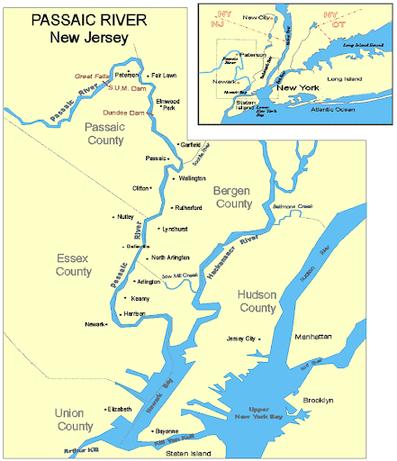
ThePassaicRiverisknownasoneofthemost toxicwaterwaysinthenation,andithappensto passthroughmyhomeinNorthernNewJersey. This80-mileriverstretchesthroughbothPassaic and Essex county, passing through major cities like Paterson and Newark. The watershed encompasses ten reservoirs and three drinking waterfacilities,servingovertwomillionpeople inNewJerseywhoreceivepublicdrinkingwater fromit.Theriverhasbeensubjectedtoextreme pollution,fromtheindustrialdumpingoftoxic waste containing heavy metals, polychlorinated biphenyls (PCBS), and high levels of dioxin (American Rivers, 2025). The 8-mile section betweenBellville,NewJersey,andNewarkBay hasbeenhitthehardestbypollution.
In 1984, the Passaic River was declared a Superfund site after two centuries of chemical manufacturing took place on its banks. The infamous Agent Orange used in the Vietnam War was mass-produced on its shores, along withDDT,
a pesticide made famous by Rachel Carson’s Silent Spring, which is now banned in the UnitedStates(Warren,2024)..Byproclaiming theriveraSuperfundSite,therewashopethat the U.S. Environmental Protection Agency (EPA) would implement and execute a plan to remediatethewaterway,cleaningitupforuseby futuregenerations.
Forty-oneyearslaterandthePassaicRiverhas yettoseethelevelofmitigationfromthefederal government needed to improve the water quality. As someone who frequently travels along the river, I know firsthand the extent of the pollution brown murky water with a distinctlystrongsewagesmell,linedwithplastic bottles and other trash along its shores. The communitymostimpactedbythispollutionis thatoftheIronbound,asectionofNewark,and an already underserved environmental justice community. The Ironbound’s population is made up mostly of immigrants of lower socioeconomicstatus.
TableofContents
They already face challenges from the long industrialhistoryofthearea,suchasextremeair pollution that results in higher than average levels of asthma. The heavily polluted Passaic River adds another burden to this already disadvantagedcommunity.
TheEPAhasdevisedaplanthatwilltacklethe cleanup of the river in different sections. The focuswillbeonremediatingthefactoryinthe IronboundsectionthatproducedAgentOrange -theseventeen-milestretchofthemostheavily polluted section of the river and Newark Bay (Warren, 2024). Although this is an important step,thisplanwasn’tcreateduntil2016.Almost adecadeaftertheplan'screation,thereremains back-and-forth litigation in determining who willpayforthecleanupandforhowmuchofit. The main company that the EPA has declared responsible for the cleanup costs is Occidental Chemical(OxyChem),expectedtopayaround $1.84billioninremediation(Warren,2024).As recently as July 28, 2025, however, OxyChem appealedafederaldistrictcourtrulingthathad agreed that the EPA should hold the company responsibleforvirtuallyallofthecosts.
This appeal continues to delay the necessary action that the river and the affected communitiesneed.
Thecaseofprolongedcleanupforthemassively contaminated Passaic River highlights how, despite environmental statutes like the Superfund Act, it can still take decades for actionandproperjusticetocometopass.
This is a problem that actively affects the drinkingwatersupplyofNewJerseyresidents, and yet, forty years later, there has not been significant action from the state or federal government. TableofContents
That is where groups like the Passaic River Coalitioncomein.ThroughouttheSuperfund process, the coalition has been a part of the Community Advisory Group (Passaic River Coalition, 2024). They have submitted countless comments to the EPA on how the remediationprocessshouldtakeplaceandwhat issues specific solutions the proposal presents for communities and future generations. They havealsobeenthemainagencyseekingsolutions to other river-related issues, such as natural alternatives to help combat worsening flood conditions.(PassaicRiverCoalition,2024).The Passaic River Coalition also helped create the Passaic River Restoration Plan that was “developed in the early 1980s to provide guidancetotheurbanmunicipalitiesalongthe east bank of the River to restore its riverbank and create a new greenway corridor” (Passaic RiverCoalition,2024).
Local partnerships in land reclamation and the Neptune CityWaterfront Park Project
By Evan DeAngelis
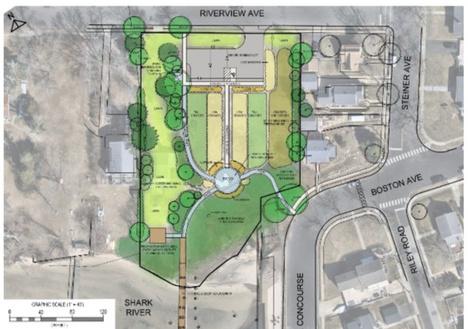
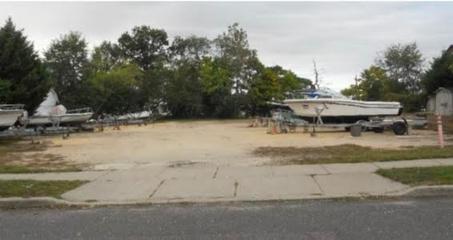
IntheBoroughofNeptuneCity,locatedin Monmouth County, New Jersey, the site formerlyknownasCampbell’sBoatyardhad becomeaheavilygraveled,pollutedlotwhen it was finally purchased. To quote the Monmouth County parks Landscape ArchitectLauraOrecki;“Theformermarina use has resulted in a heavily disturbed and compactedsite.”Thisfactmakesthemovesto reclaimandimprovethesiteawelcomepiece ofnewstoanumberoflocalorganizations
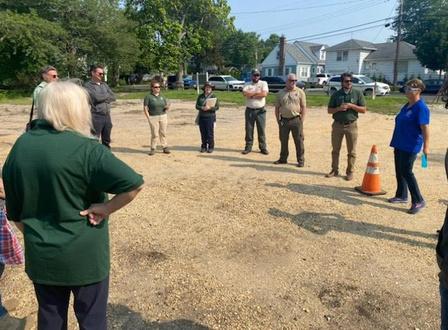
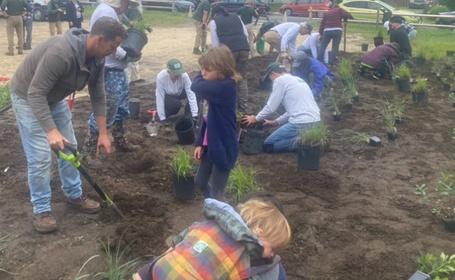
Over the past several months, I have been fortunate to work with the Monmouth County Parks service, the Shark River CleanupCoalition(SRCC),andtheBorough of Neptune City in furtherance of this project.
Thesegroupshavemeton-sitemanytimes to discuss progress plans, avenues of coordination, and operational changes. Changessuchasplantings,removalofweeds, placing signage and mulch, and much more, as the Campbell’s boatyard and adjoining propertyareremediatedandrestored.
A year ago, the Mayor of Neptune City, Rachel McGreevy (D), announced the following in an online summer address: “Monmouth County is in the process of acquiring private properties along the Shark River and Riverview Ave., including the Campbell’s Boat Yard property, to install a waterfront park in Neptune City to be owned, operated and maintained by the County”(MacGreevy, 2025) McGreevy continues:“Preservationandbeautificationof the Boatyard property is a unique opportunity to benefit from our local investment over time.”(MacGreevy, 2025) Mayor McGreevy has consistently demonstrated her efforts behind this and other projects to be beneficial to the Shark River watershed area, in close partnership withtheSRCC.
TableofContents
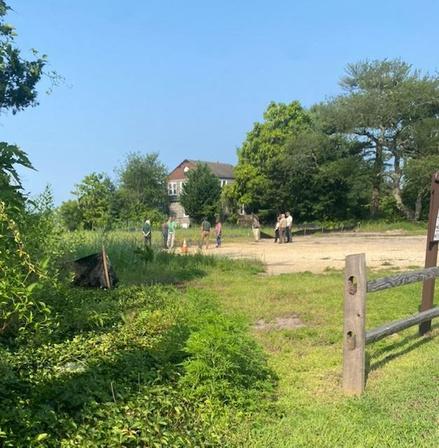
Laura Orecki, the aforementioned Landscape Architect for the Monmouth CountyParkSystem,hasbeeninvolvedfrom the very beginning In the early official statement,sheoutlinesaplanfortheproperty going forward, which presents a promising vision for the space Orecki writes: “It is the intentionoftheParkSystemtocreateapublic parkatthissite,whichistobeusedforpassive recreation, wildlife viewing, and nature programs. The project will be split into two phases. Phase 1 consists of removing part of the existing parking area and installing vegetation, and will take place in Spring 2025”(Orecki,2024)Thisworkisconcluded now,andwasawelcomeearlyvictoryasthe groups involved looked for enthusiastic volunteersandprogresstopresenttothelocal stakeholders. She continues, “The work included in Phase 1 includes removing invasiveplantspecies,amendmentstothesoil ontheformerparkingarea,andinstallationof nativeshrubsandherbaceousplants.Thearea near the street will remain as sand parking delineated by split rail fencing for visitors to accessthesite”(Orecki,2024)Presently,the plantings are being mulched and managed, withparkingandsomesignagenowinplace.
Orecki continues laying out the Parks Service’s vision; “Phase 2 includes restoring the dock and installing walking paths, and explores options for a proposed wildlife viewing platform and central patio area. ” After laying out the plan for the new space, shebeginstodescribetheplansforplantings and the benefits of these measures. Orecki claimsthattheprojectwillimprovesoilhealth and decrease runoff into Shark River. She adds that the area of the former parking lot will be planted with a selection of warmseason grasses, flowering perennials, and beach-tolerantshrubstohelpcreateahealthy plant community that will support native wildlife.Asofthispastsummer,itisnowwell underway.MuchliketheSRCC,sheexpresses theawarenessthatthesiteisenvironmentally sensitive, being in a flood zone. Maintaining the site as a public park with minimal development and a natural shoreline, as is intended,willaddfloodingresilience.
Oreckiandlocalpoliticiansarenotworking alone, but along with colleagues who are active and present to communicate directly. Among them, the most involved is Certified Ecologist RJ Curcio, who has shown up on siteregularlytoassistthelocalvolunteers,and TownCouncilwomanPamelaRenee.
Curciohassaid;“Havingtheresourcesof local volunteers will be invaluable to establishing these plantings and making this possible.”
In addition to providing assistance and training to volunteers, he has answered questionsandexplainedplansandthinkingto volunteer constituents. In August, he responded to an SRCC board member with questions about a deteriorating bulkhead Curcio explained that the bulkhead was outsideoftheparkproperty,andassuredthat theParksSystem
“willdowhatwecantorestorethenewpark property by re-establishing natural areas and vegetated buffers. This will filter pollutants from the surrounding roads and properties thatdrainthroughtheparkandreducerunoff into the waterway. To conclude, the Municipality of Neptune City New Jersey, through the work of local NGOs, her government, and the work of Monmouth CountyParkshasundertakenthisprojectto enhance community space and protect the SharkRiverBay.Overthecourseofoneyear, thisburgeoningparkhasalreadybeengreatly transformed.
CourtseyofEvanDeAngelis
CourtseyofLauraOrecki
TheNativeKillers TheNativeKillers
Invasivespecieshavebecomeanincreasingly prominentissueinallareasoftheworld-New Jersey being no exception. Species such as Spotted Lanternflies, Longhorned Tick, and EmeraldAshBorerareallexamplesofinvasive insectspeciesthathaveunfortunatelyentered the forests of New Jersey and surrounding areas (Mitchell, 2023). Invasive species are hazardoustotheenvironmentduetothefact thattheythreatennativespeciesandconsume the resources meant for the indigenous species. In order to save the native environmentandallofitspre-existingspecies, changeiscrucial.
ByCaleighPokallus ByCaleighPokallus
Invasivespeciesincludeinsects,birds,plants, andotherlifeformsthatarenon-nativetothe region in which they have migrated. The migration of these species can have a detrimental effect on the ecological systems presentinthenativeterritory.TheNewJersey Conservation Foundation explains invasive species as: “the term used to describe organisms that harm the ecology or human healthinplaceswherethey’renotnative.New Jersey has been besieged by hundreds of invasive species, creating a serious threat to foreststhatprotectcleanwater,supportnative wildlife,andprovideourbestdefenseagainst climatechange”(Mitchell,2023).Mostofthe invasivespeciesthatnowresideinNewJersey arefromAsia,andwhilenotallareharmful,a selectfewcanhavedetrimentalenvironmental impactsonnativetreesandplants.
TableofContents
Invasiveplantscanalsohaveadverseeffects ontheecosystem.PoisonHemlockisaprime exampleofanincrediblydangerousplant,not onlyaffectingforestsbutalsocontributingto poor human health. This plant is incredibly toxictohumans;disguisedtolooklikeother plants that are in fact edible, but ingesting thisplantcanbedeadly.“Historically,poison hemlock was used as medicine (to treat muscle spasms and cause sedation as well as being applied to tumors), but it is most famously known as the method of death chosenbySocratesin399BCE”(Soto,n.d.).
Socrates's choice of poison hemlock as his preferreddeathmethodshowshowlongthe detrimental effects of this plant have been knowntohumans.
Invasivespeciesarenotonlyanissueforthe environment but also an issue for human health.Ifnativespeciesbecomeextinctdueto plants and animals, there will be detrimental effects on the entire ecosystem, including humans. Albeit slowly, these ecological changes would work their way to interfere with humans. Years of research have found that Spotted Lanternflies, Poison Hemlock, and other species have adverse human and environmentaleffects,andthisissuemustbe addressedbeforefurtherdamageoccurs.
Meet the Birds at
Flat Rock
Lindsey Wiessner
Whiletherearemanygreatnaturalspacesto visit in Bergen County, Flat Rock Brook Nature Center is a definite standout. Flat Rock’s 150 acres of preserved natural land containabout3.6milesofhikingtrails,andan indoor educational center (Flat Rock Brook NatureAssociation,n.d.).Foryoungernature enthusiasts, the Center just redesigned the Jones Road Playground with nature-based and accessible features, including multiple pieces of playground equipment that are ADA-compliant (Flat Rock Brook Nature Association,nd) Thesenewfeaturesensure that everyone can enjoy and learn about nature,regardlessoftheirphysicalabilities.
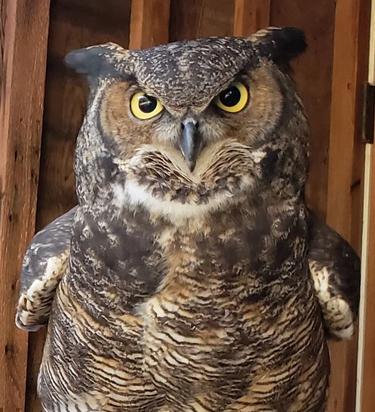
Ihadagreattimeworkingwiththebirdsthis summer,andlearnedalotabouteachofthem! All of the Birds of Prey in the Flat Rock Aviary are unable to survive in the wild for various reasons and are instead cared for by volunteers and staff members at the Center. TheAviaryiscurrentlyhometothreebirdsof prey, an Eastern Screech Owl named Tilly, a Red-Tailed Hawk named Jones, and a Great HornedOwlnamedJosephine.hesebirdsare also frequently handled by Flat Rock staff members for nature and bird educational programsandsimilarevents.
Flat Rock Brook also offers summer camps, volunteer opportunities, group hikes, and school field trips (Flat Rock Brook Nature Association,n.d.).However,whatIfindmost intriguing about Flat Rock Brook is their Aviary for Birds of Prey. Over the past summer, I have had the opportunity to volunteer in Flat Rock’s Raptor Care program, where I would care for these birds on weekends. My jobs included cleaning up the birds’ enclosures, preparing and feeding them, changing out their water, and adding vitaminstotheirfood.
The Center is also hoping to renovate its Aviarytoprovidealargerspaceforthebirds. Theyarealsohopingtobecomehometoeven more birds of prey who are unable to be releasedbackintothewild.
Joneslovestoshowoffherwingspanandpose majestically on top of the posts in her enclosure.Shealsoneverwaitslongtoeather food after it’s been delivered, sometimes comingtograbthemicewithhertalonswhile I’mstillinsidetheenclosure!Shealsohasthe not-so-funtendencytopoopinsideherbowl of water, sometimes multiple times, which requires me to take a few extra minutes changingherwater.
Josephine is a Great Horned Owl who was raised by humans and therefore does not knowhowtohuntorliveasabirdinthewild.
GreatHornedOwlshaveextremelypowerful talons that require a force of “28 pounds to open[them],”givingthesebirdstheabilityto snapthespinesoftheirprey(CornellLabof Ornithology 2025). Josephine is a very friendlyandoutgoingowl,dueinparttoher longhistoryofexposuretohumans.Whileshe mayseemscaryandintimidating,shelovesto spend her time flying around her enclosure andplayingwithhertoys.Herfavoritegame toplayisfetch!
TillyisanEasternScreechOwlwhobecame blindedinherrighteye,leavingherunableto hunt for food on her own. Eastern Screech Owlsareverytiny,averaginglessthan9inches inheight,andgenerallytendtonestincavities inside of trees (Maryland Department of Natural Resources, n.d.). Although she’s small,Tillyisstillfullofpersonality!Because ofhernocturnaltendencies,Tillystaysinher nesting box for most of the daylight hours before becoming energetic during the night. Shealsospentthesummermolting,whereshe shedfeathersfromherheadandupperbody Whenshewasmolting,itwouldlooklikeshe wasbald,withthetopofherheadalmostbare offeathers!Bytheendofthesummer,allof her feathers had grown back in, and she appearedtobemuchmorecomfortableonce herbaldspotwascoveredup!JonesisaRedTailedHawkwhoisunabletoflyproperlydue to an injury to one of her wings. ince RedTailedHawkfeedingbehaviorreliesonahawk “swooping down to capture prey in its talons,” Jones was moved to the Flat Rock Aviary(NationalAudubonSociety2025). TableofContents
From Scotland to New Jersey: Land Inequality and the Future of Renewable Energy
ByDarssitaBhattacharya
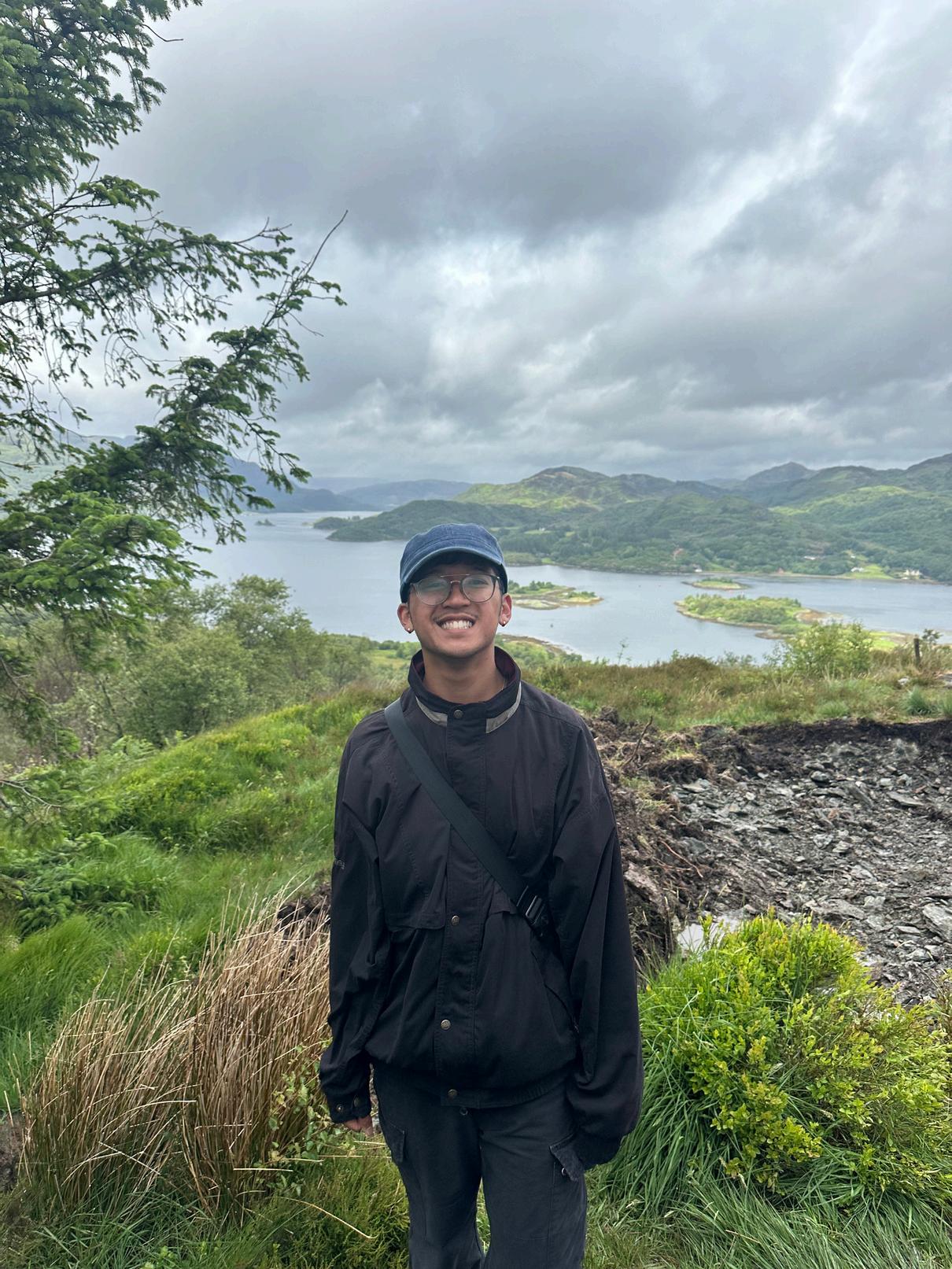
This summer, I was fortunate enough to study abroad in “Rutgers - Castles, Communities,andSustainability:Lessonsfrom Scotland for the 21st Century”, and traveling between four different cities brought the awarenessandunderstandingofenvironmental progress needed around the world. While lugging around bags from Edinburgh to Glasgow to Bute, and lastly, Cowal, I had the chance to interact with the local community and businesses. Through these interactions, I learned that green energy was both a major focus and a growing concern To those who haven’t visited Scotland may appear as one of the most sustainable and environmentally friendlyplacesintheworld,butthetruthisa little different from that. The most recent statisticsregardingthecountry'sprogresswere as recent as 2025, where “in the first half of 2025, 19.3 TWh of electricity was generated from renewable energy…[and] in the second quarterof2025,8.1TWhofrenewableenergy wasgenerated”(ScottishGovernment,2025a). According to the report, there was a decent amountofprogressachieved,“a4.3%increase compared to the 17.0 GW at the end of the secondquarterof2024…andcurrentlystandsat 17.7GW”(ScottishGovernment,2025a).
The Scottish government prides itself on its policies that encourage environmental growth intheuseofrenewableenergyandaimtostrive formoreintheupcomingyears.Declaringthat “by2030…[they]aimtogeneratetheequivalent of 50% of Scotland’s overall energy consumption from renewable sources, and by 2050 [they] aim to have decarbonized [the] energy system almost completely” (Scottish Government, 2019b). However, certain obstaclesmustbetackledbeforethegoalcanbe achieved because without stronger, foundationalregulations,thegoalremainsout ofreach.
Whilerenewableenergyhasbeenprogressing, withinvestmentsinwindenergy,thenextstep tomakeasignificantchangeforthebetterment ofScotlandisbeingchallenged.Thereasonfor thisisthattheUKgovernmentintervenesand doesnotwishtopromotelanddevelopmentfor green energy. This is referred to as the “ a de facto ban” where the “UK government plans allowforbarelyanynewprojects”,specifically after the year 2030 (Gosden 2025) Furthermore, the plan for the Clean Power 2030ActionPlanisbeingdiscouragedwiththe “warningthatbillionsofpoundsofinvestment isatstake…[as][stated]inanopenletter
to Ed Miliband, the energy secretary [where] 13 companies [are] involved” (Gosden, 2025) While wind farms are seen as hindrance since there is not much of economic benefits to receive from it, the plan is to “decrease in the rateofinstallationsallowedafter2030ofover 90percent,andamountstoadefactobanon Scottish onshore wind post 2030” and this is confirmed by “companies including Low Carbon,EDPRenewables,andCWPEnergy” (Gosden, 2025). The result of such actions means that “they can only see a further 07 gigawatts being added in Scotland between 2030 and 2035” (Gosden, 2025). Consequencesofnotfocusingonwindenergy for future generations are more than not meeting a goal, and “ many Scottish onshore wind projects that have already submitted planningapplicationswillbetoldthattheyare nolongerneededandthattheywillbekicked outofthegridqueue.”(reNEWS,2025).Butit affects Scotland economically due to “the hundredsofjobsthatcanbecreatedfromone of the fastest and lowest cost forms of generating clean power ” and, more importantly, “would undermine the government’sultimategoalofspeedingupthe deploymentofcleanpower”(reNEWS,2025). But the real matter to comprehend is the reasoning behind the delay and lack of renewable energy, to which Scotland’s past of privatization land does play a crucial role in explaining.
Scotland’s struggle to expand renewable energy isn’t simply about policy gaps, but it’s also about who controls the land beneath the turbines.Landprivatization,deeplyrootedin
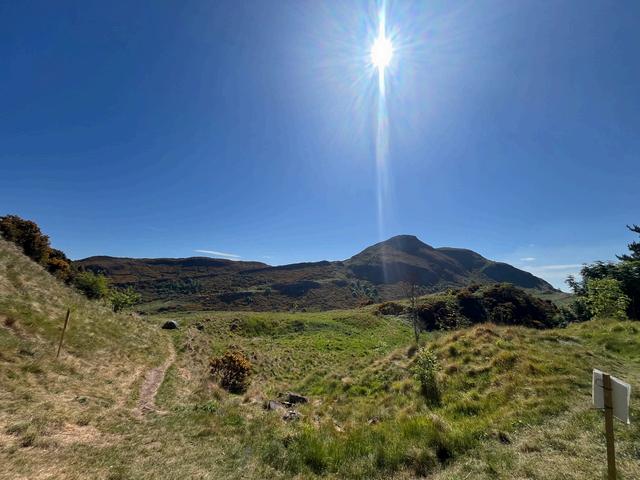
ApictureofArthur'sSeat,inHolyroodPark,whilehiking, and is a protected environmental land that is famous and localshikeeveryday Aswellasahistoricallandrelatedback to King Arthur himself Is land important to species of plantsandanimalstoo.
Scotland’s history, continues to shape who benefits from development and who gets left out Infact,landownershiphasbeenoneofthe mostdevelopedinScotland,especiallyas“421 landowners control half of Scotland’s private ruralland,whilelessthan3%isownedbylocal communities,” and there is a clear disconnection between their social and economicfocus.(InternationalLandCoalition, 2022).Yet,theissuemaynotberesolvedeasily becauseoftheincreaseininvestorlandowners Oneoftheseinvestorsis“GreshamHouseLtd Partnerships, an international asset manager, whoownsover53,000hectaresofScottishland equivalenttonearly75,000footballpitches. Increasingly, vast areas are being acquired by companiesandwealthyindividualsbasedintax havens or abroad, including the US, Scandinavia, and the Middle East” (International Land Coalition, 2022). However,lookingaroundeveninNewJersey,a similarsituationmaybeseenasdisregardfor
nvironmentalprogressforeconomicbenefitis appeningmorethanjustinScotland.InNew rsey, land is prioritized for commercial velopment, highways, or housing, which aves limited space for renewable projects or nvironmental preservation Just as Scotland’s ivatized land ownership has slowed progress ward green energy, New Jersey faces tradefswhenlandisconsumedbysprawlinstead being protected or repurposed for green frastructure. My lessons in Scotland meant ore to me than I ever thought possible: it owed me that without thoughtful land-use anning, the push for sustainability can be ndermined.
DuringmyvisittotheIsleofBute,Imeta cal woodsman responsible for managing the mmunityforest.Heexplainedthatwhileheir forts focused on sustainable timber oductionandmaintainingthewoodlandfor cal benefit, there was little interest in omoting green energy projects like wind or larpower.
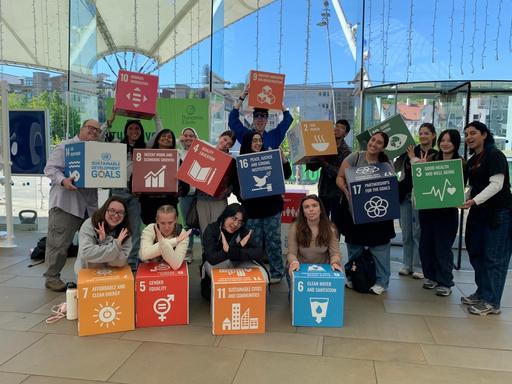
ctureofme,classmates,andProfessorHarrislearningaboutthe ustainable Development goals, while also learning about the sScotlandfacesaboutgreenenergynotbeingprioritized
His perspective made me realize that sustainabilitycantakemanyforms,butwithout broader coordination and land-use planning, progress toward renewable energy can stall. EveninNewJersey,asimilardynamicexists,as disregardforenvironmentalprogressinfavorof economicdevelopmenthappensmorethanwe realize.Landisprioritizedforcommercialuse, leavinglimitedspaceforrenewableinitiativesor ecological preservation. Just as Scotland’s privatized land ownership has slowed progress toward green energy, New Jersey faces tradeoffswhenlandisconsumedbysprawlinstead of being protected or repurposed for green infrastructure. A warning: New Jersey should take this seriously and seek a balance between growthandclimategoalstotrulymeetitsown standards.
Scotland’spathmakesitclearthatambitious renewable energy targets mean little without land and policies to back them. Privatization and regulatory obstacles are stalling progress, while leaving communities sidelined in decisions about their own future. New Jersey nowfacesasimilarchoice:prioritizeshort-term development or align land use with long-term sustainability? I see this in the places near my own home: I’ve seen open fields replaced by warehouses, shopping centers, and highways, leaving little room for renewable projects or green spaces that could serve the public good. Even promising efforts, like offshore wind development, are often met with resistance or slowed by complex regulations. The lesson is short and crucial: a necessary but fair energy transition requires not only new technology, butfairerlandpracticesthatgivepeopleandthe planetanequalstakeinwhatcomesnext.
From Karpathos to New Jersey
A Lesson On Sustainability Through Scarce Resources By: Orli Ashkenas
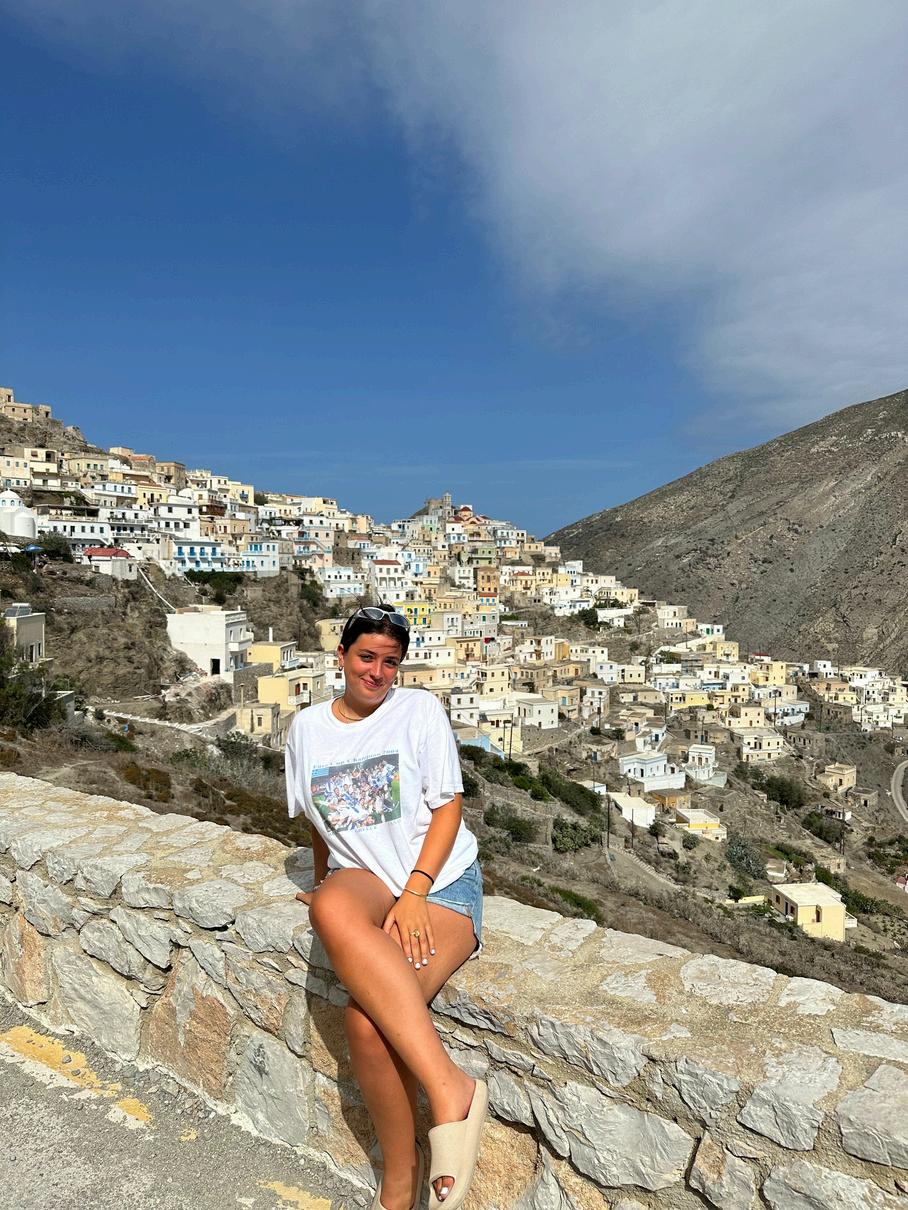
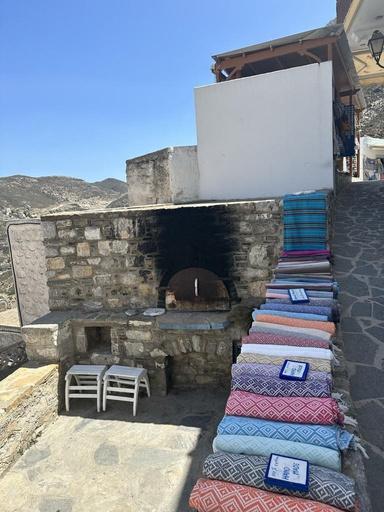
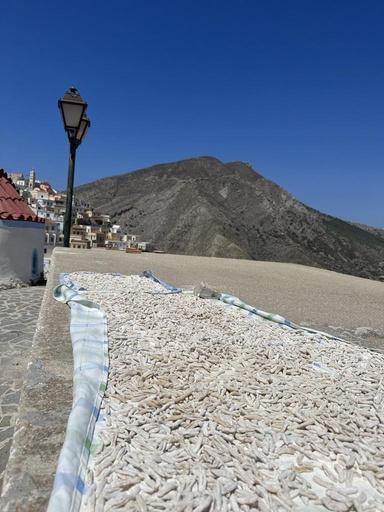
In Greece, my grandparents and greatgrandparents lived through waves of occupation by Turkey, Italy, and Germany, resultinginfamine.Myfamilyhadtolearnto conserve their ingredients, making olive oil, bread, and using local plants like thyme and mountain herbs for food and medicine. To preserve as much food as possible during the war, everyone in the community contributed their efforts to the cause. For instance, my grandmotherhadherownfarmandreliedon community ovens to prepare food. Everyone sharedcommunalovensinthevillage,andeach
family had designated times when they could usethem(Sevdalis,2025).ovensinthevillage, and each family had designated times when theycouldusethem(Sevdalis,2025) Evenin today’sdayandage,traditionalovensarestill being used in islands such as the village of OlymposinKarpathos
The geography of many Greek islands, combined with their history, led Greek islanders to be secluded from the outside world.Throughouthistory,thishelpedGreek peoplelearnhowtousetheresourcesavailable on their islands. Greece's history, especially during World War I and World War II, had taught the Greek people how to survive for months with what was available in their backyard and through community efforts (Sakellakis, 2023, p 39) If communities and the perseverance of the Greek people were weak during challenging times, it means that Greeks would be subjected to famine, as seen during the Great Famine in Greece during World War II. In Greece, sustainable agricultural practices have been employed for centuriesandarebeingpasseddownfromone generation to the next Greek cuisine is all about gathering local ingredients, such as thyme, olive oil, and vegetables, as well as anything available in their backyard (Intercollege,2023).
One of the main dishes from Karpathos, Greece, is Makarounes, a vegetarian dish featuring homemade pasta topped with sautéed onions in locally sourced butter and olive oil, and finished with mizithra, a traditional homemade cheese. Makarounes originated during times of occupation by pirates, who ravaged the island, leaving the Karpathians with access to scarce resources such as oil, onions, and wheat. The dish of makarounes tells a story of growing up with scarce resources, such as meat, but using love andpassiontocreateadeliciousandflavorful dishwithminimalingredients.
Greece’sdietisbasedontheMediterranean diet,whichcentersonoliveoil,freshproduce, beans and legumes, fish, and seasonal ingredients (Bloomfield et al., 2016). The MediterraneandietinGreeceutilizeslocaland seasonalingredients,therebyreducingtheneed for food transportation and storage, lowering carbon emissions, and supporting local businesses. Primarily, consuming local and seasonal ingredients promotes biodiversity on theland,therebypreventingthedominanceof industrial agriculture. Traditional Greek cultureisinharmonywithitsland,makingthe mostofwhatithastooffer.
When learning about how Karpathos sustains itself with its own resources, communities in New Jersey can be inspired and adopt practices that put them on a sustainablepath.
RutgersUniversityfeaturesfarmers'markets on multiple campuses, including Cook and CollegeAvenue,wherelocalfarmersareinvited to sell their produce (Farmers Market (8/2811/20), 2001) By having farmers' markets, students have access to healthy and seasonal produce. Farmers' markets, cooking with seasonal produce, and checking for food productsthatarelocallysourcedandhavethe shortest food miles. Not only does it provide delicious meals, but it also conveys a greater senseofpassion,astheconsumerknowswhere theirfoodcomesfromandhowitwassourced Community efforts, such as requesting local government officials to establish farmers' marketsoracommunitygarden,aregreatways to provide communities with healthy, locally sourced,andseasonalproduce.
BIKING IN SUBURBAN NJ: MAPLEWOOD AND
SOUTH ORANGE
By: Lauren Barnett
Accordingtoa2016studycompletedbythe New Jersey Department of Transportation (NJDOT, 2025), about 70% of New Jersey residents do not use bicycles regularly because they perceive motorists as incautious around bicyclists; lack of bike lanes and heavy traffic being the underlying reasons (Azzi, 2022). Additionally,82%ofNJresidentsreportedthey wouldbecomfortablewithaseparated,protected bicycle lane being implemented on roads (Azzi, 2022). There are many benefits to biking, includingincreasedexerciseanddecreasedcarbon emissions, yet across the state, most resort to driving.NJDOT’s2024CompleteStreetsPolicy expands on its original 2009 policy, with the intentionofpromotingthesafetyofothermodes oftransportationinNewJerseytownsacrossthe state, like in South Orange and Maplewood. Referred to as MAPSO by the younger populationandSOMAbytheolderpopulation, South Orange/Maplewood is a community comprising two neighboring New Jersey towns boundtogetherbyasharedschooldistrict.Being inthesuburbsofthegreaterNewYorkCityarea, located just 15 miles west of Manhattan, the community is made up of mostly families with school-age children, whose parents commute intothecityforwork.
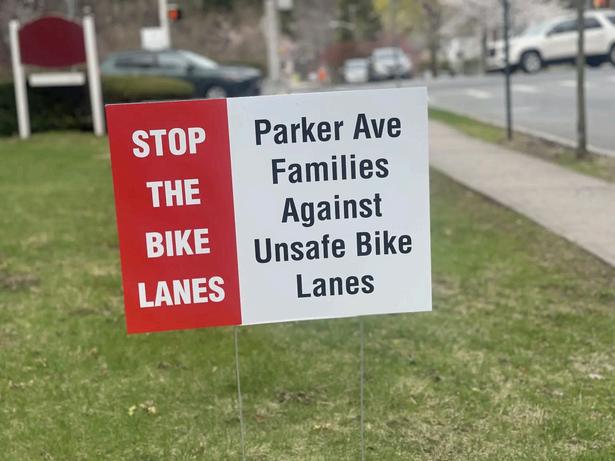
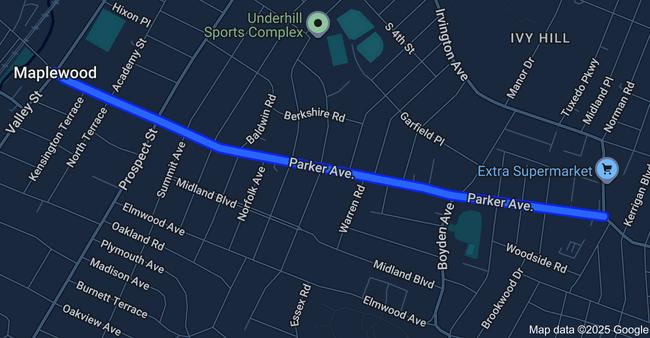
implementbikelanesalongMaplewood’sParker Avenue,whichruns1.5milesfromMaplewood AvenuetoIrvingtonAvenueandpastthepublic high school. Maplewood has adopted the Complete Streets approach, which calls for providingequalopportunitiesforwalkers,bikers, and drivers to use the roadways. Bike lanes on Parker Avenue are intended to be the start of a network of bike lanes that connect across the town. According to Township Committee MemberVicDeLuca,ParkerAvenuewaschosen because it connects the east and west sides of town, and train commuters tend to drive through it (Margulis, 2025). Families that live along the street were very vocal in their oppositiontothebikelanes,astheysawthemas unsafe and not the appropriate street for them (Barr Mann, 2025). However, narrowing the roadforcarsisknownforbeingtrafficcalming, asitforcesdriverstodrivemoreslowly;therefore, implementingbikelaneswouldultimatelymake it safer On July 15th, a downgraded plan was passed unanimously by the Maplewood Town Committee involving the installation of dedicated bike lanes on Parker up until Boyden
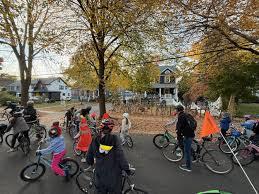
Bike Bus is a global movement that originated from an elementary school located about 50 milesoutsideofBarcelona,Spain,in2020,when two teachers started an initiative to bike with studentstoschool.Thatfall,“BusBici”wasborn, and bus lines were launched in the Barcelona MetropolitanArea(Johnson,2025) Sincethen, themovementhasgainedmomentuminEurope and the United States. Montclair, Jersey City, Fair Haven, and Asbury Park are examples of othercommunitiesacrossthestatethathavebike buses.
ThepassingofbikelanesonParkerAvenueand thegrowingmomentumoftheSOMaBikeBus bodewellforafutureofabikingcultureandthe implementation of the Complete Streets policy approach in suburban New Jersey towns. Evidently, biking is enjoyable and comes with manybenefitsforcommunityhealth.Giventhe current challenges we face as a culture and the imminentthreatofclimatechange,bikingmust be encouraged and made a safe and accessible modeoftransportation
Fire Outbreak Strikes the Heart of Jersey City
ByNaderRawshani
JerseyCity,locatedacrosstheHudsonRiver fromitsmuchlargerneighbor,NYC,hasfaced numerousfireoutbreaksthroughout2025.In mid-February, a month after Donald Trump’s inauguration, many vacant buildings in HudsonCountyweredestroyedbyfire(Due, 2025). Several months later, in early June, another fire on Bergen Avenue displaced 13 people (Goode & Trapani, 2025). Then, a monthlater,anotherfirebrokeout,destroying two houses and injuring six firefighters (Westbrook & Sloan, 2025). Lastly, in late August, NJ.com reported that a PATH train caught on fire, injuring 19 people. A subsequent report on the situation reported that over $143,000 in damages resulted from thisfire(Higgs,2025;NationalTransportation Safety Board, 2025). Evidence suggested that electricalarcingande-bikefireswerethecauses of these disasters. According to the City of Hoboken, over 600,000 e-bike rides were recordedin2024.
The primary concern with these e-bikes is theirlithium-ionbatteries,whichareproneto overheating and can potentially explode, resultinginfires.
WhenexaminingNYC,therewere191fires and 6 deaths in 2022 alone, and these were attributedtolithium-ionbatteries(Consumer Reports, 2022, para. 1). This raises a safety concernforthepeopleofJerseyCity,asmany use these bikes as a mode of transportation. Fortunately, the Jersey City Council has introduced legislation to regulate these batteries,aimingtomitigatethedangersthey pose.
Thislegislationbansthesaleofsecond-use batteries and requires all merchants selling them to register with the city to monitor battery safety (Koosau, 2024). Additionally, Jersey City launched an e-bike and scooter battery swap program, encouraging residents to exchange used batteries and reduce fire risks.
TableofContents
Theprogramprovedsuccessful,with12,000 exchanges and a one-third reduction in athome battery use (Ionescu, 2025). Nevertheless, the Bergen Avenue fire highlights ongoing issues and raises the question of whether these bikes should be completely replaced Compounding the problem,anincidentinHamiltonTownship, where an e-bike fire destroyed a three-story duplex and a two-family home, underscores these concerns (Goode & Trapani, 2025). In contrast, the PATH train fire was caused by electrical arcing, a phenomenon in which electricity escapes and ionizes the air, leading to overheating and potentially igniting fires. This could have been prevented with proper maintenance, such as addressing loose connections or damaged insulation As with all fires, there should be systems in place to monitor electrical safety. One recommendation is to limit or stop using ebikes altogether and explore alternative transportation options, such as a regular bicycle. If you do use an e-bike, ensure you regularly check the battery for faults. Additionally, advocate for government funding to improve the electrical infrastructure, so future disasters like the PATH train fire can be prevented A small change in daily habits, especially regarding advocacy and community involvement, can protecttheenvironmentandsavelives. TableofContents
Digging Up the Dirt On Ciba Geigy:
A Resurfacing Debate Regarding the Toms River Superfund Site
By Katie Marra
Phrases you may hear in regards to Toms River include“toxic,”“wastedump,”or“wow,theremust besomethinginthewaterdownthere…”Thismay sound like hearsay, but Ciba Geigy earned Toms River this reputation with years of environmental abuse.CibaGeigywasaformerSwisspharmaceutical company in operation from 1952 to 1990 that earned Toms River economic prominence by fostering plentiful job opportunities. The company was successful, but in significant part due to its disregard for the waste produced during dye production; its disposal process involved tossing drums of dye into an unlined landfill on the property,causingwidespreadchemicalpollution.As a consequence, Toms River developed a reputation forbeingoneofthemostheavilypollutedtownsin the state. Federal-level studies done by the EPA determined that Toms River residents had been exposedtochemicalpollutantsfromthesite,finding lead, mercury, and Volatile Organic Compounds (VOCs),whichwerefoundinprivatewellsandthe publicdrinkingsystem.Oneofthetragicresultswas a spike in childhood cancers within the town throughoutthe1990s
The contamination and resulting cancer clusters that occurred in the wake of Ciba Geigy attracted attention from numerous press sources. One journalistinparticular,DanFagin,wroteaPulitzer Prize-winning book about the issue called Toms River: A Story of Science and Salvation, which brought significant public attention to the Ocean County township. The book provided a detailed documentation of the devastating environmental and human health effects associated with the Ciba Geigysiteover60years
DanFaginhelpedplaceTomsRiveronthemapas nationally recognized for pollution He especially highlightedthelongremediationprocessnecessaryto fullycleanupthesite.Itisprojectedthatfullcleanup ofthegroundwatercontaminationwilltakedecades toaddress.
Though no longer actively producing pollutants, detailssurroundingtheremainsofthesitecontinue toleachintolocalheadlines.Thepropertyhassince been purchased by Baden Aniline Soda Factory (BASF), the world’s largest chemical producer (Tullo,2025) Thetransactionwasnotwellreceived bythepublicbecauseofthelingeringskepticismof large chemical-producing companies. Then, in a 2022 settlement proposal, the NJ Department of EnvironmentalProtectionandBASFmadeaplanfor the property, which included construction of a nature center, a pollinator garden, as well as a boardwalkareaforhikingandbirding.Thiscaused outrageamonglocalenvironmentalgroupsandTR citizensintheyearstofollow,withSaveBarnegatBay hosting several community meetings for the public to share comments The sentiment that dominated thesemeetingswasoneofdeepconcern,withpeople sharing stories of loved ones who suffered from cancer,recountsofTheTomsRiverturningpurple, and widespread distress over the BASF plan. Ciba Geigyreflectstwoseeminglycontrastingtruths:the empirical evidence to suggest safety, but also the validity of cascading psychological effects from disturbing narratives that cement the feeling of toxicity. Although the space is capped, it will not remove the toxic chemicals from the soil nor the anxietiesoftheresidentsofTomsRiver