


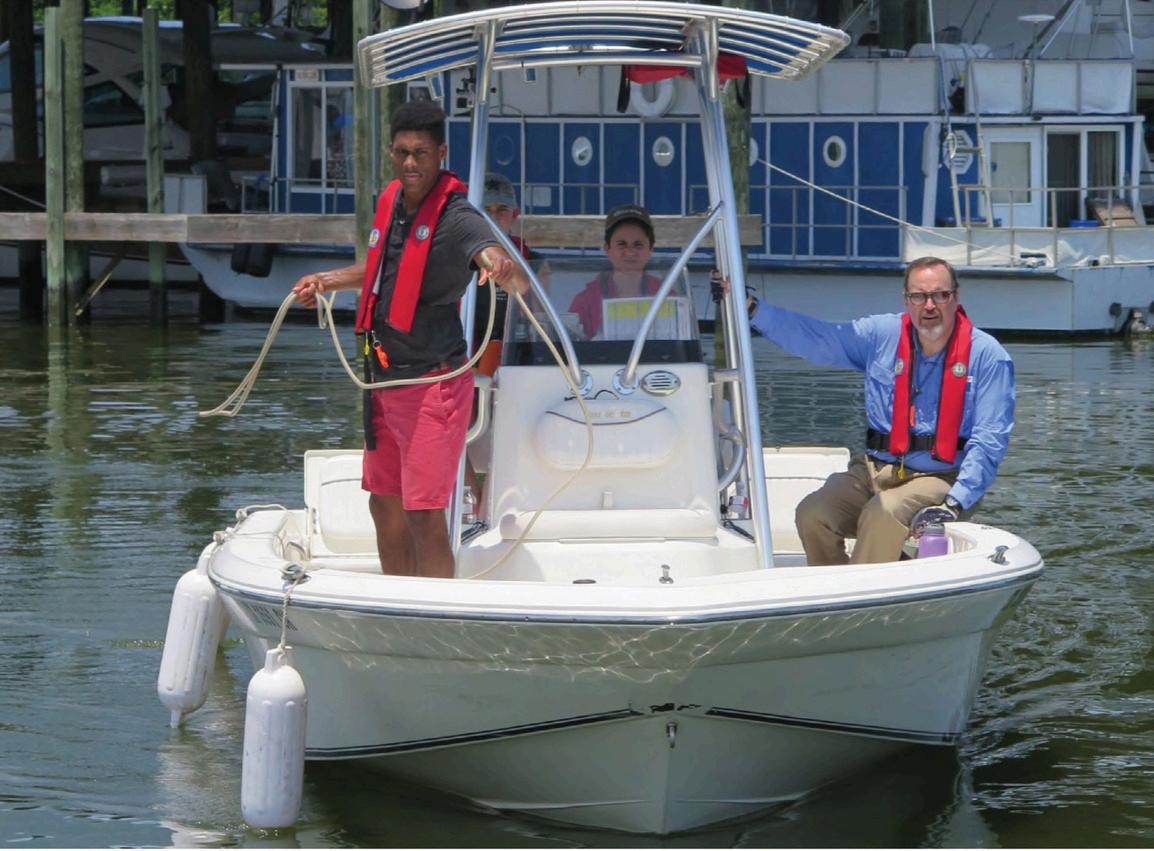
Don’t fight your boat—Control it! Go beyond boating basics with Boat Handling from America’s Boating Club.
This online course takes the mystery out of docking, handling your boat at speed, anchoring, coping with emergencies on board, navigating the rules of the road, and tying useful knots. You’ll also get a handy student guide and an online exam.*




BY MIKE WIEDEL
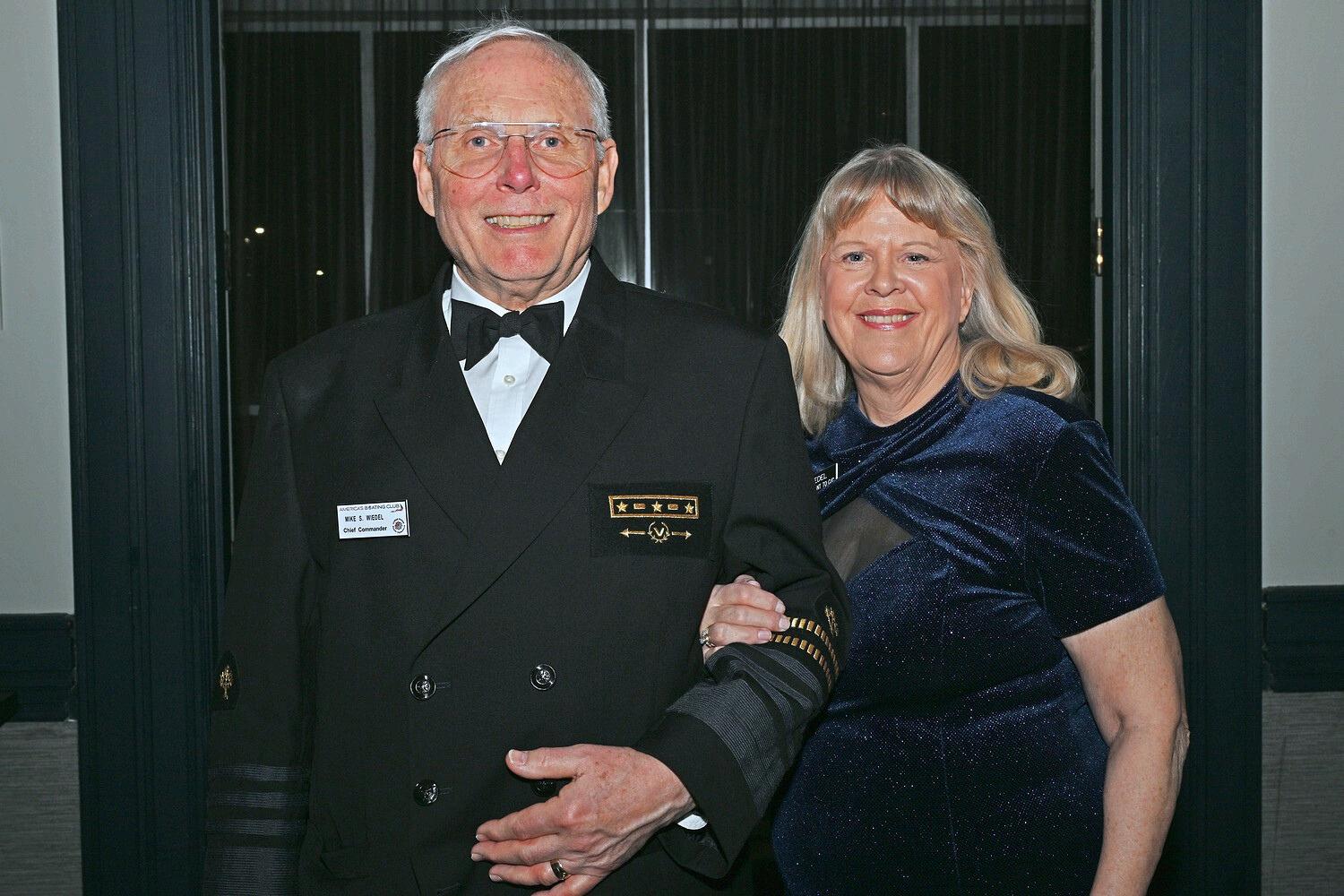
► Fellow members of America’s Boating Club | United States Power Squadrons, it’s with a profound sense of responsibility and optimism that I address you for the first time as your chief commander Being chosen to lead this storied organization a cornerstone of American maritime tradition since 1914 is both a humbling honor and an exhilarating challenge
As we look toward the 2026 boating season, we must be honest with ourselves: The waters we navigate are changing The “business as usual” approach of the past century will not carry us through the next decade. To ensure America’s Boating Club | United States Power Squadrons remains the premier resource for boaters, we must align our mission with the realities of a modern, rapidly evolving boating market.
For decades, the path to the water was linear: A family bought a boat, joined a local squadron and spent years moving through our educational curriculum Today, that entry path is a web of diverse beginning points
We are currently witnessing a seismic shift in how people access the water. High interest rates, the rising cost of slip fees and a shift in generational values have led to the explosion of the shared-access economy. Boat clubs, peerto-peer rentals and fractional ownership are no longer fringe concepts; they are the primary gateway for the next generation of recreational mariners. →
→ If we are to survive and thrive, our squadrons must embrace these “nontraditional” boaters A boater who rents a pontoon for the weekend needs safety education just as much as if not more than the owner of a large cruiser. We must position membership in America’s Boating Club | United States Power Squadrons as the essential knowledge partner for anyone who uses a boat or steps off a dock.
Our reputation was built on the depth of our courses. However, modern learners consume information differently. In a world of instant gratification and YouTube tutorials, we must bridge the gap between our comprehensive course materials and the need for justin-time learning
Ourdigitaltransformationisnolongeraluxury;it’sa necessity.Whilewewillalwayscherishourclassroom camaraderie,wemustcontinuetomoveforwardwith modular,mobile-friendlylearning breakingdownour deepknowledgeintobite-sized,accessiblemodulesthata boatercanreferenceanywhereandanytime.Weshould belookingtoward2027andbeyond,usingsimulation technologytoteachnavigationanddockinginarisk-free environmentbeforestudentseverturnakey
As boats become more complex with integrated joystick piloting, digital switching and the emergence of electric propulsion the value of our on-the-water training programs skyrockets. We are the experts; we must be the ones showing the world how to handle these new technologies safely
The health of America’s Boating Club | United States Power Squadrons lives and dies at the local level. Our squadrons are the lifeblood of this organization, but many are struggling with aging memberships and declining engagement →
” We are the experts; we must be the ones showing the world how to handle these new technologies safely.
EMAIL THE EDITOR READERS CAN SUBMIT LETTERS, ARTICLES AND NEWSLETTERS TO ENSIGN@HQ.USPS.ORG. ARTICLES WILL BE EDITED FOR LENGTH AND CLARITY.
investment in safety, confidence and connection.
→ To reverse these trends, we must evolve our social brand. The modern boater is looking for a community that offers value, inclusivity and flexibility. This means our meetings must be more than just dinner gatherings and administrative reports; they must be events that people want to attend
We need to foster an environment where a 25-yearold wakeboarder feels just as welcome as a retired offshore sailor. This requires a cultural shift toward radical inclusivity. We must actively reach out to diverse communities and younger families, offering programming that fits into their busy lives If we don’t reflect the diversity of the American public, we risk becoming a relic of the past rather than a leader of the future
Economic resilience and the value proposition
We are operating in an era of economic scrutiny Every member and every student asks, “What is the value of my time and money?”
Our response must be clear: Membership in America’s Boating Club | United States Power Squadrons is an investment in safety, confidence and connection. By streamlining our operations, we can redirect our resources toward what matters most member benefits and public outreach
We are also uniquely positioned to lead on environmental stewardship As the “eyes on the water,” our members are the first to see the effects of climate change and pollution. By integrating conservation into our core identity, we appeal to the values of younger boaters who prioritize the health of our waterways
To my fellow commanders and members: I am not asking you to abandon our traditions; I am asking you to leverage them. →
→ Our tradition is education Our tradition is service Our tradition is the bond of the sea
In the coming year, I challenge every squadron to try one new thing. Host a “new boater” social for a local boat club. Record a short safety tip for social media. Partner with a local dealership to provide orientations for their customers
The tide is rising We can either stay at the dock and watch it come in, or we can weigh anchor and use that tide to carry us to new, unexplored horizons.
I have chosen to sail. I hope you will join me. See you on the water. ■
Mike Wiedel joined America’s Boating Club Milwaukee in 1988, eventually becoming commander. At the district level, he then progressed to commander. At the national level, Wiedel served as rear commander of the Safety Committee and was aide and national flag lieutenant to two past chief commanders before becoming national administrative officer and then national executive officer He also enjoys teaching courses and seminars He and his wife, Kim, enjoy boating on the Great Lakes, Lake of the Ozarks and the inland river systems.
2026 Annual Meeting pics now online
May 16–22
Jun 15–19
Tampa, Fla 2026 2027
Raleigh, N.C.
Sep 20–27
Governing Board National Safe Boating Week BOD Meeting
Cary, N.C.
Feb 7–14 Annual Meeting
► Members can check out photos from the 2026 Annual Meeting in Myrtle Beach, South Carolina, to see all the highlights.
For a full roundup of the meeting events, including award recipients and an introduction to the new Board of Directors, turn to page 10. →
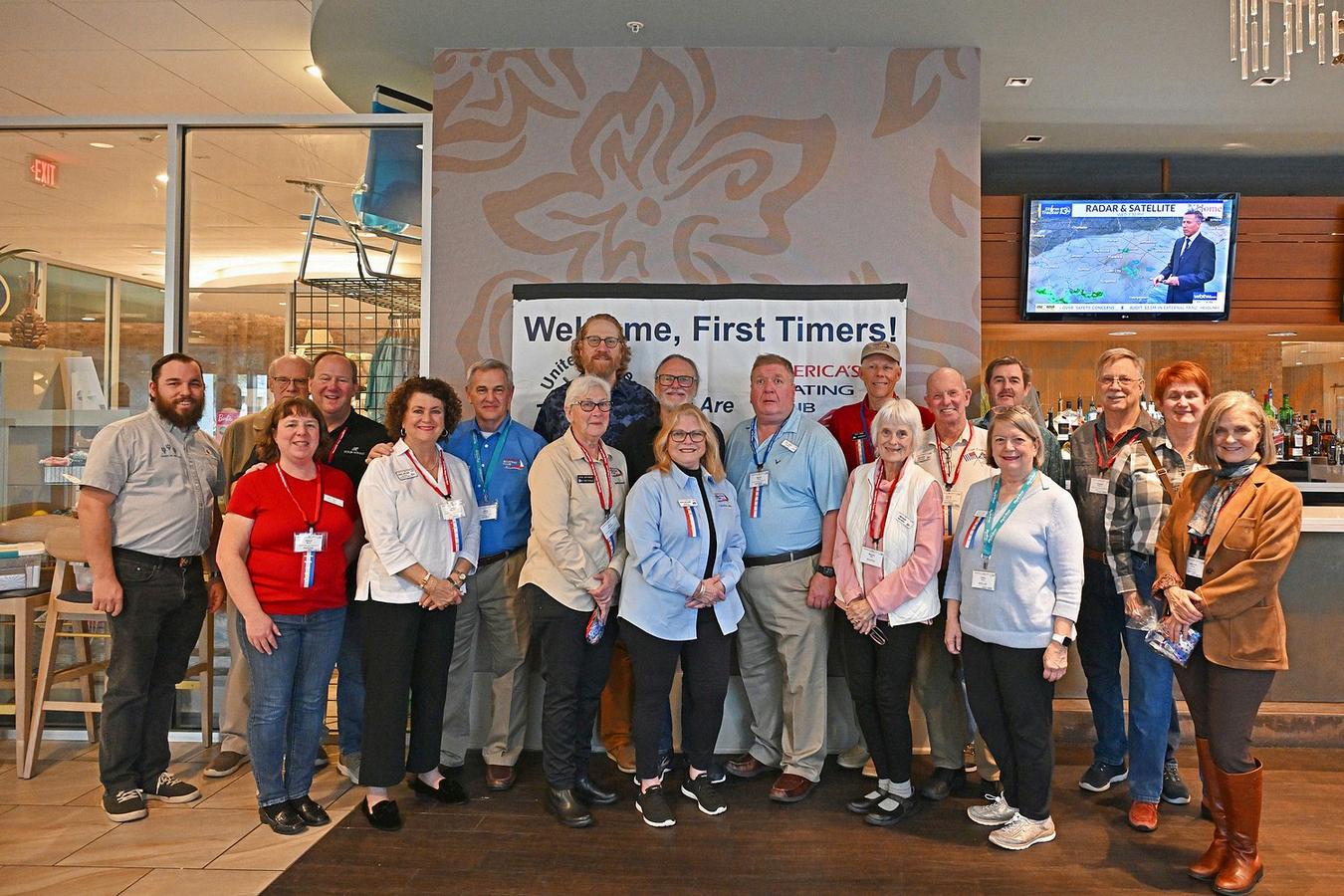
FIRST-TIME ATTENDEES OF A NATIONAL MEETING CAN EASE INTO THE WEEK WITH A FIRST-TIMERS RECEPTION
In case you missed it, here’s what’s been happening with our clubs and squadrons on social media.
America’s Boating Club Finger Lakes/6 held its Change of Watch to swear in Commander Kris West.
America’s Boating Club of Cape Coral/22 taught over 50 students for its Local Waters seminar
America’s Boating Club Houston/21 held its Change of Watch to swear in Commander Frank Amsler and other officers
Gainesville Sail & Power Squadron/23 held its Change of Watch at the home of Commander Francois Roulet.
America’s Boating Club Bluegrass/24 hosted its annual chili cookoff
America’s Boating Club Syracuse/6 hosted a booth at the Winter 2026 Central New York Boat Show
+ MEETING PHOTOS BY NATIONAL PHOTOGRAPHER
STEVE ERICKSON BOARD HEADSHOTS BY RTP PHOTO AND VIDEO
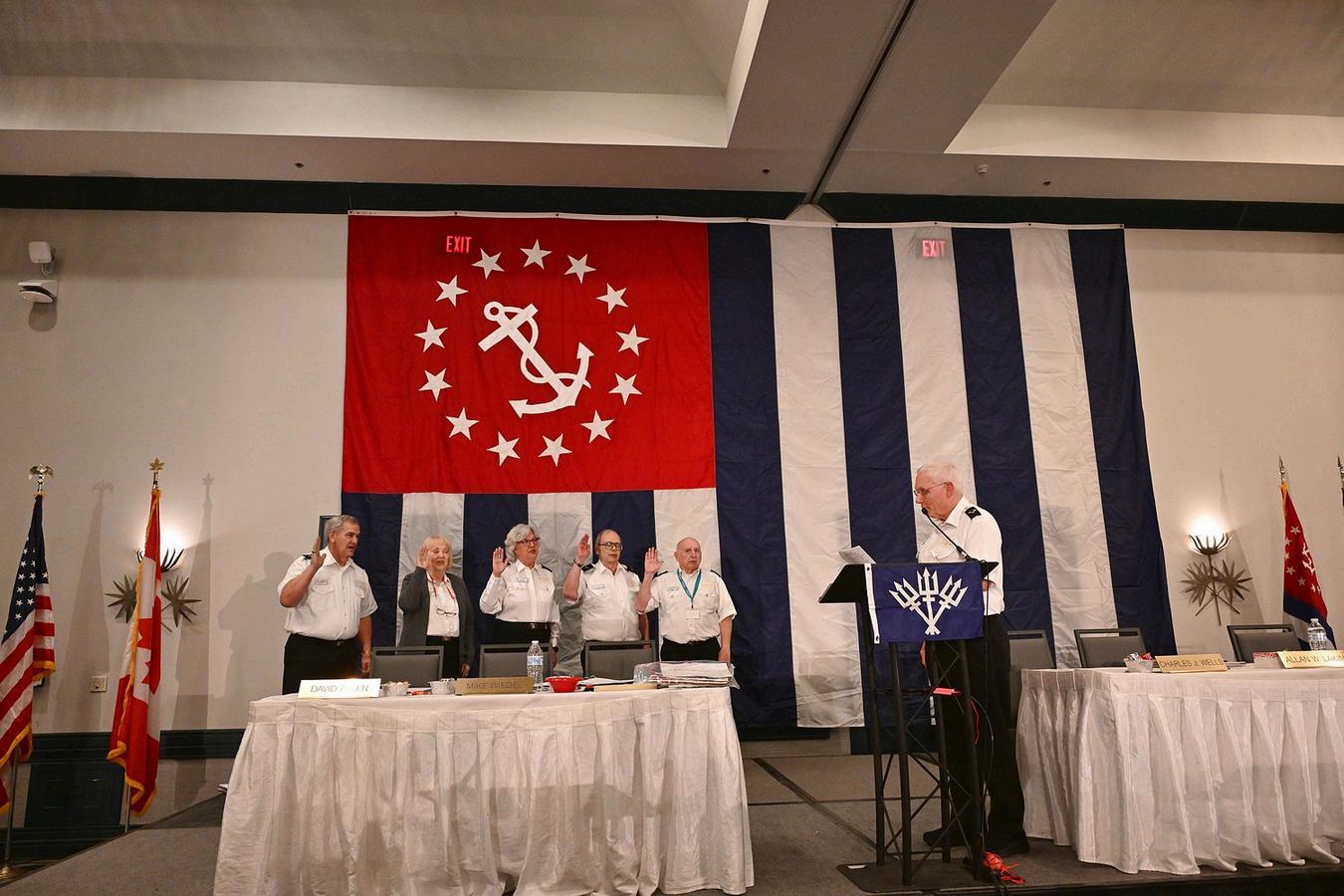
► In early February, members convened in Myrtle Beach, South Carolina, for the 2026 Annual Meeting and Change of Watch As in previous years, we celebrated member achievements, presented awards and welcomed a new National Bridge
Mark your calendars now the 2026 Governing Board Meeting is scheduled for Sept 20–27, in Cary, North Carolina.
Get to know the 2026 Board of Directors starting on the next page. →
NEWLY SWORN-IN CHIEF COMMANDER MIKE WIEDEL SWEARS IN THE REST OF THE 2026 BOARD OF DIRECTORS: RALPH BERNARD, SHIRLEY HEALD, JAN WRIGHT, AL LAKIN AND LARRY COLE
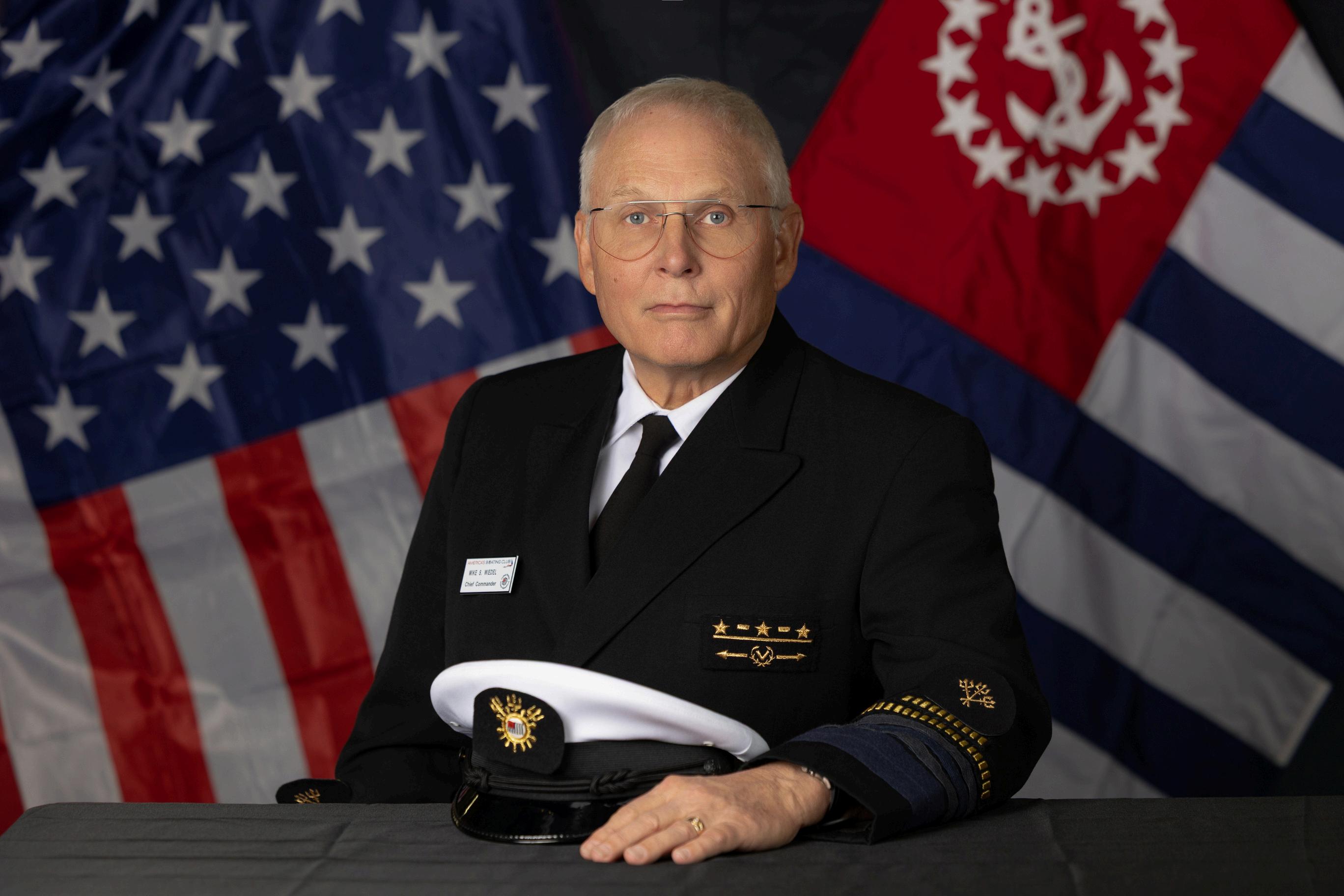
After joining America’s Boating Club Milwaukee, Mike has served the organization at the squadron, district and national level Prior to becoming chief commander, he served first as national administrative officer and then national executive officer Outside of America’s Boating Club | United States Power Squadrons, he’s a US Coast Guard Auxiliary member where he has held various positions on the flotilla, division, district and national staff levels. He’s also an amateur radio operator and USCG-qualified radio communications specialist and volunteers at active-duty and auxiliary communications facilities.
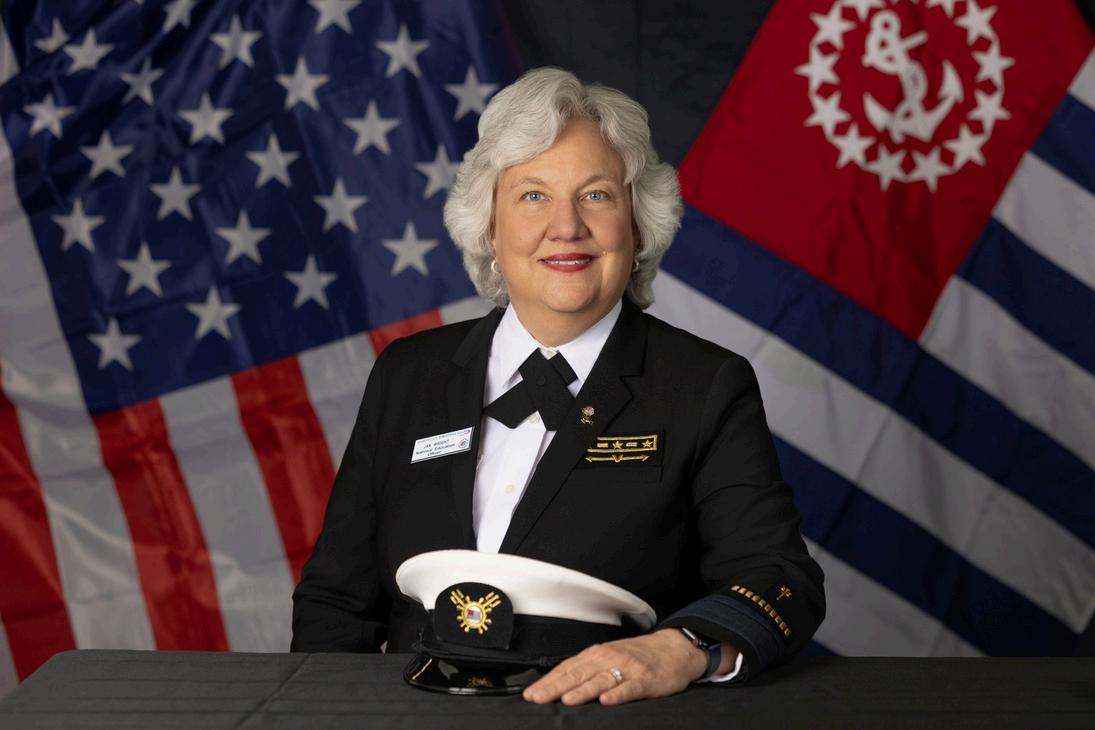
Jan Wright joined Tybee Light Sail & Power Squadron in 2006, becoming commander in 2010. At the district level, she served as district educational officer and aide to four district commanders. At the national level, she has served on the IT, Marketing, Membership, Planning, and Publishing committees and as assistant national educational officer A lifelong learner, educator and lover of the water, she enjoyed boating with her late husband, Richard, before his passing in early 2026
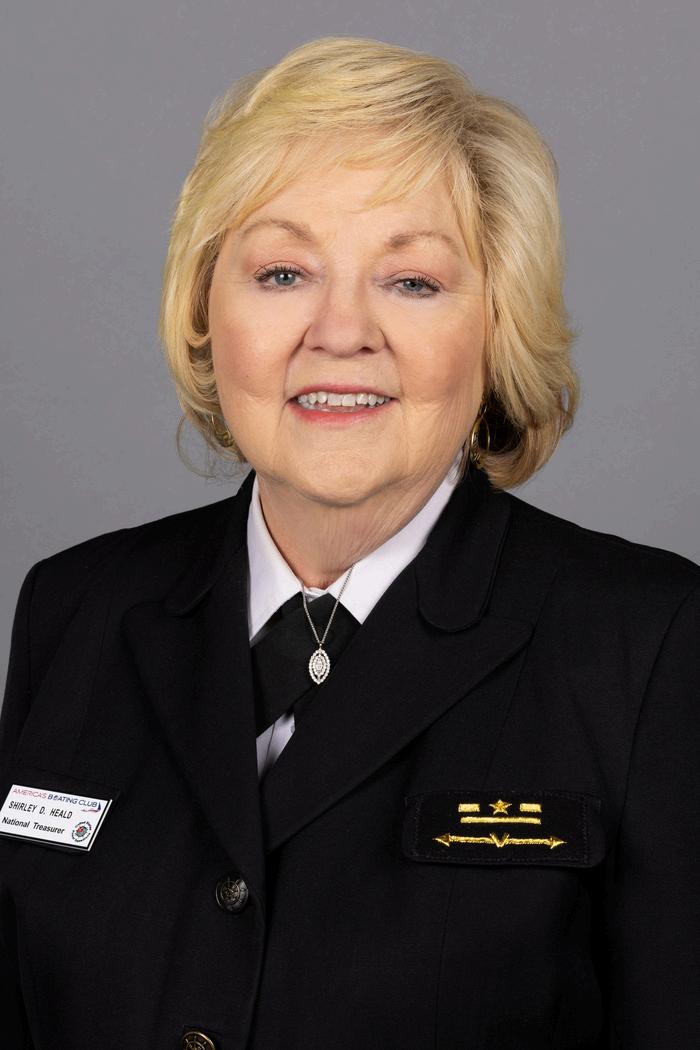
Shirley Heald served on the Dallas Sail & Power Squadron bridge and became commander in 1996 She also served on the District 21 bridge and became district commander in 2009 At the national level, Heald served on the Safety and Leadership Development committees and as rear commander of the Program Partner Relations and Marketing committees before becoming treasurer. She holds an MBA in finance from Southern Methodist University and is a member of America’s Boating Club Houston.
Larry Cole joined Toledo Sail & Power Sq in 2003, becoming commander in 2009 then district commander in 2013 and 2 has served as rear commander on the B Committee, staff commander on the Fi Committee, and member of the Squad Development Committee. He has taug classes and seminars offered by Americ Boating Club | United States Power Squ and enjoys powerboating on the Great
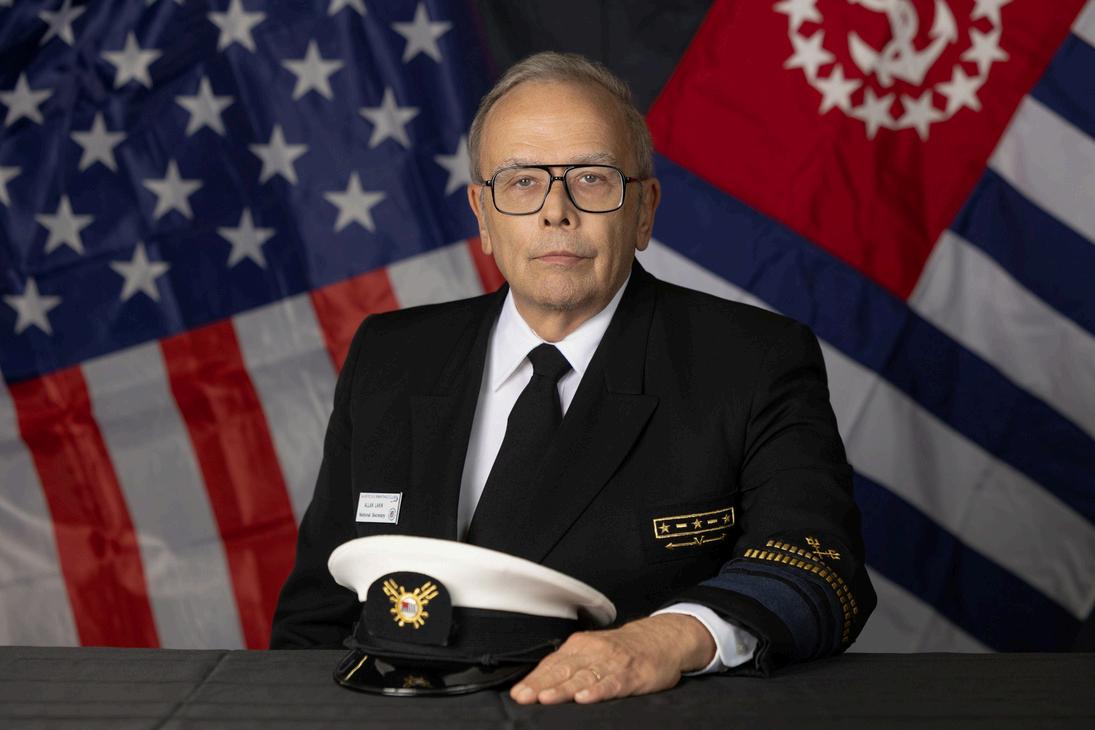
oined Valley Ho Power Squadron in 1990 d as commander before becoming mmander He is currently a member of Sail & Power Squadron, where he serves on educational officer He has served as mander on the Rules Committee as well as cations, IT, Law, Nominations and Lakin lives in Los Angeles with his spouse,
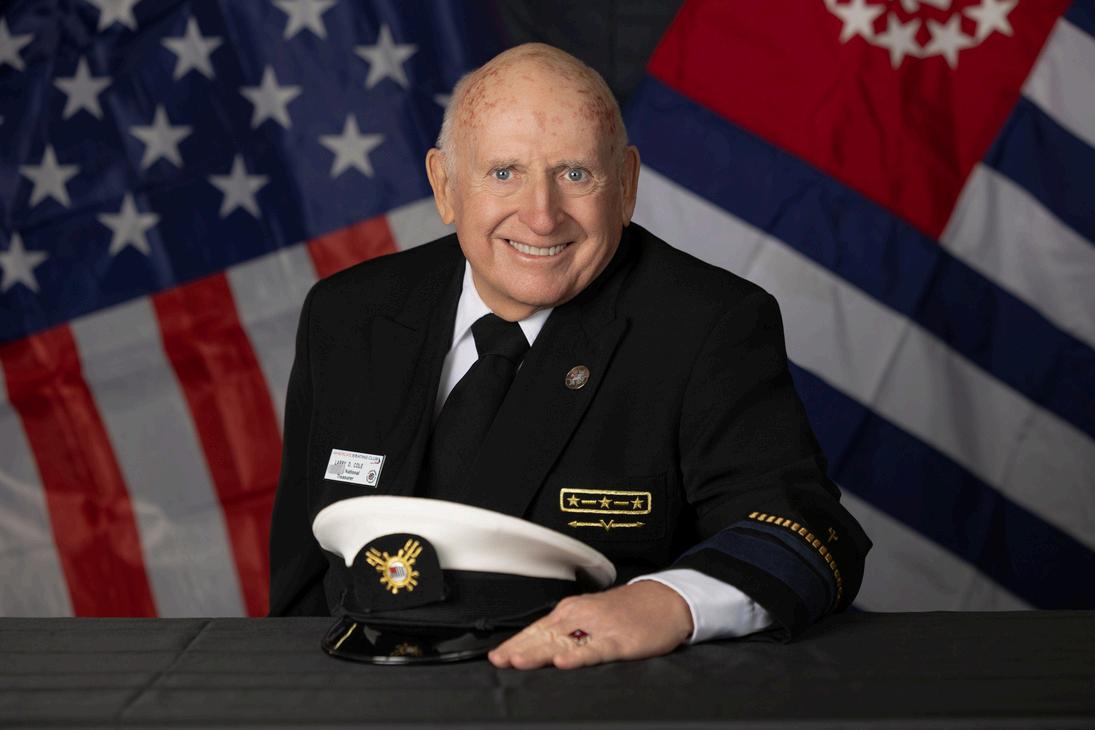
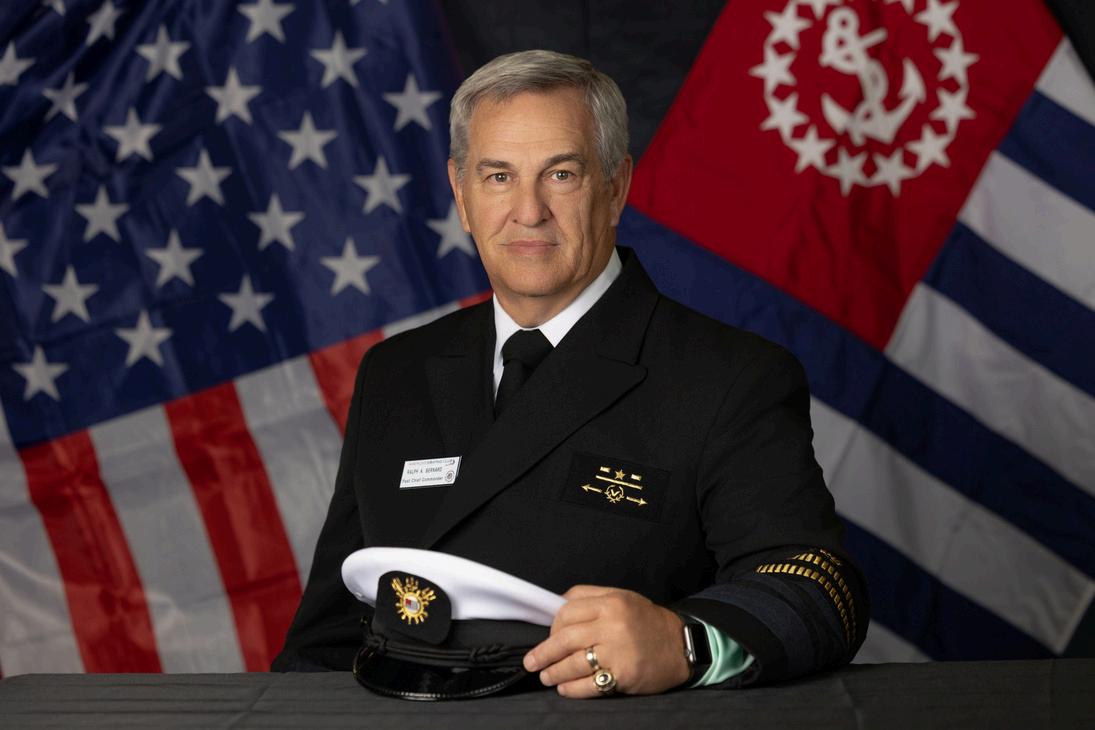
rnard first became squadron commander viously serving in all bridge positions and y district commander He has been rear der of the national Committee on Rules ing as aide to past chiefs, Bernard became administrative officer, national executive d then chief commander. A member of s Boating Club Absecon Island, he and his ce, spend summers boating on the ake Bay.
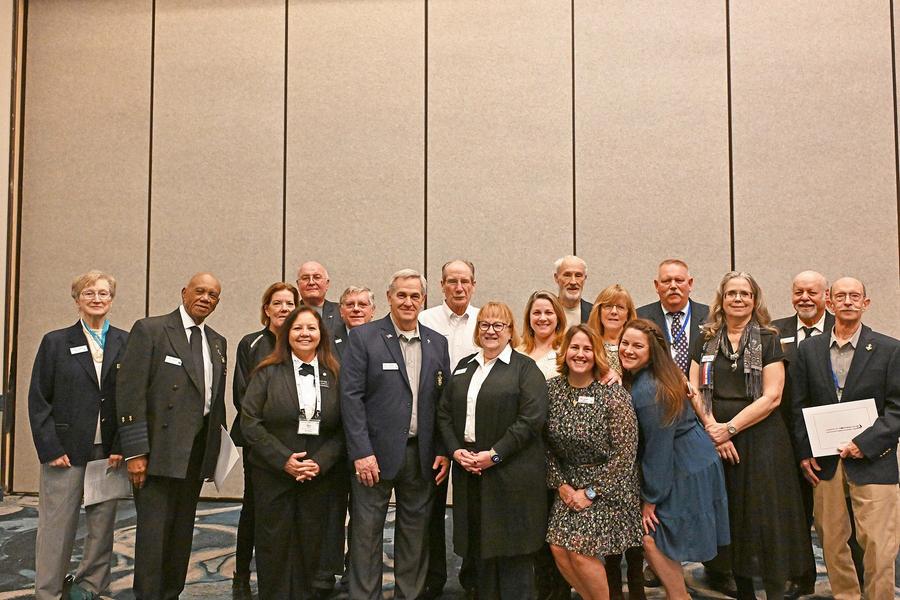
25 MERIT MARKS DURING THE AWARDS NIGHT DINNER ON THURSDAY, FEB 12
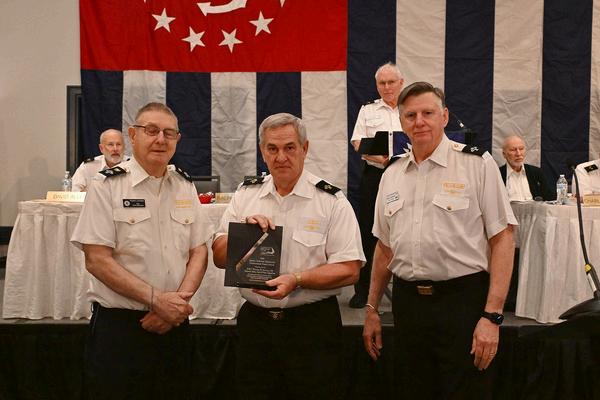
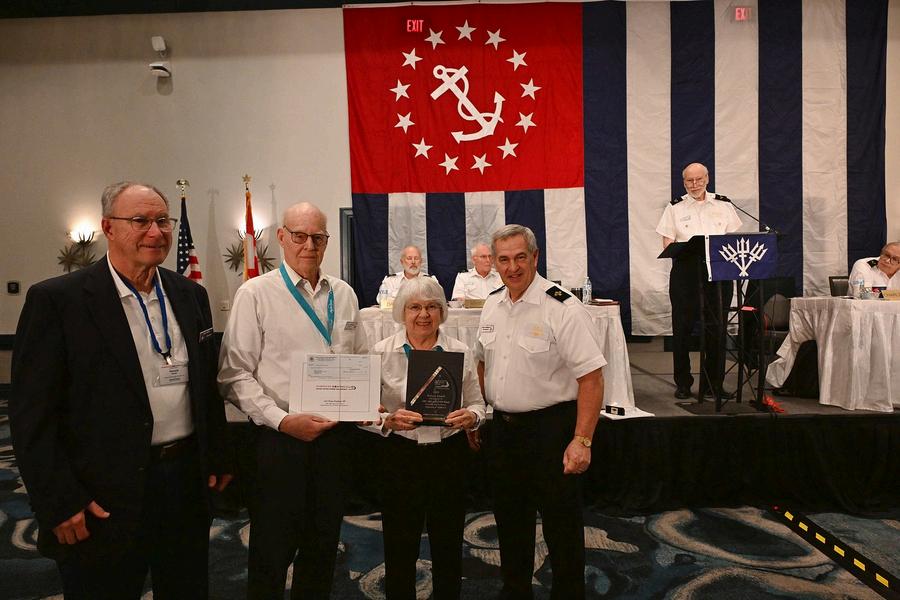
BOTTOM: THIS YEAR’S WINNER OF THE JAMES ACHESON MEMORIAL ENDOWMENT FUND AWARD IS WARREN W STEVENS STEVENS WAS HONORED FOR HIS OUTSTANDING SERVICE IN SUPPORT OF THE FINANCIAL STABILITY OF AMERICA’S BOATING CLUB | UNITED STATES POWER SQUADRONS CHIEF COMMANDER RALPH BERNARD ACCEPTED THE AWARD ON HIS BEHALF, ALONGSIDE PAST CHIEF COMMANDERS FRANK DVORAK AND ROBERT BALDRIDGE
s year, the organization welcomes new members emeritus, who present immeasurable contributions boating safety and education. mbers emeritus have at least 50 erit marks and years of service to merica’s Boating Club | United States wer Squadrons.
+ Thomas Axe
+ John Bedrossian
+ John Goebel
+ L. Douglas Jones
+ George J. Kye
+ William R Larsen
+ Dennis R McNamara
+ James E. Mello
+ Charles Virga
+ Leland Whitehead
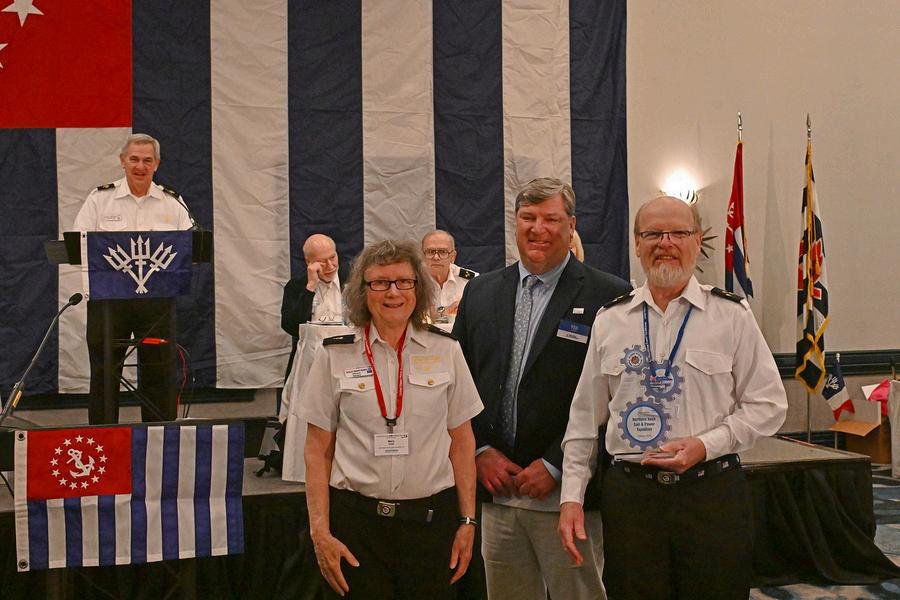
BOATUS-USPS CIVIC SERVICE AWARD
THIS YEAR’S BOATUS-UNITED STATES POWER SQUADRONS CIVIC SERVICE AWARD WINNER IS NORTHERN NECK SAIL & POWER SQUADRON/5 EACH YEAR, BOATUS AND AMERICA’S BOATING CLUB | UNITED STATES POWER SQUADRONS HONOR SQUADRONS AND CLUBS THAT GO ABOVE AND BEYOND IN CIVIC SERVICE
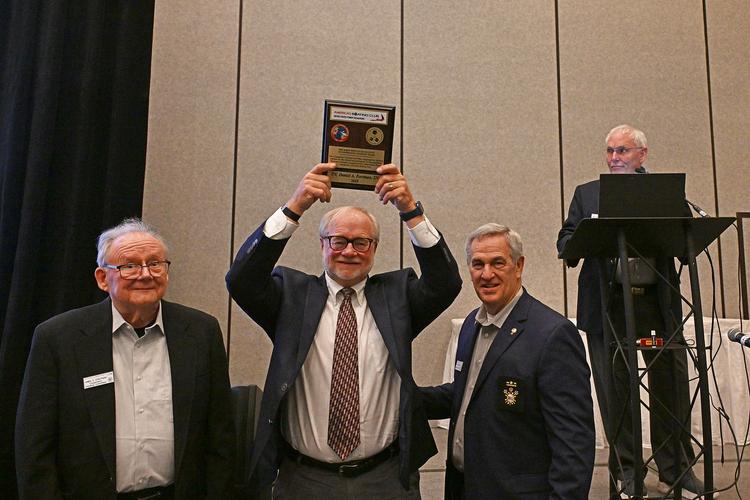
COOPERATIVE CHARTING AWARD
THISYEAR’SHORSTBOETTGEEXCELLENCEIN COOPERATIVECHARTINGAWARDGOESTO DANIELA FORTMANOFMANSFIELDPOWER SQUADRON/7 THEAWARDRECOGNIZES OUTSTANDINGEFFORTSANDPARTICIPATIONIN NAUTICALORGEODETICCOOPERATIVECHARTING
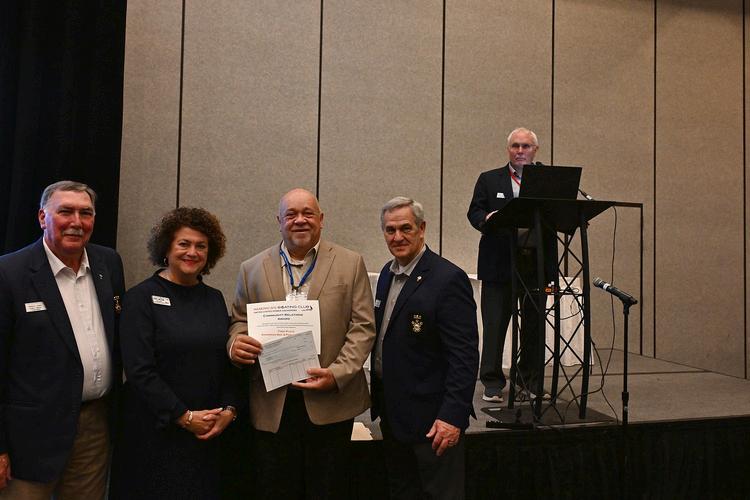
COMMUNITY RELATIONS AWARD
THEPUBLICAFFAIRSCOMMITTEEAWARDSFIRST PLACEINTHE2025COMMUNITYRELATIONS AWARDTOAMERICA’SBOATINGCLUBSAVANNAH FORITSSUSTAINEDEFFORTSTOWORK ALONGSIDELOCALORGANIZATIONS,CIVIC GROUPSANDCOMMUNITYPARTNERSTOEXPAND BOATINGEDUCATIONANDPROMOTESAFE BOATINGPRACTICESTHROUGHOUTTHEGREATER SAVANNAHCOMMUNITY SECONDPLACEWENTTO SUSQUENANGOSAIL&POWERSQUADRON,AND THIRDPLACEWENTTOAMERICA’SBOATINGCLUB LAKEMURRAY/26
1st 2nd 3rd 4th 5th
Robert D Holub, Jones Beach/3
Thomas F. Rossini, Cyber/50
Frank C. Brown, Nansemond River/5
Edward P Furst Jr, York/5 Jim Suber, Jacksonville/23
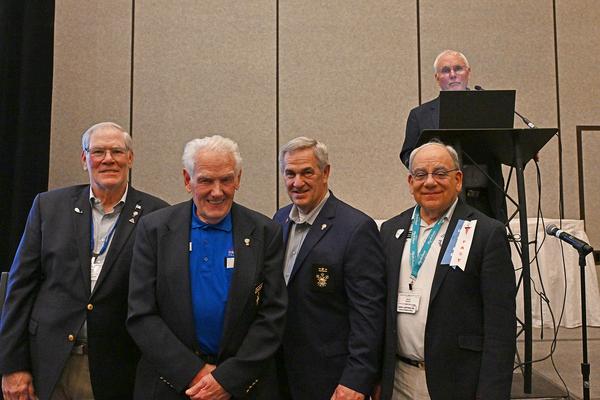
1st 2nd 3rd 4th 5th
Jones Beach/3 Cyber/50 Detroit/9 Lansing/9 Nansemond River/5
District 3
District 5
District 26 1st 2nd 3rd 4th 5th
District 50 (Cyber)
District 9
ABC, BH AND CUPS TEAM
+ Tess Freedman
+ Jeff Freedman
+ Ken Green
+ Pete Kitt
+ Jim Ryder
+ Matt Zlomek
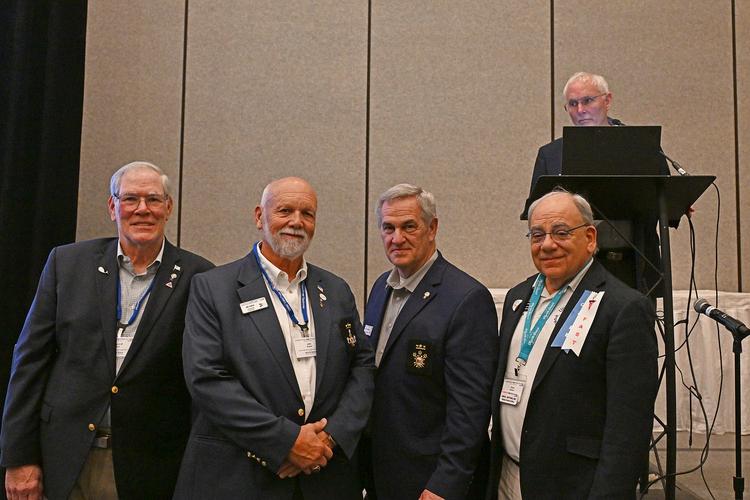
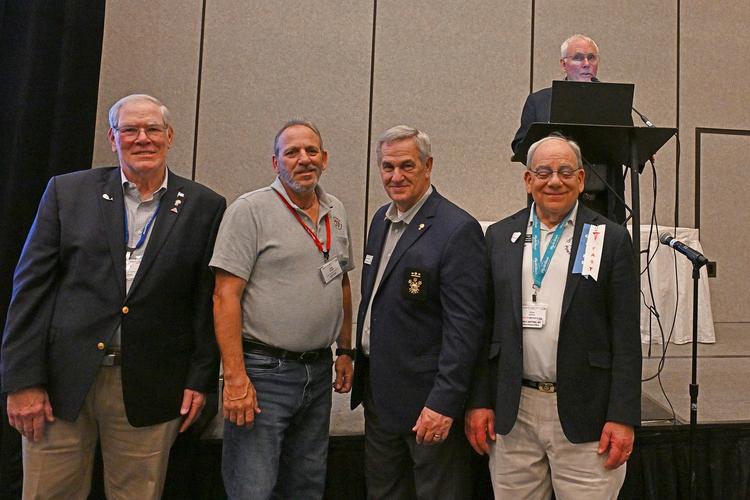
► At the 2026 Annual Meeting, National Educational Officer Chuck Wells presented Polaris Awards to two squadron teams for recognition of excellence in team teaching. The winners were the ABC, BH and CUPS Team of Syracuse Sail & Power Squadron/6 and the MSPS ABC3 Team of Manatee Sail & Power Squadron/22 Each squadron received an award as well as a $500 check to be used to advance the squadron’s educational programs
With her 30 years of teaching university-level chemistry, Tess Freedman leads the ABC, BH and CUPS Team in teaching America’s Boating Course, Boat Handling and Cruising Under Power and Sail to students in central New York In 2025, the team recruited students at the Central New York Boat Show, annual National Safe Boating Week activities, and local yacht clubs and boating groups
This tech-savvy group is proficient in using Zoom for remote and hybrid teaching, augmenting the course PowerPoint slides with local examples and online material, and employing a second camera to allow the students to see close-ups of demonstrations in split-screen. →
→ They also post supplementary material, Zoom videos and PDFs of PowerPoints to Google Drive for students to use for review or missed classes.
Together, the team plans the course syllabi and distributes teaching assignments at monthly meetings. In the first class of each course, the team polls students to assess skill levels, interests, goals and intended types of boating and boating locales in order to make the course material relevant to them
They also accommodate students with different learning styles or disabilities The team strives to keep younger students engaged by including them in demonstrations when appropriate and using additional videos and apps The team goes over missed questions with them and allows them to retake an exam if they fail the first time. Older students aren’t neglected, however; the team is flexible in accommodating adult learners’ schedules and hectic lives.
Each instructor brings their own unique style and teaching method to the classes. Tess uses a model sailboat and two anchors in Boat Handling to demonstrate the Bahamian mooring, while Pete uses model boats and docks he built to demonstrate docking and undocking techniques Jeff demonstrates the BoatyBall and Dockwa apps for reserving moorings Matt utilizes a steering wheel, Bearing Buddy and Transom Saver bracket to engage students in the trailering lesson of America’s Boating Course. And Jim shares updated features of personal watercraft based on his own PWC.
“Each presenter had their own style,” student Susan Greetham said. “Some team members spoke softly while making great eye contact. This demanded attention to get all of the nuances. Other presenters had energetic and enthusiastic styles that kept all of us fully engaged ” →
” Each instructor brings their own unique style and teaching method to the classes.
→ Despite their individual strengths, they know when to work as a team.
“The team’s vast experience on the water was priceless, and they blended their knowledge with humor that made every session engaging,” said Katharine Chajka, who took all three courses with the team. “They worked seamlessly together, offering real-world examples, clear demonstrations, and interactive discussions that brought seamanship and safety concepts to life ”
“They have a passion to share their years of experience whether it is sail or power, big mas Martin, who
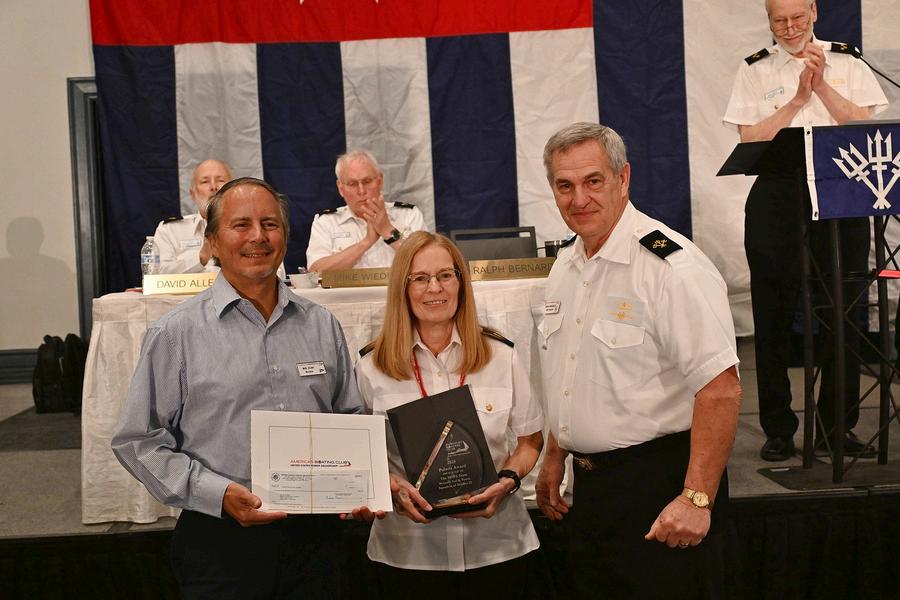
+ Susan Arguso
+ Larry Beverage
+ Matt Braatz
+ Bob Kelly
+ George Nartsissov
+ Mike Silvay
+ Bill Spencer
+ Ed Van Stedum
Since March 2024, the MSPS ABC3 Team has worked to improve their squadron’s offering of America’s Boating Course. They spent hours reviewing every slide to streamline the content without losing salient teaching points and also identified and purchased additional safety equipment to use as demonstration tools for students. Working with local groups, the team offered the course in a variety of physical locations such as county libraries, firehouses, Boater’s World and neighborhood facilities
The team has taught five America’s Boating Course classes; 33 students participated and 29 passed the exam to receive their Florida boating safety education ID card.
Their goals in revamping the course were to reduce the number of slides, focus on essential concepts for beginner boaters, enhance instruction with more teaching aids and hands-on participation, look at alternative time structures that would attract and benefit students, and become a team that supports each member and provides effective classroom experience for all students Eliminating unnecessary slides helped create more time to reinforce important concepts while still complying with state and federal regulations
As a result of these changes, students now learn first what something is and then see how it applies, bolstering their understanding without boring them →
→ The instructors also now have time to interact with students, address their questions and revisit challenging concepts.
The team, which has years of teaching experience among them, meet frequently to review the class, look at performance data, adjust the schedule and discuss ways to improve. Several team members are always present to support the lead instructor of each class by participating in demonstrations, emphasizing an important point, interjecting with personal experiences where appropriate, or engaging with students with hands-on activities At the same time, an observer takes notes during each class, which are later reviewed, along with test results to see areas where instruction needs improvement
District 22 Education Officer Myles Gee praised the team for taking the course beyond what the National Educational Department had envisioned.
“Their use of props, enhanced PowerPoints, and hands-on boating education has produced students with the confidence in safe boating,” he said. Thomas Morris, who took the class in August 2024 and then joined the squadron, echoed this sentiment
“Thanks to the guidance and expertise of the instructors, we were exposed to all the subjects we needed to understand in order to confidently and safely operate a small powerboat,” he said “I gained enough knowledge that I am now confident I can operate a small boat safely and with confidence.”
Students Michelle and Steve Scibelli equally appreciated the positive learning experience of taking the course.
“We look forward to continued education with this squadron not only because of their comprehensive knowledge base but also the welcoming nature of the people involved and their willingness to educate experienced and novice boaters alike ” ■
”
Students now learn first what something is and then see how it applies, bolstering their understanding without boring them.
Winners of the 2025 teaching awards were honored at the Annual Meeting
During the 2026 Annual Meeting in Myrtle Beach, South Carolina, National Educational Officer Chuck Wells presented the 2025 Charles F. Chapman Award for Excellence in Teaching to two outstanding instructors: Cynthia Lamb and Bob Corsaro.
► This year’s winners represent the best of the best of America’s Boating Club | United States Power Squadrons The Chapman Award is the highest recognition awarded to our educators, chosen each year from a pool of nominees by the Chapman Awards Selection Team of the Instructor Development Committee. The honorees receive a recognition plaque, a gold Chapman Award lapel pin, a fouryear Certified Instructor wallet card and their names inscribed in a permanent logbook kept in the Chapman Memorial Library at headquarters in Raleigh, North Carolina.
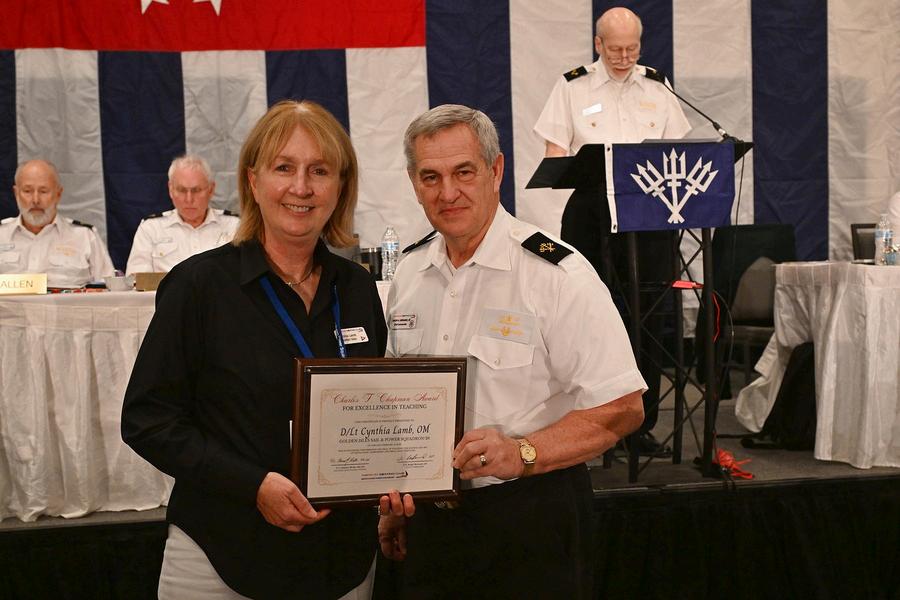
+ GOLDEN ISLES SAIL & POWER SQUADRON/26
+ MEMBER SINCE 2020
+ 5 MERIT MARKS
Before moving to the Golden Isles area six years ago, Cynthia Lamb had no boating experience. In that short period, however, she has accomplished a lot: joined America’s Boating Club | United States Power Squadrons; earned the grade of Offshore Mariner as a student; became an instructor to teach America’s Boating Course, Boat Handling, and Tides and Currents; and created the Women in Boating and Boating Safety for Kids programs for her squadron →
“ She treats each student with respect and provides them with understandable information that can be applied in any situation.
→ Beginning her career as a Navy mathematician developing simulation-based training for the submarine force, Cynthia went on to teach leadership programs and develop corporate war games and business simulations to foster leadership skills, critical thinking and tactical decision-making. Today, she incorporates this background and experience into her classroom to help boaters become safer and smarter.
Her involvement with the squadron doesn’t end at the classroom; Cynthia also performs vessel safety checks, chairs the squadron newsletter, edits the district newsletter, and participates in other civic and club activities, such as presenting the Tides and Currents seminar at the local university Her can-do attitude and problem-solving skills make her an asset to the organization. Bright and knowledgeable, she is always at the forefront of her squadron’s efforts to address the needs of their boating community.
Cynthia has the ability to instruct both beginners and experts. This knack comes from her belief that boating safety is the most important factor in enjoying time on the water She treats each student with respect and provides them with understandable information that can be applied in any situation, whether a cruise or an on-the-water emergency
“I come to each class, seminar and lecture with as much enthusiasm and fun as I can,” she said “I utilize humor to make myself as approachable as possible.” This approachability often results in more student engagement and participation. Students feel more confident speaking up and answering questions, and, whether they’re right or wrong, she leads them in finding the correct path that will stick with them on the water.
In addition to teaching aids, Cynthia likes to incorporate stories, scenarios and simulations whenever possible →
→ “Stories are an incredibly effective way to make the material more memorable and more fun,” she said.
Shannon Johnson, who took Cynthia’s Women in Boating class, commended her enthusiasm in teaching. “Her passion for continual learning just spills over to the content she presents, making learning easy,” she said.
She credits Cynthia for helping her feel like a competent boater “My interest level went from wanting to have a brief overview of the powerboating basics as a passenger to having a real interest to learn more and to develop my skills ”
Cynthia’s passion in the classroom was echoed by other students and peers. Fellow Chapman Award winner Charles Wilsdorf said of her teaching abilities, “Her enthusiasm for the subject she is teaching rubs off on her students, keeping the class enthusiastic and eager. There doesn’t seem like there is any question she cannot answer.”
For Cynthia, the best way to learn about a topic is to teach it.
“The key for me as a teacher is to remember what it was like to be a beginner I try to anticipate where students might struggle before teaching it,” she said “If I have trouble explaining [a concept] to them, it means that I don’t understand it very well myself So, I go back to the material and work on it some more ”
This dedication is appreciated by her students, like Cathy Brewer-Moore.
“Cynthia has enormous respect for the water and truly enjoys sharing her knowledge and enthusiasm.” →
”
‘The key for me as a teacher is to remember what it was like to be a beginner. I try to anticipate where students might struggle before teaching it.’
+ BEAUFORT SAIL & POWER SQUADRON/26
+ MEMBER SINCE 2010
+ 10 MERIT MARKS
Before joining America’s Boating Club | United States Power Squadrons, Bob Corsaro had taught highly technical university-level courses and given presentations to other US Navy engineers and scientists Initially hesitant to take Instructor Development, he eventually joined the Boat Systems Committee and learned the value in communicating technical information to members.
The squadron’s lead instructor for Engine Maintenance, Bob helps review and develop new material for classes. In fact, he proposed restructuring Marine Electrical Systems into a series of five seminars to make it more modern and relevant, and in 2025, the first seminar of the series, Introduction to Boat Batteries, launched.
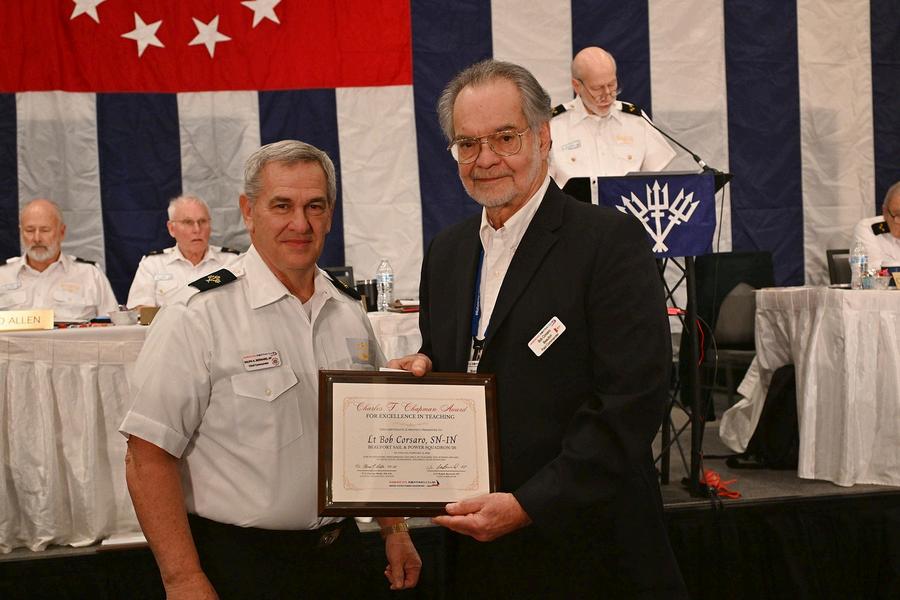
“He collaborates with colleagues to review curricula, share best practices, and foster a culture of teaching excellence within our organization,” said Mitch Anderson, rear commander of the Boat Systems Committee
With his scientific background and years of boating experience, Bob infuses his teaching with patience and creativity to engage his students He tailors lessons to meet the individual needs of his students, whether novice or seasoned boaters, and student feedback and course evaluations consistently reflect Bob’s ability to effectively communicate advanced concepts.
“Bob incorporates innovative teaching methods and adapts lessons to accommodate diverse learning styles,” student Jim Ryan said. →
→ “What truly sets him apart is his ability to engage and inspire students of all ages and backgrounds. He possesses a unique ability to make complex concepts accessible and enjoyable, fostering an environment of learning and curiosity”
According to Mitch Anderson, Bob will research FAQs from the online recreational boating community and develop scenarios that have students go beyond just demonstrating understanding of concepts to applying that understanding and critical thinking
Another student, Chad St. Onge, applauded his teaching style.
“He creates an interactive classroom experience that keeps students engaged and motivated. He encourages participation and fosters lively discussions, turning every class into a valuable and enjoyable learning opportunity.”
Chad continued, “His passion for boating is evident in every class, fostering a positive learning environment ”
His commitment to student achievement and professional teamwork reflects the ideals embodied by the Chapman Award, and its impact extends beyond the classroom to the organization and boating community at large. ■
”
‘He possesses a unique ability to make complex concepts accessible and enjoyable, fostering an environment of learning and curiosity.’
Amy Townsend is the Deputy Communications Director at America’s Boating Club | United States Power Squadrons headquarters When she’s not busy trying to keep her rambunctious toddler alive, she’s remodeling her house one DIY project at a time.
BY JIM GREENHALGH
▲ A PARTICIPANT IN THE VESSEL SAFETY CHECK PROGRAM
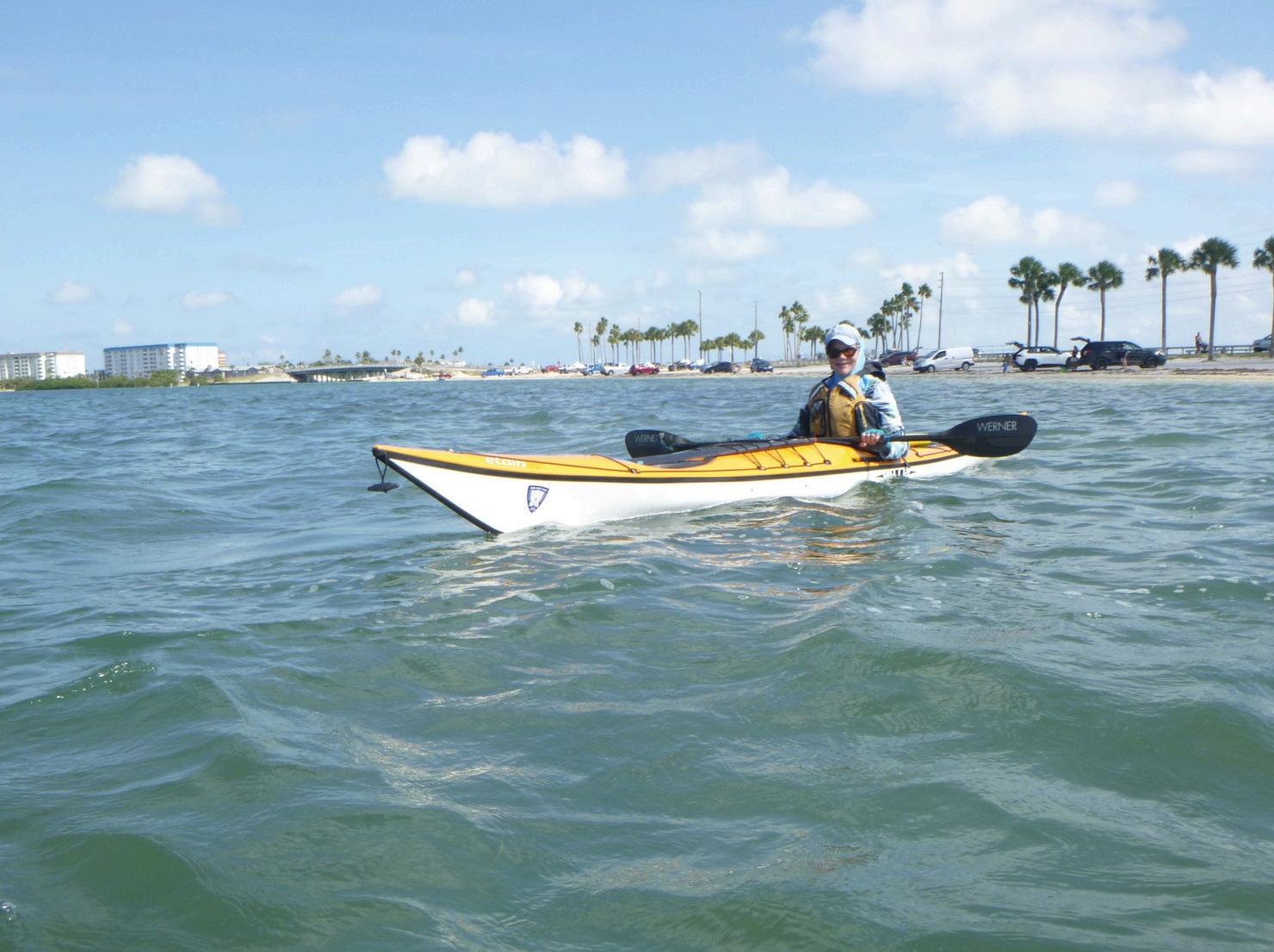
► For years, I have been presenting recreational boating safety programs to boating, sailing and paddling clubs during meetings, symposia, picnics, training, on-water trips and other events. While these have not been official America’s Boating Club | United States Power Squadrons-sanctioned events and did not earn me merit marks, I enjoyed this work regardless and felt it was important to bring recreational boating safety to boaters, especially the paddling community.
During the COVID-19 pandemic, when many of us avoided public meetings and large groups, then-Chief Commander Mary Paige Abbott sent a letter to the membership suggesting things we might do to keep busy during this time One thing she mentioned was to consider becoming a vessel examiner to do vessel safety checks in the future
Up until this time I had been uninterested in becoming a vessel examiner; I envisioned myself sitting at a boat ramp with other squadron members trying to offer free safety checks to boaters who would rather we get out of their way so they could go on about their business. Just the same, I decided to become a certified vessel examiner anyway. →
→ I’m happy to report that if I knew then what I know now about the VSC program, I would have become an examiner years earlier.
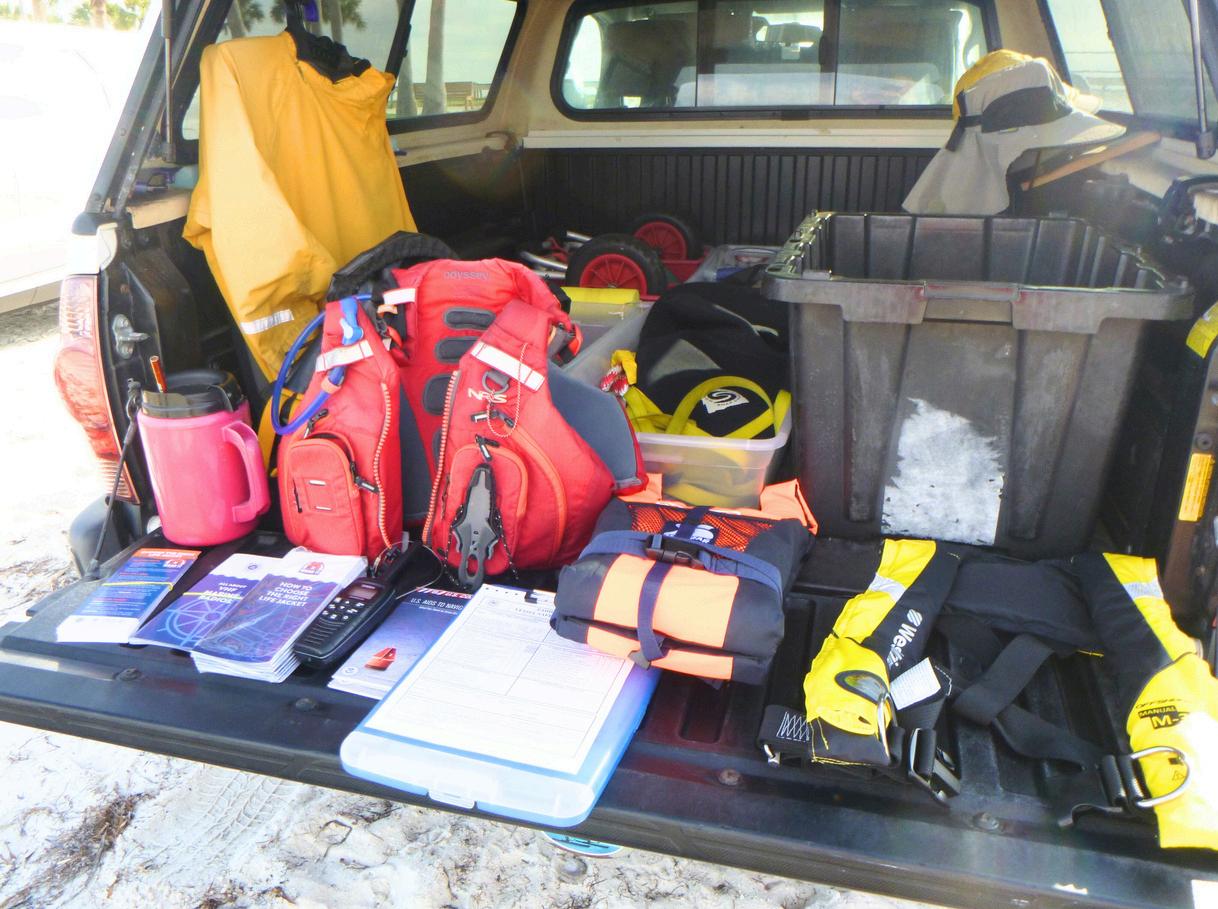
I had no idea of the things I could do with this program, and my vision of being ignored at a boat ramp never happened One thing I like about this program is that it has allowed me to be a satellite operation bringing safe boating education to the paddling community I present short training programs about various subjects important to paddlers such as marine VHF, navigation, personal flotation devices and safety equipment I also offer VSCs, which go toward earning a merit mark while advertising the benefits of our organization’s educational programs.
Each year, National Safe Boating Week runs the full week leading up to Memorial Day weekend to promote recreational boating safety throughout the boating season This year, it’s scheduled for May 16–22 During this week many boating safety organizations, including America’s Boating Club | United States Power Squadrons, schedule events to promote boating safety and education This week will mark the third year that I will use the VSC program to promote boating safety education to paddlers through my club, the Kayak Adventure Group. →
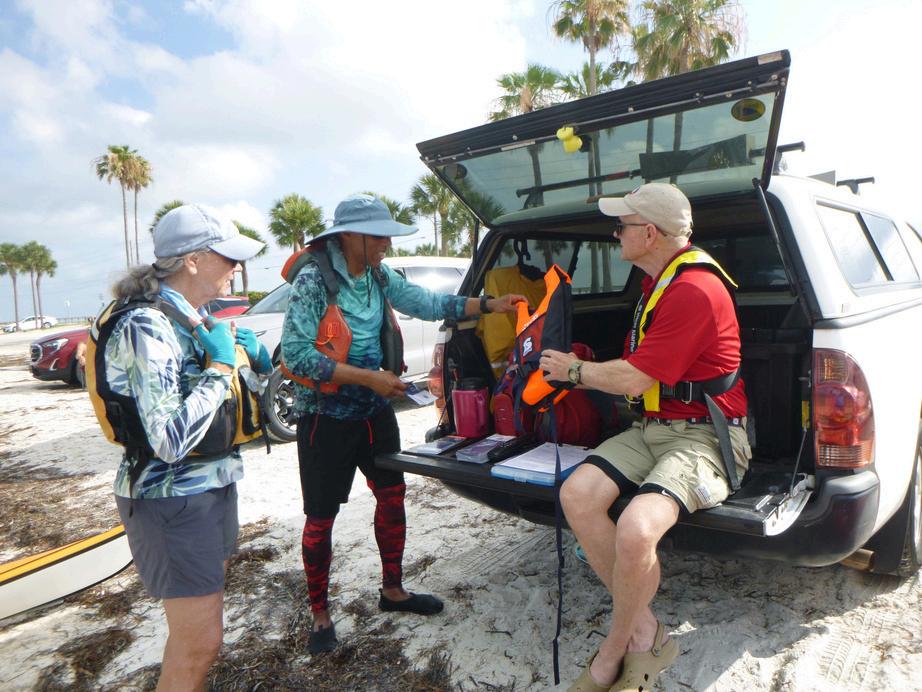
LEFT: HANDOUTS AND TEACHING AIDS USED IN THE
RIGHT: DISCUSSING VARIOUS PERSONAL FLOTATION DEVICES FOR PADDLING
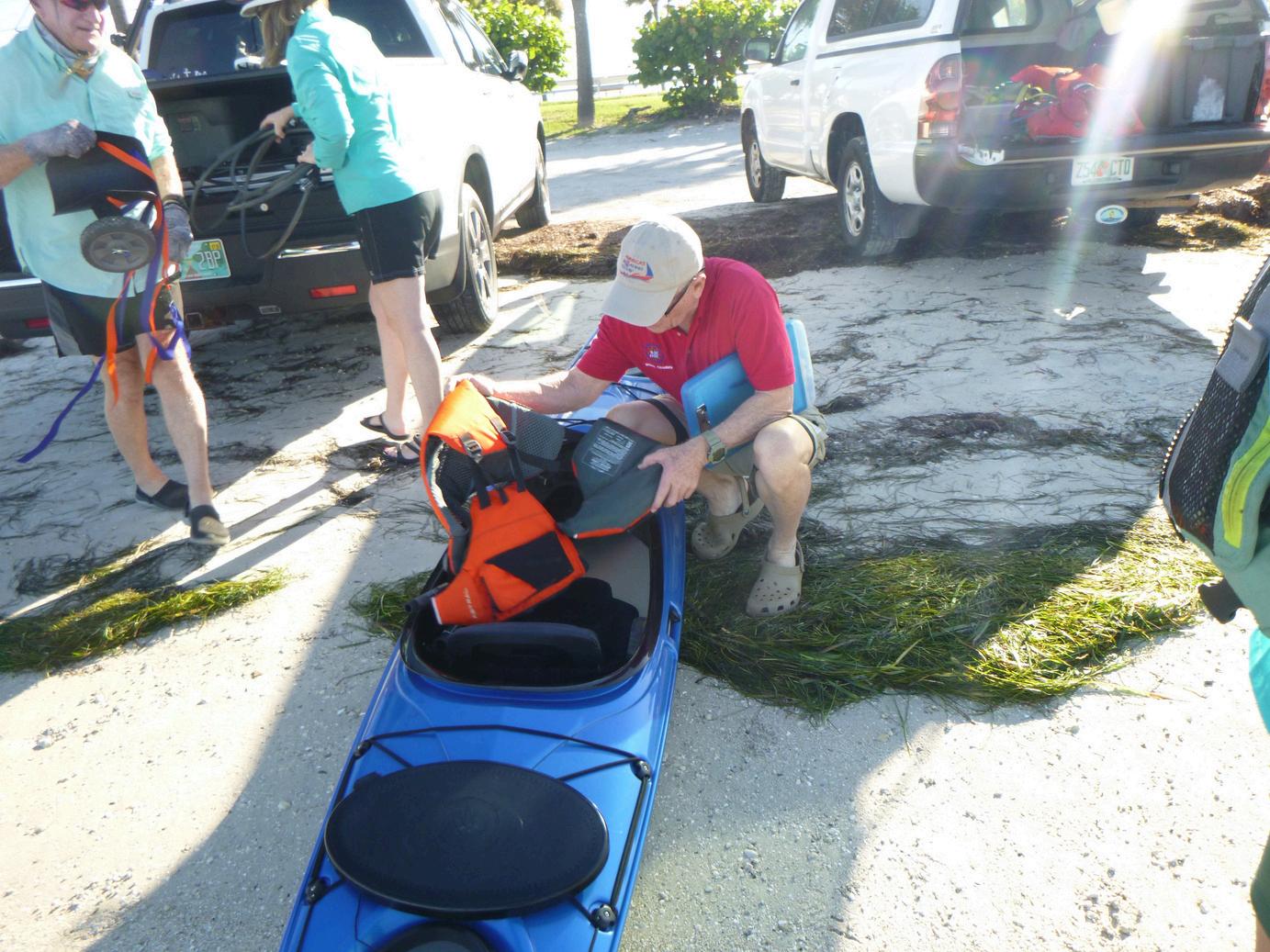
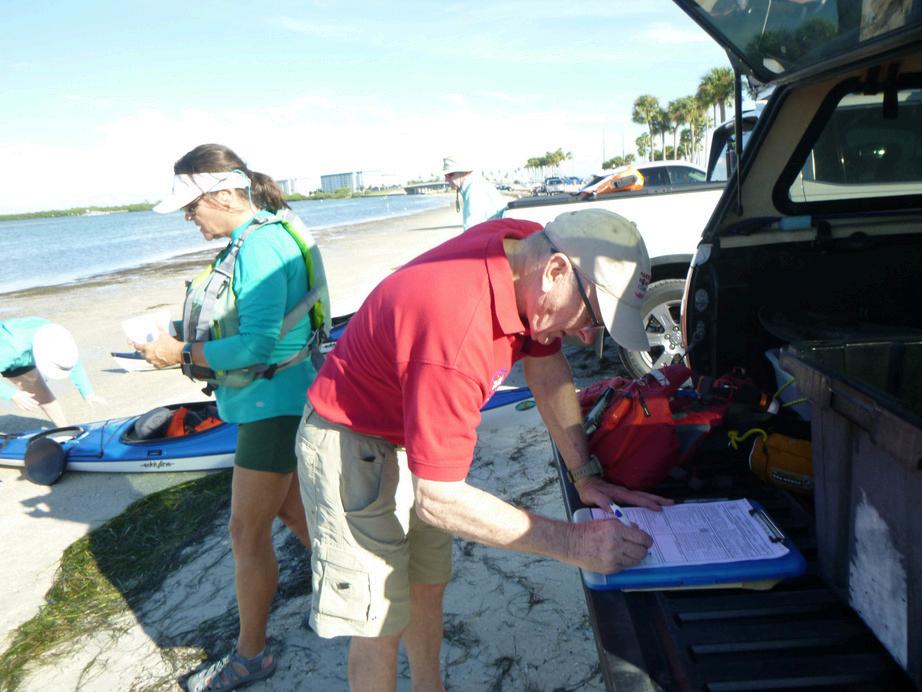
TOP: EXAMINING A PERSONAL FLOTATION DEVICE DURING A VSC
BOTTOM: FILLING OUT THE PADDLECRAFT VSC FORM
When planning a VSC education program for a group, I send out a notice containing the date, time and location. The notice briefly explains what the VSC program is, how it works and how the education will benefit participants I also request an RSVP so I know how many supplies to have on hand Besides the VSC forms and decals, I bring complimentary boating safety handouts from the National Safe Boating Council, US Coast Guard vessel identification stickers and paddle reflectors, and whistles produced by Tampa Power Squadron and the Florida Paddling Trails Association
The VSC program begins on the beach where I wear the vessel examiner uniform. I start all my programs by emphasizing that a paddlecraft is a vessel and that the paddler in charge is the operator and thus should have a working knowledge of the regulations that apply to all vessel operators. If the program is strictly about paddlecraft, I use the Paddle Craft Vessel Safety Check form 7012A as the outline. Presenters focusing on vessels other than paddlecraft would use the regular 7012 VSC form With paddlecraft, I discuss the basic requirements, which include a USCG-approved PFD and a whistle as a sound device →
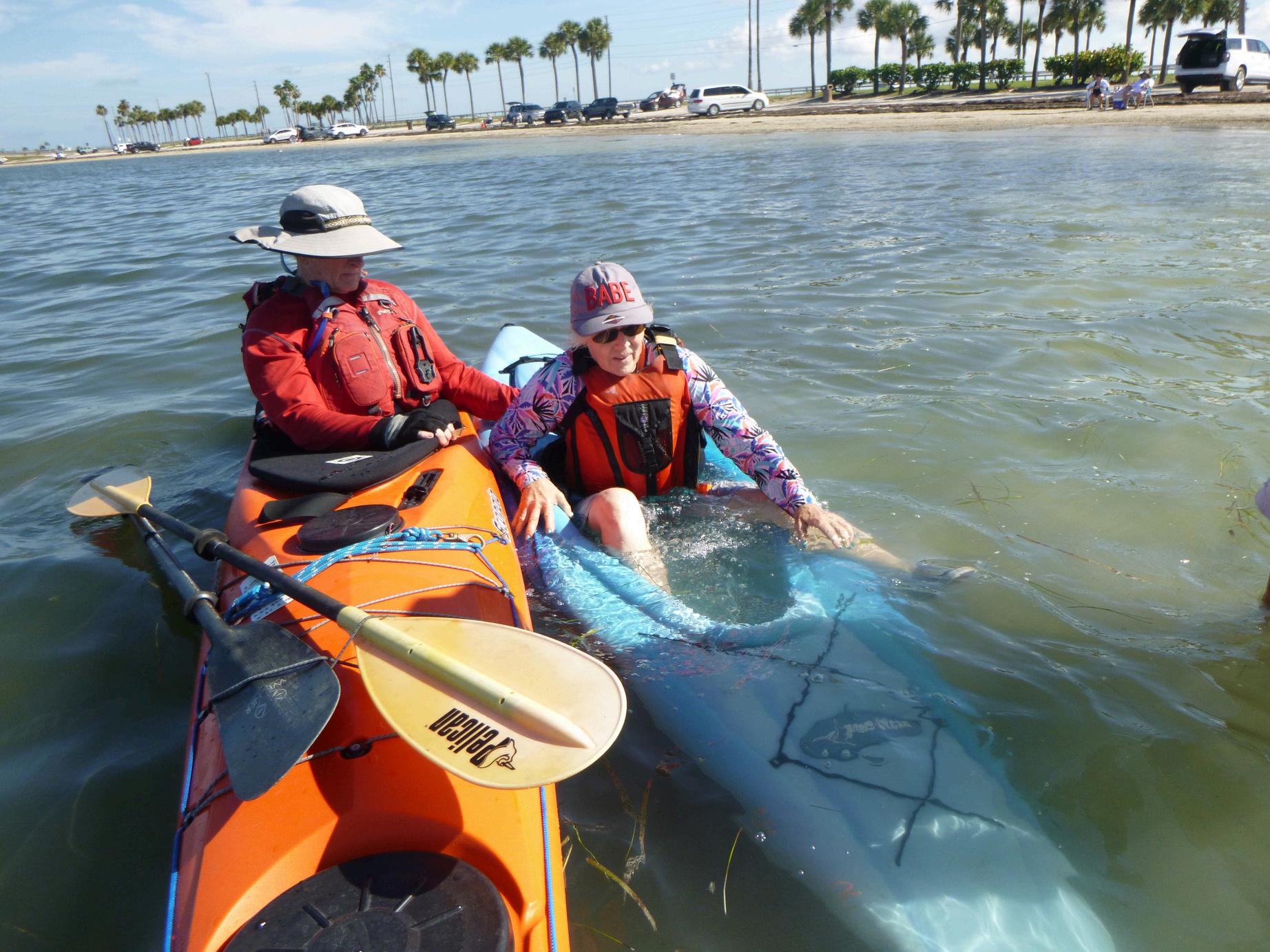
→ Paddlers operating at night must also carry a white flashlight or other approved navigation lights and visual distress signals if operating in open water
The rest of the program covers recommended equipment as listed on the VSC form and any additional information that I might have For example, in 2025 we saw changes in approved PFDs that would be available to paddlers, including USCG approval of Level 50 PFDs and inflatable PFDs for children Of course, I encourage questions and discussion. Afterward, I perform VSCs on the beach for those interested while the others prepare their boats and equipment for the water. Once the beach program is over and the VSCs are complete, we go out on the water for a training session.
On the water, we regularly practice rescues as a group, as on occasion we need to respond to a capsize. We practice wet exits (getting out of a kayak safely when capsized) and various types of self and assisted rescues including rolling We also practice bracing to prevent capsizing, towing a boat or a swimmer, and various scenarios that could occur while on the water While Kayak Adventure Group is a sea kayaking group, I occasionally invite paddlers with standup paddleboards and recreational kayaks to these sessions These two types of vessels are now the fastest growing segment of paddle sports, and boating safety education has become a priority. →
RESEARCHING RESCUE PROBLEMS WITH A RECREATIONAL KAYAK WITHOUT BULKHEADS
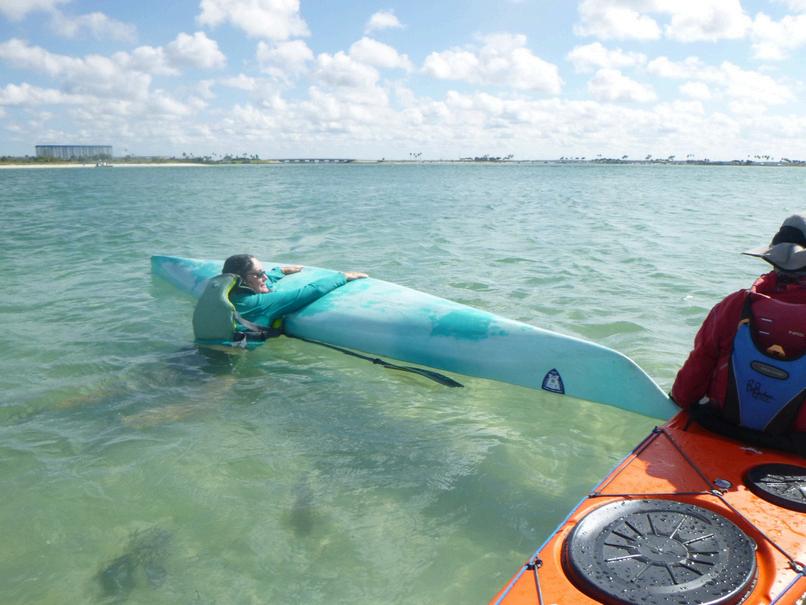
→ I use these sessions for research and photography for future articles for The Ensign and educational projects involving America’s Boating Club | United States Power Squadrons and other boating safety organizations.
I plan to continue putting on an annual VSC and boating education program for groups during National Safe Boating Week. In the future I hope to expand this effort by reaching out to other paddle sport groups to include recreational kayaks and standup paddleboards Any squadron, instructor or vessel examiner can host such events, or they can be organized through yacht clubs, Meetup groups or other boating organizations We can all take boating safety education to interested citizens and perhaps find new leads for members
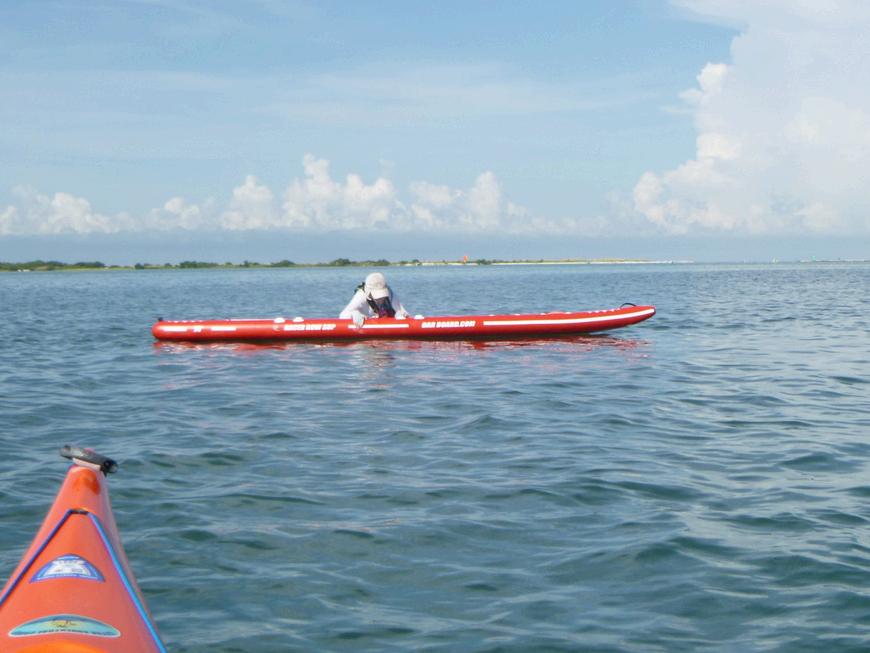
TOP: IN-WATER RESCUE PRACTICE WITH A SEA KAYAK
BOTTOM: RESCUE PRACTICE WITH A STANDUP PADDLEBOARD
I have enjoyed becoming a vessel examiner, as it has opened a new avenue of bringing recreational boating safety to the public and becoming regularly involved in National Safe Boating Week. I can now take recreational boating safety directly to the paddle sports community while completing work to earn a merit mark. We need more vessel examiners and instructors to continue this effort, so I encourage you to become an examiner or instructor As we approach National Safe Boating Week this year, please consider employing a similar boating safety program in your area ■
JimGreenhalghofSt PetersburgSail&PowerSquadron/22isaseniornavigator,vessel examiner,andinstructor,havingtaughtboatingsafetyandnavigationsince1991 Hedraws onhisvastexperienceasalifelongboaterandavidseakayaker JimleadstripsfortheKayak AdventureGroup,aseakayakingclubbasedonFlorida’swestcoastthathecofounded.He alsowroteNavigationRulesforPaddlecraft,amust-readforallpaddlers.
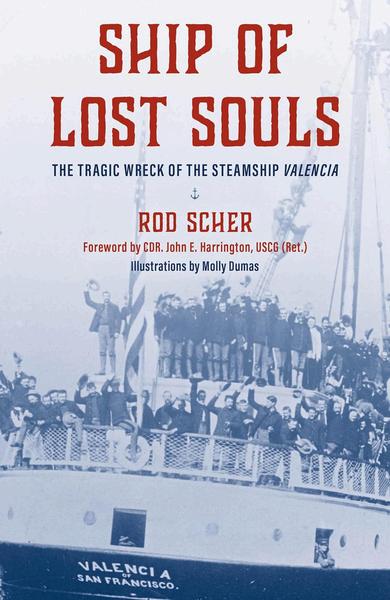
“THE SHIP OF LOST SOULS: THE TRAGIC WRECK OF THE STEAMSHIP VALENCIA” BY ROD SCHER
► Most of the book deals with the events surrounding the 1906 loss of the steamship Valencia and those aboard The skipper’s navigational errors led to the wreck, but the fact that the ship had been designed and built for Caribbean trade, not the Northwest Pacific, also contributed to the tragedy Furthermore, it was old when it was put on the route from San Francisco to Seattle. This well-documented book has an extensive bibliography; an index; and numerous maps, illustrations and photographs.
–C. Henry Depew
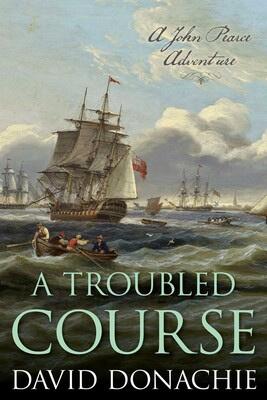
► “A Troubled Course” is the 17th book in David Donachie’s series on the adventures of Capt. John Pearce. It’s well written but includes a lot of subplots that some readers may find confusing. Of possible interest is the comprehensive description of political and economic realities during the beginning years of Napoleon’s ascension to power in France
–C Henry Depew
“A TROUBLED

BY ALICE VAUGHAN
+ THIS ARTICLE WAS ORIGINALLY PUBLISHED IN THE GOLDEN ISLES SAIL & POWER SQUADRON/26 NEWSLETTER, THE PORTHOLE
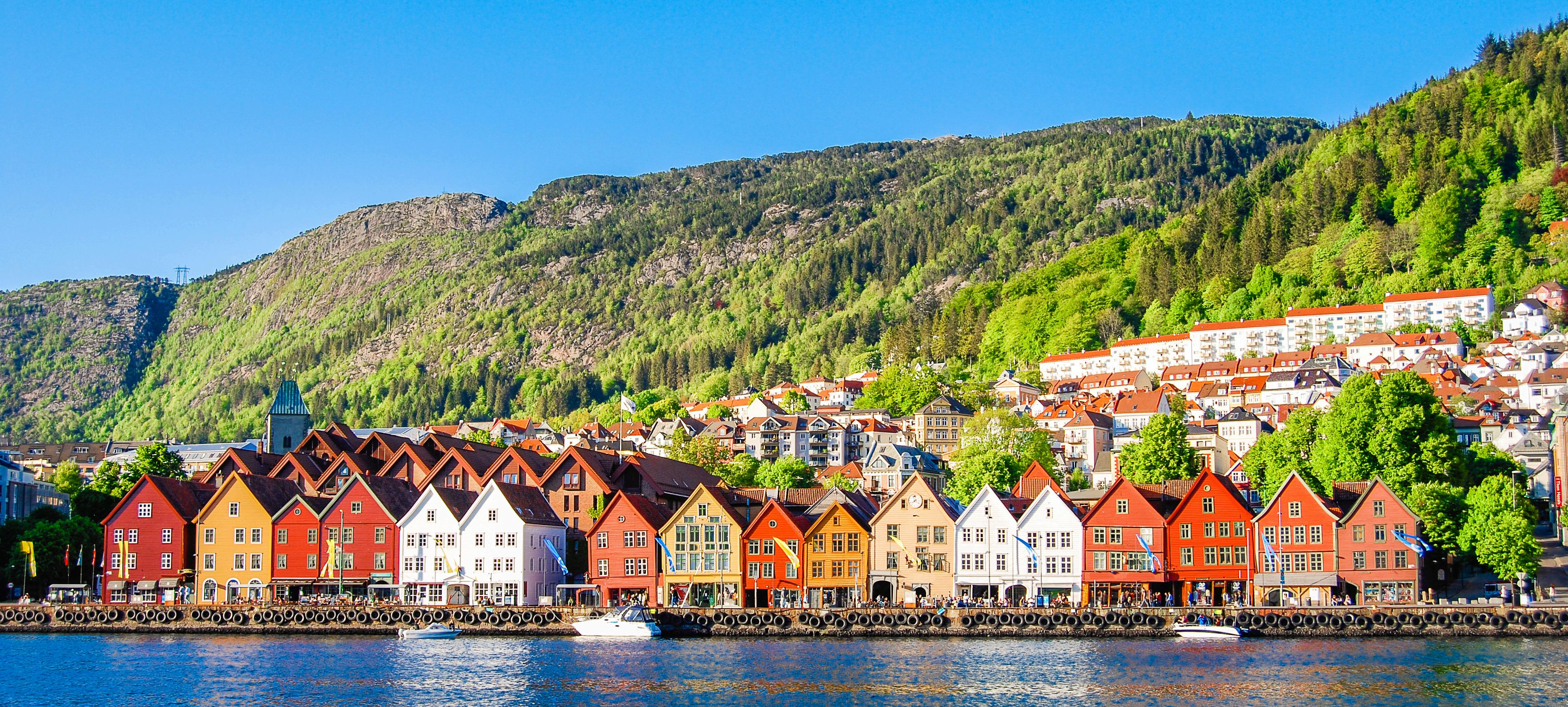
► My husband, Dave, and I aren’t frequent international travelers, and we never thought about Norway as a destination But after a recent high school reunion, an idea to visit Norway was born.
More than 50 years ago, a young man from Norway, Bjorn, was the foreign exchange student in my high school in Pana, Illinois. When he returned to attend our 50th class reunion, we had a wonderful time sharing high school stories and catching up
That evening someone suggested a trip to Norway to visit Bjorn About a dozen classmates greeted the idea with enthusiasm As it turned out, the person who made the suggestion (and nearly everyone else) decided against the adventure But Noela, Becky and I thought we could organize a small group, and Dave was game. After consulting with Bjorn, who enthusiastically encouraged us, we decided on a 10-day tour that would start and stop in Oslo, Bjorn’s home, and we’d spend time with him at the end.
Our Globus tour guide was terrific this was her 30th year on the job. Everyone we encountered was friendly, helpful and fluent in English. →
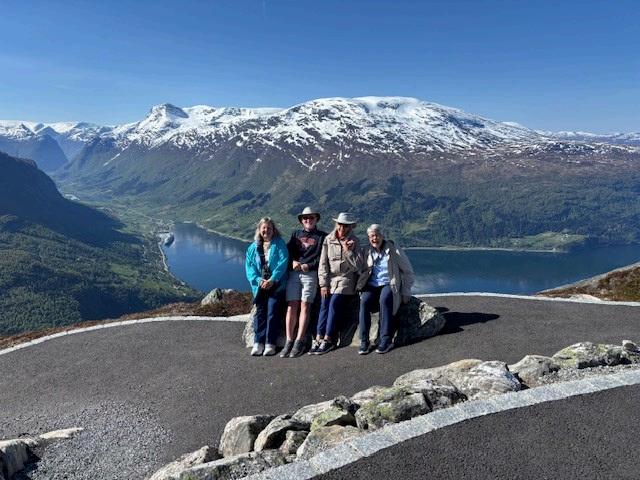
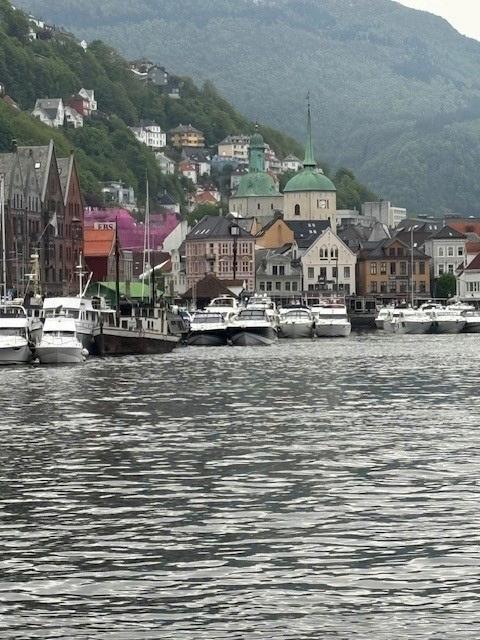
→ Norway is breathtakingly beautiful. Fjords, lakes, snowcapped mountains and waterfalls abound. We saw boats of every type, from cruise ships to small fishing dinghies, as well as ferries, beautiful yachts and pleasure boats of every size Marinas were in almost every city on our tour
At the beginning of our tour, we visited two boat-related museums in Oslo The first was the Fram Museum, which is built around the Fram, arguably the strongest wooden ship ever constructed
It was used on three important expeditions: Fridtjof Nansen’s expedition on a drift over the Arctic Ocean from 1893 to 1896; Otto Sverdrup’s 1898–1902 expedition to the Arctic Archipelago west of Greenland now Nunavut territory in Canada; and Roald Amundsen’s South Pole expedition from 1910–1912. →
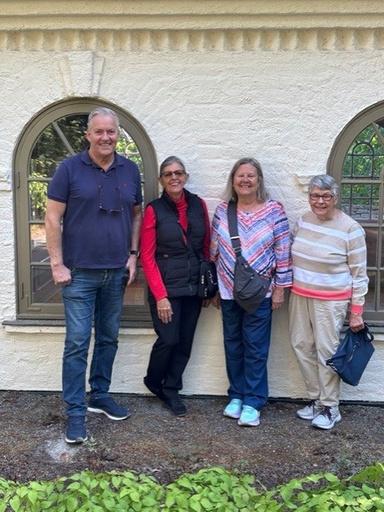
TOP: ATOP THE LOEN SKYLIFT
BOTTOM: BJORN RIST, ALICE VAUGHAN, NOELA BRUNS AND BECKY BEYERS
OPPOSITE PAGE: VIEW FROM OUR HOTEL WINDOW IN STALHEIM
LEFT: THE WATERFRONT IN BERGEN
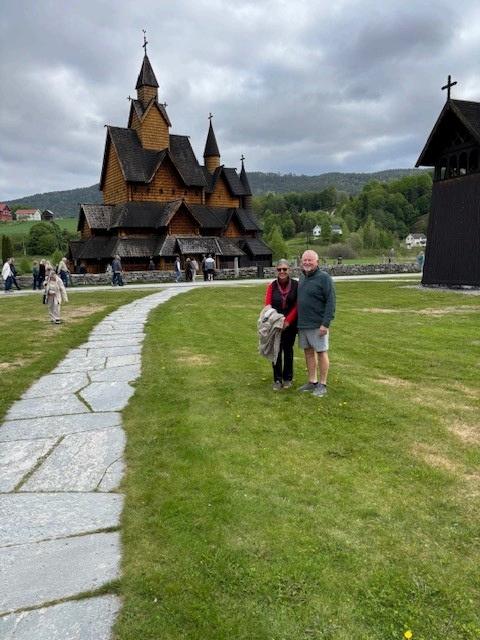
RIGHT: ALICE AND DAVE VAUGHAN AT THE STAVE CHURCH IN HEDDAL. CONSTRUCTED IN THE 13TH CENTURY, IT’S ONE OF THE LARGEST STAVE CHURCHES EVER BUILT
→ The second boat-related museum we visited was the Kon-Tiki Museum, which holds the original balsa wood raft built by Thor Heyerdahl in 1947 and artifacts from Heyerdahl’s world-famous expeditions. You can also watch the 1951 Oscarwinning documentary at the museum, which features Heyerdahl and several of his original crew
We traveled by motor coach through Rauland, Bergen, Stalheim, Loen and Lillehammer We returned to meet Bjorn in Oslo, where we watched Norway’s Constitution Day parades, saw the Norwegian royal family waving from their balcony and enjoyed a wonderful meal prepared by our friend.
On our last day Bjorn took us to the Munch Museum, the Holmenkollen Ski Museum & Tower, a local Oslo beach with beautiful water and a rocky shore, and other favorite parts of his wonderful city. ■
AliceandDaveVaughanmovedfull-timetoBrunswick,Georgia,afterretirement Illinois natives,theyenjoyedboatingonman-madelakesinEastCentralIllinoisanddecidedtolearn howtopilotaboatontheICWandtheAtlantic.AftertakingAmerica’sBoatingCourseand BoatHandling,theynowhavetheconfidencetoexploretheGoldenIslesfromthewater.
BY BRIAN RACHAL
+ THIS ARTICLE ORIGINALLY APPEARED IN THE AMERICA’S BOATING CLUB OF SNOHOMISH COUNTY NEWSLETTER/16, THE PIKE POLE
► A recent Labor Day weekend outing on Most Precious was a series of blunders While I’m proud of the way my first mate and I handled the situation, we had our learning moments
We left Everett, Washington, on Saturday afternoon and anchored at Sucia Island in the San Juans We spent all day Sunday hiking, entertained by a beautiful lightning storm that thankfully stayed a mile away On Monday, when getting ready to head home, I noticed that the water pump on my starboard engine was dripping from the shaft and would likely need replacing. There wasn’t much I could do about it on the island, so we headed back.
We had been cruising for about 30 minutes when I heard a popping sound in the engine compartment, and the system powered down the engine. Yep, the water pump had failed I shut down the engine and made sure water wasn’t pouring into the engine compartment A small, steady stream of water was coming from the water pump, but it wasn’t anything the bilge pumps couldn’t handle
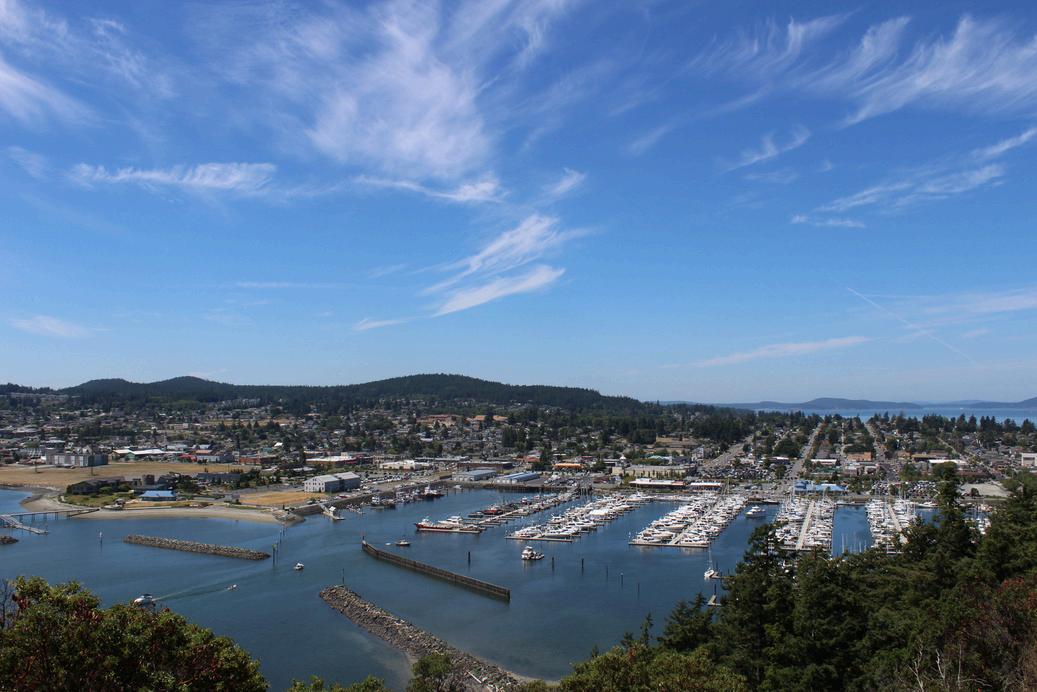
We decided to pull into Cap Sante Marina in Anacortes for repairs rather than try to limp back to Everett on one engine. I made some phone calls to get help. Even though it was a holiday, the stars aligned for us ... somewhat. →
→ Since I had an active leak, it was important to get a slip with power so my bilge pumps wouldn’t drain the batteries and let my boat sink. Cap Sante was accommodating, giving us a slip that was open until Wednesday.
We also needed someone to work on the boat because I didn’t want to do water pump work in the water. I was able to get hold of a mobile mechanic who had left his business card in the office He removed the old pump and ordered a new one Of course, the new pump wouldn’t be available for several days, and it was going to cost more than half a boat unit ouch
Furthermore, we needed to get home to Everett, a couple of hours south, because I had to work the next day A friend of mine who lives in Anacortes was nice enough to give us a ride back. On Wednesday, I left work early and drove to Anacortes, hoping the boat would be fixed and I could make the run back to Everett. Of course, the pump wasn’t in yet, but I still had to move the boat because I was losing my slip. I got a new slip assignment and decided to gas up while moving the boat.
Keep in mind that I have twin engines, and the power steering is on the dead one I got onto the fuel dock fine, so well actually that I felt invincible I decided to try to dock at the new slip without dock hands dumb move Apparently, my head had gotten too big I managed to get into the slip well but not perfectly, so I used the boat hook to pull the stern in, which was a mistake That exposed the port bow to the breeze, pushing it away from the dock With my starboard engine dead, I couldn’t use the engines to drive the bow back in.
Thankfully, there wasn’t a boat in the adjacent slip, so the bowswung around and I was able to start over. Of course, by that time I had spectators who were ready to assist me and give advice. The second attempt looked like I knewwhat I was doing. Once secured, I tucked my tail between my legs and went home. →
” I got onto the fuel dock fine, so well actually that I felt invincible. I decided to try to dock at the new slip without dock hands—dumb move.
→ We returned to the boat Friday evening. The water pump was fixed, but it was so late that we opted to stay another night. Thinking everything was repaired, we decided to go for a cruise the next day and enjoy the rest of the weekend.
As we were leaving Cap Sante, I noticed the starboard engine wasn’t showing a full charge on the battery I checked the alternator, and, sure enough, it wasn’t charging Back we went to work on that
Even though I’d changed the alternator on the other engine before, I decided to call the same mechanic again, Aaron at Protorque Motors I was glad I let him do it. He tinkered with the alternator, trying to rebuild it, but unfortunately couldn’t. As it turned out, the leak must have been there for a while, spraying salt water on the alternator.
We lost another day to getting parts, but Aaron’s labor charges were reasonable. While in Anacortes, my first mate and I enjoyed an evening of dinner, dancing and relaxing
We finally made it back to Everett late Sunday, the weekend after the outing began The entire cruise probably cost me two boat units in parts, labor, fuel and moorage, but it could have been worse
This experience highlights one thing that I tell anyone who is planning to go boating: Be flexible. If you can’t be flexible, you’re never going to be able to enjoy yourself. ■
Brian Rachal is a member of America's Boating Club of Snohomish County/16, where he serves as squadron educational officer Brian has experience sailing bareboat charters in the Caribbean and Lake Huron, as well as powerboating in the Puget Sound region and Chesapeake Bay

Boaters cruise the Channel Islands for Labor Day
► Last year, we decided to get the boat ready and head out to California’s Channel Islands over Labor Day We hadn’t cruised there much the past couple years, and we were determined to change that
Safety officer Virginia requested a new VHF radio, which Dennis dutifully purchased and installed it worked great. We made sure all safety gear and electronic systems were current and working. Pulling the dinghy out of storage, we found no leaks when we inflated it. We knew the mainsail had some small tears, so we hoisted and inspected it, repairing the tears with sail tape. Months earlier, when our Tacktick wind speed and direction indicator had failed, Dennis had repaired but not yet reinstalled it. After two trips up the mast, he completed the job, and we could read the wind direction and strength again
We cleaned the boat up top and down below; laundered the linens; planned, purchased and stored provisions; and sent a float plan to our son Lastly, we plugged in our handheld backup electronics the night before we left so they would be fully charged →
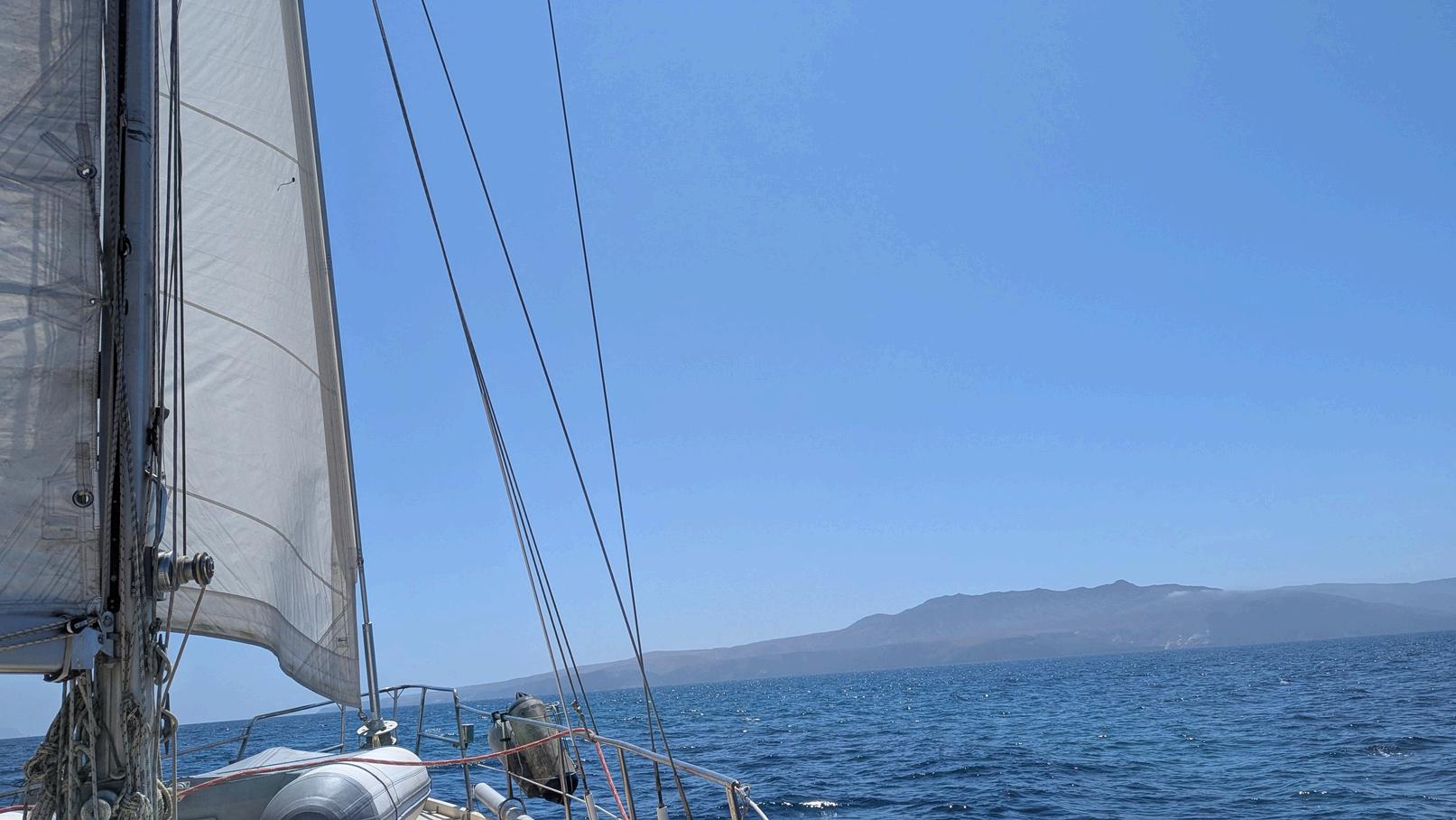
TOP: HEADING OUT OF HARBOR TO SANTA CRUZ ISLAND
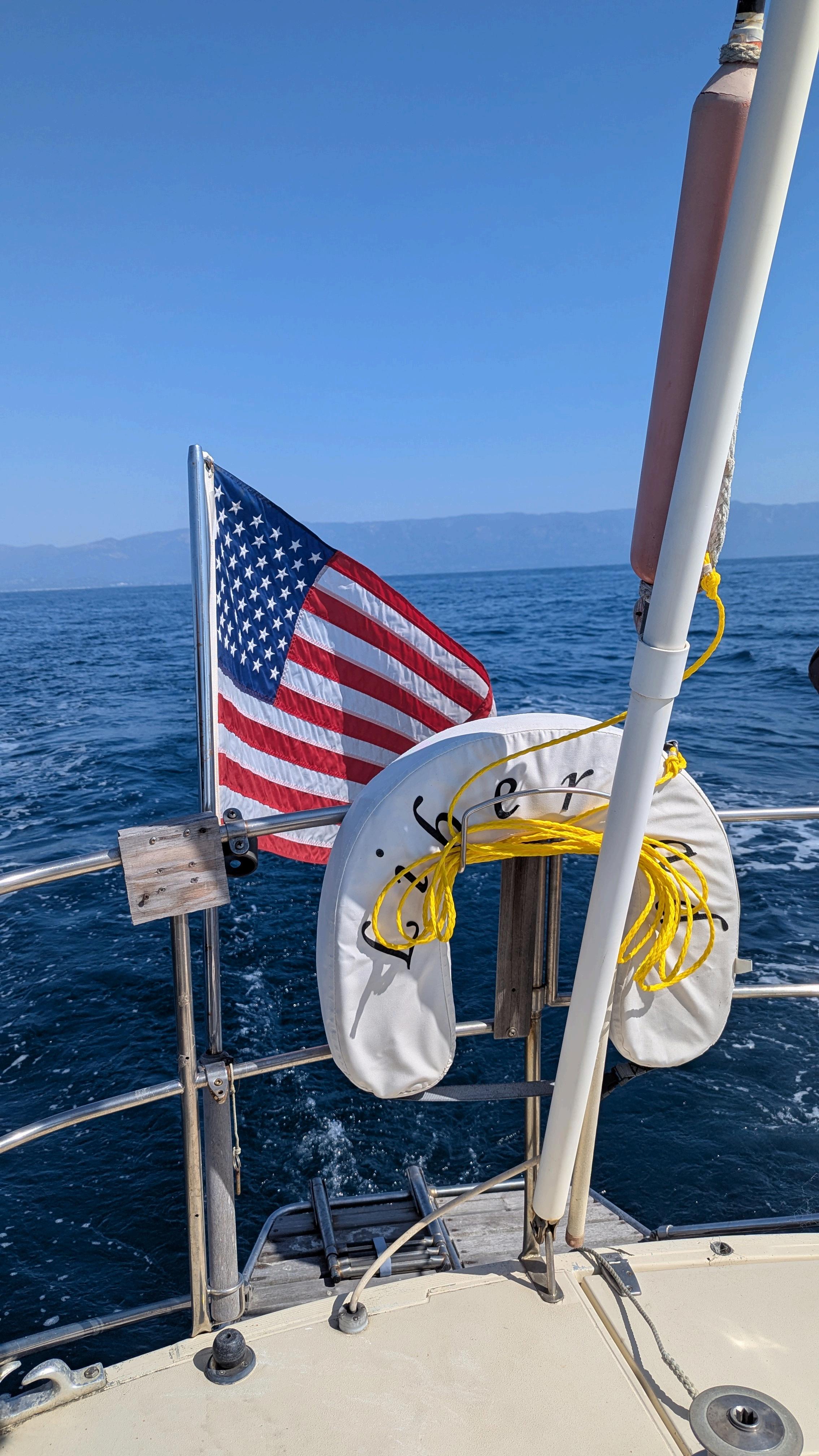
OPPOSITE PAGE: NEW LINE ON STERN SAFETY EQUIPMENT
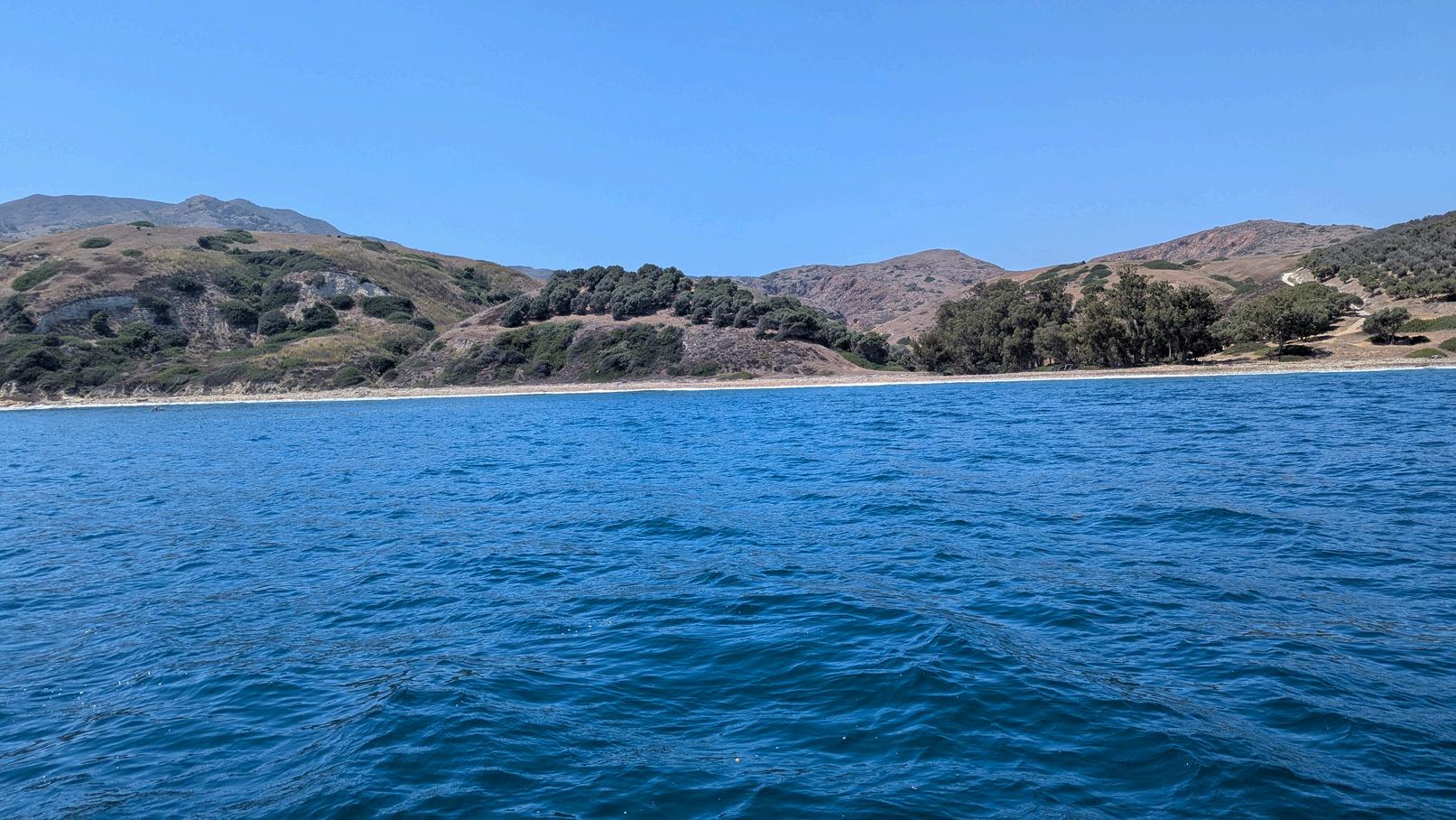
AN OLIVE GROVE ASHORE HELPS IDENTIFY SMUGGLER’S COVE ANCHORAGE
Wanting to avoid the worst of “Windy Lane” in the Santa Barbara Channel, we left early It was foggy, and we didn’t have much wind on the way to Santa Cruz Island We raised the mainsail to steady the boat from the swell but motored the whole way no Windy Lane as we approached
We headed for Smuggler’s Cove to avoid deploying two hooks. About an hour into the trip, after the fog lifted, we saw a large pod of dolphins. In fact, it looked like we had sailed right across their path and split the group in two. On a mission, they did not stop to play around the boat. They moved by us too quickly for photos, but it was a lovely sight to start the cruise.
+ THIS ARTICLE ORIGINALLY APPEARED IN THE SANTA BARBARA SAIL & POWER SQUADRON NEWSLETTER/16, SIGNAL HOIST
We didn’t set up our laptop with OpenCPN navigation software initially because our GPS had the waypoints for this destination from prior cruises Wanting to check our location relative to the shipping lanes, Virginia fired up her brand-new laptop only to realize that she hadn’t yet installed the GPS connection that OpenCPN needed She pulled out the paper charts, noted our position and tracked our course the old-fashioned way. It’s always good to have those backups. →
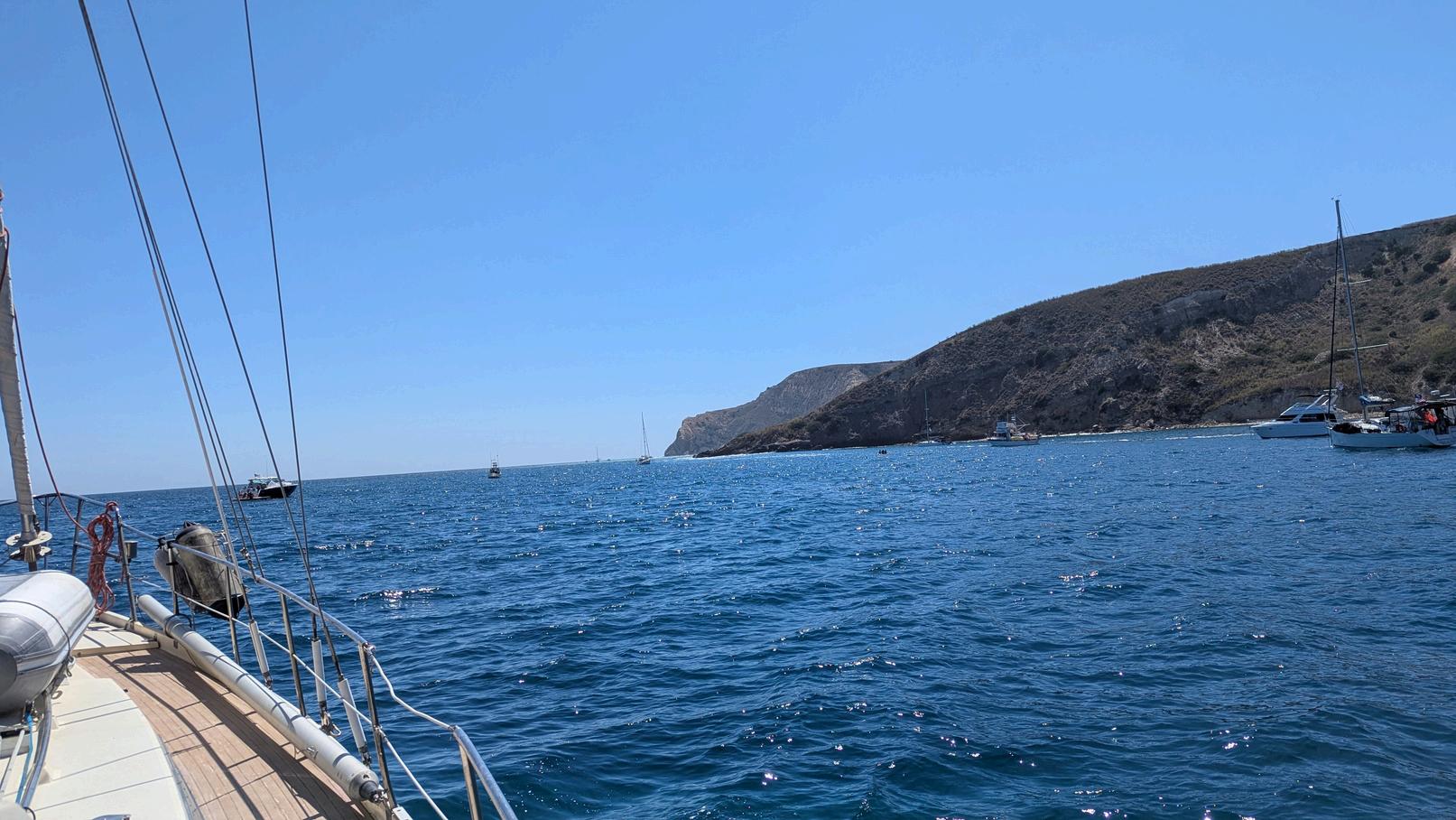
→ Usually, Smuggler’s Cove is an overnight stop for the Santa Barbara Sail & Power Squadron fleet on the way to Santa Catalina Island or our annual event at the Pacific Corinthian Yacht Club in Channel Islands Harbor.
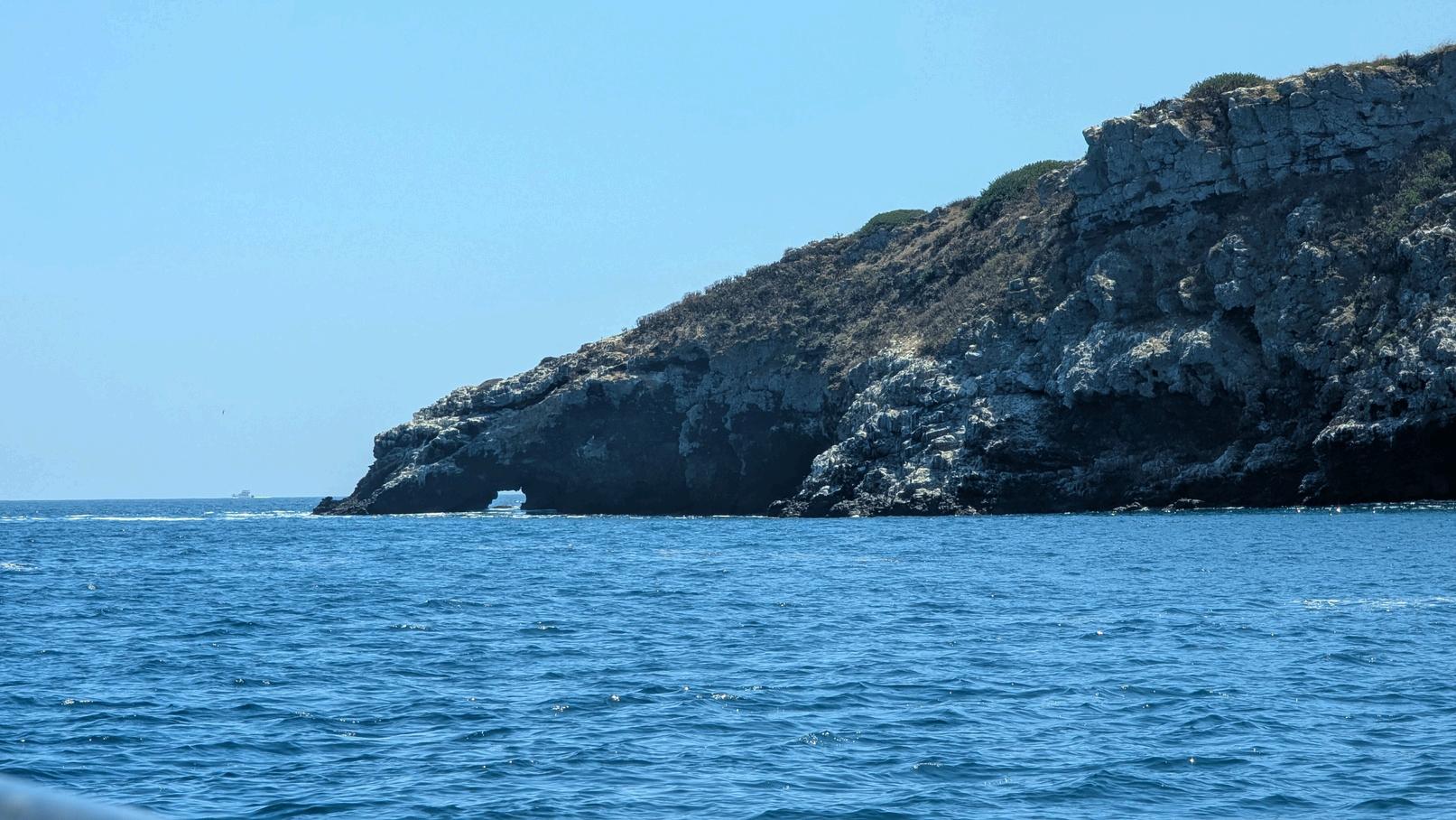
This time we would be alone for three days and two nights, and we discussed how we would enjoy a hike maybe we would spot an island fox. As we rounded the arch end of the island and approached the anchorage, we were greeted by the small but constant surf that rolls onto that shore We anchored in about 30 feet with a 3:1 scope out on our all-chain ground tackle
That evening we enjoyed a dinner of barbecued lamb chops and sides Normally, we’d watch a movie on our LCD panel/DVD player during dinner Oops! The DVD player wasn’t working; we had forgotten to check the entertainment equipment. It looked like our entertainment for this trip would be games and books.
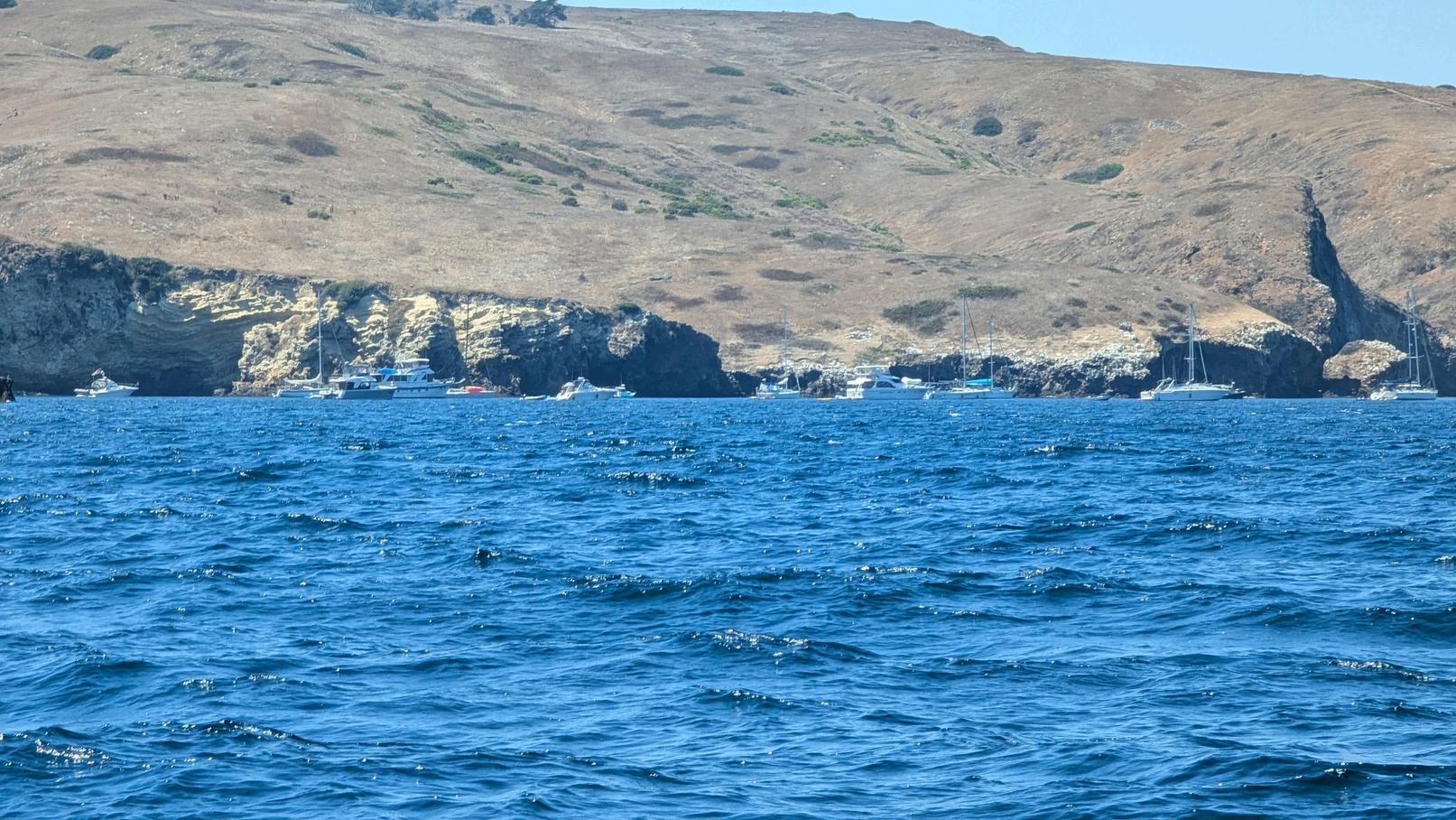
During the day, a westerly kept all the boats in generally the same direction into the swell. When night fell and the wind stopped, things changed. A few trips on deck revealed that an interesting combination of wind and current was shuffling the boats in the anchorage in different directions; fortunately, we all had plenty of room to swing But the swinging was causing boats to roll when parallel to the swell Dennis had predicted that and deployed our two flopper stoppers, one on each of our booms on opposite sides of our ketch a benefit of having two masts →
WE SET THE ANCHOR TO ALLOW FOR PLENTY OF SWINGING ROOM
→ We had a pleasant night. Until you make the trip, you forget how many stars you can see on a clear night away from the city lights.
The next day, we kept an eye on the shoreline, hoping for an opening to explore at some point In the afternoon we were playing a board game when we heard someone giving instructions over a loudspeaker We could see a motor vessel named Channel Watch assisting three people on shore Apparently, they had taken their dinghy to shore to hike but now were faced with unsafe conditions to get back to their boat Channel Watch had contacted the island rangers and was now directing the stranded hikers to the nearby road where the rangers had agreed to meet and assist.
Seeing this, we decided it was best to relax aboard and forget the island hike.
Sunday night we enjoyed a spaghetti dinner elaborate for a night in an anchorage, but at least the sauce came from a jar rather than from scratch We enjoyed another night of games and reading before bed →
Monday morning, we woke to even thicker fog than we had on Saturday, so we decided to leave early rather than expect any wind to carry us home. But leaving early also meant we’d need to rely on the radar in the shipping lanes Fortunately, we had checked it before leaving, so we had no worries
By the time we entered the lanes, the fog had lifted somewhat, giving the added comfort of about a half-mile visibility There was no wind, but we saw more dolphins Motoring, we didn’t even bother to put up the mainsail We arrived at the home dock around 2 p.m. What a relaxing Labor Day weekend. ■
Denniswasasailorfromayoungage,crewingforhisdadinLido14racesaroundSouthern California.Around1997,herediscoveredhisloveofsailingandcontemplatedsailingaround theworld.HeconvincedVirginiatojoinhimbypurchasinga46-footAmelMaramu,Libertad, in2000.Together,theyspentthenext10yearstakingUSPSclasses,practicinginlocaland internationalwaters(includingthreeBajaHa-Hacruiserrallies),andgettingcomfortable withtheplan DennisandVirginialeftSantaBarbarainJanuary2011andcircledtheglobein awestwarddirectionforthenext61/2years,touchingfivecontinentsandvisiting65 countriesbeforesailinghomeintoSantaBarbaraHarborinJanuary2018.Theircontinued involvementwithSantaBarbaraSail&PowerSquadronincludesmultipleyearsonthe bridgeandasinstructorsteachingtheclassesthatenabledtheirdream.
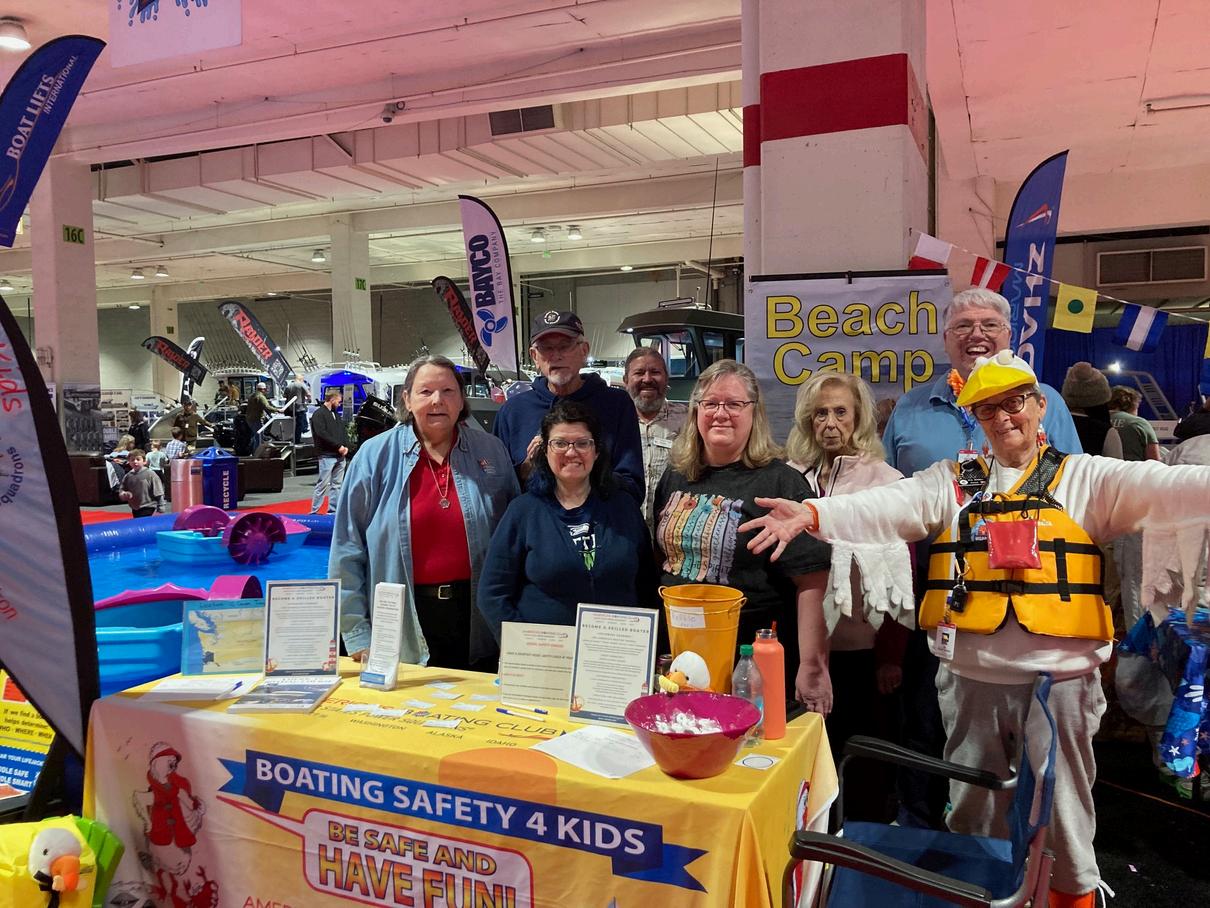
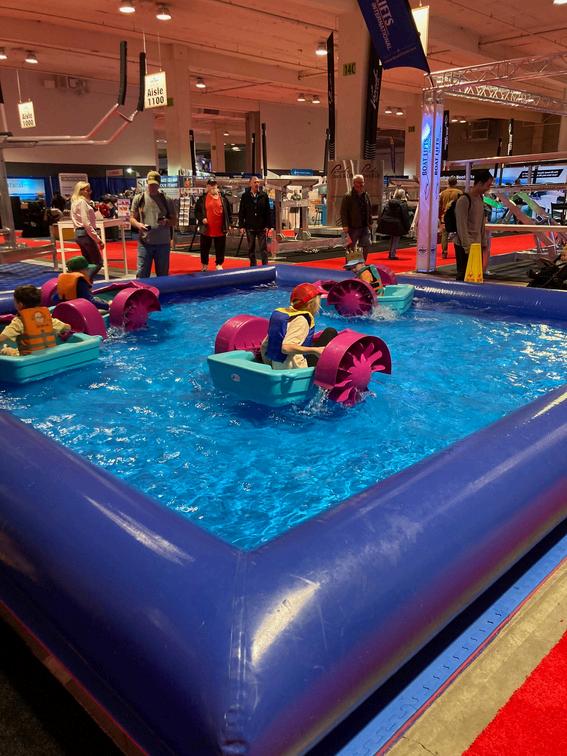
LINDA MARTIN AS PFD SEAGULL AND OTHER VOLUNTEERS AT THE BOAT SHOW BOOTH
BOTTOM: KIDS TEST OUT THEIR LIFE JACKETS IN THE PADDLE BOATS
16 |
► Eighteen volunteers from District 16 taught a Boating Safety 4 Kids seminar at the Aqua Paddlers boat pool during the Seattle Boat Show the last weekend of January. These volunteers helped kids try on life jackets while teaching them about size, fit and color, and helping them safely in and out of the paddle boats. They also promoted America’s Boating Club | United States Power Squadrons courses and vessel safety checks at a booth and sold raffle tickets.
Each child received a Wear It sticker as well as the chance to enter a drawing for a toy seagull Of course, I dressed as “PFD Seagull” to fit the theme
At the end of the weekend, 416 children came for a paddle boat ride Of the 120 paddle boaters who entered the district’s raffle, 46 people indicated that they wanted to take a boating course. We sent these 46 contacts to clubs throughout the district. –Linda Martin
COUNTY |
► On the Monday after Thanksgiving, my son, Kevin, and I arrived at Walmart, along with Jonathan and Sharon Ward, to pick up the 34 bikes we bought with the $2,036.54 our club had raised for Christmas House.
Christmas House is an all-volunteer, nonprofit organization in Everett, Washington, that provides an opportunity for qualifying lowincome Snohomish County parents to select free holiday gifts for their children up to 18 years old
After loading up the bikes and delivering them to the Boys and Girls Club in north Everett, where Christmas House is located, we met with the Christmas House president, Gregg Milne.
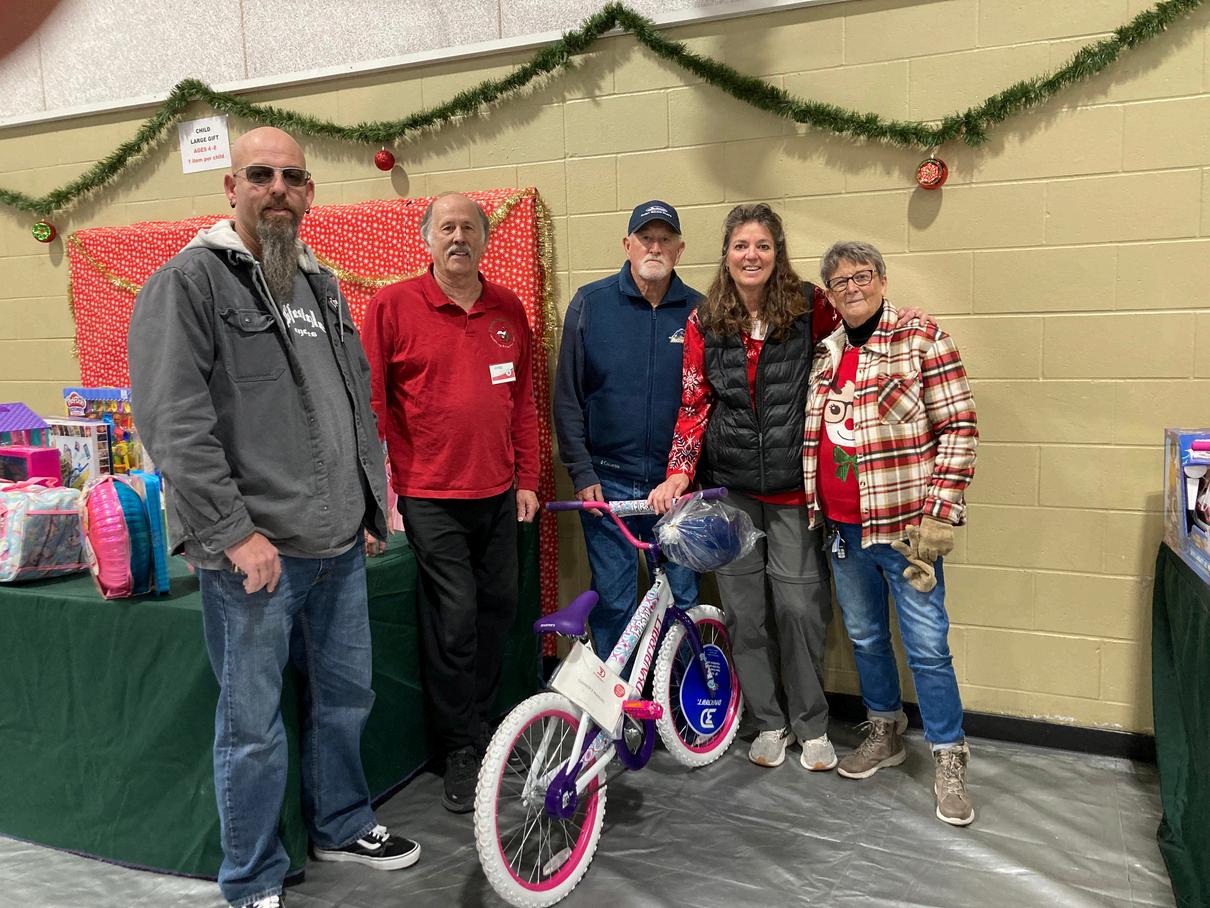
On Dec. 12, five members of America’s Boating Club of Snohomish County/16 showed up at Christmas House despite the terrible weather. We walked around with parents and helped them pick out gifts for their children Over 100 parents came that day
Our club began raising money to buy bikes for Christmas House in 2015 Since then, we have donated over $16,000 and purchased 260 bicycles –Linda Martin
ST. THOMAS |
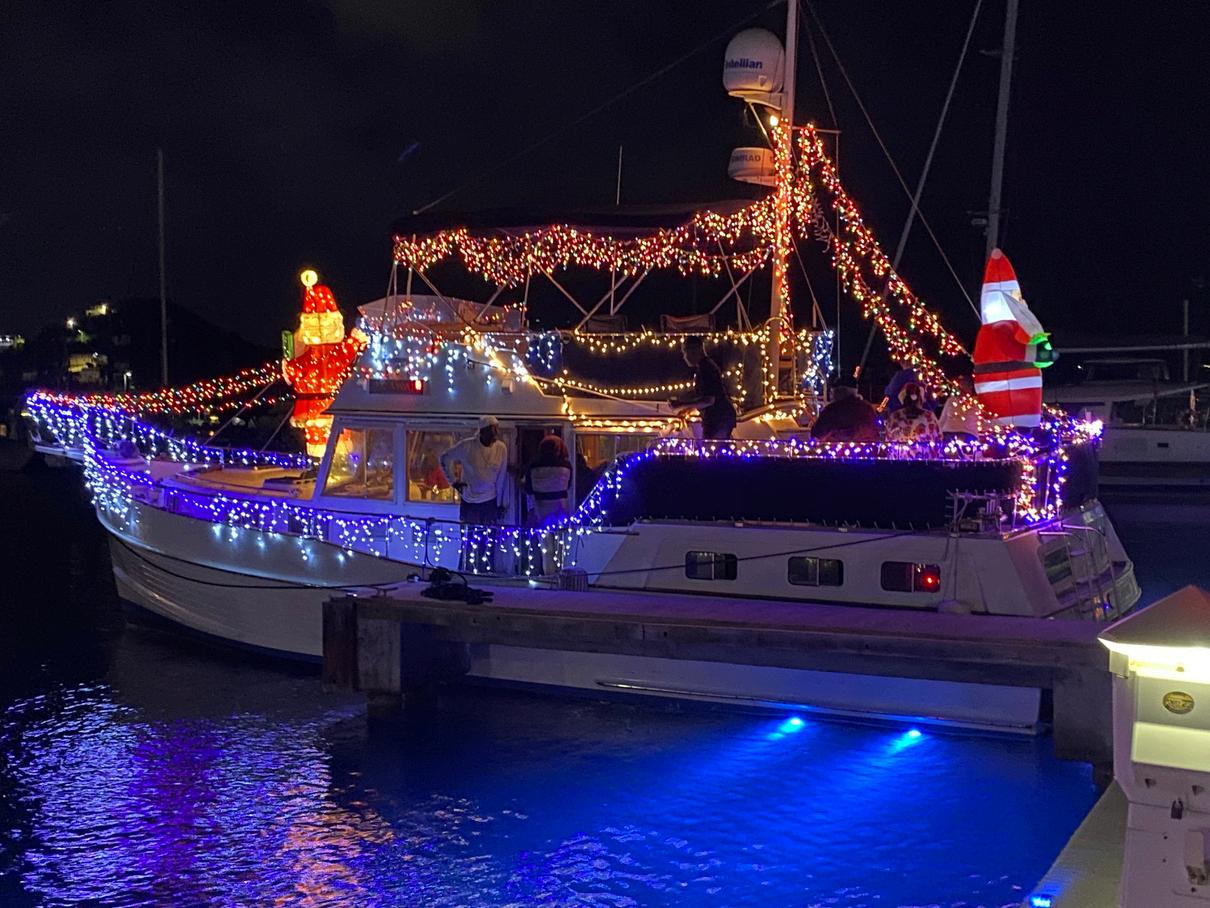
Shining bright
ST THOMAS SAIL & POWER SQUADRON/33 WON FIRST PLACE IN THE 2025 ST. THOMAS LIGHTED BOAT PARADE. THEY ALSO WON FIRST PLACE IN 2024.
MERIT MARKS
SENIOR MEMBER, 5 MERIT MARKS
LIFE MEMBER, 25 MERIT MARKS
EMERITUS MEMBER, 50 MERIT MARKS HOW TO SUBMIT FAMILY, SQUADRON COMMANDERS OR OTHER AUTHORIZED REPRESENTATIVES MAY SUBMIT REPORTS OF MEMBERS WHO HAVE CROSSED THE BAR
Penny R. Boles
Grosse Pointe (MI) Squadron/9
Lorraine Brown
Ocean City (MD) Squadron/5 3 mm
P/C Morton N. Brown, S Ocean City (MD) Squadron/5 Senior Member, 12 mm
P/C Walter C. Burton, AP Tacoma (WA) Squadron/16 Life Member, 26 mm
Lt/C John B. Carey Jr. Lower Rio Grande Valley (TX) Squadron/21 Emeritus Member, 52 mm
P/Lt/C Gretchen Clark, S Jacksonville (FL) Squadron/23 Senior Member, 22 mm
Cdr Cyril Fabijanic, P Sewanhaka (NY) Squadron/3 Life Member, 36 mm
Charles E. Fine, SN Grosse Pointe (MI) Squadron/9 Life Member, 29 mm
P/C Peter C. Foster, SN Jacksonville (FL) Squadron/23 Life Member, 36 mm
P/C Richard G. France, SN + Stark County (OH) Squadron/7 Life Member, 27 mm
Lt Cindy Geske + Tampa (FL) Squadron/22 Senior Member, 13 mm
P/D/C Charles D. Greenbacker, JN Norwich (CT) Squadron/1 Senior Member, 15 mm
P/C Thomas G. Harvey, JN Vero Beach (FL) Squadron/8 Senior Member, 23 mm
P/C Raymond Keasey, P Everett (WA) Squadron/16 Life Member, 26 mm
P/C Beverly Kennedy, SN Tacoma (WA) Squadron/16 Life Member, 26 mm
P/C John J. Lusson, SN Phoenix (AZ) Squadron/30 Emeritus Member, 50 mm
Anne Moore, S Marco Island (FL) Squadron/22 Senior Member, 13 mm
P/C Michael Murphy, AP Balboa (CA) Squadron/28 Life Member, 27 mm
P/C Julie A. Perry, SN Fox Valley (IL) Squadron/20 Senior Member, 8 mm
P/C Richard Rogers, P Marco Island (FL) Squadron/22 Senior Member, 19 mm
Lt/C Sara Ruiz De Molina, AP Vulcan (AL) Squadron/17 Senior Member, 9 mm
P/Lt/C Theodore P. Simmons, P Norwich (CT) Squadron/1 Life Member, 26 mm
Alan J. Stennett Akron (OH) Squadron/7
Lt Mark J. Straneva, SN + Erie (PA) Squadron/7 Life Member, 44 mm
+ INDICATES ONLINE OBITUARY
Richard L. Wright, P Savannah (GA) Squadron/26 Senior Member, 9 mm
MARINESURVEYORCaptain
JohnReichardtAccredited MarineSurveyor,SAMS,AMS, ABYCstandardscertified. CoveringallofNewEngland. MemberABYC,SAMS,USPS; 508-813-4053 captnjohn1@comcastnet captainjohnmarinesurveyors com
NAMETAGSUPPLIERLake
NormanAwardsand EngravingoffersUSPSname tagsin“ABC,”“Branded”and “Traditional”styles CallDan Splawnforacurrentpricelist at704-664-4662oremailhim atLNAwards@msncom
An interesting navigational challenge plus an enjoyable social activity. Discover the fun in a cruiser navigation rally. predictedlog.org

$1perword,$25minimum
Artworkis$25percolumn
inch Submitpaymentand materialstoTheEnsign, POBox30423,Raleigh,NC
27622oremail ensign@hq.usps.org
Summerdeadline: May 1, 2026

BY ROBERT A. BUCHANAN
► We humans have looked to the skies to find our way since ancient times. Ancient sailors used the constellations in the night sky to figure out where they were
Today, we only need a simple, inexpensive handheld GPS receiver to figure out exactly where we are anywhere in the world But we still need objects high in the sky to provide an electronic signal Over 30 navigation satellites are zipping around high above Earth to tell us exactly where we are. Here’s how they work.
The GPS receiver needs to detect a signal from at least four orbiting satellites. Once the signal is received, the receiver uses trilateration to determine its own position accurate to 6 feet or less by measuring signal travel time from the satellite. The receiver calculates a new position about every three seconds If the receiver position changes, then speed (rate of change) and direction are easy to calculate
What may seem like magic is simple technology In the navigation system in your car or on your smartphone, location can now be imposed on a map that moves as your car moves, updated in real time →
→ A marine chart plotter is the same; a boat’s GPS position can be accurately displayed on a nautical chart, moving as the boat moves
The Automatic Identification System has further enhanced modern marine navigation AIS uses changes in satellite position signals to determine a vessel’s speed and course. It combines static information, such as the boat’s name and size, with dynamic data like departure and destination ports.
This AIS data is transmitted to shore stations using VHF radio, which has a line-of-sight range of about 14 miles. To overcome this limited range, AIS information can also be uploaded to satellites. This allows ships’ data to be received worldwide Websites like marinetraffic com make it possible to view AIS information for ships across the globe
Now imagine that Capt Ernest McSorley, master of the huge ore carrier Edmund Fitzgerald, had a chart plotter on his bridge on Nov 10, 1975, when the Fitzgerald was caught in a horrific gale on Lake Superior The Whitefish Point radio beacon had failed, and his onboard radar was swept away. Capt. McSorley radioed back to Capt. Jesse Cooper on the following ore carrier Arthur M. Anderson, asking for radar directions.
Had today’s GPS electronics been available to McSorley, he could have avoided Six Fathom Shoal, where the depth was only 36 feet. Striking the shoal and rupturing the hull is one hypothesis for why the Fitzgerald sank that fateful day
Before the 1980s, marine navigation required advanced skills Today, satellite navigation is accessible to everyone, revolutionizing how we travel by land and sea ■
” Today, satellite navigation is accessible to everyone, revolutionizing how we travel by land and sea.
Robert Buchanan of Ann Arbor Sail & Power Squadron/9 has sailed offshore for years and always holds a man overboard briefing before getting underway
THE ENSIGN MAGAZINE
Deputy Communications Director
Amy Townsend townsenda@hq.usps.org ensign@hq.usps.org
Regular Contributors
Robert Buchanan, Thomas Dawson, C Henry Depew, Bridget Doerner, Jim Greenhalgh, Peter Hames, Richard McCandless, Beth Schwab, John Schwab
M–Th 8 a.m.–4:30 p.m. ET Call 888-367-8777 919-821-0281 contactme@hq.usps.org
Mailing address PO Box 30423 Raleigh, NC 27622
Shipping address 1504 Blue Ridge Road Raleigh, NC 27607
General information contactme@hq.usps.org ext. 230
Help desk help@usps.org
Headquarters Director Lena Padro padrol@hq.usps.org
Administrative Assistant
Stephanie Ford fords@hquspsorg
Accounting Supervisor
Karen Neuman jeffersonk@hquspsorg
Communications Director Yvonne Hill hilly@hq.usps.org
Education education@hq.usps.org
Membership Supervisor
Deliah Holloway hollowayd@hquspsorg
Membership and Education
Lynnda Stevens stevensl@hquspsorg
Shipping and Warehouse shipping@hq.usps.org
America’s Boating Club americasboatingclub.org
USPS member website usps.org
USPS Ship’s Store store.shopusps.org
Boat Live 365 boatlive365org
America’s Boating Channel americasboatingchannelcom
EDUCATION
America’s Boating Course online americasboatingcourse.com
All other online courses, seminars and webinars uspsonlineenrolmartcom
SUPPORT OUR MISSION
General Fund portal.americasboatingclub .org
USPS Endowment Fund Inc. uspsendowment fund
Educational Fund wwwuspsorg/national/ edfund/mainhtm
Visit your Member Portal at portal americasboatingclub org
+ Renew your membership
+ Sign up for autopay
+ Make a contribution
+ Change or add additional addresses, phone numbers and other personal information
+ More features coming online soon!
The Ensign theensignorg
America’s Boating Compass boatingcompassorg
Learn how to plan your route and follow it for a fun, safe journey with Marine Navigation from America’s Boating Club
. This online course teaches you how to chart and follow a course on the water. You’ll learn about electronic navigation using OpenCPN, paper chart navigation, and navigating coastal and inland waterways. You’ll also get a handy student guide and an online exam.