The University of Maryland’s Independent Student Newspaper
THE DIAMONDBACK
Diversity Guide
Spring 2026
Founded 1910, independent since 1971.
LIZZY ALSPACH Editor-in-Chief
3150 S. Campus Dining Hall, College Park, Md., 20742 (301) 314-8200
https://dbknews.com/contact-us/
FULLY UPDATED AND EDITED BY:
Stella Garner
ORIGINAL TEXT BY:
Kya Amadi
Sam Gauntt
Anastasia Merkulova
Mayah Nachman
COPY EDITED BY:
Lizzy Alspach
Olivia Borgula
Sam Gauntt
Natalie Jakubiak
Oliver Mack
DESIGNED BY:
Rebecca Safra
Alexandra Burke
Surafel Gebreyes
Oliver Mack
Isabela Torkamboor
ADVERTISING: ads@dbknews.com (301) 276-5770 BACK COVER
Alexa Taylor
Amelia Zalubas
THE DIAMONDBACK:
Job openings: https://dbknews.com/jobs/ Newsletter: https://ter.ps/DBKNL


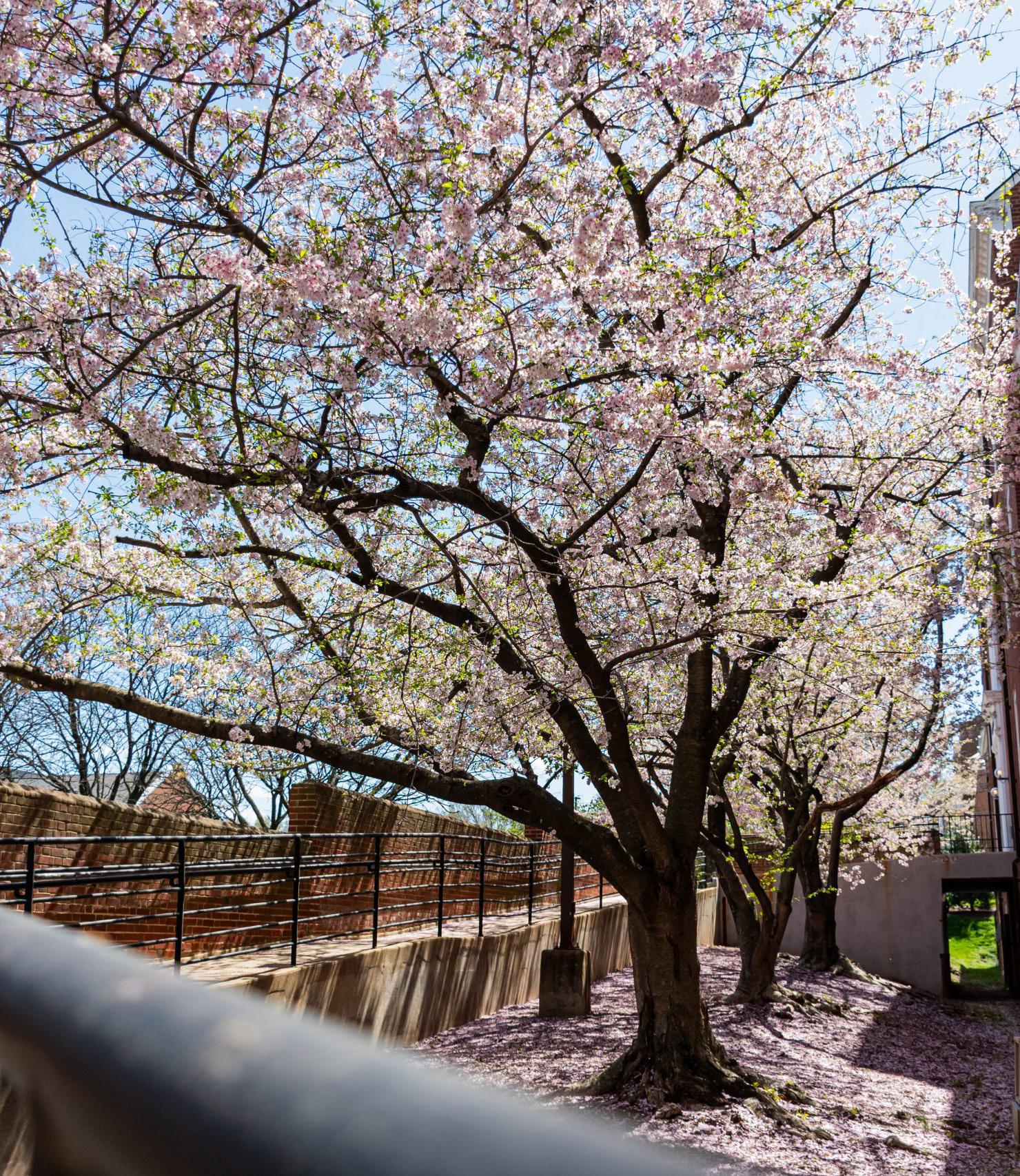
FRONT COVER PHOTO BY: Gurnoor Sodhi
PHOTO BY: Akash Raghu
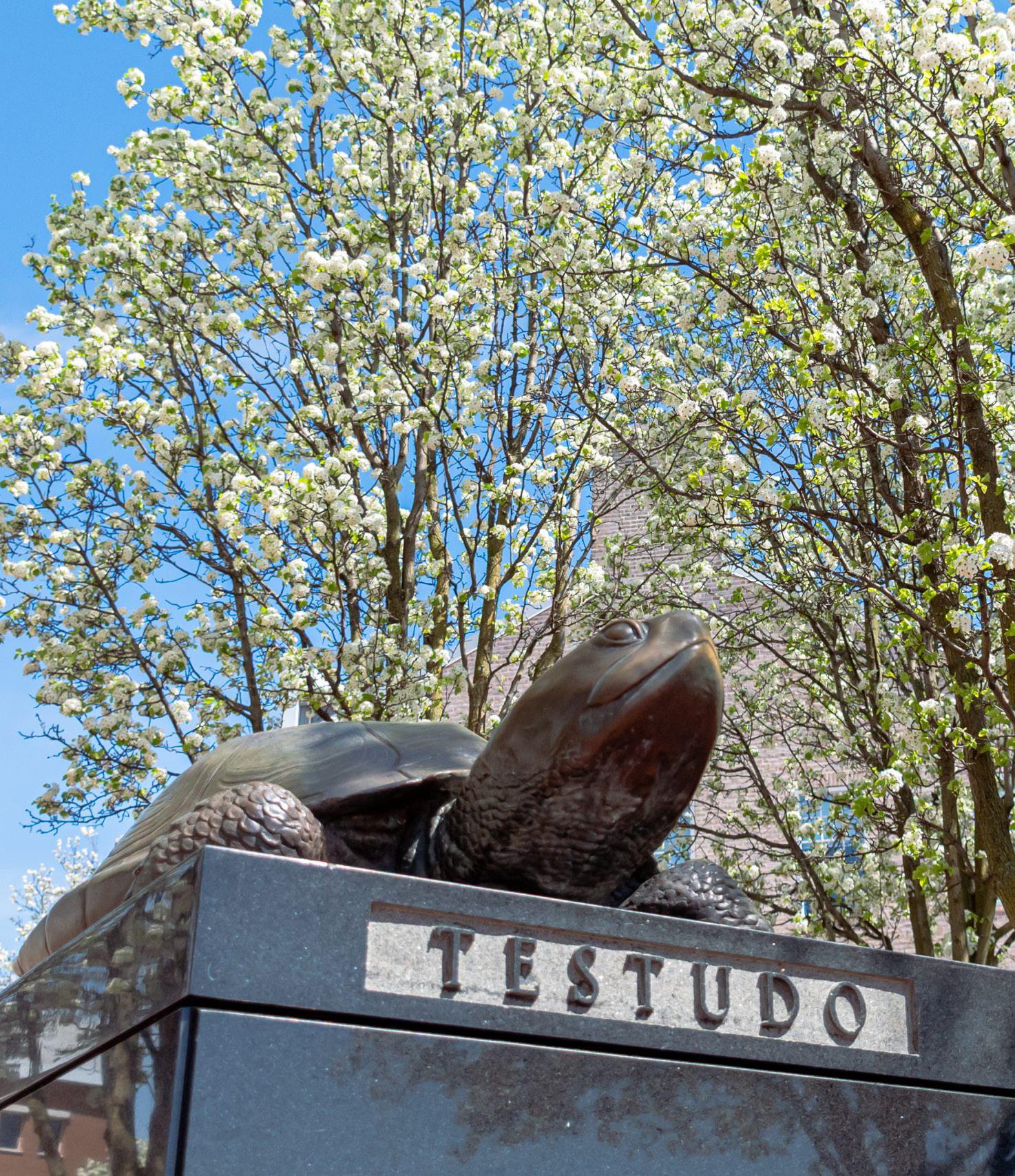
Flowers bloom near a Testudo statue outside the Samuel Riggs IV Alumni Center on March 31, 2025. (Gurnoor Sodhi/The Diamondback)
Inside UMD’s Multicultural student papers
By Anastasia Merkulova I Staff writer
Disclaimer: Black Explosion editor in chief Nina Wilson is a former Diamondback copy editor. The Mitzpeh, the university’s independent Jewish student newspaper, is also a Diamondback sister publication under the Maryland Media Inc. Board. Under this board, The Diamondback and Mitzpeh receive similar financial and advisory support. Mitzpeh was not profiled for this story because it is on the same board as The Diamondback out of a conflict of interest concern.
From protests to local government meetings, the University of Maryland and nearby communities need coverage every day.
The Black Explosion, Al-Hikmah and La Voz Latina contribute to that daily coverage. The three news outlets focus on topics pertaining to the Black, Muslim and Latino communities daily. The Mitzpeh, which is The Diamondback’s sister publication under the same board of directors, also publishes stories pertaining to the university’s Jewish community. The Diamondback spoke to each publication’s editor in chief to learn more about their work and priorities. Here’s what they had to say.
The Black Explosion
The Black Explosion has been providing news for the university’s Black community since 1970. The newspaper strives to serve as a staple of Black culture in the university community that connects both news and culture, according to its website.
“The original mission was just to cover Black student voices in ways that white students at the time couldn’t,” Nina Wilson, The Black Explosion’s editor in chief, said.
Archives and conversations with former editors in chief showed Wilson that The Diamondback could not cover Black student events as well as Black students could at the end of segregation at this university.
Wilson, a senior journalism major, was a staff writer and general assignments editor before becoming editor in chief last April. The Black Explosion has a very welcoming environment where she had her first real journalism experience, she said.
Over time, The Black Explosion’s mission of trying to connect with Black students and Black student events has mostly remained the same, Wilson said. But the newspaper is now extending into different areas as well.
“We’re definitely branching out and doing a lot of general news events and culture events,” Wilson said.
The newspaper has recently developed a newsletter, highlighting Black history and student groups, according to Wilson. The weekly newsletter is called “The Aftershock” and includes a section highlighting past reports from the newspaper and other Black Explosion history.
The Black Explosion’s existence on campus helps students, Wilson added.
“A lot more people are more comfortable with Black Explosion reporters because they feel like we have a cultural understanding of what minority communities are going through,” Wilson said. “We have a lot of positive feedback and reception because of that.”
A lot of Black Explosion alumni still read the paper and like to see changes since they were students, Wilson added.
Wilson said people should consider working at Black Explosion because of the community that the news outlet builds. She said the paper is like a family, and many people join it when first learning how to report.
“It’s a very rewarding experience to see all of these people grow and learn as reporters and photographers,” Wilson said.
Al-Hikmah
Al-Hikmah, which means “the wisdom” in Arabic, is this university’s first Muslim student newspaper.
Junior international relations major Riona Sheikh founded Al-Hikmah around October 2024. She said a newspaper is a great way to unify the Muslim community across cultures and to make sure that people are informed about global events relevant to the community.
“We just try to give a voice to the Muslim community and issues that are relevant to them on campus,” Sheikh said. “Because I don’t think there was necessarily a space for that before.”
Sheikh said she hopes the newspaper inspires and motivates people to stand against oppression. She also hopes it builds a stronger Muslim community on campus.
There are not many Muslim student newspapers in the U.S., according to Sheikh, and she hopes that Al-Hikmah can inspire people at other universities to start their own newspapers.
“Having smaller newspapers allows for more unknown stories to be shared, and stories that maybe people who are not from that community wouldn’t understand personally,” Sheikh said.
Al-Hikmah’s staff is mostly Muslim, so they understand issues that affect their community and can represent them fairly, Sheikh said.
Sheikh said that her favorite part of this newspaper is being able to write “fearlessly” despite minority communities having their voices stifled and often being afraid that they will get shut down when speaking out.
She said it’s important to have a newspaper that isn’t afraid to cover events that affect the Muslim world, such as in Palestine and Sudan, despite challenges the publication has faced in its reporting.
“UMD has a history of suppressing pro-Palestinian speech. To me, it’s shocking that that would extend to coverage of pro-Palestinian speech,” Sheikh said, referencing the detainment of two Al-Hikmah journalists, including herself, by University of Maryland Police.
Sheikh and another reporter were covering protests of an event hosting Israel Defense Forces soldiers in October when UMPD detained them.
Sheikh said it has been good to be able to bring light to underrepresented and ignored stories. She said disparities often exist in the coverage of different ethnic groups and communities, even within the Muslim community.
“I’m just really glad that there’s a space where people can write about other things,” Sheikh said, “We’ve covered countries that maybe don’t always get that much coverage, like Algeria and Indonesia.”
La Voz Latina
La Voz Latina, or “The Latino Voice” in English, is this university’s first and only bilingual newspaper and the leading source of Latino news on campus, according to its website.
The newspaper was created in 1987 and has restarted a few times before the most recent re-launch in 2022, according to Carlos Sanchez, the newspaper’s editor in chief.
La Voz Latina focuses on reporting on news and issues relevant to the Hispanic community at this university, Prince George’s County and the greater Washington, D.C., Maryland and Virginia area, according to Sanchez.
The newspaper’s main mission is to give a space for underrepresented news pertinent to the local Hispanic community, but also to help grow the staff members for their future careers and endeavors, Sanchez said.
“We really pride ourselves in developing our staff, no matter where they’re starting in their interest in journalism or writing,” Sanchez said.
The junior international relations major is in his first semester as La Voz Latina’s editor in chief. Sanchez said he has done a little bit of everything in the newspaper before taking up this position, including roles as a managing editor and opinion writer.
It is important to have a bilingual newspaper on this campus because of the diverse community in the Washington, D.C., area whose primary languages are English and Spanish, Sanchez added.
“It’s only fitting that we also have a space on this campus to discuss both issues through a Latino lens, but also just issues in general,” Sanchez said.
The bilingual aspect of the newspaper allows it to cover things that other newspapers can’t, Sanchez said. It makes interviews with Spanish-speaking people much easier because reporters can speak with them in their native language, he added.
“There’s nothing comparable to having somebody interviewing you that speaks the same language,” Sanchez said. “Not only do you open up to them more personally because you have that connection with them, but it also allows them to expand on their own story as well.”
La Voz Latina gives students the opportunity to freely share ideas that normally wouldn’t be shared, Sanchez said. He added that he was grateful to have a space that has Latinos in mind. Sanchez said that the newspaper has an impact beyond this campus because many of the staff source from local areas.
“That connection with the community is another thing that’s really a plus for us,” Sanchez said. “Because we can connect with the community, it allows us to build a relationship off this campus as well.”
Sanchez said the organization is working on its graduation special edition for this year, which honors big figures on this campus that aren’t recognized elsewhere. The newspaper is also considering expanding into other forms of media such as radio.
UMD republishes list of 25 key demands from Black student leaders under firewall
The University of Maryland has republished a list of 25 critical issues identified by Black student leaders in 2020 that it removed from its website last spring after months of uncertainty about whether it would be made public again.
As of Feb. 16, the list is once again accessible on the website of the university’s belonging and community office — though it no longer tracks the progress made on each individual issue.
University community members have to log in to the redesigned belonging and community webpage and navigate through multiple pages to access the list of demands. The dashboard was previously available on the homepage.
The Diamondback reached out to this university on Feb. 11 and asked about when the list would be republished. The university told The Diamondback on Feb. 17 that the list is back online.
By Sam Gauntt I Deputymanagingeditor
The list was drafted in collaboration with several dozen student organizations and university administrators and included issues such as increasing the number of Black faculty and staff, prioritizing minority enrollment and ending police militarization on campus. But in April, the university quietly took a webpage tracking progress for each critical issue offline. The dashboard’s removal was first reported by The Black Explosion.
Later that month, vice president for belonging Georgina Dodge — then the vice president for diversity and inclusion — told The Diamondback that the list would be published online again, likely under a firewall requiring a university login. But in the following months, the university did not share a specific timeline for its republishing, despite multiple inquiries from The Diamondback and calls from Black student leaders to republish the dashboard.
University president Darryll Pines told The Diamondback in November that the belonging and community office was reevaluating the list as most of its priorities
had already been achieved. An archived capture of the webpage shows that 21 of the listed issues were labeled as completed, while four were “in progress.”
Asked if the dashboard would be made available to students in its original format, he suggested students could access the original version through the Wayback Machine — an online tool that allows users to view archived versions of websites.
A few months after the dashboard was taken down, the university renamed its Office of Diversity and Inclusion to Belonging & Community at UMD and began to remove information and resources from its Multicultural Involvement and Community Advocacy website.
The dashboard’s disappearance and the other changes came as universities nationwide have altered or rolled back diversity, equity and inclusion initiatives as they face pressure from U.S. President Donald Trump.
UMD students highlight hidden history of Black alternative culture
By Kya Amadi I Diversionsreporter
No genre can bind Black creativity and influence. Though many alternative cultures have historically been predominantly white, they’re rooted deeply in Black artistry.
When thinking about alternative trends such as body modifications, indie music and rebellion, many aspects of Black culture are inherently nonconformist.
Body modifications stem from tribal traditions, representing different spiritual and social identities.
Piercings, tattoos, skin scarification and hairstyles were meant to distinguish one’s beauty and important life markers.
Even on the University of Maryland’s campus, alternative fashion finds a home within the student body. Following the conclusion of Black History Month, challenge yourself to support all genres of Black expression.
Take a look at how some University of Maryland students showcase their daily fashion and creative
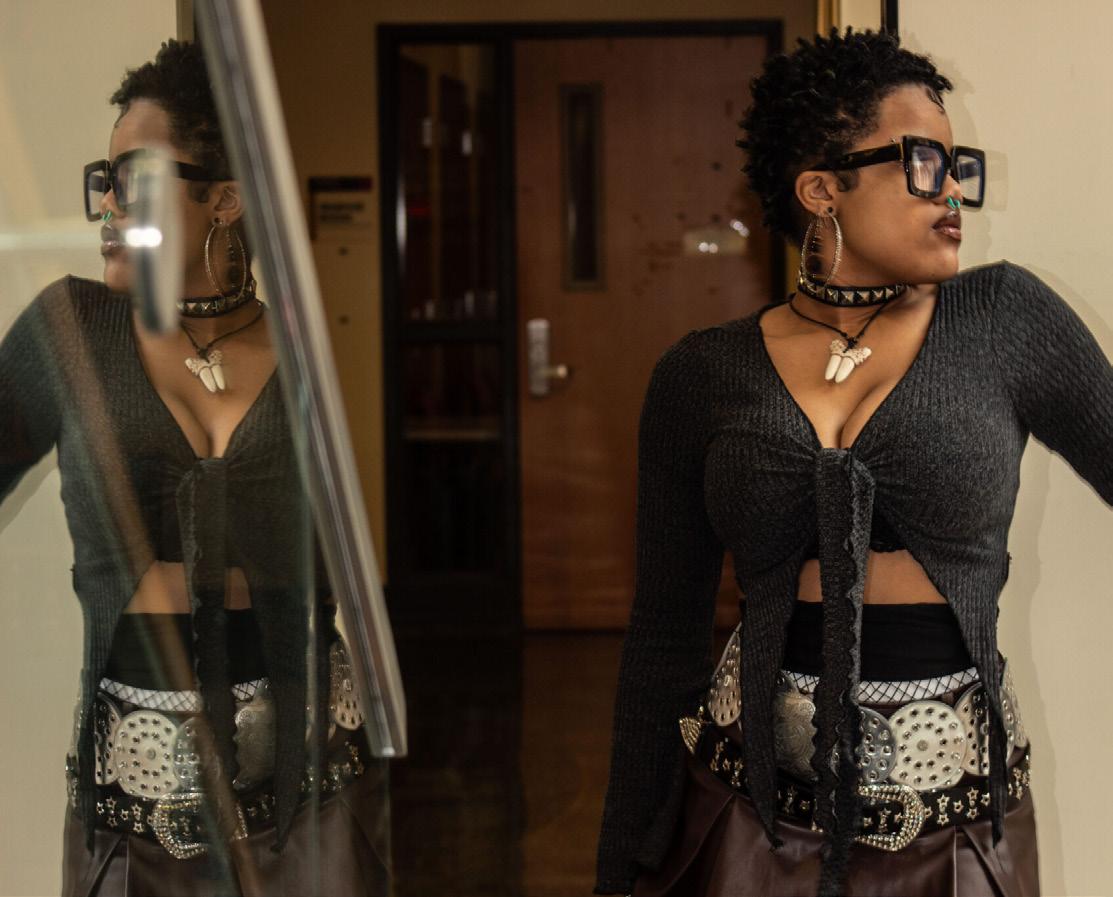
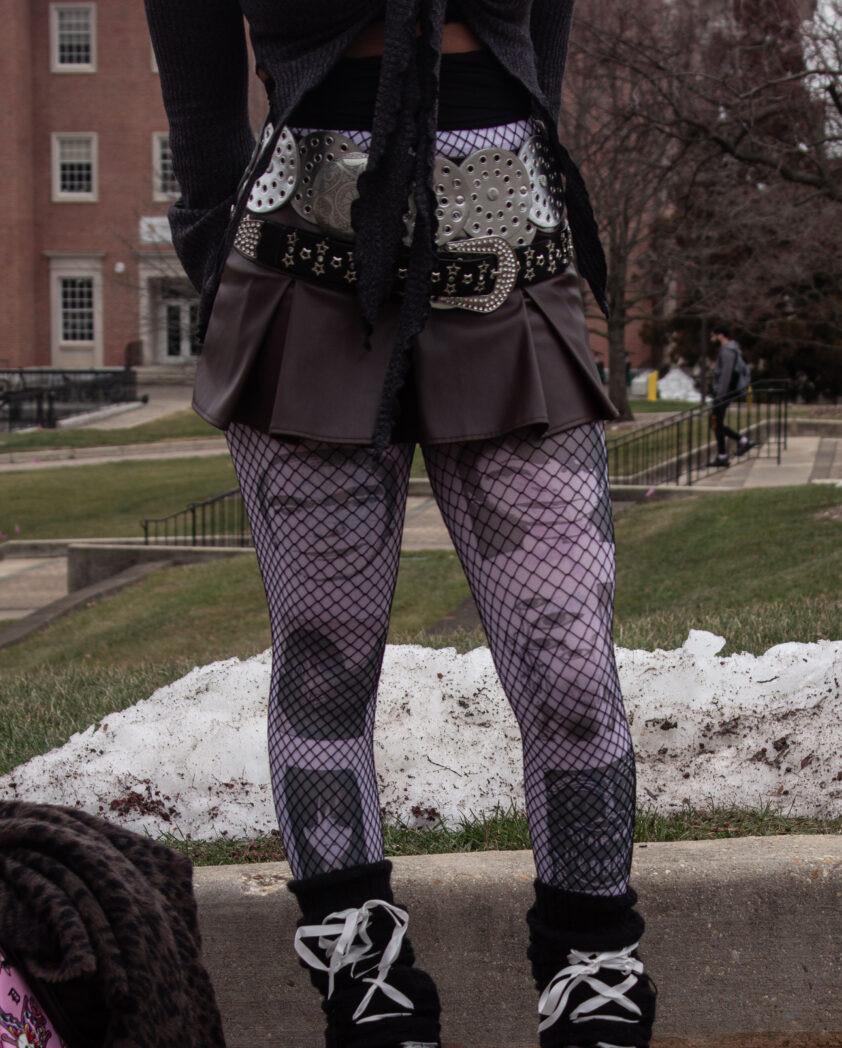
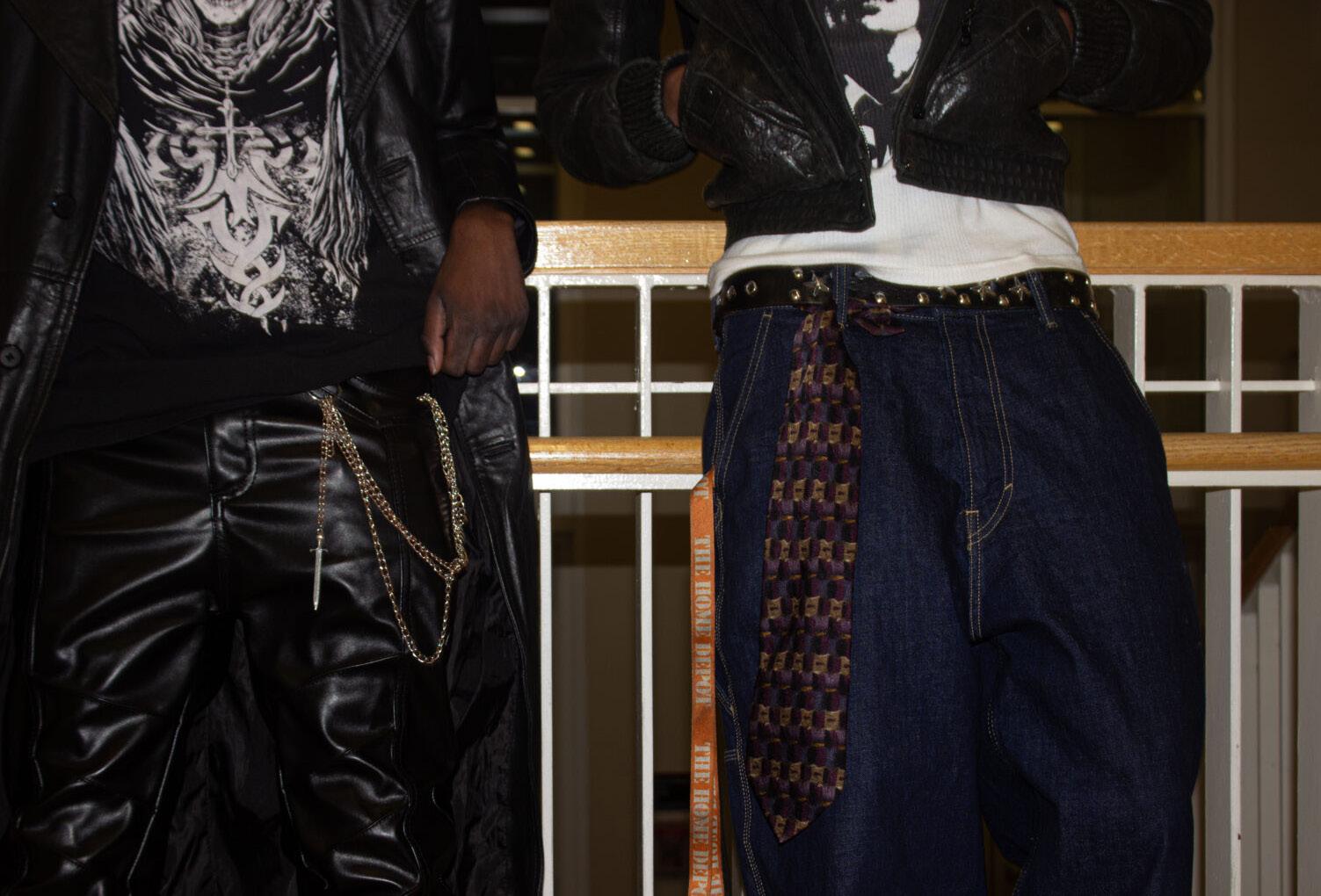
expression on campus.
Black artists were always present and vocal at the heart of punk philosophy, with its focus on antiestablishment and battling systemic frameworks in U.S. society. The Black Panthers aligned with this ethos, famously donning black leather jackets to make their presence known. While battling systemic oppression, they defined drive and passion within alternative communities.
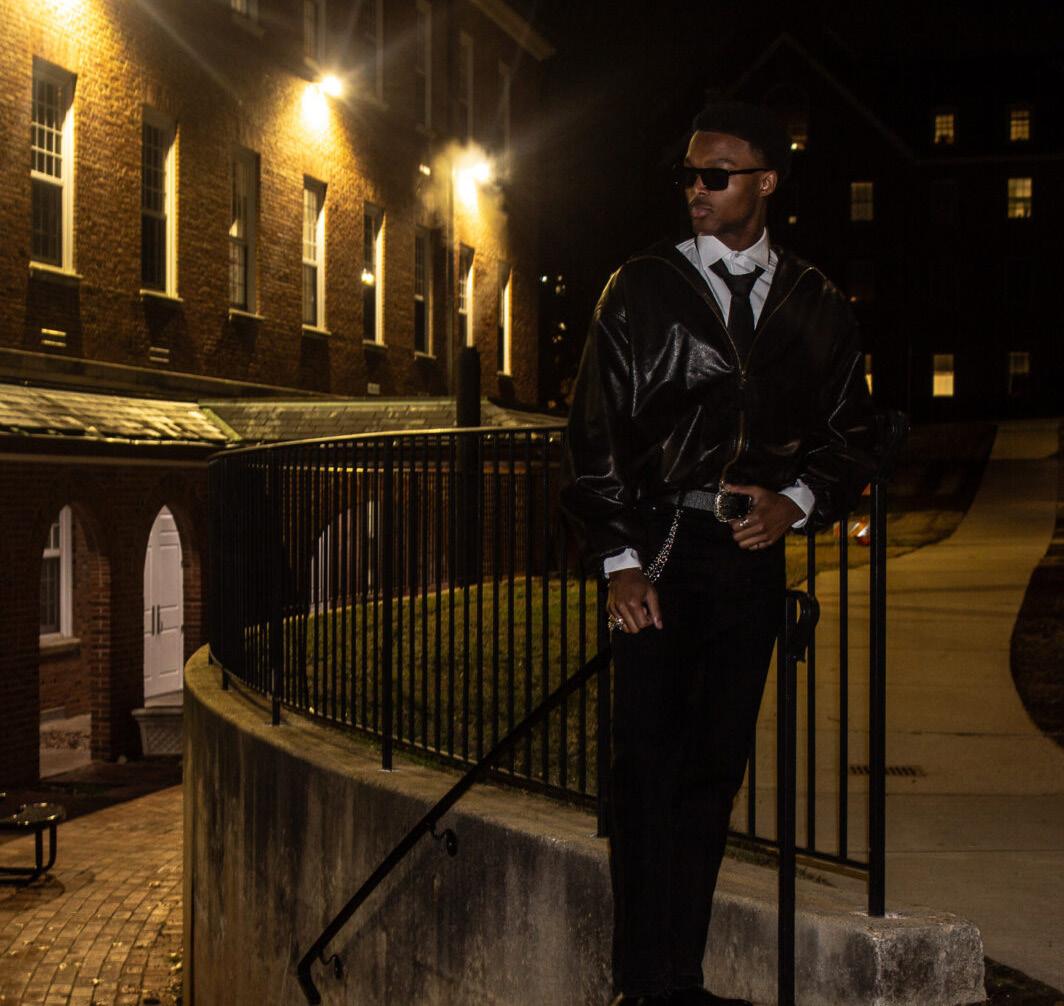
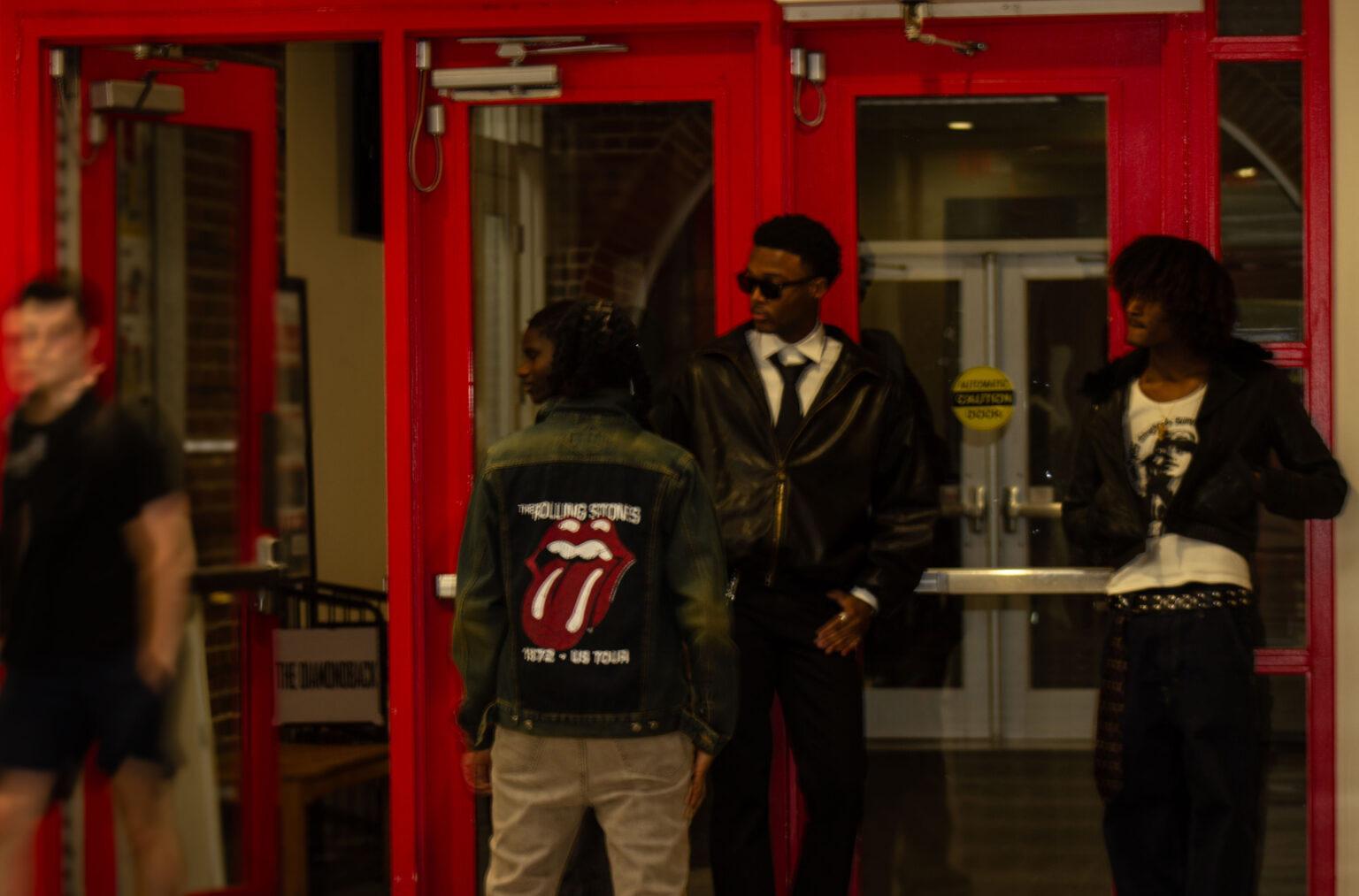
Kameren Williams waiting for class inside the Art-Sociology Building, on Feb. 25, 2026. (KYA AMADI/The Diamondback)
Kameren Williams in front of Hornbake Library on Feb 25, 2026. (KYA AMADI/The Diamondback)
Christian Gibson, a sophomore public health science major, climbs a staircase on Feb. 25, 2026. (KYA AMADI/The Diamondback)
Julien Rene and Mario Reyes rest on a stairwell in Stamp Student Union on Feb. 25, 2026. (KYA AMADI/The Diamondback)
Julien Rene, Lauren Bankole, Mario Reyes and Christian Gibson stand inside Stamp Student Union on Feb. 25, 2026. (KYA AMADI/The Diamondback)
A year into federal attacks on diversity, UMD community is still rocked by effects
More than a year has passed since the U.S. Department of Education threatened to revoke federal funding from schools and universities if they continue any sort of programming that involves diversity, equity and inclusion.
Since taking office last January, President Donald Trump has signed several executive orders aiming to stop “racebased preferences” in federal agencies and education institutions throughout the country.
This past year, the University of Maryland has made several changes to offices and websites related to diversity, equity and inclusion. Meanwhile, some students said they have had trouble planning cultural events on campus.
This university’s South Asian Student Association president, Mahee Patel, told The Diamondback that planning the club’s larger events has been “incredibly difficult.”
“The biggest way that I can think that it’s impacted us is with a loss of funding and just support in general,” the senior criminal justice and criminology major said. “There have been so many budget cuts going on.”
The education department issued a letter last February stating that schools may be violating federal law if they consider race in any education related activities or programs. In a federal court ruling on Aug. 14, U.S. District Judge Stephanie Gallagher blocked the letter and ruled it unconstitutional. The Trump administration only dropped its appeal on the decision in January.
On Aug. 7, this university changed the name of its Office of Diversity and Inclusion to the Office of Community and Belonging, saying the name change “best reflects the fact that we interact with all of the unique identities in our community.”
This follows the education department’s investigations into 45 universities for violating its directives, putting the universities’ federal funding at risk.
In a February statement to The Diamondback, this university wrote that its “values and mission have not changed.”
“We continue to value an inclusive learning and working environment where all students and employees can succeed and thrive,” the statement read. “We are closely monitoring guidance from federal agencies and rulings from federal courts, and we will continue to comply with state and federal law.”
For this year’s multicultural night, Patel said it was the first time the organization was forced to find sponsors to provide cultural food at the event.
By Mayah Nachman I Assistant news editor
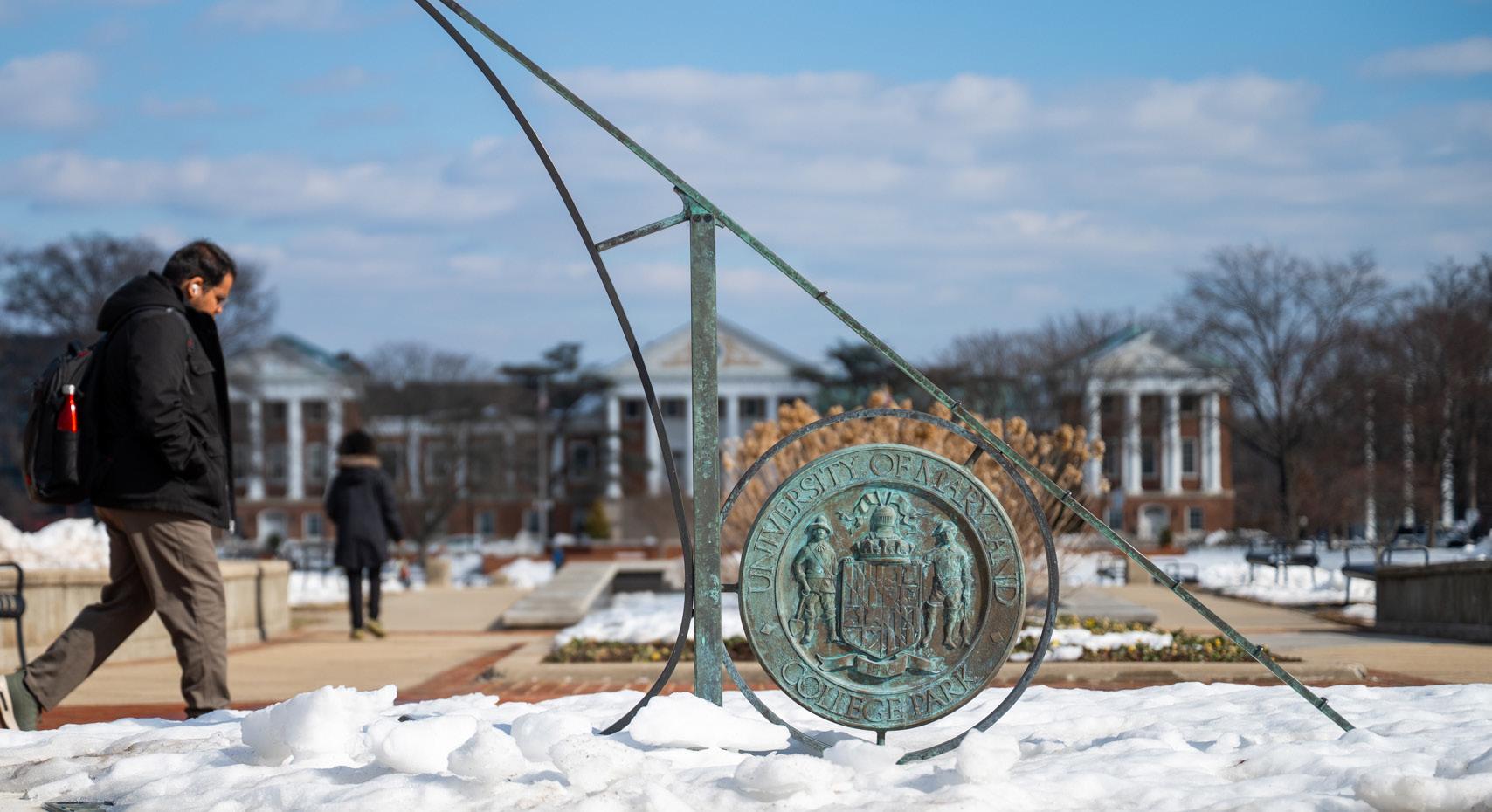
A person walks past the sundial in the middle of McKeldin Mall on Feb. 12, 2026. (ryan bowie/The Diamondback)
Last year, Patel said the university’s Multicultural Involvement and Community Advocacy office covered the price of renting out the venue for the event, which made it easier for them to allocate money for things like food and decorations. The office did not cover the renting price this year, Patel said.
Now as the organization is planning its spring formal, Patel said they have to find additional sponsors to be able to have a DJ and food at the event because of budget cuts from the Student Government Association.
In a statement to The Diamondback on Feb. 16, this university wrote the funding process for clubs through the SGA has not changed.
This university’s African Student Association’s president, Pamela Awobajo, added she has also run into more restrictions when planning club events
She said she has noticed that anticipated yearly events have been “scaled back,” such as the Nyumburu Cultural Center’s annual student welcome and homecoming tailgate. This year’s tailgate was given a curfew and couldn’t use the larger parking lot it typically is held at, according to Awobajo.
“When people are typically used to an organization always having that one specific event every year and then for one random reason or another it changes,” the senior information science major said. “It kind of dampens the mood.”
Beyond this, MICA, which typically helps plan cultural events on campus, experienced several changes to its website
in September.
The office’s website now lacks a number of previously featured resources on its homepage about several student involvement programs.
Associate education policy professor David Blazar told The Diamondback that emphasizing inclusivity in education settings creates more equitable educational opportunities for historically underserved communities.
Blazar said the threat of losing federal funding can put university research, grant funding and student activities at risk.
“There are really real consequences to what the Trump administration has done, and we’ve seen that play out at other universities,” Blazar said. “I recognize that institutions need to react in some way and accordingly to ensure that the least harm is done.”
Sophia Ubiera, the president of this university’s Puerto Rican and Dominican Student Association said while she understands why the university changed the diversity, equity and inclusion office’s name, she wishes the university made more of a stand against the Trump administration’s directives.
“Instead of flighting back and standing up to what would be … right for all, we are just allowing it to happen and kind of appeasing the president,” the junior Japanese and psychology major said.
UMD’s Bhangra Club reflects on history, passion as members look for gold in Miami
By Kya Amadi I Diversionsreporter
Practice chatter was halted by Shruthika Nallamaddi, logistical managing captain and senior biology major, calling at the bhangra team to stretch. Members dispersed slowly, either sitting to grab their toes or grasping the edge of a wall to twist.
Largely from Punjab, India, the bhangra dance style is very physically demanding. Though Nallamaddi is ethnically South Indian, she opted to try the bhangra dance style.
“You grow passion for it. If you don’t have the passion for it, you don’t stay,” Nallamaddi said, noting its athletic and artistic challenge.
Bhangra is a folk dance style, also found in Pakistan, associated with a spring harvest festival called Baisakhi. One of the main products from the harvest is bhang, also known as hemp. As time passed, the dance separated from its agricultural roots to grow into the colorful performance it is today.
This university’s bhangra club was founded in 2010. Now, they’re earning trophies in national competitions.
Priyanka Saini, junior criminology and criminal justice major, is the team’s financial coordinator. She arranges paid performances and even has team members work concessions at Maryland athletics sporting events to support their own competition schedule. While these efforts make them money, they’re also a reminder of their non-collegiate competitors.
“Most of these private teams have employees or people who are paying to be in that dance academy, whereas we do everything for free,” Saini said, screwdriver in hand, athletic tape in the other.
Part of the bhangra style includes using props that reflect Punjab’s agriculture. Saini sat with her tools adjusting each sapp, an accordion-like handheld instrument that opens and closes, meant to scare away crows with its noise, now converted for dance performances.
There are about 35 active team members each year. Almost everything is learned in-house, most new recruits have little to no experience.
Aneel Ahuja, a junior public health major, grew up dancing at weddings. Now, he leads the team with three other dance captains.
“I love all these people so much. Like, it’s super fun, just like dancing with them and sharing this passion with them,” Ahuja said. “I think we need each other.”
The team is constantly rechoreographing. They usually practice for up to three hours at a time, three days a week. But they ramp up practice leading up to performances. They record their routines, and review them like game film. Tiger balm and muscle creams covered the floor as Nallamaddi
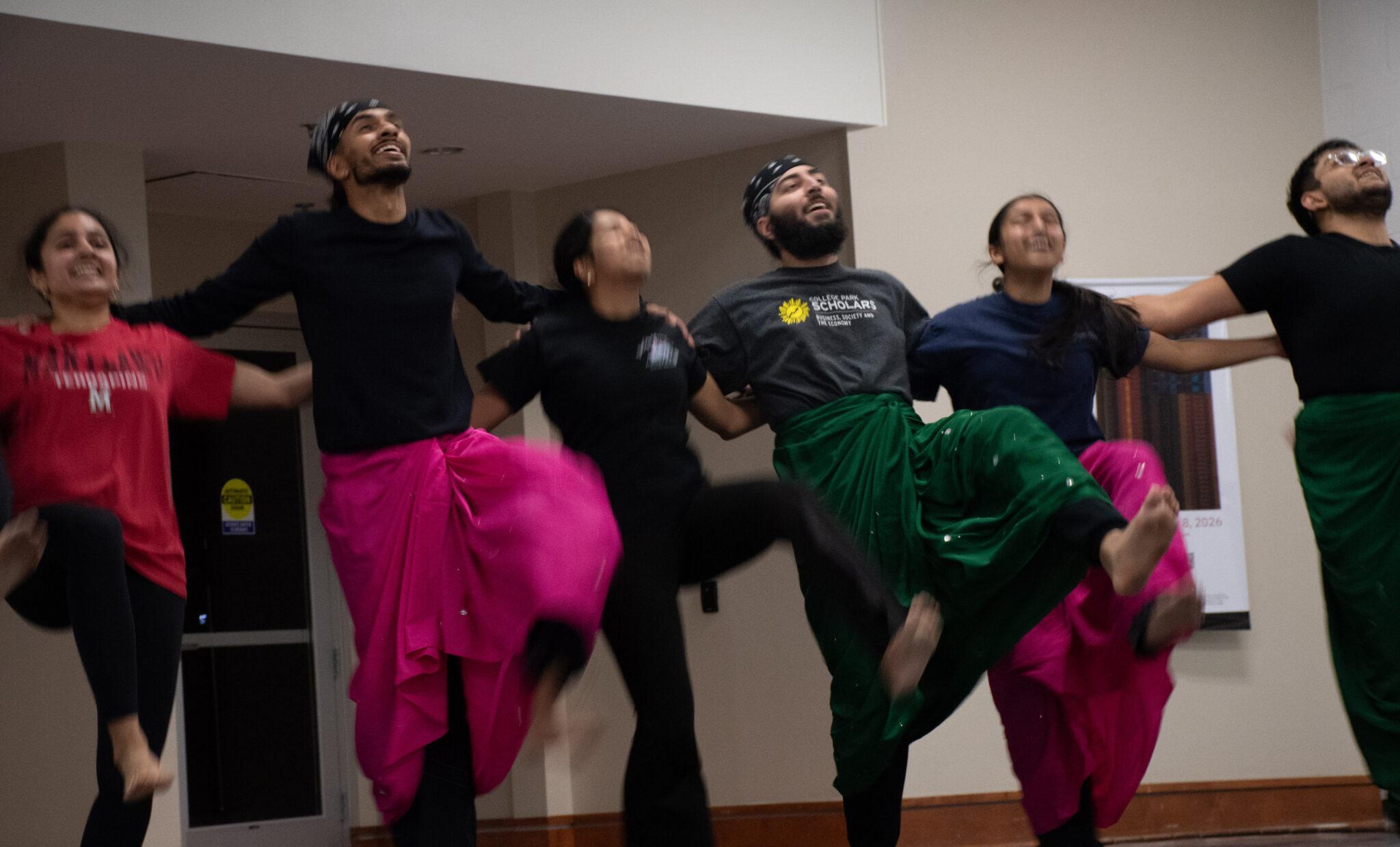
recalled her time as an active dancer.
“Those were my competitive years, but I’ve outgrown that phase,” Nallamaddi said. “It’s just at some point, if you’ve noticed, like, a lot of injuries happen. People become more injury-prone as the years go on.”
Some even limit walking around campus, avoiding injury to support their arches and the team. Along with a physical challenge, they also brave a spreadsheet battle to reserve practice space. Many other dance teams on campus are also in their competition seasons.
Practices are loud and high intensity. Ahuja embraced the atmosphere and said “If someone says my name, like, yo, hit this shit. Like, I’m gonna hit that, and then I do the same thing for everyone else too.”
During practice, Nallamaddi constantly reminds her team that despite the intensity, they cannot drop their performance faces. The dancers have to smile strategically, with head nods and playful teammate interactions, all while keeping the beat and their breath.
“It’s always stressful before the comp and everything,” Nallamaddi said. “But then when you’re on stage, [you] gotta leave it all on stage. And then after everyone’s like, ‘Oh we finished, we’re done.’ … Then even at our parties, they won’t stop dancing.”
Though the team didn’t place in this year’s Miami Vice City Showdown on Feb. 21, they won second place at the 2025 Vice City Showdown. Their collection of trophies floats around team members’ houses, usually finding a home with one of the graduating seniors. Despite their success though, some team members feel that they could’ve done better in Miami last year. Ahuja said that they’re aiming to earn a beach celebration.
“We’ve all worked super hard for it,” Ahuja said. “We want to just do well and show our prowess.”
According to Ahuja and Nallamaddi, the team parties hard and works even harder. The audiences appreciate this, Saini noted the growing diversity in engagement. Due to social media, intrigue in bhangra has grown, she said.
“People be hating on Indians a lot, and it’s nice to see a little bit of appreciation for something that’s been around for so long,” Saini said.
After all the sweat and critique, bhangra practices end in camaraderie. Nallamaddi standing on a dancer’s back, Ahuja and others still stretching, everyone talking about their upcoming trip, passing water bottles and tiger balm.
Avni Kaushik, Monodeep Chahal, Rhea Sidhu, Arjun Singh, Shriya Raya, and Mahir Kansal (left to right) perform a dance in the David C. Driskell Center on Feb. 13, 2026. (KYA AMADI/The Diamondback)