

Hello and welcome to this month’s issue of THE CRUST. The Cesium-137 issue continues to cast a long shadow over the Indonesian shrimp industry. Although progress is being made, the certification requirement remains the largest bottleneck holding back exports. Efforts are underway to speed up the process, additional testing equipment has been allocated, laboratory workflows are being streamlined, and coordination between agencies has improved. Even so, the pace remains slow, and many believe that export activities may not return to normal until mid-December at the earliest.
This delay has created a ripple effect throughout the entire supply chain. Harvesting has slowed, not because farmers are unwilling, but because factories simply cannot offtake at normal capacity under the current constraints. Processors are holding back until exports stabilize and their cash flow recovers, leaving farmers anxiously watching their ponds. For many, the only thing they can do now is hope their shrimp remain healthy, as every extra day in the pond increases the risk of disease.
And disease is indeed becoming another major concern. Indonesia is now facing reports of a new con-
dition, commonly referred to as White Muscle Syndrome (WMS). Its origins remain unclear. The leading suspicion points toward Vibrio bacteria, possibly a new manifestation of vibriosis, while others see parallels to TPD (Translucent Post-Larvae Disease). Whatever the cause, its emergence adds yet another layer of uncertainty during a period when farmers are already stretched thin.
As a whole, Indonesia is experiencing what many describe as the most difficult period in decades. With export barriers on one side and emerging diseases on the other, some even say this is the greatest threat the industry has ever faced. Yet, despite all of this, the Indonesian shrimp community has always been resilient, built on hard work, innovation, and collaboration.
Let us hope that our farmers, processors, and all stakeholders can endure this trial and emerge stronger when this storm finally passes.
Rizky Darmawan Chief Editor

ntering the fourth month since the radioactive case involving Indonesian shrimp first emerged, the road to recovery has progressed gradually. After various efforts from stakeholders—ranging from government negotiations with the FDA to farmers urging a faster resolution—last month the FDA finally reopened access for Indonesian shrimp to the US market, requiring the inclusion of a certificate proving the product is free from Cs-137 contamination. This rule has been in effect since October 31, referring to FDA Import Alert #9952.
As of October 31, 2025, the Cs137free certification scheme is fully operational. The Ministry of Marine Affairs and Fisheries (KKP), together with Nuclear Energy Regulatory Agency (Bapeten) and Customs, released the first shrimp exports to the U.S. since the Cesium137 issue, consisting of 7 containers with a total volume of 106 tons valued at USD 1.22 million. These shipments met the required Yellow List procedures and criteria, and were confirmed to be free of Cs137 contamination when passing through the Radiation Portal Monitor (RPM).
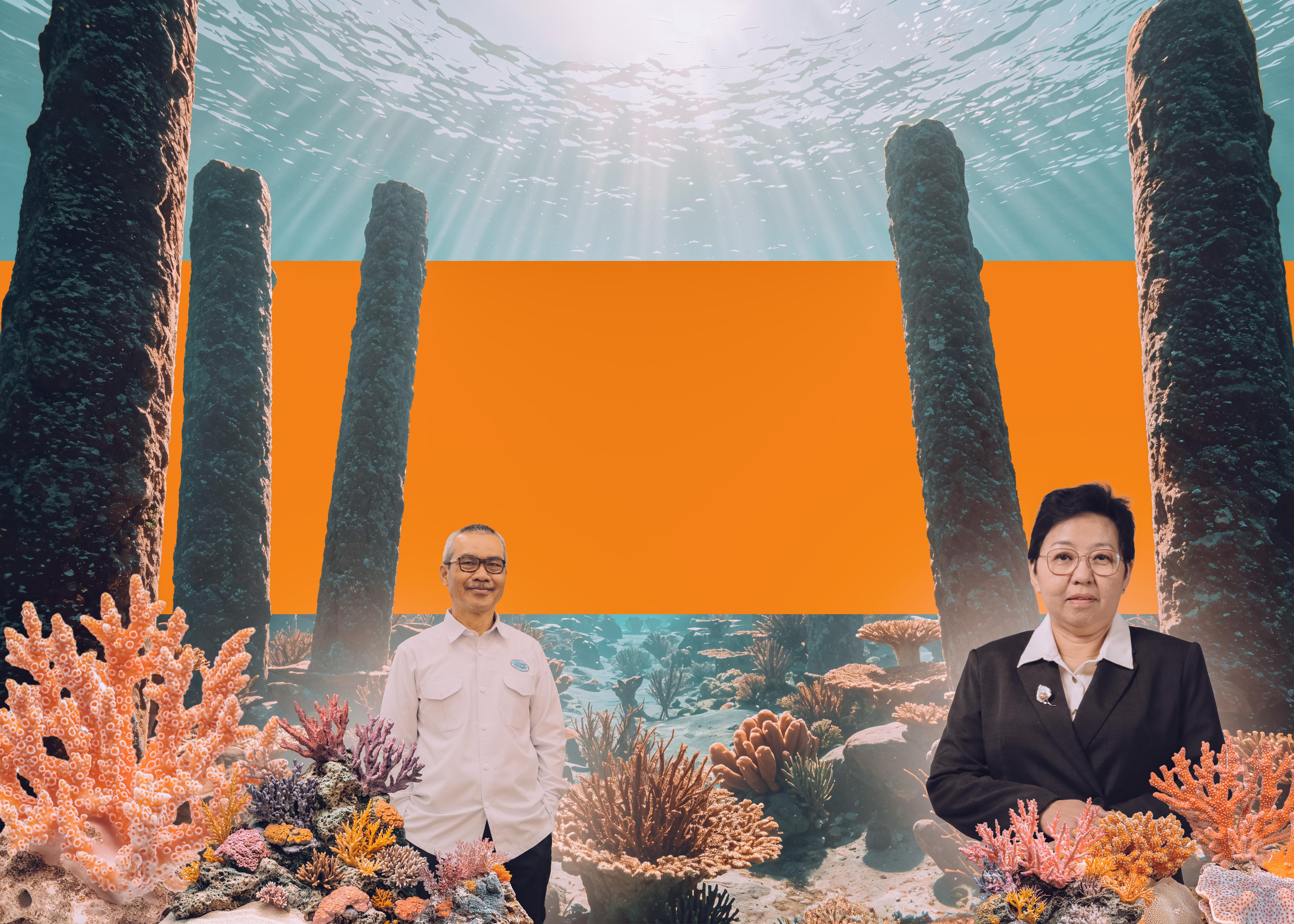
“Indonesian shrimp can still meet the needs of the U.S. market. Indonesian shrimp have their own distinctive taste, and we will continue to strengthen our controls. Our target for November is to export more than 200 containers that already meet the Cs137free requirements,” said Head of KKP’s Quality Control Agency, Ishartini, during a press conference in Jakarta (6/11).
She explained that her office continues coordinating with the FDA and domestic institutions including National Research and Innovation Agency (BRIN), Bapeten, Customs, and other ministries/agencies, to deliver highquality certification services for Cs137free products, thereby supporting export capacity and improving market acceptance in the U.S..
Acceleration Efforts and Strengthening Collaboration
Following the FDA’s appointment of KKP’s Quality Agency as the Certifying Entity (CE), the U.S. Food and Drug Administration has also approved four laboratories in Indonesia to conduct Cesium-137 (Cs-137) testing for shrimp. The approved laboratories are BRIN, Bapeten, ALYPZ, and SGS Vietnam.
“We recently received FDA approval for four laboratories among those we submitted. These laboratories have the capacity and competence to conduct Cs-137 testing to support the Cs137free certification service,” said Ishartini, Thursday (14/11).
The Cs137free certification scheme for shrimp exports to the U.S. includes scanning and laboratory testing conducted by the relevant nuclear authorities, namely BRIN and Bapeten. KKP has formal cooperation agreements with both institutions. The results generated by these two agencies serve as prerequisites for the issuance of the Quality Health Certificate (HC)
by KKP. Meanwhile, KKP has deployed trained Quality Inspectors to carry out official controls in accordance with the requirements set out in Import Alert #9952.
“To support the operationalization of the Cs-137-free shrimp certification scheme as a requirement for exports to the U.S., we have entrusted the testing of Cs-137 samples to BRIN laboratories, which are competent and FDA-approved,” Ishartini explained.
The scope of cooperation between KKP and BRIN includes the provision of test materials; scanning and testing of radioactive concentrations in marine and fishery products; data and information exchange and utilization; training in scanning and radioactive
testing methods or technologies; joint preparation and use of laboratory facilities for scanning and testing radioactive contamination in marine and fishery products; and the involvement of relevant experts and specialists in developing regulatory recommendations and technical guidelines.
Farmgate Prices Still Below Pre-Cesium Levels
Although progress has been made and conditions on the ground are gradually improving, shrimp prices have not fully recovered. While the government previously reported some increases, current prices remain lower than those before the Cs-137 case. In regions such as
Bangka, for example, early November prices remain far below lateJuly levels. Size50 shrimp, which reached IDR 60,000/kg at the end of July, were still around IDR 49,000–51,000/kg in early November. Similar trends were seen in West Java and Banten, where size50 prices in June reached IDR 68,000/kg but were still at IDR 53,000–55,000 in early November, only rising again to around IDR 58,000 toward the end of the month.
The shrimp farmers association, Shrimp Club Indonesia (SCI), welcomed government efforts to reopen US market access through collaborations with Bapeten and BRIN. However, SCI hopes that testing capacity, both equip-
ment and laboratories, will be expanded. With faster and more predictable processes, certification will not become a bottleneck but rather a mark of quality that strengthens Indonesia’s position in premium markets.
SCI Chairman, Prof. Andi Tamsil, remains optimistic that despite the challenges, shrimp will continue to be Indonesia’s flagship fishery export commodity. Historically, shrimp contributed around 35–42% of total national fishery exports, and this trend remained relatively stable through the first half of 2025. Shrimp continues to be Indonesia’s top fishery export commodity, with an export value of USD 1.397 billion from January to September 2025.
“In the second half of this
year, the export pace may slow slightly due to the temporary halt caused by the Cs137 certification requirement. However, exports have now resumed, and if certification processes become more efficient and testing capacity is expanded, we are optimistic that the positive growth trend will continue next year,” Andi said.
The US is still considered a key trading partner with high purchasing power. Additionally, most Indonesian processing plants have facilities optimized for the products demanded by the US market, meaning it would require additional time and cost to shift production toward other markets.
The new FDA requirement is a shortterm challenge because of the needed adjustments, particularly in terms of testing time and costs. But in the long run, this certification becomes a valueadding signal of Indonesia’s capability to meet the highest food-safety standards.

In the previous issue, we discussed modern, energy-based sterilization using ozone and UV light. While these methods are effective, most shrimp farms in Indonesia still rely on chemical sterilization for one simple reason: it’s practical, affordable, and requires no major investment. Chemical treatments are an operational expense (OPEX) rather than a capital one, meaning farmers can apply them as needed.
The key goal remains the same: to reduce Total Organic Matter (TOM) and suppress harmful bacteria. Using too much can be counterproductive, harming shrimp and beneficial microbes alike. The key lies in control, precision, and understanding what your pond actually needs.
Calcium Hypochlorite (Ca(ClO)₂)
The most common disinfectant in shrimp farming, calcium hypochlorite releases chlorine when dissolved, killing bacteria and oxidizing organic matter. It’s fast and powerful but leaves residual chlorine that must dissipate before use—usually with 24–48 hours of aeration. Despite this, its effectiveness and low cost make it a staple in farms.
Trichloroisocyanuric Acid (TCCA)
TCCA is a more concentrated and stable chlorine compound that releases chlorine gradually, offering a longer-lasting disinfecting effect. It’s convenient, easy to store, and widely used in both hatcheries and grow-out ponds across Indonesia. As with calcium hypochlorite, residual chlorine must be monitored and allowed to settle before stocking.
Potassium Permanganate (KMnO₄)
A strong oxidizer, potassium permanganate reacts with and breaks down organic matter without leaving chlorine residues. It’s especially good for reducing TOM and controlling bacterial loads but must be dosed carefully to avoid stressing shrimp. This chemical sees wider use in Vietnam and Thailand, where it’s favored for water rejuvenation.
Hydrogen Peroxide (H₂O₂)
Hydrogen peroxide is a fast-acting oxidizer that breaks down into water and oxygen, leaving no harmful residue. Because of this, it is sometimes used not only for sterilization but also to boost dissolved oxygen levels during periods of low DO or high organic load. Its quick reaction and clean breakdown make it safer for grow-out ponds compared to harsher chemical disinfectants.
While chemical sterilization remains the backbone of pond preparation, some farmers mistakenly believe that “more is better.” Overdosing—sometimes far above the required ppm—can damage pond ecology and waste resources. Always remember: the goal is to lower TOM and harmful bacteria.
Chemical sterilization is not a fixed-ppm practice. The correct dosage always depends on your initial water condition, including TOM level, clarity, and bacterial load.
For best results:
• Measure water quality before treatment,
• Apply your chosen chemical,
• Then test again afterward to confirm whether your dose was effective and efficient.
This approach helps avoid under-treating (ineffective) or over-treating (wasteful), ensuring sterilization stays targeted, economical, and safe for your farm system.
Among the many sessions at the Global Shrimp Forum 2025, the final panel titled “The Future of the Industry” stood out for offering some of the most compelling insights into where the global shrimp sector may be heading. The discussion brought together perspectives from three major producing regions: Ecuador, India, and broader Asia. Speaking on the panel were Yamini Potluri, Business Development at Growel Group; Andrés Rivadulla, Managing Director of BioMar Ecuador; and Robins McIntosh, Executive Vice President at Charoen Pokphand Foods.
India at a Crossroads
Joining the discussion online, Potluri argued that India can no longer depend on traditional growth models especially as farmers continue to face disease pressure, variability in product quality, and rising production risks. In her view, the country’s next

Andrés Rivadulla
chapter begins with a strategic shift inward.
Shrimp farming in India has long focused on serving international markets, but Potluri believes domestic consumption is the nation’s most overlooked opportunity. With a rapidly expanding middle class, greater health awareness, and increasingly adventurous food preferences, she noted that “the time is right to make shrimp mainstream in Indian households.”
Still, building a strong domestic market is only one part of the equation. Potluri emphasized that India must also transition away from being a commodity exporter and move toward producing value-added items which are convenient, ready-to-cook and ready-to-eat products that align with modern lifestyles and global expectations.
“It’s very essential if India wants to not only be a production powerhouse, but a global innovator,” she said. “And third, we have to balance our farmers’ livelihoods with sustainability, which means we have to control our disease, smart stocking densities, stronger traceability throughout our supply chains, and technology adoption. And we’re seeing more of it lately in India with so many young-
er people investing more in technology. So India must now find its own balance between growth and move towards resilience.”
If India is wrestling with reinvention, Ecuador is focused on consolidating a journey it began years ago. Andrés said that the country’s progress is rooted in deliberate technification including automatic feeders, aerators, refined management, and smarter pond design. These improvements have created large efficiency gaps between technified and non-technified ponds, with the former producing up to five times more.
Andrés noted that nearly half of Ecuador’s pond area still has room to be upgraded, a fact that gives the country considerable growth potential without needing to push densities to risky extremes. Expansion, he argued, should come from modernizing unused or low-density areas and diversifying into regions
beyond the Gulf of Guayaquil, where most production is concentrated today.
He also stressed that Ecuador’s strategy must remain responsible and longterm. Growth should not be about breaking volume records or chasing quick wins. Instead, producers must seek steady output, stable health conditions, and coordinated improvements across the entire chain, from feed mills to processing plants.
“So imagine that it’s 50% pending to be technified. That’s a lot of shrimp that can still be produced in Ecuador. So we are optimistic about that. But of course, it needs to be done through the whole value chain, not just the production. The feed mills also, we need to be there, also processing plants,” he said.
In addition, although Ecuador has avoided the direct impact of major tariffs, the country has navigated its own crises, including last year’s prolonged power outages and ongoing security challenges. These experiences, he said, have strengthened Ecuador’s resilience and contributed to the discipline that shapes the country’s production philosophy.
Robins McIntosh
Asia’s Search for Consistency
Across the rest of Asia, however, the story is different. Industry veteran Robbins McIntosh argued that the region’s biggest obstacle is pond failure, which he estimates at 20–30 percent or six times higher than Ecuador.
High failure rates translate into high costs, and McIntosh believes Asia’s production systems must re-center on reducing that risk. Instead of adding more technology as a default response, he warned that many farms have become “over-technified,” pushing densities beyond what their health and environment can reliably support.
“And so that’s how we bring the cost down, is to concentrate on that. And that basically means, I’ll call it de-technification. We (Asians) over-technified. The sweet spot, I think Ecuador and India are showing the sweet spot. It’s limiting densities to 30, to 40, to 50 with a concentration on health. And when you do that, you can be very successful,” Robin said.
The better path, he said, is the one already shown by India and Ecuador: maintaining moderate stocking densities, strengthening health management, and increasing the number of production cycles each year, instead of adding more animals into every pond. Genetics can boost growth, but they cannot fix problems caused by excessive density. This, he argued, is a misconception that Asia needs to move past.
McIntosh also urged a cultural shift in the metrics that define success. For too long, headline yields have
overshadowed profitability and consistency. High-yield outliers attract attention, but steady farmers often deliver the strongest long-term results. A focus on stable performance, transparent disease reporting, and better collaborations between hatcheries, farms, and research institutions could help Asia rediscover its competitiveness. After the setbacks caused by early mortality syndrome and similar outbreaks, the region is still searching for the “right path.” In his view, consistencynot intensification—is that missing path forward.
As the panel turned toward the future, all three speakers converged on one theme: collaboration must become the backbone of the global shrimp
industry. Potluri highlighted that consumers today want to know where their seafood comes from, pushing traceability from a technical feature into a market expectation. Achieving this level of transparency requires cooperation between farmers, processors, logistics networks, and exporters. Integrated systems, she said, consistently produce better quality shrimp, demonstrating why more companies must build or participate in connected supply chains.
Andrés echoed this with examples from Ecuador, where collaboration is woven into the industry’s DNA. Feed companies, producers, equipment suppliers, researchers, and international buyers work together to improve both production practices and market access. For a relatively small country, this network-based approach has been essential in competing globally. Partnerships, he noted, are not just technical but help Ecuador open doors in new markets and sustain confidence during external shocks.
For McIntosh, partnerships are equally important across Asia, but he believes the region can go much further in building transparent systems. He noted that in the 1990s, producers were more open about disease outbreaks, whereas today, problems often go unreported until they spread widely. This lack of transparency puts entire countries at risk.
“You just can’t do it by yourself. You have to be working with groups, whether it be farmer groups within the country, hatchery groups, research in terms of transparency with disease,” he warned.
When traces of cesium-137 were found in a shipment of Indonesian frozen shrimp earlier this year, the seafood industry reacted with a mix of confusion and concern. The detected amount was far below the U.S. FDA’s intervention limit, yet it was enough to trigger an import alert. Exporters knew immediately that the problem was not only about measurable risk. It was about perception and trust in a competitive international market. Buyers grew wary, processors sought clarity, and regulators were pressured to deliver a solution that would satisfy both science and trade realities.
The government introduced a cesium-free certification for shrimp shipments destined for the United States. It was a direct response to the alert and a way to assure importers that the product was safe. There was little room to delay. Without a formal document verifying that shrimp had passed radioactive testing, the United States would not clear containers. Exporters had to adjust quickly, even if the new requirement arrived without much preparation time. The certification became a gatekeeper for market access, which meant everyone in the supply chain had to comply immediately.
Once the rule took effect, exporters redirected shipments to approved laboratories. These labs suddenly had to manage a surge in testing requests that exceeded their usual capacity. For many exporters, the new process brought additional waiting periods. Containers that were meant to move quickly faced delays. Testing fees contributed to rising operational costs, and logistics teams had to recalculate shipment schedules. The government has announced plans for a dedicated radioactive-testing lab, but exporters understand that it will take time before it can lighten the workload and reduce queues.
Larger processors with established quality assurance teams were able to handle the certification requirements more efficiently. They had staff who could track documentation, communicate with foreign buyers, and adjust production timelines.
Smaller and medium-sized exporters struggled more. Some had limited experience with radioactive testing, while others found themselves fielding new questions from buyers about pond origins, packing lines, and container hygiene. For some companies, the situation created a fear of losing long-term clients to competitors in other countries. Even if the scientific risk was low, the uncertainty surrounding procedures put pressure on smaller players.
Shipments to the United States eventually resumed, which signaled that the certification provided a level of reassurance. However, buyers have not forgotten the initial alert. Some importers now ask for test results for every shipment. Others conduct more detailed audits or request additional documentation. The industry understands that confidence takes time to rebuild. The challenge is not only to prove compliance but also to show consistency and reliability in the long term. One certificate can open a door, but it cannot instantly restore full trust.
The cesium-free certification has become a mandatory document for exporters, yet many in the industry recognize it as a temporary fix. It helps meet current export requirements, but it does not fully address how contamination entered the supply chain or whether similar incidents might occur again. These unanswered questions continue to concern farmers, processors, and buyers alike. There is growing awareness that the issue touches on broader supply chain vulnerabilities, from container handling to industrial environments near processing facilities.
Indonesia’s shrimp sector now faces a period of careful adjustment. The certification is a necessary step, but restoring confidence in international markets will require more than laboratory tests. Stronger traceability, clearer communication, and improved oversight across the production chain will be essential. The road back to stability will not be immediate. Exporters understand that credibility is built through consistent performance rather than quick fixes. For now, the priority is to move forward while acknowledging the work that lies ahead.
The recent crisis faced by Indonesian shrimp farmers has not been driven solely by disease outbreaks or weather changes. Over the past three months, they have also been grappling with market uncertainty triggered by the Cesium-137 issue. Emerging in late July, the case sparked widespread concern among farmers as buyers began limiting purchases. Even so, many farmers continued production, albeit with certain adjustments.
Bobby Indra Gunawan, Co-founder & Chief Operating Officer of DELOS, tells The Crust that operations in recent weeks have become increasingly disrupted. “Not because conditions in the ponds have changed,” he says, “but because farmers are more hesitant to sell and buyers are more cautious.” Buyers, particularly those supplying export markets, have been holding back on procurement. Demand has fallen by an estimated 20–30% over the past few weeks, with many buyers waiting for clearer regulatory guidance and official information regarding export requirements.
On top of weakening demand, falling prices have further strained farm operations. According to Bobby, current price drops range from 5–10%, depending on harvest size. Larger sizes (30–40), which are normally destined for export, have seen the steepest declines, while smaller sizes remain relatively stable due to stronger domestic absorption. Similar price trends are occurring in other producing regions as well, he notes.
“In the field, I continue carrying out routine pond management, but I’ve postponed several harvest decisions because
the prices are too unstable. Technically, production goes on as usual, but from a harvest-management perspective we’re much more cautious,” he says.
Even though operations continue, Bobby has adopted a more conservative approach, reducing stocking density by around 10–15% to minimize risk in case prices do not rebound soon. He also adjusted harvest targets toward smaller sizes which are typically 60–80 pieces per kilogram and more easily absorbed by local buyers. While the prices are not as lucrative as export-grade sizes, they ensure more predictable sales and maintain cash flow.
“If we force large-size harvests when the market is weak, the margins become too thin,” he adds.
Heri C. Utomo, CEO of shrimp farming company Karyanesia, has also kept production running despite the Cs-137 issue. Although prices in his area in Tasikmalaya, West Java, have dropped by 5–15%, he continues following his production timeline. By maintaining operations, he hopes to secure positive mo-
mentum once access to the U.S. market fully stabilizes.
“This is evident from how packed the harvest schedules are among suppliers, and thankfully our planned harvest on November 17, 2025 went ahead normally,” he says.
Heri also maintains his standard stocking density of 125 PLs per square meter. Given the current conditions, he believes harvesting at size 60 per kilogram is the most optimal strategy, while continuing to refine production processes. “Continuous improvements are necessary so that ideal sizes can be reached faster, productivity increases, and profitability grows,” he adds.
Meanwhile in Pangandaran, West Java, shrimp farmer Shidiq Bhayu Kurniawan describes the Cs-137 issue as highly disruptive. The incident has made shrimp sales increasingly difficult as demand declines.
Prices have fallen by IDR

Heri C. Utomo
7,000–12,000 per kilogram across almost all sizes. To navigate the downturn, he is temporarily lowering stocking densities and shifting to medium-to-small harvest sizes, typically 50–90 pieces per kilogram.
Although regulatory updates downstream, particularly for processors and exporters, now require a Cs137-free certificate, these measures have not directly impacted farmers. According to Bhayu, no additional farm-level requirements have been imposed, since the source of the issue did not originate from shrimp ponds.
However, Bobby notes that some buyers have begun conducting simple radiation
checks or asking for additional safety documentation from processing plants, although practices vary. One thing is certain: documentation requirements have become stricter.
To keep production and sales stable, farmers
have started diversifying their market channels rather than relying solely on export-oriented buyers. All sources interviewed have begun selling to domestic buyers, including suppliers for supermarkets, while adjusting harvest sizes to match local demand.
“Yes, we’re working more with suppliers who distribute shrimp to supermarkets because the prices are better than what processors currently offer,” says Bhayu.
Bobby has also implemented several sales strategies, including selling part of his harvest to local markets and restaurant suppliers, building networks with regional collectors who still buy regularly, and running a pre-order system for individual consumers in nearby cities. According to him, these approaches have helped maintain the company’s cash flow, even though the prices are not as good as those offered by export buyers.
“If exports fully reopen and demand returns, I’ll gradually return to normal stocking densities. But I won’t be aggressive right away. I’ll wait one or two cycles to see whether prices stabilize,” Bobby says.
Despite the turbulence, farmers continue to retain their workforce. Bobby has
kept all his staff, while making minor shift adjustments and improving efficiency in feed and electricity usage. He considers skilled farm workers an irreplaceable asset. “Once you let them go, it’s very difficult to find people who are trained and familiar with the company culture,” he says.
Heri and Bhayu adopt similar approaches, choosing to retain employees. According to Bhayu, the impact so far has mostly been limited to reductions in staff incentives rather than layoffs.
Despite the uncertainty, Bobby advises farmers not to rush into harvesting and to maintain disciplined pond management. He shares several recommendations: maintain water quality— panic often leads to poor decisions; diversify markets; reduce risks by slightly lowering stocking densities; and strengthen communication among farmers and associations to ensure access to accurate information.
Similarly, Bhayu emphasizes staying calm and focusing on farming fundamentals. Price volatility, he says, has always been part of the shrimp industry. Still, strong government support remains crucial, especially in stabilizing prices.
“If prices keep dropping, many shrimp farmers in Indonesia will collapse. Shrimp farming is already difficult, and operational costs are high. Stable prices are essential for farmers to survive,” he said.
In a situation like this, misinformation can worsen panic and lead to poor decision-making. Bobby stresses the importance of relying on verified and official information. “As long as our farming standards are good, there is nothing to fear. We just need time for the market to adjust,” he concludes.
When diving among coral reefs, it’s easy to get swept away by the grandeur of the underwater landscape: the towering corals, the schools of fish, the shifting play of light. But sometimes the most enchanting creatures are the ones you almost miss. Meet
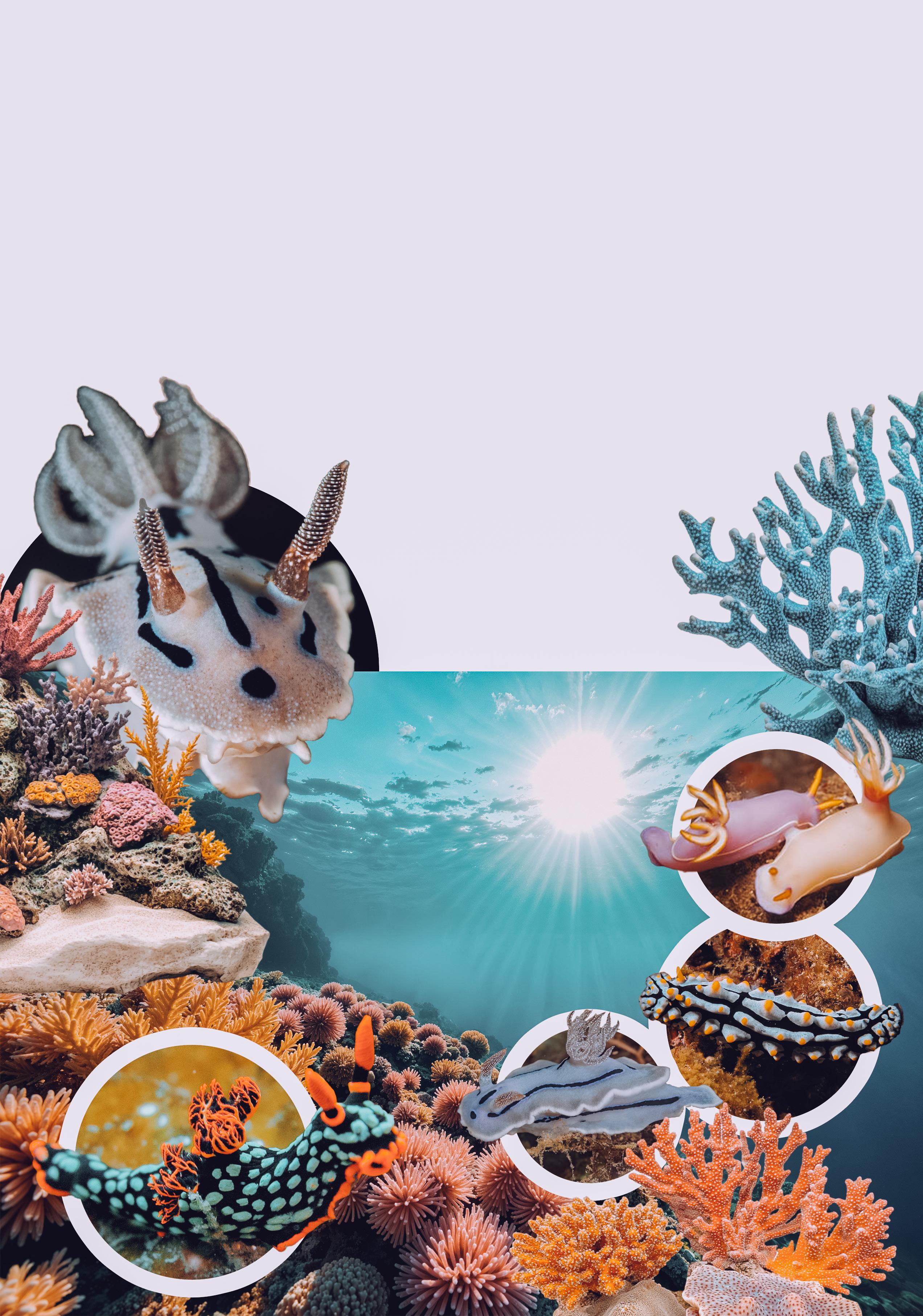
the nudibranch: tiny, shell-less gastropod molluscs that shed their protective shells after their larval stage. Commonly known as sea slugs, these adorable little fellows can be incredibly small, many species measure just 2–6 centimeters, and some are barely larger than a grain of rice. Their size, combined with their ability to blend seamlessly with the reef, makes spotting them both a challenge and a delight. If you’re lucky, here are four common nudibranchs you might spot on your next dive:
1. Chromodoris willani – Found throughout the Coral Triangle (Indonesia, the Philippines, Papua New Guinea). Recognizable by its electric-blue body and elegant black outlines.
2. Nembrotha kubaryana – Often seen in Indonesian and Philippine reefs. Its deep green and orange coloration makes it one of the most photographed nudibranchs.
3. Hypselodoris bullockii – Common in Southeast Asian waters, especially around Malaysia and Indonesia. Known for its smooth purple body and contrasting yellow gills.
4. Phyllidia varicosa – Widely distributed across the Indian Ocean and Western Pacific. Its bold yellow bumps and blue-black patterns make it stand out even to beginner divers.
These little wonders may be small, but finding one feels like discovering a hidden treasure. Proof that beauty often lies in the details. So next time you go diving, slow down, look closely, and keep an eye out for these cute underwater gems.








Veni Vidi Fishy
My secret to joy in life is in finding balance
Balance in family, sweating, and making decisions