

COLLEGIAT ETIMES
An independent, student-run newspaper serving the Virginia Tech community since 1903
The Hou sin g Gu ide
VIRGINIA TECH CONTINUES ON-CAMPUS RENOVATIONS TO MODERNIZE CAMPUS NEWS
Abhigna Koochana | News Writer
A $27.5 million budget has been set for campus renovations.
The Virginia Tech Board of Visitors approved a $27.5 million budget for dorm building renovations, according to The Roanoke Times. Renovations will take place in Pritchard, Hoge and Slusher. This will include installing air conditioning, improving ventilation and adding more accessibility features.
During a virtual meeting, the Virginia Tech Board of Visitors restated its plan to modernize campus housing to maintain the quality needed for students as part of a long-term renovation plan. The last major renovation was completed in 2018 with the rebuilding of O’Shaughnessy Hall.
However, recently, in August 2025, $10 million was allocated to create a new residence hall with 600 beds. The goal of this was to accommodate students while existing dorm buildings went through renovations.
OUR CORE VALUES
Impartiality means reporting, editing and delivering the news honestly, fairly, objectively and without opinion or bias.
Credibility is the greatest asset of any news medium, and impartiality is the greatest source of credibility.
To provide the most complete report, a news organization must not just cover the news, but uncover it. It must follow the story wherever it leads, regardless of any preconceived ideas on what might be most newsworthy.
The pursuit of truth is a noble goal of journalism. But the truth is not always apparent or known immediately. Journalists’ role is therefore not to determine what they believe at that time to be the truth and reveal only
An additional $4 million was approved to renovate Campbell Hall with improved HVAC systems and additional community spaces, according to Virginia Tech News.
Furthermore, the Building and Grounds committee approved the construction of a new facility in the Department of Fish and Wildlife Conservation, improving opportunities for research and creativity.
With improvements in residential and academic on-campus facilities, the university aims to increase enrollment and degree completion for students.
According to WFIR News, the rebuilding will result in an increase in housing fees for the three dorms. The fees will increase about 7.2% per year over the next six years, with a projected increase of up to 8.1% in the next year alone.
that to their readers, but rather to report as completely and impartially as possible all verifiable facts so that readers can, based on their own knowledge and experience, determine what they believe to be the truth.
When a news organization delivers both news and opinions, the impartiality and credibility of the news organization can be questioned. To minimize this as much as possible there needs to be a sharp and clear distinction between news and opinion, both to those providing and consuming the news.
Voice your opinion. Send letters to the Collegiate Times. 365 Squires Student Center
Blacksburg, VA, 24061
opinionseditor@collegiatetimes.com
All letters must include a name and phone number. Students must include year and major. Faculty and staff must include position and department. Other submissions must include city of residence and relationship to Virginia Tech (i.e., alumni, parent, etc.). We reserve the right to edit for any reason. Anonymous letters will not be printed.
Letters, commentaries and editorial cartoons do not reflect the views of the Collegiate Times. Editorials are written by the Collegiate Times editorial board, which is composed of the opinions editors, editor in chief and managing editors.
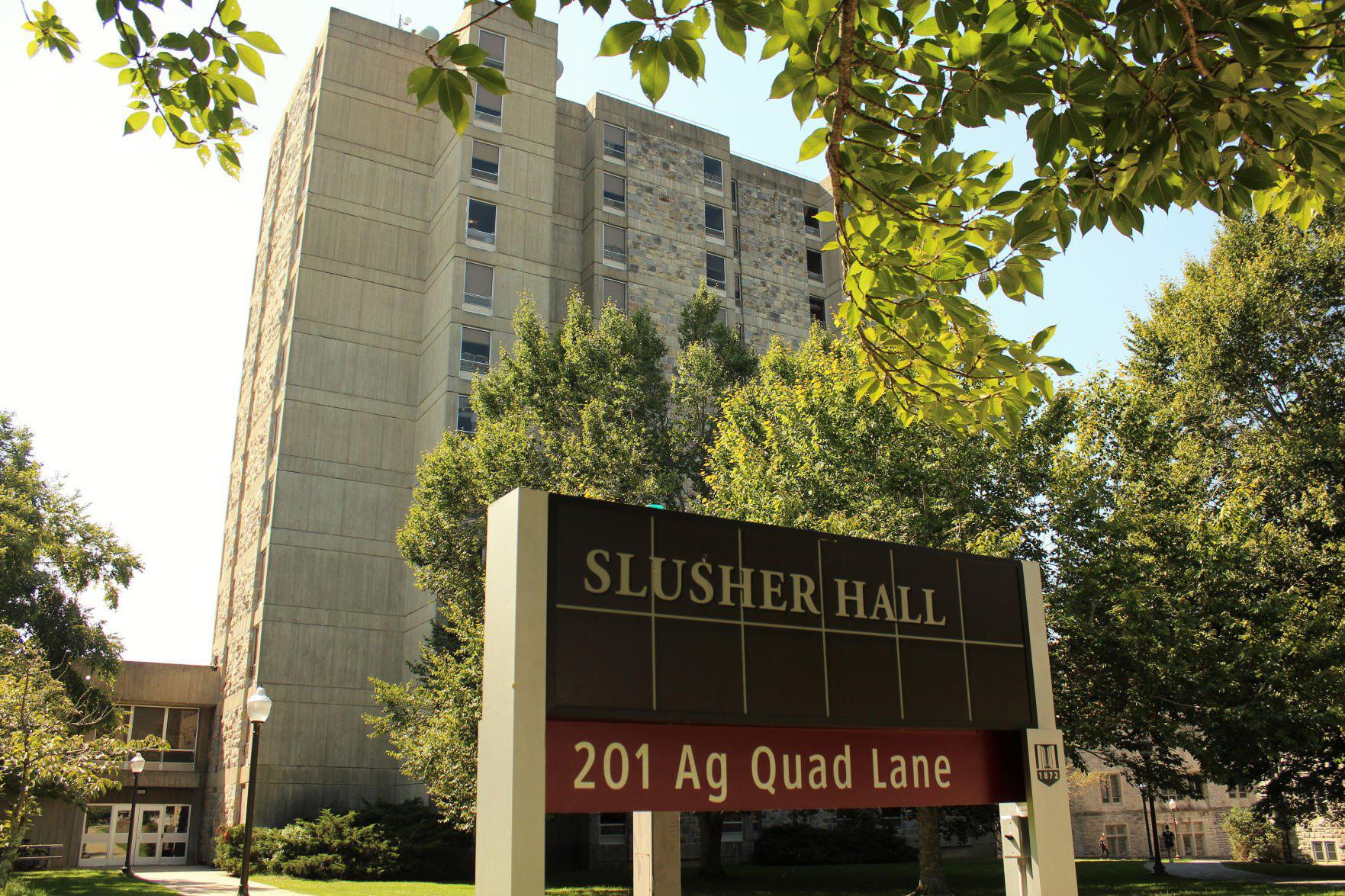
The university also aims to expedite the planning and construction process with the latest renovations in Slusher Hall, targeted for completion by summer 2034.

COLLEGIAT ETIMES
NEWSROOM 231-9865
Editor-in-Chief: Michaela Scott (editor@collegiatetimes.com)
Managing editor: Ayisha Surani
Design editor: Annmarie Leake
Assistant Design editors: Caroline Rogers and Sarah Jordan
Copy editors: Emily Southern, Olivia Guy and Amanda Donndelinger
News editors: Erin Bailey and Ava Garrison
Assistant News editor: Max Painchaud
Lifestyles editors: Emma Duncan
Assistant Lifestyles editors: Cat Pizzarello and Ella Winterling
Sports editors: Sam Mostow, Thomas Bray and Dylan
Opinions editor: Jenna Mason
Assistant Opinions editor: Mohib Amjad
Photo editor: Hamad Alhendi
Assistant Photo editor: Riley Thompson
Have a news tip? newstips@collegiatetimes.com
BUSINESS STAFF 231-9860
Business manager: Greg Patterson (business@collegemedia.com)
MEDIAMATE
888-897-7711 collegiatetimes.com/media_kit/ orders@mymediamate.com
The Collegiate Times, a division of the Educational Media Company at Virginia Tech, was established in 1903 by and for the students of Virginia Polytechnic Institute and State University. The Collegiate Times is published every Tuesday of the academic year except during exams and vacations. To order a reprint of a photograph printed in the Collegiate Times, visit reprints.collegemedia.com. The Collegiate Times is a division of the Educational Media Company at Virginia Tech, Inc., a 501(c)3 nonprofit with a mission to provide educational experience in business and production of mass media for Virginia Tech students. © Collegiate Times, 2020. All rights reserved. Material published in the Collegiate Times is the property thereof, and may not be reprinted without the express written consent of the Collegiate Times.
Advertisements do not necessarily reflect the opinions of the Collegiate Times. Read about our organization’s Core Values online at collegiatetimes.com.
Tefft
TAYLOR HACKER / COLLEGIATE TIMES
PRESIDENT TIM SANDS IS SET TO DELIVER THE 10TH STATE OF THE UNIVERSITY ADDRESS
Sarah Lindauer | News Writer
Individuals can listen to Sands’ State of the University Address at CFA or on livestream.
On Wednesday, Feb. 18, Virginia Tech President Tim Sands will deliver the 2026 State of the University Address. The event will take place in the Center for the Arts at 3 p.m. This will be Sands’ 10th time delivering this address to the university. The event will be offered for in-person viewing as well as live streaming. The address will focus on elevating the university’s impact. Sands hopes to elevate Virginia Tech’s impact with outcome-oriented teaching, research and outreach.
Sands will include examples of how
Virginia Tech is impacting the lives of students, employees and communities. He will also detail a study about how much the university impacts the economic vitality of communities across the commonwealth.
In 2026, Sands is hoping to shift the university’s focus to impact, outcomes and commitment. He hopes to move forward with the Virginia Tech Global Distinction, which is the university’s effort to pursue research, creativity and scholarship.
Sands also hopes to push forward
with Virginia Tech Advantage, which helps in-state students with financial and support resources. Students can partake in research, study abroad and internships with fewer concerns about financial barriers. This gives students access to emergency funds and food resources.
These efforts will help improve Virginia Tech athletics, encourage partnership and community engagement and show the value of higher public education.
Looking back, Sands’ ninth State
of the University Address focused on recognition of various members of the Virginia Tech community. Sands highlighted many students, faculty and affiliates. He also gave updates on campus programs.
Individuals can tune into Sands’ State of the University address in person or online to learn more about what is to come at Virginia Tech.
LOCAL DOMINO’S HOLDS A WORKERS’ RIGHTS STRIKE
Ava Garrison | News Editor
Domino’s employees go on strike to protest their low wages.
On Feb. 9, the employees from Domino’s in Blacksburg held a workers’ rights strike. The employees protested against being paid minimum wage while enduring a low turnover employee rate and higher management issues.
The protest began at Alumni Mall, where strikers gathered, then continued downtown and ended at Domino’s on North Main Street. Strikers held signs that said, “Minimum wage does not equal livable wage,” “Domino’s! You can do better!” “Put some respect on our check$!” and “Unite and fight the billionaire agenda.”
The Young Democratic Socialists of America at Virginia Tech posted about the event in support of the strike, captioning the post, “At the local Domino’s, employees are being paid minimum wage with a terrible worker turnover rate, all while upper management gaslights them about the issues and refuses to listen to employees’
concerns.”
VT YDSA added that the workers were fighting for higher pay and better treatment for all workers. They ended by explaining that they supported the strike, saying, “Workers’ rights are not negotiable.”
In a video of the strike posted by Raise Up the South, a union for southern service workers, strikers are seen talking to the group about not wanting to rely on customers for more money through tips and striking in order for higher wages to support their families.
For more information about the strike, visit the VT YDSA or Raise up the South Instagram page.

Photo Courtesy of Raise up the South
HOKIE HOMESTEADS: AFFORDING OFF-CAMPUS HOUSING
Alex Winn and Bailey Linza | Lifestyles Staff Writer and Lifestyles Contributor
Learn how to balance the responsibilities and expenses of life off-campus.
College is a time of growth, as many young adults are learning the ropes of life and building routines to make their academic careers easier. One main challenge facing college students beginning their adulthood is living independently.
At Virginia Tech, once students have lived on campus for at least one year as freshmen, they have the option to move off campus into apartments, houses or other living arrangements. Living off campus promotes responsibility and gives students some personal space.
“I plan on living off campus next year so that I can have a little bit more privacy,” said sophomore Matthew Layman, a transfer student studying math and civil engineering while living in Newman Hall. “Not having to share a bathroom with so many people (and) getting to provide my own toilet paper are big incentives for me.”
“I want to get a bigger bed,” said junior Peyton Gilbert, who studies sports media and analytics while living in Newman’s Transfer Experience LLC. “I also just can’t wait to have a room to myself.”
About 9,300 students live on campus each year. However, over 38,000 students attend Virginia Tech in total, resulting in the rest either renting private complexes or commuting from their own homes.
Cost of attendance
When it comes to deciding whether students want to live on or off campus, there are many ongoing debates on the topic. The main point of discussion is whether living off campus is cheaper than living on campus.
Virginia Tech provides a calculation for all undergraduate students who are trying to determine their COA (Cost of Attendance). The COA includes tuition, academic fees, food, housing and personal (non-university-related) costs. This helps students understand how much they will pay for all of their expenses while attending the university.
“I think living on campus is more expensive, especially if you live in one
of the nicer dorms,” said Ava Cummins, a sophomore majoring in biomedical engineering and who will be living in Shawnee Apartments next year. “However, everyone has different experiences with finances.”
For the 2026-2027 academic year, the COA for returning on-campus students will be $41,648 for in-state students and $65,268 for out-of-state students. For off-campus students who pay in-state tuition, their COA will be $37,088, and for out-of-state students, it will be $58,760.
Looking at these costs can help students decipher what they can and cannot afford. For on-campus housing, room and board are provided at a set price for residents. Virginia Tech presents the cost for students as a per-semester total, for both fall and spring. Regarding off-campus housing, such as apartments, renters likely pay once a month for their rent.
Blacksburg’s rent
In Blacksburg, the average rent for a four-bedroom apartment fluctuates around $2,000 per month, according to Zillow estimates. In these arrangements, each person pays between $600 and $900 about per month. Some costs depend on the quality of the facility and where the building is located. This calculation also does not include personal expenses or other living expenses such as food, transportation and utilities.
Leases also play a part in the overall cost. Depending on the leases, which are usually around 12 months, they assign obligations to students and coerce them to stay in the apartment for a whole year.
“I picked Foxridge for the price,” said Tyler McCroskey, a junior studying civil engineering. “Living in Foxridge makes it easier for me to visit my friends who live there.”
Overall, cost and convenience are important factors in choosing an off-campus residence for students.
“I think the biggest factor in picking an apartment was the price and location,” Cummins said. “I will be paying about $600 per month for rent and the
apartment is on the UCB and PHD bus routes. It is very easy to get to campus.”
Affording off-campus housing
In reality, students need effective strategies to pay for their rent and other expenses, ensuring that they have enough money to live comfortably on a daily basis. Some students choose to work part-time, save their own money or rely on family members to help pay for their housing and living expenses.
“I plan to get a job and work over the summer to have some (money) saved up,” said Aidan Conway, a junior studying civil engineering.
“For me personally, I fortunately had the ability to choose whatever I wanted,” Cummins said. “My parents started a 529 plan when I was a child and saved up money to pay for my apartment expenses. However, I do have a part-time job and I work 10 hours a week. I plan to save some of that money so that I can transition into financial independence. I want to pay for my own apartment after college.”
Although price and location are very important aspects of deciding where to live, it is also important to consider what future roommates want as well, since most students live with at least one other person.
“My roommate is financially independent; she works 2 or 3 jobs,” Cummins said. “Overall, I let her make the final decision of where we wanted to live because she provides for herself. I also considered her feelings when signing the lease, too.”
Whether students are paying the rent themselves or receive help, it can be difficult to be financially stable, with nearly 1 in 2 students facing a form of housing insecurity nationally.
Advice for off-campus housing
Picking where to live, when it comes to costs, is a struggle for most students. If students cannot afford or are having a difficult time with housing finances, they should consider a few options:
doing extensive research on the rental market to find the best investment in housing, finding multiple roommates to split rent, thinking about getting a job or applying for financial aid and scholarships that can be applied to residential fees.
These are all realistic measures that could alleviate potential financial hardships and prevent economic emergencies. Moreover, when searching for housing and managing costs, students should look sooner rather than later.
“I would say definitely start everything as early as you can,” Cummins said. “If you are going to be in an apartment in the Fall of 2027, I would be looking in the Fall of 2026. Apartments start filling up fast because we have a big campus. (Also,) a lot of the leasing agencies take time to respond to customers, and the process is long with all the tours and the fact that everyone is dealing with multiple parties.”
It is important to start early so prospective renters can watch rental price movements and the overall market. This can prepare students financially and guide them to choose what is best for them in terms of off-campus housing.
HOUSING HEAD-TO-HEAD: FOXRIDGE VS. BREXX
Sam Harvey and David Vincent | Lifestyles Staff Writer and Lifestyles Contributor
Lifestyles writers compare and contrast two Blacksburg housing options.
Blacksburg offers a multitude of student housing from vintage townhouses to brand new, sleek apartment complexes. Each potential student home offers unique benefits and drawbacks depending on several factors, from location to maintenance costs. In this article, two popular student apartments face off in a head-to-head of pros and cons. For any house-hunting Hokies interested in either Foxridge or Brexx (The Retreat), these two apartment complexes are close in location, but offer vastly different living experiences. Let’s break it down.
Brexx
Opened in 2016, Brexx was originally known as The Retreat before changing ownership and rebranding in August 2025. The property offers both cottagestyle and townhome-style apartments that range from two to five bedrooms. There is also an abundance of amenities centered around the clubhouse experience, along with its own special bus route, which is helpful for students who don’t have vehicles. But like most high-end student housing, the picture is mixed. So let’s get into the pros and cons to see an honest look at whether students are getting their money’s worth.
The clubhouse experience
For Brexx, the clubhouse is by far the most appealing aspect. Residents consistently point to the clubhouse as the centerpiece: a gym with all the essentials, multiple study rooms, a sauna, a virtual golf simulator, and shared lounge spaces with billiards tables, TVs, a coffee machine and even a printer room. And on the outside? A pool surrounded by hammocks, grills, a volleyball court and upgraded pool furniture.
There are also recurring perks, such as sponsored catering events, pop-up treats and daily restocked Red Bulls for students who need extra energy to get their schoolwork done.
Various resident interviews emphasized maintenance as a major strength. Requests are usually handled quickly, and the staff is described as highly responsive. What also stands out is the seasonal upkeep: During the winter, staff shovel sidewalks and porches, helping take away a burden that many off-campus renters typically have to manage themselves.
Housing layouts
The cottage and townhome layouts are appealing to students who are looking for something more house-like than a traditional apartment. Some units include yard space and balconies, which is quite rare and is a major selling point for students who want more outdoor access.
Durability and frequent repairs
Despite a beautiful, modern look, several residents have reported that fixtures and appliances break easily. Issues cited include malfunctioning showers, repeated dishwasher failures, clogged sinks, flooding toilets and unreliable small appliances such as broken doorknobs. Though maintenance is usually fast to respond, the quality of these appliances seems concerning. Students also report frustration with the coffee machine. Sometimes it isn’t filled, or cups are undersupplied, which is annoying to say the least. Many residents have complained about Wi-Fi outages as well, though several residents have stated that it has improved, at least for now. Let’s hope it stays that way.
Move-in concerns
At least one resident described moving into a noticeably dirty housing unit, requiring significant cleaning before settling and unpacking. For a premium-priced housing complex, expectations around turnover preparation should be high, and unmet expectations can leave a poor first impression. Residents have high hopes that the staff will handle such issues better in the next
moving year.
Thin walls and noise
A recurring complaint centers around noise insulation. Residents report hearing activity between floors and through doors due to thin walls and noticeable gaps, creating some privacy concerns.
Foxridge
Tucked away among the quiet neighborhoods of Hethwood Boulevard in Blacksburg is the sprawling expanse of Foxridge Collegiate Apartments. Woven between mellow bike trails and quiet streets are a variety of different apartment styles. On their website, the first thing that Foxridge advertises is their variety of sizes and floorplans including one-, two-, three-, four- or five-bedroom apartments. Each type is suited for a slightly different number of people and lifestyles. With this variety of apartment sizes, there are sure to be benefits for many, but it doesn’t mean Foxridge doesn’t come without flaws. Let’s break down the pros and cons of living there.
Amenities
Foxridge flexes a plethora of amenities for both active and leisure residents. Athletes and sports-lovers alike can enjoy many sports complexes, including three basketball courts, four lighted tennis courts and a state-ofthe-art gym. If a day of rest is in the cards, Foxridge has two swimming pools with a sundeck as well as a duck pond complete with a fountain and gazebo. With these amenities, it’s hard for residents to have a dull day at home.
24-hour maintenance
If residents run into any issues with their apartment, whether it be a faulty washing machine or broken air conditioning, help is available with just a few clicks. Foxridge allows residents to submit emergency maintenance
requests through a form on their resident portal. This service is available 24 hours a day.
Smart hub technology
Every Foxridge apartment home is fitted with a Smart Hub system, which allows residents to control several features at the touch of a screen. This system controls door locks, heating and air, as well as lighting. These features can also be accessed from a smartphone or tablet via the Alarm.com app. This system takes away the anxiety of forgetting to lock the door or turn off the heat when leaving for vacation.
Dated buildings
According to Homes.com, the original Foxridge apartment complexes were constructed in 1975. With over 50 years since the original construction, the complex’s age does show. This is especially apparent with plumbing and appliances.
Aside from the occasional utility issue, Foxridge’s age offers a vintage and simple charm for residents.
Overall, both of these apartment complexes offer very similar living experiences. Brexx and Foxridge both offer multiple amenities that provide residents with various indoor and outdoor activities. Between both complexes, maintenance services are fast and reliable. Each one offers a slightly different flavor of apartment living and is sure to make a comforting home for any Hokie.
WE ARE AMERICA: MORE THAN A HALFTIME SHOW
Benito Antonio Martínez Ocasio, more popularly known as Bad Bunny, was the headlining artist for the Super Bowl LX halftime show. Martínez’s show delivered more than entertainment; he delivered a statement. His set was a response to right-wing backlash, focusing on love, culture and togetherness.
The symbolism and representation through his music turned the field into a message, which can be summed up in Martínez’s final statement: “The only thing more powerful than hate is love.”
Martínez made history as the first male solo Latino Super Bowl headliner singing entirely in Spanish. Every aspect of the performance was filled with rich symbolism. Martínez’s set wasn’t just music; it was cultural storytelling.
The Puerto Rican flag waved, while dancers climbed electrical poles, symbolizing the island’s ongoing problems with power outages, especially post-Hurricane Maria. With a set resembling La Casita, reminiscent of Puerto Rican neighborhood life, Martínez brought his culture to the world. It also showcased what the world is stealing from Puerto Rico due to the rise in predatory gentrification of the island. The sugarcane fields were an ode to the island’s history and
Mohib Amjad | Opinions Editor
Bad Bunny puts the Latino community on center stage at SuperBowl LX.
how important its historical roots are to its people.
Fans and commentators from diverse communities described feeling a sense of pride and representation rarely seen on one of television’s biggest stages. The show centered on Latino heritage and celebrated America as a mosaic of cultures, rather than a monolith, with visuals and music that resonated with millions. This wasn’t just a set, but an effort to bring visibility to a culture too often on the margins.
The performance closed with flags from many American countries as Martínez held a football and declared, “Together, we are America.” The moment landed powerfully at a time when many Americans feel more divided than ever, with a domestic rise in U.S. Immigration and Customs Enforcement activity that disproportionately targets Latino communities.
Also, the tension surrounding the U.S. activity in Venezuela and renaming the Gulf of Mexico to the Gulf of America made Martínez’s performance a revival for many. The show highlighted what it truly means to live in a harmonious world and acted as an explicit emotional pivot to connection rather than confrontation.
Martínez’s performance was all about connection. While Kendrick Lamar’s Super Bowl 2025 halftime show was centered around the painful and complex history of African Americans in the U.S., Martínez chose to emphasize unity across cultures. Rather than focusing solely on hardship, he highlighted solidarity across the Americas by naming almost every country in both North and South America, reinforcing his message that “Together, we are America.”
The cherry on top for me was all the celebrity moments. There were guest appearances from Karol G, Pedro Pascal, Jessica Alba and Cardi B. Lady Gaga also performed a breathtaking salsa version of her song, “Die With A Smile.” Finally, Ricky Martin’s heartfelt singing about how his island’s identity is being eroded by gentrification added a whole new, powerful layer to the performance.
The halftime show was steeped in political controversy from the start. When Martínez was announced as the headliner, President Trump commented by calling the decision “absolutely ridiculous” and “crazy.” Other right-wing figures also reacted negatively to Martínez, with Turning Point USA announcing their own halftime show headlined by Kid Rock. This counter
programming was mocked for low viewership and poor production quality.
Martínez’s Puerto Rican citizenship was mischaracterized as not being American by right-wing groups. It was a political statement disguised as cultural concern. Long before the performance, he made headlines by deciding not to include the U.S. mainland in his tour, citing concerns such as the potential mistreatment of his fans by ICE.
The threats to Martínez were so intense that some fans misinterpreted his outfit at the Grammys to be a bulletproof vest. Many also incorrectly believed the young boy Martínez handed his Grammy to during the halftime show was Liam Conejo Ramos, the 5-year-old boy detained by ICE.
With the halftime show becoming a political background, it wasn’t a surprise that Martínez’s art no longer remained neutral. His performance will go down in history as a powerful act of protest against all who sowed the seeds of dissent. Martínez reframed the conversation to be centered around unity, harmony and his motherland, Puerto Rico, which is perhaps the real success of this performance.
@COLLEGIATETIMES
POLITICS CAN’T BE IGNORED IN THE OLYMPICS
Kennedy Monahan | Opinions Columnist
When representing your country, it’s hard to separate politics and sports.
A lot of you are probably familiar with the phrase “politics doesn’t belong in sports.”
This year’s Winter Olympics have proven otherwise, with many athletes being asked about and openly discussing the politics of their home countries.
Politics has been prevalent among many American athletes. Some Americans have expressed mixed emotions about representing the United States. For example, freestyle skier Hunter Hess has said, “Just because I’m wearing the flag doesn’t mean I represent everything that’s going on in the U.S.” President Trump responded by calling Hess a “real loser” and saying that it’s “too bad” he’s on the U.S. team.
In addition, figure skater Amber Glenn received threats for saying the LGBTQ+ community is going through a “hard time” during Trump’s presidency. Many told her that she shouldn’t be talking about politics at all; however, Glenn stood by her comments.
“It is something that I will not just be quiet about, because it is something that affects us in our everyday lives,” Glenn said.
These are just two American athletes discussing the political situation in the United States, and it shows how present politics have been in this year’s Olympics. At the same time, some argue that athletes shouldn’t represent the U.S. if they’re not happy with what’s happening back home.
However, it can be extremely difficult for these athletes to ignore politics. For example, Vice President JD Vance and his wife were being booed during the opening ceremony, and on that same day, there were protests against the United States Immigration and Customs Enforcement.
However, the United States isn’t the only country involved in political discussions at the Olympics. Israel’s team was also at the opening ceremony and met with boos as they walked into the stadium. Additionally, there had been a pro-Palestinian protest in Milan calling for Israel to be excluded from this year’s Olympics due to the war in Gaza.
Some are calling out the double standards,
arguing that Israel should be facing the same restrictions as Russian athletes. Due to the war in Ukraine, Russian and Belarusian athletes are not allowed to represent their countries and instead will compete as neutral athletes. However, the International Olympic Committee has said the war in Palestine is “not comparable” to the Ukraine war. The war in Ukraine has also been highlighted in this year’s Olympics by skeleton racer Vladyslav Heraskevych, who was told that he could not wear a helmet that depicted fellow Ukrainian athletes who were killed during the war. The IOC’s justification for this was that “The Olympic Games must be continued on page 7
continued from page 6
separated from political, religious or any other type of interference.” Heraskevych was later disqualified from the competition for wearing the helmet.
As we’ve seen, the Olympics are not separated from politics. Despite the Olympic rule that states “No kind of demonstration or political, religious or racial propaganda is permitted in any Olympic sites, venues or other areas,” some athletes can’t follow this rule.
Politics has a lot to do with how people
view your country, and when athletes are on a stage representing them, it probably feels like they’re carrying the weight of those views on their shoulders. In the case of the United States, many athletes are proud to represent the U.S., but they also disagree with the Trump administration. It is entirely possible to love your country while also criticizing it.
Criticizing your country shows that you want to make it a better place. Or, imagine being a Ukrainian; how are they expected to ignore the war that is going on in their home country? To deny them the platform to talk
about their country being destroyed just doesn’t feel right.
All of this goes to show that, for some, politics weighs heavily on their minds as they are competing, and they shouldn’t be expected to keep quiet. To some, they aren’t just representing their country; they’re also representing what their country stands for.
SPORTS
WOMEN’S BASKETBALL OVERCOMES SLUGGISH START TO BEAT STANFORD
Alex Winn | Sports Staff Writer
Carys Baker scored 24 points in the win.
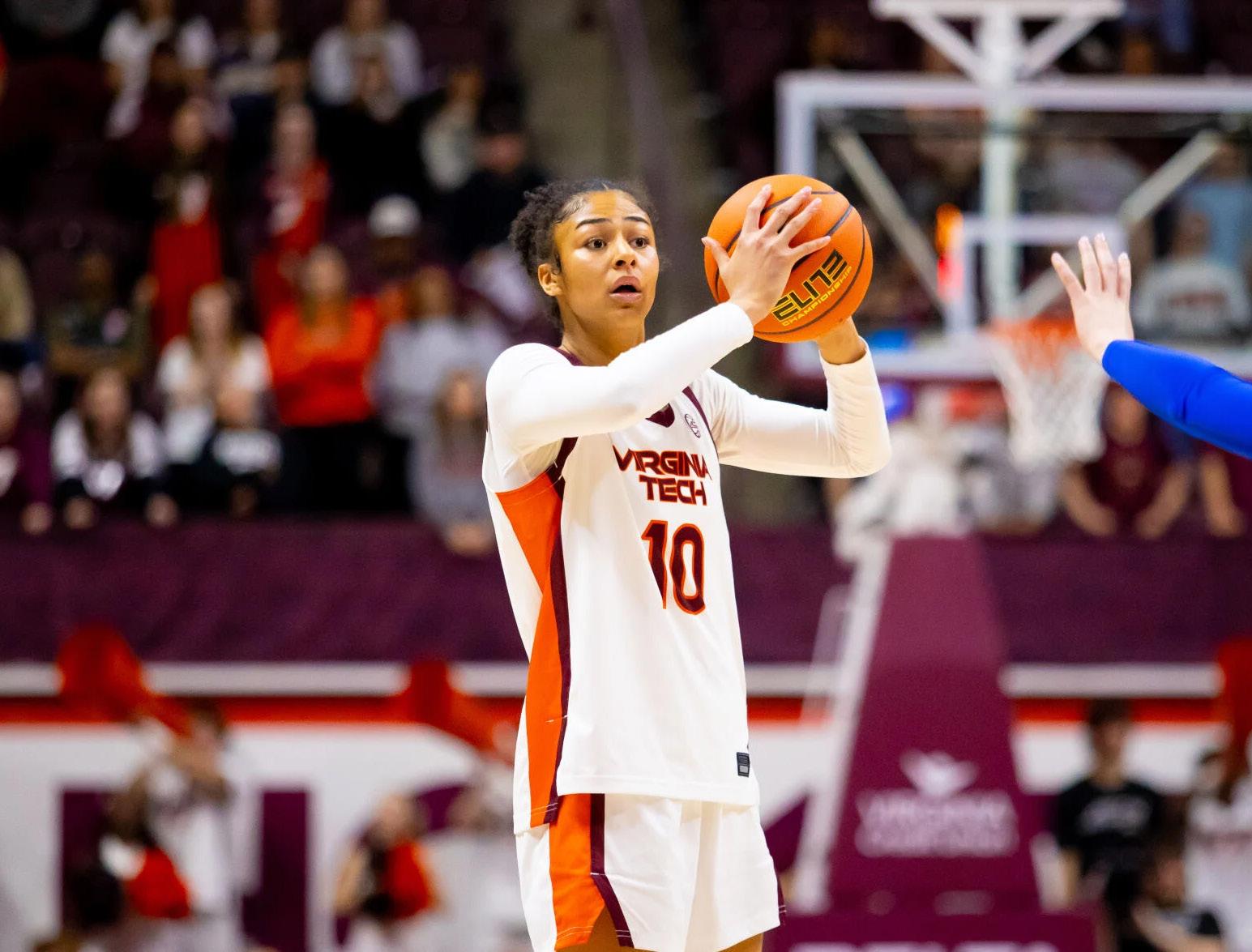
RILEY THOMPSON / COLLEGIATE TIMES
Virginia Tech Hokies forward Carys Baker (10) looks for an opening on Jan. 29, 2026, in Blacksburg, VA.
Virginia Tech women’s basketball traveled on the road Thursday and took down Stanford, 79-67, continuing its hot stretch against ACC opponents led by forward Carys Baker and an explosive third quarter.
The Hokies (19-7, 9-5 ACC) defeated Stanford (16-10, 5-8 ACC) off the back of a scorching hot third quarter,
during which Tech shot 12-for-17. The third quarter was also the strongest for Stanford, but it wasn’t enough to overcome the Hokies’ unconscious shooting effort.
For Stanford, the offensive load was carried by the trio of guard Chloe Clardy and forwards Lara Somfai and Courtney Ogden, who combined to score 50 of the
Cardinal’s 67 points and took 45 of the team’s 66 shots. Somfai, in particular, played an even bigger role; she was also the team’s leading rebounder.
Baker led the charge for the Hokies again by tallying another 20-point game, her seventh time reaching that mark this season and her second time in February.
The Hokies’ defense did a good job of forcing turnovers and making it hard for the Cardinal to pass the ball and pick up assists, forcing 13 turnovers while allowing only six assists.
The Hokies’ offense was less reliant on 3-pointers and instead focused on getting into the paint and dominating with size. The Hokies had four players who played at least 20 minutes on Thursday listed at 5-foot-11 or taller, compared to the Cardinal, who only had two. This gave Virginia Tech a big advantage in the paint, but that advantage was not reflected in the rebounding battle, which they lost 42-38. However, Tech obtained 12 more points in the paint than the Cardinal.
Thursday was a game of two halves for Virginia Tech. The Hokies entered halftime down by two and shooting 37.8% from the field. Then, they pulled away for a 12-point margin of victory and a 46.5% shooting rate.
The game was all but sealed in the fourth quarter with six minutes left when Hokies guard Mel Daley hit a tip-in layup that erupted the Virginia Tech bench and
expanded Tech’s lead to 12. Daley’s layup was then followed by a 3-pointer from guard Mackenzie Nelson in front of her team’s bench, firing up her squad and building an insurmountable lead.
The Hokies look to continue their winning ways against ACC foes on Sunday, Feb. 15, against Cal. The game will be the last of a short West Coast trip for the Hokies and will be played at 5 p.m. ET on ACCNX.
VIRGINIA TECH FALLS TO FLORIDA STATE AFTER A DISASTROUS SECOND HALF
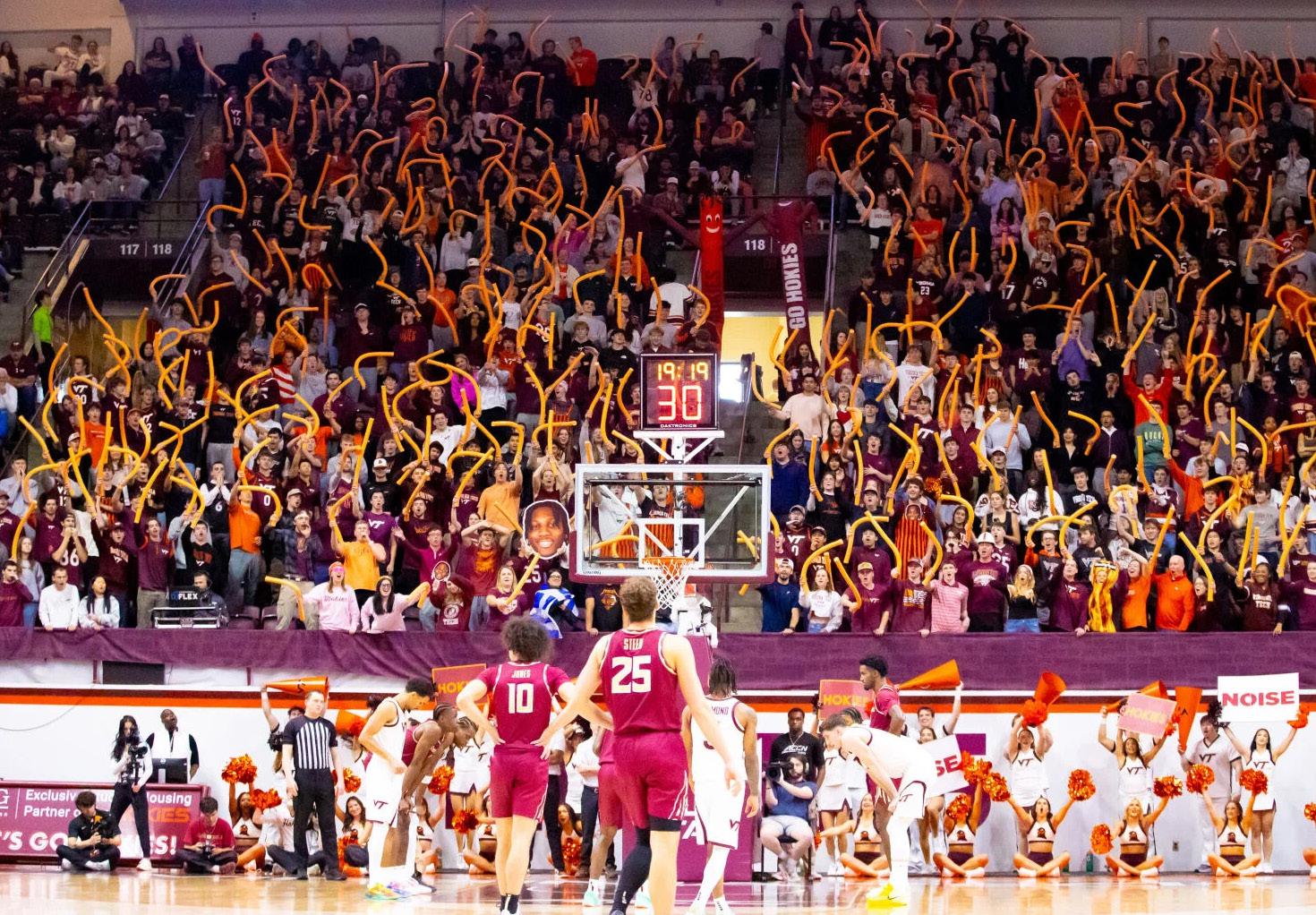
Virginia Tech men’s basketball fell flat against Florida State in a second half where the Seminoles shot 78.3% from the field and scored 53 points compared to Tech’s 27 on Saturday.
“(Florida State head coach Luke Loucks) and the Seminoles, they outplayed us,” said Virginia Tech head coach Mike Young. “They outcoached us. Maybe the understatement of the year.”
In a must-win for Young’s squad, the Hokies (17-9, 6-7 ACC) came out of the gate well against the Seminoles (12-13, 5-7 ACC) in Tech’s first game following an upset of No. 20 Clemson.
Virginia Tech was in the driver’s seat of the first half with the lead firmly in its hands. A dunk by forward Tobi Lawal got the lead up to a game-high eight points for the Hokies at the 12:35 mark. Guard Ben Hammond, who had 16 points, including 11 in the first half, set the pace from the jump. Tech led by three at halftime in Cassell Coliseum.
At the 16:58 tick of the second half, guard Lajae Jones hit a dunk that sparked a 13-0 run from which the Hokies were unable to answer. Points from forward Chauncey Wiggins, guard Robert McCray V, forward Thomas Bassong and guard Martin Somerville put the Hokies down by eight before Lawal hit a jumper to end the run.
Of the 18-for-23 clip that Florida State shot in the second half, Somerville was crucial. He notched 23 points off the bench with six assists and four rebounds. He also shot a stellar 9-for-11 from the field, with his only two misses coming from beyond the arc.
“I never want to discount, just discard it that they were making shots,” Young said. “You’ve got to guard it better. To their credit, they saw some things on film coming in that they liked. They just went at us one-on-one in a couple of instances, a number of instances. Now, you’re trying to compensate for that.”
Wiggins finished with a 7-for-8 shooting clip, totaling 19 points and four rebounds.
It wasn’t just Florida State’s offense that caused problems for the Hokies; the
Lucas Harrison | Sports Staff Writer
The Hokies led by three at halftime before losing by 23.
Seminoles’ defense was just as good — if not better — than the offense. Florida State held the Hokies to only 27 points in the second half, restricting Tech’s ability to get to the rim and get shots up, forcing poor shots deep into the shot clock.
“Can’t be so up here, the ball’s got to get into places, and we try to go through (Hokies forward Amani) Hansberry,” Young said. “He’s been fabulous. He didn’t have his best day. I think he kicked it four times. They’re going to trap him, which we expected. Amani has done a great job of putting the ball on the other side, where you should be playing two-on-one. We just didn’t execute that part of it quite as well as we expected to.”
Hansberry had double-digit points (10) but shot 2-for-10 with just five rebounds. It was a very balanced scoring effort overall from the Hokies, with their entire starting lineup hitting double digits. Lawal and Hammond both tallied 16 points, while guard Jailen Bedford hit 13 on an inefficient 5-of-13 from the field.
Following the aforementioned win over Clemson, the Hokies were in a strong position to be on the right side of the NCAA Tournament bubble. Saturday’s loss, however, was a step back. Tech’s upcoming game against Miami is crucial if it wants to secure an at-large bid to the end-of-season tournament.
Mike Young and his squad play Miami
next, another team on the bubble. The Hokies need to bounce back in a big way, and knocking off Miami would be a step in the right direction. The two teams will meet in Coral Gables, Florida, on Tuesday at 8 p.m.
RILEY THOMPSON / COLLEGIATE TIMES
Virginia Tech Hokies men’s basketball fans wave orange pool noodles while FSU attempts a free throw in Cassell Coliseum on Feb. 14, 2026, in Blacksburg, VA.