As summer comes to a close, we’re entering a new season with a renewed focus on clarity, curiosity, and clinical accountability. The past few months have brought a flood of new data and commentary across the reproductive field—some genuinely illuminating, some questionable, and much of it deserving of closer scrutiny. As always, the VOICE aims to be a space for just that.
In this issue, you’ll find an even more robust Quick Reads section, where we dissect a range of the most consistently asked questions and topics from patients. Then, we dive into the most talked about current affairs in the field. Among the highlights: the continued unraveling of PGT-A as a viable tool in IVF, especially in older women; the surge of “designer baby” rhetoric across mainstream media; and renewed discussion of mitochondrial replacement techniques—often referred to as three-parent babies—in both scientific and regulatory circles.
We also return to questions of how infertility is defined, challenged, and, in some cases, commodified. In several articles, we explore how entrenched hierarchies—whether based on age, hormone levels, or genetic assumptions—can lead patients toward costly dead ends, while genuine alternatives remain underexplored.
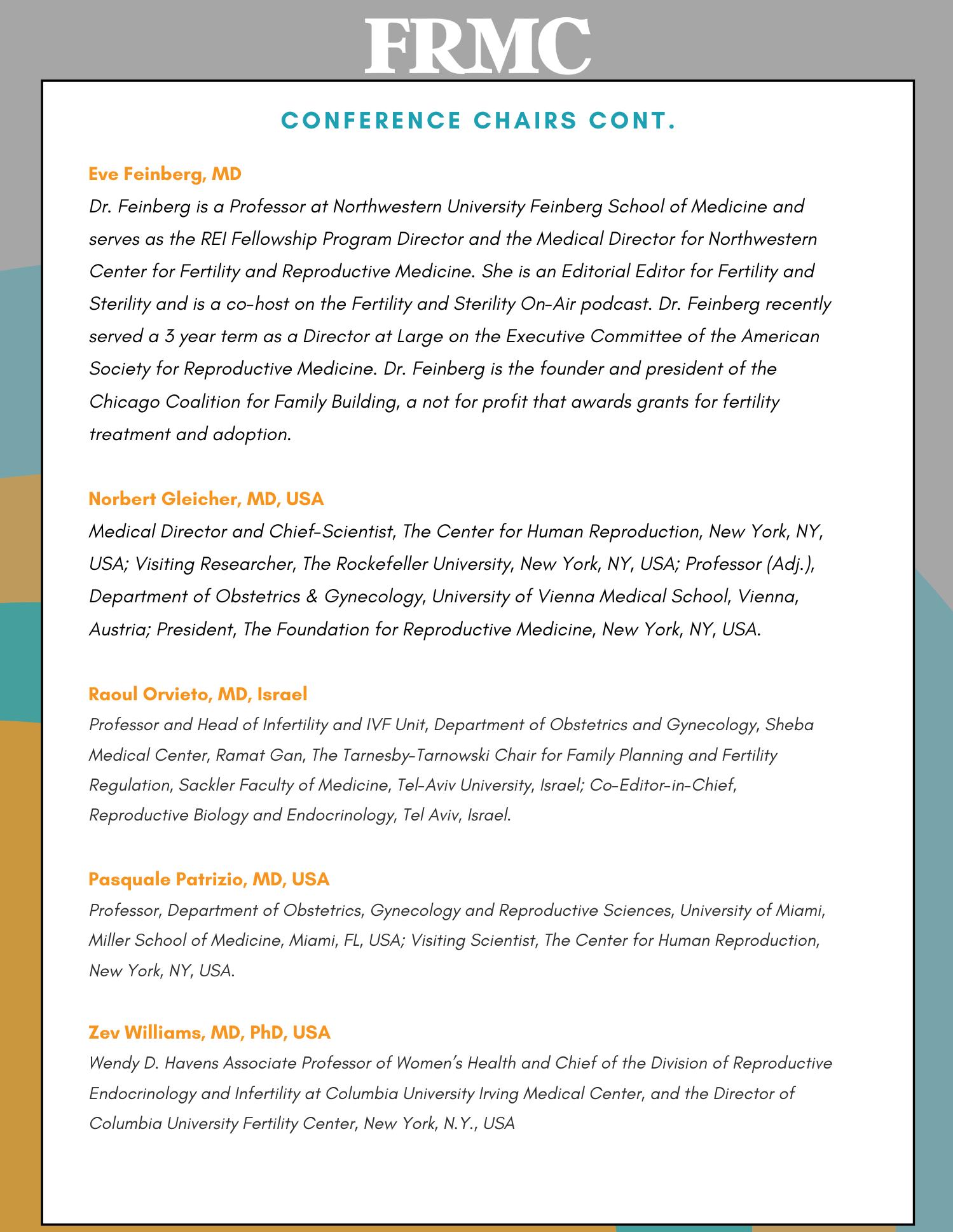
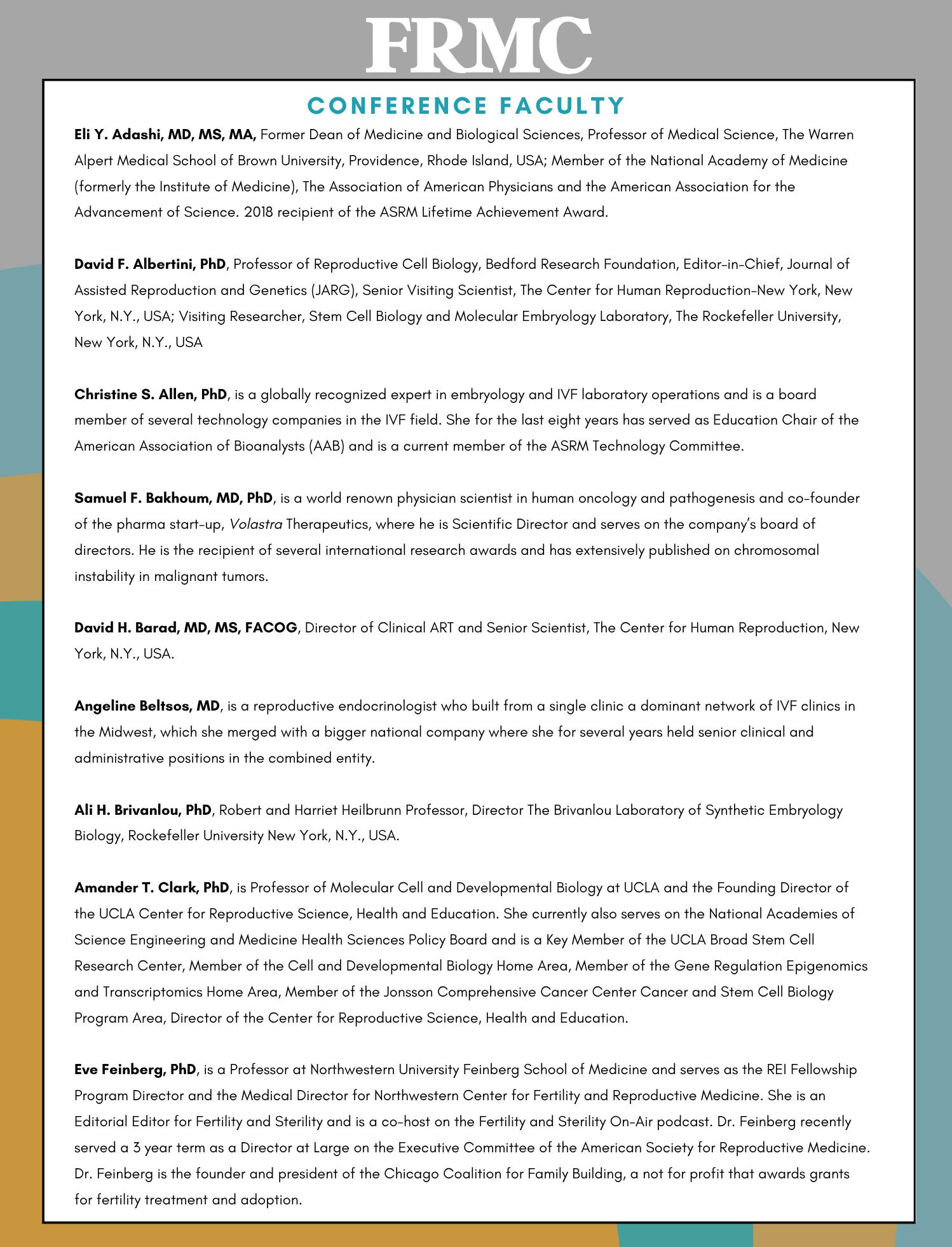
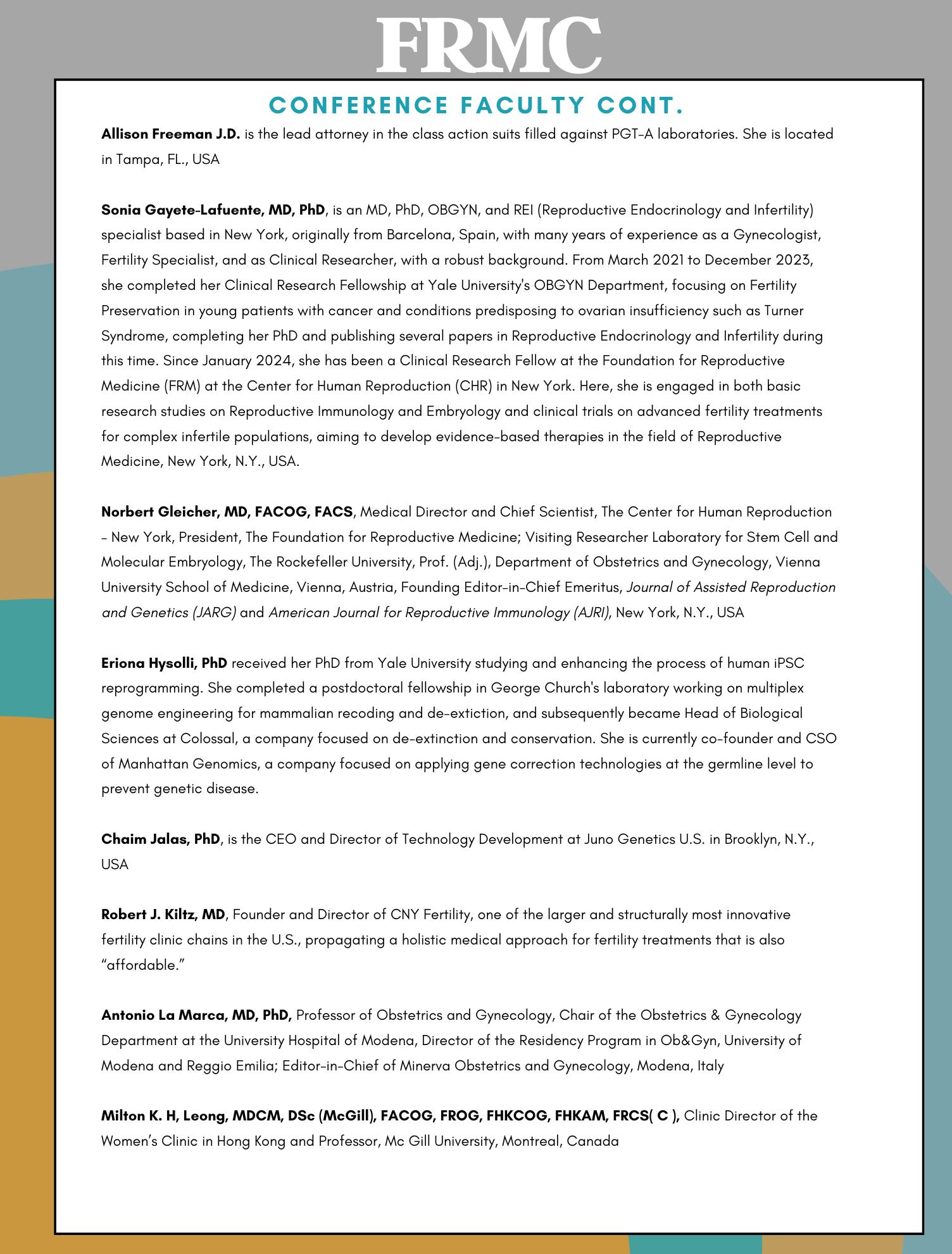
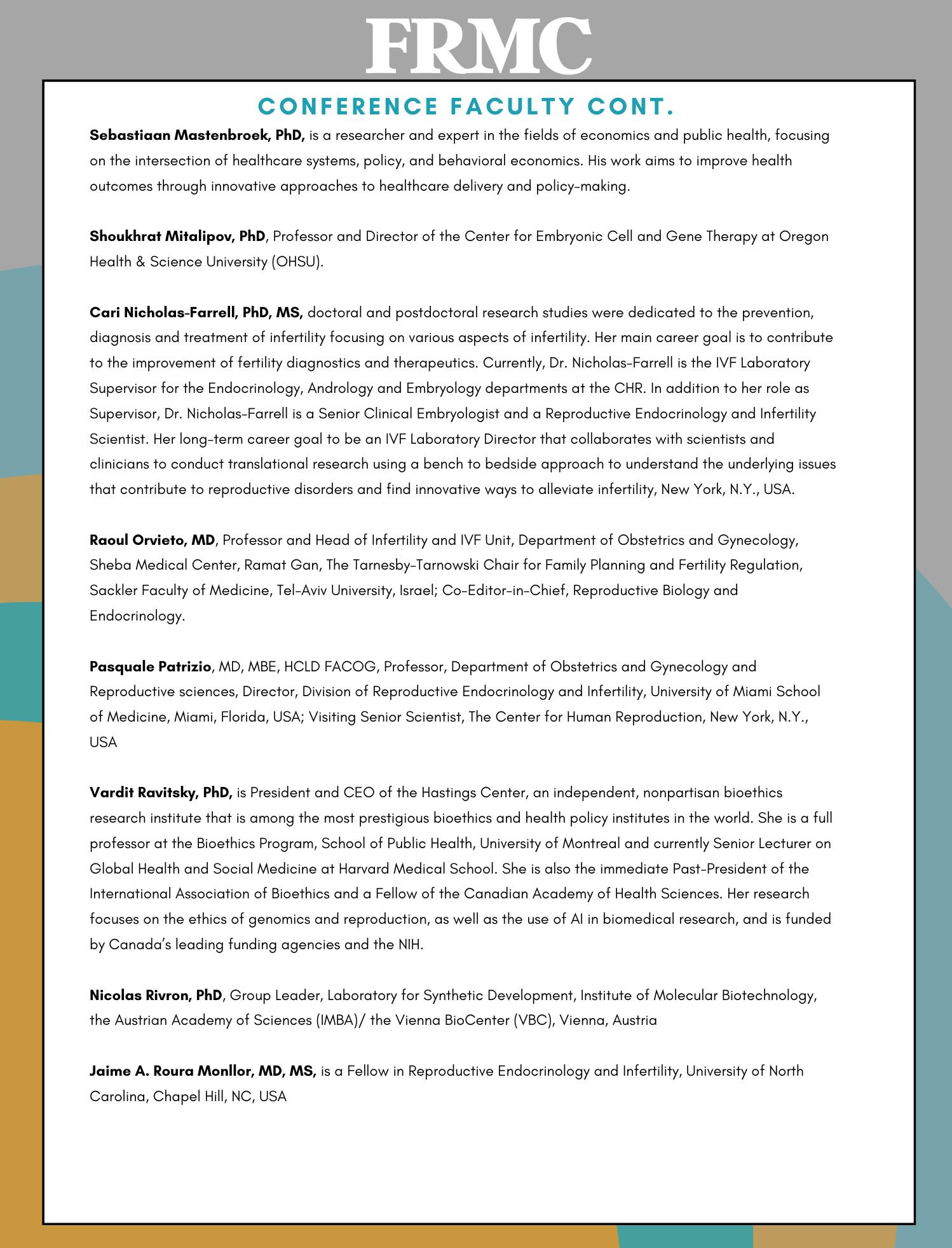
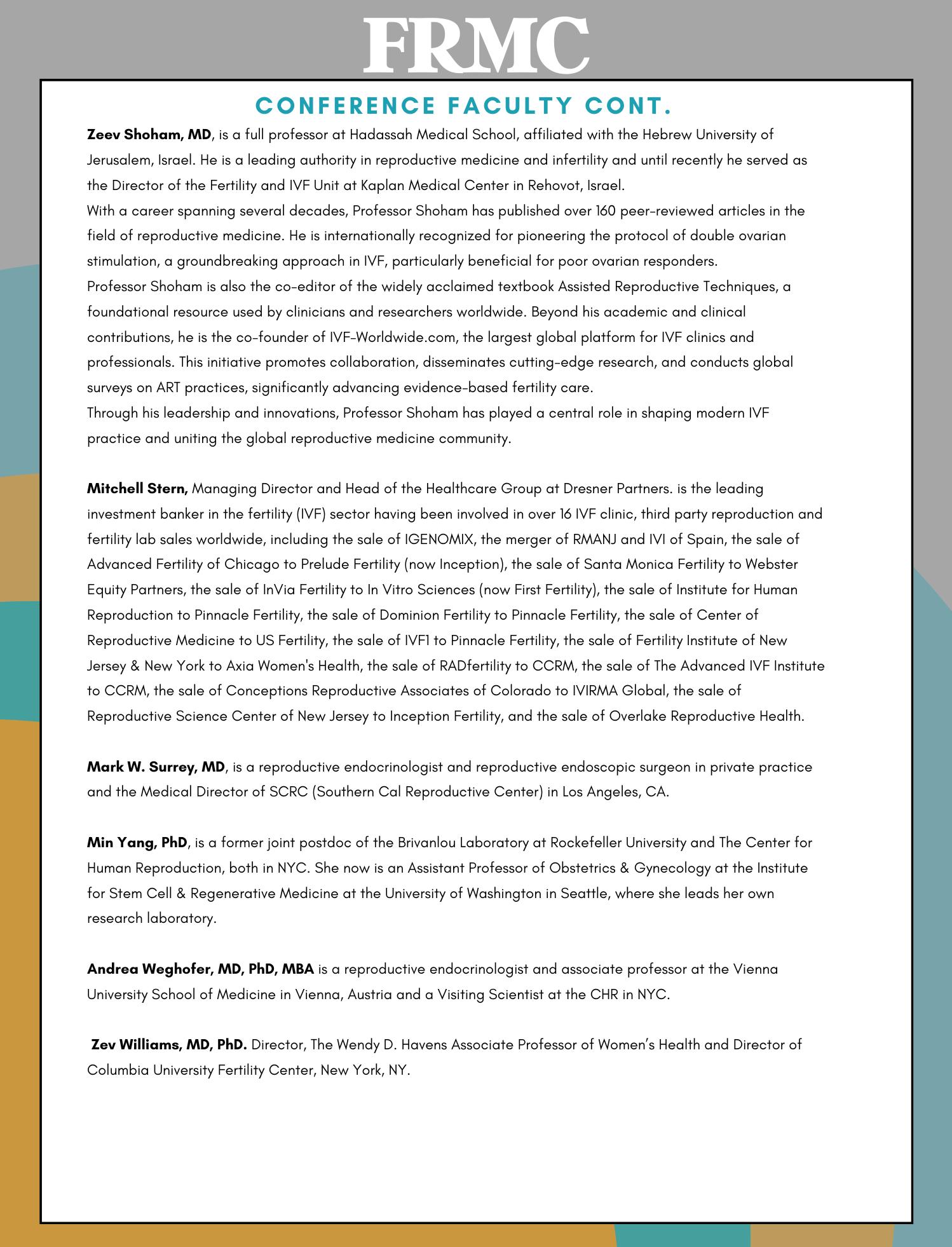
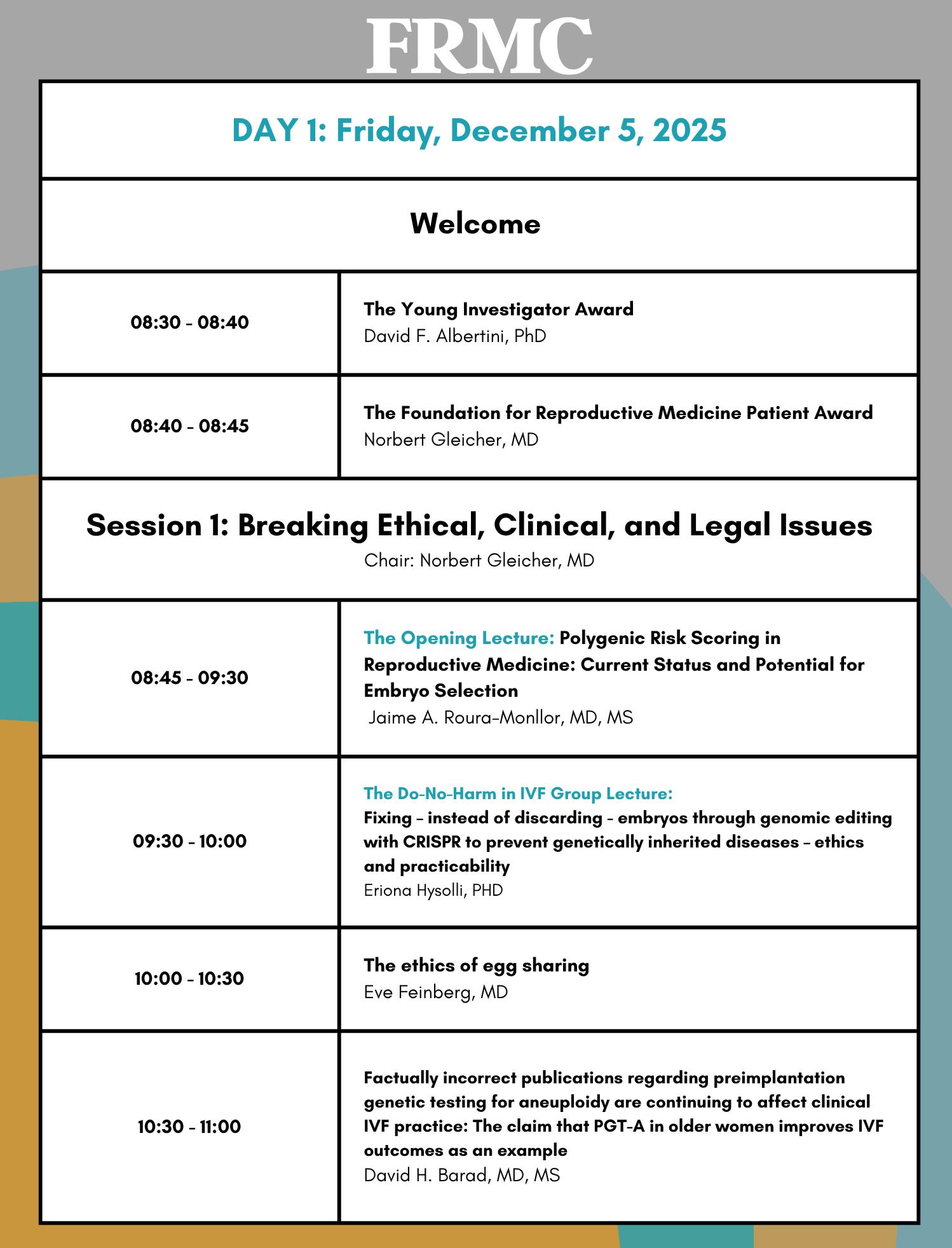
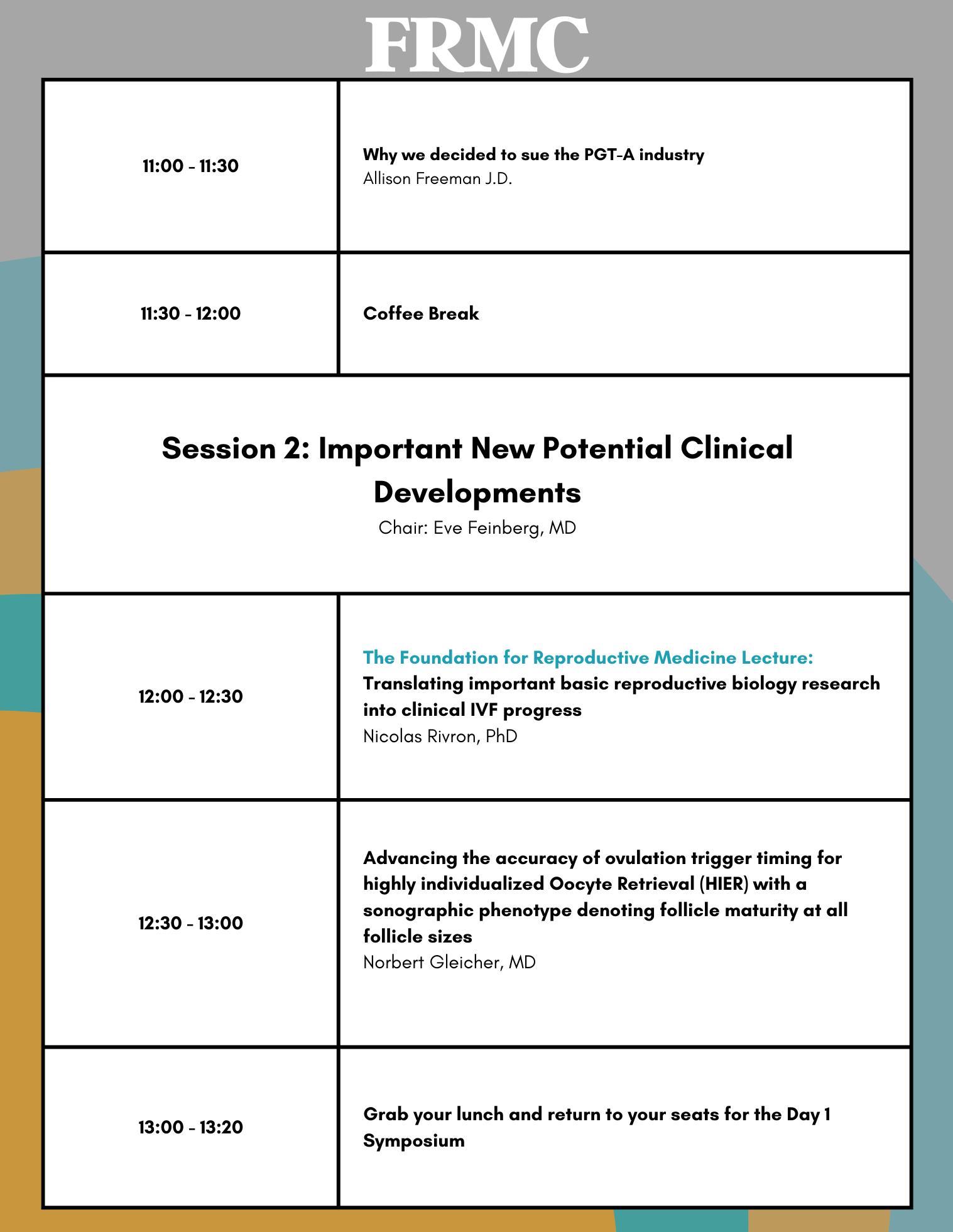
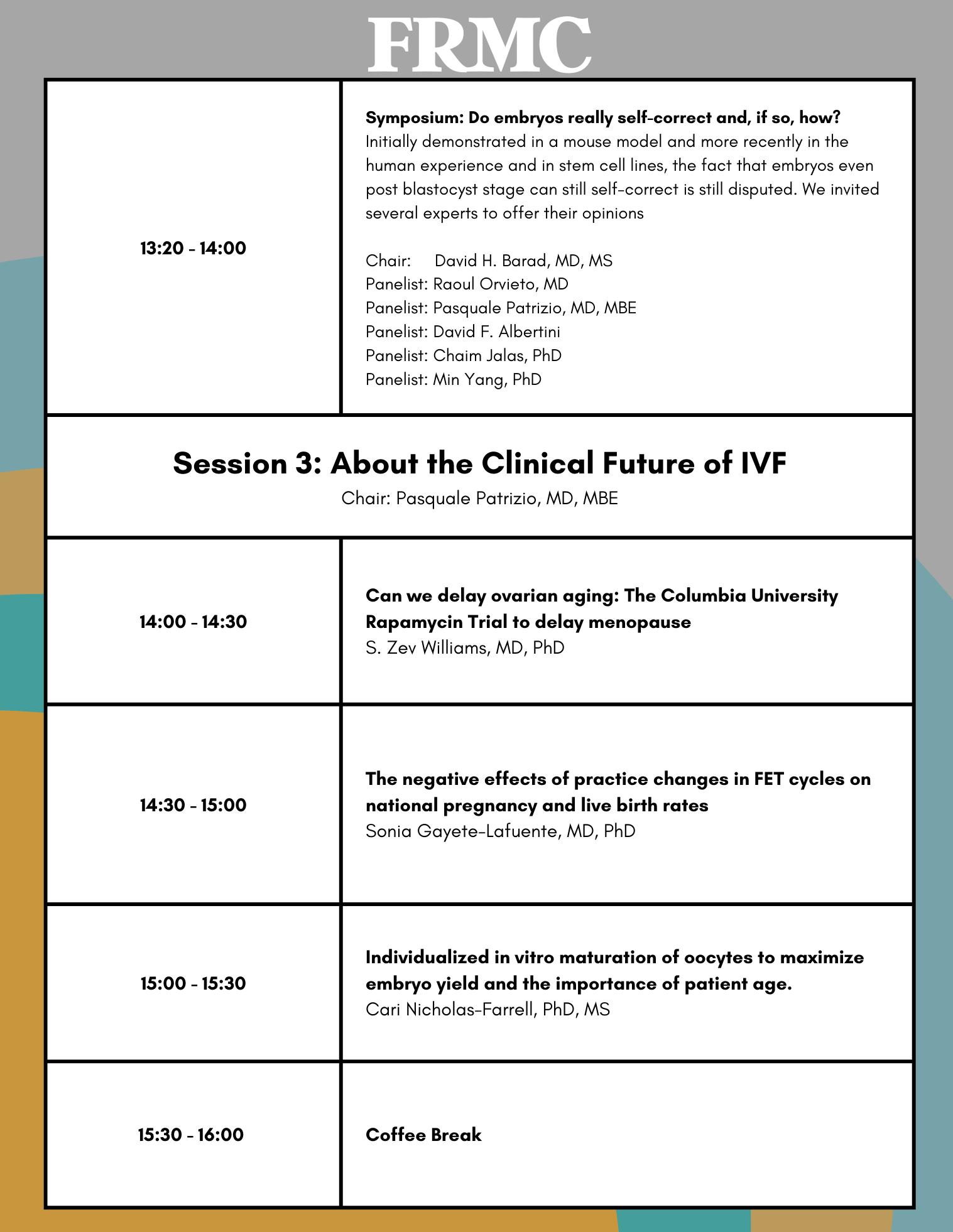
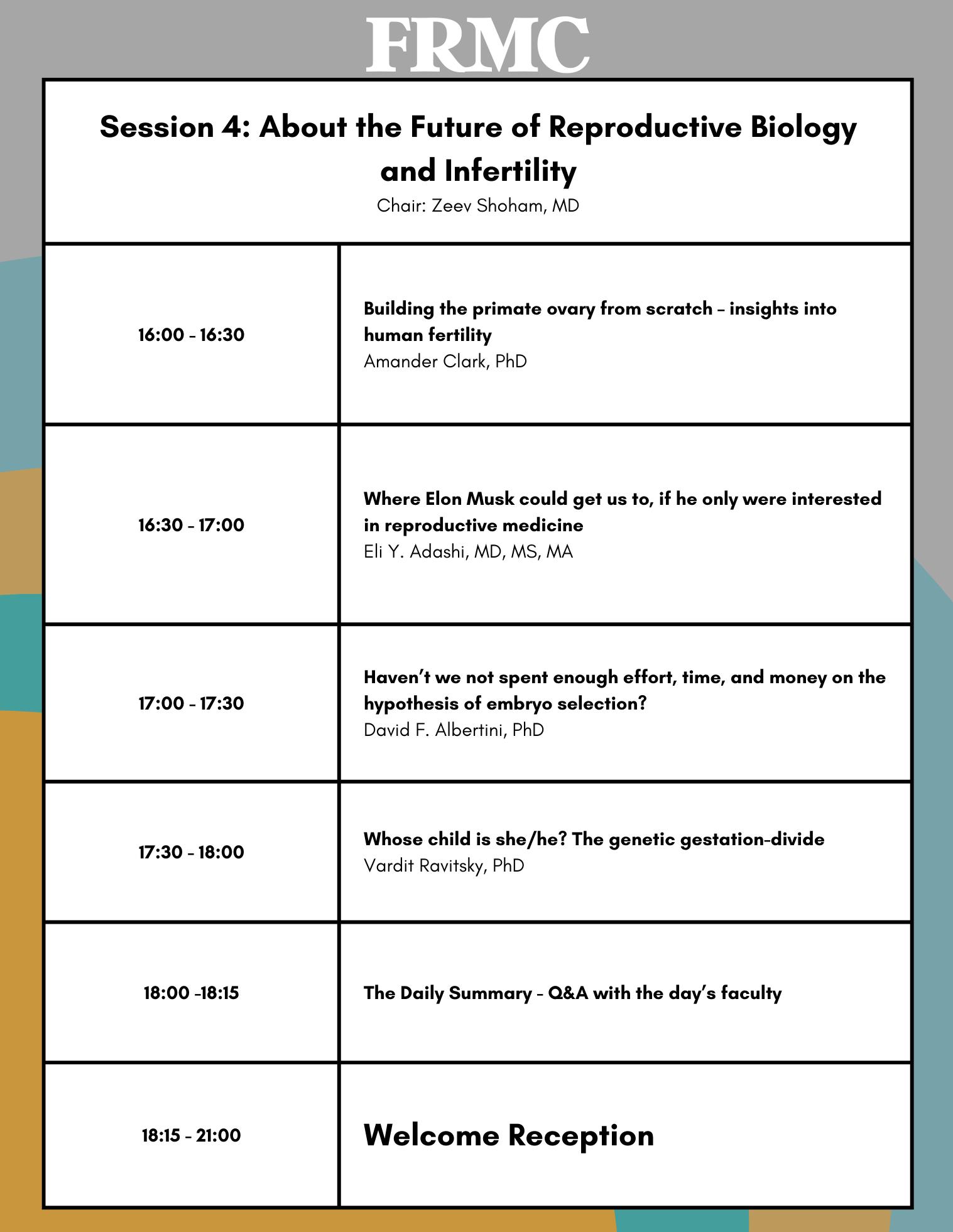
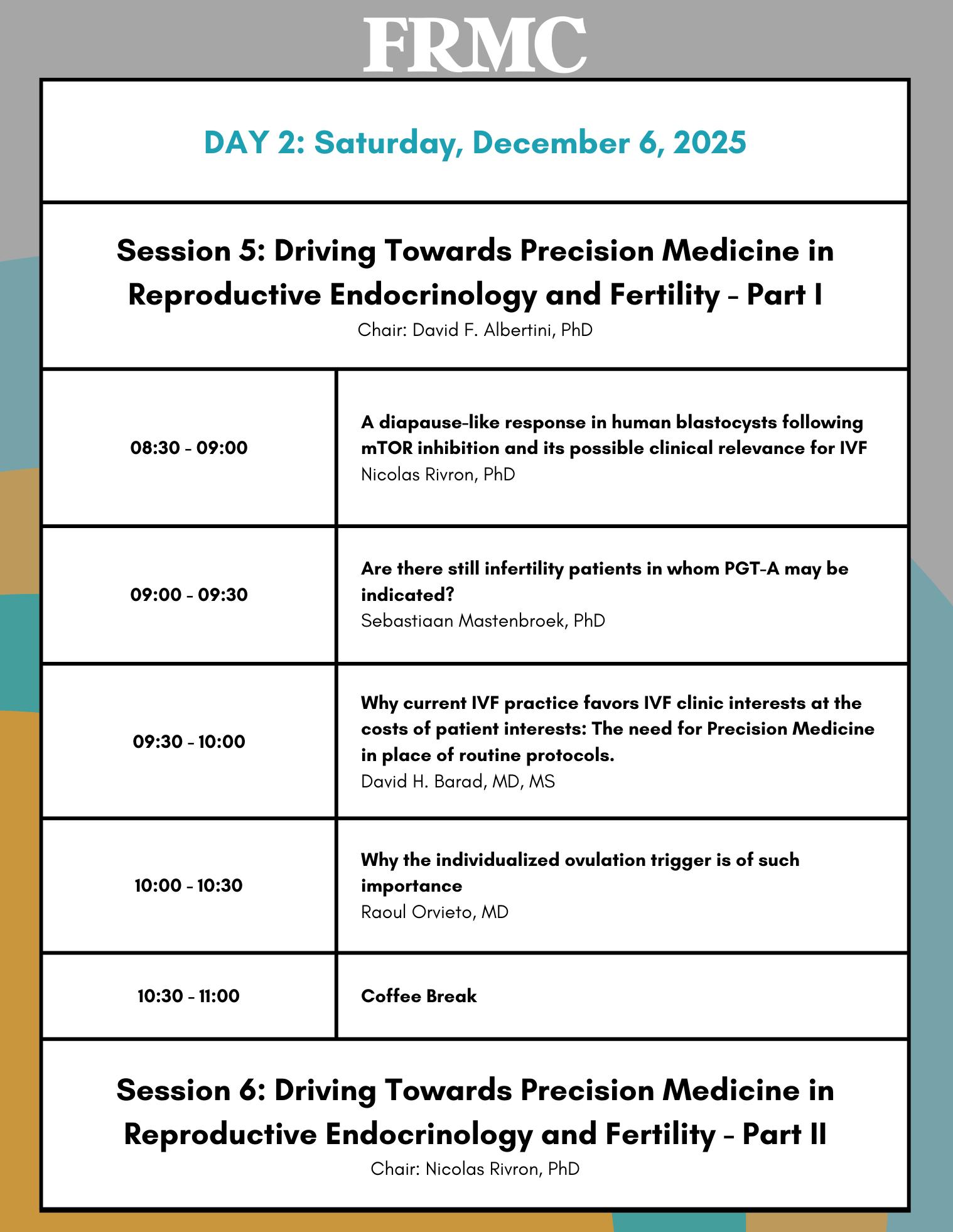
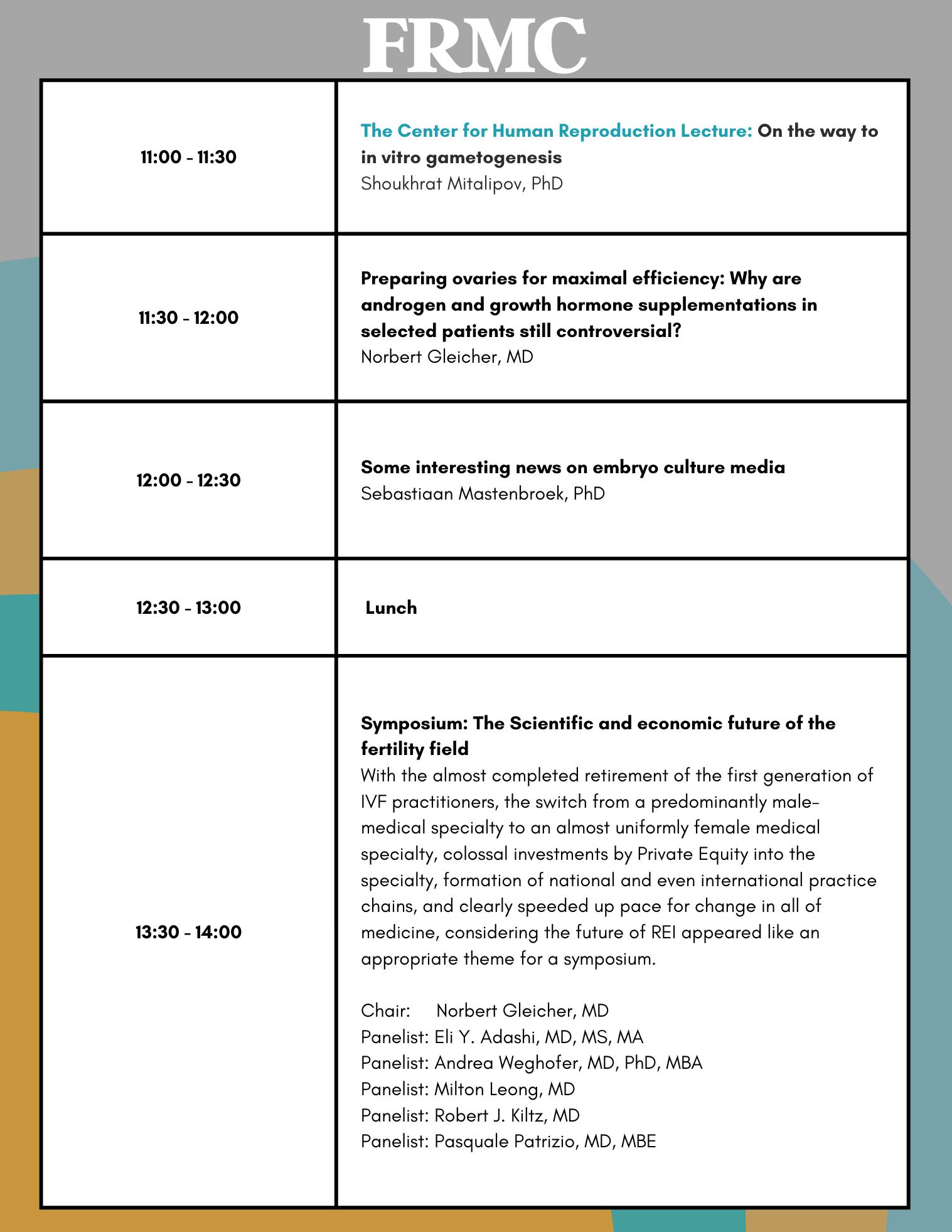
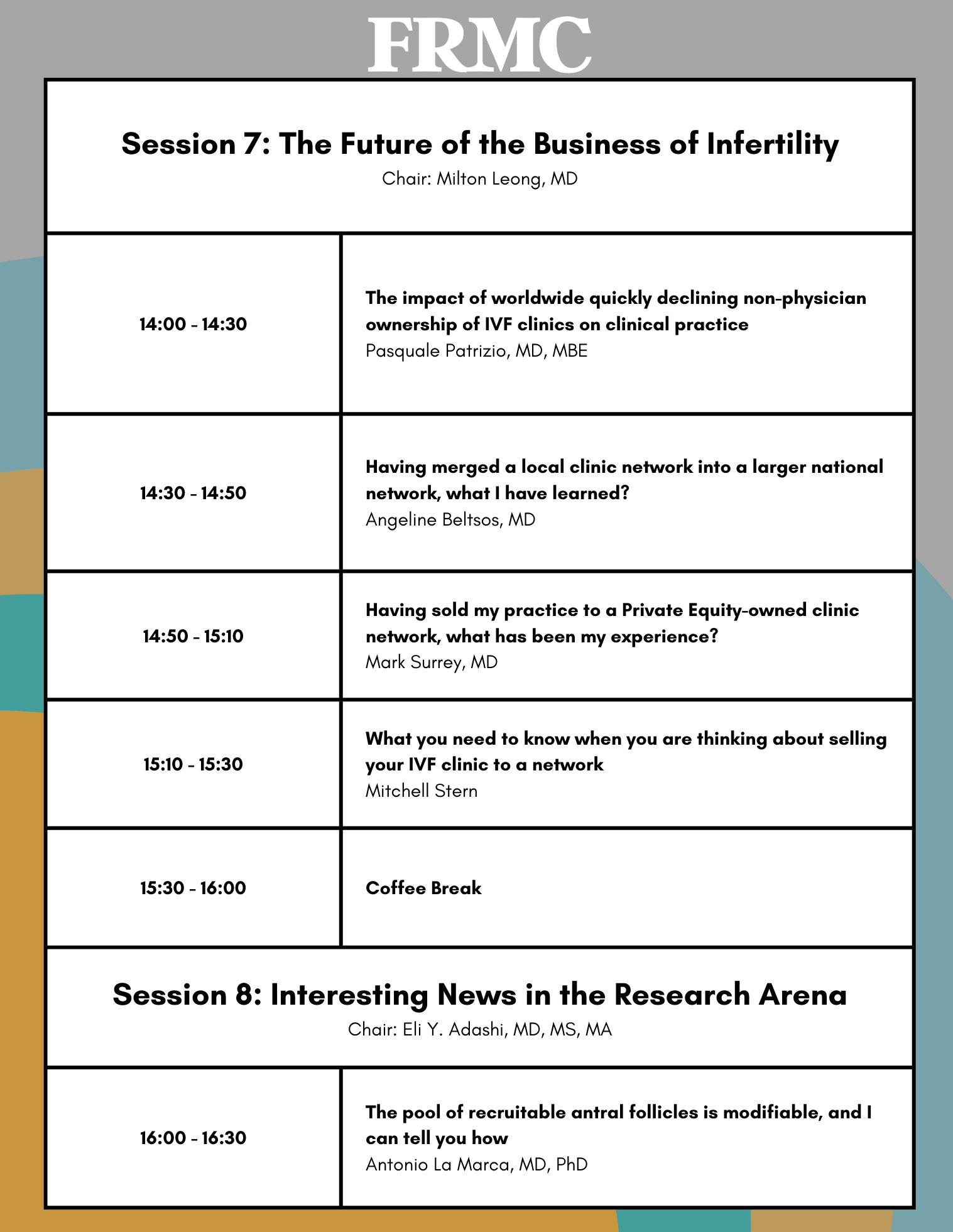
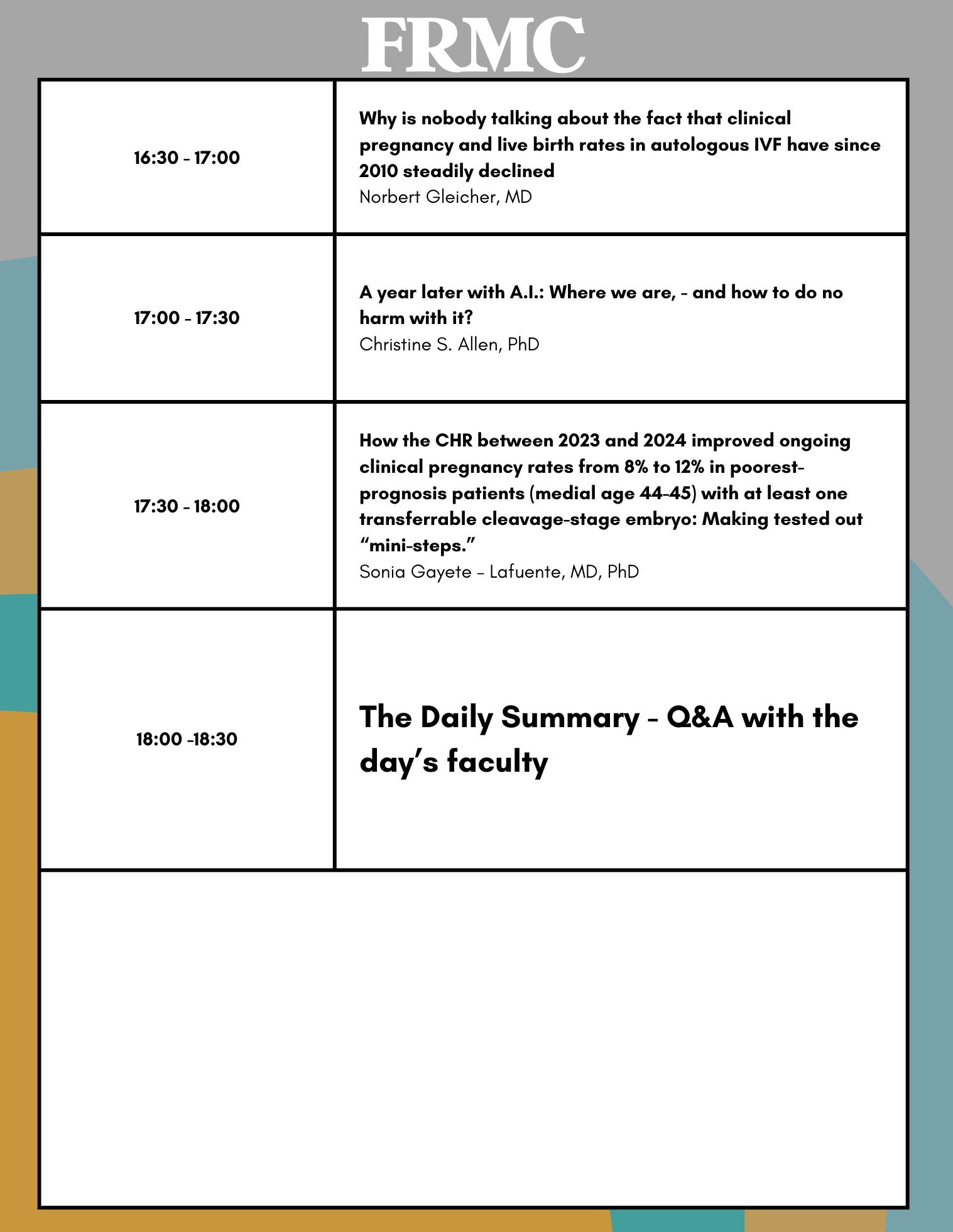
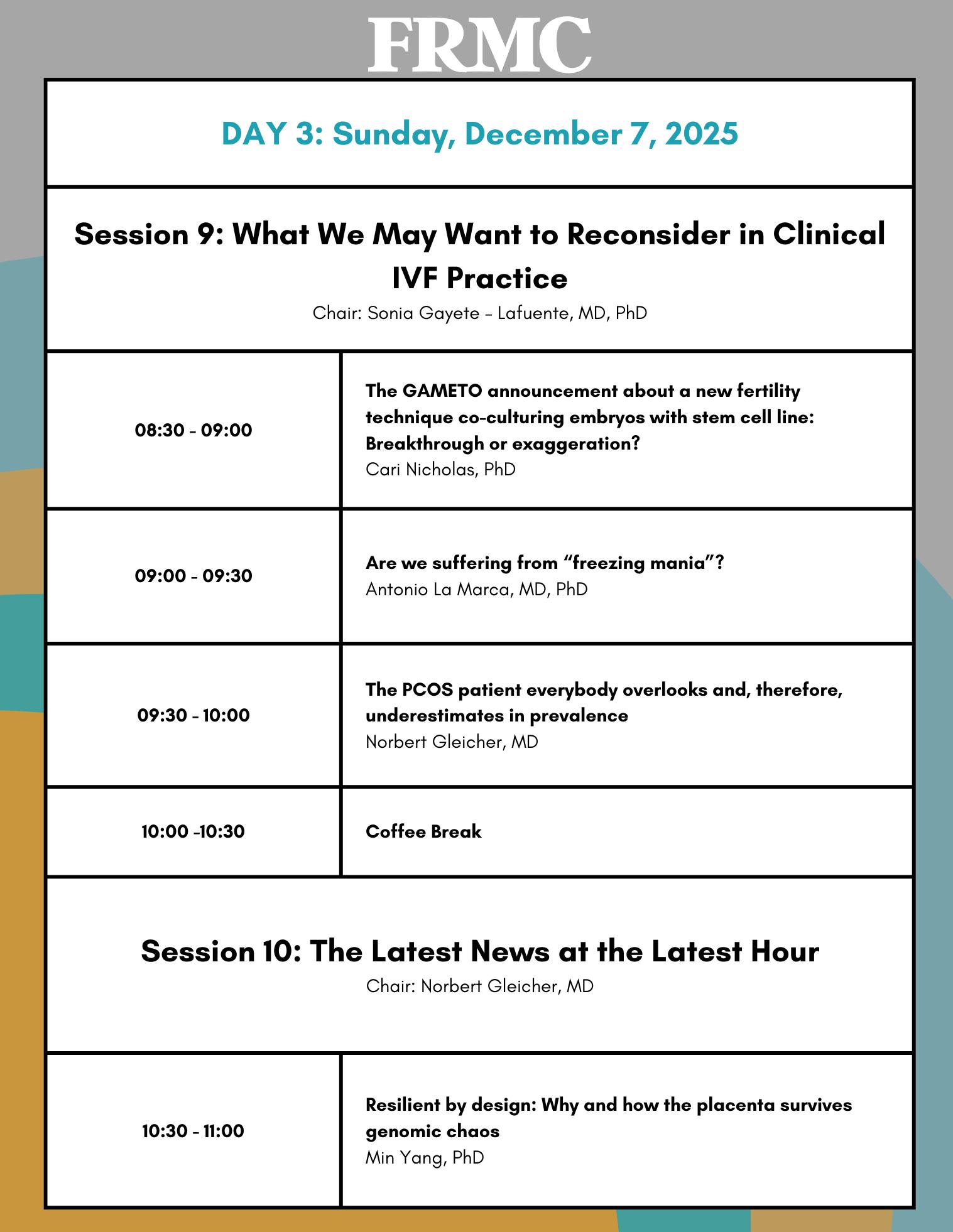
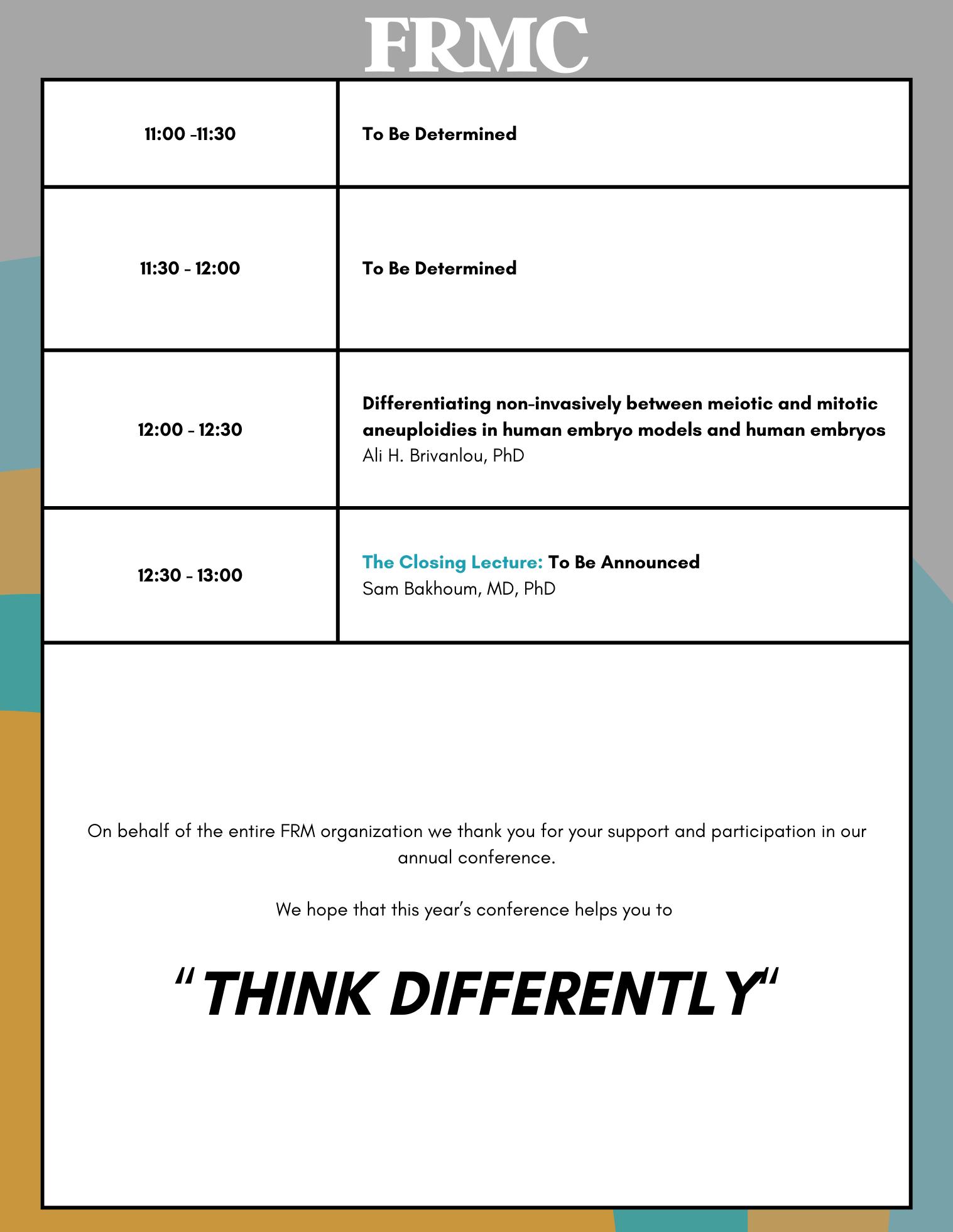
Looking ahead, we’re excited to share that the Fertility & Reproductive Medicine Conference (FRMC) will return December 6-8. The FRMC is a cornerstone of CHR’s mission to foster rigorous, international, cross-disciplinary dialogue between REIs, laboratory directors, and students alike. You can find the full agenda and speaker lineup starting on page 46—and hope to see many of you there.
As always, The VOICE continues to evolve. Whether you’re a physician, scientist, patient, or simply someone invested in this field, we encourage you to reach out with your thoughts, critiques, or proposals. And if you have a personal story or perspective to share, don’t hesitate to send it along—we welcome outside contributions from our growing, global readership.
The Editorial Team We still love eggs
WHY OUR BEST INSTITUTIONS OF HIGHER LEARNING ARE AT THE CORE OF THE CURRENT MALAISE—How anti-Zionism and antisemitism once again are the canary in the coal mine
BRIEFING: Our editors in this opinion piece attempt to analyze the current social and political malaise that has overtaken not only this country but large parts of the world at a time when technological progress in the world, at least theoretically, promises what only a few years ago were almost unimaginable goals and achievements. Two key points emerge: Like so many times before in history, the reemergence of antisemitism as a social as well as economic phenomenon again serves as canary in the coalmine, and—like in the Fin De Siècle days of the 19th century in Vienna, Austria, and in the 1920s to 1930s in Germany—much of the responsibility for the rise of Nazism fell to the intellectual class, the current malaise is caused by the intellectual capital our leading academic institutions attempt to impose on the general population. Only a radical reorganization of the current education system from kindergarten to graduate school in this and other Western countries will prevent society from selfanhelation. kindergarten to graduate school in this and other Western countries will prevent society from self-anhelation.
Lay as well as medical literature, especially since October 7, 2023, are overflowing with articles about Zionism (and, of course, anti-Zionism) as well as antisemitism. The reason, Hamas terrorists slaughtered over 1200 Israeli human beings of all ages (among them citizens of different religions and countries), and not only murdered and raped and burned babies, children, women, and men, most of them civilians, but also abducted over 400 babies, children, and adults. At the time of this writing, over 50 hostages are still held in Gaza, a majority as corpses. How many are still alive is unknown, but it seems fewer than 20.
Because we do not believe we can, as of this point, really influence opinions regarding this conflict with a few words in an essay, whether anti-Zionism, a term that suddenly especially in colleges and universities has become very popular, equates to antisemitism has become a central point of discourse. The world’s response to October 7 is, however, the best evidence that both sentiments are just two sides of the same coin. There can be little doubt left that—since October 7—the scourge of worldwide antisemitism has been resurrected to levels not seen since WWII.
And this fact alone is extremely troubling, not only because of the tragic historical consequences of antisemitism, but, mostly, because of what the rise of antisemitism historically always reflected—economic problems, political instability, and, often, wars. A rise in antisemitism has, over centuries, historically always been the canary in the coal mine, a warning for the whole world.
That antisemitism on university and college campuses literally exploded becomes obvious from just watching television. While the worst is hopefully over, the stats are still not even close to being back to where they used to be before October 7 (and even then, they were already higher than in preceding years).
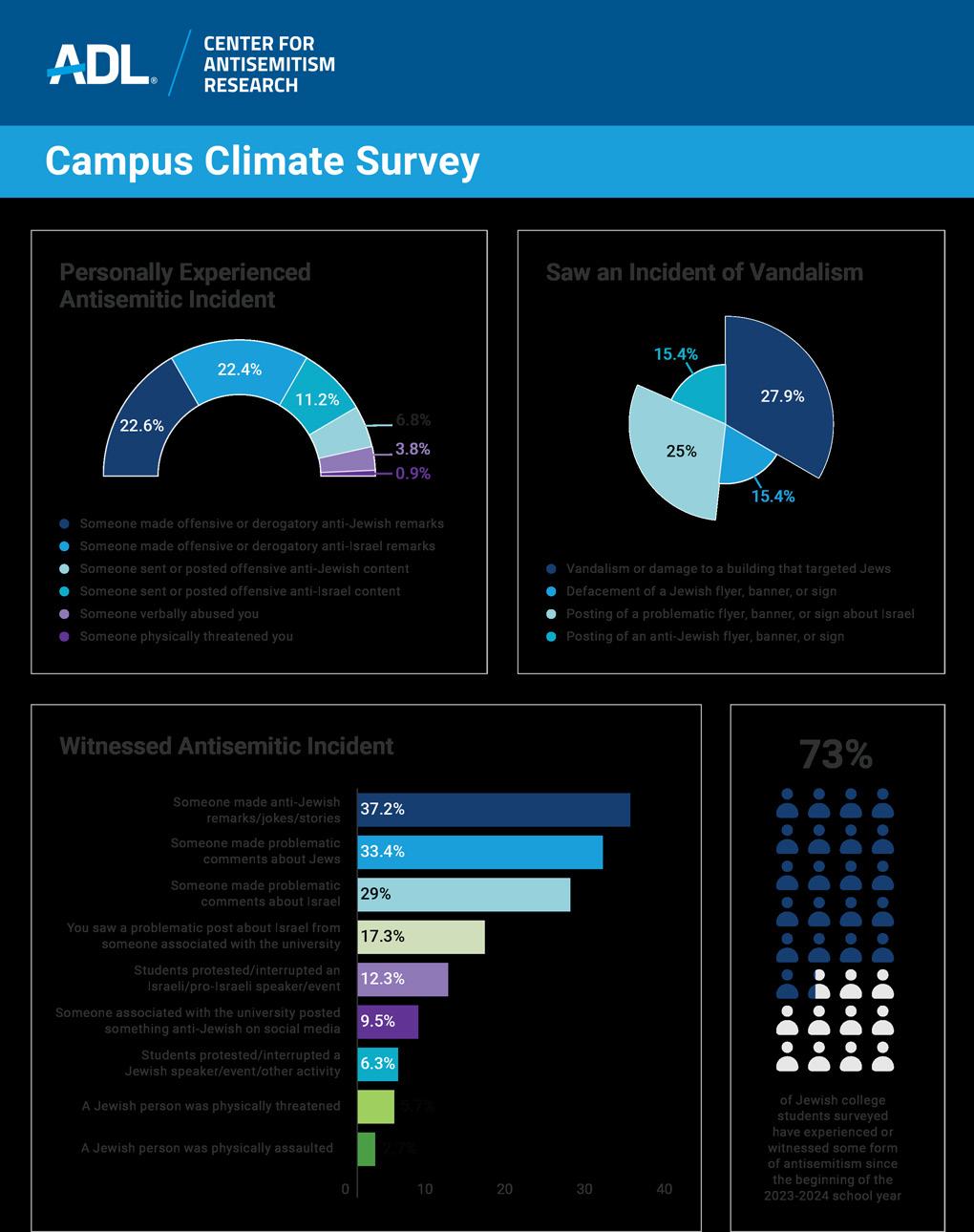
In other words, it has become increasingly apparent that the trends for what happened on campuses nationwide after October 7 were set into motion years earlier. The depicted Campus Climate Survey by the Anti-Defamation League (ADL, and what an appropriate name for what is being attributed on campuses, in street protests, and in many media outlets to Israel and often Jews in general, presents an excellent summary of the political climate at colleges and universities. A full 73% of Jewish students
experienced some form of antisemitism on college campuses just since the start of the 2023-2024 school year.1 It needs no further explanation!
As previously discussed on this platform, medical schools were not left out in alleged antisemitic activities, and especially the medical schools at UCLA and UC San Francisco in California appear to have excelled at such activities. Both schools now face demands from Congress to turn over internal documents going back to 2021.2
Columbia University in NYC and Brown University have already settled with the government, reaching consent agreements on how to address campus antisemitism and/or anti-Zionism. Rumors regarding a $500 million settlement with Harvard come and go at the time of this publication.
Following several other university presidents, the president of Northwestern University in Chicago recently resigned, and it would not surprise me if more resignations at that level were to happen at other universities as well. And the Trump administration allegedly demands a $ 1 billion (!) settlement from UCLA over general campus antisemitism claims,
which includes an alleged $172 million claims fund for victims of Title VII violations (illegal discriminatory actions in the workplace based on an individual’s race, color, religion, sex, or national origin).
This kind of antisemitism, however, does not start at the college level. It, indeed, starts much earlier in high schools—both public and private—and, often even before high school, with teachers (and their unions) often fostering the process. Kids are told to “go back to Israel” and called, in school, “genocide supporters.” And since we are already addressing antisemitism in medicine, education, and academia in general, it is telling that psychiatry—the field supposedly more than any other medical specialty serving the betterment of humanity—appears in this country to drown in antisemitism.5
And the U.S. is, of course, not alone in the Western world: In Italy, for example, 2 health care providers, Dr. Rita Segantini and nurse Giulia Checcacci, posted a video of themselves discarding Teva (an Israeli pharma company) products while wearing their uniforms (see photos below) as if Israeli medicines would kill!
The question, indeed, is not so much where else but where else does antisemitism not raise its ugly head! Everybody, of course, still remembers the Australian story that made headlines all around the world when two health care providers in an interview with an Israeli journalist claimed, “to have killed” Israeli patients in retribution for Israel’s war activities against Palestine.6 Both lost their jobs, and the police charged at least one.7 In the Netherlands, a Muslim nurse recently made headlines for threatening to kill Zionist patients with injections (see next page).
Dr. Rita Segantini and nurse Giulia Checcacci throw Teva products in the garbage in protest of Israel (Photo by X)
And evidence for broadly based antisemitism in the British health care system is simply overwhelming, starting with official statements from the British Medical Association (BMA), distinctively distinguishing between anti- Zionism (allowed and supported) and antisemitism (allegedly refuted)—a distinction by many (including the CHR) itself considered antisemitic.9
As repeatedly pointed out in these pages before, this institutional antisemitism in the UK is also evident in the selective writings in leading British medical journals, like The Lancet and the British Medical Journal (BMJ), which—actually quite demonstratively and unembarrassed—support the Palestinian cause and disproportionally attack Israel. Even the BBC—in itself often almost a propaganda arm of Hamas—had to acknowledge that a recent report found widespread failures to address anti-Jewish discrimination, including in the British National Health System (NHS) and in education (and in the arts, and even policing).”10 Unsurprisingly, Jewish doctors, therefore, have faced rising antisemitism from their NHS colleagues11 and, actually, really almost difficult to believe—a Jewish patient may have been refused treatment in a hospital, in East London, simply because of being Jewish.12
As already noted above, university and college campuses have become safer for Jewish students, as —often violent—demonstrations on campuses have mostly stopped. There are several reasons for that, not the least the pressure the Trump administration has exerted on institutions of higher learning by making some of the most prominent schools in the country, like Columbia, Harvard, the University of Pennsylvania, etc., examples of the government’s wrath. And as a recent Op-ed in The Wall Street Journal noted, in Florida, the so-called Stop WOKE Act “made Florida campuses (again) safe for Jews,”13 suggesting that states cannot leave all the dirty work to the federal government.
Columbia University’s Acting President, Claire Shipman, pledged her commitment to Trump-era antisemitism reforms after Columbia was found in violation of Title VI,14 as have recently several other universities and colleges and/or their respective presidents. Yet not everybody is happy about the agreement Columbia University reached with the
government: Science magazine described it as a “costly deal to regain NIH money”15 and its very liberal known editor-in-chief, H. Holden Thorp, described the deal as “a tragic wake-up call” with “the insatiable desire of institutions to have more resources underlying these challenges.”16
So far, Columbia University appears to adhere to the agreement it reached despite all of the external as well as internal (student and faculty) criticism. It, for example, punished over 70 students for past rioting with antisemitic overtones with either suspensions or even expulsions.17
At the same time, it appears that a growing number of universities and colleges may not really be serious in “giving in” to the demands of the federal government, apparently just trying to survive the Trump administration by rebranding rather than really changing their ways. Based on the 2023 Supreme Court decision that found Harvard University in breach of the law in how it had selected students for admission (Chinese students had sued accusing the university of discrimination against them in the admission process), Trump, claiming that the Supreme Court’s decision bared any future consideration of race whatsoever, in a series of executive orders barred the federal government and everybody it was doing business with from any efforts to promote DEI.
Unsurprisingly, proponents of DEI consider this interpretation as overly expansive and have found some progressive medical journals to be more than willing to allow them to, as usually unopposed, express their opinions, among those in JAMA, lawyers18 and in the New England Journal of Medicine, a public health “expert.”19
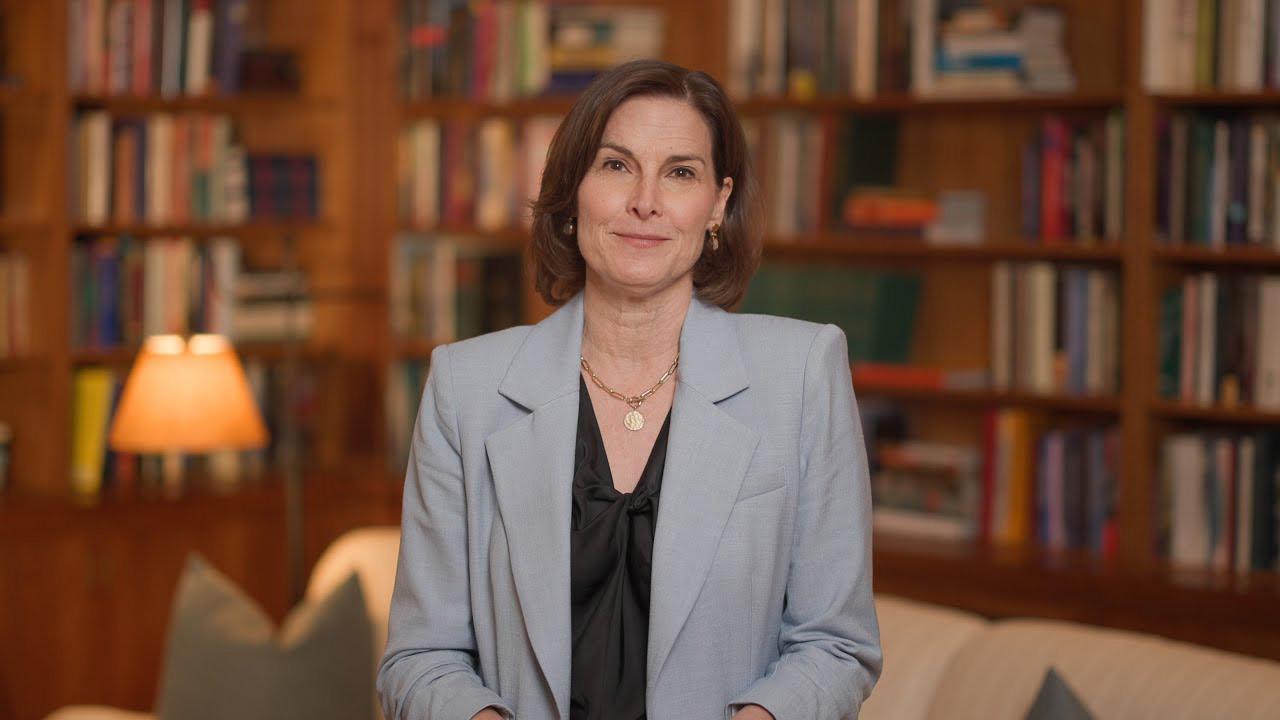
Acting University President of Columbia University, Claire Shipman
A good example of what select institutions have been doing with their DEI programs was noted in a recent report on 262 institutions of higher learning. Among those, 245 still had institution-wide DEI offices and/ or programs, of which 29 renamed or rebranded their DEI offices, while only 18 shut theirs down.20
In summary, institutions of higher learning, and among those especially the most prominent ones, have, as a result of how the Middle East conflict has impacted the political landscaped in this and many other countries around the world since October 7, 2023, for the first time come out of the shadow of academic invisibility into the bright spotlights of political activism.
And, as so many times before in history, the blight of antisemitism—once again—has become the symbol of depravity, with our most learned institutions being the springboard of all bad ideas. All evil in the world can only be combated at its roots, and that, under current conditions and in present times, means that, unless our leading institutions of higher learning are radically reorganized, the country and the world will only continue to get worse.
References
1. Antidefamation League. Campus Climate Survey. https://www. adl.org/resources/report/campus-antisemitism-study-campusclimate-and-after-hamas-terrorist-attacks#:~:text=Of%20the%20 nearly%20700%20college,%2Dto%2Dapples%22%20comparison.
2. Hagstrom A. FOX News. August 26, 2025. https://www. foxnews.com/politics/house-republicans-give-california-medicalschools-two-week-deadline-antisemitism-probe
3. Nelson JQ. FOX News. August 12, 2025. https://www.foxnews. com/media/harvard-trump-administration-close-500-millionsettlement-report
4. Rabbu Greenlan M. FOX News. August 6, 2025; https:// www.foxnews.com/opinion/from-homeroom-hate-how-jewishstudents-facing-new-kind-pressure-public-schools
5. Peter O. FOX News. August 24, 2025. https://www.foxnews. com/opinion/psychiatry-has-antisemitism-problem
6. McGuirk R. Los Angeles Times. February 13, 2025. https:// www.latimes.com/world-nation/story/2025-02-13/australianhospital-examines-patient-records-after-nurse-claims-to-havekilled-israelis
7. Turnbull T. BBC. February 25, 2025. https://www.bbc.com/ news/articles/c0l1z6rgrnyo
8. Heller M. The Jerusalem Post. August 3, 2025. https://www. jpost.com/diaspora/antisemitism/article-863115
9. BMA Statement. June 25, 2025. https://www.bma.org.uk/bmamedia-centre/arm-2025-bma-passes-resolutions-on-internationalrelations
10. BBC. July 15, 2025. https://www.bbc.com/news/articles/ crl0p2xk4w3o
11. Yorke H. The Times. December 8, 2024. https://www. thetimes.com/uk/healthcare/article/jewish-doctors-face-risingantisemitism-from-nhs-colleagues-ldt2qvr68
12. Campaign Against Antisemitism. 6/11/24. https:// antisemitism.org/jewish-patient-allegedly-refused-treatment-inhospital/
13. Sarnof M. The Wall Street Journal. August 23-24, 2025. https://www.politicalcortadito.com/2025/08/26/marc-sarnoffagainst-academic-freedom/
14. Pickering E, Benerjee I. Columbia Spectator. May 24, 2025. https://www.columbiaspectator.com/news/2025/05/24/shipmanaffirms-commitment-to-combating-antisemitism-after-ocr-findscolumbia-in-violation-of-title-vi/
15. Kaiser J. Science 2025; https://www.science.org/content/ article/columbia-s-221-million-deal-trump-officials-drawsmixed-reactions-researchers
17. Pickering E, Davis S. Columbia Spectator. July 22, 2025. https://www.columbiaspectator.com/news/2025/07/22/ujbissues-expulsions-suspensions-and-degree-revocations-to-over70-students-for-butler-demonstration/
18. Brennan T, Cole D. JAMA 2025;334(1):21-23
19. Cené CW. N Engl J Med 2025; 392(24):2394-22399
20. Defending Education . April 16, 2025. https://defendinged. org/wp-content/uploads/2025/04/DEI-Rebrands-UNIVERSITYStatus-Quo-and-Rebrands_Final.pdf
The New York Police Department arrested 78 protesters during a Demonstration at Columbia University on May 7, 2025. The Columbia Spectator; by Lukas Roybal, staff photographer
WE DEEPLY
MOURN
THE DEATH OF CHARLIE KIRK
*Previously published in The Reproductive Times
It has never happened before that The Reproductive Times posted opinions from the Editorial Board in two consecutive postings, but the murder of Charlie Kirk, age 31, not only warranted it, but really mandated this because of an internal backstory, the Editorial from last Friday, September 10, 2025.
It ended with the following sentence: “All evil in the world can only be combated at its roots, and that under current conditions and in present times means that, unless our leading institutions of higher learning are radically reorganized, the country and the world will only continue to get worse.”
And we didn’t even imagine how quickly after these words were posted, the world, indeed, would get worse, much worse! Nobody, of course, even considered the possibility. As it turns out, Kirk, in reality, indeed, was receiving constant threats to his life and, therefore, had a real security team traveling with him.
But even he, likely, did not consider himself to be the target of a long-distance sharpshooter. Otherwise, he would likely have protected himself accordingly. After all, are sharpshooters not only reserved for presidential assassinations?
Likely, even only very few security experts would have considered the possibility of a long-distance “execution” of Kirk by someone like the 22-year-old Tyler Robinson, who has been arrested and is accused of having been the shooter of the single bullet that killed Kirk. And yet, just a few hours after we posted our Editorial last Friday, it happened, and, within a split second, the world had, indeed, gotten so much worse. It had lost its likely most fascinating young politicians with a canny and unmatched ability to speak to especially men in the current college age group and, of course, also a loved son, husband, and father of two young children.
How could this happen?
Even after two attempts at President Trump’s life, innumerable school shootings—the last one just weeks ago, church and synagogue shootings, and innumerable senseless murders by obviously psychiatrically sick individuals during the routine daily life of mostly random victims— the last one a deadly stabbing just days ago taking the life of a young Ukrainia women who for personal safety had fled the war in Ukraine to the U.S., only to be murdered here.
But Kirk’s execution-style murder appears to us as different from all of these others.
While one, of course, can argue that murder is murder, we as physicians believe that it is almost impossible to cure a disease without having first a reliable diagnosis. In other words, unless we understand why a 22-year-old seemingly normally functioning young adult commits such a heinous crime, we will not learn to prevent it, and, to once again use a medical analogy, a single case can then turn into an epidemic or even a pandemic. And aren’t we already in one?
Interestingly, so far, only noted by surprisingly few media outlets, the Kirk killing has a lot in common with another recent murder, the killing of UnitedHealthcare CEO Brian Thompson, age 50, in the middle of a New York City avenue, as he was leaving his hotel to attend a board meeting.
The similarity lies not only in that both of these murders involved planned shootings with a clear purpose to kill, while their victims were pursuing their routine work activities. There, indeed, are more common denominators here than
that: Both murders had, without raising suspicion, to be carefully researched in advance, in detail planned, and executed with perfection. Tyler Robinson shot only once (imagine if Trump’s assassin had had the same skill level!). Both of these assassins, therefore, required a considerable degree of brain power (considering its use, it is difficult to describe it here as intelligence), physical acuity, and precision training with their respective weapons.
It, therefore, does not surprise that both of these perpetrators were considered to be talented students. As The Wall Street Journal reported, “Robinson was the pride of his Utah family,”1 a traditional conservative Mormon family, with both parents allegedly registered Republicans. He had won a prestigious college scholarship and, according to the Journal article, his mother once noted on Facebook that “his options are endless.”
__Similarly, Luigi Mangione, the accused murderer of above above-noted UnitedHealthcare CEO, came from a wealthy and prominent Maryland family. He was the 2016 valedictorian at his prestigious private high school in Philadelphia and later earned two engineering degrees from the University of Pennsylvania. By no means an underachiever!
Both of these males in their 20s, thus, apparently were of aboveaverage intelligence and highly performing individuals, came from stable and economically advantaged families, and, apparently, came with none of the psychosocial baggage and psychiatric histories that many of
the other perpetrators of horrible slaughters in recent years were allegedly carrying with them. They also never—like many of the other perpetrator—considered their murders a final message to somebody specific or, possibly, society in general, and, in contrast, to, for example, many of the school shooters, did not in the pursuit of their act, plan on dying—either at the hand of police or through suicide before being arrested.
Very much to the contrary, both of the here discussed individuals apparently very much wanted not only to avoid arrest, but also had absolutely no intention of committing suicide, even if threatened to be arrested. One, therefore, must also wonder what their plans had been for their future lives after the murders? More murders or returning to ideological non-violence? Interestingly, we were unable to find even a single mention in social and legacy media that has so far raised this obviously important question. It does seem very unlikely to us that either one of these two perpetrators even considered the possibility of having to spend the rest of his life in prison or, even, of being executed.
Both in that regard demonstrate similarities with another recently convicted, only slightly older (age 30 at the time of arrest) murderer, Bryan Kohberger, himself paradoxically a PhD student in criminal justice at Washington State University. Based on his schooling and past academic record, he, however, was not only less “bright” but also “stranger” in his behavior in society before their murders than Thompson
and Mangione and, after a plea deal, has already been sentenced to four consecutive life sentences for the cold-blooded murder of four sleeping students in an off-campus house from the University of Idaho. His motives, though, because of the plea deal, never explained to the public, were clearly different from those of Thompson and Mangione, who both, very clearly, were motivated by personal political believes and resentments.
Though state as well as federal government indicated their intent of seeking the death penalty for Thompson, as the Kohberger case demonstrated (there, too, the prosecution had promised the death penalty, only to announce the plea deal literally hours before trial start), one can never preclude the possibility of a plea deal in such cases, which then—as the Kohberger case also demonstrated—can relieve the accused from ever having to explain motivations for the committed crime.
Suffice it to say that such a decision, therefore, does not help in better understanding the thinking process of these murderers; in other words, another reason why these murderers should have to stand trial, where their motivations can, at least to some degree, be explored. Alternatively, pre-trial settlements should mandate full disclosure of motives by the defendant, a condition unfortunately not required by the prosecution in the Kohberger plea deal. Kohberger’s motives, therefore, will to a large degree remain hidden to researchers trying to understand what drives these murderers to commit these
We, therefore, may never know Robinson’s motivation for the murder of Charlie Kirk, or we may. Social resentment of being poor is a frequently alleged motive (and excuse) given especially by the political left and, therefore, leaves one wondering what the motivation of “rich kids” may be, as one, of course, can argue that rich kids with good family backgrounds and education, historically, may have caused as much, or even more, harm to society than other economically less fortunate, and less educated members of society.
Here are a few interesting historical examples: Karl Marx was the third child of a well-to-do middle-class lawyer in Germany who, as at the time was the fashion in educated society prioritized “Bildung,” the German word for a fusion of education in mostly the classics and philosophy. Getting “Bildung” at the university, Marx got into contact with various revolutionary groups as well as with Hegelian philosophy2 (universities, of course, already then influenced the political believes of their students). His lifelong collaborator, Friedrich Engels, however, did grow up very rich but, as he developed his political believes, actually cited his father’s factories as examples of oppression, which obviously led to a rather fraught relationship between the two. And the rest is history!
Josef Mengele, the “Angel of Death” in the Auschwitz concentration camp of the Nazis in Poland, graduated from medical school (we hesitate to call him a physician), came from a wealthy
family, and also had earned a Ph.D. in anthropology. Maximillien Robespierre was, of course, a leader in the French Revolution. As a lawyer, he initially championed freedom and individual rights, but he then became responsible for the so-called “Reign of Terror” in the revolution, in the process killing ca. 40,000 people. And there was, of course, Britain’s Jack the Ripper during Victorian times, though never caught, widely believed to have been an aristocrat.
That rich kids become revolutionaries is, therefore, nothing new. There, of course, are many examples in history. One, indeed, can consider Moses as one of them, giving up his royal status to lead his people out of Egypt.
And being very wealthy and on the left of the political spectrum is, of course, also nothing new in today’s world. As we hear, Illinois billionaire governor, Jay Robert Pritzker, has serious plans of running for president in 2028. His
sister Penny Pritzker, of course, heads the equivalent of what is the Board of Directors at Harvard University and financed, to a large degree, President Obama’s first campaign for president. Or who doesn’t know U.S. billionaire, George Soros, likely the biggest financier of left-leaning causes in the country.
But you don’t even have to be a millionaire or even billionaire to drift toward the left: In the 2024 U.S. presidential election, among voters with what now has to be considered modest middle-class family income of “only” $100,000 to $199,999, 51% voted for Kamala Harris. 3
What leads relatively wealthy and even very wealthy people has been widely explored in the behavioral sciences, but answers have remained largely clichés. A recent Substack article is, however, a good reference point for interested readers.4 It included the cartoon below from 1933 that still has relevance.
As already in the days of Marx and Engels, much of the indoctrination that leads to this phenomenon, of course, also still in present days, happens at the universities. And does anybody seriously believe that, with Penny Pritzker at the helm, Harvard will voluntarily
George Soros, billionaire donor to radical leftist causes and NGOs
Jay Robert Pritzker, billionaire and governor of Illinois
seriously reform itself toward a more balanced political viewpoint?
We don’t think so: Faculties and boards at universities over decades have been progressively tilting toward the left and, with it, of course curricula and what students are taught This is exactly, however, why in the preceding Editorial last Friday we made the point that the whole school system—really from kindergarten to schools of higher education—must be urgently reformed if this country is to find its way back to relative normality.
And what does this have to do with the assassination of Charlie Kirk?
Maybe not everything, but certainly enough to use his death to call for immediate action because, in principle, all cultural developments, whether positive or negative, are driven by our education system. And it must start in kindergarten because, if only 30% of graduates in some high schools can read at graduation at a time when the U.S. spends multiples on education per student in comparison to most other countries (one here also must acknowledge the parallels to our health system which also spends multiple of practically any other country in the world, just to rank far behind in nation health to many of these other countries), and when universities rob middle class families poor with tuition fees which students in other countries can only lough about, while often having huge tax-exempt endowments in the billions, something must give.
And, not to be forgotten, we at least pretend to have to compete with China for future leadership.
China does not graduate 30% of illiterate high school students, and China also does not have politically powerful teacher unions that don’t give a damn about the children they teach.
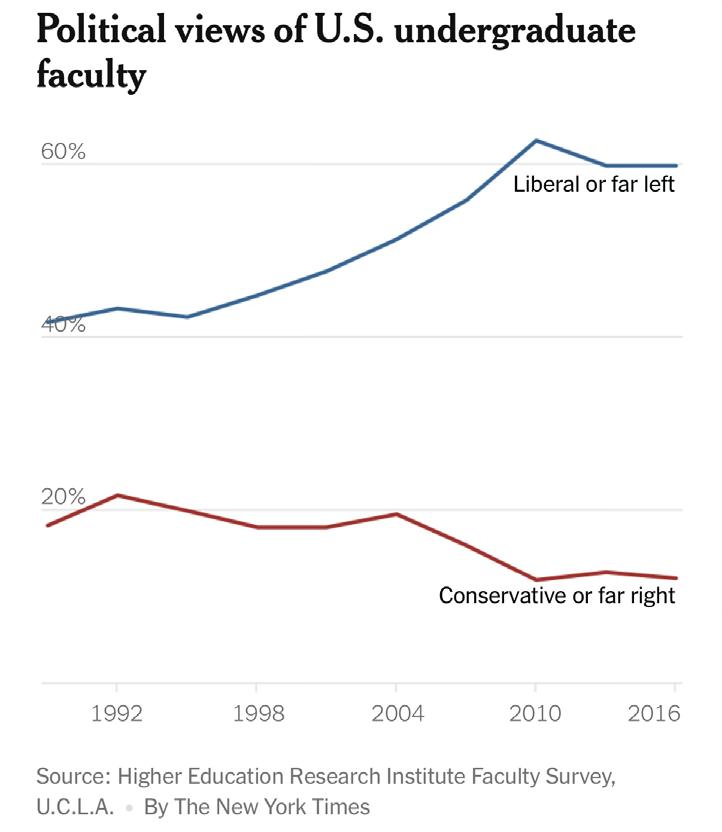
Charlie Kirk understood all of this when he was only 18 years old and decided against continuing with college, which bored him. He, instead, chose to try to help reform the country he loved by, first and foremost, informing students at universities how and why they were indoctrinated the way they were by the respective faculties at their universities. Especially elite liberal arts colleges and top-ranked research universities demonstrate a strong liberal skew in selecting faculty, with departments often having only very few or even no Republican-registered faculty.5
A 2025 survey of Harvard faculty by The Harvard Crimson revealed “political leanings” of the Harvard faculty in the following way: 29% very liberal; 34% somewhat liberal; 27% moderate; 9% somewhat conservative; and 1% very conservative.6 At Duke University, the same distribution categories were 22.3%, 38.5%, 24.5%, 9.9%, and 3.9%.7 And to demonstrate
the “inbreeding” of faculties, 80% of U.S. professors come from just 20% of universities.8 At the same time, the figures below speak for themselves in demonstrating how selection biases for faculty have been increasingly trending toward the left.
And because he succeeded beyond all expectations (in the process significantly helping President Trump to get reelected), many on the left not only correctly associated him with President Trump’s policies but made him into a superstar foe who seriously threatened the left’s dominance of academia.
Nobody—at least as of this writing—knows what exactly motivated Tyler Robinson to murder Kirk. Whatever the motive – and how irrational it may have been—it appears extremely unlikely that somebody else instigated him, paid him, or made him do what he did in any other way. He, with great likelihood, intentionally killed Kirk because of one of the other political or ideological convictions he deeply believes in. Ideology is like religion: one must be a true believer! And once that point is reached, any evidence to the contrary no longer matters, and its presentation is, indeed, usually viewed as morally objectionable. Imagine breaching one of the 10 commandments for a Jewish or Christian believer.
Moreover, suppose one wishes to remain morally pure. In that case, one, of course, is obliged to fight morally objectionable information, at which point another important contributing factor enters the
picture—the desensitization of our youth through social media, and movies toward violence in general, and then, specifically, of course, toward everything and everybody perceived as morally impure.
This kind of thinking not only led to the murder of the health insurance company CEO because his company supposedly acted immorally, but also to Charlie Kirk’s murder because he introduced college students and whoever else was increasingly willing to listen to his arguments, to what, in the opinion of his murderer, likely, were likely immoral ideas and concepts.
Disturbingly, this thinking, however, also finds increasingly wider support among young adults in general, with surprisingly many viewing Luigi Mangione after his arrest as something akin to a folk hero (among women, it may also have helped that he is good looking) and this kind of admiration Mangione received from the public may also have been a driving force for Tyler Robinson.
Unconfirmed rumors at the time of this writing suggest that he was in a gay relationship with a male partner who is in the process of transitioning to female. Kirk’s position on transitioning may, therefore, in Robinson’s eyes, have been so immoral that it made Kirk deserving of death. The Wall Street Journal, in another article on September 12, 2025,9 moreover, pointed out that Kirk—assuming Robinson’s motives were, indeed, transgenderism-related quite absurdly—was in the midst of a back and forth with a student about mass shootings involving
transgender people. We want to reiterate that all of this—as of this point—is, of course, pure speculation. But, definitely no longer speculation is the fact that our youth, on a daily basis, is being desensitized about the use of violence by TikTok, other social media, and not to be forgotten, by often incredibly violent movies. The combination of all of these suggested social as well as political influences then creates the Robinsons and Mangiones of this world.
It, however, also leads to the denial of October 7 (because who cares about facts if denial, seemingly, offers moral superiority), while at the same time not seeing the contradiction in conducting proPalestinian protests under the lead slogan, “From the River to the Sea,”which basically advocates the annihilation of millions of Jews in Israel, i.e., a second Holocaust.
In short, Charlie Kirk has likely become the victim of a political movement he was fully aware of and, in his typical way, openly addressed wherever and whenever he was given the opportunity to do so. But neither he nor anybody with a sane mind could ever have imagined what happened on September 10, 2025, another date that will stand in infamy. And the lessons from all of this?
They are quite clear already at the moment of this writing, even though we, of course, still don’t know enough about Robinson’s motives: If we do not quickly and systemically change how things are currently managed in many societal spheres, foremost, of course, education, but also criminal justice,
our medical system, drug use and abuse, and, of course, the influence of social media, there will be more October 7s and September 10s. Let’s not forget that the year has only 365 days and that the days to remember, therefore, will quickly fill up if we don’t succeed in changing the country quickly.
References
1. Elinson et al., The Wall Street Journal; September 13-14, 2025. pA1
3. Tierney A. Statista. June 23, 2025. https://www.statista.com/ statistics/1535295/presidential-electionexit-polls-share-votes-income-us/
4. Cohen N. Substack. April 21, 2025. https://nickcohen.substack.com/p/if-youare-so-rich-how-come-you-are
5. GOOGLE Research. September 14, 2025, https://www.google.com/
6. Mao WC, Paulus VH. The Harvard Crimson. September 3, 2025. https://www. thecrimson.com/article/2025/9/3/facultyresponse-liberal/
7. Wang A. The Chronicle. October 21, 24. https://dukechronicle.com/ article/duke-university-faculty-surveypolitical-leanings-liberal-conservativemoderate-centrist-harvard-yale-variationacross-school-tenure-status-demographics-20241022
8. Wapman et al., Nature 2022; 610:120127
9. McGraw M. The Wall Street Journal. Updated September 12, 2025; https:// www.wsj.com/livecoverage/charlie-kirkshot?mod=lc_navigation
CHR QUICK READS
A bit about PCOS, spontaneous miscarriages, pregnancy at 40+ and how stress impacts fertility
BRIEFING: Our editorial staff in this section offers brief and to-the-point summaries about specific medical conditions, fertility treatments, and/or other medically-related subjects that either patients suggested to us as topics they wanted to be addressed in the VOICE or which our staff identified as having recent received special attention in social media. Meant to be brief summaries, they, in contrast to most of the VOICE’s other content, are not routinely referenced but may contain a reading list. They may be written by editorial staff or may be the product of a single writer, in which case he/she will be identified. In other words, without references and author names, you may just have to believe us!
BEYOND ONLY THE BASICS—what
PCOS really means for your own long-term health, fertility, and pregnancy
Polycystic Ovary Syndrome (PCOS) is often discussed in terms of irregular periods, acne, and difficulty conceiving—but these surface-level symptoms only scratch the surface of what is, in truth, a complex and evolving condition. PCOS isn’t just about ovulation. It’s a lifelong endocrine and metabolic syndrome that can impact everything from fertility to cardiovascular health, insulin sensitivity, and even mental wellbeing. And understanding how it changes over time is essential for women trying to conceive—especially those in their late 30s and 40s.
PCOS is not one size fits all
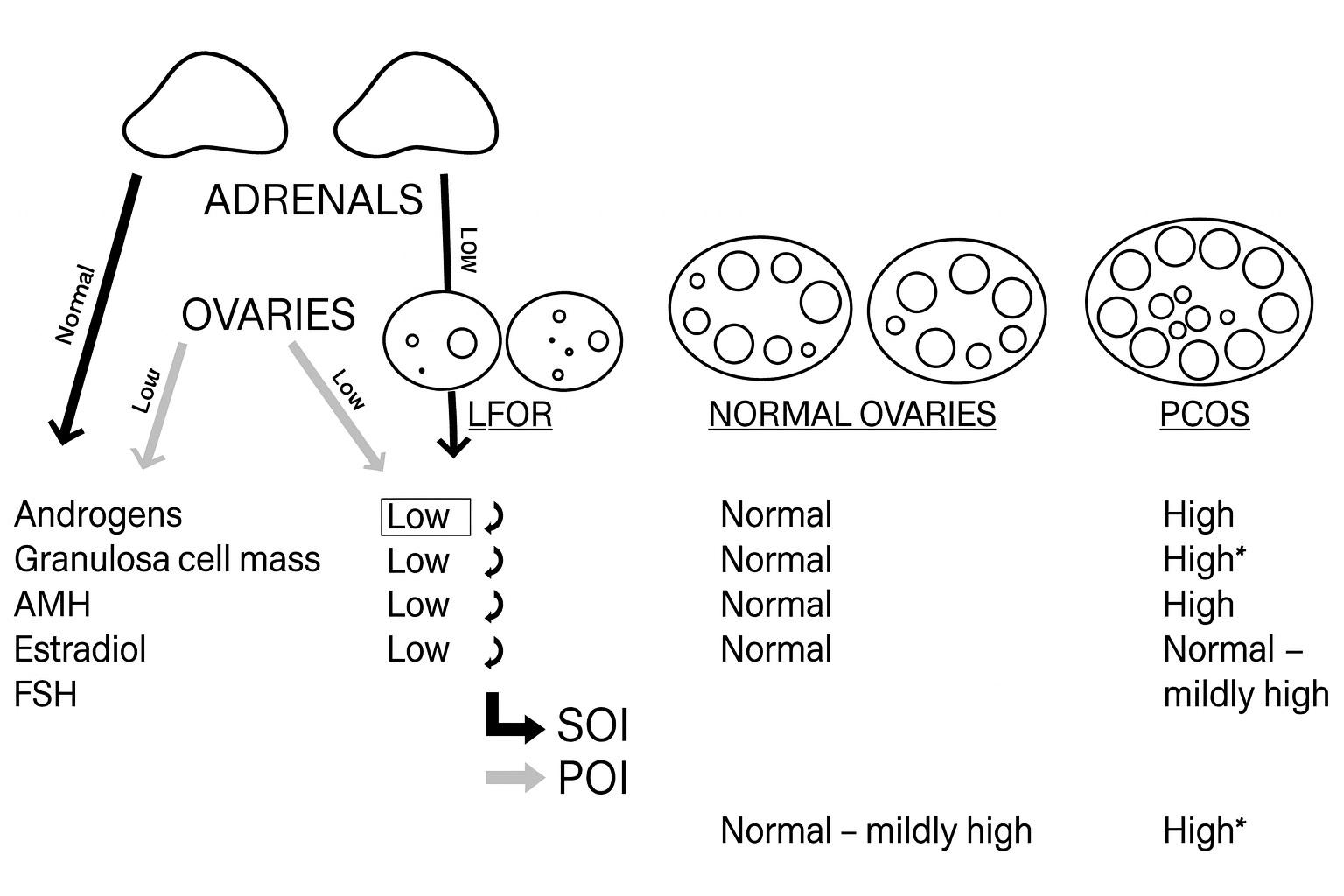
The first thing to know: PCOS is a syndrome, not a disease. That means it’s a collection of symptoms with multiple possible causes and presentations. Most clinicians still recognize four distinct phenotypes (A through D), but more recent genomic research suggests there may be just two truly distinct subtypes—one more classically “androgenic,” and one more “hypo-androgenic” that is especially relevant to older patients.
Women in their teens and 20s with PCOS often experience excess androgens (male hormones like testosterone), irregular periods, and difficulty ovulating. But for some women—particularly those
in the D phenotype—these androgen levels actually decline as they age. After 35, some PCOS patients may become too low in androgens, which are essential for healthy follicle development and egg quality. These patients may still present with regular cycles and lean body types—making them easy to misdiagnose or overlook entirely.
It’s not just about ovulation when it comes to infertility
While PCOS is the most common cause of anovulatory infertility, many women are surprised to learn that the story doesn’t end with ovulation induction. In fact, even women who ovulate regularly can struggle with egg quality, implantation, or hormonal imbalances related to PCOS—especially as they approach their late 30s and early 40s.
As ovarian reserve naturally declines with age, PCOS adds another layer of complexity. Certain phenotypes are at increased risk of developing low androgen levels (hypoandrogenism), which can further impair egg quality and IVF outcomes. In these cases, androgen supplementation with DHEA may improve ovarian response—but only when carefully monitored by fertility specialists who understand the nuances of PCOS in older patients.
Rethinking treatment at 35-plus
For women over 35, especially those trying to conceive, treatment must be more targeted. Inositol— often recommended as a blanket supplement for all
PCOS patients—can actually lower already-declining androgen levels in PCOS D-phenotype patients, potentially doing more harm than good.
At the Center for Human Reproduction (CHR), we take a personalized approach to PCOS. Our team regularly sees patients who were misdiagnosed or poorly treated by conventional standards because they didn’t fit the “typical” PCOS picture. We believe understanding the underlying hormonal and genomic differences is key to guiding smarter, more effective care.
The bottom line
PCOS is more than a reproductive disorder. It’s a dynamic condition that can evolve with age—and so should your treatment. Whether you’re in your 20s or 40s, understanding your specific PCOS phenotype, hormone profile, and long-term risks can empower you to make better choices for your health and fertility. If you’re navigating PCOS and want a more personalized, evidence-based approach, we invite you to schedule a consultation with our team.
SPONTANEOUS MISCARRIAGES—
What you often are not told about recurrent loss and testing options
When it comes to spontaneous miscarriage, most people are only told part of the story. The emotional toll is widely acknowledged, but the medical complexity—especially when loss happens more than once—is often overlooked or dismissed. For those who’ve experienced two or more pregnancy losses, the term “recurrent pregnancy loss” (RPL) may finally come into focus. But unfortunately, many are still left without answers.
Recurrent loss is a medical condition that deserves deeper investigation. Yet in standard care, testing for RPL often doesn’t begin until after three consecutive miscarriages—and even then, the workup can be incomplete.
What you might not hear at the doctor’s office
Many patients are told, “It’s just one of those things,” or “You’re young and healthy—it’ll happen next time.” While those statements might be intended to reassure, they can minimize very real grief and delay critical testing. And for those in their late 30s or 40s, delaying answers also delays time—an incredibly important factor in fertility.
What you’re often not told is that pregnancy loss can have a wide range of underlying causes: hormonal imbalances, autoimmune dysfunction, anatomical issues, clotting disorders, infections, and even embryo quality. Most standard OB/GYN panels only screen for a fraction of these. And if IVF is involved, some fertility clinics may suggest donor eggs before truly exploring why the loss is happening in the first place.
What testing should include
If you’ve experienced recurrent miscarriage—whether natural or via IVF—you have the right to ask for a full workup. That should include:
• Hormonal testing, including thyroid function, prolactin, and luteal phase support
• Immune testing, such as antiphospholipid antibodies, and other autoimmune markers
• Anatomical evaluations, including hysterosalpingogram (HSG), saline sonograms, or hysteroscopy
• Metabolic and nutritional panels, including Vitamin D, insulin resistance, and inflammatory markers
This is not an exhaustive list, but it highlights just how multifaceted pregnancy loss can be. A one-size-fits-all approach doesn’t work—and yet, many patients are given exactly that.
Moving beyond “unexplained”
One of the most frustrating experiences is being told your losses are “unexplained.” While it’s true that not every answer can be found, many unexplained cases are actually just underexplored. There are specialists and clinics that go deeper—like the CHR—that focus on complex or “last-resort” cases. If you feel unheard or dismissed, consider a second opinion from a clinic
that prioritizes individualized diagnostics.
You deserve more than reassurance
Miscarriage is more than an emotional event—it’s a medical one. If you’ve experienced more than one—and/or even if it is only one, but a so-called later miscarriage (after a positive fetal heart)—it may not only be just bad luck, and it’s not something you should have to endure without answers. You deserve to understand what’s happening in your body and what can be done to support a healthier outcome moving forward.
Recurrent loss is a diagnosis that deserves compassion, care, and comprehensive investigation. Don’t settle for anything less. We can help you. Reach out to our team to schedule a consultation!
PREGNANT AT 40-PLUS—what’s
different, what matters, and what’s possible
In recent years, more women are choosing to start or grow their families in their 40s—and for good reason. With more access to fertility care, better health awareness, and shifting life priorities, the idea that 40 is “too late” for pregnancy is finally being challenged. Still, pregnancy over 40 does look and feel different, physically, emotionally, and medically. Whether you’re already expecting or considering pregnancy, here’s what you need to know about navigating this chapter with confidence.
What’s different after 40?
(i) Fertility is naturally declining—but is not gone
It’s true that egg quantity and quality decline with age. By 40, most women have significantly fewer eggs left in their ovaries than they did in their 20s, and a higher percentage may be chromosomally abnormal. But that doesn’t mean pregnancy is impossible. Many women still conceive naturally—or with fertility support— using their own eggs. Taking care of women in their 40s is our bread and butter at the CHR!
(ii) Higher risk doesn’t usually mean very high risk and/or no chance
Pregnancy over 40 is considered higher risk, but by no means necessarily very high risk. This, in principle, just means that you’ll be monitored more closely. However, with good prenatal care and proactive health management, the vast majority of women end up having healthy pregnancies and deliveries.
(iii) You may be taken less seriously
Unfortunately, age bias still exists. Some fertility providers may rush to recommend donor eggs or discourage you from trying at all. That’s why choosing the right care team matters—especially one with p experience working with patients in their 40s (and sometimes these days even in their 50s).
What
matters most
(i) Individualized care
There is no one-size-fits-all protocol for pregnancy after 40. A clinic or OB-GYN that considers your unique hormone levels, ovarian reserve, immune health, and medical history is essential.
(ii) Preconception prep
Eggs mature over a 2–3 month window before ovulation. That means what you do before conception—nutrition, sleep, supplements, and stress management—can impact the quality of your eggs and overall outcomes.
(iii) Emotional resilience
Whether this is your first pregnancy or the result of a long fertility journey, being pregnant at 40 can stir up a range of emotions: excitement, fear, gratitude, even disbelief. Finding a support network—through therapy, patient communities, or trusted providers— can help you stay grounded through the ups and downs.
What’s possible
New patients at the Center for Human Reproduction (CHR) often were told by other clinics that they’ve “run out of time.” But time isn’t the only factor in fertility. We’ve helped many women in their 40s— and even early 50s—conceive and carry healthy pregnancies, often using their own eggs. Our oldest
patients who conceived and delivered babies with the use of their own eggs were around 47 to 48. And we are continuing to try to get better. With the use of donor eggs, pregnancies and deliveries in the 50s are no longer unusual. When no one believes in you, we do.
Success is possible when the approach is thoughtful, evidence-based, and tailored to you. If you’re over 40 and trying to get pregnant, don’t, therefore, let outdated statistics or dismissive opinions dictate your path. You deserve to be seen, heard, and supported every step of the way.
THE IMPACT OF STRESS ON FERTILITY, yet optimizing your fertility
For anyone trying to conceive, the familiar refrain of “just relax” can feel less like comfort and more like dismissal. Still, there’s some truth beneath the cliché. Research increasingly shows that chronic stress can interfere with reproductive function in both men and women. That said, the relationship between stress and fertility is complex, and importantly, it’s not entirely out of your control.
The science: How stress interacts with reproductive health
Stress doesn’t cause infertility outright, but it can interfere with the biological systems that regulate reproduction. When you’re under chronic or intense stress, your body ramps up the production of cortisol and adrenaline, key players in the fight-or-flight response.
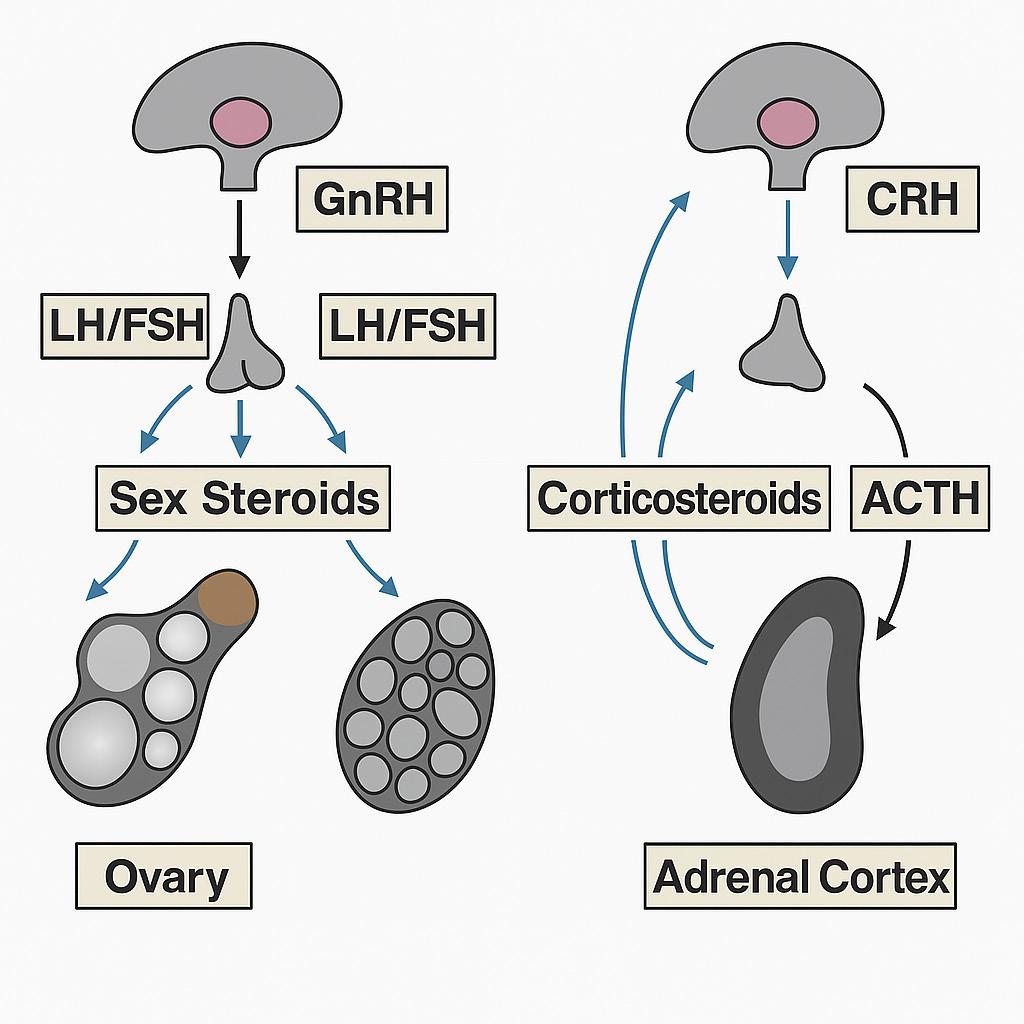
These stress hormones can disrupt the functioning of the hypothalamic-pituitary-gonadal (HPG) axis, which controls the release of reproductive hormones like GnRH (gonadotropin-releasing hormone), LH, and FSH. All are essential for healthy ovulation and menstrual regularity.
Specifically, elevated cortisol levels due to stress can suppress GnRH secretion from the hypothalamus, leading to a reduction in LH and FSH production.
A lack of these hormones can disrupt regular menstruation and ovulation. In some cases, this disruption can lead to delayed or missed ovulation, irregular cycles, or lower progesterone levels, all of
which may reduce the likelihood of conception.1 For men, stress has been associated with decreased testosterone levels, reduced sperm count, and poorer sperm motility.
And while stress isn’t the sole factor in most fertility struggles, its role is significant enough that addressing it can make a meaningful difference.
The stress-fertility feedback loop
One of the most frustrating aspects of this dynamic is its cyclical nature. Fertility challenges cause stress, and that stress can further interfere with fertility. You may start to feel trapped in a loop: the more uncertain or anxious you feel, the more you try to control every variable (cycle tracking, supplements, lifestyle changes), and the more stress that effort creates. It’s worth acknowledging that this is hard. And you’re not imagining the emotional toll. The good news is that stress doesn’t have to be “eliminated” to make a difference. Learning to manage and reduce it, even incrementally, can help bring your body back into a more balanced, receptive state.
What you can do
You don’t need to become a meditation guru overnight or overhaul your entire lifestyle. But these researchbacked strategies can help lower your stress load and support hormonal equilibrium:
(i) Lean into support systems
Don’t underestimate the power of being seen and heard. Whether it’s a trusted friend, a therapist, or a fertility support group, talking openly about your experience can reduce feelings of isolation and relieve internalized pressure to “stay positive.”
(ii) Explore mind-body interventions
Mind-body programs, including mindfulness meditation, focused breathing exercises, and yoga, have been shown to significantly lower stress and improve outcomes in individuals undergoing fertility treatment. Even short, regular sessions can help recalibrate your nervous system.
(iii) Move your body (gently)
Regular physical activity helps regulate cortisol levels and promotes endorphin release, your body’s
natural stress buffer. The key is moderation: overly intense or high-impact workouts can actually be counterproductive when trying to conceive. Focus on activities that feel restorative, like walking, swimming, or low-intensity yoga.
(iv) Give yourself permission to pause
Ovulation tracking apps, temperature charts, supplements, and appointments, it’s easy to be consumed by the process. If it starts to feel like a second job, give yourself permission to scale back. Fertility tracking should be a tool, not a source of daily anxiety.
(v) Create small rituals that bring you joy
When you’re in the thick of fertility treatments or cycle-to-cycle uncertainty, it’s easy to feel like life is on pause. Building in small, meaningful rituals, just a quiet morning coffee, a Sunday nature walk, a midweek phone call with a friend, each one and all of them can help anchor you emotionally. These simple, consistent moments act as a gentle reminder that your life is still rich, present, and unfolding. Rituals don’t need to be big to be meaningful: their comfort lies in their rhythm and reliability, especially when so much else feels uncertain.
(vi) Prioritize restorative sleep
Sleep is foundational to hormonal regulation and mental resilience. Chronic sleep deprivation increases stress hormones and can throw off reproductive rhythms. Protecting your sleep through consistent routines, minimizing screen time at night, and creating a restful and comfortable environment is one of the most impactful things you can do.
A compassionate reminder
You don’t need to be perfectly calm or stress-free to conceive; that’s an unrealistic (and unhelpful) standard. Stress is a natural part of life. The goal is to give your body and mind the support they need to stay grounded, nourished, and strong.
Taking care of your mental and emotional health is not a luxury; it’s part of the process. It may even be one of the most impactful things you can do to support your fertility, your health, and your sense of self through it all.
A little more detail
Insights into ovulation, the role of male fertility, age and fertility, preparing for IVF, and inflammation
The VOICE in this section offers a little more detailed and referenced insights than the preceding Quick Reads section about relevant medical conditions to fertility, fertility treatments, and/or other medically related subjects. Meant as brief reviews in contrast to the preceding section of summaries, these articles also offer detailed reference lists, so that interested readers can find easy access to further information.
UNDERSTANDING
OVULATION: A brief summary of how to optimize your fertility
When it comes to fertility, timing truly is everything. If you’ve ever wondered why some months seem easier to conceive than others, or why your cycle sometimes feels unpredictable, you’re not alone. Behind the scenes, your body is orchestrating a complex interplay of hormones, lifestyle choices, and daily habits—all of which shape your chances of ovulation and conception. Understanding these factors can empower you to make small changes that can have a big impact on your reproductive health.
Hormones: The chain reaction behind ovulation
Ovulation results from a carefully timed hormonal sequence. In the first half of the cycle, folliclestimulating hormone (FSH) supports follicle development. Rising estrogen levels coming from the growing follicles then trigger a surge in luteinizing hormone (LH), which initiates ovulation. If stress, PCOS, or undernourishment disrupt this
chain, ovulation can be delayed or missed. In PCOS, hormone imbalances and insulin resistance may prevent the LH surge from occurring.¹ Recognizing these disruptions can help you better understand your body’s signals— and know when it’s time to consult your doctor.
Food & fertility
The Mediterranean diet, which emphasizes whole grains, vegetables, fruits, legumes, olive oil, and fish, has been linked to improved ovulation and fertility outcomes.² This pattern supports hormone balance and reduces inflammation.
Diets high in trans fats, refined sugars, and processed foods, on the other hand, can disrupt insulin sensitivity and increase inflammation, which may interfere with ovulation.³ A 2021 review found that high-glycemic carbohydrates and saturated fats were associated with ovulatory disorders.³ While evidence is not yet definitive, even small shifts, like swapping refined grains for whole grains, may support fertility and improve overall health.
Lifestyle factors that support healthy ovulation
Moderate physical activity is linked to more regular cycles and better ovulatory function.³ You don’t need to overdo it—gentle, consistent movement like walking, yoga, or swimming can improve circulation and reduce stress. Overly intense workouts, especially with low body fat, can suppress ovulation. Chronic stress can elevate cortisol, which may disrupt the release of LH.³ While stress can’t be eliminated, practices like mindfulness, journaling, or deep breathing can help restore hormonal balance. Sleep is also essential: poor or irregular sleep has been linked to hormonal imbalances and menstrual issues.⁴ Aim for 7–8 hours of restful sleep to support reproductive function.
Tools for tracking ovulation
Getting to know your cycle is one of the most empowering steps you can take. While ovulation typically happens about 14 days before your next period, that’s not true for everyone, and it can change from month to month. That’s where ovulation tracking tools come in.
There are a variety of tools available, ranging from simple to high-tech, and each has its pros and cons. A 2017 review categorized the most common ovulation tracking tools into four groups: biological signals, hormone-based methods, physical measurements, and digital tools.⁵
• Cervical mucus tracking involves observing changes in vaginal discharge throughout the cycle. As ovulation approaches, cervical mucus typically becomes clear, stretchy, and egg-white-like, signaling peak fertility. This method is free, noninvasive, and backed by solid science, but it does take a little practice to learn how to interpret changes accurately.
• Urine-based ovulation predictor kits (OPKs) test for the presence of luteinizing hormone (LH), which surges right before ovulation. These are widely available and generally reliable, though they can give false positives for people with hormonal imbalances like PCOS.
• Basal body temperature (BBT) tracking relies on measuring your temperature first thing every morning. After ovulation, body temperature rises slightly (about 0.5-1°F). While BBT can confirm that ovulation occurred, it doesn’t predict it in advance, so it’s most effectively used in combination with other methods.
• Wearables and fertility monitors are an emerging category that includes devices and apps tracking temperature, heart rate, hormone levels, or breathing patterns. While
promising, they can be costly, and accuracy varies depending on the device.
As with most aspects of fertility, personalization matters. The best tracking method is the one that fits your lifestyle and helps you tune into your body’s unique rhythms.
Conclusion
Ovulation is a significant factor in reproductive health, and it is greatly influenced by the choices you make every day: what you eat, how you move, how you sleep, and how you manage stress. While hormones play a pivotal role in the process, your habits are the architects. Whether you’re on the journey to conceive or simply want to understand your body better, mastering the art of tracking ovulation and making supportive lifestyle changes can give you a sense of responsibility and control. And if challenges arise, the knowledge you’ve built will help you seek the right support, reinforcing your role as an informed, empowered participant in your reproductive journey.
References
1. Teede HJ, Misso ML, Costello MF, et al. Recommendations from the international evidence-based guideline for the assessment and management of polycystic ovary syndrome. Hum Reprod. 2018;33(9):1602-1618. doi:10.1093/ humrep/dey256
2. Gaskins AJ, Chavarro JE. Diet and fertility: a review. Am J Obstet Gynecol. 2018;218(4):379-389. doi:10.1016/j. ajog.2017.08.010
3. Kucharska A, Szostak-Wƒôgierek D. The influence of diet on ovulation disorders in women. Nutrients. 2021;13(4):1156.
4. Beroukhim G, Esencan E, Seifer DB. Impact of sleep patterns upon female neuroendocrinology and reproductive
outcomes: a comprehensive review. Reprod Biol Endocrinol. 2022;20:16.
5. Soules MR, et al. Detection of ovulation: a review of currently available methods. Bioeng Transl Med. 2017;2(3):238-246. doi:10.1002/ btm2.10058
THE ROLE OF MALE FERTILITY IN CONCEIVING: What you need to know
Discussions around fertility often focus on women—menstrual cycles, hormones, and egg quality—but conception is a twoway street, and male fertility is just as essential. In fact, malefactor infertility contributes to roughly 50% of all infertility cases.¹ Yet despite its prevalence, it’s frequently overlooked in both public discourse and media coverage. Male infertility is a multifactorial condition, influenced by genetics, lifestyle, environmental exposures, age, and medical history.2 Misconceptions persist, highlighting the need for more awareness, accurate information, and open conversation about male reproductive health.
Myth #1: If a man can ejaculate, he’s fertile.
Reality: Ejaculation doesn’t necessarily guarantee healthy sperm. Semen can lack sufficient sperm, or the sperm may have poor motility or abnormal shapes. Lifestyle factors can significantly affect sperm quality. Smoking, for example, is strongly linked to lower sperm count and motility, worse morphology, and increased DNA fragmentation.3 One study found that chronic smokers had
significantly reduced semen volume and total sperm count compared to non-smokers.3 Beyond smoking, alcohol has also been found to be a significant detriment, associated with hormonal disruption and reduced sperm concentration and motility.4
Myth #2: Male fertility won’t drop with age.
Reality: While men do not experience menopause, semen quality does decline with age. A comprehensive meta-analysis of 90 different studies involving over 90,000 men found consistent agerelated decreases in semen volume, sperm concentration, motility, and morphology.5 The analysis also indicated that DNA fragmentation tends to increase with age, potentially affecting fertilization, embryo development, and the success of pregnancy.5 These changes become more pronounced after age 40, though subtle declines may begin even earlier. Advancing paternal (and maternal) age is associated with longer time to conception, higher miscarriage risk, and increased rates of chronic conditions in offspring.6
Myth #3: If there’s trouble conceiving, the problem is usually on the woman’s side.
Reality: This is a harmful misconception. Male-factor infertility accounts for about 40-45% of all infertility cases.¹ Unfortunately, men are often under-tested—especially in cases labeled as “unexplained” infertility—leading to male factors being frequently overlooked in a couple’s infertility journey. At the
Center for Human Reproduction (CHR), we consider a diagnosis of “unexplained” infertility to be an oxymoron rather than more a true diagnosis; there is always an underlying cause—it just may require more thorough investigation to uncover.
Subtle factors often affecting male fertility, such as hormonal imbalances, genetic issues, or environmental exposures, can be missed during routine screenings. Without comprehensive evaluation, these causes can remain hidden, delaying effective treatments. Leading experts stress that timely and thorough evaluation of male fertility is just as vital as evaluating female fertility for accurate diagnosis and effective treatment planning.⁷ Early identification enables couples to pursue targeted interventions sooner, improving their chances of conception while reducing emotional and financial strain.
Understanding these common misconceptions is the first step toward a more informed approach to fertility.
What really impacts sperm health?
Smoking: Impairs sperm count, motility, morphology, and increases DNA damage.3
Age: Sperm quality gradually declines beginning around age 40.4
Heat and lifestyle: Overheating (from saunas, laptops on laps, tight underwear), obesity, and poor diet can all reduce sperm quality.5
Environmental factors: Living in high pollution areas and long-term exposure to outdoor air pollution are linked with poorer semen quality, including lower semen
volume, sperm concentration, motility, morphology, and increased DNA fragmentation.6 Medical conditions: Varicocele, a cause of infertility that affects 15% of healthy men and 25% of men with abnormal semen analysis, is a dilation of veins within the scrotum that disrupts temperature regulation and impairs sperm quality. Other medical conditions— such as reproductive tract infections, hormonal imbalances, and diabetes, among others— can also interfere with sperm production, function, or transport.¹
How to support male fertility
The good news? Many male fertility factors are often modifiable. Here are some science-backed ways to improve sperm health:
• Quit smoking—improvements can begin in just 3 months.3
• Reduce exposure to heat (avoid hot tubs, tight underwear, laptops on your lap).
• Exercise regularly and maintain a healthy weight.⁵
• Eat a nutrient-rich, antioxidantheavy diet (think leafy greens, healthy fats, vitamins C & E, zinc).
• Limit exposure to air pollution when possible.6
• If possible, treat underlying medical conditions; but be careful about jumping into varicocelectomy surgery too quickly because fixing a varicocele may improve the semen analysis but—more often than not—does not do it to enough of a degree to make an infertile male fertile.7
When should you get tested?
If you’ve been trying to conceive for 6 months without success, (if over 35) or 12 months if younger and do not have an obvious and already diagnosed fertility problem, both partners should be evaluated. A semen analysis is a simple and essential first step in understanding male fertility.⁷ As noted by experts in reproductive medicine, thorough male evaluation is often overlooked but critical to guiding appropriate treatments.⁸
The bottom line
Male fertility is a vital part of the reproductive picture, not an afterthought. With better awareness, early testing, and evidence-based care, couples can approach conception with greater clarity and confidence. Fertility challenges affect both partners, and men have more influence over their reproductive health than many realize. Small changes can make a big difference—and support a more informed, proactive path to parenthood.
References: To facilitate the finding of additional detail, we here offer patients and other interested parties complete references
1. Agarwal A, Baskaran S, Parekh N, et al. Male infertility. Lancet. 2021;397(10271):319-333. doi:10.1016/ S0140-6736(20)32667-2
2. Agarwal A, Mulgund A, Hamada A, Chyatte MR. A unique view on male infertility around the globe. Reprod Biol Endocrinol. 2015;13:37. doi:10.1186/ s12958-015-0032-1
3. Osadchuk L, Kleshchev M, Osadchuk A, et al. Effects of cigarette smoking on semen quality, reproductive hormone levels, metabolic profile, zinc, and sperm DNA fragmentation in men. Front Endocrinol (Lausanne). 2023;14:1255304. doi:10.3389/fendo.2023.1255304
4. Jensen TK, Gottschau M, Madsen JO, et al. Habitual alcohol consumption associated with reduced semen quality and changes in reproductive hormones. BMJ Open. 2014;4(9):e005462. doi:10.1136/ bmjopen-2014-005462
5. Johnson SL, Dunleavy J, Gemmell NJ, Nakagawa S. Consistent agedependent declines in human semen quality: a systematic review and metaanalysis. Ageing Res Rev. 2015;19:22-33. doi:10.1016/j.arr.2014.10.007
6. Margiana R, Odhar HA, Prasad KD, et al. Does outdoor air pollution cause poor semen quality? A systematic review and meta-analysis. BMC Urol. 2025;25:50. doi:10.1186/s12894-025-01728-4
7. Practice Committee of the ASRM. Diagnostic evaluation of the infertile male: a committee opinion. Fertil Steril. 2021;117(2):278-285. doi:10.1016/j. fertnstert.2021.01.012
8. Gleicher N, Barad DH. Male infertility: why so little progress? Fertil Steril. 2011;95(3):813-815. doi:10.1016/j. fertnstert.2010.12.041
How age affects Female Fertility: What a woman thinks every woman must know
The topic of age and fertility can feel overwhelming, caught between cultural pressure and biological realities that don’t always align with ones life’s timeline. Here’s the truth: yes, female fertility changes with age, but the story is more nuanced than the stark warnings you might have heard. Understanding what actually happens can help you make decisions that feel right for your life, not just your ovaries. Women face a unique fertility challenge. Unlike men, who produce sperm throughout their lives, we are born with all the eggs we’ll ever have. This means our fertility story is intertwined with aging in ways that can’t be ignored but also shouldn’t cause panic.
The truth about the “35 Deadline”
The idea that fertility sharply drops at 35 is a bit misleading. In reality, fertility begins to decline gradually in your late twenties and continues to decrease more noticeably through your thirties. It’s a steady shift, not an abrupt change until roughly age 43, when the decline indeed accelerates. And while age is a factor, your biological age—your overall health and reproductive function—can be more relevant than your chronological age when it comes to fertility.
Your chance of naturally conceiving in a month with regular intercourse decreases from roughly 20-25% in your twenties to about 5% by age 40.1 Many women conceive naturally well into their late thirties and beyond. The key takeaway? It may simply take longer as you age, but that doesn’t mean it’s impossible.
Why regular periods don’t tell the whole story
Your body is remarkably good at maintaining regular cycles even as your egg supply dwindles. You can ovulate like clockwork while your fertility quietly declines behind the scenes. Why does this happen?
As your ovaries age, they begin to work harder to maintain normal cycles, releasing higher levels of hormones to stimulate ovulation. Eventually, this system becomes less efficient, but long before that, your fertility potential may have already diminished. Regular periods are a good sign of hormonal balance, but they don’t always mean your fertility is still
The limits of modern fertility treatments
Here at the Center for Human Reproduction (CHR), we are a leading example how far fertility treatments like in vitro fertilization (IVF) have come. But no matter how advanced the technology, it can’t reverse the natural aging process of eggs. IVF success rates still largely reflect a woman’s egg quality, which declines with age, among other factors.
At CHR, women over 42 (including some women into their early 50s) using their own eggs have live birth rates of around 5% per cycle start (our so-far oldest patient having a child with her own eggs was 48). Based on 2024 outcomes, the CHR’s approximate live birth rate for women with a median age of 45 (half were above and half below age 45) has from 2022 to 2024, however, increased from 8% to 12%, if their IVF cycle produced at least one day-3 cleavage age embryo for transfer.
These, still, relatively low rates obviously compare poorly to live birth rates of over 40% for women between age 23 and 35 with normal age-specific functional ovarian reserve (women under age 23 have lower birth rates).2 This steep drop, however, isn’t a failure of IVF, but it’s a reflection of how egg quality impacts success, especially after age 40. Considering the very advanced age of the CHR’s patients and considering that most of the CHR’s patients have had repeated IVF failures elsewhere before even presenting too the CHR, the 2024
IVF cycle outcomes, indeed, have to be considered astonishingly good. That’s why one of the most important things to understand is that egg quality — not your age — in principle drives most fertility outcomes. When younger donor eggs are used, success rates remain high, even for recipients in their mid-to-late fifties. This reinforces a key truth we always share with our patients: while your age matters, it’s really the age of your eggs that plays the most decisive role in treatment success and some older women can have “younger behaving” eggs, while some younger women may have “older behaving eggs,” a condition called premature ovarian aging (POA) which affects ca. 10% of all women in the world.
What actually happens as you age
Your egg inventory: At birth, you have about 1-2 million eggs; by puberty, only 400,000 remain, and this number keeps falling by 35 at a faster rate. By 37, you’re down to 25,000 eggs, and the quality of remaining eggs also declines.3 Chromosome complications: As eggs age, they become more prone to chromosomal errors during cell division. Miscarriage risk rises, as does the likelihood of chromosomal conditions in offspring. The chance of chromosomal abnormalities in individual embryos jumps from about 2% in your twenties to over 35% at age 40.4 But no worry, nature is smart: most of these abnormal embryos do not implant and cause pregnancy and/or are very early miscarried. The risk of having a chromosomal-abnormal ongoing pregnancy, therefore, even by age 40, is only ca. 1%.
Hormonal shifts: Aging ovaries
struggle to produce adequate hormones. Your body compensates by releasing more FSH (folliclestimulating hormone). These changes can affect everything from cycle timing to egg quality.5
Physical changes: The uterine lining may thin with age, potentially making implantation more difficult. Age also increases the likelihood of conditions like fibroids or endometriosis, both of which can interfere with conception.6
Assessing your individual fertility
Everyone’s fertility journey is different. Some women maintain robust fertility into their forties, while others experience earlier declines. Knowing where you stand is empowering.
Useful tests include:
• AMH testing: Measures your functional ovarian reserve7
• Day 3 FSH: Elevated levels may indicate declining ovarian function8
• Antral follicle count: Ultrasound assessment of your egg supply9
• Cycle tracking: Changes in pattern can signal hormonal shifts
Optimizing your reproductive health
While you can’t stop time, you can support your fertility:
Weight matters: Both too little and too much body fat can disrupt ovulation and hormone balance.
Move your body: Regular, moderate exercise supports fertility,
but intense training can actually suppress ovulation.
Fuel yourself well: Prioritize antioxidant-rich foods, healthy fats, and quality protein while limiting processed foods and excessive caffeine.
Stress less: Easier said than done, but chronic stress genuinely impacts hormone production and cycle regularity.
Sleep well: Poor sleep disrupts the hormones that regulate ovulation and fertility.
Avoid fertility disruptors: Limit exposure to environmental toxins, quit smoking, and moderate your alcohol consumption.
When to seek professional help
If you’re under 35 and have been trying for a year without success, or over 35 and trying for six months, it’s time to consider consulting a fertility specialist.10 Don’t wait if you have irregular cycles, a history of pelvic inflammatory disease, or known reproductive health issues. Early evaluations empower you with information. Understanding your fertility status helps you make informed decisions about timing, treatment options, and family planning strategies.
The bottom line
Age affects female fertility—this is a biological fact, not scare tactics. Knowing this, empowers you to make choices that align with your goals rather than being caught off guard. Some women will conceive easily in their forties, while others may face challenges in their twenties. Understanding your individual situation and having realistic expectations makes all the
difference.
Your fertility depends on multiple factors: overall health, genetics, lifestyle choices, and yes, sometimes simple luck. Age is significant, but it’s one piece of a larger puzzle. Staying informed and proactive about your reproductive health helps you navigate this journey with confidence, whatever timeline feels right for your life.10
References: To facilitate the finding of additional detail, we here offer patients and other interested parties complete references
1. American College of Obstetricians and Gynecologists. Female age-related fertility decline. Committee Opinion No. 589. Obstet Gynecol. 2014;123:719-21.
2. Gleicher N. IVF Success Rates by Age, Over 40. Reproductive Health Blog. Center for Human Reproduction; May 4, 2020.
3. American Society for Reproductive Medicine. Testing and interpreting measures of ovarian reserve: a committee opinion. Fertil Steril. 2020;114:1151-7.
4. Hassold T, Hunt P. To err (meiotically) is human: the genesis of human aneuploidy. Nat Rev Genet. 2001;2:280-91.
5. National Institute of Child Health and Human Development. Age-related fertility decline. StatPearls. February 2024.
6. Reproductive Medicine Associates. Ovarian vascular aging: a hidden driver of mid-age female fertility decline. NPJ Aging. 2025;11:1-12.
7. American Society for Reproductive Medicine. Ovarian reserve testing: a committee opinion. Fertil Steril. 2022;117:1201-8.
8. Broekmans FJ, Kwee J, Hendriks DJ, Mol BW, Lambalk CB. A systematic review of tests predicting ovarian reserve and IVF outcome. Hum Reprod Update 2006;12:685-718
9. La Marca A, Volpe A. Anti-Müllerian hormone (AMH) in female reproduction: is measurement of circulating AMH a useful tool? Clin Endocrinol (Oxf) 2006;64:603-10.
10. American Society for Reproductive Medicine. Optimizing natural fertility: a committee opinion. Fertil Steril. 2022;117:53-63.
How to prepare for IVF: Steps to take before starting treatment
Beginning IVF is a deeply personal step filled with both hope and uncertainty. Our goal is to support you every step of the way by providing clear, compassionate guidance to help you prepare mentally, physically, and emotionally. Being informed can reduce stress and help you feel more in control as you embark on the path toward building your family.
Building your knowledge and setting realistic expectations
One of the most vital steps in preparing for IVF is cultivating a well-rounded understanding of what lies ahead. IVF involves multiple phases: ovarian stimulation, egg retrieval, fertilization in the lab, embryo transfer, and the waiting period for pregnancy testing. Each stage carries its own medical complexities and emotional weight. Gaining clarity about each step has been shown to lessen anxiety and enhance a sense of control.1
It is important to adopt realistic expectations about success rates and possible outcomes. A range of factors, including age, ovarian reserve, and individual health conditions, influence IVF success. Acknowledging the unpredictability of IVF and balancing hope with acceptance of possible setbacks can soften the emotional impact.
Organizing practical support and your care plan
IVF requires dedicated time and energy, both physically and emotionally. Planning—by clearing your calendar off major obligations during treatment cycles—can help reduce stress. Beyond logistics, identifying who you feel comfortable sharing your IVF journey with is crucial. Research underscores the significance of social support in buffering emotional distress related to fertility treatment.2 Close friends, family members, or designated spokespeople can help ease the emotional burden by offering empathy and hands-on support. If comfortable, consider sharing your treatment schedule with your employer to help create a work environment conducive to your success.
Mental and emotional preparations
The emotional impact of IVF is well-documented: anxiety, frustration, grief, and depression are common. Studies recommend early resilience building through social support and mindfulness practices—such as meditation, focused breathing, or gentle yoga— to lower stress hormones and support emotional balance.3-5
Incorporating tools like journaling and setting aside time for check-ins with your partner can strengthen your emotional connection and help navigate joined decisions making. Seeking counseling from therapists who specialize in reproductive mental health can also provide personalized strategies to
manage stress and emotional strain. Studies suggest this type of support may even enhance IVF outcomes by reducing the physiological impact of chronic stress.⁴
Physical preparations
Research confirms that physical health plays a key role in IVF readiness. A nutrient-rich antiinflammatory diet can support hormonal balance and egg quality.6 Eliminating or minimizing exposure to smoking, alcohol, and excessive caffeine mitigates potential fertility impairments.7 Moderate excessive physical activity in walking, swimming, or yoga promotes circulation while reducing stress hormones known to disrupt function.5
However, vigorous or high-impact exercise during ovarian stimulation may interfere with egg development and should be approached with caution. Consistent, restorative sleep—ideally seven to eight hours per night—is also critical for hormonal regulation and overall well-being during treatment.8
Preparing for possible emotional fluctuations during the treatment cycle
It’s important to realize that—due to hormonal changes—emotional fluctuations are normal during IVF treatment, uncertainty, and the high stakes involved. These emotional shifts can feel unpredictable, ranging from hope to frustration or sadness in the span of a day. Recognizing these waves as a natural part of the process can help reduce guilt or confusion around your emotional responses.
Setting aside time for small acts of self-care—like a walk, a warm bath, or a favorite hobby—can offer important relief. Mindful rituals such as journaling, aromatherapy, or simply pausing for a quiet moment can support emotional regulation. Talking to a partner, therapist, or friend can also provide a sense of validation and connection when emotions feel especially heightened.
Monitoring your health and staying in close communication with your care team
As you prepare for IVF, maintaining regular communication with your fertility specialists and other healthcare providers is crucial. They will monitor your general health and specific fertility markers, such as hormone levels, to tailor treatment protocols to your individual needs. Promptly reporting any unusual symptoms or concerns allows for timely adjustments, ensuring your safety and optimizing your chances of success. Discussing medication schedules, injections, and timelines with your care team can build confidence and reduce unexpected setbacks.
Nurturing patience and flexibility along the way
IVF can be unpredictable, with cycles sometimes needing to be adjusted based on how your body responds. Cultivating patience and a flexible mindset is vital to handling the ebb and flow of treatment. Setbacks are not uncommon and reframing them as part of the IVF journey—rather
than failures—can help preserve emotional resilience. Leaning on your support network during difficult times helps reinforce resilience and reminds you that you are not alone.3-4 Remember, even at peak fertility at young ages, to fall pregnant yskes on average ca. 3.4 months.
Final thoughts
Preparing for IVF is a multifaceted process that involves mental, emotional, and physical readiness, alongside practical planning and strong communication with your care team. By cultivating knowledge, building support systems, embracing flexibility, and prioritizing self-care, you can empower yourself through this complex journey. Remember, every step forward—no matter how small—is a meaningful stride toward your goal of building or expanding your family. We are here to support you every step of the way.
References
1. Society for Assisted Reproductive Technology. Preparing for IVF: Emotional Considerations. A Patient’s Guide to Assisted Reproductive Technology. Accessed July 18, 2025.
2. MGH Center for Women’s Mental Health. Fertility & Mental Health. Published 2025. Accessed July 18, 2025.
3. Yan Y, Ma Y, Xu L, et al. Impact of perceived social support on anxiety and depression in women undergoing in vitro fertilization-embryo transfer: the role of psychological resilience. J Assist Reprod Genet. 2025;42(1):231–242. doi:10.1007/ s10815-024-03308-1
4. Nair L, Gibbert M. Association between emotional state changes in infertile couples and their coping strategies: A cross-sectional study. J Psychosom Obstet Gynaecol. 2020;41(3):225-232. doi:10.1055/a-0854-5987.
stress reduction, and stress-related physiological measures: A meta-analysis. Psychoneuroendocrinology. 2017;86:152168. doi:10.1016/j.psyneuen.2017.08.008
6. American Society for Reproductive Medicine. Nutrition and fertility. Fertil Steril. 2019;111(4):639-651.
7. Practice Committee of the American Society for Reproductive Medicine. Smoking and reproductive health: A committee opinion. Fertil Steril. 2020;113(1):76-87.
8. Luboshitzky R, Lavie P. Sleep patterns and fertility: A review of the literature. Fertil Steril. 2017;108(5):758-765.
Rash and rush? The link between allergies, inflammation, & fertility
By Elizabeth Choong, iBSc, a Research Intern, while Sonia Gayete-Lafuente, MD, PhD, is a Clinical Research Fellow at the FRM and the CHR. Both can be reached through the editorial office at the VOICE.
Pregnancy as an immunity balancing act
Conceiving and carrying a baby requires a high level of biological coordination. A baby carries DNA from both parents, making it partly “foreign” to the mother’s immune system. To avoid rejection, the maternal immune response shifts in pregnancy towards tolerance, dampening certain aggressive immune pathways while allowing others to remain active. At first glance, this seems to align with atopic conditions such as asthma, eczema, or hay fever, which are characterized by a predominant response of type 2 helper T cells (Th2, a specific type of lymphocyte) and elevated immunoglobulin E (IgE).
However, exaggerated allergic inflammation often brings a heightened state of mast cell activation, histamine release,
and eosinophil recruitment, all of which can disturb the delicate interactions between the embryo and endometrium during and beyond implantation.
Allergic inflammation, implantation failure, and early pregnancy loss
Here at the CHR, we recently published data demonstrating a link between elevated IgE levels and early euploid miscarriage. Although the specific underlying molecular mechanisms remain unclear, this finding points towards a maternal cause, possibly involving allergic inflammation in the uterine lining that could disrupt early placental development or vascular adaptation.
In fact, it is known that mast cell activation and histamine release in allergic reactions can impair uterine vascular adaptation and early placental development, hence logically jeopardizing implantation and/or leading to early miscarriage.
The allergy-mediated connection between the gut and fertility
Amongst the many ways an allergy can impair fertility, recent studies have focused on gut microbiome disruptions, as they lead to inflammation susceptibility. In allergic individuals, gut bacteria often show reduced diversity and a skewed balance towards pro-inflammatory species. A disrupted microbiome can make the gut lining more permeable, allowing bacterial components to leak into the bloodstream and trigger systemic inflammation,
which feeds back into the loop (this is often called a “leaky gut”). The main marker of generalized inflammation, C-reactive protein (CRP), we here at CHR have linked to reduced implantation rates and higher miscarriage risk in IVF patients. While pregnancy, particularly in later trimesters, naturally changes the microbiome, women who start with an imbalanced gut ecosystem may be more vulnerable to harmful inflammatory signaling at critical early stages, leading to infertility.
Asthma, atopy, and obstetric complications
Asthma offers perhaps the clearest example of how allergic disease can affect pregnancy. Poorly controlled asthma increases the risk of preeclampsia, preterm birth, and low birth weight. This may result from hypoxia during flare-ups, but chronic airway inflammation and systemic immune activation have also been reported to play major roles.
Even seemingly mild allergic conditions, such as seasonal hay fever, can remarkably raise systemic inflammatory mediators. For women conceiving during high-pollen months, this could theoretically influence implantation and early pregnancy development, an area that has high potential for further research.
Therapeutic and preventive strategies
If allergic and gut-driven inflammations do influence reproductive outcomes, the logical step is to identify and manage them early, for women with known
conditions such as asthma or severe eczema, pre-conception optimization of disease control is already recommended with gold-standard treatment such as antihistamines.
Newer biologic therapies, such as dupilumab, target specific immune pathways and early reports increasingly suggest that they may be safe in pregnancy, though more data are needed. Additionally, in women with history of infertility or recurrent pregnancy loss, immune markers should be investigated as we at the CHR test routinely during fertility evaluations.
Targeted immune-inflammatory modulation, with low-dose corticosteroids, intravenous immunoglobulin (IVIg), and/or hydroxychloroquine, should be carefully considered in cases of reproductive failure with suspected immune involvement. Whether these strategies specifically benefit allergy-associated inflammation is still uncertain, and antihistamines should definitely be trialed in this setting.
Additional anti-inflammatory dietary changes, such as probiotics and prebiotics, are low-risk measures that could also be trialed before conception. While evidence in reproductive outcomes is still limited, studies suggest that applying these measures could reduce systemic inflammation and may promote a more favorable immune profile for pregnancy.
Why this matters
While particularly in high-income countries, rates of allergic disease have significantly increased in
recent decades, fertility challenges and the use of assisted reproductive technologies are rising. If allergic inflammation and gut dysbiosis are quietly reducing reproductive success, they deserve a far more prominent place in both research and clinical settings.
Bringing immunologists and reproductive specialists together could open new possibilities for prevention and treatment. Expanding fertility investigations to include immune and inflammatory profiling -not just autoimmune markers- may help identify women who would benefit from individualized interventions and, hopefully, improve pregnancy outcomes.
Reading List
Barad DH, Darmon SK, Albertini DF, Molinari E, Gleicher N. Is Immunoglobulin IgE Relevant for Pregnancy Loss? Fertil Steril. 2020;114(3) e356.
Murphy VE, Namazy JA, Powell H, et al. Asthma in pregnancy: A review. BMJ 2021;372:n530. doi:10.1136/bmj.n530.
Nuriel-Ohayon M, Neuman H, Koren O. Microbiome and pregnancy— Where do we stand? Birth Defects Res. 2019;111(17):1132-1148. doi:10.1002/ bdr2.1530.
Robison JG, Kumar R, Bakos O, Hoang A, Christodoulou J, Nanan R. Allergic diseases and reproductive outcomes: A systematic review. Am J Reprod Immunol. 2021;85(6):e13382. doi:10.1111/aji.13382.
Weghofer A, Barad DH, Darmon SK, Kushnir VA, Albertini DF, Gleicher N. Euploid miscarriage is associated with elevated serum C-reactive protein levels in infertile women: a pilot study. Arch Gynecol Obstet. 2020;301(3):831-836. doi:10.1007/s00404-020-05461-1.
PREIMPLANTATION GENETIC TESTING FOR ANEUPLOIDY(PGT-A) BIOLOGY BEHIND THE LABELS AND HOPE AFTER THE VERDICT—Perspectives on transferring “abnormal” embryos from the patients who said YES
Sonia Gayete-Lafuente, MD, PhD, is a Clinical Research Fellow at the FRM and the CHR and can be reached through the editorial office of the VOICE
BRIEFING: Preimplantation genetic testing for aneuploidy (PGT-A) was introduced with the promise of improving in vitro fertilization (IVF) success by selecting chromosomally “normal” embryos for transfer and has become mostly unquestioned routine practice in many IVF clinics. Marketed worldwide as a tool to improve pregnancy rates, reduce miscarriage, and ensure the birth of healthy babies, it easily captured the hopes of patients already carrying the physical, emotional, and financial burdens of infertility. However, while the idea of chromosomal testing of embryos may on first impression sound reassuring, reality is more complicated and the American Society for Reproductive Medicine (ASRM, including SART) in 2024, finally, publicly concluded that PGT-A, after over 20 years of utilization, has not demonstrated any clinical outcome benefits for IVF and in some patient sub-groups even reduced pregnancy and live birth chances.
Though the CHR does offer PGT-A to its patients, it has, since 2006, in a very large majority of cases has not recommended its use. Concluding that PGT-A in many patients actually reduces pregnancy and live birth chances, the CHR in 2014 started selective embryo transfers by PGT-A of “aneuploid” embryos, and in 2015 was the first IVF center in the world to report chromosomally normal pregnancies following such transfers. Consequently, from all over the world, patients with only “abnormal” embryos after IVF + PGT-A, usually refused transfer in their local IVF clinic, have started moving their “abnormal” embryos to the CHR, which is maintaining a case registry for all “abnormal” transferred embryos. It is updated in a publication every several years.
As most IVF clinics in the U.S. and elsewhere in the world still refuse transfers of “abnormal” embryos, the CHR has been accumulating “abnormal” embryo transfers from all over the world. This offered the opportunity of a long-term collaboration of the CHR in a study with bioethicist Shizuko Takahashi, MD, PhD, initially at Tokyo University and now at the University of Singapore, on patients who chose to transfer their “abnormal” embryos at our center. The purpose was to learn factors that shaped their decision-making process in having allegedly “abnormal” embryos transferred. The study—currently submitted for publication—revealed a deep emotional toll of PGT-A when results are misunderstood, oversimplified, or used in a way that limits patient choice and pregnancy chances, with more details currently not disclosable until the paper has been published. The study’s results, however, are discussed in this article and provide comments regarding PGT-A.
The illusion of certainty
Despite fundamental technical flaws and growing evidence of its unreliability and its potentially
harmful clinical effects on many women in IVF, among the various embryo selection methods promoted in IVF during recent years, preimplantation genetic testing for aneuploidy (PGT-A) has
undoubtedly been most successfully marketed, While it is presented as a tool to identify embryos with the best chances of live birth, it also carries unacceptably high false positive rates that can create
confusion and lead to several lost opportunities for infertile patients.
For some context, PGT-A involves a biopsy of the trophectoderm (See Figure to the right), removing on average 5–6 cells from a blastocyst that usually contains at least ca. 250 cells. The chromosomal makeup of this tiny DNA sample of 5-6 cells is then used to determine whether an embryo is labeled “euploid” (normal), “aneuploid” (abnormal), or “mosaic” (a mixture of normal and abnormal cells). The main technical problem is that the biopsy may not reflect the chromosomal status of the inner cell mass (the group of cells that develop into the fetus) or of the whole embryo. Moreover, biopsies are taken from the trophectoderm which becomes the placenta and not from the socalled inner cell mass that becomes the fetus. And the placenta is by now well known to—in most cases—continuing to contain islands of aneuploid cell until birth.
Mosaicism is common at early stages of development. Growing evidence, moreover, has demonstrated that, especially within the inner cell mass, some embryos can—downstream from blastocyst-stage when embryos are biopsied in PGT-A—“self-correct.”
This means a substantial proportion of embryos labeled “abnormal” by PGT-A may, in fact, be nevertheless capable of producing healthy pregnancies. Indeed, the CHR was the first IVF center to demonstrate that transfers of by PGT-A as “abnormal” reported embryos often will result in euploid pregnancies and delivery of euploid offspring. We, indeed, since also demonstrated that pregnancy and
live birth rates from such transfers are unexpectedly high.
When results close doors
The path from biopsy to PGT-A result is rarely straightforward and represents an emotional rollercoaster: Hope rises during stimulation and retrieval, tension builds while awaiting results, and shock or despair can set in following “abnormal” PGT-A reports. Confusion often arises when personal hopes collide with science and statistical results. In most fertility clinics in the U.S as well as internationally, all (or at least almost all) “abnormal” embryos will, still, not be transferred, not even selectively. In many centers, they, indeed, are still routinely discarded.
IVF cycle outcomes can lead to devastating and profound emotional crashes when all embryos are
reported to be (allegedly) abnormal and, therefore, patients are usually informed that no embryo transfer is possible. Patients, indeed, often perceive such outcomes as a final verdict concerning their ability to conceive with use of their own eggs.
The distress is not only about losing embryos, but about losing what those embryos represent, a unique and irreplaceable opportunity for parenthood. For couples with low functional ovarian reserve and/or advanced age, leading to only retrievals of few or even no embryos, attempts at producing more embryos often becomes physically, emotionally, and financially unrealistic. When they then in addition are denied transfers of their own “abnormal” embryos, the patients’ only remaining chance of having a biological child may have been taken away not by biological realities but, simply, by the selfcentered and grandstanding policy of IVF clinics, as published data are by now irrefutable that carefully selected “abnormal” embryos for transfer not only offer surprisingly good pregnancy and live birth rate (of course, age-specific), but are also very safe in their clinical outcomes (latest publications by our group in reading list at the end of this article: Patrizio P. et al., 2019; Barad D.H. et al., 2022; Gleicher N. et al., 2023).
Such denials, therefore, emotionally can be deeply triggering. Unsurprisingly, PGT-A, therefore, has attracted the attention of the plaintiff bar, with—for the first time—in 2024 several class action suits being filed around the country, accusing (at this point only) PGTlaboratories of misrepresenting the
PGT-A test to the public.
By having transferred “abnormal” embryos selectively for over a decade for patients from all over the world, the staff of the CHR has been witnessing expressions of these feelings on innumerable occasions and has been attempting to communicate their importance—to this point unfortunately only with limited success—through published papers and oral presentations at conferences to the whole infertility field. Still unfortunately only a relatively isolated voice among fertility clinics, those efforts, as of this point, have to be judged as only partially successful because— though in 2024 even ASRM/SART now formally acknowledged the lack of any significant clinical utility of PGT-A on IVF outcomes in general populations—PGT-A utilization in the U.S. and around the world is still increasing.
What patients are telling us
To better understand patients’ lived experiences with utilization of PGT-A in association with IVF for infertility, the CHR recently collaborated with Shizuko Takahashi, MD, PhD, a very prominent Japanese medical ethicist, currently on the faculty of Singapore University, on a qualitative study, soon to be published, exploring patients’ perspectives on transferring embryos by PGT-A labeled as “abnormal.”
Through in-depth interviews with many of the CHR’s patients who—at other IVF clinics around the world, went through multiple IVF cycles and then, usually because denied at the clinics
where they had performed their IVF cycles, decided to transfer their “abnormal” embryos at the CHR, the study found that many described a process of having to unlearn the authority of genetic testing and reframing their own decisions as morally reasoned acts of reproductive agency.
Since our manuscript has not been published yet, we as of this point are not at liberty to go into further detail regarding results of the study but will, of course, do that in these pages after publication of the paper (with reference). What we can reveal is that decisions to transfer “abnormal” embryos are not reckless acts of desperation but deliberate and ethically framed choices.
Most importantly, the patients’ voices question widely held assumptions about PGT-A and very much challenge rigid embryo transfer policies.
Informed consent must be more than a signature
Given the above discussed complexities and based on our study’s findings, informed consent for PGT-A must go far beyond just being a checklist. It should be evidence-based, dynamic, honest, and never paternalistic. Nor should it ever be imposed (some U.S. clinics refuse to perform IVF cycles if patients do not agree to PGT-A) or be offered by only assumed procreative beneficence.
Additionally, we must also consider that, even when transfer is permitted in a cycle, the following emotional burden is heavy: Patients must acknowledge the likely
elevated risks of implantation failure and/or miscarriage, and— fortunately only rarely—the possibility of an ongoing pregnancy with a chromosomal abnormality. They must also prepare for followup testing, including noninvasive prenatal testing (NIPT) at ca. 10 weeks gestational age and amniocentesis between 15 and 20 weeks (as recommended by the American College of Obstetricians and Gynecologists, ACOG). Crucially, this conversation should happen before testing is ordered and, of course, especially continue if results are unexpected.
At the CHR, we strictly follow this very careful approach when counseling patients who are considering transfers of “abnormal” embryos. Of course, the conversation is individualized to the assessment of PGT-A results of their embryo cohort, as it is known by now that some chromosomal abnormalities are associated with higher risks of miscarriage than others, and that certain anomalies—such as trisomy 21 (Down syndrome), trisomy 18 (Edwards), trisomy 13 (Patau) and others—as well as sex chromosome abnormalities such as 45 XO (Turner) or 47 XXY (Klinefelter)— are potentially viable (i.e., can give birth). In fact, we mostly only recommend against embryo transfer when such potentially viable chromosomal abnormalities are reported, though we still respect a patient’s decision if, after full disclosure, she, nevertheless, chooses to proceed with a transfer.
The possibility of a potentially surviving aneuploidy being a false-positive diagnosis is not different from other chromosomal
abnormalities. It, therefore, is not surprising that we in such cases have seen chromosomal normal as well as abnormal pregnancies.
We, in other words, fully recognize that patients’ choices are made based on deeply personal reasoning, hopes, and beliefs which clinicians may not always fully grasp (we, of course, also do not have to agree with them); but we must always respect them and respect the fact that those embryos are not our, but the patients’ legal property. We found that by proceeding in this way, regardless of the outcome, patients feel appreciated, are themselves appreciative, grateful and to a significant degree at peace with their decisions.
Balancing
perfection and possibility: A shared responsibility
Our research highlighted that patients understand biological complexities when appropriately explained, which allows them to make reasoned choices. As noted before, PGT-A in over 20 years of clinical utilization under different names, has never been able to identify any outcome benefits for IVF cycles. It, however, very clearly adversely affects the cumulative pregnancy chance of every IVF cycle because every unnecessarily unused or discarded embryo has, of course, a negative effect on cumulative pregnancy chances. And that PGT-A either does not use or discards embryos with pregnancy potential cannot any longer be denied.
Especially for patients with small embryo numbers, PGT-A, therefore, may be the cause why they don’t even reach embryo transfer. Clinicians, therefore, must resist the temptations to pursue other IVF cycle goals than the one patients clearly favor above all other cycle outcomes, as several studies have clearly demonstrated, and that is the quick achievement of pregnancy!
This means that the pursuit of the “perfect” embryo, the “best clinic rates,” and, of course, financial incentives for IVF clinics, should not be decisive in choosing fertility treatments. Clinicians bring expertise to the table; but the patients bring values, goals, tolerance for risks and fate as well as emotional resilience to get to a healthy baby whenever possible. When that is not possible any longer, then it the physician’s responsibility to explain this fact and suggest a meaningful path forward.
Reading List
Gleicher N, Gayete-Lafuente S, Barad DH, Patrizio P, Albertini DF. Why the hypothesis of embryo selection in IVF/ ICSI must finally be reconsidered. Hum Reprod Open. 2025;2025(2):hoaf011.
Gleicher N, Barad DH, Patrizio P, Gayete-Lafuente S, Weghofer A, Rafael ZB, Takahashi S, Glujovsky D, Mol BW, Orvieto R. An additive opinion to the committee opinion of ASRM and SART on the use of preimplantation genetic testing for aneuploidy (PGT-A). J Assist Reprod Genet. 2025;42(1):71-80.
Barad DH. PGT-A “perfect” is the enemy of good. J Assist Reprod Genet. 2023 Jan;40(1):151-152.
Gleicher N, Patrizio P, Mochizuki L, Barad DH. Previously reported and here added cases demonstrate euploid pregnancies followed by PGT-A as “mosaic” as well as “aneuploid” designated embryos. Reprod Biol Endocrinol. 2023;21(1):25.
Gleicher N, Barad DH, Patrizio P,
Orvieto R. We have reached a dead end for preimplantation genetic testing for aneuploidy. Hum Reprod. 2022;37(12):2730-2734.
Barad DH, Albertini DF, Gleicher N. In science truth ultimately wins, and PGT-A is no exception. Hum Reprod 2022;37(9):2216-2218.
Barad DH, Albertini DF, Molinari E, Gleicher N. IVF outcomes of embryos with abnormal PGT-A biopsy previously refused transfer: a prospective cohort study. Hum Reprod. 2022;37(6):1194-1206.
Patrizio P, Shoham G, Shoham Z, Leong M, Barad DH, Gleicher N. Worldwide live births following the transfer of chromosomally “Abnormal” embryos after PGT/A: results of a worldwide web-based survey. J Assist Reprod Genet 2019;36(8):1599-1607.
THE RACE TO MAKE DESIGNER BABIES
He Jiankui, PhD, also called the “Chinese Frankenstein,” and his ex are openly “pioneering”
active research in gene editing of human embryos
Originally published in The Reproductive Times on July 28, 2025. Revised on August 11, 2025.
BRIEFING: Even though ASRM/SART finally declared the procedure useless, 1 the genetic testing industry is apparently not satisfied with utilizing by now preimplantation genetic testing for aneuploidy (PGT-A) in over half of all U.S. in vitro fertilization (IVF) cycles and wants even more genetic embryo testing before embryos are transferred into the uterus. We are now, indeed, witnessing a no longer only subtle marketing launch of an even more controversial testing procedure for human embryos in association with IVF, so-called polygenic risk scoring (PRS, in association with IVF called preimplantation genetic testing for polygenic diseases, PGT-P).
So far, for practical as well as ethical reasons, mostly rejected by professional genetics as well as fertility societies on both sides of the Atlantic, we only recently covered in the July–August VOICE the unexplained disappearance of formal negative opinions, scheduled for official publication, about PRS/ PGT-P by ASRM/SART as well as ESHRE, and pointed out that these and some other developments suggested attempts by financial interests within the fertility industry at “rehabilitating” PRS/PGT-P in preparation for more aggressive promotion of this new “add-on” to routine IVF. And—quicker than even we expected—our suspicion was confirmed when the Washington Post (WP) published an interesting and very detailed article, claiming that the Silicon Valley start-up scene is planning the large-scale production of so-called “super babies” through utilization of PRS/PGT-P. Unsurprisingly, we could not resist addressing this subject here.
Background
So, after quite a long break, The Washington Post (WP) published once again a lengthy article about an IVF-related subject, but this time the article is actually worth reading. It was not only informative but, fortunately, much more balanced between information and personal opinion than the last time Yeganeh Torbati, in principle a writer in politics and now covering Turkey and Iran for the WP, for unexplained reasons delved into IVF practice.
The last time, things didn’t go too well, and she, therefore, this time
wisely partnered with Elizabeth Dwoskin (above in the left photograph), since 2016 the paper’s Silicon Valley Correspondent, who, of course, knows everything and everybody in Silicon Valley inside out. Almost leaving IVF unmentioned, the article, however, suggests a lack of understanding of IVF by both writers since IVF,
Elizabeth Dwoskin
Teganeh Torbati
of course, is not only the principal instrument required for the production of “super babies,” but, as its principal goal, has always first and foremost the establishment of a pregnancy, in most cases in a woman/couple with infertility.
The article, nevertheless, offered very interesting insights and details on an embryo testing process called polygenic risk scoring (PRS). And it is, indeed, PRS—in the IVF world called preimplantation genetic testing (PGT) for polygenic diseases (PGT-P)—which is the instrument that, in an IVF cycle, through an embryo’s biopsy at the blastocyst stage, is now alleged to allow the determination of whether an embryo is genetically at increased risk for a so-called polygenetic disease—i.e., based on the collaborative effect of multiple genes (i.e., polygenic inheritance)— and is, for example, at increased risk for type 2 diabetes, hypertension, or heart disease.
This new test needs to be contrasted with other forms of PGT. Testing for single gene mutation (i.e., a single gene disease, in IVF called PGT-M) indeed started the concept of PGT in the late 1990s and, to this day, is indisputably the best and most accurate PGT test. Testing for chromosomal abnormalities (aneuploidies, in IVF called PGT-A)—also in several variations already offered for over 20 years—is, as already noted above, much more controversial and, as repeatedly mentioned in these pages, in the CHR’s opinion, should no longer be a routine test in IVF.
That Dwoskin knows the Silicon Valley start-up scene very well becomes quickly obvious. She,
with this article, indeed, succeeded in presenting a very interesting picture involving some of the Valley’s biggest names when it comes to fostering—and, even more importantly, financing—new and interesting start-up projects, including those led by Thiel Fellows.
A little bit of history
The testing of embryos before embryo transfer initially arose in the late 1990s with the recognition that genetic material from an in vitro produced embryo could be obtained right after fertilization and before embryo transfer, thereby allowing genetic diagnoses of preimplantation-stage embryos and the deselection from embryo transfer of embryos genetically judged unworthy of transfer. Two purposes arose in principle: testing for single gene diseases, PGT-M; and testing for chromosomal abnormalities (now called PGT-A). While PGT-M has been a solid success from the earliest days of utilization, PGT-A has become increasingly controversial, with the American Society for Reproductive Medicine (ASRM) and Society of Assisted Reproductive Technology (SART) in late 2024, finally issuing a guidance that for the first time clearly noted that PGT-A in over 20 years of clinical use has been unable to demonstrate any cycle outcome utility.1
Defining the term “superbaby”
So, here is the new Silicon Valley definition2 of a “super baby:” As already noted earlier, a “super baby”
is always conceived through IVF because it—as an embryo before implantation—must undergo genetic testing to make this embryo more “super.” The IVF process, of course, already mandates production of embryos with presumed best pregnancy and live birth chances.
But that is, of course, not enough to make a “super baby.” Moreover, testing for a single gene disease—if there is a history in the family (as is currently worldwide practice) is also not enough, at least not for Noor Siddiqui, a Thiel fellow, according to the WP, a young entrepreneur and founder of Orchid, an embryo screening start-up, where else but in Silicon Valley. She according to the article claims to have developed a testing ability in her start-up that allows very reliable whole genome amplification from just a handful of the blastocyst-stage embryo’s cells and, therefore, testing for all known single gene diseases known to mankind, even if their prevalence in the population is similar to the chance of winning in the lottery.
Testing with PRS/PGT-P
And if this claim reminds you by any chance of Elizabeth Holmes (currently for a good number of additional years in prison for defrauding investors) we would not be surprised (and if it does not remind you after all who Holmes is, we suggest you Google her) because, as the WP article points out, leading genomic experts have significant doubts about the accuracy of such extensive genomic amplifications from only a handful of embryonic cells from a blastocyst’s trophectoderm. And
that a report by Siddiqui’s company about the test was only published in the relatively new F&S Reports journal, is also not very reassuring because it likely suggests that more established—and therefore more credible journals—must have rejected the paper before acceptance by F&S Reports.
But this is not all that Siddiqui promises her start-up Orchid can do; she furthermore claimed according to the WP that, through above-noted whole genome amplification, the company’s laboratory, moreover, can also accurately predict polygenic risks of preimplantation embryos for basically every polygenic disease, from diabetes, to hypertension, cardiovascular disease, cancer, etc. and this is, of course, absolute nonsense because even adult medicine is still struggling with this concept of risk prediction: validation studies have been going on for years. The number of published validation studies in human embryos, in contrast, is likely exactly zero.
And then there is, of course, one more major problem Siddiqui apparently does not understand: While in polygenic inheritance multiple genes on multiple chromosomes establish risk, for most polygenic diseases, this genomic risk represents only a fraction of the total risk, with most of the remaining risk coming from environmental factors. And how Siddiqui plans to account for future environmental risks of an embryo, starting during 40 weeks of pregnancy and then after birth over an undetermined lifetime, is unclear, and not only to us. Practically speaking, what all of
this means is that Orchid will, for example, (rightly or wrongly) conclude that a given embryo may, for example, have a 2.7% chance of developing type 2 diabetes, a 3.1% chance of becoming hypertensive, and a 1.8% chance of having a heart attack. In comparison, her second embryo may have a 1.6% chance of having a heart attack later in life, but a 3.2% chance of diabetes, and a 2.8% chance of developing hypertension and, all of this, of course, assuming these embryos ever implant, to become fetuses, that end up delivered because roughly a third to half of all pregnancies end up as miscarriages. Assuming such multifactorial hardly different risk percentages of being affected, can anybody really want to choose between two so similar embryos? We don’t think so!
The likely hidden agenda
But we suspect that this cannot really be the reason why PRS/ PGT-P is now, suddenly, cautiously, but increasingly aggressively promoted by obvious commercial interests like the genetic testing industry, start-up country Silicon Valley, but also, of course, as we recently noted, by the clinical IVF industry.
That the average person will be stupid enough to pay substantial additional money (per WP, $5,000) for an already atrociously expensive IVF cycle for totally meaningless risk differences between transferable embryos for diseases (which by the time the embryos become adults, probably in a majority will already have successful treatments) appears unlikely. This can also be assumed
considering that over half of all U.S. IVF patients already pay approximately $5,000 in out-ofpocket fees for PGT-A, as—to the best of our knowledge—no insurance plan covers PGT-A.
The idea behind mainstreaming PRS/PGT-P—we, therefore, believe—is a different one (even though strenuously denied by Siddiqui). Testing for blue eyes was probably the first alleged PRS/ PGT-P offering publicly made in the U.S., even though it was abundantly clear how inaccurate these predictions were.3 But to spend money for even minor potential improvements in offspring may be a more attractive proposition than chasing the prevention of rare and potentially curable diseases.
Akin to the PGT-A experience over more than 20 years, this notion is further supported by the fact that random events occur often enough to allow even some of the most ridiculous claims to find receptive audiences (i.e., PGT-A improves pregnancy and live birth rates, etc.) Improving an offspring’s height, weight, getting a certain hair color, eye color, and—even more so— specific talents, of course, including intelligence. In other words, show me the embryo that closest mimics Albert Einstein’s polygenic inheritance pattern, or how about what leads to Michael Jordan’s basketball skills, etc.
It is this kind of PRS/PGT-P that is truly focused on producing “super babies.” And, even more importantly, Silicon Valley believes that such additional embryo testing opens a potentially huge additional testing market.
So, where does all of this lead to?
Exaggerating the novelty of Saddiqui’s Orchid start-up, the WP article presented PRS/PGT-M almost as a seemingly brand-new idea, when several companies offering PRS/PGT-P have been around already for a good number of years. The CHR’s Norbert Gleicher, MD, in collaboration with several colleagues, moreover, already in March of 2022, penned an article in the prestigious Nature Medicine journal warning about the premature introduction of PRS/PGT-P to the marketplace in association with IVF.4
As the WP article also noted, the concerns expressed by Gleicher et al. in their article are still valid. And while serial entrepreneurs and investors in Silicon Valley are now apparently convinced that - starting in the very future—all babies—at least in Silicon Valley—will be “super babies” exclusively produced through IVF plus PGT-M, PGT-A, and PGT-P, with the sex act, itself, relegated to only a function of entertainment. Prominent genetics experts have seriously questioned not only the accuracy of currently available testing stems, but also the practicability to reach in the foreseeable future clinically worthwhile predictive values for risks toward various diseases and individual characteristics. And even assuming that genomic associations are significantly further improved, how can one model future environmental exposures that dominate epigenetic functions?
Interestingly, Martin Varsavsky, MBA, a serial entrepreneur,
including in the infertility field, already in 2016 predicted sex-less reproduction through IVF and—in those days—only with PGT-M and PGT-A.5 We would be surprised if he, since then, has not added PRS/ PGT-P to the offerings at the IVF clinics in which he has invested. Finally, we cannot remain quiet when we see people, whether
Silicon Valley mavens or journalists, as in the case of the WP article, ignoring the most basic purpose of IVF, which still is (or at least should be) to provide women with the best possible chances of conception.
Yet—as a medical specialty—we have been increasingly moving away from this main purpose of IVF by constantly finding additional reasons to not use embryos or even discard them unnecessarily and, in doing so, indisputably reducing our patient’s overall (i.e., cumulative) pregnancy chance in their IVF cycles, while, concomitantly, steadily increasing the already almost unbearable costs of IVF and extending time to pregnancy rather than trying to shorten it.
Truly shameful!
References
1. Practice Committees of the American Society for Reproductive Medicine and the Society for Assisted Reproductive Technology. The use of preimplantation genetic testing for aneuploidy: a committee opinion. Fertil Steril 2024;122(3):421-434
2. Dwoskin E, Torbati Y. The Washington Post. July 17, 2025. https://www. washingtonpost.com/politics/2025/07/17/ tech-brief-superbabies/
3. ABC News, March 3, 2009. https://abcnews.go.com/Health/ story?id=6998135&page=1
4. Gleicher et al., Nat Med 2022; 28(3):442-444
5. Helft M. Forbes. November 8, 2016. pp:84-91
Martin Varsavsky, MBA
MAKING POLYGENIC RISK
SCORING MARKETABLE AND ETHICALLY ACCEPTABLE,
SAYS THE WASHINGTON POST, SILICON VALLEY IS OUT TO PRODUCE “SUPER-BABIES”
Originally published in The Reproductive Times on August 13, 2025. Revised on August 15, 2025.
BRIEFING: This is how Johanna Berkman, an award-winning journalist, summarized her truly remarkable article in The Free Press : “I’ve spent hours talking to the ‘Chinese Frankenstein’ who says he’s opening a lab in Austin. His competition in his quest to pioneer gene editing in the U.S? It’s his ex. And what a story it is, seemingly almost planned (maybe by Silicon Valley??) to perfectly follow the previous article in the Washington Post (WP) . But who could be that devious, or should we call it so sophisticated? How times have changed in only seven years!
A little bit of history
As admirers and followers of almost everything The Free Press puts out since its founding, we nevertheless, could not believe our luck—having just expressed our significant continuing ethical and medical concerns about the quickly increasing propagation of polygenic risk scoring of embryos for polygenic characteristics and/ or diseases in an editorial in The Reproductive Times, when Berkman’s article appeared on our computer screens, not only reaffirming our concerns but taking them to a next level. After all, the question no longer was diagnosing genetic “things” in human embryos but—once diagnosed—editing (i.e., changing) them.
And then, even the most creative screen writer could not have imagined the rest of the story: the two main actors in this latest development, a kind of wacky genius from China, He Jiankui, PhD, not a physician and not
even a reproductive biologist, but a biophysicist who came to the U.S. after graduation from a leading university in China to pursue a PhD at Rice University in Houston in 2007 and, after several stops, ended up in 2011 as a postdoc at Stanford University in one of the world’s better known biological research labs at a time when CRISPR-Cas9 technology was publicly available and rapidly integrated into research projects in practically all medical fields. His adviser was the lab’s director, Stephen Quake, PhD, not only a well-known physicist and inventor, but also a highly successful entrepreneur and founder of several highly successful start-up companies, and, as He described him to Berkman, a “super-rich” guy! Among many other responsibilities, Quake is also the chief scientific advisor of the Chan Zuckerberg Initiative, a group of research institutes and individual programs funded by Mark Zuckerberg and his wife, which, according to Berkman, aims to “cure, prevent, and manage all
diseases by the end of the century.” No wonder, of course, the interest in genetic editing.
He Jiankui, PhD
Stephen Quake, PhD
In 2012, He returned to China to become a professor at a local university under China’s “Thousand Talent Plan,” but, according to He, remained in constant touch with Quake. And he had a big plan upon his return: He wanted to become known as one of the principal pioneers of gene editing of humans. Berkman noted in her article that a friend and colleague of He, the “Chinese Frankenstein”—a frequently heard nickname for He— felt that human self-improvement would become especially important in a world of A.I. that is quickly outsmarting mankind. Only geneediting could help!
By November of 2018, He had announced the world’s first two gene-edited babies, which he “fixed” to be resistant to HIV, which their genetic father suffered from. The world’s response was not as expected. He was not celebrated as a “pioneer in gene editing” but, very much to the contrary, was literally worldwide ostracized as a “crazy” outsider who really didn’t know what he was doing. Indeed, everything was questioned— starting with the clinical indication for performing gene editing on these two embryos. He had suggested it was due to the father’s HIV status, which, rightly, was not considered an appropriate reason by the global scientific community, as the risk of transmitting HIV to offspring using washed semen from individuals with undetectable viral loads was practically zero.
He was also severely criticized for failing to formally report in the medical literature procedure details and the appropriate followup studies on the twins after their
birth. To this day, He indeed has not reported any details about how the twin births were accomplished. The Free Press article noted that He claims that the gene editing step to protect the two twins from HIV risk was 100% successful in one of the twins, but only 50% successful in the second twin. Why that should be is also left unanswered. Apparently unknown to Berkman, He also appears to have forgotten that, at the time the twin pregnancy news conquered the world, He also announced a second case of gene editing. What happened to that case has, to the best of our knowledge, never been reported. Whether this second attempt also led to a successful birth is, therefore, unknown, but, of course, would be of considerable interest.
According to He, the genetic editing project was conducted with full transparency at the university where he was employed, was fully supported by the local Communist authorities “with enthusiasm,” and was also not objected to by several prominent U.S. colleagues who were on the in and at all times fully informed about his intentions, including his former advisor, Quen.
Indeed, indirectly, Quen had helped finance the project because, as a postdoc in Quen’s lab, He received stock in one of Quen’s start-up companies, which later allegedly provided half a million dollars in financing for his HIV project in China.
Seeing the uproar He’s explorations had caused around the world, the Communist authorities in China, suddenly, were much less smitten with He’s project and not only formally disallowed it, but
convicted him in court for the inappropriate practice of medicine. His conviction called for a threeyear prison term, but the whole court case was likely just a charade to distance the authorities from the case. Nobody ever saw He in prison, and when Berkman, in one of her many conversations with He, asked him in which prison he served his term, she got no answer. “I have an agreement with the people,” he told Berkman, “I can’t talk about it.”
It appears likely that he didn’t even spend a single day behind bars. No surprise, therefore, that He felt no hesitation about again going public with his new plans. This time, the plan is to study the elimination of Alzheimer’s disease through gene editing. And this is where the story in The Free Press article is really getting outright bizarre and, at the same time, seriously comical.
The “Chinese Frankenstein” wants to cure Alzheimer’s disease through gene editing in the U.S.
The term “China’s Frankenstein” was first used in an article about He in The Telegraph, and it stuck.
As Berkman reported in her article, she had the opportunity to speak to He three years after he got out of what likely was a very benevolent house arrest, though he was still unable to leave China since he had not received his passport back.
He was, nevertheless, “plotting a comeback in America.”1 To be more specific, he was planning on opening a lab in Austin, TX, with the goal of learning from monkeys and nonviable human embryos how to edit human embryos to prevent Alzheimer’s disease.
Which brings us to another Thiel Fellow (remember Noor Seddiqui in the preceding article), and this time she is not of Indian but of Chinese descent. Her name is Cathy Tie, and she is a 29-year-old Canadian bioinformatician and serial entrepreneur who, according to Forbes, published her first research paper (in immunology) at age 16.2
With Josie Zayner, PhD, a quite well-known biohacker, artist, and biochemist/biophysicist (PhD, University of Chicago), she recently founded the Los Angeles Project with plans to make dragons and unicorns through genetic editing.3 And from dragons and unicorns, it wasn’t very far to “designer-babies,” and her initial partner in trying to “do gene corrections in human embryos more safely,” was—yes, you guessed right—He Jiankui, PhD.
But this is not where the story either starts or ends, or should we say it is exactly where the story started and also ended, because in April of this year, He and Cathy got married in Beijing. By July 24, however, according to Berkman, and just roughly three months after their wedding, Cathy announced
on X that “the two were going their separate ways.”
Consequently, what initially seemed like a marriage made in heaven, offering America a new company with, as Tie apparently explained to Berkman in their first meeting, “the promise of being a company that does embryo editing in the light, with transparency and good intentions,” ended up very differently: Two very shortterm exes claiming to completely separately compete which each other (“I do not work with him directly or indirectly in any way,” Tie claimed; “I had nothing to do with the 2018 babies. I didn’t even know him back then”).
Tie obviously likes big names for her projects. After the Los Angeles Project to make dragons and unicorns, “fixing” human embryos, of course, requires an even bigger name. And in calling it the Manhattan Project, she did find it because doesn’t making “designer babies”, indeed, match the nation’s effort to produce a nuclear bomb to end WWII?
He in the meantime increasingly appears like a tragic-comic historical figure: Claiming to originally—before falling out of favor—having met with the Chinese Communist Party Central Committee to query whether he should pursue his HIV project and receiving an “enthusiastic response” indicating that the project would “produce huge glory for China in science,” China’s Ministry of Science and Technology these days was not ready to support his new research plans. Several labs he attempted to establish in China dispossessed him once they figured out who he was. As Berkman is
quoting him, “Harvard and other famous U.S. universities don’t even want to talk to him.”
The company he founded to pursue his research work in Austin is still called after his ex-wife, Cathy Medicine, and he is not planning on a name change. He pursued Silicon Valley for some financing and, initially, indeed claimed to Berkman that Silicon Valley would underwrite his lab in Austin. But in a conversation a few weeks later, he complained that people from Silicon Valley “are too arrogant.” Apparently, he now hopes to secure funding from outside the U.S.
Summary and conclusions
What all of this is telling us is that we better get ready not only for PRS/PGT-P but also for the genetic editing of embryos. But the editing of embryos cannot be equated with using CRISPR therapy in already alive babies to cure a devastating genetic disease, as, for the first time, was recently reported to have been accomplished!4
The principal reason for this distinction (among several others) is, of course, obvious: A preimplantation-stage embryo in an embryology laboratory does not equate to a newborn baby. With all the special considerations given by society (including the research community) to human embryos, preimplantation-stage embryos— whether in nature or an IVF cycle— are much more likely will never implant in a uterus than achieve successful implantation. But at the same time, while there is almost no chance of abuse in trying to cure a newborn from a deadly disease, the opportunity for abuse is wide
Cathy Tie
open in modifying the genome of a preimplantation-stage embryo in an IVF laboratory.
It, of course matters whether the DNA of a preimplantation-stage embryo is edited with CRISPR to eliminate a deadly disease or whether the reason is a hoped-for improvement in intelligence by a only few points (even the best PRS/ PGT-P can affect the IQ by only a few points), according to a recent article in The Wall Street Journal, already a very popular indication for PRS/PGT-A for which Silicon Valley millionaires and billionaires apparently are willing to pay up to $50,000 in additional IVF cycle costs.5
Unsurprisingly, all of this, because of its unique patient population, of course, affects the CHR differently from most, if not all, other IVF service providers. To say it bluntly, because the very adversely selected patient population of the CHR produces much fewer eggs and embryos than patients at other IVF clinics, the embryos the CHR produces on a daily basis are relatively more “valuable” to their patients than embryos at most other IVF clinics.
This, of course, does not mean that CHR embryos are made out of gold or that they are, necessarily (though to a degree they are), more expensive to produce. What it means is that the CHR’s patients, because of much older age and several other unique patient characteristics, produce much fewer eggs and embryos than patients at other fertility clinics and, therefore, start with a significant outcome disadvantage.
And while the CHR’s embryos, indeed, are not made out of gold, almost every embryo at the CHR is indeed, worth gold because every embryo the CHR might be able to rescue through genome editing and, in the process, make transferrable, in the CHR’s patient population, indeed, would not only be worth gold but, maybe, even diamonds. That rescuing genomic-abnormal embryos was especially important for the CHR’s patient population had already become apparent over 20 years ago. Few colleagues probably still remember that in the summer of 2003, researchers from the CHR were planning on presenting orally a study at the Annual ESHRE Conference in Europe, that year in Barcelona, Spain. The study, indeed, was selected as one of only a handful of finalists for the big prize award of the conference. After a press conference organized by ESHRE for all the finalists, one reporter from a news agency didn’t like the CHR’s work, describing it as creating “monsters,” and, overnight, the paper was not only removed as a finalist but was not allowed to be presented.
We are mentioning this here and in this context because the study was using embryos specifically donated for research, conceived to investigate a potential way of “rescuing” embryos with genetic diseases, exactly what CRISPR genome editing now offers in much better ways.
Despite the condemnation the study—we believe unfairly—elicited at the time from ESHRE and all around the world, Fertility and Sterility, nevertheless, published the study (yes, see below; there was a
time when F&S had a spine).6 But, in view of the public’s response, the CHR decided not to continue this research, which, in retrospect, of course, looks very differently. Now, over 20 years later, fixing embryos unusable in IVF because they carry a genomically inherited disease is once again under consideration. And if we can do it safely and it gives us an extra transferable, healthy embryo to help a woman conceive who, otherwise, would have no chance of becoming a mother, how can one not favor such treatment!
References
1. Berkman J. The Free Press. Monday, August 11, 2025. https://www.thefp.com/p/ the-race-to-make-designer-babies
2. Forbes. 30 under 30. 2018. https://www. forbes.com/profile/cathy-tie/
3. Knoepfler P. June 4, 2025. The Niche https://ipscell.com/2025/06/dragonsunicorns-glowing-bunnies-oh-my-josiezayner-cathy-tie-launch-the-los-angelesproject/
4. Children’s Hospital of Philadelphia. May 15, 2025. https://www.chop.edu/news/ worlds-first-patient-treated-personalizedcrispr-gene-editing-therapy-childrenshospital
5. Linson Z. The Wall Street Journal. August 14, 2025. https://www.wsj. com/us-news/silicon-valley-high-iqchildren-764234f8?gaa_at=eafs&gaa_ n=ASWzDAhoCWg85ySAb_
6. Gleicher N, Tang Y-X. Feril Steril 2004;81(4):977-981
ANOTHER HIGHLY MISLEADING PAPER IN FERTILITY AND STERILITY WHICH SHOULD NOT HAVE BEEN PUBLISHED
By David H. Barad, MD, MS
,
Director
of Clinical ART and Research at the Center for Human Reproduction in NYC where he also is a Senior Scientist. He can be reached through the editorial office of the VOICE or directly at dbarad@thechr.com.
BRIEFING: The CHR’s David Barad, MD, MS—demonstrating the competence he earned through the MS degree in medical statistics in this piece—offers an important commentary on yet another rather atrocious publication in Fertility and Sterility (F&S) —as we already discussed first in the July/August issue of the VOICE . He, however, not only takes elegantly the study design of this paper apart, but also points out the special responsibility F&S , as the primary publishing vehicle of the ASRM, has in preventing the publication of misleading articles in the journal because many professionals in the fertility field consider F&S to be an authoritative source for the specialty and, therefore, may be changing practice patterns in response to such papers.
What is it with Fertility and Sterility (F&S) these days? Not only does this journal publish poor-quality papers, but many among those are highly misleading, potentially inducing superficial readers to the pursuit of ridiculous clinical practices.
In the literature review section pertaining to Reproductive Medicine of July/August issue of the VOICE, the CHR in a very detailed commentary already recently addressed this issue in conjunction with publication of a really bad paper by Chinese investigators in F&S that claimed utility for preimplantation genetic testing for aneuploidy (PGT-A) in older in vitro fertilization (IVF) patients with no more than three blastocysts for transfer (the paper, indeed won one of the WORST PAPER REWARDS for that issue of the VOICE).1
In that paper, simply the fact that— if embryo selection by any method or technique, including PGT-A, is to make sense, it—for statistical
reasons alone—would have to be in patients with large embryo numbers, because who needs any form of embryo selection with only three transferable embryos, if one is willing to transfer three embryos?
And now F&S just published electronically another paper—and again by Chinese investigators— which makes just as little sense in its initial thesis as last month’s PGT-A paper. This month’s paper is titled “GnRH antagonist protocol is associated with higher oocyte yield in young women at high risk for low oocyte retrieval: a retrospective study using three statistical methods” (electronic publishing date July 17, 2025).2
The title alone already presents a counterintuitive claim, namely that a GnRH antagonist protocol increases oocyte yield in women at high risk for poor response. Who has ever heard of suppressive antagonist treatment increasing oocyte yields in any patient population? And who would even think about such a possibility in
women, in the first place, suspected of being poor responders. And then the paper makes this claim without specifying a comparator, of course, inviting serious scrutiny of the study’s definitions, methodology, and clinical implications.
At the heart of the article is an unconventional redefinition of “low response,” operationalized as retrieval of fewer than 10 oocytes. This threshold significantly exceeds those defined by international consensus. The Bologna and POSEIDON criteria, widely accepted in clinical and research contexts, typically define poor ovarian response as fewer than 4 or 5 oocytes retrieved. The authors’ rationale for this redefinition stems from one of their earlier publications that contained a nomogram predicting lower live birth probability when fewer than 10 oocytes were obtained. However, prognostic modeling does not justify reclassification of diagnostic categories. The use of this elevated threshold risks inflating the effect
size and misclassifying patients with normal ovarian performance as “low responders,” thereby undermining the interpretability and clinical relevance of all findings.
Methodologically, the most serious limitation of the study lies in its retrospective, non-randomized design. Treatment assignment was determined by individual providers, not by a pre-specified protocol or random allocation. As a result, patients in the GnRH antagonist and progestin-primed ovarian stimulation (PPOS) groups differed markedly in their baseline characteristics. Before matching, the antagonist group had substantially higher ovarian reserve by every available metric—AMH was more than double (2.2 vs. 1.0 ng/mL), AFC nearly twice as high (10.8 vs. 5.8), and baseline FSH significantly lower (9.2 vs. 13.0 IU/L).
These differences persisted even after propensity score matching: AMH remained higher (1.7 vs. 1.3), AFC remained higher (9.4 vs. 7.2), and FSH remained lower (9.1 vs. 11.0) in the antagonist group. These imbalances favor the outcome— oocyte yield—and strongly suggest that clinicians were more likely to select the antagonist protocol for patients with better prognoses.
These differences, therefore, reflect clear underlying selection biases. Propensity score matching, while intended to reduce confounding, cannot correct for a treatment allocation that is systematically associated with unmeasured or inadequately balanced prognostic variables. Indeed, the authors’ own use of Bayes factors shows
that these differences were not only statistically significant but supported by overwhelming evidence (BF₁₀ > 1000 for AMH and AFC). Such residual imbalance precludes reliable inference about the effects of treatment. Under these conditions, any observed difference in oocyte yield is far more likely to reflect baseline differences in ovarian reserve than a true effect of the GnRH antagonist protocol.
The selection of PPOS as the sole comparator is also highly problematic. While increasingly used in “freeze-all” cycles, PPOS is not a widely accepted standard protocol for young women with low or diminished ovarian reserve. The study excludes other wellestablished approaches, such as the long GnRH agonist or microdose flare protocols, seriously limiting the applicability of its findings for that reason alone.
In our own work at the CHR, we have demonstrated that for patients with low ovarian reserve, clinical outcomes can be significantly improved not by protocol selection alone, but by tailoring the timing of ovulation trigger to patient-specific factors, particularly age and follicular dynamics. Highly Individualized Egg Retrieval (HIER), which we have described previously, improves pregnancy rates by avoiding premature luteinization, especially in women with premature ovarian aging.3 This approach, along with individualized hormonal priming and cycle management, forms the foundation of our treatment philosophy, as outlined in our recent contribution to Optimizing Management of Fertility in Women over 40.4 Within this framework,
the observed benefit of the antagonist protocol in Teng et al.’s study may reflect the limitations of the chosen comparator arm more than any intrinsic superiority of the antagonist itself.
While the authors report a higher mean oocyte yield in the antagonist group after matching (8.3 vs. 5.3), other laboratory outcomes—mature oocyte rate, fertilization rate, cleavage rate, and good-quality embryo rate—were essentially equivalent between groups. These similarities suggest that the additional oocytes retrieved in the antagonist group may not have translated into improved developmental competence. Furthermore, the primary outcome measure—the incidence of “low oocyte retrieval”—is circular, as it merely reflects the same arbitrary <10 oocyte threshold used to define the study population and does not correlate with validated clinical endpoints.
Most critically, the study does not report implantation, pregnancy, or live birth rates, leaving the ultimate clinical utility of the proposed approach untested.
In conclusion, while the authors set out to examine protocol selection in a clinically challenging population, their findings are significantly undermined by methodological shortcomings. Most notably, the lack of randomization introduced systematic bias in treatment allocation, resulting in two study groups with markedly different ovarian reserve profiles. These baseline disparities far more plausibly explain the observed differences in oocyte yield than
any inherent effect of the GnRH antagonist protocol.
Although the authors attempt to control for confounding with propensity score matching, key indicators such as AMH, AFC, and FSH remained significantly imbalanced—even more so when quantified using Bayes factors— making any causal inference unreliable. Moreover, the use of an unconventional definition of “low response” and exclusion of clinically relevant comparators further limit the study’s applicability.
As the field moves toward individualized treatment strategies, we must remain vigilant in distinguishing between biologically driven treatment effects and artifacts of study design. Innovation in ovarian stimulation must be grounded in rigorous methodology, validated clinical outcomes, and diagnostic clarity— not in retrospective associations that cannot withstand the bias introduced by selective treatment assignment.
We are deeply concerned that somewhat uneducated consumers of previously addressed PGT-A1 and here reviewed antagonist2 papers may be seriously misled into adjusting their practice patterns by both of these papers, which, after all, have appeared in the most prestigious and main journal published by the ASRM.
It seems to us that the ASRM— more than any other publisher in the field—has a responsibility to protect the integrity of infertility practice. Publication of yet another paper that is fully deserving of
one of this issue’s WORST PAPER REWARDS does not meet these expectations.
Finally—and without even the slightest bit of bad will, indeed very much to the contrary, with considerable admiration for the many scientific research achievements of Chinese colleagues over recent decades, it must be said that both of these papers came out of China and basic science and medical journals,5 as well as the lay press6 are full of horror stories regarding Chinese (and other) paper mills, apparently increasing the output of fake papers by 1505 every six months.
Isn’t there a saying in medicine that “what is frequent is frequent?” Isn’t it time, therefore, for journals to show more scrutiny toward submissions that come from countries where such paper mills are known to exist?
References
1. Ou Z, et al. Effects of preimplantation genetic testing for aneuploidy on embryo transfer outcomes in women of advanced reproductive age with no more than three retrieved oocytes. Fertil Steil 2025;123(6):991-998
2. Teng et al., Fertil Steril 2015; ; online, ahead of print
3. Wu YG, Barad DH, Kushnir VA, Wang Q, Zhang L, Darmon SK, et al. With low ovarian reserve, Highly Individualized Egg Retrieval (HIER) improves IVF results by avoiding premature luteinization. J Ovarian Res. 2018;11:23.
4. Barad DH, Gleicher N. (2024). Optimal IVF protocols for women over 40 and low functional ovarian reserve. In: Optimizing Management of Fertility in Women over 40. Cambridge University Press.
5. Richardson et al., PNAS 2025;122(32):e2420092122
6. The New York Times. August 8, 2025. https://www.nytimes.com/2025/08/04/ science/04hs-science-papers-fraudresearch-paper-mills.html
WHAT THREE-PARENT-BABIES ARE NOT! - A WORD OF CAUTION
By Norbert Gleicher, MD , Medical Director
and Chief
Scientist,
at The Center for Human Reproduction in New York City. He can be contacted through The Reproductive Times or directly at either ngleicher@thechr.com or ngleicher@rockefeller.edu and David Albertini, PhD , Visiting Senior Scientist at the CHR and Editor-in-Chief of the Journal for Assisted Reproduction and Genetics (JARG). He can be contacted through The Reproductive Times or dalbertini@thechr.com.
BRIEFING: The births of 8 so-called three-parent- babies (TPBs) in the U.K. and a still ongoing 9th pregnancy have recently made headlines in the medical/scientific literature as well as in traditional and social media. Though—for several reasons—the reported case series is really a remarkable medical as well as scientific accomplishment, the substantial attention the paper received—in our opinion—still has been missing important and very relevant information. This article is an attempt to fill in some of this missing information.
Infertility practice, once again, has made headlines! Only too bad that this usually only happens when something truly sensational occurs and—even better—if the news also elicits some controversy. And can anybody think about a more interesting and provocative headline than the birth of 8 three-parent babies (TPBs) born in the UK and a ninth on the way?¹
So, let’s dig into the subject, trying not to be too repetitive of what others have already said about this publication.1 And voices as well as opinions came from everywhere, with Nature magazine calling the paper a landmark study,² Science magazine being a little more reserved noting that babies born from “three-parent” IVF look healthy so far³ (we here welcome the caution in clearly stating “so far”); and the NPR headline probably being most explanatory but least correct by noting how a third parent’s DNA can prevent an inherited disease (more on this later; but nothing in this paper so-far demonstrated that this procedure can really prevent an inherited disease in the longterm). The Free Press—usually not trending toward exaggeration—considered it a “heroic effort” in the prevention of disease transmission from mother to child and suggested that, as a consequence, “the future is already here.”⁴
What are mitochondria, and what do they do?
Facts are, however, somewhat different: Let’s start with an explanation of what the concept of TPBs really entails and why and when this concept may make sense. It all starts with mitochondria, membranebound organelles in every cell of our bodies that play an essential role in what is called cellular respiration
(i.e., the process that converts nutrients into energy). Chemical energy produced by mitochondria is stored in a small molecule called adenosine triphosphate (ATP).⁵ Mitochondria, therefore, are frequently also called the powerhouses or batteries of our cells. In addition, they play other important roles in cell signaling, cell death, and—for that and other reasons— are widely implicated in the aging process (a very important point we will return to a little later when it comes to ovarian aging).
Now to the location of mitochondria within every cell in our body, a crucially important point to the concept of TPBs: Mitochondria are distributed in a cell’s cytoplasm, which is the area of the cell surrounding the nucleus of the cell, in which also reside the many other kinds of cell organelles (see the Figure below).
The figure on the left depicts the intracytoplasmic distribution of mitochondria, while the right outtake depicts a single mitochondrion.
Mitochondria have another highly unique feature that no other subcellular structure in our bodies has—they contain their small circular genome with just a small
number of genes (i.e., they have their DNA). In other words, all of our DNA (i.e., our genetic inheritance) is in principle contained in the nuclei of our cells, that is except for a tiny fraction of less than 1% of all DNA known as mitochondrial DNA (mtDNA) located inside mitochondria. And then there is yet a second very unique feature to this mtDNA: It is only passed on into the next generation through the mother. This, of course, stands in strong contrast to our nuclear DNA (nDNA), which is passed on in exactly equal 50/50 amounts (half from mom, half from dad). If one, therefore, considers both DNAs together—a detail of genetic inheritance not widely appreciated—every baby really inherits a tiny amount more DNA from mother than father due to the egg’s contribution of mitochondria and its mtDNA.
Mitochondrial diseases
Which brings us to the concept of mitochondrial diseases, which are a small group of diseases mostly inherited through only the mother, when the mother’s mitochondria are dysfunctional due to a mutation in the mother’s mtDNA. But it’s not all about mtDNA! Turns out those few mitochondrial genes from mom are not enough and, rather, have to conspire with genes in nDNA to get the job done. Thus, mitochondrial diseases can also originate in principle from both parents if caused by a mutation in nDNA that, secondarily, affects mitochondrial function. And, finally, mitochondrial mutations can also occur denovo (i.e., out of the blue and at random—an extremely rare occurrence in contrast to the other two inheritance patterns).
Mitochondrial diseases can affect different organs, especially those with high energy demands (i.e., for example, the brain), can be quite variable in terms of the organs or tissues they affect, and are often seriously debilitating or deadly. The most common symptoms are neurological (seizures, strokes, developmental delays, vision and hearing loss, and cognitive problems) and muscular (pain, exercise intolerance, weakness, and fatigue). They can affect the heart, liver, kidneys, and the gastrointestinal tract, and the diseases can also cause diabetes.
The following are examples of mitochondrial diseases:
• Leber’s hereditary optic neuropathy (LHON): Causes progressive vision loss in young adults.
• Kearns-Sayre syndrome (KSS): Characterized by ophthalmoplegia (weakness of eye muscles), retinitis pigmentosa, and heart conduction defects.
• MERRF syndrome: Progressive myoclonic epilepsy.
• Mitochondrial neurogastrointestinal encephalomyopathy (MNGIE): Involves gastrointestinal problems, neuropathy, and other neurological issues.
• Alpers-Huttenlocher syndrome: A severe condition with early-onset seizures, developmental regression, and liver dysfunction.
• Mitochondrial myopathies: Primarily affect muscles, causing weakness and fatigue.
• Mitochondrial encephalomyopathies: Affect both muscles and the brain.
The idea behind TPBs
Now, imagine that a female carries a known mutation in her mtDNA, which she automatically passes on to her offspring. In other words, because during fertilization the male’s spermatozoa enters the environment of the egg (i.e. the eggs cytoplasm), the resulting embryo in an in vitro fertilization (IVF) cycle would have inherited the mutation from the genetically affected egg and, with it, the mitochondrial disease caused by an mtDNA mutation in mitochondria in the cytoplasm of this egg.
Consequently, if this inheritance is to be avoided, something in this fertilization must be done to prevent the diseased maternal mitochondria from becoming part of the newly formed embryo. The question that, therefore, arises is, how can this be done, while still achieving a normal fertilization that combines both partners’ nDNA?
The answer is, indeed, quite simple: because mitochondria are too small to get rid of and replace individually. The best solution, therefore, is to eliminate the egg’s mitochondria-rich cytoplasm and substitute it with the cytoplasm (and its healthy mitochondria) of a young egg donor.
Easily said, but how to do this?
But this—seemingly—magical manipulation can be relatively easily accomplished, with embryos which result from this process, if successful in implanting in the uterus, producing TPBs. In this process, the third parent (i.e., a young and healthy egg donor) comes into play with her mtDNA, with her donated cytoplasm.
Practically, this is done within the embryology laboratory by “simply” enucleating (taking out the nucleus with a pipette) the mother’s egg and placing it into the donor’s egg, which, before, was equally enucleated from the egg’s cytoplasm (this is, of course, where 99+% of the maternal DNA is). The resulting “new” egg now has the nucleus of the affected mother and the cytoplasm of the young egg donor and, with it, all of her young and totally healthy mitochondria (and everything else that the donor’s egg’s cytoplasm contained!). In short, this newly constructed egg has 99+% maternal nDNA and a small fraction of 1% of egg donor mtDNA, can now be fertilized with the father’s sperm, and—voila—we have the embryo of a TPB.
What we have been told
British colleagues have now published a previously noted paper in which we are told that for the first time, eight TPBs were born in attempts to prevent the inheritance of often fatal mitochondrial diseases.¹
Contrary to media reported, this paper—for several reasons—did not come as a surprise to the IVF field: First, our British colleagues already publicly
announced the study several years ago after receiving government permission (yes, the issue even went before Parliament, while in the U.S. the process is still prohibited by the FDA). Second, at least one case of allegedly successful TPB has been reported before in the U.S⁶⁻⁷—though unfortunately without the absolutely required follow-up (more on that below). It at the time attracted enormous media attention, but also considerable ill will from the FDA.⁸ We also would not be surprised if other cases have, simply, not been reported publicly since TPBs have, of course, remained ethically, legally, and politically controversial.⁹
All of this, of course, is not meant to take anything away from the achievement of our British colleagues in establishing this case series. Considering the extensive preparation this study required and the rarity of mitochondrial diseases in the general population, the paper, indeed, represents a remarkable accomplishment. We, however, beg to differ a little bit with the interpretation of the results of this study.
Moreover, we have considerable concern that these results may now, without proper studies, be used to argue for the use of this kind of cytoplasm exchange for other medical indications, especially in association with IVF in older females (more on that below).
John Zhang, MD, PhD, from New York’s New Hope Fertility Clinic, holding the first TBS in his arms / Photo Courtesy of New Hope Fertility Clinic
According to the paper in the New England Journal of Medicine,⁹ women with pathogenic mtDNA variants who sought to reduce the transmission of these variants to their children received mitochondrial donation (by pronuclear transfer) or preimplantation genetic testing (PGT). Patients with heteroplasmy (variants present in a proportion of copies of mtDNA) were offered PGT, and patients with homoplasmy
(variants present in all copies of mtDNA) or elevated heteroplasmy were offered pronuclear transfer.
Eight of 22 patients (36%) and 16 of 39 patients (41%) who underwent an intracytoplasmic sperm injection procedure for pronuclear transfer or for PGT, respectively, established a clinical pregnancy. Pronuclear transfer resulted in 8 live births and 1 ongoing pregnancy. PGT resulted in 18 live births. Heteroplasmy in the blood of the 8 newborn infants whose mothers underwent pronuclear transfer ranged from undetectable to 16%. Maternal pathogenic mtDNA variants were 95 to 100% lower in 6 newborns and 77 to 88% lower in 2 newborns than in the corresponding enucleated zygotes. Heteroplasmy levels were known for 10 of the 18 infants whose mothers underwent PGT and ranged from undetectable to 7%.
Based on these findings, the authors concluded the following: (i) Mitochondrial donation through pronuclear transfer was (in principle) compatible with human embryo viability. (ii) An integrated program involving pronuclear transfer and PGT was effective in reducing the transmission of homoplasmic and heteroplasmic pathogenic mtDNA variants.
But these are, of course, very general and almost uninformative conclusions. What does this study, therefore, really mean?
How we see it
Considering abundant prior animal model research, there really was never any doubt that pronuclear transfer could and would be compatible with human embryo viability. And—for the same reason—there was also never any doubt that this procedure would be able to reduce the generational transmission of pathogenic mtDNA variants from mother to embryo and newborn child.
But where the real questions lie is in how much and for how long these benefits are achieved? There is especially good reason to be concerned about what happens in offspring over time, even if, after birth, they demonstrate no or only very little mutated mtDNA. The reason is what Dieter Egli’s laboratory already reported in 2016: One usually observes a significant genetic drift following mitochondrial replacement therapy via pronuclear transfer in human oocytes.¹⁰
A genetic drift is a fancy term for steady growth in the percentage of mutated mtDNA in individuals over time.
In practical terms, this means that these 8 and other future TPBs will have to be followed for years to determine their real degree of heteroplasmy. And only after such follow-up will it be known how successful cytoplasmic replacement really can be as a treatment of selected and typically rare mitochondrial diseases.
What, however, for the IVF field may be an even more important issue
Mitochondrial diseases are, fortunately, rare. A recent review article suggested a prevalence of ca. 1/5,000 to 1/8,000 live births.11 In practical terms, it likely means a very small commercial market opportunity for genetic testing and IVF industries, and—forgive the suspicion—an immediate search by industry for other diagnostic targets that may benefit from this kind of treatment in IVF.
Our real concern surrounding all of the excessive publicity over this paper in the New England Journal of Medicine,¹ therefore, reaches into very different directions; The cure of mitochondrial diseases is by no means the only proposed application of cytoplasm exchange between a patient and a young cytoplasm donor. The idea behind this concept was already explored almost 25 years ago when Jacque Cohen, PhD, and co-workers experimented with at least partial cytoplasm exchange in mostly older women¹² and were stopped in this research by the FDA in 2001.¹³
With the advent of nuclear and/or spindle transfer, the concept has been officially resurrected in a collaborative effort by Spanish and Greek investigators in Greece (in Spain the procedure is—like in the U.S.—not permitted),14 has been reported from the Czech Republic,¹⁵ and with known routine clinical applications in some other countries (though without official outcome reports). Official and unofficial reports so far have, however, not been very encouraging. Everything that is known from these very limited data—official and unofficial—so far suggests that mitochondrial replacement does not appear to significantly improve IVF outcomes in older women,¹⁶ though there exists some dissent.¹⁷
So, what is our concern?
Our concern is that the (also, as noted above, still unconfirmed) success in establishing TPBs who in a majority were free of a major disease-causing mtDNA mutation after birth due to a cytoplasm switch between a young and healthy donor and their carrier mothers, now will be interpreted by the public and regulatory agencies as good enough evidence to release restrictions against this treatment for the additional indication of “advanced female age.”
This does not mean that we oppose properly conducted studies. To the contrary, the just-published UK study should and can, indeed, be an example:¹ Cytoplasm exchange is in the UK still forbidden, unless performed under strict study protocols and pre-approved by regulatory authorities. The group of investigators that published the paper has, for a good number of years, remained the only one allowed to conduct cytoplasm exchanges under an approved experimental protocol, and it seems unlikely that this will change anytime soon. But Greece already allows such treatments for advanced female age¹⁴ and so do apparently Ukraine and several other countries.
Current-day IVF practice is already deeply contaminated by useless “add-ons” to IVF, often not only lacking outcome benefits but, actually, adversely affecting IVF outcomes for several subgroups of infertility patients. We don’t need more of such useless treatments!
References
1. Hyslop LA, et al., N Engl J Med 2025; online ahead of print. DOI: 10.1056/NEJMoa2415539
2. Callaway E. Nature 2025; https://www.nature.com/articles/ d41586-025-02276-5
3. Inampudi A. Science Adviser. July 17, 2025. https://www. science.org/content/article/babies-born-three-parent-ivf-lookhealthy-so-far-new-study-finds
4. Dugdale LS. The Free Press. July 23, 2025.
5. National Human Genome Research Institute. Updated July 25, 2025. https://www.genome.gov/genetics-glossary/Mitochondria
6. Hamzelou J. New Scientist. Updated September 27, 2016. https://www.newscientist.com/article/2107219-exclusive-worldsfirst-baby-born-with-new-3-parent-technique/
7. Zhang et al. Reprod Biomed Online 2016;33(4):529-533
8. Scutti S. CNN. August 7, 2017. https://www.cnn. com/2017/08/07/health/fda-3-parent-fertility-zhang
9. Chitara et al. Med Sci Law 2025;65(1):71-76
10. Yamada Y et al. Cell Stem Cell. 2016;18(6):749-754.
11. Wen et al. Signal Transduction and Targeted Therapy 2025; 10:9
12. Barritt et al. Hum Reprod 2001;16(3):513-516
13. Reed B. Guardian US. February 27, 2015. https://www. theguardian.com/sustainable-business/2015/feb/27/3-parent-ivfus-mitochondria-dna-babies
14. Costa-Borges et al. Fertil Steril 2023;119(6):964-973
15. Sobet et al. Reprod Sci 2020;28(5):1362-1369
16. Labarta et al. Fertil Steril 2019;111(1):P86-96
17. Morimoto et al. Int J Mol Sci 2023;24(3):2738
NEWS FROM THE CHR
The first observed human embryo implantation—a slight exaggeration
Spanish and Israeli investigators recently published a paper in Science Advances1 in which, as several media reported, “they, according to a press release by the Institute for Bioengineering of Catalonia (IBEC),2 recorded in real time for the first time human embryo implantation.” But, as is so often the case, and not wanting to take anything away from the fact that the investigators published an interesting paper, the media, including, for example The Guardian3 and even Nature magazine4 really didn’t get the whole story right by concentrating on the alleged “brutal force” with which the embryos penetrated the uterus, and here is why.
First of all, the reported studies were performed in vivo in a mouse model and, of course, not in humans (how would one, indeed, observe implantation of an embryo in the uterus of a woman in vivo?). Second, for research, donated human embryos were, indeed, observed “implanting,” but only in an artificial gel, supposedly structurally mimicking the endometrium. Third—and most importantly implantation is, of course, not only a mechanical process, as described in the human gel experiment, but, first and foremost, an immunological process. And this immunological process depends on the implanting embryos not being rejected by the maternal immune system, as it, according to all ground rules of immunology, should be a so-called semi-allograft of the father.
What is meant by that is that half of the embryo’s genetic makeup comes from the father. And, if the mother used a donor’s egg or a gestational carrier, the resultant embryo would be, indeed, 100% allogeneic (i.e., “foreign”) and, still, will not as one would expect be rejected.
That is, it will not be rejected if the mother’s immune system functions normally because a normal immune system can “reprogram” itself in ways that make this invading “transplant” immunologically invisible.
Once in the synthetic “endometrium,” the embryo—almost like a rocket ship in thick molasses—apparently applies force to pull tissue apart
A human embryo “implants” in an artificial gel substitute for human endometrium. It contracts itself, apparently to minimize exposure to the outside environment. Credit: Institute for Bioengineering of Catalonia (IBEC)
Once immunologically invisible, the immune system will “tolerate” the embryo, while the same woman would, with great likelihood, aggressively reject any organ transplant from her husband.
A failure in the development of proper tolerance, however, will not establish this “invisibility” of the embryo. Its mechanical invasion into the endometrium will immediately elicit an immune response, potentially leading to rejection, which can manifest itself in extremely early rejection (i.e., failure to noticeably implant or very early miscarriage, a so-called chemical pregnancy, or in later spontaneous miscarriages) and/or even quite late intrauterine fetal demises.
The only media publication that picked up on all of this was Forbes, where the article’s author, Leslie Katz, asked the CHR’s Medical Director and Chief Scientist, Norbert Gleicher, MD, in an interview for his opinion about the paper and then cited him in her article.5
References
1. Godeau et al., Science Advances 2025; 10.1126/sciady.adr5199; Online, ahead of print.
2. Institute for Bioengineering of Catalonia (IBEC). August 8, 2025. https://ibecbarcelona.eu/graban-por-primera-vez-elproceso-de-implantacion-de-un-embrion-humano
3. Thomas T. The Guardian. August 15, 2025. https://www. theguardian.com/science/2025/aug/15/scientists-capture-firstfootage-of-human-embryo-implanting-in-a-uterus
4. Ahart. J. Nature. August 15, 2025. doi: https://doi.org/10.1038/ d41586-025-02627-2. Online, ahead of print
5. Katz L. Forbes. August 16, 2025, https://www.forbes.com/ sites/lesliekatz/2025/08/16/dramatic-footage-captures-humanembryo-implanting-in-real-time/
Dr. Gleicher’s recent Asia trip to Vietnam and Taiwan
Starting in late August and stretching into early September, the CHR’s Medical Director and Chief Scientist, Norbert Gleicher, MD, was invited to visit two places, only two-and-a-half hours flying time apart, first Hanoi in Vietnam and then Taichung City, the second largest city in the center of the island of Taiwan. During his visit to Hanoi, he experienced his first Asian cyclone, with unbelievably heavy rains during which traffic in Hanoi just continued almost normally, including the millions of electronic scooters
and bikes that are always on the street, often carrying significantly more than the one passenger we are usually used seeing on these bikes. And covered with see-through plastic covers from top to bottom which everybody in Vietnam appears to possess, they just continued riding through the water puddles.
And though the hosts claimed to have lost 15% of the expected audience due to the cyclone, the lecture hall was still full and interestingly many were students, residents, and young physicians in practice (see picture below with some of them). Dr. Gleicher gave a talk on the management of difficult infertility cases.
Norbert Gleicher, MD, in a debate on PGT-A at the annual Taiwanese Fertility Society meeting in Taichun, Taiwan
From Hanoi, the trip continued to Taichung City, during rush hour at arrival, a two-and-a-half-hour drive from the island’s main international airport, while at 4 AM, it took us only roughly an hour. A modern city, Dr. Gleicher had never been to in earlier visits to Taiwan, he described it a very lively and with the many skyscrapers and architecture reminding him of the many new cities that have sprung up in the two recent decades in mainland China. In Taiwan, the enormous growth is mostly driven by its electronic chip production, for which Taiwan almost holds a worldwide monopoly.
In Taiwan, Gleicher was one of this year’s guests of the Taiwanese Fertility Society and conducted a public debate with Nathan Treff, PhD, on the utility of preimplantation genetic testing for aneuploidy (PGT-A).
Treff is a prominent laboratory director and strong proponent of PGT-A and preimplantation genetic testing for polygenic diseases (PGT-P), located in New Jersey. Obviously, Treff represented the pro and Gleicher the con opinion, but despite their opposing opinions, they shared a drink at the hotel bar.
From Hanoi the trip continued to Taichung City, during rush hour at arrival a two-and-a-half hours drive from the island’s main international airport, while at 4 o’clock AM, it took us only roughly an hour. A modern city Dr. Gleicher had never been to in earlier visits to Taiwan, he described it a very lively and with the many skyscrapers and architecture remaining him of the many new cities that have sprung up in the two recent decades in mainland China. In Taiwan, the enormous growth is mostly
drive by its electronic chips production, for which Taiwan almost holds a worldwide monopoly.
In Taiwan, Gleicher was one of this year’s guests of the Taiwanese Fertility Society and conducted a public debate with Nathan Treff, PhD on the utility of preimplantation genetic testing for aneuploidy (PGT-A).
Treff is a prominent laboratory director and strong proponent of PGT-A and preimplantation genetic testing for polygenic diseases (PGT-P), located in New Jersey. Obviously Treff represented the pro and Gleicher the con opinion; but despite their opposing opinions they after the debate shared a drink at the hotel bar.
Among many old friends—Gleicher had not been back to Taiwan since before the COVID pandemic his visit was primarily led by Professor Chii-Ruey, MD, a former president (still widely recognized as worldwide the most prominent fertility specialist on the island), and the current president of the society. The photo of Dr. Gleicher and Professor Chii-Ruey below was taken a few years earlier in Taipei during Gleicher’s last visit before COVID.
A wonderful gala dinner, moreover, allowed him to reacquaint himself with a large number of Taiwanese colleagues he has known for decades, while at the same time meeting some of the younger new faces in the field.
Dr. Gleicher giving a lecture in Hanoi, Vietnam. The slide in the picture demonstrates the age distribution of CHR’s patients.
Dr. Gleicher and Prof. Chii Ruey in an older photo in Taipei during a previous visit to Taipei.
And a very busy Autumn travel schedule for the CHR’s staff continues
Yes, it has been an especially busy travel schedule for Norbert Gleicher, MD, the CHR’s Medical Director and Chief Scientist, but also for other staff members: As noted above, Gleicher started with a trip to Hanoi, Vietnam, and Taichung, Taiwan. But at the time this issue of the VOICE is going to press, he is already on the way again on a trip to our neighbor, Canada in Quebec City, where he at the annual meeting of the Canadian Fertility Society was invited to give a talk about discoveries the CHR’s investigators have made about a very specific Polycystic Ovary Syndrome (PCOS phenotype).
In mid-October he will visits Vienna, Austria, where he still holds a visiting professorship at the medical school; and, shortly after returning its off to San Antonio, TX, for the annual ASRM meeting. This meeting will also be attended by two other staff
members, David Barad, MD, MS, the CHR’s Head of Clinical IVF and of the CHR’s research program, and by Sonia Gayete-Lafuente, MD, PhD, the CHR’s Clinical FRM-fellow. By the end of November, Gleicher travels back to Europe, this time to Rome, Italy, where this year’s annual COG) meeting will take place, and where he as usual is invited to give several talks.
And by December 5, much of the CHR staff travels only nine blocks down Fifth Avenue to the Metropolitan Club on the corner of 60th Street, where this year’s Foundation for Reproductive Medicine Conference (FRMC) takes place, of which the CHR is a major co-sponsor. Travel traffic on this occasion reverses itself, with colleagues from all over the country and the world coming to NYC.
We wish our staff members and colleagues who will visit us to attend the annual FRMC in NYC a very safe trip!
At the end of the symposium, Dr. Gleicher stands in the center of the second row, next to a former Minister of Health in Vietnam, while the front row is occupied by young students.
A PIECE OF MY MIND
THE CORPORATIZATION OF REPRODUCTIVE MEDICINE
By Norbert Gleicher, MD , Medical Director
and
Chief Scientist,
at The Center for Human Reproduction in New York City. He can be contacted though the VOICE or directly at either ngleicher@thechr.com or ngleicher@rockefeller.edu
BRIEFING: Norbert Gleicher, MD, the Medical Director and Chief Scientist of the Center for Human Reproduction (CHR) in NYC in this article describes how he—as one of only very few still actively practicing U.S. IVF researchers and clinical practitioners of the first generation, views the massive changes the field of IVF has undergone especially over the last decade, not only in the U.S. but, practically, worldwide.
In the August 8 issue of The New England Journal of Medicine, Nancy Tomes, PhD, a Distinguished Professor of History at the Department of History at Stony Brook University in New York state, wrote an interesting Perspective article in a series of articles on the corporatization of the U.S. health care. The Journal recently announced. It deserves attention.
Based on a prominent pharma executive’s comment at a recent health care conference organized by J.P. Morgan, the article was titled, “A Gilded Age for Patients? The Broken Promise of Profit-Driven Medicine.”1 The executive’s comment was: “It is clear the industry is at a pivotal moment a golden age for patients marked by unprecedented innovation,” suggesting substantial opportunities for investments in gene and cell therapies, artificial intelligence (AI) driven digital health solutions, and medical robotics.”
As the title of Tomes’ article already
indicates, while not contradicting the executive’s investment conclusions, she considers his comments just as further evidence that the concept of a profit-driven U.S. health care system has failed.
Considering The Journal’s general and historical political orientation to the left of center, when has The Journal, indeed, ever in recent memory published an Opinion article at or to the right of center? The choice of the author and her conclusions cannot surprise. But that, of course, does not mean that this author may not be correct in her conclusions!
Some historical background
As a historian, she offered in her article a very helpful background when noting that between the 1920s and 1960s, medicine in the U.S. developed a physiciancontrolled business model. This model, however, incentivized outside corporate interests in investing in health care over the next two decades, with the result being that, by the 1980s, physicians
had largely lost control of the business model they had devised, a development she astutely described as “the tail of financialization wagging the dog of medical practice.”
Investors, moreover, co-opted in the process “the language of consumerism, claiming the takeover to be in the best interest of patients, when patients as well as their physicians, in reality, completely lost economic control over their health care choices to administrators, of course, primarily representing the investors’ interests.
Nancy Tomes, PhD
She also noted in her article that interestingly the American Medical Association (AMA) and American Hospital Association fully supported these developments, claiming that “prudent consumer-patients could afford innovative, technologydriven care by giving up luxury items and saving for medical crises.” Medical entrepreneurs, moreover, based their investments on the believe that applying standard market discipline to healthcare, proven effective in other businesses, would be equally effective in healthcare if the right combinations of innovation, efficiency, and cost-benefit considerations could be achieved and would, in the process, improve healthcare for patients, while still allowing investors to appropriately profit.
Remarkably, this kind of thinking not only controlled the for-profit health care market but also notfor-profit institutions, which often, basically followed the same investment strategies, including the purchasing of physician practices, often in competition with private equity investors.
Another major development affecting U.S. health care happened in parallel. Starting around 1970, proponents of a market-driven medical economy quite paradoxically presented themselves as patient representatives and defendants of consumerism, demanding improved medical care on behalf of consumers. One of the demands was better information, fostering strong political pressure for previously to the public prohibited advertisement in medicine by
pharma, hospitals, as well as physicians. Small physician offices, however, of course, did not have the means to pursue such advertisements; but pharma, insurance, and hospital industries, by spending heavily in direct-toconsumer advertisements, gained enormous market power. The final winning argument made was a right to “free speech.”
Results, however, ended up quite different from expectations:
One of the most consequential results was what Tomes called a “merger movement” in hospital services and medical practices that in many markets significantly reduced competition and allowed ever more dominant industrial players to arise, which, for lack of competition, were able to gain efficiency of size without having to pass on those gains to consumers. Moreover, as a consequence, over 70% of U.S. physicians are now employed by these commercial entities (i.e., by industry).
The impact on the infertility field
All of this, of course, also applied to infertility practice. One, indeed, can even argue that only a small minority of medical specialties were as significantly affected by all of these changes as the infertility field, with private physician-owned practice, which once constituted over 80% of IVF practice in the country, largely gone, and private Equity owning an ever-increasing bulk of IVF clinics not only in the U.S. but worldwide. One, therefore, can actually argue that the infertility field can very well be considered a barometer for where Private Equity ownership in medicine may be going.
According to the 2018 CDC Fertility Clinic Success Rates Report, Private Equity already in the year 2018 “owned” almost a third of all U.S. IVF cycles (29.3% to be accurate). Considering the growth of Private Equity ownership of IVF clinics in the country over the last seven years, one must assume that this percentage has significantly grown and, likely, by now exceeds 50%. Suppose one furthermore assumes that large hospital networks and academic institutions, combined, probably represent approximately one-quarter of all IVF cycles. In that case, the conclusion that private physician-owned medical practice in the IVF field is disappearing appears, at least for the moment, indisputable.
This impression is further enhanced by the marketing dominance of large clinic networks, which not only extends to marketing efforts to potential patient populations but also includes the ability to recruit specialty staff, including nurses, embryologists, and physicians. Considering the considerable and quickly increasing shortage in all of these professions within fertility medicine, it is important to note that some of the major equityowned clinic chains through ownership of university and other hospital-affiliated IVF clinics (in NYC, for example, the NYU and Mount Sinai programs, in the Washinton, DC, area the Shady Grove program, etc) now are also benefitting from direct priority access to new trainees in those programs. That means they have priority access to the only 50-60 REI fellows graduating fellowships every year and, of course, to the
nurse graduates at affiliated nursing schools.
But their competitive advantages with still privately-owned clinics do not only extend to better marketing opportunities and staff recruitment. Private Equity and other non-medical ownership structures have also become disproportionally important within professional organizations by placing their staff into elected administrative positions in professional organizations (for example, the ASRM/SART) and far more importantly by becoming, together with other non-physician owned support industries often also owned by Private Equity, cross-ownership, and/or other investment structures the principal financial supporters of professional
organizations (i.e., again, for example, ASRM/SART but also ESHRE, etc).
Besides membership fees, income from the rent of commercial space in the exhibition hall of the ASRM’s annual scientific Congress & Expo is, together with donations and sponsorships from industry, the major income source of the ASRM. It is not accidental that the annual ASRM “Congress” in 2024 was renamed “Congress and Expo” (while ESHRE, interestingly, still calls its annual meeting “Annual Meeting”). And it is also, for example, not coincidental that the ASRM (in collaboration with its internal sister society, the Society for Reproductive Biologists and Technologists, in October of 2024 announced the so-called Clinical Embryology Learning Program (CELL), “a tuition-based initiative designed to address the critical need for standardized training in human IVF laboratories across the United States” which opened in January of this year, offering a 10-months-long course that ends up with certification, with the first class just having started in July.2
And who is the commercial partner in this endeavor, providing facilities and (only) “in part support,” as the ASRM announcement noted?” CooperSurgical (see above), a wholly-owned subsidiary of CooperCompanies, a Nasdaq listed company and among the biggest suppliers to the infertility field and, likely, only coincidentally among the biggest suppliers of instrumentations and supplies to embryology laboratories as well as one of the largest if not the largest suppliers of genetic testing services to the IVF field worldwide
which, of course, includes preimplantation genetic testing for aneuploidy (PGT-A).
One can only wonder who the graduates of the CELL will choose as their supplier organization and how they will feel about the use of PGT-A in IVF, which even the ASRM, after years of delays, finally last year concluded does not offer any outcome advantages of proven significance to IVF.3
In short, the impact of the corporatization of the infertility field has not only been substantial, but to a significant degree has at so many different levels been substantially negative. And this can be considered a conservative assessment because the degrees of deterioration in IVF practice could be easily described as tragic, considering the likely most significant adverse consequence, IVF cycle outcomes, which, since 2010, not only no longer have not been improving, but in fresh cycles with reference point cycle start have steadily declined. In other words, the infertility patient who starts a fresh IVF cycle in 2025 has significantly lower (and the difference is by no means marginal) live birth chances than the same patient would have had in 2010.
We pointed this fact out for the first time in 2019,4 and things have since then continued to deteriorate in the U.S. (and likely elsewhere as well, though other regions do not report outcomes as detailed as the U.S.) in a straight line from year to year, leaving only one explanation: Many if not most new treatments introduced to IVF under the proclaimed intent
to improve IVF outcomes have not only failed, but have actually adversely affected outcomes. And the main culprits are easy to identify: Routine extended embryo culture, routine elective single embryo transfer (yes, eSET has greatly reduced twin pregnancy rates but why doesn’t anybody talk about at what price?). And then, there is, of course, PGT-A, now in the U.S. likely used in already over half of all IVF cycles, including, in donor-egg cycles, without any evidence of any outcome benefit, as already noted above according to ASRM/SART.2
But the ASRM/SART opinion has not gone far enough because it failed to acknowledge at least two major consequences that must follow the document’s conclusion that PGT-A does in general populations not improve IVF outcomes in any way:
(i) It is indisputable that PGT-A not only does not improve IVF outcomes but actually reduces pregnancy chances. One, indeed, does not have to go into any detailed discussion on this subject (the CHR has contributed published papers on this subject for almost 20 years and there are multiple reasons why PGT-A in selected patient populations, indeed, reduces pregnancy and live birth chances) because even proponents of PGT-A by now have no option but to acknowledge that huge numbers of allegedly chromosomal “abnormal” embryos have been withheld from transfers and in most IVF clinics in the U.S. are still being withheld even though they still may have pregnancy and normal live birth chances, whether one
calls them “mosaic” or “aneuploid.” In practical terms, this means that their withholding from transfer reduced and is still reducing cumulative pregnancy chances for so-affected patients.
(ii) If a medical test does not offer any benefits whatsoever and, in addition, adds at least $5,000 to the costs of an already very expensive IVF cycle, why should this test continue in use?
The timidity of the ASRM (and ESHRE)in regard to PGT-A is, therefore, difficult to understand, unless one is willing to accept the notion that financial considerations are in play. The same questions, however, also arise when one asks why IVF clinics still routinely recommend PGT-A to their patients, when even ASRM has officially concluded that, when used unselectively, the procedure does not help.2
That financial motives may be here at play as well is suggested by a preliminary study we recently published, which investigated PGT-A utilization based on clinic ownership. In comparing ownership by private physicians, hospitals/medical schools, and outside investors, unsurprisingly, the highest utilization of PGT-A was found by investor-owned clinics.5 And, on a side note, higher utilization, of course, also did not improve IVF cycle outcomes.
Overall, all this, of course, should not surprise, since the published data demonstrating that Private Equity investments in medicine in general increase costs (and often lower quality of services, resulting in increasing patient
dissatisfaction) has now become overwhelming.6-8 The state of Massachusetts, therefore, as the first state in the union, recently passed a new law (House Bill 5159) that regulates Private Equity investments in health care in quite significant ways after a major, privately owned health care system went bankrupt. The New England Journal of Medicine described the law as perhaps “far-reaching state legislation in the U.S. aimed at curtailing the influence of private equity in health care.”9 The question, therefore, now arises: where will all of this lead in the infertility field?
The future of infertility practice
As we, of course, live in rather volatile political as well as economic times, predictions are probably more risky than usual. I will nevertheless try and may do so with, maybe, surprising optimism, considering that this article, at least to this point, can certainly not be described as painting an optimistic picture.
But my optimism regarding the future of fertility practice in the U.S. is, paradoxically, exactly based on what I consider the current tragic condition of the field, which makes me believe that we already are witnessing the beginning of what I can only call a “crash” of the current system. And this crash will have a variety of reasons: Since everything, of course, starts and ends with money, and since most of the so-far discussed changes in U.S. fertility practice occurred because of billions of investor dollars flowing into the fertility field, let’s start with those investors.
They frankly speaking—mostly don’t give a damn; their concern is to make their money (i.e., their investments) work by earning more money. For Private Equity investors, that means that they expect their investment to double or even triple in five to seven years. Practically, this means that they are planning to sell a company they bought often to another equity investor with substantial profit within this time period because they need the money to satisfy their own investors’ demand for profit and for future investments.
But there have been problems recently in turning over Private Equity investments, and not only in the infertility arena. Private Equity, in general, has been experiencing exit problems. Estimates suggest that between 4,000 and 6,500 exit transactions have already been delayed, representing up to half of the annual volume in the U.S.10
Whether the draught in exits already affects the fertility field is unclear. Still, there are signs that at least some major investments in the infertility field are underwater and from what I have been hearing the principal problem appears to be profitability.
In order to double or triple the value of a company, the company’s profit has to double or triple, and from what I am hearing, practically none of the major fertility clinic networks have been able to accomplish that. While successful in increasing IVF cycle numbers, the assumption that this would lead to improvements in profitability has been proven wrong because IVF is, of course, very workintensive.
It, therefore, is not surprising that everybody is talking about the automatization of embryology laboratories (a fantasy probably still years away), started using physician extenders to lower
staffing costs, and made it clear to their physicians that they had to produce more IVF cycles or face the alternative. Executive and other staff turnover in many of these chain clinic organizations has been substantial, often involving staff from entry-level to CEOs. A local NYC clinic of one of the largest IVF clinic networks, for example, just fired its excellent and very well-known embryology laboratory director. In short, we hear it rumbling at almost all of the major clinic networks.
All of this, of course, also means that nobody is happy. If staff are unhappy, work slows down, patients feel it, overcrowding becomes more severe, even if cycle numbers don’t increase, and patients don’t like it if they never see their REIs because most of the work is done by physician extenders, like physician assistants and/or nurse practitioners.
It appears to me that Private Equity finally recognized all of these problems, for many quite late in above above-noted fiveto-seven-year turnaround cycle. These companies appear to have entered a very crucial last-chance scenario because Private Equity is merciless, once it recognizes that an investment has failed. Who does not remember the widely loved French bakery chain Maison Kayser in NYC, which practically overnight shut down all of its 16 locations across the city in the summer of 2020 because of the COVID pandemic? Its investors preferred to take the loss, rather than continue trying to recover, because they would not have met their investment strategy even if a recovery had been possible.
So, what does all of this mean for the infertility field?
I believe we need to get ready for significant change. I would not be surprised if, at least some of the clinic chains broke up. At a minimum, their numbers will decline. The field will have to choose between standardization to allow for more automatization and individualization of patient care because both will not be possible in the same IVF clinic.
I, therefore, see over the next few years a radical reorganization of the infertility market into two distinct provider levels: Young and good prognosis patients will be taken care of in highly automated high-volume set-ups by mostly physician extenders, following strictly defined protocols. Clinics like that will be in the large majority, serving approximately 80-85% of IVF cycles. Older and
more complex patients with poorer prognosis will attend more “oldfashioned” IVF clinics more along what the CHR currently does which, of course, cannot be high-volume clinics and require much more physician and senior embryology involvement to individualize care.
These changes will, however, crystallize only after significant pain and after Private Equity finally starts to understand that medicine, while certainly a business, is very different from any other business. The infertility business demonstrates this better than any other field of medicine because of what we do. We, after all, are the only field in medicine that does not preserve, but creates life!
3. Practice Committees of ASRM and SART. Fertile Steril 2024;122(3). 421-433
4. Gleicher et al., Hum Reprod Open 2019(3):hoz017
5. Patrizio et al., J Assist Reprod Genet 2025; 42:81-84
6. Brownstein M. Harvard T.H. Chan School of Public Health. December 16, 2024. https://hsph.harvard.edu/news/ private-equitys-appetite-for-hospitalsmay-put-patients-at-risk/
BRIEFING: Our photo gallery this time features mitochondria, those specialized organelles that we learned in high school and by popular press are the energy-producing powerhouses of all living. Appropriate that we share some imagery regarding mitochondria, given the recent news out of Newcastle, UK, that 8 babies have now been born using the pioneering technique of pronuclear transfer (see also the earlier article in this issue on page 64 on “3-parent pregnancies”). The headlines, of course, highlighted this advance as a means for preventing mothers from passing along mutated genes responsible for mitochondrial diseases, a group of quite terrible diseases, often quickly fatal.
FIGURE I: The CHR’s researchers have, for years, been interested in the behavior and function of mitochondria in both eggs and granulosa cells. Here is an example of a human granulosa cell cultured and labeled at the CHR, showing in red, the many mitochondria that are distributed throughout the cytoplasm and drive, among other things, the attachment and movement of these cells.
FIGURE II: This is a pseudocolored electron micrograph showing the zona pellucida in yellow (lower part) and several cumulus granulosa cells (green, on the top) attached to the zona pellucida. Note the blue structures in the cytoplasm are mitochondria, apposed to the underlying zona, which are believed to provide AROP and other important metabolites to the developing oocyte.
Figure I
Figure II
III
FIGURE IV: This field illustrates a number of actively developing mouse embryos at the transition from two to three cells. Nuclei are visible in each blastomere, and current wisdom suggests that each cell division demands energy resources to advance development, the question being whether these embryos are generating their own fuel from the activity of the mitochondria inherited from the oocyte, -or was the gas tank (fuel for development) already filled by granulosa cells during the oocytes’ long journey in the ovary?
What is your guess?
FIGURE III: This is an electron micrograph of a non-human primate oocyte at an early stage of development. Here, the abundant mitochondria are pseudo-colored red and cluster next to the oocyte nucleus (upper right), forming a structure known as Balbiani’s Body. The internal structure of the oocyte mitochondria suggests that they are inactive and that the oocyte derives its energy resources from the surrounding granulosa cells.
IV
Figure
Figure
General Medical News General Medical News General Medical News
BRIEFING: In this section, the VOICE offers opinions about medical news not necessarily connected to reproductive medicine, but with potential relevance to the field. News more directly about reproductive medicine is reported in a later section of this VOICE . Since, like outside opinions, the CHR’s positions on issues can be biased, it is important to reemphasize that we are fully cognizant that “expert” opinions in medicine are considered the lowest level of evidence and should be viewed as such by our readers. Unable to offer, therefore, consistent “truth” (assuming that something like that really exists in science), the VOICE strives to come in its selection of topics and its content as close as possible to the most likely “truth of the moment.” We, therefore, welcome from our readers, especially opposing opinions.
THE BUSINESS OF MEDICINE
More on the corporatization of medicine, with a sidenote about “experts”
We already pointed out in the July/August issue of the VOICE that The New England Journal of Medicine had initiated in sequential issues a series of articles on the corporatization of medicine. We here review one of those articles which appeared in the September 4, 2025, issue of The Journal,1 and do so not because the article offered any new insights (it actually failed in that regard and was really the weakest in this series of articles).
So, why then the attention?
The answer is simple: sometimes bad information may be more informative and, therefore, of more interest than good information, and that was the case here. More specifically, we are featuring this article for three reasons:
(i) Because, in addressing corporatization in medicine, it of course addresses an in principle important issue for the infertility field
(ii) The authors in contrast to the other articles in the series specifically cite IVF practice in their article
(iii) as “experts” in economics (they list as their academic home the National Bureau of Economic
Research at Harvard University in Cambridge, MA), they demonstrate once again an issue repeatedly discussed in the VOICE, including elsewhere in this issue how dangerous “expert” opinions can be when they go beyond their own area of expertise.
So here is what this is all about: The authors in their paper made the likely correct argument that when quality (of a product) is difficult to assess, market power is sizable, and patients are vulnerable, corporatization carries the risk of increasing prices and/or reducing quality. And they then list three examples in support of this statement, among which are those of in vitro fertilization (IVF), where, as they note, “corporate ownership has positive effects,” and referencing this statement with one publication.2 The red text below contains the abstract of this reference to demonstrate the absurdity of making this reference the basis for their statement that corporate ownership has positive outcome effects in IVF.
Acquisitions by corporate entities have fueled the growth of chain organizations in healthcare. A chain is a multiunit firm under the same ownership and management providing similar services in different locations. Chain ownership has been credited with boosting firm performance in the retail and service sectors but has been criticized for prioritizing profits over the well-being of patients in the healthcare sector.
This paper finds that chain ownership improves healthcare outcomes in the market for In Vitro Fertilization (IVF). Using novel data on U.S. fertility
clinics and difference-in-differences methods, we find that IVF cycles increase by 27.2%, and IVF success rates increase by 13.6% after acquisition by a fertility chain. We provide evidence that fertility chains facilitate resource and knowledge transfers needed to enhance quality and expand the IVF market. For example, acquired clinics change IVF processes and procedures to achieve the IVF gold standard of simultaneously reducing higher-risk multiple births and increasing singleton births. We discuss how the fertility sector’s relatively minimal market frictions and information asymmetries may incentivize chain owners to invest in quality.
With chain clinics in the U.S. now already being responsible for over half of all U.S. IVF cycles, the fresh U.S. IVF live birth rates have been steadily declining since 20103 is, of course, already almost evidence enough that these developments have not positively affected IVF outcomes. To the contrary, national IVF rates have been declining in proportion to increasing additions of individual clinics by chain operators. That IVF success rates increased by 13.6% in clinics that were acquired by a fertility chain is, therefore, not credible and is also not compatible with what we hear from the field (the latter obviously not being hard data).
How little the two authors of the New England Journal article know about infertility and especially IVF is also demonstrable by their second maybe even more inaccurate conclusion that measuring quality of IVF clinics was “straightforward.”
Nothing is, of course, further from the truth: The error the authors likely based their above-noted conclusion on was the assumption that comparing pregnancy and live birth rates between clinics can be used to reliably rank clinic quality. But had they just studied these registry reports a little better, they would have noticed the large letter announcements in those publications clearly stating that this is exactly what should not be done because patient populations can vary significantly between clinics, and a hugely important confounding factor is, of course, the patient.
Here is only one among many examples: The CHR’s median patient age in recent years has been in the mid-40s (45 years in 2024), while the median age
in all reporting U.S. clinics has been steady at 36 years. Based on this huge difference in age, expected pregnancy and live birth rates at the CHR, therefore, should be significantly lower than in most other IVF clinics. And there are many other examples like this, which for every halfway knowledgeable individual should make it clear that pregnancy and live birth rates do not necessarily define the quality of a fertility clinic. A clinic may, indeed, have much lower pregnancy and live birth rates in comparison to another facility, yet still be the much better clinic, just providing more care proportionally to poorer prognosis patients (older women, women with many prior IVF failures, etc.).
And shouldn’t economists be aware of these facts?
Of course, they should; but doesn’t this example once again demonstrate the absolute limits in credibility “expert” opinions have reached not only in science, but also in the public’s perception. And they deserve it!
References
1. Chandra A, Shepard M. N Engl J Med 2025;393(9):833-835
2. La Forgia A. SSRN. https://papers.ssrn.com/sol3/papers. cfm?abstract_id=4428107 and Manager Sci 2024;71:5022-5044
3. Gleicher et al., Hum Reprod Open 2019;(3);hoz017
And a little more on so-called “experts”
One of our favorite news sources, The Free Press, recently published a rare (anonymous) Editorial under the title, “Another Reason Not to Trust the “Experts.”1 It had nothing to do with medicine, but the limitations of “experts” are as behavioral scientists have written about forever universal and apply to all areas of human existence. We, therefore, could not help ourselves and had to bring attention to this article.
It started with the following all-telling sentence: “One of the great lessons of the past decade is that when you read a variation of ‘experts say’ in a headline, you ought to think twice and for yourself.” And though we in general don’t like generalizations- how correct and all-encompassing this statement is in today’s increasingly complex world (despite or, maybe, because of AI) is not only demonstrated by the circumstance that made the editors of The Free Press write this Editorial, but also by innumerable examples in medicine in general and, of course, including the infertility field.
A political event initiated The Free Press article, the International Association of Genocide Scholars (IAGS) having voted on a resolution accusing Israel of committing genocide in its war against Hamas. And, as one these days unfortunately must come to expect, the article had to note in its introduction that “like moths to a flame, the mainstream press ran wild with the story of the organization’s declaration.” This included by now well-known anti-Zionistic (or should we say antisemitic) news organizations, like The Washington Post, The Guardian, and of course the BBC (if one looks at the history of the Middle East, British anti-Zionism and antisemitism is, of course, nothing new!).
But what makes this story so interesting and telling is the fact that it was as The Free Press noted “a sham, top to bottom.” And to give credit where credit is due, it was not only The Free Press that noted this. As a sign of how easy this sham was to detect (and, therefore, should have been obvious for major organizations, like The Washington Post, The Guardian, and the BBC), several other news organizations also picked up on the scam before falling for it.
And here is why it was so easy to figure out: Though the IAGS claims that its membership mainly is made up “of people who are academics (i.e., per the IAGS’ president, scholarly experts) and different communities within the field of genocide prevention, education, and punishment,” a board member of Honest Reporting2 and contributor to the NGO Monitor, 3 discovered that everybody could become a member after only donating $30 in membership fee and posted this information on X.
He furthermore discovered that the organization had a total of approximately 500 members, of which 80 were based in Iraq (obviously a country with extremely balanced “balanced” views about the Middle East). But his most interesting discovery was that out of the organization’s headcount of 500, only 129 members voted on the resolution (how many among them from Iraq, is as of this point unclear).
But that is not even the end of the story. As The Free Press Editorial also noted, a very prominent member of the IAGS and famous author of a book on genocide in Rwanda (i.e., apparently a real “expert” on genocide) claimed in a post on X that the leadership of the IAGS prevented members from filing critical comments on the resolution prior to the vote. Moreover, the president of the IAGS cancelled a promised town hall before the election and refused to disclose who wrote the resolution (one, therefore, of course may wonder whether the whole sham may not have been the personal endeavor of only one person, that is, one alleged “expert”!)
So, we made above the point that, like this obviously political case discredits “expertism” within the political sphere, all the same principles also apply to medicine, including reproductive medicine. And to reemphasize this point, here is just one example that has greatly affected infertility practice. Founded in 2002 in Chicago, the Preimplantation Genetic Diagnosis International Society (PGSIS) sprang to live in the early days of embryo testing,4 when the testing of embryos for chromosomal abnormalities was still called preimplantation genetic diagnosis (PGD); in 2016 changed to preimplantation genetic testing for aneuploidy (PGT-A).
Founded by a small group of individuals, practically all making a living from offering PGD, this new
society seeing itself as the “expert” society for PGD within a few years decided to start publishing formal practice guidelines regarding the utilization of PGD (and later PGT-A) in association with in vitro fertilization (IVF). In other words, the PGDIS, despite the very obvious economic conflicts of its leadership and most of its membership, established itself as jury, judge, and executioner of PGD/PGT-A in IVF.
And to make things even worse, the American Society for Reproductive Medicine (ASRM) and its daughter society, the Society for Assisted Reproductive Technology (SART), accepted this fact, as documented by citing in formal ASRM/ SART guidelines PGDIS guidelines as authoritative sources. All of this happened despite the fact that as repeatedly demonstrated by the CHR PGDIS guidelines were lacking even the most basic criteria medical science expects from medical guidelines, like method of data selection and even references.5-6 But what produced the conceptual association with above above-noted Free Press editorial was the fact that those PGDIS guidelines also lacked authors. In other words, the “experts” who have been influencing PGD/PGT-A practice in IVF to this day have remained anonymous. Just as the headline of The Free Press editorial suggested, another reason not to trust the “experts,” just in this case in IVF practice!
References
1. Editorial. The Free Press. September 4, 2025. https://www. thefp.com/p/another-reason-not-to-trust-the-experts?utm_ medium=email
2. https://honestreporting.com/about/
3. https://ngo-monitor.org/
4. https://pgdis.org/
5. Gleicher et al., Reprod Biol Endocrinol 2020;18:57
6. Gleicher et al., Reprod Biol Endocrinol 2021; 19:23
More on Private Equity in reproductive medicine—a physician practicing in Spain offers his perspective
It doesn’t happen too often that a physician in fertility medicine writes an article about Private Equity’s increasing involvement in the international infertility field. But this is what recently happened when Dr. Andreas Abraham Zadeh, who is the director of EuginMed International in Spain, published a really interesting and quite encompassing article1 on the subject in Reproductive Biology and Endocrinology,
which is making it an increasingly common practice to publish interesting and relevant papers in the fertility field.
What further adds to the interest in this publication is the fact that Eugin Clinics is part of the global Eugin Group, which, in turn, was not too long ago, in 2023, acquired from German hospital chain
Fresenius Helios by a consortium led by KKR’s portfolio company IVI RMA and GED Capital and integrated into IVI RMA, which, of course, has a considerable presence in the U.S. market as well. In Spain, the enterprise is, however, absolutely dominant, as IVI and Eugin Group were the number one and two providers in the country before all of these merger activities even took place.
The author’s professional existence right in the center of the largest Private Equity provider of infertility services in the world, therefore, of course, makes one wonder about his objectivity. We, however, must acknowledge that we ended up impressed and, therefore, recommend his article as likely the best recent overall review article on this subject we have read. Nothing is, of course, perfect, but Zadeh is
Dr. Andreas Abraham Zadeh
clearly to be congratulated for providing the interested reader with a comprehensive and objective overview of what is “good” and “bad” about the progressively quickening takeover of especially IVF practice by Private Equity.
Private Equity has, of course, by now been a steadily upcoming subject in the VOICE for many years. Even in this issue our Medical Director, and Chief Scientist, Norbert Gleicher, MD, in his “Piece of My Mind” article on page 72 addresses the issue. An additional reason for suggesting this article to our readers was, however, the concluding sentence of the article, when Zadeh noted that, and we are quoting: “The trend of concentration with ever larger fertility groups, with its inherent drop in personalized medicine and quality counseling, might eventually lead to a shift back to smaller enterprises with the operational principle of ‘quality over quantity.’”
We couldn’t agree more and want to reemphasize that this comes from a colleague at the largest Private Equity-owned chain in the world, with a market value in the billions of U.S. dollars!
Reference
1. Zadeh AA. Reprod Biol Endocrinol 2025;23:113
Will Chinese Pregnancy Robots Replace All of Us—Here at the CHR—Next Year?
We don’t think so, but this is what, apparently, a Chinese company claimed to be “on the verge of accomplishing.”1 And the media, of course, fell for it!
The company, Kaiwa Technology, in the city of Guangzhou, just a one-hour train ride from Hong Kong, recently announced at the August World Robot Conference in Beijing that the company was in the process of developing the world’s first “humanoid pregnancy robot.”
And not only did the company promise a prototype in 2026, but it also announced that it will have the robot already commercially available by next year.
Aware of how disappointingly slow companies all around the world have been making progress in attempts to automate the embryo laboratory alone, the
A widely distributed picture of an almost at-term “pregnant” humanoid robot with a baby in breech position. Baby and especially the placenta are, however, somewhat small for the depicted gestational age.
company’s announcement of producing a complete humanoid robot that, in addition to producing the embryo, also can nurture it to maturity for nine months, still sounds much more like science fiction than a credible reality.
But to make the whole story even less credible, the company claims that the humanoid robot will be offered a the ridiculously low price of approximately (U.S.) $13,900. Even a single incubator bank for an embryology laboratory is more expensive than that, yet this project claims to combine “advanced artificial womb technology” (whatever that means) with a robotic form (see the figure above for a possibly slightly off interpretation of what such a robot could look like).
And it is not only that embryology automatization is still in relatively early stages; growing a human embryo for longer than a few days beyond the blastocyst stage has, for obvious ethical reasons alone, never been tried. And even in a sheep model, the goal of in vitro extrauterine maturations of pregnancies has remained a dream. Indeed, since 2017, when a group of investigators from The Children’s Hospital of Philadelphia Research Institute (corresponding author, Alan W. Flake, MD) reported an extrauterine system to physiologically support extremely premature lambs for a few weeks,2 no other study has followed.
We suspect that the hoopla surrounding this announcement was the marketing strategy of a startup company looking for investors. But we, of course, would be pleasantly surprised by being wrong. The
CHR in 2026 will—definitely—be standing in line to purchase one of the first available pregnancy robots from the company, even if the price is a few thousand U.S. dollars higher than announced (though, of
course, within limits!). Kaiwa Technology in the city of Guangzhou, are you listening?!
Somewhat surprisingly, even The New York Post fell for this likely marketing scam, describing the announcement as a “revolutionary breakthrough” and “game changer for infertile couples.” Fabiana Buontempo, call us the next time at the CHR for a fact-check before falling into a marketing trap and writing an article in The Post, which then leads to the flooding of telephone lines and our message center with questions from curious patients. We fact-check all the time—and with pleasure—for many of your colleagues, and you don’t even have to mention us, though we, of course, do appreciate it if you do!
References
1. Zamora F. Robots Will Be Able to Give Birth. Futurism Published August 19, 2025. https://vocal.media/futurism/robotswill-be-able-to-give-birth
2. Partridge L, Deelen J, Slagboom PE. Facing up to the global challenges of aging. Nat Commun. 2017;8:15112. doi:10.1038/ ncomms15112
Will insurance companies now really issue “immediate pre-authorizations”?
This is at least what The New York Sun reported Robert F. Kennedy Jr. announced on June 23, 2025.1 We believe it when we see it, but allegedly, major health insurance companies, including Blue Cross Blue Shield, Cigna, and UnitedHealthcare, have voluntarily pledged to reform their authorization processes. The pledge aims to reduce administrative
burdens and improve patient access. Why are we skeptical? Full implementation is planned by 2027. Why?
Reference
1. The New York Sun. June 23, 2025. https://www.nysun.com/ article/rfk-jr-announces-most-insurance-companies-will-nowgive-immediate-pre-authorization
UNBELIEVABLE—formula makers are now lobbying against maternity leave!
This subject just came to our attention because of an article in The New York Sun, where a pediatrician was pointing out that “many moms decide to formula feed because returning to work makes breastfeeding difficult. Millions of mothers (therefore) return to work just weeks after giving birth, relying on formula not out of preference but necessity.”1
Especially in its opinion pages, one cannot always believe what The Lancet publishes, but in regard to this subject, The Lancet already in a three-part series on the subject published in 2023 reported that large infant formula companies use lobbying and other corporate political shenanigans to oppose prolonged maternity leave policies.2 More specifically, quoting one of this three-part series co-authors and a professor at the Yale School of Public Health, “globally many women who wish to breast feed face barriers, including parental leave.”3
These companies usually claim that—“as recommended by the medical field”—they promote healthy breastfeeding. Yet, companies like Nestlé, Danone, and Abbott have, against federal marketing regulations, engaged in this subject, and have not hesitated through a network of trade associations and front groups to lobby against breastfeeding protection laws.
Unsurprisingly, the Internet has not reacted very well to this news. Here are a few verbatim postings not demonstrating much love for the industry:
“It’s stuff like this that shows we can’t let Corporate Lobbyists control our government. It took until 2023 for the PUMP Act to be enacted, requiring pumping breast stations, and for employers to provide a private space to do so. I have not-so-fond memories of
This is a screenshot from the noted sheep experiment, as reported in Nature Communications 2
pumping my BABY’S FOOD in a bathroom stall for some semblance of privacy.”
“I gave birth before the PUMP act and was specifically told by my employer that I should use formula because there would be no way I could breastfeed and work for them. I was a single mom, so really locked into having to go back to work at 4 weeks PP no less. It still grinds my gears over a decade later.”
“I would love to know how they found out that my wife was pregnant. We got mailed a bunch of samples from both Similac and Enfamil before our daughter was born.”
“They also conducted extensive studies to see how much sugar to put in the formula to make it more addictive and preferable to breast milk.”
References
1. The New York Sun. August 30, 2025. https://www.nysun.com/ article/big-formula-makers-lobbying-big-against-maternityleave-marketing-for-products-that-mimic-breast-milk
2. Lancet, 2023;401(10375):409; editorial
3. Yale School of Public Health. February 7, 2023. https:// ysph.yale.edu/news-article/experts-call-for-an-end-to-theexploitative-marketing-used-by-the-baby-formula-milk-industry/
Is there an ethical obligation to inform patients when AI tools are utilized?
This is a question a recent Perspectives article by one Stanford University law school and two medical school faculty members addressed. And their conclusions?
Health care practitioners should not be left grappling with this issue alone.1 In their opinion it is the health care organization that deploys an AI tool that then must decide whether this deployment requires consent and/or notification. Should that then be the case, then implementation takes the usual ways. Not less importantly, they also pointed out that—even if the final decision is that no formal disclosure is required—transparency should be the rule regarding any utilization of AI.
References 1. Mello et al., JAMA 2025;334(9):767770
Further evidence that incorporating private practices into hospital corporations increases health care costs
It is bad enough that hospitals that purchase private physician practices and only legally incorporate them into their corporate hospital structure without any additional major changes (same physician, etc.) instantly can raise prices because “in hospital practices” can charge facility fees, which physician owners of the same facilities are not allowed to do. Now, a study was reported demonstrating that patients treated by hospital “owned physicians” are far less likely to receive specialty procedures in lower-cost settings, while Private Equity-affiliated doctors are the most likely to steer patients toward these options.1
What the paper moreover, demonstrated was that cost differences between sites of care are mostly again determined by facility fees: As noted, while physician offices cannot bill for facility costs at all, ambulatory surgery centers do charge those, though to much lower degree than outpatient facilities at hospitals, where charges to Medicare were between 24% and 861% higher than at lowest cost sites.
Hospitals are really milking our medical system!
Reference 1. Ambulatory Surgery Center News. August 12, 2025. https:// ascnews.com/2025/08/hospital-affiliated-doctors-least-likely-touse-lower-cost-settings/
Lowering drug prices—an important goal still to be achieved.
One of Donald Trump’s most important promises before his re-election was the lowering of drug prices, and it was, therefore, not a surprise that on May 12, 2025, he issued an executive order that mandated that the U.S. start paying for drugs no more than other peer countries. But, as with any government action these days, there exists considerable disagreement among “experts” whether this so-called “most favored nation (MFN) pricing is really the way to go and/or is even legal.
And never shy to enter the political discourse these days, JAMA decided to publish three Viewpoint articles on the issue, which we, really for no good reason, here discuss in opposite order to their appearance in print.
While agreeing that prescription prices in the U.S. were too high, the first article in JAMA (in order, the third in the series), not unsurprisingly considering that the JAMA journals have, in principle, not been very friendly to the Trump administration, concluded that benchmarking U.S. pricing to lower prices in other countries was not the right solution.1
But, instead of making practical alternative recommendations, the authors offered nothing but clichés when writing that the administration “instead needs to build a transparent, evidence-based approach to drug pricing, one that is homegrown, reflects U.S. values, and delivers a better deal for U.S. residents.” In other words, exactly what one would expect from “experts” from Brown and Harvard Universities (and the current editors at JAMA journals).
The second article, interestingly also by two authors from Harvard, at least concluded that “pricing disparities for medicines between the U.S. and the rest of the world was a bipartisan policy priority.”2 They then, however, very obviously cannot help themselves in criticizing the administration by commenting that, “most-favored-nation or international reference
pricing is unlikely to be a long-term cure for high U.S. pharmaceutical prices.” They further argued that “future reforms to pharma pricing should address the long-term affordability of medicines for patients and prioritize spending on products with the greatest potential benefits.” And if you—the reader—see in any of this a concrete and/or not already obvious advice, we would be grateful for the information.
Which brings us in our order to the third of these papers (in JAMA, the lead article), with one of the two authors of course from Harvard and the other in this case from the University of Melbourne in Australia (but we suspected that he must have received some training at Harvard and checked him out; and, low and behold, he just completed a postdoctoral fellowship at Harvard’s Program on Regulation, Therapeutics, and Law).3
Isn’t it amazing that a journal like JAMA (the principal organ of the American Medical Association, AMA)— once its editors, in addressing a highly important medical but also political issue, decide that this should be done in a series of three articles, choose as authors of all three Viewpoint articles by Harvard University faculty! And who then can be surprised if all three, of course, disagree with the current administration, but then have basically nothing to say on how they would deal with the problem differently.
And just to confirm this point, here is the conclusion of this third article in the series:
“The reintroduction of the MFN policy reflects the urgency of tackling high drug prices; however, its reliance on foreign benchmarks and likely legal challenges limit its potential. The Inflation Reduction Act (IRA) of 2022 already authorized a domestically negotiated, competitive pricing framework starting in 2026. Expanding Medicare drug price negotiation to include new therapies much sooner after the launch would help to tackle one key driver of runaway health care costs. This decisive reform offers cost relief to patients and taxpayers alike while enhancing equitability access to high-value medicine.”
Not only does the here offered proposal only satisfy some needs of Medicare recipients, while leaving out the rest of the country, but it—very obviously— is completely reflective of leftish social policy
recommendations that have characterized Harvard University for decades but, as of now, also have come to represent official positions of the AMA and, of course, of its JAMA journals.
This series of articles, once again, confirms this fact and also suggests that the administration has so far not succeeded in reversing educational trends in our higher education, which strongly favor the political spectrum on the left.
THE TALK IS AGAIN ON ABOUT LINKS BETWEEN VACCINES AND AUTISM, as well as OTHER MEDICAL
PROBLEMS
An example of how published studies, even after peer review, are increasingly found to have been misleading
A recent article in The New York Times is worth the read (yes, even the Old Lady, still, occasionally publishes such articles!).1 The author, Jessica Steier, by The Times in the article described as a Public Health Scientist specializing in health science communications, offered an interesting approach to addressing a subject that, over years, has attracted well deserved attention within the medical community but also in the general public, the question whether the rapidly increasing autism rate in newborns over recent decades may be linked to increased vaccination rates.
Since the article appeared in The Times, its ideological bend does not surprise (it, of course, is critical of the U.S. Health Secretary Robert F. Kennedy, Jr, for including the vaccination critic, David Geier, on the panel Kennedy established to better understand “what is causing autism,” describing him, among other accusations, as unqualified because he was in the past “fined” for practicing medicine without a license (details why specifically he was accused were not provided). According to Steier, Geier and his father, Mark Geier (who, indeed, was a physician and whose medical license was ultimately suspended),
who collaborated on the research they published, are “infamous in the scientific community for deeply flawed studies” on the vaccine-autism link (as well as other subjects).
But David Geier’s appointment is not the primary subject we wish to discuss here, even though it must be noted that including a single alleged leading “quack” on an expert-panel should not be successful in influencing the panel’s final decision and, indeed, ultimately may be the best way to combat the “quack’s” influence on public opinion by avoiding the accusation of exclusion bias. But we, of course, have also something to say on the alleged vaccinationautism link, and it can be found in the immediate next section of this literature review.
A crucially important subject for all of medicine we here do want to discuss is why Steier’s article ended up being important despite pointed out biases: it offered important insights into a major problem in medical as well a general scientific publishing, the increasingly frequent acceptance of articles through a so-called
Graph courtesy of The New York Times
peer-review process in even highly ranked journals of papers of such poor quality that they, ultimately, must be withdrawn (i.e., formally removed from recognition as having been accepted and, therefore, from being referenced as evidence in other papers).
And here is how she brought up the subject: In presenting an analysis of published studies in the medical literature on the controversy whether vaccines contribute to the rise in autism cases or not, she found a total of 24 published studies supporting such a connection and 43 that did not.
Among supportive studies, the whole controversy, of course, started with a 1998 publication by British physician Andrew Wakefield, which linked the MMR vaccine (mumps, measles, rubella) to autism.2 He then, in a process that had its own critics, was found to have falsified data and to have had multiple conflicts of interest, with the consequences being that the paper was retracted and that he, as well, lost his license to practice medicine. Among the 24 studies suggesting a link, indeed, four papers have been retracted. In contrast, among the 43 studies not demonstrating a link, none has been retracted.
Why is this numbers game potentially of importance? Because a published paper must be significantly flawed to be retracted by a journal. That 4/24 supportive publications (among those, Wakefield’s original publication) had to be retracted and 0/43 that did not find any connection did not have to be retracted, can, as Steier likely intended, be considered suggestive evidence that the supportive group of studies was probably of poorer quality. But this proposed interpretation of findings can, for two reasons, also be questioned: First, papers with positive results are always reviewed more critically than studies with negative results. Indeed, a major criticism of medical publishing has been for decades that negative results of studies are often simply not published because they, either by authors or journal editors, are considered “less important.”3
But the second reason is even more convincing: Two-thirds of studies that found a link between vaccinations and autism were written by the Geiers; but none of the retracted four studies were by the Geiers, even though Steier, of course, in her article, noted that their papers “were heavily criticized for
using deceptive research techniques and flawed data.” To document the Steiers’ alleged transgressions, she presented valid criticisms of a 2017 study of the Geiers on children receiving hepatitis B vaccines (containing thimerosal) based on a database called the Vaccine Safety Datalink. But almost each of the three main criticisms of the paper she described can be found in thousands of published papers and, therefore, likely explains why this paper, for example, was not withdrawn (i.e., too large a number of other studies would then likely also have to be withdrawn).
From those examples, one indeed must conclude that, at least some of these obvious transgressions, very likely could also be found in some of the 43 papers that reported no impact from vaccines on autism prevalence. But Steier did not investigate any of those papers, of course, an obviously biased oversight on her part.
In short, nobody can disagree with Steier’s article that the evidence used to claim a link between vaccines and autism was, to a significant degree, flawed. But at the same time—as already noted above—the purpose of this commentary is neither to argue for nor against such an association. Our argument instead is that these kinds of flawed analyses can be found routinely in even well-regarded medical journals, including, of course, in medical journals covering the infertility field. And one, indeed, can argue (as we have done so repeatedly in the past in these pages) that the quality of peer-review has progressively been deteriorating in recent years, with the principal cause likely being (also reflected in Steier’s article) who editors choose as peer-reviewers.
Editors of medical journals, of course, cannot be “experts” in all the areas of research their journals cover. They, therefore, rely during peer-review on “experts” in any given area a submitted paper addresses. But to be considered an “expert” in a given area, the reviewer must have been scientifically active in this area, which, practically, means that she/he must have an opinion about controversial issues in this area. The reviewer’s sympathy, therefore, will lie with papers that support her/his opinion rather than an opposing opinion. The choice editors make in reviewers, therefore, can clearly bias peer review. When the number of submissions journals received was still relatively small, editors knew most of their
reviewers quite well and often personally.
They, therefore, in the old days were able to recognize their reviewers’ biases much better than these days, when the very large increase in submissions has made the peer review process much less “personal.”
The problem of peer review bias has, therefore, dramatically increased, with Steier’s article being a good example on several levels: first, we are quite certain that most—if not all—of her “sources” were “experts” who do not believe in a link between vaccines and autism and she, equally likely, did not communicate directly with the Steiers and/or other proponents for such a link.
She, indeed, herself—as a scientist—may be biased this way. This is already suggested by the title she chose for her article: “The Playbook Used to ‘Prove’ That Vaccines Cause Autism,” which suggests that the Steiers—the obvious primary targets of her article—had a “playbook” (i.e., on purpose misled) and that they claimed to have attempted to “prove” that vaccines cause autism, when in reality published papers almost never claim “to prove something” but claim to have established likelihood at a certain (defined) level of probability/significance.
She, nevertheless, deserves appreciation for having reminded us how urgently the peer-review process in medical publishing requires substantial reform. And if you are interested in understanding better what the CHR thinks about the potential vaccine-autism connection, just continue reading!
References
1. Steier J. The New York Times. August 24, 2025, p.12
2. Godlee F. BMJ 2012; 342:c7452
3. Laviolle, et al., Clin Pharmacol Ther 2025;113(7):818-825
So, what is really the link between vaccination and autism in children?
USING REAL LIFE DATA
The honest answer is we don’t know! So, let’s briefly discuss the little we do know and not necessarily in order of importance, level of medical evidence, quality of studies, and time of alleged discovery. And in such a context, what comes first to mind at a time when the subject, mostly for political reasons, is again making
headlines: Opponents of vaccinations recently have again circulated the claim that Chasidic Jews and the Amish have a lower prevalence of autism than the general population, and cited as likely reason the fact that both communities oppose the use of vaccines.
Our review of the literature, however, suggests that this finding is only an unlikely real fact. More likely, autism in these communities is to a considerable degree underdiagnosed. Why that may be the explanation was recently discussed in detail,1 and similar considerations, likely, also apply to Chasidic Jews.
Coincidence? We, of course, don’t know the ultimate answer; but so-called real-life data, as Chasidic and Amish data are, often offer insights other studies—at times considered of higher evidence—cannot provide. We, therefore, may never know a final answer because a final answer involving all genetic backgrounds may “wash out” significant differences between different ethnic groups, for example.
This issue creates difficulties in the interpretation of data, not only when it comes to the better understanding of the vaccine-autism controversy; it, indeed, represents a major issue in many published medical studies, if the statistical analysis is not properly adjusted for so-called confounders, of which ethnic background (i.e., genetic background) can play a determining role.
HOW POLITICS MAKES EVERYTHING WORSE
Our current Secretary of Health, Robert F. Kennedy, Jr, is, of course, in his position primarily because of his long-held opposition to—what he considers—excessive use of vaccinations which, as he for many years publicly on many occasions stated, in his opinion, was causally linked to the increasing prevalence of autism in our children. But what, especially among Kennedy critics—somewhat surprisingly—is often forgotten, is his additional longstanding claim that our medical establishment, in general, is biased, and not only when it comes to vaccine use and then, unabashedly, and often with support of the political system in power (which, of course, may not know any better and has to trust the medical establishments as “the experts in the field”) imposes its biased opinions on the country.
And who can, after how this establishment performed during the COVID-19 pandemic, argue with this opinion?!
We, therefore, were not surprised when the new Chief of the Centers for Disease Control (CDC) only survived in her position for roughly one month before being fired for “not being in line with Presidential (and Kennedy’s) policies.” We were even less surprised when, following her dismissal, several senior administrators of the CDC resigned in protest. They were smart in doing so because they saw the writing on the wall.
Kennedy appears clearly committed to not only revising the nation’s approach to vaccines but also appears to have a much larger agenda, including a complete remake of how government opinions and resulting policies are reached in his department. And his unhappiness with the old ways, therefore, not only affects the vaccine debate but extends to many other processes in the Health Department and, of course, to all the department’s agencies, including the CDC. By, moreover, including the nation’s nutrition and exercise into the discussion, one can argue that his agenda really is meant to radically reform the nation’s health care policy toward prevention, which, in turn, then should reduce the need for medical treatments of prevented diseases.
Listening to the CDC’s department heads’ interviews after their resignation, therefore, just reemphasized the wisdom of their resignations because their criticisms of Kennedy were, too obviously, only based on their resentment toward all change. One gentleman interviewed by CNN, for example, proudly declared his “30+ years long professional commitment to the LGBT+ community, and especially to the transgender community” as an asset now lost to the CDC (who, indeed, can forget the strong support of the CDC for life-changing treatments and surgeries of sex-transitioning children). Another among those who resigned, after claiming that the Trump administration’s proposed policy changes “ignored science,“ during the CDC’s monkey pox response in the Biden administration was, himself, accused of “putting optics ahead of public health.”3
Moreover, yet another among the four CDC leaders who resigned, apparently not lacking in apparent
self-esteem, suggested that, based on their resignation, the CDC had lost some of the best, if not the best, (public health) experts whom “the whole world came to for advice.” Another claim from the resigned was, however, even more absurd when lamenting that “the CDC lost 30-35 years of unreplaceable experience.”
If one thing became very clearly obvious from those interviews, it was that those four past department heads apparently had learned absolutely nothing from the CDC’s past failures. And this is, indeed, a crucially important point with relevance not only to the vaccine-autism debate, but with major relevance to all of medicine because it basically reflects the much broader question: What is the place of “experts” in medicine?
“EXPERTS” IN MEDICINE
We in these pages, especially during and immediately after the COVID pandemic, have addressed this subject repeatedly and within quite different contexts. But whether we addressed the performance of socalled “experts” during COVID or as scientific reviewers in the peer-review process of manuscripts submitted for publication, or in government agencies as reviewers for grant applications, our conclusions were always the same: In a significant number of cases, their performance left much to be desired.
Reasons are easy to define and have been known to social scientists for ages: They start with the definition of an “expert.” In academia, this is usually an individual who works and/or is otherwise engaged with a field of practice for a certain time, giving her/ him special knowledge in the field. In medicine, this, of course, usually means having conducted research, published papers, and given talks on subjects in the field.
Once defined as an “expert,” one becomes potentially eligible to advise the government, help journal editors in the decision of which papers to accept during peer review, and help government agencies to judge grant applications for funding. What the government and their agencies and journal editors and their editorial boards, however, have often not come to understand (or—more likely—consciously or subconsciously suppress) is the fact that “experts,” in their development as “experts,” always develop
biases. Behavioral scientists have defined those well: A first group of biases stems from the fact that their range of special expertise is usually restricted to only a relatively small area. Their knowledge of other— often related fields that may impact their special field of expertise—is usually, however, only (often insufficiently) small, as we all tend to overestimate the relative importance of what we do, while underestimating the importance of what may impact our fields of expertise from the outside.
Here is one telling example: Most providers of fertility services can be considered “experts” in IVF. As such, U.S. IVF clinics currently in over half of all cycles at the advice of those “experts” employ preimplantation genetic testing for aneuploidy (PGT-A). Only very few IVF “experts,” however, have the genetic knowledge to correctly judge the (as history has often proven to be incorrect) advice geneticists have offered regarding PGT-A (which, in turn, was based on inadequate basic embryology knowledge of those geneticists).
A second group of biases is even more obvious: As we become “experts” in our small island of knowledge, we develop interests as well as special rights: Our interest is, of course, that our opinions as “experts” are accepted as “the correct ones.” Any new contradictory idea to the “expert’s” older idea, therefore, for obvious reasons, may not be well received by the “expert.”
But it is then exactly this “expert” who will be asked to advise the government, and judges grant applications. They will be chosen as a reviewer of the manuscript that contradicts the “expert’s” longstanding opinions. How this “expert” will then judge this paper in her/his review, as the CHR can witness based on several welldocumented examples, will not be very welcoming for any new ideas that contradict the expert’s own longstanding opinions, and this will, of course, be reflected in the “experts’” reviews.
And then there is, of course, also the economic conflict level: Who, for example, can be surprised that, at least in earlier years, many of the CHR’s manuscripts arguing against routine utilization of PGT-A were almost routinely rejected by journals in the fertility field, yet accepted in general medicine journals.
The reviewers were, of course, so-called “experts” on PGT-A, who, in the majority, were those geneticists who represented the “deadly” combination of ignorance about the basic biology of preimplantationstage human embryos, while having strong economic interests in the performance of PGT-A testing (then owning practically all PGT-A laboratories). And, since at least in the U.S., IVF clinics and PGT-A laboratories split the PGT-A fee paid by patients, IVF clinics as well as PGT-A laboratories had considerable economic incentives to utilize PGT-A. Most IVF clinics, therefore, to this day make good money from offering PGT-A to their patients as an additional (increasingly by many clinics mandated) IVF cycle fee, either just performing embryo biopsy that then is sent to an affiliated PGT-A laboratory or—increasingly—even performing the PGT-A testing through in-house (or in-network) laboratory testing.
Returning to the CDC, to remain for 30 to 35 years an “expert” at the CDC is, therefore, not necessarily a desirable outcome for an organization like the CDC. One, indeed, can argue that fresh blood is what keeps an organization like the CDC open to new ideas. One just must remember how unfairly the CDC treated even very prominent scientists with diverting opinions during the pandemic. Even trying hard to remain polite, the CDC’s behavior in those days can be just described as brazenly unfriendly and unfair, at times even career-destroying!
Now that these dissidents are in charge, it— therefore—is not surprising that their earlier tormentors are resigning. What is surprising is that they did not do that already much earlier!
BACK TO VACCINES
Vaccine misinformation and, with it, vaccine skepticism, are unfortunately spreading. A recent article by Barbara Zenz in Medscape reviewed this issue well.
She, in her article, correctly points out that vaccination programs have been one of the greatest (maybe even the greatest in our opinion) success stories in not only infectious disease prevention, as she stated, but in disease prevention in general. Yet—as she also correctly points out—few treatments nowadays “spark as much skepticism as vaccinations.”
Even before COVID, the World Health Organization (WHO, which, of course, during COVID also lost much of its credibility) already in 2019 listed vaccination skepticism as one of the 10 leading dangers to world health. Everybody, indeed, appears to agree (but nobody, it seems, has found yet a solution) that the spread of misinformation about vaccinations through social media (i.e., TikTok, etc.) is a principal cause. The article, however, also points out that traditional and more innovative motivational interventions can both be effective.
The article, however, also, in our opinion, as already noted above, incorrectly supports the widely prevalent opinion in the media as well as the medical establishment that the appointment of so-called “anti-vaxxers” to the CDC’s Advisory Committee on Immunization Practices (ACIP) by Kennedy was a serious mistake and indicative of anti-vaccination biases.4 In our opinion, in contrast, the absence of “anti-vaxxers” on the previous committee indeed contributed to the criticism of this committee and to the accusations that it “sold out” to the pharma industry. A recent JAMA article claimed that (publicly known) conflicts in the committee between 2000 and 2024 dropped from 43% to only 5%;4 but, considering that 5% of members of the panel still disclosed obvious conflicts in 2024, this is still disturbing because this likely means that many more probably still have invisible conflicts.
AND THE CONCLUSION IS?
We really still don’t know for sure! Let’s get the politics out of medical research, and let’s find out with a wellfunded and well-designed study. It should not be that difficult!
References
1. Mastermind Behavior Services. February 28, 2025. //www. mastermindbehavior.com/post/do-amish-kids-get-autism
2. Zenz B. Medscape. August 14, 2025. https://www.google.
3. Schemmel A. FOX News. August 30, 2025. https://www. foxnews.com/politics/cdc-official-who-blasted-trumps-weakscience-led-politicized-biden-era-monkeypox-response
4. Adams C. August 26, 2025. Daily Beast. https://www. thedailybeast.com/cdc-hires-vaccine-skeptic-to-lead-rfk-jr-covidworkshop/
5. Wighton K. Connexiant. August 18, 2025. https://conexiant. com/infectious-disease/articles/us-vaccine-panels-conflict-andrecusal-trends/summary/
Do the Centers for Disease Control and Prevention (CDC) have a credibility problem?
This is at least what The Lancet suggested in its August 16, 2025, issue, when making the argument that U.S vaccine “misinformation” carries with it a significant “global cost.”1 The New York Times went even further when on September 2 claiming on the frontpage that the CDC as “left battling for its survival.”2 It was, of course, The New York Times again which on the following day published an Op-ed by nine prior directors or acting directors of the CDC “sounding the alarm” that Robert F. Kennedy, Jr. (the current administration’s Health Secretary) was endangering every American’s health”3 (and we—apparently mistakenly—thought that the political left’s appetite for public letter writing had passed with the PR disaster in October of 2020, when dozens of former intel officials declared Hunter Biden’s laptop to be a typical Russian disinformation activity, and boy, were they, of course, wrong!)
Unsurprisingly, Kennedy did not answer in The Times. Still, in The Wall Street Journal4 (in its editorial pages also not necessarily very friendly to the Trump administration, though—in contrast to the “Old Lady” at least routinely offering opposing opinions)4 and he had to emphasize only one sentence to—at least in our opinion to emerge victorious in this debate when arguing in his Op-Ed that the department was just trying to “restoring public trust in the CDC.” And that, of course, is not easy considering the agency’s COVID failures (there were, of course, other federal agencies that failed in parallel or, maybe, even more drastically, like the National Institutes of Health, NIH, Dr. Anthony Fauci’s kingdom).
As Kennedy correctly noted, the CDC’s failure in the COVID pandemic was not just one mistake. That could be excused, but there were many failures, stemming from a systematic politicization of the agency in its scientific functions as well as bureaucracy (staffing and inertia). And then, there was also a considerable mission creep.
Especially when it comes to his believes regarding vaccinations, Kennedy is, of course, somewhat of a radical; but even in that sphere, some of his radicalism
is to the point: we are clearly over-vaccinating our children and, likely, also our adult population. We also agree with a recent editorial in Nature magazine, that simply cancelling mRNA vaccine studies is “stupid” (the magazine described it as “the highest irresponsibility,” probably somewhat of an exaggeration of another major medical and science journal very much on the political left, which, indeed, in the past used to embrace many of Kennedy’s ideas).
But leave it to The Lancet to be most aggressive in its criticism of Kennedy and MAHA, to quote a recent heading for yet another Editorial5 (with MAHA standing for Make America Healthy Again), calling the secretary and MAGA out for being “dangerous, emboldened, and escalating.” The editorial furthermore described what The Lancet felt was a movement as a dangerous pseudoscientific program of work that supports a corrupt and unscientific wellness industry, seeks to discredit mainstream medicine, and portrays institutions and experts as enemies, not partners.”
Boy, talk about being radical!
References
1. Larson HJ, Piatek S.J. Lancet 2025;406:668-669
2. Mandavilli A. The New York Times. September 2, 2025; pA1
3. Besser et al., The New York Times – Opinion September 3, 2025. pA18
4. Kennedy Jr. RF. The Wall Street Journal; September 3, 2025; pA15
5. Baden LR, El Sahly HM, Essink B, et al. Efficacy and safety of the mRNA-1273 SARS-CoV-2 vaccine. N Engl J Med. 2021;384(5):403-416. doi:10.1056/NEJMoa2035389
THE MEDICAL PUBLISHING CRISIS CONTINUES
What about the alleged threatened actions of the federal government toward some medical journals?
A federal prosecutor, a while ago, allegedly sent a letter to some prominent journals’ editorial offices, in which he asked for information regarding how these journals were handling misinformation and competing viewpoints that made headlines at this time, and received considerable pushback from many in the medical publishing community and organized medicine. Interestingly, there was, however, basically no follow-up from either the writer of the letter,
Edward E. Martin, a U.S. attorney for the District of Columbia. As of this point, it is, indeed, still unknown which journals received such a letter (CHEST was apparently confirmed, The New England Journal, and JAMA were rumored to have received), and apparently, only U.S. journals were included. It is also unknown whether any of the journals responded and, if so, what the answers were. Moreover, it is unclear whether the U.S. attorney’s office is still even pursuing the matter.
It therefore was somewhat surprising to see a recent Commentary article from the CHR’s longstanding friend, Arthur L. Caplan, PhD, from the Division of Medical Ethics at NYU Grossman School of Medicine in NYC, on Medscape (he is a regular commentator on ethical issues for Medscape) on the subject, arguing that any potential federal action against medical journals was “dangerous.”
His article is obviously a good example that good friends can disagree. But the article—beyond that— surprised us for several reasons: First, as already noted, our perception has been that this issue had basically died on its own since nothing has happened for weeks in response to the sent letter.
Second, we were surprised by Caplan’s line of thought since he concluded that the AG’s letter was inappropriate in asking medical journals to advise how they educated the public fairly about a “broad
Arthur L. Caplan, PhD, bioethicist at NYU
array of viewpoints” since medical journals, in his opinion, did not serve to inform the public but the medical community. This is, of course, a difficult argument to accept because, as a leading academic ethicist, he must know that medical journals almost uniformly release their issues to public media well ahead of the formal release to their medical subscribers. And they do that for what reason? Of course, to inform the public! The irrationality of Caplan’s argument, therefore, appears obvious. But his argumentation becomes even more surprising when he, in somewhat difficult-to-understand language (in our opinion), appears to suggest that medical journals “do not necessarily have to accept manuscripts that are oriented toward the ideology and politics of contributors.” In isolation, this sentence is, of course, correct, but it becomes somewhat strained in trying to communicate that medical journals— when it comes to Opinion articles—still have the choice of rejecting an article if the editors feel that the opinion is driven by too much of the authors’ ideology and/or political affiliations.
Once again, we in principle agree; but Caplan, as it turns out, then moves into truly strange territory when suggesting that “every site (i.e., medical journals he looked at in preparation for his Commentary on the subject) was pretty neutral and balanced and says, here’s what we expect the opinions, comments, editorial, and articles to look like.” We, frankly, don’t know which medical journals Caplan looked at because, as we have repeatedly noted in these pages—the last time in some detail in the July-August issue of the VOICE—we have never (never !!) seen balancing conservative Opinion articles to generally liberal-minded Opinion articles in The New England Journal of Medicine, JAMA (especially in more recent years), The Lancet, the BMJ, and we could go on and on. Anybody who does not see at least these medical journals as biased in their reporting, frankly, is politically biased as well!
We, therefore, can see nothing wrong in the federal government trying to make the point that if these medical journals (and their publishers, most often medical societies) expect financial support from the federal government (as all do in a variety of ways), the federal government not only may—but must insist on equal opportunity exposure for all legitimate opinions, whether liberal, conservative, or in-between.
We can’t wait for an invited opinion article in The New England Journal of Medicine or JAMA that acknowledges what an unbelievable mistake the medical establishment’s sex-transition therapies and surgeries have been for children and young adults! And we could list several other interesting topics in these general medical journals, which—similarly— would benefit from contrarian opinions to the oneway streets we have been privy to for so many years.
And that, of course, also applies to some of the journals in the fertility field. Wouldn’t it, for example, be refreshing to hear from somebody who does not believe that every twin pregnancy represents an adverse IVF outcome and that elective single embryo transfer for almost everybody really makes sense, especially considering the rapidly declining birth rates in so many countries. Or how about a politically really incorrect paper from somebody who asks the question How come the field has been using various versions of PGT-A for over 20 years without any evidence that it improves IVF outcomes, but with considerable evidence that it, indeed, in many patients reduces the chances of a favorable cycle outcome.
Reference 1. Caplan AL. Medscape. August 26, 2025. https://www. medscape.com/viewarticle/fed-action-toward-medical-journalsdangerous-ethicist-says-2025a1000me6
DID YOU KNOW THAT SEX CAN BE CONSIDERED EXERCISE?
This is at least what a recent article in WorldHealth.Net suggested and it, therefore, and we are not kidding, appears also associated with certain health benefits. Like “usual” exercise, it produces an increase in heart rate as well as blood pressure and, of course, results in release of endorphins. And who knew, it can also be fun and enjoyable physical activity according to the article.1
And if your want to know even more detail, the article describes in detail the physical benefits, the mental, and emotional benefits of sex and—not kidding—the sex positions that burn most calories,
Reference 1. World Health.Net. August 20, 2025.
PROBLEMS KEEP EDUCATION AT ALL LEVELS IN THE NEWS
Can anybody still doubt that our entire system of schooling, from kindergarten to postgraduate education is in deep trouble? Considering declining reading and math rate in U.S. schools from already low rates in comparison not only other developed but even many underdeveloped countries (see the below figure), it seems astonishing that political right and left have not already gotten together a long time ago to solve the problem.
But the nation’s education crisis goes far beyond just basic education and has reached proportions that adversely affect society in many different, but universally unfavorable, ways. We are here, based on recently published articles, selectively address some of the most relevant issues to medicine.
THE WIDELY PREVALENT MYTHS OF HEALTH BENEFITS FROM HIGH PROTEIN INTAKE
Leave it to Eric Topol, MD, and his podcast, GroundTruths on Substack, to set the record straight about the most recent medical craze on social media, but also seeping into the medical literature, the recommendation to, for a whole variety of alleged medical reasons, substantially increase protein intake.
And then comes Topol with a quick data analysis, and elegantly demonstrates how silly practically all these “experts” and “influencers” are in their claims.1 So, here is a brief summary of what Topol had to say.
In his introduction to the subject, he noted—itself a truly remarkable finding—that, according to a recent survey, 71% of Americans want to increase their protein intake (based on the information they were exposed to), which far exceeds any other dietary supplement, including vitamins (see the figure below from the publication).
And he is not alone: “Protein is everywhere,” as Brady Holmes recently noted on Medium, you can even buy protein water.2
But does high protein really deliver any health benefits? Topol concluded that there simply are no data to suggest that more than 1.6g/kg/day of protein intake offers any additional health benefits. Even in older people, higher protein intake did not do very much. Some European recommendations recommend higher protein intake for older people, but still far below the above-noted daily number.
And, yes, there are safety concerns with higher intake—especially if derived from animal protein— and they are not minor: Higher type 2 diabetes risk, higher cardiovascular risk, and higher mortality from all causes.
To summarize, Topol, of course, concluded that there is absolutely no reason to get caught up in the current protein consumption craze and, of course, recommends against excessive consumption. We learned something here!
References
1. Topol E. GroundTruths on Substack, August 30, 2025.
2. Holmes B. Medium. August 1, 2025. https://bradyholmer. medium.com/are-we-too-obsessed-with-protein-854ba14df46e
NEWS FROM NYC’S RESTAURANT SCENE
REVIEWS OF RESTAURANTS WE RECENTLY VISITED, PLUS AN UPDATE
UPDATES
Our readers probably have noticed that, on occasions, restaurants are added or removed from our most favorite and, therefore, recommended restaurant list. This reflects continuous visits by our reviewers, but also the fact that restaurants change. To maintain quality is, likely, the most difficult task a restaurant faces among the many difficult tasks that have made the management of a restaurant one of the (if not the) most difficult management jobs in business. This applies especially for top-notch Michelinstarred restaurants because it, of course, is much easier (and more frequent) to see deteriorations than improvements.
Restaurants removed from the list, moreover, are more frequently among the more (or most) expensive restaurants on the list because, when it comes to these establishments, guests pay not only for the quality and consistency of the food but also for everything that comes with it, including the environment, and especially the service. For that reason, restaurants, like for example, Le B in the Village, lost their spot on the list, and we usually make a short note here explaining why the removal happened.
But sometimes something happens that is not enough for removal,
but still, we feel that—should be communicated to our readers because it may affect their choice of this restaurant. Here is, indeed, such a recent example: Jungsik, as a two-star Michelin restaurant, has for many years been our favorite Korean establishment. It, indeed, deserves credit as the principal sponsor of the unprecedented Korean restaurant boom NYC has been experiencing in recent years, with several of those restaurants’ chefs having migrated through Jungsik’s kitchen.
In 2024, Jungsik—after many years—was finally awarded a third Michelin star, unsurprisingly turning a reservation—previously a reasonable achievement— overnight into an almost impossible achievement. Even being longstanding guests, we found it, indeed, over months impossible to get a reservation after 5 pm or before 9:30 pm, that is, until a few weeks ago, when suddenly an 8:30 pm reservation became available. Reservations now, however, also must be secured with detailed credit card information, though not like in the old days via the telephone, but by completing a literal “contract document,” and there is a deadline to this submission.
The reservation was made on a Friday. Since we were downtown, we thought we would drop off the guarantee on Monday by just passing by, but when we got there,
we found out that the restaurant was closed on Mondays. By the next day, when we called to submit the “contract,” we found out that the table (for several days later) was no longer available. We deliberated internally whether we should consider this occurrence a reason to remove Jungsik from our list of recommended restaurants and decided against it. But should it turn out to be too difficult to get a reservation at a reasonable time to update what strides the restaurant has made to receive its third Michelin star, then we simply may have no other choice.
In the meantime, we unconditionally recommend our second Korean favorite, Oiji Mi, even though it recently lost our favorite manager, Ahra Ko; and our favorite three-star Michelin restaurant in the city is still, as we recently again confirmed, without question Le Bernadine.
CHATEAU ROYALE
Traditional French 205 Thompson Street Reservations only by Resy
We already noted in our new restaurant review in the July/ August summer issue of the VOICE that there is something of a renaissance of classical French dining on the Upper East Side of Manhattan when we reviewed Le Veau d’Or. But this revival is not only restricted to the Upper East Side. In Chateau Royale, we, today, review another new classical French restaurant in the heart of Greenwich Village, which describes itself as a “bi-level supper club and
cocktail bar” and is the second restaurant of the same group that gave us Libertine at close by 684 Greenwich Street.
After several visits, we are not sure where the term “super club” comes from, except for the fact that being a “club” seems to be in fashion. Several new restaurants now also advertise themselves as (at times private) clubs because they may have a membership list and/or a lounge area separate from the main dining room, often more used as private dining rooms than really
club facilities.
Chateau Royale has no such facilities, it appeared to us. It, indeed, appears somewhat “squeezed in” in a formed carriage house (so described by the restaurant), but it, indeed, offers a very attractive and inviting bar downstairs, which, though advertised as only a cocktail bar, really serves a quite extensive bar menu (more on that later). And the restaurant is really also “bi-level” because it takes a real climb up quite steep steps to get from the bar level to a restaurant-elegant main dining room on the second level, where a more complete menu is served.
The restaurant also follows another fad of the moment we are not particularly enamored with, in that it has no “official” telephone number, taking reservations, alterations, and cancellations exclusively through Resy. The reason given is “to better take care of guests because phone calls, while well-meaning and convenient, tend to distract from service.” If the real reason, the restaurant— as we will describe in a moment below—is not necessarily always very successful because the quality of service is clearly the restaurant’s principal weakness. But more about that later.
And now to the food: The bar menu shares delicious oysters & Normandy cidre mignonette with the main dining room menu. Other, in general, very good dishes were artichokes à la béarnaise, foie gras au torchon, and, of course, escargot bourguignon—all also shared with the dinner menu in the main dining room.
The bar also serves a hamburger, by serves, we mean offered as the most chosen item on the bar menu, but we were not particularly impressed.
The menu upstairs mostly differs in available main courses, with our favorites being the duck à l’orange, lobster thermidor, and Dover sole à la Grenouille.
As already noted, the weak spot is the service. Though the wait staff is incredible nice and trying very hard, they appear undertrained. Moreover, their communication with the kitchen appears at times insufficient. At one visit, we occupied a relatively large table in the main dining with an early reservation, and most other tables were still unoccupied. Initial service of cocktails, appetizers, and main dishes was impeccable. But, with the dining room filled up by the time it came for desserts, they arrived almost an hour after we had finished the main courses, and that only after we had asked for the check without the dessert.
The staff was very apologetic and deducted the desserts from the bill. However, the whole episode was really only the peak of what appears to be a still somewhat amateurish handling of the table service.
Overall, we liked the place, but not yet enough to include it in our list of most favored and, therefore, recommended restaurants. But Chateau Royale is definitely a candidate for future inclusion.
The intimate downstairs bar at Chateau Royale which also serves a limited menu
Reproductive Medicine Reproductive Medicine Reproductive Medicine
BRIEFING: In this section, the VOICE offers opinions about recent articles in the medical literature directly refe rring to reproductive medicine and infertility practice. Like in the earlier general medicine section, the commentaries on papers in the recent literature are, again, to a degree subjective opinions of the CHR. And —wh ile hopefully mostly unbiased, they are usual referenced. We are starting today with a section on legal issues, but want to point out that in this issue of the VOICE discussed two very important legal issues for reproductive medicine already in the two opening full-length articles.
GENERAL INFERTILITY AND REPRODUCTIVE ENDOCRINOLOGY
Ovarian aging—a missed diagnosis in reproductive medicine
Steady readers of our comments regarding published medical literature, by now, have probably caught on to the fact that we are not big fans of many—if not most—so-called “expert commentaries” (especially when political in nature). Still, sometimes there are exceptions, and one of these exceptions was a recent Commentary in Nature Medicine by three colleagues from the Department of Obstetrics and Gynecology at the Feinberg School of Medicine at Northwestern University in Chicago (a department that appears to have an abundance of very smart female colleagues) which really hit a very obvious point: ovarian aging is not yet a formal diagnosis in our field.1
And that is—to say it bluntly—too weird, considering that, practically everything we do in treating, especially female infertility, is,
of course, highly age-dependent.
They summarized the point they wanted to make with their Commentary article in the following way: “Recognizing ovarian aging as a formal diagnosis—akin to how the field of obstetrics adopted the concept of ‘advanced maternal age’—would transform reproductive medicine, public health, and research into women’s health.”
Though their summary for our taste was a bit too much cliché and centered too much on sounding politically correct (would this step alone really transform reproductive medicine?), we literally agree with every other word in their article proper. One very important point we missed, however, has been an issue that the CHR by now has advocated for decades, and that is the use of age-specific hormone levels.2,3
The reason is obvious: practically all relevant hormones to female fertility demonstrate a declining arch with advancing age. How can one expect to make correct agespecific diagnoses—as the authors correctly demand—by
using all-age-encompassing normal hormone ranges?
A good example is, for example, the fact that, to this day, many colleagues consider an FSH of 10.0mIU/mL as the cut-off point between normal and abnormal. But this, of course, makes absolutely no sense because whether a patient with this FSH level is 25 or 45 years old makes a huge difference: at age 25, this levels suggests either premature ovarian aging (POA) or PCOS (if accompanied by very large follicle numbers); at 45, it’s an excellent level, suggesting unusually good functional ovarian reserve for age.
But in reflection of how much we valued reading this paper, we decided in the issue to create, as a counterpart to our WORST PAPER AWARD in each issue of the VOICE, also a BEST PAPER AWARD, and are very pleased to make this Commentary paper our first ever such award.
References
1. Hughes et al., Nat Med 2025;31:24852487 (BEST PAPER AWARD)
2. Barad et al., Obstet Gynecol 2007;109(6):1404-1410
3. Barad et al., Reprod Biomed Online 2011;22(3):2840291
Can we finally use AMH as a marker of PCOS?
It has been obvious to the CHR for a good number of years that abnormally high age-specific AMH values were indicative of a Polycystic Ovary Syndrome (PCOS) diagnosis, and it is reasonable to assume that many other colleagues in the infertility field have come to the same conclusion.
But, unfortunately, no consensus has developed so far on how to include AMH in reaching a PCOS diagnosis formally. Now, a group of authors from Brazil has offered a systematic review with meta-analysis, which concluded that AMH can serve as a diagnostic marker when age, test standardization, PCOS phenotypes, and BMI are considered.1
Nothing here is surprising and—to be honest—it is not a great paper because the papers selected for this meta-analysis in a large majority (at least those we looked up) were of relatively poor quality (i.e., “garbage in, garbage out”), but the paper reminds us that AMH in many cases is, indeed, likely the most obvious confirmatory lab result in a diagnosis of PCOS, at least if considered age-specific.
Reference
1. De Oliveira Gomes et al., Am J Obstet Gynecol 2025;01.044
Using nutritional supplements in PCOS?
And since we are already talking about PCOS, a recent paper from China tried through a
systematic search of the literature and meta-analysis to determine the effectiveness of nutritional supplements in PCOS.1 We, frankly, don’t know how one would even start with such a literature review, and then even conduct a relevant meta-analysis on such a large and widespread subject, but the authors claim to have done it. And then there is, of course, the issue of which studies were chosen to be included in the meta-analysis and what their quality was.
As repeatedly noted before in these pages, the number of Chinese papers reporting systematic reviews and meta-analyses in medical journals in general is reaching absurd proportions, many unfortunately produced by paper mills. It at times is difficult to judge, and we, frankly, with this paper, are not certain one way or the other.
Their English is not too good, which, paradoxically, suggests that this paper was not a product of a paper mill because they usually present their paper in impeccable language. But who knows, they may have figured out by now that journal editors judge submissions from China (and some other countries) this way and may insert errors in, for example, sentence structure on purpose.
So, let’s go quickly to the conclusion of the paper: Supposedly, supplementation with chromium, inositol, and Omega-3 improved lipid profiles. In contrast, carnitine, chromium, and soy isoflavones allegedly improve obesity, the levels (we presume low ones) of SHBG, inflammation markers, and oxidative stress in
PCOS patients. But looking up again a handful of cited papers, none of them really separated individual phenotypes properly, which, of course, is the principal problem with most published PCOS papers, even if not produced by a paper mill.
Which PCOS phenotype a PCOS study includes is, however, of crucial importance. Here is one good example why: For several reasons, myoinositol is well recognized as a good supplement for PCOS patients; but that applies only to hyper-androgenic phenotypes A, B, and C under Rotterdam criteria because the inositols lower androgens, and that is only relevant in those three hyperandrogenic phenotypes.
The D phenotype until roughly age 35 has normal androgens, and after that age, indeed, becomes hypo-androgenic.2 Treating the D phenotype with an inositol, therefore, not only does it not help, but may, indeed, lower phenotype D women into hypo-androgenic ranges and, therefore, be harmful.
And for this and other reasons, the fact that practically all PCOS studies in the literature have basically over decades ignored the D phenotype, really often invalidates them.
References
1. Zhao et al., Reprod Biol Endocrinol 2025;23:94
2. Gleicher N. Biomedicines 2022;10(7):1505
THE CLINICAL PRACTICE OF ART
(ASSISTED REPRODUCTIVE TECHNOLOGY)
INCLUDING IVF
Something increasingly doesn’t smell well in thirdparty reproduction— increasing concerns about egg donation and gestational carrier use in the US
The CHR has for some time been getting increasingly concerned about the use of egg donors and gestational carriers (also falsely called surrogates). This concern started brewing almost 10 years ago after the ASRM agreed to settle a class action suit filed by egg donors, ending the society’s practice of publishing guidelines for the egg donor fees that IVF clinics were paying egg donors.1 Unsurprisingly, one of the consequences was the commercialization of “selling” eggs, and not only by egg donors.
Coincidentally, this court settlement also coincided with the establishment of increasing numbers of frozen commercial egg banks, with some IVF clinics in principle becoming “suppliers” of these egg banks. Almost overnight, a whole egg-freezing industry arose, not only including commercial frozen egg banks but also egg donor agencies, with some specializing in “special” egg donors and charging willing recipients in excess of $100,000 for a single donation cycle (yes, the CHR retrieved several among those, and some were not even good donors).
Yet at the same time, with ever greater choice in egg donors and steadily increasing egg costs (eggs are now were tradable commodity, while before the above-noted lawsuit settlement, donors were, at least conceptually, not paid for their eggs but for their time and efforts in being an egg donor.
There, of course, are ethical as well as philosophical dimensions of reimbursing a donor fairly for her time and efforts, and they differ from making human eggs into a tradable commodity almost akin to Bitcoins (who wouldn’t agree that an egg donation for over $100,000 is not as equally ridiculous as any other speculative financial transaction!
With increasing offerings from the industry, most IVF clinics abandoned maintenance of their own egg donor pools, which up to that point had been a uniform practice at almost all IVF clinics. And with the disappearance of donor pools in clinics (the CHR is an exception and, still, maintains its own small donor pool), the option of fresh donor egg cycles mostly disappeared (i.e., fresh embryo transfers of embryos created with fresh rather than frozen eggs, as donor banks offered). Except for a small number of IVF clinics like the CHR, which still maintain their own donor pool, the only source for fresh donor eggs, therefore, became egg donor agencies, which, of course, work with considerable profit margins.
Many of these agencies not only offer egg donors but also gestational carriers (GCs). They, therefore, are at times also called surrogacy agencies, as already noted above, a
semantically incorrect term because a surrogate is not only a woman who carries a pregnancy, but who also contributes the egg for the pregnancy. A GC, in contrast, does not contribute the egg and just carries an embryo produced by the two partners of a couple.
And just as costs for donor eggs have reached stratospheric heights, so have costs for gestational carriers. Fees in excess of $100,000 plus additional expense reimbursements are almost routine these days. Once again, profit margins for the agencies are substantial in these cases, and as demand has increased, especially after the end of the COVID pandemic. But not surprisingly, so has the quality of the GCs we are seeing at the CHR (we, consequently, recommend to CHR patients to allow a CHR physician to interview any GC before the patient makes a down payment for their GC. While before COVID we rarely rejected candidates, nowadays we recommend rejection of at least a third of the candidates).
In short, the CHR is increasingly concerned about the quality of egg donors as well as gestational carriers. And the concern is not only regarding their medical qualifications, but also regarding their honesty in disclosing their medical history, including, for example, prior egg donations. We just recently found ourselves forced to cancel an already scheduled egg donation cycle at its very beginning when the donor, by ultrasound, was found to demonstrate an atypical ovarian scanning pattern suggestive of a recent egg retrieval (obviously elsewhere), which she, of course, had not informed the CHR about,
and she actually denied it when confronted.
If egg donors cannot be believed regarding their representations about prior egg donations, how can they be believed regarding all other information they provide and regarding following instructions during their IVF cycles? They really can’t, even using a complex and repeated interview process prior to acceptance as egg donors. And if we can’t trust our quite sophisticated interview process, how can we trust the interview process of egg banks and egg donors, and surrogacy agency processes, which we know are less rigid because we repeatedly have found donor candidates we rejected later in donor bank pools.
Even if told otherwise, we always knew that, with very few exceptions, egg donor candidates and/or being a GC were mostly motivated by financial needs. But by now, it appears that being donors and/or GCs has seemingly, for many candidates, become at least a temporary “profession.” And with it, and due to the fact that a large majority of donor egg cycles in the U.S. now use frozen donor bank eggs, that means that candidate selection now in most cases, has become the responsibility of commercial egg banks.
With the mostly use of frozen eggs, the IVF clinic no longer even has the opportunity to interview the egg donor. The donor selection now is in these cases exclusively the responsibility of the egg bank and/ or of its agent’s IVF clinic doing the retrieval, which has absolutely no responsibility for the cycle outcome with these eggs. While we still believe that our multilayered
interview process will likely catch most misrepresentations, we simply no longer have the same certainty when it comes to donor egg banks.
As egg donation has increasingly become a “profession” for some young women, it has also become more difficult to believe them about the number of prior IVF retrievals they underwent at other centers. The ASRM used to recommend not more than six such cycles over a donor’s lifetime. This recommendation remained in principle the same in an updated policy recommendation 2024,2 but was improved with more explanation (see below).
It is difficult to provide a precise number of times that a given donor can be used because one must take into consideration the population base from which the donor is selected and the geographic area that may be served by a given donor. It has been suggested that in a population of 800,000, limiting a single donor to no more than 25 births would avoid any significant increased risk of inadvertent consanguineous conception. This suggestion may require modification when the population using egg donors represents an isolated subgroup or when the specimens are distributed over a wide geographic area. Oocyte donors should be limited to six (6) treatment cycles per donor. The basis for this recommendation is rooted in concern over the cumulative risk for the donor after undergoing more than six ovarian stimulation and oocyte retrieval procedures. When splitting donor embryo batches, the potential risk of siblings in close geographic
proximity should be considered. Additionally, donors should be informed about the potential future request for follow-up testing or receipt of follow-up medical information that stems from a medical diagnosis in a donor-conceived child.
Most commercial frozen egg banks, however, do not feel bound by the restriction to six treatment cycles and, indeed, some do not even have announced limits (a similar problem, of course, also exists with frozen donor semen banks, where some banks still sell semen samples of donors who have fathered over 20 children. As we previously reported in the VOICE, a commercial European sperm bank was this year reported to have provided semen from a single sperm donor who fathered 67 (!) children and was unaware that he was a carrier for a cancerpromoting gene. Ten of those children now have cancer.3
The reason why we are now bringing this subject up is that the legacy media, as well as the medical literature, are starting to pay attention to what is going on with third-party gamete donation and surrogacy. So, for example, we now know what the presumed value of the current U.S. donor egg market is roughly a whopping $400 million) and by 2030 is expected to reach $520.5 million.4 The same article also recently listed standard average egg donor reimbursements in the U.S. (of course, excluding “special” donors) at a range of $10,000 to $12,000 per retrieval cycle.
And then there is also, of course, the question about risks for egg
donors: while short-term risks of being an egg donor are in general relatively minor (longterm risks have to this day really not been properly investigated); but they most certainly are not nil and to a significant degree depend on the skills as well as professional integrity of the treating physician. Skill is especially important in choosing the right ovarian stimulation protocols and conducting egg retrievals, which mandate repeated insertion of a long needle under ultrasound control through the vagina into both ovaries. A short video of an egg retrieval is shown here.5
But professional integrity is probably even more important because every egg retrieval cycle represents an ethical conflict situation between the obvious desire of the operator to maximize profit (which means retrieving as many sellable eggs as possible) and safety of the egg donor because the more eggs a donor produces, the higher is her risk of developing OHSS (ovarian hyperstimulation syndrome) which may require hospitalization and in very rare cases can even lead to death.
Unfortunately, many egg donors are, therefore, overstimulated and OHSS, with proper conservative stimulation and current available medications, fortunately, a very rare occurrence, is, nevertheless, more common in egg donors. A 2023 paper reported severe OHSS in 10% of egg donor cycles,6 which we consider a really unacceptable incidence, strongly suggesting either incompetent clinical management or purposeful overstimulation to increase retrieved egg numbers. The current
rate of OHSS in a responsible IVF clinic should be significantly below 1%.
The economic incentives for overstimulating egg donors are,
Global Egg Freezing & Embryo Banking Market: Historical and Forecast Growth
(The Business Research Company)
however, quite significant: As the article by Faruqui noted,4 egg banks (theoretically this, of course, also applied to IVF clinics) selling 12 batches of frozen eggs for $20,000 per 5-egg batch from a high producing donor (this donor would have to produce 60 sellable all mature eggs even with significant hyperstimulation a difficult result to achieve and, certainly, very dangerous for the donor if achieved!), the egg bank would generate from this single retrieval $240,000, while in most clinics the average donor would still only receive a flat rate of $10,000 to $12,000 in payment. The incentive for treating physicians to overstimulate, therefore, will be obvious, especially if they are also personally incentivized by an egg bank based on the number of eggs they retrieve. There, of course, are also other potential complications, the second most frequent one likely being intra-abdominal bleeding from the retrieval needle accidentally piercing a vessel. And every time a needle pierces skin or mucosa, there, of course, is a risk of infection.
Fortunately, both of these risks are very rare.
And now let’s switch to GCs, where the recent literature has become quite worrisome. A Canadian group of investigators published three studies in three different medical journals, all involving the same patient population in the province of Ontario. The most recent study discovered a very disturbing link between being a GC and developing mental illnesses.
All study subjects were women without known mental diseases before pregnancy who gave birth after 20 weeks of gestation. Published in JAMA Network Open, the group reported that GCs during and after pregnancy were more frequently diagnosed with mental illnesses than autologous pregnant women after either spontaneous or IVF conceptions. Though the paper listed several, fairly typical limitations of this study, the paper did not ask the in our opinion most important question, why were these GCs developing an increased incidence of psychiatric diseases?
There are really only two possible explanations:
(i) Women with a predilection toward mental disease are more often than women without such a predilection becoming GCs. Should that be the case, then GCs would have to undergo much more detailed psychiatric screening before selection than they currently do (usually just a single interview).
(ii) A second possible explanation is of a more biological nature but may, indeed, cross over into the first explanation: The pregnancy of a GC carrier is 100% allogeneic. This means that egg as well as
sperm are genetically different from the GC genetic make-up, while in most pregnancies, only the genetic contribution from sperm is allogeneic (genetically) different and is, therefore, only 50% allogeneic.
Our immune systems in women and men are, however, built to prevent entry into our bodies by allogeneic invaders. A normal immune system is, indeed, ready to attack and destroy any such invader and, indeed, would, for example, in almost all cases instantly reject a kidney transplant from husband to wife (unless the wife receives appropriate immunosuppressive treatments). Yet a 50% allogeneic embryo under normal circumstances is not rejected because, after receiving messages from the embryo, the maternal immune system reprograms itself, making the embryo (and later the whole fetal-placental unit) immunologically “invisible” by inducing so-called tolerance pathways.
Women with abnormal function of their immune systems (hyperactivity because of autoimmunity, inflammation, and or excessive allergies) often demonstrate a reduced ability to induce these necessary tolerance pathways. The result can be early in pregnancy miscarriages and in the third trimester, and often carries over into the postpartum period, premature labor, and certain other pregnancy complications, like severe preeclampsia, all due to too early termination of immunological tolerance of the pregnancy by the maternal immune system. In the latter case, in this paper reported data may support a
notion presented in the literature by Norbert Gleicher, MD, the CHR’s Medical Director and Chief Scientist, already in 2010, in which he suggested that especially peripartum psychiatric diseases (what is now called peripartum depression and/or manic-depressive disease) may have an autoimmune etiology.8 A very recent report also raised such a possibility in a Mendelian randomization study that peripartum depression is a risk factor for other autoimmune diseases, including type 1 diabetes, Hashimoto’s thyroiditis, and encephalitis.9 An increased risk of other autoimmune diseases in the presence of a first autoimmune disease is very typical.
Another surprising finding considering that GCs should be selected for being healthy was reported by these Canadian investigators already roughly a year earlier in the BMJ. In this paper they reported that GCs demonstrated higher risks of developing pregnancy complications, including postpartum hemorrhage, severe preeclampsia and also premature delivery,10 all findings highly associated with autoimmunity, as Gleicher also already reported in 2010.11 And, finally, the same Canadian group, researching the same patient population (they got 3 papers out of one study!) reported the Annals of Internal Medicine also increased neonatal morbidity in GCs.12
In short, all of these data offer significant food for thought regarding the current explosion we are witnessing in third-party pregnancies, at least partially likely induced by the increasing number
of celebrities officially announcing their third-party pregnancies.
It appears high time to be more transparent to patients as well as GCs regarding all of these until recently unknown increased risks in a patient population that should be selected for especially good health, and to figure out what is really going on medically with GCs that makes them so complication-prone in association with pregnancy.
Whether they self-select as GCs in itself a quite fascinating possibility or whether everything is linked to the difference in percentage of allergenicity of the fetal placental unit, is at a scientific level of considerable interest. Still, it is, of course, of even bigger importance for GCs and infertile couples who end up with offspring from GC pregnancies.
REFERENCES
1. Practice Committees of the ASRM & SART. Fertil Steril 2020; 113(6): 1152-1156
2. Idem. Fertil Steril 2024; 122(5):799-813
3. Harris C. New York Post. May 24, 2025. https://nypost.com/2025/05/24/worldnews/sperm-from-donor-with-cancerforming-gene-used-at-least-67-times/
4. Faruqui F. ThinkGlobalHealth. July 16, 2025. https://www.thinkglobalhealth.org/ article/money-and-risks-behind-humanegg-donation
5. Advanced Fertility Center of Chicago. YouTube. https://www.youtube.com/ watch?v=sbu4la4bzjc
6. Tober DM, et al., J Assist Reprod Genet 2023;40(6):1291-1304
7. Velez et al., JAMA Network Open 2025;8(7):e2523428
8. Gleicher N. Autoimmune Reviews 2002; 6(8):572-576
9. Yu et al., Frontiers in Psych 2024;15:1425623
10. Wise J. BMJ 2024;386:q2100
11. Gleicher N. Clin Rev Allergy Immunol 2010;39(3)”194-206
12. Velez et al., Ann Intern Med 2024;177(1):1482-1488
What recent UK data on “add-ons” to IVF suggest about the utilization of such “add-ons” in the US?
Historically, the UK has been much more disciplined than the US in regard to “add-ons” (a term originally coined by British colleagues) to IVF. The country, for example, still uses much less preimplantation genetic testing for aneuploidy (PGT-A) than the US Yet a recent survey revealed that almost three out of four British IVF patients in 2024 utilized at least one supposedly useless “add-on” in their last IVF cycle.
As Ron Shinkman in an August 21, 2025, mailing of Inside Reproductive Health noted,1 his report was based on data collected by the local governmentlinked authority supervising IVF practice in the UK, the Human Fertilisation and Embryology Authority (HEFA), as part of its annual survey of fertility patients, which interviewed 1,500 patients and their partners. HEFA is, in general, much more active in its supervisory activities than the CDC and FDA in the US and, indeed, going back to 2017—very actively has been discouraging “add-ons.” More specifically, as the heading of Shinkman’s article noted, “73% of UK IVF patients in 2024 paid for unproven ‘add-ons.”
The report, however, must be consumed with caution because HEFA considers some treatments to be unvalidated “add-ons,” which others may consider validated to at least acceptable degrees in some patients, including, for example, androgen and growth hormone
supplementations, acupuncture, and so-called EmbryoGlue. Remarkably, only 13.5% of UK patients used PGT-A (in the US, recent usage likely exceeded 50% of all IVF cycles, including donor egg cycles. Accurate data for 2024 will not be available until 2026 at the earliest. Yet even these 13.5% represented almost a doubling in rate from 2021, when the rate used to be only 7%.
Interestingly, the utilization of one “add-on,” endometrial scratching, significantly declined from 24% in 2018 to only 10.3% in 2024, even though at least one recent metaanalysis, to everybody’s surprise, actually supported the use of scratching.2 HEFA rated scratching “amber,” suggesting that “on balance it is not clear whether this ‘add-on’ improves IVF outcome.”
The survey also revealed that roughly 60% of patients believed that what HEFA calls unproven “add-ons” would improve IVF outcomes and chose to use them because their IVF clinics often recommended them with the assurance that the “add-on” would improve their IVF cycle outcome chances.
“Add-ons” have, of course, been a common theme in the VOICE for many years, but, considering all of these data were generated by HEFA, it is important to restate how the CHR views the use of so-called “add-ons:” The CHR, of course, in principle fully agrees that any diagnostic test and any treatment recommended to a patient should have a clearly outline purpose and should be able to favorably withstand a risk benefit analysis. The CHR,
however, also realizes that—like in any medical specialty—only roughly 10% clinical practice is based on clearly established high-quality evidence3 (and—as a general principle of medicine— even that evidence can be expected to change over time).
Moreover, what is one person’s “evidence” may be another person’s “garbage science.” As a recently published Review article on the subject noted,4 evidence can be stratified into six levels (see below text). So, one must ask which level(s) of evidence HEFA, therefore, was using in determining its grading system?
Level IA evidence is obtained from a meta-analysis of multiple well-conducted and well-designed randomized trials. Randomized trials provide some of the strongest clinical evidence, and if these are repeated and the results are combined in a meta-analysis, then the overall results are assumed to be even stronger.
Level IB evidence is obtained from a single well-conducted and welldesigned randomized controlled trial. When well-designed and well-conducted, the randomized controlled study is a gold standard for clinical medicine.
Level IIA evidence is from at least one well-designed, executed, non-randomized controlled study. When randomization does not occur, there may be more bias introduced into the study.
Level IIB evidence is from at least one well-designed case-control or cohort study. A randomized controlled study cannot effectively or ethically study all clinical questions.
Level III evidence is from at least one non-experimental study. Typically, it would include case series, not well-designed casecontrol or cohort studies. Level IV includes expert opinions from respected authorities on the subject based on their clinical experience.
Moreover, the evidence discussion as currently held in the medical literature, in the CHR’s opinion, overlooks one very important issue, and that is cost.
As levels of evidence are currently used (including, we assume, by HEFA), they apply whatever the costs of the “add-on.” So, for example, the costs of an acupuncture treatment are only a small fraction of the costs of utilizing PGT-A in an IVF cycle or utilizing an all-freeze policy that mandates an additional IVF cycle. Both of these treatment choices add significant costs to already too expensive IVF cycles (not even considering the additional costs from automatically having to culture all embryos to the blastocyst stage, cryopreservation and storage costs, etc.)
Or—as another example demonstrates well— supplementation with dehydroepiandrosterone (DHEA) for hypo-androgenism costs pennies in comparison to supplementing with human growth hormone, both by HEFA, however, judged equally in their assessment of appropriateness. In the US, some of the most aggressive deniers of, for example, androgen supplementation in hypo-androgenic women and/ or immunological treatments
in women with hyperactive immune systems, are among the most aggressive proponents of PGT-A utilization. Androgen supplementation and most immune treatments, indeed, cost pennies in comparison to PGT-A.
Obviously, at least in the CHR’s opinion, a more expensive remedy—assuming everything else being equal—receiving more scrutiny makes sense (i.e., having to offer a better level of evidence before clinical utilization than a cheaper medication). The use of HGH, therefore, should receive more scrutiny than supplementation with DHEA.
In other words, if a remedy or a test is dirt-cheap and creates no risk for the patient, offering it to a patient under more questionable circumstances (of course, with full transparency and disclosure) may, therefore, at times appear appropriate, even if the beneficial effects of the treatment are more questionable. But if the same treatment carries with it significant additional costs, such use in the CHR’s opinion would likely be inappropriate (patients, of course, do often have a right to receive
treatments “against medical advice” if full disclosure is documented).
But why some “add-ons” remain so popular, even if significantly adding to IVF cycle costs, has remained largely unexplained. PGT-A demonstrates this fact better than likely any other “addon” because researchers—among them several at the CHR—have so convincingly accumulated extremely convincing evidence of PGT-A not fulfilling any of many promised and still widely advertised alleged outcome benefits for IVF that even ASRM and SART finally dismissed (after over 20 years of PGT-A use) by stating in formal Practice Committee Opinions that not a single outcome benefit has really been established for PGT-A5 (see in that regard also the following commentary).
Which brings us back to the HEFA report and what we actually consider its likely most telling finding: As already noted above, ca 60% of UK women who resorted to the utilization of “add-ons” did so in part because their IVF clinic recommended it, as it would increase their chance of having a baby.”1
It, therefore, seems reasonable to assume that the reason why PGT-A utilization in US IVF clinics is so much higher than in the UK and is still increasing despite so much accumulating hard evidence against its use is primarily driven by what patients hear from providers in their IVF clinics. And that, of course, raises the even bigger question: What motivates IVF clinics in continuing to push for more and more PGT-A utilization (in the U.S., even donor egg cycles using young healthy egg donors often utilize PGT-A). And the answer appears obvious! Don’t you think so?
References
1. Shinkman R. Inside Reproductive Health. August 21, 2025. https://www. fertilitybridge.com/news-articles/ivfunproven-add-ons-uk-hfea-patient-survey
2. Chrysoula Iakovidou et al., Reprod Biol Endocrinol 2023;21:89
3. Howick J. Science Alert. September 3, 2020. https://www.sciencealert.com/ around-90-percent-of-your-medicaltreatments-isn-t-backed-by-high-qualityevidence
18. Tenny S, Varacallo MA. National Center for Biotechnology Information. Updated September 10, 2024. https:// www.ncbi.nlm.nih.gov/books/ NBK470182/
19. Practice Committees of ASRM & SART. Fertil Steril 2024;122(3):421-434
The IVF field’s leading U.S journal—Fertility and Sterility—is finally again publishing some interesting papers
Hard to believe that this could be a section heading, but it has been some time since we could say good things about an article F&S published. One reason, of course, has been that “expert opinions,” the least valuable publications
in the evidence pyramid, and (mostly Chinese) meta-analyses, which, combined, in many journal issues consumed more print pages than data-driven original articles. Moreover, the writers of most “opinion” pieces were the reviewers of papers F&S had accepted for publication, thus establishing an often highly biased and selfreaffirming process akin to a hall of mirrors in how papers and commentaries made it into the journal.
And, as our readers by now probably have noticed, we are also not big fans of meta-analyses. Their popularity—and not only in F&S has greatly increased because they require very little work. All one needs to do is sit at the desk and work on the computer, and even that has become so much easier with A.I. They, therefore, are often the favored products of “paper mills.” But even if not products of “paper mills” and A.I. abuses, they are often extremely biased because their conclusions, of course, largely depend on the selection of published studies for inclusion in the meta-analysis.
Upon careful examination, in many meta-analyses, one can, indeed, find significant selection biases, often supporting the authors’ predetermined opinions on the subject. In other words, consciously or subconsciously, we all like to confirm our preexisting biases, and meta-analyses allow for that with much more ease than a well-designed original study.
When we discussed F&S papers in recent years in these pages, it, therefore, was mostly to criticize them.
We, therefore, are delighted to have here the opportunity to bring to our readers’ attention several papers we found of interest in the good and bad. So, let’s start with one we liked and its accompanying commentary.
Some general principles regarding preimplantation genetic testing for aneuploidy (PGT-A) in IVF
That F&S would publish some objective PGT-A-related paper was probably our most pleasant surprise, considering the fact that papers critical of PGT-A in the past rarely made it through peer review. British colleagues have now published a paper in F&S that suggested that current PGT-A testing misclassifies roughly a third of embryos signed out as “mosaic” (both low and high level) because they, in reality, likely represent meiotic aneuploidies (i.e., aneuploidy in all cells). The authors, therefore, concluded that single-nucleotide polymorphism genotyping should be combined with standard next-generation sequencing (NGS) in PGT-A in order to be able to accurately determine whether a chromosomal abnormality is meiotic or mitotic in nature.1
In an accompanying Reflections commentary, Mili Thakur, MD, from Genome Ally in Grand Rapids, Michigan, and our September GrandRounds speaker on the CHR YouTube Channel, presented a short but very insightful summary, correctly concluding that “not all mosaic embryos are the same.”2
The introduction of a “mosaicism” diagnosis to PGT-A in 2016 by the PGT-A provider community only further confused the IVF field because it arose not out of a need, but because the field—under the guidance of the highly conflicted PGDIS (Preimplantation Genetic Diagnosis International Society) found itself exposed after, first the CHR,3 and shortly after that, Italian colleagues in October and November, respectively, reported normal pregnancies after transfers of what then were called “aneuploid” embryos (our Italian colleagues in their paper, indeed, described their transferred embryos already as “mosaic.”4
These reports were, of course, irrefutable evidence that at least some of the embryos which PGT-A (then still called preimplantation genetic diagnosis, PGD) laboratories signed out as “aneuploid” could still produce perfectly normal pregnancies. The PGD/PGT-A industry, in other words, faced a major credibility crisis and had to do something. And what the industry did was what it had already done once before in a similar crisis, a few years earlier, instead of in general rethinking the concept of the procedure, the industry announced a “technically better” procedure that, finally, would fulfill all the promises for the procedure for IVF that the industry had claimed.
And this technically better procedure at this point also received the new name PGT-A and, rather than reporting embryos with only a binary result of euploid (chromosomal normal) and aneuploid (chromosomal abnormal), embryos now could
also be “mosaic.”
And here comes the likely biggest joke in this whole sequence of charades, the definition of how the genetic testing industry—under the totally incompetent guidance of the PGDIS5—defined “mosaicism:” Though “mosaicism” has had a universally accepted definition for ages, - the presence of more than one cell lineage in a complete organism derived from a single cell, “the PGD/PGT-A field decided to invent its own definition—the presence of more than one cell lineage in an on average of 5-7 cell biopsy of the trophectoderm of a blastocyst-stage embryo.”
The difference between these two definitions is, of course, of crucial importance because it makes one hell of a difference if one finds DNA from more than one cell lineage in the DNA of 5-7 cells or in the DNA of hundreds of cells of a complete blastocyst stage embryo. Moreover, the 5-7 cells biopsied off a blastocyststage embryo are taken from the outer layer of the embryo, the so-called trophectoderm, which, after implantation, becomes the placenta. The fetus, however, arises from a very different cell lineage of the blastocyst. This so-called inner-cell-mass is inaccessible to biopsy and probably would lead to birth defects if biopsied. And the placenta is now well recognized to maintain an island of chromosomal abnormal cells until birth,6 while the fetus, of course, cannot afford to remain host to chromosomal abnormal cells and, therefore, often self-corrects by elimination aneuploid cells from its own confinement.
In other words, what PGT-A laboratories sign out as “mosaic” embryos, with great likelihood are, indeed, mosaic embryos; - but to consider percentages of mosaicism or low vs. high mosaicism, as many IVF clinics now use as a criterion as to which “mosaic: embryos to transfer (low mosaic) or not transfer (high mosaic), is pure nonsense and, biologically makes absolutely no sense because percentages of DNA in a 5-6 cell biopsy, of course, can never accurately reflect the complete embryo of several hundred cells.
Similarly, 5-7 trophectoderm cells, even if all euploid, do not preclude “aneuploid” cell islands elsewhere in the embryo, which then would mean that the whole embryo, of course, is “mosaic.” Even 100% aneuploid DNA in a 5-6 cell biopsy, moreover, does not mean that the whole embryo is not mostly euploid and was just at random biopsied in the midst of an aneuploid cell island. Again, such an embryo would, under the traditional definition of “mosaicism,” be exactly that.
The publication of truly absurd new guidelines for PGT-A in 2016 by the PGDIS,5 which the field and even ASRM/SART, paradoxically, took seriously even though they lacked even minimal evidence, therefore, just increased the confusion surrounding PGT-results to such a degree, that many IVF clinics came to insist to again receive only binary “euploid” and “aneuploid” reports from PGT-A laboratories. And, suffice to say, the 2016 promises of a technological superior PGT-A to the earlier PGD were, of course, not fulfilled, and—jumping a
little ahead in PGT-A history, in September of last year (2024), even ASRM and SART finally concluded in a Guideline document that after over 20 years of clinical use, the test previously called PGD and now called PGT-A to this day has basically failed to improve any IVF cycle outcome.8
Yet to this day, ASRM and SART (and ESHRE) have not demonstrated enough guts to equally state that PGT-A for many infertility patients actually reduces pregnancy chances. And one, of course, does not even have to be a statistical genius to discover that, because everybody by now knows that PGT-A leads to non-use or even disposal of large numbers of embryos with perfectly fine normal pregnancy and live birth potential and that means that every time a laboratory’s PGT-A falsely leads to non-use or erroneous disposal, that patient has been harmed by PGT-A. Why our professional organizations, therefore, don’t come out and very clearly state that PGT-A should no longer be used in IVF is unclear to the CHR!
What does it mean when an embryo in PGT-A is reported as “chaotic?”
Colleagues from Mexico in another paper in F&S asked what the meaning was of an embryo after PGT-A reported as “chaotic.”9 And the reason for this question is once again that, based on how the PGT-A industry has been handling this issue, it is just as bizarre, or maybe even more so, than even the handling of “mosaicism.”
This issue hit the headlines for the first time when Igenomix USA, in early 2023, sent a mailer to US IVF clinics announcing that preliminary data of a study they had conducted in which they rebiopsied embryos that, on first biopsy, were found to be “chaotic.” In their laboratory, this meant they demonstrated 7 or more abnormal chromosomes, though the definition of “chaotic” varies between laboratories. On rebiopsy, ca. 40% of embryos were— surprising for them—found to be “euploid.”
Their explanation? None, or maybe a laboratory error?
The Mexican study, now published in F&S, reported on 93 “chaotic” embryos (here defined as 5 or more chromosomal abnormalities, including segmental abnormalities) that were investigated. Among those 69 (74.2%) survived thawing and were rebiopsied, 17 (24,6%) were reclassified as “euploid,” 26 (37.7%) were confirmed as “chaotic,” 18 (26.1%) as “aneuploid” but “non-chaotic,” 5 (7.2%) as “mosaic” (under incorrect PGT-A definition), and 3 as “non-informative.” The authors then subdivided their chaotic embryos further, depending on different kinds of “chaotic” chromosomal findings, with, again, widely varying results, but the subgroups were so small that one cannot take their results really seriously.
Amazingly, the authors concluded from this study—and we are quoting: “Rebiopsy can potentially identify embryos with favorable reproductive potential, particularly those initially classified as ‘mosaic
chaotic.” This conclusion is, of course, ridiculous because how would the authors know that their second biopsy is more “accurate” than their first one was? Peer review, where are you?
Overall, this study, of course, confirms only one thing: PGT-A is a scam that not only does not offer any outcome advantages but also significantly harms IVF outcomes. Not to be forgotten, of course, rebiopsy harms embryos.10
Does PGT-A shorten the time to live birth?
This is what our colleagues from Boston IVF claimed in a recent F&S paper,11 even though ASRM/ SART in their September Practice Committee Opinion quite clearly stated that this was not the case.8 But, reflecting the most recent relentless efforts by proponents of PGT-A to find a clinical utility for PGT-A after all, the authors hooked up to the recently in several papers propagated notion that—while PGT-A does not improve IVF outcomes in young patients (who usually have good embryo numbers and, therefore, at least theoretically, might benefit from a good embryo selection method)—the test does allegedly improve outcomes in older women (who usually are happy having enough embryos for transfer.
Not only does this notion, therefore, not make any sense whatsoever, but proponents of this nonsense forget that three of the first four papers in the world literature questioning the utility of what then was called PGD, of course led by Mastenbroek et al’s since-2007-famous prospectively
randomized study, demonstrated actually reduced clinical pregnancy rates in especially older patients (which, of course, makes perfect sense!).12-14
The sad thing is that our Boston colleagues—like all other authors who recently have made this argument—should know better because it really does not take a genius to understand that embryo selection—assuming it does have a function in IVF at all—which can be questioned (but that is a subject for another day)—will have such a function only if there are enough embryos to select from, and that, of course, is the case more often in younger than older patients.
So, where is the error in the paper by Eliner et al. and in the papers of all the other authors claiming PGT-A benefits in older rather than younger patients using PGT-A? Once again, it does not take a genius to guess what the answer must be: patient selection bias!
In younger patients, in many clinics (and studies), almost all patients’ IVF cycles include PGT-A. In older patients, however, even the most fervent proponents of PGT-A will often abstain, unless these older patients have unusually good functional ovarian reserve. In other words, older patients are highly selected, and younger patients are not. That older patients demonstrate outcome advantages in certain studies, therefore, has nothing to do with PGT-A and everything with who gets PGT-A in their IVF cycles.
And if you don’t believe us, there will be an opportunity to see the
evidence in a poster at ASRM 2025 later in October in San Antonio,15 and a full-length paper has been submitted. The CHR’s David Barad, MD, simply couldn’t stand it any longer reading all of these papers claiming outcome benefits for older women from PGT-A and decided to formally study the issue based on national U.S. IVF registry data, and it wasn’t at all difficult to prove where the error was.
Why has nobody before made this point?
Poor study design because every IVF practitioner, of course, understands the importance of patient age in IVF outcome; yet none of the studies claiming outcome benefits in older women ever adjusted results for patient age. It’s really not that difficult!
References
1. Popa et al., Fertil Steril 2025;124(2):307-318
2. Thakur M. Fertil Steril 2025;124(2):246-247
3. Gleicher et al., Fertil Steril 2015;104(3):e59
4. Greco et al., N Engl J Med. 2015; 373(21):2089-2090
5. Gleicher et al., Reprod Biol Endocrinol 2020;18(1):57
6. Coorens, et al., Nature 2021;592(7852):80-85
10. Yang et al. Nat Cell Biol 2021;23(4):314-321
11. Practice Committees of ASRM & SART. Feril Steril 2024;122(3):421-434
12. Calull et al., Fertil Steril 2025;124(2):319-326
13. Nohales et al., J Assist Reprod Genet 2023;40(8):1905-1913
14. Eliner et al., Fertil Steril 2025;124920;281-288
15. Platteau et al., Fertil Steril 2005;84(2):319-324
16. Mastenbroek et al., 2007;357:9-17
17. Gleicher et al., Fertil Steril 89(4):780788
18. Barad et al., Fertil Steril. ASRM Congress Suppl 2025. In press; Abstract
Are we freezing too much?
A simple question deserves a simple answer; and, yes, we strongly believe that the current freezing craze is just another “addon” to IVF practice that not only does not provide any benefit for patients but, very likely, actually reduces pregnancy chances for some, increased cycle costs and time to pregnancy for most, while also creating more unproductive work for the embryology lab. We, therefore, were very glad to see another recent Commentary (this time as an Editorial by one of the two editors-in-chief) in Reproductive Biology and Endocrinology, which cautioned especially about freeze-all strategies.1 The author’s comments made all the sense in the world and, as with the prior publication, we agreed with every word written.
We, frankly, don’t understand why so many colleagues don’t even understand that—just freezing embryos—already reduces cumulative pregnancy chances because even in the best embryology laboratories, some embryos will not survive a freezing-thawing cycle. And if transferred fresh, they may have resulted in a pregnancy.
Of course, as the author correctly noted, the number of eggs and embryos a cycle produces matters, but medicine should always attempt to produce the best possible results with the least amount of resources. All-freeze for everybody represents exactly the opposite!
Another paper, we feel, also deserved the BEST PAPER AWARD for this issue of the VOICE.
Reference
1. Orvieto R. Reprod Biol Endocrinol 2025;23:119
Predicting
IVF cycle outcomes in women with low functional ovarian reserve
We are here discussing an interesting paper1 by Chinese investigators from Sichuan who studied independent predictors of IVF cycles in women with low functional ovarian reserve, or what they called diminished ovarian reserve (DOR).
And without going into too much detail, here are some of their interesting findings: AMH was a more effective predictor of oocyte yield than antral follicle count (AFC) and FSH. At the same time, AFC was more predictive of day-3 cleavage-stage embryos. Top-quality day-3 embryos were more reliable predictors of viable blastocyst formation than age, but only up to age 40. In contrast, after age 40, age was the dominant predictor. Moreover, available day3 embryos were the only predictor of viable blastocyst formation.
While not surprising and fully in concordance with the CHR’s clinical practice patterns, we, nevertheless, were pleased to see how this study reemphasized the fact that “things change with age,” when the authors demonstrated that under age 40, age was, of course, a factor, but not the factor. In contrast, after age 40, everything changed, and age became it!
These findings, of course, fully correlate with the CHR’s HIER (Highly Individualized Egg Retrieval) practice, which, of course, especially after functional age 40, requires earlier and earlier egg retrieval. It is consequently important to point out that because “things change with age,” women cannot be treated the same way at age 35 and 45.
Reference 1. Zeng et al., Sci Reports 2025;15:18875
The never-ending discussion about endometrial thickness
Whether and, if so, by how much endometrial thickness matters has by now been a subject of discussion for at least 40 years. And the discussion continues: A recent paper by an international group of investigators concluded what most clinicians probably already know: it depends!1
They then demonstrated—smartly investigating euploid single frozen/ thawed embryo transfers as their model—that women with the absolutely thinnest endometrial lining in any given IVF clinic will always demonstrate a decline in live birth rates in comparison to women with better endometria. But this is not where the story ends, because how much of a decline can be observed and the threshold for embryo transfer identified can vary from clinic to clinic and may also vary with cycle type.
Reference 1. Genovese et al., Hum Reprod 2025. https://doi.org/10.1093/humrep/deaf129
When obese women undergo IVF
In another interesting recent paper in Fertility and Sterility, Spanish colleagues studied cumulative birth rates in IVF per oocyte retrieved, per transferred embryo, and per transferred embryo according to BMI in a patient cohort in which IVF cycles were repeated until a live born was achieved or patients considered drop-out from treatment.
What they found in a total of 48,595 cycles with retrieval, 35,430 embryo transfers (8,968 fresh and 26,462 frozen) in 15 Spanish IVIRMA centers, was fascinating: The higher a woman’s BMI was, the higher was the number of oocytes, embryos, and embryo transfers needed to achieve a live birth.1
That obesity reduces fecundity and treatment success in IVF has, of course, been known for some time. But it has never before been demonstrated so elegantly. The authors are to be congratulated!
Reference 1. Bellver et al., Fertil Steril 2025. S0015-0282(25)00595-3.doi: 10.1016/j. fertnstert.2025.07.022. Online ahead of print.
A smart opinion on timelapse
It, of course, is always a pleasure reading an article that agrees with one’s own opinion, especially if the opinion one holds differs from what the majority believes. For this reason, we were very pleased to read a brief Editorial by two female colleagues here in NYC
about time-lapse imaging, which, of course, has conquered almost all clinical IVF laboratories in this country (though, of course, not the CHR).
In likely having been the reviewers of a paper on the use of time-lapse in the same issue of F&S Reports, the two authors introduce a cautionary tone to the widespread use of this technology by making the important point that, “without clear evidence of improved live birth rates, they caution clinicians to carefully weigh its potential benefits against the significant costs involved.”1
We couldn’t agree more, and made this point already very early after the first embryoscope came to market, and we had the opportunity to test it out.2 Though an interesting research tool, we already then found out that, at least in good manual embryology laboratories, it does not improve outcomes (as claimed by manufacturers) and did not reduce embryology time (in our
experience, very much to the contrary).
In other words, time lapse is just another “add-on” to IVF, which has not improved IVF outcomes but has significantly increased IVF costs.
References
1. Gupta S, Jindal SK. F S Rep 2025; 6(2):158
2. Wu et al., Reprod Biol Endocrinol 2016;14(1);49
Does maternal age matter in donor-egg recipient cycles?
And the answer is, of course, a clear yes, and it does not surprise. A recent paper in Human Reproduction demonstrated this once again very clearly and is, of course, totally logical,1 as women accumulate medical problems and organic deficiencies, including their uterus.1 It, nevertheless, is important to remind everybody of this fact, and “everybody,” of course, also includes the patients.
Reference
1. Sabbagh et al., Hum Reprod 2025;40(7):1325-1331
Time-lapse images from an EmbryoScope™ showing an embryo pushing out leftover cell material inside its protective shell (zona pellucida). (Courtesy of Cambridge Univ. Press)
GENERAL ENDOCRINOLOGY
A better understanding of adrenal insufficiency for medical and reproductive endocrinology but especially for female infertility
Very few among us still remember from our embryology classes in medical school that adrenal glands and ovaries share a common primordium (adreno-gonadal primordium, AGP) which arises from the intermediate mesoderm, a layer of the embryonic tissue that gives rise to the urogenital system. The AGP later splits into distinct primordia for the adrenals and gonads, which follow separate differentiation pathways. The mediodorsal portion of the AGP then separates and becomes the adrenal cortex and gonads, respectively, with the latter, of course, differentiating into either ovaries or testes.1
The developing ovary (i.e., the gonadal primordium) is then colonized by primordial germ cells that migrate in from the yolk sac.
Why is all of this of importance to reproductive endocrinology and infertility? In principle, for two reasons: First, adrenals and gonads (in this case, ovaries), of course, share in the production of steroid hormones with significant commonalities in steroid synthesis pathways.
And as a relevant factor likely even more important for female infertility, adrenal glands and ovaries collaborate as a functional
Development of adrenals and ovaries from a common primordium. (Courtesy of Clinical Anatomy)
endocrine unit, a phenomenon the CHR’s researchers now have explored for over 20 years,2 in the process introducing androgen supplementation (with primarily dehydroepiandrosterone, DHEA) to the infertility field in cases of adrenal female hypo-androgenism which characterizes several important female infertility diagnoses.
Commonalities in steroid synthesis between adrenals and ovaries. (Diagram inspired by Morohashi, 1995)
What are these infertility diagnoses? They include premature ovarian aging (POA), physiological ovarian aging, primary ovarian insufficiency (POI), the rare end stage of POA before age 40,3 and—likely the most overlooked infertility diagnosis at all female ages—what under Rotterdam criteria has been described as Phenotype-D Polycystic Ovary Syndrome (PCOs) and
investigators at the CHR, after age 35, have given the acronym HH-PCOS for Hyper/HypoAndrogenic PCOS to denote that these women go from being hyperto hypo-androgenic.4,5
This name stems from the observation that so-affected women post-menarcheal (in contrast to the classical description of this phenotype under Rotterdam criteria as normo-androgenic) are actually hyperandrogenic until roughly age 25, between ages approximately menarche and 25 demonstrate declining (adrenal) androgen production, by ca. age 25 enter the normal androgen range, and by approximately age 35 exit the normal range into clear hypo-androgenism. At this time, they usually become infertile and even treatment-resistant to in vitro fertilization.
This is one major distinction of this PCOS phenotype from phenotypes A, B, and C, which remain hyper-androgenic into advanced ages. A second distinction is that the D-phenotypes do not develop metabolic syndrome but, in contrast to the other three phenotypes, are in ca. 85% of cases associated with evidence of a hyperactive immune system (autoimmunity, inflammation, or just strong allergies), with
Collaboration between adrenals and ovaries in androgen production, as widely perceived to this day. Courtesy of Reproductive Biology and Endocrinology. This understanding, however, does not yet include the understanding CHR’s investigators brought to the diagnosis of POA and HH-PCOS (see text).
ca. 45% of women demonstrating evidence of hypothyroidism and/or Hashimoto’s thyroiditis.6
And why is all of this important for adrenal insufficiency in general? There, indeed, are several very good reasons for such a conclusion:
(i) A first is that, as the CHR’s investigators have also pointed out to the medical endocrinology community, adrenal hypoandrogenism (as demonstrated by low DHEA-S in comparison to DHEA) raises a strong suspicion of adrenal insufficiency in general.7
Just recently, investigators indeed reported in the JCEM how accurate DHEA-S and baseline morning cortisol determinations together are in assessing adrenal insufficiency.8
(ii) Already noted, the current definition of adrenal insufficiency does not include insufficiency of the adrenal zona reticularis,
which produces androgens,7 but adrenal insufficiency is generally considered an autoimmune condition, suggesting that this may also apply to insufficiency of the zona reticularis.
If that is assumed to be the case, POA, POI, and HH-PCOS would have to be considered autoimmune conditions with adrenal epitopes as causes for these conditions, as already suggested by Bakalov et al in 2005,9 even though the ultimate effects are ovarian, which would explain why decades of searches for ovarian epitopes in association with POA and POI have remained basically fruitless. Only one such epitope has been described, and it appears only in patients with Addison’s disease, causing the very rare picture of autoimmune oophoritis.10
And in this regard, a very recently second paper published in JCEM reported that women with POI demonstrate a
significantly increased prevalence of autoimmune diseases,11 with other autoimmune conditions more frequently being a typical characteristic of autoimmune diseases in general. And, on a side note, an increased association of POA has been reported by CHR investigators years ago.12
(iii) Finally, medicine in general only talking about the so-called hypothalamic-pituitary-adrenal axis. Isn’t it time to extend this axis—considering everything described here—to the ovaries, making it the hypothalamicpituitary-adrenal-ovarian axis? We think so!
And here is what gave us the idea for this article: an otherwise very well-written recent review article in JAMA about adrenal insufficiency in adults, which, unfortunately, however, didn’t mention anything about what we just presented here.13
References
1. Xing et al., Endocrinol Metab Clin North Am 2015;44(2):243-274
2. Barad D, Gleicher N. Hum Reprod 2006;21(11): 2845-2849
3. Gleicher N, Barad DH. Reprod Biol Endocrinol. 2011;9:67
7. Gleicher et al., J Clin Endocrinol Metab 2017;102(9):3569-3570
8. Han et al., J Clin Endocriol Metab 2025;110(9):e3117-e3124
9. Bakalov et al., Fertil Steril 2005;84(4):958-965
10. Warren et al., Cell Mol Immunol 2014;11(6):510-521
11. Wang et al., J Clin Endocrinol Metab 2025;110(8):e2614-e2620
12. Sen et al., Nat Rev Endocrinol 2014
13. Vaidya et al., JAMA 2025;334(8):714725
EVERYTHING REGARDING THE MALE PARTNER
The effects of prostatitis
Can you remember when you last read anything about prostatitis in an infertility journal? It must be a very long time ago, and it is, therefore, to a degree telling that a review article on the subject did not appear in the fertility literature, but in JAMA. 1
Almost 10% of men experience sometimes during life an episode of prostatitis and it, of course, can affect male fertility, especially if chronic. Prostatitis can be acute, chronic (i.e., presenting repeatedly), or as the so-called chronic prostatitis/chronic pelvic pain syndrome (CP/CPPS), characterized by pelvic discomfort or pain for at least three months. Acute and chronic prostatitis are treated with different antibiotic regimens, while CP/CPPS is treated with an alpha blocker, like Tamsulosin (Flomax®).
Unfortunately, the article did not go into any detail regarding how chronic prostatitis can affect male fertility. We, therefore, are still waiting for a good review on the subject in the fertility literature.
Reference
1. Borgert et al., JAMA 2025;334(11):1003-1013
“What does daddy do?” in making babies?
This is, of course, a question for which most of all had a very
simple answer: not very much beyond achieving fertilization of the oocyte with a spermatozoa that in the process enters the oocyte’s imperium and comes under the rule of the oocyte genome. As Italian authors of a recent article in Endocrinology put it more politely, spermatozoa were believed to “merely serve as paternal DNA carriers.”
But as they the well describe in their short article (which is worth the read), sperm is much more important than we used to believe because they carry with them a complex array of molecules, including RNAs, actively affecting fertilization, early embryo development, and transmission of paternal genetic traits.1 The RNAs include mRNAs, small RNAs, and noncoding RNAs, and they regulate gene expression in sperm as well as the embryo, exerting profound effects on the development of the offspring.
This, of course, opens up brandnew research opportunities and promises new insights into still often only poorly understood physiological processes, but likely also still unexplained cases of male infertility. An article worth reading!
Reference
1. Cannarella et al., Endocrinology 2025;166(5):bqaf065
GYNECOLOGY, MENOPAUSE, FEMALE SEXUAL MEDICINE, AND TRANSGENDER CARE
Is menopause now starting earlier?
npj Women’s Health is only a threeyear-old journal, but it succeeded in landing a very interesting paper by U.S. and British investigators on perimenopausal symptoms of U.S. women.1 The investigators surveyed 4432 women about seeking clinical help and the presence as well as the severity of symptoms suggestive of perimenopause. They were surprised to find high rates of consultations with physicians about perimenopause and a significant burden of symptoms even already between the ages of 30 to 45 years.
More specifically, among 5,136 individuals who accessed the survey, 4,624 consented to participate and completed all survey sections. The mean age of participants was 42.6 years, and 60.3% were White. Among those 908 (20.7%) had consulted about perimenopause or outright
menopause 275 (30.3%) were under age 46. Women above 56— unsurprisingly—had significantly higher consultation rates (51.5%). 612/908 (70.8%) were told they were perimenopausal, and such a diagnosis, of course, increased significantly with female age. The magnitude of perimenopausal symptoms leading to doctor visits is shown in the figure above.
So, what are the conclusions?
The authors claim that more than half of women ages 30-35 have already experienced moderate to severe perimenopausal symptoms, though most of them don’t seek treatment until they reach their 50s. For several reasons, we feel that this is likely an exaggeration because symptoms described in perimenopause may have other causes at other times in life.
More relevant and believable, we found the claim that psychological symptoms, including anxiety and depression, peak already at age 41 to 45, while physical symptoms, including hot flashes and vaginal dryness, peak only with real menopause at ages 51-55.
Also believable, because nothing new, were the eight symptoms the study suggested “strongly associated with perimenopause”: menstrual irregularities, hot flashes, vaginal dryness, painful intercourse, heart palpitations, and frequent urination.
In short, this study overpromised, really “overpromised,” when trying to suggest that many more women are experiencing perimenopausal symptoms much earlier than generally considered. We strongly doubt this!
References
1. Cunningham et al., npj Wom Health 2025;3:12
Transgender care in all of its ramifications
We have repeatedly expressed in these pages the opinion that gender-affirming surgeries and medications for children and teens, as some major hospitals and medical schools not only allowed, but often actively promoted, were significant transgressions of medical ethics. Remarkably, major medical institutions continued to promote these programs in this country, even after most European countries very clearly moved away from such treatments for young children and teenagers after publication of a first report of the so-called Cass Review in the U.K in April 2024, which was then followed by a final report in December of the same year,1 authored by British professor of pediatrics, Hillary Cass.
Here is a summary of this important document:
Key findings of the review were as follows:
• There is no simple explanation for the increase in the number of predominantly young people and young adults who have a trans or gender-diverse identity. Still, there is broad agreement that it is a result of a complex interplay between biological, psychological, and social factors. This balance of factors will be different in each individual.
• There are conflicting views about the clinical approach, with expectations of care at times being far from usual clinical practice. This has made some clinicians fearful of working with genderquestioning young people, despite their presentation being similar to many children and young people presenting to other NHS services.
• An appraisal of international guidelines for care and treatment of children and young people with gender incongruence found that no single guideline could be applied in its entirety to the NHS in England.
• While a considerable amount of research has been published in this field, systematic evidence reviews demonstrated the poor quality of the published studies, meaning there is no reliable evidence base upon which to make clinical decisions, or for children and their families to make informed choices.
• The strengths and weaknesses of the evidence base on the care of children and young people
are often misrepresented and overstated, both in scientific publications and social debate
• The controversy surrounding the use of medical treatments has taken focus away from what the individualized care and treatment are intended to achieve for individuals seeking support from NHS gender services.
• The rationale for early puberty suppression remains unclear, with weak evidence regarding the impact on gender dysphoria, mental or psychosocial health. The effect on cognitive and psychosexual development remains unknown.
• The use of masculinizing/ feminizing hormones in those under the age of 18 also presents many unknowns, despite their longstanding use in the adult transgender population. The lack of longterm follow-up data on those commencing treatment at an earlier age means we have inadequate information about the range of outcomes for this group.
• Clinicians are unable to determine with any certainty which children and young people will go on to have an enduring trans identity.
• For the majority of young people, a medical pathway may not be the best way to manage their gender-related distress. For those young people for whom a medical pathway is clinically indicated, it is not enough to provide this without also addressing wider mental health and/or psychosocially challenging problems.
•
• Innovation is important if medicine is to move forward. Still, there must be a proportionate level of monitoring, oversight, and regulation that does not stifle progress, while preventing the creep of unproven approaches into clinical practice. Innovation must draw from and contribute to the evidence base.
Overview of Recommendations
• Services must operate to the same standards as other services seeing children and young people with complex presentations and/or additional risk factors.
• Capacity should be expanded through a distributed service model, based on pediatric services and with stronger links between secondary and specialist services.
• Children/young people referred to NHS gender services must receive a holistic assessment of their needs to inform an individualized care plan. This should include screening for neurodevelopmental conditions, including autism spectrum disorder, and a mental health assessment.
• Standard evidencebased psychological and psychopharmacological treatment approaches should be used to support the management of the associated distress from gender incongruence and co-occurring conditions, including support for parents/carers and siblings as appropriate.
• Services should establish a separate pathway for prepubertal children and their families, ensuring that they are prioritized for early discussion about how parents can best support their child in a balanced and non-judgmental way. When families/carers are making decisions about the social transition of pre-pubertal children, services should ensure that they can be seen as early as possible by a clinical professional with relevant experience.
• NHS England should ensure that each Regional Centre has a follow-through service for 17–25-year-olds, either by extending the range of the regional children and young people’s service or through linked services, to ensure continuity of care and support at a potentially vulnerable stage in their journey. This will also allow clinical and research follow-up data to be collected.
• There needs to be provision for people considering detransition, recognizing that they may not wish to re-engage with the services whose care they were previously under.
• A full program of research should be established to look at the characteristics, interventions, and outcomes of every young person presenting to the NHS gender services.
• The puberty blocker trial previously announced by NHS England should be part of a program of research, which also evaluates outcomes of psychosocial interventions and masculinizing/ feminizing hormones.
• The option to provide masculinizing/feminizing hormones from age 16 is available, but the review recommends extreme caution. There should be a clear clinical rationale for providing hormones at this stage rather than waiting until an individual reaches 18. Every case considered for medical treatment should be discussed at a national Multi-Displinary Team (MDT).
• Implications of private healthcare on any future requests to the NHS for treatment, monitoring, and/or involvement in research, and the dispensing responsibilities of pharmacists of private prescriptions need to be clearly communicated.
Yet, for us difficult to understand, some of the medical establishment on both sides of the Atlantic to this day has not been very happy with the final Cass Report and, certainly, has been even more unhappy with the Trump administration’s recent ban on gender-affirming surgery and medications for minors.2 A good example is how the medical establishment, including, for example, the American Medical Association’s (AMA’s) main mouthpiece, JAMA, in selecting the commentaries it publishes on the subject, leaves absolutely no doubt where the organization’s sympathies still lie.3,4
For those who disagree with the Cass Report and the CHR’s position on this issue, we recommend a relatively recent Op-Ed article in The Wall Street Journal in late June of this year in which Farr Curlin, MD, a Professor at Duke
University —in our opinion correctly—under the heading, “Transgender Treatments Distort the Purpose of Medicine” argued that “physicians are supposed to promote patients’ health, not cater to their desires.”5
This statement, of course, referred only to desires that threaten a patient’s health (otherwise, patients’ desires are, of course, very welcome). And this statement, of course, especially applies when the patients are minors and are not yet capable of deciding what their realistic desires are and/or should be. Isn’t this why we call our children and teens minors, legally give much of their decision-making powers to their parents, and also legislatively restrict some of their freedoms (purchase of cigarettes, alcohol, and marijuana, military service, etc.)?
A more recent Op-Ed piece in The Wall Street Journal by Kurt Miceli, MD, the Medical Director of Do No Harm, as physician consortium with exactly that in mind for the practice of medicine, told the story of Chloe Cole, now 21, who, when she started (early) puberty at age 8-9, “did not like girly things.”6 By age 12, she came out as transgender. Overwhelmed, her parents felt they needed outside help from medical professionals, and the physician they consulted with as an “expert” (here we go again criticizing “experts’!), indeed, pushed Chloe as well as her parents hard to accept that Chloe should become a boy.
By age 15, Chloe had gone through treatments to delay puberty, then received testosterone, and ultimately imagined by age 15
—a double mastectomy. By age 16, she realized that she, indeed, always had been a girl. Still, by now she found herself abandoned by “experts” in the medical establishments who simply refused the idea that gender transition can ever “be a mistake.” Unsurprisingly, the article describes Chloe as “physically and mentally scarred for life.”
As Miceli’s Op-Ed then, however, also points out that in four years between 2019 and 2023, almost 14,000 children underwent in this country such “gender-affirming care” (isn’t this term alone already telling the whole story?!) And the country now—unsurprisingly— faces a quickly growing number among them who, like Chloe, profoundly regret having undergone such gender-affirming care, which – of course – resulted in everything but “affirmation” of their new gender.
Based on these very large numbers of likely affected individuals, Miceli now argued that the Centers for Disease Control and Prevention (CDC) can and must “help those disfigured by gender-affirming care.” As there do not even exist diagnostic codes to describe soaffected individuals, it is impossible to know how big this problem really is (suffice it to say that there are codes for those seeking sex change). Miceli now proposed to the CDC six such codes (he notes that there, of course, are already codes for such bizarre diagnoses as “burn due to water-skis on fire” or “pecked by chicken”).
But he also suspected that transgender activists would oppose the proposal, considering that
they are not willing to accept that the believe that to needs a sex change can be mistaken. The CHR stands with Miceli and with all of those young people who were failed by “experts” in the medical field when they were children. He is also correct when noting that people like Chloe must get the government’s help and acknowledgment of the injuries they suffered.
Here is one more thought, also relating to infertility practice: Isn’t it remarkable that the nation’s health care system, which to this day has been unable to find the financial resources to offer fertility treatments to so many infertile individuals, somehow managed to find the financial resources for treating in four years 14,000 children with disfiguring genderaffirming care!
And here is, for a change, a news item with more positive connotation: Not all physicians fell for the ruse of letting children decide that they wanted to change their sex. There was, for example, Allan Josephson, MD, a child psychiatrist and professor, and indeed the chief of the University of Louisville Division of Child and Adolescent Psychiatry and Psychology for almost 15 years, who did not like gender affirming treatments for children. When he spoke out publicly, the hammer came down, and he got fired from his job. A legal group by the name Alliance Defending Freedom (ADF) took up his case and, lo and behold, after 6 years, the university agreed to pay nearly $1.6 million to settle the lawsuit he had brought. Good for him!7
So, where are we now when it comes to transitioning children and teens? FOX News recently reported that prominent hospitals across the U.S. are halting gender surgeries and hormone treatments for minors.8 It is easy to take this as progress. Still, we have our doubts because most of these hospitals, likely, reached this decision not because they suddenly came to their senses, convinced by ethical considerations and clinical evidence that has been reported about the potential harm of such treatments, but because of legal pressured coming from the Trump administration. And that this represents in their mind only a temporary stop is also supported by what one still reads as the “opinions” on the subject published in our most prominent medical journals. For example, the New England Journal of Medicine—of course, always on the forefront of “political correctness”—just recently published a Perspective article trying to explain “the faulty logic behind the Supreme Court’s failure to protect trans minors.”9
References
1. The Cass Review. https:// webarchive.nationalarchives.gov.uk/ ukgwa/20250310143933/https://cass. independent-review review.uk/home/ publications/final-report/
2. Jaffe S. The Lancet 2025;405:1041
3. Ulrich MR. JAMA 2025;334(10):855856
4. Mann S, Barbee H. JAMA 2025;334(10:853-854
5. Curlin F. The Wall Street Journal. June 24, 2025, pA19. https://www.wsj.com/ opinion/transgender-treatments-distortthe-purpose-of-medicine ccd6e513?gaa_ at=eafs&gaa_n=ASWzDAjVgbBy_
REPRODUCTIVE GENETICS
The latest on preimplantation genetic testing for aneuploidy (PGT-A)
Not that more evidence was required, but an abstract at the 2025 ESHRE meeting in Paris very clearly demonstrated that PGT-A does not improve the outcome of donor oocyte recipient cycles and also does not shorten the time to pregnancy.1 The reason why we mention this abstract here, nevertheless, is that the authors— all longstanding Italian and Spanish proponents of PGT-A.
Remarkably, however, as so many before them when reaching the same conclusions in other patient populations, including ASRM/ SART in their most recent Practice Committee opinion in September of last year, did not conclude with the only logical conclusion, why then use PGT-A in these patients?
Instead, they, like all the others, ended with the usual cliché sentence, “further large studies are required to confirm these results.” What a joke!
2. Practice Committees of ASRM&SART. Fertil Steril 2024; 122(3)421-434
At least some reasonable opinions regarding polygenic risk screening
We, of course, have already ad nauseam expressed our opinion about the rapidly expanding marketing drive in favor of polygenic risk screening of embryos (PGT-P) in these pages 9and elsewhere in the medical literature) but appear to get drowned out by Private Equity in Silicon Valley and elsewhere. It, therefore, is reassuring to see a reasonable paper on the subject in the literature, even if it is not in a fertility journal.1
Not much more to say about this paper in The Journal of Clinical Medicine, which describes itself as a Review of PGT-A and PGT-P but is more of an Opinion piece. It at least correctly concludes that the use of PGT-P at current knowledge levels is ethically and clinically inappropriate.
And the Behavior Genetics Association (BGA) published a formal statement on the subject, which stated the following: “At the moment these (polygenic risk) scores cannot predict the development of a disorder or a trait at the individual level and are unproven for clinical purposes.”2
In contrast, Fertility and Sterility allows proponents of PGT-P to offer the following ridiculous example why PGT-P should be used (on a side note, the name of the first author may, within this context, elicit a small chuckle).
“For example, suppose a couple has 5 healthy embryos and one of the parents has schizophrenia. On
average, using the best available models, the lowest scoring embryo will have about a 5% lifetime risk of developing schizophrenia, and the highest scoring embryo will have a lifetime risk of about 12%.
Many people would consider a medication that reduces the risk of disease by more than half to be a “miracle drug.” And most would agree that if patients want to use this drug, it would be reasonable for them to be able to access it.”
As our colleagues who over almost 20 years have claimed imaginary IVF outcome advantages from PGT-A, now colleagues who want to sell the IVF field the next imaginary testing procedure off human embryos in PGT-P—on a side note, one of the authors of this article in F&S also used to be one of the leading proponents of PGT-A—conveniently ignore the practical as well as financial costs of these procedures.
And we don’t even want to get into the subject of eugenics, which the authors, of course, completely ignore with their schizophrenia example.
An argument, however, repeatedly made by these proponents of PGT-P is that “the patients are already doing IVF, so why not offer them PGT-P at the same time?” And the answer, of course, is that with every embryo you remove for no good reason from the embryo cohort of an IVF cycle, you reduce the patient’s cumulative pregnancy chance from this cycle, increase her costs, and delay time to pregnancy.
But, as many of these “experts” are geneticists, they apparently
still have not figured out that an overwhelming majority of people who go through IVF do so in principle in order to conceive as safely and as quickly as possible and, of course, at the lowest possible costs since IVF—especially in the U.S. is already abhorrently expensive as it is.
References
1. Smolarczyk et al., J Clin Med 2025;14:3885
2. BGA. June 2025 https://www. bga.org/content.aspx?page_ id=22&club_id=971921&module_ id=734874#:~:text=June%20 2025,variants%20has%20unclear%20 biological%20consequences.
3. Anomaly et al., Fertil Steril. September 10, 2025; DOI: 10.1016/e375f2284e6a-4fc1-b742-ab70649d3ac1; https:// www.fertstert.org/news-do/polygenicrevolution-and-future-embryo-testing
But some genetic studies, of course, do make sense—a new cause for miscarriages
And one such study was recently published in Nature magazine.1 In this study, genomic analysis of mother-father-fetus combinations after early pregnancy losses, the investigators uncovered likely contributions from chromosomal abnormalities and often subtle genetic variants.
It is important to note that the study investigated “early” losses because the earlier a pregnancy is lost, the more likely it is chromosomal, and the later it occurs, the more likely it has other causes, often of an immunological nature. They, therefore, hypothesized that in these early losses, the reason may be small-scale but highly damaging mutations, not detected in routine karyotyping of products of conception. And in 12 such losses, they indeed identified mutations that likely were the cause of the pregnancy loss, with 10/12 being de novo mutations and only 2 being inherited.
Why is this important? Because, up to this point, the assumption has been that a normal karyotype in the products of investigation rules out a genetic cause for the miscarriage and usually suggests an immunological cause.
Though this circumstance overall still appears to be rare, this paper has very clearly offered important new information and strongly suggests genomic investigations of parents if products of conception are euploid and the mother does
not have evidence of a hyperactive immune system.
Reference 1. Arnadottir et al., Nature 2025;642:672681
THE AGING PROCESS
We in these pages have repeatedly pointed out the fact that the ovaries are the only organ in the body which prematurely almost completely ceases function. This creates obvious relevance for the ovarian aging process as a model of human aging in general. The recent boost in interest in aging research, therefore, should enhance prospects for progress in ovarian aging research, with ovarian aging informing on general aging, but also, vice versa, progress in our understanding of general aging informing on ovarian aging. With this in mind, we are here presenting a few articles for consideration.
Early
menarche and childbirth accelerate agingrelated outcomes and agerelated diseases
Everybody involved in biomedical and life science research by now is familiar with the new publication model of eLife, a not-for-profit, peer-reviewed, open access, science publisher for the biomedical and life sciences, established at the end of 2012 by the Howard Hughes Medical Institute, Max Planck Society, and Wellcome Trust, following a workshop held in 2010 at the Janelia Farm Research Campus.
eLife’s acceptance rate is no longer based on a traditional accept/ reject decision model. Instead, the journal publishes all reviewed papers as “Reviewed Preprints”. While a traditional acceptance rate isn’t applicable, only a portion of submitted manuscripts are selected for review, with roughly 27-32% of submissions proceeding to this stage in the new model. Authors then have the option to request their Reviewed Preprint be published as a “Version of Record” after the review process. Such a Reviewed Preprint is the subject of this review.
The here discussed study by scientists from the University of California, San Francisco, offered evidence that, what the authors described as the “early-life reproductive phenotype, in simple language, the age of menarche and age of first birth, impacts health and longevity later in life. By presenting convincing evidence for these findings, the authors offer strong evidence in support of the so-called antagonistic pleiotropy theory.
This theory proposes that aging is a consequence of a declining force in favor of natural selection with advancing age. In other words, as the authors explain, aging arises from trade-offs initially favoring early growth and reproduction, but, though circulating for quite some time, it has remained controversial. Now utilizing Mendelian Randomization, the authors demonstrated that later menarche and/or birth of first child were genetically associated with longer parental lifespan, decreased frailty index, slower epigenetic aging, later menopause,
and reduced facial aging. In addition, they also demonstrated associations with lower risk for several age-related diseases, including late-onset Alzheimer’s disease, type 2 diabetes, heart disease, essential hypertension, and chronic obstructive pulmonary disease.
Using biobank data of almost 200,00 study subjects, they demonstrated that menarche before age 11 and first birth before age 21 were the critical ages, almost doubling the risk for diabetes and heart disease and quadrupling the risk of obesity.
The eLife assessment of the study confirmed the authors’ conclusion that their data, indeed, offered “solid” additional support for the antagonistic pleiotropy theory.
Reference
1. Xiang et al., eLife. https://doi. org/10.7554/eLife.102447.e
Why we should care about IGF-I levels and aging
We are presenting here a recent paper from Endocrine Reviews on the IGF system and aging,1 and one may wonder why. But the answer is rather straight forward: Human growth hormone (HGH) affects the early stages of follicle maturity through IGF-I and—though unknown by many—everybody who attempts to improve IVF outcomes through administration of HGH really stimulates IGF-I in the ovary in the hope that it will beneficially affect follicle growth and oocyte quality (and on a side-note, this is why HGH supplementation with normal IGF-I levels makes little sense!).
Graphic abstract of here discussed paper,1 summarizing some of the age-related pathologies associated with IGF-I
What happens to the IGF system with aging, therefore, should, of course, be of some interest. And what we quickly found out in reading this paper was not only surprising but somewhat worrisome because IGF-I, in contrast to IGF-II, is not really a very “good” player in our bodies (see above the graphic abstract of the paper).
Pathologies associated with IGF-I
This excellent review article made three essential points:
(i) The IGF system is evolutionarily conserved and involved in fundamental aspects of aging.
(ii) It very well covered the involvement of the IGF system in cellular senescence, model
organisms of aging, centenarian genetics, and 3 human age-related diseases—pulmonary fibrosis, Alzheimer’s disease, and macular degeneration. And, finally,
(iii) IGF system components, including receptors, ligands, binding proteins, proteinases, and inhibitors, may be disease drivers and potential targets in promoting healthy aging.
But what it means for reproductive medicine is that we, maybe, should be a little more careful in utilizing HGH in our patients (again, checking IGF-I levels before exposing a patient to HGH makes sense) because effects are somewhat mixed.
Systemically, IGF-1 has been demonstrated in old mice to be important for spatial learning and memory. Low levels of IGF-I have been associated with
neurodegenerative disorders, including Alzheimer’s disease. Concomitantly, high circulating levels in mouse models have been associated with beneficial effects on the aging brain and on Alzheimer’s.
References
1. Conover CA, Oxvig C. The IGF System and Aging. Endocrine Reviews 2025;46(2):214-223. doi:10.1210/endrev/ bnae029
Boosting the health and life spans
Among a series of recent papers on improving the health span as a method of improving longevity, a recent Medscape article by Daniela Ovadia attracted our attention1 because it referred us to a still only online Review article in JAMA ahead of print by Stephen B. Kritchevsky, PhD, and Steven R. Cummings, MD, describing in what they called “a translational review” of the new discipline of “Geroscience.”2
To use their words, this new field of exploration aims to define and modify aging-related biological pathways, slow age-related disability, prevent age-related diseases, and increase disabilityfree survival. The hypothesis behind geroscience, moreover, suggests that biological aging must be viewed distinctively separate from chronological aging. However, disease-oriented prevention has been quite successful (consider vaccines, statins, etc.), but has, of course, considerable limitations, among those the fact that such an approach does not consider agerelated health problems, like frailty and limitations in mobility, etc.
It has now become quite clear that a combination of certain cellular pathways influences lifespan (i.e., length of life) and a combination of other pathways may affect health span (length of life free from significant disease). And these pathways can be therapeutically approached. Both publications point out that the concept of caloric restriction has been the by far most extensively studied intervention in geroscience. Animal data demonstrating the benefit of moderate caloric restrictions appeared in the literature over 40-50 years ago.3 The exploding popularity of incretin therapies with semaglutide and tirzepatide has, however, now brought this issue to the attention of the general population
Both of these medications have now been convincingly demonstrated not only to cause significant weight loss, but also to positively affect several major disease groups and, likely, life as well as health span. The same may also be the case for other already widely used medications, like metformin and rapamycin, with socalled senolytic drugs likely being the most aggressively investigated ones. Their function is to eliminate senescent cells in the body, which accumulate with advancing age and cause significant damage if not removed (see also below the discussion of Eric Topol, MD’s recent article on Ground Truth).
Geroscience, therefore, proposed a new paradigm for medicine: Instead of waiting for diseases to occur and then be treated to the best of our abilities, why not instead prospectively try to affect biological processes that increase
an individual’s susceptibility?
This is as far as we can go here in discussing the subject and the two publications, here the two initial references. We recommend reading both in their full length.
Different lifespans of different species:4 Graphic by Mark Belan
A relevant article also recently appeared in Scientific American. As an interesting exercise, it summarized the greatly varying lifespans of different species (see above), asking the question why they differed so much.4
And one, of course, cannot close on this subject without referencing Eric Topol, MD’s, recent Ground Truth article on the drivers of age-related disease,5 which, as most of his publications in Ground Truth, brilliantly summarizes the subject not only verbally but also graphically. He, for example, very well demonstrated how proteins from senescence cells in older people predicted age-related clinical outcomes in older patients (see the figure on the following page).
Going then in the article to a new epigenetic clock—one of his favorite subjects—“which connects the dots between aging, the
immune system, inflammation, and lifestyle factors,” and apparently outperformed previously existing epigenetic clocks.
We especially liked this section of his article because the CHR has by now, of course, for decades been emphasizing the importance of the immune system and of inflammation for female infertility. Topol then, moreover, also reported on recently published data demonstrating the importance of “immune resilience” for a person’s healthspan. Specifically, a signature of inflammation and/ or immunosenescence aligned with a shorter lifespan, while less inflammation and immune system degradation resulted in longer life span.
Causal processes
Potential preventative measures
Unsurprisingly, he also noted that a recent study demonstrated that fast aging individuals were at increased risk for cognitive impairments, age-related diseases, disability, and mortality, and summarized the process and potential prevention in the two simple graphics to the left:
3. Weindruch et al., J Nutrition 1986;116(4):641-654
4. Moskowitz C. Scientific American, May 2025, pp. 94-95
5. Topol E. Ground Truth. June 8, 2025. https://erictopol.substack.com/p/thedrivers-of-age-related-diseases
Can prostaglandin E2 (PGE2) rejuvenate stem cells?
This is what Stanford Medicine at Stanford University just reported:1 Indeed, it happens to muscle stem cells in a mouse model after only brief exposure to PGE2, which is known to be involved in the body’s natural healing process after exercise or damage. The treatment apparently removes through aging-induced biochemical tags on the DNA of muscle stem cells that accumulate with aging and are passed on to daughter cells and hamper genes involved in muscle self-renewal, cell survival, and muscle cell function.
The article quotes Helen Blau, PhD, the senior author of a paper just published online in Cell Stem Cell2 as saying that in the mouse model, “a single injection of PGE2 shortly after muscle injury caused an increase in muscle mass and strength two weeks
later.” Moreover, the memory is apparently heritable, with the resulting improvement in stem cell function being inherited by the progeny of a cell, its cellular “children” and “grandchildren.”
These findings in a mouse model, of course, may have quite some clinical significance for human aging, muscle repair, ageinduced—but also drug-induced
Blau, PhD, is Director of the Baxter Laboratory for Stem Cell Biology and the Donald E. and Delia B. Baxter Foundation Professor at Stanford University
muscle loss (from weight loss drugs), and sarcopenia.
References
1. Conger G. Stanford Medicine. June 24, 2025. https://med.stanford.edu/news/allnews/2025/06/muscle-aging.html
2. Wang et al., Cell Stem Cell 2025;32(7):1154-1169
THE LATEST IN BASIC SCIENCE RESEARCH IN REPRODUCTION
Enhancing endometrial receptivity
Can endometrial receptivity be enhanced with non-autologous
Helen
human platelet lysate (HPL)? This is what researchers from the CReATe Fertility Centre at the University of Toronto in Canada recently reported in a paper in Human Reproduction. 1 Autologous HLP is now widely used in medicine in many medical specialties, in infertility often under the name platelet rich plasma (PRP) or “ovarian rejuvenation” (a term we don’t like), in cases of low functional ovarian reserve and as endometrial perfusions either to thicken the endometrium or, as in this study suggested, in attempts to enhance endometrial growth to improve implantation chances. In this study, the investigators, however, used a commercially available, pooled, and cell debris–cleared derivative of PRP that can be used in cell culture.
The study compared in a crosssectional study 18 patients with alleged repeat implantation failure (RIF) and 5 controls at ages 3247 years, with the RIF patients representing two sub-groups, one with RIF and thin endometrium and the other with RIF alone. Primary endometrial epithelial cells (EECs) and endometrial stromal cells (ESCs) were isolated, cultured, and, for 48 hours, for RIF patients, EECs were treated either with supplemented 1% HPL, and if ESCs with 10% HPL, while controls were treated with serum-free media (SFM), and cell proliferation was then assessed with a metabolic assay and immunocytochemistry for Ki-67 expression. After 48 hours pooled total RNA was isolated, and the pooled RNA libraries were prepared and underwent sequencing.
The authors reported statistically marginally significant EEC proliferation (P<0.05) in all groups and HPL upregulated 45 genes in EECs and 378 genes in ESCs, while EECs downregulated 30 genes and ESCs 429. The study demonstrated in addition several additional changes in EECs and ESCs, such as increased primary EEC attachment to trophoblast spheroids, and was consistent in RIF patients, independent of endometrial thickness.
So, what are the conclusions? The authors present the results of their study as a mechanistic explanation for the “observed improvements in implantation.” We, frankly, are unaware that such improvements have, indeed, been reported. What has been reported were a small number of very small studies with
In a small study of patients with repeat implantation failure (RIF), epithelial (EECs) and stromal (ESCs) cells treated with non-autologous HPL showed modest proliferation and changes in gene expression, suggesting potential—but still unproven—mechanisms to enhance implantation.
generally insufficient power to demonstrate anything. And this is also the main problem of this study.
The authors studied only 5 controls and 18 RIF patients and demonstrated statistically very marginal differences between study and control patients at only a P<0.05 level. This means that one or 2 more control patients could have made this observed difference disappear. Moreover, the paper does not even note how RIF was defined, and regular readers of these pages will, of course, be fully aware what a mess the diagnosis of RIF really is, with increasing numbers of experts wondering whether something like RIF really exists.2,3
The authors of this study are to be congratulated on their effort, and they were absolutely correct in noting in their paper under limitations and reasons for caution that “randomized controlled trials are still necessary;” but this sentence has too often become a concluding cliché in insufficient studies to get a publication through peer review. Common sense really mandates that we use limited time and resources to investigate “the mechanics” (as the authors described their work) of a problem only if a problem is really established to exist (and as noted above, RIF is anything but established as a problem).
Moreover, all studies must start with a clear definition of the study and control populations (in this paper, the reader knows nothing about either group). A power analysis must, in advance, determine the number of patients required to determine a real
statistical difference between these groups (in this study, very obviously not obtained). We can only hope that this paper will not contribute to the unverified clinical use of PRP and/or HPL in IVF cycles with alleged RIF, like extremely poor studies have unfortunately greatly contributed to the uncontrolled use of intraovarian PRP (and more recently, alleged stem cells). All of these treatments should, in principle, be restricted to studies and, if performed outside of studies, with clear informed consent describing them as experimental.
References
1. Thu Ngoc Nguyen et al., Hum Reprod 2015; https://doi.org/10.1093/humrep/ deaf118. Online, ahead of print.
2. Gill et al., Hum Reprod 2024; 39(5):974-980
3. Fraire-Zamora et al., Hum Reprod 2024; 40(3):565-569
The effect of advancing age on the human MII oocyte transcriptome
A recent study by Chinese colleagues from Xi’an in Molecular Human Reproduction reported on the discordant effects of maternal age on the human MII oocyte transcriptome.1 Considering the very obvious changes in oocytes with advancing female age (as a subject of great interest for the CHR’s investigators who have published several studies on the subject, which have led to significant changes in how the CHR individualizes IVF cycles dependent on patient age).
The paper is too complex to go into technical details in the limited space available here for
commentary. We, therefore, will restrict our comments only to one technical observation, which is that—like in the preceding paper— the number of studied subjects (9 humans, 3 mice) is, of course, very small, likely too small for definite conclusions.
But in contrast to the preceding paper, the authors do not overrepresent their findings by claiming statistically doubtful findings in addressing a, may not even exist. Here, the authors asked a crucially important and logical question and offered a very general answer that sounds logical, though, of course, it requires further confirmation.
What the authors concluded is that as women age, their oocytes demonstrate pronounced inter-oocyte heterogeneity in transcription. Moreover, oocyte ageing is a multifactorial process in which “bona fide transcriptomics changes likely play only a restricted role, while proteomic changes play more pronounced roles.” These conclusions have very practical diagnostic and, potentially, therapeutic consequences because diagnostic as well as therapeutic interventions are, of course, much easier at the proteomic than transcriptomic level.
Related, Israeli investigators addressed not mature MII oocytes but immature germinal vesicle stage (GV) oocytes. In other words, their study aimed to assess age-related differences in gene expression of GV oocytes with advancing age.2 They did this by comparing GV oocytes donated by (only) 6 patients, 3 younger (16-29 years) and 3 older (38-40 years).
They found 10 significantly expressed genes based on age, 7 downregulated and 3 upregulated in younger vs. older patients. The involved genes affected chromosomal stability, epigenetic regulation, mitochondrial function, immune response, structural integrity, and calcium signaling.
This study, thus, confirmed differences in gene expression between GV oocytes between younger and older patients, but— once again—this is only a very small study of 3 and 3 patients, respectively, and, therefore, does not offer much new insight, except for the fact that these differences are already apparent at the GV stage.
Reference
1. Zhang et al., Mol Hum Reprod 2025;31(3):gaaf038
2. Orvieto et al., Reprod Biol Endocrinol 2025;23:111