


While reflecting on vocations, my imagination kept landing on my favorite lines from The Lord of the Rings trilogy by J.R.R. Tolkien. They’re from a conversation between Frodo, a small hobbit, and Gandalf, a wise, old wizard, in the first book, The Fellowship of the Ring. Gandalf is explaining a powerful ring’s history and its connection to the evil that has swept through the world since the beginning of time.
Frodo is discovering that the time in which he is coming of age is not as peaceful and pleasant as he thought they would be when he was younger. Sauron, a powerful demon-like entity, is determined to crush all goodness and beauty throughout the land, and there’s little opposition to stop him. Frodo has been called to a tremendous task, asked to carry a heavy burden in order to bring hope and light amid the dark times. In the following lines, he laments, wishing that things were different, as his friend Gandalf offers encouragement.
“‘I wish it need not have happened in my time,’ said Frodo.
‘So do I,’ said Gandalf, ‘and so do all who live to see such times. But that is not for them to decide. All we have to decide is what to do with the time that is given us’ (emphasis added).”
Frodo symbolizes every person ready and willing to rise to the challenge to serve Christ. The ring he must carry is the cross. Whether we realize it or not, each of us is called to serve the Church in some way. The universal call to holiness is also the cross—a departure from the world’s temptations, a departure from a life of self centeredness and comfort, and an openness to

God’s will.
Tolkien’s message throughout The Lord of the Rings is that embracing Catholic life is a monumental adventure, full of trials and heartbreak but also joy, love, and hope. To be holy and carry out whatever task is given to us, we need encouragement, and even more than that, we need God’s grace that comes to us through the Sacraments and prayer.
God has a unique plan for each of us, and each of us has complete freedom to choose whether we are going to follow this plan or not. While each plan is unique, it will always be a path to holiness and involve a personal relationship with Jesus Christ, participating in the Church’s mission, and making a complete gift of self.
A vocation in the life of the Church is a direct call from God to a specific way of life: the priesthood, diaconate, consecrated religious life, married life, and chaste single life. While all of these vocations are beautiful and self-giving, none are easy. At some point in our life, we must decide, if we have not already, to which state of life God is calling us. Once we discern this call, the new adventure of living it out begins.
No matter which vocation it is, there will be difficult times and trials; however, abandoning your own plans and desires to follow God’s will for your life will always bring you joy—a joy that Sauron himself couldn’t take away.
David Cooley
cteditorial@catholicaoc.org
Publisher: Archbishop Robert G. Casey
Editor: David Cooley
Graphic Design: Emma Cassani
Media Sales: Deacon Graham Galloway
New Media / Circulation: Greg Hartman
Photography: Mary Fleisher
Social Media: Taylor Motley
Video: Margaret Swensen


Father David Endres
is professor of Church history and historical theology at Mount Saint Mary’s Seminary & School of Theology.

Dr. Kenneth Craycraft
holds the James J. Gardner Chair of Moral Theology at Mount St. Mary’s Seminary & School of Theology. He is the author of Citizens Yet Strangers: Living Authentically Catholic in a Divided America.

Dr. Andrew Sodergren
is a Catholic psychologist and director of psychological services for Ruah Woods. He speaks on the integration of psychology and the Catholic faith. He and his wife, Ellie, have five children.

Emma Cassani
is the graphic designer behind The Catholic Telegraph and author of Divine Seeing , which earned first place for Best Column in Arts & Leisure from the Catholic Media Association in 2025.

Dominick Albano
is a passionately Catholic husband and father of four boys. He has been writing, speaking, and leading Catholic retreats for more than 20 years. He is the co-founder of the National Society for Priestly Vocations.

Katie Sciba
is a national speaker and Catholic Press Award-winning columnist. She and her husband Andrew were married in 2008, and are blessed with seven children.
If you would like to share a thought, ask a question, or simply gush, please email cteditorial@catholicaoc.org and we will connect you to the writer. We apologize if someone doesn’t respond, but please know we appreciate and love hearing your feedback!
NOVEMBER
Let us pray that those who are struggling with suicidal thoughts might find the support, care, and love they need in their community, and be open to the beauty of life.
As a young seminarian serving at St. Agnes of Bohemia parish in Chicago’s Little Village neighborhood, I came to appreciate many customs and traditions that I had never heard of as the son of an Irish immigrant. One of these customs was la mordida or “the bite.” This custom is a playful Mexican birthday practice wherein the birthday person’s face is pushed into the cake for the first bite, often accompanied by guests shouting “Mordida!” and resulting in great laughter, memorable photos, and enduring memories.
Most people would be taken aback if someone shoved their face into a birthday cake, but the custom of la mordida is rooted in love and serves as a blessed reminder of the family and friends who accompany us through life, whether we are together in joy, as at a birthday celebration, or gathered in sorrow.
The mess that one is left with (a face covered in cake and frosting!) can be a fitting reminder to the birthday boy or girl that life’s journey will be messy. With each passing year, we are invited to take a big bite out of life and choose to live fully engaged in the adventure with which God has blessed us. And yet, many of us are fearful of that bite, unable to give ourselves over to the potential messiness that life can bring. When we surrender ourselves to the will of God, which may involve subordinating ourselves to others, it can be frightening.
God calls each of us to a moment of surrender, to give ourselves over to the purpose for which God has made us, whether that be through the priesthood, religious life, marriage, or the single life. Our vocational call comes as a gift from God through the community that surrounds us. Theirs are the voices inviting us to take the bite, Mordida!, and give ourselves over to God’s
call, regardless of the mess or even humiliation that may come with it.
In a culture that generally puts personal freedom above all else, we may struggle to discern and give ourselves over to our life’s vocation. If we look around, we see that fewer of our neighbors are seeking marriage or considering a call to the priesthood or religious life. Yet, while the world around us might find it odd to surrender ourselves to God and commit to others, doing so results in life’s greatest joys.
The first time I witnessed the custom of la mordida I found it quite strange—a crowd of people shouting at someone to take a bite out of their cake and then shoving their face into that cake. That did not make sense to me! However, as I came to know the people and their traditions, I began to embrace the beauty of their customs. That birthday tradition became for me a celebration of life and a reminder that no one should live alone or isolated. As I have allowed my own face to be shoved into a cake, I have experienced the joy of being loved by others, who have encouraged me to embrace my vocation and experience the utter sweetness that a life well-lived can offer.
By joyfully and faithfully living out our vocations, we become witnesses for others. We must be bold in revealing ourselves and our Catholic traditions to the world around us. As others come to know us and see the commitment with which we live our vocations of marriage, holy orders, consecrated life or single life, they too might choose to embrace our traditions. Our vocational witness today may serve to invite others tomorrow to be unafraid, trust in God, and take a big bite out of life. ✣


Como joven seminarista que servía en la Parroquia Santa Inés de Bohemia en el barrio de La Villita en Chicago, llegué a apreciar muchas costumbres y tradiciones de las que nunca había oído hablar como hijo de un inmigrante irlandés. Una de estas costumbres era la mordida. Esta costumbre mexicana es una divertida práctica de cumpleaños en la que se empuja la cara del cumpleañero hacia el pastel para el primer bocado, a menudo acompañado por los invitados gritando "¡Mordida!" y dando como resultado grandes risas, fotos memorables y recuerdos duraderos.
La mayoría de las personas se sorprenderían si alguien metiera su cara en un pastel de cumpleaños, pero la costumbre de la mordida tiene sus raíces en el amor y sirve como un bendito recordatorio de los familiares y amigos que nos acompañan a lo largo de la vida, ya sea que estemos juntos en la alegría, como en una celebración de cumpleaños, o reunidos en la tristeza.
El desorden que queda (¡una cara cubierta de pastel y glaseado!) puede ser un recordatorio apropiado para el cumpleañero o la cumpleañera de que el camino de la vida será complicado. Con cada año que pasa, estamos invitados a dar una gran mordida a la vida y elegir vivir plenamente comprometidos con la aventura con la que Dios nos ha bendecido. Y, sin embargo, muchos de nosotros tenemos miedo de esa mordida, incapaces de abandonarnos al potencial desorden que la vida puede traer. Cuando nos entregamos a la voluntad de Dios, lo que puede implicar subordinarnos a otros, puede ser aterrador.
Dios llama a cada uno de nosotros a un momento de entrega, a entregarnos al propósito para el cual Dios nos ha creado, ya sea a través del sacerdocio, la vida religiosa, el matrimonio o la vida de soltero. Nuestro llamado vocacional llega como un regalo de Dios a través de la comunidad que nos rodea. Suyas son las voces que nos invitan a dar el mordisco, ¡Mordida!, y entregarnos al llamado de Dios, sin importar el
desorden o incluso la humillación que pueda venir con ello.
En una cultura que generalmente pone la libertad personal por encima de todo, podemos tener dificultades para discernir y entregarnos a la vocación de nuestra vida. Si miramos a nuestro alrededor, vemos que menos vecinos buscan casarse o consideran un llamado al sacerdocio o a la vida religiosa. Sin embargo, aunque al mundo que nos rodea puede parecerle extraño entregarnos a Dios y comprometernos con los demás, hacerlo da como resultado las mayores alegrías de la vida.
La primera vez que fui testigo de la costumbre de la mordida me pareció bastante extraño—una multitud de personas gritándole a alguien que le dé una mordida a su pastel y luego metiendo su cara en ese pastel. ¡Eso no tenía sentido para mí! Sin embargo, a medida que fui conociendo a la gente y sus tradiciones, comencé a abrazar la belleza de sus costumbres. Esa tradición de cumpleaños se convirtió para mí en una celebración de la vida y un recordatorio de que nadie debe vivir solo o aislado. Al permitir que mi propio rostro fuera empujado dentro de un pastel, he experimentado la alegría de ser amado por otros, quienes me han animado a abrazar mi vocación y a experimentar la absoluta dulzura que una vida bien vivida puede ofrecer.
Al vivir con alegría y fidelidad nuestra vocación, nos convertimos en testigos para los demás. Debemos ser valientes al revelarnos a nosotros mismos y nuestras tradiciones católicas al mundo que nos rodea. A medida que otros nos conozcan y vean el compromiso con el que vivimos nuestra vocación de matrimonio, órdenes sagradas, vida consagrada o vida de solteros, ellos también podrán optar por abrazar nuestras tradiciones. Nuestro testimonio vocacional de hoy puede servir para invitar mañana a otros a no tener miedo, a confiar en Dios y a dar una gran mordida a la vida. ✣
For several years, many of us Catholics in the Archdiocese of Cincinnati have been including in Mass a prayer for vocations, written by Archbishop Emeritus Dennis M. Schnurr shortly after his move to Cincinnati. I must confess that, initially, I mildly resisted the general theme of this prayer. This is not because I disagree with any of the very good things we seek in this prayer. Rather, my initial reticence pertained to the prayer's broad scope applied to the concept of "vocation." While I have lowered my resistance, the reason behind my initial hesitation is instructive for how we think about vocations. At first, I mistakenly thought of vocations in an “either/or” mindset, rather than a “both/ and” understanding. The prayer for vocations helped me overcome this mistake.
I had wanted to reserve the term “vocation” for people in ordained or consecrated life. Of course, it is good to pray that single people be chaste and that husbands and wives be faithful to one another. But is a chaste single life a “vocation”? Is a faithful marriage? I was inclined to say no: while I desire these goods for all persons, I did not consider them to be vocations. After taking a closer look at the prayer, however—and Catholic life more generally—I have come to embrace these modes of life as vocations.
It is common for us to think that vocations pertain primarily, if not exclusively, to ordained or consecrated religious life. In fact, when we Catholics say someone has a vocation, we universally understand that to mean a vocation to the priesthood for men or religious life for women. Very rarely, if ever, do we refer to “the vocation of marriage or single
life” in our normal conversations. This is neither surprising nor wrong.
In Matthew 16:19, Jesus said to the apostle Peter, “I will give you the keys of the kingdom of heaven, and whatever you bind on earth shall be bound in heaven, and whatever you loose on earth shall be loosed in heaven.” This is the introduction of ordained priestly vocation as a distinct office in the life of the Church; Peter had a unique place in the teaching hierarchy, including the authority to interpret and promulgate binding doctrine. In Matthew 18:18, Jesus extended the exercise of this authority to the rest of the Apostles and their successors. In the context of teaching about the procedures for Church discipline, Jesus told the Apostles, “Truly I say to you, whatever you bind on earth shall be bound in heaven, and whatever you loose on earth shall be loosed in heaven.” Recognizing this vocational mandate, the Apostles later ordained deacons (Acts 6:3-7) and, as when they replaced Judas with St. Matthias, their own priestly successors (Acts 1:15-25). This is the foundation for the Catholic understanding of the magisterium as a distinct “vocation” in the life of the Church. It is reiterated in Acts 14:23, Romans 15:16, 1 Timothy 5:17, Titus 1:5 and James 5:14-15.
However, as I considered the prayer for vocations, I came to appreciate the legitimacy of a broader definition of vocation, so long as we maintain the unique identity of ordained and consecrated life.
The First Epistle of St. Peter admonishes all Christians, “Like living stones be yourselves built into a spiritual house,
to be a holy priesthood, to offer spiritual sacrifices acceptable to God through Jesus Christ” (1 Pt. 2:5). This is because, the author adds, “You are a chosen race, a royal priesthood, a holy nation, God’s own people” (1 Pt. 2:9). This is the basis for what the Vatican II document Lumen Gentium (LG) calls the “priesthood of all believers.” “Though they differ from one another in essence … the … priesthood of the faithful and the ministerial … priesthood are … interrelated: each of them in its own special way is a participation in the one priesthood of Christ.” The lay faithful “exercise that priesthood in receiving the sacraments, in prayer and thanksgiving, in the witness of a holy life, and by selfdenial and active charity” (LG, 10).
Because we are baptized into Christ, we are initiated into a share of his ministry, including his priestly ministry. This is why, for example, the rite of baptism includes anointing with the chrism oil, which is symbolic of the consecration of prophet, priest, and king. While distinct in “essence” from ordained priesthood, we lay people have a role in Christ’s priesthood through participation.
This is different from priestly vocation but important, nonetheless.
Finally, the prayer for vocations teaches us that we all have a vocation to witness to the Good News of salvation. “Faithful husbands and wives” are “a sign of Christ’s love for his Church” because the “vocation” is not marriage, per se, but rather the witness to the fidelity and joy of the Gospel through faithful, fruitful marriage. Chaste marriage is an image of Christ’s faithful devotion to us, and thus, married couples have a vocation to communicate that sign. To summarize this, 1 Peter tells us, “You are … God’s own people, that you may declare the wonderful deeds of him who called you out of darkness into his marvelous light” (1 Pt. 2:9).
By expanding our notion of vocation, we can simultaneously maintain the unique place of ordained and consecrated life, while affirming the lay people’s role in the priestly ministry of Christ and our witness to the joy of salvation. ✣


so, is it the only
We do not hear much about the “last things” anymore. Death, judgment, heaven, and hell are often passed over. We hear even less about that state that many will experience before heaven, which is called purgatory. This purification after death has been a consistent part of Catholic teaching for hundreds of years. It is found in the Catechism of the Catholic Church (CCC) and other Church documents. But it is not the only way to heaven—not all souls require it.
Purgatory is a state of final purification for those whose love for God is still marred by some imperfection. This process is hinted at in the Scriptures. For instance, Isaiah cries out: “Woe is me, I am doomed! For I am a man of unclean lips, living among a people of unclean lips.” God then intervenes, and when the angel of the Lord touches Isaiah’s mouth with a hot coal, his wickedness is removed, his sin is purged (Is. 6:5-7).
This needed purification, called purgatory, is often thought of as a fiery place, but this is not necessarily part of Catholic teaching. It is not a place of punishment in the same sense as hell. Indeed, the Church says the experience of purgatory is “entirely different from the punishment of the damned” (CCC, n. 1031).
Pope John Paul II called purgatory “not a place, but a condition of existence.” Of course, it may be thought of as either or both, but our language to describe purgatory is tied to our limited understandings based in the temporal world.
God is just, but He is also merciful. When a soul’s purification is complete, it enters the joys of heaven. How
this happens and its duration are unknown, or even if it can be measured in time. It is common to speak of “time in purgatory,” but this is also not specified in Church teaching.
Far from being a punishment, purgatory is another aspect of God’s graciousness. This teaching emphasizes the importance of holiness and the purification needed to enter into the fullness of communion with God. Consider how we would suffer if we came into His presence, not entirely in love with Him, not freely detached from our sinfulness. It is a consolation that God never wishes any souls to be lost!
The purpose of purgatory is to prepare souls for the beatific vision. We call the souls in purgatory “holy” for they are assured eternal life with Christ. Purgatory is to “achieve the holiness necessary to enter the joy of heaven" (CCC, n. 1030).
And the process of purgatory is not limited to the soul and God. Members of the Church can assist these souls with their prayers and sacrifices. As the Catechism explains, this teaching is based on the practice of prayers for the dead, which are mentioned in Scripture and have been part of the Church’s consistent teaching and practice (CCC, n. 1032).
While we struggle here on earth to do good and be more closely united to Jesus, we trust that God continues to desire us—and to give us every advantage of entering eternal life. If the state of our soul requires it, purgatory is part of God’s plan for our salvation. Because, He wills that none shall perish, but that all shall come to repentance and eternal life (2 Pt. 3:9). ✣
Falling in love, getting engaged, and going through marriage preparation should be a beautiful, enriching experience. But ask Catholic couples married 25 years or longer about their marriage preparation, and many will respond that they met with their parish priest, completed a questionnaire, and attended a marriage preparation retreat; in other words, they checked off a to-do list. When compared with the priesthood and consecrated life’s years of attentive formation, the old marriage-preparation checklist model is insufficient. Engaged couples should be given ample time and spiritual opportunities to nurture their relationship with Christ; then, they can make a gift of themselves in the vocation of marriage.
To address the need for renewal in marriage preparation, the Holy See published in 2022 the Catechumenal Pathways for Married Life, which provides a vision, called the Marriage Catechumenate, that emphasizes the process of evangelization and discipleship of couples. The Marriage Catechumenate is pedagogical, gradual, and marked by rituals between three stages. Prior to the formal stages, there is “remote” preparation,
ADRIANA VÁSQUEZ
which begins with children and adolescents learning about marriage from the example of their parents and family life. A transitional moment welcomes engaged couples, then the first two formal stages (called “proximate” and “immediate”) occur, before the sacrament of marriage. Depending on the engaged couple’s readiness to proceed, these stages may take more or less than a year. The Marriage Catechumenate’s third stage involves ongoing formation and accompaniment during the first several years of married life, like the newly baptized’s formal period of Mystagogy. This vision challenges us to be patient, acknowledging that engaged and newlywed couples need time and opportunities to open their hearts to the ongoing process of conversion.
To carry out the Marriage Catechumenate fruitfully, it is essential to collaborate with a team, which may include: the engaged couple, a volunteer mentor couple, clergy, a parish marriage coordinator, a Natural Family Planning teacher, and marriage ministries like Catholic Engaged Encounter, Three to Get Married, Cana Family Institute, and (arch) diocesan staff. The Archdiocese of Cincinnati provides the

Guidelines for the Marriage Catechumenate to help parishes with implementation and also hosts Genesis: A Pre-Cana Retreat that serves over 700 engaged couples annually. The Genesis retreat enables couples to hear the Kerygma, reflect on the sacrament of marriage through catechesis (using questions of consent posed by teams of married couples), pray together during adoration and Benediction, and receive the Sacrament of Reconciliation.
What does success look like? Three parish leaders shared fruits they have witnessed. In the Holy Face of Jesus Family of Parishes, Fr. Sean Wilson uses the marriage preparation initiative Witness to Love that encourages engaged couples to choose their own mentor couple. Through this, he noted, “Engaged couples are opening themselves up to the beauty of God’s plan for marriage in a more profound way. The conversations they are having with their mentor couples are thoughtful and insightful. Mentor couples, some who have been married over 30 years, experience a renewal in their marital covenant as well.”
Rosanne Thomas of St. Gregory the Great Family of Parishes noticed a generous response from the mentor couples. “Some mentor couples have taken the initiative to develop their ministry beyond what is required, even establishing prayer groups in their homes for young married couples whom they mentored during engagement. Like OCIA, the process develops an ongoing, evangelizing community as much as it prepares couples for the sacrament of marriage.”
Spencer Hargadon of St. Michael the Archangel Family of Parishes shared that “the Marriage Catechumenate has provided the occasion to reexamine the way we approach marriage preparation. We have given attention to all the stages, and we have established a differentiation of phases for couples that approach us.”
Ultimately, the goal of marriage preparation is growth in holiness. Married saints like Joseph and Mary, Louis and Zelie Martin, and Luigi and Maria Beltrame Quattrocchi bear witness to the power in the sacramental grace of marriage to transform couples into missionary disciples that radiate Jesus Christ.
Adriana Vásquez is the Managing Director of Marriage & Family Evangelization in the Archdiocese of Cincinnati. She and her family live in Madeira and belong to St. Gertrude Parish.
For resources, visit and click on Marriage & Family.


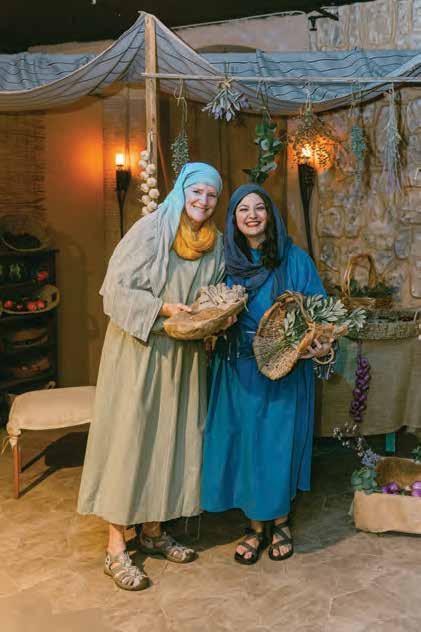


Serra Club International is a lay apostolate of the Catholic Church that aims to promote vocations and foster a culture of vocation awareness. Named after Saint Junípero Serra, the Spanish missionary who founded several missions in California during the 18th century, Serra clubs worldwide embody his spirit of evangelization and service by encouraging and affirming those considering a life dedicated to God through priesthood or religious orders. We club members, known as Serrans, collaborate with local parishes, schools, and the archdiocese to plant seeds of faith, offer prayerful support, and create opportunities for discernment.
The Serra Club of Cincinnati supports seminarians and those in formation, offering moral support, financial assistance, and personal encouragement, in part through programs and events we hold. We offer monthly Holy Hours devoted to priests and seminarians, held on the First Friday, in multiple archdiocesan parishes.
We also host vocation awareness weeks, priest appreciation dinners, and receptions for newly ordained men, their families, and friends. These initiatives bring together clergy, religious, and laypeople in a spirit of gratitude and celebration. We also send handwritten cards to priests and consecrated religious men and women, letting them know we appreciate all they do.
Serrans are also involved in youth outreach, partnering with Catholic schools and religious education programs, to share the beauty and relevance of religious vocations. Through school visits and more we invite young people to consider how God may be calling them to service.
At its heart, the Serra Club of Cincinnati is a community bound by faith and purpose. Our members unite in regular prayer,
especially for an increase in vocations and for the perseverance of those already answering God’s call. The club encourages a practice of daily prayer, participation in the sacraments, and spiritual development through study and reflection.
And fellowship is an essential element of our culture! We build friendships through shared mission and mutual support, creating a welcoming environment that draws members from varied backgrounds. Our activities are designed to both promote vocations and deepen members’ own spiritual lives.
Beyond our personal benefit, the Serra Club has measurably impacted the local Church over the years, with numerous priests and religious citing the club’s encouragement and support as pivotal in their discernment and formation. Its ongoing relationship with the archdiocese helps ensure that vocation promotion remains a priority in the greater Cincinnati area.
Representing both a legacy and a living movement within the local Church, Serra Club of Cincinnati’s dedication to fostering vocations, nurturing community, and living the Gospel is a model for lay engagement, ensuring that the call to serve is heard, answered, and celebrated for generations to come.
The Serra Club is open to Catholic men and women who feel called to support the Church’s mission of vocation promotion while advancing their own faith journey. Attending a meeting is an excellent way to learn more and meet us! Meetings are held at the Cathedral Basilica of St. Peter in Chains on Monday evenings after the 5:30 p.m. Mass or on Zoom. For more information, contact me, Cheryl Bredestege, at privatecherie@gmail.com or Martha Stegbauer at mjstegbauer729@gmail.com. ✣
Cheryl Bredestege is the Vice President of Membership for the Serra Club of Cincinnati.

THE MASS OF THE EARLY CHRISTIANS: REVISED AND EXPANDED, THIRD EDITION
DR. KENNETH CRAYCRAFT
This book review starts with a two-part quiz: In the New Testament (1) what is the earliest appearance of the words in the Consecration of the Eucharist, and (2) who said them? If your answer is (1) one of the synoptic Gospels as the earliest appearance and (2) Jesus—of course!—is the person who said them, you can be excused. But you are mistaken; it is an understandable misstep. We know the words of Consecration were instituted by Jesus at what we now call the Last Supper, as recorded in Matthew 26, Mark 14, and Luke 22. The priest says these familiar words every day at Mass, as the bread and wine are transubstantiated into the Precious Body and Blood of our Lord.
But the earliest appearance, by date, of the words spoken during the Consecration of the Eucharist is not in one of the Gospels; it’s in the first letter of St. Paul to the Corinthians, which was probably written around A.D. 56. The earliest Gospel—Mark—was probably written some 15 years later, with Matthew and Luke coming some years after that. Thus, the very first appearance in writing of these words was communicated not by one of the evangelists, but by the first missionary to the Gentiles, in First Corinthians 11:23-26.
In his timeless book, The Mass of the Early Christians, recently reissued in a third edition, Mike Aquilina makes special note about this first appearance of the words of Consecration: occurring in Paul’s letter, they give us important information about both the Eucharist and the living oral tradition that guarded and transmitted those words even before Jesus was later quoted in the Gospels. As Aquilina notes, “We see the care with which ritual form was passed from culture to culture” in the early Church through the Jewish convert Paul’s writing to his Gentile flock at Corinth. This care and preservation of the words of Consecration tell us that the early Church did not form around a book, but rather around a feast—the feast of the Body and Blood of Christ. “That passage from Paul shows

not only the care of the early Christians for the liturgy but also the reason for their care,” observes Aquilina. “Moreover,” he continues, “Paul emphasizes that this action will be at the center of the new order he [Jesus] is establishing with his death and resurrection.”
Thus does Aquilina set the tone for this highly readable and deeply informative early history of the Church’s celebration and promulgation of the Mass. As with all of his dozens of books, Aquilina engages a broad range of early sources to show both the Mass’ continuity, and deep reverence in which it was held by the early, developing Church. As he acknowledges, we do not have a clear and certain form of the entire liturgy from those earliest days. But we do know that the words of Consecration were always at its center, with everything else in the developing liturgy built around the Consecration of the Eucharist, the summit of our faith.
For me, the highlight of the book is the last chapter (33, which cannot be a coincidence), in which Aquilina takes us into a reconstruction of what a first-century Mass might have looked like. This is not mere speculation, as he builds this scenario from a close reading of the theologians and councils through which the liturgy was developed and preserved. This tour through the earliest treatment of the Mass gives us fresh eyes through which to see and understand our own participation in the “medicine of immortality,” as St. Ignatius of Antioch put it. As such, one might call The Mass of the Early Christians a handbook companion for the care of the soul. ✣

$22.95
KARY ELLEN BERGER
Woodworking has run through the Otmar family line for more than five generations. For Josef Otmar V, however, the craft became more than a trade—it is a vocation, one that serves the Church by creating sacred spaces for Eucharistic worship.
Otmar’s journey into woodworking began early, when he entered an art contest at just 11 years old, crafting a piece out of veneer that won first prize. A few years later, while studying at Moeller High School, he sculpted a figure of Christ holding up the world, symbolizing unity among the races. That piece still hangs in his home, a daily reminder that faith has always guided his art.
“As with many things we do liturgically, it starts out as one thing, and it just becomes something God wants it to become,” reflected Otmar. “It’s out of our control.”
He grew up with a deep appreciation for the Catholic faith and his family’s sacrifices. His father, once a slave laborer during World War II, escaped both Nazis and Communists before beginning anew in the West. That resilience, Otmar believes,
shaped his own commitment to using his gifts for more than wealth or acclaim: for service.
“I’ve never wanted to get rich,” said Otmar. “I just want to get along, to not be a burden—and to give my talents back to the Church.”
Over the decades, his hand-carved works have found homes in parishes across the Archdiocese of Cincinnati and beyond. Each piece is prayerfully designed and constructed with precision, from altars and sculptures to baptismal fonts and crosiers. Among his most meaningful creations are tabernacles and monstrance cabinets—sacred vessels holding and displaying the heart of Catholic life: the Real Presence of Christ.
“When you see that monstrance cabinet lit up with the Eucharist inside, it’s absolutely glorious,” said Otmar. To make that moment even more radiant, he sometimes sprinkles fine silver powder behind the background so the light shimmers around the Blessed Sacrament. “It’s as if we are giving it the
Continued on page 18.


Continued from page 16.
kind of reverence of holiness it deserves.”
For Otmar, this work is inseparable from his own spiritual life. “When I do liturgical work, it calls me to a higher standard, a deeper faith,” he explained. “The Eucharist is what sets us apart as Catholics. Creating these sacred spaces inspires me to embrace my faith more closely.”
That connection between craft and faith makes Otmar’s work a true vocation. He shares his time, talent, and skill by guiding the faithful to encounter Christ in the Eucharist.
“I pray a lot before I design,” Otmar said. “I ask the Holy Spirit to guide my hand.” Often, he sees God’s providence in the smallest details—a client offering a piece of wood that later becomes the perfect carving, or a chance encounter leading to a new commission. “People call it luck or coincidence. I call it God’s invisible hand in our lives.”
Otmar is currently working on furnishings for the Roger Bacon High School chapel. Like every project before it, he sees it as an opportunity to promote deeper Eucharistic devotion. Looking ahead, his dream is simple but profound: to see more parishes create a space that elevates adoration of the Blessed Sacrament.
“If I could, I’d build a monstrance cabinet for every church in the archdiocese,” said Otmar.
To Otmar, woodworking is not merely a craft passed down through generations. It is a vocation— an offering of skill, prayer, and love that helps the faithful encounter the mystery at the heart of Catholic life: Christ present in the Eucharist. ✣
For whoever would save his life will lose it, and whoever loses his life for my sake will find it. (Mt. 16:25)
“Your life is not about you,” our pastor said with a chuckle as he began his homily. "Sorry to disappoint."
I nodded in solemn understanding from the vestibule. With a fussy baby on one hip and a willful toddler tethered by an arm, plus two more boys sitting with my husband, I was aware that my life wasn’t about me.
It’s a tendency we Christians are called to correct our whole lives. I know well that things go south when I place myself at the center; but to place Christ there and serve Him through serving others is unexpected bliss.
The holiday season is upon us, my friends; at a time when we quietly delight in simple indulgences, presents, and wishes fulfilled, there’s no better time to recall this and recognize what life is supposed to be: an imitation of Jesus’ generosity, mercy, and love. What infuses life with meaning is when you give it away.
Ten years ago, I experimented with a shift from clinging to my own wants to loving the person in front of me simply because he or she belonged to Christ. For two weeks leading up to my birthday, I performed thirty acts of kindness that were simple enough to do with kids in tow, but effective enough to transform my heart. Through it, I saw how easy and joyful it is to give when I spend my life for others.
For my husband, I left notes where he would find them, took small tasks off his full plate, encouraged him to go out with friends, and put away my phone when it was just he and I. In two weeks, I saw a peace in him that I hadn’t seen before. He felt supported and loved, and it changed the way he interacted with the kids and with me.
I hid notes for the kids, too, though most were little pictures because they weren’t readers yet. I surprised them with a trip to their favorite park one day and donuts on another. And I said “yes” to more games, books, and playing outside. In two weeks, bickering decreased and even bedtimes became easier.
Around town, I did the classic “pay for the person behind you” move in the drive-through, which was especially good for humility since I couldn’t see the person’s reaction or receive their thanks. It was refreshing to love and let go! I also watched my friend’s kids to give her a break, handed out $5 gift cards to strangers, and surprised my Bible study with fresh confections.
After two weeks, I was able to receive kindness from others more fully, now recognizing the gift of self they offered. On my birthday, I didn't wake expecting to receive anything. I treated myself to my favorite breakfast and went right along with our family's rhythm. In calling me to generosity and living for others, the Lord purified my heart.
Here’s the point: Giving is a blessing from the Father, an imitation of Jesus Christ, and an act prompted by the Holy Spirit. Being made in the image and likeness of God, selfgiving and generosity are written into our identity. It’s natural to us! In the next several weeks of plans, parties, recipes, and shopping, I encourage you to let go of your own will and make a practice of seeking to delight someone else. The certain result will be a more grateful Thanksgiving that could be relaxing. Christmas will be merrier, and in between the two, you’ll have peace and calm as opposed to frenzied preparation. It’s both humbling and marvelous how the Lord uses us to brighten the lives of others, while simultaneously bringing us to change. ✣


The Archdiocese of Cincinnati has 39 religious congregations with over 600 men and women. Most are past retirement age and continue to serve locally.

Your Gift Helps:
• Provide financial assistance to religious communities in need
• Support elder care and retirement planning
• Fund education to enhance quality of life for senior religious
• Offer practical expertise and consultations for the Religious
How to Give:
• December 6th and 7th at your parish
• By mail: Office for Consecrated Life, Attn. Maria Reinagel, 100 E. 8th Street, Cincinnati, OH 45202 Checks payable to the Archdiocese of Cincinnati/RFR
• Online with the QR code
SHINE ON | Dominick Albano
“The men we want to become priests aren’t coming to us. We have to go out and find them.”
I first heard these words three years ago, and the Holy Spirit has never let me forget them. They were shared by a friend, a former vocations director, expressing how hard he had to work to recruit young men for the seminary.
He described everything he had done to find good, holy Catholic men whom he could invite to consider the priesthood. I was struck by how incredibly difficult and time-consuming it sounded, and I thought:
Well, we can do something about that!
That was the Holy Spirit’s first inspiration in me for what became the National Society for Priestly Vocations. After nearly two years, with the idea lingering in the back of my mind and surfacing during prayer, I finally shared it with a friend.
He was excited. We prayed, spoke with our spouses, and decided to trust the Holy Spirit and give it our best effort. That’s when the National Society for Priestly Vocations (NSPV) was born.
We defined three goals:
• Ensure every young man knows the priesthood is a joyful, heroic life.
• Invite every young man to wonder if the priesthood might be part of God’s plan for his life.
• Connect young men with their local vocations director.
Every passionate Catholic knows the Church needs priests to thrive. We’ve heard about the so-called priesthood crisis for decades. There may be many
reasons for the apparent decline in vocations, but NSPV focuses on two simple and solvable problems.
The first is an image problem.
Young men don’t view the priesthood with curiosity or wonder. They don’t see it as joyful or heroic. They aren’t inspired by what God could do through their lives if He called them to the priesthood. And while we can’t make the priesthood seem like something it isn’t, we can help dispel the lie that it’s a lonely, wasted life.
The second is a tactics problem.
We know the most effective way to spark a vocation is a simple invitation: “I think you’d make a great priest.” Nothing replaces that. But without a personal invitation, how would a young man today ever hear that God might be calling him?
In many (arch)dioceses, the primary tactic is displaying a vocations poster in the back of a church.
It’s just not nearly enough.
For years, I’ve preached different versions of the same message through my books and the parish missions I’ve given: You’ll never truly be happy unless you’re doing what God wants you to do.
This, I believe, is what God wants me to do. When I look at my talents and skills, my professional background, and the path God has led me on, it feels like everything has been preparing me for this work.
Visit us at nspv.org to learn more and please keep this mission in your prayers.
The joy of the priesthood shouldn’t be a well-kept secret, and with your prayers, it won’t be! ✣
EILEEN CONNELLY, OSU

As the mother church for the Archdiocese of Cincinnati, the Cathedral Basilica of St. Peter in Chains serves as a focal point for worship, community life, and joyful celebrations—among them are ordinations to the permanent diaconate and priesthood. In the presence of clergy, family members, colleagues, and friends, the men eagerly and gratefully respond to God’s call amid their faith community’s prayers.
When Father Michael Willig worked in downtown Cincinnati and was discerning a vocation to the priesthood, he often stopped in the chapel at St. Peter in Chains to pray, finding the experience powerful. During his ordination in 2022, “an occasion of tremendous joy,” he recalled “spending time in that very place where I accepted the Lord’s invitation to leave everything behind and go to the seminary.”
“Growing up, my family emphasized the importance of discerning one’s vocation and that provided me with an openness to God’s plan,” explained Father Willig, who was also inspired by his brother, Father Jacob Willig, ordained in 2018, and his uncle, Father Jim Willig, who
passed away in 2001.
“I served at [my brother’s] ordination, and that was a great honor,” said Father Michael Willig. “Seeing my brother’s sense of peace and trust in the Lord and the fulfillment of the great journey of his vocation was very special.”
Now, as the director of the Archdiocesan Vocations Office, he encourages area Catholics who have never attended ordination at the cathedral basilica to consider it.
“It’s such a beautiful moment for the Church and the archdiocese,” Father Willig said. “St. Peter in Chains is packed with representation from all over the archdiocese.
As the men lay prostrate during the Litany of Saints, asking the intercession of the whole heavenly court, the prayers of the people of the archdiocese are also with them, asking for the Lord’s mercy and strength.”
Deacon Chris Jasek’s ordination to the permanent diaconate this past April was just as meaningful and deeply personal: during the same Mass, his son, Daniel,
was ordained as a transitional deacon, on the path to priesthood.
“It was very special and very joyful,” said Deacon Chris Jasek, who serves in the St. John Paul II Parish Family. “The Holy Spirit was present, and you could just feel that it was God’s will. Daniel’s ordination to the priesthood next year will be another joyous time.”
Chris Jasek began his journey to the diaconate more than 15 years ago, but put it on hold while he and his wife, Denise, raised their five children. “I’ve been blessed to lead and participate in many ministries as a layperson, but it seemed the Lord was asking me to take on a more public-facing role in the Church,” he said. “I finally had the courage to answer His call.”
During the Rite of Ordination for the permanent diaconate and transitional diaconate on April 26, it was especially powerful to “be there … with the wider Church,” Deacon Jasek said. “When St. Peter in Chains is full, the presence of everyone is just awesome. And, at the beginning [of the] ordination, when your name is called and you say, ‘Present,’ it is like the Lord is calling your name in front of the whole Church, and you’re responding to God’s call with all of their prayers to support you.”
Also ordained in April, Deacon Chris Bergman agrees the atmosphere at the cathedral basilica contributes to the ordination experience. “The space is very sacred, and the design reminds you of the history and tradition of ordination in the Church,” he said. “You walk into St. Peter in Chains and feel that the saints are there with you, and [you] are reminded of all the people of faith who have gone before you. There really is that sense that you’re part of something much bigger than yourself.
Deacon Bergman, who serves the Eastside Family of Parishes, said his call to the diaconate unfolded over time and that his discernment was akin to having an ongoing conversation with God. “With every step, I felt like God was leading me down the path to becoming a deacon, even when there were bumps in the road,” he said.
When that joyful April day arrived, it was, “in so many respects, surreal,” Deacon Bergman added. “The place was absolutely packed, and we were surrounded by so many people that had come to support us. The sense of welcoming was amazing. In Archbishop [Robert] Casey’s homily, it was like he was speaking to each one of us individually. The whole thing was such an experience of faith and community—in a beautiful and holy place.” ✣


MATT HESS
Next May, Eugene (Gene) and Dorothy Richard will celebrate seventy years of marriage. Their love was confirmed over those years by many blessings from God and their family. And for those around them, Gene and Dorothy have been a guiding light on the joys that big families and strong faith can provide.
It all started at the local dance hall, Crystal Ball, when Gene saw Dorothy across the room. She had discerned religious life for two years with the Poor Clare Sisters, but more recently had come to know God was calling her to be a wife and mother.
“Dorothy had a red dress on that she had sewed herself,” remembered Gene, “It was made of corduroy.” Although he had met her before, that night confirmed for Gene that Dorothy was the one he was looking for. He was 22 and she was 20. In the 1950s, they thought that they were pretty old to be getting married.
With Gene in the service, the newlyweds moved to a base in Germany. While both came from large families—Gene was the baby of 14 and Dorothy was
the fourth of ten—they didn’t plan on a big family. “We accepted the will of God for us,” Gene said, “We are open to God’s gifts.”
They also didn’t plan to encounter Servant of God Therese Neumann while in Germany. The Richards visited this mystic and stigmatic on a rainy Good Friday in the late-1950s, for a brief meeting that the couple sees as a moment of grace. They believe this holy woman’s intercession has supported them in their marriage and family life. Soon after the meeting, their first child, Angela, was born.
Ten more children followed, and the family moved to a farm near the parish of St. Remy in Russia, Ohio. Raising a family in a rural setting had its advantages. “They always had something to do,” laughed Gene, “You didn’t have to wonder where they were.”
Later in life, Gene encouraged his grandkids to collect unwanted rocks from the farm when they visited, rewarding their efforts with milkshakes. Today, the grandkids are a little taken aback to learn that great-grandkids get Grandpa’s milkshakes without performing any labor.

Farm life was the perfect setting for Dorothy and Gene’s values of hard work, straightforward honesty, generous hospitality, and a deep trust in God, and it was modeled to the Richards’ children by their parents. As a snapshot of this: it is the family practice to pray the rosary on one’s knees in the kitchen after a hearty dinner, and that practice persists in the family today.
Their legacy includes 68 grandchildren from Dorothy and Gene’s 11 children, including a priest for the Archdiocese of Cincinnati, Fr. Elijah Puthoff. Currently Parochial Vicar for the St. Carlo Acutis Family of Parishes between Dayton and Cincinnati, he was especially good at helping Grandpa with those rocks.

Cincinnati, Ohio

As of this writing, Gene and Dorothy have welcomed their 101st great-grandchild, Henry Francis Richard, into their family. They only recently celebrated the birth of Gabriel Gene Hochstetter, the 100th great grandchild, this past summer. By next year, Gene and Dorothy expect to meet their 110th grandchild, and hope their “expecting” numbers only increase in the coming months.
The family’s abundance of children are a source of joy and the best blessing one could ask for in a marriage, said Gene. “The pinnacle of love is a child.” And the excitement around a new baby never gets old for them. Their children and grandchildren particularly remember Dorothy’s reaction each time they announced they were expecting. She was as giddy as the mom-to-be and absolutely lit up.
Gene and Dorothy Richard are a testament to the beauty of the vocation of marriage. Through their openness to God’s plans and delight in family life, they have passed that joy on to their children and grandchildren. The couple’s example of living the Christian values is, then, benefiting even the growing next generation—all 110 of them. ✣


Our Mission:
To pray for the needs of the Church, the World and all people Women ages 22-50: Do you feel called to the contemplative life?
Our Mission:
To pray for the needs of the Church, the World and all people
Sr. Dianne • 513-825-7177 • VocationDirectorOSC@gmail.com Le a rn Mo re at: PoorCla re s Cincinn a ti.or g
Our daily life includes celebration of the Eucharist, personal and communal prayer, community work, study, recreation and rest.


DIVINE SEEING | Emma Cassani
In a visually saturated world, it’s easy to feel overwhelmed and become desensitized to beauty. Visio Divina, Latin for “divine seeing,” encourages us to slow down and engage in visual contemplation, using art as a profound tool for connecting with the Divine.
Begin by making the sign of the cross and inviting the Holy Spirit to guide your contemplation. Spend a moment meditating on The Sower (ca. 1888), painted by Vincent Van Gogh. This work is located at the art museum in Zürich, Switzerland. Then, read Matthew 13:1-8 and 13:18-23.
Vincent Van Gogh was born in 1853, the oldest of six children. His father, a minister in the Dutch Reformed Church, raised the family on strong Christian morals. Because they were middle-class, his parents lacked the funds to provide their children with a prestigious education and social standing; instead, they instilled a rigorous work ethic. For Vincent, this pressure became a burden, fueling tension at home and resulting in frequent mental breakdowns.
Like many young people, Vincent struggled to find his vocation. He first tried art-dealing through his uncle, who
secured him a position at the international firm, Goupil & Cie. At first, he loved seeing and learning about the artwork that passed through the gallery, but the work soon felt unfulfilling. Drawn more deeply to the faith, he dreamed of becoming a pastor like his father. Vincent attempted theology school but failed the entrance exam, leaving him restless and uncertain once again.
Still feeling called to serve Christianity, Vincent became a missionary in 1878. Immersing himself in the poverty of the Belgian coal miners, he aided the poor and sick and gave away what little he had, even choosing to sleep on the floor. His radical act of humility unsettled the mission leaders, who also criticized him for being short-tempered, disorganized, and poor at communication. Feeling out of place once again, Vincent confided his frustrations in letters to his brother, Theo, often including small sketches. It was Theo who eventually encouraged Vincent to devote himself fully to art.
Taking a new direction, Vincent threw himself into illustration at the age of 27. Knowing almost nothing about drawing, he devoted every hour to practice, reading countless books, and copying the masters. Having quit a drawing class after a month due to constant criticism of his technique, he came to realize that artistic expression mattered more than achieving a rigid academic style. He struggled with money and moved around frequently, still maintaining contact with Theo.
Vincent fell in love with depicting the working class and even dressed like one, which further disappointed his family. “He hoped that his art would reach ordinary folk; he wanted to make figures ‘from the people for the people’” (Vincent van Gogh: A Life in Letters, 36). Inspired by Jean-Francois Millet, who often painted peasants in the fields, Vincent moved to the rural province of Drenthe in the Netherlands.
There, he painted somber rural scenes of peasants, cottages, and Dutch landscapes—his palette, dark and heavy. It wasn’t until 1888, when he moved to Arles in the south of France that he discovered his love for color and light. There, in France’s countryside, Vincent became the Van Gogh we’re more familiar with.
In Arles, he was determined to portray peasant life honestly and in his own style. When he sent his studies to his Dutch friend and fellow artist, Anthony Van Rappard, Rappard’s reaction was harsh: “How dare you invoke Millet and Breton” (Letter 514). To Rappard, who was well-trained and faithful to academic standards, Vincent’s style seemed crude and unworthy of comparison to the greats. But, for Van Gogh, the
roughness was intentional—he wanted to capture the rawness of peasant life, not idealize it.
It was also in Arles that he sketched and painted The Sower multiple times. Captivated by this scene, he channeled both his admiration for Millet and his own search for meaning through color and light.
Beneath an electric lime sky, the large sun settles into the horizon. As evening draws near, a persistent laborer tends his fields. The air is cool and crisp; he is bundled in dark blue layers of his worker’s attire. He bends and scatters seed with open hands, steadily covering the soil row by row.
Notice the colors—vibrant pastels, humming with vigor. Van Gogh layers complementary hues—purple and yellow, blue and orange, red and green—to heighten the drama of the evening light. At this time, he was particularly inspired by Japanese woodblock prints with their sharply contrasted color, bold line, details of nature, flat perspective, and enlarged forms—which is why the sun appears so exaggerated.
Dr. Michael Banner of the University of Cambridge beautifully observes that the “incandescent colors are meant to communicate the moment’s intensity, as the sower, with the sun forming a halo behind his head, bends to his holy task.” The sun becomes a halo, marking the sower as Christ Himself—or perhaps a saint in the making.
At the end of a ridge, the sower meets a gnarled tree, its branches bare yet budding. The tree seems to mimic his movements, twisting as he twists. Banner notes that “The tree is heavily pollarded, and at certain times of year, might itself seem dead, like the seed. Yet from its wounds fresh blossom springs, holding over the sower’s lowered head a sign of promise… .” The tree cuts the canvas diagonally in two: the sower and sun on one side, the open fields on the other. It feels like a threshold, a reminder of death and the rise to new life.
And then there is the time of day. Farmers normally begin sowing at dawn, yet Van Gogh shows us the task at dusk. Perhaps the sower has labored from morning to evening, scattering seeds until the very last light. Night will fall, but dawn will return with fresh beginnings and new growth.
Continued on page 28.
Vincent found wisdom in watching the peasants work in the fields. During his time in the French countryside, he filled sketchbooks with sowers, diggers, and ploughers, determined to capture the dignity of their labor. He believed painting peasants was a serious endeavor—not to be used as decoration but as an art that could give people “serious things to think about” (183, [Letter 497]). To him, the peasants formed a world of their own, “so much better in many respects than the civilized world” (184, [Letter 497]). He was convinced that the city’s art critics had much to learn about life from the humility and perseverance of the country folk.
In one of his many letters to his brother Theo, he describes this newfound wisdom: “In every person who’s healthy and natural, there’s the power to germinate as in a grain of wheat. And so natural life is germinating. What the power to germinate is in wheat, so love is in us” (217, [Letter 574]).
In reflecting on wheat, Vincent was reaching for something universal—the hidden force of life itself. For us as Christians, that life-force is not only natural, but supernatural: it is the Word of God, sown in us by love. In Matthew’s Gospel, Jesus tells us that the seed is the Word, cast freely on every type of soil—the varying conditions of the human heart: hardened, shallow, distracted, or receptive. God the Father is the first and perfect Sower, sending His Son—the Word—into the world, thus initiating the mission of salvation. Christ scattered the seed without waiting for the soil to be worthy. This shows His limitless and merciful love, a love that trusts grace can take root even in the hardest of hearts. God also invites us to share in His work as co-sowers, carrying the same Word into the world so that His harvest may be full.
Vincent’s words bring a tender layer to this parable. Just as a grain of wheat contains the hidden power to sprout, so too, love lies within each of us, waiting to germinate. The Word of God, when planted in the good soil of our hearts, awakens

TRANSLATION: Here is a sketch of my latest painting still in progress. Immense yellow disk like the sun. Sky greenishyellow with pink clouds. The sower violet, the field is and the tree blue-green. — Canvas of 30
this love and bears much fruit. The peasants he admired— those who labored to sow, reap, and live close to the earth— become for us reminders of this truth: that life itself is a field, entrusted to our care. We are called to be both the good soil and the sower—receiving God’s Word with openness and scattering it freely in love.
Looking back at Vincent’s life, he constantly wrestled with his faith and finding his place in the world, often comparing himself to a free bird trapped in a cage. Even though his vocation did not take traditional form, he fulfilled it through his art, preaching through color and canvas.
Like Vincent, our ways of spreading the seeds of faith may differ, yet all of us are called to sow, no matter our vocation or stage of life. In homes and workplaces, in friendships and quiet encounters, each of us carries seeds of the Living Word. The question Van Gogh’s painting invokes is simple yet searching: how are you spreading the seeds of faith? ✣
Bakker, Nienke, Hans Luijten, and Leo Jansen, eds. 2020. Vincent van Gogh : A Life in Letters London: Thames & Hudson.
Banner, Michael. “The Parable of the Sower in the Visual Commentary of Scripture.” 2018. Ed. by Ben Quash. TheVCS.org. London: The Visual Commentary on Scripture Foundation. Van Gogh Museum. 2019. “Discover the Life and Work of Vincent van Gogh.” Vangoghmuseum.nl/en.
SISTER JORDAN CAELI GEIGER, O.P.
When I first heard a call to religious life, I hoped my story would end up like Abraham and Isaac. I thought maybe the Lord would ask me to consider something extreme: that He would only take me so far and let me prove my love to Him, then send His angel to stop me before actually going through with it. Then I would be able to get on with life as I had always planned it!
As I began my journey hoping to be like Abraham, I walked with a patient God. I attended daily Mass and received the sacraments often, and He led me to good and holy priests who mentored me and encouraged conversations with sisters and visits to various religious communities. And the Lord blessed me with a community of virtuous friends striving to know Him. In daily prayer, I began to encounter the God who made me and knows what He made me for.
I remember the adoration chapel where I first found in my heart—not the fear of being called to religious life but instead —a deep desire for it that surprised me. I recall sitting in my college house kitchen reading a book on Dominican spirituality and becoming overwhelmed with the sense that Dominican life was made for me and I for it. I still see the scene as I sat in a rocking chair on our Motherhouse’s back porch after learning about St. Dominic for the first time. I had a distinct feeling that he was very close to me and that he wanted me to follow in his footsteps to heaven. Little by little, the Lord led me by the hand and revealed my own heart to me. What had previously been hidden from my eyes was made plain as I followed His lead, first with hesitation, and then with enthusiasm.
Jesus Christ knows all of our hearts and wants us to flourish. There is a deep joy and peace unknown to the world when we can (even very slowly!) let go of our fears and follow His lead, because He knows what we were made for. Jesus Himself assures us that anyone who endures trials for the sake of His name will receive eternal life and that
this abundance of life begins even now!
In my family, we are blessed to see a variety of vocations. I have witnessed my parents and siblings becoming holy in their vocations, which are as unique as the people themselves. I have seen God give them the grace to be faithful in the midst of trials, and I have seen their love grow for Him and those they are called to serve. Before my eyes, they are being transformed into the people God created them to be. For my part, I see daily the ways the Holy Spirit is moving in my life and the lives of my fellow religious sisters, transforming us as well.
In August, I was blessed to make my first profession of vows alongside eleven other women as we responded to the Father’s call to be brides of Christ, living in imitation of Him and His Blessed Mother. The Church gives religious life as a safe and sure path to holiness for those called to it, and I have witnessed with gratitude its beautiful, joyful, and transformative power in the lives of those who live it faithfully.
I am glad, in the end, that my story did not turn out like Abraham and Isaac’s story. They prefigured the redemption wrought by Christ, but the Lord has called me to fullness and fulfillment in living Christ’s life as a religious sister. In His goodness, He wants to lead and guide each of us. He gives us the grace, if we are willing, to say yes to whatever He asks, and to keep saying yes every day thereafter. I recently read George MacDonald’s poem Obedience, the last stanza of which I think captures the beauty of this yes: “Then into His hand went mine; / And into my heart came He; / And I walk in a light divine, / The path I had feared to see.” ✣
Sister Jordan Caeli Geiger, O.P. from the Archdiocese of Cincinnati recently made her first profession of vows with the Dominican Sisters of Saint Cecilia.
Have you noticed a mild decline in memory or problem-solving ability?
Who
Men and women 62 to 80 years old who are aware of mild cognitive changes, such as forgetfulness, and who have not been di agnosed with a cognitive disorder such as Mild Cognitive Impairment or Alzheimer’s.
What
The purpose of this study is to evaluate a new formul ation of omega-3 fatty acid supplement that may provide greater benefit for brain function.
Pay
Compensation for this study is $920 for attending 4 in-person visits and regular phone visits over a 25-week period.
Details
For more information, please contact Karen, RN at tugrulkc@ucmail.uc.edu or call 513.558.6831.

IRB#2024-0620
CNS DHA Delivery in Elderly Adults


NICOLE A. BEST, PSYD
At the moment of our Baptism, the most marvelous and terrifying event occurs, we are drafted into military service. Just as a civilian’s status changes to “Active Military” as soon as he or she begins Basic Training, so too do we become soldiers of Christ and full-fledged members of the Church Militant as soon as the Holy Spirit’s anointing comes upon us at Confirmation.
Have you ever noticed how often the Scriptures and the Church use military language in describing the life of Christian discipleship? From the first book of the Bible to the last, the course of salvation history is seen through the lens of spiritual warfare.
“Then war broke out in heaven: Michael and his angels battled against the dragon … [T]he ancient serpent, known as the devil or Satan, the seducer of the whole world, was driven out; he was hurled down to earth and his minions with him … he pursued the woman who gave birth to the boy … [and] went off to make war on the rest of her offspring, on those who keep God’s commandments and give witness to Jesus” (Rev 12:7, 9, 13, 17).
“Then the Lord God said to the serpent: ‘Because you have done this...I will put enmity between you and the woman, and between your offspring and hers; He will strike at your head, while you strike at his heel’” (Gn 3:14-15).
At a certain point in our lives, we all decide whose offspring we are, the woman’s or the dragon’s (Jn 8:44). Even a non-decision by a fence-sitter is a decision. There can be no draft-dodgers in this war (Rev 3:15-16). We must honestly ask ourselves, “Whose Kingdom am I fighting for? Does my life (thoughts, words, actions) defend and spread the Kingdom of God or that of His enemy?”
Sacrifice looms large. Service is not enough. It is the difference between rendering help to someone and giving up something precious as an offering to God. Christ told us that he came to serve AND to give up his life as a ransom for many (Mt 20:28). He invites us to do the same (Jn 12:24, 15:13; Mt 16:24-26).
As with all soldiers, we must know our enemy and prepare adequately for battle. St. Paul exhorts:
“ ... [D]raw your strength from the Lord and from his mighty power. Put on the armor of God so that you may be able to stand firm against the tactics of the devil. For our struggle is not with flesh and blood but with the principalities, with the powers, with the world rulers of this present darkness, with the evil spirits in the heavens. Therefore, put on the armor of God, that you may be able to resist on the evil day and, having done everything, to hold your ground. So, stand fast with your loins girded in truth, clothed with righteousness as a breastplate, and your feet shod in readiness for the gospel of peace. In all circumstances, hold faith as a shield, to quench all [the] flaming arrows of the evil one. And take the helmet of salvation and the sword of the Spirit, which is the word of God.” (Eph 6:10-17)
The question then becomes: Who will get us battle-ready? God himself? Assuredly. Our parents? Hopefully. But there is another force, God’s Tier 1 Special Operations Unit, who the King has tasked with administering a weapon so powerful that no one else on earth is able to bestow—the fortifying nourishment of the sacraments. Pope Benedict XVI reminded us, “[Y]ou were not made for comfort, you were made for greatness.” Next time we will explore the life, courage, and sacrifice of the magnanimous men who followed this counsel; the men we call “priests.” ✣
Dr. Nicole Best is a Clinical Psychologist and member of the Archdiocese’s Priest-Care Initiative, which provides ongoing education and support to our local priests.

DEACON MARK MACHUGA
“This is at the very heart of the diaconate to which you have been called: to be a servant of the mysteries of Christ and, at one and the same time, to be a servant of your brothers and sisters. That these two dimensions are inseparably joined together in one reality shows the important nature of the ministry which is yours by ordination.”
–Pope St. John Paul II, September 1987 address to deacons of the United States
With these words, Pope St. John Paul II beautifully expressed the very nature of the vocation and mission of the deacon: service. The term “deacon” has its roots in the Greek words for service, diakonia, and servant, diakonos. In the Acts of the Apostles, seven men were selected “to serve at table” so that the twelve apostles could concentrate on the preaching of the Gospel (Acts 6:1-6). It is widely accepted that this reference to service at the table is the early Church’s institution of the vocation of the deacon.
How does today’s deacon fulfill this call to the ministry of service? Diaconal service is expressed in three primary areas: ministry of the Word, ministry of the Liturgy, and ministry of Charity. The ministry of the Word identifies the deacon as evangelizer and teacher through the proclamation of the Gospel, preaching, catechetical instruction, and witnessing the word of God through the example of his own life. The ministry of the Liturgy is where we most often encounter the deacon—at Mass offering the penitential rite, the intercessions, and his service at the altar. But the ministry is also encountered in his other sacramental duties—baptisms, weddings, funeral rites, and exposition of the Blessed Sacrament/Benediction. Finally, the ministry of Charity is the deacon’s service to the poor, the imprisoned, the sick, and the “widows and the orphans”—all those less fortunate in our community.
The Church recognizes the sacramental nature of a deacon’s service by ordaining him through the sacrament of Holy Orders. As we know, sacraments impart grace. Through this sacrament, the Catechism of the Catholic Church (CCC) tells us that “deacons share in Christ’s mission and grace” and “it is the task of the deacon to assist the bishop and priests” in many areas of ministry throughout the Church and the community (CCC, n.1570). The sacrament of Holy Orders elevates
the ministries and service that a man has already been dedicated to. Through a rigorous formation program and the grace bestowed through the sacrament, a man responds to and participates in the call of the Holy Spirit to a life-long vocation of service.
The Second Vatican Council reestablished the permanent diaconate in the Church. Lumen Gentium, a Vatican II document promulgated in 1964, stated: “The diaconate can in the future be restored as a proper and permanent rank of the hierarchy.” In 1967, Pope Paul VI issued the apostolic letter Sacrum Diaconatus Ordinem, formally restoring the permanent diaconate in the Latin Church. The Archdiocese of Cincinnati recognized the need for deacons and began the formation of permanent deacons in 1974. The first ordinations occurred in September 1976, ordaining 39 men to the permanent diaconate in two separate ordination Masses—one presided by Archbishop Joseph Bernardin and the other presided by Auxiliary Bishop Daniel Pilarczyk. Today, 218 deacons serve the archdiocese, with 19 men currently in
formation.
Permanent deacons have proven to be a true blessing to the Church, assisting priests and meeting the needs of their brothers and sisters with dedication, compassion, and selfless love. Lumen Gentium captures the deacon’s ministry beautifully: they are ordained “not unto the priesthood, but unto a ministry of service. For strengthened by sacramental grace, in communion with the bishop and his group of priests they serve in the diaconate of the liturgy, of the word, and of charity to the people of God. … Let deacons be mindful of the admonition of Blessed Polycarp: ‘Be merciful, diligent, walking according to the truth of the Lord, who became the servant of all’” (Lumen Gentium, n. 29). ✣
Deacon Mark Machuga is Director of the Office of the Diaconate, Vice-Chairman of the National Association of Diaconate Directors, and serves as deacon at the Mary Queen of All Saints Family of Parishes in Cincinnati.
“To speak the joy of my soul at the prospect of being able to assist the poor, visit the sick, comfort the sorrowful, clothe little innocents and teach them to love God.”
- St. Elizabeth Ann Seton


SUSAN BERGMAN
For Dr. Daniel Fagel, true healing begins where modern medicine intersects timeless Catholic values. Next May, after more than three decades as a leading gastroenterologist at TriState Gastroenterology, Dr. Fagel is retiring, but he leaves a blueprint for medical professionals to view their careers less as a job than a vocation—a ministry rooted in love, dignity, and service.
A cradle Catholic raised in Cincinnati’s Mt. Washington neighborhood, Dr. Fagel’s early curiosity and commitment shaped his path. “I was always a straight science guy,” he recalled. “Biology, organic chemistry— that was my world.” The valedictorian for his1981 Xavier University graduating class, he earned his medical degree from the University of Cincinnati in 1985.
It was Xavier that required him to take theology and philosophy courses, which began to open his heart in unexpected ways. “At the time, I thought of those classes as things to get out of the way,” he said with a smile. “But they ended up changing my life—especially Sister Mary Ruth Graf’s biblical studies course. I’ve always been an Old Testament guy, and that foundation in Scripture introduced me to the idea of selflessness.”
By the time he joined Tri-State Gastroenterology in 1991, his reputation as a skilled and compassionate physician was established. It was only years later, however, after joining a Cursillo retreat, that Dr. Fagel experienced a profound spiritual awakening that truly changed how he practiced medicine.
The Cursillo movement, a Catholic discipleship model rooted in the three pillars of piety, study, and action, redefined his understanding of vocation. “Before Cursillo, I kept my faith and my medical practice separate. I believed in the whole ‘separation of church and state’ idea,” he said. “But after that weekend, I was on fire. People came into my practice to talk about GI issues, and I wanted to talk about the Holy Spirit. I realized you can’t keep these parts of yourself separate.”
From then on, Dr. Fagel began every day praying, “Help me, God, be the doctor I need to be for this patient.” He found himself more attuned to his patient’s spiritual needs. When treating patients with liver disease, he encouraged attendance at both Alcoholics Anonymous and a church, as he understood that healing often requires both physical and spiritual restoration.
Cursillo also gave Dr. Fagel a community to help sustain his own faith. Weekly men’s prayer gatherings, often in a local bar on Saturday mornings, became a source of strength and accountability. He attended silent retreats each January, prayed the Rosary on his daily bike ride to work, and found joy in singing with his church choir. “Faith is like breathing,” he said. “And you can’t do it alone. You need the help of others to stay on fire.”
For Dr. Fagel, the connection between Catholic social teaching and the practice of medicine was undeniable. “I believe in the dignity of the human person,” he said. “Your background, your social status—it doesn’t matter. Everyone deserves to be treated with compassion. That’s what the corporal works of mercy look like in a medical practice.”
Help me, God, be the doctor I need to be for this patient.
He also made a quiet but powerful faith statement in his everyday work. At the end of biopsy reports, he signed off with “De Colores”—the traditional Cursillo greeting that celebrates the vibrancy of a life lived in Christ.
Looking back, Dr. Fagel knows he followed the path God laid out for him. His late wife, Renee, three sons, and four grandchildren have all been part of that journey. “When I was young, my dad told me I was going to be a doctor,” he said. “And honestly, I have the best job in the world. I get to help people feel better. That’s incredibly fulfilling.”
As he enters retirement, Dr. Fagel isn’t slowing down spiritually. “I never get tired of hearing witness stories—how people’s lives were empty until they found faith. That honest transformation is so powerful,” he says. “We’re all busy, but the question is: with what? Make time for the things that keep your soul alive.”
Dr. Daniel Fagel’s legacy proves that caring for the body can also nourish the soul. “No patient ever said no when I asked if I could pray for them,” he said, reminding us that compassion, dignity, and evangelization are possible in every human interaction. ✣

Alphonsus Liguori was born in Marianella, near Naples, then part of the Kingdom of Naples, on September 27, 1696. The eldest of seven children, he became a successful lawyer before being called to the priesthood. During his 90 years on earth, he was an Italian Catholic bishop, spiritual writer, composer, musician, artist, poet, lawyer, scholastic philosopher, and theologian. He founded the Congregation of the Most Holy Redeemer, known as the Redemptorists, in November 1732.
St. Alphonsus is best known for his moral theology. In his day, he fought against rigid and legalistic theology and practices within the Catholic Church and focused more on moderation and gentleness. His very popular writings on moral theology concentrate on the practical and concrete problems of pastors and confessors.
Above all, he was a practical man who dealt in the concrete rather than the abstract. His life is a model for the everyday Christian who has difficulty recognizing the dignity of Christian life amid the swirl of problems, pain, misunderstandings, and failures. Alphonsus suffered all these struggles. He

is a saint because he was able to maintain an intimate sense of the suffering Christ’s presence through it all.
My Jesus, I believe that You are present in the Blessed Sacrament. I love You above all things and I desire You in my soul. Since I cannot now receive You sacramentally, come at least spiritually into my heart. As though You were already there, I embrace You and unite myself wholly to You; permit not that I should ever be separated from You. Amen.

Alphonsus Bishop Books Confession Devotion Doctor Liguori Mercy Redemptorist Writer

CHRISTIAN ANTHROPOLOGY | Andrew J. Sodergren, M.T.S., Psy.D.
Note: This article is part of an ongoing series on Pope St. John Paul II’s “Theology of the Body.”
In Part Two of Theology of the Body (TOB), Pope St. John Paul II focuses on the Sacrament of Marriage and sexual ethics. A large portion of this material is inspired by the fifth chapter of St. Paul’s Letter to the Ephesians (Eph 5:2133). If you have not read this passage in a while, I encourage you to take out your bible and read it now. You might want to bookmark it as well, as we will refer back to it regularly while exploring Part Two of TOB.
Previously in TOB, the late pope meditated on Christ’s words in the gospels about the “beginning,” His appeal to the human heart, and His words about the future resurrection. The pope saw St. Paul’s text from Ephesians 5 as the “crowning” of this series of biblical passages about the human person. And he based his reflections about marriage on this passage; but in doing so, he also “presupposed” the theology of the human person that he had already developed from those prior scriptural texts. In other words, John Paul II believed that in order to interpret Ephesians 5 correctly, “one must do so in the light of what Christ has told us about the human body” (87.2), including the perspectives of original man, historical man, and eschatological man, which was the focus of Part One of TOB.
Before analyzing the passage on marriage in chapter 5, Pope St. John Paul II gives a helpful overview of the entire Letter to the Ephesians to provide context, which is summarized here. St. Paul begins his letter “by presenting the eternal plan of man’s salvation in Jesus Christ” (88.1). This serves as a central theme. The Father’s eternal plan for our salvation was revealed through Christ. We are called to become his adoptive sons and daughters through Jesus who died and rose again to redeem us from sin. He further calls all humanity into the unity of His body, the Church, of which Christ is the head. St. Paul spends the first few chapters of his letter reminding the Ephesians of this amazing divine plan for our salvation and giving thanks to God for His
unfathomable goodness to us. In doing so, St. Paul models the awe and wonder, humble gratitude, and trust that should characterize our heart’s response to God’s redemptive love.
Roughly, the second half of the Letter to the Ephesians is devoted to outlining how Christians are called to live in response to God’s plan for our salvation. According to John Paul II, we are called “to overcome the vices and acquire the virtues that correspond to the vocation all have received in Christ” (88.2). Indeed, St. Paul admonishes us to “be imitators of God, as beloved children and walk in love, as Christ loved us and gave himself up for us” (Eph 5:1-2). He exhorts us to shun sinful ways: “immorality and all impurity or covetousness must not even be named among you, as is fitting among saints” (Eph 5:3). Rather, we are called to cast off such darkness and walk in the light of Christ, praising and thanking God for His plan for our salvation and faithfully devoting ourselves to holiness.
Unity is a key theme in this part of Ephesians. First, St. Paul emphasizes and marvels at God’s plan to unite all men— Jew and Gentile—in Christ through the Church. He then exhorts his readers to live in such a way as to preserve and strengthen this unity, both in the Church as a whole and within the domestic church of the family. He speaks about the duties of spouses, parents and children, and masters and servants. St. Paul concludes with an “encouragement to spiritual battle” (88.5; see Eph 6:10-20) and a blessing.
Thus, according to the late pope, “the two main guiding lines of the whole Letter to the Ephesians” consists in 1: “The divine plan for man’s salvation,” “which is realized in the Church,” and 2: “The Christian vocation … of baptized persons and particular communities” corresponding to this plan (88.3). His reflections in TOB focus primarily on the second of these two themes and what St. Paul’s teaching reveals for us about marriage, the human person, and Christian life. We will unpack these reflections, particularly on Ephesians 5:21-33, in the following months. ✣

(Gen 1:26)
Hoisted
“Let there be ___…” (Gen 1:3)
Head of a diocese


Green beryls
Most important teaching
Son of Abraham
Drawing room
Deception
Latin for “to pray”
Mother of Isaac
Jesus called Simon this
The Garden
Pleasingly pretty 30 What the Magi brought 32 One of the 10 plagues
Flutter 34 Parable of the __ Coin
On sheltered side
Two of a kind
He blamed
Christians for
___ you crazy?

“Jesus of Nazareth, King of the Jews” (abbr.)
Two thousand years ago, in a place near Bethany beyond the Jordan river, Jesus asked this question of Andrew: “What are you looking for?” (Jn. 1:38).
These are the first words that Jesus speaks in John’s Gospel. His question becomes a theme: He asks it after the Resurrection of Mary Magdalene and of the two disciples on the road to Emmaus.
We see in this question God’s desire to reach us at the level of the heart. Jesus knows us better than we know ourselves and He knows that our desire can only be fulfilled in God. Yet, He wants to converse with us to lead us to a deeper understanding of who we are and who He is calling us to be.
Within the human heart we encounter the Lord, and within the heart we decide to follow Him.
Pope Leo XIV recently encouraged seminarians in their life of prayer: “That is the place where God makes his voice heard, and where the deepest decisions of our lives take shape” (“Meditation of Pope Leo XIV for the Jubilee of Seminarians,” June 24, 2025). It is in prayer that we learn to hear the still small voice of the Lord.
Prayer is also the arena where we wrestle with God and where conversion happens, as Pope Leo XIV further explained: “It is also the place where you will encounter the tensions and struggles (Mk. 7:14-23) that summon you to conversion, so that your entire life can breathe the fragrance of the Gospel.”
With these words—What are you looking for?—Jesus begins an invitation for Andrew to follow Him. Ultimately, Jesus calls each of us to follow Him as a Christian and in our particular vocation.
Andrew was the protoclete—“first called”—by Jesus. He is, then, also the first man called by Jesus to be a priest. So, what can we learn from the first man ever to be called by Jesus to the priesthood?
Andrew pointed others to the Lord. A priest once reflected in a homily that St. Andrew is the patron saint of the “point.” John the Baptist pointed Andrew to Jesus, and Andrew later pointed Peter to Jesus. He knows that it is not he but Jesus who is the answer. In this way, Andrew is humble. By his life and martyrdom, he still points all of us to Christ.

Andrew was a man of community, seeking wisdom. When he first saw Jesus, Andrew was standing in a small group led by John the Baptist (Jn. 1:35). Can you imagine having John the Baptist as your small group leader? Sign me up!
Likewise, in small communities, be it a Bible study or otherwise, we learn to seek the truth and learn to be Christ’s disciples.
Andrew was watching for and awaiting the Messiah, ready to act when Jesus came. He did not hesitate to follow the Lord. He knew his life mattered. Do we also recognize that our lives really matter? God has created each person for some definite purpose. You have a place in God’s design. Your life matters. You have a mission.
Saying “yes” to Jesus takes generosity. Yet, God is never outdone in generosity. Even when God asks a man to take a great leap of faith, like becoming a priest.
As Pope St. John Paul II exhorted, “Do not be afraid of the radicalness of His demands, because Jesus, who loved us first, is prepared to give Himself to you, as well as asking of you. If He asks much of you, it is because He knows you can give much”
(The Meaning of Vocation).
Along with generosity, it takes courage. Courage to trust in God, courage to risk everything on following Jesus.
The work of discovering our vocation and living it out can begin today. We start by recognizing that God has a purpose for us. We can cultivate the needed virtue to say “yes” through prayer and living generously and with courage.
Nearly two millennia since the Incarnation, Jesus continues to call men like St. Andrew to “Follow me.” Jesus calls young men to be his priests, to “put out into the deep” and “be not afraid.”
Who knows, perhaps you were created for such a time as this. What are you looking for? ✣
Fr. Michael Willig is the Director of the Vocations Office for the Archdiocese of Cincinnati.


