




by Cathy Gordon









Last February, I was texting with two friends, including Michele Luke, who I’ve known since 2014. Michele casually mentioned that she was about to head on the Salt Grass Trail Ride, a tradition for her and her father. What?! I thought. I had had no idea Michele participated in this deep-rooted Texas tradition. I had to know more. What she told me led our editorial team to kick it into high gear. Michele connected us with her dad, Dick DeGuerin, and her best friend, Rene Bennett, whose mom was the first female “wagon boss” in the Salt Grass Trail Ride. Turns out the Salt Grass Trail Ride is the largest and oldest trail ride. In this issue, read about Buzz-area families who have been involved in the Salt Grass Trail for generations and the experience on the trail, now and then. We all know what it’s like to see those rugged cowboys and cowgirls roll into town on horseback each February – as we watch from our air-conditioned cars. In this story, get a sense of what it’s like on the trail. joni@thebuzzmagazines.com
Published by Hoffman Marketing & Media, LLC 5001 Bissonnet, Suite 100, Bellaire, Texas 77401 info@thebuzzmagazines.com
Follow us on Facebook, Instagram, and X thebuzzmagazines.com
Editor-in-Chief
Joni Hoffman
Publisher Michael Hoffman
Editor Jordan Magaziner Steinfeld
Associate Editor Caroline Siegfried
Design Manager John Duboise
Staff Writers Tracy L. Barnett
Sharon Albert Brier
Cindy Burnett
Andria Dilling
Angie Frederickson
Todd Freed
Cindy Gabriel
Cathy Gordon
Michelle Casas Groogan
Dai Huynh
Annie Blaylock McQueen
Jennifer Oakley
Ben Portnoy
Cheryl Ursin
Accounting & Contract Administrator Meena Dost
Account Managers Andrea Blitzer
Jo Rogers
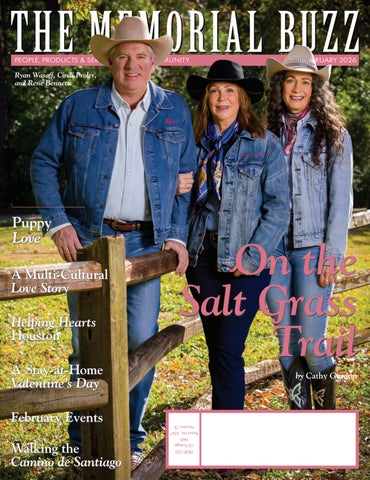
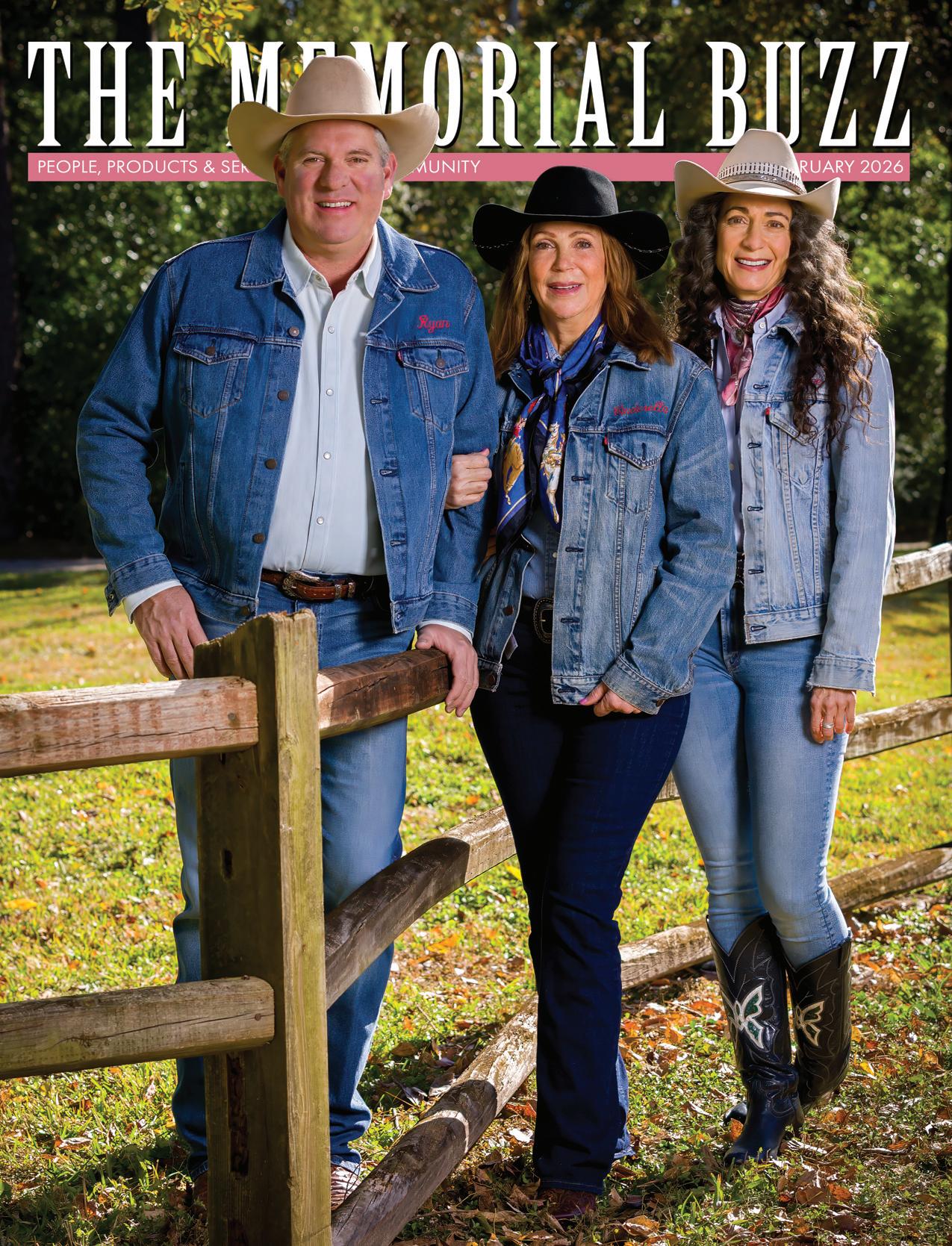
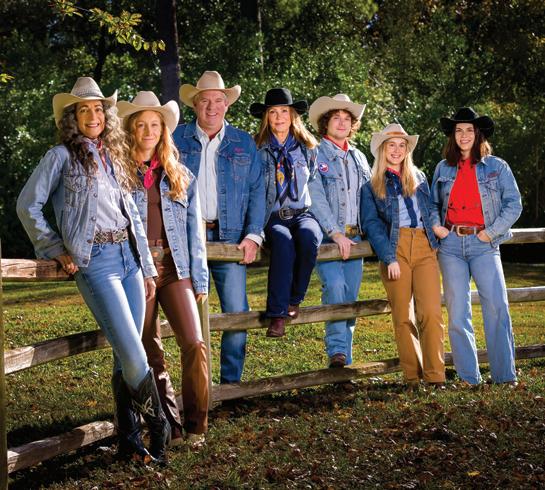
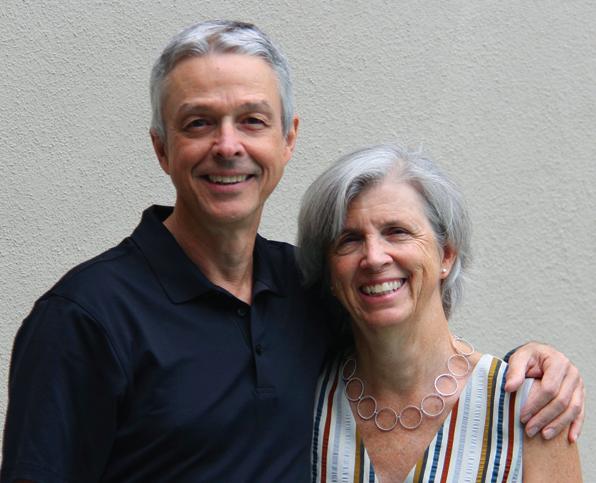
On our cover: The Desperados wagon group has taken on the Salt Grass Trail for decades. Pictured: Cousins Ryan Wasaff, Cindi Proler, and Rene Bennett. Cover photo by Michael Hart, hartphoto.com
The Buzz Magazines has made all reasonable attempts to verify the accuracy of all information contained within. Advertising claims are solely the responsibility of the advertiser. Copyright © 2026 Hoffman Marketing & Media, LLC. All rights reserved. Reproduction of any portion of this magazine by any means without written permission is strictly prohibited. Printed on recycled paper. Please remember to recycle.


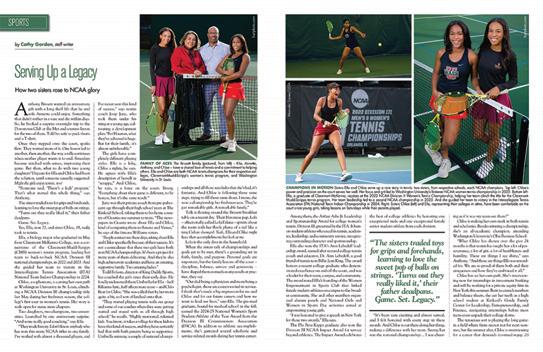

Aced the tennis article
We woke up this morning to a delightful flurry of congratulatory text messages and emails after friends across the greater Houston area began receiving their Buzz. What a joy [to be featured in Serving Up a Legacy: How two sisters rose to NCAA glory by Cathy Gordon, Jan. 2026]!
What a truly wonderful story. Cathy, you captured the heart and soul of it beautifully, highlighting the girls’ accomplishments while seamlessly weaving in our family’s contributions and faith with impeccable care and balance. And the inclusion of [dog] Lola Falana...how incredibly thoughtful and sweet.
The cover photos are absolutely outstanding as well, simply striking. Judging by the wide range of comments and responses pouring in from so many different networks, your readership clearly runs deep and far-reaching.
Joni, I cannot thank you and your entire team enough for taking the time and care to share this story so meaningfully.
The Brissett Family
It was so touching to learn that a book club of readers I’ve never met (or even known about) named their book club after my The Wednesday Sisters — a novel about a group of friends who first meet over shared books! Thanks to Sally Rohrbach and Jan Lusby for reading, and for naming their group after my book, and to Cindy Burnett for writing her lovely piece [Book-Club Books: Reads that will inspire conversation and connection, Jan. 2026!]
The Wednesday Sisters are in good company. It’s also the name of my own neighborhood book club, which has been meeting since January of 2004. When I was writing The Wednesday Sisters a year or so later and we needed a name to register at Kepler’s, our neighborhood bookstore, someone suggested it. I felt very honored. I’ve now published 9 novels (The Wednesday Sisters was my second), and my Wednesday Sisters have read and discussed every one.
One of the greatest joys of being a novelist is the many amazing readers I’ve gotten a chance to connect with. And all it takes is one friend or neighbor asking another if they’d like to pull together a few other friends and meet regularly to chat about books … and everything those books bring up.
Meg Waite Clayton, internationally bestselling author
My miniature poodle Becket was 4th in the 2025 Pet of the Year contest. It was fun. Becket’s fans, from family, friends, veterans, firefighters, students and pet therapy, all did their best to support him. What great exposure for The Buzz Magazines!
The Neighborhood Tails column is an anticipated favorite every month. I appreciate the honor of Becket being chosen for February 2025. As Becket’s rescue story said, he may be a loser in the Show Ring, but he’s a
winner in life. Thank you.
Pamela Earthman
Editor's note: If your furry BFF wants to be featured in Neighborhood Tails, send 150 words from their perspective plus a high-res photo to info@thebuzzmagazines.com.
Please consider including the number of servings per recipe [in your articles featuring recipes]. Some of us need to half or double recipes at times. But if we don’t know how much a recipe makes, how can we know how much to alter it?
Sally I Evans
Editor’s note: Sally, thanks for the feedback. We’ve taken it to heart and will start adding serving sizes when possible. Thank you!
Email us at mailbag@thebuzzmagazines.com. Or send to Mailbag, The Buzz Magazines, 5001 Bissonnet St., Suite 100, Bellaire, Texas 77401. Please include your name, address, phone number and email address for verification purposes. Letters or emails addressed to The Buzz Magazines become the property of the magazine, and it owns all rights to their use for publication. Addresses, phone numbers and email addresses will not be published. Letters are subject to editing for clarity and length. Views expressed in letters do not necessarily reflect the opinions of The Buzz Magazines, and The Buzz takes no responsibility for the content and opinions expressed in them.
your story?
We are looking for residents for upcoming articles who:
• Have a high school senior graduating in the Class of 2026 who would like to be part of our annual “Where Are They Headed?” feature. Submission deadline: April 24.
• Were recently married and would like to participate in an upcoming Wedding Buzz column.
• Know a Buzzworthy neighbor to feature.
If this sounds like you or someone you know, please contact us at info@thebuzzmagazines.com or 713.668.4157, ext 102.

4 Editor’s Note
Mailbag: Letters from Readers
Everybody Loves Diane Keaton: Especially ‘women of a certain age’ by Cindy Gabriel
Buzz writer Cindy Gabriel channels her inner Diane Keaton (her celebrity doppelgänger) in this story.
Helping Hearts Houston: Mothers and daughters spreading kindness by Annie Blaylock McQueen
Two mother-daughter duos started an organization to create opportunities for young girls to serve the community.
Puppy Love in an Empty Nest: The valentine I didn’t know I needed by Andria Dilling
There’s just nothing like puppy love.
Salty or Sweet?: Brewing a multi-cultural love story by Andria Dilling
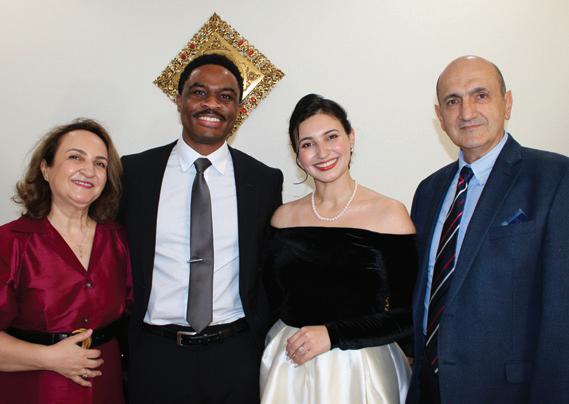
Elif Duran and Chris Amadi merged their lives and their cultures at a special Turkish engagement ceremony.
Companion Reads: Pairing fiction and nonfiction by Cindy Burnett
Pairing fiction and nonfiction books on the same subject can enhance the reading experience.
From Our Archives: Flying Colors: When an artist’s headache was a stroke by Cheryl Ursin
Find a powerful story, full of heart, about a resilient neighbor. This story was originally published in Feb. 2022.
Rumor Has It by Sharon Albert Brier
Buzz Reads by Cindy Burnett
Book reviewer Cindy Burnett recommends five recently or soon-to-be released titles.
Hooves to Houston: The Desperados: traditions and tales on the Salt Grass Trail by Cathy Gordon
Rodeo season officially kicks off when the trail riders arrive in Houston. The Salt Grass Trail Ride is the oldest and largest trail ride. Meet Buzz-area families who have saddled up with the Desperados for generations.
Travel Buzz: Walking Into Rhythm: Two Friends on the Camino de Santiago by Tracy L. Barnett
Friends Susan Tallman and Kim Jacobson walked the Portuguese Camino de Santiago together, alongside a small group of women.
SportzBuzz by Todd Freed
SportzBuzz Jr. by Annie Blaylock McQueen
Event Roundup by Jordan Magaziner Steinfeld
Find a list of February events around town.
From School Buzz: Movie magic by Audrey Seaworth
Neighborhood Tails by Oscar
Buzz About Town by Angie Frederickson
Back Porch: Valentine’s Day Dinner by Andria Dilling
Skip the fancy restaurant and enjoy a special meal at home this Valentine’s Day.


by Cindy Gabriel, staff writer
Now that Stan and I are in our 70s, hearing about someone’s death always prompts us to ask, How old were they? Admittedly, we want them to be older than us. Even if they are in their 70s, 80s, or 90s we still say, Wow! They were young! (OK, early 90s.)
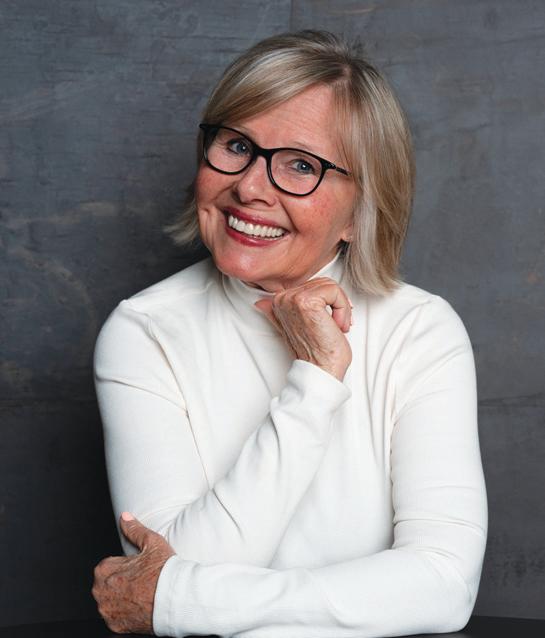
But everybody seems to agree that at 79, Diane Keaton was too young to leave us. My only claim to this universally loved woman is that from time to time I have the pleasure of being told I look like her. It started in high school. The movie was Woody Allen’s Play it Again, Sam (1972). Yeah right. I thought, And Woody Allen is just like Humphrey Bogart. I didn’t get it.
In college the comments came again from the movie Annie Hall (1977). I still didn’t get it. We didn’t have the same eyes or nose. She had style. I had none. She was eight years older and three inches taller. I could have been her squatty little sister, perhaps?
But by the time she had matured into Something’s Gotta Give (2003), playing the love interest of Jack Nicholson and Keanu Reeves, I was beginning to realize it looked like we had the same dentist. By then, Keaton, at 57, was becoming an iconic symbol for women of a certain age while actually playing characters of her age. I was sure she would keep pioneering for older women into her 80s and 90s, revealing more and more of our uniqueness at every age.
Now that I feel it’s my humble duty to take up her mantle, I decided to read her memoir, Then Again (published in 2011). We really had more in common than I thought. She was raised by non-divorced, church-going, middle-class people. She was the oldest among siblings she loved, and was a self-described C-minus student. Me too.
I went into a fog in first grade. By third grade, I was convinced I was one of the dumbest people in the class. But one day, we were asked to write a story on a single piece of paper. Mine came back with a Very Good at the top. Then, I was asked to read it to the PTA! This infuriated Marilyn, the smartest girl in the class. It didn’t exactly turn my life around, but it was something.
I’m absolutely sure that part of what made Diane Keaton complex and quirky was that she
felt smart in a learning environment that was not designed for her. Also, like me, her parents didn’t help her with her academic struggles. Perhaps, like mine, they were too overwhelmed with younger siblings. Keaton managed to find her daylight in drama.
Her mother did encourage her there in school performances. She helped blacken her two front teeth for the song, All I Want for Christmas is My Two Front Teeth. It apparently went over quite well. Diane and I both thought our mothers were prettier than we were. Diane’s mom was crowned Mrs. Los Angeles in 1951, when Diane was 6. My own mother was Miss Hospitality 1953 of Biloxi/Gulfport, Mississippi a year before I was born.
Back in the ’50s and ’60s, public schools gave us IQ tests to measure our intelligence. Keaton, like me, did not expect to do well. But she also noted that she scored remarkably high in an area involving her ability to reason through complex, multi-faceted issues. She hung on to that as a sign of her own intelligence.
I remember, around fourth grade, getting the results of my IQ test. We were told to take them home and not to share them. Of course, Sara, the smartest girl in the class that year, immediately wanted to compare hers with mine since I was one of the dumbest. Mine was higher. This prompted my mom to meet with the teacher. They decided I was smart but lazy. I wasn’t lazy. I was overwhelmed. It was exhausting.
Much has been written about Diane Keaton’s three famous loves: Woody Allen, Al Pacino, and Warren Beatty. They were all brilliant and quirky like her. All struggling with their ability to manage their own brilliance, fame, and riches
into real-life scenarios, like marriage, family, and children. All made Diane laugh. After her death in October, Woody Allen included in a beautiful tribute to her: “"I first laid eyes on her lanky beauty at an audition and thought, 'If Huckleberry Finn was a gorgeous young woman, he'd be Keaton.'"
Keaton is often quoted as saying that she is, in the end, happy she didn’t marry. But at other times she said her big mistake was falling for these iconic figures in the entertainment industry. In retrospect, she said she could have just found a regular, sweet loving person and settled down. Instead, she improvised.
Who adopts two children after 50? Diane Keaton. What was her favorite role in life? Mom. My favorite role of hers was that of older woman She owned it and the world let her get away with it. I was shocked to realize that Something’s Gotta Give has been around for 23 years. That’s a huge chunk of life to write off as just old. Keaton would want us to keep our humor, to always be ready to improvise, and whatever your age, not let anyone tell you you’re dumb.



by Annie Blaylock McQueen, staff writer
What began as a simple idea shared between two Houston mothers and their daughters has grown into an organization of more than 100 young volunteers, ranging from seventh to ninth grade, and it is growing.
Mothers and longtime friends Melissa Goodman and Katherine Plumb, along with their daughters, Logan Goodman, 14, and Mary Plumb, 14, began talking in early 2023 about how to create more opportunities for young girls to serve the community. Other similar organizations existed, but they wanted to create more opportunities.
The moms and daughters knew each other back when the girls were in kindergarten at West University Elementary School. “Who would have known we would become such great friends and start this together,” said Katherine. The girls are now in eighth grade at Annunciation Orthodox School.
They sprang into action with a vision and motivation. The concept was simple: bring middle school girls and their mothers together to volunteer throughout the city. They created a small group at first and called it Helping Hearts Houston. Word spread.
Helping Hearts now represents girls from eight public and private schools across Houston. Membership has grown far beyond what anyone expected. In its first year, Helping Hearts welcomed 30 members. In the second year, nearly 100 girls and their mothers got involved.
“We were shocked at how quickly it grew and how many families wanted to join with the intention of purely serving the community,” Melissa said. “There was clearly a need for something like this.”
The organization does not charge dues and there are no required meetings. Most importantly, it aims to support and focus on serving those in need.
“All moms are already balancing so much. Families, activities, careers. We knew we did not want this to feel like another obligation,” Katherine said. “Members can participate as much or as little as works for them. There’s no pressure and no guilt.”
There is only one expectation. Each member agrees to host one volunteer event per year. With
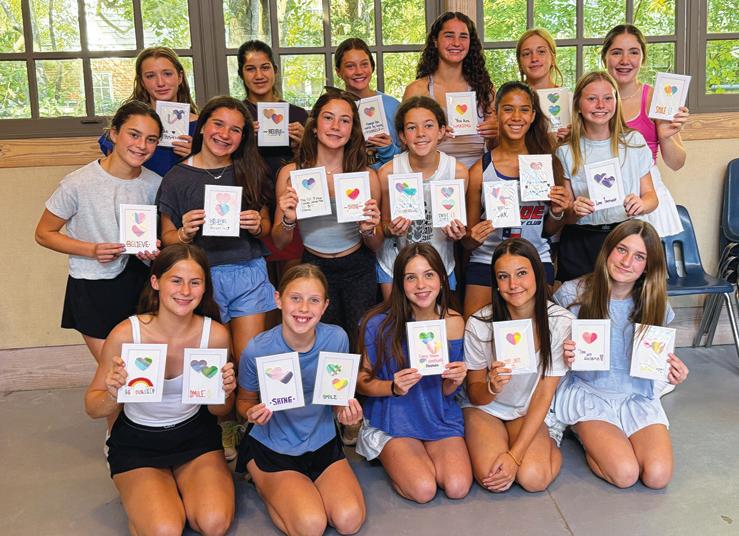
HELPERS IN HOUSTON Melissa Goodman and Katherine Plumb, along with their 14-year-old daughters Logan Goodman and Mary Plumb, created Helping Hearts Houston, an organization where mothers and daughters volunteer together in the community. Here, volunteers are displaying Heart Cards, hand-painted small canvases including inspirational messages. Pictured are volunteers (top row, from left) Juliet Kuban, Zahra Pareja, Joci Avery, Josey Zinn, Sloan Etheridge, Lawler Booth; (middle row, from left) Hailey Sutin, Logan Goodman, Jane Butler, Hattie Butler, Arya Almonte, Mae Bomar; (front row, from left) Caroline Casey, Caroline Transier, Sophie Burrows, Lily Hughes, and Madeline Greaser.
around 100 members, that single requirement creates multiple volunteer opportunities every weekend of the school year. Girls and mothers
“Helping Hearts is more than community service. It is a source of fulfillment and joy.”
choose which projects to attend, allowing them to get involved in causes across Houston. Membership for girls can start in seventh grade, with an age cap at ninth, and they do not
limit the number of members. Group leaders will hold information sessions starting this spring (contact helpingheartshouston@gmail.com for more or see their Instagram page at @HelpingHeartsHouston).
Each week, Helping Hearts volunteers travel throughout the city to assist organizations such as Bo’s Place, Kids’ Meals, Lily’s Toy Box, Morningstar Senior Living, Hermann Park Conservancy, AniMeals on Wheels, Casa Mateo, Houston Food Bank, Sandal Gap Studio, and more.
Organizations have started to take notice and often contact Helping Hearts directly when in need of volunteers.
“It has been really rewarding to spend my time giving back to others,” said Logan Goodman. “Each organiza-
(continued on

tion is different, and I always leave feeling proud of the small difference I am making in the lives of others.”
Although service is the foundation of Helping Hearts, the group also prioritizes connection and friendship. Annual social gatherings include a summer swim party and a Mother’s Day floral arrangement event where girls and mothers make bouquets and enjoy time together.
The connections made are a bonus for the girls. “My favorite part of helping hearts has been all the relationships Logan and I have been able to form,” said Melissa. “We run into people all over the city that we know from Helping Hearts. Logan is applying to high schools right now and feels like she will know so many familiar faces, no matter where she chooses to go next, because of the friends she’s made volunteering in this organization.”
“Each event is so fun. Different members sign up for each activity, so it is always a new mix of girls. I have made so many new friends from all over Houston,” said Mary Plumb. “It is special to have this time with my mom. I have also been able to figure out the organizations that I love supporting.”
One creative project, known as Heart Cards, became a favorite effort on its first go and they plan to do it again. The girls painted more than 200 small canvases featuring colorful hearts and handwritten inspirational messages. The cards are placed in baskets at support centers, community offices, and organizations throughout Houston, free to anyone who needs encouragement or support.
“Each piece of art is amazing. It is impossible to pick a favorite,” Logan said.
“I hope anyone who has one can look at it on a hard day and feel encouraged to smile,” Mary said.
Another relationship that has flourished is with MorningStar Senior Living. The girls made a one-time visit where they helped with crafts and bingo. The event quickly became a monthly volunteer shift. The girls now know residents by name and the residents prepare stories and jokes to share with the girls.
“The girls have grown so much building relationships with the residents,” Katherine said. “Both our girls and the residents look forward to each visit.”
Volunteers also serve at Sandal Gap Studio, an organization dedicated to closing the gap between society and individuals with disabilities. Their efforts have left a lasting impact. While on site, the girls received an impromptu art lesson from renowned artist Sevy Marie Eicher from the Down Syndrome community.
Helping Hearts does not restrict which organizations members can serve, so girls are encouraged to follow their interests. Leaders say it has been meaningful to watch members discover what matters to them and build confidence in their ability to make an impact.
“For the girls, Helping Hearts is more than community service. It is a source of fulfillment and joy,” Melissa said. “They are learning about
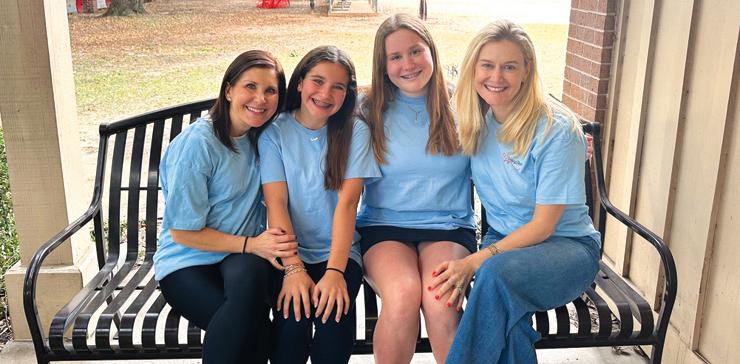
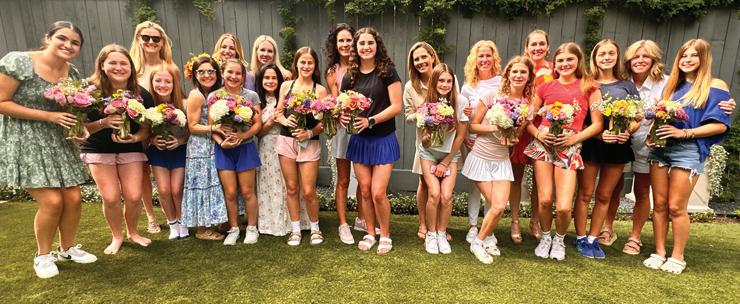
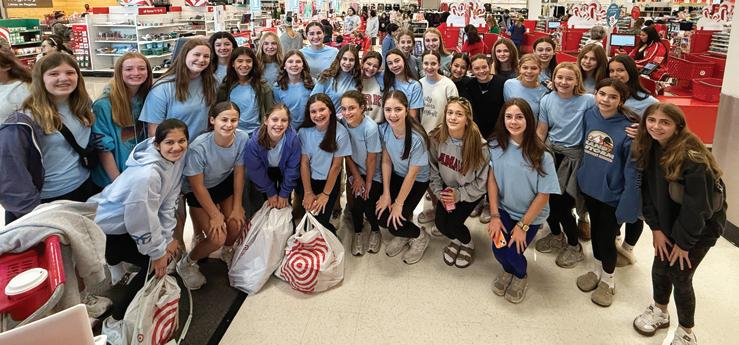
COMMUNITY OF KINDNESS Helping Hearts Houston offers a rewarding and flexible way to serve the Houston community while building friendships. Pictured, top photo: Mother-daughter duos Melissa and Logan Goodman and Mary and Katherine Plumb (pictured, from left), founded Helping Hearts Houston in August 2024 after recognizing a need for more opportunities to serve the community together; middle photo: a Mother’s Day flower-arranging class; bottom: shopping for holiday gifts for children to support BEAR - Be A Resource for CPS Kids.
the world, building confidence, and experiencing how powerful compassion can be.”
The momentum is not slowing down. Helping Hearts volunteers recorded more than 675 service hours within the first three months of the second membership year, and leaders expect that total to continue rising.
For many young girls, Helping Hearts has also become a way to form friendships outside of existing social circles. For parents, the work provides something equally meaningful: a front-row seat to their children’s show of compassion through service.
“It has been such a gift to share this with Mary,” Katherine said. “We get to watch our girls grow, but we also get to grow right alongside them.”
As Helping Hearts prepares for its second full year, the organization remains committed to its core purpose. Service without pressure. Connection without expectation. Kindness without limit.
“We talk often about the ripple effect,” Katherine said. “When you show kindness to someone, they may go out and show kindness to someone else. That matters. Kindness is contagious.”
Editor’s note: Membership is open to girls beginning in seventh grade. Information sessions for interested families will begin this spring. For more details, contact helpingheartshouston@gmail.com or follow the group on Instagram at @HelpingHeartsHouston.

by Andria Dilling, staff writer
The valentine I didn’t know I needed
So many times in my “Back Porch” column, we have inventoried kid-friendly dinners, translated our teenagers’ vocabularies, compared bad parenting moments, and dished on strategies for getting kids out of bed and into carpool. From birth to college (and beyond), we have examined parenting from all the angles… and ages. In every phase, I have shared from the center of my lifelong (at least my adult lifelong) mom friends, the ones who read What to Expect the First Year and Dr. Spock and then lived it and gave me the CliffsNotes.
Last summer, I wrote about sitting at a Tiny Boxwoods dinner table on a Tuesday night with those friends – a luxury, because for the first time in a long time, we could all sit with each other and a glass of wine and a Tiny’s cookie and not worry about racing home to make sure the homework was done. A few weeks ago, I found myself at the very same table, with the same friends, talking about our babies again. It’s just that this time, our babies were puppies.
This fall, three of the four of us got puppies within three months of each other. The other has a 4-year-old. Puppy, that is.
Just like with our human children, I have been relying on my friends to tell me how to schedule, what and how much to feed, and how to redirect this new puppy of mine. Just like with my family’s first dog Saint (who I memorialized in December 2023 Back Porch), I didn’t want a puppy. And just like everybody predicted, I am in love with my baby Black Labrador Retriever Otis.
My friend Meredith was the first of our group to become a (human being) mom, and she was the first to be an empty-nester. Here was how she tried to sell me on getting the puppy my husband so wanted: “My kids don’t care where I am or what I am doing,” she said of her 29- and 26year-olds. “Boudreaux [her 6-month-old Labradoodle puppy] cares if I go on the other side of the kitchen island.” She adds, “It’s a fantastic precursor to a grandbaby!”
Jacqueline, whose Chocolate Lab Coco is now seven months old, calls bringing a puppy into an empty nest “the healthiest thing going,” pointing out that, besides the love that comes with a pet, there’s the social aspect of meeting
neighbors on dog walks, and the health benefits of having to take those walks.
In our family, we aren’t going on walks yet, because Otis is barely three months old. But of course my anxieties and skepticisms are coming out: Am I going to be able to handle this dog on a leash when he’s four times as big as he is now? Is he going to come across as ferocious when he follows his dad’s lead and becomes a moose (as one of my stepsons pointed out when he saw Otis’ disproportionate paws)? And: My lower back is currently killing me, because while Otis will be a moose one day, now he is still a baby and too scared (and really too small) to walk downstairs yet, so I am lugging

For all of the scabby hands, the aching backs, and the 5 a.m. wake-ups, there’s nothing like puppy love.
this 23-pound bear cub down the stairs several times a day. Did I mention he knows how to hop up the stairs on his own, usually with me chasing him to retrieve the fern frond – or shoe or toilet paper roll – from his mouth?
And then I realize that as I am writing, this fuzzy ball has curled himself up on top of my feet. Hence, love.
“The more you cuddle them and connect with them, you won’t have the dog who is acting out,” explains Jacqueline, who has been mom to several dogs over the years and now has Hazel and Coco. “Most of the problems come from the dogs not getting any attention.”
When our children were small, we had the dogs, but we didn’t have the time – or the energy – that we now have to devote to our furry friends.
We were too busy cuddling and coddling little children. The dogs had no chance other than fitting into the schedule. Now, the dogs are the schedule. That pre-holiday dinner last month? I left early so that Otis wouldn’t have to be in his crate for more than a couple of hours. And then my friends came to my house to meet my little guy and let him pounce and pant all over them. Come to think of it, we are basically having sip-and-sees now for our puppies. Only without the sipping and the Moeller’s petit fours. Because like the internet menopause magnet and creator of the “We Do Not Care Club” Melani Sanders says, we just don’t care that much anymore. Instead of planning salad menus and ordering flowers, we are comparing trainers and training techniques, and also what to do with the myriad prickly scars on our hands and ankles from razorsharp puppy teeth. We are sending each other links to dog bandanas and crates, puppy car seats, and animated plush lobster toys (if you have a puppy, you need the Mity Rain Interactive Wiggly Lobster from Amazon; it starts and stops and moves in all directions, driving the puppies crazy and occupying them for 15 minutes at a time – a big win). And we are physically passing around (passing off?) Sarah’s unwieldy plastic dog playpen, which actually hasn’t contained any of the puppies for more than a few minutes (it’s currently in my garage; if anyone wants to give it a try, hit me up).
My Instagram is full of how-tos from accounts like @EmpoweredPuppyProgram and @TheEverydayTrainer, and my husband and children will tell you that my steady out-loud reading of this online advice is insufferable. Train the puppy to walk on a leash in the middle of the street (you’ll eliminate distractions). Give him treats when he is calm (you’ll
(continued on page 18)

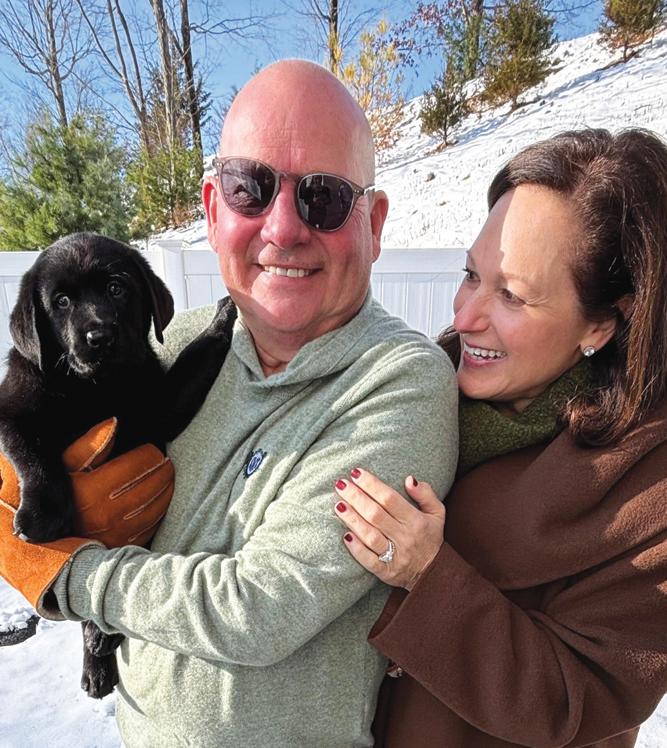
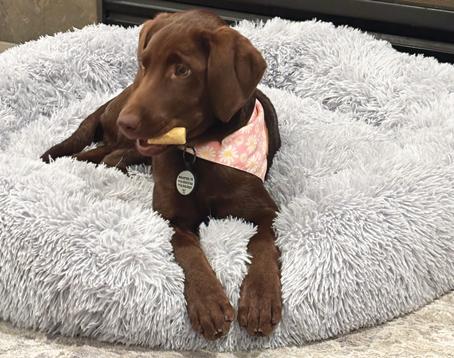
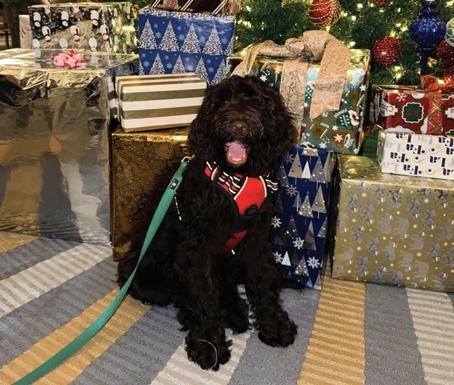
FRENZY Otis (left, with Buzz writer Andria Dilling and husband David) has yet to meet his friends Coco (top right) and Boudreaux (bottom right), but puppy playdates will take place as soon as everyone is big enough.
(continued from page 16)
reinforce a peaceful state). Freeze in place when your puppy nips at your ankles (moving away makes it a game). Do I actually think – especially after my last dog, who ran circles around the neighborhood – that I can raise a calm, well-adjusted dog? Well, the internet tells me I can.
The internet actually has a lot to say about pet parenting, from how to do it well to how obsessed we can become. My husband sent me
a post that said My wife and I have taken four pictures together in the last two years, meanwhile we have 135 photos of our dog sleeping on the couch since last week. Truth.
At dinner, Jacqueline told us, “There’s a mug out there on the internet that says I wish I could text my dog.”
Then Meredith chimed in: “If I could call them on the cell phone I would. Actually sometimes I go to my cell to call them and then real-
ize I can’t.”
For all of the scabby hands, the aching backs, and the 5 a.m. wake-ups, there’s nothing like puppy love. As Meredith said, and as we all said when we had children, “You didn’t realize how much love you had to give.” Because the sweet, snuggly puppy, the puppy whose tail wags when he hears us walking down the hall – the puppy who actually cares where we are – is fully irresistible. He’s the valentine I didn’t know I needed.
Heather Reese-Ferguson is a behavioral canine trainer in San Antonio; she’s a friend who has dialed my new puppy anxiety way down and made connecting with Otis a joy. Here are her get-started tips: Schedule, schedule, schedule! This is the most important thing that needs to be on your list when bringing home a new puppy. The very first day your puppy arrives…put them on an eating, potty, and sleep schedule.
Puppy musts to have before you bring them home:
• A kennel (or two)
• High-quality puppy food (if making a switch to a new food, slowly mix in the new food to prevent upsetting puppy’s tummy)
• Water and food bowls
• Soft puppy bed (or two)
• Plush toy with a heartbeat sound; this really soothes them when they first arrive in their new home
• Plenty of toys – stuffed animals, chew bones for teething; puppies have a short attention span, so you need more toys than you think to keep them focused
• Small training treats
A lot of people put so much time into finding the cutest puppy. Very few take the time to get a puppy with the right kind of energy. This is so important! If you are a low-energy person or family and exercise is not part of your life, a high-energy puppy is the worst choice. Matching a puppy’s personality to your family’s is essential.

by Andria Dilling, staff writer
Brewing a multi-cultural love story
Our marriage was kind of arranged,” says Cihan Duran, a radiologist who moved to the United States from Turkey with her husband and three children in 2010. “I was in medical school and Ahmet was doing his business. His family talked to my family, and my parents told me a handsome man would come to visit me.” Cihan giggles a bit when she recounts the memory.
“He came to the hospital, and we went to dinner, and we were engaged in one week.” A year later, Cihan and Ahmet were married. That was 37 years ago.
Cihan says the arrangement was a blessing. “I was so busy,” she says, “studying all the time. This was a good alternative. And he was a goodlooking guy. And it worked!” Cihan and Ahmet’s three children are now grown: their son Alper, a radiologist, lives in Miami and is married to a Turkish woman who is a dentist; their younger daughter Munevver is finishing medical school in Dallas and is applying to a radiology residency; and their older daughter is in her fourth year of a psychiatry residency at UC Davis in Sacramento.
That daughter – the psychiatrist – is Elif, and in April, she will marry Chris Amadi, merging her own Turkish background with his Nigerian traditions. “This is the first international marriage for our family,” Cihan says.
Unlike her parents, Elif and Chris met organically during their respective residencies in psychiatry and pharmacy at UC Davis. Chris has since gone on to become a pharmacy manager at Stanford University in Palo Alto, about two hours away from Sacramento. Instead of one week, like her parents, the younger couple spent three years dating. Their first date was actually a Thanksgiving dinner together in Sacramento. “Neither of us had family in town or Thanksgiving plans,” Elif says. Their second date was a study date, and in July 2025, Chris proposed. On Nov. 8, he and Elif became “officially” engaged in a traditional Turkish ceremony in Houston.
“In the United States, when the groom proposed to the bride, this is engagement,” Cihan says in her charming Turkish accent. “But in our country, we do a separate engagement ceremony
that brings the families together. For Elif, we made this ceremony at our home.”
Cihan and Ahmet had already met Chris in Sacramento. “I love him,” Cihan says. “He is a hardworking, responsible, mature man.” She already calls him her son-in-law. But the families hadn’t met until the engagement ceremony in Houston.
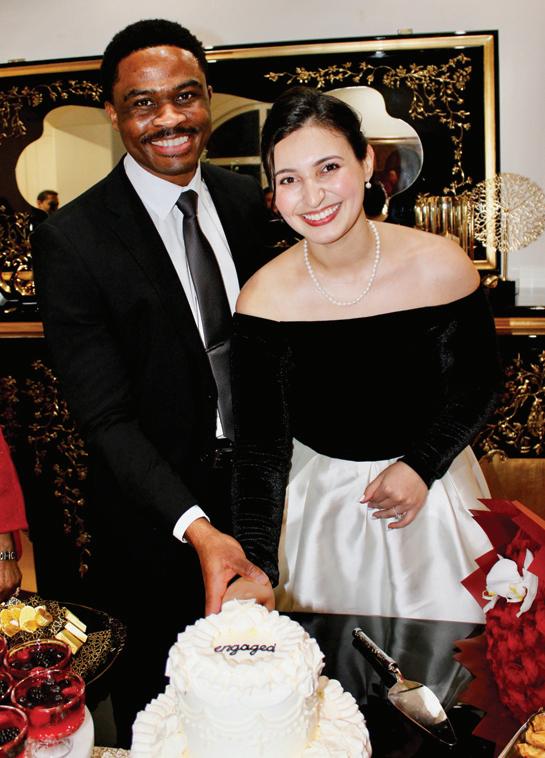
“There were some nerves about everyone coming together,” Elif says, “but I know my parents and I know his parents, and they are all lovely people. Mostly, I was worried about the language barriers. Everybody has accents.” Chris’ family, like Elif’s, immigrated to the United States when he was a teenager.
With that, the families were set to convene from across the country to honor the Durans’ Turkish and the Amadis’ Nigerian traditions: Elif from Sacramento; Chris from San Jose; Elif’s brother and his family from Miami; Elif’s sister from New York; and Chris’ family from Kansas City. “It should have been a straightforward gathering,” Cihan says. But a government shutdown caused airport delays and cancellations. “I had everyone’s flight info open on my phone all day on Friday, and I was checking it obsessively, you could say.”
Thankfully – and surprisingly – everyone arrived safely and on time. “Our stress melted and was replaced by laughter, warm embraces, and the joyful merging of Turkish and Nigerian customs,” Cihan says. “They are lovely people,” she says of Chris’ family. Elif adds, “It all came together beautifully.”
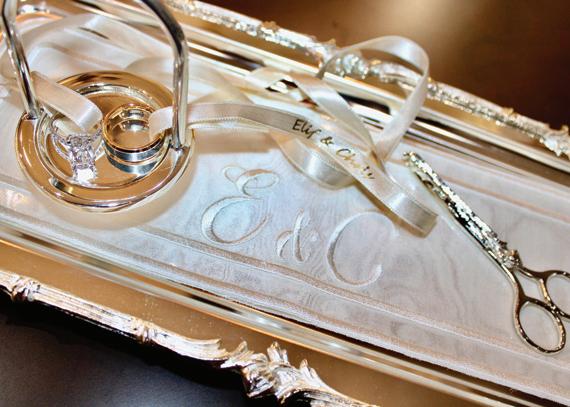
“In Turkish culture,” Cihan explains, “the engagement ceremony begins with a symbolic ritual called kız isteme.” The ceremony is traditionally arranged by the groom’s family: They will visit the bride’s family, and the eldest male in the groom’s family will ask for the bride’s hand in
marriage. The moment is said to bond the two families when the bride’s family accepts the offer. Similarly, in Nigerian tradition, the groom’s family approaches the bride’s and asks for her hand.
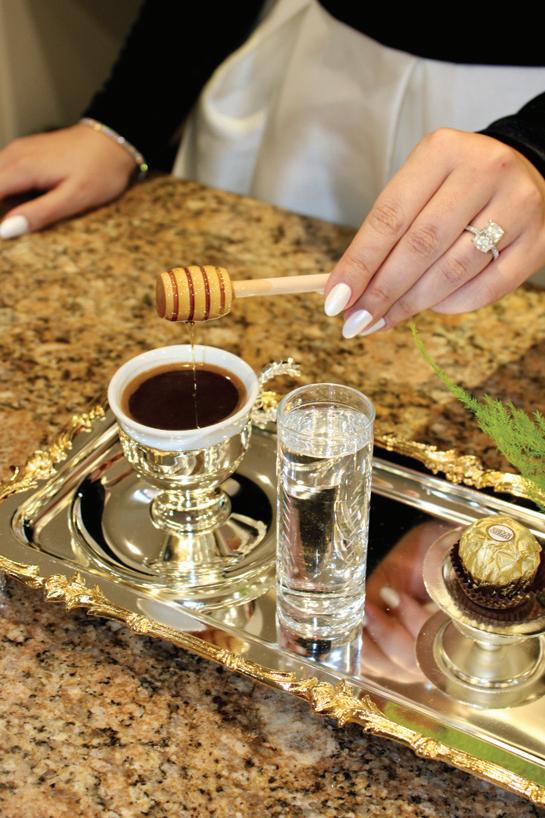
But in Turkey, Cihan says, “the bride-to-be prepares a special cup of Turkish coffee for the groom. But this coffee carries a twist – literally.” According to custom, the bride adds salt instead of sugar to the coffee. If the groom drinks the entire cup without flinching, he is believed to be patient, loving, and truly committed to the marriage. “It is a test for the groom,” Cihan says. “If he really wants the bride, he will drink this salty coffee.”
She goes on to explain that, historically, in arranged marriages, the bride-to-be would secretly add salt to the groom’s coffee if she wanted to tell him, without embarrassing him, that she did not want the marriage. “It was a nice way of letting him down instead of saying I don’t want to marry this guy and running away,” Elif says. With time, the custom changed into the current practice, which is much more playful.
In yet another twist, Elif couldn’t bear to make her fiancé drink salty coffee. So she added sugar and honey instead. Cihan laughs, “Chris was expecting a salty coffee.” In reality, he knew better. “He doesn’t even drink coffee,” Elif says. “So the week before, I told him not to worry, I got you.”
Ironically, Elif and Chris followed more in her maternal grandparents’
(continued on page 22)

(continued from page 20)
footsteps than in her parents’. “My mother and father were high school sweethearts,” Cihan says of her mother, 84, and her father, who has passed away. “That was forbidden at that time; the culture was very strict about boy-girl relationships.” Having met when her mother was a high school freshman and her father was a junior, the two waited for each other for six years – through high school and university – to marry. Still, the tradition of the kız isteme was upheld by the family. Both Elif’s parents and grandparents participated in their own kız isteme ceremonies when they were preparing to marry years ago.
Cihan considers Elif and Chris’ love story a testament to Houston’s diversity and openness.
“When I came from Boston [where the family lived for one year] to Houston, I was like Oh, this looks like my home,” Cihan says, noting that she did four consecutive fellowships at MD Anderson Cancer Center. “It was such a diverse population. Everybody had their own accent. I didn’t feel like an outlier.” The Durans have enjoyed participating in Houston’s large Turkish community.
“We love this city. I have lovely neighbors, like a sister to me. And there is every kind of
cuisine you can find.”
Speaking of cuisine, Cihan explains the difference between Turkish coffee and American coffee. “It is very strong, and served in a small cup like espresso,” she says. “And there are grounds of the coffee at the bottom of the cup.”
In Turkey, there are coffee fortune tellers, who “read” the grounds at the bottom of the cup after the cup has become cold. Are they for real? “No,” Cihan laughs. “But for some in Turkey, this is a profession.”
Of course, Houston has plenty of opportunities to order a Turkish coffee. In Rice Village alone, Cihan recommends Sambal Chef and Pasha Turkish Restaurant.
Currently, Elif says she’s focused on planning the wedding, which will take place in San Jose in April. “My brother got married in Turkey,” she says, “and everything was very straightforward. They went to a nice hotel and got all the vendors through the venue, all in one day. But in the United States, you have to piece it all together one by one. I’m just figuring out how to throw a large-scale party for the first time ever.” Once married, Elif and Chris will spend one year apart. He will con-
tinue on at Stanford and she will embark on a one-year fellowship at the University of California San Francisco.
“Marriage is tough even if you are from the same background, you are speaking the same language, you have the same religion,” Cihan says. “But if my daughter got married to a Turkish man, I would still have anxiety. When your kids get married, you’re always anxious. I have found that there are lots of similarities between the Nigerian and Turkish cultures. We are all very family-oriented, we have close bonds. My prayers are with them.”
“I’m really excited,” Elif says of merging Turkish and Nigerian traditions as she and Chris create a family of their own. “I’m going to visit Nigeria for the first time in February, and then we will have a traditional wedding there in June. We are just figuring out how our lives will come together.” If the kız isteme is any indicator, they will come together very sweetly.
Editor’s note: Read more about the Duran family and Turkish culture and traditions in Ties that Bind: A family matriarch’s legacy of love by Cathy Gordon, March 2025.

by Cindy Burnett, staff writer
Pairing fiction and nonfiction books on the same or similar subjects can really enhance a reading experience. Often when I read a fictional story set in a place or featuring a topic with which I am not very familiar, I want to learn more and end up doing a deep dive into that subject matter through nonfiction. I enjoy finding nonfiction books that pair well with a novel I enjoyed, and I recommend starting with the fiction. Here are some of my favorite pairings:
The Impossible Thing by Belinda Bauer (fiction) and The Falcon Thief: A True Tale of Adventure, Treachery, and the Hunt for the Perfect Bird by Joshua Hammer (nonfiction)
– The Impossible Thing is a fascinating mixture of crime fiction, historical adventure, and intrigue set in the world of egg trafficking, demonstrating the extraordinary lengths people will go to add rare eggs to their collections. Bauer examines the power of human obsession to obtain and possess, and this theme permeates the book. The Falcon Thief is a true-crime adventure about Jeffrey Lendrum who travels the globe stealing rare eggs to add to his collection and to sell to wealthy individuals who race falcons in the Middle East, and the wildlife detective determined to stop him. Pairing the two books together provides a deep dive into this odd world, giving the reader a full understanding of the people who feel a compulsion to collect rare eggs and the results of such an obsession.
Wild Dark Shore by Charlotte McConaghy (fiction) and Seeds on Ice: Svalbard and the Global Seed Vault by Cary Fowler (nonfiction) – Atmospheric and mysterious, Wild Dark Shore centers around the Salts, a family protecting a seed vault on a remote island that is slowly succumbing to rising sea levels. The Salts are the island’s only remaining human inhabitants until a mysterious woman washes up on shore during a terrible storm. After reading this one, I found myself completely fascinated by the concept of a seed vault and what one would actually look like. Seeds on Ice: Svalbard and the Global Seed Vault is a beautiful coffee table book that details the incredible efforts to save agriculture by gathering more than half a billion seeds containing
earth’s most coveted crops. Svalbard is located in Norway and is the seed vault that McConaghy bases her vault on in Wild Dark Shore (though she moves the location of it). Seeds on Ice fabulously complements Wild Dark Shore with stunning photos of the seeds and the vault that contains them and substantiates the urgency of the Salt family’s desire to protect such an important place.
True Biz by Sara Novic (fiction) and The Boys of Riverside: A Deaf Football Team and a Quest for Glory by Thomas Fuller (nonfiction) – True Biz details the challenges that deaf individuals and their family members face, what it means to be deaf, and how family members address the issue. Set at a school for the deaf, True Biz follows several students who yearn to be accepted for who they are and the uniqueness that their deafness brings to them. This book is an absorbing and unforgettable journey into the deaf community, and Sara Novic beautifully explores the ways language can include, exclude, or help forge an identity. When I listened to The Boys of Riverside, I realized that the books complement each other well. Fuller chronicles the amazing story of an all-deaf high school football team’s successful journey from a losing record to undefeated, the team’s close bond, a fascinating portrait of what it means to be deaf in America, and the head coach who believed in his team. I was cheering the boys on from page one. Both books address isolation, American Sign Language, cochlear implants, the power of language, the impact of technology on those who cannot hear, and the history of the deaf community, making them a fabulous pairing.
The Correspondent by Virginia Evans (fiction) and Syme’s Letter Writer: A Guide to Modern Correspondence About (Almost) Every Imaginable Subject of Daily Life, with Odes to Desktop Ephemera and Selected Letters of Famous Writers by Rachel Syme (nonfiction) – Most mornings, 73-year-old Sybil Van Antwerp sits down to write letters –to her brother, to her best friend Rosalie, to Joan Didion and Ann Patchett to give them her thoughts on their latest books, and to one mysterious person to whom she writes regularly but never sends her missives. When letters from her past force her to do some self-reflection, Sybil realizes that she must reconsider some long-held beliefs. Sybil’s wry wit and clever sense of humor are present throughout, and the letters she writes and receives are a joy to read. Syme’s Letter Writer is an absolutely delightful literary jaunt through the lost art of letter writing, exploring the cultural history and undeniable thrill of old-school correspondence as well as encouraging the reader to start writing letters. Syme provides guidance on how to begin a correspondence and the many ways a letter writer can enhance the process including collecting fancy pens, embossers, and beautiful stationery and envelopes. Both focus on the power of the written word, demonstrate why letter writing is important, and address how letters build community and relationships, and they make a great pairing.
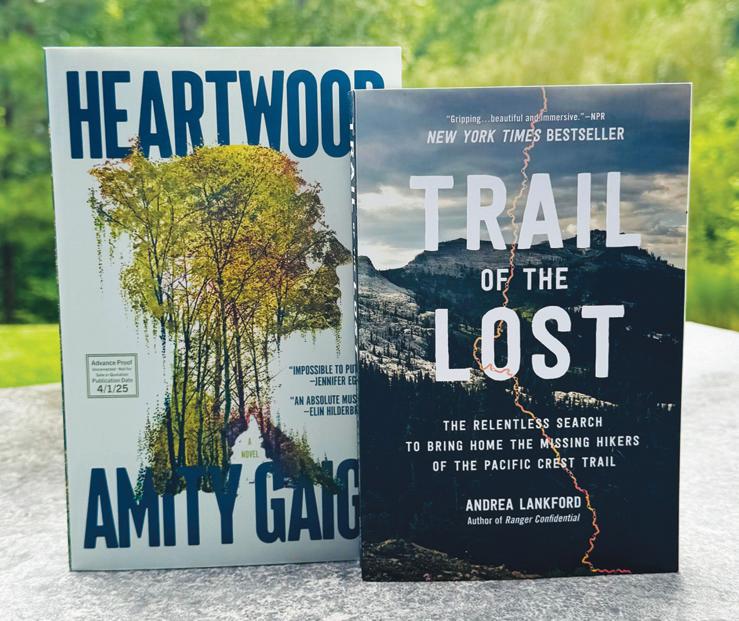
Heartwood by Amity Gaige (fiction) and Trail of the Lost: The Relentless Search to Bring Home the Missing Hikers of the Pacific Crest Trail by Andrea Lankford (nonfiction)
– Trail of the Lost is a true crime adventure that chronicles a former law enforcement park ranger’s quest to find missing hikers along the Pacific Crest Trail (PCT) by pairing up with an eclectic group of unlikely allies. This book touches on so many topics related to the PCT –hiker culture, how social media and influencers have increased traffic on this trail and other prominent ones and how that leads to more unprepared people setting out on the trails, the natural world and our place in it, and more. She also explains how a trail as popular as the PCT isn’t always properly marked and why people manage to step off the trail fairly regularly. Heartwood follows a search and rescue team racing against time when an experienced hiker disappears on the Appalachian Trail in Maine. The story is told through the perspectives of the rescue team, an armchair detective, interviews with other hikers, and letters the missing hiker wrote to her mother while on the trail. While the book is character driven, it is incredibly compelling, and the mystery inspires larger questions about the many ways in which we get lost and how we can be found. Both books document the vast and rugged wilderness found on these two iconic trails and how easy it can be to get lost or wander off trail. They also highlight the unique and quirky people who inhabit this world, both on the trails and off, and how difficult it can be to locate lost people in the wild. They are a natural pairing that complement each other well.
Another book that would pair well with Trail of the Lost is Have You Seen Her by Catherine McKenzie (fiction), a thriller about a woman who goes missing in Yosemite National Park. How people are searched for, what it means to go missing in a national park or public trail, and the potential for someone to never be found are explored in both of these books as well as a deep dive into the culture that develops in these spaces.
Fresh Water for Flowers by Valérie Perrin (fiction) and The Secret Life of a Cemetery: The Wild Nature and Enchanting Lore of Père-Lachaise by Benoit Gallot (nonfiction) – Translated from the French, Fresh Water for Flowers is a beautiful meditation on life, motherhood, tragedy, community, death, and grief. Violette Touissaint, recently abandoned by her husband, accepts the job as a cemetery keeper at Brancion-en-Chalon, a small town in Bourgogne, France. Her daily routine consists of maintaining the cemetery and engaging with a small circle of colleagues and friends. This character-driven tale brings to life Violette and those she encounters, demonstrating the power of human connection as well as life as a cemetery caretaker. Gallot is the curator of the most famous cemetery in the world, Père-Lachaise Cemetery in Paris. In his entertaining The Secret Life of a Cemetery, Gallot takes the reader behind the scenes and captures not only what it means to operate such an iconic place, but
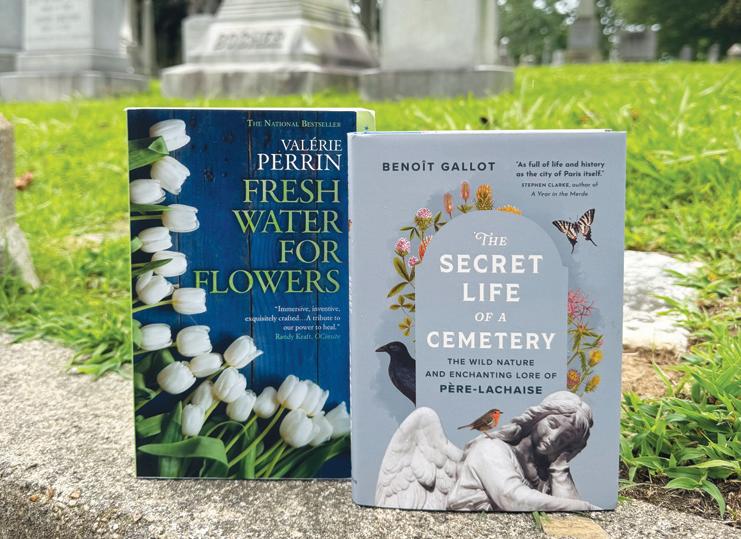
also the important role of serving people in times of loss and grief. His portrait of PèreLachaise as a complex, living organism is fascinating, and the book paints a picture of an historic place operating in a modern world. These two books make a natural pairing with their unique and shared cemetery settings as well as how each addresses grief, how cemeteries function today, and what those spaces mean for a community.
The Last Ranger by Peter Heller (fiction) and American Wolf: A True Story of Survival and Obsession in the West by Nate Blakeslee (nonfiction) – Peter Heller crafts an engaging mystery in The Last Ranger, a story set in Yellowstone National Park where a dustup between a local hunter and a wolf biologist turns violent, and a park ranger is tasked with finding out what really happened. In American Wolf, Blakeslee gives a panoramic overview of the wolf reintroduction project and the recurring clashes between hunters and biologists about whether wolves should be a protected species. American Wolf focuses on the wolves themselves and the public land issue – what it is and who has the right to decide how it is used as well as human responsibility in relation to the land. All three of these topics play large roles in The Last Ranger too, which make these two books great companion reads as well as the fact that they are both set in Yellowstone. Both authors manage to vividly bring the natural world to life – the land and the animals – the reader feels transported to Yellowstone in all of its glory.
Two other books that were inspired by American Wolf are Charlotte McConaghy’s Once There Were Wolves and CJ Box’s Wolf Pack, book 19 in his Joe Pickett series. While
the series builds on itself book by book, Wolf Pack can be read as a standalone if a reader is interested in wolves and their role in Yellowstone and Wyoming at large.
Banyan Moon by Thao Thai (fiction) and House of Sticks: A Memoir by Ly Tran (nonfiction) – Banyan Moon follows three generations of Vietnamese women and how their relationships developed and impacted each other over the years. This is a stunning tale of the bonds between mothers and daughters and how those bonds inform people's lives. In House of Sticks, Ly tells the story of how her family moved to the United States as part of a relocation program from Vietnam when she was three. They are resettled in an apartment in Queens, speak no English, and are required to find work. Moreover, they are required to pay back the cost of their flights to the U.S. Ly tells her family’s story with grace, and she provides great insight into what the immigrant experience is like for one family as well as how difficult it was for her to straddle two cultures. These two books pair well because both stories focus on the lasting impact of family trauma and history. House of Sticks provides in-depth detail about the financial and personal costs and difficulties associated with immigrating and also about Vietnamese culture and customs that will make reading Banyan Moon an even more rewarding experience.
Editor’s note: Book reviewer Cindy Burnett also writes our monthly Buzz Reads column and weekly Page Turners column. She hosts an award-winning book podcast entitled Thoughts from a Page Podcast www.thoughtsfromapage.com, runs the Instagram account @thoughtsfrompage, and regularly speaks to groups about books.
by Cathy Gordon, staff writer
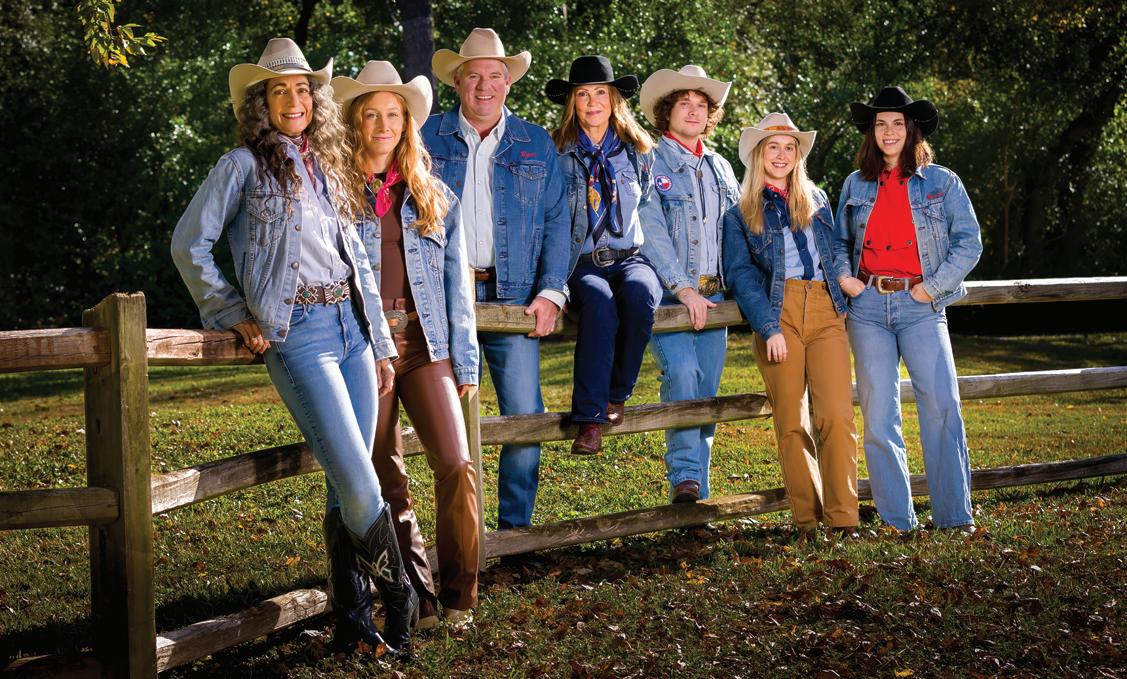
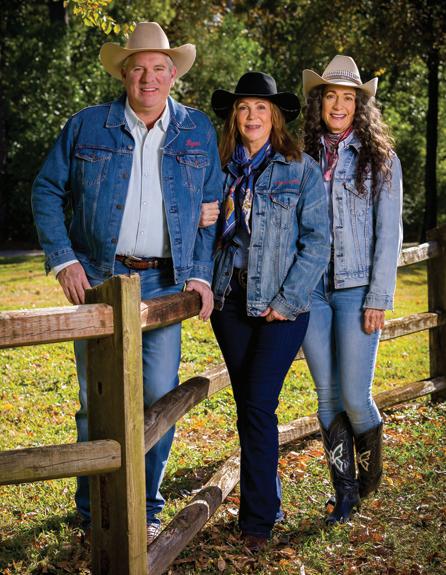
are Bennett’s children. (Photograph taken at the property of Malcolm Morris, a friend of the Bennett family.)
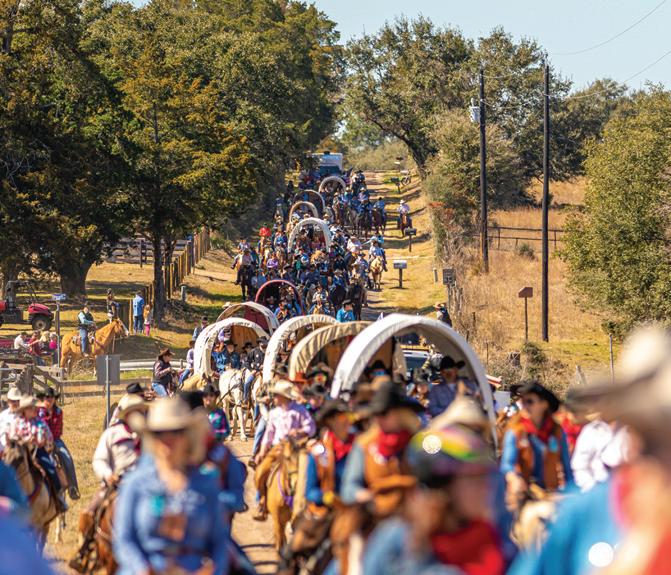
Salt Grass Trail riders stir before sunrise. Campfire smoke lingers. Coffee’s percolating. Not a dainty brew, but bold cups of Joe that zap the week’s plans into sharp focus: Let’s forgo the comforts of home – among them, hot showers – and ride a horse a hundred miles into dust, weather, and ultimately, Houston. Horse tails swish. Wagons groan like they already know what’s coming.
Go time.
Every February, as reliably as traffic on I-10 and humidity in August, Salt Grass Trail riders saddle up and do something wildly impractical, deeply heroic, and as Texan as a ten-gallon hat: They climb onto horses, hitch up their old pioneer
wagon, and point themselves toward the city, determined to arrive at the Houston Livestock Show and Rodeo the same way their predecessors did – proudly, resolutely, smelling for all the world like a Eau de Salt Grass cologne – a mix of mesquite smoke, sweaty horse, and leather.
It’s a beast, say members who navigate the 105-mile trek, the largest and oldest Texas trail ride with more than 1,000 people. The tradition, celebrating its 75th anniversary, started in 1952 when four men decided to travel on horseback from Brenham to Houston to promote what was then called the Houston Fat Stock Show.
On a ride this large, no single wagon can tell the whole story. But The Desperados, one of the
trail’s longtime groups, offers a vivid slice of Salt Grass life.
The ride starts in the large Wittenberg family pasture in Cat Spring, west of Sealy, concluding in Memorial Park on Feb. 27, where many riders spend the night before converging with 10 other trail rides. Like spokes on a wheel, arteries of riders come from all directions, destined for the Downtown Rodeo Parade the following day.
It’s equal parts tradition and endurance test. The ride is long on dust, short on sleep, and downright merciless when temperatures dip and rain pelts sideways.
Whatever the weather conditions, those riders are coming.
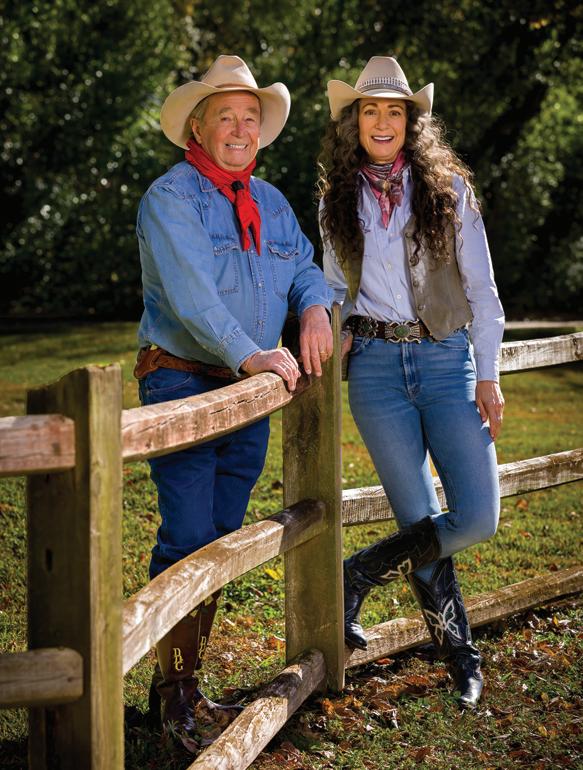
“It’s all about family and companionship and the love of horses and just being out there, unplugging from the world,” says River Oaks resident Rene Bennett, of her group, The Desperados, one of 22 wagons on the Salt Grass Trail.
“We’ve got this old dinosaur of a pioneer wagon, dating back to like the 1890s, that we keep in shape, year after year, and it gets us down the road. It takes a village to run our group. A labor of love,” she says.
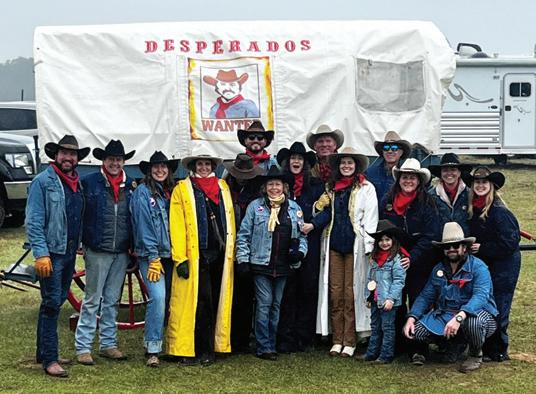
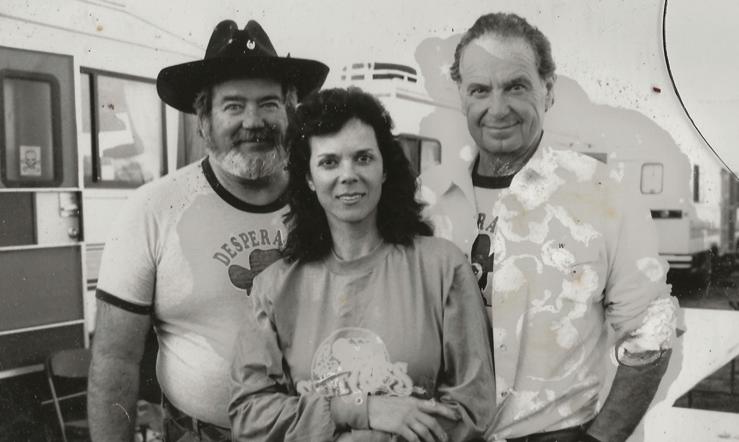
Bennett, 59, co-owns the Desperados wagon with three cousins. It’s the same wagon that was owned by her mother Beverly Wilson Bennett Smith, who started The Desperados with her brothers, Welcome and Jack Wilson, in 1980.
Bennett’s mother, crowned Miss Humble in 1961, died in 2022, but her legacy is carried by generations of family who still feel her presence in the saddle, she says. She was also the first female wagon boss of the entire Salt Grass Trail Ride.
The beauty queen cowgirl who reigned the reins.
“Seriously, my mom was a beauty queen. But always a cowgirl. And very softspoken,” explains Bennett. “I never saw her cuss. I never saw her raise her voice or take a sip of alcohol or smoke. But she was a master horseman. A stubborn horse would test her once and then think the better of it. Even the most rugged cowboy out there respected my mom.”
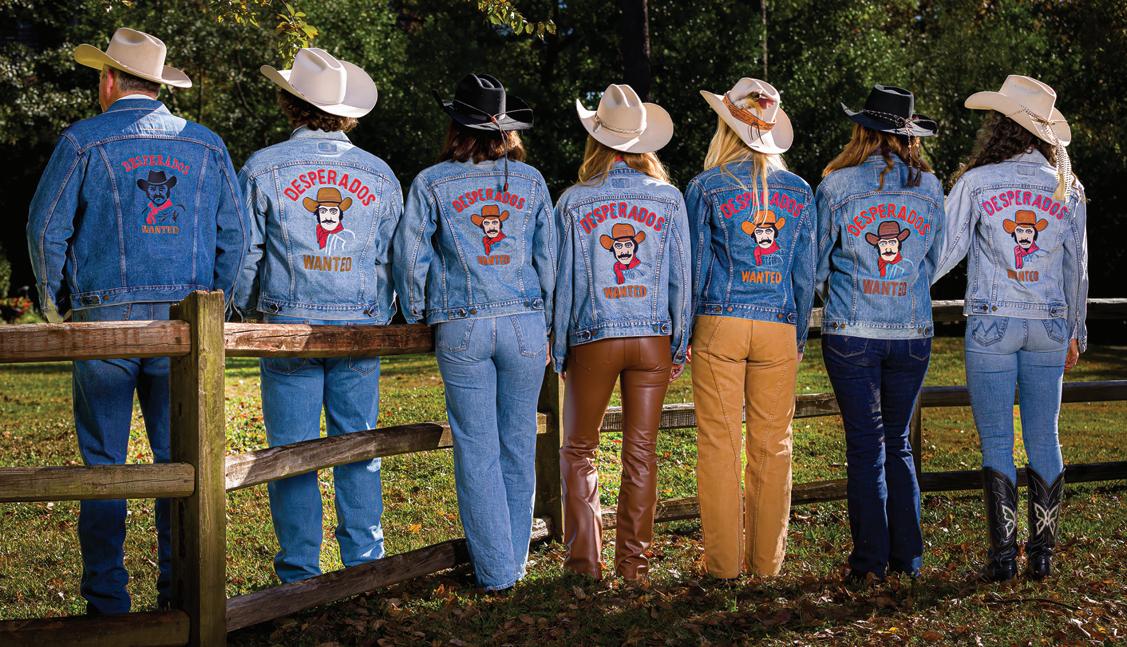
Matching denim jackets were her mother’s idea, their attire to this day. Bennett’s cousin Pam Francis, since deceased – known for photographing presidents and movie stars – designed the “Desperados Wanted” logo that’s embroi-
dered on the back. Coordinating jackets and shirts became the group’s signature, long before other wagons began donning matching attire.
“Mom would be gone a week, and everyone was on high alert because that meant she was on the trail!” recalls Bennett. “I remember as a small child going to Old Katy Road where some apartments were on I-10 and looking down the street and watching all the trail riders go by. It was mesmerizing.
On a ride this large, no single wagon can tell the whole story. But The Desperados, one of the trail’s longtime groups, offers a vivid slice of Salt Grass life.
“And she was a busy mom,” she continues. “She had six kids within five years, including two sets of twins. I was the oldest girl. She was my person. Our whole world. I rode with her on the trail for 15 years. I think about her every time I’m out there.”
Each wagon camp does their own thing, sets their own rules, explains Bennett. The Desperados have two parts to their camp: riders and camp movers. Camp movers are ground sup-
port teams, logistic wranglers if you will, responsible for transporting and setting up the next campsite’s infrastructure and supplies before the main group of riders and their wagons arrive.
“I love setting up camp. I’ll be riding half the time and setting up camp half the time this year.”
Four generations of family have made up The Desperados. Bennett’s grandfather Archie “Pa” Bennett Sr. used to man the wagon as the mule skinner, driving the team of horses. Her uncle Joe Bennett rode with them for nearly 40 years, assistant wagon boss and megaphone for her shy mom. “She’d whisper orders and he’d yell them out,” she says laughing. “It helped with her shyness.”
That uncle also kept members fed and happy, running the cook shack. When he died last year, his daughter Mandy Bennett Niscavits, a professional caterer, took over cuisine duty. A whole behind-the-scenes posse of relatives that pull up various duties, making up the group’s backbone.
Over the years, The Desperados have grown beyond kin to a trusted mix of carefully vouchedfor outsiders – friends who earned their place, learned the ropes, and pull their weight alongside the blood relatives, proving that on the trail, belonging is measured in effort, not last names.
Bennett’s daughter, Maren Flood, is now a rookie boss, equal parts cheerleader and keeper of the code – making sure new Desperados are doing the work, learning its traditions and group rules, all the while having fun.
“Every rookie gets assigned to a senior Desperado member and they have to do what they say,” explains Flood. (continued on page 28)
(continued from page 27)
“We have all these fun traditions, but a lot of what we do before the ride is get people prepared, signing forms, making sure they know about the matching outfits and clothes they need to bring. If you don’t own a horse, you can rent one, that kind of thing. They all must wear their rookie badge, even when they’re sleeping.
“Everyone has duties, like cleaning dishes or packing coolers for the wagon the next day, whatever needs done,” Flood continues.
Rookies are challenged to put on a skit the night before the parade, a roast of sorts, poking fun at whatever members fit the bill. The roast is wildly received with boisterous laughter. Then comes what the group calls their Super Bowl speech.
“We pump up the crowd, hype them up because there are awards you win by the parade committee like Best Appearing Wagon,” says Flood. The Desperados have won their share over the years: Best Appearing Wagon Group. Best Show Wagon in the parade, Best Wagon on the Salt Grass Trail Ride.
Once the speech has ended, camp rookies receive a baptism in a horse water trough. With ice. A good-natured ribbing and ceremonial splash. You’ve survived the practice round –
now you’re one of us.
Every year, a rookie wins Rookie of the Year, voted on by Desperado members. “They earn it,” says the mergers and acquisitions lawyer.
Flood’s fiancé, from New Jersey, will ride this year. His first time. “I want to get to boss him around even more than I already do,” she quips. “I’m not sure he’s completely ready for this.”
Although there’s no rule to turn off phones, Flood goes cold turkey. “It’s dead for seven days. I don’t even look at it.”
Her favorite part of the experience is bonding with fellow riders. “There are people from all walks of life. It’s great to connect with nature and step back from daily life. It makes you appreciate the little things like boots that don’t give you blisters and hot coffee on a cold morning.”
Cindi Wilson Proler, 72, a co-owner of the Desperado wagon, and cousin to Bennett, remembers her first ever Salt Grass Trail ride.
The memory is almost mythic. In 1967, her dad Welcome Wilson got a wild hair to join the ride after seeing a local news anchor broadcast from the trail. He decided the Wilson family needed to participate.
His brother Jack, Welcome’s compadre in life, was always game for a wild idea. Jack rounded
up his daughter Kathi. Welcome nabbed his son, Welcome Jr., and Cindi. They loaded two saddles into an old drugstore delivery jeep, went to stables where Welcome kept their paint horse, Lucy, borrowing another horse, Pepper. They hooked up the horse trailer to the Jeep and off they went.
Let’s find this thing.
They arrived in the dark where the trail ride was camping in Hempstead County Park. Pulled up to a grove of trees and settled for the night. When morning came, they woke to the sight of a large circle around them, horses, wagons, and people everywhere. They’d landed dead center inside the Salt Grass assemblage itself. A lone one-horse trailer, tucked into the middle of a tradition that seemed to have been waiting for them all along.
“We looked like the Beverly Hillbillies had arrived,” Proler quips. “Dad literally goes and talks his way onto Jim Burroughs’ wagon. We rode with him for years,” she says of the longtime dedicated Salt Grass trail rider and firefighter, now deceased.
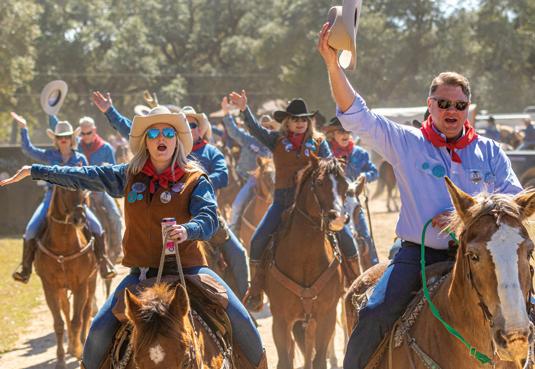
It was her uncle Jack – wearing a tall Hoss Cartwright-style cowboy hat, like that from the decades-old Bonanza series – who started The
Desperados’ hand-to-hat, hats-off salute of hiphip-hooray when passing spectators along the route, a crowd-pleaser at the parade, she says. “We are the only wagon on Salt Grass that does this.”
Trail rides aren’t the Wild West anymore, Proler says. Once upon a time, riders rolled in with tents, bedrolls, and a tolerance for rocks under their backs; now they arrive with RVs, climate control, and a generator big enough to qualify as a minor utility. It’s still the trail – the dust and horses and miles – but the definition of “roughing it” has been renegotiated.
Camps come alive at night. Wagons and cook shacks turn into rolling stages and open kitchens with delicious camp cuisine. Groups host dances and professional singers, music drifting through horse nickers and laughter. Stories around the campfire grow longer, whiskey poured generously and repeatedly.
Proler remembers that first outing with her dad. “The eggs, on tin plates, were freezing. The bacon had little chips of bone in it. We once had some riders behind us that were nice guys, real polite. But they had their little bottles of booze they threw on the ground when they were finished. It was lawless! No rules!
“And my gosh, there was no Gore-Tex back then!” she says of the water and windproof fabric that saves many a rider when skies open and wind slices through denim like a branding iron.
Cindi has traded a horse for the wagon these days, preferring to hitch her ride on four wheels. “My father’s great-grandchildren are on that wagon now.” She’s proud to share co-ownership of it with her cousins, one of whom, Margaret Jo Byron, turning 81 this month, was named most experienced female Salt Grass Trail rider last year. She mostly rides in a buggy or in the wagon these days, but was on a horse for decades, even riding the trail before The Desperados were officially formed.
Rounding out the cousin consortium, and a co-owner of The Desperados wagon, is Tanglewood resident Ryan Wasaff, 50, grandson of Jack Wilson – that Jack Wilson, brother to Welcome Wilson, of the Beverly Hillbillies much-loved let's-find-the-trail-ride tale.
Wasaff, who loves all things Western heritage and horses, is a director of the Houston Livestock Show and Rodeo. “I just love the Western way of life,” he says. “I’ve done this for 30 years and I’ve watched my family do it all my life. It’s where we all came from, where we started.”
Riding the Salt Grass Trail can change people’s lives, he says. A bucket list kind of thing.
“You take somebody from the city and put them on the trail ride, and it will change their life forever. A complete city slicker can join The Desperados. It’s happened over a hundred times. The next thing you know, the person falls in love with that Western way. You’re out there in the middle of it, on the trail, you feel like you might as well be on a different planet.”
But watch once you’re off your horse and in a car again, he jokes.
(continued on page 30)
(continued
“You tend to pull back on the steering wheel instead of hitting the brake pedal. You forget you’ve put down the reins.”
“I love riding the trail so much,” says Michele DeGuerin Luke, who has ridden with The Desperados for years and knows all about its tightknit family. Luke and Rene Bennett have been fast friends for years, since school days. Luke’s dad, Houston criminal defense attorney Dick DeGuerin, is like a second dad to Bennett, and he thinks of her as a bonus daughter. He’s used to trials – and trails.
“I used to ride with the Magnificent Seven group with my dad a long time ago and we’d bring our own horses out,” explains Luke. “But we don’t have any horses right now that can tolerate being in large groups like that anymore. I rent a horse like quite a lot of people do.”
Dad and daughter are riding together this year with The Desperados. DeGuerin, 85, has owned a ranch near the rolling hills of Burton for years. He grew up working and riding horses.
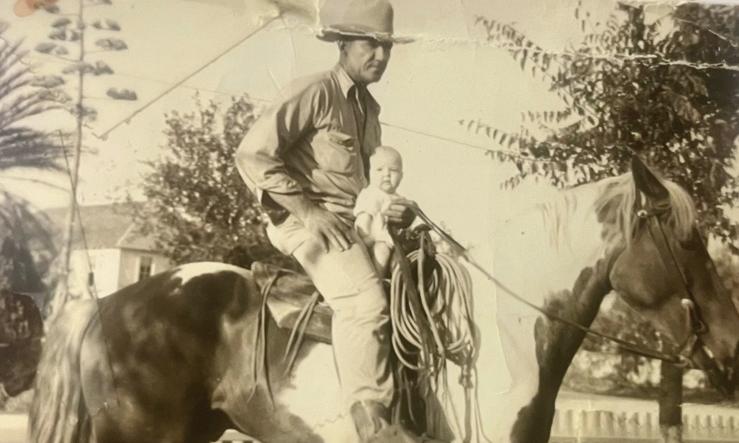
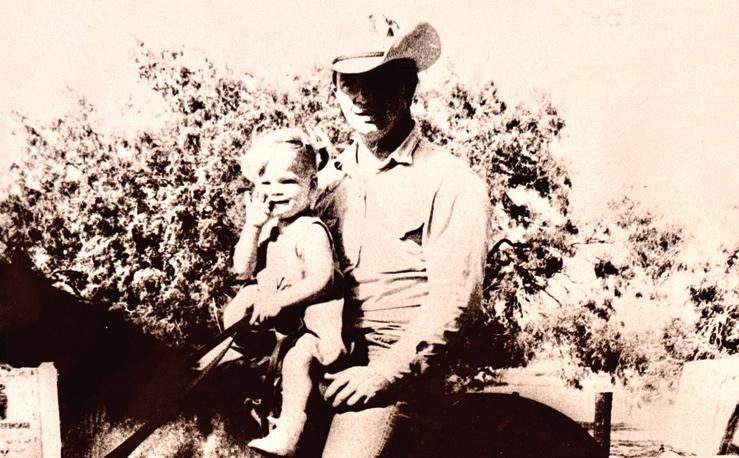
A 1941 photograph of him tells the tale: Six months old, he sits nestled in front of his uncle Arthur Knaggs, already learning the feel of a horse beneath him. That uncle was sheriff of Dimmit County, Texas for 30 years. And that paint horse was a working extension of him, carrying him across miles of jurisdiction.
“Salt Grass is an exciting time for the horses as well as the people,” DeGuerin says. “Horses are very social animals. They like to visit each other. And fight each other. Some like to be the alpha. So, you better have a horse that’s acclimated to the trail.”
That’s where the red ribbon comes in, he explains. Salt Grass Trail rules dictate that you tie one around your horse’s tail if they’re known
to be a persnickety sort, warning riders to not follow behind too closely. “By nature, horses want to follow each other closely. It’s in their DNA that they’re prey. They don’t want to be that last horse in line and get caught by that mountain lion or bear, so they’ll nuzzle up and put their nose right in the other’s bottom. A good recipe for getting kicked.”
The Salt Grass Trail is legendary, DeGuerin says. “A great way to perpetuate the Texas aura. I wish more people could experience it because
Riding the Salt Grass Trail can change people’s lives. A bucket list kind of thing.
it is a uniquely Texas experience.”
Although, these days, he no longer hops up on a horse. “I’ve taken to a stepstool, and somebody pushes me up from behind.”
He much prefers the comfort of his Airstream to any notion of earlier wilder days when members took to sleeping in a bedroll on the ground. And he knows from last year’s ride when temps dipped well below freezing how important long underwear is.
Because he wasn’t wearing any.
It was so cold last year that the circle ride was canceled – the trail’s unofficial dress rehearsal where riders, horses, and wagons settle into a rhythm before the real miles begin.
“I was chilled to the bone. Just could not get warm,” DeGuerin says. Bennett – yes, his daughter’s best friend, his bonus daughter – loaned him some undergarments. They got pulled on quickly.
“She loaned me pantyhose. I discovered they were very warm,” he quips. “You know, sometimes you’ve just got to cowboy-up and do what you’ve got to do.”
Technically, recalls Bennett, they were a pair of ladies’ thin, footless cashmere long underwear. “That is true love. Hand over your long underwear,” deadpans Bennett. “He was hilarious. He was like, ‘You know, there are so many ways to bring this up in conversation. ‘Hey, I’m wearing my daughter’s best friend’s underwear.’”
Frozen limbs and long underwear aside, Salt Grass riders keep coming back. New layers of stories, tucked into tradition. Miles logged. Memories handed down.
A beauty queen who preferred the saddle to pearls. A pioneer wagon still rolling. Grandparents, parents, daughters, sons, cousins, rookies, and bonus family stepping into place when the road calls.
The coffee gets stronger, the gear gets more modern, but the heart of it stays the same, say the riders.
“It’s Texas heritage and that’s what people are trying to hold onto with this group,” says Bennett. “You feel like you’ve accomplished a wonderful thing.”
Editor’s note: See www.rodeohouston.com/trailrides/ for more on trail rides. Salt Grass Trail Riders arrive at Memorial Park on Feb. 27, the day before the Downtown Rodeo Parade, usually between 12:30 and 4 p.m., with the best viewing often around 2-3 p.m. before they line up to leave for the parade on Saturday morning.


by Cheryl Ursin, staff writer
Editor's note: Over the last 25 years, we have printed thousands of stories spotlighting inspirational neighbors. We hope you enjoy our new "From Our Archives" column. For some, these stories may be new to you. For others, a familiar story may resonate in a different way now. Find all Buzz articles online at thebuzzmagazines.com. First up, in honor of Heart Month, read this powerful story, full of heart, about a resilient neighbor. This story was originally published in Feb. 2022.
Ithink we all wonder occasionally, as we live through our ordinary days, how we’d respond in a crisis and how we would do if (or should I say when?) we are faced with a life-shattering hardship.
Will we rise to the occasion, or will we sink into despair?
Karen Landrigan knows.
Karen, who just turned 60 this fall, has had a happy and fulfilling life: married to her husband, Andrew Adams, for more than 40 years, two grown and happily launched children, Dan and Heather, two grandchildren, Edward, 4, and Lyra, 1, a satisfying career doing graphic design for large corporations, lots of friends, lots of interests. She swam daily, sang in multiple choirs, made beautiful sterling-silver jewelry.
“I’ve always had a lot of energy,” Karen says. “My husband just shakes his head.”
But one day in 2012, when she was 50 years old, right after returning on a 28-hour flight from Kuala Lumpur where Andrew was working, Karen developed a headache that wouldn’t go away and, in fact, kept getting worse.
After a week, she went to see her family doctor, who put her on antibiotics. A week after that, when the headache still hadn’t gone away, her doctor sent her to an emergency room to get a CT scan. “The bad news of this story is the CT scan missed the clot, which was still at that point tiny,” Karen says. “They sent me home with pain meds.”
But a neighbor who had suffered an aneurysm (a bulge in an artery) years before encouraged her not to ignore the still-worsening headache. “It was like a crescendo, just getting worse and worse and worse,” remembers Karen. Ever ener-
getic, though, she continued to swim daily and even hosted a party for 40 the day she called her doctor again. Then, after her morning swim a few days later, she went in to see him. He consulted a neurologist and sent her back to the emergency room for another CT scan. Karen stopped on the way at a Subway (“Because I knew there’d be no food in the ER,” she says), and texted a friend to let her know where she was going.
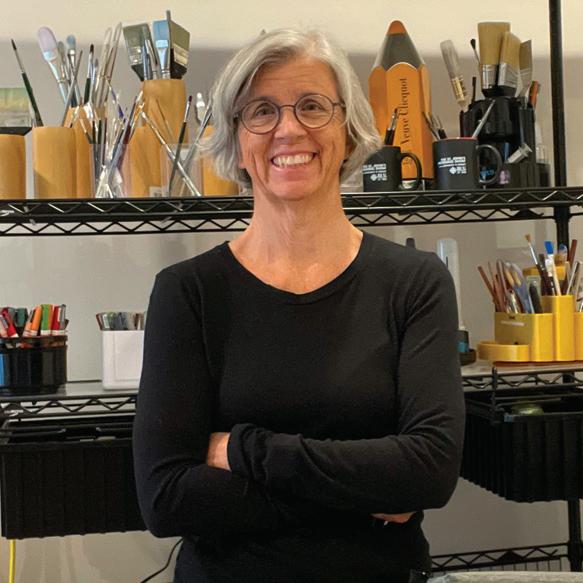
The friend, Patty Valadka, met Karen at the hospital. It was a good thing she did. Patty is a nurse, and her husband, Alex, is a neurosurgeon. Patty insisted on further testing. The second CT scan showed a blood clot, now the size of a golf ball, in Karen’s brain. She was having a stroke, which is when a blood vessel in the brain is either blocked or it ruptures, interrupting the flow of blood and oxygen, causing brain cells to die. Karen ended up in the neuro-ICU, unable to speak, to understand what others were saying, to read, or to write.
Except for the persistent and severe headache, Karen didn’t have any warning signs of stroke, such as drooping on one side of her face, weakness on one side of her body, or slurred speech. She wasn’t confused, she wasn’t dizzy, her vision was fine. She also didn’t look sick, this fit woman who had just swum 4,000 meters
(about 2½ miles) that very morning
“This is important, nobody talks about it, but a persistent, severe headache can be the sign of a stroke,” says Karen. She makes a point of talking about this whenever she is interviewed, as she often is these days for her art. Karen, who was born and raised in Canada but now lives in Bellaire, spoke of it in 2016 when she was interviewed by a radio station in her childhood hometown of St. John’s in Newfoundland. According to a later story by the Canadian Broadcasting Corporation (CBC), a man named Dennis Mandeville, who had had a headache for 12 days, was listening. Mandeville went directly to a local hospital, where he was diagnosed with temporal arteritis, an inflammation of blood vessels in the brain that can lead to a stroke. The



TAKING ACTION Two paintings in Karen’s series, “I Have Something to Say.” Left: “Standing.” Top right: “Swimming.” Bottom right: “Vivid” is the first painting in Karen’s new series, “Still. Life.”
doctors told him that if he hadn’t come in, he probably would have suddenly and permanently lost his sight.
After her own stroke and after 15 days in intensive care, Karen was released.
“And then the misery really began,” she remembers.
Karen still had that inability to use and understand language, which is called aphasia. She had other glitches to contend with as well. She couldn’t remember things, like whether she had eaten dinner. She had some physical problems, including numbness, spasticity, and “drop foot,” which is when the front part of your foot suddenly doesn’t lift up the way it’s supposed to when you’re walking. “I would just fall,” she says.
For 18 months, her recovery and her rehabilitation “ate my life,” Karen says. “I had to relearn to speak, I had to find every word, and I was just
very unwell, really sick. It was terrible.”
The headache? She still has it nine years later and probably always will, though it was much worse for the first two years after her stroke because there was still swelling within her brain.
She had nearly died and remains at an increased risk of having another stroke. “It was a near-death experience,” she says. “Your life’s wrecked, there’s no getting out of that, it’s never going to be the same. It’s devastating. There was a lot of crying, a lot of anger with the universe.”
On top of all that, the clock was ticking. The first year and a half after a stroke are considered crucial. That’s when a person is most likely to recover their affected abilities, if it’s possible at all.
Every day, Karen would get up at 6 a.m., sit down at her dining-room table, and do all the homework her speech-language pathologist, Dr. Marina-Elvira Papangelou, had given her, and then some. Monday through Friday, she went to
daily speech-therapy sessions. Her oldest brother, Jim, would call her every day, and using materials Dr. Papangelou had sent to him, he would work with her. She’d continue working on her therapy exercises till 11 every night.
She began swimming with her club, Houston Cougar Masters, again 10 days after leaving the hospital. It’s strange what abilities a stroke victim retains. Karen, a lifelong competitive swimmer, could swim – though at first, a worried friend, Taryn Walker, swam near her. Karen could also drive. Stroke victims with aphasia are given cards to present to police officers if they are ever pulled over so the officer knows they have aphasia and are not drunk.
That aspect of aphasia was humiliating, Karen says. Though the victim of aphasia is still “in there,” aware and thinking, when they try to communicate, people often assume they are drunk or otherwise impaired.
Karen’s swimming (continued on page 34)


INVICTUS In the aftermath of her stroke, Karen’s childhood band director told her she reminded him of the poem “Invictus” by William Ernest Henley: “I am the master of my fate, I am the captain of my soul.” Karen also wrote in an artist note for her newest painting and her largest to date, “There will always be beauty in the world ... We need our fragile flowers to replenish themselves. We need our beauty.” Top painting: “Beauty.” Bottom painting: “Persevering.”
(continued from page 33)
coach, Greg Orphanides, would think of language exercises for her to do while she swam her laps. “He used to say, ‘Okay, swim three 100s, and each time you come back, you have to tell me five words that start with the letter G,’” she remembers.
She continued singing with her choirs, Houston Masterworks Choir, Rice Chorale, and World Voices Houston. (She has recently also started singing with a choir called Resound.)
“One of the most difficult moments,” Karen remembers, “was when my choir friends came over one day, and the music director of World Voices Houston sat down at the piano and asked, ‘Want to see if you can still sing?’”
“I was like, ‘But what if I can’t?’” she says.
She still could, and the mental rigors of singing – following the director’s instructions, knowing where you were going to start in a piece each time during rehearsal – proved to be very
good for her rehabilitation.
But getting her language back was a long, painstaking process. When Girl Scout cookie season started, Karen was determined to buy some when girls came to her door. “I had been a Brownie,” she says. “There was no way I was not going to buy some.” But she had to slowly practice each step of the exchange.
The way she saw it, Karen says, “There were two choices: to not open that door and never

speak to people again or to work really hard at it.”
While Karen had gone to art school and had always been creative, making sterling-silver jewelry and sketching for fun, she had not painted for years, even though people had encouraged her to. But after the stroke, she says, “I started painting because I was really in a bad, dark place.”
Her neuropsychologist, Dr. Cullen Gibbs, told her something she has never forgotten. “It’s a very good, simple idea, which I quite like,” Karen explains. “If you’ve got all these negative thoughts in your head, try to fill your head with something else.”
Her first painting was of her dog, Hugo Bounce.
“And I thought, ‘Well, that was kind of fun,’” she says.
Meanwhile, she had been drawing a swimmer in her sketchbook for years. Now, she sketched that swimmer and “dropped the horizon,” meaning she changed the viewer’s perspective. That swimmer, she saw now, could look like she was
about to fly.
“Oh, that’s worth painting, I thought,” says Karen. She went out and bought the biggest canvas she could fit into her car.
The resulting painting was “Soaring.” It’s of a female figure, swimming, her arm raised midstroke. She is surrounded by water, which is reflecting light.
“She could be flying, she could be dying,” Karen says. She continues, “Sometimes you just have to put your head down and push through the misery. If you just stay still, you will drown. The water, life, will continue, whether you like it or not.”
“Soaring” became the first painting in a series Karen calls, “I Have Something to Say.” All of the paintings in the series are of a solitary swimmer and have titles like “Living,” “Rising,” “Persevering,” “Flying,” “Emerging,” and “Standing.” The paintings have won awards, and some of the original paintings, as well as limited-edition prints of them, have been sold all over the world.
Other survivors of stroke have told their stories, in books and in films. Among them:
Aphasia: The Movie: Karen’s friends from swimming found this movie and watched it to learn more about what she was going through. It’s the true story of an actor named Carl McIntyre, who, like Karen, had a stroke and had to relearn how to speak.
Still Sophie: An award-winning short (7-minute) documentary about Sophie Salveson, a young singer and actress who suffered a stroke at the age of 19, and her battle with aphasia and paralysis. Both a book and a movie (directed by Julian Schnabel), The
A juror, or art-show judge, who awarded Karen’s painting “Swimming” the top prize in an international competition, said, “Karen’s work is … honestly steeped in the stuff of life: hard, gorgeous, challenging, invigorating, and unifying.”
These days, you would never guess what this trim, stylish, articulate, cheerful woman has been through, but Karen says she still works around the lingering effects of the stroke. She might ask people to write things down for her so she’ll remember. Sometimes, she has her husband write an email for her because it’s quicker. And she still has that headache.
But in her artist statement for the “I Have Something to Say” series, she wrote, “This is what my art as well as my existence is about –whether to fly or die. I choose to fly.”
She’s at work on a new series of paintings, this one called “Still. Life.”
You can see more of Karen’s work at these sites: karenlandrigan.com, landriganart.com, and landrigan.redbubble.com.
Diving Bell and The Butterfly, is the memoir of Jean-Dominique Bauby, who suffered a stroke at the age of 44 that left him “locked in,” unable to move or speak. He dictated his book one letter at a time using the only movement he was capable of, blinking his left eye.
In 2011, 34-year-old Lotje Sodderland, a documentary-film producer living in London, suffered a stroke. After she woke, she started recording videos of herself with her phone because she otherwise couldn’t remember. She used this footage as the basis for My Beautiful Broken Brain, her 2014 documentary about her first year after her stroke, currently available on Netflix.

. by Sharon Albert Brier, staff writer
Martinis, everyone? The Houston Junior Forum’s Merry Merry Martini holiday fundraiser positively shimmered at the home of Linda and Rob West, with co-hosts Laurie and John Wasmuth stirring up the cheer. Guests were handed blinking martini pins – because nothing says holiday elegance like tasteful twinkle. The bar served crowd-pleasers including a Winter White Cosmo, while a scrumptious buffet of salmon and pork tenderloin kept spirits (and appetites) high. Marian Catechis wore a perfectly on-theme “merry” shirt, setting the mood. Spotted clinking glasses were Juliana and Guy Vachon, Susan Rosenbaum and Eric Schoen, and Cat Holste with Tom Bankert. Proof that festive fun pairs beautifully with a good martini.
The Tangle Lane party sleighed expectations. Blinking reindeer sculptures flashed away while Mr. Moose perched on the entry bench, standing guard like a very festive bouncer. Michele Hosko and Scott Drysdale transformed Michele’s home into a glowing winter-white wonderland and welcomed a recordbreaking 65 guests. Co-hosts Sharon Cordes, Miguel Lozano, David Eastlake, and Liz Andrews were thrilled (and slightly stunned) by the turnout. As rain threatened, Michele smartly provided a tent to expand covered seating. One guest made a dramatic dash home in the rain, shedding his leather jacket – and shirt – to save his shoes. Meanwhile, Michele’s neighbor Mo Cordes played chauffeur, giving rides home to neighbors.
Two parties, two moods, one very patient homeowner. After 18 months of dust, debris, and wall-gutting drama, Kyle Dutton’s 1939 house finally emerged – restored, reborn, and nearly doubled in size. The big reveal in December was casual chic, but the real spectacle followed. Dutton and Ben Barrett rang in the New Year with a Surrealist black-tie fête inspired by the infamous 1972 Rothschild party, where invitations were typed backward and required a mirror to decode. Here, guests found their names written in reverse on mirrored chargers. Antler horns, papier-mâché eyeballs, and a wink to Salvador Dalí ensured the house – and the party – was anything but ordinary.
Golden girls. Forget velvet ropes and loud clubs; this New Year’s Eve glittered with friendship, laughter, and a little competitive bingo. About five years ago, Patsy Flowers launched a New Year’s Eve tradition for widowed or single gal pals, mostly neighbors, proving that chosen family sparkles brightest at midnight. After an overflowing potluck and plenty of champagne toasts, the fabulous 11 got down to serious business: bingo, prizes, and bragging rights. Julie Di Fonzo raided her grandmother’s legendary gift closet, wrapping surprise treasures as prizes and party favors. (Yes, everyone went home with two favors and two bingo cards – because why not?) The newest Golden Girl in attendance? Emma Carruth, who fit right in before the ball even dropped.
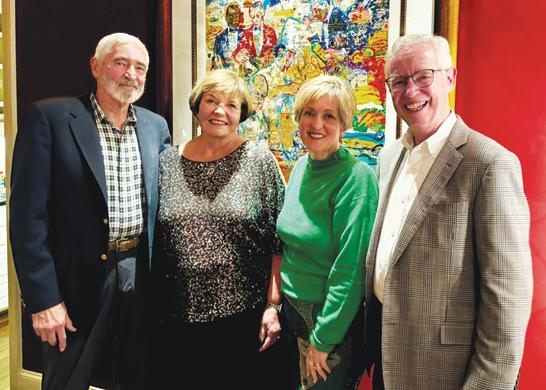
Be a bridesmaid. Why read quietly when you can accessorize? The Wedding People by Alison Espach inspired a book review like no other when host Susan Ganz transformed her home into a full-on wedding reception and encouraged readers to dress as bridesmaids. The true gasp came when reviewer Susan Rosenbaum swept in as the bride herself, sporting a veil with a 15-foot train that required both choreography and patience. Once the laughter subsided, the book took center stage, delivered with wit and sparkle. Guests left with “diamond” hair pins and thank-you hand cream. Doesn’t every good wedding (and book review) deserve favors? Among the amused bridesmaids: Jan Arrington, Amelia Adler, and Sandy Pospisil. Three magical homes. The Hammersmith Holiday Magic Dinner was pure yuletide mischief, orchestrated by Libby Power, Cheer Coordinator. First stop: Mistletoe & Monet at Stacee and Michael Martinka’s, where jazz musicians serenaded guests in the front yard.
A “Holiday Bourbon Blitz” provided instant cheer and charcuterie worthy of Santa’s sleigh fueled the fun, while revelers cozied up by the patio fireplace. Next came Winter Wonderland at Marci and Christian Pendley’s, complete with a merry band of Santa’s helpers. The grand finale? Holly Jolly at Irby and Anne Rozelle’s, where a feast and decadent desserts proved the sweetest way to wrap up a night of progressive holiday magic.
Nutcrackers, anyone? The Tanglewood Garden Club holiday lunch marched straight into merriment at the home of Jackie Richey , whose collection of 100 fabulous nutcrackers stood proudly at attention. Lining the fireplace mantel and bookcases, they brought good luck, protected the house, and may have silently judged outfits. The festive catered luncheon, beautifully chaired by Kiara Rankin and Christine Trammell , was fueled by flowing Prosecco for a bubbly good time. Between clinking glasses and admiring the cracker corps, guests toasted the season, swapped garden tips, and agreed that when it comes to holiday décor, Jackie clearly cracks the code.
See Rumor Has It at thebuzzmagazines.com for additional photos. Have some good news to share? Email us at info@thebuzzmagazines.com.


. by Cindy Burnett, staff writer
Buzz Reads is a column about books by reviewer Cindy Burnett. Each month, Cindy recommends five recently or soon-to-be released titles.
The Ferryman and His Wife by Frode Grytten (magical realism) – In this quiet but profound book, Nils Vik, a ferryman in rural Norway, sets out on his last ferry trip, on what will be his last day on earth. As he travels along the fjord with his dog, who died years before, he encounters other dead individuals who played a part in his life and whom he met while ferrying them to and from his village. His logbook is a physical reminder of everyone he transported over the years; some of these trips made sense to him at the time and others seemed insignificant but as he reflects on them all together, he comes to see the connections that weave throughout this life. This beautiful book tells the story of a life well-lived and focuses on the impact people have on each other, both large and small. I listened to this one and thoroughly enjoyed the audio production. The Ferryman and His Wife is a must-read for anyone who enjoys lyrical prose and moving stories.
Her Last Breath by Taylor Adams (thriller) – When two friends, Tess and Allie, set out on a caving adventure, things quickly take a dark turn. They are followed by a mysterious stranger who will not leave them alone and who eventually traps Tess deep inside a narrow cave. Allie is nowhere to be found when Tess finally escapes 24 hours later, and when the police begin to investigate these horrific events, it is quickly clear that someone from Allie’s past may have targeted the girls. The more the detective investigates, the more questions arise. This heartpounding thriller kept me on the edge of my seat the entire time I was reading it; Adams has written the best thriller that I have read in a long while – brilliantly plotted and very claustrophobic. This book will appeal to thriller lovers and those who enjoy well-plotted books.
Impostor by L.J. Ross (mystery/thriller) –Impostor is a gripping page turner from beginning to end. Dr. Alexander Gregory is a forensic psychologist known for helping evaluate and understand even the most violent offenders. So when
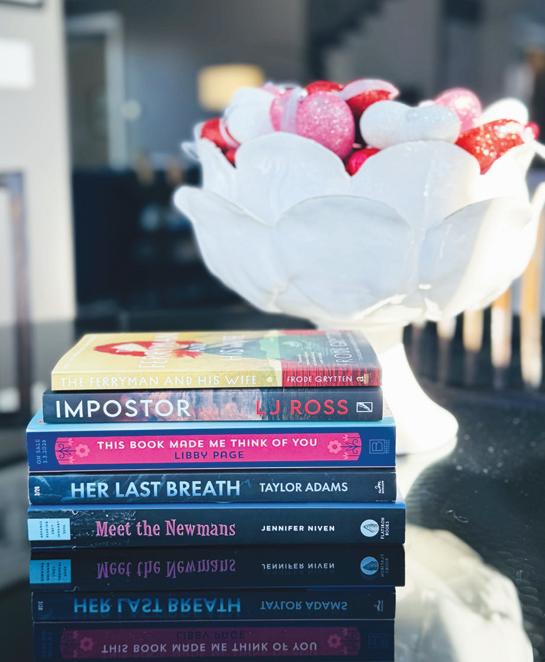
a young mother is brutally killed in Ballyfinny, Ireland, the small insular community is shocked and certain that the murder was committed by an outsider. The Garda (the Irish police) have no leads, so Dr. Gregory is recruited to profile the murderer and help bring the perpetrator to justice, though the townspeople do not welcome the intrusion. The twists and turns are carefully crafted, the characters are well developed, and the sense of place is very strong. I highly recommend this initial foray into a new series and am anxiously awaiting the remaining books. This stellar mystery series was published elsewhere previously, and the publisher is releasing the rest of the series throughout 2026. This one is a great fit for fans of clever mysteries, stories with a strong sense of place, and engaging protagonists.
WHAT TO READ This month's selections include a touching story about the power of books, historical fiction about a reality TV family, a new mystery, a thriller set in a cave, and a story filled with magical realism.
Meet the Newmans by Jennifer Niven (historical fiction) – Meet the Newmans stars an American family whose life is beamed out to the country on a weekly basis in a television show entitled “Meet the Newmans,” creating the illusion that viewers know these individuals, while in reality the Newmans’ carefully curated public image hides all sorts of secrets. Niven explores perception versus reality, identity, gender roles, and family as she slowly tells each Newman member’s story. While the book is set in the 1960s, many of the issues the Newmans face feel all too timely in 2026 while others harken back to a time the reader will be glad to have left behind. One fun aspect to the story is the behind-the-scenes glimpses into the world of television in the 1960s. This book will appeal to those who loved Lessons in Chemistry, a historical setting, and family dramas.
This Book Made Me Think of You by Libby Page (contemporary fiction) – Tilly Nightingale
is grieving the death of her husband when she receives a call about a birthday gift from him at her local bookshop. Too ensconced in her grief, she hasn’t read a book in months. When she arrives at the book shop, she learns that Joe picked out 12 books for her – one for each month of the upcoming year with an accompanying letter to guide her through her first year without him. As she slowly makes her way through the selected books, Tilly begins her recovery journey as she reconnects with those around her and develops some new relationships as well. The posthumous gift of books from Tilly’s husband was a fabulous plot device, and the manner in which he carefully selected each book was delightful. I am a firm believer that books can solve almost anything and help heal us in ways few other things can, and This Book Made Me Think of You proves that theory. This book is perfect for those who love books about books and stories about grief and healing.
Editor’s note: Book reviewer Cindy Burnett also writes our weekly Page Turners column at thebuzzmagazines.com. She hosts an award-winning book podcast entitled Thoughts from a Page Podcast www.thoughtsfromapage.com, runs the Instagram account @thoughtsfromapage, and regularly speaks to groups about books.

. by Tracy L. Barnett, staff writer
On a quiet stretch of trail in northwestern Spain, the Camino de Santiago has a way of meeting people exactly where they are.
The Camino de Santiago – often shortened to “the Camino” – is a centuries-old network of pilgrimage routes that cross Europe and converge in Santiago de Compostela, in northwestern Spain. Walked for more than a thousand years, the Camino has deep roots in Christian tradition as a journey honoring St. James, though today many people walk it for spiritual reflection, personal challenge, or simply the experience of moving slowly through historic landscapes. Routes begin in multiple countries, including France and Portugal, and vary widely in length, terrain, and intensity.
For schoolteacher Susan Tallman, walking the Camino was a return – to a path she had once walked alone, carrying big questions and learning how to trust herself step by step. Susan had walked the Camino once before, spending 12 days on a route along the northern coast of Spain. This trip followed a different path, beginning along the southern coast of Portugal before continuing into Spain over eight days, with the only shared point being the final arrival in Santiago.
For Susan’s friend Kim Jacobson, the journey marked a very different kind of beginning.
It was a first – a leap into uncertainty, undertaken after retiring from a 40-year career as a corporate attorney.
The two had been friends for decades. But walking together on the Portuguese Camino, alongside a small group of women, revealed new dimensions of both the trail – and each other.
“It seemed like a great challenge and a new, exciting adventure,” Kim recalled. “And I was so thrilled, but…about two weeks in, that’s when I got really anxious.”
Kim had committed quickly when the invitation came, but her mind soon began to race ahead of her feet. “I tend to overthink and over prepare and try to control the details to ensure success,” she said. “So I dove into every bit of information I could find about the Camino and what it takes to get ready.”
She joined Camino Facebook groups, talked
to people in Houston who had walked it before, and followed a detailed training plan. “I had a whole list of things that could go wrong in my head,” she said. “So let me try to control that.”
Training meant long walks through Houston’s heat – “It’s hot. It’s flat. You’re roasting on concrete” –often in full hiking gear, backpack and all. “I got a lot of really strange looks in the meantime,” she laughed.
Susan, by contrast, didn’t hesitate when the opportunity arose to return to the Camino after six or seven years. Her first journey had been solo and intentional, a time of deep inward reflection.
“The first one was an awesome experience,” she said. “And I think I really felt that the whole time because I knew I had to be resourceful and be in charge and plan my next step.”
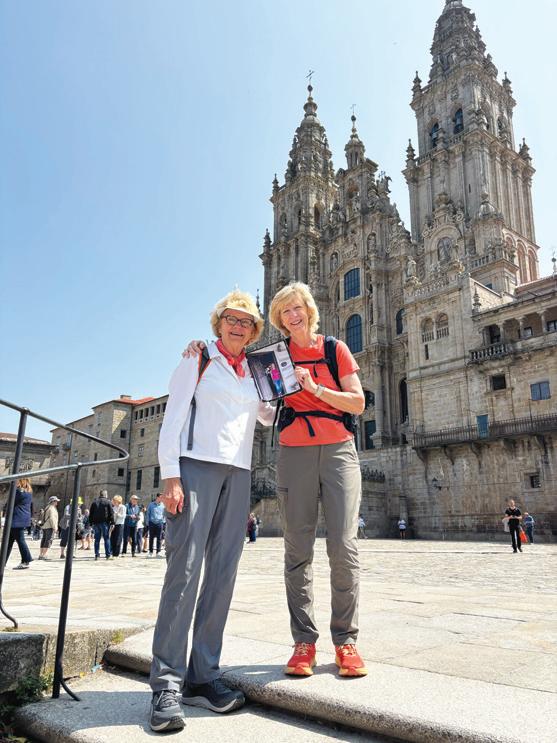
This time would be different. The walk was organized through Spanish Steps, with luggage transfers, guides, and carefully chosen accommodations. “There was nothing that was on my mind other than just walking the Camino,” Susan said. “And I was pretty secure in that.”
The route itself – the Portuguese Camino –was chosen for its accessibility and beauty. While the journey briefly dipped into Portugal at the start, most of the walking unfolded across northern Spain.
“It was much more level,” Susan said. “It was
not as strenuous.” The group would walk just over 100 kilometers, enough to earn their Compostela certificates – the official certificate awarded to pilgrims who complete the Camino de Santiago pilgrimage to Santiago de Compostela, Spain, proving they've walked or cycled the final 100km –without the intensity of longer routes.
For Kim, footwear became the turning point. Early training brought unexpected aches – shin splints, heel pain – and doubts resurfaced. “That’s what made me think, ‘Oh my gosh,’” she said. “Can I do this?”
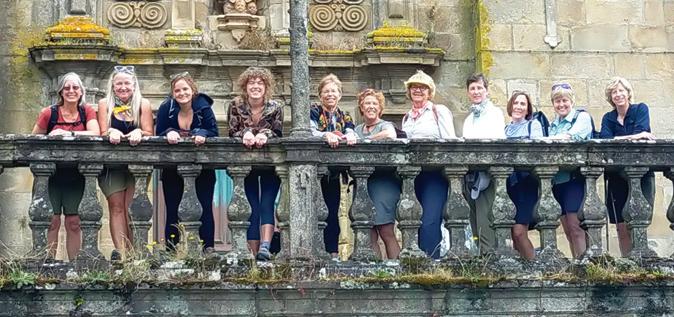
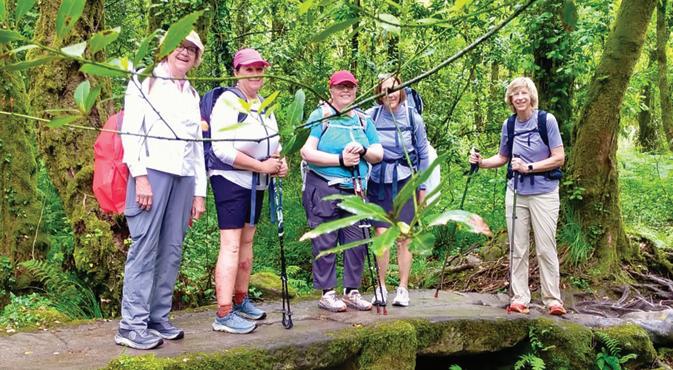
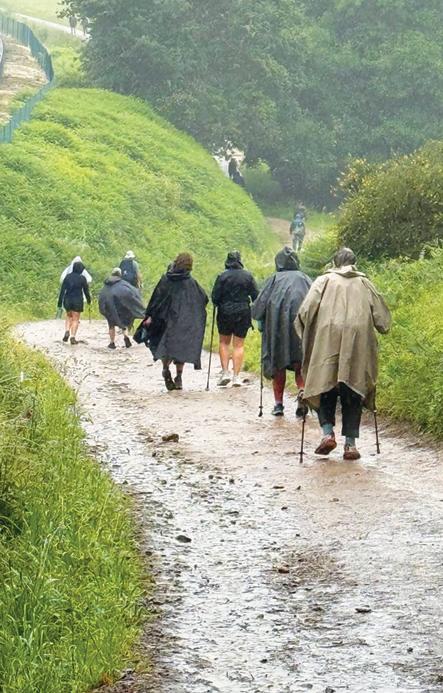
Once she found the right shoes – “the new Altra Experience Wild trail runners…bright orange” – everything shifted. “Once I got the right shoes… I felt like I was going to be just fine.”
When the walking began, the Camino unfolded gently. “The first day, I think we did eight miles,” Kim said. “It wasn’t too bad.”
By the third day, something clicked. “Your body was just in a rhythm,” she said. “From that point on… I wasn’t exhausted.”
Susan recognized the feeling immediately. “This is what your body’s built to do,” the guides reminded them. Walk. Rest. Repeat.
Days took on a simple, grounding pattern –morning starts, café stops, conversations that deepened mile by mile. Kim had expected to crave solitude. Instead, she found herself drawn into connection.
“One of the biggest surprises for me is that this group of women was such an interesting dynamic group of people,” she said. “We just had the richest, most authentic conversations.”
The group included pastors, counselors, therapists – women accustomed to listening deeply. “It just opened up space to really talk about things that mattered,” Kim said.
Susan felt the contrast keenly. “The first time, solitude was with me all the time,” she said. “And the second, I didn’t have any of that.”
Instead, the emotional texture was lighter. “The group setting was fun. It was lighthearted. It was entertaining,” she said. “We had a lot of
social times.”
That didn’t mean there was no room for reflection. “Kim and I both decided we’d have individual rooms,” Susan said. “That was really nice… It gave me time to journal.”
The landscape itself offered moments of quiet awe. Kim was captivated by the details. “If you look at my pictures, clearly it’s the hydrangeas that caught my eye most often,” she said. “They were enormous.”
Susan agreed. “Hydrangeas that are taller than I am, and I’m six feet tall,” she said. “They were just breathtaking beauty.”
They walked along old Roman roads, through villages and forest paths, sometimes near the coast. “You would see these old markers or old stones in the road,” Kim said, “and you think back about all the people that had walked over them…for centuries.”
Not every moment was serene. Rainy days tested resolve. But those, too, became memorable. One evening, after walking in cold rain, the group arrived at an especially beautiful place.
“It was like a wedding venue kind of place,” Kim said. “And Susan and I went out and covered the grounds and just took a bazillion pictures.”
For Susan, a moment in a small town stood out vividly. “We came around just a street corner…and there was a symphony playing in the courtyard,” she said. “It brings tears to my voice just thinking about it.”
The Camino’s spiritual dimension surfaced
differently for each of them. Kim noticed the energy of fellow pilgrims. “You hear the stories,” she said. “There’s a spirit in the Camino… It’s just a really good energy there.”
Susan felt her faith nourished through community. “The women that I was with did that this time,” she said. “Their sharing of their faith and their life experiences.”
When they reached Santiago, emotions diverged again. Susan felt the weight of arrival. Kim felt the loss of the journey’s continuity. “I hated it that we were so close to the end,” she said. “I wanted the conversations to keep going.”
In the weeks after returning home, the Camino continued to work on Kim in subtle ways. “What else am I holding myself back from?” she asked herself.
Susan recognized the distinction between her two Caminos. “The first one was really big, lifechanging stuff,” she said. “And the second one was more subtle… but very positive.”
Neither woman emerged unchanged. And neither ruled out returning.
“You start thinking,” Kim said, “I might like to do that again. And I’d like to go a little bit further next time.”
On the Camino, it seems, the walking rarely ends where the trail does.
Editor’s note: Read about Susan Tallman’s first journey on the Camino in Solo trek leads to letting go, Jan. 2018, by Tracy L. Barnett.


. by Todd Freed, staff writer
With a 16-3 record leading into the holiday break, the Memorial Mustangs girls basketball team was off to one of its best starts in school history. Memorial also captured the Bluebonnet Invitational in San Antonio with its victory over The Woodlands in the championship final.
“The girls’ defensive focus has been incredible,” said Mustangs head coach Jyusef Larry “We held Cy Ranch to seven first half points and Cy Fair to only eight points in the first half. It’s unique to hold a team to less than double digits through two quarters of play.”
Offensively, it’s been a major milestone season for Mustangs senior Draden Moss, who surpassed the remarkable 2,000 career points plateau. Moss had previously broken the school’s all-time girls scoring record of 1,648 points set in 2005 by CeCe Cohen (now CeCe Cohen Sachs), and is now in position to break the boys all-time scoring record of 2,140 points, held since 1966 by Jerry Kroll.
“Draden has been a great player for us for four years, but the thing I’m probably most proud about is that she’s also one of the graduating class valedictorians,” said Coach Larry. “Draden’s the fifth valedictorian from our team in the last six years and they’ve all been starters.”
Along with Moss, a trio of other seniors have been major contributors for the Mustangs this season including point guard Ivy Oliver, who is back to full strength after suffering a knee injury last season. In addition, Moss’s cousin Allison Moss is averaging 7.6 points per game and is one of the team’s top rebounders, while Brooke Kearns is a three-year varsity player averaging three assists per game.
In boys basketball, it’s been a sensational season for the Second Baptist Eagles. The defending TAPPS 5A State Champions closed out 2025 by capturing the Houston Private School Classic while rallying from a 14-point second half deficit to defeat Impact Christian of Jacksonville, Fla. 64-61 in the championship final.
“We knew going into the game it was going to be a really tough championship final but we had a goal of winning the tournament,” said Eagles
head coach Taylor Land.
“We said to ourselves, why should this be easy. Leading up to the game we had played a difficult schedule all season long against outstanding teams from Houston, Dallas, Illinois, and a pair of teams from Florida.”
In the victory over Impact Christian, the Eagles were led by the 25 points from super sophomore Reese Alston, who is ranked among the nation’s top sophomore basketball players.
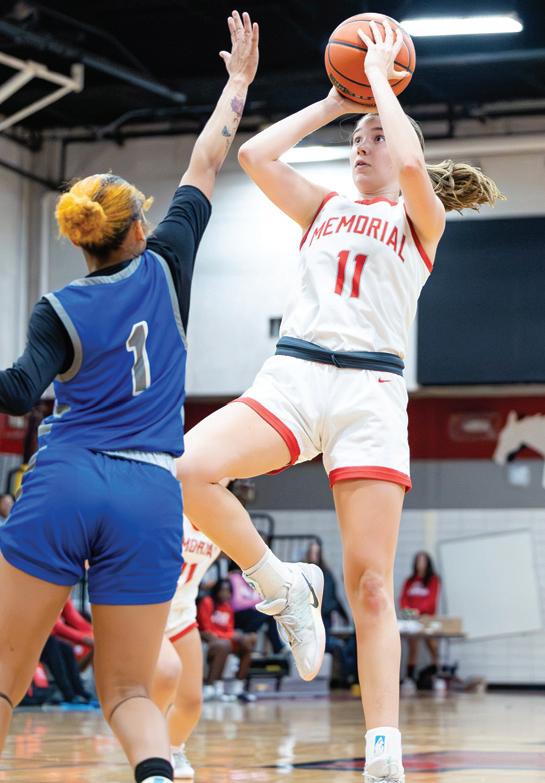
“Everyone who comes to watch us play is aware of Reese’s extreme talent, but his leadership along with the leadership of our other captains Shia Francis, Maverick Manginello, and Will Goolsby is what really drives this team,” said Land.
With an 18-2 record entering district play, the Eagles owned a number one state ranking while in pursuit of a second straight state championship. “We had great leadership from our guys last season and it’s carried over to this year’s team,” said Land. “Our players have been driven all season long.”
It was a remarkable National Signing Day for the Houston Gymnastics Center at the Evelyn Rubenstein Jewish Community Center with five of its long-time gymnasts officially committing to compete at the highest level of collegiate gymnastics.
The fivesome include Nia Thomas (University of California, Berkeley), Layne Lyda (Baylor University), Ashwin Kapoor (Greenville University), Ezra Boulware (West Point), and Ryan Mills (West Point).
“It’s definitely unique to have someone from your program sign on to compete at the collegiate level, but to have five athletes from one program do so is especially impressive. Not many gymnastics programs in the entire nation can
claim to have this many of its athletes sign on to these prestigious type of universities,” said Houston Gymnastics Center director and head girls coach Adam Benas
“Nia and Layne have been with our program since they were about 10 years old. They’re both amazingly talented athletes. Nia is a sensational performer who excels in all four gymnastics events. Layne will actually compete in the sport of Acrobatics and Tumbling at Baylor, which is kind of a hybrid of gymnastics and cheerleading.”
“Our guys are also truly amazing athletes and great people who’ve put forth an incredible sacrifice to reach this level in gymnastics,” added Benas. “It takes a great amount of determination, compromise, and sacrifice to compete and succeed in this sport. We’re in the gym four to five hours a day and as much as six hours a day in the summer months. Gymnastics pretty much requires a family and lifetime commitment.”
Editor’s note: Todd Freed is the host and executive producer of H-Town High School Sports, which airs Saturday at 10:30 p.m. on CW39 and Monday-Thursday on AT&T SportsNet SW. To submit high school sports news for possible inclusion in SportzBuzz, please email todd@thebuzzmagazines.com.


. by Annie Blaylock McQueen, staff writer
Welcome to SportzBuzz Jr., a column spotlighting neighborhood athletes in elementary and middle school.
The Spring Branch-Memorial Sports Association Varsity 7on7 OSU Cowboys had a strong finish at the 2025 Tully Bowl Championship games. The team was made up of fifth and sixth graders from the Memorial area, and coached by Gary Oxner, Jerry Oxner, and Joe Disser. Through consistent practices and game-day effort, the players built trust in one another and rose to the top. The Cowboys earned a spot in the Gold Bracket Championship in their final game of the season. The team faced the Fighting Irish in the title game, closing out their season on one of the biggest stages of the league. Pictured (from left) are Henry Burdick, JP Christie, Carson Clark, Grayson Pham, Brayden Henley, William Daniel, Callaway Sherrill, Zach Oxner, Jack Nolingberg, Oliver Murphy, Henry Candler; (front) Sam Luton and (front) Leo Disser.
Two brothers are taking their talents to the ice, skating their way through national competition as they continue to advance in their hockey careers. David Mora Bernat (pictured, right) and his younger brother, Jack Mora Bernat (pictured, at left), have earned spots on the prestigious Colorado Thunderbirds AAA teams this spring. In addition to their AAA roster spots, the brothers will also compete with the Mountain Select AA teams and the Steamboat Springs A team. The brothers have won tournaments for travel hockey in Colorado, Boston, Chicago, Las Vegas, Nashville, and Minneapolis, and more. The brothers hope to continue climbing through competitive levels, with an eye on future junior and collegiate opportunities. For now, David and Jack are focused on hockey and skating toward what comes next.
The 2025 TFL Lady Colts Girls Flag Football program wrapped its season with a remarkable 15 championship titles and several additional championship game appearances, a milestone year for Houston’s first select girls flag football program. Pictured (top row, from left) are players Ella Spottswood, Morgan Guyah, Kaylee Marshall, Cadence Nixon, Leyjah Jackson, Aubree Travis, Audrey Keeney, Addison Clark, Lily Ng; (second row, from left) Addi R., Claire Alderete, Brooke Hereford, Lorinn Scoggins, Cherish Foreman, Eva Booker, Brooklyn Dotson, Brynlee Jatzlau, Sariah Thomas; (third row, from left) Saveyah Nickson, Makena Voakes, Isabella Day, Eva Negron, Marian Garcia, Mckinley Archie, Gala Zarete, Callie Williams, GiGi Bryant, Adalyn Rodriguez; (fourth row, from left) Opal Smith, Emily Mendiola, Ellery Comer, Sawyer Moritz, Marley Bihm, Amina Spann, Aubriella Small, Brylee Brooks, Alecsis Griffin, Rhayne Alexander, Jaici Merritt; (fifth row, from left)

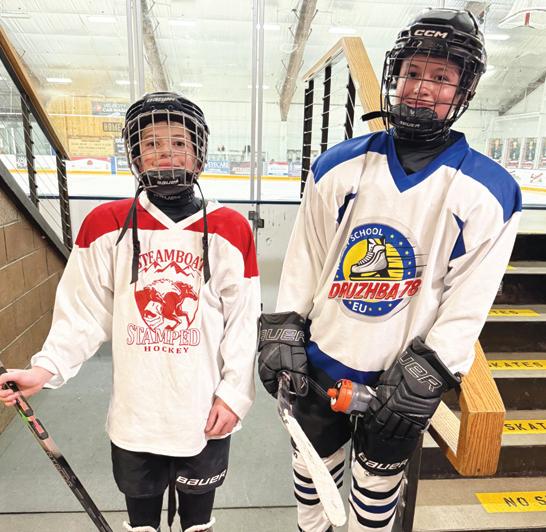

Editor’s note: Send your best high-resolution photos and behind-the-scenes stories about young local athletes, in both team and individual sports, to SportzBuzz, Jr. at info@thebuzzmagazines.com. Include all contact info, names, ages, grades and schools. Featured athletes must live in Buzz-circulation neighborhoods. Items will be published on a space-available basis.



by Jordan Magaziner Steinfeld, staff writer
February means Valentine’s Day, the kickoff to RodeoHouston, Super Bowl, Lunar New Year, and so much more. Here’s a sampling of some Buzzworthy events happening this month:
Children’s Museum Houston Black History Month Celebration
Sat., Feb. 7, 9 a.m.-5 p.m.
Children's Museum
$19.95/adults and children (ages 1+)
Enjoy a full day of dynamic programming celebrating Black history, including a captivating theatrical performance by Express Children’s Theatre (11 a.m.); MLK Oratory Contest Winners (12 p.m.); Black History Month Story Times (1 and 3 p.m.), master storyteller Manning Mpinduzi-Mott (2 p.m.), plus meaningful activities throughout the day.
Mardi Gras! Galveston 2026
Feb. 6-17
Galveston
Tickets vary
The 115th Mardi Gras celebration will be headlined by Logan Ryan (Feb. 6), Wade Bowen (Feb. 7), GymClassHeroes (Feb. 13), and Lil’ Keke (Feb. 14), and will include more than 3 million beads, over 20 parades, legendary parties, concerts, and more. Mardi Gras! Galveston 2026 will bring back Electric Mardi Gras! featuring nationally recognized DJs from New York and L.A. Plus, there will be a wide range of local and regional performers across multiple stages. See the lineup, parade schedule, and more details at www.MardiGrasGalveston.com.
Live at Live Oak
Sat., Feb. 7, 4-7 p.m.: Black History Month; Sat., Feb. 21, 4-7 p.m.: Lunar New Year
Memorial Park, Live Oak Court at Clay Family Eastern Glades
Free
Live at Live Oak, presented by H-E-B, includes music, dance, family-friendly activities, food and drink, and more. Celebrate Black History Month on Sat., Feb. 7 and Lunar New Year on Sat., Feb. 21.

Champagne and Chocolates Valentine's Market
Fri., Feb. 13, 10 a.m.-6 p.m.
Evelyn's Park Free
Shop from local favorites inside Evelyn's Park event center for the annual Valentine's Market. Enjoy $3 mimosas from Betsy's and free treats. Ten percent of purchases will benefit the park.
Asia Society Texas’ Lunar New Year 2026 Sat., Feb. 14, 10 a.m.-4 p.m.; timed building entry from 10 a.m.-12:30 p.m. and 1-4 p.m.
Asia Society Texas
Free; registration required. Ticketed performances: $12
Celebrate the Year of the Horse – a symbol of energy, freedom, and forward momentum – with vibrant performances, arts and crafts, and delicious food available for purchase. Music and dance performances by Huaxing Arts Group Houston are ticketed and include building entry.
Chinese Community Center’s 2026 Lunar New Year Festival
Sat., Feb. 14, 10 a.m.-4 p.m.
Chinese Community Center Free
Welcome the Year of the Horse at Chinese Community Center’s annual Lunar New Year Festival, including lion and dragon dances, face changing opera, cultural dance and music performances, an onsite cultural clothing parade, Asian food vendors, workshops, games, Valentine-themed activities, and festive shopping.
Houston Grand Opera’s Family Day
Sat., Feb. 14, 11 a.m.
Brown Theater, Wortham Theater Center
$25+
Houston Grand Opera’s second annual Family Day will feature a 90-minute, relaxed-environment performance of Humperdinck’s Hansel and Gretel. Kids will enjoy the fun activities in the lobby before the show and during intermission.
Lunar New Year Festival at Market Square Park
Sat., Feb. 14, 12-6 p.m. Free
Celebrate Lunar New Year downtown with a festival featuring Lion and Dragon dances, a DJ, cultural workshops by Young Audiences of Houston, and a market offering a variety of food and artisan goods.
Lunar New Year 2026 at The Galleria
Sat., Feb. 14, 3-4 p.m.; Sun., Feb. 14, 12-5 p.m., Sat., Feb. 21, 12-5 p.m., Sun., Feb. 22, 12-5 p.m.
The Galleria, Level One, between Nordstrom and Macy’s Free
Asia Society Texas brings special Lunar New Year activities to The Galleria, including free arts and crafts, games, and festive performances.
Tapas on the Trails
Sat., Feb. 14, 5-9 p.m. (last trail admittance: 7:15 p.m.)
$110 member/$125 nonmember per person Houston Arboretum & Nature Center
Houston Arboretum’s annual, popular Valentine’s-themed event includes a leisurely walk along softly-lit trails. Experience six food stops paired with specially selected beers and wines. Menu is crafted by expert chefs at Cotton Culinary, Kelly Prohl of Double Decanted, and Lennie Ambrose of Saint Arnold Brewing Company. The event will help raise funds for conservation and education efforts.
West U Park Lovers’ Ball
Sat., Feb. 14, 7 p.m.
The Post Oak Hotel
$500/ticket; see the website for table and sponsorship info
The annual Park Lovers’ Ball, "Heart for our Parks," co-chaired by Michelle and Doug Huth and Stephanie and Bryan Magers, will feature live
and silent auctions, dinner and cocktails, and a live band. Proceeds benefit West U parks and green spaces. See westuparks.org/park-lovers-ball.
Eat Drink HTX 2026 Feb. 15-28
Participating restaurants around Houston
$15: Two-course brunch or lunch; $25: twocourse dinner
The sister event to Houston’s popular foodie charity event, Houston Restaurant Weeks, Eat Drink HTX was developed for the casual dining category, with a lower price point set for brunch, lunch, and dinner menus. Proceeds benefit the Houston Food Bank. See eatdrinkhtx.com/.
Lunar New Year at Discovery Green Sun., Feb. 15, 4-7 p.m.
Discovery Green Free
Celebrate the Year of the Horse at Discovery Green with performances by Lee’s Golden Dragon, Han Narea, Dance of Asian America, and more.
Bumper Cars on Ice
Through Mon., Feb. 16
$20 plus tax for a seven-minute ride
Discovery Green
Experience the Ice at Discovery Green in a different way: on bumper cars! Children must be taller than 42 inches to ride.
Radiant Nature
Through Sun., Feb. 22, timed entry from 6-8:30 p.m. Open Fridays, Saturdays, and Sundays, along with select weeknights
Houston Botanic Garden
$28.50+. Get $2 off admission on Thursday and Sunday nights.
Inspired by traditions celebrating the Lunar New Year, the zodiac calendar, and regional plant and animal life, Radiant Nature celebrates the Year of the Fire Horse. The floral-inspired portion of Radiant Nature includes a field of giant Texas bluebonnets, the vibrant red of holiday poinsettias, a tunnel of morning glories, and a glowing peach tree.
2026 ReelAbilities Houston Film & Arts Festival
Through Feb. 26
Various venues across Houston
Tickets vary
The ReelAbilities Houston Film & Arts Festival promotes inclusion and celebrates the lives, stories, and talents of people with disabilities. The lineup includes art exhibits, films, inspirational speakers, and more. See www.reelabilitieshouston.org.
World’s Championship Bar-B-Que Contest
Thurs., Feb. 26, 5-11 p.m.; Fri., Feb. 27, 1211 p.m.; Sat., Feb. 28, 9 a.m.-11 p.m.
One-day ticket: $30/adult; child (ages 3-12): $10
NRG Park

More than 250 teams compete in the World’s Championship Bar-B-Que Contest presented by Cotton Holdings. Although most team tents are invitation-only, visitors can enjoy several public venues, including The Garden Stage, presented by Miller Lite, Rockin’ Bar-B-Que Saloon, and the Chuckwagon. The Carnival, presented by First Community, is open for rides and games. The Garden Stage features some of the best upand-coming and established artists in Texas country. The Rockin’ Bar-B-Que Saloon also features live and DJ music, and has an outside patio. Inside the saloon is the Chuckwagon, where visitors can pick up their complimentary BBQ plate.
Benefiting The Astros Foundation Feb. 27-March 1
Daikin Park
Single-day tickets and three-day tournament packages on sale; see website
The 26th Annual BRUCE BOLT College Classic returns to Daikin Park, Feb. 27-March 1. Texas, Coastal Carolina, UTSA, Ole Miss, Baylor, and Ohio State will take the field for the nine-game tournament. The Buckeyes and Roadrunners kick the tournament off followed by the Bears and Rebels. The national runner-up Coastal Carolina Chanticleers and SEC champion Texas Longhorns close out day one of the three-day tournament at 7:05 p.m. Friday night. See www.mlb.com/astros/tickets/college-classic.
Bellaire Little League Opening Day
Sat., Feb. 28, 9 a.m.-1:30 p.m.; 5:30-9 p.m.
Weston Field
Free to attend; open to the community
Kick off the spring season with a day full of community fun, including Opening Ceremony and Team Introductions, the Moms’ Softball Game, games, rides, and treats for the family, the 12U Home Run Derby, and the Weston Field Glow Party.
Rodeo Run
Sat., Feb. 28, 9 a.m.
Race starts at the corner of Walker and Bagby and ends on Allen Parkway near Eleanor Tinsley Park
Price varies
Rodeo Run, presented by ConocoPhillips, benefits the Houston Livestock Show and Rodeo. The run kicks off with the wheelchair race (9 a.m.), followed by the 5K and 10K Corral A, 10K and 5K events. Participants and supporters are invited to Eleanor Tinsley Park for a post-race celebration, including food, entertainment, and a Family Fun Zone.
Downtown Rodeo Parade
Feb. 28, 10 a.m.
Parade route begins at Bagby and Walker Streets, travels from Travis to Bell Street, and from Bell Street to Louisiana Street, before turning on Lamar Street and ends at Lamar and Bagby
Free
Kick off the 2026 Rodeo with the Downtown Rodeo Parade following the Rodeo Run. Decorative floats, marching bands, and thousands on horseback will fill the streets. U.S. Coast Guard Petty Officer Scott Ruskan will serve as the grand marshal. Ruskan, 26, is a rescue swimmer whose lifesaving actions during the Fourth of July floods in the Texas Hill Country earned national recognition.
West U Arts in the Park
Sat., Feb. 28, 12-3 p.m.
Colonial Park, West End
Free
Browse local artists showcasing handmade jewelry, pottery, paintings, and more. Enjoy live music while you shop and stroll.
Editor’s note: Events are subject to change. See this article at thebuzzmagazines.com for links. Also, find more events at thebuzzmagazines.com/calendar and see our weekend roundup online every Friday.

by Audrey Seaworth, Houston Christian HS junior
Houston Christian senior and student body president, Andrew Knobbe, is already crafting his film career. This fall, he earned a spot in the All-American High School Film Festival in New York City for his short film The Banker, and was the only high schooler selected to join the official crew on the set of an upcoming feature film as a production assistant.
Andrew shared that his film journey started when he saw Jurassic Park. “To see that there was one person behind it all, leading the charge creatively, was so inspiring to me. It really stimulated my imagination in a way that no other art form really did.” He brings that same sense of curiosity into making his films, one of which was accepted into the All-American High School Film Festival. At the festival, he was surrounded by film-
KEEP IT REEL Andrew Knobbe, a senior at Houston Christian High School and student body president, earned a spot in a New York film festival for his short film. He was then selected to join the crew of a feature film.
makers his age, who, as he explained, “...were just as passionate about film as I am. To be in a place where everyone has a film mind and wants to do the same things as me is super cool to see.”
Andrew’s experience confirmed that filmmaking is his calling, connected him to a supportive group of filmmakers, and led to his position as production assistant on a feature film.
As the only high school member of the crew, he consistently seeks opportunities to grow, asking actors thoughtful questions and volunteering for tasks, even if that means staying late. Crew members have recognized his maturity, work ethic, and ability to stay composed under pressure as rare qualities. His eagerness to improve earns respect on set and in the classroom.
This year, Andrew serves as a teaching assis-
tant for a film class for prospective filmmakers at HCHS. Sam Cessac, a sophomore in Andrew’s class, expressed, “The class is really productive, but Andrew does not make me feel rushed or negative about the filmmaking process.”
As Andrew navigates real-world film opportunities, he is setting an example of what dedication and humility can build, reminding his students and peers that hard work pays off. Andrew’s creative leadership demonstrates the power of using one’s passion to inspire. His work ethic and dedication will guide him through his collegiate career, and Houstonians will be proud to see his impact on the big screen someday.
This article was originally published on our School Buzz blog. See thebuzzmagazines.com/columns/schoolbuzz for more.

Mailed to 58,000 homes monthly.
To advertise in The Buzz Magazines, contact us at 713.668.4157, ext. 101 or advertising@thebuzzmagazines.com

Every weekday morning, enjoy your coffee + the buzz in your inbox. Our e-newsletter, Morning Buzz, features buzzworthy stories about neighbors every day, Monday-Friday.
Sign up to find out what we’re buzzing about at thebuzzmagazines.com/morning-buzz. Get Your Morning Buzz Create a buzz for your biz.


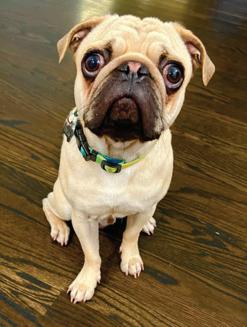
One of the most famous superheroes goes by the nickname “your friendly neighborhood Spider-Man.” Well, I’m happy to go by “your mischievous neighborhood pug!” I’m Oscar, and I act as the vacuum cleaner of the Curth house, never shying away from eating a freshly dropped piece of food I happen to find on the ground or snatching up a toy. As you can imagine, this often leads to my family em-BARK-ing on a wild goose chase in an attempt to capture me and my snack! Despite my naughty facade, I’m really quite sweet and good-hearted on the inside. I’ll never resist kind pats from a stranger, and I very much enjoy curling up on my owners’ laps after a long day of crime. If I do say so myself, I’m not too shabby looking either. However you put it, my cute looks make me the perfect addition to my loving and caring family.
Got a cute critter? Email a picture of your pet with approximately 150 words to info@thebuzzmagazines.com or mail it to The Buzz Magazines, 5001 Bissonnet, Suite 100, Bellaire, Texas 77401.






The phone rang and someone asked, “Do I need a family limited partnership and a limited liability company? The other tax attorney said I did. What do you think?” I looked at the area code and answered, “Probably not.” “Okay, thanks,” replied my new friend, and hung up.
Eight years later, the estate tax exemption has increased to $15 million, indexed for inflation. Better still, that change is permanent. Husband and wife can leave $30 million to children and beyond, and without transfer taxes. This liberates normal people to focus on what matters most: saving for old age, asset protection (think children’s choices), and maybe a little something for the grandkids.
My revised rules of thumb: High school grads seldom need wills; but they should give parents a medical power of attorney. Free ones are available at TexasLawHelp.org. CaringInfo publishes other states’.
Everyone needs to be thoughtful about beneficiary designations. Suffice to say that minors should never be named, unless the form somehow avoids a guardianship. And naming a spendthrift exposes those assets to their creditors (not yours) when you die. A simple will with contingent trusts is usually a better option.
What about college grads? The first day on the job, HR may ask them to designate beneficiaries for life insurance and retirement benefits. Those trump wills. Savers should consider a real will, with legal advice to coordinate beneficiary designations. Even slackers need at least a durable power of attorney. Visit TexasLawHelp.org for both.
Texas newlyweds need new powers of attorney and reciprocal wills. If children are possible, include contingent trusts.
How much are you worth dead? If as much as $1 million per child, revised wills are indicated for lifetime generation-skipping transfer tax planned trusts, to shield children and grandchildren from creditors.
On track to accumulate $15 million or more? First, congratulations. Second, add tax-planned trusts for the surviving spouse. If not, and one spouse is not a U.S. citizen, do it anyway.
Are you asset rich, but cash poor? Children cannot eat real estate. An irrevocable life insurance trust can add liquidity.
Have more money than you need? Enter the family limited partnership. You can own the general partner (often an L.L.C.) and give the kids the other 99 percent. Five million dollars in excess assets is a reasonable minimum for this technique. My new friend called from a neighborhood where no one has that to spare.
Finally, when disability is imminent, or at least feared, consider a revocable inter vivos trust, a so-called living trust. The more you own, the less likely powers of attorney will satisfy the bank and broker.
We write wills and go to probate court. Foreign nationals and international families welcome.
Russell W. Hall, Bellaire Probate, Attorneys at Law, 6750 West Loop S. Ste. 920, Bellaire, Texas 77401, 713.662.3853, bellaireprobate.com/blog


. by Angie Frederickson, staff writer

What began as a family lunch the day before Thanksgiving turned into a surprise proposal when Jack Justus Jordan asked Isabel Rose Kramer to marry him. Believing they were heading to lunch at Brennan’s, Isabel dressed up and joined her sisters for the outing. Instead, they arrived at the Bayou Bend Collection and Gardens where Jack was waiting to pop the question. After Isabel said “yes,” the celebration moved to The Original Ninfa’s on Navigation, the site of the couple’s first date, where close friends and family were gathered to congratulate the newly engaged couple. Isabel is the daughter of Don and Ilene Kramer. She attended The Emery/Weiner School before moving to Paris, France and graduating from The American School of Paris and Le Cordon Bleu. Jack is the son of Kim Ogg and Olivia Jordan. He graduated from St. Thomas High School and the University of Texas School of Law. A
September wedding is in the works. Congratulations to the couple!

William and Paige Griffin and Susan and Kurt Hanson (pictured, from left) attended the Periwinkle Foundation’s annual Iron Sommelier event at The Post Oak Hotel. This year’s event, led by wine chair Sean Beck and sommelier chair Lara Lack, welcomed more than 650 wine enthusiasts and raised a record-breaking $535,000. Each of the 14 participating sommeliers selected three wines for the panel of judges. In a first-ever tie, the Periwinkle Foundation crowned two winners: Zachary Newman of Pappas Steakhouse and John Mason of The Coronado Club. A highlight of the night was special guest and world-renowned winemaker Jesse Katz of Aperture Cellars, who poured a selection from his portfolio and served as a guest judge. The Iron Sommelier event supports the Periwinkle Foundation’s camps, arts, and survivor programs which serve children, teens, and families facing cancer and other life-threatening illnesses.
Elizabeth Dukes and Marisol Leiva (pictured, from left) supported the Texas Children’s Duncan Neurological Research Institute and The Genuine Foundation at the Hope and Opportunity dinner. Hosts Isabel and Ignacio “Nacho” Torras welcomed guests to their home on two consecutive evenings for a special culinary event. Each dinner was limited to 100

guests who enjoyed a nine-course tasting menu curated by Michelin Star chefs, the Roca Brothers of El Celler de Can Roca. The Hope and Opportunity dinners support the neurodiverse community by funding research at the Duncan Neurological Research Institute and inclusion programming through The Genuine Foundation. Together, both evenings raised more than $400,000 and celebrated honorees Whitney and Jim Crane, Huda Y. Zoghbi, Laura Arnold, and Debra F. Sukin. In the spirit of the Genuine Foundation’s advocacy of inclusion for neurodiverse individuals, servicing for each evening was provided by 27 young adults with intellectual and developmental disabilities and 10 coaches.
Henry Florsheim, Gene Wu, Miya Shay, Charlene Chuang, Sheroo Mukhtiar, Nihala Zakaria, and Shaukat Zakaria (pictured, from left) attended the annual Tapestry Gala, A Brand New Day, benefiting IM Houston (formerly Interfaith Ministries for Greater Houston). More than 500 supporters gathered at Hilton Americas-Houston and raised $650,000 to support IM Houston’s mission to bring together people of diverse faiths in dialogue and service. As guests arrived, they enjoyed music from deejay Divisi Strings and viewed artwork from IM Houston’s Refugee Youth Art Program. Ernie Manouse, host of Hello Houston on Houston Public Media, welcomed guests to the ballroom where they heard from IM Houston’s president and CEO Sheroo Mukhtiar and board chair Henry Florsheim. Children from Houston’s diverse faith communities offered blessings in a shared invocation from the Jewish, Hindu,
(continued on page 54)


Muslim, Christian,
Bahá’í, and Buddhist traditions. The Spirit of Respect Award was presented to the Right Reverend C. Andrew Doyle of the Episcopal Diocese of Texas, and Charlene Chuang was named the 2025 Tapestry Honoree.
It was a special night at the annual St. Thomas High School Auction and Gala. This year’s event, chaired by Posie Clinton, Angie Clinton, Janna Moore, and Sam Moore (pictured, from left), honored the school’s 125th anniversary. Parents, faculty, staff, and alumni celebrated more than a century of Eagle broth-
erhood and Basilian education in Houston. This year’s honoree, Steve Tyrell, graduated from St. Thomas High School in 1963. After beginning his music career while still a high school student, he went on to become a professional singer and Grammy Award-winning music producer. Funds raised at the gala, including from a live-auction winner’s Basilian pilgrimage to France, will support current and future students at St. Thomas.
Ann Lents, David Heaney, Steve Lindley, and Shelli Lindley (pictured, from left) celebrated the launch of Coastal Preservation and

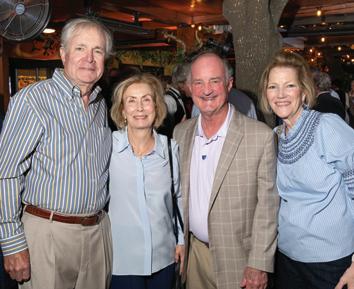
Restoration (CPR) at a Texas farm-raised gulf oyster tasting at La Griglia. Coastal Preservation and Restoration is a Texas-based nonprofit dedicated to protecting public oyster reefs and restoring degraded reef systems statewide. More than 85 guests gathered on the patio at La Griglia for a champagne toast and freshly shucked oysters from Key Allegro Oyster Company and Oyster Bros. Guests heard from John Eads, CPR’s founder and chairman, who has worked with coastal and statewide organizations, officials, and stakeholder groups to build momentum for this initiative. Shellye Arnold was introduced as CPR’s incoming CEO, bringing experience in urban conservation and restoration efforts from her 11-year leadership role with Memorial Park Conservancy.

James and Elizabeth Elder (pictured) joined supporters to kick off the 2026 Promise Ball benefiting Breakthrough T1D (formerly JDRF). Guests gathered at Park House to launch this year’s event benefiting type 1 diabetes research, A Night in Black & White. Breakthrough T1D Southern Texas (continued on page 56)

Territory Director Rick Byrd and Board President Jordan Amis greeted supporters and shared updates and a preview of the upcoming gala. This year’s celebration will honor the Judy and Bob Morgan family and the Amy and Tim Haskell family and will also recognize Linda Brown with the Meredith and Fielding Cocke Visionary Award. Elizabeth and James Elder will be highlighted as the evening’s Fund A Cure family. This year’s Promise Ball will be held on Apr. 11 at the Hilton AmericasHouston. For more information, visit www.breakthrought1d.org/greaterhoustontx.

ReelAbilities Houston Film & Arts Festival chairs and co-chairs Sandi Helfman Wolf, Jamie Wolf, Angel Ponce, Rori Feldman, and Cindy Ivanhoe (pictured, from left) are celebrating the festival’s 14th year. Presented by the Alexander Jewish Family Service Institute for Inclusion, in collaboration with the Houston Office for People with Disabilities, ReelAbilities promotes disability awareness through a variety of art forms. The 2026 Festival features film, music, art, and speakers that honor the lives of people with disabilities. This year’s event began in January and continues through Feb. 26, at various locations, with all film, art, and music events open to the public, free of charge. For

more information about the festival, visit www.ReelAbilitiesHouston.org.
Theresa Hildreth (pictured, center), known as “Teeda” to her grandchildren, published her second children’s book, Teeda Says “Be Responsible.” Theresa’s grandson James Hildreth (pictured, left) and his lifelong best friend Reid Pullicino (pictured, right) are members of the Memorial High School baseball team and are the stars of the book. She highlights the boys’ commitment to responsibility and teamwork, both on and off the field, to demonstrate responsibility as it relates to friendship and personal accountability. The book is the second in a planned series of Teeda Says children’s books.
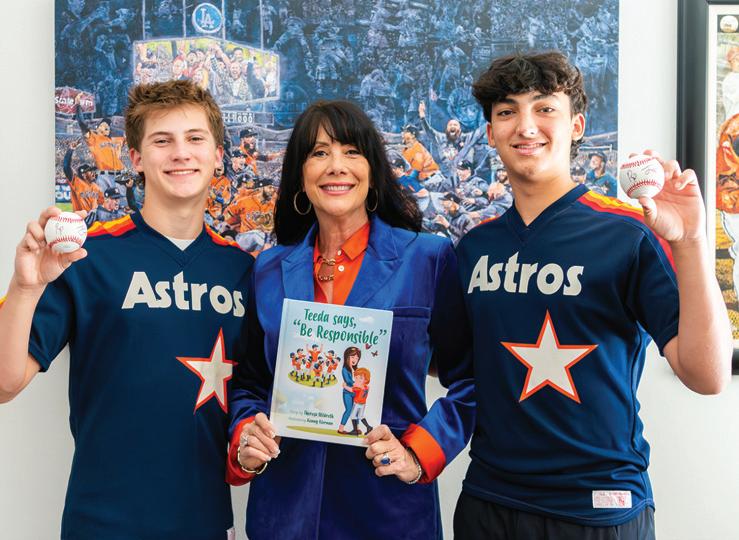
Theresa initially published Teeda Says “Be Patient,” and plans to continue the series with additional themes of loyalty, humbleness, kindness, honesty, generosity, and helpfulness. Teeda Says “Be Responsible” is now available from Amazon and Barnes & Noble. To learn more, visit teedapublishing.com.
Richard Wolf and Irene Weingarten and Vikki and Rich Evans (pictured, from left) joined more than 1,000 guests at Hilton AmericasHouston for the annual Guardian of the Human Spirit Luncheon benefiting Holocaust Museum Houston (HMH). Linda Lait Burger, former Interim Chief Executive Officer for HMH, was honored with the Guardian of the Human Spirit Award for her leadership including her work with the Museum and her 17-year tenure as CEO of Alexander Jewish Family Service. The luncheon event was led by host committee chairs Ellen and Dan Trachtenberg and Mitzi Shure and Jerry Wische, honorary chairs Joan Alexander, Martha and Don Freedman, Mady and Ken Kades, Velva G. Levine, Paula and Irving z”l Pozmantier, Regina Rogers, and Cyvia Wolff, luncheon chairs Vikki and Rich Evans and Irene Weingarten and Richard Wolf, and VIP reception sponsors Jamie and Bert Wolf. Guests heard from featured speaker Rabbi David Wolpe, Max Webb Emeritus Rabbi of Sinai Temple of Los Angeles and inaugural rabbinic fellow of the Anti-Defamation League. The event was the most successful in the luncheon’s history, raising more than $925,000 for education outreach.
Be seen in Buzz About Town. Send your high-res photos and community news to info@thebuzzmagazines.com. Items are published on a space-available basis. Also share your upcoming-event listings on thebuzzmagazines.com.



. by Andria Dilling, staff writer
This Valentine’s Day, let’s forgo the fancy prix fixe restaurant dinner in favor of setting a pretty table and making something special at home. Straight from “Back Porch Table” online, here is a menu that feels special. Just add a simple salad…and roses.
The perfect steak gets a glow-up with Blue Cheese Walnut Butter from the Junior League of Houston’s Peace Meals. Serves 2.
1 ½ cups crumbled blue cheese
4 tablespoons (1⁄2 stick) salted butter, room temperature
2 tablespoons chopped Italian parsley
1 tablespoon minced fresh rosemary
¼ cup chopped, toasted walnuts
2 8-ounce filets mignons
Combine the blue cheese, butter, parsley, and rosemary in a medium bowl. Stir in the walnuts. Place on plastic wrap, roll into a log, and refrigerate until ready to use.
Sear the filets in an iron skillet and finish in the oven (for specific instructions, see the recipe at thebuzzmagazines.com). Top the warm filets with a slice of the Blue Cheese Walnut Butter.
Truffle oil takes humble mac and cheese next-level. Serves 8.
1 pound macaroni or other tubular or curly pasta
1 tablespoon truffle oil
3 tablespoons unsalted butter
¼ cup flour
1 teaspoon dry mustard
2 cups milk
1 cup heavy cream
1 teaspoon kosher salt
¾ teaspoon freshly ground pepper
¾ cup shredded sharp cheddar cheese
¾ cup shredded gruyere
¾ cup plus ¼ cup grated parmesan
¼ cup breadcrumbs
Minced fresh chives, for garnish
Preheat the oven to 375 degrees. Bring a large pot of water to a boil over high heat. Add the

pasta and cook 8 minutes. Drain and transfer to a 9-by-13-inch baking dish. Drizzle the truffle oil over the warm pasta and stir to coat. Melt the butter in a medium saucepan over medium-high heat. Whisk in the flour and mustard and cook, whisking constantly, until there are no lumps of flour, about 2 minutes. Continue whisking and add the milk and cream gradually, then the salt and pepper. Whisk until the mixture thickens to coat a spoon, about 4 minutes. Remove from the heat and stir in the cheddar, gruyere, and ¾ cup of parmesan. Pour the sauce over the pasta in the baking dish and stir carefully to coat the pasta. Top with the breadcrumbs and then ¼ cup of the parmesan. Bake uncovered for 30 minutes, then let the macaroni rest for 10 minutes. Sprinkle with chives before serving.
In 2008, just before it closed forever, Gourmet magazine published this simple but gorgeous tart. Simple, because it’s quick and easy; gorgeous because it looks like the most perfect tart in the bakery case. The New York Times wrote, “Gourmet was to food what Vogue is to fashion.”
This tart could be in Vogue. And you can make it this afternoon. Serves 8.
You will need a 9-inch round fluted tart pan (1 inch deep).
Crust:
1 cup finely ground chocolate graham crackers or chocolate wafer cookies (not chocolate covered)
5 tablespoons unsalted butter, melted
¼ cup sugar
Filling:
9 ounces bittersweet chocolate (not more than 65% cacao), chopped
1 ¼ cups heavy cream
2 large eggs
1 teaspoon vanilla extract
¼ teaspoon salt
Glaze:
2 tablespoons heavy cream
1 ¾ ounces bittersweet chocolate, finely chopped
1 teaspoon light corn syrup
1 tablespoon warm water
Preheat the oven to 350 degrees and place the rack in the middle.
Stir together the cookie crumbs, melted butter, and sugar, and press evenly onto the bottom and ¾-inch up the side of the tart pan. Bake until firm, about 10 minutes. Cool on a rack 15 to 20 minutes.
Place the chopped chocolate in a medium bowl. Bring the cream to a boil, then pour it over the chocolate and let it stand for 5 minutes. Gently stir the chocolate and cream together until smooth. In another bowl, whisk together the eggs, vanilla, and salt, then stir it into the melted chocolate.
Pour the filling into the cooled crust. Bake until the filling is set about 3 inches from the edge but still wobbly in the center, 20 to 25 minutes. (The center will continue to set as the tart cools.) Cool completely in the pan on a wire rack, about 1 hour.
Bring the cream to a boil and remove from the heat. Stir in the chocolate until smooth. Stir in the corn syrup, then the warm water.
Pour the glaze onto the tart, then use an offset spatula or the back of a spoon to coat the tart evenly. Let the tart stand until the glaze is set, about 1 hour.
Editor’s note: Look for Back Porch Table by Andria Dilling every Friday online. For more inspiration, you can also search our site for thousands of recipe ideas.