BULLETIN
The Arts: Back on stage with a happy refrain p16
Assemblies: Supreme Court and more p24
Alumnae and the Greater Good p30
THE BREARLEY SCHOOL
Brearley moving forward
SPRING 2023

The Brearley School challenges girls of adventurous intellect and diverse backgrounds to think critically and creatively, and to act with courage and integrity.
The School fosters a love of learning, excellence in the liberal arts, and engagement in a lively and inclusive community. Guided by dedicated faculty and staff, students learn to uplift one another as they grapple with complex ideas and develop a strong sense of self. We value empathy, originality, and depth of thought and character.

The Brearley community cultivates the joy of lasting friendships, the confidence to pursue one’s ambitions and a commitment to the greater good.
Brearley Mission Statement
Adopted by the Board of Trustees, October 2022
CONTENTS
2 Letter from the Head of School
4 Update: Antiracism Initiatives
6 News and Events
12 Retiring Faculty
14 Brearley Benefit 2023: Totally ’80s
16 Back on Stage: The Arts
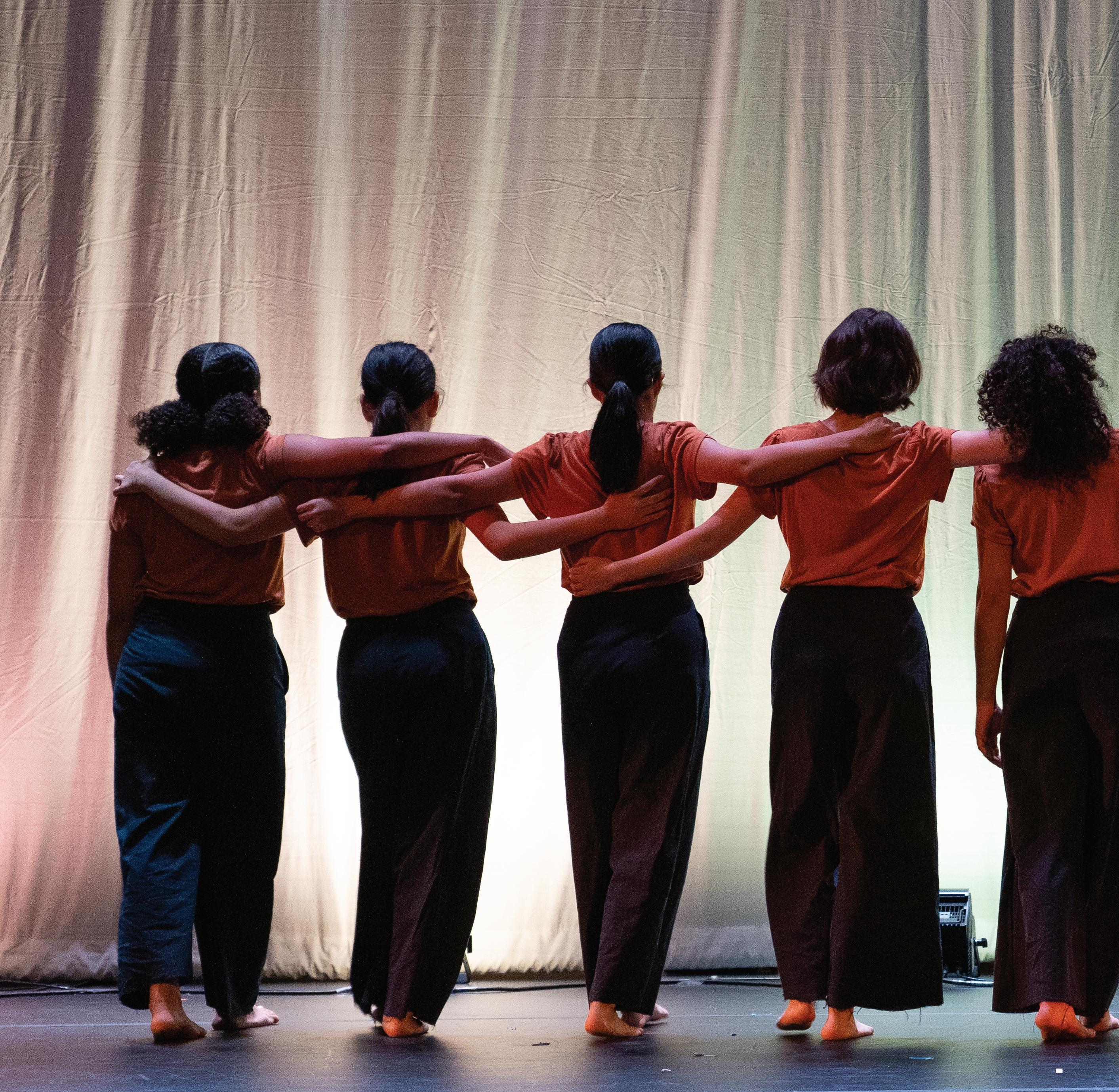
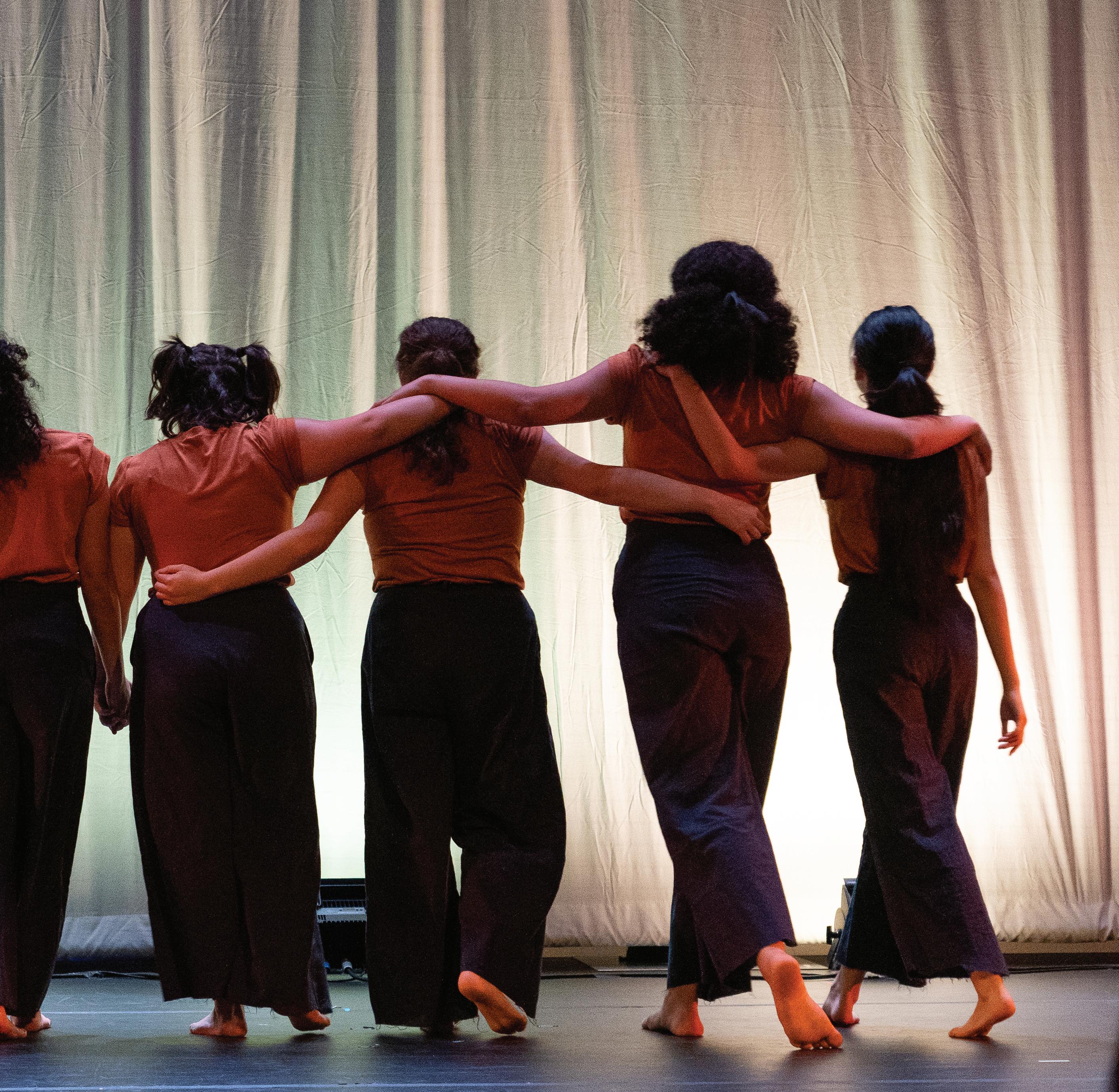
Singin’ in the Rain, An Evening of Dance, Meet Scott Pomerantz, About the Covers and this year’s art show
24 Assemblies at Brearley
30 Alumnae and the Greater Good
36 Alumnae Weekend & Reunion 2023
46 Births, Marriages and Deaths
50 Class and Faculty/Staff Notes
Special thanks to Ariana Arabadjiev ‘23, Marjorie Becker, Kristen Chae, Jordan Hollender, Victoria Jackson and members of the Brearley community for sharing photos and artwork with us.
Head of School
Jane Foley Fried
Editor
Jane Newman
Graphic Designer
Jennifer Bartoli
Director of Communications
Jennifer Stewart
If you have any questions or comments about the Bulletin, please contact Jane Newman at jnewman@brearley.org or (212) 570-8588.
Brearley has offset the equivalent of 5,868,875 total standard pages of paper consumption by reforesting 704 standard trees since joining the PrintReleaf Exchange on August 7, 2018.
THE
BREARLEY SCHOOL BOARD OF TRUSTEES
2022–2023
Modupe Akinola ’92, President
Dusty Philip, Senior Vice President
Susan Berresford ’61, Vice President
Munib Islam, Vice President
Sue Meng ’99, Secretary
Gideon Berger, Treasurer
Tara Abrahams
Ranika Cohen
Daphné Crespo-Helm
Amina Elderfield ’94
Thomas Farrell
Jane Foley Fried
Martha Haakmat
Rebecca Haile
John McGinn
Cory Nangle
Margo Nederlander
Sidaya Moore Sherwood ’90
Bill Shutzer
Nekesa Straker ‘97
Lita Tandon ’06
Olivia Wassenaar ’97
Lauren Wasson
Alan Yan
Trustees Emeriti
Christine Frankenhoff Alfaro ’91
Georges F. de Ménil
Evelyn Janover Halpert ’52
David T. Hamamoto
Stephanie J. Hull
Ellen Jewett ’77
Alan Jones
Edward F. Rover
John F. Savarese
Priscilla M. Winn Barlow
Faculty Representative
Ann Saunders
VOLUME XCVIII • NUMBER 1 • SPRING 2023
SPRING 2023 1
TX_280CFD15A8BD
Brearley Moving Forward Letter from the Head of School
LETTER FROM THE HEAD OF SCHOOL SPRING 2023 2
This spring in the rare quiet moments among the hustle and bustle of end-of-year activities, I’ve had a chance to reflect on our progress as a school and as a community. What we have accomplished over the past 18 months is remarkable.
In typical Brearley fashion, rather than setting a single goal and pursuing it to its conclusion, we have pressed forward on multiple fronts—from updating our strategic vision and mission statement, to advancing and integrating principles of equity, inclusion and antibias and antiracism into our program, to renovating the Field House, and soon to opening up a new library in 610. Through it all we are fostering a community based on mutual concern. Our outreach has been broad and deep and we approach our work systemically, thoughtfully and purposefully.
I write with all sincerity that none of this progress would have been possible without the strength and passion of every constituency within our community, including our alumnae. Our community has been through a lot in the last few years. Challenged by a global pandemic and a reckoning around entrenched racism and inequality, we have come through this moment in history stronger and more dedicated to our mission to educate a diverse community of girls of adventurous intellect who will have an impact on their world.
You’ve recently received copies of our updated mission statement, which serves as our true north. It provides steady reassurance and guidance when we are challenged or criticized. It asks our students to wrestle with complicated ideas while supporting and uplifting each other to be the best version of themselves. It recalls the strong bond among all our graduates, united by their experience and their hope to create a better world. It is purposefully both inspirational and aspirational.
The chart to steer us can be found in our updated strategic vision, Stepping Through the Open Door, recently approved by our Board of Trustees. Where our past strategic vision had a separate section addressing equity and inclusion, we have woven those principles intrinsically into our plans for the future. It builds on the progress of our prior goals and institutionalizes our commitment to creating a community of belonging for decades to come. Just this month, we wrote to unveil this vision for our future. You can also find it here: www.brearley.org/strategicvision2023.
Both our mission statement and our strategic vision were informed by two years of community reflection, engagement and feedback. We invited students, faculty, staff, parents and alumnae to participate in surveys and interactive sessions where we explored what constitutes our school’s values, our mission and our promise as an educational institution. We also conducted a community-wide equity audit.
In spring 2022, EngenderEd, the consultants tasked with conducting that audit, presented recommendations to the Board of Trustees, faculty and staff, as well as antiracism advisory groups representing each Brearley constituency. These recommendations, however, were not introduced to a naive environment. We were already hard at work on the antiracism action steps that the Board had published a year earlier. Ultimately, the equity audit identified deficiencies, many of which we as a community had already begun to address, reaffirmed the significant decisions and actions that we had taken, and helped us ground and shape our overall strategy. Those action steps have initiated what I and my colleagues hope will be lasting and meaningful changes to our school. We have dedicated considerable time and resources to review, discuss, refine and in some cases establish practices, policies and procedures to promote a community where every member feels a sense of belonging. As we invited all Brearley constituencies to engage in these planning processes, we now invite them/you to learn about the steps we have taken to date.
Administrators and I recently offered a panel discussion for parents that reviewed the results of the equity audit and the progress that has been made so far. In our Bulletin from fall 2020, we outlined what we planned to do to address injustice and inequity in our school. On the following pages we provide an update to the progress we have made thus far.
As with all journeys, the route reveals some surprises. We could not have imagined that our new building would be opened just in time to accommodate the demands of a two-and-a-half-year pandemic. Nor would we have anticipated that our school enrollment would grow to 770 during this very difficult time for families in New York City. After its inaugural year, our STEM collaboration with NYU Tandon School of Engineering is now open to students across the city and around the world. We have joyfully opened our doors for alumnae and families, hosted conferences for admission professionals and faculty and administrators of color in NYC independent schools, and held admission open houses for families of first responders and health-care professionals. Throughout this time we have worked together, and now we move forward together, always as a community.
To be sure, the work to make all feel valued and included in our community never ends. It is a quintessential Brearley endeavor, an ongoing, iterative process that builds on past experiences, takes into account present circumstances and provides a blueprint for our collective future.
SPRING 2023 3
Update: Antiracism Initiatives
governance
Board of Trustees created a Diversity, Equity and Inclusion Committee to provide board-level oversight, support and accountability.
Antiracist advisory groups for students, parents, alumnae, and faculty and staff were established to ensure open communication. These groups meet in advance of DEI Board Committee meetings and each has a representative that sits on the board committee.
Brearley’s Strategic Vision was updated to integrate the values of DEIA and other institutional priorities across the program.
Alumnae Board developed and ratified its own antiracism priorities to strengthen and expand racial equity work and commit to sustained change where needed.
program
Aligned with the external curriculum review of Brearley’s Strategic Vision, departments continue to examine the integration of an inclusive and competent pedagogy into their work.
New curriculum was introduced across divisions and departments. The Course of Study is updated each year and is available online.
The Office of Equity and Community Engagement, in conjunction with student leaders, created the Brearley Student Diversity Leadership Council as a standing leadership structure. BSDLC oversees identity-based affinity spaces and special programming including speakers and celebrations.
The School supported student-initiated affinity groups in the LS, MS and US (MS and US include racial, ethnic and religious, among others), which are covered in the Constructing Community newsletter.
engagement and education
Students, faculty and staff participate in annual discussions in which they learn how to respond to identity-based issues that arise in the community.
Faculty, staff and students regularly engage in workshops on ways to sustain conversation across difference and on how to “call in” instead of “out.”
Trustees and parents continue to participate in mandatory annual engagements to learn about the School’s work around antiracism and antibias and about each other.
Racial literacy curriculum has expanded to include topics on ethnicity, socioeconomics and religion.
Antiracist, antibias training is offered to the Alumnae Board.
communication
Board and Head of School continue to inform community of school’s commitment to creating a community of belonging and provide updates on antiracism action steps.
Board and the administration engaged community in yearlong exploration of values and mission statement, resulting in a new mission statement that was adopted by the Board of Trustees in December 2022.
Mission and Antiracism Statements are included in Brearley’s Statement of Beliefs and featured in school and admission materials.
The Alumnae Board met several times and hosted town hall meetings with school leadership to discuss the School’s response to creating an inclusive, antiracist community.
K–XII family meetings hosted by school leadership explain antiracism commitment and progress. Faculty present updates to curriculum and pedagogy.
School publications provide updates on antiracism action steps.
SPRING 2023 4 ANTIRACISM
This chart was originally published in the Fall 2020 Bulletin. Here is an update on our progress since then. Please note that many of these initiatives remain ongoing. The column at the far right denotes initiatives that have begun since 2020.
from Fall 2020 to Now
staffing
Hired an Associate Director of Equity and Community Engagement and appointed a Diversity, Equity and Inclusion Coordinator to each division.
Hired a K–XII school counselor with experience working with BIPOC students in the Counseling Services Department.
School administrators and department heads have created new systems of hiring, onboarding and mentoring processes that support the hiring and retention of talented teachers and administrators of color.
A revised evaluation and professional growth system considers the commitment of faculty to understanding and furthering the School’s goal to become a diverse, inclusive, antiracist community. Administration 360° evaluation is ongoing and staff evaluation is under revision.
Communicate community expectations in admission materials as well as in enrollment and hiring contracts.
policies and procedures
To increase transparency of institutional response to incidents of bias and racism, the administration refined age-appropriate discipline systems and Codes of Conduct for each division.
The School also created a Policy Against Racism, Bias and Bigotry for all students, faculty and staff, which standardizes and makes transparent institutional response.
Training sessions take place annually to introduce these policies and practices to faculty, staff and students.
Members of the discipline committees meet regularly to discuss case studies and issues of bias.
EthicsPoint, a third-party complaint system, has been implemented.
Funding for mental health support has been provided to alumnae who requested it within the requisite time frame.
Administration is beginning to implement restorative pracitices into its work with students.
accountability
and research
EnGenderED Research Collaborative conducted equity audit over two years using surveys and focus groups for various constituencies.
Faculty, staff, trustees and Antiracist Advisory Groups have received summary of equity audit and presentation was made to parents and students.
Findings of the equity audit informed update of Strategic Vision and new mission statement.
Community members are invited to complete temperature check surveys to inform school on our progress.
Hired a Director of Faculty and Program Development, who ensures that policies and procedures for hiring, professional development and orientation are current, equitable and inclusive.
Student Life Committee created a scope and sequence of health, wellness, digital citizenship and DEIA across all divisions.
Implemented in LS Responsive Classroom, an evidenced-based approach that fosters inclusive learning communities built on belonging, empathy, and mutual care and concern.
Created Community Time in MS and US that does not conflict with class schedule to allow for discussions led by affinity group speakers and others on current news and topics of student interest.
Created student advisory committee for students to speak with administration about issues that arise in school.
Enhanced our communication about college-sponsored programs for applicants of color and/or low-income to visit schools or take part in virtual events.
Hosted inaugural People of Color in Independent Schools–NY conference for faculty and staff of color.
Enhanced admission recruitment outreach to underrepresented families including first responders and health-care professionals.
recent
initiatives
SPRING 2023 5
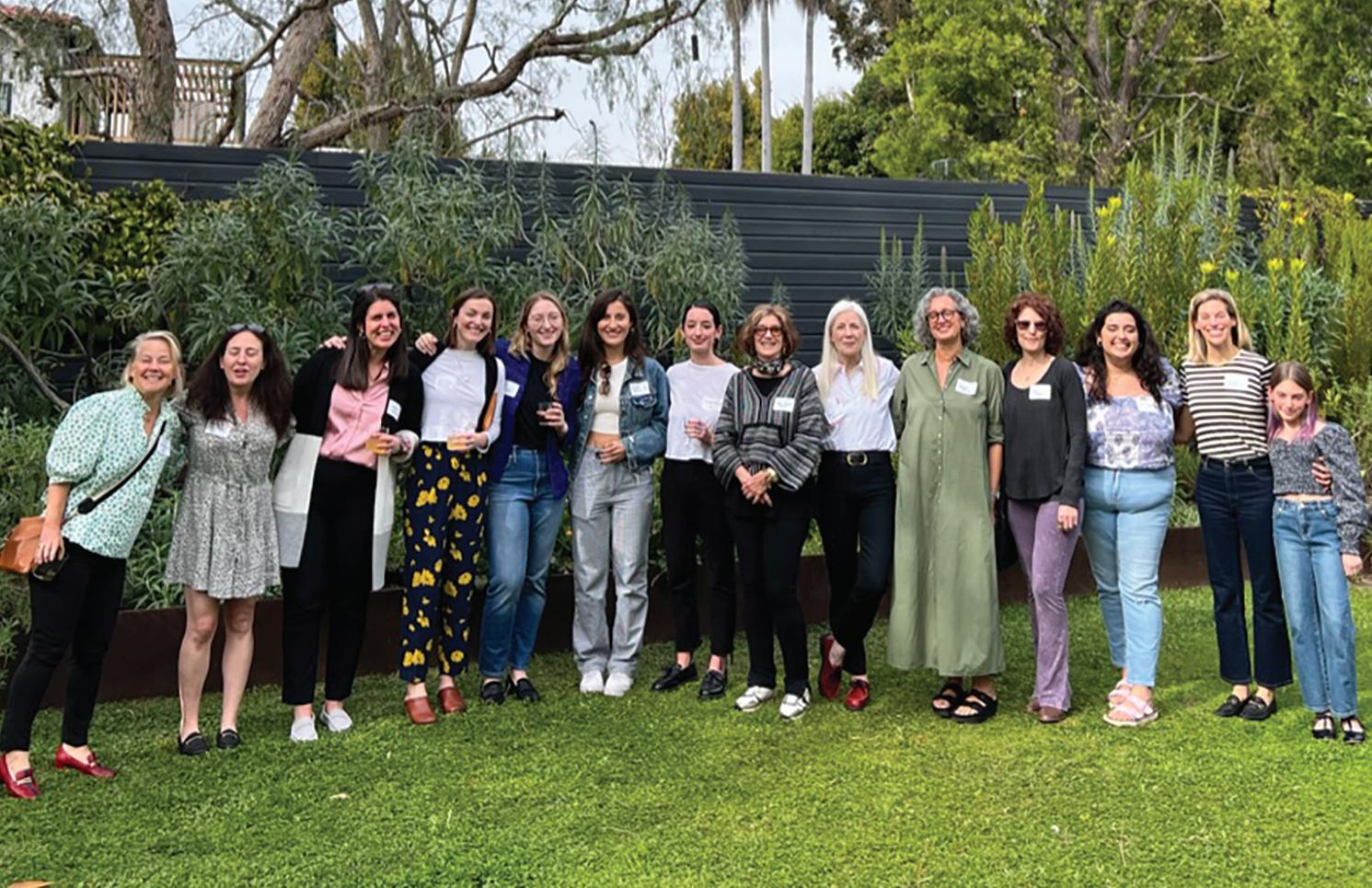
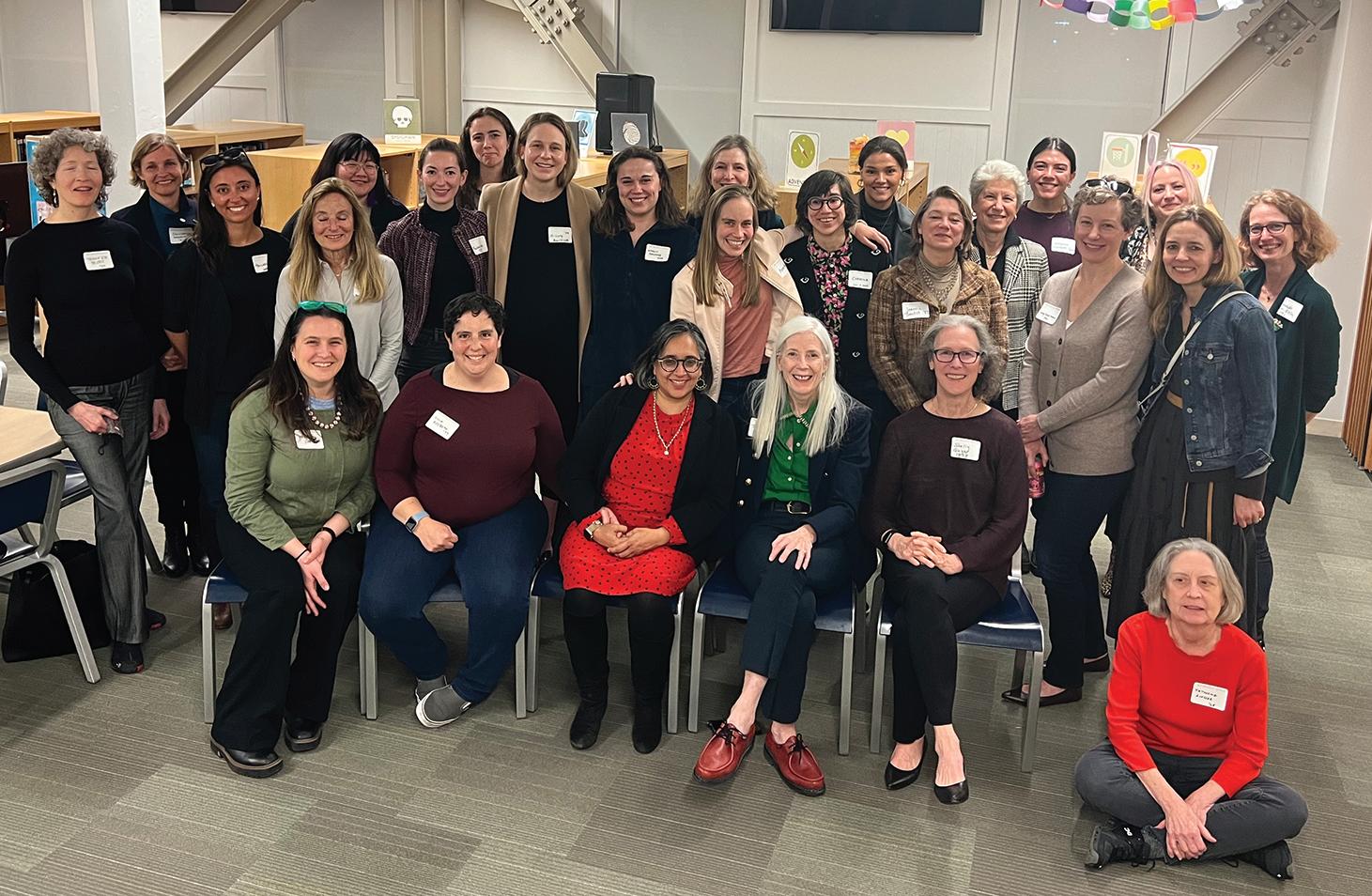
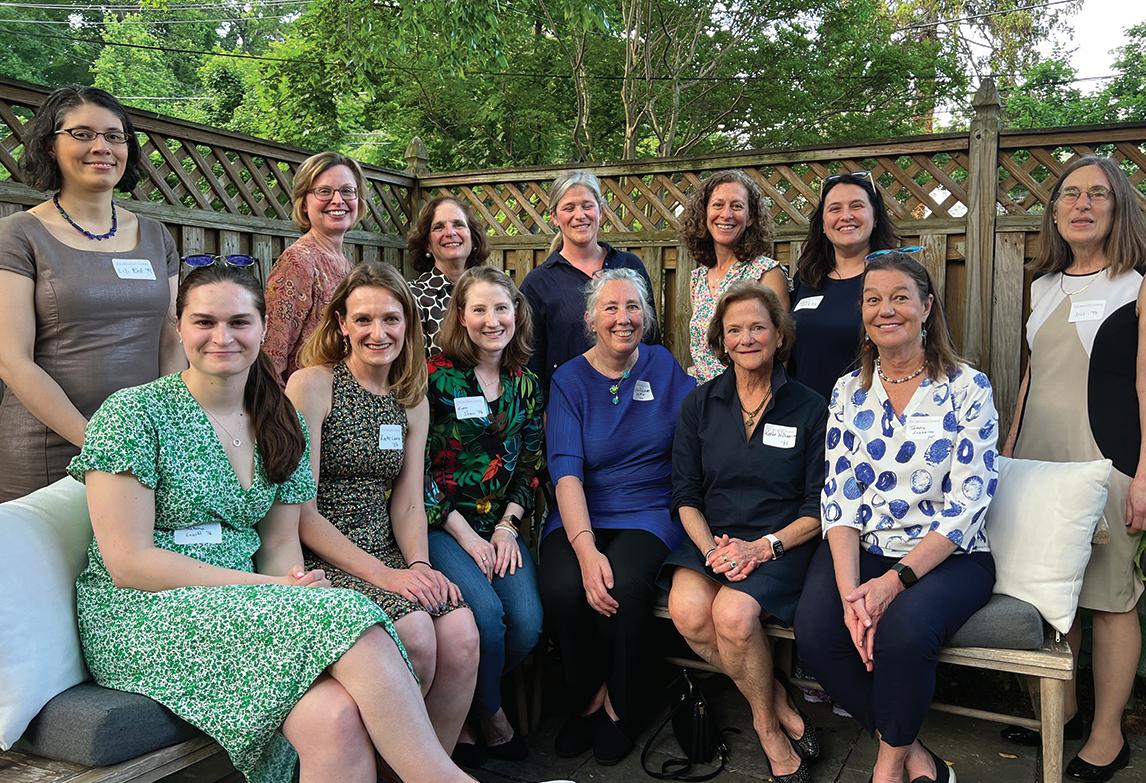
REGIONAL EVENTS ARE BACK!
SAN FRANCISCO
March 17–Held at the San Francisco Friends School, hosted by former Brearley teachers Josie Rodberg ‘99 and Pankti Sevak.
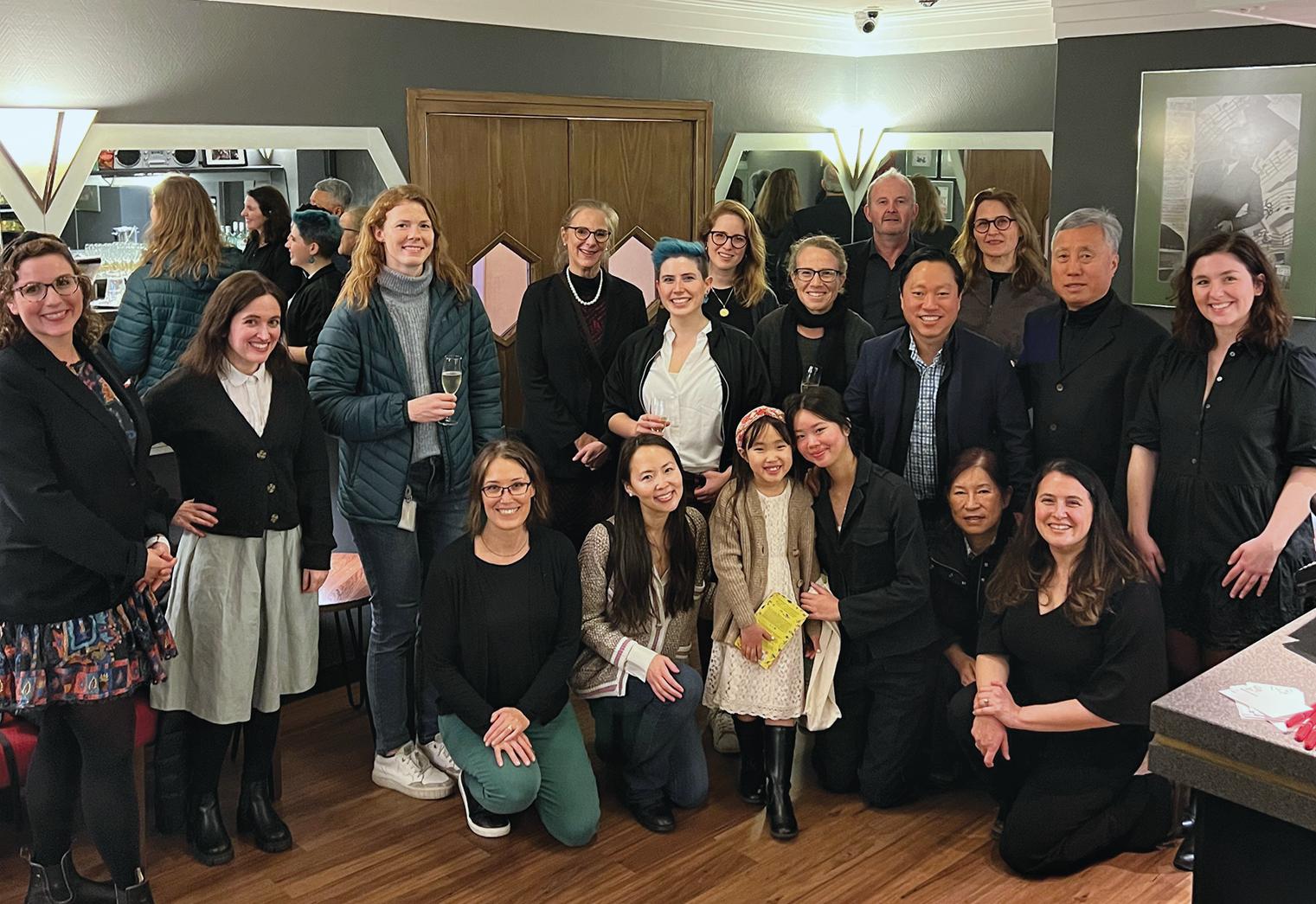
LONDON
March 22—Attendees saw the West End show Back to the Future: The Musical.
LOS ANGELES
March 18–Hosted by Deborah Davis Ascheim, M.D. ‘82.
WASHINGTON, DC
May 12–Hosted by Meredith Alderman Ritsch ‘97.
NEWS AND EVENTS SPRING 2023 6
Accolades for 590
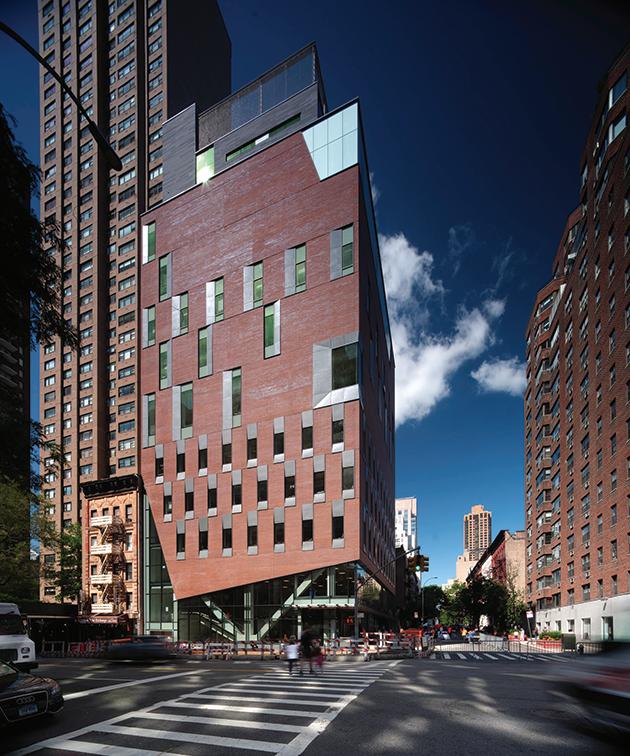
It’s been a bountiful year in the honors department for Brearley’s new schoolhouse. In January the architecture firm KPMB was presented with a Governor General’s Medal, Canada’s highest award for architecture, for its design of 590. The result, a “flexible multi-purpose learning environment,” was hailed by the jury as a “bold urban redevelopment project that showcases student life activities on the street: a sign of hope for the future.”
In April, 590 officially achieved LEED Gold status. The three-plus-year review process with the Green Building Certification Institute culminated in the building’s gold certification for its adherence to prerequisites and credits that address carbon, energy, water, waste, transportation, materials, health and indoor environmental quality. LEED-certified buildings save money, improve efficiency, lower carbon emissions and create healthier places for people. They are critical to addressing climate change and meeting environmental, social and corporate governance goals, enhancing resilience and supporting more equitable communities.
610 AGAIN
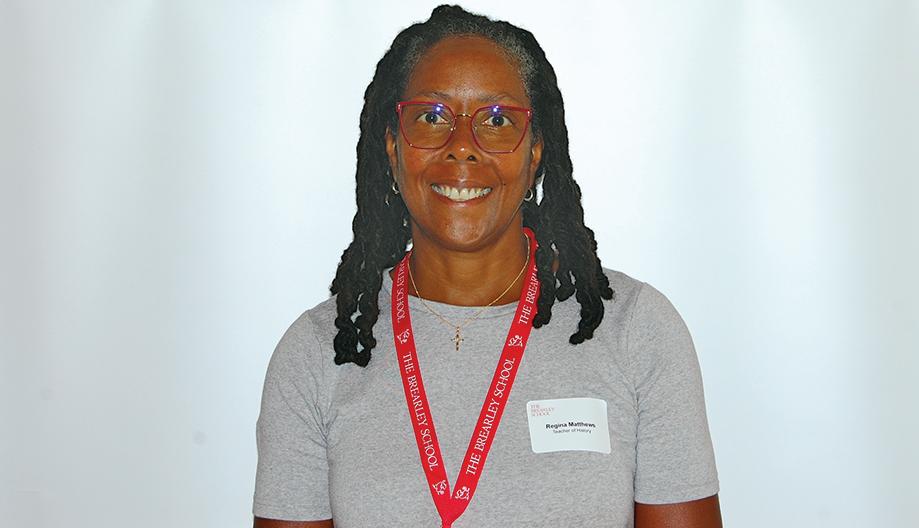
Regina Matthews ‘85
Name: Regina Matthews ‘85
Department/Job:
History teacher
Previous job(s):
History teacher at Convent of the Sacred Heart and Town School
Something about Brearley that drew you back: The energetic curiosity with which Brearley girls approach learning.
Favorite food (sweet, savory, etc.): SWEET! Apple pie with chocolate ice cream or chocolate cake with vanilla ice cream.
Coffee or tea (or neither): Apply coffee daily.
Favorite music/band: Jazz, salsa, classic soul, pop—you name it.
Favorite thing about working in New York: As a history teacher, the resources offered by the museums and cultural centers in the city.
WHAT’S ON YOUR DESK?
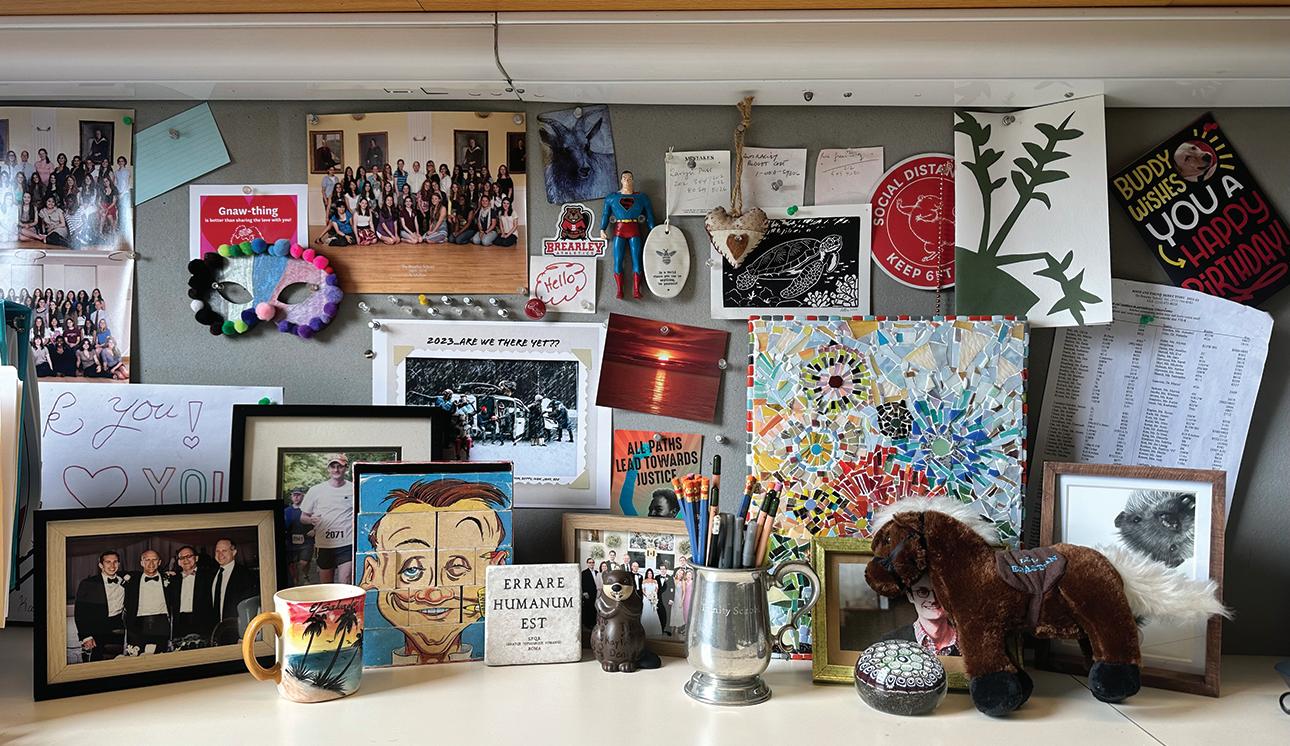
DR. MULKIN, ASSOCIATE HEAD OF SCHOOL FOR ACADEMIC LIFE
1. Classes of ‘09 and ‘12, the two classes for which I served as grade head. 2. A heart is from my current advisees. 3. My brothers and I with my oldest nephew at his wedding. 4. A photo of my husband running a race. 5. A puzzle that a student gave me (from the first Middle School class I taught). 6. The errare humanum est paperweight helps me to remember that valuable piece of advice.
7. The little beaver squeeze toy has my current advisees’ names on it. 8. The millefiori paperweight is a gift from my mom. 9. The stuffed horse is from a student who was like me a fan of Parks and Recreation 10. Another photo of Michael (in a twist of fate/small world moment, it was taken by Dr. Seminara’s husband—but it would take a paragraph to explain the circumstances!). 11. The mosaic, the oval medallion with the bee on it, the green and white cutout, and the photo of the sunset are all from faculty members.
Hobbies:
Pilates, yoga
What it’s like to be back at Brearley, now as a teacher: My return has had lots of déjà vu moments. For example, standing outside of the 7th floor teachers’ lounge (but being allowed to go inside the lounge this time around), jogging up the stairs two by two and feeling a distinct sense of joy that they seem so perfectly spaced for such (unorthodox) travel, and trying to cross my legs under the Harkness table in the Higginson Library (legs still too long to do so). And holding my breath in the elevator so as not to talk!
1 2 3 4 5 6 7 8 9 10 11 SPRING 2023 7
ALUMNAE WRITERS RETURN TO BREARLEY

Sarah
read from her new book, The

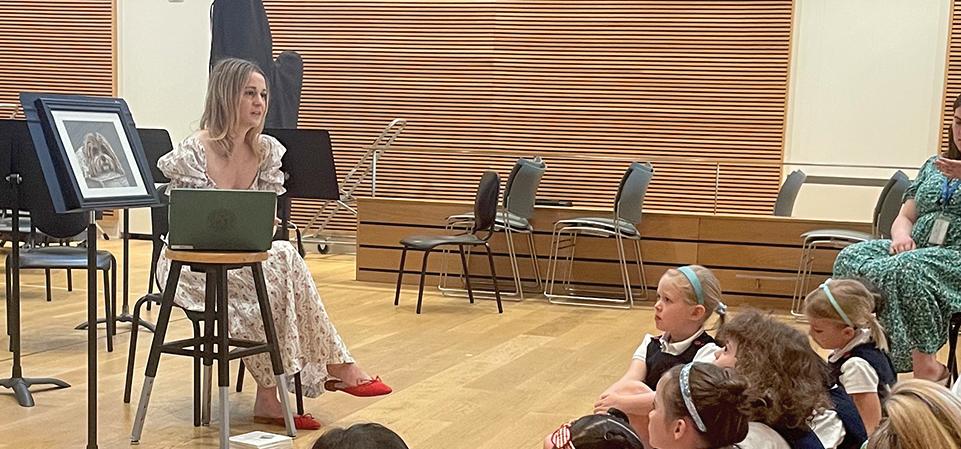
, the first title in her new series of middle grade novels, Once Upon a Horse, to Classes V and VI on March 16. Sarah is a staff reporter for the New York Times
Killeen Hynes ’13 visited on April 14 to read Sadie and the City, her children’s rhyming book about her dog in New York City, to Ms. Blanchard’s first-grade class. A first-time author, Killeen works in commercial real estate.
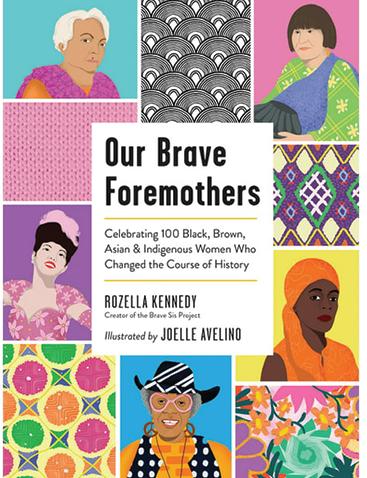
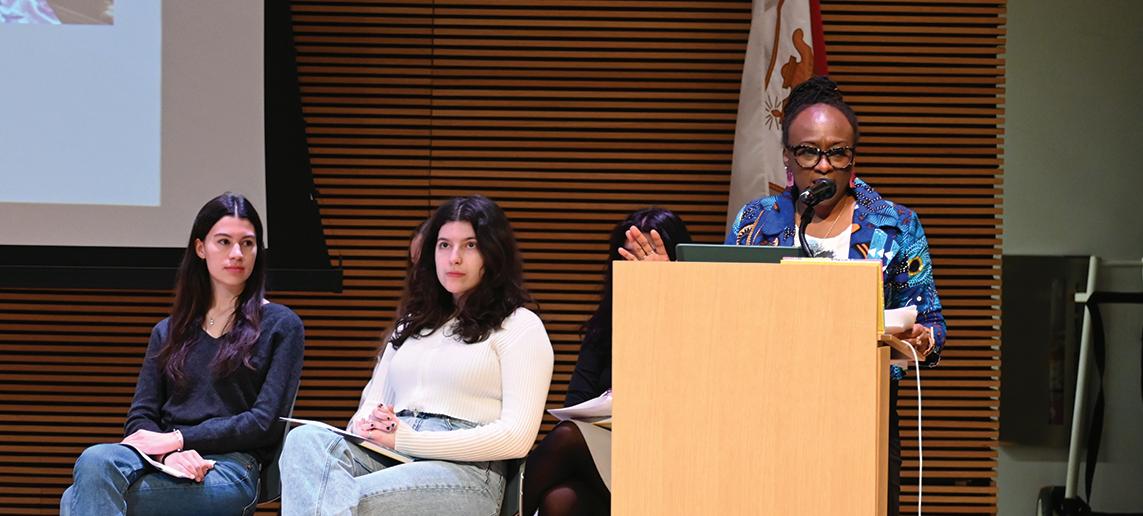
Rozella Floranz Kennedy ‘81 spoke at the Women’s History Month Assembly on April 3 about her experience at Brearley, her career and her new book, Our Brave Foremothers: Celebrating 100 Black, Brown, Asian & Indigenous Women Who Changed the Course of History
RECENTLY PUBLISHED BOOKS BY ALUMNAE
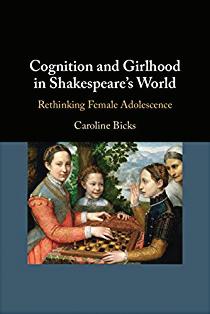

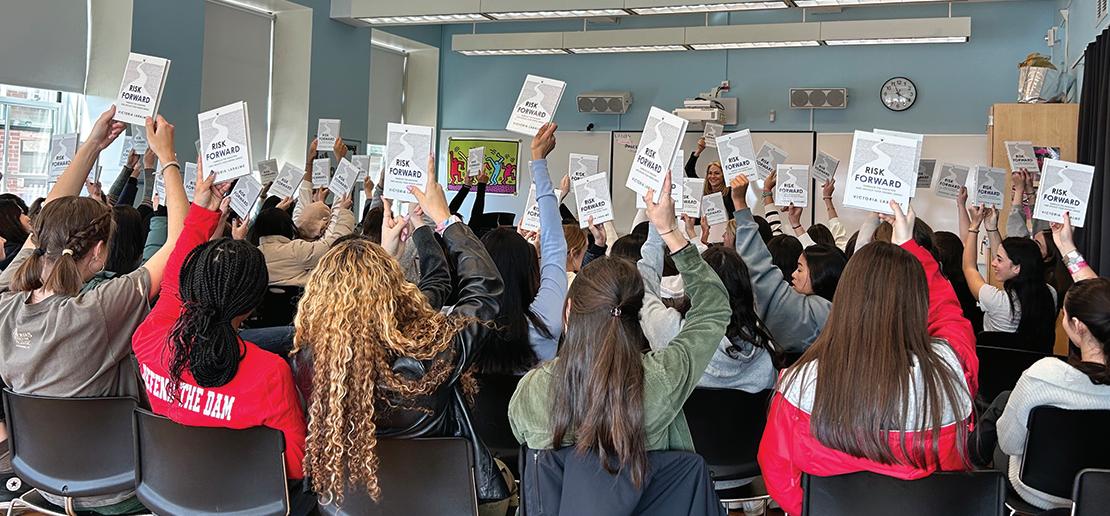
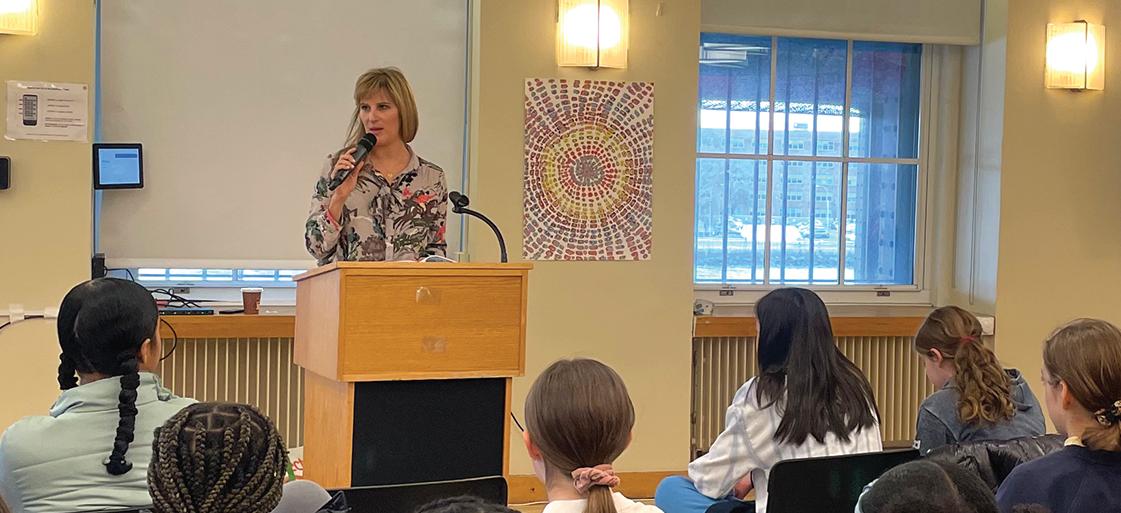
Also on April 3, Victoria Labalme ‘83 spoke to Class XII students about her book Risk Forward: Embrace the Unknown and Unlock Your Hidden Genius. Victoria offered sage advice on life after Brearley and the importance of taking risks, a prevalent theme in her book.
NEWS AND EVENTS SPRING 2023 8
Gregg Deane Swain ‘71
Laura Foley ’75
Elise Thoron ‘80
Rozella Kennedy ‘81
Caroline Bicks ‘85
send covers of your new books to classnotes@brearley.org. Author! Author!
Sandra Sammataro Phillips ’63
Please
Maslin Nir ’01
Flying Horse
Alumnae Party
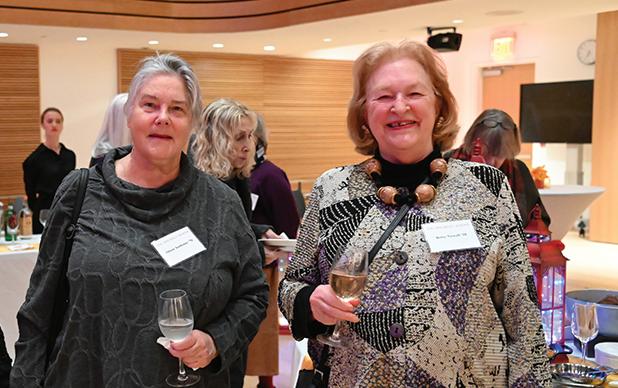
DECEMBER 7, 2022: Alums gathered in the 590 Performance Hall for a festive party celebrating the holiday season. Merriment and joy were had by all!
WHO KNEW?

CHANGING PROFESSIONAL DIRECTIONS

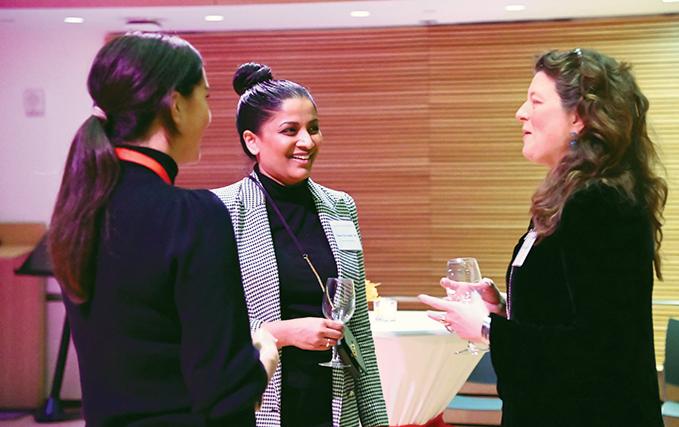
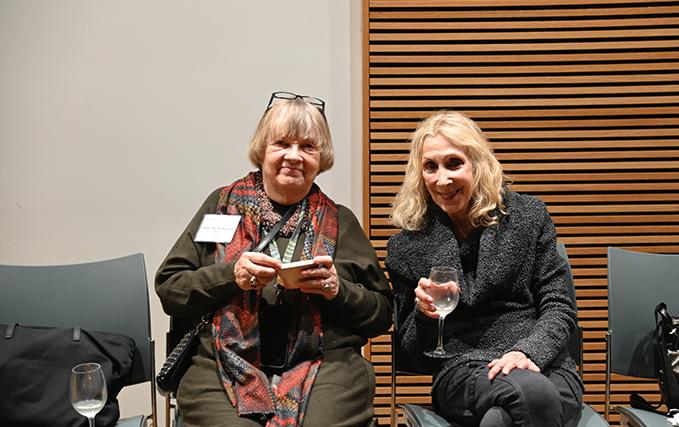
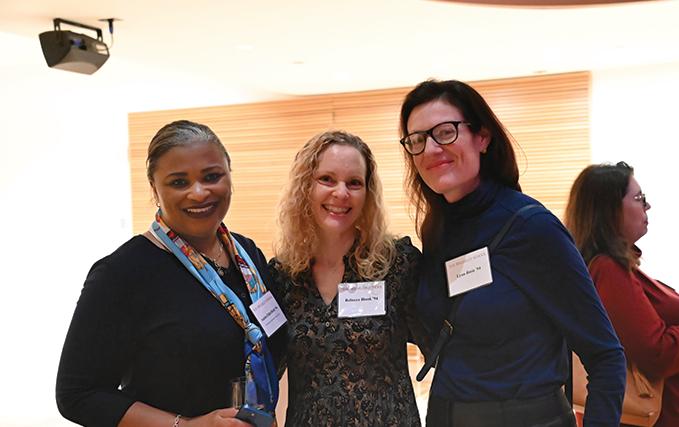
JANUARY 23, 2023: Virtually moderated by Amina Elderfield ’94, alums Jamie Bernstein ’70, Kate Marshall ’76 and Ruth Messinger ’58 imparted wisdom to attendees on changing directions in life, career evolutions and learned lessons along the way.


BREAKING THE LINK BETWEEN BIAS AND BEHAVIOR

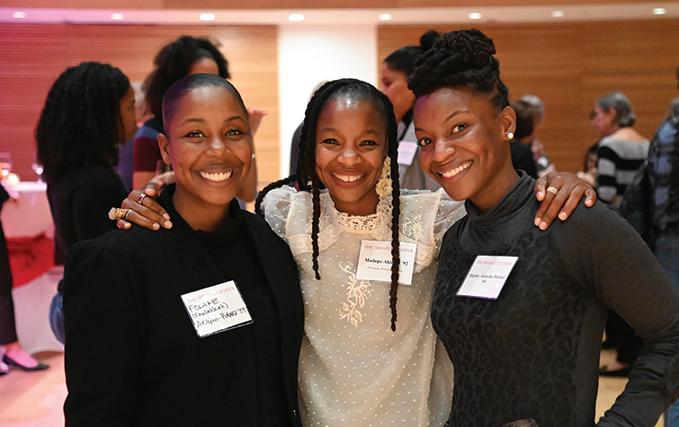
FEBRUARY 21, 2023: Alums all over the country virtually joined Jason Craige Harris for a crash course in the latest research on why difference matters, how bias works, what it takes to be truly fair, and how to break the link between bias and behavior.
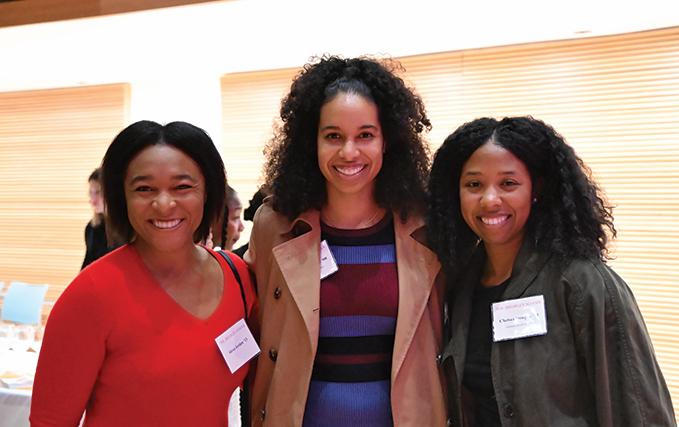
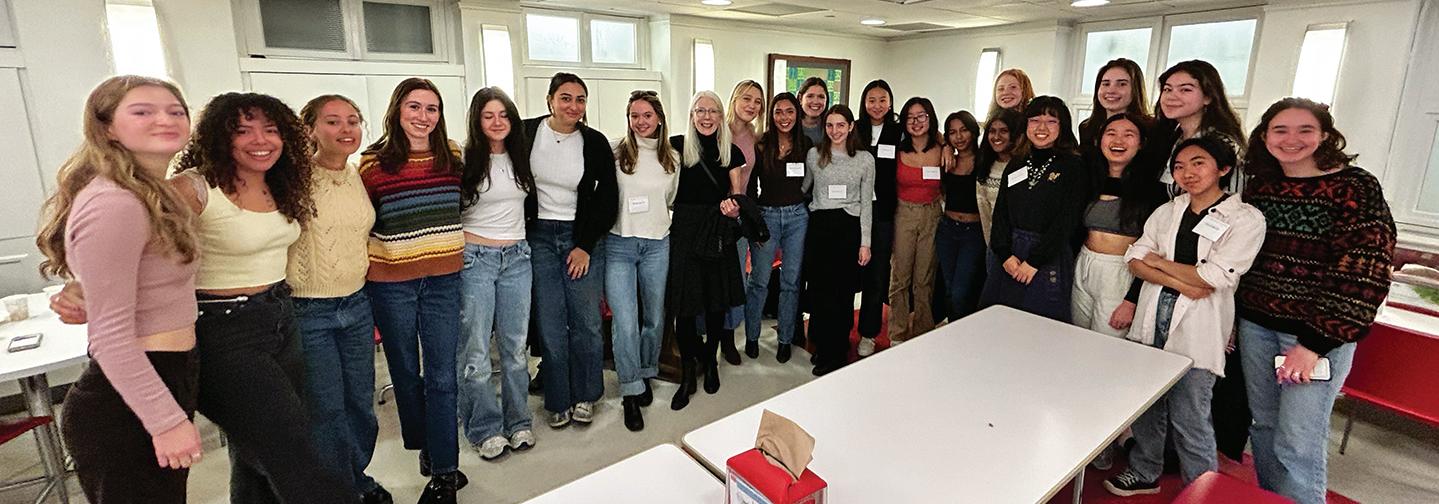
COLLEGE welcome back!
JANUARY 9, 2023: Alums from Classes 2019 to 2022 were invited back to Brearley on January 9 to present college life-lessons to Class XI and XII students and to enjoy another lunch in the 610 cafeteria.
 Laura Belgray ‘87
Priscilla Gilman ’88
Sarah Maslin Nir ‘01
Hannah Rogge ‘96
Emily Simon ‘13
Killeen Hynes ’13
Laura Belgray ‘87
Priscilla Gilman ’88
Sarah Maslin Nir ‘01
Hannah Rogge ‘96
Emily Simon ‘13
Killeen Hynes ’13
SPRING 2023 9
Lois Kahn Wallace Writer’s Award 2023 AWARD RECIPIENT
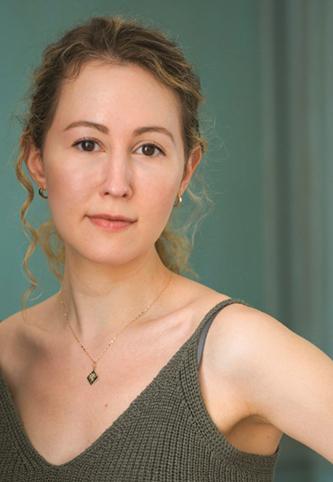
ALICE ROBB ’10
DON’T THINK, DEAR: ON LOVING AND LEAVING BALLET

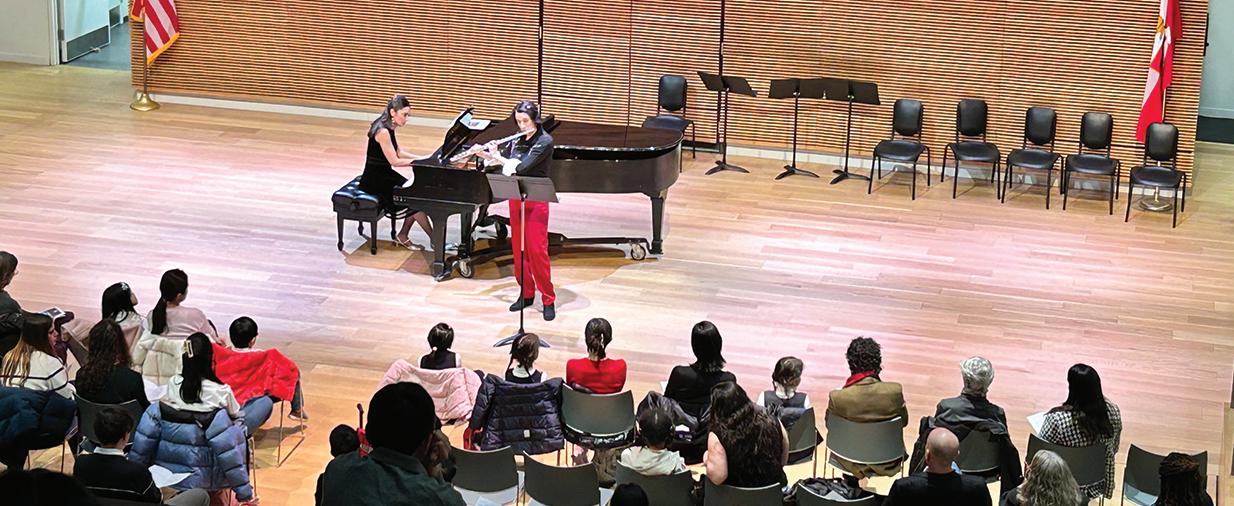
A Night of Music
FEBRUARY 27, 2023: The Brearley community enjoyed performances by beloved music faculty, world-renowned pianist Ursula Oppens ‘61 and Upper School students Olivia Oh and Harmony Zhu.
Congratulations to Alice Robb ‘10, the latest Lois Kahn Wallace Writer’s Award winner for Don’t Think, Dear: On Loving and Leaving Ballet. Her new book has been praised as “a beautiful, difficult, and compelling memoir” (Vanity Fair); “a nuanced, intimate mash-up of memoir, reportage and cultural criticism” (the Guardian); “enlightening, perceptive” (The Wall Street Journal); and “remarkable for its nuance and insight” (Times Literary Supplement). Alice’s first book, Why We Dream, was noted as “a spirited rebuke to the idea of sleep as a mere parting from consciousness” (New Yorker) and a “cogent defense of dreams and dream-telling” (NPR) and was translated into over a dozen foreign languages. As a journalist, she has written for such publications as Vanity Fair, Vogue, the Atlantic and the New Republic, where she began her career. Alice lives in London.
AAPI Assembly
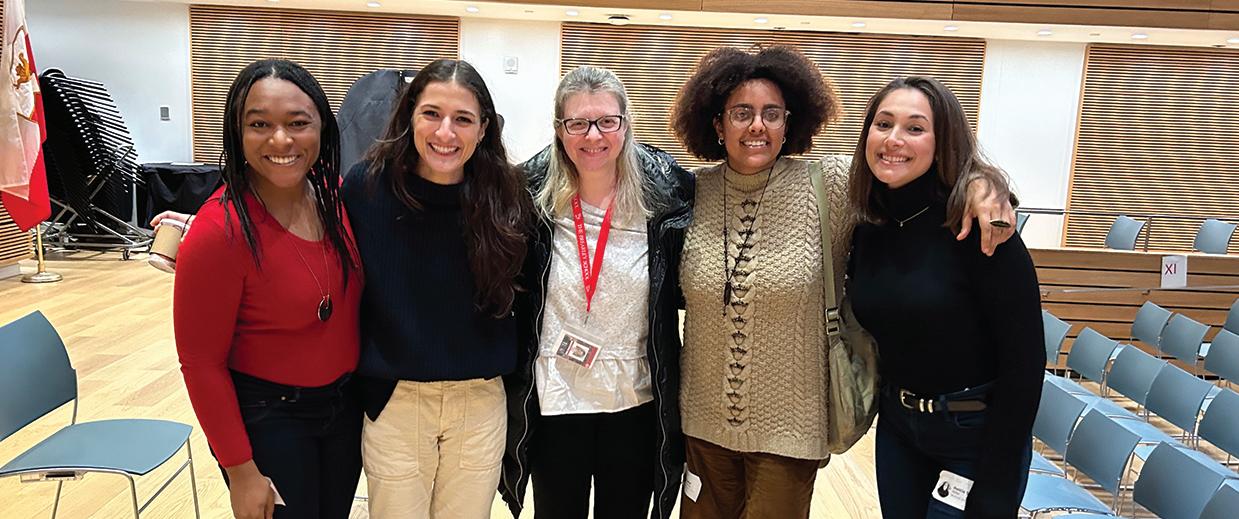
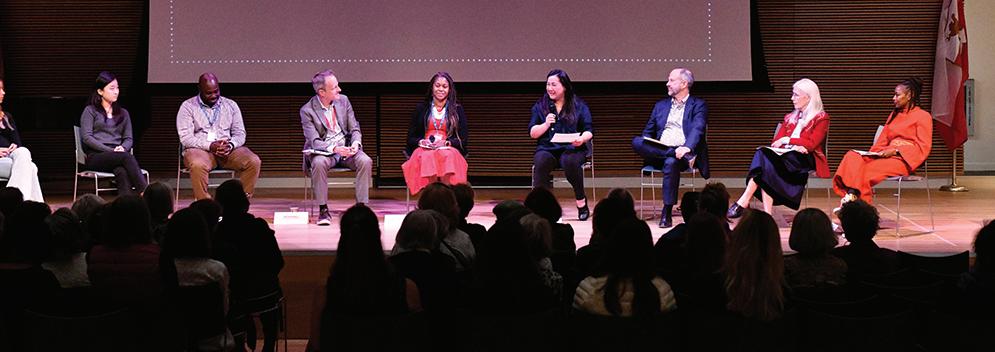
MAY 2, 2023: In honor of Asian American and Pacific Islander Heritage Month, Chai Vasarhelyi ’96, Devika Bhise ’09 and Annie Shi ’08 spoke to Upper School students about their heritage, professional careers and experiences at Brearley.
Ten-Year Reunion Panel
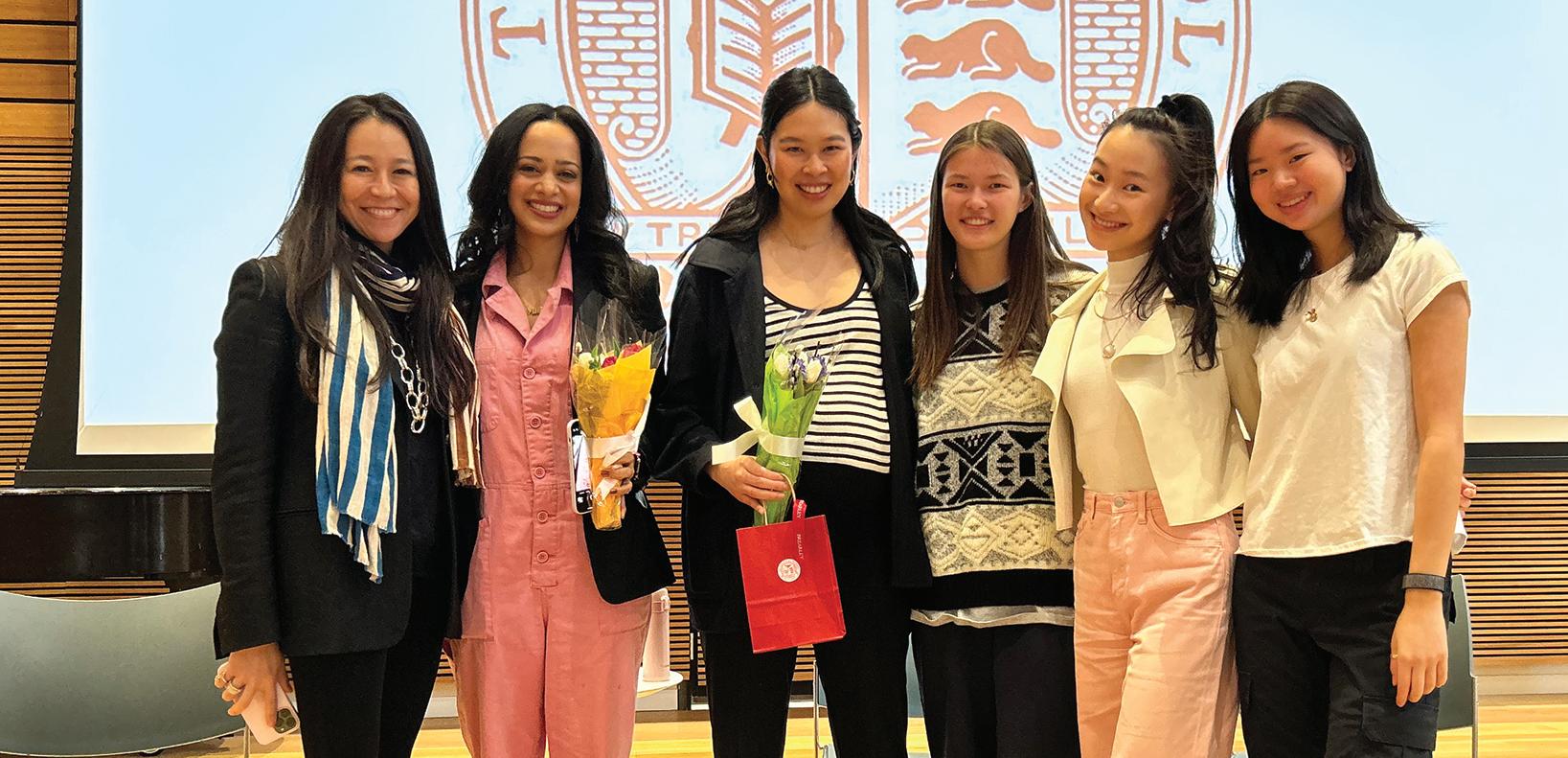
FEBRUARY 28, 2023: Alexa Jordan ‘13, Pippa Kelmenson ‘13, Taylor Hosking ‘13 and Nettie Stein-Miller ‘13 served on the 10th-Year Reunion Alumnae Panel to discuss life after Brearley at an Upper School assembly.
Model UN Delegation
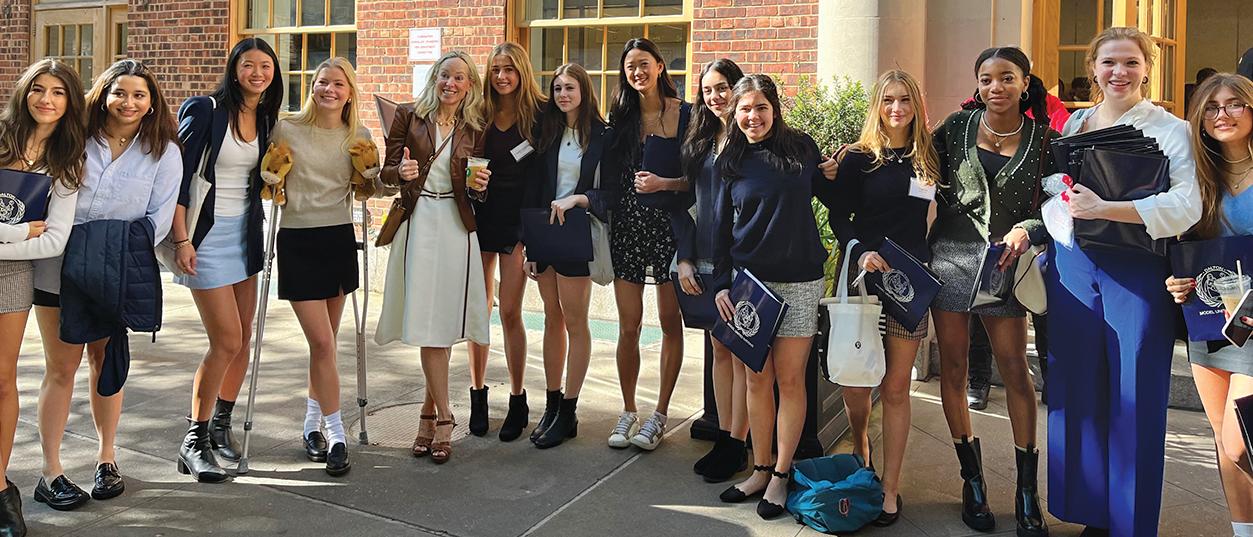
MAY 7, 2023: Brearley delegates, representing Argentina, Nigeria, Peru, Syria, the UK and Zimbabwe in various committees at the Model UN at the Dalton School, listened to Lisa Frelinghuysen ‘84, the conference’s keynote speaker, as she compared the Supreme Court, where she had clerked for Justice Ruth Bader Ginsburg, to the United Nations.
NEWS AND EVENTS SPRING 2023 10
Thank You!
annual giving 2022–2023 school year
To our extraordinary community of alumnae, parents, parents of alumnae, faculty, staff and friends, we thank you for your generous philanthropic support. We are united in our belief in girls’ education, and your Annual Giving contributions provide vital funding to ensure that our students learn and grow in a school that prepares them for principled engagement in the world. Every gift makes a difference, and because of all of you, Brearley persists and progresses.
b rearley f und Unrestricted
Fueling all aspects of the educational program, your gifts will have a direct and immediate impact on purposeful teaching and expansive learning for today’s Brearley girls. Unrestricted gifts allow the School to maintain and enhance the caliber of the academic program by supporting the general operating budget, faculty and staff salaries and benefits, library books, healthy lunches, athletic equipment, art supplies, and all aspects of life at Brearley. Together, we are stewards for today’s and tomorrow’s Brearley girls.
u nited f und Diversity, Equity, Inclusion and Antiracism Initiatives
Embracing Brearley’s school song lyrics “By truth and toil united” and committed to building a more equitable school community, the United Fund empowers expanded programming in this priority area. Brearley is taking an all-encompassing approach to this work, with the goal of initiating meaningful and lasting change. We are dedicated to creating an inclusive school where all Brearley students feel a sense of belonging.
o pening d oors f und Scholarships
Ensuring that talented students from families of lower, middle and upper-middle incomes can access a Brearley education, your gifts provide tuition assistance for families with demonstrated need. Starting with a comprehensive tuition model that covers all essential school programs, Brearley offers robust financial aid, ranging from partial to full grants that include funding for additional school-related expenses, as needed. The generosity of annual donors and those who have endowed scholarships allows Brearley to enroll an economically diverse student body, Classes K–XII.
a dventurous i ntellect f und Faculty Support
Providing for the dedicated architects of the School’s educational program, your gifts benefit curricular development, departmental review, professional growth and faculty salaries. To advance the curriculum and enhance culturally competent pedagogy, we are furthering learning opportunities for our faculty by providing them with the resources and skills needed to grow as scholars, artists and educators. The School’s dedicated faculty cultivates the passionate exchange of ideas that is a hallmark of a Brearley classroom.
ANNUAL GIVING
online giving: www.brearley.org/make-a-gift
Venmo: Brearley_af
via mail: The Brearley School
610 East 83rd Street New York, NY 10028
Attention: Development & Alumnae Relations
Contact: Amina Holman, Annual Fund Director aholman@brearley.org
(212) 570-8610

Farewell
THANK YOU TO OUR RETIRING FACULTY OF 2022–2023
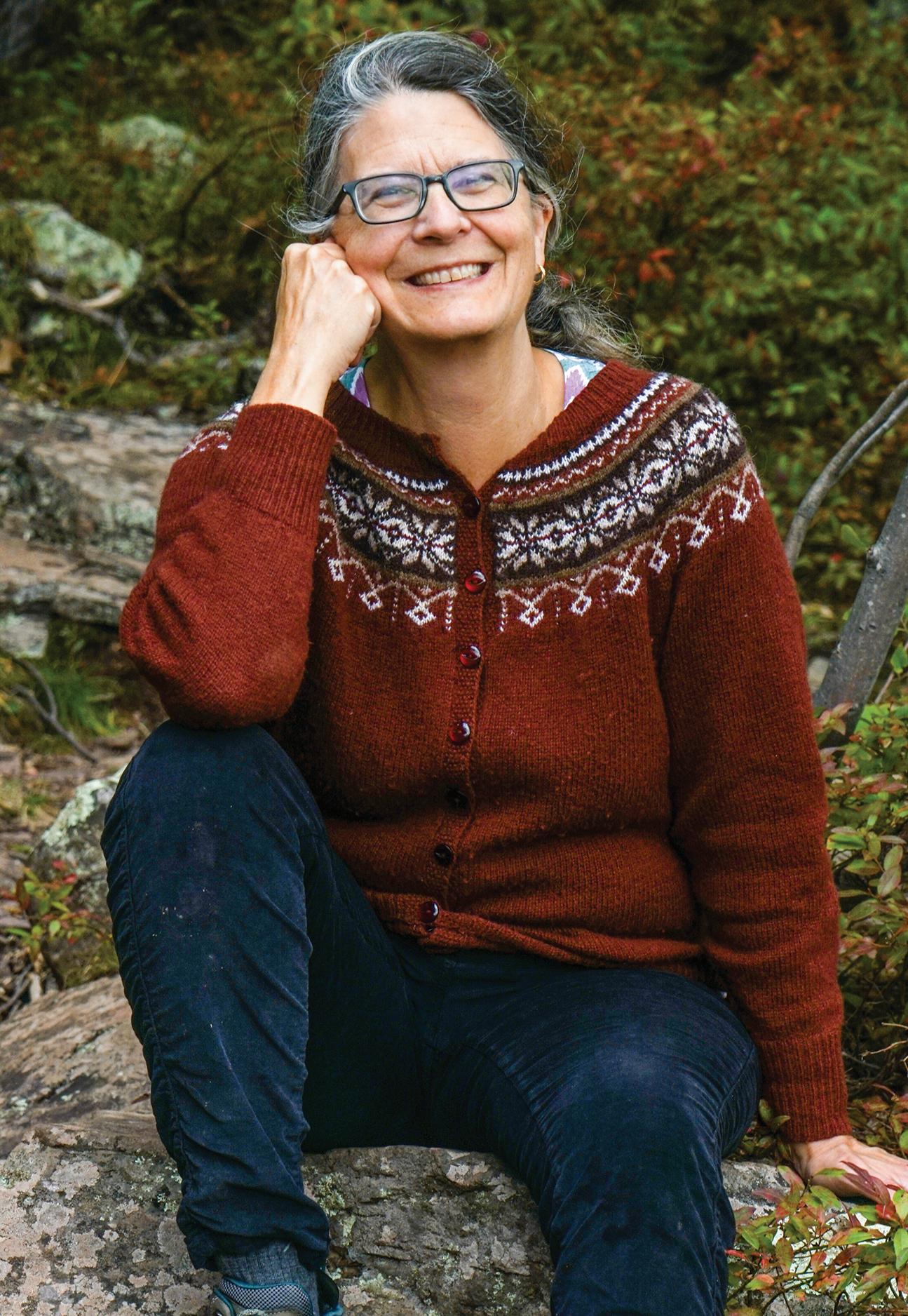
When Katherine Swett ’78 joined the English Department in 1998 she was no stranger to Brearley. She first arrived 30 years earlier as a 3rd grader in Miss Kelsey’s class, then became a Brearley parent in 1994. She’s covered a lot of ground— department head, academic advisor, advisor to Model Congress, faculty rep to the Board of Trustees; she even taught Latin!
When asked what she will miss, she responded, “I will miss 6A, that portrait, the students. Here’s why.” She then shared a sonnet she wrote a few years ago during a 9th grade English class when the students were working on their original sonnets.
Sonnet to a Portrait of James G. Croswell that hangs over the mantel in my classroom
I hope I look at students as you do, encouraging but not eager to please. You wait until the students have a go and then ask them to reconsider this You’re more dapper than I—that handkerchief so neatly folded in your firm breast pocket. Your world is gone; the fireplace beneath is decorative; there’s no way to unblock it.
I’ll part this place and have no portrait painted. I’ll leave some thoughts on old assignment sheets. It’s good to know no one will be acquainted with my successes and my small defeats. As I will never get to read your book, or know at whom you look with that kind look.
(James Croswell was the second Head of Brearley.)
RETIRING FACULTY SPRING 2023 12
Photo by Annik Lafarge ’78
Katherine Swett ’78
One of Karen’s favorite quotes is “Chance favors the prepared mind”—fitting for this science teacher as it was said by Louis Pasteur. In her 49 years at Brearley, how many minds has she prepared?
Fresh out of college, Karen joined the science faculty in 1974 under department head Emily Kidder. In those early years Brearley, seeing a need to modernize the advanced biology program, brought a consortium of research scientists to the School to provide new directions for the curriculum. For Karen it was like going to her own personal grad school. Despite one of the scientists urging that she go to medical school, Karen’s mind was made up: She was staying put to continue teaching (did we mention her favorite word is “serendipity”?).
Eight years later, Karen took the leadership reins of the department (her first year was as co-head with George Tokieda); serving in this role for 23 years, she never strayed from her goal of seeing to the evolution of the K–XII science curriculum and sustaining a sense of esprit de corps in the department. Along the way Karen received a Chair for Excellence in Teaching Award and the Sandra Lea Marshall Award from Brearley, earned a master’s degree in education from Harvard, and entered the Teachers College doctoral program at Columbia, where she won a fellowship.
Reminded of all the tests, quizzes, lab reports Karen has graded or commented on over the years, she shared some grades and comments she received in grad school from her professors. So, turning the [periodic] table on her, here’s that quantitative and qualitative data:
A+ : One of the most imaginative, intellectually rich, and superbly crafted projects I have ever received in my work at TC in any curriculum course. Brilliant.—Heidi Hayes-Jacobs, Interdisciplinary Curriculum Design at Teachers College, Columbia
[I am full of] admiration for the courage of your ideas.—Eleanor Duckworth, Harvard Graduate School of Education

Wherever post-Brearley takes Karen, we know she will continue to prepare minds and embrace serendipity!
Karen Nedbal
SPRING 2023 13
Totally Totally 80 80S S
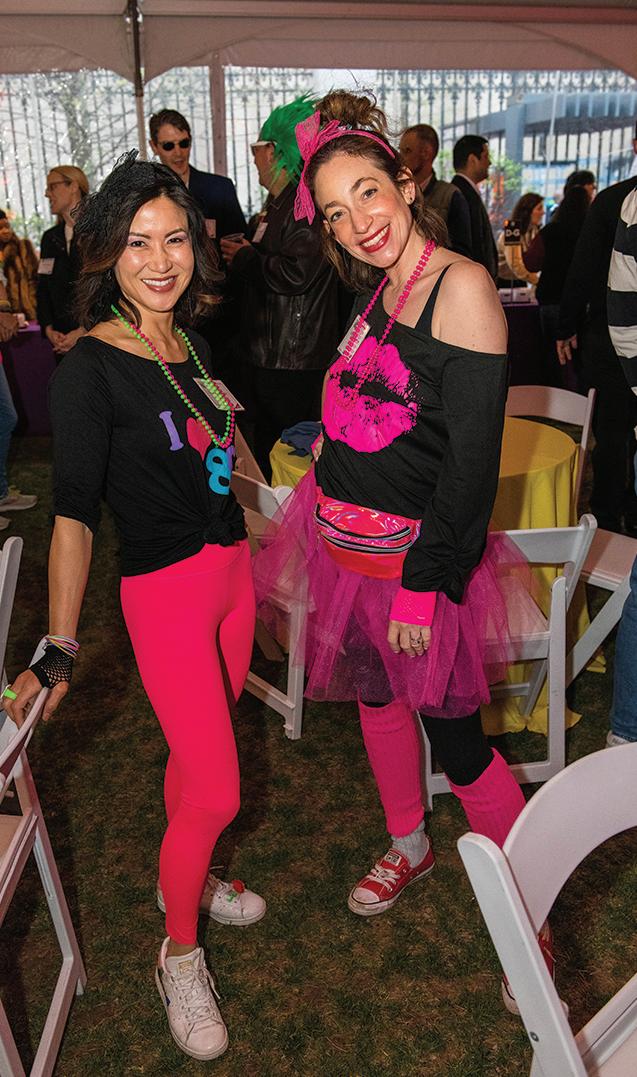
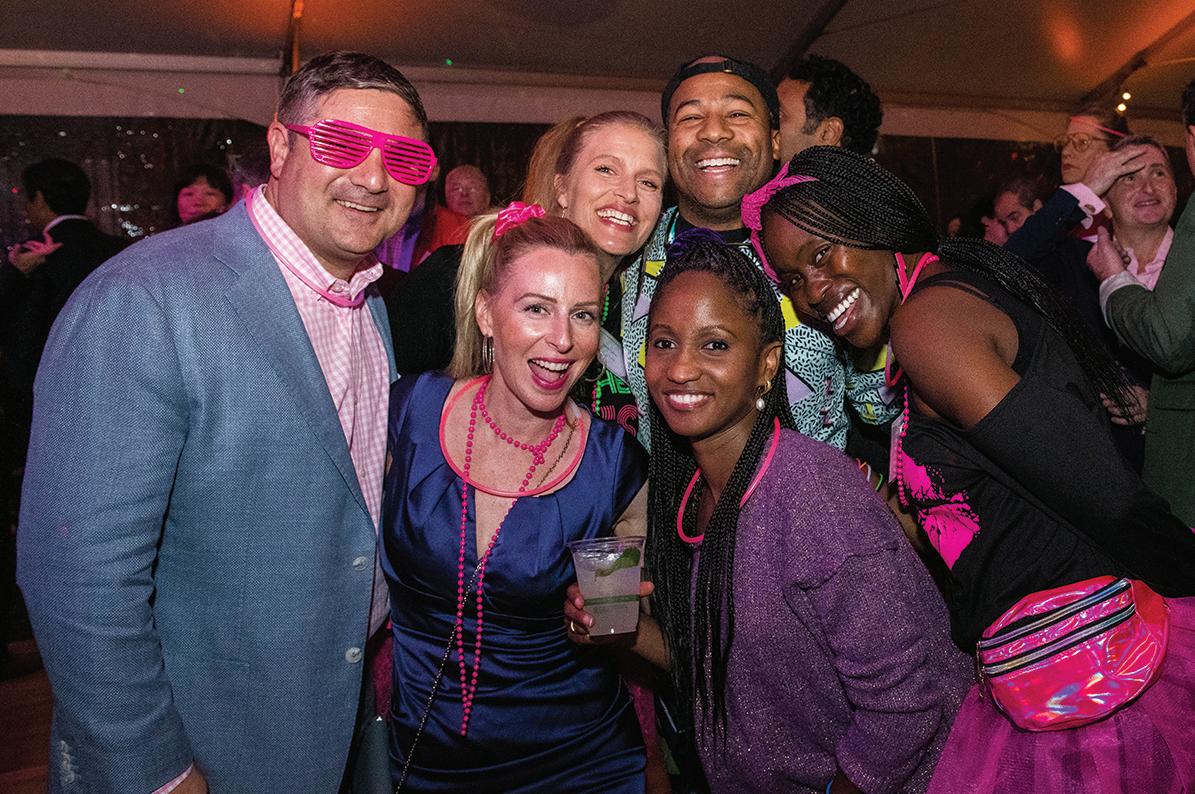
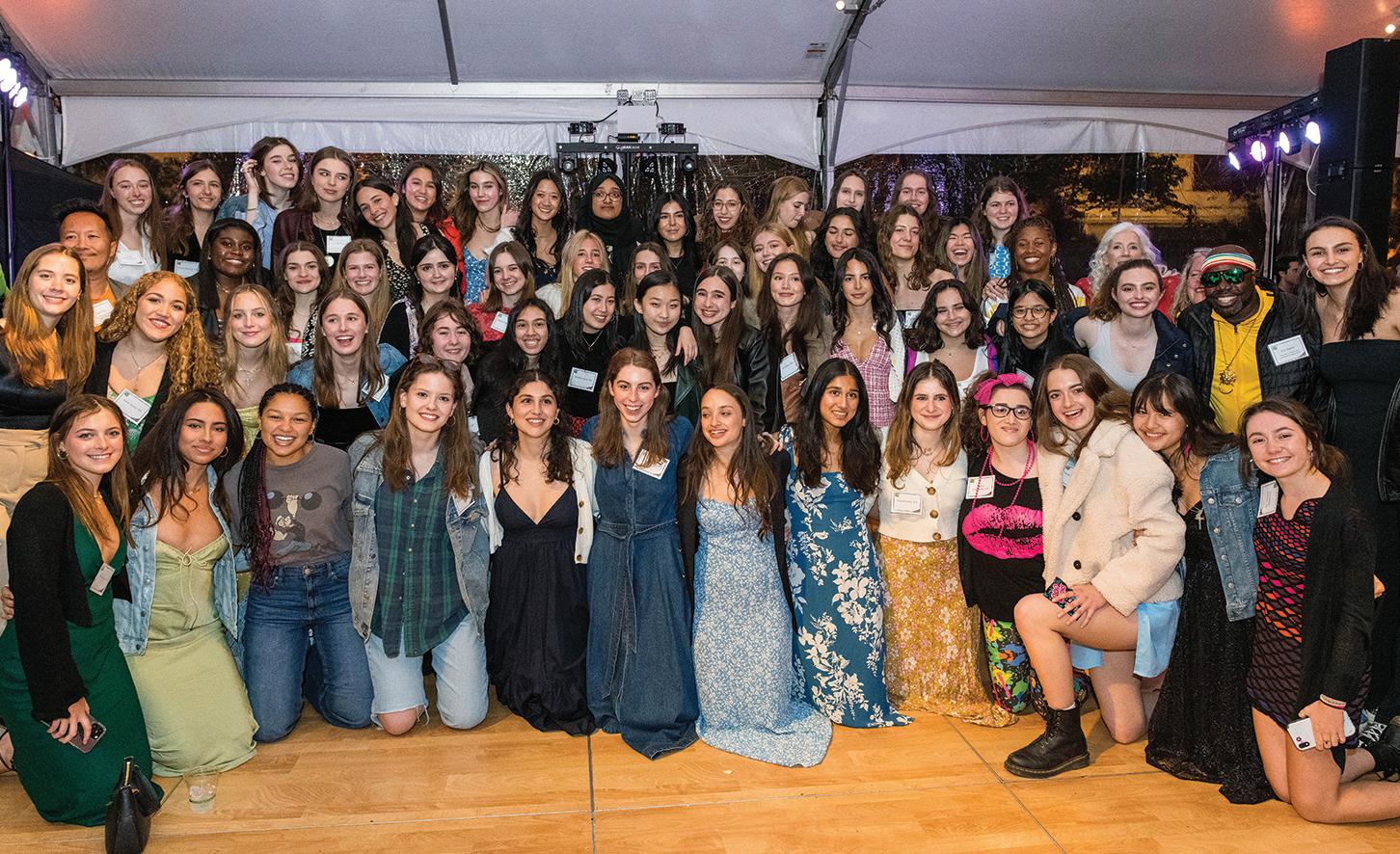
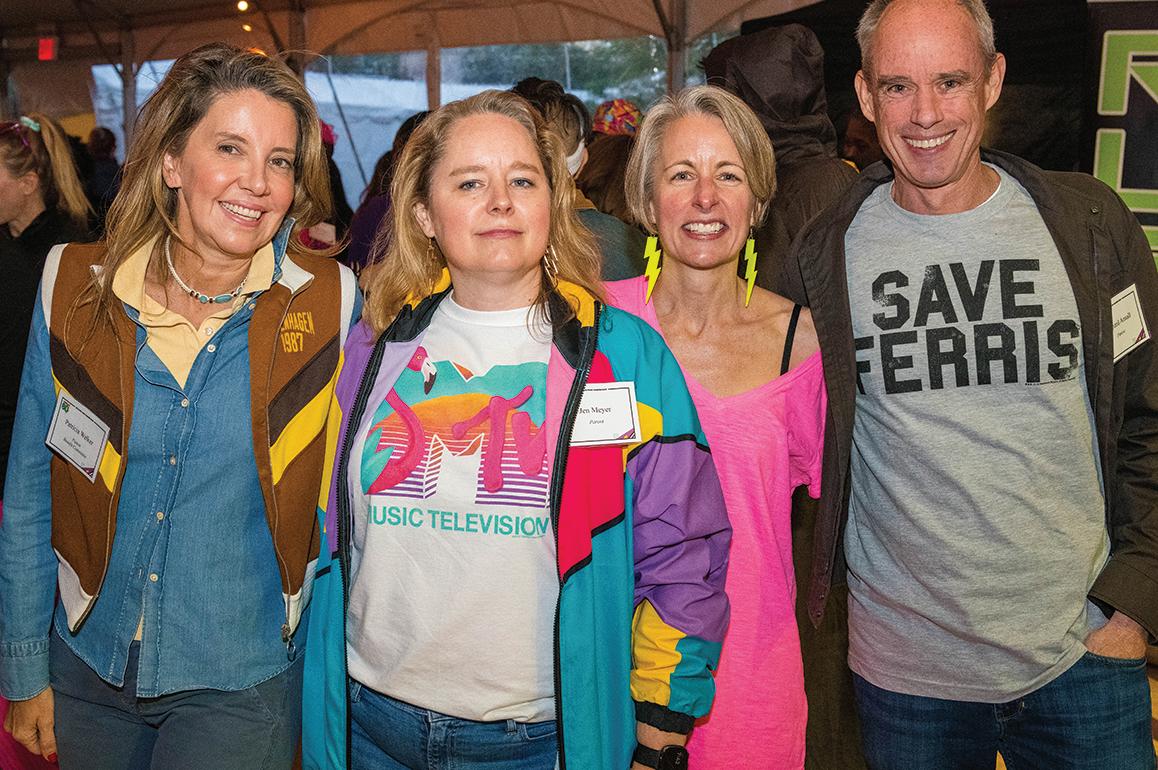
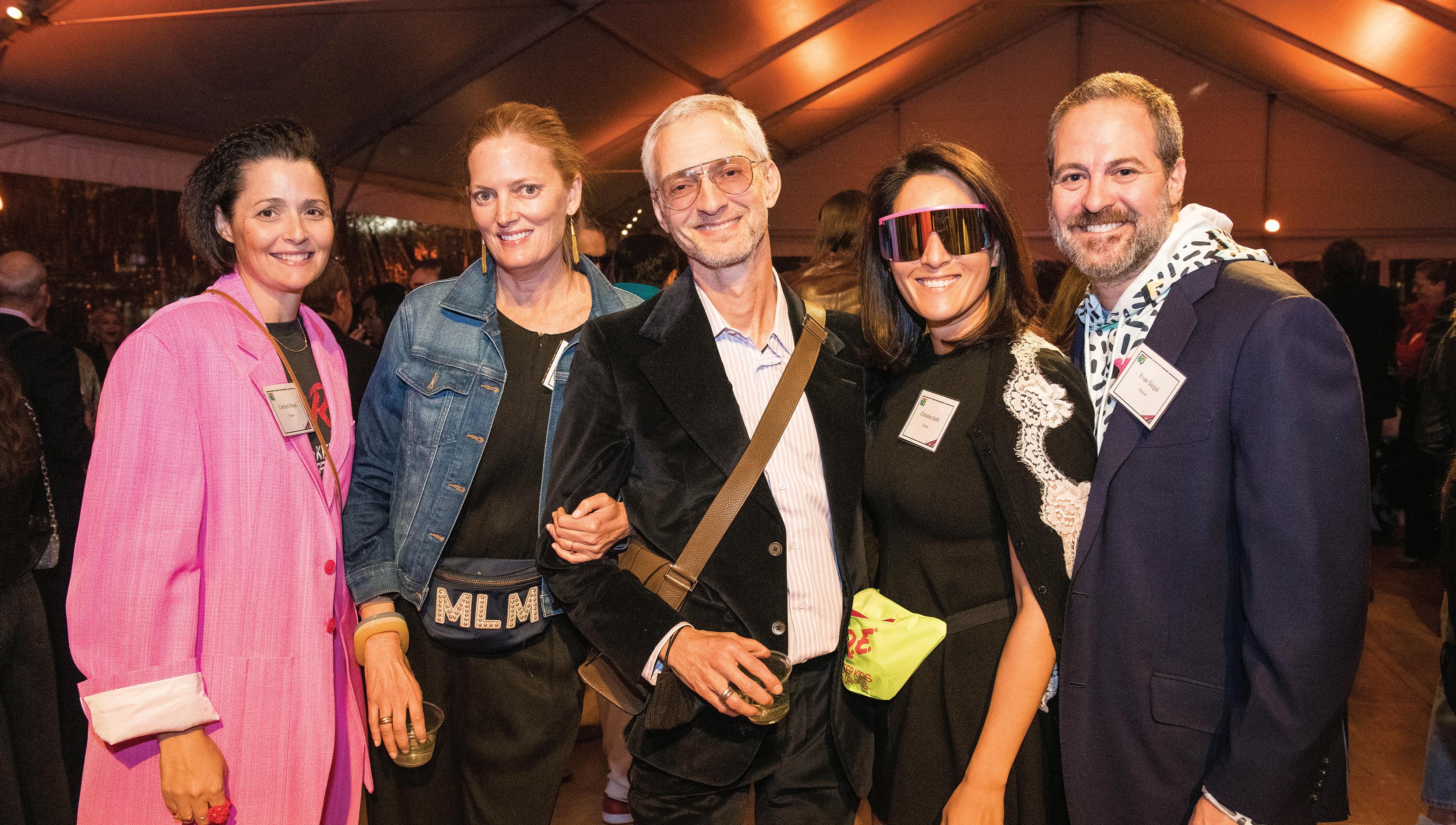
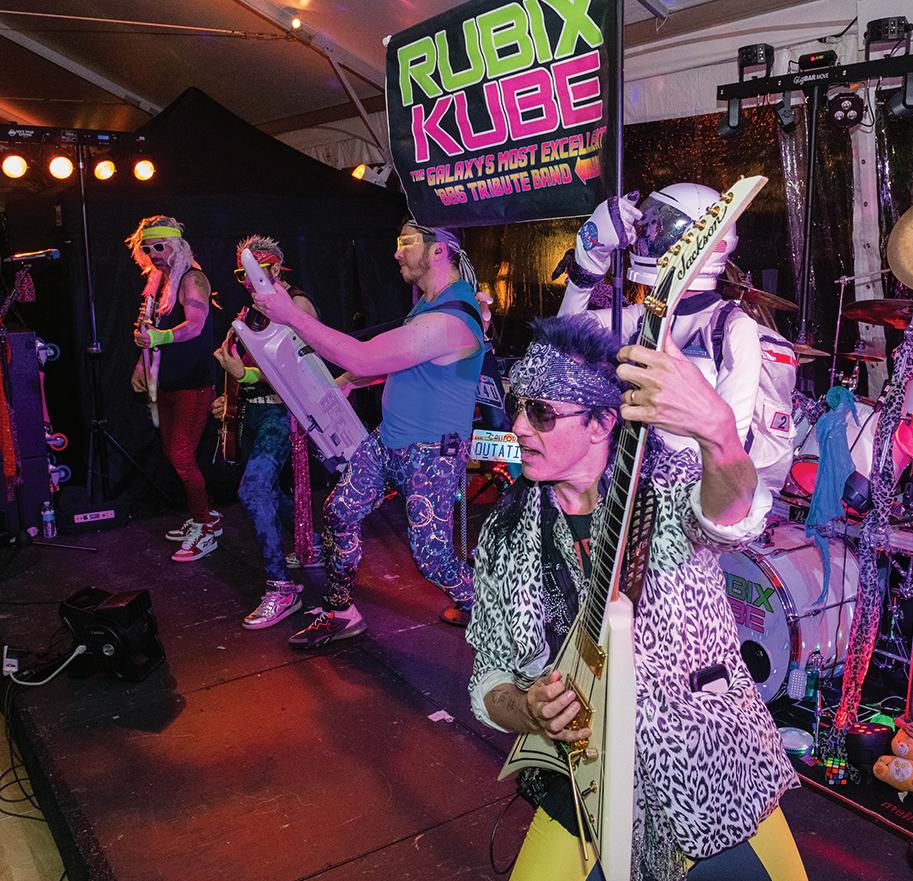
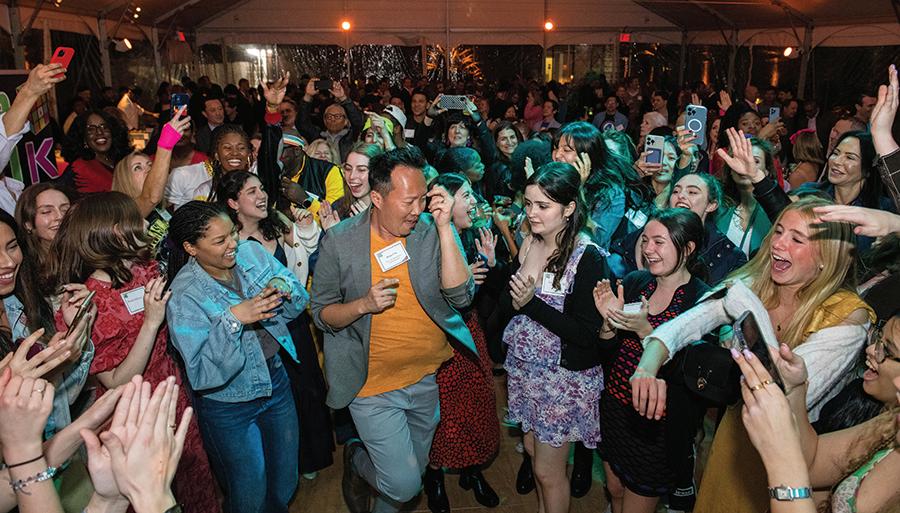
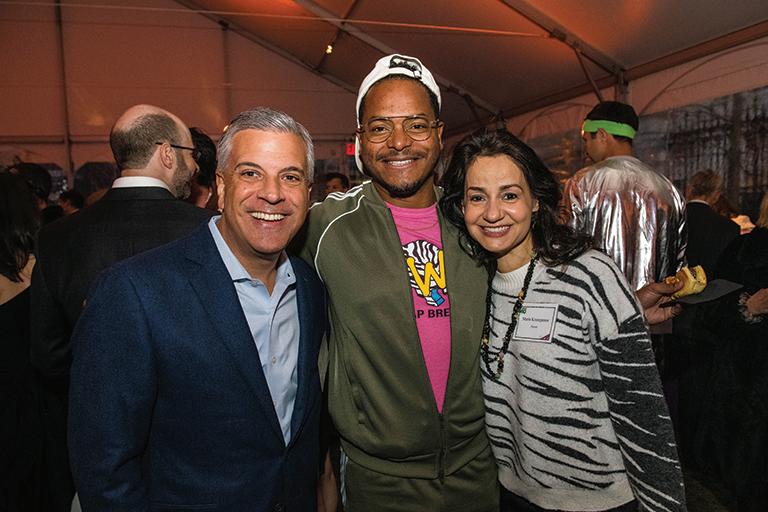
The 2023 Brearley Parents’ Association Benefit, Totally ’80s, took Brearley parents, alumnae, faculty and staff, and Class XII students on a journey back in time. On April 18, over 650 members of the community gathered in the garden of the Cooper Hewitt, Smithsonian Design Museum, put their hands in the air and busted a move to the throwback sounds of Rubix Kube: The ’80s Strike Back Show!


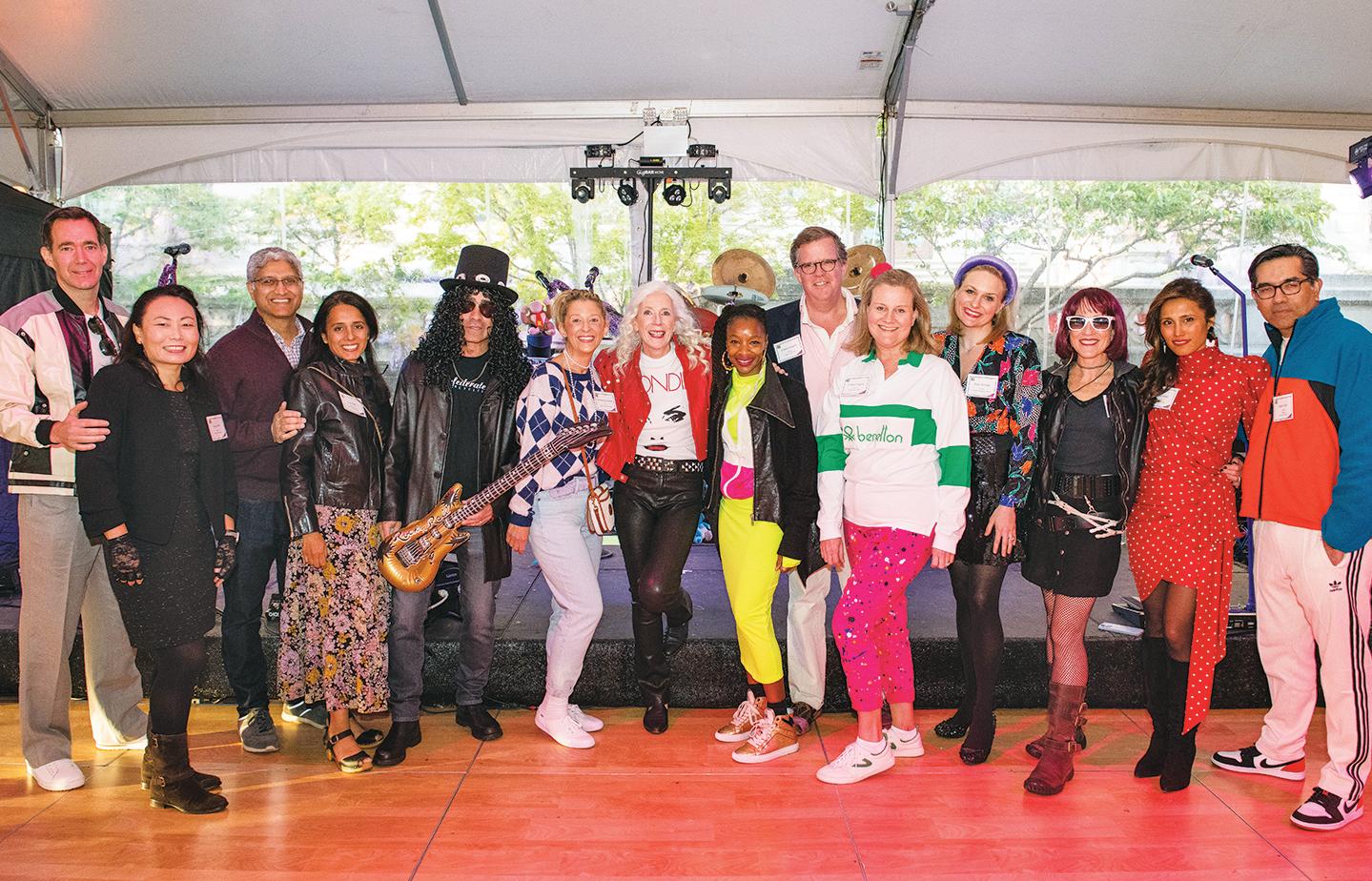
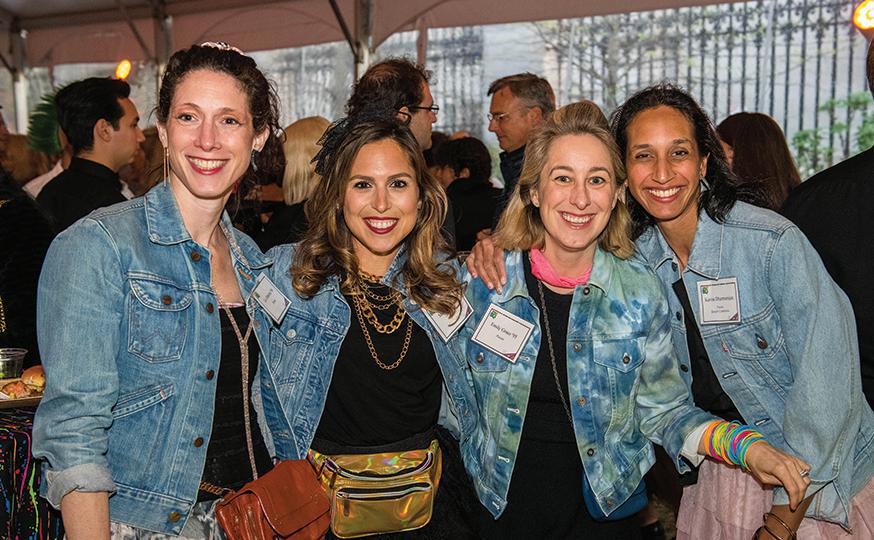
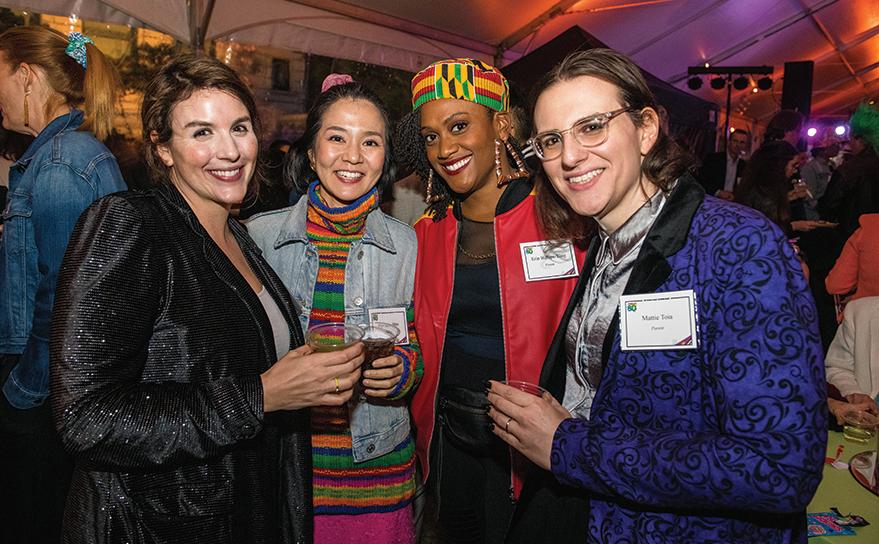
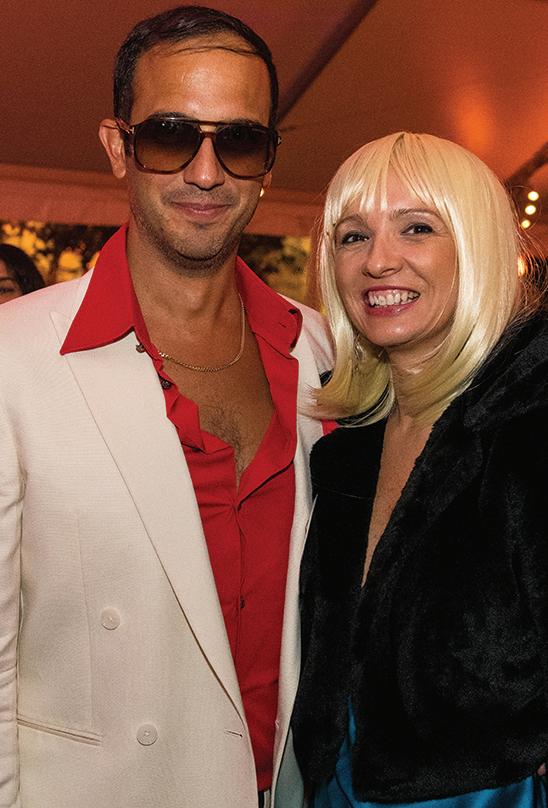
After enjoying delicious food and drinks and catching up with Brearley friends, guests flocked to the dance floor as the band took the stage. A great time was had by all as the community, many clad in authentic ‘80s wear, danced the night away to some of the decade’s most memorable tunes.
In addition to a fantastic evening of camaraderie and fun, the event raised over $365,000 to support Brearley’s beloved faculty and staff. We are sincerely grateful to our co-chairs, Lindsay and Charlie Higgins and Kamila and Munib Islam, as well as our underwriting co-chairs and the entire Benefit Committee, for providing an unforgettable blast from the past—the memories will live on and on and on and on!
SPRING 2023 14
2023 BREARLEY BENEFIT
BREARLEY BENEFIT

SPRING 2023 15
BACK ON
SPRING 2023 16
THE ARTS
ON STAGE
SPRING 2023 17
WINTER MUSICAL 2023
WHAT A GLORIOUS FEELING!
By Jen Higgins P’34
It comes as no surprise that the Brearley Drama Department faced some challenges over the past couple of years when it came to putting up the beloved winter musical. During the 2020–2021 school year—in the prevaccine days when some students were still attending school remotely—it was impossible to mount any show in the traditional way. Olivia Ball (then a drama teacher and now Head of the Drama Department) instead produced a revue of show tunes, filmed by students at home and at school, choreographed using a green screen, then assembled and shared with the community digitally. The Winter Musical: A Year in Revue was a herculean effort (with an impressive and entertaining final product still available to view on the portal), but a very different experience from a mainstage musical for cast, faculty, and audience.
By late fall of 2021 it looked like the musical would be able to make a comeback. Robert Duke, Head of the Drama Department at the time, held auditions for the musical She Loves Me, cast the play, brought a choreographer and music director on board and was four weeks into rehearsals when Omicron hit New York City. Members of the cast and crew fell sick and, heartbreakingly, the show had to be canceled.
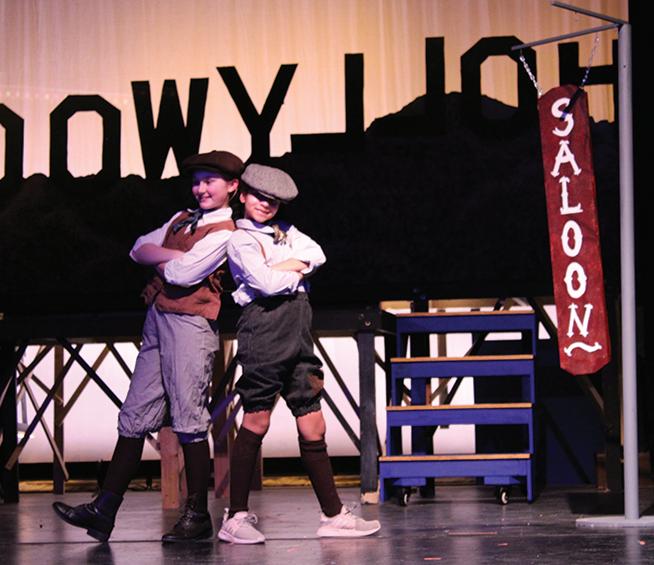
This January, Brearley drama came roaring back from these pandemic disruptions with, fittingly, the happiest and most lighthearted show imaginable: Singin’ in the Rain . The stage musical is an adaptation of the classic 1952 movie of the same name. Set during the late 1920s as Hollywood transitions from silent films to talkies, it focuses on the ebullient love affair between Don Lockwood and Kathy Selden (played in the film by Gene Kelly and Debbie Reynolds) and their plan for moving their film, The Dueling Cavalier , from silence to sound alongside Don’s zany sidekick Cosmo Brown (Donald O’Connor). The show premiered in London in 1983, opened on Broadway in 1985, and has been staged many times since around the world. It adheres closely to the plot of the movie and includes all the iconic songs
for which the movie is known, such as the title song, the high-energy “Make ’Em Laugh” and the tonguetwisting “Moses Supposes.”
Mr. Duke, who led the Drama Department for almost 40 years until he passed the baton to Ms. Ball, chose Singin’ in the Rain as this year’s mainstage production because he wanted a play joyous enough to match the feeling of the cast and crew about being able to reemerge onto the stage—in person and unmasked— after two disappointing and rough years. Mr. Duke said to himself, “Let’s do something that even when you mention the title people say ‘oh’ [tilts head, sighs, and looks wistfully into the distance] and this show gets that response. It just felt like we really wanted to do something that had that kind of spirit.”
Using the original Broadway script with just a few minor cuts, Mr. Duke directed a cast of 15 and a tech crew of more than double that number. Traditionally the cast of the Brearley winter musical has included boys from other schools. As in the past, this year Mr. Duke sent audition invitations out to some boys’ schools. But this time “the turnout was zero,” in part because Collegiate, for example, was doing its own musical and partially because the pandemic froze stage drama at Brearley for a few years and “memory is short.” Boys who are in high school now don’t necessarily know any classmates who performed in a Brearley musical because the last time there was a musical at Brearley they were in middle school. “Normally there would be guys in the show,” Mr. Duke explained, and the cast would be larger. But “I liked that we had a cast of only 15 because everybody played multiple roles. We had so many people doing quick changes and they got a chance to do lots of different things.”
The absence of boys also gave Brearley girls even more opportunity on stage than they might have had before. “We like having the guys come in,” Mr. Duke explains, “but Brearley girls are really good…. They’ve always played male roles down here on B-Deck. We never think twice about
THE ARTS SPRING 2023 18
it.” Over time Brearley actors have asked Mr. Duke: Please “don’t give a second-rate guy a part and deny it to a firstrate girl. And that seems like a fair bargain!”
And playing male roles may have its own lessons to teach actors who don’t identify as male offstage. “A lot of times girls say ‘I’d like to play this male role. Let me put on the clothes. Let me do the dances. Let me take the lead and let me see what that actually feels like to move in this way, to say these sorts of lines,’” Mr. Duke continues. “And I think it’s very healthy. You actually walk the walk in a way. We like to think that it promotes a certain understanding of the gender that’s absent here.”
No production works without a talented and committed crew and luckily Singin’ in the Rain had one. Preparing the stage and backstage for a performance with such a fast pace and many moving parts required “that sense of, like, I have to get this timed out . . . where can I put this hat so that I can get it in six seconds? It’s got to be where I need it,” Mr. Duke explains. “This crew loved supporting the show . . . they really wanted that actor to get that hat in six seconds and be out there on time every single night.”
Indeed, with opening curtain came an adrenaline rush that didn’t wear off until well past final bow. The
production’s three-night run was as smashing as the pie in the wrong face—you know, that iconic scene in Act I when Kathy Selden throws it at Don Lockwood’s kisser but it lands on Lina Lamont’s instead. From cast to crew, everyone worked together seamlessly to create a synergistic happiness that filled the Performance Hall. “Everybody was really thrilled and had a good time. It was so nice to be singing and dancing,” Mr. Duke says. Sighing, he adds, “There’s just rapture when it works.”
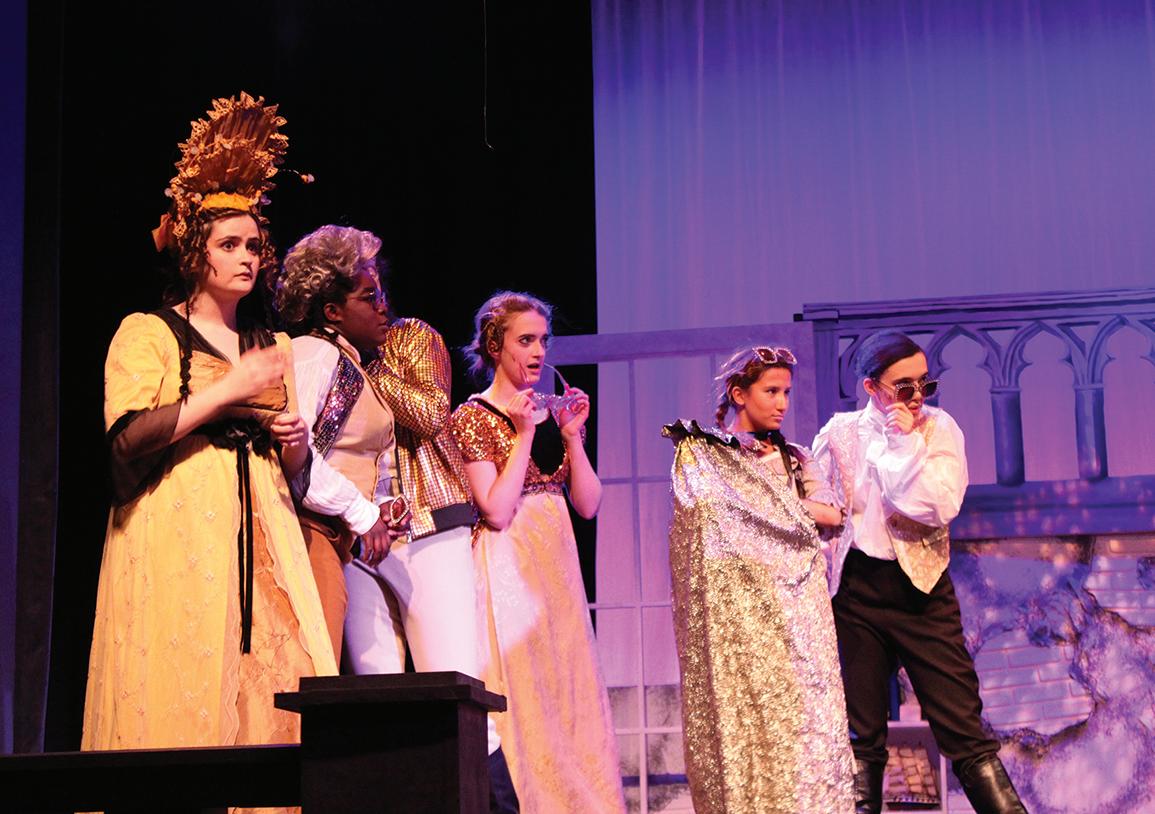
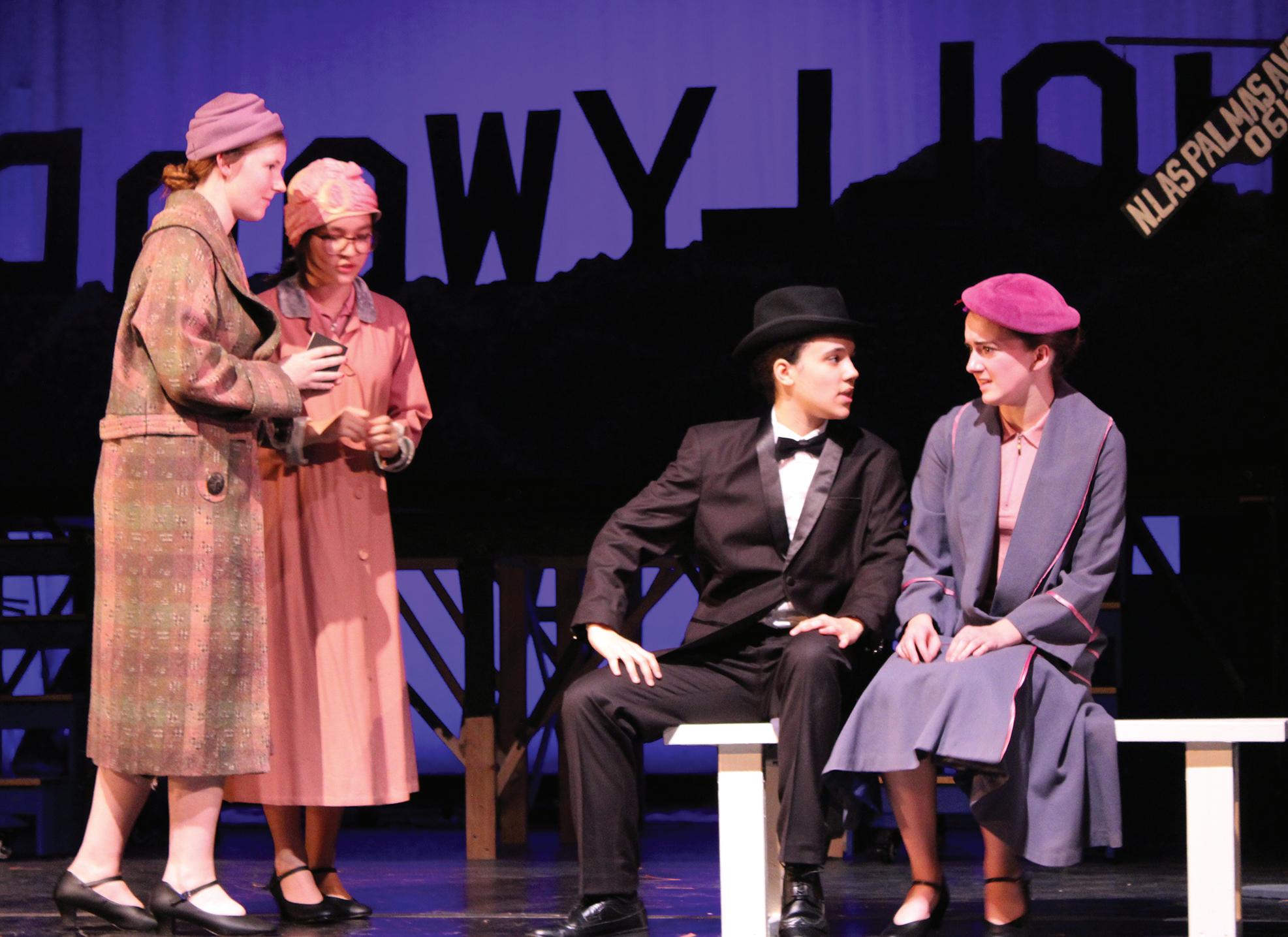
Next on the B-Deck docket was Sense and Sensibility, the spring play, which was directed by drama teacher Emma Simon and performed on May 4–6 (above photo).
SPRING 2023 19
AN EVENING OF DANCE 2023
LIGHTS, CAMERA, DANCE!
By Tao Cheng P’26, ’28
Brearley is full of traditions. Some go back to the 19th century, others originated less than a decade ago. A latter example is February’s An Evening of Dance. Recently I sat down with Marisa Ballaro, director of Varsity Dance, and Whitney Jacobs, Director of the Middle School dance program, to discuss this beloved event.
“ An Evening of Dance started a few years after I joined Brearley,” Ms. Ballaro, who arrived 11 years ago, recalled. “As someone who values community building, I saw an opportunity to create a platform for teachers and students to showcase their talents and celebrate our collective creativity,” she continued. “The idea evolved over time, from a single evening event to a series of performances that now includes a special afternoon of dance for Lower School students and their families.”
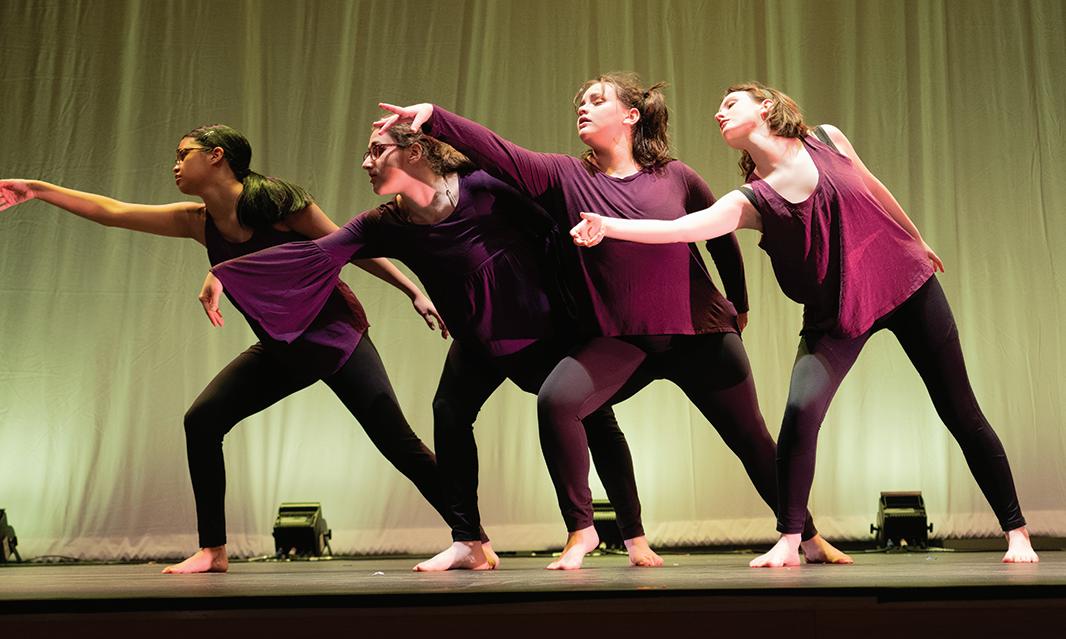
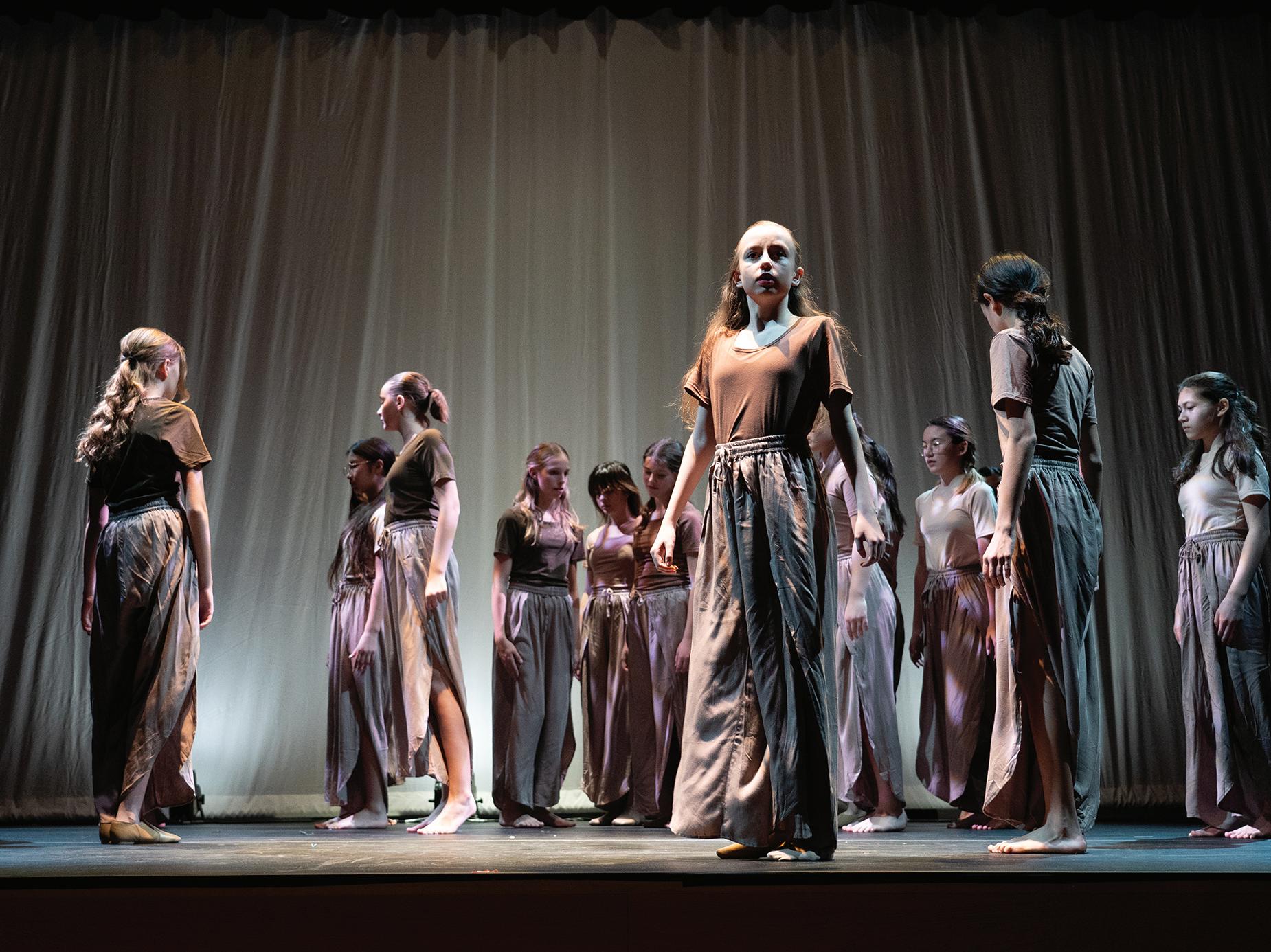
This year’s evening production, which took place on February 23 and 24, showcased a total of 18 performances by varsity dance, VII/VIII dance and V/ VI dance, and included special guest appearances from a XI/XII salsa class, IX/X tap class and a faculty/staff ensemble. With over 50 students and faculty members participating, it was a spectacular event.
The two-hour show began with Beautiful Noise Performed by varsity dance, the piece celebrated the uniqueness of each dancer individually and the power of their collective voice. “The students were asked to identify two traits, either internal or visible,” Ms. Ballaro explained. “I was amazed by the words they chose, such as acne, braces, Indian American, anxious, and stoic. It takes courage to share personal things about yourself, but the students were willing to do this so others could learn and understand them better. We recorded their voices, which became part of the sound score.”
Pravasa, another dance about finding identity, building connection and community, was arranged by Anisha, an XI student, who choreographed it with a song called “Chaiyya Chaiyya.” “In our 1st grade class, we engage in an activity of listening to different types of music.” Ms. Ballaro said. “Before we began, one student approached me and asked if we might hear music in languages other than English or Spanish. The student studies Bollywood dance and is always showing me new gestures and moves. I suggested that we wait and be
surprised. When “Chaiyya Chaiyya” played, I saw her face light up. She ran over and exclaimed that she knew the song and spoke the language.” After the class, Ms. Ballaro told her that a junior student was making a piece about Bollywood dance with hip-hop. The 1st grader was blown away. When Ms. Ballaro told this story to Anisha, who straddles two identities, “her response, that she could see herself in this young student, brought tears to my eyes. Being vulnerable, putting yourself out there and saying ‘this is who I am,’ you’re allowing people to hear that and feel that.” Expressing one’s innermost emotions and thoughts outwardly for others to see and experience is a power of dance making, and this one in particular “was worth my paycheck the whole year,” Ms. Ballaro added.
Momentum was performed by the Middle School VII/ VIII dance team. “We invested a significant amount of time practicing it since it requires a high level of technical skill,” Ms. Jacobs, who has been at Brearley for nine years, said. “There is one section where they are fully extended and have to maintain their balance while reaching and stretching, which can be challenging. Our last rehearsal was profoundly moving as I witnessed their progress and the beauty of their movements. The hard work and effort put into it were evident in their performance.”
Hard work came not only from the dancers and teachers in putting together the show, but also from many others in the community. Various faculty and staff members including Scott Pomerantz, who handled lighting design, along with a student tech crew and the guest artists played key roles as well.
An Evening of Dance 2023 was also especially meaningful coming on the heels of the pandemic, during which it had to take a pause. “This is the first year we did it without masks since the pandemic started,” noted Ms. Jacobs. “Seeing the students make physical contact with one another, what we’ve been hoping for for so long, was a powerful and joyous experience.”
Yet reverting back to maskless performances also meant making readjustments, or in some cases adjustments, like making eye contact and facial expressions and getting physically close to one another and having physical partners, although the students were told to keep their distance and not to touch for
THE ARTS SPRING 2023 20
too long. While it took some time for the teachers to reintroduce these basic performing techniques, the result was magical: the students breathed together as a team and came fully alive on stage.
New to this year’s roster was Lower School’s An Afternoon of Dance, which took place on February 25. Along with performances, the matinee included a Q&A session with student choreographers, which provided an opportunity for younger students to learn from their older peers and be inspired to pursue dance in the future.
As successful as Evening and Afternoon of Dance were this year, the impact of the dance program extends far beyond this February tradition. As Ms. Ballaro recounted, recently a former student surprised
her in the elevator and revealed that she was tap dancing in her college club. Even though the student had only taken Ms. Ballaro’s introduction to tap class, she had sought out a dance club on campus and continued to incorporate dance into her life. “It’s really exciting to hear that students and alumnae feel they have more ownership over their bodies and are comfortable and confident in keeping dance as a part of who they are,” Ms. Ballaro said, with pride in her voice. “It’s wonderful to see how this initiative has grown in our school community. My hope is that it will only flourish and be cherished for years to come.”
In cultivating the dance program in the three divisions, Ms. Ballaro and Ms. Jacobs are enabling students to forge unique and lifelong connections within themselves and among each other. This aligns with the mission of Brearley and the rare experience that it offers. As Head of School Ms. Fried wrote in her opening remarks for the 2022–2023 school year, “Relish how [this education] expands your mind, puts your hands to work and increases the capacity of your heart. It will serve you now and into the future. It will be a source of your strength and stay throughout your life. Enjoy!”
SPRING 2023 21
A CONVERSATION WITH SCOTT POMERANTZ
By Julie Gamboa P’23, ’18
Scott Pomerantz’s lifelong interest in music and production started when he was growing up in Huntington, Long Island. Mr. Pomerantz started playing drums at three years old. His first drum set was Muppets themed; he considers Animal one of his drumming mentors. His passion for film and technology, including recording TV shows on the VCR, led his mother to remark, “Why do you always have to make such a big production of everything?” Mr. Pomerantz laughs. “So fast forward, my job is to make a big production out of everything.”
Graduating from Five Towns College with a BFA in theater technology, Mr. Pomerantz has been at Brearley since 2013, dividing his role as Technical Director between the Drama and Technology Departments.
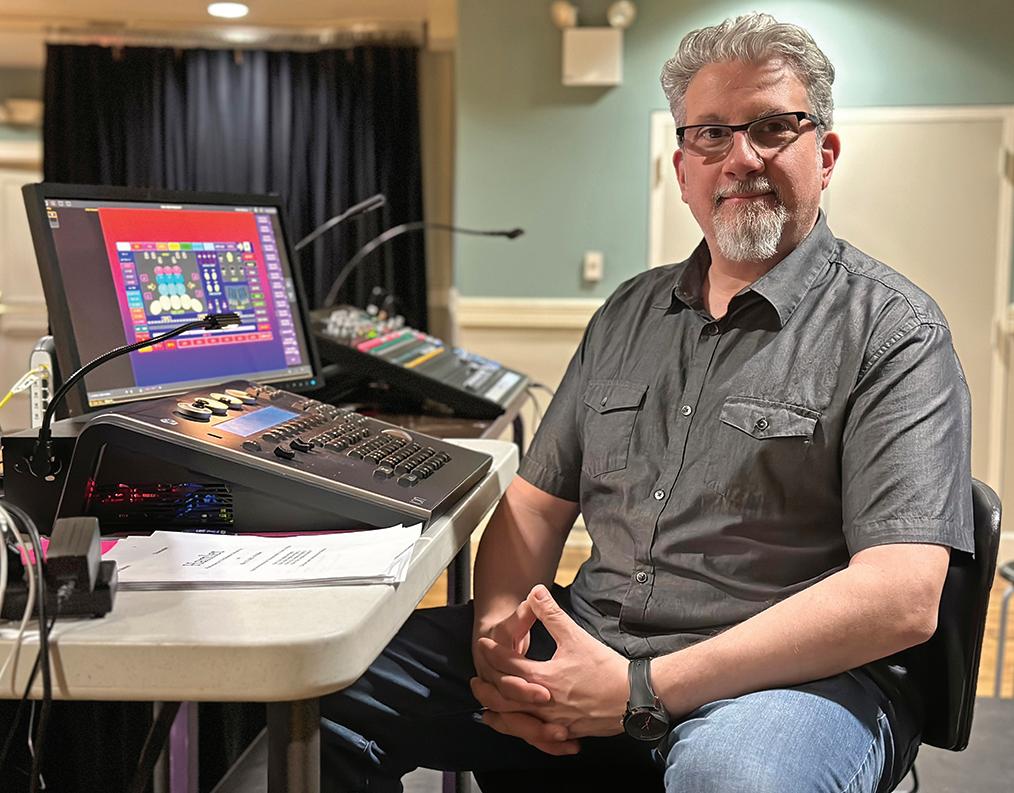
As technical director and scenic designer for Brearley’s recent mainstage, Singin’ in the Rain, Mr. Pomerantz physically designed every element that needed to go on the stage, which he shared with student collaborators who used their vision to create the set. “I do full 3-D CAD digital drawings that I don’t dumb down. I would do the same if it was a professional theater show or an undergraduate show at a college.”
And that’s just touching the surface of what Mr. Pomerantz does for Brearley drama on B-Deck. His hand is in every facet of theater production, from planning meetings, set design, props and theater safety to teaching students stage lighting and audio. This past summer, Mr. Pomerantz upgraded the carpentry shop so students could build scenery more efficiently and in a safer environment, with the addition of a customized miter station that includes stop blocks that helps students to accurately and quickly cut material in a matter of minutes instead of hours. Additional upgrades include a Sawstop table saw with an electromagnetic relay that senses moisture to prevent injury, and dust collection systems for improved air quality.
What’s most important to Mr. Pomerantz on B-Deck is teamwork, accountability and caring for the whole person. “I think I can truly say for myself and my colleagues, it’s all about the whole person down here…. It’s not about assessment and how good you are at what you do on the stage or off. It’s really about what’s going on in your life and how we can support you, and how we can help you be a better human.”
THE ARTS SPRING 2023 22
about the covers
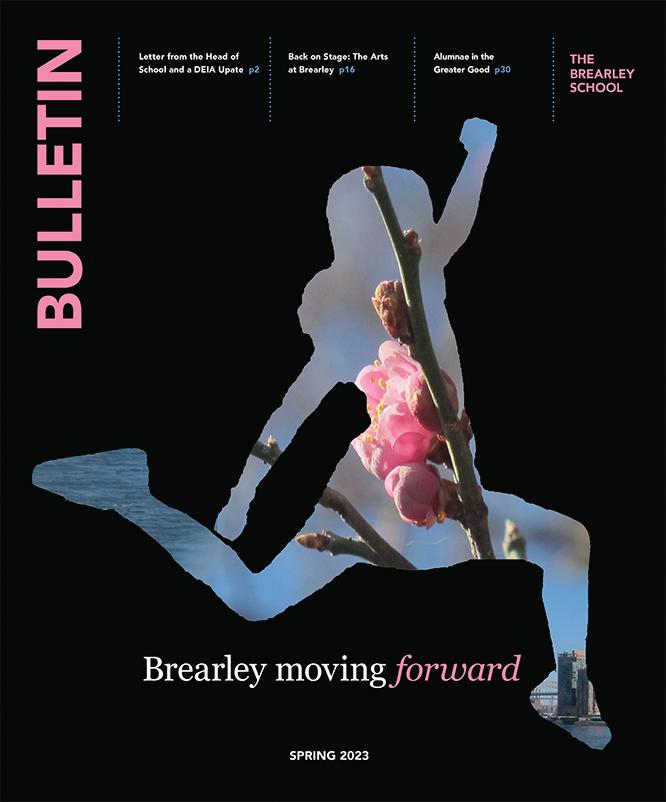
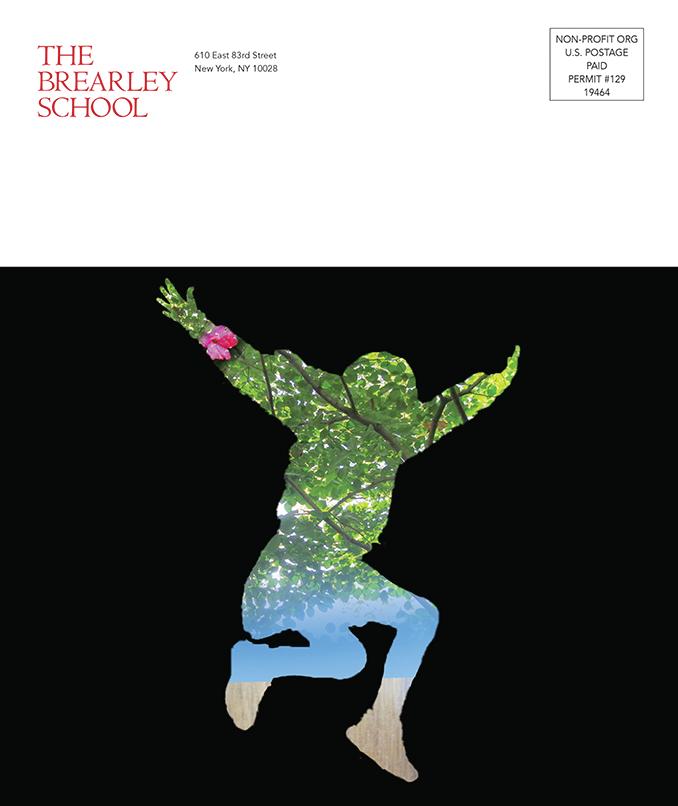
Art by Katie Diaz (front) and Harriet Anderson (back), Class IV
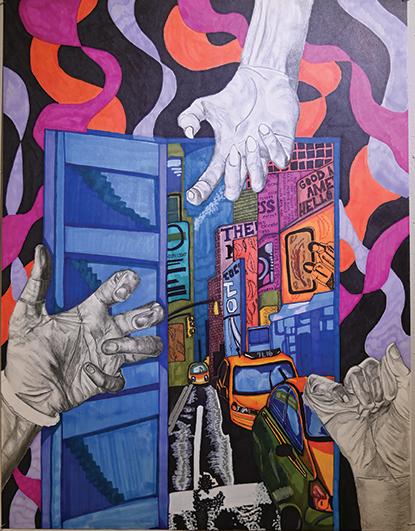
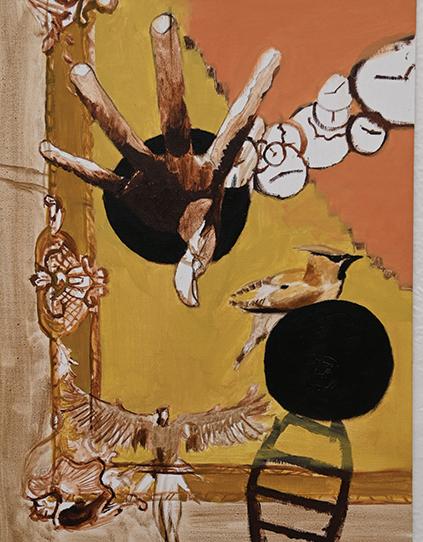


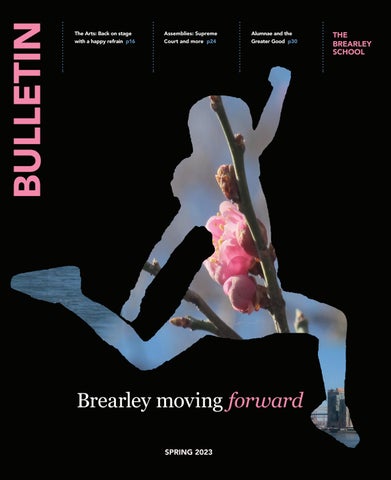
PHOTOSHOP SILHOUETTE SELF-PORTRAIT COLLAGES
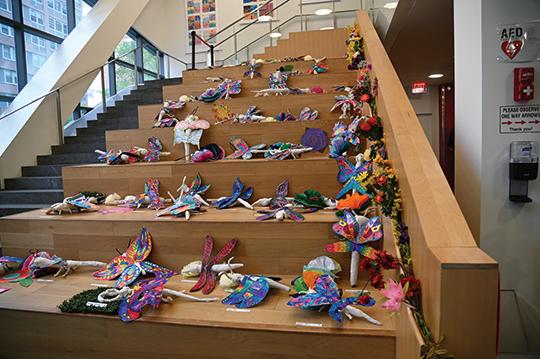
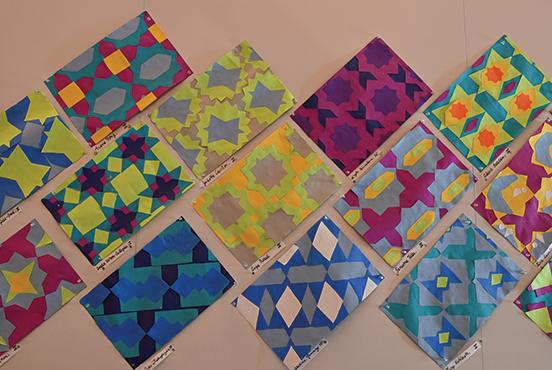
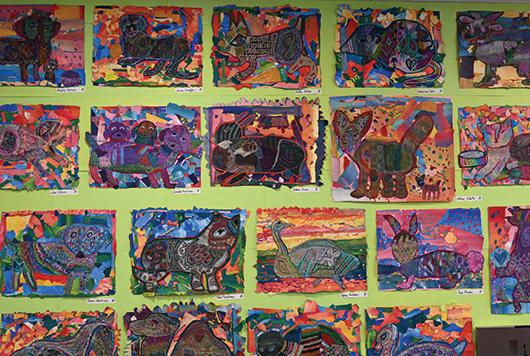
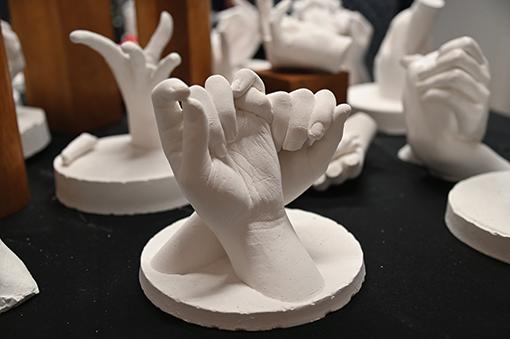
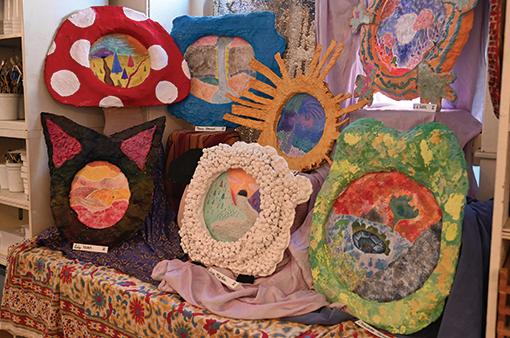
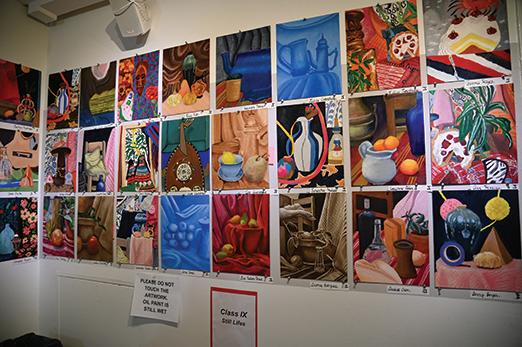
In Class IV’s Photoshop, Printmaking and Measure Cut unit, students worked with partners to photograph themselves in chosen poses. They they then turned the poses into silhouettes using selection and masking tools in Photoshop. Within these silhouettes they created layered digital collages using photographs that they shot themselves around Brearley and the neighborhood. The artwork was displayed at the Class I–XII art show in May alongside other student art from this year. Below are some of the other pieces that were exhibited.
SPRING 2023 23
ASSEMBLIES
ASSEMBLIES AT BREARLEY SPRING 2023 24
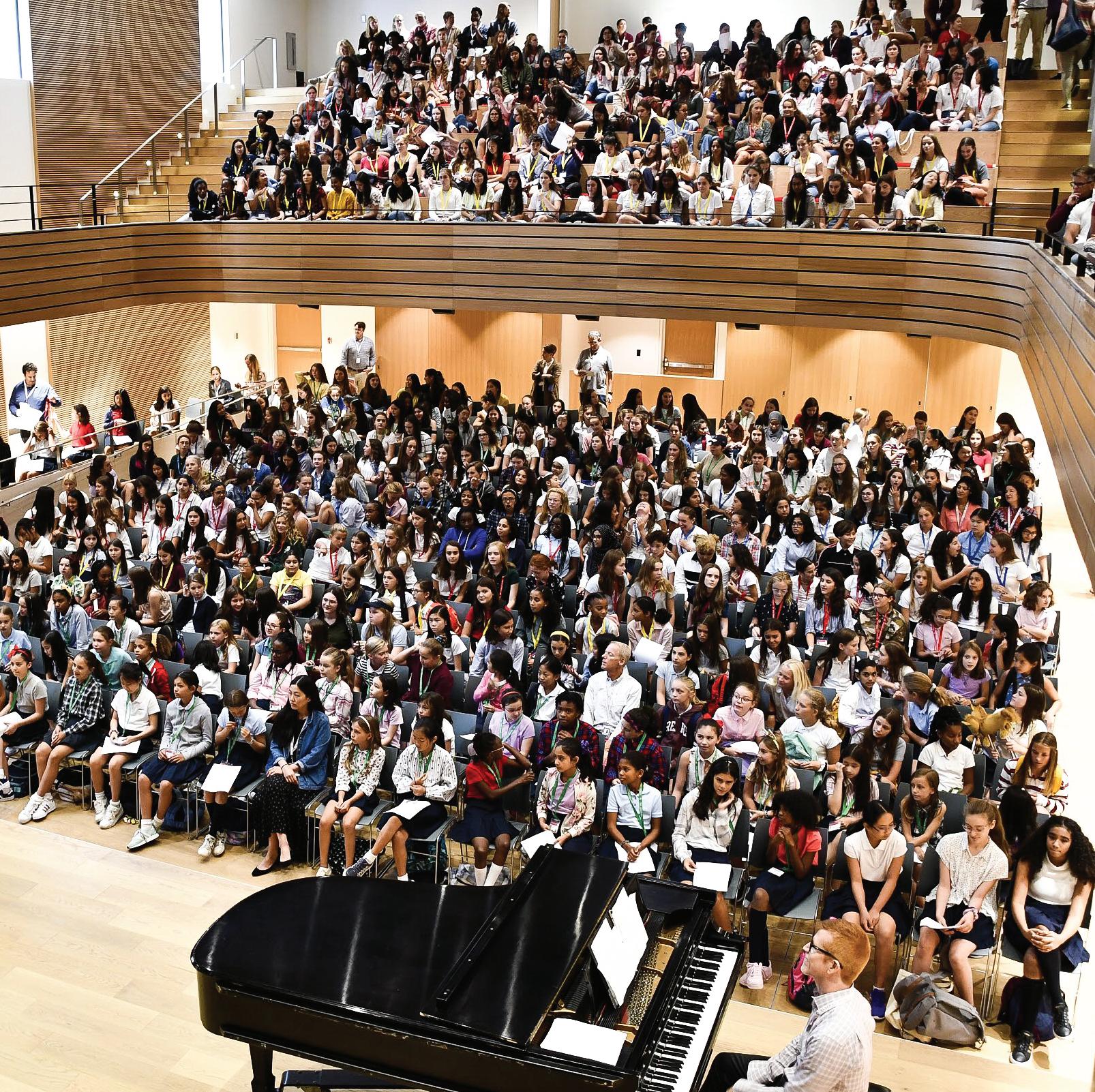
Assemblies have been part of Brearley since its founding. At that time, as was described by a graduate of the Class of 1893, the day began with a morning assembly when the students “read a psalm responsively and sang a hymn.”
Over the years assemblies changed in frequency and focus. Starting in the 1920s were Friday assemblies, for which “the Headmaster made every effort to bring the wider world to Brearley by inviting people in the arts or music or politics or government to talk.”
At some of those assemblies students spoke; “a girl’s name was plucked from a basket on stage requiring her to ascend and pick a subject written on a piece of paper in a second basket. She then had a few minutes to compose a speech to deliver, on the spot, on that subject.”
In addition to those that have become traditions and run year after year, like the Winter Assembly, Mascot Assembly and Frances Riker Davis Assembly, today’s assemblies, which are currently held on Day 3 (Middle and Upper School) and Thursday (Lower School), continue to host both outside and student speakers on a range of topics (although with the latter in a format vastly different from a century ago). On the following pages are some of the assemblies that ran this year.
SPRING 2023 25
THANKSGIVING ASSEMBLY
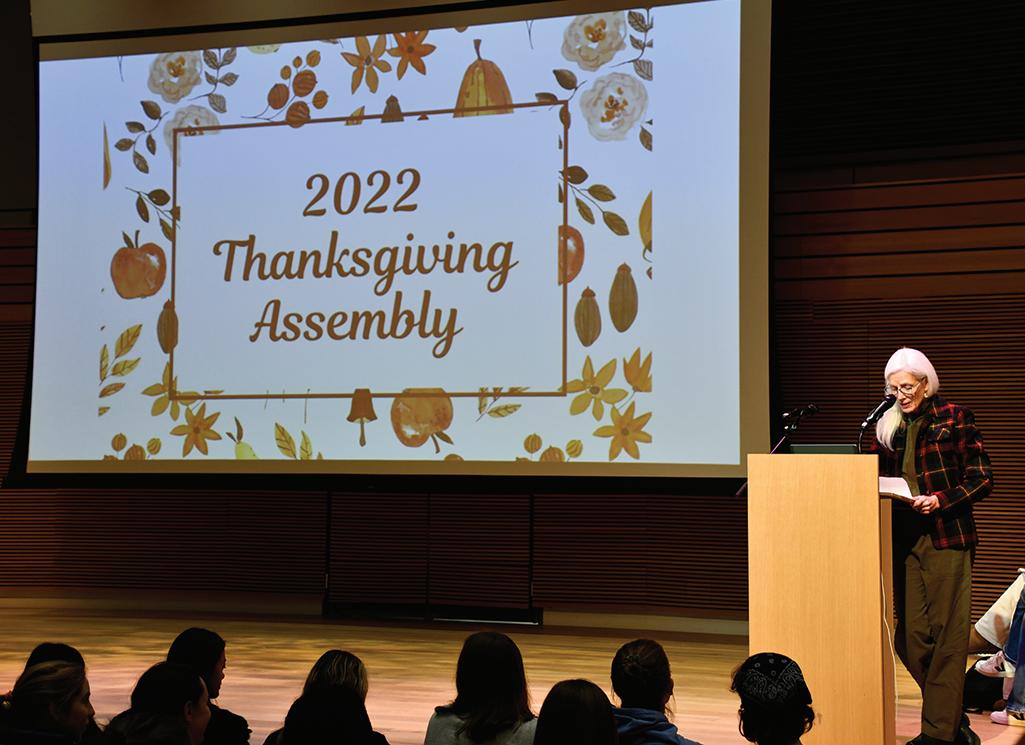
The Thanksgiving Assembly was first held in 1955 and featured a play, The Coming of the Pilgrims, which was written by Class VAB. Now called the Thanksgiving Service Assembly, it is dedicated to the importance of giving back to our communities, with students discussing service projects they have engaged in. This year, Upper and Middle School students were treated to a wide variety of presentations, described below by USSC co-heads Hattie Shapard ‘23 and Miranda Ewing ‘24.
Jaeden Casasnovas ‘23 shared her experience working with the Henry Street Settlement. The Henry Street Settlement is a multifaceted organization that opens up opportunities for Lower East Side residents and other New Yorkers through the arts and other social services. During the summer Jaeden volunteered at events geared toward local children and their families.
Logan Hennes ‘25 volunteered with Harlem Grown over the summer. Harlem Grown’s mission is to inspire youth to lead healthy and ambitious lives through mentorship and handson education in urban farming, sustainability and nutrition. Logan served at the greenhouse and farm on 134th Street and was educated on the importance of food justice in New York City. Each day, after feeding the chickens, bagging produce and weeding, her group would walk to local community fridges and distribute leftover produce.
Ila Desai ‘26 and Priya Acharya ‘26 spoke about their ongoing commitment to Sapna NYC. Sapna NYC offers culturally competent and linguistically accessible services so that their community can thrive in their new home country, thus empowering South Asian immigrant women by improving health, expanding economic opportunities, creating social networks and building a collective voice for change.
Samara Islam ‘26 talked about her trip over the summer to rural schools in the north of Pakistan. Samara helped to distribute school supplies including pencils, paper, stickers and Polaroid cameras. She was also able to connect (through an interpreter)
with the students, particularly the 9th- and 10th-grade girls. This coming summer, Samara plans to return and distribute reusable menstrual products, as girls there currently have to miss school while they are menstruating. She will also help facilitate hygiene workshops in the region.
FRANCES RIKER DAVIS ASSEMBLY
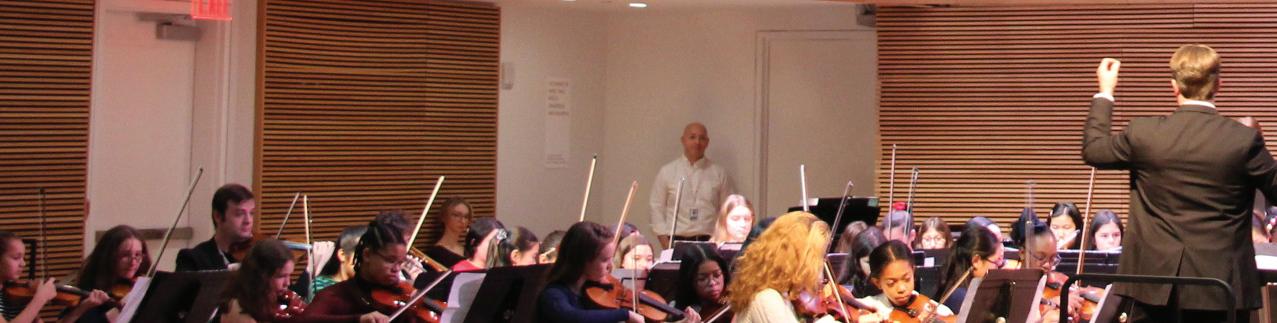
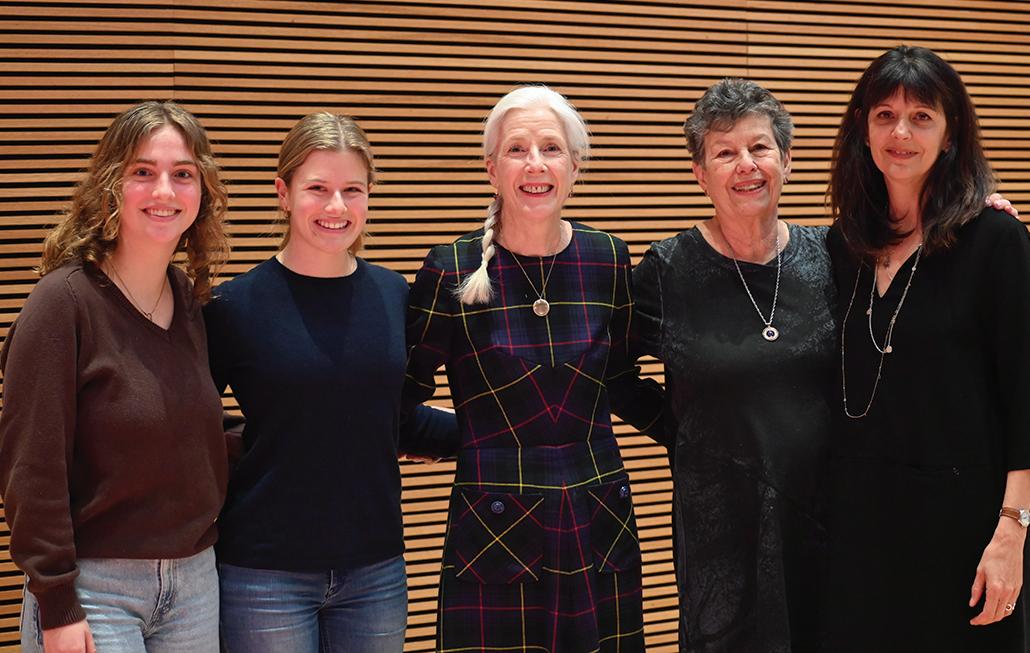
In 1967 the family and friends of Frances Riker Davis 1915 established an award in her name to honor the tradition of public service that Mrs. Davis embodied. It is annually given to a Brearley alumna or alumnae for ongoing, dedicated service to the public good, as demonstrated professionally and/or through volunteerism. The recipient then speak at a Middle and Upper School assembly the following year. In January, Brearley welcomed back Marguerite “Maggy” Cullman ‘54 and Martine Singer ‘78, the 2022 FRD Award winners.
For over 40 years, Maggy has been consistently engaged in multiple volunteer activities, using her expertise in education and administration to serve the needs of women prisoners, immigrants, community college students, the elderly and interfaith communities. She also devoted decades to the many social justice activities of the Episcopal Church and the Interfaith Alliance, and served as the bishop’s deputy for public policy in the Episcopal Diocese of Maryland, where she represented the interfaith community in reviewing the policies of the Maryland state legislature, and often spoke at the State House before Assembly and Senate committees.
Martine, after a successful career at the New York Times and Los Angeles Times, left the business world to devote herself to improving the lives of children and families affected by violence and adversity. She is president and CEO of Children’s Institute, overseeing one of Los Angeles’s largest social impact organizations, with an annual budget of $100 million and more than one thousand employees. She has become a major influence in the city, helping to shape policy and bring about
SPRING 2023 26 ASSEMBLIES AT BREARLEY
Thanksgiving Assembly.
systemic change for communities affected by decades of racism and underinvestment. Her most recent accomplishment is the opening of a new headquarters in Watts designed by Frank Gehry.
THE BASICS OF THE SUPREME COURT
In a four-part series sponsored by the Head of School and Elizabeth Siddiqui ‘23, Brearley presented a symposium on the US Supreme Court: its role as a branch of government, the diverse judicial philosophies that shape it and the impact of its decisions on federalstate relations. At the first assembly Gabe Sanchez and Gail Marcus from the History Department discussed the legal and historical background of the Supreme Court. They explained some of the motivations for creating the Supreme Court, described its function as dictated by the Constitution, and gave examples of how it has affected American history and debates over inclusivity.
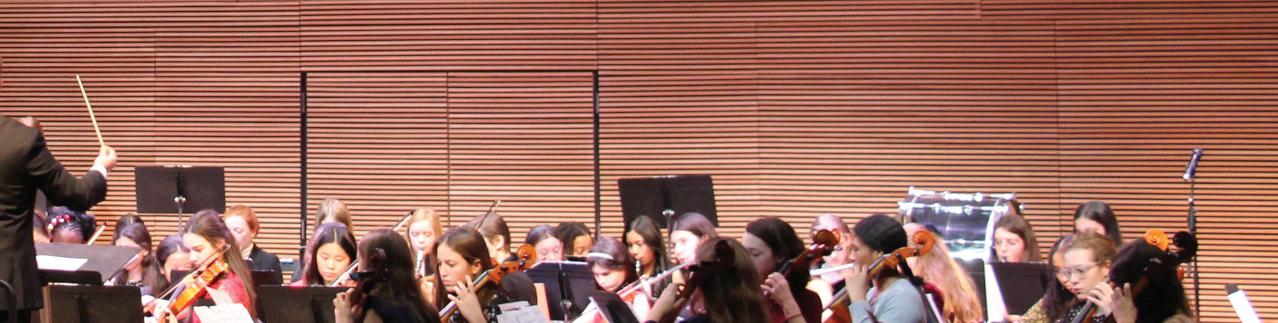
In the second installment, Jocelyn Strauber ’91, commissioner of the New York City Department of Investigation, and Amanda Pustilnik ’91, a professor of law at the University of Maryland School of Law and a program director at the Center for Law, Brain & Behavior at Massachusetts General Hospital–Harvard Medical School, spoke on judicial philosophies and their impact on the Supreme Court rulings. They focused on the recent Dobbs decision, explaining in detail the arguments and judicial underpinnings of both the majority and minority opinions. After defining the two main doctrines of originalism and living constitutionalism, Jocelyn and Amanda put the decision into a larger historical context of Supreme Court decisions and examined the significance of overturning precedence by the court in this and other important cases.
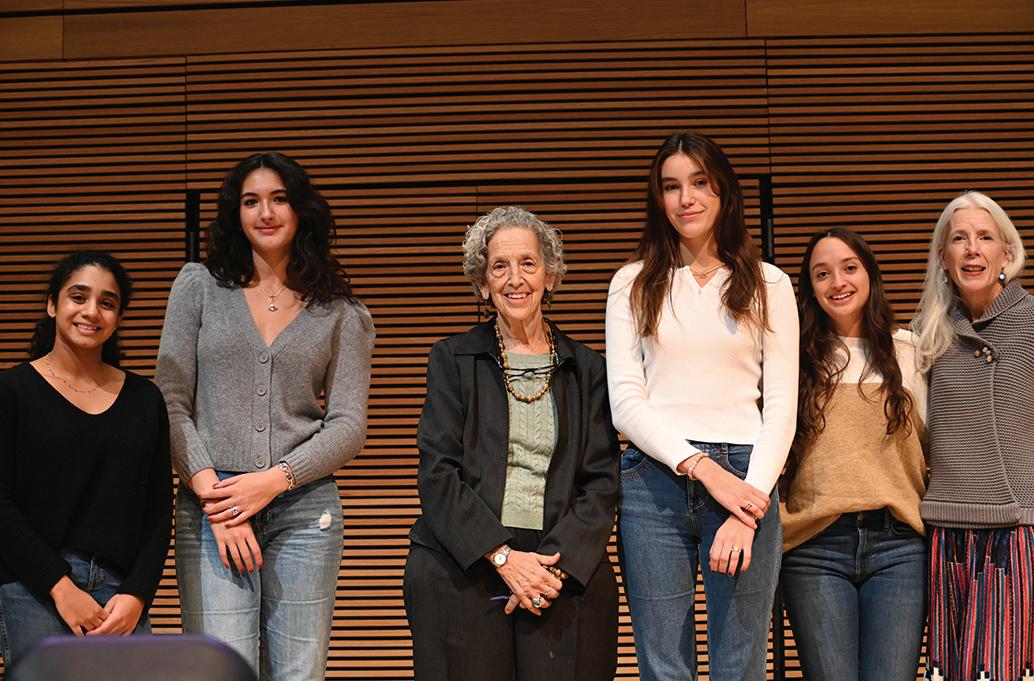
At the third assembly, entitled “Our Civic Obligation,” Ruth Messinger ’58 discussed the fall election, careers in politics, and the importance of civic engagement and duty. Ruth, who today works as a social justice, advocacy and activist consultant for a variety of organizations, returned to Brearley to speak on the subject; she previously spoke to students after the presidential election two years ago, reminding them that “democracy is not a spectator sport.”
At the final assembly, Mock Trial leaders interviewed Kate Heinzelman Cooper ‘00, general counsel for the Central Intelligence Agency, and Sophie Brill ‘03, senior counsel to the National Security Division at the US Department of Justice. Kate and Sophie discussed their professional paths and clerking for a Supreme Court Chief Justice: John G. Roberts, Jr. (Kate) and Elena Kagan (Sophie). They also answered questions about prosecutorial discretion, the threat of cyber security attacks to national security, and the difference between working in a judicial sector vs. a political one.
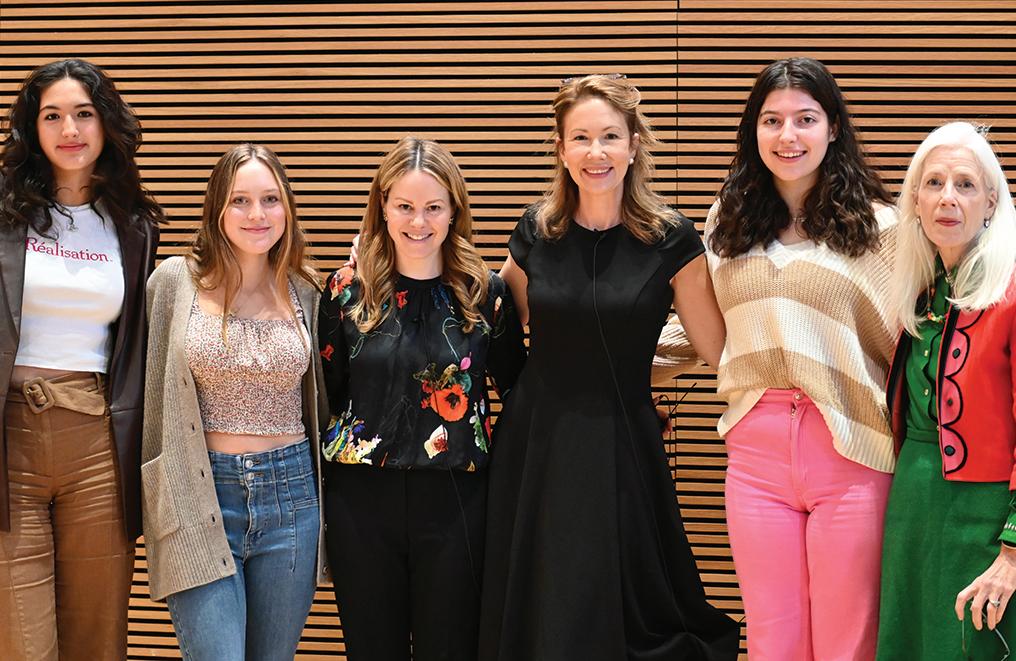 Frances Riker Davis Assembly.
Supreme Court Assembly Part II.
Frances Riker Davis Assembly.
Supreme Court Assembly Part II.
SPRING 2023 27
Supreme Court Assembly Part III.
MLK ASSEMBLY
Evelyn Halpert ‘52, Head of School from 1975 to 1997, recounted the origin of the event:
“Although Dr. Martin Luther King Jr. was assassinated in 1968, after years of resistance by opponents of civil rights and filibustering by southern senators the federal holiday was finally declared in 1986, and—if I remember correctly—we began holding annual assemblies on civil rights in commemoration of Dr. King in January of the following year.
“Among the speakers at the MLK Assemblies were Rev. Dr. Calvin O. Butts III, who served as pastor for more than 30 years at the Abyssinian Baptist Church in New York; Rev. Dr. James A. Forbes, at that time professor of preaching at Union Theological Seminary, who later (in 1989) succeeded the Rev. William Sloane Coffin as the senior minister at Riverside Church—the first African American to be appointed to that position, from which he retired in 2007; Lani Guinier, at that time a young law professor at the University of Pennsylvania and assistant council at the NAACP Legal Defense Fund, whose subsequent nomination in 1993 to become Clinton’s assistant attorney general for civil rights was withdrawn under a barrage of right-wing attacks; and Charlayne Hunter-Gault, the Emmy and Peabody Award–winning journalist who had been one of the two students who had famously desegegrated the University of Georgia, in 1961, after having to win a lawsuit in order to gain admission. When she spoke at Brearley she was national correspondent for PBS’s News Hour; she went on to cover the end of apartheid in South Africa, serving as NPR’s chief correspondent in South Africa and later as bureau chief and correspondent South Africa for CNN.”
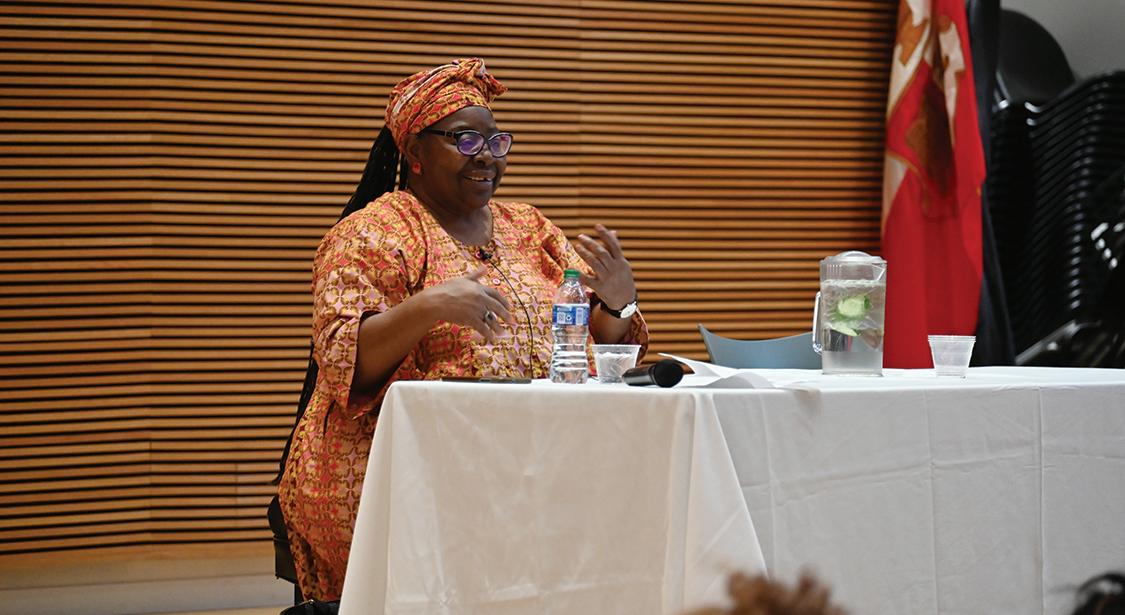
This year’s MLK Assembly welcomed back Loretta Ross, who continued her discussion from last year’s MLK Assembly on how students can learn to call people in instead of out. Loretta is a professor at Smith College and a 2022 MacArthur Fellow who writes and lectures frequently on human rights, white supremacy and cancel culture. She and Coy Dailey, Director of Equity and Community Engagement, gave students real-world advice about what to do when someone tries to cancel or call her out. Stressing that everyone makes mistakes in how one speaks or what one says, Professor Ross urged students that, instead of walking around on what she called verbal eggshells, they need to be willing to listen and explore why someone feels hurt or harmed. The issue, she said, comes down to intent—did someone intentionally mean to say something hurtful or harmful, or was it accidental? By giving people grace to make mistakes and to learn and grow—in other words, by calling them in rather than calling them out—we can all become better communicators. Professor Ross also conducted an interactive workshop for parents this year on the subject of calling people in instead of out.
MODERN LANGUAGES ASSEMBLY
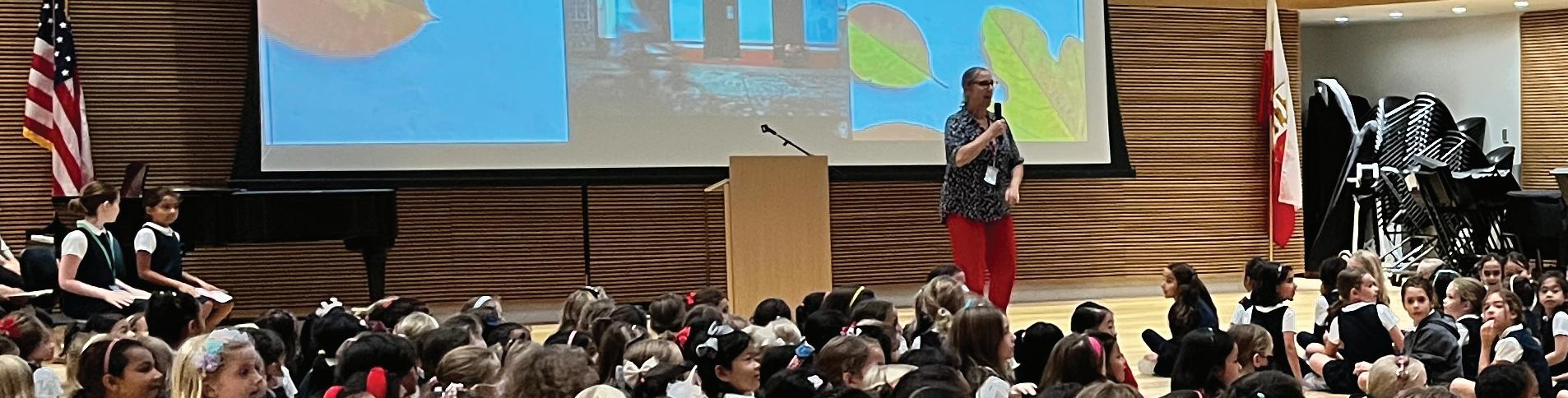
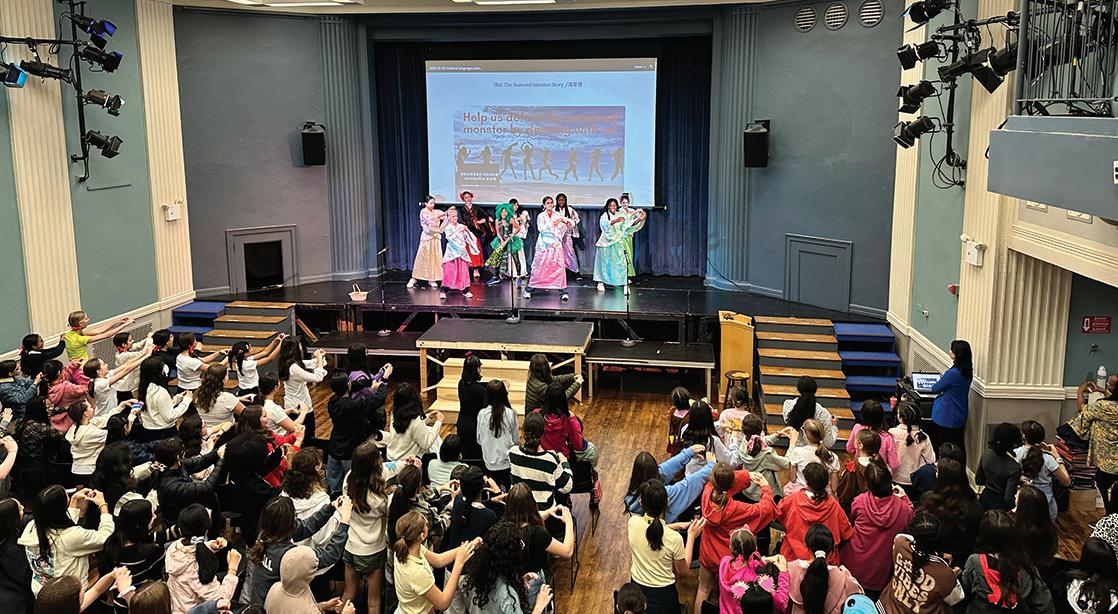
Formerly called the Foreign Language Assembly, the Modern Languages Assembly for Middle School this year was entitled “A Show from the World” and featured performances of song, dance, skits and poetry in Mandarin, French and Spanish. Lower School’s was a special gathering that included songs, dances and stories about the Lunar New Year that the girls learned in Mandarin class. It concluded with a Lion Dance performance, an important tradition to bring in the New Year.
SPRING 2023 28 ASSEMBLIES AT BREARLEY
Middle School Modern Languages Assembly. MLK Assembly.
MASCOT ASSEMBLY


Celebrating the shuffling of the penguin. The Mascot Assembly dates back to at least 1923. Each class in the Middle and Upper School has its own mascot, and at the May ceremony the senior class passes its mascot to Class IV. The first class mascot, “Jimbo the Elephant,” is believed to have been purchased in 1915 and possibly named in honor of James Croswell, who had died that year after serving for 28 years as Brearley’s second Head of School. That same Jimbo is now the mascot of the current Class VII.

This year, the Class of 2023 bestowed “Fridgie the Penguin” to the Class of 2031.

WINTER ASSEMBLY
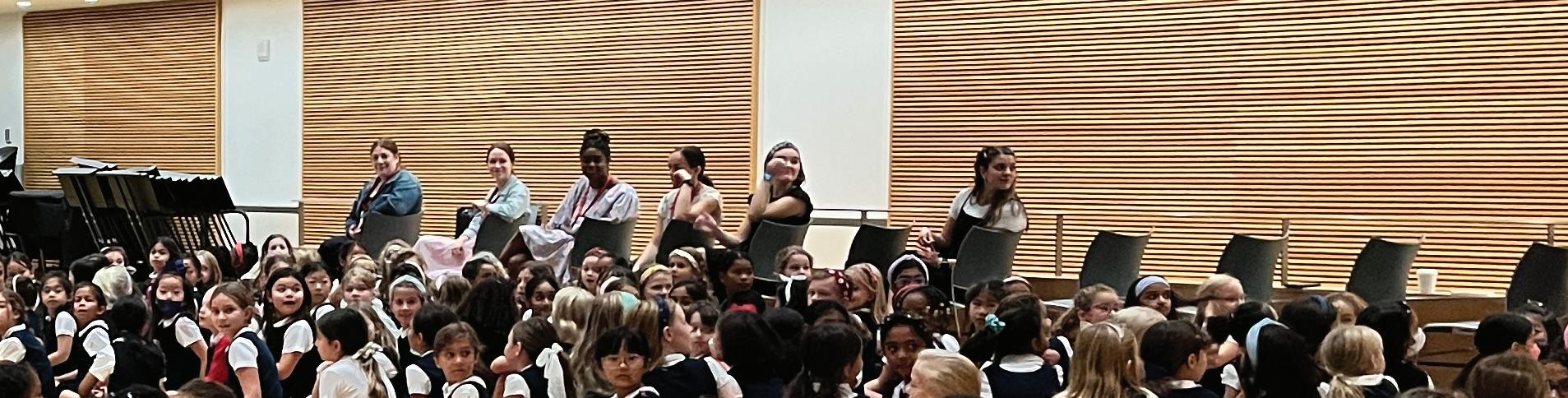
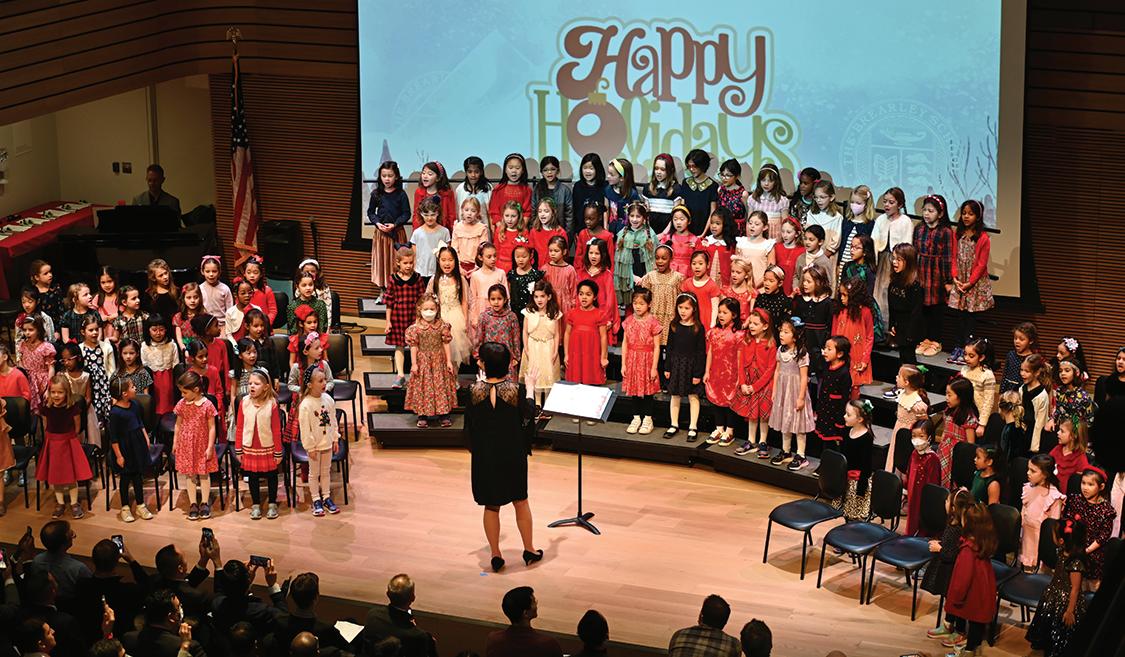
One of Brearley’s most festive traditions, the Winter Assembly started in 1922, under George N. Northrop, the third Head of



School. Every year the Performance Hall comes alive with music from the Lower School, the Middle School and Upper School chorus and orchestras, and the B-Naturals a cappella group, along with the men’s chorus, a beloved staple of the event. The days leading up to each divisional assembly are marked with other cherished gatherings, including handbells, chamber music, and brass and wind ensemble performances in the school lobbies.
ASSEMBLY OFFSHOOT
FRIDAY FLOWER
In the 1998–99 school year, my first year as Head of the Upper School, we were in the process of a schedule change and I think we shaved a few minutes off our regular Thursday afternoon assembly. Student announcements of a general nature were made at the end of that assembly, and I worried whether there would be adequate time for them in the future. At the same time, the Head of Middle School, Tamah Wiegand, recalling a recent recommendation in a NYSAIS school evaluation that we add time for divisional gatherings, announced that she would like to have a weekly gathering of her division. I also liked the idea of an Upper School gathering that would be largely student-driven; we decided on what was then Middle School Monday Morning Meeting and Upper School Friday Morning Meeting. We deliberately put them on different days so that cross-divisional teachers could attend both if they wanted to do so.
The name Friday Flower came from conversation with students. I told them that I'd like to incorporate into the morning assembly the granting of something small, perhaps a fresh flower, to a member of the community who had performed an act of service or kindness during the week. They loved it and coined the term "Friday Flower." Students were invited to submit nominations for the Friday Flower recipient by putting letters in a special folder in the Upper School office, and eventually by email. Friday Flower very quickly became the name not just of the presentation but of the event itself, which was held weekly in the 10th floor gym.
When we switched to a six-day schedule, Friday Flower was put on Day 6. As Day 6 could fall on any day, we tried calling it "Day Six Daisy" instead, but it just didn't have the same ring.—Evy Segal, Head of Upper School, 1998–2020
[Ed. Note: Friday Flower has reclaimed its rightful place on Friday mornings, every week, irrespective of the six-day schedule. Students are nominated by their peers and/or teachers and staff. Recipients this year have been acknowledged with a flower pin.]
The Mascots
SPRING 2023 29
K–I Winter Assembly.
GREATER GOOD SPRING 2023 30
Alumnae and the Greater Good greater good
[great•er•good]
noun that which is larger than our individual selves
As our new mission statement concludes, “The Brearley community cultivates the joy of lasting friendships, the confidence to pursue one’s ambitions and a commitment to the greater good.” On the following pages alumnae describe how they are working toward the greater good.
SPRING 2023 31
Alumnae Brearley alumnae have a broad and profound impact. Identifying needs, creating solutions, effecting change, they hold a responsibility to others and to making for a more just and inclusive society. We are grateful to all who shared how they strive to make a difference for another, or in the words of Jaqueline Worth ’82, “help each other toward a better future.”
THE GREATER GOOD SPRING 2023 32
Gwendolyn Fortson Waring ’73
To me the greater good is passing the blessings of life onto others without thought of receiving anything in return. It is giving of yourself, your time, your gifts to be a blessing to others in the hope that the next person, project or generation will thrive in ways that one can only hope but not truly imagine. Years ago, an anonymous donor took a chance and provided funds for a little girl in Harlem who had potential and ability to benefit from a Brearley education. I have never taken that gift for granted. And I have tried to pass that forward.
Ruth Gais ’64
Rabbis don’t have to be “called,” we don’t have to hear a divine voice, though I did hear Miss Basinger telling me in 8th grade that I was going to be a teacher . . . so perhaps I was commanded from on high. But I knew then that whatever I did was not to be solely for my own benefit, it was to be for the greater good. Brearley teachers inspired me to become a teacher and so I have been for many years, at Brearley and various universities, at hospitals, formally and informally, as well as as a rabbi—a Hebrew word that in its essence means “teacher.” Now I teach seminarians, ordained clergy and everyone else how to be with people, in a clinical setting or elsewhere, in their suffering and in their joy, to listen, as God commanded King Solomon, with a “hearing heart“ (I Kings 3:8). I think I’ve done some good. I know I’ve had the privilege of learning with and from so many.
Cathleen Cavell ’62
Brearley asked how I define the greater good and how and why I have worked toward that. I believe both are answered by the Jewish ideal of tikkun olam—repairing the world— and my Brearley education and values I learned there.
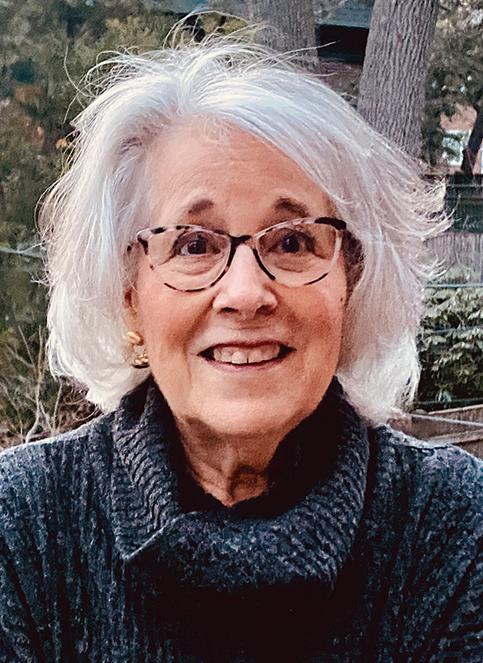
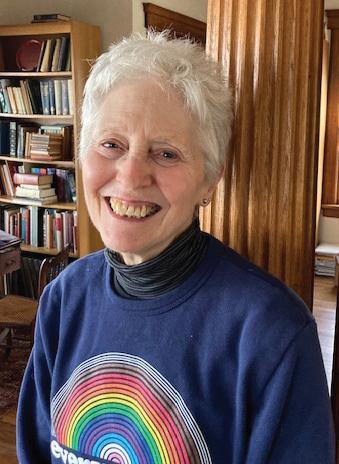
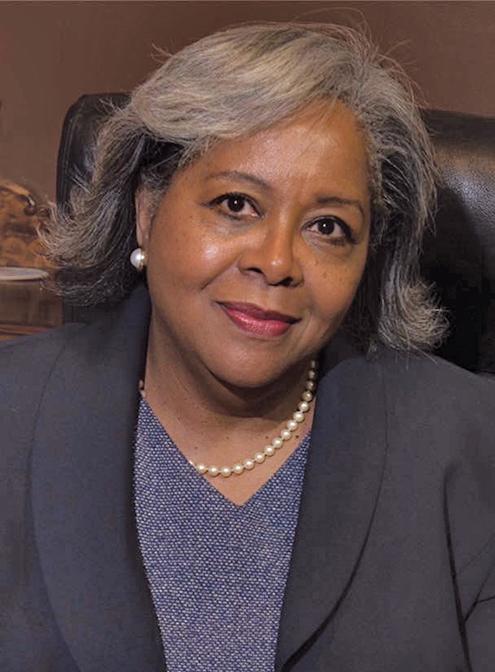
For the past 30 years, I have been engaged in my most rewarding work as a lawyer, protecting people from harm by professionals. I sought to protect schoolchildren from unfit educators and clients from unethical attorneys. I served seven years on Governor Deval Patrick’s commission to help choose state court judges. Twenty years ago, I became more deeply involved in politics, as a founder and leader of Progressive Democrats of MA, a group of activists who work to further progressive legislation, candidates and social justice. These goals also informed my family life with my late husband and our children, and provided a design for living. I am grateful.
Jocelyn Simonson ’97
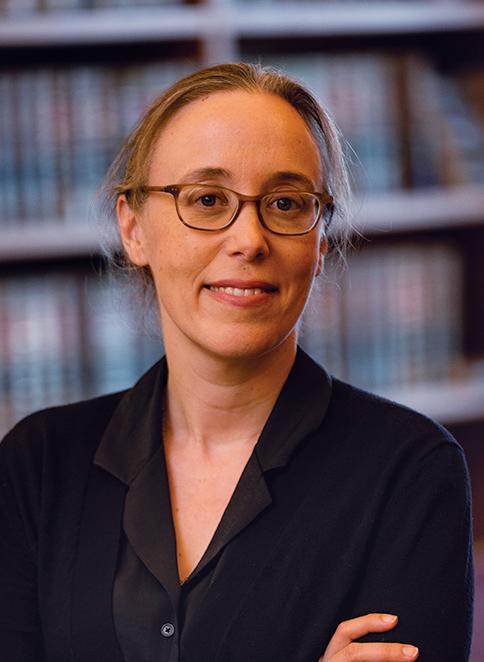
I have been working on a book, Radical Acts of Justice, about how people join together in collective acts of resistance against mass incarceration—acts that combine supporting individual people with pushing for a better world. Seen from the vantage point of the collectives engaging in this work, the greater good is not something that we can improve from on high, but something that must be cultivated collectively, led by those who are most directly affected by the problems at hand. In the case of the criminal legal system, this means looking to groups of people who are living out ways of supporting each other and promoting public safety without using cages or punishment.
SPRING 2023 33
Left to right: Gwendolyn Fortson Waring ’73, Ruth Gais ’64, Cathleen Cavell ’62, Jocelyn Simonson ’97.
Eileen Epperson ’67
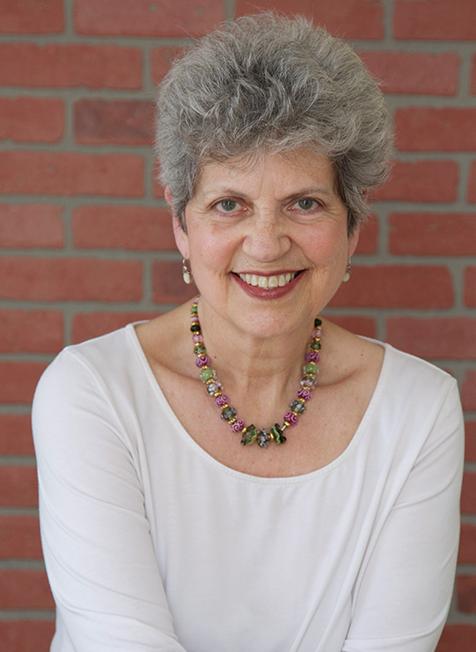
To be fully alive and human, a person must find or invent her life mission, her calling, her purpose; there are many ways to say this. That calling will always end up, no matter how circuitous the route, being in service to others in some way, whether as a writer, lawyer, custodian, parent, teacher, artist or practitioner of any field, known or yet to be invented. The greater good is that which is larger than our individual selves and which matters very much to us and to which we willingly offer our energy, talent and time. The amazing fact is that when we are serving, we discover who we are. It is ubuntu: “I am because you are (or I am because we are).”
I have a stand which gives me my life as a minister and in my work as a life coach: “Leaders find their voice, practice to master forgiveness and communication, and love the world into being.” I no longer do anything that matters all by myself. I create partnerships wherever I am and in all endeavors. One action has involved partnering for the last two years with a visionary Kenyan, Daniel Kamanga, who formulated in 2018 a bold vision of an Africa that works for everyone. He asserts that when Africa is not working, leadership is missing or dysfunctional. He is out to call forth one million new leaders from ten countries by 2050.
He enlisted me to help him begin by creating a transformational program for African women who are hungering, across the continent, to discover their voices. Of the five modules in the Africa Women Leaders Health and
Well-Being Course, I designed and now lead the module on releasing the hold on the past. (The other modules are led by amazing women and address integrity, resilience, abuse of power and mental health strategies.)
In the past two years we have trained over seven hundred women to step out, speak up and make a difference in their families, jobs and communities. Their success has and will impact thousands. I am eager to expand this initiative of calling forth African leaders who are equipped to be leaders, not just know a lot, and have certificates of accomplishment. The success of these women gives me my life. Ubuntu
Megan Lui ’10
My day job requires me to learn about and tell the stories of companies and institutional investors by drawing from the communication skills Brearley’s classes helped me to hone. I must analyze the needs of both these client sets in a way that is similar to the character and textual analysis we employed in English class. I perform financial analysis (for which the Brearley math department prepared me well) so that I can matchmake across both groups to encourage investment and growth. Economic knowledge and how history has shaped our current geopolitical trends are critical to my profession and are also knowledge bases that I began growing in Brearley’s classrooms. The image of the Brearley alum who is never afraid to raise her hand to speak up in university seminars and conference rooms
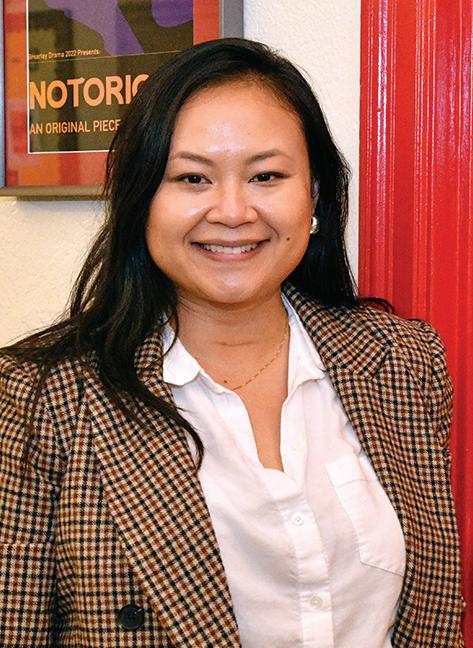
THE GREATER GOOD SPRING 2023 34
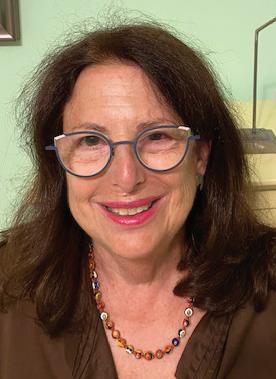
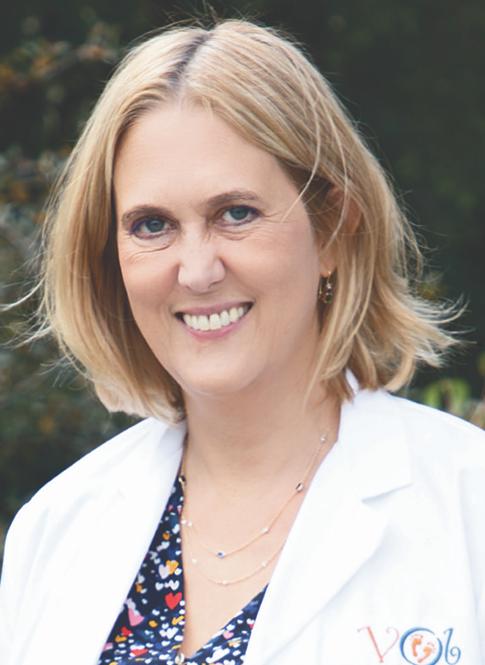
Left to right: Eileen Epperson ’67, Megan Lui ’10, Jaqueline Worth ’82, Lucy Mayer Harrop ’70.
resonates with me—I find it hard not to speak my mind, even when the meeting room is predominantly male and more senior.
However, more important is how Brearley shaped me into the person that I am outside of my job. Brearley has taught me that it is important to nurture all of my passions, to be multifaceted, and that there are multiple ways to contribute to society and the world. At Brearley I participated in as many extracurriculars as my advisors would allow me and I sought non-”core” knowledge through electives. Today I still find joy in the visual arts and travel, try to pick up as many languages as I can, enjoy music at the Philharmonic and music festival mainstages alike, attend fitness classes where I sometimes bump into other Brearley alums (and it feels as if we’re suddenly back on the 9th and 10th floor gyms again!), and engage with and seek to improve my community through volunteer work. Of course, I still also read voraciously and write as much as I can—from journaling and doodling, to officiating a best friend’s wedding, to working on an essay about anti-Asian racism across US history for Mr. Koh’s blog (an essay that I have been working on converting to novel form).
Empathy is at the root of everything that Brearley taught me. In our classes, and during the moments in between classes and after school, we learned about the history of the world, the current state of the world, humanity’s place in the world and the nature of humanity. Brearley helped us to find the corners of knowledge that spark a fire within us, and to begin the lifelong journey of finding our respective personal missions and our highest selves. Brearley challenged us to consider how to use such knowledge and strengths to make our local communities, our cities, our nation and our world more empathetic spaces. For me, this empathy is in the connections that I broker between companies and investors to encourage economic activity and technological advancement, the conversation that I have with a random stranger on the subway or at a rally in Chinatown, the conversation that I have with a friend or family member, the feedback that I give and receive in my writing workshop, and the stories that I write about the AAPI community. By teaching us about humanity and our places within the world, Brearley teaches us to govern our every personal and professional interaction with empathy, in service of our respective communities and the world, with the greater good in mind.
Jaqueline Worth ’82
I define the greater good as an optimistic outlook that scientific advances will continue to improve people’s lives. I believe that the best is yet to come and that individuals can help each other toward a better future.
Brearley taught me to be inclusive and collaborative. My obstetrics practice works with midwives and doulas and doctors to support women giving birth. We work in Manhattan and also in the South Bronx. Bringing children into the world is a powerful gesture of hope and love. I want my patients to come through the experience of pregnancy and birth as the strongest possible version of themselves. Strong parents raising healthy children is my gift to our future world.
Lucy Mayer Harrop ’70
The greater good refers to influencing the world around ourselves in such a way as to focus attention and to direct resources across a broad swath of populations. The goal is to effect an overall balance of available opportunities providing growth and fulfillment in multiple demographic segments.
A telling application of the greater good is my long-term work with the Frances Riker Davis Award Committee. As co-chair of the FRD Committee, it is extremely gratifying to be closely associated with bringing attention to our respective Brearley alums who are notably identifying societal shortcomings and related deprivations, and thereby creating solutions to resolve those complexities.
My professional as well as volunteer work on behalf of the nonprofit sector has long been geared to promoting arts and advocacy causes. The fundamental purpose is to engage people in supporting those missions with interpersonal involvement as well as to raise funds for the relevant institutions’ initiatives.
I am dedicated to actively harnessing donor and audience participation with the objective of enhancing the greater good in those arenas. Since the performing and visual arts are key mediums for reflecting on society’s woes, it is vital to pull in persons who can become better informed about conditions of inequality and then become active in trying to meet and improve those challenges—affecting the greater good.
SPRING 2023 35
THE BREARLEY SCHOOL 2023 ALUMNAE WEEKEND & REUNION
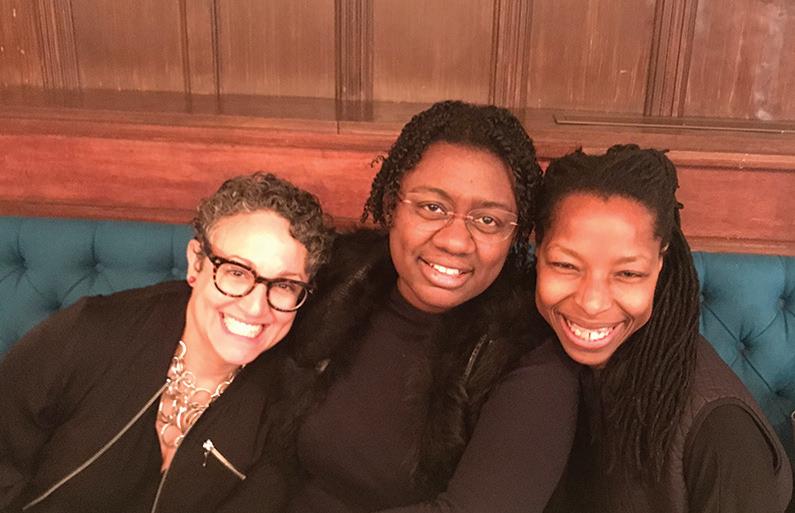
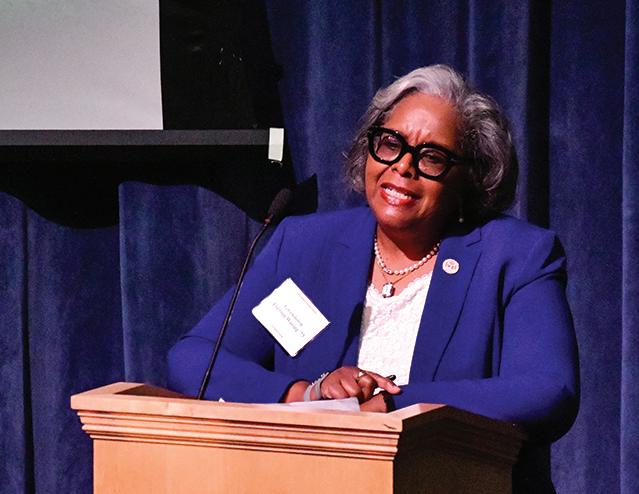
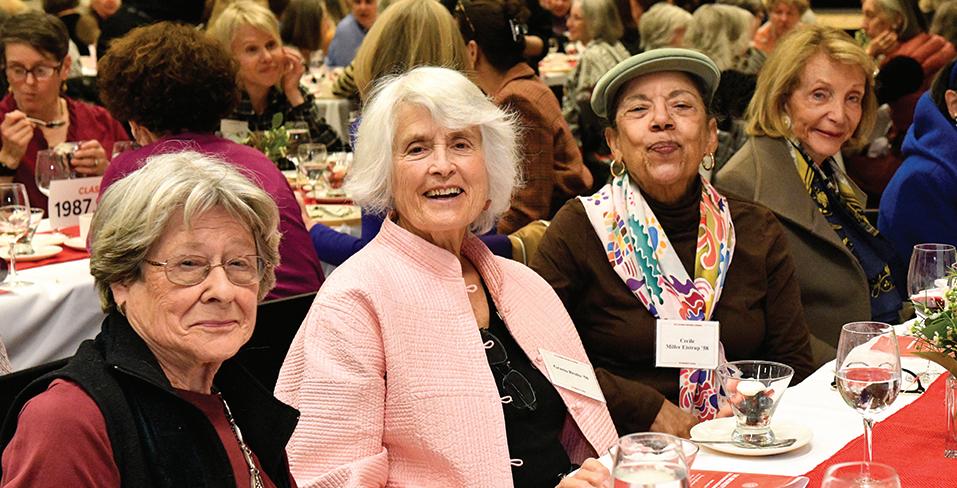
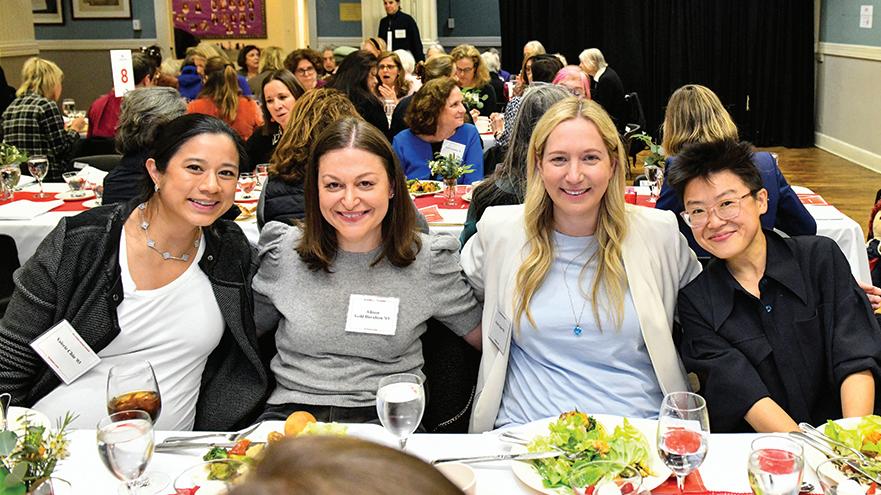
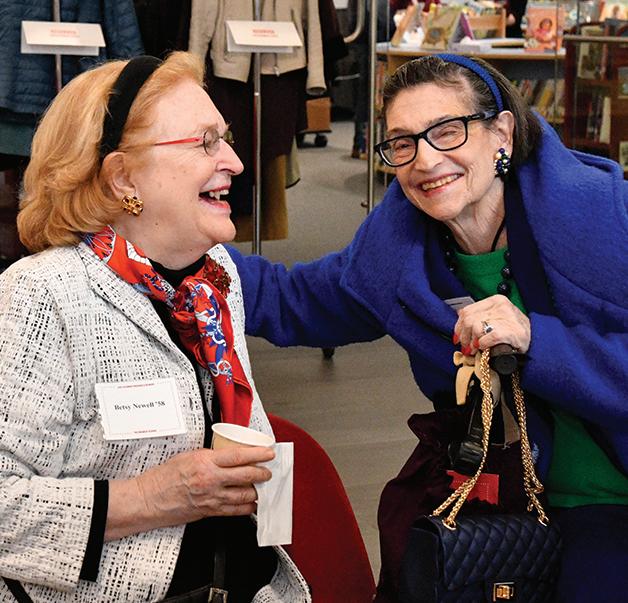
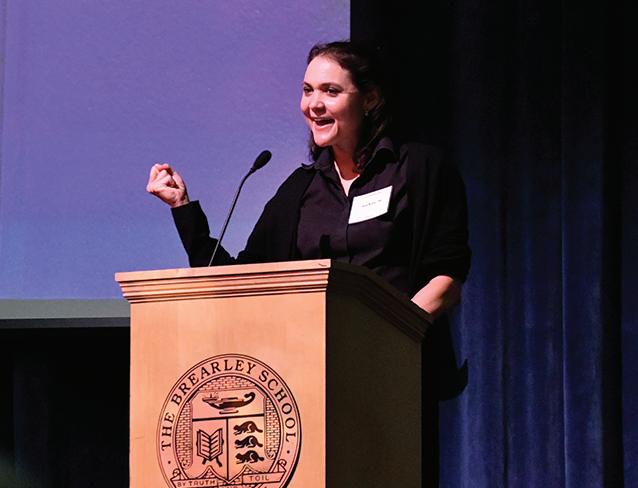
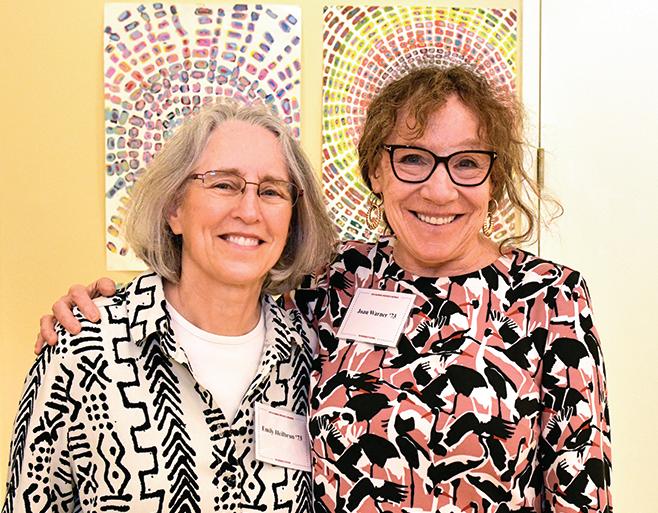
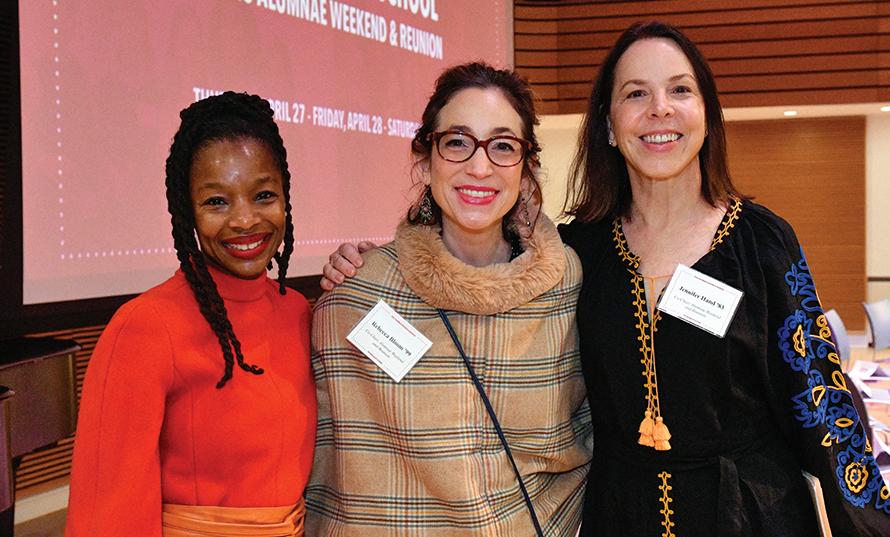
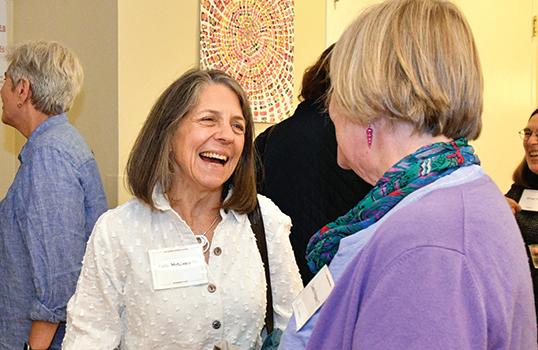
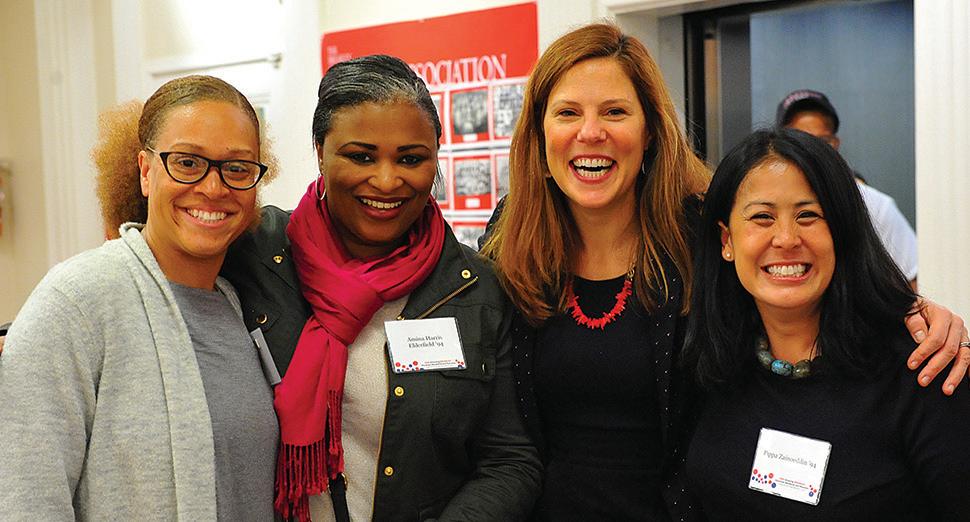
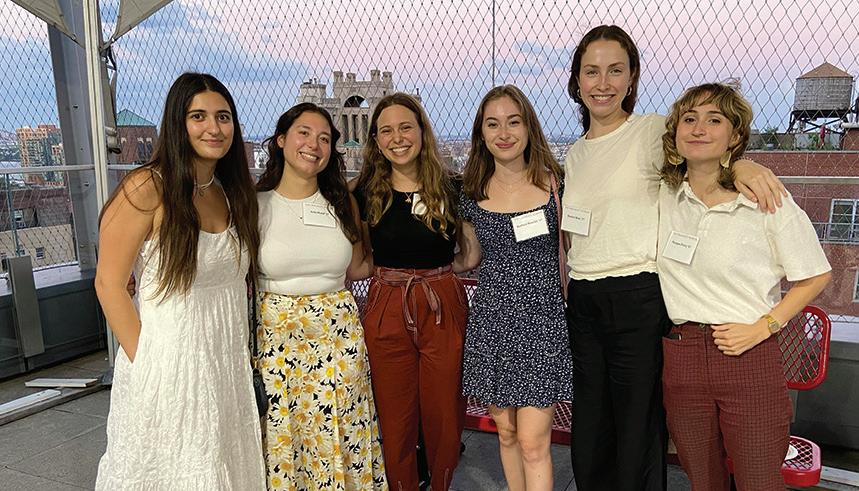
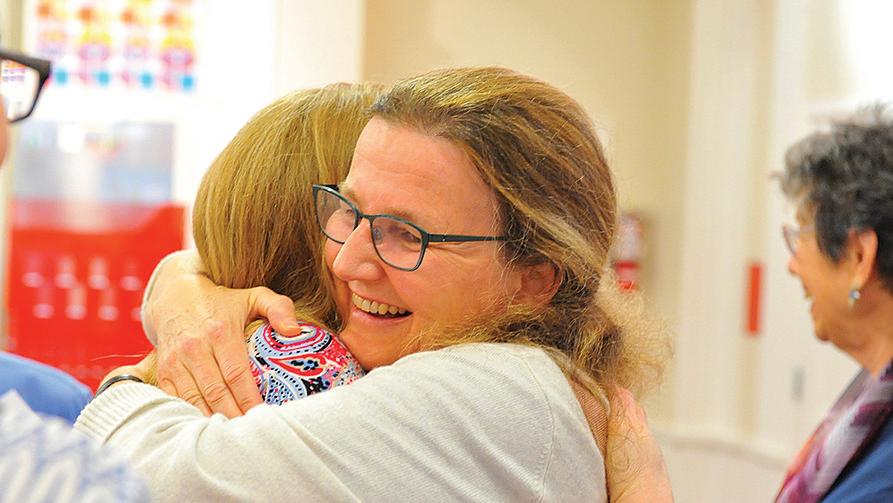
From April 27 to 29, Brearley’s Alumnae Weekend and Reunion brought together alumnae from all over the world for the first in-person reunion since 2019!
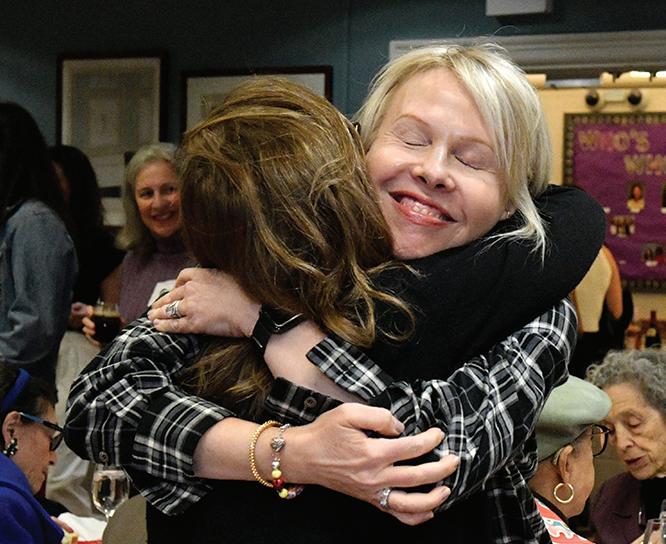
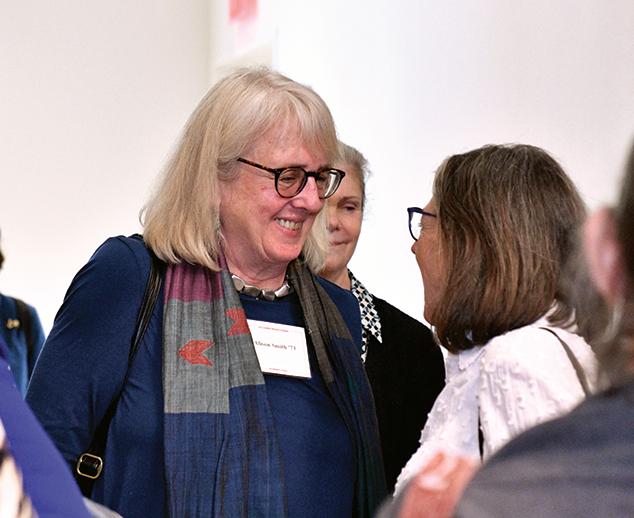
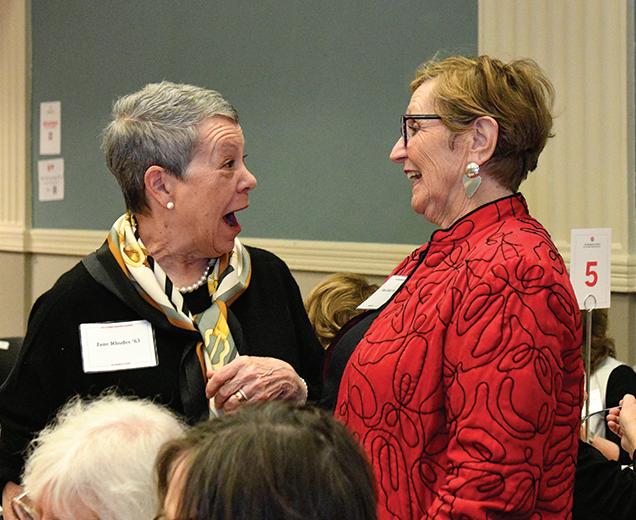
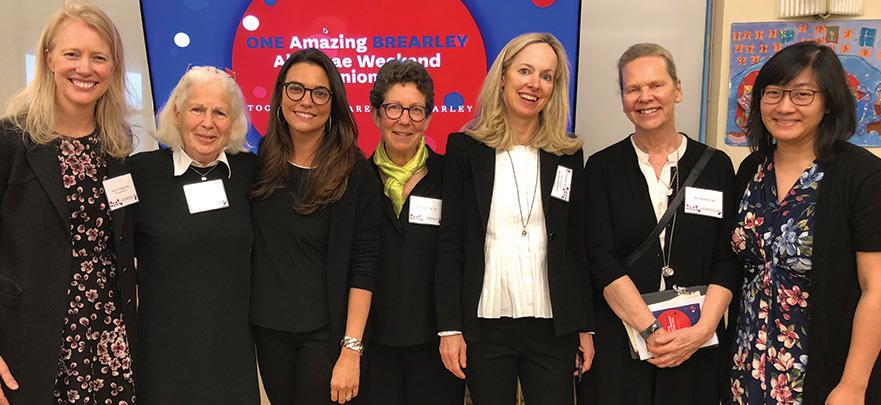
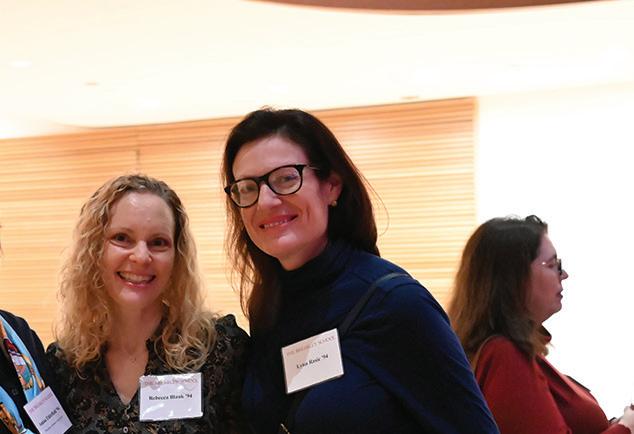
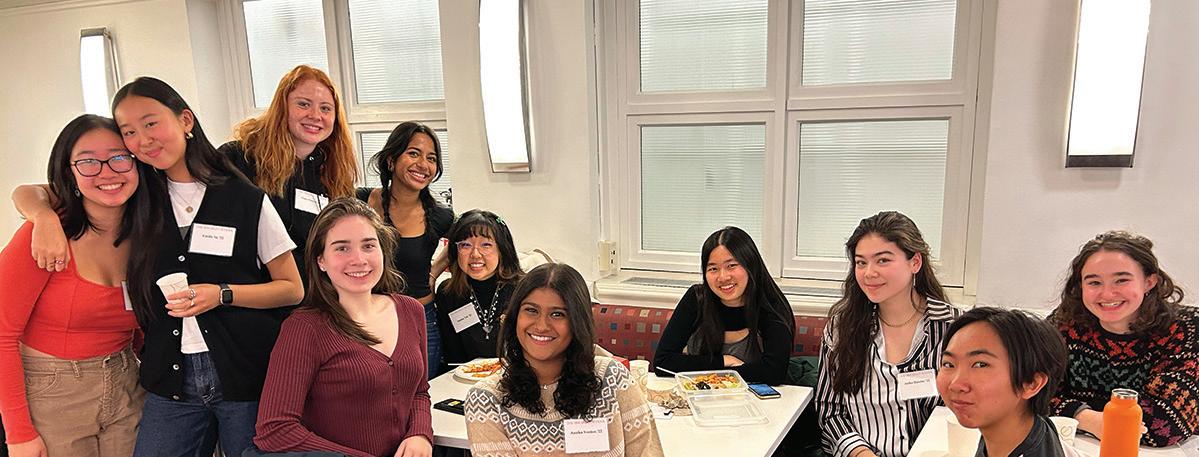
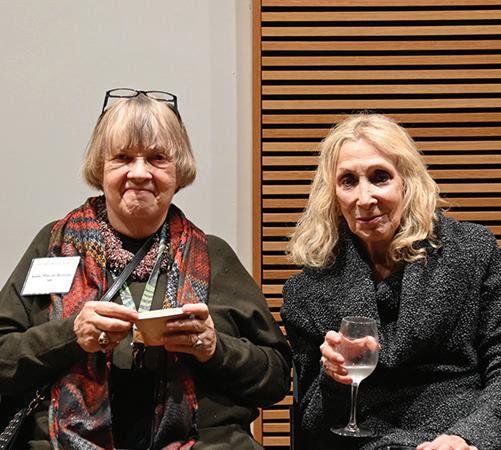
This year’s program honored milestone reunion classes ending in 3 and 8. The three-day-long event kicked off with reunion favorite Up Close with Jane Foley Fried, Board President Modupe Akinola ‘92, Senior Administrators and Students, in which we learned about the unveiling of the new mission statement, updates to the strategic vision, renovation projects in the 610 schoolhouse, and initiatives surrounding diversity, equity, inclusion and antiracism. Keeping with tradition, there were two sessions of TurboTalks, during which alums in milestone years shared inspiring and interesting stories about their professional, personal and avocational lives. Other highlights include the 25th and 50th reunion speeches, as well as schoolhouse tours led by current Upper School students. The ten-thousand-stepcount goal was achieved as programming spanned across both schoolhouses. Head to the Brearley website to view the program recordings and photos.
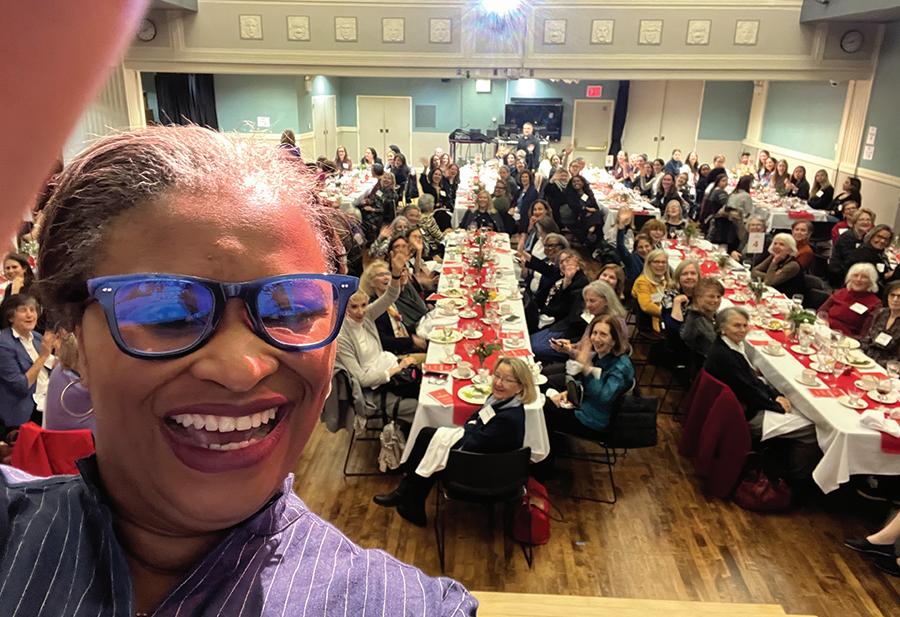
We are deeply grateful to Rebecca Bloom ’99 and Jennifer Hand ’83 for their leadership as reunion co-chairs, as well as to Amina Elderfield ’94, who memorialized her last time presiding over the event as Alumnae Association President in an “Oscar”-style selfie (opposite page, top left). A heartfelt thank you to everyone who joined us near and far. See you next year!
SPRING 2023 36
h h h
CLASSES REPRESENTED THIS YEAR
265
FUN FACT:
THIS WAS THE FIRST REUNION TO UTILIZE BOTH THE 610 AND 590 SCHOOLHOUSES AND THE FIRST IN-PERSON REUNION SINCE 2019.
RSVPs TO REUNION WEEKEND h h h
CLASS WITH MOST ATTENDEES 1973
1952–2020 SPRING 2023 37
SPRING 2023 38 50TH
REUNION
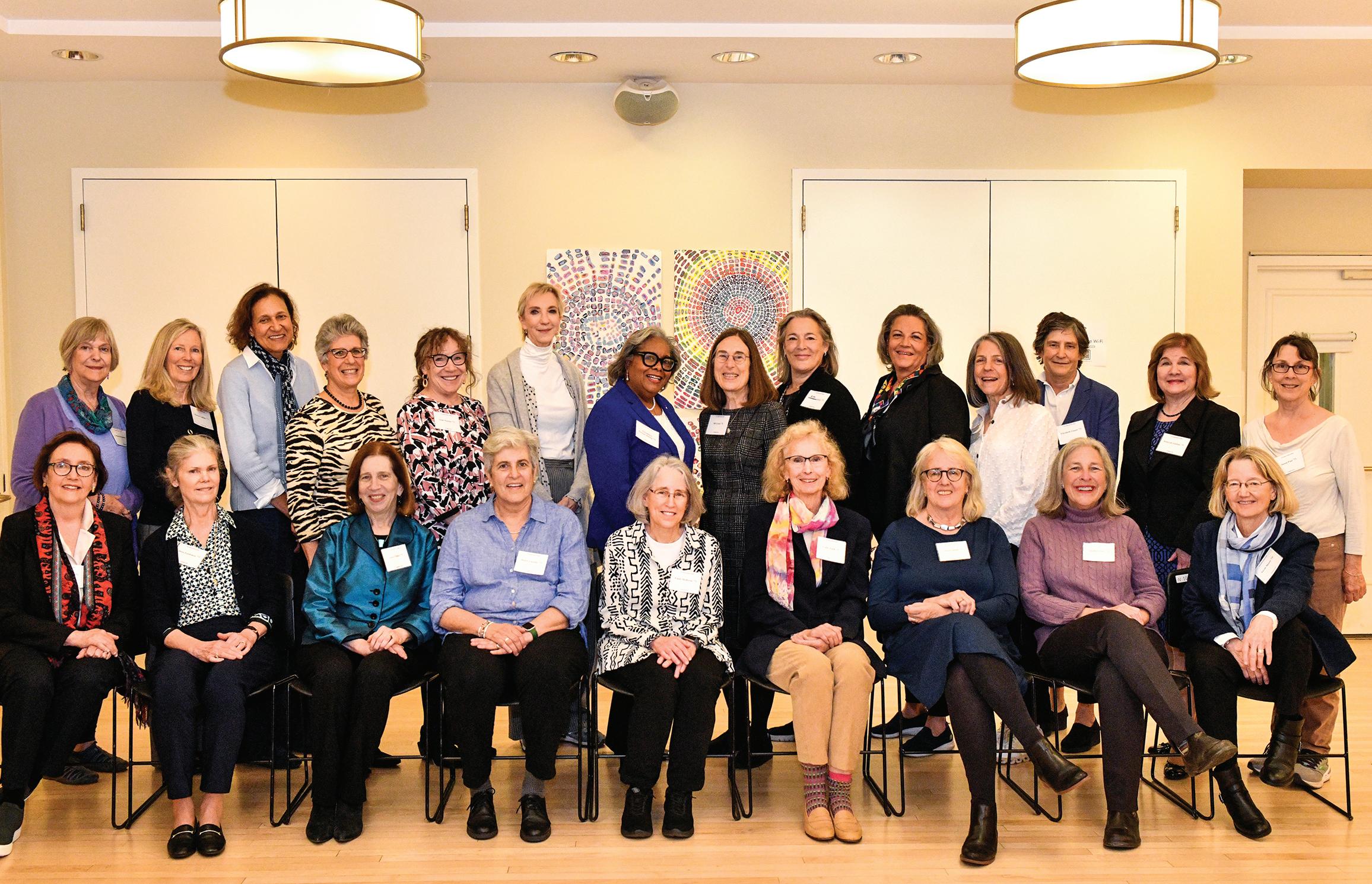
Class of 1973.
50TH REUNION SPEECH
Gwendolyn Fortson Waring, Class of 1973
Sankofa.
Voter disenfranchisement, police killing Black youth, women fighting for equal pay and reproductive rights, immigration reform, and war-fueled inflation.
I am not talking about current events—these were the issues that we faced growing up fifty years ago. And so, it is appropriate to remember the Sankofa bird which reminds us to look to the past as a guide for planning the future. We must continue to move forward while remembering the lessons of our past.
Between 1960 and 1973, we variously entered and exited Brearley. In 1966, in the 6th grade, I entered the meat grinder that was the Brearley School. With apologies to vegans and vegetarians, I liken our experience to a meat grinder because we were tender morsels entering the doors of 610 with our various backgrounds and experiences adding much-needed flavor to the mix—or perhaps we were more like Heinz 57, with unique herbs and spices.
At 10 years old, this Harlem girl boarded two buses down and across town to join the girls in navy blue (some faded and tattered) tunics, skirts and bloomers to add my culture and hunger for knowledge to the mix.
But the process was not without bruising as the Brearley ground us together until the final product was pushed out in our white graduation casing—I mean dresses—in 1973 and sent into the world; out of the frying pan and into the fire!
I had never heard the term WASP until I came here. Every Monday morning assembly we sang the beautiful Anglican hymns chosen by Jean Fair Mitchell, our headmistress, exclusively. And I watched in wonder as some of my Jewish classmates recited the Lord’s prayer. A couple of girls tried to loudly recite the Shema after confronting Miss Mitchell and being told that the Lord’s prayer was “meant for Jews to recite too.” At some point, Miss Mitchell made a “concession” and added “Rock of Ages” to the hymn rotation. And at Christmastime, I looked forward to her traditional hymns. Years later, one of my classmates expressed with some bitterness that those hymns were ingrained in her come Christmastime, despite her Jewish heritage. I shared with her that al-
though I was Christian, the people in my culture did not sing those hymns either. I had had to reconcile the Anglican hymns with the worship service in my grandmother’s Pentecostal church, where tambourines and washboards were utilized to praise the Lord. Further, at Christmastime my mother played the secular Soul Christmas to such an extent that my only child’s Christmas tradition is listening to the Soul Christmas album music as we trim the tree. And she winces when I play and can sing all the verses to “Masters in This Hall!”
Unbeknownst to our parents, we were shown the film Night and Fog, a documentary demonstrating the horrors of Auschwitz. We tried to comfort our classmates who were visibly distressed and shaken by the movie as they recalled lost relatives. Some of us stood in silent empathy. Only a few classmates recalled having a family member to assist them in processing the experience. Not one girl who viewed the film ever forgot it. We still debate whether 8th grade was too young to see it, but we do not debate the lessons learned about anti-Semitism. To quote the words of one of my classmates: “I thank whatever teacher made that film part of our collective consciousness and made sure we were all scarred with an understanding of what power words and evil can have.”
There was great turmoil in the country during our 13 years. We viewed news of Civil Rights marches and beatings on television, the assassinations of Martin Luther King Jr. and Robert F. Kennedy, but we watched the same national and local news on the three available channels.
We danced to the beat of different drums played on our AM radio stations. While my classmates listened to classical music, or Cousin Brucie on 77 WABC, I enjoyed Frankie Crocker on the only Black non-gospel radio station, WBLS.
In 1966, the Black power movement rose in response to white supremacy spearheading domestic terrorism, voter suppression, economic disenfranchisement and housing discrimination, to name a few of the issues that Black America was subjected to during the sixties. I recall marching with my mother in Harlem to protest the events in Selma, Alabama; after the march, she told me that it
continued on next page
SPRING 2023 39
continued from page 39
was important to support those on the front lines of the civil rights fight, because if we were in the South, she would have had us marching there too. And today, we have the Black Lives Matter movement in response to the same issues.
Others marched with and without their mothers to protest the war in Vietnam. And then the students at Kent State University were slain in 1970. After some classmates petitioned Miss Mitchell, she afforded a day off at school for students to process the tragedy. Some members of the class joined an antiwar protest on Wall Street. And, in their words, they were “chased by construction workers wielding billy clubs.”
A small group formed a “consciousness raising,” also known as “CR,” group to discuss their future choices in contrast with those of their mothers. In the early sixties, one of our classmates was told by her mother, “Be nice to Jane, because her mommy works.” Those words have actually been memorialized in a song, in the sixth movement on the Notorious RBG in Song CD.
In spite of our differences, we could come together to effect change.
Although we did not spearhead the revolt against the school uniform, we proudly united to wear jeans on a designated weekday during the Upper School “sit-in” which successfully resulted in us obtaining the right to wear jeans every day, and not just on Fridays.
We discussed/debated feminism. In the early seventies, as a result of the heated discussions with my classmates, I learned how to navigate the misogyny of men even as I matured and embraced my Blackness. The tension between white feminism and Black feminism had its roots in the early days of the women’s suffrage fight when Black women were relegated to the back of that march and continues today.
We Black students formed alliances and met with other similarly situated students at private schools across the city and supported each other as we learned the task of code-switching required in order to succeed in Brearley, in our communities, and in the world at large.
And the outside changes continued to seep into the fabric of Brearley’s curriculum; selected works of James Baldwin and Richard Wright were added. My sculpture of a black fist was accepted into the Kunz collection. In the
annual poetry recitation competition, we were mesmerized as some of our classmates eloquently recited Robert Frost or P.B. Shelley. And we were surprised when one of our own won the school prize for reciting the lyrics of “Society’s child” by Janis Ian.
Google it.
In 1972, I won for reciting “Ego Tripping” by Nikki Giovanni. But, in the inaugural year of hip-hop—also 50 years ago—my recitation of “On the Subway” by the Last Poets, who were the forefathers of hip-hop, was somehow not well received by the poetry judges.
Despite the turmoil of the sixties and early seventies, when we entered the doors at 610, the Brearley curriculum imbued our very being. We could retreat to our tranquil library on window seats overlooking the East River to read, study or ruminate. Mrs. Taliaferro’s “word of the day” helped to prepare us for the SAT. For me, the most useful and memorable word that she ever chalked on the board was “sycophant.” But the curriculum was not seamlessly imparted, because we were hardly in a vacuum. After all, we were New Yorkers—we rode the subway and crosstown buses fearlessly! And we were encouraged to exchange ideas, formulate our voices and use them.
Looking back at the past, who were we? We were among the first group of women at many of the previously all-male, Ivy league schools. We lived for Mad Libs in English class almost as much as we did for Cheez-Its at recess, or Cokes in the afternoon upon crossing the Upper School threshold. Our yearbook predicted that our Classmate’s mother would be appointed to the Supreme Court.
We learned to value the earth’s resources here. The importance of recycling has stayed with me all of my life even though I’m not required to do so in the South.
We cheered on the Amazons of our respective red or white teams who could throw a “Blitzkrieg” ball harder than any human should be able to withstand—and we marveled at the opposing Amazon who expertly caught it as it pummeled her chest!—while those of us with limited athletic abilities passively sat on the sidelines trying to limit the damage to either team.
So, what are the lessons of our past? In looking back, is there a guide for the future? Have we forgotten some of the lessons? Are we still using our voices to protest against
continued on page 44
SPRING 2023 40

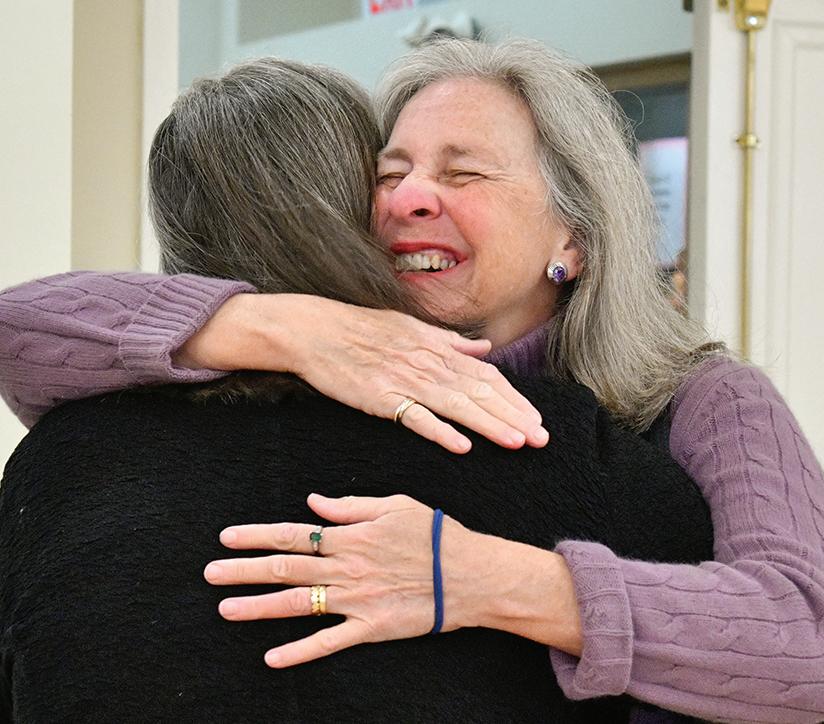
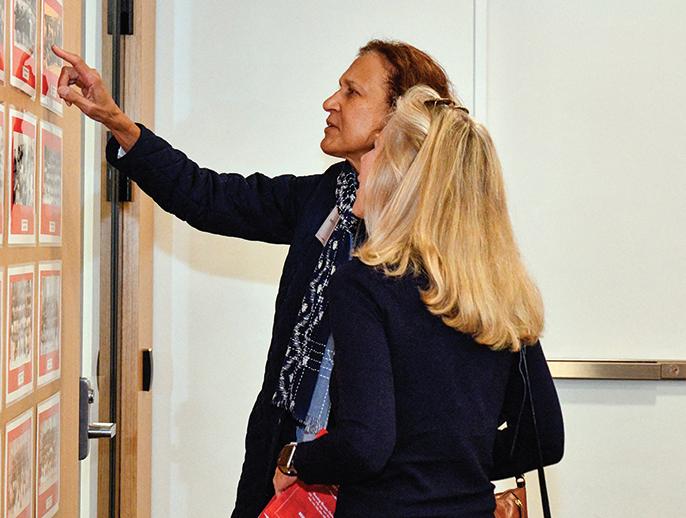
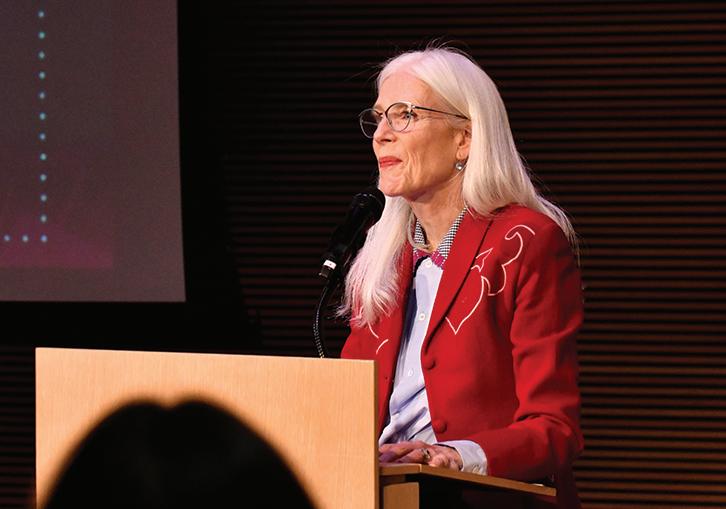
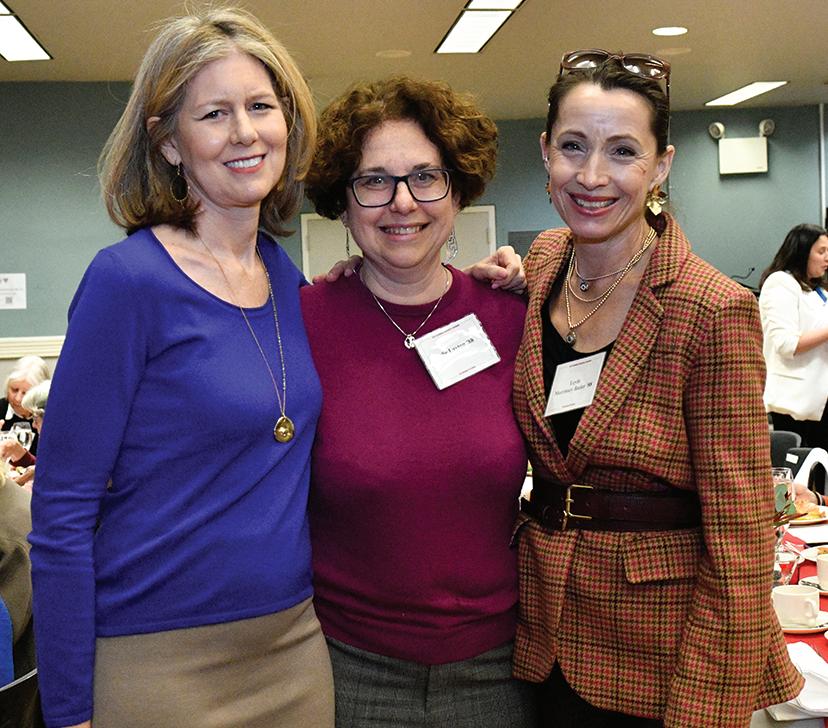
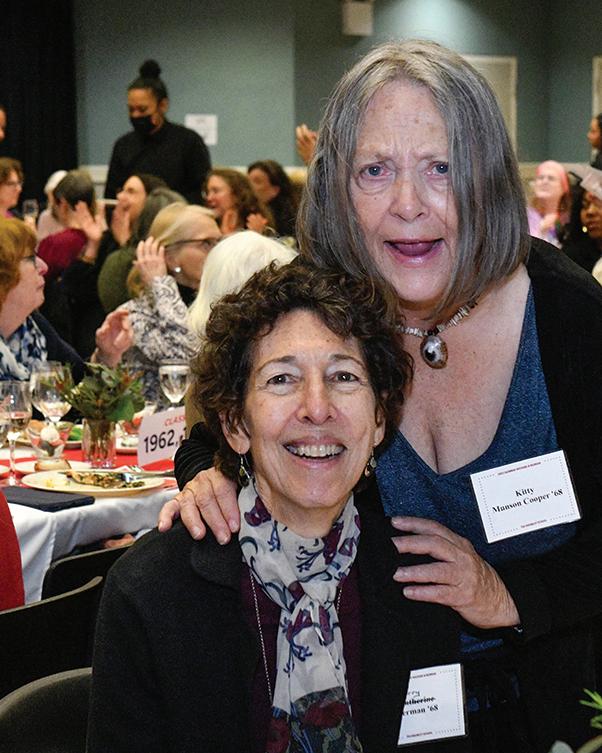
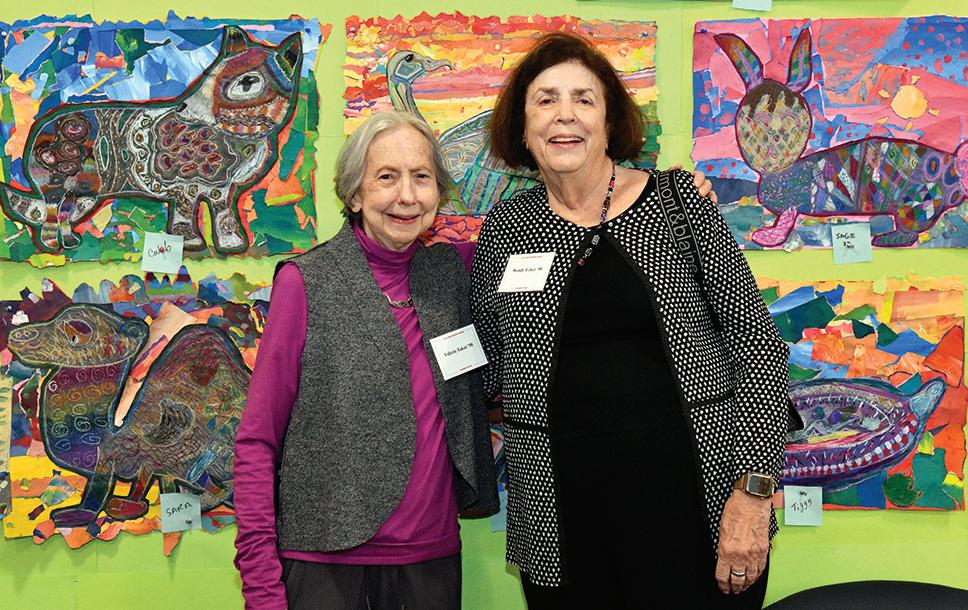
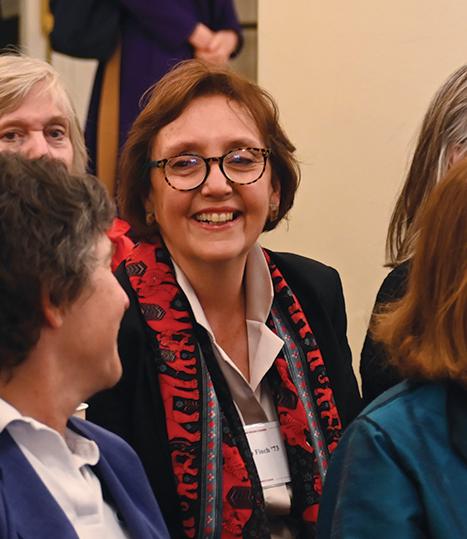
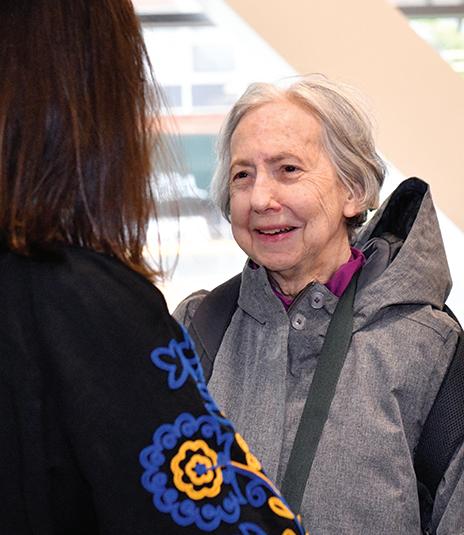
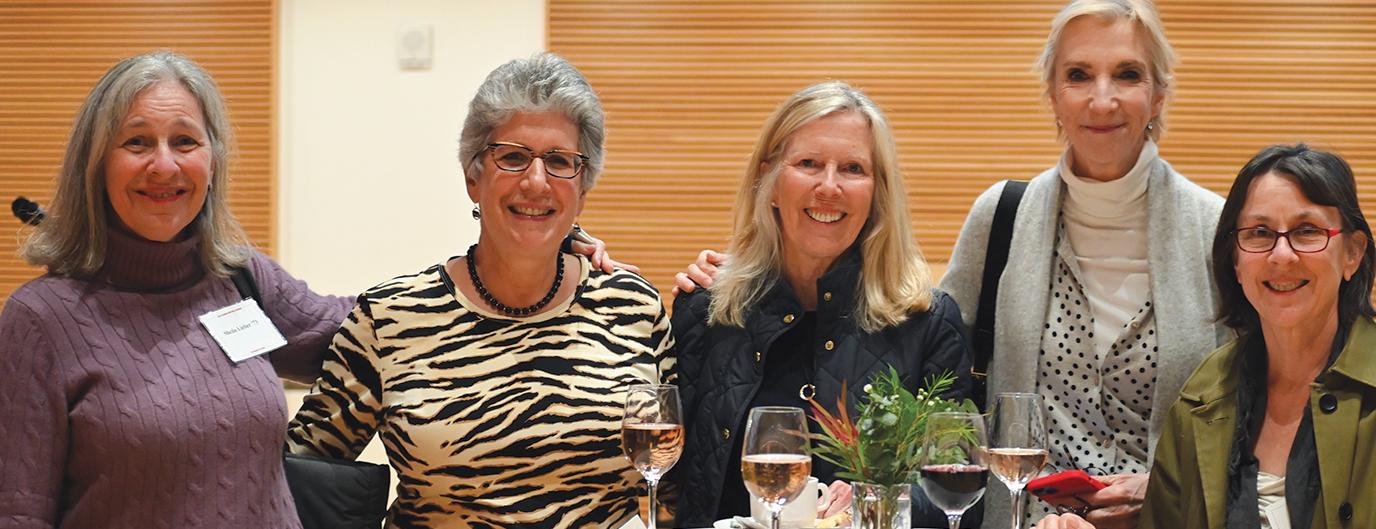
SPRING 2023 41
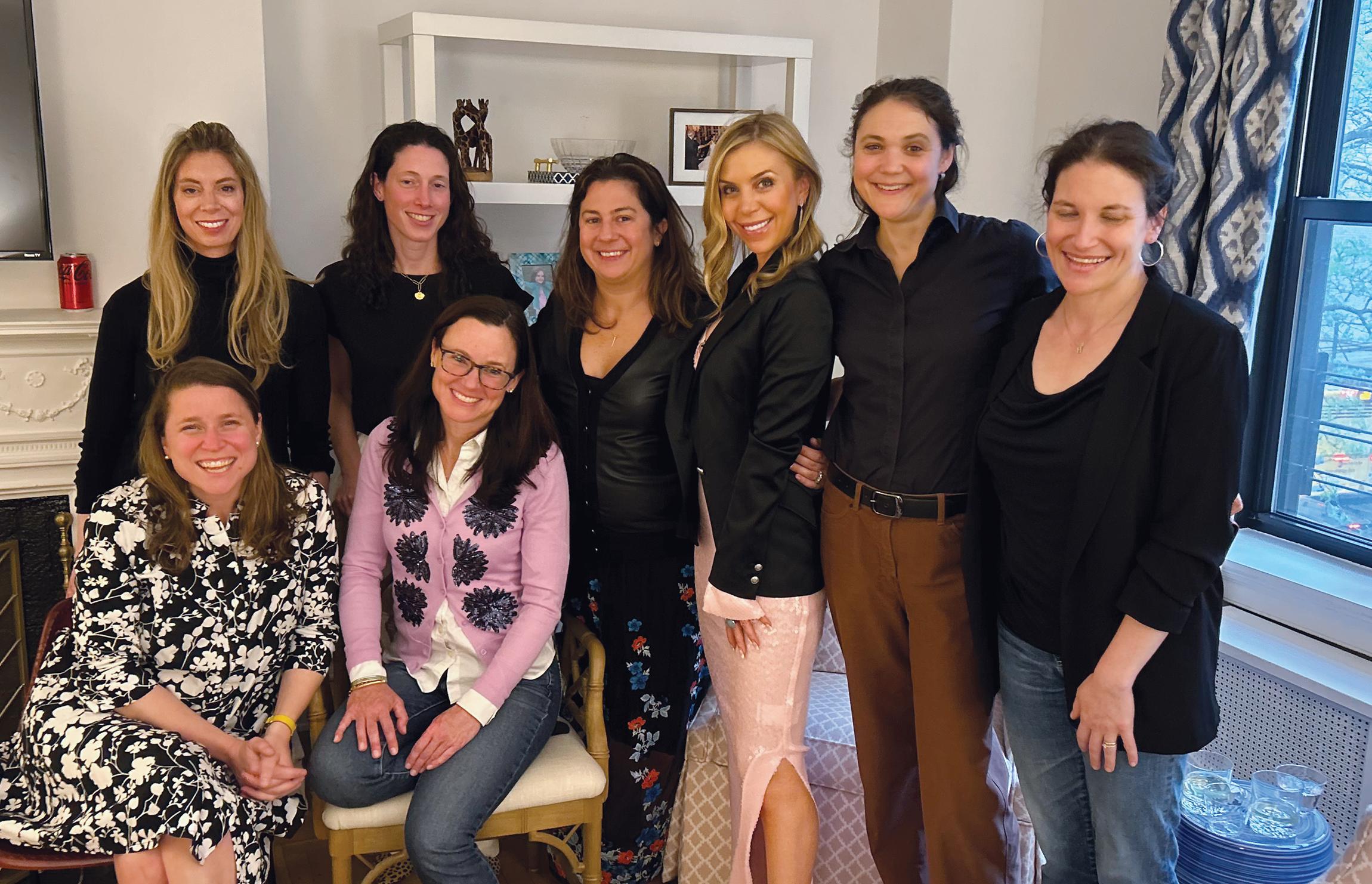
SPRING 2023 42 25TH REUNION
Members of the Class of 1998 at their reunion gathering.
25TH REUNION SPEECH
It is breathtaking—and quite daunting—to be standing at this podium. Marking the passage of a quarter century on behalf of the hugely accomplished class of ’98 is a demanding brief, one that, at first, left me paralyzed.
But like a good Brearley girl, I took a breath, and did some background research. I combed the Brearley Bulletin for speeches given at anniversaries past to immerse myself in the genre. For if you don’t know what precisely is being asked, how do you expect to be able to answer a question correctly? And if I don’t answer the question correctly, how on earth am I going to get an A!
I also drew a little help from my friends. I tip my hat to the great Tenley Laserson, who, by some improbable jujitsu managed to get me up here, against my better judgment. Her advice was to provide some reflections on what a Brearley education has meant to me over the years. So, if this goes terribly wrong, please do address your complaints to her.
In some respects, recounting Brearley’s lasting impact is an easy task: the imprimatur of the Beaver is legible throughout all aspects of my life and my work. Whenever I feel the distinct pleasure of reading a challenging text, I hear the strains of Ruth Carpenter’s Shakespearian exegesis. When I allow myself to embrace the wonder that arises during a walk in the woods, I see Karen Nedbal’s balletic interpretations of a chloroplast. And in the moments when I find the courage to see my errors in judgment as occasions for enlightenment, I channel Tom Harrison’s Socratic navigation of political philosophy.
Brearley’s pedagogic orientation—cultivating empirical curiosity, confidence and passionate, empathetic reason— remains my true north. From all those years stumbling over Latin word order, plugging through complex parametric equations, attempting (unsuccessfully in my case) to capture the light as it played across a silver plate of rotting fruit, I came away not simply with a command of technique or an abundance of facts. Rather, what Brearley gave me was a roadmap: a set of principles for engaging the world.
610 East 83rd Street was the starting point for a journey that seeks challenges, not for the glory of overcoming them, but as a means of testing my capacity to meet them.
But beyond those broader intellectual commitments, the prospect of speaking to you today evoked more specific lessons. When Tenley rang me across the Atlantic— with that oh-so-cheeky chirp in her voice—a few touchstone phrases came immediately to mind.
For instance: I often find myself telling my sons that I want to see at least four different colors on their plates. This bit of dietary acumen clearly made an impression on my 4th grade self, when first confronted by the dizzying choices offered in the CAF. My boys, on the other hand, invariably respond to this color challenge by grabbing a handful of gummy bears.
I have often tried to apply the deeper wisdom of Sue Fleming’s advice to get out in front of a line drive before it hits you in the face to my Outlook inbox—but, again, with only moderate success.
But the phrase I will dwell on today, the core Brearleyism, is a directive from Marianne Benjamin. It was Mrs. Benjamin, whose wicker basket and cheery solemnity colored my Lower School experience, who told me: Ann, please do not bring me a problem without bringing me a solution.
I remember being utterly bewildered by this request. If I had a problem—I would think by definition—the solution is precisely what I do not have to bring? Gradually, however, the purpose of Mrs. Benjamin’s injunction dawned on my seven-year-old self and its genius continues to reverberate today.
Mrs. Benjamin did not demand answers or always have them to hand. What she tried to teach us was how to articulate a need, in a way that prompted reflection and deliberation. It was, like so much of Brearley’s pedagogy, a lesson in critical thinking—a means of analysis that allowed us to form a judgment, and in so doing, provided a guide to action. For once problems are knowable, their resolutions become doable. That sense of “do-ability” breeds self-confidence and yields resilience.
This axiom has become a load-bearing pillar for my own teaching. To students who send me perplexed emails that they “just don’t get the assignment,” I ask them to tell me what they do grasp, so we might together address the gaps in their understanding. And when my seven-year-old
continued on next page
Prof. Ann H. Kelly, Class of 1998
SPRING 2023 43
continued from page 43
son complains that he is hungry or thirsty or tired or can’t find some godforsaken Nintendo switch cartridge, I try to check my impatience, and ask him how I might help him solve the problem for himself.
The power to problematize—to identify the parameters of an issue in a way that generates an appropriate response—is an essential skill for Global Health practitioners. I have worked on problems ranging from maternal health to Ebola outbreak response. So many solutions are on offer—new diagnostics, vaccines, policies and funding streams—all which imagine problems in different ways.
An example: Roughly a month ago I was in Tanzania, working on a project that looks at techniques for controlling mosquitoes that cause malaria. The research institute where that work is based houses multiple internationally funded projects—from novel repellents and bed nets to traps keyed to a mosquito’s wing-tone—all hugely exciting.
A few of my Tanzanian colleagues, however, have other ideas. Living and working with the people who are most likely to get sick, communities who live without access to basic sanitation and cannot afford screens for their windows, they wonder whether the best way to solve malaria might not be to build better homes.
What I have learned from this work is that malaria abatement is not a straightforward undertaking. Admittedly this insight sounds banal. But to take seriously the multifaceted character of a problem is to acknowledge that potential solu-
continued from page 40
the recurring issues of our past? Many are still marching, some are volunteering, some are tweeting, some are in the legal trenches. We’ve learned to come together and celebrate each other in spite of our differences.
Every five years we have come together with those who hold the memories of our history, to celebrate marriages and births, career changes and accomplishments. And in between the five-year marks, we continued to come together to comfort each other through losses of parents, children, spouses and sister classmates. In 2018, we came together and played jacks!
We have a superpower, a “special filter” as one class-
tions are never singular. Resolution demands circumscription, refinement that delineates a course of action. Controlling malaria with insecticidal sprays or by building better houses: These solutions share an objective but demand distinctive skills, investments and communities of practice. Most critically, they entail radically different ideas about what constitutes “progress” in the realm of global health.
And this, I believe, is the spirit of Mrs. Benjamin’s lesson: asking us to bring a solution does not presume it would be the right one. And indeed, most solutions, at least on the first pass—and in my world, the second, third and fourth—are often misguided, if not utterly wrong. What she was trying to cultivate in a bunch of 2nd graders was the wherewithal to think through troubling situations in all their complexity, so that we might be clear about our needs and intentional about our desires.
So where does this leave us? We have so many problems. Problems that are crippling in their urgency and immensity—problems to which solutions must be produced—rapidly. What Brearley taught us is that we have something to contribute—even if that contribution is helping to craft the kind of problems that enable a response by those for whom the solutions most matter. As a Brearley girl, I feel animated by the hope of expanding the range of what is possible, the humility to pursue courses of transformation that open new pathways, and the presence of mind to do so with as many colors as possible on our plates.
mate coined; we can look into each other’s eyes and travel back in time to that place, and see each other as young Brearley girls, politely, or not waiting for teachers and staff to enter an elevator first, impulsively forgetting the rule of silence in the elevator, turning in too many blue slip excuses to avoid gym, eating the best deli food offered in the neighborhood and racing down the stairwells once again.
I am confident that today’s Brearley is continuing in its tradition of teaching and preparing its students to learn from the recurring issues of the past 50-plus years so that today’s Brearley girls may come up with positive, meaningful and yet unknown solutions.
SPRING 2023 44
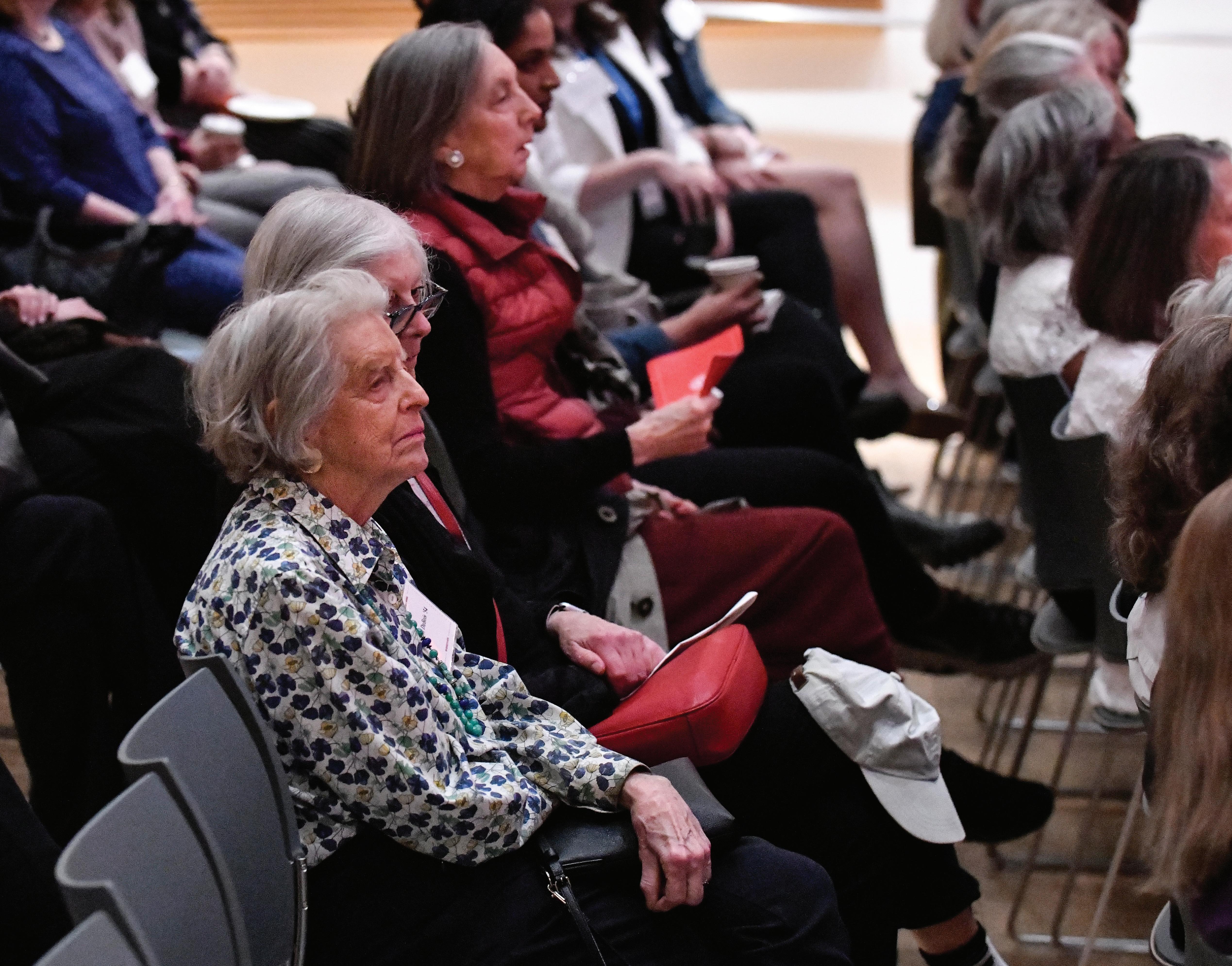
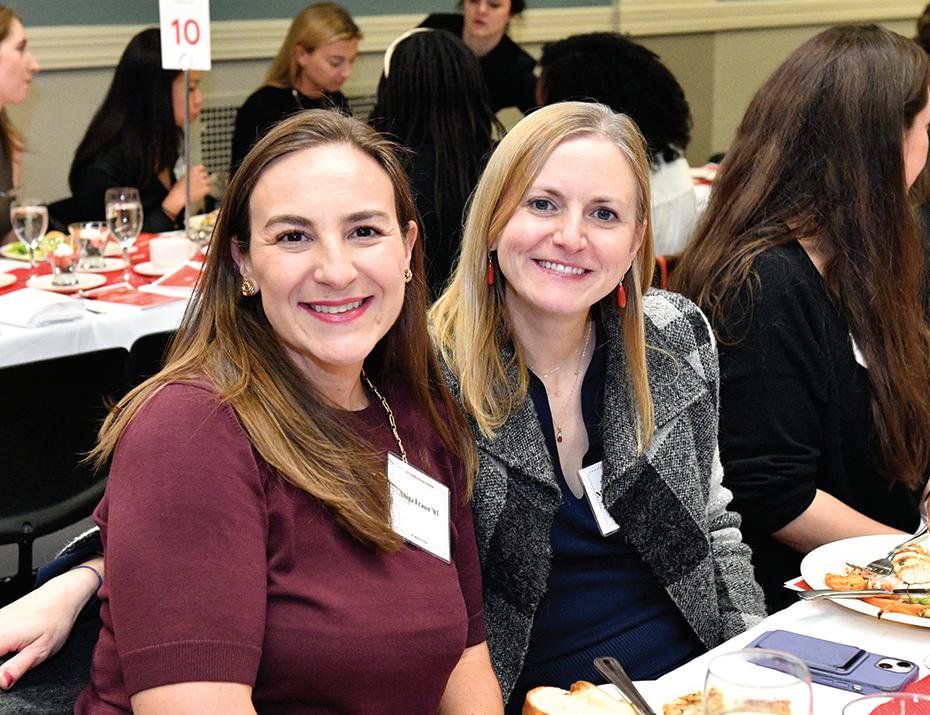
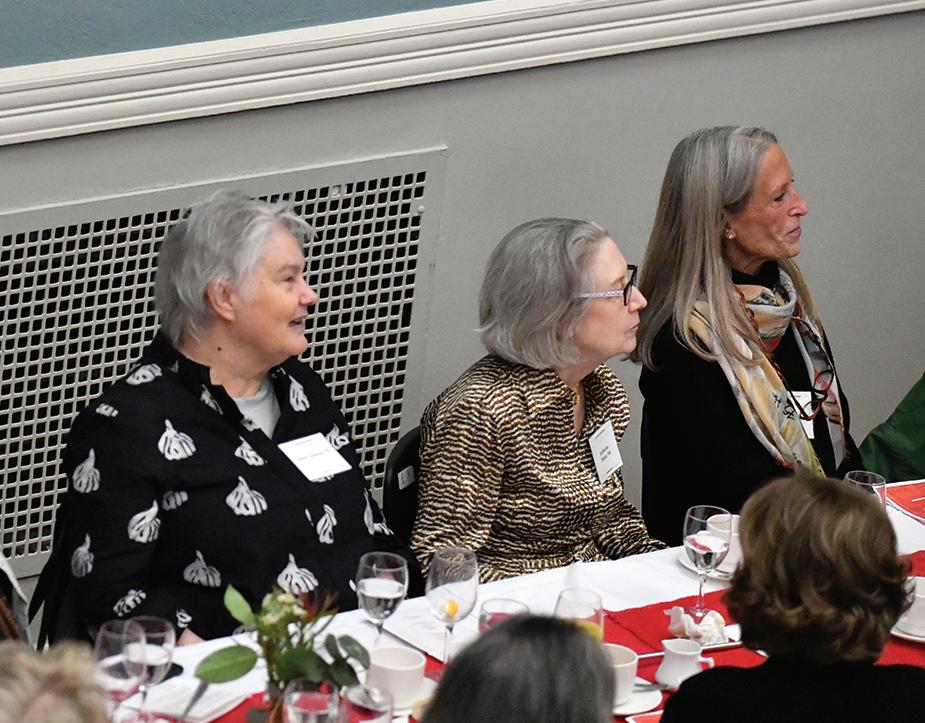
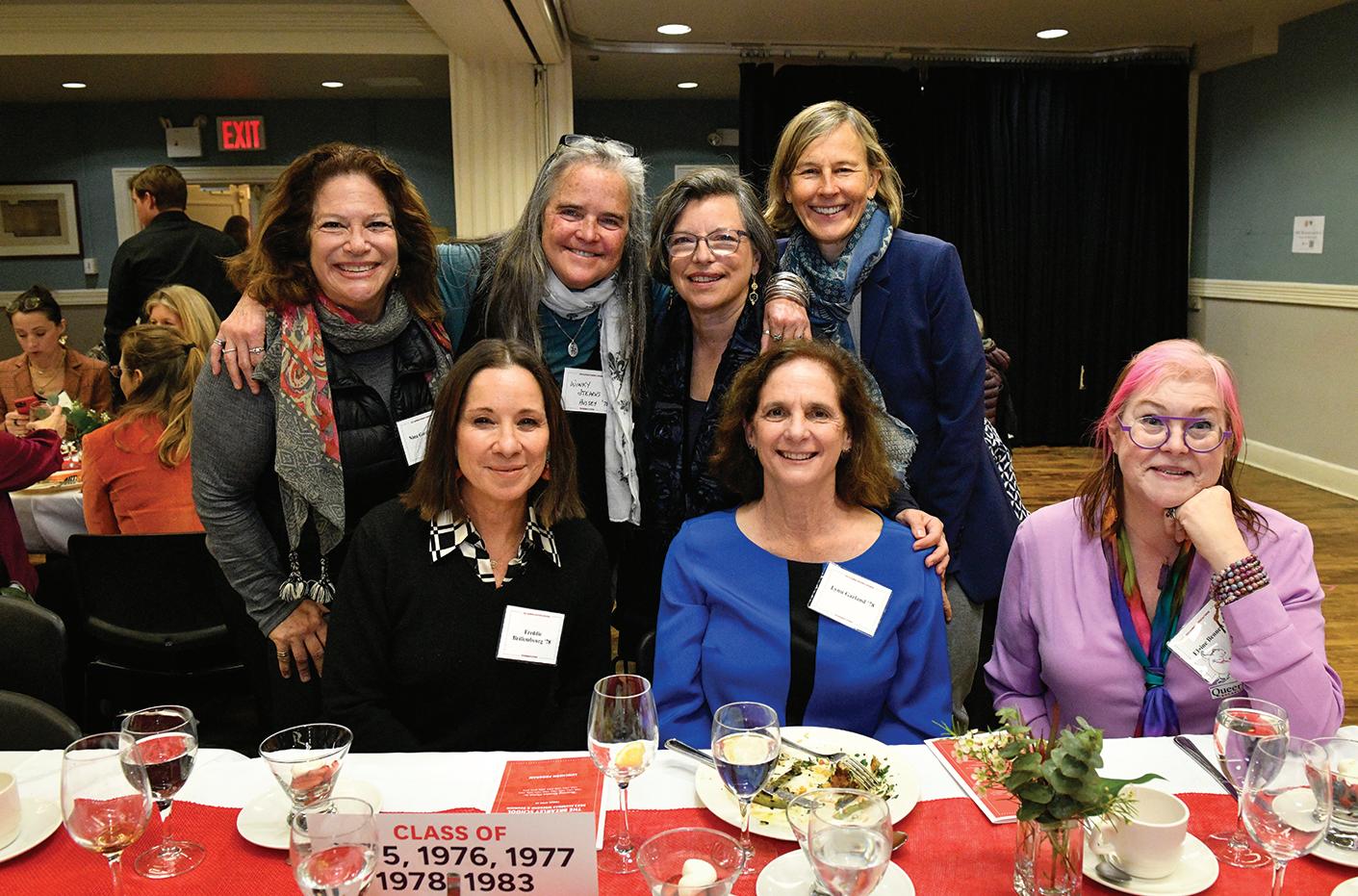
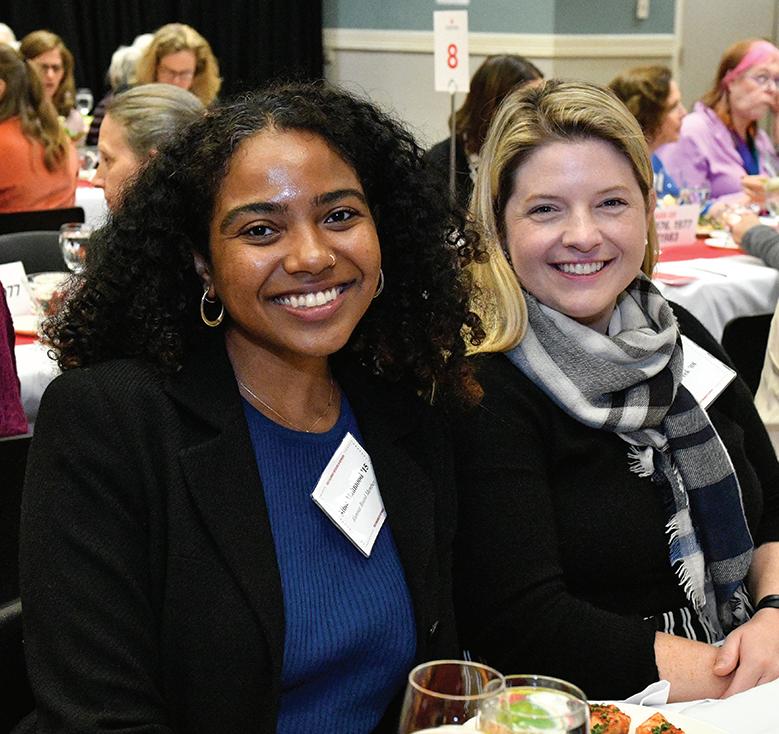
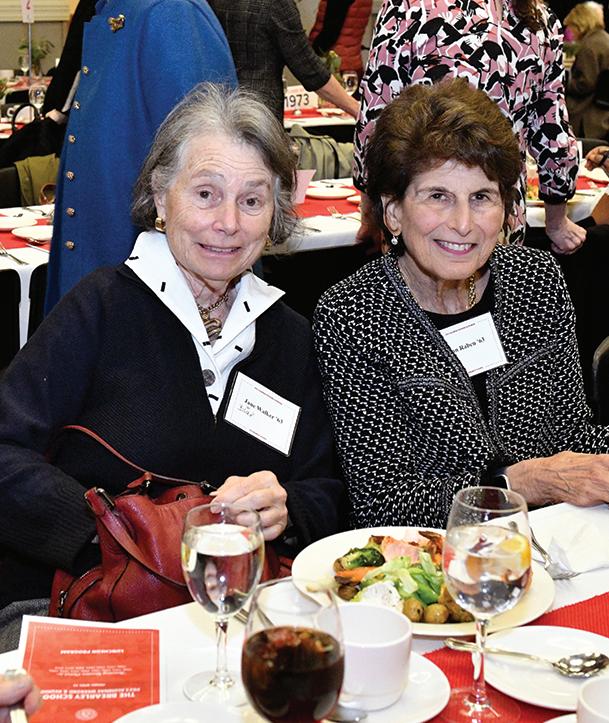
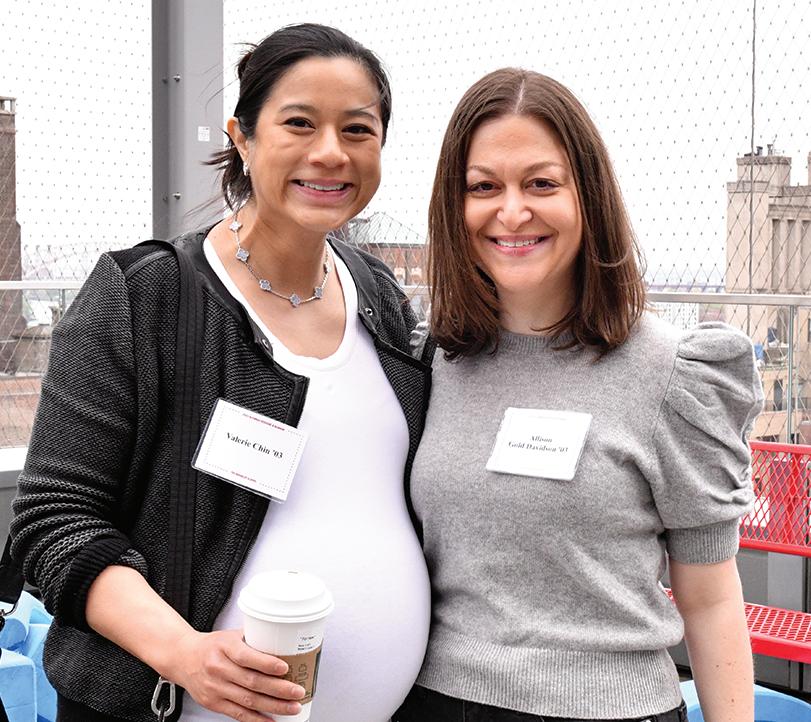
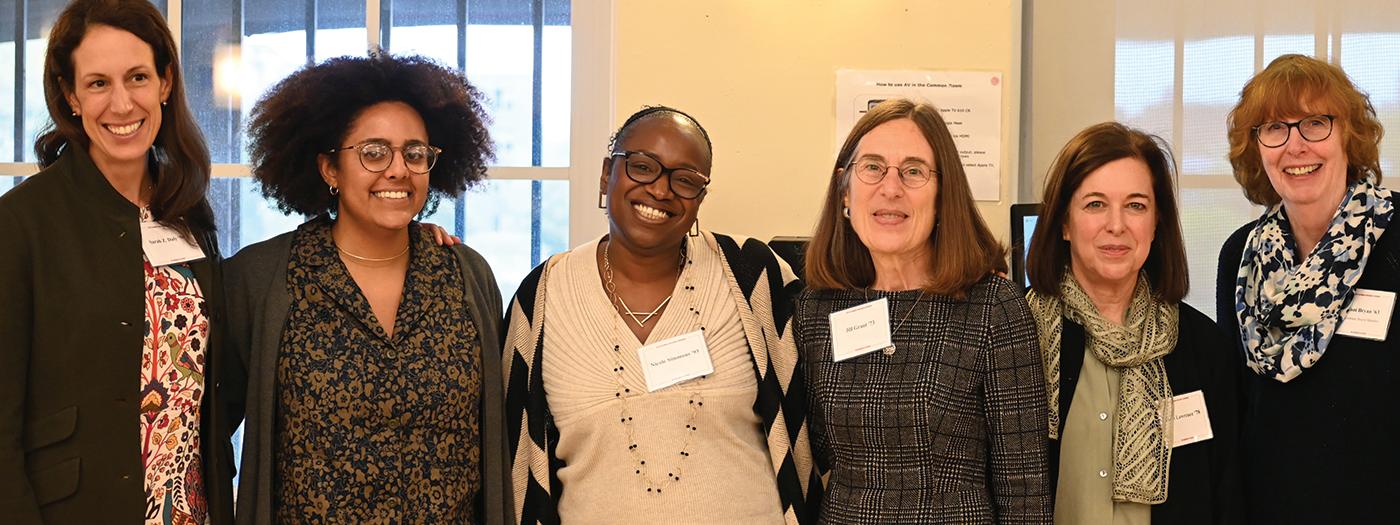
SPRING 2023 45
BIRTHS, MARRIAGES AND DEATHS
BIRTHS
1991 To SUSAN SHOCKETT, a daughter, Kathryn1
1997 To JOHANNA KUHN-OSIUS and Himanshu Singh, a son, Romir Osius Singh2
1998 To KIMBERLY KLEINBAUM TSESARSKY, a daughter, Georgina “Gigi” Madeline Phoenix Tsesarsky3
2000 To BELINDA HUANG, a daughter, Nico
2003 To ARIELLE LYON LANGER and Nathaniel Blakeslee Langer, a daughter, Miranda Lyon Langer4
To LILLIAN MEREDITH and Abel McDonnell, a daughter, Margaret Kane Meredith McDonnell5
To KATE FROMMER CIK and Peretz Cik, a son, Samuel Cik
2004 To KIBBY MCMAHON and Alex Greer, a son, Jackson Greer6
To LAUREN GOLDBERG and David Plotz, a daughter, Simone Plotz
2006 To MIA MEEKER CAMPBELL and Fergus Campbell, a son, Walker Murphy Campbell
To LITA TANDON and James Ligtenberg, a daughter, Amaya Tandon Ligtenberg7
2007 To CHRISTINA ARGUETA BERKOW and Stan Berkow, a son, Clay Alexander Berkow8
To LÍADAN DONNELLY and Aaron Plavnick, a son, Theodore Laurence Donnelly “Teddy” Plavnick9
To LEE EVANGELAKOS and Richard Lee, a son, Sebastian “Seba” Lee10
To KATHY SPRIGGS and Ian Connolly, a son, James David Spriggs Connolly11
To HANNAH ZAKS and Matthew Shyman, a daughter, Lily Zaks Shyman12
2008 To CLARA SPERA and Rory Boyd, a son, Thomas Martin Boyd13
To AVA KERR and Noah Stahl, a son, Ezra Conover Stahl14
To STEPHANIE LINKA SHARPE, a daughter, Margaret Maria “Daisy” Sharpe
2009 To CHRISTINA MORALES, a son, Elías “Eli” Julián15
SPRING 2023 46





SPRING 2023 47 4 3 5 7 10 8 11 13 6 9 12 14 15 1 2
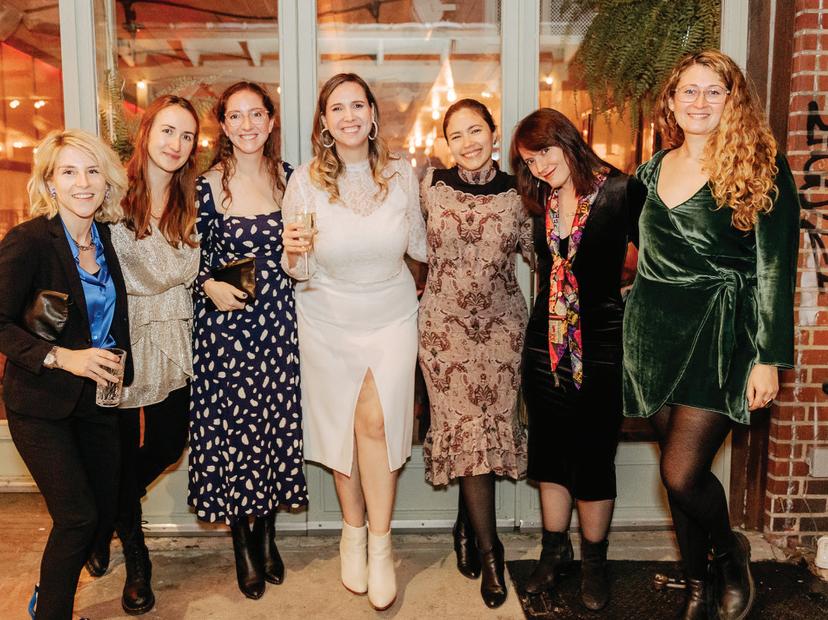
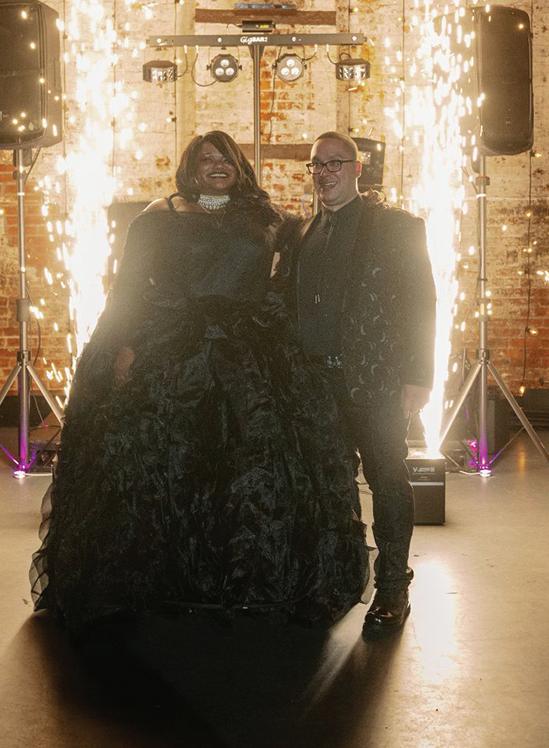
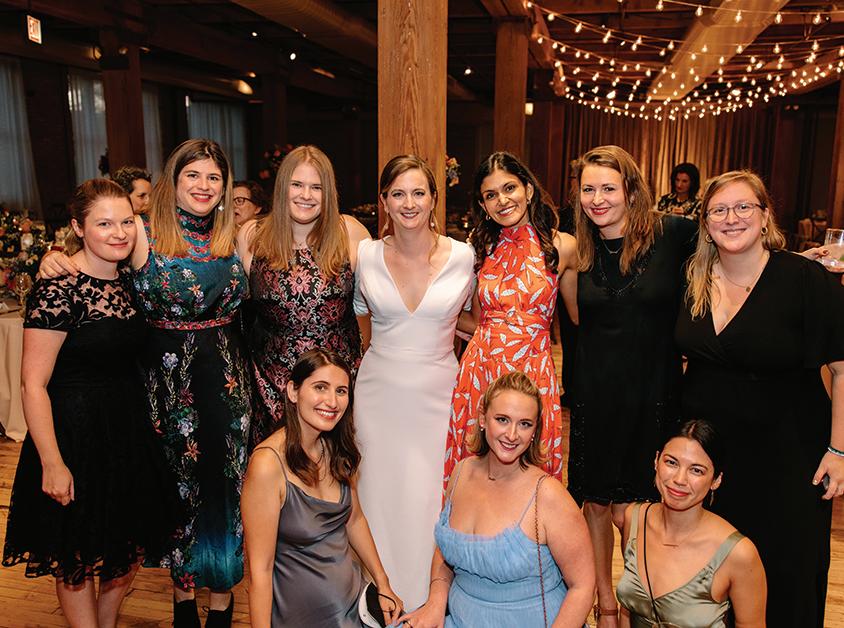
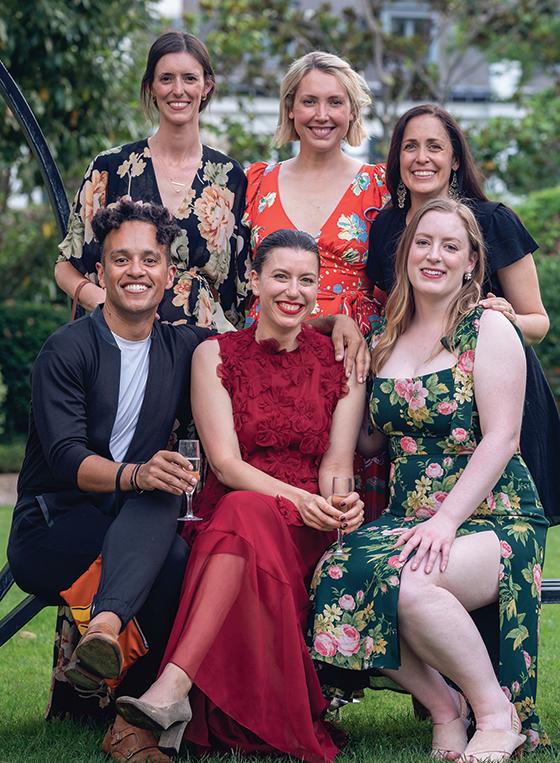
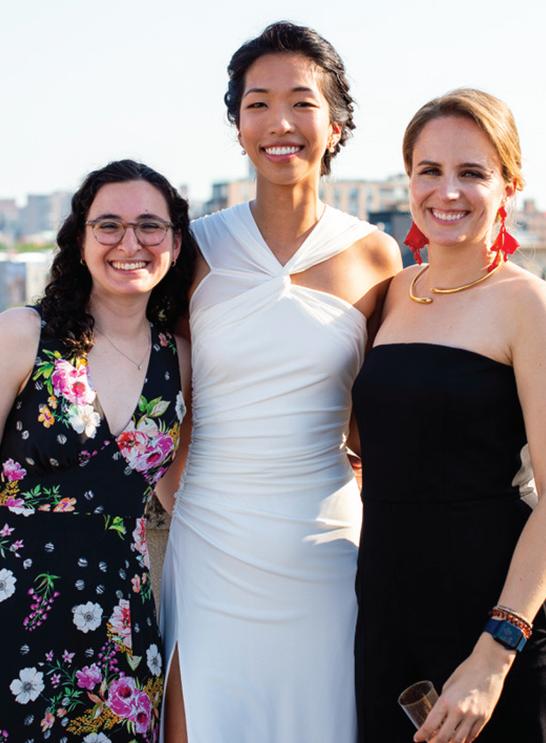

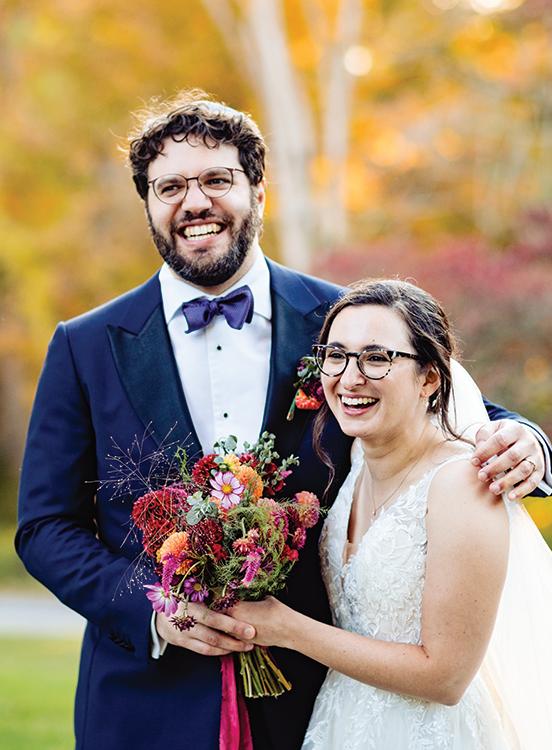

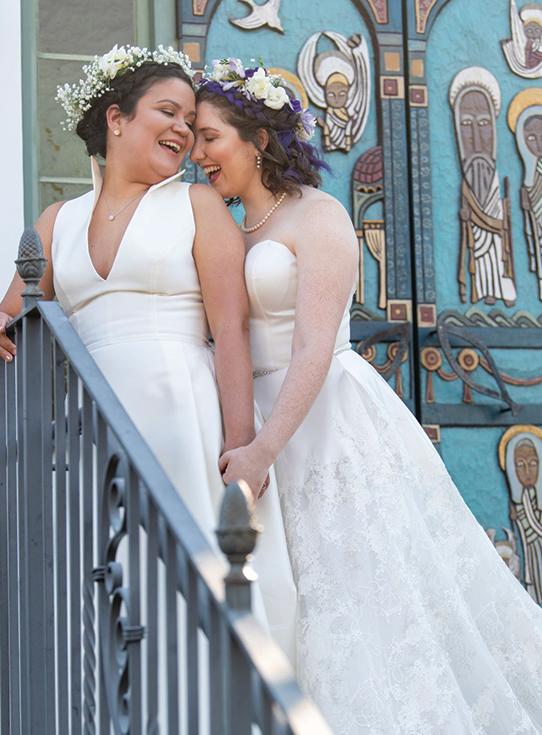
1 4 2 5 3 6 9 7 10 8 SPRING 2023 48 BIRTHS, MARRIAGES
AND DEATHS
MARRIAGES
1966 ANNE MITTENDORF to Randall Taylor Parsons1
2003 MAYA BATTLE to Thomas Henry2
2004 SIMONE BLASER to Vincent Houzé3
KIBBY MCMAHON to Alex Greer
JOANNA WATSON to Ian Dahlseng4
2006 MOLLY BATTLES to Noah Breslau5
2007 LISA GOTO to Stuart Jaffe6
JOANIE JEAN to Derick Lai
ZOE LUBITZ to David Kohn7
JULIA SPEED to Galen Pardee
2008 SARA APPLETON to Peps Bengzon
2009 LINDSAY STERN to Anish Gonchigar
2010 GWENDOLYN STEGALL to Yaítza Rivera-Jiménez8
2012 REBECCA MCSWEEN to Tim Barron9
2013 MARCELLA SOHM MCCAIN to Shep McCain10
DEATHS
1940 Mary Hivnor
1941 Joan Bradford Campbell
1944 Mary Ellin Berlin Barrett
1945 Ann Eberstadt Cannell
Frederica Auerbach Neff
Judith Vore
1946 Katherine Cromwell Moore
1947 Diane Duke Amussen
Judith Randal Hines
1951 Sarah Lambert Morgan
1952 Anne Wittmer Mott
Judith Coste Chapman
1956 Margaret Parsons Frost
1958 Susan Bassett Southall
1960 Dominique Lacoste
1965 Rosemary H. Jackson
Beryl Benacerraf
Mary Kornblee Gabriel
1971 Kathleen Moriarty
SPRING 2023 49
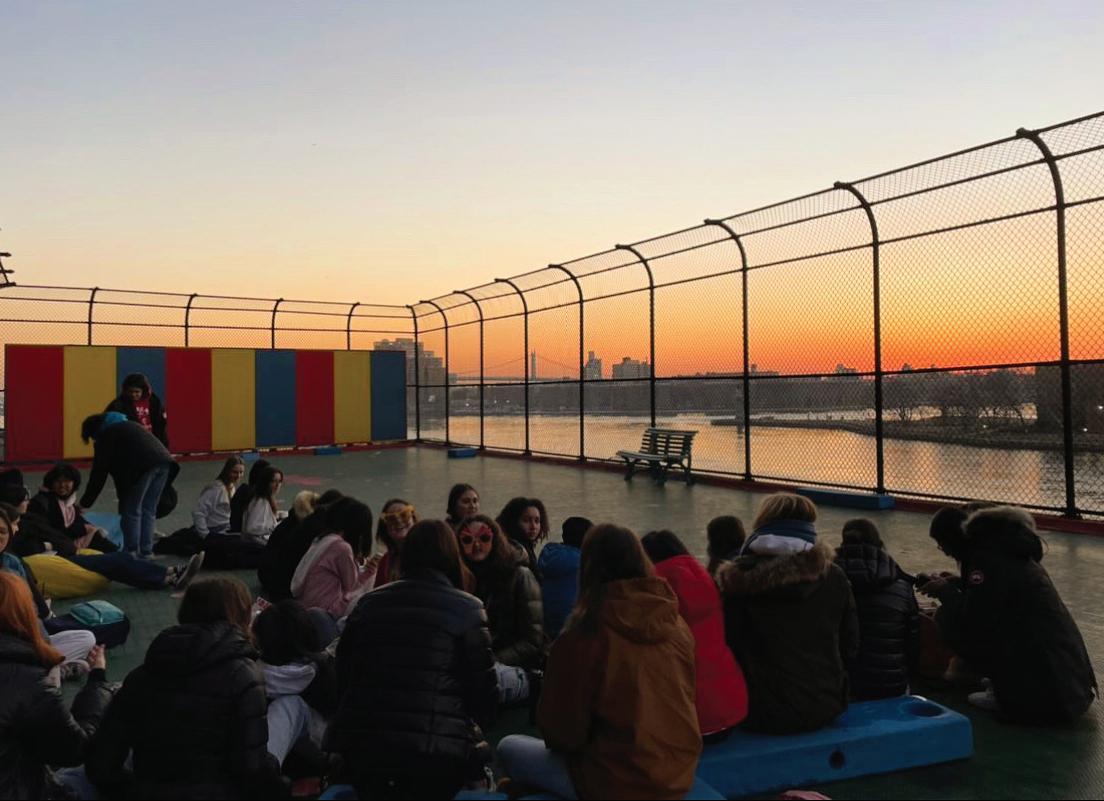
Create
Incubator, proving ground, home. Brearley is a singular place that is all about the girls—who they are, what they are capable of, and what they can become. When you include Brearley in your estate plans, you join a generous group of supporters who safeguard the Brearley experience for the girls of future generations. For sample language to use in your will or trust, and further information, please contact: Phoebe T. Geer ’97, Director of Advancement (212) 570-8609 or pgeer@brearley.org On
river,
East
Street, we will be here.
a legacy for Brearley.
the
on
83rd
Senior Class Sunrise

610 East 83rd Street New York, NY 10028