Bluffton Sun


By Sasha Sweeney Editor
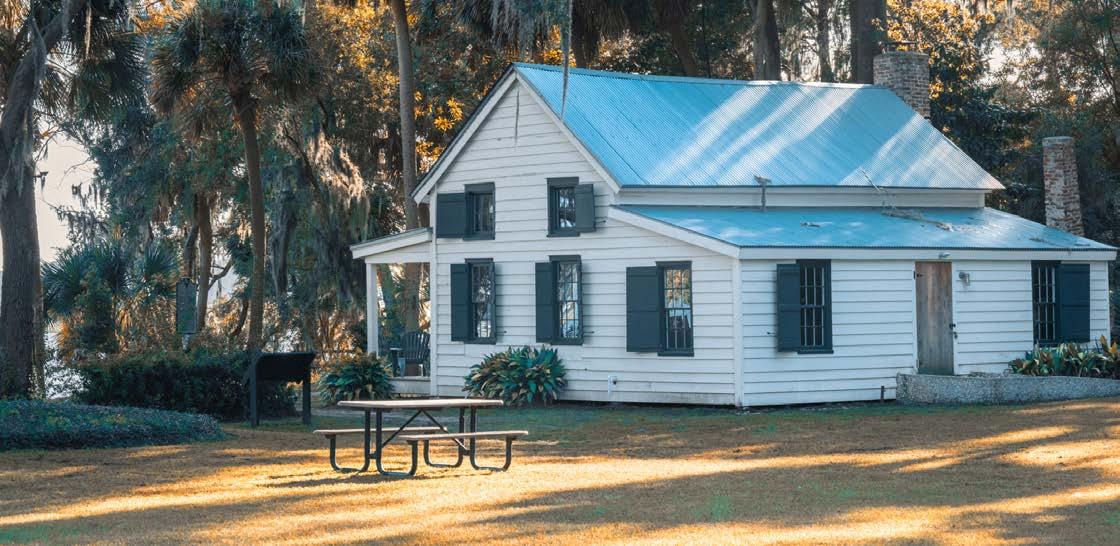
The University of South Carolina Beaufort will host a month-long series of events in February marking African American History Month and the upcoming 250th anniversary of the signing of the Declaration of Independence.
The series, titled “2026 African American History Month: Passport to Freedom 250,” will highlight 250 years of African American history, heritage and cultural influence across the South Carolina Lowcountry. Events will take place both on and off campus and are open to students, faculty, staff and the general public.
According to the university, the program is designed to encourage community engagement with historic sites, stories and legacies that have shaped both the region and the nation.
A central feature of the series is a 25-site “Passport to Freedom” booklet that guides participants through significant local African American landmarks. Sites include Historic Mitchellville Freedom Park, the Penn Center National Historic Landmark District, the Harriet Tubman and Robert Smalls monuments and the Gullah Muse-
um of Hilton Head Island, among others. Participants may visit sites in person or virtually. Passports can be stamped at staffed locations, while selfies or screenshots may be used as verification for unstaffed or virtual visits. Reflection prompts are included throughout the booklet.
The series will begin with two kickoff events, including one in Bluffton and one in Beaufort. Attendees will be able to pick up passports, learn about the featured sites and attend a community reception co-hosted by Dr. Najmah Thomas, coordinator of the university’s African American Studies program.
The Bluffton kickoff event is scheduled for Tuesday, Feb. 3rd, from 6 to 7 p.m. at the Bluffton Campus Hargray Lobby.
Passports will also be available throughout the month at the Bluffton Campus Library and Beaufort Campus Library. Library staff will provide stamps for site visits verified through photos or screenshots of virtual participation.
The celebration will conclude with recognition events later in the month, including prize awards for students who complete the highest number of site visits. The closing events are scheduled
for Thursday, Feb. 26th, from 6 to 7 p.m. at the Bluffton Campus Hargray Lobby and Friday, Feb. 27th, from 6 to 7 p.m. at the Beaufort Campus Newcastle Building, second-floor meeting room.
University of South Carolina Beaufort officials said the series is intended to engage the entire Lowcountry community in reflection, education and celebration.
Additional information, including site descriptions and passport instructions, is available at www.uscb.edu/AAHM.
FREEDOM CONT. ON PAGE 3

Beaufort Memorial Urology Specialists proudly welcomes Dr. Maurizio Buscarini, a board-certified, fellowship-trained urologist, to its Beaufort and Okatie locations. With decades of experience, Dr. Buscarini specializes in robot-assisted surgery and advanced treatment for urological cancers, offering patients cutting-edge care close to home.
An internationally recognized leader in his field, Dr. Buscarini comes to the Lowcountry from his most recent roles as Regional Director at Mount Sinai Queens and Professor of Urology at both Icahn School of Medicine at Mount Sinai and University Campus Biomedico in Rome, Italy.
He has established state-of-the-art robotic surgery programs across the U.S. and Europe, trained more than 100 physicians worldwide, and authored over 160 scientific publications. In addition, he has participated in more than 50 medical relief missions with Doctors Without Borders over the past 25 years.
Board Certified – Urology
American Board of Urology European Board of Urology
Doctor in Medicine
Sapienza University of Rome, Rome, Italy
Residency – Urology
University of Southern California, Los Angeles
Fellowship – Endourology/Laparoscopy/Robotics
Oregon Health & Science University, Portland

Dr. Buscarini remains at the forefront of innovation, treating conditions such as adrenal, bladder, kidney, and prostate cancers with leading-edge techniques. Beyond his surgical expertise, he takes a holistic approach to care, ensuring patients understand every step of their treatment. Now, he brings his world-class expertise to the Lowcountry, combining advanced robotic procedures with personalized, compassionate care for every patient.
Fellowship – Robotic Surgery
City of Hope Comprehensive Cancer Center Duarte, Calif.
Dr. Buscarini joins board-certified urologist Dr. Louis F. Plzak and board-certified physician assistants Kristin S. Callaghan, Nancy Thomas and Matthew Baker at Beaufort Memorial Urology Specialists.
Bluffton:
• Garvin-Garvey House 63 Wharf St, Bluffton, SC 29910
• Ma Daisy’s Porch 1255 May River Rd, Bluffton, SC 29910
Hilton Head Island:
• Central Oak Grove Baptist Church 161 Mathews Drive, Hilton Head Island, SC
• Cherry Hill School
210 Dillon Rd, Hilton Head Island, SC 29926
• Gullah Museum of Hilton Head Island 12 Georgianna Dr, Hilton Head Island, SC 29926
• Historic Fort Howell
160 Beach City Rd, Hilton Head Island, SC 29926
• Historic Mitchelville Freedom Park 40 Harriet Tubman Way, Hilton Head Island, SC 29926
Daufuskie Island:
• Daufuskie Island Historic District Daufuskie Island, SC
Beaufort Area:
• Beaufort County Black Chamber of Commerce
711 Bladen St, Beaufort, SC 29902
• Beaufort National Cemetery 1601 Boundary Street, Beaufort, SC 29902
“Nero fiddled while Rome Burned” is a phrase we’ve all heard. The US national debt now stands at $38,450,000,000.000.00. Yes 38+ Trillion dollars. The truth is neither Democrats or Republicans care less about it. Most of them want nothing more than money, power and the prestige of national office. Without ever leaving. Every
• The Emancipation Oak at Camp Saxton 27 Pinckney Blvd, Port Royal, SC 2993
• Grand Army of the Republic Hall 706 Newcastle St, Beaufort, SC 29902
• Gullah Geechee Welcome Center / LyBensons’ Gallery 870 Sea Island Pkwy, St Helena Island, SC 29920
• Harriet Tubman Combahee River Memorial Bridge US-17, Yemassee, SC 29945
• Harriet Tubman & Robert Smalls Monuments at Tabernacle Baptist Church 901 Craven Street, Beaufort, SC 29902
• Lands End Woodland Beach St. Helena, South Carolina 29920 & Virtual https://m.youtube.com/watch?v=ImHSzCI3ck0
• The Mather School Interpretive Center at Technical College of the Lowcountry 921 Ribaut Rd. TCL Campus, Building 1 Beaufort, Sc 29901
• Penn Center National Historic Landmark District 16 Penn Center Circle East, St. Helena Island, SC 29920
• Robert Smalls Leadership Academy 43 W. K. Alston Drive, Beaufort, SC 29906
• USCB Historic Beaufort Campus Mural & Historical Markers 801 Carteret St, Beaufort, SC 29902
• Wesley United Methodist Church 701 West Street, Beaufort, SC 29902
Orangeburg:
• Cecil Williams SC Civil Rights Museum 1865 Lake Dr, Orangeburg, SC 29115
Virtual Visits:
• Gullah Geechee Cultural Heritage Corridor Virtual only https://gullahgeecheecorridor.org
• Gullah Geechee Futures Project Virtual only https://gullahgeecheefuturesproject. com
• International African American Museum 14 Wharfside Street, Charleston, SC 29401 & Virtual https://iaamuseum.org
• Lands End Woodland Beach (in person or virtual visit) St. Helena, South Carolina 29920 & Virtual https://m.youtube.com/watch?v=ImHSzCI3ck0
man woman and child in America owes some creditor $115,000.00 more or less.
The next truth is Americans have been receiving benefits in the form of Social Security, Medicare, Medicaid, National Defense, Welfare, Food stamps etc without ever paying for it all. The delusion runs rampant in all directions.
Russia, China, Iran and N Korea are not our biggest threats. The debt is. It is a ticking time bomb that can cause a potential depression to dwarf the 30’s. This, in a country with 450 million guns in private hands. They won’t be coming down the street looking for an apple, folks. Please encourage all your representa-
tives to get to the business of securing this country from its greatest threat. We need a balanced budget, dramatic spending cuts, along with extra money to start paying down this debacle of debt.
Michael Havas Bluffton, SC

Current Circulation Via USPS is 24,957
Editor
Sasha Sweeney
editor@blufftonsun.com
Page Designer
Cary Howard cary@blufftonsun.com
Advertising
Mary Ann Kent, Sales & Marketing Manager
843-575-4151
BJ Frazier, 843-422-2321
Claudia Chapman, 814-434-3665
Mary Pat Gifford, 912-414-7122
Contributors
Ken Adams
Abby Bird
Lisa Hostetler Brown
Chad Cannon
Ryan Chowansky
Chip Collins
Danie Connolly
Tom Dorsel
Collins Doughtie
Thomas Dowling
Ronald Finger
Kevin Fitzpatrick
Rhoda Gordon
Emma June
Grosskopf
James Hamilton
Jean Harris
Jamie Harrison
Annelore Harrell
Channing Heiss
Kenneth Horup
Justin Jarrett
James Jolly
Ken Kanter
Wendy Kushel
Nick Martin
Tamela Maxim
Amy Pampanini
Dan Prud’homme
Lucy Rosen
Cinda Seamon
Murray Sease
Christopher L. Thompson
Paul Tollefson
Matt Uppenbrink
Sandro Virag
Mark F. Winn
Tracy Winslow
PO Box 2056, Bluffton, SC 29910
843-757-9507
Physical address: 181 Bluffton Rd., Ste F103-2, Bluffton, SC 29910 BlufftonSun.com
All contents are copyrighted by Beaufort Media Group LLC. All rights reserved. Nothing may be reprinted in whole or in part without written permission from the publisher. All submissions must include name, address and phone number. The Editor reserves the right to edit or reject any material, including advertisements. The Bluffton Sun does not verify for licenses, endorse nor warrant any advertised businesses or services. The opinions and views expressed in the editorials are not necessarily those of the Editor and Publisher. Hilton Head Island-Bluffton Chamber of Commerce, Greater Bluffton Chamber of Commerce, Old Town Bluffton Merchants Society.
THE BLUFFTON SUN Issue 3, February 3, 2026, is published twice monthly by Beaufort Media Group, LLC, 181 Bluffton Rd Suite F103-2 Bluffton, SC 29910. Periodicals Postage paid at Bluffton, SC and at additional mailing offices. POSTMASTER: Send address changes to THE BLUFFTON SUN, PO Box 2056, Bluffton, SC 29910-2056.
By Channing Heiss Contributor
As Bluffton has rapidly grown in land area and population, growth management practices such as the annexation process have created “doughnut holes” which can cause some new residents to be unsure if their neighborhood is part of the town or not, if town ordinances apply to them, or wondering about the procedures to become incorportated.
By state law, annexation remains voluntary and resident-driven. This is one of the factors that creates “doughnut holes,” unincorporated county areas that are completely surrounded by municipalities. Those doughnut holes have also been created by unique situations where part of the land included in an annexation petition was sold prior to approval.
Town of Bluffton Director of Communications Debbie Szpanka emphasizes the importance of continuous community education and the town’s commitment to it.
Szpanka explains they are committed to respecting the voluntary spirit and intent of the rules.
“We can’t just go and fill in holes,” she said. She added that residents must come to them about annexation as town officials are not allowed to approach residents about it.
“We can educate, but we cannot persuade.”
“We educate and educate and when we’re done with that, we educate some more,” she said.
She explained this continuous education is necessary in part because new people are coming in from other states where the rules may have been different.
“We help people understand the game so they can play the game. We help them understand the parameters,” Szpanka said. She explained that this education alleviates confusion and frustration and allows everyone to stay empowered and engaged.
Concerns about these landlocked unincorporated areas and about the current annexation procedure have been brought up by the Municipal Association of South Carolina, which presents on its website arguments in favor of involuntary annexation becoming an option for municipalities. They cite overlapping jurisdictions, possible duplication or inefficiency of services, enclave residents receiving services paid for by town residents, and complications for town planning among their concerns. Locally, a combination of county, township, and municipality resources provide services to residents of Bluffton proper and the unincorporated enclaves.
According to State of South Carolina legislation tracking resources, bills proposing an involuntary annexation option have been introduced in recent years. Szpanka said Bluffton officials are aware that these ideas come up periodically, but added they have a history of failing to advance.
Meanwhile, Bluffton continues to follow the current policy as they have done for years. “It’s never been a top shelf issue,” Szpanka said.
The annexation procedure has features to allow all sides to have ways of determining the outcome. There are three ways annexation can be requested. One way is for one hundred percent of the residents to sign a petition. Annexation can also be applied for by a group of residents owning 75 percent of the property. A third way is for 25 percent of the residents to petition for an election to request annexation. The property involved in the annexation application must have a border with the town. The town ultimately approves or denies the annexation request and Szpanka explains they take multiple factors into consideration. “We do a cost benefit analysis. Will it require extra projects? Does it need a lot of work? What are its liabilities? How is it an asset?”
There are other factors as well. The town approved the annexation of the Buck Island-Simmonsville property, adding sewer infrastructure, protecting the environment, and helping preserve one of Beaufort County’s oldest neighborhoods. The Town of Bluffton website provides resources to help residents old and new to get the most out of living in the Bluffton area. They have a digital copy of the Resident’s Resource Guide with information about annexation and a wide variety of other topics. There is also a map available to determine if you are living in Bluffton or in one of those doughnut holes.
Channing Heiss is a freelance writer and a member of the Beaufort County disAbilities Coalition.
Mental Health America of the Low Country (MHALC) has offered the Island House program for 50 years. This day treatment program has served the needs of clients with serious, persistent mental illness. For several reasons, among these declining and delayed Medicaid reimbursement, as well as precipitous declines in census, the program has become financially unsustainable and will close in
January.
We are grateful for the ongoing financial and in-kind support over the last several years to the following: Second Helpings, Community Foundation of the Lowcountry, Colleton River Charitable Foundation, Sun City’s 100 Women Who Care, Belfair 1811 Charitable Fund, the Wexford and Hampton Hall Charitable Funds, Port Royal Foundation,
Low Country Outreach, Town of Bluffton, Hilton Head Firefighters Association, the University of South Carolina Beaufort and Technical College of the Lowcountry Nursing programs, and the Bluffton Sun, Hilton Head Sun and Sun City Sun Newspapers.
Joyce Braude and Susan C. Williams Co-chairs MHALC.

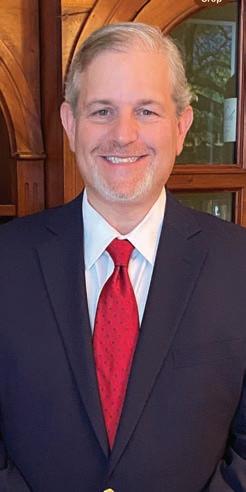




By Mark F. Winn Contributor
After more than two decades of practicing estate planning law in Hilton Head and throughout the Lowcountry, I have seen a common and costly mistake. Families work hard to build financial security, yet without proper planning, much of what they intended to leave behind is lost to probate delays, unnecessary expenses, lawsuits, or family conflict. Estate planning exists to prevent that outcome.
Estate planning is often misunderstood as something only the wealthy or elderly need. In reality, it is about control, protection, and peace of mind—for individuals and families at every stage of life. A proper estate plan answers three fundamental questions. First, who will make financial and medical decisions if you are unable to do so? Second, who will receive your assets, and in what manner? Third, how can those assets be protected from creditors, lawsuits, and avoidable costs?
A comprehensive estate plan typically includes a revocable living trust, a will, durable powers of attorney, health care powers of attorney, and properly coordinated beneficiary designations. When these documents work together, families can often avoid probate, maintain privacy, and ensure assets are distributed according to their wishes.
Consider a common family scenario. Max and Judy are a married couple who have spent years building a comfortable estate. They have two children, Sam and Evelyn, and want to be sure that what they have built stays in the family. Without planning, Max and Judy might assume that a simple will is sufficient. In South Carolina, however, assets passing
through a will require probate which is a public process that can be time-consuming and costly, often adding stress during an already difficult time. During probate, assets may also be exposed to creditor claims or disputes. Even more importantly, once assets are distributed outright to Sam and Evelyn, those assets become vulnerable to their own life events. Divorce, lawsuits, business liabilities, or financial missteps can quickly erode an inheritance that took a lifetime to build.
This is where trust planning becomes especially valuable. By creating a revocable living trust, Max and Judy can maintain full control of their assets during their lifetimes while avoiding probate at death. Rather than leaving assets outright to their children, they can leave them in trust for Sam and Evelyn’s benefit. Assets held in properly drafted trusts are generally better protected from creditors and are protected from loss to in-laws in divorce. Trusts also allow parents to guide how and when assets are distributed, helping ensure funds are available for education, housing, healthcare, and long-term stability.
Estate planning also protects individuals during their lifetimes. Durable powers of attorney allow trusted family members to handle financial matters in the event of incapacity. Health care powers of attorney ensure medical decisions are made by loved ones rather than courts.
The greatest benefit of estate planning is peace of mind. Families know their wishes are clear, their assets are protected, and their loved ones are spared unnecessary stress and uncertainty. Estate planning is not about predicting the future—it is about preparing for it and preserving the legacy you worked so hard to build.
Mark F. Winn, J.D., Master of Laws (LL.M.) in estate planning, is a local asset protection, estate and elder law planning attorney. mwinnesq.com
By Sasha Sweeney Editor
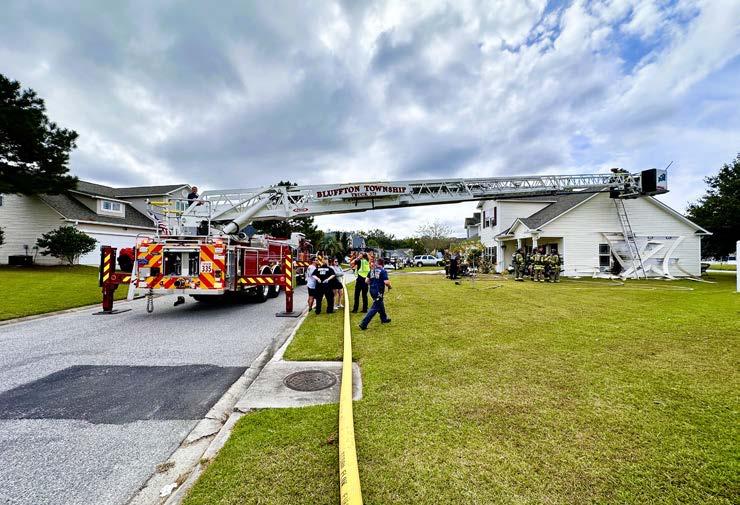
The Bluffton Township Fire District responded to a record 11,165 calls for service in 2025, marking the busiest year in the district’s history.
The total surpassed the 10,799 calls handled in 2024 and reflects continued population growth and increasing demand for emergency and community services across the district’s nearly 250-squaremile coverage area.
Fire district officials said the increase mirrors broader trends in call volume as the region grows, with firefighters responding to a wide range of emergencies and service-related requests throughout the year.
In December 2025, the district also completed its transition from the National Fire Incident Reporting System, known as NFIRS, to the National Emergency Response Information System, or NERIS. The new nationwide reporting platform is being implemented by the U.S. Fire Ad-
ministration and is designed to modernize how fire and emergency response data are collected and reported.
Officials said the new system allows certain types of service calls that were not individually tracked under the previous
reporting system to be more accurately recorded. Those activities are now categorized under public service responses and include citizen assists, non-medical alarms, weather- and disaster-related incidents, and other community service calls.
District leaders emphasized that the change affects reporting practices rather than field operations.
“What has not changed is our commitment to the community,” Fire Chief David Hindman said. “Our firefighters have taken on a record workload and adapted to new reporting requirements while continuing to deliver exceptional service on every call.”
The fire district credited its firefighters, officers, support staff and their families for meeting the increased demand, and thanked the community for its continued support.
More information about the NERIS system and monthly operational data is available in the Operations Report section of the district’s website at blufftonfd.com.



Bluffton Financial Planning is a boutique wealth management firm committed to delivering quality advice to a fiduciary standard, personalized service, tax-efficient investment strategies and comprehensive financial planning.
Nick and Izaac are a unique team characterized by the quality of their education, their veteran backgrounds and their combined 24 years financial planning experience. They understand the shifting dynamics when preparing for retirement, transitioning to retirement and living in retirement.
Market volatility is here, Bluffton Financial Planning is providing value through quality advice and effective communication. Let’s talk!
By Dan Prud’homme Contributor

As we move through February 2026, Bluffton’s real estate market continues to be defined by one dominant theme: scarcity. While some seasonal softening is normal this time of year, the broader market fundamentals remain firmly intact and historically tight.
Inventory ticked up slightly to 739 homes for sale, compared to 729 last month, an expected seasonal move. However, context matters. One year ago, Bluffton had 938 homes on the market, putting current inventory more than 21 percent lower year over year. More importantly, this is the second lowest year to date inventory level of the past decade, surpassed only by 2022 during the pandemic driven supply shock. The 10 year average year to date inventory sits near 1,055 homes, meaning 2026 is running roughly 30 percent below normal. Compared to pre pandemic years, today’s buyers are competing for nearly half the number of available homes.



Market speed confirms the pressure. Days on market fell sharply to 85, down from 108 last month. This time last year, homes were selling in 73 days, reinforcing that buyers remain decisive when the right home comes to market.
Pending sales cooled as expected, falling to 107, down from 171 last month, and compared to 142 pendings at this time last year. Closed sales year to date total 80, versus 99 last year, a direct reflection of inventory constraints rather than a lack of demand.
Based on current inventory and pending activity, Bluffton is operating at approximately 3.4 months of inventory, placing the market firmly in a seller’s market, despite normal seasonal fluctuations.
Pricing trends remain one of the strongest indicators of Bluffton’s longterm resilience. Over the past five years, median pricing has risen dramatically. In 2021, the median sale price was $335,000. In 2022, it surged to $478,000, a nearly 43 percent increase. 2023 saw continued growth to $487,500, a more modest 2 percent gain as the market normalized. In 2024, prices jumped again to $582,982, representing a nearly 20 percent increase year over year. While 2025 saw a pullback to $493,700, the 2026 year to date median of $541,580 reflects a nearly 10 percent increase year over year, signaling renewed upward pressure driven by limited supply rather than speculative demand.
The takeaway this month is clear. Bluffton is not cooling. It is recalibrating within a structurally undersupplied environment. Inventory remains historically tight, pricing is holding firm, and buyers continue to compete in a market that offers little margin for hesitation.
Dan Prud’homme is the visionary and success coach of The Prud’homme Team at William Raveis Real Estate. dan@danprudhomme.com theprudhommeteam.com






Pure Med Spa is here to assist you in achieving your skincare goals.
Enlarged Pores | Oily or Congested skin
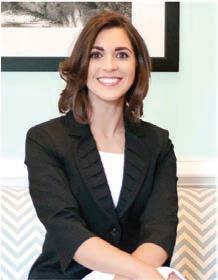
“At Pinnacle, we want our patients to feel like they are part of our family and we strive to treat them that way from the first time they visit. We pride ourselves on the customer experience. It is important to always keep up with the latest advances, but our practice uniquely separates the gimmicks from the options that produce results. It is our philosophy to listen first to our patients’ goals and then help guide them to the treatments and procedures that will help us all work toward that shared goal. Your inner and outer you should be in harmony.” Fine Lines | Wrinkles | Elasticity | Firmness Even Tone | Vibrancy | Skin texture
Audrey Klenke, MD, FACS, Board Certified


By Justin Jarrett Contributor
Going into Christmas break, it seemed like anyone’s guess which boys basketball team would emerge from a muddled Region 6-4A field.
May River started 17-0, albeit against a soft early-season schedule, Hilton Head High turned heads with some impressive non-region wins, and everyone knows better than to sleep on Bishop England.
And then there was defending region champion Bluffton, but the Bobcats were still finding their identity when the calendar flipped to 2026. Two of their top three scorers from a 23-3 squad a year ago — 3-point specialist Jamari Stewart-Manning and uber-athlete Brandon White — were lost to graduation, and multi-sport stars Carnell Warren and Aeden McCarthy bailed early in the season to turn their focus to playing college football.
Third-year coach Bradley Gabriel was left scrambling to put together the pieces around senior point guard Harry Skinner and mold a rotation that made sense.
The Bobcats were a work in progress.
Bluffton traversed an easy path to the finals of the John Drafts Battery Creek Classic before falling in overtime to May River, a sign that the Bobcats were still in the mix for a region title, then they breezed through the Bobcat Classic and proceeded to rattle off 12 consecutive wins — and counting.
After a 76-53 rout of visiting Beaufort High on Jan. 27, the Bobcats sat at 17-4 overall and a perfect 6-0 in Region 6-4A with a trip to rival Hilton Head High looming. Already holding a two-game lead over the second-place Seahawks — and with a head-tohead win already in hand — the Bobcats very well could clinch the region title be fore you read this.
In other words, it’s almost inevitable, and that was far from the case when the region slate began.
Gabriel challenged Hilton Head Christian Academy transfer Ethan Foster to up his rebounding game, and the junior has become a force on the boards along with junior Malcolm Gordon and senior Isaiah Gadson.
Gordon has made the biggest jump, going from a role player with minimal production a year ago to a monster who averages 12 points and 8.3 rebounds. Gadson has embraced his role, ripping down 8.8 rebounds per game and averaging 1.8 blocks, and sophomore guard Luke Carens has hit some big shots. But it all starts with Skinner. No longer the brash sharpshooter who was dubbed “Dirty Harry” during his early days at Hilton Head Christian Academy, Skinner has evolved into a coach’s dream, a take-charge point guard who elevates everyone around him. He carries himself with a healthy mix of confidence and humility and values winning above his personal accolades, dishing out 6.6 assists per game in addition to a team-high 21.4 points per contest.
Skinner flirted with greener pastures, trying on a prestigious prep school program for the summer — at Gabriel’s suggestion — before coming back to finish his sensational high school career as a Bobcat, and perhaps wash away the bad taste from last year’s 50-44 loss to Wilson in the second round of the Class 4A playoffs, ending Bluffton’s season short of the goal.
It would have been hard to imagine a month ago that this year’s Bobcats would outlast last year’s talented squad and advance past the second round of the playoffs, but Bluffton has climbed to No. 4 in the S.C. Basketball Coaches Association’s rankings, so maybe Skinner and Co. will surprise us again in

Justin Jarrett is the sports editor of The Island News and is the founder of Lowco Sports. He has a passion for sports and community journalism and a questionable sense of humor.


Hilton Head Island’s annual celebration of Gullah heritage returns in February with a month-long series of events honoring the history, traditions and cultural contributions of the Gullah people.



The 30th annual Hilton Head Island Gullah Celebration runs from Feb. 1 through Feb. 28, 2026, with activities taking place at venues across the island. The event highlights the vibrant culture of Gullah Geechee descendants who have lived on the Sea Islands for generations. The celebration is recognized by the Southeast Tourism Society as one of the Top 20 Events in the Southeast, drawing residents, regional visitors and culture enthusiasts.
A wide range of programming during the celebration includes art exhibitions, music and storytelling, culinary experiences and cultural discussions. Among the scheduled offerings:
Art exhibits including a retrospective marking 30 years of festival posters and cultural storytelling, giving visitors insight into the evolution of the Gullah Celebration through visual art and the Arts Ob We People: A Gullah Geechee Art Exhibition featuring artists Amiri Farris, Ren Dillard amongst other Gul-
lah Geechee artists.
Cultural talks and presentations on topics like the Gullah Geechee Corridor and community heritage stewardship.
Music events such as the Gullah Twilight Music series and Voices of Gullah performances featuring traditional sounds and local artists.
Culinary events abound with the We Still Rise: Ol’ Fashioned Gullah Breakfast, Roots & Recipes Reunion, a cook-off celebration of traditional Gullah cuisine at Mitchelville Freedom Park and the Sea, Soul & Sunshine Brunch.
A Gullah Celebration Village at the Hilton Head Island Seafood Festival on Feb. 28, where attendees can explore full-scale recreations of historic Gullah structures and watch demonstrations by artisans and storytellers.
The monthlong observance highlights culinary traditions, art, history and the spoken word, celebrating a heritage rooted in the coastal Lowcountry. The festival combines performances, exhibitions and food events with programming focused on preserving and sharing Gullah culture.
For more information and a full schedule of events visit www.gullahcelebration.org.









The South Carolina Senior Sports Classic will return in 2026 with a monthlong, multi-sport competition encouraging adults 40 and older to stay active and connected through athletics.
The 2026 event is scheduled to run from April 10 through May 7 at athletic venues across South Carolina. Organizers say the annual competition promotes healthy aging by offering both recreational and competitive opportunities for older adults.
Sports offered include archery, badminton, basketball, bocce, bowling, chair volleyball, cornhole, cycling, golf, pickleball, pocket billiards, racquetball, shuffleboard, softball, swimming, table tennis, tennis, track and field, triathlon, and 5K and 10K runs.
Online registration is open from Jan. 1 through April 1. Participants are expected from communities throughout South
Carolina, along with some competitors traveling from other states.
Organizers say the event is designed to demonstrate that adults can remain physically active and socially engaged at any age. A representative for the South Carolina Senior Sports Classic said the program’s mission is to promote positive self-image and quality of life through fitness, social interaction and community involvement.
The South Carolina Senior Sports Classic is the state’s only sanctioned site for the National Senior Games Association, giving eligible participants the opportunity to qualify for the National Senior Games.
Additional information is available on the organization’s website at scseniorgames.com, as well as on Facebook under SC SportsClassic and on Instagram at southcarolinasc.
The Women’s Association of Hilton Head Island is accepting applications for its 2026 Youth Community Service Awards, which recognize graduating high school seniors who have demonstrated significant service to their schools and the broader community.
Applications will be accepted from Jan. 14 through Feb. 27, 2025. Awards will be presented in spring 2026.
The Youth Community Service Awards program was established in 1980 and has since recognized more than 100 students while awarding thousands of dollars to honor civic involvement and volunteerism. The program highlights students who demonstrate leadership, compassion and a commitment to making a positive impact in the Lowcountry.
“By recognizing students for their commitment to service, WAHHI is helping to cultivate the next generation of changemakers who will continue to strengthen our community.” said Linda Armstrong, president of the Women’s Association of Hilton Head Island.
The number and amount of awards
vary each year based on available funding through WAHHI’s philanthropic and community initiatives. Eligible applicants must be graduating high school seniors in spring 2026 who have performed substantial service throughout their high school years.
Students attending Bluffton High School, Cross Schools, Heritage Academy, Hilton Head Island High School, Hilton Head Preparatory School, Hilton Head Christian Academy, John Paul II Catholic School and May River High School are encouraged to apply.
Home-schooled students who reside in Hilton Head Island or Bluffton and are educated under the South Carolina Home School Statute, the South Carolina Association of Independent Home Schools or a recognized home school association are also eligible.
Applications are available at wahhi. org/philanthropy/youth-community-service-awards. Questions regarding the application process may be directed to Lynne Morgan at lcmorgan628@gmail. com.


By Lisa Hostetler Brown Contributor
Many people believe estate planning is as simple as getting a will and checking the box, but true planning goes far beyond paperwork. It’s about making sure your plan actually works when you need it most.
There are only two times in life when your estate plan truly gets put to the test:
1. When you can no longer manage your own affairs, whether due to illness, injury, or age-related decline.
2. When you pass away, and your family must settle your affairs.
If your documents don’t work in these critical moments, the consequences can be significant, including court delays, finan-

cial complications, and additional stress for your loved ones during an already difficult time.
One of the most common problems we see is the absence of a properly drafted, comprehensive financial power of attorney. In South Carolina, there is no automatic right for a spouse or child to manage your finances if you become incapacitated. Without the legal authority in place, families may be forced into court to seek a conservatorship. This process can take months and cost thousands.
Another major misconception is that having a will avoids probate. In reality, a will must go through probate court. That process requires formal notices, deadlines, and disclosures, including notifying people who would have inherited if no will existed. Those notices often trigger conflict and legal challenges.

This is where trust-based planning can make a significant difference. A properly structured and funded trust avoids probate entirely, reduces court involvement, and provides a smoother transition for loved ones. It also allows planning not just for death, but for aging, illness, and long-term care needs.
Estate planning should also evolve as you age. What works for a healthy 30-year-old is very different from what’s needed when retirement, medical concerns, or caregiving enter the picture. Planning early creates options. Waiting creates urgency, and crisis planning rarely produces ideal outcomes.
The most important thing to remember
Fraser Health Center at The Seabrook is proud to be rated “High Performing” by U.S. News & World Report in the prestigious Best Nursing Homes category for ShortTerm Rehabilitation. Setting the standard for exceptional care on Hilton Head Island, Fraser Health Center is where compassion meets clinical excellence. Discover why we’re ranked among the nation’s best.



is this: estate planning is an act of love. Documents may carry your instructions, but the real gift is the security you create for the people who matter most. A well thought out plan ensures your family can honor your wishes without fear, conflict, or court involvement.
In the end, planning isn’t about preparing for death. It’s about protecting the life you’ve built and the people who are part of it.
If you’re questioning whether your current arrangements still serve you, a certified elder law attorney can help you evaluate your overall plan, not just the paperwork. A consultation ensures your approach remains comprehensive, up to date, and aligned with your goals. Reach out to a trusted local professional to review your plan and ensure you’re protected.
For educational purposes only. This is not legal advice. Lisa Hostetler Brown is a Certified Elder Law Attorney certified by the National Elder Law Foundation. 2 Hampton Hall Blvd, Ste 100, Bluffton, SC 29910. | 843-757-5294 | LawyerLisa.com.

By Dr. Jean Harris Contributor
Most people that visit Orlando go to Disney World, Epcot Center, Universal and Seaworld. However, if you are a golf professional, you go the PGA Merchandise Show.
Since 1975, the largest golf industry gathering in the world is in Orlando. It is a trade-only event and is not open to the general public. Participants include PGA, LPGA, golf manufacturers, retail buyers, and fitness instructors. This year more than 35,000 attended the show.
On Tuesday, there was a demo-day at Orange County National Golf Center. The facility is huge, 42-acre circular range. Golf equipment companies, teaching aids, lasers, carts, and GPS products are available to use. There are also several putting greens where you can demo the latest putters on real putting greens.
On Wednesday through Friday golf professionals attended educational seminars to help them keep their teaching credentials current. There was also award presentations to the top teachers for the
previous year.
Hitting bays were available indoors to demo the latest golf club companies with their representatives who can give you a printout to your phone of your club specifications. It is fun to visit all the different manufacturers to see which clubs give you the best results.
For golf professionals who operate golf pro shops, they got a chance to see all the new products: apparel, footwear and accessories. There were also products needed to operate golf facilities: driving range products, golf carts, accessories for the course such as ball washers, tee marker, etc.
Golf fitness has become extremely popular. Titleist Performance institute (TPI) had several seminars for fitness trainers. Sports performance companies showcased their new products.
Most golf facilities recognize the benefits of incorporating fitness equipment and programs. There was an entire area designated to golf fitness equipment. The nutrition products were prevalent. You can sample all the products and make a meal out of all the nutrition bars and drinks on display. There were several

booths on relieving golf injuries. I have purchased numerous creams and sprays for my wrists and knees.
I always visit the Golf Teaching aids area. I am a real advocate of using teaching aids in my golf lessons and I have a whole bag full of aids I have purchased at previous shows.
Another area I am interested in is golf travel. I travel to the Solheim Cup every two years with several of my students who enjoy playing golf courses while they are in the area. Research has indicated that golfers like to travel and most like to bring their golf clubs, so the golf travel bags is an area that is very popular.
Simulator golf has really taken over the industry. The National Golf Foundation stated that more golfers are playing on simulators than on golf courses. They can be used for instruction as well as a chance to play some of the greatest golf

courses in the world. I hope you get a chance to play Pebble Beach soon on a simulator.
The latest golf carts are amazing. Not only are they used for golf, they have become many golfers’ mode of travel in their communities. Golf Carts are used to drive to the pickleball courts, grocery shopping, playing music and more.
One of my favorite areas to visit is the new products zone. There was a designated area where inventors displayed their new golf products.
Finally, the merchandise show now has pickleball products and a court that attendees can try out all the products. Pickleball is the fastest growing sport and the merchandise show knows that most golf facilities have added pickleball.
I enjoy attending the Golf Merchandise Show and it always amazes me all the golf products that are associated to the game.
Dr. Jean Harris is an LPGA Master Professional and teaches at local golf courses. jean.golfdoctor.harris@gmail.com; golfdoctorjean.com






Free tax preparation assistance will again be available across the Lowcountry as the Volunteer Income Tax Assistance program, known as VITA, begins offering services to qualified residents starting the first week of February.
The program provides no-cost, IRS-certified tax preparation designed to help eligible taxpayers file accurate returns and claim available deductions and credits. VITA is a collaborative effort involving the Internal Revenue Service, Beaufort County, the Beaufort County Library System and United Way of the Lowcountry.
VITA serves working families, college students, retirees and other eligible residents throughout Beaufort, Bamberg, Barnwell, Colleton and Jasper counties. Services are available at 14 VITA sites, and bilingual assistance is offered at all locations through over-the-phone interpreters.
“With ongoing changes to federal tax policy, it’s more important than ever for families to have access to reliable guidance,” said Dale Douthat, president and CEO of United Way of the Lowcountry. “VITA helps residents understand how current tax laws affect them and ensures they file accurately while claiming every credit they’re entitled to.”
During the previous tax season, nearly 90 IRS-certified volunteers assisted more than 2,400 Lowcountry residents through the VITA program, resulting in more than $2 million in tax refunds. Program organizers said those refunds helped families cover expenses, save money and strengthen their financial stability.
A special Tax-A-Thon event is scheduled for Saturday, Feb. 21, from 10 a.m. to 4 p.m. at the Hardeeville Recreation Center. The free event will include tax preparation services, bilingual interpreters, a community resource fair from 11 a.m. to 2 p.m., giveaways, a food truck, children’s activities and music. Appointments are strongly encouraged, though walk-ins will be accepted. The event will be held rain or shine.
VITA services are available to individuals and families with household incomes under $75,000, non-English-speaking taxpayers, individuals with disabilities and adults age 60 and older.
Appointments can be scheduled and required document checklists downloaded at uwlowcountry.org/VITA. Additional information is available by emailing lowcountryvitacoalition@gmail.com or calling 843-321-9071.
The Technical College of the Lowcountry recently placed in the Top 10 in a worldwide digital content competition designed to make information used in educational settings more accessible and inclusive.
TCL placed 6th in the “Fix Your Content Day” – an online competition held Nov. 18 that had participants from educational institutions around the world racing to adjust as many course files as possible within a 24-hour period.
“Once again, TCL has proven it can compete in serious competitions such as the ‘Fix Your Content Day’ which sees participants from all over the world,” said former TCL Online Course Coordinator Rick Ernest. The annual competition encourages educators, instructors and staff to work together “to improve the accessibility of online course content, enabling students of all abilities to access these valuable resources,” according to a news release issued by Anthology, the Florida-based company
that hosted the competition. Participants used the company’s digital tools to make the changes.
TCL staff members worked collaboratively with their local Blackboard users group, which included USC, in Columbia. TCL staff members made 1,403 “fixes” to its content beating out other participating colleges from around the world.
In addition to Ernest, TCL’s team also included Sam Akers, Ronnie Bustamante, Amanda Curry, Susanne Douglas, Natiema Fuller, Joy Locke, Charles Loftin, Brian McDaniel, Latesha Smith and Heather Weiss. Altogether, the contest saw a total of 150,747 fixes to content, Anthology reported.
The Technical College of the Lowcountry is a public, two-year, multi-campus community college serving approximately 5,000 students annually. TCL has campuses in Beaufort, Bluffton, Walterboro and Varnville and serves Beaufort, Colleton, Hampton and Jasper Counties. For more information visit www.tcl.edu.


By Matt Uppenbrink Contributor

Making new friends as an adult can feel daunting. We’ve spent decades building social circles through work, children’s activities, and neighborhood connections. But what happens when those traditional friendship pathways fade? For many Lowcountry residents considering independent living communities, one of the most pleasant surprises is discovering how naturally meaningful friendships can develop.


The friendship paradox of later life Research reveals an interesting paradox: while many people over 60 report having fewer close friends than in earlier decades, they also report higher quality friendships and greater satisfaction with their social relationships. A study published in Psychology and Aging found that older adults tend to prioritize meaningful connections over casual acquaintances, leading to deeper, more satisfying friendships.
The challenge isn’t the capacity for friendship—it’s the opportunity. Traditional friendship opportunities such as workplace interactions or children’s sports teams no longer apply. Independent living communities solve this problem by
creating an environment where friendship opportunities arise naturally and frequently.
The proximity principle
Social psychologists have long understood the “proximity effect”—we tend to form friendships with people we encounter regularly in comfortable, low-pressure settings. Independent living communities provide this opportunity brilliantly. You see the same faces at morning coffee, pass neighbors during afternoon walks, and share tables at dinner. These repeated, casual encounters create the foundation for deeper connection.
Harvard’s Study of Adult Development, which has tracked participants for over 85 years, emphasizes that the quality and consistency of social interactions matter more than the number of friends. Community living provides both.
Shared context and common ground
One advantage of community living is the shared experience. Everyone has made a similar life decision, navigated comparable transitions, and chosen this particular lifestyle. This common ground creates an immediate basis for understanding and connection.
Unlike age-integrated neighborhoods where you might be the only retiree on the block, independent living communities are filled with peers who share similar life stages, interests, experiences, and challenges. Conversation flows more naturally when you don’t have to explain the context of your life.
Structured opportunities, organic outcomes
While friendships can’t be forced, communities create environments where they flourish. Book clubs, fitness classes, game nights, and volunteer opportunities provide structured reasons to gather. But the real magic happens in the unstructured moments—the conversations that linger after an event ends, the invitation to join a group heading into Bluffton for shopping, or the neighbor who knocks on your door to share fresh tomatoes from the community garden.
Research from the National Institute on Aging demonstrates that social engagement through group activities significantly reduces feelings of loneliness and isolation while improving overall mental health. Independent living communities make this engagement effortless rather than effortful.
initial awkwardness
Many new residents worry about being the “new person.” Will established friendship groups be welcoming? Will it feel like high school all over again? The reality is that most community residents remember their own first weeks and go out of their way to welcome newcomers.
Communities often match up “ambassadors” or “welcome buddies” who help new residents navigate the social landscape, make introductions, and find
groups aligned with their interests. This thoughtful onboarding helps bypass the awkward early stages of community integration.
The Lowcountry advantage
The Beaufort County lifestyle naturally encourages connection. Shared beach outings, attendance at local church and cultural events, group trips to Savannah or Charleston, and participation in Lowcountry traditions create bonding experiences that go beyond casual acquaintance.
at your own pace
Perhaps the most reassuring aspect is that you control the pace. Want to dive into social activities immediately? Opportunities abound. Prefer to ease in gradually, observing before engaging? That’s equally valid. The beauty of community living is that friendship opportunities are available without pressure or obligation. For many Lowcountry residents, one of the greatest gifts of independent living isn’t only the amenities or the maintenance-free lifestyle—it’s rediscovering the simple joy of having friends nearby.
Matt Uppenbrink, MS Gerontology, is the Executive Director of The Seabrook of Hilton Head. Interested in learning more about The Seabrook of Hilton Head or if you would like to schedule a tour: www. theseabrook.com/ or call 843-842-3747.
The Lowcountry Foundation for Wounded Military Heroes will partner with the Evolution Big Band to present “A Warrior’s Journey Through Music” on Wednesday, Feb. 19, at Hampton Hall. The public is invited.
The benefit concert will take place from 6:15 to 9 p.m. and is designed as both an emotional and entertaining tribute to military service members. Through music, the Evolution Big Band will guide audiences through a warrior’s journey — from a carefree civilian life, through military training and combat, and ultimately back home.
Proceeds from the evening will benefit wounded heroes in and around the South Carolina Lowcountry. The Lowcountry Foundation for Wounded Military Heroes defines wounded heroes as post-9/11 combat-wounded service members, including Purple Heart recipients, veterans living

Our experienced carpenters painstakingly reface the cabinet boxes with premium furniture-grade 1 ⁄4” solid hardwood We install brand new Amish-crafted solid wood doors and drawer fronts –cabinets look and perform JUST LIKE NEW AGAIN!
COMPARE OUR QUALITY
A superior refacing job starts

with post-traumatic stress disorder or traumatic brain injuries, and those with certain other qualifying physical and emotional injuries.
Funds raised will support the foundation’s programs, including service dogs for veterans with PTSD, $100,000 scholarships for children of special operations service members who died in combat, $5,000 scholarships awarded through the Folds of Honor program, and financial literacy training for recipients of mortgage-free homes.
Admission includes entry to the concert and heavy hors d’oeuvres served prior to the performance.
Tickets are on sale and may be purchased through the Community Foundation of the Lowcountry. Additional information is available at lowcountry. fcsuite.com/erp/donate/list/ticket

Huge selection of styles, colors, and wood finishes in eight different domestic woods.
Beautiful new stone countertops.
Modify and customize cabinets: change function, extend, reduce or add new cabinets. Roll-outs† and drawer banks for accessibility and convenience.






By Lucy Rosen Contributor
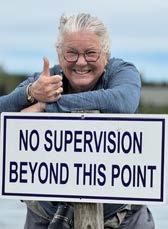
You’ve done it. The name, the logo, the shiny new website — you’ve even convinced your mom to like your first Facebook post. You’re ready for the customers to roll in.
And then… nothing.
Cue the awk-
ward silence of every new entrepreneur who thinks building a business means people will magically find it. Spoiler alert: they won’t.
Marketing isn’t optional. It’s not “something you’ll get to once you’re ready.” It’s the oxygen your business breathes, and without it, your big, beautiful dream will quietly suffocate while you’re waiting for a miracle.
Step 1: Get over the “I Don’t want to brag” thing
Ladies, I love us — but we have got to stop acting like visibility is vanity. Marketing isn’t bragging; it’s letting people know you exist. If you’re proud of what you’ve built, tell people. Often. And if that feels awkward, just remember: you’re not selling — you’re helping.
Step 2: Find your people
You don’t need the world to love you. You just need the right people to know you. Figure out who your audience really is — and then talk directly to them. Forget “everyone.” That’s the fastest route to “no one.”
Step 3: Be consistent, not complicate
You don’t need a full-blown campaign or fancy software. You just need to show up — regularly. Post once a week, send one email a month, go to one networking event. Momentum builds trust, and trust builds business.
Step 4: Stop hiding behind the logo
People connect with people. Show your face. Share your story. The small-business advantage is you. Use it.
Step 5: Make marketing a habit, not a panic attack
Don’t wait until you’re desperate for customers to start promoting yourself. Marketing works best when it’s steady — not frantic. Build it into your weekly routine like brushing your teeth.
Lucy Rosen has spent 40+ years helping women find business success. Based in Bluffton, she also runs the Lowcountry Women’s Network, a monthly gathering for women in business. Reach: Lucy@ smartmarketingcommunications.com
1. Get out there. Join a local networking event (like the Lowcountry Women’s Network or the Chamber of Commerce). Face time beats screen time every day.
2. Partner up. Team up with another local business for a giveaway, bundle, or pop-up. Collaboration builds credibility.
3. Use your socials — smartly. Pick one platform and show up consistently. Share your story, your wins, your “why.”
4. Send a simple email. One monthly update keeps your business top-of-mind and your name in their inbox.
5. Talk local. Tag, mention, and celebrate other Lowcountry businesses. The more local love you show, the more you’ll get back.
By Dr. Ronald Finger Contributor
First, let’s define thighs. The legs are below the knees, and the thighs are above the knees.
Common concerns involving the thighs include:
“Saddlebags.”
This condition is typically treated successfully with liposuction if the only issue is excess fat.
Excess fat in the upper inner thighs. In most cases, this can be corrected with liposuction. The skin in the inner thigh tends to sag, so tightening the skin may provide a better, firmer result. Renuvion or ThermiTight can be used to tighten the skin and may be performed simultaneously with liposuction. Renuvion appears to be safer and tightens the skin more effectively and more quickly by using radiofrequency combined with helium.
Cellulite. Cellulite is treated with a device called Aveli, which cuts the fibrous bands that cause dimpling. This is currently the most effective treatment for true cellulite, which typically appears as isolated dimples on the buttocks, lateral thighs, and front of the thighs. Aveli can be combined with any of the other procedures mentioned in this article.
Multiple wrinkles and sagging skin of the thighs. varying forms and degrees and is often the result of weight loss or aging. Some patients require liposuction, but in many cases the sagging is due to loose skin rather than excess fat.
To date, the most effective treatment to reduce thigh wrinkles and sagging is the use of a liposuction cannula called a basket cannula to separate fat from the surrounding fibrous bands, with or without liposuction as needed. The bas ket cannula redistributes the fat more evenly, creating a smoother thigh con tour. In effect, this acts as an internal fat graft by redistributing existing thigh fat. This process, called equalization, results in smoother thighs.
Thigh dimples, irregular ities, and lumpiness often involve loose skin, so basket cannula equalization is usually
followed by Renuvion to tighten the skin. If additional tightening is needed, other devices such as Everesse may be effective. Everesse tightens and thickens the skin by increasing the production of elastin and collagen. For dimples requiring added volume, Renuva is a newer filler that can last five years or longer and is best used for cellulite following Aveli treatment.
Wrinkles above the knees. If these are fine wrinkles, Renuvion or ThermiTight is usually sufficient. If the wrinkles are more severe, treatment can be followed with a microneedling device that emits radiofrequency at the same time, such as VirtueRF, to further tighten the skin.
Fatty inner knees. These are typically treated successfully with liposuction.
Below the knee: Fatty ankles. These require careful liposuction to achieve smooth, well-contoured results from all angles.
Most of the procedures mentioned above can be performed using local tumescent anesthesia with light sedation, depending on the patient’s preference. Compression garments are generally required for several weeks, depending on the extent of the procedure.
Dr. Ronald Finger, MD, FACS is a board-certified plastic surgeon with offices in Savannah and Bluffton. fingerandassociates.com

By Ryan Chowansky Contributor
Most homeowners compare contractor quotes the same way they compare gas prices. They line them up, circle the lowest number, and hope for the best.
That’s fine if you want to end up stressed, over budget, and wondering what went wrong.
A contractor quote is not just a price or list of prices. It is a preview of how your project will actually go.
Price is the easiest thing to compare, and it is also the least important part. Two contractors can quote the same project and be tens of thousands of dollars apart. That does not automatically mean one is overpriced. More often, it means one of them is leaving things out. The real question is not which one is cheaper. The real


question is which one actually thought the project through.
It starts with on site estimates asking you questions about what is important to you. Looking for structural load bearing points, Getting under the home and up in the attic. Checking your panel’s locations and seeing how much space is in them.
In the proposals you should see detailed scope descriptions, clear assumptions, and realistic allowances. Those are signs of a contractor who is trying to prevent surprises instead of creating them. Cheap quotes are often cheap because they are incomplete.
How a contractor communicates during
the quoting process is usually how they will communicate during the project. Did they call when they said they would. Did they explain things in an understandable non technical way? Did they answer questions without rushing or getting defensive. The estimating phase is the honeymoon. If communication feels disorganized now, it rarely improves once construction starts.
Good contractors use the quote as an opportunity to educate homeowners. They explain trade offs, outline risks, and make sure expectations are aligned before work begins.
The questions a contractor asks can tell you a lot about the experience you are about to have. Contractors who ask about how you live in the spaces, what matters most to you, and where flexibility exists are thinking beyond the surface. Contractors who measure quickly, throw out a number, and disappear are often guessing.
Time spent thinking on the front end usually saves time, money, and stress later.
When you hire a contractor, you are not just buying materials and labor. You are buying a process. You are buying scheduling, communication, coordination,
problem solving, and leadership. No project is perfect, and something will come up. The difference is how those moments are handled.
When a contractor communicates clearly, plans thoroughly, and owns problems instead of deflecting them, they’re usually the one who will deliver the best experience.
Pay attention to how you feel during the process. The right contractor makes you feel informed and calm, not lost, rushed, or pressured. Your confidence will come from clarity. Your confusion usually means someone in the process is hiding something.
At the end of the day, the best quote is not the lowest number at the bottom of two pages. It is the one that shows thought, detail, transparency, and respect for your home and your time.
When you compare contractor quotes this way, the price usually makes sense on its own.
When it does not, that answer becomes clear very quickly.
Ryan Chowansky is the owner of Bluffton Builders, LLC, www.bluffton.builders.


By Jamie Harrison Contributor

nothing back.
Something in the job market is shifting, and you can see it everywhere.
Highly qualified professionals are applying to dozens of roles with little response. People are posting their résumés on LinkedIn and Facebook asking who is hiring. More often lately, I receive messages from friends and community members hoping I might know where opportunities exist.
Even among HR professionals, the pattern is the same. In my long standing SHRM-SCP study group, two members with strong credentials have been searching for months and hearing almost
This isn’t due to effort, lack of qualifications, etc. It reflects a system undergoing a significant transition - think “under construction.”
Today, many applicants never make it to an interview, no matter how qualified they are. Applicant tracking systems, high application volume, and limited hiring capacity often filter résumés out long before a human ever sees them. For many, this reality is frustrating and discouraging.
The good news is there is a way to combat the situation. National workforce research shows that more than 70 percent of roles are filled through referrals or internal networks, often before they are publicly posted. Most jobs, clients, and partnerships still come through people, not platforms.
In our community, opportunity rarely starts with a job board. It begins with a conversation, a shared post, a referral, or someone saying, “I know a person you should meet.”
Whether you are searching for a job,
growing a business, or leading a team, your network directly affects your access to opportunity.
This is true even for those who work remotely. Many Bluffton area professionals earn their income from companies headquartered across the state or the country, yet they often land those roles through relationships, introductions, or shared connections. The revenue from those remote roles still supports local businesses, childcare providers, schools, and service organizations and creates a ripple effect that strengthens the entire region.
A personal introduction can open doors that online applications cannot. A short conversation can highlight strengths a résumé may not capture. Sharing information about job openings or expanding businesses builds momentum that moves through the community.
In Bluffton and the surrounding areas, networking happens every day through local Facebook groups, school events, nonprofits, neighborhood conversations, and word-of-mouth. When one person shares
an opportunity, it often reaches someone who never would have found it otherwise. This type of connection benefits more than individuals. When local businesses are fully staffed, service improves, stress decreases, and growth becomes possible. When people find work faster, they support the local economy and remain rooted in the community.
Not sure where to start? Local networking groups - including BNI chapters, the Beaufort/Bluffton/Hilton Head Regional Chamber of Commerce, Meetup groups, volunteer projects, and community business events - are accessible ways to begin building meaningful relationships. Your background builds your value, but your network helps you share it.
Jamie Harrison is the CEO of Wolff Engagement Solutions, a Bluffton-based HR & Organizational Development consultancy helping businesses align people, culture, and strategy during growth, compliance pressure, or transition.


By Sasha Sweeney Editor
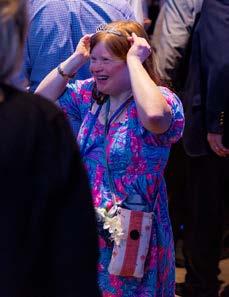
Lowcountry Community Church will again host Night to Shine, a prom-style celebration for individuals with special needs, on Friday, Feb. 13, 2026.
The event, sponsored by the Tim Tebow Foundation, will take place from 6 to 9 p.m. at the church’s campus at 801 Buckwalter Parkway. Night to Shine is designed to honor people with special needs ages 14 and older and is part of a global initiative supported by churches around the world.
Honored guests will enjoy an evening that includes music, dancing, red carpet arrivals, limousine rides and karaoke. The celebration concludes with a crowning ceremony in which every guest is named a king or queen.
“Night to Shine is an evening our community looks forward to all year,” said Liz Lucarini,
outreach director at Lowcountry Community Church. “Our goal is to ensure every honored guest feels seen, valued, and loved not only by our church but also by God.”
More than 100 honored guests attended last year’s event, and organizers hope to welcome even more participants in 2026.
Registration is now open for honored guests. Additional information and registration details are available at lowcountrycc.org/nighttoshine.
Night to Shine was launched by the Tim Tebow Foundation in 2015 and has since grown into a worldwide movement serving hundreds of thousands of individuals and families.
Lowcountry Community Church (LCC), was founded in 1994 as “a church without walls” and has become known for reaching out to the community through shoe donations, community projects, and helping community partners like the Boys & Girls Club, Bluffton Self Help, and Samaritan’s Purse.















Friday February 13 3-7 pm



Arts Ob We People: A Gullah Geechee
Art Exhibition
Jan. 29-Feb. 28
J. Costello Gallery (inside Redfish), 8 Archer Road, Hilton Head Island
Exhibit featuring Gullah Geechee artists including Amiri Farris and Ren Dillard. Gallery hours: 5-9 p.m. Tuesday-Sunday, or by appointment during the day.
Gullah Celebration at 30: Posters from the Archives
Through March 8
Coastal Discovery Museum, Hilton Head Exhibit of more than 20 posters commissioned for the Hilton Head Island Gullah Celebration. www.coastaldiscovery.org
Hilton Head Island Gullah Celebration February (locations and times vary) Monthlong series includes Cultural Stewardship Speaker Series, Gospel Series: Friends & Family Night, Twilight Music with Deas Guyz, Voices of Gullah, and Roots & Recipes Reunion. www.gullahcelebration.org
Beyond the See Exhibition
Jan. 28-Apr. 24
Artists of Sea Pines Gallery, Sea Pines Community Center, 71 Lighthouse Road, Hilton Head Island
Exhibit featuring more than 70 works; a portion of sales benefits the Sea Pines Forest Preserve. www. seapines.com
The Play That Goes Wrong
Jan. 28-Feb. 22
Arts Center of Coastal Carolina, Hilton Head Island
Olivier Award-winning comedy presented as a play-within-a-play. www.artshhi.com
Backyard Birding Basics
Thursday, Feb. 5, 11 a.m.-noon
Bluffton Branch Library, Bluffton Adult program focused on backyard birding. 843-255-6503.
First Friday Lecture: Grace — The Century-Old Crown Jewel of Palmetto Bluff
Friday, Feb. 6, 6-7 p.m.
Conservancy Classroom or online Lecture with Grace historian Gray Stahlman on the 1913 wooden motor yacht Grace. Walk-ins welcome. palmettobluff.com/conservation/events
Beethoven and Mozart
Sunday, Feb. 8, 4 p.m.
Monday, Feb. 9, 7:30 p.m.
First Presbyterian Church, 540 William Hilton Parkway, Hilton Head Island Program includes Louise Farrenc’s Overture No. 2, Mozart’s Sinfonia concertante, K. 364, and Beethoven’s Symphony No. 4. Tickets: 843-8422055.
The Empowered Caregiver Series: Exploring Care and Support Services
Tuesday, Feb. 10, 11 a.m.-noon
Bluffton Branch Library, Bluffton Program on caregiving resources and support services. 843-255-6503.
A Conversation with Author Keith Rushing
Tuesday, Feb. 10, 7 p.m.
First Presbyterian Church, Hilton Head Island
Talk on “Descended,” exploring family history and Gullah-Geechee heritage.
I Speak Chocolate
Saturday, Feb. 14, 10-11 a.m.
Bluffton Branch Library, Bluffton Adult program focused on chocolate. 843-255-6503.
Valentine’s Strings: Salut d’Amour Saturday, Feb. 14, 2026
SoundWaves, Hilton Head Island HHSO String Quartet performs romantic favorites, including Edward Elgar’s “Salut d’Amour.” Tickets: 843842-2055.
Artist in Residence: Mary Benson
Feb. 19-21, 2026
Palmetto Bluff
Charleston-based painter Mary Benson will lead three workshops during her residency.
palmettobluff.com/experience/the-artsinitiative and palmettobluff.com/explore/ artist-in-residence/mary-benson
Palmetto Quilt Guild workshop
Friday, February 20, 9 a.m.–3 p.m.
Palmetto Electric Community Room, Hardeeville, S.C.
Workshop supporting preparations for the March 2026 Quilt Festival. palmettoquiltguild.org
Fridays at the FOODseum:
Hardee Greens
Friday, Feb. 27, 10:30 a.m.-12:30 p.m.
TCL Culinary Institute of the South, 1 Venture Drive, Buckwalter Place, Bluffton Workshop featuring Jennifer and Chase Harsta of Hardee Greens; cooking demonstration and tasting with Chef Damon Dickerson; FOODseum tour follows. $75. Register: tcl.edu/ foodseumfridays.

Shore Notes A Cappella Chorus
25th Anniversary Concert
March 28, 7 p.m.
Hilton Head High School, 70 Wilborn Road, Hilton Head Island Tickets: ShoreNotes.com
Savor Sea Pines February
The Sea Pines Resort, Hilton Head Island Monthlong food and beverage festival featuring dinners, tastings and special events. savorseapines.com.
Palmetto Quilt Guild meeting
Thursday, February 19, 11:30 a.m.–2 p.m.
Island Lutheran Church, Hilton Head Meeting focused on planning the “Welcome to Paradise” Quilt Festival. palmettoquiltguild.org
Sun City Lions Club presents Evolution March 5, 7 p.m.
Sun City Magnolia Hall, 118 Magnolia Lane, Bluffton, S.C.
Fundraiser featuring Evolution, an 18-piece variety band, with guest artist Mary Manges on vocals and flute. Admission $35. Ticket information: 516457-3707.
FAMILY HISTORY CLASS
Curious About Your Family History –But Not Sure Where to Begin?
Discover the stories that tell your story.
Our experienced genealogy volunteers are here to guide you through the process – helping you understand available records, interpret historical data, and take meaningful steps toward discovering and preserving your family’s history.
Life is lived forward, but understood backward.
Join us for a one-on-one guided research session and let us help you look back, connect the pieces, and better understand where you come from.
Monday, February 9, 2026
10:30am - 12:00 Noon or 1:00 - 2:30pm
Akiyama-Owner
(7297)


Saturday, April 11, 2026 10:30am - 12:00 Noon or 1:00 - 2:30pm
Registration is required and seating is limited. $10 per person
The Heritage Library, 2 Corpus Christi, Suite 100, Hilton Head Island, SC 29928
GENEALOGY CLASS
Using AI to Create Genealogy Graphics
Learn to use a free, easy, online AI site to create info graphics, slide decks, timelines, and other items to enhance your genealogy. You can even make a quiz for family reunions. You provide the input based on your research and let the program do the rest!
Thursday, Feb 26, 2026
1:30 - 2:45pm (Zoom only)
$10 per person | Instructor: Carol Clemens
QR CODE TO REGISTER FOR CLASSES.

By Sasha Sweeney Editor
The Art League of Hilton Head will present a February exhibition highlighting the artistic traditions of the Gullah Geechee community.
The exhibit, titled From Their Spirit, By Their Hands—Gullah Geechee Traditions in Art, will be on view Feb. 3-27, 2026, at Art League Gallery inside the Arts Center of Coastal Carolina. An opening reception is scheduled for Feb. 4 from 5 to 7 p.m. and is free and open to the public.
Held annually in February, the exhibition is intended to recognize and preserve the history, culture and contributions of the Gullah Geechee people. This year’s show features work by 38 artists and includes a range of media reflecting storytelling, craftsmanship and spiritual traditions rooted in Gullah Geechee heritage.
“This exhibit is about honoring lineage and lived experience,” said Cora Miller, an exhibit docent. “Each piece reflects
traditions that have been passed down through generations — art created not only by hand, but by spirit, memory and deep cultural pride.”
Organizers said the exhibition invites visitors to explore the visual language of Gullah Geechee culture and its lasting influence on the Lowcountry, while highlighting both individual artistic expression and a shared cultural legacy.
Art League Gallery, located at 14 Shelter Cove Lane, is open Monday through Saturday from 10 a.m. to 4 p.m. and Sunday from noon to 4 p.m. The gallery also opens 90 minutes before Arts Center performances. All artwork on display is available for purchase.
Art League of Hilton Head is a nonprofit visual arts organization that operates both a gallery and a teaching academy.
The Art League Academy, located at 106 Cordillo Parkway, offers classes and workshops for artists of all skill levels.
More information is available by calling 843-681-5060 or visiting ArtLeagueHHI. org.

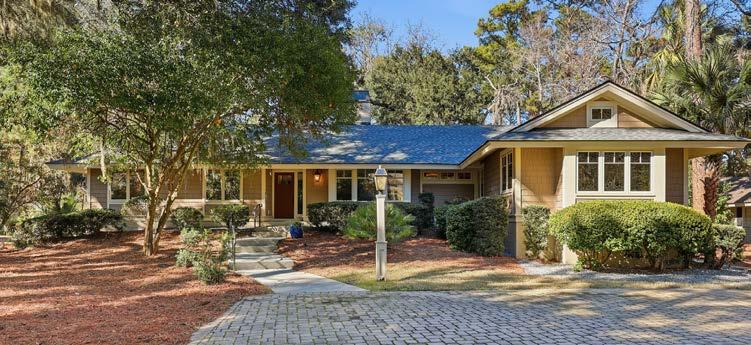
Sea Pines | Hilton Head Island
6 Greenwood Court | $2,350,000
Kim Molloy | 843.368.1300
The Prud’homme Team

Hampton Hall | Bluffton
274 Farnsleigh Avenue | $1,499,000
Bonnie 843.338.7710 | Lisa 843.384.8462
Sulka Bogart Team

Hampton Hall | Bluffton
7 Attleboro Place | $1,385,000 Tiffany Petrone | 843.422.3256 Kroupa and Bush Partners

Pines |


Palmetto Dunes

| Bluffton








An independent luxury services company. With values that put others first. Our promise is to help you succeed.
Earning clients’ trust and confidence for over 50 years.
By Sasha Sweeney Editor
The Society of Bluffton Artists is relocationg its gallery and art school March 3 at a new location in Old Town Bluffton, continuing its programs after moving across Church Street.
SOBA’s current buildings on Church Street are being sold, prompting the move. The gallery and art school will be closed from Feb. 15 through March 2 and will reopen Tuesday, March 3, 2026, at 7 Church St., directly across from the organization’s former space.
Although the address is changing, SOBA officials said the organization’s artists, exhibitions, classes and community programs will remain unchanged.
“This move marks an exciting new chapter for SOBA,” said Karen Richards, president of the Society of Bluffton Artists. “Nothing about who we are is changing. Our artists, exhibitions, classes and special events will continue with the same creative energy and connection our community knows and loves.”
The nonprofit plans a full slate of programming in 2026, including the return of featured artist events at the
gallery, adult art classes beginning in March, and an expanded youth art program launching the same month. Other scheduled events include the annual high school student art show from April 2 through May 8 at the Bluffton Public Library, Artists on the Lawn during Old Town Bluffton’s Mayfest, the 32nd annual SOBA Judged Show in August, and the organization’s Holiday Market in November and December.
While leasing space at the new Church Street location allows SOBA to remain in Old Town Bluffton, the organization has also launched a capital campaign aimed at purchasing a permanent home.
“We want to thank everyone who has already contributed so generously to the campaign,” Richards said. “With the continued support from the Bluffton community, we hope to achieve this goal within the next few years.”
Founded as a nonprofit arts organization, the Society of Bluffton Artists supports the local arts community through exhibitions, classes, scholarships and outreach programs.
More information about classes, exhibitions and events is available at sobagallery.com or by calling 843-757-6586.


JANUARY 28 - FEBRUARY 22
A hapless amateur theater troupe attemps to stage a 1920s MURDER MYSTERY , but everything that can go wrong, DOES . The cast’s increasingly desperate efforts to finish the show lead to HILARIOUS, CATASTROPHIC results.
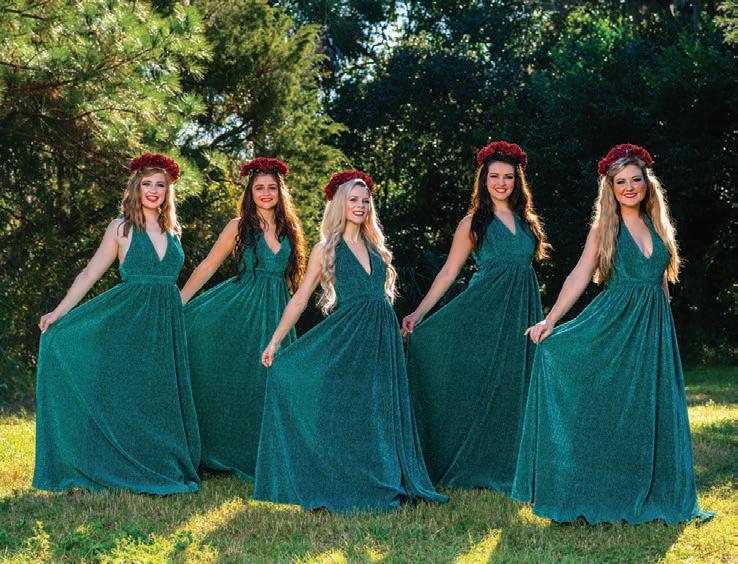


FEB 26 | 7:30PM & FEB 27 | 4:00 & 7:30PM
An evening of Craic (fun), Ceol (music) and Traidisiún (tradition) Get swept away in the enchanting harmonies of the Celtic Angels as they present an impassioned homage to their beloved Emerald Isle.



















































By Sandro Virag Contributor
Ever notice how dancers seem to have such great posture? Before they even begin a dance, their posture says confidence, elegance and control. If a couple’s frame is just right, it makes two people look like one moving expression. They seem beautifully connected.
Posture in the ballroom doesn’t mean you are just standing up straight, it has more to do with balance and alignment. Notice a dancer’s chest and neck are lifted, yet the shoulders are relaxed. Their weight is shifted slightly forward allowing smooth movement. In smooth dances like the waltz or foxtrot, their posture is tall and vertical, while in Latin styles such as chacha or rumba, the dancers are more grounded with hip movement.
How dancers connect through arms and shoulders is also important. For the person leading, arms and shoulders should be firm enough to communicate the next move. It becomes an unspoken language. A strong frame in a dance like the Tango or waltz allows for clear communication
so that leading and following become seamless.
Many dancers do struggle somewhat with posture, especially beginners. They may have rounded shoulders or stiff arms. Letting elbows drop below the shoulder and lose tension can bring on a “noodle arm” look. Raised or squished shoulders is when a dancer holds tension in their shoulders and it creates a scrunched look.
Another beginner habit is looking down at the floor to watch their feet. This collapses the upper frame. Leaning forward or backward too much can throw off balance and it compromises the frame. Dancing in front of a mirror can sometimes help and also strengthening the core and upper back will help with endurance and poise.
Dancing is physically demanding but with good posture, the dance will look effortless. If you are well aligned, there will be less strain on your muscles and you will not fatigue as quickly. Your posture should feel proud, not stiff. And believe it or not, smiling helps! When you breathe deeply and smile, your whole body relaxes.



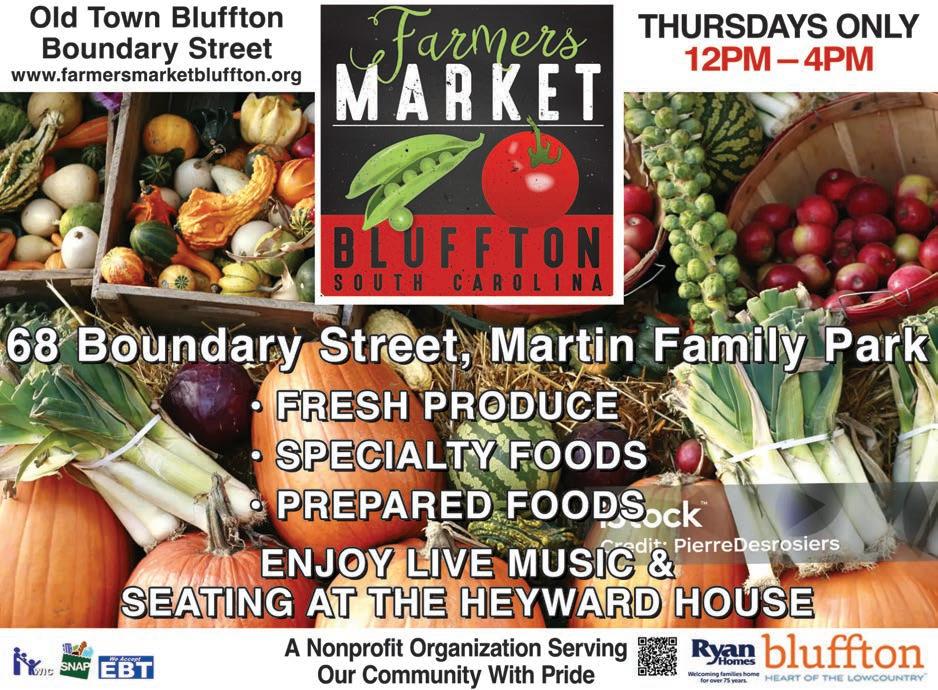
Featuring works in oil, acrylic, watercolor, pencil and mixed media by Mary Burrell | Jane Capraro Murray Sease | Bill Winn & sculpture by Sanders Black & Wally Palmer
Adjacent to “The Store” 56 Calhoun Street lapetitegallerie.com
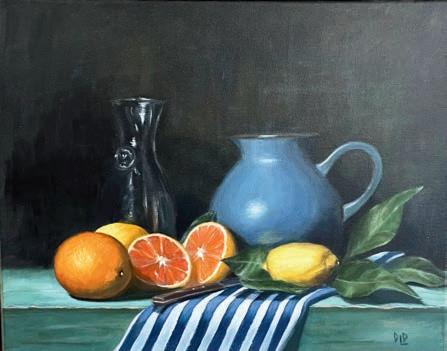




The Unitarian Universalist Congregation of the Lowcountry will present its February installment of the Music on Malphrus concert series with a performance by musician and storyteller Reggie Harris.
The concert is scheduled for Saturday, Feb. 21, 2026, at the congregation’s Malphrus Road location in Bluffton. Doors will open at 6:30 p.m., with the performance beginning at 7 p.m. Tickets are $25 and will be available for purchase online and at the door. Refreshments will be offered for sale before the performance.
Music on Malphrus is a listening-room style concert series known for its intimate setting and engaged audiences. Hosted by the Unitarian Universalist Congregation of the Lowcountry, the series regularly brings acoustic and
folk-oriented artists to the region. Harris is known for blending guitar-driven music with storytelling that draws from personal experience, history and social themes. His work often explores topics related to life, relationships and the broader human experience, combining reflective songwriting with an optimistic outlook.
The concert will be held at 110 Malphrus Road. Organizers describe the venue as a welcoming space designed to foster connection between artists and audiences.
Additional information and tickets are available at uulowcountry.org/collections/music-on-malphrus. Updates about the series can also be found on Facebook at facebook.com/Musiconmalphrus.
Fans of pop music are invited to sing along when a nationally touring Taylor Swift tribute show comes to the USCB Center for the Arts in February.
Enchanted Dreams: An Unofficial Tribute to the Music of Taylor Swift, starring performer Elizabeth Burnett as “Elizabeth as Taylor,” is scheduled for Friday, Feb. 6, at 7:30 p.m. at the center, located at 805 Carteret St. in Beaufort. All seats are $32.
The production features a full band and highlights songs spanning Taylor Swift’s career. Burnett, a University of South Carolina graduate, performs as a solo lead vocalist backed by live musicians. Organizers describe the show as a high-energy concert experience designed to mirror the atmosphere of a Swift performance.
Burnett, who performs professionally as Elizabeth Scarborough Burnett, is a touring tribute artist known for portraying Swift in venues across the United States and internationally. She is currently appearing at Legends in Australia and has performed on national tours, according to event materials. Her performances have drawn praise from presenting venues. TJ Millwood of

$17
Fresh Garlic, evoo, hot peppers, kalamata olives, feta cheese and tomatoes
EGGPLANT PARMIGIANA $15
Lightly egg battered eggplant layered with mozzarella cheese and marinara, served over spaghetti
HOUSE REUBEN $15
CHICKEN
PARMIGIANA $18
Breaded chicken breast topped with marinara and mozzarella cheese, served over a bed of spaghetti
LAMB KABOB $32
Marinated lamb, peppers, onion, tomatoes, served with jasmine rice
VEAL PICCATA $29
the Newberry Opera House said Burnett “made the evening unforgettable” during a previous appearance, adding that audiences responded enthusiastically.
The event is an unofficial tribute and is fan-sponsored. Organizers note that the performance is not endorsed by or affiliated with Taylor Swift or TAS Rights Management.
Tickets are available through the venue’s website at uscbcenterforthearts. com.

Sliced corn beef, sauerkraut, Swiss cheese, thousand island dressing on marbled rye
BLACK AND BLUE BURGER $15
Chargrilled with blackened seasoning topped with blue cheese crumbles, lettuce, tomato, and onion on brioche bun
FETTUCCINE ALFREDO $16
Fettuccine tossed in rich creamy asiago alfredo sauce
Center-cut veal, sautéed mushrooms, Hungarian hot peppers, arugula, and white wine reduction
NEW YORK STRIP STEAK $29
12oz. char grilled new york strip steak served with baked potato
Pan seared scallops with creamy mediterranean herbs served with sauteed greens

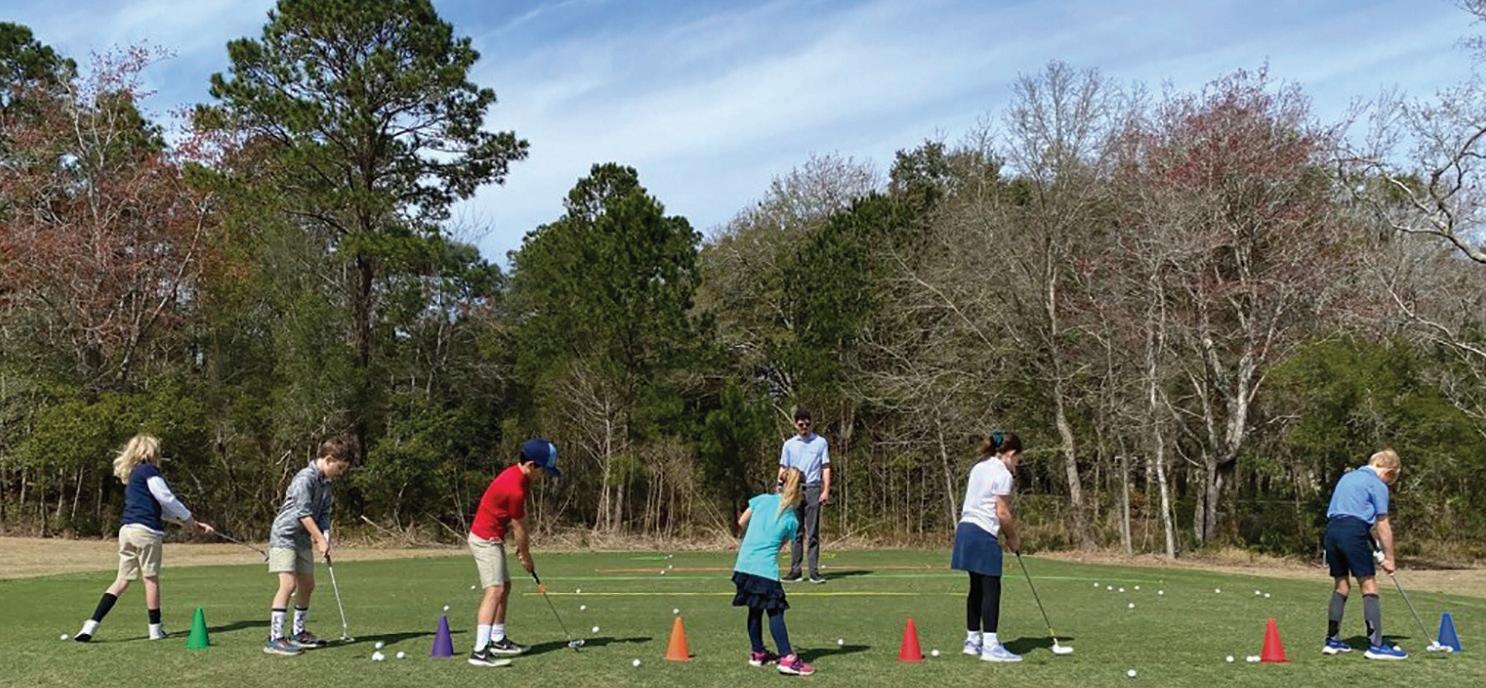





Experience affordable golf on the Island with the only par-3 course–perfect for instruction, children, and senior play. Driving range and putting green are open to everyone. $10 donation for adults, $5 donation for kids – all you can play. You don’t need to bring clubs – the pros at the First Tee will lend you a set at no charge!
our website for current hours. FirstTeeLowcountry.org 151 Gumtree Road Hilton Head Island, SC 29926 843.686.2680



By Ken Adams Contributor

Would you like to participate in the science of birds and their habitats? Citizen science projects around the world provide opportunities for everyday citizens to contribute to the advancement of environmental science, including the study of bird ecology. Volunteers who collect data for these large-scale programs provide enormous amounts of information that would be impossible for professionals to gather on their own. The longest-running citizen science program in the world is the Audubon Christmas Bird Count, held annually since 1900. Observations from the count have been used by scientists and conservationists to track longterm bird population trends, detect shifts in bird ranges and develop conservation strategies. For example, results have shown steep declines in grassland bird populations such as the eastern meadowlark and short-eared owl. In response, grassland habitat protection and restoration initiatives are being implemented in many states. Last year, the local Christmas Bird Count took place on one of the coldest days of the season. Despite low temperatures and high winds, more than 300 volunteers
participated, identifying about 20,000 birds — including 140 species — around Hilton Head and Bluffton. Those results will be added to Audubon’s data set to help identify migratory patterns and assess population numbers. Before 2017, black-bellied whistling ducks were not reported in the area; last year, more than 400 were counted. For those who missed the Christmas Bird Count or would like another opportunity to participate, the Great Backyard Bird Count is scheduled for Feb. 13-16. Spon-
sored by National Audubon, the Cornell Lab of Ornithology and Birds Canada, the annual event was the first citizen science project to collect bird observations online and display results in near real time during the fourday count. The top three species identified in the United States last year were the northern cardinal, dark-eyed junco and house finch.
Participation in the Great Backyard Bird Count is simple. Volunteers watch birds for at least 15 minutes on one or more of the four days and identify all birds seen or heard during that time.
Observations may be made in a backyard, local park or wildlife refuge. Participants enter their sightings using the Great Backyard Bird Count website, the Merlin Bird ID app, the eBird Mobile app or the eBird website. Instructions are available at birdcount.org.
Merlin and eBird are citizen-based observation networks managed by Cornell University. Hilton Head Audubon offers classes for novice birders interested in learning how to use these tools. A Merlin class is scheduled for Feb. 17, followed by an eBird class on Feb. 19, with a practice field trip planned for Feb. 24.
Registration is available at hiltonheadaudubon.org. Using eBird provides another way for residents to participate as citizen scientists.
Ken Adams is a retired professor of ecology, State University of New York and a board member of Hilton Head Audubon.

By Emma June Grosskopf Contributor
The Beaufort Memorial Foundation is blending art and healthcare through a new initiative designed to bring the healing power of local creativity into the new Bluffton Community Hospital.
The program, “Heart of Healing,” will feature artwork by Lowcountry artists displayed on community art walls throughout the new Bluffton hospital.
The goal? Create a welcoming, community-centered environment that supports patient healing, staff well-being and a deeper connection to the region that Beaufort Memorial serves.
“Beaufort Memorial is a community health system, and this hospital has ‘community’ in its name,” said Kim Yawn, Beaufort Memorial Foundation Chief Development Officer. “Through the power of art, we want to create a space that feels welcoming, meaningful and connected
to the people we serve. We’re excited to partner with local artists to enhance how we deliver high-quality, patient-centered care.”
The Foundation is collaborating with EMROSE projects, an art and creative placemaking consulting organization led by Bluffton resident Maria Hooper – who also serves on the Town of Bluffton’s Public Art Committee – as a curatorial and advisory partner for the “Healing Arts” program.
The Foundation is now accepting submissions from Lowcountry artists aged 18 and older. Artists may submit up to three existing pieces for consideration. The theme, “Community Well-Being,” encourages works of art inspired by nature’s restorative properties, local history, human connection and non-denominational spiritual or meditative imagery. Two-dimensional works in any medium are welcome, along with photographs of three-dimensional pieces. Selected artwork will be professionally, locally


scanned and reproduced by Beaufort Memorial. Additional guidelines, including size requirements and licensing information, are available at BeaufortMemorial. org/Foundation.
The submission deadline is March 31, 2026.
Currently under construction at the
corner of Bluffton and Buckwalter Parkways, the 28-bed, three-story Bluffton Community Hospital is expected to be completed by the end of 2026 and open to patients in early 2027. Artwork from the “Heart of Healing” program will be displayed in clinical and transitional spaces, such as surgery corridors, waiting rooms, staff breakrooms and other employee areas.
Research shows that incorporating art into healthcare settings can reduce stress, support recovery, improve communication and foster a stronger sense of human connection. Through this program, participating artists will play a direct role in community healing while helping create a hospital environment rooted in comfort, reflection and belonging.
The Beaufort Memorial Foundation plans to expand the “Heart of Healing” program to additional facilities in the future, extending its benefits throughout the health system.
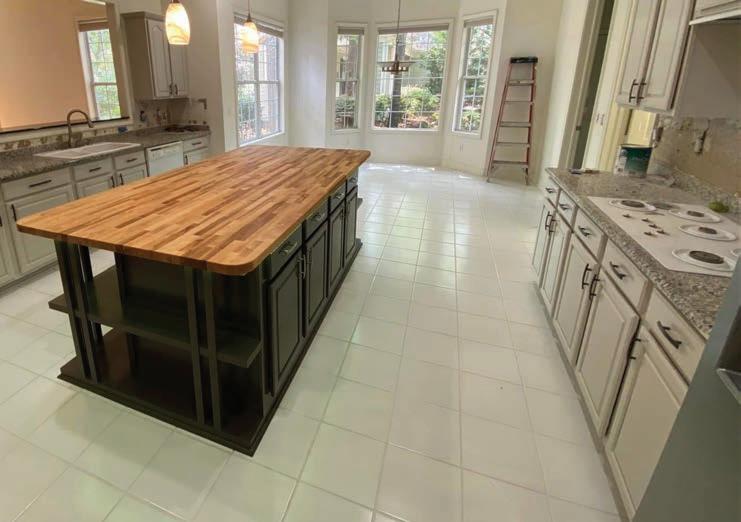


By Collins Doughtie Contributor
When as I was searching my gray matter for specific angles of attack for this column, a thought popped in there. It was how much of an affect four individuals in particular had on my life and more specifically, as a ravenous angler and outdoorsman. I had planned on writing another one of those “good old days” columns but what put the “good” in that phrase were the lessons I learned from these folks.
Without a doubt, my dad got the ball rolling when I was barely out of kindergarten. With three boys and two girls in the family, I reckon he played the odds that one of us would share his passion for fishing. I won’t go as far as to say my two older brothers weren’t interested but I think since I was the youngest and hadn’t yet dabbled in girl watching, I took to fishing way more than algebra or schooling in general. My dad had his fishing buddy and boy did we fish a lot together.
It didn’t matter if it was a freshwater pond or sixty miles offshore, I was the child that never said “no.” If my memory serves me correctly, I landed my first sailfish at the age of six. Being that young and watching a fish twice my size go skittering across the water’s surface at breakneck speeds sealed the deal for me. I was hooked. It was about that time when I decided freshwater fishing couldn’t touch the excitement of large saltwater fish and blue water. I made it a mission to learn every knot, rigging technique or strategy that captains and mates we fished with might share with me. If only I would applied myself that much in school I might have… On second thought, I guess there’s no use crying over spilled milk. It was during those first offshore trips that I met Capt. Al Mende, a grizzly old captain in Key Largo, Florida. Every year around Christmas our entire family would head south for the holidays. I don’t know how my dad pulled it off with my mom but he would have Capt. Mende’s boat called the “Blue Fin” chartered every day while we were there. Always attired in all khaki with your standard captain’s hat and a cigarette hanging out of the corner of his mouth, he knew his stuff. We always caught fish, lots of fish. Dolphin, grouper, sailfish, barracuda, mackerel, you name it and we caught it.
Of all the children, I was the only one that never
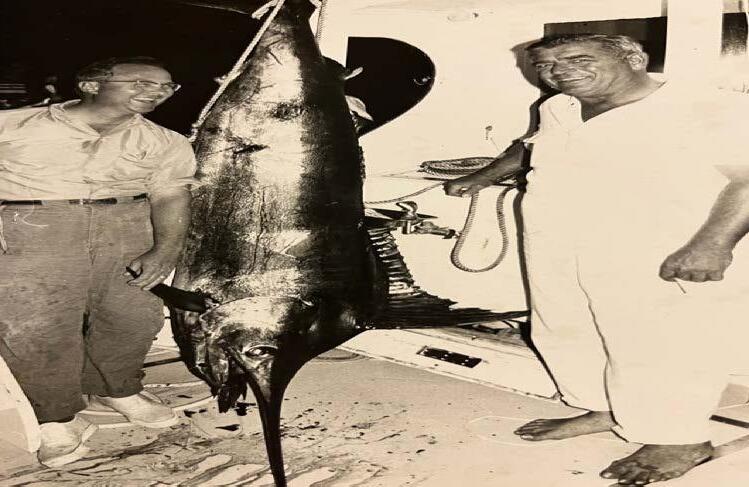
missed a day on board that diesel powered wooden boat. My sisters Grace and Alice would often take days off to shop with my mom but not me. Grace in particular had seasickness issues and lordy, lordy did I feel for her. Alice, the second to oldest, was pretty darn hardcore when it came to landing big fish. One year she won the Miami International Offshore Tournament when she brought in an 84-pound amberjack. Any of you that have ever tangled with an amberjack, otherwise known as a reef donkey, knows that one in the forty-pound range will absolutely kick your butt. Quite honestly, I wouldn’t want
to tangle with one that big — no way José.
Back on the home front, my third mentor, Capt. Buddy Hester, rolled in from Virginia Beach aboard his boat the Buddy I to Palmetto Bay Marina, the island’s first marina. Regarded as the “pioneer of offshore fishing” here, he was something else. An ex-Marine, Buddy was gruff but in the same breath fatherly. Shoeless 12 months of the year and always wearing white coveralls, he busted the offshore fishery here wide open for just about every other offshore captain to follow. My dad became one of his regulars and because of that I was treated to countless trips while learning most everything I now know about blue water fishing. Marlin fishing was big back then and Buddy sure as heck knew how to get them to attack our spread of baits. And bottom fishing? Using primitive navigational equipment, he discovered spots where the giants lurked. I don’t think we every came home without hundreds of pounds of big snapper and monster grouper.
When the Buddy I sadly sank during one of those trips, his new boat was aptly named the Buddy II and after its tenure along came the Cloud Nine and finally the Elizabeth, built right there on Hilton Head by Graves Boatworks. I got to fish on every one of those boats and each time I was able to hone my offshore skills. His mate, Dean Jacobs aka “Bulldog” taught me some of the finer points about rigging baits like Spanish Mackerel and split tail mullet and if I had more space with which to write, we didn’t simply have fishing trips but better put, fishing “adventures.” I still have dreams that replay some of those moments. That is quite amazing considering I rarely know what day it is. My dad, Al Mende and Buddy are all gone while Bulldog is lazing around in Costa Rica after years mating for local Bubba Carter, also in Costa Rica, recognized as one of the top billfish captains in the world.
Other than my fantastic dad I guess it is who you know that counts. And folks, across the board I knew the best. Each of those I have named has given me a life-long debt I can never hope to repay.
Collins Doughtie is a 60-year resident of the Lowcountry, is a sportsman, graphic artist, and lover of nature. collinsdoughtie@icloud.com

By Tom Dorsel Contributor
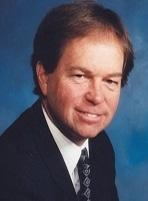
In bowling, it is a 300 game. In basketball, it is being in the zone. In golf, it is going low. In baseball, it is pitching a perfect game. In running, it might be the four-minute mile. In tennis, it is a 6-0, 6-0 win. In each case, you are inexplicably in a mysterious state of mind, one you had better enjoy while it lasts.
But can you somehow create this mindset intentionally, actually make it happen on this given day? Here’s one possible strategy:
Be a robot
Many sports have their robots, both figuratively and literally. Robots include using a ball machine in tennis or a pitch-
ing machine in baseball to deliver the ball to virtually the same spot every time.
Perhaps the most well-known of these robots is Iron Byron, the mechanical golfer that mimicked the swing of Byron Nelson and served to reliably test golf equipment for decades.
Lewine Mair (Global Golf Post, July 24, 2025) described a new apparatus named LDRIC (after Eldrick “Tiger” Woods). Mair reported that this robot was set up on the tee of the infamous 16th “stadium hole” at TPC Scottsdale, home of the Phoenix Open. It took the robot six shots to be calibrated correctly, but then it just automatically made a hole-in-one. The robot wasn’t plagued with thinking, “I can’t make a hole-in-one.” Au contraire, it certainly could, since it was calibrated and just going through the motions.
In the same article, Scottie Scheffler admitted to teasing his coach with the suggestion that he is trying to be a robot. “He is definitely robotic in the way he comes up with the same results over and over.”
Imagine that you are a tennis robot,

set up by your coaches on the baseline, aligned to hit a perfect serve, and a trigger is engaged that starts your stroke. Then you are just as quickly transported and set up to receive the return shot. No thinking involved, just routinely going through the motions on each shot.
The advantages of a robot in sport
• Totally unemotional — never too high or too low, never even the least temperamental display.

Thursday, February 12
– 6 PM
• No memory of past mistakes — always in the present; it doesn’t matter what happened on the last play.
• Non-distractible — focused, makes no eye contact, in a cocoon.
• Doesn’t think ahead — just the play in front of it.
• No pressure — all shots are the same.
• Perfectly follows the game plan — however it has been programmed. It might sound a bit mundane to be an unemotional, mechanical, robotic player. But golfers like Ben Hogan and Jack Nicklaus, as well as tennis players Bjorn Borg and Novak Djokovic, all performed pretty well with a robotic mindset. There is plenty of time for emotions and fun when the game is over. Also, getting into your cocoon, playing in the zone, and performing your best ever is rather fun, too.
Dr. Tom Dorsel is Professor Emeritus of Psychology and a clinical/sport psychologist on Hilton Head Island. His best-selling book is “GOLF: The Mental Game.” He can be reached on Facebook or tom@dorsel. com.

ADOPTION FEES WAIVED FOR CATS & KITTENS!
Bring your friends and join us for champagne and hors d’oeuvres as you mingle with some of the Lowcountry’s cutest and most eligible cats!

By Wendy Kushel Contributor
No one feels more judged than when stepping onto an airplane. The boarding process should come with a warning label: this experience may cause sudden self-doubt. It begins the moment you reach your row and attempt the Olympic event known as getting a carry-on into the overhead bin. The aisle is narrow. Your backpack is still on your back like a bad decision. Someone is already seated, watching. Everyone else is standing, waiting, and because there is absolutely nothing else to do, they’re watching too. You lift the bag. It doesn’t fit. You squiggle. You accidentally swing your backpack into the next person. The handle on your roll-away refuses to collapse, so now
you’re wrestling luggage at eye level while pretending this is completely normal. Eventually, you have to ask someone— politely, apologetically—to shift their already perfectly placed bag. The judgment hums through the cabin like engine noise. The quickest way through it is straight into it. Smile. Laugh. Say something disarming. Make a joke. “If you think you’re annoyed, imagine living with me.” The tension breaks. The bag finally settles into its nesting place. You turn around, smile at the invisible jury, and just like that, the judgment loosens its grip.
Airports are judgment pressure cookers. No one looks graceful. Everyone looks slightly

lost, overpacked, and mildly suspicious of everyone else. Who are they? Where are they going? Why do they have so much stuff? The truth is, no one knows what they’re doing in an airport. Everyone is just trying to get somewhere without dropping anything—or
Feeling “less than” hits just as hard. Sometimes it sneaks up on you. You might feel like a big fish in a small pond, confident and capable, until you land in a massive airport and are instantly swallowed by a sea of people. Suddenly, you’re invisible. That same feeling shows up at trade shows. You set up your booth among towering displays with custom lighting and polished teams dressed head-to-toe


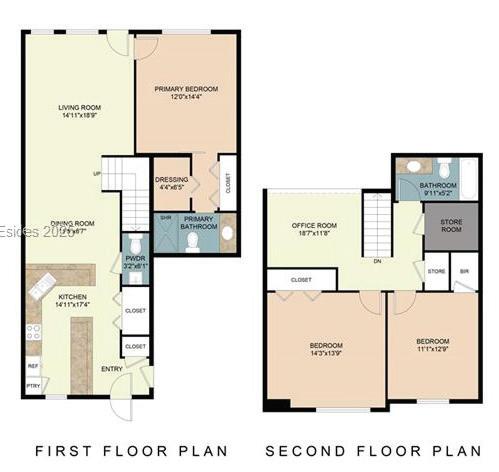
in tailored confidence. Meanwhile, you’re standing there in a logo T-shirt and yoga pants, hoping your passion is louder than your backdrop. It’s easy to feel small. It’s easy to question whether you belong. No one wants to feel small. No one enjoys being judged, measured, or silently compared. But the truth is, most people are too busy worrying about their own bag, their own outfit, their own place in the room to be judging anyone else for long.
So the answer, again, is simple. Smile. Own the moment. Let the awkwardness pass. Judgment only has power if you carry it with you—and you’re already carrying enough.
Wendy Kushel is the owner of Wendala’s LowCountry Sugar Scrub, LLC based in Bluffton, founded in 2020. Her background includes stand-up comedy, film, TV and sales and marketing. For information about Wendala’s® LowCountry Sugar Scrub visit wendalas.com or call/text 843949-8933.


By Dr. Kenneth Horup Contributor

Valentine’s Day is a time to celebrate love and show appreciation for the people who matter most in our lives. But there is another kind of love that often gets overlooked: the love we show our own bodies. One of the most forgotten parts of the body is our feet. They do a lot of work and get very little credit, and some don’t realize it until it’s too late. Your feet carry you through life. They take you to work, to family gatherings, to vacations, and to all the little moments that make life meaningful. They have never called in sick, never taken a day off, and never complained. Yet when they start sending warning signals, many people ignore them. That is exactly what happens with neuropathy.
Neuropathy is a condition where the nerves, most often in the feet, become damaged or irritated. This can cause numbness, tingling, burning, pain, weakness, or balance problems. Some people describe it as walking on pillows. Others say it feels like standing on ice cubes or electric wires. Some cannot feel their feet at all. That might sound fine until you realize you also cannot feel where you are stepping.
Here is a little Valentine’s Day humor: Roses are red, violets are blue, if your feet are numb, they are asking for help from you. You buy flowers to say “I love you,” but your feet are just hoping you notice them at all.
One of the greatest dangers of neuropathy is not just discomfort but fear for your own safety. When your feet cannot properly feel the ground, your balance suffers. This increases the risk of falls and injuries. It can also affect your sleep, confidence, and independence. Many people begin to walk less, travel less, and avoid activities they once enjoyed because their feet no longer feel reliable.
Neuropathy is not something to simply “live with.” It is your nervous system

asking for attention. Just like any relationship, ignoring the signs usually makes things worse. Early care can help slow progression and sometimes improve nerve function. Waiting often makes recovery more difficult.
Healing works better with support. When a spouse or loved one is involved, people stay more consistent with home care and treatment plans. Love becomes action when we help each other stay healthy. Think of it as teamwork: one person provides encouragement, the other provides determination, and together they protect independence.
Your feet have been loyal to you your
entire life. They have walked miles for you, stood for hours, and carried you through everything. The least we can do is listen when they whisper for help instead of waiting until they scream.
Modern neuropathy care focuses on improving circulation, stimulating nerve activity, restoring balance, and helping the brain reconnect with the feet. The goal is not just symptom relief. It is safer walking, better sleep, stronger confidence, and a better quality of life.
Valentine’s Day is about love, protection, and commitment. Loving your body means listening when something feels wrong. Loving your family means staying active and independent for as long as possible. Loving your future means acting early instead of waiting.
So, this Valentine’s Day, while you celebrate hearts and romance, remember your feet too. They may not write love letters, but they have carried your love story for decades. And honestly, they deserve a little romance as well.
Dr. Kenneth Horup, DC is a Chiropractic Physician at Discover Specific Chiropractic, Certified in Neuropathy.


By James Hamilton Contributor

Though 2026 is less than a month old, stories of random and extreme violence continue to capture the headlines. The unfavorable guidance to such violence by so many security experts is usually the same: just buy a gun. This guidance can be dangerous.
The use of a firearm in a home to defend those inside is known as The Castle Doctrine and is supported by strong case law. This article is not about home defense; it is about protection in public. A firearm can be a strong deterrent to extreme violence in public. Notice the words “can be.”
Avoiding the encounter entirelythrough the use of intuition, situational awareness, and prudent planning - is always the best recommendation. If carrying a firearm in public – as a pri-
vate citizen - please know there are three possible outcomes to an armed encounter. There are three proverbial doors that your actions can take you through. Yes, your actions. And with all action, there are consequences.
Door #1: The hero door
This is the favorable outcome all the experts espouse. It is often regurgitated as “The only thing that stops a bad guy with a gun, is a good guy with a gun.” In this scenario, the “bad guy” is hurting innocent people and posing an imminent threat, and the “good guy” is in the right place, draws a weapon and engages the threat.
Door #2: The door of unintended consequencesd
This is the situation where the “bad guy” is posing an imminent threat and the armed citizen acts. Only this time, the citizen misses, and kills or injures an innocent bystander. The armed citizen now has a new title: Suspect.
Because unlike a police officer – private citizens do not have Qualified Immunity from criminal prosecution or civil liability. After the shooting, the local Police will begin a criminal investigation. In the worst-case scenario, as has happened, the

armed citizen is charged criminally. The consequence to this can be jail and jail is not pleasant.
Perhaps criminal charges are not filed. The consequences are not over as the armed citizen is certainly going to be looking at a wrongful death lawsuit from the family of the bystander. This is going to be a long and painful civil process, which the armed citizen probably never considered when he/she decided to discharge a firearm in public.
Door #3: The death door
That’s right, the armed citizen can enter into an armed confrontation and die. There is no guarantee that the armed citizen will prevail. Violence does not care
about “good guys” and “bad guys.” It is completely indifferent.
In conclusion, if carrying a firearm in public, please get proper training and practice frequently. Consider personal liability insurance. Know the law and be able to articulate what a lethal threat is and is not.
James Hamilton is a nationally recognized security expert with more than 33 years of protection experience. He is a former FBI Special Agent and created the close protection training for the FBI. He is the founder of the Hamilton Security Group and can be contacted at: www.hamiltonsecuritygroup.com.
By Cinda Seamon Contributor
Every day it seems there are stories where someone falls over from sudden cardiac arrest, passes out on the tennis court, or falls out while jogging. Would you know what to do if this happened in front of you? Would you be able to help? This is the very reason you should consider learning cardio pulmonary resuscitation (CPR). Bystanders just like you are saving lives every day because they know CPR.
In this day and age, CPR classes are designed to teach people to perform CPR in a variety of situations, with easy to follow instructions and plenty of hands-on practice.
All classes now also incorporate AED (automated external defibrillator). AEDs can tell when a person in cardiac arrest needs a shock and will prompt the rescuer through the steps. You will see them in airports, malls, gyms, daycare centers, health clubs, churches and many businesses.
It is proven that CPR can save lives and

many bystanders have initiated this life saving technique. Don’t wait until an accident or injury affects you personally before deciding to take a CPR class. Starting CPR within minutes of a cardiac arrest


and lungs, so every second counts when the body cannot breathe on its own. While it may seem you might never need to know this skill, wouldn’t it be better to have the tools to try and save a life rather than stand by? Lives are being saved every day because bystanders initiated CPR.
Captured your interest yet? Here’s how you can take a CPR/AED class and what better time than February which is American Heart Month. Call either of these locations for more information and a class schedule.
Hilton Head Island Fire Rescue: Call Cinda Seamon, Community Risk Reduction & Outreach Program Coordinator, at 843-682-5141 or go to www.hiltonheadislandsc.gov and click on public safety, then fire rescue.
Bluffton Township Fire District: Visit blufftonfd.com and click on CPR Program, email cpr@blufftonfd.com or call 843-757-2800.
can add valuable minutes to a person’s life. Good quality compressions can keep a patient viable until advanced care arrives. Going into cardiac arrest prevents oxygen and blood from entering the heart, brain
Cinda Seamon is the Community Risk Reduction & Outreach Program Coordinator for Hilton Head Island Fire Rescue.





By Chip Collins Contributor
As 2026 begins, the residential real estate market across Hilton Head Island, Bluffton, and the surrounding Lowcountry is entering a noticeably different phase than buyers experienced over the past several years. After a prolonged period defined by tight inventory and intense competition, market conditions are shifting in a way that is creating new opportunities, particularly for well-prepared buyers. The key concept shaping the current market is leverage. This shift is being driven largely by a steady rise in housing inventory. While inventory growth has not been dramatic, it has been consistent, and that consistency matters. By tracking monthly housing supply, one of the most reliable in-
dicators of the balance between supply and demand, it has become clear that the market has transitioned into a more balanced state and is now gradually tilting toward buyers.
In practical terms, this means buyers today have more options and more time. The urgency that defined recent years has eased, allowing buyers to make informed, calculated decisions rather than rushed ones.
In many cases, buyers can walk away from a property that does not fully align with their goals, knowing there are alternatives available. That flexibility alone represents a meaningful change from conditions seen just a few years ago.
Interest rates are also playing a role. While still elevated compared to historic lows, rates have begun to trend downward, with some offerings dipping below six percent. Combined with increased inventory, this creates a more favorable environment for buyers who are actively engaged and ready to act when the right opportunity appears.
It is important to note that conditions can vary by micro-market. Certain neighborhoods or property types within the Lowcountry remain tightly supplied. However, at

a broader level, buyers are increasingly able to prioritize preferences, compare multiple properties, and move forward without feeling pressured to secure the first available option.
Leverage also shows up in negotiations. Serious sellers, those truly committed to moving their property, are generally more open to concessions than they were during peak seller-market conditions. This can include price adjustments, closing cost credits, flexible timelines, or other favorable terms. Properties that have been on the market longer often present especially strong opportunities for negotiation, as motivated sellers are more inclined to engage with qualified buyers.
There are typically two points in a transaction where leverage becomes most visible. The first is during initial negotiations, when price and terms are established. The second occurs after the buyer completes due diligence. Home inspections, insurance reviews, and other assessments can introduce new information, which may prompt further discussions. In the current market, sellers are increasingly prepared for these conversations, recognizing that successful transac-
tions often require collaboration rather than resistance.
For buyers, the due diligence process should be viewed as an opportunity to become fully informed, not as a tool to derail a deal. When both parties are working from accurate information, negotiations tend to remain productive and focused on real issues rather than unnecessary friction.
Looking ahead to the first quarter of 2026, inventory levels are expected to continue rising. Buyers who engage early - before the traditional spring market gains momentumare often best positioned to understand their leverage, assess local data, and act confidently when the right property becomes available. Early activity in January suggests that many buyers are already doing just that, setting the tone for a market year defined less by urgency and more by informed decision-making.
Chip Collins is the Broker-Owner of Collins Group Realty founded in 2002. Find Chip at chip@collinsgrouprealty.com or collinsgrouprealty.com.
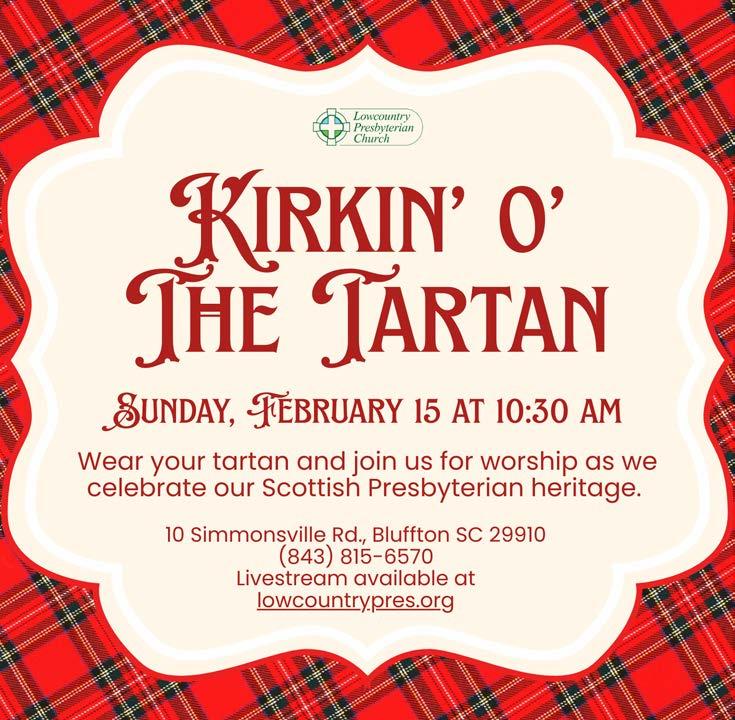
By Rev. Dr. Christopher L. Thompson Contributor
February arrives wrapped in hearts, cards, and warm sentiments—but for people of faith, this season invites us to look deeper. Love is more than a feeling or a fleeting moment. Scripture reveals love as a way of life, rooted in God and reflected through us. The Bible gives us four powerful expressions of love—Agape, Philia, Eros, and Storge—each showing us how God loves and how we are called to love one another.
At the center is Agape, God’s unconditional, self-giving love. “For God so loved the world that He gave His one and only Son…” (John 3:16). This love is not earned, negotiated, or withdrawn. It is sacrificial and redemptive. Jesus models this same love when He commands us, “Love one another. As I have loved you, so you must love one another” (John 13:34–35). Agape love seeks the good of others, even when it costs us something. The world struggles today because this kind of love is often replaced with self-interest, division, and fear.



Philia, the love of friendship and mutual care, reminds us that we were never meant to walk alone. Proverbs 17:9 teaches us that love “covers an offense,” while resentment divides. True friendship forgives, listens, and restores. In a world quick to cancel and slow to reconcile, Philia calls us back to grace-filled relationships that heal rather than harm. Storge speaks to familial love—the


bonds of care, loyalty, and belonging. Families, churches, and communities thrive when love is patient and protective. When Storge is weakened, homes fracture and communities suffer. God’s design calls us to nurture one another with compassion and consistency, reflecting His steadfast care for His children.
Then there is Eros, romantic love— beautiful, powerful, and meaningful when

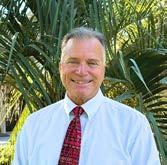


grounded in respect and commitment. When separated from God’s wisdom, Eros becomes distorted, reduced to desire without devotion. Scripture reminds us through 1 Corinthians 13:4–7 that real love is patient, kind, not self-seeking, and enduring. Love that lasts is rooted not in passion alone, but in purpose.
Jesus summarizes it clearly: “Love the Lord your God with all your heart… and love your neighbor as yourself”(Matthew 22:37–39). When love for God shapes how we love others, the world changes. Violence gives way to compassion. Division yields to unity. Hatred is overcome by hope.
The brokenness we see around us is not from too much love—but from too little true and real love. This February, let us choose to live love boldly: forgiving freely, serving faithfully, and loving deeply—just as God and Christ have loved us. In doing so, we become the healing presence this world so desperately needs.
Rev. Dr. Christopher L. Thompson is pastor of St. Luke’s United Methodist Church in Okatie, S.C.



By Rabbi Ken Kanter Contributor

All of us who come from the Jewish, Christian, and Islamic faiths share so many beliefs and practices, whether it is the Decalogue (The Ten Commandments), or the Bible stories of Moses and the Exodus or King Solomon’s wisdom, tithing to support our faith communities or the widow/the foreigner/the poor; in many ways we share more in common than we differ in practice or interpretation. One of the most important shared traditions is the Hebrew Bible or Old Testament, the document which contains the Five books of Moses, the books of the major and minor Prophets, and finally the collection of wisdom literature including the Psalms, Proverbs, Chronicles, Songs of Songs and stories of heroic individuals like Ruth and Esther. But along with all these historic stories, these ancient texts of laws and regulations, there are some amazingly contemporary lessons and life direction, one of which occurs in the beginning of February, a holiday entitled Tu B’Shevat, the fifteenth day of the Hebrew

While the Torah contains several “New Year’s celebrations,” one is the religious New Year (Rosh Hashanah), one is the calendrical New Year (like our fiscal new year in the spring), two are related to nature--one is the new year of animals, and, as mentioned, one is Tu B’Shevat, the new year for trees and nature, when we celebrate and honor nature and the environment. It commemorates and celebrates the Jewish people’s profound connection to the land of Israel by recognizing the agricultural calendar in Israel.
The ritual way to honor Tu B’Shevat includes a “seder-like” meal when we celebrate the seven species of plants that are indigenous to Israel. These include barley, dates, figs, grapes, olives, pomegranates, and wheat, all eaten at a simple meal. Another way to celebrate, is to plant trees as a way to give thanks for our world and enrich its sustainability.
Regardless of our faith traditions, we can and should pause to give thanks for the beautiful world God has given us, and to recognize, as is written in Genesis 2:15, that we are responsible to “cultivate and keep” the God’s world in which we live. A happy and meaningful Tu B’shevat to you and yours.
Rabbi Ken Kanter currently serves the local Jewish congregation at the Temple Oseh Shalom in Bluffton, S.C.
If you have an event to share, please email it to editor@blufftonsun.com






By James Jolly Contributor
As the owner of Duck Donuts, an account liaison for Rollers Wine & Spirits, and the founding director of Oktoberfest at Shelter Cove Harbor & Marina Andrew Kelly has established a successful career in the hospitality industry on Hilton Head Island.
Kelly, a 2014 graduate of the University of South Carolina Beaufort, can now add higher education philanthropist to his resume. He has established an endowed scholarship for students majoring in hospitality management at his alma mater.
“USCB professors inspired me to earn my degree in hospitality management,” Kelly explained. “They helped me grow and I’ve always wanted to give something back to the university.”
Kelly has lived on Hilton Head Island since the age of three, and he’s a graduate of Hilton Head Island Preparatory School. He was working at Wild Wing Café when an opportunity came his way—the chance to earn a bachelor’s degree in hospitality management.
“Professor Bryan Dennis convinced me to earn my degree,” Kelly said. “He and hospi-
tality professors Sean Barth and Keri Olivetti are big reasons why I went to USCB.”
Another reason was location, according to Kelly.
“USCB was not just local for me,” he said, “it was—and is—surrounded by countless opportunities for students interested in hospitality careers, year-round in a beautiful location.”
Kelly wants future USCB students to know that on Hilton Head Island, they can do anything they want to do in the hospitality industry.
“They should try everything to get experience,” he said. “They will grow their potential, and they will find something they are good at doing.”
Kelly’s endowed scholarship at USCB will now help make some of those dream hospitality careers possible.
To be considered for a donor scholarship, incoming and current USCB students should complete the form at USCB.edu/donorscholarships. The application is open Jan. 1 – March 1 annually.
James Jolly is Senior Director of Marketing & Communications at USCB. Contact him at jamesjolly@uscb.edu





By Tracy Winslow Contributor
My parents never pressured me about what to study in college. While some of my friends were steered into business degrees they despised, I was free to float through the liberal arts, unbothered and deeply unconcerned with my future tax bracket. They panicked over statistics and tax law while I headed off to see what fresh disaster Don Quixote had engineered. I offered sympathetic pats as they memorized depreciation schedules, unaware that two bachelor’s degrees and a master’s later, I would be here with the education equivalent of a participation trophy, while a stack of business receipts smirk at me.
I recently contacted my accountant with a tax question pertaining to my small business. Instead of helpful advice, he began lecturing me about my terrible accounting practices which, apparently foolishly, I assumed I was paying him to do.
He started throwing acronyms at me like an angry Scrabble player. “Tracy, you don’t have the COGS in the EBITDA in the PDQ so I can’t XYZ.” Meanwhile, I’m over here still trying to decipher COGS. Costs Obviously Got Stupid? Crying Over Google Sheets? Confused Owner Guessing and Swearing? I was being verbally slapped with a 1099 or a K-9 or something businessy that I would have

been madder about if I had any clue what he was saying. One thing was clear — I needed to complete a crash course in becoming a tax expert since the CPA I hired apparently couldn’t be bothered.
Now, if you haven’t ticked-and-tied eleventy million expenses with nothing but the misplaced confidence of someone who once passed a medieval literature exam and assumed that skill would transfer, I highly recommend it. Because it is even more fun than it sounds.
Every waking hour over the last few weeks has been spent trying to figure out who charged me what, to pay for huh, and where to put it. One example: I have three separate emails from the same company, sent within minutes of each other, all for the same thing, all with different totals. Why are there three documents? Why are the numbers all different? And where do I put them?
Apparently, I am supposed to put them in my T. Which, frankly, I find rude. I ordered some accounting books, which I guess I must read in order to learn from - which feels unnecessary and gives

off strong gym-membership vibes. I was hoping the principles of accounting would seep into my brain through osmosis or some other yet-to-be-deciphered accounting acronym. I have important questions that the books do not answer like how do I file the crate of wine I need to complete this process with an iota of sanity intact? Is it an asset until I drink the wine and then it’s an expense? And also, stop talking about my assets. It’s making me uncomfortable in my workplace. And then there are the buckets. So. Many Buckets. Why are we putting expenses in buckets - are we living in the Holy Roman Empire?
It was around this time that I discovered that debits and credits are not, in fact, the same thing as debit cards and credit cards, which feels like a personal attack by the accounting profession. Debit and credit cards are about how you pay. Debits and credits are about how money moves in the books, and they share names purely to cause confusion and emotional damage. In accounting, a debit doesn’t mean money leaving and a credit doesn’t
mean money arriving. They simply mean “left side” and “right side,” which is wildly unhelpful and obviously created by Caligula for tracking torture and taxes. Hence everything being set up in a T.
“You paying taxes? Put your coins in that bucket on the right. You can’t pay? Torture it is. Augustus will relieve you of your hand and put it in the bucket on the left. When the buckets weigh the same, we will drink out of the skulls of our enemies.”
So yes, my entire life has been a lie. Not in a big, cinematic way, but in a slow, humiliating way that involves spreadsheets and ancient sociopaths.
My Spanish and Journalism degrees have paid off because I can confidently write a compelling short story to the IRS about the time I unintentionally almost committed tax fraud and then translate it for my overseas investors. My accountant and I will get a good laugh over it, because he is obviously not busy working on my returns. We will celebrate with a magnum of Veuve which we drink out of a bucket, because financial people know how to party.
Tracy Winslow now owns four books about accounting, which clearly makes her a CPA - Constantly Panicking Adult. While she is not available to help with your tax returns, she is skilled at choosing buckets and then filling them with things. Especially yarn because Low Country Shrimp and Knits is always overflowing with the best fibers and lacking square footage. Come start a new hobby that has WAY BETTER acronyms like kfb which has nothing to do with Kicking Financial Buckets or something weird like that. Check out all the classes and events at shrimpandknits.com

By Danie Connolly Contributor
As a 7-year-old, I wasn’t very worldly. Still, I went with my mother and my new stepfather (Dad) to visit my new grandfather. My dad had been adopted as a youngster, like so many children, because of poverty in those days. My grandfather had recently lost his wife, and my dad, having just found out, brought us to pay our respects.
I don’t remember much about that house, but I’ll never forget that day because it still touches my heart around this time of year. Once we got there, my parents were urged to visit some of my dad’s old friends, and I remained behind to work on my valentines for school the next day. At some point, I declared I was Valentined-out. Sadly, I realized my new grandfather had gotten quiet.
“How are you gonna give your wife her Valentine?” I asked.
He looked heartbroken. I had secretly slipped a Valentine from me in his bathroom, tucked behind a bar of soap near the sink, but it wasn’t the same. I remember him sitting in the chair and mumbling, “I don’t know, dear.” Suddenly, he jumped out of his chair and, with a big belly laugh, said, “I think I know how, but I’ll need your help.”
He quickly bundled me up in my snow gear. Then he threw a scarf around his neck, plopped a floppy-eared hat on his head, and out the door we went.We made our way to the barn, and he threw the doors wide open. A few minutes later, after he shuffled through more drawers than I’ve ever seen, he handed me two burlap bags filled with lights and an empty bag. Then he grabbed a tall ladder and swung it over his shoulder.
I didn’t know what we were up to, but it was certainly exciting. I remember he took the scarf from around his neck and wrapped it around mine to keep me warm.
“OK, young lady, this is a mission of great importance,” and with that intrigue ahead of us, we trudged through the snow and up the hill as I struggled to stay

upright against the wind. He talked about the grandmother I’d never had a chance to meet, and he spoke of her talent for turning anything into a delicious soup — even the soles of his shoes! He said birds loved her. She found the good in everything, even the squirrels when they stole her fine seeds for her garden. I found myself nodding yes to everything he said about her, and when we finally made it up to the crest of the tiny hill, he propped the ladder against a little blue spruce tree.
Then he turned to me and said, “OK, dear, I’m going to climb up that ladder and change a few lightbulbs. Then I’m gonna toss them down to you, and you put them in your bag. Hopefully, you’re a better catcher than I’m a tosser.”
I didn’t actually believe that, but he went up to the top branch, grabbed a string of lights and began unscrewing the lights. He threw the multicolored lights down to me, and I raced around, scooping them up and carefully placing them in my empty bag.
“How are you doing down there?” he yelled.
“I’m doing great, Grandpa,” I answered. I kinda liked the sound of that, and before I knew it, he climbed down, smiled at me
and said, “Mission accomplished!” I had no idea what that meant, but whatever it was, it sure made him happy. Then we made our way back down to the barn, stomping our boots, while he put the ladder and bags away.
By the time we made it back to the house, it was dusk, and my parents had just pulled into the driveway.
“Just in time,” my grandfather greeted them. It was dark by the time he explained what we’d been up to. Lord knows I didn’t know! He located a long extension cord by the barn door, pointed to the curled-up extension cord by the fence, and asked me to bring it to him. Then he unrolled it, and before he plugged it into the other one, he said, “Danielle and I made something special for Valentine’s Day for Grandma up in heaven.”
He connected the cords, and suddenly the hills were glowing. The tree was washed with red lights and lit up the sky.
“Think she can see her valentine from up there?” he asked.
In life, we are met with moments of wonder, and they make you smile and jump up and down, and sometimes they make you cry. It was all that and more.
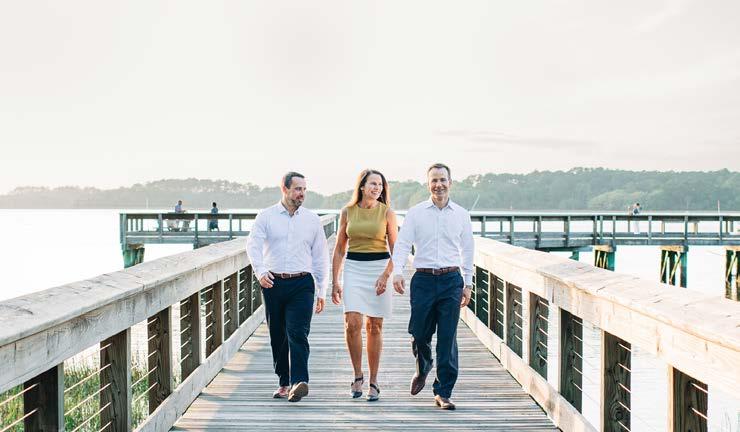


By Rhoda Gordon Contributor
February is often associated with love: notes, flowers, and grand gestures meant to mark the moment. But some of the most lasting expressions of love are far quieter. They live in old photo boxes, albums, and digital folders tucked into closets, drawers and old computers, holding memories that only our families can truly understand. These images capture not just faces, but the stories behind them such as where we came from, what we celebrated, and who we were along the way.
The greatest risk to family photos isn’t fading paper or aging technology. It’s lost context. A photograph without a name, a date, or a story becomes a mystery within
a single generation. Grandchildren often inherit boxes of images filled with people they can’t identify and moments they can’t place. What was once a rich family archive slowly turns into a collection of unanswered questions.
In communities like Bluffton, where families often move, downsize, or inherit collections from parents and grandparents, photo collections frequently change hands. These transitions are powerful moments. They can be when memories quietly disappear or when they are intentionally preserved for the next chapter of the family’s story.
Preserving your family history doesn’t require a full weekend or a perfectly organized system. It can start with one small step. Choose a single album or box. Sit with a loved one and write down names as they come to mind. Use a phone to record a voice memo when a story surfaces or a video as your relative speaks. These simple actions create a bridge between generations and protect details that can’t be recreated later.
Many families are surprised by how



this process brings people together. Conversations unfold naturally. Stories resurface that haven’t been told in years. Younger family members learn
about relatives they never met, and older generations feel seen and remembered. What begins as an organizing task often becomes a shared experience of connection and reflection.
As a certified photo manager I often see how meaningful it can be when families take time to preserve not just their images, but the stories behind them. This February, consider starting a small legacy project of your own. It may be one of the most enduring gifts of love you leave for the people who come after you.
Rhoda Gordon, a Certified Photo Manager, is the owner of Sunflower Photo Solutions and the creator of DIG YOUR PHOTOS!™, a DIY photo organizing kit. For a decade, she has been helping families and businesses sort, organize, digitize, and back up their print and digital photo collections. Discover more tips, tricks, and how-tos on her YouTube channel: youtube. com/@digyourphotos, and visit sunflowerphotosolutions.com or digyourphotos.com for expert guidance and support with your media collection and organizing projects.

By Thomas Dowling Contributor

Many people assume that sophisticated financial strategies are reserved only for the ultra-wealthy — those with tens of millions in assets.
But the truth is, the framework that high-net-worth families use to manage their wealth offers valuable lessons for anyone working toward financial confidence and long-term security.
At its core, this “wealth framework” is about looking at your financial life as a whole — not just watching investment performance. By giving thoughtful attention to each component of your financial picture, you can make better decisions

today and build lasting confidence for the future.
Six Areas the Wealthy Focus On
While the ultra-wealthy may have more complex financial lives, the principles they use can benefit anyone. Here are the key areas they tend to prioritize:
1. Investment Management — Successful planning begins with investments but not just picking stocks and bonds. High-net-worth investors think broadly about diversification across markets, geographies, and types of assets to help balance growth and risk over time.
2. Tax Optimization — Taxes can take a big bite out of savings if not carefully planned. Strategies that time income, leverage tax-advantaged accounts, and consider giving can make a significant difference in overall financial results.
3. Legacy Planning — Planning for what happens next goes beyond a basic will. Wealthy families often use trusts, succession planning for family businesses, and education for the next generation to preserve both values and assets.


4. Risk & Cyber Protection — Protecting a financial life means preparing for the unexpected, from insurance coverage and continuity plans to guarding against identity theft and online threats.
5. Health & Lifestyle Considerations — Wealth isn’t only financial. Many affluent individuals think about concierge medical services, wellness plans, and personal safety as part of their broader life strategy.
6. Philanthropy and Purposeful Giving — Giving back isn’t just charitable; it

is often a deeply personal way to express values, involve family in shared goals, and make a lasting impact on causes that matter.
Importantly, you don’t need tens of millions of dollars to benefit from this holistic approach. Whether your financial goals include caring for loved ones, supporting meaningful causes, or building a legacy, stepping back and thinking comprehensively about your financial life can help you make more confident choices. Looking at your finances through this kind of framework encourages not just wealth accumulation, but better alignment between your resources and your life goals — and that’s something anyone can strive for.
Thomas M. Dowling, CFA, CFP®, CIMA® is the Head of Wealth Management at Alliance Global Partners of the Lowcountry on Hilton Head. He can be reached at infohh@allianceg.com or (843) 420-1993.
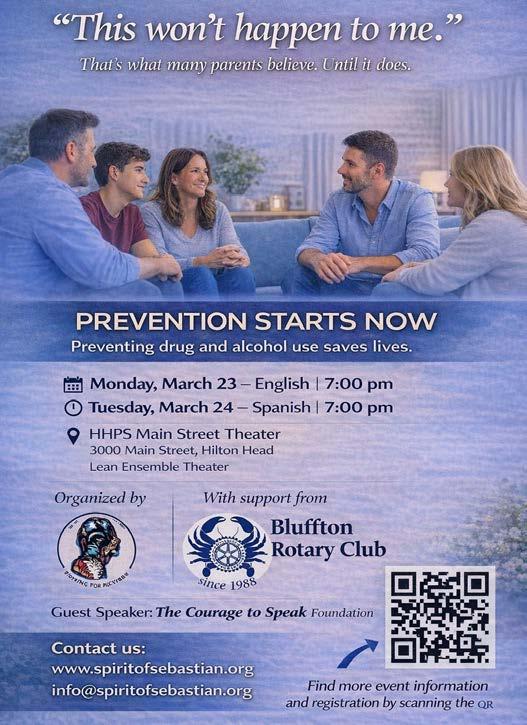

By Chad Cannon Contributor
For decades, fat loss has been sold as a simple equation: eat less, move more, and spend as much time as possible on a treadmill. However, most people who follow that advice end up very frustrated, lighter on the scale, but not leaner, stronger, or healthier.
The truth is, fat loss isn’t about sweating more. It’s about changing what your body does with energy. And that starts with strength training and protein.
Fat loss is a muscle game
Years ago I taught a class at the local college and one of the discussions we had was how most people think of fat loss as something you “burn.” In reality, your body is constantly deciding whether to store energy or use it. Muscle plays a huge role in that decision.
Strength training signals the body to keep and build lean muscle. Muscle tissue is what we call metabolically active, meaning it requires more energy to maintain than fat.
The more muscle you have, the more calories your body burns at rest. To be clear - I’m not talking just about bigger, bulky muscles. I’m also talking about getting stronger.
Endless cardio may burn calories during the workout, but strength training changes the body long after the workout is over. This is why people who lift weights often look leaner, even at the same body weight. Why the scale lies
One of the biggest mistakes in fat loss is obsessing over the scale. The scale doesn’t distinguish between fat, muscle, or water. You can lose five pounds and still look the same - or gain two pounds and look noticeably leaner.
When strength training is done consistently, the body often replaces fat with muscle. Clothes fit better, energy improves, posture changes, and confidence rises. None of that shows up on a scale.
Fat loss should be measured by performance, consistency, and how the body functions, not just a number.
Protein: the overlooked fat-loss tool If strength training is the signal, protein is the building material.
Protein helps preserve muscle while losing fat. It increases the feeling of being satisfied, meaning you feel fuller on fewer calories. It also helps your body burn more calories while digesting it.
The big problem is that most people, especially adults dramatically under-consume protein.
Instead of cutting food, many people would see better fat-loss results by just adding protein to every meal. Lean meats, eggs, protein rich yogurt, protein shakes, and whole-food sources make a noticeable difference when eaten consistently.
Protein isn’t a supplement as most people think. It’s a requirement that we all must have.
Cardio still matters - but not the way you think
This isn’t an argument against cardio. Cardiovascular exercise is essential for heart health, endurance, and overall fitness. But using cardio as the primary fat-loss strategy often backfires. Look at all the New Year Resolution people that spend 1-2 hours everyday on the treadmill the first two weeks of the year. Some might lose weight, but gain fat, look terrible, and stop exercising before the first month.
Too much cardio without strength training can lead to muscle loss, slower metabolism, higher fat percentage, and burnout. When combined with strength training, however, cardio becomes a powerful support tool instead of the main driver.
The foundation should be lifting weights. Cardio should enhance it, not replace it.
Fat loss is built, not burned
Real fat loss doesn’t come from sweating your butt off or going to exhaustion. It comes from teaching the body to become more efficient, stronger, and better fueled. Lift weights regularly. Eat enough protein. Stay consistent longer than you think you need to. The goal isn’t to lose weight as fast as possible. The goal is to lose fat while keeping, or building the body that actually burns it.
Why do these? Because the best fat-loss plan isn’t the one that feels the hardest in January. It’s the one you’re still doing in July, and one you’re proud of in December.
Chad Cannon is a Health & Fitness Coach, Success Coach and the owner of the CannonFit Transformation Center in Bluffton. Chad can be reached at www.cannonfit. com.

By Kevin Fitzpatrick Contributor
The primary reason we moved to the Lowcountry when we retired from decades of classroom teaching was my desire to flee the winter in CT. The cold has never affected me and I would regularly shovel snow in shorts. In fact, I played football in shorts in the winter growing up in the Bronx. My wife joked what was it that I was escaping from since I dressed like a four-year-old boy?
As the years went by it became clear that it was more the lack of daylight and consistent sunshine. Age also brought with it the increasing dislike of driving on snow and ice, but it was the encroaching darkness each day that really hit me hard. Couple that feeling with the post-holiday doldrums that January and February bring, and it felt as if leaving that behind

would magically change the pall that winter continued to cast on me.
What I have only now come to realise is that for me, winter has become bleak due to more than the weather. My dad passed far too early in late fall of 1993, his birthday was Dec 5 and while the holidays cover a lot of that sadness, it always resurfaces when all the decorations are put away and all the parties and gatherings have concluded.
The second man who shaped much of what I am today, my uncle Dominic P. Starace, passed in January 2019. That day remains frozen in my memory and each year since, whether there is sunshine or daylight, it is still a dark day. Stir into

that melancholy cocktail the last ingredient: Abbey THE dog, our 2012 rescue from a kill shelter in Georgia, ran her last race and crossed the rainbow bridge in January 2025.She was my buddy. She slept in the car during the 13-plus-hour drive when we moved, delighted in wandering around her little fenced-in yard, laying in the sunshine and letting the wind blow over her — something she couldn’t do in Connecticut because the property lacked fencing — and she always greeted us as if she hadn’t seen us in months, even if we were only gone for an hour. There are constant reminders of all three throughout the year. Certain songs, pictures, videos that pop up, but it seems
to hit the hardest during that part of the year between holiday season and baseball season. It’s not the cover of the book that brings out those feelings, but what’s between the pages, the closing of one chapter after another.
The good news is that all of them still live on simply because I think of them all the time. Instead of worrying about slipping on the ice or raking the roof so it doesn’t create leaks in a house built in 1905, I can – even in a laughably “chilly” day – go and sit in the yard that Abbey loved, pour a dram of a good single malt, and listen to some music. Instead of crying because of them being gone, I smile and laugh because they were here.
I guess we can let Bruce play us out.
“Well, now the years have gone and I’ve grown
From that seed you’ve sown But I didn’t think there’d be so many steps I’d have to learn on my own.”
Kevin Fitzpatrick is a retired teacher who, along with his wife Sue (also a retired teacher) is enjoying exploring life in the lowcountry and all it has to offer.
MEMORY MATTERS launches the 2026 Speaker Series with dynamic conversations grounded in neuroscience and practical brain-health insights. Each program features experts who translate the latest research into real-world strategies for caregivers, families, and anyone wanting to stay mentally strong. Join us as we explore the science and support behind living well with memory loss.

www.mymemorymatters.org/events




By Amy Campanini Contributor
February is a great time to find your next great love. Finding unconditional love is as close as your nearest animal shelter. That’s right — the Lowcountry’s cutest singles are waiting to find their perfect match at the Palmetto Animal League Adoption Center. If a handsome, sophisticated hunk sounds intriguing, let me tell you about JJ.
Always dressed in a tuxedo with one tipped ear, JJ is the perfect blend of sophistication and street smarts. This 4-year-old, 13-pound boy, with velvety fur and gorgeous whiskers, would love to grace you with his charmingly “grumpy” gaze every day.
“JJ is a flirt,” says PAL animal caregiver Emma Pereida. “He loves to meow and show off to get you to notice him. And when you take the bait, he’s quick to soak up all the attention and pets you’ll give.”
There’s no doubt JJ has mastered the

art of looking unimpressed. But don’t be fooled. Beneath that “too cool” gaze is a cat who craves affection. He enjoys quiet admiration, subtle head scratches and the satisfaction of knowing he has you wrapped around his paw.
“JJ is a very outgoing and affectionate cat,” says PAL caregiver Alison Guenther. “His dapper tux only adds to his appeal.
He’s always in search of someone to snuggle with.”
While JJ lives harmoniously with the other cats at PAL, he does have a bit of a jealous streak and would love to be the top cat in someone’s life.
“He’s been known to get a little miffed when the other cats interrupt his speed dating sessions,” says Pereida, smiling.
“He loves people so much, and when someone comes to visit him, he soaks up every single second.”
The best word we can think of to describe JJ is “beefcake.” He is a hunky, chunky, hidden gem who has been overlooked for far too long.
If you’d like to meet JJ, visit the adoption center at 56 Riverwalk Blvd. in Okatie Monday through Saturday from noon to 6 p.m. He’ll be the dapper, dreamboat of a cat waiting to greet you in Cat Room 10.
You can also join Palmetto Animal League and AutoNation Subaru Hilton Head for the second annual Meow Mixer at the PAL Adoption Center on Thursday, Feb. 12, from 4 to 6 p.m. Bring your friends for champagne and hors d’oeuvres as you mingle with the Lowcountry’s cutest and most eligible cats.
Amy Campanini is the president of the Palmetto Animal League.
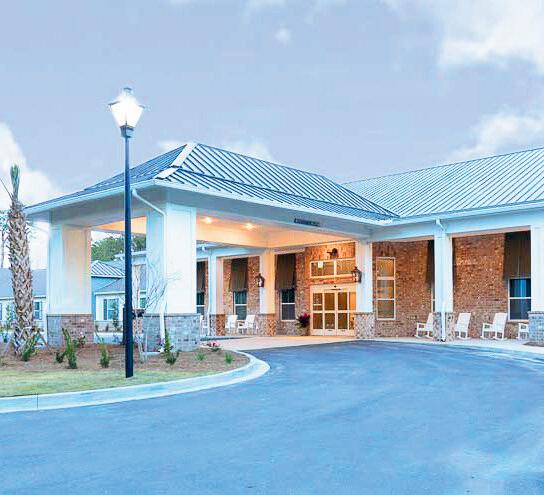

By Nick Martin Contributor

Cristiano Ronaldo was just 16 when he signed his first professional soccer contract. Charli D’Amelio was 15 when her TikTok dances turned into a multimillion-dollar empire. Today, names like Olivia Rodrigo, Patrick Mahomes and Billie Eilish prove how fast fame can turn into fortune.
Headlines focus on success. What isn’t widely discussed is how sudden wealth can feel thrilling one day and overwhelming the next. Having money at a young age is empowering and is becoming more common given the expanding reach of digital content platforms and the increasing value of college athletics name, image and likeness deals.
Experiencing prosperity early in life can also quickly become unexpectedly complicated and present unique pressures that even most adults will never experience firsthand. People see your success, and with that, your wealth invites possibility.
You may lean more on the people you trust, including family and friends, by asking them for guidance or advice – which may develop into business relationships and dynamics in ways you never imagined. And while opportunity is everywhere, understanding the risks as well as the rewards is how you preserve what you’ve earned and build the life you want. Factor in family dynamics
It makes sense to trust your family and close friends more than anyone else –trust is earned over time, and you might even feel a sense of loyalty or gratitude for the role they’ve played in helping you achieve success.
There’s no question that trust matters, but it has the potential to grow even stronger when supported with the right professional expertise. Given that, a good question to ask yourself is: “Who has the experience to guide me toward good decisions and away from mistakes others have made?”
Partnering with a team of seasoned professionals can bring structure and an outside perspective. It isn’t about replacing the people who have been with you since the beginning; it’s about giving you, and them, a stronger foundation to build long-term success on. Working with

a team of advisors who have experience guiding others at your wealth level can help you see clearly what’s worked and what hasn’t, and, in turn, help you move forward with fewer missteps.
Managing your wealth is about more than money, it’s about navigating the family dynamics that come with it. From your immediate circle to extended family and friends, sudden financial success can create expectations, blur boundaries and heighten the pressure to say “yes.”
Turning down family and friends is never easy, but having your own private wealth team – an attorney, accountant and financial advisor – can create a network of checks and balances to help you think through opportunities objectively. A professional can help you decide what’s worth pursuing and, when needed, deliver a clear, firm “no” on your behalf. That way you’re better positioned to make informed, strategic decisions that are in your best interests while being able to preserve important relationships.
See the risks as clearly as the rewards
Your talent and hard work may present you with a multitude of new and exciting opportunities – endorsements, partnerships and ventures – that can amplify your success. But, with every opportunity comes risk; some harder to spot than others.
The real advantage is having the clarity to recognize potential risks before they cost you.
One risk is making investments that
work against your long-term goals –which could be signing unfavorable deals, investing in ventures that don’t perform as expected or locking too much money in illiquid assets like real estate or businesses. That’s not to say you shouldn’t explore the big, bold opportunities that come your way, rather you simply want to make sure there’s a strategy behind each decision. There’s also risk in not separating your personal net worth from your professional life. Those ‘too good to be true’ opportunities can blur the lines, and if things go wrong, the damage can be hard to measure. If taxes are mishandled or you’re invested in a business you don’t fully understand or with people you barely know, you could be personally liable for problems you never saw coming. Treat your personal wealth and your professional career as two separate worlds. That way, if something goes wrong in one, the other can be protected.
Over-relying on someone you trust instead of an expert also poses risk. Perhaps that trusted person means well, but depending heavily on someone who lacks technical experience can expose you to serious tax, compliance and budgeting risks with substantial implications for your future. It’s not just your financial future at stake; your personal brand and reputation can also be left vulnerable without experienced guidance on your side.
Your career is a business
Once you start thinking about your professional career as a business, it often becomes much easier to have challenging
conversations with those around you. From that realization onwards, everything becomes a business decision, which can help empower you to separate the personal from the professional.
With rising success, your instinct may be to stay actively involved and close to every day-to-day decision. However, the more success you achieve, the more decisions will likely compete for your attention – from marketing and collaborating to scheduling, finances and more.
As you build trust with your professional team, it’s important to shift from handson management to strategic delegation. Strengthening your professional team allows you to take a step back, shift from a ‘do-it-all’ mindset, offload certain pressures and focus on growing the talent that led to your success.
Your financial lifecycle is the opposite of the majority of Americans. Most are long-term savers who start small and accumulate wealth over time. You’ve earned your wealth quickly and early, requiring an approach that’s both personalized and specialized. Long-term success tends to favor those who pair both trust and disciplined expertise.
Nick Martin is a financial planner and the founder of Bluffton Financial Planning. Bluffton Financial Planning is not a registered broker/dealer, and is independent of Raymond James Financial Services. Investment advisory services offered through Raymond James Financial Services Advisors, Inc.
By Paul Tollefson Contributor
The moon hung low over Bluffton on that September night in 1903, casting a silver light over the marshes as Walter and James rode out in search of nothing more than a few raccoons.
Their horses were unsaddled, their gear mismatched and their spirits high. The boys rode bareback, trusting halters, instinct and youth to carry them through the darkened woods.
Their dogs roamed ahead, noses to the wind, while the boys followed with the easy confidence of two young men who believed the night held no surprises for them. By midnight they had already taken six coons. It should have been enough. It should have been the end.
But the Lowcountry has always kept its own secrets.
As Walter and James turned homeward, the dogs suddenly stiffened, then surged forward with a wild, frantic energy neither boy had ever witnessed. The sound of their baying echoed through the trees like a warning. Thinking it must be a fox, Walter and James spurred their horses and followed.
For three winding hours, the chase pulled them deeper into the night — through palmetto thickets, over sandy ridges, across quiet plantation lanes where the only sound was the pounding of hooves and the growing urgency of the
dogs. The boys exchanged glances but said nothing. Something about the trail felt different.
When the chase finally ended, the night was unnervingly still. The dogs had cornered something in a shallow, moonlit pond — something low to the ground, motionless, but vibrating with a deep, rumbling growl that rolled across the water like distant thunder.
Walter and James froze…This was no fox.
The boys gripped heavy limbs torn from nearby trees. James stepped forward first, every nerve alive, his breath catching as he extended his stick toward the shadowed figure. When the stick touched fur, the creature erupted.
A blur of muscle and fury tore the weapon from James’s hands and flung him violently into the mud. The pond exploded into chaos — dogs lunging, water splashing, the beast twisting and snarling with a strength neither boy had believed possible. James, gasping, clawed his way back to his feet.
The creature — massive, powerful, and furious — launched itself toward the largest dog. The struggle that followed was a storm of fur and water, the combatants rolling together so wildly that Walter and James could scarcely tell which was animal and which was dog.
Afraid his companion hound was being overpowered, James seized the creature by the hind leg, dragging it back with a desperate heave. The beast wheeled, eyes burning, and sprang straight for him. Instinct alone saved him — he ducked, grappled the creature, and caught it by the throat as they crashed together into the water.
The panther — for there could be no doubt now — raked its claws across James’s legs, shredding clothing and skin.

The water churned around them, James fighting to hold the beast’s jaws away from his throat.
Walter circled the battle, shouting cries that split the night air. He watched, waiting for the one moment where he could strike without hitting his friend. When it came, he stepped forward with the force of a man striking for a life he refused to lose.
His club crashed against the panther’s skull with a heavy, sickening thud. The beast staggered, then lunged again.
Walter struck once more, his blow ringing through the pond like an ancient drum. The creature shuddered, weakened… and finally collapsed beneath the combined assault of boys and dogs.
Silence fell over pond.
When Walter and James dragged the animal into the lantern’s glow, their breath caught. Before them lay a great cat of reddish-brown hide, stretching nearly six and a half feet from nose to
tail. Bluffton hunters would later argue its exact species: catamount, cougar, or true panther. But that night, its size alone spoke the truth.
James limped home with torn trousers and scratches that stung for weeks. Walter carried the pride of the blows that saved his friend. And Bluffton, quiet, river-bound Bluffton,earned a tale that would be told for generations: (Historical information: Beaufort Gazette, September 14th 1903)
Paul Tollefson is the Director of Tennis at the Hampton Hall Club. After moving to Bluffton he became enthralled with the history of the town and the people that called it home. He enjoys sharing the stories and pictures of long-time locals. He is the co-creator of the Facebook page “Bluffton Then and Now.”

By Abby Bird aka Alphadog Contributor
Each dog, by breed and also by where they live, will react differently to working with their owners in the cold. In fact, dogs use their noses much more often in the cold than they do in the heat. Heat tends to partially shut down the sensory perceptions in their noses, but in the cold that nose is working very hard, and you will notice that your dog’s head is to the ground much more often.
Additionally, some short-haired dogs do not do well outside in the cold, particularly dogs like pitties or boxers that have no fat layers. For those dogs, we highly recommend sweaters or jackets in cold weather. If not, you will literally see them shaking. Longer-haired dogs, whether they’re small or large, seem to do much better outside without any jackets. The exception to that is certainly an older dog or a dog that is immune compromised and, in some cases, even puppies that have not yet developed any fat layers for protection.
You may notice that your dogs do not like having their paws and legs put into sweaters. If that is the case, there are Velcro jackets and sweaters where you do not have to manipulate a dog’s body parts in order to keep them warm. They are much easier to put on and take off without annoying them.
If it is very cold out and your dog is subject to walking on ice and snow, which generally is not true down here,


then even booties or leggings may be recommended.
You may also find that behaviors, even if your dog is an adult, will now resemble puppy zoomies once they get out in the cold weather and you give them a place to run. They actually like the cold weather and will be less responsive to you if they are enjoying it by running, jumping and doing more movement.
It is perfectly OK to work with your dogs outside in cold weather for short periods of time and, if possible, to stimulate their desire to scent by planting things in your yard or using toys that have a built-in scent. I love to play hide-it games if you have a fenced area outside because your dog’s nose will really enjoy the work and stimulation. Stuffing a Kong or hiding hard biscuits will really get that nose working. Their brain will shut down, and it allows them to truly enjoy being a dog outside.
Allowing a dog to be cold for short periods of time is perfectly OK; however, it is not OK for them to be wet. Please make sure that if they are wearing jackets, the jackets are removed as soon as you come inside, and have a highly absorbent towel to dry them off, whether they’re wearing a jacket or not. Don’t keep dogs inside in the winter just because it’s cold for us. Dress appropriately, bring your dog outside, and let them run around and just be a dog.
Abby Bird is the owner of Alphadog Training Academy. AlphadogTrainingAcademy@gmail.com


By Murray Sease Contributor
On a recent January afternoon, I had the opportunity to visit the studio of a sculptor with the wonderful name of Sanders Black. His art fits his name, unique, smart, straightforward. He has the vision and is mastering the techniques required to make durable art to grace the outdoor spaces of Lowcountry homes.
Sanders creates his art at the Smoking Bird Studio, overlooking the Okatie River. The working areas include a cozy studio, warmed on this day by a wood-burning stove, surrounded by shelves of tools and materials needed to make all kinds of sculpture. Its windows, running the length of the small building, overlook a spacious, tiered deck, with the tides providing a constantly changing view. Much of the work is done outdoors, with the river’s breezes acting as nature’s ventilation.
Sanders is a protégé of the studio’s talented Wally Palmer, learning many of Wally’s sculpting skills and applying them to his own unique art. Sanders comes to the studio most days to build, mold, pour,
grind, sand and paint his sculptures. He has created two large relief sculptures of a very realistic-looking mahi mahi and yellowfin tuna made out of a combination of foam, Bondo, resin and fiberglass. He then has made a mold of silicone which, after curing, can be used for repeated resin castings. Next, he pours a liquid resin material into the molds to create the pieces. After they are successfully poured, dried and removed from the silicone molds, the process of “cleaning up” happens, sanding and grinding, to achieve a desired texture. He then applies the paint in layers to mimic the fish’s shimmering scales and fins, resulting in beautiful relief sculptures of these glorious fish. But not all of Sanders’ sculptures are created in this manner. He also builds oneoff freestanding pieces, sometimes making armatures of wire and recycled foam, then dipping or otherwise coating them with fiberglass and/or resin. In the works is an enormous lizard that can be hung on a wall or fence, sure to be a focal point and conversation piece. It is now waiting for its final, important step — paint.
Sanders has a seven-foot hammerhead shark on display in the La Petite Gallerie



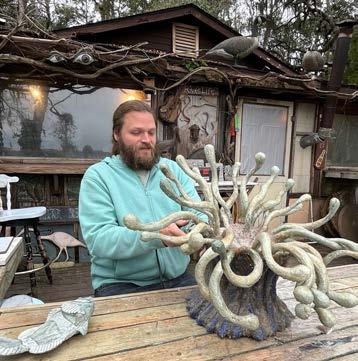
garden in downtown Bluffton, created in the same manner. Look forward to seeing what this creative mind comes up with next.
Sanders has been making art of one sort or another for most of his 36 years. He studied printmaking at USCB, using this skill to carve detailed animals into linoleum blocks, which are then inked and used to make beautiful prints. He recently acquired a hand press, which he hopes to put into use soon. Sanders also delves into
photography as an art form. He experiments with a macro lens and a special microscope, expanding his art in even more directions. His photography skills show his artist’s eye in a whole different light.
On this studio visit, however, we are talking sculpture his latest love. Indeed, surrounded by his pieces in the works, it’s easy to see that Sanders is an artist with a lot to share.
The beauty of the Smoking Bird Studio is that each of the artists has their own expertise and artistic perspective that they share willingly with one another. Wally Palmer and painter Denise Pope are the more seasoned artists there, and they, along with Sanders, are willing to talk about their unique viewpoints and knowledge with the errant visitor.
Sanders’ sculpture can be seen in La Petite Gallerie’s garden, open every day from 11 a.m. to 5 p.m. He works there on Sundays, so you can meet him and talk art in person with this talented sculptor.
Murray Sease is an artist at La Petite Gallerie, 56 Calhoun Street, Bluffton, SC. lapetitegallerie.com
Encompass Health is the largest system of rehabilitation hospitals, trusted by patients, caregivers and medical professionals.
Encompass Health is the largest system of rehabilitation hospitals, trusted by patients, caregivers and medical professionals.
Encompass Health is the largest system of rehabilitation hospitals, trusted by patients, caregivers and medical professionals.
Encompass Health is the largest system of rehabilitation hospitals, trusted by patients, caregivers and medical professionals.
Encompass Health is the largest system of rehabilitation hospitals, trusted by patients, caregivers and medical professionals.
We are proud to support the American Heart Association’s Heart Ball.
We are proud to support the American Heart Association’s Heart Ball.
We are proud to support the American Heart Association’s Heart Ball.
We are proud to support the American Heart Association’s Heart Ball.
We are proud to support the American Heart Association’s Heart Ball.

By Annelore Harrell Contributor
There would be five of us going to Mepkin that November day. Carolyn would pick me up at the halfway civilized hour of 8 in the AM. She had borrowed her daughter Marty’s SUV since it was both gracious and spacious. I literally climbed up and into this behemoth of a vehicle. Stanley, who is a she, not a he, despite the masculine name, and Jo, without an E, definitely feminine, met us at the First Presbyterian Church parking lot on Simmonsville Road in Bluffton. Patricia was the last to come aboard. Her house was on the outskirts of Beaufort, and we drove right up to her front door.
The annual Nativity Scene Displays at Mepkin Abbey awaited. By the time we were all buckled up, settled down, and headed out, it was nine-ish.
Our timed tickets were for 11:30.
There is no easy way to get to Mepkin.
It is West of Charleston, North of Monk’s Corner, and East of Summerville.
I think.
I have been going to Mepkin on retreat for more years than I can remember.
So long ago that we had stayed in a broken-down, leaky single-wide trailer sharing temperamental bathroom facilities.
We loved it
These days, retreatants stay in a sprawling motel-like building with a central meeting space, modernistic rooms, ensuite, hard, impersonal surfaces, marble, and glass. Gray, white, off-white.
Nothing leaks.
No matter where you stay, there is a peace at Mepkin. Today, we were not on retreat; we would be at Mepkin for only a few hours, view the nativity scenes, and be back home in time for Jeopardy.
After turning off of Highway 17 at Ravenel, we had wiggle-waggled our way north on two-lane roads, ridiculous with traffic, impossible to pass.
At last, Carolyn drove over the Cooper River, hung a right at the traffic light, and we were on the skinny road that backtracks along the river. No traffic here. Not stopping to read the historical marker, we passed by the birthplace of Francis Marion, aka the Swamp Fox. Not long now, a mile or so farther, and we were there.
Mepkin, former plantation home of Henry Laurens, he was the largest slave owner in the Americas, who accompanied Benjamin Franklin to France negotiating for monies to finance our Revolutionary War, was captured by the British and imprisoned in the Tower of London before being exchanged for Lord Cornwallis. Laurens, so terrified of being buried alive, demanded cremation in his will. His remains are in the family plot at Mepkin overlooking the Cooper River.
Clare Boothe Luce, United States Ambassador to Italy, author, devout Catholic, and her husband, Henry Robinson Luce, Yale grad, Phi Beta Kappa, publisher of Life, Sports Illustrated, co-founder of Time magazine,
mainstay of the Republican Party, bought Mepkin in 1936 when buying hunting plantations in the South was the “in” thing to do. They are buried in Mepkin’s gardens across the field from Laurens.
In 1949, Clare and Henry gave Mepkin along with 3,200 acres along the upper reaches of the Cooper River to the monks of the Order of Cistercians of the Strict Observance. Trappist Monks whose order can be traced back to the 11th Century in La Trappe, France, whose abbey in Gethsemani, Kentucky was desperately overcrowded with young men who had sought haven there after service in World War II.
Twenty-nine of them came south to found Mepkin Abbey.
Mepkin, is said to be an Indian word meaning serene and lovely.
We turned into Mepkin’s oak tree-lined drive and crunched our way over the gravel following the arrow signs.
Wearing orange school guard crossing vests, identification lanyards, and waving wands, a contingent of men flagged us to a stop.
Checking our reservation against a list, they counted heads, 5 of us, a golf cart with seating for 5 was summoned, and we were instructed to follow it to our designated parking space.
Then, the golf cart would drive us to the beginning of the Nativity Scenes.
My word. Such efficiency.
Obviously, we were latecomers. The parking lot, actually a grassy field, was lined with hundreds of cars. So much for exclusivity.
Michael, our golf cart driver, took us to Central Operations in front of Mepkin’s Gift Shop.
We were duly entered into the books by a pair of volunteers, wearing the requisite vests, lanyards, and sporting hours of service award pins on their name tags, issued a brochure listing the Nativity Scenes with descriptions of each, and pointed in the direction of the “Path.”
Follow the arrows, we were told.
And we did.
Through the gardens, these faithful volunteers have manicured and nurtured, past nativity scenes dutifully numbered and, for one in particular, a docent’s explanation of the scene’s quirks.
Not a monk in sight.
The indoor nativity scenes were in the Library, an imposing multistory building of some 12,000 square feet with an entrance to the second story via a narrow causeway.
We took our place in line.
Bells rang. Time for lunch. Not for us.
We shuffled forward and an eternity later made it to the library’s entrance, where we continued into and along the library’s side, squeezed between shelves of books on the left and on the right, windows each with a member of a nativity scene, the wise men, an angel, Mary, Joseph, the Baby Jesus. Beautiful.
Sigh.
Move a bit. Wait.
Then we oozed into the main room, cedar trees, at least ten feet high, dividing displays, formed a path of sorts, one nativity scene after another. Lovely, Exquisite, I need more adjectives. On the right, on the left. Too much. Nativity scenes made of glass, ceramic, and wood, some painted, some not, traditional shapes, twisted shapes, all sizes from really big to minuscule. Lost my religion trying to take pictures. If that person would only move back a bit, I could get a good shot. I must have thought that a zillion times. Patience is a virtue, I thought.
Didn’t feel virtuous. I moved on.
What a joy to see these nativity scenes made by clever, talented artisans in countries near and far.
At the exit door, a volunteer sat at a table. Which one did you like the best? she queried. Number 81, I said. She marked it on one of those interminable lists.
Actually, I liked Number 1 as well, I said, but you weren’t allowed to say two.
Was I exhausted?
Yes.
Would I go again?
You betcha.
Annelore Harrell’s journey is a tapestry woven with fascinating experiences and extraordinary accomplishments. Even at 92, Annelore’s energy and zest for life continue to inspire. Her story is a testament to living with passion, resilience, and a thirst for adventure.

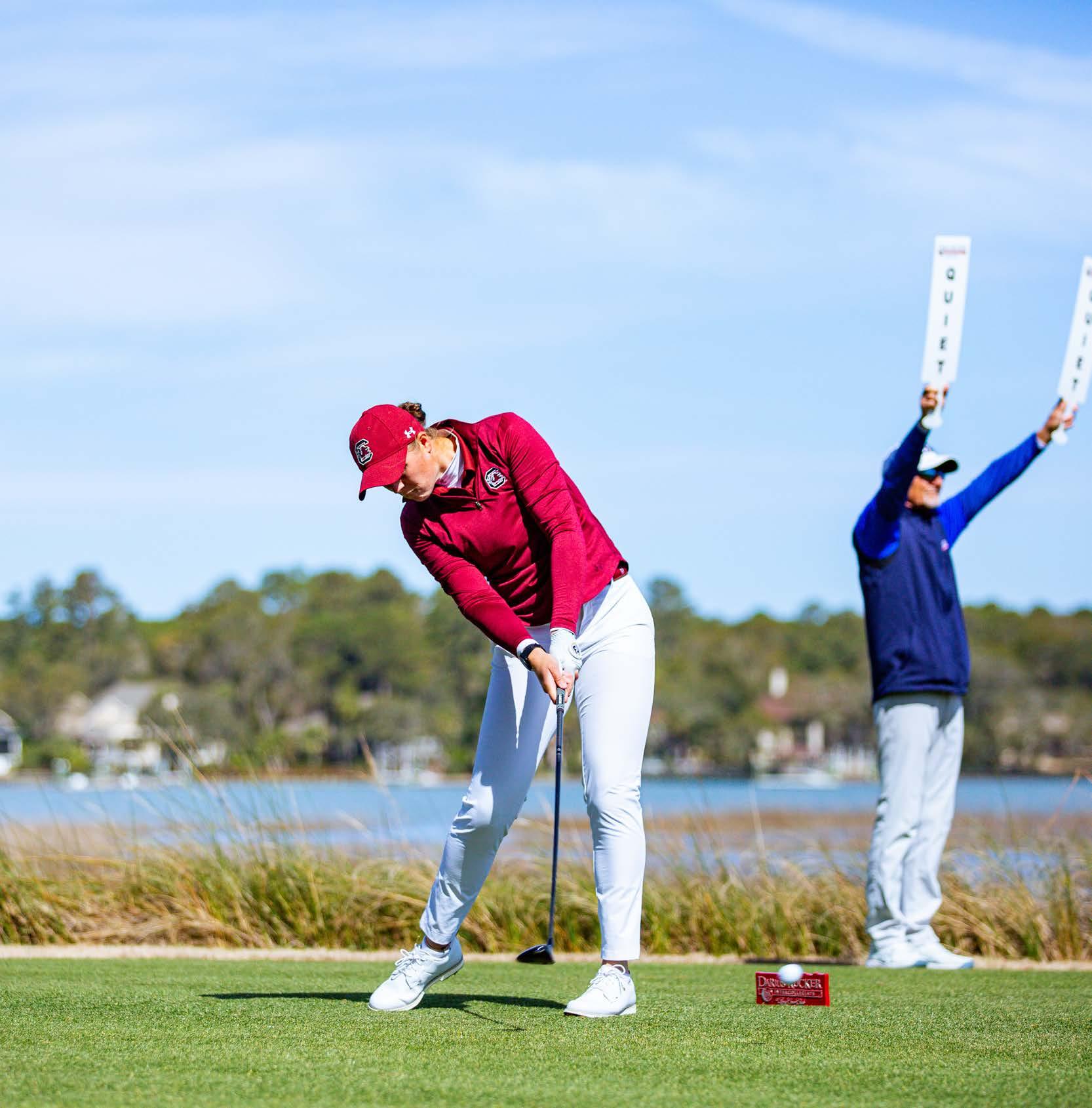



By Tamela Maxim Contributor
Day 22: From the Coast to the Mara
The day began in darkness at Shimba Hills Lodge at 4:45 a.m. and breakfast at 5:30. By 6:30, the road unfurled toward the coast, and at 7:30 the Indian Ocean beckoned. Our tour leader, Witress Emmanuel, told us he would detour to the beach if we promised not to take too long, so that we wouldn’t miss our flight.
After dipping our toes in the sand and marveling at the mysteriousness that all great bodies of water elicit, we reluctantly hurried back to our safari jeep for the trip to the airport. From Mombasa, an 8:15 a.m. flight lifted north, and by 11:30, the small plane touched down at Keekorok, one of the Mara’s oldest lodges. A short drive brought us to our accommodations—complete with the famous Hippo Bar overlooking the marsh, an open-air watering hole where guests get an up-close view, from an elevated wooden walkway, of hippos as they wallow, grunt, and do hippo-style socializing.
The first safari drive began at 3 p.m. with guides Ntimama and Sande. The Mara delivered immediately: elephants lumbering through acacia shadows, lions resting in tawny grass, and a cheetah— sleek and alert. Sande described cheetahs as half dog, half cat - unable to climb trees, with non-retractable claws, and they only eat what they kill. Lions and hyenas often follow buzzards to steal the cheetah’s dinner. To offset its vulnerabilities,
a cheetah’s golden to pale orange coloring and black spots create a dappled pattern that helps with camouflage, and its speed—60 to 70 mph—remains unmatched in the animal kingdom.
Lilac-breasted rollers flashed neon colors across the sky, yellow butterflies drifted over the plains, and an ostrich strutted past a kori bustard, Africa’s heaviest flying bird. As the sun dropped, Keekorok Lodge glowed in the distance, promising a peaceful rest.
Day 23: Lions, Borders, and the Stories
The next day began at 6 a.m., with a 7:30 game drive into the heart of the Mara. Our guides shared the region’s ecological history: once heavily forested, the landscape changed dramatically when fires were set to control tsetse flies. The word Mara—meaning “dotted or spotted”—describes the scattered trees that remain like dots across the landscape.
Wildlife sightings came quickly. A leopard tortoise ambled across the road. Plovers darted through the grass. A herd of topis, nicknamed “blue jeans and yellow socks,” grazed nearby. At 9:30, a lioness limped past with a wounded hip; fifteen minutes later, eight lions were found in a ditch, feeding on a buffalo.
The drive continued toward the Kenya–Tanzania border, where the Mara River divides the Maasai Mara from the Serengeti. Crocodiles slid beneath the surface, hippos snorted in the shallows, and baboon tracks patterned the mud. A ranger ready with a big rifle stood nearby as we each took turns having our photo taken with a
large crocodile in the background at the river’s edge.
On our return to the lodge, elephants appeared at close range, followed by giraffes, kongoni, and impala. Afternoon rain cooled the air, sending monkeys scampering across the lodge grounds. A black-shouldered kite perched elegantly on a branch, and a lone buffalo faced down three hyenas before they lost interest and wandered off.
Cultural insights wove through the day as well. We learned that Masai (one “a”) refers to the region, while Maasai (two “a’s”) refers to the people, who speak a Maa dialect. Sande described how the Maasai make deodorant from camphor family leaves, and he also shared a Luo tribal tradition: when a missing person is presumed dead, a sausage fruit is buried in their place so the community can complete funeral rites.
The day ended with dinner followed by bedtime at 10:30.
Day 24: From the Mara to Elementaita
Another early start—up at 5:00, on the road by 6:30. Riding with Sande, Laura, and Roy, we traveled to Nakuru and then to Elementaita. In Nakuru we saw lovebirds (the feathered kind). I noticed a large yellow JCB tractor and wondered if it was shipped from the factory in Savannah. Along the way, Sande demonstrated how sisal is harvested, dried, twisted, and braided into rope strong enough for ship anchors.
The road wound through Narok, home to NTIMAMA Stadium, and into regions
shaped by the Nilot people, who migrated from the Nile. Sande explained why some men we had seen were missing teeth. He said that traditional medical practice still included removing teeth to allow medicine to be given during seizures. Ouch.
Fields of white pyrethrum flowers— grown for natural insecticide—lined the road. We learned that candelabra trees ooze a milky, poisonous sap, while cactus plants hold clear, drinkable liquid, and that volcanic ash is used like sand in construction.
Markets bustled with activity, including one family that cleverly operated four meat shops under different names to give the illusion of competition. Euphorbia (the poisonous pencil plant) marked property boundaries, and white rocks—salt licks- are placed along the safari roads for animals to supplement their mineral needs, but also to attract elephants, giraffes, etc., for better tourist viewing. By 10:30, we arrived at Sentrim Elementaita School, supported by the Bluffton non-profit, Libraries for Kids, International, for an exciting visit with the children, then continued to our lodge, where masses of pelicans and flamingos decorated the lakeshore. A steam bath at 10 p.m. offered relief from sinus pressure from all the dusty roads before sleep.
Tamela is a proofreader and book editor; she hosts paint parties for adults, art and drama camp for kids, and is the art teacher at May River Montessori. www.tamelamaxim.com www.artposseproductions.com
The Carolina Dreamers Car Club marked the success of its yearlong fundraising efforts in January by awarding $3,500 each to four Beaufort County nonprofit organizations, the largest individual donations the club has made to date.
The presentations took place during the club’s January meeting, which drew a standing-room-only crowd. Representatives from the selected charities attended the Jan. 13 gathering to accept the checks.
This year’s recipients were Deep Well, the Child Abuse Prevention Association, the Lowcountry Food Bank and Friends of Caroline Hospice. According to the club, recipients are selected with a focus on identifying local organizations with the goal that donated funds remain in Beaufort County.
The Carolina Dreamers Car Club, now
in its 32nd year, has more than 130 member families. The nonprofit raises money through membership dues, entry fees from its annual car show and silent auctions.
In addition to fundraising, the club hosts weekly cruises and emphasizes camaraderie among members. Ownership of a classic car is not required to join, only an interest in automobiles.
Club member Bill DelTosta said he most enjoys “the fellowship of like-minded enthusiasts reminiscing about cars they’ve had, the repairs they’ve done and the trips they took.”
Club officials said fundraising in 2025 exceeded expectations, allowing for the record-level donations.
More information about the club and membership is available at carolinadreamers.info.
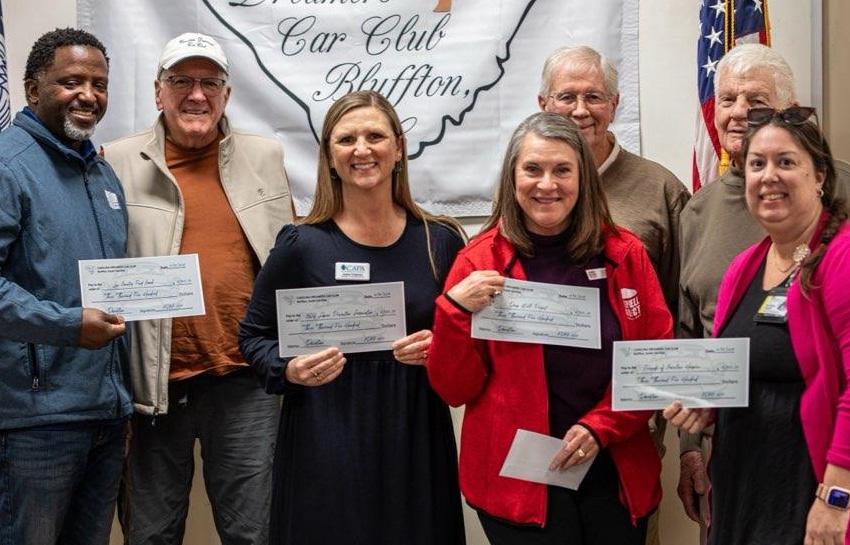
Moss Creek to Sun City to Callawassie Island. Promote services,




and businesses