
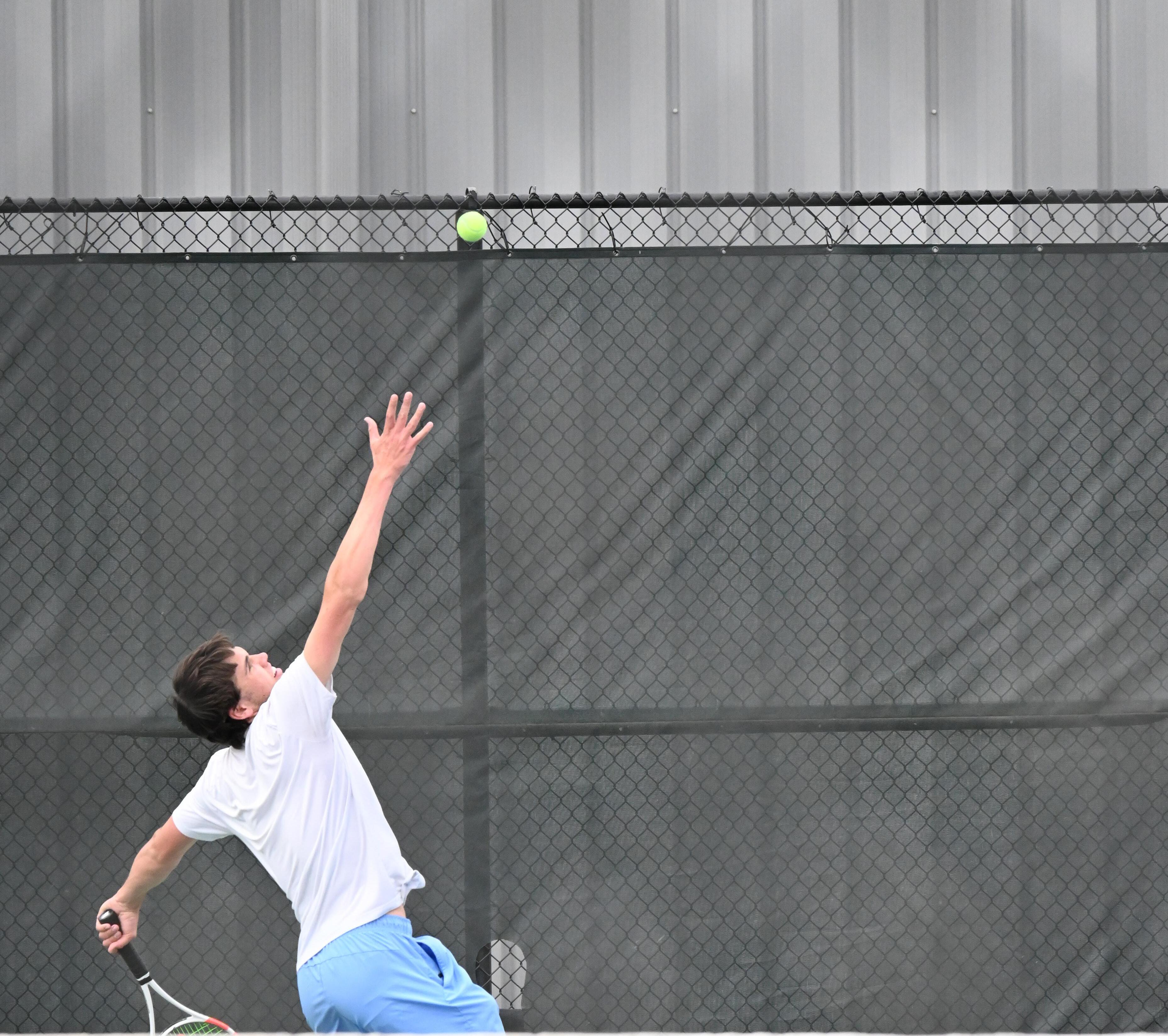
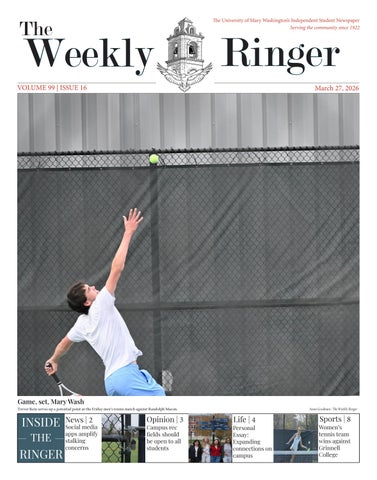
Trevor Rein serves up a potential point at the Friday men’s tennis match against Randolph Macon.
Anna Goodman / The Weekly Ringer
Editor-in-Chief
Callie Harkins
Executive Editor
ALEXA DELACONCEPCION Staff Writer
weeklyringer.executive@gmail.com
Associate Editors
Emma Kingkeo
Grace Wagner
Thomas Jackson
News Editor Ky Huynh
Meaghan Van Dyke
Opinion Editor
Ella Cordle
Life Editor Chloe McCann
Sports Editor
Enya Cea-Lavin
Online Editor Sophia Tompkins
weeklyringer.online@gmail.com weeklyringer.sports@gmail.com weeklyringer.life@gmail.com weeklyringer.opinion@gmail.com weeklyringer.news@gmail.com weeklyringer.associate@gmail.com
Photography Editors Anna Goodman
Violet Ayers
weeklyringer.photos@gmail.com
Copy Editor
Kyra Donlon weeklyringer.copy@gmail.com
Faculty Advisor
Sushma Subramanian
weeklyringer.eic@gmail.com ssubrama@umw.edu
Corrections
Please report any corrections to Callie Harkins at weeklyringer.eic@gmail.com or Sushma Subramanian at ssubrama@umw.edu
Advertisement
Please direct all advertising inquiries to Callie Harkins at weeklyringer.eic@gmail.com
In recent weeks, conversations of alleged stalking and suspicious behavior at UMW have ramped up across the UMW community online and on campus, as students come forward with experiences of being followed, watched or made to feel unsafe.
Anonymous posts made by users on the mobile app YikYak have amplified concerns and facilitated information-sharing among the student body. While official data collected by the UMW Police Department indicates a decrease in reported stalking incidents, many students believe the issue extends beyond what is formally documented.
“Someone I know was stalked on social media,” said sophomore education major Cindy Miles. “[They also] witnessed/experienced incidents within their club and the gym–their safe spaces on campus.”
According to the UMW Police Department’s crime log, there have been four incidents categorized as stalking within the 2025-2026 academic year, two of which occurred in the past month. These incidents include reports of being followed, repeated unwanted physical contact and other behaviors that may fall under the broader definition of stalking. The 2024-2025 academic year saw a total of six incidents.
Stalking, as defined in UMW’s Title IX Policy, is “engaging in a course of conduct directed at a specific person that would cause a reasonable person to fear for their safety or the safety of others and/or suffer substantial emotional distress.” These behaviors can range from physical following to persistent social media contact.
According to UMW Chief of Police and Associate Vice President of Public Safety Michael Hall, multiple reports may sometimes stem from a single situation, further complicating how incidents are recorded.
“Two or three people talking on a social media platform could make a report, and in essence, it deals with one person,” said Hall.
ened sense of awareness and, in some cases, anxiety among students. One YikYak poster joked that the students’ sharing similar experiences are inspiring a “MeToo” movement on campus, a social campaign against sexual abuse and harassment.
Despite the uptick in student discussion, Hall emphasized that students should not be afraid and that if an incident does occur, the university will take those allegations seriously.
“We don’t believe the campus is in any danger,” Hall said.
Students have been talking more openly about their alleged experiences, creating a perception that stalking and similar behaviors are becoming more common, even if the data shows otherwise.
“I remember in my freshman year, talks of stalkers kind of felt like urban legends, like a ‘beware of bigfoot’ situation. Now we are seeing these stalkers and [their] defining traits and things—we all kind of know them in one way or another,” said senior sociology major Cortland Rose.
The weight of the allegations made in these posts has prompted increased discussion about campus safety and has played a significant role in shaping that perception.
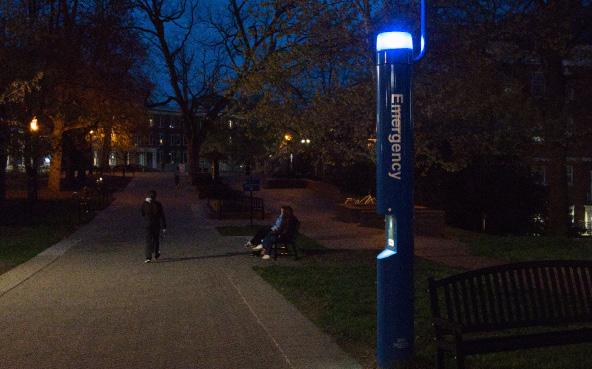
“I think all areas are relatively safe because of the blue lights, but at the end of the day, this is an open campus, so anything can happen at any time. It’s always smart to be cautious,” Rose said.
Junior communication and digital studies and studio art major Riley Munford said that while she has never been stalked, she has heard of troubling instances affecting her classmates, and believes the response from the university is inadequate to prevent or respond to criminal incidents.
“I do not think administration is doing enough to take action in a timely manner that makes students feel safe,” Munford said. “I’ve heard of multiple cases of reports needing to pile up before any action is taken and it makes me feel like the [student] body isn’t being heard.”
dents.
“The cases that I’ve heard of recently are primarily targeting women, so it also makes me and some of my friends feel like the university doesn’t take women seriously,” Munford said.
For many students, the concern is not only about the reported and documented incidents but also about those that go unreported. One female student, who was granted anonymity because of ongoing safety concerns amid issuance of a no-contact order in relation to a criminal stalking incident, recalled the hesitation to formally report her case.
“The cops on campus helped a lot, but it’s crazy how bad the bystander effect is,” she said. “It went on for a few months until I realized I really had to do something about it. I was worried I was overthinking it in my head, and if I reported it nothing would get done.”
This hesitation reflects a broader challenge that universities face in addressing stalking, as individuals may not always be sure whether their experiences qualify as reportable behavior or may feel uncertain about how to seek help.
University officials stress that one of the biggest challenges in addressing stalking is underreporting or delayed reporting. Hall emphasized the importance of contacting campus police as soon as a concerning situation occurs.
clarification for situations that may not actually involve stalking. Hall described instances where individuals believed they were being followed, but further investigation revealed coincidental patterns, such as overlapping schedules.
“I’d rather work through something early on and determine it’s nothing, so the student doesn’t feel anxious and worried unnecessarily,” he said.
Regardless, officials like Hall emphasize that all concerns are taken seriously and that students are encouraged to come forward, even in the face of uncertainty. When reports are made, UMW Police can investigate, increase patrols and coordinate with other campus partners, including the Title IX office, which helps students address sexual and gender based discrimination and harassment, the Office of Student Conduct and Responsibility, which promotes an environment for support and education for students and Residence Life.
“There are so many different layers of support,” Hall said. “The quicker we get that information, the quicker we can deploy resources.”
Bell tower logo designed by Bernadette D’Auria ‘22
The recent YikYak posts have contributed to a height-
While YikYak posts are often anonymous, the topics of conversation have predominantly been about female stu-
“Don’t wait and talk to your friends,” he said. “I’m not saying don’t talk to your friend—I’m saying, if you feel at that moment someone’s stalking you or following you or something like that, call us when it’s happening.”
In some cases, early intervention can help give students
Beyond law enforcement, UMW offers a range of resources for students who may be experiencing stalking. The Title IX Office can assist with formal complaints, protective measures such as no-contact orders and academic or housing accommodations. Confidential support is also available through campus counseling services such as the Talley Center.
March 27, 2026
CLAIRE LEATHEM Staff Writer
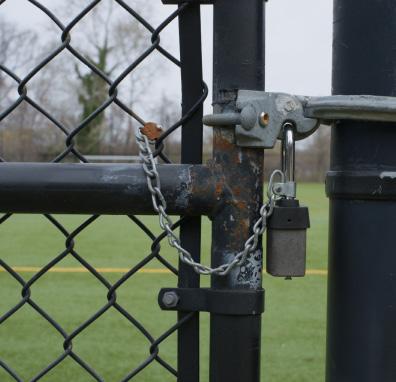
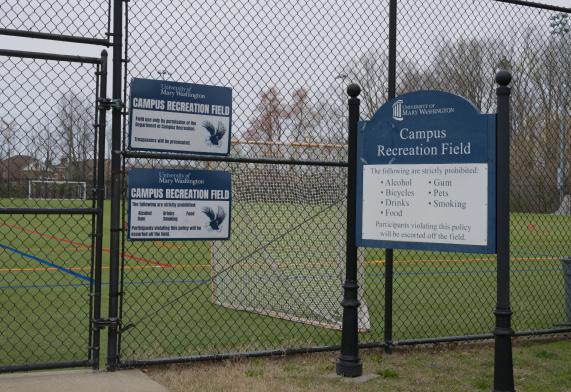
Every time I walk down campus on a nice sunny day, I’m sure to see a group throwing a frisbee, some friends kicking around a soccer ball and others basking in the warmth. There just always seems to be some sort of action happening on Ball Circle or Jefferson Square when the weather gets nice. This makes it even harder to understand why our campus recreational fields are closed for non-athlete students.
“The fields being locked causes unnecessary delays [in] our practice because we have to wait for leadership to retrieve the keys and come unlock them.”
- Dillan Shiflett
With the kind of demand witnessed for a spot on Ball Circle in the spring, students would surely make use of open hours in the field, and it would greatly benefit student life here at UMW. Casual sports are a great way to socialize and get some exercise that can relieve the stress of an average college student’s workload.
“Getting away from the constant stress of homework to go out and kick a soccer ball around with my friends is great,” said sophomore elementary education major Emily Ohlinger. “However, sometimes Ball Circle gets too muddy, and it’d be nice to have access to the turf field.”
A regular frisbee player on Ball Circle, sophomore biochemistry major Duncan Sanders, said that the constant closure of Ball Circle and Jefferson Square for maintenance can sometimes be inconvenient for casual sports.
“I understand the school’s concern with safety by leaving the gate unlocked,” he said. “However, I also think that with frequent closures to Ball Circle or Jefferson Square due to maintenance, it can sometimes leave students feeling trapped inside.”
Club teams also have their own struggles with the strict rules of the recreational field.
The President of club football, Landon Garboury, a junior business administration major, gave insight, saying that the coordination of unlocking the field makes things confusing.
“The fields being locked requires excessive tracking of who has what key and coordination that maybe isn’t really necessary,” he said.
Senior business administration major Dillan Shiflett said it also causes limited practice time as a player on club football. Shiflett mentioned that having to keep track of who has the key and having to wait for the president to get it causes team members to have to wait outside during valuable practice time.
“The fields being locked causes unnecessary delays [in] our practice because we have to wait for leadership to retrieve the keys and come unlock them,” he said.
I reached out to the Associate Director of the UMW Department of Campus Recreation, Arnaud Mensah-Etsi, to gain a better understanding of the reasoning behind locking the gate.
“The gate to the field remains locked except during scheduled club sport practice hours or games in order to properly manage access to the facility and preserve the quality of the playing surface,” Mensah-Etsi said. He went on to describe that a concern is if there is too much activity on the field, then it might cause damage to the turf.
“It reduces unnecessary wear and tear on the turf and ensures the field remains in safe and playable conditions
for scheduled activities,” he said.
Playing sports with friends is very important to a lot of the student body here at UMW, and it should be deemed as necessary to provide students with a safe, level surface, unlike Ball Circle, to play on. What’s the point of preserving a field when a majority of the student body can’t use it?
Ryan Houk, a sophomore geography major on the club soccer team, agreed, saying that the field is meant to be played on by everyone.
“Students aren’t going to destroy the field just by running around playing a sport on it,” he said. “Turf is meant to be played on.”
The turf field is also well taken care of. If any harm were to happen to the turf, it would be fixed, as Mensah-Etsi established that there is a maintenance contract.
“We have a contract with a local turf management company that performs monthly grooming and maintenance to ensure the field remains in safe and optimal playing condition,” said Mensah-Etsi.
Mensah-Etsi said the other main reason for prohibiting students from using the field is to regulate who is using the field.
“Limiting usage to scheduled club sport practices allows staff to better monitor participation, maintain accountability, and ensure that the facility remains in good condition for all users throughout the academic year,” he said.
“Students aren’t going to destroy the field just by running around playing a sport on it. Turf is meant to be played on.”
- Ryan Houk
While this is very understandable, given that the school doesn’t want people not associated with UMW to use their field, it does seem excessive to exclude all students except for club teams.
This is a concern that can definitely be worked around in favor of both sides. Houck believes that locking it be-
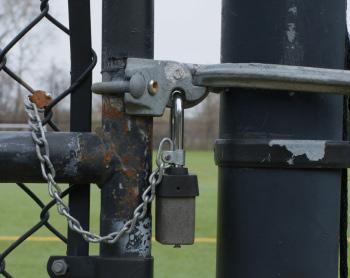
hind an EagleOne card could be a solution to this problem.
“Students could have a way to scan in using their EagleOnes during certain times of the day,” he said. “If that is too difficult, then maybe there could just be open hours during the afternoons of some days.”
It’s not right to lock down the recreational field during all hours except for practice times. The field is one of the campus amenities offered to the paying students of this university.
The total auxiliary comprehensive fee for a full-time undergraduate student from 2025 to 2026 came out to be $5,958.
$550 of that goes to Auxiliary Services Administration, which provides funds to pay the people keeping track of the upkeep of student facilities.
On top of that, $793 goes to recreation, and $550 goes to Auxiliary Facilities.
Opening the field to not just club teams, but all paying students is a discussion worth having.
It would greatly benefit students by granting them a place for physical, outdoor activities. This can definitely be done with rewritten restrictions that maintain the structure of who is using the field, while not completely locking it down.
AYA OGAWA Staff Writer
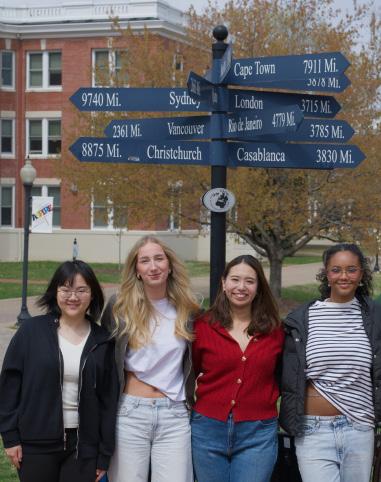
I felt a mix of excitement and anxiety after transferring more than 6,000 miles west to UMW from Japan in the fall of 2023.
I had grown up between Tokyo and Okinawa, two very different places with distinct lifestyles, accents, foods, and cultures. So, adapting to a new environment somewhat felt familiar.
I figured that if I prepared well, I would be able to keep up with classes and participate in English discussions, but in reality, it was a very different story.
Before coming to UMW, I studied at the University of Maryland Global Campus in Japan, where class discussions weren’t frequent, and participation wasn’t heavily graded, as opposed to Mary Washington classes. The differences in the classroom structure made the adjustment much more challenging.
Conversations seemed to move too quickly, and classmates would dive into ideas far deeper than anything I had expected. By the time I figured out what I wanted to say, the discussion had already moved on.
I started to doubt myself. I found myself asking, “Is my opinion correct?” or wondering, “Does this actually match what we’re discussing?” Even when I had ideas, I struggled to express them quickly in English.
But I wasn’t the only one who was struggling. Other international students like Caroline Preuß, a senior from Germany majoring in communication and digital studies, shared my similar sentiments.
“The biggest challenge for me has been adjusting to how different the university system is compared to Germany,” said Preuß. “There are attendance requirements, participation grades, and multiple exams throughout the semester.”
Jeremy Oshunrinade, a second-year real estate finance student from the United Kingdom, shared a similar experience.
“The most challenging part of this year abroad has been adapting to the different education system,” he said. “I had multiple weekly assignments and discussions, which I found challenging to keep up with.”
As Jose Sainz, director of the Center for International Education at UMW, explains, “English is not a measure of intelligence.”
“When [international students] are quiet in class or slow to speak, it is often about processing in a second (or third) language and navigating unfamiliar classroom norms, not a lack of ideas or ability,” he said.
During class discussions, I would listen to my classmates and suddenly realize, “Oh, that’s what the reading meant!” When I’d review everything after class, I would think, “I could have shared my perspective as a Japanese international student,” and would feel frustrated for having missed the chance.
According to Sainz, there are around 100 international students on student-sponsored visas at UMW, and that number has increased since the end of the COVID-19 pandemic.
Sainz also pointed out that many international students face challenges such as high costs, cultural adjustment, and difficulty speaking up in class.
Beyond the classroom, international students face additional challenges in daily life.
“They are balancing UMW life with intense academic, financial, and emotional expectations from home,” said Sainz.
When I lived with my international suitemates, we often talked about how hard it was to live in a different country.
Oshunrinade mentioned a lighter but still noticeable difference.
“A culture shock between Americans and Brits is the sense of humour,” he said. “I’ve had a lot of awkward moments where they wouldn’t understand the humour or ‘punchline’ of the joke.”
Being far from family, adjusting to a new culture, and trying to keep up academically all at the same time can be overwhelming.
“The main difference between my home country and the United States is that it’s harder to get around here,” said Oshunrinade. “I had to rely on others to drive me to places like the bank or the dentist.”
Struggles for international students don’t stop at missed jokes or relying on others for transportation. These challenges extend into social life, where building connections with American students on campus can be difficult.
“It would also be nice if people were a bit more open, especially since many students already have their friend groups, and it can be harder to connect when you’re not a freshman,” said Preuß.
As a result, many international students end up spending most of their time with one another, going out, traveling, or just supporting each other.
We rely on each other when faced with challenges and find comfort in our connections. However, we longed to expand our connections to American students. That’s part of the reason why I helped start the International Student Club in fall 2025, where I served as president.
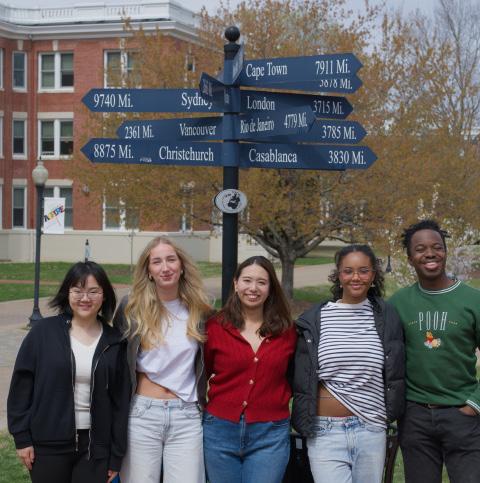
I wanted to create more opportunities for international and American students to meet, talk and learn from each other, especially because I had experienced how difficult it could be to build those connections.
The club has hosted events such as movie nights, bake sales, and international potlucks, and has also collaborated with organizations like the South Asian Association to bring students together across cultures.
I believe these events help students connect beyond their own cultural groups and feel more included in the UMW community.
Through these experiences, I gradually became more comfortable both in and outside the classroom.
When it came to academics, I started going to office hours more often and asking professors questions when I didn’t understand class content.
I explained my situation to them, informed them that I was an international student and that English is not my first language, which makes reading and writing take me more time.
Building on that, I began to actively contribute during group work and not let my voice be buried by sharing my perspective as a Japanese student.
As a result, my classmates showed genuine interest, and our conversations became more interactive.
I would ask them about the American point of view, and they would ask me, ‘How is it in Japan?’
Small group discussions became a space where I could ask questions and build friendships.
Over time, those relationships grew beyond the classroom, and we started hanging out regularly. I even started teaching them Japanese.
The accumulation of these experiences helped me step out of my comfort zone and build confidence.
I realized that I offered something valuable to a class by contributing a unique perspective.
As Sainz explains, “many international students are managing two (or more) worlds at once.”
Being an international student is not just about adjusting to a new country; it’s about learning to find my voice in unfamiliar spaces and using it to build meaningful relationships that bridge cultures.
Looking back, I learned that being an international student isn’t just about adjusting; it’s about finding my voice in a new country and using it to build meaningful connections.
AVA NJORE Staff Writer
On March 20, the Office of Student Activities and Engagement turned the Underground at Lee Hall into “Club Eagle,” a speakeasy-themed escape from the usual campus routine.
The moment students stepped inside, the space felt transformed. Jazz buzzed around, purple and gold accents lined the walls, and clusters of friends drifted between card tables and booths.
With a roaring ‘20s theme, students were immediately pulled into the energetic environment. Feathered headbands, suspenders, pearls and vintage-inspired outfits filled the room, giving the Underground a playful, time-capsule quality.
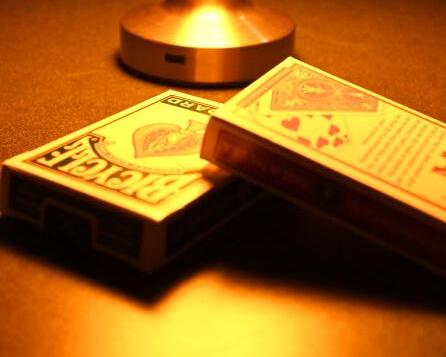
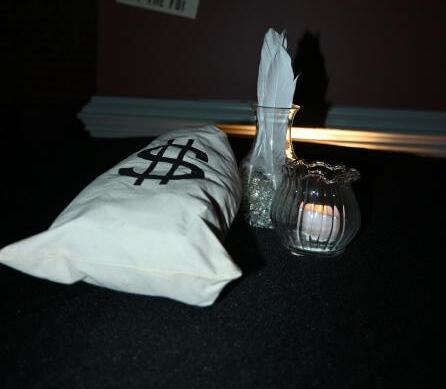
Dim lighting and food sucks you in as you enter. Playing cards and candles are set at every table, as well as appetizers at an open bar serving drinks and snacks. All while a jazz singer performs covers of students’ favorite songs.
To welcome you, a man at the door wearing sunglasses and a formal suit asks for the exclusive “password,” which most students received through a distributed paper invitation.
From the start, Faith Jones, a Night and Weekend Programming Assistant at SAE and event planner for the speakeasy, had imagined an atmosphere that felt different from the usual campus programming. She wanted to give UMW a chance to step out of their routines, try on a new 1920s-themed persona for the night.
“It’s a time for them to dance and have fun,” she said. “And, I think in addition to that, this gives them a chance to dress up in a theme.”
The event’s concept originated from an inspiration sparked by a Class Council event. At the event, Jones says, they had a “mini speakeasy.”
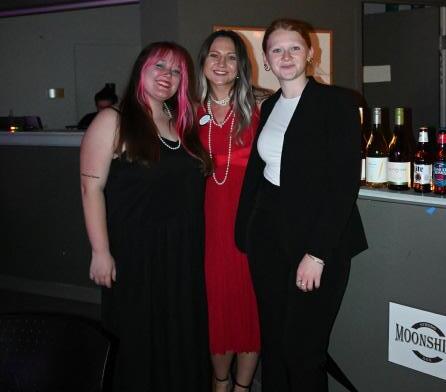
Right away, Jones thought that would be a great event for all students on campus. With the university’s help, she wanted to make it even bigger, taking more inspiration from the “Prohibition era.”
“How can we lean into the Prohibition era and make it really on theme, you know?” said Jones. “So, we just kind of took inspiration from a lot of different places.”
By taking inspiration from the roaring twenties, the Prohibition era, and jazz clubs all over cities, which all gave Jones the perfect aesthetic to match for this event.
However, sticking to the theme’s core did not come without its challenges.
Although speakeasies are not traditionally advertised, Jones still wanted students to talk about the event and spread the word to others.
Instead of rushing from one activity or bar to the next, students were encouraged to linger, talk, and enjoy the space at their own pace. For Howley, that blend of novelty and comfort is what made the event stand out.
“It seemed fun,” she said. “I like going to these types of events. It caught my interest and looked different than other events like karaoke,” an event also held in the underground.
Due to the Underground’s open layout, the event felt accessible, but also easy to overlook. Without a clear entry point, students walking by may not have noticed it if it weren’t for the music playing from inside.
“I understand why they kept it a secret,” said Howley, “but I think they might’ve needed people talking about it. I didn’t hear much about this.”
“We tried to be very, I’d say not, secretive with our advertising, because we want everyone to come,” she said. “But obviously speakeasies weren’t advertised right out loud for everyone, so we were trying to be more subtle with it.”
For many students, the speakeasy’s appeal wasn’t just their curiosity about the event’s theme; it was the atmosphere.
“It is giving ‘Sinners’ vibes,” said freshman Aiyanna Richard, referring to the Juke Joint in the 2025 movie “Sinners,” and noting that the dim lighting and underground setting made the space feel different from typical campus gatherings.
While Richard wished more students had shown up, she still found the experience “relaxing” and said she’d come again.
Freshman Robin Howley called the event “a nice change” from what she’d seen from events last semester and said the atmosphere matched her expectations. Similar to Richard, she also anticipated a bigger crowd, especially for a Friday night.
The smaller turnout, however, helped make the space feel more intimate. Without the usual crowding of a weekend event or downtown bar, guests have room to linger at tables and take in the details of the speakeasy setup.
What drew Howley in was the concept’s uniqueness. UMW and the Fredericksburg area don’t offer many nighttime events where students of all ages can mingle, unwind, and actually go out to have fun.
This can lead students to boredom on a Friday night. Especially students who are still under 21 and cannot go out to downtown bars or clubs. Most students want an escape from the everyday rush and chaos of campus, and a Friday night is meant to let your hair down and explore new things and places. Whether that means going out for drinks and dancing or listening to steady music with some appetizers.
She felt that a little more buzz, even if it didn’t reveal every detail, could have helped the event reach more people. Finding that sweet spot where the speakeasy stays true to its hidden password-only charm while still circulating enough word-of-mouth to draw a bigger crowd.
Howley also highlighted some changes she believes would strengthen the event. One being “more non-alcoholic options,” she said.
There were sodas, like Dr. Pepper and Pepsi, but students like Howley and Richards expected more mocktails or mixed drinks without alcohol in them. Whether that’s a dirty soda or sparkling spritzers, the more options make students feel included.
Since they are both freshmen and underage, that option would have elevated the night, making them feel more included within the atmosphere.
Jones feels that the event “went great overall.” The dancing, card games, and 1920s atmosphere tied everything together.
“People who were there were very engaged in the event, so I think they had a good time,” she says.
Each component almost highlighted a need of the night. If you needed to dance, there is a dance floor with a live musician; if you need a drink, there is a bar; if you need to just sit silently, playing cards are there for you to toy with.
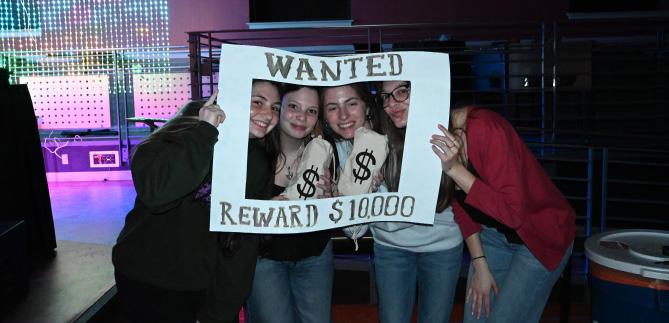
“People who were there were very engaged in the event, so I think they had a good time,” she says. The turnout didn’t quite match her expectations, but Jones believes the rain played a role. “I think the turnout was maybe just a little lower because it was raining. Once it starts raining, students don’t want to go out—especially if they’re getting dressed up. They’re like, ‘I don’t want to walk in the rain for that.’”
Still, the students who did attend showed their excitement right away.
As the night went on, the energy picked up. Students eventually made their way to the dance floor, which Jones loved to see.
“It’s always hard to get students to start dancing because no one wants to be the first one. But once one person went up, they all started going up,” said Jones. Because it not only shows participation, but also a sense of community. Students started to hype one another up, and once everyone felt comfortable, the entire sense of the room changed and became uplifting.
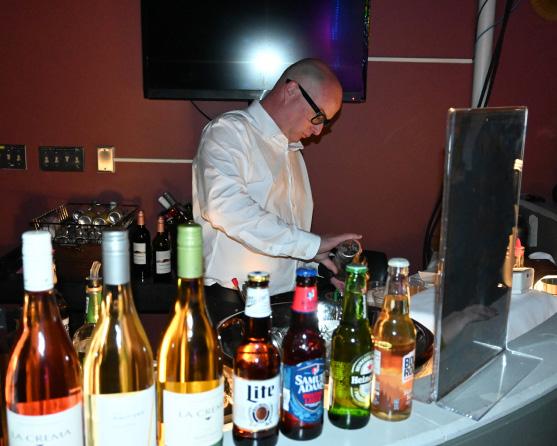
She also appreciated how committed students were to the theme. Students and faculty came in dresses and tuxedos. Wild Feather accessories and glasses to show off mystery.
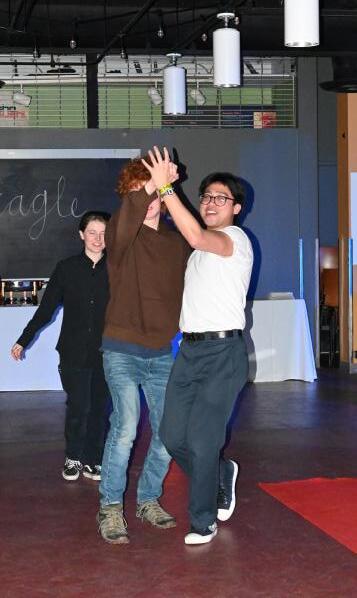
“I really enjoyed how much they leaned into the theme and dressed up. You never know if students will have 1920s outfits in their dorms, but they really committed to the theme and enjoyed it,” she says.
Looking ahead, Jones and SAE hope to bring Club Eagle back and grow its popularity each year.
“I think over time we can just build and grow—we have a good baseline,” she said.
For future events, Jones hopes to add more activities to spark engagement, like a “photo booth, or more little activities for people who aren’t interested in dancing. Really leaning into the 1920s vibe and making it even more authentic.”
“You never know if students will have 1920s outfits in their dorms, but they really committed to the theme and enjoyed it,”
- Faith Jones
Overall, Club Eagle was a refreshing shift from the usual campus events, welcoming anyone looking for latenight laughs with friends or times to unwind alone with music.
The dim lighting, jazz soundtrack, and themed décor created an environment that felt intentionally different, somewhere you could step out of your routine, loosen up, and relax in a little escape.
Whether students arrived dressed in roaring-20s fashion or showed up in jeans and a t-shirt, SAE helped bring Jones’ idea to life by creating a comfortable space for UMW, a space that offered something different, something memorable and something worth doing again.
Friday, March 27, 2026
FROM STALKING, PAGE 2
Whether the current moment reflects a true increase in incidents or simply greater visibility remains unclear. However, the combination of student experiences, online discussions and official data highlights the complexity of the issue.
Hall emphasized that maintaining campus safety is a shared responsibility.
“Everyone has a vested interest in the community and safety,” he said. “The quicker we get firsthand information, the quicker we can support the individual and the community as a whole.”
As conversations about stalking continue both online and offline, university officials encourage students to rely
on verified resources to report concerns directly. While social media platforms may amplify awareness, they stress that accurate reporting and timely communication are essential to ensuring student safety.
“Everyone
has a vested interest in the community and safety . The quicker we get firsthand information, the quicker we can support the individual and community as a whole.”
- Michael Hall
“The University of Mary Washington is committed to providing a safe, respectful, and inclusive learning and working environment for all members of our community. We take reports of concern seriously, address them through established policies and procedures, including Title IX, protect the privacy of all individuals involved, and provide supportive measures based on the individual situation,” said Executive Director of University Communications Amy Jessee.
UMW provides resources for students who may be experiencing stalking or other forms of harassment on the UMW Safety Resources page.
Meaghan Van Dyke and Chloe McCann contributed to the reporting of this article.
CLAIRE LEATHEM Staff Writer
According to a March 3 email from Associate Provost and University Registrar Rita Dunston, undergraduate and M.Ed. students will not be able to register for classes or make changes to their schedule until they are given a Personal Identification Number (PIN) from their advisor at their pre-registration advising meeting. Students are provided with a step-by-step instruction list via the announcement email for how to use the PIN.
Dunston explained that this change was implemented to improve the pre-registration process.
“This process helps ensure that students meet with their advisors before registering, as the advisor provides the code,” she said. “This supports better course planning and helps keep students on track for degree completion while maintaining a secure and organized registration process.”
However, the reasoning for the change has a different purpose among staff members. Staff advisors were told that it is due to a progressive system switch.
“As I understand it, it’s the result of the university shift to a new system, a system that is partially underway,” said Anand Rao, professor of communication.
Rao continued to say that the PIN is due to the inability to use the old Banner system, which was updated over the summer.
“What we needed to do this semester, as kind of a stopgap measure, is to move the PIN assignment because lifting holds wasn’t going to work due to the system not being able to support it,” Rao said, explaining that the old system in Banner is no longer available.
Some students, including Anna Woods, a sophomore theatre and education double major, expressed apprehension over the new PIN because of the already stressful nature of class registration.
“I’m not exactly sure why these changes are being made, maybe if they shared the reasoning, I could get behind it, but I think having a PIN just adds to the stress that registration already is,” said Woods.
Other students question the reasoning for the system change in the middle of the academic year.
MEAGHAN VAN DYKE News Editor
The Crime Column is based on UMW Police reports from Feb. 18 to March 25.
“I wish they provided more information on why it is necessary to introduce the new system into registration,” said Brady Thompson, a sophomore business administration major.
Some students are concerned that there’s an increased chance of not getting classes that they want.
“I think the PIN is an unneeded change that leaves more room for error in registering for the classes that I want,” said Michael Rupert, a sophomore math major.
Advisors were provided training for the new registration processes via email.
“In my first advising appointment, I wasn’t really sure how to share the PIN, and I pulled up that email, and it included good step-by-step instructions on where I could find it and how to share it,” said Rao.
Despite the information given to professors and staff, Adjunct Professor of Communication and Digital Studies Stefanie Chae empathized with students who were concerned about the change.
“I first heard about it in a department meeting earlier this week. I did not get the reason behind it,” she said.
Chae also said she understands that with limited seating, it’s hard to get a space in certain courses.
“Right now, I’m only seeing the frustrations. I do see a little bit of the positive side, maybe it’s more secure. But wasn’t it secure before?” she said.
Other than an increase in anxiety for getting into desired courses, the real impact on students and professors is the added responsibility and pressure of keeping track of their PIN.
“I am worried that maybe a student will have their advising time come up and they will have misplaced the number, or written it down incorrectly,” Rao said.
Some professors argue that the new system is a positive change.
Communication and digital studies Adjunct Professor Lindley Estes-Thomas believes this will motivate students further to meet with their advisors before registration, ensuring they receive valuable registration and Banner information.
“I think it makes a lot of sense because this PIN requires that you have an advising meeting, and hopefully that means that you’re able to go more thoughtfully into
There has been no crime reported since The Weekly Ringer’s last publication on March 20
registration and understand the pros and cons of taking each class,” Estes-Thomas said.
While Estes-Thomas believes it will have a positive impact, she too is not entirely sure of the reasoning behind the mid-year change.
“Right now, I’m only seeing the frustrations. I do see a little bit of the positive side, maybe it’s more secure. But wasn’t it secure before?”
- Stefanie Chae
“I’m not sure what the function is because I haven’t been involved in those conversations,” she said.
Rao also explained that this change shouldn’t make a big difference in the race to get the courses that students desire.
“It would be a delay that everybody has to go through. So I don’t think it would change anything in that regard,” Rao said.
If students struggle with the new registration system, assistance is available during registration through UMW staff, according to Dunston.
“Students who have questions or need assistance are encouraged to contact their advisor for support,” Dunston said. “Additionally, a registration instruction video is available to guide students through the process. Students are also encouraged to follow the Office of the Registrar on social media platforms for updates.”
The email also made recommendations for forming a schedule ahead of time using the Plan Ahead tool in Banner.
While students and professors have expressed their frustration towards this change, Rao described the overall impact on registration as minimal.
“I don’t think it’s really changed anything about my advising process. For now, the best bet is to make sure we double check the numbers, students and advisors each write them down, and then I keep a copy so that if you, for instance, have trouble, then you can contact me,” Rao said.
IZZY SCHEFERMANN Staff Writer
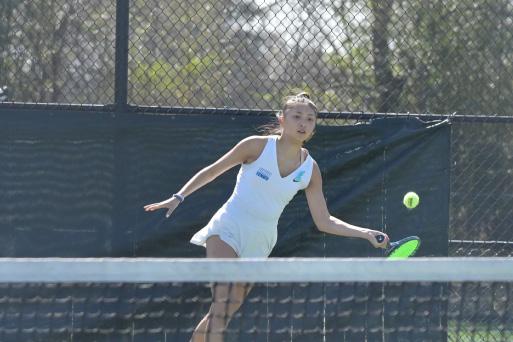
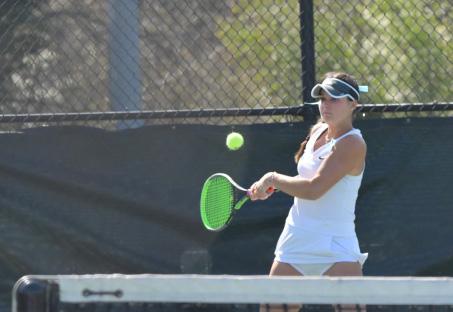
The No. 34 ranked University of Mary Washington women’s tennis team powered past Grinnell College with a 5–2 victory March 21 at home, improving to 6–1 on the season.
Despite dropping the doubles point, the Eagles responded with a dominant singles performance, winning five of six matches to secure the comeback win.
Freshmen Isabella Rotaru and Sarah Sandoval Banuelos provided the lone doubles victory for Mary Washington, battling back from a 1–4 deficit to win 6–4 at No. 2 doubles. The pair credited their resilience and energy for the turnaround.
“We got down 1–4 and then we were just like, we’re not just going to let this match go,” Rotaru said. “Once the energy was brought up, we were able to come back.”
Banuelos emphasized the importance of their chemistry, noting that their connection off the court translates into strong communication during matches.
“We make sure to keep each other hyped and not bring each other down. In the end, we’re a team.”
- Sarah Sandoval Banuelos
“We make sure to keep each other hyped and not bring each other down,” she said. “In the end, we’re a team.”
Although the Eagles fell short in doubles overall, the momentum from Rotaru and Banuelos’ comeback carried into singles play.
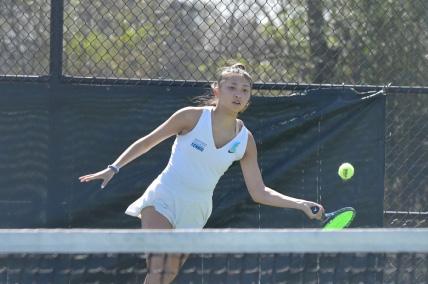
Junior biology major Addison Felts set the tone at No. 1 singles with a 6–2, 7–5 win over Grinnell player Pari Chavan. Rotaru followed in No. 2 singles with a commanding 6–2, 6–0 victory. Sophomore Natalie Kim added another point with a 6–2, 6–3 win at No. 3.
Banuelos continued her strong day at No. 4 singles, winning 6–1, 6–3, with sophomore Sophia Broomall capping off the Eagles’ performance with a 6–4, 6–1 victory at No. 6.
Heading into the match, the team focused heavily on mental preparation. Sophomore biology major Emily Tharp highlighted the importance of their mindset in practice leading up to the competition.
University of Mary Washington Spring Sports Schedule

ENYA
CEA-LAVIN Sports Editor
Men’s Basketball (29-3)
Mar. 21 vs. Trinity College (64-61)
Apr. 5 NCAA DIII Championship vs. Emory University
Men’s Tennis (13-2)
Mar. 21 vs. Randolph College (6-1)
Mar. 27 @ Johns Hopkins University
“I’ve been focusing most on getting a good game plan together and executing points,” she said. “It’s about building the right plan and sticking to it.”
“We’re finally getting our groove. We’re seeing so much improvement from the beginning of the year.”
- Isabella Rotaru
That mindset proved crucial as the Eagles regrouped after doubles and took control of singles play.
The match also drew strong support from fellow students, contributing to a lively atmosphere.
Freshman and women’s rugby player Olivia Elder described the energy as “one of the most dramatic matches” she has seen.
While freshman kinesiology major and lacrosse player Lila White called it simply fun, noting the team’s enthusiasm and support for one another.
“It’s nice to kind of come out and support them, especially since we’re both spring sports, support each other,” said White.
With the win, Mary Washington continues to build momentum early in the season. Rotaru and Banuelos also noted the team’s growth, particularly in doubles play.
“We’re finally getting our groove,” Rotaru said. “We’re seeing so much improvement from the beginning of the year.”
The Eagles will look to carry that momentum into their next match as they host No. 2 ranked Washington University in St. Louis at home on March 27 at 4 p.m.
Women’s Tennis (6-1)
Mar. 21 vs. Grinnell College (5-2)
Mar. 27 vs. Washington University in St. Louis
Men’s Lacrosse (5-4)
Mar. 21 @ Marymount University (13-9)
Mar. 28 vs. Kean University
Women’s Lacrosse (4-4)
Mar. 28 vs. Messiah University
Baseball (14-6)
Mar. 21 @ Gettysburg College (DH) (2-5) & (5-3)
Mar. 28 vs. Salisbury University
Softball (11-11)
Mar. 21 @ Gettysburg College (DH) (10-2) & (2-5)
Mar. 31 @ Stevenson University (DH)
Men’s Rugby (4-6)
Mar. 28 vs. Penn State University
Women’s Rugby (13-4)
Mar. 28 @ Longwood University
Games are available to watch via livestream on the UMW Athletics webpage www.eagles.com/composite
Full schedule not listed above. Most recent games included. Bold indicates home game.