Front
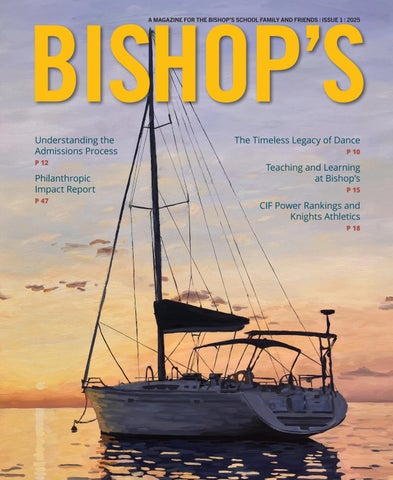
“Sunset at Sea” by Khai Ha ’25,
Back Cover:
“Pop Auto” by Andres Zagursky ’25, digital media

Front
“Sunset at Sea” by Khai Ha ’25,
Back Cover:
“Pop Auto” by Andres Zagursky ’25, digital media
A magazine for The Bishop’s School community
1 | Vol. 22
Credits
Editor
Cathy Morrison
Assistant Editors
Arielle Bader
Nico Waters
Contributing Writers
Arielle Bader
Ron Kim
Cathy Morrison
Nico Waters
Graphic Design
Design Perspective, Inc.
Printer
Neyenesch Printers, Inc.
Contributing Photographers
Arielle Bader
Paula Conway
John Davis
Beth Garon
iStockphoto
Kendall Lucas
Cathy Morrison
Shutterstock
Dave Siccardi
Michael Spengler, Studio M Photography
Nico Waters
The Bishop’s School
Head of School
Ron Kim
Chief Advancement Officer
Emily Hassig
Senior Director of Alumni Engagement and Annual Giving
Lori Boyle
Bishop’s is published twice a year by The Bishop’s School.
We welcome your feedback.
Please send story ideas to news@bishops.com or contact us at (858) 875-0710.
The Bishop’s School
7607 La Jolla Boulevard La Jolla, CA 92037-4799
Phone: (858) 459-4021
www.bishops.com
Mission Statement
Bishop’s is an Episcopal school that nurtures students of intellect and character to think independently, learn collaboratively, grow their sense of self and act with greater purpose.
Last year, the strategic oversight committee of the board of trustees invited Mark Mitchell, the vice president of the National Association of Independent Schools, to speak with the committee on trends in admissions, access and affordability in independent schools. Mr. Mitchell provided detailed insights and aggregate data on schools across the country, and he anticipated what the admissions results would be for Bishop’s. What he saw defied his expectations. Whereas most schools in the country have seen their admissions pipelines flatline or decline, Bishop’s has seen significant growth. Mr. Mitchell commented, “You must have some secret sauce here.”
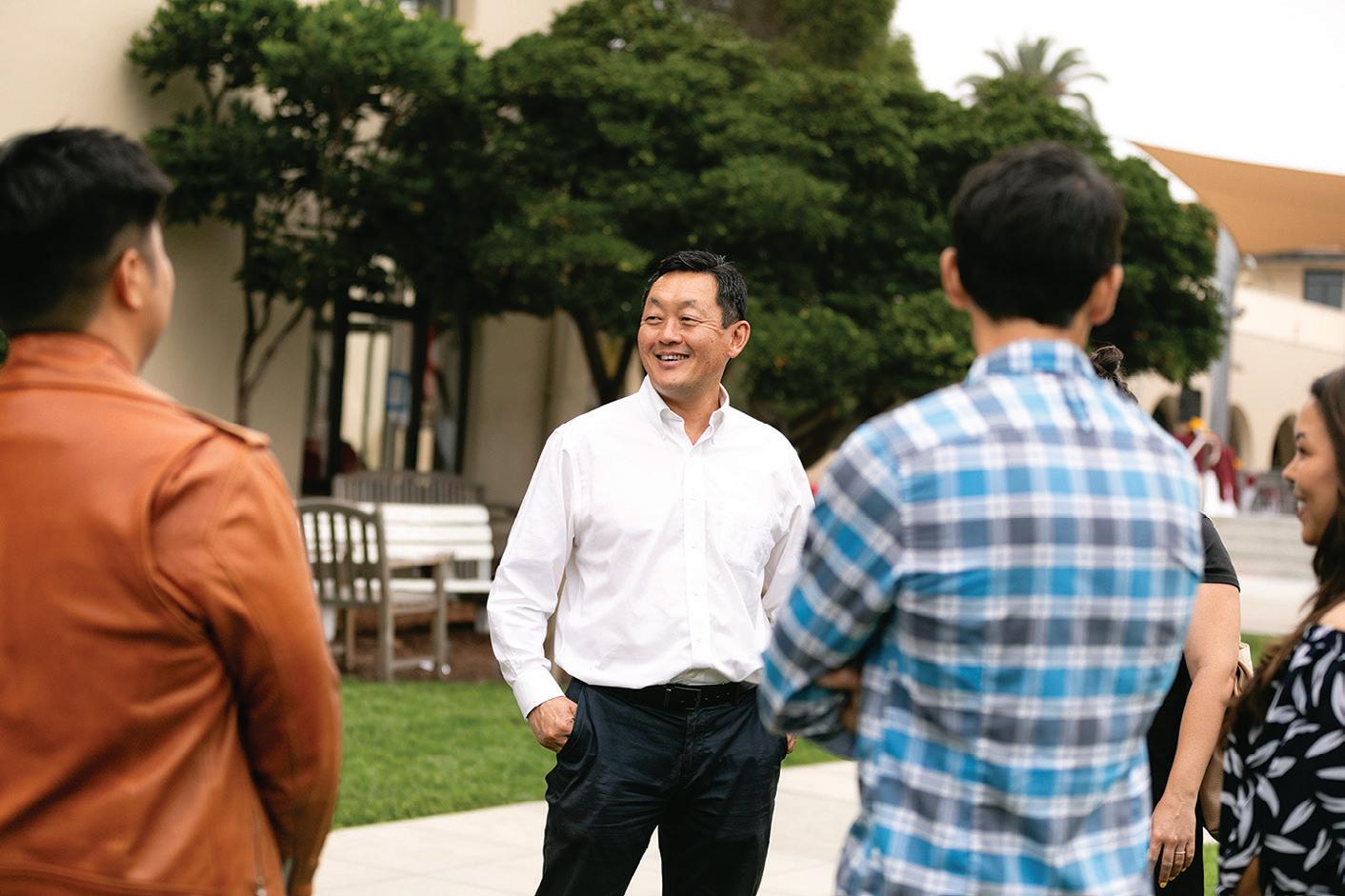
This magazine shares some of the admissions data that captured his attention. Bishop’s is in the enviable position of having an abundance of qualified applicants apply, and the challenge for us is choosing which terrific children we can accept each year for a limited number of spots. So what is in the secret sauce that attracts so many wonderful young people?
The key ingredients are three Cs—content, connection and cognition. We have distilled what makes the Bishop’s experience special down to these three elements. In the hands of knowledgeable, devoted and caring teachers they become a secret sauce that makes a Bishop’s education special.
The special experience is certainly in the classroom, and it’s in our athletics program which has seen our teams compete at the highest levels against the largest schools. It’s also in performing arts and the inspired dance program. I encourage you to read about both to see how Bishop’s is thriving in so many areas.
Four years ago, The Bishop’s School adopted a new vision to complement its revised mission statement. Our vision is unique in that it takes the form of a question: How do our students learn and grow best? We believe we know the key elements in answering that question, and we invite you to learn more about it in the pages inside.
Ron Kim Head of School
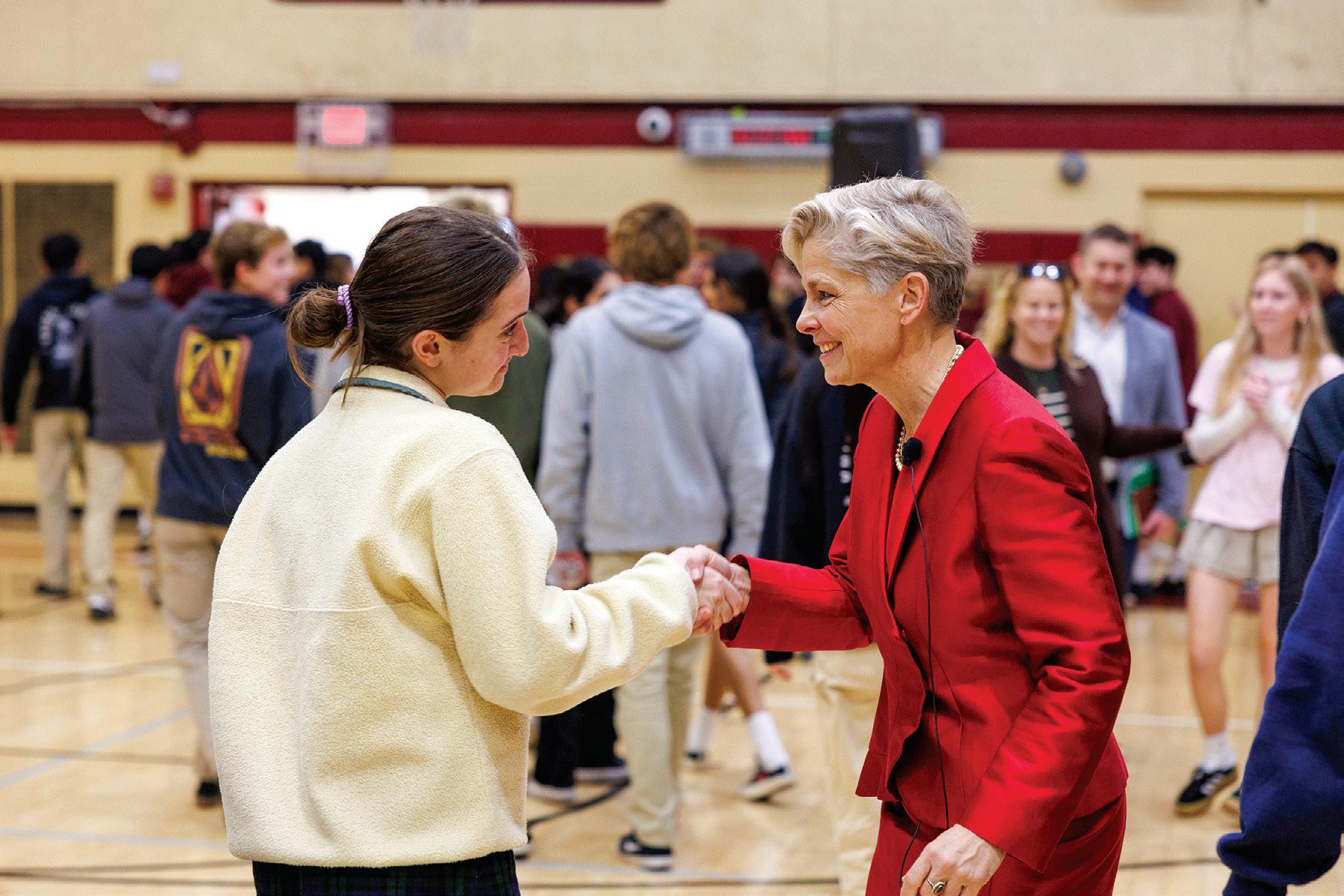
Dr. Bartkus is a professor emerita at the University of Notre Dame and founder of the Business on the Frontlines program. Seeking to harness the dynamic energy of business in rebuilding societies ravaged by conflict and poverty, her team and program bridge the gap between academic research and realworld experience. Dr. Bartkus told students about the economic challenges facing a small, impoverished town in Guatemala and a coffee cooperative there. Her team was asked to determine if the cooperative could expand its business from coffee to bananas to increase funds to provide local children with more food and better nutrition. “We spent a lot of time with the families. We listened to their dreams. And we really tried to figure out the economics from beginning to end.” Ultimately, that approach helped her team devise a different solution that increased the cooperative’s revenue and met its goal. History and Social Sciences teacher Emily Smith says, “Having guest speakers is always great, especially in economics, because it allows students to see what economists actually do in the real world.”
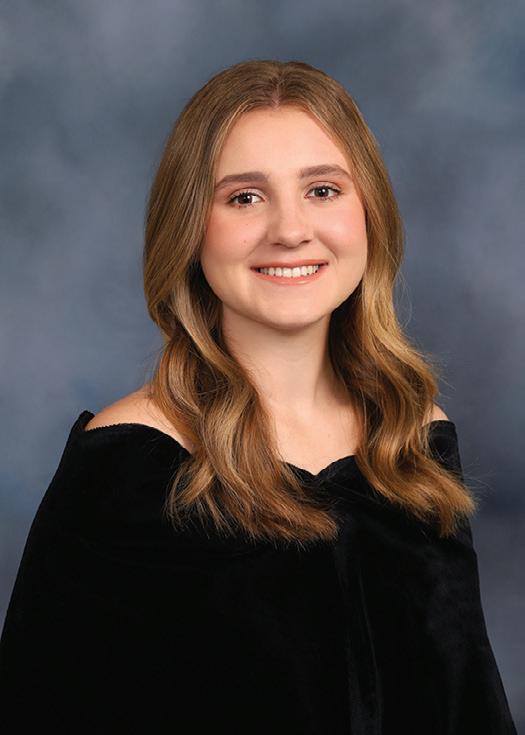
Out of more than 105,000 applicants, Anna is one of 150 rising college freshmen across the U.S. awarded a $20,000 college scholarship. According to the Coca-Cola Scholars Foundation website, “These students…not only exemplify superior leadership, service and academics, they are change agents, positively affecting others in their communities.” Anna says, “Bishop’s has instilled in me the importance of using knowledge to help others. Whether it’s through research, outreach or just sharing what I’ve learned with those who might not have the same opportunities, I hope to carry that mindset forward in everything I do. I’m so grateful for the experiences I’ve had here, and I know they will continue to shape me long after I graduate.”

Twenty-two Bishop’s students participated in the 2025 San Diego County High School Mock Trial Competition, which began with round one on Feb. 6 and ended with the championship round on Feb. 25. Overall, Bishop’s ranked fourth place out of 42 teams and earned four individual awards, more than any other school in the competition.
❖ Claire Li ’28 – Outstanding Clerk
❖ Grace Ebel ’27 – Outstanding Bailiff

On Nov. 13, Bishop’s welcomed Wes Woodson, mental health advocate, insightful speaker and author of “The Secret Life I Kept from Mom and Dad: Confessions from an Anxious Son.”
❖ Dominc Simopoulos ’26 – Outstanding Witness
❖ Ben Brown ’25 – Outstanding Pre-trial Attorney Spanish teacher Nicole Uhland and history teacher Priscilla Wrosch served as teacher-coaches. Professionals within the community also helped—including Tim Barry, Paul LeBlanc and Anne Chodorow, who served as attorney coaches, and Judge CJ Mody, an active judge who presided over the students’ pre-competition scrimmages and provided valuable feedback.
Woodson’s mission is to help anxious achievers build a healthier relationship with themselves, practice self-acceptance and positivity and embrace the powerful message, “I Am Enough.”
During an all-school assembly, Woodson spoke about his journey with anxiety and self-doubt as a child and young adult, the same challenges that other students might face. At school, they might look like a “well put-together student,” Woodson says. “Behind closed doors, they might have crippling social anxiety. They might suffer with perfectionism. They might have depression.” He discussed how those challenges affected him and the steps he took to help navigate those issues. Following the presentation, a long line of students stayed to greet Woodson, thanking him for expressing the relevance and resonance of his mental health journey. Director of Counseling Megan Broderick ’98 and School Counselor Lauren Gray noted, “We were really moved by what Wes had to say. But more importantly, we were blown away by the level of engagement and response by our student body. He was able to connect with our students through the power of storytelling.” Woodson also spent time with students during upper school lunch. Later that evening, he spoke during the Bishop’s Family Partnership meeting with parents, saying he hoped “to inspire a future conversation with your students.”
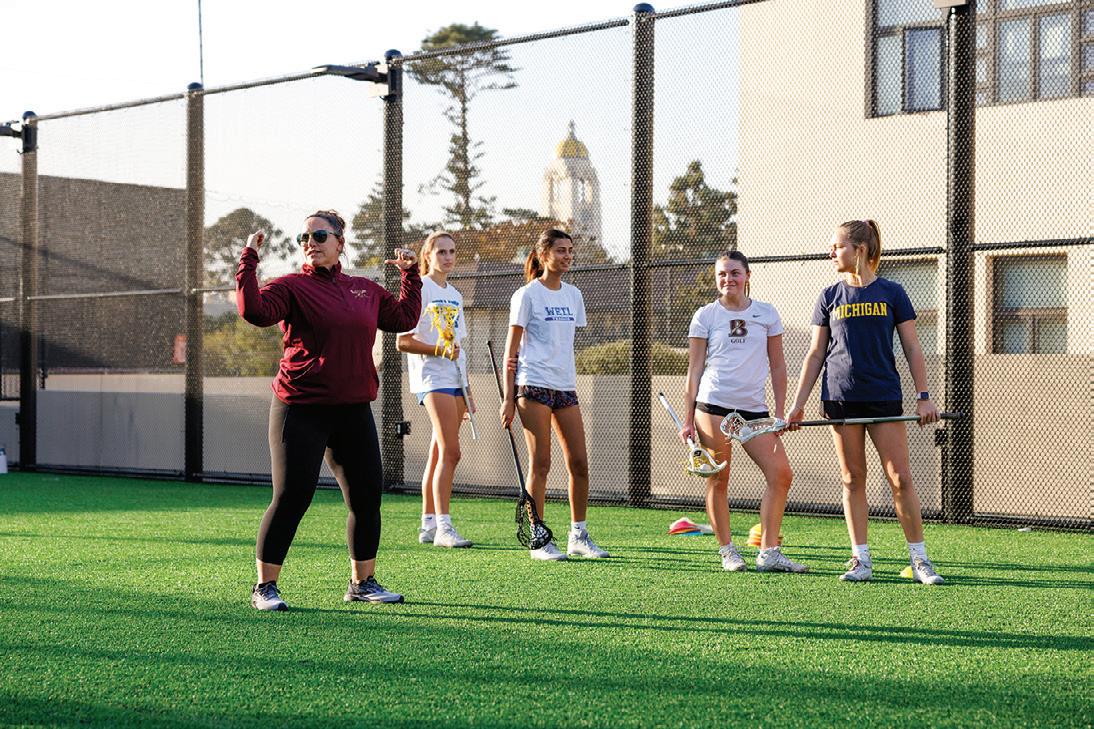
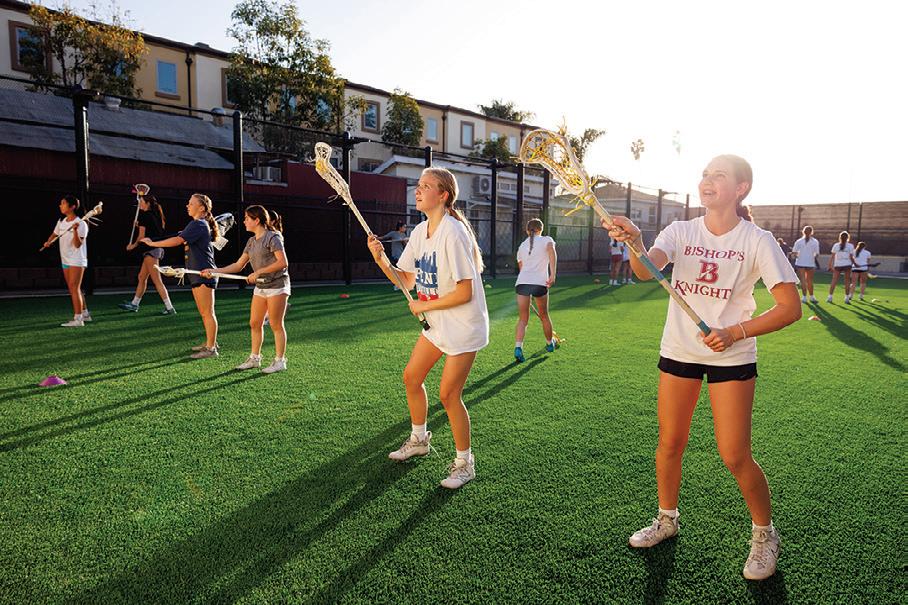
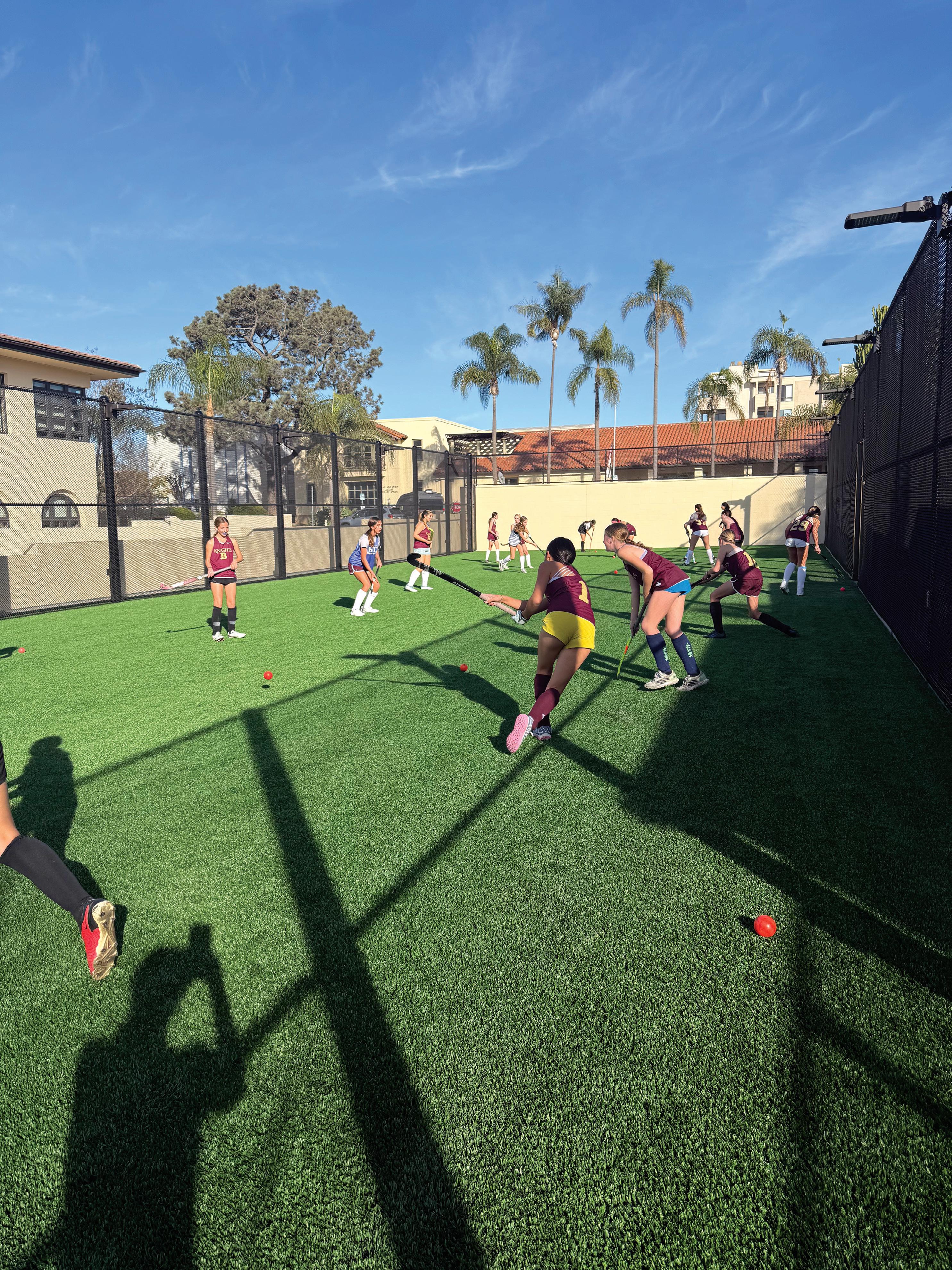
In late summer 2024, demolition and development got underway at the property the School owns at 7552 Draper Ave., adjacent to the Draper Ave. parking garage entrance. With the goal of a multi-purpose athletics field to accommodate more student

“Today we had our first middle school practice with our Maroon Field Hockey team. There were 22 grateful and happy girls to have a little more field space! Go Knights!”
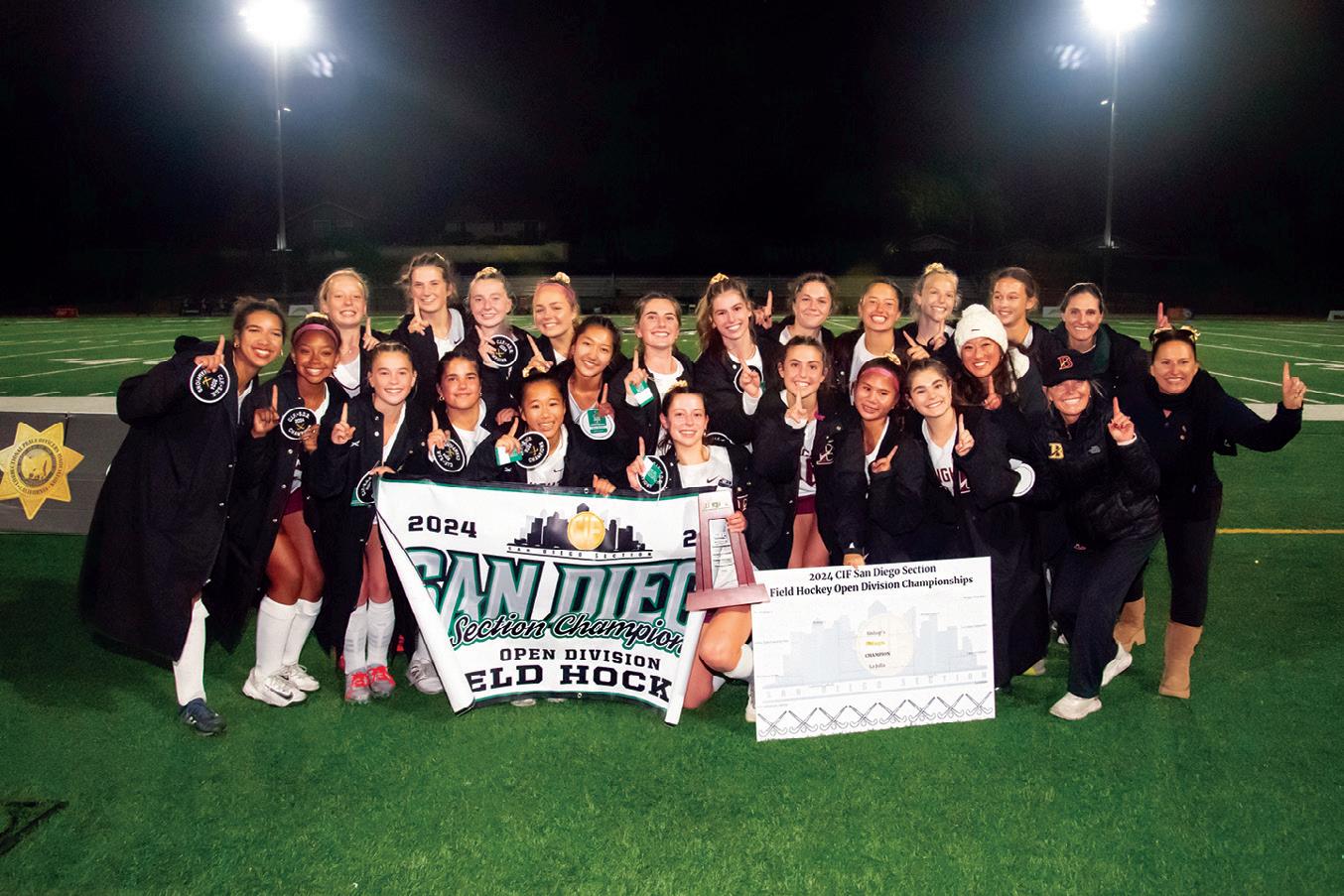

This is the first Open Division section title in Bishop’s program history. Lola Conway ’28 earned CIF San Diego Section Player of the Year honors. And the Bishop’s Field Hockey Team ranked No. 1 in California and No. 6 in the nation. Overall, they finished with a record of 25-1, only allowing seven goals all season. Lola states, “Our team was so close, and we all played for each other. Our senior captains Addie Kessler, Laine Jeffery, Gabby Gaspar, Natalie Marvin and Alex Pfister were amazing and made us all feel connected.” Lola says the team’s workouts included “running, conditioning and weight training with Coach Charlie. We were strong and fit, and that put us in position.”
Coach Conway adds, “From the very beginning of the season, all five seniors were focused on one goal of bringing home a title. They set the tone through their intense training and strong leadership, not just in performance but in building a tight-knit, supportive team culture.”
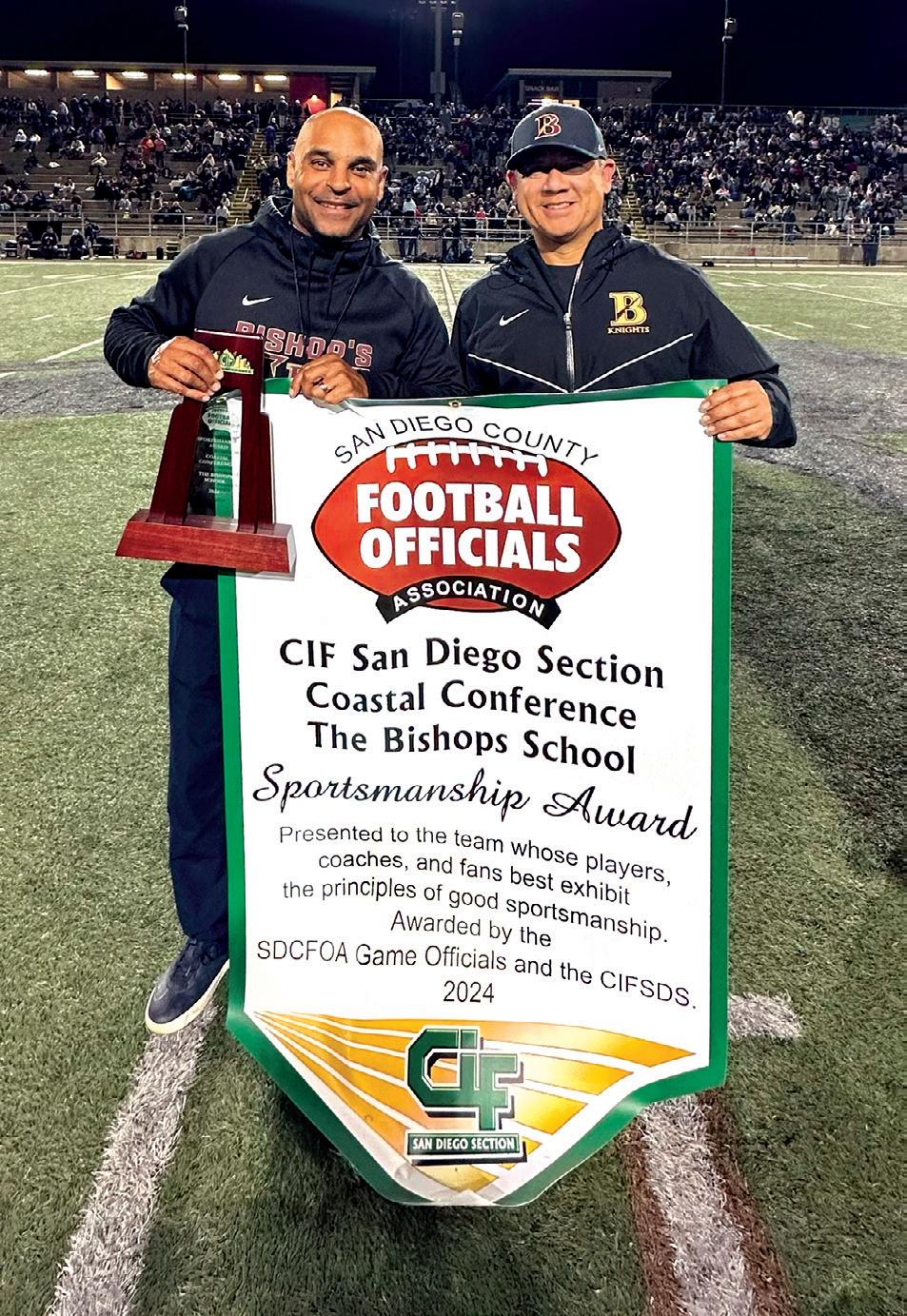
Knights Football was recognized Saturday, Nov. 30, 2024 by the San Diego County Football Officials Association (SDCFOA) and the CIF San Diego Section (CIFSDS). Steve Coover of the SDCFOA wrote, “This award is presented to the team whose players, coaches and fans best exhibit the principles of good sportsmanship. The Bishop’s School has won the award for the entire Coastal Conference and all smaller schools in San Diego County.” Head Coach Shane Walton ’98 and Assistant Athletics Director Al Gomez were on hand to receive the trophy, display banner and a $1,000 check for the School’s football program during the CIF D1 football championship half-time presentation. Coach Walton said, “This award is a credit to our wonderful coaches and the tremendous young men we have the opportunity to work with every day.” Athletics Director Paula Conway acknowledged, “This recognition is a testament to our players, coaches and fans’ commitment to upholding sportsmanship and integrity throughout the season. At Bishop’s, we value sportsmanship above all, believing it defines true success both on and off the field. We are grateful for this meaningful award.”
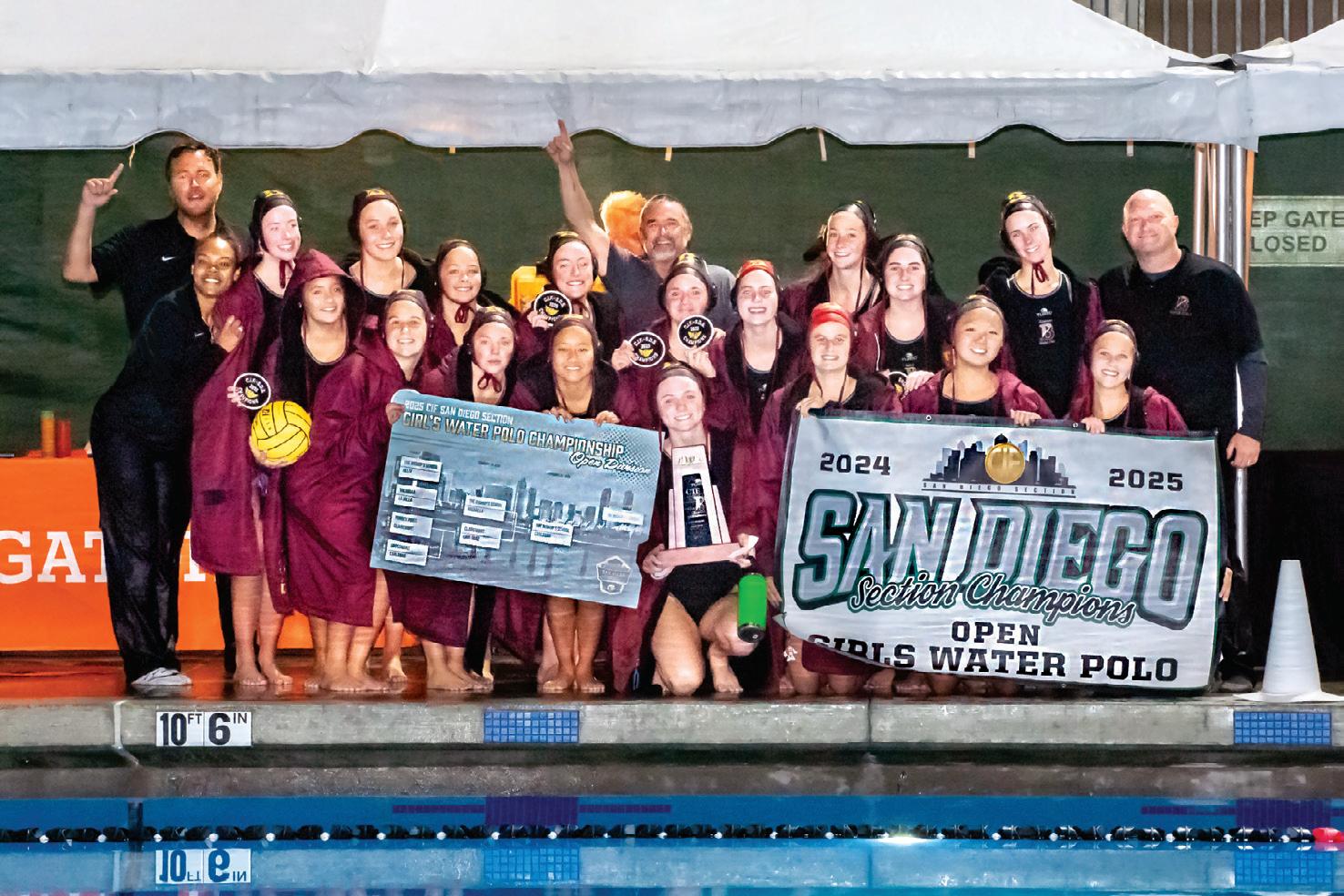

Tying their longest Championship streak and earning the Open Division crown 14 times in 15 years, the team demonstrated the grit and training regimen required to maintain their record. Coach Doug Peabody shares, “It was another amazing season watching the girls learn and grow together. They bonded quickly and embraced the grind each and every day to achieve their common goal of trying to get better every practice. To come out on top and tie our longest CIF win streak was amazing.” He adds, “The ability of the girls to compete wholeheartedly in each contest stood out for us this year. We were solid across the board offensively, and stout in the goal and on defense. This team made it easy to coach and was a joy to be around all season.”
“This recognition is incredibly well deserved,” says Bishop’s Assistant Director of Athletics Al Gomez. “Every decision she makes is rooted in the best interest of student-athletes, coaches and the community she serves. We couldn’t be more proud of her!” Bishop’s alumna and HSSA member Mimi Test ’61 introduced Paula at the ceremony and says, “Paula’s athletes feel the warmth and so deeply appreciate the care, energy and determination she shows to ensure their success. Paula is truly deserving of this honor as athletics director of the year for the San Diego CIF section.” With Paula at the helm since 2021, Bishop’s has won 13 CIF and 35 League titles.

Bishop’s aquatics director and head coach for boys’ and girls’ water polo has helped lead the water polo programs to 32 San Diego CIF Championships. “I have been involved in aquatics at Bishop’s in all aspects for 27 years and had nothing but amazing times and results,” says Doug. Director of Athletics Paula Conway notes, “Coach Peabody’s leadership inspires and elevates everyone around him, both in and out of the pool.” Beyond Bishop’s, Doug coached the San Diego Shores Water Polo Club to 35 national championships and the men’s junior national water polo team to three Pan American Championships. He coached the Men’s National Cadet Team, the USA Men’s Senior National Team, the USA Maccabiah Team and the USA Men’s National Junior Team. He also served as assistant head coach for the women’s water polo team at San Diego State University.
The February 2025 awards ceremony in Charlotte, N.C. recognized ninth- through twelfth-graders from the U.S. for their computingrelated projects and achievements.
❖ Emmie Kao ’25 – National Honorable Mention

❖ Angelina Kim ’25 – National Winner
❖ Emma Liu ’27 – National Honorable Mention
❖ Sophie Zeng ’25 – National Honorable Mention
The AiC Awards recognized students for their “unique talents, aptitude, and aspirations in technology and computing.
40 national winners and 360 honorable mentions were selected from over 3,700 exceptionally talented applicants.”

Members of the board of trustees asked students what they most value about their Bishop’s experience. Over a series of lunches with middle and upper school students, the conversation centered on community, people, resources and opportunities.
Mark ’30 shares, “One thing I love about Bishop’s is the strong sense of community. Everyone is welcoming, kind and strives to be their best. For example, one of the lunch servers [Ana Delgadillo] was retiring, and most of the middle school lined up to give her a hug. Many students may not have known her personally, but the fact that everyone wanted to give her a heartfelt goodbye was truly special—something you don’t often see at other schools.”

L-R with years served: Wendy Gibbons ’23-’24; Betty Vale ’92-’93; Cynthia Weiler ’00-’01; Janice Upton ’24-’25; Amy Valerias ’06-’07; Christine Young ’95-’96; Susan Zau ’15-’16; Laurie Howard ’19-’20; Heidi Gutierrez ’20-’21; Jenn Beamer ’21-’23.
Not pictured: Linda Dieckmann ’99-’00; Karin Donaldson ’91-’92
Their children have graduated from Bishop’s, yet their connection to the School and to one another remains strong. So 11 past Parents’ Association presidents and our current PA president gathered on campus for a conversation with Head of School Ron Kim and a presentation by Chief Advancement Officer Emily Hassig. Bishop’s Chamber Orchestra also performed for the group at their Jan. 25 gathering. It’s always a treat to have folks who are near and dear to the Bishop’s community return to visit!

By Nico Waters
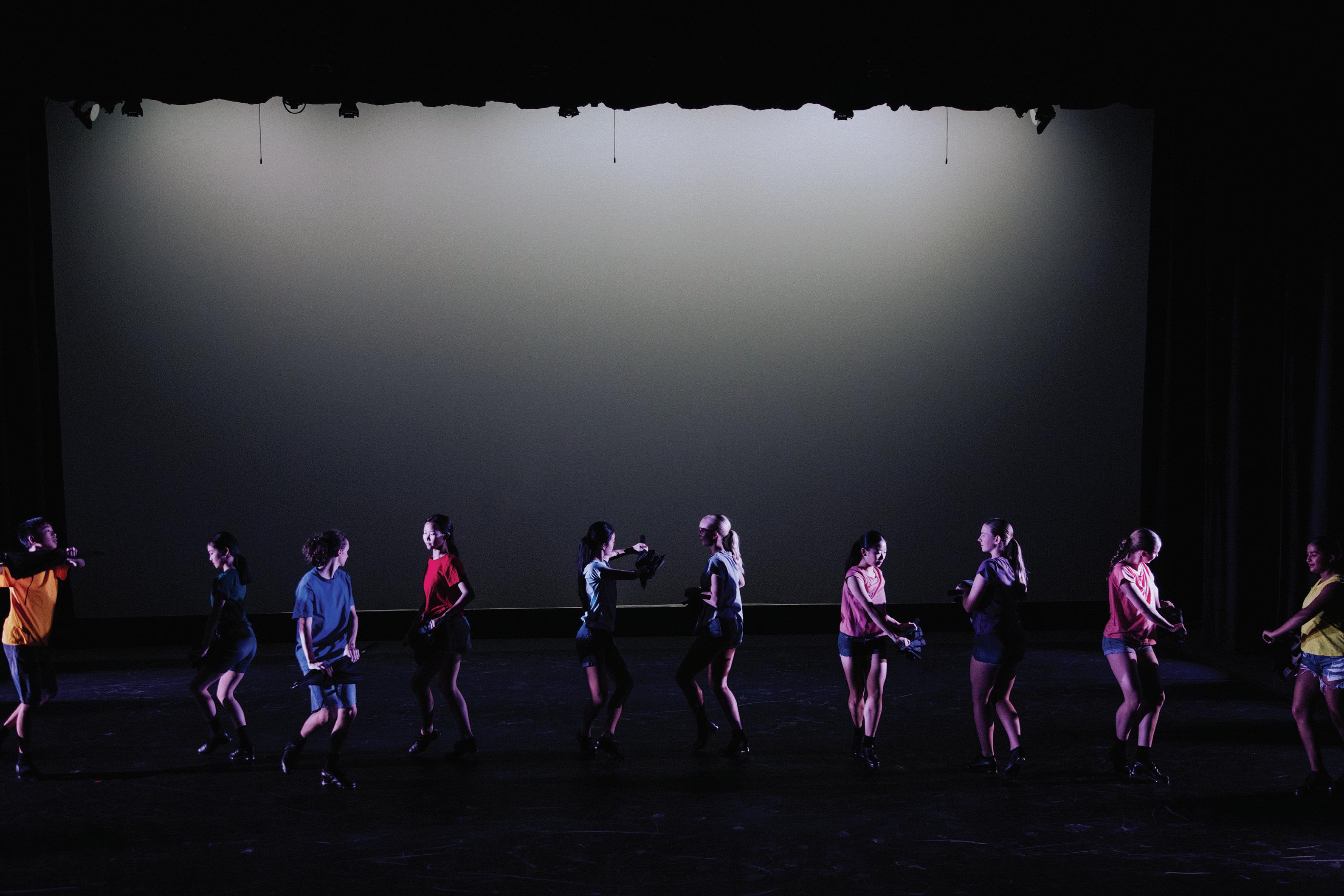
Ballet can trace its roots back to the Italian Renaissance of the 15th century. Tap and jazz began in the 19th and 20th centuries, respectively, in America. But the history of dance goes back much further. According to Brittanica, “Paintings made in caves more than 10,000 years ago suggest that even the earliest peoples danced.” Humans have used dance for ceremonial purposes or healing rituals, to tell stories of truth or entertainment. This medium of expression has harnessed a power that spans generations, transcending continents, cultures and classes. At Bishop’s, we are proud to contribute to the timeless legacy of dance—and Dance Director Yvette Luxenberg shares how dance has the power to feel, include, transform and reflect.

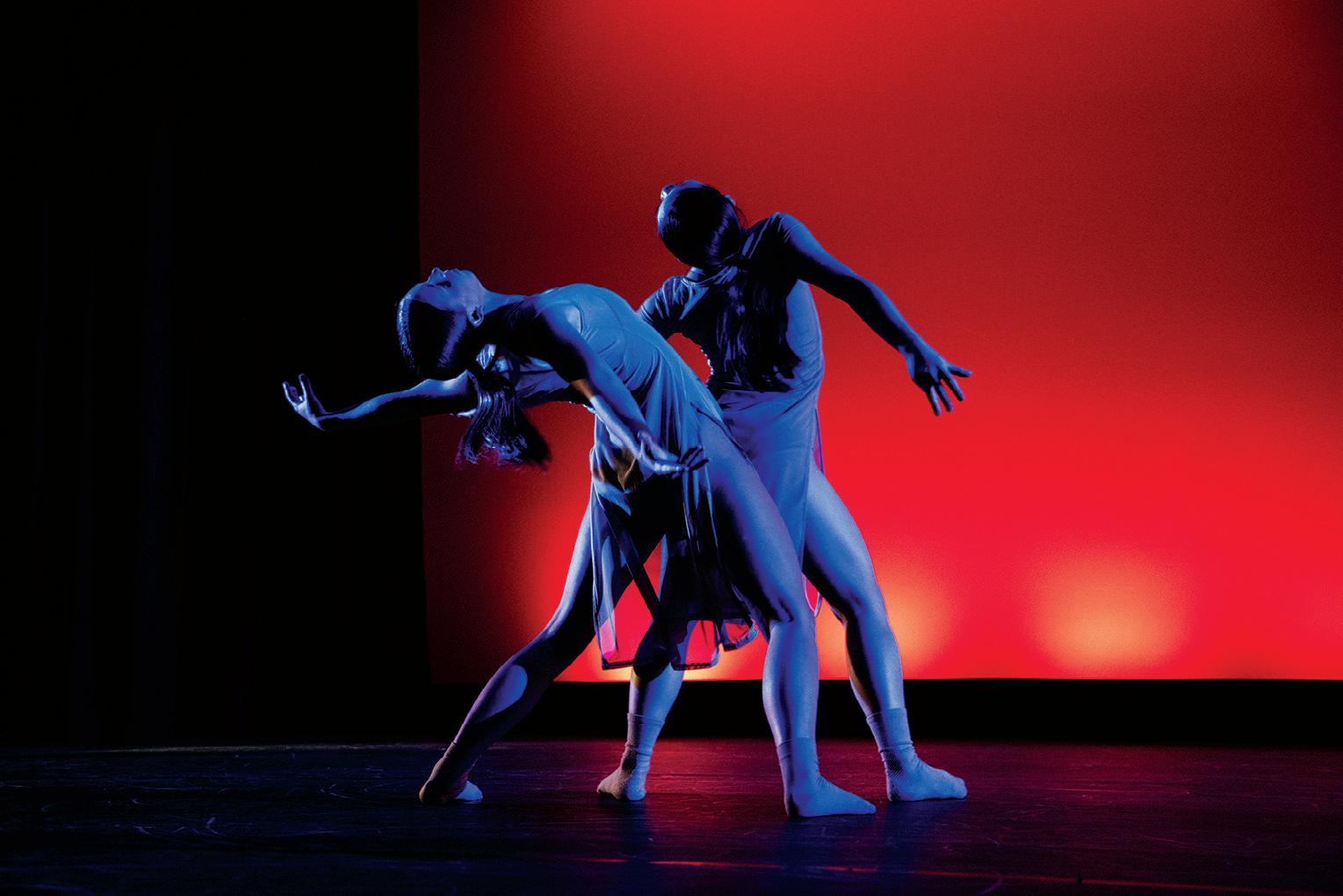
Whether it’s because of a timely toe tap, a perfect pirouette or a jaunty jazz walk, dance has the power to make people feel something. Britannica notes, “One of the most basic motives of dance is the expression and communication of emotion.” Yvette believes that dance can bring people together for a moment of “excitement or surprise, beauty or even sadness. We make art about the things that trouble us and the things that inspire us.”
Bishop’s dance program provides the community an opportunity for students to explore art through movement. “As an educator, my job is to help students learn the performing art of dance and to provide the platform to perform,” says Yvette. “Through dance, we learn about each other, find our commonalities and then make people feel something with movement.”
It’s no coincidence that Bishop’s Dance program echoes the School’s core value of inclusion. Yvette, who has led the program since August 2023, purposefully crafts a global-inspired curriculum that exposes Bishop’s students to different dance styles. This year alone, students learned elements of West African dance, ballet, jazz, tap, stepping, hip-hop, contemporary, Kathak, Bollywood and Hawaiian. Yvette explains that when you study and practice a wide variety of dance, you learn what the different forms have in common. She adds, “Dance brings us together with human emotion. We can all come to it from our different perspectives, our different upbringings, our different heritages and all of our walks of life.”
For the Dance program, the power to include also means providing opportunities for kids of all grades and abilities to join—whether a student is new to dance or has been dancing since the age of three. Bishop’s winter dance performance, aptly titled Dancing Together, provided an inclusive experience for students of various ages and skill levels to participate. Yvette helped work with students to juggle schedules, requirements and outside commitments. “It’s about forming a community” where “kids may be in different places in their journey and perform together.”
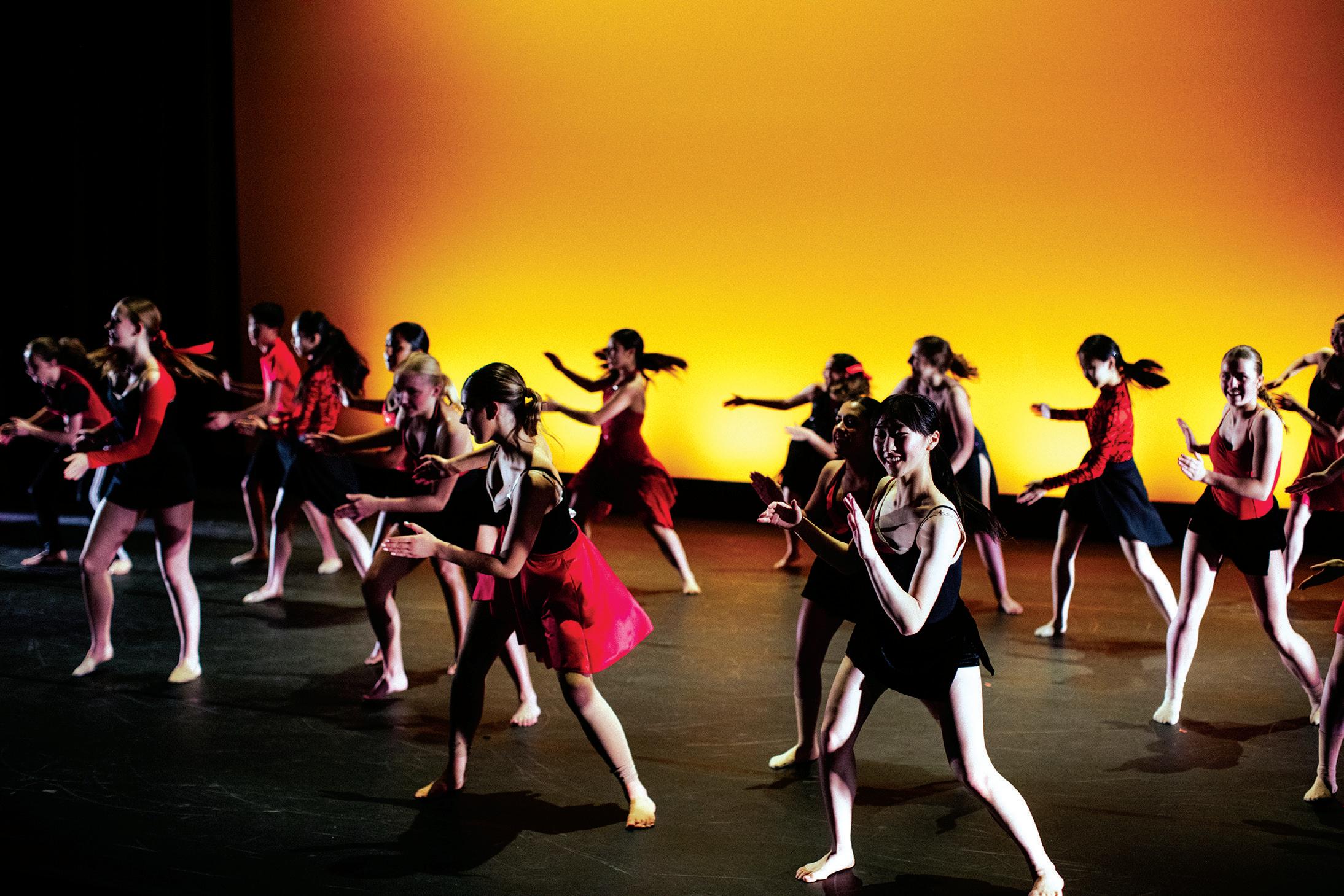
“No matter what level you’re at, you’re being challenged with new techniques that inform what you already know and build off it,” says Yvette. “That’s what education is for.”
In middle school, students may sign up for dance to have fun while moving their bodies and learning about rhythm. Then interests pique and skills progress with every new grade. They may choreograph their own pieces. And once they achieve the higher levels, they could teach their choreography to other students and perform it in concerts, such as Dancing Together. Blanche Arnold ’25 is among those high level performers who have taken leadership roles. “It’s her senior year, and she has contributed so meaningfully with choreography and performance,” says Yvette. “She’s been incredible in class and so positive.”

Although Yvette has been Bishop’s dance director for two years, she has heard from alumni who graduated from Bishop’s before she joined the School. She credits Donna Cory, who served 20 years as Bishop’s dance director, for creating a sense of community and belonging and training dancers at the highest level.
“The alumni I hear from have so much respect for Donna and the education they got at Bishop’s. They want to come back and pay it forward.” Some return to Bishop’s to choreograph with current students, and the number of alumni who give back continues to grow. “I think it is a testament to Donna’s legacy, to the love and devotion she put into her time here. And I’m so excited to keep that going.”
“A really important part of the program for me,” says Yvette, “is having students find their own artistic voice. There’s also the teaching, the mentorship and the leadership. Students don’t leave Bishop’s the same person as when they came.”


For the fourth year in a row, our acceptance rate has hit a record low. Here’s some of the math behind managing Bishop’s increasingly competitive admissions process.
reflects Bishop’s strengthened national reputation and our efforts to remove barriers in the application process. People are drawn here because of our outstanding faculty and staff, the quality of the academics, athletics and arts programs, as well as our Episcopal values and alumni success.
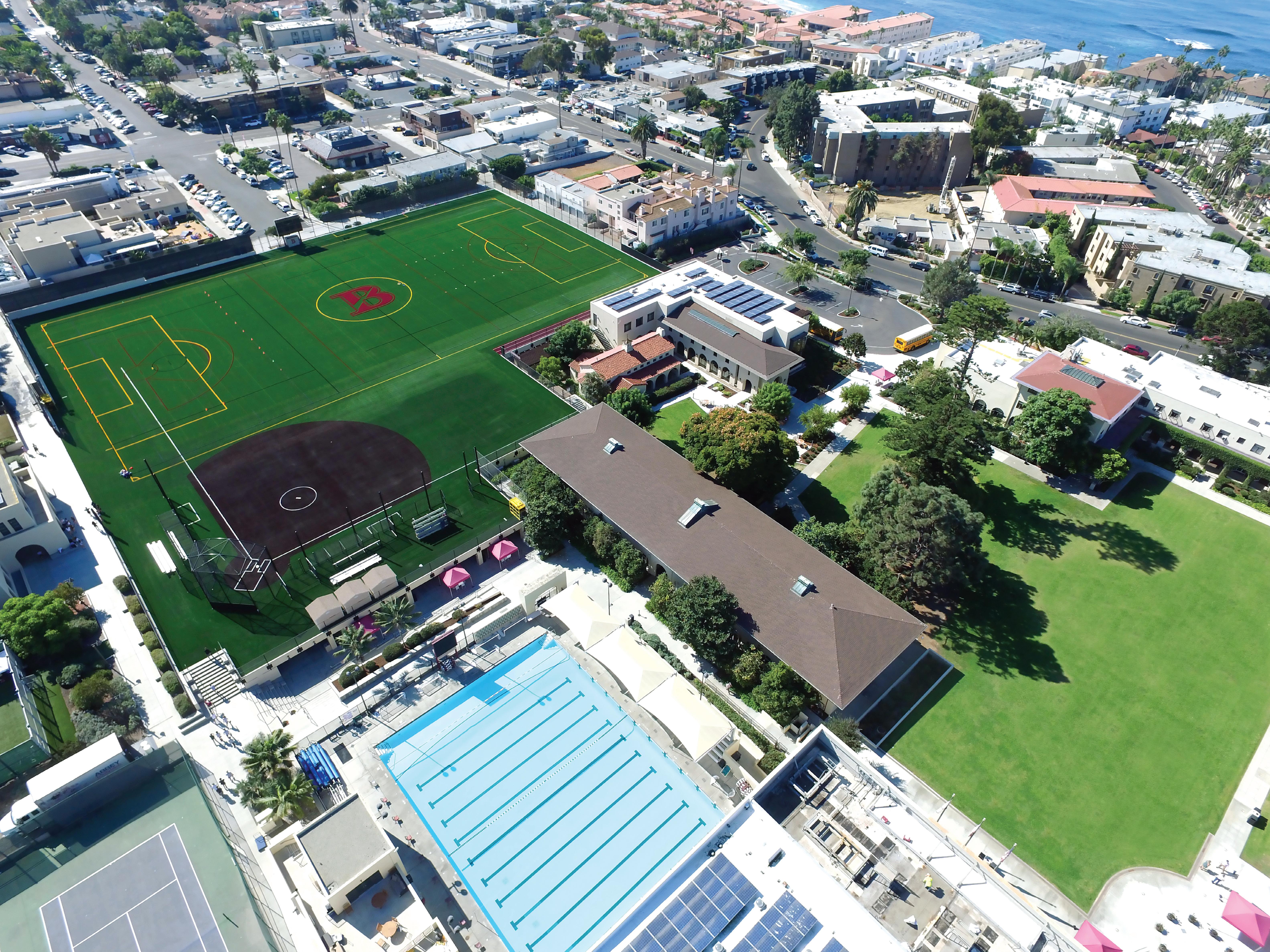
Despite an increased demand for a Bishop’s education, we’re still working with the same enrollment limit—a cap of 800 students across grades 6-12.

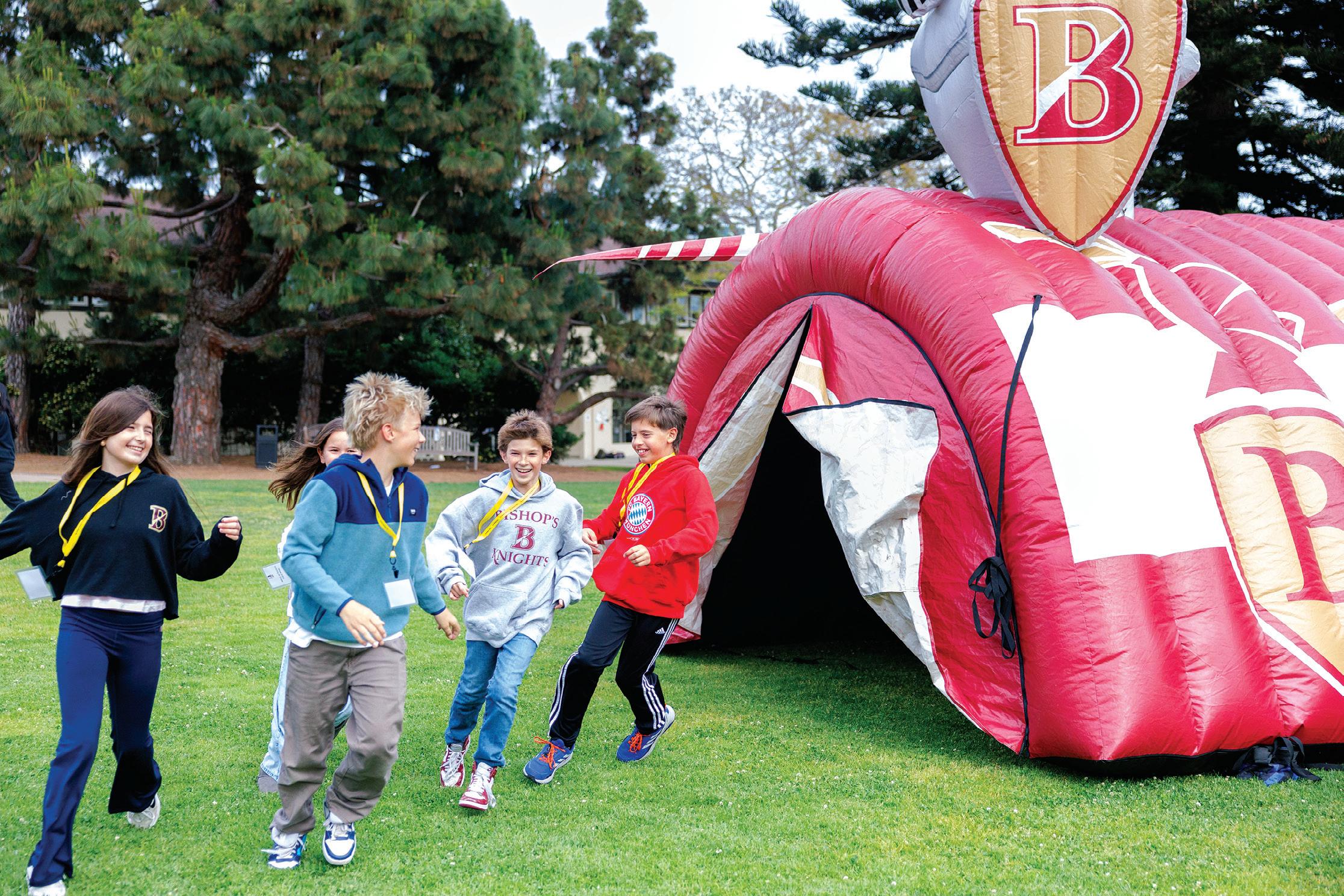
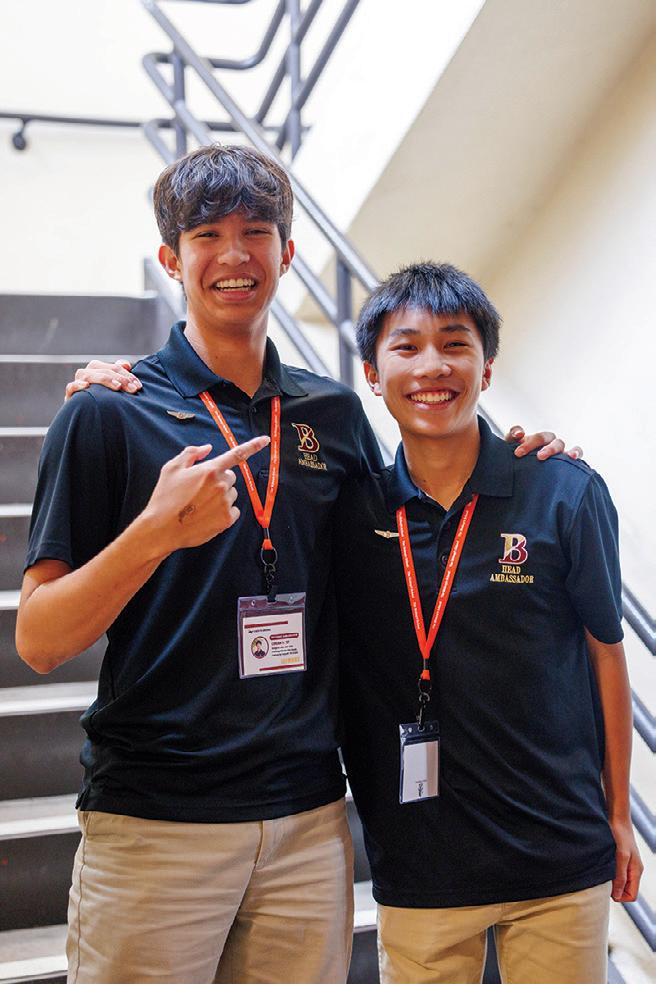
Three factors making the admissions process more competitive in recent years:
The School has made it easier for families to apply by reducing barriers in the application process. Here are a few highlights:
Revised the student application to include more “kid friendly” questions
Made it possible for prospective students to tour the campus and interview on the same day
Added virtual interview options, including evenings and weekends
Switched to a mobile-friendly financial aid application platform with user support in English and Spanish
Added more virtual information sessions to demystify the application processes for both admissions and financial aid
In addition to making the application process more streamlined, more families are learning about Bishop’s from our elevated national reputation. Since Niche.com started ranking schools in 2018, we have always been the No. 1 ranked private high school in San Diego. However, pre-COVID in 2019, we were 12th best in California and 48th best in the country. In September 2024, we were named No. 5 in California and No. 20 in the United States. This drives interest from families across San Diego, California, out of state (including military families who are relocating here) and even international families who are able to move.
Overall, Bishop’s students are happy, and they want to stay at the School through graduation. Our attrition rate—the number of students who leave each year—is well below the independent school average. In fact, in 2024, our attrition rate was a minuscule 1.6 percent. Fewer students leaving limits the spaces available for new students each year, outside of replacing the graduating seniors with a new sixth-grade class.
“ When we tell people we moved from the Bay Area to San Diego so our child could attend Bishop’s, we’re often met with surprised reactions. But for us, it was an easy decision. From our very first interaction with the admissions team to this incredible first year, we’ve been consistently impressed—by the warmth and professionalism of the staff, the dedication and enthusiasm of the teachers, and the kindness of the school community.
Among the number of students to whom we offer admission, more and more say yes and fill available seats. Our yield, the percentage of students offered admission who then accept it, is higher than the independent school average, and even higher than many of the most selective colleges and universities. In 2025, the yield was a record-high 87 percent. Because we use a three-year trailing average yield to predict enrollment, the higher yield rate further narrows the number of acceptance offers we can extend.
Some prospective students who reapply are subsequently admitted the following year. We appreciate students’ persistence and resilience. Our admissions committee conducts a holistic, thoughtful process, seeking students who are curious, kind and engaged, and who reflect the Episcopal values of compassion, inclusion and integrity.
Our child is thriving academically, socially, and emotionally, and comes home excited about learning, friends made, and new interests to explore through clubs and activities. We’ve seen the growth in both confidence and curiosity.
Bishop’s has given far more than just a strong education—he feels seen, inspired and encouraged to grow into the best version of himself.”


By Nico Waters
How do students learn and grow best? Educational institutions around the world have pondered this big question. And the answer is more complex than straightforward. For a school like Bishop’s, which has been around for more than a century, the question of how to learn and grow has evolved as time passes. Why? Because the way students learn and grow best now is not the way they did 50 years ago—or even 25—and there is science to back that principle. Bishop’s Assistant Head of School for Adolescent Learning and Development Janice Murabayashi explains, “We want to be the kind of school that is constantly improving, looking at what the science is saying, and supporting our students in the best way possible.”
After months of research and discussion, Janice and other Bishop’s leaders and faculty developed the 3-C model—Cognition, Connection and Content—based on teaching and learning reports by the American Psychological Association, Deans for Impact and Carnegie Mellon University. “The 3-C model is like the secret sauce, based on science, to help create the kind of environment for kids to learn at the optimal level,” says Janice. That optimal level, she explains, “is where general well-being intersects with the learning experience.”

Cognition includes practice, memory, motivation, goal setting, self-awareness and beliefs about intelligence and ability. Carnegie Mellon University’s Learning Principles notes, “To develop mastery, students must acquire component skills, practice integrating them and know when to apply what they have learned. Goal-directed practice coupled with targeted feedback enhances the quality of students’ learning.”
Interpersonal relationships, belonging, emotional wellbeing, communication and social context comprise the pillar of connection. Connection ties with student well-being, which is at the core of the ability to learn. The American Psychological Association notes, “Interpersonal relationships and communication are critical to both the teachinglearning process and the social-emotional development of students.”

How Connection looks in the classroom: Listen to and engage with students, ask them to elaborate during discussions, notice nonverbal cues, and provide constructive and positive feedback.

How Cognition looks in the classroom: Introduce new concepts by familiarizing them with topics students already know, provide reviews and tests, and broaden opportunities for success.
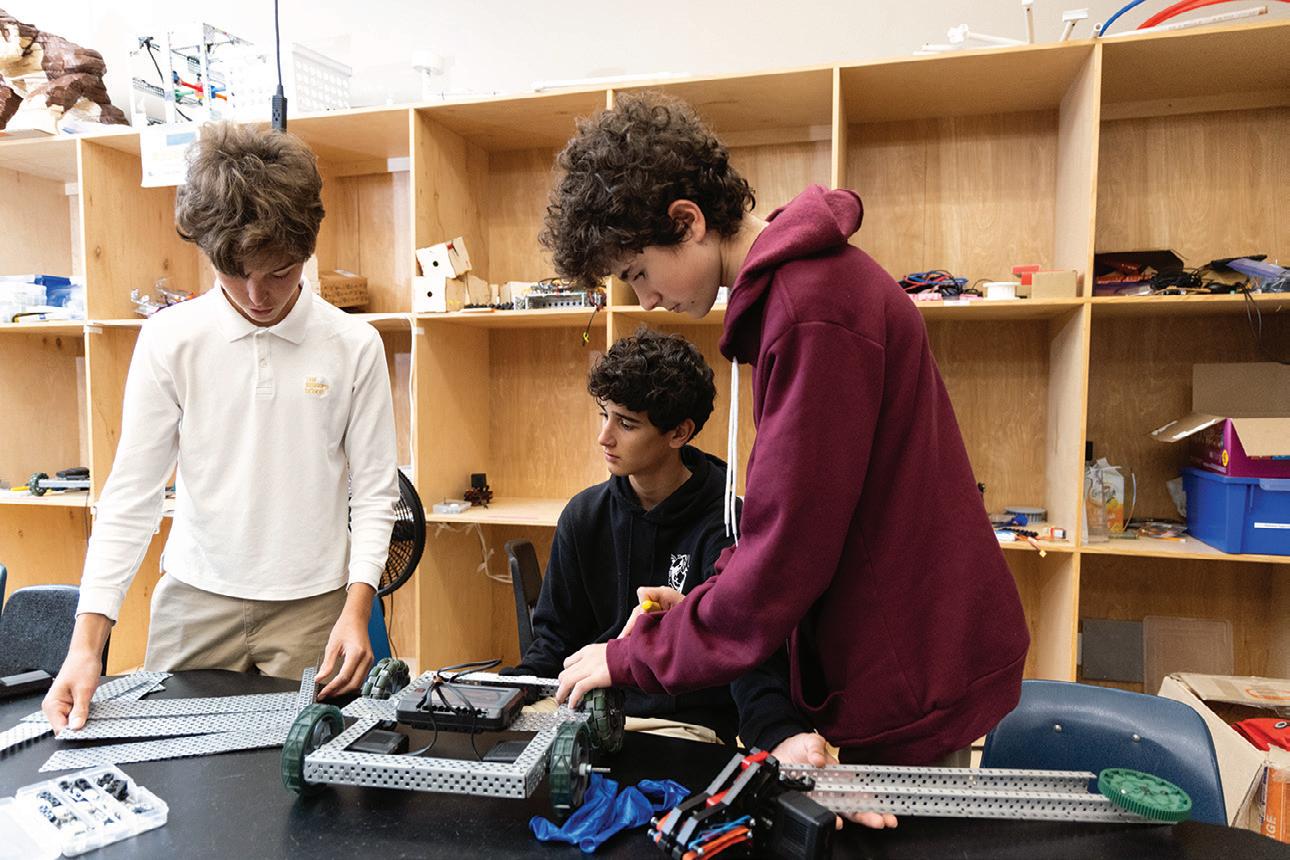

often hard. The American Psychological Association states, “Learning is based on context, so generalizing learning to new contexts is not spontaneous but instead needs to be facilitated.”
How students organize knowledge influences how they learn and apply what they know.
How Content looks in the classroom: “Teachers can ensure that students have sufficient background knowledge to appreciate the context of a problem,” states the Deans for Impact’s “The Science of Learning” report.

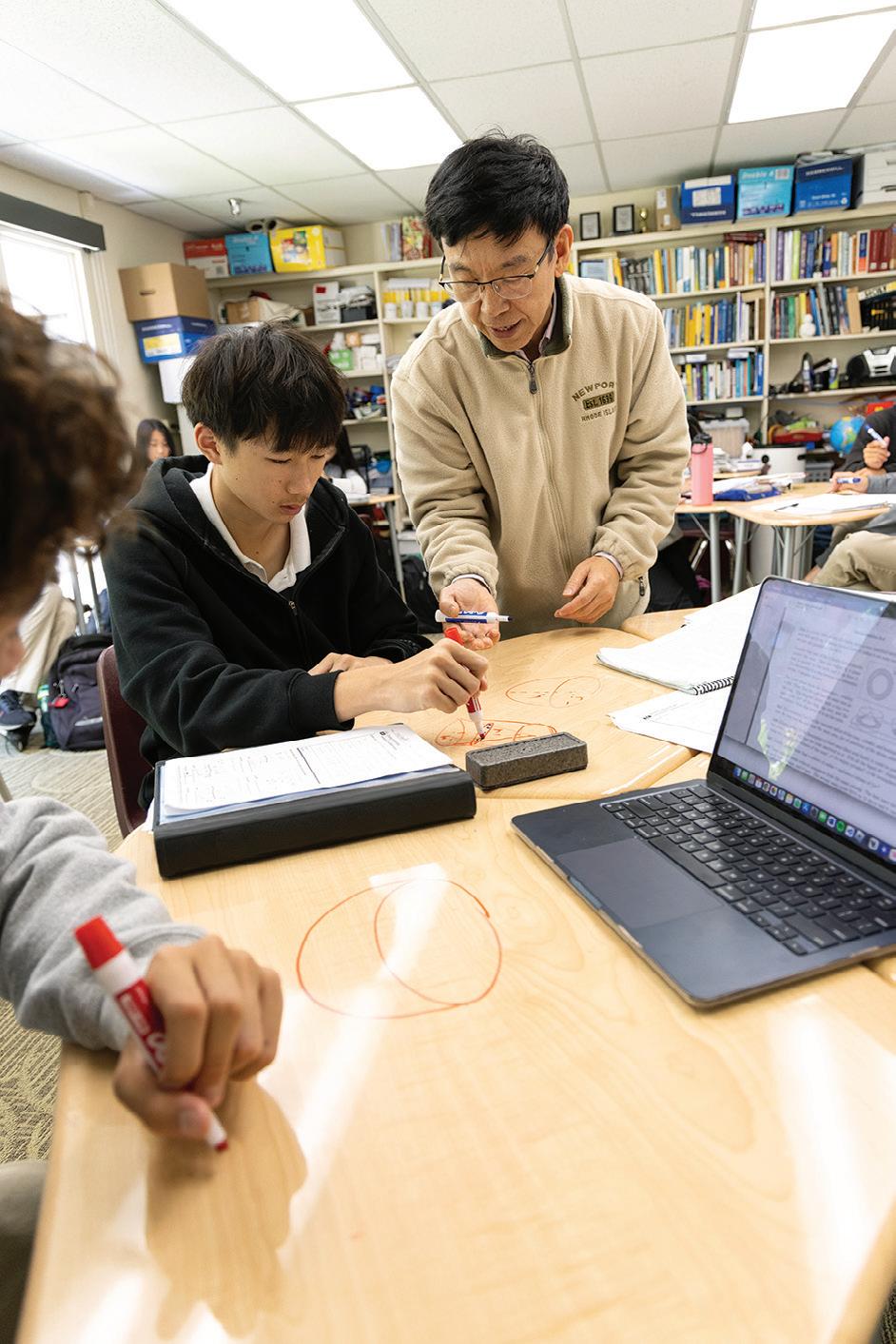
“Optimal teaching is a blend of all three of these things,” Janice says about cognition, connection and content. “It does not mean that on any given day, each of these three things is happening in equal measures. For a given lesson, it might lean more into one zone than the other. But the idea is that over time—a week, a term, a school year—the teacher is aware of the importance of the three C’s and has attended to those values or needs.”
In many ways, the Bishop’s teaching experience already includes cognition, connection and content. However, this 3-C model establishes a shared language and understanding of an intentional, thoughtful, science-based approach. It will guide conversations around strategic plans and provide the framework for teacher training and professional development programs. But most of all, it helps simplify a complex answer to the big question: How do students learn and grow best?
“Optimal teaching is a blend of all three of these things,”
—Janice Murabayashi
By Cathy Morrison
Until 2013, CIF San Diego Section (CIF-SDS) Divisions were allocated according to school size, but championship titles were not necessarily equitable amongst all area high schools within each sport.
By 2011, records showed nearly half of all CIF-SDS division championships were consistently won by only a handful of local high schools. Looking to establish more equity, CIF-SDS then devised a system to ensure more parity and tighter competition for those coveted titles. Until 2013, the largest schools competed in Div. 1, the smallest in Div. 5. Teams with similar levels of success and talent were competing in different divisions in end-of-season playoffs, leading to more predictable outcomes.
Mimi Test ’61, retired teacher and swimming and diving coach at Valhalla High School and longtime volunteer for the High School Sports Association and the CIF-SDS, notes, “Bishop’s is a small school, it will never be in Div. 1 based on the size of enrollment; but when CIF saw the history of Bishop’s record, they said, ‘We’ve got to get the best schools against you and in each category.’”
CIF-SDS piloted a new system in spring 2013, allowing movement across divisions based on win/loss records The more regular-season success a team had, the higher up the divisions it could be placed for playoffs, and vice-versa. The Open Division for the top teams in each sport was established. Teams would remain in a division for two-three years. Some teams with a seniorheavy roster one year were still competing at that same level in subsequent years with younger, less experienced players instead of in a more realistic division matching their competitive ability.
Today, Power Rankings are calculated to align the playoff divisions with the makeup of the current year’s teams. Mimi says, “There’s a combination of CIF people who really analyze each one of the schools every year. A lot of work goes into this.”
“CIF tries to evaluate what’s the most equitable ranking system for each sport,” agrees Bishop’s Athletics Director and Field Hockey Head Coach Paula Conway, who also serves on CIF’s Executive Committee.
A. Point system incorporates Divisions (up to 5 divisions) and Win-Loss Percentage (4 levels).
B. Point system incorporates 40 combinations of categories listed below.
C. If the opponent is outside of the San Diego Section, the state qualifying division, school enrollment, or section division will be utilized to identify division placement. In the sport of lacrosse, advisory committee input will also be utilized to determine out-of-section divisional placement.
D. Range of Points: Highest (50) to Lowest (34).
A first-level team has won at least 75 percent of games played.
(Example: 20-0, 19-1, 18-2, 17-3, 16-4, 15-5)
A second-level team has won at least 50 percent but fewer than 75 percent of games played.
(Example: 14-6, 13-7, 12-8, 11-9, 10-10)
A third-level team has won at least 25 percent of its games played but fewer than 50 percent of games played. (Example: 9-11, 8-12, 7-13, 6-14, 5-15)
A fourth-level team has won fewer than 25 percent of games played.
(Example: 4-16, 3-17, 2-18, 1-19, 0-20)
“In Field Hockey, if we play a Div. 2 team and win, we will not get as many points as if we take on a Div. 1 team that’s really good and win. You get more points by playing better teams,” she explains.
Some sports also incorporate ratings and rankings from national and even international aggregators, such as Universal Tennis Ratings (UTR), LaxNumbers and MaxPreps.
“A winless team could still make it in based on strength of schedule. A loss to one of those top Open Division teams still gives you 46 points, whereas a Div. 3 or Div. 4 team might play other Div. 3 or Div. 4 teams and only
Universal Tennis Rating (UTR) —a 16-point scale used across all levels of tennis from beginner to professional, established in 2008
MaxPreps —covers American high school sports, established in 2002
LaxNumbers— centralized database of lacrosse information, rankings, history, stats, records, etc., uses a mathematical algorithm, created in 2018
get 44 points. A lot of strength of schedule is due to the conference you play in. A strong conference makes a difference,” Paula acknowledges.
“In Boys’ Lacrosse, we play a tough out-of-league schedule. If you’re in a league that’s tough across the board, you’re getting consistent points. Some of the smaller schools could win their conference, but must be really strategic about non-conference games. Some Bishop’s teams might not make it into the Open Division based on strength of schedule, and that’s sometimes unavoidable. If you’re in a conference, you can’t just get out of it.”
Paula continues, “Where it gets tricky for Bishop’s is school size; especially in Football, we end up playing head-to-head with Rancho Bernardo because we fit in Div. 2. We have kids playing both ways (offense and defense) when they have 11 new players coming in on each series. The last time Bishop’s went to a State Championship in Football was when we were in Div. 5, based on school size.”
“Winning an Open Division championship means we are the best in the county. In Girls’ Volleyball, we’re facing schools like Torrey Pines, with nearly three thousand students. Years ago, we were winning three-set championships at the Div. 3 level, but it’s different now; in playoffs, you want teams competing against other teams with similar ability. Cross Country, Track and Field, Boys’ and Girls’ Golf, Swimming and Diving are the sports still based on school size.”
There are eight conferences; across those conferences, there are nearly two dozen leagues overall. Schools within each conference are assigned to a league based on their
competitive edge, and may move into a different league within that conference as that edge increases or decreases. Paula shares, “Almost every conference has done a league alignment according to the Power Rankings.”
The CIF’s Southern Section (the largest section in California) has adopted a straight 1-64 ranking system for divisional playoffs in all sports, akin to NCAA Basketball. The top-ranked teams are seeded into the championship run across all divisions. Locally, CIF-SDS implemented this 1-64 system only for football in 2024.
While the athletics governance and ranking structure is complex, support of our student-athletes is simple. GO, KNIGHTS!
SEPT. 26 - BISH BOWL
2:45 p.m. Check-in/Registration Opens
3 – 6 p.m. BBQ and Lawn Games on the Quad
3:30 p.m.

JV and Frosh/Soph Girls’ Volleyball vs. Parker (Eva May Fleet Athletics Center)
4 p.m. Varsity Field Hockey vs. Scripps Ranch (Hunte Field)
4:30 p.m. Varsity Girls’ Volleyball vs. Parker (Eva May Fleet Athletics Center)
6:45 p.m. Community Walk to La Jolla High School
7 p.m. Varsity Football vs. La Jolla Country Day (La Jolla High School)
Schedules are subject to change. Look for more information and RSVP here: https://www.bishops.com/reunion
SEPT. 27 - A FULL DAY OF ACTIVITIES –SOMETHING FOR EVERYONE
10:30 a.m. Check-In Opens
11 a.m. Reunion Chapel Program (or Campus Tours Session #2)
12 p.m. Class of 1975 50th Reunion Celebration Luncheon
12 p.m. All-Class Reunion Lunch
2 – 4 p.m. Afternoon Sessions: Bishop’s Today and Tomorrow, Alumni-led Campus Tours, Classroom Sessions, Lounging on the Quad, The Future of Bishop’s Athletics and MORE
4 p.m. Parents of Milestone Alumni Classes – 0s and 5s – Reception
4 p.m. All-Class Reunion Happy Hour Reception
5 p.m. Reception Program
6 p.m. Program Concludes
6:30 p.m. Inaugural Athletics Hall of Fame Induction Ceremony
6:30 p.m. Registration/Bar Opens
7 p.m. Event Starts
8:15 p.m. Awards Program Begins
BISHOP’S FACULTY ARE HIGHLY QUALIFIED IN THEIR RESPECTIVE DISCIPLINES, SET THE STANDARD OF EXCELLENCE IN OUR COMMUNITY, AND ARE DEEPLY COMMITTED TO THE STUDENTS IN THEIR CARE.

Bishop’s Wu Tsai Endowed Chair in Science Dr. Lani Keller won The People’s Choice for Rising Star in Education at the sixth annual Celebrating Women Summit sponsored by San Diego Magazine on Nov. 6, 2025.
“It was an honor to be surrounded by so many amazing women representing such a diverse range of talents. I was standing next to women recognized in their fields of finance, fitness and wellness, STEM and more,” Lani shares, adding, “Being up on stage with all of these extraordinary women was really special.”
Lani serves as director of the Center for Creative Sciences and as faculty sponsor for the STEM Innovation Club. She teaches honors biology and mentors students’ independent studies; during COVID, she counseled Aarav Chandra ’22 from a distance as he conducted research in a self-made lab set up in his family’s laundry room. She chaperoned our international robotics team in a disaster relief competition in France and has advised middle school engineering challenge activities.
Committed to enhancing students’ learning experience and breaking down silos that have traditionally driven education, Lani fosters and models connection, collaboration and creativity for students and colleagues. Three of her inquiry-based labs have been published for undergraduate lab manuals.
With the depth and breadth of her knowledge and accomplishments, and through her abiding enthusiasm for the sciences, our students can see that careers in these disciplines are possible and advance their own aspirations and passions in the field.
WHICH TEACHERS AND COACHES HAVE GONE THE EXTRA MILE FOR YOU OR YOUR FAMILY? SHARE YOUR STORY WITH US AT NEWS@BISHOPS.COM.