

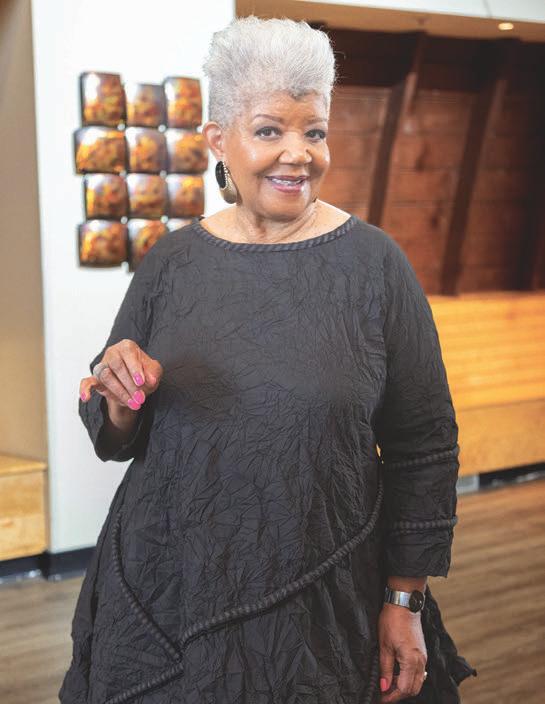





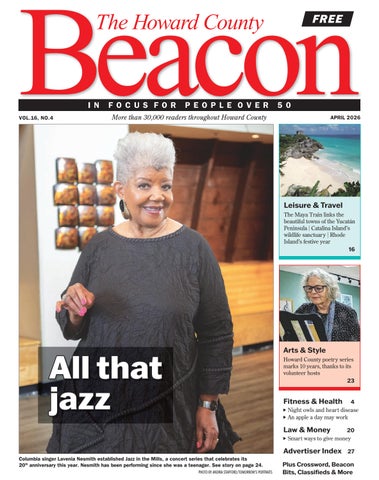
Columbia singer Lavenia Nesmith established Jazz
20th anniversary this year. Nesmith has been
My name is Steve Gurney, founder of Positive Aging, and I am honored to now serve as associate publisher of the Beacon Newspapers following the recent merger of our organizations.
Over the years, I have deeply admired the Beacon, especially for its powerful, real-life stories that highlight the experiences, wisdom and voices of older adults. The Beacon has long been an invaluable and trusted source of news and information for our community, and I am truly thrilled to join the team.
engage more deeply with professionals, families and older adults throughout our region.

I am especially excited about the potential of our combined platforms. Together, we can expand how we connect with Beacon readers and
By Steve Gurney
Like many in the senior housing field, my journey began with a personal family experience. In the late 1980s, I watched my family help my grandfather make the difficult transition from his longtime home to a nursing center.
That experience inspired me to create a comprehensive guidebook to help other families navigate similar challenges. What started as a small project grew into a fulfilling career in aging services spanning more than three decades.
When the pandemic hit, I began explor-
ing new ways to help people connect online. This led to the creation of the Positive Aging Community — an interactive platform where older adults, families and professionals come together to talk with authors, thought leaders and each other about everything from aging to longevity to living with purpose.
This month, I will be joining Margaret Foster, editor of the Beacon, for a live conversation with renowned broadcaster Kojo Nnamdi. He will share insights from his brand-new podcast, Young at Heart on Thursday, March 18 at 11:30 a.m. I hope you will tune in! If you miss the live event, you can catch the recording on the Beacon’s website, thebeaconnewspapers.com, or at ProAging.com.
At the heart of it all, I am passionate about helping people live their lives with purpose, no matter their age or ability. Like the Beacon, I’ve found that sharing authentic, personal stories is one of the most powerful ways to connect people with resources, remind them that they have choices, and show that they don’t have to walk their journey alone.
If you’re looking for a resource or solution, please don’t hesitate to reach out to me personally at gurney@thebeaconnewspapers.com. And if you have a story that you believe could inspire others, we would love to hear from you.
Stay tuned for many exciting things to come. I encourage you to pick up your copy of the Beacon every month and become part of our growing combined community. Thank you for reading the Beacon. I look forward to connecting with you as we continue celebrating Positive Aging together.

Scan this code to watch Steve Gurney read this column:

Apr. 11
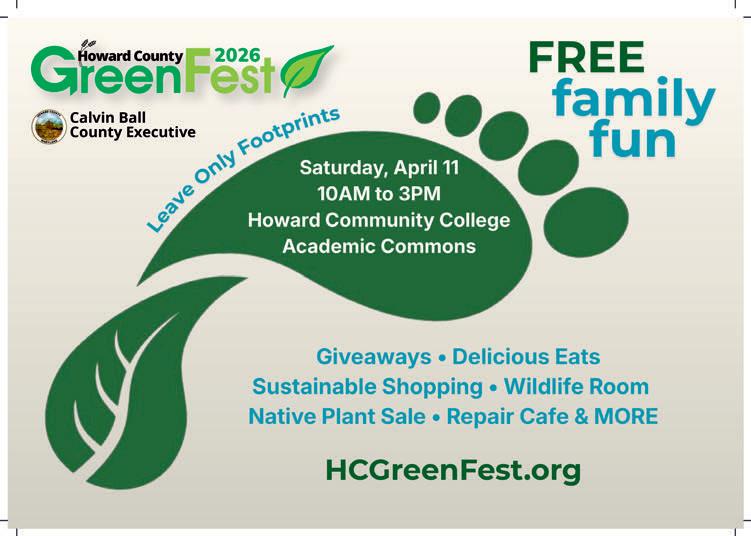
Visit GreenFest, Howard County’s annual Earth Day celebration that connects residents with local businesses, nonprofits and government to promote better environmental stewardship. This free event includes a native plant sale, food trucks, green vendors, giveaways, workshops and more. GreenFest takes place on Sat., April 11 from 10 a.m. to 3 p.m. at Howard Community College Academic Commons, 10901 Little Patuxent Pkwy. For more information, visit hcgreenfest.org or call (410) 313-6433.
Readers are encouraged to share their opinions on any matter addressed in the Beacon as well as on political and social issues of the day. Mail your Letter to the Editor to The Beacon, P.O. Box 2227, Silver Spring, MD 20915, or email info@thebeaconnewspapers.com. Please include your name, address and telephone number for verification.

The Beacon is a monthly newspaper dedicated to inform, serve and enter tain the citizens of the Howard County area, and is privately owned. Other editions serve Greater Baltimore, Maryland and Greater Washington, D.C.
Subscriptions are available via first-class mail ($50) or third-class mail ($20), prepaid with order. Maryland residents: add 6% for sales tax. Send subscription order to the office listed below.
Publication of advertising contained herein does not necessarily constitute endorsement. Signed columns represent the opinions of the writers, and not necessarily the opinion of the publisher.
Gordon Hasenei, Publisher, CEO
SteveGurney, Associate Publisher
MargaretFoster, Editor
KyleGregory, Art Director
RogerKing, Vice President of Operations
Advertising Representatives: Jill Joseph, Steve Levin, M.K. Phillips, Alan Spiegel
Ana Preger Hart, Assistant Editor
Tori Cleveland, Editorial Assistant
Stuart & Judy Rosenthal,Founders


The Beacon, P.O. Box 2227, Silver Spring, MD 20915 (410) 248-9101 • Email: info@thebeaconnewspapers.com Website: www.theBeaconNewspapers.com
Submissions: The Beacon welcomes reader contributions. Deadline for editorial is the 1st of the month preceding the month of publication. Deadline for ads is the 1st of the month preceding the month of publication. See page 27 for classified advertising details. Please mail or email all submissions. © Copyright 2026 The Beacon Newspapers, Inc.
Dear Editor:
Two recent Beacon columns, “How we learn to be afraid” (November 2025) and “How I learned to be brave” (February 2025), carry an important message for our community.
They remind us that courage and compassion are learned — and that each generation must teach the next. We must guide our children with kindness and courage, showing them how to live without harming others and how to stand up for what is right.
At the same time, we must not forget our senior citizens. Many older people feel lonely and forgotten. A simple visit, a conversation, or a few hours of our time can mean the world to them. Too often we spend more time raising our children but give too little time to our aging parents.
Thoughtful journalism like the Beacon’s helps remind us of these responsibilities. I hope more readers will reflect on these values and act on them.
Eric K. H. Wang Rockville, MD
Dear Editor:
I read your newspaper every month. The new inclusion of the column “Love after 50” is extremely smart and very touching; the first one was absolutely terrific.
The article on prescriptions was fantastic, and your other articles were quite good also.
Terrific newspaper — and this new column is a nice addition.
Harvey Sherman Via email
Dear Editor:
After I was let go from my federal government contract at the National Institutes of Health due to cost cutting, I decided to keep my 50-year-old hands busy.
I collaborated on a book with my 80year-old aunt, poet Nancy C. Allen. We selfpublished a book of her poems with my photographs. I used my uncle’s camera, which he brought back from his U.S. Army service in Korea.
So our book, titled Whispers of Song, was a full family affair.
Vincent Lee Smith Washington, DC
Join others and walk around East Columbia Library. Walking is a great way to add some activity to your routine. This free group meets every Monday from 9:30 to 10:30 a.m. at 6600 Cradlerock Way. For more information, call (410) 313-7700.

APPLE A DAY
Apples can lower inflammation and may lower risk of diabetes and cancer IN THE GENES
Gene-editing may someday be a onetime fix for high cholesterol AGING WELL
Don’t compare yourself to others or your younger self; adjust expectations WOMEN AND ALZHEIMER’S Mayo Clinic hones in on why Alzheimer’s progresses more rapidly in women
By Lauran Neergaard
Being a night owl can be bad for your heart.
That may sound surprising, but a large study found people who are more active late at night — when most of the population is winding down or already asleep — have poorer overall heart health than the average person.
“It is not like, that, night owls are doomed,” said research fellow Sina Kianersi of Brigham and Women’s Hospital and Harvard Medical School, who led the study. “The challenge is the mismatch between your internal clock and typical daily schedules” that makes it harder to follow heart-healthy behaviors.
And that’s fixable, added Kianersi, who describes himself as “sort of a night owl” who feels a boost in his “analytical thinking” after about 7 or 8 at night.
Heart disease is the leading cause of death in the U.S. The American Heart Association has a list of eight key factors that everyone should heed for better heart health: being more physically active; avoid-
ing tobacco; getting enough sleep and a healthy diet; and controlling blood pressure, cholesterol, blood sugar and weight.
Where does being a night owl come in?
That has to do with the body’s circadian rhythm, our master biological clock. It follows a roughly 24-hour schedule that regulates not just when we become sleepy and when we’re more awake but also keeps organ systems in sync, influencing things like heart rate, blood pressure, stress hormones and metabolism.
Everybody’s circadian rhythm is a little different. Prior research had suggested night owls might have more health problems, as well as risk factors like higher rates of smoking and less physical activity, than people with more typical bedtimes, Kianersi said.
To learn more, Kianersi’s team tracked more than 300,000 middle-age and older adults in the UK Biobank, a huge health database that includes information about people’s sleep-wake preferences.
About 8% of those people classified themselves as night owls, more active physically and mentally in the late afternoon or evening and up past most people’s bedtime. About a quarter were early birds, most productive in the daylight hours and likewise early to bed. The rest were average, somewhere in the middle.
Over 14 years, the night owls had a 16% higher risk of a first heart attack or stroke compared to the average population, the researchers found.
The night owls, especially women, also had overall worse cardiovascular health based on meeting the heart association’s eight key factors, the researchers reported last month in the Journal of the American Heart Association
Unhealthy behaviors — smoking, insufficient sleep and poor diet — appear to be the main reasons.
“It comes down to the problem of a night owl trying to live in a morning person’s world. They’re getting up early for work because that’s when their job starts, but it may
not align with their internal rhythm,” said Kristen Knutson of Northwestern University, who led recent heart association guidance on circadian rhythms but wasn’t involved in the new study.
That affects more than sleep. For example, metabolism fluctuates throughout the day as the body produces insulin to turn food into energy. That means it might be harder for a night owl to handle a highcalorie breakfast eaten very early in the day, during what normally would still be their biological night, Knutson said.
As for sleep, even if you can’t meet the ideal of at least seven hours, sticking to a regular bedtime and wake time also may help, she and Kianersi said.
The study couldn’t examine what night owls do when the rest of the world is asleep. But Kianersi said one of the best steps to protect heart health — for night owls and anyone — is to quit smoking.
“Focus on the basics, not perfection,” he said — again, advice that’s good for everyone. AP
Dear Savvy Senior,
Does Medicare offer any coverage that helps beneficiaries quit smoking?
—New Beneficiary
Dear New,
If you’re ready to quit smoking, Medicare can indeed help!
Medicare Part B covers up to eight face-to-face counseling sessions per year to help you kick the habit, and if you have a Medicare Part D prescription drug plan, certain smokingcessation medications are covered as well. Here’s a guide to help you get started.
It’s never too late
Tobacco use is the leading cause of preventable illness, responsible for an estimated one-fifth of deaths in the United States each year.

According to the Centers for Disease Control and Prevention (CDC) 8.3% of Americans age 65 and older still smoke. Many older smokers indicate that they would like to quit, but because of the nicotine, which is extremely addictive, it’s very difficult to do.
But research shows that quitting, even after age 65, greatly reduces your risk of heart disease, stroke, cancer, osteoporosis and many other diseases. It also helps you breathe easier, smell and taste better, and can save you money. A $8 pack-a-day smoker, for example, saves about $240 after one month without cigarettes, and nearly $2,880 after one year.
The first step you need to take is to set a “quit date,” but give yourself a few weeks to get ready. During that time, you may want to start by reducing the number or the strength of cigarettes you smoke to begin weaning yourself off.
Also check out over-the-counter nicotine replacement products — patches, gum and
lozenges — to help curb your cravings (these are not covered by Medicare). And just prior to your quit day, get rid of all cigarettes and ashtrays in your home, car and place of work, and try to clean up and even spray air freshener. The smell of smoke can be a powerful trigger.
Studies have shown that you have a much better chance of quitting if you have help. So, tell your friends, family, and coworkers of your plan to quit. Others knowing can be a helpful reminder and motivator.
Then get some counseling. Don’t go it alone. Start by contacting your doctor about smoking cessation counseling covered by Medicare and find out about the prescription antismoking drugs (bupropion and varenicline) that can help reduce your nicotine craving.
You can also get free one-on-one telephone counseling and referrals to local smoking cessation programs through your state quit line at 800-QUIT-NOW or call the National Cancer Institute free smoking quit
line at 877-44U-QUIT.
It’s also important to identify and write down the times and situations you’re most likely to smoke and make a list of things you can do to replace it or distract yourself.
Some helpful suggestions when the smoking urge arises are to call a friend or one of the free quit lines, keep your mouth occupied with some sugar-free gum, sunflower seeds, carrots, fruit or hard candy, go for a walk, read a magazine, listen to music or take a hot bath.
The intense urge to smoke lasts about three to five minutes, so do what you can to wait it out. It’s also wise to avoid drinking alcohol and steer clear of other smokers while you’re trying to quit. Both can trigger powerful urges to smoke.
For more tips on managing your cravings, withdrawal symptoms and what to do if you relapse, visit 60plus.SmokeFree.gov. There are also a variety of helpful quit smoking apps you can download, like EasyQuit, QuitNow and Quit Genius.
Send your questions or comments to questions@savvysenior.org, or to Savvy Senior, P.O. Box 5443, Norman, OK 73070.
By Feature Impact
These days, news of a death can spread online in seconds, often before people have notified close family members privately. That’s why grief experts urge people to rethink how they share condolences, tributes and loss-related information on social media.
“Grief etiquette is about putting the needs of the grieving family first, not our urge to say something publicly,” said Dr. Camelia L. Clarke, National Funeral Directors Association (NFDA) spokesperson, funeral director and grief educator. “Just because information can be shared instantly doesn’t mean it should be,” she added.
Social media has become a common place for sharing condolences, tributes and memories. However, grief experts caution that, without thoughtful consideration, online posts can unintentionally cause harm. Knowing when to post, what to say and when to remain silent can make a meaningful difference for families experiencing loss.
Grief etiquette refers to the unspoken guidelines for how individuals acknowledge death, loss and mourning, particularly online.
According to Clarke, one of the most important principles is restraint.
“When a death is shared online too
quickly, families can feel exposed and overwhelmed at a moment when they’re still processing the loss themselves,” she said. “Waiting is an act of compassion.”
As social media continues to play a role in modern mourning, grief professionals encourage users to pause before posting and consider a few key guidelines. Consider this advice from the experts at the NFDA:
•Let the family lead. Don’t post about a death until the immediate family has made it public.
•Ask permission. Obtain consent before sharing photos, stories or tributes.
•Reach out privately first. A direct message, call or handwritten note can be more meaningful than a public comment.
•Avoid speculation. Don’t ask about or share details regarding the cause of death.
• Offer ongoing support. Grief extends far beyond the first days or weeks after a loss.
When expressing condolences online, experts recommend simplicity, sincerity and sensitivity. Messages that acknowledge loss without attempting to explain or minimize it are often the most supportive.
Helpful phrases include:
Trained counselors are available 24/7 to support people experiencing a variety of symptoms. For immediate crisis help, call (800) 9855990. Sponsored by the Substance Abuse and Mental Health Services Administration, the helpline is confidential, and disaster survivors and responders can access services in Spanish and ASL. For more information, visit disasterdistress.samhsa.gov.
If you need to file a tax return this year, you can do so for free through the IRS at IRS.gov/FreeFile if your 2025 adjusted gross income is below $89,000. Or, if you need assistance, contact the Tax Counseling for the Elderly (TCE) program. Sponsored by the IRS, TCE provides free tax preparation and counseling to middle- and low-income taxpayers, age 60 and older. Call 1-800-906-9887 or visit IRS.treasury.gov/freetaxprep to find services near you. You can also get tax preparation assistance through the AARP Foundation’s Tax-Aide program. Call 1-888-227-7669 or visit AARP.org/findtaxhelp for more information. You don’t need to be an AARP member to access this service.
“I’m sorry for your loss.”
“Thinking of you and your family.”
“I’m here if you want to talk or need anything.”
By contrast, well-meaning cliches can unintentionally cause harm. Phrases such as “They’re in a better place” or “Everything happens for a reason” may reflect the speaker’s beliefs, but they can feel dismissive to someone grieving.
“Grieving people don’t need answers — they need presence,” Clarke said. “Listening matters more than saying the perfect thing.”
As digital spaces continue to shape how people communicate during life’s most
difficult moments, experts agree empathy, patience and respect remain timeless.
“Grief is deeply personal,” Clarke said. “When we slow down and lead with compassion, we honor both the person who has died and those who are left to grieve.”
To learn more about how to support a grieving person and access free, expertreviewed resources for navigating grief, expressing condolences and supporting loved ones before, during and after a loss, visit RememberingALife.com, an initiative of the NFDA.
This article was sponsored by the National Funeral Directors Association.
For free materials about area housing communities, just complete and clip this coupon and mail, or take a picture and email, to the Beacon.
o Brooke Grove (see ad on page 28)
o Charlestown (see ad on page 7)
o Lutheran Village at Miller’s Grant (see ad on page 21)
o Park View at Colonial Landing (see ad on page 8)
o Park View at Columbia (see ad on page 8)
o Park View at Ellicott City (see ad on page 8)
o Park View at Emerson (see ad on page 8)
o Residences at Vantage Point (see ad on page 9)
o Smell Test Study (see ad on page 11) Name
Check the boxes you’re interested in and return this form to: The Beacon, P.O. Box 2227, Silver Spring, MD 20915 or take a picture and email to housing@thebeaconnewspapers.com.


t Family & Nursing Care, commppassion and connection
g w yt v f foorm the heart of eveer thin we e f f t do. One o the most meaningfuul ys t waay this commitment comes to ug liffeeis thro ghour in-person home v ts — w v viisi whhen our Client Serviices
o c Managers (CSMs) step int cllients’ att homes to listen and ensure that the overa ve all care experience continues to ’ ac meet e ch h persons unique needs.
y Thesevviisits go far beyoond c e c u a routtin checkk-in. They are gt opportunities to stren then ps, f relationshi fooster trust, and t c suupppor cllients and families — a g diff definin ffeerence in Family & ac sa Nursing Care’ apppro chh.
A Personal, Proactivve e Approach ’ E li i i i
a Evvery client s situattion is v diffffeerent, and so is eveery home hc g w v viisit. By sittin wiit cllients and their families face-to-face, CSMs t sim a ts t sig gain in gh that mpply can’t be vert caapptured ove the phone. They v e en w t o learn how the hom nvviironment mf e c suuppports th cllient’s co foort and y f safety fetyy, , and hear directl frrom n lies a clients and fami abbout any y ef updates to their pr feerences and needs.
e v “Hom visits allow us to truly , u e f see th full picture ” said Kelly Salb, v V ViicePresident of Client Ser ices W at Family & Nursing Care. “We e o can learn how w a client is doing a phhyysically and emotion lly — e e f et w wh h ther they’r feeelling engaged, suuppported, and content at home k — and makeesure their experience ht. e ice f v t w wi i h our servi fe e ls right ”
thy y em h v Eac c viisit is guided b mppa hyy, , proffeessionalism, and purpose.
Ms t CS tyypically:
f e f s t
• Asses the hom foor safeety and comffoort, addressing potential hazards such as loose rugs or r lig poo ghting.
• Engage clients and families in u s a a v meaningffuul conveersattion abbout t preffeerences, concerns, and f fuuture planning.
Off • ffeer resources and e a inffoormattion to hellp families navavviigate care decisions.
a y t r in a wa d f and care fo o ay thatt’s deeply personal.”


ts f a m t
• Confir that t clien feeel
d w a suuppported and sattisfie wiith
Family & Nursing Care’s vser ices.
tim small bu mppactfu u djjustments
r nv These convveersations often spa k llb f ld
g a c v — f frrom reviisitin client’s meal
c o ad preffeerences t djjusting schhedules tt et to b ttter fi their routine.
r c Fo cllients and their families, v e v hom viisits proviide reassurance
y k and peace of mind. The knnow a they havve a trusted partner to s c help addres changes and support a their choices. Clients also havve a stronger voice in shaping their experience, sharing hobbies, a goals, and ideas thattbring joy and y lif meaning to dail fee.
t w lies a “Fami apppreciate tha wee’re es—w k tc not jus checkiing box wee’re ps, building relationshi ,” Kelly
a W added. “Wee’re there to m ke sure
e ef eirloth ovved on fe e ls seen, heard,
For our CSMs, home g t visits are amon the most rewarding parts of the a ov job. They provviidevaluabble context that goes beyond d o t’ w whhat’s discusse ovver the low phone, al owwiing CSMs to see clients’ daily lives firsthand Theresultisa firsthand. The result is a riccher understanding of each person’s needs — and a deeper sense of purpose in helping them thrivea ve atthome.



a et centered mission: car thattadapts, gside t connects, and grows alon the people we serve.
lif em e v Thes viisits ex mp p fy y Family & , c Nursing Care’s proactive client-
v u ea T Toolearn mor abbouttour serviices, r v s a call u at t 410-697-8200 o viisit our y e a w weebsit at t familynnursingcare.com.
By Maggie Aime
An apple a day alone won’t save you a trip to the doctor, but it may be a good start toward better health. The phrase “An apple a day keeps the doctor away” comes from an old Welsh saying that encouraged eating apples at bedtime to ward off illness. While they’re not quite the medical miracle the saying makes them sound like, apples do have many health benefits.
1. May support heart health : Apples contain soluble fiber that can help lower low-density lipoprotein (LDL) cholesterol levels. LDL is considered the “bad” cholesterol since high levels can lead to plaque buildup in your arteries, which can cause heart issues.

Apples also have polyphenols, which are plant compounds that may help reduce the risk of cardiovascular disease.
2. May manage and lower the risk of Type 2 diabetes: Despite their natural sweetness, apples have a low glycemic index, meaning they don’t cause big spikes in blood sugar. The fiber in apples slows down how quickly sugar is absorbed, helping to keep your levels steady.
The polyphenols in apples may also help your body use insulin more effectively.
3. May protect cells from damage: Polyphenols and vitamin C in apples act as antioxidants. These substances help protect cells from oxidative stress, which is linked to chronic conditions like heart disease and cancer. Eating apples regularly may help your body boost its natural defenses against cell damage.
4. May reduce inflammation : Chronic inflammation is at the root of many serious health problems. Quercetin, a type of polyphenol in apples, helps lower levels of substances that trigger chronic inflammation and calm the body’s immune response. Over time, this may help reduce your risk of conditions linked to long-term inflammation, such as arthritis and high blood pressure.
5. May support gut health : Apples have pectin, a substance that acts as a natural thickener. Pectin feeds the good bacteria in your gut and helps them thrive. These friendly bacteria support digestion, help reduce inflammation, and keep your gut healthy. A healthier gut helps maintain a strong immune system and may even influence your mood and mental well- being.

6. May help manage weight: Because they’re high in water and fiber, apples can help you feel full longer. People who regularly eat apples tend to have better overall diet quality and lower obesity rates. Plus, the polyphenols in apples may help reduce visceral fat (a type of belly fat linked to metabolic problems).
7. May lower cancer risk: While apples aren’t a guaranteed protection against cancer, including them in your diet may help lower your risk of certain types of cancer. Regular apple consumption has been linked to a reduced risk of breast, lung and colorectal cancer. Polyphenols may help stop abnormal cells from multiplying and trigger the death of damaged cells.
8. May support brain health: As you get older, your brain becomes more vulnerable to oxidative stress, which is linked to memory problems and dementia. The antioxidants in apples, especially phloretin, may help protect brain cells from this damage and reduce inflammation that can lead to cognitive decline.
Health delivers relevant information in clear, jargon-free language that puts health into context in peoples’ lives. Online at Health.com.
© 2026 Dotdash Meredith. All rights reserved. Used with permission. Distributed by Tribune Content Agency, LLC.
HOMEOWNERS’ AND RENTERS’ TAX CREDIT
Homeowners’ and Renters’ Tax Credit applications for 2026 are now available online, with a deadline of Oct. 1. The program offers tax relief for eligible homeowners and renters based on income relative to property taxes or rent paid. To check eligibility and submit an application, visit bit.ly/2026taxcredit. SENIOR PLANET TECH HOTLINE
Do you have questions or need help with Zoom, email or buying a new computer? Senior Planet from AARP’s free hotline, open Monday through Friday from 9 a.m. to 8 p.m., can answer most of your tech questions. To speak with a technology trainer, call (888) 713-3495.


By Lauran Neergaard
Scientists are testing an entirely new way to fight heart disease: a gene-editing treatment that might offer a one-time fix for high cholesterol.
It’s very early-stage research, tried in only a few dozen people so far. But geneediting approaches being developed by two companies show hints that switching off certain genes could dramatically lower artery-clogging cholesterol, raising hopes of one day being able to prevent heart attacks without having to take pills.
“People want a fix, not a bandage,” said Dr. Luke Laffin, a preventive cardiologist at the Cleveland Clinic.
After co-authoring a promising study published in the New England Journal of Medicine, Laffin said he was flooded with queries about how to participate in the next clinical trial.
Everyone needs a certain amount of cholesterol. But too much, especially of a “bad” kind, called LDL cholesterol, builds plaque in the artery walls and is a main driver of heart attacks and strokes. Cardiovascular disease is the nation’s — and world’s — leading killer.
Millions of people take cholesterollowering medicines such as statins, the cornerstone of treatment. But many still struggle to lower their cholesterol enough, and sticking with the drugs for life is difficult, with some quitting because of side effects.
Why genes matter for cholesterol
While your diet contributes to cholesterol levels, your liver produces the cholesterol your body needs, and genes play a role in how it’s managed.
Some people inherit genes that trigger very high cholesterol. Others have cholesterol that’s naturally extremely low over their
lifetime and seldom develop heart disease.
Years ago, Dr. Kiran Musunuru, a cardiologist now at the University of Pennsylvania, reported some of those lucky people harbor a mutation that turns off a gene named ANGPTL3, lowering their levels of both LDL cholesterol and another bad fat, triglycerides.
Separately, geneticists at UT Southwestern Medical Center found still other people’s extremely low LDL was due to loss of function of another gene named PCSK9.
“It’s a natural experiment in what would happen if we actually changed the gene,” said the Cleveland Clinic’s Dr. Steven Nissen, who with Laffin oversaw an ANGPTL3 study funded by Swiss-based CRISPR Therapeutics.
Today there are injected medicines that block proteins produced by the PCSK9 and
ANGPTL3 genes in the liver, thus helping the body clear away cholesterol.
The new research uses CRISPR, the Nobel Prize-winning gene-editing tool, to try switching off one of those genes in people at high risk from uncontrolled cholesterol.
In one study, 15 adults received a single infusion of tiny particles that carried the CRISPR tool to the liver, switching off the ANGPTL3 gene inside that organ’s cells.
Within two weeks, those getting the highest dose saw their LDL and triglyceride levels both drop by half, Laffin and Nissen reported in November.
Boston’s Verve Therapeutics, a subsidiary of pharmaceutical giant Eli Lilly, earlier reported that its PCSK9-targeted editing infusion cut LDL cholesterol by a similar amount in a small study.
Both companies’ initial studies were done in Australia, the U.K. and other countries. A Lilly spokesperson said U.S. study sites are opening. A next-step study of CRISPR Therapeutics’ approach should start later this year, Nissen said, with sites yet to be announced.
There are major safety questions to be answered, cautioned Dr. Joseph Wu of Stanford University, who wasn’t involved in either study.
CRISPR-based therapies for any disease haven’t been used enough to know longterm safety — and the particles carrying the gene-editing tool can irritate or inflame the liver, he said. Another unknown is whether gene-editing hits only the intended target.
That’s why for now, studies largely target people at very high risk.
Whether gene editing eventually pans out, the American Heart Association lists eight key factors for better heart health that everyone could work on now.
Some involve lifestyle. Eat a hearthealthy diet with lots of fruits and vegetables, whole grains and healthy fats like those found in nuts. Maintain a healthy weight. If you smoke, quit. And get enough sleep.
Also, be physically active, as exercise can increase so-called good HDL and help lower triglycerides.
On the medical side, control your blood pressure — levels measuring less than 120 over 80 are optimal. Diabetes also harms the heart, so control your blood sugar.
As for cholesterol, keeping levels of that “bad” LDL kind at 100 is considered fine for healthy people. But once people develop high cholesterol or heart disease, guidelines recommend lowering it to at least 70, even lower for those at high risk.
By Laura Ungar
Lori Sepich smoked for years and sometimes skipped taking her blood pressure medicine. But she never thought she’d have a heart attack.
The possibility “just wasn’t registering with me,” said the 64-year-old from Memphis, Tennessee, who suffered two of them 13 years apart.
She’s far from alone. More than 60 million women in the U.S. live with cardiovascular disease, which includes heart disease as well as stroke, heart failure and atrial fibrillation. And despite the myth that heart attacks mostly strike men, women are vulnerable too.
Overall in the U.S., 1 in 5 women dies of cardiovascular disease each year, 37,000 of them from heart attacks.
Cardiovascular disease is “the No. 1 killer of women. It will affect you or someone you know,” said Dr. Sharonne Hayes, a cardiologist at the Mayo Clinic in Rochester, Minnesota. “Knowing what to do if you have symptoms of a heart attack and taking action if you do, that’s really important.”
There are several ways anyone can reduce their risks.
The American Heart Association has created a list called “Life’s Essential 8”: eat
better, quit tobacco, get healthy sleep, be more active, control cholesterol, and manage weight, blood sugar and blood pressure.
Dr. Stacey Rosen, association president, advises getting regular checkups to talk about these preventive measures, keep tabs on your health and discuss any family history of heart problems.
Doctors also suggest discussing risk factors that uniquely or disproportionately affect women.
Women are more likely to have autoimmune conditions like lupus or rheumatoid arthritis, which cause inflammation that can raise heart disease risk. They’re also more likely to suffer from depression, which is associated with inflammation and unhealthy behaviors like staying in bed.
Other conditions associated with an increased risk of cardiovascular disease are a history of high blood pressure or diabetes while pregnant, miscarriages or stillbirth. Hot flashes and night sweats during menopause have also been linked to a greater risk of high blood pressure and other cardiovascular risk factors.
When people think about heart attacks, many envision a middle-aged man suddenly clutching his heart and falling to the ground.



But in reality, Hayes said, “it’s not going to probably be one of those Hollywood heart attacks.”
Chest pain or discomfort is a usual symptom, but far from the only one.
“What’s different about women is that they are more likely than men to have other symptoms as well,” Rosen said.
Those include back pain, shortness of breath, cold sweats, tiredness, nausea, lightheadedness, an anxious feeling, jaw pain and finger tingling.
Experts aren’t sure exactly why symptoms differ between men and women, but some research suggests that physiological differences may play a role.
Another difference: Symptoms may come on a bit more subtly for women than men. Hayes hears a common refrain from patients: “I got the symptom and it waxed and waned a little bit over time, but I knew something wasn’t right.”




By Alina Tugend
Warren Mullisen, 81, of Culver City, Calif., was a runner all his life and competed in numerous marathons.
But a few years ago, he slipped on loose gravel while running up a trail and fell backward, hitting his head. He suffered a brain injury that impaired his balance.
“The legs don’t seem to move when I’m trying to run,” he said. Despite physical therapy, his neurologist said that most likely won’t change.
It has been, he said, “a daily struggle of coping and adjustment.”
Facing declining abilities is always hard, especially in a society where the pressure to “age well” is so prevalent.
The habits for a happy retirement are fairly clear — exercise, build social net-
From page 9
Take immediate action
“If you think that there’s even a chance that you’re having a heart attack, that’s when you call 911,” Rosen said, adding that it’s better to “err on the side of overconcern than err on the side of minimizing something that could be quite serious.”
Doctors recommend taking an ambulance
works, take up hobbies, volunteer — and the promised benefit is that you can remain active and alert as the years pass. Those benefits might not always follow, though.
Most people experience growing older as a combination of delights and difficulties. All of us face the same struggle: The body or mind (or both) stops performing as well as it used to. Yet we continue to compare ourselves to others or to our younger selves.
“A lot of the struggle comes from the gap between what aging ‘should’ look like in the modern narrative and what aging actually looks like for real people,” said Pouyan Golshani, an interventional radiologist.
“I’ve watched older adults thrive once they stop judging themselves against their younger brain. It’s not about outrunning limitations — it’s about staying curious and
to the hospital, which is more equipped to handle emergency situations than urgent care centers or a doctor’s office.
Any delays in getting the right care could be harmful or even deadly.
“If you wait too long,” Rosen said, “the damage can be more significant.”
Don’t be in denial
When Sepich had her first heart attack, she waited too long. She had largely been

adjusting with dignity.”
When viewed simplistically, the concept of “successful aging” can too easily translate into the idea that people have somehow failed if they’re not healthy, fit and financially well off in later years.
“There is this sort of odd American thing where we believe that we can always be the exception, and somehow the exception becomes the goal or the standard,” said Michelle Putnam, director of the Gerontology Institute at the University of Massachusetts, Boston.
Most people say they want to age well, but what exactly does that mean?
A 2024 international survey found that among the almost 2,000 people who responded, the most prominent theme when
in denial about her heart problems since being diagnosed with severe, hereditary high blood pressure at 17.
On Easter Sunday 2005, she woke up to extreme chest pressure, nausea and pain radiating down her arms.
“I chose to ignore those signs that day because I was absolutely in shock,” she said. “I was scared.”
She eventually went to the ER at her doctor’s urging, where she wound up having six
asked to define aging well was “active, independent and engaged.”
“That is in contrast to the conception that successful aging is solely or predominately related to the absence of disease or decline,” the authors wrote.
A recent Pew Research survey on how Americans think about aging and experiences found that 67% of those 65 years and older believe they have control over their physical health and 60% over their physical mobility. Fewer than half (47%) believe they have control over their mental sharpness.
The reality is, according to the U.S. Census, that almost a quarter of those 65 and older have a disability. That number nearly doubles, to 46%, for those 75 and older. See AGING WELL , page 11
stents placed and spending a week in the hospital. Sepich now keeps her blood pressure under control, hasn’t smoked in more than two decades and exercises almost every day. She urges other women to be honest with themselves about heart disease.
“I could justify my actions from denial. I could just be like, ‘Oh, it’s not gonna hurt you,’” Sepich said. “Well, it does hurt you. It can kill you.”
By Susan Murphy
Alzheimer’s-related brain changes progressed up to 20 times faster in women who also had abnormal levels of a Parkinson’s-related protein, according to a Mayo Clinic study published in JAMA Network Open in March. The same pattern was not observed in men.
The findings suggest that when alpha-synuclein — a protein linked to Parkinson’s disease — accumulates alongside Alzheimer’s pathology, it may drive faster disease progression in women. That interaction could help explain a long-standing disparity: women make up nearly two-thirds of people living with Alzheimer’s disease in the U.S.
Kejal Kantarci, M.D., a Mayo Clinic neuroradiologist and senior author of the study, uses advanced brain imaging to track Alzheimer’s progression.
“Recognizing these sex-specific differences could help us design more targeted clinical trials and ultimately more personal-
From page 10
Lessons learned about aging well
Almost everyone faces physical and mental decline as they age, but that doesn’t mean those symptoms are solely due to getting older. Sometimes, too much or the
ized treatment strategies,” Dr. Kantarci said.
“When we see disease-related changes unfolding at dramatically different rates, we cannot keep approaching Alzheimer’s as though it behaves exactly the same way in everyone. Co-pathologies may impact the disease process.”
The role of tau protein
Alzheimer’s disease is marked by the buildup of tau protein in the brain. Many people along the Alzheimer’s disease continuum also develop abnormal clumping of α-synuclein, a protein associated with Lewy body diseases such as Parkinson’s disease and dementia with Lewy bodies.
Tau and α-synuclein occur naturally in the brain. In neurodegenerative diseases, however, these proteins can misfold and clump together, forming abnormal deposits. This pathological buildup disrupts communication between brain cells and contributes to
wrong medication can cause confusion and memory loss, mimicking dementia.
Physical or occupational therapy can help improve strength and mobility at all ages. If your doctor or other medical provider is dismissive of your concerns, seek out another.
It can help to consult with an expert.
cognitive decline.
How the study worked
Researchers set out to determine whether having both abnormal protein buildups alters how the disease progresses and whether that effect differs between women and men.
To investigate, the team analyzed data from 415 participants in the Alzheimer’s Disease Neuroimaging Initiative, a national research consortium that tracks brain changes over time. Participants underwent cerebrospinal fluid testing to detect abnormal α-synuclein and repeated brain imaging to measure changes in tau accumulation. About 17% of participants showed evidence of abnormal α-synuclein.
Among participants with both Alzheimer’srelated pathology and α-synucleinn abnormalities, women accumulated tau dramatically faster than men with the same coexisting protein changes.
Elijah Mak, Ph.D., first author of the study
Occupational therapists trained as driver rehabilitation specialists, for example, can evaluate older drivers and, in some cases, offer ways to help them continue driving.
Some communities can make easy, inexpensive changes to make aging easier, such as installing benches in grocery stores and other places for a brief respite or toning
and a Mayo Clinic neuroimaging researcher, studies how multiple brain pathologies interact and drive disease progression.
“This opens an entirely new direction for understanding why women bear a disproportionate burden of dementia,” Dr. Mak said. “If we can unravel the mechanisms behind this vulnerability, we may uncover targets we haven’t considered before.”
The researchers are now examining whether these sex-specific effects also appear in patients with dementia with Lewy bodies, where α-synuclein is the primary disease driver rather than a coexisting pathology.
The work will help determine whether the observed difference is unique to Alzheimer’s disease or reflects a broader sex-specific vulnerability across neurodegenerative conditions.
For a complete list of authors, disclosures and funding, review the study at bit.ly/newmayostudy. —Mayo Clinic News Network
down background music to make it easier for people to hear.
“Being more inclusive of older adults is good for everybody, and sometimes that gets lost,” Putnam said.
© 2026 The Kiplinger Washington Editors, Inc. Distributed by Tribune Content Agency, LLC.


new study from The Michael J. Fox Foundation for Parkinson’s Research is exploring this link. We’re calling on everyone with and without Parkinson’s to request a simple scratch-and-sniff test and contribute to important research.






V Voolunteering is a l way fpowerffu u ay foor older adults to enhance their quality of liffee, improve their health andffooster
f meaningfuul connections within their communities.
unEngaging in vol nteer work t a f u can supppor fuulfilling a elif and activ feestyle th t efi ben fits both themselves and those they ser ve.
omthedesk
Ball, alvk of C
lin led guni U
s). AD
o ts, t n mtra p ap ge a en

GnAeraendlbemssl
d c euirqe (HB) 1466 r a bessaPtdMhylyrae
s de t at oehatadShfte a ies pinterporg y fy auq lif er 1, 20 balOwsbotcy
eromerhturF
“Older adults in Howard eirlif Countyuseth feelong D di li , CB3-20
eir lif County use th long skills and experiences to make an impact in un n, V in a y, our community,”sayys Chanelle H nto Vool nteer the Department of Community Resources and Ser en “Whether you’re great at organizing, m ntoring, te t g a f bein frriendly face, your unique skills ma ter.”
ades, W For over two dec Wa alter Seymour has volunt HowardCountyOfficeonAgingandIndependen
u above, has been a volunteer r for more than 20 years.
l Bsuolie y in 2025, H
PZ) s (D ’s oenmtrPtanninalfZnggninod a ’ s torhnniotadenmmcoeep up 026 b s u .elinad e l wrlee e a We tcejbustrepoenemuirqecific s, s ts. W n s tizinrohdehgoenmploeveADtoUfut 026 a latunmniesttliapunicidadoieslopoactco
Ddaepur in oelin t out
BoCHDoaesigynn
tenmploeveD ’
rfCoordinato foor d i rvices an its offices. yechnology, , or simply
sinlolafagwslmile
ruiozoaitesidensdininlts. icrtsg r n e sintsetpgaccoaceatadommo exi atenova d ternwoemoeiscohtoaucrtsneraehactttndh n MtunitroppgPtsaiesThialerlegn.iotalsis O in y DhoenmtraepeHtasinuofCngtunimmod d t
imt-tser a firhethW , in va U, d ADehactta U e r ADehacdetoUdrs
flexiolibfainvlerarg e
d eeer in mtunimm,nbemy a coeryubemoh
teered with the nce(OAI),primarily
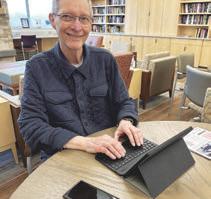
Howard County Office on Aging and Independence (OAI), primarily at the Elkridge 50+ Center, sharing his 32 years of experience in the ff electronics industry and offeering one-on-one support to older adults a with devices like tablets, phones and lapptops. As a Senior Planet r f instructo foor the past three years, he now volunteers at other centers as well. According to OAI Digital Inclusion Specialist, Malarie Burgess, “WWa alter is truly a rockstar when it comes to teaching his peers all about y. confidence with technolog y.”
a e ga
oenemgats,oradnlolulderinkot n g f
, Cacele in twaaypgo
Cacel geinp wa
lolerlasm-coserw,
iiotalsilegjnosusnt t h
e oiotneshf t at crhree t o fo CB3-2026 a ws f a
o t olinllficogtenmtmmiuru fu waroweayre e m e f s . teraeheThiery hw reesidenet atm tmhes o tsw
u HinkamCrwaogod
ts (AD dwwel d g uni .llr ao fo ttbhypesetltliacevo un ef
r a o fo
“Bridging th ap between the 50+ popul tion and the digital world ’ es,”W g a can be challengin atttim , Wa alter acknowledges. “It simportant l w to meet each individua where they are and guide them to better y.W understand technology and build their digital literac y. Weecelebrate a , their learning milestones together to boost their confidence ” he sayys. W Waalter leads Senior Planet classes on smartphone training (iPhone era a and Android), basic computer and tabblet skills, op atting systems (Windows, Mac, Chromebooks), digital photo editing, and other topics, a f including drone safeety and regulations relatted to flying them, a personal
u e f interest of his. He works with Elkridge staff to plan and promot future programming and recruits other tech volunteers, working closely with u ff them to offeermutual support and provide backup p as needed.
u lder ad e li if ra l “It is personally y g at t fyying to me to enhance th ivves of o dults in our a ’ d i . “ er al ys W a y, c ug y t communititty thro gh h techhnology,” say Waalt r. “AAn it t s s person lly rewarding , fig unity ul tf u el to h p strengthen OAI’s supppor foor older adullttsinour comm ittyy, ghting et hi m ug isolaattion thro gh comppanions ipp. In r tuurn, I gain a sense of purpose,


den h, a al h a en n, im c increased social conne tio mpproved m nttall/phyysical healt an n njjoy t i et w i e m opportuniitties to shar my y skilll s with o hers.”
h diff er
There are many ways to volunte r, , wit ffeerent time commitments and roles to fit your schedule and interests. Read the current issue of u ’ V DCRS Voolunteer Vibe newsletter to learn more abo t sharing your time and talents. For current opportunities, visit wwww..howardcountymd.gov/DCRSvolunteers


Using Candlestick
Glenwood 50+ Center
onda 1st M ayys starting Ap Eltkli


pril 7, 3 – 4:30 p.m. | A036 ttiithCdlti
Explore stock analysis strategies with Candlestic and volume. Understand how candlestick charts of price action, reveal market sentiment & psych reversals or continuations, and more.


ks Stock Analysis Ch
harrtts 667.700 kthilidit


s Y ing Y
Impprrov Yoour Balance a Yoou Age
Ellicott City 50+ Fitness Center
April 9, noon – 1 p.m. | A02201.701 dldf hl
Dr. Tammi Ford lead frree seminar to help agin balance through simple, practical exercises that c sy Learn ea y, , hands-on techniques to strengthen s and build confidence in everyday movement.
cks technical indicators ff s offeervisual clarity y holog y, , track trend dl saf
ng adults improve can be done anywhere. ytability, , prevent falls
time Singe
Show errs
ra The ShowTime Singers choral group is celeb atin f y quality, , crowd-pleasing perfoormances of songs a , f love frrom Broadway and movies to jazz, blues, p Call 410-313-7213 to register
ng 23 years of highaudiences know and op, and rock and roll.
Fight Fraud: AARP Shred It Commun
r North Laureel 50+ Center
y Event
ARP-Shr A reed





enter Elkridge 50+ C r Planet P or
ys, April 8 ay e We W
Bain 50+ Center on – 1 p.m. | A015 April 11, no 541.700 attion rga , o le poe o p t niza
April 22, 10 a.m. – 1 p.m. | Register: bit.ly/HoCo-A ,o p
y Alive! P Histoor r Pe e Elkridge 50+ Center
April 22, 1 – 2 p.m. | $5 | ld W n W I Woor Waar II, wome to replace men who ha stor yofRosietheRivet
sie the Rivete fo er r orrmance Show: Ro er r | A05511.700 f en joined the U.S. workfoorce by the millions, d gone off to fight. Mar y Ann Jung brings the oliftert fe e portrayingRoseLeighMonroe a oy OAI is partnering with AARP Fraud W Waatch NetworkTM to help protect you f frrom identity theft. Just drive up, unload up to two large boxes and your
gy documents will be shredded on-site, f frree of charge (no businesses). Questions? Call

ating A New Y Cre Yoou
East Columbia 50+ Center April 22, 2 – 4:30 p.m. | A04818.700 ef yJoinpersonalstyllistLitaMcKoytor frresh,refin 877-926-8300. e,andreimagineyour
Join personal st st Lita current wardrobe. Disco into a sophisticated new y closet to rest le or acces
a McKoy to r esh, refin sf over how to tran foorm w w look. Bring one clothing ssorize.
e, and reimagine your hat you already own emf g it frrom your
o lif
story of Rosie the Riveter t , portraying Ros worker at the largest aircraft factory in the worl Michigan.
y Histo
Howard Countty or r y: Solving th Hobbs Schoolhouse
Ellicott City 50+ Center
April 30, 1 – 2:30 p.m. | A02649.701 se Leigh Monroe, a w R d — Willo Ruun in
Oliver Cromwell Gilber plantation in 1843 and liffee. Learn how the How great granddaughter ex y f rt escaped slaver frrom a later recounted his journ ward County Historical S o f xplore his journey t frreed
he Mysteer r y of the Howard County ey in a memoir of his ociety helped his greatdom.

To view all of our programs and activities, visit www.HowardCountyMD.gov/rap.

Adults, come embark on a nighttime egg hunt using flashlights and your wits to search for hundreds of eggs hidden on the grounds of the Robinson Nature Center. Collect as many as you can while competing against other participants. Turn in your eggs for chances to win prizes. Preregister as space is limited. Info: 410-313-0400.
21 yrs + Robinson Nature Ctr
RP4847.701 Apr 10 8-10pm F $25 (Rain Date: Apr 17)
RP4847.702 Apr 24 8-10pm F $25 (Rain Date: May 1)
Have you ever wanted to fish at Centennial Lake at night? Now’s your chance! Join Howard County Recreation & Parks for a unique opportunity to fish the lake after hours. Bring your own fishing pole, bait, tackle, bug repellant, flashlight or lantern, and chair or boat. On-site registration only; all anglers must be checked in by 7pm. Those under 16 years old must be accompanied by a registered adult. Complete details available at www.howardcountymd.gov/nightfishing.
All ages Centennial Pk South Boat Launch Apr 10 6-11pm F $5 Apr 24 6-11pm F $5
Celebrate Autism Acceptance Day with us! Visit with first responders, providers, and county resources. Celebrate our community differences in a playful environment. Enjoy interactive play, entertainers, face painting, and demonstrations!
All ages Blandair Pk North Free Apr 11 10am-2pm Sa
Follow along with the classic storybook The Lorax to celebrate Earth Day at the Nature Center. Make a Lorax-themed craft, listen to a reading of the book, and embark on a nature walk to discover the importance of trees and wildlife. Spend time with new friends and enjoy tea and treats catered by local Touche Touchet bakery. All children must be accompanied by a registered adult.
Info/Registration: 410-313-0400.
4 yrs + Robinson Nature Ctr
RP4828.701 Apr 19 10am-noon Su $29 per person
RP4828.702 Apr 19 2-4pm Su $29 per person
Celebrate Earth Day with us to support the community. For a full list of Earth Day volunteer activities, visit www.HoCoVolunteer.org and search using the keyword “Earth.” Preregistration is required.
All agesCounty locations Apr 259am-noonSaFree
Experience the rich history and beauty of Belmont Manor & Historic Park – Elkridge’s hidden gem! Explore one of county’s best kept historical secrets. Take a step back in time as you stroll through the majestic gardens, meander around the grounds, and explore the manor house. For those in search of the perfect venue for an upcoming special occasion or wedding, stop by our tent and speak with local vendors who work many of the special events at Belmont. Registration is not required but encouraged. Vendor tables are available (email BelmontManorMD@howardcountymd.gov for details).
All agesBelmont Manor
RP9900.701Apr 2611am-3pmSuFree (Public)
RP9900.702Apr 2611am-3pmSu$30 (Vendors)



•Info: Tessa Hurd, 410-313-7311 or thurd@howardcountymd.gov.
Make a 6-8-piece stained glass window hanging using the copper foil technique. Particular emphasis is placed on learning the skills needed to score and break glass, foil and solder the pieces into a window hanging as these are challenging skills. This workshop focuses on straight line cuts and work from patterns such as snowflakes, stars and Mondrian squares. This is a prerequisite for the Stained Glass Craft and Design Class.
50 yrs + N Laurel CC Instructor: Maureen Stone Classes: 1 RP3536.701 Beginner Apr 7 10am-2pm Tu $99
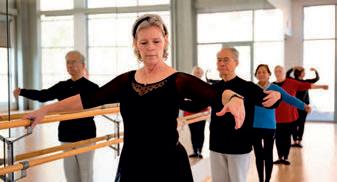
Beginner Ballet for Active Aging
with Carol Asher
This adult beginner ballet dance class is filled with graceful and fluid movements that help build strength and flexibility while having fun. Ballet is characterized by grace and precision of movement. Beautiful classical music is added to this light and enjoyable class. No equipment is needed. Come and enjoy this weekly class and socialize with members of the community.
50 yrs + Classes: 6 No class 5/6
RP3508.701 Roger Carter CC Apr 15 12:30-1:30pm W $72
This beginner-friendly chair fitness boxing series introduces the fundamentals of boxing, including how to execute punches using the numbered system. The program is designed to enhance cardiovascular health, build muscle strength, improve balance focusing on core stability. Even while seated, relieve stress and support cognitive function.
50 yrs + Classes: 10
RP3502.701 Roger Carter CC Apr 15 11:30am-12:30pm W $99
NEW! This calming, chair-based yoga class is designed specifically for active aging adults who are looking to improve flexibility, balance, and mobility all while remaining comfortably seated. Gentle stretches, mindful breathing, and simple movements help reduce stiffness, support joint health, and promote relaxation. No prior yoga experience needed, just a chair and a willingness to move at your own pace.
50 yrs + Instructor: Jennifer Holder Classes: 8
RP3505.701 Kiwanis Wallas Hall Apr 14 10-10:45am Tu $85
Music
Sing and Enjoy with Tom Sellner
Come enjoy yourself, meet new friends and have fun singing together! Sing along and exercise your lungs and your body. Learn to take a correct breath when you sing, which helps your body to move better. Songs are not sung in parts.
50 yrs + Classes: 4 No class 4/28
RP3552.701 Roger Carter CC Apr 21 10:30-11:30am Tu $49



•Info: Tracy Adkins, 410-313-7279 or tadkins@howardcountymd.gov.
Located downtown, the museum champions women artists and fosters leadership, community, and social change. Explore rotating exhibits and 5,000+ works spanning the 16th century to today by 1,000+ creators. Visitors may bring lunch or dine nearby. Moderate walking required.
18 yrs + Bus provided RP4619.701 Apr 10 10am-3pm F $109
Spring has arrived at Longwood Gardens, one of the most popular times to visit. Early bulbs, vibrant tulips, and fragrant flowering trees fill 1,100 acres with beauty, inviting exploration. Experience the season’s fresh beginnings and enjoy lunch on your own at the onsite café. Moderate walking required.
18 yrs + Bus provided RP4582.701 Apr 16 10am-5pm Th $159
Construction of the U.S. Capitol in D.C. began in 1793. It is a monument, office building, and symbol of democracy. Built, burned, rebuilt, extended, and restored over the years, it reflects American ingenuity and determination. This trip features a fully accessible one-hour guided tour, with lunch available at the onsite Capitol Café. Lots of walking required.
18 yrs + Bus provided RP4614.701 Apr 30 9am-4pm Th $125
Enjoy festival foods, boutique gifts, herbs, gifts, antique carousel, and countless flowers! There is something for everyone! This popular trip often sells out! Lunch is on your own at the café or on-site food vendors. Moderate walking required.
21 yrs + Bus Provided
RP4540.701 May 1 9am-3pm F $99


By Edward Warner
A new rail line spanning the circumference of Mexico’s Yucatán Peninsula now offers easy access from Cancún to many of the lovely, less-visited towns of the region.
Called Tren Maya, the rail line was completed in December 2024 at a cost of $20 billion. Among its 24 stations are Cancún International Airport; Izamal, with its Mayan pyramids; and Valladolid, a Spanish colonial city where you can watch an evening light show projected onto a 1552 convent.
The train’s other stops include wellknown tourist destinations like the Mayan ruins at Chichén Itzá and the Caribbean resort of Tulum, as well as less-visited destinations like Mérida, which is the capital of Yucatán and the peninsula’s biggest city.
Historic Mérida, considered the safest city in Mexico, is the perfect place to begin exploring the peninsula, which extends into the Gulf of Mexico and the Caribbean Sea.
Known as the “White City” for the aging limestone mansions that line its central avenue, Mérida was a boomtown in the 1800s, when henequen, a plant local to the peninsula, was used to manufacture ropes for the shipping industry. With the arrival of synthetic substitutes in the 1940s, Mérida’s economy crashed, but the recent influx of tourists and expats has revived this lovely city.
Great places to stay are in henequenraising haciendas or in the lively neighborhood near Santiago Church. Don’t miss the Santiago Market, which features Taqueria La Lupita, highlighted in Netflix’s “The Taco Chronicles,” and the English Library, where
visitors can borrow a book, sip coffee or take a yoga class.
From Mérida, you can go by car or bus to Río Lagartos, a charming coastal town where small boats take tourists into a nature preserve to see its flocks of flamingos.
For those who want to stay at a hotel on the beach but far from the glass-box-monoliths of Cancún, there’s another Tren Maya destination worth visiting: Playa del Carmen.
Here hotels aren’t taller than five or six stories, and its promenade, Quinta Avenida, is lined with stores and restaurants and open only to bikes and pedestrians.
In Playa del Carmen, a fun place to stay is the Colosio neighborhood, which has plenty of small, locally owned hotels as well as corner stores stocked with fresh avocados and pineapples. Explore the area around Parque la Ceiba, where gigantic trees shade play structures, art installations and a coffee shop.
For a Spanish colonial immersion, check out the towns of Izamal and Valladolid, both only a couple of hours from the airport via Tren Maya. The two are among the few Yucatecan towns designated by the government as Magical Towns.
Izamal is known as the “Yellow City,” as its downtown colonial buildings, including a large former convent, were all painted yellow for the 1993 visit of Pope John Paul II. (Supposedly, he liked the color.)
While the convent is eye-catching, the biggest draws are the town’s lively market, the restored monastery (across the street)


and two Mayan pyramids, both of which you can scale — unlike Chichén Itzá.
One pyramid is relatively small and sprawls across a city park, but the other occupies the landmass of a city block and offers wide-ranging vistas across the largely flat Yucatán Peninsula. Often, they’re devoid of locals or tourists.
The town of Valladolid also has two impressive colonial buildings: a monastery located near its arts district and a cathedral across from its central park. There, in the evening, a laser light show is projected onto the church’s exterior, telling the story of Mexico’s history.
Those who enjoy Mexican folk art will also want to tour Casa de los Venados, the mansion of a wealthy retiree who collected crafts from all over Mexico.
Valladolid has another draw: cenotes. These underground freshwater ponds are one of Yucatán’s natural wonders.
Most cenotes are in privately owned caves outfitted with stairs, lighting and guides. You put on a life jacket and float under the stalactites, watching tiny fish flit about as sunlight pours in from the hole in the cave’s roof.
In Valladolid, the grandest is Cenote Zaci, a huge open-air pool located downtown by the central market. It’s open 10 a.m. to 5 p.m. daily, and admission is about $10.
Another is Cenote Suytun, about 15 minutes away (also about $10). This one fea-
tures a hole in its ceiling that brings a “spotlight” of sunshine onto the cave’s waters. A two-cenote complex is nearby.
About an hour from Valladolid is the fascinating city of Tizimín. It too has a big, open-air cenote, Kikil, located a quick cab ride from the station. Admission is about $10 for adults — but watch your step on the slippery wooden staircase down to the water!
Round-trip tickets to Cancún start at $360 on Southwest. Note that the area is under a Level 2 travel advisory of “exercise increased caution.”
From Cancún’s airport, four daily trains, with one-way tickets starting at $50, go to Mérida. Tren Maya runs six trains daily to Valladolid ($25 one-way from Cancún International). Tickets can be purchased in Tren Maya stations or online. Keep in mind that most of Tren Maya’s stations were built at each city’s edge to minimize the destruction of existing buildings. That means you’ll likely need to catch a cab or Lyft to your hotel. However, if you want to arrive in the center of any of these towns, or want to get there outside of the Tren schedule, nearly all Yucatecan cities are served by Autobuses de Oriente (ADO).
Thankfully, you don’t have to wait in line or trust your rusty Spanish to buy tickets: ADO’s smartphone app lets you buy tickets in English, then display them to
driver as you board.
By Don Mankin
Twenty-six miles across the sea, Santa Catalina is a-waiting for me.
In 1957, the Four Preps crooned about an “island of romance” off the coast of southern California. Back then, the song caught the imagination of this anxious, tortured, barely pubescent 14-year-old with visions of swaying palm trees, balmy breezes and California blondes.
Now, 70 years later, an older, wizened version of that teenager was heading to that island of romance with his wife, Katherine (previously blonde, now white-haired), for a two-night excursion unlike anything else on the U.S. mainland.
Santa Catalina, as it is formally known, was originally inhabited by various Native American tribes, then claimed by Spain and later by Mexico. It became part of the United States, along with the rest of California, in 1848.
In 1919, William Wrigley Jr., of chewing gum and Chicago Cubs fame, bought most of the island and invested millions to develop the resort town of Avalon, its only incorporated city. His descendants created the Catalina Island Conservancy in 1975 to preserve the rest of the island.
This magical island, with its Mediterranean vibe, is the perfect side trip on a visit to Southern California, a refreshing counterpoint
to Disneyland, Venice Beach or Hollywood. Although it’s part of Los Angeles County, it feels like a trip to another country.
Only 4,000 people live on Catalina, but with one million visitors a year, it can be crowded during the summer. The recent best-selling book, Nightshade, by famed mystery writer Michael Connelly is set in Avalon and may bring even more crowds during high season. Fortunately for Katherine and me, it was almost deserted during our visit in January.
The fun begins with the Catalina Express, a scheduled passenger service offering frequent trips from Long Beach, just south of Los Angeles, the starting point for our trip. The Express also runs ferries from San Pedro, near Long Beach, and Dana Point, further south in Orange County.
Our trip, on a comfortable high-speed catamaran, took about an hour — a scenic jaunt that began with views of downtown Long Beach, then the Queen Mary and the massive cranes of the port of Long Beach before the boat headed out into open water.
As we approached Avalon, we saw the iconic Catalina Casino at the far end of the harbor. At 12 stories high, it’s the largest building on the island, and architecturally distinct in Art Deco and Mediterranean
styles. Despite its name, it was never used for gambling but primarily as a venue for movies and dances. It is still used as a theater as well as for community events and festivals.
At the other end of the harbor is the pier for the Catalina Express. Curving between the pier and the casino, the harbor is dotted with all kinds of boats at anchor, a narrow beach and a promenade lined with shops, restaurants and boutique hotels. Off the

walkway, houses and apartment buildings extend for a few blocks, then thin out on the brush- and tree-covered hills above the town.
For our two-night visit, we stayed at the historic Atwater Hotel, located near the promenade. The hotel was built by the Wrigley family in 1920 and named after William Wrigley’s














By Martha Steger
Providence, Rhode Island’s capital city, aims to live up to its moniker as “The Creative Capital,” with an exceptional spring — and year — planned for its visitors.
The city’s Providence Culinary Collective, a four-day food and wine festival, returns March 26 to 29, celebrating the chefs, restaurants and makers shaping the city’s dining scene.
Providence is positioning itself as an easy, food-forward base for soccer fans who’ll be coming from all over the globe for this summer’s anticipated FIFA World Cup matches in nearby Foxboro, Massachusetts, 20 miles away.
As a critical Revolutionary War state that helped lead the push for independence, Rhode Island is also staging special events for America’s 250th anniversary.
Providence’s annual historical event, Gaspee Days, in June, takes on new meaning in this semi-quincentennial year. The story behind the event began in 1772, when local patriots burned the British revenue
schooner HMS Gaspee in an act of defiance. Today these remembrance days begin with an arts and crafts festival from May 23 to 25, and include a parade, a colonial encampment and the blessing of the fleet — all symbolizing the state’s enduring independent spirit that contributed to the birth of a nation.
More history is on view at the state’s impressive capitol. The 1904 building is not only a National Historic Landmark but has the world’s fourth-largest self-supported marble dome, behind St. Peter’s Basilica, the Minnesota State Capitol and the Taj Mahal. Visitors can take self-guided tours with brochures or audio devices. An online 3-D tour is available for anyone who can’t visit in-person.
About a 20-minute walk from the capitol, the Rhode Island School of Design (RISD), established in 1877, is a museum as well as a college. Visitors can experience more than 2,135 of the 100,000 works of art and
design in its collection, in addition to faculty and graduate students’ works on display.
RISD’s gift shop across the street from the museum is a good place to pick up unique gifts, such as scarves and jewelry, some of which are made by the college community.
When I visited last fall, I took a tour of Johnson and Wales University’s Culinary Art Museum, offered by appointment only. With notable alumni such as Emeril Lagasse, the college’s museum is a specialized repository for culinary history, with a collection of more than 250,000 artifacts ranging from historic cookbooks to tools and kitchen equipment.
The museum also plans events, special exhibitions and expert-led demonstrations.
For a visit from the Society of American Travel Writers last November, Chef Peter Reinhart demonstrated how to make the perfect Alfredo sauce — which we naturally sampled.
We then sought out more of the city’s artisans beyond RISD, including a live painting session at the Providence Art Club, before we headed to dinner at Track 15, the city’s food hall, located in a former train station.
Afterward, adjacent to the Providence River, we ambled along the path for the much-touted WaterFire presentation, in which floating cauldrons of fire light up the river. The spectacular Saturday night shows

will start up again in late May.
Some of us capped off the night with drinks at the James Beard Award-winning Gift Horse raw bar and restaurant before heading the next morning to South County, Rhode Island.
The Margin Street Inn in the town of Westerly is a destination in itself. Built in 1849 on the banks of the Pawcatuck River, the inn offers luxury rooms in two beautifully renovated Colonial and Classical Revival-style guest houses.
The inn’s six acres include two docks for visitors who wish to come and go by water or just explore the river. We enjoyed afternoon refreshments in the river-view sunroom and a European-fare breakfast of frittatas, homemade granola and fresh fruit served in the beautiful dining room with a fireplace.
My favorite South County attraction is almost an afterthought: The giant, ecoconscious and whimsical Thomas Dambo Trolls — large sculptures the Danish artist made from reclaimed wood — promote nature, art and recycling. The trolls, on which visitors climb and drape themselves, provide a perfect photo-op.
For more information, see goprovidence.com, southcountyri.com and visitrhodeisland.com.







From page 17
daughter-in-law, Helen Atwater.
The charming lobby is decorated with artifacts from Helen’s life, including various board games, the original Wrigley safe from Chicago, and several musical instruments, including a full-size harp. It was the first time I have ever been directed to my room by looking for the “elevators behind the accordion.”
We dropped the luggage off in our room and took a leisurely stroll on the promenade. We checked out the Casino, some historic buildings associated with the Catalina Island Yacht Club, founded in 1925, and the Tuna Club (not a sandwich), one of the oldest fishing clubs in the world, founded in 1898.
The next morning, we hiked the steep Country Club Loop that heads uphill from downtown Avalon, then descends along winding streets past quaint wooden houses precariously perched on the hills above the town.
The 1.5-mile walk was challenging at first, but the elevated views of downtown Avalon and the harbor were well worth it.
In the afternoon, we went on a threehour “eco tour” through the interior of the island in an open four-wheel-drive vehicle offered by the Catalina Island Conservancy.
Access to the interior is limited, so the only way to see it in a vehicle is on a private
tour. Hiking and backpacking, with permits, are also allowed.
Our guide, Christian, was excellent, pointing out native and invasive plants, describing wildlife conservation efforts over the years and recounting the history of the island. He was particularly passionate about emphasizing the Wrigley family’s role in promoting conservation on the island, which is home to bald eagles, foxes, sea lions and a legendary herd of 150 buffalo.
The highlight of the trip, aside from the views of the rocky coastline, was spotting some of the massive, shaggy beasts, descendants of a small herd left on the island after a movie shoot in the 1920s.
Our short, sweet excursion brought me back to that time many years ago, when, as a young teenager anxiously facing an unknown future, I first heard those lyrics and dreamed of a life that seemed hopelessly out of reach. Who knew back then that I would be visiting the “island of romance” years later with my beloved wife?
The trip was well worth it, from Long Beach to Catalina, from then to now.
Round-trip ferry tickets on the Catalina Express (catalinaexpress.com) are around $80. Other hotels on the island, aside from the Atwater (visitcatalinaisland.com/hotel-atwater), include the Zane Grey Pueblo Hotel
(zanegreyhotel.com), the former home of the renowned novelist, and Mt. Ada (visitcatalinaisland.com/mt-ada), the former home of William Wrigley Jr. and his wife, Ada.
As you might expect, fresh seafood reigns supreme on the island. We ate at the
Bluewater Grill on the water one evening and the more casual Lobster Trap on the other; both were excellent.
For more information on Catalina Island in general, go to visitcatalinaisland.com or catalinaconservancy.org.

Since 1841

When you pre-plan your funeral, you give both yourself and your family a great gix
Your service will be exactly as you wish, and your family won’t be burdened with arrangements.
Pre-planning also fixes the cost at today’s prices. Plus: We offer a price-match guarantee!

on opposite page.
By Thomas C. West
As a wealth manager, I often guide clients through unexpected financial and healthcare challenges, including receiving a lifealtering medical diagnosis.
Receiving a diagnosis of a serious condition, such as cardiovascular disease, cancer, chronic respiratory disease or diabetes, can bring up a wide range of emotions.
When faced with such news, the first step is to organize your priorities and ensure that your healthcare, legal and financial strategies support your evolving needs.
1. Establish a healthcare plan
Your medical diagnosis will dictate various aspects of your future planning. Consider asking your healthcare team
these key questions:
• What does your treatment plan entail?
• Where will you receive care — in your home, a specialized community or a hospital?
• Who in your circle — family, friends or medical professionals — will take an active role in making decisions with you?
Whether your top priority is staying at home, ensuring your spouse’s financial stability or securing the best medical care available, identify these objectives early.
2. Organize your finances
Once your healthcare plan is clear, the next step is reviewing your financial landscape. As your medical professionals will have a plan for your health, your financial team will need to come up with a plan for
your finances based on your diagnosis.
Here’s a list of what you will need to do:
Inventory your assets. Create a detailed list of all assets, including real estate, investment accounts, business holdings, valuable personal property and any other financial resources.
Identify and project income sources.
Assess all sources of income, including Social Security benefits, pensions, veterans’ benefits, annuities, dividends, rental income and other passive income streams.
Evaluate healthcare and long-term care costs. Examine current and projected medical expenses, including insurance coverage, out-of-pocket costs, and potential long-term care needs.
Do you find it difficult to use a standard phone? Do people ask you to repeat yourself during telephone conversations? Do you miss important calls because you can’t hear the phone ring? The Maryland Accessible Telecommunications (MAT) program is here to help by giving Maryland residents the opportunity to apply for State-provided telecommunications equipment to independently make and receive calls. Once you qualify, a skilled evaluator meets with you to determine the best device to support your day-to-day communications. The MAT program has a variety of equipment solutions to support clearer communication, including:
• Amplified phones
• Tablets
• Ring signalers
• Phones with large and/or high contrast buttons
• Captioned Telephones
• And more
Review ownership structure and estate planning. Confirm that beneficiary designations are up to date. Review the ownership structure of investment accounts, trusts and real estate to ensure they align with estate planning goals.
Assess financial decision-makers. Evaluate whether designated financial decision-makers — such as power of attorney agents, trustees or financial advisers — are still the best individuals for the role. Consider how these expenses will impact overall cash flow and whether adjustments to spending or investment strategies are necessary.
See DIAGNOSIS , page 21
By Christine Benz
If you have gifting to loved ones on your mind, here are some considerations related to taxes and logistics.
Unless you’re writing a check from your bank account, the logistics of gifting funds can get a bit complicated.
If you want to gift from your IRA, for instance, your only option is to sell a chunk of it, then pay any taxes due, then write a check. That’s not terrible, so long as you understand the tax implications.
IRA withdrawals are typically subject to ordinary income tax, along with penalties if you’re not yet 59½. You could also trigger some knock-on tax effects like the incomerelated monthly adjustment amount. In other words, gifting from your IRA isn’t as seamless as making a qualified charitable distribution from your IRA or naming someone as a beneficiary of your IRA.
Things can also get tricky if you want your financial gift to go toward an investment account for someone else. It’s straightforward if you’re giving a gift to an adult with an eye toward setting them on an investing path: The recipient will have to set
up the account, whether an IRA or a taxable brokerage account, and you can then write a check or transfer funds directly to the financial institution.
If you’re giving an investment gift to a child, you have options.
1. 529 : This is best if you know the money will be for college. It will compound tax-free and skirt taxes upon withdrawal for qualified higher-education expenses. Plus you’ll typically get a state tax break on a contribution to your home state’s plan.
2. UGMA/UTMA (Uniform Gifts/ Transfers to Minors Act) : This is an open-ended way to save for minor children. There are no strictures on how the money is ultimately used, and the assets can be invested in almost anything. Note that UGMA/UTMA assets may reduce a student’s eligibility for financial aid.
3. IRA (if the child has earned income): Funding an IRA can ensure that a young adult fully benefits from compounding for retirement, and the IRA wrapper offers tax benefits. But the young person needs to have earned enough compensation (from work) in a given year to cover the amount of the IRA
• Beneficiary designations on retirement accounts, insurance policies and investment vehicles
contribution you’re making on their behalf, though the contribution doesn’t have to come directly from the young adult’s own coffers.
If you give $19,000 or less to any one individual in a single year, there are no reporting or tax requirements. Married couples can give twice that amount with no tax or reporting requirements.
Even if you give more than $19,000 to an individual in a single year, it’s not automatically subject to gift tax. Rather, anyone exceeding the gift-tax threshold in a single year must file the gift tax return form, and that excess amount counts against their lifetime exclusion amount.
Only when those excess amounts (combined with the value of the individual’s estate) exceed the lifetime exclusion amount — currently nearly $14 million — does anyone actually owe taxes on those gifts. So that’s not a barrier for most people.
Because the lifetime gift/estate tax exclusion amount is currently so high, avoiding
priorities, allowing you to focus on what truly matters — your well-being and quality of life with your loved ones.
estate tax shouldn’t be a major motivation for most people to gift assets to individuals during their lifetimes — at least for now.
The estate tax exclusion has been much lower in the past and could go lower again: It was $2 million as recently as 2008, for example. Moreover, some states, like Maryland, levy their own estate taxes, and in most cases, they’re lower than the federal threshold.
In contrast with making gifts to qualified charities, you won’t be able to earn a tax deduction on your gift to an individual. The exception is a contribution to a 529 college savings plan; you may be eligible for a state tax deduction or credit.
In a similar vein, gifting appreciated assets is unlikely to remove the taxes due on the gains, though it will shift the tax burden to the recipient.
This article was provided to The Associated Press by Morningstar. For more personal finance content, go to morningstar.com/personal-finance.
© 2026 The Associated Press. All rights reserved. This material may not be published, broadcast, rewritten or redistributed without permission.
3. Legal considerations and estate planning
Next, update your legal documents accordingly, including:
• Wills and trusts that reflect your new healthcare and financial priorities
• Powers of attorney for financial and healthcare decisions, ensuring the right individuals are authorized to act on your behalf if you were to become incapacitated
• Healthcare directives specifying your preferences for medical treatment
4. Communicating with successor decision-makers
The final step is sharing your updated plan with those who will fulfill your wishes, including your family members, trustees, executors, financial advisers and healthcare proxies or designated decisionmakers.
A shocking medical diagnosis can be overwhelming, but by aligning your wealth management strategy with your new reality, you ensure that your assets support your
Thomas
C. West, CLU®, ChFC®, AIF® is a contributing writer to Kiplinger.com. © 2026 The Kiplinger Washington Editors, Inc. Distributed by Tribune Content Agency, LLC.












By John J. Gardner
When retirees map out income in retirement, most think about their tax bracket, investment returns and required minimum distributions (RMDs).
What often gets overlooked is how Medicare premiums can rise dramatically if income crosses certain thresholds — a penalty known as the income-related monthly adjustment amount (IRMAA). For higher-income retirees, IRMAA can quietly erode thousands of dollars a year. Worse, it can be triggered by financial moves that seemed smart at the time, like a Roth conversion or capital gains harvest.
This is what some advisers call the Medicare “tax torpedo” — an unexpected hit to your retirement budget that lurks beneath the surface. Like any hidden threat, you don’t always see it until it’s too late. Here’s what you need to know and how to sidestep it.
Medicare Part B and Part D premiums are based on modified adjusted gross income, typically from your tax return two years prior. In 2025, for example, Medicare will look at your 2023 tax return. For 2025, the base premium for Part B is $185 per month. But if your income in 2023 rose above $106,000 (single) or $212,000 (married filing jointly), surcharges kick in.
These surcharges can push Part B premiums as high as $628.90 per person, per month, not including the extra cost for Part D coverage.
Over a couple’s lifetime, these hidden costs can easily run into the six figures.
The danger is that IRMAA thresholds are cliffs, not gradual phase-ins. Even one dollar over the line moves you into a higher premium bracket. This means a one-time event — selling property, a Roth conversion, taking a large IRA distribution — can inflate Medicare premiums for an entire year.
Consider this example:
To determine a couple’s 2024 Medicare premiums, let’s look at their income from two years before. Their modified adjusted gross income (MAGI) was $205,000 in 2022, just under the threshold for that year of $206,000. So, their Medicare premiums for 2024 stay at the base level of $174.70/month each.
The next year, they sell some stock, pushing their 2023 MAGI to $213,000. They’re only $1,000 over the limit, but now their 2025 premiums jump to $259/month each, an increase of $74/month over the base premium of $185.
That “extra” $1,000 in income cost them each nearly $900 in higher premiums for the year. And that’s only for Medicare Part A.
Add in the IRMAA surcharge for Medicare Part D, and each person would pay a little over $1,050 per year in higher premiums — for a grand total for the couple of over $2,100. They don’t call it the Medicare torpedo for nothing. One dollar over the limit, and — boom — you’re hit with a penalty that feels wildly out of proportion.
Fortunately, careful planning can help retirees stay clear of the Medicare torpedo:
1. Time Roth conversions carefully. Roth conversions can be powerful for longterm tax efficiency, but if done too aggressively, they can spike MAGI and trigger IRMAA.
In my practice, I’ve seen retirees save tens of thousands over their lifetime simply by timing Roth conversions before age 65.
2. Manage RMDs with QCDs. Once RMDs begin at age 73, those withdrawals count toward MAGI.
A qualified charitable distribution (QCD) allows individuals to give up to $108,000 per year for 2025 (or $216,000 for a married couple) directly from an IRA to a qualified charity, satisfying their RMD without increasing income. In 2026, those figures rise to $115,000 for individuals and $230,000 for couples.
3. Harvest gains strategically. If you need to sell appreciated assets, spread the sales across multiple years or pair them
with deductions to keep MAGI under the threshold.
4. Use tax-efficient withdrawal sequencing. Coordinate withdrawals from taxable, tax-deferred and Roth accounts to smooth income over time, rather than creating spikes.
5. Appeal when life changes lower your income. Medicare allows appeals for IRMAA if income has dropped due to events like retirement, divorce or the death of a spouse.
Too often, retirees think of tax planning and Medicare planning as separate issues. In reality, they are deeply intertwined. The same strategies that save you on taxes can backfire if they push you over an IRMAA threshold.
The good news is that IRMAA is a planning risk — not an unavoidable fate. By anticipating how income decisions affect Medicare premiums, you can preserve more of your wealth and keep retirement costs under control.
People always joke about hindsight being 20/20, but what no one talks about is how to use foresight to look ahead and insight to make meaningful adjustments today.
© 2026 The Kiplinger Washington Editors, Inc. Distributed by Tribune Content Agency, LLC.

By Margaret Foster Poets,
it’s said, are solitary people, but not in Howard County.
On a given Tuesday evening in Columbia, you may stumble upon a gathering of poets reading their work aloud in a bookstore. That’s Wilde Readings, the county’s free literary reading series, which celebrates its 10th anniversary this year.
Its co-founders, Laura Shovan, Linda Joy Burke and Ann Bracken, will read their poems at Queen Takes Book, a Columbia book shop, on June 9.
Wilde Readings, which runs year-round except for July and August, was the brainchild of Shovan, a local poet, teacher and children’s book author.
Shovan had just stepped down as editor of Little Patuxent Review , a literary journal based in Columbia, so she could publish her debut book. She wanted to stay connected to the literary community and create a place for poets to read their work in Howard County, so she reached out to fellow poets Burke and Bracken to make it happen.
“Since we didn’t have a regular reading series — there was one in Annapolis and two in Baltimore — I grabbed Ann and Linda Joy
and said we should do this,” Shovan said. The three had worked together at Little Patuxent Review and the Baltimore Book Festival.
“The three of us had done other projects together, so it was more like getting the band together rather than racking my brain to find someone” to help launch the project, she said.
Next they needed a name for the series. Howard Community College professor and poet Patricia VanAmburg suggested Wilde Readings, for both writer Oscar Wilde and Wilde Lake in Columbia. From there, it was just a matter of reaching out to poets — friends and people they admire — to ask them to read.
Over the last 10 years, Wilde Readings has featured 200 writers, or two per month for 10 months out of the year.
How the evenings run
Readings take place on the second Tuesday of the month in a bookstore, Queen Takes Book (previously at Long Reach Village Center). To open the 90minute event, one of the three co-facilitators introduces the two authors who are scheduled to read their work.

From Grace Cavalieri to the state’s first youth poet laureate, each speaker has brought their own unique point of view to the podium. The featured authors receive a small stipend from the Howard County Poetry & Literature Society (HoCoPoLitSo).
After the readings, the audience is first invited to ask questions.
“That conversation piece is a reason why people feel welcome,” Shovan said.
If they’re feeling really comfortable, the audience — some writers, some diehard regulars, some newbies — can step up to the microphone to read their own poems. Some readers have never shared their work before, but they get a lot of encouragement, Bracken said.
“The open mic part is a lot of fun,” Bracken said. “A lot of people don’t read poetry, but we do consistently have a good audience. We frequently have new people.”
The vibe at the readings is welcoming, according to all three facilitators. It’s important to have a venue for poetry to be spoken aloud, Bracken said.
“Poetry is really meant to be listened to
and experienced,” said Bracken, a teacher. “It’s very different to read a book of poems on the page, but it’s another thing entirely to hear the poet who wrote those words speak those words to the audience,” she added.
“The first poets were always speaking poets, and they memorized all their work,” Bracken explained. “The rhyming scheme helped the poet and the audience remember and follow along.”
New poets can make connections and get support from the open mic sessions at Wilde Readings, Burke pointed out.
“As seasoned professionals in our field, we are all able to help nurture them,” said Burke, a longtime performance poet, writer, percussionist and workshop leader. “We understand the importance of building community, and [Wilde Readings] is our way of perpetuating what was possible for us,” she said.
Wilde Readings may be the only sandbox in Howard County for burgeoning poets.








Stu
artsMelodie
• Visit to a Museum
• Waltz of Joy • L andmore! Listen to my origina compositions at or on YouTube, incl
— a Monta atin Nocture al smooth-jazz-style ldi uding: and more!
Share your favorites with friends and on social media, and click “subscribe” on my website or YouTube for free updates.
Thank you!






By Edward Warner
For Columbia jazz singer and concert promoter Lavenia Nesmith, life has been a series of happy accidents.
Take for instance, her start as a singer. When Nesmith (pronounced nee-smith), was eight years old, she was walking to Sunday school and happened to overhear a soloist singing the spiritual “We Are Our Heavenly Father’s Children.”
The song moved Nesmith so deeply that it led her to a life in music. It “ministered to me,” she told the Beacon.
Or consider the call she received from the Kennedy Center in 2003, asking her to sing at the 40 th anniversary celebration of Dr. Martin Luther King’s March on Washington. The call was so unexpected that she thought it was a joke and hung up.
Later that year, though, she appeared on stage at the Kennedy Center to sing “Trouble of the World,” a spiritual made famous by Mahalia Jackson, who performed at the 1963 march. She got a standing ovation.
“It was a pinch-me moment,” Nesmith remembered. “When I think of it now, it brings tears to my eyes.”
Another time, Nesmith had an offhand chat that led to a new job with the state of Maryland, where she spent most of her career.
“To me it was like a magical moment — that’s the way things happen in my life,” she said.
A Washington, D.C., native, Nesmith got
her start in music in the early 1960s, when she joined a rhythm and blues band, the El Corols, with fellow students at Shaw, her D.C. junior high school.
Despite their youth, the band became popular. Nesmith once skipped her 8 p.m. curfew to perform at a radio-stationsponsored band contest. Although her band won, she arrived home two hours late to face her angry parents.
In a standoff, she warned them that she loved music so much that she’d run away if she couldn’t perform.
“That’s the only time I became rebellious,” she said.
After that confrontation, her high school’s stern disciplinarian, ROTC sponsor Dr. William Rumsey, said he’d watch over the El Corols, keeping the teens safe when
they performed.
His oversight led the band to land its best gig: summertime shows at Carr’s Beach, an Annapolis resort for Black families excluded from segregated beaches. At Carr’s Beach, the El Corols performed during intermissions of concerts with headliners like Bobby Bland, The Temptations, Dionne Warwick and James Brown.
Carroll Henson, who ran the soundboard during WHUR broadcasts from Carr’s Beach, told WRC-TV4 in 2017 that “one of the best groups that ever performed there was from one of the high schools in D.C. That was one heck of a band for teenagers.”
The band also had played at the Waldorf Astoria and at a debutante ball in Southampton, New York.
But perhaps their most legendary performance was in 1963, when they played with Nat King Cole at Eastern High School in D.C. for none other than Robert F. Kennedy, then U.S. Attorney General.
After Nesmith graduated from high school in 1964, she naturally hoped to make music her career. When she started college, she planned to major in voice and minor in piano, but she shifted to major in human development at what’s now the University of the District of Columbia.
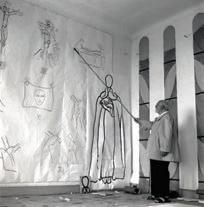

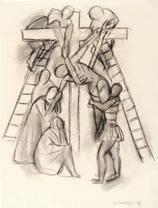
With that degree and experience with one of her sons, who is deaf, she joined the staff of Gallaudet University. Later, she became executive director of the International Association of Parents of the Deaf.
That prominent position led to Essence magazine naming Nesmith an Essence Woman in its March 1979 issue.
Soon after that article was published, Nesmith received a call from the Maryland State Department of Education. Nesmith mentioned that her current job required too much travel; she didn’t like being away from her sons. A few weeks later, the state created a position for her as a rehabilitation specialist for Services for the Deaf.
Nesmith spent three decades at that job before retiring in 2013 to return to her music career, dormant since her teen years.
She has performed at Blues Alley, The Chrysalis, the Library of Congress, The Phillips Collection, the DC Jazz Festival, the Cherry Blossom Festival and the MidAtlantic Jazz Festival.
As Nesmith began contemplating retirement, she not only wanted to return to singing but to make music part of life in her new home, Columbia, Maryland.
So, 20 years ago, she founded the concert series she’s likely best known for throughout Howard County: Jazz in the Mills, held four times annually in Oakland Mills’ Other Barn venue.
The series, which celebrates its 20 th
anniversary this year, has presented such performers as the Antonio Parker Group and the Eric Byrd Trio.
Nationally, jazz may be seen as in decline, but in the Mills, Nesmith said, “Jazz is being revived.”
Jazz in the Mills’ older audience appreciates her traditional repertoire, Nesmith said, which is influenced by Sarah Vaughan and Nancy Wilson.
This month, Jazz in the Mills presents a concert by singer Linda Harris Cole, radio personality and director of the Harriet Tubman Museum and Education Center. Sponsored by Nesmith and the Oakland Mills Community Association, the March 22 concert includes songs by Billie Holiday, Nina Simone and Aretha Franklin.
From page 23
HoCoPoLitSo often brings major American poets to Columbia, but up-and-coming ones didn’t have a venue until 10 years ago.
“What we advocate for are the poets and writers who are your next-door neighbors,” Burke said. “Whether you know it or not, they are published authors. None of this work is like anybody else’s work.”
Everyone is welcome at the microphone — the more unique, the better, Burke said.
“We have a listening audience who are hearing stories that perhaps they’ve never heard before. That makes a difference when it comes to finding your own voice,” she said.
Last hurrah for Burke
This year will be Burke’s last as co-facilitator of Wilde Readings. She’s stepping
Nesmith serves as emcee for these events and sometimes is the headliner, singing everything from jazz standards like “Trouble in Mind” to spirituals, which are her forte.
Spirituals, a core part of the Black religious experience, she said, “give you a sense of comfort, of peace, tranquility. [They] take all the stress away, if only for a little while.”
The Howard County government appreciates Nesmith’s efforts: In 2015, Howard County Executive Calvin Ball bestowed upon her an Honorary Resolution for Jazz in the Mills’s contribution to the county’s cultural life.
Thanks to Nesmith, Jazz in the Mills “made The Other Barn a local jazz hotspot,” said Brigitta Warren, Oakland Mills village manager. “Lavenia has tirelessly volunteered
back from her role as graphic designer and event promoter to work on a book.
There’s a playful, experimental aspect to each reading, Burke said. After all, poems can be offbeat, creative and unexpected.
“We want to goose people up — bring people to life with what we, in the writer community, do,” Burke said.
“I believe that our job as humans is to create. Why we’re given problems, when we don’t get along — all of that is to create something different. That’s what we do as writers,” she said.
“That’s why this matters and why I decided to stick around for 10 years.”
Wilde Readings take place on the second Tuesday of each month at 7 p.m. from September through June. There’s plenty of free parking at Queen Takes Book, located in Suite E of the Snowden Center off Oakland Mills Road in Columbia.
The East Columbia 50+ Center invites you to an art exhibit celebrating the legacy of Alice Webb’s art, including copperplate etchings, watercolors and prints showcasing Maryland landscapes. Reception and sale take place on Wed., April 8 from 3 to 5 p.m. at 6610 Cradlerock Way. The exhibit runs through June 27. For more information, call (410) 446-7584.
so much of her time, energy and her talent to make it successful.”
Nesmith is “a true gift to our community,” Oakland Mills Community Association Board Chairman Jonathan Edelson said in an email.
“She not only brings her own enormous talent, but that of other outstanding musicians to Jazz in the Mills shows,” several of which he’s attended.
Now in her 70s, Nesmith still performs, albeit less often. While growing older brings some singers reduced vocal range, Nesmith plans to keep singing for the long haul. Every other day, she noted, she practices vocal exercises.
In fact, she took to the stage in February, performing for a live audience in Bethesda, Maryland, for Black History Month.
Nesmith performed her one-woman show “A Tribute to Mahalia Jackson: Her Story Told in Dialogue and Song,” which she produced more than 20 years ago. The tribute features stories and 12 songs from the gospel singer’s life.
“I don’t try to imitate; I try to capture the essence of Mahalia,” Nesmith said, tearing up. “It’s like a ministry.”
In addition to that tribute, Nesmith is the creator, producer, promoter and executive director of two other original productions, including “Sistas Can Sang: A Tribute to Female Legends in Jazz and Blues” and “A Tribute to Nancy Wilson.”
If Nesmith has had good fortune, maybe it’s because of what she terms her motto: “Life is a gift, and love is how you use it.”
Do you know a 50+ person with an interesting hobby, second career or volunteer role? Let us know at info@thebeaconnewspapers.com.


By Stephen Sherr
Across
1. He thinks he’s better than you
5. In the middle of a car wash
10. Those with late bedtimes
14. Currency used by Gregory Peck in Roman Holiday
15. Not showing a test pattern
16. Prepare onions for chili
17. Those who resent having to get up early to find worms
19. Amy’s partner on Weekend Update
20. Mama’s baby, papa’s ___
21. Vanderbilt or Villanova’s logo
22. ID export
23. Those who go straight to the puzzle page every month
26. ___ sixth grader (preteen)
29. Violated the honor code
30. DFW data
31. One of 150 biblical hymns
34. Catch ___ Zs
37. After moose, the next largest type of deer
38. Historian’s word
39. Bedevil
40. Rosebud (if spoilers are OK for an 85-year-old movie)
42. Blood’s partner
44. “The Biggest Little City in the World”
45. Start to resent
47. Becomes less demanding
49. Mammals that did not get their daily 80-pounds of grass yet
53. To any degree
54. Jeff Lynne’s band before The Traveling Wilburys
55. Obtain furniture to stage a house
59. Travel by foot
60. They do not get to come to Churchill Downs
62. Best cards, in War
63. Result of exposure to allergens
64. JD Vance, for one
65. Back talk
66. Use force
67. Obtain a brownie point
Down
1. Powerful move in multiple sports
2. Girl : Canada :: ___ : Granada
3. Swingers’ party
4. Challenges for free drinks
5. Have a bawl
6. Compatible with all brands
7. Risk taker
8. The less popular song, usually
9. A B.S. usually requires four
10. Groups of eight notes
11. Symbols of peace
12. Hermit
13. Prepares for the next bout
18. Uh-huh
22. Mai ___
24. Its first POTUS was Lincoln
25. Name of more than 4,000 U.S. streets
26. Extra charges
27. “___ All Work Out” (Tom Petty song)
28. Items in gag-shop cans
32. Gain wisdom
33. Suffer from a dead battery
35. It may be improved on Restaurant: Impossible
36. Executive Office of the President, in briefs
41. Without canine companionship
42. Prepare rice at Panda Express
43. The first three letters many people say each year
44. Sign up for a conference room
46. ‘net address
48. He made the Kessel Run in 12 parsecs
49. Big laughs
50. City between Albany and Syracuse
51. Coil spring shape
52. First words on many Valentine’s Day cards
56. On a naval excursion
57. Psychic
58. Broadcaster of NBA Countdown
60. ___ Blinded Me with Science
61. Next after FDR
The Beacon prints classified advertising under the following headings: Business & Employment Opportunities; Caregivers; Computer Services; Entertainment; For Sale; For Sale/Rent: Real Estate; Free; Health; Home/ Handyman Services; Legal Services; Miscellaneous; Personals; Personal Services; TV/Cable, Vacation Opportunities; and Wanted. For submission guidelines and deadlines, see the box on the right.
CAVEAT EMPTOR!
The Beacon does not knowingly accept obscene, offensive, harmful, or fraudulent advertising. However, we do not investigate any advertisers or their products and cannot accept responsibility for the integrity of either. Respondents to classified advertising should always use caution and their best judgment.
EMPLOYMENT & REAL ESTATE ADS:
We will not knowingly or intentionally accept advertising in violation of federal, state, and local laws prohibiting discrimination based on race, color, national origin, sex, familial status or handicap in connection with employment or the sale or rental of real estate.
DRIVERS WANTED / GREAT FOR RETIREES / Locally 35-year-old family-owned company is looking for dependable people to make delivers to businesses. / Make your own schedule / Call (410) 234-3100 for more information and schedule an appointment to apply.
MOBILE HAIR & NAIL SERVICES - WE COME TO YOU. Professional Licensed Hair Stylist. Women and Men’s Services - All Hair Types. Cuts, Styles, Roller Sets, Color, Perms, Men’s Cuts & Facial Grooming, Manicures & more. Call 410-415-1760.
SHOP • MINGLE • EAT. Visit Vendor Members Group’s exclusive events: the Markets of CRAFTS GALORE! held 1st Saturdays of Apr, May, (June - Location TBD), Sep, Oct, Nov, Dec 9:30AM–2:30PM at Timonium UMC 2300 Pot Spring Rd Timonium, MD 21093. A juried showcase of artistic talent offering affordable, one-of-a-kind handmade treasures for all ages (art, cozy textiles, personal goods, jewelry, whimsical decor, gourmet treats, and more!). Bring the family. Savor tasty bites. Discover something extraordinary while supporting local brands. Free Admission. VendorMembersGroup.com #CraftsGalore!
UP TO $15,000.00 OF GUARANTEED LIFE INSURANCE! No medical exam or health questions. Cash to help pay funeral and other final expenses. Call Physicians Life Insurance Company866-212-1092 or visit www.Life55plus.info/beacon
CEMETERY PLOTS Fort Lincoln Cemetery. Brentwood, MD. 4 plots Section K-B Lot 30 Sites 1-4. Single depth. Monument privilege. Number of plots and PRICE NEGOTIABLE. Contact Steve Frank. stevefrank22@verizon.net. 301807-5645.
BECHSTEIN GRAND PIANO - stunning burlwood finish, 7’8” — Model III built c1896 features a spectacular recently restored burlwood finish by Cantabile in New York, perfect for any vintage grand piano enthusiast or someone looking for a unique addition to their home. The piano is being sold as-is. The piano includes a built in Dampp-Chaser system which maintains humidity levels, and a premium bench. 571-7810178.
GARDENS OF FAITH. Burial vault for 2. Asking $10,000. Individual burial lots $3000 each. Call Jim 443-425-4127.
NEW WINDOWS FROM WINDOW NATION. Special money saving offer zero down, zero payments, zero interest for TWO years AND buy 2 windows and get 2 FREE! Offer is valid for select models. Labor not included. Other restrictions apply. Call Window Nation today! 855-9092278.
PORTABLE OXYGEN CONCENTRATOR
May Be Covered by Medicare! Reclaim independence and mobility with the compact design and long-lasting battery of Inogen One. Free information kit! Call 855-851-0949.
DENTAL INSURANCE from Physicians Mutual Insurance Company. Coverage for 400 plus procedures. Real dental insurance - NOT just a discount plan. Do not wait! Call now! Get your FREE Dental Information Kit with all the details! 1-844366-1003 www.dental50plus.com/320 #6258
MOBILEHELP, America’s Premier Mobile Medical Alert System. Whether You’re Home or Away. For Safety and Peace of Mind. No Long Term Contracts! Free Brochure! Call Today! 1240-650-9189.
DON’T LET THE STAIRS LIMIT YOUR MOBILITY! Discover the ideal solution for anyone who struggles on the stairs, is concerned about a fall or wants to regain access to their entire home. Call AmeriGlide today! 1-866-3655170.
NO MORE CLEANING OUT GUTTERS. Guaranteed! LeafFilter is the most advanced gutter protection for your home, backed by a noclog guarantee and lifetime transferrable warranty. Call today 1-855-977-6078 to schedule a FREE inspection and no obligation estimate. Plus get 20% off! Seniors and military save an additional 10%. Restrictions apply, see representative for warranty and offer details.
THE BATHROOM OF YOUR DREAMS in as little as 1 day. Limited Time Offer - $1000 off or No Payments and No Interest for 18 months for customers who qualify. BCI Bath & Shower. Many options available. Quality materials & professional installation. Senior & Military Discounts Available. Call Today! 1-855-653-0087.
All classified ads must be submitted and paid for online, via our website, www.thebeaconnewspapers.com/classifieds
Deadlines and Payments: To appear in the next issue, your ad text and payment must be entered by the 5th of the preceding month for Baltimore and Howard County editions; by the 20th for Washington edition.
Cost will be based on the number of characters and spaces in your ad:
• $25 for 1-250 • $35 for 251-500. • $50 for 501-750 (maximum length). The website will calculate this for you.
Note: Maryland contractors must provide a valid MHIC number.
• Each real estate listing qualifies as one ad. • All ads are subject to publisher’s discretion. Payment will be refunded if unacceptable for any reason.
CONSUMER CELLULAR - the same reliable, nationwide coverage as the largest carriers. No long-term contract, no hidden fees and activation is free. All plans feature unlimited talk and text, starting at just $20/month. For more information, call 1-833-742-1303.
BECOME A PUBLISHED AUTHOR. We want to Read Your Book! Dorrance Publishing-Trusted by Authors Since 1920. Book manuscript submissions currently being reviewed. Comprehensive Services: Consultation, Production, Promotion and Distribution. Call for Your Free Author’s Guide 1833-992-0110 or visit dorranceinfo.com/beacon
MEDICAL EXERCISE SPECIALIST available to come to you. Please call 410-739-3318 to set up a free evaluation. I have over 17 years of successful experience working with clients of all ages including getting great results with seniors. LIVE-IN OR OUT PERSONAL ASSISTANT, COMPANION, & CAREGIVER. I have over 15 years of experience providing my clients with companionship, personal assistance, caregiving, management, light housekeeping & transportation services. My experience includes dealing with clients with Parkinson’s, dementia, and those who are wheelchair bound. I have a nursing assistant and a geriatric nursing assistant license, a medication technician license, and BLS & First Aid training. I enjoy what I do and love accompanying my clients to events such as the museum, movies, and dinner. Seeking full-time employment. My services start at $2,200 weekly, depending on the job requirements. Call Ashley at 202-982-7984.
DIRECTV - All your entertainment. Nothing on your roof! Sign up for Directv and get your firstthree months of Max, Paramount+, Showtime, Starz, MGM+ and Cinemax included. Choice package $84.99/mo. Some restrictions apply. Call DIRECTV 1-888-572-4953.
BUYING ANTIQUES, ESTATES. Cash paid for jewelry, gold, silver, old coins, wristwatches, costume jewelry, antique asian items, old toys, baseball cards, older sports memorabilia, comics, military items, firearms, knives, old books, christmas and halloween decorations. Call Tom 240476-3441.
PAYING TOP CASH FOR ANTIQUES AND COLLECTIBLES. House calls made with prompt, courteous service seven days a week and 25 years of experience! Buying toys, trains, militaria, glassware, advertising merchandise, paper items and much more! Contact Mason or Megan at: 443-306-8816.
Maryland invites audiences to an exciting concert featuring pianist Behzod Abduraimov, who will play works by Liszt, Stravinsky, Brahms, Czerny and Debussy. This event takes place on Sat., April 18 at 7 p.m. at the Horowitz Center’s Smith Theatre at Howard Community College, 10901 Little Patuxent Pkwy. Single tickets are $47.50 and can be purchased at chambermusicmaryland.org or by calling the box office at (410) 997-2324.


As experts in senior care, Brooke Grove Retirement Village is pleased to offer seminars and classes that promote physical, spiritual and mental well-being.
All programs will be held in-person in the Gathering Room at Brooke Grove Rehabilitation and Nursing Center, located at 18131 Slade School Road on the Sandy Spring, Maryland, campus of Brooke Grove Retirement Village. Register as indicated below or contact Toni Davis at tdavis@bgf.org with questions.
LIVING WELL SEMINAR: “KEEPING SENIORS SAFE”
Presented by Bill Peyser and the Montgomery County Department of Police THURSDAY, MARCH 19
10:30-11:45 A.M.
In this interactive discussion, get an overview of how scams are perpetrated and in-depth guidance to help spot and stop fraud before it is too late. We will focus on the manipulation techniques scammers use and discuss some of the most prevalent scams, phishing campaigns and fraudulent text messages, and show you how to identify the red flags.
FREE. To register, visit: bit.ly/ScamFreeMeBG
CAREGIVER SUPPORT GROUP FOR LOVED ONES LIVING WITH DEMENTIA
Offered in partnership with MedStar Health’s Center for Successful Aging & Ellis House
SECOND & FOURTH FRIDAY OF EACH MONTH 1-2 P.M.
Sponsored by the Alzheimer’s Association, this group is designed for family, friends and others engaged in the care and safety of someone touched by dementia. In this safe and confidential environment, you can develop informal and mutually supportive social relationships, gain understanding, share caregiving tips and discover other helpful information.
FREE. To register, visit: bit.ly/BGAlzSupport
FOR PARKINSON’S
Offered in partnership with the Parkinson’s Foundation, NCA
MONDAYS & WEDNESDAYS 12 NOON-1 P.M.
This class for those with Parkinson’s or other neurodegenerative diseases aims to improve posture, balance and circulation while also increasing strength, muscle control and mobility.
FREE. To register, visit: bit.ly/BGRVParkExercise
LIVING WELL SEMINAR: “SUPPORT MENTAL AND COGNITIVE HEALTH THROUGH NUTRITION & LIFESTYLE”
Presented by Lisa Jo Finstrom, MS, CNS, LDN THURSDAY, APRIL 16 10:30-11:45 A.M.
Learn evidence-based information to help you or a loved one optimize mental health and avoid cognitive decline. We’ll delve into nutrition and lifestyle considerations with time for questions.
FREE. To register, visit: bit.ly/NutritionBG