The Essentials: Serving Plant-Powered, Fiber-Rich Meals in CACFP Child Care Settings
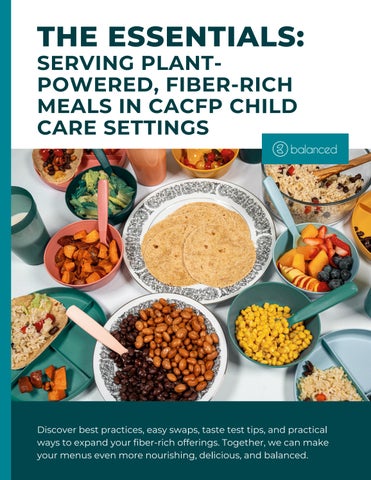
THE ESSENTIALS: SERVING PLANTPOWERED, FIBER-RICH MEALS IN CACFP CHILD CARE SETTINGS
Discover best practices, easy swaps, taste test tips, and practical ways to expand your fiber-rich offerings. Together, we can make your menus even more nourishing, delicious, and balanced.
6
The Power of Plants
For Health
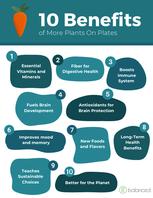
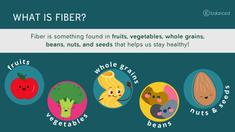
Up to 97% of American children do not eat enough fiber, a nutrient found only in plants. Plants are rich in fiber, vitamins, and minerals that promote digestion, immunity, and steady energy. Plant proteins are cholesterol-free and lower in saturated fats than animal proteins. Early exposure encourages children and adolescents to enjoy fruits, veggies, and whole grains throughout their lives, helping to lower the long-term risk of diet-related diseases such as high blood pressure and diabetes.
For the Planet
Plant-powered diets create a more sustainable food system, supporting the protection of our planet for future generations According to the National Institute for Health, eating a plant-rich diet has the potential to reduce diet-related land use by 76%, diet-related greenhouse gas emissions by 49%, and green and blue water use by 21% and 14%, respectively.5
For Inclusivity
Food allergies affect nearly 8% of children in the United States - and that number is on the rise Many common allergens (egg, dairy, fish & shellfish) can be avoided by swapping them out for plant proteins. 6
Many students come from diverse cultural backgrounds and are growing up in an increasingly global food landscape. Serving meals that reflect a variety of flavors and traditions helps them feel seen and supported.
Best Practices & Beliefs For Implementing Plant-Powered Meals
It’s a marathon, not a sprint. Manageable change takes time.
Stay flexible and optimistic
Model enthusiasm and excitement.
Involve your team and families in the process.
Conduct taste tests
Encourage and incorporate feedback.
Use descriptive terms that make meals sound exciting and appetizing.
Be persistent. It takes several exposures for children to develop a taste for new foods.
Getting Started
Start Where You Are, Start Small, Start Familiar
Identify Opportunities for Easy Swaps
Maintain Familiarity
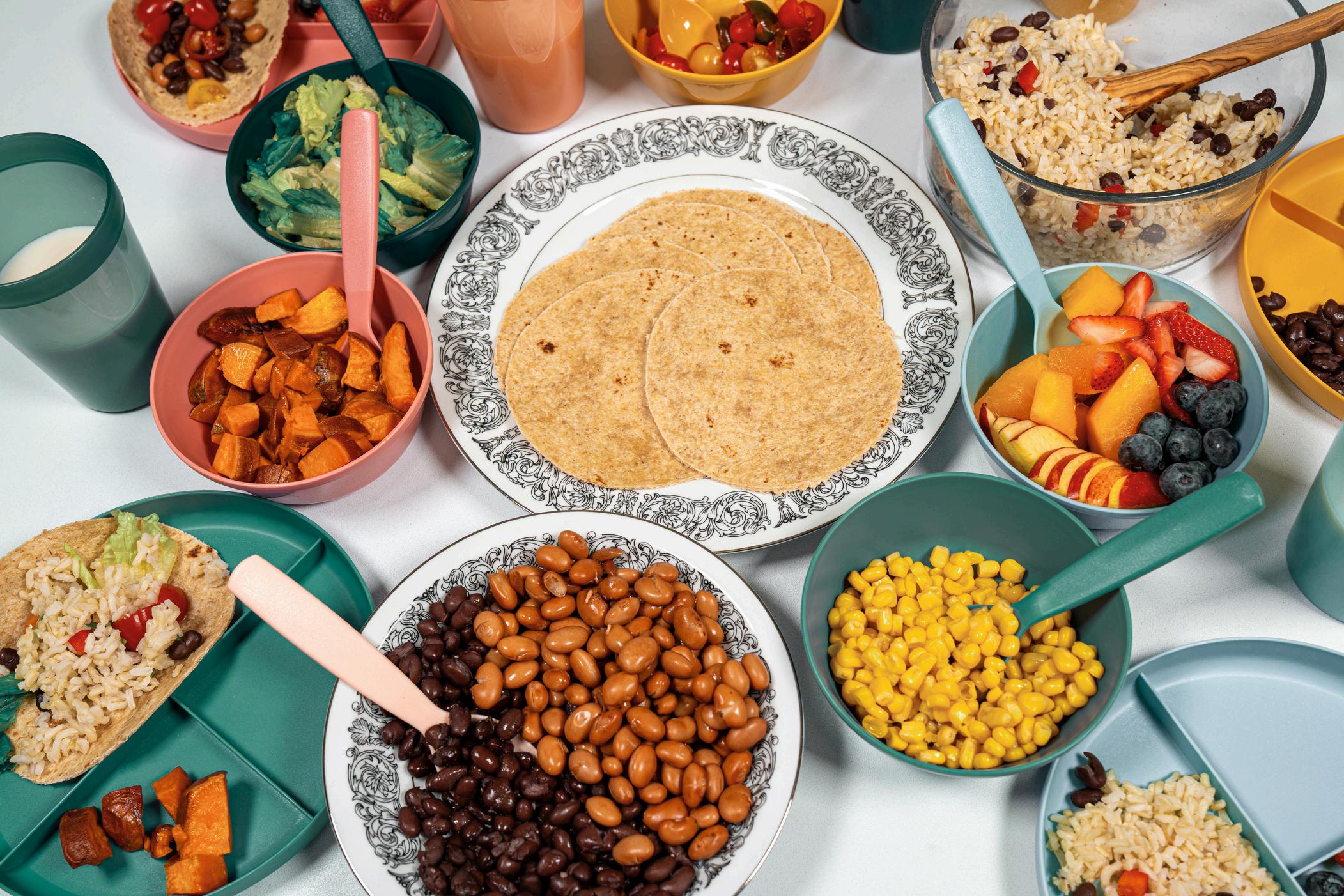
Start with familiar meals by using existing recipes and student favorites, simply swapping out all or some of the animal protein for plant proteins like beans, peas, lentils, and tofu.
Examples: Swap beef and cheese burritos for bean and cheese burritos. Add chickpeas to the salad bar in place of chicken, or even next to the chicken at first Use 100% whole grain pastas and rice for your existing recipes
Transition with Blended Dishes
Start by blending plant proteins with meat at first, gradually decreasing the amount of meat over time. This gradual shift makes it easier for students to adapt while reducing cost and increasing nutrition.
Examples: Try pasta sauce with half lentils and half beef, then increase the amount of lentils over time until it is 100% lentil sauce Make chili using half beans and half meat, increasing beans gradually until it is 100% bean chili
Try Meat Analogues
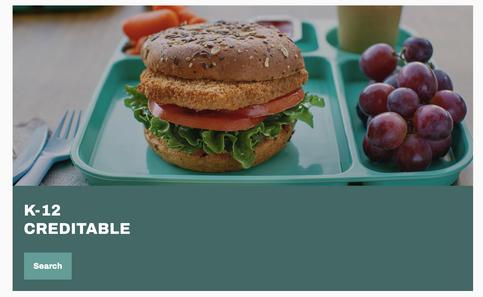
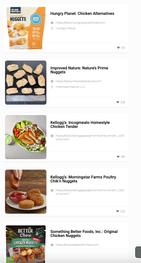
Today’s plant-based nuggets, burgers, and sausages are kid-friendly and USDA-creditable when labeled correctly.
Look for Child Nutrition (CN)-labeled products to ensure compliance with federal meal patterns.
Use them sparingly as a bridge while gradually increasing whole-food, plant-based proteins.
Example: Swap in plant-based nuggets on “chicken nugget day” with the same dipping sauces students expect.
Messaging Matters
Emphasize that changes are not all-or-nothing.
Highlight expanding options rather than replacing everything. Avoid labels like vegan, vegetarian, healthy, or meatless.
Focus on benefits that resonate such as fiber-rich, nutrient-dense, energyboosting, brain-boosting, global cuisine, or climate-friendly meals
Center your community’s values learn what matters most and weave that into your messaging.
Consider creating a theme (e.g., “Plant-Powered Day” or “Meals that Power Your Mind and Body”).
Posters Handouts Lesson Plans Stickers
Building Buy-In
Engaging Your Team & Community for Change
Your team members are the face of your program Their attitude influences how participants respond When staff are informed, confident, and excited, participants will be more willing to try new plant-based meals. Similarly, families’ attitudes towards your menu changes can have an impact on children’s willingness to try a new dish. Before making any changes, explain why it matters. When your team and community feels connected to the mission, they will want to champion it with you. Buy-in isn’t optional, it is essential.
How to Build Buy-in
Communicate Early and Often
Share updates via newsletter, social media, your website, and flyers Make announcements in staff and family meetings. Explain what’s changing and why it matters.
Show participants, team members, and families that their voices matter! Use surveys, comment boxes, and invite conversations. Ask for Feedback
Build Excitement
Promote new dishes with photos, participant reviews, and “featured dish” highlights. Create anticipation by announcing to participants and families the exciting new foods they’ll be trying the next day
Educate with Empathy
Use simple, positive messaging: “Nutrient-packed, fiber-rich meals to help participants feel and do their best!”
Taste Test Tips
Best Practices for Successful Sampling
Have Fun! Children will pick up on the attitude of adults. Aim to foster a fun environment that promotes joy and curiosity. Make sure all adults that will be present during the taste test are informed and can help support the experience.
Just one bite! Don’t put pressure on children, let them know it’s no big deal if they like it or not. Encourage them to start with “just one bite”
When you can, try to include a way to gather feedback. Ask children to give a thumbs up or provide stickers they can use to place on a poster. Feedback can then be used to help inform what is added to the regular menu
Successful Taste Tests
Why They Matter & How to Conduct Them
Why
Improve participants' long-term health by serving and promoting fiber-rich, nutrient-dense menu options. Stay ahead of the curve by serving dishes that are culturally-inclusive and climate-friendly.
Who
Your Team
Empower your team with knowledge behind why you are conducting taste tests and provide guidance on best practices
Children
Engage children by creating a safe, positive environment to try new things.
Families
Connect with families to share recipes and encourage trying new foods at home
How
Select a food based on your program goals
Sample with staff to build buy-in and excitement.
Inform families of the upcoming taste test.
Taste test using small, low-pressure samples with children during meal or snack time
Gather feedback by inviting children to share what they think.
Make menu changes based on feedback from staff and children. Decide if the food will be added to the regular menu and make a plan of action
Sourcing Products
Find what you need - fast!
Looking for plant-based products that work in schools?
Balanced’s Plant-Based Product & Vendor Directory is the most extensive directory of fiber-rich, plant-based items for institutional food service.
Search by protein type, brand, and more
Connect directly with vendors and request samples
Discover new favorites or reliable staples
Visit plantbasedvendors.com to get started
plant-based crumbles, various seasonings holly@eatdeeplyrooted.com
We’ll help you reach your goals! Balanced wants to support you in creating realistic, manageable change by providing menu analysis and design support, procurement assistance, marketing materials & ideas, and more. All at no cost to you. If you’d like personalized guidance and coaching, reach out today.
Contact:
Michelle Saletan
Institutional Support Manager
MichelleS@Balanced.org
ty and public health advocacy organization d reducing the impact of diet-related disease for unities around the world.
With a special emphasis on nutrient-based interventions, Balanced’s Advocacy, Institutional Support, Nutrition Research and Policy programs focus on shifting the proportion of health-promoting foods on menus through an increase of dietary fiber and a reduction of foods high in saturated fats, excess sodium, and ultra-processing.
Combining both public awareness campaigns and practical implementation support, we provide resources, training, and tools to partner organizations and food service teams working to improve the healthfulness of their menus.