
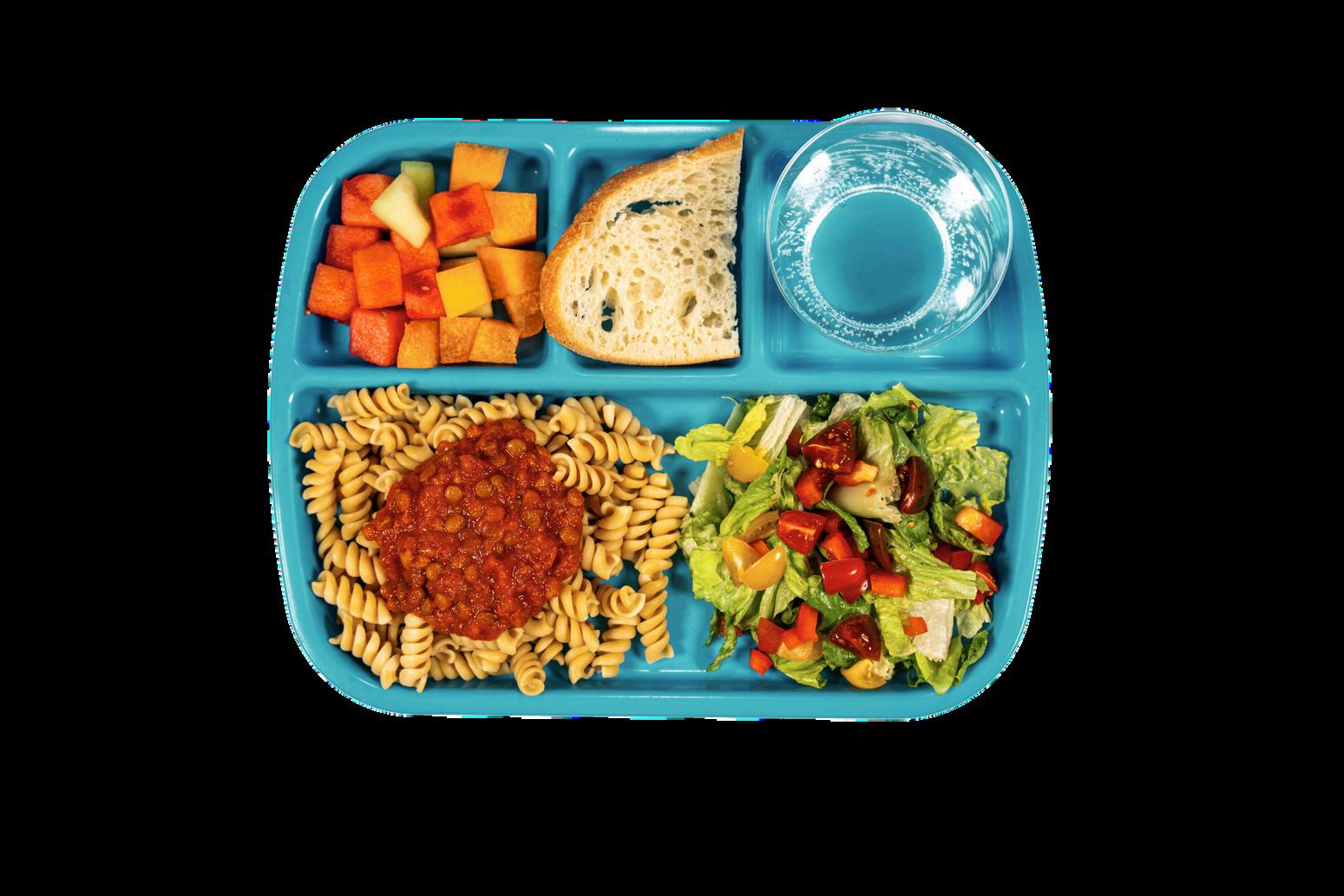
SERVING PLANT-POWERED, FIBER-RICH MEALS IN K-12 SETTINGS
PHASE 1 RESOURCE GUIDE
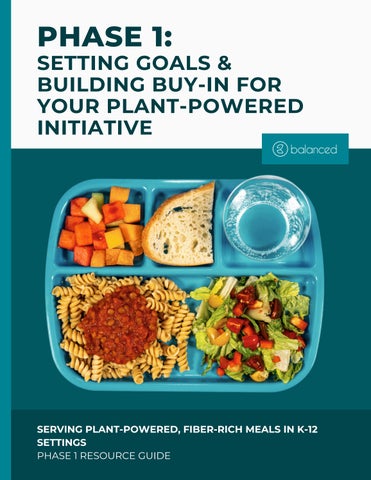
SERVING PLANT-POWERED, FIBER-RICH MEALS IN K-12 SETTINGS
PHASE 1 RESOURCE GUIDE
The food environment -especially school cafeterias- is one of the strongest predictors of what students eat. With many students eating over 180 meals per year at school, your work plays a vital role in shaping lifelong eating habits, health outcomes, and food norms.
That’s why it’s so important for school food service programs to offer meals that reflect the best available nutrition science.
By incorporating more plant-powered, fiber-rich options, schools can:
Support student health and wellbeing
Model healthy, sustainable food choices
Meet the evolving needs and preferences of students and families
Create menus that reflect a variety of cultures and diets
In partnership with you, we’re here to support your team in exploring and expanding plant-powered menu options in ways that work for your school community - through practical tools, expert guidance, and shared learning with peers across the country.
Often, you serve more meals than anyone else in your community
With over 180 school days each year, your choices shape daily eating habits and set the tone for how students see food
You create the food environment students grow up in The cafeteria is a powerful classroom - your menus can help normalize nutritious, balanced meals that support lifelong health.
You meet students where they are, every day. From kindergartners to high school seniors, you fuel the physical and mental growth of every student, regardless of background
You lead a team that students trust. The relationships your staff build with students can make healthy eating feel approachable, familiar, and even exciting
You drive innovation and equity in school meals. By incorporating more plant-powered, fiber-rich, and nutrient-dense options, you're not just feeding kids –you’re investing in their future
inclusive
Up to 97%
of children and adults do not consume enough dietary fiber, a nutrient found only in plants.1
93% of school-aged children don't eat enough vegetables.2
60% of school-aged children don't eat enough fresh fruits.2
62% of calories consumed by youth in the US are from ultraprocessed foods.3
30.5%
increase of type 2 diabetes rates among children between 2001-2009, and continue to rise 4
4
"Plant-powered” refers to meals made predominantly from plant foods, often with the center of the plate featuring plant proteins like beans, legumes, tofu, or meat alternatives such as reformulated 'chicken' nuggets that don’t contain animal products.1
“The
current generation of children is expected to live shorter lives than their parents.” -The New England Journal of Medicine
The average protein intake for children often exceeds 150% to 200% of the RDA, primarily from animal-based sources 1
Over 90% of US children consume sodium at levels nearly double the recommended daily limits 1
Roughly 75% of US children exceed the recommended limit for saturated fat intake 1 3 in 4
1 CentersforDiseaseControlandPrevention (2014,August5) Childreneating morefruit,butfruitandvegetableintakestilltoolow:Childcareandschoolscan helpchildrenmeetdailyrecommendations CentersforDiseaseControland Prevention https://archivecdcgov/#/details? url=https://wwwcdcgov/media/releases/2014/p0805-fruits-vegetableshtml
USDA,AgriculturalResearchService,2021 UsualNutrientIntakefromFoodand Beverages,byMale/FemaleandAge,WhatWeEatinAmerica,NHANES2015-2018 wwwarsusdagov/nea/bhnrc/
2 NationalCenterforHealthStatistics(US)(2025) Ultra-processedFood ConsumptioninYouthandAdults:UnitedStates,August2021-August2023 536 https://stackscdcgov/view/cdc/174612
3 Hamman,R F,Bell,R A,Dabelea,D,D’Agostino,R B,Dolan,L,Imperatore,G, Lawrence,J M,Linder,B,Marcovina,S M,Mayer-Davis,E J,Pihoker,C,Rodriguez, B L,&Saydah,S (2014) Thesearchfordiabetesinyouthstudy:Rationale,findings, andFutureDirections DiabetesCare,37(12),3336–3344 https://doiorg/102337/dc14-0574
Environmental sustainability is a major driver of student demand for plantpowered menu items
According to the 2022 Food and Health Survey from the International Food Information Council:
33% of Gen Z (aged 12-28) report that sustainability had a “great” or “somewhat” influence on food and beverage purchase decisions.1 70% report “a lot” or “a little” thought on the sustainability of the production of their foods and beverages.1
Gen Z population is currently the main driver of the US plant-based market.1
Currently, 79% of the Gen Z population choose to go meatless one day a week, and 65% say they want a more plant-forward diet 1
1
Gen Z consumers are especially interested in the environmental impacts of their food choices and they are more likely to to choose plant-based foods for environmental reasons.1
A recent Friedman School of Nutrition Science and Policy study found school lunch menus can have a significant impact on the environment.
The study examined the composition of lunches and classified them as highest impact and lowest impact when considering each meal’s impact on climate change, water consumption, land use, and eutrophication potential, or water pollution
The study concluded: High-impact lunches contained an ounce more beef than low-impact meals
Dairy was the second largest contributor to environmental impacts The lowest impact lunches also included larger amounts of whole grains, nuts, and seeds than the highimpact lunches
Wang,L,Cohen,J FW,Maroney,M,Cudhea,F,Hill,A,Schwartz,C,Lurie,P,& Mozaffarian,D (2023) EvaluationofHealthandeconomiceffectsofUnitedStates schoolmealstandardsconsistentwiththe2020–2025dietaryguidelinesfor Americans TheAmericanJournalofClinicalNutrition,118(3),605–613 https://doiorg/101016/jajcnut202305031
Many students come from diverse cultural backgrounds and are growing up in an increasingly global food landscape Serving meals that reflect a variety of flavors and traditions helps them feel seen and supported
In fact, 72% of Millennial parents report eating more plant-based foods and meals with globally inspired flavors - an important signal of what today’s families value.
InternationalFoodInformationCouncil 2022FoodandHealthSurvey 18 May2022 https://foodinsightorg/2022-food-and-health-survey/
1
65% of the global population experiences lactose intolerance. People of color are disproportionately impacted.1 In 2018, the American Medical Association passed a resolution encouraging the USDA to “recognize that lactose intolerance is a common and normal condition among many Americans of all backgrounds.”2
Bayless,TM,Brown,E,&Paige,DM (2017) LactaseNon-persistenceand LactoseIntolerance Currentgastroenterologyreports,19(5),23 https://doiorg/101007/s11894-017-0558-9
2
AmericanMedicalAssociation (2018) CulturallyResponsiveDietaryand NutritionalGuidelinesD-440978 AmericanMedicalAssociationPolicyFinder https://policysearchama-assnorg/policyfinder/detail/D-440978? uri=%2FAMADoc%2Fdirectivesxml-0-1522xml
Food allergies affect nearly 8% of children in the United States - and that number is on the rise These allergies aren't always visible, which means even a small ingredient can pose serious risks Creating menus with allergy awareness and safe, clearly labeled options helps protect all students and gives families peace of mind
Research done on a broad cross-section of children across US households, showed close to 10% of children suffer from food allergies and sensitivities. Interestingly, the families may not connect the food eaten to the allergic reaction it causes.
Not knowing the cause of a reaction can be problematic if not dangerous Luckily, plant-based meals avoid many of the most common allergens for all kids
Gupta,R S,Warren,C M,Smith,B M,Blumenstock,JA,Jiang,J,Davis,M M,&Nadeau,K C (2018) Thepublichealthimpactofparent-reportedchildhoodfoodallergies intheUnitedStates Pediatrics,142(6) https://doiorg/101542/peds2018-1235

Introducing more plant-powered meals into school menus is a powerful way to support student health, accommodate diverse dietary needs, and align with evolving family and community food preferences But like any meaningful change, success depends on having clear, realistic goals to guide the process Setting thoughtful, measurable goals helps teams stay focused, track progress, and celebrate impact - while ensuring that new offerings are well-integrated, well-received, and sustainable over time.
For a step-by-step guide to help in your goal setting and planning process, please use the Goal Setting & Planning Workbook.
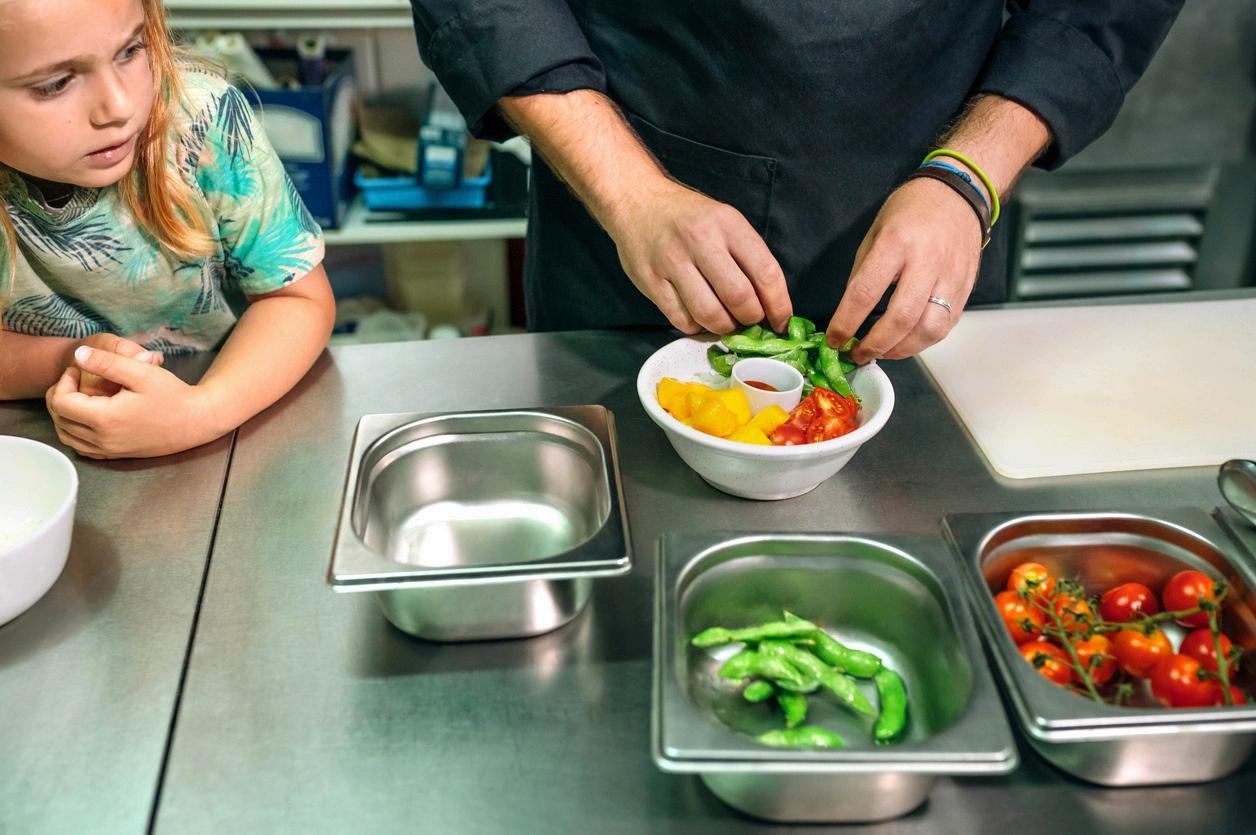
Setting clear, measurable (quantitative and/or qualitative) achievable goals helps keep your team focused, makes it easier to track progress, and gives you something to celebrate - whether it’s a menu launch, a taste test win, or positive feedback from students and families.
Goal: Offer at least one plant-powered entrée daily at all school sites by the end of the school year to ensure students have consistent access to nutrient-dense, fiber-rich, inclusive options
Goal: Increase overall student lunch participation by 10% within two semesters by introducing new plant-powered meals and gathering feedback through taste tests or surveys.
Goal: Train 100% of school kitchen staff to prepare and serve at least three plant-powered recipes confidently within the next six months.
Goal: Designate one “plant-powered day” per week districtwide to reduce the environmental impact of school meals and educate students on food and climate
Offer more plant-powered meals: Increase plant-forward meals by 20% to give students more nutrient-dense, high-fiber choices
Include more legumes: Serve a legume-based entrée, like lentils or black beans, once a week for more plant-based protein
Add a daily plant-forward option: Include one plant-based meal on the menu every day to help normalize these options
Use fewer pre-packaged foods: Remove one pre-packaged item from the menu each month and keep building from there
Create “plant-powered” days: Choose one day a week for a plantfocused menu to help the environment
Highlight climate-friendly meals: Use signage or symbols to show which meals are better for the planet
Host a Sustainability Week: Plan a week of themed menus, activities, and classroom lessons about food and the environment
Build vendor relationships: Reach out to at least five plant-powered food companies to explore products and pricing
Check with your distributor: Find out which plant proteins are already available through your vendor or FSMC
Try new items: Test two new plant-powered meals and assess if they fit into your regular menu cycle
Use local produce: Incorporate seasonal, local fruits and vegetables when possible
Grow meal participation: Boost school lunch participation by 10% after introducing two new plant-powered entrees
Host taste tests: Run two taste tests and aim for 75% of students to say they like the featured plant-powered item
Add new weekly options: Include one new plant-powered entrée on the weekly menu by the end of the semester
Survey families: Send out a short family survey and aim for 80% to support more plant-powered options
Engage stakeholders: Share updates and sample menus at a PTA or school board meeting and gather at least 10 pieces of feedback
Support district wellness goals: Work with school leaders to include plant-powered meals in school wellness or food policies
Building buy-in is essential for the long-term success of plantpowered menu changes in schools When food service staff, educators, families, and students feel informed, included, and valued in the process, they’re more likely to support and champion the changes Buy-in turns resistance into collaboration and helps uncover creative ideas, address concerns early, and create a shared sense of purpose
In many cases, it ensures that menu improvements are not just implemented, but embraced and sustained




with your motivation. Show your team how their directly impacts student health and successow these menu changes support that mission
ve your team in planning Ask for their input on es, logistics, and what’s realistic. Validate their experience and highlight how changes may make their work easier or more fulfilling

Regularly check in: “What do you need to succeed with these changes?” Respect their insight and respond to concerns with solutions and support.

Organize group taste tests, brainstorms, or team cooking sessions Let staff be part of the creative process - and lift up their contributions along the way.

ake yourself accessible. Let your team know edback is always welcome and appreciated. Lead th respect, curiosity, and shared purpose
Here’s an example of how you might introduce upcoming menu changes to your team in a way that builds trust, highlights their importance, and prepares them for what’s ahead. Feel free to adapt this message to fit your leadership style and your team’s unique strengths
Team,
Across the country, more and more schools are stepping up to support student health - and I’m proud to say we’re one of them. We all see firsthand how important good nutrition is to helping kids feel energized, stay focused in class, and build lifelong habits. That’s why we’re making some exciting and forward-thinking updates to our menus over the next year.
We’ll be introducing a variety of new meals that highlight fresh vegetables, fruits, and plant proteins like beans, lentils, and legumes- dishes that are full of flavor and packed with nutrients.
These updates are designed not just to meet guidelines, but to reflect what today’s students and families are looking for: delicious, nourishing meals that support their well-being.
While most of our operations will stay the same, these updates may bring opportunities to learn new kitchen skills and try out fresh ideas. From knife work to recipe prep to assembling more balanced meals, these are skills that benefit you both professionally and personally.
We’ll make sure everyone is supported along the way. Training will happen during regular work hours and will focus on practical tools and techniques that help make your job smoother and more rewarding.
Most importantly, these changes wouldn’t be possible without you Your experience, care, and creativity are what make this program a success We’re in this together, and I can’t wait to see what we’ll accomplish
Thank you for everything you do - our students are better for it
- [Your Name]
Introducing new menu items – especially plant-powered ones – can bring up valid questions and concerns from your food service team Change takes time, and it’s normal for staff to feel unsure about new ingredients, preparation methods, or student acceptance
This section outlines some of the most common concerns you might hear and offers practical tips, questions, and responses to help you lead the conversation with confidence. With a supportive approach and clear communication, you can build buy-in, troubleshoot challenges together, and make plant-powered menu changes feel realistic and rewarding for your whole team
“Our students won’t eat this.”
“Let’s run a taste test first and see what students actually think ”
“We’ve seen that when options taste good and are marketed well, students are more open than we think ”
“Try framing it as a new option, not a replacement – it’s about choice, not taking anything away.”
“I don’t know how to cook this stuff.”
“Would you be open to a demo or hands-on training session?”
“That’s fair – we’ll provide training and recipes that make prep easy and familiar.”
“Think of it like learning to prepare any new item – one step at a time, with support ”
“These
ingredients are too expensive.”
“Some plant proteins, like beans and lentils, are actually cheaper per serving than meat ”
“Let’s review the per-portion cost – some items may balance out when you factor in USDA credits ”
“We can start with one affordable swap and build from there.”
“We don’t have the equipment to prepare plant-based meals.”
“Many plant-powered options require the same tools as our current meals –let’s review what we already have.”
“We can start with no-cook or steamable items that work with our current setup.”
“Let’s identify what’s truly needed and see if there are grants or support to help ”
“It’s too much change at once.”
“We can start small – maybe just one plant-powered option per week.”
“This doesn’t have to be a full menu overhaul; it’s a gradual shift.”
“Let’s set a simple pilot goal that feels manageable ”
“Parents will complain.”
“We can communicate clearly that these are additions, not replacements ”
“Let’s collect feedback and use it to guide how we frame the rollout ”
“Many parents actually ask for more healthy or allergy-friendly options ”
“We’re already doing enough – why add more?”
“This can help us meet wellness goals and nutrition standards even more easily.”
“It’s not about more – it’s about smarter choices that serve a broader range of students ”
“Sometimes a small change makes a big difference ”
“We don’t have time for more prep work.”
“Let’s flag which dishes are the most time-intensive and adjust from there ”
“Some plant-powered options are heatand-serve and can be even quicker to prepare ”
“We’ll focus on options that fit your current workflow ”
“This is just a trend – it’ll go away.”
“Student preferences are shifting and we want to stay ahead of the curve.”
“Offering variety helps us meet the needs of more students, now and in the future.”
“National guidelines are increasingly supportive of plant-powered meals – it’s more than a trend ”
“Nobody’s asking for this”
“Some students might not speak up, but still benefit from more inclusive options.”
“Let’s try a simple survey or taste test and see what interest is really there ”
“Offering more variety is one way to introduce students to new foods they might not even know to ask about ”

ty and public health advocacy organization d reducing the impact of diet-related disease for unities around the world.
With a special emphasis on nutrient-based interventions, Balanced’s Advocacy, Institutional Support, Nutrition Research and Policy programs focus on shifting the proportion of health-promoting foods on menus through an increase of dietary fiber and a reduction of foods high in saturated fats, excess sodium, and ultra-processing.
Combining both public awareness campaigns and practical implementation support, we provide resources, training, and tools to partner organizations and food service teams working to improve the healthfulness of their menus.
www.balanced.org
@thebalancedorg