The ARTFUL MIND
DECEMBER


ANNIVERSARY ISSUE 31 YEARS IN PRINT DECEMBER 2025
IN PRINT SINCE 1994
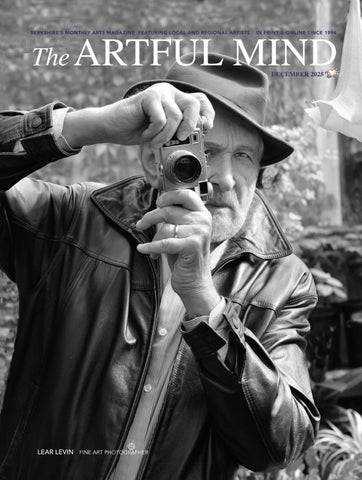
ANNIVERSARY ISSUE 31 YEARS IN PRINT DECEMBER 2025
IN PRINT SINCE 1994
“To all Artists I have known: Thank you for making this publication possible. I was just saying to someone today, we artists, we all help eachother in so many ways. Being creators is grounding and gives us a sense of slowing things down a bit.”
-THE PUBLISHER
Interview with Danni Rodriguez Visual Artist ... 12
Interview with Lear Levin Fine Art Photographer...20
Interview with Todd Mack Singer, Songwriter, Producer, Artivist, Speaker ... 30
Richard Britell | FICTION
Valeria and the Ants CHAPTER 7 ... 43
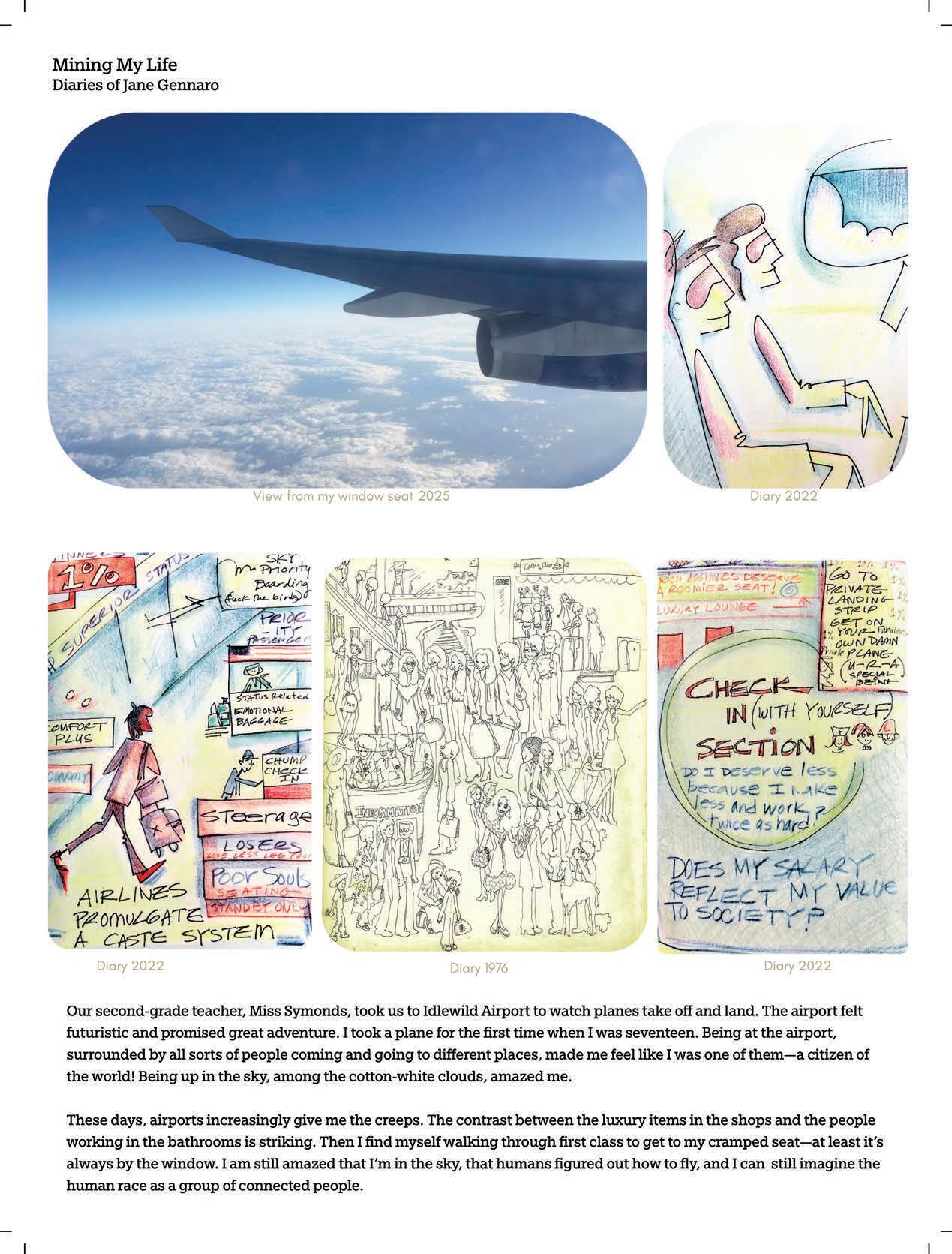
Diaries of Jane Gennaro
Mining My Life .... 44

Publisher Harryet Candee
Copy Editor Elise Francoise
Contributing Photographers
Edward Acker Lee Everett Bobby Miller
Contributing Writers
Richard Britell Jane Gennaro
Third Eye Jeff Bynack
Distribution Ruby Aver
CALENDAR / ADVERTISING
EDITORIAL / SUBSCRIPTIONS — 413-645-4114
EMAIL: ARTFULMIND@YAHOO.COM
Read every issue online: ISSUU.COM and YUMPU.COM / instagram
Join the FB group: ARTFUL MIND GALLERY for Artful Minds 23 THE ARTFUL MIND PO Box 985, Great Barrington, MA 01230
FYI— Disclaimer: : ©Copyright laws in effect throughout The Artful Mind for logo & all graphics including text material. Copyright laws for photographers and writers throughout The Artful Mind. Permission to reprint is required in all instances. In any case the issue does not appear on the stands as planned due to unforeseeable circumstances beyond our control, advertisers will be compensated on a one to one basis. All commentaries by writers are not necessarily the opinion of the publisher and take no responsibility for their facts and opinions. All photographs submitted for advertisers are the responsibility for advertiser to grant release permission before running image or photograph. Not responsible for photo content /copyright brought into magazine by other artists promoting other artists in editorial on these pages.

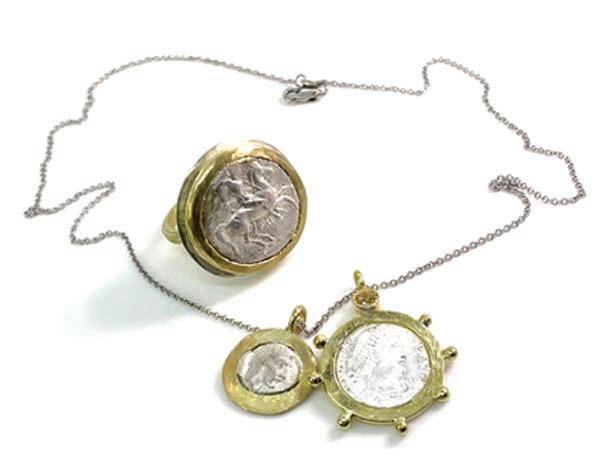
Silver Coin Extravaganza. Ring & 2 pendants. 18kt.
COMMISSION ORDERS WELCOMED
Hand Forged Designs
9 Main St. Chatham, NY

510 WARREN STREET GALLERY
510 Warren st, Hudson NY
518-822-0510 / 510warrenstgallery@gmail.com
Dec 5-28: Reception: Dec 6, 3-5:30
Stephan Marc Klein: TUNNEL VISIONS
ART GALLERY 71
82 Hudson View Terrace www.artgallery71.com
Ongoing exhibits
ART ON MAIN
Main St, West Stockbridge, MA
Thru Nov 30: Plein Air Exhibit; Dec 4-28, Reception Dec 6: Holiday Small Works Show
CARRIE HADDAD GALLERY
622 Warren St, Hudson, NY info@carriehaddadgallery.com
Nov 21 - Jan 18: Landscape Exhibit
CLARK ART INSTITUTE
225 South St, Williamstown, MA
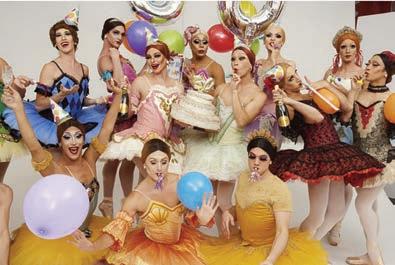
Les Ballets
Trockadero de Monte Carlo
Saturday, February 7, 2026, 3pm
Mahaiwe Performing Arts Center 14 Castle st, Gt Barrington, MA Box office: 413-528-0100
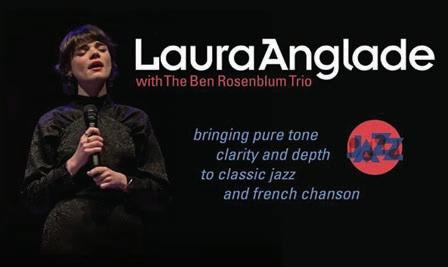
Laura Angalde with The Ben Rosenblum Trio
Saturday, December 13, 7:30pm Spencertown Academy 790 Rte 203, Spencertown, NY Spencertownacademy.org
SUSAN ELEY FINE ART
Nov 22 - May 31, 2026: Raffaella Della Olga: Typscripts; Dec 20 - Mar 8, 2026: Shadow Visionaries: French Artists Against the Current, 1840-70
CLOCK TOWER ARTISTS’ STUDIOS & GALLERY
75 S. Church St, 3rd fl, Pittsfield, MA clocktowerartists.com
A collective of working artists, see website for artists and open studio visits.
FUTURE LAB(S) GALLERY
43 Eagle St, North Adams, MA
On going art exhibits
GALLERY 13 1/2
13 1/2 Grove St, Adams, MA
Group Exhibit displaying the creative work of over 17 artists who support and collaborate with The Old Mill Center by using upcycled materials in their work.
GALLERY NORTH
9 Eagle St, North Adams, MA 413-663-1509
Gallery of artists work on view
HOTCHKISS SCHOOL
TREMAINE GALLERY
11 Interlaken Rd, Lakeville, CT www.hotchkiss.org/arts
Thru Jan 25, 2026: Wish You Were Here: Fern Apfel & Colleen McGuire
JD LOGAN FINE ART
Monterey, MA
Thru Dec 31: By appointment only studio visits: Abstract Creations made with acrylics and mixed media on both canvas and wood panels.
LAUREN CLARK FINE ART
684 Main St, Gt Barrington, MA Lauren@LaurenClarkFIneArt.com
Fine art, glass, sculpture and paintings
MAD ROSE GALLERY
3 Main St, Millerton, NY (Main Gallery)
Thru Dec 31: Through A Lens, A Painting: Lorenzo Minoli.
MASS MoCA
1040 MASS MoCA WAY, Hunter Center, North Adams, MA info@massmoca.org
Thru Jan 4, 2026: Dirty & Disorderly: Contemporary Artists on Disgust.
MCLA GALLERY
375 Church St, North Adams, MA Thru Jan 4, 2026: Ecologies of the In\Between
NORMAN ROCKWELL MUSEUM
9 Glendale Road, Stockbridge, MA 413-298-4100
Nov 8- April 6, 2026: Jazz Age Illustration
SOHN FINE ART
69 Church St, Lenox, MA 413-551-7353 info@sohnfineart.com
Thru Jan 12, 2026: The Color of Memory: Valdo Bailey, John Clark, Richard Alan Cohen, Yvette Lucas
SOUTHERN VERMONT ARTS CENTER
860 SVAC Drive / West Rd, Manchetser VT Through January 4, 26: Into the Abstract: Paul Gruhler and Neha Vedpathak
433 Warren St., Hudson, NY
Feb 5-April 19, 2026: Deirdre O'Connell: New Portraits
TIVOLI ARTISTS GALLERY
60 Broadway, Tivoli, NY Holiday Show through December 21.
ASTON MAGNA FAMILY DAY!
St. James Place
352 Main St, Gt Barrington, MA
Dec 13, 3pm: Aston Magna Music Festival‘s FREE Family event for young people of all ages; Dec 14: 3pm: In Dulci Jubilo: Traditional and contemporary acappella carols by Bach, Rachmaninoff, Lauridsen, Randall Thompson and others.
CLOSE ENOUNTERS WITH MUSIC Mahaiwe Performing Arts Center 14 Castle St, Gt Barrington, MA
Dec 15, 4pm: Vivace Chamber Orchestra
MASS MoCA
1040 MASS MoCA WAY, Hunter Center, North Adams, MA info@massmoca.org
Dec 20, 7pm: WHAT TO WEAR: Work-in-progress production, a comedic, post-rock opera by composer Michael Gordon and the late downtown theater renegade icon Richard Foreman.
CLARK ART INSTITUTE
225 South St, Williamstown, MA
12/11: Kiss Me Deadly (1955) 12/18: The Third Man (1949)
IMAGES CINEMA
50 Spring st, Williamstown MA 413-458-1039 imagescinema.org
Dec 20: White Christmas (1954); Jan 3, 2026: The Princess and the Frog; Jan 17, 2026: Willy Wonka and the Chocolate Factory
Keep us in mind artfulmind@yahoo.com

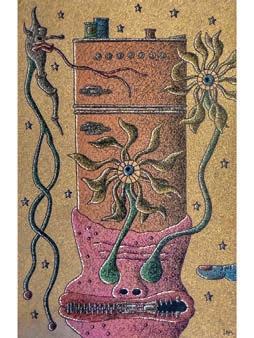
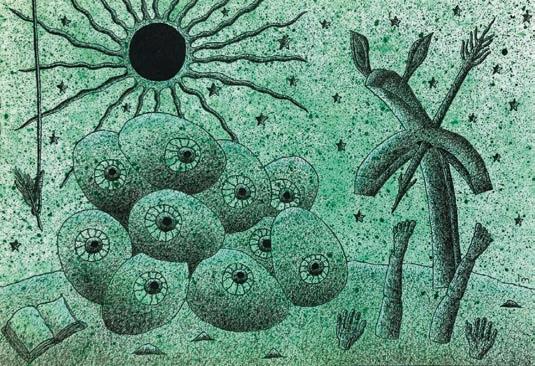
As a long time advocate for the arts, New Ashford based artist Leo Mazzeo has served on regional boards and acted as a catalyst for many arts related projects. He works primarily on paper, using diverse media and techniques appropriate for each piece’s theme. Initially, he establishes a broad concept, which evolves into a narrative as a piece progresses. Mazzeo sketches from life, reference images, and imagination, assembling compositions almost as a collage artist would. Symbolism is key, and characters and objects often have repeating roles. His themes are sociopolitical/psychological, often surreal, reflecting personal perspectives and offering therapeutic benefits.
Leo Mazzeo— l-mazzeo@hotmail.com
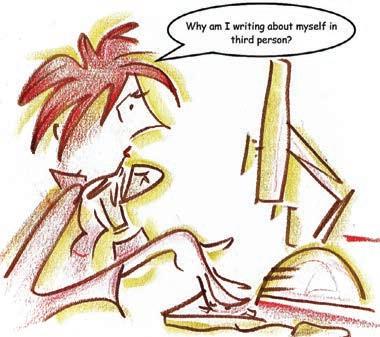
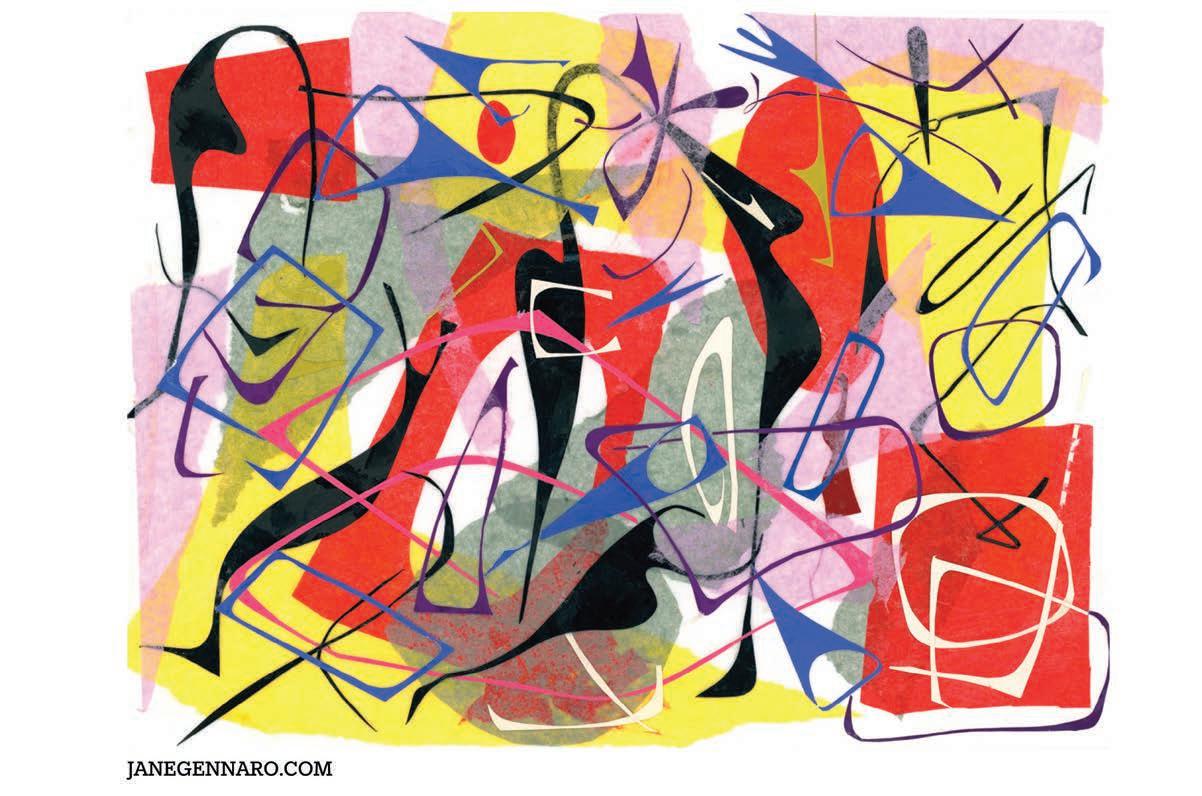
Jane Gennaro is an artist, writer, and performer based in New York City. Jane’s work has been widely exhibited, performed, and broadcast. She has been featured in the New York Times, New York Magazine, and NPR among others. Her illustrated column, "Mining My Life” appears monthly in The Artful Mind magazine. Jane’s art studio is in Claverack, NY.
Jane Gennaro — www.janegennaro.com shop.janegennaro.com https://performingartslegacy.org/

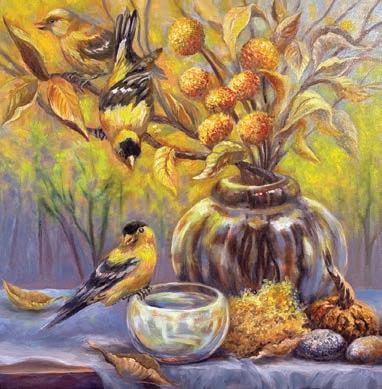
Lori Bradley is a contemporary painter working in oil and acrylic on canvas and wood panels. Describing her style as alternative realism, she creates imagery that merges traditional realist still life and landscape influences with contemporary themes, colors, and patterns. Birds are a common theme in her still life paintings. Observing how they act in ways similar humans she started incorporating them into her paintings to tell subtle stories about human interactions and relationships.
Lori Bradley— loribradley@comcast.net http://www.loribradleyart.com
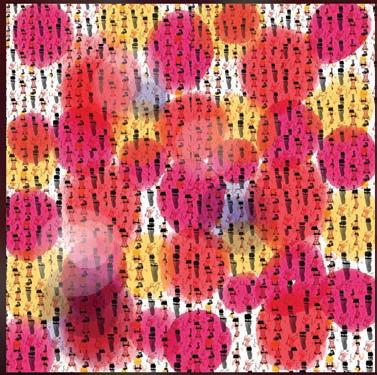
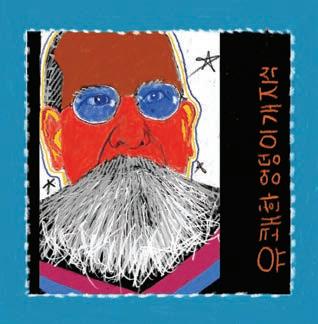
Art is therapy for me. A good way of processing my own personal baggage. I illustrate, in detail, whatever particular ism that I am dealing with. It helps me to see it and give it a face, so to speak. But the nature of it is too personal to share openly, so I obscure it until it is no longer discernible. I know it's there, but only I know. It's very cathartic!
The top image is imagery behind much of my abstract stuff. Presented in a more candid manner. But still somewhat obfuscated by the large number of tiny figures and, for me, hard to focus on individually. With the competing color spots on top, seem to distract the viewer from making out, completely, the nature of the tiny images. Richard Nelson — nojrevned@hotmail.com
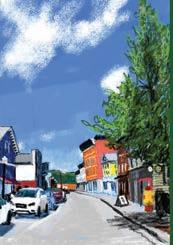
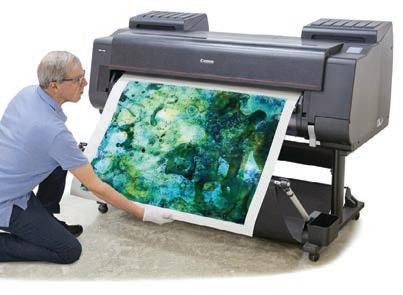
Since opening in 2005, Berkshire Digital has done fine art printing and digital scanning for artists and photographers. Archival Inkjet/Giclée prints can be made in many different sizes from 5”x7” to 42”x 80” on a variety of archival paper choices. Berkshire Digital was featured in Photo District News (PDN) magazine in an article about fine art printing. See the entire article on the BerkshireDigital.com website.
Berkshire Digital does accurate digital scans of paintings, illustrations and old photographs that can be used for archival prints, books, magazines, brochures, cards and websites.
Berkshire Digital also designs and produces books printed by Blurb.com
“Fred Collins couldn’t have been more professional or more enjoyable to work with. He did a beautiful job in photographing paintings carefully, efficiently, and so accurately. It’s such a great feeling to know I have these beautiful, useful files on hand anytime I need them. I wish I’d called Fred years ago.” ---- Ann Getsinger
We offer restoration and repair of damaged or faded photographs. A complete overview of services offered, along with pricing, can be seen on the web at BerkshireDigital.com
The owner, Fred Collins, has been a commercial and fine art photographer for over 30 years having had studios in Boston, Stamford and the Berkshires. He offers over 25 years of experience with Photoshop, enabling retouching, restoration and enhancement to prints and digital files. The studio is located in Mt Washington but drop-off and pick-up is available through Frames On Wheels, 84 Railroad Street in Great Barrington, MA (413)-528-0997 and Gilded Moon Framing, 17 John Street in Millerton, NY (518)-789-3428.
Berkshire Digital413-644-9663 www.BerkshireDigital.com
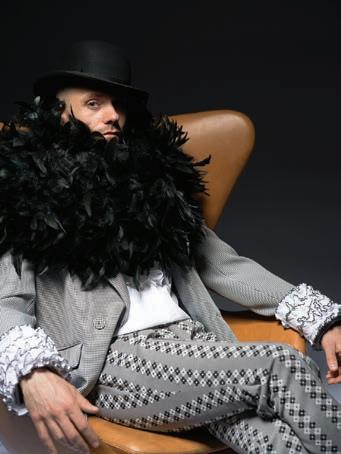
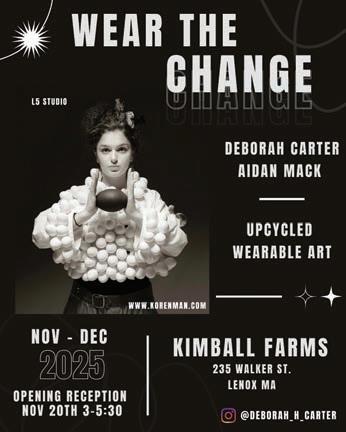
Deborah H. Carter is a multi-media artist from Lenox, MA, who creates upcycled, sustainable wearable art. Her couture pieces are constructed from post-consumer waste such as food packaging, wine corks, cardboard, books, wire, plastic, and other discarded items and thrifted wares. She manipulates her materials' color, shape, and texture to compel us to question our assumptions of beauty and worth and ultimately reconsider our habits and attitudes about waste and consumerism.
Since she was eight, Deborah has been a sewing enthusiast, and she learned her craft by creating clothing with her mother and grandmothers. Her passion took hold as she began to design and sew apparel and accessories. After graduating with a degree in fashion design from Parsons School of Design in New York City, she worked as a women's sportswear designer on Seventh Avenue.
Deborah's art has been exhibited in galleries and art spaces around the US. She was one of 30 designers selected to showcase her work at the FS2020 Fashion Show annually at the University of Saint Andrews, Scotland. She has been featured in the Spring 2023 What Women Create magazine.
Deborah H. Carter has been featured in The Artful Mind, Berkshire magazine, and What Women Create magazine and was a finalist in the World of WearableArt competition in Wellington, New Zealand, 2023.
Deborah H Carter — 413-441-3220, Clock Tower Artists
75 S. Church St., Studio 315, 3rd floor Pittsfield, Massachusetts
Instagram: @deborah_h_carter
Debhcarter@yahoo.com
Jaye Alison Ruby Aver Thea Knapp-Baker Lori Bradley Richard Britell Margaret Buchte
Jeffrey Bynack Katherine Borkowski-Byrne Shoshana Candee Leslee Carsewell Janet Cooper
Julian Craker Yana van Dyke Candace Eaton Jane Gennaro Susan Gilbert Julia Grey
Katherine Haig Ghetta Hirsch Sarah Horne Ellen Kaiden Stephan Marc Klein
Beckie Kravetz Bruce Laird Lear Levin Pattie Lipman Leo Mazzeo Jesse Tobin McCauley
Kent Mikelson Bobby Miller Mark Millstein Dawn Nelson Richard Nelson Ellen Pollen Janet Pumphrey Ilene Richard Alexandra Rozenman Richard Talbert Scott Taylor Jay Tobin Mary Ann Yarmosky
Thank you Artists for participating in The Artful Mind Art Gallery at 11 EAGLE STREET IN NORTH ADAMS. MA.

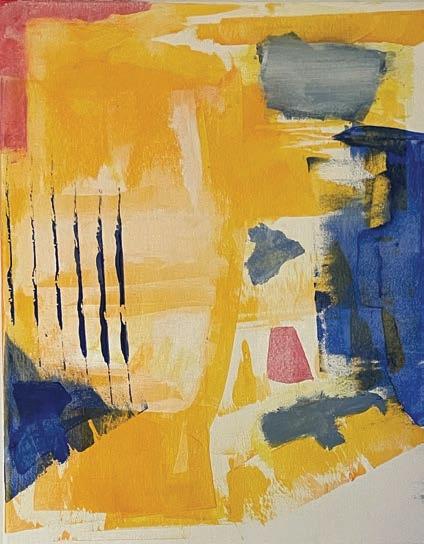
Breakthroughs No. 2 Acrylic on canvas 16”x20”
rdaver2@gmail.com | Instagram: rdaver2. Housatonic Studio open by appointment 413-854-70067
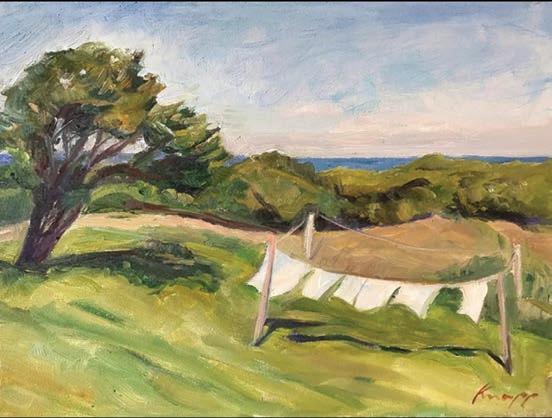
Springtime Clothes Line, Block Island, Oil on canvas, 14” x 16” Sold
Painting classes on Monday and Wednesday Mornings 10-1pm at the studio in Housatonic and Thursday mornings 10am - 1pm out in the field. Also available for private critiques. Open to all. Please come paint with us!
Gallery hours: Open by chance and by appointment anytime 413. 274. 6607 (gallery) 413. 429. 7141 (cell) 413. 528. 9546 (home) www.kateknappartist.com Front Street, Housatonic, MA
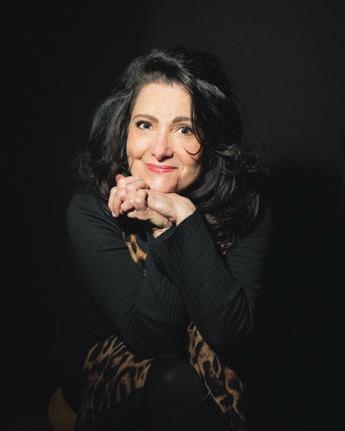
International Recording Artist, Jazz Vocalist, Performer, Songwriter
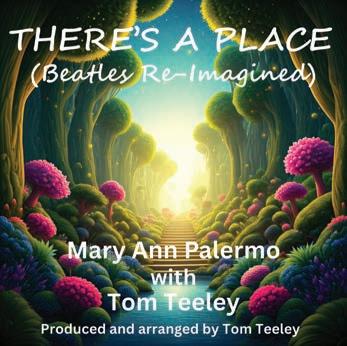
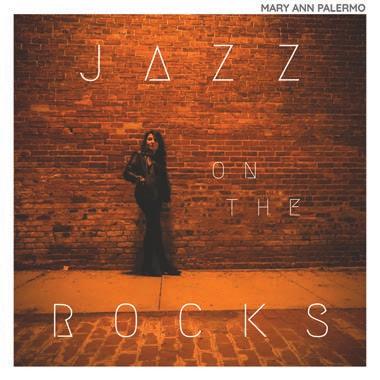
Check out the newest album here at Hear Now: https://maryannpalermo.hearnow.com/theres-a-place-beatles-re-imagined
To hear about upcoming performances and new releases sign up at: https://maryannpalermo.com Email: howmuchbettercanitget@gmail.com Instagram: https://www.instagram.com/maryannpalermo_averosarecords Averosa Records label website: https://averosarecords.com/ Spotify: https://open.spotify.com/artist/1P5DDkoBymMyNn52dmMeoL/discography/all



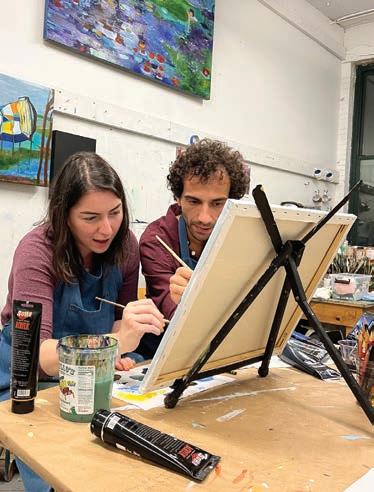

artschool99somerville.com 86 joy street studio 37 somerville
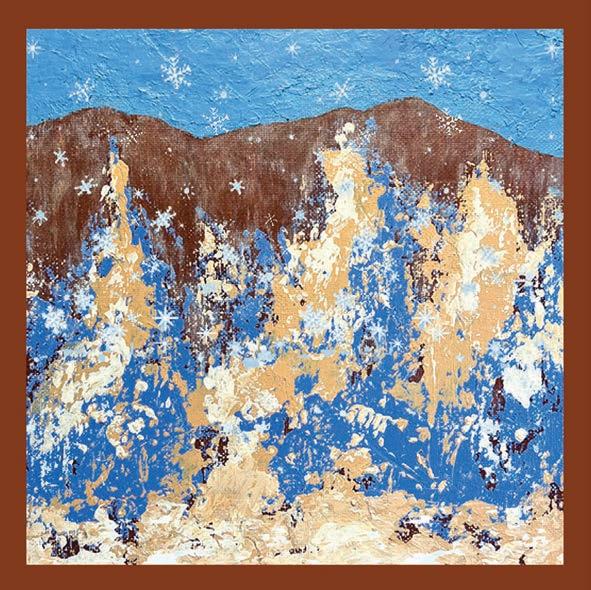
I enjoy painting seasonal scenes, often drawing inspiration from both real-life objects and my imagination. Growing up in the Berkshires, the Christmas season was especially memorable, particularly when it snowed. This painting is inspired by those cherished memories – imagining fresh snow accumulating on the pine trees in our yard, sometimes lingering for hours until disturbed by wildlife or the wind. I’ve placed this imagined scene in front of the Berkshire Hills, capturing the essence of those winter days.’

“We needed to begin to see ourselves as enhanced or diminished according to how we act towards the enhancement or diminishment of the world...” - John Berger
Interview by Harryet Candee Photographs courtesy of the Artist
Danni Rodriguez is a multi-media contemporary artist, known for work that explores the built environment and humanity’s relationship to it. He has exhibited his work for over four years in over ten galleries across four states and has given an artist talk in Pittsfield in 2025. Danni is a graduate from the Ringling College of Art and Design where his interest in landscapes first developed. This interest has led to many different themes explored in several series throughout his body of work. Each series has its own thesis, with references to art and daily life that guide the viewer and recontextualize the world around them, unfolding their familiar environment.
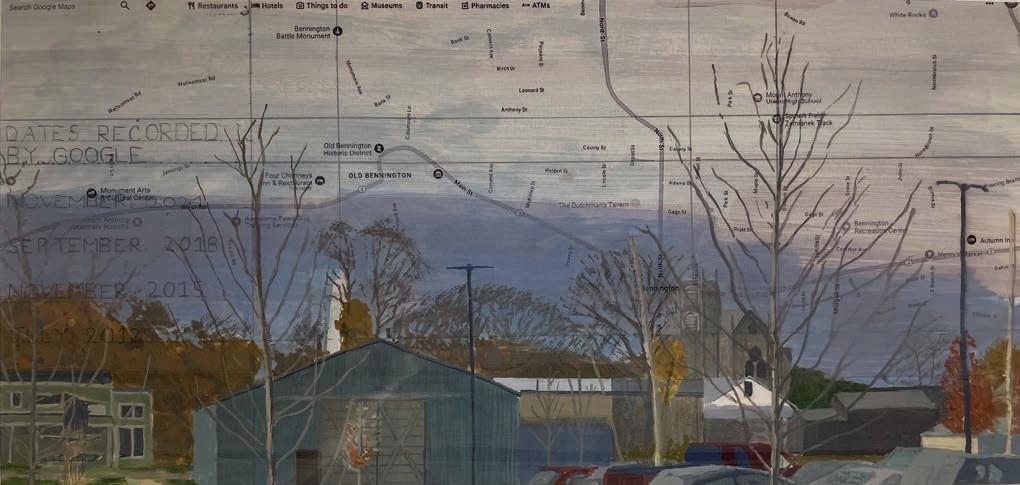
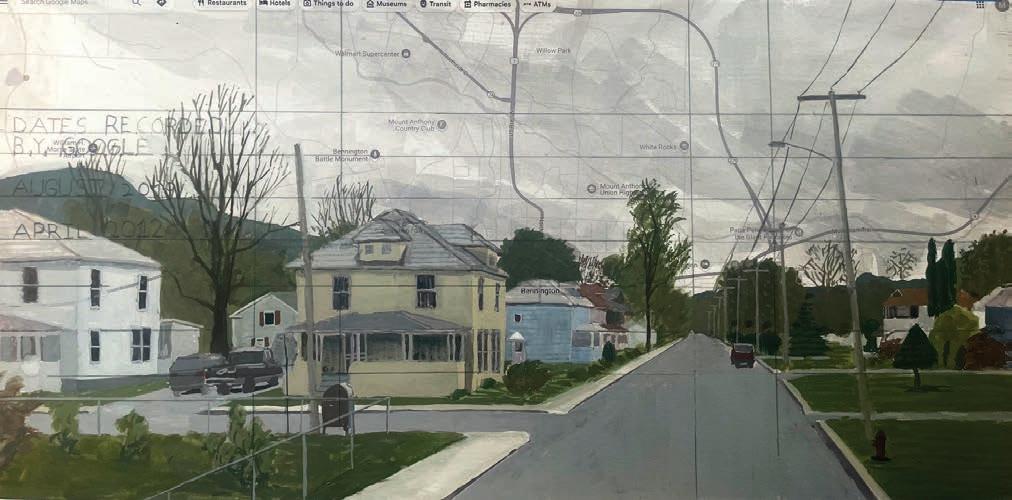
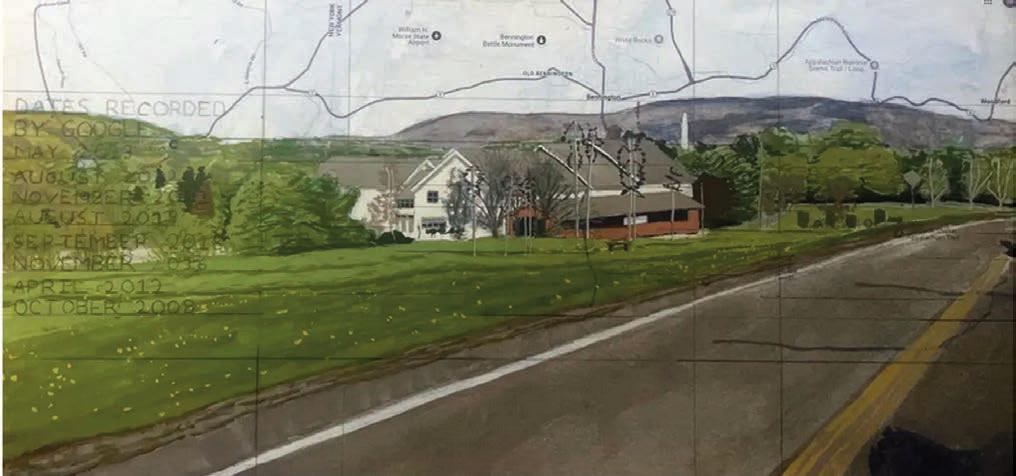
The series “A Greater Awareness of Awareness” explores themes of surveillance and its growing presence in our daily lives. Danni, what initially sparked your interest in this subject?
Danni Rodriguez: Surveillance became an increasing focus as I was growing up. Edward Snowden’s expose initially shocked me, but the government’s surveillance became another banal “fact of life” to me as I started high school. The rise of the political right and America’s rightward shift during my later high school years changed this, as they used prevalent digital tools to surveil masses of people. Many people were using these tools, but several visible actors can help explain this phenomenon. Chaya Raichik is the creator of Libs of TikTok, who uses the social media site TikTok to advance MAGA ideas by trying to shame and harass queer people by reposting and manipulating the content queer TikTok users publicly post. Calvin Garrah is a YouTuber who has repeatedly made content used to shame trans people he didn’t like, focusing on shaming them for being non-binary or not conforming to traditional gender roles; his fans
have often harassed the many subjects of his videos, even though Garrah claims not to support them. Charlie Kirk was a leading member of Turning Point USA, a conservative, MAGA-supporting group that, with his help, created a professor watchlist of people their supporters should harass. While these are the most visible people actors, many average people group together to use popular software devices to surveil their own networks. I began developing the series in October of 2024, and have since seen reports of people surveilling their coworkers or neighbors and reporting them to ICE to strengthen their job security or for petty grudges.
What steps did you take to move from the initial concept to completion?
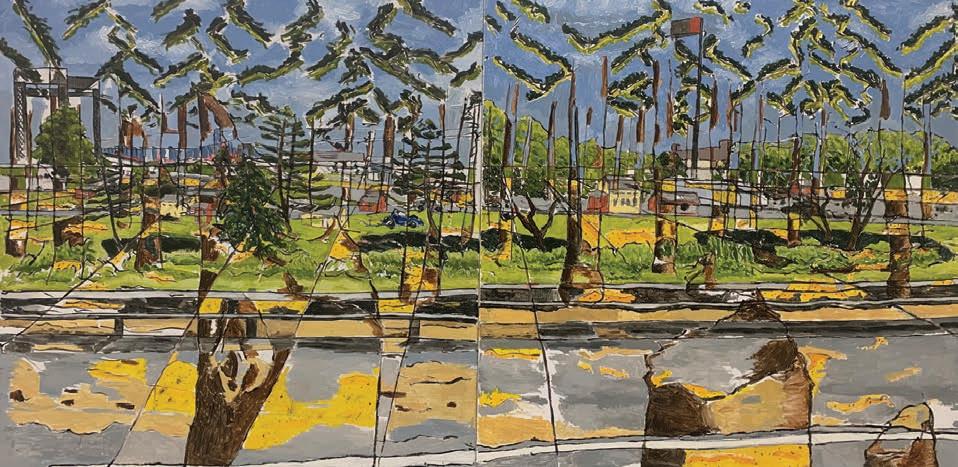
At first, I thought about how the Bennington Monument looked similar to the Washington Monument and how it could be seen from almost
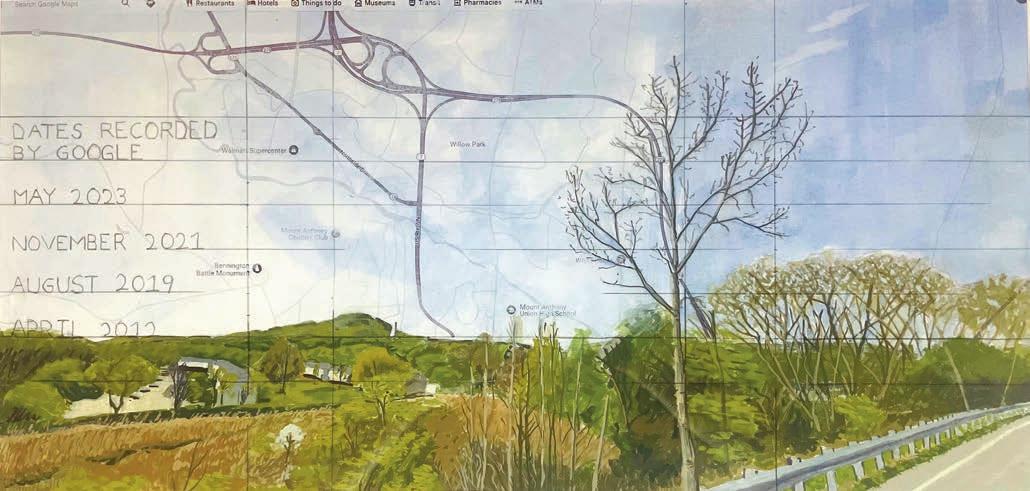
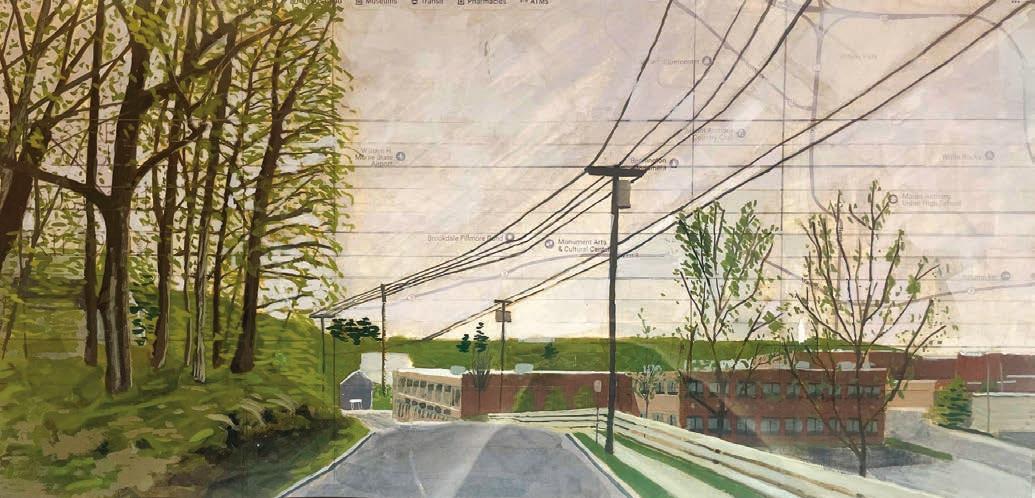
the entire area, as if it were watching everyone. That led to thoughts about the government and various politicians’ actions, and about how common it is for people to use everyday tools to surveil others toward conservative goals. Trying to find good compositions for the works led me to think about using the guide lines as the base for a spreadsheet of information. Over the course of creating the artwork, I found ways to reliably and quickly produce it.
Do you believe that exhibiting work in a gallery exposes you to potential vulnerability due to public reactions and comments that may require you to justify your thought process? How has their feedback impacted your perspective?
Ringling College of Art and Design has prepared me to communicate my ideas clearly when put on the spot, for which I am eternally grateful. Talking
to people who love art and want to display it has given me great insight into who is into my work, what people actually want to buy, how my work is seen, and where I connect with and disconnect from each of these ideas.
What vision do you have for your latest work? What aspirations are driving your creative process?
My latest work will be a series of gouache paintings of the Meadowlands Exhibition Center area, featuring figures I have placed on printed photos of the area. It will be a commentary on the ongoing recession and the developments that led to the dearth of entry-level jobs.
Did you enjoy your thesis project? The work I have seen contained a lot of energy. What in this body of work set the course for so much energy?
I did! It was a lot more work than I imagined, and very experimental. I made them as large as I could since I knew I wouldn’t have the room or time to do so out of college. The energy in these works is built on the history of the Jersey Turnpike and the surrounding area.
Do you still feel the same creative, high-energy flow now that you are on your own?
I’ve come to realize how important a creative environment is to produce artwork. It is essential to have a space where you can produce art uninterrupted and be motivated to do so. I live with and help my parents in a very isolated area, which doesn’t make it easy for me to connect with local artists or galleries that have clients who would enjoy the work I make. I’ve had to shift the way my artwork looks because many local art buyers want it to look a certain way. Continued on next page...

I have observed a consistent style in your work that effectively integrates contemporary, traditional, and abstract elements. Could you share the principles you have committed to that shape your overall artistic approach?
The core of my artistic principles has been based on postmodern theories of understanding art. Reading the book, “Learning from Las Vegas,” when I was young, gave me the tools to understand what are signs, how signs are ordered to create meaning, and that a subject’s form is their own sign. Each work is a creation of various signs, ranging from what their medium depicts to their very form, each of which is given its own meaning through their interaction with one another, which all change depending on the viewer, who has their own context. Looking more into Postmodern Theory gave me the idea to see what a medium or sign can be used for, what it is, and keeping what it’s supposed to be used for secondary. To order each sign, I start with very basic
questions: “What is happening?”, “Who is doing what to whom?”, “Where have I seen this before?”, “How can I use this to convey that?”, “How does everything come together?”.
What skills do you still find need improving in terms of your current direction?
Being able to just get things done and move forward. Just going out, talking to people, making connections, and having energy to maintain them, and move in ways that people understand.
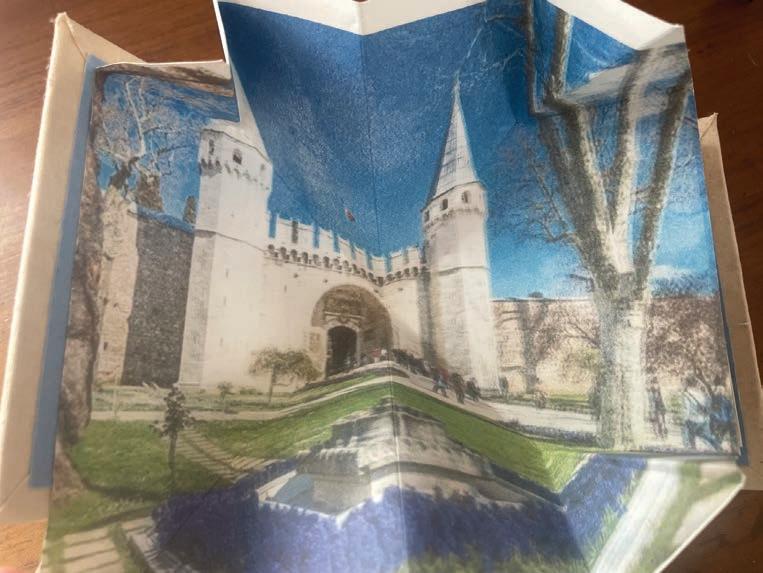
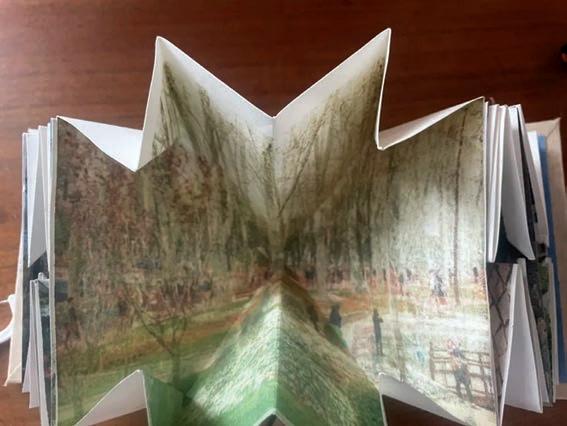
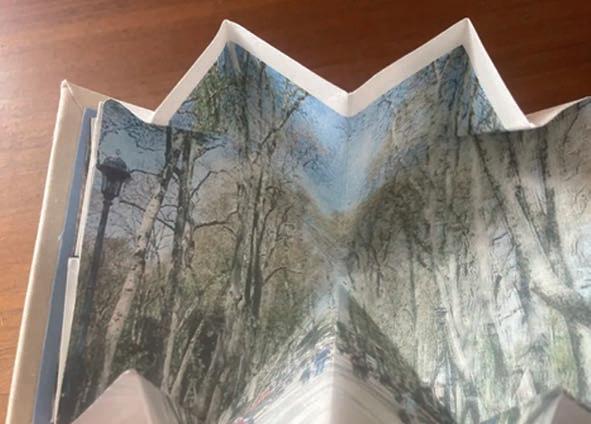
I see you have worked in a sculptural venue with bookmaking. Can you tell us about this portion of your creative pursuits? Your books are beautiful and very interesting.
I had a book-making class in college that taught us various techniques of book-making and how it has been used; these are some of the works I made at the time. One was a walk through the Topkapi
Palace in Turkey that used multiple Turkish map folds. At the same time, another is a baby-blue accordion-fold book that you “flip” to extend its pages, printed to resemble monstrous entrails. I wanted to learn more techniques beyond painting and drawing because I was unsure what the future would hold. With the oncoming recession and the instability of white collar work, I may be making craft notebooks for people or even welding. Who knows?
At what stage are you at in terms of showing your art? Is there a specific timeframe necessary to strike a balance between working on your projects and preparing to share them with others?
My art is currently at the Southern Vermont Arts Center. I am talking with a gallerist to show my series there, which will include five more works. Continued on next page...
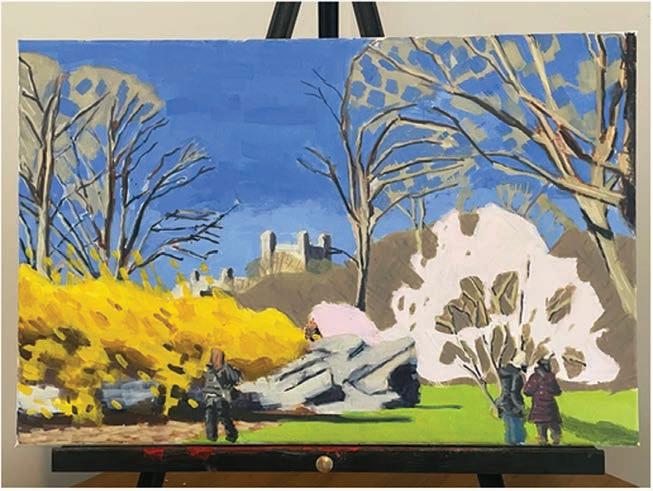
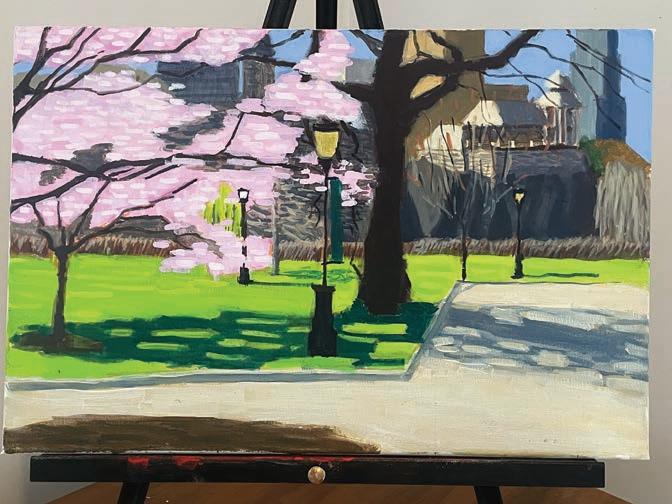
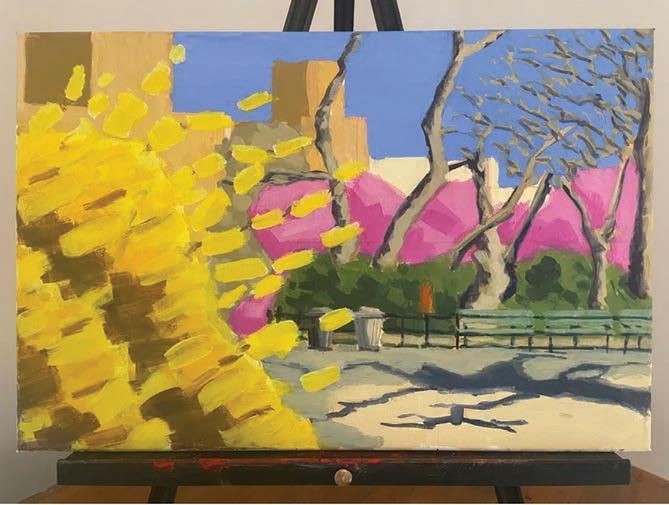
Hopefully my work will continue to be shown. When creating and presenting future series, I make a few initial works to apply to various art shows. If they get accepted, I will talk about the series with other artists and gallerists attending to make connections. If they don’t, I will still look for other galleries that would show them. If one of them likes the series, we set up a time to show it, and we come up with a number for me to produce.
In what ways do your personal values and selfperception influence the creative work you produce?
My creative work tries to get people to think more about the world around them and how it’s been constructed. I personally believe that the world is always constantly changing: humanity, our very ground, what we think is possible, etc. I try to approach the places I depict with this in mind, so I can convey a truth I feel.
In what ways do you believe your personal challenges have shaped your artistic vision and creative self-expression?
More broadly, realizing that I am thinking too much of viewers. Most people want what they already have around them, but they enjoy it being remixed and reordered. I want to get people to think more about the world with my art, and I can still pursue that even with what I know now, but there are ways that I have to do so if I want my work in someone’s home or office. I also don’t focus on parts of myself, since I feel that other artists have done better than I have with the relationship they have with their own identities, so I’ve pursued different topics to rethink and reorder.
At this point in your life there are plenty of opportunities ahead for you to look into. What are some things you want to experience or achieve that you haven’t explored so far?
I would like to explore digital mediums more broadly. I’d also like to make a book on machine learning, art, what can be done, and what it can mean.
dannirodriguezfineartinfo@gmail.com
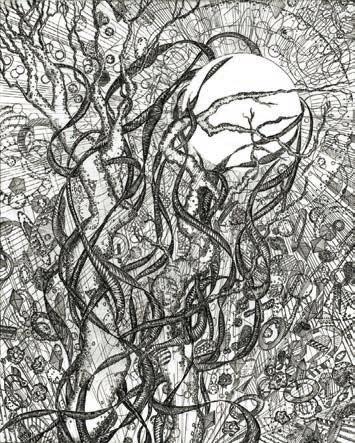
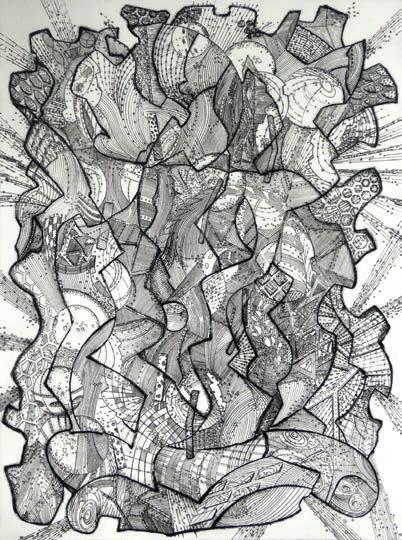
I make drypoint intaglio prints because I love the quality and permanence of lines obtained. The variations in each printed line reveal the pressure, angle, and intention of my hand as it yields to the resistance of the plate’s surface.
My work explores both real and imagined objects and spaces. The images emerge through a constructive process that begins with a simple drawn framework and evolves by building and distorting perspective, and merging technological elements with natural forms. I am influenced by Brutalist architecture with its precise lines, solids and textures. I find that the drypoint technique evokes similar qualities to poured concrete: precise volumes rich in surface imperfections that challenge and mimic nature.
Mark Millstein— mmillstein@umassd.edu www.markmillstein.com
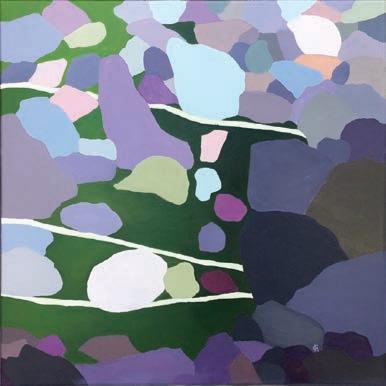
December is a time for holidays and family but also the end of a year. This is when you remember the months and events just passed and the “Rocky Path Below”! Every year is a challenge but we forget the obstacles we encountered as friends and family gather together. Time of celebration and joy! We forget the disappointments, the mistakes, the “rocks” on the road. We have climbed above it all. We are watching from the height of December what each month brought and we get ready for a new start.
This painting highlights the clear paths. Even though the rocks were in the way, the paths gave me hope and a sense of direction. There is always a way out. Maybe not what we expect or wish for, but there is a continuous movement forward. The irreversible passage of time comes with markers like my rocks. We just have to stay on the path from one December to the next. Growth takes many forms and it is different for each one of us.
I wish you a wonderful December 2025. It will be gone soon…. Happy Holidays!
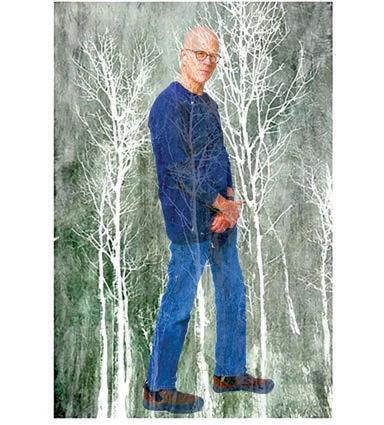
I am a visual artist using photography as the platform to begin a journey of exploration. My journey began in earnest almost 14 years ago when I retired due to health issues and began devoting myself to the informal study of art, artists and particularly photography. Before retiring I had begun studying photography as a hobby. After my retirement, the effort took on a greater intensity.
“In our time there are many artists who do something because it is new; they see their value and their justification in this newness. They are deceiving themselves; novelty is seldom the essential. This has to do with one thing only; making a subject better from its intrinsic nature.”
—Henri de Toulouse Lautrec
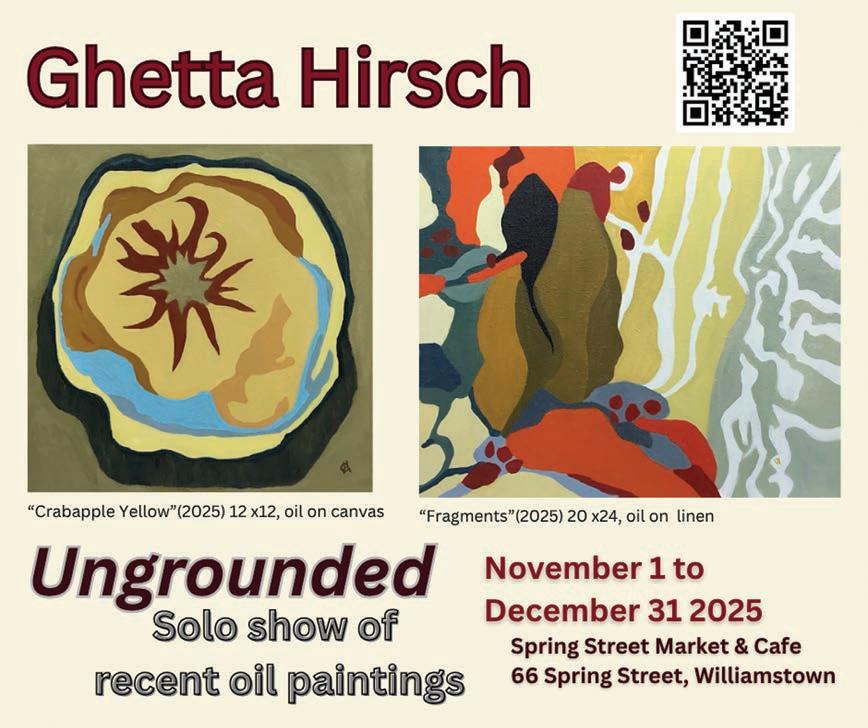
Please check my website for information on my current work. I will also let you know about the reception for the “UNGROUNDED” solo exhibit at the Spring Street Market Cafe in Williamstown, MA. This is the perfect place to have wonderful lunches and I am looking forward to their sweet and savory platters. The exhibit is there until the end of December!
Ghetta Hirsch—
I will also continue to welcome visitors to my home studio. Just call 413-597-1716 for an appointment. Perfect place to browse, shop for gifts or discover an artist’s creative environment while learning more about each painting.
Ghetta-hirsch.squarespace.com

My world had changed for reasons outside of my control and I looked for something different in my work. I wanted to do more than document what was around me. I wanted to create something that the viewers might join with me and experience. Due to my health issues, I found myself confined with my activities generally restricted. For the first time I began looking inward, to the world that I experienced, though not always through physical interaction. It is a world where I spend more time trying to understand what I previously took for granted and did not think about enough. The ideas ranged from pleasure and beauty to pain and loss; from isolation to abandonment; to walking past what is uncomfortable to see. During this period of isolation, I began thinking about what is isolation, how it can transition to abandonment and then into being forgotten. The simplest display of this idea is abandoned buildings. They were once beautiful, then allowed to run down and abandoned, soon to be forgotten. After a while they disappear. Either mankind knocks down these forgotten once beautiful structures, or remediates them, or Nature reclaims the space. Doesn’t mankind do the same with its own?
My work employs references to other photographers, painters, as well as sculptors. The brushwork of Chinese and Japanese artists is appealing for both its simplicity and beauty. Abstract art has its own ways of sharing ideas which are jarring and beautiful at the same time. Black and white and color works each add their own dynamic. My work is influenced by these art forms, often using many of them in a single composited image. Bruce Panock— Panockphotography.com bruce@panockphotography.com Instagram @brucepanock
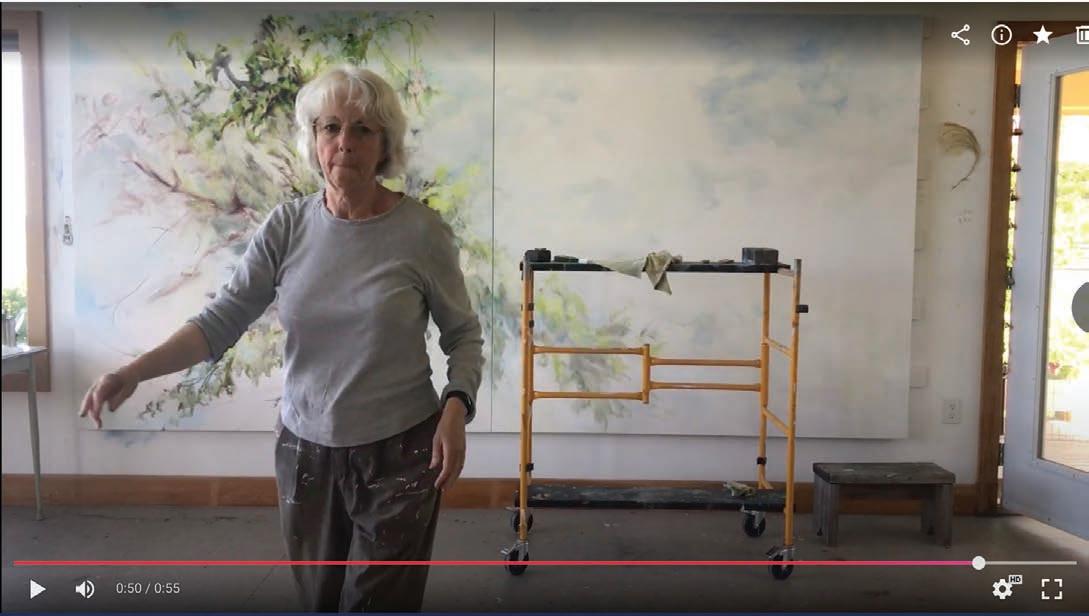
https://www.instagram.com/jenniferpazienza/ | https://www.jenniferpazienza.com/
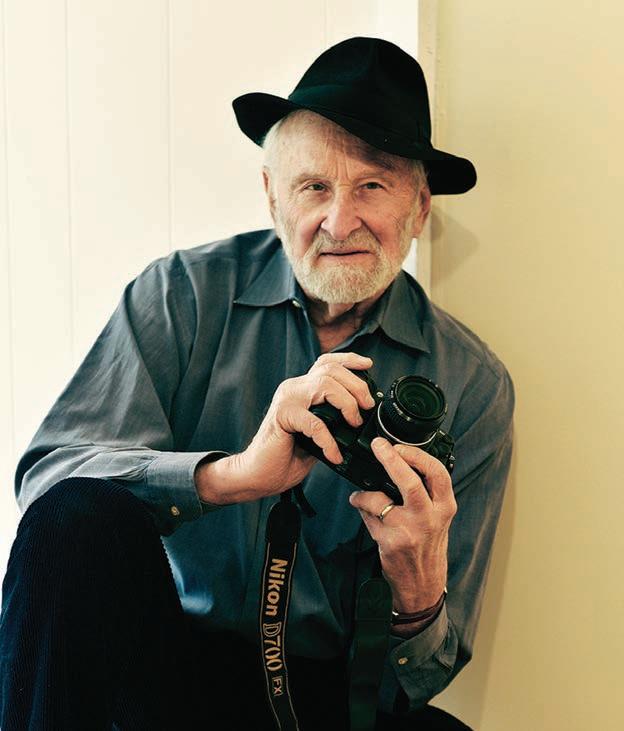
I never dreamed about success; I worked at it from when I was ten and had my paper route.”—LL
INTERVIEW BY HARRYET CANDEE | PHOTOGRAPHS COURTESY OF THE ARTIST
Lear Levin is an accomplished fine art photographer who has mastered archival printing techniques, including Platinum/Palladium and Three-Color Gum, as well as giclée prints on fine watercolor paper.
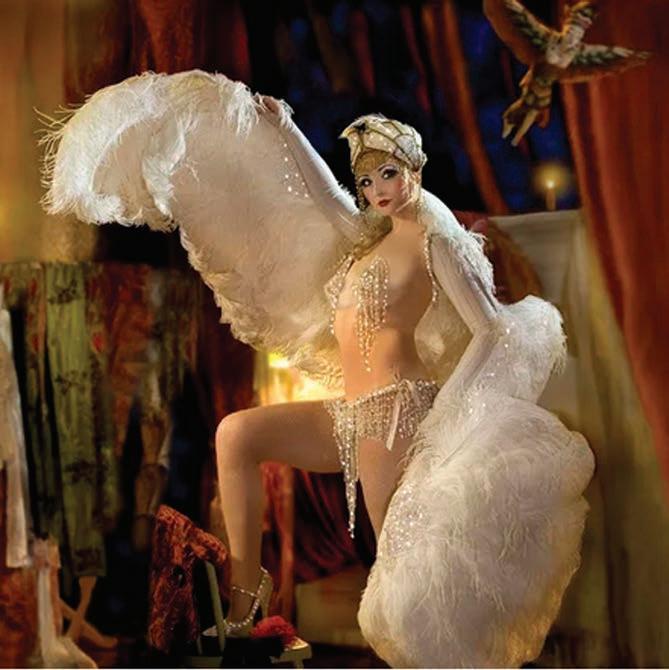
This past summer, Lear's fine art photography was on display at The Artful Mind Gallery in North Adams. During the time I was in the gallery, I was able to gain a deeper understanding of how the complexities of his printmaking processes related to his artistic intent and focus. His work featured burlesque and cabaret life, ballerinas, and figurative portraiture.
Before focusing solely on fine art photography, Lear worked as a film director and director of photography, creating documentaries, short films, TV specials, and commercials. His work has earned several Emmys and is represented in significant collections, including the Museum of Modern Art.
I found that with Lear’s work, through his archival processes, captures the moment, while at the same time preserves the eternalness found in the human spirit.
As a cinematographer, you created a film titled "Song of Freedom" in Bangladesh in 1995. In what ways did the project disappoint you and also lift your spirits? What was the film about? Is it available to view online?
Lear Levin: I donated a public service commercial to raise funds for tornado and flood victims in East Pakistan. The following year, there was a general election encompassing both East and West Pakistan, which, at the time, was considered one nation separated geographically by India. East Pakistan won most of the seats in the government. Consequently, the West went crazy and, armed with American and Russian aircraft and munitions, invaded the East and killed over a million innocent people. George Harrison's "Concert for Bangladesh" was staged to raise money to feed fifteen million refugees fleeing to India for their lives. The images of suffering in Bangladesh's new nation were overwhelming. I felt that, having known its leaders from the prior year and wishing to help their cause, I should go there and make a short film to raise money and people's awareness of what was going on. My wife encouraged me to keep it short and hurry home. I wound up shooting tons of footage, patrolling the jungles with the com-
batants, and listening to horror stories about what West Pakistan had done. My crew and I traveled with a patriotic group of musicians and singers in an open truck, moving from one refugee camp to another as the performers tried to bring comfort and hope to the suffering masses. My big mistake happened when I returned home after two months and had an editor friend begin assembling the footage. The work progressed far too slowly.
Between my trying to catch up on my regular work schedule and watching the new government in Bangladesh fall prey to its own greedy, power-hungry army, the final feature-length documentary I called "Joi Bangla" no longer had relevance. Eight years later, a young filmmaking couple asked for all the footage that I had shot. They promised me that what they wished to craft as their own documentary, commemorating the struggle in Bangladesh and their desire for a change in government, would be shared with me. Five years later, their film, "Muktir Gaan" (Song of Freedom), was viewed by nearly a hundred million people in Bangladesh and around the world. The film was credited with bringing down Army rule and helping to install a new, more benign government. I believe that the work done by Tareque and

Catherine Masud can be viewed online. Every Bengalie cab driver in New York City seems to have seen the film, and some have offered me a free ride after I reveal who I am.
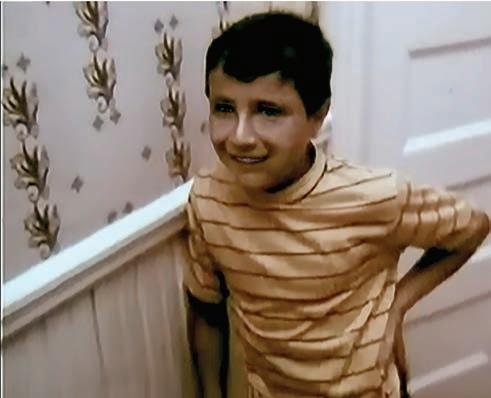
Lear, what were some challenges and memorable moments while producing the “Anthony!” Prince Spaghetti commercial in 1969? It is classic, in so many ways—we now all eat spaghetti with our extended families on Wednesdays. There was no real concept for the Prince Spaghetti Commercial when the Ad agency sent it to the company that I worked for; only that a street named "Prince" in North Boston must be shown, and an announcer who would proclaim that Wednesday was Prince Spaghetti Day. I took the assignment because no one else wanted it, given the almost nonexistent budget. I had gone to high school near Boston and wanted to go back and visit some old haunts, so the job appealed to me. Coincidentally, before I left New York City, my wife and I had gone to an Italian street festival in Lower Manhattan. After stuffing myself with my favorite kind of food, I witnessed a sweet, middle-aged Italian Mom lean out her window and call for her son, Anthony. It was such a classic ges-
ture and so visual that I filed it away. I picked my film crew of four, who, except for the production assistant, had grown up in the Boston area and had agreed to work under uncomfortable travel and financial circumstances so that they could return to "Bean Town." The one member not from Boston was a very hardworking, African American young guy who was happy to be part of anything to do with a camera.
When the rest of the crew learned that we were shooting in "The North End" of town, which is primarily Italian, they insisted that we have a Priest accompany us wherever we went because people of color were not welcome there. (The Father, graciously, never left our side) The little boy I cast as Anthony, and who I decided would be running home to have a spaghetti dinner, once his mother called from the window for him, had followed me around while I searched for a cast and locations. He begged to hold my viewfinder or help us in any way as we scouted the neighborhood. His infectious smile convinced me that he had to be our principal character. His name happened to be Anthony.
We only had enough money to make nine shots before we ran out of film. The one shot I never got was
of the street sign that read "Prince." The client never forgave me, even though the commercial was one of the longest-running ads in TV history.
Sadly, Anthony and the wonderful woman who played his mother only recently passed away.
Which commercials have had the greatest impact on your career?
Prince is the ad that most people remember from the seventies. However, my commercials for the Volunteer Army, featuring the slogan "Be all you can be," were always exciting for me because they aligned with a cause I believed in, rather than the government's draft policy. The dramatic nature of these assignments helped draw attention to my staging of action-packed scenes. They also led to interviews with several well-known feature directors who wanted me to work as their second-unit director. Unfortunately, I was never able to accept these opportunities, as I needed to focus on my own company and might have been away for a year or more.
I also enjoyed doing public service work because it provided me with the freedom that comes from not being paid, and the causes I supported were ones I truly believed in. Continued on next page...
Additionally, I liked working on political advertising for candidates I trusted and believed would improve our way of life.
What do you think defines a successful commercial from your standpoint?
A successful commercial must be memorable without being offensive. Sometimes, constant repetition works by imprinting itself on your brain, but, like so many annoying things one hears and sees on TV, you avoid dwelling on it or buying it.
What was it like starting out on your own?
I opened my own company in 1969 with the assistance of our family lawyer, who had helped another filmmaker like myself. My wife was our executive officer, and we surrounded ourselves with a handful of knowledgeable associates who were eager to help create good commercials and documentaries. We were also assisted by a generous film editor friend who lent us working space until we were able to find a place of our own. Although my work had won many top awards for commercials and documentaries, finding new jobs as a solo act was not easy,
and I must have taken half of New York's Ad agency TV commercial producers to lunch or dinner in my first year to promote Lear Levin Production Inc.
Please tell us a bit about your background, Lear. I was a Navy Brat born in Quantico, Virginia, on a Marine Base, on the Marines' birthday. My father was a dental officer in the Navy for almost his entire working life, and when he was not at sea during a deployment or a war, we moved around the country nearly every two years.
During the Korean conflict, we moved to the Boston area. While my father was at sea, I went to high school in Natick, Massachusetts. I always wanted to make films, and after a year at Penn State, I got a scholarship to the University of Southern California, where I studied Cinema and Drama. When I graduated, I joined the Naval Reserve.
Following that, I began working at an advertising agency in Los Angeles as a TV commercial producer with permission to direct my own work.
What music and art venues captivated your interest during this time?
I worked evenings, parking cars on the Sunset Strip at the Troubadour when I was in college, and for a while at the Ad agency.
I got to watch and listen to many of the great folk, rock, and Jazz singers of the time, like Nina Simone, but my favorite person was comedian Lenny Bruce. His mother used to teach strippers at The Pink Pussy Cat on The Strip, and she would come by, give me fifty cents, and have me take sandwiches up to Lenny's dressing room. I was in heaven.
When did you first start using a camera with the intention of taking serious photographs?
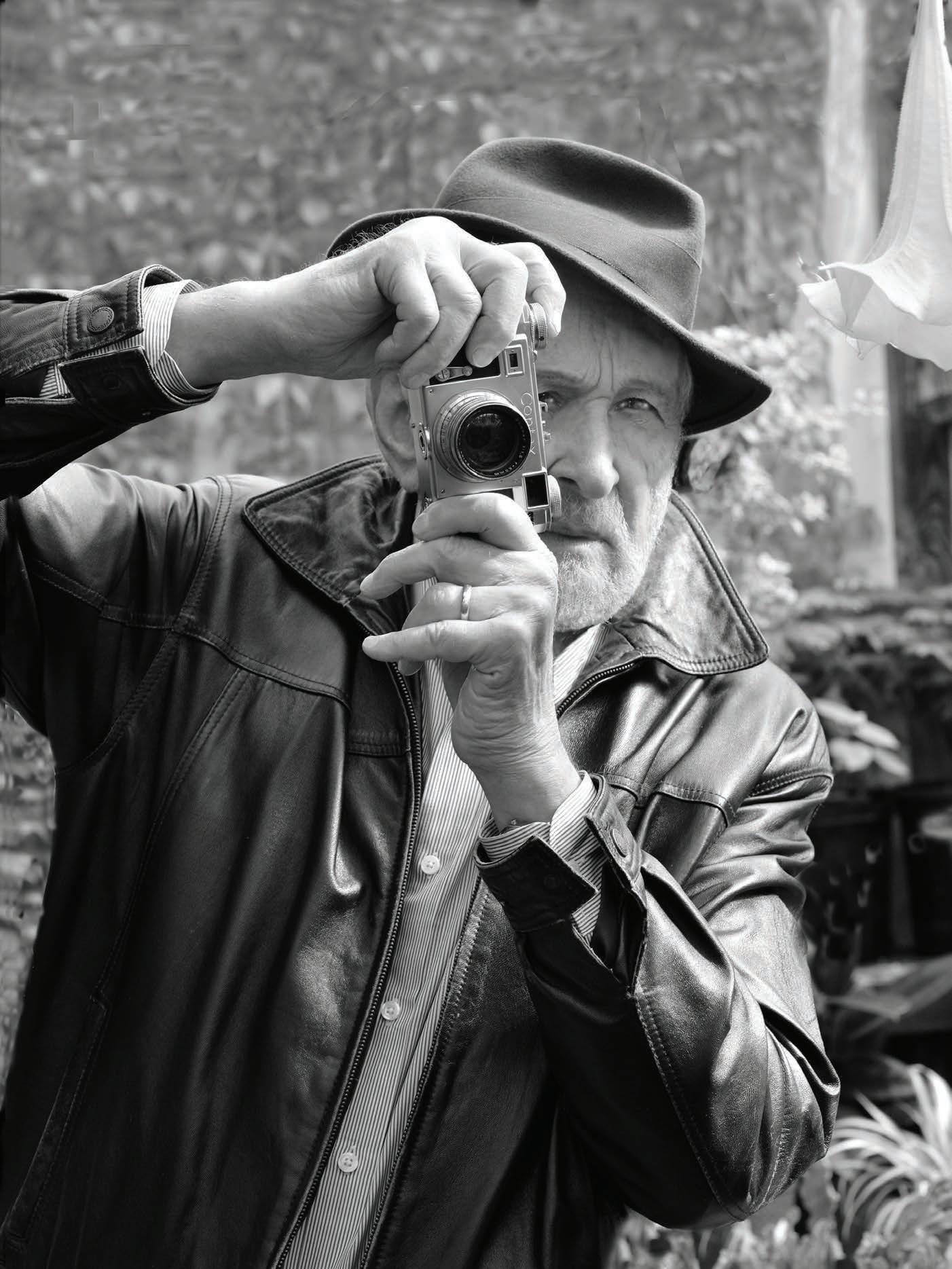
My father loved to watch boxing. When he was not on duty or on a ship, he would take me to the Boston Garden to watch fights. I was fourteen at the time, and I always brought my camera. I would take my camera to high school and photograph my friends. The great war photographer Robert Capa was a hero of mine. I used a 35 mm camera like his to take most of my photos. I got into racing motorcycles when I was sixteen, and when I wasn't racing, I would shoot action. It is the camera that I am holding in the magazine's cover shot. I had a tiny darkroom in our house
under the basement stairs where I would process and print my black-and-white photos.
Do you take your camera where ever you go and never leave home without it?
If I felt I was going to attend an event, whether it was a high school football game or a dance, or if I was traveling to a place with interesting people or scenery, I would always take my camera. Now, I like to photograph our travels or our good friends with my Nikon cameras. Still, the advent of cell phones has added a new dimension to snapping photos, and I generally have a phone attached to my hip for capturing unplanned images.
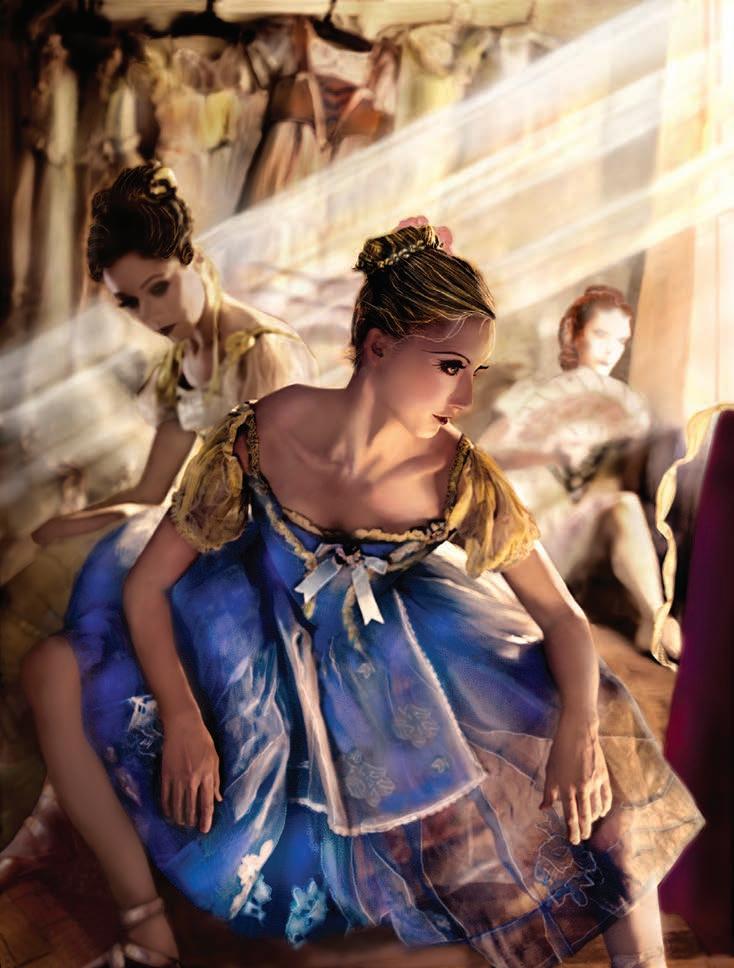
The Ballerina series is beautiful and intense in color and composition. I feel as if I am in the dressing room, getting a bird's-eye view, catching the rehearsal, and other private moments. What is the process in Platinum/Palladium printmaking that makes the color pop?
I was fortunate to enlist several members of The New York City Ballet through a friend who was a former ballet master. I hoped that my lighting, prop-
ping, and design might reflect backstage life similar to what Degas had so brilliantly shown us in his paintings. After two years of shooting color negatives, I first made Platinum/Palladium prints on heavy watercolor paper. The negatives can be created in Photoshop and printed on an Epson printer. Both Platinum and Palladium are among only four non-tarnishing metals. They are mixed with a fluid that oxidizes them, then spread in liquid form onto pre-shrunk, registered paper, negative-registered, and then dried. Using a heavier dose of Palladium creates a slightly warmer tonality than plain Platinum. (Both chemicals cost an absolute fortune!) Next, three registered separation negatives are made by a lithographic process. They are done in yellow, magenta, and cyan. The original Platinum/Palladium is coated with a watercolor pigment sympathetic to the relative separation negatives dried, and individually printed one layer on top of the other. If it all works, you can exhale; if not, there is always another sleepless night to feel pain. It is an arduous process, and most photographers are wise to make color prints on an Epson inkjet printer and forget about it.
What must you know when it comes to choosing the stock for printing?
The choice of printing paper for alternative processes, like Platinum/Palladium, depends on whether a printer wants to take the image a step further, like laying color pigments over the work, or just perhaps mixing a light sepia tone and applying it. The heavier stock is really to support the addition of watercolor pigments and repeated washing and clearing of the image.
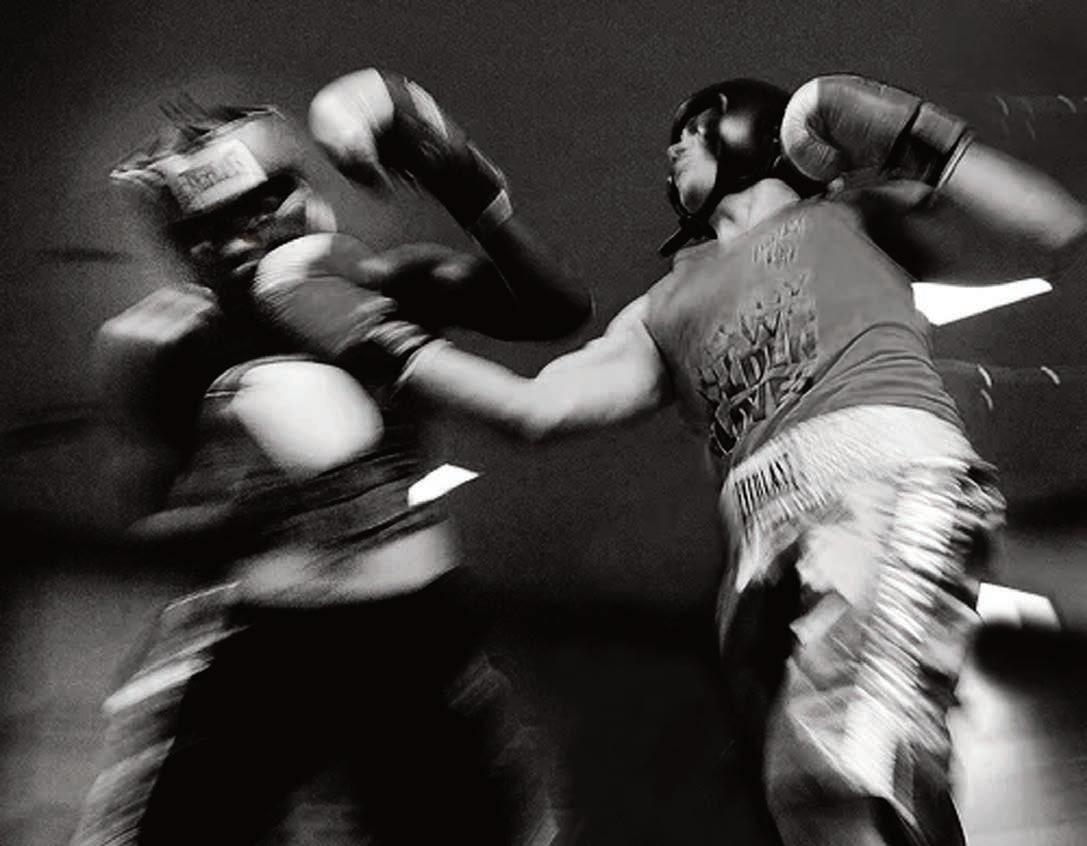
In contrast to the Ballerina series in full color, you have a series on boxing. Strong black-andwhite contrasted images of people sweating in the boxing rink. Why did you choose to go with black and white as opposed to color? What printing choices did you choose for the best dramatic action images to come to life? ...Have you also been seen in the rink?
I used to cut school and hang out in boxing gyms and Burlesque theaters in Boston when I was a teenager.
Continued on next page...
I loved photographing the fighters working out and talking to the hangers-on who were always sitting around smoking cigars and reading racing forms. I shot them in black and white because color film was too expensive for me to buy, and I could not process it myself. I never boxed at the time, but I did go to a nearby gym run by a famous trainer/manager named Gil Clancy. I was twenty-nine years old and I figured that it was now or never to learn the manly art. I lasted three days and finally realized that I cannot dance, and my attempt at boxing would only court an early grave. I showed up the next day with my 16mm Arriflex camera. I spent a year, between working at my regular jobs, mainly capturing African American and Latin boxers working out and eventually fighting in the ring. My footage was cut into a ten-minute short film called ‘Trade’ by a great editor named Linda Leeds. My neighbor at the time was the famous musician, Richie Havens. When I showed him the footage, he insisted on giving me a music track as a favor. The film won a half dozen awards around the world. My wife claimed that it ruined my son Zachary's life by making him first a boxing devotee, and now a boxing manager.
What has your experience been like working with live models? Do their personalities ever get in the way of your vision?
I have never had any problems or confrontations of any kind with a model. Most of the women are happy to work in front of my camera and accept a healthy fee for their time.
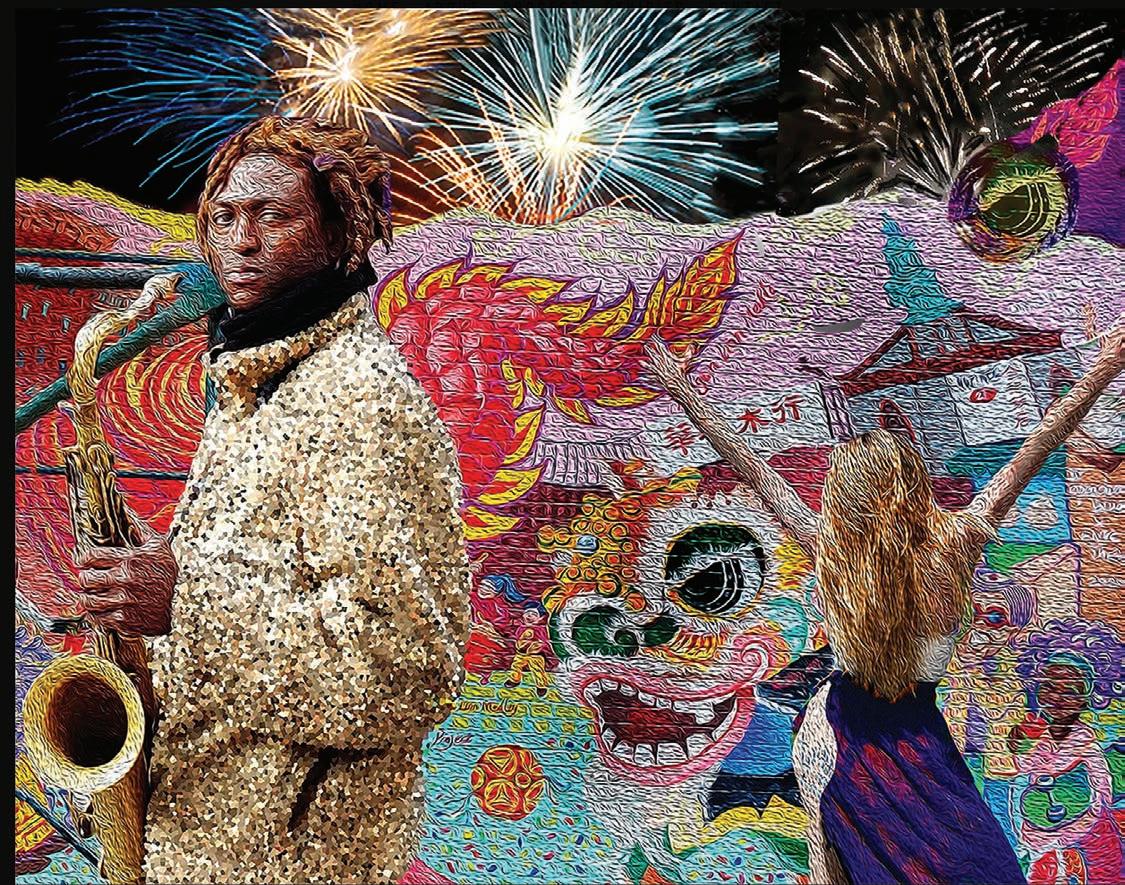
In your Graffiti fine art photography series, "Chinese Wall," I notice textural elements, layers of paint, and a weathered surface that invite exploration and reveal the hidden narratives of this urban art form. Could you elaborate on the graffiti series? When did you come up with the idea for this series, and was it by chance that this became of interest to you?
I found that much of my work was very conservative compared to what I have seen in galleries and online. Because graffiti is everywhere I go— wrapped around walls, bridges, and sidewalks— I decided to montage some of it as backgrounds for various foreground images. It's done in Photoshop. People appreciate it, feel it's more contemporary, and I enjoy playing with the myriad designs that I encounter from unknown artists.
Of all the people you have worked with, can you tell us of a few who opened your eyes to concepts, invaluable advice, and know-how in art and communication?
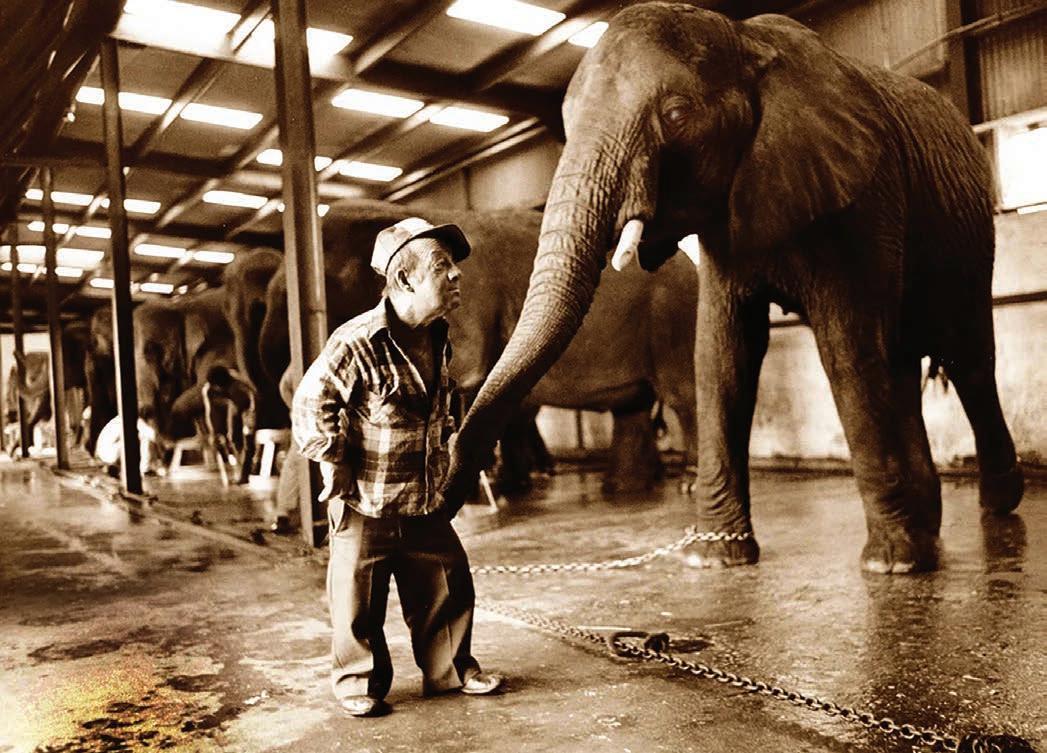
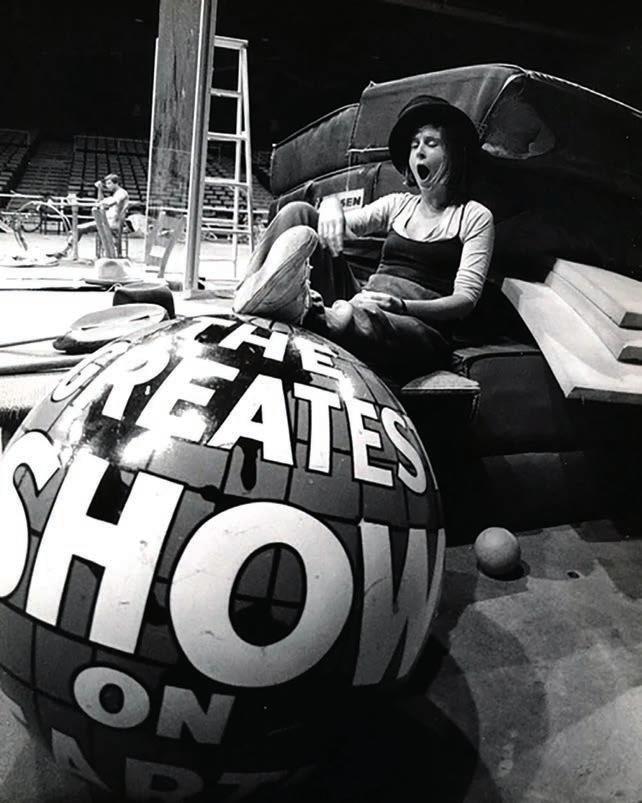
I learned the Platinum/Palladium technique from a master printer named Arkady Lovov. This printmaking style is archival and should last for a thousand years without fading. Many of the finest photographers have their work rendered in this fashion to preserve it throughout time. My friend Keith Taylor makes prints in a technique called Gum Over Platinum. The Gum is usually a series of watercolor pigments. It's time-consuming and difficult, but it gives your image a color and look that often appears like a painting. I practice both processes. As far as personalities go, making documentaries has allowed me to meet many celebrities and fascinating individuals: Champion Bull Riders, Governors, Circus Clowns, a First Lady, Famous actors, Quarterbacks, Golfers, Indy Racers, and presidential candidates. Once in a while, I got turned down when asking for additional takes and had to watch the talent walk away, but that comes with the territory.
Continued on next page...
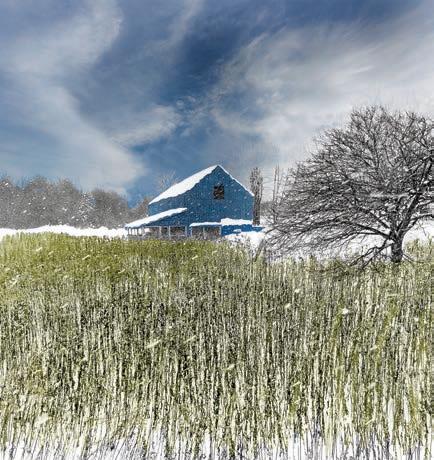

Can you tell us about some of the feathers in your cap — awards you've received? For instance, what art of yours is at The Modern Museum of Art, and can the public see it?
I did a commercial for Goodyear Tires many years ago, and it won the best TV Ad of the year in the international world of advertising. It was the first TV Ad ever taken into the Museum of Modern Art. Today, it would get laughed off the air, but in 1964, somehow, it was effective. It was called "When there's no man around." It was about a woman who had a flat tire on a remote, foggy road, but she had the good fortune to own Goodyear tires with a thick inner lining that would get her another 50 miles and keep her safe. The Modern Museum also holds a copy of my film called "Circus." I did it as a featurelength documentary for Disney, revealing for the first time how the Ringling Brothers Circus is put together each year, then packed onto a train to travel the country.
You mentioned the Chatham Film Festival this year and how much you enjoyed the films. What films caught your interest and why?
The Chatham Film Columbia Festival always presents great films each year at The Crandall Theater.
This year, we were very impressed by "Nuremberg." "A Poet," "Nouvelle Vague," "My Father's Shadow," "Hamnet," and "The President's Cake." Also, a short film by Scott Cohen called "Fire at Will."
Enjoying the Berkshires has been part of your life for some time. You and your wife appreciate the fresh air and vibrant cultural scene. How did you first discover the Berkshires?
Our friend Marcie Setlow, who is the Editor of "The Berkshire Edge," a great daily online paper, told us that if we came to her home in the Berkshires for dinner and met her friends, we might enjoy the summers in her neighborhood for the rest of our time there. She has been absolutely correct. We are mainly summer residents in West Stockbridge and have loved every minute that we have lived here.
Are you photographing the Berkshires as part of your fine art photography portfolio?
I took one shot of a neighbor's farm during a winter snowstorm a few years ago, and it has done well in galleries and private sales. Still, there is nothing else to rave about from the Berkshires except a few interesting covers for John Parker's delightful "Local Yokel" newspaper.
If you had the opportunity to do something twice over, what would that be?
My first date with Raquel, my wife of sixty years, would be a perfect twice over.
That shot you missed -- that one time, when you didn’t have your camera. What shot was it?
I cannot remember a shot I missed and got hung up about, although there must have been many. I once had the pleasure of meeting the great photographer Irving Penn. I wish that someone had taken a shot of me shaking his hand. It would be my treasure.
learlevinphotography.com
learlevinis@gmail.com
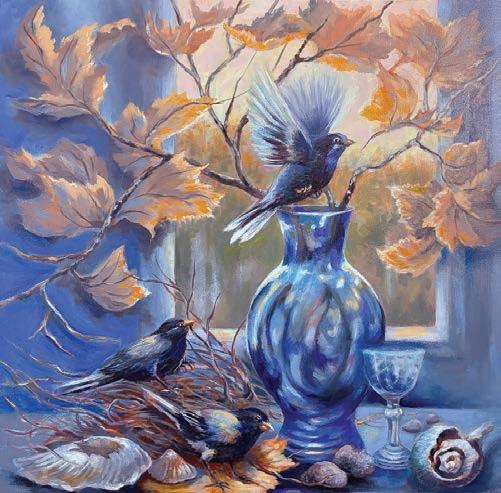
loribradley@comcast.net http://www.loribradleyart.com
Clock Tower Artists
Business Center Studio #307
75 South Church Street, Pittsfield, MA Instagram- ecurbart
“My life has been guided by five simple but powerful words: Music can change the world”-TM
Interview
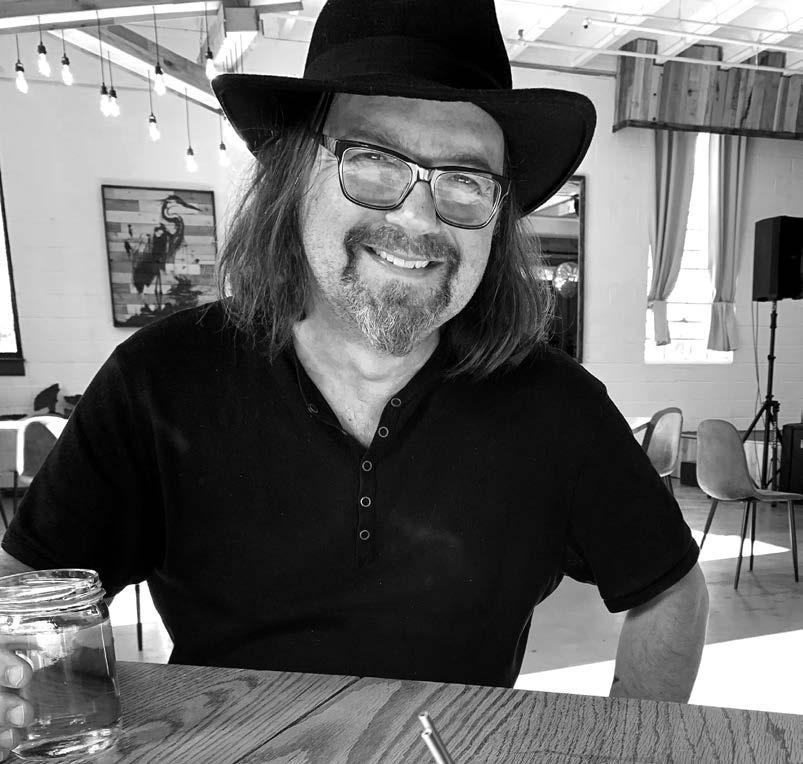
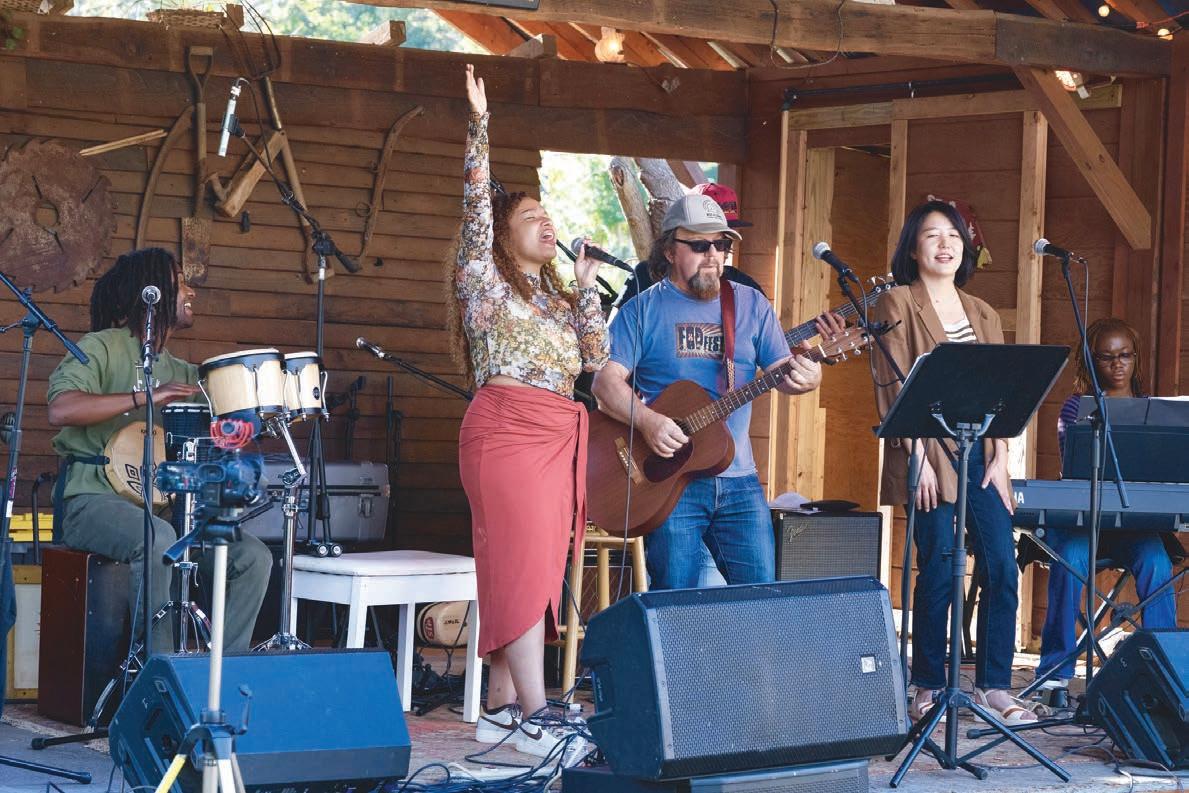
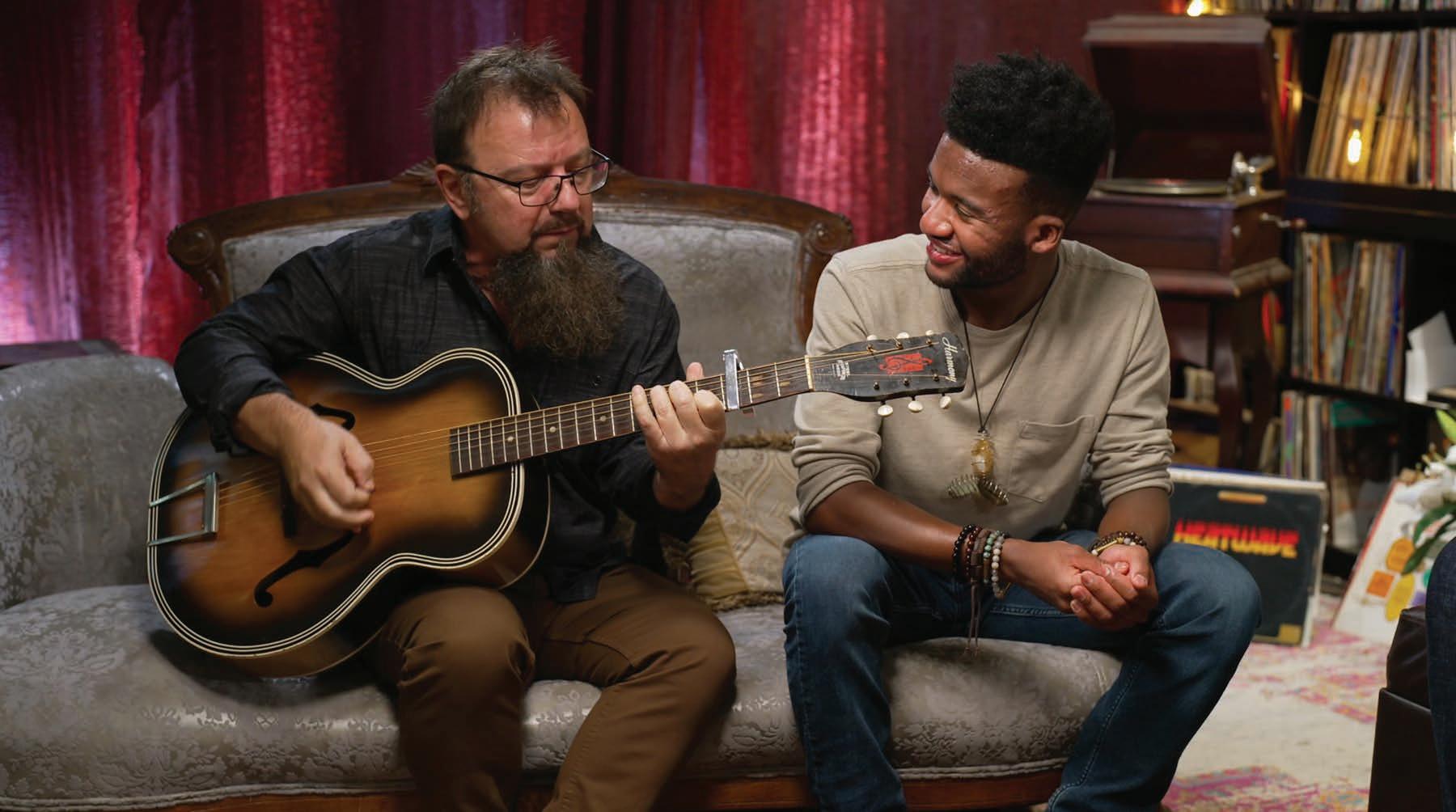
For over 40 years, Todd Mack has followed a unique path as a singer-songwriter, performing in diverse venues such as the Hong Kong Foreign Correspondents Club, a bomb shelter in Israel, a remote island in Fiji, an olive grove in the West Bank, and the Taichung Jazz Festival in Taiwan.
Starting his classical training at eight, Mack’s musical journey shifted when he picked up his first guitar, leading him to compose his own songs. He launched his professional career in 1989 with his self-titled debut album, followed by a decade of touring and six more albums by 2011.
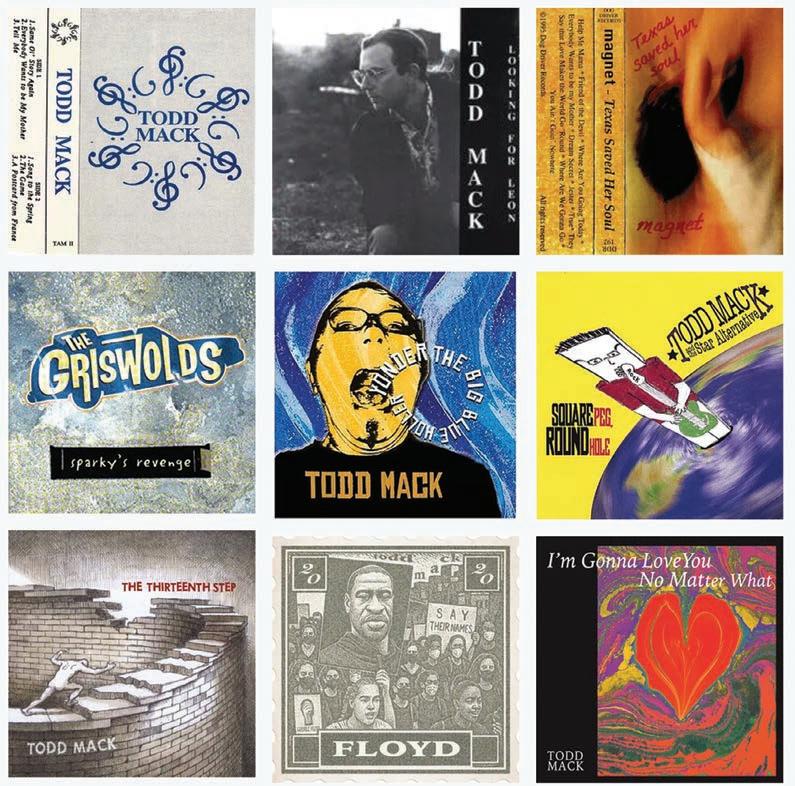
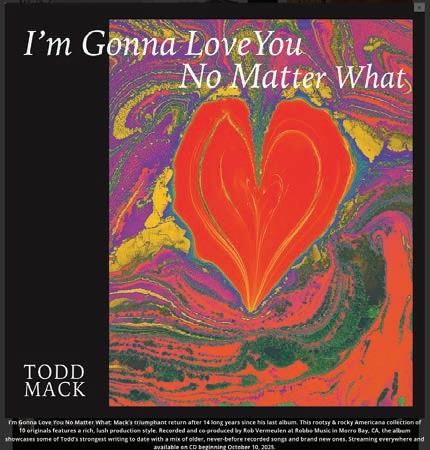
To date, Todd has released eight albums. In 2025, he made a powerful comeback with the single "Floyd," honoring the five-year anniversary of George Floyd's death, along with his first full-length album in 14 years, "I'm Gonna Love You No Matter What."
Harryet
I love your new album; the samplings are leading me to include it as part of my music listening venue! It's clear that you devoted a lot of love and time to creating each song in the compilation titled "I'm Gonna Love You No Matter What."
Can you tell us more about how it reflects your personal life and vision, which involves adventure, travel, determination, and purpose?
Todd Mack: "I'm Gonna Love You No Matter What" is an album of love, loss, joy, and sorrow. In other words - life. Many of these songs are deeply personal to me. Some are autobiographical, while others are not, but are everyday stories we all experience. It's interesting to hear you reflect on my work with Music in Common and my journey to do some good in the world. Obviously, that is a huge part of who I am. But as an artist, particularly a songwriter, I feel like it's a different persona of the same me. My vision with Music in Common is very much "macro". Big ideas, big picture. But my own music is the opposite of that. Most of my writing
looks inward. It's a very solitary and sometimes even lonely experience for me. But one in which I do my best introspective thinking. "I'm Gonna Love You No Matter What" is definitely a reflection of that process.
If you had to highlight one song from this album, which one would it be, and what story would you like to share about it?
There are two songs that really put the album into context and bring it full circle – the opener, "Angel Above," and the closer, "You Are There". Both address the pain of losing someone close and how you carry on without them. The hardest thing I've ever had to do was tell my 15-year-old son that his best friend had died. Seeing your kid writhe in pain like that is gut-wrenching. It's a memory that will forever be etched in my mind and heart. "Angel Above" attempts to express that pain and the cruelty of a world that takes a life way too soon. I wrote "You Are There" shortly after my friend Danny (Pearl)
was murdered. It was my way of coping with the grief I was feeling and a promise to myself that even though he was no longer with us in the physical sense, he would always remain in my heart. Unlike the sorrow of "Angel Above", "You Are There" is about comfort and joy.
Where have your recent travels taken you, and how have those experiences aligned with your vision and focus?
The past four years have been a whirlwind. Since COVID, Music in Common has been squarely focused on programming in the U.S., and our work has taken me all over the country several times over. The last time I was in one place for more than six consecutive weeks was in 2021. That's how insane the travel has been. We are living in such divided and polarized times. If there is one thing I've learned, it's that most folks, regardless of political viewpoint, yearn for connection. Things are just so tense; people need a release.
As you prepare for your month-long tour with Music In Common, what do you foresee happening during that time?
In many ways, Music in Common has returned to its roots over the past couple of years, leaning
heavily on the connective power of live music. We've worked hard through our concerts to break down conventional barriers between artists and audiences and to connect audience members. We don't perform FOR people. We perform WITH them. The audience is just as much a part of the show as the band. A while back, we also started integrating community conversations into our concerts – what we call a "two-way Q&A" in which the audience asks the band questions and the band asks the audience questions to spark conversation. 2026 will be our busiest touring year yet, starting with a month-long tour in February. Our goal is always the same: to leave the audience inspired, engaged, and empowered.
Are you currently writing songs on the road, or is your focus more on other aspects of music and performance, like promotion? I know promotion is essential, but it can sometimes overshadow the creative process.
Ha, yes! The actual writing and recording of the songs vs. their promotion can be opposites. But I prefer to look at it as the Yin and Yang of the music business. I think most of artists want to see our work reach people and move them in some way. That can only happen by getting the work out there and pro-
moting it. Otherwise, it just becomes a tree that falls in the forest.
Some of my best writing happens when I am on the road by myself, often while driving on the country's highways and byways. Thematical ideas, melodies, and lyrics will pop into my head. I record them on my phone, and then when I'm not driving, I start banging them out on the guitar. Interestingly, when I am on the road with Music in Common, I almost never write. There's just too much going on and too many moving parts. I'm the kind of writer who needs a quiet, solitary space to work in.
Todd, how did life in the Berkshires compare to where you are now?
My 20 years in the Berkshires shaped me in so many ways. It was a period of demonstrable growth as an artist and a human being. My wife and I raised our kids there, surrounded by my extended family —particularly my folks, my sister and brother-inlaw, and their kids —who all live in the Berkshires. Sunday family dinners, holidays together, just being able to pop over for a quick visit…I miss that terribly, but am grateful for those years and for the fact that my kids grew up closely bonded with their grandparents, aunt and uncle, and cousins. I wouldn't trade that for anything! Continued on next page...
But as they grew and left the area, it was time for us to return to Atlanta, where we had moved to the Berkshires from all those years earlier. Like the Berkshires, Atlanta is home. Our tribe is there —it's where I met Danny and where I started and developed my music career. I still get to the Berkshires 3-4 times a year and am blessed to have the best of both worlds.
What real-life experiences have significantly impacted you, and how do you incorporate these moments into your work?
Those familiar with Music in Common know the impact the murder of my friend, Daniel Pearl, had on my life. Certainly, Danny is not the only friend or loved one I've lost, but the way in which he was murdered and the reasons why hit me hard and in a way that was much different from other losses. I can't explain why, but I was compelled to take action against the hate and violence that took Danny's life. It was like I had no choice, like I had to do it. Not in an obligatory way. More like an "I'm not going to stand by and do nothing" kind of way. But I'm not surprised by it. In many ways, I feel like my life had been leading to that point, and Danny's murder was the catalyst that helped me understand that this was my calling, if you will, putting the power of music to work for positive change.
In terms of my work as an artist and my own
music, that's a much more complicated and complex question. There's a lot of childhood trauma there that I'm just beginning to acknowledge, and a life of addiction that has had a sizable impact on me. I'm not an addict, by the way. But my brother is. And the destructive force that can be put on a family is often overlooked, but very real nonetheless. Unlike my work with Music in Common, which I am very open and public about, this is not something I've ever talked about publicly or even with friends until very, very recently. And I'm still not comfortable with it, which is why I won't go deep. But what I can say is that, like Danny's murder and my work with Music in Common, my personal life very much works its way into my writing. My previous album, "The Thirteenth Step", is a good example of that. It is a concept album about the cycles of addiction and the many ways addiction manifests itself, and by far the most personal work I've done to date.
I resonate deeply with "Skin and Bones" from your album "The Thirteenth Step". Can you share the background of that song?
The arc of "The Thirteenth Step" reflects the journey of an addict, starting with the drivers that send someone on that path, their downward spiral, how they respond to their addiction, and the ultimate outcome of life or death. "Skin & Bones", which falls in the middle of the album and therefore the middle
of that arc or journey, is the nadir. It's the bottoming out. The song is a microcosm of the album, a mirroring of that arc. At some point in an addict's journey, all that is left is skin and bones - the bare minimum of human existence. And from there, only one of two things can happen. You work your way up out of it, or you don't.
Who have you met that has enriched your music, and why are they important?
Well, I could fill this entire interview with that one question (lol). There have been SOOO many people I've met along the way and have been blessed to work with. But there is one, in particular, whom I've met just recently who has enriched my music in indescribable ways - my co-producer Rob Vermeulen. When I'm not on the road, I split my time between Atlanta and the California central coast, where my in-laws live. About a year and a half ago, I saw a window to get back into the recording studio to make what would become "I'm Gonna Love You No Matter What". I knew if I attempted this in Atlanta, where all of my earliest albums were recorded, I'd never get it done. There are just too many demands and distractions from work. But I barely know a soul in California, which makes it easier to hunker down and get stuff done uninterrupted. It's so small town that there are hardly any recording studios, and Rob's Robbo Music is one of
them. We hit it off instantly! He's a crazy-talented musician who plays a ton of instruments. A phenomenal engineer who's been using ProTools since it's earliest days. And a masterful producer. We have an affinity for a lot of the same production styles and he can lay down most of the tracks himself. We work great together and make a solid team. There's no way the new album would have sounded the way it does without him, and I know we're going to be doing a lot more together. We're already in the home stretch of the next album!
Looking back at your older music is essential to understanding you as an artist. What do you think is the current direction of the music scene, and do you believe that music is becoming more significant in people's lives?
That's a great question. I think there's this weird dichotomy going on right now. Streaming, AI, digital recording technology that you can use even on your phone to multi-track – all of that has made it incredibly easy to make and distribute music. With that comes innovation, but also, well, a lot of crap. The music industry is in a strange place right now and a very different landscape from when I started 40 years ago. It's overwhelming, to be honest, and can be a bit discouraging for artists trying to get heard. But what bothers me most is how greeddriven the industry has become. It's always been
about the money, but we're seeing that at levels never seen before.
All that said, music continues to play a huge role in people's lives. Maybe more so than ever, given the tense and stressful times we are living in. There will always be a demand for music. But music is kind of like food. You can eat something organic that you grew yourself. Or you can eat something made from stuff made in a lab from a can on a store's shelf. Making and ingesting music is the same way.
Where is the best platform for us to listen to your music?
With the exception of my albums from the 80s and 90s, all my music is streaming everywhere and available on CD. The best way to support an artist is to buy physical products – CDs, vinyl, T-shirts –and to buy the download of their music from iTunes. To my earlier point, streaming platforms rip artists off at unprecedented, unethical levels. And if I'm being real, Spotify is the absolute worst offender, and I urge folks to listen to music anywhere but there.
What is your biggest challenge right now, and how do you plan to overcome it?
Sleeping! Still trying to figure out how to overcome that and get more of it.
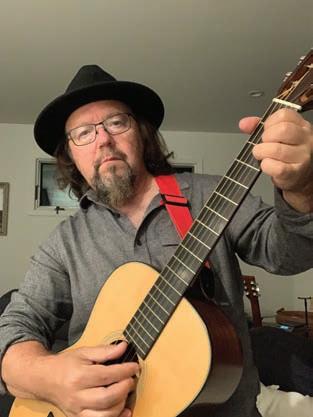
Todd Mack with guitar, along side are album jackets, top left is debut, bottom right is his newest release.
You are such a positive person! Can you share a few tips to help us stay on the brighter side of life?
Thank you! These are tough times, and staying positive can be challenging. I look at positivity and hope kind of like exercise: something you do to improve. Sometimes you've got to force yourself to do it. But I think the single-biggest thing that keeps me positive is gratitude. No matter how bad I've got it, somebody has it worse. No matter how down I may be, somebody is more down. I try to keep that at the forefront and not let my discouragement, despair, frustrations, and expectations overshadow my gratitude. I've had some knocks in life. Most of us have. Still, I am blessed to be here and grateful to be alive.
www.toddmack.net
https://toddmack.net/singer-songwriter

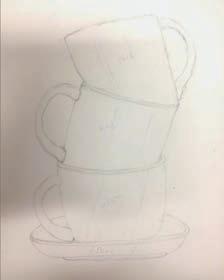
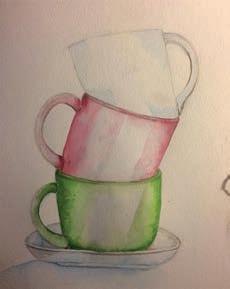

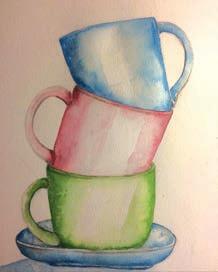
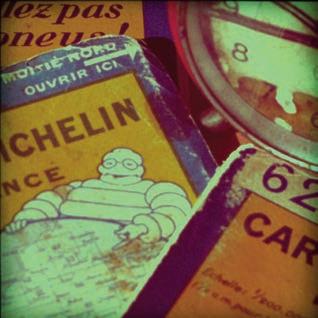
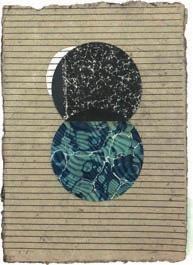
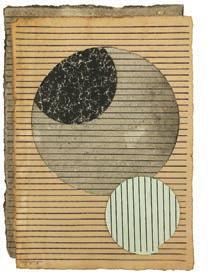
www.lcarsewellart.com n @carzeart lcarsewellart@icloud.com
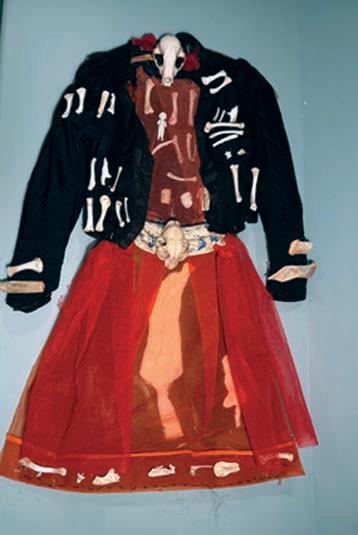
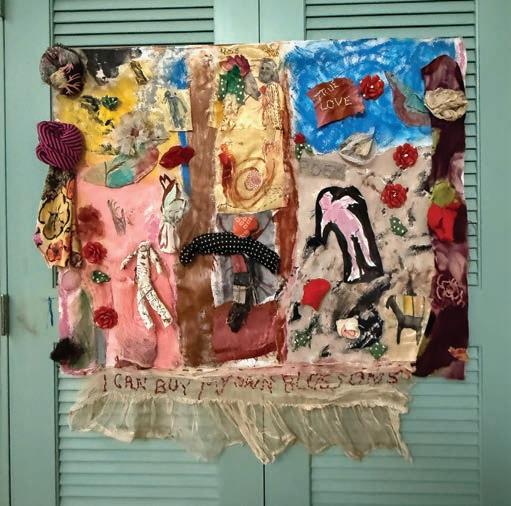
Fabrics, anatomy, stitches, colors and bricologue are words, imbued with intense emotionality for me, a maker, collector and lover of objects and places.
My first love was clay, so basic, earthy and obsessively compelling, I adored making pottery shapes and objects, resembling torsos. A period of fascination with vintage tin cans, bottle caps and junky metal discards followed. Metal was sheared, punched, riveted and assembled into figurative shapes. I began to use fabrics with these works and eventually abandoned metal for hand stitching doll sculptures, totems and collages, all with second hand or recycled fabrics. Janet Cooper— janetcoop@gmail.com www.janetcooperdesigns.com
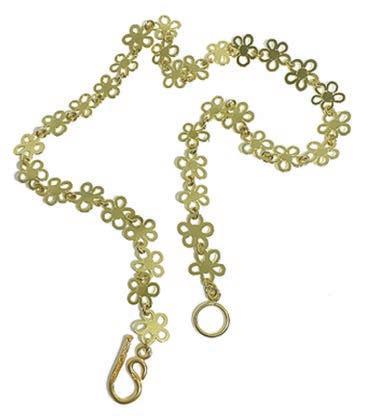
With the tumultuous state of affairs, most are not comfortable with a purchase that’s a “want”not a “need” of a certain price range. Seams somewhat frivolous? Well, that’s why I tout repurposing! Your collection of jewels from over the years, possibly sitting idly by, no longer exciting, are the key to your new jewelry item(s)! Possibly more than one, depending on your stash! You would be surprised how far your metal/stones can go. Winter is prime time for me to develop the designs for you.
I typically regale you, The Artful Mind audience, with musings of my jewelry passions and practices. This very inspiring magazine, that champions so many of us, artists, each of us creative in so many different capacities.
So I feel it’s my turn, very willingly, to tout a very special person, who gives us such a great opportunity to shine!
My artist statement this month is a tribute to an amazing and wildly creative, uplifting human being, Harryet Candee, who is celebrating this month, her 31 YEARS of creating/editing/publishing, what I consider to be, one of the most incredibly inspirational and aesthetically pleasing artist publications I’ve ever laid eyes on!!
It’s a great pleasure to be a participant, and to grace the pages, every month, with my art.
Thank you Harryet, for championing me/my art in the beautiful pages of this thoroughly inspirational publication.
Wishing you many more years of success!
—-Thank you, Joane!
Joane Cornell Fine Jewelry— 917-971-4662
9 Main St. Chatham, New York. www.JoaneCornellFineJewelry.com Instagram: Joane Cornell Fine Jewelry
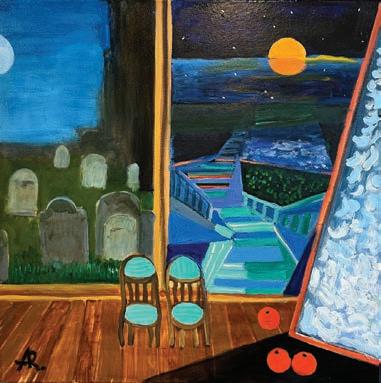
I was born into a dissident family in Moscow in 1971 and had an early interest in art. I took classes from a group of underground artists in the Soviet Union and studied under the dissident artists who later gained world acclaim as an émigré artist. In 1989, I immigrated to the U.S. I received a BFA in Painting in 1995 from State University of New York, and an MFA from The School of the Museum of Fine Arts in Boston, MA in 1997.
After moving from NYC to Boston my paintings became more narrative and landscapes less abstract. My work began to resemble theatrical stages and a fully formed sense of visual narrative emerged. Since 2010 I have been working on a series titled, “Moving In”... which focuses on playful and humorous narratives of her cohabitating with famous artists. Through this series she wants also to touch upon questions of artistic influence and dialogue, emulation and creativity, continuity as well as discontinuity in contemporary art and the world as a whole.”
I had solo and two-person exhibitions at the Ann Loeb Bronfman Gallery in Washington, DC, Gallery 360 in Minneapolis; Clark Gallery in Lincoln, Massachusetts and Fitchburg University in Fitchburg, MA. Group exhibitions include, among others, The Painting Center of New York, Multicultural Arts Center in Boston and the Moscow Center of Contemporary Art. In September of 2018 I had a solo show at Hudson Gallery in Gloucester MA, titled Blind Dates. Since 2016 I have been a core member of the Fountain Street Gallery in Boston, MA. In 2020 I had a two people show with Nora Valdez and in 2022 with Lior Neiger. Currently operating Art School 99 in Somerville, MA.
Alexandra Rozenmanalexandra.rozenman@gmail.com alexandrarozenman.com
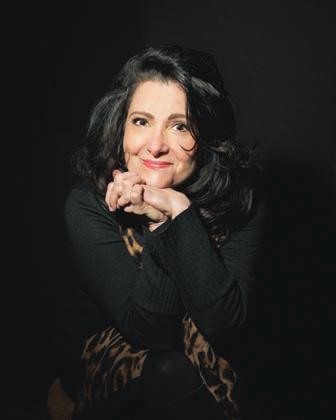
As a vocalist, my bedrock is jazz tradition, the blues, and the Great American Songbook. I consider my voice an instrument for boundary-breaking exploration, blurring the lines between genres to create a soundscape that is both familiar and excitingly new.
I thrive on challenging the conventional limits of a “jazz singer,” weaving elements of pop, soul, and cinematic sound design into my work, and this blending is evident across my diverse catalog on Spotify and other streaming platforms. Traditional arrangements sit alongside adventurous and out-ofthe-box compositions, but the goal is always to generate an immersive listening experience that defies easy categorization.
Performing, my core intention is to foster genuine and visceral connection with the audience. I believe music is a shared and immediate dialogue that transcends the stage. Whether through intimate, traditional ballads or expansive, cinematic soundscapes, I build moments of emotional resonance and shared discovery. My art is about versatility and connection using my wide-ranging musical palette to express an authentic modern voice that honors the past while creating the future.
Mary Ann Palermo— Email: howmuchbettercanitget@gmail.com Website : https://maryannpalermo.com Instagram: https://www.instagram.com/maryannpalermo_averosarecords
Record label website: https://averosarecords.com/#section0 Hear Now website : https://maryannpalermo.hearnow.com/theres-a-place-beatles-re-imagined Spotify: https://open.spotify.com/artist/1P5DDkoBymMyNn52dmMeoL
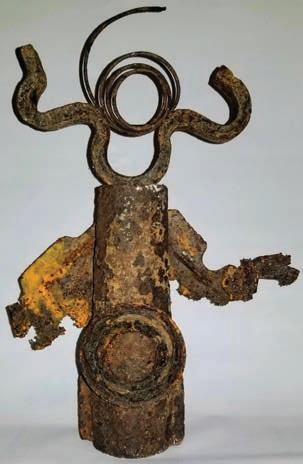
Demo is an installation artist known for his assemblages of salvaged materials and strategic use of light. Based in North Adams Massachusetts, Demo works primarily with found objects and rusted metals that reference the industrial past of his hometown. He incorporates discarded materials like old scrap metal, and wiring, granting new purpose to objects that have been weathered by time.
Strategic lighting transforms Demo's pieces casting shadows and illuminating surfaces to reveal new textures and dimensions, drawing focus to the visual interplay between materials within the assembled pieces. He embraces qualities like oxidation, decay and the passage of time in his artwork, seeing beauty in damage and imperfection.
His work encourages new perspectives and creates a visual language formed through the synthesis of light and found objects. Artist quote: "I resurrect things. Things that have been abandoned, discarded, left as junk. I believe in the potential of materials even when it appears they've lost all possibilities."
Sergio Demo— instagram.com/sdemo66 sergiodemoart.com

“The object isn’t to make art, it’s to be in that wonderful state which makes art inevitable.”
—Robert Henri
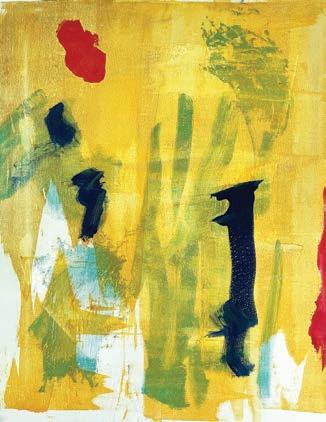
BREAKTHROUGHS
ACRYLIC ON CANVAS, 12”X18”
Growing up on the South Side of Chicago in the 60’s was a history, rich and troubled time. As a youth, my playing in the streets demanded grit. Teaching Tai Chi for the last 30 years requires a “Zen state of mind”. My paintings come from this quiet place that exhibit, the rich grit of my youth .Movement, shape and color, dominates, spontaneously combining raw as well as delicate impulses. I was honored with the exhibition of my abstract painting (inspired by Vermeer’s Girl with a Pearl Earring) in the Amsterdam Vermeer exhibit 2024 . Ruby Aver— Housatonic Studio open by appointment: 413-854-7007 / rdaver2@gmail.com Instagram: rdaver2
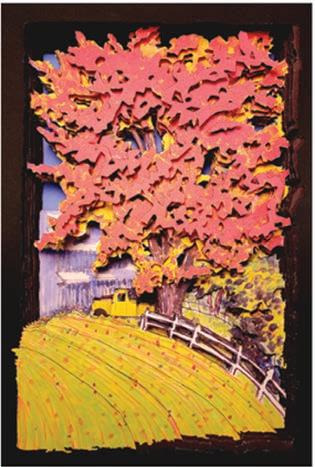
Tunnel books, a novelty popular in the late Nineteenth Century, use printed layers with cutouts to create three-dimensional works. Their appeal derives in large part from the aesthetic tension or play between the illusion of three dimensions in the printed images on the surface of the layers, and the actual three dimensions of the layers with their cutout shapes.
TUNNEL VISIONS explores this visual dissonance using two-dimensional works to create layered three-dimensional tableaux—framed “worlds” in miniature behind glass.
Stephan Marc Klein is an award-winning retired architect and professor emeritus of interior and exhibition design. He holds a doctorate in Environmental Psychology. He has been making art since childhood, and at age 86 continues to experience the joy of creating. He now lives in Great Barrington with his wife, fellow artist and writer Anna Oliver. Exhibition: December 2025 510 Warren Street Gallery Hudson, NY Reception 3 - 5:30pm Saturday, December 6, 2025
Fri. & Sat., Noon to 6pm, Sun. Noon to 5pm Stephan Marc Klein — stephanmarcklein.com / smk8378@gmail.com Member 510 Warren Street Gallery, Hudson, NY
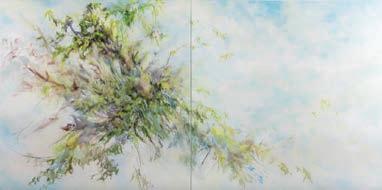
The title, Solo una Promessa, I borrow from the Alexander Nehamas book, Only a Promise of Happiness: The Place of Beauty in a World of Art, where beauty is respected as a personal, social and cultural imperative. No matter how fleeting and complicated it may be, believing that the world is better for it, in my life and work I assert beauty's ability to ignite hope, the necessary precursor for the fulfillment of happiness.
From the Vision & Dialogue series and exhibition, I made Solo una Promessa during my husband's recovery from an unexpected spinal surgery that left him with compromised lower body function. Beginning as one canvas it grew to the diptych it is, echoing the non-dualistic role beauty plays in human experience. Here beauty is not merely an external quality to be observed. It is itself a landscape where self and world dissolve
An artist and educator, Jennifer Pazienza born in Newark, New Jersey lived her formative years in Bloomfield on Grove Street near Elmwood Avenue in the house built by her immigrant Sicilian grandfather. These place names, contributors to the aesthetic salvation she found as a child making art in her mother’s garden, inform her work to this day. Pazienza holds B.Ed., Master’s and PhD degrees in art education. She studied painting with American landscape painter Richard Mayhew. Since coming to New Brunswick in 1989, as professor of art education at the University of New Brunswick until retirement in 2014, she has been an art advocate, published writer and curator for New Brunswick and international artists.
An award-winning painter, with a lyrical landscape lens, she has over 40 solo and group shows and works in permanent and private collections in Canada, the US and Italy. Highlights include the Beaverbrook Art Gallery, New Brunswick’s premier provincial art gallery, White Plains Hospital, NY, McCain Corporation, the University of New Brunswick, Saint John Regional Hospital and Mac, Mac & Mac Law Firm, Nova Scotia. Jennifer is one of nine Canadian artists chosen for the Luciano Benetton Imago Mundi Permanent Collection project, Art Theorema #3 in Treviso, Italy.
Represented by Gallery 78, Fredericton, NB, Canada and Alex Ferrone Gallery, Long Island, NY, Jennifer Pazienza lives and paints from her home and studio in Keswick Ridge, NB, Canada. Jennifer Pazienza— https://www.instagram.com/jenniferpazienza/ https://www.jenniferpazienza.com/
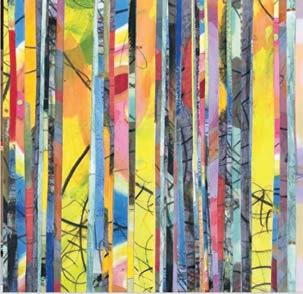
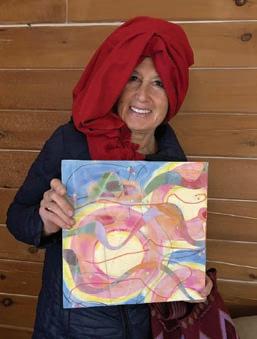
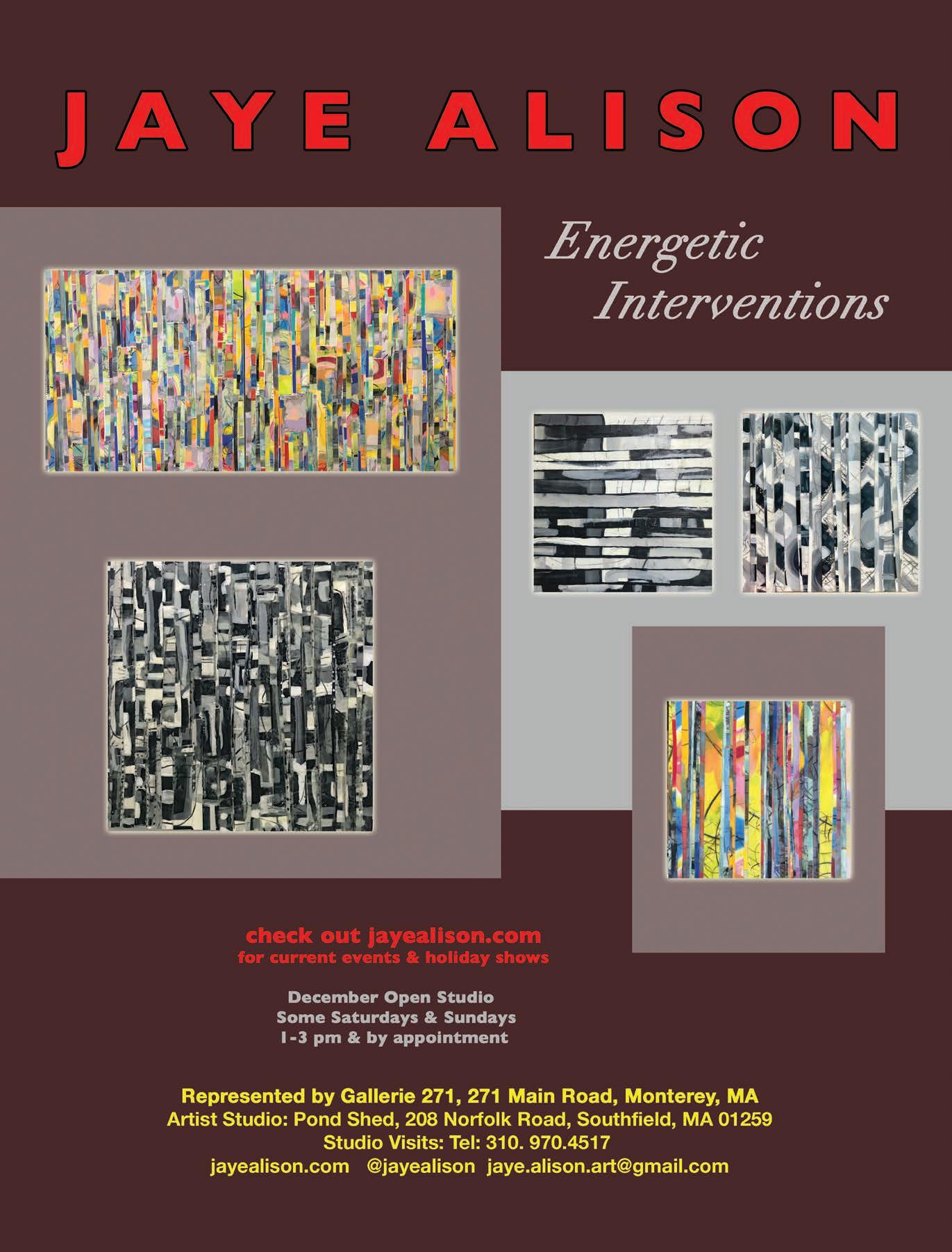
"I was really anxious because we were pretty much snowbound in our homes, being in a particularly cold 2025 winter. I had moved many of my art supplies to my studio in Southfield, and had begun organizing works. The idea of playing with them, cutting some of the ones to which I felt drawn to do so, this had been playing around in my mind for a looooooong time, but this weather allowed me to take advantage of the opportunity- I couldn't go anywhere, so I could just focus and play."
Jaye Alison harnesses water-based mediums like acrylic and watercolor, influenced by a creative upbringing and artistic journey. Through abstraction and intuitive color selection, she captures the interplay between forms with lines that articulate deepseated emotions. Her art resonates with joy and upliftment, transforming personal and worldly complexities into visual harmony.
The artist is passionate about creating art, painting on flat, smooth surfaces, and using environmentally friendly materials.
Alison’s work has been exhibited nationally and internationally and has appeared in print, film, television, the web, and Off Off Broadway.
Transforming personal and worldly complexities into visual harmony. In celebration of Jaye's new studio, enjoy 10% off large paintings and 30% off small paintings.
Jaye Alison — 310-970-4517
Studio visits by appointment only: Pond Shed (behind the Buggy Whip Factory) 208 Norfolk Road, Southfield, Massachusetts jayealison.com jaye.alison.art@gmail.com
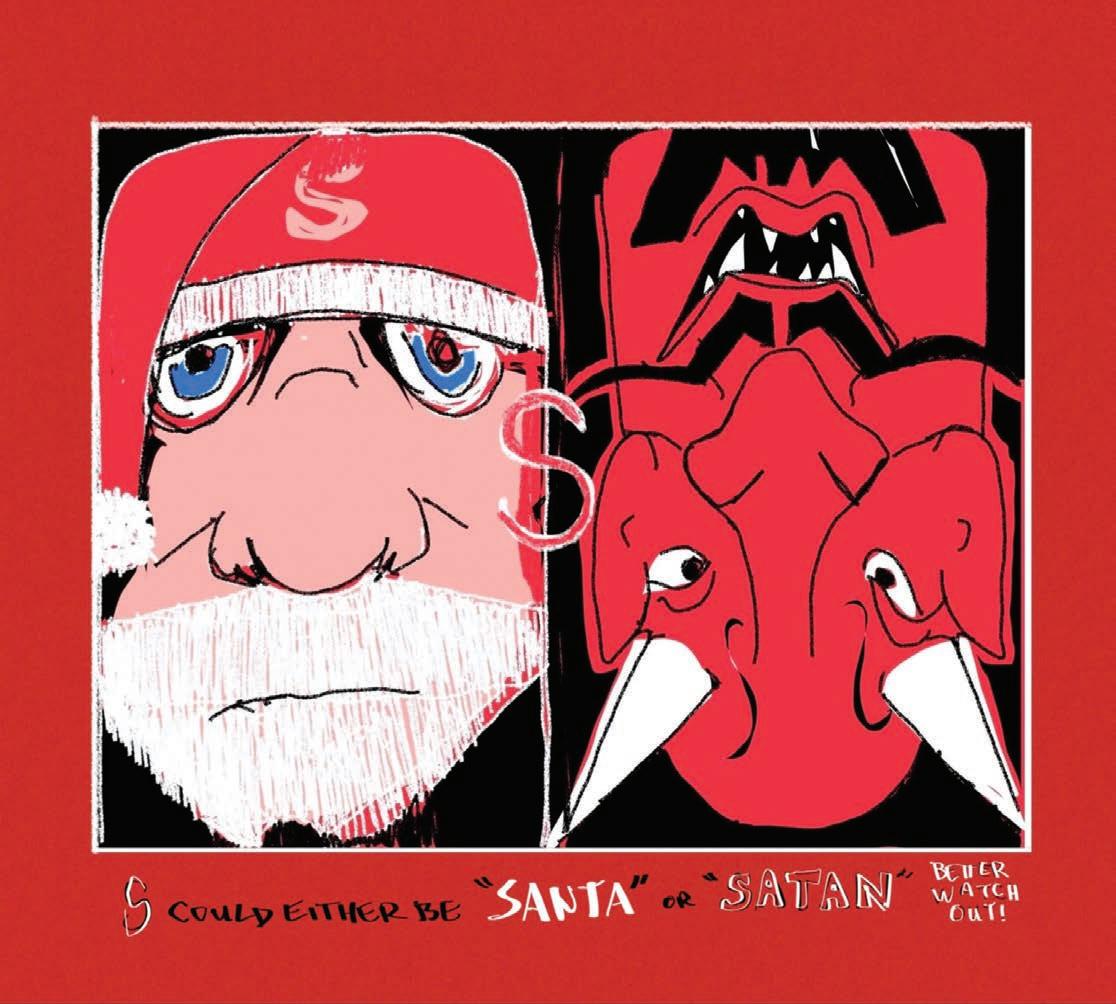

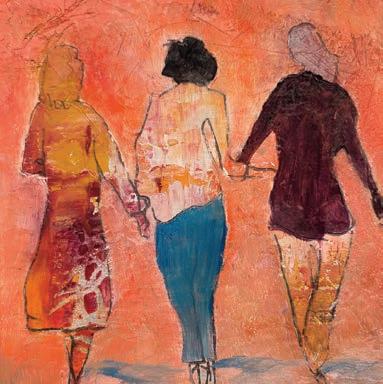
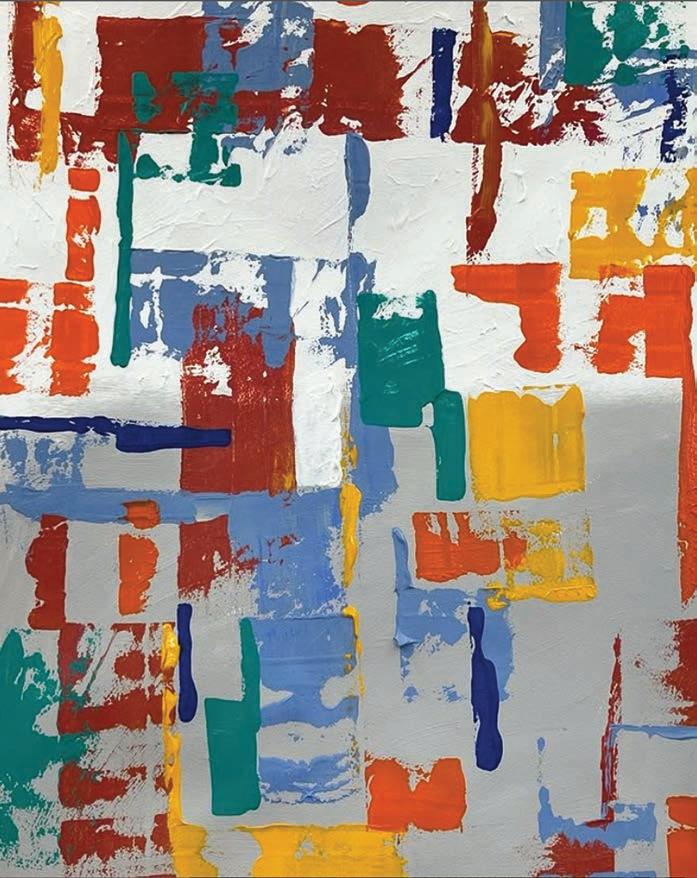
My artwork, be it photography, painting, or collage, embraces a very simple notion: how best to break up space to achieve more serendipity and greater intuition on the page. Though simple in theory, this is not so easy to achieve. I work to make use of both positive and negative space to create interest, lyricism, elegance, and ambiguity. Each element informs the whole. This whole, with luck, is filled with an air of intrigue.
Breaking up space, to me, has a direct correlation to music. Rhythm, texture, points of emphasis, and silence all play their parts. Music that inspires me includes solo piano work by Debussy, Ravel, Mompou, and, of course, Schubert and Beethoven.
Working with limited and unadorned materials, I enhance the initial compositions with color, subtle but emphatic line work, and texture. For me, painting abstractly removes restraints. The simplicity of lines and the subsequent forming of shapes is quite liberating.
Lastly, I want my work to feel crafted, the artist's hand in every endeavor.
Leslee Carsewell— Prints available, please inquire. 413-229-0155 / 413-854-5757 lcarsewellart@icloud.com www.lcarsewellart.com
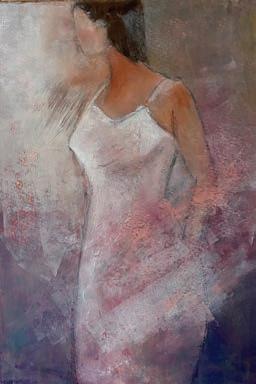
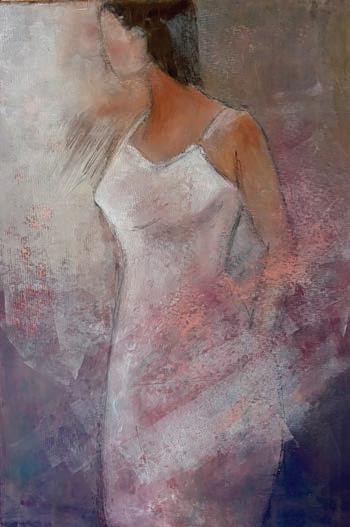
These last few months I have been working on abstracting the figure with cold wax and oils. It’s definitely a learning curve and one I am enjoying Abstracting the figure involves deconstructing the figure by removing details, exaggerating certain features, or capturing its essence through gesture and memory to create a unique, personal interpretation. This latter explanation is what I am most interested in. By capturing its essence the work can tell a story. This approach allows artists to move beyond literal representation to communicate ideas, movement, and emotion and becomes visual art as a form of narrative.
For more information on workshops and classes contact me directly.
Carolyn M. Abrams— www.carolynabrams.com Member, Guild of Berkshire Artists

“What a funny thing painting is. The abstract painters always insist on their connection with the visible reality, while the so-called figurative artists insist that what they really care about, is the abstract qualities of life.”
—Marlene Dumas
The newly released The Liberation of Sue Moody: Slaying the Dragons by Gail Gelburd is striking a powerful chord with readers who see in Sue Moody’s life a rare and unflinching account of courage under relentless pressure. This is not just the story of a journalist’s career. It is the chronicle of a woman who endured war, hunger, and the constant threat to her safety, yet refused to lose her voice or her sense of identity. Surviving war and starvation is not a backdrop in this book. It is the lifeline that runs through every chapter.
Drawn from Sue’s own letters, journals, and articles, the book brings readers into the immediacy of her world. They are with her on the streets of occupied Paris, where she rides her bicycle through narrow alleys to avoid patrols, barters for food in the black market, and searches for chestnuts in overgrown gardens when supplies are gone. These are not distant recollections but lived moments, written with the weight of fear, exhaustion, and determination still in them.
The book itself has its own extraordinary origin. While serving as chair of the Otis Historical Commission, Gail Gelburd reviewed a long-forgotten collection of Sue Moody’s writings, found by a neighbor in an abandoned Massachusetts home. The papers were fragile, yet her words remained clear, confident, and alive with wit. In those boxes was the unfiltered voice of a woman determined to be heard, even by future generations.
What draws readers most is Sue’s ability to stand firm when survival meant more than finding shelter or food. It meant preserving her place in journalism, holding on to her values, and keeping her dignity intact. Her Quaker upbringing, her encounters with remarkable figures such as the unsinkable Molly Brown, and her own resourcefulness gave her the resilience to endure without surrender.
“The Liberation of Sue Moody: Slaying the Dragons” is available now in paperback, hardcover, and eBook formats through Amazon and other online book stores worldwide.
Gail Gelburd— otishistoricalcommission@gmail.com www.gailgelburd.com. www.otispreservationtrust.org
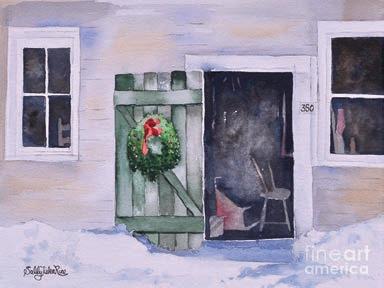
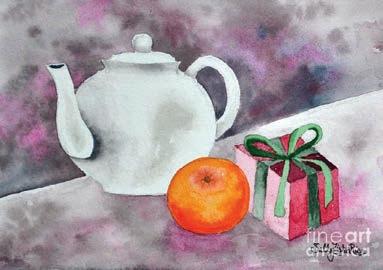
Born and raised in the captivating Berkshires, Sally Tiska Rice possesses artistic prowess that breathes life into her canvases. As a versatile multimedia artist, Sally seamlessly employs a tapestry of techniques, working in acrylics, watercolors, oil paints, pastels, collages containing botanicals, and mixed media elements. Her creative spirit draws inspiration from the idyllic surroundings of her rural hometown, where she resides with her husband, Mark, and cherished pets.
Sally's artistic process is a dance of spontaneity and intention. With each brush stroke, she composes artwork that reflects her unique perspective. Beyond her creations, Sally also welcomes commissioned projects, turning heartfelt visions into tangible realities. Whether it's capturing the essence of individuals, beloved pets, cherished homes, or sacred churches, she pours her soul into each personalized masterpiece.
SallyTiska Rice— SallyTiskaRice@gmail.com www.sallytiskarice.com https://www.facebook.com/artistsallytiskarice Fine Art Prints (Pixels), Twitter, LinkedIn Instagram, YouTube, TikTok

I am an abstract artist whose two and three-dimensional works in mixed media reveal a fascination with geometry, color and juxtapositions. For me it is all about the work which provides surprising results, both playful and thought provoking.
From BCC to UMASS and later to Vermont College to earn my MFA Degree. I have taken many workshops through Art New England, at Bennington College, Hamilton College and an experimental workshop on cyanotypes recently at MCLA. Two international workshops in France and Italy also. I am pleased to have a studio space with an exciting group of artists at the Clocktower Building in Pittsfield.
Bruce Laird — Clock Tower, #307, 75 South Church Street, Pittsfield, MA. Instagram: @ecurbart

Pastels, oils, acrylics and watercolors, abstract and representational, landscapes, still lifes and portraits, a unique variety of painting technique and styles you will be transported to another world and see things in a way you never have before join us and experience something different.
Painting classes continue on Monday and Wednesday mornings 10-1:30pm at the studio and Thursday mornings out in the field. These classes are open to all...come to one or come again if it works for you. All levels and materials welcome. Private critiques available. Classes at Front Street are for those wishing to learn, those who just want to be involved in the pure enjoyment of art, and/or those who have some experience under their belt. Kate Knapp — 413-528-9546 at home or 413-429-7141 (cell) Front Street, Housatonic, MA. Gallery open by appointment or chance anytime. www.kateknappartist.com
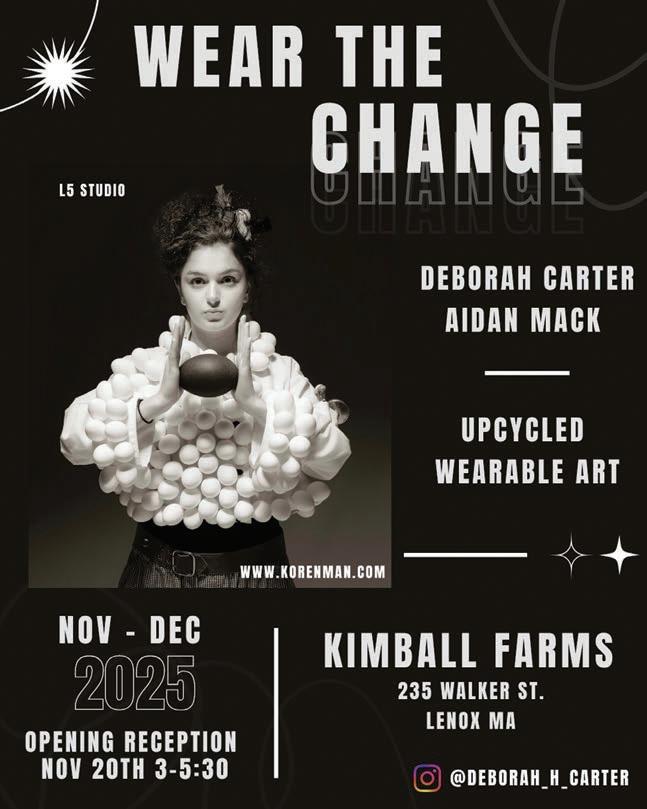
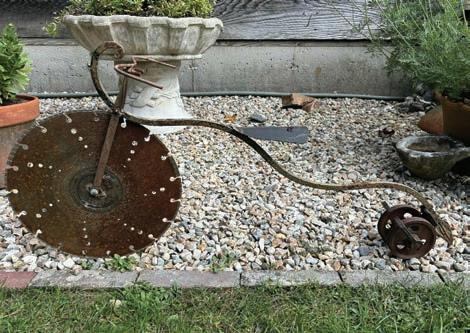
Whimsical Sculpture by Jeffrey Bynack made from found metal parts & objects. Welded and mechanically fit. Perfectly suitable for indoor and outdoor enjoyment.
See more of this work at ... 413. 645. 4114 / artfulmind@yahoo.com —Commissions gladly considered—
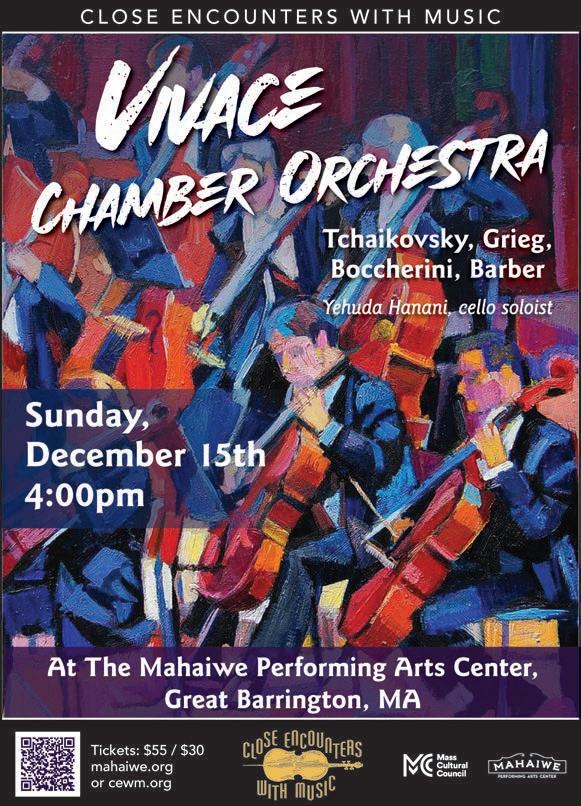
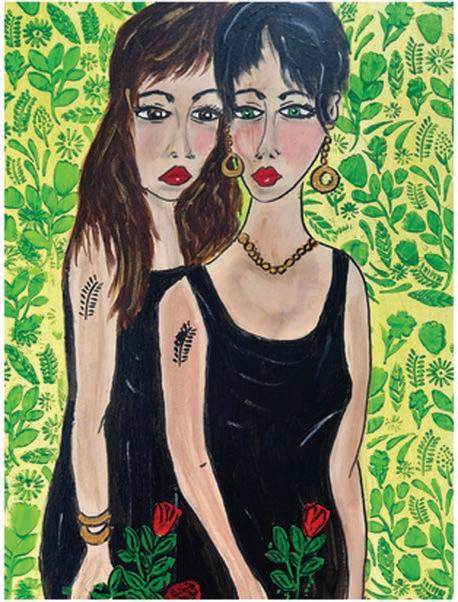

“The Man who Looked Like James Joyce”
After my conversation with Valeria where she explained why the elephants hated the ants, I was surprised at my unexpected emotional reaction. Bruno’s statement that it took a week to kill an elephant had affected me deeply. Nevertheless, I did not believe any of her stories, it was, to me, simply an interesting historical fiction narrated by a child, but reinforced by the child's emotional commitment to the importance of the story.
It began to rain persistently at that time and there were no patrons at the carnival. Running the bumper cars for only 2 or 3 people was not allowed so I spent some afternoons in the library. I took down an encyclopedia and began reading about the Punic wars. I recognized all the basic facts from high school but there was a passage about the Island of Sicily that said. The important Greek colony of Syracuse in Sicily at first sided with the Romans against the Carthigians, but after a revolt in the city, they switched their allegiance to Hanibal. The Romans had great difficulty subduing Syracuse, because of the mathematician Archimedes, who had created monstrous grappling hooks that lifted the Roman triremes up in the air to a great height, and dropped them to their complete destruction.
Although the Romans finally conquered Syracuse, orders were given to spare the life of Archimedies, but he was slain by a Roman soldier in the heat of battle.
There were several things in that passage that struck me as extremely interesting and relevant to Valeria's account of the conflict between the ants and the elephants. First of all, I hope you noticed that the town in question was named “Syracuse,” the very name she had given to her ant friend. To me this was a clue to how the story she told me might have come about, though a patchwork of remembered facts overheard over time and stitched together in her inventive mind.
Consider the fate of Archimedes, it was ordered that he was to be spared but was killed anyway. That is what happened to the elephants, they were also ordered to be spared but killed despite the order. Consider also the method used to kill the elephants; by the use of mechanical devices that raise them in the air and drop them. That was exactly the same as the tools Archmedies created in the war.
But where were these pieces of information coming from? She would obviously explain her source of information as being from the ant and the elephant themselves, and I had no desire to question her, or contradict her, but in the meantime I began to look around for a simpler and more obvious explanation.
There was a man working at the carnival who seemed to me to be a possible source of her notions. He was a man by the name of Thomas, and in the past he had been the driver of the old carnival bus, which he was also the mechanic for. For several years the carnival had been fortunate to be able to stay in one place, so that Thomas had no work to do, but he was kept on, partly because he asked for no payment, and made himself useful whenever things needed to be repaired. I mentioned that those employed in the place were mostly illiterate. But Thomas was a highly educated man. How did I know he was highly educated? Because of his eyeglasses, his hat, and the sportcoat he always wore that was tweed, and had suede patches on the elbows. I suspected he wanted to look like James Joyce, and if that was true, he certainly achieved an accomplished imitation.
He spoke little, and when he did say anything it was devoid of any uncertainty. Each morning he would read a newspaper, sitting at a picnic table, and his coworkers would sometimes approach him, even timidly, and sometimes ask him questions. They asked him questions, not because they wanted or needed to know the answers, but just because they liked to hear his answer. So, the man who operated the merry go-round might come up to him and say. “Thomas, when did the Second World War end?” And he might answer, “September of 45,” without looking up from his newspaper, or looking to see who had asked the question.
“But what day in September?” and Thomas would give the date and day, with a slightly annoyed shake of his head.
Why would the Merry-go-round operator need to know the day the Second World War ended? For no reason, but simply because Thomas knew, and therefore, obviously must know everything, absolutely, and it gives an ignorant person pleasure to know someone like that.
This Thomas person was in the library the day it was raining so hard, and I decided to ask him a question, even though we had never been introduced. I walked up to him, he was sitting reading a newspaper in the periodical section, and I said to him, “Is it true that the carnival is going to sell the elephant.”
“He nodded his head, not looking up from his magazine. “Is the elephant really mad at Valeria, like she says he is?”
I suppose it was a presumptuous and impolite question and he didn’t bother to answer it but I persisted and said, “Why would they sell the elephant?”
Thomas gestured for me to sit down, and looking at me with great seriousness said, "It's the end, the end of everything, and when Bruno goes everything else is going to go with it. The money from the sale of the elephant will be almost sufficient to pay all the outstanding bills, and then we are going to all go our separate ways, and everyone knows it.”
Thomas was then good enough to sit back in his library chair, push his papers aside, and proceeded to explain the affairs of the carnival to me in detail. But before I tell you what he had to say, I have to confess that at first I did not like Thomas, and for a trivial and unimportant reason that I am embarrassed to admit. I did not like him because when I interrupted him he was reading the Wall Street Journal, and not only that, but he was making notes in a notebook as well. Now, there are many people who read financial journals, and many of them jot down notes in a pad, but it is a special class of persons, in my opinion, who do this in a library, reading a paper they did not pay for, in a room provided for them by
the city. In short, it is… well I won't go on exposing my various prejudices for you, and will simply tell you what he had to say about the carnival where we both happened to be working. This is what he had to say.
“It is a very odd situation for a carnival to remain in one place for a number of years. In general, carnivals, like our establishment, move from place to place, traveling at least once a month if not more often, and are constantly on the road. How did it come about that we have remained here for so long? It happened quite by accident. One day we set up our tents, booths and rides in an accommodating field, near a small town, only to discover that, without realizing it, we were within sight of the interstate highway. We discovered that it was possible to see the tops of our tents and their flags, from the highway, and as cars would come to the top of a rise in the road there we would be, beckoning travelers to take a break from their journey and visit us. But, it was not the sight of the tents and banners that was so attractive to them, it was the elephant that happened to be tied to a telephone pole just within sight of the road. Now there is something compelling and hypnotic about an actual live elephant, and I believe that there is no person, no matter how busy, jaded or insensitive who, when they round a curve, and an elephant comes into view, would not instantly put their foot on the brake, and slow down to get a better look at the sight.
An actual elephant, looked at close up in the real world is capable by simply existing, to make one feel that their life has been entirely meaningless. The elephant does not have to do any tricks at all to produce that reaction. If you got to stand next to an elephant, say, just two feet away, it seemed as though the animal is just the kindest entity in the world, kind and patient, and even caring, and yet it could kill you with just a gesture and perhaps not even notice you.
I remember, as a child I went to camp each summer, and in a field I could see two buffalo standing motionless in the distance. They were real live buffalo, looking like they must be the last of their kind in the world. I would be riding in the back seat looking for them the entire way. I would feel a rush of joy when I would see them each year. It was so long ago, and yet, when I think of them now I feel as thought they must still be there.
It is like that with our elephant, and it is not just the elephant standing there by his pole, it is also Valeria, sitting next to him, leaning her back against one of his legs and pretending to read a book to him, and him turning the pages for her. A few years ago you could have seen them playing checkers. They loved to play tic tac toe in the dirt, and recently they have been playing chess together. Now, neither of them is very good at chess, so we have been told by people who know, but the sight was something one could never forget.”
Having listened to Thomas explain things to me concerning the carnival, the elephant, and Valeria, I began to have some attachment for the place, but what he said was not even the half of their problems.
RICHARD BRITELL OCTOBER, 2025, CHAPTERS 1 - 6 CAN BE FOUND AT RICHARDBRITELL COM