Independent Student voice of Boise State since 1933
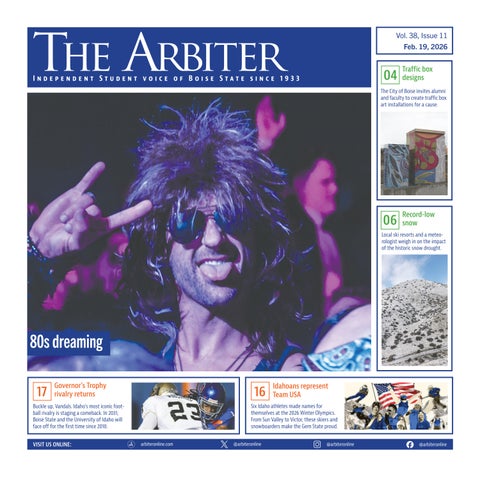
dreaming
17 Governor’s Trophy rivalry returns
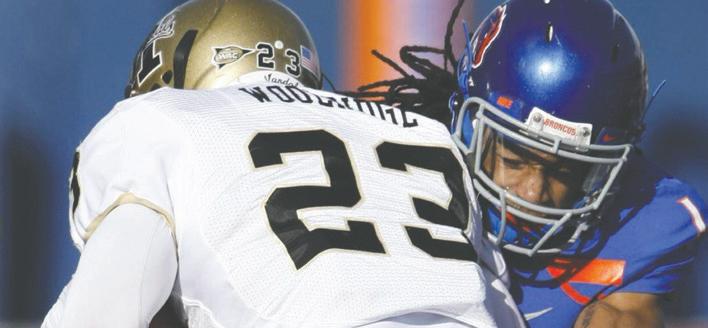
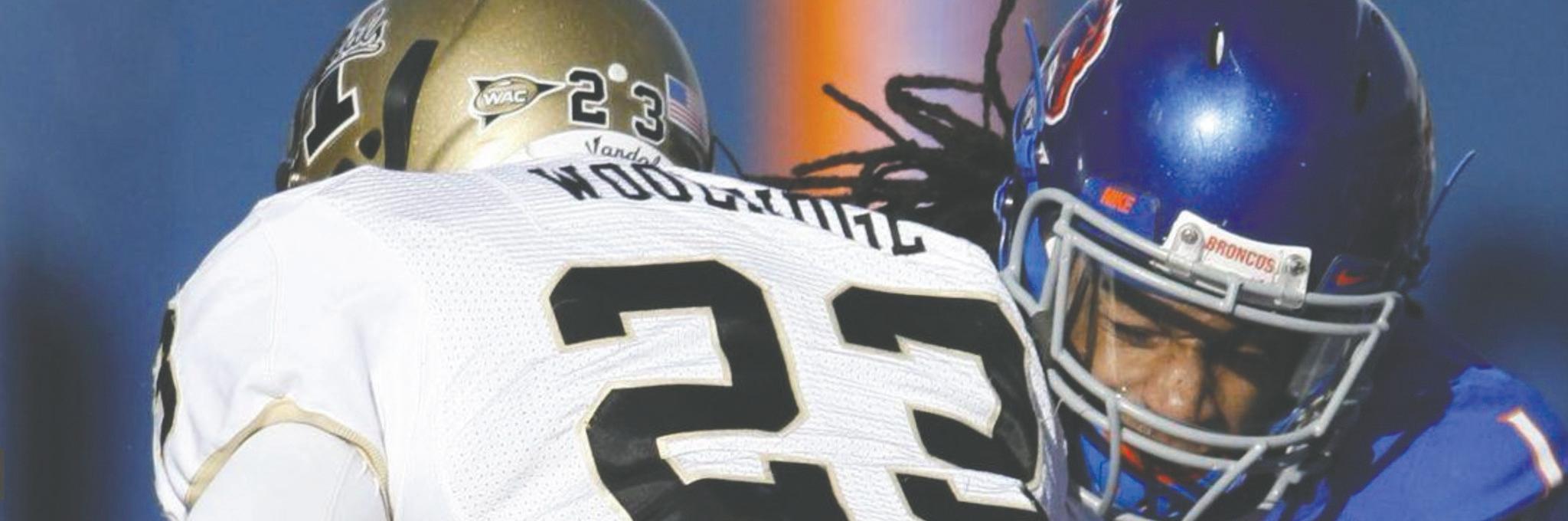
Buckle up, Vandals. Idaho’s most iconic football rivalry is staging a comeback. In 2031, Boise State and the University of Idaho will face off for the first time since 2010.
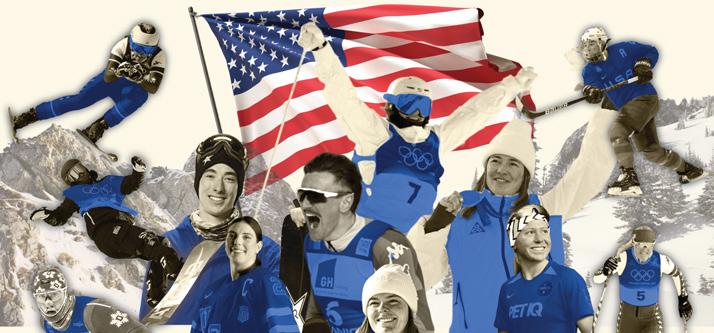
16 Idahoans represent Team USA
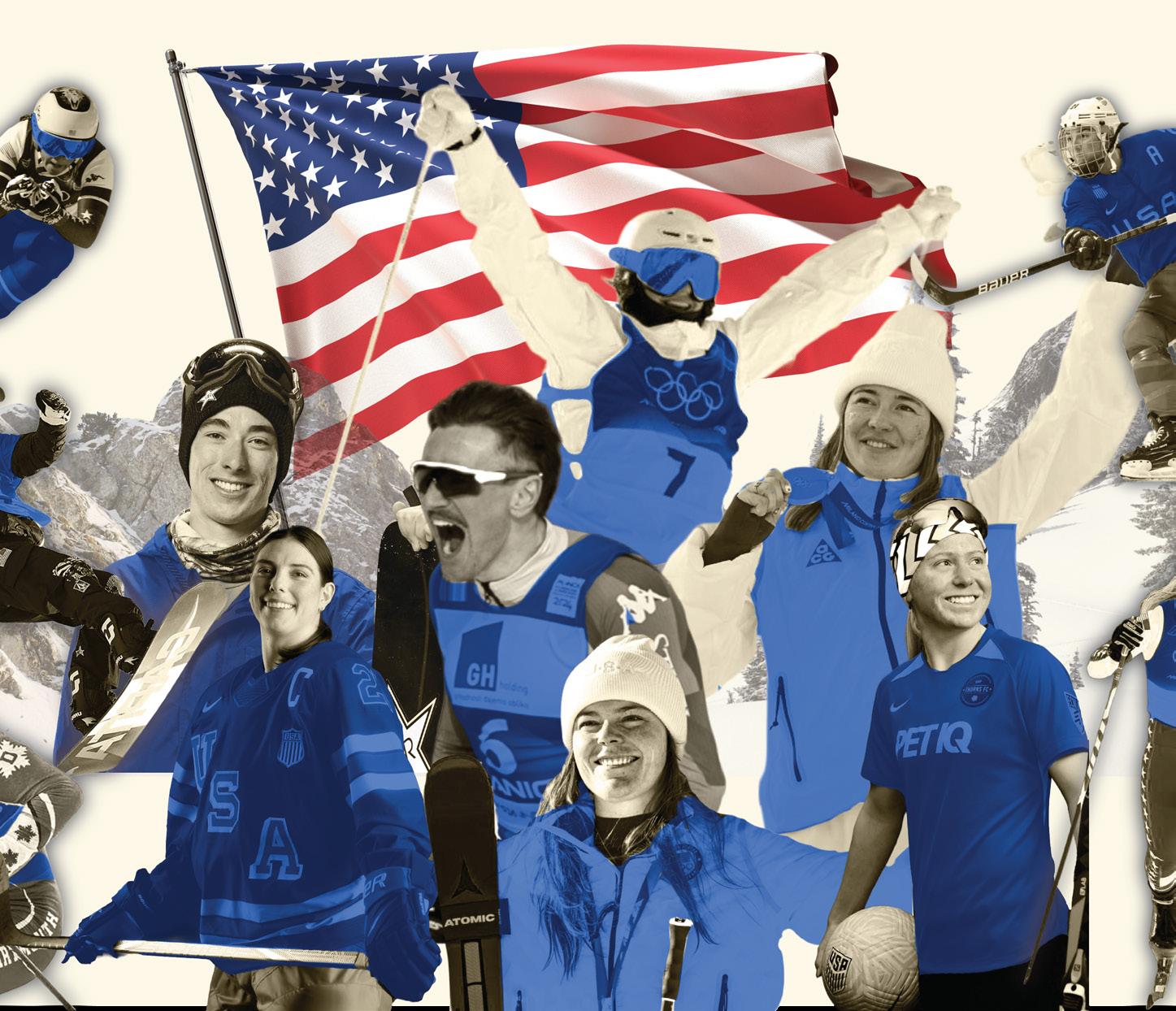
Six Idaho athletes made names for themselves at the 2026 Winter Olympics. From Sun Valley to Victor, these skiers and snowboarders make the Gem State proud.
Vol. 38, Issue 11 Feb. 19, 2026
04 Traffic box designs
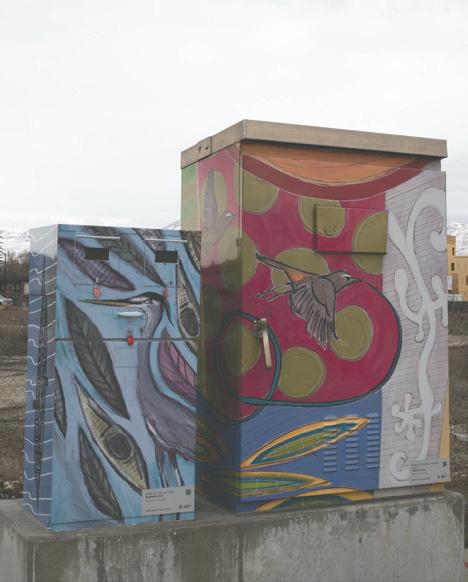
The City of Boise invites alumni and faculty to create traffic box art installations for a cause.
06 Record-low snow
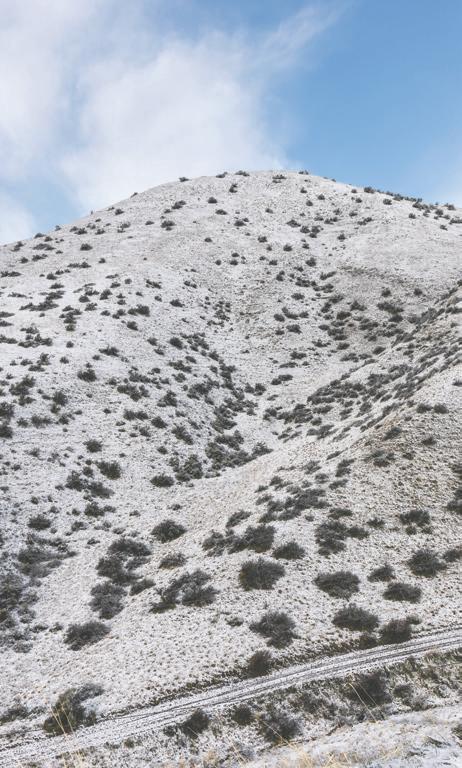
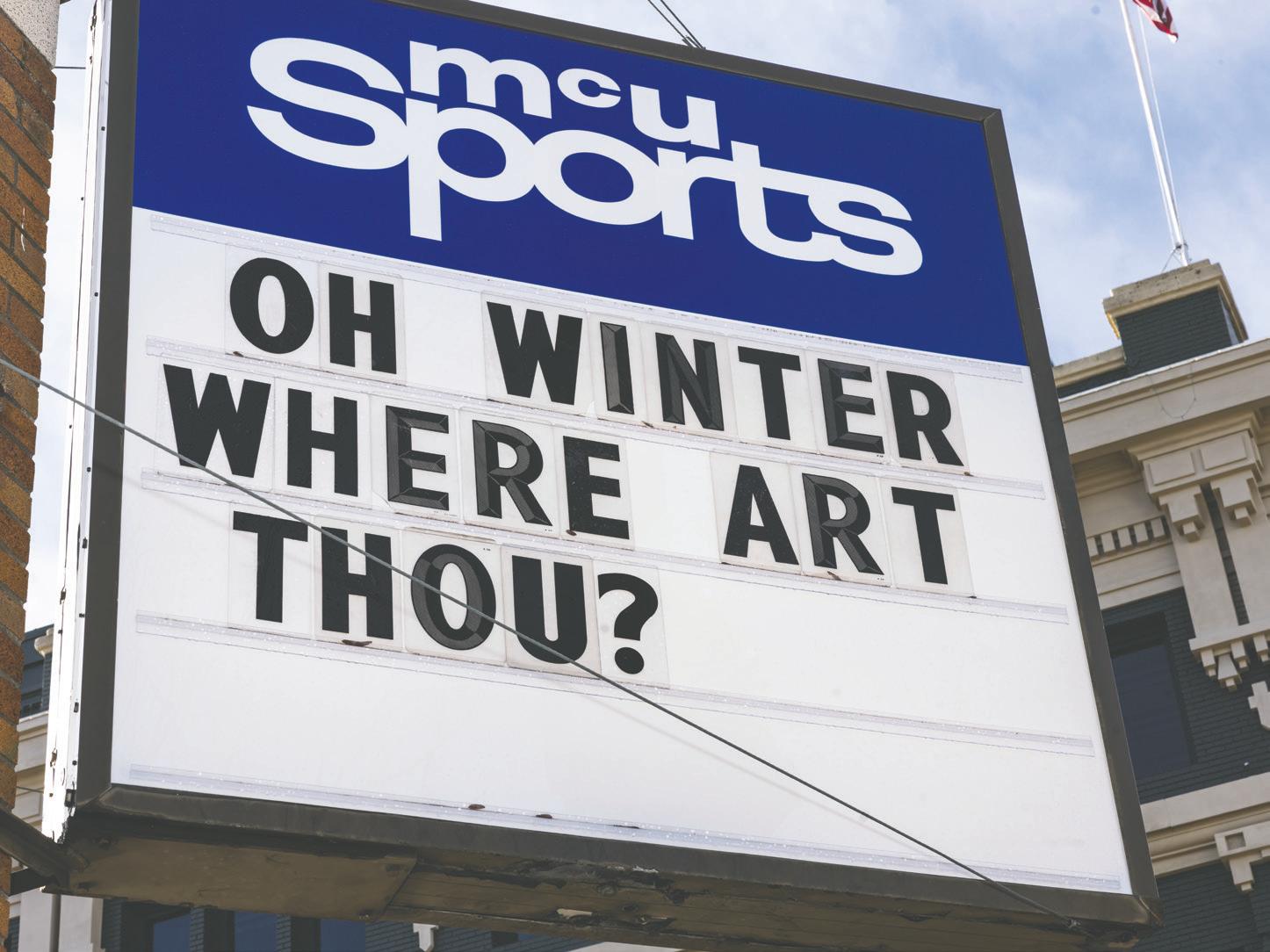
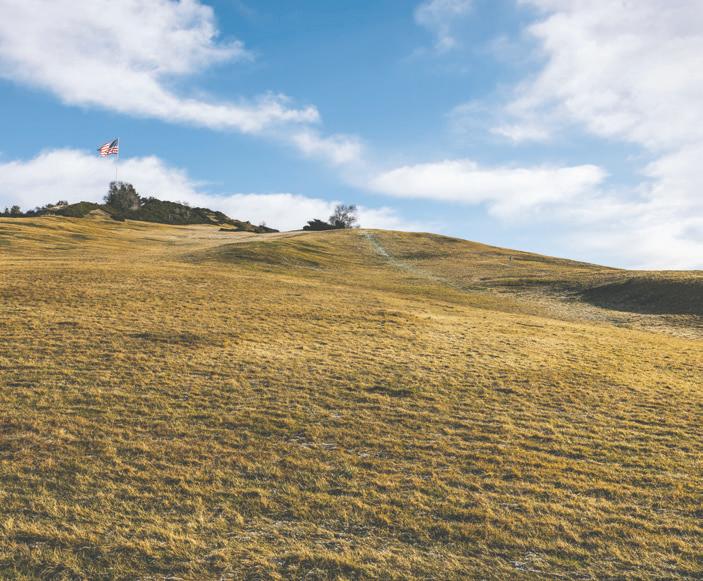
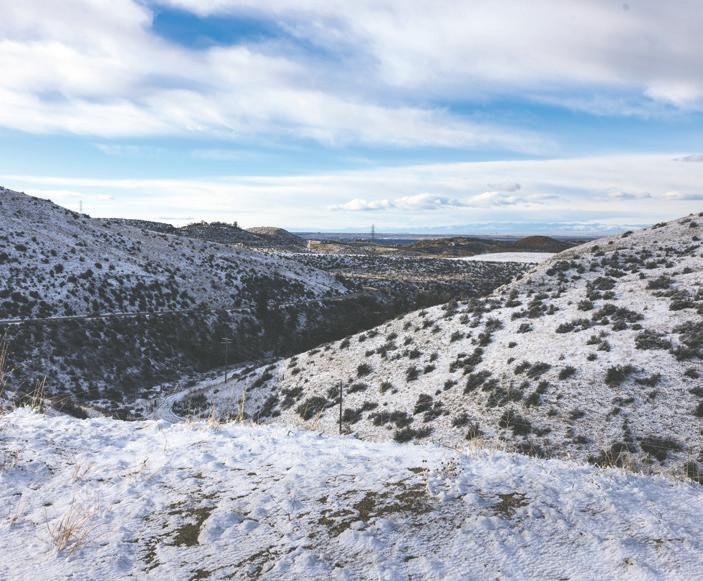
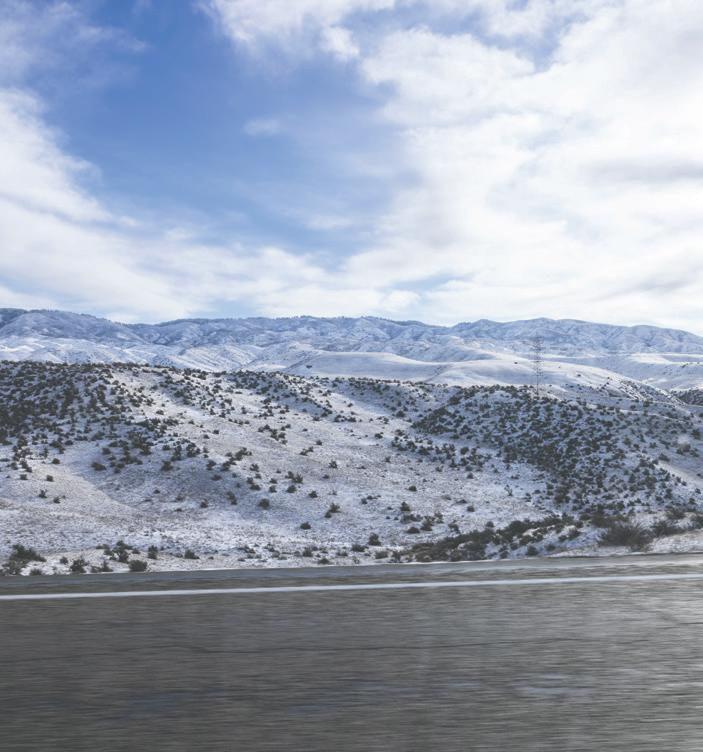
Local ski resorts and a meteorologist weigh in on the impact of the historic snow drought.
Editor-In-Chief
Emily Carmela Nelson
editor@stumedia.boisestate.edu
Managing Editor
Olivia Brandon
editor@stumedia.boisestate.edu
Contributors
pitch@stumedia.boisestate.edu
Koletta Persephone DiDio
Maximus Molina
opinion@stumedia.boisestate.edu
Editor -
Zaccary Kimes
culture@stumedia.boisestate.edu
Editor -
Julianna Kelsey
Reporter -
Isabella Williams
sports@stumedia.boisestate.edu
Editor -
Jake Zamora
Reporter -
Aidan Mattingly
Reporter -
Cole McAdams
Intern ReporterIntern Photojournalist -
Jack McElwee Keara Antonelli
design@stumedia.boisestate.edu
Design Manager -
Naomi Brown
Graphic Designer -
Illustrator -
Amber Jansson Mia Strand
digitalcontent@stumedia.boisestate.edu
Digital Content Manager-
Digital Content Producer -
Omar Saucedo Carter Nash
Marketing & Advertising
Advertising & Sales Manager
Zach Cerepa
ads@stumedia.boisestate.edu
Marketing Manager
Karley Rodriguez
marketing@stumedia.boisestate.edu
Distributed biweekly throughout the academic year, The Arbiter is the official independent newspaper of Boise State University where student editors make all content decisions and bear responsibility for those decisions. The Arbiter’s budget consists of fees paid by the student body and advertising sales. Additional copies can be picked up free of charge at the Student Media office.
ON THE COVER:
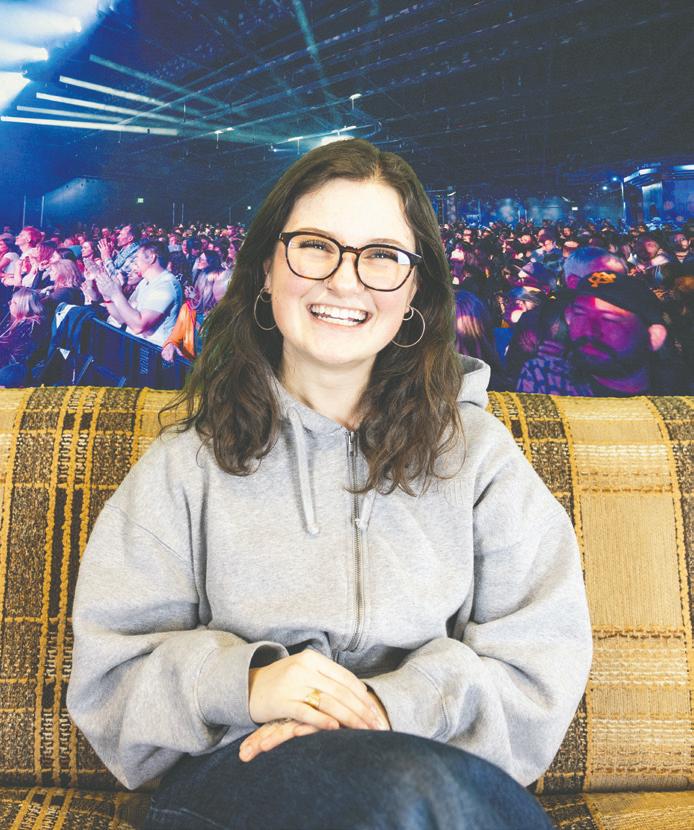
Local cover band Casio Dreams transports audiences back to the 1980s — no time machine necessary. Established in 2018, the group has played gigs across Idaho, exposing audiences to classics from the era of cheesy guitar riffs and iconic pop ballads. The Knitting Factory transformed into an '80s lovers' dream, complete with a disco ball and an audience adorned in shoulder pads and tulle.
HOW TO REACH US:
CONTACT US: editor@stumedia.boisestate.edu
208.426.6302
PHYSICAL LOCATION: Located on first floor of Lincoln Avenue Garage Suites
MISSION:
As a student-run organization, we produce accurate and hyper-local information through non-partisan and socially responsible media.
MAILING ADDRESS: Student Media MS 1340 1910 W University Dr. Boise, ID 83725-1340
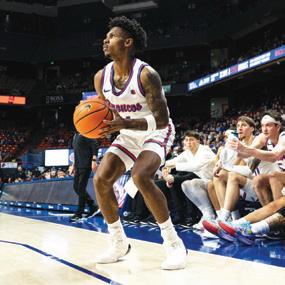
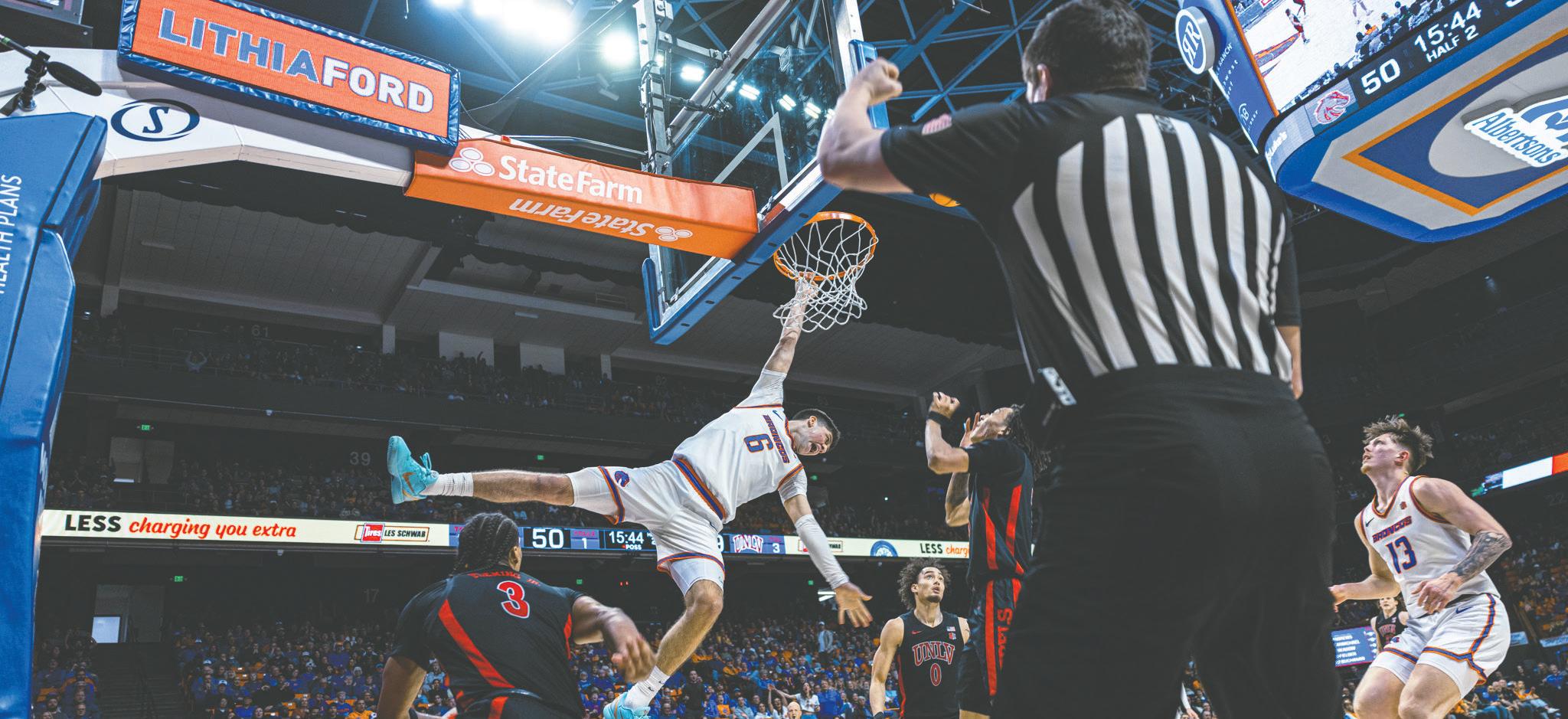
Crazy dunk by Pearson "Peanut" Carmichael. Carter Nash
ALUMNI AND FACULTY DESIGN PUBLIC ART FOR TRAFFIC BOX ART PROGRAM
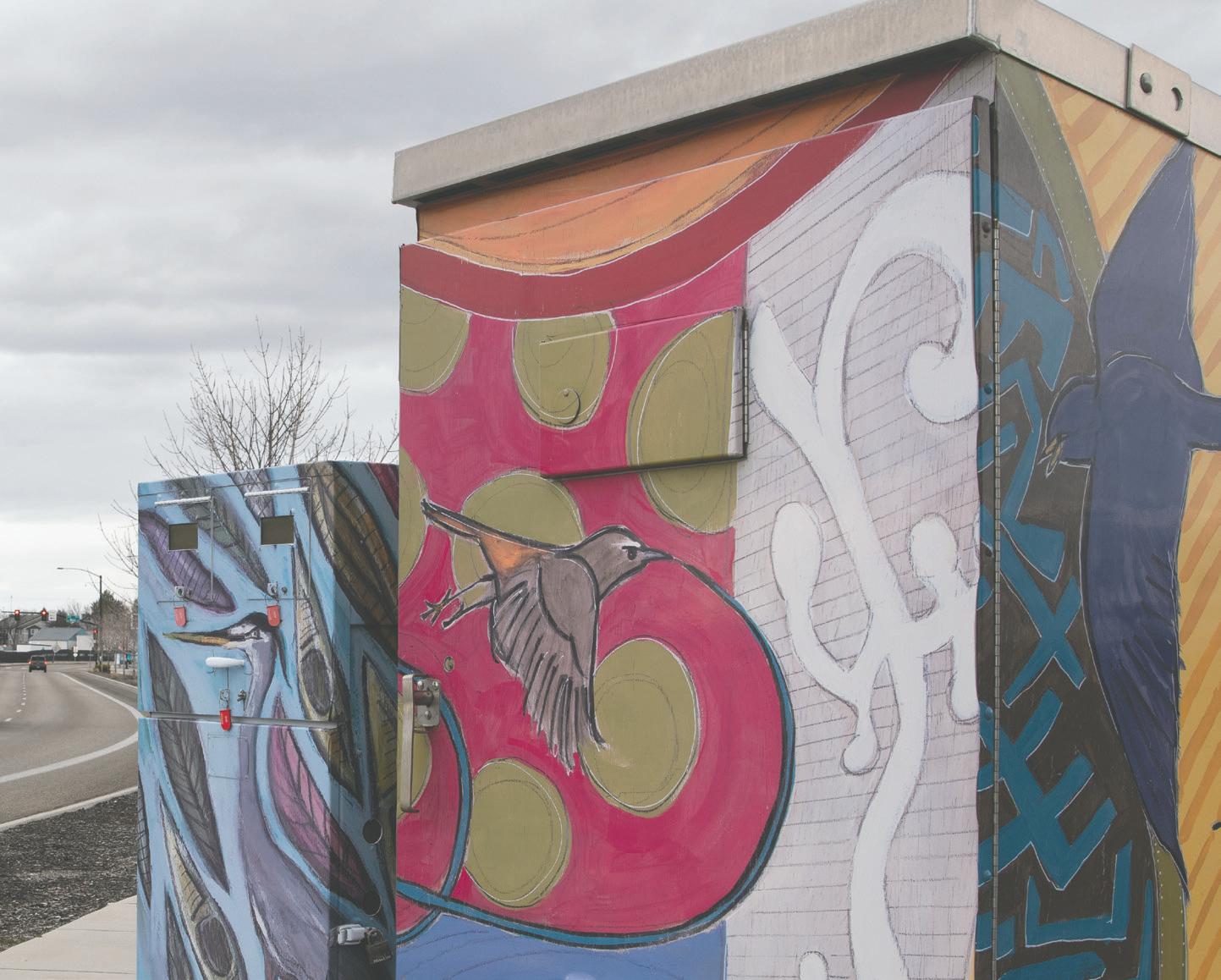
Every year, the City of Boise invites local artists to decorate gray traffic boxes with original artwork, turning once-dull city streets into a public art gallery.
In January, the Traffic Box Art program, now in its 17th year, announced the artists selected to create their own public art designs for traffic boxes throughout the city in 2026, with several being Boise State alumni and faculty.
This year, artists were asked to create designs that “explore the intersection between community and climate” by focusing on one of the city’s seven Climate Action Roadmap Priorities. According to the City of Boise, these priorities serve to guide the community as it works toward being carbon neutral by 2050.
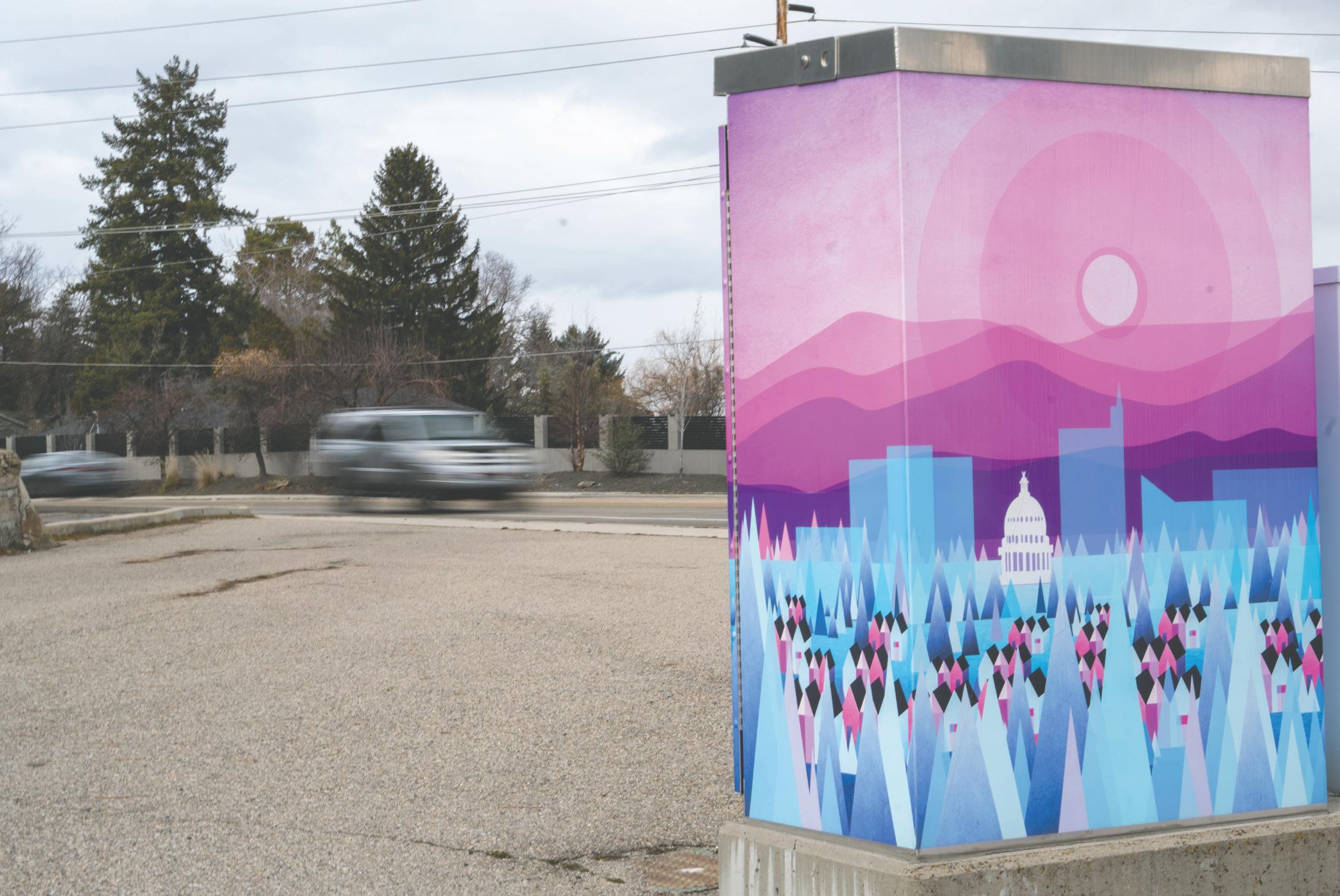
Hailee Parman, a 2024 Boise State alumna who graduated with a degree in Graphic Design, was selected to decorate a traffic box for the Natural Environment category.
“[The categories] were all based on the community and the environment in Boise, and nature is the place I feel most inspired and happy in,” Parman said.
Parman drew inspiration from one of Boise’s most prized natural features — its tree canopy, which earned Boise the nickname, “The City of Trees.”
“Trees have a lot of environmental benefits and provide calmness, health and mental benefits to the people in this city,” Parman said. “The trees in Boise are everywhere and make the city really beautiful.”
As Parman was drafting her design, she sparked her creativity by going on walks and paying close attention to the different kinds of trees she saw. She then sketched her design, added some color and submitted the proposal for her application.
When Parman found out she was selected, she was excited to be chosen for a public art program she had long admired.
“Ever since I moved to Boise, one thing I noticed immediately was the art scene here, and specifically the traffic boxes,” she said. “It’s really cool they’re able to turn something so industrial into a piece of art.”
McKenna Howard, a graphic design specialist for Boise State’s Office of Communications and Marketing, created a design for the Buildings and Energy category.
Her inspiration? The very building she works in on Boise State’s campus.
“The building I work in is heated by geothermal [energy],” she said. “When I started working at Boise State, I learned a lot more about it. We have an installation on campus, an art piece by the Engineering building that shows [how] the
process of geothermal energy [works].”
Howard was fascinated by geothermal energy and that much of Boise is powered by the largest municipally operated geothermal heating utility in the country. She wanted to create a design that shows how the system works.
“[It starts with] water falling into the foothills,” Howard explained. “The water gets absorbed into the earth and goes down to the geothermal level, and that’s where the water gets heated. Then, there’s a pump on the east side of Boise that takes it back up, and then from there, the water goes through the pipes into each building.”
Howard’s design will showcase prominent buildings from Boise and Boise State’s campus which are heated by geothermal.
Howard said she resonated strongly with the year’s theme and is excited to contribute to the program.
“It’s really important, especially with this winter where the weather is a lot different than we were expecting to really highlight how Boise is working with our climate and working to preserve our natural resources,” she said.
Another one of Boise’s climate priorities, Food Systems, will be represented in a design by Boise State alumna Sam Archidé, who graduated in 2024 and studied Fine Arts with an emphasis in Illustration. Archidé’s artistic process took inspiration from her connection to gardening.
“My family is really into gardening,” she said. “I have a lot of really fond memories working outside with my parents and different relatives. I also got into a house with a yard two years ago, so I’ve been learning more about the
Julianna Kelsey | Culture Editor | Photos by Keara Antonelli, Graphic by Naomi Brown
local ecosystem and what plants thrive in Boise and our climate.”
Archidé described her design as a narrative style, showcasing the community garden, Boise Farmer’s Market and the many people who make those programs a reality.
“I hope the traffic boxes spark some good conversations,” she said. “Not only are they visually appealing, but hopefully, people think about how you can grow your own food. How can you feel really independent and know where your food comes from?”
For Archidé, her education at Boise State prepared her to contribute to public art programs by helping her hone her artistic skills, challenge herself and grow confidence as an artist.
“I feel very fortunate that I [studied] at Boise State,” she said. “Repetition is the key thing with art — doing it over again. You get more comfortable doing the more challenging things.”
Another one of Boise’s most treasured natural resources, the Boise River, will take center stage for the Water climate priority.
Annika Kalak, a 2022 Boise State graduate with a degree in Fine Arts and an emphasis in Interdisciplinary Studies, created a design focusing on how Boise’s water resources bring the community together.
“Water is a huge source of recreation and third space gathering, especially in the summertime here in Idaho,” she said. “I chose water, thinking about what brings us together as a community and more specifically the history of the Boise River.”
Kalak is using a multimedia collage technique to tell a story of the past, present and future of the Boise River.
Having previously created art for the City of Boise, including an installation for the Boise Depot’s Centennial celebration in April 2025, Kalak explained that her Boise State education prepared her for a career of creating public art as a local artist.
“The art program at Boise State, specifically the faculty I took classes
with during my time as BSU, is really focused on thoughtful critique and making sure students are ready to enter the professional field as an artist,” she said. “The program and the faculty themselves have built a really meaningful and constructive environment for you to create work that matters to you and get constructive feedback.”
For several of the artists in this year’s lineup, a Boise State education helped pave the way for them to make their mark on the local art scene.
“[Boise State] really recognizes the importance of working artists in the local economy, so they’re really focused on helping you in that collaborative way,” Kalak said.
The 2026 Traffic Box Art pieces will be unveiled periodically throughout the year. Updates can be found on the Boise Arts and History Department’s Instagram page, @boiseartsandhistory.
February 19, 2026
SKI RESORTS COMBAT RECORD-LOW SNOWFALL, METEOROLOGIST WEIGHS IN
Jack
Boise has just received 3% of its average snowfall amid a historic snow drought plaguing the West.
The City of Trees averages 21.6 inches of snowfall per year, according to the National Weather Service, with most snow falling in January and February. Since Nov. 1, 2025, Boise has received 0.7 inches of snow.
“We’ve had a very, what we call a blocky pattern,” said Scott Dorval, Idaho News 6 Chief Meteorologist. “High pressure was dominating the West, and the pattern wouldn’t break. It typically would bring in lots of moisture into Idaho [and] a lot of that was heading up to Alaska.”
Boise is on pace to break the record for the lowest snow season, 1933, when 1.1 inches of snow fell on the valley floor.
“In the November, December timeframe, we had these storms come in, and Brundage Mountain, Tamarack Resort, got a good shot of snow. But that was it. It just turned off after that,” Dorval added.
Amid the record-breaking snow drought, Idaho’s ski resorts are finding unique ways to stay afloat.
Tamarack Resort has seen barely a third of its usual summit snowfall, but supplemented early-season snowfall with snowmaking, the creation of artificial snow using compressed air and water.
“We have been lucky enough to have cold temperatures, especially over the last few weeks,” said Tamarack CEO Kara Finley. “We’ve been able to make plenty of snow, that’s allowed us to be fully open.”
The effects of the dry winter have extended east as well — Pomerelle Ski Resort in Albion averages 500 inches of snow per year. They have seen only 67 inches this season.
Pebble Creek Ski Area in Inkom averages 225 inches of snowfall and has
February 19, 2026
only received around 30 inches this year. This shortage led Pebble Creek to close down the slopes on February 9 and 10 in efforts to conserve snow.
Closer to home, just 20% of the yearly average snowfall has fallen at Bogus Basin and the staff is using alternative methods to keep the slopes in good shape. Like Tamarack, Bogus Basin utilizes snow-making machines. They also benefit from a state-of-the-art snow storage system that allows them to hold surplus snow over the summer.
“We piloted a program last summer to test what it would be like to store snow over the summer, which was a success,” said Austin Smith, director of innovation and marketing at Bogus Basin.
The staff came across the Finnish company, Snow Secure, in early 2025 and purchased a pilot system to test over the summer. The goal of this project was to start small and test its capabilities for future snow storage capacity.
“It’s basically like a cooler,” said Smith. “You pile the snow up and you cover it with foam insulated panels that then protect the cold energy that is inside or under the foam insulated panels.”
Bogus Basin was able to store 13,500 cubic meters of the previous winter’s snow through the summer. That snow has supplemented the slopes this winter and kept conditions better than they would be otherwise.
While the snow levels may be low, visitation is not. Resorts across the state encourage visitors to come test the slopes.
“There’s never a better time than a season like this to get up here and try skiing and snowboarding,” said Smith. “A lot of people think that they want to ride powder, but at the end of the day, most people need a lot of practice.”
“Tamarack, Brundage, we both have 100% of our terrain open,” said Finley. “I definitely would encourage people to get up here.”
As for long-term impacts to Boise, Dorval warned the lack of mountain precipitation could lead to a dangerous fire season.
“The worst case scenario would be a low snow pack and then a very wet spring,” said Dorval. “You’ll have a higher danger in the mountains, because of the low snowpack, and then when you have a wet spring, it grows all the grasses … Come July, everything dries out, and then you can get bigger range land fires too.”
Boise is set to receive higher levels of precipitation over the next week.
McElwee | Intern Reporter | Photos by Omar Saucedo
AFTER SEVEN FATALITIES IN 2025, BOISE CONTINUES PUSH FOR PEDESTRIAN SAFETY
Olivia Brandon | Managing Editor | Photos by Carter Nash
Boise had seven fatal crashes involving pedestrians in 2025, with a reported 34% increase in traffic patrols. During what is deemed the “100 Deadliest Days of Summer” for traffic incidents, Memorial Day to Labor Day, there were 88 fatal crashes in the state, 23 involving motorcyclists, according to Idaho’s Department of Transportation.
Toji Sakamoto, who works at Cycle Learning Center and consistently rides his bike around Boise, said the university’s pedestrian infrastructure is “pretty good” but could see improvements in high traffic areas, such as University Ave.
“It’s pretty good, honestly. It could be better. University Ave, going through the middle of campus and being a busy street with a ton of traffic, doesn’t really make sense to me, from the standpoint of it’s a college campus,” Sakamoto said, adding it’s challenging to navigate the number of vehicles and pedestrians.
After 8-year-old Mora Gerety was killed on Harrison Boulevard in the fall of 2025, Councilmember Jimmy Hallyburton, known for his passion for pedestrian infrastructure, expressed commitment to continuing his work on increasing pedestrian safety.
Hallyburton is currently focused on
two initiatives — a rapid-traffic calming project, which would include asphalt art and bolt-posts, and a Pathways Master Plan, a collection of bike paths and routes for pedestrians.
During his time as Executive Director for Boise Bicycle Project, Hallyburton said a child was hit by a vehicle on his way to elementary school and stopped into the bike shop for help. The boy was fine, but the incident inspired Hallyburton to find safer alternative routes for individuals on foot or bikes.
“We were looking to figure out what’s a safer place for this kid to get from his house to school. We looked all over the place, and there really weren’t any good routes whatsoever,” Hallyburton said. “We saw this really long dirt road that didn’t have any intersections on it, that took him almost the entire way, and it was the maintenance road for an irrigation canal. For the first time, we were like, ‘Could we use this as an actual way for people to commute on their bicycle?’”
Hallyburton and his team looked at other maintenance roads along power lines, canals and other public rights of way to discover an “off-street network” similar to the Greenbelt.
While there are possible safety con -
cerns of riding beside a canal, frequent bike rider Sakamoto said, “I’ll take the risk of falling into a canal over somebody texting and passing me in their car any day.”
The Pathways Master Plan focuses on two different projects this year: one on the Boise bench and another connecting Bishop Kelly, Bora High school and Bora Park.
“I’m not going to be on City Council forever, but when you approve a master plan like this, it means that the city, until somebody repeals that plan, council members will continue to build that out.” Hallyburton described the plan as similar to the Greenbelt; the route will be 50 miles long, 25 miles on either side and an additional 112 miles of pathways across the city.
Hallyburton explained some cheap, quick fixes are asphalt art in high-traffic areas to draw drivers’ attention and bolt-on posts, which establish a barrier between vehicles and pedestrians. He explained this is not only cost-effective but also allows neighborhoods to see what works best for them, as they are easily reversible.
“It’s not going to be perfect,” Hallyburton said of the rapid traffic calming project. “But it’s going to be better than
it was until we can get that infrastructure in there.”
Two bills passed in spring of 2025, SB 1140 and SB 1144, reduced pedestrian infrastructure in favor of benefiting drivers. “This is really bad legislation because some of the roads that were built in Boise have no business being three lanes wide. You could easily do two … then you could put more bike lanes in, better bus routes or larger sidewalks,” he said.
Although Hallyburton founded Boise Bicycle Project and is still a major supporter of the organization, he has passed the torch. Joleen Evans, advocacy and engagement lead for the organization, shared some additional high-priority items for Boise streets.
Evans said the Advocacy Committee created Boise’s first traffic-free garden in Ann Morrison Park, which provides a car-free space for bikers as well as space to hold monthly Bicycle and Safety Hour.
“From discussions I’ve had with bicyclists and pedestrians, there are improvements that can be made all across Boise, but I could see West Boise greatly benefiting from more pedestrian-friendly infrastructure,” Evans said. “That was made evident by hosting Open Streets Boise on Ustick Road last year.”
February 19, 2026
OPINION
COMING SOON, A PROMOTION NEAR YOU
Entrusting employees with managerial responsibilities on top of their own, without the intent of promotion, is like pouring gasoline on an already lit match. Both lead to disastrous burnouts, especially when a manager says:
‘If you do XYZ, there might be a promotion in it for you.’
The word ‘might’ does a lot of heavy lifting there to absolve managers from following through. While giving employees extra responsibilities can be used as a testing ground for potential promotions, the tactic of “quiet promotions” by managers across all industries can abuse the promise of upward momentum if the requirements are not clear.
By continually pushing their employees to work harder, managers undermine an employee’s professional
February 19, 2026
growth and long-term trust in workplace procedures, especially for those just entering the workforce.
“My first job out of college didn’t give me a lot of direction on how to move up, so I kept accepting any work they gave me,” Emily Allen, a recent Boise State alumnus, said. “I ended up doing way more than what my position asked of me.”
A 2024 study by Frontiers in Psychology found employees tasked beyond their original responsibilities wind up feeling crushed by the amount of tasks piling up around them, causing mental stress and leading to feelings of workplace apathy.
Extra responsibilities without a system in place to document employee progression or compensation is exploitative.
At Allen’s ad agency, client correspondence typically fell to her manager and despite not having the title of one, other responsibilities began to creep into Allen’s workload as well. Her manager gave her the impression that the extra tasks were an indication of a promotion, one that never came.
Her experience differs from what career progression should look like, clear and defined mentorships are vital for an employee’s early progression and longterm career aspirations.
Some companies are famously not transparent about their promotion requirements. The opaqueness of their standards absolves them of liability when employees feel slighted in the promotion process.
“I’ve been in a lot of retail jobs since graduating high-school and it’s usually all the same,” said Alexander Ramirez, a 22-year-old retail employee at the Fairview Idaho Youth Ranch. “My managers always see me working hard but it only gets rewarded with more work outside of my job description and never a promotion.”
Ramirez worked in retail stores such as Walmart and Target, where he constantly put in overtime to help out wherever he could, even taking up some of his manager’s “Team Lead” responsibilities. He thought his “above and beyond” attitude he displayed gave him a shot at an open management position — only to not even be offered an interview for the role.
“When I work that hard and get looked over like that, I feel frustrated and like I have to move on to the next job,” said Ramirez.
The promotion process, or lack thereof, is a large contributor to higher turnover rates among younger employees.
A 2025 report by Randstad, a career development agency, found Gen Z’s tendency to hop from one job to another is directly connected to a “drive for growth.” The uncertainty for advancement drives away young talent in many fields.
However, older generations tend to argue the extra work is meant to prove employee readiness for the next step in a career path. Even when that readiness is put on display, it does not guarantee feedback or recognition from management.
“At Starbucks, I got into their mentorship program to become an assistant manager,” said Jacquelyn Kami, a 24-year-old barista. “But after jumping through all their hoops for over a year, I still wasn’t progressing and [management] weren’t being clear on why.”
Kami displayed proper initiative by applying for the mentorship program designed to provide Starbucks employees with a clear pathway for advancement. Despite this, management’s lack of follow-through and communication led to her eventual apathy toward her job.
“One day, I just stopped trying as hard,” Kami said. “I didn’t want more tasks to keep piling up, which honestly made me feel worse for a bit but it was what I needed.”
Ultimately, transparency from management is sorely lacking in the promotion process. When expectations are not clear while responsibilities continue to pile up, it’s no wonder young employees continue to burn out and “job-hop” in search of better opportunities. Employers must implement and follow through on clear advancement pathways, otherwise they risk further extinguishing the future of their workforce.
Zaccary Kimes | Opinion Editor | Graphic by Amber Jansson
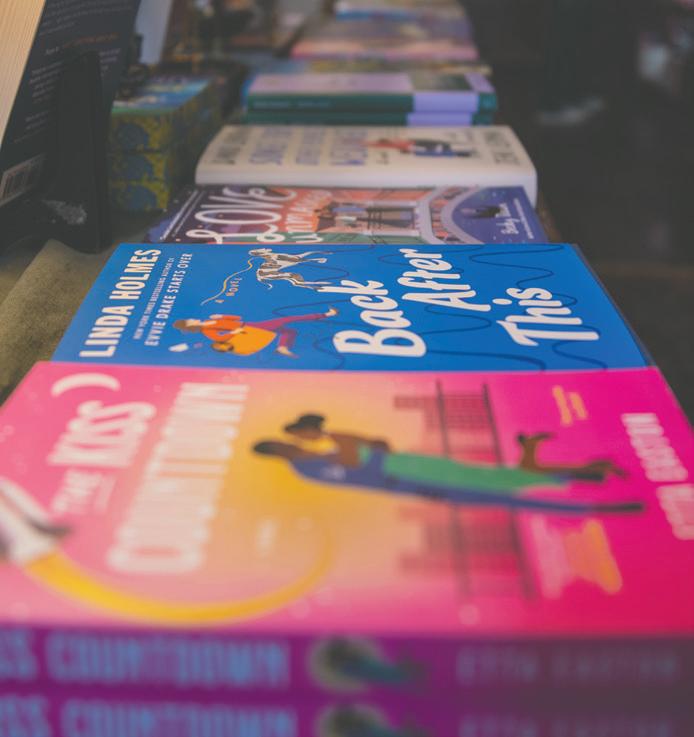
SHELF-HELP: WHY USED BOOKSTORES MATTER MORE
Koletta Persephone DiDio | Staff Writer | Photos by Keara Antonelli, Maximus Molina
Walking into Barnes & Noble, a table of shiny hardcovers lure readers in with the smell of fresh paper and flourishing ink — but how many of those books will actually end up in readers’ hands?
The global publishing industry produces millions of dollars worth of books each year. Paper waste makes up 26% of landfill content, with books acting as a significant contribution. Each year, 160,000 truck loads of books are discarded and pulped. That’s 10 million trees cut for no reason.
When books are thrown away, they go through the pulping process. They are shredded, de-inked and turned into cardboard. Almost like a literary slaughterhouse.
Book hauls and unboxing videos flood social media with influencers flaunting stacks of dizzyingly beautiful spines for aesthetic clout. A reader’s version of mounting a stag head, ‘trophy books’ are proof that just because you have a book, doesn’t mean you’ve read it.
Publishers have noticed the draw of a pretty cover. Reprints feature gilded edges, fresh fonts and sprayed spines. Entire series are often repackaged, or books that were just released are reprinted with a more cosmetically appealing cover, contributing greatly to the paper waste.
Lily Kent, a senior studying Creative Writing and bookseller at Barnes & Noble, feels that the glamour of buying books has become more valued than actually reading them.
“Every business’s goal is to stay in business,” Kent said. “They’re just meeting consumer demand. It’s not as much overproduction but overconsumption. People don’t read for the experience anymore. They read because it’s instant gratification.”
However, Boise’s literary scene is growing more sustainable and communal. Waves of independent and secondhand bookstores are redefining what it means
to read responsibly and build community while doing it.
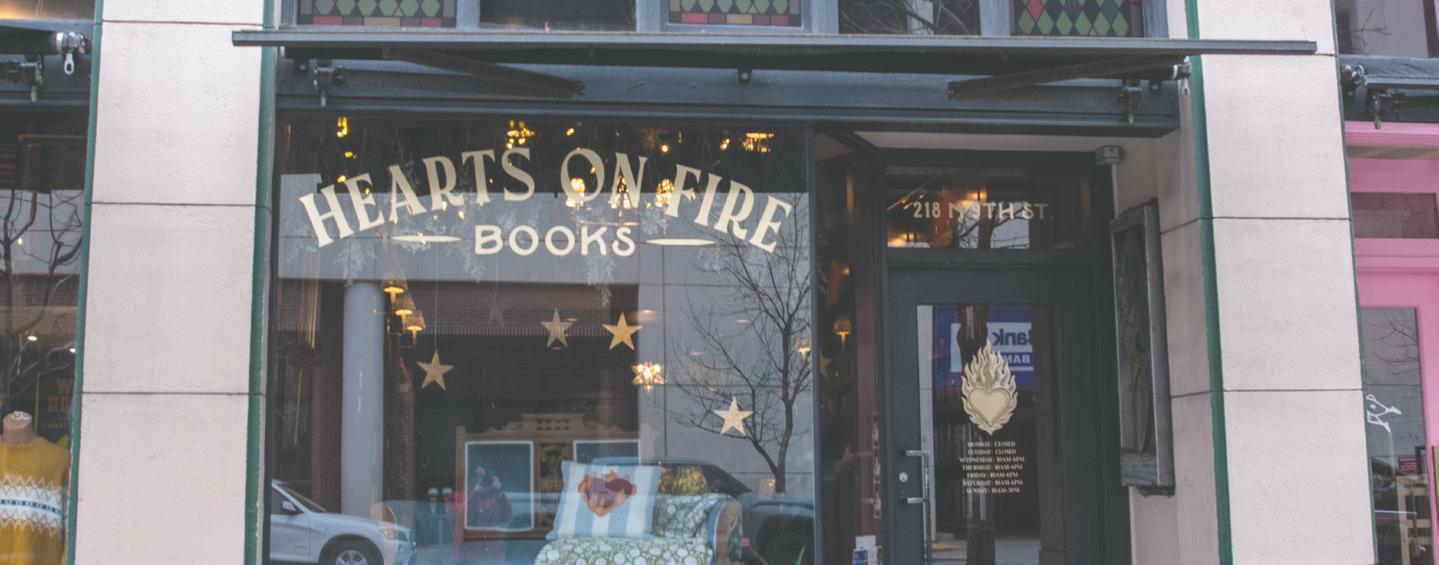
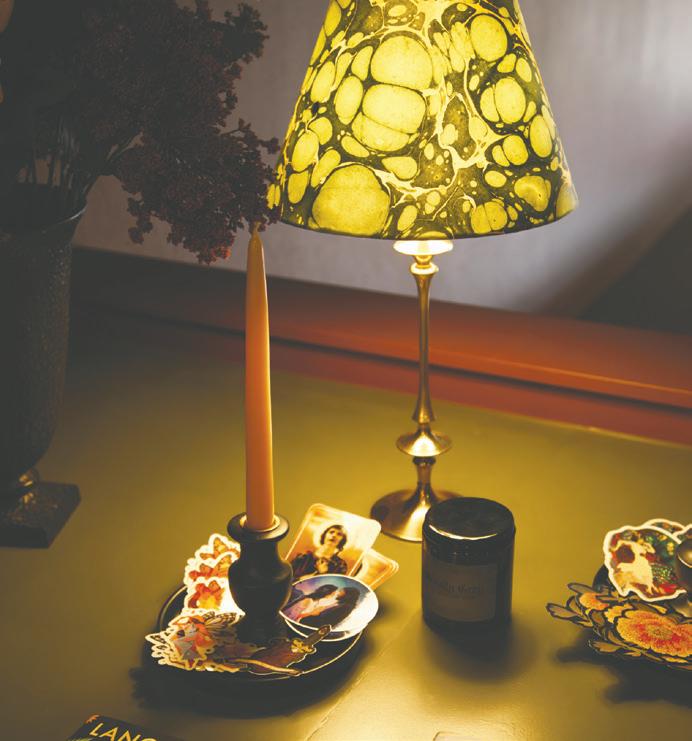
A romance-focused bookstore that opened two months ago in Downtown Boise, Hearts on Fire invites readers in with a soft glow and plum-painted, book-lined walls.
The owner, Sami Haroian , believes books are powerful tools in connecting people. Even as her business is just starting out, she’s thinking ahead when it comes to used books.
“Used books are so popular, and for good reason. I want people to have accessibility to books. It’s a way to collaborate with the community and meet new people. Right now I’m selling new… [But] that may be a future thing I incorporate.” Haroian said.
Over in Meridian, Half Price Books is a hallmark for both casual readers and deeply bookish folks. Boise State alumni and booksellers Meredith Brackus and Janea Rozmaryn-Lavendula see firsthand how used books keep physical media in circulation.
“When it comes to books that are unsalvageable, we try to donate them,” said Brackus. “We have a lot of great programs. If a teacher needs books for the classroom, we fill a box. If we can’t give it away, we recycle it.”
“That’s kind of what the store was built on — keeping books out of landfills,” Rozmaryn-Lavendula added.
THAN EVER
In an age of digital media, e-books are an ecofriendly option. However, used books provide a unique experience — there’s something special about buying a book someone else already loved.
“People want physical media,” Brackus added. “[They] want the real thing, to be able to hold something. I think physical media is coming back in a big way.”
Still, not every book is created to be something special.
“There was this copy of ‘Onyx Storm’, a Target exclusive, that had illustrated pictures in it,” Brackus said. “It didn’t take long for fans to realize they were stock photos. They got stock photos for one of the biggest names right now in romance — probably one of the biggest names in books, generally. It made so much money. It’s absurd that they couldn’t even hire an artist.”
Used bookstores can function like a rebuttal to this mass-market excess,
emphasizing how lending one another stories connects people.
“It’s a community, and I think that’s part of the thing that gives me hope, especially in this day and age,” Rozmaryn-Lavendula said.
Bookstores that re-home used books are part of a literary ecosystem by nurturing community and proving that reading is about connection. A book deserves to be read, not just showcased.
Many of the spines of those resplendent books on display at Barnes & Noble will be uncracked, stories unread, eventually joining the 160,000 truckfuls of books to be shredded and pulped.
Used bookstores prolong the life of a used book — passing them from handto-hand, reader-to-reader. They resist the cycle of waste by reminding us what they are for: to be read, shared and reflected upon.
LOCAL COVER BAND TURNS BACK TIME
Koletta Persephone DiDio, Maximus Molina | staff writers | Photos by Maximus Molina
Tangerine and magenta sprays of light fanned across the crowd. A dreamy haze catches on the sequins of prom dresses as a mirrorball lazily spins above an audience immersed in the magic of the 1980s. Crimped locks, teased bangs, side ponies.
While this may sound like a scene from a John Hughes film, this gathering of nostalgia and neon is the work of local tribute band Casio Dreams. Their 80s revival concert took the Knitting Factory back in time, letting the audience relive an era of shoulder pads, cassette tapes rattling in glove compartments and synth lines shimmering like mall skylights — a decade where everything felt slightly dramatic and wholly sincere.
Casio Dreams doesn’t just play a show — their music resurrects a
born during the decade, the music of the 80s evokes something in practically everyone, and the songs bridge the gap between generations.
“My son had ‘Rio’ by Duran Duran playing in his car,” Drummer Jeff Poole said, grinning. “He asked, ‘Dad, when you were a kid, did you listen to a lot of 80s music?’ We did. We called it the radio. All these songs you love were pouring out everywhere we went.”
Mia Martorelli, a fan of Casio Dreams since the beginning, sees them as more than a tribute band. For her, it’s time travel.
“[80s music] gets people out of their everyday funk, family, work,” Martorelli said. “It’s a gathering for people to let loose, have fun and dance.”
Her voice, feminine and feral in a classic 80s way, lead vocalist Mary Fischer said the band works tirelessly to ensure they create a full experience for fans.
“We try to emulate the artist as much as possible,
little inflections,” Fischer said. “We dress up in 80s [clothes]. We are trying to bring you this whole 80s experience.”
In a modern music landscape full of Spotify fatigue and algorithmic uniformity, Casio Dreams offers something refreshingly analog — authenticity, intention and sound that hits like VHS static and warm neon.
“I wanted to do something no one else in town was doing — a specific type of 80s music,” Poole said. “More synth pop. It’s the music I loved growing up. If it moves me, it’s probably going to move other people.”
Poole fell in love with music through nuance.
“I have a friend who makes fun of me in a good way, [saying] ‘You listen to music like no one else’,” he said. “I’m interested in the building blocks of a song. Obviously, the sum is the thing that everybody enjoys, but I like the process of song construction … I love looking under the hood.”
That obsession with craftsmanship is part of what makes the sound so electric. Their shows don’t aim to impersonate,
Through eight years, dozens of synths and more gigs than they can count, the Boise-based group has figured out how to rekindle the fire.
“There’s a lot of nostalgia,” Poole said. We do a lot of 50-year-old birthday parties. Which means you’re a child of the 80s … I think the greatest compliment that we get from people is they say, ‘I forgot how much I
Casio Dreams has been popular since they started out in 2018, filling venues
and playing parties. They know what makes their fans feel like they’re stepping back in time, and where that nostalgia comes back to life.
“Being able to see Casio start and grow into one of the more prominent 80s cover bands in the Valley? It’s been really phenomenal,” Martorelli said. “I’m not gonna lie. I’m just stuck in the 80s. When I hear it live and see the band, it’s like you’re a kid again. You go back in time.”
It’s more than the music for her — it’s the emotion Casio Dreams manages to whisper between the lyrics.
“I’m going to wear my friend’s old dress that she wore to an 80s prom [for their next concert],” she said. “The minute they start, I’m on that dance floor. I barely take a break.”
the night.
“There’s always a handful of people that come up after [a show] and just say how much they loved it and how it just reminds them of being a kid again, or they just have so much fun, they just love it,” Fischer said. “There’s something about that. It’s special — it’s nice to hear that we’re doing a good enough job that people really enjoy it because we love it.”
What’s next for Casio Dreams? They
the county. You can check their website for specific dates.
The band has worked hard for their success, and been in high demand through almost word of mouth alone.
“We’re very blessed,” Poole said. “We don’t take it for granted, the response that people have to the band … We want them to leave happy that they chose to spend an evening with us.”
CULTURE
BALLET IDAHO RAISES THE BAR AND BRINGS TRANSFORMATIVE DANCE TO BOISE
Julianna Kelsey | Culture Editor |
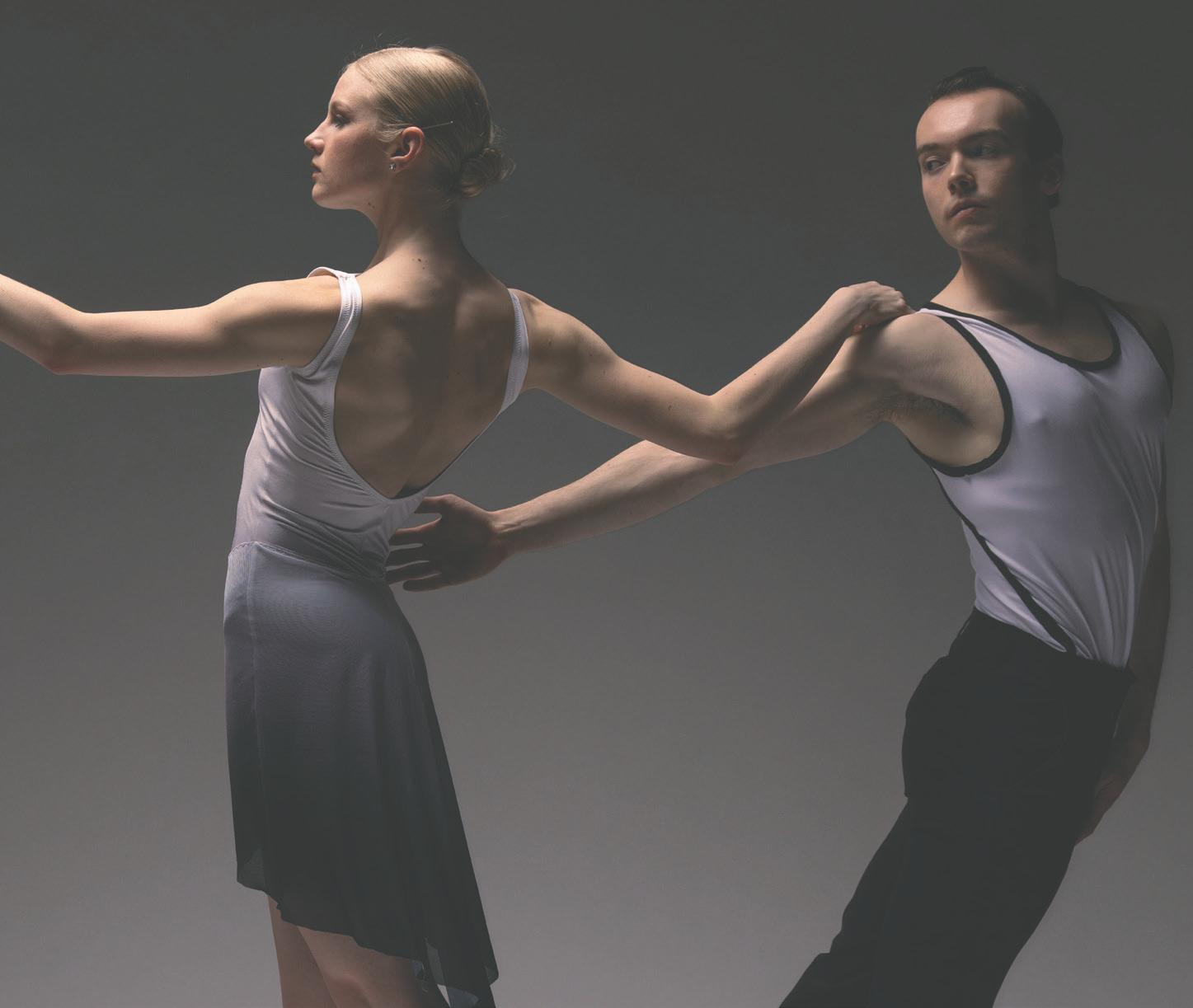
When you think of the ballet, Boise might not be the first city that comes to mind. Going to a Ballet Idaho show, however, might just change that.
As Idaho’s premier professional ballet company, Ballet Idaho combines bold artistry with diverse talent to bring state-of-the-art dance to the Boise community.
Ballet Idaho’s newest show, “Anthology,” premiered last week and will show at the Boise State Special Events Center (SPEC) until Feb. 21. “Anthology” is a collection of four unique works, ranging from neoclassical storytelling pieces to bold contemporary works.
“I really like getting to try a bunch of different things and to expand my horizons,” Soloist Cydney Covert said. “It’s especially challenging to do a bunch of different kinds of dance all in one show.”
For Covert and the company’s other dancers, ballet is a true nine-to-five job — one that requires constant discipline, learning and practice.
“It’s super physically demanding,” she said. “It requires that we take really good care of ourselves, both inside and outside of work.”
The dancers start each morning with dance classes where they continually refine their skills. The dancers then spend their days learning choreography, rehearsing sections and getting coached on every turn and landing, polishing each movement with precision.
“You have to be really resilient and open to corrections and feedback to not get too bogged down by what can feel like criticism, but is actually just advice to help you do your job better,” Covert said.
The demanding lifestyle requires the dancers to be highly conscious of their physical and mental health. For Covert, that looks like eating highly nutritious foods, prioritizing sleep and finding small habits like journaling to help her mind rest at the end of each day.
“The thing that drives me is performing and getting to be on stage,” Covert said. “You have to put in the work day-to-day so that once you get on stage and there’s no mirror and there are lights and an audience, you feel confident and secure about what you’re about to do.”
The company’s last couple of months of hard work culminated in their performance of “Anthology,” where a brand new work titled “And Another Picture,” choreographed by Cherice Barton, made its world premiere.
Barton, a California-based choreographer and her collaborator, Nathan Madden, brought the original work to Ballet Idaho after years of developing the idea.
“I come from Hollywood, so of course I dream big,” Barton said.
The piece explores the “dark side of Hollywood,” featuring characters inspired by Marilyn Monroe and other silver screen icons.
“It’s the idea of the glamour and the glitz and what people imagine Hollywood to be, then once you’re immersed in it, you really start to see the darkness underneath it all,” she said. “I wanted to play with that.”
The company only had two weeks to learn and rehearse the entire piece. Barton said working on a new work with dancers she had never met was a “risk,” but she was thrilled with the team’s enthusiasm.
“Today I was just in tears, because the dancers are so invested in their characters,” she said.
For professional dancers, taking on a new show is a welcome challenge.
“Knowing that it’s been tailored to our company makes it really special,” Principal Dancer Elizabeth Kanning said. “There’s just an energy about creating a new work, because everyone’s excited to see what’s going to happen.”
Kanning, who has danced at other professional studios, said that Ballet Idaho stands out for the quality of its dancing and repertoire.
“We’re sometimes described as ‘punching above our weight’,” she said. “The quality of this company is so high considering the size of the city it’s in.”
Kanning said the dancers enjoy performing shows like “Anthology” for its diversity in style and movement. While classic shows like “The Nutcracker” or
“Swan Lake” are magical, the team loves to challenge themselves.
Friendship with the other dancers makes the challenge a little easier.
Kanning said the company isn’t “cliquey” or “competitive” like outsiders might assume dancers may be. The team supports each other, pushing one another to succeed.
“I’m so impressed by everybody’s talent and dedication and hard work, it makes me want more people to see our shows,” she said.
While the days are long and the work is difficult, Kanning said most days at Ballet Idaho feel like a dream come true.
“My job is to put on this costume and dance,” she said. “This is what you dream of doing when you’re a kid. I feel very lucky.”
Photo courtesy of Quinn Wharton
ARTIST TURNS TRASH INTO TREASURE
Isabella Williams | Culture Reporter | Photos by Carter Nash
For Boise artist Cipriana Phillips, creating a collage is about more than assembling scraps of paper — it’s about telling a story through nostalgia and imagination.
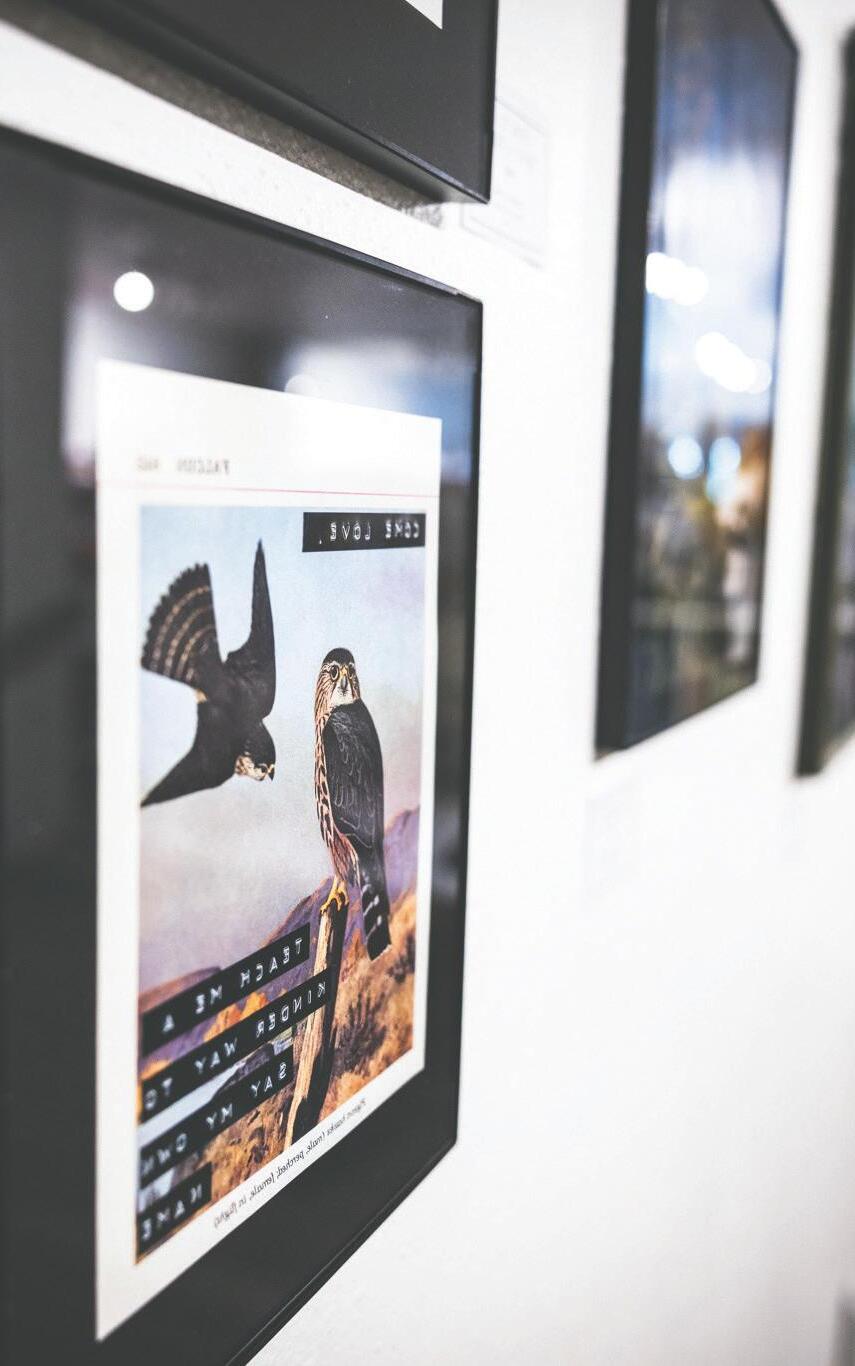
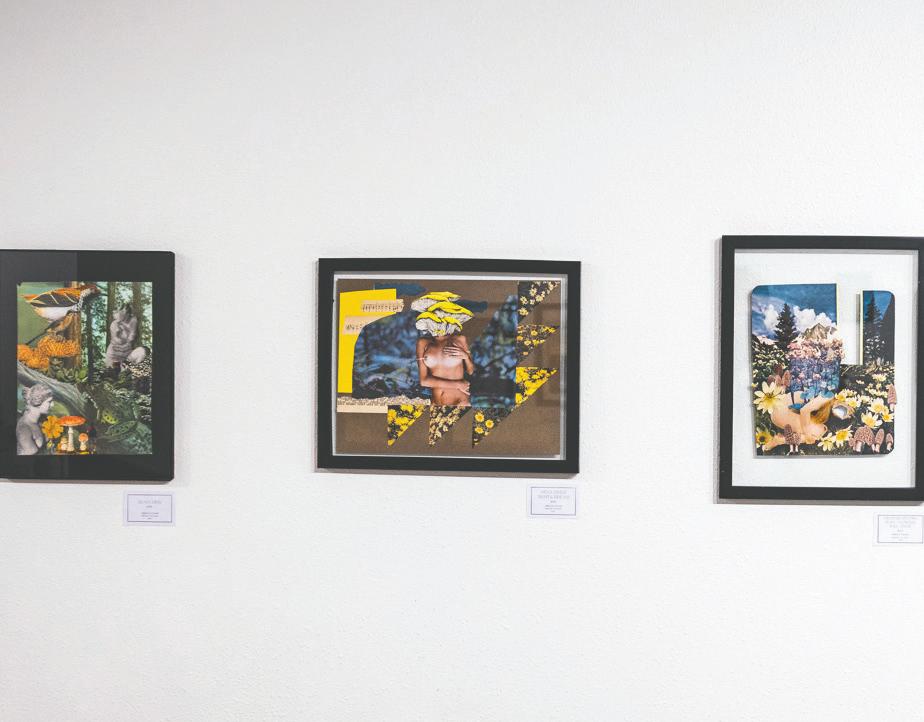
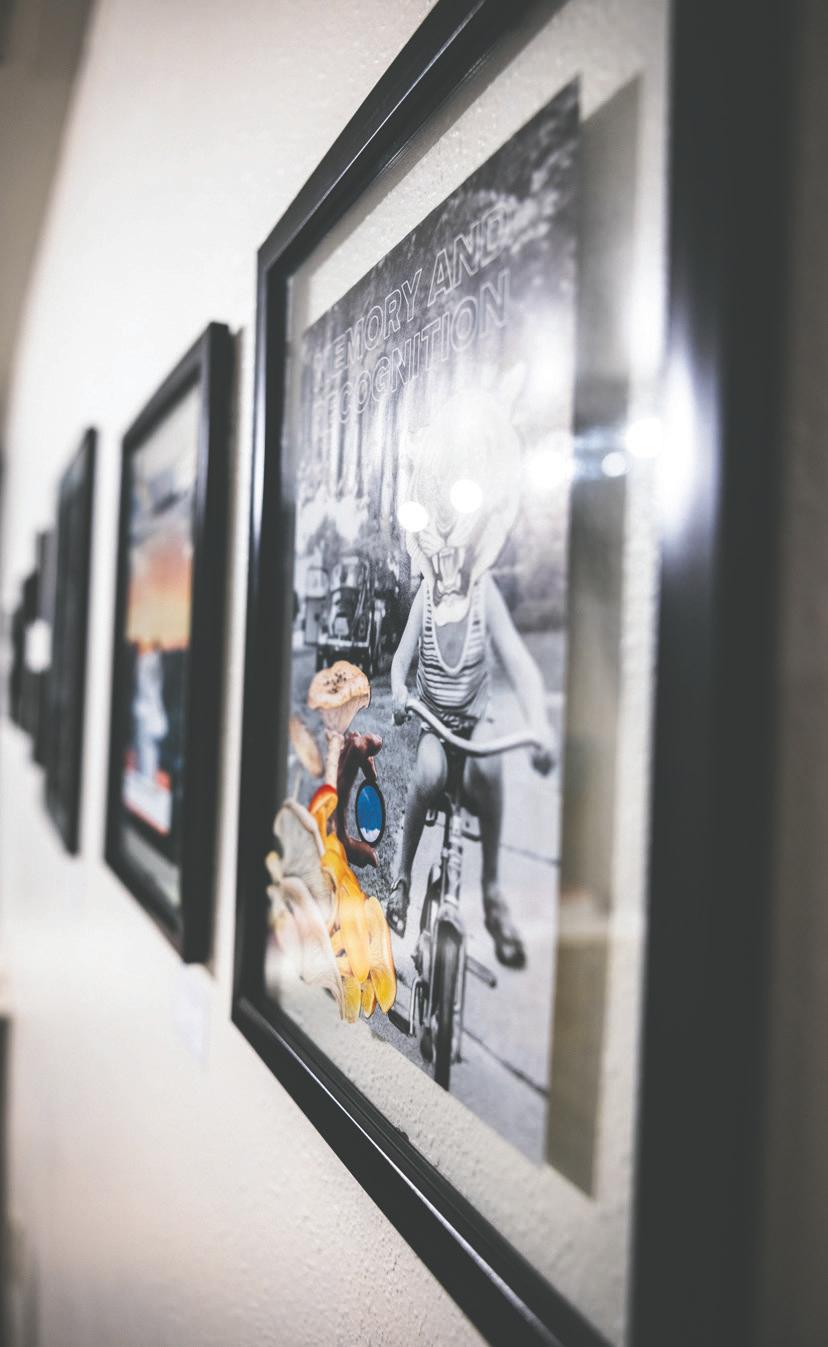
Phillips, also known as Create x Ruin, transforms once overlooked items into otherworldly visions. Her newest exhibit, “Dissociation,” is currently on display at Cats Eye Creative Reuse, a thrift-style store where donated art materials are given a second life.
Cats Eye functions as more than just a shop. It also serves as a creative hub where owner Shay Haas hosts classes, gallery shows and fosters a community where local makers can experiment and connect.
“I’ve always been passionate about art, creativity and sustainability,” said Haas. “Cats Eye serves as an intersection of all these different things, and it’s so rewarding to give emerging artists and locals the opportunity to showcase their work here.”
In this lively, ever-evolving space, Phillips’s collage work is currently taking
center stage, displayed for visitors to appreciate and find inspiration.
Built from old magazines, photographs, diagrams and paper ephemera, her pieces encourage the viewer to take a closer look. Her fine cuts, layered textures and intricate hand-stitching create visually engaging surfaces.
“I really wanted to try and host more art shows here,” Haas explained. “Cipriana was one of the first people to reach out, and her pieces just really spoke to me.”
For Phillips, creating a collage is about sparking conversation. She uses the form to take items others may throw away without a second thought and make something meaningful.
“Every piece for me is like a journal entry,” she said. “I try to take the ruins of something else and completely transform them — it’s an alchemical process for me.”
Her artist name, Create x Ruin, reflects that philosophy perfectly: destruction and creation working together to create something beautiful.
Several collages feature disjointed faces, vintage illustrations and mechanical diagrams layered into surreal compositions. Eyes appear where they shouldn’t, bodies merge with landscapes and familiar images are rearranged into something slightly unsettling.
Phillips’ work is also intensely personal. Many of the pieces in “Dissociation” emerged during a period of mental health struggles and self-examination. Themes of fragmentation, identity and inner conflict appear throughout the show in both subtle and direct ways.
Each fragment she chooses, from old postcards to torn magazine pages, forms part of a larger emotional tapestry.
“Art is really about the narrative that speaks to other people and what’s coming up for you when you’re looking at that piece,” Phillips said. “I put my own story into my work, but everyone projects their own narratives onto it, and that’s the beauty of art.”
Brigette Nelson, local artist and owner of Hideout, an art studio and coffee shop next to Cats Eye Creative Reuse,
has followed Phillips’s work closely for years.
“[Phillips] has the ability to create a world that doesn’t exist,” Nelson said. “Her attention to detail is incredible.”
She described the collages as immersive and transportive, built with a level of precision that makes each piece feel intentional down to the smallest fragment.
“She’s very self-motivated, has her own style and isn’t afraid to use nostalgia and old material to make collages,” she said. “Her art is always so inspiring.”
Phillips has been part of Boise’s art community for nearly a decade, showing work in local galleries, markets and collaborative spaces.
Despite her years in the scene, she still loves watching people create their own narratives.
“It’s still so rewarding to see how much connection and interpretation people bring to my pieces,” Phillips said. “Dissociation” will be on display at Cats Eye until Feb. 28, inviting visitors to step inside Phillip’s layered worlds.
CULTURE
CONLANG ON CAMPUS: FOR SOME STUDENTS, LANGUAGE IS A PLAYGROUND
Students create fantastical worlds and aiding accomodations with linguistics
Cole McAdams | Assignment Reporter | Graphics by Naomi Brown
In the United States, 22% of the population speaks a language other than English at home. This number reflects 74 million Americans who actively engage in language play.
“Conlanging” is one way language can be played with, where individuals construct their own languages. This pastime has brought together a community of language-enthusiasts in the Conlanging Club.
The niche group gives students the chance to create their own languages in a space full of other passionate linguists and creators.
“We’re each doing our own thing,” said Brandi Vanderpool, Conlanging club president. During meetings, members share ideas and help each other through roadblocks. Members give each other advice on grammar and content, helping each student make their languages unique.
Vanderpool first discovered her interest in language at the age of 12, writing her history notes in English and mixing up the letters to create her own secret language.
“I didn’t even know anything about linguistics before I started that,” Vanderpool said . “I wanted to do computer science, but I still wanted to keep linguistics — so I was like, ‘Well, I could do computational linguistics’. The more I learned about linguistics, [the more] I got really interested in the communication of it all.”
In addition to exploring language with her computer science background, Vanderpool uses the languages she creates in her art, incorporating the orthography — the writing itself — in pixel art.
Vanderpool’s language, Khronian, uses scratchy lines and crude angles. These features affect the identity and culture she wants to create. Conlangers focus on this, referring to time spent on their lan -
guage’s background as “world-building.”
“I do world-building every second of my day that I have free time,” she said. “[My speakers] were getting hunted by humans, so they had to be like, ‘Humans live over there — that’s danger’.
Building the culture of her speakers is another way of creating the world her language is tied to, ensuring all the puzzle pieces fall neatly into place.
Financial Officer of the Conlanging Club, Thomas Staley, noted his fixation on language began at the start of the COVID-19 pandemic. Staley spent his time in lockdown watching YouTube videos on linguistics.
“I started learning Japanese and Spanish and I found it really interesting how those languages write everything phonetically,” Staley said.
This is where the idea of his language was born: a phonetic version of English he believes could be easier for non-native speakers to understand.
Through one of Staley’s classes, he volunteered in classrooms where most of the students were learning English at a beginner level.
“One of the things that we learned in that class was just because someone’s a beginner-level English learner, doesn’t mean they’re a beginner-level thinker,” he said. “You don’t want to infantilize them too much or talk down, but you still have to simplify the way you speak.”
This advice inspired Staley to continue with his conlang, using his approach to help those that have trouble learning English.
“With how many people struggle learning to read, or learning English from another language background, or have dyslexia or something — I feel like [my language is] something that could be useful,” Staley said.
The Conlanging Club has built a small community of language-fanatics,
exploring how real-world languages and their constructed languages interact cohesively.
“Everyone in the entire world plays with language in different kinds of ways,” said Linguistics Professor and Director of English Support Systems Gail Shuck. “Language is essentially a creative system. It creates new sentences all the time, we create new words all the time, we play with words and then make puns about those new words … and then you build a sense of community.”
Language, as a creative system, is constantly manipulated and molded in everyday speech. Playing with a community’s slang and sentiments builds connection and community [When] we’re playing, it cements our relationship; it signals your stance towards the other person,” Shuck said. “Often, we use the word indexing, like your index finger points to something. You’re actually pointing to some element of the context, a particular political point of view.”
From an outsider’s perspective, linguistics can be a daunting topic, however the group believes any creative would benefit from being in a like-minded circle gripped with the playing power of language. Vanderpool urges any student interested in the Conlanging Club to join in on the fun. Students can get involved with the club by joining on Campus Groups.
“If you want to meet other people who are into languages or world building, [we’re] a place where people get together and talk about anything they do creatively with languages,” Staley expressed. “It’s just a social space.”
COLLEGE NIGHT OFFERS STUDENTS AN EARLY PREVIEW OF TREEFORT MUSIC FEST
Isabella Williams | Culture reporter | Photos by Omar Saucedo
Treefort Music Festival is right around the corner, and if you’re a new Boise State student curious about what the festival is like, or a returning attendee excited to experience it again, College Night will give you your first taste.
On Wednesday, March 11, at Shrine Social Club, the 18+ College Night event will feature several local artists ahead of the actual festival, including DJs like Nofo, Charlie Tango and Boise State duo Who Let Jack ‘N Zoe Out.
The night is designed as a preview of the main festival, giving students a chance to step into the scene ahead of Treefort, which will take place March 25 through the 29.
There is a major incentive for students to attend College Night and arrive early: The first 100 students through the door will receive a free one-day Main Stage ticket to the festival. For organizers, the ticket giveaway isn’t just a fun perk, but one of the main purposes for the event.
“A lot of students don’t want to go to the festival because it can be expensive to attend,” said Natalie Rivera, a student employee helping run the event. “This is a great opportunity for them to get that experience without the high cost.”
Rivera said planning for the event began months ago, with the team focused on creating an experience tailored to Boise State Students. She worked closely with Heather Lyle, director of the Office of University Events, to create a lineup reflective of the campus community.
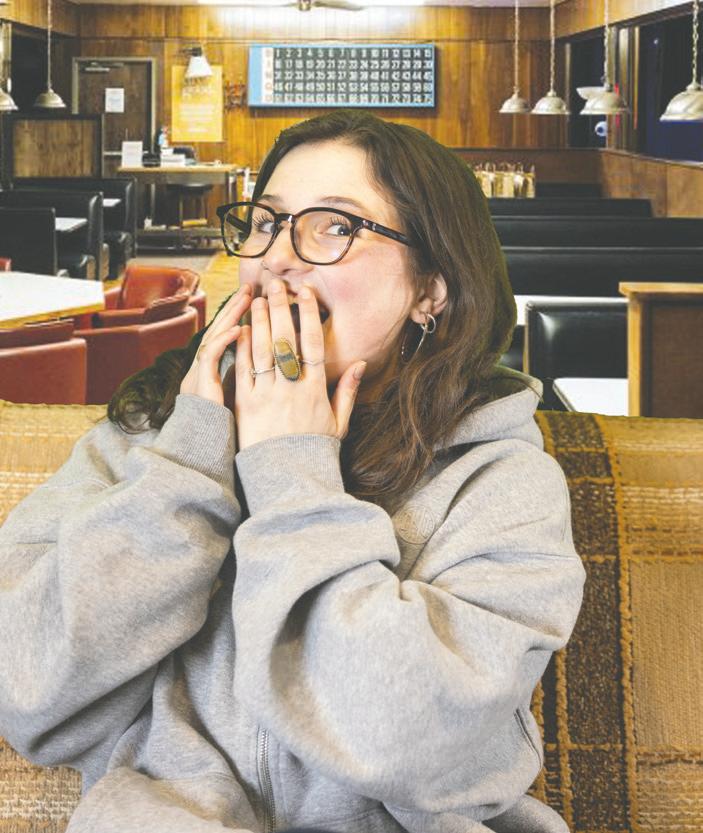
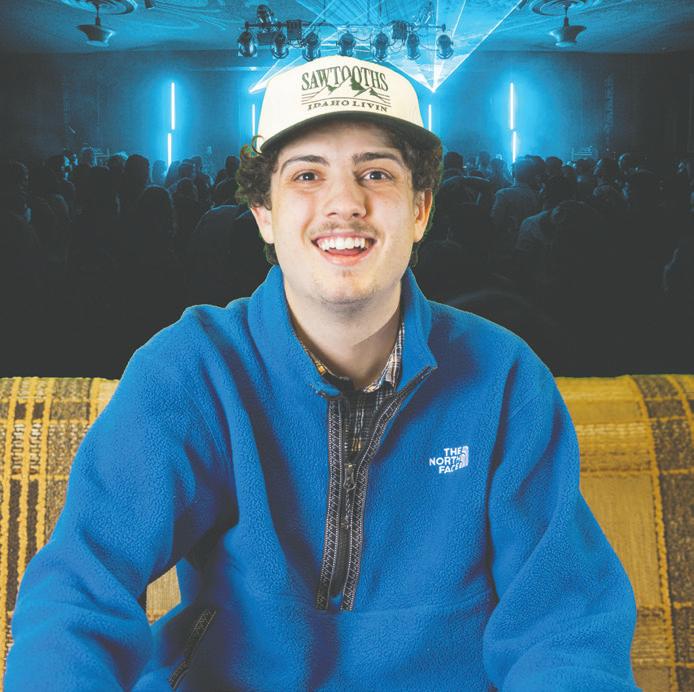
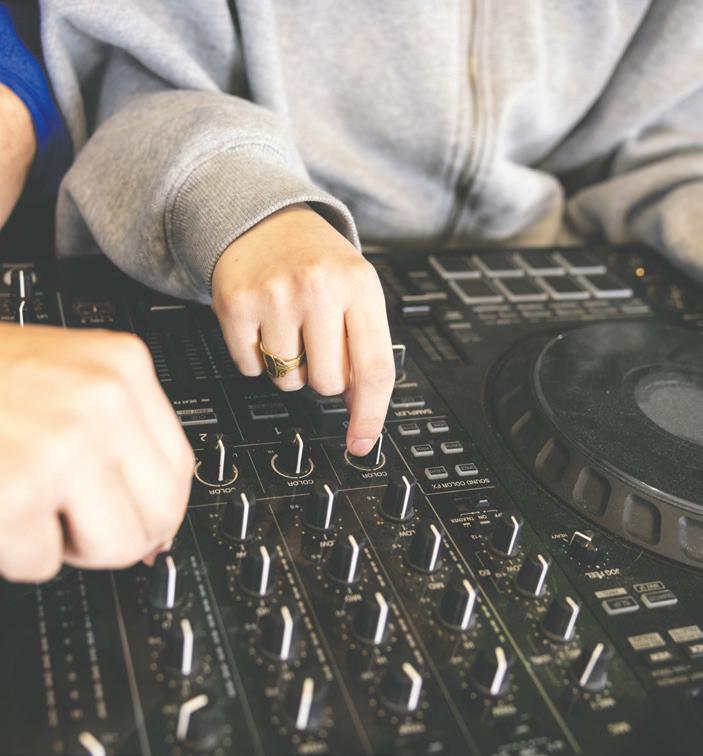
That student-first approach led to the inclusion of Who Let Jack ‘N Zoe Out, a DJ duo made up of Jack Vuturo and Zoe Mogavero. The two met during their freshman year and started performing together soon after.
“It just happened naturally,” Vuturo said. “I knew how to DJ a little bit, and Zoe was super interested in learning, and then it just kind of spiraled from there.”
Their partnership grew out of casual collaboration into regular performances
at campus events, local venues and even weddings. That variety has shaped how they approach their sets, teaching them how to read different crowds while still staying true to their own style.
“We don’t usually have a specific plan when we perform,” Mogavero said. “If we play a song and notice people are enjoying it, then we just try to keep that vibe.”
Rivera said that kind of student-driven energy was exactly what organizers wanted the event to highlight. The team reached out across campus, connecting with both current students and alumni to create a lineup rooted in the university community.
“This year [Lyle] thought it’d be a fun idea for us to do something even bigger to get college students excited about Treefort,” Rivera said. “We wanted to make an event that’s primarily catered to BSU students.”
For Who Let Jack ‘N Zoe Out, College Night reflects the same campus connections that helped the duo get started.
“BSU has given us a lot of different communities to DJ for,” Vuturo said. “We got connected with the Ski and Board Club, we’ve played events for the Honors College and we’ve been able to find these little pockets on campus
where we can share our music with other students.”
That experience playing for their peers is part of what makes this night meaningful for the duo.
“We play a lot of college events, but it’s cool to have a night that’s entirely for students,” Mogavero said. “Everyone’s just there to have fun.”
Alongside Who Let Jack ‘N Zoe Out, the night will feature sets from DJs Nofo and Charlie Tango, offering a range of sounds across Boise’s local scene.
Tickets for students start at $7 and can be purchased through the DICE app, making the event one of the most affordable ways to get involved with Treefort.
Jack Vuturo and Zoe Mogavero of Who Let Jack ‘N Zoe Out.
February 19, 2026
SPORTS
SIX IDAHOANS REPRESENT TEAM USA IN MILANO CORTINA GAMES
Milano Cortina Winter Olympics,
over Germany or the curling team’s upset
Despite the record, Knight kept the focus on the joy of the moment rather than the number attached to it.
“I just love scoring and just the pure elation of finding the back of the net,” Knight said. “It’s just a little kid’s moment. When you score, it’s pure excitement and it’s fun to celebrate.”
The goal marked Knight’s 14th Olympic score, tying her with Natalie Darwitz and Katie King for the most by a U.S. player. She now sits just a few points shy of the U.S. women’s hockey all-time Olympic scoring record, while teammates and coaches continue to emphasize her leadership as much as her production.
While Knight delivered on ice, Breezy Johnson, 30, made her debut on the slopes.
Johnson was born in Jackson, Wyoming but grew up in nearby Victor, Idaho. She returns to the Olympics for the first time since 2018, where she placed 18th in the Super-G and seventh in the downhill. Since then, Johnson has emerged as a consistent contender on the World Cup circuit, earning two gold medals in 2025, one in the downhill and another in the team combined event alongside Mikaela Shiffrin.
On Sunday, Feb. 8, Johnson captured gold in the women’s downhill at Cortina d’Ampezzo, becoming the second American woman to win the event. The victory came after years of setbacks, including a knee injury Johnson suffered at Cortina in 2021 and a lengthy suspension related to testing whereabouts violations.
After the race, Johnson acknowledged the challenging road — the constant ups and downs — to achieve this moment.
“I haven’t won a lot of things in my career,” Johnson said after her accomplishment. “I was 16 when I started
FIS [International Ski & Snowboard] and I’ve had like 12 wins in any competition. So there haven’t been many times that I’ve heard the national anthem playing for me. It was just a pretty surreal experience.”
Teammates praised her ability to rise under pressure, with Bella Wright calling it the best run Johnson has ever skied. Her run held off Germany’s Emma Aicher by four hundredths of a second and secured the first U.S. medal of the Milan Cortina Games. Tears followed as racer after racer failed to top her time, and emotion lingered even after the medal ceremony.
“I’ve waited a long time for this moment,” Johnson said. “People are jealous of people with Olympic medals, they’re not necessarily jealous of the journey it took to get those medals.”
Later in the week, Johnson became engaged, capping a breakthrough performance with a personal milestone.
Cross-country skier John Steel Hagenbuch of Ketchum, Idaho was the fastest American on Feb. 13 when he finished with a time of 21:41.1.
A first-time Olympian and the youngest male cross-country skier on the U.S. team, Hagenbuch proved that the future of American skiing is already here.
Fellow Ketchum native Ryder Sarchett finished 25th overall in the men’s giant slalom on Feb. 14. The former Sun Valley Ski Foundation standout had two runs at Stelvio Ski Centre in Bormio, finishing with times of 1:18.72 and 1:11.39, respectively, earning him a 25th-place finish in his Olympic debut.
On Feb. 13, product of Hailey Idaho, Chase Josey made it to the men’s snowboard halfpipe final for the third consecutive time, finishing in 11th place.
Despite falling on his first run, Josey bounced back to finish on his final two, earning his best score of 70.25 on his second run.
Teton Valley’s own Jaelin Kauf entered Milan as one of the favorites after winning silver in moguls at the 2022 Games. The U.S. Ski and Snowboard team has labeled Kauf the fastest skier on the moguls World Cup circuit, where she has already stacked 16 wins and more than 50 podium finishes.
On Feb. 14, she captured silver in dual moguls, albeit in a bizarre fashion.
Her opponent, Perrine Laffont, was automatically disqualified after skiing around the course control panel. Despite a crash, Laffont’s mental error allowed Kauf to finish on the podium with a silver medal.
Of the six Idahoans competing in this year’s Olympics, cross-country skier Sammy Smith is the lone Boise native.
A graduate of Boise High and current Stanford sophomore, Sammy Smith is making her Olympic debut after transitioning from competitive soccer to
cross-country skiing.
On Tuesday, Feb. 10, Smith competed in her first Olympic race, finishing 19th in the women’s cross country classic sprint in Tesero.
Smith’s time of 3:59.07 on the 0.9mile course placed her fourth in her heat, outside the top two that received semifinal berths. Despite this, the classic sprint marks her best individual performance in this year’s Olympics.
With 6 Idahoans representing the United States this year, the pride that people from Idaho feel is immense, with their homegrown athletes showcasing their talent and proving that anyone can make it to the big stage, no matter where they come from.
“It allows people to be able to think that maybe they could be in their places one day,” Idaho native Kaie O’Shea said. O’Shea is a member of Boise State’s Ski and Board club. “Having people who came from our areas and the same upbringings as us, it gives a lot of hope and confidence for the people who are wanting to do those same things.”
GOVERNOR’S TROPHY RIVALRY RETURNS
Aidan
Boise State and the University of Idaho will renew the state’s most historic and recognizable rivalry in 2031, bringing the Broncos and Vandals back onto the same football field for the first time in decades.
Idaho Gov. Brad Little signed an executive order recommissioning Idaho’s Governor’s Trophy, formally restoring a matchup that once defined fall Saturdays across the state. The rivalry paused as conference realignment and shifting schedules pulled historic series off calendars nationwide.
“This is more than just a game,” Little said. “We’re celebrating a tradition that brings Idahoans together and showcases the very best of our state.”
The series last met regularly in the 1990s before Boise State rose to national prominence and Idaho transitioned from the FBS to the FCS level. While the programs now compete in different subdivisions, university leaders say the rivalry still holds cultural, economic and institutional value.
University of Idaho President Scott Green said the return reflects shared history and statewide pride. Green, a Boise native who grew up attending Boise State games, described the rivalry as formative to both fan bases.
“We’re fired up for the return of this historic rivalry,” Green said. “It’s great for our fan bases, great for our economy and the right thing to do for Idaho.”
From Boise State’s perspective, the renewed matchup fits a broader vision
of collaboration and visibility across the state. Boise State President Jeremiah Shinn said the game offers an opportunity to amplify partnerships beyond athletics.
“As competitive as we are on the field, we want to use this as a platform to highlight the work we’re doing together off the field to better Idaho,” Shinn said.
Boise State Athletic Director Jeremiah Dickey said the decision aligned with the university’s long-term scheduling philosophy. With Boise State continuing to play an FCS opponent each season, Dickey said keeping those games in Idaho benefits fans and the state economy.
“If we’re going to play an FCS opponent every year, I’d rather keep the money in the state,” Dickey said. “Rivalries matter, and this one matters to Idaho.”
Dickey added that long-range scheduling constraints delayed the matchup, making 2031 the earliest feasible date. He said the agreement developed over years of conversation between institutions.
The Broncos and Vandals will play for the recommissioned Governor’s Trophy when the series resumes. The game will mark a rare in-state football showdown between Idaho’s flagship programs and revive a rivalry many fans believed might never return.
The matchup represents more than a score — it signals tradition and a renewed commitment to keeping college football rooted in Idaho.
Mattingly | Sports Reporter | Photo courtesy of Idaho Statesman
SPORTS
BRENDEN BIXLER, BOISE STATE’S WINNINGEST INTRAMURAL ATHLETE OF ALL TIME
When a high school athlete hangs up their cleats or shoes for the final time, overwhelming feelings of directionlessness, uncertainty and emptiness are far from uncommon.
For those not able to earn opportunities to play at the college level, the conclusion of their athletic careers can lead to a distorted sense of purpose. For many, playing a sport for 10-plus years can shape their entire identity, and, when the sport is finally stripped away, they can feel aimless.
Through Boise State’s intramural sports, former athletes can regain their purpose and direction while building community and doing what they love. While still competitive, intramural sports provide a low-pressure environment for athletes without the stress of high stakes.
However, some intramural athletes are more competitive than others.
Enter Brenden Bixler.
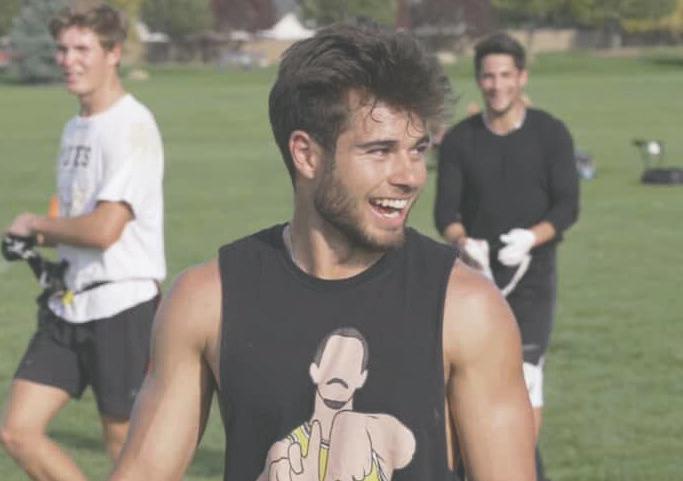
When the Southern California native graduated from Boise State with a computer science degree in 2020, he left as the school’s winningest intramural athlete of all time.
Bixler’s 304 total wins and 71% win rate top the intramural sports record books, and the community he was able to build is evident nearly six years later.
“It was truly incredible being so involved with intramurals,” Bixler said. “It was without a doubt the highlight of my years at BSU. They taught me so much and it helped me create long-lasting bonds with my close friends and BSU alumni that I still see around Boise years after graduating.”
Before Boise State, Bixler was a standout wide receiver for Santiago High School in Corona, California. During the 2014 season, a Fox Sports Twitter poll voted Bixler and his quarterback the best quarterback and wide receiver duo in the entire CIF-Southern Section.
In addition to playing football, Bixler played hockey, basketball and soccer growing up. It’s no wonder the quadruple threat’s competitiveness and love for physical activity translated to his time in intramural sports.
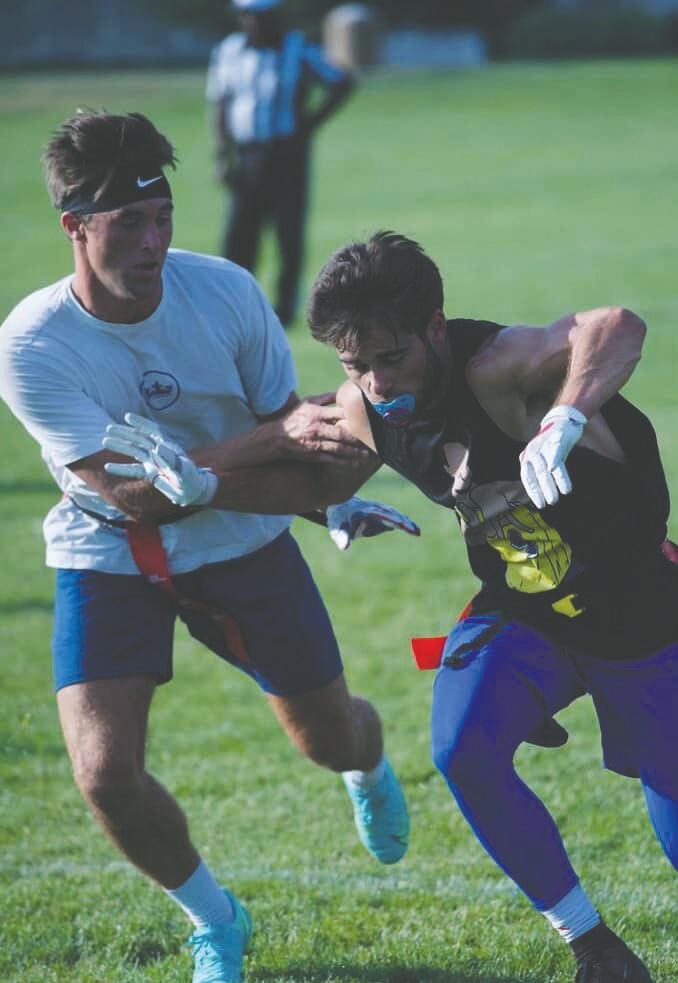
Bixler and his friends’ team, known as the Chumugawugums, competed in a variety of intramural sports, including flag football, basketball and volleyball.
At one point, the squad was so dominant that it captured an astonishing eight championships in a single semester.
When asked what allowed the team to stick together and be so successful over the course of multiple years, Bixler noted the team’s shared devotion to not just sports, but also winning.
“We all had a passion and drive for sports,” Bixler said. “[We] all liked winning and hated losing. We did everything together, even off the field, so it felt natural playing together.”
The passion and drive Bixler and his friends played with was on full display during one of the team’s four-on-four flag football playoff runs.
During the late stages of a close game,
Bixler took a cleat to the back of his head. When he reached back to feel the wound, his glove was soaked with blood.
Bixler showed his teammates the wound, but kept it a secret from referees as he was determined to finish the game. One last stop on defense was all they needed to secure the win.
A few plays later, Bixler came up with the game-sealing interception to hammer the nail in the coffin.
After the game ended, Bixler celebrated with a trip to the hospital and four staples in his head, all for the love of the game.
Bixler’s unwavering ardor after a cleat to the head is a testament to the competitiveness he and his teammates played with.
“I’ve always been a highly competitive person … fortunately, I was surrounded by teammates and opponents who shared a similar level of competitiveness,” said Nick Vandy, a close friend and teammate of Bixler. “Many of the teams we faced approached competition with the same intensity as our own, which only elevated the level of play and
made the overall experience both challenging and very enjoyable.”
Today, Brenden resides in Boise with his wife, Kendall, whom he met playing intramural sports. A software engineer for Bridge Insure, Bixler continues to be active and involved in sports, competing, coaching and officiating adult leagues.
There’s no question about the raw athletic ability Bixler and his teammates displayed while playing intramurals at BSU. As a team of former high school athletes, high-level competition was nothing new when they each stepped on campus.
However, what truly set them apart was their incomparable chemistry. The tight-knit bond of the friend group allowed them to stick together as a team semester after semester, proving that camaraderie and loyalty can go a long way, regardless of the roster.
“We got really lucky with our friend group and we have always been pretty close,” Vandy said. “The chemistry that seemed to make our team successful was the same thing that made it so fun for us and kept us wanting to come back every season.”
Live, laugh and love in the moment. Connect with people and frolic in the fields.
LEO
LOVE IS ENTERING IN YOUR LIFE. PREPARE AND SET INTENTIONS.
SAGITTARIUS
Someone from your past may be reaching out. IT’S A TRAP.
The doors are opening in your career. Don’t let work overtake you, but take opportunities if they’re calling to you.
VIRGO
Winter is hard. You’re just trekking through. Focus on finding joy in the mundane things, have some good bread and soup.
ARIES TAURUS GEMINI
The universe is on your side despite the storm that is approaching. Good luck.
LIBRA
Your friends love you. Keep being lovely, you’re doing everything right.
CAPRICORN AQUARIUS
Life is stressful. Take some time for yourself. You’re doing great.
Right now, you’re in the middle of a storm. It will be over soon.
CANCER SCORPIO
Connect with yourself. Meditate. Relax. Really see your soul.
Send the resume and start the project. Abundance is coming your way.
PISCES
Nostalgia swallows you. Allow fires from your past to purify your soul.