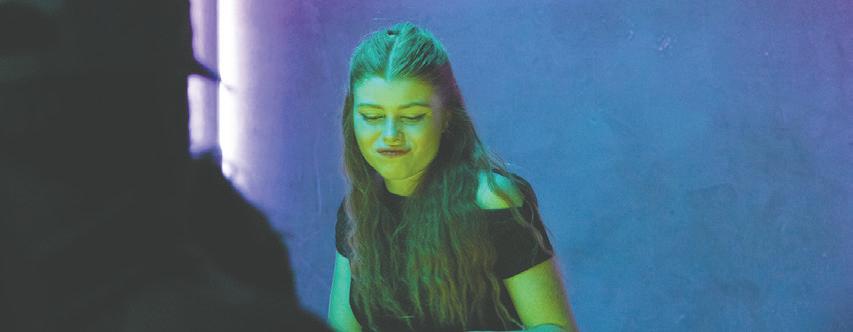
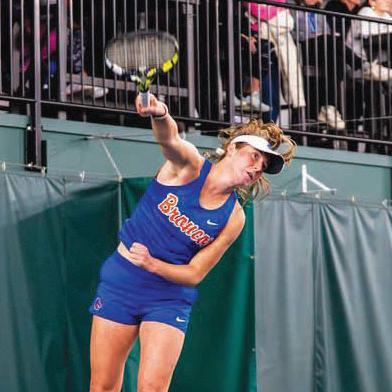
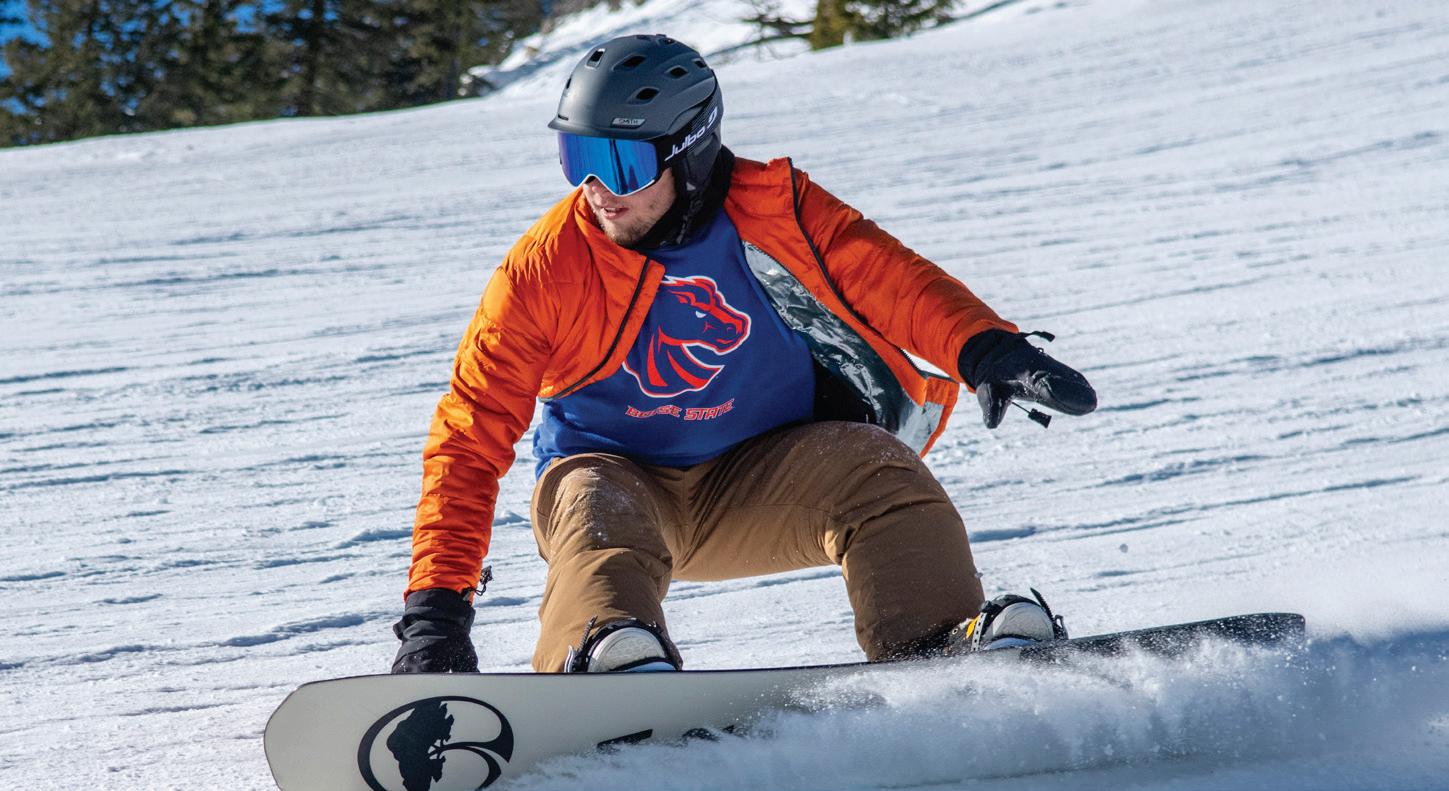
Space Banana, a micro-club in the heart of downtown, invites aspiring DJs into the space to hone their craft and cultivate a music identity.
Vol. 38, Issue 10 Feb. 5, 2026
06 Reproductive rights
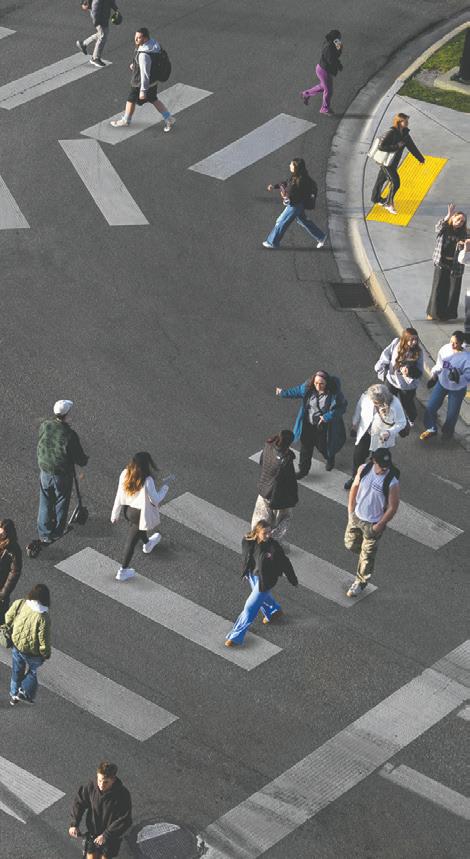
As Idaho’s near-total abortion ban remains one of the strictest in the nation, students weigh in.
10 Beauty and the Beast
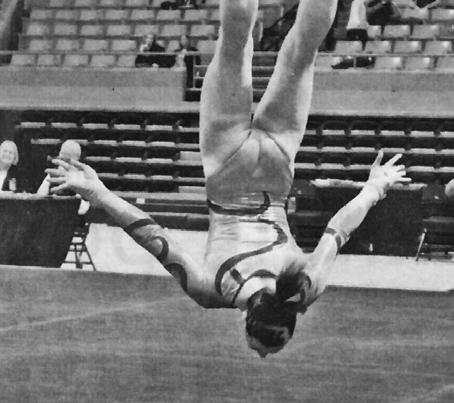
Despite no longer having a home at the university, the unique blend of gymnastics and wrestling lives on in the hearts of fans.
Editor-In-Chief
Emily Carmela Nelson
editor@stumedia.boisestate.edu
Managing Editor
Olivia Brandon
editor@stumedia.boisestate.edu
Find new stories online daily at arbiteronline.com
news@stumedia.boisestate.edu
News Opinion
Apply on Handshake.
opinion@stumedia.boisestate.edu
We're Hiring! Editor -
Zaccary Kimes
Culture
culture@stumedia.boisestate.edu
-
Julianna Kelsey
Isabella Williams
Sports & Rec
sports@stumedia.boisestate.edu
Jake Zamora
-
Aidan Mattingly
Assignment Desk
-
Cole McAdams
ReporterIntern Photojournalist -
Jack McElwee Keara Antonelli
Photo & Design
design@stumedia.boisestate.edu
Design Manager -
Naomi Brown
Graphic Designer -
Amber Jansson
Mia Strand
ON THE COVER:
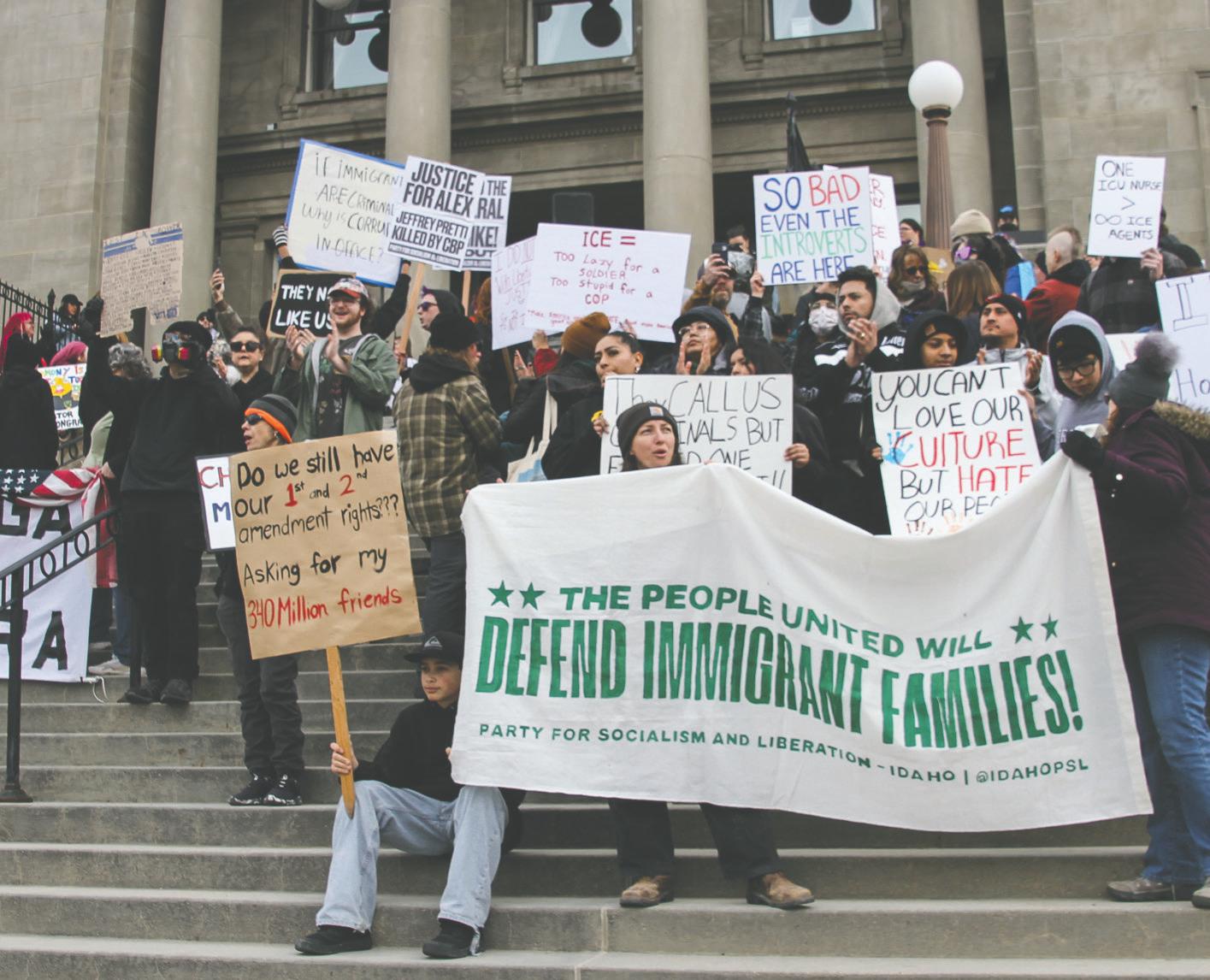
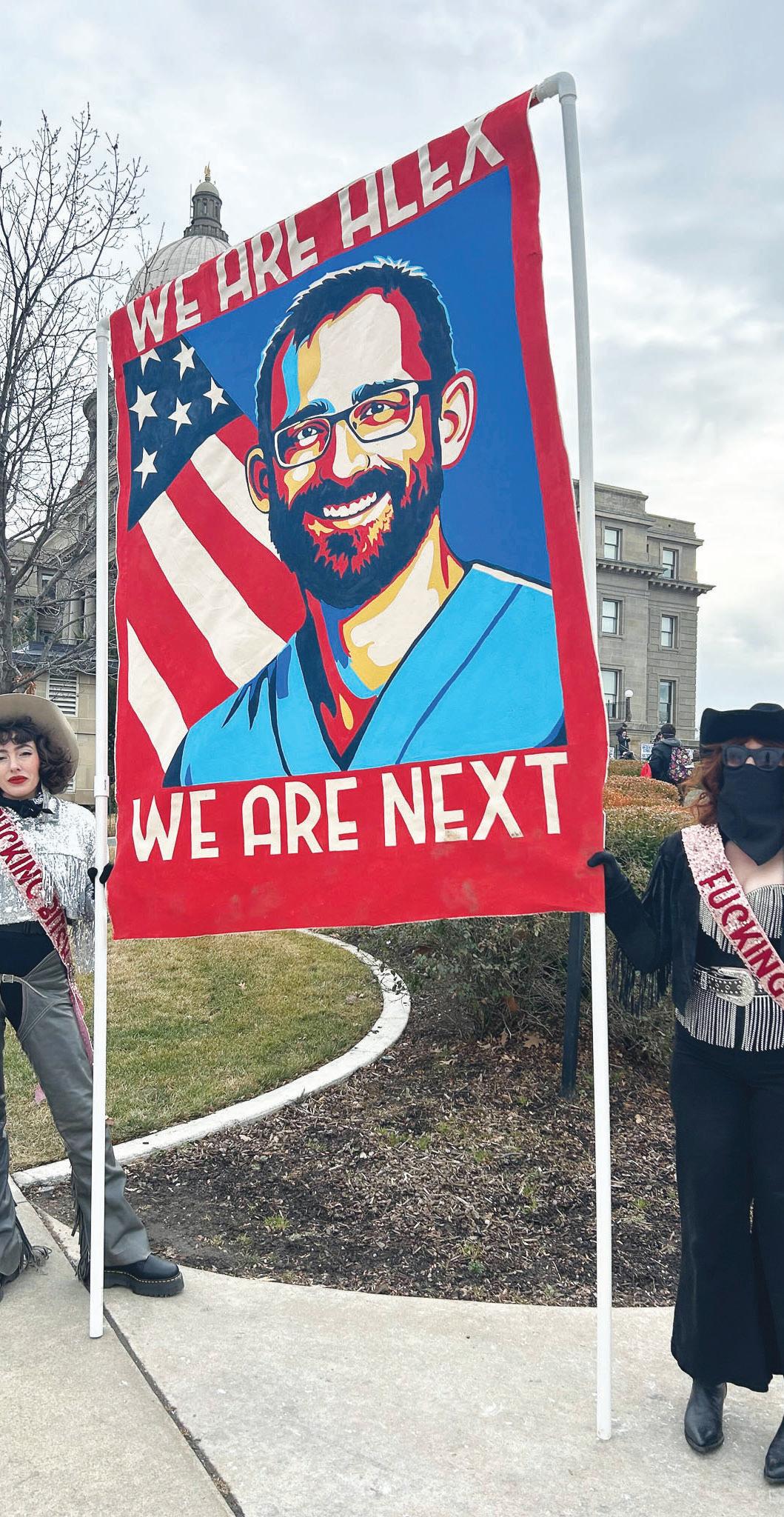
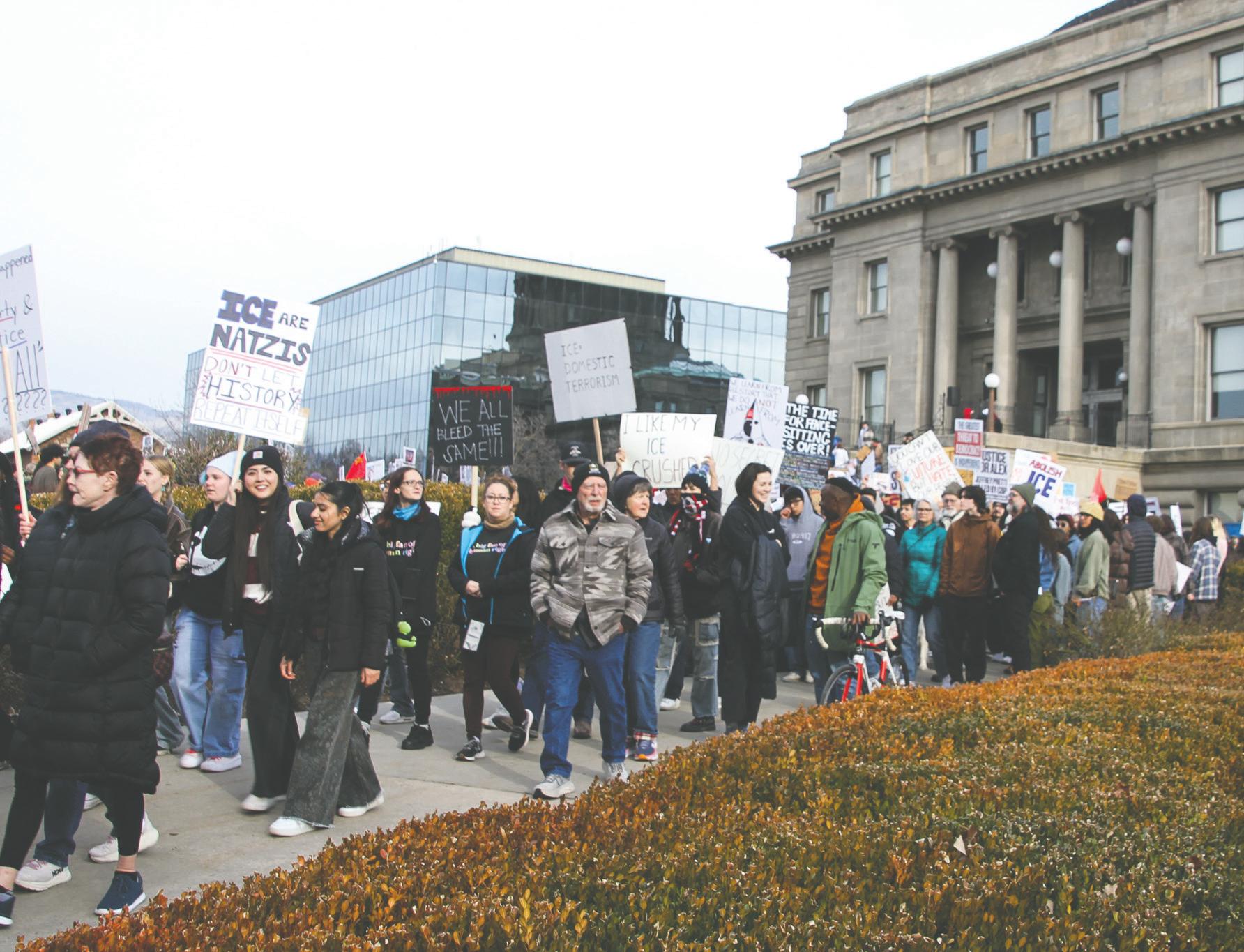
Businesses across the U.S. closed their doors as Americans came together for ‘ICE OUT’, a nationwide movement to protest the administration’s immigration enforcement practices. In Boise, demonstrators flooded the lawn and steps of the Capitol while businesses donated to advocacy groups.
HOW TO REACH US:
digitalcontent@stumedia.boisestate.edu
Digital Content Manager-
Digital Content ProducerIllustrator -
Omar Saucedo Carter Nash
Marketing & Advertising
Advertising & Sales Manager
Zach Cerepa
ads@stumedia.boisestate.edu
Marketing Manager
Karley Rodriguez
marketing@stumedia.boisestate.edu
CONTACT US: editor@stumedia.boisestate.edu
208.426.6302
PHYSICAL LOCATION: Located on first floor of Lincoln Avenue Garage Suites
MISSION:
As a student-run organization, we produce accurate and hyper-local information through non-partisan and socially responsible media.
Brandon
BOISE RESIDENTS, BUSINESSES WANT ‘ICE OUT’
Emily Carmela Nelson, Olivia Brandon, Cole McAdams | Editor-in-Chief, Managing Editor, Assignment Reporter | Photos by Cole McAdams and Emily Carmela Nelson
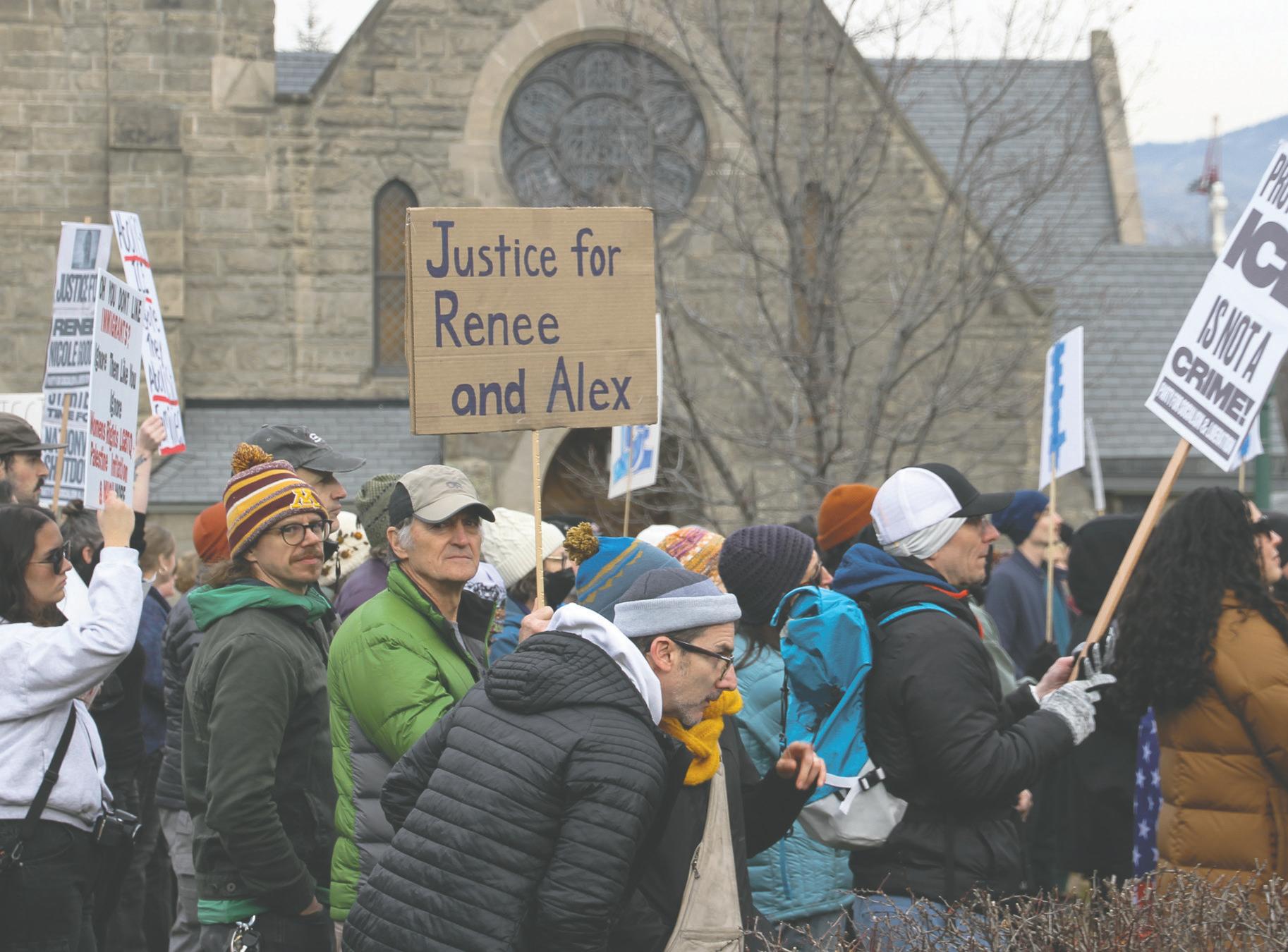
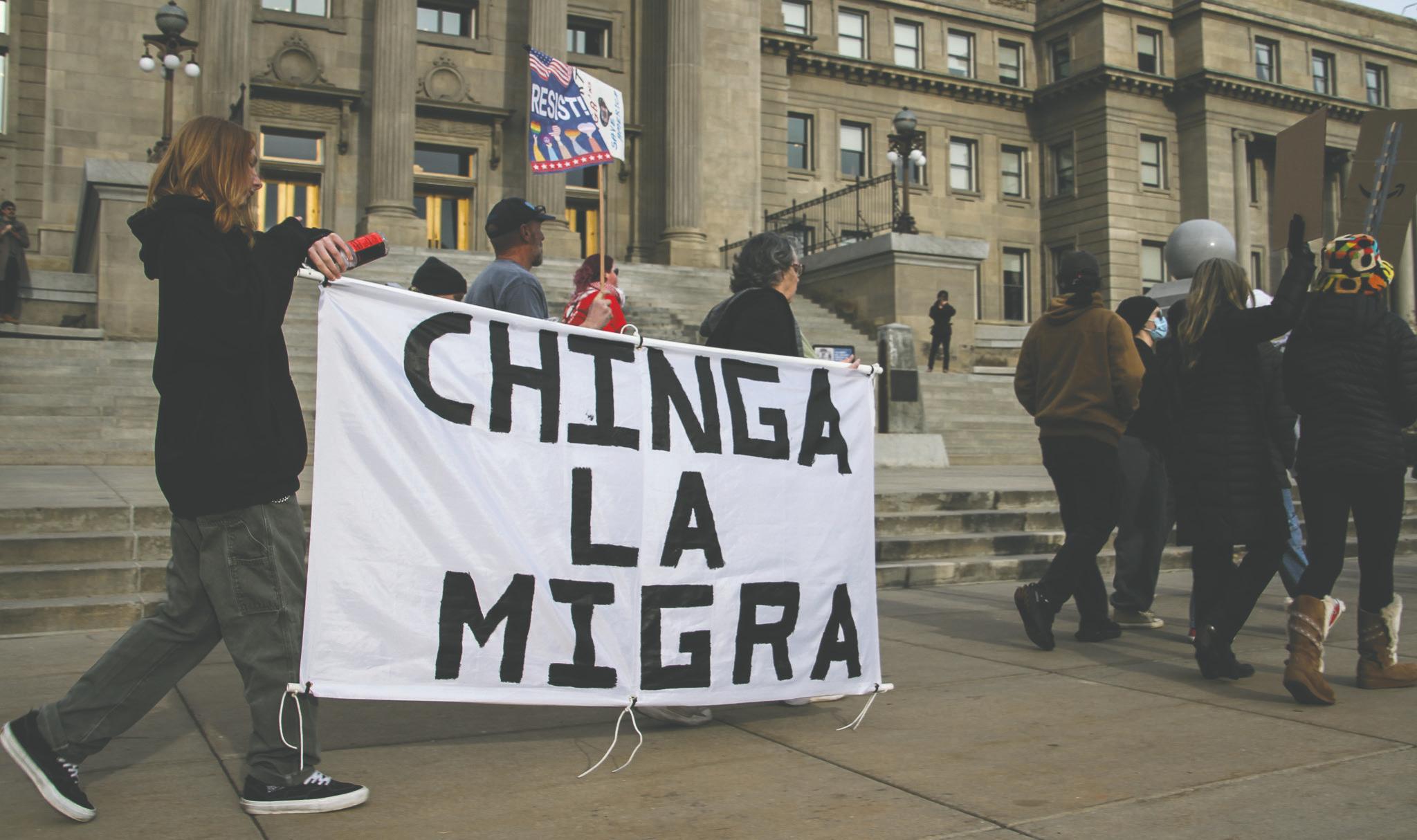
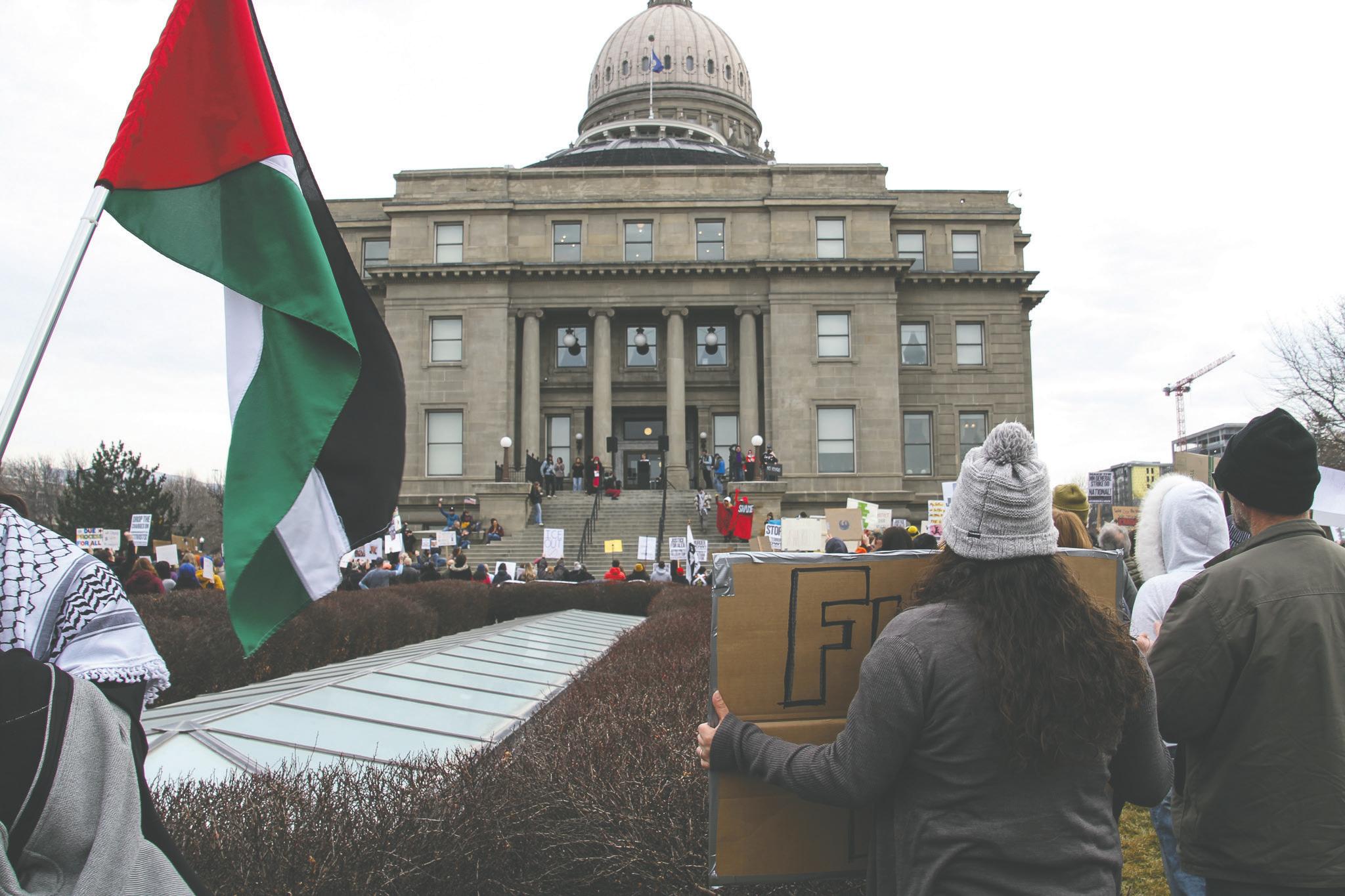
Car horns honked enthusiastically as protestors gathered Friday afternoon on the lawn and steps of the Idaho Capitol, joining the nationwide ICE OUT movement to protest the administration’s immigration enforcement practices and the recent deaths linked to violence at the hands of federal agents in Minnesota.
Some protestors carried homemade signs, while others held signs handed out by the Party for Socialism and Liberation, reading “Justice for Alex Jeffery Pretti killed by CBP” and “Arrest Jonathan Ross for murder now.”
“It’s awful what’s been happening recently. There’s just no reason for it,” protestor Maxwell Speiser said. “It’s been happening a long time before Renee Good, and it’s nice to see there being a lot more action about it. The more action that is done, the more chances we have of ending the horrible things going on.”
Speiser added not taking action is no different than being apolitical and said he believes it is important for individuals to be educated on the issue.
“ICE and the government in general have been stepping on our rights as Americans and treading on the Constitution,” Nova Kurtz, another protest goer, said. “America was built on immigration and could be a great country if we stand for freedom. We should let people come here and live the life they want, try to achieve the American dream, and try to make it possible. With how it’s been going, it’s been impossible, so I’m trying to fight so we can achieve a good life for anyone who wants it.”
Kurtz said they were not expecting the large turnout, as protestors squeezed into
the side pathways and stepped onto the Capitol steps to make room for others.
Students showed out, too. Boise State Psychology major Kat Martin and College of Idaho student Ella Rubel came to the protest holding signs that read ‘Liberty and justice for all,’ with ‘ICE’ in the word justice crossed out.
“ICE is rampant and overrunning everything. They should not be killing innocent people in the streets and they shouldn’t be separating families,” Martin said, emphasizing she was “really proud of Boise” for participating in the movement. “[It] takes away the idea that everyone is the same, especially in predominantly red states, people are showing up and showing that they care and it’s really important that we are fighting that stereotype.”
Rubel shared while she loves her country, it does not currently feel like a safe place for everyone.
“I love our country and I love being an American but I’m not happy with our government right now. I want [my country] to be a safe place for people to live and feel welcome,” Rubel said. “What we’ve seen from the last year, we’ve actually had a lot of Idahoans turn out, and I’m really proud of that. We’re a small state and I don’t think people think we have as much of a voice as we do.”
Out on the lawn, attendee Joseph Vasquez cited his immigrant father as an inspiration of his.
“My dad is one of the hardest-working men I know. I’ve grown up working with him in blue-collar fields — landscaping, drywall, general construction,” Vasquez said. “All I see around me is immigrants, and they’re the ones who build our communities. Now, we have politicians telling us that we need to attack the people
that literally build our communities.”
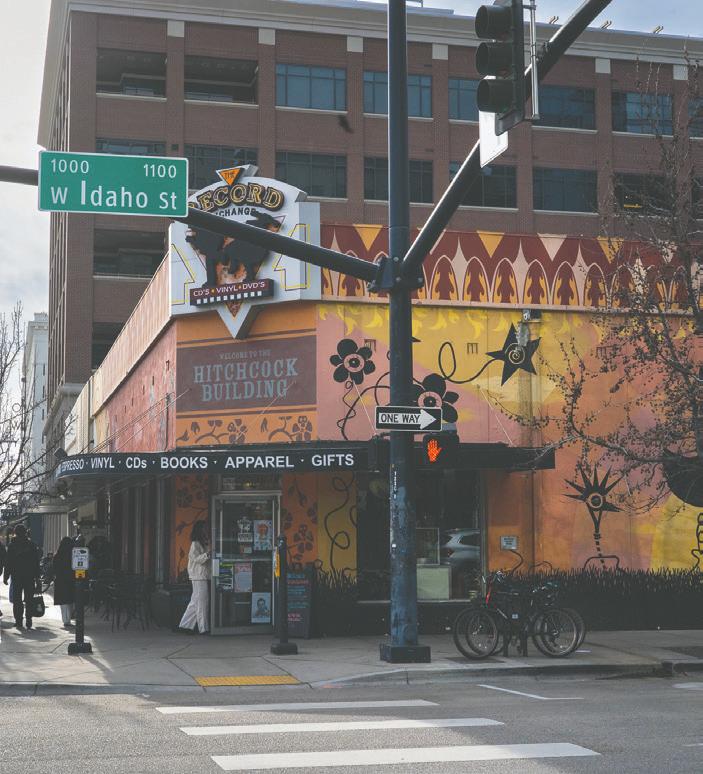
Just down the street from the Capitol, The Record Exchange kept its doors open, donating all of its sale proceeds on Jan. 31 to ACLU of Idaho, Idaho Familias Assistance Fund, Poder of Idaho and the Immigrant Law Center of Minnesota in solidarity with the strike.
Brion Rushton, The Record Exchange’s general manager, said his team initially considered closing the store to align with the general strike but decided to use the opportunity to serve as a resource to the community.
“The community knows where we stand, and if they didn’t, they do now,” Rushton said. “We were dismayed by all the chaos going on in Minnesota and around the country over the last year and thought instead of losing a day’s worth of sales we could stay open and be a resource for the community where people can gather and experience a sense of normalcy while raising money [for these organizations].”
Sales for The Record Exchange doubled in comparison to the average Friday in January, with Rushton noting an overwhelmingly positive response from the community.
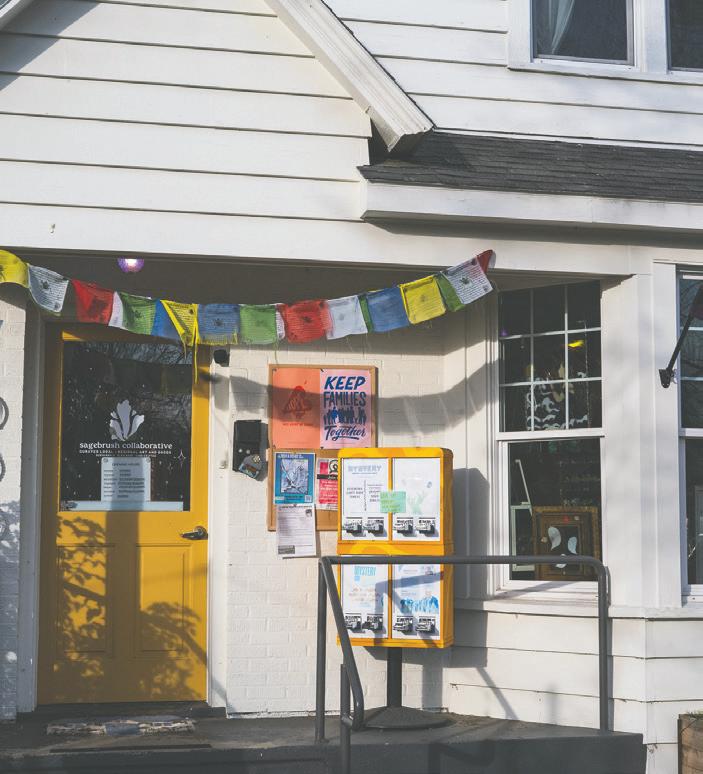
In Hyde Park, Sagebrush Collaborative, a maker gift shop and community space, closed early and operated as cash only throughout the early hours of the day.
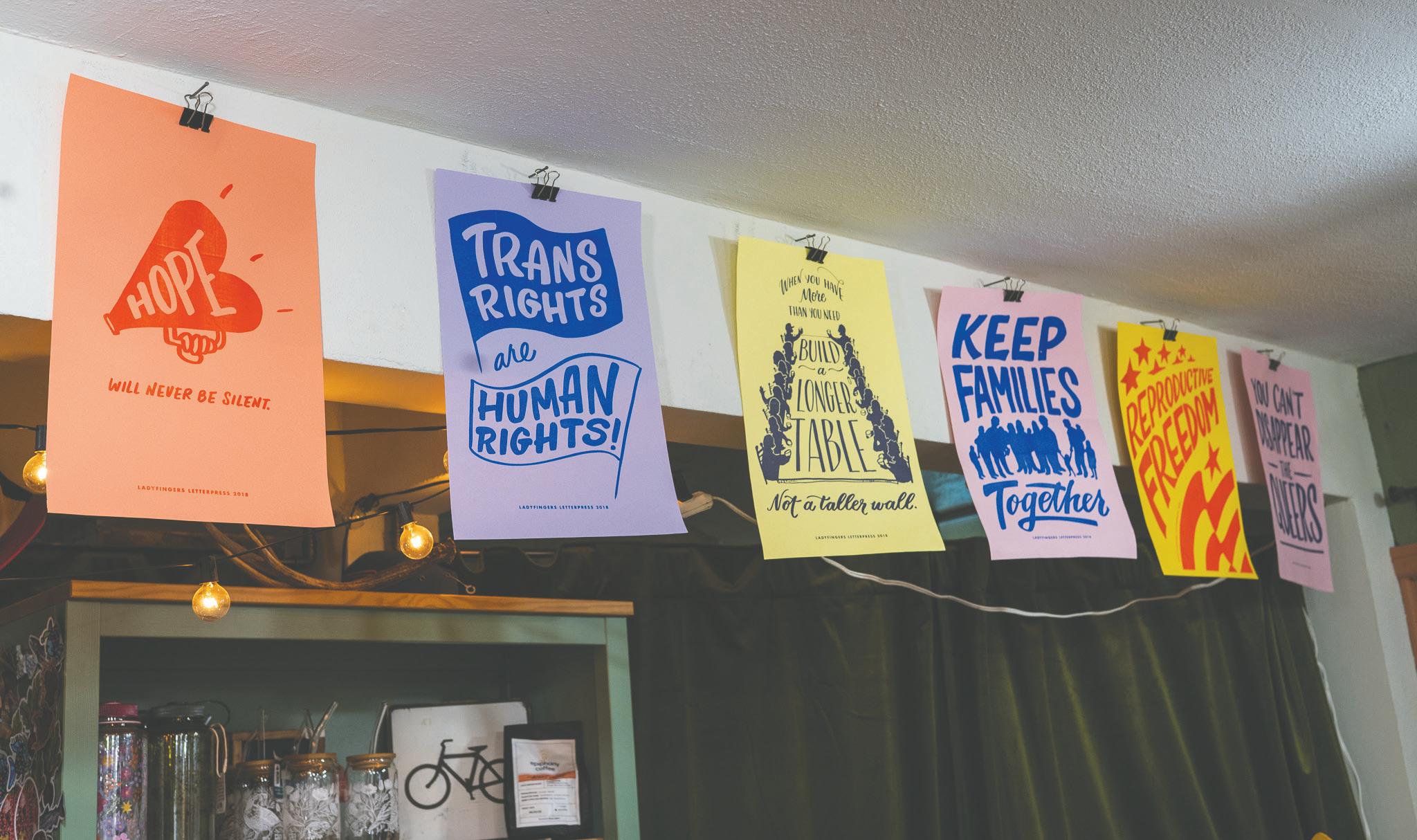
A variety of pastel-colored posters with sentiments that read “Hope will never be silent”, “Keep families together” and ”Build a longer table, not a taller wall” were sold for $10, with all profits donated to a rotating list of organizations in Idaho.
“Art is political for so many reasons,” Jess Wagner, founder and sole owner of Sagebrush, said. “You think about all of the music and art that comes out during resistance movements, on top of the fact that our artists are made up of marginalized communities. How would I feel if I was selling the work of marginalized people, profiting off of it to keep the store running and not speaking out for those people? What kind of community space would I be running?”
Wagner closed the shop at 1:30 p.m. to attend the demonstration, giving away free cardboard signs to community members. While the shop likely only raised a few hundred dollars, she said the limited hours created space for meaningful conversation.
“In the past couple years, a lot of people thought it was performative to speak up on social media,” Wagner said. “Yesterday, seeing how many people posted from the morning to the evening, I don’t think it’s performative. [These posts and movements] are getting people to talk about [these issues] and see where people stand. It’s not really politics anymore.”
SURVEY SHOWS IDAHOANS’ VIEWS ON REPRODUCTIVE RIGHTS ARE SHIFTING
As Idaho’s near-total abortion ban remains one of the strictest in the nation, students weigh in
Cole McAdams | Assignment Reporter | Photo by Omar Saucedo
In a recent survey by the School of Public Service, half of Idahoans polled indicated support of a ballot initiative, the Reproductive Freedom and Privacy Act, that would establish a right to make private reproductive healthcare decisions in Idaho, including abortion up to 24 weeks and in the case of medical emergencies.
Currently, Idaho holds one of the strictest abortion bans in the country. Having an abortion at any point in a pregnancy term is illegal, with exceptions only for cases of rape, incest or if the mother’s life is at risk. In cases of rape or incest, the pregnant person would be required to report the crime to the police as well as provide a copy of the criminal report to an abortion provider and undergo the procedure within the first trimester.
On Jan. 24, the 53rd annual March
For Life was spearheaded by the non-profit organization Right to Life, taking place from Julia Davis Park to the Idaho State Capitol steps. The rally gathered hundreds of community members and praised Idaho’s current stance on reproductive rights and abortion.
As reported by KTVB, Matt Britton, general counsel for anti-abortion organization 40 Days for Life, and other speakers warned the crowd during the demonstration about the ballot initiative, referencing that the proposed measure, if passed, would expand access to abortion in the state.
“It’s a law that’s kind of been politicized in a partisan sense, but it’s affecting all Idahoans,” Nolan Jarvis, president of the university’s BABE VOTE chapter, said. “We should be discussing issues at that tangible, ballot level. [The survey is] really helpful for starting the discussion
but on many issues, it kind of goes beyond just something that might appear on your ballot.”
Reproductive rights aren’t entirely a “Gen Z issue”, but younger voters seem more inclined to have an opinion on the topic.
Jarvis references the current youth-voting climate, describing how “young people are disillusioned.” He explains how apathetic voters are an obstacle in the way of Gen Z voters resolving issues they’re upset about.
“It’s important to [think], ‘Here’s how this affects you’, but also, ‘Here’s how this affects everybody else’,” Jarvis said. “It’s important to get involved and be the change you want to see in the world.”
Findings from the survey indicate 38% of Idahoans believe the state is headed in the wrong direction, with 74-76% of
those respondents generally supporting the ballot initiative. When The Arbiter asked students for their perspectives on reproductive rights in the state, the results were strikingly similar.
“It matters to me that our rights are defended,” said freshman Zeke Bohner. “I feel like a lot of hope has been lost, or that a lot of [young adults] aren’t going to vote because they don’t see their view as mattering. They just see themselves as just one person. But I disagree with that sentiment.”
“I would like more choice over what I can do with my body,” said freshman Blue Hessick. “If I did have problems in the future, I would want the choice and not be forced into something.”
Freshman Kyli Becker shared a similar sentiment to Bohner and Hessick. She believes advocacy is crucial, no matter what side of the conversation one may be on.
“As a woman, I think it’s important to have autonomy over my own body and be able to make those decisions for myself and not have them made for me by primarily men,” Becker said. “It’s important to advocate for yourself … on both sides [of the argument] too — being able to feel like you can advocate for yourself.”
Partisan data was included within the survey, with 45% to 47% of Republicans, 60% to 66% of Independents and 90% to 94% of Democrats saying they would support the bill if it were to be on the midterm ballot.
“There’s ways to get involved in democracy and ways to make a change that aren’t voting,” Jarvis said. “I would argue that those ways are more effective than voting. It’s important for young people to get passionate about the issues, because they do affect you.”
‘YOU’RE JUST MY TYPE!’
Emily Carmela Nelson | Editor-in-Chief | Graphic by Amber Jansson
Still looking for the perfect match before Valentine’s Day?
According to the American Red Cross, there’s a good chance you might be just what someone is looking for.
A severe flu season and winter weather disruptions at donation sites nationwide caused the national blood supply to drop nearly 35% in January, resulting in a severe blood shortage. This decline forces doctors to determine which patients receive timely blood transfusions.
To combat the shortage, the American Red Cross and Student Involvement and Leadership Center are collaborating to host a heart-themed blood drive ahead of Valentine’s Day.
Several on-campus groups will co-host the drive, including the Honors College, Student Union, ASBSU, Boise State Athletics, Volunteer at Boise State, the MLK Living Legacy Committee and the American Red Cross Club. The collaboration marks one of the largest blood drives held at the university, with each
organization taking on a unique role in supporting the effort.
Diego Tapia, associate vice president of health and wellness, serves as a supporting leader of the event. Alongside recruiting volunteers and donors through ASBSU, Tapia assists with event logistics and overall promotion.
“Shortages in blood collection are especially serious for type O, A negative and B negative blood types,” Tapia wrote in an email to The Arbiter. “Students who are willing and able should consider donating blood to ensure that efforts like these are receiving consistent collections above current targeted goals to replenish the shortened blood supply.”
The “You’re just my type!” blood drive will take place Thursday, Feb. 12, from 10 a.m. to 4 p.m. in the Jordan Ballroom of the Student Union. Students and faculty can register in advance via Campus Groups. Donors will receive a $20 e-gift card along with entry into onsite giveaways.
OPINION
AMERICA’S CIVIL DISCOURSE IS IN DIRE NEED OF AN OVERHAUL
Young Americans who take off the rose-colored glasses of patriotism to view the current state of the country they’re meant to inherit often find their elected officials acting their shoe size rather than their age.
A recent survey by the Sine Institute of Policy & Politics found 69% of young adults view the current civic discourse in the nation as a crisis. A top concern for this current pitfall in our democracy is politicians’ allergy toward respectful disagreements, instead opting to attack
character rather than policy.
To say the least, the tone of politicians in recent years errs on the side of disrespect or even disgust towards opponents, morphing what should be healthy debate into trashy reality TV with each passing day. A return to any sense of civility requires leaders to set an example by refraining from being the firestarter in destructive public discourse.
In modern times, social media became the primary vessel for politicians to dish out character attacks instead of print. With just the push of a button, politi -
cians elevate negative discourse and rile up constituents faster and nastier than ever before.
Charles Hunt, an associate professor at the School of Public Service, attributes much of the recent discourse to negative partisanship between the two political parties, where, instead of voting on a party’s vision or policy, constituents vote as a way to stick it to the opposition.
“Americans are thinking of their votes in this way [to spite the other side] a lot more and as a result, prominent elected officials try harnessing that by insulting the other side,” said Hunt. “That draws a lot of hatred from their own party and is a way of signaling to voters that you’re with them.”
Constituents voting out of spite waters down our government’s democracy and allows our elected officials to hijack the internet rage machine. Our current president feeds the machine often enough, even launching his own social media platform, Truth Social, to have a sturdy soapbox to stand on while riling up his base.
Associate Professor in Political Science, Jeffery Lyons, believes national leaders shoulder some of the blame for cultivating destructive citizen disdain toward one another.
“It is about more than just presidential politics, but a lot of things start at the national level,” said Lyons. “National leaders are structuring discourse in a certain way, and that does tend to flow downhill.”
“Rather than seeing our political elites try to turn down the temperature and model the kinds of behavior we would hope to see, we don’t really see that,” Lyons said. “What we see is a reinforcement of the worst elements, which is a lot of character attacks.”
American citizens constantly exposed to the “takedowns of the MAGA” or “owning of the libs” can become mired in stereotypes of the opposing side, unable to view one another in an unbiased light. Actively disagreeing or the straight-up refusal of differing ideologies before engaging with one another detracts from the ability to be civil.
The nationalization of American politics pushes local politics, such as city or state elections, to follow in the footsteps of the national rhetoric. This seeps into our everyday lives as members of opposing parties tend to avoid forming friendships or relationships with one another.
“There’s always disagreement, and to a certain extent, enmity,” said Hunt. “In some ways that’s a marker of a democracy, but how we conduct that speech, whether it’s civil and whether it’s actually accomplishing anything, that’s something we have to figure out in civil society.”
There is a desperate need for a reframing in how the American people approach sorting out their differences.
Isaac Castellano, the associate director for the Institute of Advancing American Values (IAAV), leads Bronco Convos, an effort on campus to engage in civil discourse that leaves personal attacks at the door.
“The purpose of Bronco Convos is to reclaim and create a space that is non - partisan,” said Castellano. “No one’s trying to win an election here. No one’s trying to gain members.”
He emphasizes the need for an organization like the IAAV that shifts the incentive away from political gain to focus on the proportional representation that is needed through this “grassroots” movement.
“Creating a culture of engaged Amer -
Zaccary Kimes | Opinion editor | Graphic by Naomi Brown
ican voters who demand elected officials are civil and that they are problem solvers,” Castellano said. “To focus on advancing, problem-solving and addressing the problems that the vast majority of Americans agree on.”
When a group of college students are engaging in better civil discourse than the officials who represent them, it may call for a long look in the mirror. The younger generation does not want to be represented by politicians who debate with playground insults and are tired of seeing the adults in the room constantly at each other’s throats.
“The best political minds in the country are focused on how they’re going to defeat other Americans and that’s the tragedy of right now,” Castellano said.
A desire for a return to civil discourse in our community starts with holding our leaders accountable for deplorable behavior. That goes beyond a passing comment or angry tweet, which simply adds to the rage machine, it requires holding leaders to their policies and not taking the bait when a politician tries to fan the flames of outrage.
IDAHO, THE STATE OF EMERGENCY
Zaccary Kimes | Opinion Editor | Illustration by Amber Jansson
At the end of nearly every bill proposed in Idaho’s 2026 legislative session so far is a section declaring an ‘emergency’ — including flag laws that don’t affect public safety.
Of the 110 Senate and House bills proposed to the Idaho Legislature (as of January 30), all but four include an emergency clause. While this practice is legal, it tests the limits of Article III, Section 22 of the Idaho Constitution.
That provision exists to prevent laws from taking effect immediately, giving the public time to review legislation and organize a referendum. The emergency clause was designed as a ‘break glass in case of emergency’ workaround for urgent situations, providing immediate support to the public in case of disaster, health/peace crises or budget emergencies.
Instead, many Idaho representatives use the clause in a lax administrative fashion.
Rather than utilizing it to address an imminent crisis, the clause allows them to set effective dates for proposed bills, with many at the beginning of Idaho’s fiscal year, July 1.
For a famously conservative state, Idaho legislators seem to enjoy a very liberal interpretation of a clause meant to protect the public in times of need, not to clean up routine lawmaking for their convenience.
By proposing bills under the guise of urgency, it becomes unrepresentative of public interest, endangering a citizen’s ability to challenge laws by shrinking the practical referendum window.
Furthermore, the emergency is only declared, not defined, meaning a legislator can declare anything as an emergency. An example being House Bill 545, which aims to expand counseling licensure to include chaplains who served in the U.S. Military. Unless there’s a massive shortage of religious licensed
counselors in Idaho, the definition of emergency is being stretched pretty thin here.
Of the proposed bills, most fall under the July 1 date for that administrative convenience, but a handful of them take full advantage of the clause, going into effect immediately after approval.
The aforementioned flag bill (H0561), concerning limitations on certain flags being flown on government property, charges $2,000 dollars per day to government entities not flying the official city, state or county flag. This bill also includes the emergency clause without an effective date, so as soon as Gov. Little puts pen to paper, it goes into effect.
The swift process bypasses and limits Idahoans’ window for a referendum against the bill. When used recklessly, it shrinks citizens’ voices and normalizes the routine use of emergency powers for frivolous endeavors. Idaho’s continued use of the emergency powers meant to help Idahoans in crisis actively erodes citizens’ ability to trust the government when there is one.
If the Idaho Legislature simply needs to avoid an administrative headache, consider amending the constitution to allow bills to take effect on the start of the fiscal year without labeling routine legislation an emergency. Better yet, require lawmakers to justify their so-called “emergencies” with a criteria and reserve the emergency clause for true crises.
Idahoans deserve laws that are urgent when they truly need to be, because if everything is an emergency, nothing really is.
THE RISE AND FALL OF THE
BEAUTY AND THE BEAST
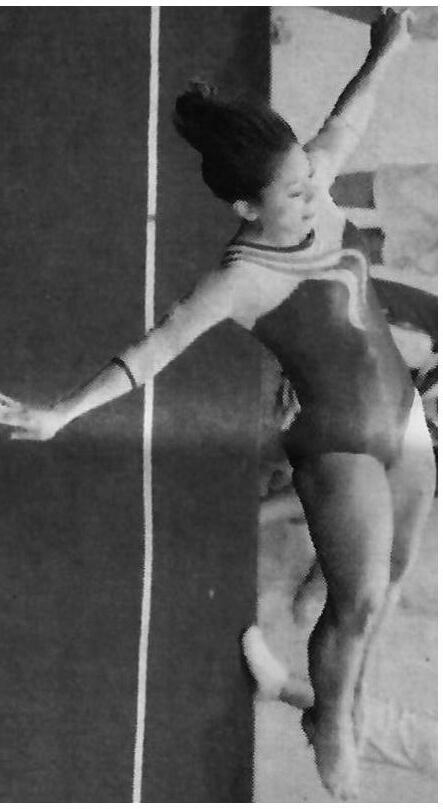
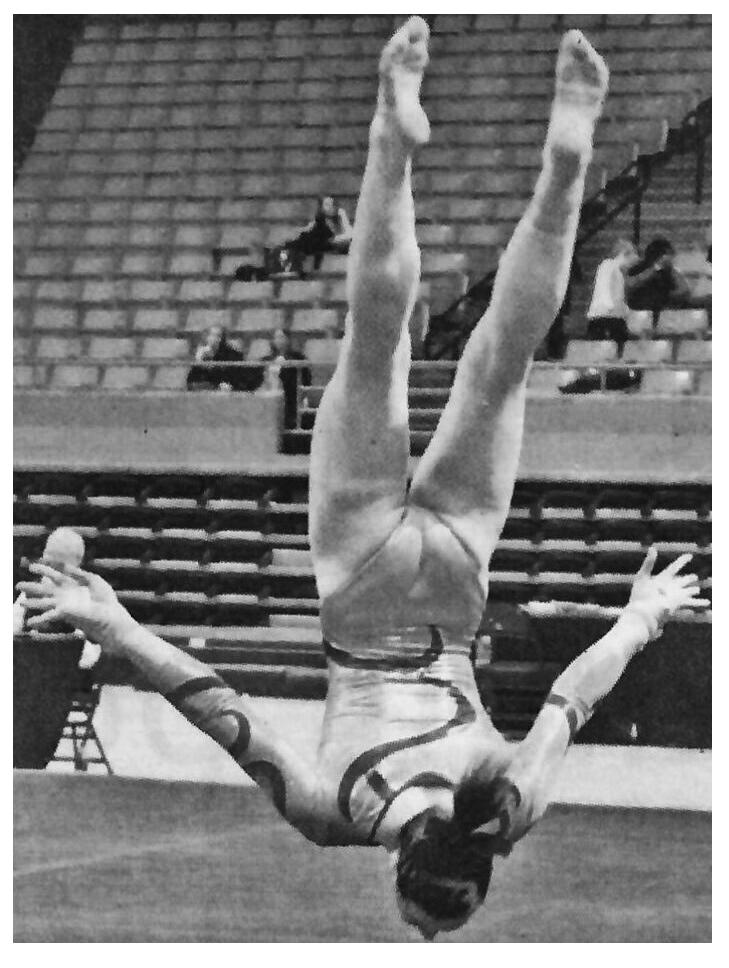
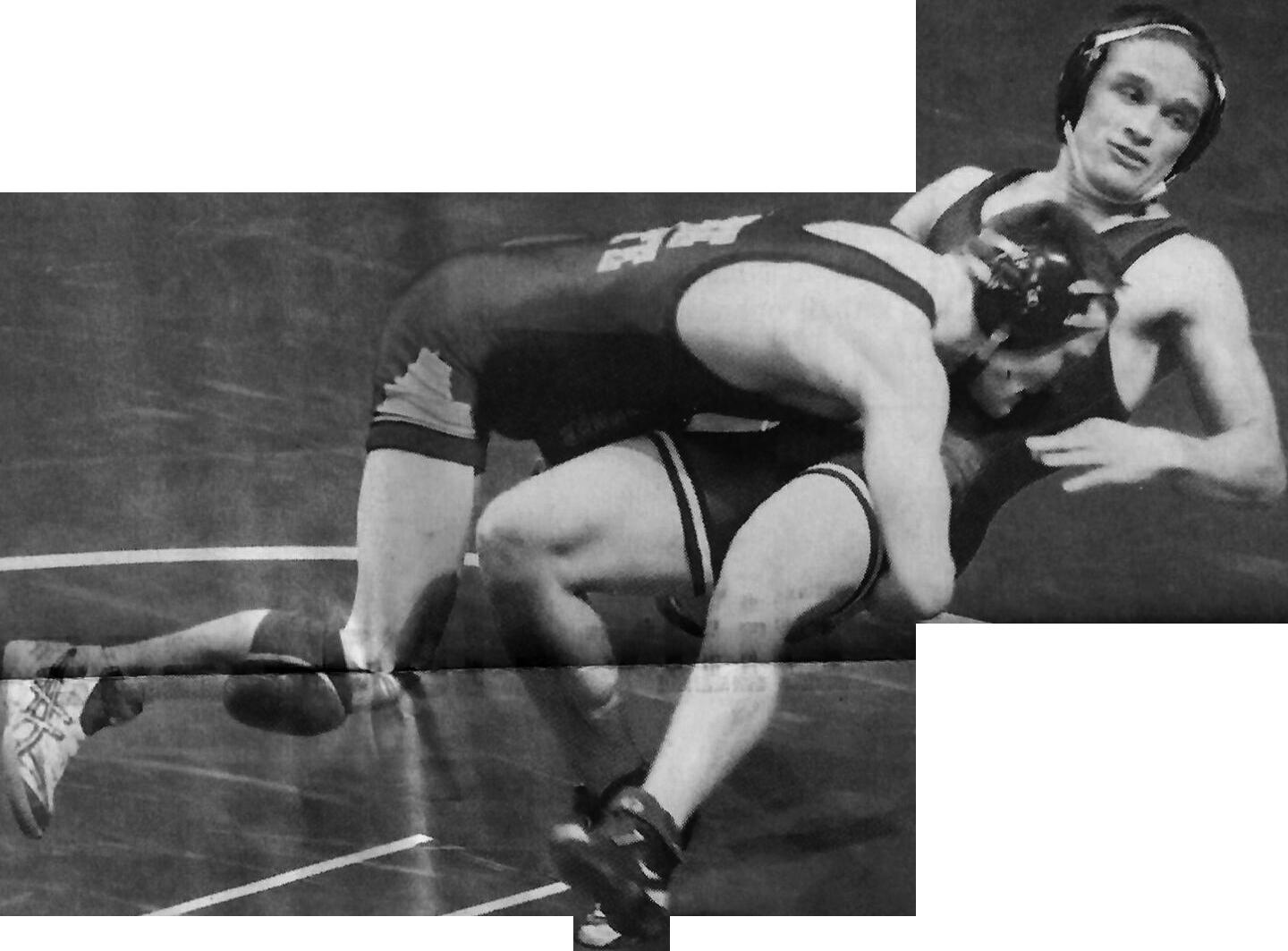
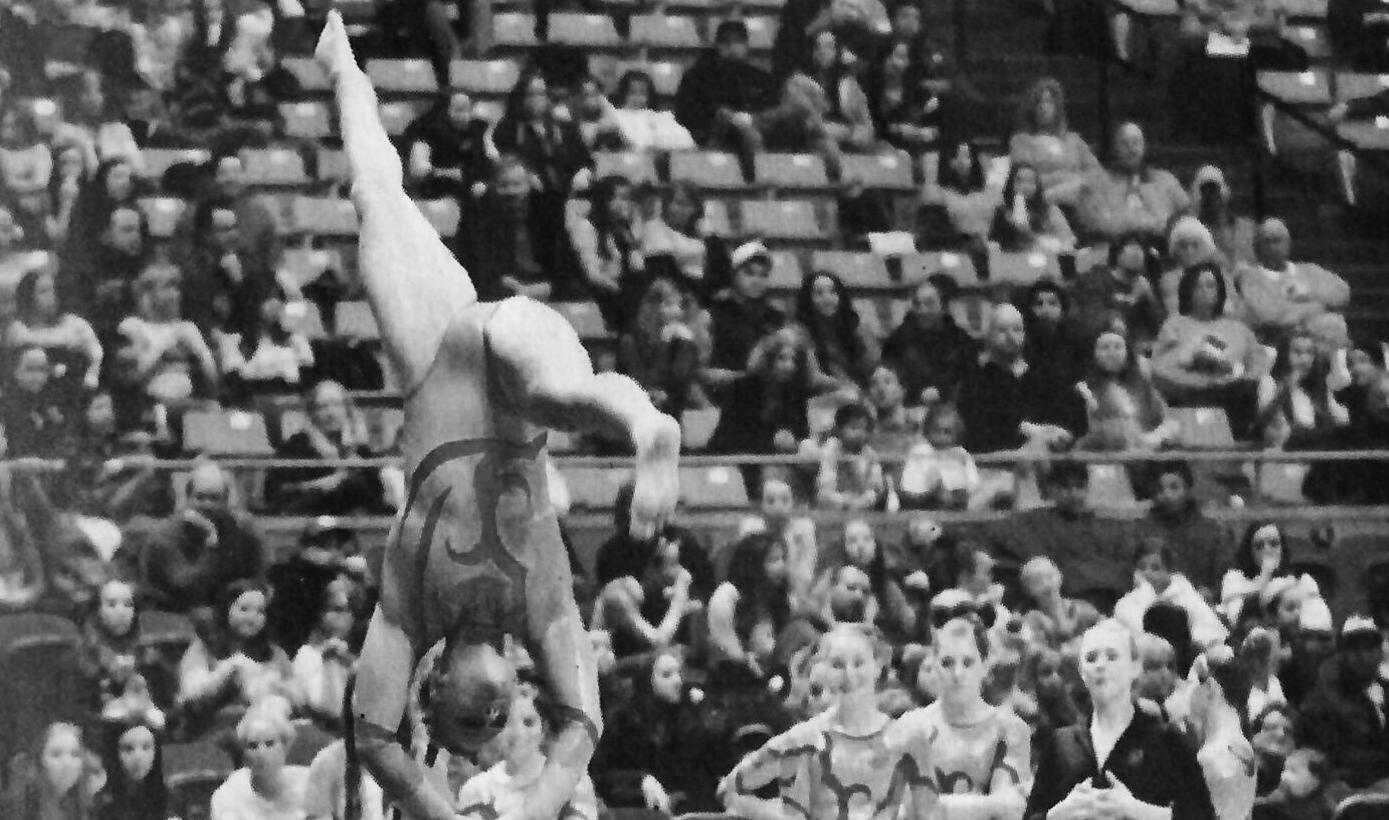
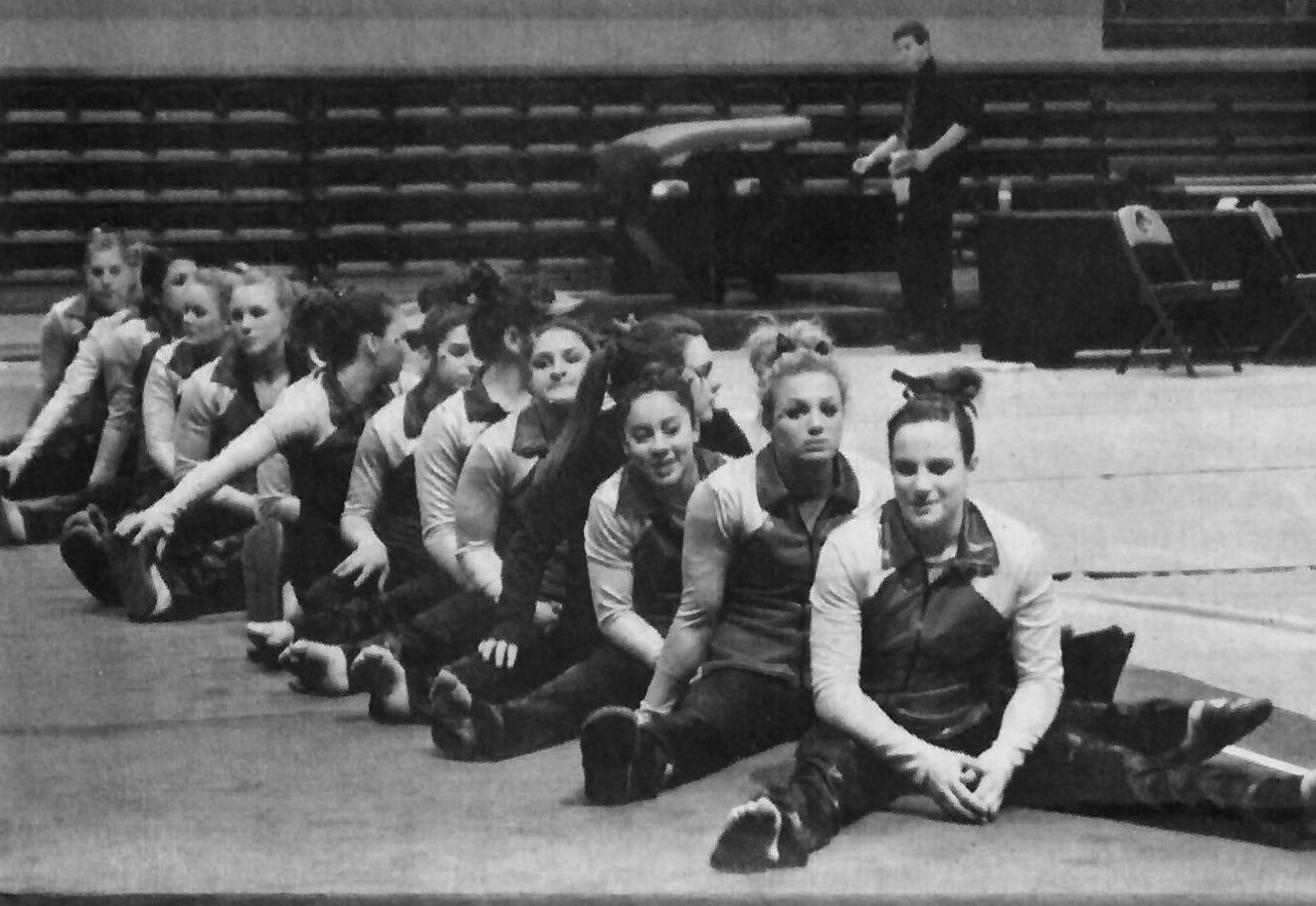
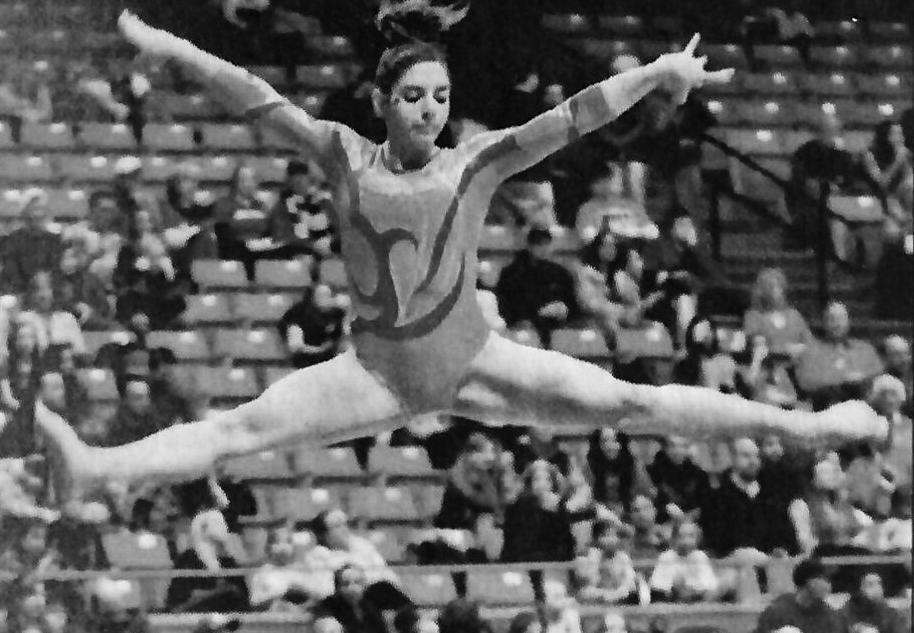
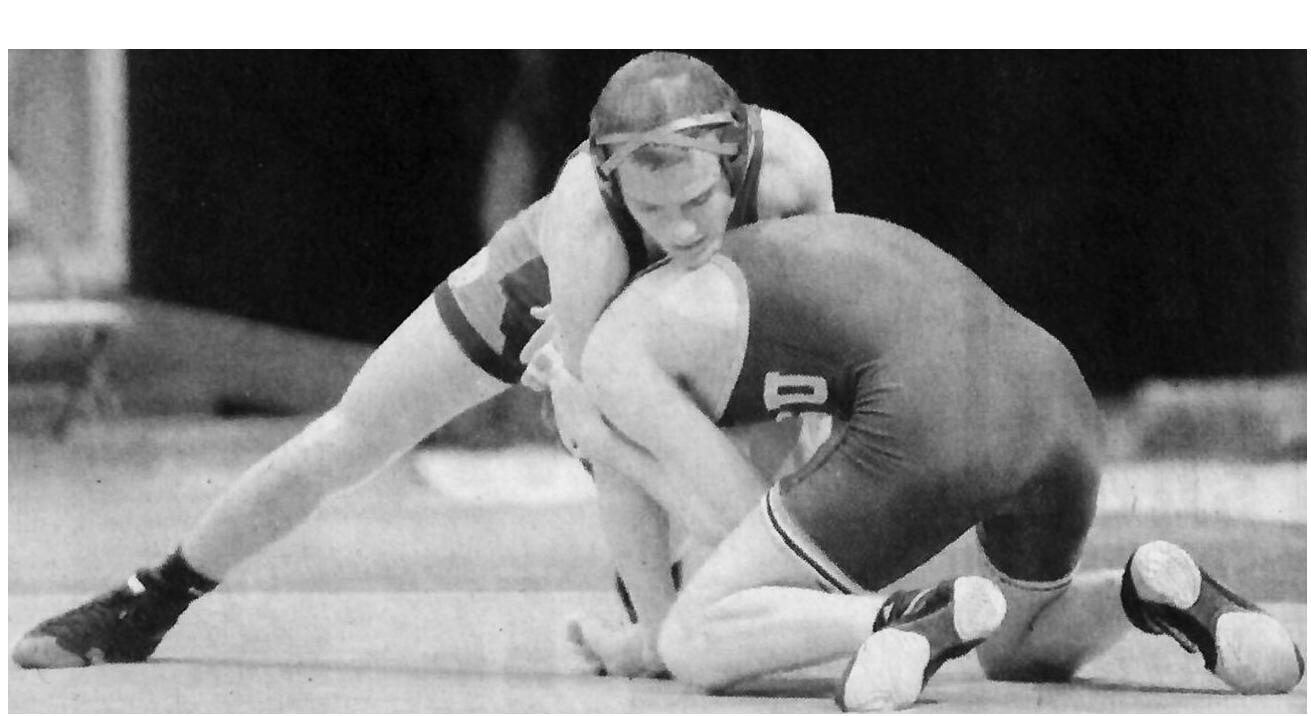
About a decade ago, winter sports at Boise State came with a split spotlight. Gymnasts flipped under one set of lights while wrestlers battled under another, sharing the same floor in a one-of-a-kind event called Beauty and the Beast.
Beauty and the Beast became one of Boise State’s most memorable winter traditions for almost a decade. The event, placing women’s gymnastics and men’s wrestling inside the same arena, created a night that felt larger than any typical meet or tournament.
Former Athletic Director Gene Bleymaier, the mastermind behind the event, led Boise State Athletics for more than three decades. During his ten ure, he pushed for creative events that could help the university stand out. He believed gymnastics and wrestling could complement each other well and increase turnout for both events.
This vision shaped the first Beauty and the Beast meet on Valentine’s Day in 2003.
ExtraMile Arena, which carried the name Taco Bell Arena at the time, was filled with more than two thousand fans for that first meet. Boise State hosted Portland State in wrestling and BYU in
gymnastics. The event’s successful debut set the tone for what the event would become.
Behind the scenes, public address announcers helped guide the rhythm of the night. Jeremy Peterson announced Boise State wrestling for several seasons and saw how Beauty and the Beast challenged announcers to stay on top of the game.
“In the years prior to 2010, we would
sport, it will talk to you.”
Peterson said working Beauty and the Beast required him to adjust to two sports happening at the same time. He described learning to follow the natural rhythm of each event, recognizing when to speak and when to stay quiet so the announcements didn’t interrupt the flow of competition.
The Boise State Athletics Hall of Fame later recognized Bleymaier for creating
Aidan Mattingly | Sports Reporter | Photos by Stanley Brewster & Jake Essman, Graphics by Naomi Brown
State created their own combined meets modeled after the Boise State format. The event put the strength of wrestling and the precision of gymnastics on a never-before-seen platform, with families and longtime supporters filling the arena because the event offered something unique.
The 2017 match was the last of its kind. In April of 2017, Curt Aspey, former director of athletics, announced the discontinuation of Boise State’s wrestling program. According to previous reporting by The Arbiter, the decision was made to reallocate funding towards a baseball program and caught community members and the wrestling team alike off guard.
“This was not an easy decision, but one that needed to be made as we consider the long-term vision for Bronco athletics,” said former athletic director Curt Apsey. “We will continue to honor the scholarships we provide our student-athletes, and will do all we can to help those who want to continue their collegiate wrestling careers elsewhere.”
Division I baseball was reinstated in 2019, but didn’t last long. Boise State rushed the baseball program too fast and was forced to discontinue the sport in 2020 due to costs and too many complications surrounding the COVID outbreak.
Five years later, on Feb. 22, 2025, Athletic Director Jeremiah Dickey announced in a tweet there are no plans to bring back baseball as it doesn’t align with Boise State athletics’ values at the moment.
Although baseball is not expected to return, wrestling remains in the dark as well. With baseball off the table for now, supporters continue to question whether the university might one day reconsider bringing the program back.
After the university discontinued the wrestling program in 2017, former wrestlers and fans quickly organized online to try to reverse the decision. Several online petitions and social media campaigns emerged, keeping the conversation alive years later after slowly fading out.
One came from former wrestler Kevin Wood, who wrestled at Boise State from 1979 to 1982 and started a change.org petition to gather signatures in support of reversing the decision. In the petition, Wood said he is “in awe of the hard work, determination and true heart” displayed by the team. Today, supporting signatures total over 20,000. Other fan accounts on social media and fundraising pages also sprang up to raise awareness for the cause.
The tradition, as well as the wrestling program as a whole, never returned. The university has not announced plans to bring it back, though fans still bring up the event when talking about past Boise State traditions.
Beauty and the Beast succeeded because it brought people together, placing two very different sports on the same floor and allowing each to share the spotlight.
Beauty and the Beast still lives in the memories of longtime fans, but many students on campus today have never
experienced it. The event has been gone long enough that a newer generation
ExtraMile Arena with split-spotlight energy now belongs to a different era
CULTURE
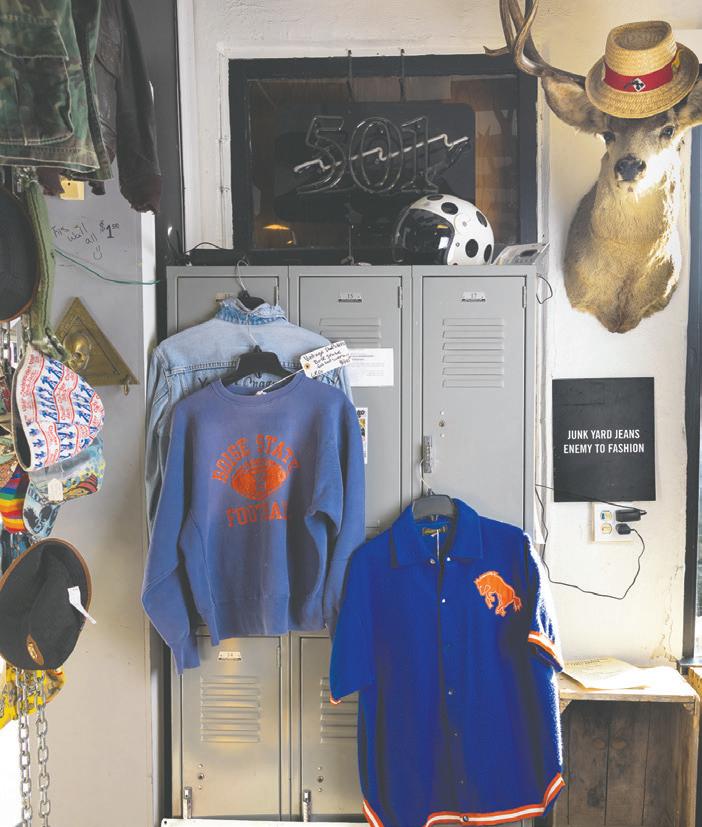
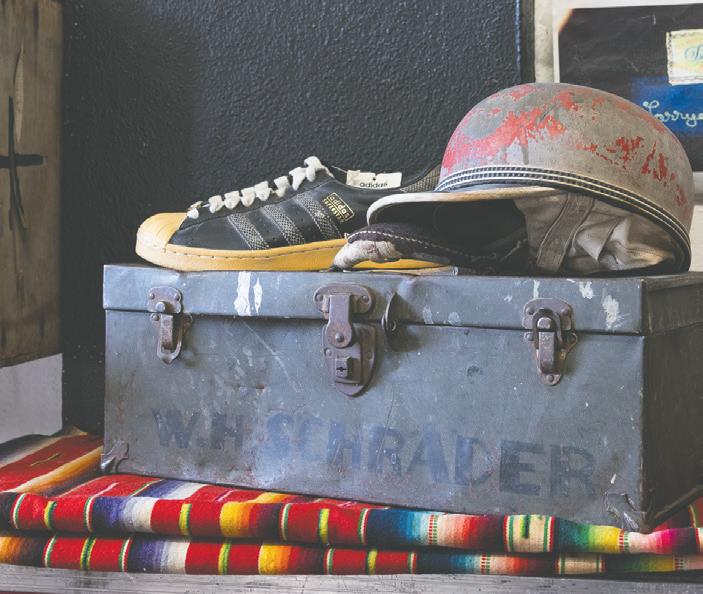
HOW JUNKYARD JEANS BECAME ONE OF AMERICA’S BEST CLOTHING STORES
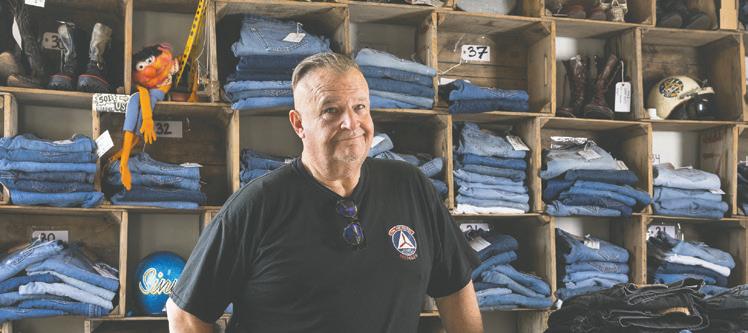
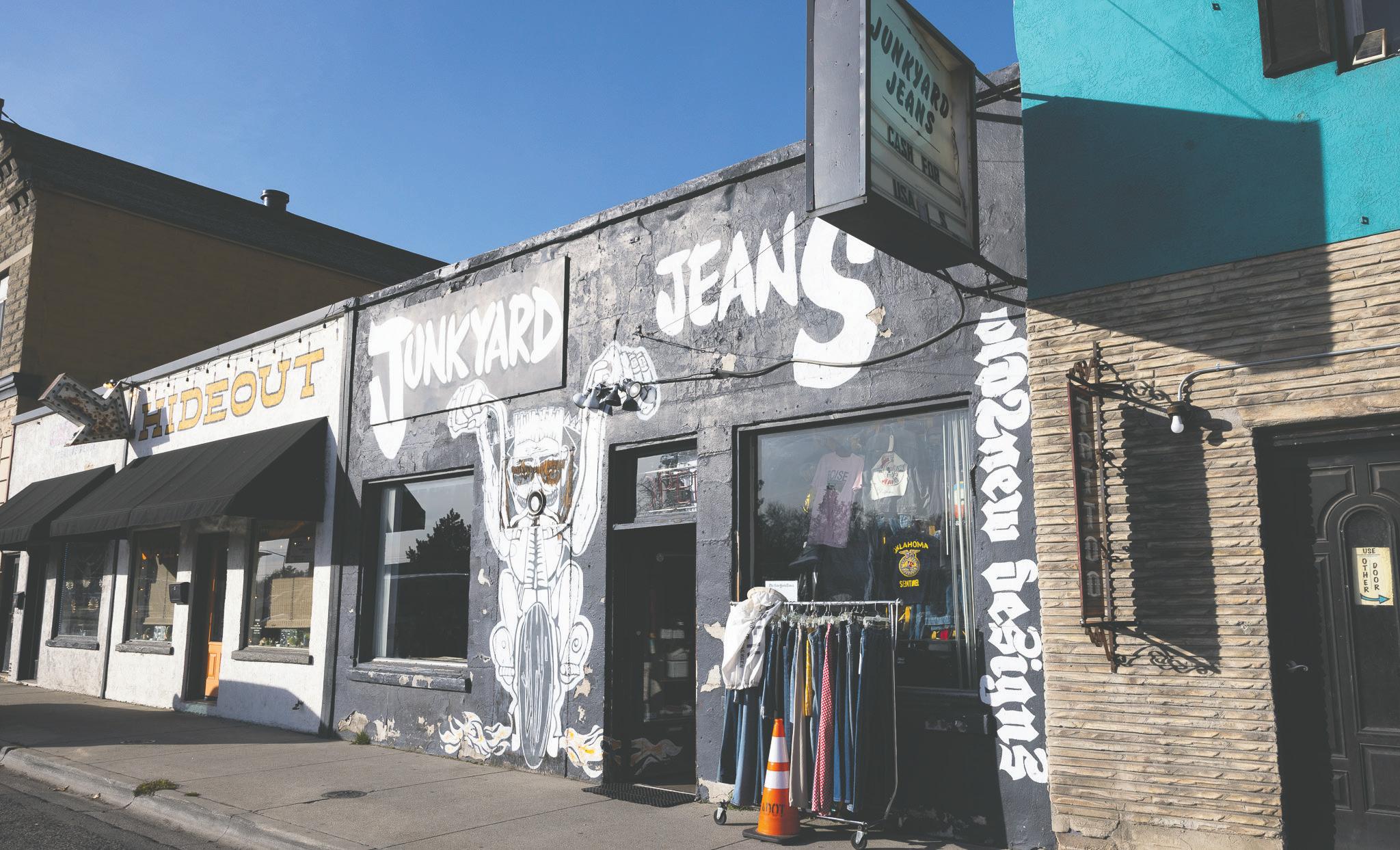
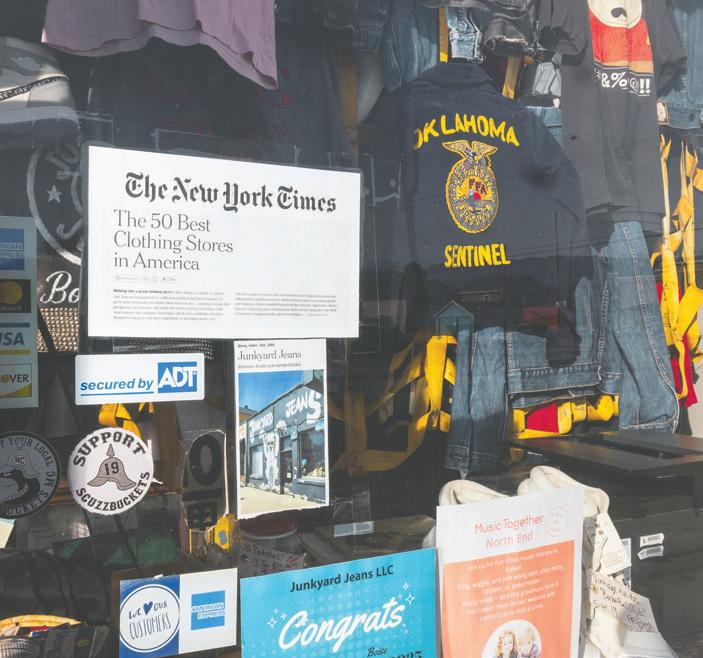
Since 1991, a treasure trove of vintage denim has been tucked away into a quiet storefront on Broadway Street in Boise. That small shop, Junkyard Jeans, received widespread attention after the New York Times named them one of “The 50 Best Clothing Stores in America” in November 2025.
After the article’s release, Junkyard Jeans (located just four-minutes from Boise State’s campus by car) saw a $10,000 increase in monthly sales.
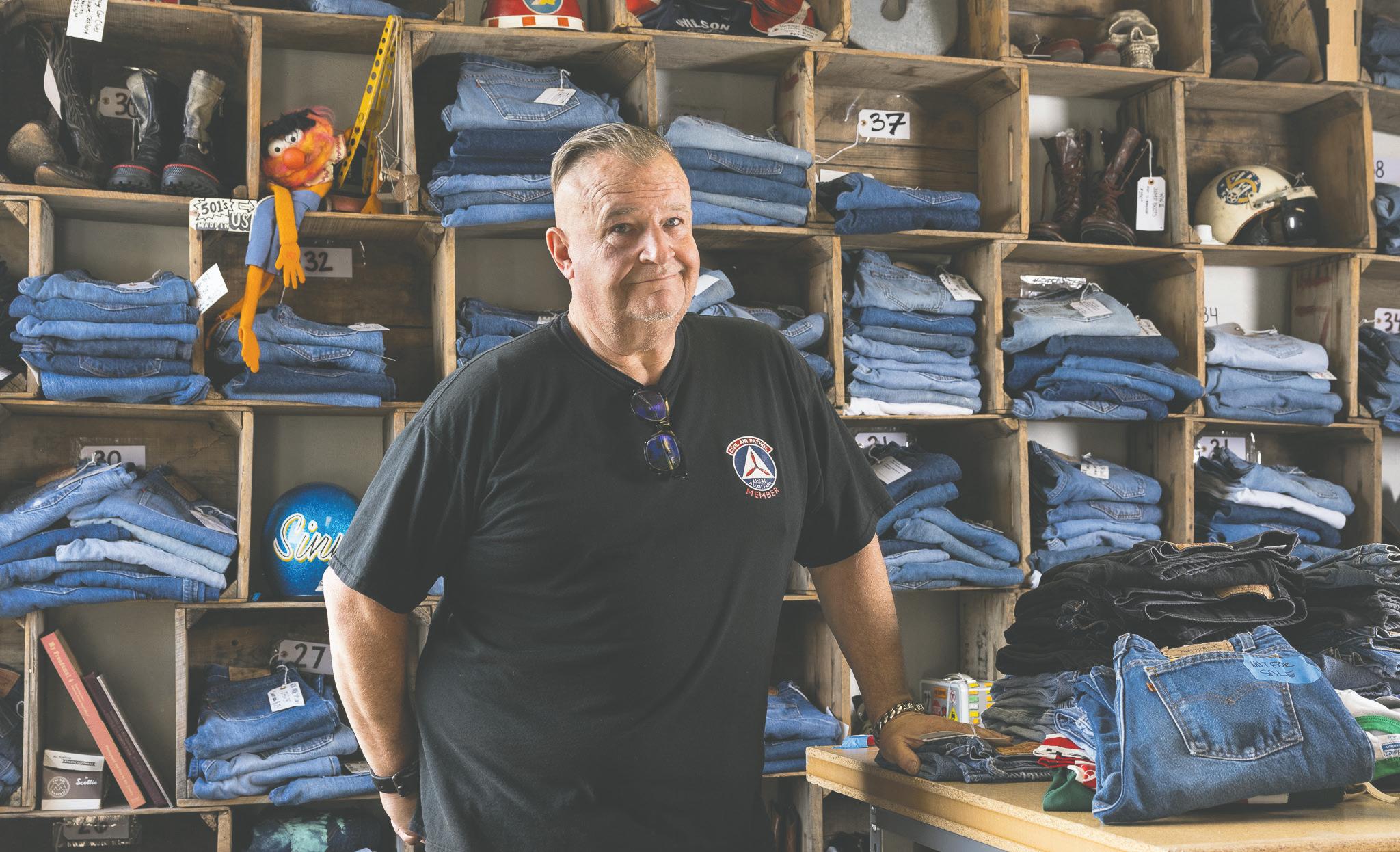
“It was very humbling for this article [to] come out, and for us to be picked in the top 50,” Owner Eric Schrader said.
While the media attention was exciting for the team, Schrader is used to living in the spotlight. From working with A-list celebrity clients to starring in a documentary about American denim, Schrader has seen it all.
“Honestly, my whole life has been like a movie,” he said. “Everywhere I go, everything I did, I’d have all these experiences, and I would just think,
‘Man, too bad there’s not a movie [about this].’ So when the movie cameras finally showed up, it was just natural to be a part of that.”
Schrader’s passion for vintage clothing began when his college roommate borrowed money from him, bought and resold clothing and shared the profits with him. Schrader began learning about reselling shoes and clothing until one garage sale purchase changed his life forever.
“I found two pairs of jeans in Nampa at a garage sale that I bought for $6 and sold for $30,000,” he said.
With that money and some help from his dad, Schrader bought Junkyard Jeans, a vintage clothing store in its infancy, and began washing, selling and customizing vintage denim.
After more than three decades in the “jean dealing” business, Schrader has become a denim expert in every sense of the word. From the history of denim production to the value of different denim grades, Schrader knows it all.
According to him, jeans say a lot about the person wearing them.
“When people would bring their jeans in, if I saw something unique, I would ask them what they did for work,” he said. “People that wear jeans, their experiences in their lives [show up] in the denim.”
That concept came into play in a major way when American director Christian Bruun invited Schrader to be the subject of his 2014 documentary “Blue Gold: American Jeans”. The film followed Schrader around the world as he bought and sold denim, exploring how blue jeans became one of the most iconic fashion items in human history.
“People really liked it, I guess,” Schrader said, in his always-humble fashion. “It was really interesting, but it was a long process, and I’d seen so many versions of it that I couldn’t stand to look at myself.”
Even before his big-screen debut, Schrader had built a legacy of working with high-profile clients. The majority of
Junkyard Jean’s sales come from custom orders for personalized jeans and denim, with their most expensive pairs reaching up to $55,000. Some of the store’s loyal customers have included Mike Posner, David Beckham, Blink-182, Post Malone and many more.
Junkyard Jeans has also collaborated many times with large-scale corporate companies such as Levi’s and Off-White. The team has done private parties at major events including Coachella and the Rose Bowl, where they would create onsite custom orders for A-listers, including the likes of George Clooney, Drake, Justin Bieber and Snoop Dogg.
The success has taken Schrader on many adventures around the world, but still, the recent resurgence of in-store activity has been just as rewarding to him.
The New York Times article brought in an influx of locals, bringing a renewed sense of community to the storefront.
“It was crazy for us,” he said. “The shop was full and we’re just now starting to get [inventory] built back up to where
Julianna Kelsey | Culture Editor | Photos by Omar Saucedo
it’s supposed to be.”
While Schrader travels the world for business, Store Manager Calista Garrard is usually holding down the fort in Boise. Running the shop, Garrard also appreciated the increased activity in the physical store.
“There were some people who had been customers who came in to say congratulations,” she said. “There were other people who were like, ‘I’ve seen this shop for forever, and just now stepped in.’ I’ve had a lot of full houses since [the article came out].”
Garrard has fallen in love with her work at Junkyard Jeans, whether she is stitching custom orders or assisting customers in-store.
“I find it really fulfilling to get somebody in a pair of pants that makes them feel good,” she said.
Garrard has had her fair share of high-profile orders as well. Her first solo order was three pairs of jeans for Post Malone. She also had the opportunity to create the jeans for popular Hollywood films such as “A Complete Unknown” starring Timothee Chalamet and “Springsteen: Deliver Me From Nowhere” starring Jeremy Allen White.
“That was how I learned that Timothee Chalamet is taller than Jeremy Allen White,” she laughed. “I would not expect that.”
For Garrard, however, her work is less about the star power Junkyard Jeans attracts, and more about using her creativity, preserving fashion history and combating fast fashion.
“I hate fast fashion,” she said. “This is kind of a rebellion against that.”
Now, in the aftermath of the New York Times article, the team hopes to continue connecting with the Boise community. Garrard explained with other local businesses opening up near them, they have gotten to increase community engagement and connect more with locals.
“For [community events in Boise], you normally think of Hyde Park or places like that — not this little stretch of Broadway,” she said. “It’s just a cool little
Renaissance happening down here.”
Whether you are looking to take advantage of their weekend deals or want to purchase a valuable pair of custom or vintage jeans, the team at Junkyard Jeans is excited to have you.
“I love having people in,” Garrard said. “So many of the customers we get are so interesting, [and] from so many different walks of life.”
NEW WOMEN’S ART GROUP
Julianna Kelsey | Culture Editor | Illustration by Mia Strand
Four years ago, local artist Danica Factor came to Boise looking for a fresh start.
She had worked in the corporate world for 17 years, living most of that time in New Jersey near New York City. She felt like her life “checked all of the boxes” for what a happy life should look like — a house, a husband, a daughter, a career — but she had been experiencing regular panic attacks.
Through talk therapy, her therapist gave her a simple suggestion that changed her life — to find a relaxing spot in her house and doodle for ten minutes a day.
“I would put my daughter to bed, my husband would be watching TV, and I would be next to a fireplace in this little corner just doodling,” Factor recalled. By simply doodling each day, Factor was able to process difficult memories her brain had been suppressing.
“Through the art, I was able to completely heal,” Factor said. “I was able to uncover all these things that had happened, learn how to process it and let it out.”
Factor continued to create art through acrylic painting, and eventually decided to pursue art full-time. She and her husband decided to move to Boise for the outdoors and lifestyle the city could bring them.
Now, as a full-time artist in Idaho, Factor felt inspired to share the healing side of art she had experienced firsthand. She decided to start her newest project: Boise Women’s Art Group, a monthly gathering for women to explore art and its therapeutic benefits.
“I wanted to create a space that enabled women to come together and have that safe, supportive place to play with art and share what is on their heart and what they’re going through in a very judgment free and welcoming zone,” Factor said.
The group, open to women 18 and
older, will meet monthly at the artist-owned Art Source Gallery in Downtown Boise.
“The gallery really wants to be part of the community and lift up, support and celebrate local art through our collaborative any time that we can,” Gallery Board Chair Genie Sue Weppner said, explaining why Boise Women’s Art Group fits perfectly at Art Source.
At each group gathering, participants will explore different art techniques and styles.
“It’s a great group for anybody who is inexperienced in art and wants to try it,” Factor said.
Factor will be hosting the group’s launch party on Feb. 12 at Art Source Gallery, where participants will create collage art, enjoy mocktails and snacks and connect with other women interested in art.
Women interested in participating can choose to purchase drop-in tickets or subscribe to the monthly membership plan, which also offers monthly Zoom art classes. Memberships and drop-in tickets can be purchased on Factor’s website at danicafactorart.com.
“I’m excited to reinvigorate people on the idea of community and connection,” Factor said. “We’re forgetting how important that is right now. I honestly just can’t wait for 30 women who like art to be in the same room.”
CULTURE
COLLEGE DJS HONE THEIR CRAFT AT SPACE BANANA
Isabella
At this Boise venue, students aren’t just fans — they’re performers.
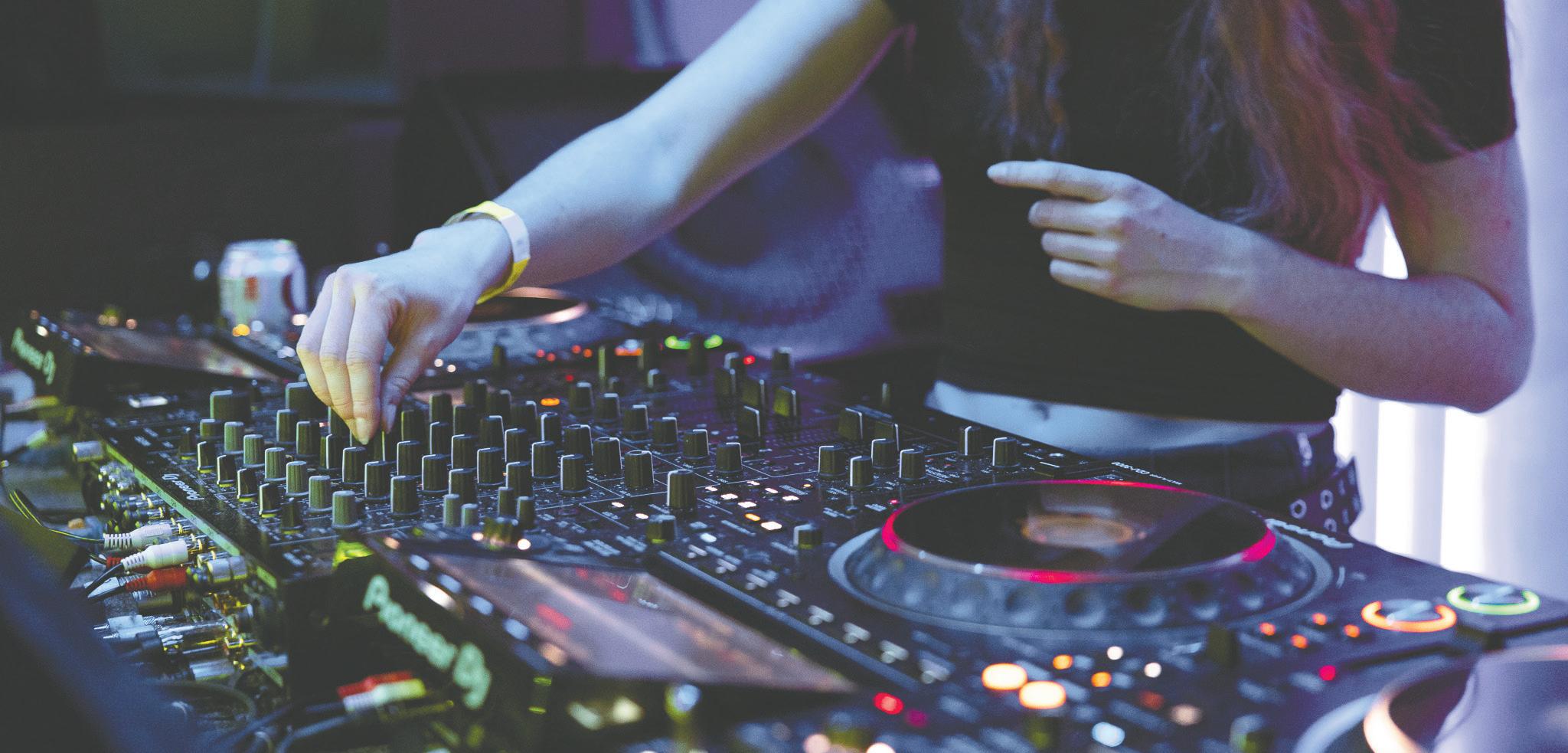
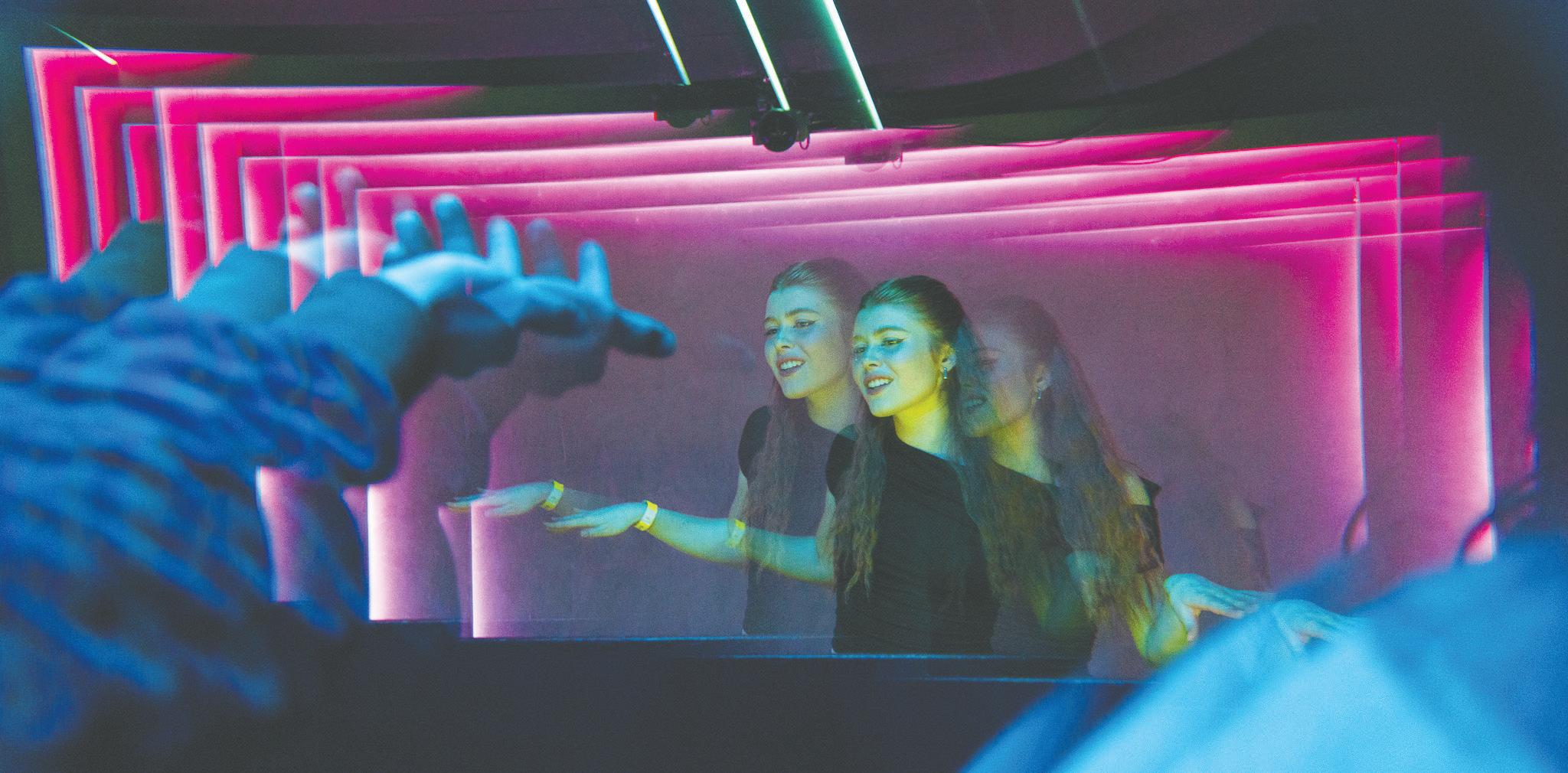
Space Banana, a local club for DJs and electronic music lovers, is becoming a place where students share the stage alongside established DJs, gaining experience, mentorship and a taste of real nightlife.
Conner Schumacher, resident DJ at Space Banana and lighting operator who performs under the name CDIGI, said the venue’s approach is about more than letting students get behind the decks.
“What Space Banana is doing for these college students is giving them a mature place to grow as music artists and engage with Boise’s nightlife,” he explained.
College DJs play a large part in shaping the energy and identity of the club itself. With many of them still learning the craft, audiences witness these DJs experimenting with mixing and exploring their own style.
For Schumacher, the process of growing as a DJ mirrors the creative journey itself.
“A creative doesn’t just happen overnight, a creative will grow themselves to be who they want to be,” he said. “If you put yourself out there, and you continue to work at it, I think the right things will happen for you.”
Space Banana’s inclusive approach has turned it into an incubator for young
talent. College DJs start with smaller sets — typically earlier in the night and free to attend — giving them the chance to learn the equipment, read the crowd and build confidence while serving as openers for the bigger names.
Over time, they can move into more prominent slots, performing alongside locally known resident DJs who act as mentors.
Resident DJs like Thomas Posen, also known in the club scene as Dr. Tom and as a professor of music at the College of Idaho, stress the importance of this ecosystem.
“It’s really important for an electronic music hub like Space Banana to have established DJs, DJs that are beginning to establish themselves, and then new DJs,” Posen explained. “When you have all three, you have a system of apprenticeships where people can learn from one another and grow.”
The process encourages collaboration, with resident DJs sharing tips on everything from mixing techniques to developing a signature sound.
Posen has seen firsthand how these live performances shape students’ growth, and he plays an active role in guiding them and sharing his insights to help them develop their skills.
“Sometimes we theoretically think certain things might work a certain way when we make it, but it’s not until we
actually bring it in front of a live audience that we see how the crowd reacts,” he said.
For many, Space Banana is the first place where up-and-coming DJs get the chance to perform as more than just a hobby, but as a stepping stone to becoming a professional artist.
Jon Foust, a Boise State business major studying entrepreneurship, has developed a mindset for taking risks and trying new ideas — skills that he said translate directly into his work as a DJ, where he specializes in the EDM genres of house, tech house and bass.
He described performing at Space Banana as an experience unlike any other set he’s played.
“Everyone thinks on the same wavelength — from the people going to enjoy the music to the people playing the music,” said Foust. “It’s the most electric feeling ever, and I instantly just felt on top of the world.”
Shared energy is something other student performers notice as well.
Lucy Haslund, another student and DJ centered mostly on house tech house and tracks, said the crowd’s intention to dance and engage with the music makes the environment especially powerful for DJs just starting out.
“People go to Space Banana just for the specific reason of dancing,” she said. “Because of that, I feel like the energy of
vthe crowd is always so involved in the music.”
For many newcomers, that energy can be both motivating and nerve-racking, which makes community support especially important.
“It’s great if you have a solid support system and good friends show up for you for those first couple of sets — it can make it feel a lot less intimidating,” she added.
That same culture of support is something that Foust says has also played a major role in his own development behind the decks.
“I’m always learning,” he said. “All of the DJs help each other out, everyone’s very similar-minded.”
Through that collaborative environment, he’s learned lessons he now shares with the next generation of DJs.
For those taking their first steps behind the decks, Foust’s advice is simple.
“Pretend like you’re headlining and that you’ve done this a thousand times,” he emphasized. “I went up there with not a whole lot of skill, but with a lot of confidence — it’s one of the most important things that can make all the difference.”
Through experiences like these, students develop the skills, creativity and artistry that can carry them far beyond Boise’s dance floors.
Williams | Culture Reporter | Photos by Omar Saucedo
BAYANIHAN CLUB CREATES SPACE FOR STUDENTS TO EXPLORE FILIPINO CULTURE
Julianna Kelsey | Culture Editor | Graphic by Naomi Brown
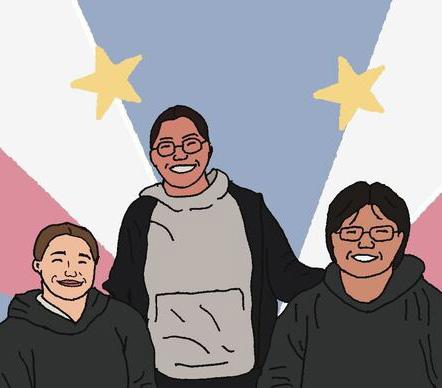
When Sam Palacios, a junior majoring in Health Studies, came to Boise State, they hoped to find a community of other Filipino students to connect with. When they realized there was no official group for Filipino students, they decided to start it themself.
In January, Palacios started the Bayanihan Club, a group for students interested in connecting with the culture of the Philippines.
“When I first came here as a freshman, my aunt was really nervous for me, she was like, ‘You’re not gonna find anyone that looks like you,’” Palacios said. “So being able to start a club and letting the rest of Boise State know that there is a community they can be a part of, whether they’re Filipino or not — that’s a really great thing to have on campus.”
As Palacios worked towards launching Bayanihan Club, they invited some of their friends to help get the ball rolling. Malia Labenia, a sophomore studying Health Studies, said she first bonded with Palacios when they worked together in her freshman year dorm building.
“We found out both of us actually come from a Filipino household, which was a fun coincidence,” Labenia said. “We bonded over shared experiences and what it was like to grow up being Filipino.”
Palacios first pitched the idea to Labenia and their other friends to start a club where more students could make those kinds of connections.
“[Palacios thought] it would be cool to create a space where we’d be able to bond with people and get to learn about the culture,” said Labenia, who now serves as the Events and Fundraising officer for the club.
Talli White, a junior majoring in Visual Arts, also helped start the club, taking on the role of Social Media, Marketing and Promotions officer. White does not have a Filipino background, but said she
loves experiencing Filipino culture with her partner, Palacios.
“I love how welcoming the Filipino community is, and [how they’ve welcomed me] by including me in the club,” White said. “It feels very special to be a part of [Bayanihan Club], because it’s something new that we’re all passionate about.”
With Palacios as Club President, the three officers got the club officially approved through the university. They started an Instagram page, created a logo and chose a name for the new group. They chose the name “Bayanihan”, representing the spirit of community and cooperation among Filipinos.
The group made its first public appearance at the spring 2026 Involvement Fair, where the officers sat at a table and explained the club’s purpose to attendees.
“Every person who came to our table was so excited about it,” Labenia said. “It was really nice to see that we were already starting to make our way into the club community.”
Palacios said one attendee came to the Involvement Fair from Twin Falls, Idaho, specifically to see the Bayanihan Club. That visitor, who is originally from the Philippines and is planning to attend Boise State, felt homesick and was excited to meet other Filipino students.
“That was a really cool experience for someone to tell me they were happy to see [our club] because it reminded them of home,” Palacios said.
The officers plan to host gatherings for students to learn and explore aspects of Filipino culture like food, music, films, traditions and more.
“The biggest connection we always have is food,” Palacios said. “The number one thing we always talk about is, ‘Oh, I miss this [food]. I miss that [food],’ because we don’t have a lot of Filipino restaurants in Idaho.”
They also hope to create opportunities for students to explore the Tagalog
language. Palacios hopes that by growing the Filipino community’s presence on campus, they may even influence the university to add Tagalog to their world language courses.
“Bringing in and exposing people to other languages that aren’t as widely spoken, but are still common [like Tagalog] would be very cool,” Palacios said.
Palacios and the other officers have larger, longer-term goals for the club. In October, they hope to host large celebrations on campus for Filipino Heritage Month in partnership with the Filipino Association of Idaho. They also hope to host large Christmas gatherings with Filipino traditions to celebrate the holiday.
All three officers emphasized that the club is open to all, whether or not they
grew up in a Filipino household.
“Whether you’ve grown up in it or you just want to explore, no one’s ever going to turn you away,” Palacios said.
For Palacios, the most important thing is creating a community for anyone to enjoy and learn more about Filipino culture. Whether that’s through practicing Tagalog or just coming to try some traditional Filipino foods, the top priority is creating a safe space for students to connect through culture and curiosity.
“We’re one of those cultures that you can’t really put in a box,” Palacios said. Students can stay up-to-date on future activities by following the club on Instagram @bsu_bayanihanclub.
SPORTS
MEN’S BASKETBALL CONTINUES 2026 PROGRESS WITH CONFERENCE VICTORIES
Jake Zamora | Sports Editor | Photos by Keara Antonelli
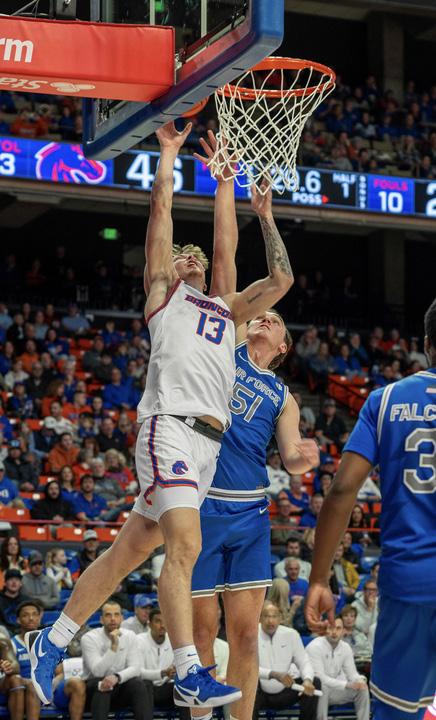
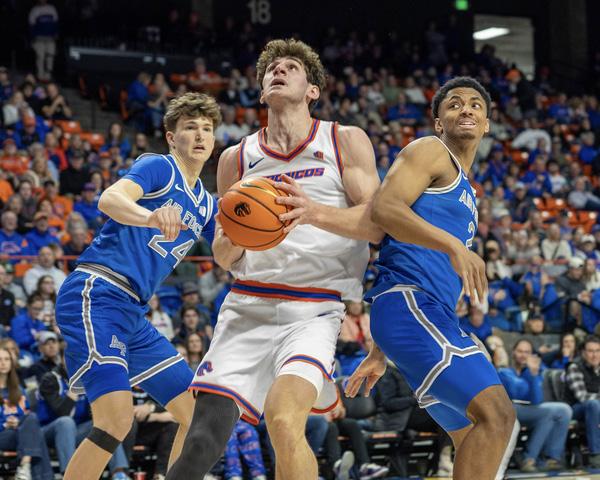
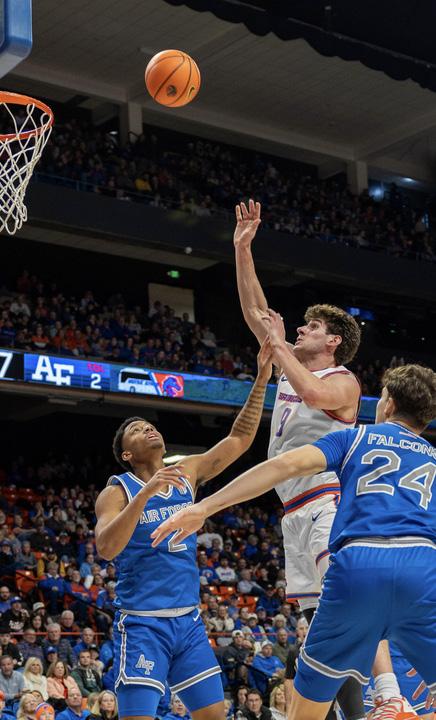
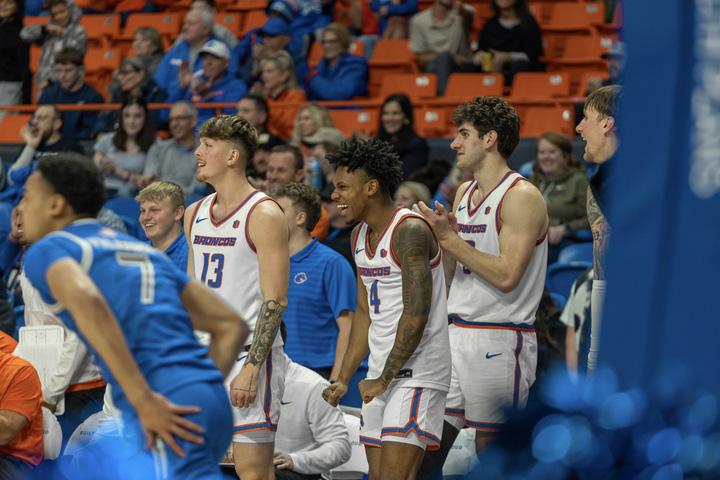
Boise State men’s basketball continued an upward trend in conference play this past week, winning two of three games and delivering strong offensive outputs in each of their victories.
Entering their Jan. 30 contest against Grand Canyon, the Broncos were carrying a four-game winning streak dating back to the previous week, which was ultimately snapped by GCU.
As head coach Leon Rice and his squad continue to grind through a thusfar underwhelming season, every conference win the Broncos can pick up fuels momentum moving forward.
“There’s not a lot of teams that are excited to get back together tomorrow,” Rice said when speaking on the team’s morale after their dominant Jan. 24 win over Air Force. “This group is, and
it’s paying off for them. That’s what can make us different.”
The frontcourt shone for Boise State in the 96-54 win.
Drew Fielder, this year’s standout Bronco so far, led every player in the statbook with a game-high 20 points, eight rebounds and one assist. His five performances of 20 points in less than 25 minutes of playing time are tied for the most by any player in the nation this season. Spencer Ahrens dropped 18 points, one shy of tying his career-high.
Coming off the bench, Angola native Aginaldo Neto picked up 11 points, four rebounds, three assists and two steals.
Redshirt senior guard RJ Keene, who has recently stepped into a more critical offensive role after being a “glue guy” for the better part of the last two seasons, scored six points, grabbed seven boards
and recorded two assists in the victory.
As a collective, the Broncos shot 54 percent from the field and 58 percent from downtown. The team also displayed its depth, scoring 56 bench points while leading by as much as 47 points in the game.
After the game, Fielder spoke of the team’s business-like mentality.
“We’re not too worried about our record when we’re in here,” Fielder said. “We’re just worried about preparing for our next game. We’re worried about playing the best basketball we can play and preparing as humble as possible so we can go out and compete.”
Later in the week on Jan. 27, the Broncos routed the San Jose State Spartans 89-58 on the road.
Fielder was again the team’s leading scorer, dropping 16 points to go along
with eight rebounds and three assists, while Pearson Carmichael and UCLA transfer Dylan Andrews both scored 11.
The Broncos started the game cold, missing their first five shot attempts, but bounced back with eight consecutive points shortly after.
The offense surged with 14:43 remaining in the first half, scoring nine points from Carmichael, Bhan Buom and Aginaldo Neto to capture an eight-point lead.
The Spartans tied the game at 36 with a deep three to begin the second half. Boise State then responded by scoring 13 of the next 16 points and leading 49-39 with 14:11 remaining in the game.
From there on, the Broncos were in the driver’s seat the rest of the game, outscoring San Jose State 53-25 in the second half to complete
an 89-58 victory.
Entering their Jan. 30 game against Grand Canyon, the team carried momentum from their win over San Jose State. However, the Broncos’ four-game winning streak was snapped with an 8669 loss to GCU.
The Broncos faltered badly in the second half after a strong offensive performance in the first frame.
The team shot just 39 percent from the floor in the game after shooting 52 percent in the first half. GCU shot an exceptional 64 percent in the first, and unlike Boise State, continued their production with the ball in their hands in the latter period, leading by as many as 18 points. At the same time, the Broncos made just six field goals in the final 20 minutes of regulation.
The Broncos were outscored by 15 points in the second period, playing in an intense and hindering environment inside the Global Credit Union Arena in Phoenix.
After a speedbump that halted a fourgame winning streak, the Broncos will reset and prepare to take the rest of their conference schedule head-on.
Boise State’s blue-collar mentality will be instrumental in the direction the program goes in the rest of the season. While still not where they want to be,
the team has shown an upward trajectory and will continue to use their unwavering grit to shake off losses and get back to work.
Part of the mentality that has helped Boise State teams push through adversity for decades is the unconditional love that the Broncos have for their university and the city of Boise. For RJ Keene, his love runs deep and is evidence of the work he and the rest of the team are willing to put forth for the rest of the season.
For Keene specifically, it also means a potential run for political office.
“I plan on being a Bronco for life, I love it here,” Keene said in a press conference when asked if he plans to return to Boise State next year. “One day, I’ll probably be the mayor.”
The Broncos are still in an undoubtedly tough position as it stands today. With a 5-6 conference record and only 68 spots in the NCAA Tournament, a run in the Big Dance seems very unlikely for Boise State. However, if the Broncos continue to play strong basketball with relentless tenacity and stack conference wins as they did for four games in a row, they can keep their postseason hopes alive and potentially prove that timely performances can save seasons.
ATHLETES EARN NATIONAL RECOGNITION FOR COMMUNITY SERVICE
Boise State student-athletes often measure success in wins and records, but for men’s basketball player Javan Buchanan and track athlete Julia Kiesler, making an impact outside of competing carries just as much weight.
Both were recently nominated for the Allstate NACDA Good Works Team, a national honor recognizing student-athletes who make significant contributions in community service, academics and athletics. Their paths to that recognition differ, but both center on using their platform to support others.
For Buchanan, service is rooted in perspective. The senior forward has spent time working with youth and participating in mental health advocacy events through BroncoBOLD, the university’s student-athlete mental health initiative. Community appearances and school visits have become a regular part of his schedule.
“My off-court accomplishments almost mean more to me than my oncourt [accomplishments],” Buchanan said. “Basketball is going to end one day, but who you are as a person takes the rest of your life.”
Buchanan said his injury and recovery showed him the value of strong support systems and how many people face challenges without that kind of help. That awareness shapes how he approaches community work, focusing less on attention and more on showing up for others in consistent, meaningful ways.
Kiesler’s impact started with something simpler — shoes.
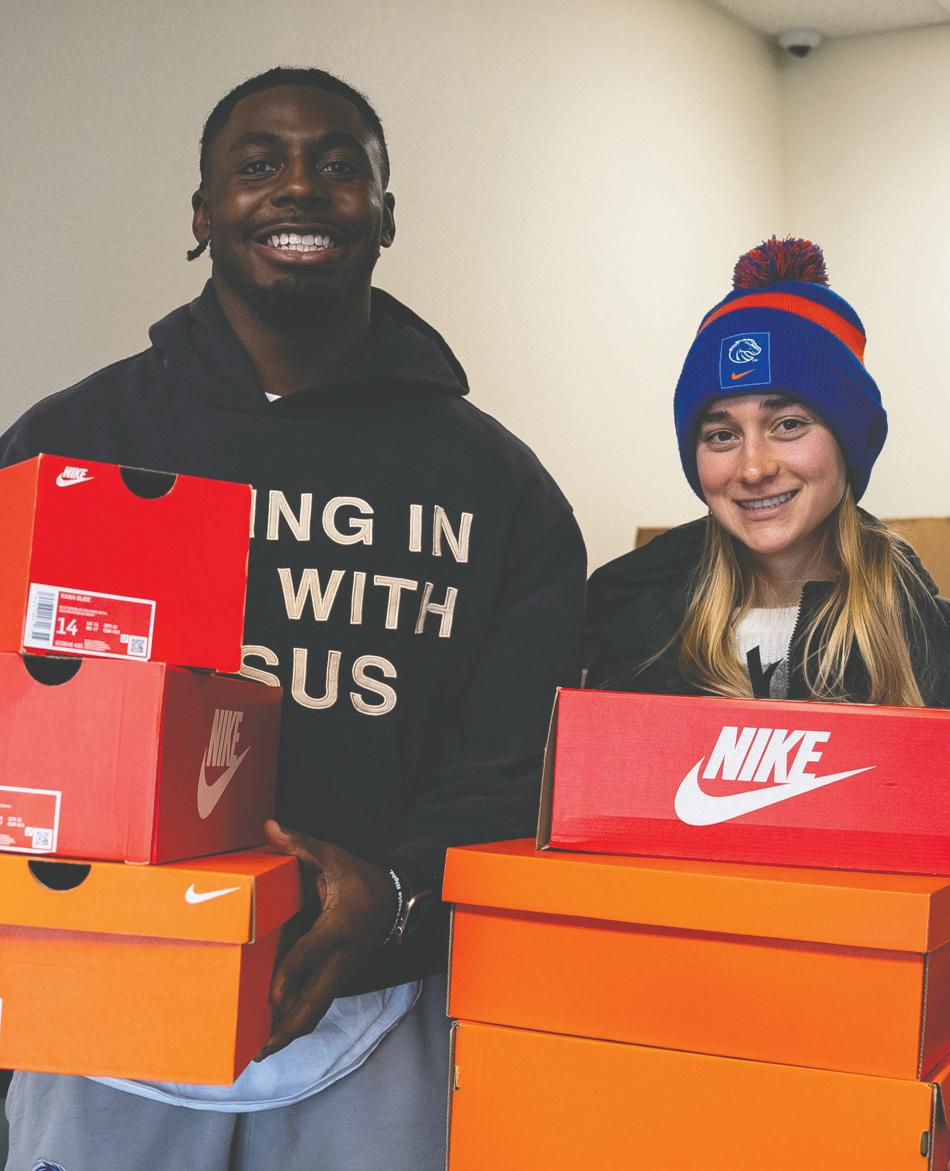
The track and field athlete launched an annual shoe drive in early December after noticing how many extra pairs of athletic shoes student-athletes accumulate. Rather than let them sit unused, she began collecting, cleaning and donating them to local youth-serving organiza -
tions, including the Ada County Juvenile Detention Center and Freedom Youth Foundation.
This year, the drive collected more than 200 pairs of shoes. Kiesler and other student-athletes expanded the effort by partnering with BroncoBOLD to include handwritten notes, mental health resource cards and small items such as wristbands in each donation bag.
“We put a little more personalization just to make the kids and teenagers feel a little special,” Kiesler said.
Kiesler said the idea traces back to her freshman year, when she realized she had more gear than she needed. Growing up, she watched her parents give back to their community and wanted to carry those values into her own college career. As a Division I athlete, she sees the visibility that comes with the role as a responsibility to help others when she can.
Though their service looks different, Buchanan and Kiesler share a belief that leadership extends beyond competition. Their nominations reflect work done outside arenas and stadiums — in schools, community centers and through small acts that often go unseen.
| ARBITERONLINE.COM febuary 5, 2026
Aidan Mattingly | Sports Reporter | Photo courtesy of Boise State Athletics
SPORTS
FORMER BRONCOS TURN ATHLETIC EXPERIENCES INTO REAL-WORLD SUCCESS
Aidan Mattingly | Sports Reporter | Graphic by Amber Jansson
When the final buzzer sounds and an athlete walks off the court for the last time, a new journey begins.
College athletes spend years living on tight schedules. With early practices, late study sessions and traveling for games, life moves from one season to the next until graduation arrives and the familiar structure disappears.
The transition can feel overwhelming. Athletes must rediscover their sense of purpose, identity and confidence without the jersey that once defined them. Life after college athletics is not just about stepping away from the game; it is about understanding who you are when the sport is no longer at the center of your life.
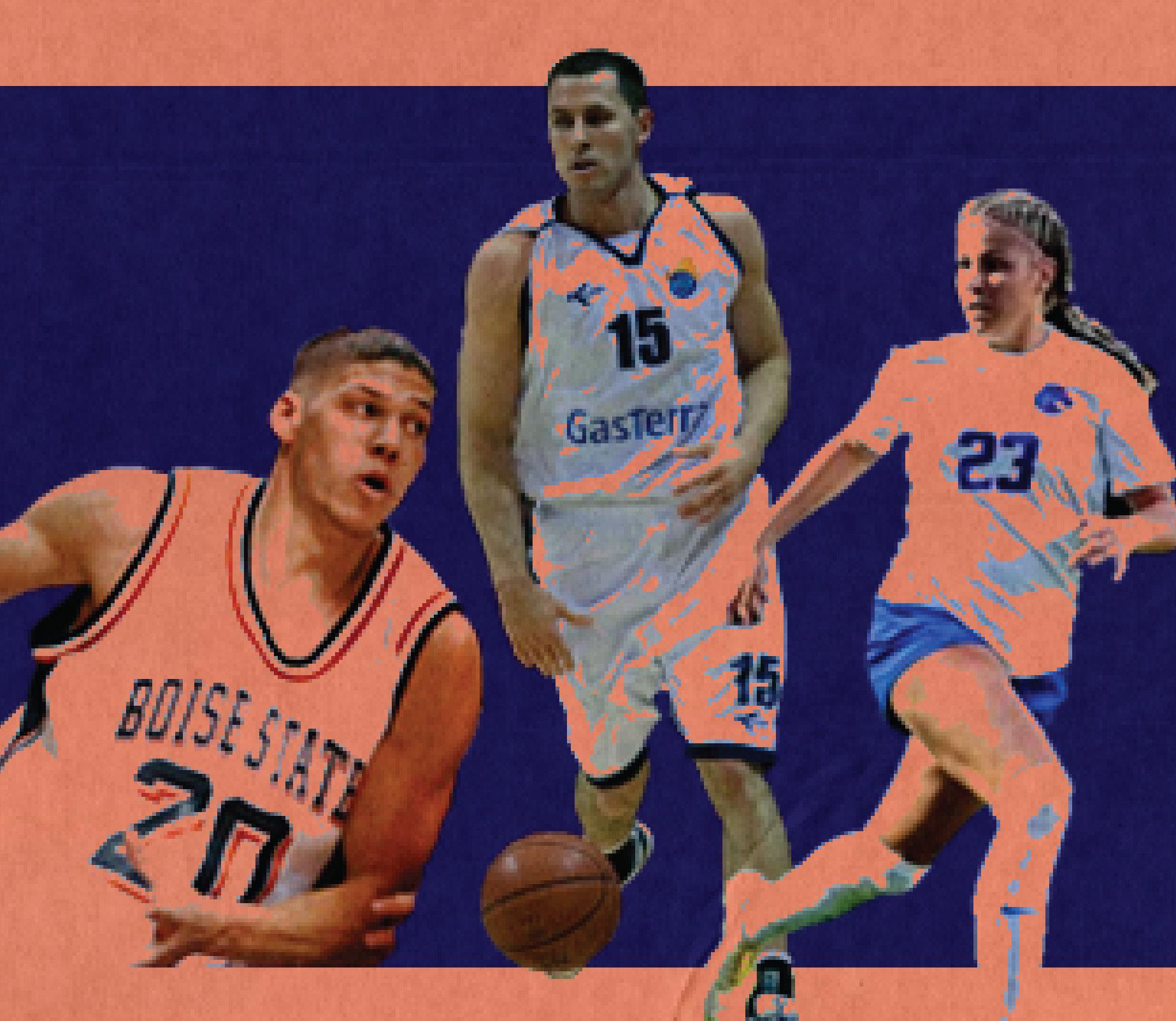
At Boise State, several former athletes have shown how that shift can lead to meaningful new chapters. Roberto Bergersen and Matt Bauscher built careers overseas before returning home, and their paths show how the lessons from sport continue long after the final game. For current athletes like Kenzie MacMillan, who recently completed her Boise State soccer career, will steer away from athletics completely and search for a career in business administration.
Bergersen arrived at Boise State in the late 1990s searching for direction. He had transferred from the University of Washington and admitted that he felt lost before basketball re-entered his life.
“I felt down in the dark for a while,” he said. “Basketball gave me a way out, a way to figure out who I was.”
His talent grew quickly. In 1999, he became the Big West Conference Player of the Year, averaging more than 22 points per game. The Atlanta Hawks drafted him that summer, but he never appeared in a regular-season NBA game. When he was released during training camp, he faced a difficult question: what now?
He turned to the Continental Basketball Association and rebuilt his career. That opportunity led to Europe, where he spent eleven seasons across the Netherlands, Germany and Cyprus. Each stop brought new lessons. He learned how to adapt, stay humble and build relationships.
“The basketball part fades,” Bergersen said. “But those lessons never go away.”
After retiring in 2010, he returned to Boise, the place that had given him purpose years earlier. Over time, he found a new calling, not as a player, but as a teacher. In 2022, he joined the Boise State men’s basketball staff as an assistant coach, guiding athletes who now stand where he once stood. His connection to Boise has become a foundation for his family and his future.
“You have to trust God,” he said. “That is why we are here. My family is happy and we have been faithful.”
Bauscher’s journey began on a driveway in Caldwell, Idaho. He spent his childhood shooting hoops while his mom made dinner and imagining game-winning moments. He became an all-state guard at Vallivue High School but graduated without a Division I offer. Even Boise State passed on him. The doubt pushed him to keep going.
He played at Spokane Community College, then walked on at Boise State and earned his roster spot through persistence. By his senior year in 200708 he became team captain, helped the Broncos win the WAC Championship and earned recognition as one of the conference’s top defensive players.
After graduating, he pursued a professional career in Europe. What began as a one-year contract turned into six seasons in the Netherlands, Germany and Cyprus. He won a national championship and earned MVP honors along the way.
“There were thousands of people in the town square, fireworks going off, music playing,” he said. “It was unreal.”
His biggest challenge came when he
retired at 29. He returned home, newly married and unsure of his next step. He started small, selling homes and building relationships one client at a time. That effort grew into Bauscher Real Estate, now one of Idaho’s top-producing real estate teams.
His background in sports played a key role in that growth.
“Sports at Boise State taught me more than any class ever did,” Bauscher said. “They taught me balance, discipline and how to handle adversity.”
MacMillan, on the other hand, is just beginning her transition. Her final match came in the 2024 Mountain West Championship against Utah State. The ending was bittersweet, but she believes the lessons from soccer will guide her forward.
“The biggest thing I take away from college sports is trusting one another,” she said.
A business administration major, she plans to pursue a career in property management or sales. She believes her time as a student-athlete prepared her for real-world challenges.
“You have to be able to talk to people, manage your time and build trust,” she said. “That is a big part of what you need.”
Across their stories, a shared truth emerged. The end of a college career does not erase the value of sport — It transforms it. The resilience, teamwork, and adaptability athletes develop on the field shape how they face uncertainty later in life.
For many, the next chapter begins quietly. It starts with faith, patience and small steps forward. When a student-athlete walks away from competition for the last time, the field fades into memory. The lessons do not. They remain tools for the rest of life.
CROSSWORD WORD SEARCH
Across
2. In between every word. 4. ___ of madness.
6. “You’re cute ___”
8. There’s a severe national storage of this. Also, vampires love it.
Down
1. Following the ___.
3. The people on campus with electric scooters.
5. Category of people or things that share a common interest.
7. “___ mission!”
HAVE A COMIC TO SHARE?
Submit your comic here!
Divided Chaotic Superbowl
Heated Hamburger Bald Eagle Concerning Oligarchy
5TH ANNUAL SPRIGGS FAMILY LECTURE
“THE BOURGEOIS DEAL: LEAVE ME ALONE AND I’LL MAKE YOU RICH”
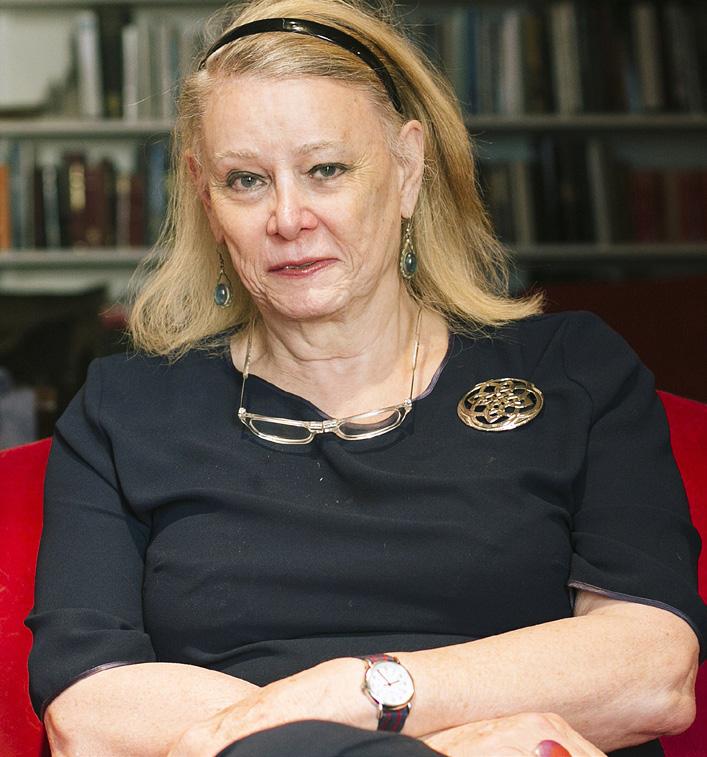
DEIRDRE NANSEN MCCLOSKEY
Monday, February 23, 2026 | 6:30 P.M. Jordan Ballroom | Student Union Building
FREE ADMISSION, FREE PARKING: Lincoln Ave. and University Drive Garage boi.st/spriggs
Hosted by Spriggs Family Endowment for Free Market Studies and Boise State College of Business and Economics