

Cover by Chloe Pound | Photo by Ava Anzalone






Meg Frantz | Editor-in-Chief
I hate yellow walls — specifically, mustard yellow. The shade exists in the liminal space between happiness and dirt, and it almost never goes with the furniture. The Appalachian’s current newsroom, which we moved into in 2022, has approximately 10 walls that are mustard yellow, but they are plastered with posters, whiteboards with caricatures drawn on, awards that The Appalachian has won at studentmedia competitions over the years and other scraps that are left to remember our history.
When I assumed the editor-in-chief role, I took the liberty of covering my office wall — also mustard yellow — with copies of The Appalachian’s print edition. I made sure to feature pieces of my own and my friends’ who have since graduated, as well as big moments in the paper’s history — the first Hispanic Heritage Month edition from 2023, the first Black History Month special section from 2022 and The Appalachian’s 90th-yearcelebration issue. Sometimes, in the rare slow moments of my job, I catch
myself looking up at the wall with a swell in my chest — any member of The Appalachian is cemented in history within these pages, me included.
On Jan. 16, I stared at mustard yellow walls in a boardroom when our adviser told the management team and me that the printer we had worked with for many years was shutting down in two weeks.
Our windows facing into the student union have “Print is Not Dead” posters on them. But for us, right now, it is.
Mullen Publications, which has been in business for 80 years and works with other university papers, as well as businesses and nonprofit organizations, has been a cornerstone of The Appalachian’s print edition for as long as I, and many other editors, can remember. Seeing their company van pull into Plemmons Student Union lot on delivery day, knowing the back is full of an edition produced with strenuous work, is a feeling that I cannot describe.
What I can describe, though, is how that feeling is the exact antithesis of the one I felt in that mustard yellow boardroom, where the weight of the deafening silence and the slow, rocky, collective breaths from my management team and me was all I heard for minutes once I realized that after our February print edition, there was no guarantee for another one.
The Appalachian is not alone in this revelation, though we are in a unique position. A Pew Research Center analysis shows that even the switch to a digital focus from the top50 news organizations in the United States does not pick up in audience traffic, with a 20% decline in average monthly traffic from 2021 to 2022, from 11 million to 9 million. The same analysis asserts the fact that advertising revenue continues to decline steadily, with nearly half of newspaper companies’ ad revenue coming from digital sources.
This analysis, however, is for topperforming news organizations; for a local newspaper, let alone a studentrun newspaper, the conditions still
apply. The Appalachian has adjusted to tariffs imposed on paper imports by adjusting the average number of pages across our print editions and becoming even more selective with the content we place on those pages. We have pushed multimedia content, increased our social media presence and designed our readers’ choice edition to function based on online voting.
But for me, what gives me purpose is flipping a physical page and seeing my name in the byline. And as long as I am in this position, I will fight to keep it that way — but we need your help, too.
Shortly after our phone call with Mullen Publications, the management team decided to preemptively cut our March print edition in favor of changing Best of Boone 2026 to be a year-long issue on stands in a lastminute partnership with a printer that another student-media group on campus uses. Our May print edition, however, is still up in the air in terms of how it will be produced and to what extent it will look the same as in previous years.
In full honesty, I don’t know what’s next. What I do know, though, is our community — and our newspapers — are resilient. It is only with your help that we can get there. Your support, whether financial or not, means everything. If you feel so inclined, there are various ways you can financially support student journalism so we can keep our promise to you: to tell your story with your words and your experiences as truthfully and accurately as we can.
Help us continue to be able to cover our mustard yellow newsroom walls with our print editions.
Matt Howe | News Editor
As of 2023, 61.4% of high school graduates enrolled in colleges or universities the semester following their graduation, according to the United States Bureau of Labor Statistics. Others immediately enter the workforce or choose to attend college at a later stage in life.
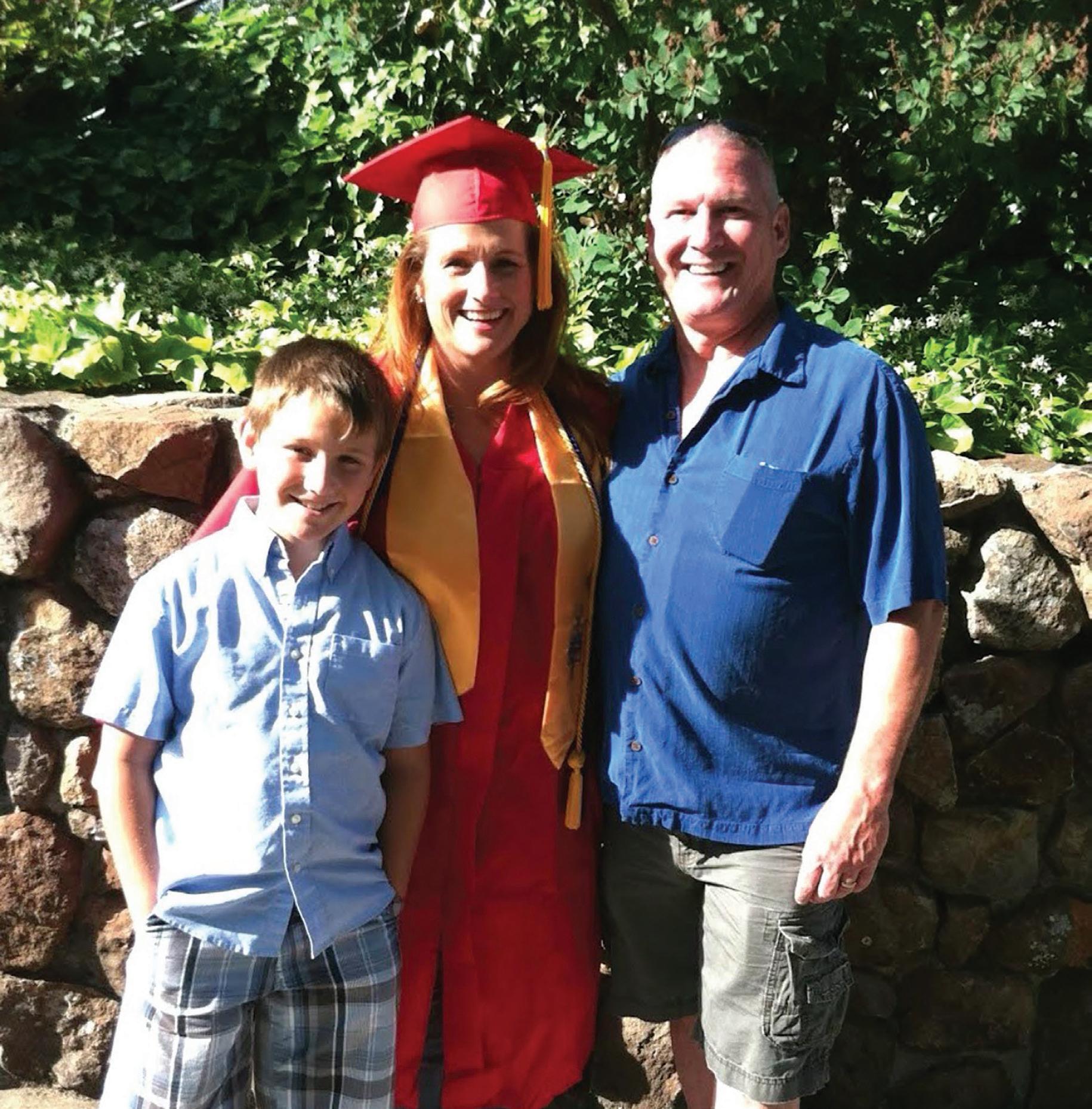
Kathy Partak and her son Mason Partak chose this nontraditional route of education.
For senior advertising major Kathy Partak, her college education has been spaced out by years in the workforce. After high school, she attended junior college, which she decided not to complete. She said that in the 1990s and early 2000s, it was much more difficult to find a job without a bachelor’s degree.
“The computers would scan for ‘does this person have a college degree,’ and I was told straight up: ‘You’re not being considered because you don’t have a degree,’” Kathy Partak said. “So I had a lot of life experience and was very qualified for the things that I was applying for, but I wasn’t even getting a crack at it.”
With a long resume in real estate, cake decorating, public speaking and more, she had the opportunity to return to school in her mid-40s and earned an associate’s degree in 2013.
Enrolling at App State in 2021, Kathy Partak said, “Now, it’s just personal.” She said she will be a firstgeneration college graduate in her family, and her goal is to “cross the finish line personally.”
“I love being in school. I love being on campus. I love being around all of you young people. I love listening to your ideas and hearing the things that you guys think,” Kathy Partak said. “When I’m with my peers, and I’m listening to these crotchety old men, they’re like, ‘Oh, these young kids, they are not plugged in. They don’t know what’s going on.’ I’m like, ‘When was the last time you sat down and had a conversation with some of them? Because I’m here to tell you, they’re not stupid. They’re very plugged in.’”
Between Kathy Partak’s graduation from junior college and her enrollment at App State, she was also assisting
her son Mason Partak’s “kid cook” adventures.
Freshman apparel design and merchandising major Mason Partak began his cooking legacy doing live cooking demonstrations on network television, including appearances on “Good Day Sacramento” and “Guy’s Grocery Games.” At age 11, he won an episode in season One of “Chopped Junior.” He also appeared on the “Steve Harvey” show after raising $26,000 for his elementary school kitchen. During this time, Kathy Partak managed Mason Partak’s rising fame.
“We traveled the country doing cooking demonstrations and that kind of stuff,” Kathy Partak said. “So my education got put on hold while we had all of that experience, which was super-duper fun.”
Mason Partak also took some time after high school before seeking a college degree. After graduating high school in California, Mason Partak moved to North Carolina and worked for a few years before attending App State at age 21. He said despite his history with cooking, he wanted to learn something new in college. He said his interest in art and creative projects inspired him to pursue a degree in apparel design and merchandising.
“I’d much rather go to school for something that I find interesting and that I don’t already have a background in,” Mason Partak said. “If I am able to make a career out of it, great, but I also have a lot of other skills, like public speaking and cooking, that I can fall back on and have different jobs if need be. At the same time, I just wanted to come do something interesting.”
Mason Partak said he still loves cooking, but being in the spotlight sometimes made him feel “fed up.” He said that oftentimes his mother would ask if he was ready to be done with his cooking stardom.
“It was never like she was trying to live vicariously through me and make me successful for her,” Mason Partak said. “It was more of just, ‘If this is something you want to do, I will continue to help facilitate and make
things happen for you and essentially manage you. But I also don’t want to make it seem like this is the end all be all, and if you don’t do this, I’ll be upset.’ That was never the feeling I got.”
Kathy Partak said despite dealing with the occasional butting of heads, their relationship benefited from the experience.
“I think our relationship, if not came out the other side unscathed, came out the other side better for it, and we learned how to communicate with each other well,” Mason Partak said.
Kathy Partak decided to spend her fall 2025 semester on campus rather than online, like she has been since her enrollment at App State. She said her decision came from loving the fall season in the mountains and wanting to be on campus with her son. She said the two often meet up in between classes for lunch.
Kathy Partak often compares her life to the 2018 Melissa McCarthy film “Life of the Party.” In it, a woman returns to college to complete her degree while attending at the same time as her daughter.
“I told Mason, ‘That’s going to be me. Everybody’s going to love me. I’m going to be homecoming queen,’” Kathy Partak said. “He’s like, ‘Shut up. You’re not even going to be there a semester. Nobody’s even going to know who you are,’ and I said, ‘You just wait.’”



Colin Wishneski | Assoc. News Editor
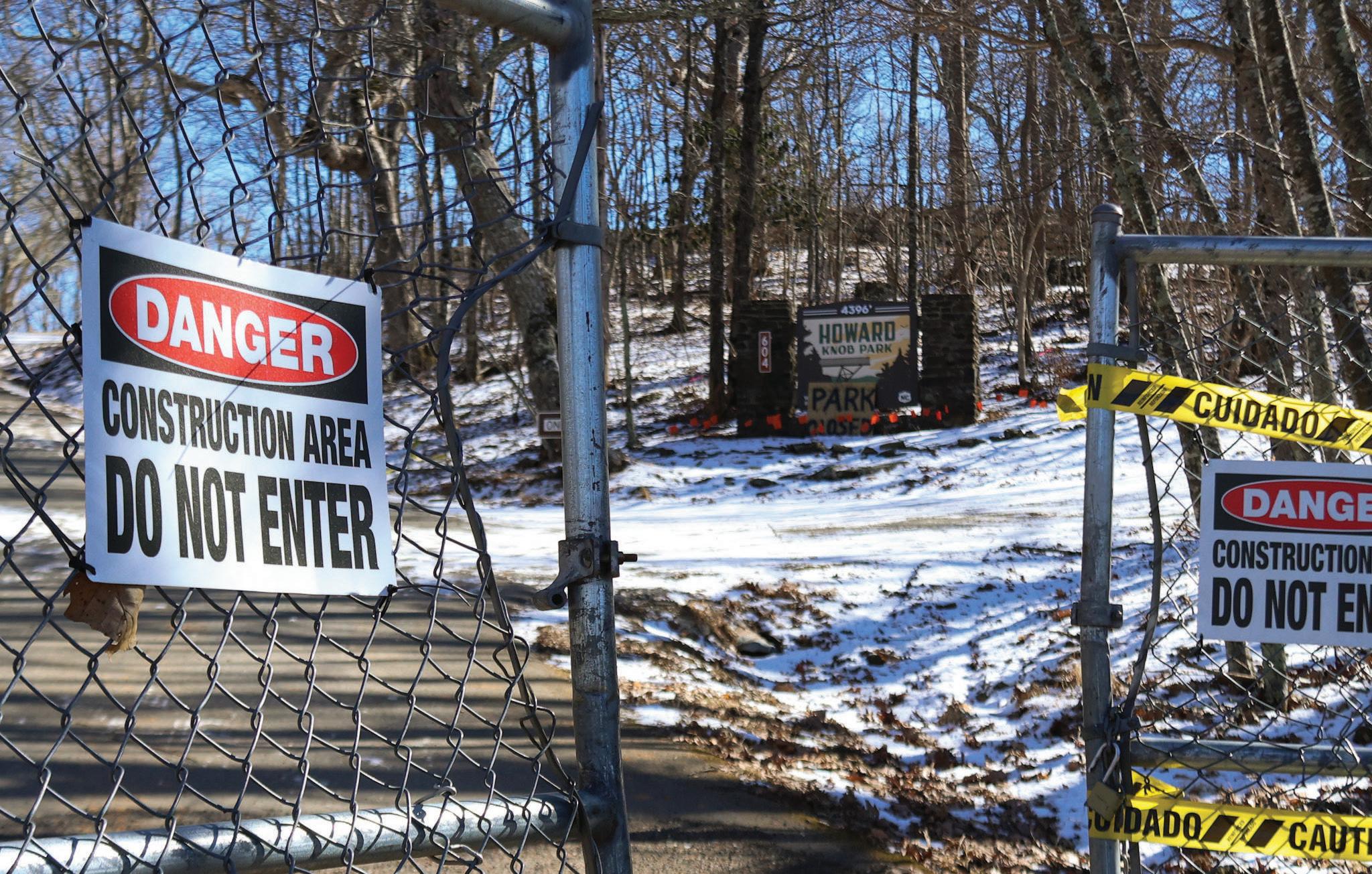
Howard Knob, the familiar mountain overlooking the town of Boone, will soon be open for public use.
Blue Ridge Conservancy announced a deal Sept. 17 to purchase 73 acres on the north and east side of the mountain. The contract allows BRC to develop a public recreation area with bouldering, parks and a completed Boone United Trail.
Eric Hiegl, BRC’s senior director of land protection and conservation planning, said he jumped at the opportunity to buy the land from its former owner, Monte Green, as soon as he got the call.
“Land conservation happens when it’s supposed to happen,” Hiegl said. “Blue Ridge Conservancy couldn’t let the opportunity slide.”
At first, the land purchase wasn’t set in stone. The two parties signed an agreement that would transfer ownership of the land to BRC on the condition it raises the necessary $1.8 million by December 2025. While BRC had some of the funds, in October 2025, they launched a donation drive to secure the remaining $800,000.
By the end of the year, BRC achieved its goal. The conservancy is now preparing for trail building onsite.
“It will all be very natural,” said Leila Jackson, the conservancy’s director of communications. “We’re working with what’s already there and trying to follow existing roads.”
The project will add a small parking area, but the conservancy’s goal is to minimize the impact on the land.
“Part of our work is adding trails between the boulders so people don’t blaze their own,” Jackson said. “We also do a biological survey so we can avoid existing wildlife.”
The park is expected to be completed by the end of 2026.
Opening Howard Knob for public

use has been a goal of BRC since its conception. In the 1990s, App State students founded the Watauga Land Trust to protect the mountain from residential development. Under the motto of “one mountain, one community, one chance,” student activists campaigned to “save the knob” and protect wild spaces around the High Country.
Since then, the Watauga Land Trust grew into the High Country Conservancy, reflecting its expanding goals. They merged with the Blue Ridge Rural Land Trust in 2010 to form the BRC that exists today. They have been involved in protecting Grandfather Mountain, Elk Knob, Snake Mountain and establishing the Middle Fork Greenway.
David Ray, executive director of BRC, said the organization has protected 26,000 acres of land around Northwestern North Carolina.
“We create places that make you come alive,” Ray said. “And a lot of the time, these big, public projects happen because one passionate person won’t let go.”
To celebrate the deal, members of BRC gathered at SouthEnd Brewing Co. on King Street on Oct. 28. For the event, SouthEnd released a “Howard Knob Golden Ale,” proceeds from which go to BRC.
In attendance was Jeffrey Scott, an entrepreneur who was one of the founders of the Watauga Land Trust as a student at App State. Although no longer officially involved with
BRC, Scott was once one of Howard Knob’s most ardent defenders. One day, he said he put his life on the line to protect the Knob.
Stories vary as to the exact nature of the event, but some details can be gleaned from the conflicting accounts.
Land developers sent a team of bulldozers to clear a patch of forest, and in order to stop them and gain media attention for his movement, Scott tied himself to a tree with a rock climbing harness and waited it out. His effort was successful.
The developers backed off, and the movement to save the knob lived to fight another day.
Howard Knob County Park, a small recreation area at the peak of the mountain, is currently under
renovation and closed to the public. BRC is not involved in this project. The town is adding an overlook, accessible trails and parking, a garden and renovated picnic shelters.
“It’s an incredible place,” Scott said. “Mountains like Howard Knob change you for the better.”

Emma Ross | Reporter
This summer, Twange Kasoma and Matthew C. Ogwu will lead App State’s first-ever study-abroad trip to Zambia, combining global and local climate literacy through the communication and sustainable development departments.
The trip, which is housed under the App State Honors College, is open to all students. It is part of a five-week summer class, including three weeks of virtual instruction followed by two weeks in Zambia.
In Zambia, students will work alongside farming experts at Kasisi Agricultural Training Centre, the largest organic farm in Zambia. They will then work with local media organizations to increase visibility for
Kasoma grew up in Zambia and considers giving students the opportunity to study abroad an integral part of her professional identity.
“I myself am a product of study abroad. I came from Zambia to the U.S. to study and have never looked back,” Kasoma said. “That was an experience that was so transformational to me, and I feel I would be selfish to not want to share that experience with my students.”
As an undergraduate student, Kasoma had a professor who was a Fulbright scholar from the United States. This professor inspired her to study abroad. She traveled to the U.S. to earn a master’s and doctorate,
And that’s what happened,” Kasoma said. Now in her second year at App State, she will co-lead this school’s first study-abroad program in Zambia.
Ogwu, who is on parental leave for the spring 2026 semester, has experience teaching internationally in Italy, Korea and Nigeria. He is now an assistant professor in the Goodnight Family Sustainable Development department at App State.
Vicky Klima, associate vice provost of the honors college, emphasized interdisciplinarity as something that makes this program special.
“You’re studying the climate crisis and that is a scientific problem, and Dr. Ogwu is going to be able to help people think about agriculture and biology and the microbiome and all of those scientific things that are affecting the climate in Zambia,” Klima said. “But we’re not going to move toward resilience if we cannot communicate the approaches that are being found.”
With Ogwu, Kasoma said she aims to build a connection between the students’ local community and the global scene in what she calls a “glolocal” solution.
“If the students go to Zambia and realize some of the smart agricultural techniques they are using right here in the U.S. on a farm, such as the one owned by the Department of Sustainable Development, can be shared with the Zambian farmers through that farm, and if there’s something that is happening on this farm that can be eye opening for the students to bring back here, then we have that glolocal sharing of important knowledge as far as food insecurity in the world is concerned,” Kasoma said.
Kasoma said climate change has led to drought in Zambia. She said one effect of this is food insecurity, which compares to Boone.
Additionally, Zambia faces a loss of communication resources, since hydroelectricity comprises the majority of the country’s power.
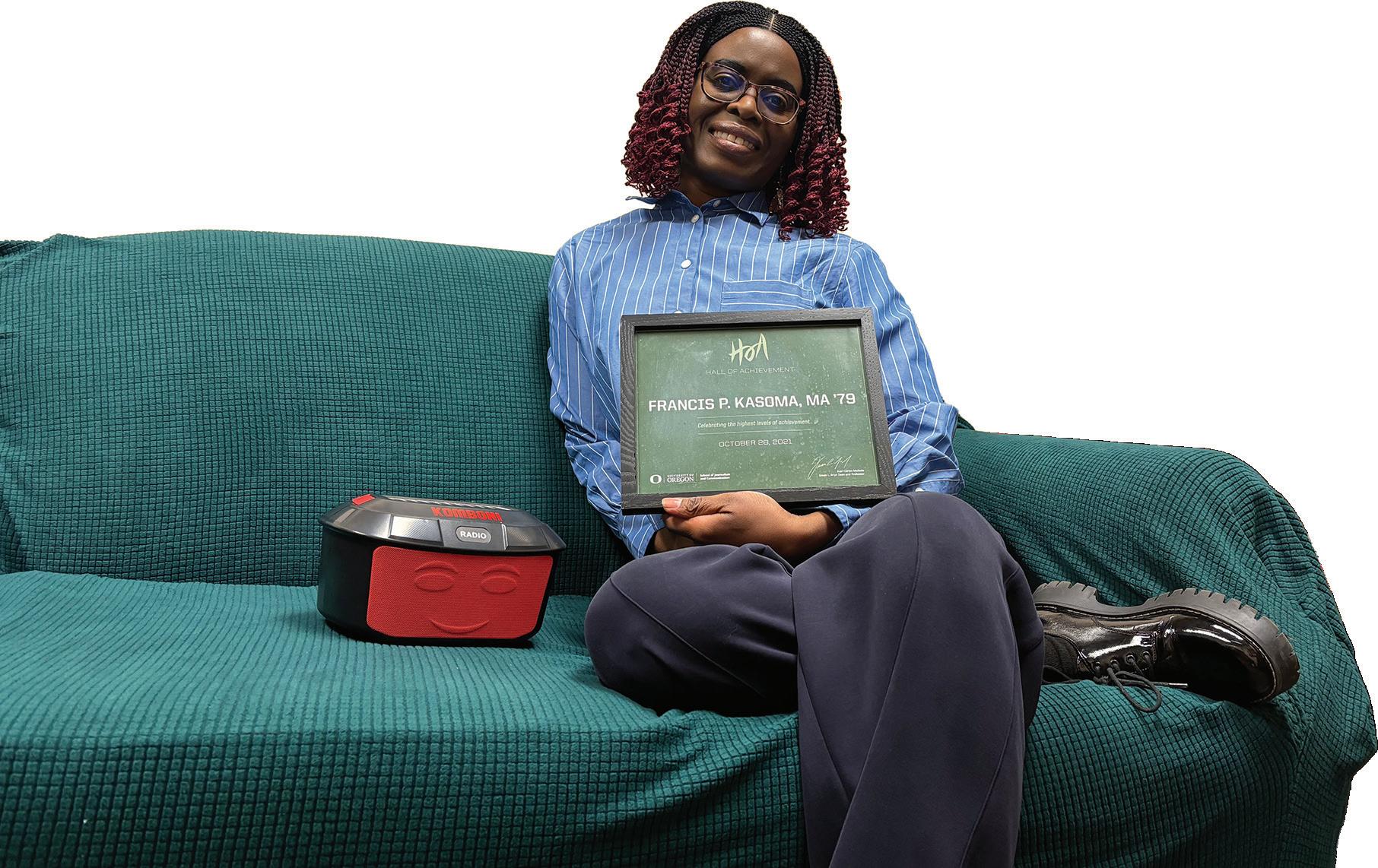
Kasoma’s has had students at Emory & Henry University work with Komboni Radio, a Zambian company through which Kasoma and her sister distribute free, solar-powered radios to farmers. One of these radios can be seen in the top-left photo of the Zambia study abroad flyer.
“In this context, journalism is going to provide that opportunity of showcasing what Zambia, what Kasisi, is doing to help alleviate the problems that have been brought about from climate change stemming from this drought,” Kasoma said.
The international trip will take place June 11-26. Most of the trip will take place in Lusaka, Zambia’s capital, with a weekend trip to Livingstone halfway through the trip.
The all-inclusive trip is predicted to cost $6,500. Klima said the course will fulfill honors college credits as well as the international education requirement. For both honors college and non-honors college students, there is no prerequisite to take the class.
Haley DiFruscio | Political Editor
Early voting for the 2026 primary starts Feb. 12 with a total of 18 races for state, local and federal positions appearing on the ballot in Watauga County. The bids for the United States Senate and House of Representatives candidacy stand out with the most names on the ballot. The Senate race in particular is expected to be one of the most notable of 2026 after Sen. Thom Tillis announced his retirement and North Carolina’s former governor entered the race.
Roy Cooper
Cooper has four decades of experience working in North Carolina politics. He served as the 75th governor of the state for two terms. Before that, he was the 50th attorney general and served in both the state House and Senate.
Cooper is a Democrat, and according to his campaign website, he “believes that if we work together, we can build a North Carolina that works for everyone.”
Michael Whatley
Whatley is a Watauga County native who was raised in Blowing Rock. The former chair of the Republican National Committee was reelected to the position in 2025, but he vacated the seat after announcing his Senate campaign. Additionally, he chaired the North Carolina Republican Party.
Before he chaired the RNC, Whatley was selected by President Donald Trump in 2016 to oversee the administration’s Farm and Energy Plan and continued the role in Trump’s second term. At the Watauga GOP’s Lincoln-Reagan Dinner, Whatley spoke about his close personal relationship with Trump and the work they did together in the aftermath of Hurricane Helene.
Michele Morrow
Morrow is a former nurse and educator from Mecklenburg County. In 2024, she won the Republican candidacy for Superintendent of Public Instruction against incumbent Catherine Truitt but lost in the general election.
Although not receiving his endorsement, Morrow has aligned herself with Trump. Her website reads, “President Trump has taken
America back from the brink. Now, it’s time we take back North Carolina.”
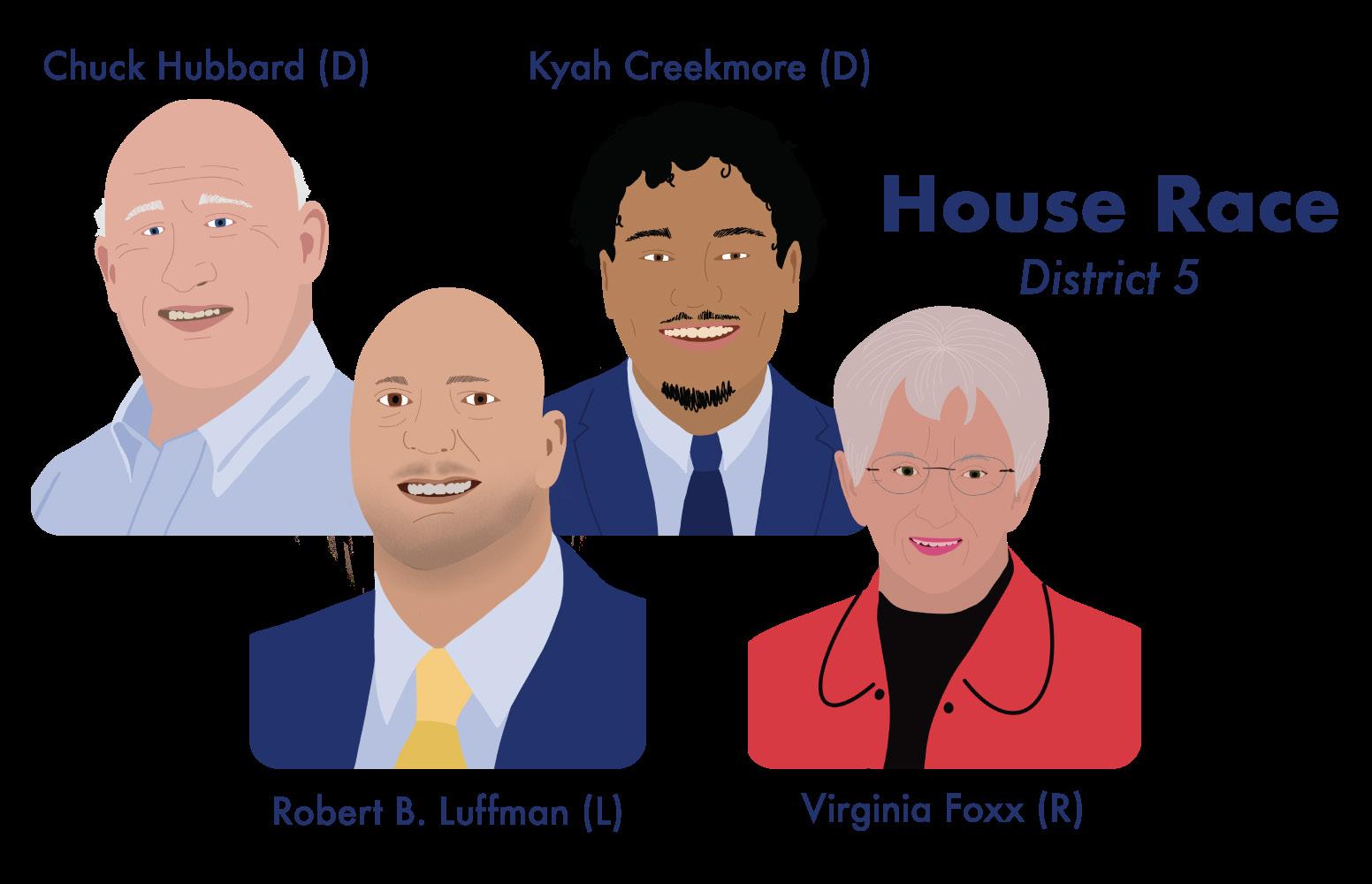
Fewer candidates are on the ballot to represent North Carolina’s 5th Congressional District in the House. The district, which encompasses Watauga alongside nine other counties, has been consistently won by the current representative since 2005.
Virginia Foxx
Incumbent Republican Foxx is the dean, or longest-serving member, of North Carolina’s congressional delegation. She currently chairs the House Committee on Rules, which is responsible for the guidelines under which bills are introduced, debated and voted on.
After being reelected in 2024, Foxx described herself as a “strong conservative” and said she expects to continue voting in the House the way her district wants her to vote.

Chuck Hubbard
Hubbard is a Democrat from Wilkes County who worked as a journalist for the Wilkes JournalPatriot. He opposed Foxx in the 2024 election, winning 40% of the vote. According to his campaign website, Hubbard is involved with the board of Wilkes Recovery Revolution, the Wilkes Child Abuse Prevention Team and the Wilkes Prison Ministry. If elected, Hubbard’s website reads he will apply the same mindset to politics as he did journalism: “rejecting political theater and focusing on what’s important — improving the lives of the folks back home.”
Kyah Creekmore
Creekmore is a 24-year-old North Carolina A&T graduate born in Florida and raised in Greensboro. According to his campaign website,
Creekmore is running on five central issues: healthcare for all, higher school funding and teacher pay, workers’ union power, climate justice and gun reform.
“I am not running to be another quiet vote in Congress,” Creekmore’s website reads. “I am running to be the kind of representative I never saw growing up: transparent, accountable, and unafraid to call out corruption no matter what party it hides in.” Voters can access their sample ballots and view their registered party through the North Carolina Voter Search.
Grace Phillips | Reporter
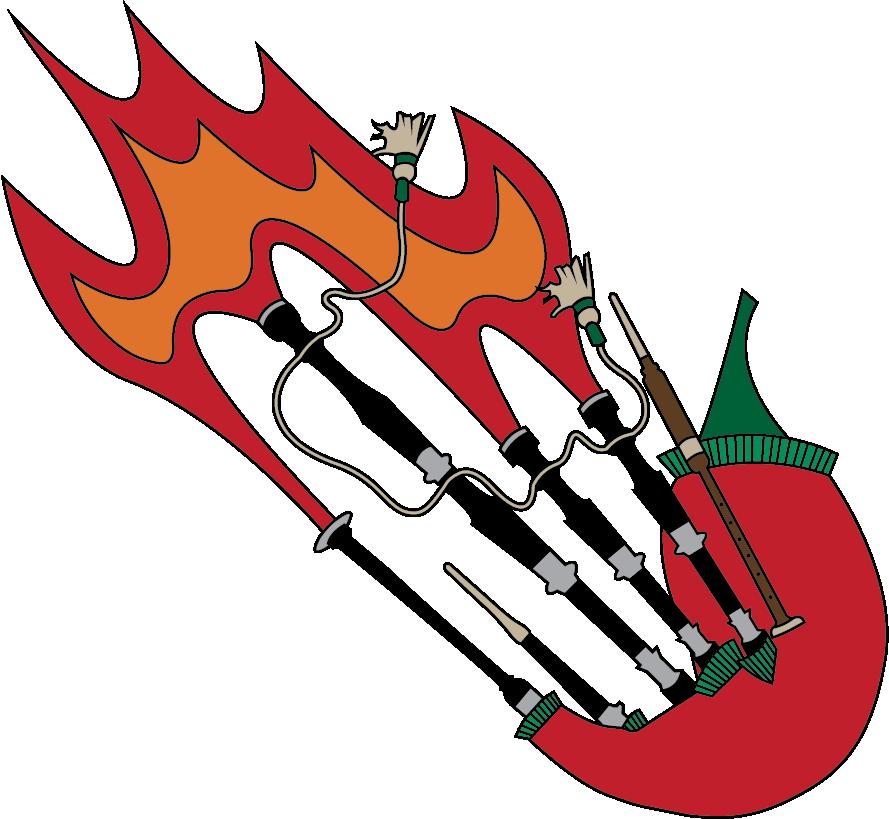
Bagpipes are coming to Boone with the Red Hot Chilli Pipers taking the stage at the Appalachian Theatre of the High Country, bringing their high-energy blend of tradition and rock to town.
Known for following Scottish musical traditions, the band’s most recent album, “Back to Roots,” was released on Oct. 10.
Formed in Scotland in 2002, the group rose to fame after winning the 2007 BBC talent show “When Will I Be Famous?” The nine-piece Celtic rock band fuses traditional Scottish bagpipes and drums with electric guitars, keyboards and modern-rock
“Flower Of Scotland” to high-energy reimaginings of rock anthems, including Queen’s “We Will Rock You,” Snow Patrol’s “Chasing Cars,” AC/DC’s “Thunderstruck” and Avicii’s “Wake Me Up,” which has amassed more than 5.9 million views on YouTube.
The same year they won the BBC talent show, the band released their sophomore record, “Bagrock To The Masses.” The album is certified platinum in Scotland and led to the group receiving “Best Live Act of the Year” at the Scots Trad Music Awards.
Courtney Snow, a fan from Yadkinville, wrote in an email that she has been following the band for a while.
only plays an additional role in their delivery of music,” Snow wrote.
Snow also wrote that the band’s performances connect with listeners, enabling audiences to find meaning in their music through their cover songs.
Another longtime fan, Donna Zelazny, shared through email that she first discovered the Red Hot Chilli Pipers while attending Renaissance festivals and the Grandfather Mountain Highland Games with her son.
“My son was piping with a pipe and drum band, but was too young to drive, so I got the benefits of loads of opportunities to explore various events,” Zelazny wrote.
Over time, Zelazny became drawn to the band because of how they perform traditional Scottish music while also resonating with broader audiences.
“While some bands bring a primal energy that makes you feel as though you’re dancing around the fire on a Scottish hillside, Red Hot Chilli Pipers make the pipes more relatable to the modern ear,” Zelazny wrote.
She credits the band’s blend of old and new for keeping music fresh.
“I really appreciate their mixing of modern and traditional tunes and the way the music can feel fresh but ancient at the same time,” Zelazny wrote. “People new to Red Hot Chilli Pipers may not recognize some of the more traditional tunes, but they certainly will find some of the more modern tunes to be familiar.”
force that can’t really be matched with any other instrument,” Zelazny wrote.
At the center of the band’s sound is the presence of the bagpipes themselves.
“The pipes lend an energy and
The Red Hot Chilli Pipers will perform at the Appalachian Theatre on Feb. 26 from 7:30-9:30 p.m.

Standard tickets cost $35, with student tickets available for $28.




Beatrix Johnson | Senior Reporter
Hutch Husky, Watauga Humane Society’s furry mascot, dances across the stage of the Appalachian Theatre of the High Country as he strums on an electric guitar to Big Mama Thornton’s “Hound Dog.” Absurd as it may seem, it’s a typical night for the annual Boone’s Got Talent showcase.
In the summer of 2024, Boone’s Got Talent began as the opening evening of Boonerang Music & Arts Festival, and has since become a yearly event highlighting talented locals. Musicians, dancers and performers of all kinds audition for the opportunity to display their talents on stage.
Mark Freed, the Town of Boone’s director of cultural resources, has been the event director for three years.
“We wanted to provide an opportunity for entertainers of all kinds: jugglers and poets and magicians and singers,” Freed said.
This year, officials decided to move the showcase to early February. Due to the schedule change, they were able to make it not just a showcase, but a competition for participants as well.
“In the middle of winter in the High Country, sometimes it’s fun to dream about music festivals on the street,” Freed said. “And this event is still closely tied to the music and arts festival, certainly in our minds and our hearts if not with the calendar.”
There will be an opportunity to compete for cash prizes, including a $500 top prize, two $250 awards for runner-ups and a $250 prize for the audience’s favorite performer. Additionally, several winners will be invited back to perform at the fourth annual Boonerang festival this summer, between June 19 and 21.
In 2024, local magician Shane Hillman performed at the talent show.
The following year, he returned as the event’s host and emcee, each time with a few tricks up his sleeve.
“The arts is just what makes this place special,” Hillman said. “Arts have always thrived here.”
Hillman has been performing since he was 16 years old, after his friend’s magically-inclined father introduced him to the wonders of magic and street performance. This year, Hillman will once again be bringing his skills to the stage as emcee at the upcoming performance.
Last year, artist Patty Kenoly, known by her stage name Noan Partly, brought her finger-picking guitar style and soulful lyricism to the stage, playing her song “Going West” for the crowd.
“It’s a tune that reminds me that when I let myself go out into the world and look around, there’s always something to learn and be delighted in,” Kenoly wrote in an email. “The people here in the high country don’t seem shy about adventure, so I picked a tune dedicated to the spirit of adventure & intuition.”
Freed said getting up on stage in front of hundreds of strangers can be an incredibly vulnerable experience. Many participants in past years have been younger performers taking the stage for the first time. Despite her years of experience, Kenoly described a similar feeling.
“Performing is like nothing else I experience,” Kenoly wrote. “There’s a special kind of mutual vulnerability that happens with the audience, it’s completely thrilling. It’s especially stirring when it’s an original song. Like anything, it takes lots of practice to become comfortable performing but it’s crazy rewarding since connecting through live music is truly unlike anything else. It feels visceral but also surreal.”
Boone’s Got Talent will take place at the Appalachian Theatre of the High Country on Feb. 7, starting at 7:30 p.m. Student tickets are $5, and adult tickets are $12 and can be purchased through the Boonerang website. This upcoming June, several of the winners will take their talents to the stage once again, performing for hundreds at Boonerang.







Alex Wallin | Assoc. A&C Editor
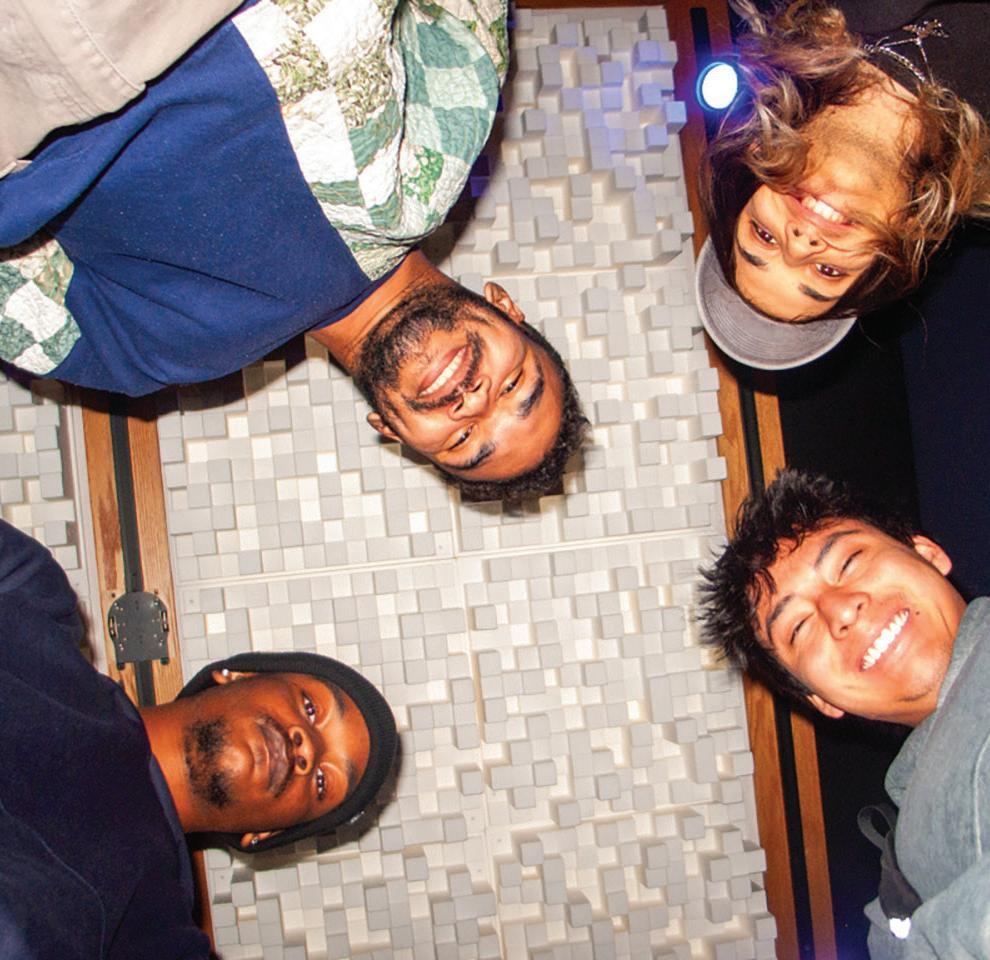
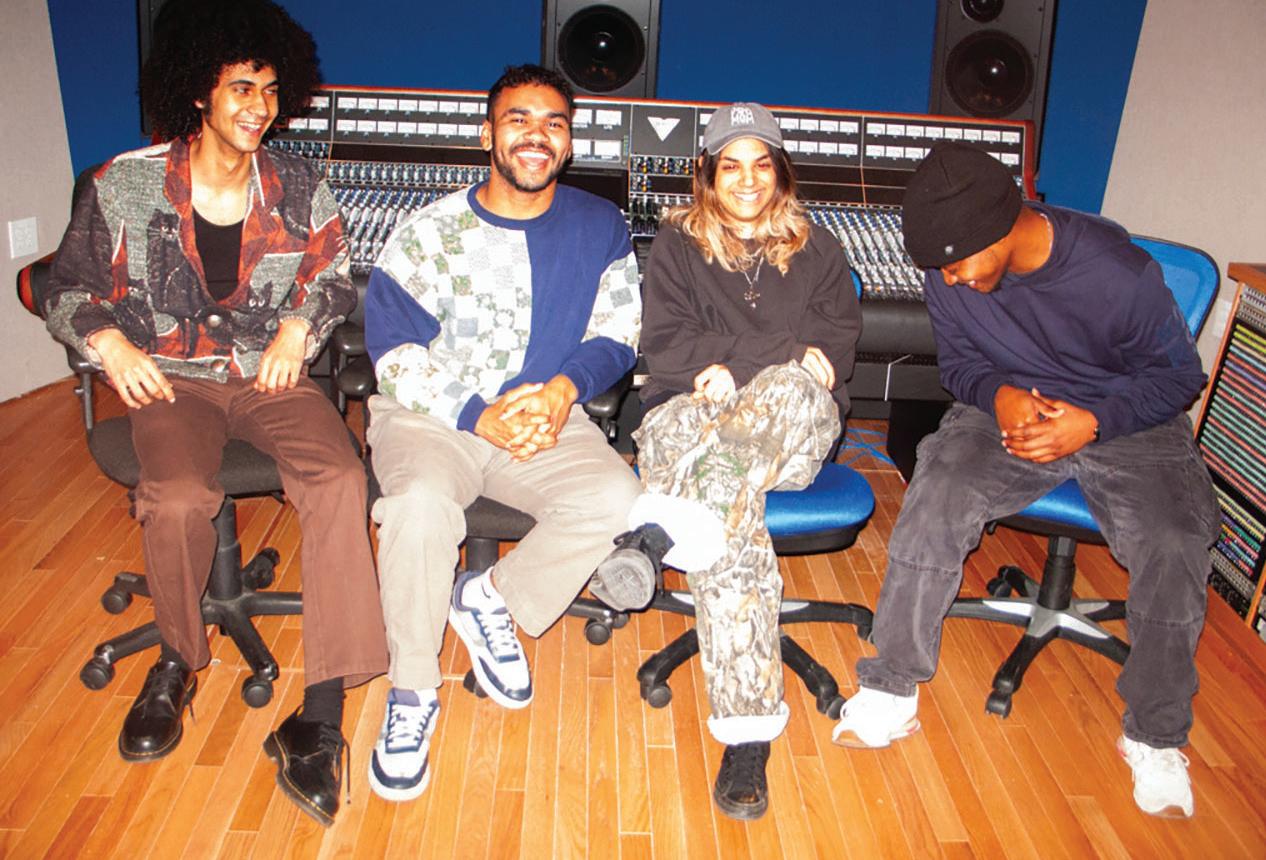
App State’s People of Color Sound Engineering club is an inclusive space offering opportunities for students of color interested in music production and sound engineering.
Club member Jay Archie, a junior music industry studies major, finds the club to be a familiar environment for members who share an interest in audio engineering.
“It’s a space for black and brown people who are interested in music production and sound engineering to gather and talk about all the same, like, nerdy tech stuff that we would in class, but just in a different environment where it’s people who look like each other,” Archie said.
Harrison Stanley, a junior music industry studies major and president of POCSE, said the club’s main goal is to build community among App State’s people of color.
POCSE originated from the fusion of the Black Sound Engineers and the Latin Sound Engineers clubs, aiming to form a strong, unified group. Stanley said this gave POCSE enough members to have an official club at App State.
“POCSE is a music industry club focused around amplifying the voices of people of color in the music industry,” Stanley said.
The club often creates and reviews audio or video content, with a focus on music and visuals that resonate with the club members. Archie said the club also provides tutorials on sound engineering for underclassmen to familiarize them with the music technology at App State.
Dani Cefalo, a junior music industry studies major and club vice president, said they do a lot of video content for the younger students to acquaint them with the equipment they will be using in the future. Cefalo finds that having a video guide students through some difficult aspects of the recording industry can be very useful throughout their collegiate career.
Club member Jackson Chunn, a junior music industry studies major, said the club provides the foundational knowledge needed for audio production.
“We also do a lot of work for the program,” Chunn said. “Like how all this, you know, all these facilities
operate — how to run the boards, how to plug a mic in, studio etiquette — all the things that are important to making it through the recording and production program.”
The club members said they find it essential for students, especially those new to campus, to see representation for themselves.
“When I was a student in high school looking for places to go, I didn’t really see a whole lot of people of color at App State, but they still had the resources,” Archie said. “With us coming together and showing that we are here, it could invite other people to come see that we have, like, the cool studio and all the gear, and then they also have a sense of community as well.”
Stanley said the community aspect of POCSE is crucial at App State and is one of the biggest reasons they worked to establish the organization.
“I think having, like, a unifying presence of people of color in the music industry is empowering, especially when it can feel like you’re drowning in white people,” Stanley said.
Archie said the club is still working to gain more members, but it is difficult to grow when there are not many people of color in App State’s music program in the first place.
“There’s not a lot of people that look like us, so, I mean, having each other is pretty cool, and that not only we all like to talk about music and making music, but, like, we come from sort of similar backgrounds and everything,” Archie said.
POCSE held an event last semester where they created an entire song within one hour, an experience Chunn described as “fun and frantic.”
Stanley said that after one and a half hours of setup, they began the process, with Cefalo filming the entire event. The song consisted of drums, bass guitar, piano, singing and freestyle rapping.
“It served as a tutorial for how to operate in the studio, but it’s also kind of showcasing our abilities as well,” Archie said. “It’s not an easy thing to do, but I mean, when we have many people working on one project, it’s a lot easier.”
POCSE also collaborated with its sister club, Femgineers, on a
Christmas performance at Crossroads Cafe made up of a setlist curated by the two clubs. Archie said he found it engaging to be able to express the more artistic side of POCSE rather than their technical abilities.
“Even if you’re not a person of color, it’s still cool to know what’s going on in the other minorities,” Archie said. “It’s nice to know that people are supporting you even if they’re not directly affected by, you know, the limited amount of people there are that look like the POCSE people in the music building.”
Max Schwanz | Sports Editor
Kasen Jennings had a rocky road to the High Country. The graduate student guard from Atlanta, Georgia is on his third team and his sixth season of college basketball, and his college career has been filled with triumphs and tragedies.
Jennings was ranked as a three-star prospect by 247 Sports and committed to Kennesaw State University out of high school, following his mentor and head coach Amir Abdur-Rahim, as well as his best friend, Chris Youngblood, who now plays for the Oklahoma City Thunder.
“I knew Amir since I was really, like, a baby. I went to spend a lot of time with him when I was in middle school,” Jennings said. “It was like a no-brainer for me to go to Kennesaw cause I got my best friend there and pretty much my uncle as the head coach.”
Jennings spent three years at Kennesaw State under the leadership of head coach Abdur-Rahim. The dynamic duo helped the Owls make history by qualifying for their first-ever NCAA Tournament in 2023.
Following that year, Abdur-Rahim would become the head coach at the University of South Florida, and Jennings followed once again.
After redshirting his senior season in 2023, Jennings played under Abdur-Rahim for the last time in the 2024 season.
Abdur-Rahim found himself in the hospital with an undisclosed illness, and on Oct. 24, 2024, he died at the age of 43. That same day, the Bulls defeated Wright State University 7372 and Jennings played a team-high 34 minutes, recording 9 points.
Despite the loss of a coach and a mentor, Jennings and the Bulls had to push through their season and finished the year 13-19.
Abdur-Rahim’s death hit Jennings the hardest, as many of the players in 2024 had not played under him before.
“He was family; he was like another father figure for me. You know, I learned so much from him, just being around him every day, a lot of life lessons,” Jennings said. “I would literally go visit him every day when he was dealing with the stuff he was dealing with in the hospital.”
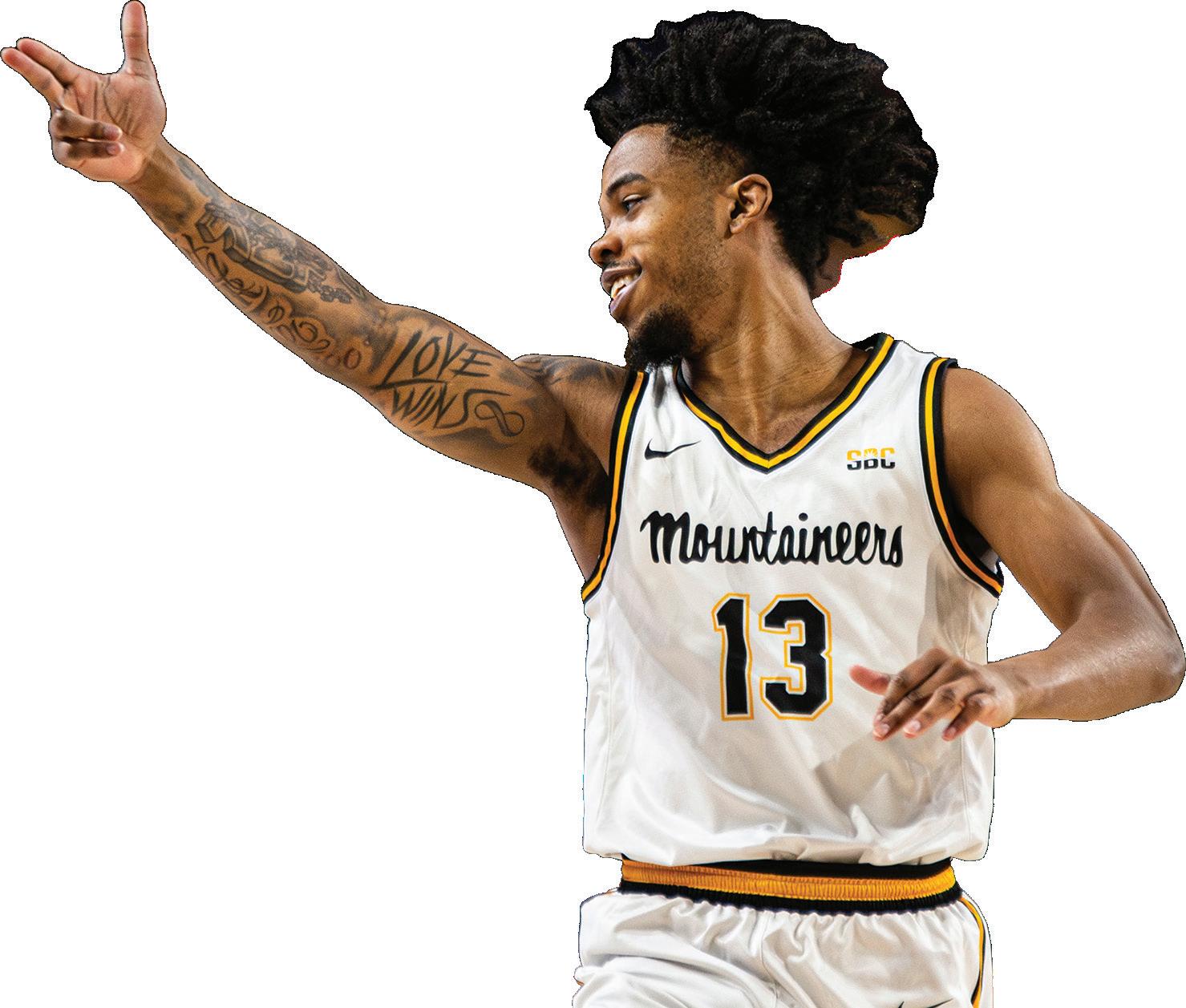
At the conclusion of his redshirt senior season, USF brought in a new coaching staff, and Jennings believed it was time for a fresh start.
He entered the portal and was looking for a place to find fun in the game again. Associate head coach Tanner Smith, who spent time as an assistant under Abdur-Rahim at Kennesaw State, now worked at App State. When he heard of Jennings’ intentions to enter the transfer portal, he jumped on it right away.
“I had our staff, coach, look at him, and they loved him from the first three clips,” Smith said.
Smith said the environment of App State was similar to the one Abdur-Rahim cultivated, and that was a major reason Jennings committed.
Jennings and junior guard Eren Banks have formed a relationship as they both transferred for the 2025-26 season.
“He’s a great person off the court and our relationship is like we brothers,” Banks said.
Jennings understands he was unable to be himself last year and wanted to change that at App State.
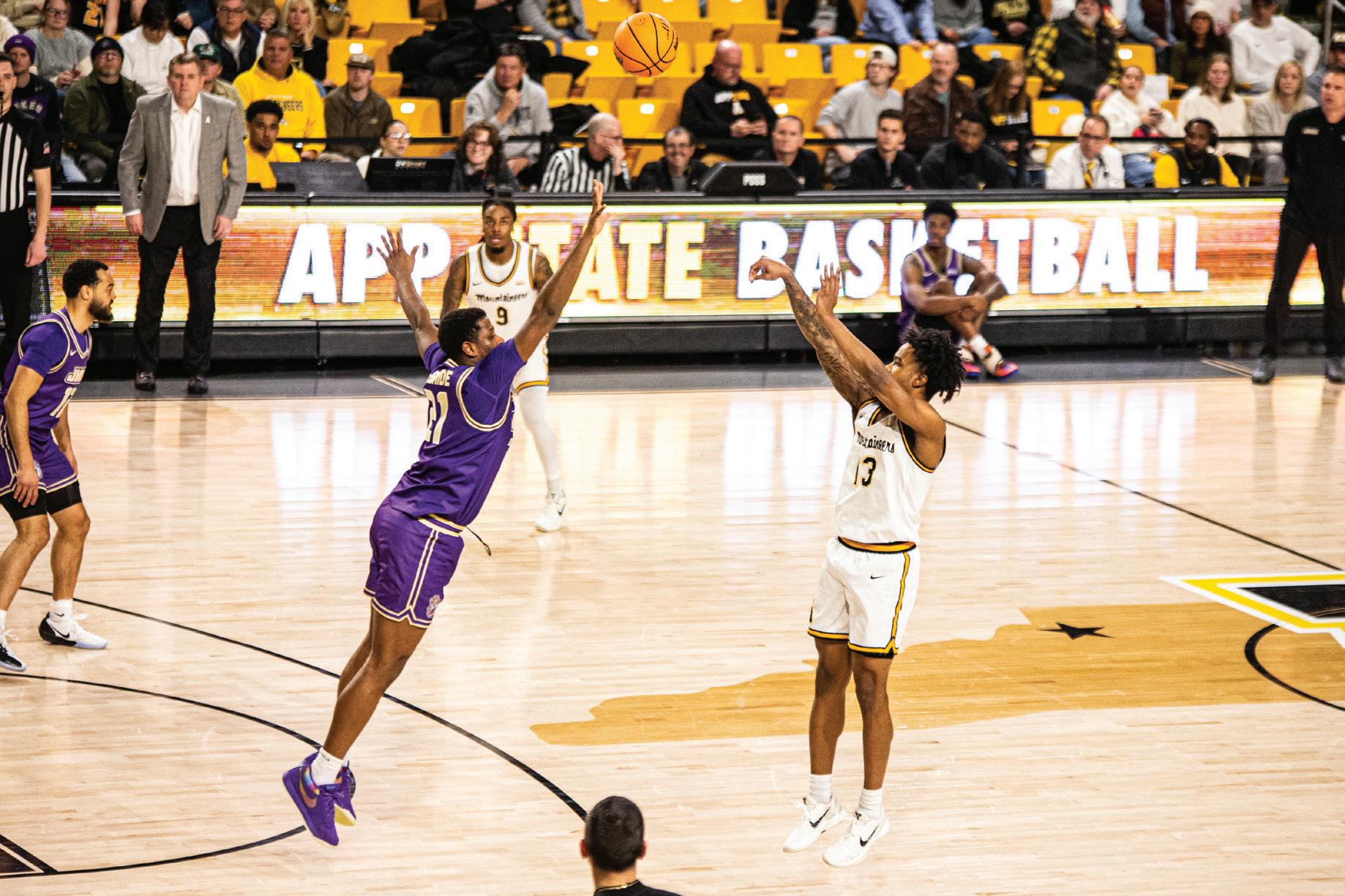
“I felt like, last year, I got away from being present and being the leader I was supposed to be,” Jennings said.
He has been able to do that this year using his veteran leadership in the locker room and on the court. Jennings wants to give his teammates the best version of himself. This can be seen in his stats as he is
currently averaging a career-high 14.9 points and joined the 1,000-point club.
This jump-in play has not gone unnoticed by his coach.
“I’m grateful that he is here because I think he’s made our team better,” Smith said.
Banks saw the potential in Jennings after playing against him in 2023.
“I didn’t really know about him, but he was killing. And then when I saw him here, I was like, ‘Oh, yeah, we gonna be good,’” Banks said.
Jennings now has 11 regular-season games left in his career and looks to continue having fun playing the game he loves.
Parker Egeland | Senior Reporter
In the 2023-24 season, the women’s basketball team finished 9-9 in Sun Belt Conference play, with a crushing 116-74 exit in the second round of the Sun Belt tournament.
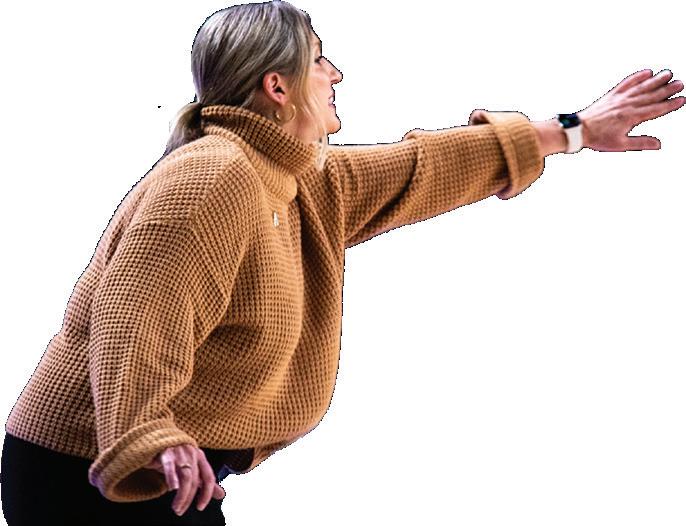
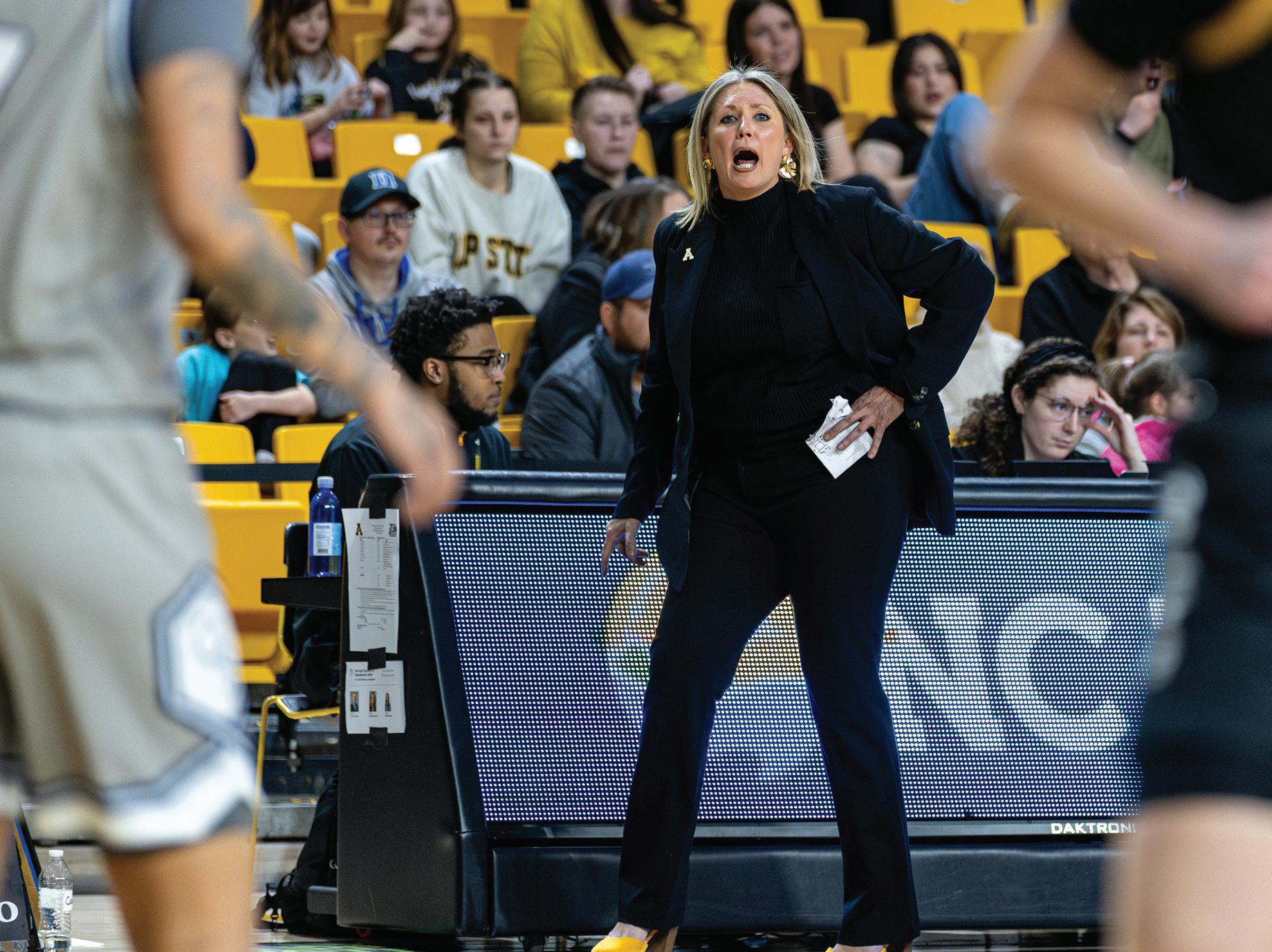
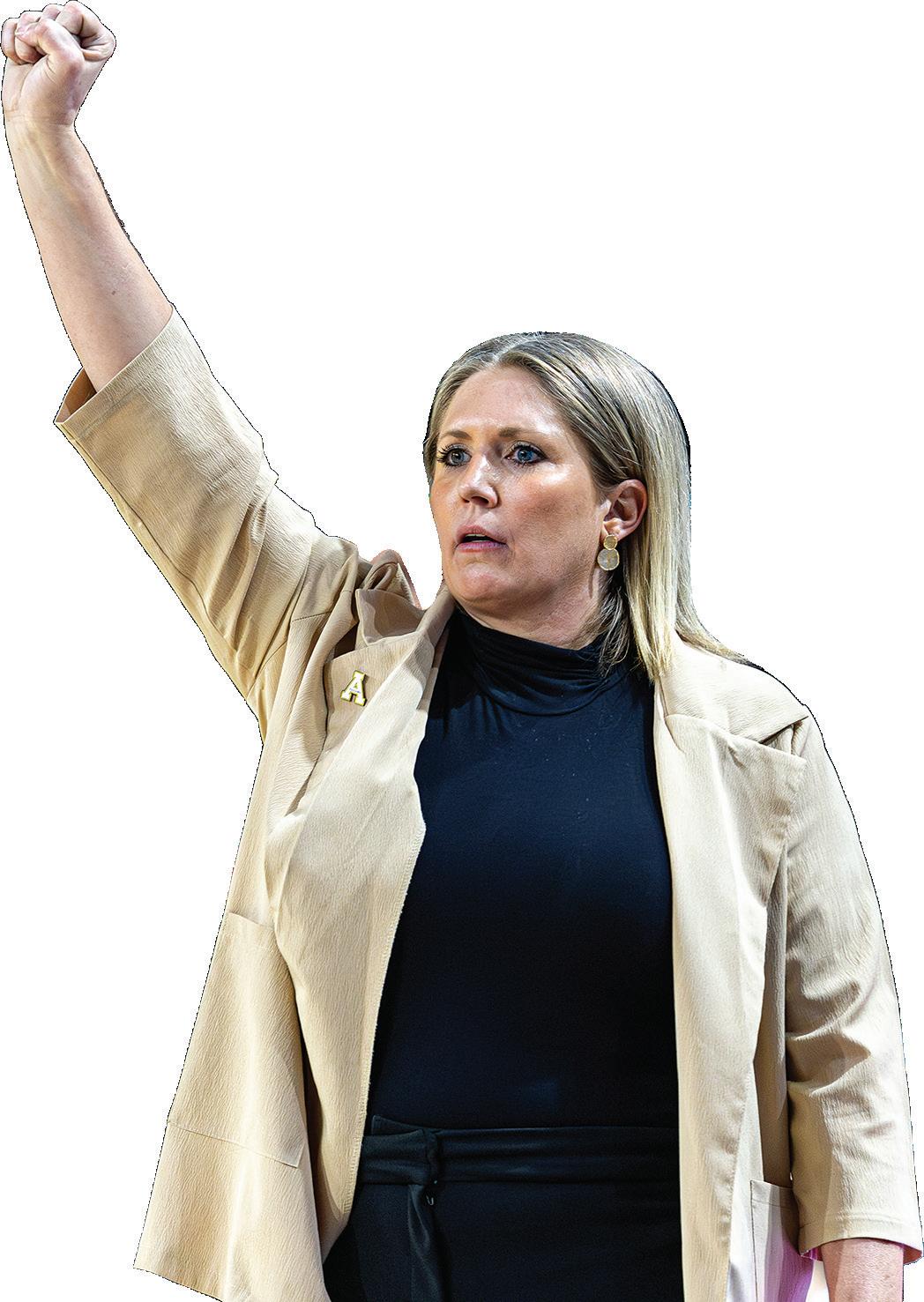
The team needed a new voice at the top, which led them to hire Alaura Sharp as the new head coach.
Sharp bounced all over the country with coaching jobs, originally serving as an assistant coach at Adams State University in Colorado. While she was there, she did anything to get by.
“My salary was literally $3,000 a year,” Sharp said. “I line-judged volleyball games. I ran the football concession stands. I got 500 bucks for doing all of that, and then I worked at a steakhouse to pay my bills.”
She got her first head coaching job at Presbyterian College in South Carolina and led the Blue Hose to its first NCAA Tournament appearance and win over Sacred Heart University in the First Four.
While preparing for the First Four game, she began interviewing for new head coaching positions.
“The team is waiting on Dawn Staley to come talk to us, and we’re meeting her, which is this cool experience,” Sharp said. “Dawn’s running late, so we send everybody back up to their rooms. Well, when I go back up to my room, the search firm calls me.”
Even though the High Country was new to Sharp, she had a familiar face with her in Boone. In her first year with the Blue Hose, Dustin Kerns was in his final year at Presbyterian, and he ended up
taking the trip up the mountain to become the head coach of the men’s basketball team.
“Coach Sharp is a great leader,” Kerns said. “She truly, truly cares about her players, she has an incredible basketball mind, and she’s not afraid of playing a different way to play to her players’ strengths. I think that she finds a way to be a great fit wherever she’s at.”
Sharp felt like App State was a place where she could really win.
“I like the blueprint of being a program builder,” Sharp said. “It’s kind of the success that I’ve had, that’s really what I’ve done. Going somewhere that’s never won a Sun Belt championship, we want to do that.”
Assistant coach and recruiting coordinator Brooklyn Taylor has been with Sharp since her days at Presbyterian. Taylor was originally looking at different positions elsewhere, but Sharp always stood out to her.
“I could tell she was more intentional than just your average coach. We talked on the phone, we had a Zoom, and then she offered me the job.” Taylor said. “It was a no-brainer.”
The first season under Sharp was going better than expected. App State was picked to finish 11th place in the conference, yet soared to a 9-3 conference record before dropping the final 8 games of the season.
With a year under her belt with the Mountaineers, Sharp could start prioritizing which players she really wanted on her roster. She values height at the guard position due to its
defensive versatility.
“The longer you start playing zone, you realize the value of size. As a man-to-man coach, you can switch; there’s more things that you can do that don’t create mismatches if you have the size and you have the length,” Sharp said.
The Black and Gold began the 2025-26 season 6-2, but the losing streak struck again, dropping to 8-10 overall and 1-7 in the conference. Sharp recognizes that things aren’t going their way, but there is still time to turn things around.
“Just taking it one day at a time. After the Coastal game, we showed them these things, and then win, lose or draw, we showed them these things again. This is where we got better, this is where we still got to get better, and just helping them understand to not focus on the outcomes,” Sharp said.
After 20 years, Sharp still has the same love for coaching.
“The highs of winning, the lows of losing, but being able to do it with people who look at you and just say, ‘Tell me what we gotta do.’” Sharp said. “The relationship and the camaraderie of a team is so much fun.”



Tess McNally | Assoc. Sports Editor
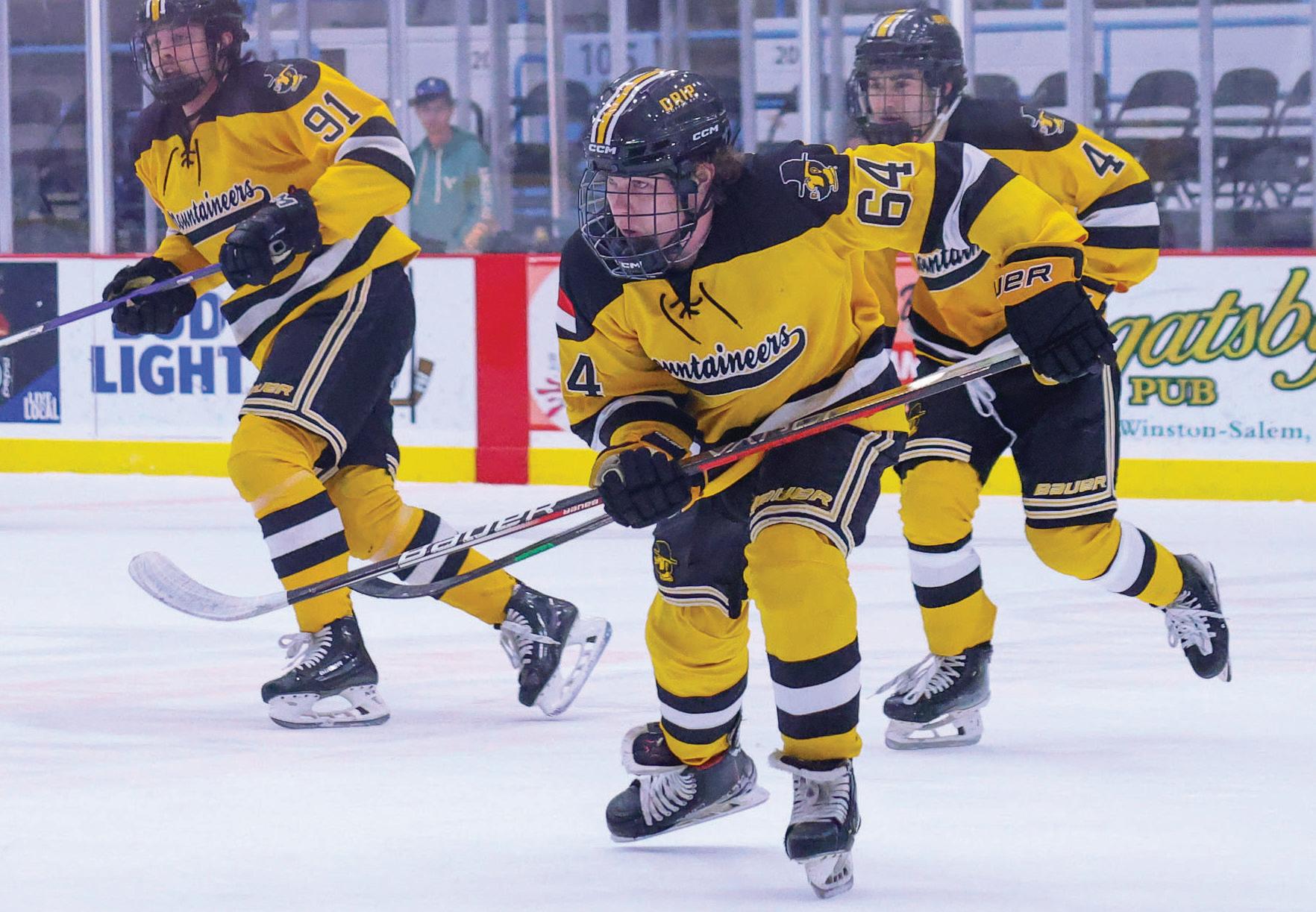
At 4 a.m., Boone is asleep, but the App State club hockey team is just rolling into town after concluding its night of practice.
Once a week, players take the 114mile drive to Greensboro to get on the ice just past midnight. Ninety minutes later, the team packs up and heads home, knowing their alarms will ring in just a few hours to begin classes.
“It’s a busy life; there’s no stopping,” head coach Matt Mugno said.
Mugno grew up playing roller hockey and started youth coaching at the age of 13. His first experience coaching at the college-level was at App State, where he often goes the extra mile, such as bringing stick tape and skate-sharpening equipment.
“With this group, most of them are better hockey players than me; they’re just really smart hockey players,” Mugno said.
Senior forward Riley Brady serves an influential role as one of the captains on and off the ice.
“Riley has been our energy guy, our batteries guy, for the past couple years,” Mugno said.
Brady said he has been dedication to the sport and the team since he joined his freshman year.
“A captain is someone that leads by example, that goes out there and does the little things: they block shots, lay hits and backcheck, and they go grind,” Brady said.
Brady wasn’t planning on playing hockey in college. However, just two weeks before the start of his freshman year, his friend knew of his history with hockey and convinced him to come meet the team and see if he would be a fit.
“I immediately loved the group of guys they had here, and, you know, I had played hockey my whole life, so I love the sense of camaraderie,” Brady said. “I loved the feeling of like I was doing something for my school.”
Although hockey is recognized as a club sport, they represent and pride themselves on being much more than that.
“This is something that people don’t realize is you go to a club hockey game, people are thinking it’s just a bunch of house league players whacking around pucks,” Mugno said. “These guys are very good, skilled and intelligent hockey players.”
Formerly playing at the Division III level, club hockey leveled up to Division II in April 2025. An elevated division can come with its own set of challenges, such as facing off established schools like UNCWilmington and UNC-Charlotte. Universities such as Coastal Carolina and Liberty are Division III but are very serious competitors within that realm.
“We really prepared ourselves playing better teams last year, and we knew we would move up,” Mugno said.

Senior defensemen Toby Gleeson has a different perspective as a transfer student from the University of Northern Colorado whose hockey experience was disrupted by COVID-19 and university guidelines.
“I was sitting in my room, and I said, ‘Wow, this is the coolest thing I’ve ever seen,’” Gleeson said. “‘I want to go there and play hockey.’”
In just the first game of the season, Gleeson suffered a broken ankle from slamming into somebody on the ice.
“I would still go to practices on my scooter and crutches and still carry that leadership role,” Gleeson said.
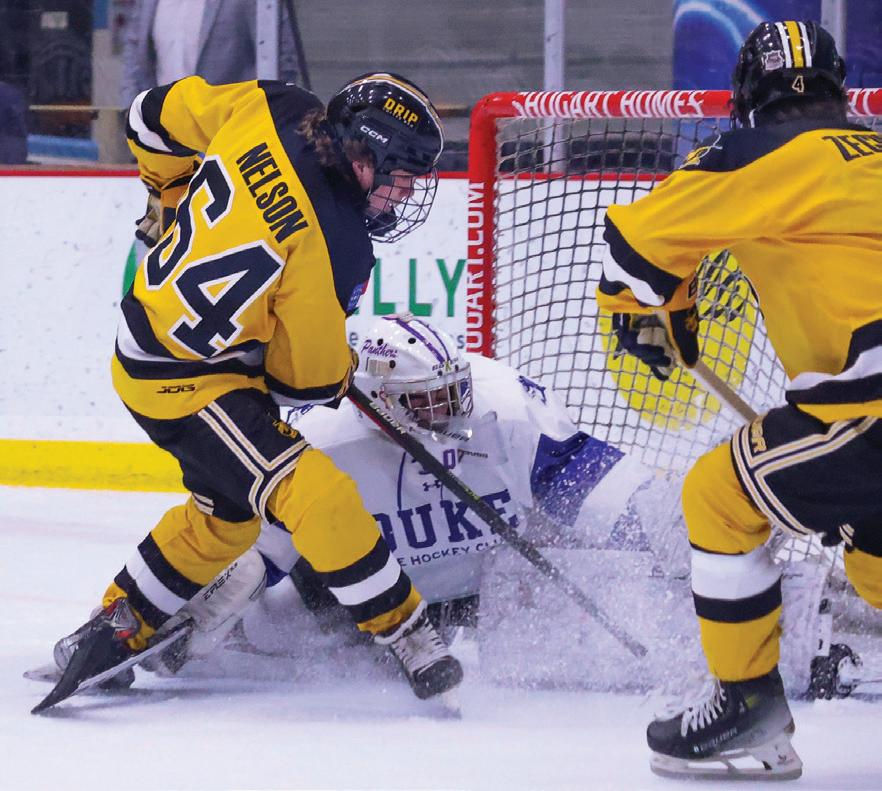
Despite this setback, Gleeson still made the drive to practices and continued to give pep-talks with teammates and answer any questions from younger players. His dedication did not go unnoticed, as he was chosen to be the assistant captain.
“I am an aggressive player; I like to be physical,” Gleeson said. “I can promise you when I am on the ice, they will not score.”
Mugno is aware of the time demands that being a part of this team can have.
“When someone comes to App and realizes they have to drive two hours each way, it can be kind of a big turnoff for them,” Mugno said.
Mugno mentioned that there should never be someone coming to App State just to play hockey. Students need to love the school first, and playing hockey is an extra bonus.
“It is definitely a lot to ask sometimes, but I just encourage everyone to come out and see a game,” Brady said.
As the season opens, the team may be labeled as a club team, but the pride, dedication and power this sport holds tells a different story.
“The amount of work we put in puts us outside the club realm,” Glesson said.
Dylan Shepherd | Reporter
College baseball season is right around the corner, and the Mountaineers are set to return to Beaver Field at Jim and Bettie Smith Stadium in late February with a newlook lineup and aspirations of a deep postseason run.
App State finished the 2025 campaign with a 23-31 overall record and an early exit in the Sun Belt Tournament. The Mountaineers lost to Texas State University in a playin game after finishing 10th in the regular season standings with a 13-17 conference record.
Kermit Smith returns for his 10th season as head coach, making him the second head coach to lead the Mountaineers for at least a decade, and is the first to do so since Jim Morris, who served as the head coach for 25 years from 1974-1998. Kermit Smith is three wins away from reaching 200 career wins as the Mountaineers’ head coach, and 31 away from 700 career wins.
“I think anybody that’s been around me knows how much it means for me to put that uniform on,” Kermit Smith said in an October press conference after the Mountaineers played exhibition games against North Carolina A&T State University and East Carolina University. “It means a ton. The Black & Gold is a really, really special place to me.”


There are several changes to Kermit Smith’s coaching staff. Heath Blackmon is the new pitching coach after the departure of Jim Leggett, and Ross Steedley left the Mountaineers to join the Chicago White Sox as a catching coordinator. Additionally, Seth McLemore returns to Boone as an assistant coach after being a part of the staff from 202324.
The offseason brought a lot of changes to the roster, and The Mountaineers will have plenty of returning veteran players paired with talented newcomers.
Junior first baseman Kameron Miller and graduate student infielder
Joseph Zamora are two of the big names back in the lineup for another season in the Black & Gold. Miller crushed 12 home runs last season and had a .461 on-base percentage in 47 games, while Zamora racked up 63 hits and recorded a .307 batting average in 52 games played.
The pitching staff returned 11 players from last season, including graduate student right-handed pitcher
Caleb Marks, senior right-hander Everette Harris, senior left-handed

for the Senators in 2025 and tossed 2 scoreless innings against North Carolina A&T in the fall.
The Mountaineers also added two freshmen in the offseason in outfielder Nico Soul and righthanded pitcher Grant Gardner. Soul was ranked as the No. 3 outfield prospect and No. 12 overall prospect in North Carolina in the 2025 class by Perfect Game, and blasted 2 home runs against East Carolina in the fall. Gardner recorded a 0.86 ERA and struck out 112 batters in 56.2 innings in his senior year at Covenant Day School.

pitcher Jake Beaty and redshirt senior right-handed pitcher Jordan Fisher. Marks was limited to 6 starts last season due to injury but struck out 23 batters. Harris appeared in 14 games in 2025, 12 of them as the starting pitcher. Beaty and Fisher both pitched in over 20 games last year and were key pieces of the bullpen.
App State was very active in the transfer portal and is bringing a ton of new talent to the High Country. A few of the major transfer additions include graduate student infielder
Steven Smith from Emory & Henry University, senior outfielder Tank
Yaghoubi from Elon University, junior left-handed pitcher Tanner Nolan from Crowder College and junior right-handed pitcher Gage Peterson from Walters State Community College.
Steven Smith hit 12 home runs and 22 doubles last season for the Wasps, and in one of the two exhibition games against East Carolina, went 4-4 and pitched a scoreless inning on the mound. Yaghoubi batted .321 in 56 games for Elon last year. Nolan recorded a 2.09 ERA in 51.2 innings and tossed 3 complete games last season. Peterson won 10 of his 13 starts
App State’s 2026 schedule features 53 games and several marquee matchups. The Mountaineers will visit Duke University Feb. 17, host no. 21 Wake Forest University March 3 and visit the Demon Deacons April 28. Other non-conference games include home-andhome series against UNCAsheville and Western Carolina University, as well as a 3-game series at Gardner-Webb University. Sun Belt play will start with a huge series at home March 13-15 against the defending conference champions and College World Series runners-up in no. 6 Coastal Carolina University. The Mountaineers will face every school that finished in the top 6 of the 2025 Sun Belt standings, including a road series against no. 20 Southern Mississippi University, March 27-29. App State will wrap the regular season in Atlanta, Georgia against Georgia State University, May 14-16.
Fans can mark their calendars for Feb. 13 at 3 p.m. when App State hosts Canisius University at LP Frans Stadium in Hickory, North Carolina to get the season into full swing.

Allison Lehan | Opinion Editor
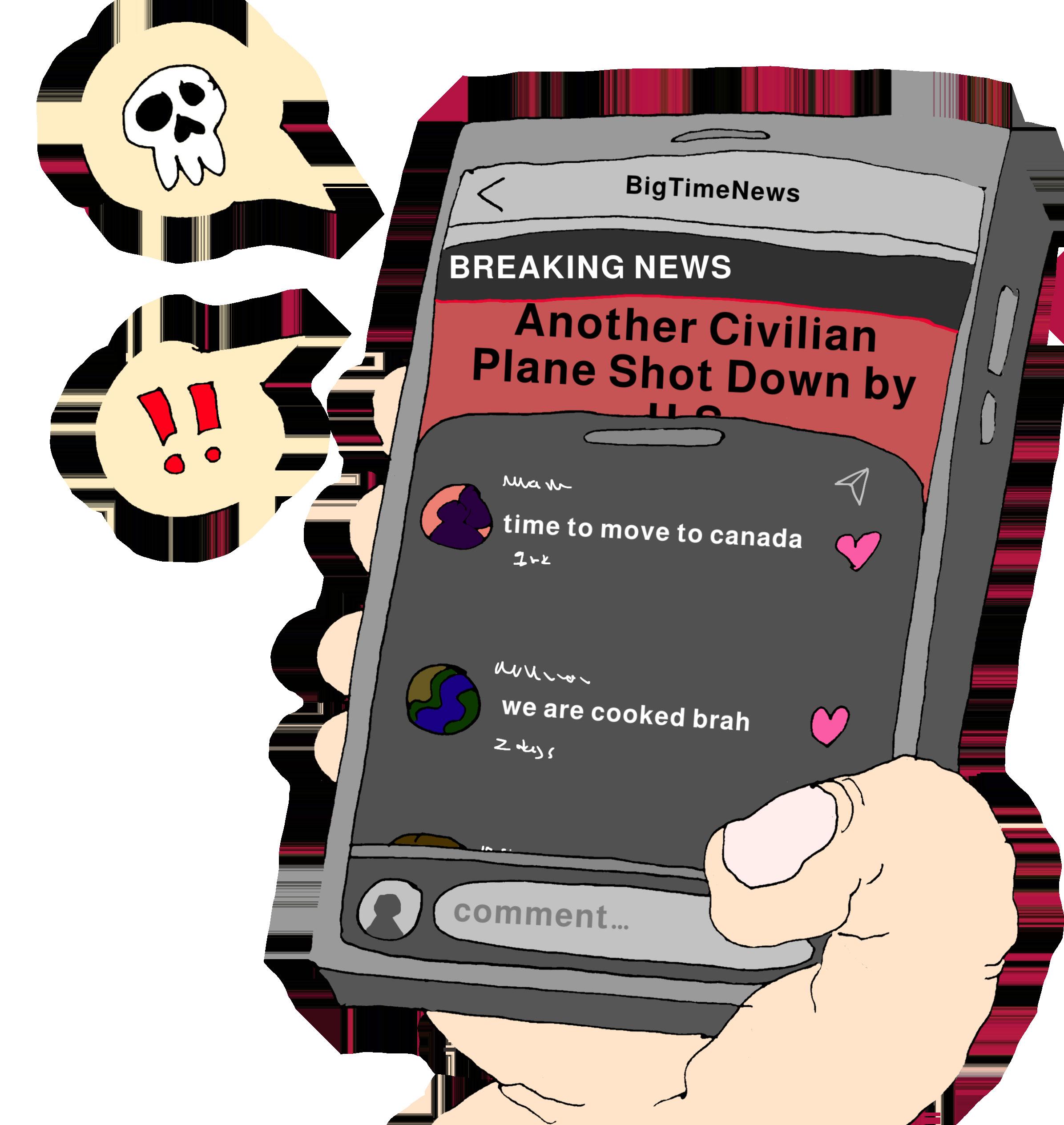
During the last few months of 2025, I was on Instagram constantly. Once I passed the scattered posts of my friends posing in snow-dusted yards and reminiscing over highlights of the year past, my scrolling sessions inevitably diverted my attention toward content that instilled in me a lingering sense of hopelessness — reels of hulking and masked strangers ripping innocent families from each other’s arms. Emaciated children begging for food. Steroid-addled cryptocurrency worshippers declaring ownership over women’s bodies. Reports detailing the president’s latest half-baked schemes of destruction for countries to which he does not belong, a planet he does not respect and lives he does not value.
The tones of these posts had little overarching variation, but the comment sections somehow always managed a more extreme degree of monotony — one characterized by the resounding conclusion that the world as we know it is doomed. That belief, while understandably within casual reach of the average doomscroller, is dangerously wrong.
The Merriam-Webster dictionary loosely defines doomerism as a fatalistic philosophical attitude that has become increasingly prevalent in internet culture. To be a doomer is to believe that the future is irredeemably bleak and those who pretend otherwise haven’t yet succumbed to the same reality of despair.
To be exposed to horrors like global warming, genocide and authoritarianism and feel hopeless as a result is understandable. However, to follow through with that resignation and inform others of the pointlessness of trying to make change is not only a choice informed by apathy but also by privilege.
Millions of people have been negatively impacted by United States legislation to some extent in the last
year, but the blows haven’t landed equally. For some, giving up simply means the difference between political ignorance and awareness. For others, giving up might mean losing an entire way of living. The people affected by today’s political atmosphere the most aren’t liking “we’re cooked” comments on Instagram because giving up comes with material consequences.
The U.S. government is actively choosing to accelerate environmental pollution, strip individuals of their fundamental rights and restrict its people from the means to support themselves by way of healthcare, employment, education and more.
The U.S. has become a country where innocent people like Renee Nicole Good can be murdered on camera for exercising their freedom of speech, a country where bands of glorified human traffickers in federal uniforms can stalk neighborhoods in search of taxpayers, law-abiders, legal citizens and children based on their skin color.
Reality is inarguably bleak right now, but in accordance with Robert K. Merton’s self-fulfilling prophecy phenomenon, doom only becomes more possible when people believe in it. By claiming and acting as though nothing can be done about these terrible circumstances — about the lives lost, missing and forever damaged — one lessens the chance they will improve.
In 2022, Vermont Senator Bernie Sanders posted a short video to his personal YouTube account entitled, “We can’t give in to doomerism.”
Created as a generalized response to letters he received about political despair, the video holds more significance today in the context of an additional four years of political turmoil. It begins with Sanders citing some of the major obstacles the U.S. faced in the 20th century, including the Great Depression and 1940s Nazism. He reasons that the U.S. overcame tremendous opposition, so it can again, ending with, “All we can continue to do is to keep fighting.”
Sanders’ message, regardless of his politics, echoes the sentiments of figures who historically fought for and succeeded in making the conditions of struggling people better.
In 1960, Martin Luther King Jr. gave his famous “Keep Moving from This Mountain” address at Spelman College. In the speech, King speaks about the dangers of stagnant complacency regarding desegregation, ending with the line, “If you can’t fly, run; if you can’t run, walk; if you can’t walk, crawl; but by all means keep moving.”
Resistance doesn’t have to be loud, big or complete because small acts accumulate. To keep moving is the only appropriate response in the face of today’s harsh realities. For some people, it’s the only way to continue living.
Fascist governments feed on discouraged populations because the likelihood of receiving resistance is smaller. Adolf Hitler, Joseph Stalin and Benito Mussolini all maintained power through intense tactics of oppression in countries defined by hardship and stress. To sit idly behind a phone screen and proclaim that we are doomed or that nobody is doing anything to solve things is the exact behavior the Trump administration needs from the U.S. populace to continue down its current path.
People are fighting back against injustice, and to suggest otherwise due to a distorted virtual window of information is an insult to real-world resistance.
Filming the violent activities of Immigration Customs and Enforcement agents has become common practice among bystanders across the country, pinning a small fraction of accountability onto the predators behind the masks. People have begun developing ICE tracking networks in cities where immigration crackdowns occur, employing solidarity tactics to protect more vulnerable community members. Passionate protests, like those that enlivened downtown Boone in mid-November, consistently flare up nationwide, helping political dissenters build connections and gain greater media visibility.
These examples are all steps any regular person can take to participate in a growing and ever-present culture of political resistance.
To choose hope over despair is to make positive change real. Hope exists in an endless stream of possibilities and is strongest when shared with others. Resistance by way of protest, community gathering, knowledge exchange — any action that peacefully opposes oppressive federal measures — is a worthy and important endeavor.
When I feel hopeless after scrolling for a while, I go outside. I think about the people I love and strangers I don’t know who deserve my compassion and respect equally. I think about
how lucky I am to be able to continue comfortably living my life the same as I did a year ago, when others haven’t been so lucky.
For me, choosing hope over despair is simple because I know my fellow humans and the planet we share are worth it. Because I know nobody is ultimately immune to the abuses of right-wing extremism. Because I believe things can get better.
Stay informed, but when discouragement creeps in, turn the screens off and step outside. Find someone to have a conversation with. Protect your mental health and remind yourself where real change happens, because the revolution will not be posted on Instagram reels.

Anna Kate Mock | Assoc. Opinion Editor
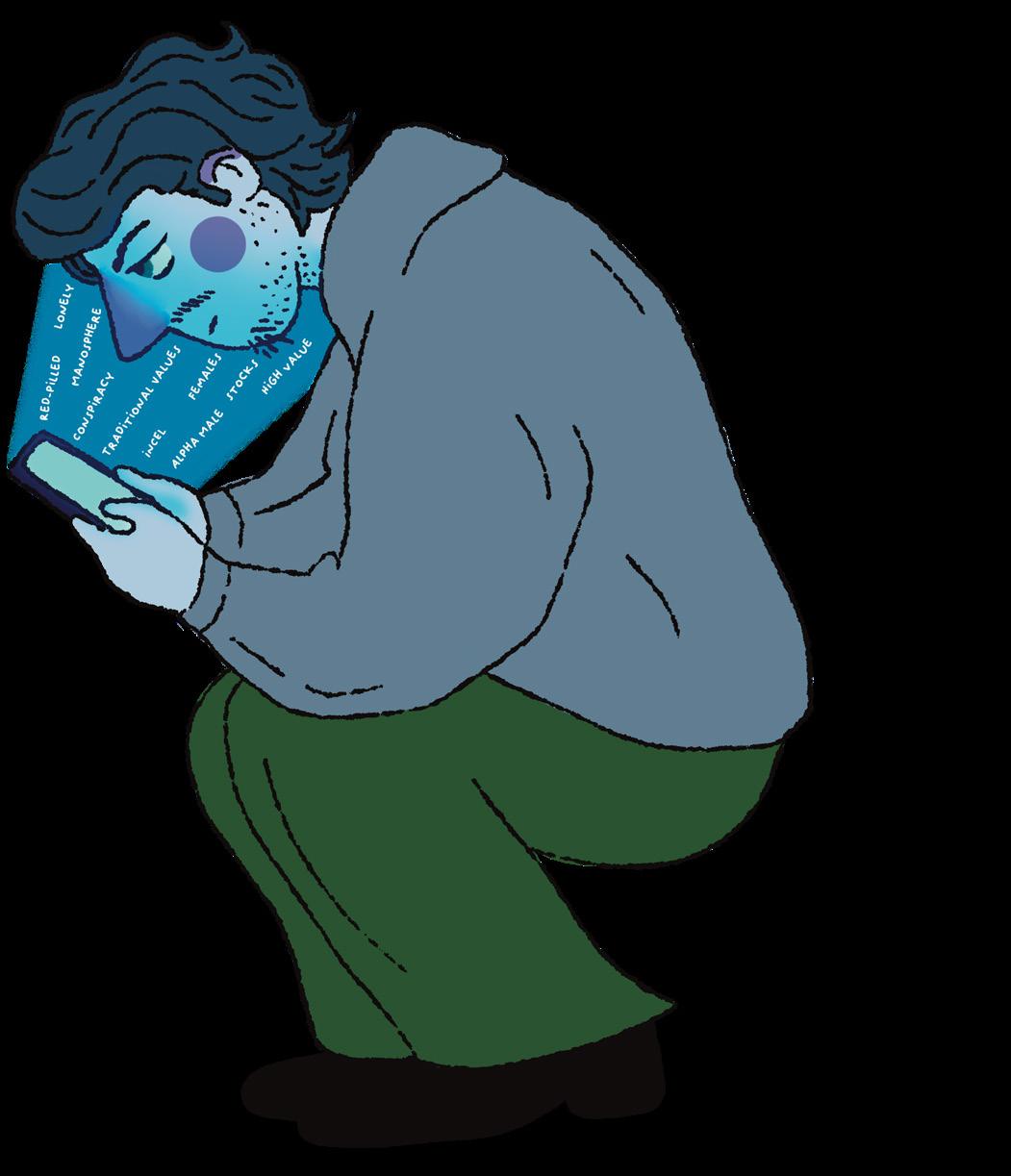
Within the last few years, the discussion of a male loneliness epidemic has become increasingly prevalent. The crux of the idea is that men are reporting feeling progressively more isolated, citing an absence of authentic romantic and platonic relationships alike. While this concept isn’t necessarily incorrect, it’s misleading and one-dimensional.
In reality, the epidemic speaks to a much larger lack of connection on a societal level — regardless of gender identity — and subsequently fails to place a certain level of accountability on men’s part.

There has been an overwhelming amount of pressure placed on women to resolve this issue, specifically in the realm of straight men and heteronormative relationships.
However, to put it succinctly and bluntly, women do not owe men the emotional labor of fixing their lives
If men want a lasting relationship, there needs to be the same amount of care and decency that they expect from their female counterparts. If you treat your partner with apathy or a complete lack of effort, they won’t want to be with you, period. Men need to be expected and willing to put the same time and energy into their friendships and romantic relationships that society expects of women.
Women are lonely too. A survey conducted by Pew Research Center found that 16% of men reported feeling lonely most or all of the time and 15% of women consequently reporting the same thing. So why is it referred to as a male loneliness epidemic and not an epidemic that encompasses everyone?
The difference is that women often turn to others and have a larger network to alleviate these feelings of isolation, while men have been predominantly conditioned to keep emotions buried. If anyone is to blame for the lack of connection in men’s lives, it is the patriarchal and outdated expectations of masculinity that are still common in today’s world.
The societally-placed norms of maleidentifying people to be stoic, to not have a softer side and to not express genuine emotion are completely inhibiting men from building real
If individuals want an actual solution to the male loneliness epidemic, it is to stop expecting women to be the singular support for men and instead begin to deconstruct the harmful stereotypes society has created. Relationships of every kind are supposed to be a joint effort where people are present and exhibit the emotional intimacy to make each other feel seen and understood. Effort doesn’t mean that there has to be excessively grand gestures or something monetary; it can be little acts that show you listen. If the world is not teaching men to
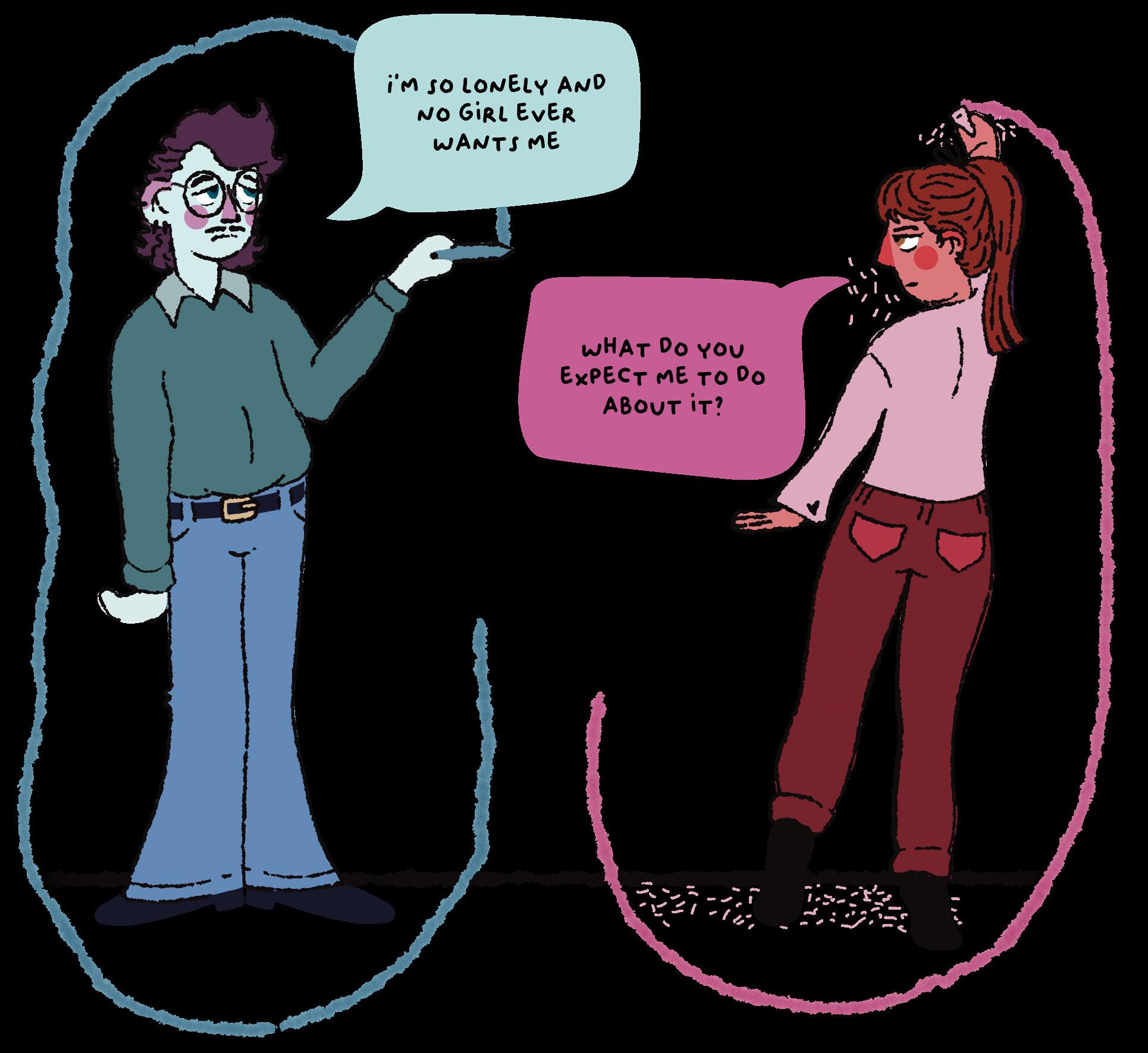
put in the work and be vulnerable, they shouldn’t suddenly be surprised that nobody is socially fulfilled.
As journalist Sara Youngblood Gregory wrote in an article about male loneliness, “caring is a tricky word for many women, as it brims with gendered expectations of labor, open availability, and mental load. For many women — especially those who are sexually and romantically involved with men — the burden of investing in men and their problems often blurs the line between care and caretaking.”
It seems as though society expects women to somehow be surprised men can feel lonely on such an extreme level, but in reality, they know all too
well that if they raise their standards or pull back on the all-encompassing devotion they consistently put into relationships, they will be deemed useless. If society put as much emphasis on having men pull some of the weight in relationships instead of blindly waxing poetic about the male loneliness epidemic, the issue would undoubtedly resolve itself.
It’s not that women don’t care that men are feeling increasingly isolated; it’s that they want society to fully recognize the love and support they bleed on a daily basis. It’s not just women’s place to facilitate these conversations either, men must encourage other men to be vulnerable
and learn what it takes to be in a fulfilling relationship. They cannot wait for the loneliness to fade away or for women to come and magically make it better.
Christa Price | Opinion Writer
As a transfer student, your first year in a new place can be an uncertain time. However, at App State, there are plenty of free activities and amenities available to help incoming students get settled into their new homes as Mountaineers.
App State has three recreation and fitness centers. The Student Recreation Center, located at 150 Bodenheimer Drive, is open Monday through Thursday from 6 a.m. to 11:59 p.m., Friday from 6 a.m. to 9 p.m., Saturday from 10 a.m. to 9 p.m. and Sunday from noon to 11:59 p.m. The SRC features a climbing wall, a pool, a weight room and various gym equipment.
The Dwight W. Quinn Recreation Center, located at 303 Stadium Drive across from Kidd Brewer Stadium, is open Monday through Thursday from 7:00 a.m. to 11:00 p.m., Friday from 7:00 a.m. to 7:00 p.m., Saturday from noon to 7:00 p.m. and Sunday from 2:00 p.m. to 9:00 p.m. The Recreation Center offers areas for cardio, cycling and racquetball.
The Mount Mitchell Fitness Center is located inside the Plemmons Student Union in Room 303 and is open Monday through Thursday from 7 a.m. to 10 p.m., Friday from 7 a.m. to 7 p.m. and Sunday from 3-10 p.m. Mount Mitchell contains a cardio area, a strength area and a group fitness studio.
Within the union is the Hawksbill Game Room, which features billiard tables, dart boards, foosball tables, board games, playing cards, gaming consoles and controllers, as well as a TV. The game room is open Monday through Friday from 11:15 a.m. to 10:45 p.m., Saturday from 11:15 a.m. to 5:45 p.m. and Sunday from 3:15 p.m. to 10:45 p.m. in the fall and spring semesters.
Crossroads, located just beside the game room in the union, offers an array of coffee, tea, pastries and other
delicious foods. With every meal plan, students get a set amount of Meal Exchanges each week, which can be used at Crossroads for any of their drinks. Crossroads is open Monday through Thursday from 7:30 a.m. to 9 p.m., Friday from 7:30 a.m. to 4 p.m. and Saturday from 10 a.m. to 5 p.m.
Students can also use their Meal Exchanges for select items at Hatchet Coffee Window on Sanford Commons and Wired Scholar, which is located in the Belk Library & Information Commons.
Students receive various benefits by using their school email account, such as a free subscription to the New York Times and requirable licenses to Adobe Creative Cloud, as well as discounted subscription costs for several streaming and shopping services, including Amazon Prime, HBO Max, Apple Music and Spotify.
Lastly, App State offers free counseling and psychological services to every student, including during the summertime. Services include, but are not limited to, short-term individual counseling, group counseling, couples and family counseling, recommendations, referrals and prevention programs. Students are encouraged to take advantage of these services and can set up an initial consultation by calling the Counseling Center at 828-262-3180.
Each one of these places is open to all students, but accessing these resources can be particularly helpful to transfer students.
There are many opportunities for social connection with your peers, the fostering of skills, career building and genuine emotional value as you settle into your rightful place with your fellow Mountaineers. Plus, they’re included in your tuition, so don’t hesitate to take advantage of what’s right in front of you.


Tierney Drake | Opinion Writer
Boone has an abundance of activities to do, but even locals might have a difficult time exploring new opportunities. As the new year begins so does the perfect time to delve deeper into the rich experiences that Boone has to offer. Reconnect with Boone’s community by taking advantage of unique stores and restaurants, scenic mountain views and Appalachian history through this list of activities.


Part of what makes Boone so special is its commitment to prioritizing local businesses. Small businesses thrive and help shape the Boone culture and community. King Street, located in downtown Boone, is full of retail shops and restaurants that cater to the Appalachian lifestyle. By selling products that are reflective of historical landmarks, Southern cuisine and even App State merchandise, it is difficult to find similar products elsewhere. Support for these establishments allows Boone’s community to thrive, maintaining the preservation and sustainability of Appalachian culture.

Founded in 1957, Tweetsie Railroad is an amusement park full of fun for all ages. The park is open from April 4 to Dec. 30, and decorations and activities change year-round to celebrate major holidays. The Easter Bunny makes an appearance during Easter weekend, fireworks mark the Fourth of July, Halloween offers a Ghost Train ride and haunted house while Christmas brings carols and a gingerbread house.
Outside of holidays, there are many everyday attractions such as gem mining, arcade games, live entertainment and the Deer Park Zoo. While amusement parks are accessible nationwide, what makes Tweetsie Railroad unique is its aim to preserve Appalachian history while still making the park accessible for modern-day tourists and residents to enjoy.
The historic steam engine, referred to as Engine No. 12, is the original locomotive from Tweetsie’s opening day. The train ride is also a great way to appreciate the wonders of the Blue Ridge Mountains.
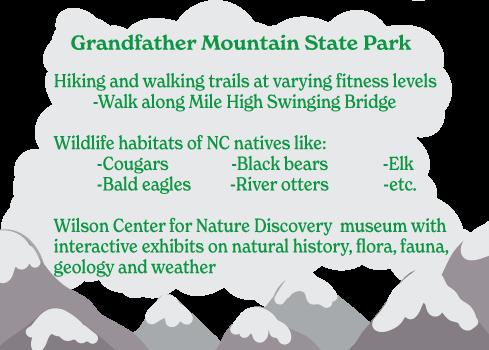
Grandfather Mountain State Park is an attraction that emphasizes mountain nature and scenic views across the Blue Ridge Mountains. The mountain is estimated to be around 300 million years old, with some rock formations dating back 1.2 billion years, and towers 5,946 feet. The park is open year-round and provides visitors with a wide range of activities.
Hiking and walking trails are available for different fitness levels. Wildlife habitats give visitors the chance to see animals native to North Carolina: cougars, black bears, bald eagles, river otters and elk. The Wilson Center for Nature Discovery is a museum adorned with interactive exhibits of the mountain’s natural history, including flora, fauna, geology and weather.
The most unique attraction that Grandfather Mountain has to offer is walking along the Mile High Swinging Bridge. This bridge is the United States’ highest suspension footbridge, offering panoramic views from 5,305 feet high since 1952.
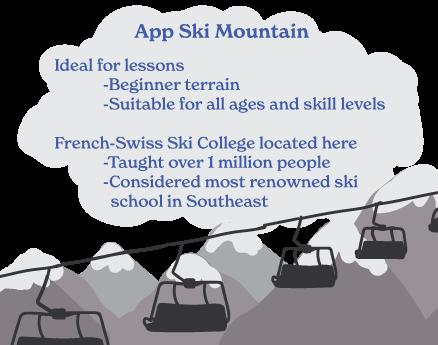
Since 1968, Appalachian Ski Mountain has been the perfect place to go skiing or snowboarding in the Blue Ridge Mountains. In fact, it’s the perfect time of year to visit and take advantage of Boone’s snowy winters. Appalachian Ski Mountain is the ideal place to take lessons due to its beginner terrain, making the mountain suitable for all ages and skill levels.
The French-Swiss Ski College is located at Appalachian Ski Mountain and has taught over 1 million people to ski and snowboard. It is considered the oldest and most renowned ski school in the Southeast.
Boone is a place full of charm, from its history to its breathtaking mountain views, and the extensive care the community puts into historical preservation and environmental sustainability. Shopping locally, seeing museums and embracing the nature that Boone has to offer is a great way to make the most of the new year.