


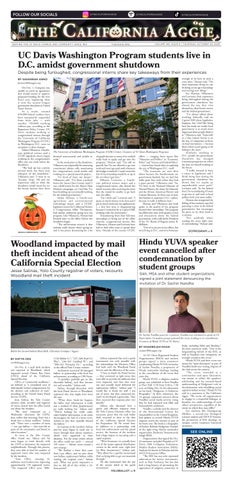
Despite being furloughed, congressional interns share key takeaways from their experiences
BY SAVANNAH ANNO features@theaggie.org
On Oct. 1, Congress was unable to reach an agreement that would extend or approve proposed funding for the new fiscal year, beginning what is now the second longest government shutdown in United States’ history.
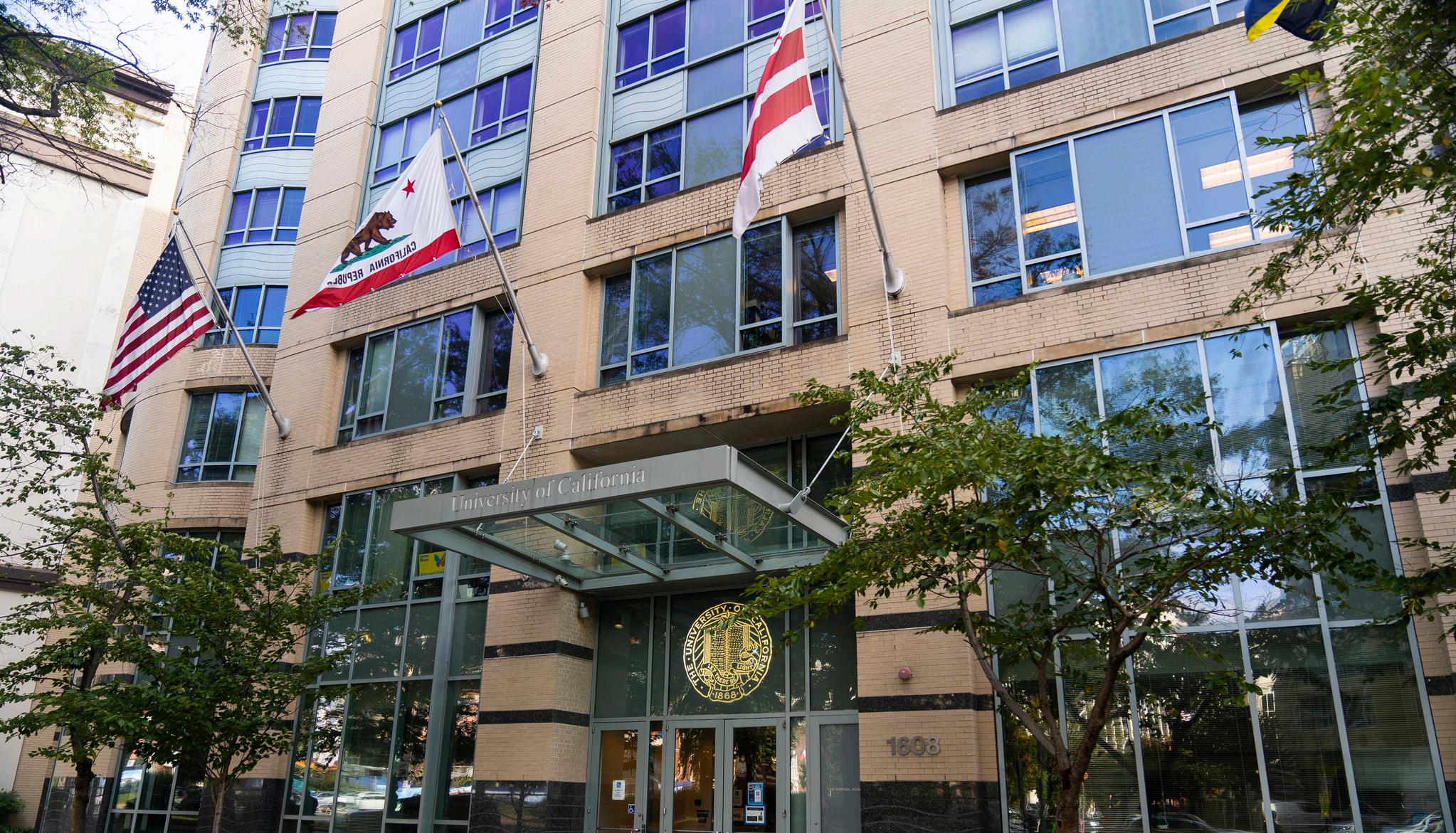
As a result, around 670,000 federal workers have been temporarily suspended from their jobs — with another 730,000 working without pay, according to the Bipartisan Policy Center. UC Davis students working as congressional interns through the University of California Washington Program (UCDC) in Washington D.C. were no exception to these changes.
enough to be here in such a crazy time,” Hyman said. “ e most important thing we can be doing at our age is learn[ing] and try[ing] new things.”
For Hyman, Villanueva and Lavitoria, their experience being furloughed during the government shutdown has altered the way they view themselves, their future careers and the federal government.
“I’ve always talked about working federally and on Capitol Hill where legislation happens, but I feel like being here has made me realize local government is so much more important than people think it is,” Villanueva said. “Especially in a time [when] facism is on the rise, it’s important to focus on local institutions — because that’s where you’re going to be feeling it the most.”
In the week prior to the shutdown, Villanueva was responsible for answering constituents’ phone calls, monitoring her congressman’s social media and working on a special research project.
Adrien Villanueva, a fourthyear political science and a UCDC legislative intern, began working in her congressman’s o ce just one week before the shutdown. e lead up was a pretty normal week, but there were whispers of the shutdown,” Villanueva said. “I went in on Tuesday, [Sept. 30] and my supervisor told us what the shutdown would mean for us: the house interns have been deemed nonessential and unable to work.”
“It’s kind of been my dream,” Villanueva said. “I’ve been a judicial intern for Santa Clara County [and] I was a eld intern for the Mayor Matt Mahan’s campaign, so I feel like I’ve been building up to eventually working for the federal government.”
Aidan Hyman, a fourth-year agriculture and environmental technology major and a UCDC legislative intern for California District 4 Congressman Mike Thompson, had similar ambitions going into the program. Like Villanueva, Hyman had limited time in the o ce before the shutdown began. e unfortunate answer is that nobody really knows what’s going on and it was pretty devastating for a lot
of people because so many of us worked really hard to apply and get into the program,” Hyman said. “I’m still on payroll, but I’m not allowed to go into work and won’t get paid until whenever the budget is resolved. I wasn’t aware the fate of my internship would be so up in the air when I got here.”
Mikayla Lavitoria, a fourthyear political science major and a congressional intern, also shared her initial reaction after receiving the news that she would be unable to go back into the o ce.
“I’m a little sad,” Lavitoria said. “I spent so much money to be here and I put so much work into my applications: [...] this lost time is disappointing because I wanted to be at Capitol Hill, working with the community.”
Transitioning from their full-time internships to being out of the o ce entirely, congressional interns like Villanueva, Hyman and Lavitoria have had to nd other ways to spend their time. Outside of the courses UCDC
Jesse Salinas, Yolo County registrar of voters, recounts Woodland mail theft incident
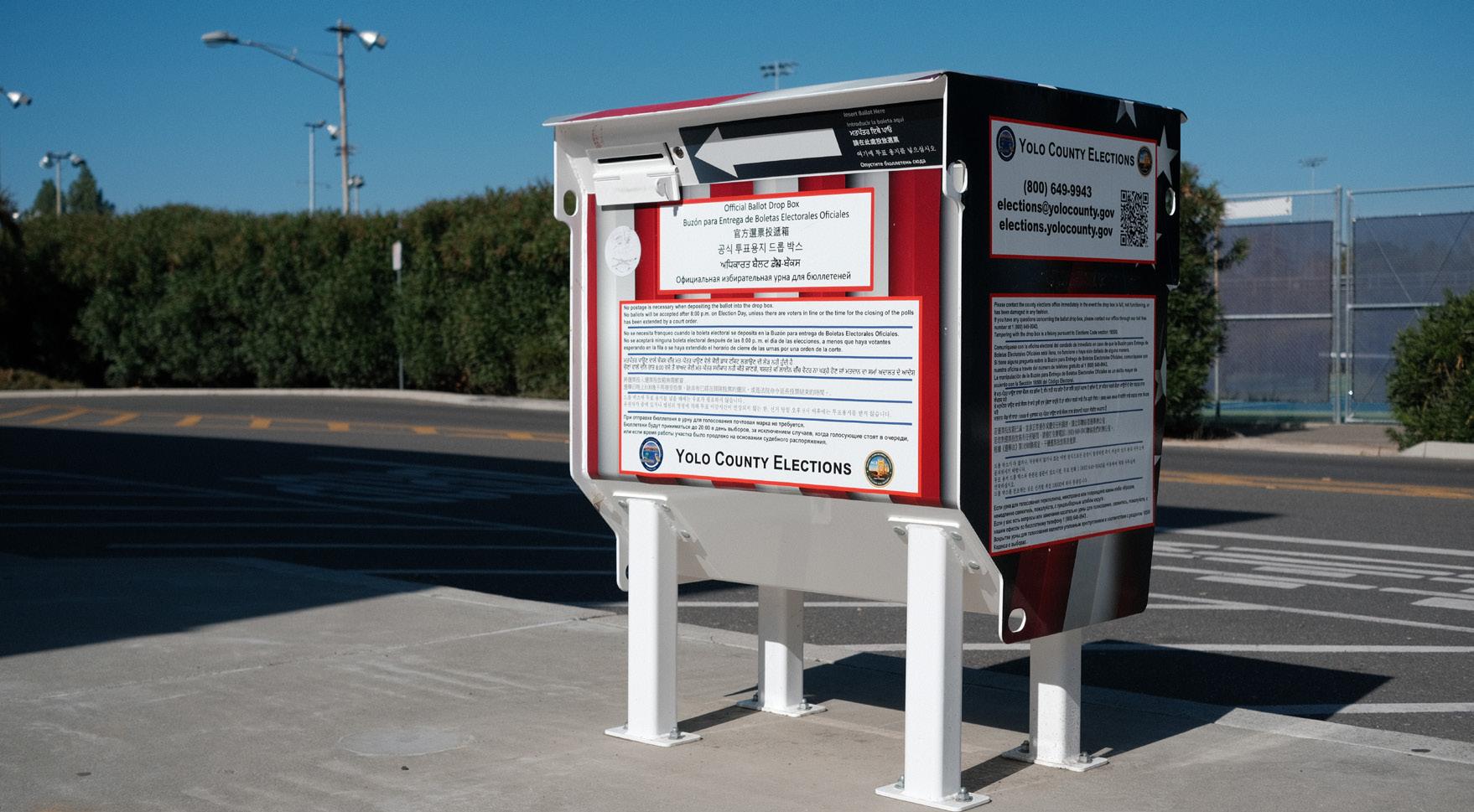
On Oct. 8, a mail theft incident was reported in Woodland, which impacted several Cluster Box Units (CBUs) ahead of the California Special Election.
CBUs, or “community mailboxes,” are de ned as “a centralized unit of individually locked compartments for the delivery and collection of mail,” according to the United States Postal Service (USPS).
Jesse Salinas, the Yolo County assessor, clerk, recorder and registrar of voters, shared how his o ce found out about the incident.
“We were contacted on a Wednesday afternoon [by USPS], that, earlier that morning, there was a break into a cluster mailbox,” Salinas said.
“ ere were a number of items — not just ballots — that were left in parts of the community and found in other locations.”
As soon as the Yolo County o ce found out, Salinas and his team began to work directly with the USPS to determine the impacted neighborhoods. rough this process, they were able to nd the number of registered voters who were impacted by the incident.
“Four CBUs, covering 61 addresses, were broken into, impacting approximately 135 registered voters; e impacted CBUs serve “800–
1120 Shiloh Ct.”; “237–268 Pearl Ct/ Way”; “236–261 Carlsbad Pl.”; and “300–341 Pinnacles Dr.,” according to the o cial Yolo County website. Authorities recovered 30 damaged ballots in partnership with local law enforcement, according to CBS News.
“A sprinkler probably got on [the discarded ballots], and they became wet and unusable,” Salinas said.
Salinas, through discussion with the local Postal Service in Woodland, explained why this might have been the case.
“When these break-ins happen, the ballot mail information is really just a residual of what [perpetrators] are really looking for,” Salinas said. “ ey’re looking for credit cards, other helpful information to do other shenanigans, for lack of a better term, [which is] why they typically discard the ballots.”
In response to the incident, Salinas and his team began to reach out to voters through their phone numbers, which were registered in their database. For the many others whom the o ce could not reach — around 105 voters — Salinas’ team created a new strategy.
“We drafted a letter that came from [our o ce], and we sent them new ballots, replacement ballots, while voiding the original ones,” Salinas said. “What was pretty impressive is that we did all of that within a 24hour period.”
Salinas expressed that such a quick turnaround was only possible with the relationships the Elections O ce had built with the Woodland Postal Service and the e ciency of the team.
“I have to thank the Postal Service — they contacted us right away, they were able to provide the addresses that were impacted, and then they went out and actually hand delivered the replacement ballots,” Salinas said. “I would like to thank my sta . I was out of town, but they contacted me, [and] we developed a game plan. ey then executed that response plan very quickly.”
Salinas also discussed how a quick and e cient response from the Yolo County Elections o ce was necessary, given that the mail ballot theft occurred so close to the date of the California Special Election for Proposition 50. He noted how, in addition to a partnership with local law enforcement and the postal service, the location of the incident had a huge impact in executing such a rapid response.
“We’re fortunate; we actually have one of the major regional distribution centers in the entire state, right here [in West Sacramento],” Salinas said. at allows for a quicker turnaround [for] us being able to get our materials through.”
He also mentioned that the size of the county aided in the quick turnaround.
offers — ranging from topics like “Museums and Politics” to “Economic Policy” and “Science and Federal Policy” — interns have found value in exploring the city of Washington D.C. itself.
“The museums are now shut down because the Smithsonians are government-funded, but we had this really great rst week where they had a grace period,” Villanueva said. “So, I’ve been to the National Museum of Natural History, the Asian Art Museum and the African American History and Culture Museum. It’s been nice to have the freedom to experience D.C. culture, because it really is di erent here.”
Hyman and Villanueva also both spoke to the quality of the program beyond their internships. e program has lled their time with speaker events and discussions about the federal government, with a talk led by President of the UC Board of Regents James B. Milliken.
“A lot of us are not in our o ces, but we’re living in D.C. and we’re fortunate
Similarly, working in D.C. amidst the government shutdown has changed Lavitoria’s perspective on where she may see herself working in the future.
“I really wanted to have a career in legislation and I think being here during the government shutdown has shown that it’s maybe an unpredictable career path,” Lavitoria said. “At the federal level, I’m reconsidering if I want to go into it, and state or local politics feels a bit more stable.”
Hyman also recognized the feeling of fear students may feel pursuing a career in the federal government, but encourages his peers to try their hand at it anyway.
“For anybody who’s reading the news right now, it’s intimidating,” Hyman said.
DCPROGRAM on 9
Sikh, MSA and other student organizations signed a joint statement denouncing the invitation of Dr. Sachin Nandha
BY KHADEEJAH KHAN campus@theaggie.org
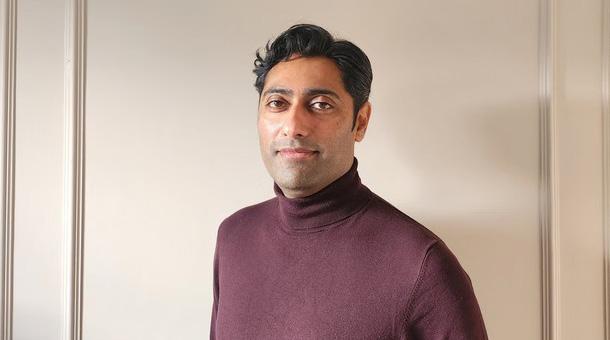
14 UC Davis Registered Student Organizations (RSOs) and student groups signed a joint statement condemning Hindu YUVA’s invitation of Sachin Nandha, a proponent of Hindu nationalist ideology, leading to the cancellation of the event that same day. Hindu YUVA, a religious student group, was scheduled to host Nandha at Hart Hall 1150 from 6:30 to 7:30 p.m. on Friday, Oct. 24, for a discussion on his book “Hedgewar: A De nitive Biography.” In their statement, the 14 groups expressed concern about Nandha’s social media activity, citing that he had reposted anti-Sikh and Islamophobic sentiment. Nandha, a scholar and the director of the International Centre for Sustainability in the United Kingdom, had spoken at several Hindu YUVA chapters across the country as part of his book tour. e book is a biography of Keshav Baliram Hedgewar, founder of the right-wing Hindu nationalist organization Rashtriya Swayamsevak Sangh (RSS). Organizations that signed the Oct. 24 statement included Punjabis at UC Davis, Sikh Collegiate Federation, Muslim Student Association (MSA), Students for Justice in Palestine and the ASUCD Executive O ce. e RSS has not only expressed admiration for fascist movements, such as Nazi Germany, but has also had a long history of promoting the oppression of religious minorities in
India, including Sikhs and Muslims,” the joint statement reads. “Due to the longstanding beliefs of the RSS, as well as Nandha’s own viewpoints, we strongly condemn this event.” Hindu YUVA said their event was meant for “open discussion” as part of Nandha’s book tour visiting chapters of the club across the country.
“The event, intended as a conversation and open discussion, was meant to reflect the speakers’ scholarship and his research-based understanding of Hedgewar’s role in decolonization and rebuilding social capital in Indian society,” Hindu YUVA said in a statement to e California Aggie. “We invite all organizations to engage in a respectful dialogue to broaden our understanding of each others’ perspectives, regardless of the extent to which they may di er.” For students like Harshpartap Dhillon, a second-year biological sciences student and ASUCD Senator, the promotion of RSS ideology on campus carries traumatic historical memories.

Miguel Craven, a UC Merced alum, aims to address housing inequity and increase access to education

Miguel Craven, a first-year master’s student, is the first UC Davis student regent-designate in 20 years. (Courtesy of Miguel Craven)
BY KHADEEJAH KHAN campus@theaggie.org
For the rst time in 20 years, a UC Davis student has been appointed to serve as a student regent-designate.
Miguel Craven, a rst-year energy systems master’s student, will serve alongside the UC Regents — the governing board of the University of California (UC) system, who hold full responsibility for creating university policy and managing the $53.5 billion annual budget, $190 billion in investments, three national labs and six health centers.
e student regent-designate, one of the two students appointed on the 26-member board, serves a two-year tenure, with their second year spent as a voting student regent. Student designates are selected from an application pool of undergraduate and graduate student applicants who are narrowed down to be interviewed by UC Student Association and several regents.
Once appointed by the UC Board of Regents, designates begin their tenure in July, shadowing the student regent throughout the academic year until they succeed them in being eligible to cast votes on the board. Adam Rosenthal was the previous student regent from UC Davis, serving from 2005 to 2006.
Craven’s journey in student advocacy started long before his recent appointment. Before matriculating from UC Merced this past spring, he served as a senator and president of the Associated Students of UC Merced (ASUCM). During his tenure, he led a campaign for a student union building on campus, successfully passing a
student fee referendum to fund a central space for campus resources and student connection.
“I loved working with students on my campus and helping them with organizing, whether that was their own advocacy e orts or if they wanted to have just club events that have that sense of community on campus,” Craven said. is is also not Craven’s rst experience at the regents board. While at ASUCM, he worked closely with the campus’ external a airs vice president and learned more about systemwide advocacy e orts, including regental advocacy. He served as a student observer to the Regents’ Committee on Finance and Capital Strategies for two years, bringing forth student concerns.
“Seeing it from behind the scenes made me really appreciate how much work goes into making the UC operate,” Craven said. “Being from California, I’ve seen the impact that the UC has on the whole state. I’m very proud to be Californian. I wanted to nd a way to not only get more involved within the UC but also give back to the state.” As a student designate, Craven now represents more than 280,000 undergraduate and graduate students across all 10 UC campuses. While primarily acting as a bridge between students and the board of regents, Craven also hopes to represent sta faculty and Californians as a whole. He is passionate about addressing housing inequity and access to education, aiming to nd “creative solutions” to issues faced by the UC community. e description for the role says that you are there to represent the entire state,” Craven said. “ e way
that I’ve been telling everybody I’m entering the role is around education. at’s how I want to implement it — guring out how I can be of best use by educating on both ends.”
Craven recognizes that advocacy, especially at the regents level, can be inaccessible for students who can’t attend the board’s meetings. He emphasized that his role is to be an accessible resource on campus for students who want to voice their concerns, which may otherwise be left unheard.
“I’m here to support you, and the same thing goes towards the regents,” Craven said. “I’m here to support them to get their [student’s] voices back into that conversation. I just want to educate the board: ‘Here’s what the reality is, here’s what students want. I’m not going to convince you to vote a certain way or not, but I will do whatever I can to make sure that you have all the information, all of the shared experiences, [of] what’s actually happening on the ground. And, from there, you can make your best educated opinion.’”
At a time when students, sta and faculty across the system are advocating in response to federal budget cuts, Craven looks towards the role of advocacy as an avenue for change.
He encourages students to reach out to him at mcraven3@ucmerced. edu or through his work number at (530) 219-6226.
“Everybody wants to improve the UC,” Craven said. “Everybody wants better for everyone. It’s just a matter of — [and] I think people have di erent approaches to it — guring out, okay, what’s the middle ground, and how can we help one another out?”
A portion of the funding originally allocated for the project will now be put toward the Yolo County welfare budget deficit
health treatment needs.
BY SONJA WOOLEY campus@theaggie.org
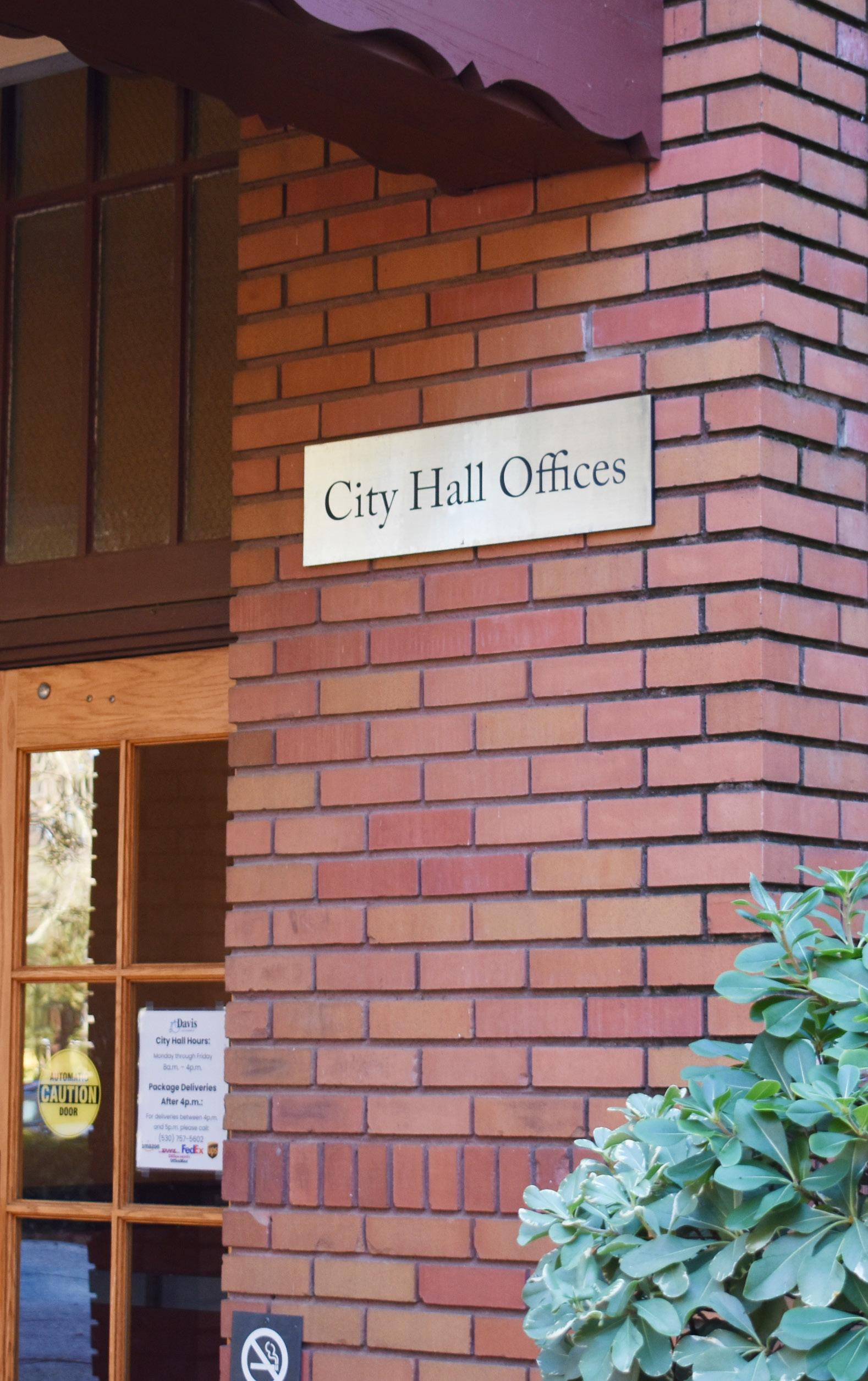
e Paci co Project, a ve-year joint e ort between the city of Davis and Yolo County, has been inde nitely postponed, as announced at the Oct. 15 Davis City Council meeting. is project originally aimed to rehabilitate and upgrade empty apartments at the South Davis Paci co Co-op into CalWORKs a ordable housing units. Yolo County anticipates being unable to use its $1.4 million in CalWORKs grant money for the Paci co Project, due to state-level changes in funding implementation rules.
e state of California, which allocates CalWORKs welfare funding to counties for families in need of housing, food, utilities, clothing and medical care, has required that the $1.4 million grant allocated to Yolo County for the Paci co Project be spent by the end of this calendar year. It has not yet been decided whether the Paci co Project grant money will go toward welfare projects in Davis or other cities in the county.
e Yolo County Chief Administrative O$cer Michael Webb spoke about the changes in the use of funding.
e timeline makes it e ectively impossible to accomplish [the Paci co Project],” Webb said. “We are in the process, now, of formulating what a pivot looks like
the Behavioral Health Services Act (BHSA), a part of Proposition 1 passed in 2024. Proposition 1 requires that counties spend 30% of their MHSA funds on a ordable housing initiatives, as opposed to other programs, shifting funding from preventative care to individuals with the most immediate and severe mental



within the network, so that we can get the money out the door in time.” Webb outlined another roadblock to the Paci co Project. e state is very adamant that a 20-year covenant needs to be put in place where the county would have to commit to housing CalWORKs families on the property for a full 20-year period minimum,” Webb said. “However, there is no funding guarantee of CalWORKs funds coming from the state. ere’s a lot of volatility in a number of revenue streams coming from the federal and state government [...] We received word that the state is reducing CalWORKs funding for roughly $42 million across the state for the current scal year; the Yolo County share of that is a $600,000 reduction. [...] So e ectively, the $1.4 million that we have from the CalWORKs grant may serve as a very important lifeline to our county budget in order to help shore up what is now a $600,000 hole.” Monica Morales, the director of Yolo County Health and Services, also provided a report to the Davis City Council. Her department is currently experiencing a $4 million de
e county and city leaders discussed how local mental health providers, like the Davis School District could apply for California Advancing and Innovating Medi-Cal (CalAIM) funding to ll in the gaps left by the MHSA de cit. CalAIM is a program passed in 2022, meant to
help high risk Medi-Cal bene ciaries navigate the complex system of welfare programs and provide preventative healthcare and housing services. Updates on these topics will be discussed at the Oct. 21 Davis City Council meeting and the Oct. 20 Davis Social Services Commission meeting.





in their California Mental Health Services Act (MHSA) funding. e MHSA was approved by



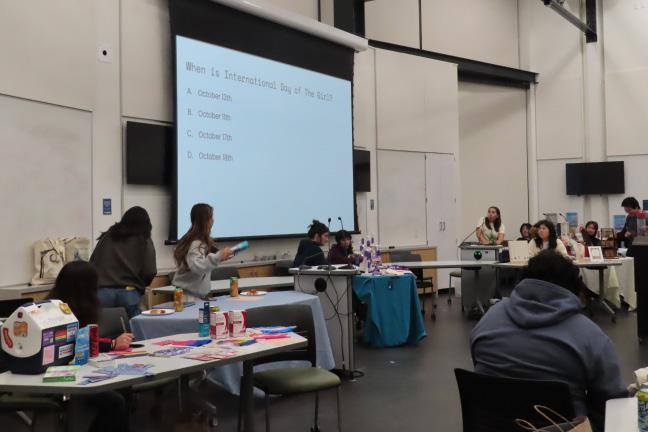
The event, held Oct. 17, helped celebrate the International Day of the Girl Child
BY RACHEL TRAN campus@theaggie.org
and Sexuality Commission (GASC) and the Sexual Assault Awareness Advocacy Committee (SAAAC) — recently held the debut Femininomenon event on Oct. 17. e event hosted resource booths for women of all backgrounds in celebration of the Oct. 11 International Day of the Girl Child.
GASC Chairperson Vanessa Sandoval, a third-year environmental science and management major, and SAAAC Chairperson Emily Setiobudi, a fourth-year clinical nutrition major, were the two leading organizers of the event.
“We wanted to have an event that celebrates girlhood [and] womanhood, but also does so in a way that is not for just straight, white cis women, but also in an intersectional way, where we are able to celebrate those who are queer, trans and of di$erent socioeconomic statuses,” Sandoval said. “I think this event brings the community of Davis together in that it celebrates what makes us ‘us.’” International Day of the Girl is a day to focus attention on the challenges girls face, and to empower and promote them in the ful#llment of their human rights, according to the United Nations.
e event featured several resource booths, giveaways and trivia competitions throughout the night. Highlighted booths included the Prytanean Women Honor’s Society,
Center for Advocacy Resources and Education (CARE), e Pantry and women’s business conference Own It.
“Own It, with [organizers] Davis Women in Business, really strives to empower women in going beyond what they can do,” Own It External
A$airs Director Arianna Kim, a thirdyear managerial economics major, said.
“We invite speakers who have endured a lot and can share their experiences, and I think it is important that we are able to do this, speci#cally for our club members — women or non-binary individuals — but for all people as well. We had a lot of men come to support the speakers. I’ve talked to some of them personally, and they feel like they take away as much as they can from those conferences.”
Some two dozen people attended the event, held in Walker Hall; among them was Cristina Anteles, a fourthyear Spanish and Chicano studies double major.
“It’s not really [often that] you see events on campus that are especially girl-oriented,” Anteles said. “ e Care Booth and Pantry Booth were really cool; e Pantry speci#cally because they had Clear Blue Pregnancy tests, which are de#nitely very pricey outside of Davis. It’s honestly really cool that not only pregnancy tests but even Plan Bs are so accessible here.”
While Femininomenon may be over, students can still access sexual wellness and menstrual care products on campus.
FEMINOMENON on 9
The discussion came after the table saw their 14th unanimously passed bill of the school year
BY AALIYAH ESPAÑOL-RIVAS campus@theaggie.org
At the Oct. 23 ASUCD Senate meeting, several top student government o cials raised concerns over what they described as a “lack of care and attentiveness” from the Senate table when discussing and passing legislation.
e dialogue came after the table unanimously passed all #ve of the Senate Bills (SB) considered for the week; it marked the fourth-straight meeting where all SBs were passed unanimously, with minimal discussion over their merits and implications for the larger Association.
ASUCD President Amrita Julka called for more interaction from the 14 voting members of the Senate with the legislation presented to them.
“I want to remind the table that we should probably be engaging with the legislation that is seen by this table a little bit more,” Julka said. “I know that there are times when the bills we see are not going to be super controversial, and so you may not feel a need to scrutinize it or be more critical, but always review legislation before you come in. Ask any questions you have because it helps with open discussion.”
Internal Vice President Dhilena Wickramasinghe echoed Julka’s comments, also calling for more attention to presentations held during meetings and to con#rmees.
“People are taking their time out of their day to come to Senate,” Wickramasinghe said. “I don’t want to say this in a way where it’s like ‘you guys aren’t doing enough’ or whatever, but it’s just something to keep in mind. I think it can be a little bit disheartening when people are giving presentations or coming here to be con#rmed, and people are just on their laptops, not even engaging or making eye contact or asking questions.”
ASUCD’s chief #nancial o cer, Controller Trinity Chow, also admonished the table for what she portrayed as a general lack of interest.
“For some of these people that are coming in for con#rmations, it’s their #rst impression of ASUCD and we give them half-assed questions and maybe two or three seconds of eye contact,” Chow said. “Believe it or
not, not a lot of people like us. It’s not our responsibility to be liked — it’s actually our responsibility to serve.”
In past years, Senate discussions around legislation — especially bills that called for spending — were characterized by thorough reviews and dialogue within the table. While not uncommon for individual bills and legislation to be passed unanimously and without contest, it is rare for the table to go for several weeks straight without any substantial discussion over legislative matters; all 14 Senate Bills considered this academic year have passed unanimously.
Members of the table did not respond to Julka, Wickramasinghe and Chow’s comments at the meeting.
When asked for comment on the conduct of the table at a later date, Senate Pro Tempore Luis Garcia — the table’s o cial representative — asserted that his fellow senators were still adjusting to the legislative process.
“I do want to emphasize that out of all the senators on the table, this past Senate meeting majority are still newer to the Senate and #nding their best method to ask questions and engage with the public,” Garcia said.
“While I agree with the comments about being more engaged, I know that they [the Senate] are all actively engaged behind the scenes as well, which I believe has been very bene#cial.”
Other matters e table also con#rmed several individuals into ASUCD positions, including Katherine Zhang, a secondyear economics and political science double major, as deputy head justice of the Judicial Council, and Emily Contreras, a third-year political science and Chicano studies double major, as vice chair of the Ethnic and Cultural A$airs Commission.
During the meeting’s public comment section, multiple student supporters of the University Professional and Technical Employees-Communications Workers of America (UPTE-CWA) 9119 and American Federation of State, County and Municipal Employees (AFSCME) Local 3299 spoke in favor of Senate Resolution
(SR) #4.
Authored by UPTE Intern Organizer Charl Matteson, a fourthyear psychology and political science double major, the resolution was written “to endorse the contract campaigns of UPTE-CWA 9119 and AFSCME 3299, and to call on the University of California to meet their demands.”
“I want to thank President Julka, Senator [Luis] Garcia and [External A$airs Commission Chair Simrit] Singh for all your help,” Matteson said. “Everyone I’ve interacted with at ASUCD has been wonderful and amazing, and everything that I think can be said, has been said, so thank you for hearing everybody.”
AFSCME Student Representative Isabel Soledad, a third-year international relations major, also spoke in support of SR#4, speci#cally citing the bargaining e$orts for housing assistance for University of California (UC) workers.
“ e UC hasn’t agreed to a very important thing we want to bargain for, which is $25,000 in housing assistance,” Soledad said. “ ey have a program for the UC [executives] and the chancellors, and they give them interest mortgage loans that average around $900,000 to $1 million. Yet, their frontline workers are commuting around an hour or so every day to clock into their shifts. Sometimes they have to sleep over in their car.” e resolution would later be passed unanimously. e Senate also heard quarterly reports from the ASUCD Co$ee House (CoHo) and the Innovation and Research Lab (IRL).
Darin Schluep, the director of the UC Davis Associated Students Dining Service, highlighted recent accomplishments and challenges for the CoHo. Sales are up 20.8% from last year, and the CoHo has seen a 3% increase in their transaction total, according to Schluep. However, as construction within and around the site continues, the CoHo has noted utility shutdowns and restricted access in various locations.
John Carraher, a #fth-year computer science and engineering major, presented several projects that the IRL — ASUCD’s in-house software development and research unit — is working on.
SENATE4FQ25 on 9
UC faculty, alumnus won five Nobel Prizes despite uncertainty due to research funding cuts
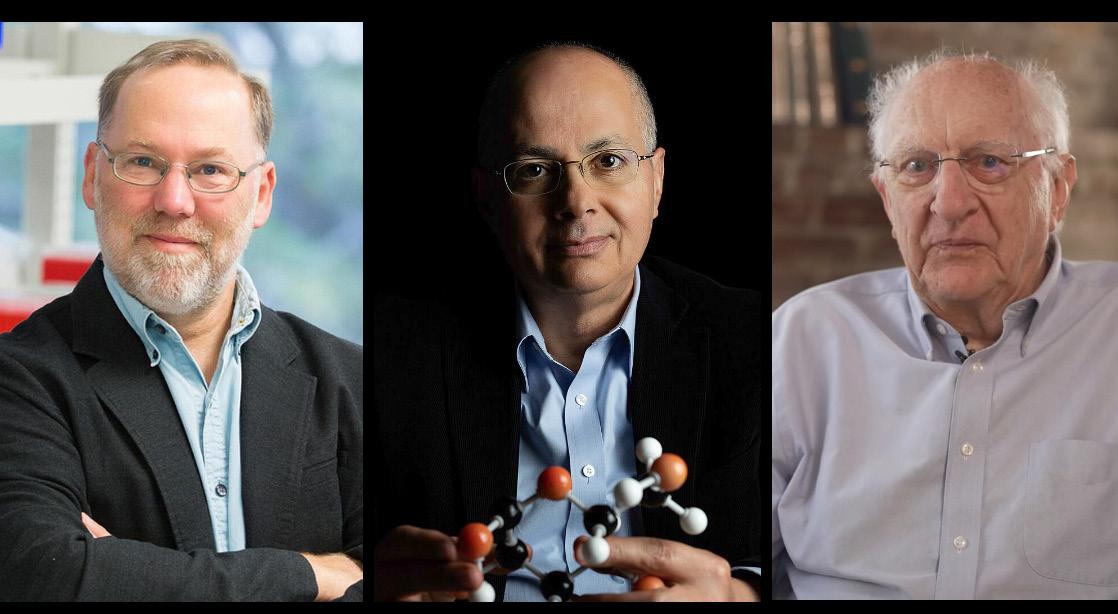
e month of October brought recognition to the University of California (UC) system, with four UC faculty and one UC alumnus earning Nobel Prizes across three disciplines. is marks a record for the most Nobel awards received by a single university system in a singular year.
nov. 13th 10am - 2pm

Immunologist Frederick Ramsdell, a UC San Diego and UC Los Angeles alumnus, was awarded the Nobel Prize in Physiology or Medicine. He was awarded alongside Mary Brunkow of the Institute for Systems Biology in Seattle and Shimon Sakaguchi of Osaka University for “their discoveries concerning peripheral immune tolerance,” according to the Nobel Foundation.
Emeritus Professors John Clarke and John Marinis, of UC Berkeley and UC Santa Barbara, respectively, and Professor Michel Devoret, also of UC Santa Barbara, were awarded the Nobel Prize in Physics “for the discovery of macroscopic quantum mechanical tunneling in energy quantisation in an electrical circuit.”
Lastly, chemist Omar Yaghi of UC Berkeley was awarded the Nobel Prize in Chemistry “for the development of metal-organic frameworks.” He shares the award with Richard Robson of the University of Melbourne and Susumu Kitagawa of Kyoto University. In a press release, UC President James B. Millikin celebrated the awardees and highlighted the signi#cance of research in the scienti#c community.
ese remarkable achievements by #ve UC-a liated Nobel Prize winners re%ect the very best of the world-changing teaching, research, and public service happening across
our University,” Milliken said in the press release. “Our nation and world will be better o$ because of these discoveries. More communities will have clean drinking water, more people will be protected from cyberattacks, and more patients will have access to better treatments for diseases like arthritis and multiple sclerosis.” e prizes are administered annually by the Nobel Foundation and are generally considered the highest and most prestigious recognition of an individual’s work in the #elds they are given in: physics, chemistry, physiology or medicine, literature, peace and economic sciences. While the Nobel Peace Prize is given in Norway, the awards will be presented to recipients in Sweden on Dec. 10 — on Alfred Nobel’s death anniversary. ese awards come at a turbulent time for the UC system and American academia as whole, as proposed federal budget cuts and freezes to research funding threaten to postpone or end the work done by faculty and students at academic institutions across the nation.
“Each of these breakthroughs was made possible through decades of federal investment in university research — the same funding that has long fueled American innovation, economic growth, and scienti#c leadership,” Milliken said.
“Today, that support is at risk as federal research funds are frozen or cut, and as the[Trump] administration’s proposed budget reductions threaten to slow the very discoveries that keep the United States at the forefront of global leadership.”
e sentiment was echoed by Nobel Prize Winner John Clarke in a video produced by the UC on the recent recognition.
Halloween costumes as a space for positive escape
BY VIOLET ZANZOT vmzanzotl@ucdavis.edu
Lately, I’ve been thinking a lot. One might even say I’ve been overthinking: If I could escape this perpetual noise, if I could cease the racing thoughts, what would I be? Who would I be? How would I transform?
My character could wear high heels, angel wings, a witches hat — she could be anything and everything. at is the power of costume. My theory about this magic is rooted in something real.
For one day every year, our society has decided that it is socially acceptable for a boyfriend and girlfriend to be Brennan Hu and Dale Doback from the “Step Brothers,” for Heidi Klum to be the ogress Princess Fiona or even a UC Davis student (me, in my rst year) to be Captain Underpants. Of course, we can be anything we want on any day (or that’s at least what some optimistic mothers may say), but there’s something special about Halloween. Our only limits are our creativity and our own inhibitions.
is one day — dedicated to the outrageous, the gory, the fanciful, the whimsical, the horrifying, the beautiful, the royal, the dainty, the bold, bashful, sleepy, dopey and everything in between — is a gift we should treasure: just like the pirate you dressed up as for your very rst time trick-or-treating treasured their precious riches.
Annually, Halloween provides a unique chance for you to become something entirely di erent from your everyday persona and explore a new part of yourself by donning elaborate attire. In childhood, the appeal of the holiday lies in the candy hunt kids engage in before the classic, and almost war-like, candy exchange. Once you graduate from the age where the best
part of the night is swapping Hershey’s bars for Sour Patch (or vice versa, if you’re anything like me), the excitement centers more around the chance to become something new; even if just for one night. In this way, a costume is an avenue for transformation.
Anthropologist Hilda Kuper explored the connection between costume and identity. She explains how costumes have historically been deliberately used to indicate status and identity. She broadly connects social changes over time with changes in style and fashion. e narrative she substantiates explains a connection between dress and attitude, behavior, public perception and perception of the self — all of which come together to demonstrate why clothing is symbolic of identity. Kuper writes: “given the critical importance of clothing as an expression of an individual’s social identities, origins, commitments, and allegiances, it is no wonder that persons should view their clothing almost as an extension of themselves.”
Clothes create qualities. ey build personas. ey wear us as much as we wear them — they symbolically tell the world the same story we tell ourselves. What we wear changes how we think about ourselves and how others think about us. ese phenomena seem to be correlated and causative of each other: wearing high heels might make a person taller, but more importantly, high heels have the ability to make a person stand tall — to be con dent as they strut every step as if on a runway. e deep importance of costuming has been lost in collegiate culture. ere’s an expectation that girls need to use Halloween costumes as a time to cater to the male gaze, and in an attempt to ful ll this standard, we start to miss the point of dressing up
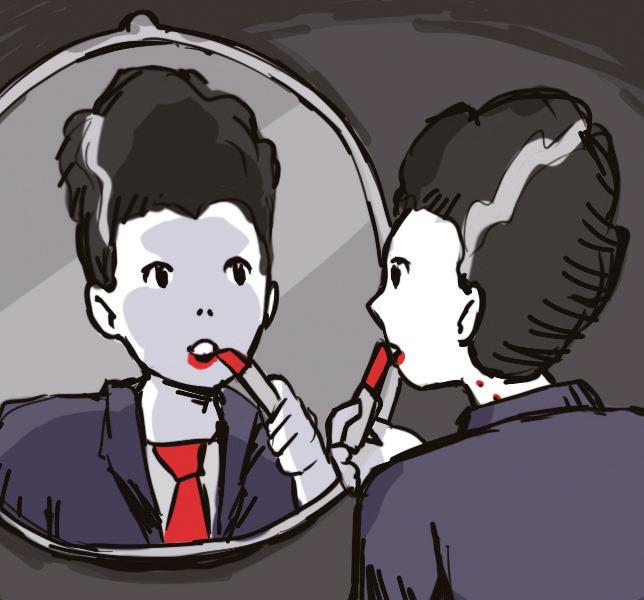
in the rst place. It’s not that there’s anything wrong with wanting to look attractive, but Halloween gives us an opportunity to adopt a character that we don’t get to embody everyday — to really be creative with our dress and tell a unique story.
The sweet taste of victory, the bitter bite of deception

BY NEVAEH KARRAKER nakarraker@ucdavis.edu
Ballots for Proposition 50 are ooding mailboxes, and, for many rst-years at UC Davis, it’s their rst time voting in California. With the disappointment expressed by many in response to the actions of the Donald Trump administration, the future of our democracy seems more terrifying than the monsters parading the streets on Halloween.
If passed, Proposition 50 will give Democrats an upper hand for the next presidential election, according to a brief summary provided by the California Secretary of State Shirley Weber. It’s a direct response from the Democrats to Texas’ mid-decade redistricting for more Republican member seats.
Now, before checking the “yes” box right away and cashing in our candy corn, let’s think about this further: No policy should be voted on unless we understand the whole picture.
Ok, so this proposition aims to give the Democratic party an advantage, but how exactly?
California has been a known “blue” state — the last time it voted “red” in a presidential election was in 1988 for George W. Bush. So, it seems like California is most likely safe in terms of political preference in the electoral college, especially considering that 43 out of 52 spots in the California House of Representatives are held by Democrats and both California Senate members belong to the Democratic Party. So, if the map is already saturated with blue, why redraw it? Is it an e ort to preserve a spell of democratic dominance, or something more strategic?
California Citizens Redistricting Commission (CCRC) is an independent, nonpartisan body of state legislature founded in 2008 that draws district lines. Since the passing of Proposition 20 in 2010, voters approved
14 members to jurisdict the expansion of this process to include congressional district lines as well as State Assembly district lines. Proposition 50 temporarily bypasses the process set up by Prop. 20 to allow the state of California (rather than the CRCC) to have authority to redraw congressional districts, in the same way that Texas’ state government has strategically redrawn their districts. If approved, Assembly Bill 604 would outline these boundaries.
These new lines that would be temporarily adopted under Prop. 50 were drawn by veteran Democratic redistricting expert Paul Mitchell, along with similarly quali ed consultants, who drew reference from California’s Democratic congressional delegation in their map.
At rst glance, it sounds like a good political move — but, under the surface, redrawing boundaries sucks the life out of public autonomy. is proposition moves redistricting power from the hands of the people (via the independent CRCC) and gives it to state government authorities — so even though the goal is to bolster democratic representation in Washington D.C., it’s important to be aware of the caveat behind it; it transfers autonomy from the people to the state. Partisan gerrymandering is no new technique, yet it’s the equivalent of carving a pretty design into a pumpkin only to nd it rotten on the inside; it’s a trick that undermines democracy and compromises votes. is segways into some spooky insights about Prop. 50. e Los Angeles Times recently published a poll detailing how Californians believe Governor Gavin Newsom is more focused on his presidential ambitions than the issues haunting his state. He’s rebranded himself as an “anti-Trump” activist, dueling with Trump on X and other platforms, calling him a “loser” and slandering him in almost every public
announcement.
is feud seems more like middle school bickering than a powerful political movement, and, even worse, Californians are eating it up like candy.
The far right has experienced extreme criticism through their glori cation of Trump and his policies, especially with the rise of questionable Christian ideals — establishing faithdriven entities while he himself does not believe — and immature, arti cial intelligence-generated videos on social media.
However, favoring a policy or person simply because they are antithis or anti-that isn’t a good way to make a well-informed or wise decision; it’s exactly how political control is maintained — through theatrics and fake advertisement. Proposition 50 may be empowering the Democratic party, but it’s also doing much more than that. Newsom has expressed his interest in being president and Proposition 50 may just be a prepresidential campaign for him (or for any other democratic candidate).
By utilizing his platform to showcase Trump’s aws, he swoops in to “save” California — it’s an excellent strategy to secure the votes he needs. Even if Newsom doesn’t run in 2028, Congress will be granted more leniency in which way the election leans — the exact thing we’re trying to avoid.
So, before you drop your ballot in the cauldron, remember there’s always some politician in a costume that might have hidden something nefarious in the candy they’re o ering you: ey could just be taking advantage of your hunger as you jeopardize your own rights as a voter.
Disclaimer: e views and opinions expressed by individual columnists belong to the columnists alone and do not necessarily indicate the views and opinions held by e California Aggie.
is is why I think the goal of Halloween should be to become something we can’t be in our everyday lives. Be hot because that’s how you always are, but dress in costume to take on a new identity that serves and empowers
you; not anybody else.
Disclaimer: e views and opinions expressed by individual columnists belong to the columnists alone and do not necessarily indicate the views and opinions held by e California Aggie.
The Internet is quick to extract political implications — but how useful is this commentary?
BY GEETIKA MAHAJAN giamahajan@ucdavis.edu
ere are more than enough reasons for the general public to dislike any celebrity. Like the rest of us, they are awed people. But an endless well of money, power and attention has a tendency to amplify a universal, intrinsic predisposition to self-centeredness and narcissism. It’s hard to like someone when it feels like their whole life is being shoved into your face for the sole purpose of preserving their popularity, success and wealth.
That being said, there’s been a (very annoying) trend in recent discussions about celebrities, both on the Internet and outside of it. People seem to con ate their opinions of public gures with their own moral superiority; looking for reasons to justify their prejudice as something beyond simply not liking someone’s public persona.
Unfortunately for everybody on the hate train for Taylor Swift, Sabrina Carpenter or Charli xcx (or whichever other famous woman the Internet has unanimously agreed that they’ve had enough of), collective acceptance of a sentiment doesn’t make it a fact.
Saying you dislike Taylor Swift because she’s a billionaire isn’t a valid critique if you’re not saying anything about Rihanna or Beyonce or Jay-Z, all three of which are Swift’s peers net-worth wise. Hating on Sabrina Carpenter because she “caters to the male gaze” is like criticizing Ford for catering to people who like to go o -roading or saying that Le Creuset promotes tradwifery. Like any other venture that generates revenue, celebrities are a brand. Criticizing them for how they present themselves is irrelevant; they do it because there’s a market that buys into this persona. Taylor Swift’s net worth or Sabrina Carpenter’s album cover (both of which have been viciously torn apart by people online) aren’t re ections of them as individuals; they are consequences of
how successful they are in catering to the demands of their audience. e self-righteous outrage over Carpenter’s “Man’s Best Friend” album cover being anti-feminist or how Swift isn’t utilizing her enormous wealth for one thing or another are symptoms of the characters they play to maintain their audience. Political critiques of celebrities are just as imsy as those personas themselves — when you criticize a popstar you aren’t placing blame on a real person, you’re essentially chastising a facade. Yet, there is a sociopolitical aspect to these hate trains. Accusing a celebrity of being the embodiment of capitalism or misogyny is less indicative of personal morality and more representative of how susceptible you are to mob mentality — you’re just jumping on the bandwagon. At the end of the day, expecting popstars to double time as political commentators is a very speci c kind of brainrot that comes from spending all your time in pseudo-intellectual spaces online and zero time consuming or reading anything of actual intellect or substance. As long as Chris Brown is still selling out arenas, your criticisms of female celebrities are hollow. is is not to say that celebrities need protection or require defending, but there are more useful and more valid political critiques to make when you criticize a larger industry or trend. If you want to hate on a singular person because you’ve cherry-picked facts about their life to t a personal narrative about them, that’s ne — but keep your discourse on stan Twitter. Behaving as if criticisms of an album cover or lyric does the same work as criticizing a politician or bill is ultimately unproductive. Pop culture can be political, but it isn’t praxis — if you want to talk about politics, read the news, not your Twitter feed.
Disclaimer: e views and opinions expressed by individual columnists belong to the columnists alone and do not necessarily indicate the views and opinions held by e California Aggie.
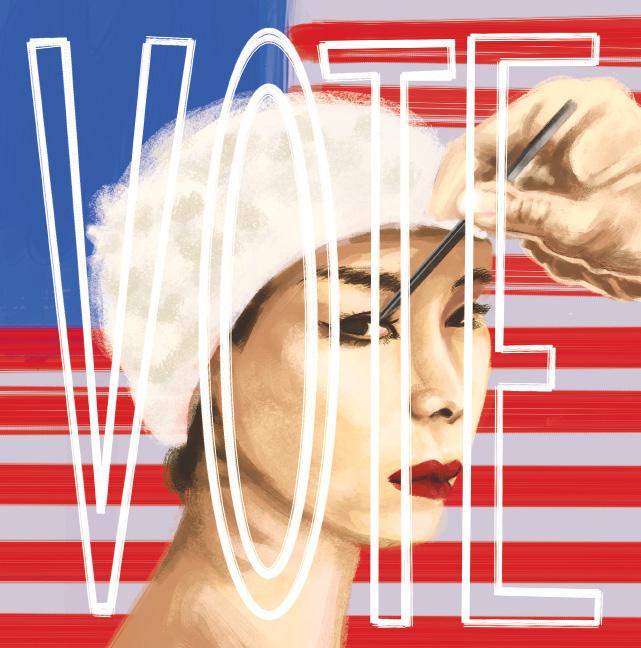
From cozy nights in to whimsical adventures, there’s no limit to what you can do this season
Maya Kornyeyeva, Managing Editor: Impossible Acres Animal Farm and Pumpkin Patch
Now that it’s o cially fall (as of one month ago), it’s — at long last — time for the Editorial Board’s O cial Guide to Fall. #ere’s a plethora of generic fall activities to do this season, like apple picking, pumpkin carving, leaf-pile jumping and more; we’re here to promote said generic fall activities. Whether you want to enjoy the changing leaves and cooler weather, cozy up with a mug of hot chocolate or immerse yourself in spooky Halloween adventures, there is no wrong way to spend your time.
Alyssa Crevoiserat, Editor-inChief: Spooky & Autumnal Books
October may be the season of Halloween, but it is also the season of all things haunting, spooky and cozy. While I could recommend another festive outing, I’m here to represent those who perpetually haunt the hallways indoors and listen to witchy playlists year-round. #ere is one trick both tried and true for avoiding midterm deadlines and achieving inner whimsy: escapism. If you’re looking for a way to celebrate the holiday solo, look no further than books with dark settings, mysterious twists and eerie creatures. Here are a few book recommendations to get you started: “Midnight at the Darkest Hour” by Ashley Winstead for a dark mystery with a religious cult backdrop and vampiric lore; “#e Knight and the Moth” by Rachel Gillig for a gothic fantasy with gargoyles and seers; and “A Far Wilder Magic” by Allison Saft for romantic fantasy with alchemists and mythical creatures. After securing your pick at #e Avid Reader, light a candle that smells like brown sugar (or something more sinister like a haunted house) and begin!
On a windy fall day not so long ago, I visited Impossible Acres — an animal farm and pumpkin patch nestled on the intersection of Rd. 98 and W Covell Blvd. in West Davis. #e weather was quintessential of the season: a bit dreary, with a biting cold that necessitated a cozy annel, fuzzy socks and a scarf.
As I pulled into the parking lot, I was greeted with plump pumpkins, red and orange leaves scattering in the wind and families (and a fair amount of college students) forming a line at the entrance to the patch. Having made my way through the line and gotten my stamp of approval (not to mention handing over $4 — a price well worth the sheer amount of cuteness I was about to experience), I made my way toward the sound of bleating, clucks and excited chatter.
In my 21 years of life, I can’t remember a time when I was met with such a wide range of adorable, u$y animals. #ere were baby (and not so baby) goats, sheep named #yme and Rosemary, a baby cow and a slightly grumpy donkey, tiny kittens, bunnies, piglets, ducklings and chicks — not to mention a golden-coated ram and two miniature horses. Holding a tiny bunny, staring out at the expanse of farmland that borders Davis and catching a golden ray of sunshine peeking through the clouds was truly an ethereal, heart-warming experience; one that took my mind o$ of midterm preparations and assignments just enough to catch my breath and center myself.
Fall, for many students, is a treacherous time of navigating backto-school schedules, busy days and full workloads. It is also a season of whimsy and community — my visit to Impossible Acres reminded me to take that time to seek out the little
adventures that would uplift my heart and mind. Whether it is baking your favorite spiced pastries, cozying in for a movie or stepping on crunchy, multi-colored leaves, fall — in Davis especially — has so much to o$er.
Vince Basada, Campus News Editor: Pumpkin Spice up Your Life
It was George Eliot who wrote: “Delicious autumn! My very soul is wedded to it, and if I were a bird I would y about the earth seeking the successive autumns.” Indeed, while Eliot was not referring to the food of the season, one should not ignore the avors and confections that come with it. Pumpkin spice, while sometimes overdone, is a top-tier temporary o$ering and well and widely loved for a reason. I fear the pumpkin spice latte has a hold on me; it is the perfect drink to transition from frosty summer concoctions to the warm drinks of winter.

Editorial Board
ALYSSA CREVOISERAT Editor-in-Chief
MAYA KORNYEYEVA Managing Editor
VINCE BASADA Campus News Editor
JORDAN POLTORAK City News Editor
MOLLY THOMPSON Opinion Editor
ZOEY MORTAZAVI Features Editor
SAVANNAH ANNO Arts & Culture Editor
MEGAN JOSEPH Sports Editor
KATIE HELLMAN Science & Tech Editor Managing Staf
JENNA LEE Photo Director
NOELLE ESCALANTE Layout Director
SAVANNAH BURGER Design Director
SAM RUIZ New Media Manager
KAYLIE HUANG Social Media Manager
JULIAN MONTANA Website Manager
JULIA CROSSAN Distribution & Outreach Director
YILAN LI Translation Director
CARMEN RODRIGUEZ-ZARATE Translation Director
JENNY DYE Copy Chief
ALYSSA PULIDO Copy Chief
LAURIE PEDERSON Business Development Manager
Distrust of cooking oils has become a rallying cry for conservatives
BY MILES BARRY mabarry@ucdavis.edu
In January 2025, a large group of wellness in uencers, biohackers and proponents of alternative medicine descended on the Kennedy Center to celebrate Donald Trump’s election with a “seed oil-free” dinner at the Make America Healthy Again (MAHA) Inaugural Ball.
In the same month, Western restaurant chains True Food Kitchen and Sweetgreen debuted “new proteinpacked, seed oil-free menu items to kick o$ the new year.” Even the midwest’s Steak n’ Shake have declared their transition away from seed oils, using beef tallow or air fryers to cook their fries instead.
Here in Davis, Reddit debates have raged about Segundo Dining Hall’s use of seed oils, and the Instagram account for UC Davis’ immensely popular Nutrition 010 class has had to clarify that seed oils have healthy properties, contrary to recent popular belief. Anonymous posters on r/Sacramento inquired about “seed oil free restaurants” in the area, and UC Davis Assistant
Professor Selina Wang was even interviewed by #e Washington Post in March to debunk myths surrounding these controversial cooking oils. Experts seem to agree that seed oils are safe. But, if you’re like me — concerned about your health to a degree that could be considered neurotic — you’ll likely want to examine these claims to satisfy the little voice in the back of your mind wondering: Could the experts be wrong?
A quick scroll through several online alternative health forums reveals that their most vocal members belong to the self-proclaimed “alt-right.” Accounts with names like “Brutal American Adolf” post thoughtful photos of their (admittedly delicious-looking) breakfast and advocate for daily use of aspirin to make your eyes more blue. It’s a strange world of health questions — “your thoughts on alcohol-based mouthwash?” followed by streams of hate-!lled hashtags (#MassDeportations #Now).
Between these blatantly racist posts, people on these forums argue back and forth about a plethora of crazy supplements — from methylene blue
dye to desiccated thyroid extract. While they frequently disagree, everyone is united against seed oils. I’d argue that, for many people, this constant seed oil fearmongering is the !rst step in a sequence that begins with mainstream health podcasts and ends at cesspool groups !lled with anti-vaccine neoNazis. In other words, anti-seed oil messaging has become a method of right-wing radicalization.
At least two guests on “#e Joe Rogan Experience,” the most popular podcast in the United States, have made claims about the harms of seed oils. Andrew Huberman, a podcaster and neuroscientist who boasts 7 million subscribers on YouTube, also urges caution about seed oils. Rogan and Huberman are politically moderate, but their distrust of these cooking oils can plant seeds of doubt: “If the experts — Big Pharma, Big Ag and academia — are secretly poisoning Americans in pursuit of pro!t, what else are they hiding?” #is question will inevitably lead some listeners further down the rabbit hole. It’s all too easy to begin researching alternative medicine practitioners who
posts that lack context and evidence.
make the same claims about seed oils — and also claim that COVID-19 vaccines are evil. #e most popular of these !gures is Ray Peat, a University of Oregon Ph.D. holder who wrote proli!cally about alternative nutrition practices until his death in 2022. His dietary recommendations are easy to follow: He recommends avoiding seed oils, co$ee with sugar, ice cream and daily consumption of carrot salads. Dr. Peat was one of the !rst nutritionists to demonize seed oils and he is beloved in these forums; people tag photos of their meals that align with his recommendations “#peaty.” Peat was also a conspiracy theorist. He believed that COVID-19 was nothing more than “a standard cold and u season,” and that the “data doesn’t show any excess deaths.” The connection between seed oils and Peat-aligned, right-wing, conspiratorial views may seem ba ing at !rst. “Alternative nutrition” tends to conjure images of granola-loving, organic-only liberal hippies, but the link reveals itself when these novel diets and extreme supplement regimens become extensions of eugenic logic.

In the early 20th century, prominent eugenicists were obsessed with nutrition. John Harvey Kellogg, co-founder of the Kellogg’s empire, invented corn akes as part of his campaign against what he called “race degeneracy.” For these men, dietary purity was inseparable from racial purity. Likewise, contemporary Peat-inspired wellness culture frames human betterment as a kind of puri!cation — cleansing the body of toxins and cleansing the nation of “undesirables.” SEEDOILS on 9
In an online political environment, farmers markets provide an opportunity for in-person discussion BY SAGE KAMOCSAY skamocsay@ucdavis.edu
Picture this: it’s a cheery Saturday morning and you’re strolling through the Davis Farmers Market with your friends for the !rst time. You’re checking out each of the vendors — some of them are selling produce and herbs, others are displaying delicious baked goods and a few are showcasing their handmade art. As you make your way to the back, you !nd the types of stands begin to change. Instead of local vegetable peddlers, you see battling political demonstrators. A “Yes on 50” tent is to your left, a “No on 50” tent stands to your right. Other stands come into view as well — there’s the Democratic Socialists of America; a group raising awareness for the Israeli hostages; a spokesperson from the Real Organic Project, and of course, the ever-present at earth advocate tucked away in the back. All of them are vying for your support and attention, one way or another. You have reached the political corner of the Davis Farmers Market: It should not be overlooked.
In the era of the Internet, exchanging ideas face-to-face is becoming increasingly rare. #e slow death of in-person discourse is a sad sight to behold, and with it comes the demise of intercommunity political debate. #is loss is dire, considering this kind of discussion is exactly what is necessary to prevent echo chambers. At the Davis Farmers Market, a broad spectrum of
political thought is showcased and advocated for; it’s a sampler platter of the ideas of the population. Here, there is a notion of searching for a realistic solution. Online, on the other hand, insular communities block out any undesirable ideas, however reasonable they may be. Instead, increasingly extreme viewpoints are touted as gospel. Caricatures of political ideologies become more mainstream as certain communities gain prominence — look no further than the rise of Nazi sentiment after Elon Musk’s X takeover. In other words, discussing politics online is an avenue for ensuring one’s conversations are with those who already agree with them. Internet forums give people the opportunity to interact without any opposition and only with those who validate and reassure the beliefs they already hold, whereas talking in person is a way to have true discourse.
Political communities like the Davis Farmers Market also have a profound e$ect on those who choose to participate in them. Engaging in conversation over one’s political ideas encourages contemplation and thought-out explanations from all sides. #is dynamic ensures the nuances of an idea are clearer and easier to see.
Understanding is made possible — basic principles and ideals can be explored and questioned within even just a few minutes.
The circulation of information online is the opposite. True education is abandoned in favor of snappy, concise
In some ways, this is the viewer’s fault. Most will scroll past almost every political post they see without giving it a second thought — unless the post is reductive and hyperbolic. As a result, nuanced ideas lose their depth in favor of ashy content aimed at clicks or views. Moreover, conversations at the market are memorable. #e con ict involved in questioning one’s beliefs and sense of truth sticks with almost everyone who has experienced it. Because of that power, the stands at the farmers market have the capacity to actually change minds in a way that lasts. Especially in contrast with the barrage of sensationalized political social media posts that are di cult to retain, an in-depth conversation like the ones prompted by advocates at the market are actually impactful. One method of advocacy forces introspection through direct conversation, while the other is a momentary blip on a phone screen. One is remembered, the other forgotten. With an ever-increasing shift to online, polarization has skyrocketed, as politics become more about headlines and outrage than ever before. To bring back nuance; to bring back cooperation and to bring back humanity, we need to return to in-person methods of political advocacy. Even small political booths at local markets should not be ignored — in fact, they should be actively sought out for their perspectives.
#e Davis Farmers Market provides a real place to create positive political
“final girls”
BY BELLA PETERSON
arts@theaggie.org
Content Warning: is article contains mentions of sexual assault and violence against women.
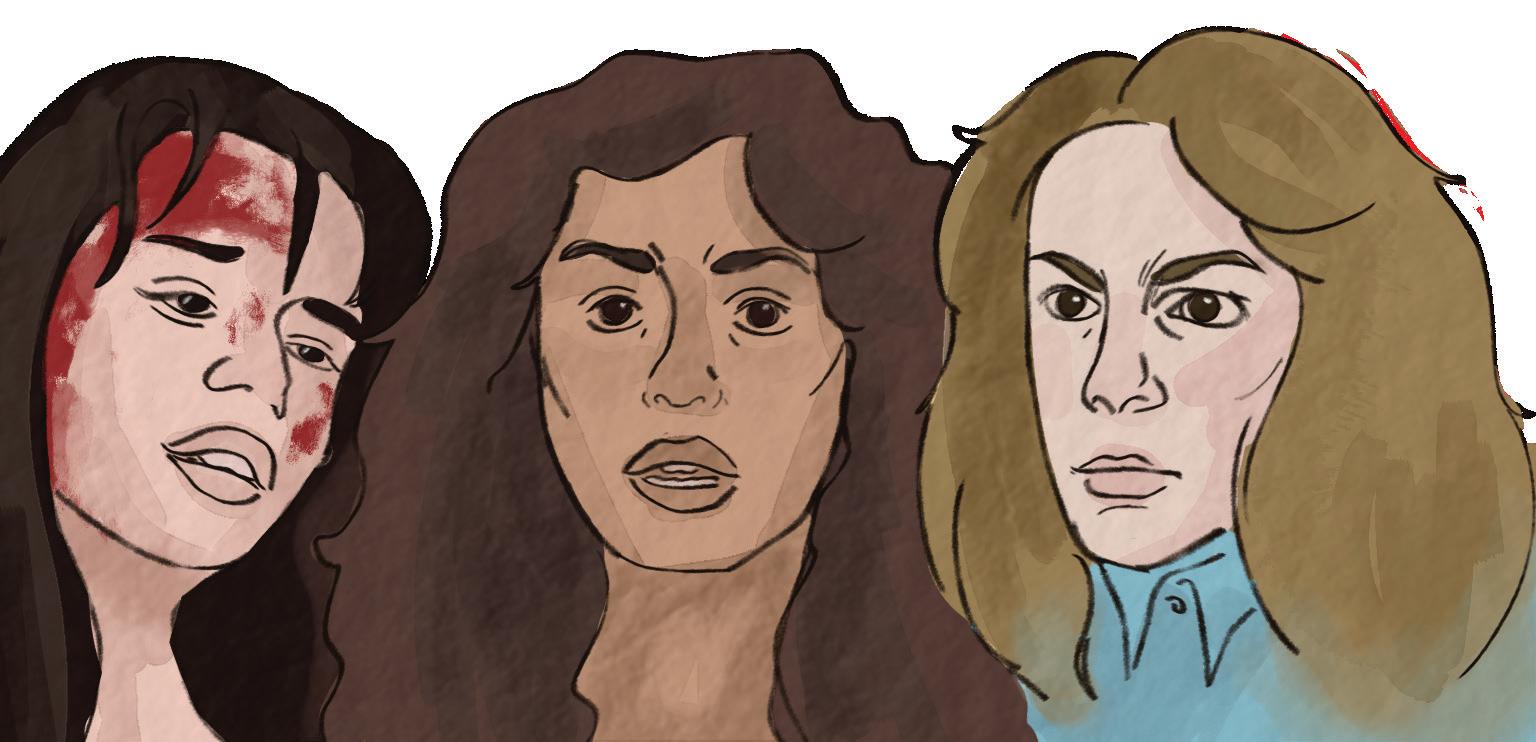
“ is is Ripley, last survivor of the Nostromo, signing o ,” Ellen Ripley, “Alien” (1979) heroine, recited as she reached the end of her harrowing journey. As the credits roll and Ripley has succeeded in winning her last ght against an alien aboard her commercial starship, you feel a sense of satisfaction settle in your soul at seeing the story end with a woman winning.
When you think of many iconic horror titles, you probably think of one woman in particular. “Halloween” (1979)? Laurie Strode. “Scream” (1996)? Sidney Prescott. “Barbarian” (2022)? Tess Marshall. Horror movies have existed for a long time, with or without a “ nal girl;” a horror classic, “Nosferatu” (1922), featured the opposite of a nal girl” when its leading female character, Ellen, sacri ced herself for the greater good. So, where did this phenomenon come from? How did women nd a way to singularly conquer a genre with the simple feat of survival?
ere can be many di erent answers when it comes to the beginnings of the nal girl trope, but there’s no denying the in uence of Sally Hardesty, a survivor of the 1974 “Texas Chainsaw Massacre” lm. Played by Marilyn Burns, the shot of Hardesty laughing manically, covered in blood from head to toe, while clinging to the back of a truck as she’s nally free from the terrifying Leatherface and his chainsaw, has engrained itself into the minds of many.
Knowing that somehow, despite the horrors and trauma she faced, the main female character made it out alive, gave audiences a feeling they never wanted to let go of. Since its 1970s release, the lm franchise has created nine movies total and a video game. Just a few years after the release of “ e Texas Chainsaw Massacre,” audiences found that Sally Hardesty wouldn’t be the only girl to face death and walk away to tell the tale. In 1978, “Halloween” created Laurie Strode. e then-budding actress Jamie Lee Curtis stunned audiences with her role in the lm as she went up against the “babysitter killer” himself, Michael
Myers.
What makes the nal girl trope so exciting are the odds, most times being stacked against “ nal girls”; it isn’t the muscular jock that lives to see the light of day or even the tough cop with his rearm — it’s the girl who fought like hell to live to see another day. What’s so refreshing about this trope and the role it plays in the horror genre is witnessing a woman use her intelligence and character to prevail against forces — in most cases men — that con ned her.
Prior to the rise of the nal girl trope, horror lms included their fair share of depicting abuse toward women. While horror lms are made to be gory, movies like “ e Evil Dead,” (1981) feature brutal scenes of women being attacked with no moments of empowerment or re ection to counteract the violence.
When the lm’s character Cheryl Williams, played by Ellen Sandweiss, was sexually assaulted by a forest at the beginning of the movie, many viewers drew attention to the lack of tact in the scene. After its release, Director Sam Raimi came forward to express his regret over the scene.
“I think it was unnecessarily gratuitous and a little too brutal,” Raimi said in a 2012 interview. “I think my judgment was a little wrong at the time.”
In contrast, the nal girl trope juxtaposes this horror history — subverting these stereotypes within the genre and proving that they’re more than just a plot device to be torn to shreds.
“Scream,” the slasher meant to pose as a parody of the genre as a whole, introduced one of the most important women in “ nal girl” history: Sidney Prescott.

BY JONAH BERMAN arts@theaggie.org




Song: “Automatic Love” by Nourished by Time (2025)
Baltimore native Marcus Brown, who performs under the stage name Nourished by Time, has been diligently crafting his idiosyncratic mix of R&B and pop for years. After switching to XL Recordings from an underground label in 2024, Brown has further re ned his sound, resulting in one of the best breakthroughs from any artist this year.
In his stunning new album “ e Passionate Ones,” Brown lyrically oscillates between discussions of labor, romance and community. As the sole performer, producer and mixer, Brown makes great use of synthesizers, percussion and piano to create a vibe all his own. If everything was right in the world, the LP’s opening track, “Automatic Love,” would be a certi ed automatic hit; the slow buildup which begins the song, culminating in Brown’s declaration of devotion to his unnamed lover, is a piece of pure catharsis. While this album is one of the year’s best, it has remained criminally underrated, failing to chart in the United States.
Book: “ e Dispossessed” by Ursula K. Le Guin (1974)
Ursula K. Le Guin was a true original in the literary world. Over her nearly 60 years as a writer, she published 23 novels and dozens more short stories, establishing herself as a unique voice whose oeuvre of science ction stories di erentiated itself from anything else in the genre.
e Dispossessed” chronicles physicist Shevek as he travels from the politicallyanarchist planet of Anarres to the wealthier and rigidly-hierarchical planet of Urras. e language that Le Guin uses to describe these worlds is superbly vivid and engaging. However, Le Guin’s work remains immortal not because of the worlds she built with her pen, but because of the way her stories mirror our own human follies. Shevek’s shock and dismay at customs which both Urras citizens and readers could nd commonplace forces us to question the norms we take for granted, and proactively work towards improving ourselves and the societies we live in. Only the greatest of prose masters possess the power to do that.
TV Show: “ e Day Today” by Chris Morris and Armando Iannucci (1994)


Although “ e Day Today” only aired for a month, its jokes are so timeless that it remains, along with Mr. Bean and Boris Johnson, one of Britain’s premier comedic achievements. Fans of wry satire will surely delight in its style, which comments on a variety of topics within mid-90s British society, along with a healthy amount of time allotted to making fun of Americans. Chris Morris stars as the creatively-named newscaster Chris Morris, who leads an ensemble of oddballs over the series’ six episodes. e show’s dark comedic style is in many ways analogous to current satirical “news outlets” like e Onion, which publish profoundly absurd headlines that nonetheless o er a glimmer of truth. “ e Day Today,” however, remains in a league of its own — with farcical yet ingenious writing that makes me want to forgive the United Kingdom for the culinary disaster that is mushy peas.
Movie: “Phantom of the Paradise” dir. Brian De Palma (1974)
If you’re going to watch one mid-1970s rock musical with a cult following this Halloween, make it “ e Rocky Horror Picture Show” (1975). But, if you want to watch two, you’ll have a rollicking good time with Brian De Palma’s absurd and mildly ridiculous “Phantom of the Paradise.” Paul Williams stars as villainous record executive Swan, constructor of the titular Paradise mansion and thief of songwriter Winslow Leach’s music. Williams also composes the lm’s soundtrack, which is full of great tunes that get stuck in your head for days afterward. Some may argue that the lm stretches itself too thin by attempting to simultaneously adapt elements of “Faust,” “ e Phantom of the Opera” (1910), “ e Picture of Dorian Gray” (1880) and “Psycho” (1960). However, these critics are allergic to fun. I urge you to suspend your disbelief for 90 minutes, revel in this lm’s glam-rock glory and sigh as you wonder why so few lms contain a character named “Beef.”
BY NATALIE SALTER
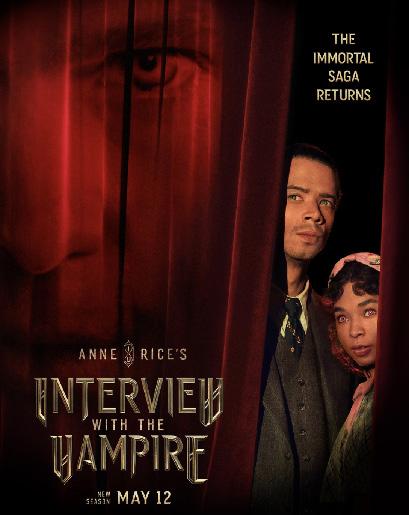
“Interview With e Vampire” (2022), adapted from Anne Rice’s 1976 novel of the same name. e second season, which came out in 2024, just arrived on Net ix this month. e titular interview’s subject is Louis de Pointe du Lac (Jacob Anderson), and the story is his: the transformation and tumultuous life of an immortal vampire, for all of its tragedy and bloodshed. But, as the show’s tagline remarks, “memory is a monster,” and committing his sanguine existence to text is not as simple as it seems.
e story is divided between Louis’ interview by the dryly honest investigative journalist Daniel Molloy (Eric Bogosian) in 2022 and his past in early twentieth century New Orleans, the latter of which being the place of his fateful transformation. e pair nd themselves unexpectedly unraveling mysteries not only in Louis’ past, but in their present interview as well, the story unwinding masterfully from episode to episode.
At the heart of Louis’ story is his torrid relationship with the charismatic vampire Lestat (Sam Reid), his maker and his lover. Eternally bonded, their a ection and anger towards each other shapes the very fabric of their narrative and the characters around them profoundly. Anderson and Reid deliver especially showstopping performances when on screen together. Whether they’re sharing a moment of tenderness or one of explosive rage, the depth of emotions that the characters feel for each other are expressed phenomenally by the pair.
When their family expands to include the teenage vampire Claudia (Bailey Bass & Delainey Hayles), the
narrative becomes more complicated than ever before, as her feelings towards her foster parents are darkened by the fact that she is now trapped in an adolescent body for eternity. Bass, who portrayed Claudia in season one, and Hayles, who took over the character in season two, give two of the best performances of the entire series. Entwining girlish whimsy and violent rage, one of the best arcs of the show ensues as Claudia struggles to accept the boundaries and su erings of her new existence.
e setting of “Interview With e Vampire” breathes new life into a genre mostly set in sprawling Gothic castles in Europe, placing the vampire in con ict with a new sociocultural environment. e historical mortal and vampiric worlds intersect as the series explores Louis’ identities as a queer Black man in the Jim Crow south, paying careful attention to the way the reality of the story’s time and place a ect the characters’ lives. As the world around Louis, Lestat, and Claudia shifts and evolves, they, even in a state of eternal youth, are shaped by it as well. e series also employs its unique storytelling style masterfully, capturing the viewer’s attention completely in both past and present scenes alike.
Louis’ interview narration provides depth and insight into the events that unfold in the past, but the show just as cleverly plays with the gaps in his remembering. Uncertain memories and altered retellings blur the lines between objective and personal truths, weaving mystery into the fabric of every scene. Anderson’s performance as Louis masterfully captures the vampire’s

evolution over a century and the griefs he acquires throughout it. His ability to convey a rich depth of emotion in the smallest of expressions or line deliveries is incredible. Likewise, Reid is equally irresistibly charming and detestable as the amboyant, ckle Lestat. at he can make the audience loathe him one moment and love him the next is a testament to his talent. What makes “Interview With e Vampire” so marvelous is that it pushes beyond being simply a vampire story, using the supernatural to explore tangling emotions and relationships that are all too human in nature. For all of the death and bloodshed, the story is fundamentally one of love, from its tenderest to most violent forms. Between the moving performances of the central cast and the struggles that befall their characters, every episode is an emotional experience as much as a thrilling one. e rst two seasons of the series are out now, but fans hungering for more will be delighted to know that another season is on the way. e third season, titled “ e Vampire Lestat” after the second book in the series, comes out in early 2026. Notably, the power of narration will move from Louis to Lestat, o ering a fresh backstory to explore and a new perspective on familiar events. ough the Halloween season is coming to a close, “Interview With e Vampire” is such a brilliant piece of television that it ought to be enjoyed regardless of what time of the year it is. Its nuanced writing, exceptional performances and intricate visual design make it a gold standard not just for vampire storytelling, but for television as a whole.
The history of Halloween’s favorite monsters and their rise to fame
BY MIRIAM RAMAKRISHNAN arts@theaggie.org
From plastic fangs to fake blood, monsters like vampires, zombies and mummies dominate Halloween decoration aisles. As their gures grin from front lawns and party stores every October, have you ever wondered how these icons clawed their way into pop culture fame?
Blood-thirsty creatures
In the 19th century, vampires had evolved from eerie, little-known folklore into fixtures of literature and art.
Cultural historian Violet Fenn noted that John William Polidori’s 1819 short story “ e Vampyre” truly created the romantic gure that we know today. is text sparked a frenzy of vampirethemed operas, ballets and plays across Europe. e story was created for a ghost story contest, formulated by writers Mary Shelley, Percy Shelley and Lord Byron; this very contest was the origin of “Frankenstein” (1818).
Bram Stoker’s 1897 classic “Dracula” marks the beginning of the explosion of vampire myth. e novel’s antagonist indirectly suggests that one may be able to come back from the dead — an attractive concept in an evil form, according to the National Geographic. When Count Dracula left his home of Transylvania for England, true horror and evil started to take shape in the text; this aspect of the novel re#ected the Victorian fear of the “foreign other,” at a time when many feared that those colonized by the British would strike back. The centuries of vampirism in stories, lms and media explain its prominent role as one of Halloween’s
central motifs. It’s no surprise that the vampire has sunk its fangs deep into Halloween culture — the legend is truly immortal.
Green with envy When one thinks of zombies, images of green skin and stitches may arise. However, the word “zombie” actually comes from the Haitian word “zombi”: a person resurrected through magic and stripped of their will, according to writer Mike Rampton. is word carried deep political weight in enslaved Haiti, where the idea of being alive but enslaved even after death represented the ultimate horror.
In 1818, Mary Shelley’s aforementioned “Frankenstein” was published, telling the story of Victor Frankenstein, a scientist who reanimates dead #esh and builds “the Creature.” ough considered to be the root of zombies in Western literature, Shelley’s text and the original Haitian “zombi” both express fear of power gone wrong and a loss of control. Frankenstein’s monster is rejected by its creator; the “zombi” is trapped by its master. e 1932 lm “White Zombie” utilized the Haitian concept of enslaved zombies, serving as the catalyst for more of the same media to be produced, according to Rampton. Decades later, “Night of the Living Dead” (1968) reinvented the zombie as a #esh-eating symbol of social collapse, while “ e Walking Dead” and “ e Last of Us” exist as modern pieces of undead media that continue to keep the genre alive in popular culture.

All wrapped up Mummies have an extensive history in human anatomy, current knowledge of ancient cultures and modern disease and health, according to UC Davis Anthropology Professor Jelmer Eerkens’ “Mummies of the Ancient World” course. The discovery of King Tutankhamun’s tomb in 1923 jumpstarted the myth of the “mummy’s curse” that lives on till this day. Lord Carnarvon, the nancial backer of the excavation, died a few short months after the opening of the tomb. Every death and tragedy was blamed on this
UC Davis faculty and students discuss the importance of language learning as nationwide enrollment drops
BY HANNAH OSBORN arts@theaggie.org
As children, we learn a language simply through our observations of the world; it was almost mindless. As students, the loss of this ability to pick up language as easily can keep one from venturing into the world of language-learning as an adult. Despite the increased difficulty, UC Davis students and faculty still nd value in undertaking the acquisition of another language.
Students seeking a Bachelors of Arts or Bachelors of Applied Science through the university’s College of Letters and Science or College of Biological Sciences must take at least 15 units of a language to complete their degree. is creates many opportunities for UC Davis students to become engaged in their choice of any of the 14 languages currently o ered.
Carlee Arnett, professor of German at UC Davis, has noted the enthusiasm she witnesses in classes as a result of students feeling motivated to learn a language. Whether there’s a degree requirement or not, she has found that students are usually drawn to a language because of a personal involvement with the culture they seek to engage in. e importance [of learning a language] is it makes you a richer human being; it makes you think about your own culture,” Arnett said. “Even if you just take two or one year of a language, you know there are things out there that are di erent from you.”
For Arnett, there is great enjoyment in getting to watch rst and secondyear students discovering a culture through the medium of language. Students are able to confront culture on a more global scale, in order to better understand di erences.
Students like Samia Parsons, a third-year pharmaceutical chemistry major who enrolled in Spanish 001 last quarter, also recognize the value of learning a language at a university level.
ere’s de nitely such a di erence actually trying to speak a language in a class full of students who are all trying to do it, and a [teaching assistant] who knows how to speak it,” Parsons said.
“I feel like I improved so much more in one quarter than I had done in two years of [online learning].”
Learning a language as an adult includes not only learning how to communicate, but also understanding the components of a culture, Navid Saberi-Najafi, professor of Persian, explained. Within UC Davis’ Persian Program, Saberi-Naja emphasizes the rich heritage of the language students are engaged in.
“It cultivates empathy, historical awareness and an appreciation for the plurality of human expression,” SaberiNaja said. “In this sense, language learning is not an ancillary skill but a primary avenue of humanistic inquiry. Because Persian allows students to engage directly with primary texts, they gain the ability to form their own understanding of Iranian and broader Middle Eastern history and culture, rather than relying solely on narratives shaped by Western perspectives.”
Learning a language allows students to access a di erent realm of experience from their own and to broaden their horizon of thought, empathy and understanding, according to UC Davis students and faculty. At a time when enrollment in languages other than English has declined in American universities, the passion held by faculty to teach and the willingness of students to learn shows an appreciation for culture and the pursuit of knowledge at UC Davis.
Enrollment in languages other than English decreased by 16.6% between fall 2016 and fall 2021, according to a 2023 census report of 2,455 institutions created by the Modern Language Association (MLA). is is the 26th census of American higher education programs that the MLA has conducted, in order to better understand the eld of academia and enhance humanities education.
While acknowledging a general downturn, the MLA report did note that programs which remained robust often shared a focus on the cultural aspect of language in their pedagogy and teaching approach.
“curse,” and its mysterious e ects sold books and movies galore, according to Eerkens.
The 1932 film “The Mummy,” released by Universal Pictures, the producers of “Dracula” (1931) and “Frankenstein” (1931), launched another instantly recognizable monster icon into pop culture. However, the early 20th century theme of horror quickly transitioned into comedy, with lms such as “Abbott and Costello Meet the Mummy” (1955), “Bubba Ho-Tep” (2002) and Murray the Mummy in “Hotel Transylvania” (2012). ese three classic characters have never gone out of style, escaping their myths and tombs to become pop culture staples. Each monster mirrors the fears of its time, evolving from folklore into widespread symbols in lm, literature and even video games. As Halloween rolls in and the streets ll with fangs, bandages and fake blood, we’re reminded that the undead never truly die: they just land a reboot.
Student radio station DJs view music as a deeply personal experience to be shared

BY IQRA AHMAD arts@theaggie.org
Music has long been recognized as a universal language; one capable of transcending culture, geography and even generations, according to a Harvard music study. ough in nite in its possibilities — with countless variations of notes and rhythms — music remains deeply personal.
Music is often de ned as “vocal, instrumental or mechanical sounds” containing harmonies, melodies or rhythms. However, this definition falls short for many, missing the mark of what makes music so essential — its emotional resonance. DJs at UC Davis’ on-campus radio station KDVS 90.3FM spend hours each week handselecting and sharing music with radio listeners.
“Music to us is important culturally and socially,” KDVS radio host Maia Madsen, a second-year history and psychology major, said. “We can associate it with events and indirectly share the aspects of our lives. It’s quite intimate. It’s a callback to certain, beautiful moments.”
For Sophia Fenchel, a secondyear environmental toxicology major and radio host at KDVS, music is an experience: one that is extremely personal and unique. e way in which our brains take in music is di erent for each and every person.” Fenchel said. “Each person’s ear processes and interprets the music di erently.”
These perspectives reveal how music serves as an extension of the human experience, especially in the eyes of those curating the background soundtracks to our lives.
“Music exists in all of the moments in-between,” Madsen said. “The di erent lived experiences we bring means that we all interpret music di erently.”
At UC Davis, these individual experiences come together at KDVS, a student-run, non-commercial and
freeform station founded in 1964.
KDVS hosts feel the station is not only a platform for broadcasting songs, but rather a community encouraged to engage in music appreciation and discovery. KDVS currently maintains over 150,000 titles, including vinyls, CDs and cassette tapes.
“KDVS has a music department that fosters and takes care of our music library,” Madsen said. “ ere is a very dedicated community of radio hosts curating shows.”
Each program on the station represents the personal taste and vision of its hosts. Madsen and Fenchel, for example, recently worked on a themed show titled “#Fuzzy.”
“A week leading up to the show, we decide on a theme, one we choose based on how we feel and what we want to share,” Fenchel said. “We choose our music separately so we can listen to the songs together for the rst time and discuss them.”
Humans feel emotional responses to the harmonic continuity and progression of music, where every note adds onto the expectations of the song, according to an article by the British Psychological Society. When Fenchel selects music based on the theme of the show, she’s trying to shape the emotions she wants listeners to feel.
“I chose cozy music for ‘#Fuzzy’ — music that made it feel like I was bundled-up and drinking a cup of tea,” Fenchel said. “It was more jazzy, saxophone music.” Another part of what makes the KDVS community distinctive is its commitment to variety and openness.
“At the end of the day, the people who listen to KDVS have to be open to di erent kinds of music,” Madsen said. “For example, Professor Sen plays Bollywood, and a lot of other people play indie rock or electronic, and you can go through all of that within the span of ve minutes.” Tatianna Arias, a KDVS radio host and third-year English major, shared
their thoughts about the way music can deeply engage listeners and radio hosts alike to form a dialogue and connection. ere’s a whole community of people who genuinely love music — listening to it, discovering it and sharing it,” Arias said. “Local radio has a kind of soul to it, you’re hearing songs that someone handpicked for all of their listeners, and that creates a real connection with the Davis community through music.”
e DJs shared the sentiment that working at KDVS has allowed them to interact with other students and share parts of themselves through a selection of songs.
“I think of music as a form of communication,” Arias said. “When I play something on air, I’m sharing a piece of myself. Sometimes listeners even call in to request songs that t the vibe of my show, and in those moments, we’re bonding through the music.” Madsen, Fenchel and Arias view music as both individual and inherently communal. Each person processes sound di erently, allowing music to connect people across experience and identity, according to the DJs. For the hosts at KDVS, sharing music is more than entertainment; it is an act of communication and empathy.
“I want listeners to become more curious about music and be inspired to engage with new tastes,” Madsen said. at same spirit of exploration resonates with Fenchel, who sees radio as a space to introduce di erent genres of music and share experiences.
“I hope people learn new music from us, to add [the songs], to listen to [them] or even just have it playing in the background,” Fenchel said. At the KDVS radio station, show hosts encourage listeners to engage with music’s unique ability to unite and di erentiate. Whether it’s through a saxophone or a fuzzy indie guitar ri the DJs at KDVS remind us that music doesn’t just ll silence — it connects individuals across frequencies.
Davis political organizer Dillan Horton reflects on activism, backlash and the importance of hope
BY LAILA AZHAR features@theaggie.org
When Davis-based activist Dillan Horton re ected on his upbringing, he traced the roots of his political consciousness back to his childhood.
“If you ask any of my close relatives — even if I myself look back at my upbringing — it doesn’t seem overtly political,” Horton said. “But if you’re paying attention, all of it very much was.”
His grandmother, whom he described as “the rst protestor of the family,” lived in Dallas during the height of the Civil Rights Movement.
“She watched all the county commission meetings on local-access TV,” Horton said.
His mother, a nurse and lifelong union member, instilled in him a similar sense of civic duty.
“She was very much, ‘You have to register to vote, you have to vote in every election, you have to pay attention to the news,’” Horton said. “ ere wasn’t a time where there wasn’t a newspaper on the co ee table or the news playing on the TV in my home growing up.”
Still, Horton never expected to end up in politics. During his fourth year of high school, his government teacher mentioned in passing that, because their congressperson was retiring, a campaign was looking for interns.
“He was like, ‘Hey, send them your resume,’” Horton said. “I had never even had a resume before this moment.”
Around the same time, a friend asked him to help lead a high school chapter of Amnesty International, a global human rights organization. Once Horton stepped into the world of activism, he knew he would never leave.
“I thought, ‘Oh, that might be interesting — I’ll try it out,’” Horton said.
“And then it was like a drug.”
After attending El Camino College, which he called “the best community college in the world,” Horton transferred to UC Davis. Since then, he’s become a
familiar gure in local organizing circles.
His “activist home,” as he described it, is the Yolo County chapter of the Democratic Socialists of America (DSA).
“We started as the sad and disappointed and dejected people who were volunteers for Bernie [Sanders]’ 2020 presidential primary campaign here in Yolo County,” Horton said.
After Sanders’ defeat, the group met downtown for a nal get-together — which instead became the de-facto rst meeting of Yolo DSA. e members decided to channel their campaign energy into building a permanent base for progressive politics in the region.
When one of the original co-chairs moved away in 2021, Horton was elected to the position.
“Our bread and butter, what I’m always trying to make sure that we’re involved in, is labor solidarity,” Horton said.
The organization’s very first campaign, he recalled, was supporting SEIU 2015 — the in-home health workers union — as they negotiated new contracts.
“It’s about how we, as a community organization outside the union, can back them up in contract struggles or be helpful on the ground when unions are trying to start up,” Horton said.
Horton’s civic engagement extends beyond DSA. He spent six and a half years on the Davis Police Accountability Commission before joining the city’s Social Services Commission this summer. He currently serves as president of the Yolo County Pride Democratic Club, sits on the Davis Pride Committee and is the board chair of the Davis Vanguard.
He is also a two-time city council candidate, running in 2020 and 2024.
Central to both campaigns — and to much of his activism — is the issue of a ordable housing.
“It comes in di erent ways, but across the board the thing that people want to talk to you about more than anything else is some kind of area of
housing, the price of housing, the availability of houses,” Horton said.
Even in the wealthier neighborhoods of Davis, he has heard the same concern.
“For them, it’s their kids,” Horton said. “ eir kids probably grew up middle class, and they maybe have an upper-middle-class job now. But their kids can’t a ord to start their family in Davis. So for them it’s like, ‘Man, my kids have to drive in from two hours away to visit because they can’t a ord to live here in the community that they grew up in.’”
At a time when identity-based issues often dominate national conversations, Horton believes people are united by economic reality.
e reality of people here is that they care about where they’re going to live and putting food on the table,” Horton said.
While running for office often exposes one to an onslaught of personal attacks, Horton’s wit and friendly demeanor have helped him withstand the intensity of being in the public eye.
“I’ve got thick skin,” Horton said. “I joke that because I was the skinniest, shortest, gayest kid in all my classes growing up, I had to develop a way of dealing with people picking on me that wasn’t ghting back — because I was too short and skinny to really make that peer-to-peer competition happen. So, I had to develop a sense of humor.”
However, some of the vitriol he received during his second campaign was uniquely di cult.
“I was prepared for all the personal attacks with the gay stu ,” Horton said. “I’ve been doing ‘gay’ for a while. What I was not particularly prepared for was how saying that Palestinians were human beings that didn’t deserve to get murked out of existence would be met with such intense hate.”
During his second campaign, he recalled attempting to balance staying true to his principles with strategy. His rst statement after Oct. 7, he believed, was overly hesitant.
“It’s like that Rihanna clip when she
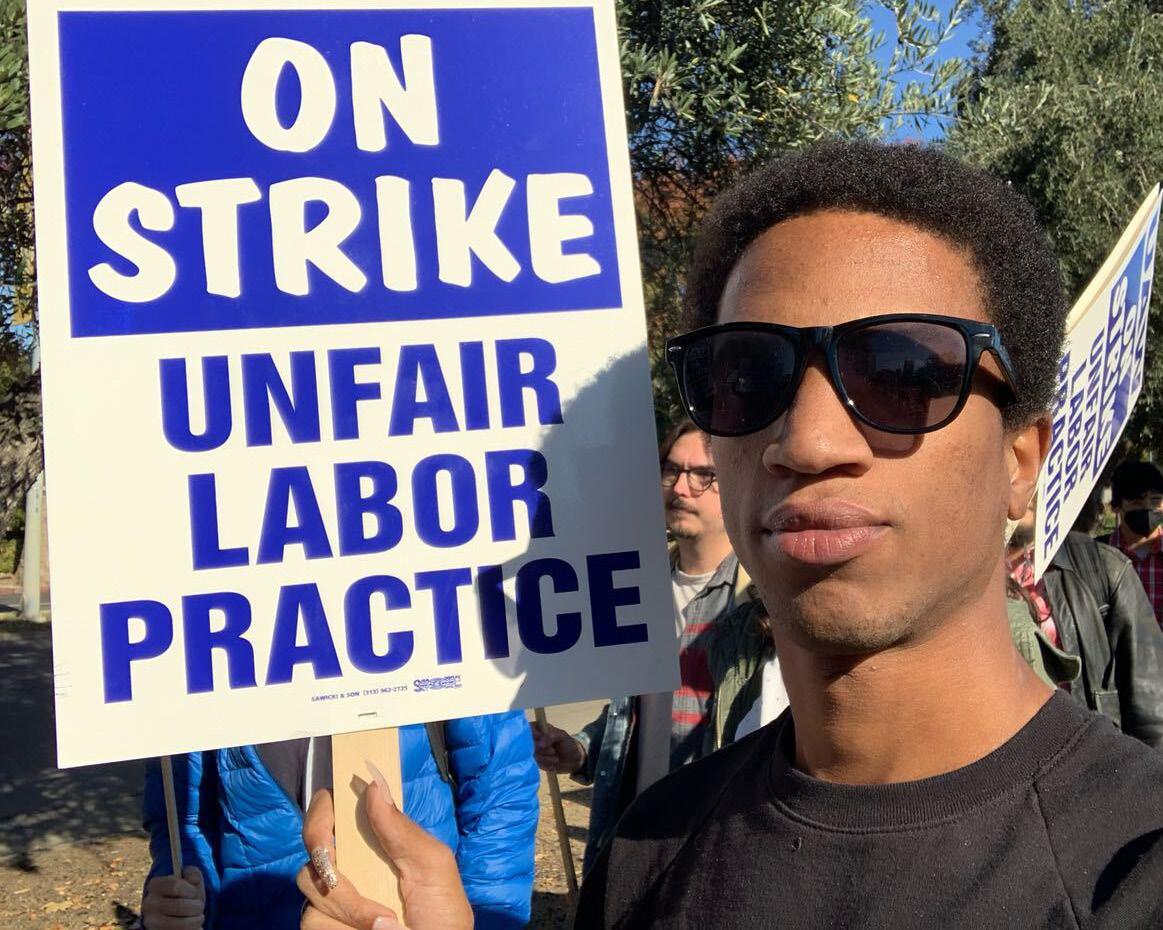
came out with that, ‘Um, it’s for women and men and um, people of all gender appropriations,’ like she’s ghting for her life,” Horton said.
Despite his initially cautious response, he still faced harsh criticism for his views on Palestine.
Photos of him at protests and city meetings were previously circulated on social media — sometimes altered to include or enhance logos of organizations, implying a liations he didn’t have.
In dealing with this type of criticism, Horton was reminded of his days as a UC Davis student, when Boycott, Divestment and Sanctions (BDS) resolutions were being considered by the student government.
“I was a student government nerd, and so, [during] my rst year in Davis, I was in ASUCD,” Horton said. “I saw it a ect my friends on the Ethnic and Cultural A airs Commission, a lot of whom were Middle Eastern or Muslim; how it made it unsafe for them to walk
home on campus at night during the time when this was being discussed.” Today, that climate feels familiar to many UC Davis students navigating political discourse.
Just last month, UC Berkeley sent letters notifying members of campus whose names had been included in reports of “alleged antisemitic incidents” to the Donald Trump administration’s Department of Education’s Office for Civil Rights (OCR), as part of a decision made by the University of California’s systemwide general counsel.

Community members discuss the details and impact of the special election
allowing for early redistricting that would favor the Republican party.
In response, Newsom put forward Proposition 50, known as “ e Election Rigging Response Act,” to counteract the ongoing actions in Texas.
BY GRACIELA TIU
features@theaggie.org

California voters have begun receiving mail-in ballots for Proposition 50, part of the statewide special election on Tuesday, Nov. 4. As the sole ballot measure in the irregularly scheduled election, Proposition 50 would authorize the early redrawing of California’s congressional district maps.
e last day to register to vote in this special election passed on Oct. 20, but there are still options available for those who missed this deadline.
“Eligible citizens who missed the October 20 deadline to register to vote may complete the ‘Same Day’ voter registration process through Election Day on November 4, 2025, at their local county elections o ce or any in-person voting location within their county,” the California Secretary of State website reads.
Every registered voter in California should have received a vote-by-mail ballot, which can be returned by mail, at a drop-o location or at the county’s election o ce on or before election day. Voters can also obtain a polling place ballot if choosing not to vote by mail.
Voting Assistance Centers in Davis available for voters — with notable locations including the Activities and Recreation Center (ARC) pop-up — will all be open by Nov. 1. Ballot Drop Boxes are also available until 8 p.m. on Nov. 4, with an on-campus box behind Hunt Hall. For more information, visit the Aggies Vote page on the Student A airs website.
Supported by California Governor Gavin Newsom, the proposed measure would lead to new congressional districts that aim to temporarily give California ve extra Democratic seats in the House of Representatives — a direct response to the Republican partisan gerrymandering in Texas and other states.
The ballot measure marks the Democratic party’s pushback against the Republican party, with both attempting to gain more seats by the 2026 midterm elections. Typically, each state will redraw its district maps every 10 years, after the United States Census occurs, with one representative allocated to each district. However, under pressure from President Donald Trump, the Texas Legislature recently passed a bill
The “Yes on 50” committee website describes how the measure “levels the playing eld,” “gives voters the power,” “is fair and proportional” and “is temporary.” e measure di ers from that of Texas in that it gives voters the choice to allow for the redistricting and would only temporarily change the process, as it would restore California’s independent redistricting process by 2031.
“From my perspective, it mainly re ects California’s frustration with the Republican party and ghts to keep government overreach in check,” Claudia Brion, a second-year political science major, said.
e constitutionally mandated, decennial redistricting process remains in place to ensure that districts consistently adjust to re ect population changes. Each voter in the U.S. lives within a district, with one member of the House of Representatives allocated to the speci c drawn areas. rough the redistricting process, every state draws the “lines” of their districts, with each having roughly equal numbers of constituents. e process varies by state, but most have either state legislatures, independent commissions or hybrid models establishing the boundaries.
Gerrymandering, defined by Merriam-Webster as “the practice of dividing or arranging a territorial unit into election districts in a way that gives one political party an unfair advantage in elections,” challenges the ideals that the redistricting process upholds. Both partisan gerrymandering and racial gerrymandering have occurred throughout the country’s history, with partisan gerrymandering unequally bene ting or hurting one political party and racial gerrymandering diluting the voting power of marginalized or minority groups.
e Supreme Court has ruled racial gerrymandering as unconstitutional under the Voting Rights Act of 1965 on multiple occasions, though partisan gerrymandering still remains legal, as the Supreme Court ruled the practice nonjusticiable in 2019. Despite the distinctions between racial and partisan gerrymandering, critics argue that partisan gerrymandering can still disproportionately impact marginalized groups.
“Racial gerrymandering can look a lot like partisan gerrymandering in places segregated by race where communities of color have distinct political preferences,” Michael
Waldman, the president and chief executive o cer of the Brennan Center for Justice at New York University School of Law, said in an analysis. e two most commonly used gerrymandering strategies can be summated into the terms “cracking” and “packing.” Michael Li, senior counsel in the Brennan Center’s Democracy Program, described what each form of gerrymandering looks like in an article.
“Cracking splits groups of disfavored voters among multiple districts,” Li said. “With their electoral strength divided, cracked groups struggle to elect their preferred candidates in any of the districts because they are too small a share of the electorate to be e ective. Packing is the opposite of cracking. With packing, map drawers cram members of disfavored groups or parties into as few districts as possible. e packed groups are able to elect their preferred candidates by overwhelming margins, but their voting strength is weakened everywhere else.”
With these strategies in mind, both parties in multiple states nd themselves in a redistricting race, with each side aiming to create more party-favorable districts and subsequently gain more House seats before the 2026 midterms.
Historically, the president’s party almost always loses House seats in the midterm elections, with political scientists o ering various explanations for the pattern.
However, if Texas and other Republican-led states gain more seats through their moves to partisan gerrymander halfway through the decade, and Democratled states don’t make a move to counteract, this trend may shift.
“If Prop. 50 fails and red state maps go to e ect without pushback, we might risk a political environment where the Executive Branch tightens its hold on every level of government, and the guard rails — the checks and balances that are supposed to protect representation and democratic accountability — grow even weaker,” a UC Davis alum with a Bachelor of Arts in Political Science — Public Service who works in California politics and wishes to remain anonymous, said. “I think that there’s still a lot
on the line. Right now, the federal government can’t be really trusted to represent the constituents within states, so motivating governors, state leaders and those that control Congress [is] going to be the best defense that we have at protecting democracy.”
e alum further emphasized the signi cance of this special election in comparison to general and primary elections.
“It’s very rare that you consider redrawing congressional maps before the time is up,” the alum said. “ ere are unique aspects — a combination of federal courts stepping back from addressing partisan gerrymandering and also the escalating pressures from outside actors trying to shape control of Congress, which isn’t typical of undrawn congressional maps. And politicians with national platforms are uplifting it, even in this type of special election.”
e political atmosphere under the Trump administration has left many UC Davis students feeling especially interested in topics like this special election.
“I rst heard about the special election a few months ago via an ad while studying on YouTube,” Presley Backus, a third-year animal science major, said. “ e political advertisement stated that, ‘To protect American values, Vote No on Prop. 50.’ Naturally, this sparked interest because, one, I, like many others, do not like to be told what to do, especially when there was little to no information within the advertisement about what Prop. 50 was. And two, the term ‘American values,’ at least in a political context, raised red ags for me. In general, I nd that the Internet is a breeding ground for misinformation, especially when the target audience is young adults.”
Backus explained how her experience in the state has in uenced
her decision to vote in this upcoming election.
“When deciding whether to vote, a large factor that comes into play is my bicoastal residency,” Backus said. “At times, I can feel a bit lost when deciding whether I should have a voice in a state that I do not plan to call home following my undergraduate education. [...] e current policies of the Trump administration have, to put it conservatively, been unsavory in their representation of what I de ne as ‘American values.’ To witness the unconstitutionality coupled with the lack of decorum displayed by the actions of the Trump administration and stand idly by is immoral. To me, utilizing my right to vote is essential. I come from a family of Black ex-marines, and I know this is not the America they served to uphold.” e special election brings a sense of political momentum to Newsom and the Democratic party, with some people noting how their strategy against the Trump administration has evolved.
“I think that in Sacramento, they’re really trying to seize this political moment,” the alum said. “You can see it in Governor Newsom’s social media and all of these di erent things. It took a while for them to warm up to feeling comfortable to speak out so explicitly about what’s happening at a federal level, but I think now it’s very clear. A lot of voters are feeling the repercussions of what’s happening at the federal level — they want to take action and allow Congress to be more balanced.”
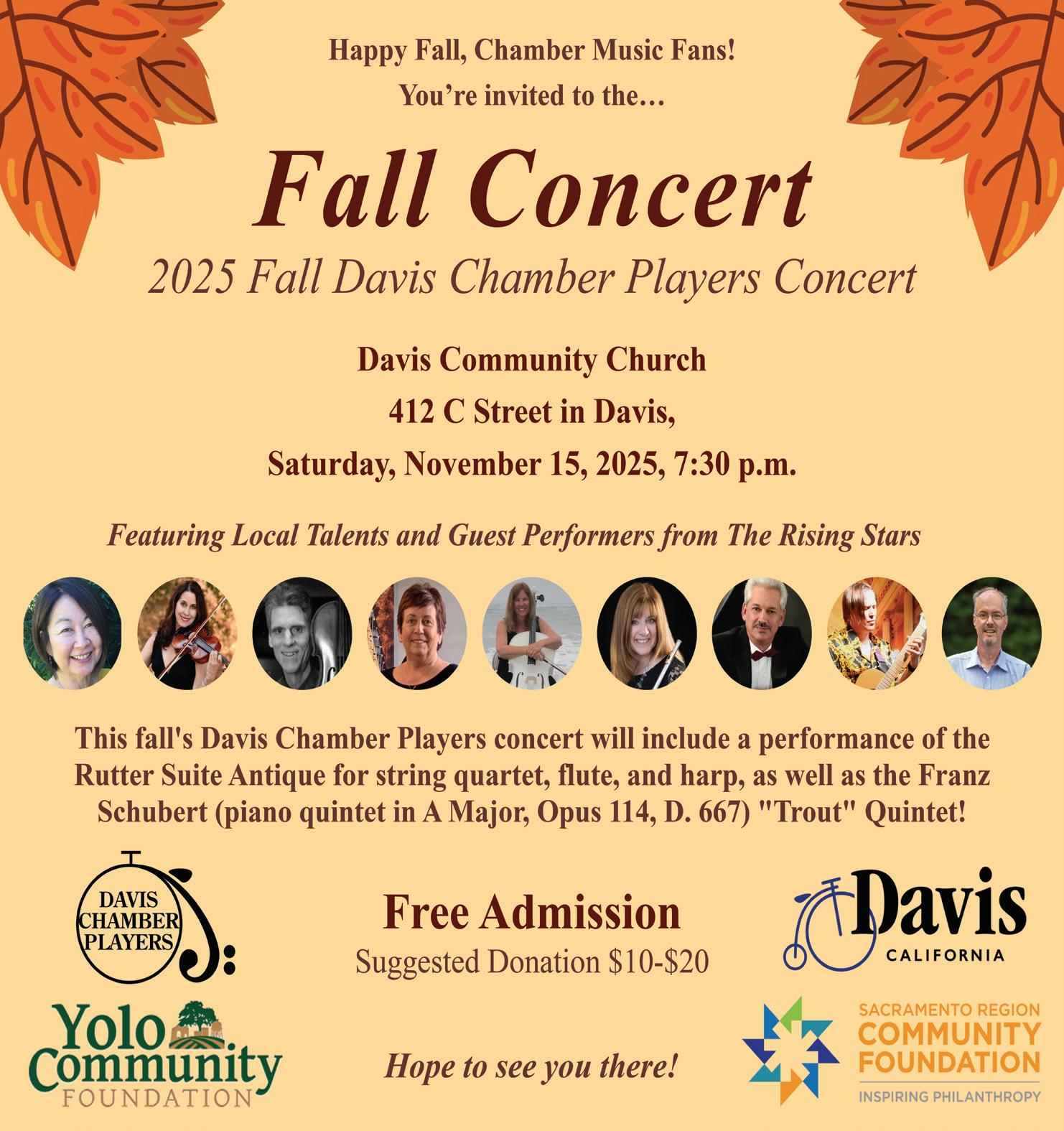
Enter digits from 1 to 9 into the blank spaces. Every row, column and 3x3 square must contain each digit. Each Sudoku has a unique solution that can be reached logically without guessing
“But now, more than ever, it’s so important to have [the] youth and Gen Z making their voices heard, learning the ropes and moving their way up, because we’re inheriting this country. It was important to me, despite my fears and reservations, to still face that head-on.”
As the shutdown moves into an almost month-long a air, the interns also expressed their personal opinions on what they hope the U.S. will get out of Congress’ standstill.
“Yes, I want the shutdown to end, but I don’t want the Democrats to give up healthcare — there [are] bigger things ahead and we have to think about the long-term,” Villanueva said. “Of course it’s hard on interns and what we get out of the experience is important, but there [are] people suffering a lot more than we are and I hope the government can compromise to keep these very essential services for people.”
Hyman similarly noted the role of Democrats and their reasoning for maintaining their stance as the government shutdown continues.
“I’m personally glad the Democrats are standing up to extend healthcare subsidies and protect social programs,” Hyman said. “I think it’s not just about the budget, but also about drawing a line in the sand — we’re not just wanting to reopen the government, but prevent the slow erosion of public services.”
With their internships set to $nish at the end of the quarter, UC Davis UCDC House interns are still unsure when or if they will be able to return to their o ces. As they re ect on the $rst two months of their experience, students have shared hopes that they’ll still be able to take away important lessons, despite being furloughed.
“It’s opened my eyes to the way people our age can be involved, and why they should be,” Hyman said.
“It’s reinspired me to continue working in public service and to want more young people in o ce: running for of$ce, working for someone’s campaign or being a sta er. I can’t think of a role that’s more ful$lling — you’re working to leave the country a better place than you found it.”
“I’m not sure you can get that kind of response in Sacramento or Los Angeles, because it’s so large, but we were lucky that we could have that kind of responsiveness,” Salinas said. “Because we are smaller, we can respond more timely and quickly.”
Salinas also discussed the importance of communication with local elections o ces to ensure the impact of such incidents are mitigated quickly.
“If you know your mailboxes have been broken into, contact us,” Salinas said. “Because if you didn’t get your mail or you just put your ballot in the mail, and something like this happens again: at’s a problem. We want to be able to help address it and make sure your voice is heard.”
With the upcoming election, Salinas also explained the importance of registering to vote sooner, rather than later. He also stated that the Yolo County election o ce is partnering with UC Davis to make the process easier for students and community members.
“One of our vote centers will be open starting on Saturday right by the [Activities and Recreation Center (ARC)] ballroom, the weekend before election, [...] open from 10 a.m. to 6 p.m.,” Salinas said. “We encourage people not to wait until Election Day to go and vote.”
At the Activities and Recreation Center (ARC), there is a Wellness To
Go vending machine that provides over-the-counter contraceptives, feminine products and commonly-used pain medicine. Additionally, the Love Lab on the $rst oor of the Cowell building provides free contraceptives and other sexual wellness items.
Setiobudi says that she and other organizers hope to hold another Femininomenon event in the future, reiterating that SAAAC will continue to work to provide spaces for women on campus. is is just a place for girls to be girls and intentionally take up space,” Setiobudi said.
ey include work on the UC Davis Mobile app, the Aggies on the Moove Bike Counter and a project with Safe Rides.
SB#9
Allocates $470.75 to the O ce of Senator Luis Garcia for Latinx Recognition Awards. Passed unanimously.
SB#10 Allocates $225.00 to the O ce of Senator Garcia for the Día de los Muertos Celebration event. Passed unanimously.
SB#12
Allocates $3,649.00 to the O ce of Senator Garcia for Banda Night. Passed unanimously.
SB#13
Allocates $291.00 to the O ce of Senator Garcia to reserve the Quad and for gift cards for the ASUCD Quarterly Showcase on Nov. 21. Passed unanimously.
SB#14
Allocates $174.53 to the O ce of Senator Jaliah Payne for a Special Election’s Informational Session Event. Passed unanimously.
SR#4
An ASUCD Senate Resolution; endorses the contract campaigns of UPTE-CWA 9119 and AFSCME 3299 and calls on the University of California to meet their demands. Passed

unanimously.
According to the U.S. Department of Agriculture, “if you can pinpoint where your food was grown and produced, you can make more informed decisions to maximize quality, freshness, and nutritional value.” By the same logic, we should consider where our information comes from when evaluating non-mainstream nutritional claims like the crusade against seed oils. What begins as a harmless search for healthier eating can, for some, open the door to misinformation and extremism.
e importance of the cultural component was something that students at UC Davis also report as motivating their participation in language courses. Parsons shared that while having taken Spanish, her goal is to learn Arabic as a way to reconnect with her culture.
“I feel like it would really help me connect with aspects of culture that I’m missing,” Parsons said. “I’m doing Spanish as a gateway to the process of learning a language.”
Saberi-Naja$ is similarly dedicated to the cultural transmission of language. What draws students to learning a language is the culture they become immersed in through its acquisition, Saberi-Naja$ explained.
“Teaching Persian to undergraduate students has been an intellectually rewarding experience,” Saberi-Naja$ said. “Students study Persian to sharpen their literacy skills, to communicate eloquently with their Persian-speaking grandparents, to immerse themselves in the rich cultural heritage of Iran and to broaden their understanding of the interconnectedness of cultures.” Saberi-Naja$ also shared a poem
by Sa’adi of Shiraz, which he translated from Persian and uses as educational material for his undergraduate students. e poem re ects on the importance of empathy for people of other cultures, which Saberi-Naja$ believes students can gain through studying new languages.
“ e children of Adam are limbs of one another, / Created from the same essence,” the poem reads. “When the world a icts one limb, / e others cannot remain at rest. / If you feel no sympathy for the su ering of others, / You do not deserve to be called a human.”
“UC Davis is there 365 [days a year]; the people doing research on the boat are on the water 200 days a year. So UC Davis is always in Tahoe. Our people are there and doing the work, and people who are closer are welcome to claim Lake Tahoe. It’s not exclusive to us.” For fans wanting to sport the gear themselves, there are several ways to acquire it.
“Everyone asks how they can get the gear,” Shank said. “So we have an Aggie sideline store where you can […] choose the logo and then custom-design some gear if you want it there. e [UC Davis] Bookstore has some stu too, so, ideally, we want to do a whole Lake Tahoe line and expand it in the future.” As these jerseys are added to the rotation in the Athletics Department, students and sports fans will be seeing a lot more of the Tahoe Blue in UC Davis Athletics.

For many attending students, expectations differed from reality
BY AMRA ABID features@theaggie.org
As the time hit 3 p.m. on Oct. 15, hundreds of students donning pressed slacks, blazers and folders full of resumes led out of the University Credit Union Center as the UC Davis 2025 Fall Career Fair came to an end. With the purpose of helping undergraduate students land internships and entry-level positions, career fairs are advertised to serve as a way for students to speak face to face with employees and recruiters at companies and get a leg up in the hiring process.
Maya Kusumakar, a third-year managerial economics and computer science double major, attended her rst career fair hoping to secure an internship. However, after speaking to recruiters and handing out resumes, she explained that she felt less hopeful about obtaining career prospects than she had before the event.
“My expectations were that, you know, they would be o ering jobs,” Kusumakar said. “But I think that they are here for marketing just as much as [they are for] recruiting.”
Riya Elizabeth and Shruthi Khurana, both first-year business analytics graduate students, had travelled from San Francisco with similar, hopeful expectations in mind. However, after speaking to dozens of recruiters, they both shared shifting perspectives on the function of the event.
“I didn’t nd [the career fair] as a place where we’ll actually get a land on a job,” Elizabeth said. “It felt more like a space to network and get more understanding of the recruiters.”
Having attended a career fair before, Summer Sueki, a third-year cognitive science and design double major, had a similar experience and, this time around, went with the primary objective

of speaking to recruiters. To prepare, she rigorously researched the speci c companies and job listings online so that she could gain more from the event than the previous one she attended.
“I didn’t really come here to pitch myself — I just wanted to get to know the companies,” Sueki said. “Just the application process, what makes someone stand out in the role [and] what the culture is like.”
Even then, Sueki noted that she left the fair disappointed and with less insight than she had anticipated, despite
Exploring the process behind the popular limited-time drinks

BY AALIYAH ESPAÑOL-RIVAS
campus@aggie.org
When Yeyoung Kim, a fourthyear human development major and outfront supervisor of the ASUCD Co ee House (CoHo), clocks in and sees a new drink recipe posted on the co ee bar, she knows it’s the beginning of a new month.
“I really enjoy making the Drink of the Month, because there’s always something new to expect — it’s an exciting start to each month.”
Kim is just one of the many baristas who helps produce the CoHo’s special, limited-time drinks. The changing beverage, o ered at Swirlz Bakery and at the South CoHo location, typically re ects the season, upcoming holidays or mainstream trends.
Previous featured drinks included the fall-favorite pumpkin spice latte, winter-themed candy cane mocha and strawberry matcha for Valentine’s Day.
According to CoHo Student Manager Jonathan Mendez, a fourthyear genetics and genomics major, the monthly drink is chosen by student employees.
“The making of the Drinks of the Month is more of a collaborative approach between all of the student managers and also all of the employees that work there,” Mendez said. “Either I’ll have an idea or the idea will be pitched to me. I look at what’s popular, what have I tried that I’ve liked and also keep in mind trends.”
After deciding on an idea, Mendez will see what the CoHo has in stock, maximizing their resources while still creating something new.
“I also try to be very resourceful,” Mendez said. “Obviously, we have access to other products and things we can bring in, but if we can use up everything that we have, it also goes into preaching the sustainability factor that Davis prides itself on.”
Following the trial-and-error process of concocting the drink, Mendez will let others sample it in order to get general feedback. From there, the beverage will either be reworked or deemed ready to debut on the menu.
“Once I have a recipe that I feel might work, I’ll make it, and then I’ll give it to the student managers,” Mendez said. “It’s kind of like I’m a little chemist, [...] brewing potions.” e monthly special was o ered
intermittently in the past, only becoming a consistent marketing promotion during the 2024-2025 school year, according to Mendez. In an e ort to consistently debut new drinks, the Swirlz team has compiled the list of drinks for each month ahead of time, instead of doing it on a monthly basis.
Stella Baum, a third-year community and regional development major, is a fan of the Drink of the Month promotion, but wishes there was more student input.
“It would be really cool if there was a newsletter that was sent out that students could request drinks at,” Baum said. “Or even if they picked a few options students could go through and vote for, it would feel a bit more democratic and re ective of the student body.”
While they may only be around for a short time, students can hold out hope to see some of their favorite drinks return as seasonal o erings.
In October 2024, the Drink of the Month was a pumpkin pie chai, with a “CoHomeade” pumpkin cold foam. It soon became a fan-favorite and returned this fall quarter as a seasonal drink o ered from September through the end of October.
e pumpkin cold foam — it was really popular this year — will probably come back next year,” Mendez said. “We de nitely take a lot of pride in making our co ees.”
Students can nd the November Drink of the Month, a chai with a pomegranate cold foam, at Swirlz in the Memorial Union or at the CoHo South Café in the Student Community Center. Mendez encourages CoHo patrons to give feedback on these drinks and any other CoHo o erings, by reaching out via email to Front House General Manager Levi Menovske at lsmenovske@ucdavis.edu.
having a clearer understanding of what to expect.
“A lot of these places, even if they’re hiring on LinkedIn, they don’t necessarily know [speci cs] about the role,” Sueki said. “I went to Pepsi because they had UX design listed on their LinkedIn, but the guy didn’t know anything about it, so I was like, ‘It’s okay.’”
Not only have unmet expectations left some students feeling frustrated, it has left many others reevaluating the purpose of showing up at all.
“Everyone was just asking us to apply on the online link, which is not really a di erentiator,” Khurana said. “I could be sitting at home and applying with the same link.”
Although attending the career fair didn’t o er them any explicit upper hand in the job hunt, Elizabeth and Khurana agreed that they nonetheless benefited from the experience of interacting with professionals.
“I would have liked it if at least they did something with the resumes they took,” Khurana said. “ en the fair
would be more bene cial. But at least some of [the recruiters] had feedback that will help us better prepare for next term.”
Ultimately, the career fair left many students to reevaluate and adapt their strategies for the next event.
For now, the action of showing up in person with a resume in hand and ready to leave an impression on industry professionals — while it may not lead to a job o er — may be bene cial for learning to navigate an imperfect system: one career fair at a time.
How much of your undergraduate experience at UC Davis is determined by TAs?
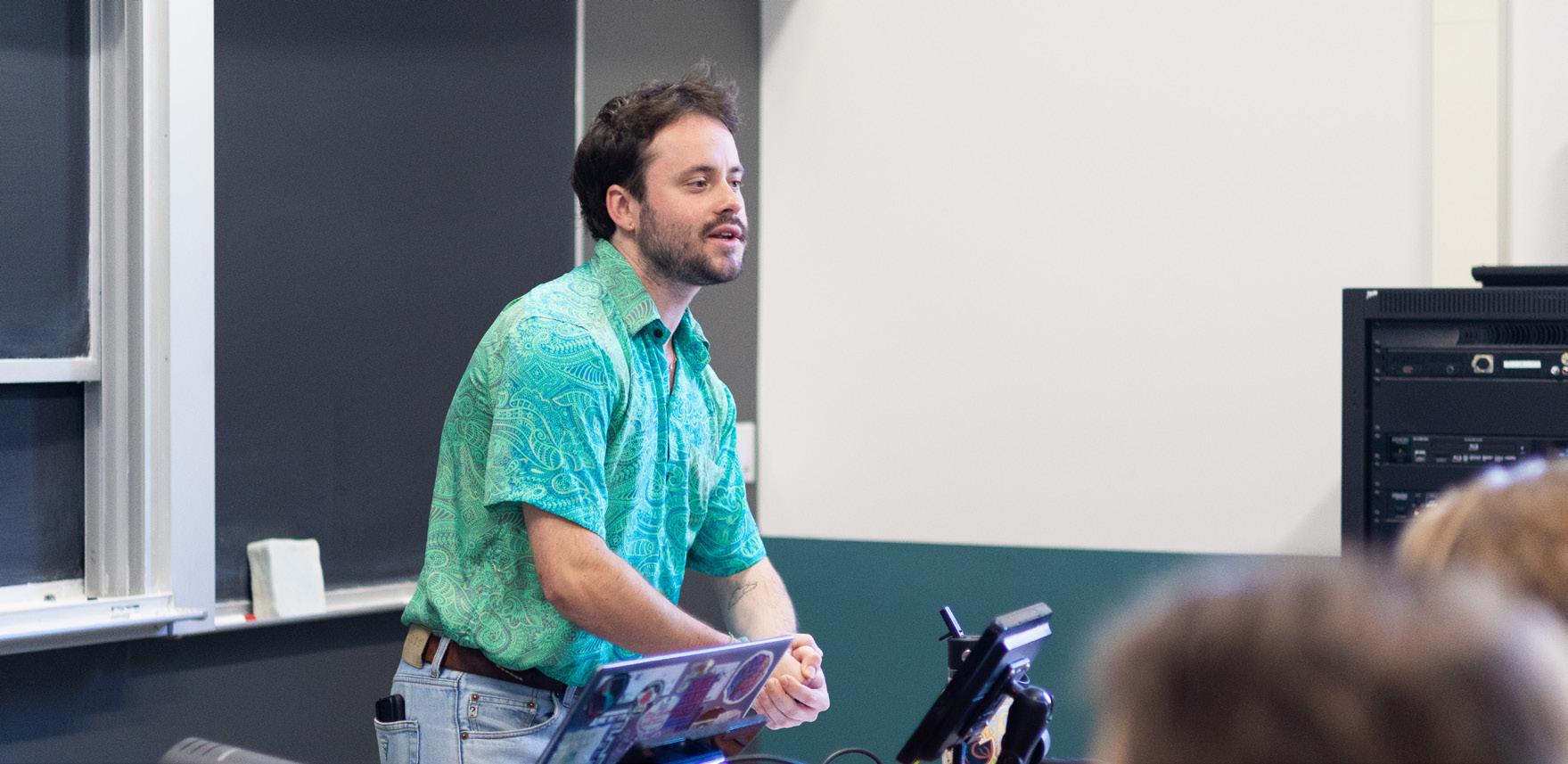
BY AMBER DUHS features@theaggie.org
Each fall quarter, new Aggies le into lecture halls and discussion rooms alike.
ey nd a chair, settle in and look up to nd someone who isn’t the professor — a structure unique to many modern classrooms, and one most students don’t recognize.
More and more commonly in undergraduate classrooms, speci cally in general education (GE) and lowerdivision courses, sections are being led by teaching assistants (TAs). While in the process of completing their graduate degree or attaining their Ph.D., these amateur-professors are the glue that holds the University of California (UC) undergraduate classroom together: leading discussions, teaching entire sections asynchronously and acting as the primary liaison between students and course knowledge.
At UC Davis, there are two main ways the classroom is set up. e rst is the more traditional way — a professor who lectures on the material for a designated amount of time per week and a TA who leads discussions, hosts o ce hours and works directly with students.
e second, however, features the TA as the star of the classroom: teaching, holding o ce hours, grading all student work and operating as the professor for all intents and purposes.
Aaron Saint John, a third-year Ph.D. student in German literature and an elementary German TA, described the bene ts to this classroom setup in a language course.
“I do best when we have this kind of level of freedom, and there isn’t necessarily a professor or a lecturer there every day saying ‘this is all you have to do,’” Saint John said.
With professors taking the backseat, TAs are given the opportunity to not only learn to manage their classrooms independently, but organize and change their curriculum accordingly.
“Being hands-on you can speci cally tailor how you teach a class to your certain section, based on general trends or behaviors; […] one section may be more active in answering questions, or pick up lab skills easier,” Kevin Gu, a fth-year chemical engineering Ph.D.
student who is teaching the Co ee Lab course this fall, said. is level of freedom does come with its qualms, however. As the undergraduate experience changes, so does the classroom — and for Siva Shinde, a seventh-year Ph.D. student who worked as a TA through all stages of the COVID-19 pandemic, a lot has shifted.
“Now that we have artificial intelligence, we have to change our strategies around language, because [...] the answers are available everywhere,” Shinde said. “We want to strategize exercises or assignments where students are forced to [...] engage with the material, rather than using AI to easily cheat their way through their homework.”
Beyond the challenges AI has brought upon every well-meaning TA, however, are the additional di culties described by Gu that come with teaching a course designed for a wider audience, rather than a specialized major or seminar course.
“If you’re […] teaching a class and it’s just [for] major [students], everyone’s there for a reason: they like the subject, they are taking a certain set of knowledge away from the class,” Gu said. “[In general education courses] everyone comes from a di erent level of lab skills, understanding [of] the subject and what they want to take away from the class itself.” Gu continued to explain how student determination can shape the goals of the classroom.
“You really have to understand what your students want to get out of it […] especially at the university level, you can’t force anyone to do anything,” Gu said.
In addition to the struggles and victories within the classroom are the external di culties that come with teaching through a publicly-funded position at a public research university.
“We’re in an especially tough time for academia right now in terms of funding,” Gu said. “We’ve had a lot of cutbacks [on] the amount of TAs that [can] be hired. So that means more responsibilities for TAs that do get hired.” is results not only in competition for a graduation requirement, but an
increased workload for already busy TAs.
e changing landscape of academia is unrelenting, from budget cuts to the constant development and improvement of AI platforms like ChatGPT, but that’s exactly why, according to Shinde, TAs are in a seemingly optimized position to foster educational growth.
“ ere are no young professors,” Shinde said. “Students are more open to [TAs].”
In intimate discussion sections, or a language class where you embarrassingly mispronounce the same word for the 14th time, the goal is for students to share their ideas, feel comfortable and engage in academic conversation. at doesn’t [always] happen with a professor,” Shinde said. This often necessitates a more approachable figure, allowing for students to take advantage of their more interactive courses.
e role of a TA doesn’t solely bene t undergraduate students though, as the position provides many graduate and Ph.D. students with an opportunity to grow as instructors.
“[Being a TA] is a learning experience for your TAs as well,” Gu said.
As a matter of fact, many graduate and Ph.D. students are required to teach multiple quarters as TAs to receive their degrees. Beyond this requirement, however, is the fact that many TAs nd genuine satisfaction and love in teaching.
“Even just after one or two weeks, watching people actually be able to communicate with each other — to write, to speak, in a language that they couldn’t even begin with just two weeks before — is actually really, really rewarding,” Saint John said.
Despite the natural stress of a graduate degree or Ph.D. — along with the changing tides of academia as a whole, especially at a UC, and the struggles and triumphs that come with your average classroom — TAs keep their heads up.
As Gu, Shinde and Saint John noted, juggling multiple responsibilities and sections can be di cult; however, understanding that they’re making a difference in students’ lives and education can make it all worthwhile.
Recent research highlights a songbird species’ beneficial relationship with their siblings, a trait that also presents in falcon sibling relationships
BY KATELYN BURNS science@theaggie.org
While cooperative relationships with siblings aren’t always the norm, in a study published in peer-reviewed journal Public Library of Science (PLOS) Biology on Oct. 9, 2025, a songbird species’ relationship with their siblings was found to bene t their foraging skills.
e great tit, or Parus major, the species the study looks at, makes for a good model species. e bird is wellresearched, receives limited parental care and has observable social networks — an important trait for studying social learning. Social learning is any learning through observation, and involves strategies on when, who and what to copy.
e author of the study, Dr. Sonja Wild, is a behavioral ecologist and research associate at UC Davis. She explained what she found regarding the great tit’s sibling relationships.
“In a previous study looking at how social associations change during transition to independence in this species, we have shown that juveniles initially continue preferring to associate with siblings, even after they have become independent from their parents,” Wild said via email. “Our current study extends these ndings, demonstrating that the close proximity
among siblings provides opportunities for them to learn behaviors from one another.”
Of course, sibling relationships vary greatly. Not all bird species will have cooperative interactions; some might be more antagonistic. Lynn Scho eld, a biologist for the Institute for Bird Populations, was able to comment on some of the di erent ways birds interact with their siblings.
ere is a very broad variety of relationships that birds can have with their siblings; there are some species where the norm is siblicide [where one sibling kills another],” Scho eld said.
For most raptor species, sibling relationships are antagonistic and siblicide is common. Falcons — one of the species Scho eld has spent the most time interacting with — are a notable exception, being uniquely close to their siblings.
Falcons are very di erent from the great tits. ey have smaller clutches and receive more parental care, which also impacts their sibling relationships.
“In species with extended parental care, parents are often preferred sources of information, leading to stable intergenerational transmission of knowledge,” Wild’s study reads.
“However, little is known about transmission pathways in species with limited periods of parental care.”
Great tits are species with limited
This UC Davis student promotes diversity and food justice by cultivating Latin American crops and hosting cooking workshops
BY LILA MAGBILANG science@theaggie.org
Standing behind the stove of the Davis Food Co-Op Teaching Kitchen, Itzel Villagran looked like the star of her own cooking show. And to some extent, she was — this was the rst of many cooking workshops Villagran will host as part of her project with the Student Farm, “Comida y Comunidad.”
Disheartened by the lack of Latin American crops and ingredients in Davis, Villagran, a fourth-year student majoring in sustainable agriculture and food systems, decided to take matters into her own hands.
A recipient of the Green Fellowship (an award that funds student-run projects in sustainability and social justice), she designed a project that gave traditional Latin American crops a space on the Student Farm, as well as an opportunity to educate the public about their preparation methods and cultural signi cance.
Villagran’s rst workshop focused on masa, a corn-based dough used in tortillas, tamales and a never-ending list of other Latin American dishes. Despite its prevalence as a staple ingredient, preparing masa is no small
feat. Corn has to be dried out, soaked in an alkaline solution (a process called nixtamalization) and then ground twice over to yield the end product: in this case, a coarse yellow-blue dough used to make quesadillas. Beneath the surface of this project, there is a foundation of science and research. e intricacies of growing new crops had to be learned — this was the rst time the Student Farm had grown our corn — and chemistry can be found running through the veins of any cooking class. Take nixtamalization, for example. By adding food-grade lime (calcium hydroxide) to water and soaking the corn for several hours, its chemical composition is changed.
Forrest Li, a Ph.D. candidate in the Ross-Ibarra Lab, which focuses on research involving maize and teosinte, commented on this process. is solution allows for the outer pericarp layer of the kernels to be removed easily, making niacin, a nutrient important for preventing pellagra, more available to humans,” Li said via email.
Pellagra is a disease that causes symptoms like dermatitis and dementia.
Nixtamalization allows the full
parental care. ere are other di erences between great tits and falcons, despite both displaying cooperative — but still unique — sibling relationships. For example, unlike the great tits’ foraging behaviors, falcons’ basic hunting behaviors are innate.
“[Falcons] that are raised in captivity, and do not have an adult that actively taught them to hunt, will learn to hunt,” Scho eld said, with regards to falcons’ ability to learn hunting behaviors without parents or other adult birds.
e falcon’s basic hunting strategy is to locate a target and drop on it at high speeds. While their basic hunting skills might be innate, siblings can help one another perfect those skills. Falcons have been recorded playing with their siblings in ways that mirror hunting behaviors.
For great tits, their siblings help them learn foraging skills via social learning. In Wild’s study, puzzles were used to represent foraging behaviors. Wild explained how puzzle boxes correspond to natural foraging behaviors.
“During foraging, great tits often have to move foliage aside and sort through leaves with their beaks to nd food items such as seeds or insect larvae,” Wild said. “In urban settings, they are also often required to modify the motor patterns they use for foraging in natural settings to access anthropogenic food

such as trash or garden feeders.”
Di erent species and goals require di erent learning strategies. Whether experiential learning through practicing
hunting
through observing siblings’ foraging skills, these relationships are certainly something to consider.

nutrient availability of corn to be accessible, an important practice when considering its ancient origins.
Today, it continues to be an essential part of Latin American food preparation.
In this case, there’s only so much to learn from the classroom. Despite her background in soil science and her experience at the Student Farm, Villagran owes a lot of her understanding to generational knowledge.
“I feel like the majority of my teachings that I’m going to bring to this workshop are knowledge that has been passed down from my grandparents [….] Let me call up my grandma,” Villagran said, laughing as she described how another intern asked her how to propagate nopales (a type of cactus).
Villagran aims to address the intersection between food justice and environmental justice through “Comida y Comunidad.”
“When I think about food justice, I think about making sure that everyone has what they want to eat available to them,” Villagran said. “And environmental justice wraps into that — the Student Farm naturally is such a good place to learn about that. We try our best to farm with the land and nurture the land.”
“Comida y Comunidad” is one of the numerous student-run projects at the Student Farm, many of which have similar goals of making culturallysigni cant crops more accessible to students and the greater Davis community.
Student Farm Market Garden
Coordinator Janvier Velilla notes how
the legacy of past projects continues to in uence the farm.
“[Past projects] get carried on, not only through the actual project, but just the inspiration that comes and hits other students,” Velilla said. From volunteering to internships, there are a number of ways to get involved at the Student Farm. ere are some community members who have brought in seeds of their own that they wanted to grow here, like kadu squash, fenugreek and moringa,” Velilla said. “If we can grow it, we’ll try.”
Villagran’s masa workshop is just the rst of many she has planned for the school year. ey are open to the public and are free of charge — visit the Student Farm website or their page on Instagram to sign up for future events.
Nine can’t-miss science and technology events in Davis: including the Chemistry Magic Show, Pre-Health Conference and HackDavis
BY NAREN KRISHNA JEGAN
science@theaggie.org
Davis Science Café Held each month in collaboration with G Street WunderBar, UC Davis Chemistry Professor Jared Shaw hosts the Davis Science Café to bring reallife research closer to the general community. Every Science Café brings in a local expert in basic or translational science. Past lineups include professors of psychology, entomology and even statistics. Unlike departmental or research meetings aimed at sharing results, the Davis Science Café aims to introduce community members from diverse backgrounds to new science elds, in an exciting environment which fosters interaction and removes the isolated feeling that comes with sitting in a college lecture hall.
e Davis Science Café has cemented itself as one of Davis’ beloved science events. Taking place on the second Wednesday of each month at G Street WunderBar from 5:30-7 p.m., the goal of each café is to bring forth a new piece of science you may not have known existed. For more information, contact Jared Shaw (jtshaw@ucdavis.edu) or Haleigh Patten-Trujillo (hpattent@ucdavis. edu).
e Bohart Museum of Entomology
Tucked inside Academic Surge, the Bohart Museum of Entomology is one of UC Davis’ most fascinating hidden gems. Home to over 7 million insect specimens, it’s the seventhlargest insect collection in North America and a must-visit for any
science enthusiast. e museum o ers regular open house days, where visitors can learn about insect biodiversity, ecology and behavior; lucky visitors sometimes even get the chance to hold live insects from the “petting zoo.”
Whether you’re a rst-year biology major or simply curious about the sixlegged world, the Bohart Museum is one of the best ways to truly bask in the diversity of life on this planet.
California Raptor Center No, it’s not that scene from Jurassic World where Owen Grady hops in to tame the hungry Velociraptors; it’s one of the top research animal science facilities in the world, dedicated to the rehabilitation of injured and orphaned birds of prey.
e California Raptor Center, located at the UC Davis School of Veterinary Medicine, rehabilitates injured and orphaned birds of prey like hawks, owls and eagles, while also serving as a vital research and education hub. Visitors can tour the facility, meet ambassador birds and learn about the crucial ecological roles raptors play as top predators and environmental sentinels. e center’s mission blends public education with hands-on veterinary science, making it an ideal destination for students interested in wildlife biology, veterinary medicine or environmental science.
e BioInnovation Group Research Training Program New to research or looking to gain some solid wet-lab experience? e BioInnovation Group (BIG) hosts a variety of research programs that students
can participate in. Among these, the BioInnovation Group Research Training Program (BIG-RT) provides students with knowledge in running tasks such as gel electrophoresis and polymerase chain reactions — completely for free. In small groups, students are tasked with using these lab techniques to solve pressing realworld problems, providing strong critical and research thinking skills. BIG-RT operates multiple sessions every quarter and is on a rst-comerst-serve basis. Once students nish BIG-RT, they are awarded a certi cate of completion, which can be used to join research labs on campus. For more information regarding BIG-RT session availability per quarter, follow @big.rt.ucdavis on Instagram.
Picnic Day Known all over the United States, Picnic Day is a day-long celebration where the Davis community joins together in festivities, from dawn until dusk. UC Davis’ science departments host numerous interactive exhibits on campus, including the famous “Chemistry Magic Show.” Packed with parades, numerous tabling events and interactive exhibits on campus, one could nd themselves sampling sorbets made from liquid nitrogen in the morning, tinkering with sound-following robots and launching weather balloons in the afternoon, ending the day with a variety of shows o ered by the Physics, Entomology, Chemistry and Computer Engineering Departments. Among all of the activities mentioned in this article, Picnic Day is one event you cannot miss.
Held every spring and spread over multiple days, the annual Undergraduate Research Conference (URC) brings together hundreds of students who share ongoing research projects in areas from science to arts and humanities. If you’re interested in expanding your research skills or want to see what your fellow classmates have been working on, this is the place for you. Pre-Health Conference at UC Davis
Whether you are familiar with the pre-health eld or are curious about which career to choose, the Pre-Health Conference at UC Davis is the largest pre-health event in the nation, boasting over 3,000 attendees and 200+ exhibitors representing over 20 health professions. Attending the conference provides students with the opportunity to understand the various programs and careers available, while directly networking and interacting with deans of admission and admissions committee members. Students also get the opportunity to learn from individuals from all stages in their pre-health journeys and gain valuable clinical skills through didactic and interactive workshop sessions. If you’re a new pre-health student at Davis or looking to explore a career path that ts your interests, this event is a must-attend. HackDavis Run entirely by students, HackDavis is one of the largest collegiate hackathons on the West Coast and an exciting opportunity
to collaborate, innovate and create something meaningful. Over a 24hour weekend, students form teams to design apps, websites and hardware projects that address real-world issues in sustainability, education and social good. Even if you’re new to coding, HackDavis welcomes all skill levels with workshops, mentors and free food to keep ideas (and energy) owing. It’s an inspiring, fast-paced event that embodies the creative and collaborative spirit of Davis’ student tech community. Even if you don’t have a strong background in technology, this is a great way to work with friends in a team to create a project you can be proud of. e UC Davis Arboretum Home to over 2,500 plant species and varieties, the UC Davis Arboretum is one of Davis’ crown jewels. Stretching along the Putah Creek waterway, the Arboretum o ers a scenic escape lled with native and international plant collections; from Australian eucalyptus groves to California native gardens. It is a favorite spot for students to walk, jog or simply unwind amongst the ducks, turtles and sh that inhabit the Arboretum’s ponds. Moreover, if you’re interested in learning about the biodiversity of natural environments, the UC Davis Arboretum and Public Gardens team hires student interns and volunteers to help maintain the ecology and land management of the Arboretum. Whether you study ecology or agriculture, or are simply looking to get back into nature, the Arboretum is one of the most blissful places to be.

UC Davis Athletics partners with Tahoe Environmental Research Center to unveil brand new Lake Tahoe-themed jerseys
The campaign aims to boost excitement surrounding athletics and promote the research center’s work
BY COLINA HARVEY sports@theaggie.org
In May, UC Davis Athletics announced a new line of jerseys to be worn by nine UC Davis teams this year.
e jerseys introduced a new shade of blue into the color scheme: “bold aqua” to represent Lake Tahoe.
e jerseys are a collaboration with UC Davis’ Tahoe Environmental Research Center (TERC). TERC conducts research on aquatic and terrestrial ecosystems, aiming to preserve Lake Tahoe through its studies.
Danielle Shank, the senior associate athletics director for External Relations and chief marketing o cer for UC Davis Athletics, explained how the partnership was formed.
“Over the summer, [we] signed a new deal with Adidas; that’s who out ts all of our teams,” Shank said.
“With signing this deal, they gave us some promotional money [...]. I was talking with our athletic director about how he wanted to spend some of that promotional money, and we’re always looking for ways that we can show that Athletics is really the front porch of the university.” While brainstorming which on-campus units to highlight with the new jerseys, Athletic Director Rocko DeLuca decided to partner with TERC.
“I don’t think enough people know about [TERC] given all the research they do,” Shank said. “If you were to Google what the temperature of Lake Tahoe is, that’s a UC Davis buoy that’s measuring that.”
e jerseys, which Shank helped design in collaboration with Adidas,
UC Davis football team wears Tahoe blue uniforms for the game
are light blue and feature the outline of the lake. e UC Davis Athletics logo is overlaid onto the illustration of the lake, which nearly stretches from coast to coast and creates a visual representation of the research that TERC does in both California and Nevada. e color, “bold aqua,” was chosen to represent the water of the lake.
“When we worked with Adidas and looked at their color palette, that’s actually the name of the color,” Shank said. “We were looking at di erent shades of blue as much as we were learning about the Tahoe Environmental Research Center. eir

OCT. 23, 2025

3 - 2 (WIN)
research, their innovation is also pretty bold, and so it kind of seemed like the perfect marriage.”
website and social media engagement for the Athletics Department increased signi cantly.
“We got two million people who saw that segment, and that was the day of our game,” Shank said. “I’ll have to pull up the email, but I asked the Tahoe folks, ‘Did you get new people coming to your website?’ And they said we had, you know, 1,000 new users that never knew about us [or] followed our website. Our social media engagement went up 400%, so it’s clear proof of concept that it works.” Shank hopes to be able to similarly highlight other units at UC Davis; however, the frequency will depend on the availability of funding.
While there has been a large positive response to the campaign, some community members have objected to it. Social media users, along with fans of other universities — such as the University of Nevada, Reno (UNR) — have called it a stretch.


OCT. 19 - 25, 2025
With a five-set win over UCSB, UC Davis continued their undefeated streak in conference play. The team has won nine of its games thus far this season, placing them in first place in the Big West standings. In the first and third set matches, the Aggies fell to the UCSB Gauchos 26-28 and 24-26, respectively. However, in the second, fourth and fifth set matches, the Aggies bounced back and beat the Gauchos 25-10, 26-24 and 15-8. This gave the Aggies their overall 3-2 win over UCSB. Third-year managerial economics major Brooke Hibino scored a career-high 18 kills against the Gauchos, bringing the Aggies to victory in their fifth set.
WOMEN’S FIELD HOCKEY
OCT. 24, 2025

OCT. 23, 2025
1 - 2 (LOSS) 0 - 1 (LOSS)

Marked as the senior game for the UC Davis field hockey team, the Aggies lost in overtime against UC Berkeley. In an intense game, the Aggies were off to an early lead thanks to a goal by fourth-year environmental policy analysis and planning major Karly Redman. Despite many attempts, UC Berkeley remained scoreless until the third quarter, during which they broke through the Aggie defense and scored. With neither team scoring the remainder of the match, the game went into overtime, giving UC Berkeley the chance to score again and take the victory.
WOMEN’S SOCCER
In a tough final home game match-up, the Aggies lost to the University of Hawai’i 0-1. Within the first eight minutes of the match, Hawaii’s Rainbow Wahine scored a strong goal. UC Davis was unable to capitalize on any attacks, despite many efforts by the team. The Aggies almost equalized with a shot by defender and third-year political science major Summer Humphreys at the end of the first half, which narrowly missed and hit the crossbar. Goalkeeper and fourthyear political science major Cat Pieper recorded five major saves throughout the match.
“We’re trying to link to their website,” Shank said. “We’re trying to make sure that we collab on social media and that we’re always talking about them, putting them in the forefront. So it’s not just, ‘Hey, we picked this new color.’ It’s very purposeful.”
The campaign has successfully boosted the pro le of both UC Davis Athletics and TERC, according to Shank. After the jerseys were featured on ESPN’s SportsCenter in September, both tra c on TERC’s
While UC Davis Athletics has done themed games in the past, a partnership of this nature with new, customdesigned jerseys is the rst of its kind at UC Davis. e nine ticketed teams each have one Tahoe-themed game on their schedule, in which they will display the jerseys. While the non-ticketed teams may not sport the jerseys this year, the Tahoe jerseys will be added to their collection once they order new jerseys. However, the campaign is not centered solely on the new jerseys; the Athletics Department is also ensuring that they bring attention to TERC, every step of the way.
“ at’s ridiculous,” UNR football Head Coach Je Choate said in an interview from a post-media day meeting. “I’m sorry UC Davis, but that’s a fail in my book.” UNR, which has a Division I Athletics Department 40 miles from the lake, hasn’t made a statement regarding the matter; however, many local Reno news outlets have published media in criticism. Shank clari ed that UC Davis is not attempting to claim Lake Tahoe; rather, they are celebrating what makes UC Davis special.
“It’s highlighting the research and the work we do there,” Shank said.
Captain Wyatt Moore shares thoughts on the upcoming season
BY DANIELLE WIRNOWSKI sports@theaggie.org
While UC Davis is home to competitive Division I athletic programs, club sports play an equally important role in campus life. ese student-run teams o er opportunities for students to stay active, build close friendships and represent the school in a di erent way. Club sports often do not receive the same level of attention or support as their varsity counterparts, but this can give clubs without a varsity counterpart an advantage. While a student may come to UC Davis thinking there is no opportunity to play hockey at the collegiate level, they have yet to discover the club hockey team. e UC Davis club hockey team, which lacks a Division I counterpart, serves as the highest level of hockey representation at UCD. e regular season for UC Davis’ club hockey team runs from the beginning of the fall quarter up until the end of winter quarter. e team has the opportunity to play into spring quarter if they make the playo s. e Aggies are part of the Paci c Collegiate Hockey Association (PCHA) and play against other University of California schools, local universities and even out-of-state schools.
e club has made massive progress in recent years compared to its start in the 1980s, both player-wise and in outreach.
“I came in as a freshman and there were 11 people in the club,” Captain Wyatt Moore, a fth-year mechanical and aerospace engineering major, said. “Maybe two or three of us had really
competitive hockey experience before and coming into this year. We have 45 members now.”
e expansion of the team over the past few years has increased the team’s numbers and potential for success.
“We had all the skill in the world last year, and now this year, it’s really about coming together,” Moore said. is is the year to really try and go do something special.” e team went to the playo s for the rst time since 2020, but lost to Arizona State University in the seminals. Moore re%ected on the semi- nals with a positive outlook.
“Even on the side of a loss, I thought that was one of our best games of the season,” Moore said. “I’m pretty con dent that if we play to our abilities, we should go undefeated. [We] can play o of strengths and [we] can play to their weaknesses.”
Just like any other sport, hockey goes far past what skills and talents contribute to how well a team can play together, but rather relies on the team’s culture and their bond.
“ e hockey culture in California is very tight-knit,” Moore said. “ ere’s a lot of prior connections, it really fosters a close connection and it’s really fun to get involved as early as you can.”
All these prior connections come with prior bonds, so while some players might be new to the team, they most likely already have a connection with someone on the team.
is just makes the team bond stronger and increases their ability to work together and make it to the playo s again this year.
The