


With finals on the horizon, Aggies are busy studying for exams and preparing presentations. However, as June rolls around, many conversations inevitably shift toward summer plans.
Although many students choose to head home for the summer, year-long leases, summer classes and local jobs make staying in Davis enticing, especially for upperclassmen.
While summer in Davis can be very fun, it’s undeniably different from the atmosphere of the typical school year. With the majority of students gone, it’s easy to get bored with typical, not to mention expensive, Davis activities. If you’re looking to go beyond shopping and grabbing a bite to eat in downtown Davis, there are plenty of things to explore free of cost.
Isabella Holmes, a UC Davis alum with a degree in English and communications, has spent multiple summers exploring what Davis has to offer. She finds the unique atmosphere of July and August to be not only bearable, but charming.
“I think it’s kind of sweet and cozy when the town quiets down a little bit, and a lot of students are out of town,” Holmes said. “You get close with the people who are there over the summer because there’s just less students.”
The former Aggie also feels that summer can be a great time to get to know Davis beyond the university.
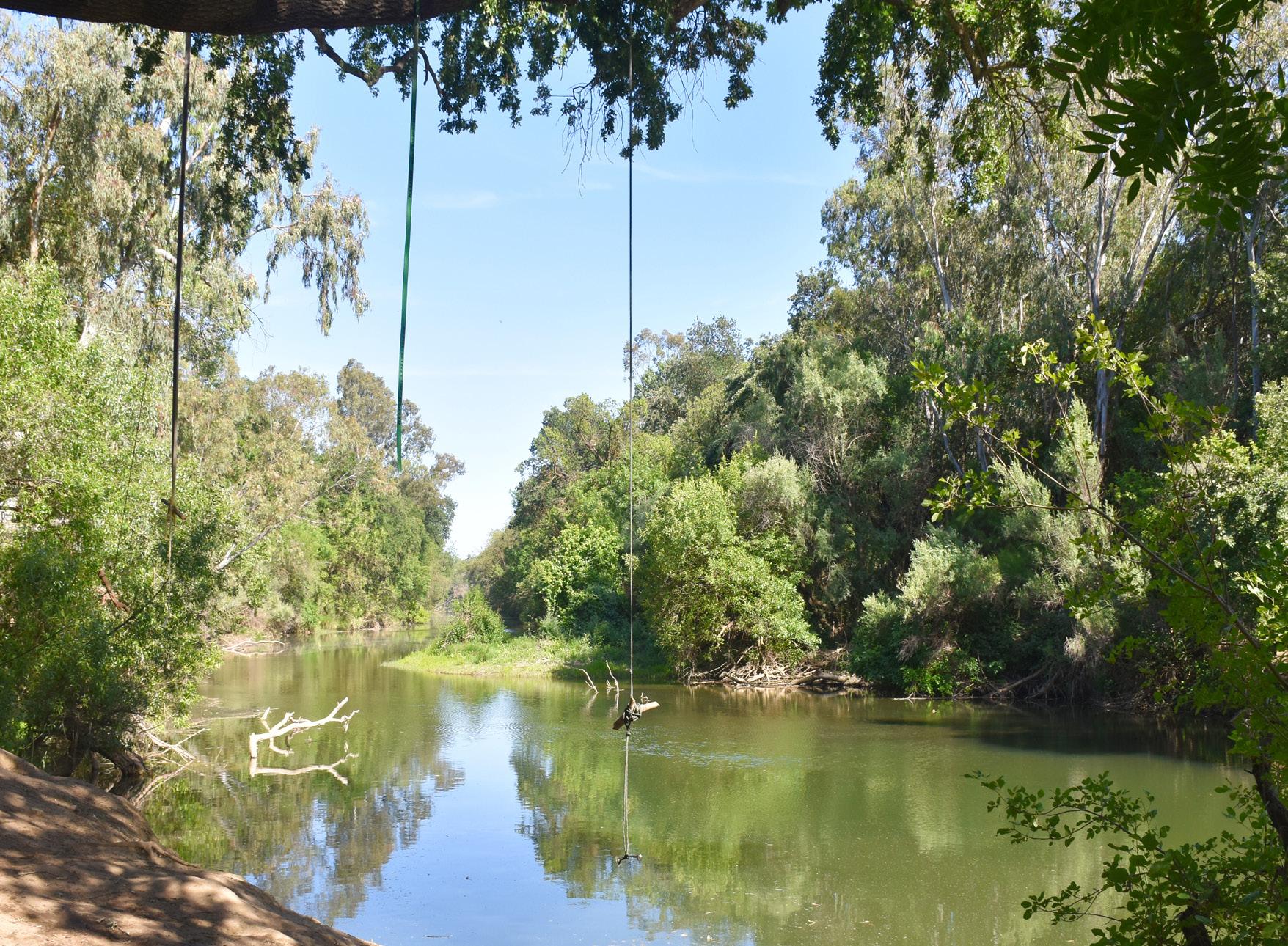
“I’ve found that the summer is the time I’ve connected more with Davis as a city, not just where [I] go to school,” Holmes said. She asserted that a big part of this connection involves exploring local outdoor spaces.
“Putah Creek is, like, the best thing ever,” Holmes said. “If you go a little bit further out towards Lake Berryessa, it’s more nature-y and has better swimming quality. That’s really pretty too.”
Sarah Gerard, a UC Davis alum with a degree in computer science, agrees that there are still opportunities for fun in Davis over the summer, they
just differ from the typical activities that take place during the school year,
“It gets quieter, but you have more things to do,” Gerard said. “There’s so much to do outside, and so you get to really dive into those outdoor activities.”
These activities help to beat not only boredom in the summer months but also the heat. If you’d prefer to beat the heat from the comfort of the indoors, there are plenty of free community activities to explore as well.
Lindsay Terry, a long-time resident of Davis, has found the Davis art community to be a great way to fill her summer days.
Did you know you can take coastal marine courses at Bodega Bay?
BY MARLE LAMOUNTRY science@theaggie.orgUC Davis is known for its worldrenowned science research, iconic bike culture and sprawling fields where cows graze. But were you aware that our campus also has a field site dedicated to fostering a crossdisciplinary environment to teach students about the coastal marine sciences? For undergraduates interested in oceanography, ecology, marine biology and more, the Bodega Marine Laboratory may be just the place for you. Located in Bodega Bay, around an hour north of San Francisco, is the UC Davis Coastal and Marine Sciences Institute (CMSI), where the Bodega Marine Laboratory and Reserve is based. At this reserve, students engage in active hands-on learning about coastal marine sciences on the field. During summer sessions, students can enroll in up to 10 units of courses each session and stay in the dorms. All courses require consent of the instructors via an application process and scholarships may be awarded, according to the Coastal and Marine Sciences Institute website. Although these courses are mainly advertised to those in the marine coastal science major, students of all majors are encouraged to apply.
One of the most enticing aspects of the Bodega Marine Lab is the research opportunities involving various disciplines within marine
READ MORE
See inside for our Senior Issue!
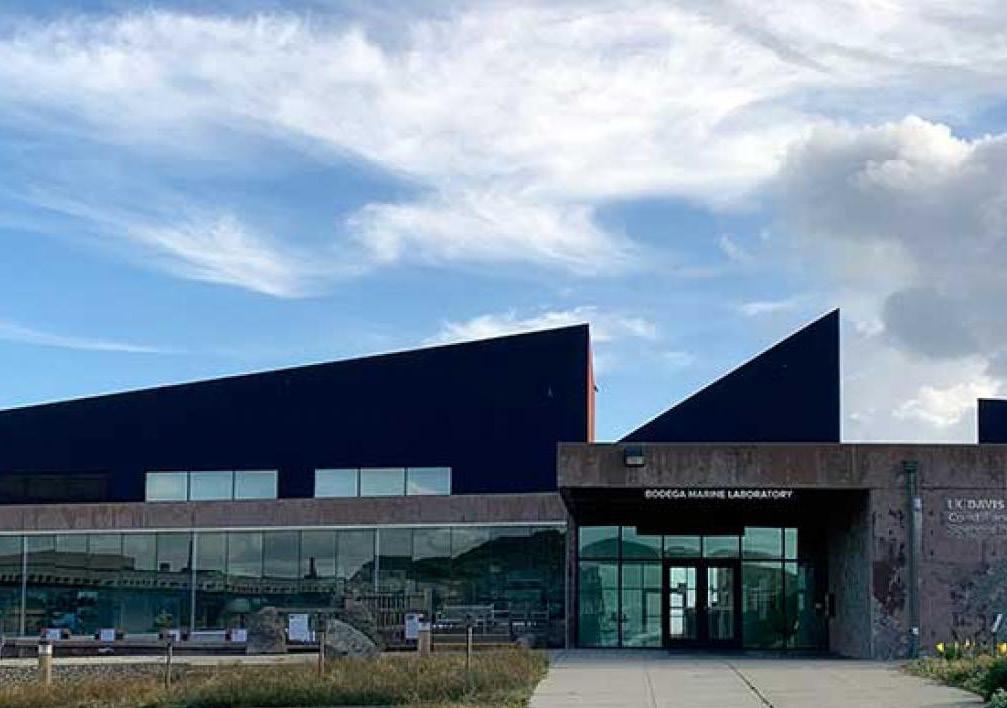
science. Students can work in pairs on a research project of their interest under the guidance of esteemed faculty members.
Pachia Lee, a fourth-year marine & coastal science major, commented on her time at the lab last summer.
“I had no lab experience before Bodega,” Lee said. “After, I had a lot of experience. During the summer, the course was 10 weeks long. We stayed in a dorm over there; it was two people per room. They gave us food [and] made sure we had breakfast and packed lunch. During our free time, we watched TV and spent time with friends. It was just like a summer camp.”
Lee originally came to UC Davis as a pre-medical student, but soon realized her passion for the marine sciences.
“I thought [pre-med] was nice too, but I think ocean animals are underresearched,” Lee said.
For undergraduates seeking an immersive educational experience, the Bodega Marine Lab serves as a gateway to a world of possibilities. With courses focusing on topics such as coastal marine ecology, marine
invertebrate biology, oceanography and marine conservation, students are encouraged to learn beyond the classroom and engage directly with the marine environment. Whether entering a path toward academia, conservation, policy-making or industry, the skills and experiences learned through this lab provide students with insights that could not be replicated elsewhere.
“I would definitely recommend this program,” Lee said. “They’re really inclusive; they’ll accept anyone. If you think you want to go to grad school or [conduct] research, you’re going to like it — or you’ll know if it’s for you [or not].”
The prospect of spending a summer immersed in an environment where peers can share their enthusiasm for coastal marine sciences is inarguably enticing. Although applications for summer 2024 have already closed, applications for summer 2025 will open in the winter. For more information, visit the Bodega Marine Laboratory website.
“One thing that I really recommend is The Secret Spot on D [Street],” Terry said. The Secret Spot, a relatively new art gallery in Davis, provides a space for community members to see, create and talk about art.
“Not only are they open every day, but it really is a very welcoming third space where you don’t even need to be an artist, you can just go hang out,” Terry said.
In addition to The Secret Spot, a do-it-yourself (DIY) art show, The Boneyard, provides more opportunities for summer art exposure.
“It’s basically a traveling underground art show, and the artist who runs it has an event once a month,” Terry said. The show, which can be found on Instagram, @ theboneyard.artshow, brings together art from local artists and vendors and offers another place to find community in the quiet summer months. Their next show will take place on June 8 at The Growing Groves, a local plant store on E Street, and will have a special theme in recognition of June being pride month.
Tatum Kubik, a long-time Davis resident, believes there is much to discover in the areas around Davis as well. The farm fields that surround Davis give unique opportunities for sunset lookouts and flower picking, among other things.
“It can be fun to go take sunset pictures at some of the sunflower patches here, or at the Mezger Family Zinnia Patch,” Kubik said via text.
The Mezger Family Zinnia Patch, located just past the city of Woodland, offers visitors a free field of flowers to pick from, as well as occasional extra vases and scissors to use. There’s only one rule — to get a free bouquet, you must also pick flowers for someone else.
A “misunderstanding” led to several ASUCD units budgeting for two directors rather than the singular one allowed BY VINCE BASADA campus@theaggie.org
ASUCD Internal Vice President
Aarushi Raghunathan called the May 30 Senate meeting to order at 6:14 p.m. After roll call, she read the UC Davis Land Acknowledgement.
The Senate began the meeting by rectifying an error in the budgets of several units. Several units had been approved to have two unit directors for the 2024-25 fiscal year, and she only later learned that due to payroll and personnel rules, units can only have a singular director, according to Controller Allyson Francisco. She called the situation a “misunderstanding” between herself and ASUCD HeadQuarters Office Manager Paula Nichols, affecting the Entertainment Council, Whole Earth Festival, Aggie Reuse and the Campus Center for the Environment. These units’ directors were brought in throughout the night to rectify the issue and reopen their respective budgets, with most relocating the previously budgeted funds for a second unit director or assistant director role.
The Senate also reopened the student government budget to address a previous issue where commission chairs’ pay had not remained constant throughout the summer. The Senate amended this issue with Internal Affairs Commission (IAC) Vice Chairperson Zachary Bogglen representing commission chairs. Senator Curtis Chen also moved to increase commission chair pay to $18.50 an hour from the previously budgeted $18.00, pointing to remaining funds in the total budget.
After a short break, President Francisco Ojeda gave his spring quarter State of the Association. He started the brief speech by asking the senators present, “What is our favorite word? Impeachment.”
“Thanks for giving me time, for one last time, to have a state of the association; my last address from me to you all from the bottom of my heart,” Ojeda said.
Ojeda went on to congratulate the team behind Picnic Day for a “wonderful” celebration and the Entertainment Council for a successful Lawntopia, which he said was, “not really [his cup of] tea, [though] some people had fun.” He also acknowledged the Whole Earth Festival and said they made the right decision in moving the location to Hutchinson Field after the pro-Palestinian encampment had been set up at the event’s standard venue.
“[The] Senate should never interfere in a peaceful protest,” Ojeda said about the move.
He went on to mention the upcoming Pride Festival and The Pantry’s move to the space formerly occupied by Gunrock Gaming.
Ojeda also thanked Francisco for her work on the budget.
“While it was hectic, I think it went well and [smoothly],” Ojeda said. “It seems that needs were met this time around.”
Ojeda concluded with final remarks on the past academic year.
“I am not able to use the word ‘fun’ to describe this year,” Ojeda said. “I’d probably just use the word ‘fun’ to cut things short with you all.”
The Senate gave light applause before moving to review written reports from IAC and Housing Advising for Undergraduate Students (HAUS) before hearing the Housing and Transport Advocacy Committee (HTAC)’s quarterly report delivered by Chairperson Christina Smith, a thirdyear political science, public service major.
Smith noted that her team had recently transitioned into a projectbased model in which volunteers individually focused on projects they were passionate about. Smith recently worked to get HAUS recognized for Davis’ Thong Hy Huynh Awards, which she called, “an excellent time,” and that, “The smile on [HAUS’] faces made [her] year.”
Students and experts discuss resilience in higher education
 BY SABRINA FIGUEROA features@theaggie.org
As the 2024 spring quarter comes to an end, many prepare to walk across a stage to get their degrees — something students may have been dreaming of since they enrolled in their colleges.
Included in this group are some students who identify as Hispanic and Latino, as they now make up 19% of the total United States population compared to the 12.5% of the population they made up in 2000.
As a result of this rapid growth, the number of Hispanics enrolled in colleges and universities have more than doubled in the last two decades, according to a study by the Pew Research Center. To put this into perspective, only 1.5 million Hispanics were enrolled in postsecondary institutions in 2000, and in 2019 that number increased to 3.8 million.
“Seeing the amount of Latino and Hispanic students increase over the years is definitely a very big milestone for [the Hispanic] community,” Alexia Magdaleno, a second-year biological sciences major, said. “I think our community faces a lot of challenges when it comes to higher education, so to see growth regardless of that is super important.”
These challenges range from family responsibilities to finances to being a first-generation college student, which was especially apparent during the COVID-19 pandemic, according to Deborah Santiago, co-founder and CEO of Excelencia in Education.
“Because [Hispanic] adults tend to be blue-collar workers who lost out in [the economy during the pandemic], having additional hands, all able-bodied folks working, [became] essential [during the pandemic],” Santiago said. “Students [were] having to prioritize supporting their family. Going to college is another way to do that, but the immediate need [had] superseded the longer-term goal.”
These barriers have caused Hispanic or Latino identifying students to approach pursuing higher education in a different way than the usual college experience, Santiago explained.
“Latinos represent what we call a very ‘post-traditional’ student body,” Santiago said in an article for NBC. “And that’s opposed to this traditional student that is going straight from high school to college, lives on campus, works less than 20 hours, is college ready and finishes in four years.”
Priscilla Félix, a sixth-year health science major at Sacramento State, shared her own story about her college education and how it was different from others’ experiences because of her Hispanic background.
Félix explained that after she graduated from high school, she went straight to UC Merced, but ended up having to drop out and transfer to a community college in her hometown.
“College has been a process and life has not been linear for me, I would say,” Félix said. “I dealt with impacted classes, the COVID-19 pandemic and imposter syndrome, so I ended up back in community college after a year and half at UC Merced. That left me feeling helpless because I really just wanted to finish college in four years.”
Regardless of setbacks, students can use their identities to stay motivated in the pursuit of getting a degree, according to Félix.
“As Hispanics, sometimes higher education isn’t always pursued by our community because a lot of us go straight into the workforce, but that
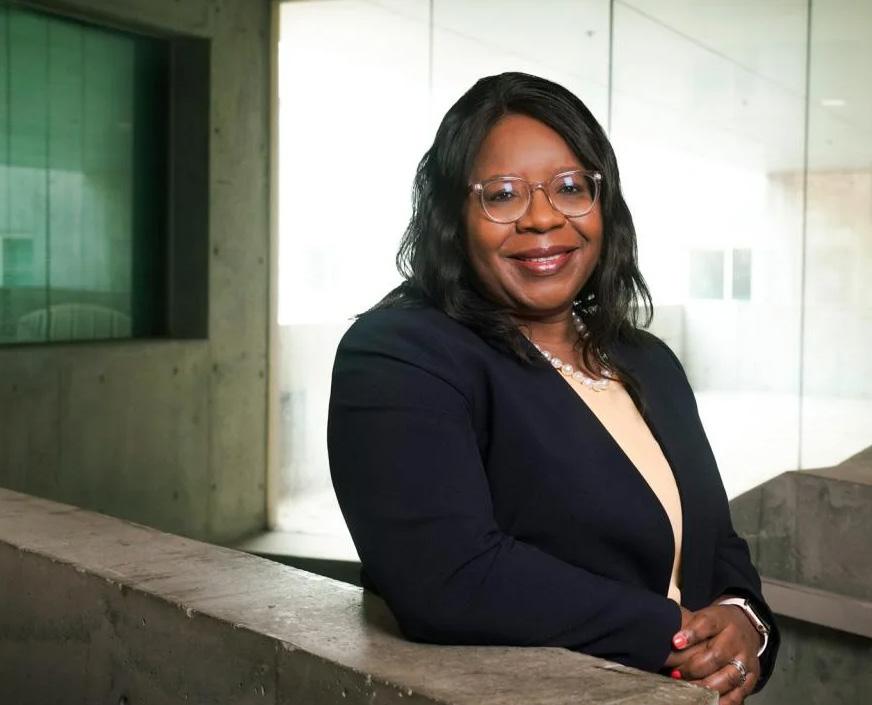
Atekwana was elected to the academy on April 24 for her geophysics research
BY JORDAN POLTORAK campus@theaggie.orgOn April 24, 2024, the American Academy of Arts and Sciences announced that Estella Atekwana, the dean of the UC Davis College of Letters and Science, was elected for her geophysics research.
“It’s a real honor that my work has been recognized by my peers,” Atekwana said. “They think I’ve made such a significant contribution that I’m worthy of an election into the academy.”
Atekwana is one of 250 newly elected members to the academy in 2024, who are all selected from various sects of academia, research and the arts.
The primary criteria for election is excellence in a field and records of continued accomplishment, according to the American Academy of Arts and Sciences website.
Atekwana said that she was surprised to be nominated into the academy.
“The person who nominated me didn’t even tell me,” Atekwana said. “When I got the letter, I thought I was being informed that one of our faculty was being nominated.”
Atekwana was born in the northwest of Cameroon in a town called Bamenda.
“My parents were marked for having two girls,” Atekwana said. “Already, I’m born into an environment that is stacked against me.”
She attended the Cameroon College of Arts, Science and Technology (CCAST) where she took a geology course. Her teacher would express that girls were not as skilled at geology as boys, according to Atekwana. Atekwana stayed in the course, rather than dropping as the teacher had suggested.
has actually made me want to pursue my education,” Félix said. “Not only do I want to encourage and set an example for other members of my community, but, because not a lot of my family has gotten their degree, I want to make them proud.”
In addition to enrollment at fouryear colleges and universities, another study by the Pew Research Center found that the increase of Hispanics and Latinos obtaining higher education has been especially evident in advanced degrees such as master’s degrees and doctorates. There were 710,000 Hispanics or Latinos with advanced degrees in the U.S. in 2000, compared to 2.5 million in 2021.
However, minorities still face the barrier of money when it comes to getting college degrees. According to an article by USA Today, about 70% of Latino undergraduates in higher education come from the bottom half of earners. And nearly half of Latino students are first-generation, with just under half of them being eligible to receive federal Pell Grants.
Félix shared her thoughts on getting an advanced degree after she graduates and how money plays a deciding factor.
“I could see myself going to get my masters or Ph.D. where I could do research, but that’s a big ‘if’ for me,”
Félix said. “I say that, just because money is a big thing for me. I don’t come from money, like, I have to work my way through college right now, too.
I just don’t know how that’ll look for me in the future or if [graduate school] will be a possibility.”
Working through college is also something Magdaleno takes part in, and is also something that causes conflicts with her studies.
“I want to put a lot of my time into studying, but at the same time, I have to work to buy my textbooks, commute or pay tuition. So, I feel like a lot of the time I could use for studying I use up by being at work,” Magdaleno said.
“I have to sacrifice sleeping by either staying up later or waking up earlier to study, so it’s been difficult. I’ve gotten used to it, but that doesn’t make it any less challenging.”
Another highlight in the recent influx of Hispanic and Latino college graduates and students is that the growth was mostly seen in Hispanic women, as reported by both the UCLA Latino Policy & Politics Institute’s Latino Data Lab and the Pew Research Center.
“Honestly, that is such a heartwarming achievement because some Latino or Hispanic cultures have machismo embedded into them, so a ‘womanly’ role would be to serve their husband,” Magdaleno said. “But, a lot of women don’t want to do that anymore, so their way out is through education.”
Félix added onto this by prefacing that a lot of Hispanic men tend to go into labor-intensive or blue-collar jobs because it provides pay right away and doesn’t require additional schooling.
“Going into that kind of work straight after high school is just easier for a lot of Hispanic men, and should still be respected,” Félix said. “A lot of us inherit survival modes from our parents or families where money is always going to be something we worry about, so I get why some people prefer to get a more immediate income right after high school.”
Regardless of the obstacles to higher education the Hispanic and Latino populations face in the U.S., these studies and trends have shown that they stay resilient and encourage each other in the process.
leap to go to Canada.” Her first faculty position was at Western Michigan University. As an assistant professor, she decided to expand her research to include geophysics as that was the route she took in her Ph.D program at Dalhousie.
Atekwana then began work at a petroleum and oil spill site in a decommissioned Air Force base in Michigan. Working with physicists, environmental microbiologists and geochemists led her to a breakthrough.
“The microorganisms break down the oil, the hydrocarbons, and release acids that weather the rocks and create conductive groundwater,” Atekwana said. “We made the connection that microorganisms can change the physical properties of rocks. This was a huge paradigm shift. We went on for decades to develop a new subdiscipline of biogeophysics, and a lot of the recognition I’m getting today is linked to that discovery.” Atekwana then highlighted the importance of interdisciplinary work that led to her breakthrough. She recognized students in the College of Letters and Science that have double majors, where those students are able to create their own interdisciplinary breakthroughs and unintended discoveries from their combined knowledge.
“Before you know it, you are a department chair and then you become a dean,” Atekwana said. “I am passionate about students, but as a professor, I could only influence the students in my lab. I wanted to have a much broader impact, which required a leadership position so I could support more students and faculty.”
Atekwana’s main focus is to create a more inclusive environment so that all students and faculty can reach their full potential. Shortly after arriving at UC Davis, she launched a peer-to-peer mentoring program for first-generation students.
“My parents believed in education and that it provides the opportunity for social mobility,” Atekwana said. “Education opens doors and helps students climb up the economic ladder. That was instilled in me as a young girl.”
Atekwana has received an honorary degree from Dalhousie and will be giving a speech at the spring convocation on May 31.
“No one could have predicted me, as a young girl growing up, in this position,” Atekwana said. “You never know what the future holds, so we need to give the students that latitude to be able to pursue their passions and carve out their own future.”
“Later on, he would use my story to encourage more girls,” Atekwana said.
She later received her undergraduate degree from Howard University. Atekwana arrived as a pre-medical student but realized her passion lay in the physical sciences. She later received her graduate degree from Howard University. For her Ph.D, she attended Dalhousie University in Nova Scotia.
“I always tell students [that] if you have a goal in mind, you have to be flexible,” Atekwana said. “My whole community was in Washington, D.C. — my friends from high school and college were there, but I took this huge
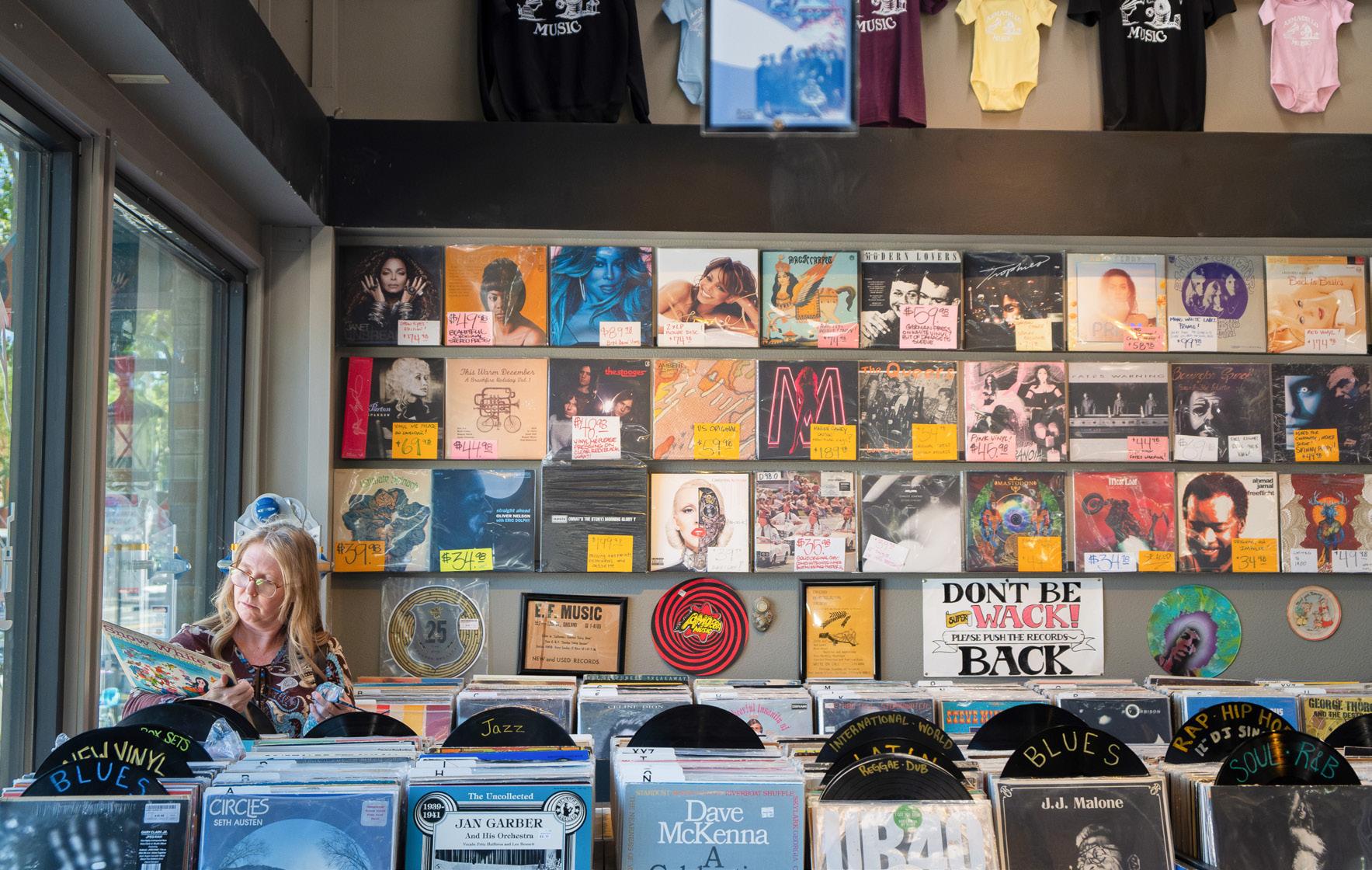
Fans went downtown to get a sneak peek of the band’s new alternative pop album
BY EMMA CONDIT city@theaggie.comOn May 21, Armadillo Music, downtown Davis’ premiere record store, hosted a free listening party of Wallows’ new album “Model.” The store, which happens to be owned by Davis Mayor Josh Chapman, gained access to the album two days prior to its release, so attendees got an early peek into the unreleased music.
The event was primarily organized by Armadillo’s Assistant Manager Nick Rocci in collaboration with Record Store Day, a national organization that celebrates local, independent record stores. Alongside facilitating special events like this one across the country, the organization also celebrates Record Store Day each year on a Saturday in April.
Paul Vilbur, the manager of Armadillo Music, shared that in the era of Amazon and online streaming services, he enjoys listening parties because they show how many people enjoy the same music.
“They’re talking with each other about the music,” Vilbur said. “That’s the community stuff that my generation
grew up with — talking music with the person who’s browsing next to you.”
Vilbur explained what makes Davis a special place to have a record store.
“We have a great community here because Davis residents are somewhat transient,” Vilbur said. “They buy 20 records from me and then four years later when they move away, they sell me back 15 and we can find used records.”
Rocci feels gratified to see how excited customers are when they find their favorite album in physical form. He thinks that live, communal listening parties have a similar effect.
“So many people just want to listen to a record,” Rocci said. “Something that helps a lot in keeping music alive is teaching and showing what records are, how they work [...] That’s the best thing ever is people feeling it for the first time, physical music.”
Wallows’ album, while it brought many people together, received mixed reviews from its advanced listening.
Anne Saltel, a third-year community and regional development major, was not blown away by the album.
“I think their sound is very similar to their previous album, kind of derivative, but the vibes were good,” Saltel said. “It was a little more upbeat than their previous stuff.”
Vilbur enjoyed the album for its indie, youthful sound.
“I’m more of a heavy metal guy — Wallows [isn’t] necessarily the most metal band I’ve ever heard — but it was still cool,” Vilbur said. “Honestly, I’m older and hearing stuff that’s current with the younger demographic is really good for me.” Kristen Mok, a third-year sociology organizational studies major, thinks that the album came just in time for summer.
“It had some social hangout music perhaps: kickback tunes, a hotdog by the pool, a good song for a summer barbecue,” Mok said. Armadillo Music will host many more free listening parties to come, cohosts Bikes and Beats every month and will be a venue at Davis Music Fest from June 14 to 18. It’s also open daily for patrons to peruse a wonderfully wide selection of records.
“It’s a place where people can come and hang out and meet other musicminded people,” Vilbur said. “Yes we need to be profitable and we need to sell stuff, but at the same time [the owners] are just as equally concerned about having a place for local music and where people can gather with their friends.”
Disclaimer: (This cartoon is humor and/or satire, and its content is purely fictional. The story and names of “sources” are fictionalized.)
Dressing for creativity and functionality should be recognized and encouraged, not discriminated against BY MAYA KORNYEYEVA
mkornyeyeva@ucdavis.edu
Clothing is a crucial part of the human experience. It can be used to cover the body, strategically expose it or even alter its form. It is an embodied practice of projecting an image of yourself — your values, likes and beliefs — to society at large.
In a world dominated by Eurocentric social standards, clothing is also used as a means to reinforce order. Whether it is through a school uniform, a military dress code or generationally instilled imagery of what it means to be a “boy” or a “girl” — from being wrapped in a pink or blue blanket at birth to being encouraged to either pursue sports or the arts — binary gender norms are deeply ingrained within society’s perceptions of what is or is not socially acceptable.
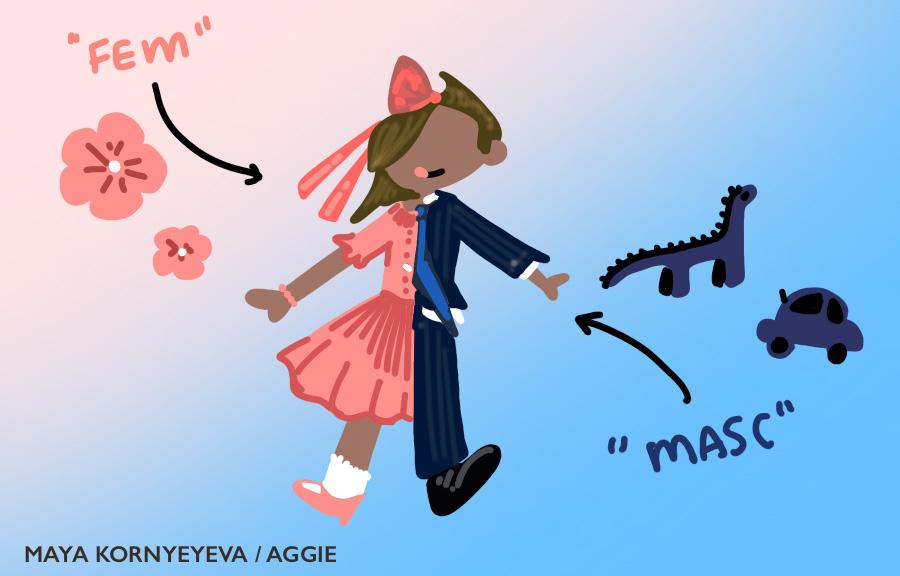
Thus, while clothing is, to an extent, an individual and creative means of expression, it is also one that is heavily influenced and inspired by gendered stereotypes surrounding style-fashiondress, a term coined by fashion theorist Carol Tulloch which represents the combination of personal agency, social trends and the body with respect to clothes. Beginning with the Industrial Revolution in the 19th century, a normative form of menswear became introduced and popularized; typically consisting of functional, clean cut pants and shirts, in dark colors and with little to no detailing or ornamentation. On the other hand, the boom in commercialism in the early 1900s catered towards a new
form of women’s fashion, with elaborate dresses, patterns and detailing marketed towards “homemakers” and “wives.”
Clothes became clearly categorized as “feminine” and “masculine,” with “cross-dressing” — wearing clothes associated with the other gender — regarded as socially unacceptable and even criminalized hand-in-hand with non-normative sexualities. Fashion that strayed too far from these gendered categories made the wearer an object of discrimination, simply because they chose clothes that didn’t align with mainstream views of what a man and woman should be.
I find this trend towards strict gender boundaries with regards to clothing to be problematic at best, as it reinforces a view of society that actively goes against freedom of choice and expression, and in this way, discourages individuality.
As a woman, have you ever wandered into the menswear section of a store and realized the options suited you and your lifestyle better? As a man, have you ever wanted to try on clothing typically associated with feminine fashion, but feared being mocked or insulted because of it? Gendered clothing has become a ‘violence mechanism’ — as noted by Alok Vaid-Menon in their novel “Beyond the Gender Binary” — in other words, a tool of prejudice based on outer-wear. In reality, clothing is but an inanimate object to which we assign gender and social meaning that has cemented, over-time, into a social rule we dare not break for fear of consequence.
DEGENDER on 15
Is it healthy or is it advertising?
 BY MOLLY THOMPSON mmtthompson@ucdavis.edu
Workout and diet fads are constantly circling the media stratosphere. The rise of the internet sped up the cycle, but we’ve seen it long before the advent of social media (think back to the jazzercise craze of the ‘80s). Recently, we’ve had high-intensity interval training, creatine and other supplements, weight lifting, the 75 Hard Challenge, cold plunging, Peloton bikes, crossfit, pilates and so many other fitness trends take over the internet. A myriad of diets have also come in and out of popularity in past years, such as paleo, keto, lowcarbohydrate, intermittent fasting, raw vegan and high-protein, as well as diet programs like Noom and WeightWatchers. A lot of these trends seem outdated and out of touch in today’s climate; we think of them as things of the past. Our current society is much more accepting and less focused on thinness — we’re no longer living in the toxic diet culture of the 2000s, right?
In reality, we’ve just taken diet culture and packaged it differently (with a nice little bow on top). It’s true that we’ve made progress through the ongoing body positivity movement, but
idealized thinness is far from eradicated. It’s just that it’s now unacceptable to say that we think small bodies are better.
Focus in the fitness industry has shifted from body image to health and wellness, but what does that actually mean? They might not be saying it out loud, but the majority of people who push these wellness-oriented routines are still sending messages of slimness as an ideal. We’ve all seen TikTok videos that start with a clip of a thin, toned woman in a matching workout set who goes on to show you what she eats in a day or the fitness practice that she claims got her the definition in her abs — they all say it’s for our health, performance or well-being, but they’re still telling us that it’s about how we look.
This shift is happening because of the shift in society toward body positivity. As aforementioned, it’s becoming unacceptable to acknowledge our hierarchical biases around body composition and size, which means that companies can’t make money by selling the promise of a smaller body in the ways that they used to. People are realizing how damaging the harsh diet culture of the past was and are working to decentralize it from our society, so they’ve stopped buying blatant appeals to that desire for slimness and weight loss.
But that doesn’t mean that it’s not still pervasive, it’s just being marketed differently. An aesthetic video that’s advertising athletic wear, Bloom Greens & Superfoods powder, an Owala water bottle, a Pilates routine and a Ninja CREAMi machine is still selling you thinness. It’s implied rather than explicit, and it’s hiding under the guise of wellness, but it’s still riding on the aesthetic of the person in the video — you’re buying into the body as much as the product itself.
This is not to say that the movement away from conventional diet culture and toward health as a primary ideal is not positive or admirable; it absolutely is. We should continue working toward reframing the prioritized slimness that’s so deeply intrinsic in our society, but we need to make sure that what we’re doing is aiding those efforts and not secretly undermining them.
It’s so easy to have good intentions and still follow and contribute to this. If we constantly hear that a protein matcha latte and a reformer Pilates class is going to make us healthy, of course we’re going to want to join in and try it. It’s hard to know if what we’re being sold is actually health or if it’s diet culture in disguise — the current social media landscape is difficult to navigate. There’s also such a saturation of content that there’s bound to be some that genuinely intend to help viewers improve their health, but there’s no way to gauge the integrity of what we’re watching.
The other issue is that we as a culture have come to equate thinness with health, which simply isn’t the case. Thinness and health can certainly co-exist, but one does not equal the other. But because of that, content creators and brands can genuinely try to prioritize health but still be pushing thinness because that’s what we often view health to be.
The popular narrative now is one of wellness over slimness — the caveat is that they mean the same thing. Prominent wellness trends don’t support true health; they support a reformed edition of diet culture.
Disclaimer: The views and opinions expressed by individual columnists belong to the columnists alone and do not necessarily indicate the views and opinions held by The California Aggie.
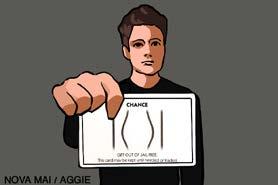
Disclaimer: (This cartoon is humor and/or
fictionalized.)
Congratulations to the Class of 2024!
BY SONORA SLATER smslater@ucdavis.eduDear readers,
I already went way over the word count with my senior column, so I’m going to try and keep this short and sweet. But I say this from the bottom of my heart: Serving as the editor-in-chief of The California Aggie was a dream come true, and every issue of the paper, every chaotic meeting, every kind DM from a reader made the long hours worth it.
To be practical for a moment, here are some of the things I am proud of working with the other members of The Aggie to accomplish this year.
1. Launching a weekly radio show called
Agricola on KDVS
2. Taking staffers on a field trip to the CalMatters office in downtown Sacramento
3. Decorating the office with framed special issues, art and more
4. Bringing back The Aggie’s satire issue, as well as several other special issues
5. Co-hosting events with the Zero Waste & Sustainability Club to engage with the community and reuse old newspapers
6. Hosting other events at the office, including a couch concert, a data visualization workshop for the staff and more
7. Releasing two literary magazines
8. Adding creative layout pieces including the Senate legislation tracker, the sports calendar and a from-the-archives segment
At the beginning of the year, I said on a local radio show called Davisville that my goal for the year was that when I said
I worked for The California Aggie, instead of saying “We have a student newspaper???” people would say “Oh yeah, I loved that article from last week….” Somehow, that happened. And I don’t know quite how, but I think it has something to do with the genuine love everyone who worked for The Aggie has for the paper. You can read our editorial board goodbyes, and our senior columns, and it’ll shine through — we certainly aren’t in this for the money. We’re in it because we love it, and because we believe it’s important, and because it is so much fun getting to tell the stories of our community. I hope you could tell that when reading it.
I cannot wait to see the work of our future editor-in-chief Chris Ponce next year and I am so, so grateful to be able to pass The
Aggie on to someone who loves the paper as much as I do. I am confident that the paper will thrive under his leadership, and maybe even become financially stable. We can have big dreams.
I am so honored to have served as editorin-chief this year. Thank you to everyone who has read an article, cut out a cartoon, sent us an angry email because you feel passionate about something, accepted one of our papers while tabling out of pity, let us interview them and cared about local journalism. And thank you to the staff. I will remember my four years at The Aggie forever because of you.
Signing off, Sonora Slater Editor-in-Chief
WRITTEN BY THE EDITORIAL BOARD
For Sonora Slater By Yasmeen O’Brien
How does one briefly describe all that is Sonora Slater? You simply can’t, but I will do my best. She is kind-hearted, beautiful, intelligent, hardworking, optimistic, selfless and so much more. She is The California Aggie. She puts her blood, sweat, tears — and lots of em dashes — into this newspaper, and has done a truly incredible job this year as the Editor-in-Chief. She is a natural leader and has this extraordinary ability to make every member of The Aggie staff feel seen, heard and valued. Not to mention, she always has the most coordinated outfits and jewelry — absolutely impeccable style. Sonora is known for her unwavering dedication and her deep kindness. She walks into the office every day with a smile on her face, which effortlessly uplifts everyone around her.
Sonora doesn’t just report the news or edit a newspaper, she makes the world a better, more understanding place. We are all continuously inspired by your work and admire you so much. You also have the best byline name in all of history. I am so excited to see everything you will accomplish in life because I know you will go far. You’re going to be that person that I see on TV and say, “I worked on the college paper with her!” because you’ll be a kickass journalist and probably doing TED talks, inspiring everyone around you. I deeply believe that your path will lead you to where you’re meant to be and I can’t wait to see where that is. We love you Sonora! Thank you for all your hard work and most of all, your friendship.
For Clara Fischer by Sonora Slater There’s no way for me to start this without telling Clara’s and my famous origin story. It goes like this: A week after hiring her for the managing editor position, we and the rest of the editorial board were stuck in the office for hours on end, running endorsement interviews for the ASUCD spring elections. In between interviews, Clara convinced us all to download an app that had us answer questions, and then determined our compatibility with each other based on our answers. Clara and I got a compatibility of 0.06% — the app designated it as a “uniquely bad” match. Uniquely bad!!!!
But a year later, the data says otherwise. Clara, I wouldn’t have wanted to do this job with anyone else by my side — and honestly, I think we work together pretty well. Like, we deserve at least 15%.
You’ve truly been in the trenches with me for The Aggie: Cleaning out the beyond questionable fridge with copious amounts of bleach, dealing with the absolute horrors of trying to schedule ed board and layout meetings, lugging around 395739279385 volumes of the archives, almost using a silly quirky Halloween font for an article that absolutely should not have had a silly quirky Halloween font, running into the hallway after Media Board meetings to debrief, that FaceTime right before school started when we were both kind of spiraling and honestly weren’t sure if we could do this job.
But we did do it. We led the staff to produce 31 issues of The California Aggie, no matter how much time, sleep or sanity we lost doing so. And it was an experience that I will always be grateful to have shared with you. Thank you for making me laugh. Thank you for doing hiring interviews. Thank you for hosting Aggie Formal in your driveway. Thank you for always pitching environmental editorials (slay Antarctica ed). Thank you for running to Shield’s Library that one time we were randomly on TV. Thanks for being someone I can count on.
For Lily Freeman By Megan Joseph
From the first time I met Lily I knew she would be one of my favorite people here at The Aggie. Her contagious energy and warm personality was automatically compelling, and I am so glad I got to get to know her better throughout this year. I still remember the first time I got to meet Lily. It was the first day of editorial meetings and I felt so young. I didn’t really know anyone on the board and was so nervous to be sitting with such talented and distinguished writers as only a sophomore. Right when I walked into the room, Lily invited me to come sit in the seat next to her and immediately started talking
to me and was interested in my life. Automatically, my nervous feelings from before were gone and I knew that I would be fine because I had Lily with me. Throughout the rest of this year, Lily and I continuously got closer. I loved when she would come into the office when I was there and give me the best ideas for articles to write about like intramural sign ups for less common sports or game predictions for different sporting events. Lily, it has truly been a pleasure working with you this year and getting to know your extraordinary personality and see how skilled you are as a writer. I wish you the best of luck as you move forward to this new stage of your life, but always remember that you have a home and family here at The Aggie and especially in me. I know you are going to do amazing things and I can’t wait to see what you accomplish!
For Chris Ponce By Clara Fischer
I challenge anyone reading this to, off the top of their head, name a person with more varied lore than Chris Ponce. In no particular order, here are some of my favorite fun facts about everyone’s favorite priorCity-News-Editor-turned-incomingEditor-in-Chief:
Chris is not his real name
Chris used to work at Hollister when he was a teen.
Chris used to be a part of the UC Davis standup comedy club (but selfishly refuses to improv for ed board meetings).
Chris dazzled as Edna Turnblad in a high school production of “Hairspray.”
Chris is not British!
On a real note, Chris, it has been such a joy to work with you for the past two years. It was Sophie in last year’s goodbye editorial who noted her admiration of your growth in the City News role, and I want to echo that sentiment. I’ve watched you become a more confident and capable journalist, coworker and friend during our time at The Aggie, and will always be grateful for your presence in our many (many) meetings. I’m so excited to see how you tackle your new leadership role, and am confident that The Aggie is in the best possible hands. Good luck, and know that I’ll always be down to come back and house a Guads burrito with you and Sonora!
For Annabel Marshall
By Lily Freeman
Annabel might be the funniest person I have ever met, like, objectively. I will never know a person who keeps me on my toes like Annabel does. She has the quickest, wittiest comebacks; she can recite any pitch for an editorial in a much more riveting (and controversial) way than it was initially presented and makes jokes so confidently that you’ll never really know if she’s kidding. Her energy not only glues our editorial board together, but keeps all of us humble. It’s awesome. It’s hard to be funny in writing, but Annabel makes it look so insanely easy — see this year’s satire issue (which easily takes the cake for my favorite issue of the year) or @thecaliforniagaggie on Instagram (which I’m shocked hasn’t been banned yet) as prime examples. All of these things have taught me that it’s Annabel’s world, and everyone else has the pleasure of living in it.
Aside from her brilliant comedic timing and out-of-pocket one liners, Annabel is insanely smart — it takes a lot of intelligence to be as comedically sharp as her, and I even once watched Annabel write an entire editorial in less than 20 minutes (which would’ve taken most people hours). More than anything, Annabel is kind. Having had a friend crush on her from the moment we met in the beginning of this year, I am so grateful to have her in my life. She is a great advicegiver, the easiest person to talk to and will personally send you memes to let you know that she’s thinking about you. I’m going to miss you so much, Annabel, but I have to accept that more people in the world deserve to be graced by your presence and I know that you will do amazing things in Switzerland and beyond.
For Yasmeen O’Brien By Ana Bach When it comes to the ultimate grounding presence in a room, Yasmeen certainly takes the cake. During our first Editorial Board meeting, I felt pretty uneasy about contributing or simply just talking. I was so intimidated by all the talent that surrounded me at that table, finding it hard to reach the level of
comfortability that everyone else seemed to have mastered. For whatever reason and without having talked to you before, I instantly felt relaxed sitting next to you. The way you carry yourself, your tone of voice and how you subtly say what’s on your mind with such certainty make up only a handful of qualities that I admire about you. I vividly remember us driving up to the student journalism conference in Sacramento, talking about your post-grad traveling and career paths. I get so excited thinking about what an amazing summer you are going to have, seeing the world and collecting more knowledge about yourself along the way. I know that whatever path you find yourself on, it will be one that rewards you tremendously.
For Ana Bach By Katie Hellman
I’ve loved getting to work alongside Ana at The Aggie this year. Her thoughtful feedback at editorial meetings and entertaining contributions to some of our more off-topic discussions are key to the warm, inviting atmosphere of The Aggie. When I think of Ana, the first thing that comes to mind is soup — I don’t know why, exactly, but for a brief period of time in the fall if anything soup-related came up, Ana would be talking about it and we’d be all ears. I also accredit her with having one of the best Halloween costumes I’ve seen; when I saw that someone went as a Chill Pickle from the group chat in October, I was slightly mad that I didn’t think of the idea myself. Ana does an amazing job running the Arts and Culture desk — especially Culture Corner, which is definitely one of the best sections of the paper (although topped by Twilight Corner of the Satire Issue). Ana is extremely hard-working, smart and kind, and I know that she will do great things in the future in anything she decides to pursue. I wish her all the best.
For Megan Joseph By Annabel Marshall
Look, Sonora is great, and she can do a lot of things. I’m sure someone has written a nice little paragraph about that above or below me. But there’s at least one thing she can’t do (possibly more, I haven’t checked) and that is understand the Superbowl. There’s only one person in the entire state who can explain it to her, and that person is Sports Editor Megan Joseph. Generations later, people will still recount the incredible patience with which Megan described the difference between the offense and defense in American football.
When she’s not blowing the minds of Taylor Swift fans, Megan is blowing the minds of everyone else by being an incredibly sweet, genuine person who makes you feel like, no matter what, it’ll all be okay. She’s a great writer who can easily hold her own against all the seniors she’s surrounded with. And she’s a blast. One time she said, at work, “Fires are a part of life.” Mind you, we were trying to write an editorial about how to be safe on Picnic Day. One time I invited her over to my home for a Valentine’s Day party and she crafted a perfect poem about DJing. My greatest dream is to be invited to one of the infamous yoga retreats she goes on with her mom. We all wish we could be Megan one day. In the meantime, we’ll just have to keep hanging out with her. We’re so lucky to have spent the year working with Megan, and I can only hope The Aggie is as lucky for many more years to come.
For Katie Hellman
By Chris Ponce Katie! You never cease to impress me with your editorials. Picture this, it’s a busy Thursday, my classes have been back-to-back, I’ve had several interviews in my freetime and then right after storyboard, it’s time for us to edit the editorial. Nothing has given me a sense of relief more than knowing it was written by you — those sessions fly by and I always get something out of it too. You are a great writer/editor and have done so much for The Aggie: From new fish to new research, the work of you and your desk hasn’t gone unnoticed.
I’m glad this isn’t goodbye, as you have many years left at The Aggie and I’m so excited for the amazing work you will continue to do. Science writing is something I find very difficult, it might be one of the few areas of journalism I have very little interest in. Doing that well requires a passion and drive that you very much have. I’m so excited for all the great things to come, Katie. :)
 BY MALCOLM LANGE mslange@ucdavis.edu
Murder is bad. Kidnapping adults and children is very bad. Stalking people is also bad. But how come when Joe Goldberg, from Netflix’s “You,” commits these crimes I am okay with it? The hit series “You” follows a very interesting protagonist who finds himself obsessed with a new woman each season. His obsession drives him to awful crimes such as murder, kidnapping, stalking, arson, breaking and entering and public indecency. With all of that, why do so many people still love watching this show?
There are some obvious answers as to why people still like Joe’s character even after watching him murder countless innocent and less-than-innocent people. The first reason is that he is the biggest “I can fix him” man I have seen in a show in a long time. I mean, he is an attractive man, who believes he is romantic and protecting the woman he loves. Plus, he loves reading books and is a very intelligent person — what’s not to like? Other than all of the crimes he commits on the daily, of course, but that’s where the mentality of “fixing him” comes in. He is definitely some people’s ideal man, if he just stopped murdering everyone.
But since he does murder people, why can we look past it? This comes from half of the show being an inner monologue that Joe is having, which we get to hear. As the audience, we get to know almost everything he is thinking, including all the justifications for why he is doing the crazy stuff — and in some weird twisted way, he usually isn’t completely off. Obviously, do not go out killing people just because you have a crush on someone. But at least in the first season, a majority of his crimes are ones against people who kind of just suck. Again, just because they aren’t great people doesn’t mean he should kill them or that he has the right to completely take over the life of the woman he is obsessed with.
Like, these are all bad things, but as you are watching the first season, you really don’t like any of the people he
is killing. At least to my recollection. And this makes it way easier to forgive Joe for these crimes — because I am completely fine if that character doesn’t get any more screen time. The second season starts his “redemption” arc, as it becomes a bit more comedic. We saw his pattern in the first season, and then we see Joe try to break from this pattern. He starts obsessing over a woman again, but he does try to stop himself. We get to see that he is trying to be better, however little he is succeeding at that. But who doesn’t love a man who is actively working on himself, right? In later seasons he does start becoming less of a crazy killer, and by the final season he himself in a way becomes a victim. I don’t want to spoil everything, but the show does everything they can to make him likable. And frankly, it works. I root for Joe almost every episode, and I only want the best for him, even though he is a fictional man from a book turned TV series. Now, if a person tries this in real life? Straight to jail, I do not care about their justifications or inner monologues — get them out of here. But Joe? He’s okay.
Disclaimer: The views and opinions expressed by individual columnists belong to the columnists alone and do not necessarily indicate the views and opinions held by The California Aggie.
Scan to read the full transcript of our spring quarter meeting with Chancellor May and administrators

A heartfelt thank you to the people, stories and questionable quirks that made 116 A St. feel
 BY SONORA SLATER smslater@ucdavis.edu
It’s a strange thing when you move out of a place. You look around at the bare walls and vacuumed carpet, the empty cabinets and empty sink that is, for the first time maybe ever, entirely free of dishes. You know that there were memories made there — you remember the place where you stained the carpet with nail polish during your listening party for Taylor Swift’s “Midnights,” and you can vividly recall the meals you cooked in the kitchen, and the movie nights you hosted in the living room. But there’s no real tangible evidence of any of it; there’s no way for the next person who moves in to know the love that once filled those rooms.
Much to my joy, however, I don’t think leaving The California Aggie’s office at 116 A St. will feel quite like that.
The first time I visited The Aggie’s office was in its old, Lower Freeborn location in fall 2019 when I was touring the UC Davis campus as a prospective first-year. I walked into
the space that had been used for the paper’s operations since before my mom was a student at the same school, working for The California Aggie herself. I could feel the history of the room — the quotes on the walls, the pictures from decades prior, the stacks and stacks of printed archives. It was like I could feel all the generations of writers who had been there before me.
Unfortunately, it turned out that building was seismically unsound, and The Aggie moved to a new location in a house above ground the next year in 2020. Not that it mattered to me, because I was starting my first year of college over Zoom while living at home — I’ve still never stepped foot in a dorm room.
But that’s not to say The Aggie didn’t stay on my radar. In fact, this was during the time when our literary magazine was released over the summer months, and I was unhinged enough to submit something before even technically becoming a student at UC Davis. So, my first published piece in The California Aggie ran (online) in the summer of 2020. And the second applications opened up in the fall, I applied to be a copy reader.
Every weekend, I read through opinion articles, arts articles and even sports articles (I genuinely don’t know why they trusted me with that), slowly learning AP Style, how to make a sentence or paragraph flow better and, most importantly by far, how to not over edit and kill a writer’s voice. And yes… I slowly adapted to the lack of Oxford commas. Mostly. I never met anyone at The Aggie in person that year. But I learned about Davis from afar by reading about it. In April, I became a staff writer on the science and technology desk. Talk about learning things I know nothing about!! That year, I interviewed people who researched dark matter and genetically modified space lettuce. I visited a helium recycling facility, interviewed people struggling to use the printer in the library and learned so much every single day. And finally, during the last week of the quarter, I met some of the incredible people who I had worked alongside for two years for the first time in person at the return of The Aggie’s end-of-year celebration, Aggie Formal. The same week, I also met the group of eight people I’d spend more than 100 hours
with the next year when I joined the Editorial Board as the campus news editor. Those 100 hours were some of the best of my time in college. And sometimes, the hardest. They forced me to examine my opinions and learn how to defend them in an intelligent and empathetic manner — but also to be willing to change when presented with new perspectives that made me see something in a different way. We debated, we listened to each other and we recognized and wielded the power of words to share with each other and our campus community the things that we believed were important. To Sophie, Katie, Chris, Clara, Owen, Levi, Marlon and Brandon: thank you. Of course, that year, I also spent way too much time in Senate meetings. I spent not enough time hanging out with my wonderful group of campus writers. And I spent a little more time than the year before in-person with the people of The Aggie. But I wanted more — so when I was offered the chance to serve as the editor-in-chief of the paper last June, I made that one of my biggest goals: to turn 116 A St. into a new version of what Lower Freeborn once was. To layer it with memories. Here are some of the things I did this year to try and make that house feel like a home: I got plants from Ace Hardware, and promptly almost killed them until our layout director saved them miraculously. I set up a coffee and tea station in the kitchen and hung up art. I pinned up pictures on a corkboard and framed some of our special issues from the year on the wall. I created a Slack channel called “in the office,” where Managing Staff members could let people know when the doors to the office were unlocked and staffers could come in to do work or study or just hang out. And in my office, I added a copy of our satire issue from this year, the first since the early 2000s, next to the one already up from 1985. I added a small stack of journalism books. And I added a lot of holes next to the dartboard when I was learning how to aim. I took some great naps in that office, I interviewed for jobs, I cried over said jobs when I didn’t get them, I studied for finals, I contemplated the future way too much and I got much better at darts.
enough, I’ve realized that the two go hand-in-hand
BY CLARA FISCHER csfischer@ucdavis.eduWhile I procrastinated on many, many things in my years at UC Davis, this column is maybe one of the worst cases yet. I mean, what’s more intimidating than attempting to summarize the entirety of my experience at The Aggie in just a few paragraphs? Probably nothing — but here goes.
I came to UC Davis through a kinda strange series of events (thank you, pandemic), and started off my undergraduate experience in a wouldbe-triple to myself in Hawthorn Hall. I’m sure many will agree with me when I say that our freshman year was nothing like what we’d pictured when we dreamed of going to college, and as the quarters went by, I began to worry that I’d never truly get the most out of my time in college. So, on a whim, I applied for The Aggie and got placed on the Arts and Culture desk (aka the best desk, in my totally unbiased opinion).
Like many things that year, my first experience with The Aggie was over Zoom. Also like many things that year? I totally hated it. My exciting new gig cosplaying Carrie Bradshaw was nowhere near as glamorous as I thought it would be, and the only interaction I was getting with other staffers was via a computer screen. However, I made a promise to myself that I would get involved on my college campus much more so than I did at my high school, so I thought, what’s one more quarter?
As we now know, one quarter turned into nine, and I couldn’t be happier that it did. The connections I’ve forged in those nine quarters were a formative part of my undergraduate experience, and I have the feeling that they’ll continue to serve me well into my post-grad life. I can’t help but think of the time I met an Aggie alum at a completely unrelated event who, when we got to talking, revealed that she actually originated the idea of the Couch Concerts we still put on to this day. But don’t get it twisted: my time at The Aggie has not given me all the answers. The future still looms ahead of me, full of unknowns and what-ifs that sometimes (often) keep me up at night. But that
I’ll always love The California Aggie, and it has made an indelible mark on my college experience that is, ironically, so incredibly difficult to put into words. And I absolutely plan on reading The Aggie every week for years to come. But as I say goodbye, the ever-so-famous words of Taylor Swift ring true:
“Now and then I reread the manuscript But the story isn’t mine anymore.”
Sonora Slater is The California Aggie’s current editor-in-chief. She joined The Aggie in October 2020 as a copy reader,and took on the role of staff writer on the science and technology desk in April of 2021. In June 2022, she joined the Editorial Board as the campus news editor, before becoming editor-in-chief the following year in June of 2023. She is graduating with honors with a bachelor’s degree in managerial economics and a minor in professional writing, and she plans to pursue a career in journalism.
My memories now aren’t just of The Aggie, but at The Aggie. For the past two years, there’s finally been a physical space for me and everyone else at The Aggie to make memories at and make new friends at, and take advantage of the free wifi and air conditioning at. To Clara, Lily, Chris, Ana, Annabel, Yasmeen, Megan, Katie and everyone else who works for The Aggie: thank you for making those memories with me and with each other. One of my greatest joys this year was seeing the office’s bike rack full. I hope Chris Ponce, our incoming editor-in-chief, walks into the editor’s office next year and feels the love that me and the other two EICs who have inhabited the space so far poured out for The Aggie and that he learns about himself and how to be a leader there the way I did. And I hope some firstyear walks into the office for the first time this fall and sees the inane quotes on the walls and the Grinch sweater in a drawer and the whiteboard with the Aggie-themed drink names from Aggie Formal and imagines herself becoming a part of the mosaic of The Aggie’s history. I hope she becomes way too invested in the drama of the ASUCD Senate, and that she knows how important it is that someone is that invested in it, and that she saves every print issue of The Aggie with her byline in it and that she meets incredible people there who teach her new ways to think about the world. And I hope that when she locks the (extremely janky) door to 116 A St. for the last time, she doesn’t feel like she’s moving out of an empty building, but instead like she’s passing on the legacy of a place that is so full. Full of Keurig pods for the desperate student journalists running on three hours of sleep, full of a hazardous amount of leftover newspapers and full of warm memories.
one really ever knows, right?
 BY LILY FREEMAN lvfreeman@ucdavis.edu
I don’t think I’ve fully processed that this is the end of my time at UC Davis. It’s weird because ever since college began, I’ve convinced myself that I would be ready to move on. I have always missed the beach, my family and living in a big city, and completing this year felt like one last step to get back home. However, as I finish my last couple weeks of college, I couldn’t feel more attached to (and less ready to leave) this silly little town.
I blame The Aggie. I felt disconnected from everything before the newspaper. I finished high school in the midst of Covid, came into college majoring in political science with no desire to be a politician or a lawyer (what was she thinking?!) and had no idea where to start when it came to putting myself out there. Naturally, I spent my freshman year relearning how to have conversations with people (still working on this one) and figuring out what I was going to do with my life (aaaand not even close to solving this one).
I kind of just went for it with The Aggie, joining in the fall of my second year writing campus news. No journalism experience. No knowledge of anything that happens on campus. All I knew was that I loved writing and had no idea what to do with it, and everything I didn’t know about UC Davis could probably be figured out if I made it my job to report our school’s news. Initially, I thought this would be a mere stepping stone to figuring out what organizations and causes I’d like to be a part of. I soon realized, though, that what I loved was the opportunity to hear, learn and tell other people’s stories. Back then, I would’ve called you a liar if you told me that I’d be the editor for campus news.
Two years of writing and editing for this desk and I’m feeling like I’ve heard it all. I’ve become invested in student activism, on-campus events and raising the voter turnout in ASUCD elections. I must admit that I’ve also become (for no good reason) invested in the reality television-esque drama of the ASUCD Senate, overanalyzing WarnMe notifications and obsessively checking my inbox for breaking news. I’ve learned from and laughed with the
best — my amazingly talented fellow Editorial Board members — and I’ve been in awe of and motivated by the future of The Aggie with my campus news writers.
Now, I’m writing my last piece for the newspaper and nothing feels real. If we’re being honest, I think I currently know less about the future than when I started college and The Aggie, but it’s a funny feeling because I feel more secure now than ever. I think it’s because I feel really fulfilled with my time in college — I’ve realized I love writing even more; I’ve learned so much about UC Davis (like, maybe a little too much); I’ve formed a band (shout out Baby at the Bar), I’ve experienced the breakup of a band (R.I.P. Baby at the Bar); I wrote a fake Senate article in the satire issue (thanks, Annabel); I’ve found my people, whether that be my roommates, the people I have the privilege of writing alongside or my coworkers at Trader Joe’s and I will now graduate as a third-year and first-generation student. Everything’s coming to a close, and as I reflect on my time in Davis, I can’t believe that I ever used to look forward to the day that I would leave.
I am off to San Diego with the same mindset I had coming into my freshman year — I have a love for writing and no idea what comes next! I used to be freakishly obsessed with knowing how my life would play out, but I’ve learned that things are so beautiful when you stop putting pressure on yourself to figure them all out. I must give props to The Aggie, which has given me confidence that I could make this whole journalism thing a career. We’ll see! For now, catch me taking a break from all things stressful and reading the online version of The Aggie by the beach.
Lily Freeman is The California Aggie’s current campus news editor. She joined The Aggie in September 2022 as a campus news writer and took on the role of assistant campus news editor in the spring of 2023. In June of 2023, she joined the Editorial Board as the campus news editor. She is graduating with honors with a bachelor’s degree in political science and a minor in professional writing.
paths lead to where you’re meant to be
An ode to taking the long way home
BY YASMEEN O’ BRIEN yjobrien@ucdavis.eduWhen I first came to UC Davis, I was a very different version of myself. I was someone who was majoring in biological sciences. I was on the path to becoming a doctor — an OBGYN to be specific (gynecologist and delivers babies). I was a woman in STEM and that felt good. But it turned out that I wasn’t. About two years into working toward my biology degree, I felt something deep in my bones that it wasn’t right for me. I couldn’t quite explain it — I had worked so hard in my chemistry, calculus and biology classes; I had interned at a women’s health clinic and fell in love with the work; I had imagined my life as a doctor and how much of an impact I could make on people’s lives.
Then something inside me said, “Ummm, nope. Try again.” At first I was upset, but I had rarely felt intuition this strongly and soon the anger washed away into acceptance. I didn’t know what I wanted to do or what was right for me, but I trusted this feeling and erased everything I had imagined my life to be. It was the only way I’d be able to realize what I actually wanted. So, as one does when they have a big life decision to make, I called my mom. She listened to my feelings and concerns, comforted me with her wisdom and helped me take action toward figuring out what I wanted.
Now, I’m graduating with a B.A. in anthropology and a minor in professional writing. But it wasn’t until the very end of the summer entering my junior year that what I wanted to do clicked: writing. Coming to this realization felt like freedom. It made so much sense. Ever since I was young I had been drawn to expressing myself in this way and wrote everything from short stories to journal entries to screenplays. Although writing has always been and continues to be one of the only things that brings me peace and solace, I never thought of it as something I could make a career out of — it was just a hobby.
This is when I decided to apply to write for The Aggie, which has allowed me to see a future for myself. But I wouldn’t have guessed this is where I’d be at the end of college and that’s the best part. Life led me here even though I was heading in the opposite direction.
As I enter my final weeks in Davis, I am overcome with gratitude for everything this town and its people have given me — sensational live music, dear friends, access to nature, time with myself, the ability to stand for what I believe in (Free Palestine), the list goes on and on — and especially for The Aggie, which has meant so much to the person I have become.
I started out as an opinion columnist, and was inspired and encouraged by my own editor, who taught me how to uplift and strengthen writers’ voices rather than stifle them or edit them out. I have now taken on the role of Features desk editor, which has been a truly rewarding and educational experience.
Without a doubt, the thing that stands out most about The Aggie are the people. This group of intelligent, dedicated, witty and compassionate individuals put in hours of work each week to make our newspaper run. I am thankful for their hard work and their company. I am also beyond thankful for my fellow Editorial Board members who never fail to brighten my day and make me laugh, and for all the difficult but productive conversations we’ve had about heartbreaking news whether it be local or global. I look forward to coming into the office every day because of you guys and I am going to miss you dearly after we graduate. And, of course, I am thankful for my wonderful writers on the Features desk who made my job easier and truly enjoyable. You are all brilliant and I feel lucky to have gotten to know each of you. The world needs your voices, so keep writing!
Lastly, I am thankful for my journalism, editing and creative writing professors, who have each taught me the skills necessary to continue down the long road toward becoming a writer. I don’t exactly know what this path holds for me. All I know is that it feels right. I want to write books, essays, songs, articles — everything. I want to tell stories. I want to communicate something to the world, but I don’t know what it is yet. The good news is that there’s plenty of time to figure that out. Life is long. I was given a very precious
superlative certificate by the lovely Sonora Slater at our end-of-the-year picnic that I believe sums me up pretty well. It read, “Most likely to convince you that life is just a beautiful journey and if a door closes then that opportunity wasn’t meant for you no matter how much you are spiraling about your future.”
We may not know what comes next, but that’s the beauty of it. Our path becomes imbued with mystery and excitement, with bravery and strength, with bigger dreams and leaps of faith. We don’t know what lies ahead yet we forge on because we have no other choice. It makes us human. It makes us human to venture down a path that doesn’t lead us where we thought it would. It makes us human to change course and also to stick it out. It makes us human to reevaluate who we thought we wanted to be. I am so grateful my paths led me here. To Davis, to The California Aggie, to all the people in my life who I love dearly and who love me. I’m excited to see where our paths will lead us.
Yasmeen O’Brien is The California Aggie’s current features editor. She joined The Aggie in September 2022 as an opinion columnist and took on the role of assistant opinion editor in the spring of 2023. In June of 2023, she joined the Editorial Board as the features editor. She is graduating with a bachelor’s degree in anthropology and a minor in professional writing.
I’m as shocked as you are that they hired me
BY ANNABEL MARSHALL almarshall@ucdavis.eduWhen I first joined The Aggie in my freshman year, I was told, “Congratulations, you’re now working in the least respected position of The California Aggie.” As a humor columnist, I’d expect nothing less. While other writers were doing actual journalism, I was covering important fake topics like “ASUCD Senate to vote on allowing hunting permits for freshmen.”
What I wasn’t expecting was to make such a genuine connection with the UC Davis community. Almost immediately, I had students and alumni emailing me about articles I had written. Strangers would message me to say their professor had brought up my piece in class, or that my lastminute pitch was circulating the Unitrans Facebook. Me, whose articles were just excuses to slip the names of my housemates into print!
Only the most insanely misguided join the school newspaper to get any sort of respect, and even those idiots know better than to write for Opinion. But writing for The Aggie made me realize there’s a lot of different ways to become a sort-of impactful member of your community — you don’t have to be the one in charge of everything. Knowing that I factored into random people’s life in any way was insane, and a lot of fun.
Foolishly, in my senior year I was hired to helm the Opinion desk I had terrorized for two years.
and Clara gave me free

My first job in high school was working as a freelance pet portrait artist in which clients commissioned me to oil paint portraits of their beloved dogs, cats and, occasionally, rabbits. I enjoyed the routine process of interacting with clients and working on my own schedule to create these portraits. The most rewarding part of painting these portraits was seeing the authentic reactions of my clients, the immediate widening of their eyes and then their smile after. Fine art has always been a part of my life, and it was not until my pet portraiture job that I truly understood that my passion was not only being a creative but making an impact on people through my work.
Like a majority of 2020 high school graduates, I had a seemingly untraditional introduction into UC Davis and a fear of the unknown.
My first year consisted of an online orientation, virtual classes and the absence of a dorming experience. During this time, I felt a simultaneous mix of optimism and disappointment as I was looking forward to finally returning to in-person classes but also feeling uncertain, because I knew I would feel like a first-year as a secondyear.
Growing up, I have always heard the phrase, “Everything happens for a reason,” and I truly believe deciding to pick up a copy of The California Aggie on my first day of school in person was an example of that phrase. I was sitting on a bench trying to figure out where my classes were when I saw a little blue newspaper stand in my peripheral, and the rest was history. I was immediately impressed at how such a seemingly large community of writers and designers could come
together to create such a professional publication. I realized I wanted to make an impact and be a part of this community. I then applied for the volunteer graphic designer position in my second year, became a paid graphic designer in my third year and am now the design director in my fourth year. What made my experience with The Aggie so special was the community. I am incredibly grateful that I got the opportunity to hire and manage such an inspiring and dedicated team of designers who never fail to impress me with their work ethic, sheer talent and passion.
I am also blessed to have worked and collaborated with such an amazing team of managing staff members who have graciously lent their talents to The Aggie and formed such a supportive community. Lastly, I am grateful that I got the opportunity to combine my love for both design and writing by being a part of an organization that has embraced my artistic vision for the design team.
Now that I am nearing graduation with a B.A. in design and minor in professional writing, I look back fondly on all of the experiences that have transformed me into the designer I am today. I am appreciative of the close-knit community I found in UC Davis, my friends and my family who have continued to be my foundation. Seeing how this wonderful community has enhanced my experience at UC Davis, I embrace the unknown and am so excited for what the future holds.
Kellie Lu is The California Aggie’s current design director. She joined The Aggie in January of 2022 as a graphic designer. In June of 2023, she joined the Managing Staff as the design director.
She is graduating with a bachelor’s degree in design and a minor in professional writing.
Feeling like you don’t belong here is normal, but don’t let it stop you from chasing after all the opportunities available; your voice at UC Davis proves that you, your community and everyone who comes after you are worthy of being here
BY ELIZABETH WOODHALLehwoodhall@ucdavis.edu
The day that I joined The California Aggie, I felt as if they had mistakenly hired me. Not because I wasn’t qualified for the position, but because I felt like I wasn’t. This was a common feeling for most of the milestones in my life. The day I got into UC Davis, I kept waiting for the letter notifying me that there had been a mistake in admissions.
Even as an English major, I would walk into a classroom where everyone seemed to fit right in, never scared to voice their opinions, and I was just… there — sitting in the front rows with my friends who had something insightful to say, keeping up with all of the work and writing down my ideas in my notes, too scared to share them with the class. Most of the ideas I had written down were discussed by other students, as well, but I still felt like they had articulated it in such a way that made me feel so alien to those same ideas I had.
When I’d go to office hours, my professors would mention that I always had something insightful to say, but they would question why I didn’t say it in the classroom. Even when writing essays, I always had some grammatical issues going on, serving as a constant reminder that there was always something I had to fix that others had already mastered. My disbelief of belonging stemmed from feeling like I wasn’t worthy of being in the classroom, and I chose to prove myself wrong.
As someone who took up an interest in Shakespeare during my junior year of college, I explored what it means to decolonize his work — plays that were often used to drive colonialism — and make it relevant to contemporary audiences. In the midst of doubt and insecurities, I have constantly thought of a quote from Hamlet: “To be, or not to be, that is the question.” I wished to belong, and I knew that I wouldn’t be able to get there if I didn’t believe in myself. In 2022, I was brought in for a second interview for a job at the Graduate School of Management at UC Davis. I was dressed in a suit, even though I could feel the sweat stains on my shirt revealing to anyone that I was incredibly nervous. As I sat in the lobby, it seemed like I had been transported to a completely different side of campus. One that overlooked the UC Davis Welcome Center and the Arboretum, and it represented innovation and modernity. As an English major, I was used to the Wellman basement where the ceiling looked minutes away from falling on my head, or Hart Hall where the dust seemed to be the welcoming sign that you are in a humanities building. As a Mexican-American, this was a building that screamed, “You don’t belong in this space.” When I was offered the job, I didn’t know what to do. I felt as if I had not been qualified enough for the position. Ultimately, I declined the offer out of fear that I’d be fired the minute I started my first day. Before I could even prove myself wrong, I had already given up. But this wasn’t the case: my manager offered to reduce
my hours so that I’d still be part of the team. I had never had someone advocate for me like that — for me to believe I didn’t belong in this space and then being told that they wanted me on their team — it was something new for me.
Joining the Features desk in 2023 proved to be a challenge of its own.
I felt myself chasing after stories I knew were important and learning how to tell these stories in a way that brought to life the voices that had gifted me their complex perspectives. Switching to the Arts and Culture desk only proved that I was capable of pursuing other fields that I wasn’t entirely familiar with, but that I could succeed in. Change was necessary for my growth as a writer, and even if I had felt like I already knew how to write for this newspaper, learning was my main objective. For most of my undergraduate life, I was so scared of failure or challenges, but I realized that learning requires just that.
As a journalist, I was able to learn about diverse perspectives and tell stories that truly mattered in uplifting the community. Specifically, I focused on covering stories that would shed light on clubs, events and organizations that promoted the success of students of color, making it known that they belonged on campus.
As a Mexican-American who grew up for most of my life in Mexico, this was also a way of telling my story, uplifting my communities and the communities I stood in alliance with.
This same fear of not belonging was what made me work even harder, consistently proving to myself that I had to believe I was worthy of all these opportunities, especially when others believed in me, too. By doubting my abilities, I was doubting everyone else who built the path for me to be where I am today. Every success that I have is attributed to my hard work and the
community around me that believes in me. Saying that I’m unworthy of being in these spaces erases the hard work my communities have done to ensure that people like me have a seat in the classroom.
Feeling like I didn’t belong was never a bad thing to me. It drove me to prove that I was worthy of being in this school, taking advantage of these opportunities, and constantly going above and beyond to show that I belong. I believe I belong here now, but this couldn’t have happened without my friends, community, editors and professors showing me that their trust in me was not misplaced. Everything I do is constantly in conversation with everyone who has believed in me, telling me to keep going and to prove myself even more.
My advice to anyone reading this is to believe in yourself. You are missing out on all the opportunities that you could have but are too afraid to chase after. It’s okay if you don’t believe in yourself — but don’t let it stop you from proving yourself wrong. Take it as a challenge to show that you do belong here. Learning is about constantly challenging yourself, not about seeking comfort in areas you already know.
You carry with you every single voice that has ever believed in you, and if you don’t believe that you can do something, the boldest move you can take is to prove yourself wrong. When there are people who don’t believe that you should be here and you echo this belief, you don’t honor your hard work and this opportunity to prove yourself. You can be your biggest doubter, but you have it in you to be more than that: your biggest supporter. It’s not something that I’ve fully mastered, but it’s shown me all the hard work I’ve done from something that stemmed out of insecurity.
Making time for what you enjoy the most and new adventures
BY LORENA ALVAREZ lalvarealvarez@ucdavis.eduAs an English major and staff writer, I am constantly writing papers and articles, yet I found myself staring at a blank screen at a loss for words. While frustrated with myself, I realized that my struggle to find words to put on paper reflects the difficulty I am having in saying goodbye to UC Davis and all of the amazing people I have met on this journey.
I am sad to say goodbye and leave behind the only thing I have ever known — school and taking “quick” coffee breaks with friends. While I wish that I could turn back time and reclaim those first two years of college that were lost to the pandemic, I am walking away from Davis in tears not because I am sad about my college experience, but because I do not want this stressful yet amazing chapter to end.
I have always looked back at my college experience and wished that I was more involved — a difficult task given that we were at the peak of the pandemic, but I never imagined that I would become a part of the UC Davis community through journalism.
While I have always enjoyed writing, applying for The California Aggie was not an easy task. It took overcoming my self-doubt and reminding myself that anything worth happiness and pride requires putting yourself out there and taking risks.
I remember the happiness and excitement I felt when I received the acceptance email. I may have even been more excited about The Aggie than I was when I received my college acceptance letter since that letter, in my
mind, was expected. That version of myself could not have possibly realized just how much she would come to love writing for our newspaper.
Through our beloved newspaper, I have had the opportunity to interact with many people from different places and departments, but most of all, I have had to put myself out there and attend events that I would have otherwise been too busy for.
As college students, the difficult task of figuring out how to balance your school work and personal life will always be there. But we have to remind ourselves that the memories we will look back on post-grad are those that we had to take time away from our busy schedules for.
My one piece of advice I could give to college students: live in the moment — whether that be going out with friends every weekend or joining jobs and clubs like The Aggie that make taking time away from your education easier.
All that to say, don’t postpone living your life until after you finish those homework assignments. Go to those concerts and festivals because what you take from your college experience is what matters most — not whether you had to ask for an extension on an assignment.
Lorena Alvares is a staff writer on the arts and culture desk at The California Aggie. She joined in April 2023 and has enjoyed contributing movie, music and event reviews each week throughout her third and fourth years. She is graduating with honors with a bachelor’s degree in English and psychology.
When I was 16, I watched the film “Lady Bird” for the first time. There’s a line in the movie that refers to UC Davis, which has stuck with me since the first time I heard it. This line came as Lady Bird and her mother were discussing potential college choices. When her mother suggests UC Davis, Lady Bird responds, “I’m not going to a f***ing university that’s famous for its f***ing agricultural school.” At the time, as a naive 16-year-old, I agreed with her. I even recall having a similar conversation with my mom.
Well here I am, graduating from said “f**king agricultural school” with a degree in political science and professional writing, and I couldn’t be happier with my decision.
However, my route to UC Davis was not quite traditional. I graduated from high school in 2020 and accepted admission to UC Irvine to study political science. I was excited to move to Southern California and experience dorm life, but soon after I was told that all classes would be held remotely for the entirety of my first year. So, I stayed home and completed my first year of college from my childhood bedroom.
In the blink of an eye, one year of remote classes soon turned to two, and without ever stepping foot on campus, I realized that UC Irvine was not the right fit for me. In a swift change of course, I applied to transfer to UC
Tips on navigating the downs of college
BY EMMA LAPIDUSeblapidus@ucdavis.edu
Hi, I’m usually a cartoonist for the paper, but today I’ll give a little speech in the hopes it can help someone out. This one goes out to all the pessimists and the lonely folk lurking around campus. I know graduation pieces are meant to be optimistic and full of vigor and inspiration, but this one is for those who don’t feel that way and may not know how to change. My time at Davis has had its ups and downs, and I wanted to share a few tips I’ve learned along the way. No matter how hard you try, there will be some downs, so let’s prepare in advance, shall we?
As a part-time pessimist, I’d like to express my immense disdain for the phrase “love yourself.” The more I try to explain my dislike of the phrase, the more I realize it’s simply misunderstood. So much meaning is packed into such a small phrase that the message simply becomes lost. So, I’d like to encourage you: don’t just love yourself. You cannot simply love who you are as you try to grow unless you understand yourself, empathize with yourself, encourage yourself and push yourself, when you know you can. When I say push yourself, I do not mean decide you’re suddenly going to go to the gym five days a week. Drastic shifts in lifestyle are not sustainable or likely to last. Truly look at yourself and your habits, and be honest. Build a habit up bit by bit, and adjust when it’s truly not possible. I had the goal to bring lunches
to school. Sometimes this involves actual cooking and seasoning (whoa). Now, other times when I’m really not feeling it or incredibly busy this meal prepping means a microwaved Trader Joe’s pasta with a side of baby carrots, but that’s still meal prepping and lunch for school nonetheless. And I do still eat school lunch some days, when I’m really not up to it, and that’s okay. It’s all about maintaining that sustainable balance.
One self-help book I read irked me for the fact it projected the reader as this amazing, all-powerful person who just needs to be more confident and tell people what-for and go conquer the world. But what is often lost (aside from the existence of mental health) is the fact that perhaps it isn’t everyone’s goal to be amazingly outgoing and a world traveler who befriends everyone they meet.
And that’s okay. On a path to healing or self-growth your end goal doesn’t need to be becoming the amazing extroverted globetrotter; you’re going at your own pace to whatever life you’re imagining. And you build up to that bit by bit. I may be eating microwave pasta out of a tupperware, but that’s a victory on my path.
Most importantly, I think what “love yourself” is trying to emphasize is that being comfortable with yourself is crucial before you can make meaningful, healthy connections with others. Being alone with yourself and your own mind. If you aren’t comfortable when you’re alone and rely on the validation of others to prove to yourself you’re a good person this sets
you up for unhealthy relationships and chasing support from those who don’t value you.
So, I think “loving yourself” actually means learning to enjoy time with yourself and be your top supporter, so when all else goes terribly and you’re all alone, you’ve still got your back. I don’t mean this in the sense you should blindly support every action you do, since everyone makes mistakes after all, and growth is important. But, when you fall down, it will feel much better if you help yourself back up rather than kicking dirt in your face.
As my ramble comes to a close, I’d like to acknowledge those who have faced similar struggles or currently feel this way with no way out. I see you and want you to know how much you matter.
I’d like to thank the Opinion gang at The Aggie for welcoming me in as a senior who dropped out of the void with minimal comic experience. They put up with my strange comic pitches, laughed at my random jokes and gave me the creative freedom to express my ideas exactly as I envisioned them. Thanks! :) While my comics were rarely serious, I hope that that humor helped to combat the stress of day-today life for the people who saw them. Thanks for reading, now onward!

Davis, the very school that my high school self swore she would not attend. Immediately after transferring to UC Davis, I knew I had made the right decision. I realized that UC Davis was the school I never knew I needed.
Reflecting on the twists and turns of my college experience, one part makes everything make sense: The California Aggie. The Aggie has given me the space and opportunity to become not only a better writer but a better person. I have made connections that have given me new perspectives and found mentors who have pushed me to become the best version of myself.
For the last two years, I have had the privilege to call the opinion desk home. When I tell people I’m an opinion columnist, many are surprised, which is understandable. If you don’t know me super well, it probably would be difficult to match my strongly worded opinion pieces with my quiet, introverted personality. But, that is what I love about writing. I can express myself and my opinions in a way that many might not expect. I can be creative, direct, extreme and reflective all at the same time, while writing articles that I’m proud of. Another aspect of the opinion desk that I loved is the freedom. The freedom to write about pretty much anything resulted in me unintentionally curating a diverse portfolio of articles with topics ranging from Taylor Swift to political extremism, influencer culture, media literacy, gun violence,
lecture recordings, spring training and almost everything else in between. This freedom allowed me to dive deeper into topics I already felt strongly about and also explore subjects I previously knew nothing about. Most importantly, it allowed me to discover what I cared about and develop my own opinions in a way that was logical. The freedom of the opinion desk, along with the continuous support from my editors and fellow writers, has made The Aggie the highlight of my college experience and something I am sad to leave. So, thank you to my editors who listened to me pitch way too many Taylor Swift articles and for encouraging me to become the best writer I could be. Thank you to The Aggie, for giving me a platform to write about the things I care about and share my opinions, I couldn’t have asked for anything more. And finally, thank you to Davis, for giving me the college experience that my high school self swore I would never want.
Claire Schad is an Opinion columnist at The California Aggie. She transferred to UC Davis in the Fall of 2022 and has been writing for the Opinion Desk ever since. She is graduating with honors with a bachelor’s degree in political science and a minor in professional writing.
I wish I had joined The Aggie sooner!!!
 BY EMMA CONDIT egcondit@ucdavis.edu
I spent the majority of my time at Davis trying to feel as normal as possible. I worked a lot, went to class and did improv. When I look back on college in many years, that will be the niche interest that defined the majority of my Davis years. I met wonderful people, had a chance to laugh and be silly for a designated five hours a week, but I never felt like I was truly a part of this campus. College improv is awesome (shoutout Birdstrike I literally love you) but it was only about 11 people at a time, not a very big organization to be a part of. That strange feeling lasted until my senior year, when I woke up the day before fall quarter with a burning, kind of scared feeling in my stomach telling me to make the most of every second of my final year of college. That feeling told me to apply to The Aggie. Okay well, that, and my friend Lily who works for The Aggie and is the real reason I actually applied.
I have never felt like more of a UC Davis student and Davis resident than when I’m writing articles for city news. I get to pick them up and read my own writing in print. How cool!!! Every Thursday, I show up to improv practice with a copy of The Aggie, having just learned a lot about our town, world and campus. Because of The Aggie, I’ve gained confidence in calling myself a writer; writing is my favorite academic skill

that I’ve loved since I was a little sixth grader! I can’t pinpoint exactly what I love about writing. I know that I love to sit with my thoughts, fill a page with words and have something to look back on. It’s deeply creative, no matter what you’re writing about. With The Aggie, I’m forced to gather data and stories, then summarize it into concise, hopefully somewhat engaging articles that can be called “the news.” I’ve talked to experts in their field and leaders of important projects. You can get away with anything when you call yourself a reporter! Okay, time for the overall college reflection. These four years were a blur that I only remember through my camera roll. Freshman year was a
write-off. I think my main takeaway from college and the education I received is learning how to be critical of everything, of the world we’re raised in, of education, of the government. Education should leave you critical of everything, and that is the value of a college education. As a student newspaper, The Aggie does this well. As my editor Chris said, “Writing articles is just like improv.” Everything is improv; we’re “yes anding” and making things up as we go. Okay nice, I love The Aggie. I’ll forever be grateful for my time here. I owe this year a lot. That’s all, happy summer!
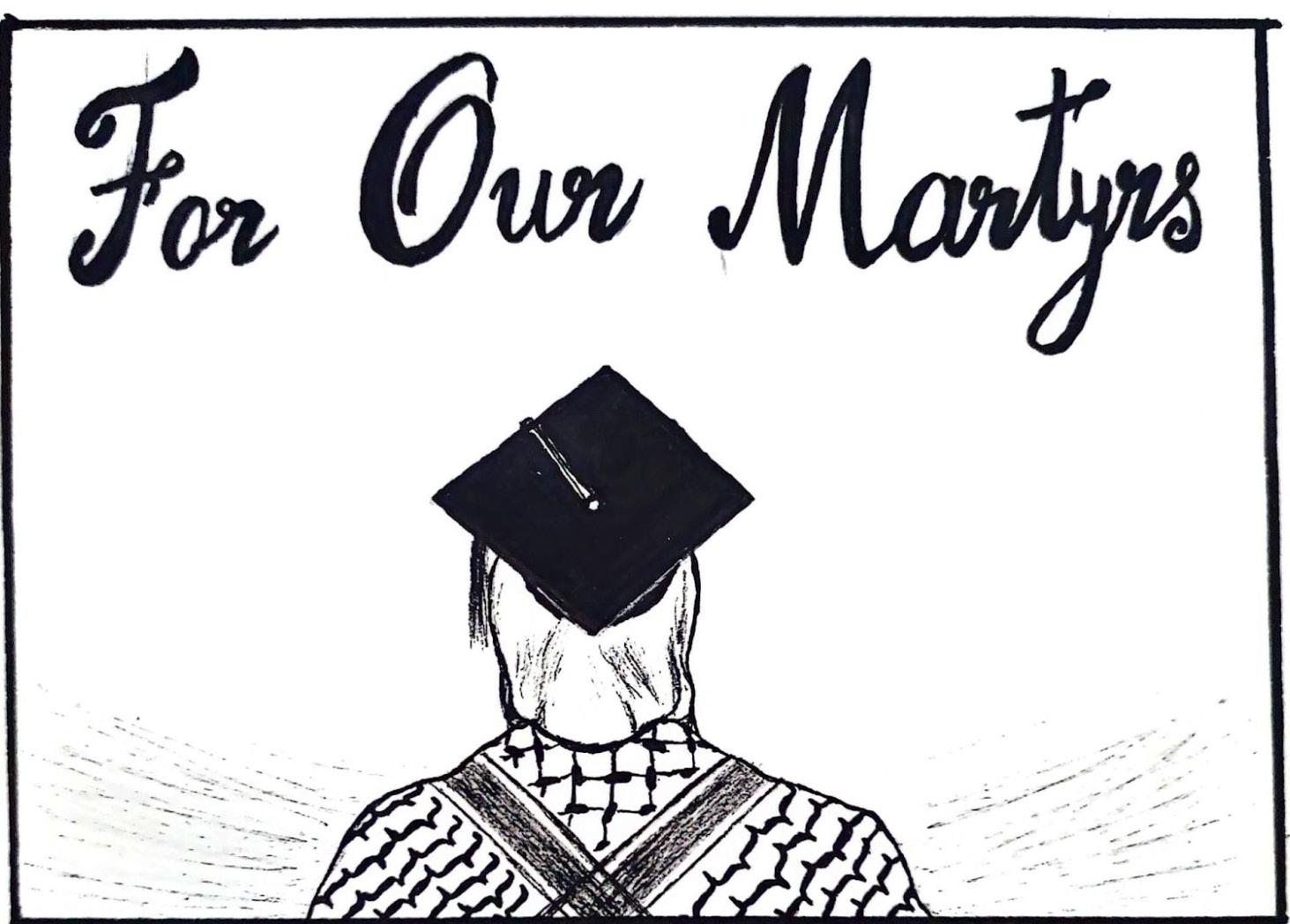
A personal thank you to everyone who helped me along the way
BY KAYLA HAGEMAN krhageman@ucdavis.eduOver my time at UC Davis, I have learned so many things. Whether through my academic journey, my choice of friends or the English department, these areas of emphasis have changed me and the course of my life as I take the next steps toward graduate school. By reading my experience, someone out there will be able to relate and begin to understand that although the future feels uncertain, your time will come!
When I first got accepted into UC Davis, I was nervous. It was 2020, and the pandemic was just beginning to take hold of the world. I did my entire first year of college from the comfort of my childhood bedroom, making online friends through Zoom classes and learning all about what was expected of me in this new environment. I took some fun classes, like the Evolution & Paleobiology of Dinosaurs and Witches: Myth & Reality, but I always came back around to my love for English.
As the year flew by and the second year began, I finally declared my major as English. From that moment forward, I became immersed in classic literature. I wanted to know more about everything, and the professors in the department could see how much I wanted to learn and embraced my enthusiasm. During my second year, I spent a lot of time on campus trying to find my place in the community and struggled because I had difficulty adjusting. It was my first time away from home, and I missed my comfort, but low and behold, I pushed through!
My third year felt like a blur, but I met some of my closest friends and began to feel at home not just on campus but also in town. When I met my friends this year, it was the first time I felt like someone could understand me besides the people I had back home. Some of my most memorable moments were during my class on Chaucer taught by Claire Waters, where I got to meet my favorite TA who went out of their way to make me feel like I was meant to be there when imposter syndrome was beginning to get to me.
Now that those formative years have passed, here I am in my last and final year at UC Davis, and I have so much to be thankful for. First, this year I got a job at The California Aggie, where I was embraced warmly, and my copy editing skills were put to good use! This job has helped me realize that this is the career path that I am going to pursue as I take the steps out into the real world.
This year, I also took the steps to apply to graduate school, and the process was scary, to say the least. I was anxious that no college would see my worth, but if I have any advice for those who will be doing the process next, don’t think like that! I got accepted into California State University, Fullerton for a master’s program with an emphasis in English. I will be returning to Southern California, where I am from, to pursue a degree in something I love!
With all this being said, my advice to next year’s students who will experience all the emotions of fear, excitement and nervousness is that those feelings are valid. This part of your life is closing, and the next chapter is starting to begin.
First, thank you, The California Aggie, for allowing me to work on my skills and make new friends! Without this, I would not have been able to learn and grow the way I do now. I want to thank my parents for pushing me forward in my academic journey and never giving up on me when I felt like I couldn’t do it. Here’s to the class of 2024!
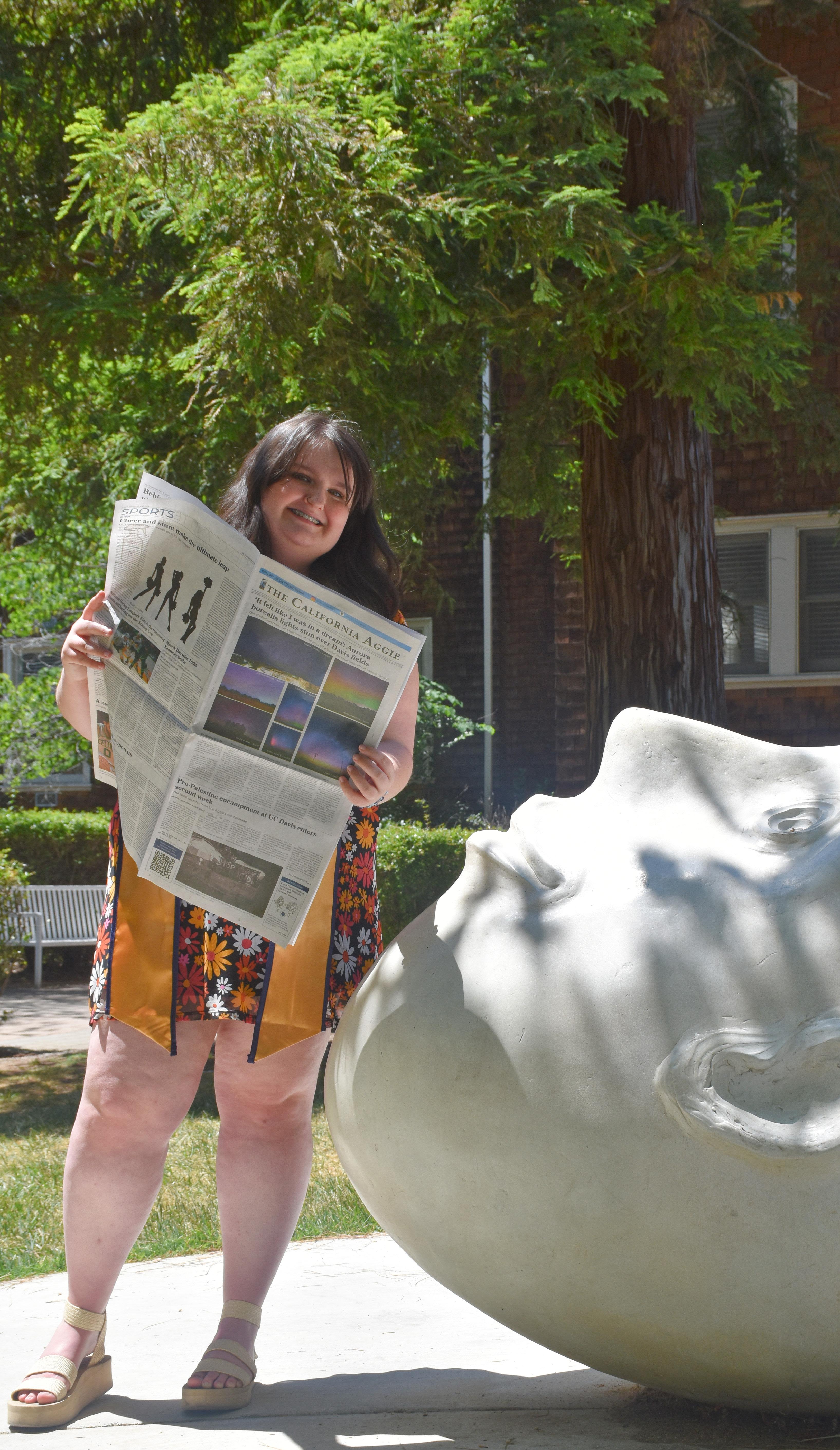

Enter digits from 1 to 9 into the blank spaces. Every row, column and 3x3 square must contain each digit. Each Sudoku has a unique solution that can be reached logically without guessing. Answer to previous puzzle 05/30/24
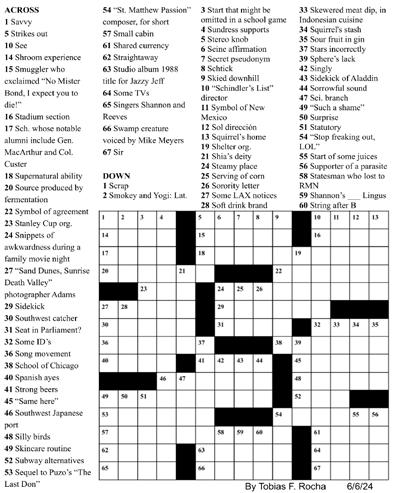


I saw Gunrock on Tinder the other day and I swiped right
Have you seen his muscles?
BY ALLISON KELEHER adkeleher@ucdavis.eduHere at UC Davis, we are known as “cow town” because of our love for adorable farm animals. The love is so strong that there was a movement to make a cow our school mascot. Sadly, this movement was shut down by UC Davis alumni. Something about tradition I suppose. So, we got to keep the buff horse instead.
Even though he won, this movement to change the mascot was a giant blow to Gunrock’s ego. He began to feel unworthy of his position and slipped into a period of depression. When he finally pulled himself together, he hit the gym and started bulking to prove all of his haters wrong. He even started a gym account on Instagram.
Gunrock enlisted the help of fellow Aggies to take his spicy gym pictures at the Activities and Recreation Center. After mastering all of the poses to show off his muscles, his account started gaining traction. Currently he has 300,000 followers, which is more than the UC Davis Instagram account. Around the time he hit this milestone, Gunrock decided it was time to find his Gunrockette. So, he did what any lonely mascot would do and created a Tinder profile. He chose many gym pics for his profile and one
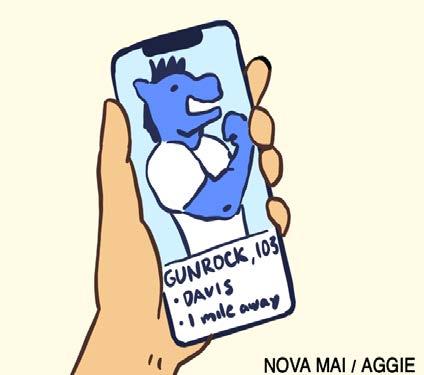
tasteful one with a sunset and got to swiping.
Gunrock started getting so many matches that it was too much to handle. His fuzzy fingers couldn’t type that much on such a small screen. He began giving dry responses but this just made the women want him more. His indifference made him so much more desirable. All of this attention went to his head, and he started to feel a lot less lonely and a lot more powerful. Instead of finding his other half, he was on
Some of California’s best places to bask among the ancient giant trees
BY SAVANNAH BURGER arts@theaggie.orgCalifornia is home to countless different ecosystems and biomes including hot deserts, grasslands, chaparral, the alpine tundra, wetlands, coastal forests and many others. One of California’s most distinctive and characteristic ecological features, however, is undoubtedly its towering, breathtaking redwood trees.
There are three types of redwood trees. First are the coastal redwoods (Sequoia semperviren), the tallest trees in the entire world as well as the California state tree. The tallest coastal redwood is named Hyperion and stands at 380.3 feet (that’s around 75 feet taller than the Statue of Liberty).
The second class of redwoods is the giant sequoia, (Sequioadendron giganteum), which boasts itself as being the largest tree in the world, with the General Sherman tree being the largest of them all. It has a volume of 52,508 cubic feet and a circumference of 102.6 feet at its base. It’s also proven to be between 2,300 and 2,700 years old, which would mean it was alive back when the ancient empire of the Egyptians was in full swing.
The third class, the dawn redwood (Metasequoia glyptostroboides), is the only redwood not native to California. Originating in the Hubei province of China, the dawn redwood, unlike its evergreen relatives, is the only deciduous redwood tree, shedding its needles every year.
Starting off with the coastal redwoods, you can’t go wrong with the Lady Bird Johnson Grove Trail in Redwood National and State Parks. Located in Humboldt County, this grove was named after the former First Lady, Lady Bird Johnson, for all of her efforts and work in conservation with President Nixon in 1969.
This trail has some of the best selection of old-growth trees in the national park, complete with a beautiful redwood hiker’s bridge that is located at the trailhead. The park it resides in, Redwood National Park, contains nearly half (40,000 acres) of the last remaining old-growth coastal redwoods in the world. Be sure to check out the rest of the park for other sights. Also in Humboldt County, the Avenue of the Giants is a detour off of Highway 101 that you will not want to miss. The Avenue, or State Route 254, is 31 miles north of the historic Highway 101 and grants visitors access to over 51,000 acres of redwood groves. It has multiple visitor centers, drive-through trees and its most popular grove to walk through, Founder’s Grove. The Avenue of the Giants is great for hikers and nonhikers alike. You can either drive through and enjoy the views or just pull right off of the road at the grove of your liking. It’s that easy!
Another great place to see coastal redwoods is the Armstrong Redwoods
State Natural Reserve, placed in Sonoma County’s Guerneville. Similar to the Avenue of the Giants, you can both drive into this park or park at the entrance and walk around. The reserve has a beautiful visitor center, as well as a handful of impressive old-growth redwoods. One such redwood is the Icicle Tree, which is named after its unique burls that make the tree appear as though it is melting. Lots to see at this reserve! Southeast of Humboldt and Sonoma, Yosemite National Park, the third-oldest national park and home to the famous Half Dome, also has its own selection of tremendous giant sequoias. Being away from the coast, these giant sequoias rely on elevation for their habitat and enjoy the water that the Sierra Nevada Mountains provide with snowfall each year.
The best place in Yosemite to see these giants is in the Mariposa Grove of Giant Sequoias, which has over 500 old-growth redwoods. This grove has impressed people for hundreds of years and was personally protected by legislation signed by President Abraham Lincoln in 1864.
Further south but still in the Sierras, Sequoia National Park is a must-see for giant sequoia lovers.
 BY SAVANNAH BURGER arts@theaggie.org
Movie: “Porco Rosso” dir. Hayao Miyazaki (1992)


The second-oldest national park, visitors can be wowed and amazed by the world-renowned Giant Forest, the home of the General Sherman Tree. The Giant Forest has hikes that range from only one hour to a whole half day. There’s also the Giant Forest Museum, which includes information about all you need to know regarding giant sequoias. It’s a good place to stop at before your redwood trek!
Last on this list for giant sequoias is Calaveras Big Trees State Park, which is north of Yosemite National Park and only a two-hour drive from Davis. This park has two gorgeous groves of giant sequoias that have been garnering visitors since 1853. The park has camping, hiking trails, cabin rentals and venue rentals for events as intimate as weddings. It’s a great taste of the giant sequoias that’s nearby.
Keep in mind that these are only a handful of the 49 California redwood parks and numerous individual redwood groves that you can find all over the state. There’s not many natural wonders that compare to the majesty of these ancient giants — take some time this summer to enjoy what California has to offer.
From vision boards to outfit ideas, here is why Pinterest is your best stop for aesthetic inspiration
BY NATALIE SALTERarts@theaggie.org
Exploring social media can be an overwhelming experience, and it’s hard to find a place on the internet where you can engage with content without dealing with the arguments and toxicity that often come with it. For that reason, Pinterest has risen amongst its competitors as a popular place to delight in the best parts of online spaces without the more unpleasant side. The app is primarily built for sharing and discovering
pictures, which can be saved to the user’s various boards for convenient organization. As it centers around the visual aspect of social media without much of the social parts, it’s a peaceful place to discover content pertaining to your interests and aesthetics. But what’s the best way to make the most


Many enjoyers of 2D animation will identify the director and animator Hayao Miyazaki, famous for his beloved Studio Ghibli films. “Porco Rosso,” starring Michael Keaton in the English-dubbed version, is a more underrated film in the Studio Ghibli canon. The film follows an ex-pilot of the Italian Air Force between World War I and II. Since his desertion, he’s been magically cursed with the form of a pig and flies above the Adriatic Sea as a famous bounty hunter. This Studio Ghibli movie contrasts the rest produced by the studio in the sense that it’s a somewhat adult movie: that’s what I love about it. Whereas most films for the studio, such as “Ponyo,” “Spirited Away” or “My Neighbor Totoro,” are geared toward children, Porco Rosso has much more adult themes. The whole film, though very heartwarming and humorous, is a moral critique of the rising fascism in Italy leading up to World War II.
Book: “Cane” by Jean Toomer (1923)
“Cane” is noted as one of the most impactful pieces of literature to come out of the Harlem Renaissance, the cultural revival of African American art, music, politics and way of life during the ‘20s and ‘30s. The book was written by mixed-race author and poet Jean Toomer, who could “pass” as white in certain environments and was able to experience segregated America on both sides of the racial divide. “Cane” is an amalgamation of both experimental prose and poetry that centers around a collection of short stories. These stories are all centered on people of mixed African and Caucasian ancestry: some are love stories; some are tragedies. I recommend this to anyone who is interested in an in-depth exploration of the mixed-race identity in segregated and modern America.
TV Show: “Columbo” (1971-2002)
If you want to watch a “whodunit” like no other, “Columbo” is the show for you! Starring the late Peter Falk, “Columbo” is unlike other murdermystery detective shows. Instead of seeing the murderer revealed at the climactic end of the episode, Columbo episodes open with the motive, means and act of the murder — you see it all! You may wonder, what then is the point of the show? Well, it’s watching Columbo, played by Falk, solve the murders — he’s witty, sweet and clumsy and slowly makes the murderer more and more uncomfortable by prodding around. As he unfolds the mystery while getting close to the murderer, making friends with them, you see them crack under the pressure and try to make last-ditch efforts to stop Columbo. He plays dumb until the end, when he finally puts it all together in a oh-sosatisfying “gotcha!” moment. Watch it for a laugh and phenomenal writing!
Album: “A New World Record” by Electric Light Orchestra (1976)

A lot of people may recognize the music of Electric Light Orchestra (ELO) from big blockbuster Marvel movies such as “The Guardians of the Galaxy.” “A New World Record,” their sixth studio album, will completely change your life. It is this album that brought to us one of my favorite songs of all time, “Telephone Line.” The band, which rocketed in the ‘70s and ‘80s out of the United Kingdom, is one of the best examples of progressive rock. This whole album, which is a tubular smashing together of opera-like vocals, orchestral strings and the feel of classic rock, creates an incomparable and ethereal rock experience. ELO’s “A New World Record” is perfect for blasting out of the windows of your car when cruising with your friends on a hot, California afternoon.
of your Pinterest account and use it to support your life off-screen? Pinterest can help you discover new ways to express your aesthetics visually. If you’re looking for creative ways to style your closet or new clothes to add in, it’s easy to find entire boards full of outfit inspiration that you can draw from. Spend some time browsing the hundreds of thousands of fashion pictures the app contains — it’s a brilliant way to discover what style speaks to you best while also finding new ways to take advantage of the clothes you already own. Likewise, the app is built with a feature to identify clothes from a picture, and you can use this to trace a cute top or a memorable necklace to its original website if you’re interested in buying it for yourself. If fashion isn’t your area of interest, fret not! You might use the app to find inspiration for bedroom decoration, art to display on your wall or craft ideas to creatively pass your time. Rather than looking for inspiration on a search engine, which offers results that are too broad, Pinterest narrows down your options to only the most aesthetically pleasing of crafts, decor, fashion and everything in between. By using other users’ uploads as a springboard for your own space, you’ll find yourself living in a room that reflects your personal style perfectly. Another popular use of Pinterest is to create vision boards. A vision board is a collection of images and quotes meant to plot out what you wish your present and future life to look like. You
can use the app to find inspirational and confidence-boosting messages to remind yourself of who and how you want to be in the future; likewise, you might fill it with pictures of travel, self care habits, social outings and such to envision what sort of activities you want to work into your lifestyle. Vision boards are an incredibly effective means of setting yourself on course to achieve everything you want, as they clearly outline your future in a way that feels possible and enjoyable. Make your vision board whatever you want — it’s your future, and Pinterest offers endless possibilities for what to fill it with! If you feel a little stuck in your ways and want to brighten up your life with a new aesthetic vision, Pinterest is full of all sorts of creative and unique inspiration. By creating new boards, you can test out how you feel about new aesthetics, interests and visions without actually spending too much money or time. That way, you can explore new ideas safely and as extensively as you wish. The possibilities are endless, so if you’re looking for a fresh way to discover yourself and your ideas, Pinterest is a great place to start.
This will serve as the first full season with new executive director, Jeremy Ganter
BY RODRIGO VILLEGAS campus@theaggie.orgThe Mondavi Center recently announced its 2024-2025 season of performances, featuring a diverse lineup of both enduring favorites and the next generation of performers. This 23rd season will also mark the first full season under Executive Director Jeremy Ganter. Ganter originally intended to be a professional musician; however, his plans changed during his undergraduate program when he realized he did not enjoy practicing guitar for six or more hours a day. He later discovered his passion for music history — once he started working in the performing arts industry, he realized how effective he was in a backstage management role than
onstage.
He started his career at the Mondavi Center as the executive assistant to the executive director in 2001. During his early career, he experienced multiple promotions until he assumed the role of director of programming and associate executive director in 2007, eventually becoming the executive director in 2023.
“What really prepared me for the job was working with our former executive director, Don Roth, for 17 years, who was a mentor to me,” Ganter said. “A lot of what prepared me to lead the organization, I learned from him.”
As the new executive director, Ganter has three main goals for the Mondavi Center: first, establishing deeper connections with university departments to expand the venue’s presence on campus; second, seeding
 BY AALIYAH ESPAÑOL-RIVAS arts@theaggie.org
On May 18, 2024, singer Malcolm Todd rocked San Francisco with his “Sweet Boy” Tour. The tour, which consisted of visiting 21 cities, was meant to highlight his first album, “Sweet Boy.” Todd, who has gained support on TikTok in recent months due to hits like “Roommates,” and “Earrings,” amassed a large following, causing the tour to sell out in only a matter of days.
The doors opened at 8:30 p.m with openers coming on by 9 p.m. Luke Tyler Shelton, an opener and one of Todd’s guitarists, took the stage and performed three songs. While first caught off guard, his soothing vocals immediately prompted a follow on Spotify. “Anna,” his newest released song was met with erupting cheers from the crowd that left them wanting more. Yet, he got off the stage at 9:30 p.m. and the lights came on again as the crowd became impatient.
At 9:45 p.m. DJ Charlie Addis took the stage with an eclectic mix of
songs for his set, ranging from “Mr. Brightside” by the Killers, to “Fly Like a G6” by Far East Movement and some house music tunes. While there were highs during these sets, most of the crowd was a bit irritated with the lengthy wait for Todd.
At 10:30 p.m. Todd took the stage, opening with his song “Art House.” Todd’s vocals surpassed many expectations, somehow sounding even better than the recordings. With a setlist of songs ranging from his early demos to his latest album, the crowd was electrified with every song. Not only through his vocals but the talent from his band was undeniable. However, due to how late the concert started, many people left midconcert and were unable to stay for its entirety. While the concert itself was enjoyable, it, unfortunately, could not outweigh the negative experience of waiting endlessly for a set that only lasted about an hour and a half.
Now that the “Sweet Boy” tour is over, one can only hope that Todd goes on tour again in the future, hopefully keeping people who have a bedtime in mind.
the ground for the next generation of young artists to sustain the Mondavi Center for the next couple of decades and third, creating a diverse lineup that includes more Asian American Pacific Islander (AAPI) and Indigenous performances, as well as generally representing the diverse bodies that make up campus. “I was able to address all of those goals with the new season,” Ganter said. “The deeper representation piece and the next generation piece are visible already in the programming. What isn’t visible yet is the deeper connections with campus departments, but by the time we start the season in September [2024], we’ll be able to publicly announce a bunch of partnerships.”
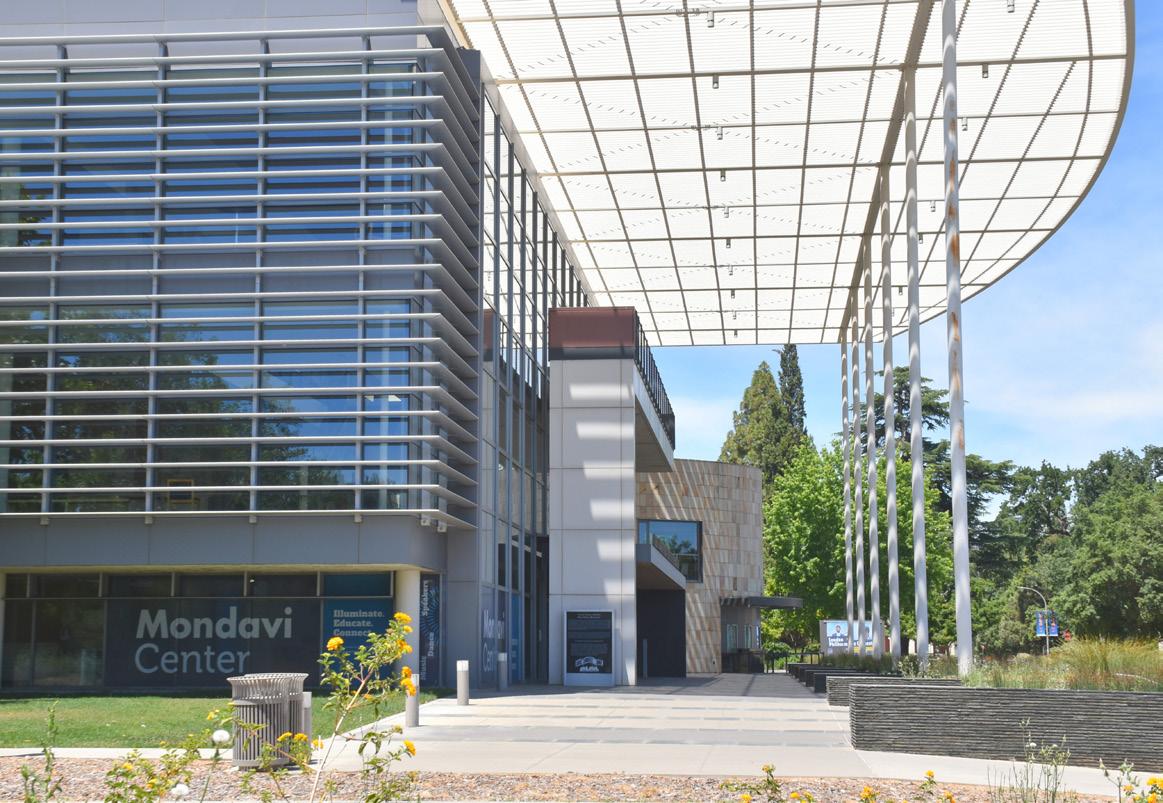
As spring quarter winds down, summer begins to make its way back to UC Davis students, bringing promises of internships, summer jobs and travel destinations. Often fun, often tiring and often stressful, summer boasts a symphony of activities that can be put on resumes or social media feeds, carrying obvious significance and impact on college students’ futures. However, in between these busy days hides many small moments that could become great opportunities to look back at metaphorically and to reconnect with childlike whimsy.
So what exactly is “childlike whimsy?” There is no official definition, but the phrase conveys simplicity, playfulness and a sense of unabashed delight and joy. The lack of an exact definition then seems fitting and appropriate. It appears that the meaning of indulging in childlike whimsy may be up to each person to explore and define for themselves, much like a child on the playground exploring the swings and the slides and discovering what they like best.
One such definition of reconnecting with childlike whimsy could then be putting time aside to engage in simple, peaceful activities and enjoy a sense of unashamed happiness like the kind that a child might feel, with no strings attached.
Admittedly, having fun without considering external pressures and internal worries is harder to do than it is to wax poetic about. It is definitely not realistic to completely ignore personal obligations and responsibilities to yourself and others, which is why childlike whimsy is probably best attained when not putting pressure on yourself to feel a certain way or doing something with the expectation of a certain outcome.
With that in mind, perhaps a better definition of reconnecting
with childlike whimsy should be putting time aside to engage in simple, enjoyable activities for yourself and accepting the emotions that arise as a result, much like how a child experiences the world with no preconceived notions, no expectations for what “should” happen or how they “should” feel. Here are some activities that have been successful in producing feelings of whimsy for many and might for you as well.
Getting ice cream
It must first be acknowledged that getting ice cream is widely accepted as an activity that people of any age can and do participate in. Recognizing that taking time to treat yourself to ice cream or another favorite dietary treat is indisputably aligned with childlike whimsy. Eating delicious food is one of the simplest joys available to human beings, and luckily, it is a joy that follows us from birth through childhood and then through the rest of our lives.
Going to the library
The vastness of libraries is amazing in terms of the sheer range of material that can be found in them, from picture books in the kids’ section to middlegrade fantasy series to musings on existential subjects and enlightening non-fiction books. Libraries are obviously useful tools when one needs to look something up or write a paper. When going without clear goals or motivations, they can also provide whimsical experiences simply because of the wide range of content available to everyone — allowing for a kind of unapologetic exploration of whatever interests you.
Revisiting old haunts
Going to old hang-out spots or even just places where you spent a lot of time as a kid can be a surreal experience. There is no way to really experience a place the same way that
your past self did, but looking upon favorite spots from the past with a new perspective can open up room for a myriad of interesting feelings that could be called whimsical.
Watching favorite childhood films
Reminiscing about memories is perhaps the easiest way to reconnect with the past, and interacting with childhood media provides a tangible path to that past and the emotions contained within. Many children’s movies hold a surprising amount of rewatch value, and indulging in old favorites could potentially add new layers of enjoyment to the lens of nostalgia.
One last note: remember that childlike whimsy has no specific appearance. Like the experience of childhood, it manifests in many different forms and can be found in many different activities. Hopefully, you can find the time to reconnect with your inner child and feel no shame in exploring the things that make you happy.
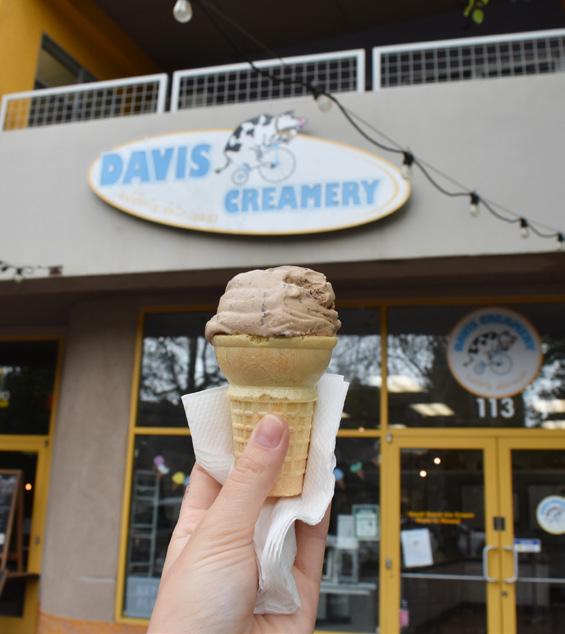
of
Board members discuss the mission behind the center’s existence and connection to the arts
BY SAVANNAH ANNO arts@theaggie.orgOriginally founded in 1972 as La Raza Bookstore, the Latino Center of Art and Culture (LCAC) has been a key foundational space for Sacramento residents for over half a century. With its official name change to the LCAC in 2014, the new title now acknowledges the center’s development into a multicultural and multidisciplinary space.
“It came up out of the Chicano movement,” Interim Director Alma López said. “It became a cultural hub for artists to create artwork in support of the United Farm Workers movement; it was very much rooted in Chicanismo here in Sacramento.”
The Chicano Movement, or El Movimiento, was prominent in Sacramento and the greater Central Valley area from the 1960s to the 1980s, as Mexican Americans protested racial discrimination and fought to expand farmworker’s rights.
“We very much continue to use the work, the spirit and the pillars with which the institution was created 54 years ago,” López said.
The LCAC’s current exhibit, “Revolutionary Legacies,” was curated by Jazel Muñoz, featuring the work of Gilda Posada, also known as Printingainteasy — whose work has been sold and utilized on the UC Davis campus in recent pro-Palestinian demonstrations — and a piece by Ren Allathkani. Made up of screen prints
detailing social issues like reproductive rights, police brutality and Palestinian liberation, the center intended for the gallery space to be educational by
sparking important conversations.
“It’s really about creating a space to build community,” López said.
“Art plays a big role in that, fostering a dialogue that might not always be easy to have and raising awareness. Our programs serve communities and artists who, more than anything, have been marginalized.”
“Oftentimes when artists create pieces like this, it doesn’t always find its way into a gallery space,” Director of Communications Jorge Quintana said. “When Europeans use art to address their political opinions, it’s called ‘fine art.’ When our community does it, it’s called ‘folk art.’ We [the LCAC] can use our gallery space to give these artists resources to promote themselves and ensure their art is treated just as important as any other artist’s.”
Walking into the gallery space, visitors are first greeted with the intricate work of Gilda Posada. Posters include messages such as, “Justice for Breonna Taylor,” and “Free Palestine, Hasta La Victoria.” Using bright colors and often detailed flower imagery, Posada creates prints bursting with life and conviction.
“What I love about Posada’s style is the way it preserves the core sentiment of the Chicano printing art,” Quintana said. “During the Chicano Movement, it was collectives like The Royal Chicano Air Force that were using printing to call attention to protests and movements.”
Using Aztec and Mayaninfluenced geometry in designs focused on present issues in pieces like “Luchamos por la autonomía sexual y reproductiva” [“We fight for sexual and reproductive autonomy”], Posada
is able to bridge the origins of Chicano art with what current Chicanx and Latinx artists are trying to express.
This idea of building on top of and connecting with past Chicanx history is also indicative of the LCAC’s overall mission: to be a space for information, education and cultural pride. As the culture changes, so does the center, willing to encourage evolution through new art, events and workshops.
“We do see the difference in opinion between older Chicanos who have this pride for the movement they lived through and younger folks who identify differently — Chicanx, Latinx, Latine — finding different ways to continue that cultural pride,” Quintana said. “People change and we’re proud to be a space where we can have these dialogues. How do we keep the sentiments of our history preserved while at the same time making room for the new growth and the new voices that are emerging?”
For López, one answer to this question is through the LCAC’s youth group, Cultura es Fuerza [Culture is Strength].
“Cultura es Fuerza is focused around young people learning traditional Mexican dance but also leadership [and] artistic and creative development,” López said. “In many ways it fosters a skillset that not only increases employability but also a connection to cultura. The more we learn about cultura, the closer we feel to it and the bigger the reasons we engage civically.”
By investing into the education of Chicanx and Latinx youth, the LCAC hopes they will bring a newfound sense of cultura and greater civic engagement back into their communities.
“There was a moment volunteering where I saw how the community was coming together to help create Día de los Muertos that gave me a feeling that I only have when I’m back home in México,” López said. “I started to think about how we could amplify that so more people are able to come here and get that sense of belonging.”
Apart from the youth group, the center also hosts regular high school and college visits, fundraisers for community artists and even graduation ceremonies for Latinx students.
Larger cultural celebrations hosted by the LCAC each year include El Panteón de Sacramento, a traditional celebration and creation of memorials during Día de los Muertos, and Oaxaca en Sacramento each August, which honors the indigenous celebration of La Guelaguetza. In 2022, El Panteón received 13,000 visitors over the course of three days, while Oaxaca en Sacramento received 4,500 in one.
“Folks want a space that reminds
be
for
a
them of cultura and how art and culture is very much connected to their goals and dreams of what they’re aspiring [for],” López said. Whether it’s to attend one of their annual events for local food vendors and traditional dance performances or to see the newest exhibit in their long history of politically educational artwork, the Latino Center of Art and Culture is ready to welcome you with open arms. For any artist or community member interested in getting involved, the LCAC is always looking for volunteers, new proposals for exhibits and people willing to share their ideas for ways the center can expand. Open until June 8, visiting “Revolutionary Legacies” is the perfect opportunity to get a sense of the center’s work and overall mission.
REVOLUTIONARYLEGACIES on 15
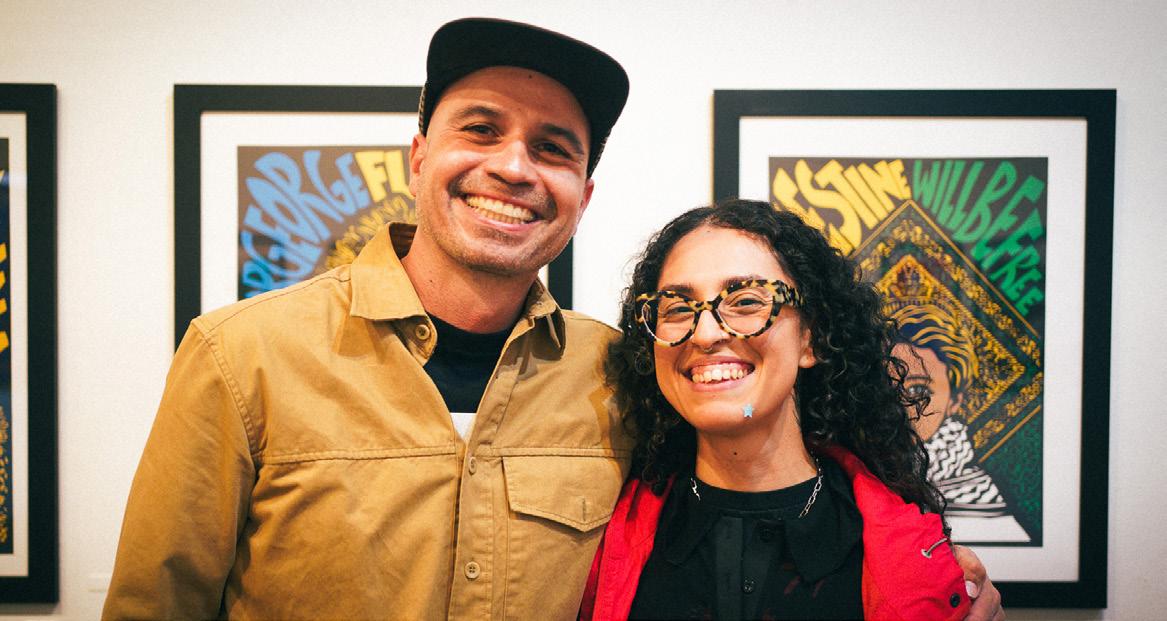
Local music festival will stretch across town, bringing in bands from all over for Father’s Day weekend
BY GRETA FOEHRDavis Music Fest (DMF), taking place from June 14 to 16, is an annual three-day music festival with six different stages spread around Davis and features about 40 bands. The non-profit fundraiser raises money to support arts and music education in and beyond Daivs schools and has been organized yearly since 2011.
DMF is put on by Davis Live Music Collective (DLMC), which hosts a variety of shows throughout the year.
Members of DLMC pay for access to four shows a year of their choice, with this method of pre-selling concert tickets guaranteeing traveling bands profit for their show in Davis. DMF is the last show of the year in the Davis Live Music Collective series, which results in many members being in attendance.
Kyle Monhollen, the executive director of Davis Music Fest and Davis Live Music Collective, discussed the idea that sparked the creation of DMF.
“We wanted to create a fundraiser and an opportunity to bring the community together around live music and really kick off summer,” Monhollen said. The entire festival is also designed to pour support back into local music through supporting music education in Davis schools.
“So many of our professional musicians who are touring are saying, ‘I got my start in [music] and thought I could do this as a career because I picked
up an instrument in school.’ And so
we’re just trying to perpetuate that and celebrate that,” Monhollen said.
About nine months before the festival, the board of about a dozen community volunteers begins to select the bands for the event. They aim to have 50% returning bands and 50% new bands.
They then work with local businesses to find venues and sponsors, with restaurants and bars making space for live music. Their biggest sponsor is the city of Davis, which offers the Arts and Community Grant.
“Everybody who is an organizer, a sponsor [or] venue operator — we all agree that there’s no better way to build positive relationships in the community and get together around a band and celebrate that way,” Mulholland said.
“Making that as open and inclusive for our Davis community and beyond is becoming a kind of a secondary goal.
We’re throwing this party, and we want to invite as many people who are willing to come out as possible.”
Eunah Preston, the artist liaison and marketing lead for DMF, discussed what sets the event apart from other music festivals.
“I think it’s really important to provide accessible, good live music to the community,” Preston said. “We’re one of those towns that doesn’t really have a music venue. So what we’re trying to do with the festival is bring a high-quality festival experience but on a budget, which makes it sound like it’s like a cheap version, but it’s not cheap because the experience is really good.”
This year, local record store
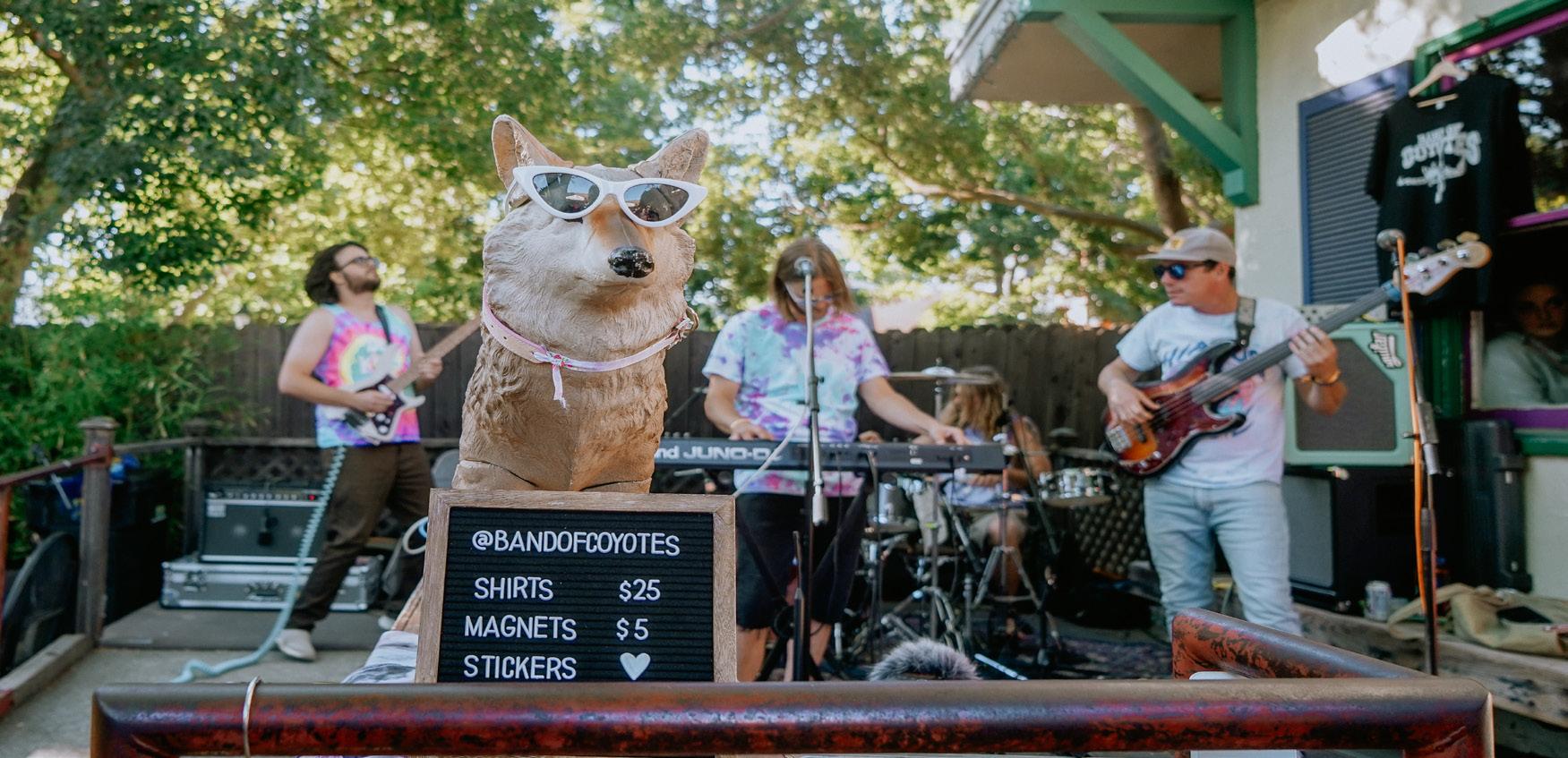
Armadillo Music’s stage will be livestreamed on KDRT 95.7, where singersongwriters will play their set on air and then talk about their songwriting process live.
Svenja Kadegge, the volunteer coordinator for DMF, discussed the benefits of volunteering at the festival.
“We have about 80 community volunteers, or spots that need to be filled every year,” Kadegge said. “They are all two-hour shifts, and when you do your two-hour shift, you get a discount for the wristband for the festival: $20 instead of $50. And it’s really a lot of fun.”
Davis Music Fest makes sure that there is something for everybody, recruiting bands with a wide variety
of styles.
“We try to cover as many different genres as possible to make sure that we have a good female representation amongst the bands,” Kadegge said.
DMF has brought joy to the Davis community for 12 years and will continue their legacy this year.
“[Davis Music Festival] is a celebration of music in all its diversity,” Kadegge said. “It’s a celebration of community as well, it being a volunteerrun event. It brings a lot of people together who are invested in making this event happen. And on top of that, the profits of the event go back into the community, into music education.”
This year, local creative agency Davis Rave Company is hosting a
DMF afterparty. The two events will be swapping discount codes so that those attending the Davis Rave Company event can get a 50% discount on the festival and vice versa: DMF attendees can get 50% off of the afterparty ticket price.
Davis Music Festival is offering a discount code that gives UC students 50% off of the tickets. You can redeem this by using the code “DAVISRAVECO.” There are also still volunteer slots available, which is another way to get involved and receive discounted tickets. For more information, you can contact their email at info@davismusicfest.com or visit their website, davismusicfest.com.
In the interest of staying off of their phones this summer, UC Davis students share hobbies and activities to occupy their free time
BY ZOEY MORTAZAVI features@theaggie.orgWhether you have a favorite hobby that comes to mind or not, maintaining hobbies can greatly benefit mental health and overall wellness. Getting into the habit of spending your free time doing things that you enjoy — art, music, the outdoors or anything else — is good for you, regardless of the activity itself.
Many at UC Davis have expressed wanting to reduce the amount of time that they spend on their phones. In response to these feelings, students are beginning to share and recommend some of the hobbies that they have picked up during their free time.
Making time for your hobbies can increase your work performance by a significant amount, according to Harvard Business Review. Practicing creative hobbies like painting, writing or playing instruments can grant you the ability to tap into original ideas more deeply than others can.
No matter the reason for wanting to reduce the amount of time you spend on technology, there are many activities that can boost cognitive function and creativity. One of the main “intellectual” hobbies that might first come to mind is reading — one of many hobbies that can boost brain activity. Some other brainboosting hobbies include crossword puzzles or other word games, sudoku, learning foreign languages, journaling and meditation.
Caleb Silver, a first-year political science major, shared how spending too much time on his phone has impacted his daily life.
“Every time I am uncomfortable in any way, I just look at my phone — to the point that sometimes, the screen isn’t even on and I’ll be looking at it,” Silver said. “I’m supposed to talk to my family on that thing, and yet most of the time I don’t. I love my family, there
is just so much other stuff to do on my phone, so it’s easy to get distracted.”
Silver continued by sharing what he likes about one of his favorite hobbies, chess.
“To lessen some of the time spent on my phone, one of my favorite hobbies [...] is playing chess,” Silver said. “I learned [how to play] last year, and it is really fun to progressively get better over time. Playing over the board with a friend is great, because it doubles as a great time to have a good conversation — and I love conversations.”
No matter which hobbies you try and pick up, keep in mind that simply finding time to set aside your workload and responsibilities in favor of something you actually enjoy is beneficial.
A study by Harvard Health showed that those who report regularly practicing their hobbies display higher life satisfaction, increased happiness levels, fewer depression symptoms and better overall health.
In addition, habitual practices and hobbies are often more meaningful if they are inspired by friends or family members that introduced them. Davis students have reported that having sentimental feelings toward certain hobbies has helped them to practice more regularly.
Ellie Kwon, a second-year psychology major, shared one of her favorite hobbies that she recommends — crocheting — as well as where her love for it came from.
“My grandma taught me how to crochet, and I fell in love with it,” Kwon said. “It was my favorite thing to do in my free time. It forced me to stay off of my phone and get more restful sleep. Throughout the years, my creations went from oddly shaped squares to sweaters and skirts. In middle and high school, crocheting allowed me to participate in community service.”
Kwon continued by sharing how crocheting has benefited her life and extracurriculars as a college student.
“I made blankets, scarves and hats [and donated] to different organizations. In college, it has allowed me to meet new people and get job opportunities,” Kwon said. “I joined the Fiber Arts Club here at UC Davis and met many friends. In the upcoming summer, I will be a camp counselor for the UC Davis Youth Program, teaching kids how to crochet. I think with every new skill, there is a learning curve. However, I believe crocheting has many benefits and can be a great skill to have in life.”
Hobbies don’t have to feature hard-hitting skills or be intellectually stimulating. A hobby that you choose to do can range between anything from games, crafts or even just spending time outside.
Outdoor activities are very popular
at Davis, and there are many groups, including Outdoor Crew (ODC), Davis Snow Club and Outdoor Adventures, to help students get outdoors. Elliot Dodge, a first-year statistics major, shared one of his preferred outdoor-based hobbies and how it helps clear his head.
“When I want to stay off my phone, I like to rock climb,” Dodge said. “It’s a really enjoyable activity because of how much you have to focus totally on the climb. I feel like I can clear my mind while keeping my body in shape, and the climbing community is super welcoming and relaxed.”
Finding a like-minded community who shares your interests and hobbies can make a world of difference when it comes to making time for those
activities.
No matter what hobby you are choosing to pursue, the key to habitbuilding is consistency. It generally takes individuals around one month of consistent practice of something for it to become a habit, though this varies greatly. At the end of the day, the value of hobbies is making time for yourself.
Even if you are not developing impressive new skills in the process, hobbies are all about finding things that excite you and making regular time for them throughout the week. Consider trying out some of the activities mentioned by UC Davis students, if not finding your own and practicing them in your free time this summer.
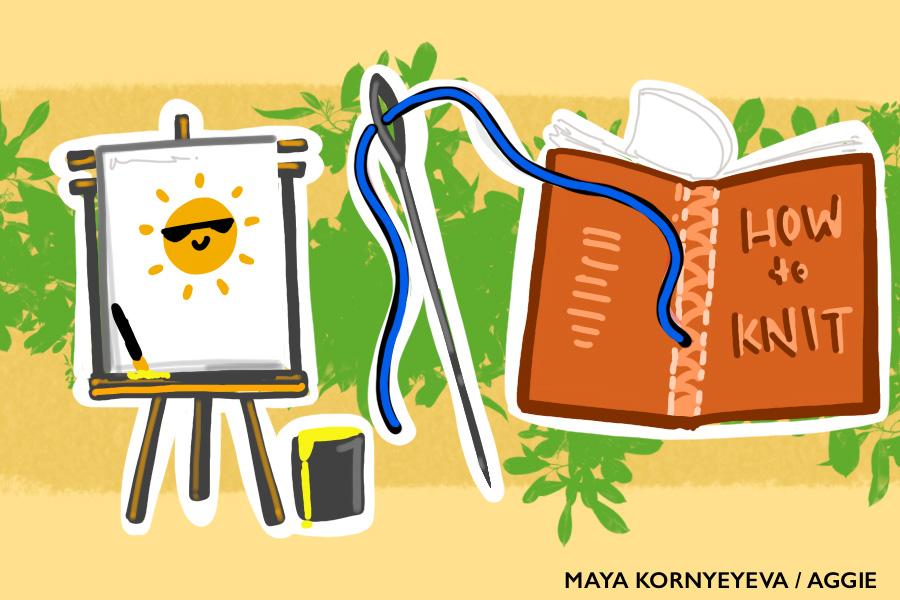
Local music production club fosters a community for both experienced producers and newcomers to collaborate and learn about a wide range of music
BY LAILA AZHAR features@theaggie.orgIn December of 2023, Prod. Davis — a music production club at UC Davis — released a 10-track album titled “Static.”
The album’s theme is “technical difficulties,” as Noah Homsy King, a third-year sustainable agriculture and food systems major and one of the club’s founders and co-presidents, explained.
“It was a running joke in the club that with production you have to interface a lot of technology, and sometimes your sound doesn’t work,” Homsy King said. “There were some awkward moments in the club, so that became the theme of the album.
The project served as a way to foster collaboration between members of the club. In fact, each track on “Static” has at least three producers.
“I spend most of my time as a producer just alone, producing,” Homsy King said. “It can be really hard to find community [and] find people to produce with. The album was a way of facilitating that collaboration.”
For Alex Ta, a first-year music and economics double major, this collaboration is one of the highlights of the club.
“I feel like music production is pretty niche, especially where I’m from,” Ta said. “I could never really find a space where I could produce with people who enjoy producing as much as me.
So when I came to Davis, it was really refreshing to see a huge community that was super welcoming.”
Ta has been producing music since middle school, but he was still able to gain new experiences through Prod. Davis.
“I’m mainly a hip-hop, R&B kinda guy, but I’ve learned [Electronic Dance
Music] EDM [and] afrobeats,” Ta said.
“I’ve learned so much about music just within the span of a year.”
During the club’s “genre weeks,” officers host workshops teaching production of different genres, from bedroom pop to trap to reggaeton.
This ability to produce a variety of music is reflected in their album —
“Static” ranges from rap to indie pop.
Traversing genres is something greatly respected by music listeners today.
“I think sometimes people view genres as these strictly defined categories, but some of the most innovative music comes from people who go outside the norm and can balance elements from many different genres,” Noor El-Jamal, a first-year political science major, said.
Prod. Davis hosts workshops on topics such as mixing and DJ-ing allowing members to gain familiarity on various aspects of producing.
“I have a few friends who had never even heard about music production until I told them about the club,” Ta said. “You don’t have to know how to produce music to join. It’s a space to enjoy different types of music.”
The end goal of the group is to be “a space for aspiring artists and producers to grow, share knowledge, have fun
together and foster a community of music-making and production,” according to Homsy King.
Through their various workshops and collaborative environment, Prod. Davis provides a space for everyone, from a casual music enthusiast to a seasoned producer, to enjoy themselves and learn about different styles of music.

In compliance with state law, Davis police gave the annual update on new military equipment
BY OLIVIA HOKR city@theaggie.orgOn May 28, the Davis Police Department held an annual community gathering at the Davis Police Station to report any new military equipment, a need for new equipment or a need to replace existing equipment. Police officials wanted to discuss the type of chemical agents the department possesses amongst other equipment.
Deputy Chief Todd Henry and Lieutenant Dan Beckwith gave a brief presentation with information about the different types of equipment and current quantities and allowed time for community members to ask questions.
“AB [Assembly Bill] 481 requires law enforcement to disclose what equipment they use that falls under the classification, according to the state of California, as military equipment,” Henry said. “Every year we have to report again and ask [the Davis City
SENATE28
FROM FRONT COVER
Smith went on to present the current projects of her team, joined at one part by Briane Abernathy, a fourth-year sociology major and HTAC student orientation liaison and tenant rights specialist. These included Abernathy’s own work in promoting bike safety and working on a new video for incoming first-years, as well as other volunteers’ projects such as increasing food diversity and getting a Yolobus line from the Memorial Union to Woodland’s Gateway Plaza.
The Senate then reviewed the written quarterly report of the Office of the Transfer Student Representative.
Following the arrival of The California Aggie Editor-in-Chief Sonora Slater, the Senate moved to approve The Aggie’s budget for the year. The unit and ASUCD had recently dissolved a Memorandum of Understanding allowing the former to absorb the latter’s debt. The proposed budget had been approved by the Media Board, though several senators had noted earlier in the night that they had issues with the budget to address with Slater. However, by the time she arrived, these senators, notably Jonathan Ng, were no longer present.
“Almost all of the money that is coming from ASUCD [for The Aggie] goes to student jobs,” Slater said after giving a brief introduction for the proposed budget, on which she worked closely with Controller Francisco.
With The Aggie facing lowering advertisement revenue, Slater noted that she was having meetings with next year’s Editor-in-Chief Chris Ponce and The Aggie’s Business Manager Laurie Pederson to discuss ways to increase
Council] for a new ordinance to allow the continued use of [the equipment].”
The term military equipment refers to armored rescue vehicles, chemical agents such as smoke canisters and tear gas, rifles, breaching tools and unmanned aircraft systems (UAS). None of the equipment owned by the Davis Police Department was purchased nor given by the military, according to Henry. The state determined which materials are considered military equipment.
The police department is currently in possession of one armored rescue vehicle, 13 small unmanned aircraft systems, about 50 different chemical agents, 13 noise flash diversionary devices, 45 AR-15s as well as a number of other rifles and two breaching shotguns, according to the Military Equipment Annual Staff Report, which can be found on the city of Davis website.
“The only real change in this policy from the last is the chemical agents:
revenue.
The budget was approved without contest, and the Senate entered a discussion about how to use its remaining funds. With Raghunathan’s support, mental health resources were added to the Health and Wellness line item. Senator Nur Ambaw then attempted to start a motion to increase Senate reserves, which ultimately failed.
“This year, I feel like we’ve been running out of money,” Ambaw said in defense of his motion. “I don’t think it’s right to limit senators’ potential by saying, ‘We don’t know have the money to do this.’’’
The Senate went on to amend the budget for the Club Finance Council from $113,000 to $152,000 and allocate an additional $5,000 to Cal Aggie Camp.
The budget was then briefly closed to hear the Picnic Day quarterly report, presented by Picnic Day Chairperson Bradford Martin, a third-year economics and psychology double major, and Vice-Chair Mina Saramn, a third-year statistics major. The pair say they are happy with this year’s festivities and hope to hold a “mini Picnic Day” event in fall quarter 2024.
The Senate then reopened the budget, with some $25,000 remaining to allocate. Ultimately, they would allocate $14,000 more to increasing accessibility, $9,000 for the Asian American Pacific Islander Night Market and $1,100 to executive branch special projects. With the budget finalized and complete, the Senate broke out into a short applause.
“Thank you for all your hard work,” Francisco said. “This slays. We did it.”
After public comment and exofficio reports, the Senate moved to the introduction of new legislation: SB #92 allocating $1261.77 to the Office of Senator Ambaw for the purchase of
same amount, same type, different manufacturer,” Henry said. “Our old chemical agents had expired so they had to be destroyed.”
A few community members asked questions about the use of certain devices and the cooperation between the police department and the city council. One man who has lived in Davis for 55 years inquired about the last time chemical agents needed to be used in the community, to which Beckwith responded.
“I’ve been here 17 years, and we’ve never used any chemical agents in a crowd control environment,” Beckwith said. “We have used those as far as tactical operations in a barricadedsubject type scenario. As far as crowd control, that’s not something that happens, and we’ve talked about further restrictions of the law to make it an even higher unlikelihood for that to occur.”
The same community member also made a statement regarding the challenges that can occur within city
eco-friendly water bottles. However, there was some discourse over if they were allowed to do so as Senator Ambaw had recently left the meeting on Zoom, and it was unclear if there were enough senators present to proceed with discussing legislation.
With the consent calendar passed and no previous legislation to discuss, the Senate moved to approve past meeting minutes and then to open forum. Raghunathan adjourned the meeting at 9:36 p.m.
FROM PAGE 4
I argue that clothing should transition slowly towards neutrality, by means of creating more garments that can fit any person no matter their biological sex, as well as de-constructing gendered language in the clothing industry. While we have progressed quite far in the 21st century with freedom of style and clothing choice, we should fight to ensure that no one gets discriminated against for their clothing, especially if that is what they feel most comfortable and themselves in.
By breaking through gendered stereotypes, designers and individuals can have more leeway with stylistic choices, dissolving the boundaries of fashion and adding novelty into our culture. We can draw inspiration from historical instances when gender and fashion norms were not so clear-cut, and envision new means of dress that are more inclusive towards all identities.
People fear change, and for good reasons. Comfort is something that we strive towards and which brings us happiness: yet why deny someone else’s sense of comfort when it falls outside of our own zone of acceptance?
councils and acknowledged that the Davis Police Department and the Davis City Council can combine efforts to work efficiently.
“City councils and police accountability commissions are sometimes very limited in their knowledge base, so I’ve seen that there are challenges there, but the way you have established criteria, I think, is good,” the community member said.
The aim of AB 481 is to create transparency and allow cities and their residents to be aware of what their police department is buying and what policies they have around that equipment.
“Our goal is to try and be as transparent as we can,” Henry said. “I think it’s really important for our community to be involved and engaged and aware of what your police department is doing.”
It is necessary to become aware of any internalized biases in regards to gendered clothing and work collectively to bring a more open-minded and accepting attitude towards fashion as an industry and as a choice; we should all be able to wear what we want to wear, whether that conforms with socially accepted norms surrounding style-fashion-dress or if it pushes against them.
FROM PAGE 13
“I think anyone that’s interested in evocative and political art that’s community-made and communityled needs to come and experience this artwork,” López said.
“It’s very beautiful to be in a space where comunidad can come together to have dialogue, cry, laugh, dance and really address the difficult economic and political situations of today,” Quintana said.
With an exhibit addressing contemporary issues not just singular to the Chicanx and Latinx communities, the LCAC helps to facilitate solidarity and awareness beyond cultural borders. Through art, the center is able to continue tradition while at the same time forge a new path for future generations.
“The LCAC is a space that folks will leave feeling a little more inspired, a little more connected and a little more knowledgeable,” López said.
FROM PAGE 13
Among the 2024-2025 season lineup are favorites such as Joshua Bell, San Francisco Symphony and Terence Blanchard, as well as next-generation artists like Bruce Liu, Sean Mason and Théotime Langlois de Swarte with Les Arts Florissants. The lineup also includes groups like Cloud Gate Dance Theatre of Taiwan and Julia Keefe Indigenous Big Band to increase AAPI and indigenous representation. Ganter expressed excitement for this season launch due to the mix of familiar and new artists for their audience. The lineup has received a positive response so far and further added to his excitement, according to Ganter.
“The response to our season launches [is] generally positive, but this one has been particularly positive,” Ganter said. “Ticket sales are well beyond what they were at this point last year.”
He further expressed his excitement about the audience’s renewed energy for live performances, which he’s witnessed during the current 2023-2024 season. Ganter considers this current season as the first “truly post-pandemic” one, because the fear of going out has nearly faded, and the Mondavi Center has experienced full houses again during performances.
“It was plausible that live performances could’ve been completely damaged by the pandemic,” Ganter said. “It was plausible that people would not come back and that we would not have enough numbers to sustain an organization like the Mondavi Center. However, this 20232024 season proved the power of live performance.”

Reigning champions Gotham FC defeat Bay FC 2-0 with two goals from Ella Stevens
BY LUCIENNE BROOKER sports@theaggie.orgThe San Francisco Bay Area has long been without a women’s professional soccer team. After the dissolution of Football Club (FC) Gold Pride in 2010, women’s soccer fans were left with few options to express their support. Since the National Women’s Soccer League (NWSL) was founded and then regularly expanded, Bay Area fans have watched as they were passed over in favor of other markets.
Despite this long-lasting frustration, the wait made their victory even sweeter when a new NWSL team was announced in 2023: Bay FC. Scheduled to begin play in 2024, Bay FC created a lot of buzz right from the beginning with the hype continuing into their first few matches.
Based at PayPal Park in San Jose, California, the team regularly draws raucous and passionate crowds, averaging 15,000 in size each time. The sea of fans dressed in red and black makes PayPal Park an intimidating place for opposing players and fans.
“We’re getting a reputation across the league as this [being] the hardest place to come play,” Tess Boade, Bay FC midfielder, said to Taylor Vincent in a post-match press conference. “We can’t thank our fans enough.”
Although Bay FC certainly has the fanbase, their performance on the field has yet to reflect their enthusiasm.
Sitting at 12th place out of 14 total teams in the NWSL, they’ve won only three of 11 matches played, losing every other game.
This has been an ongoing source of frustration for fans and players alike.
While growing pains are very normal in a team’s first season, for soccer fans it can be so hard to watch consecutive losses with such a star-studded team.
Bay FC fans have expressed frustration with everything from the coaching staff to weather conditions.
Against Gotham FC, their chosen outlet was the referee. The match was fast-paced and aggressive right from the first whistle. While Gotham FC was charged with nine fouls across the 90 minutes, Bay FC was called for 19.
The home fans found this absolutely unfair and chants of “Ref, you suck” and “Die ref, die” echoed across the stadium for most of the second half.
Gotham pulled ahead in the 31st minute on a tap-in goal from Ella Stevens. The crowd had hardly stopped booing that goal when Stevens stole the ball from Katelyn Rowland, Bay FC goalkeeper, and walked it across the goal line for yet another score.
The 25-year-old Stevens has now scored in three consecutive matches for Gotham FC, making a huge impact in
her first year with the club. Despite these two quick goals, Gotham FC struggled to connect passes and hold possession of the ball. Likewise, Bay FC failed to bounce back after quickly conceding twice, and the game lost its rhythm from the first 30 minutes.
Neither team managed to generate a real scoring chance for the rest of the match. Bay FC’s best opportunity came in the 80th minute, but Boade’s shot was easily stopped by Ann-Katrin Berger, Gotham FC goalkeeper.
However, neither team was able to convert, and the match ended 2-0 in favor of Gotham FC. Fired up by perceived cheating by both the referee team and the opponents, Bay FC fans voiced their irritation by booing at the final whistle.
While Bay FC looks to still be a work in progress as they build team chemistry on and off the field, they have a diehard fan base ready to support them no matter what. As they get more match experience and establish those relationships, Bay FC definitely has the talent and drive to develop into a team that can go toeto-toe with anyone else in the NWSL.
With fans who are ready to go to war for their team, PayPal Park is well on its way to become a formidable place to play. Tune in to the next game on June 8 when Bay FC will face the Chicago Red Stars.
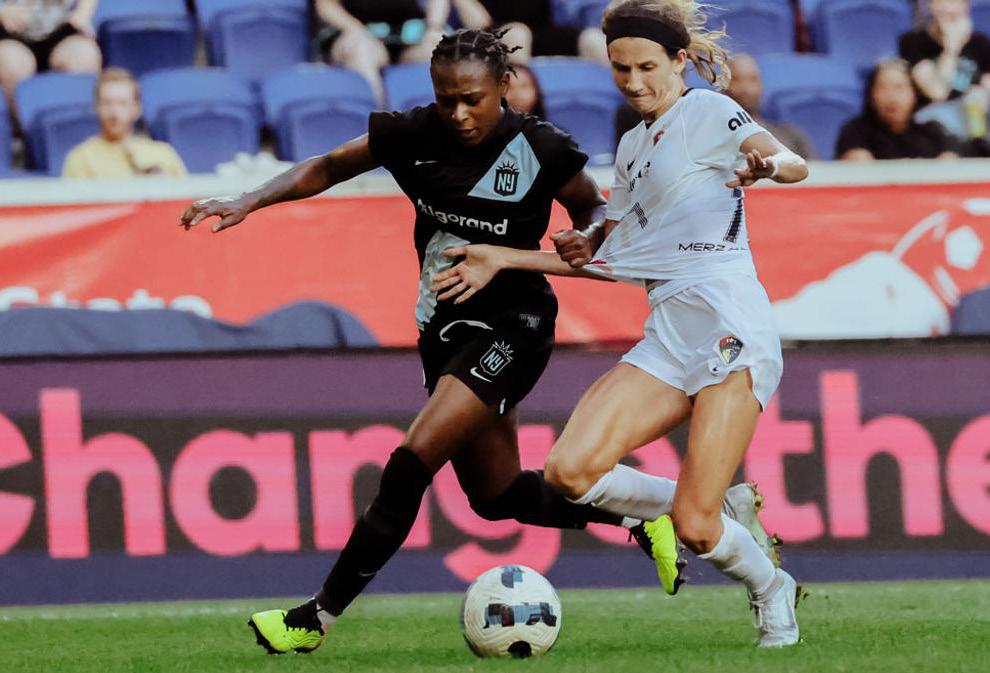
UC Davis club uplifts women one dumbbell at a time
BY MI’ZAUNI REESE) sports@theaggie.org
With summer approaching, many people are in the gym trying to achieve the “perfect beach body,” but you don’t have to do it alone. The Girl Gains Club (GGC) is working to unite and inspire women to take on the weight and do it together.
Started in January 2022, Girl Gains Club is an all-women’s club designed to destigmatize the maledominated gym setting and educate women not only on proper workouts, but on fitness and health overall. Founded by Amanda Hamblin, the group has evolved over the years and now boasts eight executive members who run a biweekly newsletter with over 600 subscribers. These newsletters spread knowledge, body positivity, community and strength, the core values through which GGC cultivates active lifestyles.
Besides running an active newsletter, GGC emphasizes diverse workouts with the goal of working out because you love your body, not because you hate it. GGC believes every woman deserves to accept and love their body during every phase of their fitness journey.
The club offers strength training workshops, hot yoga, hiking and other activities as fun alternatives to traditional workouts, advocating for a healthy lifestyle rather than an obligation to lift weights. The group hosts around three to five events per month, inlcuding collabs with other clubs, group workouts and socials to foster a sense of community.
A key feature of this club is the emphasis on building bonds. In order to help women overcome their anxiety towards working out, trying new machines or any other uncomfortable part of the gym, GGC has created
a buddy pairing system in which members are partnered for a month at a time. These pairings are optional and based on similar gym goals and work out routines. This allows partners to keep each other accountable and motivated while also building friendships in the process.
GGC strives to create a comfortable atmosphere for women in which they do not feel intimidated when trying new machines and workouts, but rather feel supported. For a lot of members, their first time in the gym was through GGC. Hamblin herself recalls having the same “gymtimidation” fears which led to her creating the club. A Metro study has shown that one in four girls/ women experience gym intimidation, often for reasons such as the fear of being in a male-dominated space or not knowing where to start with their health journey. However, the benefits of being physically active allow for improved endurance, metabolism and sleep, which are essential to a successful college life.
In order to ensure GGC focuses on health rather than body image, GGC brings in nutrition experts, such as NUT 10 Professor Debbie Fetter, to educate the group on proper calorie intake, meal prepping and other ways to incorporate nutrition into one’s daily life. On their social media pages, GGC executives share easy nutritious college recipes as well as “What I Eat In a Day,” exemplifying the healthy life they promote. The goal of GGC is to make fitness accessible and enjoyable for everyone. The club is open to women of all experience levels and ages. I and if you are interested in joining, you can find the link in their Instagram bio, @girlgainsatucd.
“Girl Gains is a community for women, by women, to unite women,” Hamblin said.
Failed negotiations between Warner Bros. and the NBA spark talks of the show’s termination
BY DIEGO CERNA sports@theaggie.orgTalks of the future of the television show “Inside The NBA” are currently circulating within the National Basketball Association (NBA) community. TNT Sports has produced “Inside the NBA” since 1989, and the show has been hosted by Ernie Johnson, an American broadcaster, since 1990. Former NBA players Kenny Smith, Charles Barkley and Shaquille O’Neal, who joined the network in 1998, 2000 and 2011, respectively, have stayed as hosts since they joined. The show has also featured other NBA legends as co-hosts in the past, such as Magic Johnson, Reggie Miller and Chris Webber.
Recently, the NBA has made major media coverage changes within its partnerships, causing uncertainty with TNT. Currently NBA has contracts with TV channel ABC and TV networks ESPN and TNT, however, with recent negotiations this may change in the future. NBC, a new broadcaster and channel, has offered the NBA its “B” deal or second deal. This deal includes a $2.5 to $2.6 billion package, which is seen as the frontrunner out of all the companies attempting to work with the NBA. Taking this deal with NBC would most likely mean the end of the NBA’s partnership with TNT since typically the NBA reserves their game coverage to two or less broadcasting networks.
ESPN, a current NBA broadcasting network, has also offered the NBA their “A” deal or first deal, which would include covering the NBA Finals and conference final games. ESPN’s current contract with the NBA is set to expire after the 2024 to 2025 season. The network is hoping to come to an agreement with the NBA prior to the current agreements ending by upping the ante with ESPN negotiating to pay the NBA $2.6 billion for the rights.
Warner Bros. Discovery owns TNT and has not secured the rights to continue broadcasting “Inside The NBA” with the NBA league yet. If negotiations fall through, the show could see its final running season after the 2024 to 2025 NBA season.
The show has run for over 25 years, is notoriously loved by NBA fans and has been nominated for 19 Sports Emmy Awards. The show has also been inducted into the Broadcasting and Cable Hall of Fame, which recognizes the best pioneers of broadcasting and streaming television production.
Known for its hilarious episodes and unique personalities, “Inside
The NBA” has remained an iconic and enjoyable show for fans at home watching NBA games. “Shaqtin’ A Fool,” a comedy show within “Inside the NBA” run by O’Neal, pokes fun at NBA players’ lowlights. The crew’s “Gone Fishin’” segment makes fun of teams who have been eliminated in the playoffs with comedic graphics for fans to watch. By incorporating online memes and X, formerly known as Twitter, posts from fans that tease NBA players and even crew members, the segment has brought amusement to the NBA community for years. Especially with the laid-back agenda and playful nature of the show, “Inside the NBA” stands out as entertainment rather than a regular sports streaming broadcast.
Former “Inside the NBA” producer Tim Kiley was a big contributor toward making the dynamic of the show different from others. Kiley insisted that the crew should talk among themselves rather than simply focusing their attention on the podcast. This encouraged freeflowing conversation and many fourth wall breaks with the behind-the-scenes crew, adding a more comfortable atmosphere compared to other sports networks.
Additionally, the contributions of former NBA players on “Inside the NBA” have sparked many other former athletes to create their own podcasts.
Amid the drama, Barkley spoke on the situation. On the Dan Patrick Show on May 23, Barkley openly criticized TNT Sports on how they have handled the negotiations with the NBA.
“Morale sucks. Plain and simple,” Barkley said. “These people I’ve worked with, they’ve screwed this thing up clearly, and we have zero idea of what is going to happen.”
Charles went on to criticize TNT’s latest move, which included the purchase of the rights to broadcast college football playoff games and not prioritizing their partnership with the NBA. Frustration among the four crew members may be high especially because they recently signed long-term contracts with TNT in 2022.
Despite the uncertainty surrounding the fate of “Inside The NBA,” the legacy the show has created will be cherished by TNT’s loyal fans and will forever be cemented within sports broadcasting history. The show’s impact on sports media is undeniable, as it not only influenced how sports can be covered but also how sports entertainment can be produced and enjoyed.
High Wheelers win the series’ first game against the Rocky Mountain Vibes 10-7
BYCAROLYN (CARI) FENN sports@theaggie.org
After much anticipation and preparation, the Yolo High Wheelers finally took to the field on Tuesday, May 21 for their inaugural game in the Pioneer League. This gave fans the first-ever opportunity to see the new baseball team in action following the announcement of their formation earlier this year.
Yet, as is often the case with new teams, the High Wheelers encountered a hurdle during their first home game. The match had to be halted at the top of the sixth due to insufficient lighting at Dobbins Field. Nonetheless, this setback didn’t deter the High Wheelers. They returned the next day, Wednesday, May 22, and managed to secure a victory over the Rocky Mountain Vibes with a final score of 10-7.
Before the game’s sudden suspension on Tuesday, it was a close competition between the Vibes and High Wheelers. In the first three innings, it seemed as if the Vibes would be taking home the first win of the series as the High Wheelers had a rocky start, trying to find their groove on the field and in the batter’s box.
At the top of the first inning, righthanded pitcher Cameron Repetti gave up only one hit, hitting shortstop Ernie Yake with a pitch resulting in a walk by the Vibes, but the error was enough to give the Vibes the first run of the game. Unfortunately for the High Wheelers, they could only achieve one hit and zero runs at the bottom of the first.
As the game progressed, the second inning had a similar pattern to the first, with the Vibes scoring another run and the High Wheelers only achieving one hit from catcher Mason Minzey. The third inning, once again,
resulted in a similar pattern to the others, with the Vibes scoring a run after multiple wild pitches by Repetti. At the bottom of the third inning, the High Wheelers achieved their first run of the game after catcher Angel Mendoza scored on a wild pitch, but the High Wheelers struggled to get on base. Despite a rough start to the game, the High Wheelers turned it all around in the fourth inning. At the top of the fourth inning, Repetti kept the Vibes at zero runs for the first time in the game. Then, at the end of the fourth inning, the High Wheelers came out swinging with three hits and two runs, securing the lead over the Vibes for the first time of the game with a score of 4-3. Most of the runs came from a triple hit to right center field by infielder Bobby Lada, allowing Minzey and infielder Sam Kuchinsiki around the bases and to home plate. After this remarkable comeback by the High Wheelers, nothing significant occurred in the fifth inning, resulting in the game remaining 4-3 with the High Wheelers leading through the suspension to the next day. Despite the change, the High Wheelers returned even stronger the next day for the remaining four innings that still needed to be played. In the sixth and seventh innings, High Wheelers left-handed pitcher Jacob Stobart put on a solid performance, only allowing one hit between the two innings and keeping the Vibes scoreless. Then, the High Wheelers scored twice after infielder Kirkland Banks scored on an error by the catcher and Kuchinski scored off a single by Minzey, occurring at the bottom of both innings, respectively.
The High Wheelers made another high-scoring run at the bottom of the eighth after right-handed pitcher Ty Buckner replaced Stobart and kept the Vibes to a scoreless inning again.
At the bottom of the eighth inning, the High Wheelers achieved four runs and three hits to secure a heavy lead over the Vibes with a score of 10-3. The first two runs came after a double hit from infielder Braedon Blackford, which got Mendoza and outfielder Brayland Skinner to home base. The second two runs came after a single hit from Kuchinski resulted in Blackford and Lada scoring. Despite a secure lead going into the ninth inning, the Vibes gave the High Wheelers a run for their money as they fought to return from the seven-point difference. With the bases loaded, Vibes second baseman Josh Day singled out to the left field, resulting in both left fielder Mason Sykes and shortstop Ernie Yake scoring. In a similar situation just a few pitches later and a switch by the High Wheelers, who called in righthanded pitcher Jack Zalasky to finish off the game, Vibes third baseman Eddie McCabe landed a single hit up the middle, resulting in first baseman Dane Tofteland and Day scoring. Eventually, Zalasky achieved the final third out needed to finish the game and lead the High Wheelers to win the game 10-7. Despite the rough start and pause in play, the High Wheelers came out with a win for their first-ever game as a team in the Pioneer League. However, with a season still ahead, it will be interesting to see how the High Wheelers will perform against all of the other teams within the league as they embark on their first inaugural season.