Five of the eight people arrested have been charged with murder
BY MADELYN SEVIGNY city@theaggie.org
On Friday, April 10, the Yolo County District Attorney (DA)’s office announced the arrest of eight individuals, including a former Yolo County police officer, in relation to an explosion in Esparto, Calif. at a fireworks warehouse.
Five of the individuals are being charged with second-degree murder.
On July 1, 2025, a fire engulfed a warehouse in Esparto where fireworks were illegally stored, resulting in an explosion and the deaths of seven individuals. The exploding fireworks also destroyed the warehouse, causing a wildfire that burned 78 acres.
The Yolo DA’s office announced that they have been conducting an investigation of this case for the past nine months.
Yolo District Attorney Jeff Reisig explained the nature of their investigation.
“This investigation has thus far involved dozens, maybe hundreds, of law enforcement agencies around the state and the country,” Reisig said. “We’re grateful for their help. It has taken us across California, it’s taken us across the nation and it’s even taken us across our national borders. It has been a massive investigation, and certainly during my 20-year tenure as the DA, it has been the largest we’ve ever undertaken.”
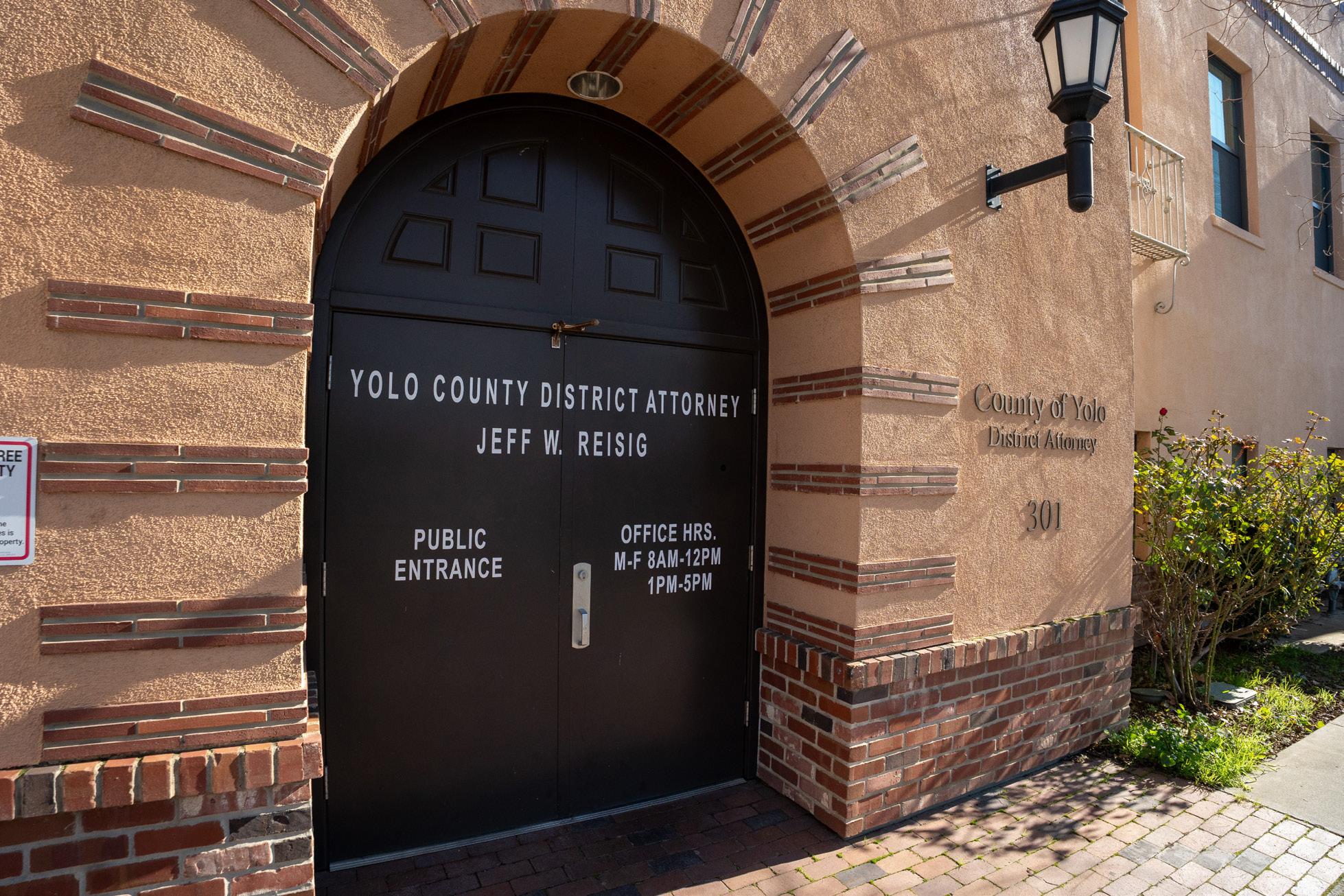
County District Attorney’s Office in Woodland, Calif. (Sacha Chickering / Aggie) by ATF.”
another form of murder […] where ‘malice aforethought’ is not really [that], but instead it is acting with such extreme indifference to human life. It’s a subtle distinction between the lack of care that might be involuntary manslaughter and such extreme indifference that it becomes murder.” Nabity summarized the charges faced in addition to murder.
The Grand Jury alleged that while multiple Yolo County officials knew of the illegal fireworks operations, no action was taken.
“The Grand Jury has identified nearly a dozen County employees who knew over the years of the pyrotechnics operations at the Esparto site but failed to take any remedial action,” the Grand Jury report reads. “County records show communication between most of these employees, some now retired, concerning the Esparto fireworks site. Despite this, there is no record that any of them
On April 3, the DA’s investigation culminated in a grand jury, which indicted the eight individuals on multiple charges, including murder and alleged conspiracy to sell illegal fireworks on the black market.
advocated for enforcement of existing County ordinances.”
County Building Division staff were informed as early as mid-2022 of possible fireworks storage at the property, according to a statement from the Yolo County Board of Supervisors.
Deputy DA Clara Nabity explained that 1 million pounds of explosives were stored on the property at the time of the explosion. Nabity also stated that the property lacked proper licenses to store and sell the fireworks.
“[Of] the individuals charged, [some] of them did hold certain licenses issued by the Bureau of Alcohol, Tobacco, Firearms and Explosives (ATF) and Cal Fire,” Nabity said. “Not one storage container on the Machado property was licensed
SAHAR SUMREIN
BY
city@theaggie.org to check on the property by the Davis Police Department.
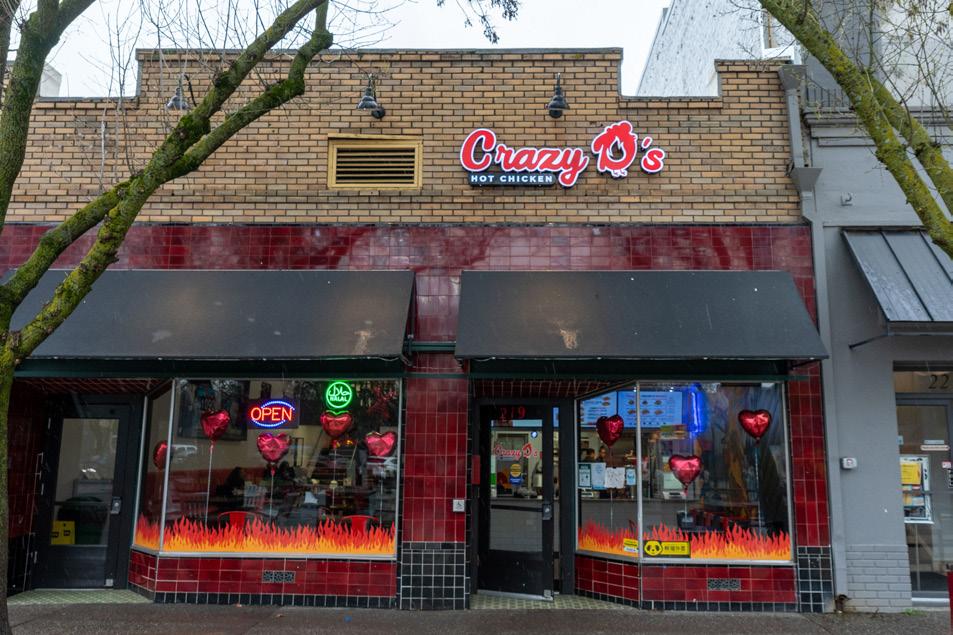
the morning on Thursday, April 2, an intruder broke into Downtown Davis restaurant Crazy D’s. This comes just two months after the opening of the restaurant, which is located at 219 G St. near Davis establishments such as Woodstock’s Pizza and G St. Wunderbar. Crazy D’s offers students and Davis locals an affordable menu inspired by Nashville hot chicken. The restaurant’s Woodland branch is approaching its second full year of operation in August of this year. On April 2, owner Ankush Walia was notified that the restaurant’s security alarm had been activated and was advised
When Walia arrived, he found that one of the establishment’s doors had been shattered, with the cash register box missing. He later reviewed the restaurant’s security footage, which captured the incident occurring at approximately 5:49 a.m. that morning.
Walia described what he saw on the restaurant’s security camera.
“They came in, broke the glass, jumped on the counter, took the whole register and left,” Walia said. “Everything happened in about 30 seconds.”
The individual entered and quickly exited with the stolen register a few hours after the restaurant’s 2 a.m. closing time, according to Walia. The suspect currently remains unidentified
by the Davis Police Department.
Walia shared the security footage on the restaurant’s social media pages, hoping to raise awareness regarding the incident and gather information on potential suspects.
A police report was filed on the day of the incident and remains under investigation, according to Walia. The Davis Police Department’s online database does not indicate a report associated with the breakin, as of April 15.
Walia stated that he covered the cost of damages and stolen funds out of pocket as the location’s owner, noting that the business is insured.
The break-in came after a string of challenges that the establishment had faced in its first months of operation.
Walia explained a series of prior incidents that also affected the business leading up to recent crime.
“They took all of our bathroom supplies — paper towels, soap, everything,” Walia said. “That was right after we opened. Then last month, someone cut their hair in the bathroom and left it everywhere. And in the past few weeks, we’ve had people passing fake bills.”
Despite these complications, Walia said the restaurant has received support from the local downtown business community.
CRAZYDS on 9
Nabity also said that the type of explosives stored were beyond the legal limit of “safe and sane.”
“They are devices that have so much more explosive fireworks than the law allows that they can’t be considered fireworks,” Nabity said. “They are explosives.”
The illegal fireworks enterprise was conducted on the property of Sam Machado, a former lieutenant for the Yolo County Sheriff’s Department, and his wife, Tammy Machado, who worked for the department as an administrative employee. Both were among those arrested.
The other individuals arrested include: Kenneth Chee, owner of Devastating Pyrotechnics, the company that stored the fireworks on
Machado, Chee, Chan, Lee and Tollefsen were each charged with seven counts of second-degree murder, one for each person killed in the blast, according to Reisig.
In an interview with CapRadio, Michael Vitello, a distinguished professor at McGeorge School of Law, explained the legal rationale behind the murder charges.
“When you hear about a death that occurs from an accident, usually you think about tort damages, private right of action or involuntary manslaughter,” Vitello said.
“But murder is not always intentional killing. There is
“There are additional charges in the 30-count indictment against the seven individuals,” Nabity said. “They include charges for a dangerous workplace, unlawfully causing a fire, insurance fraud by Kenneth Chee and charges of child endangerment, animal cruelty, tax fraud, pardon and possession of illegal assault weapons against Samuel Machado.” The Machados, Lee, Cutright, Chan and Tollefsen appeared in Yolo County Superior Court in Woodland on April 13 and returned for their arraignments on April 16. At the arraignments, families of the victims read statements and asked the judge to deny bail. Tammy Machado entered a not guilty plea, while the other four did not enter a plea. All six defendants will be present at their next court date on April 22. This is a developing story; follow The California Aggie for updates.
The county warns river restoration project may result in groundwater depletion

BY SONJA WOOLEY city@theaggie.org
Yolo County and the Yolo Subbasin Groundwater Agency (YSGA) filed two joint lawsuits against the California Department of Water Resources (DWR) in March. The plaintiffs are contesting a Sacramento River water rights purchase of 16,000 acre feet of water per year, made by the DWR from River Garden Farms located near Knights Landing, Calif. The plaintiffs argued that the purchase could lead to the depletion of groundwater supplies, infrastructure damage and flooding. They also contested that the state illegitimately waived the requirement to file an environmental review for the purchase under the California Environmental Quality Act. Groundwater refers to the water stored naturally underground, either saturated into the soil or collected in

cracks in the bedrock in areas called aquifers. On an average year, about 40% of California’s water supply comes from these underground aquifers.
The YSGA is made up of 26 different public agencies, including the City of Davis, Yolo County and the City of West Sacramento, as well as the Yocha Dehe Wintun Nation.
The YSGA is tasked with planning and implementing the Sustainable Groundwater Management Act passed by the California Legislature in 2014, which requires that counties and local governments establish plans and regulations to ensure that their groundwater isn’t overtaxed and remains available for future generations.
The water rights transfer was part of the DWR’s Instream Flow Water Purchase Program. Representatives from Yolo County and YSGA declined to comment on the lawsuit, but Ryan Endean, the DWR deputy director of communications,
explained the purpose of the purchase program.
“The program provides funding for projects that enhance streamflow at a time and location necessary to benefit salmon and other native species,” Endean said. “The program supports balancing water supply needs with protecting natural aquatic resources.”
Instream flow refers to the rate of water flowing in a river in cubic feet per second. The state’s Instream Flow Water Purchase Program is specifically designed to increase the flow of the Sacramento-San Joaquin watershed (or area where snowmelt and rainfall channels to the ocean) from January to June, according to Endean. Yolo County and the YSGA expressed concern that River Garden Farms plans to pump groundwater from their property in order to make up for the lost irrigation supply from the water rights transfer with the DWR. WATERLAWSUIT on 9
Meet the candidates and learn about the ballot measures up for a vote in this week’s election
BY AALIYAH ESPAÑOL-RIVAS, LILY
KENROW,
VINCE BASADA & THOMAS WU campusy@theaggie.org
The spring 2026 ASUCD elections, which run from April 20 to 24, offer students
The
an opportunity to decide on the next leaders of their student government. This cycle includes one executive ticket, two student advocate candidates, three international student representative (ISR) candidates, three transfer student representative (TSR) candidates and 12 Senate candidates. There are also two ballot measures, which are Constitutional Amendments for approval by the student body. Also, due to lastminute changes to the ballot, there are no candidates running for the position of external affairs vice president (EAVP).
This election, there are three slates — groups of candidates running on a similar, shared platform. They are: Viva, Bitchier
and Sawt. There were two other slates which have dissolved since campaigning began. The Diva slate’s two candidates are no longer running for office; both were senate candidates. More publicly, the Vision slate dissolved after it was revealed that its candidate for ASUCD president — Aaron Heth, a third-year political science major
and current senator — had attended a conference funded by conservative non-profit Turning Point USA (TPUSA). Heth and his running mate Sean Birge, alongside the Vision candidate for EAVP, have dropped out of the race. The slate’s remaining candidates are now running as Independents. ASUCD elections use a ranked-choice voting system, where voters can rank as many or as few of the candidates based on preference. Voting began Monday, April 20 and ballots are open through Friday, April 24. Students can vote online now at elections.ucdavis.edu.
and
(IVP) are the two most senior jobs in the student government. The former serves as ASUCD’s chief executive officer and the top official representative of the undergraduate student body. They are responsible for overseeing ASUCD units and are tasked with the appointment of officials and unit directors, including the ASUCD controller (the chief financial officer). They also play a large role in drafting the Association’s budget and have the sole authority to make legally binding contracts on behalf of the ASUCD, subject to ratification by the ASUCD Senate. The IVP manages the student government’s internal operations and the onboarding and oversight of personnel. They are also the presiding officer of the ASUCD Senate and chair several committees related to the Association’s operations. This election, ASUCD’s top race is uncontested following the dissolution of the Vision slate and the withdrawal of its executive ticket from the ballot.
Voters may choose to “approve,” “reject” or “skip” any given ballot measure; “skip” votes do not affect the voting result or count toward the total votes cast. Constitutional amendments require a simple majority approval of eligible votes cast to be passed.
Constitutional Amendment #96
This amendment, CA#96, would make the position of Student Advocate — head of the Student Advocate’s Office — appointed by a committee rather than elected by the student body in spring. The amendment’s authors — which includes current Student Advocate — argue that appointing the job via committee would ensure a level of institutional knowledge
is retained and kept at the SAO. They also say it would curtail the risk of an unqualified and untrained candidate being placed in the role.
Constitutional Amendment #98
CA#98 would rework the timeline of ASUCD Elections to create more time for campaigning, with the hope of increasing voter turnout. If passed, the amendment would bring the fall elections up a week from week 7 to week 6 of fall quarter and push the spring election back from week 4 to week 5 of spring quarter. This change would also create a full week solely for campaigning, between when the candidate list is set and when ballots open.






studies double major, and Rosa Linda
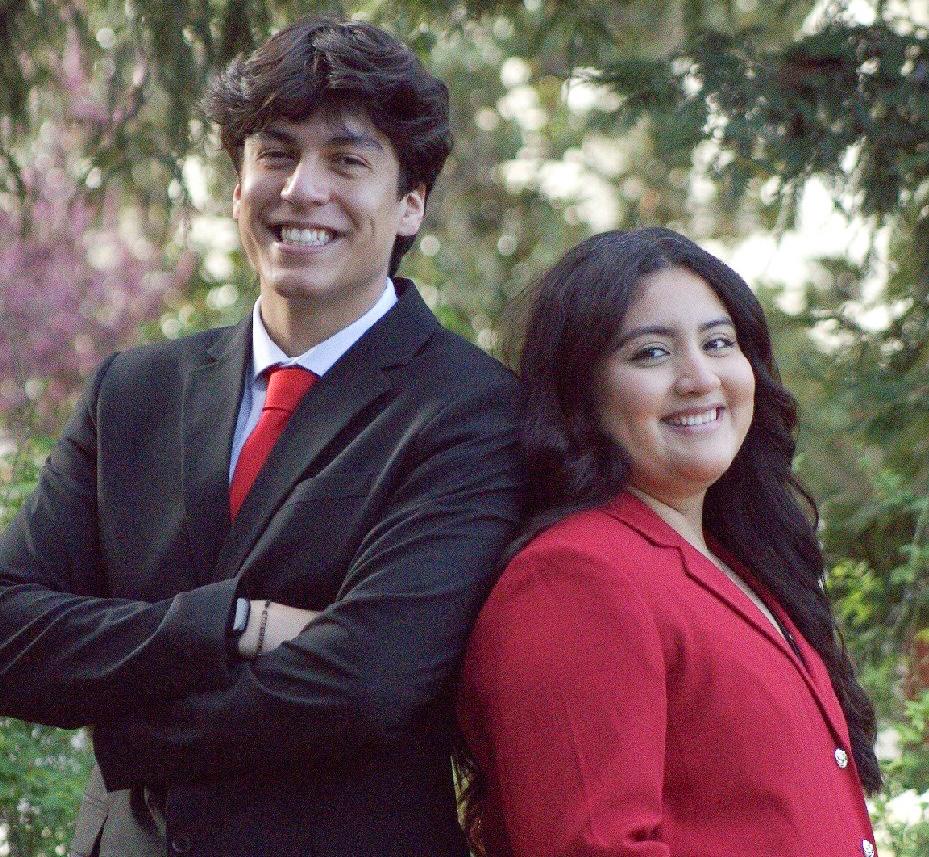
Garcia and Martinez are no strangers to ASUCD. Garcia served as an interim senator in fall 2024, was elected for a full term in spring 2025 and has served as the senate president pro tempore. Martinez served as the chairperson of the UndocuScholars Advocacy and Aid Committee (UAA) and was a staff member in Garcia’s office before being elected as a senator herself in fall 2025. The two are running
uncontested on the Viva slate, which was created with the intent of representing multiple diverse perspectives; each slate member has experience within organizations on campus. The “v” in “Viva” stands for “visibility and longevity,” “i” stands for “increasing opportunities,” the second “v” stands for “voice student engagement” and the “a” stands for “acts and action.” Their aim is to increase student engagement with ASUCD
organizational studies major,
as a whole, supplementing the number of academic and professional opportunities on campus and amplifying student voices. Specifically, the two hope to implement new fellowship and internship programs within ASUCD that can be noted on official university transcripts. They also plan on continuing and expanding several Executive Office Taskforces, including the Student Activist Taskforce and Menstrual Equity Taskforce.
Additionally, the pair say they are guided by the idea that they are advocating with students, not for students. They want to create a comfortable environment for students to speak up on issues that matter to them.
“We do pride ourselves in knowing our roots and where we come from,” Garcia said. “We have the lived experience, passion and dedication to serve all our students on campus.”
The student advocate is the head of the Student Advocate Office (SAO), which provides free and confidential advising and case management services for students dealing with disputes with the university. The SAO is a nonpartisan division of ASUCD, and student advocate candidates cannot run with a slate. The student advocate serves for a 1-year term.
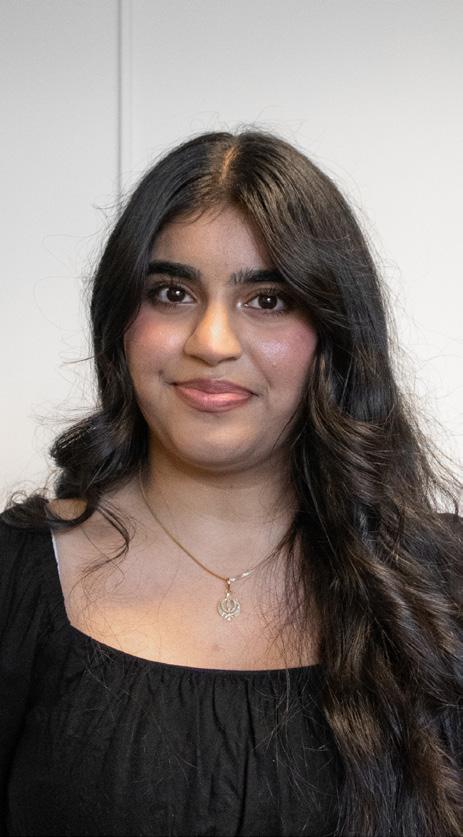



Baidwan is running for student advocate because she wants all students to have safe spaces and be able to advocate for themselves. She hopes to create inclusive environments and work to connect administrators to students. In high school, she created an inclusivity club where she advocated for addressing injustices in her community. She wants to amplify student voices and give students the opportunity to stand up for and advocate for themselves.
“I’m hoping to build community through new relations, through listening to stories, through advocating for people and helping them advocate for themselves,” Baidwan said.



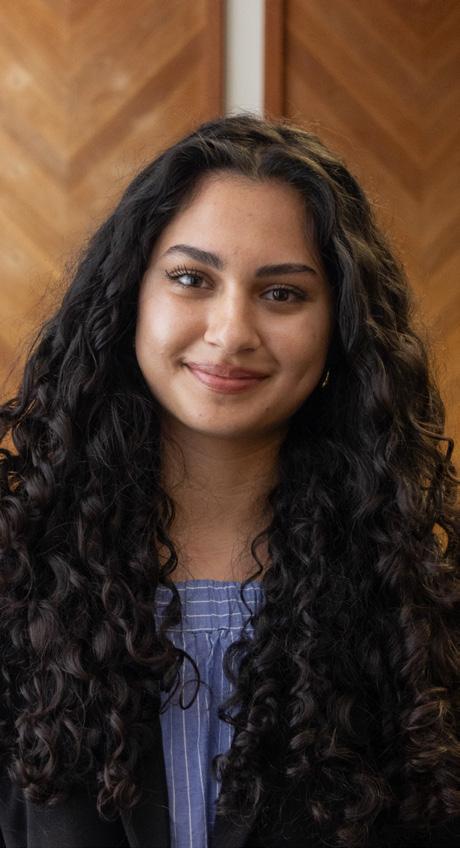
artificial intelligence — an increasingly common reason for referrals. “[The role] is ensuring due process so that every student who is actively engaging with the conduct process is not facing any discrimination,” Mahmodi said.
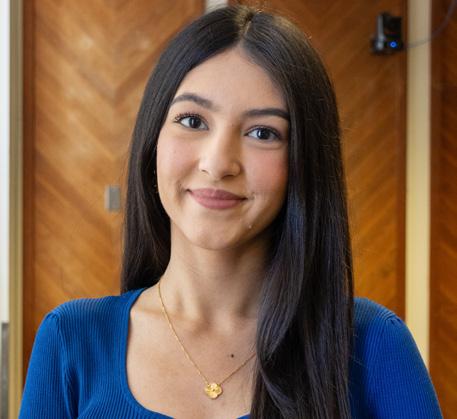



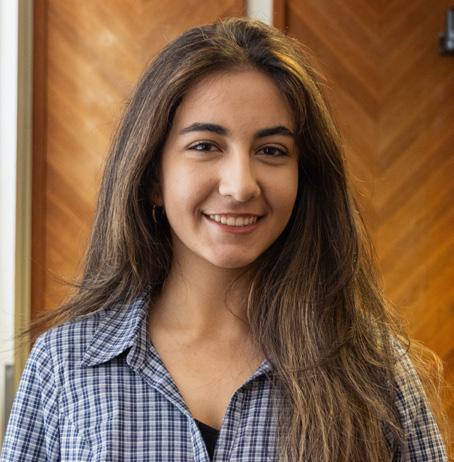
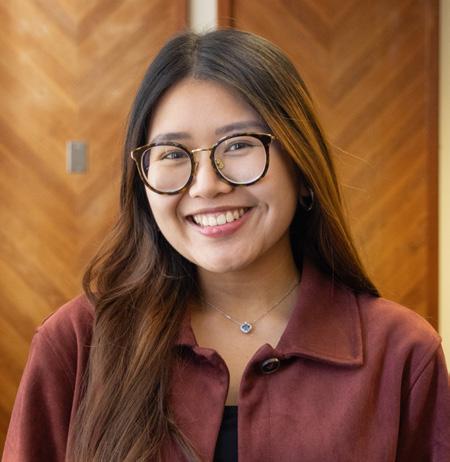




Basharmal understands the difficulties of adjusting to a new environment, language and culture, having moved from Afghanistan to Germany to the United States. She hopes to create multicultural celebrations for all students and cultures as well as increase language accessibility programs. She is proposing the creation of ASUCD tutoring and career support services in different languages and has experience creating a similar multilingual
Taebi’s background as a firstgeneration, Iranian American immigrant compels her advocacy for international student safety and community resources. She points to ongoing international conflict in many students’ home countries and shifts in federal policy jeopardizing residency statuses for many Middle Eastern international students in particular. Her work shadowing an immigration attorney, translating documents for Farsi-speaking asylum seekers and running her KDVS90.3FM radio show “The
Ardelia takes the Viva slate’s motto — “Breaking Barriers and Building Opportunities” — to heart. As an international student from Indonesia, Ardelia wants to represent the students she relates to. Her experience includes being the former vice president of the Indonesian Student Association and the current head of finance at both Phi Gamma Nu and the Managerial Economics Society. Her platform includes building student communities,
program at her high school. Basharmal also wants to increase awareness of different resources, opportunities and overall awareness of ASUCD to the international student community and use her voice to advocate for student issues. “I want to not only mentally reassure [international students] that everything’s gonna be fine, but also try and help to ensure that their rights are protected,” Basharmal said.
Missing Middle East” has led Taebi to adopt an immigrant focus to her student advocacy ambitions. Her platform includes expanding on-campus legal resources for students, prioritizing international student community connections and representation. She previously served as an interim ASUCD senator in fall quarter 2025. I want to be a representative for the students, someone that would advocate for voices and is ready and willing to listen to them,” Taebi said.
showcasing cultural diversity and advocating for mental health for those transitioning to life at UC Davis. She hopes to create a night market for different student organizations to celebrate their diverse cultures, in a potential collaboration with the Entertainment Council. She is also proposing an ASUCD language immersion program.
“I believe that community is a strong foundation for someone who is starting their life,” Ardelia said.
The Transfer Student Representative (TSR) oversees an office dedicated to advocating for transfer students, re-entry students, student parents and veteran students — a constituency which makes up about 20% of the undergraduate student body. Like the ISR, the TSR also has a voting seat on the ASUCD Senate and serves a 1-year term.
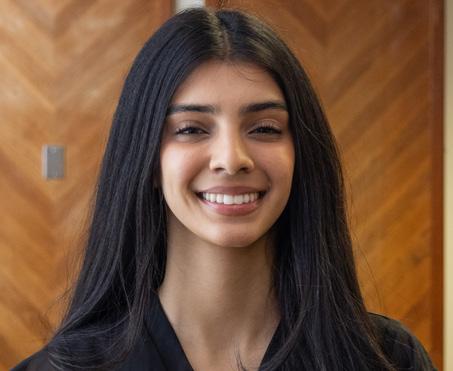
Sandhu previously served as an interim senator in fall quarter 2025 and is running as a part of the Viva slate because of their diversity of perspectives and because all of its members’ campaigns are rooted in community representation and advocacy.
Sandhu is running on a platform of support for her fellow transfer students, equitable access to basic needs resources and community
representation. She says that her experience in the fall gave her an understanding of what representation was needed in the Association. She hopes to advocate for all student voices and a diverse set of perspectives, but especially her own Punjabi Sikh community.
“I’m really proud to represent my community,” Sandhu said. “I think that’s what drives me the most to really advocate [...] for minority communities.”
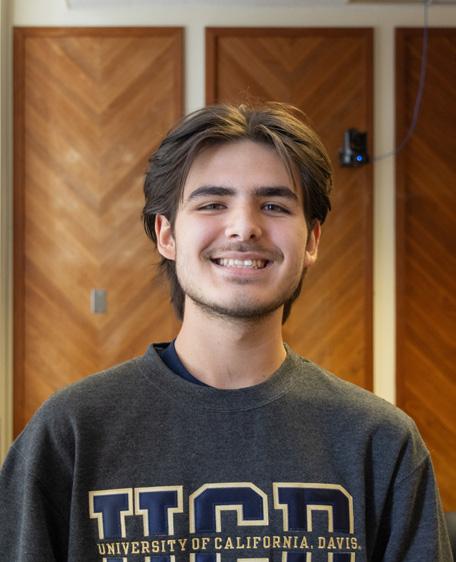
Sanchez is running to further foster community among transfer students and increase equity for resources on campus. Sanchez transferred from De Anza College, where he co-founded their Model United Nations club. He says that experience taught him how to manage a budget, organize events and advocate for registered student organizations (RSOs).
He wants to better connect transfer students to RSOs and regularly update the Office of the TSR website for internship
and community building opportunities. Sanchez hopes to do more student outreach via social media, with regular monthly surveys and find out what the Office can do for students.
“As TSR, I will actually put in the effort and work as much as I really can to support students in every single power the Office of the TSR has,” Sanchez said.
“I pull on every lever that I can, whether it be weekly Senate meetings or the ability to reach out to campus administration.”
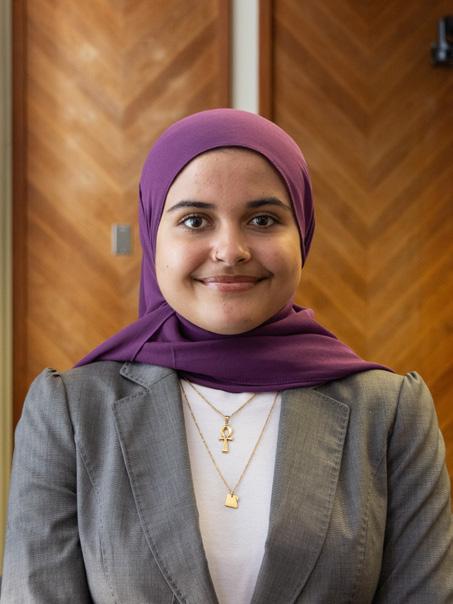
Mishak is running as a part of the Sawt slate because she is passionate about supporting students and uplifting their voices, as well as increasing representation for Middle Eastern students. She transferred from Diablo Valley College, and her platform includes expanding and supporting basic needs for transfer students, along with student parents, student veterans and re-entry students. She also wants to prioritize helping transfer students access resources for post-grad opportunities and find community.
Additionally, Mishak is interested in expanding student safety initiatives on campus by holding “Know Your Rights” sessions, expanding the alert system for students and by updating safety protocols. Her experience includes creating a club at her high school, which aimed to help bridge the gap between first-generation students and their families and college advising resources.
“I am a person of integrity who will stand very firmly on the values that I say I believe in,” Mishak said.
ASUCD Senators are tasked with voting on legislation and bills, deciding on the allocation of the Association’s budget, advocating and representing the undergraduate student body to administrators and
overseeing and supporting ASUCD’s units, commissions and committees. There are 12 senators at any given time — six are elected in fall and another six in spring. Senators serve one-year terms.
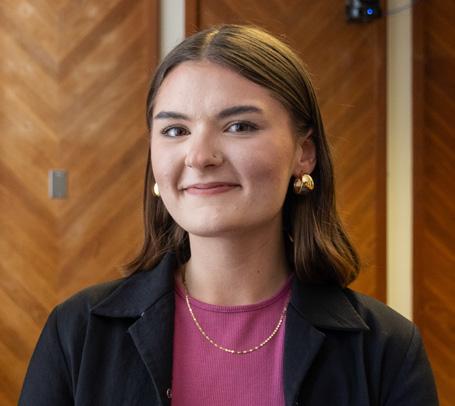

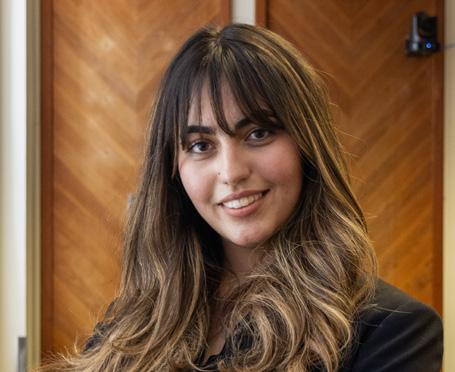
Holmboe is running on a platform of expanding accessibility to basic needs resources, especially menstrual equity and safer-sex resources. In addition, she wants to support local and student art and music programming, hoping to serve as an inclusive voice for all students. She is a part of the Bitchier slate, which focuses on female empowerment and
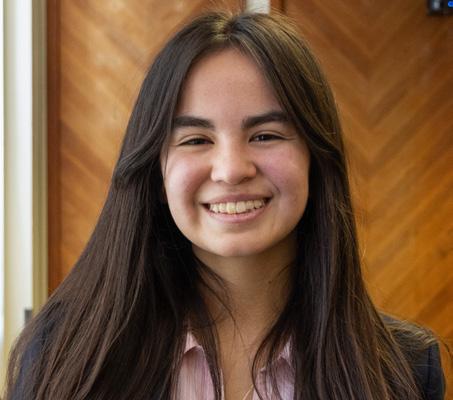
Perez is running for Senate to continue the work she’s already started during her time in Davis and in ASUCD. Perez works as a campaign coordinator for ASUCD Lobby Corps, an extension of the Office of the EAVP, and is a coordinator for the Whole Earth Festival (WEF).
Her two main goals are protecting student voices and strengthening third spaces where students can gather and speak
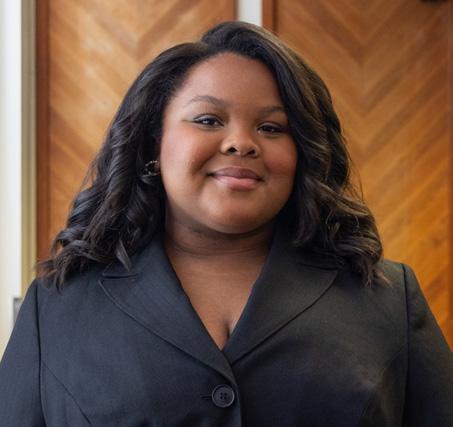
Washington decided to run for Senate to serve as a representative for Black students within ASUCD. She previously served as a student government senator at De Anza College before transferring to UC Davis earlier this school year. Her platform includes the values of accessibility, transparency and equity. She wants to prioritize protecting and expanding the accessibility of basic needs resources,
Awwad is running with the Sawt slate — a Middle Eastern, North African and South Asian (MENASA) slate — due to an underrepresentation of that community on campus. She previously has experience in community organizing and non-profit work in Arab legal services and youth development. Her platform includes uplifting student voices, safety and wellness and financial transparency and
Imam is running for Senate to represent the voice of the people and of minority students. He believes it’s important and valuable to have students voice their opinions. His experience as treasurer for the Muslim Student Association and the Association of Muslims in Politics and Law has helped him understand the
Sadeghi is running under the Sawt slate on a platform of ensuring every student feels represented, heard and valued within the community. Her experience in her high school’s student government and as a student representative for her school district gave her the opportunity to represent diverse student communities. She hopes to bring more resources for
leadership, and is a campaign coordinator for the ASUCD external affairs vice president (EAVP).
She hopes to work closely with the Gender and Sexuality Commission, the Sexual Assault Awareness Advocacy Committee and RSOs. She proposes ASUCD hold benefit shows, giving opportunities to showcase student art and support RSOs.
freely, while still feeling safe. She is motivated to protect students from possible condemnation from university administrators and wants to create and host spaces where students can be informed by RSOs about various topics, including environmental radicalism. Perez hopes to unify and encourage students to protect each other, especially with ongoing threats from the federal administration.
especially for transfer, re-entry and international students.
She also hopes to work with mentorship programs on campus to build a more diverse network of peer tutors to assist students and provide community. Lastly, she hopes to livestream Senate meetings so students can hold their senators accountable and allow for more student engagement opportunities at meetings.
ethical spending. She wants to bridge the gap between ASUCD and students, making them feel safe and comfortable to speak at Senate meetings.
Additionally, she wants to lower Safe Ride times and work to create Immigration and Customs Enforcement-free zones on campus. Moreover, she hopes to expand the Boycott, Divestment and Sanctions (BDS) initiative to be a campuswide movement.
importance of transparency and organization, as well as advocating for opinions on behalf of other students.
Imam’s goals include expanding basic needs resources, improving transportation accessibility and boosting outreach and visibility of RSOs for students.
first-generation and immigrant students, specifically working with Aggie Reuse and the Mental Health Initiative, should she be elected.
Her platform also includes bringing more outreach efforts to ASUCD and increasing campuswide unity by encouraging multiculturalism and inclusive environments.
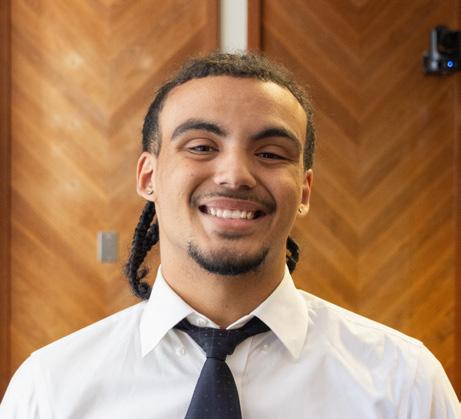
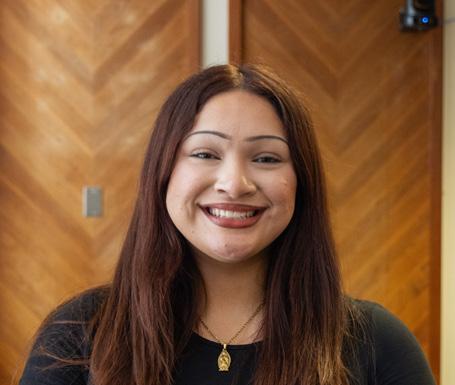
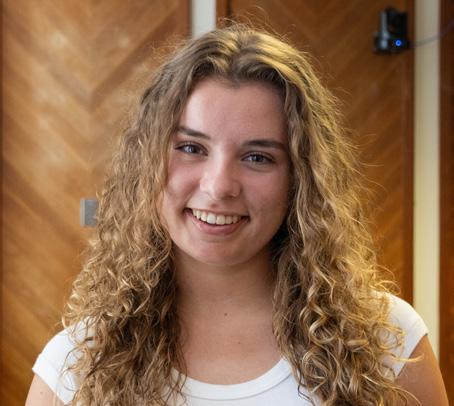
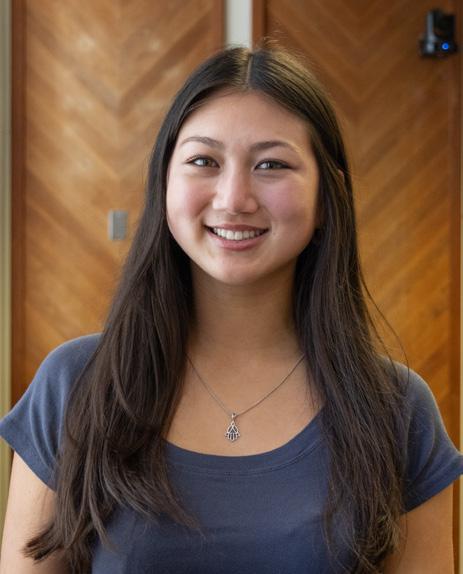
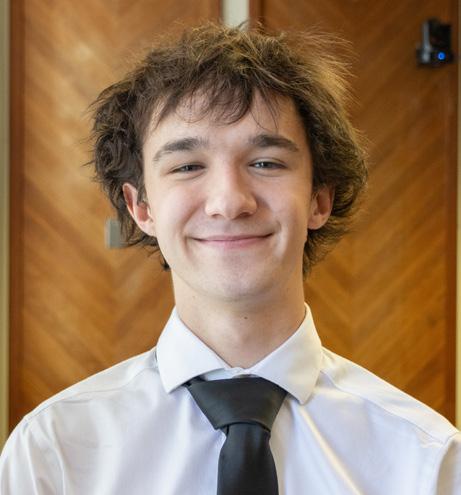
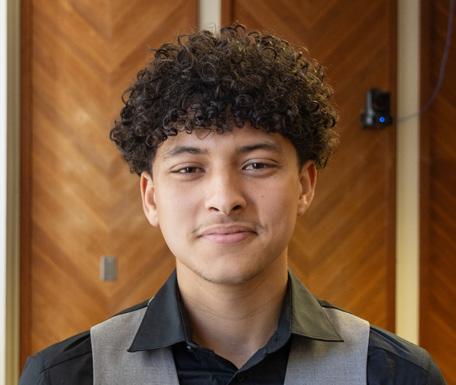
Swaby-Pierce is running for Senate to advocate for marginalized communities on campus. He currently serves as the ASUCD External Affairs Commission vice-chairperson and recently wrote a piece of legislation that created the Black Leadership and Advocacy Committee, giving Black students consistent representation in ASUCD.
Swaby-Pierce is one of few Black students within the legislative
Sol Alvarez is running as a part of the Viva slate, a group she feels has done tangible work and participated within the community. She is excited to be a part of a diverse group of candidates. Her experience includes being an academic community counselor and peer advisor at the Department of Chicana/o/x Studies, political chair for the Las Raíces Pre-Law Association and co-founder of
Sperisen is running with the hope of increasing school spirit, socialization and representation of different cultures and clubs on campus. Sperisen is currently a member of the women’s club water polo team and hopes to get more club sport teams involved in various ASUCD events, like the 530 Night Market. She has also proposed creating similar
Nadel decided to run for Senate to increase community building on campus and create new spaces for students to feel comfortable and supported in. One of her biggest goals includes instating regular community nights where students can meet and strengthen their bonds through activities, wellness and advocacy events. Beyond creating social events, Nadel hopes the initiative could lead to collaborations with other ASUCD units and commissions, such as the Sexual Assault Awareness and Advocacy
Cole currently serves as the chief of staff to ASUCD Senator Nate Little, and is hoping to join the table in his own right to advance an uncompromising commitment to basic needs services within the Association. His proposals include cutting down the Senate’s reserves and staff salaries to redistribute to The Pantry and other basic needs units and reorganizing ASUCD funding for RSOs. He has also campaigned on increasing opportunities for STEM
branch of ASUCD and hopes to increase engagement from Black students to make the Association more equitable.
Swaby-Pierce sees ASUCD events as a way to increase visibility for underrepresented groups — celebrating culture and informing students of their civic rights. He also aims to assist students through mental health programs, such as creating a peer counseling system and breaking stigmas surrounding therapy.
Sociedad Nueva Vida.
Sol Alvarez wants to expand the increased representation she has seen within ASUCD and campus in recent quarters. Her platform includes revitalizing cross-cultural and civic engagement among students, expanding and spotlighting basic needs resources and continuing support for established — as well as developing — RSOs.
events for other cultures and clubs on campus. She also hopes to adopt the Coffee House (CoHo) if elected and wants to work to implement a CoHo loyalty program that rewards patrons with possible free drinks or discounts.
Committee and the Ethnic and Cultural Affairs Commission, to educate students. Additionally, Nadel hopes to increase sustainability on campus through regular clothing and donation drives every quarter, especially during move-out season. She also wants to create a student maker fair, allowing students to showcase their artistic talents and sell products they made themselves, and expressed a commitment to lowering barriers to entry for joining organizations on campus.
students within ASUCD and on reworking the Association’s outreach initiatives to be less trivial and event-based.
Cole is running as an Independent because he believes that serving the student body at large requires not relying on any single subset of the student population for support. If elected, he hopes to reduce the level of drama among members of the Senate table relating to identity politics.

Salinas stressed the importance of student participation and voting in the approaching election on June 2
BY KATYA OKS city@theaggie.org
The California primary election is quickly approaching on June 2, less than five weeks away as of April 20. The election will include candidates running for federal Congressional, state legislative and state constitutional offices, and it will determine which of those individuals will be listed on the general election ballot this November.
Jesse Salinas, the Yolo County registrar of voters, briefly discussed what the June 2 primary election will include.
“There’s a lot of statewide offices that are going to be on the ballot this June,” Salinas said. “For example, the governor [position] will have 62 contestants to choose from, [and] voters will choose the lieutenant governor, school superintendents, the treasurer, the controller. You’re also going to have your Senate and Assembly race included on the ballot and you’re going to have all your local races on there.”
Salinas also discussed the importance of voting in primary elections, as they are often overlooked in comparison to general elections.
“This June election is important, because you get to make determinations of who either wins outright, or, if it’s the primary and a build-up for the November election, you get to pick who your selection is,” Salinas said. “For example, for the local [roles], like my position: if I win outright with 50% plus one vote, then there is no November election for that position.”
Young voters remain to be the age group considered to have the lowest voter turnout. In the 2024 presidential election, for example, only 47% of individuals nationwide aged 18 to 29 participated.
Jenna Ryan, a second-year psychology major, discussed her own experience talking about election matters with people

her age.
“Over the past few months I have talked to many people that do not know that there are primaries coming up, much less who is running and what their policies are,” Ryan said. “Many people, especially young adults, are not registered to vote. I think people sometimes think that it is not their job, they are too busy or they are too young to need to take on the responsibility of voting.
Simran Syed, a secondyear economics major, briefly discussed the importance of voting.
“I believe it’s important to vote because we have a direct say in decisions that impact our lives, including the United States economy, environmental policy, technology and healthcare,” Syed said. “As a college student, these are things that directly affect my day-to-day life and future opportunities. The rising cost of housing and education can make it harder for students to focus on their goals without financial stress.”
Salinas also said that the primary election will have local measures, which will impact housing opportunities not only for Davis locals, but for UC Davis students as well.
“There is initiative Measure V, which includes the development of the Village [Farms] project,” Salinas said. “There’s a lot of students that
emphasize the importance of awareness, trust and support surrounding the topic
GRACIELA TIU features@theaggie.org
With the month of April marking Sexual Assault Awareness Month, conversations surrounding prevention, education and survivor support are taking place at national and local levels. At UC Davis, students shared that the issue feels particularly relevant on college campuses, given the social environments that they navigate daily.
“I think Sexual Assault Awareness Month is especially important to recognize on a college campus because there are so many situations in which one may be susceptible,” Eliana Shor, a third-year managerial economics major, said. “It’s important to know about your resources […] especially in a party setting or in a relationship setting.”
Students talked about how awareness is not only about prevention, but also about normalizing conversations and speaking out about a topic that is still difficult to discuss. Breaking the stigma, they said, can make it easier for survivors to share their own stories and find support.
“It’s such a taboo subject,” Mia Tagor, a third-year psychology major, said. “The more that we normalize talking about it […] the easier it is for victims to come out about it.”
Some students emphasized that sexual assault often does not match up with common
assumptions. Though often associated with strangers, they noted how sexual assault can also frequently be tied to familiar relationships.
“It really can be the closest ones to you,” Esha Shetty, a third-year psychology major, said. “It can really be the ones you trust.” When considering UC Davis’ role in terms of related resources, students described a mix of awareness and uncertainty. UC Davis offers resources such as the Center for Advocacy, Resources & Education (CARE), for all UC Davis affiliates who have been impacted by sexual assault, sexual harassment, intimate partner violence and/or stalking.
Shor specifically mentioned how involvement in certain groups — in her case, Greek life — can determine what resources you become aware of.
“Through programming [...] we’ve learned a lot about resources that UC Davis offers,” Shor said. “I’m not sure if I would know about all of those resources [...] if I weren’t in that setting, but I know there are many routes you can take to find them.”
Preventing sexual assault, students noted, can also be very difficult, especially on a systematic level. Along with focusing on prevention, Tagor stressed the importance of awareness, intuition and trusting your gut.
live off campus that may want to settle down. There’s a lot of people who went to school in Davis and end up living in Davis because they love the experience. So, if this is a place that they’re interested in spending more than just a few years, it’s definitely worth getting engaged with all these elections that are happening locally that will impact them.”
Salinas also shared the importance of not missing the May 18 deadline for voter registration, and encouraged students to vote early.
“Try not to wait for election day, per se, because you are going to wait in long lines if you do that,” Salinas said.
Salinas also discussed a pending Supreme Court decision concerning voting laws, the Watson v. Republican National Committee case, which may impact the way such processes work.
“[The] Supreme Court decision [may say] that in the future — like November’s election — it’s possible that election officials will have to have the ballot in their hands for the vote to count,” Salinas said. “Right now, the California law [ELEC 3020] allows for ballots to be counted as long as they were postmarked by election day and we get it within seven days afterwards. If the Supreme Court decision comes down saying ‘no,’ all those ballots have to now be
in the hands of election officials by election day.
Salinas continued to explain the significance of ensuring that your ballot is dropped off on time.
“This is really important for students to start thinking about,” Salinas said. “[For example] ‘‘I need to start voting a little earlier, and if I’m going to wait, then I better drop it off either at a vote center or I better drop it off in an official drop box, because if it’s within that 7-day window, my ballot may not count.”
Salinas also shared that there will be numerous voting centers located on campus for the primary election.The voting centers will include the Activities and Recreation Center (ARC) meeting room and the conference center located by the UC Davis Business School; both will be available from May 30 to June 2.
Ryan shared why she believes it is important for students to participate in the election.
“Voting is such an important and easy way to make your voice heard,” Ryan said. “There is so much going on in the world right now and it is important that we show up however we can.
May 18th is the last day to register to vote for the upcoming primaries: Do your research, find the candidate that represents the policies you believe in and please vote because it really could make a difference.”
The district is assembling a committee after recent allegations against the labor rights activist
BY ALMA CULVERWELL city@theaggie.org
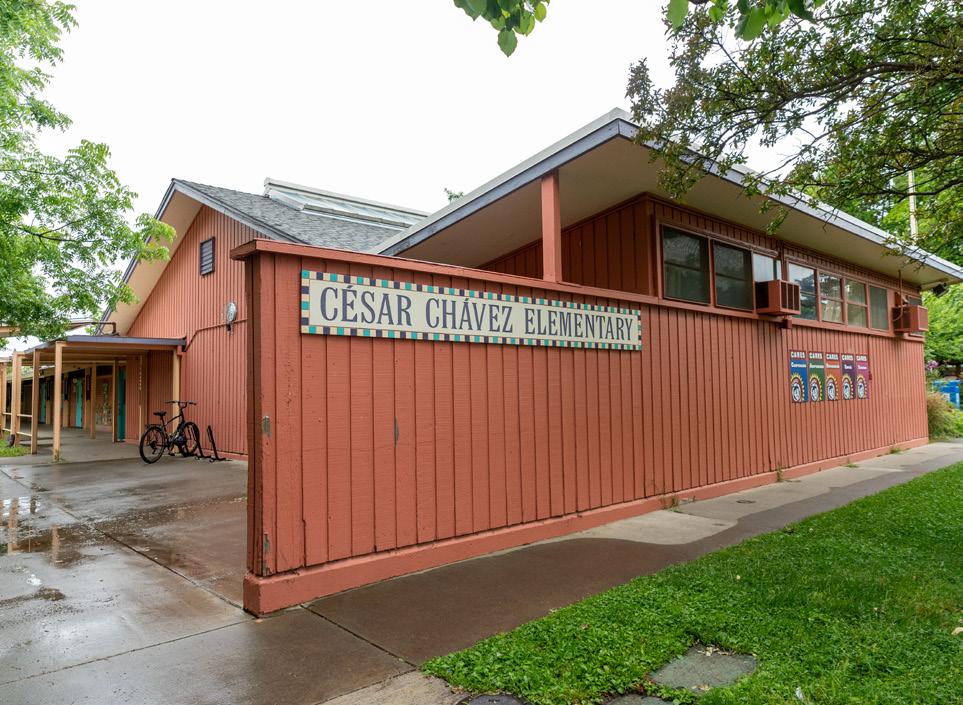
The Davis Joint Unified School District (DJUSD) is moving forward with plans to rename César Chávez Elementary School, following recent allegations of abuse and assault by labor rights activist and United Farm Workers cofounder César Chávez.
DJUSD held a meeting on April 2 where they agreed to form a community committee to recommend a new name for the school before the end of the 2025-26 academic year. This decision reflects the district’s response to what officials described as news that has shocked and disturbed the community, particularly families connected to the school.
The school board finalized the structure, size and composition of the renaming committee at its meeting on April 16. The committee is composed of 15 members and will operate separately from the school district. The committee is expected to hold its first meeting the week of April 27. The group will meet approximately four times throughout the end of May to gather community input and
“School names
symbol [...] it tells students who we choose to honor and who we believe is worth remembering. Renaming a school is not about erasing history. History remains in our books, our lessons and our collective understanding. Instead, it is about choosing what we elevate and celebrate in a shared public space dedicated to learning and growth.”
Eclectic Collective throws an 8-hour Picnic Day music marathon
‘It was really nuts’: Coordinators discuss the details that went into the annual house show
BY JULIE HUANG & MIRIAM RAMAKRISHNAN arts@theaggie.org
On April 18, the Eclectic Collective threw their annual Picnic Day house show, which ran from noon to 8 p.m. and featured nine bands.
The show is a collaboration between Grace Lawlor, UC Davis alumna, founder and sole official member of Eclectic Collective, and Katya Jane Fomin, a master’s student at the UC Davis Graduate School of Management and founder of Velvet Red Productions.
“Katya and I are good friends,” Lawlor said. “We’ve known each other since undergrad at Davis, and we both started separate event groups and have thrown various kinds of music shows.”
Fomin and Lawlor have hosted other shows together, but first began jointly holding the Picnic Day event in an official capacity two years ago.
“We had 10 or 11 bands, and we had music from 10 a.m. to 10 p.m.,” Lawlor said. It was really nuts. It’s a really fun time. I love it.”
The show originally started as a way to fill the demand for a music performance that lasted all day, after the closure of the co-operative living space Turtle House left a vacuum in the music scene on Picnic Day.
“There was always a big music show on Picnic Day,” Lawlor said. “It’s one of the best parts of the day. When Turtle House changed directions and wasn’t a co-op anymore, we were like, okay, we still need this show to happen. It’s the best part of the year.” In years past, the music show has faced challenges and complications. Just last year, the gun violence that occurred at Community Park on Picnic Day in 2025 caused Lawlor and Fomin to close their show early in order to protect the safety of all attendees.
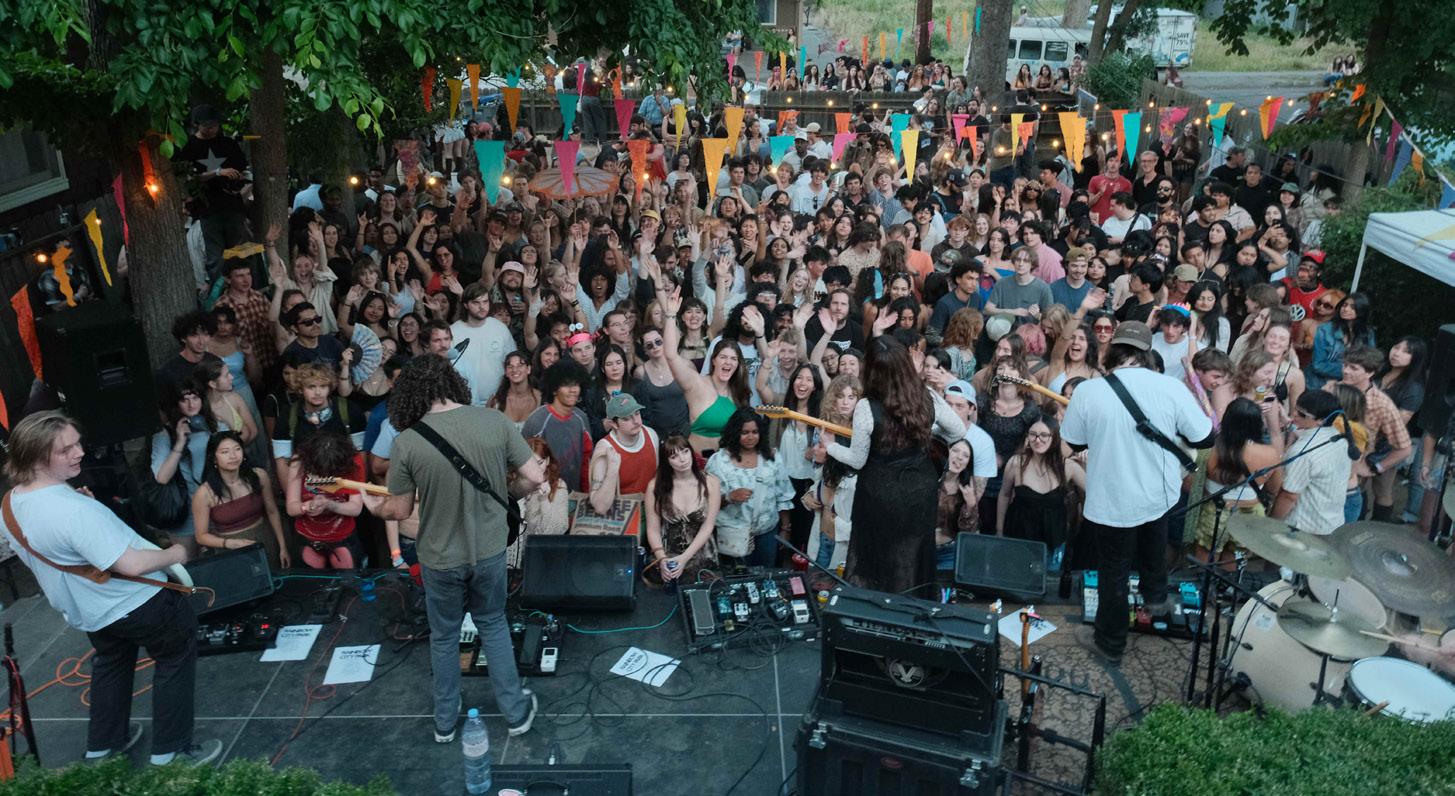
This year, however, Eclectic Collective sold 1,000 presale tickets for the highly anticipated Picnic Day 112 show. The event also generated a high output of digital buzz prior to the event, amassing 1,100 likes on Instagram for the flyer, which all nine bands reposted.
“We sometimes get nervous about how large the show can get, but we’re going to be really calm and collected at the door, monitor the crowd and make sure that we get people out,” Lawlor said.
Though Fomin and Lawlor are the principal organizers of the show, the musical event is made possible thanks to the help and support of volunteers, including their close friends and those who are interested in keeping live music accessible to the wider Davis community.
“It’s super helpful having a team of people alongside us throughout the whole day,” Fomin said. “We have friends who want to volunteer, open the door and help with crowd control, which is so important. We’re all together in this.”
This was the first year that the Eclectic Collective show featured an elevated stage in the front yard. In the past, Lawlor and Fomin worked with a makeshift stage out of pallets, looking to improve upon the visual presentation
and showgoing experience for both the bands and audience members.
“Every year we learn more and more about how to hold a better show,” Lawlor said.
Kian Abulhosn, a fourthyear music major and drummer for local Sacramento-based rock band First Name Basis, shared feelings of excitement and anticipation about performing.
“It’ll probably be our most attended show,” Abulhosn said.
“It’s a little stressful with all the organizational stuff, but we’re glad to be here. We want to play as much as we can and share music with as many people as possible.”
The show lasted from noon to a little after 8 p.m. as attendees mingled, wandering in and out of the area. The crowd maintained its large size throughout the day, and Fomin and Lawlor explained that they experienced no anxiety about keeping the atmosphere energetic and enthusiastic.
“It’s on Picnic Day, which is a well-established day in Davis, obviously,” Lawlor said. “Everyone wants to have a lot of fun and we know that there’s going to be a crowd.”
In the middle of the second set, an hour into the show, police officers arrived to shut the event down. In response, Lawlor got on stage and asked audience
members to applaud for bands that had flown in from New York and those who didn’t get the opportunity to play at all. Simultaneously, at the front gate, Fomin had managed to convince the sheriff to allow the show to continue, and the music kept going until its scheduled end. Fomin and Lawlor handpick the musical lineup themselves, but expressed that they understand that the music scene in Davis and surrounding areas is vast and varied. While the selection of music on Picnic Day does not encompass the entirety of local performers, their ultimate goal is to platform a diverse range of musicians while keeping audiences engaged.
“We tried to tell ourselves we were going to have a smaller show, and then it turned out to be nine bands again,” Fomin said. “One year, we had eleven. So many amazing groups want to come here, and we want to showcase as many as we can.”
After the logistics are handled, what remains at the core of Eclectic Collective’s Picnic Day show — and each of their shows in general — is a deep-rooted love for Davis and the local music community: especially those who make it possible to continue holding such events.
Amidst ongoing conflict in Iran, the Iranian people and their safety must remain the utmost of priorities
WRITTEN BY THE EDITORIAL BOARD
As of April 21, United States President Donald Trump has announced that he is prepared to resume the bombardment of Iran if ongoing negotiations with Pakistan, Iran and Israel continue unsuccessfully. The ceasefire between the U.S. and Iran, largely contingent on negotiations, has been temporarily extended by Trump — though officials from Iran’s capital city of Tehran insist that it will not negotiate under the “shadow of threats” put forth by U.S. administration, according to Al Jazeera.
The attacks in Iran, which began with a wave of joint U.S.-Israeli strikes that killed Islamic Regime Supreme Leader Ayatollah Ali Khameinei, have been nearly constant since their inception on Feb. 28. Khameinei, who had ruled in Iran since 1989, was immediately succeeded by his son, Ayatollah Mojtaba Khamenei. Though the regime remains in power, the country now seems to be largely run by its Supreme National Security Council, composed of Iran’s top civilian and military officials, with Mohammad Bagher Qalibaf serving as the face of the council and as the primary parliamentary speaker and negotiator with the U.S. as the conflict continues.
Amidst a continued media
blackout providing incredibly limited internet access and news coverage from within Iran, the number of civilian casualties remains unconfirmed. This is beyond unacceptable; reports of civilian deaths are also being continuously denied by the U.S., including strikes on Feb. 28 in southern Iranian cities Lamerd, during which at least 21 people were killed, and in Minab, which led to over 175 deaths, among many of them children.
Total numbers point to about 3,636 killed since the beginning of the war — with 1,701 of these being civilians and at least 254 being children, according to Reuters.
The two imperial powers have incessantly attacked Iran since earlier this year, with Israeli Prime Minister Benjamin Netanyahu carrying out massive strikes against Iran and Hezbollah, the Lebanese Shiite militant group, after they launched missiles into parts of Israel in solidarity with Iran on March 2.
After a 14-day ceasefire deal was signed by the U.S. and Iran in April, which Pakistani Prime Minister Shehbaz Sharif asserted would include Lebanon, Netanyahu announced a statement contradicting the latter. Just hours later, 50 Israeli fighter jets dropped 160 bombs across Lebanese territory, including neighborhoods where
Hezbollah had no reported presence, within a span of only 10 minutes.
This should come as no surprise: Israel has violated virtually every ceasefire deal it has ever signed, including over 10,000 ceasefire violations from that which was signed in November of 2024. Israel’s genocide in Palestine has also continued in full force; no matter how shocking and disturbing the numbers and stories rising from the smoke of Israel’s continued violence, world leaders, mass media outlets and international organizations alike stay silent and permit the destruction to continue unpunished and largely unacknowledged. The conflict in Iran has perpetuated this complicity and has brought along with it massive global consequences — far beyond just rising oil prices — that will likely only continue to escalate.
The European Union (EU) has also agreed to abide by new sanctions for Iranians obstructing navigational freedom in the Strait of Hormuz, according to AP News. Leaders including the foreign minister of Spain have encouraged EU states to form a unified stance against Israel, but these efforts have proven fruitless.
Despite calls to action from United Nations (UN) experts — many of whom are labeling the U.S.-Israeli strikes on
Iran and Lebanon as flagrant violations of international law — aggressions have continued unaddressed.
“Only the Iranian people can decide their own future, in full sovereignty, and in line with the principles of the rule of law and respect for human rights,” UN experts said in a March 12 press release.
This should remain at the forefront of our priorities — maintaining the longevity of Iranian lives and advocating for their right to sovereignty — but unfortunately, aligning action has yet to be taken by the international community.
Trump’s decision to engage in this war on Iran in an incessant attempt to seize control over the Middle East and the region’s resources in collaboration with Israel marks just the newest colonial mission by the two entities.

Editorial Board
ALYSSA CREVOISERAT Editor-in-Chief
MAYA KORNYEYEVA Managing Editor
VINCE BASADA Campus News Editor
JORDAN POLTORAK City News Editor
MOLLY THOMPSON Opinion Editor
ZOEY MORTAZAVI Features Editor
SAVANNAH ANNO Arts & Culture Editor
MEGAN JOSEPH Sports Editor
KATIE HELLMAN Science & Tech Editor
Managing Staff
JENNA LEE Photo Director
NOELLE ESCALANTE Layout Director
SAVANNAH BURGER Design Director
SAM RUIZ New Media Manager
KAYLIE HUANG Social Media Manager
JULIAN MONTANA Website Manager
JULIA CROSSAN Distribution & Outreach Director
YILAN LI Translation Director
CARMEN RODRIGUEZ-ZARATE Translation Director
JENNY DYE Copy Chief
ALYSSA PULIDO Copy Chief
LAURIE PEDERSON Business Development Manager
Vote to choose the next students representing you in student government
WRITTEN BY THE EDITORIAL BOARD
With this week’s spring quarter elections for the Associated Students of the University of California, Davis (ASUCD), the window for you to cast your vote is now open.
From now until this Friday, April 24, you can submit your votes for ASUCD president and internal vice president, the six available Senate seats, the international student representative (ISR), the transfer student representative (TSR) and the student advocate. The California Aggie’s Editorial Board encourages you to exercise your right to vote this election season — ASUCD has a large hand in how your student fees are allocated, and you deserve to have representatives who support your needs and best interests.
We invited all of the candidates for an interview, and our endorsements reflect those who we believe will best represent the UC Davis student body. There are six open Senate seats and one open position for the executive ticket, TSR, ISR and student advocate. There are no candidates for the external affairs vice president ticket, which has one open seat. Regardless of who you cast your vote for this week, utilizing your voice in this election is important. Please consider the following:
While ASUCD elections use a ranked-choice system, the endorsed candidates below are not listed in order of preference. The Editorial Board has ranked Senate candidates alphabetically for purposes of this article.
President and Internal Vice President: Luis L. Garcia and Rosa Linda Martinez, Viva Slate Luis L. Garcia and Rosa Linda Martinez exemplify everything ASUCD and the UC Davis student body need. Garcia previously served as an interim senator for the Association, and has ample experience planning successful events and coordinating professional teams. Martinez, his running mate, is also familiar with our student government, having been involved with the Davis community (both on and off campus) and working within the ASUCD Senate across the past year. As a team, they embody the values of their slate: Viva (visibility and longevity, increasing opportunities, voicing student engagement and acts and action).
The Editorial Board recognizes and appreciates Garcia and Martinez’s shared passion for uplifting marginalized communities, emphasizing transparency within the Association and providing opportunities and resources to all students. We wholeheartedly support their legislative plans to work within ASUCD to support union labor leaders, work to make UC Davis a sanctuary campus and continue community and cultural programming. We believe in their ability to guide our student government with the best interests of our student body in mind.
Transfer Student Representative: Fayrouz Mishak, Sawt Slate Mishak is running as part of the Sawt Slate for the position of TSR. She is passionate about advocating for student needs, especially for transfer students, so they can excel both socially and academically. If elected, her priorities are to expand basic needs for transfer students, student parents, reentry students and veterans, and she plans to implement a free childcare program so that student parents can focus on their education and careers while getting the support they need. She also wants to improve mental health services for these populations and increase opportunities for students to go to graduate school. Furthermore, she emphasizes the desire to help students further connect with their community through consistent communication and partnerships with RSOs. Mishak’s previous experience also demonstrates her willingness to implement her initiatives; in high school, she cofounded the Global Student Union to serve first-generation students, where she partnered with the College and Career Center to help students prepare for college and the application process. The Editorial Board believes that Mishak’s firm values and passion for serving the community make her a strong candidate for TSR.
International Student Representative: Shaina Taebi, Sawt Slate Shaina Taebi showed strong promise and a tangible willingness to advocate for the communities on campus that need representation the most. Her priorities include promoting on-campus safety and unity, focusing on ethical and transparent spending and addressing federal changes to
immigration policy that are impacting international and undocumented students at UC Davis. Her experience as an interim senator in fall 2025 and experience as a legal intern to an immigration attorney for four consecutive years also make her a wellsuited candidate. In addition, her call for the prioritization of outspoken communities across campus resonates deeply with the current needs of our student body. These are values that reflect very strongly for an international student representative; her drive to promote access to basic needs resources, expand on-campus cultural events and her ample knowledge of federal and state legislation that can potentially impact international students make her a strong candidate for ISR.
Student Advocate: Salma Mahmodi
Currently working as a case advisor for the Student Advocate Office, Salma Mahmodi is the only student advocate candidate with direct experience and knowledge of the inner workings of the office, which aims to provide peer support to student or student groups involved in disputes with the university. Building off of the office’s current operations, Mahmodi plans to increase support for international students disproportionately impacted by university academic integrity policies through implementing translation services and to take proactive steps to clarify artificial intelligence-usage policy across colleges. Given Mahmodi’s deep understanding of the position’s primary responsibilities, The Editorial Board believes she and her team will be able to equitably provide support and guidance to all students working through the Office of Student Support and Judicial Affairs (OSSJA) conduct process.
Senators: Frida Sol Alvarez, Viva
Slate Political chair of Las Raíces Pre-Law Student Association, staff member at the Undocumented Student Resource Center and an academic community counselor for Chicana/o/x Studies, the Editorial Board is confident in Frida Sol Alvarez’s commitment to collaborating with registered student organizations (RSOs) and campus departments to expand student access to basic needs and services. As a senator, Sol Alvarez plans to create a meal swipe donation program
for students facing food insecurity, increase ASUCD support of new and soon-to-be RSOs and expand coalitionbuilding efforts across campus to ensure student safety and civic engagement. A member of the Viva Slate, Sol Alvarez is a dedicated advocate for cross cultural solidarity and representation on campus.
Lucia Holombe, Bitchier slate Running with the Bitchier slate, Lucia Holombe’s campaign is focused on basic needs. She plans to expand access and advocacy for menstrual and safer-sex products, while collaborating with ASUCD units and RSOs that are already working to do so. Holombe hopes to expand outreach to groups that are disproportionately affected by lack of access to basic needs. She also hopes to work with RSOs and Davis musicians to host benefit shows. Her experience as a founding member of Partridge Records has given her the skills necessary to make these shows a reality. In addition, her experience working as a campaign coordinator for External Affairs Vice President Zack Dollins and volunteer work at Aggie Compass have given her an in-depth understanding of ASUCD. The Editorial Board was impressed by her professionalism and passion for serving the student body and are confident she would excel as an ASUCD Senator.
Madeline Nadel, Independent
While Madeline Nadel initially ran on the Vision slate, she has since left the slate to run on her own personal values. She is focused on creating more programs that make it possible for students to connect; specifically, she is interested in implementing regular Aggie Community Nights that offer either recreational, advocacy-focused or wellness-based activities in partnership with RSOs on campus. Additionally, Nadel values promoting sustainability by creating move-in move-out drives in the fall and spring that allow students to exchange clothing and household items. Her goals are concrete, wellthought out and actionable, and the care and passion that she brings to her campaign — and her hopes of promoting collaboration not just at the Senate table but amongst the student body — are admirable. While many first-years come into the campaign unsure of the change they hope to realize, Nadel is a candidate with clear
initiatives who is prepared to approach any challenge with an open mind and work to promote the needs of the student population.
Afra Sadeghi, Sawt Slate
Afra Sadeghi is running on the Sawt slate for ASUCD senator. She is passionate about expanding basic needs access and ensuring that first-generation and immigrant students are aware of the support available on campus. She also aims to increase ASUCD outreach by highlighting the many resources students have access to. Additionally, Sadeghi hopes to focus on creating more campus unity by working with campus organizations and clubs to create more multicultural events and collaborations. She has strong visions for advancing future legislation on increasing student safety. Through her previous extensive experience in student government, commitment to student representation and prior attendance at numerous ASUCD Senate meetings, the Editorial Board has chosen to endorse Sadeghi. We believe she has the necessary qualities, experience and understanding of the Senate to excel in the position if elected.
Caleb Swaby-Pierce, Viva
Slate
This is Caleb SwabyPierce’s second campaign for senate, and since his first run last spring, he’s put in tangible work to make ASUCD more equitable and representative of the student population. He currently serves as the vicechair of ASUCD’s External Affairs Commission, and has written and gotten several pieces of legislation passed. His work has included the creation of ASUCD’s Black Leadership Advocacy Committee, and he’s kept advocacy as a central pillar of his second campaign. We also appreciated his campaign’s focus on engaging and advocating for underrepresented groups, and we think it’s clear that he is passionate about having the Senate, and all the legislative bodies and committees under it, reflect the makeup of the student body. We believe that Swaby-Pierce has proven his dedication to the student body — and not just for the sake of moving up in the student government.
Lia Washington, Bitchier
Slate If elected, this would not be Lia Washington’s first contribution to ASUCD. Her past work includes volunteering in Senator Jaliah Payne’s office
and in the Ethnic and Cultural Affairs Commission (ECAC). At her community college, she contributed to grassroots organizing and assisted with the South Bay Labor Council — aiming to benefit working families. From De Anza College to UC Davis, Washington has centered advocacy and empowerment.
As part of the Bitchier slate, Washington’s campaign focuses on empowerment, equity and inclusion, and basic needs. Additionally, her priorities include accessibility, diversity within peer advising and Senate meeting livestreams, as well as drafting legislation to make UC Davis a sanctuary campus — a task she achieved in De Anza. The Aggie’s Editorial Board believes that Washington would bring a fresh energy to the ASUCD Senate, rooted in community and student success.
Constitutional Amendments:
CA#96: Makes the student advocate an appointed, rather than an elected, position — ENDORSE YES
We think CA#96 provides an important safeguard in the Student Advocate’s Office (SAO), ensuring that the student advocate themselves is equipped, informed and trained for the role. Unlike other elected positions in ASUCD, the student advocate is nonpartisan — their job is to oversee independent case management services for students dealing with disputes with the university. While this amendment would make the student advocate an appointed position, and therefore take the decision away from the hands of the students, we believe this is a fair tradeoff to keep the SAO an effective service.
CA#98: Shifts the fall and spring election timelines to introduce an additional week of campaigning — ABSTAIN FROM ENDORSING YES/ NO
The Editorial Board is hesitant to fully endorse or oppose CA#98, which would shift the ASUCD Elections timeline to create an extra week of campaigning. We recommend that students fully consider the effects of changing the timeline and weigh whether or not they believe extra time for candidates to campaign will result in increased voter turnout (the amendment’s stated purpose).
No matter what you choose, someone will think it was the wrong choice
BY AMBER DUHS alduhs@ucdavis.edu
The constant push-pull required of a high-commitment social life, coupled with intense academics, is a cornerstone of a university experience — or is it?
A person’s college experience is unique and deeply personal. Some students may prefer to focus on their academics, throwing themselves into every career-focused club or group they can find and choosing small, low-key gatherings for their social lives. Others may get a thrill from the constant race between academics, clubs and a busy social life — often working into the late nights or operating with little sleep. Many may fall in the middle, allowing the rigidity of their school week to oscillate with their schedule, living happily in both worlds.
There isn’t a right or wrong way to have a “college experience,” and yet, constant judgments disguised as advice ring in my ears. If you enjoy going out and being social, you’re criticized for not taking your academics seriously, or — god forbid — not “acting like an adult.” But, if you choose to lean into wellness and focus on academics, a false narrative is pushed that you’re not taking proper advantage of the flexibility and fun university provides.
In popular media and culture, the idea of wellness as a young adult has resurged, with a newfound emphasis on exercising, eating healthy, prioritizing sleep and, above all, taking care of your body.
From exchanging a busy social calendar for a calm movie night and 9-10 hours of sleep, to an increasing number of students outwardly admitting they prefer
NOVA MAI / AGGIE

to stay sober when socializing, it seems like a generally positive message.
And yet, hell hath no fury like a college graduate scorned. I’ve seen both graduates and adults criticize the emphasis new students are putting on their well-being, claiming (rather dramatically) that it’s ruining students’ overall experience. The underlying message is that if you’re not partying every weekend and simultaneously pulling a 4.0 GPA and new internships, you’re not allowing yourself to have the true “college experience” (whatever that even means).
The fact is, if you’re young and utilize your free-will, your lifestyle changes will almost certainly be criticized. At no other point in your life are the adults around you almost drooling as they wait to live vicariously through you — and are inevitably disappointed when you don’t do exactly what they would. Dually, at no other point do you feel the immense pressure of being a brand-new, independent adult for the first time whilst making important and long-lasting decisions for your career and education.
Your lifestyle, social life and education are deeply personal
choices, and for an unknown reason, others feel inclined — or even entitled — to discuss them as if they’re arbitrary decisions you make on a whim. Not only this, but I find that there’s an interesting dynamic between the two competing (but similar) perspectives: college is essentially a time vacuum. Somehow, your entire personality and disposition will change to become more “serious” or more social; almost an expectation that who you were before university is null. I don’t argue that people don’t change when they come to college. There are certainly a plethora of instances where you arrive on campus and almost immediately change; I’d even say it’s important to change throughout your four years in university. The core of what I’m getting at, however, is emphasizing a version of college that isn’t one-size fits all — one where you’re not changing your desires to match the bend and will of alumni or full-grown adults who attempt to give you life “advice.”
These four years are yours, and yours only. Become every version of yourself you want to, be as social or as hermit-like as your heart desires.
WELLNESS on 9
As Eric Swalwell’s campaign suspension shakes up the race, will the large pool of Democratic candidates finally narrow down?
BY SABRINA FIGUEROA sfigueroaavila@ucdavis.edu
I like to check my email first thing in the morning (perhaps a sign I’m getting old?), which may or may not be good for my mental health. This morning I woke up to breaking news that Eric Swalwell — a Democratic candidate running for California Governor — has multiple sexual assault allegations against him. I couldn’t help but begin to think that this race is becoming a complete mess.
Swalwell was the most popular Democratic candidate in the race so far, with Tom Steyer and Katie Porter trailing behind him by only a few points. However, Swalwell suspended his campaign on April 12 in response to the allegations. On top of a rather large Democratic candidate pool, this move has shaken up the race for the Democratic party.
While Swalwell has been ranking high on multiple polls in the past months, he and other Democrats were still polling behind both of the most popular Republican candidates: Steve Hilton and Chad Bianco. The suspension of his campaign may help Democratic voters narrow down their options, but it still might not be enough to get a Democratic candidate onto the November ballot.
If you’re unfamiliar with the California governor election process, there’s a possibility that we could have two Make America Great Again (MAGA)
Republicans on the ballot come November because of California’s Top-Two Primary system. This means that the two candidates with the most votes in the primary election on June 2 will advance to the November ballot, regardless of their party. That being said, Democrats have been scrambling for votes ever since the race began. 10 candidates started off in the running, and seven remain with the vote split between them all. Now, they must also scramble to win over the voters and campaign sponsors that abandoned Swalwell. Even then, his name cannot be removed from the primary ballot, so there may be a few voters who don’t jump off that burning ship at all. Still, this shake up in the race didn’t stun any of the candidates. In fact, it caused them to act quickly, taking advantage of the situation to further their campaigns. Among the trailing candidates, Porter released an internal poll that showed that about half of Swalwell’s supporters listed her as their second choice while Steyer announced endorsements from lawmakers that called on Swalwell to resign. Other lower polling candidates, like Betty Yee and Matt Mahan, also capitalized on the availability of voters left behind by Swalwell’s campaign suspension — their final rally.
While more votes are up for grabs, these quick actions from candidates show that some may be too stubborn to drop out of

Remember ladies, don’t base your health on men’s objectification of you
BY NEVAEH KARRAKER nakarraker@ucdavis.edu
The narrative of women’s health is acutely misogynistic, severely understudied and practically taboo. From sleep, neurological function, reproductive and dietary needs, the information we base our health habits on is founded on men’s biology.
Worse, this projection of how men want to perceive women has infected women’s approach to physical exercise — being “bulky” is a turnoff, and being underweight is the perfect muse for sexual objectification (as if you weren’t already). Men take pride in the ability to dominate women — especially in the gym, where most information is falsified. For example, besides protein powder, most supplements are grouped into presumed steroids.
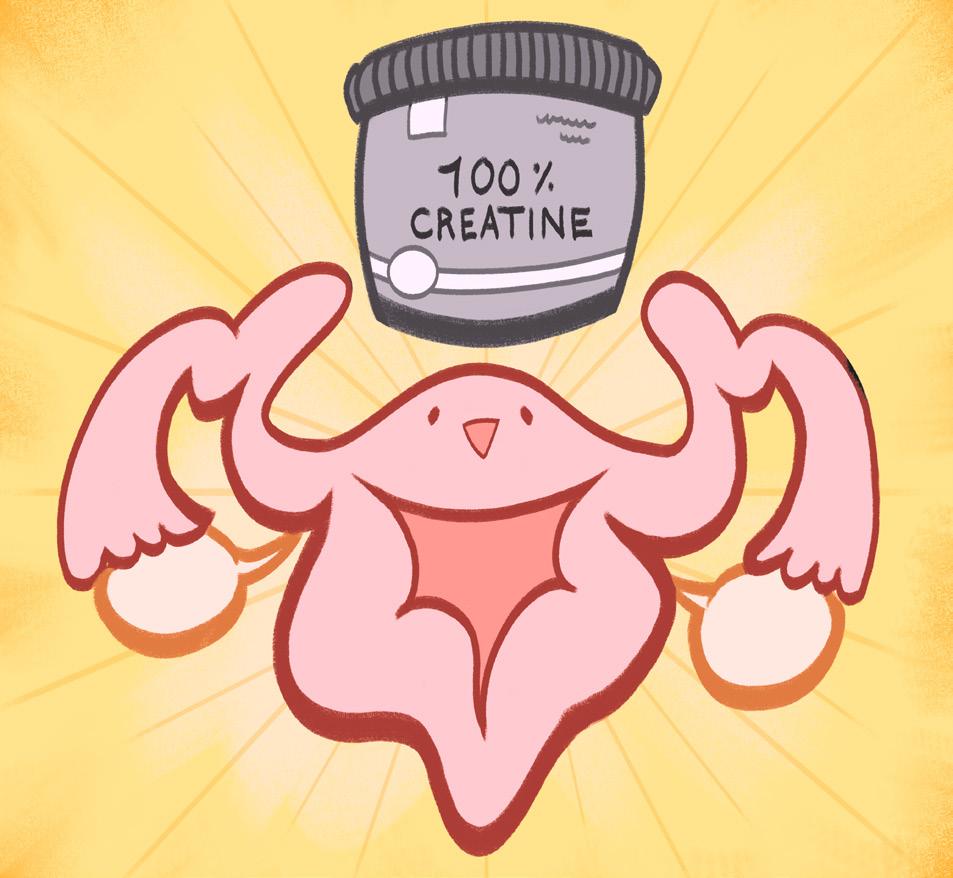
Creatine is one of the most misnderstood substances, especially by women.
Rumors suggest that side effects include bloating, inflammation and weight gain, which clashes with the popular, flat-stomach physique on Pinterest.
Here’s how creatine really functions: As the body exercises, it uses energy — adenosine triphosphate (ATP) — which creatine monohydrate (a naturally produced amino acid), replenishes via water influx into skeletal muscles. It’s found in animal-based products like red meat, fish and poultry. In other words, creatine is essential to produce energy for neurological and muscle functionality. In the ‘90s, the substance was proven to enhance athletic performance by optimizing ATP production, enlarging muscle — not fat — due to the increased water
volume. However, women produce around 75% lower stores compared to men. This, combined with the underrepresentation of women’s health in research, raises the question of how creatine supplementation would impact women. It should be common knowledge that while men maintain a 24-hour hormonal cycle, women have a 28-day one, where estrogen and progesterone oscillate.
First, the menstrual phase: shark week. Hormones like estrogen and progesterone are lowered in order to shed the uterine lining, causing fatigue and a downcast mood.
Next is the follicular phase, which starts with the menstrual phase and continues through. Once your period concludes, you have the only week out of the month (insane!) that feels normal.
In this state, estrogen (which boosts energy, mood and metabolism) rises and creatine production increases in order to thicken uterine lining and form a mature egg.
Ovulation: superhero day. The fertilization period where estrogen peaks and you feel stronger, energized and on top of the world — nothing can bring down your mood. The luteal phase: two hell weeks. As progesterone rises and estrogen drops to prepare the body for pregnancy, the combined effect triggers tiredness, bloating and irritability. This is why cycle syncing — fluctuating routines to cater diet and physical activity according to the current phase — is so important for women to maintain a sense of homeostasis. Daily creatine supplementation for women has more effects than just enhancing athletic performance; it poses as a way for women to naturally reach a 24/7 balance. Supplementation can provide constant energy and reduces the need to alter workouts when estrogen is low (hence, creatine) in the luteal, menstrual and menopause stages.
CYCLESCYNCING on 9
The proposal to cut national park funding while increasing defense spending contradicts itself
BY YUENJO FAN yafan@ucdavis.edu
the race even as the primary approaches, or even that they may wait until the last second to officially admit defeat. By that point, it might be too late for a withdrawal to be effective because their names are already printed on ballots. What seemed like a shake up that could lead to a narrower candidate pool at first is now an empowering force that only made the election even more uncertain for Democrats.
Even Party Chair of the California Democratic Party Rusty Hicks advised candidates with no viable path to the general election to suspend their campaign and endorse another candidate by April 15. As of April 20, Betty Yee is the only Democratic candidate to have suspended their campaign. In fact, Xavier Becerra — a former, lower polling candidate — is now polling higher.
It’s still uncertain whether candidates will eventually take this advice or not; party discipline is not as strong here as it is in other parts of the world or even in the Republican party. If no one follows Hicks’ instruction, it’ll signal to voters that the California Democratic Party has weak leadership and is divided — if that’s not already being signaled by the large number of candidates still in the race.
Sure, this uncertainty is simply the nature of politics, but the California Democratic Party’s scrambling to find their major candidate could’ve been avoided if the most unpopular candidates dropped out of the race earlier. The stakes are high here, and the pride of ambitious politicians have cost us so much in the past couple of years — at what point will the people matter more than personal plans or political agendas?
Messaging their solutions for real issues that Californians care about — housing, affordability, the environment — instead of basing their campaigns on their opposition to President Donald Trump could’ve also helped their case.
On April 3, President Donald Trump’s administration released its budget proposal for fiscal year 2027, proposing major cuts to domestic programs and substantial increases in defense spending.
Specifically, a $1.5 trillion budget was proposed for the Defense Department, signaling an approximate 44% funding increase over the current 2026 fiscal year. This came at the cost of many federal government agencies being potentially dealt significant funding reductions, including multi-billion dollar cuts to the Department of Health and Human Services, the Department of Housing and Urban Development and the Department of Education. Other cuts included the United States Department of State, the National Science Foundation and the Environmental Protection Agency. Among these changes, perhaps the most concerning was the cut to the National Park Service (NPS), one of the programs most harmed by the newly proposed budget. The NPS has historically been understaffed and underfunded, and the 2027 proposal threatens to remove $736 million of funding from its current $3.26 billion budget. This would represent a roughly 25% decrease in the NPS’ 2027 budget. It threatens further staffing shortages up to 24%, alongside exacerbating difficulties in maintaining cleanliness, closure of educational programs and a decrease in overall park quality.
To further this problem, the NPS had already experienced a $1 billion reduction proposal during this fiscal year (38% decrease) — the largest in its history. Though Congress eventually struck down the measure, the federal administration has now returned once more in an attempt to implement cuts to the NPS.
To demonstrate both the crisis and contradiction in neglecting “America’s Best Idea,” it is necessary to outline the fundamental importance of the 433-strong park system to this nation. From parks to monuments, the NPS protects and preserves natural and historical landmarks that are key to American heritage:
XIE / AGGIE

from places like Yellowstone and Yosemite all the way to the Statue of Liberty and Pearl Harbor National Memorial.
These locations form a pillar of American identity, eliciting sentiments of freedom, patriotism and historical gravity. They are engraved on coins and memorialized in paintings — they symbolize the essence of what it means to be American.
National parks represent the pioneer spirit of America through the fearless traversal of the vast wilderness, while monuments and sites illustrate ideals, important figures or brave sacrifices made over the centuries. Parks also promote civic duty, standing as a source of rare unity for the American people, where — regardless of background or political view — Americans are widely accepted to hold these places in great respect. Altogether, these sites have stood as a representation of American democracy, where the public grounds and the wonders of the outdoors are reserved for all to enjoy.
Nevertheless, supporters of the new budget proposal will point to the White House’s $10 billion beautification project request for the NPS-managed National Mall in Washington, D.C. Though technically acting as funding for the NPS, the lack of equal financial distribution to other sites across the country further exemplifies the harmful skew against America’s parks, leaving them vulnerable. Of the $10 billion proposed, not a single cent will go to any NPS location outside of Washington. Disregarding the entirety of our National Park Service ostracizes a
cornerstone of American identity and displays impudence to both the history and environment of the country.
Furthermore, vastly increasing military spending in the name of “national defense” while simultaneously slashing NPS funding is repugnant to the idea of truly caring for America. If we cannot protect something so vital to American identity, then what are we actually defending? This is not to disregard the importance of American defense, but instead to underline the irony in the administration’s proposed budget. If these trends of budgeting imbalances continue, America will suffer the tragedy of worrying so much about its castle walls that it overlooks the foundation within them. The idea of prioritizing external national defense becomes illusory when the country’s very own heartbeat is under attack from the inside. Through this perspective, we can see how funding the NPS becomes an issue of national defense in itself — defending our national parks is to preserve the integrity of American identity. The U.S. cannot continue to reinforce mass defense spending while shirking its responsibilities to other indispensable parts of the nation. Domestic programs like the NPS must be supported; they play a crucial role that transcends any financial or political gains. National parks are the lifeblood of the nation, and they cannot be replaced nor risk damage — lest we seek to throw away the very fabric of America.
The former UC Davis professor dived into his photographs depicting the iconic site
Mary L. Stephens Library on April 16, 2026. The event was hosted by the Photography Club of Davis. (Tatev
BY JONAH BERMAN arts@theaggie.org
/ Aggie) down the river sometime, because you see very little of the river when you do the backpacking.”
On April 16, the Photography Club of Davis hosted UC Davis Professor Emeritus of Plant Sciences Robert Norris for his presentation, “Grand Canyon: River of Light.” In the presentation, Norris showed a variety of photographs he took on two oar-powered trips through the Colorado River in the Grand Canyon.
Norris has been a member of the Photography Club for over a decade. In addition to photography, Norris has trained master gardeners for over 40 years and grows 80% of his own household’s fruits and vegetables. Originally hailing from England, Norris’ passion for photography began in 1959, when he received a camera as a gift.
“I turned 21 in 1959,” Norris said. “There was a 21st birthday present. My father gave me a Leica camera. Once I started using that, I just found that I really liked it.” For most of his career, his passion took on the form of plant macrophotography, the practice of taking extremely close-up images of botanical subjects to reveal specific details. The process was both aesthetically pleasing and academically useful for Norris. Currently, he has contributed over 400 photos to the CalPhotos database of different plant species.
The two trips depicted in the presentation took place in 2005 and 2012. Norris embarked on them with his wife after a previous visit to the canyon decades before.
“We backpacked the Grand Canyon, my wife and I, in probably the early ‘80s,” Norris said. “And I realized that, you know, it would be neat to go

BY BELLA PETERSON arts@theaggie.org

Norris employed film photography on the first visit and a digital Nikon D700 the second. During his presentation, Norris emphasized the difficulty of crafting quality images under the raft’s challenging conditions.
“You have a serious problem: you get wet, everything gets wet,” Norris said. “You have no access to power. And there’s sand everywhere.”
Although Norris has traveled to over 40 countries, he opined that the Grand Canyon offers photographic opportunities which would be difficult to replicate elsewhere.
The presentation’s title alludes to this, as Norris shared that he especially appreciates the different ways in which the canyon allows light to seep through and structure the image.
“The first trip we did was setting me up for knowing what to do on the second trip, with the light coming through cracks in the rocks or just coming down the canyon,” Norris said. “You can get, I think, phenomenal photographs with the effect of light on the water and on the rocks.”
The Photography Club of Davis was enthusiastic to view the presentation, according to member Beth Brock. “It was different than a lot of our programs,” Brock said.
“A lot of them are focused on the ‘how’ of the photography, but this was more focused on the results under extreme conditions.”
After discussing the challenges he faced and equipment used, Norris then split the talk into different sections, each with different subject matter from the canyon.
PHOTOGRAPHY on 9


Movie: “Emma.” dir. Autumn de Wilde (2020) Autumn de Wilde gave us “Emma,” and then vanished when we needed her most. The current state of the period piece genre is unforgivable, which is why this 2020 adaptation of Jane Austen’s novel is now such a treat. The film follows its heroine, Emma, as she plays cupid and meddles in the social lives of those surrounding her. The preferred version of the story tends to be “Clueless” (1995); the loosely adapted rom-com, although hilarious and charming, cannot possibly compare to the romantic period setting of the 2020 adaptation. The visuals alone are stunning, but the cast also truly delivers in every way. Bringing the talents of Josh O’Connor, Mia Goth and Anya Taylor-Joy together, the ensemble blends the perfect amount of comedy with sincerity in their memorable performances and undeniable chemistry.
TV Show: “I Think You Should Leave with Tim Robinson” created by Tim Robinson and Zach Kanin (2019)
I have almost completely adopted Tim Robinson’s mannerisms into my own life because of this iconic Netflix comedy series. The show’s format (episodes made up of multiple skits) is perfectly suited for anyone who’s become a victim of the short-attention-span epidemic. The best part of this Tim Robinson series is that it is fully subversive of every expected comedic trope; whenever you feel ready for the bit Robinson may have prepared, you realize you had no idea what to expect and are already in a fit of laughter. There’s no denying that the other projects of Robinson’s land effectively with the audience he has procured, but “I Think You Should Leave with Tim Robinson” will always be my ultimate comforting discomfort show.
Book: “Looking for Alaska” by John Green (2005)
I can’t say that I’m a dedicated fan of John Green’s work, but, in my opinion, “Looking for Alaska” has to be one of his greatest. Towards the end of my high school experience, I went through a young adult (YA) fiction phase and came across this novel. I’d never felt attracted to any of his other books, but something about “Looking for Alaska” just got me — maybe it was the ridiculous name for a character I couldn’t resist. Much like his other novels, “Looking for Alaska” is an absurd imitation of what should be a group of high school students struggling with some coming-of-age dilemma. The narrative follows Miles Halter through boarding school, a lonely kid who’s in search of a “Great Perhaps,” which refers to the famous last words of French Writer François Rabelais. The dialogue is unnatural, but there’s something charming about Green’s approach to the YA genre — perhaps it’s the predictability of his writing style that can feel comforting. It’s unlikely I’ll pick up another novel of Green’s, but “Looking for Alaska” will continue to have a special place in my heart: odd traits and all.
Video Game: “Life is Strange 2” by Don’t Nod (2018)
When people think of the “Life is Strange” series, their minds tend to go to Max and Chloe’s stories first — not shocking considering the series would not exist without them. The game that really stuck with me, however, was the second installment with the Diaz brothers, Sean and Daniel. This installment follows the two brothers, who are faced with the loss of their father after a tragic and mysterious event. Players take on the role of the older brother, Sean, as they attempt to raise and train Daniel in his newfound powers while on the run from the law. A rare feat for a video game, “Life is Strange 2” also provides relevant commentary on and representation of racism, fully confronting a contemporary social issue. It’s emotional in every aspect of the word and genuinely one of the best choice-based games I’ve played in my entire gaming experience. Despite being overlooked by the “Life is Strange” fanbase, I believe this installment deserves all the love possible and more.
Members discuss the club’s steps and style
BY HANNAH OSBORN
arts@theaggie.org
For those looking to dance, the prospect of finding a partner may be intimidating. At Davis Country Line Dancing Club (DCLDC), participants get a chance to dance alone together at their Tuesday lessons from 6 to 7:30 p.m. at the University Credit Union Center.
Club President Caitlin Huse, a fourth-year sustainable environmental design major, discussed her strategy for leading the club and the dance community it has created.
“[We try to create] a very inclusive environment,” Huse said. “I feel like line dance is looked at as a Western thing; if you’re not into country music, then you can’t do it. But that’s very much not what it is. We’ve got a whole bunch of people, all majors, all years.”
Each meeting typically has two dances taught by club members and features a wide repertoire of music to line dance to — including country classics as well as the music of Flo Rida and Pitbull. The sense of freedom and expression in the
draws people to the club, according to Treasurer
Rockhill, a third-year
and theatre and dance double major. Rockhill shared why line dancing piqued her interest during her first year at UC Davis. “I ended up deciding on line dance because I could practice it by myself, but also because everyone was so friendly,” Rockhill said. “So, I decided to stick around and continue learning.” The independent nature of line dancing allows members to pick up the steps themselves
on being
while dancing with the group, allowing attendees to continue to grow their skills with each dance they learn.
“Once you get the basics down, it’s a lot more fun to pick things up and start recognizing patterns,” Rockhill said. “The people are really friendly. We don’t take ourselves too seriously.”
This relaxed approach makes DCLDC a flexible point of entry for anyone interested in dance, as explained by Social Media Coordinator Valeria Markova, a third-year history major.
“I just want it to be open to beginners,” Markova said. “I want it to be something you can relax with or get exercise in, without feeling like you can only join if they’re super advanced or already intermediate.” The lessons are run to allow variation and flair from participants, encouraging members to find their own style as they learn and improve while still practicing the basics.
“It’s a relaxing, easier style of dance to fall back on and to just enjoy, instead of focusing
Student collections reflect each designer’s individuality and hard work across several quarters
BY TALAR KESHISHIAN arts@theaggie.org
On Picnic Day, Cruess Hall
Courtyard was brought to life by a collection of handcrafted garments made by student fashion designers. The annual fashion show, organized by the UC Davis Fashion and Design Society (FADS), has been a beloved staple of Picnic Day for over 30 years, celebrating students’ creative ingenuity and dedication to fashion design.
As the music died down and the crowd found their seats, the show was introduced by FADS Co-Presidents Vivian Le, a fourth-year cinema and digital media and communication double major, and Amy Lee, a fourth-year design major. The pair explained the meaning of the show’s theme “Laced in Reverie” and how it represents the work of students in the design program.
“This year’s theme ‘Laced in Reverie’ invokes nostalgia and honors the role of memory and self-discovery,” Le said.
“Each designer whose work is being showcased today has poured themselves into these pieces and, as a result, they’ve created reflections of who they are spanning across time and memory. ‘Laced in Reverie’ is a reminder to introspect and dream.” The show was set into motion with 15 designs from the FADS Single Garment cohort. The cohort provides the opportunity for designers at any level to try their hand at fashion design. Julia Snell, a fourthyear environmental science and management major, discussed the rewarding artistic process in bringing her design, entitled “The Swan,” to life.
“This has been such a fulfilling process,” Snell said. “Seeing your creative ideas become something physical is a feeling that you can’t replicate. Going into the sewing lab and working on this project has been the favorite part of my day for months.”
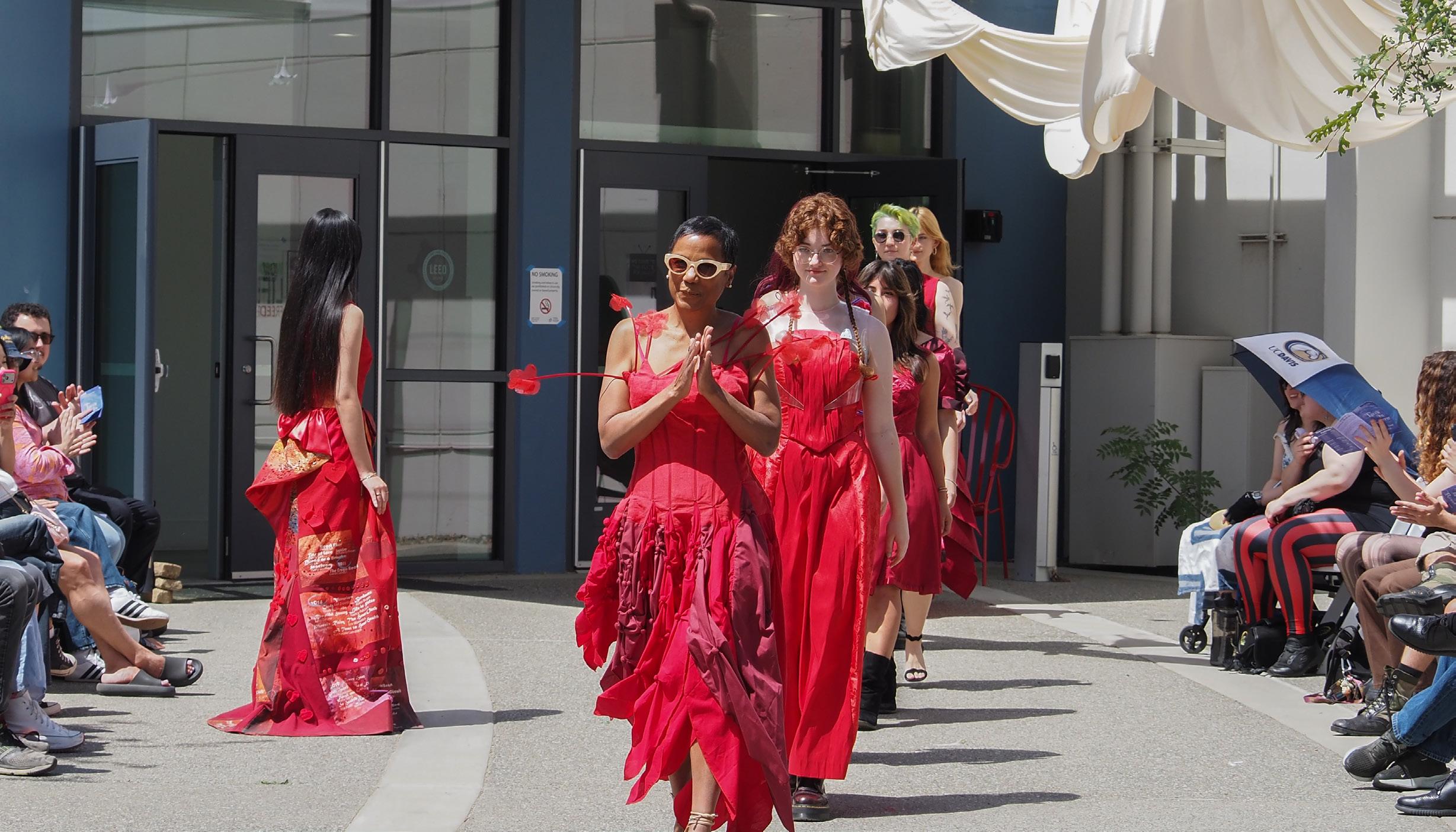
Snell highlighted how the welcoming environment of FADS contributes to a productive space for inspiration and collaboration.
“Everyone in the show is so incredibly talented and wonderful to each other,” Snell said. “Everyone just lifts each other up and helps each other out by talking about our designs. My groupmates and other people I’ve met in FADS are great people. I’ve enjoyed the process a lot and I’m proud of everyone in the show.”
“The Swan,” an elegant dress constructed with pink satin and white chiffon, opened the fashion show with an ethereal track as accompaniment. Cohort model Eliza Hudson, a secondyear neurobiology, physiology and behavior major, described the riveting experience of walking down the runway in the dress.
“I felt beautiful and that made me feel confident about walking out,” Hudson said. “I was so proud to wear what was hours upon hours of work and all my group’s skills culminating into this absolutely stunning final piece. Seeing everyone’s eyes widen and hearing audience responses made it feel good to be the person that could show everyone our group’s design.”
The Single Garment segment was followed by the Red Dress Collection, mentored by Professor of Design Adele Zhang. The characteristic red color of the 11-dress collection aimed to make a powerful statement on the importance of women’s heart health awareness.
“These red dresses make a visible commitment to standing together, raising awareness and taking charge of our own heart health,” Zhang said.
Isabella Mo, a second-year
Digita1 Frequency throws ‘the part[ies] for all the people that don’t go to the regular parties’
BY LAILA AZHAR features@theaggie.org
The DJ duo known as Digita1 Frequency, composed of Oliver Groszkruger, a secondyear landscape architecture major, and Aksel Olsen, a third-year communication major, formed less than a year ago, when Olsen purchased a DJ board for his birthday.
“I was just messing around on it over summer and I brought it up when I came to Davis,” Olsen said. “We just did it for fun, practicing every day.”
The duo — who have been best friends since high school — cite their bond as central to their dynamic as DJs.
“The weaknesses I have, Oliver’s strong in those areas,” Olsen said. “So, we really complement each other.”
Groszkruger echoed this sentiment.
“We have really similar tastes — we have a lot of mutual respect for each other and we really value each other’s opinion,” Groszkruger said.
The two expressed discontent with the Davis party scene, sharing their hope that the parties they work to organize would serve as an alternative to Greek life.
“It’s the party for all the people that don’t go to the regular parties,” Groszkruger said. “It’s the party for the misfits and the drag queens and the people that don’t feel included. That’s who we want to cater to.”
They advertised their first party by passing out flyers on campus.
“We didn’t know anyone, we were just like, ‘Do you want to come to this free party that we’re throwing?’” Olsen said.
Their first party had about 50 guests. About six months later, the duo DJ’d for a Picnic Day event with around 700 attendees — their biggest crowd yet. Prior to their Picnic Day gathering, Groszkruger expressed both nervousness and excitement.
“I keep just thinking about walking up on the stage and plugging into my laptop and being like, ‘Holy f***, this is about to start,’” Groszkruger said.
[Add more after picnic day]
They described their sound as EDM-adjacent, but still approachable for newcomers. Electronic Dance Music (EDM) is a style of music that includes more niche genres such as house, techno and dubstep. Characterized by high-energy beats and rhythms, this style
of music is frequently played at raves and large-scale music festivals.
“It’s EDM for new, incoming people,” Groszkruger said. “It’s not electronic music for hardcore ravers or whatever. It’s definitely a lot of remixes [...] it’s an inbetween. Like, we’re still playing a Fetty Wap remix, you know what I mean? So it’s a way to ease people into it that’s very approachable.”
The duo is guided by their own personal tastes.
“I think we’re doing what we want to listen to,” Groszkruger said. “We play what we want to listen to and what we want to DJ. We don’t really care what other people are saying. And that’s why the support feels so much nicer too, because if I was trying to impress others, I feel like it would feel more fake.”
Both DJs said that they would enjoy being guests at their party — something they believe to be a good sign.
“We always say that it’s kind of a bummer that we have to DJ. I would want to go to my party. I don’t want to DJ and have to be sober. I want to go to my party.”
Those interested in staying up-to-date with Digita1 Frequency’s events can visit their Instagram, @digita1frequency.
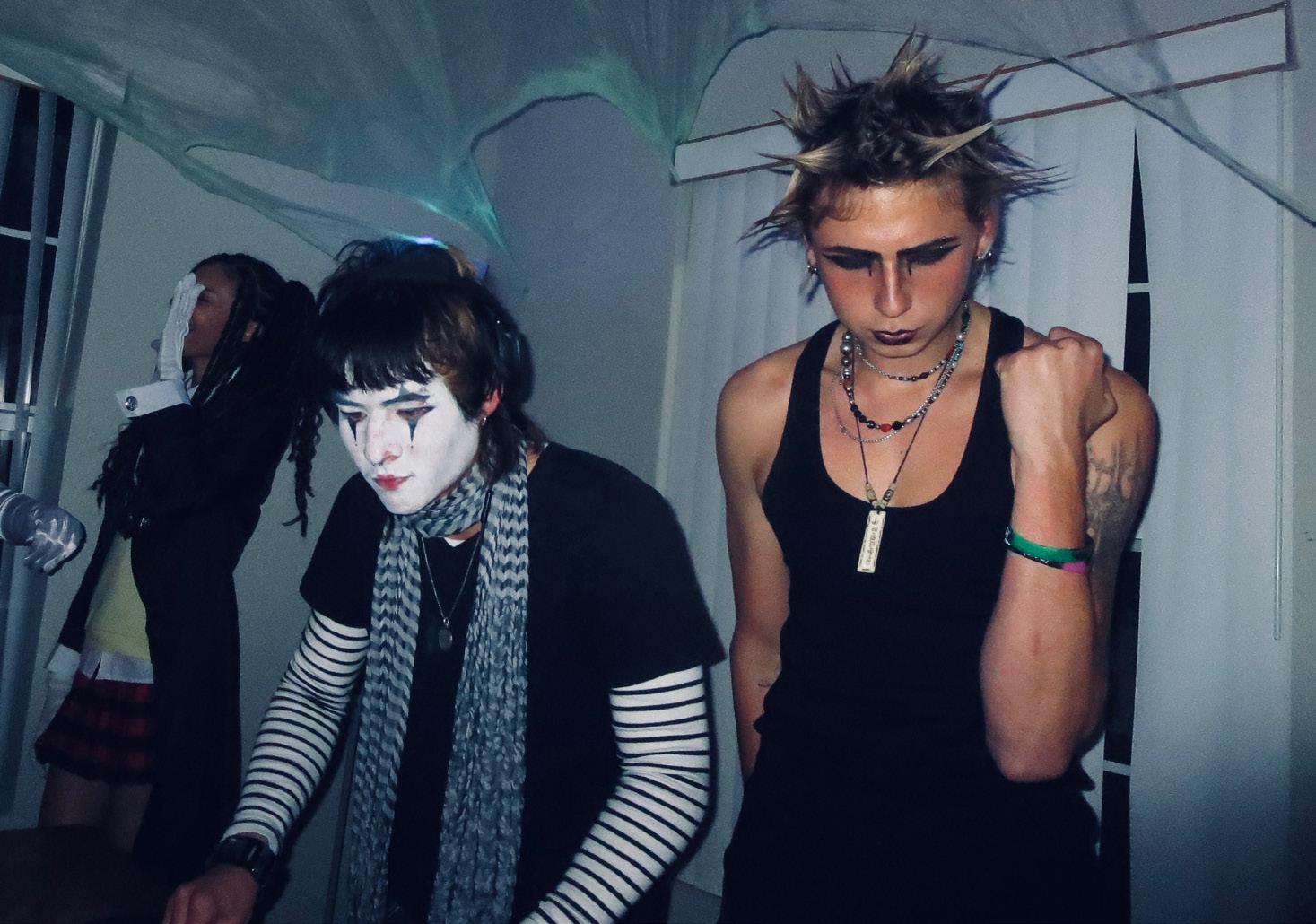
electrical engineering major, praised the fashion show’s emphasis on cultural and community advocacy.
“It brought into my perspective what a fashion show could be,” Mo said. “It doesn’t just have to be showing clothes that someone put together. It can champion a cause and incorporate less traditional fashion show aspects, bending the boundaries of what a fashion show should be while also making it cohesive.”
The final segment of the show featured eight designers from DES 179: Signature Collection, a capstone course that invites students to design their own collection of three to four handcrafted garments. The segment commenced with a collection from Kathryn Choy, a fourth-year design major and FADS cohort officer, entitled “Right Where I Belong.”
Choy’s collection featured four denim garments adorned with red Chinese tassels and embellishments to symbolize the union of her cultural identities.
“My collection blends Eastern motifs with Western fabrics,” Choy said. “I felt that this was a good way to celebrate both my identities as a Chinese American. The denim is from the American part and the Eastern motifs are from the Chinese part.”
Choy detailed how creating this collection encouraged her to push herself to new limits.
“Creating this collection has helped me bring out my best traits when it comes to designing and challenges my worst ones,” Choy said. “I’ve really been able to push myself, which has led me to becoming a better designer overall.”
A crowd favorite was “Debut” by Giang Ta, a
fourth-year design major. The collection embodied his mission to dismantle stereotypes and empower Asian American communities through fashion. The cultural significance was brought to life with a spirited lion dance, which transformed into two garments that incorporated traditional Asian textiles with a modern take.
“What we’re going for is contemporary explorations of traditional Asian American garments,” Ta said. “This is my version of a lion dance outfit turned into an áo dài. It’s made from a very utilitarian, practical standpoint for the lion dancer. When the lion dancer is out of the lion, they can still wear this beautiful garment that signifies their importance as a lion dancer, but also their respect for Asian American culture.”
‘Aokirama’ is more than just a student-led celebration
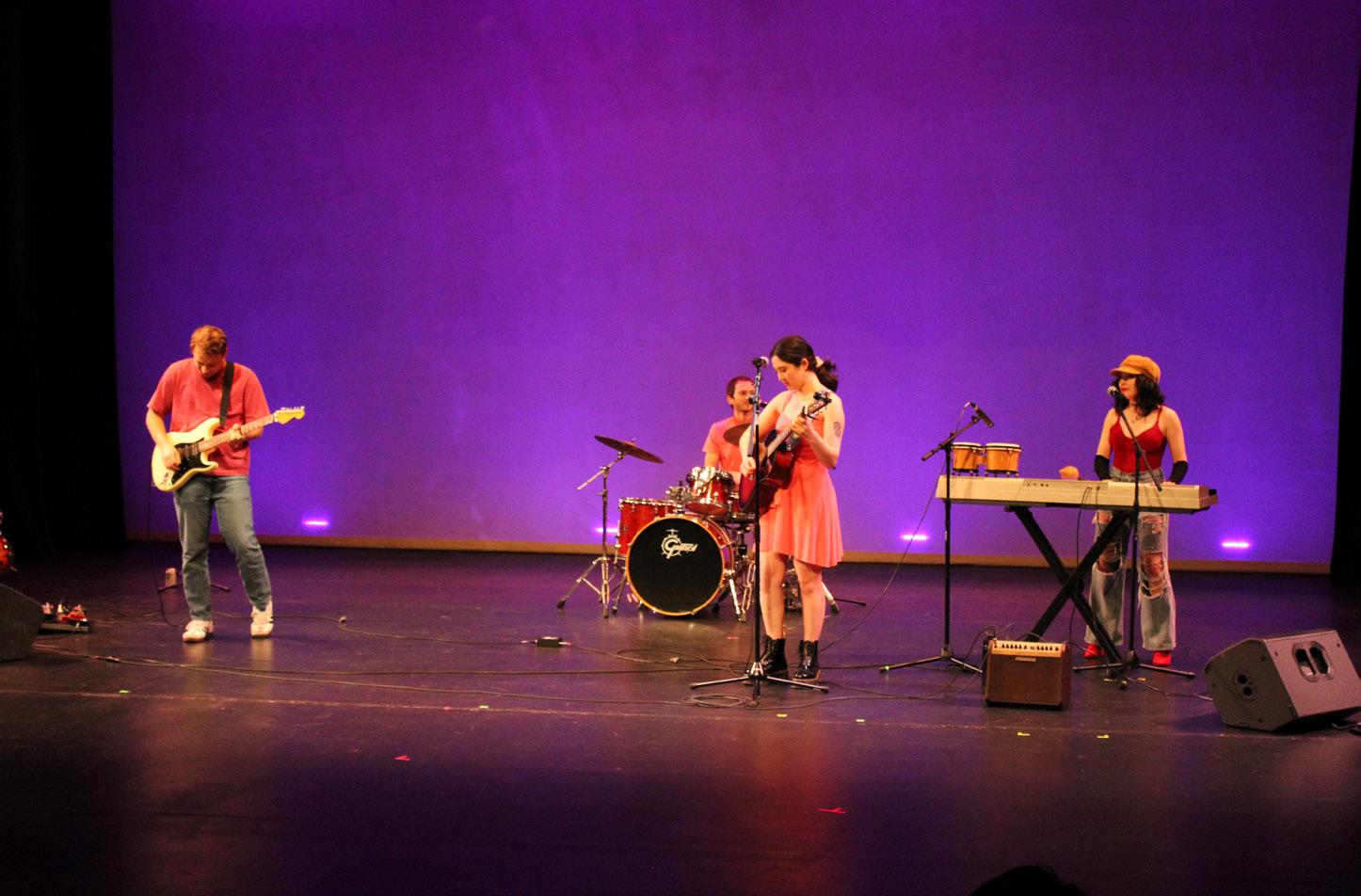
BY AMBER WARNKE features@theaggie.org
Central to the college experience at UC Davis is participating in campus-related events and activities to feel like a part of the Aggie community. While Picnic Day and the Whole Earth Festival may be the most well-known examples of such jamborees, many students are unaware that the UC Davis Law School has a celebration all of its own.
Every spring, students and faculty from the UC Davis School of Law host a talent show titled Aokirama to commemorate the end of the year. This year’s Aokirama was held on April 17 and showcased a variety of acts including standup comedy, an office-style mockumentary, a puppet show and numerous musical performances.
To many students, Aokirama is a memorable spring semester celebration that commemorates their experiences at the end of the school year. Any law student can perform, and the event highlights the closeness of the School of Law community, according to Laura Schwartz, a third-year law student.
“[Aokirama] gives people a chance to not only build community and make friends, but also to enjoy life with all of your law school friends in a non-law school context,” Schwartz said. “Having a chance for everyone to get together, celebrate, have a good
time and support each other I think is really important. [...]
Having some kind of event like this shows how much our law school — at least the students — care for each other and want to support each other.”
Building a strong sense of community can be particularly impactful in the context of law school, which is known for its rigorous academic demands and heavy workload, according to Christina Morales, a second-year law student.
“College in general is stressful, but law school is even more so,” Morales said. “A lot of us are dealing with clients [at internships] with a lot of trauma or dealing with subjects that are really stressful, especially right now. So, it’s really important to take time for yourself to be creative and make yourself happy.”
Participating in hobbies and extracurricular activities is proven to reduce stress and even boost attention, both of which can help in students’ academic lives as well. Additionally, hobbies are shown to increase workplace creativity alongside personal creativity, a crucial skill for lawyers to have as they craft innovative arguments in court.
Participating in activities just for fun can not only help students in their studies, but also in their careers and personal lives, according to Schwartz.
“If law students just did law, we wouldn’t have any lives,” Schwartz said. “If all you do is sit inside and read about the law
and study, [then] when you get out of school, get into a job and go home from your job, what do you have after that? Do you have any friends? Do you have any memories besides studying? Is the only thing that’s important in your life your job?”
Just as Aokirama allows students to connect with their creative side, it also allows them to create deeper ties with the legacy of the law school, according to Kieran Coe, a second-year law student.
“Aokirama is in remembrance of Professor [Keith] Aoki, who was a professor of law here,” Coe said. “He died in 2011, and he was a very influential professor here.” Aoki was well-known for his study of civil rights, critical race theory, intellectual property rights and local government law, as well as being a member of the American Law Institute. He also used comic strips to visualize principles of law, utilizing them to teach his students and publishing them in several books. Aokirama commemorates Aoki at each annual festival through a slideshow and speeches, according to the speakers at this year’s celebration. For UC Davis law students, Aokirama highlights the importance of community, artistic spaces and tradition that stands as the foundation of the UC Davis law experience. Aokirama is open to all students for free, and its doors are set to welcome all Aggies — law students or not — next
BY EMILIA ROSE science@theaggie.org
With only moments away from liftoff on the lunar module, astronaut Gene Cernan gave a “farewell,” humanity’s final words on the Moon, as the Apollo missions came to a close.
“As I take man’s last step from the surface […] I’d like to just say what I believe history will record,” Cernan said. “That America’s challenge of today has forged man’s destiny of tomorrow. And, as we leave the Moon at Taurus-Littrow, we leave as we came and, God willing, as we shall return: with peace and hope for all mankind.”
But those were not their last words. The crew kept talking as they entered the module. Feeling the force of the thrusters, the upwards ascent and the inevitable return journey back home to Earth, it was actually Harrison Schmitt who uttered humanity’s very last words on the lunar surface during the Apollo 17 mission.
“Three…two…one… ignition,” Schmitt said.
We haven’t been back to the moon since. Despite our technological capabilities allowing us to return, decades passed with a great silence in between — until now.
Launching on April
The Davis Downtown Business Association has checked in with the business following the incident, according to Walia. He expressed that nearby business managers, including those at Open Rice Kitchen, said they have dealt with similar issues in recent years and offered their support.
Moving forward, Walia said he is adamant about maintaining safety and continuing restaurant operations.
“We’re just trying to be more careful — keeping an eye on things and calling the police if we see anything suspicious,” Walia said. “We’re doing what we can and working with the community.”
As a small business, Walia emphasized that continued community support is essential, both in times of hardship and on the whole.
“It’s hard for a small business to survive in this economy, and we’re a very small business,” Walia said. “We’re not a big franchise — this is our second restaurant in California. We just want people to support us.”
As the investigation continues, Walia shared his hopes that the Davis community will continue to support the restaurant and staff as they work to move forward.
Rayls continued, explaining the reasoning behind the change.
“For some members of our [César Chávez Elementary] community, the current name may carry painful or complicated associations,” Rayls said. “Even if that is not the case for everyone, we have a responsibility to listen thoughtfully and lead with empathy.”
Rayls addressed those who may be hesitant to change the name.
“Of course, change can be difficult,” Rayls said. “Traditions matter, and many people feel a deep connection to the school as it is. Those feelings deserve respect, but growth often requires us to reexamine longheld assumptions and make choices that better align with who we are today and who we want to become tomorrow.”
For now, the form remains open for community members to provide name suggestions — all of which will be given to the selection committee. DJUSD plans to make necessary logistical changes over the summer and begin the new 2026-27 school year with the new name in effect.
4
“It’s hard to give advice to prevent something because it’s not something you can control,”

1, Artemis II began humanity’s journey back to our planetary neighbor, complete with a new crew, new goals and new ideals. On April 6, the crew maneuvered a flyby on the dark side of the moon, passing around the celestial body and then returning home. The astronauts returned on April 10, when the crew performed their final checks and touched down safely on Earth. Although both Artemis and Apollo had the same destination, the intuitive
Tagor said. “If it feels wrong, that’s probably because it is.”
The students also referenced the importance of consent in all relationships, explaining how it must be continuous and can be withdrawn at any time. They also emphasized the need to expand how sexual assault is viewed.
“It’s not just man-on-woman,”
Shor said. “It can be womanon-woman, man-on-man […] and you can experience sexual assault in a relationship.”
Ultimately, students emphasized the unpredictability of sexual assault and the variability of situations and people. For more information about the Sexual Assault Awareness Month campaign, visit the National Sexual Violence Resource Center.
“We’re always so excited, and the past few years have been so big and grand,” Fomin said. “It’s always so exciting to be around friends in our community on the biggest day in town.”
Ultimately, the audience, the bands and the organizers all contribute meaningfully to the Picnic Day music show. Each person who comes through the Eclectic Collective space becomes a part of the process, showcasing the notion that events like these truly are a collective experience.
“We come together every Picnic Day,” Lawlor said. “We’re just here for the community.”
This is by far not the last house show to be thrown in Davis, though upcoming shows may be shorter than their Picnic Day extravaganza. Stay tuned for more Eclectic Collective events on their Instagram @ eclecticcollective_, and those hosted by their collaborator, Velvet Red Productions, via their account @velvetredproductions.
Meet new people and try new clubs, sports and experiences. In the end, the so-called “college experience” is as unique as everyone says it is, but that’s why it’s so incredibly important to allow yourself — and only yourself — to dictate what it is.
Engulf yourself in the wellness culture if that’s what makes you feel good; meet 10 new people every single week if that’s what you’re all about. Your college experience is yours for the taking, and you mustn’t give it away.
Disclaimer: The views and opinions expressed by individual columnists belong to the columnists alone and do not necessarily indicate the views and opinions held by The California Aggie.
forces that drew them there remained very different. UC Davis Planetary Scientist Qing-zhu Yin explained those differences in motivations.
“Apollo was a Cold War sprint: a high-stakes, government-only technological demonstration to beat the Soviets, plant flags, collect some samples and declare victory,” Yin said. “Artemis is a campaign for permanent expansion: a deliberate, multi-decade effort to build a sustainable human presence
While creatine will contribute to bloating and weight gain when not paired with exercise (which is where the rumors are created), when active it can redirect the extra water retention during the luteal phase towards the muscles.
Creatine also improves cognitive function and prevents psychiatric illnesses, since the frontal cortex thrives on ATP. Women are more susceptible to depression, so additional ATP allows neurotransmitter production for a better mood.
Estrogen also regulates bone health. During menopause — where the ovaries in middle-aged women cease producing estrogen and progesterone — women can lose up to 20% of their bone density. Creatine increasing muscle mass can stimulate bone growth, effectively preparing you for menopause years before it arrives. Healthy habits we implement now will define our future fitness.
Overall, creatine naturally counteracts the negative effects of the menstrual cycle, including menopause, without altering hormones (like birth control does). This means the body can continue to function normally, but your energy is more balanced without caffeine noxiously suppressing sleep.
While creatine is not a birth control substitute, it poses as a natural, healthy method for cycle syncing for athletic women. And, more importantly, it acts as an impressive advancement toward improving women’s health. Maybe next time when you’re out shopping, consider braving the wellness aisle — like how you retrieve dumbbells from the rack in front of a gym full of men.
Disclaimer: The views and opinions expressed by individual columnists belong to the columnists alone and do not necessarily indicate the views and opinions held by The California Aggie.
While branding yourself as a fighting actor against the Trump administration is favorable to Californians, our needs cannot be summed up to just that. Actions and plans will always speak louder than flashy promises that cannot be kept.
While the possibility of two Republicans making it to the general election is low, it’s not impossible. And although a Republican governor may be immediately recalled if they are elected, it’s unproductive. Democrats must act fast to prevent this: More candidates must drop out. Right now, none of these candidates are mobilizing voters even as alarms ring. Will Democrats finally swallow their pride and listen?
Disclaimer: The views and opinions expressed by individual columnists belong to the columnists alone and do not necessarily indicate the views and opinions held by The California Aggie.
on the Moon […] Apollo proved the capability; Artemis is proving the commitment to stay.”
The Apollo missions were a stress test, answering the question of “can we do it?” Similarly, Artemis II is meant to wage whether we can continue. But unlike the rush of the 20th century, humanity now has the benefit of time, so the rewards of pushing through the challenges of exploration may show.
Dawn Sumner, a
A significant portion of the photos focused on the Grand Canyon’s unique and ancient geological features.
“We’re 3,200 feet below the rim at this point on the river, and you can clearly see different layers and the ages that are given on some of them in terms of millions of years,” Norris said.
The array of images also included flora and fauna of the canyon, such as the California condor, grebes, herons and four o’clock flowers. In accordance with the theme, some selections, such as images of brittle bush, were prioritized for how they interacted with luminosity.
“It’s all brittle bush at that time of the year,” Norris said. “I just liked the way the light was coming across the bush, and these layers of rock.”
In addition to nature, other image subjects included abandoned boats and architecture created by communities historically Indigenous to the land.
Norris left another highlight of the collection for the very end of the presentation: images
geologist and planetary scientist at UC Davis, explained how these missions tend to lead to discoveries.
“All efforts to [go] to the Moon raise unexpected challenges, and we always discover unexpected, new things,” Sumner said. “The missions are pushing the limits of our technology and knowledge.” With each new challenge, humanity learns. With each new mission, technology is stressed and
of rafts traveling through the famous rapids of the Colorado River. In some of these images, the water was so chaotic and eruptive that the rafts were almost invisible.
“It tends to be flat and calm until you get to a rapid and then you drop, you know, 10 to15 feet,” Norris said. “If you’ve got good eyes, you can see there is somebody right there [in a raft], but you can barely even see the raft now [in the image].”
Norris concluded by offering an alternative theme to his collection: “River of Reflections.”
He cited the reflective ability of the Colorado River as another favorite aspect of photographing the canyon.
“You only get a few seconds to get the picture before you’ve moved on,” Norris said. “And often the wind changes a little bit, so the photographs you’ll see could never be duplicated. You could get things like it, but the odds of having exactly that reflection is pretty minimal.”
Through the presentation of his work to the Photography Club of Davis, Norris shared his hope of imparting a new sense of adventure in the audience, who may also be able to find creative inspiration and admiration for the natural world around them.
“Go explore,” Norris said.
improved — all for the possibility of exploration beyond this planet.
“We do it because the unknown gnaws at us,” Yin said. “It’s the same impulse that pulled our ancestors out of Africa, across oceans, to the poles and to the bottom of the Mariana Trench […] It’s not enough to believe we are special; we want to check. Are we alone? Is the universe hospitable? Can life spread? These aren’t luxuries — they’re the questions that define us as a species capable of wonder. Not knowing is intolerable.”
The surface-level force might vary based on the times, but the deeper truth of reward, challenge and the primal desire to know more and see what’s next ties these missions together.
We have come and gone from the Moon with Apollo, leaving our first and last words memorialized in recordings. Now, we’ve returned with Artemis, bringing the hope and peace echoed in Cernan’s farewell. With each expanse upwards, new knowledge is gained, new challenges are addressed and more rewards are reaped. As manned missions to outer celestial bodies continue, perhaps a new set of last words will be spoken into existence.
For Ta, the collection exemplifies not only the culmination of his work in DES 179, but the beginning of a creative revolution with his fashion brand titled “Gin and Giang.”
“We really wanted this to be a big moment,” Ta said. “I want my garments to signify the revolution of Asian American culture. When you wear one of my pieces, you’re saying that you believe in our mission to form a cultural movement that redefines the connotations of our current culture. We, as the implicit model, need to do better in supporting our peers and in supporting each other.” Ta also remarked upon his interpretation of fashion design, broadening the scope to the purpose of the fashion show as a whole. Together, student designers were able to create new spaces for audience members to view their creations.
“Fashion design is about your ability to turn nothing into something,” Ta said. “It’s about your ability to build not only garments, but a world out of it.”

The Aggies put up a strong fight against the Sun Devils
BY DANIELLE WIRNOWSKI sports@theaggie.org
The Aggies travelled to Tempe, Arizona, to face off against the Arizona State University (ASU) Sun Devils lacrosse team on April 11 at noon. This match was important as it could decide whether the Aggies fall in the

by Audrey Carr, a second-year
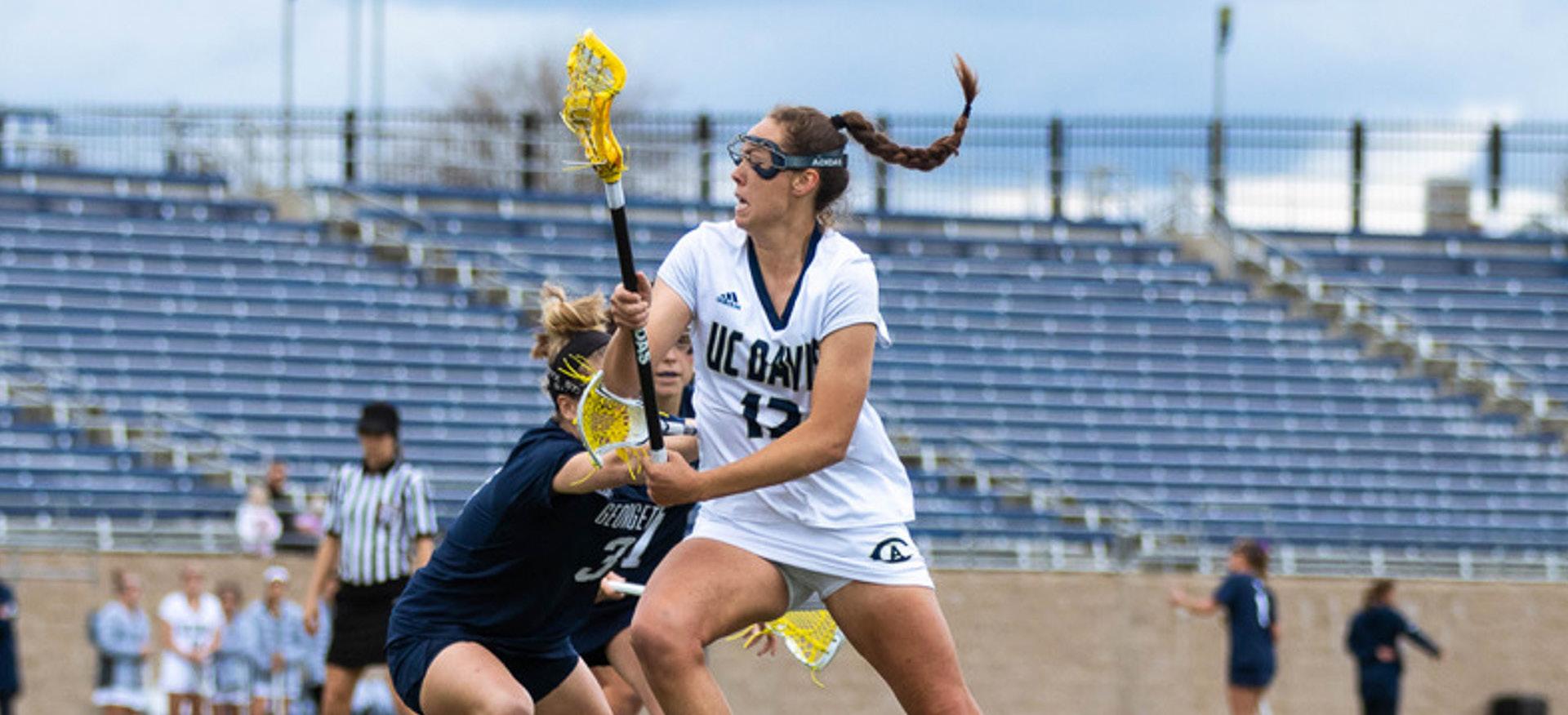
the third quarter was 7-16, with the Sun Devils maintaining the Fox started the fourth quarter with a goal for the Aggies within the first three minutes of gameplay. ASU quickly followed up this goal with one of their own, less than
The Aggies went on the defensive in the final quarter,

allowing ASU to score only three goals. Within the last four minutes of the game, the Aggies shifted to the offensive.
UC Davis scored three goals before the quarter ended, two goals within the last 50 seconds of the game. Fox ended the game with a goal, assisted by Cami Johnson, a third-year managerial economics major. The final score for the
match against the Sun Devils was 11-19, with the Sun Devils taking the victory. he Aggies are set to participate in two more matches before the Big 12 Tournament. Next, UC Davis will travel to Gainesville, Florida, on April 25. The Big 12 Tournament starts on April 30 and goes through May 2 in Gainesville, Florida.


MEN’S TENNIS
APR. 17, 2026
Two Big West series remain before the Big West Championship
4-0 (WIN)
The UC Davis men’s tennis team came out with a sweeping victory in their final home match of the regular season against Portland State University. The Aggies took control early in the match, winning two out of three doubles matches. The doubles matches ended with scores of 6-3 and 6-2, respectively, with the last doubles match going unfinished. The singles matches followed similarly; three of the singles matches ended with a victory for the Aggies, and the other three matches went unfinished. The Aggies will soon travel to San Diego to participate in the Big West Championships beginning April 22.
WOMEN’S LACROSSE
APR. 19, 2026

In the last home match of the regular season, the UC Davis lacrosse team fell to Colorado University. The Aggies started off the match with possession, but were unable to score for five minutes. Rhea Cosand, a fourth-year sustainable agriculture and food systems major, scored first for the Aggies, with an assist by Holly Smith, a
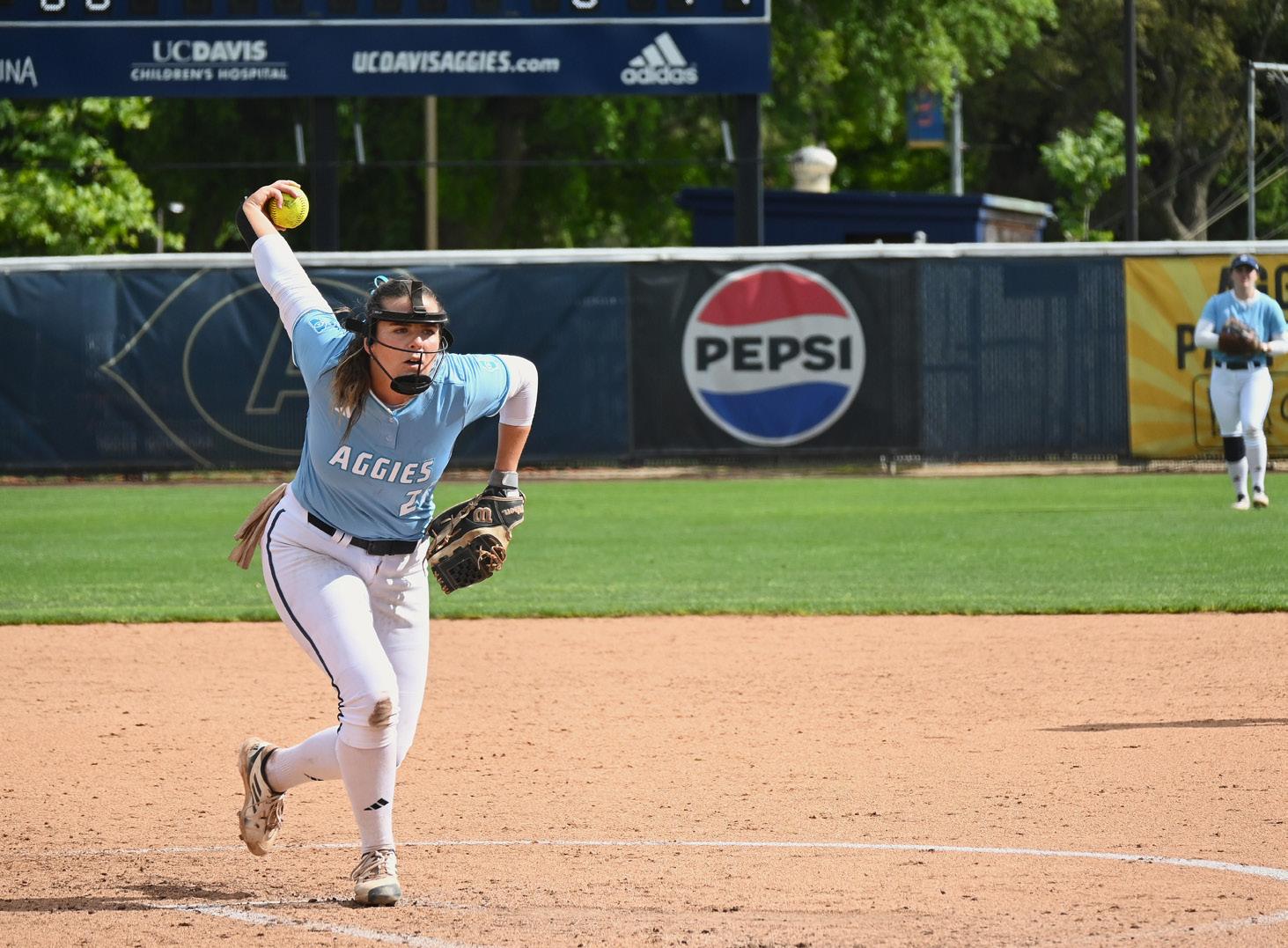
human development major, singled. However, the Aggies could not break the tie, sending the game into extra innings.
On April 12 and 13, the UC Davis softball team faced the California State University, Northridge (CSUN) Matadors in a three-game series. In their first matchup, the Aggies bested the Matadors in extra innings. However, CSUN rallied and beat
6-13 (LOSS) WOMEN’S BEACH VOLLEYBALL
APR. 18, 2026

the
celebrated and honored their six seniors in a postgame ceremony. The Aggies clinched a spot in the Big 12 Tournament, starting April 30.
In the last
During the first game, both teams got off to a slow start. UC Davis’ Sydney Polli, a fourthyear psychology major, singled in the first inning, with CSUN’s Amber Rivas following up with her own in the second. However, neither team had any runs in the
By the end of the third inning, Polli singled again, but once again the Aggies failed to score. However, UC Davis managed to get on the board in the fourth inning. Marley Panziera, a third-year communication major, led off and hit a single. Then, Kaylin Phillips, a first-year undeclared major, and Rylee Reeves, a second-year psychology major, both walked, loading the bases. Olivia McFarland, a third-year psychology major, hit a sacrifice fly, bringing Panziera home. The inning ended with the Aggies

The Matadors had no runs and no hits in the eighth inning, leaving it up to the Aggies to either win the game or play another inning. Phillips led off and reached first on an error. Keira Brady, a second-year neurobiology, physiology and behavior major, then singled, sending Phillips to second base. Reeves walked, loading the bases. McFarland ended the game on a walk-off walk, allowing Phillips to score and win the first game of the series for the Aggies.
In the second game of the series, the Aggies kicked off the scoring in the second inning. Panziera led off and singled, followed by Reeves, who was able to walk due to the pitcher throwing four pitches out of the zone. Then Dethlefson also was able to walk due to the pitcher, loading the bases. On the next hit, Panziera and Reeves were able to make it to home base and score the first runs of the game. Dethlefson then scored from third base off of a CSUN error, giving Davis a 3-0 lead.
After two walks to begin the sixth inning, the Aggies took the lead. Annika Norquist, a firstyear communication major, followed up with a single of her
In the top of the seventh inning, CSUN batters hit three singles, the last of which batted
In the bottom of the seventh, Alyssa Dethlefson, a second-year
The Matadors responded in the third inning with a triple from Vanessa Perez, batting in one run. Perez then scored from third base off a Davis error. At the bottom of the third, Dethlefson and Brady both hit singles. Then, McFarland walked, loading the bases. Norquist then hit a double, allowing both Dethlefson and Brady to score. The inning ended with the Aggies leading 5-3. CSUN did not allow UC Davis to run away with the game, scoring two runs off of three hits in the fourth inning. In the fifth inning, the Matadors
took the lead when CSUN’s Ta’Tianna Wright hit a tworun single. In the sixth inning, CSUN’s Raegan Jackson hit a two-run homer, which brought the score to 8-5. In the seventh inning, the Aggies tried to catch up, but were ultimately unable to. Reeves singled and then advanced to second base on an error. From there, Brady singled, and Reeves moved to third. A sacrifice fly allowed Reeves to score a run, but it was not enough — the Matadors won 8-6. The last game of the series saw CSUN get ahead early, scoring one run off one hit in the first inning. The Aggies quickly equalized when Gia Felice, a fourth-year clinical nutrition major, singled and then scored off a double by Dethlefson. CSUN took another lead in the third inning, with Kila getting to first base on a throwing error and then stealing second base. Perez singled, stole second, and then advanced to third on an error, allowing Kila to score a run. Jackson then singled, resulting in another run. In the sixth inning, CSUN effectively ended the Aggies’ chances of a comeback. Kila tripled, batting in two runs. Then Perez singled, allowing Kila to score and bringing the score to 6-1 with the Matadors in the lead. In the seventh inning, Jackson homered to further increase the Matador’s lead. The final score was 7-1, with the Matadors taking the win. The Aggies have two Big West series remaining before they compete in the Big West Championship in early May. Their last three home games will be played against UC Santa Barbara on the weekend of April 25.



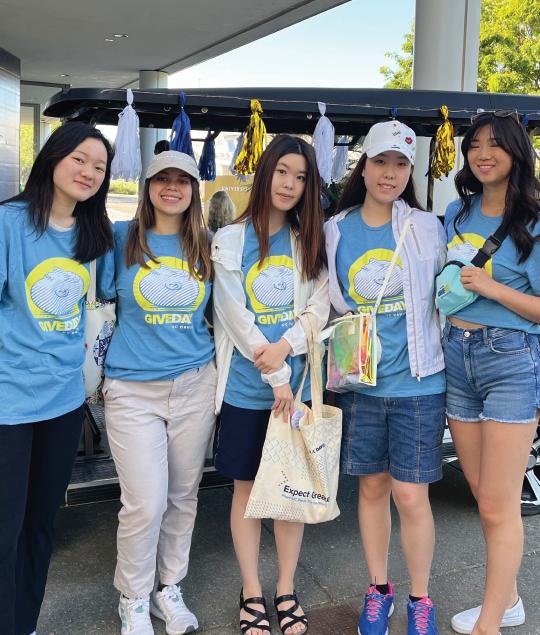


• Lead external communications

• Steward donors

• Promote events & philanthropy education
• Oversee fundraising for Student Emergency Relief Aid (SERA)
• Collaborate on events and outreach
• Promote Senior Class Challenge campaign

• Oversee and award SERA emergency funds

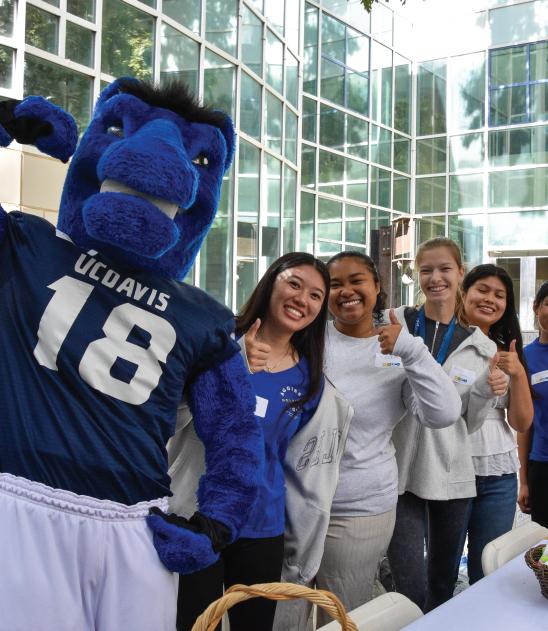

• Collaborate with Financial Aid o ce
• Access to leadership
• Manage Cap and Gown Award
Apply to be a volunteer trustee & get access to:
• Professional networking
• Board member experience
Check out our social @aggieshelpingaggies or email us at ucdsera@ucdavis.edu for more information.