




Volume IXIII, Issue VII Sunny Hills High School May 2023 1801 Lancer Way, Fullerton CA 92833 accolade the EYES
As the school year comes to a close, The Accolade celebrates the Class of 2023 and the legacy the seniors leave behind at Sunny Hills
KIM | theaccolade
ON US ALL
DAHEE
LETTER the Editors from
On behalf of The Accolade staff, we would like to express our gratitude to our many readers and the Lancer community. Thank you for supporting our publication.
With that being said, it has been four full years since The Accolade last launched a magazine. Under former editor-inchief Noah Somphone’s guidance, our program published the 2019 magazine and has never fashioned one since then. We are beyond thrilled to bring this tradition back.
We have worked tirelessly these past two months to create a magazine — as a surprise senior issue — with engaging stories and visually appealing layouts. None of this would have been possible without the support of our donors, who are named on the next page.
Our magazine is filled with content that we believe you will love. From senior spotlights highlighting members of the Class of 2023 to features on retiring teachers, we hope that this allcolor, glossy publication effectively commemorates the history the graduating seniors leave behind at our school.
Although we traditionally include valedictorian interviews in our senior issues, for the sake of space, we were unable to do so for this magazine. To read more about the top 18 of the Class of 2023, visit our website at shhsaccolade.com.
We would also like to give a shout-out to The Accolade seniors who have made this school year an unforgettable experience. Your dedication never goes unnoticed, and the legacy that you leave behind for our print and online products is permanent. Pages 24-29 feature farewell columns from some of our senior staff — a long-standing tradition with our publication.
And finally, congratulations to the Class of 2023. We wish you an incredible journey ahead!
Best,
Kate Yang
Editor-in-Chief
Irene Sheen Special Sections Editor
Editor-in-Chief
Kate Yang
Web Editor-in-Chief
Henry Lee
Managing Editor
Jaimie Chun
Special Sections Editor
Irene Sheen
News Editor
Susie Kim
Opinion Editor
Hannah Lee
Feature Editors
Alexxa Berumen, Giselle Suastegui
Entertainment Editor
Aiden Park
Sports Editors
Jiwoo Han, Grace Min
Copy Editors
Seowon Han, Justin Pak
Photo Editor
Rebekah Kim
Graphics Editor
Da-Hee Kim
Staff Reporters
Pricilla Escobedo, David Kim, Euree Kim, Stacy Kim, Christopher Lee, Nathan Lee
Illustrators
Elisa Arias, Jina Han, Iris Kim, Jacob Kim
Photographers
Chloe Kang, Noah Lee, Asaph Li, Sheila Neri, Summer Sueki
Web Videographer
Nathan Le
Social Media Manager
Faith Jung Adviser
Tommy Li
accolade the
2
The Accolade is produced by the Advanced Journalism class of Sunny Hills High School (714) 626-4225 Copyright 2023 and printed by Advanced Imaging (714) 525-7768
THANK YOU DONORS
We are committed to keeping all Lancers informed on important subjects that impact our community. Without the list of our generous donors below, we would not have been able to make this magazine a reality.
Sam and Amber Chang
Sangjoon Han
Dooki Kim
Orion Corporation Korea
The Korean Parent Organization
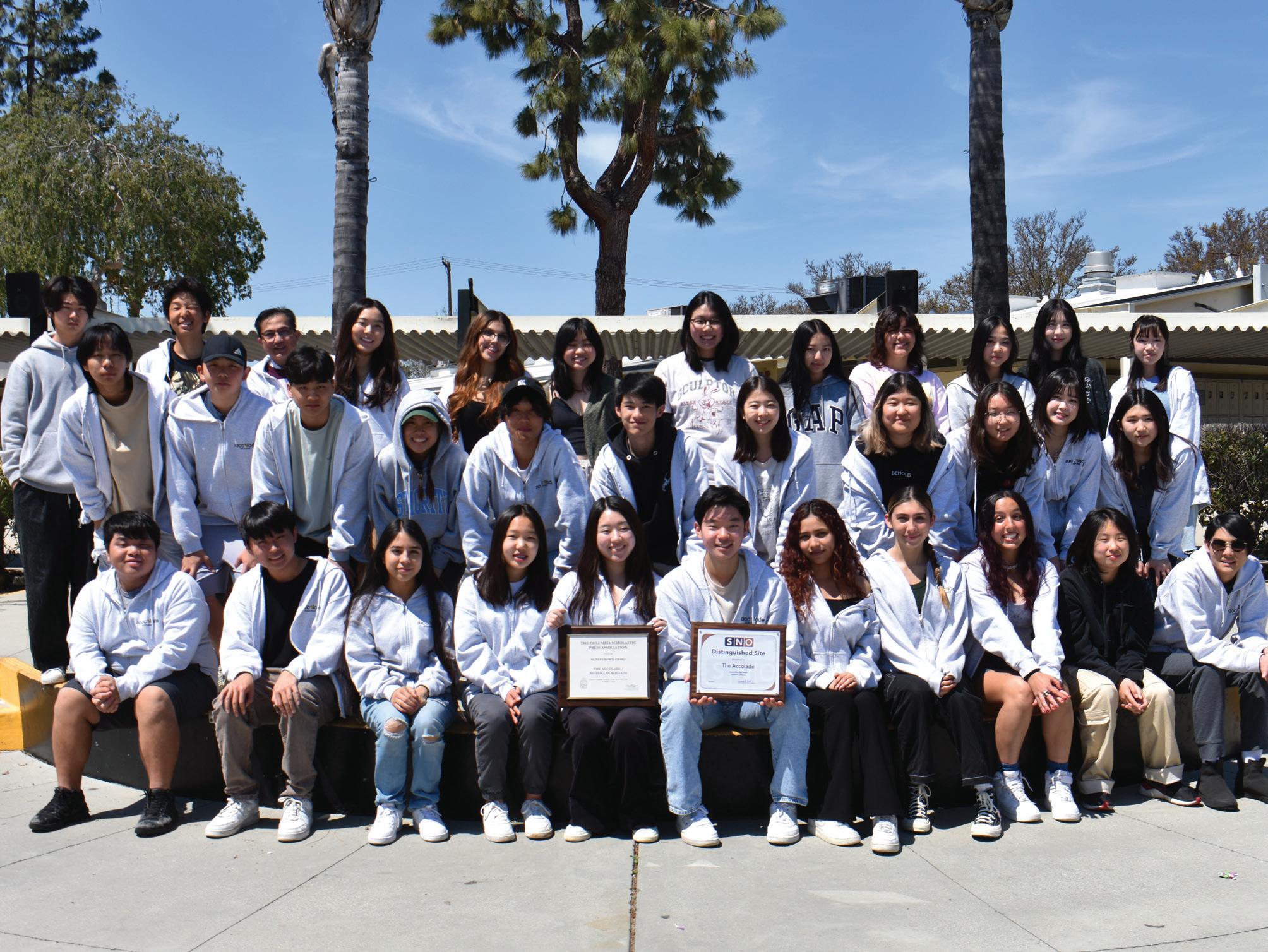
3
TIMEs are CHANGING
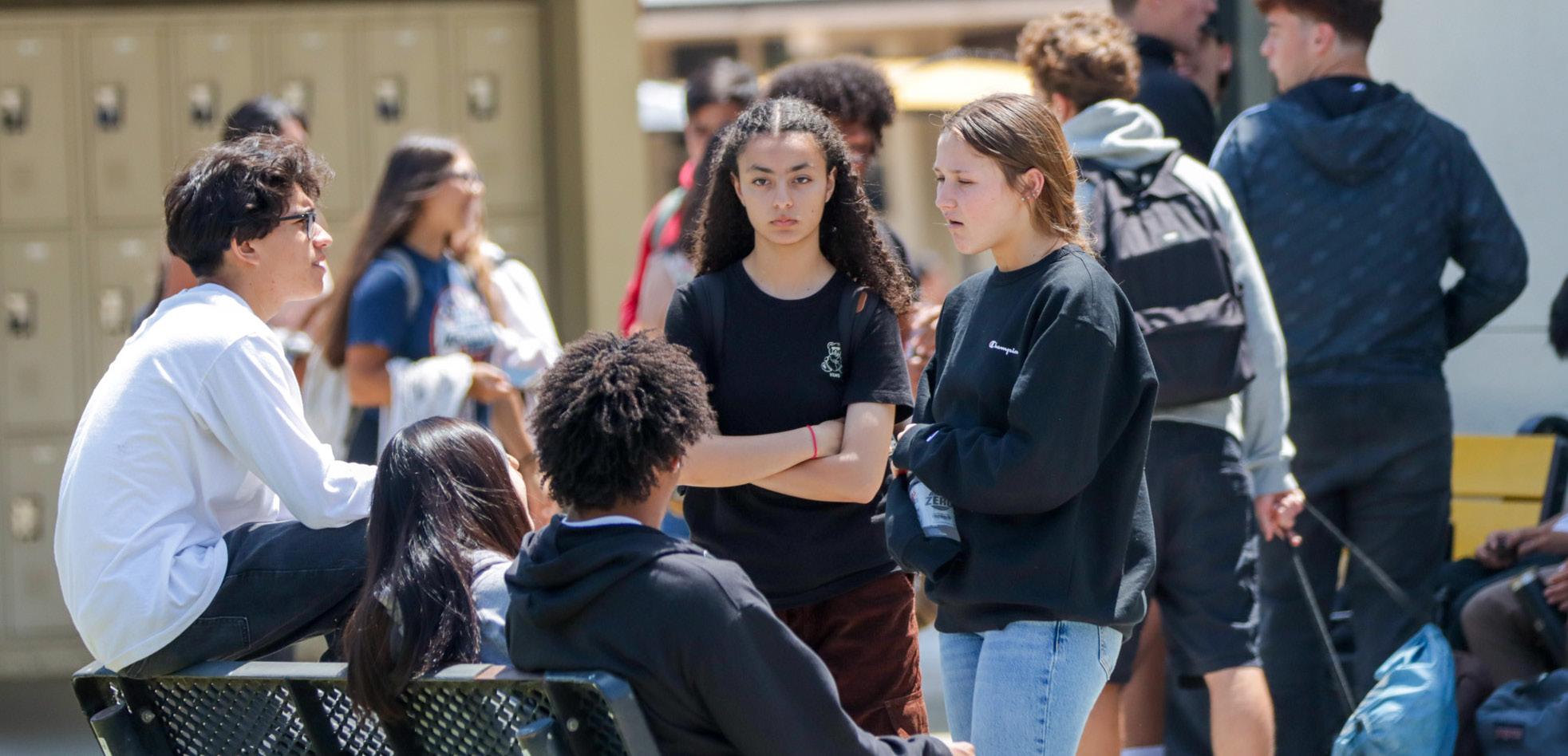
SWITCHING AGAIN: Students enjoy their break at the quad on May 4. After a school year in which lunch came before break, school officials have decided to return to the 2021-2022 bell schedule.
Traditional bell schedule returns in fall
ing that it felt kind of weird to have lunch and break flip-flopped.”
Social Media Manager
Sunny Hills High School District was the only campus in the Fullerton Joint Union High School District [FJUHSD] this school year that featured a bell schedule in which the 30-minute lunch period came before a 15-minute break.
When the 2023-2024 school year starts Aug. 14, the campus will no longer be the anomaly, as school officials have agreed to return to a traditional format of break before lunch.
“You went zero [period] through [third], and then you had to be at lunch, so it just didn’t fit and felt awkward for a lot of people,” said principal Craig Weinreich, who had not yet been named as Sunny Hills’ new leader to replace Allen Whitten when the bell schedule decision was made. “I think it was just a lot of people say-
Weinreich made the decision last fall to change the school’s bell schedule for the second time in two years after receiving feedback from students and teachers.
The starting time had to be changed for this school year from 7:57 a.m. to 8:30 a.m. because of Senate Bill 328, which Gov. Gavin Newsom signed into law in October 2019.
FJUHSD officials then told SH administrators that the end time of the school day had to be 3:30 p.m. Then-assistant principal Melissa Stinson drafted two versions of bell schedules, and the current one received the most votes among faculty members.
This time around, an official vote was unnecessary as Weinreich heard enough concerns about lunch starting at 11:36 a.m. and break after fifth period at 2:12 p.m.
The new bell schedule retains zero period starting at 7:27 a.m., first period at 8:30 a.m. and second period at 9:33 a.m. followed by a 15-minute break instead of third period at 10:33 a.m.
4
FAITH JUNG
NOAH LEE | theaccolade
Third and fourth periods follow with lunch from 12:54-1:24 p.m. Fifth and sixth periods finish up the school day at 3:30 p.m.
The Wednesday late start schedule will be similar to the regular day schedule, except zero period will start at 8:53 and end at 9:40 a.m., followed by first period from 9:45-10:32 a.m.
Second period will begin at 10:34 a.m., followed by a break from 11:22-11:32 a.m.

After third and fourth periods, lunch will go from 1:16-1:46 p.m., and students will finish school at 3:30 p.m. after fifth and sixth periods.
in the same time frame, like the years before.
“I really hope that will be the case this fall,” Accolade adviser and English and journalism teacher Tommy Li said. “Having all of us in either fourth or fifth period prevents students from spreading themselves too thin by serving in the ASB Period 3, then writing for the school newspaper the next period and then taking pictures for the yearbook in fifth period.
“This was the type of schedule I started out with when I was first hired to teach here in 2001, and I hope we’ll stick with it for the rest of the time I’ll be working here.”
Students, on the other hand, remain mixed about having to adjust through another schedule change.
“I actually like the new schedule because I feel like zero, first, second and third period is just way too much at one time,” said freshman Jaden Shim, who first found out about the update on March 29 through his friends.
Sophomore Sienna Shah agrees with Shim’s sentiments.
“I like the idea of having break first and then lunch because I think I’m not really that hungry for lunch at 11:30 in the morning, and having it later just helps my body clock,” Shah said.
“The biggest thing I appreciate is having enough of the school day, like having at least fifth and sixth periods after lunch,” yearbook adviser Lindsay Safe said. “I feel like the school community and culture is better this way because more students will be on campus during lunch.”
The change will again prompt the Associated Student Body [ASB] to make another switch from its current Period 3 slot to Period 4.
“We want to put ASB before lunch because we need to set up the activities we have,” ASB adviser and social science teacher David Fenstermaker said. “Traditionally, we have it at fourth period, and then we can do some lunchtime activities that are connected to the period right after our class period.”
As of March 14, Safe has yet to decide whether to move her current fifth period yearbook class to fourth period. Doing so would bring the ASB, Helios and The Accolade programs back
Student-athletes said they will be the most affected by the new class times.
“I think personally, as someone who plays sports, I don’t really like the new schedule because normally we’d get out after fifth period,” said junior Ryder Robbins, who plays for the junior varsity boys volleyball team. “
Boys basketball coach Joe Ok said he prefers the change.
“We’re already starting school at 8:30 a.m., so I don’t think there’s going to be that much of a difference,” Ok said. “Students are still going to have to miss fifth period to leave for sports.”
Nevertheless, Weinreich said reverting to a traditional bell schedule — the same one he had when he first taught here in 1999 — next school year doesn’t mean it’s a done deal.
“We always look at [the bell schedule] again each year to make sure [it works], but hopefully, it sticks, and everybody is happy and satisfied with it,” the principal said. “And hopefully, we will be OK from that point.”
5
We always look at [the bell schedule] again each year to make sure [it works], but hopefully, it sticks, and everybody is happy and satisfied with it.
“ “
- principal Craig Weinreich
DID YOU KNOW?
Toga tradition for seniors’ last week on campus spans 2 decades
For our last “Did You Know?” feature of the school year, The Accolade looks into the origins of a senior tradition, sending copy editor Seowon Han to investigate.
It’s the last week of the school year for seniors. Before they start their final activities, many opt to come to campus with the same outfit in line with the Associated Student Body’s [ASB] senior spirit week.
Toga Thursday will have seniors sporting white pieces of cloth, usually made of towels and bed sheets. So how did togas come to be associated with farewells for 12th-graders?

Many suggested looking to see if the school’s yearbooks ever featured photos of toga-wearers. However, yearbook adviser Lindsay Safe said the annuals never captured such moments, and none of The Accolade’s back issues ever had any articles written about such a tradition either.
Based on interviews with alumni, including those who teach here, and the school’s former ASB adviser, The Accolade was able to narrow down the origin of this tradition to nearly two decades ago.
TOGA! TOGA! TOGA!
That chant was first featured in the 1978 movie production of “National Lampoon’s Animal House.” Starring comedian John Belushi, the film focuses on the challenges that one wild fraternity faces in the Greek system, hence “Animal House.”
After the R-rated film’s release, an edited
said students started wearing such clothing to non-ASB-sponsored stag dances — events run by the Parent Teacher Student Association [PTSA].
“We as a school never sanctioned the toga dances because we thought it was a little too risky — too much skin showing back then,” Garcia said. “The stag dances back then weren’t run by the ASB, and the PTSA would allow the students to do that stuff.”
Newly hired English teacher Jill Lomheim, who graduated from Sunny Hills in 1997, said she recalls having a toga-themed stag dance during her freshman year in 1994.
“It was like a Greek toga stag dance,” Lomheim said. “There were no togas [for ASB senior spirit week], so perhaps that’s how it evolved.”
THE START OF A NEW TRADITION
Michelle S. Kim, who graduated in 2004, remembers participating in the toga spirit day her senior year.
“It felt like a very high school thing to do because that’s what you saw in the movies about college and high school, like ‘Animal House’ when they were really popular,” Kim said. “It’s not always easy to make over 600 kids feel like one, so when you have things like the toga or spirit days, it feels like you’re united.”
version began rebroadcasting annually on TV. By the 1990s, toga-themed dances started making their way into the Sunny Hills campus.
Former activities director Tiburcio Garcia, who advised the ASB from 1985-2012,
Nearly two decades after her high school graduation, Kim said she was glad to hear that the tradition continues.
“I love it — there’s so much that changes, so it’s good to have some things not change,” she said. “It’s a thread that holds it all together, so you can appreciate change and the things that stay the same.”
SEOWON HAN Copy Editor
6
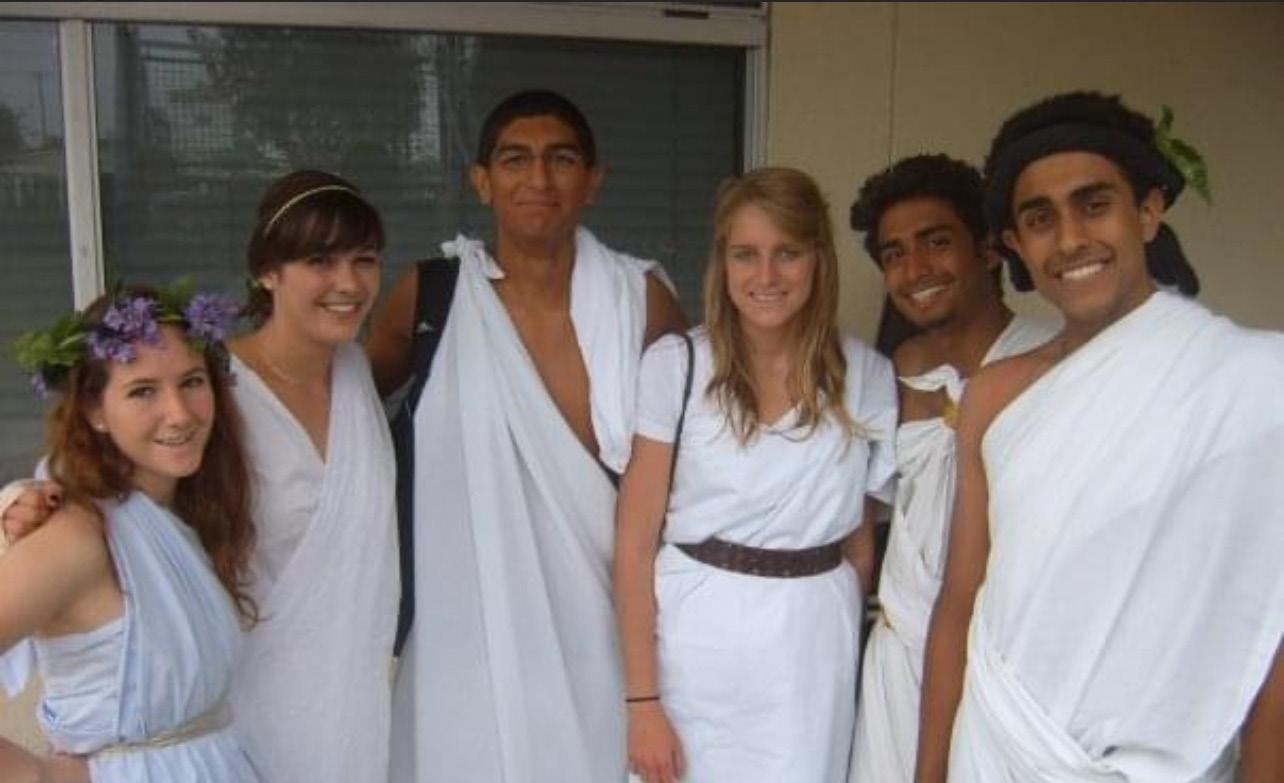
Image printed with permission from Arvin Wali
BACK IN TIME: (Above) The Class of 2009 celebrates its last day of school by wearing togas. (Right) Then-social science teacher Patrick Lampman and senior Arvin Wali share a farewell moment.
I also think it’s an incredible opportunity for students to memorialize their experience within the four years and create moments that are bonding.
“
- English teacher Jill Lomheim
“
THE TRADITION CONTINUES
Class of 2006 graduate Chi Young Ji, who now works as a substitute teacher in the Fullerton Joint Union High School District, said he remembers having the toga spirit day; however, he chose not to participate.
“I didn’t participate because I think it was a cultural thing, too; I was in South Korea pretty much all my life, and I moved here when I was in eighth grade,” Ji said. “I think people wearing Greek stuff just appeared weird to me, so I didn’t dare to dress. Now if I could go back, I would.”
After the senior tradition started in 2004, Class of 2009 alumnus Arvin Wali said he participated because he was interested in school spirit then.
“It was cool to have the experience to commemorate the passage of time,” said Wali, a neurosurgery resident at the University of California, San Diego. “For example, when your toga day comes through this stage in your high school life, and you walk through it, I guess it gave a little bit of ritual in your graduation process.”
This school year, ASB members plan to maintain the toga tradition

“I love this tradition as it is unique to Sunny Hills as a whole,” said senior class cabinet president Sierra Chavez, who is responsible
for creating and promoting the senior spirit week with togas scheduled for May 25.
Junior Daniel Jimenez, who saw seniors wearing togas in his sophomore year, said he eagerly anticipates his turn.
“It seems like a good way to end off the year, and I look forward to it because it’s a cool way to dress up as Greek gods,” Jimenez said.
Lomheim said although she did not have the togas tradition during her high school years, she is glad to see the culture form across campus.
“I also think it’s an incredible opportunity for students to memorialize their experience within the four years and create moments that are bonding,” the English teacher said. “Anytime you transition, there’s stress, there’s anxiety, there’s joy, there’s sadness.

“But then to know that you are memorializing that [high school] journey is really sweet, and with a tradition, it makes it even sweeter.”
Recalling his participation in the tradition, girls basketball coach and math teacher Jae Byun, who graduated in 2010, agrees.
“It was a memory of us feeling like we’re finished and got to that point, so it was just like very fun times, it being the senior year,” Byun said. “It’s a fun tradition. It makes Sunny Hills what it is: fun and enjoyable.”
7
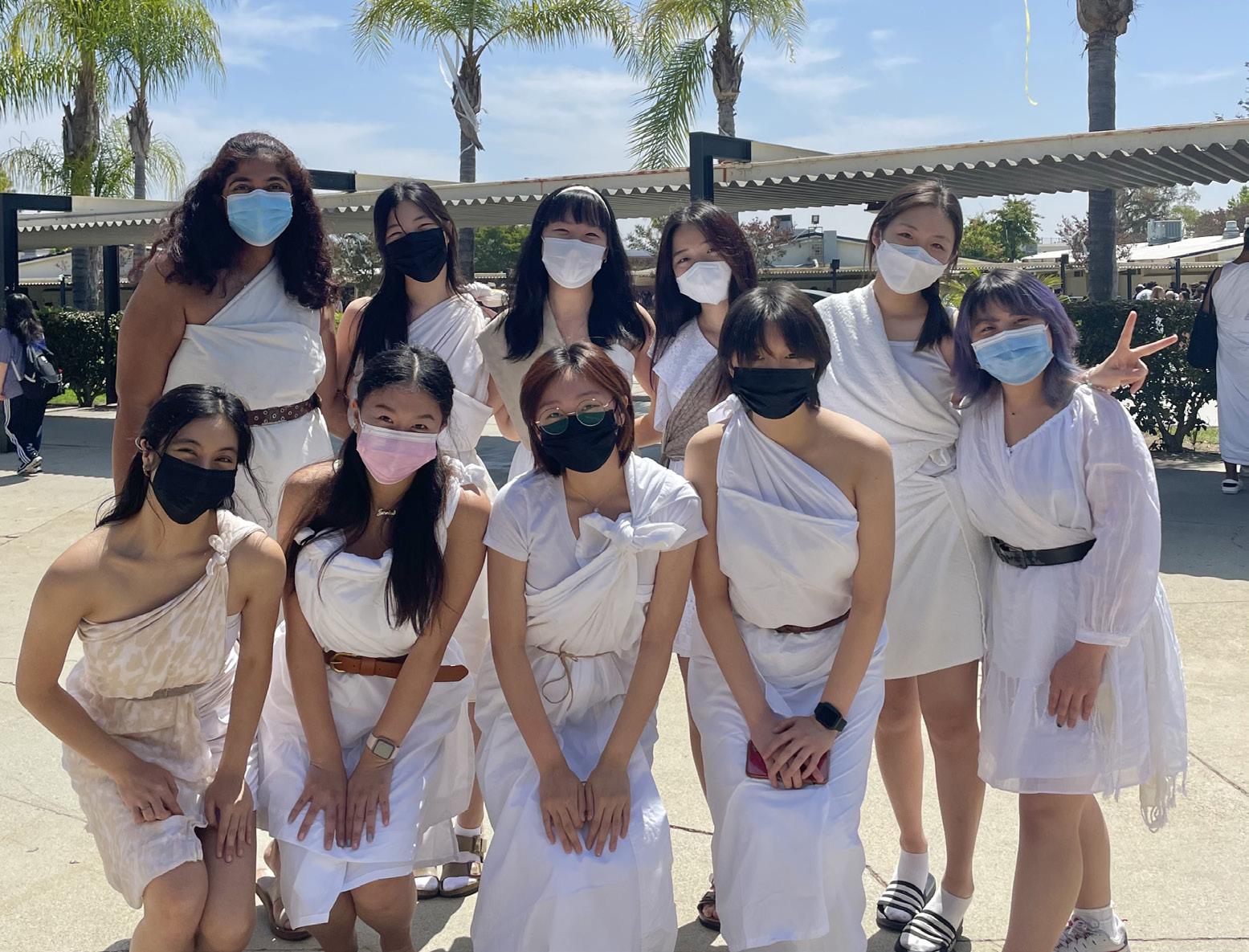
IT’S ALL GREEK TO THEM: The Class of 2022 flaunt its homemade togas in the quad as part of the Associated Student Body’s senior year spirit day. They all wore masks as a precaution because of the COVID-19 pandemic.
Image printed with permission from Michelle Sheen
MUSICAL VIRTUOSO
Senior Ricardo Gonzalez shares musical journey in forming his band, ROUNDHOUSE
ALEXXA BERUMEN Feature Editor

Amuted guitar riff plays alongside low-fidelity drums leading into the chorus. Lead singer Joe Strummer begins to sing.
“You better cheat-cheat / No reason to play fair.”
These lyrics to “Cheat” from the 1977 album, The Clash, aided the debut of the British punk-rock band — The Clash — and brought then-10-year-old Ricardo Gonzalez’s newfound love for music.
Gonzalez said he appreciated the instrumentals, riffs and lyrics, which inspired him to deepen his musical interests.
“It was the first ever album I ever really listened to all the way through,” said Gonzalez, now a senior. “From there, my love for music really only grew.”
At the same age, he got his very first instrument — a trombone.
With punk rock taking hold of his heart, the musician began learning the chords to different songs, starting with the bass line to “Seven Nation Army” by The White Stripes.
Gonzalez said he had heard this song many times throughout his childhood; however, he took interest in studying it at the age of 12.
“It was the only thing that seemed feasible to me at the time,” the singer said. “Being that it’s such a popular song, it made finding tutorials for it much easier too.”
WE’RE A GARAGE BAND
Drawing inspiration from the lead singer of the rock band Nine Inch Nails, Trent Reznor, Gonzalez joined numerous shortlived bands throughout middle school.
Eventually, Gonzalez created his most recent ensemble, ROUNDHOUSE, in his junior year of high school.
“[Reznor’s] story of starting from scratch, learning all the instruments himself, recording, writing, performing — it all just resonated with me a bit,” he said. “So when I started really diving into music and trying to develop my own style, I really looked up to him.”
The origin of this group dates back to March 11, 2022.
Gonzalez said he heard the 2022 Conservatory of Fine Arts [COFA] Quad Show organizers were looking for performers to close out the event with a song.
“I found out about it from the band director. … I decided to try to get some people to play a song for it, which ended up forming ROUNDHOUSE,” he said.

Gonzalez said he began to search for musically talented students on campus, hoping to create a band that would play covers of popular music.
“The original purpose of the band was just for the quad show,” Gonzalez said.
Hoping to create something memorable for students on campus, the band ultimately landed on the name ROUNDHOUSE, chosen as the namesake of the outdoor cafeteria building on campus.
“The reason that the band was able to be created was because everyone in the band was from Sunny Hills,” Gonzalez said. “So we figured we would do a tribute to that.”
Since then, the band has played a repertoire of cover songs, including “Minor Threat” by Minor Threat and “Real Thing” by Turnstile.
Band members were introduced to each other through mutual friends. Guitarist junior Max Soto, bassist sophomore Matt Solio and drummer junior Joshua Puwardi began rehearsing alongside Gonzalez with the band Adolescents’ song, “Kids of the Black Hole,” a piece written in 1981 about a group of people in Fullerton — which the students chose to perform at their first gig.
Soto said Gonzalez holds the majority of the leadership roles within the band, taking charge of all the social media promotions as well as the organization for practices.
“Ricardo contributes a lot of creative ideas, both musically and just overall, for the band,” the guitarist said. “In many aspects, I do feel he is the leader of the band.”
Band members said the experience pushed Gonzalez to interact with peers he considered only as acquaintances before.
8
[Reznor’s] story of starting from scratch, learning all the instruments himself, recording, writing, performing it all just resonated with me a bit.
- senior Ricardo Gonzalez
“ “
Ricardo Gonzalez
Images printed with permission from
“I knew about Ricardo vaguely, as we both had mutual friends,” Solio said. “Ultimately, the band brought all of us closer together.”
After the ROUNDHOUSE closed the March 10 spring sports assembly, the members realized playing the rock genre in a school setting proved difficult for the group to connect with their listeners.
“I hadn’t really performed outside of a classical concert setting, but I’ve been to a few punk rock shows before,” he said. “It’s still hard because we are performing to an audience where the majority of them don’t like that kind of music.”
After gaining a level of commitment, the band occasionally met for practices and developed five of its own songs.
A personal favorite of the senior is titled, “Matt Song,” which came to be after one of the band’s practice sessions.



STRETCHING HIS MUSICAL TALENTS
Alhough Gonzalez’s musical roots stem from the 1970s punk rock era, that didn’t stop him from contributing his talents at school.
In his freshman year, he joined the Lancer Regiment and Symphonic Band, primarily playing the tuba.
“I liked band, and I needed to satisfy a PE credit, and the marching band checked both of those boxes at the same time,” he said. “After I joined and started marching, I really found out how much I enjoy the sport.”
Then he began playing the bass guitar for Jazz Band and the drums for the Percussion Ensemble in 2021.
Over time the senior said he ventured further into his passions, learning the bass, guitar, drums, concert percussion, tuba, keyboard, baritone and vocals.
“He’s really good at all of them,” band director Whitney Stanton said. “You would think his [primary] instrument was all of them.”


DIFFERENT TUNE FOR COLLEGE
Though Gonzalez’s approaching graduation poses a concern for the future of ROUNDHOUSE, the lead singer said he hopes to continue making music together on occasion.
“I can say on behalf of the guys that we definitely want to keep in touch,” he said. “And hopefully make music to some capacity.”
In November 2022, after applying to Northern Arizona University [NAU], Gonzalez received the Founders Gold Scholarship, which is worth $24,000, and said he plans to study at NAU with a major in parks and recreational management.
“I think that his major is perfect for him,” his younger sister Riley Gonzalez said. “His future goals really suit him, [and] I’m really proud of him.”
Currently, he hopes become a park ranger, acknowledging the unlikeliness of suceeding in the music industry, and plans on continuing it as a hobby.
“I would love to be a stage performer, touring musician; that would be the ultimate dream; however, that is very difficult to achieve,” the senior said. “If it could happen, I would love for it to happen, but it’s not the No. 1 option for [me] right now.”
9
ASAPH LI | theaccolade
PUNK ROCKER: Senior Ricardo Gonzalez and his band, ROUNDHOUSE, perform “Hypocrisy” at the Oct. 26 Conservatory of Fine Arts Fall Festival in the quad. The song is one that Gonzalez wrote.




REBEKAH KIM 10
SEIZING DREAMS

QuestBridge fulfills 1st-generation student’s higher education aspirations
for Federal Student Aid program to afford attending a university.
Senior Lynette Ochoa planned on attending a University of California [UC] school with financial aid as her backup plan after graduating this year.
“I was considering UCLA, UC Berkeley, UC Irvine and UC San Diego,” Ochoa said.
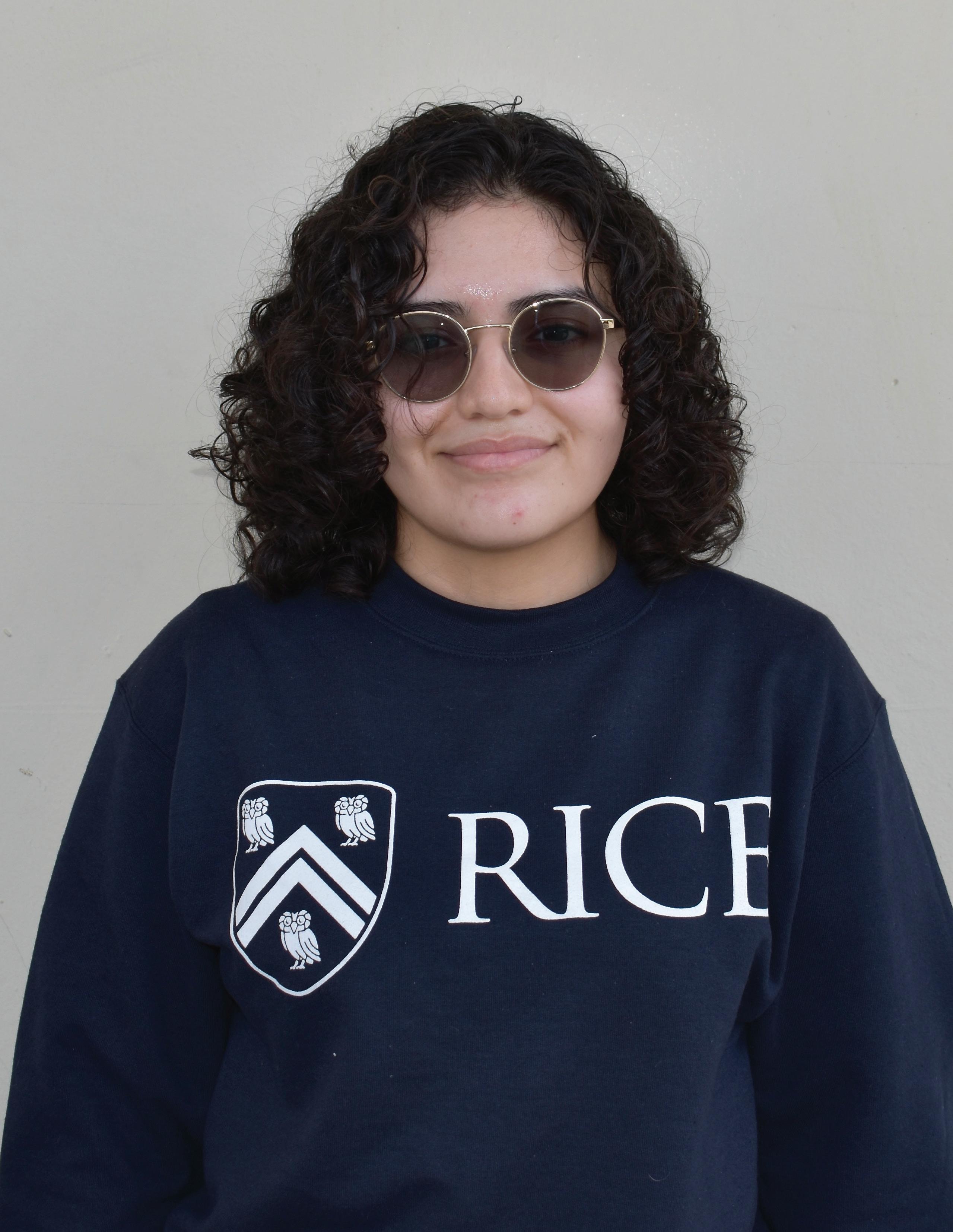
That changed a few days later, when she received an email from Rice University in Houston with the header, “Welcome to Rice” on her way to the restroom during break on Dec. 1.
“I really didn’t know how to feel,” said the senior, who read the email. “It just felt so unreal.”
Ochoa immediately sent a text message with a screenshot of the email notification to her family and returned to her friends, asking them to confirm the acceptance letter.
“It is our great pleasure to inform you that you have been selected for admission to Rice University with a QuestBridge National College Match Scholarship,” according to her admission status page. “We applaud you for your dedication to achieving academic and personal excellence, and we are delighted to welcome you into the QuestBridge Scholars Network.”
The QuestBridge National College Match program connects seniors from low-income households to leading colleges with scholarships. Applicants rank their top-choice partner schools and can be admitted early to the college that also chooses to “match” with the student. After submitting her application by Sept. 27 on the QuestBridge portal, Ochoa ranked universities including Yale, Rice, Duke and Brown.
“My parents were super excited for me,” said Ochoa, whose parents declined to comment on their daughter’s accomplishment. “I remember taking a screenshot of the email and sending it to them, and they were just so proud of me.”
As the only International Baccalaureate [IB] student at Sunny Hills to match with a university through QuestBridge, Ochoa received a full-ride scholarship to Rice University that includes the school’s basic tuition, housing fees, food plan and a monthly allowance for books and other supplies, saving over $70,000.
She was among the 69 Match Scholarship finalists of 1,775 matched with Rice University, according to her QuestBrdige admissions status.
Coming from a low-income family, Ochoa said she felt restricted from pursuing higher education. The burden only increased knowing that her two older sisters, who have graduated from college, struggled while applying for the Free Application
“I definitely feel like there was limited access for me,” the senior said. “I was afraid of my family taking out loans for my education and having to repay those debts even after I graduate.”
She initially overheard her IB Biology teacher, David Kim, informing another student of QuestBridge’s College Prep Scholars program for outstanding juniors last school year. Though she gained interest in the program, Ochoa said she didn’t have enough time to complete the application and decided to find out more about a supplemental program for seniors.
“I waited until senior year to apply for QuestBridge,” she said. “I really liked the prospect of getting a full-ride scholarship to college because of my family’s financial situation.”
The senior said she openly shared about her college tuition needs with her counselor and IB coordinator Brian Wall.
“He was the one that helped me sort out what kind of information to insert and what steps to take according to my financial needs,” Ochoa said. “I was in close communication with him almost all the time, and he helped answer my questions throughout the process.”
Wall, who has Ochoa in his IB art class, felt thrilled after learning of Ochoa’s acceptance on Dec. 1.
“She’s a great artist and a deep thinker,” he said. “Her intellectual depth is unparalleled, and I’m sure the reviewers saw that in the writings that she presented to them in the application.”
Unable to afford private tutors or paid programs in health, Ochoa nurtured her interest in art and science through campus organizations and clubs, such as the California Scholarship Federation, Student Senate, IB, Youthful Code and Science Olympiad.
This fall, the rising college freshman will attend Rice University’s Wiess School of Natural Sciences with a major in biosciences.
After watching relatives battle illnesses such as cancer, the senior said she aspired to pursue a career in the medical field.
“Medicine can be restrictive for low-income families, and I want to be knowledgeable in it to make it more accessible for others,” she said.
Though Ochoa remains as the last member of her family to seek higher education, she hopes students with similar backgrounds can benefit from the QuestBridge National College Match .
“I would always talk about QuestBridge with my friends, and one did apply,” the senior said. “If I had any younger siblings, I would definitely recommend QuestBridge to them.”
SUSIE KIM
11
News Editor
IMPRESSIVE STROKES
Campus painter signs off with an easel and paintbrush in hand
IRENE SHEEN
Special Sections Editor

The crowd roars for the Lancer’s last sprint to the goal post. As the football stands rattle from the hundreds of feet stomping against the steel slate, one student’s easel stands unbending.


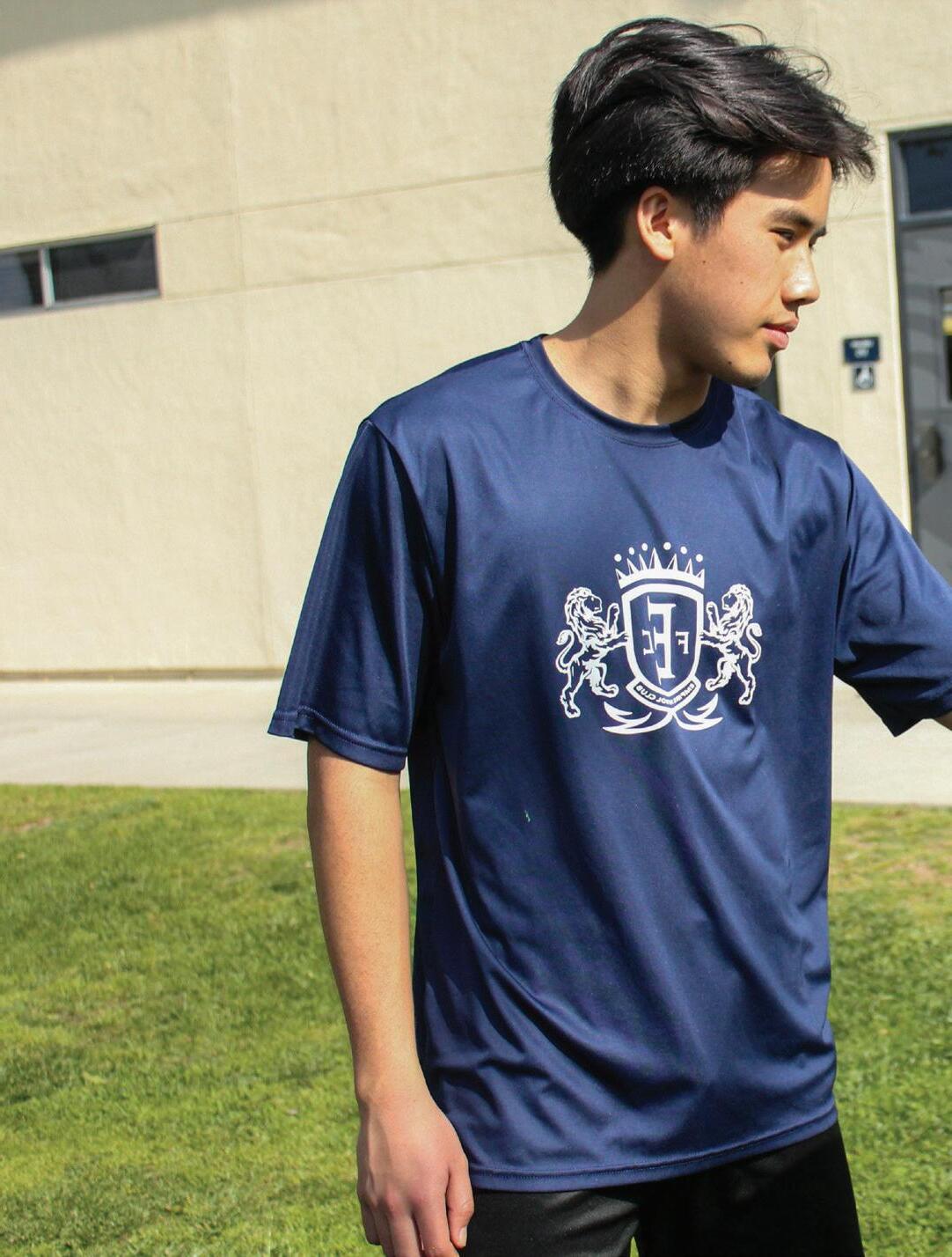
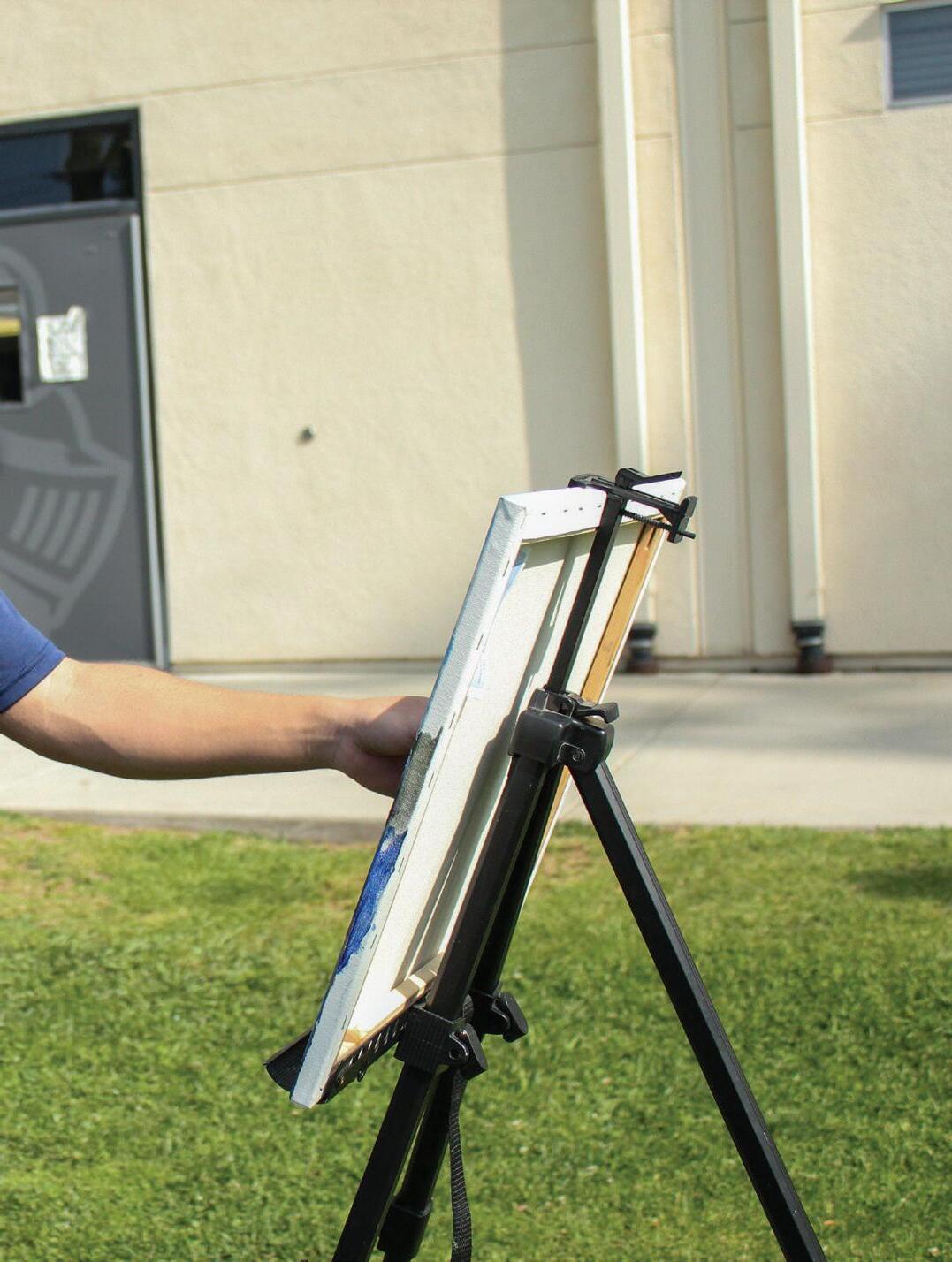
Earning himself the title of campus painter, senior Jake Merioles frequents school events with his large canvas and painting supplies in hopes of capturing his high school memories.
“Painting at the football game was definitely my favorite outdoor painting site,” said Merioles, recollecting his memory of the 2022 Battle of the Nations between the Lancers and Troy Warriors. “That experience was my first time painting in front of an audience, and it really forced me to develop my confidence in painting.”
As a junior, Merioles began exploring various art media during his spare time. His research led him to begin his outdoor painting series.
“I began in-depth research through books that I’ve read, which really taught me how to paint outdoors pretty confidently; that’s how I came to paint at random places in school,” he said. “I love just painting at random places and painting what I see, but there’s a lot that goes into the meaning behind that.”
Junior Kasey Lee is among many of Merioles’ peers who have witnessed him painting live.
“It was my first time seeing a student paint with a canvas at an event, and I found it really interesting,” said
Lee, who saw Merioles at work during the Jan. 24 Open House event on campus. “It was really cool seeing a fellow student demonstrate his talent like that for other students and parents to see.”
Aside from canvas painting, the senior references images from Pinterest to create digital landscapes under his Instagram account @jake.merioles, averaging two pieces a month. Merioles also takes commissions ranging from $15-$25 for his digital work and has generated approximately $300 in sales.
“They have something to do with the experiences that I’m going through, whether that be heartbreak, challenges or other emotions,” he said.
The artist’s mom, Shirley Merioles, notes her son’s initiatives.

“Even on our long trips, he likes to watch the scenery of the place, and I think that sparks more of his interest to do landscape painting,” Shirley Merioles said. “He likes to paint all the time, even on tiny subjects at home, which is interesting to us.”
Though he enrolled in art classes during middle school, the senior said it wasn’t until high school that his fervent journey with art officially set off.
“I’ve liked art all my life, but during freshman year before [the pandemic], I met a group of friends who were super passionate about art and would do it in their free time,” he said. “That wasn’t a thing to me during middle school, but I met a group of friends who showed me what that was like.”
Art Club co-president senior Jonathan Kim also has praise for his friend’s craftsmanship.
12
“I remember in freshman year, he only did art as just a pastime, but he grew so much as an artist,” Kim said. “Jake has inspired me as an artist and a person — a risk-taker and someone who’s committed to their passion. I admire his dedication, and I aspire one day to be like him.”
Enrolled in the International Baccalaureate art program for the past two years, Jake Merioles said he expanded his artistic expertise, largely thanks to Art Club adviser and art teacher Brian Wall’s guidance.
“Jake’s like the dream student; he’s self-motivated, proactive, has a real curiosity to learn and he’s really good at art,” Wall said. “He has been the president of our club for the last two years, and he’s really taking it to a new level.”
As this school year’s co-president and a long-time member of the Art Club, Jake Merioles has applied his knowledge of the craft through various projects produced on campus.
“During my junior year, all the Art Club members collectively thought of design ideas for the COFA [Conservatory of Fine Arts] mural, which I compiled into a single design,” said the artist, an active member of the COFA program. “It’s like a stamp that I was here at the school.”


With the support of administrators and the Parent Teacher Student Association, he recently designed and piloted a mental health-themed mural with his club members’ help. With large yellow words that read “You Matter,” the work can be found near the entrance of the library.
“I’ve been hearing a lot about mental health events

THE BIG PICTURE: Senior Jake Merioles paints an image of a tree by the the Lyceum April 18. The painting is a continuation of his outdoor art ventures.
and clubs going on,” said Jake Merioles, who developed the theme over summer. “The mural is just supposed to let students have a resting space for their eyes and relieve their stress through an artistic and creative way.”
The senior has also been enrolled in the Engineering Pathways to Innovations and Change program for three years, learning about civil engineering. Though immersed within opposing fields, he hopes to merge his two contrasting interests.
“Throughout my engineering classes, I’ve been able to incorporate my creative ability as well,” he said. “For example, with designing 3-D models in engineering, individuals are going to have to think of creative ways to design one thing while another person could design it.”
Despite his plans to pursue a career in civil engineering at the University of California, Berkeley, the senior said he intends on continuing art as a hobby.
“I love how people are able to come up with designs for buildings to be structurally stable and also aesthetically pleasing,” Jake Merioles said. “When I’m in college, I hope I’ll have so many opportunities to have time for myself and what I do, so I want to keep art as a side hustle.”
Following his high school career, the senior’s mom anticipates his future as a civil engineer and hopes he can continue to hone his creativity through art.
“He’s got so much passion in what he does as an artist, [and] his skills have improved a lot in the last few years working in both canvas and digital art,” Shirley Merioles said. “Art is a difficult skill to do, and you have to have that passion and talent to be able to accomplish your vision. As parents, we get inspired by his desire to do better in what he does every day.”
As his time here will come to an end later this month, Jake Merioles hopes his peers can recognize the beauty and message hidden behind his murals and artworks throughout campus.
“I think for me, art is all about discipline; sometimes I feel terrible about myself as an artist, but that’s normal,” the senior said. “I paint something because I want to show my feelings and experience, but also because I want to convey the beauty of something that I see.”
13
CHLOE KANG | theaccolade
Images printed with permission from Jake Merioles
88 BLADES 88 BLADES 88 BLADES 88 BLADES 88 BLADES 88 BLADES
14
Teenage entrepreneur rakes in 5 figures of profit from self-made clothing brand
HANNAH LEE
Opinion Editor
Senior Noah Choi was not an amateur in the business industry when he first started his own clothing brand last summer.
After starting off by reselling popular shoes like Jordans and Yeezys through sites like eBay and StockX, Choi eventually moved out of this side hustle to start his own brand: 88blades.
“In total, I accumulated about $50,000 worth of shoes to resell, and I made about five figures from this,” he said. “I stopped later because I got bored of just selling shoes and wanted to expand.”
Despite his favorite number being five, Choi launched 88blades and has since gained hundreds of customers dedicated to the grunge-inspired pieces.
Although the clothing line garnered five figures in revenue, Choi did not disclose the exact amount of profit he has earned.
“I always try to make money by myself,” he said. “I want to be my own boss — I don’t like being told what to do.”
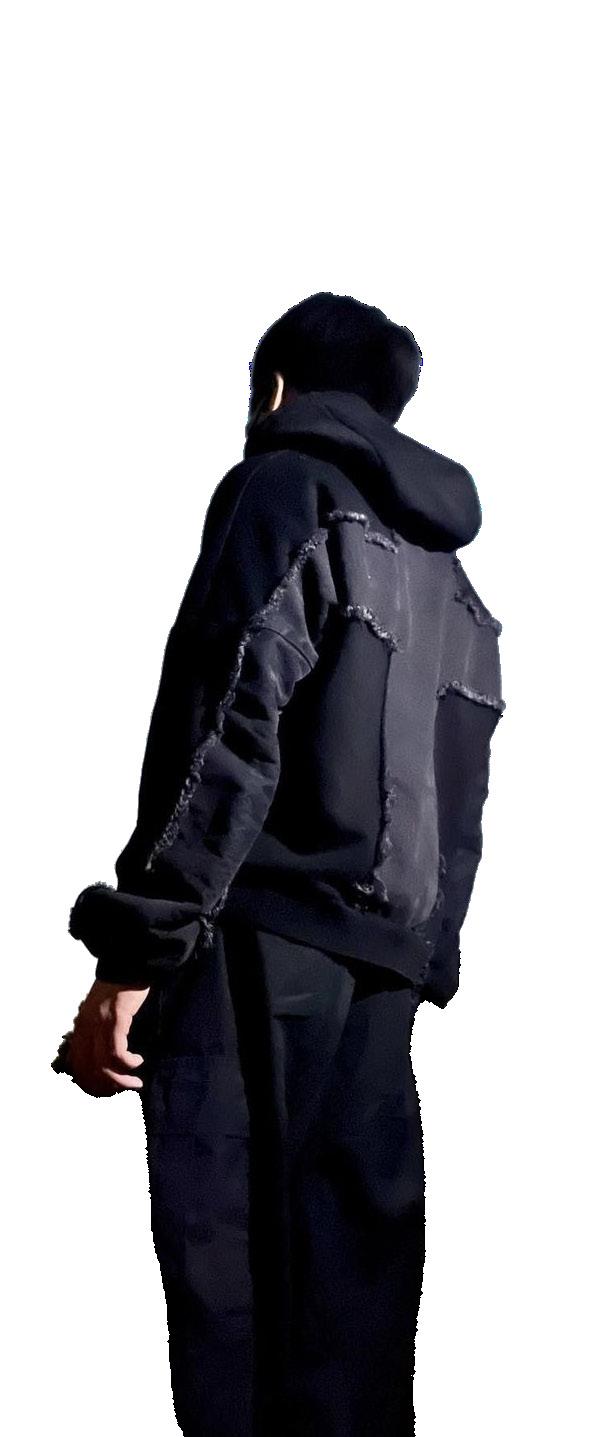
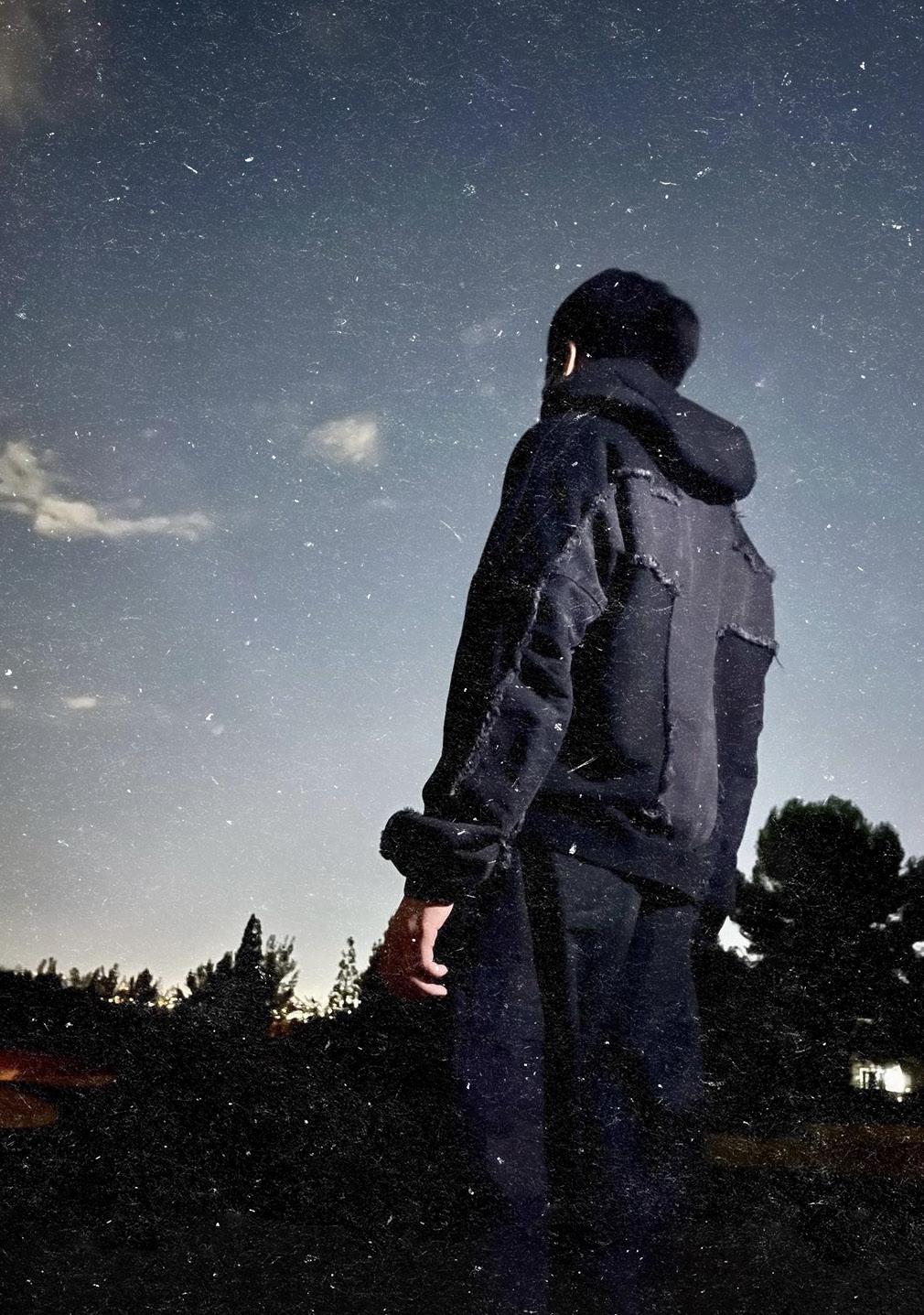
88blades currently has two released clothing items, a distressed hoodie and a multi-pocket pair of denim pants, priced $80 and $100 respectively. Both are marketed on the brand’s TikTok and Instagram accounts, @88blades, and are sold on the website 88blades.com.
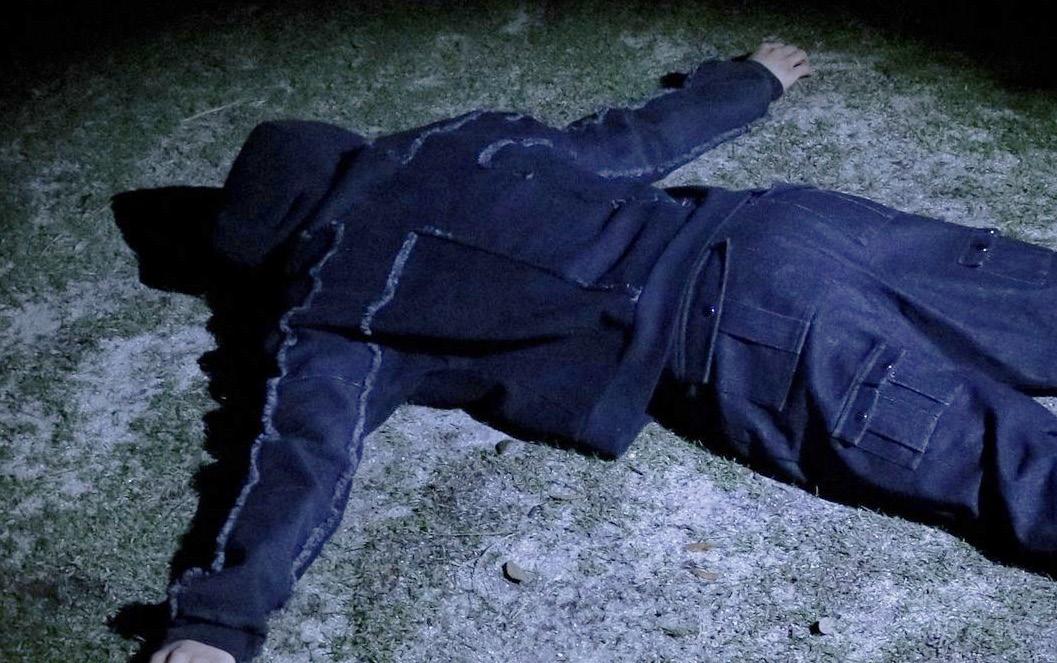
“I wear [the hoodie] pretty often, and it’s very good quality,” said senior Katie Joo, who purchased a hoodie after finding out about the brand through mutual friends. “It’s cool how Noah started everything on his own, and it made me want to support him.”
With over 1,000 followers on Instagram, the brand’s success is thanks to its eminent online presence and the large amount of traffic it receives from the social media platform.
Though not often, Choi has previously sent some clothing items to influencers like Jared Muros (@jaredmuros on Instagram) to market his products.
Befriending the internet personality after attending music festivals together last year, Choi sent him a hoodie, which Muros posted a review on his TikTok account @myycloset. Popular for interviewing fashionable people on the streets for their “outfit checks,” the account has more than 100,000 followers and nearly 6 million likes across all videos.
“The attention to detail on this [hoodie] is crazy,” Muros said in his January TikTok video reviewing an 88blades package. “This might’ve been one of my favorite pieces that I’ve gotten so far.”
Choi expresses gratitude for the social media publicity he received from Muros, priding himself in the detailed designs of his products. He mostly experiments with cut-and-sew garments within his brand.
“I stay away from screen printing, big logos and anything else that could look tacky or cheap,” he said.

The senior takes a hands-on approach to 88blades, personally creating both the logo and all clothing designs. Though he first started the label on his own, he has since partnered with a marketing agency that reached out to him in January.
The entrepreneur said he declined to provide more details about the agency’s name and responsibilities.
The process behind creating and selling 88blades pieces involves sketching out designs on Adobe Illustrator and then sending tech packs and samples to manufacturers.

Despite his newfound success, Choi remains ambitious about expanding the brand.
“I have things to be proud of, like selling out my hoodies and getting a small music artist to wear my brand at a concert,” he said. “But I could be doing better, so I want my brand to get bigger.”
Though uncertain whether he will continue pursuing a career in fashion, the University of California, Berkeley, bound student plans to remain involved in the line of business and entrepreneurship.
“I want to be a business owner, and I’m planning on keeping this brand forever,” Choi said.
Images printed with permission from Noah Choi
15
BUNDLE UP: Senior Noah Choi advertises his clothes on his Instagram account. The denim hoodie and pants are sold on his website.
SAYING ‘ADIÓS’
Spanish teacher retires from alma mater after 22-year teaching career
JAIMIE CHUN Managing Editor
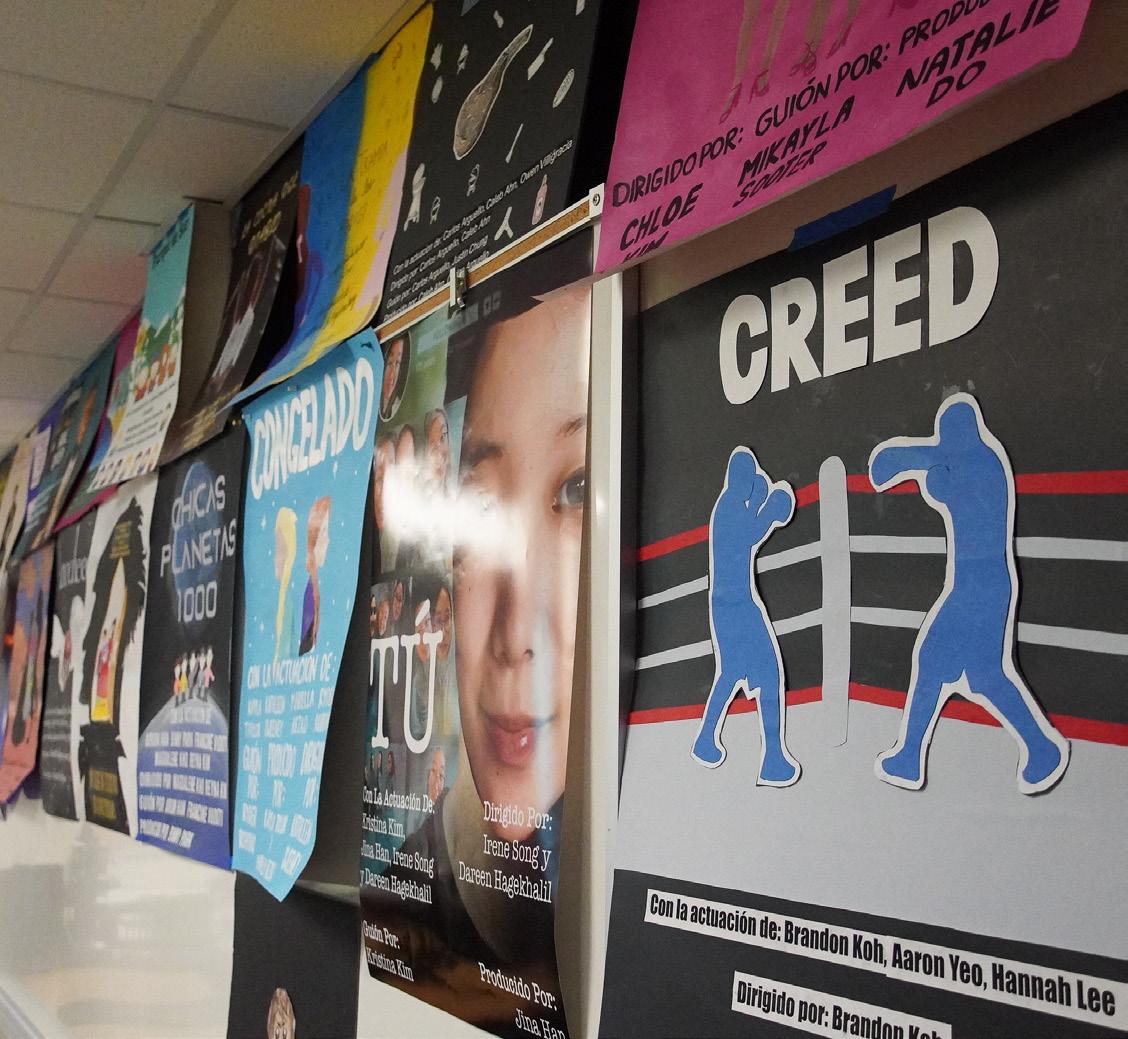
Spanish teacher Gene Bordy’s classroom walls showcase around 50 student-made film posters.
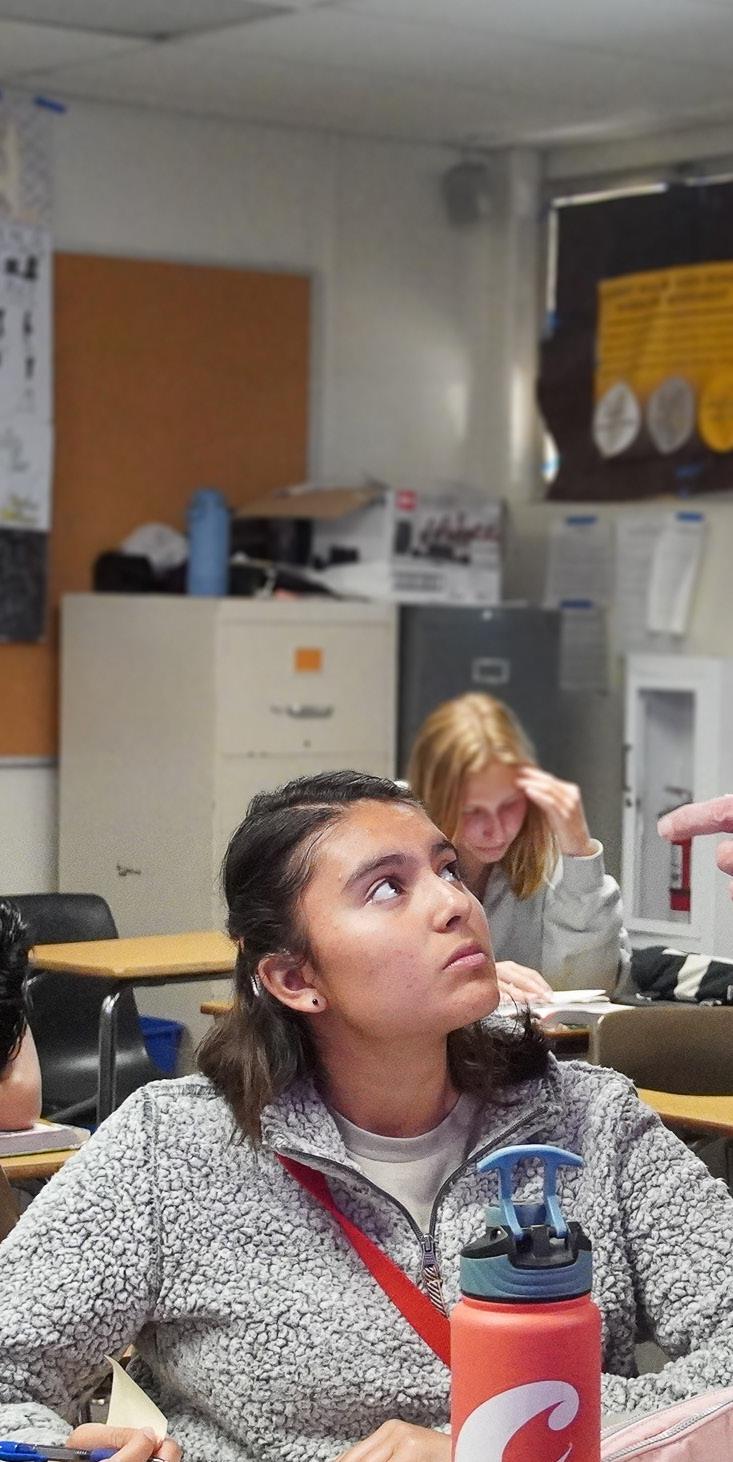
Disney’s “Frozen” features a flurry of white alongside a pastel blue.
“Dora the Explorer” spotlights an eerie blend of pink, purple and orange.
“James Bond: Escobar Sword Against Bond” presents a striking contrast of white and black.
Somewhere on all these placards is the neat print of the Spanish language.
These film posters are one part of Bordy’s end-of-the-year project in which his students also recreate the film in their poster in Spanish. In fact, this has been an annual tradition since he first started teaching at Sunny Hills in 2001.
These billboards, however, are more than just classroom decorations — they are part of the footprint Bordy hopes to leave behind as he retires this semester after a 22-year tenure.
“My legacy here is the movie projects my students do at all levels,” Bordy said. “I challenge them to, not just the typical way, but make a movie more like Hollywood, encouraging to change your angles, integrate music, title, credits, all those things.”
Hinting at his retirement since the start of the school year, the SH Class of 1974 alumnus turned in his resignation form to principal Craig Weinreich in late March.
For a majority of his colleagues and students, the world language teacher said he saved the news until the end of the school year because he didn’t want to make a big deal of it.
the 2019-2020 school year, which is when the COVID-19 pandemic hit. However, feeling that he would regret leaving after a full year of distance learning, the instructor decided to postpone his retirement again in 2021.
“Last year and this year, thinking that this might be the year [to retire], I was trying to walk away from responsibilities,” he said.
LEARNING TO LOVE ESPAÑOL
The alumnus recalls taking his first Spanish class during his high school sophomore year when the language was not yet enjoyable.
“The irony of things was I was a terrible Spanish student at Sunny Hills — I didn’t grow up speaking Spanish and failed second year,” Bordy said.
“His impact on the department and the students that have gone through there, preparing them for the next level, has been really second to none,” Weinreich said.
Having taught all levels of Spanish, Bordy said he first considered retiring at the end of
It wasn’t until he attended Biola University as an English major that he changed his attitude toward Spanish, he said. Because of a requirement to take at least three years of language, which he did not complete in high school, he enrolled to take Spanish in his first year of college.
16
Mr. Bordy saying that [the movie project] is his legacy is so true because it really makes an impact on you, and it’s something you’ll remember for many years.
“ “
- junior Francine Vudoti
“I met a very wonderful teacher who had a real compassion for people trying to learn another language. … For the first time, I started learning Spanish not because I needed a grade but because I really wanted to learn,” he said.
The instructor said he’s applied his college experience learning Spanish throughout his 22 years of teaching.
“One general skill [I learned] was keep in mind that you’re mainly dealing with people who this is not their language,” Bordy said. “My saying is ‘I can do more help for you in 10 minutes one to one than I can ever do in five classes of 55 minutes because then I can just focus on you.’”
HOLA TO TEACHING
Bordy started his teaching journey in 1985 at Santa Cruz Cooperative School, a private pre-K-12 school in Bolivia after first moving there as part of a missionary organization. This is where he first started his movie project, except it was native Spanish-speaking students creating movie posters in English.
“I was thinking, ‘What’s a good culminating project and something, as we’re coming to the end of the year, might be a fun way to finish,’” the instructor said.
Junior Francine Vudoti, who’s been in Bordy’s class for the past three years and chose to remake “Inside Out” for this year’s movie project, said assignments like producing a film allowed her to build a special connection with the language.
“Mr. Bordy saying that this is his legacy is so true because it really makes an impact on you, and it’s something you’ll remember for many years,” Vudoti said.
Bringing along his movie project idea, Bordy returned to the United States, and began teaching at Los Alisos Middle School in Norwalk for three years until he applied for a teaching position at Sunny Hills in 2001.
He then received a call from the then-assistant principal with a full-time job offer to teach both English and Spanish. By 2002, however, Bordy said he was relieved to learn that he could focus on teaching only Spanish.
From 2006-2021, Bordy was also the
EL
PROFESOR (LEFT):
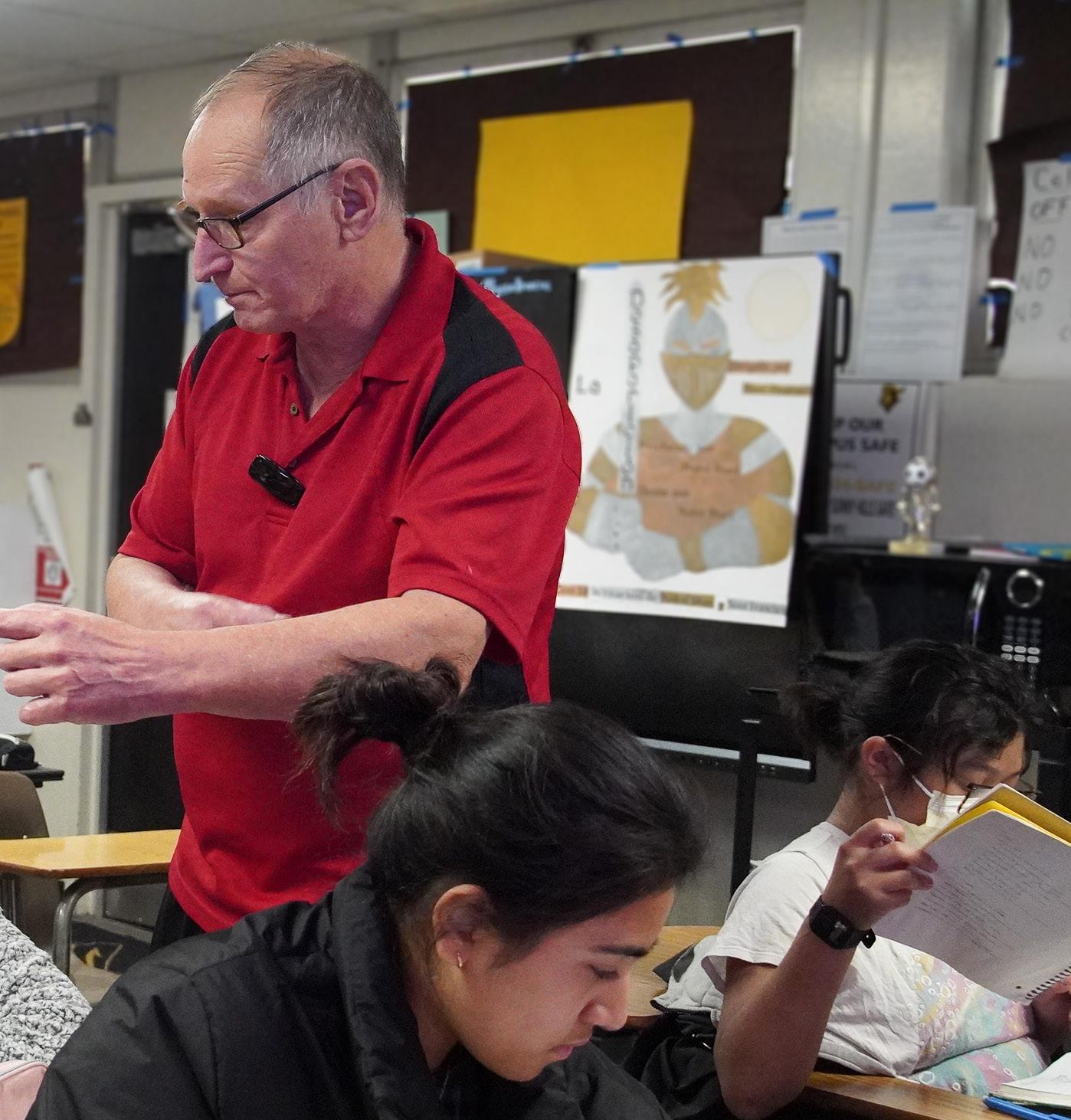
Spanish teacher Gene Bordy explains a concept to a student in his third period class May 4. The 20222023 school term marks his final year as an educator.
world language department chairman. Throughout his time, he has led an upward trend in Advanced Placement [AP] Spanish Literature and Culture scores, guiding 96% of his last year’s AP test takers to a passing score of 3 or higher.
“I’ve never had [a pass rate] that high, which makes it easier to walk away,” he said. “My AP kids usually score well, and even non-speaking Spanish at-home people would pass it, so I felt really good.”
¡HASTA LUEGO!
After this school year ends, Bordy said he hopes to resume his hobbies and go on as many excursions as possible.
Though the movie posters will come down, Bordy said he’d be taking with him fond memories with his students.
“It’s always been special watching somebody improve,” the retiring teacher said. “The other thing that piggybacks that is getting an encouraging note or card saying, ‘I just want to appreciate that you did this’ — but I was just doing my job.”
SUMMER SUEKI | theaccolade
17
A HISTORICAL RUN

Social science teacher to retire upon completing
 CHLOE KANG | theaccolade
18
his 32nd year on the Hill
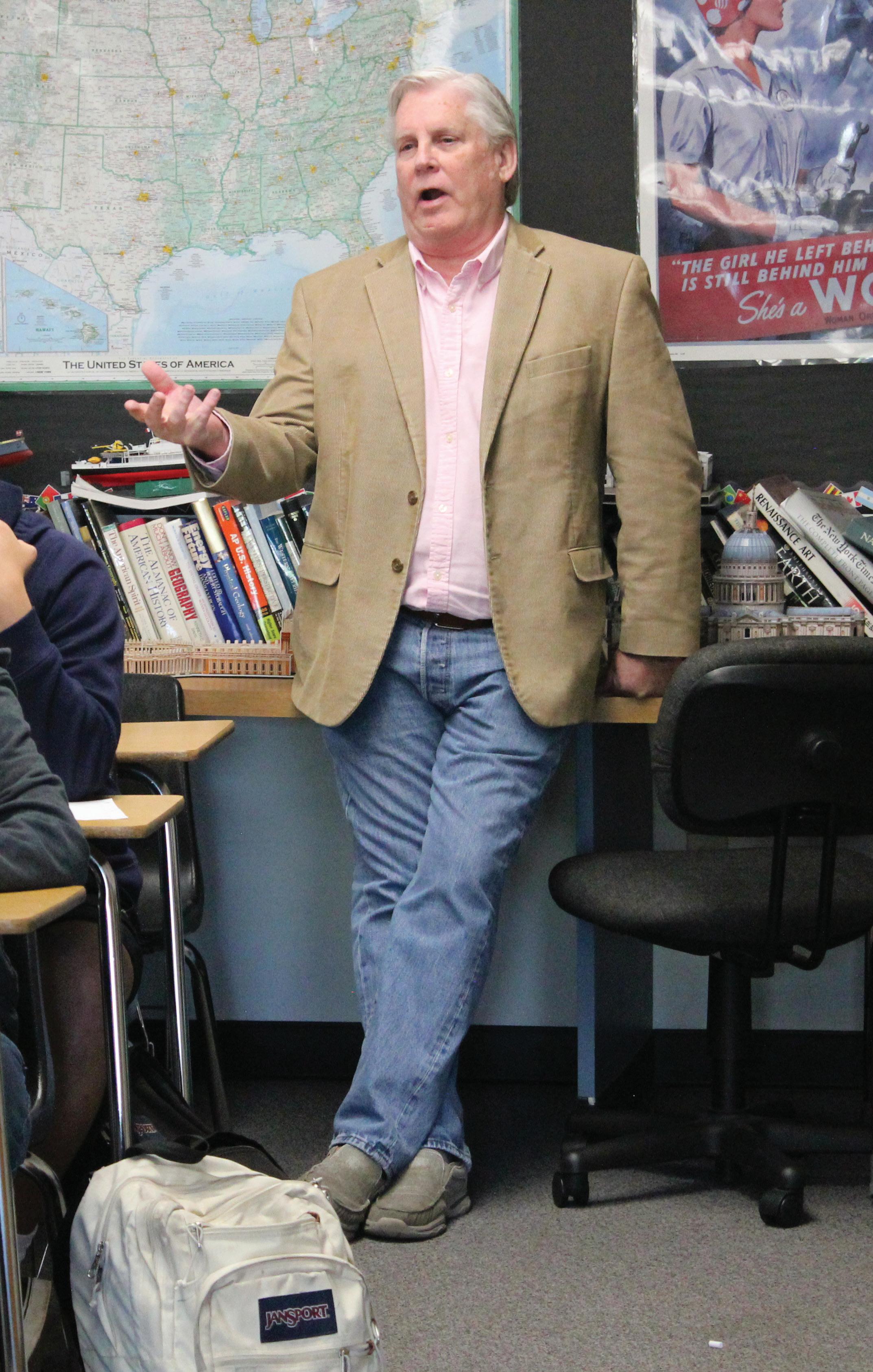
THE REST IS HISTORY: Social science teacher Patrick Debacker talks to his Period 3 students April 4 . The 2022-2023 school term marks his final year as an educator.
A geographical information system [GIS] can store, visualize, interpret and analyze the Earth’s geographical data.
But it cannot track the unexpected path of social science teacher Patrick Debacker, who took many unpredicted turns in his career.
Now, 32 years later, the road is taking him to his retirement.
“I can’t imagine telling my younger self that you’re going to be a teacher,” Debacker said. “If I told myself in my 20s that I would be in the same [workplace] for my entire life, I would say, ‘You are crazy.’”
From getting suspended from Spring Branch High School in Spring Valley Village, Texas, for protesting against the Vietnam War to moving to Clear Creek High School — where he eventually got his General Educational Development diploma in 1975 — the social science teacher said his journey has been rocky.
Born as a Texan, Debacker took a detour to Florida before moving to California in 1979 per the advice of his parents. It was here where Debacker pinpointed the location he would spend 32 years working — Sunny Hills High School.
“I didn’t really have any idea that I would be here 30-something years later retiring from the same place. … It just happened,” he said. “I don’t know if it would have been like at other schools, but at Sunny Hills, the kids were great, and they seemed to enjoy my class.”
Debacker only started working at Sunny Hills because he encountered a problem studying geography while completing graduate school at California State University, Fullerton, in 1991.
“[The dean of the geography department] had made promises to me about data and computer systems necessary to do GIS, so I thought, ‘I’ll just do this for a while, and then I’ll go back to graduate school,’” the social science teacher said. “My idea was to get a Ph.D. in geography and become a college professor. Then I got here, and I actually liked it.”

Though Debacker said he had reached the minimum age for retirement, he selected the 2022-2023 school year as his last to accommodate his wife’s career. The Marriott hotel executive training program hired his wife to work as an employee in Tucson, Arizona, this September.
This opportunity came after she earned her bachelor’s degree in hotel management in 2022 from California Polytechnic School, Pomona. She said she was able to push herself to pursue her educa tion after marrying Debacker, whose work influenced her.
“She says, ‘It’s all because of you,’ but I say ‘No,’” Debacker said about his wife, who was the first to go to college in her family. “I just helped inspire and push her.”


During his tenure here, Debacker taught three different social science courses: Advanced Placement Human Geography [APHUG], AP U.S. History [APUSH] and AP European History [AP Euro]. This school year, he has four APHUG classes and one period of AP Euro.
“I’ve been really lucky,” he said. “I’ve taught three classes that I love to teach.”

Senior Ryan Evalle, who had the social science teacher his sophomore year for AP Euro, said he remembers how being in this class changed the way he thought about history.
“I learned from him that history isn’t just a story you tell — it’s something you remember and can refer back to whenever you need it,” Evalle said. “Every moment that we live is going into history books right now.”



Sophomore Sophia Kiker, who took Debacker’s APHUG class last year and continued with him this year in his AP Euro class, was hoping that he would be around next year when she enrolls in APUSH.
“I kind of had an idea he was going to retire, but I was still sad because I learned a lot from his lessons, and other people can’t learn from him [anymore],” Kiker said. “But I’m happy he can take a break and retire.”
Although his teaching journey came unexpectedly, the social science teacher said his favorite thing is to hear from former students that he served as a source of inspiration for them.
“I had a kid who went to Yale and became one of the top money managers for the Alaska Permanent Fund, and they asked him during an interview who was his biggest inspiration out of all the professors he had,” Debacker said. “He said, ‘It was actually my high school history teacher.’”
Principal Craig Weinreich said he acknowledges the impact the retiring instructor has left on the social science department.
“I’ve known Mr. Debacker for a long time, as I was in the history department with him,” Weinreich said. “He’s just connected and left that legacy of … a strong academic focus within the social science department.”
Social science teacher Robert Bradburn, who has been working with his colleague for 25 years, agrees that Debacker will leave a mark on the department.
“He’s well-prepared, knows the subject deeply, reads deeply and can illustrate his lessons with real-life examples,” Bradburn said. “He’s expanded my teaching abilities by constantly discussing the curriculum because he’s truly interested in it.”
Debacker said he plans to hike the deserts of Arizona for a year while his wife works and then vacation to the Philippines for at least a month, as well as places like Bali and Vietnam.
GISELLE
19
SUASTEGUI Feature Editor
chatting WITH MR. WALL
JIWOO HAN Sports Editor
EDITOR’S NOTE: Because The Accolade already wrote an article in its Feb. 3 issue about art teacher Brian Wall’s decision to retire at the end of this school year, we put together a Q & A instead of a feature story like we did with the other two retiring faculty members.
QPlease share your journey of how you ended up coming to teach at Sunny Hills.
AThe first job I found was working as an aide in a second grade classroom. I really enjoyed it, but I was in college and studying to get a degree in fine art. I ended up transitioning into graphic design, graduated, got a job in it and realized I hated it. I was looking for something that could connect the experience I had in the classroom with art, so that led me back to school to get a credential.
QHow did the hiring process go when you decided to find a teaching position on this campus?
AThe supervisor I had at California State University Long Beach called me and told me she had a job opportunity at Sunny Hills. I came to the school and apparently the teacher that was teaching the position they were offering had left a month into school. … I interviewed, and they asked if I can start [the next day]. … Now here I am 32 years later, and I found my place. This place is paradise.
QWhat classes do you currently instruct at Sunny Hills, and how long have you taught them for?
AI currently teach Special Studies Drawing and Painting, the year two class; IB Higher Level [HL] 1, which is the year one [course] of higher level IB art; communication design, which is a graphic design class; IB HL 2, which is the second year where you actually test for IB art, and I also teach two periods of Drawing and Painting.
QWhat was it like taking over the International Baccalaureate [IB] program as the coordinator?
AI was at first a little unsure about what my qualifications were [to be the IB coordinator], and so I thought I would just do it for a year to help out, hoping thatthey would find the right person. But as the years went on, I fell in love with the philosophy of IB and the kids that I work with. These kids have been the most amazing experience, and it’s cool that I get to have really interesting people in my life year after year.
QYou founded the Conservatory of Fine Arts [COFA] department in 2010. What propelled you to do so?
AHow [COFA] came about was the principal and assistant principal [of that year] wanted to start an art program here that involved all of the arts, and that coincided with the retirements of several other teachers like the dance, theater and choir teachers. So we basically had all these new teachers coming in who were willing to help do the work to build such a program, which got me excited. That’s kind of how it began.
QWhat have you enjoyed most during your tenure, and what do you value most about the SH culture?

ANo. 1, I like this community, and the students that I’ve had all through the years are just amazing along with my colleagues. I really do appreciate how between [the people in] our administration and particularly our COFA department, all throughout the years — they aren’t just like colleagues; they are friends. What I’ll take with me is the warm feeling I have for this community…This place has such a positive vibe, and I’ll always remember positive memories of what the culture is like on this campus.
QWhat are your plans for the future, following the end of the 2022-2023 school year?
AIn the place I have out in the desert, there’s a big art community, and once a year, they do an open studio tour where you could sell your art. I’ve toured it for the past 10 years, and I go around looking at the art and meeting the artists. But now my plan is to produce enough work so that I can sell my art there.
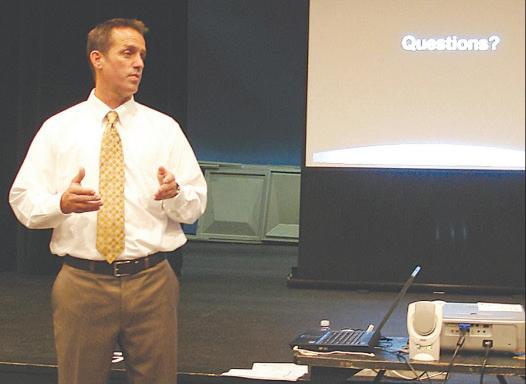
LOOKING BACK: International Baccalaureate coordinator and Conservatory of Fine Arts director Brian Wall speaks at the 2007 Open House.
Brian Wall
theaccolade file photo
20
Lasting Legacy
The Accolade recognizes seniors who dedicated their time and skills as Lancer athletes during the 2022-2023 school year

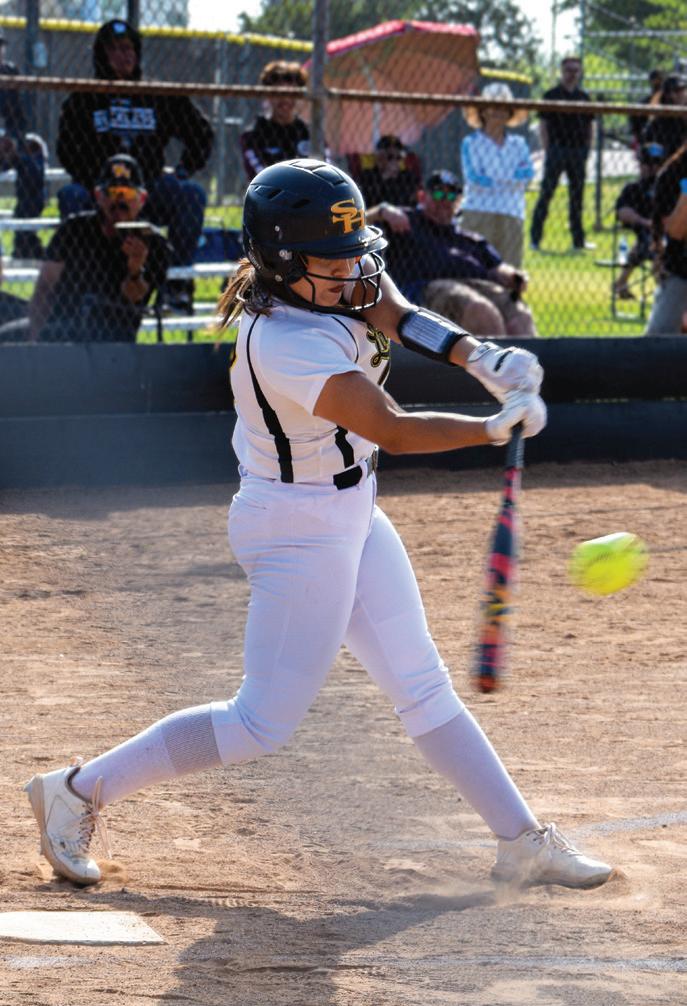
Third baseman senior Gabby Flores makes contact with the ball during a home
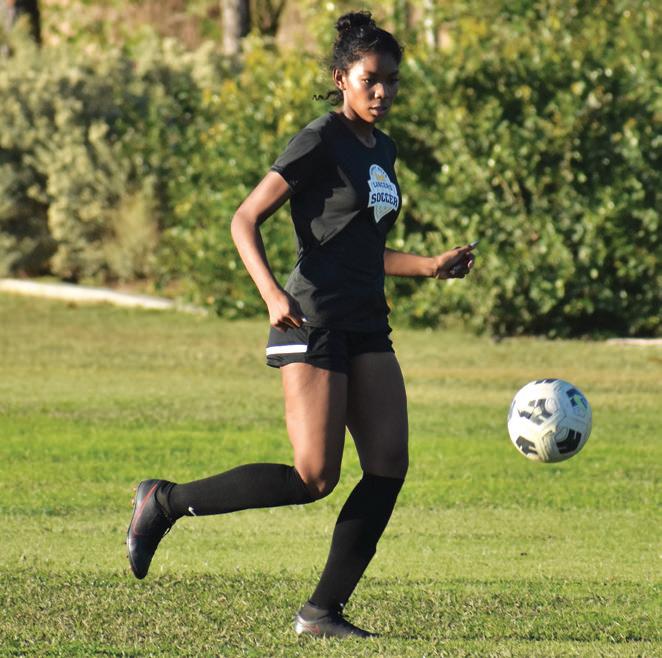
REBEKAH KIM | theaccolade PRACTICE MAKES PERFECT (RIGHT): Senior Raeya Peace kicks a soccer ball during a Nov. 14 practice prior to the Nov. 30 girls soccer match against the Yorba Linda Mustangs.
 SUMMER SUEKI | theaccolade UP TO BAT (ABOVE):
game against the Troy warriors.
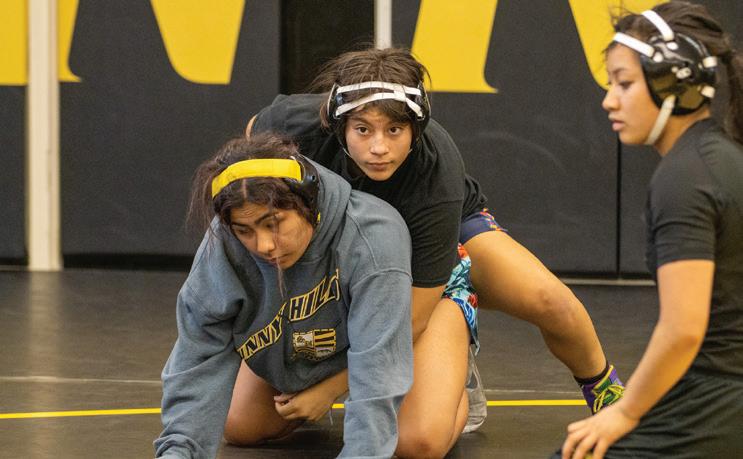
NOAH LEE | theaccolade BEAR HUG: Senior Kayla Alamos (above) demonstrates a position during wrestling practice Nov. 16 in Room 153.
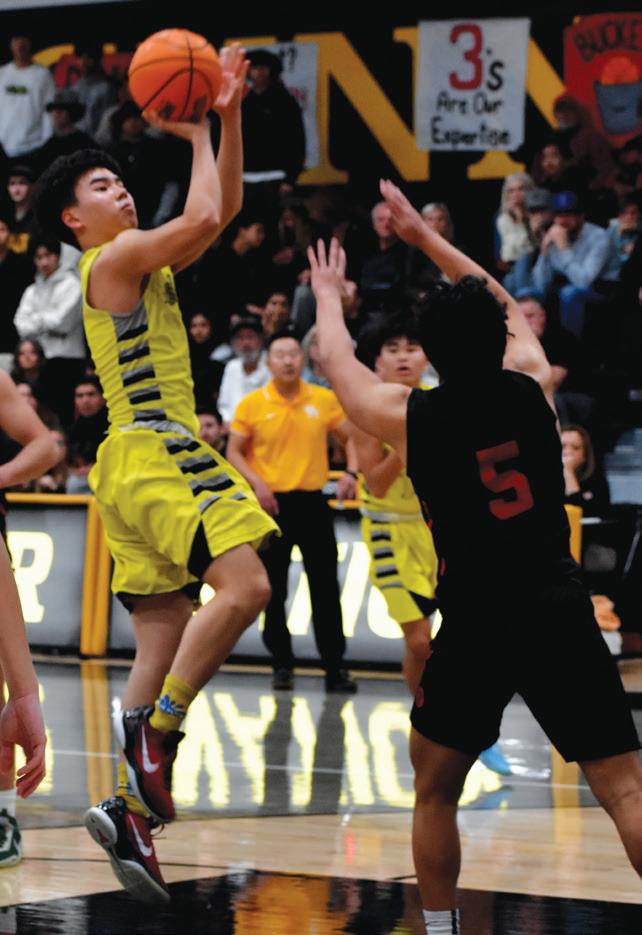
SHEILA NERI | theaccolade SWISH!: Shooting guard senior Johann Kwon gets ready to throw the ball into the net against the Troy Warriors Jan. 21. The Lancers won this home conference match 62-49.
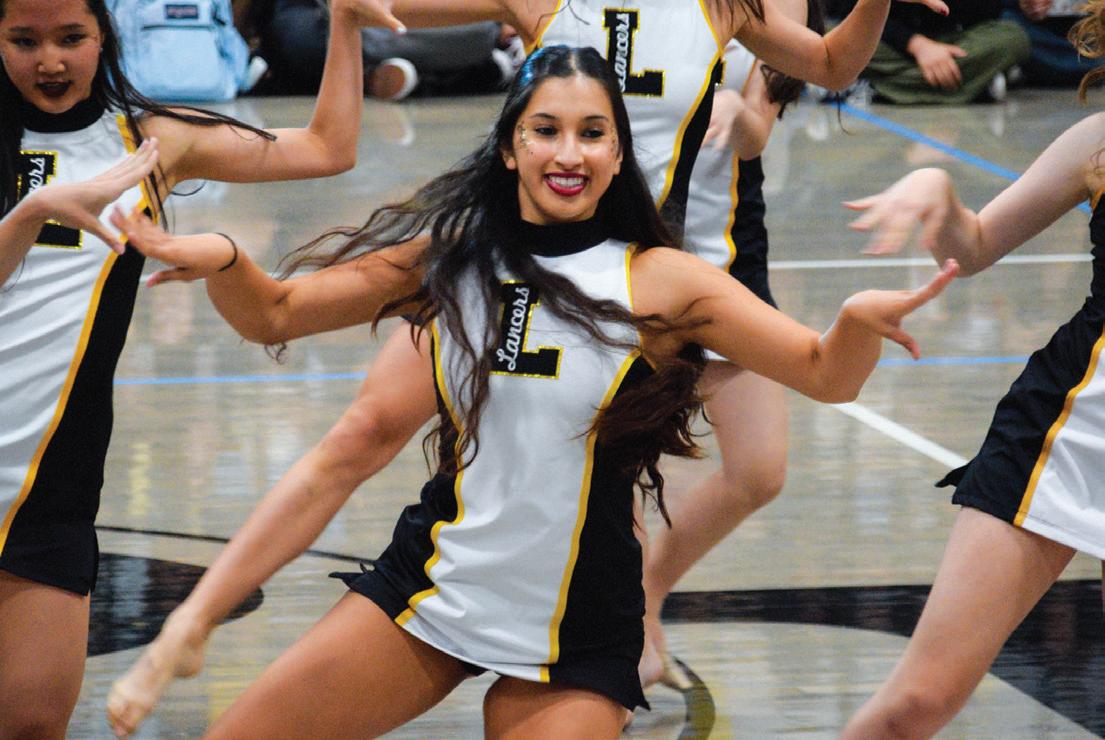
ASAPH LI | theaccolade STARTING THE YEAR OFF STRONG: Senior Alyssa Fernandez dances with her Dance Production team Aug. 19 in the gym during the welcome back assembly.
SUMMER SUEKI | theaccolade UP TO BAT (ABOVE):
game against the Troy warriors.
NOAH LEE | theaccolade BEAR HUG: Senior Kayla Alamos (above) demonstrates a position during wrestling practice Nov. 16 in Room 153.
SHEILA NERI | theaccolade SWISH!: Shooting guard senior Johann Kwon gets ready to throw the ball into the net against the Troy Warriors Jan. 21. The Lancers won this home conference match 62-49.
ASAPH LI | theaccolade STARTING THE YEAR OFF STRONG: Senior Alyssa Fernandez dances with her Dance Production team Aug. 19 in the gym during the welcome back assembly.
21
SUMMER SUEKI | theaccolade MAKE WAY: Senior Bryce Liva swims the butterfly stroke during a March 13 practice in the Sunny Hills aquatics pool.
alumni speak
To obtain advice for graduating seniors, The Accolade sends copy editor Justin Pak to interview Sunny Hills alumni from the 1970s and 2000s.



Renee E. Marlin-Bennett - Class of 1977

After graduating from Sunny Hills in 1977, Marlin-Bennett attended Pomona College and majored in international relations, earning her bachelor’s degree in 1981. She continued on to the Massachusetts Institute of Technology and acquired a doctorate in political science in 1987. That same year, she began her teaching career as a professor of international relations at American University. She instructed there until 2006 and began teaching political science at Johns Hopkins University in 2007, where she continues to educate and research today.
“[My time at Sunny Hills] was both the best of times and the worst of times.
This bears repeating: If you are depressed or anxious because of bullying, please talk to your doctor. Seeking help to regain your mental health is a sign of strength, not weakness. Remember that you are valuable. Remember that no one deserves to be bullied.
You are valuable because you are a human, but in the famous words of my mother, ‘Don’t be a doormat.’ You deserve to be respected as a human being.

When you go to college, regardless of the size of the university, it’s a really good idea to take advantage of office hours and to meet your professors in person.
Cindy Shannon - Class of 1979
Shannon graduated from Sunny Hills in 1979 and attended Fullerton College before transferring to California State University [CSU], Humboldt. She moved to California State Polytechnic University, Pomona [Cal Poly Pomona], earning her bachelor’s in zoology in 1985. Later that year, she acquired a bachelor’s in psychology at CSU Fullerton, before returning to Cal Poly Pomona to obtain a master’s degree in biology. Shannon began her teaching career in 1990 as a biology professor at Mount St. Antonio College, earning a doctorate in biology at the University of California [UC], Riverside, in 2008. She retired in 2022 but continues to work as a substitute teacher.
I think the preparation that I had at Sunny Hills was good for being successful and eventually getting to a bachelor’s degree, a master’s degree and a Ph.D.
Being with my friends [is something that I cherished]. [My friends and I] used to go to football games and other sporting events together. Like I said, they’re still my three closest friends, so whenever anything happens that’s drastic, they’re always there for me. … I would say the long-lasting friendships were one of the things I really valued.
Get as much education as you can. Education is invaluable. That was one thing my dad told me, and he was able to see me get my Ph.D. before he passed away, which was really nice.
Figure out what it is that you’re interested in and what you would like to do for a long time. I think that one of the main things is to be happy in your life, and people want to make a good living and that kind of stuff, but it’s also really important … that you’re happy with it.
22
“
After graduating from Sunny Hills in 2003, Liu attended Stanford University, earning his master’s degree in philosophy in 2007. He then attended Harvard Law School and earned his law degree in 2010. He’s currently the senior vice president and securities counsel at American Homes 4 Rent.
Justin Liu - Class of 2003 “
I think another thing that I really appreciate about my time in high school — this is too strong — is that the shared suffering of me and other students that were also in AP [Advanced Placement] and IB [International Baccalaureate] classes with me — it was difficult at the time, but looking back on it, and as the years have passed, my memories of it grow fonder because I really felt like I was going through a very difficult and trying experience. But I had my friends who were also going through the same thing. … It was a really nostalgic time now that I look back on it.
I would say think carefully about how you want to spend [the summer between your high school senior year and your college year]. Find something that will be truly meaningful for you to do, and do it because you may not have that opportunity again for a long time.
Almost nothing that happens in high school is as meaningful as you think. Whether you get a B or C on a test or you break up with your boyfriend or girlfriend … you don’t get into the college you wanted, your life happiness and your life outcomes are not going to be as impacted as you think they are.





Arvin Wali - Class of 2009

Wali graduated from Sunny Hills in 2009 as part of the IB program. He then attended UC San Diego [UCSD], as part of a combined undergraduate and medical school program that no longer exists, majoring in economics and getting his bachelor’s degree in 2013. In 2018, he earned his Doctor of Medicine degree at the UCSD School of Medicine. He began working at UCSD Health as a neurosurgery resident since 2018 and as a neuroendovascular fellow since 2021.
My experience at Sunny Hills High School was a vibrant fusion of intellectual growth, personal discovery and genuine camaraderie with friends.
Push yourself beyond your comfort zone. Remain open to learning and actively engage with the community and environment around you. Nurture your adaptability to learn and grow through experiences — and that skill will help you no matter what life throws at you. Most importantly, savor the journey. Just as Heraclitus said, it is impossible to step in the same river twice, so too do you only get to enjoy high school once. Balance your quest for knowledge and skill acquisition with the joys of cherishing adolescence with your friends and family.
Congratulations! Graduating high school marks the beginning of an exhilarating new chapter, whether you’re embarking on a career or pursuing further education. Remember that seeking help and mentorship is a testament to your wisdom and humility — know your limitations and actively pursue guidance. Trust the foundation laid during your high school years and embrace the lifelong odyssey of learning and skill acquisition that lies ahead. Reach out and seek mentorship, and enjoy the journey and adventures ahead.
“
All images printed with permission from the respective sources
To The Accolade, I sincerely thank you

Editor-in-Chief
Why do we seek knowledge?
The Theory of Knowledge [TOK] students and I greeted the preceding question with a conversational investigation. Some postulated we seek it to foster personal growth, and others hypothesized the pursuit of knowledge facilitated the route to wealth.
I, however, had not volunteered to share my perspective.

The justification I formulated seemed insincere: the approach to knowledge I had been taking as a junior did not seem to align with my answer to the question.
I kept silent for the remainder of the discussion, yet, as a senior prepared to graduate to the world beyond Sunny Hills, I’d like to now volunteer and share the answer I probed for that TOK period.
The response I had designed the day of the discussion suggested that knowers sought knowledge to reap intellectual advantages. As an underclassman, I gathered knowledge for the articles I published and to increase my GPA — admittedly, a quite frivolous reason.
Such a perspective is by no means invalid or false; rather, the anecdotes I have collected as The Accolade editor-in-chief have transformed the perspective to be simply unsuitable for the individual I have become.




The stories I regard as the pinnacles of my years as a student journalist have been the ones with noteworthy interviewees.
All of the articles beneath my byline have left me with knowledge — be it the rules of football or the campus’ COVID-19 health protocols. Not all of the articles beneath my byline have, however, imprinted the memory of an insightful, engaging interview.
To illustrate, I published an article in October 2021 detailing the Fullerton Joint Union High School District’s announcement to man-
loving this
date vaccinations or weekly COVID-19 testing for all staff members. I conducted interviews with several teachers and students who did not share identical viewpoints.
Prior to the interview with one of the sources, I had never been given the chance to converse with an anti-vaccine advocate and that goes for nearly all of the interviews I conducted.
Interviews with students, teachers and administrators centered around socially relevant subjects gift us the art of conversation — conversations we typically would not have with individuals outside our classrooms.
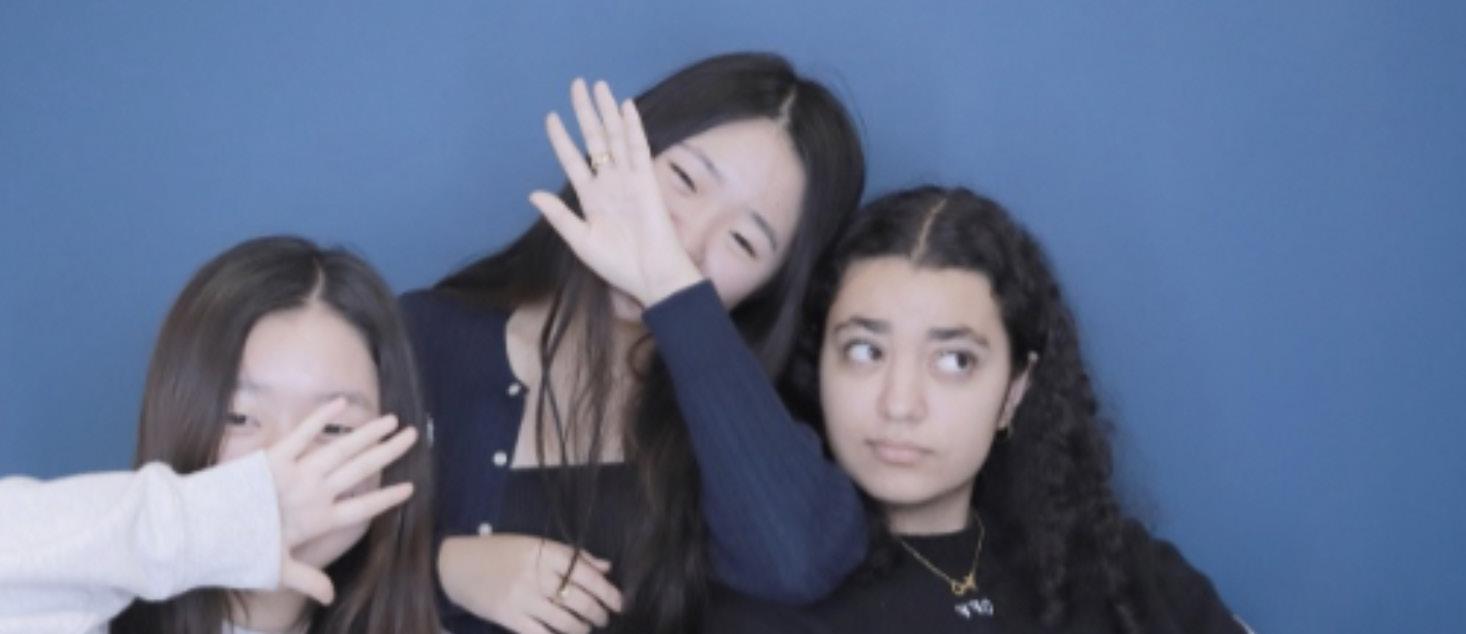
Following nearly four years of writing articles for The Accolade, I have revised my answer to the question. I seek knowledge to expand and elevate the lens with which I view the world and the human population housed within it.
Never will a day come by in which every individual agrees with the person seated beside them, but that does not mean we should blind and deafen ourselves from their views: that would be defined as ignorance.
The Accolade presented a platform for civil conversation: a setting to learn from those we disagree with.

Straying away from the opening question, The Accolade further granted the gift of constructing the individual I would graduate as.

As a freshman, I harbored doubts before joining The Accolade, knowing the career I intended to pursue lay in the healthcare field, yet, from the several positions I cycled through, I fostered the qualities necessitated for success in any pathway.
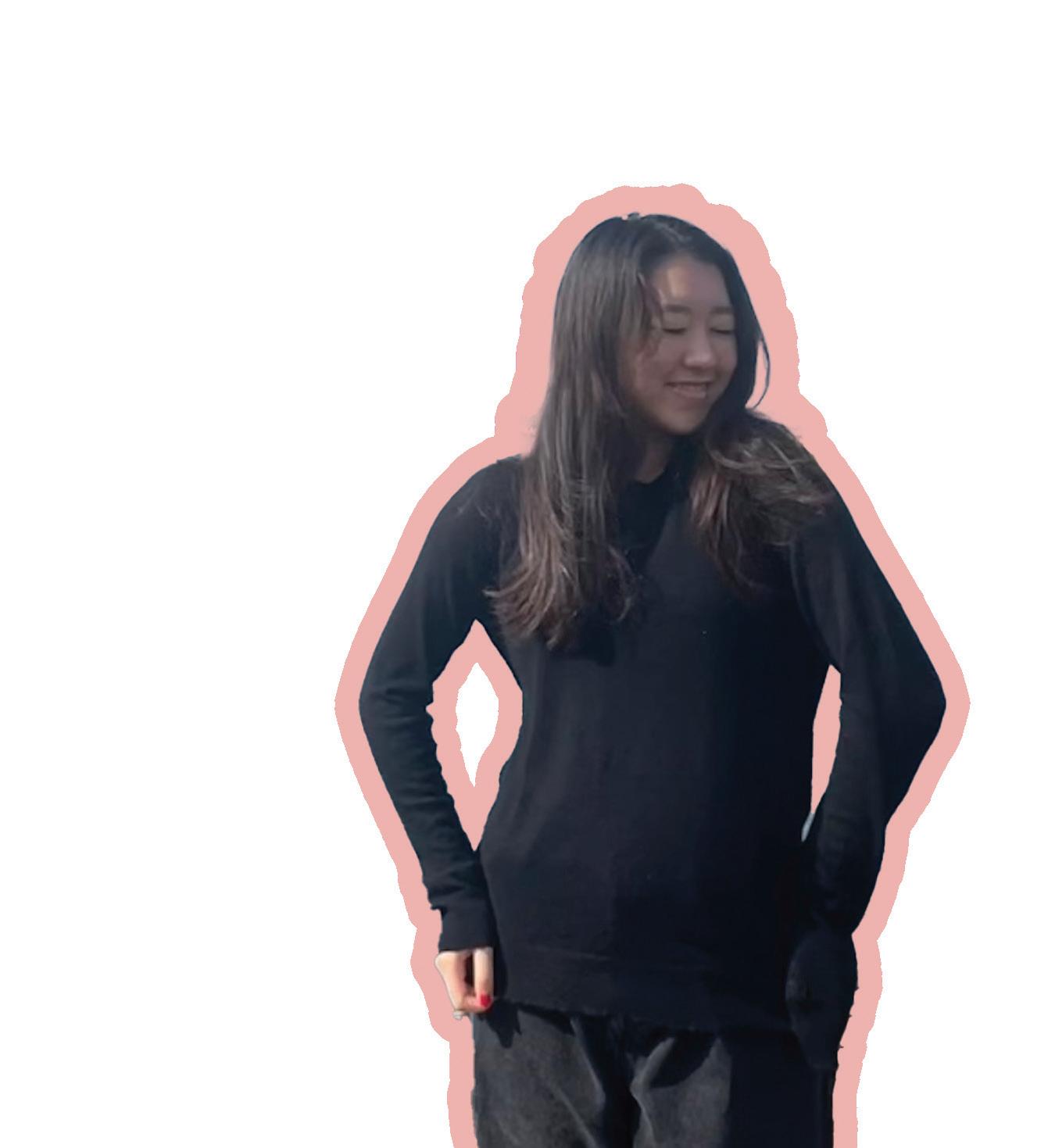

KATE YANG
High school brought forth a new me
HENRY LEE



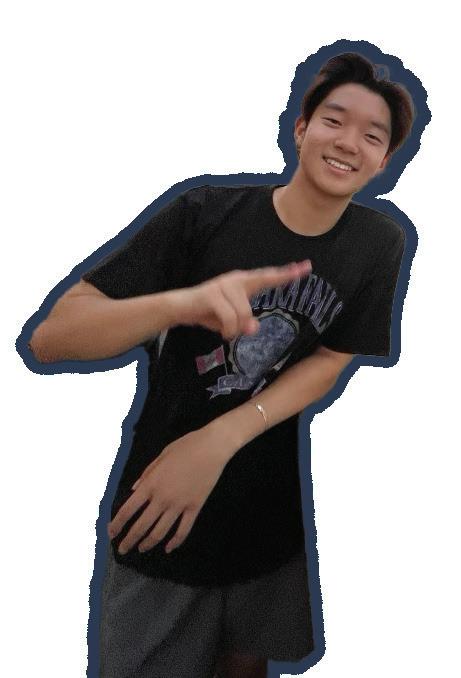
Web Editor-in-Chief


If someone asked me four years ago what I thought my high school journey would look like, I would have had an answer for them.
Why? I thought I would be dead at one point in the four years high school offers. I know. It sounds silly. But think about it.
That’s four years. 208 weeks. 1460 days.
It’s twice the amount of time junior high school lasts — a dreadful two-year journey of awkward social interactions to learn more about yourself. I couldn’t see myself surviving for that long.
Coming into Sunny Hills with a small handful of friends, my shy freshman self found it difficult to interact with my peers who stuck to their same junior high friend group. I couldn’t see myself involved with all the exotic clubs that this school offered.
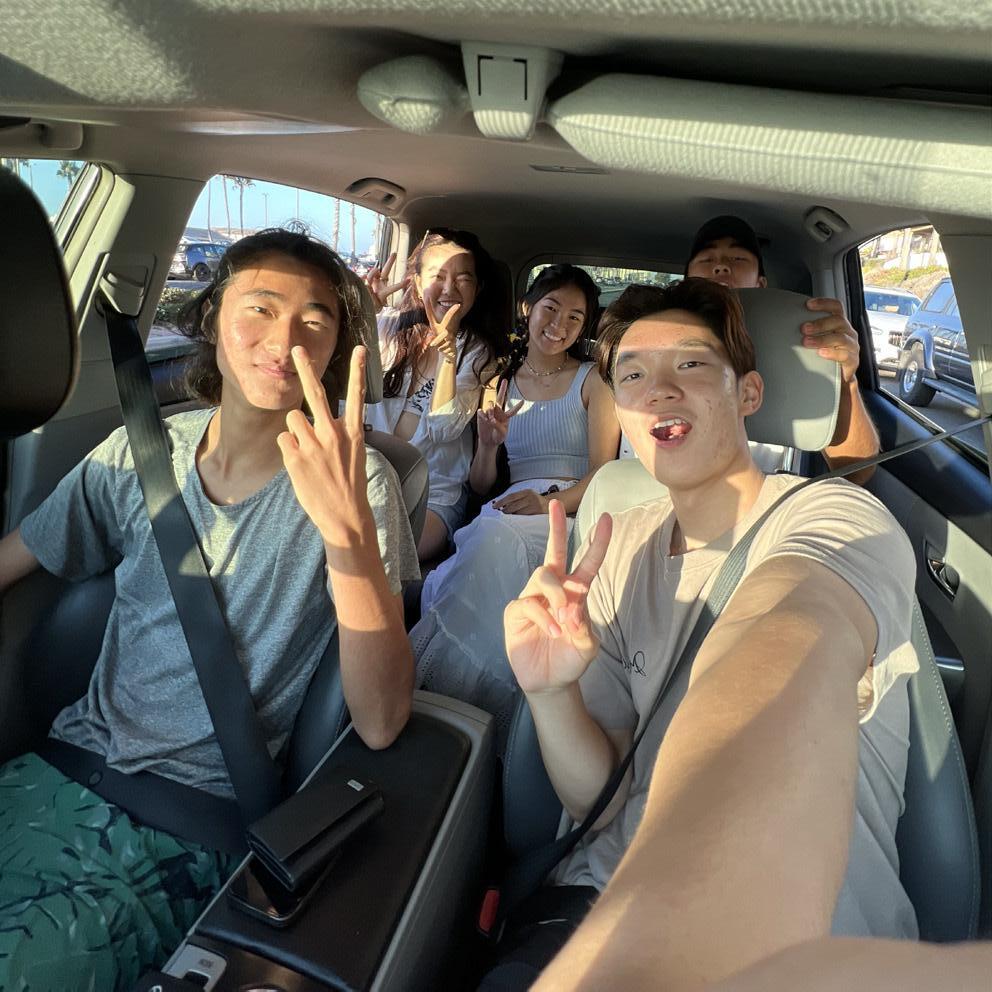
Yet, I found myself in Journalism 1 — an elective that would ultimately lower my GPA. This class which I joined with the sole intent of honing my writing skills slowly refined its purpose into a meaningful elective that would help me develop a plethora of life skills.
As a freshman in a sophomore-dominated class, I found myself making friends with my future editors. By the end of that year, I made more friends in that cramped Room 138 than I did with my fellow freshmen.
That experience acted as the sole catalyst for my desire to taste and involve myself in the variety of different clubs offered in and out of Sunny Hills.
I realized I had to leave behind old remnants of my past to take a step further and discover my own trail. Setting aside the past meant picking up on new hobbies and interests that would nurture my growth as a high schooler.


Skating as a Friar for Servite High School’s ice hockey team turned into jumping as a Lancer for the SH volleyball team. I had to quit ice hockey, the sport I dedicated my life to for nearly seven
years and move on to volleyball, a sport I inadvertently picked up after playing with frosh/soph athletes.
The vast range of programs began appealing to my interests.

I stuck with Key Club from freshman year; I joined the Distributive Education Clubs of America and Future Business Leaders of America to pursue a deeper understanding of the business field in sophomore year; I interned at Seoul Broadcasting System, led freshmen as a Link Crew leader and joined a literacy organization called Financial Literacy for You. Still, this represents only half of what I had done in high school.
All the weekends I spent lazily scrolling through TikTok were now devoted to volleyball tournaments and practices. Nights I spent working on homework became nights that I sacrificed to edit layouts and stories for The Accolade. My free time diminished as I tutored students and partook in club events.

Participation in each extracurricular was certainly not easy. Did I encounter moments in which I wanted to quit? Of course. Did I ever wish for time to rest? Most definitely. But do I regret what I have done? Nope, and I never will.

My greatest feats cultivated as a result of meaningful friendships and experiences produced during these valuable past four years.
I can proudly say that high school did not end in my ultimate death; rather, it filled the prime of my teenage years with memories and hardships that I will come to remember forever.
As for The Accolade, I leave behind a lasting legacy of contributing to our success of winning countless national awards and becoming the first web editor-in-chief to receive the Distinguished Student Newspapers Online Site honor for our online website.
So yes, I accomplished much more than I had originally planned. Death did not literally occur but rather happened in a figurative sense. High school forced me to leave my clingings to the past to foster a new, refined version of myself.
With that being said, cheers to the next four years of my life — studying and cycling through this process yet again. take it
25
easy
Staying true to my words
GISELLE SUASTEGUI Feature Editor

“We want Richman Park!”
“We want Richman Park!”
“We want Richman Park!”
Carrying a sign that towered over my little body, my 5-year-old self sat on the shoulders of an unfamiliar woman. Despite not truly understanding the situation, I felt empowered beyond words as I shouted alongside my mother, brother and a line of other advocates in front of the Fullerton City Hall.
The young woman I was sitting on radiated energy that seemed untouchable. The passion in her eyes, her steps and her shouts ignited an inextinguishable fire in me.
Despite the fact that this protest held no significant value outside of our small community — since it was a fight to reclaim a public sports practice field for communal use — the demonstration possessed the power to completely alter my perspective.
Though I was shouting with a crowd of people, my words resonated the loudest — at least to me. It opened my eyes to the fact that I have a voice to do something — to make a difference, to make a change and to make an impact.
As a minority, low-income student, I am no stranger to seeing injustices unravel in front of me, yet I have come to understand that my words have an impact.
The embers of the fire that started early on have carried on to every aspect in my life, especially as a co-feature editor for The Accolade, searching for ways to escape the pit of poverty.
In the spring of 2022, as a Journalism 1 student, I wrote a head-to-head column for The Accolade arguing why I believe it’s not worth taking the SAT given that I think it serves as another barrier for low-income college applicants, such as myself.
Staying true to my words, I applied to test-optional universities with no standardized test scores to submit.
However, I did consider other ways to help me stand out in a competitive application process: QuestBridge.


Using the platform given to me by the newspaper, I wrote a column for our first issue last September about my experience in this connective program for students with a lower socioeconomic status.
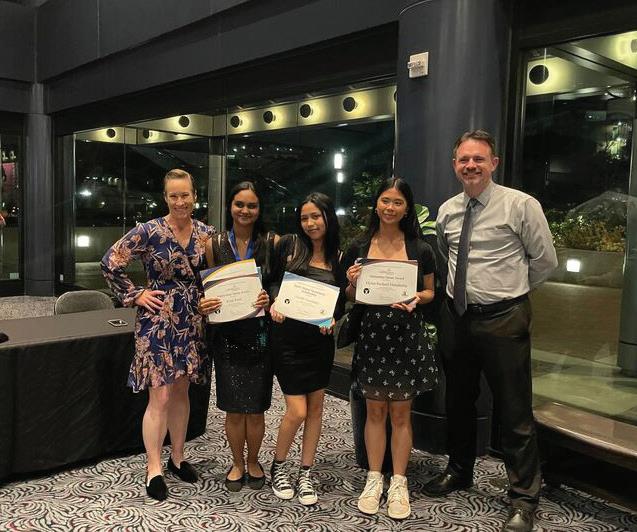
Now, as I sit down to write for the last print piece of the year and my high school experience, I can confidently say my QuestBridge journey proved successful.
I will be attending USC in the fall as a
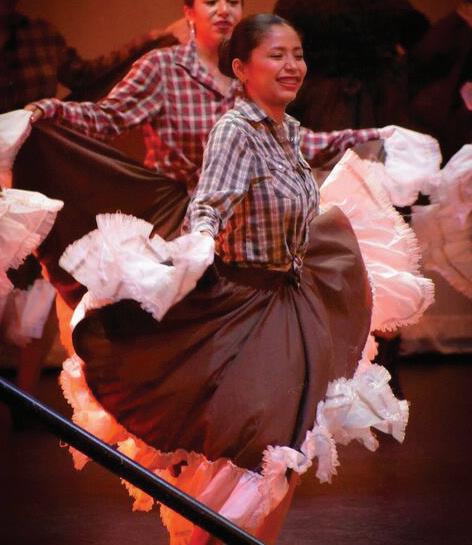
political science major on the pre-law track without the shadow of debt looming over my pursuit of higher education.
Having paid no money for college applications through the program, I received two monetary rewards, the Angels Scholar full-ride scholarship and the $12,000 Dad’s House Foundation Scholarship, with a good financial aid package that covered my $91,000 total tuition and extra money to use for miscellaneous university needs.
The 5-year-old me would not recognize the 18-year-old me. My words were heard, and money did not limit me.
If I could go back to that moment when I sat on the young lady’s shoulder, I would tell little me that it’s OK to feel empowered, to want to speak up and to want to make a difference — future Giselle got you.
Although college will just be four years of my life, it’s a huge step toward my path of excellence. Staying true to the Trojan tradition, I will continue to “fight on” and look for opportunities that pull me out of the hole of injustice and onto the same playing field as privileged students.
In the future, I aim to inspire others to vocalize their opinions and fight for what they believe in.
Hopefully, my story serves as the spark that sets ablaze the small light in others.
26
I took a turn for the better
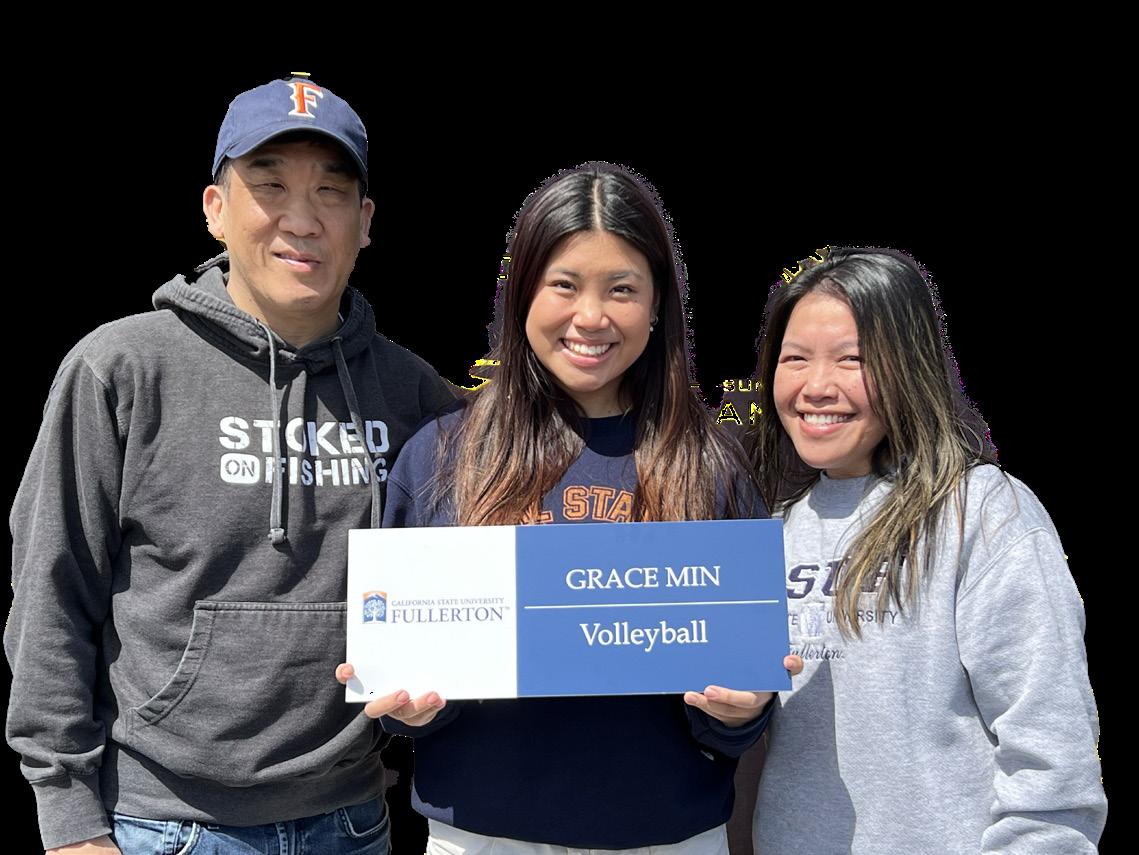
GRACE MIN
Sports Editor
In 2019, on the first day of freshman year, I wrote an introductory letter to my English 1 Honors teacher in which I discussed my family background, core work habits and the goals I planned to adopt for high school and beyond graduation.
Now, four years later, as I approach the last few moments of my high school journey, I look back on that letter with great sentiment and nostalgia.


In the message I wrote as a freshman, I proposed three goals to achieve by the end of my four years: join the Associated Student Body [ASB], join the varsity volleyball team as a sophomore and finish high school with an International Baccalaureate [IB] diploma.
However, when I entered sophomore year, my aspirations started to deviate from my original plan.


Instead of pursuing the ASB, I enrolled in Journalism 1 — a prerequisite class to our school’s newspaper, The Accolade.
I always enjoyed writing, and after losing two ASB class cabinet elections, I signed up for the course to expand my writing skills and eventually join this award-winning program.
After completing the curriculum as a sophomore, I became a staff reporter for the publication the following year and discovered my passion for sports writing. I eventually worked my way to th sports editor position for my senior year.
I also began my IB journey as a junior but quickly became overwhelmed with juggling my academics and a load of extracur ricular activities, so I ultimately decided not to pursue the d as a senior.
Reflecting on all of this, though I did not fulfill my freshman year agenda, I am proud of myself for maintaining an open mind about other programs and activities on campus.
The Accolade helped me discover my knack for sports writing, leading me to consider a career in either sports journalism or
relations.
Likewise, though the IB experience did not work out for me, I’m grateful I had the opportunity to take exclusive classes that expanded my knowledge and heightened my curiosity.
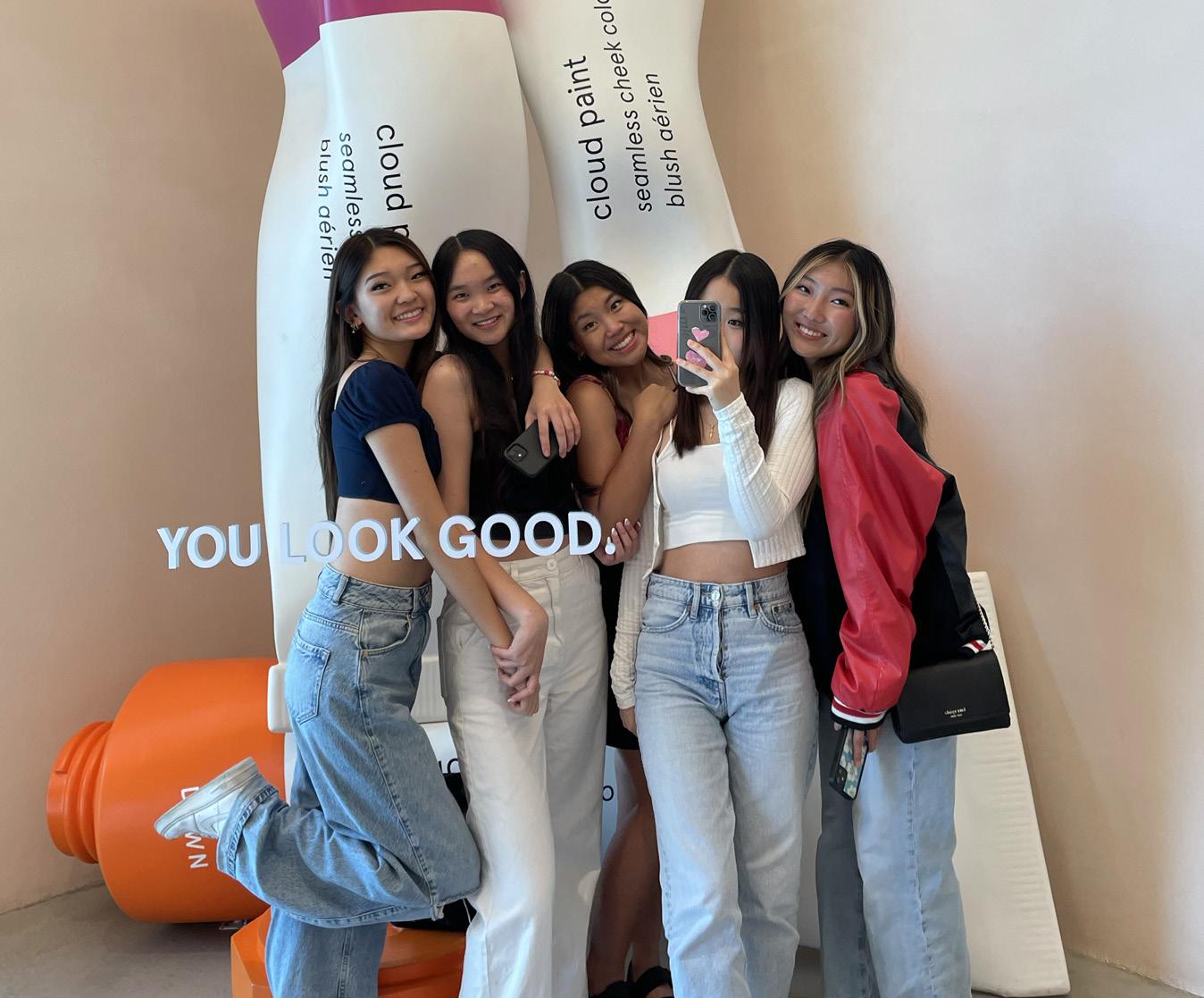
In terms of my athletic goals, I made the varsity volleyball squad as a sophomore, but little did I know of the accomplishments my teammates and I would achieve by my senior year.
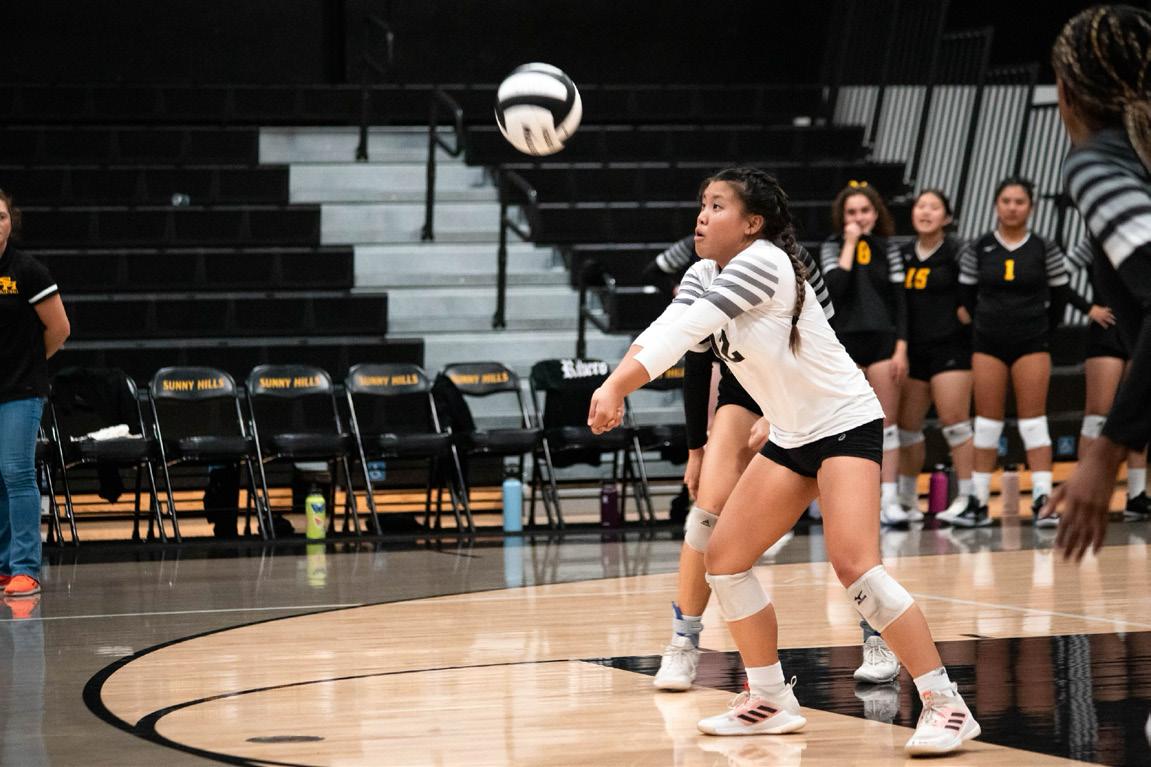
I served as the captain during my junior and senior seasons, leading my team to second place in the Freeway League with the best league record my coach has ever had and last season’s CIF quarterfinals, which the program has reached only one other time in school history.
I cherish my senior volleyball season as one of my most fulfilling high school experiences, and I am beyond grateful that I decided to try out for the sport as a freshman.

In a couple of months, I’ll be moving out of the house and beginning my college journey — a chapter of my life that arrived much sooner than I anticipated.
The biggest lesson I learned from high school is that sometimes things don’t always go as planned, and that’s OK.
During my time at Sunny Hills, the initial aspirations I created and expectations I made for myself shifted and led me down a future career path I had not thought of before.
I couldn’t be happier with how I spent these last four years, and

27
REBEKAH KIM
Two strikes. Three balls. Runners on first and third.

I could see the sweat trickling down the sides of my brother’s face as he took a deep breath and began his wind up on the mound. Moms in the stands grasped each other’s hands as the coaches held their breaths.

I peered through my Nikon D3200 camera as the ball soared through the air and snuggled perfectly into the catcher’s glove.
Flash! Strike out! Joy intoxicated my body as I knew I had captured my brother’s winning knuckle curve pitch. At 8 years old, I possessed the skill to give everlasting life to a single moment





Photography, however, became more of a replaceable hobby, and I gravitated toward writing and English literature. Even when I first joined Journalism 1, I took the class intending to become a staff writer.

After all, I remember my elementary school summers consisted of reading classics with my mom, followed by watching movie ada tations. Whether it was Rebecca of Sunnybrook Farm or Charlotte’s Web, the written words always struck me greater than the visuals.




By the time I entered junior high school, I had read Little Women four times. I was falling deeper into the world of literature.
As high school set in, I grew infatuated with poems. Poetry seemed like a mystery in which people could devise different justifications for its meaning.






With such a passion for literature, photography never crossed my mind as I signed up to join The Accolade. To be completely honest, I applied as a photographer on a whim because of my dread of having to constantly interview teachers and students.
However, I was able to nurture my love for photography and appreciate its value over these past three years. Where I lost myself
in a fantasy birthed by novels, photography forced me to dive headfirst into reality and truly experience “the high school life.”
With coverage of football games to class reunions, I attended so many events I know I wouldn’t have participated in otherwise. I branched out relationships with teachers and students over my pictures in the newspaper and our online news website and became more aware of the news occurring at school. Simply having the opportunity to photograph such special occasions drove my desire to nourish my role in The Accolade.
Although I was not involved in the physical writing process, photography in itself is a story. Though it may seem cliche, a picture is truly worth a thousand words. I captured moments that have now become a part of Lancer history — something that community members and students can cherish for years to come.
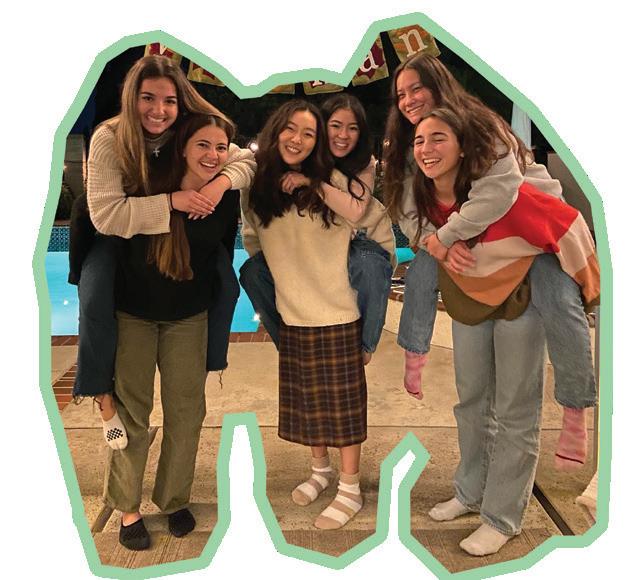
I encourage all high school students to break away from their bubbles and rekindle their lost love. Don’t be so caught up in one aspect of your life that you forget to enjoy the other smaller moments. What’s wrong with being an English major on a pre-law track with a side hustle in photography? That’s what I plan to do in the next chapters of my life.
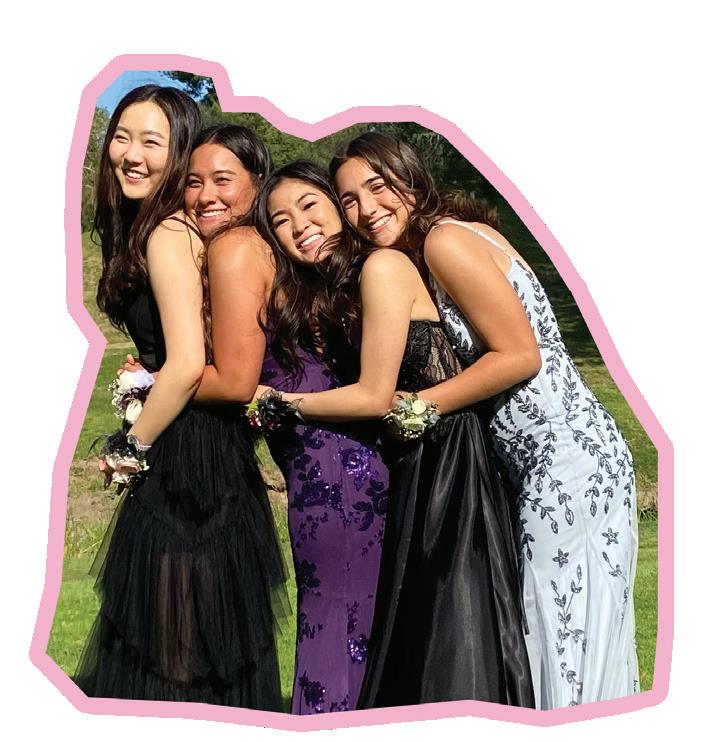
Photography creates a new snapshot in my life
Photo Editor
28
IRIS KIM | theaccolade
Dear Diary...

Distance from social media helps me juggle stress
SUMMER SUEKI Photographer
New people I meet are shocked to hear that I haven’t had any social media accounts until my senior year.
Upon hearing this, some look at me as though I have just crawled out of a cave. Others question how I use my time without it, and a few even applaud me for this impressive feat. But all are in disbelief when I tell them this truth.
Despite this supposed “social setback,” from the adrenaline of talking to somebody new to the joy of exploring new places, my life has always been filled with adventure and excitement.
So when the world stopped with COVID-19, I was devastated. Quarantine marked a period in which people’s assumptions about my unconnected life finally came to fruition; I realized that everyone’s lives are intertwined through social media, and mine was not.
I discovered that the only remedy for the lonely isolation was hobbies. I found my love for baking Blum’s coffee
crunch cake, photographing impressive scenery, sewing a whole wardrobe, cutting my hair at midnight, skateboarding and exploring the depths of music genres.
These hobbies allowed me to explore my creative side — one typically left inactive by my school schedule.
As life started again and things returned to normal, my pastimes offered an escape from pressures. I soon began looking for ways to incorporate creativity into my academic learning.
Furthering my interests in creative pursuits, I joined the newly founded Needle and Thread club, which gives back to the community through arts and crafts, as well as The Accolade, where I have had the opportunity to showcase the photography skills I developed over quarantine.

To this day, I regularly take a 30-minute break to chop off 5 inches of my hair to ward off stress.
As I juggled my many responsibilities, I found that the most vital skill to possess is balance.
Building bigger, healthier friendships
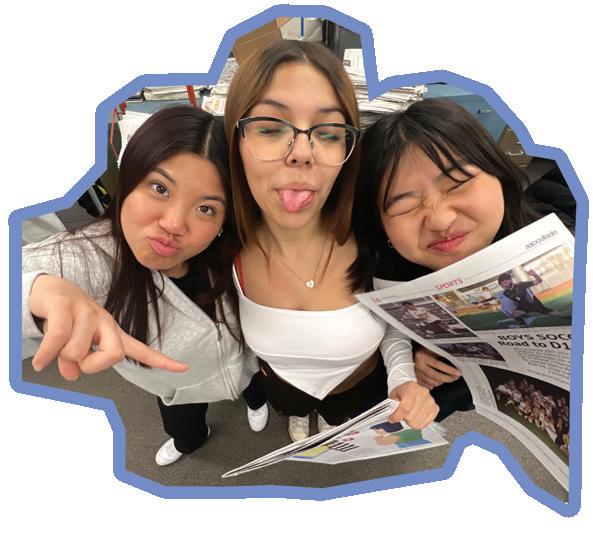
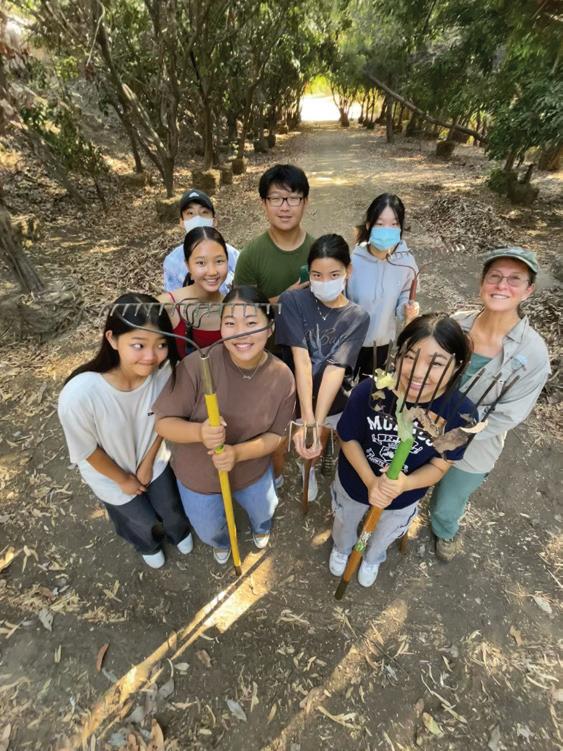 SHEILA NERI Photographer
Over the years, my father always reminded me, “Your friends now won’t be your friends later.” But it wasn’t until much later that I fully understood the gravity of his words.

Each journey in elementary, middle and high school has been a battle. As I navigated the struggles of bullying during my early childhood because of my socioeconomic status, I came face-to-face with the reality that even those believed to be your closest companions can inflict the most painful wounds.
High school, however, introduced a series of new challenges.
As a freshman, I became resentful and defiant. Reputations were damaged, valu-

able relationships were broken and close friends strayed away.


But I realized that the challenges I have encountered since the start of my childhood have ultimately made me a brighter and determined individual. High school miraculously unlocked unique opportunities for me to venture out into new relationships, and I built a beautiful circle of friends.
The biggest takeaway from high school is that regardless of what stage of life you encounter, you must surround yourself with people who inspire you.
As a 17-year-old preparing to enter a new stage in my life, I reflect on the meaningful friendships I have cultivated thus far. Now approaching adulthood, I am pleased to say that my childhood self would be thoroughly proud of all I have accomplished these past four years.
29
Valedictorians earned their title
STACY KIM Staff Reporter
Students with tiger moms, perfectionistic tendencies or those just aiming to excel in their academics all have one common goal in high school: to become a valedictorian.
Like the old saying goes, “With hard work comes great rewards.” The students who receive this accolade dedicate their four years of high school for this prestigious recognition.
So yes, the challenging requirements of maintaining an unweighted 4.0 GPA, 32 minimum honors semester classes and other conditions listed in the Lancer Handbook are justified.

Although hard work cannot be quantified, advanced and honors level courses are typically more demanding.
Sunny Hills chooses more than one valedictorian, which is equitable and can prevent resentment among students based on what classes they take.
On average, our school rewards 10-20 valedictorians for each graduating class (this year we have 18). If Sunny Hills were to award even the students who fail to meet the honors requirements, we would have far too many recipients, decreasing the value of this merit.


Without the honors requirement, more than a quarter of the class would have qualified for this award, principal Craig Weinreich said. Last year, 15 students reached this level, so if an additional estimate of 40 students met the academic eligibility, the value of this award seems irrelevant.
The Oxford English Dictionary defines a valedictorian as “a student, typically having the highest academic achievements of the class,” most accurately describing those who excel in Advanced Placement [AP] and honors classes.

Including those who don’t take enough AP and honors classes would divert from the established definition of a valedictorian — the highest achieving students.
The students who meet the criteria are those who decide to compete and exceed academic expectations compared to other peers by packing their schedules with AP and honors courses.
These classes are more rigorous than regular lessons as teachers cover the curriculum at a faster pace and in greater depth while incorporating more complex analysis. By choosing to take these classes, students show greater devotion to their academics.
The advanced classes are weighted on a 5.0 scale rather than a 4.0 scale because of the difficulty in material. So, if honors students receive straight A’s all four years of high school — excluding a few B’s their third quarter of senior year — they have an opportunity to earn a higher GPA than those who do not.

Some argue that this discriminates against those who opt not to take an AP/honors course. So this year, head counselor Beth Thomson justifiably proposed recognizing the seniors who maintained a perfect GPA but failed to meet the AP/honors requirements.
This year’s six seniors eligible for this award will receive a black or gold cord alongside the school’s valedictorians.
With this dedication, students should be guilt-free in receiving a title that acknowledges the effort and hard work that goes into achieving academic success.
After all, earning valedictorian status is more than just a title, as it comes with benefits and greater opportunities following high school in the college admissions process and in obtaining scholarships, internships and jobs.
It is only fair that this prestigious designation is handed to the students who dedicate their four years here at Sunny Hills with above and beyond performance.
30
KIM
IRIS
| theaccolade
the
C
o
EDITORIAL
JINA HAN |
accolade
La S s
F 2 0 2 3
Young K-pop idols deserve a platform
EUREE KIM Staff Reporter
Hollywood heartthrob Ryan Reynolds thrilled the K-pop community with a hilarious social media clip.
Hopping onto the NewJeans “OMG” TikTok trend, on Jan. 23 the actor posted an edit of himself using the app’s CapCut template and the song’s catchy chorus.
In under a year since their debut, NewJeans members have established themselves in the industry as “monster rookies.” With nearly 20 million monthly Spotify listeners, it’s no wonder the group made its way onto Reynold’s list of favorites.
During their July 22, 2022, debut, the five members ranged from 14-18 years old, two of whom are currently minors: Haerin Kang, 17, and Hyein Lee, 15.

Given their young age and the Korean entertainment industry’s long history of teenage stars, many netizens who follow current K-pop updates expressed concerns that Korean recording firms sexualize and exploit minors for profit.
Despite arguments suggesting that companies must restrict minors from making a debut on the big stage, nothing is inherently wrong with teens pursuing a passion
for dancing and singing at an earlier age — only if they receive physical and mental protection from the government.
According to an April 26 Business Insider article, on April 20, the South Korean Ministry of Culture, Sports and Tourism approved the Popular Culture and Arts Industry Development Act to protect underage K-pop idols from poor working conditions, including sexualization. Under the law, companies cannot coerce minors into wearing revealing clothing and working over 35 hours.
For these companies, allowing minors to perform is not an act of exploitation but an opportunity to showcase true talent, and for that matter, nothing is sexual about these performances; rather, the problem lies within the audience members who perceive them as “provocative.”
In the August 2022 song “Cookie” by NewJeans, some listeners misinterpreted the lyrics and sexualized wording such as: “Looking at my cookie / Do you ever smell it different? (Taste it) / What’s with a bite, isn’t enough?” ADOR, NewJeans’ record label, claims the words to be as clear as they are written and added that the way people perceive them could vary based on personal experiences.

P





Companies also have a responsibility to nurture new generations of outstanding talent. With passionate and skilled youth who possess vast experience in dancing and performing, it is only reasonable for these labels to support the debut of those who are underage. Companies such as HYBE treat their idols with the most support, counting on more reasons to normalize the growth of minors’ careers.
According to a May 2021 study conducted by the Atlantic Press, 57% of K-pop fans are between the ages of 12-20. Although countless talented adult trainees strive to be a part of this industry, with a target audience comprised largely of teenagers, younger idols may appear more relatable, garnering a larger fanbase.
In the past, successful artists such as Billie Eilish and Justin Bieber began their careers in the industry at a young age. Bieber’s commitment to the profession in his earlier years influenced younger fans in a positive manner.
It is ultimately their career and decision. While the concerns from netizens surrounding the ethics of debuting adolescents aged 14-17 are valid, it is important to provide young teens with opportunities to showcase their talent.
31
Ko p -
EDITORIAL
Keep YOUR



EYES ON US