Patterson inagurated as 18th Shippensburg University president
Luke Rainey Staff Contributor


Charles Patterson was inaugurated as the 18th president of Shippensburg University on Oct. 27.

The inauguration ceremony, held in the Luhrs Performing Arts Center, punctuated a week of celebrations and campus activities. Shippensburg University students, faculty and distinguished community guests were among those in atten dance.
Patterson previously held positions at Baylor University, Georgia Southern University, Georgia Southwestern State University and Mansfield University. He began his career at SU as the interim president on June 30, 2021, and was ap pointed on May 6 this year.
The ceremony began with Shippensburg University Com munity Orchestra’s performance of “Hornpipe.” Doug Har bach, a member of the Council of Trustees, presided over the inauguration.

Shippensburg University ROTC provided the presentation of colors and the university’s concert choir sang the national anthem. The Rev. Jan Bye, who recently retired as SU’s Unit ed Campus Minister, delivered the invocation.
Council of Trustees Vice Chair Antoinette Marchowsky gave the welcome address and 12 additional people provided greetings.
President Emeritus Anthony F. Ceddia was featured as a guest speaker. Ceddia is the longest-serving president in the university’s history with a 24-year term.
In his speech, Ceddia told the stories of Shippensburg Uni versity alumni Jeanne Shaheen, Dean Koontz and Rob Davis.
Seller list 30 times. Davis is a former NFL player of the Chi cago Bears and the Green Bay Packers, and he is the current assistant head coach of the Dallas Cowboys.
“We are the place where magic happens,” Ceddia said. “We have come to love this university because of the way it nur tures aspirational behavior among our students.”
Ceddia also praised Patterson’s character and work ethic.
“His background is full of success, but more importantly, he is a good man. He loves what he does. He is committed to this institution.”
“It’s not about him,” Ceddia said. “It is about this place we call Ship. There could be no stronger testimony than that, and if he lives it … this place will be better for it.”
Lt. Gen. Leslie C. Smith also spoke. He was the commander of the 83rd Chemical Battalion and the 3rd Chemical Brigade. Smith served in Operation Desert Storm, Operation Shield and Operation Iraqi Freedom. Smith was the inspector gener al of the United States Army until he retired in 2021.
Smith serves as the vice president for Leadership and Edu cation for the Association of the U.S. Army and the W.E. Car ter Chair of Leadership at Georgia State University’s College of Business.

Smith described Patterson as “a leader, an educator, a men tor, a friend.”
“His knowledge, his skills and his abilities,” Smith said, “have placed him in the place where he needs to be right now today: leading and developing Shippensburg University.”
Queen Street shooting leaves one dead
Seth Turner Asst. News Editor
Around
still
Discrepancies in the University-101 curriculum
Connor Niszczak Asst. Copy Editor

“If University 101 is a student’s hardest course, we are not doing our job.” Alex Karlheim, Direc tor of First Year Experience (FYE) at Shippensburg University, sees those words as a professional man tra. Karlheim helped develop Uni versity 101 (UNIV 101) and super vises the dozens of Peer Anchors that work to help incoming firstyear students transition to the col lege atmosphere.
Each fall, Karlheim and the FYE faculty co-coordinators hear from students who struggle to see the value of the course and occa sionally deal with professors who teach material not aligned with the goals of UNIV 101. ”We do a lot of follow-ups, and they usually say ‘I have other hard courses, and this is the course I don’t focus on.’ In my professional opinion, it takes work to fail University 101. It shouldn’t be your hardest course,” Karlheim said. According to the FYE website, UNIV 101 is based on the following four objectives: Cultivating Aca
demic Success, Engaging With the University Community, Fostering Personal Development and Well ness, and Promoting Understand ing of Diversity and Social Respon sibility.
“UNIV 101’s blanketed goal is to serve as the promise that students do not have to go through their first semester alone and that our job is to connect students to resources, to connect them to peer group and to provide transitional materials,” Karlheim said.
The goal of UNIV 101 sounds rel atively straightforward, but factor in several dozen faculty that each brings a unique background and field of expertise to the course, and classes could quickly stray from the core objectives. To limit this, the faculty co-coordinators and experi enced UNIV 101 professors worked to construct a model syllabus, which was implemented for the first time this semester. This includes a checklist of things that “should be common elements of all classes,” such as three reflection essays, a one-on-one meeting between each student and their peer anchor, a
meeting with the career center to craft a resume and attendance at two campus events.


There is also a general weekly schedule so that all students are learning the same things at relative ly similar times. For example, Week 7 is when students should be taught about the registration and sched uling process, and they should know what early warning grades are. “Three things have to happen: reflection essays (we have to col lect essays at random to evaluate 101 effectiveness), anonymous pre and post-test surveys and a general weekly schedule,” Karlheim said.



Professors still have the flexi bility to add their flair to how they teach the course, but Karlheim ex plained that moving towards a more standardized curriculum helps lim it comparisons between students. What University 101 does not aim to do is have one student tour the Ceddia Union Building, walk on the Rail Trail and do the Ropes Course while their roommate sits in a class room and takes notes for the entire semester. Not each professor will opt into every available experience,

but standardizing the course makes it more equal across the board.

“I like the standardized portion of it because it gives all freshmen the same concepts, so even though the professor may teach it different ly than someone’s friend or room mate, it still gives them the same idea,” peer anchor Lindsey Foor said. However, some professors still stray from the guidelines.
One first-year student, who asked to remain anonymous, took a test in their University 101 class that was composed of mostly biol ogy questions. One question asked about how old the Earth is, another asked what varsity sport their peer anchor is involved with and a third asked what the ”central question or theme” of the course is — the cor rect answer was marked as ”science and a sustainable world.” “[I think my first weeks of class would have been] better, because I wouldn’t have gotten a 67%. This is the class I am doing the worst in. Besides science notes, I’ve gotten nothing [out of University 101],” the student said.
This is a stark contrast to the of
ficial goals of the course mentioned above and is not a standard firstyear experience in the course. In one recent FYE Assessment Survey, a student said that UNIV 101 helped them learn about the available re sources and that “I really got to know how college works, which was really helpful for a first-generation student.”
Depending on how and to whom the issue is raised, the professor in question will have a meeting with the department chair or one of the Faculty Co-Coordinators, Karlheim explained. According to Dr. Laurie Cella, one of the faculty co-coordi nators of the FYE Program, these are productive meetings, where they discuss how the course is going and ways to incorporate resources and presentations that would sup port students. A time window will then be provided for the professor to make any necessary changes; if that does not happen, that profes sor may not be asked back to teach UNIV 101.
Volume 66 No. 9 Reporting truth. Serving our community. Tuesday, November 8, 2022 @ShipUSlate The Slate @ShipUSlate Please recycle Election day in PA, B1 Treats not Tricks, C1 Kansas rocks Luhrs, D1 Football at Lockhaven, E1 Tuesday 57/33 Wednesday 58/37
Shaheen is a United States senior senator in New Hamp shire and has held the office for 13 years. She previously served as the state’s governor from 1997 to 2003. Koontz is a novelist whose books have topped The New York Times’ Best
Carmine Scicchitano/The Slate
President Patterson addressed the audience.
Story continues on A2
2 a.m. on Nov. 6, police responded to a verbal altercation on the corner of North Queen Street and Coover Avenue in
Shippensburg.
The altercation escalated and resulted in a suspect firing shots. The victim later died from the gunshot wounds. The male suspect who fired the shots remained on the scene until officers arrived. This investigation is
active.
The victim was identified as Milton D. Washington, a 29-year-old Harrisburg resi dent. Those close to him knew him as “BJ”, and he leaves behind two children. The Slate reached out to the Pennsylvania
Statee Police for more information, but was unable to get in contact with officers involved in the investigation. Pennsylvania State Po lice are encouraging anyone who witnessed or has video evidence of the incident to con tact PSP Carlisle at 717-249-2121.
Story continues on A2
Slate The Dauphin Humanities Center, where UNIV-101 is commonly held.
Seth Turner/The
Seth Turner/The Slate An empty classroom in the Dauphin Humanities Center.
President Patterson inauguration
Chancellor Dan Green stein delivered the investi ture, followed by Cynthia Shapira’s administering of the Oath of Office. Greenstein is the Pennsylvania’s State System of Higher Education (PASSHE) chancellor, and Shapira is the board chair of the organization’s Board of Governors.
Andrew Alosi presented the chain of office and Diane McNichols administered the mace presentation.
Patterson’s 35-minute ad dress began with remarks about his understanding of the president’s duties.
“My personal feelings
about an inauguration cere mony are far outweighed by what a presidential inaugu ration means to a university and our surrounding com munity,” Patterson said. “It is about recognizing people, place and mission. That’s what makes Ship special.”
Patterson also expressed his gratitude for his wife Col leen for her campus involve ments.
“Both Colleen and I have embraced our role on cam pus and in our Ship commu nity. She was instrumental in bringing back the Shippens burg Homecoming Parade after a 12-year absence,” Pat terson said.
His expectations for the university involve a commit
ment to academic and pro fessional excellence. Adher ence to his vision, he claims, will yield positive results.
“We know that the suc cess of our students and the success of our faculty trans late into institutional prom inence, national recognition and a supportive campus climate and fulfillment of our institutional mission.”
“I want to thank you again for entrusting me with this chance to serve as Ship’s president,” Patterson said to conclude his speech. “I stand in front of you with the same open heart I had when I first accepted the interim presi dency with a deep commit ment to continue to lead with an open heart.”
Diane Jefferson receives award
Lydia Elmy Staff Contributor
Diane Jefferson, the director of Multicul tural Student Affairs (MSA), was recognized with the Pennsylvania State System of Higher Education’s (PASSHE) Keeper of the Flame award.
Jefferson began her career at Shippens burg University in 1984. In 1989, she became the director of the MSA Office.
Through her career and into today, Jeffer son has worked hard to educate the SU com munity on diversity, equity and inclusion, and as a result builds leaders who can collab orate with people of all backgrounds and are culturally competent. Jefferson is dedicated to this goal, and she is a well-respected and valued member of the Shippensburg Univer sity family.
For the past 38 years, under Jefferson’s leadership, MSA has provided various stu dent-organized and led events. Students, through organizing and leading these events, become leaders over time and learn to over come challenges. Jefferson gives endless sup port for these students.
The Keeper of the Flame award recognizes individuals who create and promote diverse, equitable and inclusive environments. By doing this, a sense of belonging not only on campus, but in the world is created.
Ms. Di, as Jefferson is affectionately known on campus, will be formally recog nized at PASSHE’s virtual Diversity, Equity and Inclusion Summit on Nov. 4. Students, faculty, staff and other PASSHE stakeholders are highly encouraged to attend.
University 101 Discrepancies
Continued from A1
“University 101 should not be a difficult class that students could have a possibility of failing. Realistically, you should not fail University 101. It should strictly be about the university. I don’t think it should be about learning bio – that’s a gen ed. That’s not what the class is for,” peer anchor Nayely Peña said. University 101 is unique in that it does not live in any one department, so faculty from across campus can opt-in to teach it.
“Staffing in general for University 101 can be a challenge because it does take a special type of faculty member to want to teach it. Every year, we get a handful of faculty who teach it for the first time, and they always say it is one of the hardest courses they teach because the student need is higher,” Karl
heim said.
Your World Today
Commentary: My Final Performance, 8 Years in the Making
Paige Shope Managing Editor

This past weekend I com pleted my eighth and final year of marching band. We performed in the Hershey Park Stadium on a lovely, unusually warm, November afternoon. This final perfor mance was a long time com ing and leading up to it, my fellow band members would come up to me and ask, “aren’t you sad?” This has been happening all season, where suddenly we would remember that this was our final chance to perform in a marching band, and we would all think about how sad it would be for it to be over, but I’m not sad.
Don’t get me wrong, marching band has always been one of my most favor ite activities. I love perform
ing and the music, but most importantly I love the peo ple I met. When I first came to Shippensburg Universi ty, I was the only freshman to join the flute section. It was incredibly lonely, and at times I did not feel like I belonged. I was alone. How ever, throughout that year, I reached out to other fresh men in other sections, and we became good friends.
This rag-tag group was my saving grace and welcomed me into the world of college.
We began to spend our days together, wondering around campus, wasting our flex on snacks at Big Red’s Snack Shack or just hanging out in our dorm rooms watching reality TV and sharing our life stories.
I can safely say that the only reason I am anywhere at this college is because of the friends I made as a freshman. I watched them try new activities or join different clubs and they encouraged me and gave me the strength to try new things as well. I am forever grateful for that group that
pulled me up and made me feel like I was part of some thing special.
Now, three years later, that friend group has grown apart. But I know that we will always have each oth er and those memories. Sometimes we catch up and chat in class or in the CUB, sometimes they come over and hang out just like they always did. I am not sad about my time ending at the Shippensburg Univer sity Marching Band, I am incredibly grateful to have had the opportunity to meet the people I did, who helped shape me into the person I am today.
So, when people ask me if I am sad about my march ing career coming to an end, I maintain that I am not. I will always look back on the past eight years of my life with fond memories and with nothing but pride in what I was able to accom plish. One thing that I will always know for sure, is that the band never loses.

Weather Forecast

Tuesday 57/33
Wednesday 58/37
First-time faculty will meet with the FYE coordinators over the summer to develop their syllabus and understand assign ments. They then have three meetings throughout the fall se mester to discuss problems and any necessary adjustments.
Karlheim makes an effort to intervene in issues as needed because her priority is helping students absorb what they need from the UNIV 101 curriculum. “The students in University 101 are the biggest priority. Not everyone is going to like what you teach, but I do need them to learn. If they aren’t learning the resources and how to advocate for themselves, they’re at risk of not retaining. We really want to make sure everything is focused on the student,” Karlheim said. Karlheim bases her confidence in University 101 on several sets of data. Fall 2021 surveys found that 79.3% of first-year students passed the
Thursday 66/49 Friday 65/48
Saturday 55/31 Sunday 43/26
course, just 3.47% declared it “not effective,” and 59% got in volved with a campus organization. Additionally, benchmark data from the Class of 2022 — the first to take University 101 — has been reviewed by Institutional Research and PASSHE. The four-year graduation rates of first-time, full-time stu dents of the 2018 cohort increased to 40.7%, which is a 5.2% increase from the 2017 cohort.
University 101 will likely never please everyone, but for Karlheim, that’s OK. “Often in higher ed, we are so focused on the customer and we want them to like everything: but you don’t have to,” Karlheim said. “Even if they only take away a handful of points — if they learn, that’s what is important. When I’m negotiating with my toddler to eat something that he does not like, he is still getting the nutrients. You can not like something but still learn and grow.”
Influencers debate leaving Twitter: But where would they go?
Alexandra Olsen & Maryclaire Dale Associated Press
Pariss Chandler built a community for Black tech workers on Twitter that eventually became the foundation for her own recruit ment company. Now she’s afraid it could all fall apart if Twitter becomes a haven for rac ist and toxic speech under the control of Elon Musk, a serial provocateur who has indicated he could loosen content rules. With Twitter driving most of her business, Chandler sees no good alternative as she watches the uncer tainty play out.
“Before Elon took over, I felt like the team was working to make Twitter a safer plat form, and now they are kind of not there. I don’t know what’s going on internally. I have lost hope in that,” said Chandler, 31, found er of Black Tech Pipeline, a jobs board and recruitment website. “I’m both sad and ter rified for Twitter, both for the employees and also the users.’’ Those qualms are weighing on many people who have come to rely on Twitter, a relatively small but mighty plat form that has become a digital public square of sorts for influencers, policy makers, jour nalists and other thought leaders.
Musk, the CEO of Tesla and SpaceX, took over Twitter last week in a $44 billion deal, immediately making his unpredictable style felt. Just days later, he had tweeted a link to a story from a little-known news outlet that made a dubious claim about the vio lent attack on Democratic House Speaker Nancy Pelosi’s husband at their California home. He soon deleted it, but it was a wor rying start to his tenure for those concerned about the spread of disinformation online.
Musk has also signaled his intent to loosen the guardrails on hate speech, and perhaps allow former President Donald Trump and other banned commentators to return. He tempered the thought after the deal closed, however, pledging to form a “content moder ation council’’ and not allow anyone who has been kicked off the site to return until it sets up procedures on how to do that. Yet the use of racial slurs quickly exploded in an appar ent test of his tolerance level.
“Folks, it’s getting ugly here. I am not real ly sure what my plan is. Stay or go?’’ Jennifer Taub, a law professor and author with about a quarter million followers, said Sunday, as she tweeted out a link to her Facebook page in case she leaves Twitter.
For now, Taub plans to stay, given the opportunity it provides to “laugh, learn and commiserate’’ with people from across the world. But she’ll leave if it becomes “a cess pool of racism and antisemitism,’’ she said in a phone call. “The numbers are going down and down and down,” said Taub, who has lost 5,000 followers since Musk official ly took over. “The tipping point might be if I’m just not having fun there. There are too many people to block.’’ The debate is espe cially fraught for people of color who have used Twitter to network and elevate their voices, while also confronting toxicity on the platform.
“As a user of Twitter — as a power user in a lot of ways — it has had a great utility and I’m very concerned about where people go to have this conversation next,’’ said Tanzina Vega, a Latina journalist in New York who once received death threats on Twitter but also built a vital community of friends and
sources there. A software engineer, Chandler hoped to counter the isolation she felt in her white-dominated field when she tweeted out a question and a selfie four years ago: “What does a Black Twitter in Tech look like? Here, I’ll go first!’’ The response was overwhelm ing. She now has more than 60,000 followers and her own company connecting Black tech workers with companies large and small.
She also received hate message and even some death threats from people accusing her of racism for centering Black technologists. But she also had connections with Twitter employees who were receptive to her con cerns. Chandler said those employees have either left the company or are no longer ac tive on the platform. Chandler’s company also uses Facebook, Instagram and LinkedIn but none can replicate the type of vibrant community she leads on Twitter, where peo ple mix professional networking and light bantering.
Instagram and TikTok are fueled more by images than text exchanges. Facebook is no longer popular with younger users. LinkedIn is more formal. And although some devel opers are trying to rush out alternative sites on the fly, it takes times to develop a stable, user-friendly site that can handle millions of accounts. Joan Donovan, an internet scholar who explores the threat that disinformation poses to democracy in her new book, “Meme Wars,’’ said it’s not clear if Twitter will re main a safe place for civic discourse. Yet she called the networks that people have built there invaluable _ to users, to their commu nities and to Musk.
“This is the exact reason that Musk bought Twitter and didn’t just build his own social
network,’’ Donovan said. “If you control the territory, you can control the politics, you can control the culture in many ways.’’ In his first few hours at the helm, Musk fired sever al top Twitter executives, including chief le gal counsel Vijaya Gadde, who had overseen Twitter’s content moderation and safety ef forts around the globe. And he dissolved the board of directors, leaving him accountable, at least on paper, only to himself. On Friday, Twitter began widespread layoffs. European regulators immediately warned Musk about his duty under their digital privacy laws to police illegal speech and disinformation. The U.S. has far more lax rules governing Twitter and its 238 million daily users. But advertis ers, users and perhaps lenders may rein him in if Congress does not first tighten the rules.
“If the advertisers go and the users go, it may well be that the marketplace of ideas sort of sorts itself out,’’ said Cary Coglianese, an expert on regulatory policy at the Univer sity of Pennsylvania law school. That could leave Twitter to be just another magnet for extremists and conspiracy theorists a con cern driving some to urge their network of friends to stay, in order to counter those nar ratives. Chandler said she can only “walk on eggshells’’ and take a wait-and-see approach.
“I’m personally going to stay on Twitter until there is really not a reason to stay any more. I don’t know what the future holds, I’m kind of hoping for some sort of miracle,” she said. “For now, I won’t be going anywhere.”
NEWS November 8th, 2022A2
Continued from A1
The Slate Speaks:
Is it too early to celebrate Christmas?
It’s 11:59 p.m. on Oct. 31. The luckiest trick-or-treaters are sneaking one more piece of candy before bed and others are enjoying their sugar-induced night of sleep. But for some, they anxiously watch their phone until the second it becomes 12:00 a.m. on Nov. 1. It’s Christmas time! Or is it? There is an annual debate over when it is appropriate to begin recog nizing the Christmas season, and 2022 is no exception.
It’s never too early to start thinking about the gifts you are going to give because that takes planning. However, it’s No vember. There needs to be some kind of wait at least.
Christmas is so special and a great time of year because it isn’t an all year-round thing. It’s understandable that many people want that happiness and good will towards man as soon as possible, but it is only that way because it is a short period of time.
After all, it is one of the best times of the year, and if it makes you happy, why would you wait? 25 days is not near ly enough time to enjoy the Christmas spirit. There’s noth ing wrong with bringing out your sweaters and listening to Christmas music right after Halloween.
There are those who own a plethora of Christmas sweat ers and proudly wear them as early as November 1, so they would be the ones to think it is absolutely early enough to start celebrating. They might not have anything against Thanksgiving or people who chose to wait until that holi day has passed, but Christmas is a season and Thanksgiv ing is just a day. It’s understandable that for some people they would get “Christmased” out when listening to Christ mas music and doing all the festive things in November, but many others couldn’t relate.
In all seriousness, one could argue that we have market ed Christmas so lucratively in these last few years and have made a large number of companies really jump the gun on Christmas advertising, thus affecting everyone else’s percep tions of when to celebrate the Christmas season. So much so that we have cut out a whole month and another national holiday that to many people is much better than Christmas.
The longer the Christmas season becomes, the less magic is in the air. If we’re being bombarded by Michael Bublé and Mariah Carey before Thanksgiving even rolls around, you
better believe many will get tired of it before the 12 Days of Christmas or the endless Hallmark marathons. Christmas can be a really special time regardless of why you celebrate, and many would agree that you can have too much of a good thing. At least wait until December 1. Please.

From the perspective of someone who is from outside the US but spending the holidays here, holidays like Thanksgiv ing have far less significance overseas. So for them, you can totally start celebrating Christmas sometime in November. Maybe not November 1, but I’m definitely already in Christ mas spirit halfway through November.
The Slate is not going to tell people when they should cel ebrate, but for some they may personally like to wait until Thanksgiving is over.
October through December is the best time of the year for a lot of people, but it might be more special to celebrate each holiday as they come. Christmas is such a short period of time, but that is what makes it so magical to begin with.
The unspoken scum of toxic fandoms on Youtube
Adam Beam Asst. Opinion Editor
You know what’s the hard est part about being part of a fandom? Having to accept that there’s a strong chance your fan dom is toxic. Speaking for myself, I consider myself a pretty big fan of Marvel, DC, Star Wars and other popular franchises. Howev er, it feels with each passing day I have to conceal said love more and more.
This honestly has nothing to do with the quality of the material being released, since I’ll always have the originals that made me a fan in the first place. No, I’m more embarrassed due to the fact that a large vocal majority of
these fanbases are either racist, homophobic, transphobic, sexist and pretty much every other -ism you can think of.
Here’s a little test for all of you to try at home: go on Youtube and look up any recent MCU movie or series, for example “She-Hulk.” Then, see how long it takes be fore you find a video with a very particular thumbnail and title. Chances are you’re going to find several, and if the thumbnails look the same, I’ll save you the trouble and let you know that the videos are also the same.
They’re always the same – an angry white man ranting about how his usually male-centric fran chise decides to bring in a woman or a person of color or both, and
Where’s your voice?
• Shippensburg University students, staff, faculty, administrators and affiliated people are welcome to submit letters to the editor for publication.
Letters must be no more than 300 words and may not contain derogatory language or mes sages of hate or discrimination.
• The Slate may reject letters for any reason.
Letters become property of The Slate.
• Letters without a name and title (affiliation to SU) will not be accepted.

Letters should be sent to The Slate one week prior to the day of publication. Late letters may be accepted but published the next week.

Disclaimer

• The views and opinions expressed in this sec tion are those of the writer and not of The Slate or University.
The unsigned staff editorial, “The Slate Speaks,” represents the views and opinions of The Slate as an organization. Participating editors help shape the staff editorial.

how that completely destroys that piece of media’s credibility instantly. These are the types of videos that usually emphasize words like “Woke” and “Cringe.”
Now, fans being upset about an intellectual property is nothing new. Since fandom was a thing, there have always been those within said fanbases that have voiced their distaste with the filmmakers and studios. A perfect example would be Michael Kea ton when he was cast as Batman in Tim Burton’s 1989 film. When this casting was announced fans were outraged, and Warner Bros. received hundreds of thousands of letters demanding the part be recast. However, upon the film’s release and to this day Keaton is
considered one of the best actors to ever take on the role.
So often have we seen fans tear apart movies and shows before most of the promotional material has even been released. Some times it’s a teaser trailer, other times it could be leaked images of a hero’s costume or redesign, but either way you have people who make up their mind before a release date is announced. I can’t deny that 2016’s “Ghostbusters” had an awful first trailer, but the majority of fans were out calling it the worst film ever made before it even hit theaters.
Read the full story at theslateonline.com
About The Slate The Slate is a weekly, independent, student-run newspaper printed by the Gettysburg Times. Its print edition is published on Tuesdays and its web site, theslateonline.com, is maintained 24/7.
Weekly editorial meetings are held Sundays in The Slate office. Students interested in The Slate may request to attend the meeting by contacting management prior to the meeting.
Staff positions are held on either a one semes ter or one academic-year term. There are no term limits. The Slate hires new members throughout the year based on its needs. The Slate does not dis
All content in the print version and on theslateonline.com is the property of The Slate, unless otherwise stated. No con tent written or visual may be used, copied, downloaded or published elsewhere with out the express written consent of Slate management.
Opinion B1Tuesday, November 8, 2022
criminate against anyone based on race, religion, gender, sexual orientation, ethnicity, political philosophy etc. Undergraduate and graduate SU students are hired based on skill, dedication and loyalty to the values and principles of journalism.
Student
those funds are required to be paid
selling
advertising space.
any products or services
our Advertising
rules
Copyright
Funding for The Slate is provided by the SU
Government Association. A portion of
back via the
of
The Slate as an organization does not endorse
advertised on its pages. See
Media Kit for
and poli cies on ads.
Notice
Reporting truth. Serving our community. Contact Us slate.ship@gmail.com (717) 477-1778 Mailing Address The Slate - Shippensburg University CUB Box 106 1871 Old Main Drive Shippensburg, PA 17257 Office Location Ceddia Union Building Room 250 Shippensburg University Adviser Dr. Michael Drager Management slate.ship@gmail.com Piper Kull......................................Editor-in-Chief Elizabeth Peters........................Managing Editor Paige Shope.............................Managing Editor News slatenews@gmail.com ...................................................................Editor Matt Unger........................................Asst. Editor Seth Turner.......................................Asst. Editor Opinion shipspeaks@gmail.com ...................................................................Editor Adam Beam......................................Asst. Editor Ship Life slate.shiplife@gmail.com ...................................................................Editor ..........................................................Asst. Editor Sports slatesports@gmail.com Isaiah Snead..............................................Editor Jack Ansley.......................................Asst. Editor A&E slateae@gmail.com Margaret Sobotta.......................................Editor Ethan Cornell....................................Asst. Editor Grace Harbour..................................Asst. Editor Multimedia slatephotos@gmail.com Carmine Scicchitano...............................Director Allyson Ritchey..............................Asst. Director Jayden Pohlman............................Asst. Director Copy theslatecopy@gmail.com ...................................................................Editor Connor Niszczak...............................Asst. Editor Public Relations slate.circpr@gmail.com ................................................................Director Olivia Faenza.................................Asst. Director Web web.slate@gmail.com .............................................................Director Business/Advertising slate.adv@gmail.com Katie Huston.........................................Manager General Staff Bailey Cassada, Evan Dillow, Tyler Hill, Monika B. Lewis, Nicola Puggé, Caitlyn Shetter, Madi Shively, Ian Thompson THESLATEONLINE.COM
Content granted permission must in clude attribution to The Slate and the ap propriate staff member and creator of the work.
Photo courtesy of Pexels.com
Photo courtesy of Marvel Studios “She-Hulk” has been the main target of online attacks since its release.
Why you need to vote today
Ian Thompson Staff Contributor
If you have not figured it out from all the yard-signs and dra matic television ads, it is unfor tunately election season once again.
If you’re anything like me, you have been inundated with ads, text messages, emails and campaign materials for the past 18 months from every candi date who has your address and phone number. While it can get exhausting, it is important to re member why all of this is hap pening: you need to vote!
You have probably had the ‘it is your civic duty’ mantra drilled into your brain since elementa ry school — but it is true. Our democracy relies on us to be in formed and active participants. No matter your party affiliation, you should cast your vote. But if you will allow me, I have a special request for you: use your vote wisely. And in 2022, that means vote for Democrats. As I’ve written before, the Re publican Party is a danger to the democracy that we hold so dear.
If we want to continue living in a democracy, it’s imperative that
the right-wing doesn’t continue to gain power.
The balance of the U.S. Senate rests here in Pennsylvania. With that comes reproductive rights, cancellation of college debt, vot ing rights and our response to climate change. If we want any of those issues to move in a pos itive direction, we have to make sure Democrats control the House and Senate in January.
The Senate also has control of judicial confirmations. We cannot allow a repetition of the obstruction Mitch McConnell oversaw that robbed Merrick Garland of a Supreme Court seat and stopped President Obama from filling over 100 judicial vacancies. These appointments last a lifetime, and they will have disastrous effects for literal gen erations to come.
In this race we have two choic es: a public servant who has spent the last 16 years serving his community, or a snake-oil salesman turned carpetbagger. Mehmet Oz is a television conman who is only running be cause the GOP needed a living body. John Fetterman is a pro gressive who’s fighting for every Pennsylvanian.

A lot of noise has been made about Fetterman’s stroke back in May. A lot of disgusting and ableist noise, I might note. But while Fetterman is on track to a full recovery, Oz will always be a fraud who’s trying to find a new audience to swindle.


In Pennsylvania, we’re also voting for Governor. Our choic es could not be more different from each other. On the Dem ocratic side, we have Josh Sha piro — a tested leader who has served in elected office for over 15 years.
On the Republican side, we have Doug Mastriano — a farright Christian nationalist who wants to ban abortion (with no exceptions) and who has been on the forefront of pushing baseless election conspiracy the ories.
Only one of these men is qual ified to be our next Governor. And only one party is standing up to defend democracy from wannabe fascists clad in red baseball caps.
Make sure you vote today. If the right gets its way, you won’t have another chance.
No vote, no voice: Talking
This year, millions of Americans will exercise their constitutional right to vote in the midterm elec tions, but many will active ly ignore this privilege and avoid the polls. Some of these people will still take their opinion to the internet or the ears of those nearby.
While you are allowed to have political opinions and speak your mind, you shouldn’t complain about election results you didn’t participate in.
There are exceptions and valid reasons to not vote, and people who fall under these categories are more than welcome to speak their mind. Some people aren’t old enough, former and current people convicted of felonies are unable to vote, the electoral college system prevents residents of cer tain locations to vote in gen eral elections and corrup tion can disproportionately prevent people of color from
voting.
Our society is full of peo ple who are eligible to vote yet don’t partake in elec tions. The United States follows the rules of democ racy and grants its citizens a voice in what happens and who makes important deci sions. Flooding to the polls grants a sense of patriotism and gives you an ounce of control for what happens in this country.
People can spread their political opinions faster and further than ever with the use of technology. One scroll on Twitter or Face book can tell you who in your life voted for which candidate.
The day after elections, results and how citizens feel about them fill up trending pages. Those who voted and played a role in depicting the future should be the ones blogging, not people who didn’t take action.
If you want to see change, you must be that change.
You can’t sit on the sidelines and leave that responsibility
politics
to everyone else. It’s unfair to those who went to the polls to hear you complain when you did nothing to al ter results. You have a voice – use it before someone you don’t agree with is in a posi tion of power.
Many people have made sacrifices along the way for citizens to have this right. Various of your ancestors fought vehemently for you to have the privilege of vot ing.
You should fight for what you believe in and speak up when you are frustrated.
When you come across an issue you feel particularly strong about, go vote for a candidate that speaks for you and then complain to them when they get elected.
Regardless of which party you identify with, voting is an essential component in democracy that should be taken advantage of. On Nov. 8, you can either use your power or waste the potential to be the change you want to see.
Decision 2024: The candidates, politicians, and names you need to know
30.
The 2022 midterm elec tions mark the halfway point of President Joe Biden’s first term in office, meaning the road to the 2024 presiden tial election is fast approach ing.
Both parties have crucial decisions to make within the next two years that will decide whether they control the Oval Office on Jan. 20, 2025.
For Democrats, it is nor mally expected for the sit ting president to run for a second term, but this mat ter remains in question for Biden. Questions about his mental acuity and fitness to serve have only grown since he entered office.
“His energy level, while impressive for a man of his age, is not what it was,” Pe ter Baker of The New York Times said in July.
While Biden has voiced his
intentions to run in 2024 as recently as Oct. 21, he has yet to finalize his plans.
“I have not made that for mal decision, but it’s my intention – my intention to run again,” he said in an in terview with MSNBC’s Jona than Capehart.
Should Biden remove him self from the race in 2024, the conversation shifts to Democrats who would eye his seat.
Department of Transpor tation Secretary Pete Butti gieg has pondered running.
Since receiving the appoint ment, he has worked on ef forts involving infrastruc ture and electric vehicles, including time spent on the six-day “Building a Better America” tour to promote the Biden administration’s projects.
Buttigieg, too, has not giv en a direct answer. He called the decision “above [his] pay grade” in an interview with CNN’s Chris Wallace on Oct.
As the sitting vice presi dent, Kamala Harris would be in a bizarre position if Biden decided not to run. Her only remarks about the 2024 election have involved President Biden’s decision, but she has not revealed her plans if he did not run.
“The president has been very clear that he intends to run again. And if he does, I will be running with him proudly,” Harris said on NBC’s “Meet the Press.”
While California Gov. Gavin Newsom claims he has “subzero interest” in a presidential run, his actions suggest differently. Newsom entered the national conver sation due to his strict gover nance during the COVID-19 pandemic and survival of Larry Elder’s recall effort in 2021.
He has also stepped into Republican states to de nounce their leaders and promote California’s poli
cies.
Newsom’s most direct action was a commercial he aired against Gov. Ron DeSantis in Florida. While criticizing DeSantis, he said, “Freedom is under attack in your state … I urge all of you in Florida to join the fight or join us in California where we still believe in freedom.”
The Republican Party’s 2024 trajectory rests at the mercy of former President Donald Trump.
Despite ongoing contro versies surrounding the FBI’s search of Mar-a-La go and his involvement in the Jan. 6, 2021, Capitol Building riot, his popularity remains strong among Re publicans. Per Axios, 59% of the party wants him to be the nominee in 2024, and Trump also has visions of running.


“In order to make our country successful, safe and glorious again, I will prob ably have to do it again,”
Trump said at an event in Robstown, Texas.
Behind Trump, Ron De Santis comfortably holds runner-up. He is character ized as a younger version of Trump for his lax mitigation measures during the pan demic, his frequent disputes with members of the media and his conservative poli cies.
DeSantis, according to Opinion Contributor Kris tin Tate of the Hill, is dis tinguishable from Trump because he “offers all the upsides of Trump — a popu list conservative agenda and bold, fighting spirit — with out the downsides — 3 a.m. Twitter fights and lackluster follow-through.”
DeSantis has not shown his cards for 2024 despite pressure from Congressman Charlie Crist during a guber natorial debate on Oct. 24. After Crist criticized his am biguity, DeSantis dodged his question and said, “the only
worn-out, old donkey I’m looking to put out to pasture is Charlie Crist.”
If Trump and DeSantis both enter the presidential race, it will engender a clash within the party between two of its most formidable leaders.
While DeSantis is known for his political and commu nicative savviness, Trump carries an aura that no Re publican has matched since his political emergence in 2015.
Unless a candidate who loses in a primary pursues a third-party effort, the race will narrow to two candi dates no later than the sum mer of 2024.
Democrats and Republi cans must resolve uncertain ties about their parties’ pres idential favorites, and as the results from the 2022 mid terms are finalized, the 2024 campaign cycle will begin.
B2Tuesday, November 8, 2022
Adam Beam/The Slate
Attorney General Josh Shaprio speaks to reporters at event in Chambersburg.
Caitlyn Shetter Staff Contributor
Photo courtesy of Julio Cortez/AP
Senator Doug Mastriano speaks outside of PA State Capitol, Harrisburg in 2020.
Photo courtesy of Chris Pizzello/Invision/AP
Dr. Mehmet Oz being given a star on the Hollywood Walk of Fame in February.
Photo courtesy of Mark Makela/Stringer U.S. Senate candidate John Fetterman reacts to applause at Philidelphia rally.
Ian Thompson Staff Contributor
Adam Beam/ The Slate
Ship Life
Author Homer Hickam kicks off SU presidential inauguration
Evan Dillow Staff Contributor
Former NASA engineer and influential author Homer Hickam visited the Shippensburg University campus on Oct. 26, for the inauguration of President Charles Patterson. That evening he spoke with engineering students at the Milton and Doreen Morgan School of Engineering on his career at NASA and his New York Times bestseller “Rocket Boys,” which tells the story of his life. He also commented on the present and future of space travel.
Hickam’s long career involves the six years he spent in the military during the Vietnam War, his time at Spacelab as a principal motivator and his experience training Russian cosmonauts. At Spacelab, Hickam was responsible for overseeing engineering experiments. According to Hickam, working with other people was the highlight of doing experiments for Spacelab.
“Working with the Japanese, with the Europeans. It comes down to the people you work with,” he said. “Working with these marvelous people is the highlight of working for NASA.”
Motivation was another topic that was addressed by Hickam. He provided thoughtful responses to questions on how he found motivation in his engineering career. Working at NASA, Hickam claimed that he only got four hours of sleep each night, which
was relatable for many college students. His drive to become an engineer at NASA came from two sources — his family and seeing Sputnik in the night sky during his childhood. His book “Rocket Boys” discusses his childhood in Coalwood, West Virginia, in detail.
According to Hickam, “My mom was my mentor. I depended on my mom.”

Hickam’s childhood contributed greatly to his career. Growing up in the coal region of West Virginia in the 1950s, opportunities were scarce. Most men at the time in that location were coal miners, as mentioned by Hickam.
“Growing up in a small mining town, our fathers were involved in a very technical industry,” he said, “as children of these miners, we assimilated this as well. When I went to engineering school, I had a background in already knowing how big machines worked.” Hickam considers himself fortunate for the childhood experiences he had.
Another large focus of Hickam’s speech to engineering students was his writing career and the development of his book “Rocket Boys.” Before watching Sputnik, Hickam wanted to be an English professor. Reading and writing are subjects he has been passionate about for his entire life. After leaving Vietnam, he missed writing greatly, so he picked it back up. At first his New York Times bestseller was a fluke, that was until he decided to dive into his childhood in West
ResLife hosts a ‘Night at the Club’
Evan Dillow Staff Contributor
On Friday, Nov. 5, “Night at the Club” was held by the Naugle RAs in the CUB MPR starting at 9 p.m. Students from across campus were encouraged to join in for food, music and a raffle. Event organizers and RAs intended for the event to be an opportunity for students to relax and let loose as well as make new friends.
According to RAs and student attendees, having something to do on a Friday night with friends was the top motivator to hold and join in on “Night at the Club.” As put by Naugle RA Brennan Mulligan, the goal of the event was “to have fun and get people to do something new. Meet new friends and have something to do on the weekend.”
This sentiment was shared by students like Daniella, who said this event is “something else to do besides be in my room. I expected events like this in college.” The food and colorful lights were among favorites for attendees.
Events like Night at the Club get students to be engaged with the community on campus in a safe and meaningful way. The goal

of the organizers to get students out of their rooms is important to build a better culture on campus, even if the events are very laid back like “Night at the Club.”
During “Night at the Club,” a game was played where attendees could spin a wheel to select the next genre of music to be played for the crowd to dance to. Genres included rock, ’80’s hits, pop and 2000s. Each song played inspired intense singing, dancing and general festivity among the crowd. Although some of the music may have been outdated it was still widely enjoyed.
By the end of the night, both organizers and attendees were correct on the purpose of “Night at the Club.” People got out of their rooms for a few hours and had a good time with each other. Having fun was a goal brought up by every organizer interviewed, which was certainly accomplished. Students should look out for more events like this, as it provides a great opportunity to get out with some friends and do something different, or just to simply just relax after a long week of class.
Virginia.

When asked what people should know before reading “Rocket Boys,” Hickam said, “You are in for a real treat. The book has a lot of ins and outs and family dynamics.” His book was later adapted into the movie “October Sky,” which stars Jake Gyllenhaal. According to Hickam, the movie is very inspiring.

As a former NASA engineer, Hickam had a lot to say about the future of space technology and space travel. He commended the efforts of Space-X and Blue Origin toward landing astronauts on Mars and building a base on the moon. According to Hickam, “Pushing the outer edges of technology is always a good idea. We are pretty close to designing robots, cyber-humans if you will, that can do everything that astronauts can.” Hickam explained that being able to harvest rare earth metals from the moon should be the goal of space technology. Overall, Hickam is excited to see the progress being made, especially by commercial companies.
When asked by engineering students on how to find a career in space technology, Hickam responded, “What I did was recognize opportunities. Young people: get your foot in the door and then whatever opportunities come up that you can do, grab them.” He struggled with math, yet through confidence and hard work was able to learn it.
“Never confess that you don’t know how to do something,” he proudly claimed.
A lot of inspiring ideas can be taken away from Homer Hickam’s talk with the engineering students. He was fortunate for the opportunities he got and considers himself to have had a blessed life. Hickam was invited to visit Shippensburg University, and after studying the school came to realize what a great school it is. Engineering students were able to take away a lot of examples from his long and impressive career.
A Night of Treats not Tricks
Brooke Eby Staff Contributor
As the month of October comes to an end, the families and children in the Shippensburg community came together for nights of Halloween festivities. On Monday, Oct. 24, both students and families alike came together for a fun-filled night of Treats not Tricks.
The Shippensburg University Student Services, Inc. and the Office of Community Engagement organized the event, but it was up to the students to make sure this night was successful. Students and/or their organizations could volunteer to host an activity table and hand out candy to the families and children stopping by. While it is unsure just how many organizations volunteered, there were sidewalks lined up with groups hosting tables and games.
Games and activities included face painting, coloring pages, cornhole, crafting, tic tac toe, Jenga and many more. Once the sun went down, a small campfire was started, and the community was welcome to sit by and enjoy the warmth.
While it was not mandatory for volunteers to wear a costume, they were encouraged to. Students and families could be seen dressed as princesses, superheroes, movie characters, astronauts, firefighters and many more.
As well as families and students, it seemed furry friends enjoyed the night as well. Throughout the night, many dogs were seen sporting costumes. Allison Watts brought in Raider who, much to his dismay, donned a bumblebee costume. Other dogs were seen as sharks, dinosaurs and even another bumblebee.
“This was a night full of laughter and joy. It was an incredible experience watching little kids jump with joy,” SU first-year student Katelyn Johnson said. She was amongst the many Shippensburg University students hosting activity tables. Her table was fairy-themed with lights, coloring pages and crayons for the children to enjoy.
As the night grew dark and the air got colder, volunteers were wrapping up in coats and blankets, but it was all worth it to see the joy in all the children’s faces. It’s safe to say that this year’s annual Treat not Trick was a successful one.

Tuesday, November 8, 2022C1
Recipe of the Week: Shortcut Tres Leches Cake Ingredients: - 1 box of yellow cake mix - Whipped icing - 1 can of sweet condensed milk - 1 can of evaporated milk - 1 cup of heavy whipping cream
Spun Run
Courtesy
of Sugar
Volunteers hand out candy to children dressed up for
Brooke Eby/ The Slate
Halloween.
Lewis Staff Contributor Instructions: 1. Preheat oven to 350 degrees Fahrenheit. 2. Follow instructions on yellow cake mix box. 3. When cake is done and cooled, poke multiple holes throughout the cake. 4. Mix the different milks together and pour on top of cooled cake. 5. Top cake with whipped icing. 6. Refrigerate for four hours or overnight. 7. You can top the cake with fruit or sprinkles!
Courtesy of Pexels.com Monika
Improv Club to host “The Play That Goes Wrong”
Connor Niszczak Asst. Copy Editor

“Break a leg!”
Those three, tiny words are just about the highest compliment you can pay to a per former before they go onstage. It’s what you should say if you want the show to go as per fectly as possible. But what happens when ev erything is supposed to go wrong?
Shippensburg University’s Improv Club is about to find out.
On Nov. 11–13, the group will present the Tony-award-winning “The Play That Goes Wrong” in Memorial Auditorium.
“The show is about the Cornley Drama So ciety putting on a production of ‘The Murder of Haversham Manor.’ It’s a murder mystery where the man to be engaged is suddenly found dead in his lounge area, and his closest friends and family engage the assistance of a detective to help find out who killed him,” student co-director Theodore “Sammy” Haas said.
However, as the title suggests, the story does not go quite as planned, and the actors deal with a plethora of mishaps throughout the show.
“Parts of the stage fall down, and peo ple don’t know their lines. There’s a bunch of small, little gags and a bunch of big gags throughout the show that kind of make you fall out of your seat laughing,” Haas said.
“Luck is not on their side when it comes to anything. We have set pieces that just won’t stay up. It’s a lot of comedically timed acci dents. If something isn’t falling, it’s probably supposed to be,” co-director Emma Barrow said.
The cast includes eight principal speaking roles and five ensemble actors that help cre ate chaos, as well as a construction crew and technical assistance from the university.
Other than the annual “Rocky Horror” pro duction, this play is one of the first major the atrical events at SU in several years. Haas and Barrow are much too deep into the produc tion to start any serious plans for the future, but if it goes well, they would love to bring back a more permanent student-run theater program to SU.
“This is a big deal. In a world like today, I think people can forget about the fun as pect of life. There’s a reason that the flyer says ‘watch the hilariously entertaining show that never goes right.’ Some people just want to see something like that: a little bit of fun chaos. It’s just simple comedy that everybody likes to enjoy,” PR director Connor Baca said.
Tickets for “The Play That Goes Wrong” will be sold at the door. Tickets for SU stu dents are $7 with ID, $5 for children under 12 and $10 for adults. Performances are on Nov. 11 at 7 p.m., Nov. 12 at 2 p.m. and 7 p.m. and Nov. 13 at 2 p.m.
Slater of the Month: Evan Dillow
Shope Managing Editor
The Slate staff would like to congratulate Evan Dillow on being the Slater of the month of October. Dillow, a freshman accounting major, joined The Slate in the fall semester of 2022 to put himself out there, improve his writing and get engaged with the Shippensburg campus.
Evan has been awarded Slater of the Month because of his willingness to take articles and covering multiple events every week. He is a consistent and reliable asset to the organization.
Throughout the past three months, he has improved his skills as a writer and has gotten to collaborate with other Slate members. In high school he got to interview people for his school newspaper; however, the level of interviewing that he has done for The Slate is on a new level.
Evan’s favorite piece he has written at The Slate was the “Political Speed Dating Night” article he wrote in late September. Evan explained that this event was a lot of fun to interview people and write about. He feels like he wrote that article very well, and it’s “probably my best in my opinion.” Congratulatons, and we look forward to your continued contribution.
Shippensburg community celebrates fall with Pumpkin Fest
Paige Shope Managing Editor
With fall in the air, the Cumberland Valley Community Connections hosted its first Pumpkin Fest at the Shippensburg Fairgrounds on Oct. 21-23. This three-day event featured live pumpkin carver Danny Kissel, a Pennsylvania native who was most recently on the TV series “Outrageous Pumpkins” in 2020 as well as Food Network’s “Halloween Wars.” Aside from the live pumpkin carving there were various food trucks, fall craft vendors, live music and plenty of activities for the children.

The event was free to the community and drew locals out to spend time with their friends and families to participate in a pumpkin toss, tractor parade, pumpkin painting, hay bale maze, pie eating contest, pumpkin pie bake-off, pumpkin costume contest and much more. They even hosted a homemade pumpkin costume contest where the winner received $100, second place
received $50 and third place received $25. The main attraction of the event was the activities for children. Pumpkin painting, bouncy castles and hayrides kept the crowds of young ones entertained while live pumpkin carvers including Danny Kissel and Jim Billie created masterpieces with pumpkins that were larger than life. Other pumpkin carving creations were set up to view and enjoy while vendors were spread across the fairgrounds selling items ranging from homemade soap, jerky, jewelry and more.
The festival was set up by community volunteers the day before and was sponsored by 16 local businesses including Parx’s Casino, Shippensburg University and the Shippensburg Township.
With festive activities, great food and more the event succeeded and brought many people out to spend time enjoying this time of year. The next Shippensburg Pumpkin Fest is expected to take place from Oct. 2022 in 2023.
Mean Horoscopes
Aries (Mar. 21-Apr. 19):
It’s eclipse season babe. Everything around you is changing, and we all know you hate that. Instead of freaking out about change, maybe it would do you some good to em brace the changes for once. Allow yourself to be swept into the beauty of change. It is time for you to relax and create new friendships. Though there are financial struggles that could come your way, so be prepared for new situations as you navigate the obsta cles thrown at you this month.
Taurus (Apr. 19-May 20):
Looking for a new relationship? Good luck. This month is abound with new opportuni ties, but you should probably work on yourself first, babe. The eclipses throughout the month are all about giving you the biggest changes and challenges. So buckle up and get ready. Be prepared for your friendships and relationships to be affected drastically. Take a close look at those around you – find out who really cares about your relation ships with them.
Gemini (May 21-June 21):
Good morning. This month has multiple wake-up calls in store for you. The two solar eclipses on Oct. 25 and Nov. 8 have put you in a mood of healing and change. It’s time to look around and make some tough decisions; who and what is really valuable to you? You have this season to clean house and tidy up the ranks, but don’t be too two-faced about it. Be honest with those people in your life, babe, everyone deserves at least that. Following that, Sagittarius seasons opens up your partnership zone, so truly decide who you want to spend time with and do it.
Cancer (June 22-July 22): November begins in between two eclipses in Scorpio and Taurus, which brings a lot of much needed light into your relationship sector. It is cuffing season and time to come out of your crabby little shell, for friends and romance alike. Sagittarius season starts on Nov. 22 and will usher in some great positive energy for you. Maybe take the time to clean up your messy dorm or apartment and truly get a fresh start. Now is the time of optimism, so turn that frown upside down and get after it, babe.
Leo (July 23-Aug. 22):
Stop focusing on yourself for just a second this season, and channel all that fabulous Leo energy into your professional goals. It’s time to move and shake something. Maybe you’re in the mood to start an Etsy shop just in time for the holidays, or take a leap with your internship. No matter the goal, put the phone down and be productive, babe. You move to feeling both festive and flirtatious as Sag season rolls around on Nov. 22. Now is the time to put effort into your outfits, calendar, and Instagram feed.
Virgo (Aug. 23-Sept. 22):
If you’ve been shutting out the world again, buckle up. The eclipse on Oct. 25 ushers in new communication and communication skills for you, and the next eclipse on Nov. 8 opens up your expansive house. It’s time for growth, babe, not staying inside binging your show for the fourth time. Take advantage of the outgoing nature the stars have provided and socialize. Save the homebody energy for Sagittarius season, when you’ll really be craving it. Still, take some time to play the host this holiday season and harness those control-freak tendencies into something we can all enjoy.
Libra (Sept. 23-Oct. 23):
Where are your priorities, babe? It seems like you haven’t been making all the money moves you have been wanting to. Well, with the eclipses in Scorpio and Taurus, your houses of daily income and investments are illuminated. It’s time to get off the dorm couch and hustle, just in time for the holiday season. Don’t forget your friends though; as the sun moves into Sag, your social bubble will truly be bursting. A fun holiday sea son is sure to be in store for you this month.
Scorpio (Oct. 24-Nov. 21):
Welcome to your season babe! You’ve kicked the best time of the year off with an eclipse in your sign, and the good vibes will continue with a second eclipse in your relationship house on Nov. 8. Be prepared to meet a lifelong friend or partner. Once Sag season comes around on Nov. 22, you’ll be ready to make those dreams you’ve been having a reality. Don’t be afraid to chase your dreams this season, babe, it’s your time and you’ve got all the time in the world.
Sagittarius (Nov. 22-Dec. 21):
You might be in store for some hard lessons this month, as the two eclipses reveal who’s really on your team. You might also be feeling a little drained this Scorpio season, as your house of healing and closure is activated. If you have to cut people off, do it for yourself, babe. These actions might hurt, but they will absolutely benefit you in the long run. Don’t be discouraged though, you little party animal, because your season is rolling around on Nov. 22 and will bring about a fresh start for all your personal passions.
Capricorn (Dec. 22-Jan. 19):
There is an exciting month in store for you. We’ll be honest though, there may be a lot of drama that you definitely will not want to deal with. Try not to get your hopes up if you are looking for romance this month, but it might just not be the time. A lot of feelings are coming up this month. Did you know it is okay to have those every once in a while? Try it, we promise it’ll feel good to cry a little this month. Take time for yourself (for once) this month so that you can enter Capricorn season next month with a level head.
Aquarius (Jan. 20-Feb. 18):
This month is all about professional and academic progress. The eclipses this month will turn all of your business on its head, but that can be a good thing. Take advantage of the opportunities this month. We know it’s hard for you to focus, but it is time to do so as you continue through the rest of this year. Figure out you real priorities this month and actually stick to them for once.
Pisces (Feb. 19-Mar. 20):
The sun moving into Scorpio means it’s time to finally branch out from your usual and explore new ideas. The eclipse on Oct. 25 has brought about change in your ideas about entrepreneurship and long-distance connections. Good news may finally be coming your way this month. The eclipse on Nov. 8 brings forward your expressive attitude; it’s time to get your head out of the clouds and into the pursuit of a new idea or friendship, babe. Sag season brings about ambition and long-term goals, so you’re in the perfect spot to get into your grindset.
Tuesday, November 8, 2022 C2
November 2022
Paige Shope/ The Slate
Danny Kissel carves a scarecrow into a large pumpkin.
Paige
Meghan Trainor’s album ‘TAKIN’ IT BACK’ takes sound too far back
Bailey Cassada Staff Contributor
Meghan Trainor’s newest album definitely “made us look.” However, its repetitiveness and clichés are hard to ignore if you are a long-time fan like me.

Trainor took the world by storm in 2014 with her hit song “All About That Bass.” Since then, her career launched with other smash hits like “Dear Future Husband,” “Like I’m Gonna Lose You” and “Me Too.”
Meghan has always implemented an a ca pella and doo-wop sound into her songs. She gets much of her influence from the 1950s and 1960s that can especially be heard through her layered backing vocals.
“TAKIN’ IT BACK” was released on Friday, Oct. 21, the same day as Taylor Swift’s “Mid nights” and Carly Rae Jepsen’s “The Loneliest Time” album releases.
While one of Trainor’s songs has already gone viral, the album probably does not re ceive the same amount of attention as these other two artists’ releases.
I have been a Meghan Trainor fan for about seven years because she uses her music to express themes about self-love. All of her al bums bring out the confident side of me and puts me in a better mood when I feel self-con
scious.
Before I hit play, I knew that this album would sound different because she is now a mom to a 1-year-old boy. I had a feeling that the themes would be more simplistic — per haps to make it understandable for her son to listen to as he grows up.
The “TAKIN’ IT BACK” album has its strengths and weaknesses, but I would not get your hopes too high.
The album starts with an a cappella song titled “Sensitive” featuring Scott Hoying from Pentatonix. It’s a slow start to the record and the three-minute song feels like 13 minutes. Not only this, but Scott is only used in back ground vocals as a bass and tenor. I wish he would have had a few lines as a solo because he is an incredible vocalist, and it is a waste to feature him only in the background.
Despite this mediocre start, it then jumps into the TikTok viral hit “Made You Look.” This is easily one of the best songs on the album. It is upbeat, catchy, danceable and all-together a feel-good song.
The song reminds me of the 1960s. With its influence in the drumbeat, heavy use of horns and backing vocals, it is a song that feels fa miliar and pleasant to listen to.
Another great song is “Don’t I Make It Look Easy.” On first listen, I wondered why


SU professor featured at Chambersburg gallery
Carlos Mora-Fallas Guest Contributor

Shippensburg University Professor Kath ryn Keely was featured in the Chambersburg Foundry Art Market Spotlight Gallery, and is displaying her “Rainbow Bird” series from Oct. 21 to Nov. 20.
Keely started this art over 20 years ago while teaching ancient art history, and through this experience she had to learn a multitude of different mythologies. While reviewing these different mythologies she asked herself a pivotal question: “Why can’t I just create my own mythology?” So, she did and began working on the series.
The rainbow birds typically vary from ab stract to slightly representational and are made with acrylic paint. Keely is also very fond of nature and movement, which can eas ily be seen in her work as she captivates the viewers gaze with the adjustment of position and placement.

Keely believes that all living things have flaws, and she uses this to bridge the gap back to mythology as the stories often contain a positive and negative relationship within them. She wanted to introduce a feature to rainbow birds that could be perceived as a flaw, yet afford her the ability to manipulate the creature and its environment. The birds in her work are actually blind and fly like bats. With this creative freedom, she has been able to experiment with the different colors
and environments. Keely is a member of the Shippensburg Art and Design department, so be sure to check out the show if you can. The Chambersburg Foundry Art Market is a lovely place to browse for gifts, art and even “brush” up on some art skills as it offers a plethora of different classes and events.
it sounded so familiar, but I soon noticed that the bassline is exactly like Ben E. King’s “Stand by Me.”
Immediately following is a song that has me “Shook.” It’s incredibly catchy, bassheavy and has a memorable slow breakdown that throws a curveball into the song. I can imagine this being a hit on TikTok, similarly to “Made You Look.”
Trainor does an amazing job at creating music that encourages confidence, self-love and overall happiness. However, I do not think her slower songs have as big of an im pact.
Track 6, titled “Bad For Me,” is the second slow song we hear on the album. It is done relatively well in popularity, but I cannot help but notice a striking resemblance to her song “After You” from her 2020 album “TREAT MYSELF.”
The vocal cadence between these two cho ruses is very similar, from the number of syl lables in each line to the melody. Her slower songs have stayed relatively static throughout the years. I even went back to listen to slow songs in her past albums and did not notice any significant change in sound from 2014 to 2022.
Overall, this is by no means a bad album, but it is not particularly a standout either.
Trainor certainly knows how to hype up her listeners, and it is clear that her upbeat tunes grab the attention of TikTok users and other platforms.
In the meantime, I’ll keep some of the songs from this album in my playlist, but I’ll always find myself tuning into her old music for some high school nostalgia.
“TAKIN’ IT BACK” is available to stream on any music platform or by purchasing the CD exclusively at Target.
Kansas rocks the Luhrs Performing Arts Center
Cornell Asst. A&E Editor
Classic rock band Kansas took the stage Thursday to a sold-out crowd at the Luhrs Performing Arts Center.


The group, noted as be ing one of America’s most iconic and well-known rock bands, is one of many fa mous acts that have come to the Luhrs Center this season. Following the ap pearances of other classic rock bands like ZZ Top and Three Dog Night, Kansas offered an incredible con cert experience.
Gaining their roots in the capital city of Tope ka, Kansas, the group has been together since 1973. In the nearly 50 years that the band has run, they have produced eight gold albums and numerous platinum records. Kansas also boasts a strong Spotify presence, having over seven million monthly listeners on the streaming platform alone.
Some of their most not
ed singles like “Carry on Wayward Son” and “Dust in the Wind” continue to be among the most played songs on classic rock radio stations across the world and have even been fea tured in shows like “Super natural” and movies like “Final Destination.” Kansas is a big deal and continues to pull with them a massive fanbase of listeners, some of whom have been around since they started perform ing.
What makes Kansas’ sound so iconic and recog nizable is their heavy use of instrumentals, not includ ing the guitar. They heavi ly lean on use of keyboard and string instruments to achieve their memorable sound, and they often give each instrument respective solos that stand out when compared to other rock bands who always focus on guitar instrumentals the most.
Kansas is also wellknown for their silky vocal

harmonies that can be rec ognized in songs like “Carry on Wayward Son” straight away.
The band exudes with them an almost mythical and dreamlike atmosphere that fits with a lot of the visuals they use on their al bum covers and promotion al items. This vibe sinks into every song in the band’s repertoire, which has real ly worked to establish who they are as a group. Their performance at the Luhrs Center was nothing short of these qualities.
Even after 50 years, Kan sas still holds true to their moniker, holding the au dience captive with every note and every lyric. By the time they played their final song, they had the whole audience out of their seats. It was an incredible perfor mance, and I look forward to hearing much more of them in the coming years.
Screaming the Jams in the Shower
A&E Tuesday, November 8, 2022D1
Photo courtesy of flickr.com Meghan Trainor on stage at an iHeart Radio concert in 2014.
Ethan
Photos courtesy of Carlos Mora-Fallas Kathryn Keely paintings shown in Chambersburg Foundry Art Market Spotlight Gallery.
Joel DeFilippo/The Slate
Review: ‘My Policeman’
Based on the 2012 novel by Bethan Roberts, “My Po liceman” is a bittersweet sto ry about love, loss and wast ed time.
The film follows three peo ple — policeman Tom Bur gess, school teacher Marion Taylor and museum curator Patrick Hazlewood — and their forbidden love triangle. It transitions between their lives in the 1950s and 1990s in Brighton, England.
Present-day Marion, played by Gina McKee, re flects on her life as she takes care of Patrick, played by Rupert Everett, in her and Tom’s home after he suffers a stroke. Marion finds Pat rick’s diaries, which causes her to reminisce about how she met him and Tom.
Younger Marion, played by Emma Corrin, is smitten with her friend’s older broth er, Tom, played by Harry Styles. We see Marion and Tom’s relationship bloom as Tom gives her swimming les sons and Marion gives him art and book recommenda tions.
Tom tells Marion about his new friend, Patrick, and invites her to his museum.
Patrick, played by David Dawson, exposes Tom and Marion to the arts, taking them to the theater and op era. As a result, the trio forms a seemingly innocent friend ship.
In the present day, there is an unspoken sadness be tween the three of them. Tom, played by Linus Roache, re fuses to face Patrick in his own home. We discover the reasoning behind this when Marion begins to read Pat rick’s diary.
Patrick meets Tom when he is a witness in one of his cases. He soon becomes in fatuated with Tom and asks if he can draw him for his museum. The two quickly form a passionate relation ship. However, they had to be discreet since homosexuality was illegal in the 1950s.
Therefore, Tom decides to marry Marion to main tain secrecy. The events that follow are what cause the tension between the trio in the present day. The film re solves into a heartbreaking, yet satisfying ending.
One of my favorite aspects of the film was the visuals. The present-day scenes were gloomy, signifying the regret and pain of the characters. The past scenes were more
vibrant, signifying the in nocence and naivety of the characters before everything occurred.
This was Styles’ second major role since “Don’t Wor ry Darling,” and I think he captured Tom’s charisma very well. However, I felt that he was outshined by Corrin and Dawson at times, and there were moments when I wanted more from his per formance.
Dawson delivered my fa vorite performance of the film. He was very compel ling as Patrick and you could sympathize with what his character was going through. He and Styles had amazing onscreen chemistry.
Although the plot was slow at some points, “My Police man” still makes an impact. It is an important example of how LGBTQ+ individuals were treated only a few de cades ago but also how much progress has been made today. It is a moving story about wasted potential and what you decide to do with it. The ending was beautifully done and it is going to stick with me for a long time.
“My Policeman” is now streaming on Amazon Prime Video.
‘BookTok’ review: ‘Crescent

City: House of Earth and Blood’
Margaret Sobotta & Paige Shope A&E Editor & Managing Editor
New York Times #1 bestselling author Sarah J. Maas explores a new world of mag ical creatures with her most recent series “Crescent City: House of Earth and Blood” (HOEAB).

Crescent City is the definition of a melt ing pot of magical creatures.
Bryce Quinlan, half-fae and half-human, was considered “trash” and “invisible” to the majority of Crescent City. Quinlan, party girl extraordinaire, loved her life de spite all the hateful words. That is until her friends were brutally murdered by a demon from a different realm — or at least that’s what she thought.
For two years, she got no information about what happened to her friends until the murders started up again. Hunt Ath alar, the Shadow of Death and warrior-an gel in Crescent City, was sent to protect Quinlan and team up with her since she was connected to each victim but clearly not a suspect, since she had no magical powers herself.
With the investigation in full force, the duo run into various magical creatures and artifacts that help and hinder along the way. From working with the Viper Queen, who runs the black market of the city, to chatting with a demon who is the Prince of the Chasm, Aidas.
Will the truth come out? Is Hunt some one she can trust and get close to? Who else is out to get Bryce?
Sarah J. Maas has done it again. “Cres cent City” is her newest series with two books currently published (“House of Earth and Blood” and “House of Sky and Breath”) with more on the way.
This book is at a good pace and keeps the reader interested. It gets wild at the end and is impossible to put down. This is not unusual with Maas’s other books. It is nice
to see different types of characters in this series compared to her others.
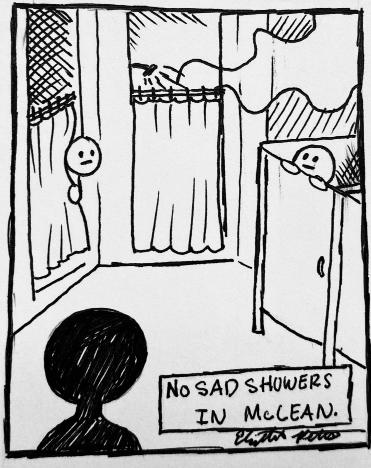
Bryce is a mid-sized woman, which is very different from her petite female pro tagonists in her other two series. While be ing mid-sized is not a big deal, it is great to see the different body types. Maas does not make her size a big deal within the book ei ther. She mentions it casually but does not make it Bryce’s whole personality.
While Bryce and Hunt are the main char acters, there are plenty of side characters that keep the laughs and plot going. Ruhn Danaan (Crowned Prince of the Valbaran Fae), Lehabah (fire sprite), Fury Axtar and Juniper Andromeda (friends of Bryce) are some of the main secondary characters that are involved with the drama of HOEAB.
This book is a mix of emotions. It is light hearted with witty banter and irreverent comments. It also has deeper themes re garding broken families, prejudices, slav ery, etc. Many readers can relate to this book.

“Crescent City: House of Earth and Blood” is available at Target, Barnes and Noble and on Amazon.
FREE EVENT
Sunday, Nov. 20, 2022 at 3 p.m.
New video game: ‘Bayonetta 3’ review
Tyler Hill Staff Contributor
Bayonetta, a name that is highly popu lar in the video game world, is back for the third installment of the series. We first learn about her in the first game, “Bayonetta,” re leased on Oct. 29, 2009. She was known as the witch with no memories trying to put the pieces together of who she is while fighting the angels of Paradiso and battling a fren emy.
After realizing the power she possessed, she takes on a new adventure in “Bayonetta 2,” released on Sept. 20, 2014. While tradi tionally battling angels with her best friend Jeane, a summon goes wrong with one of her demonic darlings. This causes the de mon to turn on them and knock Jeane’s soul into Inferno. Bayonetta now must find her best friend lost in Inferno while battling an gles and demons and saving the world all on one plate.
Moreover, “Bayonetta 3” was one of the most highly anticipated games of 2022 and was sending pre-orders at the uttermost rate. Everything about it is fresh and lively. The fact that we see how vulnerable she has become is astonishing. She is known as the tough heroine that will stop at nothing to reach her goal.
Her fighting style is traditionally her and, as in every game, she has a new set of guns for battle. This time they are named Color My World. The outfit was uncertain at first,
but realizing it was a call to the first game when she was a child made complete sense and immediately became a favorite.
The storyline will have your jaw drop ping, tears flowing and anticipation for the new generation of the Umbran Witches. The third game is multiverse based where you meet various Bayonettas helping you to save the world before it is destroyed by the Homunculi. “Bayonetta 3” is exclusively available on the Nintendo Switch, and one can say that it was a great idea. The graph ics are clean and sharp except for moments where there are giant battles, like fighting a giant bio project in the middle of a tidal wave washing through New York City.

A player who has never played a Bayo netta game before will find it very easy to maneuver. The title screen and main menu gives you very clear instructions on what to do next. As a huge fan of the game, it took a daring and bold route with it paying off greatly. One can confidently say that Bay onetta will never die. The legacy is set in stone, and the Umbra will never fail.


Easy Sudoku
Hard Sudoku Tuesday, November 8, 2022D2
Asst. A&E Editor
Grace Harbour
Sudoku puzzles are provided by www.sudokuoftheday.com
Margaret Sobotta/The Slate
Sad Times in the Shower
Image courtesy of trustedreviews.com
Shippensburg University Community Orchestra alongside Concert Choir, present the great classical masterwork, Mozart’s Requiem.
Comic by Elizabeth Peters
Football belts Lock Haven 44-9
a touchdown.
Shippensburg University’s football team belted Lock Ha ven University 44-7 on Satur day in a Pennsylvania State Athletic Conference (PSAC) Eastern Division matchup at Hubert Jack Stadium.

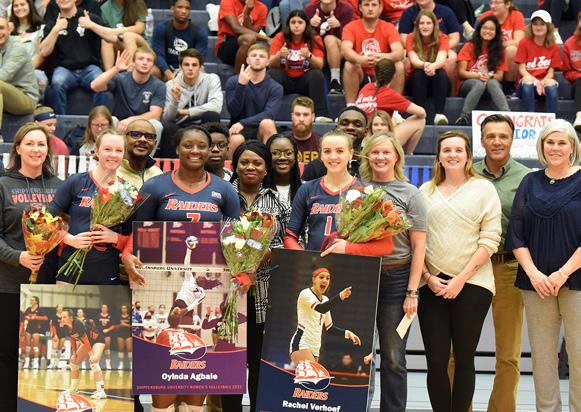
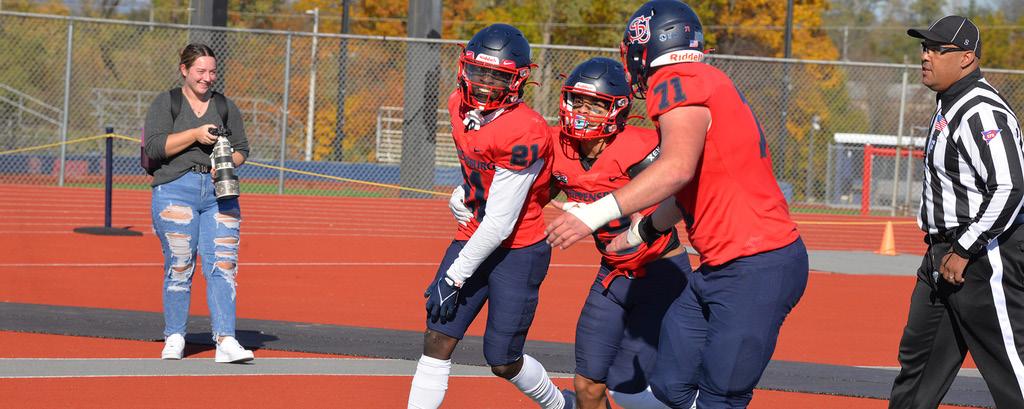
SU completely dominated the game on both sides of the ball, scoring 35 points in the first half and only giving up a touchdown in the final 30 seconds of the game.
The first two scores of the game came courtesy of senior running back Khalid Dorsey, with first quarter touchdown runs of 16 and 3 yards.
On the opening play of the second quarter, fresh man quarterback Evan Falco made the score 21-0 with a 12-yard touchdown pass to junior receiver Mike Viglia no.
The next score of the game belonged to the SU defense, as redshirt-junior defensive back Nasir Greer jumped a screen pass for an intercep tion and took it 35 yards for
On the ensuing posses sion, redshirt-sophomore Ray Jones blocked a punt to set up a 1-yard touchdown rush by senior Bill Williams. Williams’ score ballooned the Raider lead to 35-0 at the half.
In the third quarter, Dors ey would score his third touchdown of the game, but a missed extra point would keep the score at 41-0.
Sophomore kicker Jax son Montross would redeem himself in the fourth quar ter with a 25-yard field goal, capping the scoring for Ship pensburg and making the score 44-0.

Lock Haven put together a long 88-yard touchdown drive in the final minutes to save a shutout, but the Raid ers would go on to win 44-7.
SU produced a sea son-high 171 yards on the ground in the contest, with Dorsey accounting for 46 of those yards. Dorsey also added 32 receiving yards in the contest as well. Williams totaled 61 yards rushing on
the day on a team-high 12 at tempts.
Falco was an efficient 1521 on the day for 172 yards and a touchdown. Vigliano led the way for the receiv ers with three catches for 54 yards and a score.
The Shippensburg defense played ferociously Saturday, combining for 15 tacklesfor-loss (TFLs) in the win. Sophomore linebacker Javon M. Cruz recorded a teamhigh seven tackles, and tight end TJ Wagner posted a ca reer-high five tackles. Four different Raiders were cred ited with 2.0 TFLs.
The win snaps a threegame losing streak and moves the Raiders record to 4-6 on the year. The Bald Ea gles stay winless in the PSAC Eastern Division with the loss.
SU will conclude their reg ular season next week at Mc Connell Family Stadium as they travel to Erie to take on Gannon University, Saturday at noon.
Men’s cross country takes home 2nd
Jack Ansley Asst. Sports Editor
The Shippensburg University men’s cross-country team placed 2nd at the Pennsylvania State Athletic Conference (PSAC) Championships this weekend. The Raiders had all their scorers finish in the Top 16 on Saturday.
SU freshman Garret Quinan was the top scoring runner for the Raiders with a sixth-place time of 25:27.9. This was his first meet in the top finishing position for the Raiders. Quinan was one of two freshman that finished the race in the Top 20 position.
Junior Hayden Hunt finished one place behind Quinan in seventh place. The 2021 PSAC Men’s Cross-Country Rookie of
the Year finished with a time of 25:34.5. Hunt finished fifth in last year’s championship.

Senior Nathan Harding finished in 12th place with a time of 25:45.1. Harding earned an All-PSAC First Team medal after running a 14 second personal record (PR) for the third con secutive meet this season in his fourth and final PSAC Cham pionship meet.
Junior Joey Cintavey finished one spot short of an All-PSAC First Team performance, crossing the line at 25:56.1. Cintavey was the fifth Raider to post a sub-26-minute time on the day.
The Raiders finished in second place at the Conference championships for the third straight year and the fourth time in the last five conference meets. It is the 20th time in school history that the Raiders have finished second in the confer
ence meet in the last 45 years.
1978 was the first year that the team finished second in the PSACs. The team has not won the PSAC Championships since the 2017 season.
The men’s cross-country season continues in two weeks when the men travel to Mansfield University’s Lamb Creek for 2022 NCAA Atlantic Region Championships.
Sports Tuesday, November 8, 2022 E1 Field Hockey, E2 Volleyball, E2
Photo courtesy of Andy Grosh/SU Sports Info.
Shippensburg University running back Khalid Dorsey led the way on Saturday scoring three touchdowns totaling 78 yards in the win over Lock Haven University
Isaiah Snead Sports Editor
Photo courtesy of Andrew Miller/SU Sports Info.
Raider of the Week: Khalid Dorsey - Led SU to a 44-7 blowout victory over Lock Haven - Totaled 78 total yards, 46 rushing and 32 receiving - Scored three total touchdowns in the game
Freshman quarterback Evan Falco threw for 172 yards and a touchdown.
place in
PSAC Championships
Volleyball has festive weekend; Clinches 2nd seed in PSAC Tourney
The Shippensburg University volleyball team celebrated two wins against Millers ville University and West Chester University in Pennsylvania State Athletic Conference (PSAC) Eastern Division matchups in Heiges Field House.
The team also had festivities for their Se nior Day and celebrated 400 career wins of their head coach Leanne Piscotty.
Before the game against Millersville on Fri day evening, the three seniors on the team, Alex Leitner, Rachel Verhoef and Oyinda Ag bale were honored.
In the game against Millersville, SU was dominant from the beginning. In the first set, they took the lead right at the start and did not look back. They won the first set 2519 and did not allow a Millersville lead at any time.
The second set was closer and featured many tied scores and lead changes, before the Raiders finally took it with 29-27 off a kill from sophomore Kat Negron.
The third set was again dominated by the Raiders. A kill by Verhoef won the third set for SU and made their sweep of Millersville perfect.
Negron, along with sophomores Emily Gardner and Maddie Clabaugh, was one of three SU players to post double-digit kills. Freshman Kearstin Davis, reigning PSAC Eastern Division Player of the Week, had 43 assists and 11 digs and had her ninth 40+ as sist match of the season.
Before
The first set was close with many ties. After a tie at 21-21, Shippensburg took a 23-21 lead.
West Chester then took a timeout and after that went on to win the first set with 25-23.
In the second set, the Raiders took the lead after a tie at 2-2 and did not let West Chester get close afterward. SU won the second set 25-18.
The third set saw even more domination from the Raiders, as they won it 25-12.
The fourth set was again closer, with many ties and lead changes in the beginning. SU led 24-18 when West Chester rallied back to save four match points at 24-22. A kill by ju nior Jordan Bowen finished the match.
Gardner led the Raiders with 15 kills, 13 digs and her first double-double of the sea son. Senior Rachel Verhoef had 12 kills, swung 0.476% and added a career-high of four block solos and two block assists.
Leading the Raiders in digs was freshman Erica Lampus with 15, while fellow freshman Davis had her 10th 40-plus assist match of the season. Davis totaled 44 assists and add ed 13 digs.
With the two wins over the weekend, the Raiders clinched the No. 2 East seed for the 2022 PSAC Tournament.
On Wednesday, Shippensburg will host East Stroudsburg University for the PSAC Tournament Quarterfinals in Heiges Field House at 7 p.m.
No. 2 field hockey picks up two ranked wins; honors seniors on Senior Day
 Editor
Shippensburg
SU’s week started off poorly, however, as they dropped their first game of the week to No. 5 Millersville University 4-1 on Wednesday.
Despite totaling 17 penalty corners and nine shots on goal in the contest, the Raiders could only find the back of the cage once. That lone goal came on a second quarter corner strike by freshman Agus Garibaldi, assisted by senior Merel Hoekstra.
MU quickly scored two goals in the first period and forced SU to play from behind the entire game. Leading 3-1 at the half, the Marauders kept the pressure on and added another goal in the final 10 minutes of the game to create the final 4-1 score.
The
The Raiders took advantage of their opportunity to bounce back on Saturday, as they defeated No. 10 IUP 6-1.
Before the game, Shippensburg honored seniors Hoekstra, Paige Bond, Maura Mears and team manager Kristen Zellner for Senior Day.
Feeding off the large Senior Day crowd, SU scored three minutes into the game when Hoekstra rocketed in a pass from sophomore Tess Jedeloo to take an early 1-0 lead.
Sophomore Yasmin De Meyer scored in the waning mo ments of the first half to send the Raiders into the half up 2-0.
Garibaldi posted a second half hat trick in the game, with two of the three goals coming in the final frame.
Freshman Lily Cantabene, who picked up an assist earlier
on De Meyer’s goal, scored the last goal of the contest with less than three minutes in the game.
The Raiders finished with 16 penalty corners and had a 13-5 shots on goal advantage against IUP.
Shippensburg would round out their competitive week with a 3-2 win over No. 8 Converse University on Monday.
SU got off to a strong start and led 2-0 at halftime thanks to goals from sophomores Chloe Prettyman and Jedeloo.
Converse would attempt to rally with a fourth quarter goal to cut the deficit to one, but Garibaldi snuffed that rally less than a minute later with a goal of her own. Her goal made the score 3-1 with 12 minutes remaining.
Converse would nab another goal with under four minutes left, but the Raiders would hang on for the win.
SU could fall anywhere from the No. 2 seed to the No. 4 seed these playoffs. The Raiders will conclude their regular season on Saturday with an important game at Mercyhurst University at 1 p.m.
SPORTS November 8, 2022E2
Photos courtesy of Andrew Miller/SU Sports Info. Shippensburg University’s volleyball team celebrated its seniors before its win over Millersville University on Friday, one of two celebrations last weekend.
their next game against West Ches ter on Saturday afternoon, head coach Piscot ty was honored for achieving 400 career wins as a coach at Shippensburg University.
Nicola Pugge Staff Contributor
The Raiders will host a playoff matchup this Wednesday at 7 p.m.
University’s No. 2 field hockey team played three games this past week, going 2-1 over that stretch with wins over Converse University and Indiana University of Pennsylvania.
Eight different Millersville players contributed to the four Marauder goals and four Marauder assists. MU goalkeeper Kerstin Koons made nine saves in the game.
loss did have Pennsylvania State Athletic Conference (PSAC) playoff ramifications, as the SU loss clinched the No. 1 seed for Kutztown University.
Isaiah Snead Sports
Photo courtesy of Treasure George/SU Sports Info.
Shippensburg University’s No. 2-ranked field hockey team fell this week at Millersville University, but bounced back with wins over Converse University and IUP.
Let’s do the ‘Time Warp’ again!
Students perform annual “Rocky Horror Picture Show” in CUB MPR









November 8, 2022F1
Photos by Jayden Pohlman and Carmine Scicchitano

November 8, 2022F2
