
Letter from the Managing Editor
Dear Patriots,

Midterms are already next week and you know what that means… this semester is almost halfway over! I hate to admit it, but this semester is already passing faster than I would like it to. For many of you, graduation is coming up, making all of your hard work during your time here at Cumberlands worth it to finally get the degree you’ve put the effort into receiving. Many of our valuable members at The Patriot are graduating this spring and I am so glad for them even though it will be hard to see them go. I’m excited to see what they publish as some of their final pieces to The Patriot.
During the time around midterms and finals, it’s easy to envelop yourself into the mindset that you aren’t going to get the grade you want unless you pull at least three all-nighters fueled by an alarming amount of caffeine. Will staying up past 2 a.m. studying “just a little bit more” really benefit you more than going to bed before midnight and making sure you’re well-rested for your exam(s)? Even though passing your midterms, exams and essays is important, you should know that yourself and your mental health should always come first. Taking care of yourself is so important and it is easier to tackle harder and more stressful assignments when you have your bearings settled with yourself.
Self-care and just doing a little something extra just to make yourself feel better can go along way. Whether you prefer face masks or music or gaming or writing or singing or painting or exercising or eating your favorite snack, there’s no limit or strict definition when it comes to what “qualifies” as self-care. Take a 15-minute break every once in awhile studying and do a small activity that you enjoy. That’s something that’s always helped me study more content during a given period of time and it sort of energizes me enough to push through the content I’m studying.
We have our first “theme issue” of 2020 hot off the press, all about self-care. I am so proud of how everything has turned out in this issue and it makes me really appreciate the hard work that my staff does on a weekly basis. A couple co-workers, Dr. Jordyne Carmack and myself are at Minneapolis for the Associated Collegiate Press Best of the Midwest College Journalism Conference for the weekend to learn how to be better journalists and I can’t wait to share and utilize everything that I am going to learn. We wouldn’t have these opportunities without the continuous support from our students, staff, faculty and administration. Thank you all again for picking up another issue.
Do the good things,

Haley Bullock, Managing Editor

Editor-In-Chief
Taylor Duke
Managing Editor Haley Bullock
Faculty Adviser
Jeremiah Massengale
Staff
Emilee Agee Makayla Durham Abigail Fletcher
Leanne Gregory Alex Nunn
Maranda Young
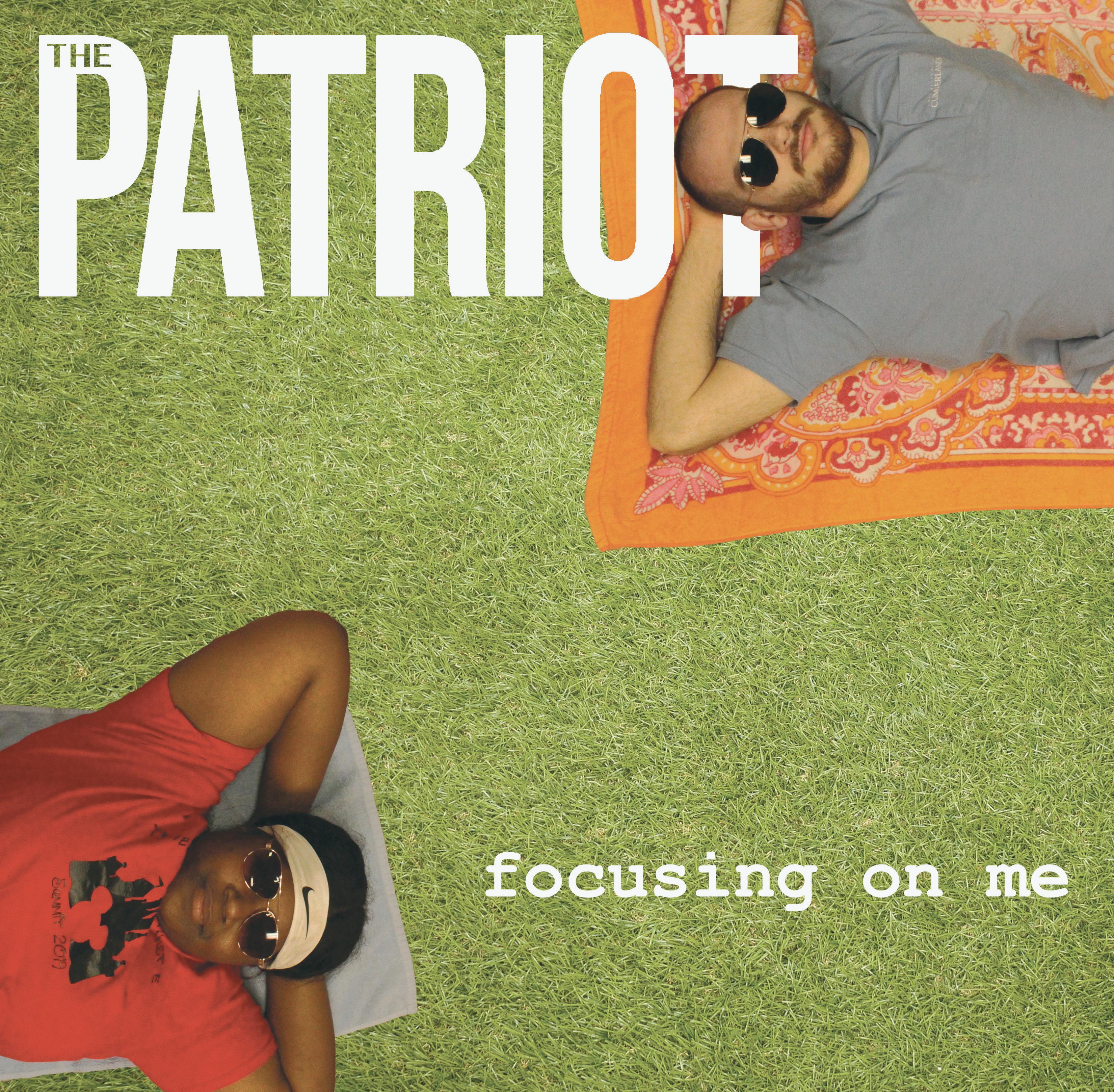
Front cover photo by Maranda Young
Front cover photo illustration by Taylor Duke
Back cover by Haley Bullock
Email comments, concerns or tips to: thepatriot@ucumberlands.edu or call us at 606-539-4172 7000 College Station Drive Williamsburg, Kentucky 40769
The Patriot is the student publication of the University of the Cumberlands. Our goal is to provide timely and original content by highlighting campus news and views.
Award-winning member of the Associated Collegiate Press and Kentucky Press Association.
Take care
Tips for how to relieve stress

BY MAKAYLA DURHAM Staff Writer
Everyone in life has their own struggles and understanding how to help this stress can not only help mentally but physically in the long run. Sometimes it’s hard to find the right way to outlet these stressful situations and finding the right mechanism that personally fits you can take the relaxation out of relaxing. This list can help bring some new ideas on ways to help take care of yourself through positive and motivating tips. Every tip may not be the right one for you but you never know unless you try.
1. Pamper - After all the hard work you do, or even normal work you do, you deserve to treat yourself. Relaxing helps to reduce the effects of stress and on its own helps to create a positive effect for yourself. Relaxation also helps in triggering the production of serotonin, “happy” hormones, which can connect to better moods and better sleep. Some recommended ways of pampering are a face mask, yoga, meditation and even journaling. This of course doesn’t mean you have to do all these things, pampering is about finding something that helps you take the stress off of everyday life.
2. To Do - In college, or even in life, you have stuff to do, and keeping up with these tasks can become exhausting if you never know what needs to be done and when. Creating a simple to-do list can help in making sure you finish every assignment and errand on time and without rushing. Having a planner or even sticky notes to write on each week to help you remember can improve your own motivation towards getting work done and it helps in not doing it at the last minute.
3. Active - Your bed is a great place to sleep at night, but if you spend a lot of time in bed your body will have trouble seeing it as a place to rest. Getting

out of your room, even if it’s just to do laundry, can be better for you than you think. Even getting a group of friends together to hang out or play some games can bring a great benefit to yourself and others around you.
4. Music - Everyone has their own personal love of music, if someone asked, you can probably name a few songs that carry a happy moment with them that raised your spirits when needed. We all have the ability to respond to music because it is a human invention, made for humans by humans. Creating a playlist of songs with a slower tempo can help with breathing and keeping calm during or after stressful conditions.
5. Sleep - Mostly all college students experience stress and anxiety which can lead to many restless nights and can cause more problems in the long run. Understanding how to help these sleepless nights can help academically and physically. Just one night of poor sleep can lead to decreased motivation, optimism and sociability. Some ways to unwind before sleeping is to stretch or do breathing exercises and avoiding any caffeine that can stimulate the brain and keep it stimulant while you’re trying to sleep.
6. Eating - You eat to receive energy, but if you don’t have the energy from eating then doing even the simplest tasks can cause big problems. Making sure you create the time to eat, even if it’s just a snack, can create the energy you need to be motivated throughout the day. Food helps to contribute important hormones to the body that regulate our mood and help us to achieve serotonin. Food can also provide a sense of comfort and satisfaction, on a cold day a hot bowl of soup or on a hot day a cold ice cream can be refreshing.
Photo courtesy of Ben Duchac
Photo courtesy of David Iskander
A perfect match
A Q&A with UC’s counselors to aid students in finding a good fit
BY ABIGAIL FLETCHER AND HALEY BULLOCK Staff Writer and Managing Editor
University of the Cumberlands offers free counseling to all students. Although this is a unique opportunity, seeing a counselor can be intimidating. The staff of the UC counseling center are licensed behavioral professionals including graduate school interns that are here to walk through the counseling process with students. I interviewed the counseling staff at UC to help the process of finding a counselor, or settling nerves about the counseling process.
Jodi Lefevers Carroll MSW, LCSW Director of Behavioral Health
AF: What are your goals as a counselor?
JC: To try and find a connection with everyone that I work with. Do my best to understand what it is that they want out of counseling and remain focused on that. It also has to be balanced with the overall assessment of needs that we might see that the person might not be recognizing or might not want to prioritize in the way they should be if there is a safety thing.
AF: What made you decide to be a counselor?
JC: I guess a combination of having been in a place personally where you can’t always figure out things completely on your own. Each person needs support and I had the opportunity to become trained in a way to do that with people in this way.
AF: Why is counseling beneficial to students on campus?
JC: It is particularly beneficial because [students] are in an extremely challenging time in their life due to that transition of becoming a “real adult” and really juggling a bigger portion of their own responsibilities in life verses parents taking care of big portions of this and that for them.

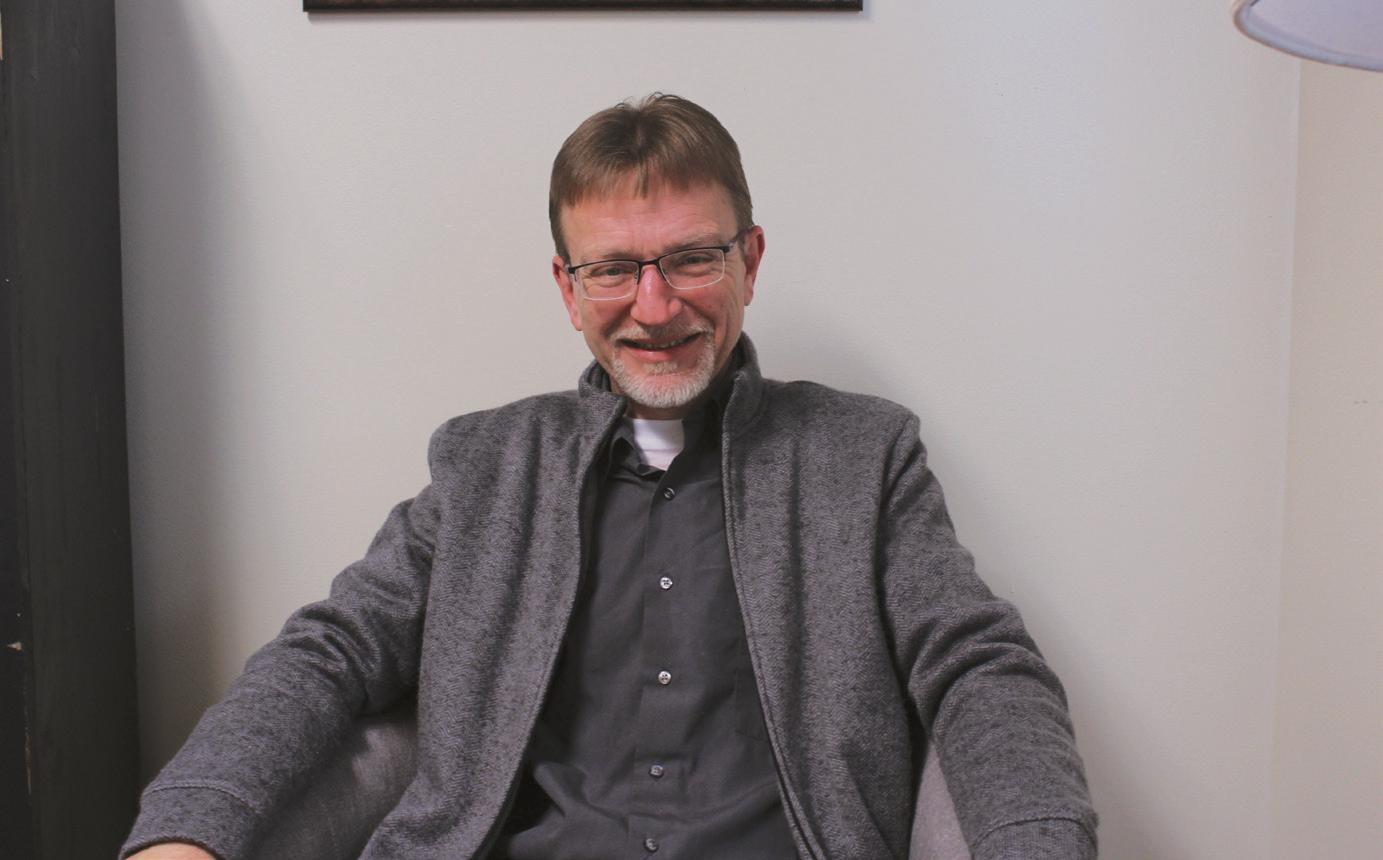
is Steven Halstead sitting in his office in the counseling center.
AF: What makes this counseling center different from other counseling centers or agencies?
JC: Something that is different about us would be our desire and ability to be flexible to the students scheduling needs. We offer appointments to meet a student’s scheduling needs. We have a lot of room to still grow. Hopefully, next academic year we will see more growth.
AF: How would someone make an appointment?
JC: They could schedule an appointment by walking in, by calling the counseling center, or emailing the counseling center or going online and filling out the online referral form.
Steven Halstead, MED, LPCC-S, NCC and University of the Cumberlands professor
AF: What are your goals as a counselor?
SH: When I think of the goals of a counselor it has been the same since the beginning. It is to do the best, continue training and help individuals get to where they can be on their own. I believe each individual has it within themselves to be the best they can. Sometimes helping them peel back the layers so that they can see that for themselves.
AF: How would you like to see the counseling center grow?
SH: I would like to see the counseling center be non-existent and where there is no need for it. We recently went to New Orleans to meet with counseling centers from different colleges around the country. I was pleased to know that we were already doing things here that other campuses have been dreaming about, such as having master-level students in place to get their supervision. It also makes it a teaching facility.
AF: What is a common misconception about counseling?
SH: I have heard the saying that 99% of people need counseling and the other one percent is lying. Everyone needs counseling at some time of their life. A lot of times people attach a stigma to it because they feel it is only for the mentally ill. We all need someone to talk to sometimes or blow off steam.
Holly Lockhart-Kidd, LPCC Behavioral Health Therapist
AF: How would you like to see the counseling center grow?
HL: Being able to meet the needs of the University itself and the students, but also to not stress the counselors out or overwork them. I have seen a lot
Below
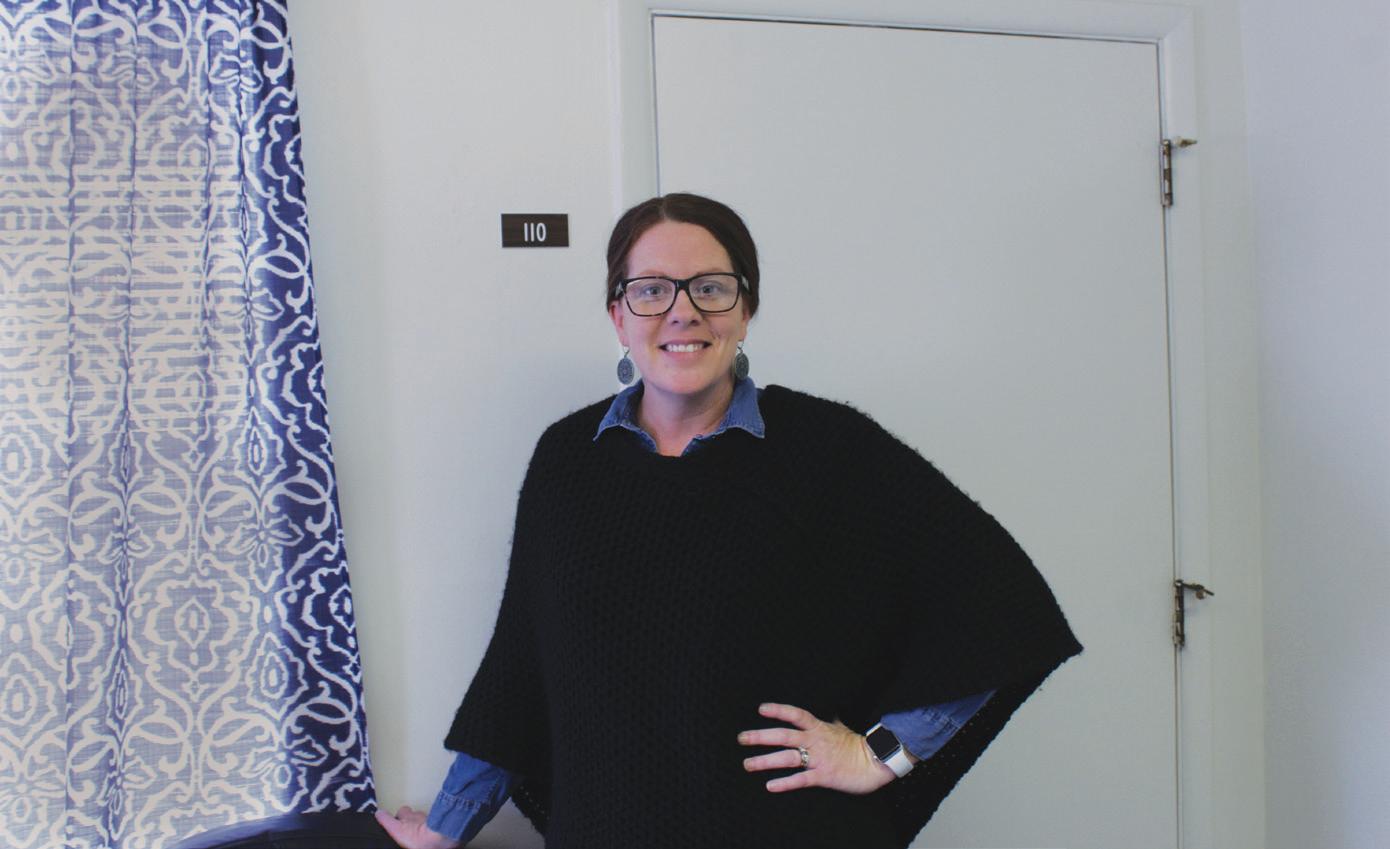
Jodi Lefevers Carroll is shown in her office which gives clients a homey feel.
of need since I have been here. I do believe we are doing a good job to meet that need.
AF: What is a common misconception about counseling?
HL: That people will think you are weird for going to counseling, or that you will get made fun of or that medication is evil. There is nothing wrong with seeking professional help. One of the big misconceptions is that you only go to counseling if you’re “crazy” or things like that. I do not diagnose unless I have an actual reason. Because when you put a diagnosis on someone you are labeling them or sticking them in a box. You are a person, not your diagnosis. I feel like definitely the judgment piece is a really common misconception.
AF: What made you decide to be a counselor?
HL: Personally, I have had to go counseling multiple times in my life, because of various situations that I have dealt with. I honestly had an interest early on in helping people. I have felt like counseling was a good fit for me because it allowed me to be more optimistic than the previous settings had allowed me to be. One of my counselors from my past was not such a good [fit.] There was no relationship established with that counselor. They actually failed me in a few ways, so I sought out a different counselor who I keep contact with, as a colleague, instead of a counselor for me. She was just a person you could sit and talk to for hours on end and not feel at all uncomfortable and feel great when you left her office. I wanted to be that person for other people and support people in the way I needed that support that I wasn’t given.
Amy Hatcher, Counseling Center Intern
AF: How would you like to see the counseling center grow?
AH: It has grown a lot this year, which is not only great for us, but great for students. We are located in the Browning Annex, so we have our own building now. Previously, we were in the Correll Center, so students had to go up on the second floor. They had to stand out in the hallway. It was not private or confidential. It was once you went in with a counselor, but it wasn’t tailored to the students. We have more privacy and let the students feel at home.
AF: What is a common misconception about counseling?
AH: That if you come to counseling you are going to be judged or labeled. That is one good thing about counseling and being on campus that it is a free service to students. It is an extra support that is free to students. It is
completely confidential and like its own entity on campus. Even though you come to the counseling center and even though you’re a student, we do not talk to your professors. We do not talk to the administration about you coming to counseling. Another thing that students may think is that your parents could call and find out if you are coming. Unless you sign a release, no one can know you are being seen.
AF: What made you decide to be a counselor?
AH: I have always wanted to be in the helping profession. I always knew I wanted to be a counselor. I think I just kind of knew, but I have always loved counseling. Even though maybe early on I wasn’t for sure counseling was what I wanted to do, everything kind of fell into place with that. I have always wanted to both help people who have had issues and help take away the stigma in mental health. To also help people find ways that they can cope and be themselves. That has always appealed to me. It has always been a part of who I am.
Lenée Figliola, Counseling Center Intern
AF: What are your goals as a counselor?
LF: My goal as a counselor is to create an environment in which my client can figure out how they can go about growing in the ways they would like to.
AF: What is a common misconception about counseling?
LF: That it is a step back and that it is a bad sign. I tend to see it as a good thing when someone wants to go to counseling because it means they want to be introspective. They are wanting to change or grow and that’s always a good thing. It’s not always indicative that something went wrong.
AF: What made you decide to be a counselor?
LF: Because I believe introspection is one of, if not the most, important things in the world for helping yourself and everyone around you and the world as a whole. Counseling is a wonderful modality for that.
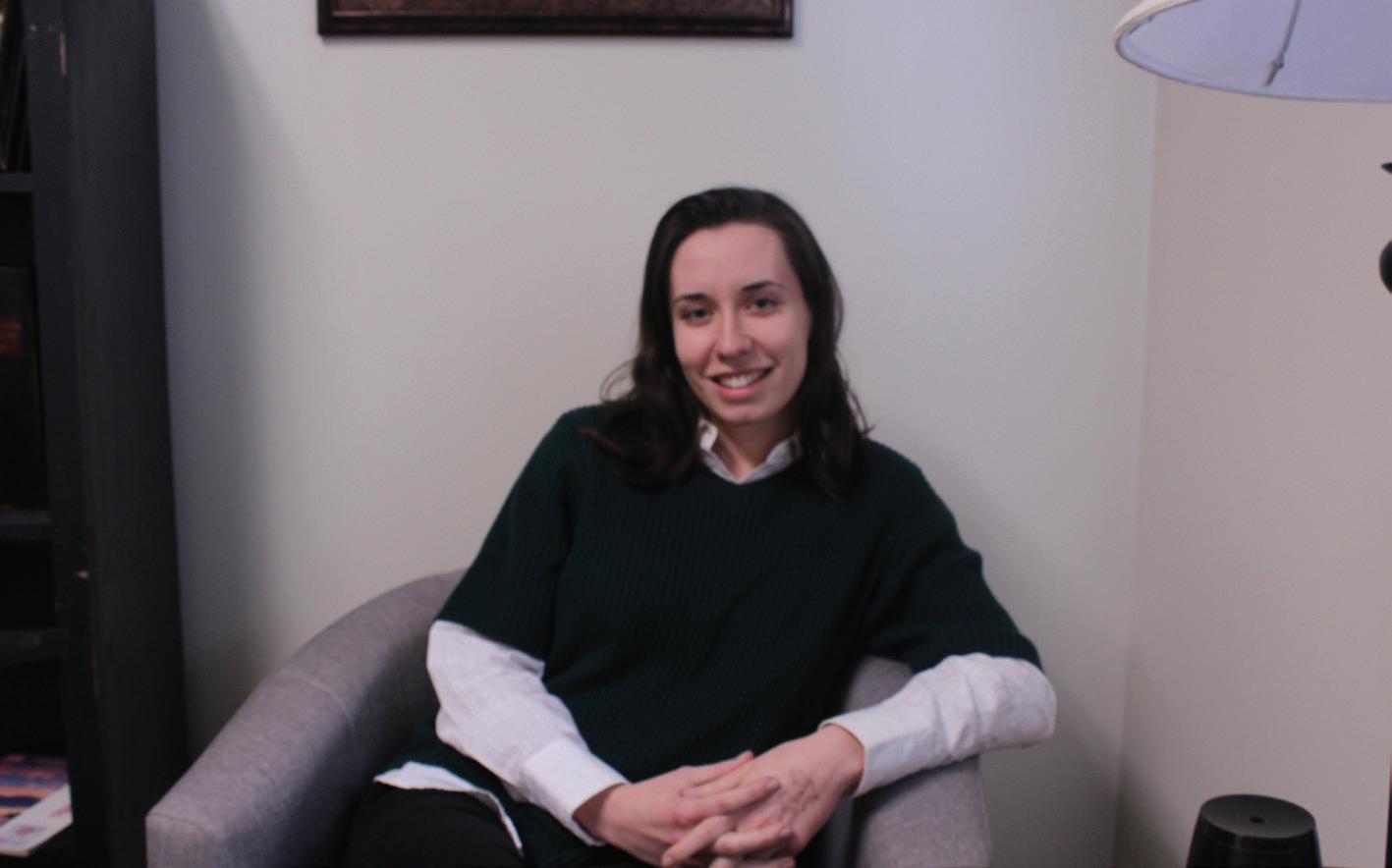
Amy Hatcher is shown below standing by the front door of the counseling center.
This is Lenée Figliola seated in the an office.
Focus A devotional
BY EMILEE AGEE
Staff Writer

Psalms 143:7-8 (ESV) David cries out a lament to God and says, “Answer me quickly, O Lord! My spirit fails! Hide not your face from me, lest I be like those who go down to the pit. Let me hear in the morning of your steadfast love, for in you in trust. Make me know the way I should go, for to you I life up my soul.” David is threatened by his enemies and is desperate for safety and is afraid for his life. While we may never experience a threat this urgent, everyone experiences loss, pain and panic. Although it may seem like God is nowhere to be found, and it may seem like there is no one to hear your prayers, God’s steadfast love has been with you all this time. The word “steadfast” means firm and unwavering. God loves us enough that He would never give up on us. But, as flawed people who make wrong choices, we can get lost. We don’t know what direction to go in, whether it’s our major, our future career, a relationship, or little things every day that can end up pulling our focus away from Him.

Sometimes we look up and don’t know how we got to the place we are. David’s pleading to God when he says, “Make me know the way I should go.” At a certain point in every semester, our spirits and motivation start to falter. We are prone to get behind, to doubt. If we rebuild that trust in God, we will find strength to
see things through until the end. David is lifting up his worries in urgent prayer and acknowledging his own weakness which shifts his focus back on God. He says, “Let me hear in the morning of your steadfast love” because he wants an answer as early as the sun rise. It goes back to the saying that the darkest hours are just before the dawn. There are trying times throughout life that can test our faith. Remaining focused on God can help prevent the worry and fear. If someone doesn’t continue to build a relationship with someone else, those people will drift apart. The two might still be around one another, but they will feel far away. This can happen between us and God, but the difference is God will always want you to come back, He will always care for you. If you feel lost, not knowing which way to walk, lift it up to God; He’s eager to hear from you.
photo courtesy of Priscilla Du Preez
Happy eating
Best foods for self-care

BYLEANNE GREGORY
Staff Writer
When planning what habits to implement into a self-care routine, a healthy diet can be one of the most daunting things an individual can consider. With so many foods available to the modern-day consumer, and so many opinions surrounding what constitutes a healthy diet, figuring out what foods are the most beneficial to incorporate into every day meals can feel overwhelming. For those who are looking for a little guidance, or who don’t have the ability to consult with a professional nutritionist, the suggestions found in this list looked not only at what health benefits the food offered, but also at how versatile the food was when it came to preparing it.
1. Dark Chocolate
Although it is a dessert known for its sugar and calories, dark chocolate, according to The Harvard Nutrition Source, also contains high amounts of flavanols. These chemicals have been shown to improve blood pressure and insulin sensitivity, which helps reduce the risk for high blood pressure and diabetes over time. Dark chocolate is also dense in nutrients such as zinc, phosphorous, iron and magnesium. It can also be paired with foods such as nuts, fruits and yogurts for added richness, or melted down and put into milk or drizzled on top of other desserts for an extra hint of sweetness.
2. Avocado
Found in the punchlines of millennial jokes and smeared on toast, this fruit, according to UT Southwestern Medical Center, is full of essential minerals like fiber and potassium, and comes with a high supply of vitamins B, C and E. Avocadoes are also known to have a cavalcade of monosaturated fats and phytosterols. These components are documented to lower the levels of bad cholesterol in the body, thereby decreasing the risk of heart disease. Besides being an excellent toast topper, Allrecipes states, avocadoes can be toasted in a skillet or baked to give them a crisp exterior perfect for dipping. They can also be mashed or liquified for use as a base in sauces, soups and salads.
3. Turmeric
This exotic fare, according to the U.S. National Library of Medicine, is bursting with the polyphenol curcumin, which is known for its metabolic stabilizing, anti-inflammatory and antioxidant properties. Curcumin is also tied to helping people deal with pain and mitigating the effects of degenerative diseases that affect the eyes. Because it is a spice, Allrecipes explains, turmeric can be included in a plethora of vegetable, meat and curry dishes as a rub or sauce. It can also be stirred into soups, beverages and desserts as a flavoring agent or topping.



Photo courtesy of Brooke Lark