A large portion of our student body falls into the category of student athlete, a number that includes myself. Most days hold a combination of class schedules, practices times, work-study, and the homework assignments that require attention, but in the midst of all this hustle I have found more valuable lessons are within those team members and our practice times.
In that time we work together, eat together, and play together there are bound to be hiccups along the way. It could be anything from not hitting that game winning shot or striking out with two already down, but it is sheer reality that life will not always go as we have planned. Of course this does not give reason to reduce the effort we put in, but in these times it should motivate teams closer to rally for their esteemed goal.
This motivation is not easy to come by when the circumstances are tough. It will require more hard work and determination to narrow your team’s focus to overcome rather than tremble in the sight of the negative, but there is something far more valuable when, as teammates, we learn grace, humility, faith, and love.
I have found that victories like these are more treasured because they can be relayed into all aspects of life. Whether you someday become a boss to several employees, or even become a coach of your favorite sport, these qualities are timeless and exercise more benefits than an hour-long workout.
While you may not be a student athlete, I am certain there are areas of life where you can relate to feeling disheartened. When the times get tough remember your support system, whether it be your friends, family, or teammates and they will motivate you to push through the trials and reach your goal.
I hope you enjoy this issue and continue to stay up to date with your campus newspaper, The Patriot.
Editor-In-Chief
Assistant
Faculty Advisor
Editorial
Yours,
Ashton Rector
Ashton Rector
Editor Trenton Canada
Massengale
Lisa Bartram
Marianne Worthington
‘90s week at Spotlight
Photos by Jay Sanksakulchai
Above: Mana Tanajantaporn
Left: Jaclyn Jewell performs as a part of Spotlight. Right: Elizabeth Stewart sings.
Above: Slade Lambert
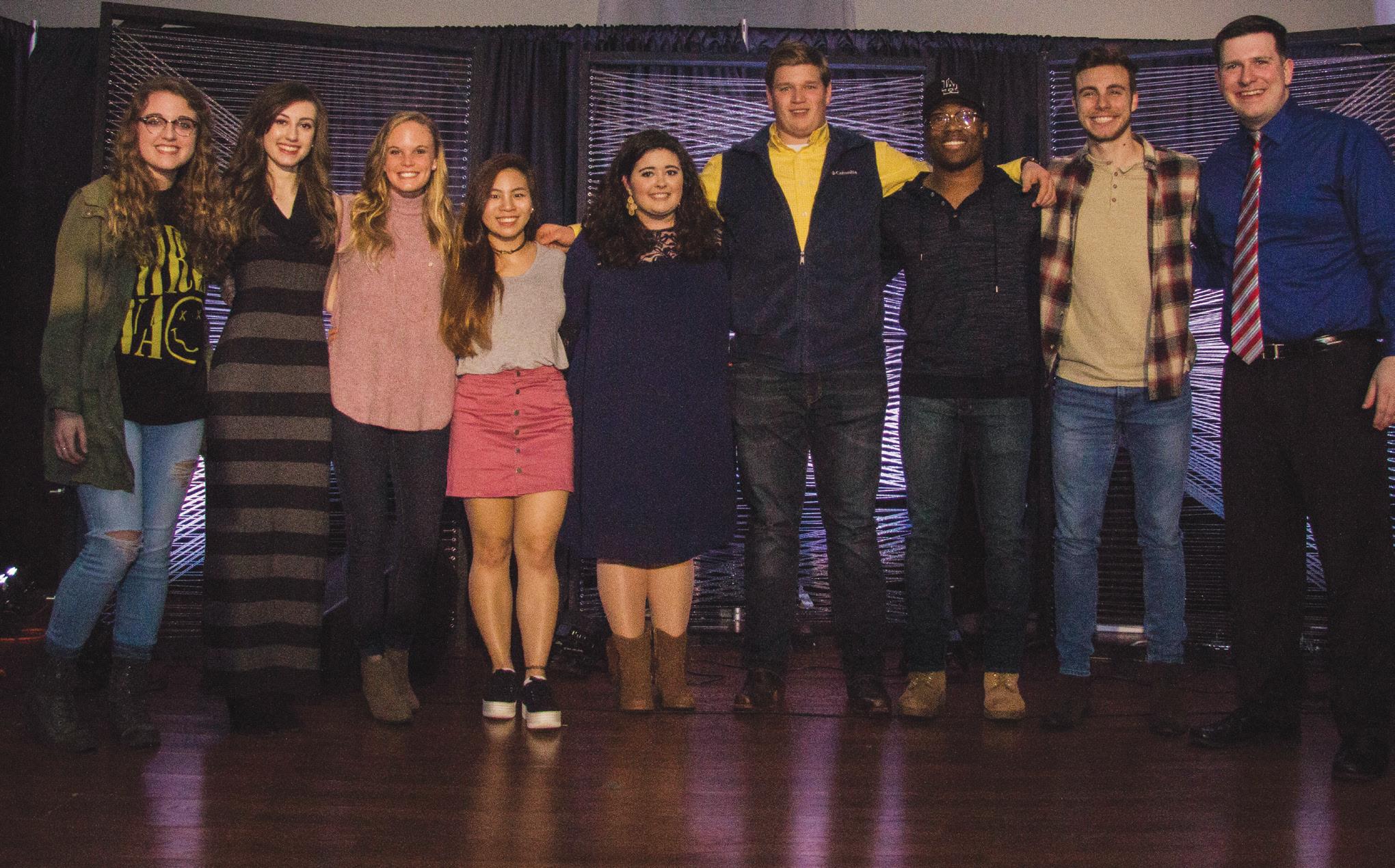
Right: The top nine Spotlight contestants
Behind the scenes of Campus Activities Board:
BY SARAH RAINOUS Guest Writer
A Q&A with director Lisa Bartram
In her own words, UC’s Campus Activities Board director Lisa Bartram is a “behind-the-scenes girl.” Bartram worked for CAB at Marshall University as both an undergraduate student and a graduate assistant, hoping for a director’s position somewhere after graduation. Years ago when a family friend mentioned University of the Cumberlands, Bartram sent in her resumé. Within three weeks, Bartram was hired and packing to move to Williamsburg, where she lived in Moss Hall for two weeks until her apartment was ready. In this interview, Bartram reveals behind-the-scenes information about CAB, as well as why she enjoys her job so much.
Q: Is this CAB really similar to Marshall’s? Or not?
LB: I mean, the events are the same. We all go to the same conference. There are two conferences you go to; it’s APCA or the NACA. So, APCA is the Association for the Promotion of Campus Activities, and NACA is the National Association for Campus Activities. We typically go to APCA because it’s cheaper, and it’s more for smaller colleges. But what you do is, there are all
these agencies, and all these agencies go to the same conferences.
Q: What kind of agencies?
LB: They’re talent agencies. So, they have a roster of who you can book for events. You go to these conferences, and you will see 20 minutes of somebody’s show. And that way I can see kind of what’s happening, what they’re going to do. And what I really like about these conferences is that, where we are a Baptist Christian school, everything that I bring in has to be clean. So, I like it that I can go up to these performers and say, “Hey, this is who we are. I’ve seen 20 minutes of your act, but I haven’t seen the other 40,” so they can tell me if they can be clean.
Q: So, the actual performers are there? Or just their agents?
LB: The actual performers are there. Most of the people you’ve seen on campus, we’ve seen them before.
Photo by DJ Hite
Q: What about money?
LB: You all [UC students] pay an activities fee that gets split halfway between CAB and SGA [Student Government Association]. Now, CAB has always been supplemented more because, you know, Williamsburg is a small town. And I won’t say there’s nothing to do, but it’s harder to find things to do here. So, we try and bring something every week. And the activities fee is not very expensive.
Q: Yeah, it’s not huge.
LB: It’s, like, 50 bucks or something. You know what I mean? So, we get 25 dollars of it. The school has always put more toward CAB so that we can provide something every week.
Q: Every single week?
LB: Every single week, every Tuesday…We try to bring in one performer a month. One big thing. And then the rest is filled with BINGO, or food or events, things like that to try and supplement all that.
Q: With more TVs on campus showing the events info, has there been a rise in attendance?
LB: Well, there are some things that I just know will be a hit. Like BINGO is always gonna be a hit because of prizes. Any time you can give away food and prizes, students are coming! I know Spotlight’s gonna be a hit. If I don’t think that people will come on their own, I’ll make it an [UC] Engage event. When I know it’s going to be a great event…
Q: Then you don’t have to make it mandatory, because you know people are gonna show up.
LB: But, like, the Filharmonic. I knew I wanted a lot of people to see them. Because it was kind of a big deal that they were here. So I made it an Engage. And there was, like, 400 people there!
Q: How hard’s the process of making something an Engage? Is it difficult?
LB: There’s a form that you fill out, and you submit it. I try and do at least two Engages – at least CAB’s presence is in two of the Engages – for the semester. So at least there’s one or two [UC Engage events] that are fun. You know you’re gonna have a comedian, or a magician, or something fun to go watch. Not that the rest of them aren’t fun, I’m not saying that –
Q: But you know for a fact that your stuff is fun.
LB: (laughs) Yes!
Q: So, some of the ideas you’ve got for people coming in are from conventions. What about the food events or BINGO? How do you get those initial ideas?
LB: That’s the beauty of the conferences, because they have [educational] sessions in the mornings. And with the ed sessions, it’s different people presenting how to get more people at your coffeehouse, how to advertise this, how to, you know. And they have something called block booking. You are in a region – like, we’re in the southeastern region – so, all the schools from that region go into this place called co-op buying – cooperative buying – and you sit at the same table with the different schools in your region. So, once we go to showcase and we’ve seen who we like, we go, “Okay, we like this person,” and another school will go, “Oh, we like them too.” What you do is, you try and find a date that you can bring them in in the same week, so that that performer can travel this area and hit three or four schools, because the more schools you can get to buy in with you, to bring him in at the same time, the cheaper the prices.
Q: So, you sit at the same table with Union, EKU…
LB: UK, all the schools. If they’re bringing someone in, then I can hook on and get a cheaper price…Everybody brings in students, too. Everybody talks. Everyone says, “Oh, we do this, and this works for us.” That’s how we got BINGO here. We have to be careful it doesn’t look like we’re gambling, but it’s been good.
Q: How much in advance do you plan?
LB: A year. (She lifts a calendar on her desk, revealing penciled-in activities.)
Q: Oh my gosh, you already have August for 2017!
LB: I already have May for 2018! The performers aren’t plugged in, but our budgets are due.
Q: What do you enjoy most about being on the activities board?
LB: The students. It’s always the students. It’s natural that I get closer with the students who work for me, you know; they become family. They always keep in touch. We’re always meeting up and doing stuff with each other. But it is satisfying to see everybody come out and really enjoying the show, having a good time. You know you’ve done a good job when everybody crowds around the performer afterwards to talk to them.
Q: What do you want students to get out of CAB?
LB: Well, I want them to come out, I want them to see something fun, and I want them to meet people. I don’t want somebody to sit in their room and never talk to anybody, never have a conversation. You know, if they love something and they see someone else who loves the same thing as they do, and it sparks a conversation, then that’s what it’s all about. And to create that feeling of community, that we’re all like this together…that’s the best thing that could happen.
A Q&A with Slade Lambert
BY MIKE KRZYSTON
Writer
A yearly tradition at the University of the Cumberlands is the oncampus singing competition, Spotlight. After being eliminated last season, Slade Lambert, a junior at UC, returned to Spotlight in an attempt to improve on his performances from last year and prove he has what it takes to win the competition. I had the opportunity to sit down with Lambert and talk about his experience from last season, his expectations for this season, and how he started singing.
Q: Slade, nice to be able to talk to you. Let’s start by talking about last season of Spotlight, what made you want to try-out for Spotlight in the first place?
Slade Lambert: I mean, honestly? It was because a lot of my friends were telling me to do it. So I thought, “Might as well go for it”. I mean, what do I got to lose?
Q: That’s a good outlook to have. So did you grow up singing? When did you figure out you had a good singing voice?
SL: I’ve been singing pretty much my whole life. I grew up in a family that loves music. As a kid, it was always being played around the house and I would just learn the words and sing along, just like any kid. But then I started singing in church, in the choir. That’s when I really started to like singing. That’s when I figured out I was okay at it.
Q: I can’t help but notice you have a southern twang when you sing. Is country your favorite genre?
SL: Yeah, I guess. My dad really likes country music, but he listens to pretty much anything. So do I. But I grew up and live in South Carolina, so it is part of the culture there, you could say. Country is for sure my favorite genre to sing. It sounds good with my guitar and it’s easier to play and sing to country than it is to rock, you know?
Q: Where did you learn how to play the guitar?
SL: (laughs) I taught myself through some YouTube videos.
Q: So tell me about your experience last season on Spotlight. Is that the first time you’ve ever sang in front of a live audience?
SL: Yeah, it was. Well, I sang in front of people at church before, but they never yelled out my last name in the middle of me singing before. Plus there aren’t that many people in my church, either. I’ve sang at some family parties before, but that’s just in front of family. Singing in front of a bunch of people I don’t know is crazy. It was a crazy experience. It was different. Something to get used to.
Q: Do you ever get nervous?
SL: Oh yeah. Pretty much all of the first season I was nervous before every performance. I’ve gotten better at controlling it, though. My most recent performance, though, I was so scared, man. Not sure why, but I was.
Q: You made it to the “final six” last season before you were eliminated. How do you think your performance this year is comparing to last year?
SL: I think I’m definitely more comfortable. It’s easier being up there and being able to sing in front of you guys. I haven’t had to rehearse as much this year as I did last year, too. A lot less nerves getting to me, I guess. It’s fun. I’m having a blast being up there and singing songs. Something I love to do.
Q: Do you think you have a good chance of winning this year? Or at least placing?
SL: Well, I’m sure as heck going to try! I don’t know; the talent this year is much better than last year. But, I’m just going to sing and try my best, and see how it all plays out.
Guest
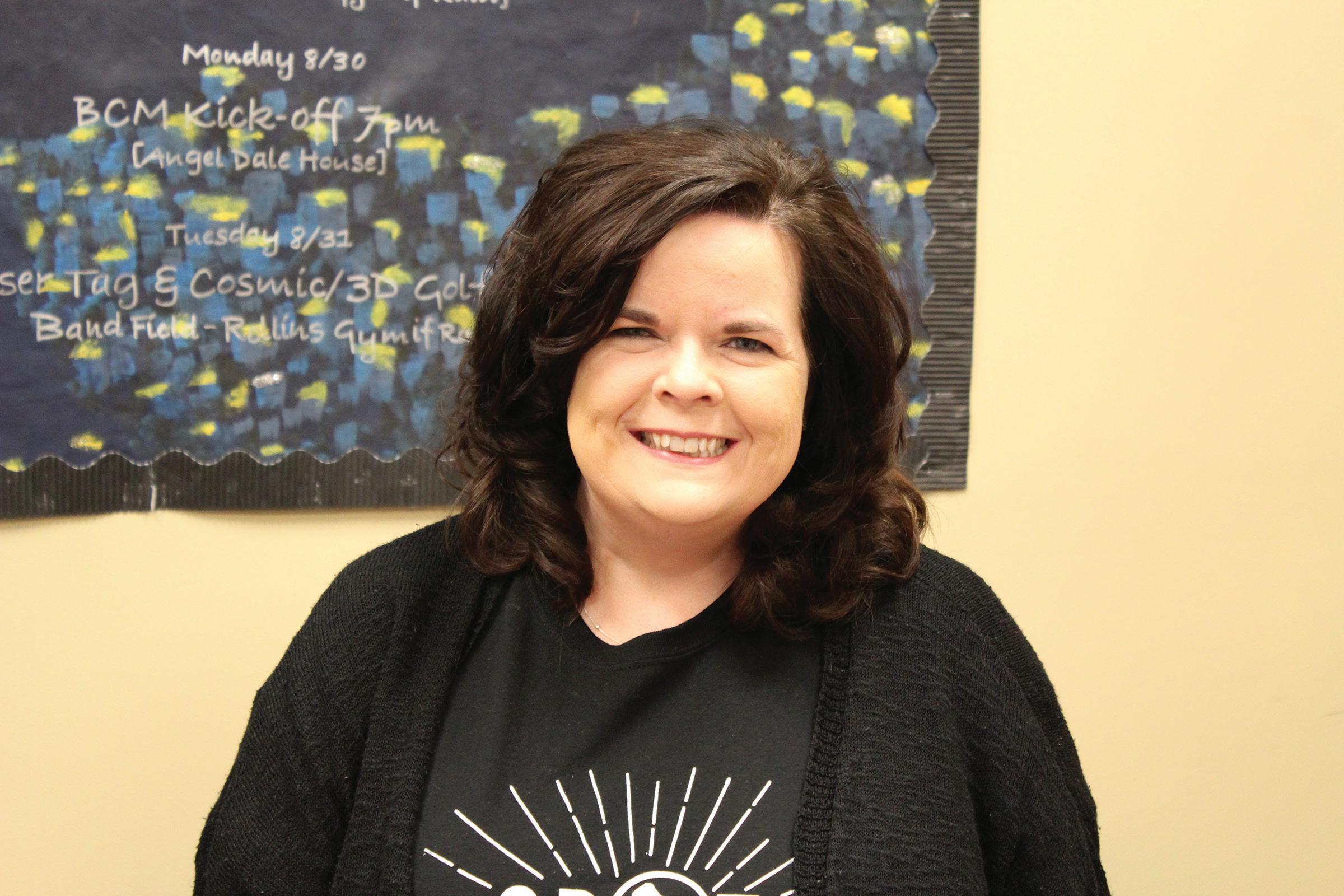
Photo provided by Lisa Bartram
Shirts for a cause
T-shirt sales go to help UC student diagnosed with cancer
BY TAYLOR DUKE
Staff Writer
University of the Cumberlands student Dustin Cawood is selling T-shirts in support of Erica Davis, another UC student who was recently diagnosed with Ewing Sarcoma. Davis is a junior psychology student who learned about her diagnosis just before the end of 2016, according to Dr. Kiersten Baughman, a professor in the psychology department.
Davis is currently undergoing two different chemotherapy treatments at the University of Kentucky hospital. Cawood, a friend of Davis, brought the idea of shirt sale to Baughman. Baughman is the faculty member helping to organize and spread the word through the department about the fundraiser. Baughman believes the University of the Cumberlands community will be a big help to Erica Davis and her family.
“I think bringing awareness of her situation is encouraging people to reach out to her in their own ways as well as to come together to support her as her world has changed drastically since receiving the diagnosis,” says Dr. Baughman.
“They are just trying to help her raise money for transportation and medical bills. As a community, UC faculty, staff, and students are very supportive in coming together in prayer, and this is another way that this fundrais-
er is bringing people together from across campus,” continues Baughman. “By wearing the shirts, we will be reminded of Erica’s fight and how no one fights alone.”
The idea for shirts came from several of Davis’ friends.
Cawood said, “We agreed that T-shirts would be a good way for us to come together and literally wear our support for her on our bodies. They are a good way to show Erica that she is not alone in her battle.”
The shirts can be bought for $15. Nine dollars of the 15 will go to the Davis’ family while the remaining six dollars are to cover the cost of shirts.
The first round of T-shirt sales ended on March 2. They are currently working on a second shirt that will be available later in the semester. All proceeds from the both the first and second round of sales will go directly to Davis. The goal of the sale is to help raise awareness for Davis and be a physical representation of support.
Cawood stated, “I have known Erica since the beginning of my freshman year here at UC. We have been very close friends for going on three years now. She has always been here for me when I have needed her, and I will always be here so long as she needs me.”
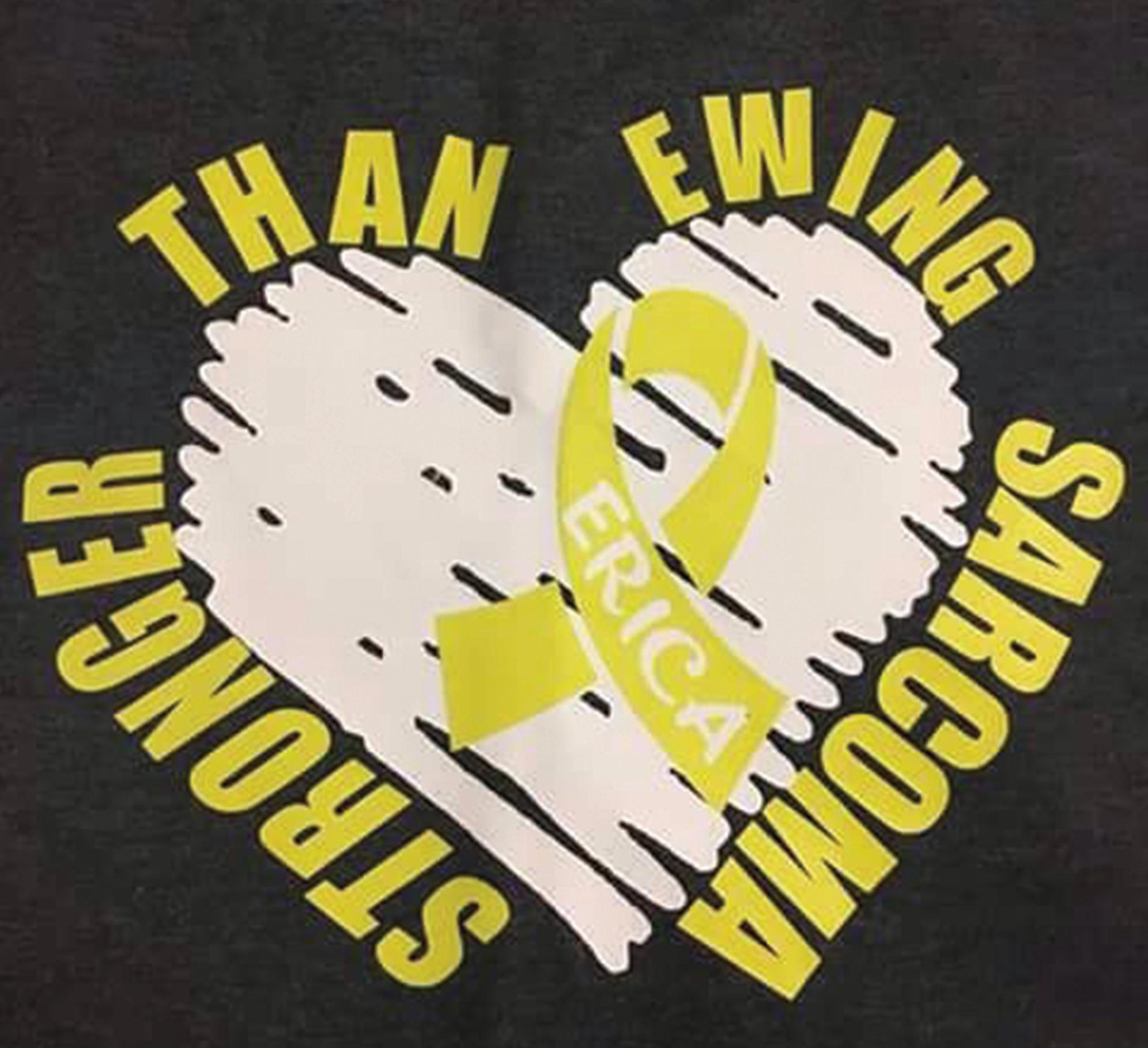
Front of the T-shirts being sold in support of Erica Davis
UC brings sexual assault awareness advocate to speak on campus An increased awareness
BY TRENTON CANADA
Assistant Editor
On February 13, 2017, the University of the Cumberlands hosted sexual assault awareness activist Katie Koestner as a part of its UC Engage event lineup. Koestner spoke to students about her experience as a survivor of campus sexual assault and date rape and issued a challenge to UC students to become more engaged in recognizing the signs of abuse and assault in an effort to prevent it.
At the age of 18, Koestner appeared on the cover of a 1991 issue of Time magazine in an effort to raise awareness about date rape. Koestner was sexually assaulted as a college freshman and faced much opposition when she came forward as a victim. Since that time, she has been the subject of an HBO movie about her experiences and has traveled the country as an activist and director of a foundation called Take Back the Night, which seeks to raise awareness and help end sexual assault and violence.
Though Koestner’s talk at UC was serious in nature, attention was diverted from her as several students took to their phones and held conversations with their peers as she delivered her message. Koestner at one point in the evening halted her story to address students who were not paying
attention, asking them to leave if they could not give her attention.
“I’m sorry to hear that that’s the experience she had,” stated Dr. Emily Coleman, vice president of student services and UC’s deputy Title 9 coordinator. “I feel that as a campus, we take this very seriously. When it comes to UC Engage events, the audience can be a mixed bag.”
“I don’t have disrespectful actions from my audience very often,” Koestner said in a follow-up interview, “but if students are required to attend, sometimes they come into the program with the attitude of the program is not for them. They may not think the issue is that big of a deal or they are only thinking about points or credit they get for physically showing up.”
Koestner said of her efforts at UC and elsewhere, “My goal is to help people understand that anyone could be in a bad situation. I hope by bringing a name and a face and a personal story that was really painful and personal that even if it’s not something that someone wants to learn about, they can be respectful of the person who’s taking a chance on sharing their personal expereince. So, I think it’s just an overall raising of awareness that will help to change things.”
Photo courtesy of (U.S. Air Force photo/Liz Copan)
I was raised Christian. I was waiting unitl I was married, and yet, it happened to me... I think it’s really important that we start realizing that sexual assault can happen to anyone.
”
-Katie Koestner
According to the Take Back the Night Foundation’s website, one in three women are likely to find themselves a victim of some form of sexual assault.
Coleman urges that UC is involved in assuring that each student is secure, and as the deputy Title 9 coordinator, any effort to attain help for student victims typically begins with her. She also stressed that UC’s process when treating victims is confidential, stating that UC has trained persons on campus to offer assistance to a victim in a one-on-one process.
“The first thing I would do is notify students of their rights both on and off campus,” Coleman stated. “If they want to work with the police, we have a great police department. They have great people downtown who can notify them of their rights from a legal standpoint.”
In regards to medical needs, Coleman assured, “First and foremost, we identify if medical help or counseling support is needed.”
Coleman also stated that if a student were not comfortable being seen by a counselor on campus that UC has partnered with Cumberland Valley Behavioral Health in order to provide a greater outreach for counseling services pertaining to sexual assault and crime.
When asked about the processes campus security follows if notified of an assault on campus, Coleman indicated, “They would contact us, and I would respond to the scene immediately. They have been trained in our protocols, but we always make sure that someone is available to respond to help that person.”
Coleman went on to state that UC has a safe campus when compared
to other institutions. According to the 2016 Campus Crime Report issued by UC’s Department of Safety and Security, there were no instances of sexual offenses last year. Still, Koestner stressed that sexual assault can happen anywhere and to anyone.
“I was raised Christian. I was waiting until I was married, and yet, it happened to me,” Koestner said, addressing a stigma that matters pertaining to sexual assault are seen negatively by those with a Christian background.
“I hope that no one on campus would think that we would uphold that stigma,” Coleman stated. “Our priority, first and foremost, is to help that student. Christians are hurt or assaulted everyday, just like anyone else.”
Koestner seems to agree with that in stating, “I think that it’s really important that we start realizing that sexual assault can happen to anyone. It doesn’t matter your morals, your values or your beliefs--whether you’re waiting or not waiting for marriage. I think that, if anything, as a Christian we should care very deeply about respect and boundaries and making sure that anyone we interact with is completely comfortable at all times. That would be the penultimate Christian act--to pay attention to these issues and know that, unfortunately, people and mistakes and bad things do happen to any of us. It’s really important to be aware and work to change things.”
On the topic of campus sexual violence and general awareness, Coleman said, “We’re trying to bring more speakers and bring more light and awareness to the topic. It’s not something that you have to hide away. You can talk openly about it. We’re here to help as support.”
Leadership on and off the court An interview with Isabella Dale
BY MARIAN BOGAJO Guest Writer
UC’s Isabella Dale, 23, is from New Zealand but has Thailand roots and started her college experience at the University of the Cumberlands three years ago. Now a senior, she is a fighter, a tennis lover, very competitive and a hard worker. In this interview Dale, the captain of the UC women’s tennis team, discusses a little bit about her life and the sport that made her become a Patriot.
Q: How long have you been playing tennis for? How did you start playing this sport?
Isabella Dale: I started playing ever since I was 6 years old. My dad introduced it to me in our garage back in Bangkok.
Q: What does tennis mean to you?
ID: Tennis has been my entire life. Every blessing I have has been through tennis. It has given me my education and a lot of my friends, and provided me with a life that I can travel and see the world.
Q: How did you end up at the University of the Cumberlands?
ID: I was not planning to come to the U.S. at first, but tennis got me here. I also wanted to pursue a degree in journalism. I love writing and tennis is not going to last forever, so I wanted to have something to fall back on once I was done. I really enjoy UC when the team is in season; it keeps me busy and sharp on my toes and the competition is addicting! I will surely miss playing my matches the most when my time here comes to an end.
Q: What are your best and worst memories playing tennis here at UC?
ID: My best memory would have to be winning regionals the second time and getting to go to nationals again. It felt special this time around because I was older and more ready for the challenge. And it was also in Arizona so I got to try In-N-Out burger!
My worst memory, or what taught me the most, was losing a singles match to Pikeville in my junior year because I did not prepare well enough beforehand.
Photo by Eric Ford Edwards
Q: Being the leader of the women’s side must be difficult sometimes. Do you feel pressure? How do you control it?
ID: I feel a great sense of responsibility to do well for this team because they have been my family for almost four years, and I respect Coach Tan a lot. Sometimes pressure comes into the situation to win or to practice harder and set an example. I try to take it as I am bettering myself for the future, and whatever obstacles we face we will face them as a team.
Q: What is the secret to win a match?
ID: In my opinion, to win a match you have to be willing to put in the hard work in between. Hard work always shows at the end of the day. Having a positive attitude towards things really helps especially when I lose, it helps to bring me back. I don’t think winning comes easily to anyone. Without a hunger to strive and a willingness to keep getting better, winning will not just appear. Most of the time the other person on the other side of the net is working just as hard as you too. I do not think I would say I have a secret to when I play, I just try to stay concentrated because it is important not to drift. I have lost my fair share of matches as well, so I think those losses really played a role in my learning process and they taught me the most in what not to do. So, I suppose every tennis player has to go through those tough loses to have the will to push on harder than yesterday.
Q: What is your goal this semester?
ID: I would love to get to nationals! But I think that if I can succeed in enjoying everyday to the fullest without thinking about results, since it’s already my senior year, that would be a better goal to accomplish. I believe it’s great to set goals and live by them, but I have also learned that wrapping your life around just your achievements can be very unfulfilling. So I would love it if we could do the best to our potential as a team, but it’s not do or die.
Q: What do you think is the key to success?
ID: In my opinion, mastering all areas of your craft. No one can become successful if they dabble. I also think it is important to do the right things at the right time, even if they are hard or painful. Nothing ever became anything without obsession and hard work. It might sound a little hard core, but my dad always taught me that if you work really hard, you will earn your success.
Q: What are you planning to do after you graduate?
ID: I would love to go on tour and play some money tournaments and I have not really had a chance to see much of the U.S., so I would love to travel the country a little after I graduate. Then, next step but in no rush, would be graduate school for psychology.
Q: Being far away from home must be hard sometimes. How do you feel about it and what do you miss the most?
ID: I miss the spicy food and the hot weather the most! I actually love being on my own and traveling the world. I would like to think I would not get the same chances to learn half as much as I am if I were still in my backyard. Being away from family does get difficult at times, but I would not trade the experiences I have right now to be home.
Photo by Eric Ford Edwards
Swipin’ for love in all the wrong places
A critique of modern dating
BY ERIC FORD EDWARDS Staff Writer
With Valentine’s Day in our rear view mirror it’s prudent to take a look at love and its state of affairs. It seems to me that as a society my peers have hit more of a hormonal period akin to the music of the late 1960s. If you’ve downloaded any dating app recently the Beatles song “I Want You (She’s So Heavy),” seems appropriate. Ironically even those who users of dating apps like Tinder, understand the stigma, and have a distain for use of dating apps.
In a time where everything is so fast pasted, love seems to be put on the back burner, and instead we have settled for an easy substitute. We’ve settled for casual, easy, relationships.
I was able to catch a friend of mine before she left for a date that she met on tinder, and she let me ask her about her personal experience. (For her own privacy I won’t be divulging her name.) My friend, a UC sophomore, states that, while dating apps leave a bad taste in her mouth, it’s a part of modern dating. She adds that though there is a stigma to dating apps like Tinder, there’s an ease to it as well. Instead of trying to cross the bridge from
friend to significant other, attraction is assumed when using dating apps. This UC sophomore says, “It’s all about time, [with dating apps] you can filter.” She went on to say, “It’s nice that it’s not so serious when you meet people online.” She explained that by saying if the date goes poorly you don’t have to worry about running into them again because they aren’t apart of your daily life.
With the tech boom in the 2000s and the innovations that came in its wake, this generation, my generation, seems to reflect a more open sense or “free” attitude toward love. This attitude being the topic of “American Hookup,” by Lisa Wade, reported on by the New York Times. The book details the culture on college campuses and how hookups, one night stands, and flippant relationships are on the rise. Texting, or using a dating app has an ease to it. The basic concept is this, users upload images and a short bio, and can then swipe yes or no on other users they find attractive. If two users find each other attractive they then have the ability to message the other. It’s very much like a simple game in its setup.
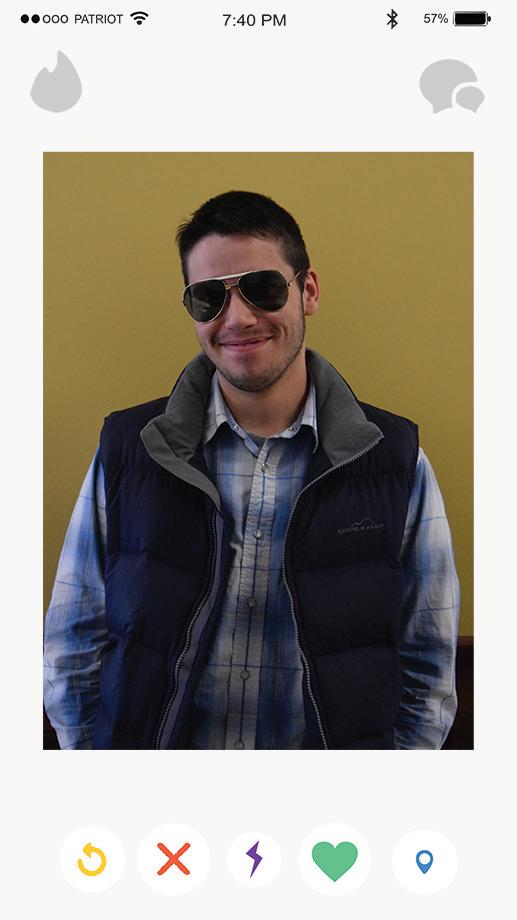
Photo by Taylor Duke. Illustration by Eric Ford Edwards.
Games provide a problem then you are rewarded with a solution, though in this case it’s a user saying you’re cute. In a normal scenario an individual would walk up to someone and see if they enjoyed them as a person first.
Apps now provide you with the ability to skip that and base individuals strictly on looks. You search for the person you want to talk to and send them a short message. This inhibits real connection. It keeps the conversation surface level. I don’t mean to demonize anyone that uses dating apps, I have. I’m really just reflecting on the negativity of it on our culture. Relationships in the past had to at least some type of personal level, love is now made easy. Even a male order bride service had some type of commitment involved, with modern dating this is not the case.
This is selling point for dating apps, love made easy. In an article for The Atlantic written by Julie Beck in October of 2016, she describes that not only are dating apps not actually making love easier, they are making genuine love harder to find because everyone, including herself, is not really trying. By this she means that after the initial boom of dating apps it lost its original appeal. Those who still use dating apps tend to casual swipe trough profiles not truly convinced they’ll find something genuine.
In addition to this, she cites historian, and author of the book “Labor of Love,” Moira Weigel. Weigel states that throughout history finding love has always been challenging and in flux. “But what’s ironic is that more of the work now is not actually around the interaction that you have with a person, it’s around the selection process, and the process of self-presentation. That does feel different than before,” said Weigel.
This attitude towards dating furthers an ideology that people should be judged strictly based on looks. It instills the feeling that for someone to feel whole or content with himself or herself they must have constant validation, which is a fire that needs to be constantly stoked. One of the dating apps is so appropriately titled Tinder. In addition to this, casual, surface level, dating numbs you. Similar to what Beck said, you don’t see love as a strong relationship between two people. It’s seen as a game to pass the time.
The answer isn’t easy, but I guess this is just the way we date now. Dating apps aren’t the way to cultivate lasting relationships. It disappoints me that we’ve come to a point that the social etiquette dictates that you must first get to know someone digitally before the first date. Is this the way relationships begin from now on? I just hope that one day when I tell my kids how I met their mother I won’t have to tell them I met her on Tinder.
Photo by Taylor Duke. Illustration by Eric Ford Edwards.
BY ASHTON RECTOR Editor-in-Chief
Instagram island inspiration
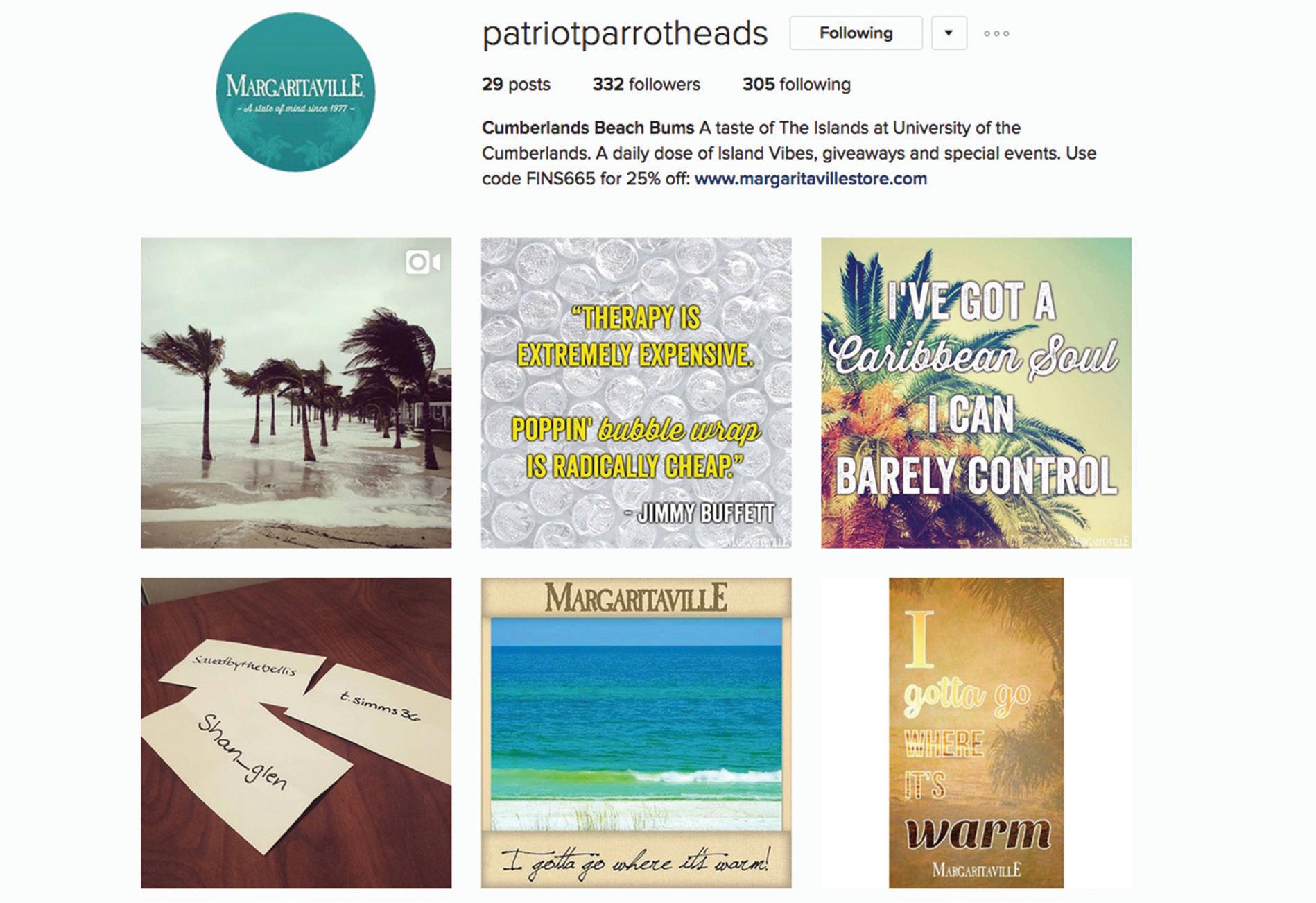
The patriotparrothead’s Instagram account.
Since the close of January, University of the Cumberlands students may have noticed a new follow notification on their Instagram account from one claiming to be a “Patriot Parrot Head.” Though the closest Margaritaville to UC is over 100 miles south, Jimmy Buffet’s parrot head following has become more present with the creation of this account. Again, this follower might not have been an old friend from their hometown or a student they recently met on campus, but the screen name and “Cumberlands Beach Bums,” message were enough to determine a dose of island life would soon be found.
From a first glance of the page, one can see beach landscapes and coozie giveaways, but underneath these images are words of island inspiration that encourage students to find relaxation and peruse an island state of mind wherever they might be.
The account is a product of an ambassador program created by Margaritaville and is run by UC student, Peyton Richie. According to their website, while not officially affiliated with any university, the program has 150 ambassadors at 103 colleges across the United States and Canada.
UC junior, Zachary Culver is one student who noticed the new follow on his Instagram account.
“I at first thought it was a prank or a project a student created…To check the credibility of the account I went and tested the discount code and surprisingly it worked,” says Culver.
Richie explains the program is meant to change the perceptions about Margaritaville, and “take away from the stereotype that it’s a party kind of thing to more of a way of life of relaxation and exploring.”
Culver also adds he believes this will not affect the student body negatively, but rather students, “just see it as something cool or odd, but I don’t believe it’s going to increase drinking among students.”
The account also features giveaways of Margaritaville products such as “Fins Up!” stickers and coupons that can be used at the Margaritaville stores or restaurants.
Culver comments, “I participated in the giveaway because what college student doesn’t want to win free stuff?”
Richie tells that the purpose of the ambassador program is also to broaden the Margaritaville audience.
“Right now it has a lot of appeal to baby boomers and they’re trying to gear it more towards younger people,” says Richie.
Richie hopes to see more student involvement through interactions on Instagram by other students posting places on campus or the surrounding area where they find their relaxation.
“Margaritaville is a state of mind, and it can be anywhere that you want it to be,” says Richie.
The worth of words
Four ways writing can help students cope with the stresses of college
BY ZANE ROSS Staff Writer
The idea of writing may not seem that appealing to college students. We relate writing to a chore because of the various essays and tests that our majors demand of us. Typically, when it comes to writing we only really want to post on Facebook or Twitter. Through social media we are expressing ourselves and sharing our opinions. It isn’t a chore, it is on a whim that we do this. English is my major and not because I enjoy writing research papers on novels from the 17th century, but because I like to express myself through the medium in which we all use to communicate. Language. Stories. Words have power and not only to others, but for yourself as well. Don’t we feel better when we rant on Facebook? Or when we post about something positive that has happened? That is the power of words. There is so much that writing can do for us outside of class. Here is a list of just a few things that doing a little bit of writing here and there can do to help us through everyday life.
1. Relieving Stress
“Papers stress me out though.” Well, don’t think of your writing like a normal paper because it’s not. You aren’t getting a grade for it and no one else will read it to criticize it unless you want them to. You can write about yourself or a character and put them in a situation you would rather be in than the one you currently are. It can be an unreal setting or one that you are familiar with like a vacation spot you went to over the years.
2. Figuring Things Out
Sometimes we just can’t figure things out. We think and we think, but some things seem to avoid us. Sit down and write about what is on your mind even if the train of thought doesn’t make sense. Making a list of your thoughts and
tracking down reoccurring themes might be a way to help find out what is bothering you.
3. Entertainment
Scenario time. You just finished the last episode of the show you were binge watching on Netflix, but you still want more. Or you wanted it to end differently. Or you wanted a character to do something different. Well, why not write it out? Sure, it didn’t happen on the screen, but it can in your mind. Coming up with all these different outcomes and scenarios can be really entertaining and keep you busy for a while if you don’t have anything to do.
4. A Sense of Control
As college students, we sometimes might feel like we don’t really have enough control of our own lives. We don’t get to decide when we have tests. We don’t get to pick how much money we get paid. We don’t get to choose a lot of things. When writing you get to determine the outcome unless you’re doing news writing. (That is frowned upon.) However, your own fiction is all up to you and sometimes that is enough to matter.
Creative writing is therapeutic and easier than most people think. UC English professor Jamey Temple says, “There are studies about how writing can be therapeutic by reducing stress and anxiety. For me, I like to write because it helps me to look at experiences objectively, live many different lives, and create change.”
We all know how to write and we all experience stress. Just go with the flow and let your words cover the page because sometimes it is better to externalize your thoughts than to internalize them.
Photo by Taylor Duke
Appalachian Ministries seeks summer team members
BY HEATHER GREENE Guest Writer
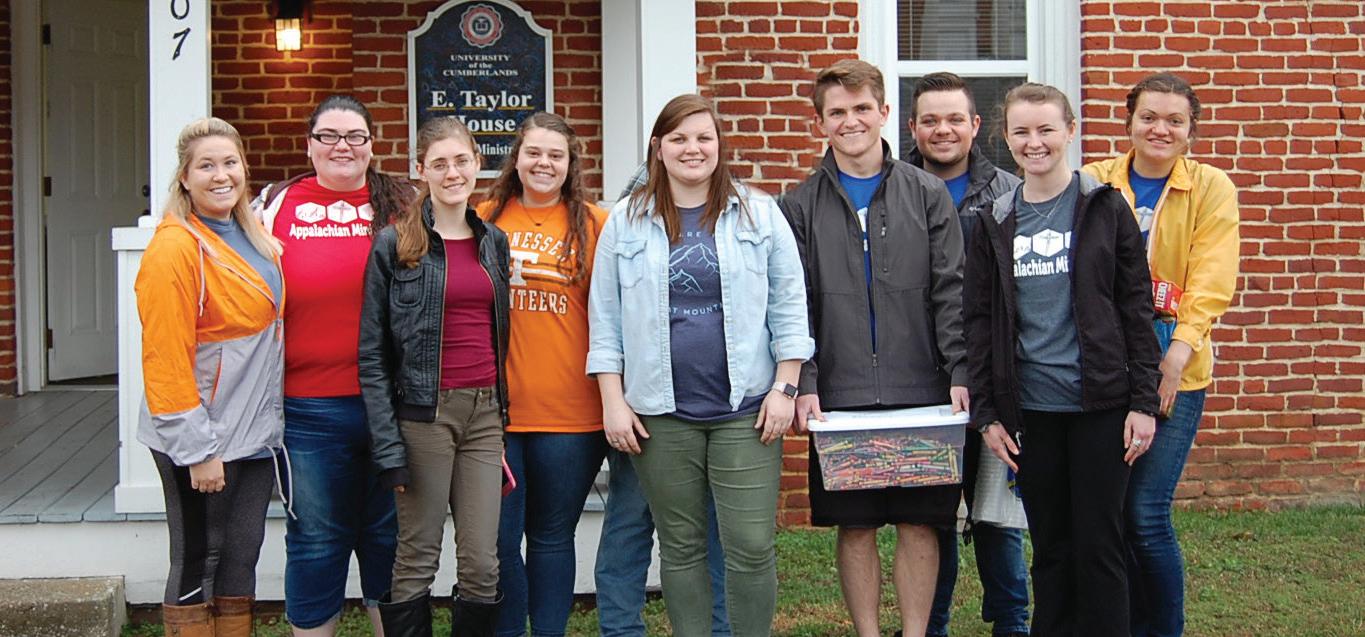
“University of the Cumberlands’ Appalachian Ministries opens their online applications praying for passionate workers with a willing and obedient spirit to serve on their 2017 summer AM team,” says Jasmine Newport, the director of AM and associate campus minister at UC.
The summer AM team is a local children’s ministry serving their community as well as other surrounding communities. According to the Appalachian Ministries website, their mission began by “becoming motivated to share the love, hope, and message of Jesus. AM was formed out of the scriptural basis of 1 John 3:18.”
Newport says, “I am seeking 10 applicants who are dedicated in their relationship with the Lord and are willing to be role models for both the kids locally and the kids we will meet through our travels.”
Myah Fletcher, an AM summer team 2016 member, says, “We were told Hawesville, KY was five hours away. I wasn’t sure of a five-hour bus ride, but we played games all the way there. The hosting church, New Life Baptist, really made us feel at home with their home cooked meals. They also planned out our days with some down time in between VBS sessions; which was really appreciated. All the returning summer team members said it was the best location on our route; I agree.”
“The children’s minds are blown away that college students take a week out of their summer to come hang out with them. Our weekly presences means a lot to these kids because this area does not have a lot to offer them; what we can offer are workers who are passionate about (children) them. We need more people who are humble and are willing to evangelize and minister to children,” says Newport.
Brian Mahadeo, a member of the 2017 summer team, says, “I felt the calling to use the gifts God gave to me. I believe that Appalachian Ministries is the best way I can give back. I love kids and I’m looking forward to learning as much as I can from them.”
In past years, once all workers are present the training begins, however
this year “first week” will be different. “It’s called ‘Team Building week.’ Team building week purpose is to create a team bond through fun activities, such as ropes courses and white water rafting, in hopes to establish a team morale that will last all summer,” says Newport.
“I enjoyed team bonding last year. We mainly played mafia, volleyball, card games, fish bowl, and late night DQ runs,” says Fletcher. Newport says, “Typically our day start by 9 a.m. whether that’s doing community service or even beginning our day with worship. Daily activities vary but could include: working at a homeless shelter, finishing repair work on local houses in need, and Vacation Bible School-style Bible studies.”
Each VBS session includes a worship rally, lesson time, snacks, crafts, recreation, and music geared toward children who are between pre-k and 12th grade. “I am looking forward to bring on a variety of applicants, perhaps some who are artistic and willing to be in charge of crafts, or athletes who can lead recreational time,” says Newport.
Fletcher says, “The team is like a family. There were times when we got on each other’s nerves like siblings, but at the end of the day we knew we loved each other and had each other’s back. I really enjoyed my summer on the AM team.”
Summer of 2017, for AM workers, will start on May 30 as the teams move into UC’s dorms. Throughout the summer, the AM summer team will avoid having food expenses as “the Caf” and the Patriot Steakhouse will be open to the team.
Additionally, this summer position with AM is a paid position. AM workers will receive a paycheck bi-weekly for their dedication to the team, until move out day arrives on July 24.
Applications are located on the UC student homepage in the banner slide show. The deadline to apply has recently been extended until March 31, 2017.
Photo by Heather Greene
BY HOPE AUSTIN Staff Writer
Busy, busy, busy A devotional
College often feels busy. Sometimes it is hard to find any free time between all the activities and work that needs to be done. It does not take long to feel overwhelmed with all the obligations. The Lord tells us, “Come to me, all you who labor and are heavy laden, and I will give you rest,” in Matthew 11:28 (NKJV). He can provide rest to all who seek Him and ask it of Him. While getting work done is important, it is also equally important to give yourself time to rest. The Lord tells us in Exodus 22:17 (NKJV), “Six days you shall do your work, and on the seventh day you shall rest…” The day of rest is important as it gives you time to look to God instead of busying yourself with earthly things. When you are busy it is easy to get lost in your thoughts and lose track of the ultimate purpose of serving the Lord.
When adding more and more of a workload, it can make it hard to serve the Lord with a humble and hopeful heart. It can cloud your mind and thoughts with seeing the work as a burden. Most people are guilty of this at some point in their lives. If you find yourself in that kind of mindset, all you
need do is ask the Lord to come back into your heart and hands that you may become humble and remember always that all things you do are done for Him. Galatians 5:11 (NKJV) says, “…but through love serve one another.”
The Lord admires a humble heart always. As you work, or even simply speak, always serve with a humble heart. Psalm 69:32 (NLT) coveys this concept with saying, “The humble will see their God at work and be glad. Let all who seek God’s help be encouraged.” With God’s help, you can accomplish anything thrown your way.
As you go through this week, seek the Lord in all your actions and words. Let the words you speak shine with the Lord’s grace. If you find yourself falling into a instance in which you find yourself gossiping or doing work in which it feels like a burden, seek the Lord in your actions. Let Him take the burden and give you peace that you may work peacefully and humbly. Let the Lord guide your words and life.
Photo courtesy of Flickr’s CollegeDegrees360
BY TRENTON CANADA Assistant Editor
As a beloved part of American culture, the sitcom has the ability to make us laugh and transport us outside of our worries for a period of time. In today’s heated cultural and political climate, the sitcom continues to serve as a much-needed break from the humdrum of everyday life. Though, in the array of comedies that have been produced for the masses, few have been as successful in prevailing through generations like that of “The Golden Girls.” First aired in 1985, this revolutionary show was important in showing that life doesn’t end at 40 or 50 or even 60. The show featured four mature women as roommates in their golden years living in Miami.
Grounded in the strength of friendship while still proving that life lessons do not cease at a certain age, these characters were a hit with audiences in the late ‘80s and early ‘90s, yet there is now an opportunity for the show to be introduced to a new generation through online streaming. Hulu recently added all seven seasons of “The Golden Girls” to its streaming service, and in honor of that, here are five must-see episodes.
1. “Forgive Me, Father” Season 2, Episode 18
In this episode, the plot centers on Dorothy and her involvement with a fellow teacher at a school where she is currently working as a substitute. His name is Frank, and the two seem to really be interested in each other. There’s just one issue: Frank is a priest with the Catholic Church, and Dorothy doesn’t know. It isn’t discovered that Frank has a higher commitment until he is invited to dinner at the girls’ home and arrives in full cleric attire. This is hilariously met with confusion and embarrassment on the part of both Blanche and Rose, who are tasked with entertaining Frank until Dorothy emerges from her bedroom in a grand entrance.
To complicate matters further, Blanche encourages Dorothy to keep seeing Frank. Dorothy’s conscience is challenged when Frank tells her that he is thinking of leaving the church, for which Dorothy assumes she is the reason.
Picture it:
Here are five Golden Girls episodes to stream on HULU
2. “A Little Romance” Season 1, Episode 13
Rose is no stranger to issues of romantic hilarity, and this episode is no exception to that. Rose has been seeing a man named Jonathan, but she has kept him from meeting her roommates. In an effort to reveal who he is, Blanche finds his number in Rose’s address book and invites him to dinner at the girls’ home. When he arrives, Dorothy and Blanche discover that Rose has been dating a dwarf. Rose then has to confront her deep feelings for him. Could she really love someone like Jonathan?
3. “Ladies of the Evening” Season 2, Episode 2
The episode opens with the girls realizing that their house has to be sprayed for bugs. In addition to this, they find that they are the winners of movie premiere tickets to see Burt Reynolds. Upon hearing this, Dorothy suggests that the girls pool their money and spend the weekend at a hotel. Blanche is put in charge of finding the hotel, and she ends up selecting one based on the number of men hanging out in the lobby. Unknown to the girls, the hotel is a front for prostitutes. Laughs abound when Dorothy, Blanche and Rose are arrested and placed in jail when the police raid the hotel.
4. “72 Hours” Season 5, Episode 19
While this show was known for its quick wit and comedy, it was also a pioneer in addressing controversial social issues. At the time this show was being produced, there was a great deal of controversy surrounding the HIV and AIDS epidemic in the United States. In this episode, Rose is notified that she may have contracted HIV as a part of a blood transfusion during an operation. Panic, questioning and blame sets in as the girls both try to console Rose and confront their own fears about the disease during the three days that it takes to get Rose’s blood test results back.
5. “Sick and Tired” Season 5, Episodes 1 &2
In the two-part season five premiere, Dorothy is faced with an illness that she can’t seem to recover from, and though she’s been to several doctors already, none seem able to offer her any assistance. All of the medical tests indicate that Dorothy is perfectly healthy. Every doctor that she sees brushes her
symptoms off as a result of getting older. Still, she knows that everything is not as it should be. As a last attempt, she decides to travel to New York City to see a highly recommended physician.
While Dorothy is battling the thought that her sickness may be all in her mind, Blanche endeavors to write a romance novel, stating that her life is material enough for the book. Her efforts to finish the novel result in her staying awake for 72 hours. As effects of sleep deprivation set in, laughs erupt.
All photos courtesy of Buena Vista Home Entertainment