Letter from the Editor
Dear readers,
Let me begin by welcoming you all back to campus and by thanking you for your continued support and readership of The Patriot. Here at The Patriot, we have always strived to be a paper by the students and for the students of UC, and I want that to remain our mission as we embark on a new semester together. Though I am not new to The Patriot, I am new to my role this semester. I have served as the assistant editor in semesters past, yet never as the editor-in-chief, and

it is with humility and readiness that I have accepted that title and responsibility, knowing that I have large shoes to fill, as I look to the guidance and wisdom of those who came before me.
There is an enormous responsibility that comes with this role, and building on that responsibility, I want to take The Patriot further than we have gone before by solely providing content in which our readers are interested and by expanding how we think about and deliver campus news. By keeping the focus on the students and the issues that concern us all, we at The Patriot will strive to do ensure objectivity and relevancy.
Yet, none of this would be possible without the dedication and efforts of our staff, and it is my privilege to serve the student population alongside our returning assistant editor, Ashton Rector. Also returning as staff members this semester are DJ Hite and Leanne Gregory. New to The Patriot family are Hope Austin, Alyssa Parrott, Zane Ross and Hunter Cleary. We welcome them and look forward to working with them to deliver accurate and timely news and entertainment to our readers.
Over the summer and in the days leading up to the start of the semester, I had the opportunity to work with groups of freshman as part of the Insights program. One of the primary focuses this year is “UC the Future.” Well, to borrow from this, I not only “see” the future, but I see excellence. I see diversity. I see ingenuity, change and pride exuded from the students of this campus, and it is my mission to highlight that. We at The Patriot will do our part to tell the stories of those on campus who project what it means to be a Patriot, but I welcome you, the readers, to take an active role in this. Join us by becoming a contributor. Let us know what things you want to read about. Let us know if someone on campus has a story that should be told. Help us to better serve you.
As always, I thank you all for your support and readership, and I look forward to serving the UC students.
Yours,

Editor-In-Chief
Trenton Canada
Assistant Editor
Ashton Rector
Faculty Advisor
Jeremiah Massengale
Staff
Hope Austin
Hunter Cleary
Eric Ford Edwards
Leanne Gregory
Alyssa Parrott
Editorial Review Board
Lisa Bartram
Marianne Worthington
The Patriot is the biweekly student publication of the University of the Cumberlands. Our goal is to provide timely and original content by highlighting campus news and views.
Award-winning member of the Kentucky Press Association.
DJ Hite
Zane Ross
Trenton Randall Canada
By Alyss A PA rrOTT staff Writer
Ask about the FAFSA UC discusses changes coming to application for student aid
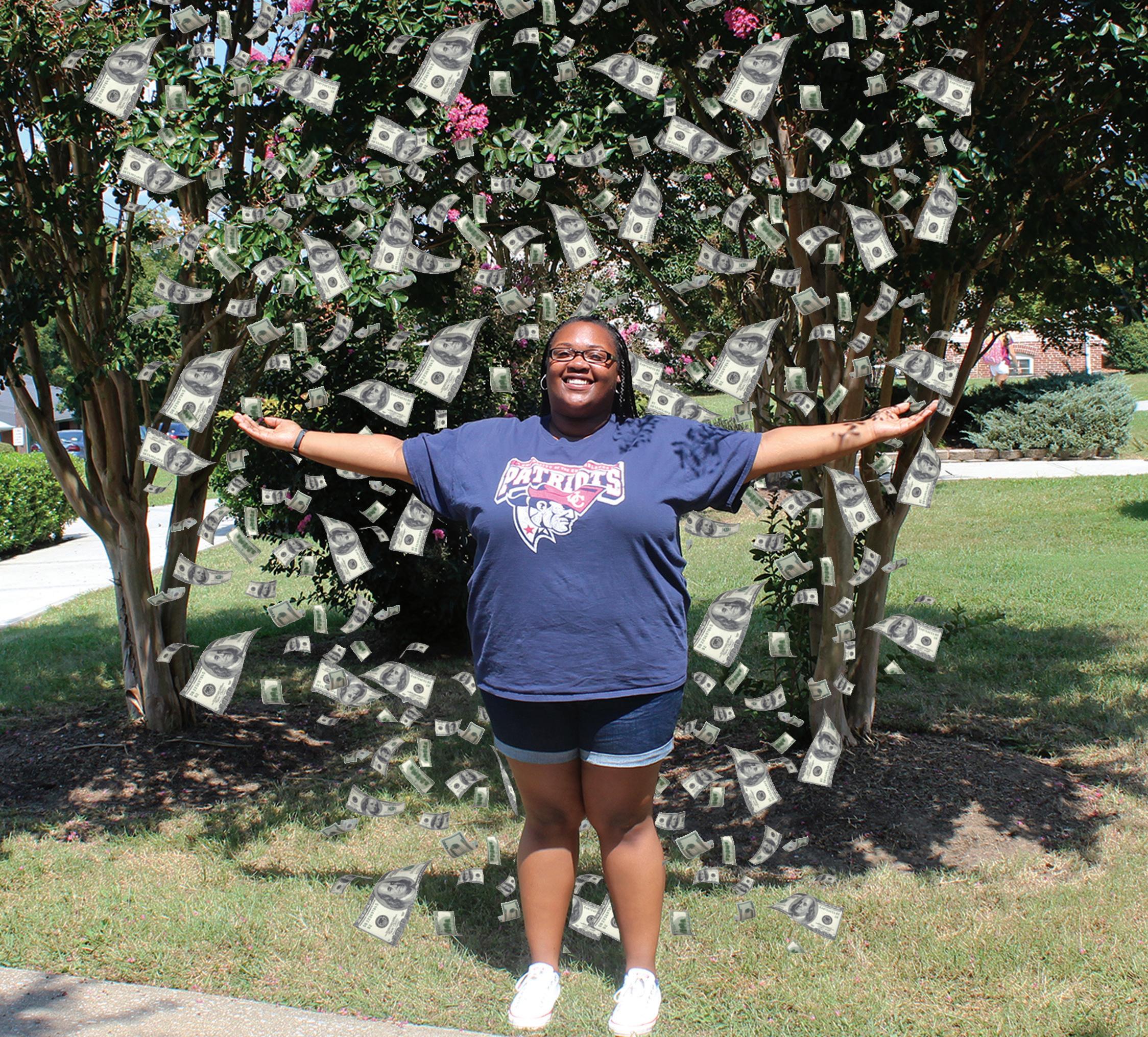
There will be two major changes made to the FAFSA application process starting October 1st, 2016 according to UC Vice President of Financial Planning Steve Allen. First, the new opening date for FAFSA applications will be October 1st for the 2017-2018 term. Second, the tax information used to apply will be from the prior-prior year for the intended term. For example, when applying for FAFSA for the 2017-2018 term, the tax information from 2015 should be used.
However, one aspect that hasn’t changed is the importance of filling out FAFSA applications early.
“The IRS Data Retrieval Tool is absolutely the best way to fill out FAFSA.” Allen said.
There will be more information on the new changes to FAFSA sent to all students and parents later this month; as well as post cards and posts to social media.
“Just call the Financial Planning Office and we will be glad to help,” said Allen.
Undergraduate student Jessica Jordan said, “For me, it was stressful
estimating and updating the information needed when filling out an application so I think it is advantageous that you can use a prior-prior tax year and avoid the stress.”
By using the prior-prior year, the need to estimate and update monetary amounts is no longer needed because all tax information has been filed. Audits and extensions are other circumstances that would lengthen the application process; these are also avoided by using the prior-prior tax year.
“I am interested to see how this new process goes” said UC graduate student Sara Donahue.
Usually, graduate students will not receive grants from schools for FAFSA but they are still able to take out loans. Donahue said she remembers the stress of the beginning of the year applications and that the change in dates will probably lead to more on time applications. The new October 1st date will allow for more time to acquire grant information for students. This new date may also be during a less hectic time of year for students, instead of on January 1st when they are preparing for new classes.
Photo by DJ Hite
Illistration by Trenton Canada
By Z A ne rO ss staff Writer
Duel of the Dorms UC introduces incentives to build school spirit on campus
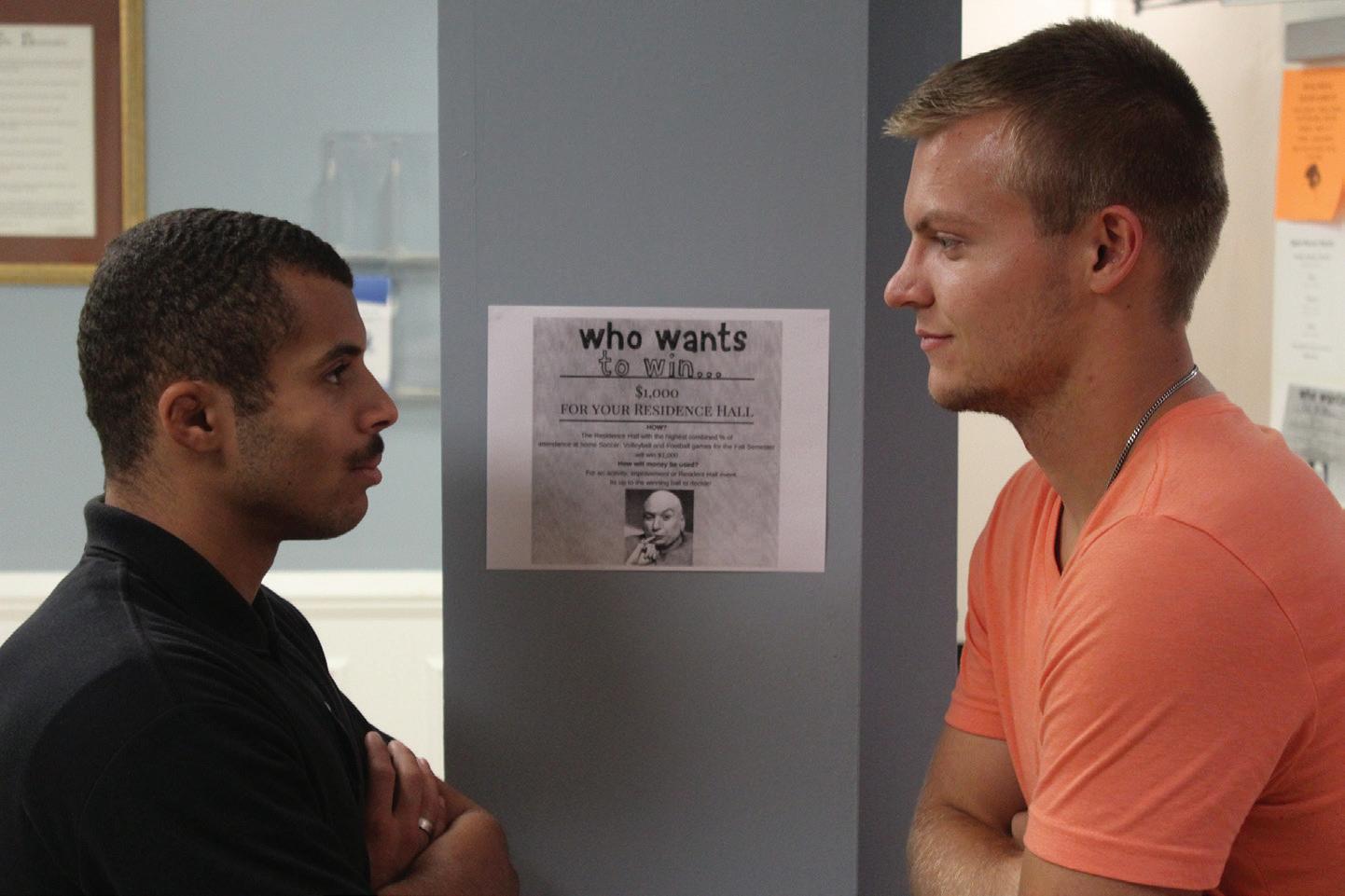
The University of the Cumberlands has kicked off the school semester in a big way with sports, food and friendly competition. Most students know that if you need to take a break from your studies, and procrastinate on that upcoming exam, that heading over to James H. Taylor, II Stadium on game day is one of the more fun ways to do it. Why is that? What is it about gathering together as a community and cheering on our team to victory that is so appealing? The thrill of competition, maybe?
UC Student Services and the UC athletics department have come together to get more students involved at sporting events this semester, not only for football, but volleyball as well as men and women’s soccer.
Some incentives that have been put into effect so far involve the field party that was put on Thursday, August 25th right before the home football game against Campbellsville and free pizza that fed over 400 UC students on Tuesday, August 30th at the women’s soccer game against Union.
If that type of thing is not enough of a reason to get up and go to a home game, you now also have the chance to become a thousandaire. Sort of. Thanks to the new Duel of the Dorms competition.
The Duel of the Dorms competition is a campus-wide initiative that pits dorm against dorm to see who can attend the most home football, volleyball and soccer games this fall semester. When attending a home game, students are required to swipe their ID card at the door and that will keep track
of which students attended from which dorm. What exactly does this competition entail? One thousand dollars to be spent by the winning residence hall in whatever way they choose to. If the unanimous vote is for a 70-inch flat screen TV for the lobby, then that is an option. Or maybe just a thousand-dollar pizza party.
Some residents have expressed concerns that the competition is unfair because their dorm is smaller than others. However, that’s been taken care of. Dr. Emily Coleman, vice president of Student Services, was able to shed a bit more light on how attendance would be tallied. “To make it even for everyone we are looking at percentage. We will be ranking the dorms by the percentage of students in each dorm who attend the games. In this way it gives Moss Hall a chance to win or Kleist Hall, because Rob-Cook is our largest residence hall. In addition to that, athletes who are participating in the sport are not counted toward the percentage for that game, this includes band members and cheerleaders.”
Coleman also expressed that a roster of which dorms are leading in attendance percentage would be released soon and that more incentives are in the works for future home sporting events such as the next home football game against Cincinnati Christian University on Saturday, September 10th. So, make sure you go out to not only support your team, but to support your dorm.
Devon Goings, student l ife Assistant for r ob-Cook Hall, faces off with Danny enge, s enior r A of Mahan Hall, in front of dorm competition poster.
Photo by DJ Hite
Updates and Upgrades: Changes around campus to improve student life
By AsHTOn r e CTOr Assistant e ditor
As students returned to campus for the Fall 2016 semester, they may have noticed some updates and changes around campus. From a new housing check in process, to a new scanning technology of Patriot Passes, our university seemed to have had a summer upgrade.
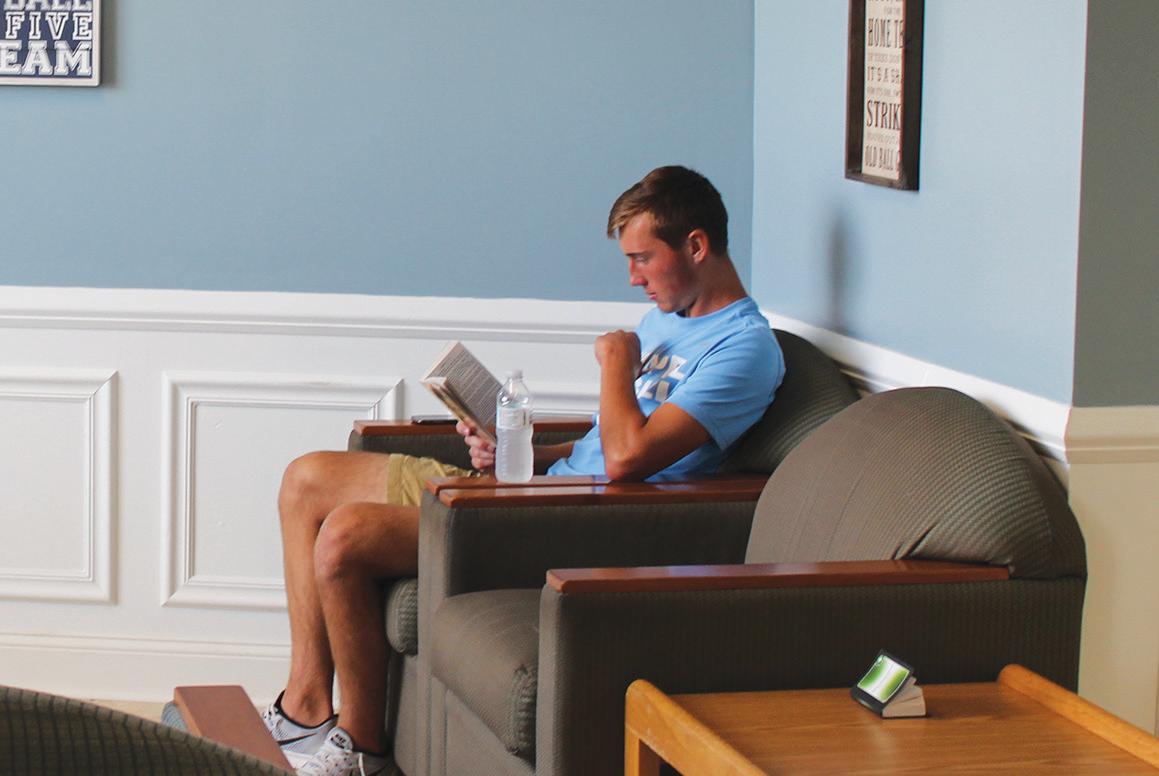
A majority of changes encompass housing and student life in the residence halls. Dr. Emily Coleman, vice president of Student Services, explained dorms Mahan and Archer are newly furnished.
Resident of Mahan Hall, UC sophomore Michael Garnon, says he is pleased with the new furniture.
“It looks a lot better, feels a lot smoother to use, and it feels like there is more space for storage,” says Garnon.
Taylor Coy, UC freshmen and resident of a three-person room in Archer Hall comments, “The room feels cozy and spacious. Without the new furniture I feel like it would be more cramped.”
Not only is new furniture in these dorms, but also students living in these dorms can loft their beds to help increase living space.
“It’s something a lot of schools have that we’ve just never done here; well we can do that now,” stated Coleman.
Students also now have access to a new cable provider, Philo, that when paired with smart technology will allow students to use DVR function to record their favorite television shows. Different channels such as several ESPN options, HBO, and HBO Family are available through Philo. The university is able to choose the channels, and can monitor their usage in order to gauge the success of the channel among the student population. Coleman

explained a group of students were consulted to gather information of which channels students would like best.
UC will also be testing open house hours on Sunday throughout this semester. Coleman explained the new hours were requested through the Student Government Association.
“If we find that people are using it, then we’re going to make it official,” said Coleman.
Coleman also mentioned, “With our overload housing, we are piloting some undergraduate students in apartments this semester.”
Student IDs have also been transformed into Patriot Passes and now do not have to be manually scanned by each student upon dining or checking in for a UC Engage event. Now, when a student needs to scan their ID, they merely need to tap their card to the scanner- even if it is still in a wallet.
Two televisions will soon be placed in the T.J Roberts Dining Hall. One will be located behind the salad bar, as the other will be behind the dessert bar. The televisions will hold the same purpose as those in the Campus Grill by advertising campus events.
The construction on campus continues as a concrete stage is currently in the making in front of the Health and Wellness Center, as well as stairs and a new sidewalk that will lead to this area. Coleman explained this area will be for campus events, concerts, and will serve as a multipurpose area.
In regards to all the changes around campus, Coleman concluded, “I hope it will affect students in a positive way… My hope is that students see that we care, that we listen, and we respond.”
Photo by DJ Hite
Construction is underway outside the Wellness Center to create an outside venue for student and campus activities.
UC students can now relax comfortably in the new furniture offered in several dorms.
Photo by Zane r oss
By Tren TOn CA n ADA e ditor-in-Chief
A splash of color here, a golf cart there
The Office of Undergraduate Admissions brings in consultant to upgrade its look
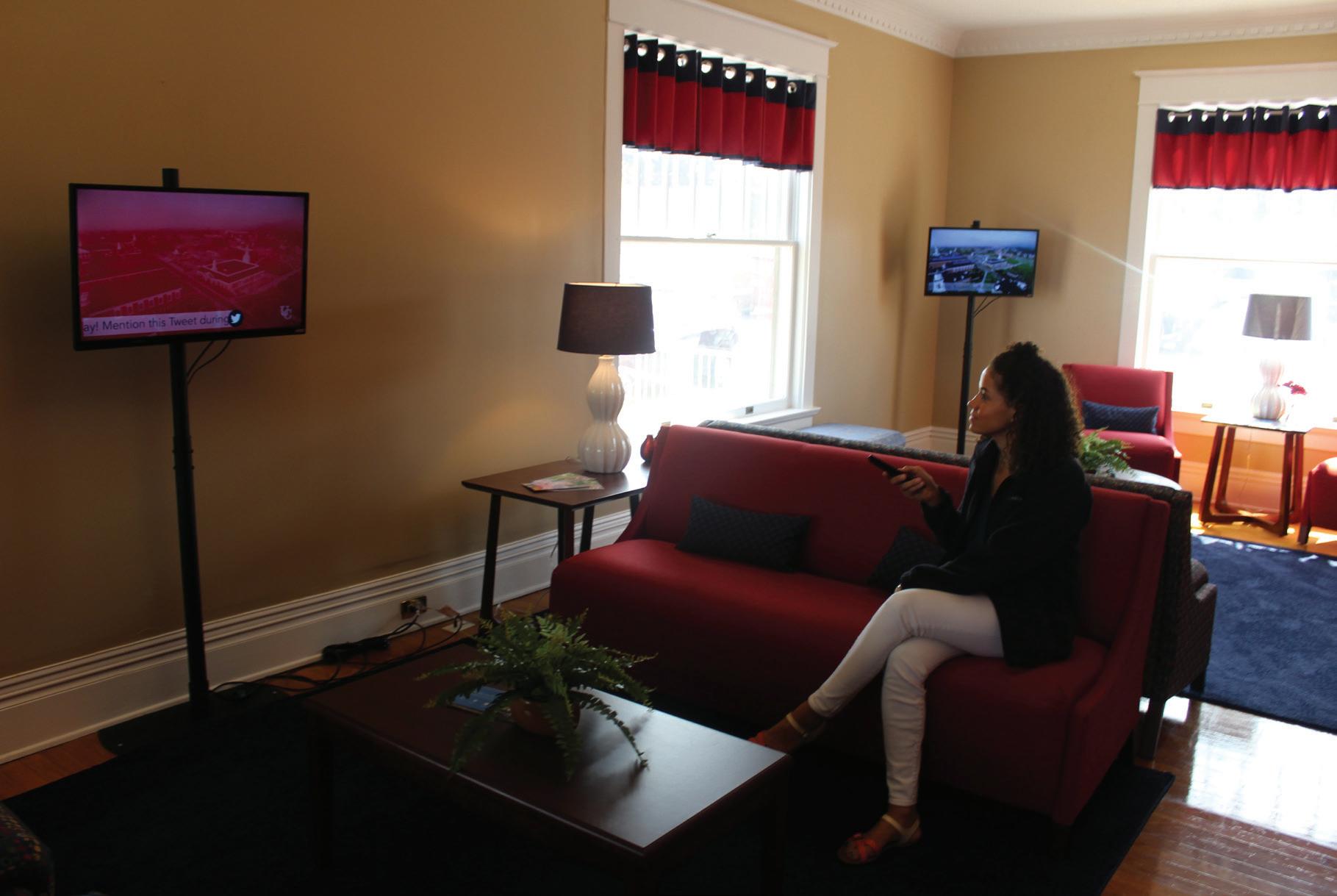
The Office of Undergraduate Admissions recently underwent an aesthetic renovation in an effort to welcome prospective students and campus visitors. The changes include updated furniture, artwork depicting student life, a new paint scheme, a refreshment station and the utilization of television monitors and BrightSign technology.
“We’ve had a lot of change on campus and we wanted to mirror all of the good things that are taking place,” states Erica Harris, director of undergraduate admissions. “Our office was nice, but needed a little love. It felt old and dark and more like a historic home than a visitor space.”
The Office of Undergraduate Admissions now features a live Twitter stream on the television monitors for campus visitors to follow and interact with during a tour or visit. The monitors also have the capability of being used for presentations before a campus tour. In addition, the admissions counselors also have access to iPads, by which they are able to assist visitors in navigating the UC website, applying for admission, financial aid and housing.
In addition to the technological changes, the aesthetic appeal of the Office of Undergraduate Admissions has changed dramatically, according to UC senior and campus ambassador Sarah Rainous.
“We have new furniture and rugs, all UC navy and red. We have pictures of people from campus all around the office, and the colors of those pictures are downright vibrant. Everything just looks so fresh, clean, professional, and exciting,” Rainous offers.
Campus visitors also now have access to a six-seat golf cart, nicknamed “Patty Caddy.” This purchase was made in an effort to better accommodate those visitors who may not be able to make it to certain areas of campus on their own.
The changes to undergraduate admissions were based on recommendations made by Jeff Kallay, owner and consultant for Render Experiences, a company that specializes in campus visit consultations. As listed on the business’s website, Render Experiences has worked with over 200 different universities and colleges. According to Harris, Kallay was invited to campus in the Spring of 2015 in an effort to evaluate the elements of UC’s campus visit experience.
“We were looking for an outside perspective on the visit and a bit of direction to move forward in making changes to meet enrollment goals,” Harris states.
Jessica r odriguez uses the tv monitor to check live Tweeting happening during a UC campus tour.
Photo by DJ Hite


Render Experiences made five visits to campus. The first visit was the discovery and audit phase. Part of the day also included a tour of campus by one of UC’s ambassadors. According to Harris, the goal of the audit was to provide a benchmark for future work and continued progress, to identify strengths and weaknesses, to develop action items and to identify and tackle aesthetic issues on campus.
During two of his visits to campus, Kallay spent several hours with the campus ambassadors, helping them to develop personal stories to share. In Kallay’s words, “The most authentic things about your institution are the people that live and work there and the stories they have to tell. Storytelling needs to be the lifeblood of any campus tour. If your guides are not telling their stories, your visitors are unable to see themselves as a part of your campus, participating in your classes, clubs, athletics, or traditions.”
“Campus ambassadors like me still give tours, but the tours have changed a bit. Now the tours are slightly longer, maybe an hour to an hour and a half long. We show prospective students both a community-style dorm and a suite-style dorm,” says Rainous. “We have also been told to tell stories a lot


instead of facts and figures, and to make sure that we use specific names of people in the stories. We also make sure stories have a resolution, so we don’t trail off.”
Rainous adds, “We feel so much more put together, and our office looks amazing. I love it! I’m so glad that the last year I’m here on campus I get to work in such an awesome place.”
Kallay also took time this fall to speak to the UC faculty about the importance of their involvement in the campus visit. He offered several suggestions, including that each department have an “Outcomes Wall,” which would highlight recent graduates.
Kallay said in his most recent observation of UC, “There is a tone of optimism and fun on campus and all the improvements to housing and other parts of campus, and we trust that all of it will benefit how guests feel when they visit campus this upcoming year.”
Harris agrees. “Everyone on campus is our partner in the recruitment process and in the words of our new athletic director, Chris Kraftick, we are ‘One big team!’ Go Patriots!”
Photos submitted by shelleigh Moses
Photo by DJ Hite
Photo by DJ Hite
Finally Philo
Philo allows UC residents to watch TV on their own terms
By er IC F Or D eDWA r D s Guest Writer
Are you missing your favorite shows because the days of watching endless hours of TV over summer break are long gone? Well, the University of the Cumberlands is here to provide an answer. In previous semesters students had cable access to a set list of channels, and that was where the benefits stopped. With the campus wide subscription to Time Warner Cable, Cumberlands couldn’t offer high definition or DVR service. Enter Philo.
Philo is a free online TV service for on campus students that is similar to cable, but instead of trying to find a TV to watch your favorite shows, you can save them or watch them live online. No cables required. New channels available to UC students via Philo include ESPNU, HBO, HBO Family, BET, and BBC America.
Just go to Philo.com and type in your student email, and password, and you will have access. Plus, UC students can still watch channels on TV with an HDMI cord or devices like an Apple TV, Roku, or Chromecast.
Dr. Donnie Grimes and Justin Hensley at the University of the Cumberlands IT department brought this potential service to the attention of Dr. Emily Coleman, Vice President of Student Services, who was important in bringing Philo to the students.
Coleman said that Grimes and Hensley were, “instrumental in mak-

ing this happen.” Some of the benefits of Philo include flexibility, portability, and the ability to have DVR.
In addition to this, Philo is streamed in high definition, which helps make students’ favorite shows even more enjoyable. With the ability to save favorite shows until another time with the DVR service, students don’t have to choose between procrastination and assignments, because they can watch what they might miss otherwise later.
Mason Neltner, a UC junior, said, “I appreciate Philo because I know I can record something that I know I can’t watch live, and I can go back and watch it later.” Neltner says the only draw back is that if you forget to record a show you’re out of luck.
Brad Ballou, a UC junior, said, “ l like that I can have it on my phone and watch it anywhere on campus.”
This option puts Philo miles ahead of cable. With Philo students can stay up to date on the news without having to tune in on a TV; they have the choice to sit down in The Grill and eat, while watching “Key and Peele,” or catching up on the news with a cup of coffee during breakfast. Thanks to this change students can keep up on school work and keep up with their favorite shows.
Photo by eric Ford e dwards
The Kaepernick conundrum
UC students react to Colin Kaepernick’s decision to protest the national anthem
By H U n T er Cle A ry & Tren TOn CA n ADA staff Writer & e ditor-in-Chief
Within recent weeks, NFL quarterback for the San Francisco 49ers Colin Kaepernick has come under scrutiny for his decision to protest the national anthem by remaining seated when it is played at the beginning of every football game, and while the NFL does not have a specific policy requiring players to stand during the anthem, this is certainly not the norm.
Kaepernick quickly came under fire after the game for his decision, which included a barrage of questions asking him why he did it. In a statement to NFL Media, Kaepernick responsed, “I am not going to show pride in a country that oppresses black people or people of color. To me, this is bigger than football and it would be selfish on my part to look the other way. There are bodies in the street and people getting paid leave and getting away with murder.”
Angry uproar and hesitant support have erupted across the country in reaction to Kaepernick’s decision, and while this is a national discussion with mixed opinions, opinions at the University of the Cumberlands are just as varied.
Hall of Fame NFL wide receiver Jerry Rice tweeted, “Colin, I respect your stance but don’t disrespect the flag,” a sentiment that seems to be shared by UC junior Jessica Severs.
Severs offers, “While he has the right to sit during the anthem to our country, his actions are disrespectful and degrading to the American people and the country that has given him the chance to succeed in life.”
Dom Joseph, a sophomore football player at UC stated, “I think he made a statement but went about it the wrong way. The media exploded... If the media wouldn’t have said anything, then we wouldn’t know… But both the media and Kaepernick are at fault.”
Still, there are others on campus who offer their support of Kaepernick, such as UC senior Josh Kidder. Kidder states, “I don’t really have a major problem with it because he’s expressing his right to do so. We are a free country and you can practice whatever you want within law. People have ostracized Kaepernick for not standing for the anthem, which he isn’t mandated to do, and by attacking him we are taking away his right to do so, which makes us no different, in a way, from places like North Korea.”
A majority of the scrutiny has been offered by individuals who claim that Kaepernick has protested the anthem without contributing anything else to the issues at hand. Under this scrutiny, Kaepernick has paid lip service to backing up his call for change with charity by promising to donate the first $1 million dollars he earns this season, of the $11.9 million he is expected to earn, to impoverished communities in San Francisco. Yet, is that enough to lend him support? Ultimately, this poses a crucial question about the nature of free ex-

pression in the United States. Just what are the limits?
Dr. Christopher Leskiw, chair for the history and political science department at UC, offers some light on this. He states, “His act of protest is certainly well within his right as an American citizen. It’s ironic to use the flag as the very means itself. The flag has a very special place in American culture. We have a special reverence for the flag… It’s almost a religious symbol to us as a country... But I find it very well within his rights.”
Certainly, this isn’t the first time an athlete has went against the grain and taken a stand on social issues in a controversial way, turning sporting events into political platforms. In 1968, Olympians Tommie Smith and John Carlos won gold and bronze medals in the 200m sprint, respectively. Upon receiving their medals and standing on the podium, the two bowed their head and raise a solitary fist while the national anthem play. Their fists donned a black glove in support of the “Black Power” movement, all in an attempt to emphasis the civil rights movement going on in the country at the time.
Mahmoud Abdul-Rauf, born Chris Jackson before converting is Islam in 1991, was an up and coming NBA player until March 10, 1996 when he decided not to stand for the National Anthem, just like Kaepernick. In an interview with 5280.com after the game, Rauf stated, “The flag is a symbol of oppression, of tyranny. This country has a long history of that...”
Still, one of the most prominent moments that an athlete has had when standing for their beliefs was when Kentucky native Muhammad Ali, formerly Cassius Clay, tossed his Olympic Gold medal into the Ohio River after not being served at a dinner party in Louisville in 1960. In his biography, “The Greatest,” he reflects upon this incident by saying, “I will not wear a medal for a country where I can not be served.”
Athletes like Kaepernick, Ali, Rauf and others have the platform to speak out about the ongoing problems in a society, but do they always do it in the right way? Is the nation spending too much time talking about his actions rather than the motivation behind them?
“I think the problem comes in when you choose a loaded symbol like [the flag]. It’s hard for [Kaepernick] to direct his narrative,” Leskiw offers. “Right now most people are talking about whether or not it was a patriotic move. I really haven’t seen much additional discussion about what he’s actually protesting.”
Leskiw continues, “I hope good things come from the dialogue started. I don’t think we’re there yet. There are these opportunities to have constructive and productive conversations, but I’m really not sure what’s going to come of this.”
Photo courtesy of Flickr’s Brook Ward. Photo avaialbe at http://brook-ward.com/blog/2015/9/21/colin-kaepernick
A textbook story
Textbook access codes: What they are and what they should mean to you
By l e A nne Gre GOry staff Writer
The textbook. The essential tool for students and instructors to coalesce their knowledge into a format that is easy to remember and carry around. When most students think of them, they generally think of the high prices involved in purchasing and re-selling them. When instructors think of them, they generally think of how many students will actually bring them to class on any given day. What instructors and students may not think of, however, are the extra fees that some newer textbooks may contain that could throw a wrench into both the ability for students to access their assignments and content, and for instructors to teach them. Textbook Access Codes.
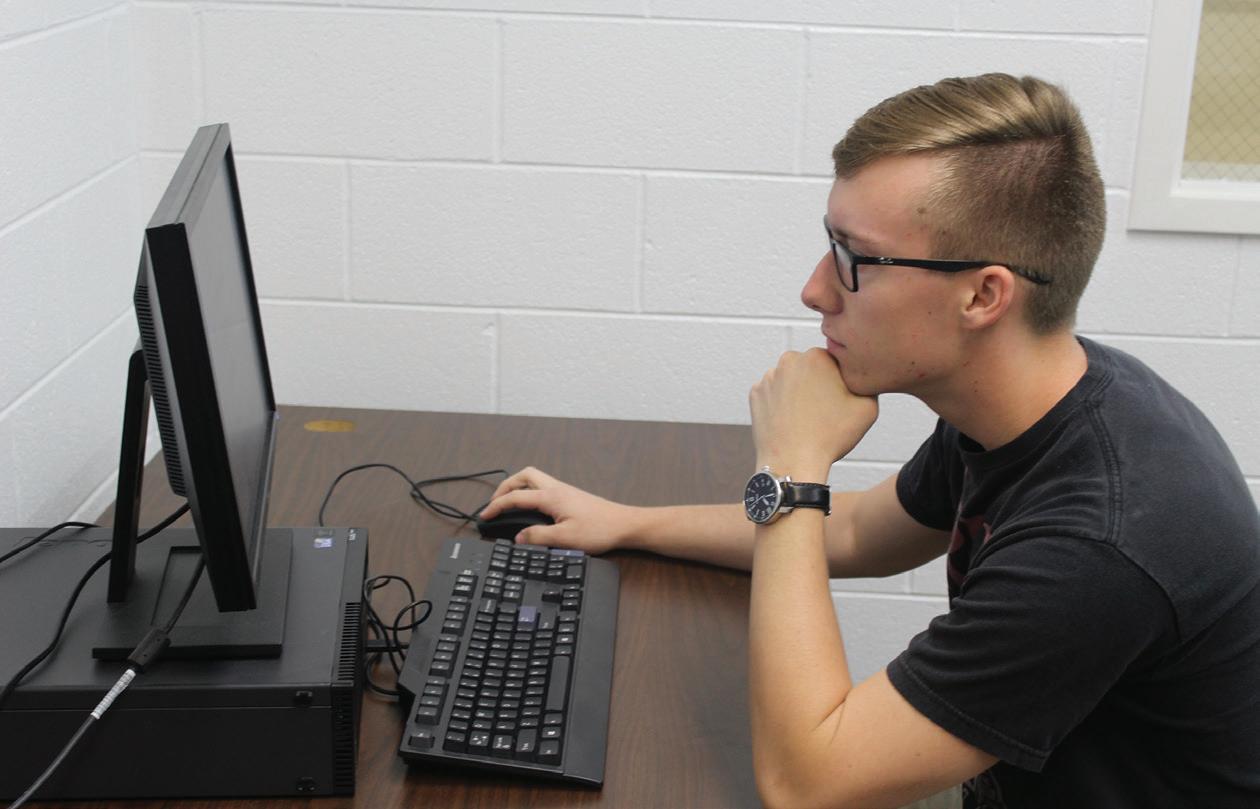
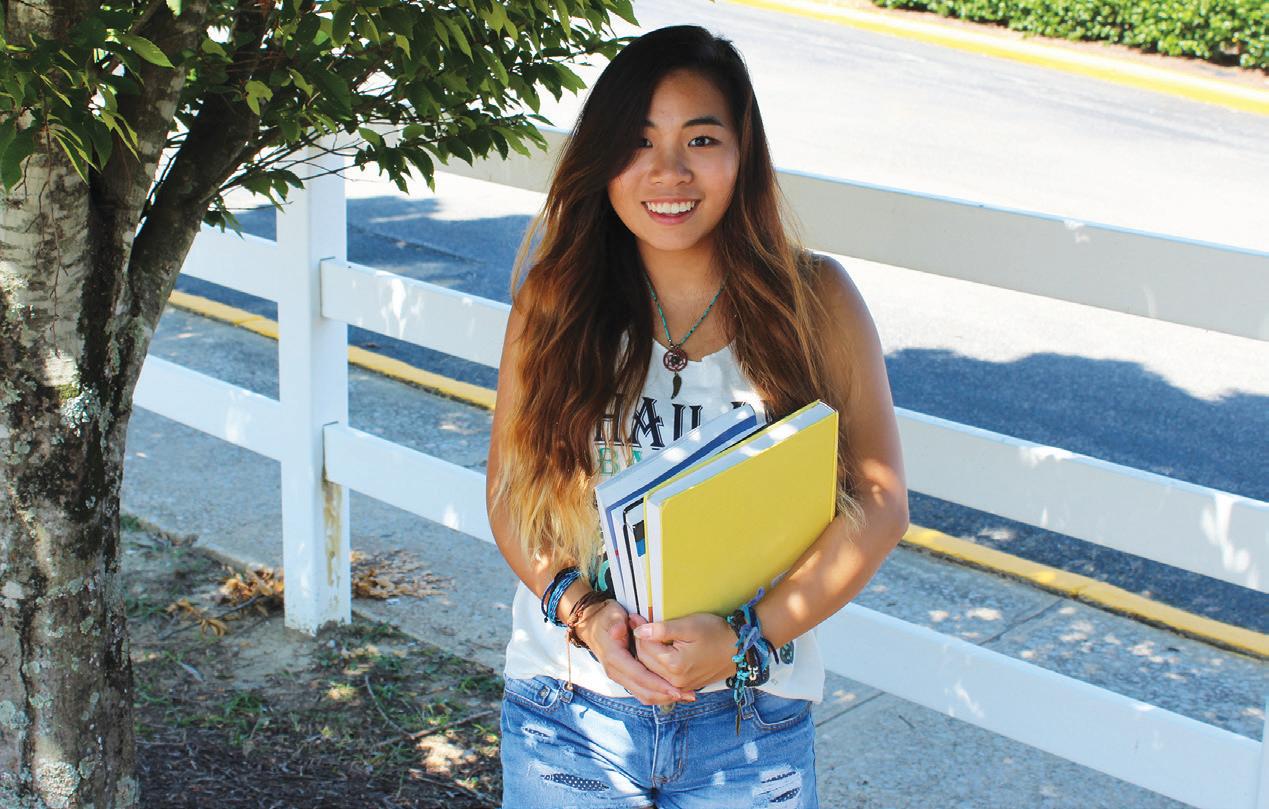
Textbook access codes are a number and digit code used to log into online content services where a student will be able to look for and submit assignments, get interactive materials related to their lessons, find practice exams, and study for tests. If this system sounds familiar, UC has similar technology in its ILearn system. However, for many students in universities around the country, some online content systems require expensive textbook access codes.
According to websites such as BuzzFeed and WebAssign these codes can range in price from $80-150 and can come in various formats including codes that come with the textbooks themselves, and codes that must be purchased separately. In addition to the costs of the codes and textbooks themselves, textbook companies such as McGraw-Hill and Pearson charge subscription prices for the length of time that the programs, such as Learn Smart and Connect, will be used.
Dr. Kirby Clark, professor of religion at the University of the Cumber-
lands, said. “I try to be cost conscious. If it’s going to cost students more then I won’t use it. It doesn’t sound like a service. It sounds like a disservice.”
Despite all of the criticism, there is some good that comes with the programs. Studies provide on the program websites indicate that some students and professors benefit from the supplementary services, both with raising grades and allowing for more interactions between professors and students.
Jamey Temple, associate professor of English at the University of the Cumberlands, is using an online component for her ENGL 130 classes that requires an access code. “Using the technology is still new to me, but I think the adaptive learning component, called LearningCurve, ties in nicely to our QEP for metacognition. The online component helps me with assessment and cuts down on grading time since most of the exercises are automatically graded. Students are also provided with a study guide once an exercise is completed, so they get immediate feedback,” Temple said.
Slowly integrating into the market as a product of the future, textbook access codes are quickly looking to be the next innovation in higher educational learning.
“The access codes are not something I’ve used yet but I’ve considered it,” said Jane Whitaker, professor of psychology at the University of the Cumberlands. Whitaker added, “I have a hard time asking students to pay more. So, I would have to be convinced that it would offer more than what the university offers.”
Photos by DJ Hite
By PA y TOn rIGer T Guest Writer
God works through FCA kickoff
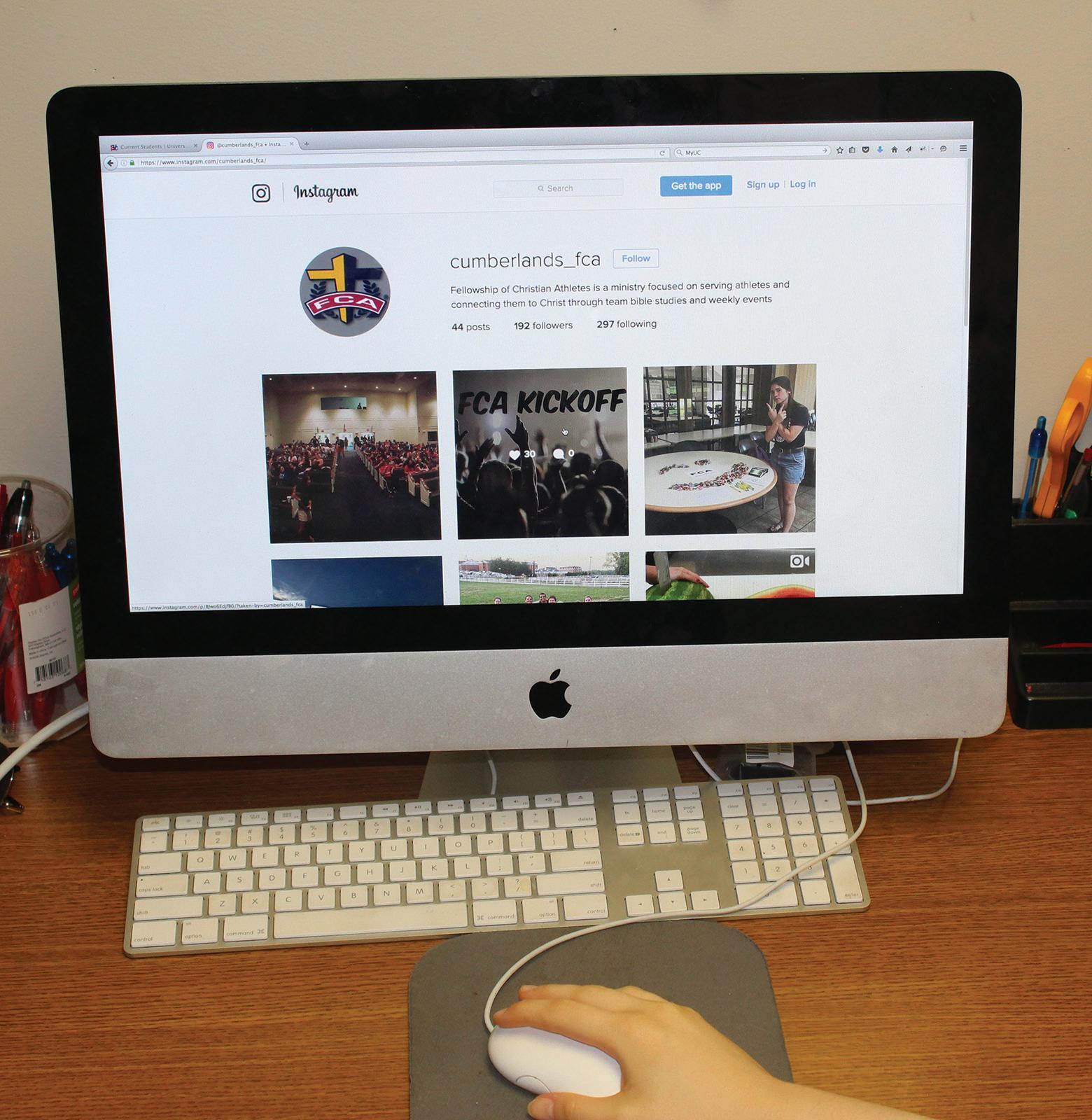
Packed from one side of the building to the other, Main Street Baptist Church was overflowing with UC students. August 31st was the kick-off meeting for the Fellowship of Christian Athletes at the University of the Cumberlands. The night promised to be filled with the gospel and open praise for our Lord and Savior.
Greg Grover started the ball rolling by telling a story that hit home for most believers. Grover said that we respect the Bible, not love it. As followers of God here in the U.S., we are allowed to read the Bible at will. This also makes it easier for us to set the Bible aside to read “a different day.” In other countries, owning a Bible could get you killed, much less reading it. It is possible for us to forget the gift that we have been given: the ability to read from the direct Word of God whenever we want. Focusing on the Word of God should be an important aspect of our faith.
Former NFL quarterback, Roman Gabriel III was then introduced and started in on a presentation of the gospel. He left us with a powerful message by stating, “It’s not who you are, but whose you are.” This was a reminder that we are not our own person. God created us and breathed life into us. We need to remember that in everything we do, we are serving the one true God, whether this is in athletics, academics, or any other activity.
The words of Gabriel washed over the crowd on Wednesday night and brought many students to their knees. During the Invitational, students were given a chance to come forward and receive prayer. For many, it was an impactful, powerful chance to reconnect with our Lord and Savior. It was also an opportunity for some to commit their lives to Christ. The night was a reminder of the way that God can work through others.
If you would like to be involved, FCA meets every Wednesday night at 8 p.m. in the Main Street Baptist Church gym. For more information, you can contact our FCA group on Instagram or Twitter via @Cumberlands_FCA.