

University of the Cumberlands Student Newspaper
March 28, 2024


Changes
Are Made Striking Conversations Started by Travel Money
BY: SUMMER MILLS EDITOR IN CHIEF
University administration heard students’ opinions in an effort to raise the amount of meal money each person receives while on university-approved trips. This belief resonated with many people. After displaying the ideas in varying forms, from writing to graphics to videos, the administration chose to listen. The newspaper and many other clubs on campus have received $7.00 a meal for traveling. Depending on the day and whether there is breakfast at the hotel, the amount would go from $21.00 to $14.00 since the implication is that students will eat at the hotel. The amount has been the same for over 20 years. Many students and faculty have reached out with their thoughts on the opinion piece about this topic published in a previous issue of The Patriot.
One student says that she “used to skip breakfast when [she] went on school trips so
[she] could [use] that money towards lunch/ dinner.” Another student who worked with the newspaper before notes that he had “always thought of this during [his] time [here].” While students are outspoken, it could be hard to gauge what faculty think about the situation. The wondering did not go on for long until several faculty approached newspaper staff and mentioned how much they agreed with the article. Even some faculty members experienced similar issues and did not know the extra steps they could take to meet their financial needs.
After meeting with the administration, it has become clear that they will reimburse students for money they spend over the allotted $7.00 and that everyone “should know this.”
To get money back, students must bring their receipts back from trips and give them to their sponsor or coach. Afterward, the sponsor will

turn them in to finance to get each person’s money back. The specific limits to how much finance will reimburse are not set but could be in the future. Going forward, Quentin Young, the Executive Vice President and Chief Financial Officer of the University of the Cumberlands, says, “We will also be increasing the non-receipt meal mon ey amount in the coming academic year. This update will hopefully address some of the need[s] of departments requesting adjustments for ordinary travel.” This move will certainly help sponsors and students decide their needs for future trips. Different standards may apply to sports and clubs. Many people do not travel with the university outside of sports. Therefore, distinguishing guidelines for smaller organizations can be more challenging for the school. The CFO says, “Some academic trips may be more expensive than the local area. While this type of student academic travel is limited in frequency, we do rely upon departments or club sponsors to request travel dollars that are appropriate and reasonable for students to travel with.” The majority of clubs have individuals buying their meals. However, some sports teams have their coaches buy one type of meal for every athlete. The financial needs vary due to these differences. The administration will work to ensure that everyone is up to date on the guidelines for traveling finances. Young says, “The Finance & Budget Office will be communicating to academic departments on how they may request appropriate travel funds for students when the need arises.” Clubs and sports should be aware of everything that has to do with their budget and expenses. Going forward, everyone should know that staff and students can get their money back. Individuals should keep track of how much they spend on these trips. When the department and clubs make the budget for each year, they must ensure enough money is requested to cover trips and amenities.
Eight Weeks Too Quick
Language Courses at the University of the Cumberlands
BY: ALLY KENNEDY STAFF WRITER

While the University of the Cumberlands is like other colleges because it has two semesters a year, the academic schedule is unique to other schools. Instead of having 16week classes, each semester has bi-terms. This setup allows students to take more classes but has downsides. With most classes only being eight weeks long, it forces students to learn much quicker than 16-week classes at other universities. While this seems to be working well, there are a few problem areas, mainly the World Languages & Cultures courses. While learning a language is difficult enough, trying to learn a language in two months
is borderline impossible. Spanish and French are the only languages offered here at the University of the Cumberlands. These languages are essential but can be severely challenging to learn when students have a larger workload in a shorter time. There is, however, a simple fix. The university should require world language classes to be in 16-week increments.
Although the University of the Cumberlands participates in bi-terms, certain classes span 16 weeks. For example, there are art classes that surpass the eight-week timeframe. While a few world language classes are offered for 16 weeks, every language class should have the same opportunity.
Layne Schooley, a student at the Cumberlands, believes that “Learning a new language is difficult and takes a lot of time to study.” She continues, “There are so many different rules and irregularities that I’ve had to memorize in both French and Spanish. I think that it would be best to have the language courses as 16-week classes instead of eight. Having the chapters spread out more also helps with longterm memorization because we aren’t moving from one section to another at breakneck speed.”
When talking to Spanish Professor Jennifer Marsh, she mentioned that she has taught eight- and 16-week courses. When asked which she believed was better for students to learn from, she replied, “It has been my experience that the 16-week length is usually better.” She
explained that when asked to do an interview, she researched and learned about spaced and massed learning. While talking about these different learning methods, she explained how this applied to learning another language and how there were studies that backed the information. Spaced learning is spread out over time, while massed learning is learning in a shorter time. She mentioned that research indicates that spaced learning is more retainable for students, especially when taking classes about language. When asked if she thought eight weeks was too short to comprehend all the information in class, she responded, “It’s tough. Some students are okay with the eight weeks. They do fine, but I think some would benefit from having the 16 weeks.” She continues to say that the World Languages & Cultures department has a mix of these classes but overall, she thinks 16 weeks is the way to go in this department. Learning a new language can be highly challenging for some students. Students and professors both agree with that. Sometimes, eight weeks is not enough time to fully understand a course. Since some classes are already 16 weeks, it would make sense for all World Language & Culture courses to be that way. Although eight-week classes seem to work most of the time, there should at least be options for classes students deem difficult.
GRAPHIC COURTESY OF LACIE DEGOUGH
PHOTO BY SUMMER MILLS
Letter From the Print Managing Editor
Hey Patriots!
I hope each of you had a wonderful end to the first biterm and are having a great start to the second half of the semester. This shift in classes allows students and faculty alike to refocus their minds and dive into new interests and studies. I am very excited to take classes like Screenwriting and Literature of Adolescence, while also continuing my studies in Spanish. While I know many individuals are not fond of the biterm system, I love the change in pace throughout the semester. For me, this shift keeps the semester moving at a fast pace.
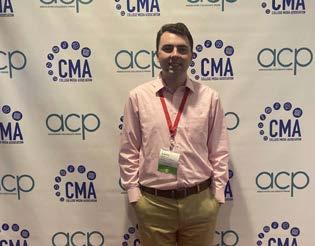
While the change in the biterms has been on the minds of many students, spring break quickly took over the minds of students across campus. This time away from classes and campus was a great time to get much-needed rest and relax before returning to finish out the rest of the semester. Over the break, I spent time with family and friends as well as took a trip with the newspaper to the NYC2024 conference. This trip was a wonderful opportunity for newspaper editors to gain valuable experience by communicating with other journalism students from across the nation.
This week’s issue of The Patriot includes many important articles that will keep you well informed. A recap of the Tennis teams’ season and students’ opinions on the length of the university’s language courses are two articles that are included in this issue. Other articles, such as an updated article on the meal money that students receive when traveling with the university and global celebrations of women, populate this issue as The Patriot staff continue to keep the student body informed on local and global news.
Have a great week!
Cage Grubb
Staff
Editor- in- Chief
Summer Mills
Print Managing Editor
Cage Grubb
Digital Managing Editor
Emilia Martínez Morales
Staff Writers
Ally Kennedy
Amber Simpkins
Emily Sloan
Kamryn Keith
Shayra Calderon
Sydney Schwenke
Staff Photographers
Brittany Smith
Khebrion Puchoon
Faculty Advisor
Jeremiah Massengale
BY: SHAYRA CALDERON STAFF WRITER
A glimpse Into the 2024 season UC’s Tennis Team

The university’s men’s and women’s tennis teams commenced their season in January. Both teams have been performing exceptionally well. Several players from both teams have achieved the distinguished title of MidSouth Conference Tennis Player of the Week, marking a significant accomplishment for these talented athletes. The men’s tennis team comprises 20 skilled players, while the women’s team consists of 11 players, all putting in their best effort this season. These two teams’ dedication and hard work shine through their companionship, competitiveness, and love for the sport. Although the season is still ongoing, both teams have shown impressive performances so far, and there is no doubt that they will continue to strive for excellence in the upcoming matches. The men’s team has been performing well in the Mid-South Conference. The team currently ranks at number 18. The team had a phenomenal 6-1 win over David and Elkins College, followed by a 7-0 victory over Midway College. Next, they faced Huntington Univer
sity and secured a 5-2 win. They defeated the Milligan Buffaloes 6-1 and then went on to triumph against Austin Peay with an impressive 6-1 win. Overall, the team has displayed an outstanding performance this season, leaving their competitors behind and making their mark in the conference. Robert Wu and Martin Muller were named Mid-South Conference Player of the Week for their fantastic performance thus far. The women’s team is currently ranked 20th in the Mid-South Conference. During this season, the women’s tennis team has performed exceptionally well, achieving impressive victories. They have defeated Elkins College with a score of 5-2, Midway College with a score of 6-1, and the Milligan Buffaloes with a score of 5-2. These wins are a testament to the team’s hard work, determination, and excellent skills. Moreover, several players from the women’s team have been recognized for their outstanding performance and named the MidSouth Conference Player of the Week. Liu Yufang Garners, Marina Nagai, and Fan Shaiu are
some notable players who have earned this distinguished honor due to their relentless hard work and dedication throughout the season.
The dedicated players of both the women’s and men’s tennis teams have been tirelessly honing their skills, and their hard work has been paying off in every match they play. Seeing their unwavering determination and passion for the sport is truly inspiring. If students are looking for a thrilling sports event to attend, there is still plenty of time left in the season to catch a match and show your support for these talented athletes. Do not miss out on the chance to witness their impressive displays of athleticism and sportsmanship!
Cumberlands’ Sports Wins
Athletics Recap From the First Week of March
BY: SYDNEY SCHWENKE STAFF WRITER
University of the Cumberlands boasts many sports teams that consistently pursue excellence in their fields. UC coaches emphasize Cumberland’s solidarity through the idea that each athlete is a part of “One Big Team.” This sportsmanlike attitude may play a small role in the recent successes of UC’s sports teams. The first week of March saw many wins for the Patriots.
On Friday, March 1, the University of the Cumberlands Men’s Track and Field team emerged victorious at the NAIA Indoor National Championships for the first time in program history. Cumberlands approached the meet in the lead of team standings and ended with the National Championship. The NAIA top honors of Most Valuable Performer and Men’s Coach of the Year went to Luca Santorum and Coach Bradley Sowder. On Saturday Women’s Track and Field made history by earning ninth place out of fifty-seven teams. This Women’s NAIA Indoor National Championship thirty-point result is the best in UC program history.
Men’s wrestling placed fifteenth out of fifty-five teams at the NAIA National Championships on March 2. Cumberlands scored thirty-four
points on the final day of the championship, with podium finishers Gage Hudson and Bryce Nickel adding their victories to the Cumberlands’ roster.
Cumberlands’ Women’s Lacrosse secured a win against Life University by one point on March 1. On Monday night, the Patriots achieved a 19-9 victory over Benedictine.
On the seventh, UC beat Albion College 15-3.
UC Men’s Lacrosse also achieved a twelve-point win over Lawrence Tech on March 3 at the Cumberlands Lacrosse Complex. The team saw four players net the 18-3 victory over Madonna in the Wednesday home match. The Patriots cheerleading team gained the two highest scores in a NAIA competition in program history on March 3. These high scores spurred the team to two wins at the Patriot Spirit Invite, bringing Cumberlands to seventh in the NAIA overall. The UC dance team competed in their season’s third meet and placed second out of three teams at the March 3 Patriot Spirit Invite. The Pats dance team earned a final score of 69.65 with their performance.
Cumberlands baseball team defeated Fisher 14-2 in double-headers on Saturday, March 2, and Sunday, March 3. Cesar Avila threw a no-hitter on Sunday’s first game, breaking a school record. On Thursday, March 7, UC traveled to the Warner Invite.
They defeated Calumet and lost to Warner.
UC’s softball team competed in the Gulf Shores Classic on March 1-3. The Pats fell short to Mobile 3-0 and triumphed over LSUA 4-1.
The Pats finished the Gulf Shores Classic victorious over Columbia College. In their Thursday home game, UC opposed Georgia Gwinnet College for the first of three games. Cumberlands won 2-0, bringing them to the record of 15-4 on the season. University of the Cumberlands Men’s Basketball team played Cumberland Phoenix to
gain a third win for this year, advancing them to the Mid-South Conference tournament semifinals. The Pats dominated the court 100-81.
The Patriots women’s basketball made at least 20 points in the first three quarters, defeating seventh-seed Bethel 80-52 on March 1 and bringing Cumberlands to 21-8 overall for this year. On March 3, the Pats defeated Georgetown 75-72 in the semifinals of the Mid-South Conference Tournament.
On March 3, The Cumberlands men’s tennis team beat Midway 7-0. The rank-eighteen team also dominated their NCAA DII opponent, Davis & Elkins College, 6-1 at the home match on the fifth. The UC women’s tennis team also won their second win in a row on Sunday against Midway, defeating the team 6-1.
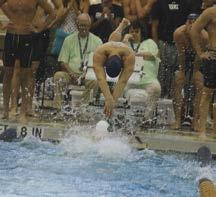
The Patriot women’s swimming team achieved three All-American finishes on March 7 at the NAIA Championship. UC earned 118 points during the first two days of the competition. Romina Itzkovich Sacco, Kate Harrison, Valentina Zapata Caballos, and Anastasiia Shatalova finished their relay with the best time this season: 1:46.32. The Cumberlands men followed with All-American honors in the 800-free relay, and the diving team earned 74 points, tying them for second place after the first day of the NAIA competition. The Patriots earned All-American honors in all three events on the seventh, including breaking a school record.
BY: EMILIA MARTINES MORALES DIGITAL MANAGING EDITOR
Marching Toward Equality A
Global Reflection on International Women’s Day

On Friday, March 8, 2024, streets worldwide came alive with vibrant colors as communities celebrated International Women’s Day. Streets are decorated with various posters and banners, passionately displaying empowerment, equality, and solidarity messages. Women and men, young and old, take to the streets, often dressed in symbolic colors such as purple and green, creating a dynamic view of diversity. The reason behind these rallies is a global recognition of women’s achievements, a call for gender equality, and a powerful affirmation of the ongoing struggle for women’s rights.
March 8, marked a decisive moment in the ongoing struggle of Mexican women against the harsh reality prevailing in the country. Following the rally tradition, women took to the streets not just to commemorate International
Women’s Day but to raise their voices for those who have disappeared or fallen victim to violence. While also demanding a life free from brutality. Protestors carried signs with phrases such as the heartbreaking “We are the heart of those who are no longer here.” While most protests maintained a peaceful tone, some opted for more visible actions, leaving behind graffiti, broken structures, and flames symbolizing the desperation within a system that remains unresponsive.
In recent years, debates have revolved around the effectiveness of these demonstrations, questioning whether they are the right way to demand justice from the Mexican government. This day commemorates the women who fought for our rights and highlights that there is still a long journey towards gender equality.
Actions like defacing or burning mon-
uments carry significant political weight. These structures represent state institutions that, in theory, should protect women. However, the government’s apparent ineffectiveness and insensitivity to gender-based violence generate discomfort manifesting in these visible acts. Society seems uncomfortable with graffiti-covered walls or shattered monuments, but it does not bother them that girls and women disappear every day. Women are no longer staying silent; they demand justice. The debate continues about whether these actions are right or wrong, but the real discussion should focus on the undeniable fact that 11 women are killed in Mexico each day simply for being women.
This annual chapter of protests concludes with a reflection on the current state and an urgent call to change the narrative and reality women face in Mexico. Beyond the ink and flames on the streets, these demonstrations are a collective cry for justice, a reminder that women will not stay silent as gender-based violence persists. The discussion should not deviate towards the form of expression but towards the deep need for a structural and lasting change. Today, I do not wish you a Happy International Women’s Day; I wish you a life where everyone treats you with respect and admiration. Little girl, my hope for you is to dream big and aspire to achieve those dreams without being held back by any limitations that being a woman may impose. I wish you a world where you can walk the streets feeling safe and protected, wearing any clothes you desire. Most importantly, I wish that you learn to love yourself unconditionally, embracing who you are no matter what.
The Women Who Inspire Across Campus
These women are creatives who, without even trying, help people worldwide. They range from artists, politicians, and social activists to royalty. Their jobs might not mean a lot to some, but to many women, they are everything. They use or, in some cases, used their positions for the good of the people. Their endurance and willingness show women all across the world there is hope and that they can also make a

PHOTO BY BRITTANY SMITH